Rodeo Life

Category: Archive

  • Back When They Bucked with Jack Roddy

    Back When They Bucked with Jack Roddy


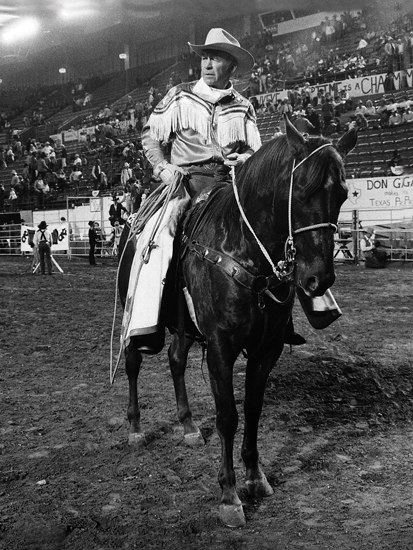
    Jack Roddy at 18  - Courtesy of the Dickenson Research CenterJack Roddy was born in San Francisco on Oct. 3 1937 to parents who had come from Ireland. His father was 18 when he arrived in San Francisco and he bought a 12 stool beer and wine joint. From that small beginning, he ended up owning the longest bar in the world (7 bartenders in one shift, and when they opened the Golden Gate Bridge, they rode 56 horses in the bar at one time), as well as a rodeo arena located in south San Francisco. His dad met his first world champion, Charlie Maggini in 1929 and 1930. He bought a riding stable and rodeo grounds in Colma, Calif., and that’s where Jack grew up, riding and roping with his father’s friends in the rodeo business.
    “I was two when I watched my first rodeo and that’s all I wanted to be. We bought the ranch in San Jose, and I started riding calves and competing. I won my first buckle at 8 showing bridle horses. I was 14 years old when I won my first All Around.” By the age of 15, Jack started competing in the RCA, winning the wild horse race at an RCA rodeo. “In those days you could rodeo on a high school card, I always wanted to be a pro – Bill Linderman signed my card.”
    Jack worked every event, and went to Cal Poly, where he was the 1959 CNFR All Around and Steer Wrestling Champion. He won four events at the Pendleton Roundup grounds, at a college rodeo – bareback, saddle bronc, bull riding, and steer wrestling.
    After Cal Poly, he stayed there, and got an Associates of Arts in Cal Poly. “We were the Notre Dame of rodeo, producing more champions than any other college.” Years later, when Cal Poly needed $100,000 to keep the rodeo team going, Jack got on the phone and helped produce a two day function that raised more than twice what the college needed to continue the program.
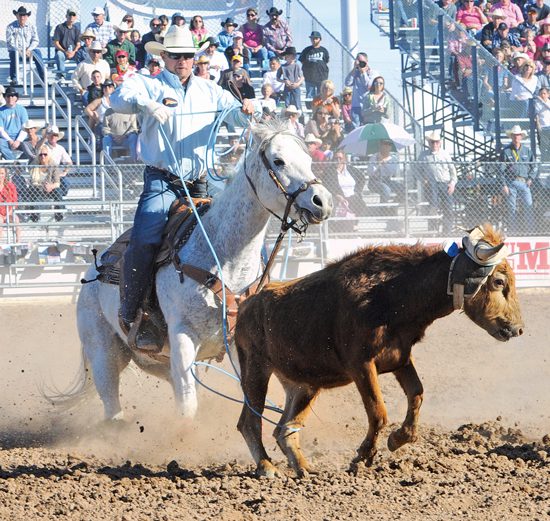
    He punched his first ticket to the NFR in 1962 in two events, team roping with John Bill Rodriquez, and steer wrestling. “All my life I wanted to be cowboy, but I was around my idols at the NFR, it was a tremendous honor.” He made six more appearances at the NFR. In 1966, he won the world championship in steer wrestling, setting a record for total earnings in the event. He also won the average that year. He followed up with another championship in 1968.
    He remembers the last bareback horse he got on. “I was leading the world in the bull dogging and up top in the All Around, September came and I had only placed in the bulldogging. My home town had a rodeo and I got up in the bareback – all the top bareback riders were there. I drew Cheyenne, a big pinto…more money won on that horse … if you made a mistake he’d throw you out of the arena. I spurred him and I marked a 179 – he fit me to a tee. That’s the last bareback horse I rode.”
    He retired from rodeo in 1971. “I love rodeo, but knew I had to do other things,” he said. Jack had been recruited by Bill Linderman to serve on the PRCA board in 1962, and continued to serve on and off for 16 years.
    Jack made another run at the rodeo arena when he joined the National Senior Pro Rodeo. “In those days I weighed 240; I always tried to do things in pairs, so I told my wife I was going to try to win the bull dogging. It took me five times to get to the top of the ridge and I got in shape, and went on the senior tour in 1991, won it and did it again the following year. I threw my last steer in 4 flat with a crippled foot and never did it again.” He competed in 12 senior rodeos in one year. “The first year we had the Finals in Reno, and it took three years to get it back,” he said. “We got Bob Tallman to announce and by the third year it was packed and I got out of it.”
    He hasn’t roped in a year. “I got bucked off five years ago and I punctured a lung and broke ribs. So now my wife does all the riding. I’ve been there, done that, and now I enjoy watching others – A wise man knows when to get off the stage, Will Rogers.”
    He and his wife, Donna, still run cattle on their ranch in Brentwood, California. “I ran cattle all my life, we had rodeo steers that we supplied to rodeos. For the last 14 years, we have run cattle that come from Hawaii. Since they can’t raise corn or grain over they, they wean the calves and put them on containers and ship them to our place.”
    He has seen a lot of change in rodeo. “When I won the Finals in Oklahoma City, I took home $1,700 – if it was today it would have been close to a couple hundred thousand. In Los Angeles, in the round one, fourth, third fifth, won $616 and the champion won $1,305. How many cowboys said I’ll never have another poor day.
    “Everything I got to this day I can contribute to the rodeo business – not in the arena, but the people I’ve met and the doors that have opened,” he said. “Always wear a nice cowboy hat and be proud of who you are. I didn’t win many world championships, but I never failed to sign autographs and it opened doors.”
    “I filled my bucket list time and again and enjoyed it.”
    Jack Roddy was the recipient of the Ben Johnson Memorial Award at the 2016 Rodeo Historical Society Hall of Fame Induction at the National Cowboy & Heritage Museum in Oklahoma City. “Gordon Davis started with Cecil and I carried it on,” said Jack. Ben Johnson was very important for rodeo; Gordon Davis, Cecil Jones and Jack Roddy were instrumental in establishing this award. This is chosen by the men who have received it earlier
  • COOK SHACK: Chocolate Zucchini Bread & Grandma Casserole

    img_3272


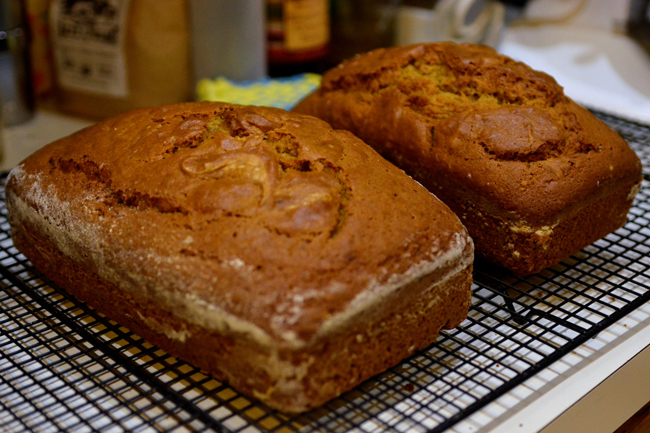
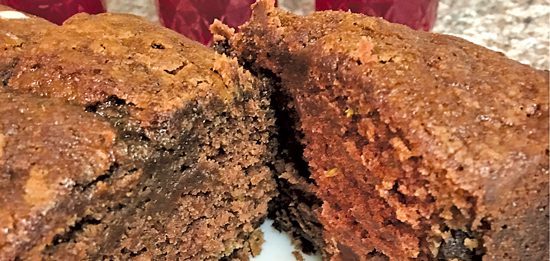
    Chocolate Zucchini Bread
    recipe courtesy of Siri Stevens

    ingredients:
    3 eggs
    2 cups sugar
    1 cup oil
    1 tsp vanilla
    3 cups grated zucchini
    1 tsp salt
    1 tsp soda
    1/4 tsp baking powder
    2 & 3/4 cups flour
    1/4 cup cocoa
    1 cup choc chips

    DIRECTIONS: In a mixing bowl beat eggs, oil, sugar and vanilla extract. Stir in zucchini. In a separate bowl combine dry ingredients (except sugar). Add to zucchini mixture and mix well. Pour into greased pan and bake at 325 degrees for 1 hour .


    3651738513_d6c7dc0e45_o


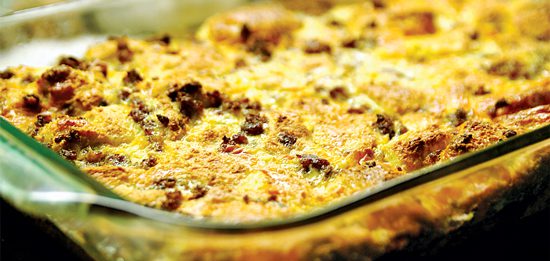
    Grandma Casserole

    recipe courtesy of Dave Rubenthaler, in memory of Florence Rubenthaler, “Country Cookin’, The Pioneer Journey Cookbook”

    ingredients:
    1 large onion, diced
    1 lb. ground beef
    salt & pepper to taste
    1 pkg/ (8 oz.) of noodles
    2 cans cream of celery soup
    1 box (8.5 oz.) Jiffy corn muffin mix
    1 egg
    1/3 c. milk

    DIRECTIONS: Saute onion in butter or oil, add ground beef, salt and pepper. Cook until done, drain fat. Cook noodles in salted water until done. Drain. Add noodles and soup to meat and mix well. In separate bowl mix corn muffin mix according to instructions using the egg and milk. Put meat and noodle mixture into a greased baking dish. Cover with corn muffin batter. Bake at 400 degrees until corn is done, about 20 minutes.

  • Roper Review: Butchie Levell

    Roper Review: Butchie Levell

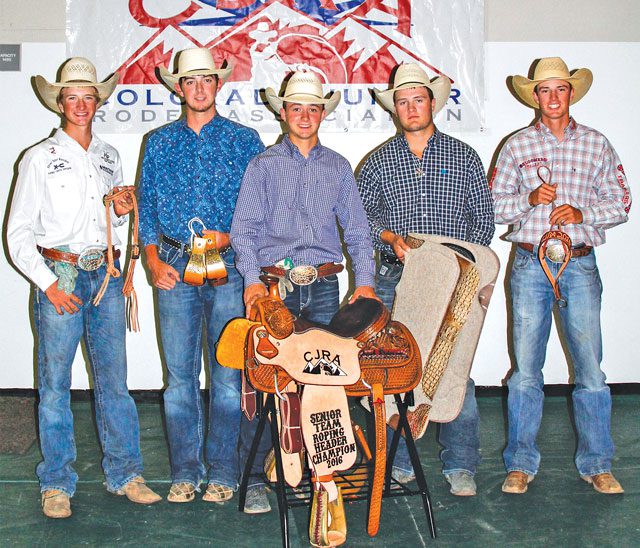
    Butchie Levell, Senior Team Roping Header Champion – Lazy HH Photography

    Butchie Levell (Butch Levell III) has gone to a lot of USTRC ropings in order to be tied for first with Keith Elkins from Clinton, Louisiana, in the Scholarship Standings.  If he holds onto that lead until the end of the Finals, he will win $10,000 in scholarships.
    The 18-year-old form Omaha, Nebraska, has been roping since he was 10, and is now a #6+ header and #6 heeler. “I like heading better, that’s been my strong point. Heeling is a little tough, but heading has been easy going for me.” His family, dad, Butch, mom, Pam, and older sister, Jennifer, were not into horses at all. “We have two houses on our property,” he explained. “The people that rented the house had horses and roped and I decided one day I wanted to be a cowboy and it started from there.” He started with the neighbors, and then got in with Jeff Straight, JD Yates, and Jay Wadams. “They helped him the most,” he said. Butchie started showing horses in the AQHA at the same time he was learning to rope and this year he stayed the summer in Colorado at JD Yates house, roping in the Colorado Junior Rodeo Association, and winning their year end Senior Team Roping saddle with his partner, Colton Reed.
    This is his first year out of high school and he decided to stay home a year to rope, work for his dad, and take care of 50 head of cattle that he has accumulated over the years. “They are old roping heifers that I kept as momma cows and now I rope their calves.”  He keeps them on leased pasture and at his place.
    Butchie is headed to his fifth USTRC Finals. “It’s awesome  being down there for a week, hanging out with friends, and going up against the best in the world and lots of money,” he said. He will haul four of his six horses to Oklahoma to enter everything from the open prelims to the #10; he’s entered mostly as a header, but is roping as a heeler as well.
    His dad, Butch, owns a recycling business, Lakeside Auto Recyclers, and his mom is a stay-at-home mom. When he’s not roping or working with his herd, Butchie helps his dad with the company. His plans are to attend college and get an Ag Business degree and make his way to the NFR someday. “I rope until my arm gets tired and I don’t want to stop,” he said. “I rope until 8 or 9 every night.” He knows that’s what it’s going to take to get to the NFR. “My goal is to work hard every day and push to get better.”

    ____________________

    The USTRC launched the scholarship program this year. “We had talked about this for a long time,” said Kirk Bray, USTRC President. “With putting $100,000 up and making it available for any age, up to 24, potentially a kid that’s 13 or 14 can start building a scholarship bank with us.” The USTRC Scholarship Program will award $100,000 in scholarship funds annually. Sixty (60) scholarships will be awarded to the top point earners during the 2016 season (November 1, 2015 thru October 31, 2016). “They had to opt in to the program because we wanted to make sure they are serious about going to college. It’s a pretty strict program, but we want to award the kids that go to college and get good grades. It’s a way to give back.”

  • ProFile: Troy Heinert

    ProFile: Troy Heinert

    Troy Heinert takes care of cowboys and constituents. In rodeo, the Mission, S.D. man works as a pickup man, and in the world of politics, he is a senator in the South Dakota State Legislature.
    He grew up on the family ranch west of Mission, the son of Margo and the late Harold Heinert. When he was twelve, his dad died, and his mom moved the family to Pierre.
    In high school, Troy team roped and rode bareback horses, and continued the bareback riding while in college at Black Hills State University in Spearfish, S.D., and at Sinte Gleska University in Rosebud. He graduated with a bachelor’s degree in elementary education and taught school at Rosebud Elementary for ten years, all the while competing in the PRCA and at Indian rodeos.
    Troy’s dad Harold and stock contractor Jim Korkow were best of friends, and when Harold passed away, Jim said, “you’re my boy now,” Troy said. “He never treated me any different than he treated TJ (Jim’s son.) If TJ got a twenty (dollar bill), I got a twenty.”
    It was through Jim that Troy began picking up. He started with 4-H and high school rodeos, working through the summers for Korkow Rodeo. After he quit riding barebacks twelve years ago, he picked up more steadily.
    He works many of the Korkow Rodeos, along with rodeos for Stace Smith, Three Hills Rodeo, and Wilson Rodeo. He’s been selected to pick up the Indian National Finals Rodeo five times, and was chosen this year to work the Badlands Circuit Finals Rodeo in Minot, N.D. this month.
    He loves picking up. “It’s as close as you can get to a bucking horse without having to get on them anymore. It’s fun, especially when you know the horses and you can put yourself in a position to help the guys make good rides, and help that horse buck, and see a match-up click.”
    He loves spending time with the bucking horses. “To be around them, to sort, feed, truck them, learn their personalities. They learn your voice, and if a horse is throwing a fit in the chute I can ride up to it and start talking to it, and you can see them pay attention and stand up.”
    Four years ago, Heinert ran as a Democrat in the 26th District, for the S.D. State House of Representatives. He won, served a two year term, then ran for state senator in 2014. He won that election, and is running again this fall, unopposed.
    He feels he has met a lot of his goals as a representative for his district, which is predominantly Native American. He is a member of the Rosebud Sioux tribe, and it is important for him “to be a voice for Native Americans and cowboys,” he said. “My district has three reservations in its boundaries, and we don’t have many opportunities for a voice. I have a lot of people depending on me to be that voice, and I’ve been able to do that, and to get people to understand some of the issues we see on the reservation, to see why things are the way they are, and what they can do to help.”
    As a senator, he is able to show people unfamiliar with Native Americans and reservations what it’s like. “I think, even in South Dakota, there’s a lot of people who just don’t know what our healthcare system is like, what our education system is like, what poverty looks like, and the different relationships the tribes have with state and federal governments.”
    He is very proud that he was able to pass an Achievement Schools Grant program, which allows public schools to apply and create a cultural school for Native American kids in the district. “That’s the first time it’s happened in South Dakota,” he said.
    Being a cowboy in politics is also an advantage. “There are some farmers and ranchers in the legislature, but when it comes to ag issues, even something in transportation and trucking, it helps to have that background knowledge of what it means to load a truck and go down the road.”
    Heinert is the Senate Assistant Minority Leader; fellow cowboy Billie Sutton, a former saddle bronc rider, is Senate Minority Leader and has been a part of South Dakota politics for the last six years. Heinert credits Sutton with helping him get his feet under him in politics. “I had a great mentor in Billie. He had been there a while, and he knew the ins and outs, and that gave me a head start.”
    He is married to Gena; they have three children: sons TJ, who is 22, and Harold, who is ten, and a daughter, Jordan, who is 21.

  • Back When They Bucked with Wally Woods

    Back When They Bucked with Wally Woods

    Wally Woods was born in Victoria, Australia, the second youngest of four brothers. “When you’ve got four brothers, and I was the second youngest, I had to fend for myself,” said the 84-year-old Australian cowboy. “My father worked on a cattle/sheep property. My mother died when she was very young. When I was about five years old, we had a post office and I would deliver the mail bag three miles up the road five days a week on a horse.
    Wally started competing in the steer riding when he was 14, winning the first one he entered. “I left school when I was about 11- there was no high school – I went traveling with a Wild West show, traveling all over riding bucking horses and doing all kinds of things in the show. You name it, I did it. We used to do two riding a bucking horse, one in the saddle and one behind, and we’d jump off.” He performed every night, and was part of each act. He traveled with the show for three years, and then switched to rodeo.
    He worked in a spare car parts place and competed on the weekends. “In them days, in this country, money was hard to come by. We’d go to any buck jumping contest we could find (bronc riding).” He got his first big win in 1951, winning the Jubilee Championship of South Australia in the bronc riding. “I won a big cup and 100 pounds. From then on, at different times, one of me own brothers and I used to break in horses and a money earning contest, and travel around to different rodeos all over the country.” He entered every event. “There were five events in those days; bronc, bareback, steer riding, bull dogging, and roping. The roping was either calf roping or wild cow milking. Through the next ten years, I won four all around champions of the year, that’s the highest money winner over the five events.”
    Wally was part of the Australian Rough Riders Association, which started in 1944. “They had a secretary, and a spokesman. It was just a membership that organized it all, and one secretary. From 1945 until 1959, then we formed a board of directors and all that,” he said. “They nominated me as the first president in 1959, and I was that until 1965, competing the whole time.” The ARRA is now the national governing body for professional rodeo competition in Australia, the oldest national rodeo organization in the world.
    The first national finals was held in 1961. “It was an 8 round contest, so you’d ride eight of everything; eight saddle horses, eight bareback horses, eight bulls, bull dog eight steers, and rope eight head,” he explained. Wally, who is 5’6” and 11 stones (14 pounds = one stone) won the bull riding by three bulls, riding seven out of the eight. He won the high pot all around champion for the year, second in the bronc riding and placed in every event.
    Wally met his wife, Lexi, at a rodeo in Victoria. “She was only a girl when I met her,” he said. “I waited seven years to marry her – my brother married her older sister.” Once they were married in 1958, she traveled all over the country with him. They have two children, a son, Guy, who is a cutting trainer in Texas, and a daughter, Lindy, two years and two days older than Guy.
    They traveled around in a Ford 250, with his dogging horse in the back, and towing a caravan behind where they lived. Wally made a good living from rodeo. “In them days if you won 100 pounds (one pound = $2) in five weeks you were doing good; I won 500 pounds, which is good.
    We used to buy petrol at about 2 shillings (.33 a gallon), now it’s $4.80 a gallon. We traveled anything up to 700 miles – there is some big distance between towns. From Victorian border to New South Wales is 600 miles.”
    He continues to hold the record for winning three riding events in one day, and fourth in the bulldogging, at the Australian Championships. In 1958, he won the World Bronc Riding Championship, which included America, New Zealand, and other countries. “All told, I won 40 state Australian titles, and over the years, I’ve won 170 first places. We used to get a big sash when we won a contest, and I counted them out to see who many I won.”
    He continued to compete well into the 1960s, and when he hung up his bull rope, he picked up a stopwatch and started judging. “I knocked off when I bought a transport business in Queensland, which I had started in Victoria. I transported cattle, sheep, horses, whatever livestock there was from one end of the country to the other, anywhere at all.” He still rodeoed around the arena for a little while, but he only went to a very few because he was too busy.
    Wally is officially retired, but he still has some horses. “I breed them, since I give up rodeoing, I’ve managed two big quarter horse breeding properties and I’ve got a little place that we breed horses, Guy sent me a horse to breed here.”
    He’s made several trips to the United States to visit his son and grandchildren, but since his four-way bypass a year and a half ago, he hasn’t done much traveling.
    Wally has seen many changes to rodeo over the years. “It’s the same thing, but we used to ride in an Australian saddle. I was one of the very lucky ones that got to introduce the American saddle to the Australians. There’s a big difference. The
    Australian saddle is an English saddle, but a lot smaller. It has a very low back, and very little, 1 ½ front on it. Once you got used to riding, it’s just like everything, you’re good at it or you’re not.”
    The bareback riggin was completely different than today. “I used to make them and sell them. In 1956, a friend of mine that went to American brought me back a Dixon riggin. The ones they have now, you couldn’t even put them together. It was a straight head one – the original ones were like a bull rope, in fact, we used to use bull ropes riding horses.”
    Bulldogging steers were much different back in his days of rodeoing too. “One of the best bull doggers this country had seen was 6’1, 15 stones (14 pounds per stone – 210 pounds) and I seen his feet not touch the ground for 100 yards after he caught the steer.
    “All the years that I did it, I enjoyed it,” he said of rodeo. “There were quite a few of those fellows that rodeoed and traveled around and we became very good friends and it was also a way of life, it was a way of making money.”

  • On the Trail with Kellan & Carson Johnson

    On the Trail with Kellan & Carson Johnson

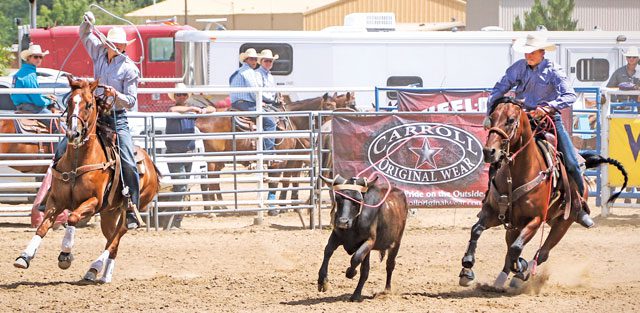
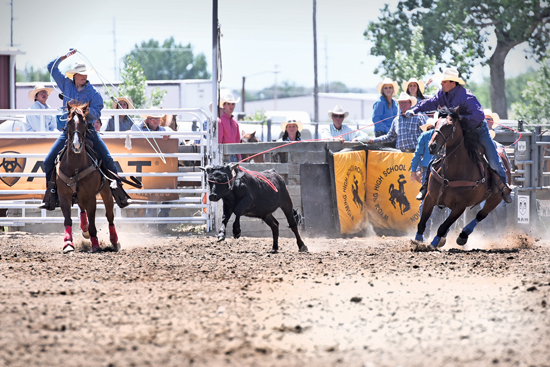
    Kellan and Carson Johnson, brothers from 30 miles outside Casper, Wyo., have roped together for eight years. “It’s great – we get to practice together all the time, but its nerve wracking because you don’t want to miss for your little brother,” said Kellan, the 6+ header, who is two years older. “We have an indoor and outdoor arena at home.” They have a great teacher in their dad, Jhett Johnson, 2011 WNFR World Champion Team Roping Heeler with his partner Turtle Powell. The pair won it with a total time of 57.5 seconds on nine head. Their mom, Jenny, competed in goat tying and breakaway in college. “We have plenty of help.” This is Kellan’s second year winning the team roping championship for the state of Wyoming, and he has been the USTRC regional champion, heading for his dad, for two years in a row.

    He made his third trip to the National High School Finals this past summer, he and his partner last year (cousin, Jayden) came into the short go in the same position as this year, third. “The steer we had was great and we were a 5.3,” said Kellan of the run. “We put enough pressure on second and first,” recalls Kellan. “Second high call ended up winning it with a 5.1.” His plan is to practice up for the next year and hopefully win the state title again. “Then go back to Nationals and leave with a first instead of second.”

    He spent the rest of the summer amateur rodeoing in Nebraska. After that, the high school rodeos started up again. “We put up hay and we check cattle and make sure everything is running smooth on the ranch.” The 17-year-old has one more year of high school and is unsure where he will go to college. “I might go somewhere that’s warmer,” he said, and plans to get a degree in Ag Business. He has considered Casper where his dad is the rodeo coach, but thinks he might head to Oklahoma or Texas.

    He and his brother are sitting first in the state at the end of the fall season, he is fourth in calves, and second in the All Around.

    Kellan gives credit for his success to growing up watching his dad and grandpa and uncle break horses. “I learned how a horse should move and act at a high level, cutting, roping, etc. Coming from this family, I learned what good horsemanship, and a good roper, and mindset is all about also,” he explained. “What my dad told me is you have 30 minutes to yourself to be frustrated or angry at anything in life, to understand and go from there. After that 30 minutes, you clear your mind and get on to the next whatever it is.” He explains good horsemanship as someone who can understand the difference between roping and the horse. “When your horse isn’t working right, it makes your job ten times harder than it should be. A horse also demonstrates the rider’s handiness and how success you will be. If you have a good horse, your roping goes up. If you have a bad horse, it goes down.” Kellan has gone through five head horses in the ten years he’s been roping. “The way I look at it, the better you get as a roper, the better your horse has to be. That will take your roping to the next level.” He has learned how to find the right horse. “For what I do, and for my event, I look for a lot of run, a good mindset, good attitude towards things. Kind of like a little kid, willing to learn what you ask of them.” Roping with his brother has gotten better every day. “We are figuring each other out – if you can wake up everyday and make the same run you made the day before, the sky is the limit.”

    Carson is a #7 heeler, and he likes to rope with his brother. “We get to practice every day, it’s always in the family,” he said. The sophomore at Natrona County High School is riding Shwaze, a horse he got a year ago. “When I got him, he was a little green, but now he’s finished and fits me really good.” He spent his time getting ready for the short go by staying relaxed. “It’s nothing more than another steer that we rope in the practice pen. There’s nerves, but not as much as you think. I was super excited to rope our steer, we had a pretty good one. I knew if we could get by him, we’d have a decent shot. It was my first year out there (National High School Finals), coming up second was great.” For Carson, roping is a family deal. “Dad helps all the time, Kellan turns me all the steers I want, my mom supports me, and my grandma is at every rodeo.” His spent his summer the same as his brothers. Amateur rodeo with his brother and keep practicing. When he isn’t rodeoing, he plays basketball and ropes the dummy with his little brother, Kress. “We have matches and have a rodeo season, trying to make the NFR. We have teams with our cousins – we set it out there a ways, and we time it on the phone. We win bragging rights.”

    Little brother, Kress, is seven. He ropes the Heel O Matic and likes to ranch and also likes the bucking end of the arena, helping Dona Vold this fall at the high school rodeos. The family lives on a 7,000 acre ranch that was homesteaded by their great great grandfather in 1884. The house that Jamis and Judy Johson (grandparents) live in was built in 1892, and remains the oldest two story log home that is lived in in Wyoming.

  • Cook Shack : Jalapeno Popper Mac

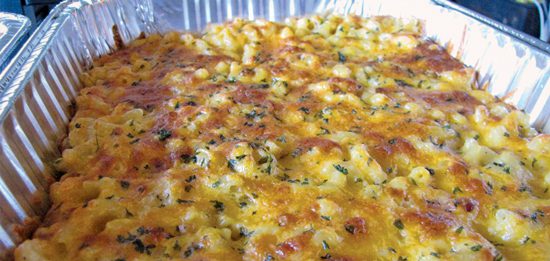
    Cook Shack : Jalapeno Popper Mac

    Mac Sauce
    recipe courtesy of The Mac + Cheese Cookbook

    Ingredients:
    3 cups whole milk
    ½ cup unsalted butter
    ½ cup all purpose flour
    2 teaspoons kosher salt or 1 teaspoon table salt

    DIRECTIONS: 1. Heat the milk in a pot over medium heat until just starts to bubble but is not boiling, about 3 to 4 minutes. Remove from heat. 2. Heat the butter over medium heat in a separate heavy-bottomed pot. When the butter has just melted, add flour and whisk constantly until the mixture turns light brown, about 3 minutes. Remove from heat.
    3. Slowly pour the warm milk, about 1 cup at a time, into the butter-flour mixture, whisking constantly. It will get very thick when you first add the milk and thinner as you slowly pour in the entire three cups.
    4. Once all the milk has been added set the pot back over medium-high heat, and continue to whisk constantly. In the next 2 to 3 minutes the sauce should come together and become silky and thick. Use the spoon test to make sure it’s ready. To do this, dip a metal spoon and if it doesn’t slide off like milk, you’ll know it’s ready. You should able to run your finger along the spoon and have the impression remain. Add the salt.
    5. The Mac Sauce is immediately ready to use and does not need to cool. Store it in the fridge for a day or two if you want to make it ahead of time – it will get a lot thicker when put in the fridge, so it may need a little milk to think it out a bit when it comes time to melt in the cheese. Try melting the cheese into the sauce first, and if it is too thick then add milk as needed.

    —————————

    Jalapeno Popper Mac
    recipe courtesy of The Mac + Cheese Cookbook

    ingredients:
    ½ pound dried elbow pasta
    2 cups Mac Sauce (recipe above)
    2 cups grated sharp cheddar cheese
    ½ cup cream cheese
    ¼ cup stemmed, seeded and chopped jalapeno chiles, plus extra for garnish
    ½ cup panko crumbs

    DIRECTIONS: 1. Preheat oven to 400 degrees.
    2. Cook the pasta in salted boiling water until a little less than al dente. Drain, rinse pasta with cold water and drain it again.
    3. Add the sauce, Cheddar, cream cheese, and chiles to a large, heavy bottomed pot and cook over medium heat. Stir until the cheese is barely melted, about 3 minutes. Turn off the heat and stiff in cooked pasta. Take a taste to check the potency of the chiles – jalapenos can vary in heat, depending on the batch and season so you may want to add more to increase the fire.
    4. Pour the cheesy noodle mixture into a large baking dish. Top evenly with panko and bake until you see the cheese sauce bubbling on the sides, 10 to 15 minutes.
    5. Spoon into bowls and serve immediately.

  • Roper Review: Justin Loya

    Roper Review: Justin Loya

    As a kid, Justin Loya had big dreams. Just not the NFR dreams most rodeo kids have. From the age of five, Justin craved baseball. Both parents, Sam and Marilyn, competed in rodeo and as a youngster Justin roped calves, winning the Tie Down title in New Mexico Junior Rodeo more than once.
    He also played football, wrestled, and competed in other sports during school. But baseball was always his first passion and the thing he wanted to pursue to the highest level.
    Consequently, as a high school freshman, Justin sold his horses to focus solely on baseball. This passion earned him a scholarship at Benedictine College in Kansas. As a senior, he was selected to play on Team USA and traveled to Australia where he ultimately threw his arm out. Corrective surgery soon followed, but Justin found he was not able to throw as he had before.
    With the option of an academic scholarship at University of New Mexico, Justin decided to stay close to home and learn to team rope. After a year and a half of roping close to home, Justin was offered a rodeo scholarship at Frank Phillips College in Borger, Texas. There, he completed his Associates Degree before transferring to West Texas A&M the following year.
    When Justin started roping at 19 years old, he was a #2. In 2006, he missed making the NIRA finals by just one spot. His college rodeo team went on to win the region and nationals. And by the time he was 22, he was rated a #8.
    “I roped all day, every day. I set up my classes where I was done by noon,” explains Loya. “My roommate and I would visit three or four roping pens every day and rope until dark. My parents furnished me with nice horses and that helped quite a bit.”
    Now, at 33, Justin works as a Senior Real Time Trader for PNM (Public Service Company of New Mexico). There he monitors and balances New Mexico’s energy load and generation. He also buys and sells energy as needed throughout the United States.
    Additionally, Justin owns and operates Loya Performance Horses, in Los Lunas, New Mexico, where he trains and sells some nice horses. He is also teaching his seven-year old son, Payson, to rope on his retired rope horse.
    How much do you practice?
    About five days a week.
    Do you make your own horses?
    I’ve made some and bought some. Right now I’m making more than buying.
    Who were your roping (rodeo) heroes growing up?
    I didn’t really have any because I was playing baseball. At the time I was more of a calf roper and Brent Lewis was from New Mexico so I paid attention to him.
    Who do you respect most in the world?
    My father.
    Who has been the biggest influence in your life?
    My parents always have been, now my son is a big influence.
    If you had a day off what would you like to do?
    Play golf.
    Favorite movie?
    Lonesome Dove.
    How would you describe yourself in three words?
    Honest, driven, fun.
    What makes you happy?
    Knowing I’m setting a good example for my son.
    What makes you angry?
    When I don’t do well from lack of preparation.
    If you were given 1 million dollars, how would you spend it?
    I would invest in property and save the rest for my son’s education.
    What is your worst quality – your best?
    My best is striving for perfection. My worst is being overly competitive.
    Where do you see yourself in ten years?
    Hopefully I will be getting ready to take my son to college. Much of the next ten years will be about him and me roping when I can.

  • ProFile: Josh Peek

    ProFile: Josh Peek

    Josh Peek is heading to the Wrangler NFR for the first time in six years – as the top contender ($116,603.15) in the All Around and sitting in the middle of the pack (7th with $71,396.90 )in the steer wrestling. The 6x WNFR qualifier hasn’t made it back due to a number of factors. “It hasn’t been any one thing,” said the 37-year-old from Pueblo, Colo. “I didn’t have horses for a couple years, and then I took a couple years off to spend with my family,” said the father of twins who welcomed their new baby brother on September 20. “Add to that the injuries -last year I got hurt the first of August.”
    He fixed his horse problem by training a new bulldogging horse, Ace, that Pecos Shannon found for him. “It took two years to get him right. I bought him off a ranch in New Mexico; he was a bronc when we first got him. I tried him on the calf roping side, tripping, heeling; he never got good at any of it. I hazed on him one year and he got really good at that, and then I needed a bulldogging horse and now numerous cowboys are winning on him across the country. He’s a game changer of a horse.”
    With his horse problems solved and the blessing of his family and his current employer, Josh made the push to compete at the Thomas and Mack one more time. “My job with Boulder Energy takes precedent over anything I am doing in the rodeo world,” he explained. “I sat down with Boulder Energy – to see if I could make a run at it this year. I knew I wouldn’t be able to put in as much time as I should for that job. I wanted to make sure that I would still have a job when I got back,” he shared. “Right now I’m at that stage of life where it’s great to be out here, but that job and the opportunity that I have there is something I can’t lose.” The company is backing him 100%. “Rodeo is an extreme risk and there are a lot of things that have to go right to get that elusive gold buckle.”
    He is still hoping to make it in the calf roping, sitting 26th, $14,611 out, but it can be done. “I’m the only one that can feasibly make it in two events right now,” he said. “God has a plan no matter what – it’s a blessing going out in the bulldogging and I feel like my bull dogging has matured along with my horse.”
    He is the first to admit this year has been tough. “I realistically haven’t been able to spend as much time with my family. They’ve had to give up a lot for me to be in this position,” he said. His wife, Kori, has been a trooper. His two oldest are in first grade now and can’t be gone like they could when they were younger. “I like our kids being in school and the structure of how to sit down for a full day and have to listen. Someday you are going to have a boss and have to work together, and sit all day and I think school teaches that.” Besides missing his family, he’s had a lot of trials in the calf roping. “I’ve had to change horses a lot and the miles and hours on the road have been a lot harder this year.”
    He is grateful to be home for two days with his new son and his family. “I’m done the end of September, and then I can be home for a couple of months.” For now, he plans to finish 2016 strong. He is leading the All Around right now; and also won the RAM Circuit Finals All Around in April. “I went to 26 circuit rodeos this year, I’ve never been to more than 18, just to make sure I’d stay in a position to win the circuit so I could be down there next year – winning the $30,000 from there is half way to the NFR.”
    He thanks his sponsors, Nutrena, Duba Trailers Customizing, Oxy-Gen, Knukle Energy, Bayou West, Boulder Energy, and Cactus Ropes & Gear.
    Most of all, he thanks the Lord for the opportunities he has and is looking forward to Las Vegas. “Las Vegas is hard to make and you never know when you’re going to be out there. I’ve had a lot of success when I get to the NFR.”

  • Back When They Bucked with CR Boucher

    Back When They Bucked with CR Boucher

    courtesy of Scott Breen & Brandon Sullivan, Montanasports.comand and Siri Stevens

    ‘Routine’ is hardly the word that comes to mind when traveling with CR Boucher. But lunchtime may be the exception.
    Every Monday through Friday he drives eight miles into Pryor, Montana, spends about two hours telling stories with friends at the Senior Center, checks mail at the post office, then drives eight miles home. This world champion cowboy is still sharp as a tack, and witty.
    “I didn’t ride bulls,” said Boucher. “I just entered. My percentage wasn’t that great,” said the 85-year-old that has replaced bulls for a four wheeler and a cane.
    CR – short for Clarence Raymond – grew up in Livingston, Montana. His father worked repairing steam engines. He spent his freshman year as a linebacker on MSU’s football team. He joined the army, and continued to play football for Ft. Worth for two years. When he got out in the 1958, a guy named Aubrey Rankin told him, “I’ll pay your entry fees, you wrestle steers and ride bulls. We’ll split the money.” He had a dogging team, and CR rode his horse. As CR tells it, he’d rarely even seen the sport – but just thought he’d give it a try.
    “So, we got down to about the last rodeo there before we were both broke, and we was at Odessa, Texas,” he said. “I drawed a big ole charolais bull. By God if I didn’t ride him and win second. From then on we just started winning.”
    Eventually a bull stomped on CR’s leg in Farmington, New Mexico, and Aubrey convinced him to stick to steer wrestling. That worked out pretty well for the pair. “Aubrey pumped me up pretty good, making me think I could throw a buffalo bull.” A freak accident at a rodeo performance in Mesquite, Texas, killed Aubrey. He was hazing for CR when the horse he was riding was clipped by a steer, and rolled on top of him. It whipped his shoulder and knocked a bone through his jugular. and when CR got to the back of the arena he wanted to go see his friend. “And they said you don’t want to go up there and look at him,” said Boucher. “They said, there’s blood running out of his nose, ears, everything. So there was a guy there who took me in his car, following the ambulance. Two or three guys in suits. Told me ‘you don’t need to go in there.’ He said D-O-A. And I said, ‘God dang’… That ended our deal.”
    CR picked himself up and made it to the National Finals in Dallas, the last year they had it there in 1961, where he won the average. He went on to become a steer wrestling world champion in 1964. His earnings for the entire year were a little less than $20,000. His kitchen and fireplace mantle are filled with snapshots, trophies, plaques and buckles.
    He qualified six times, then went to work as an arena director and pickup man for 19 year for Beutler Brothers Rodeo Company, picking up at the NFR the first year the NFR was in Las Vegas. CR is one of the very rare professional cowboys to hit every NFR site either as a competitor, or a hired hand. Dallas, Los Angeles, Oklahoma City, and Las Vegas. In fact, while living in Texas, he remembers qualifying for the first NFR in Los Angeles — shortly after JFK was assassinated in Dallas. “Yeah, everybody that had a Texas plates on their car, or pickup or trailer, they throwed rocks at you,” he remembers. “And they thought everybody from Texas was involved in that deal.”
    That was over half a century ago. Today, CR’s credentials are listed in the AKSARBEN Hall of Fame at Omaha, and at both the PRCA Hall in Colorado Springs and the Cowboy Hall of Fame in Oklahoma City in the same year – 2001. Earlier this summer, a brand new buckle was sent to him as an inductee to the Texas Cowboy Hall of Fame. His name, with honors, went on the Montana Pro Rodeo Hall and Wall of Fame, located at the Metra Arena in Billings, in 2003 as World Champion Bull Dogger (1964). He is being inducted into and put on the Legends Wall as a Rodeo Legend this coming January.
    He married Wilma Landie in 1985, the first year he quit picking up bucking horses. They moved to Pryor in 1987 and has been there ever since.
    If he were younger, would he do it all over again in today’s rodeo era?
    “You better believe it. I’d be the first one there. Too much money up.”
    The National Finals Rodeo (NFR) showcases the talents of the nation’s top fifteen money-winners in each event as they compete for the world title. The first National Finals Rodeo (NFR) was held in Dallas in 1959 and continued at that venue through 1961. In 1962-64 Los Angeles hosted the competition. In 1964, however, Oklahoma City successfully bid to be the host city. In 1965 the first National Finals Rodeo (NFR) in State Fair Arena drew 47,027 fans. The world event remained there through 1978 and thereafter was held in the Myriad Convention Center.
    The National Finals Rodeo (NFR) remained in Oklahoma City through 1984, bringing Oklahoma merchants an estimated annual revenue of $8 million dollars. In 1984, however, the city of Las Vegas, Nevada, bid for the NFR (National Finals Rodeo) event. Although the Oklahoma City Council considered building a new $30 million arena at the State Fairgrounds, the Las Vegas bid won. Since 1985 the NFR (National Finals Rodeo) has been held in the Thomas & Mack Center in Las Vegas.
    The NFR (National Finals Rodeo) has become Thomas & Mack Center arena’s biggest client, bringing in more than 170,000 fans during the 10-day event. In 2001 a landmark sponsorship agreement was achieved and Wrangler became the first title sponsor of the National Finals Rodeo (NFR). In 2014 contracts were set for the National Finals Rodeo to remain in Las Vegas until 2024.

  • On the Trail with Lane Barton

    On the Trail with Lane Barton

    story by Siri Stevens and Mary Williams Hyde


    When Lane Barton was in fifth grade he was going to cow camps with his father, George, and going to rodeos on the weekends. “We were on the desert moving cows around and back to the ranch,” said the 24 year old from Winnemucca, Nevada. “I went to rodeos with him since I was a baby. Once I got old enough, I got to go behind the chutes. When I got to high school, I got to put the saddle on and get it set and pulled down, and measure the rein.” George competed all over – California, Idaho, Oregon, Utah, and everywhere. George, now 43, was 13 the first time he rode a horse out of a bucking chute in the days way before ranch bronc riding was even an event.

    His grandfather, George Abel, is in the Buckaroo Hall of Fame in Winnemuca, a museum that preserves the Buckaroo Heritage of the Great Basin (Oregon, Idaho, and Nevada) area of the west. “Being a cowboy up in this country, back where there weren’t many fences; they lived their lives on horseback,” said George, who worked on ranches in the Great Basin most of his life. Several stock contractors came to buy horses that George Abel had. “We had a couple hundred head of horses on my grandma’s ranch in Fort McDermitt on the reservation,” he said. He was lucky to have plenty of horses to practice on. “They’d drive them 74 miles from McDermitt to town,” he remembers. “The horses would fill up a two lane road for a long time.” He rode broncs in high school rodeo and in 1991 was the Nevada State Champion and traveled to Shawnee, Oklahoma, for the National High School Finals. George went on to ride in the PRCA for seven years. He quit a little after his second son (Chance) was born. He picked up ranch bronc riding instead, working on his father-in-law’s ranch. “You don’t get the time off to travel, but I hit the ranch rodeos that I could get to.” He has since moved to Winnemucca, where his wife, Denise, teaches school and he works in the gold mine. “I learned a trade instead of cowboying,” he said. “I go brand calves and help out everyone around.”

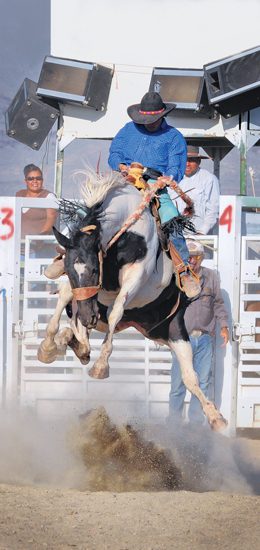
    Lane picked up the rodeo bug, climbing on his first bronc at the age of 13. “Ever since I was a little kid that’s all I wanted to do was ride bucking horses.” He started riding broncs in high school and rode until he was a junior, when he ventured out to bull riding. “I hung up the rope after the last one my senior year. I had already started riding ranch broncs and I could do that better.” Western States Ranch Rodeo started up his senior year in high school, so he had a place to go. “The biggest difference between ranch bronc riding and saddle bronc riding is the saddle – you get to ride with both hands if you want to.” He likes the fact that you don’t get disqualified if you ride with both hands or lose a stirrup.

    He didn’t get his Western States Ranch Rodeo card until 2012. Ever since then, he is entering every rodeo he can, as time off from his full time job, and availability of entry money allows. Lane welds fence for Nuffer Welding and will marry his fiancé, Kayla Dowd, next September. He is determined to make the WSRRA National bronc riding finals for the third time this fall. Only the top fifteen, of over 100 ranch bronc riders who try for the same honor every year, can ride at this prestigious event.

    Today, George is more his son’s biggest fan and mentor, traveling with Lane as often as he can, rather than going for points and money himself. Even after thirty years and over 1,000 broncs, George still loves to ride an occasional rank bronc, especially if he can complete against his son, Lane. “Take a deep seat, give your horse his head, keep moving your feet forward, and let the horse buck,” is his standard advice.

  • Honey BBQ Chicken & Pumpkin Cornbread

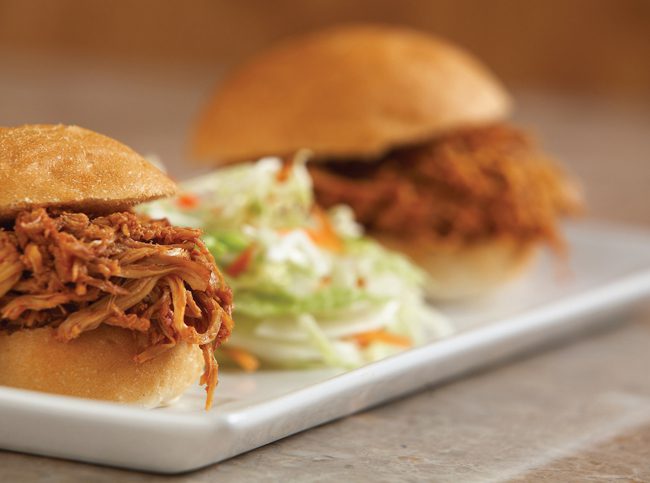
    8735185681_ab472f13a6_oHoney BBQ Chicken

    recipe courtesy of Liz Fourez, LoveGrowsWild.com

    Ingredients:
    3 boneless skinless chicken breasts
    18 ounce bottle Honey BBQ Sauce
    1/2 cup Italian Salad Dressing
    1/4 cup brown sugar
    2 Tablespoons Worcestershire sauce

    DIRECTIONS:
    Place chicken in a slow cooker. In a bowl, combine the barbecue sauce, Italian dressing, brown sugar, and Worcestershire. Pour sauce over the chicken and cover with lid. Cook 6-8 hours on low or 3-4 hours on high. Remove chicken from the slow cooker and shred using two forks. Return the chicken to the slow cooker to coat with sauce and serve on kaiser rolls.


    cornbreadPumpkin Cornbread

    recipe courtesy of Jaclyn, CookingClassy.com

    Ingredients:
    1 cup all-purpose flour
    1 cup cornmeal
    1 tsp baking powder
    1/2 tsp baking soda
    1/2 tsp salt
    1/2 tsp ground cinnamon
    1/2 tsp ground ginger
    1/4 tsp ground nutmeg
    1/4 tsp ground cloves
    1/2 cup packed light-brown sugar
    1/4 cup unsalted butter, melted
    1 cup canned pumpkin puree
    1/2 cup sour cream
    2 large eggs

    DIRECTIONS: Preheat oven to 375 degrees. In a mixing bowl whisk flour, cornmeal, baking powder, baking soda, salt, cinnamon, ginger, nutmeg and cloves. In a separate mixing bowl, add brown sugar and break up sugar. Add in melted butter and pumpkin. Mix in sour cream and eggs. Pour mixture into flour mixture. Pour batter into an 8 by 8 inch baking dish. Bake about 25 – 30 minutes. Cool slightly on a wire rack then cut into squares.