Rodeo Life

Category: Archive

  • Roper Review: Mike White

    Roper Review: Mike White

    A good and positive attitude is a common trait amongst people who excel at anything. A trait not as common, though respected as much or more, is humility. When asked about his life and accomplishments, Mike’s first reaction is to talk about the people who helped him.
    Mike White grew up in Lake Charles, Louisiana where rodeo was a way of life. His older brother, Pat, was a bull rider, bullfighter, and stock contractor who Mike fondly describes as a workaholic.
    “Pat rode bulls outstanding,” says Mike. “Probably better than me. What he didn’t like was traveling and being gone, so he never made a career of it.”
    As a youngster Mike took part in most rodeo events including team roping, bull dogging, calf roping and riding bulls. He was given a lot of responsibility at a young age and by the time he was sixteen he was driving a semi hauling bucking stock to rodeos.
    At age 15, he was also riding racehorses as a jockey and fought to keep his weight down. When he got his jockey license at 16, he was also trying to ride bulls. Two fellow jockeys, Chris and Aaron Emigh, helped with his decision.
    “They told me I needed to choose between the two. In order to be a jockey I would have to stay sick and puny to keep my weight down. If I didn’t want to do that, I needed to ride bulls.
    “I chose to ride bulls and had every opportunity in the world to become good because of my brother. He was my teacher, my mentor, and would help me at any time of the day or night.”
    Mike’s rookie year in the PRCA was 1997. He made the finals that year and set the record for the most money earned as a rookie, finishing 5th in the standings. The next year he returned to the NFR with a good chance at winning the world. After five rounds and no qualified rides, Mike was getting more advice on bull riding than he could process. He called his brother, Pat, who said, ‘What you’re going to do, after the next perf, is get on a redeye flight, come home and get on some bulls. Then you can fly back to Vegas in time for the next performance.’
    “I told Joe Baumgartner my plan and he told me to hold up. He got me hooked up to ride some bulls at Michael Gaughan’s place, and told me I could get on as many as I wanted,” says White. “I got on three bulls, got my confidence back and rode four out of the next five bulls at the NFR.”
    In 1999 Mike hit the rodeo trail hard. It was the end of July and he was winning the world when he realized he was burned out. He told his traveling partner, Myron Duarte, that he was done and headed home. Myron said, ‘You can’t do that, you’re winning the world.’ Mike didn’t care; he was tired of the road.
    Fast forward to the last three weeks of the rodeo season. White has fallen out of the top fifteen when he calls Myron and told him to enter him in the remaining rodeos.
    “Don’t worry, you’re already entered,” responded Duarte. “You’re going to have to turn out some because I have you double entered. This is what you get for being lazy.”
    White admits it was costly as he took last minute flights to get to the rodeos where he had drawn the best. He made the finals in 13th place by several hundred dollars. He went on to have an outstanding NFR and rode eight of the ten bulls and winning the world that year.
    “I was burned out and tired of going,” explains White. “If you’re tired, you’re not going to perform to the best of your ability. By the time I went back, I was hungry for it.”
    In July of 2000 White suffered a broken neck, keeping him out of action until the following year. After returning to competition, at a PBR event in Shreveport, Louisiana, his first bull stepped on and crushed his ankle. That injury kept him sidelined for seven months. At the third event, after recuperating, he was thrown and dislocated his shoulder, breaking the ball in it.
    Admittedly being hardheaded, White refused the help of the Justin Cowboy Crisis Fund and used his own savings for bills and living expenses. When he did finally return to the arena, he had a total sum of $300, virtually starting completely over.
    “I’ve dealt with a lot of injuries,” says Mike. “But that particular time was rough and a real eye-opener for me. It made realize just how short and humbling a bull-riding career is. I learned you should save and invest every dime earned for the end of your career.”
    Mike always enjoyed team roping and training horses, but never found the time when he was riding bulls for a living. Upon retiring from bull riding in 2010, he and his wife, Hannah, started training and roping more.
    “I love to rope and am probably addicted to it. It’s a very humbling sport. One day you’re a rock star and the next you can’t catch.”
    Now rated a #7, Mike recalls being at an all time low with his roping and being entered in the Big 12, the day after the George Strait Team Roping. He called his nephew, Tyler Domingue, whom he taught to rope as a youngster, and asked for help.
    “In true Tyler fashion, he pulls in at 11 p.m. to rope. In seven steers, he had me catching 95%. It’s ironic that I taught him and now I’m going back to him for advice. There are people who can rope well, but can’t explain it; then there are people who can break it down where it makes sense, and that’s Tyler.”
    White, who turns 40 this year, has found his passion in training quality rope horses. They’ve sold three horses to past NFR qualifiers, mostly recently Clayton Grant from California. The Grants are enjoying the six-year old heel horse, calling him a “true gentleman.”
    “There’s not a horse we sell that I won’t stand behind,” says White. “I don’t train or sell junk. I like nice horses.
    “In life, the one thing you will always have is your name. Once you ruin that, you’re ruined for life. I will always stand behind mine.”
    As a professional athlete, Mike is quick to point out the importance of sponsors and his responsibility to them.
    “When one of your sponsors asks you to do something, your response should be ‘You bet, when and where do you need me.’ I’ve been blessed with great sponsors and I appreciate them very much. When you’re hurt, sometimes the only income will be from your sponsors. If you’re asked to do something by your sponsors and you don’t want to, don’t think people aren’t going to notice. In the rodeo world people see everything you do.
    “Some of the sponsors that stuck with me after I retired from riding bulls are Big Tex Trailers, Fast Back Ropes, and Cooper Tires. I’ve always respected that.”
    Mike and Hannah live in DeKalb, Texas, with their two sons, Logan, 12, and Morgan, 4. Each year they host Mike White’s Annual Pasture Roping & Benefit, a non-profit organization benefitting Ropin Dreams, an organization that benefits children with serious illnesses or injuries.

    COWBOY Q&A

    How much do you practice?
    Every day.

    Do you make your own horses?
    Yes.

    Who were your roping heroes?
    Jory Levy. He really broke it down for me. He took the time to help me and that meant a lot.

    Who do you respect most in the world?
    My grandpa and my parents. Until the day he died, my grandpa opened the door for my grandmother. He never walked in a building with his hat on. He had a lot of respect for people and I learned a lot from him.

    Who has been the biggest influence in your life?
    My brother, Pat.

    If you had a day off what would you like to do?
    Take my wife to the beach.

    Favorite movie?
    Talladega Nights – “If you’re not first, you’re last.”

    What’s the last thing you read?
    The Bible

    What makes you happy?
    Roping and riding horses.

    What makes you angry?
    Losing.

    If you were given 1 million dollars, how would you spend it?
    I’d build a covered arena and donate most to a foundation, Ropin Dreams.

    What is your worst quality – your best?
    Best quality is honesty. Worst quality is being a workaholic.
  • ProFile: Lindsay Davis

    ProFile: Lindsay Davis

    From the time Lindsay Davis entered her first rodeo astride a Shetland pony, she’s had college rodeo on her mind. Working through the ranks of junior and high school competition alongside her sisters, Jana and Kiley, the 23 year old from Malad, Idaho, achieved her goal of college rodeoing. She qualified for the CNFR in the breakaway roping her freshman year, and recently accepted the assistant rodeo coach position at Colorado Northwestern Community College (CNCC). But like many a trek down the rodeo trail, her journey isn’t without its share of detours – and surprises.
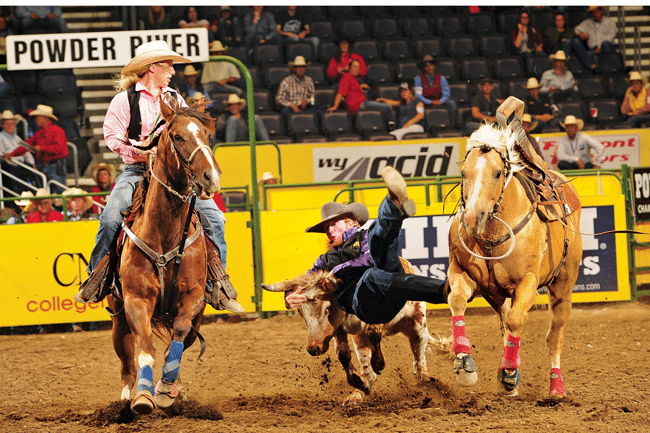
    One of the greatest surprises – more so to her family than herself – was the opportunity for Lindsay to haze for several of the College of Southern Idaho’s steer wrestlers, from practice all the way to the CNFR. Her uncles, Kenny and Tom Holland, greatly influenced her interest in hazing when Lindsay was ten. They started an annual spring steer wrestling school in Montana, and when Lindsay’s dad drove a handful of steer wrestlers north for the school, Lindsay tagged along. “She was paying more attention than I thought, and when she got to college, one of her steer wrestling friends needed a hazer,” says her dad, Kelly Davis, a roper and steer wrestler himself who introduced Lindsay to rodeo. Lindsay hazed several steers for her friend and called home to ask about bringing back one of her dad’s hazing horses to school. Knowing the hazards of hazing, her mom, Mary Jo Davis, was far from being in favor of the idea. Lindsay’s determination found a way, however, and unbeknownst to her mom on a visit home, snuck the horse into the trailer with her dad’s help.
    Having watched more steer wrestling than any TV show, Lindsay took to hazing naturally. By fall of 2015, her senior year, she was hazing for eight of the steer wrestlers, and hazed for several of them at the CNFR two years in a row. “I’ve chute dogged a few times, but never gotten off a horse. But if I could bulldog, I definitely would,” says Lindsay. “The guys will come ask me which are the stronger steers and how the last guy did on the one they drew. I pay attention, not just for them, but for myself so I know what moves the steers make and how to make the best haze. I was the only girl hazing in CSI, but there’s another girl in Rocky Mountain region who started doing it as well.”
    Over the years, Lindsay has competed in nearly every girls event except barrel racing, and focused on breakaway roping, team roping, and goat tying in college. “I really enjoyed college rodeo – it was that step above everything else I’d done before, and I had to be more competitive. Not only are you riding and doing what you love, but you’re getting an education. Being a student athlete, there’s that drive to keep up your grades so you can rodeo and help your teammates and your coach.” She was also a talented softball player in high school, but chose to pursue a rodeo scholarship. “I told Lindsay that the sport of rodeo is where you go and help everybody,” says Kelly. “It’s not you against the next girl, it’s you against the stock you draw. Through that, she’s made good friends, and the coaches know her as a person who helps.”
    Lindsay’s dedication to rodeo didn’t go unnoticed. Another surprise on the rodeo trail came when CNCC in Rangely, Colo., offered her the assistant rodeo coach position. “They’d had another girl coaching, and I told the head coach Jed Moore in passing that she had an awesome job,” Lindsay recalls. “I love coaching kids. A while later at a college rodeo, Jed asked me if I was serious about the job, and he offered it to me right there. It wasn’t in my plans, but it is now, and I’ll see where it takes me!” She starts her work with recruiting this July, and she’ll move to Rangely in August.
    She’s also working to start her own business since graduating this spring with degrees in equine studies and business management. “I’m interested in chiropractic work and equine dentistry. Growing up, we’d take trailers full of horses to a guy who came through here specializing in those areas. People are always asking who they can call for those services, and that’s what gave me the idea for my business.”
    While she’s also helping her family with ranching and farming this summer in southeast Idaho, Lindsay sets aside time for rodeoing with the RMPRA in both the team roping and breakaway. “I do both ends team roping, but I’d say I like breakaway a lot more,” she says. “I had a bad horse accident team roping right before my freshman year of college, so it took me a while to even want to team rope after that.” Lindsay doesn’t remember much of the accident, but her dad, who was watching, says she was roping a steer when her horse stepped into her curl and sent the pair tumbling head first. “She had a concussion, and she had a tough time for a year and a half being able to remember short term things,” says Kelly. “We went to Utah State University, which specializes in researching concussions and learned that Lindsay needed to teach her brain it could still learn new things. She started beading projects like belts, and working with her hands and creating patterns has really helped her mind heal itself.”
    On the rodeo side, Lindsay missed her first regional college rodeo of the season, but she was released to compete shortly after and won the all-around in her first college rodeo, placing in both the breakaway and the team roping in Pocatello, Idaho, on her yellow mare, Piggy. “I probably wouldn’t still be team roping without the help of my friend Trasen Jones, and Cody DeMers, who was the assistant rodeo coach at CSI,” says Lindsay. “He really helped me get back into things mentally, and my dad helped me with the roping. Dad’s always been my go-to guy – I don’t know what I’d do without him. He and my mom are my biggest supporters, and I can always count on them being there.
    “My biggest goal for the future is getting my business started up, and rodeo wise, I want to stay on top of my game and keep making the finals. I also want to get married someday and start a family and get them into rodeo. Rodeo is a family thing, and we’ve never let it die. I knew every summer I’d be living out of the truck and trailer. It’s part of my life, so I come back to it all the time.”

  • No-bake Bars & Curt’s Cowboy Beans

    No-bake Bars & Curt’s Cowboy Beans

    No-bake Bars

    recipe courtesy of Leesa Wyers,”Cookin’ with Cowboys”

    Ingredients:
    4 cups Cheerios
    2 cups Rice Krispies
    2 cups dry-roasted peanuts
    2 cup M & M’s
    1 cup light corn syrup
    1 cup sugar
    1 1/2 cup creamy peanut butter
    1 tsp. Vanilla extract

    Directions:
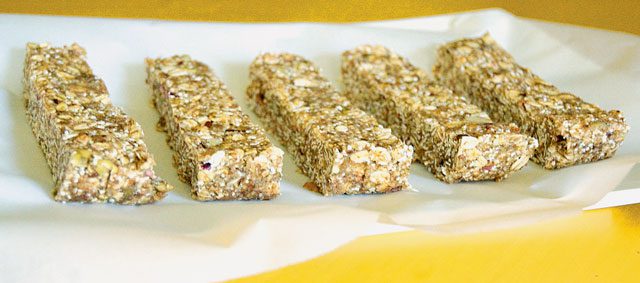
    In a large bowl, combine Cheerios, Rice Krispies, peanuts, and M & M’s then set aside. In a medium saucepan bring corn syrup and sugar to a boil. Cook and stir until sugar is dissolved. Remove from heat, then stir in the peanut butter and vanilla. Pour over dry ingredient mixture and toss until coated evenly. Spread in a greased 15 x 10 inch baking pan . Allow to cool then cut into bars.


    Curt’s Cowboy Beans

    recipe courtesy of Curt Piper, “Cookin’ with Cowboys”

    Ingredients:
    1 can Bush’s baked beans
    1 can chili beans
    1/2 cup chopped onion
    1 can chopped green chilliesCurt’s Cowboy Beans - Courtesy of Jessica Spengler
    salt & pepper
    1 lb. hamburger
    1 cup shredded cheddar cheese

    Directions:
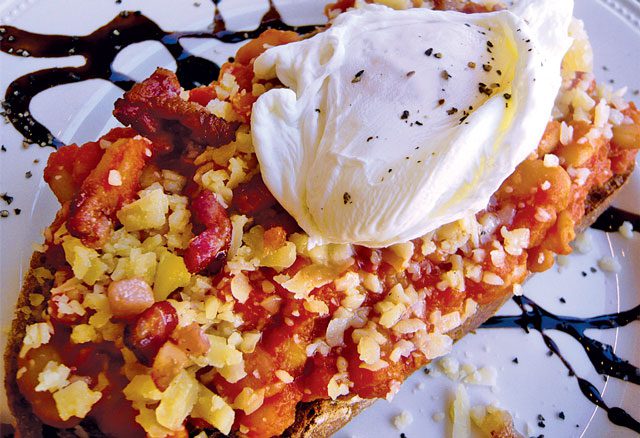
    Brown hamburger; drain grease. Mix in onions and chillies. Salt and pepper to taste, then add beans. Stir to boil. Top with cheese and let simmer. Serve on toast or hamburger bun, top with sour cream and enjoy!

  • Back When They Bucked with Willis Hamm

    Back When They Bucked with Willis Hamm

    Trick roper, trader, entrepreneur, Willis Hamm was born near the second half of The Great Depression, yet hard work and ingenuity were spurs on the heels of the somber era. With them, Willis started his own business, Cowboy Metal, which celebrates its 50th anniversary this year, grown on the values of the western lifestyle – and $187.11.
    Born November 5, 1934, to Henry and Esther Hamm, Willis was the youngest of four children. His father was a horse and dairy cow trader, and owned a dairy farm near Hooker, Okla., a town in the 34 mile wide Oklahoma panhandle. Willis was at once initiated into a lifestyle of rising when the day was just four hours old – or at least arriving home in time for milking. “Leland Friesen was my best friend in high school, and we’d ride after church into the night – my dad just said to be home by milking,” Willis recalls. “He never let me use the truck, saying I had a saddle and a horse. He had an extremely good reputation as a trader for his integrity and honesty, and he taught me all of that. We learned how to work and to be honest, and that’s still very important to me today.”
    Willis and his brother took to breaking horses, both for their dad and the public. “I was trick riding then and teaching our horses,” says Willis. “My dad would have me show somebody the tricks a horse could do, and it was sold. It was key to my dad’s trading, but it was a heartbreaker for me to say goodbye. I really learned how to detach myself from an animal until I got my own horse, Lady.” The mare lived to be 34, and became Willis’s trick riding mount after he met Dixie Lee and Virginia Mae Reger of Woodard, Okla. “I saw them trick ride at a rodeo in Guymon, Oklahoma, and I fell in love with it,” Willis recalls. “I went home and started doing the tricks I’d seen. I didn’t have a trick saddle at the time, but I messed up my dad’s favorite saddle standing on it. The death drag was one of my favorites – it’s daring and spectacular.”
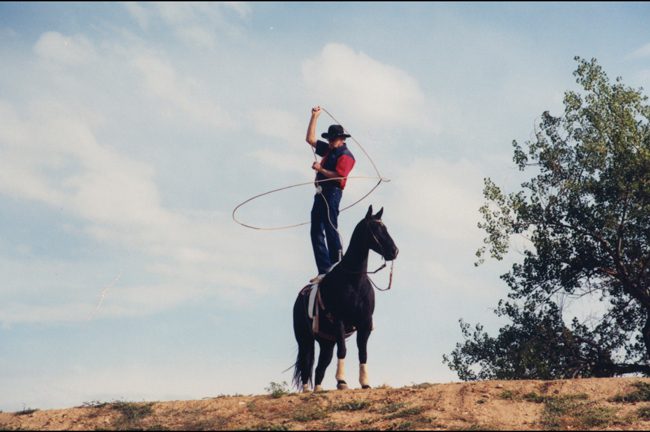
    Never one prone to thumb twiddling, Willis added trick roping to his repertoire in grade school. The three Gilbert brothers from his school were from a ranching family, and they shared their knowledge of trick roping with him. “They were real cowboys, and also my heroes from the standpoint of trick roping,” he says. “I learned to do whip work on my own, and riding standing up while spinning a rope was something I specialized in.” He also experimented with roman riding, known for taking any two horses his family had and making them go forward. “Frank Gilbert could roman ride two horses jumping over a convertible, and I asked my dad about using a neighbors junk car to jump, but he said no, so I made some jumping standards and put a blanket in between to create the same distance. I also trained one of my dad’s horses, Dolly, for trick riding. She loved to fall, and I learned to fall free of her. I’d take her to one of our plowed fields and take her down at a gallop, just like in the movies.”
    Willis took his talent from the cow pasture that was his practice pen to rodeos in Kansas and Oklahoma. He grew up just 30 miles from the late legendary rodeo clown and competitor, Buddy Heaton, who eventually left the RCA to create his own rodeo circuit. It was there Willis found his lifelong love of mules and buffalo. “Buddy was my hero, and he did the unusual,” says Willis. “He bucked mules and buffalo as his roughstock. I clowned his buffalo rodeos and did some trick riding and whip work for him for several years.”
    Change came when Willis quit school and refused to return for his senior year. “I didn’t get along with my teacher, and he said I was unteachable. My sister had gone to Meade Bible Academy two years before, and my parents asked if I’d go there. I told them only if my best friend, Leland Friesen, came along. He didn’t have a father and his family was very poor, and to this day I’m fairly sure my parents made it possible for him to go that school.” It was there Willis met his future wife, JoAnn Friesen (no relation to Leland), and they were married on December 29, 1953, when Willis was 19, fitting the wedding between milking chores.
    The newlyweds moved to Denver, where Willis worked for two and a half years at a Presbyterian hospital as an alternative to the draft for the Korean War. To supplement his income, he mowed lawns, delivered The Denver Post, and drove horses for Glacier Barns’ hayrides several hours a night. In 1960, he started working for a company that built doorframes, but boredom struck, and Willis decided to make good on his pledge to be a trader like his dad. “I’d saved up $187.11, and I wanted to see what I could do with it,” he says. “The first thing I did was buy a machine I didn’t know anything about, which turned out to be worthless. I knew a guy in the machine tool business, so I told him my story and we traded for a little punch press. I started making things like ornamental leaves for fences for three cents apiece, and then a friend of mine in the ceiling business needed ceiling clips, which I built by the thousands.”
    By 1968, Willis had three employees, unbeknownst to his own employer, whom he was still working for. “I went into my boss two years after I started Cowboy Metal and told him what I was doing,” says Willis. “I thought he’d either fire me or tell me to get rid of it, but he only asked if I was man enough to run two companies, and I worked for him another two years.” In 1970, Willis had saved $2,000 cash to quit his doorframe job and begin working full time at Cowboy Metal, but the day he resigned, he went out to lunch with his billfold and came home without it. It was found and returned with everything but the $2,000. “That’s the money we were going to live on for a while, but the man I’d sold ceiling clips to advanced me some money, and it didn’t take me long to pay it back. I’m a risk taker and a pretty good manager, and I ended up fulfilling my wish of being a trader.”
    Willis went on to buy and sell everything from wagons and buggies, to horses, mules, and harnesses, staying just ahead of the curve of what was trending for 25 years. He sold harnesses internationally to Germany, Japan, and South America, while Cowboy Metal expanded its services to building horse trailers. Today, the custom metal fabrication shop, still located in Denver, specializes in press brake, shear, and welding services, along with repairing many types of trailers and selling trailer parts.
    While his business grew, so did Willis’s family. He and JoAnn have two children, Verle Hamm and Melody Brandt, along with four grandchildren – Verle and Dawn’s daughters, Alyssa and Randi, and Melody and Bruce’s sons, Jason and Lance – and five great-grandchildren. “I’m honored to have him as my dad and experience the things we have together,” says Verle. He competed in the NLBRA in bareback and bull riding, and was the CSHSRA bull riding champion in 1974, along with the all-around reserve champion. Today, he competes in the Cowboy Mounted Shooting Association (CMSA). He and Melody work at Cowboy Metal, while Willis ushered all of the grandchildren into the Denver National Western Stock Show, which he competed in with both horses and mules. “There’s been a second-class attitude about the mule industry, but at Cowboy Metal we always tried to raise the bar and be creative,” says Willis, who won every class at the Stock Show during his 30 years as a competitor.
    Yet the creativity didn’t end there. In 1969, Willis had purchased a piece of property in Louisville, Colo., between Boulder and Denver, naming it Cowboy Meadows Farm, a division of Cowboy Metal. Complete with Western buildings, teepees, and stagecoaches, the farm hosted weddings, YMCA summer camps, company picnics, and other special events, until it was sold in 2010. Willis and Verle also drove rodeo dignitaries in their stagecoach for 18 years in the Greeley Stampede, including Leon Coffee and Bill Farr.
    “It was fun growing up and having a dad who was a cowboy,” says Melody, “and all the fun we had at the National Western Stock Show will never be forgotten. He taught us a lot of things, and growing up with him as a dad was never dull. His faith and love of God and family is a wonderful heritage.” Today, Willis and JoAnn make their home in Lakewood, Colo., near Denver, where his garage is home to numerous mechanical dummies he creates and engineers to talk and make facial expressions. Though he sold his 14 buffalo – one of which, Harry, now hangs in Willis’s office – Willis still works with his mules. He sold two pairs of mules to a wrangler for the 2013 adaptation of The Lone Ranger, and his inventiveness also produced Little Spike in 2005, a train engine with ten passenger cars he and Verle take to special events such as Buffalo Bill Days in Golden, Colo., country clubs, farmers markets, parades, and Lakewood Cider Days. They have also taken their special events to Nashville, Tenn., Wichita and Liberal, Kan., Guymon, Okla., Tacoma, Wash., Las Vegas, Nev., Greeley, and The Broadmoor in Colorado Springs, Colo., while also making appearances in and providing props for TV commercials.
    “Life has been good, and I’m grateful for the talent and opportunities God has given me,” Willis concludes. “To quote my hero, Will Rogers, it takes a life to make a living, and it takes a lifetime to make a reputation.”

  • On The Trail With Clayton Biglow

    On The Trail With Clayton Biglow

    Clayton Biglow is on a quest …Resistol Rookie of the Year … “I always knew that I wanted Rookie of the Year,” said the 21-year-old bareback rider from Clements, California. By the time Clayton graduated from high school in 2014, he had won the International Youth Finals Rodeo twice in the bareback riding; National High School Finals once, and was Reserve All Around once. He went to Feather River College last year, and finished second at the College National Finals Rodeo, behind Wyatt Denny, his traveling partner. He joined the PRCA last year, and won the PRCA Permit Holder of the Year Challenge in Las Vegas.

    Clayton is going to school for Ag Business and plans to return to the family ranch when he’s done rodeoing. “We have horses and a property management company, so the degree will be helpful.” Clayton started competing when he was six in the calf riding in the Northern California Junior Rodeo Association. “I always wanted to – my dad (Russ) did it, making the top twenty a few times.” Russ rode bareback horses, starting in 1985. Due to his size, he didn’t get on his first one until he was 20, in the meantime, he was a team roper. His mom, Jessie, came from a hunter/jumper and polo playing family, and continued breeding, training, and showing while Clayton was growing up. He helped her exercise 15 horses a day and start colts. His older sister, Taylor, amateur rodeos and his younger sister, Maddie jumps and does junior rodeo.

    When Clayton got older, he competed in junior bulls – from 12-15 years old. His dad wouldn’t let Clayton ride senior bulls or start riding bareback horses until he thought he was big enough. He started riding the last two rodeos of his sophomore year, qualifying for National High School Finals in that and the cutting, finishing as the Reserve Champion All Around Cowboy. He rode bulls at two rodeos once he was a senior, but decided to stick to the bareback riding. “I’ve gotten on a few saddle broncs, but I never craved it like I did bareback riding.” He learned how to ride from his dad and a neighbor, John Holman, a 3x WNFR saddle bronc qualifier. Clayton switched from public school to home schooling when he was a sophomore. “I was working quite a bit doing day work and riding colts for my mom, and that gave me more time to rodeo,” he said.

    He also played football, basketball, and played baseball. After his freshman year, he quit sports to focus on rodeo. “If it wasn’t for rodeo, I’d be playing baseball – I loved it.” He played short stop and pitcher. He also plays golf, and fills his days on the road with golf whenever he can. He started playing when he was little, playing with, and beating, his dad. He also works out on the road. “Wyatt and I do a lot of CrossFit, so we find a gym whenever we can.” Bareback riding uses every muscle in his body, and CrossFit helps keep his core strong. He and Wyatt and their other traveling partner, Kenny Hayworth just picked up new arm braces from Lethbridge Orthotic in Alberta. “We’ve rode with them on since the 4th – – it took me awhile to figure it out – it was a little bulky and a little different than riding without one. But my arms not sore – last year by now, after 60 or so rodeos, my arm and elbow were sure sore. I’ve never rode with a brace, but I’ve tried a bunch on, and the first time I put this one on, it felt great.”

    Clayton is a team roper too, hauling horses with him whenever he can. He’s concentrating this year on winning Resistol Rookie as well get a spot in the National Finals Rodeo. The #5 header and #6 Elite heeler plans to add team roping to his entry fees next year, with the goal of trying for All Around.


    So far this has been a great year for Clayton – he won Reno, and is currently sitting eleventh. He’s got four days off in the middle of July, and will head home. “I feel great, it will be nice to get home for a few days. We live right by a lake, so I’ll go to the lake and rope with my dad. We are doubled up in Salinas and Ogden, so we’ll see how we draw. I’ve been having a good time, I’ve got great traveling partners and it’s exactly how I wanted it to go down for sure.” Clayton will switch schools this fall and take online classes through Western Nevada College, joining his traveling partners, Wyatt and Kenny under the coaching of Jesse Segura, who will be starting a rodeo program at the school.

  • On the Trail with the Soileau Brothers

    On the Trail with the Soileau Brothers

    “I rodeoed and I loved it,” said Kent Soileau, from White Ville, Louisiana. “When my oldest son (Garrett) was 8, I decided he should rodeo and I built a rope pen and got a set of steers.” Life took over, and Kent didn’t push it. “We were farming and buying properties.” Three or four years went by, and Kent realized if he didn’t put rodeo as a priority, he was going to miss out and so were his boys. “They all agreed to plow the pen, get some horses and go again.” The hard work paid off and this year three of his boys are headed to the National Junior High and High School Finals. His wife, Sadie, was a city girl who came to the country.

    “I love it,” she said about rodeo. “I’m still not a horse person, but I get the clothes and the cooking together. I like seeing new places.” The family had never been to Tennessee and made the ten hour drive to Lebannon to watch their youngest son, Grant, compete. After that they will head to Gillette, Wyoming, to watch two other sons, Gavin and Gabe, compete at the National High School Finals.

    Grant competes in team roping and chute dogging. He spends his spare time working on the family farm, where they grow rice, sugar cane, wheat, corn, and beans. They also run crawfish traps from February to mid-June. He likes working on the farm and plans to come back after obtaining an ag business degree in college. “It’s very hot and I like it,” he says of farming. Grant started competing when he was at the end of his fifth grade year. Before his first rodeo, he had practiced for about three months. He learned from his dad and family friend, Tom Carney (Steer Wrestling 101). “It looked fun and it was a challenge,” said the 14-year-old, a ninth grader at Sacred Heart High School in Ville Platte (11 miles away). “When I went to Tom’s school, I didn’t know anything about bull dogging; I didn’t want to go. I just wanted to practice team roping. But now that I’m bull dogging I like it a lot, it’s a lot of action.” Grant believes that if you want something, you have to work hard for it, and with that, he practices a lot. “I get up every morning, I practice, and every night we are bull dogging – every time it doesn’t rain and our pen is dry enough.” Grant is the red headed youngest in the family of five. “I have a sister (Lainey, 21) that is a red head, and my older brother (Garrett– 19 about to turn 20); he doesn’t rodeo. When we started he was about to graduate so he didn’t rodeo. He’s going to college for Ag Business and working on the farm.” Grant has met a lot of friends through rodeo, and when he’s not practicing, rodeoing, or working on the farm, he likes to go swimming, four wheeling, fishing and duck hunting. He works hard not to be in the shadow of his older brothers. “We ride different and we swing our ropes different, but we still help each other out.”

    Gavin is two years older than Grant and made the National High School Finals for the first time in the team roping as a heeler. He went into the Louisiana High School Rodeo Finals in the tenth hole in the team roping and ended up in the fourth hole going to Nationals. Gavin works on the farm, and he spends most of his time practicing. “We go to school and when we get home we crawfish or practice. In the summer time, I help my dad drive tractors, plow, shred, or get the cane ground ready.” His least favorite thing to do is pull red rice. “It’s hot and sweaty and my arms get cut up.” Gavin is going to be a junior and school is not his favorite to do. “There are other things I’d rather do, like rodeo or hunt or fish or drive around in my truck.” The 16-year-old drives a 2013 2500 GMC. “It was my dad’s older truck and he gave it to me and got a new one.” His dad is insistent that his sons practice. “There are days I’m lazy and he makes me go,” said Gavin, who wants to be a vet or come back to the ranch and be a foreman. Gavin stared rodeoing in the 8th grade. “We never really got into the competition big – we went to some smaller ones, and we were showing goats and we had some friends that rodeoed and we decided to do it.” Gavin is hoping to be a National Champion – and is preparing for it. “We rope our machine and even though we just got a big rain, we will get out there again and prepare for the finals.” His hero is Ote Barry. “He’s a four time world champion steer wrestler and came back to go the American and did pretty well.” He has learned along the way the he can’t look at what everyone else is doing, he just needs to be the best he can be. “I have the want and drive to get better, and reach the full potential of what I can be.”

    Gabe is the oldest in the family that competes. “I try to help my brothers in any way I can and make sure they do everything they can when we practice,” said the 18-year-old. “I want us all to succeed. When we practice, it’s me, Gavin and my dad. My dad works the chute. Gavin hazes for me and I haze for him and we haze for Grant, who just stared jumping steers. We do all the ground work first.”

    Gabe is heading back to the National High School Finals Rodeo to defend his 2015 Steer Wrestling Championship. “It really didn’t sink in right away,” said the recent graduate from Sacred Heart High School of his win last year in Rock Springs, Wyo. He is concentrating on making sure he is focused this year. “I am preparing myself as best I can to compete. It is more muscle memory – if I prepare myself the right way it’s easier to compete.” He slides the stick, jumps the dummy and chute dogs before he ever jumps a steer on a horse. He typically practices two to three hours a day. “I don’t practice every single day, but I do, at least three or four times a week.” He believes the horse has a lot to do with everything. “I have a lot of good luck with my horses. For a horse, you’ve got to get along, and me and my little brother can’t ride the same horses, we don’t always get along the same.” The horse he rode last year is Kid Rock, a horse he owns. “I bought him right before state finals last year and rode him at state finals and that was the first rodeo I rode him at. I bought him from Marcus Theriot (2016 CNFR All Around Champion) – he had three bull dogging horses at the time and he sold him. I got along with him right away.”

    Gabe will head to college at Mcneese State. “It is close to home and I always wanted to go there. Half my friends and my brother go there.” He will study Ag Business and will come back and work on the farm with his dad. “My older brother is doing the same thing.” Unlike his older brother, Gabe plans to college rodeo and once he graduates, he will get his card and travel around and see how it goes.

    Next to their dad, all three boys count their grandpa Melvin as their hero. “He’s always worked hard his whole life and he’s never quit. He’d put his mind to something and he would do it.” All of Kent and Sadie’s children have the same determination and drive. “The perfect day is waking up healthy, having my family around and being able to do the things I love, rodeo and farm,” said Gabe.

  • Back When They Bucked with Vernon Dude Smith

    Back When They Bucked with Vernon Dude Smith

    [ The Smith family’s only bootprint in the horse world was a great-great-grandfather who traded horses, but that all changed when Dude went to watch his first rodeo. ]

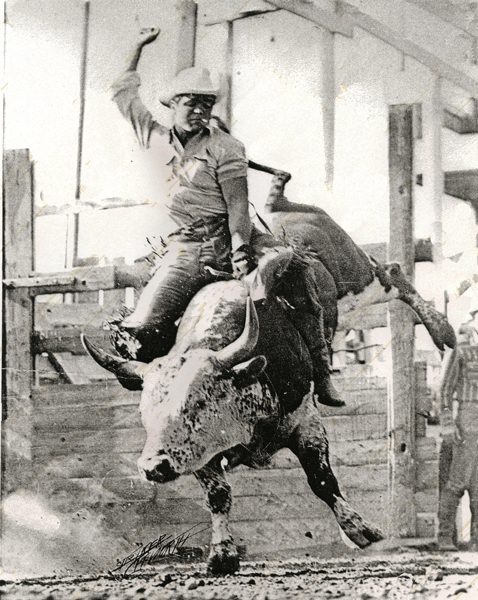
    Dude Smith was 13 years old when he stuck a blue-jeaned leg over his first bucking bull. In actuality, it was a milk cow tied to the fence. But for the teenager from Burkburnett, Texas, it was the start to a rodeo career that would give him the love and friendships of a lifetime, and the honor of being inducted into both the Texas Cowboy Hall of Fame and the National Cowboy and Western Heritage Museum’s Rodeo Hall of Fame.
    Born Vernon Smith, Jr., in 1928, he was the oldest of three sisters, Geneva, Anita, and Kay, and a brother, Billy. Neither Dude nor his dad, whom he was named after, had middle names, and went by Big Dude or Little Dude to tell them apart. The Smith family’s only bootprint in the horse world was a great-great-grandfather who traded horses, but that all changed when Dude went to watch his first rodeo. “I told my mom that’s what I wanted to do, and she told me I didn’t know anything about rodeo,” Dude recalls. “And I told her those cowboys didn’t know anything about it either at one time!”
    Dude rode one bucking bronc that year, but nearly didn’t make it to the chutes again after he tried to join the U.S. Navy. “I lied about my age and tried to join up, but they caught me,” says Dude. “That was just before Pearl Harbor was bombed – a few people I knew lost their lives there.” Soon after, Dude was given a 4F by the draft board after he was kicked while playing football, which broke an artery in his leg. One hospital was ready to amputate it, but another doctor was able to operate and repair Dude’s leg, cautioning him to never do anything that would bump it.
    But Dude wasn’t long out of the hospital bed before he was back in the arena, finding work for rodeo producer Paul Long in Kansas and running the rodeo arena for Floyd Reynolds of Montgomery, Ala., doing his own rodeoing on Saturday nights. Dude’s first jobs as a child were carrying water jars in wet tow sacks to field hands for 50 cents a day, or pulling a funnel wagon which carried grain. But in 1947, he and several friends, including Neal Gay and Wiz Whizenheimer, decided to head north and east to the larger rodeos, and Dude sold a cow he owned to his dad and used the money to buy a ticket to Philadelphia. “I sat on the airplane with my nose on the glass and wondered how much better it could get,” says Dude. “I had on boots with more tape than leather holding them together, and I went on to compete in Detroit and New York. I’d never seen that kind of money in my life.” He competed in 53 performances in 30 days in the Madison Square Garden rodeo, having joined the Cowboys’ Turtle Association just before it was named the RCA. He recently received a buckle from Montana Silversmiths for being one of the four oldest gold card members – #159.
    Dude competed in every event but team roping, mainly entering the bareback riding, bull riding, steer wrestling, and wild horse mugging. “I loved riding bulls, and I could ride broncs, I just wasn’t as classy as the other guys. I travelled with Casey Tibbs for a while, and if I got lucky enough to draw and beat him, he’d say we didn’t go to that rodeo,” Dude says with a laugh. “There was one bull, Iron Ore, that I got on all the time, and I never rode him. He wouldn’t hook me, but he’d look at me like I was dummy to keep trying. When I leave this world, he’ll be on my headstone – I thought he deserved to be the winner of the deal.”
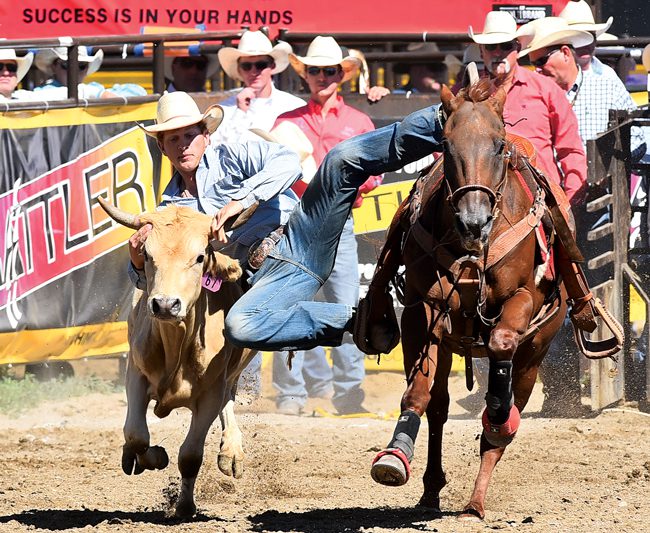
    Dude saw much of his success in the steer wrestling, winning the event at Cheyenne Frontier Days more than any other rodeo. The greatest thrill of his steer wrestling career was in 1953, when he was invited to compete among the top 25 steer wrestlers in the world in Grady, N.M. Another high point came in the early 1960s, when Clem McSpadden, as part of John F. Kennedy’s “Partners of the Alliance” exchange with Mexico, asked Dude to go with a group of cowboys from Oklahoma to aid cities in Mexico and put on a rodeo. “During the rodeo, they brought out a pretty nice steer and a Mexican fighting bull that probably weighed 850 pounds,” says Dude. “I was able to throw that bull, and everybody threw their hats in the ring and hollered I could be president of Mexico!”
    Yet one of the greatest events of his life was when Dude met his wife, Frances, in the late 1940s. She was performing with a horseback square dancing team in Burkburnett when Dude met her, and they married in 1950. “I chased her for a couple of years and finally got her hemmed up, but it wasn’t easy!” says Dude. “After that, it lasted pretty good. She was one of the greatest horsewomen there ever was.” A barrel racer, Frances qualified for the 1967 NFR in Oklahoma City – the first year barrel racing was added to the finals – and won the World title. She was also a member of the AQHA and won titles in the both the junior and senior divisions, along with keeping books for rodeo producer Ed Curtis. She and Dude rodeoed together for nearly 20 years, crisscrossing the plains of Kansas, Oklahoma, Texas, Nebraska, and even into New Mexico. Dude finished 16th in the world in steer wrestling in 1966. “But I never really rodeoed to be a world champion,” he says. “My dad told me it was better to be a big fish in a little pond than a little fish in a big pond, and I hardly remember going to a rodeo I didn’t win.”
    One of Dude’s greatest horses was Scooter, born the same year he and Frances married. The horse was a gift from Dude’s father-in-law, and he was Dude’s mount in the steer wrestling, also winning Frances a barrel racing saddle in Mesquite, Texas, after her horse went lame. In his later years, Scooter went on to teach many kids how to steer wrestle and high school rodeo.
    In addition to competing, Dude ran footraces to earn extra money on the road, and he worked as a pickup man, arena director, and even an arena policeman. “We had to keep people back from the arena a certain distance,” Dude explains. “In Cheyenne, people would bring their blankets and set up in the roping box end of the arena. I helped anywhere they needed me. Sonny Ringer was the arena director for Beutlers when I helped them. He carried a pair of pliers in his pocket, but if I couldn’t get a steer to go in, I’d just bite his tail!”
    When Dude decided to retire from rodeo in the 1970s, he started training racehorses in Texas. “Frances didn’t understand how I could like training horses, since I didn’t get to ride them, but I told her when the horses crossed the finish line first you’d get goose bumps an inch high!” He and Frances had two sons, Mark and Vern. Vern went on to ride bulls after high school and qualified for the NFR in 1980 , but Mark passed away in 1973. He was driving home on a three-wheeler when a pipe fell off a passing truck and hit him. “I lost everything for a few months,” Dude remembers. “But between my friends and the Lord, I got myself on the right track.”
    Dude and Frances made their home for many years in a house near the Red River but later moved to higher ground in Burkburnett. Their son Vern now lives near the river and runs cattle with his wife, LaDonne, who college rodeoed on a scholarship. Dude lives with his granddaughter, Sage Smith, who barrel races, and trains and sells horses. She won the BFA World Championship in 2003. Dude and Frances were married for 63 years before she passed away in 2013, and she was inducted into the National Cowboy and Western Heritage Museum’s Rodeo Hall of Fame in 2014.
    Along with his immediate family, Dude continues many friendships with his rodeo family, and continues to run a small trucking business. “When I first started rodeo, Neal Gay was my closest friend, and he still is,” says Dude. “We’re like brothers.” He feels he competed in the greatest age of rodeo, where camaraderie was staying with families in the same town as the rodeo – some of them barely acquaintances – and hospitality was an ice box full of beer and a plate of chicken or steak. “I worked with committee men and contestants, and we were one big family. I never went to the National Finals, but I would venture to say I wound up better off than a bunch of the gold buckle boys.”

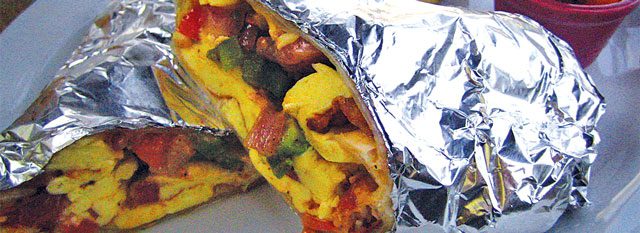
  • Breakfast Packets

    Breakfast Packets

    Breakfast Packets

    recipe courtesy of Kristie Binder,”Rodeo Road Recipes”

    INGREDIENTS:
    4 medium leftover baked potatoes
    1/4 onion, chopped
    1 cup mozzarella cheese, shredded
    1/8 cup parmesan cheese, shredded
    4 slices bacon, pre-cooked
    4 T. butter
    salt and pepper to taste


    DIRECTIONS:
    Preheat grill to medium heat. Cut four large squares of heavy-duty aluminum foil and spray with non-stick cooking spray. Place potatoes and onions on foil pieces in equal amounts. Salt and pepper to taste. Sprinkle cheeses and bacon on top of mixture. Top each packet with a pat of butter. Bring up foil on sides. Double fold top and ends to seal packet, leaving room for heat circulation inside. Place on grill approximately 15 minutes

    _____________________________________________________________________________

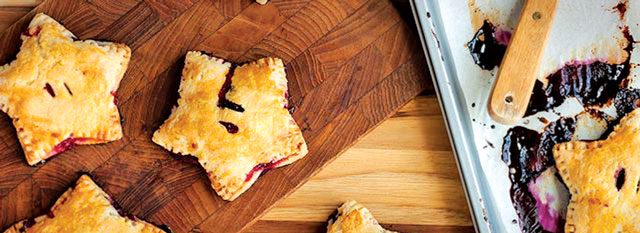
    Star Hand Pies

    2a796f0a-9706-43d7-a901-577f30bfeed4


    recipe courtesy of Jamie Shields, E-How.com

    Ingredients for dough:
    2 1/2 cups all purpose flour
    1 teaspoon salt
    1 Tablespoon granulated sugar
    1 stick cold unsalted butter
    1/2 cup cold vegetable shortening
    ice water

    Ingredients for filling:
    6 ounces blueberries, raspberries
    16 ounces strawberries
    1/3 cup sugar
    1 Tbsp. lemon juice
    1 tsp. lemon zest
    1/4 tsp. salt
    1 egg

    DIRECTIONS: Step 1 : In a food processor, pulse flour, salt and sugar. Add butter and shortening and pulse until the mixture resembles small peas. Add the ice water and pulse until evenly moistened. Turn the dough out onto a work surface and gather into a ball. Divide dough half and form two disks. Cover with plastic wrap and refrigerate for 1 hour. Step 2: While the dough is chilling, combine berries, sugar, lemon juice, lemon zest and salt in a medium bowl. Cover with plastic wrap and refrigerate until ready to use. Step 3: Preheat oven to 375F. Remove 1 dough disk from refrigerator. On a lightly floured surface, roll out dough until about 1/8” thick. Use a cookie cutter to cut out star shapes. Place stars onto a parchment lined baking sheet. Repeat process until you have used all the dough. Step 4: Remove filling from refrigerator. Place a scoop of filling in the center of each pie bottom. Cover with reserved pie tops and seal by pressing edges together with a fork. In a small bowl whisk egg. Brush sealed pies with egg. Step 5: Bake until berries bubble and crust is lightly browned on top, about 25 minutes.

  • Roper Review: Tyler Domingue

    Roper Review: Tyler Domingue

    It’s doubtful you could have convinced ten-year-old Tyler Domingue that in fifteen years he would win over $26,000 at a four-day rodeo. After all, he was riding motorcycles and competing in Motocross with no interest in roping.
    It was about that time his parents, Mitch and Paula, relocated the family from Lake Charles, Louisiana, to DeKalb, Texas, near his uncle, Mike White, world champion Bull Rider. In addition to his bull riding career, Mike and his wife, Hannah, enjoyed riding colts and team roping. They often invited young Tyler down to rope, but he just wasn’t interested.
    “Tyler never would come rope with us, until one day I told him, ‘Tyler there’s lots of pretty girls at the ropings.’ After that he was all in,” laughs Mike.
    Once he started, at fifteen, Tyler fell in love with the sport and went to work at it. He started out as a #2 and won his first roping heading as a #3. The next year he was bumped to a #4 and won a saddle heeling for Hannah. Tyler’s number steadily increased to the #9 he is today.
    “I’ve been very fortunate and had a lot of help through the years,” says Tyler. “Growing up watching the success my uncle had in his rodeo career was very influential for me.”
    “The first clinic I ever went to was with Tyler Magnus. My uncle knew a lot of the better ropers and that was beneficial for me. Jory Levy came to our house for a few days when I was 17 and he was a big help. I still call him for help from time to time.”
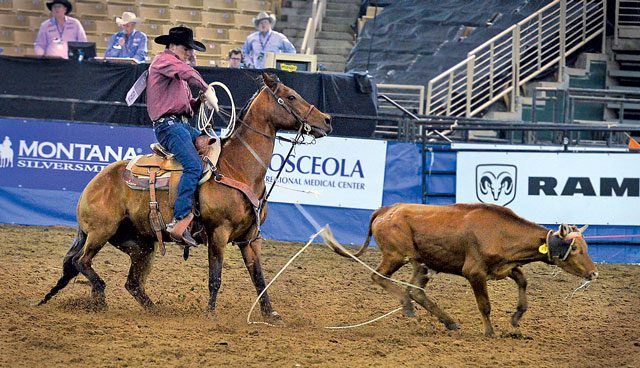
    Each year the PRCA holds the Ram National Circuit Finals Rodeo where the top two contestants in every event of all twelve circuits compete. Tyler and partner, Jake Orman, were actually sitting third in the Texas circuit. However the top ranked team was participating in the ERA, disqualifying them from competition. The RNCFR was held April 7th – 10th in Kissimmee, Florida.
    Tyler and Jake were 5.3 on their first steer, winning the round and earning $6,182 each. They then split the two-head average earning another $5,433 each. A quick 6.5-second run won the Semi-finals and another $7,493 each.
    “For the Finals, the first team out was 5-flat,” explains Domingue. “We had already won over $19,000, so I told Jake just do what he wanted. He wanted to be fast.”
    Orman and Domingue won the Finals with a 4.4-second run, earning an additional $7,493 for a total of $26,601 at the RNCFR.
    When he’s not on the rodeo trail, Tyler rides horses at the 4F Performance Ranch in DeKalb, Texas. His dad, Mitch, is in the construction business, and his mom, Paula, is a nurse. His sister, Shelby, is currently competing at the Texas High School Finals in Abilene.

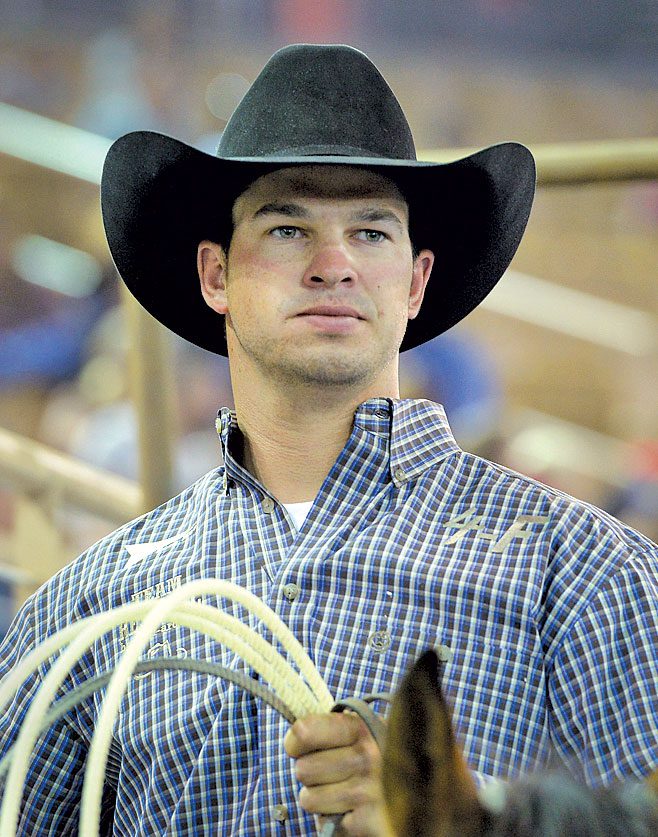
     Tyler Domingue, competing at the 2016 RAM National Circuit Finals - Rodeo News


    COWBOY Q&A

    How much do you practice?
    Every day.
    Do you make your own horses?
    Not all of them.
    Who were your roping (rodeo) heroes?
    Jory Levy.
    Who do you respect most in the world?
    My parents.
    Who has been the biggest influence in your life?
    My dad and my Uncle Mike.
    If you had a day off what would you like to do?
    Go to a beach.
    How would you describe yourself in three words?
    Dedicated, Happy, Winner.
    What makes you happy?
    Being successful.
    What makes you angry?
    Losing.
    If you were given 1 million dollars, how would you spend it?
    I’d give part of it to charity, give some to my family, and invest the rest.
    What is your best quality – your worst?
    My best quality is the ability to analyze and overcome situations. My worst quality is second-guessing myself.

  • ProFile: Cole Bailey

    ProFile: Cole Bailey

    Cole Bailey stepped into the Silver Spurs Arena, home of the 2016 RNCFR, for the first time this spring. The 27-year-old tie-down roper from Okmulgee, Okla., has been competing on the PRCA Prairie Circuit for eight years, winning the average at the 2015 Prairie Circuit Finals with 26.5 seconds on three runs. His debut at the RNCFR was a highlight of his career, placing first in the semi-finals with nearly $7,500. “It was awesome! The facility was unbelievably nice, and it was cold and rainy at home, so it was nice to go to Florida – it was my first time rodeoing there,” says Cole. “It was pretty exciting to be at that big of a venue – there’s not many times in a year that I rope for that much money. I stayed pretty booked up with the rodeo, but my wife and I had a chance to check out some restaurants and go down to the beach.”
    Another highlight for Cole was competing in The American in 2015, finishing fourth in the finals, while he advanced to The American Semifinals this year. “The competition is just amazing when you get to rope against the caliber of guys like Tyson Durfey who are out there going full time,” says Cole. He grew up on the coaching of his dad, Mike Bailey, and world champion ropers like Joe Beaver, who stopped in and roped at the Bailey’s arena. “I started junior rodeoing when I was seven, and that’s all I’ve known to do with my spare time the last 20 years! Clint Carpenter is one of my friends I’ve been roping with since I was eight. We’ve always been competitive with each other, and to this day, he still ropes with me and helps me critique my roping. Growing up, our arena was set up for roping calves, and we always had good calf horses, so it was easy to pick up that event.”
    Cole added steer wrestling and team roping to his résumé when he college rodeoed for Southeastern Oklahoma State University, qualifying for the CNFR twice. He continues to team rope with his dad on occasion, but quit steer wrestling several years ago. Soon after college, he was invited to church by a rodeo buddy, where he met his wife, Brittany, a barrel racer. Their two-year-old son, Brody, feels no day is complete without riding and helping his family check cows. He rides his dad’s rope horse, Baboo. “Baboo started out as Baldy, but Brody was having a hard time saying his name,” Cole explains with a laugh. “I’ve been hauling Baboo for about three years now. He was born and raised on my family’s place, and we have the growing pains to prove it! Brittany ran barrels on him and got him rode down, and then I started riding him more. He’s 12, and now it’s smooth sailing for us. I was confident going into the RNCFR because I have a lot of confidence in my horse. Baboo’s super talented and always gives me a shot, even if the calves are running hard or being wild. He’s been a blessing to my family.” Baboo has also carried Cole to several major ropings, including the Windy Ryon Memorial Roping, Spicer Gripp Memorial Roping, and Mike Johnson’s World’s Richest Calf Roping.
    When the truck is in park, Cole and Brittany are working cattle on their ranch outside of Okmulgee. “We run close to 300 head. It started out as a hobby, but it’s not much of a hobby anymore,” says Cole. “I start out my day selling trucks at my family’s car dealership, then come home and take care of cattle. I have a guy that helps me with them, but there’s not much free time. We like to hunt and fish, and Brittany teaches Sunday School, but with whatever time is left, we’re homebodies.”
    During the summer, the Bailey’s home is often on the road, blending rodeoing with vacation. They’re planning a trip back to Florida for all things Disney World this fall, but otherwise meld rodeo and vacation together. “I’m pretty fortunate that my wife enjoys being gone for a week or two at a time. Last year, we left the Colorado Springs Pikes Peak or Bust Rodeo and went to Cheyenne Frontier Days after visiting some water parks and riding bicycles. I’d been to Cheyenne before, and it went pretty good! I had some luck last year, and this year I’m rodeoing a bit more and seeing how it goes. I’m going to Reno this month, and if things are going good, I’ll stay out longer doing PRCA rodeos. Otherwise, I’ll stay close to home and circuit rodeo. But I feel I have a pretty good horse that will let me win, and I’d like to try it!

  • On the Trail with Ali Armstrong

    On the Trail with Ali Armstrong

    Ali Armstrong has a long list of credentials for a 17-year–old. Among her credentials, she is the only one to win six straight go-rounds at the International Finals Youth Rodeo in Shawnee, Okla., and she is hoping to keep the streak alive.

    The cowgirl from Lexington, Okla., has been riding horses since she was 6-years-old and competing in barrel racing since she was 8-years-old. She got her first horse, from Audra Masterson. “I took riding lessons with Audra on her good horse, Fuel, and she found my barrel horse U-turn,” she said. U-turn got his name from Ali when Audra had to make a U-turn to go ask if the horse was for sale.

    He gets the credit for helping Ali learn to ride and run barrels. “He was a lefty and so is the horse I run now. I ‘m more confident on a horse that goes to the left and more partial to them too,” Ali said.

    Ali Armstrong and MattsFreckledCowboy, better known as Panama, are living a dream in and outside the rodeo arena but it was not always smooth sailing. She came across Panama when she went to a barrel race with her good friend Debbie Caywood. “Debbie wanted me to exhibition a 4-year-old who hadn’t been hauled much, so of course I said yes,” said Ali. They clicked right away and the rest is history.

    “He was running to the right when we got him and we didn’t have much confidence together so I switched him to the left,” said Ali. “We started winning and he was more consistent.”

    Ali is breaking records at the IFYR with hopes of keeping them going. “I’m not nervous, I know what I want to do and will try my hardest to accomplish my goals,” she said. The young superstar is thankful for what she has already done but is excited for what the future holds. “Panama likes the atmosphere at Shawnee and he likes Monty, the announcer,” she added. Monty announces many of the rodeos that Ali and Panama compete at.

    In addition to the IFYR the two won the 2015 National High School Finals, qualified for the 2014-2015 American semi-finals, won the 2014 NBHA Teen 1D World Championship, and 2015 high school Texas rodeo state average champion. She attributes her success to the small group of friends and family that stand behind her. “I have the most amazing support group. My friends and family have stood behind me and they continue to believe in me.” she said.

    Ali is homeschooled through Extension Taught Classes of south Norman and will be a senior this coming school year. After graduation she plans on going to college on a rodeo scholarship and wants to get her WPRA card when she turns 18 and start hauling in October to pro rodeos for a few years and then try her hand at futurity horses.

    “I have the best traveling partner, his name is John Wayne and he is a 7-week-old Jack Russell,” she said. Ali travels with her stepdad Clifford and mother Andrea. “The furthest I’ve been for a rodeo was Rock Springs, Wyo., for the National High School Finals and I’m looking forward to making that trip again, God willing.”

    At every barrel race and rodeo you can find Clifford in the alleyway. “He’s always there to walk me in, not just on Panama but every horse I’m on,” she said. Her mom is in the stands filming her runs and little brother Case comes to support when he isn’t roping. “It takes a village.”

    She is riding with Mary Ellen Hickman, owner of Future Fortunes, and has gained new knowledge for young horses and how each horse is different. “Mary Ellen not only has helped me as a rider but as a person,” said Ali. She rides four to five horses a day and goes to weekly night jackpots and on the weekend she finds rodeos and barrel races to enter.

    Her freshman year at the IFYR she had a goal set to make it back to the short-go, she never thought it would turn into six straight go-rounds. Before she runs she makes sure she has on her lucky beaded earrings and warms-up the same way. “I saddle him, put his boots on then I put my running bit on him. I lope him about 5-10 circles each way and do reverse arches to make sure he is listening to me.”
    Last year the duo drew up on dry ground in the first-go, however in the second-go it had rained and they ran in deep mud. She had never run Panama in mud and had brought a backup horse just in case something happened. Ali knew Panama would take care of her in the mud and that he did. “I wasn’t sure what to do but as the day went on I knew he would do his job and I decided to run him and I’m glad I did.”

    Ali would like to thank her sponsors; Dr. LeRoy Howell, Kevin Sherman, Lonice Tucker, Dustin Lucas, Sheresa Jackson and Michelle French, with Animal Element, Darla Schneider with Schneider Saddle Pads, Heritage Horse Feeds, Diamond V, Iconoclast, Justin Thomason with Resistol Hats, Marcum, Jill Beaty with Competitive Edge Chiropractic, Laney Fowler with LF Beadwork, Tonda Collins and Vickie James with Equi-Resp, Bobbi Jo with Hidez Compression Suits, Donna Wooten with Acculife and Jo Hurta with JoJo Jewels.
    For a 17-year-old Ali has her priories straight. She knows what she wants and works for it everyday. She continues to ride even in less than perfect riding conditions.

  • Back When They Bucked with Harry Straw

    Back When They Bucked with Harry Straw

    Harry Straw married well.
    When he married Betty Jane Webster, the sister of world champion steer roper Shoat Webster, he got an incredible horsewoman for a wife, the use of her horses, and the advice of her brother, Shoat.
    He was born and raised in Nowata, Okla., the son of Homer and Lillie Straw, with a daddy who roped, and Harry would tag along to rodeos with his father. His dad made a living driving truck, hauling hay to western Oklahoma and grain on the return trip. The family lived on 125 acres of corn, oats and wheat, and Harry and his mother milked ten cows by hand, separated the cream, and sold it to Gus Andrews in Nowata for grocery money. Harry hunted possums at night with his possum dog, making thirty five cents a hide. “It was kinda tough,” he said. “That’s how I was raised.”
    He learned to rope at Deacon May’s place. Deacon had a roping pen, and when Homer came over to rope, Deacon’s son and Harry would run calves in.
    During his high school days, he worked for his uncle, who owned a Phillips gas station in Nowata, pumping gas for fifty cents a day.
    After high school graduation in 1955, he went to work for Phillips Petroleum in Bartlesville, working in the plastics department.
    And in the evenings, he’d rope.
    Harry would come home after work, and Betty Jane would have the horses ready. “I’d get home by five, she’d have horses loaded, saddles in the pickup, and away we’d go,” he said, to a rodeo where he’d rope calves, steer wrestle or steer rope.
    His wife was better with horses than he was, he readily admitted. “She could do more with a horse than I could,” he said. “Shoat had her pretty well tutored before I got her.” She also trained horses, and “she could rope better than I could,” he said. But Betty Jane only roped at home, never at a contest.
    Harry roped evenings and weekends, never going too far out of Oklahoma, and concentrating mostly on steer roping. Steer roping was his strength, and his daughter Jeannie McKee remembers camping out at Cheyenne Frontier Days with her family while her daddy roped. He competed at amateur rodeos and in the Rodeo Cowboys Association as well.
    He worked for Phillips Petroleum for 33 years and was part of the research team who developed plastic pipe. Phillips built four plastic pipe plants across the country: in California, Texas, Pennsylvania, and Pryor, Okla., and Harry was sent to train employees and work with the machinery. “They’d send me to get them out of trouble when the machines acted up. I’d go there, and train them.”
    Harry often practiced with Shoat, his brother-in-law, a four-time world champion steer roper (1949-50, 1954-55) and twice runner-up. Shoat made his own horses, and Harry usually rode one of his. One of his favorites of Shoat’s was Deck, a calf horse and son of Leo. “Shoat made him, and boy he made a good one,” Harry said.
    Another horse he liked to ride belonged to Willard Combs. The famous steer wrestling horse Baby Doll “was a dream to bulldog off of,” he said. “She was all right. She done the same thing every time, she’d run right up (to the steer), and let you down, not try to cripple you or cut in front of the steer. She done everything just right.” Harry rode the little blaze-faced dark bay anytime Willard or his brother Benny offered.
    But, in his estimation, the best horse he ever got on was one owned by his wife. Betty Jane’s aunt Kate (Choteau) Lowry, the wife of Fred Lowry, took her into one of Fred’s pastures one day. “We was out in the big pastures on the Lowry ranch,” Harry remembered, with 35 mares and weanling colts, “and Kate told Betty Jane to pick a colt. That colt made the best steer horse I ever had.” The horse, named Chico, belonged to Betty Jane, not Harry, and “she never did let me forget that,” he chuckled.
    Betty Jane broke and trained the gelding, who was a Hancock horse. The horse liked to buck. “He didn’t buck hard, but he had to crow hop out there every night, till he was eight years old.” One time, at Cheyenne Frontier Days, someone offered Harry $5,000 for Chico. “I just laughed at him,” he said. “There was no way I was ever going to sell him, or do anything with him but rope on him.” And Chico wasn’t Harry’s to sell anyway. “He didn’t belong to me, he belonged to my wife.”
    Aunt Kate Lowry had a big heart and was willing to help anyone, including her niece and nephew. She didn’t ride much, Harry said, but she helped pay his entry fees. “When I first started roping, she’d stop by the house to see my wife and me, and she’d always ask, did I need a little entry fee money. Aunt Kate would help anybody.” Harry was reluctant to take her money, but in the early days, he did. “She’ll always have a soft spot in my heart.”
    Harry rodeoed with the likes of Harry Swalley, Don McLaughlin, Sonny Davis, Troy Fort, and Sonny Worrell. He remembers their friendships and the characteristics each one had. Swalley was like Harry, a cowboy with a fulltime job, who “was the only guy who could work hard enough to keep up with Shoat,” he said. And Don McLaughlin, for his ability to remember cattle. “Don could be at a roping where they had 100 steers, and three years later, he could tell you what everybody (drew) and what they did on them.”
    Harry spent a lot of time with Shoat in the practice pen. Shoat was “an extremely, extremely hard man on his horses, his dogs, anybody who worked for him or practiced with him,” a family member said. “He was rough and tough and hard to please.” But Shoat was never hard on Harry, and he attributes that to his wife. “I don’t know what Betty told him, but the only thing I knew was Shoat was scared of his little sister, and she didn’t weigh 95 lbs. Still to this day, I don’t know what she told Shoat, but he never treated me like anybody else.”
    Harry and Betty Jane had two children: a son, Lee, who married Christie and has two children, Tori, and R.J., and daughter Jeannie, who married rodeo announcer Justin McKee and their daughter, Kassidy. Justin says people love Harry. “My father-in-law is the most well-liked human being who ever lived.  He’s everybody’s favorite guy, non-judgmental, the most genuine, likeable, nice guy there ever was. Anybody who knows him, would agree one hundred percent.”
    “I had an awful good life,” Harry said. “I’ve been the luckiest man alive. I had the only woman who would ever live with me, and I’ve had some awful good horses to rope on, and Shoat to rope with and help me. I’ve had a pretty good life.”
    In 1955, he and Betty Jane moved to Lenapah, where they lived until Betty Jane’s passing two years ago. Harry just recently moved to a nursing home, and spends many days at the McKee household, surrounded by the love of his daughter, son-in-law, and granddaughter.
    Harry served in the Army and was stationed in Washington State from about 1948 to 1951.