Rodeo Life

Category: Archive

  • On the Trail with Ashlyn Moeder

    On the Trail with Ashlyn Moeder

    Somebody showed up at the Moeder’s front door when Ashlyn was about 7, and said: “Your daughter said you want to buy our horse.” Melinda and Mike, who had never been around horses at all, said ‘no.’ They tried to turn the experience into a life lesson for their daughter. “We had some friends that had a horse and we asked if we could feed the horse and water it through the summer. We thought if she could see how much work and time it took, we’d have this problem fixed. It worked in reverse. She fell in love,” said her mom, Melinda.  “We had to learn everything from ground zero. We had some great people helping us.”

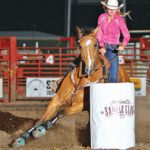
    Ashlyn started with Western Horsemanship and jumping, competing in barrel racing to give her additional opportunities in the All Around. She entered her first rodeo as a sophomore in high school. “Once I started thriving in the show aspect of things, I wanted a new challenge and I loved rodeo more than showing,” said the 19-year-old from Oakley, Kansas. She competes in barrel racing, goat tying, and breakaway. “It’s been a challenge,” she admits, believing her start in the show world was helpful. “I would have never caught on with the horsemanship part of it. I’ve learned how to train two year olds – I’ve done two now on my own – and am now starting to win on those horses that I’ve trained.”

    Her senior year was the year she actually started doing good. “I was giving donations just trying to learn the events,” she said. “I ended up winning the breakaway short go, and was in the top ten. I had finally started climbing up the ladder – nobody knew me.” After graduating, Ashlyn spent a year at Garden City Community College, bringing 18 college credits from high school with her. She completed 50 hours at Garden City in one year and has transferred to Northwestern Oklahoma State University in Alva, Oklahoma, where she will pursue a pre-vet degree and rodeo under Stockton Graves.  “The school is really competitive on the rodeo side of things, and has a great ag and science program.” She is leaning towards surgery, and if that doesn’t work out, she will be a large animal vet. “I’ve done dissections since high school and I’ve thrived in any class. I want to help animals and this is the perfect combination.”

    This is her second year rodeoing in the KPRA and she is sitting third in the breakaway, first in the barrels, and first in the All Around. “It’s been an eye opener, and competition I’ve never been around,” she said of the KPRA. “There are some big names competing on some tough horses.” Ashlyn has brought a few tough horses of her own to the arenas this summer. Picking from her herd of 15, which includes her now-retired show horses, she has a main barrel horse, Shake, her breakaway horse, Gruilla, and rounding out the pack is CC, her goat tying horse.

    She bought Shake from Sabrina Devers. “When I was trying for my first saddle, and Sabrina had this horse, I took him to the junior rodeos and I fell in love with him.” He’s the only horse that has gotten her a check all summer in the barrel racing. Gruilla was used as a reining and working cow horse. “When I started roping, I started learning off of her and she’s been my main breakaway horse.” Learning to rope was a very frustrating experience. “I’d go rope for hours trying to get it right. It didn’t take many years, but it sure took a lot of hard work.” Her goat tying horses is DC, a horse she got from Ty Inlow, who has been instrumental in her success. Ty took her to the next level in the show world, and she would go out to his place and practice day in and day out. “He had me ride several different horses so I’d have the feel for them – he has really been a big part of my life.”

    The first horse Ashlyn had was an $800 horse from a sale barn. “He got her started in barrels and he was amazing,” said Melinda. “They thought he was injured is why he was being sold.” Throughout Ashlyn’s horse career, both Mike and Melinda have tried to let God lead. “We’ve always said the horse needed us and we needed him.” Melinda is an accountant, and her dad, Mike, is a farmer and rancher at  M3Farms. “We raise Black Angus and Wagyu cattle (a Japanese breed of beef), wheat, milo, and sometimes corn. Ashlyn tries to help when she can, but her rodeo schedule makes that pretty tough.

    “Her hard work and determination to succeed in it has been fun to watch,” said Mike. “She has really dug her heels in to go and be the best she can. We’ve mounted her the best we can, but she has to be able to ride.”

    “I spent the summer with Sabrina Devers, and she taught me more about training and I will always be grateful to her family for taking me in,” said Ashlyn. “She kept my horse sound the whole summer, teaching me how to do that. I learned how to stretch my horse before races and some tricks with medicines and wrapping so he could travel better.”

    The regular season is over and she is sitting first in the barrels by $2,000, third in the breakaway and first in the All Around by $7,000.”
    She is still looking for her first saddle, and hopes to accomplish that goal at the KPRA finals. “The rodeo people have become my family. I’m on the road so much, I’m never home. They have all welcomed me with open arms. It’s been awesome. I don’t know where I’d be without it. It’s been such a good part of my life, I’ve met such awesome people.”
  • Back When They Bucked with Donald Dorrell

    Back When They Bucked with Donald Dorrell

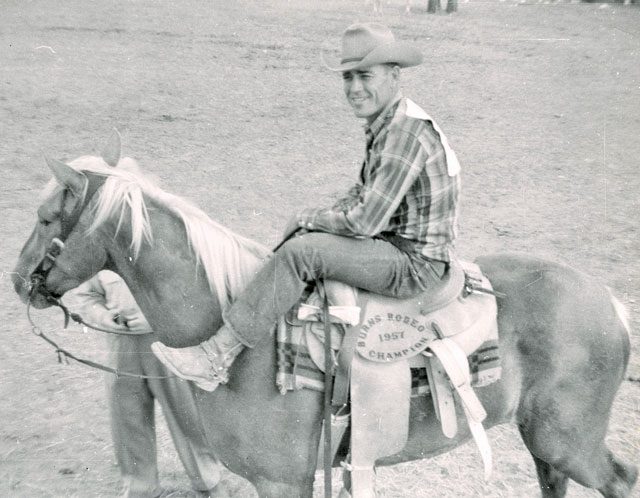
    Donald Dorrell was born February 8, 1926, “right up Beaver Creek in a log cabin across from where we live now. It was my grandmother’s homestead. She delivered me because the doctor couldn’t get there,” said Donald, who still lives on the ranch in Rifle, Colo. His dad was a farmer and Donald went to school with 14 others. “We were seven miles from the school house and we rode the horse for 8 years. Sometimes we’d leave the house in the morning it would be 20 below, so in the winter time we’d ride bareback so the horse’s body would keep us from freezing.”
    He dreamed of being a pilot, but was told when he enlisted in the Navy at age 17, that he was too young, so he became a rear seat gunner on a torpedo plane. “I spent two years on the back seat of a carrier based on the First Enterprise,” he recalls. “It wasn’t very nice. On at the last, we got hit by a Kamikaze – it killed about 45 guys – and it really messed us up; so they sent us back, without an escort, to Pearl Harbor to get things fixed and we could only do about 7 knots (8 miles an hour). It took six days to get from where we got hit back to Pearl Harbor. The war got over then and I went back to the ranch.”

    Donald was 21 and got married about two years later to a local girl, JoAnn. He stayed on the ranch, and he and JoAnn raised cattle (350 mother cows), and put up hay.  He started competing in rodeo the same time he got married, competing in “everything that came out of a bucking chute, bulls, bareback, and saddle broncs.” He liked saddle broncs the best. “It just seemed like a better thing to do really – bulls – that was the bad thing to do, but I rode a lot of bulls. Bareback was just another event.”
    He would go every weekend, traveling as far as three states, Utah, Wyoming, Colorado,. “We had an association – Amateur Cowboys Association – and I won about four belt buckles.” He never went pro. “You’d have to travel most of the year, and I couldn’t because of the ranch. You had to make a living. Back then they didn’t pay like they do now.”
    He traveled to the rodeos with his wife and a horse. “I took a horse to the rodeo so I could race him. He’d usually pay the expenses; they didn’t outrun him too many times.” He competed in both the Wild Horse Race and the Relay Race. Although he roped at home on the ranch, he never competed in the roping events. He quit competing when he was about 60, when he quit riding bulls. “I didn’t get beat up too bad. If you didn’t get bucked off, it wasn’t too bad.” He still goes to the local rodeo in Rifle. “They pay a lot more money, and the bulls are a lot harder to ride.”
    He still works on the ranch, but “as little as possible, I’m past 90. We sold all the cows – it got to where it was too hard for JoAnn and I to take care of them. Now we do as little as possible. I don’t get around too good. I’ve got two saddle horses; one is about like I am, Skeeter’s got arthritis, but he was my good horse. He will be 26 this year.”
    Donald is glad that he rodeoed when he did. “I sure had a lot of fun,” he said. His favorite place to go was the local rodeo, in Rifle, one that he still attends today, just to watch.

  • Roper Review: John Gaona, Jr.

    Roper Review: John Gaona, Jr.

    John Gaona, Jr., may be a senior at Hayden High School with plans for college, but he already knows what he wants to do with his life – rope. He’s been roping competitively since just five years old, and this summer, the 17 year old from Winkelman, Arizona, won the team roping at the NHSFR with his partner, Marcos Martinez. It was John’s first year heeling in high school rodeo, having qualified for the NHSFR his freshman year in the heading, where he finished tenth in the nation. “I felt pretty confident about Nationals – I’ve been there plenty of times, and I knew Marcos just had to do his part and I had to do mine,” says John. The friends have been roping together at least six years, though this was their first season rodeoing together. “We were mainly doing jackpots before. It helps that we’ve roped together for a while, and Marcos is fully committed to heading and everything being perfect.”
    John inherited the roping gene from his dad, John Gaona, and receives pointers from both him and his older brother Steven. They tell the two Johns apart by calling John Jr. his nickname, Gordo. “I was chubby when I was little, so that’s my nickname,” John says with a laugh. He and his dad and brother compete in the USTRC, while Steven holds cards with the GCPRA and PRCA, and won the NIRA Grand Canyon region in the team roping last year. “I rope with my dad or my brother every day – we have an arena, plus I have heeling dummies outside and in the house to practice on.” John enjoys heading and heeling equally, but switched to heeling when he and Marcos teamed up for the AHSRA this year. John’s first qualification at the national level was his seventh grade year, where he won reserve in the team roping, followed by another trip to the NJHFR in eighth grade.
    The high school rodeo season in Arizona doesn’t start until mid-September, but John stays occupied with jackpots, team ropings, and training horses with his brother. Steven trained John’s head horse, Kansas, while John trained his heel horse, Sparticus, using them for practice, jackpots, and the occasional rodeo. His main mount is Frito, Steven’s ten-year-old palomino gelding. John and Marcos flew to Nationals and met Steven, who was rodeoing in Wyoming, where they competed on Frito and Penny, Steven’s other horse.
    The brothers have a sister and older brother, also ropers, and they leave the roping pen just long enough to go fishing on the Salt River or deer hunting in the winter. Their mom, Angie Gaona, doesn’t rope, but is skilled in the art of hauling horses and packing food for the entire family.
    A senior at Hayden High School, John enjoys playing basketball and dodgeball in P.E. He played football last year, but chose to focus on rodeo this season. “I’m pretty happy with just rodeoing,” he explains. John never pulls out of the driveway for a rodeo without his roping dummy to warm up on, and his favorite high school rodeo is the state finals held in Payson, where he can also compete in jackpots following the performances. His plan is to start pro rodeoing in the next few years, though he also intends to college rodeo. “I’m still looking at schools, but I want to stay in Arizona,” he finishes. “My current goal is to try and win Nationals again.

  • ProFile: Austin Singley

    ProFile: Austin Singley

    Steve Martin advises, “Be so good they can’t ignore you,” and 24-year-old barrelman, hypnotist, and professional stuntman, Austin Singley, took the advice to heart. Now in the middle of his second year as a PRCA barrelman, while also performing part time in Universal Studios’ WaterWorld, Austin has been developing and refining his panache since seventh grade. “I was pretty shy through elementary and kept to myself, but in seventh grade, I auditioned for the school musical, Grease, and that’s what really sparked the fire for performing,” Austin explains. His senior year of high school, Austin and several friends put together an illusion magic show, with all original illusions and routines, which they took on the road and performed in professional theatres around their home state of Utah.
    Yet it was the dusty stage of rodeo that Austin wanted to command. Growing up a rodeo-goer rather than a competitor, he was in the audience of the Ogden Pioneer Days Rodeo in 2009 when Keith Isley performed his trick horse act. “That night, everyone kept telling me I had a similar personality to Keith’s and that I’d make a great rodeo clown, so two days later, I booked my first rodeo in Duchesne, Utah. I’m a guy who gets something in my mind and I don’t stop until I achieve it!” For the high school junior, the performing aspect was no difficulty, but he’d spent little time in the arena, let alone in a clown barrel. A family friend from Ogden Pioneer Days, Jackie Belnap, found out Austin was making his debut, and surprised him with an interview with Keith Isley before Austin left town. “It was a huge star struck moment for me,” Austin recalls. “He sat for 20 minutes and coached through some things to do and watch out for. To this day, I can call and ask him questions, and he and his wife, Melanie, have become good friends and are very supportive of me. Keith has helped me in more ways than he’ll ever know!”


    Rodeo clown greats like Keith Isley and John Harrison, who endorsed Austin for his pro card, have inspired him. “I watch them and observe what makes them successful, in addition to being funny. I think it’s having acts that require some kind of talent that puts them above the rest,” says Austin. “Too many rodeo clowns nowadays go into the arena and make fools of themselves at the expense of a laugh, but these are genuinely hilarious guys that took years to put their acts together.” Austin uses his own strengths, such as creating illusions and training trick horses, and infuses them with comedy. “When I got into the industry, I promised myself to always bring fresh and new material to rodeo audiences. It’s hard to choose a favorite act – they’re like my children – but I have a horse appearing illusion act, and another with a custom inflatable version of me as a rodeo clown that are two of my favorites. With my acts, I want to be sure everyone, of any age, can see and enjoy them from any seat in the house.” His trick horse, Tess, is a half-Quarter Horse half-Arabian mare he rescued four years ago and trained. He’s copyrighted all of his acts, explaining how important branding is to success. “I always have the same costume and makeup and the same acts – I don’t want people confusing my acts and material with any other clown.
    “If someone had asked me in high school what I thought I’d be doing in 2016, this would not be my answer, but I can’t think of anything better suited for me,” says Austin. “I love being on the road and meeting new people. The rodeo family is a very close knit community, and it’s nice to go almost anywhere and know the people there.” He’s performed as far east as Colorado, covering most of the western states, while he anticipates branching out to Oklahoma and South Dakota as his PRCA career takes root within the next year. Stops this summer have included the Tehachapi Mountain Rodeo in California, ten nights at the Cody Nite Rodeo in Wyoming, Flagstaff Pro Rodeo in Arizona, and many more.
    His travels have even taken him to Hollywood, where he’s performed in Universal Studios’ WaterWorld Stunt Show since February. He plays one of the villains called the Smokers, shooting through a wall of fire on a stand up jet ski. The show, though only 20 minutes long, plays up to ten times a day, and actors may perform in a maximum of five shows a day since it is so physically demanding. “We have six people for a single part, for flexibility, which is nice for my rodeo schedule,” says Austin. The show has been running since 1995, and Austin was four when he saw it first. Jet skis dancing in his head, he came across a casting call for auditions for the Universal Studios in Japan several years ago. A few weeks before auditions, he bought a stand up jet ski and practiced on the lake, but wasn’t cast. Two years later, he auditioned for the show in Hollywood and made is as far as callbacks, but didn’t make the cut. “It was a long drive back to Utah,” Austin recalls. “I was teaching a stunt workshop at the University of Utah when I got a call saying they wanted me back for water callbacks that weekend. So I drove down for those, and the following Thursday they gave me the job and told me I started on Monday.” He’s made his home temporarily in Lake Elsinore, California, but will be moving back to Clearfield, Utah, this fall. “Being in the show was a bucket list thing for me, and my eyes are usually way bigger than my stomach, but somehow I’m always able to pull it off!”
    He attributes that to the support of his family, including his mom, Sherie Reynolds, brother, Brayden, a dancer, teacher, and choreographer for the NBA’s dance teams, and their sister, McKenna, a sophomore at Oregon State University with a position on the gymnastics team. “There’s something in the water at the Singley household!” Austin jokes. “We were raised by an amazing woman, and my mom is my hero. I know I speak for myself and my siblings when I say we owe everything to her.”
    Austin’s goals include marrying and raising a family of his own someday. “Until then, I’ll focus on building my rodeo career and earning as many buckles as I can. As long as I can keep audiences entertained, and bring in fresh material and acts, this is what I believe I’m meant to be doing with my time on this earth.

  • HASTINGS RODEO WRAPS UP

    HASTINGS RODEO WRAPS UP

    Louisiana cowboy moves up the world standings ladder with a win at the Oregon Trail Rodeo

    HASTINGS, NEB. – (August 28, 2016) – Cody DeMoss nearly didn’t come to Hastings, Neb., but the Heflin, La. man is sure glad he did.

    The saddle bronc rider had planned on “turning out” – not competing in the Oregon Trail Rodeo in Hastings, Neb. on August 27, but at the last minute, changed his mind.

    Inky, the saddle bronc horse owned by Korkow Rodeo of Pierre, S.D., helped change it.

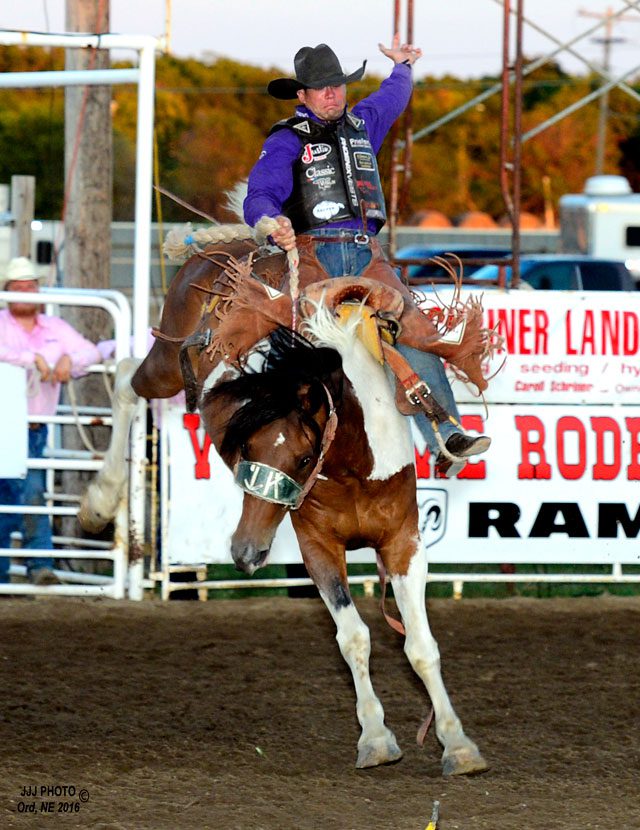
    DeMoss made an 82 point ride on the horse to win the 25th anniversary of the Oregon Trail Rodeo.

    He had planned on competing in Kennewick, Wash., instead of Hastings. “I got to thinking about it,” he said, “and prayed about it a bit and a couple of other guys I talked to, they said, you might ought to get on Inky there.”

    He took their advice. DeMoss spent $850 on a plane ticket from Seattle to Omaha, where he met up with fellow saddle bronc rider Logan Allen from Crescent, Iowa. The two traveled to Hastings, where DeMoss ended up winning the rodeo.

    The $1814 check he won couldn’t have come at a better time. With only five weeks left in the rodeo year, DeMoss is outside the top fifteen in the world standings, who qualify to compete at pro rodeo’s “world series”, the Wrangler National Finals Rodeo (Wrangler NFR) in December in Las Vegas. He’s been to the Wrangler NFR eleven times, but didn’t start rodeoing hard this year till mid-June. “I only went to twelve rodeos by the time Reno (Nev.) started,” he said. “I stayed at the house and baled hay.”

    But then it was time for the 35 year old cowboy to make a decision: either rodeo full time or stay home more. “Me and my wife were talking. Are you going to do it or not do it? I said, I guess I’ll go.”

    DeMoss hit the road, winning $8,000 over the Fourth of July run and second at the Calgary Stampede. He was doing OK, but not up to the standard he was used to.

    Things have started to click, however. “You know, it feels good right now. I kind of wish we had a couple more months” before the rodeo season ends, he said.

    DeMoss would like to earn $20,000 more in the next five weeks. He’s only $5400 from fifteenth place, but the extra money would give him some security.

    And there’s a chance he can do it. He will rodeo every day except for six between now and September 30.  But this week includes a little down time. His wife Margie will meet him in Denver, where they’ll enjoy Tuesday and Wednesday off.

    Then it’s back to the road, in pursuit of his twelfth qualification for the Wrangler NFR.

    An Oklahoma man won the bull riding at the Hastings rodeo.

    Newt Brasfield, Lane, Okla., scored 85 points on the Korkow Rodeo bull No. 208 to win $1706.

    Brasfield had seen the bull at the Dickinson, N.D. rodeo in late June. “He was nice there,” he said. “I was pumped to have him.”  And his trip on the bull was good. “I felt like he was a little buckier than the last time I saw him. I needed that, anyway. Eighty-five (points), you can’t complain about that.”

    The 22 year old cowboy is in his first year of PRCA competition, and it’s not going quite as well as he’d like. “I’ve stayed afloat, stayed healthy and made a decent living,” he said. “I went pretty hard this summer, but didn’t have the year I wanted to.”

    Even then, he’s ranked eighth in the Prairie Circuit, pro rodeo’s regional designation for rodeos in Nebraska, Kansas and Oklahoma, and he’ll compete at the Prairie Circuit Finals Rodeo in October.

    After his ride on Saturday night, Brasfield was in a hurry to make the eight hour trip home. The third birthday party for he and his wife Brooke’s son Briar was on Sunday, and he didn’t want to miss it. He gave credit to his wife, Brooke. “I couldn’t do this without her. She’s in her last year of nursing school, and she’s raised a kid and gone to school while I’ve been out here. I have to give her props for that.”

    This was Brasfield’s first trip to Hastings, but it won’t be the last. “I’ll be back after tonight.”

    Other champions at the 25th annual rodeo are bareback rider Casey Breuer, Mandan, N.D. (77.5 points), tie-down roper Cody Quaney, Cheney, Kan. (9.1 seconds), steer wrestler Justin Shaffer, Hallsville, Texas (4.0 seconds), team ropers Caleb Mitchell, Mason, Texas and Dustin Harris, O’Neill, Neb. (4.7 seconds), barrel racer Emily Miller, Weatherford, Okla. (16.43 seconds), and all-around Ty Talsma, Verdigre, Neb. Talsma competed in the steer wrestling and team roping and placed in both events.

    The 2016 Miss Oregon Trail Rodeo queen was crowned during the Sunday performance. Jenna Langer, Superior, Neb., won the crown and the title. She is the 18 year old daughter of Larry and Jody Langer.

    The 26th annual Oregon Trail Rodeo will take place August 25-27, 2017. For more information, visit the fairgrounds website at AdamsCountyFairgrounds.com.  For complete results, visit ProRodeo.com.


    ###


    Results, 2016 Oregon Trail Rodeo, Hastings, Nebraska


    Bareback riding

    1. Casey Breuer, Mandan, N.D. 77.5 points on Korkow Rodeo’s Hot Pickett; 2. Nate McFadden, Elsmere, Neb. 76.5; 3. Troy Vaira, Richey, Mont. 75; 4. Caine Riddle, Vernon, Texas 74.5; 5. Logan Patterson, Goodwell, Okla. 73.5; 6. Casey Colletti, Pueblo, Colo. 73.


    Tie-down roping

    1. Cody Quaney, Cheney, Kan. 9.1 seconds; 2. Sterling Smith, Stephenville, Texas 9.6; 3. Boe Brown, Valentine, Neb. 9.9; 4. Shank Edwards, Tatum, N.M. 10.4; 5. (tie) Brady Graff, Ainsworth, Neb., Stephen McLauchlin, Rockwall, Texas and Shade Etbauer, Goodwell, Okla. 10.5 each; 8. Chase Lako, Arthur, N.D. 10.8.


    Saddle bronc riding

    1. Cody DeMoss, Heflin, La. 82 points on Korkow Rodeo’s Inky; 2. (tie) Cole Elshere, Faith, S.D. and Doug Aldridge, Carthage, Mo. 81.5; 4. Taylor Tupper, St. Onge, S.D. 77.5; 5. Shade Etbauer, Goodwell, Okla. 76.5;6. (tie) Jace Lane, Stephenville, Texas and Jacobs Crawley, Boerne, Texas 75.5 each.


    Steer wrestling

    1. Justin Shaffer, Hallsville, Texas 4.0 seconds; 2. Jeff Johnston, Thedford, Neb. 4.9; 3. Ty Talsma, Verdigre, Neb. 5.8; 4. Cody Doescher, Oklahoma City, Okla. 5.9; 5. Taz Olson, Prairie City, S.D. 6.1; 6. (tie) Kyle Whitaker, Chambers, Neb., and Trell Etbauer, Goodwell, Okla. 6.2 each; 8. Jon Herl, Goodland, Kan. 6.4.


    Team roping

    1. Caleb Mitchell, Mason, Texas/Dustin Harris, O’Neill, Neb. 4.7 seconds; 2. Cale Markham, Vinita, Okla./Nick Simmons, Colcord, Okla. 5.2; 3. Payden Emmett, Ponca, Ark./Justin Pruitt, Victoria, Texas 5.5; 4. Miles Baker, Mountain Park, Okla./Dustin Searc, Mooreland, Okla. 5.9; 5. Reece Weber, Valentine, Neb./Ty Talsma, Verdigre, Neb. 6.3; 6. Brett Christensen, Alva, Okla./Dawson McMaster, Madison, Kan. 6.4.


    Barrel racing

    1. Emily Miller, Weatherford, Okla. 16.43 seconds; 2. Calyssa Thomas, Harrold, S.D. 16.45; 3. Kyra Stierwalt, Leedey, Okla. 16.56; 4. Conny Winkers, Woodman, Wisc. 16.72; 5. Mattie Jackson, Goldsby, Okla. 16.73; 6. (tie) Trula Churchill, Valentine, Neb. and Jordan Moore, Mauston, Wisc. 16.74 each; 8. (tie)Tracy Nowlin, Nowata, Okla. and Ceri McCaffery, Wayne, Okla. 16.77 each; 10. Kara Large, Bromide, Okla. 16.79.


    Bull riding

    1. Newt Brasfield, Lane, Okla. 85 points on Korkow Rodeos’ No. 208; 2. Trevor Reiste, Linden, Iowa 76; 3. Richard Schleicher, Stockton, Kan. 75.5; 4. Brody Yeary, Brock, Texas 71; 5. Bart Miller, Pleasanton, Neb. 21; no other qualified rides.


    All-around champion:

    Ty Talsma, Verdigre, Neb. (won money in both the steer  wrestling and the team roping)


  • Burgers from the Ranch & Baked Candy Apples

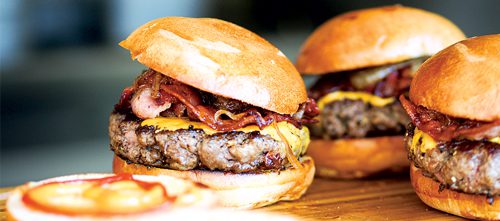
    Burgers from the Ranch

    recipe courtesy of Kristie Binder,”Rodeo Road Recipes”

    Burgers from the Ranch - Courtesy of Flicker user, Niklas Rhöse

    INGREDIENTS:
    1 1/2 lb. ground beef
    1 pkg. chipotle seasoning mix
    1/4 cup red onion, chopped fine
    1 cup cheddar cheese, shredded
    1/2 lb. bacon, precooked
    mayonnaise
    lettuce
    tomatoes
    large hamburger buns

    DIRECTIONS:
    Preheat grill to medium-high heat. Combine hamburger with the next four ingredients. Place patties on the grill. Grill until they reach desired doneness. Lightly toast buns on the grill. Spread mayonnaise on one bun, top with patty, lettuce and tomato.


    Baked Candy Apples

    recipe courtesy of Kristie Binders,”Rodeo Road Recipes”

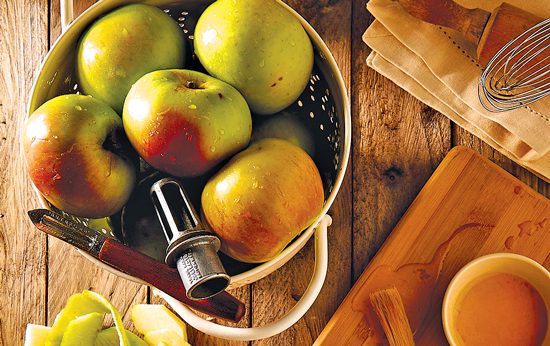
    Apples - Courtesy of Andy Chilton, UnSplash.com

    INGREDIENTS:
    1 large baking apple, cored
    2 T. brown sugar
    3/4 tsp. butter
    5 red-hot candies


    DIRECTIONS:
    Preheat grill to medium-high heat. Place bown sugar, butter and candies into the center of apple. Wrap apple in heavy-duty aluminum foil and place on grill. Grill apple for approximately 20 minutes. Test apple for doneness by poking with fork. Once done, enjoy!

  • Back When They Bucked with Ralph &  Helen Rand

    Back When They Bucked with Ralph & Helen Rand

    story by Kyle Eustice

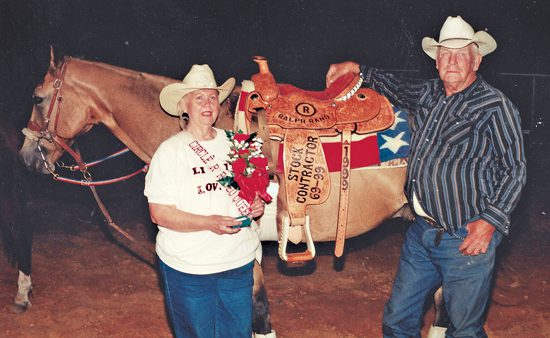
    In the early 1950s, Ralph and Helen Rand used to frequent the Calico Rock Café in their hometown of Dolph, Arkansas, and the pair quickly grew fond of one another. The only problem was Helen was just 14 years old and Ralph was 24. Understandably, the age difference caused a lot of controversy in the family, but they were undeterred. They started seeing each other anyway, even though Helen’s father, Homer Pat Sanders, was adamantly against it. Despite his resistance, they fell in love, ran off together and got married in 1953.
    After a whirlwind romance, the couple is still going strong 63 years later. Their eldest son, Tommy Rand, 57, was born into the cowboy way of life, along with older sisters Rema and Judy, and younger brother Tony. Ralph started producing rodeos in 1969 when they were all young children.
    “I was 10 years old when dad started producing rodeos,” said Tommy. “The hardest part for me was catching cattle. There are 310 acres where the arena is, so it was a full day.”
    As a child, Tommy helped his father raise horses and bulls. Several of them have been bucking bull or horse of the year. It started with his grandfather, Owen Rand, who bought and traded horses for a living.
    “My dad basically turned it over to me when I was 12,” said Ralph. “I’ve always been a horse trader.”
    Ralph started riding bucking bulls and horses at a young age, too. He loved the rodeo lifestyle from the first moment he was exposed to it.
    “He’s always had horses as a kid,” said Tommy. “He just loved being around the rodeo and the people he met.”
    In 1969, the Calico Rock Lions Club wanted Ralph to put on a rodeo. At that time, he didn’t have any bulls. Instead, he had bucking horses that weren’t broke yet. In fact, Ralph would regularly have his kids ride the unbroke horses and then take them to the local horse sale.
    “If they sold and made money, the kids got to stop at the local truck stop to get something to eat, which was a real treat for them,” explained Judy. “But if the horses did not make any money, they didn’t get to stop. They would just drive by.”
    At Ralph’s inaugural rodeo, instead of using bulls, he used cows to buck, while Helen would work the gate. His longtime friend, Paul McCarson, showed up to help him and essentially produced the first amateur rodeo along with Ralph.
    “It didn’t require a membership,” said Judy. “It followed typical rodeo rules, but there was no rule book.”
    Word started to spread that Ralph was producing quality rodeos on his property and soon people were asking him to produce rodeos in their town. That’s when the traveling began. Ralph had an old Bob Truck that could haul five horses and five bucking bulls. At one particular event in Ravenden, Arkansas, they ended up having the rodeo by moonlight after all of the lights were shut off. They did whatever it took to keep the rodeo going.
    “In Imboden, Arkansas, the arena was a T-ball field, so it was not typical square arena,” said Judy. “This guy got in there with a bull and it knocked him completely through the fence. We had to fix the fence to finish the rodeo.”
    With his unwavering dedication to producing the best rodeos in the area, Ralph dove head first into the production side, where he could be behind the scenes. While he’s not as involved as he used to be, he still raises several bucking bulls and horses on the Rand farm, where he hosts a “Born to Buck” program.
    “We keep about 100 horses and 50 bulls,” said Tommy. “We put on junior rodeos, too. There’s always something going on.”
    As a member of associations like the ACA, Arkansas Family Rodeo and Great American Bull Riding Association, Ralph has amassed countless accolades over the years. He served on the ACA board in the ‘80s, earned the GABRA Bucking Bull of the Year Award in 1994, and was named the ACA Cowboy of the Year in 1996. In 2013, he was the ACA Cowboys Choice Producer of the Year and two years later, earned the ACA Bareback Horse of the Year and Ranch Bronc Horse of the year. The Rand family’s most coveted award, however, is the 1998 Izard County Farm Family of the Year Award.
    “I was shocked when I found out we got it,” said the now 78-year-old Helen. “I wasn’t expecting it. I came home from work and there were 70 or 80 people for a surprise potluck. There were six or seven photographers there to take pictures. Ralph and I were shocked. We had no idea they were going to do this surprise dinner.”
    Every August, the Rands recreate the very first rodeo they had in 1969. Called the “Old Timers Rodeo,” they replicate the initial hand bill from 1969, when attending the event was only $2.50. It’s a huge spectacle and captures the hearts of their entire community. At 88, Ralph can watch the event unfold and soak in the magic of what he’s created over the years.
    “It’s unreal how many people show up,” said Tommy. “About 1,100 to 1,200 people usually come. We give out buckles and just have a great time.”
    Ralph is proud to watch his son take over the family business. He knows Tommy won’t stop until it’s the best rodeo it can be.
    “He’s that kind of person,” said Ralph. “He’ll fight to get to the top. I tried other people in the past, but Tommy really does it the way we have always done it. He loves the rodeo.”
    Ralph still checks on the cattle on a daily basis while Helen is content staying at home and spending time with her family. After such a long, fruitful career, they can look back with pride at everything they’ve accomplished, including Ralph’s biggest goal.
    “I always wanted to be a cowboy,” said Ralph. “That was what I wanted to do as a young boy in school. The number one thing I said I wanted was a big ranch and I did it.”

  • ON THE TRAIL WITH Daylon Swearingen

    ON THE TRAIL WITH Daylon Swearingen

    Daylon Swearingen split second and third place in the bareback riding at the NHSFR this July, riding all three of his horses after making the 34 hour drive from his home in Attica, New York. The 16-year-old bareback and bull rider won 2015 NHSFR All-Around Rookie Cowboy and qualified all three years of the NJHFR, the fruition of his hard work in the arena and on the spur board.

    The oldest son of Sam and Carrie Swearingen, owners of Rawhide Rodeo Company, Daylon learned the art of balancing rodeoing and rodeo production from an early age. Sam finished the 32nd Annual Benton Rodeo before flying to Wyoming to watch Daylon and his 15-year-old brother, Colton, compete in the NHSFR. The family visited Devil’s Tower during their travels, but were immediately back to work as soon as their truck turned in the driveway. Daylon was introduced to rodeo by Carrie, a barrel racer and former trick rider for Longhorn Rodeo. He made wooly-fisted mutton busting runs before putting the Barstow youth bareback rigging from his uncle, Kenny Phillips, on a pair of roman riding ponies. “Me and a buddy built bucking chutes at the house when I was eight,” says Daylon. “We had one pony that bucked a little bit, but that was it. When we started bucking steers under the rigging and saddle, they worked out better.” He was competing at the National level by sixth grade in the bull riding, chute dogging, and breakaway roping. Colton followed in the tie-down roping. “I did the timed events for the all-around – and to beat Colton,” Daylon jokes. “I couldn’t lose to my little brother!”

    Along with high school rodeo, Daylon competes in the SEBRA, IPRA, and APRA, where he was leading in the bareback riding his rookie year until heading out to Nationals. “I missed quite a few rodeos, and now I’m sitting third. It’s a little frustrating, but it doesn’t bother me too much because we still have quite a few rodeos left,” he says. Putting on 80 performances and 30 ropings from June to October, in addition to the usual rigors of summer haying, has its pros and cons. “I can always make it to at least two rodeos a week, and we have a weekly rodeo we put on. I usually get on every performance in at least one event,” Daylon explains. “We have good rodeos up here, there’s just not as many of them, so there’s not as many people to push you to get better.” His drive to be the best he can be motivates Daylon, along with the coaching from his dad, Kenny, Jerome Davis, Clint Cory, Dave and Tyler Waltz, and Doug Lutz. “Kenny is in Oklahoma, and I send him videos and talk over the phone. I went to Clint Cory’s bareback riding school this spring, and Jerome Davis has a bull riding school. He was a really good bull rider, and he got hurt, but he still has such a positive outlook on life, and he and his wife have helped me learn about the bull business.”

    Two year ago, Daylon purchased several heifers and bred them. He has a crop of calves are on the ground and bucked his yearlings this summer. “They bucked pretty good, and so did my heifers. When they’re old enough, I’ll take them to a few futurities, and then start bucking them in my dad’s rodeos.” Rawhide Rodeo Company raises its own roping calves, broncs, and bulls, and purchases its steers. They produce everything from high school rodeos to PRCA and IPRA rodeos, including the Canadian rodeo company Sam is a partner of. “We’re also doing some novice bronc riding at seven of the big rodeos,” says Sam, who founded the company in 1987. “I want to give Daylon and all the young kids the opportunity to rodeo. The younger generation can go play video games and be competitive without the effort, and I think now anything that takes a lot of effort is dying off.” Sam is a first generation saddle bronc rider, growing up on a farm with 40 – 50 horses to ride. “You didn’t know you weren’t out West. My dad was a collector of horses, and as a kid, I’d get on one until it quit bucking, then get on another one! I rode saddle broncs for years and did pretty good, then started buying livestock and an arena and went from there. Daylon will get on the spur board and have me come down, or go over videos with me, but he knows what he’s supposed to do, so it’s more of a conversation.”

    Sam and Carrie were married in 2011, joining their families – Carrie’s sons, Daylon and Colton, and Sam’s daughters, Katie and Molly. “Competing in rodeo is what both my kids strive for, and that’s all we really have in our life is our passions,” says Carrie, an RN and a vital part of the rodeo company. “We’ve met so many great people in rodeo – people competing, committees, and those who come to watch. It’s a great sport, and God has blessed us. We have a lot of fun, and it teaches our kids to work hard. It’s never easy, and sometimes you work hard and you don’t win, but that’s the way it can happen.” Carrie is barrel racing at the rodeos on a horse she’s been training, and is what Daylon calls the go-getter of the family. “We always come home with a ton of laundry, so we empty everything Monday morning and wash it, and get the crew’s western shirts to the dry cleaners,” says Carrie. “The Hazletts cook for the crew and anyone working the rodeo when we’re on the road, and that time is a definite blessing for our rodeo crew to get together.” Carrie often serves as a timer and keeps the company’s equipment organized on the road, which is even down to the arena itself. “Other parts of the country have permanent arenas, but up here, we don’t,” Daylon explains. “It takes about five hours to set up. We bring everything, from the chutes and fencing to the roping box. Colton and I help with that, and I do the feeding and help check calves.”

    When Daylon’s not on the road with the company’s four trailers and motor home, he enjoys riding colts, mountain biking in the nearby state park, cross-fitting, and wrestling for Attica Central High School, where he’s a junior this fall. “I’ve wrestled since second grade – it gave me something to do during the winter,” he says. “You have to have mental toughness, and if something goes wrong, you can’t blame it on a teammate. It’s just you, like rodeo.” In the winter, Daylon rides practice bulls at home until the temperature is below 30 degrees. “We have about 500 acres, and the summers are good, but the winters suck,” he admits. Year round, he’s working toward his goals of competing in the PBR, and qualifying for the WNFR in both his events. Along with the APRA finals, he intends to compete in the SEBRA and IPRA finals this year, where he’s sitting 12th in the bareback.
    “It’s a short rodeo season, but we’re blessed, and the boys work very hard at it,” Sam finishes. “They want it much more than I did, and it’s nice to see them getting involved and growing into rodeo.”

  • Grilled Peaches & Cowboy Butter

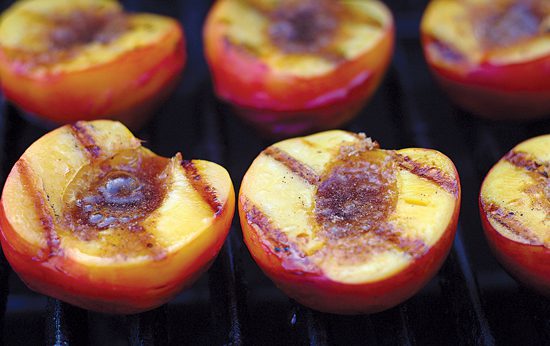
    above: Grilled Peaches - Courtesy of Mike McCune

    Grilled Peaches
    recipe courtesy of Kristie Binders,”Rodeo Road Recipes”

    ingredients:
    1 1/2 Tbsp. butter
    3 Tbsp. brown sugar
    1/3 cup dark rum (spiced is best)
    8 ripe peaches – peeled, pitted & halved

    DIRECTIONS:
    Melt butter in saucepan on grill. Stir in brown sugar and rum until it dissolves. Place peach halves in melted mixture, stir and coat. Place peaches on grill over medium heat, about 5 minutes per side. Spoon on excess mixture as peaches grill. Makes about 8 servings.


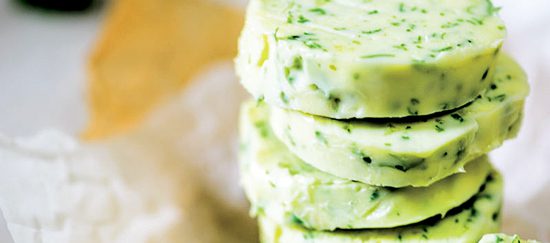
    above: Cowboy Butter - Courtesy of Neha MathurCowboy Butter
    recipe courtesy of Ang Paris,”JugglingActMama.com”

    ingredients:
    1 cup salted butter (2 sticks)
    1/4 cup finely minced fresh parsley
    A pinch of red pepper flakes
    A pinch of coarsely ground black pepper
    1 clove garlic, finely minced
    Juice and zest of ½ lemon

    DIRECTIONS:
    Allow the butter to come to room temperature before starting. Beat the butter until creamy, then add in the parsley, red pepper flakes, black pepper, minced garlic, lemon juice and zest. Mix until well combined. Scrape down the sides of the bowl and turn the mixture out onto a piece of parchment paper. Using the back of a spatula, spread out the mixture into a log shape. Roll the parchment paper up and twist the ends. Refrigerate for at least 4 hours to allow the flavors to come together.

  • ProFile: Jayde Atkins

    ProFile: Jayde Atkins

    “My mom (Sonya) was the typical horse crazy girl who grew up on a hobby farm in Missouri. My dad (JB), who grew up farming and raising cattle and hogs, learned to rope after they were married. They ended up in the horse world training and showing reiners and reined cow horses,” said Jayde Atkins.
    Jayde is still rolling with interviews pertaining from her current achievements: Champion All Around Cowgirl at the National High School Finals and Champion Reined Cow Horse as well. At the Nebraska State level, she won the pole bending, the reined cow horse, and all around, second in cutting, third in barrels, knocking a barrel to potentially win it.
    “Nationals was pretty awesome,” she said. “I won the reined cow horse and the All Around, competing in barrels, poles, cutting, and the cow horse.” Her family trains reined cow horses and rope horses. “We’ve used similar bloodlines for cow horse and roping, since we are in the rodeo world. My reined cow horse is also my number one breakaway horse and is a proven tie down horse. And now I’ve got two futurity barrel horses as well to take down the road.” Her dad has a regular job as a territory manager for Vermeer Manufacturing. Her mom is a nutritionist at Backbone of Healthcare in Broken Bow.
    She worked hard this year to get better at her events. “Last year I really wasn’t confident in myself or my horses and I wanted to do really good but tried to force a lot of things too much. Last year she ended up second in reined cow horse and third in the all around at NHSFR. “I went to several different trainers last year and this year for help, but this year I determined to be more focused. I was more confident in myself and sought out just a few skills I needed to work on.” In Nebraska, she competed in everything – including goat tying, team roping, breakaway, and even tied her first calf down the week before Nationals.
    Jayde started riding early. “I can never remember a time I wasn’t riding. Some of my earliest memories are from when my parents were showing, and I helped them cool down horses.” She did some of the junior rodeos when she was younger. Her older brother, Sterling, got into high school rodeo when she was in sixth grade. “I didn’t really get to rodeo much until my freshman year.” Sterling won the Nebraska State High School Cutting title and his shoes were hard to fill. He passed away his freshman year in college from basically a heart attack that happens to athletes. “They didn’t know at first why he had a heart attack. And for pretty much a year we did tests to make sure I didn’t have it – you go from everything being good to everything awful. I was running cross country and track and I wasn’t allowed to do anything until results came back. I rodeoed to keep us sane,” she recalls. “I was riding his cutting horse and his tie down horse, Harry, who ended up winning the reined cow horse with me.”
    When the National High School officially introduced the reined cow horse her junior year, Jayde had already done the demonstration at Nationals her sophomore year. “I’ve been involved in the implementation of the event in Nebraska,” she said. “It’s a show horse event and we’ve been involved in the AQHA for years. I haven’t shown there for years, because high school rodeo took precedent over that.”
    Jayde is heading to Chadron State College – about four hours from home – this fall. “It’s the same college that Sterling went to and I know a ton of people from Broken Bow that have gone there and loved it.” She is not going to rodeo the first year, although she’s taking some futurity horses with her. She is going to major in Ag Business and plans to concentrate more on the economic and financial end of it.
    After college, her dream is “Marry a rich rancher from the Sand Hills that will let me rodeo for the rest of my life … and if that doesn’t work out, I will live where I can give back to the ag community – I am a huge believer in FFA, and I want to keep the way of life that I’ve lived going. Horses are what we’ve always done, it’s our life.”

  • Back When They Bucked with Dr. Charles “Bud” Townsend

    Back When They Bucked with Dr. Charles “Bud” Townsend

    “For a guy who started out like I did, America was the land of opportunity. I’ve come from shoeshine boy to Grammy Award winner and author,” says Dr. Charles Townsend. Born November 5, 1929, the Texas native attributes rodeo as the gateway to his life, and an abundant one at that. He announced rodeos 50 consecutive years and took his oratory skills to the college classroom as a history professor, while also writing “San Antonio Rose: The Life and Music of Bob Wills”, published in 1976.
    It began simply enough. Charles Buddy Townsend – named after musician Charles Buddy Rogers – had drawn a bull, Little Blue, at the rodeo in Ringold, Texas. It was Labor Day of 1946, and Bud’s older brother refused to let the 16 year old get on the bull. When the announcer didn’t appear, Bud, known for his rodeo announcing imitations, took up the microphone instead. “I took to that like a duck to water. I had a lot of fun, maybe more so than later because I wasn’t taking it seriously,” says Bud. “In those days, they brought an invalid in an old Sedan to the arena with his sound equipment inside. Sometimes the horses would hit the car or the calves would run behind it. We didn’t have electricity at the arena, so we ran a crystal microphone off the car. I would fold a handkerchief over it so it wouldn’t melt in the sun. Mine never did.”
    Following his announcing debut, Bud got on one or two more bulls before leaving the chutes behind. “Announcing was my forte, and it gave me something to live for. My mother was widowed with seven children, and we were poor, which was nothing new in the Depression. I never dreamed I’d make ten dollars a day or that there would be any future – I had no reason to believe I’d ever be anything. I had a gang of friends around town, and we were into all kinds of mischief. Announcing opened a door in my life, and in a sense, I owe a debt to rodeo that I can never repay.”
    Prior to living in the town of Nocona, Texas, Bud and his mother and siblings lived on his grandfather’s ranch, eight miles from town on the Chisholm Trail, and just four miles from where H.J. Justin started Justin Boots Company. “I lived in an era right between the frontier and modern America. We went to town with the team and wagon and brought groceries back. One of my granddad’s ranches was on the Red River, and he was rich when oil was three dollars a barrel. My Uncle Joe Hancock raised the great Hancock horses.” When Bud was in his early teens, his mother moved to Nocona and rented an old hotel for the family. “Main street was my front yard and the alley was my backyard. I was truly an alley rat. But when I started announcing, I became something of a businessman, and I had to give up my wild and wicked ways, because people won’t buy ads from a shady character,” he recalls with a laugh.
    He announced horse races, baseball games, and sold ads, a long way from his ten cents a shoe shine. He returned to boots, however, in his late teens when Ruth Salmon (Roach) the lady bronc and trick rider, secured him the sales manager position at Olsen-Stelzer Boot and Saddlery Company in Henrietta, Texas. “She was a dear friend of my mother’s, and we lived on the ranch two and a half miles from Ruth and Dick Salmon. We were very close, and I also knew Tad Lucas because she’d stay on Ruth’s ranch. They never referred to rodeo as a sport – they looked on it as show business. To me, that was the greatest era of rodeo, when it was more of a show.”
    Show business agreed with Bud, and he learned his craft announcing rodeos in towns such as Muenster and Gainesville, Texas. The 17 year old turned his attention to the RCA, and when Ruth put in good word to Bobby Estes, a rodeo producer, Bud was all but in with the association. “I announced for Bobby in Hamilton, near Stephenville, Texas, and he liked me. When I joined the RCA, their office was in Fort Worth in the Burnett Building. Earl Lindsey was the manager and they had a little 6×6 foot office with maybe one file cabinet and a desk. I asked Mr. Lindsey, ‘If I join the RCA, can I announce amateur?’ He said I’d be put on the blacklist, and I had to decide right then if I wanted to be amateur or pro. My original card number is 1249 – I was the 1,249th member in 1948.”
    Two years later, Bud married Mary Smith, who was a book keeper for Olsen-Stelzer. Their first son, William, was born in 1951, and twins Mary Jane and Charles Jr. came several years later. Bud announced for Bobby Estes another five years, and the family always came along. “We wore out about three trailers – we couldn’t make any money if we stayed in hotels or ate out. Our first trailer was 17 feet and it wasn’t even self-contained.” Bud explains his biggest break in the rodeo business came when he quit working for Bobby Estes. “It freed me up to announce bigger rodeos – after I quit with him, I travelled all over. I went to the RCA convention and booked shows, from state fairs in California and North Carolina to rodeos in Mercedes, Texas, and Omak, Washington.” He also worked for rodeo producers including Homer Todd, Beutler Brothers, Cotton Rosser, Everett Colburn, and Walt Alsbaugh for 30 years.
    “In the meantime, I became a Christian. My wife and her family are so Baptist, they go back to John the Baptist, and I decided I wanted become a preacher.” Bud continued to announce in the summers and work for Olsen-Stelzer and Nocona Boot Company while attending school. He graduated from Decatur Baptist College and went on to Midwestern State University in Wichita Falls, Texas. “The faculty got me a fellowship for Baylor University where I went for a year until I applied to University of Wisconsin. I’d gotten interested in history at Wichita Falls, and University of Wisconsin had a top history department, but I knew I wasn’t ready for the big league yet. I took a teaching job at Texas Tech University to really learn basic American history, and then went to Wisconsin for three years to get my PhD.”
    He would go on to teach history at West Texas A&M University in Canyon for 27 years, where he is presently Professor Emeritus, while Mary taught first grade in Canyon for 24 years. Bud was one of the best lecturers the school had seen. “I attribute that to announcing rodeos,” he says. “I couldn’t announce a rodeo and use big words and be intellectual – you have to speak the people’s language. I lectured the same way in the classroom, and they could understand me.”
    Bud also taught at Hardin Simmons, Texas Tech, and University of Wisconsin. While teaching at Texas Tech, he made extra money by interviewing rodeo people for Sylvan Dunn, an associate professor of Sociology. Bud made sure his interviews took him to Turkey, Texas, home of the King of Western Swing, Bob Wills. “When I was growing up on my granddad’s ranch, my dad was a big fan of Jimmy Rogers, whom he’d played guitar with. They both had TB, and Dad met Jimmy in a sanitarium in San Angelo. In full health, Dad worked in the oil fields, and he was a tinkerer. When I was five or six, he built a wind charger to charge the car battery so we could listen to the radio. We listened to three things – Bing Crosby, Franklin D. Roosevelt’s speeches, and one noontime, we found Bob Wills. In the Depression, there wasn’t much to live for with war coming. But Bob Wills’ music was uplifting. Dad told me one time, ‘Stay with this Bob Wills, he’ll be big one of these days.’ And I never forgot it.”
    Bud’s chance to meet his childhood idol came when he met Johnny Lee Wills, Bob’s brother, who produced a rodeo in Tulsa, Oklahoma. “He got me in with Bob Wills, and when I came back to the history department, they thought I was lying about meeting him. But my wife fell in love with his wife, and we became close friends.” Bud was asked to write an article on Bob Wills for the Dictionary of American Biography, but he felt a book was in order. For the music lover who signed up for clarinet in college and carried the reeds in his pocket, the 85 interviews with Bob Wills that followed were exhilarating. “It was about ten years in the making. I did all my writing in the morning. I knew I was writing to the world, and I’d sit there and get a high just working on it!” A scholarly work edited by Judith McCullough, “San Antonio Rose: The Music and Life of Bob Wills” was published in 1976 by University of Illinois Press in a series of books on music and American life.
    In 1975, Bud accepted the Grammy Award for his album notes on “For the Last Time”, Bob Wills’ final album with The Texas Playboys. Bud was one out of 4,000 entrants and five nominees for the Grammy Awards. “One reason I think I won the award was because I interviewed so many musicians and asked about their influences. Bob’s was Bessie Smith, Empress of the Blues in the ‘20s.”
    Today, Bud and Mary continue to make their home in Canyon. Their son William is an optometrist, and Mary Jane is a medical advisor for one of largest blood distributing banks in the world, located in Scottsdale, Arizona, second only to the Red Cross. Their younger son, Charles Jr., passed away five years ago. “Regardless of what I’ve done, I’ve stayed with rodeo in the summers, and it was like paid vacation for 50 years,” says Bud, who’s been inducted into the Texas Rodeo Cowboy Hall of Fame, and received the Lifetime Achievement and All-Around Cowboy awards through the American Cowboy Culture Awards in Lubbock, Texas, which he announces. His childhood hometown of Nocona even held a Bud Townsend Day in his honor. “I wouldn’t take anything in the world for those 50 years of announcing,” Bud finishes. “Rodeo introduced me to so many cultures and foods and people, and it freed me from poverty and gave me ambition. Everything I’ve done goes back to that, and I’m so proud I did it.”

  • On The Trail With Charlie Gibson

    On The Trail With Charlie Gibson

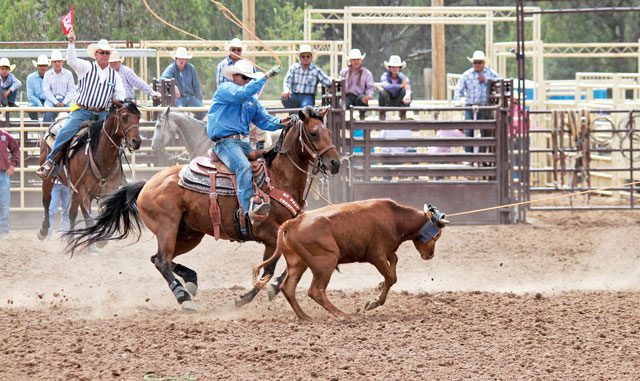
    Charlie Gibson started rodeo 12 years ago, when he was five. “My dad (Casey Tyree) and my sister (Brittany Winslett – 7 years older) competed,” said the 17 year old from Greenwood, Texas. When he was too young to compete, he would go along with his sister and spend his time roping – anything he could find – the dummy, a goat, anything.

    Hard work and lots of practice paid off for him at the 2016 American Junior Rodeo Association Finals where he won the team roping, ribbon roping, tie down roping (second year in a row), and all around. He also won the Alvin G. Davis Award at the AJRA finals, given to the contestant who helps out the other contestants, shows good morals, and sets a good example.

    “Charlie was voted by our directors to receive this award as a member that has given back to the association in character and assisting the younger kids,” said Mary McMullan, AJRA Secretary Manager. “He’s been roping all year long injured – he is scheduled for knee surgery this fall; and he still gets out there and mugs calves for the little kids. He’s assisting without being asked and that’s awesome.”

    In spite of his injury, he practices every day and sticks to the same routine. His day begins with practice, which is a family affair at his house. His dad, Casey rodeoed, and was still roping when Charlie started going, but has stopped to devote his time to helping Charlie. His mom, Jerilyn, runs the chute and the video camera. She’s also a great coach. “She’s figured out more of the game than most people know,” said Casey. Casey is Charlie’s coach in the practice pen. “We try not to use the safety. He’s getting a lot better about being a smart roper. He had a good high school year this year, won Region 2 tie down, high call back at Texas High School finals, and messed a hooey up and missed National Finals by one hole.”

    Charlie has a daily workout that includes flipping a tire, doing push ups and other core strengthening work, and he also works with his dad at the family business building fence and barns, which is a work out too. He has learned to weld, and can do most of the fence building now unassisted. “We work until around 1 then I come home and do school work for a couple hours,” said Charlie, who will be a junior using the Christian Academy of America curriculum. After school is done, he heads back to the practice pen with his dad to rope. “We practice every day, no matter what,” he said. “When we get home, we watch videos of great ropers like Fred Whitfield or Trevor Brazile. Watching how fast and smooth they are, it motivates me to be like them and I want to win.”

    Formal roping training has come from a Roy Cooper school that he attended when he was about 13, and pros that have come through to rope at his house or theirs. “I had a lot of good mentors just like he did. We study the game a lot, and go through lots of video,” said Casey. The horse power comes from various places. “Some of them from my mom and her ranch in New Mexico,” said Casey. “And some we pick up here and there. We take everybody’s projects and finish them or tweak them to fit him. He’s got a little different style than everyone else – all out. He’s going 90 miles an hour – he likes to go all out.”

    He has three tie down roping horses, Tuff, Lightning, and Badger, and uses Lightning the most. “He’s more mature and knows how to do his job, and he’s a winner.” His team roping horse, Frankie, came from Jackie Smith and Casey trained him.

    When he gets ready to back in the box, he takes a deep breath and goes through his steps with his dad. “I like to get by myself, think about what I want to do and get everything else out of my mind, and go do my job. Realize it’s just you and the calf and nobody else,” he said, recalling the missed hooey at the high school finals. “I got in too much of a hurry.” He has learned how to handle loss as well. “I walk out of the arena with my head high and go on to the next one.” One of the books he has read to help him with his mind is Gold Buckles Don’t Lie by Fred Whitfield. “No matter what happens, you have to go on with your life instead of look back.”

    Charlie brought home four saddles, seven buckles, and some cash from the AJRA Finals, and he’s ready to go again. He has been invited to the Roy Cooper Invitational this December in Las Vegas, and the plan is to win state and National next year. “I want to win the world – and I’m going to do everything I know how; do what my dad’s taught me and go out there and be consistent.” He is thankful for God number one, his family, his sponsors, and everyone that helped along the way. His sponsors include: H4 Compression Specialties, Inc, DLH Inc and Ranchfolks.com.

    Jerilyn is supportive of her children’s desire to rodeo. “It’s taught them hard work, and if they want something they have to work for it. It’s taught them morals and values and how to be a good person.”


    Charlie Gibson started rodeo 12 years ago, when he was five. “My dad (Casey Tyree) and my sister (Brittany Winslett – 7 years older) competed,” said the 17 year old from Greenwood, Texas. When he was too young to compete, he would go along with his sister and spend his time roping – anything he could find – the dummy, a goat, anything.

    Hard work and lots of practice paid off for him at the 2016 American Junior Rodeo Association Finals where he won the team roping, ribbon roping, tie down roping (second year in a row), and all around. He also won the Alvin G. Davis Award at the AJRA finals, given to the contestant who helps out the other contestants, shows good morals, and sets a good example.
    “Charlie was voted by our directors to receive this award as a member that has given back to the association in character and assisting the younger kids,” said Mary McMullan, AJRA Secretary Manager. “He’s been roping all year long injured – he is scheduled for knee surgery this fall; and he still gets out there and mugs calves for the little kids. He’s assisting without being asked and that’s awesome.”
    In spite of his injury, he practices every day and sticks to the same routine. His day begins with practice, which is a family affair at his house. His dad, Casey rodeoed, and was still roping when Charlie started going, but has stopped to devote his time to helping Charlie. His mom, Jerilyn, runs the chute and the video camera. She’s also a great coach. “She’s figured out more of the game than most people know,” said Casey. Casey is Charlie’s coach in the practice pen. “We try not to use the safety. He’s getting a lot better about being a smart roper. He had a good high school year this year, won Region 2 tie down, high call back at Texas High School finals, and messed a hooey up and missed National Finals by one hole.”

    Charlie has a daily workout that includes flipping a tire, doing push ups and other core strengthening work, and he also works with his dad at the family business building fence and barns, which is a work out too. He has learned to weld, and can do most of the fence building now unassisted. “We work until around 1 then I come home and do school work for a couple hours,” said Charlie, who will be a junior using the Christian Academy of America curriculum. After school is done, he heads back to the practice pen with his dad to rope. “We practice every day, no matter what,” he said. “When we get home, we watch videos of great ropers like Fred Whitfield or Trevor Brazile. Watching how fast and smooth they are, it motivates me to be like them and I want to win.”

    Formal roping training has come from a Roy Cooper school that he attended when he was about 13, and pros that have come through to rope at his house or theirs. “I had a lot of good mentors just like he did. We study the game a lot, and go through lots of video,” said Casey. The horse power comes from various places. “Some of them from my mom and her ranch in New Mexico,” said Casey. “And some we pick up here and there. We take everybody’s projects and finish them or tweak them to fit him. He’s got a little different style than everyone else – all out. He’s going 90 miles an hour – he likes to go all out.”

    He has three tie down roping horses, Tuff, Lightning, and Badger, and uses Lightning the most. “He’s more mature and knows how to do his job, and he’s a winner.” His team roping horse, Frankie, came from Jackie Smith and Casey trained him.

    When he gets ready to back in the box, he takes a deep breath and goes through his steps with his dad. “I like to get by myself, think about what I want to do and get everything else out of my mind, and go do my job. Realize it’s just you and the calf and nobody else,” he said, recalling the missed hooey at the high school finals. “I got in too much of a hurry.” He has learned how to handle loss as well. “I walk out of the arena with my head high and go on to the next one.” One of the books he has read to help him with his mind is Gold Buckles Don’t Lie by Fred Whitfield. “No matter what happens, you have to go on with your life instead of look back.”

    Charlie brought home four saddles, seven buckles, and some cash from the AJRA Finals, and he’s ready to go again. He has been invited to the Roy Cooper Invitational this December in Las Vegas, and the plan is to win state and National next year. “I want to win the world – and I’m going to do everything I know how; do what my dad’s taught me and go out there and be consistent.” He is thankful for God number one, his family, his sponsors, and everyone that helped along the way. His sponsors include: H4 Compression Specialties, Inc, DLH Inc and Ranchfolks.com.

    Jerilyn is supportive of her children’s desire to rodeo. “It’s taught them hard work, and if they want something they have to work for it. It’s taught them morals and values and how to be a good person.”