Rodeo Life

Category: Archive

  • Shaley Ham: The West Desperado Way

    Shaley Ham: The West Desperado Way

    Shaley Ham didn’t initially set out to be a fashion influencer. Though she always loved fashion — as a kid, she carried notebooks that featured her hand-drawn fashion designs — a career as a fashion icon wasn’t at the forefront of her mind during her childhood in Cheney, Washington, just outside of Spokane.

    The daughter of barrel racer Pam Capper, Ham grew up riding horses and attending rodeos on weekends, though she never really caught the competitive bug herself. But she loved traveling to the arenas alongside her mother, developing her love of the Western way of life along the way.

    “That Western lifestyle and those roots have always just been something I’ve connected with,” she says.

    Although her college years would whisk her away from Cheney, she moved back to her hometown after graduating with an accounting degree from the University of Oregon. Her return home sparked a renewed sense of passion for those Western roots.

    “I fell back in love with the romance of the Western way of life,” she says.

    The decision to return to her hometown ultimately changed her trajectory. She met bareback rider Nick Gutzwiler, who she would eventually marry. Around that time, she also began following others who sought to share their best Western-inspired outfits on social media.

    She put her accounting degree to use, cultivating a career in the field. But that job would also lay the foundation for her transition to fashion, which began after her coworkers constantly told her how much they liked her sense of style. Given the praise, she created a social presence exclusively dedicated to showing off her outfits.

    It didn’t take her long to build a community. After a couple of months, she already had a thousand followers.

    “When I hit over a thousand followers, I was like, ‘Oh my gosh, like, I’m a rock star!’ It’s funny to tell that story now because I feel like people can get a thousand followers overnight. But it was very different eight years ago,” she says.

    She now has more than 200,000 followers on Instagram, not to mention another 100,000 on TikTok. On her pages, you’ll find stylized images and videos of her in cowboy hats and boots, displaying classic Western style with a modern flair.

    While it may seem odd to some to build a Western fashion empire out of an accounting background, it has served her well. Her background in a business-adjacent field has given her an upper hand in terms of her ability to navigate the challenges that come along with being an influential personality, such as networking and maintaining a professional demeanor.

    Western fashion brands quickly identified Ham as someone they wanted to work with. They caught her attention with offers for free clothing—an irresistible perk for someone who was already fashion-obsessed. Something she’d started strictly for fun had suddenly started captivating Western fashion enthusiasts.

    That was 2016, a year her mother qualified for the National Finals Rodeo. She joined her mother in Vegas, where she also first encountered representatives of many of her favorite brands in person at Cowboy Christmas, the Western-themed holiday event that takes place in tandem with NFR festivities. This experience led to more opportunities to work with the brands she already loved.

    She also began receiving invitations to wholesale markets, such as the ones at the Dallas Market Center. These provide an early access opportunity to identify the styles and trends that Western wear brands are banking on for the coming seasons. They’re also a great opportunity to bond with the people behind the brands, which is an essential component of succeeding in the field of content creation.

    Still, even with all her success, it would take several years before she reached a point where she felt comfortable leaving behind the accounting world and transitioning into life as a full-time content creator.

    While her images often tout a carefree Western lifestyle, the truth is that success in this field requires the kind of work ethic only the most dedicated cowgirls can understand. She suggests that her background in the corporate world has proven a major asset, as her professionalism earns her kudos among her brand partners.

    “That’s always my biggest encouragement for other girls when getting started,” she says. “Set those standards because as soon as you release the reins and give some slack in the professionalism department, things can start to go sideways.”
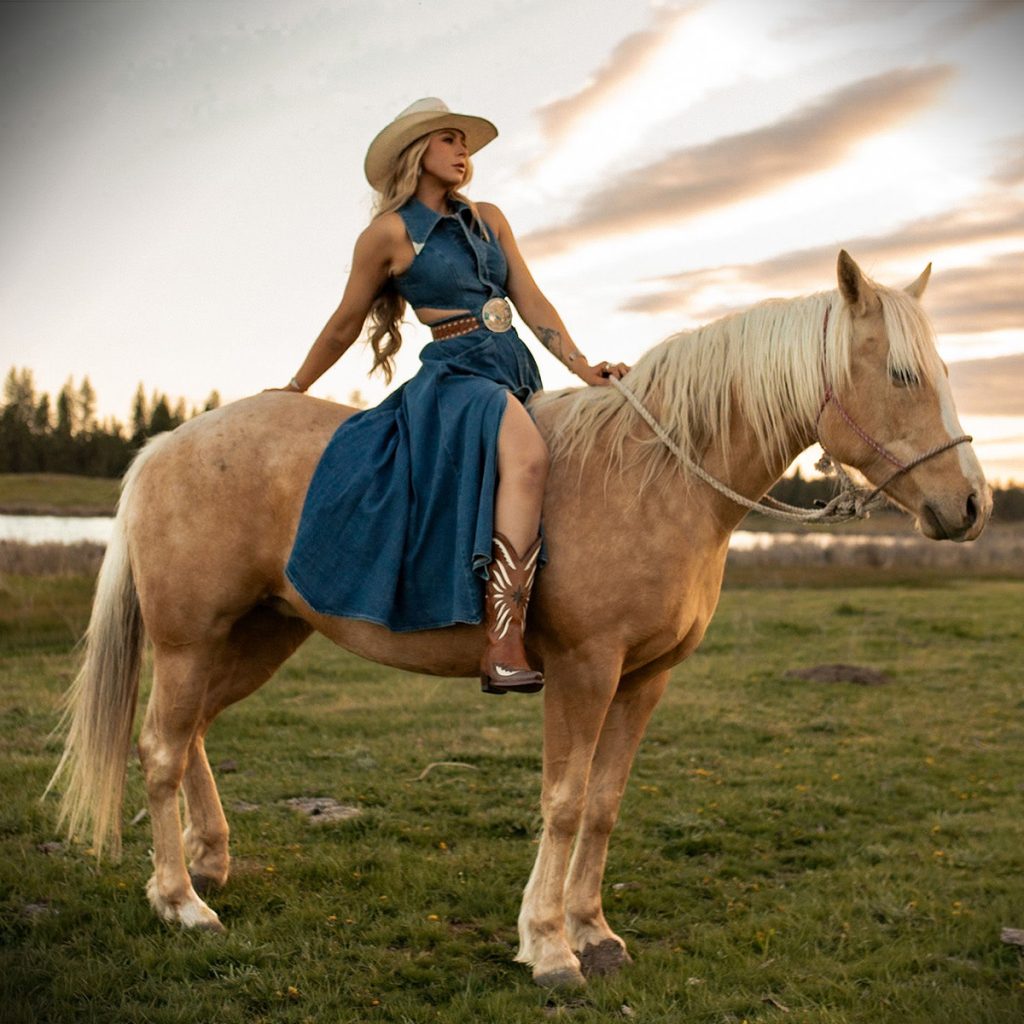
    Presently, Ham has several collaborations with major brands — her four-year partnership with Rock n’ Roll denim stands out as a favorite among many. But Ham doesn’t foresee herself opening her own boutique anytime soon.

    However, after realizing the concho belts that are a staple of her signature style can be challenging for people to find, she wanted to be able to tell her followers how they can get their own. So, she now offers them for sale on the West Desperado website.

    “I wear them all the time. And it’s just super easy to know that I can send people somewhere to find them,” she says.

    And as with any influencer, Ham varies her style based on the season or her vibe.

    “I’m starting to love rosettes and like little accented rosettes. When they first came out, I was not vibing with them, but I’ve been seeing them incorporated in a more Western way. And I think it’s a delicate aspect to add when wearing lots of leather or fringe,” she says.

    She’s also a fan of Lariat neckties, which are becoming increasingly popular.

    “They hit the scene during this last NFR in December. And now girls are wearing them with strapless tops. A little Lariat necktie tied around your neck adds a fun kind of Western accent to any outfit.

    And then, of course, there’s the most classic of all.

    “You can’t go wrong with denim on denim,” she says.

    Follow Shaley Ham on Instagram and TikTok at @westdesperado and visit her website at www.westdesperado.com.
  • Carrie Ann Sattler – Reno Rodeo’s First Female President

    Carrie Ann Sattler – Reno Rodeo’s First Female President

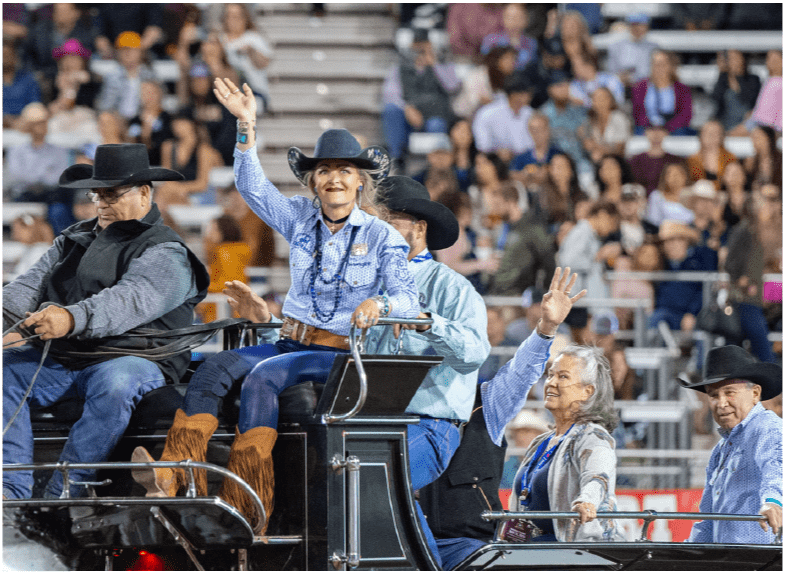
    Carrie Ann Sattler was only 16 when she knew she wanted to volunteer for the Reno Rodeo, one of the nation’s most revered Western sports events rooted in 105 years of tradition. As a young girl, she went to the rodeo each year with her family and found herself drawn to the excitement of the large crowds and festive atmosphere. “When I turned 16, I called and asked if I could volunteer. They said you had to be 18 if you didn’t have a connection inside the association already. So, I told the gal that I would call back on my 18th birthday,” Sattler says. “I called her back on my birthday in 2004 and became a volunteer. Now I’ve been doing it for 20 years.”

    That sense of unbridled enthusiasm and loyalty to the organization has served her well. Sattler’s hard work and passion led her to become the Reno Rodeo’s first female president—not to mention its youngest-ever president. She now oversees a volunteer base of around 800 people, making up 65 independent committees that work diligently to put on the annual rodeo in Reno, Nevada. The rodeo draws some of the biggest names in the Western world and spectators from all over the country. “In an association like Reno Rodeo, something that’s so special is just the amount of passion that gets poured into creating a single 10-day event,” she says. “I am one of many, many volunteers that contribute a major portion of their lives to the betterment of the association and our initiatives as a rodeo.”

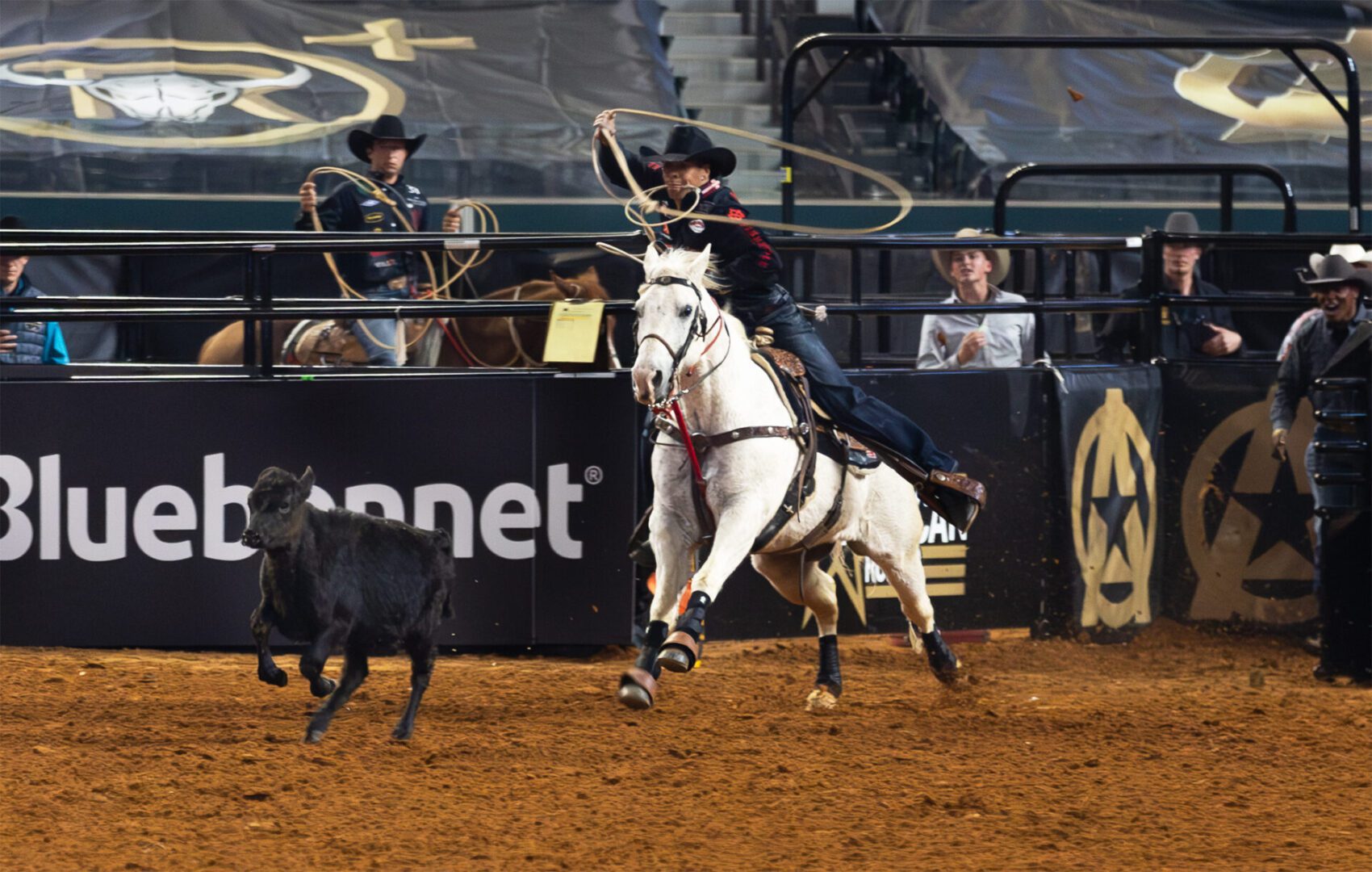
    The Reno Rodeo is ranked seventh among nearly 700 rodeos nationwide. Each year, the organization’s volunteers and committee members donate thousands of hours of their time to produce one of the most elite events in Western sports. To some, it may seem uncanny that so many people would be willing to spend so much time and effort to put on a single event. But for Sattler and the others who keep the show going strong year after year, it’s hard to imagine not being part of such an iconic event. “There’s a quote that, from the outside looking in, you can’t really understand it. But from the inside looking out, you can’t really explain it,” Sattler says, summing up what drives so many people to become dedicated to developing the best event possible. Because of their hard work, the Reno Rodeo has become a must-see event that pays homage to rodeo’s storied history and the legacy of the West. “There’s something so rewarding about seeing the fruits of your labor. Knowing that you’re one small part of such a big machine is incredibly moving,” she says.

    It’s not just the rodeo itself that inspires these volunteers to come out in droves to support the event. Another big part of the Reno Rodeo’s overall mission is community involvement, which includes charitable initiatives that give back to various causes in the region while also helping to ensure that the thousands of visitors who flock to the area for the big event have an incredible guest experience.

    “The event itself is pretty significant in its impact,” she says. “We have about a $50 million economic impact in our region. On average, we donate about $250,000 a year to the Reno Rodeo Foundation, a foundation that was created to be the charitable arm for giving back. Beyond that, we donate hundreds of thousands of dollars back to the community through donations and charitable contributions. And in addition, we’re producing one of the largest attractions and events in our state and our region through the Professional Rodeo Cowboys Association.”
    And while the local community benefits from tangible effects such as spikes in regional tourism that benefit the local economy, the true beauty of getting involved is that it offers people the chance to be part of something much bigger than the sum of its parts. As has always been the case with the presidents before her, her primary goal is to organize a bigger and better event each year. She takes this mission seriously as the leader of a rodeo with a legacy dating back over a century.

    Adhering to tradition while remaining adaptable to the changes of the modern landscape can be a complicated balancing act. Sattler describes this balance as “incredibly delicate” but is proud of how the Reno Rodeo has come to honor its legacy and tradition while continuing to move the needle in rodeo sports.
    With the organization so profoundly rooted in tradition, Sattler understands the importance of paying it forward to the broader community. That’s why the organization will host its first-ever Reno Rodeo Scalability Conference this year, inviting representatives from rodeos nationwide to learn how to grow their own rodeos bigger and better.
    “We think that in our position, it’s really important to share the formula that we’ve been working on for 105 years and have now grown to feel pretty stable and very successful,” she says. “We want to share some of that industry knowledge with others.”

    Smaller rodeos don’t always have the luxury of massive pots or the inherent prestige associated with longer-running events. Therefore, their organizers must find creative ways to draw the best ropers and riders to their arenas if they want to sell out the grandstands. The conference aims to give the representatives from these rodeos a chance to learn how to scale based on Reno Rodeo’s success in growing to become one of the most revered events in the Western world.
    “I think it’s going to be great, and I’m excited that we’re doing it,” she says.
    Rodeo may be all about the blood, sweat, and tears of an American pastime, but Sattler understands there’s something deeper at the intersection of rodeo sports and the Western world. Since its earliest days, rodeo has been a celebration of Western heritage, honoring the traditions of the West and the cowboys and cowgirls of generations past. She thinks it’s essential to grow rodeo sports to keep those traditions alive by teaching future generations about rodeo’s historical importance and embodiment of that Western spirit.

    “Once you get involved, you just understand that it’s about family. It’s about values. It’s about hard work and tenacity. It’s about grit. It takes a lot of fortitude, both physically and mentally, to live a lifestyle of Western tradition. And I think that’s what makes it so worthwhile, and the juice worth the squeeze,” she says.


  • Community Coffee Shad Mayfield

    Community Coffee Shad Mayfield

    Few things in life will always remain constant. However, two things will never change: Community Coffee’s promise to serve their customers with consistency, integrity, and excellence and JoEllen Mayfield’s love for her son.  As the mother of 5x Wrangler National Finals Rodeo Qualifier Shad Mayfield and a schoolteacher in Clovis, New Mexico, JoEllen said she was a typical rodeo mom when her son was growing up.

    “Every weekend, we were going somewhere, traveling to a rodeo. I was the typical rodeo mom,” JoEllen said. “I was with him every step of the way. I packed the clothes and the food and made sure everything was ready to go. 

    We spent hours and hours in the practice pen when he was growing up, and by the time he was in 10th grade, he was entering open jackpots,” she said. “So that year, we started homeschooling.”  “He was such a good kid, and we were always really busy,” she said.  “He didn’t have time to get in trouble.

    JoEllen said Shad is not the only competitive member of the Mayfield family.  “I am competitive too,” she said. “I was always out there coaching and helping where and when I was able to.”

    Shad said that now that he lives in Lipan, Texas, his mother doesn’t get to travel with him and watch as often as she’d like to because of her obligations as a teacher. However, he added that he is thankful she was able to be there to watch him win the American in 2020. “She got to be there on the biggest day for me, which meant a lot,” he said.

    JoEllen said she still messages her son daily and talks to him on the phone frequently throughout the week. “He doesn’t always reply as often as a mom would like, but I know how busy he is,” she said. “When I visit him in Texas, he is always going, and he never sits still.

    “Growing up, he was a momma’s boy,” she added. “He still probably is one, even though he doesn’t talk to me as often as I want him to.”  Shad said he would still consider himself a momma’s boy. He added that he couldn’t do many things without her. “She helps me make sure I’m getting everything taken care of with bills, paying fees at rodeos, anything with my house, and anything with life,” Shad said. “She is my go-to person.”  “She visits and stays with me, and soon, she’ll move to Texas close to me.”

    Shad says, “My mom has impacted my life in so many ways. She taught me the most outside of the arena, and that’s what I’m most grateful for. “It’s not always about what’s going on in the arena. Sometimes, it’s more about what is happening on the outside,” he added. That’s what my mom brought to me.” She also taught me how to be smart so that I could succeed in the arena. 

    Bravo to JoEllen and her many hours of being a rodeo mom, one of the best jobs on the planet. It certainly has paid off in the success of her son Shad and his appreciation and love for his mom. 

  • On the Trail with Chancey Williams

    On the Trail with Chancey Williams

    “I was spreading myself a little thin, doing all three, and I don’t think I was riding as good as I should have been because I was trying to go play dates, and I was like, well, I think I’m just going to play music.”

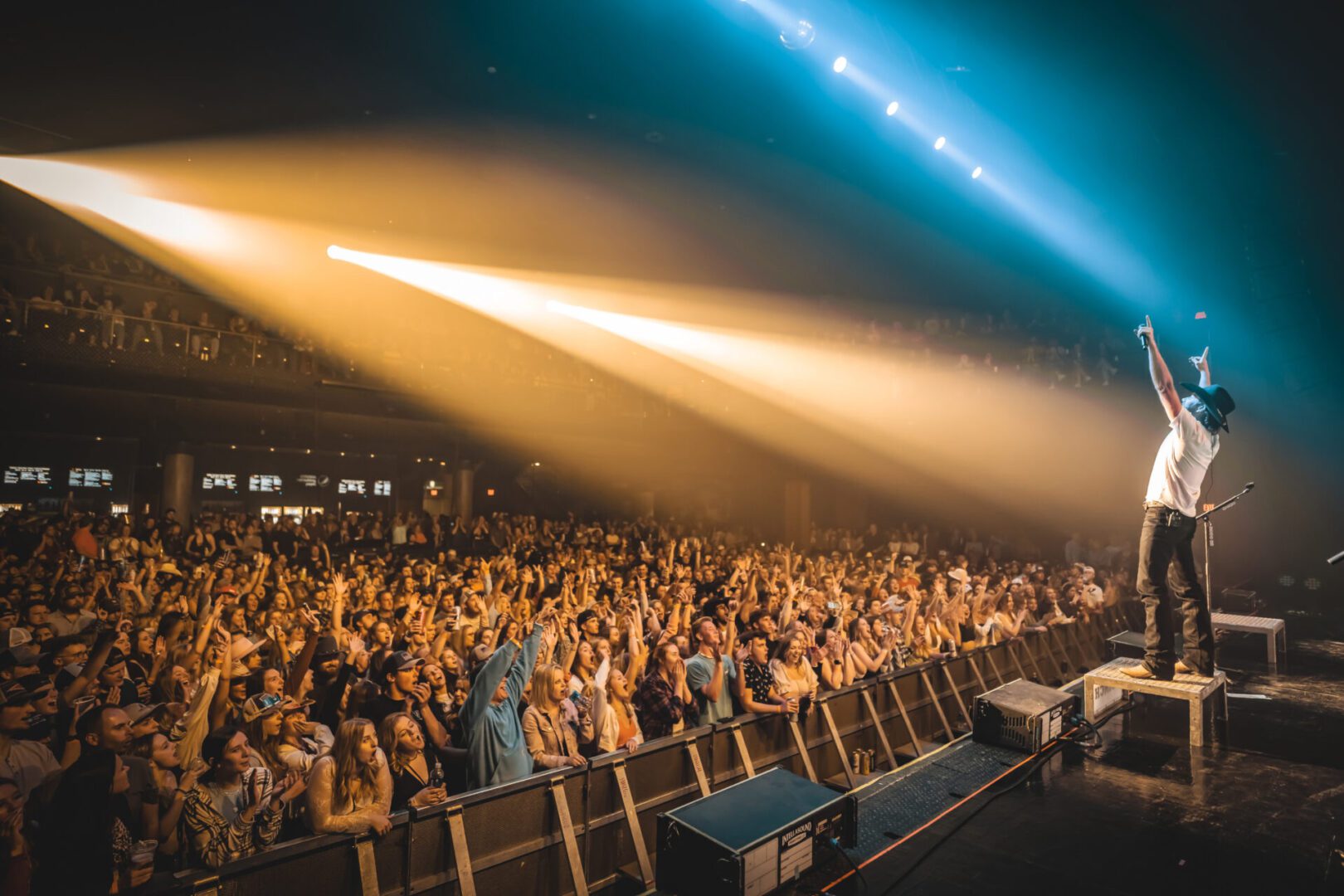
    He might have hung up his spurs for now, but saddle bronc rider turned successful country music artist Chancey Williams understands what it takes to be a cowboy behind the mic and in the arena.

    Despite leaving his rodeo career behind, Williams continues to draw upon his experiences as a cowboy to create authentic and heartfelt music that resonates with fans across the country.

    His journey from growing up on a ranch in Moorcroft, Wyoming, to performing at stages such as the Grand Ole Opry has been inspiring, and his success serves as a testament to his determination and understanding of the Western lifestyle.

    While in Rapid City, South Dakota, we were fortunate enough to have an exclusive sit-down interview with the Wyoming native. We caught up with him on his tour bus right after his sound check to talk about rodeo, ranching, and music.

    RN: When did you decide to be a musician? Rumor has it you were pretty big at the high school talent show?

    Williams: Yeah, we started in high school just kind of for fun. And we actually started just for a talent show. I tell people [it was] kind of an excuse to have everybody in town come out to the shop. We’d say we were practicing, and we knew like eight songs and just kept playing them, and people would get together. So we did it just for fun, really. I didn’t really know where it would take us.

    Then, some guy in Moorcroft hired us for a New Year’s Eve thing and gave us 200 bucks. We’re like, man, you get paid for this? So then we just kind of started playing all around the area in high school, dances, rodeos, fairs, and stuff. I went to college and we were busy in college playing. Then I had a lot of work, you know, go to the college rodeo and ride and then play at the dance that night. It was a good college job.

    It kind of took off from there. The rest of the band was still in college, so I went to grad school, got my master’s, and stayed in Laramie then, for an internship, I moved to Nashville to work for Toby Keith. Down there, [I] just decided, well, maybe I want to do this as a career. I was riding broncs and playing music, and I was picking up for Cervi’s and Franzen’s a little bit. I kind of liked it all, but I figured I better make a choice to do one and try to do it right. I was spreading myself a little thin, doing all three, and I don’t think I was riding as good as I should have been because I was trying to go play dates, and I was like, well, I think I’m just going to play music.

    RN: You talked about the high school talent show, are any of your band members you played with in high school still with you?

    Williams: No, I’m the only one left. The original guys, you know, a couple of them went and got real jobs, married, and grew up, and I didn’t grow up. But you know Wyatt and Brooke have been with me for 15 years, so they’ve been the longest. Then the other guys, most of them are five or six years in. I have a really good band right now, and it’s a lot of fun, but yeah, none of the originals. They all went off and did something else, but I didn’t want to grow up.

    RN: What’s something special that each band member brings to the stage?

    Williams: I always say Wyatt’s like the heart of the band; he’s so mellow- mannered. He’s kind of, you know, everybody looks up to Wyatt as being chill, so he kind of keeps the whole camp chillin’. Obviously Brooke, you know, with her fashion and [playing] fiddle. There are a lot of fiddle players, but not that look like her. But Brooke always brings a lot to the table with her Instagram fashion stuff, and she has her own way of doing things. [She] pretty much makes all of her own clothes; she and her mom thrift shop and make clothes. So Brooke’s awesome. Dale’s a drummer we got out of Fargo. He played in a band that we knew, and when our last drummer left, he was our first call, and he’s just so talented. We have to fly him every weekend. And then Casey, our other guitar player, he’s awesome, he’s kind of a rock and roll guy. He brought a lot to the table, too, but he lives in South Padre, so we have to fly him every weekend, too. Jay, our bass player, lives in Loveland, and so he was also a great fit. I always tell people it’s almost 90% personality and 10% playing. Because you can teach people how to play pretty good if they know what they’re doing, but you can’t teach people how to get along on the road and not be a jerk. We live on these buses pretty much year- round, so there are some great musicians in Nashville, but there are a lot of musicians who are kind of weird, too.

    RN: What are some skills you gained growing up on the ranch that have helped you today? 

    Williams: I always tell people we [apply] ranch work style to music. People think music, they just see you play live, and they’re like, oh, it must be really fun. It’s a lot of work. And to get to the level we’re trying to, it’s unbelievable. I look back to be like, man, I don’t know if I’d have started this because the music business is crazy, but growing up ranching is hard work.

    So that taught us to work hard, and we like it. It’s not that bad on the road.

    Music’s tough, but every time I think it’s hard work out here, I can just call my brother at home and ask him what he’s doing. He’s [usually] calving or something. They’re like, well, this music thing ain’t too bad. The hardest part of the day in music is still easier than ranching.

    RN: March is our equine edition: how have horses influenced your life and music?

    Williams: Well, you know, I tend to write a lot of songs about cowboys and ranching and the Western Way life, so I guess just, you know, growing up a horseman, growing up breaking colts, then riding broncs, you know, it gives me the credentials to write songs about it. You know, you hear a lot of songs on the radio that you can tell somebody from Nashville wrote about a cowboy. Well, they haven’t really lived that, so you know, growing up with my history, I can write songs that are lyrically correct.

    RN: I know you used to ride saddle bronc, can you tell me a little about that?

    Williams: Our dad was a saddle bronc rider, so I grew up wanting to be like Dad. We started when we were fairly young. Then a kid got hurt real bad at a school in Gillette, so mom put the halt to the bronc riding for a few years. Then finally, we were riding colts, breaking colts, and you know, they were just like rodeoing, so finally, mom’s like, well, it’s kind of the same thing, so I’ll let you. So, high school, rodeo went to high school finals in the bronc riding, then went to Casper College on a rodeo scholarship, rodeo’d there three years, made the college 2 finals there, then went to Laramie one year and made the college finals my senior year, and then rodeo’d for a couple years out after college.

    I love bronc riding and I miss it a lot. I think about it all the time. I think everybody that’s stopped doing it, I dream about it. I can’t stop thinking about it. It’s one of those things you can’t do forever. You can team rope for a long time, you know. So it’s just one of those sporting events that you can’t just go get on one for fun. If you’re not in shape for it you, can get hurt.

    I’m always worried about getting hurt, you know, And then we’d be out of work for a while. We played at Red Bluff a couple of years ago, and they’re like,

    “Hey, want to get on the wild ride.” I was like, sure, what’s one more? Then COVID hit, so I didn’t get on in Red Bluff. That’s probably a sign. Yeah, but I do miss it a lot.

    RN: What’s your favorite rodeo to play?

    Williams: Oh, Cheyenne.

    I mean, we love NFR. We got to do the opening ceremony there five times. It’s obviously cool because I never made it there in the bronc riding. But I feel like I made it my own way, getting to play in front of the yellow chutes.

    We’ve always loved Cheyenne. I rode there, in a couple of rounds in the rookie bronc riding. It’s just a special place.

    RN: What do you like most about playing for rodeo fans?

    Williams: Well, they’re just my people. They get my songs, you know? Sometimes, my songs are a little precise as far as some of the lyrics are too insider.

    So, like, there are probably certain songs that people don’t get if you’re not a cowboy. They’re like, what, I don’t know what that means. So, being too accurate can be bad, too, for a giant fan base.


    RN: Where do you get your inspiration from?

    Williams: You hear lines from people at the bar or at a rodeo; you hear somebody say something a certain way. I go through my notes on my phone, and I have all these ideas. Whether they ever make a song or not. Some days, you wake up the next day and [wonder], what does that mean? I wasn’t making any sense. Yeah. That’s kind of where, I just like to write things that are authentic.

    So, I think in this day and age, people in general are searching for authenticity. The real world, you know, maybe some of that came from shows like Yellowstone and stuff. It just brought like the cowboy way of life, opened it up to a broader spectrum where people from the East Coast and West Coast, like, wow, they want to live vicariously through our lives through shows like Yellowstone.

    I write songs that they can think they’re being a cowboy and listen to.

    RN: What artists inspired you?

    Williams: I grew up listening [to] ‘80s and ‘90s country. The ‘90s stuff was super influential, like Dan Seals and Toby Keith. Toby was really good to me when I worked for him. And obviously, George Strait and Chris LeDoux were two real cowboys. Obviously, Chris was a world-champion bareback rider. Just watching Chris’s career [thinking] if he can do it, maybe I can do it.

    Chris helped us out early on and kind of got us started. It made me want to do it. He let us open for him in Billings, and we were horrible. We were young. We just started, and Chris didn’t care. Because Dad and Chris rode together [they were friends]. We knew them and the family all growing up. I just called their house one day, and Peggy [LeDoux], and I was like, how do we get into doing opening stuff? She’s like, well, let’s talk to Chris. And Chris was like, yeah, we’ll let you open up there [Billings] in August. [It was our] first time playing in front of a big crowd of about 8,000 people in the Metra. I was really nervous. And we were pretty darn bad. But I was like, man, this feels awesome; I wanna do this. We’re bad, but we can do this. And I remember Chris being like, looks like you were meant to be up there.

    RN: What type of music do you listen to now?

    Williams: Do you know what Yacht Rock is? It’s like easy listening ‘70s stuff. Wyatt is the music genius; he finds all this stuff, and he got me listening to some, you know, easy listening ‘70s, California- type stuff. So I listen to that a lot. We listen to about everything on here.

    But I typically end up playing sad old country songs at the end of the night. And it puts everybody to bed. Stuff you can drink to. I was like, man, these old ‘90s and ‘80s sad country songs have more emotion than everything.

    They’re like, who played this on the jukebox? That’s me. I’m the guy that spent 40 bucks on old Dan Seals songs. Who played “Everything That Glitters Is Not Gold” again?

    RN: Who would you most like to collaborate with?

    Williams: Probably Dierks Bentley. Just cause out of all the guys we’ve played with in the past, Dierks has become a really nice guy. I mean, I consider him friends, but, like, he texts me all the time. I text him back. Dierks is a genuinely nice guy; he’s what you see on TV, and sometimes, the artists aren’t.

    It’d be fun to do a song with Dierks. You know, and just cause he’s fun, like all the songs are fun, they’re kind of like our songs.

    RN: What are you looking forward to most in 2024?

    Williams: Well, we’re excited about this new batch of songs. We just put out our new single, A Cowboy Who Would. And it’s the first batch of eight that I did with this new producer, Bryce. And it’s some really good stuff.

    We have some of the stuff that fits what we always do: cowboy stuff. But just sonically, we changed engineers and some session players, and it just sounds really good. And this new single is doing really well. It got picked up by 150 stations nationwide this week. Last week, it was on the CMT Top 40 country countdown. They have a launch pad section in the countdown, and they got played nationwide.

    So we’re really excited about the music, you know, at the end of the day, It’s kind of all about the song, you know, that’s what moves the needle for an artist. We’ve done really well, but to make you huge, you have to have a hit song that kind of changes the world. You know, Toby Keith built his career off ‘Should’ve

    Been a Cowboy”. It was the number-one song played in the ‘90s.

    Then we got some great dates coming up. Sounds like we’re going to get to play the Grand Ole Opry a couple more times. They said maybe three times this year.

    Yeah, bucket list things, and we get to play Red Rocks in Denver in June, which is a bucket list one because everybody wants to play Red Rocks, so it’s fun to finally play there since we live so close by. A lot of great tour dates, and [I’m really] excited about all this new music.

    RN: Anything else you would like to add?

    Williams: We always encourage people to stream our stuff on Spotify. Our fan base is kind of old-school out west. They still listen on the radio and buy CDs. But, the music business gauges how successful you are sometimes off your streaming numbers. Our fans don’t stream; they drive six hours, buy a concert ticket and a t-shirt, and come to the show. They stream some, but some don’t even have Spotify. I always encourage people to stream the heck out of it. It makes us look good.

  • 5 Star Champion: Jessica Routier

    5 Star Champion: Jessica Routier

    Jessica Routier hit a momentous $1 million in career earnings in the summer of 2023. But the barrel racer from Buffalo, South Dakota, was paying much closer attention to the career earnings of her gritty palomino mare, Missy, who has carried Jessica to many of her pro rodeo checks. “My goal the last couple of summers has been to get Missy to a million dollars because I feel like there’s a lot of people who have hit a million, but not a lot of horses.” Missy secured her $1 million halfway through the 2023 WNFR. She and Jessica placed in six rounds and sixth in the average. The duo’s 2023 season highlights also included winning the NFR Open and the year-end title in the Badlands Circuit.


    Additionally, Missy was voted 2023 WPRA Horse With the Most Heart and took third in Purina’s Horse of the Year barrel racing category. “She’s really gritty,” Jessica says of the 13-year-old mare, owned by Gary Westergren of Lincoln, Nebraska. “She’s always been one that, the more impossible the situation may seem, the harder she’ll try. She’s really good in all different types of ground and patterns and really adaptable no matter the situation. She’s lived at my house since she was two, and I futuritied her as a five-year-old. She started her rodeo career as a six-year-old and won the Badlands Circuit that year, which propelled us into our first NFR in 2018. She’s taken me back there ever since.”

    All of Missy’s barrel runs are made with a 5 Star Equine saddle pad on her back, which has been a longtime staple in Jessica’s tack room. “I used 5 Star pads for a long time before I became a sponsored rider in 2018. I love how they fit, and they keep my horses’ backs feeling really good. And I love that they last forever.” Jessica also uses 5 Star’s cinches and sport boots. “A lot of boots, to me, are too cumbersome and bulky on the horse’s leg, but I like that these conform to the horse’s leg and protect really well without that bulk.”

    Jessica, her husband, Riley, and their five children run 300 head of cattle on their ranch, along with rodeoing and school sports. The two oldest, Braden (18) and Payton (15), compete in high school rodeo, while twins Rayna and Rose (8) and Charlie (7) compete in local youth rodeos. “There’s a lot of days where we’re all out in the barn practicing,” says Jessica, who’s had temperatures of 60 below zero to contend with this winter. “I bet we ride 20 horses a day. Five or six of them are young ones that don’t have a job yet, and the rest are ones that I or the kids compete on.” Jessica continues to ride several young horses for Gary Westergren, whom she started working for in 2011. She also has a full sister to Missy, who is excelling in breakaway roping with Jessica’s daughter Payton and several sons and daughters of Missy.
     

    Jessica and Missy’s 2024 season kicked off with Denver, with Fort Worth to follow. “I don’t go to a lot of rodeos in the winter, but I try to hit the big ones and still be home if I can. These winter rodeos, not everybody gets to go to them, so if I get the opportunity to go to them, I go. You don’t know if you’ll get the opportunity again.” Her three youngest daughters travel with her most of the season, taking their school on the road. “They have awesome teachers who are really good about sending work with them. My oldest two don’t get to go as much, but at the NFR, they were all there most of the time. We’re definitely not a traditional family in that we do as much as we can together, but most of what we do is going in different directions. We have lots of extended family and friends and the community on the rodeo trail that help make it all work.

    “I don’t really set a lot of goals, as crazy as that is. Every year, the goal is to make our circuit finals and the NFR, even though that’s not a do-or-die situation for us. I take things one rodeo and one week at a time. If we’re doing good, we keep going. One of my life goals is to get my kids mounted on good horses,” Jessica adds. “I’ve had so many opportunities in my life because of good horses, and that’s my goal. It’s for each one of my kids to have those same opportunities if they want them. I believe good horses can create great opportunities.”

  • Community Coffee: Tyler Waguespack

    Community Coffee: Tyler Waguespack

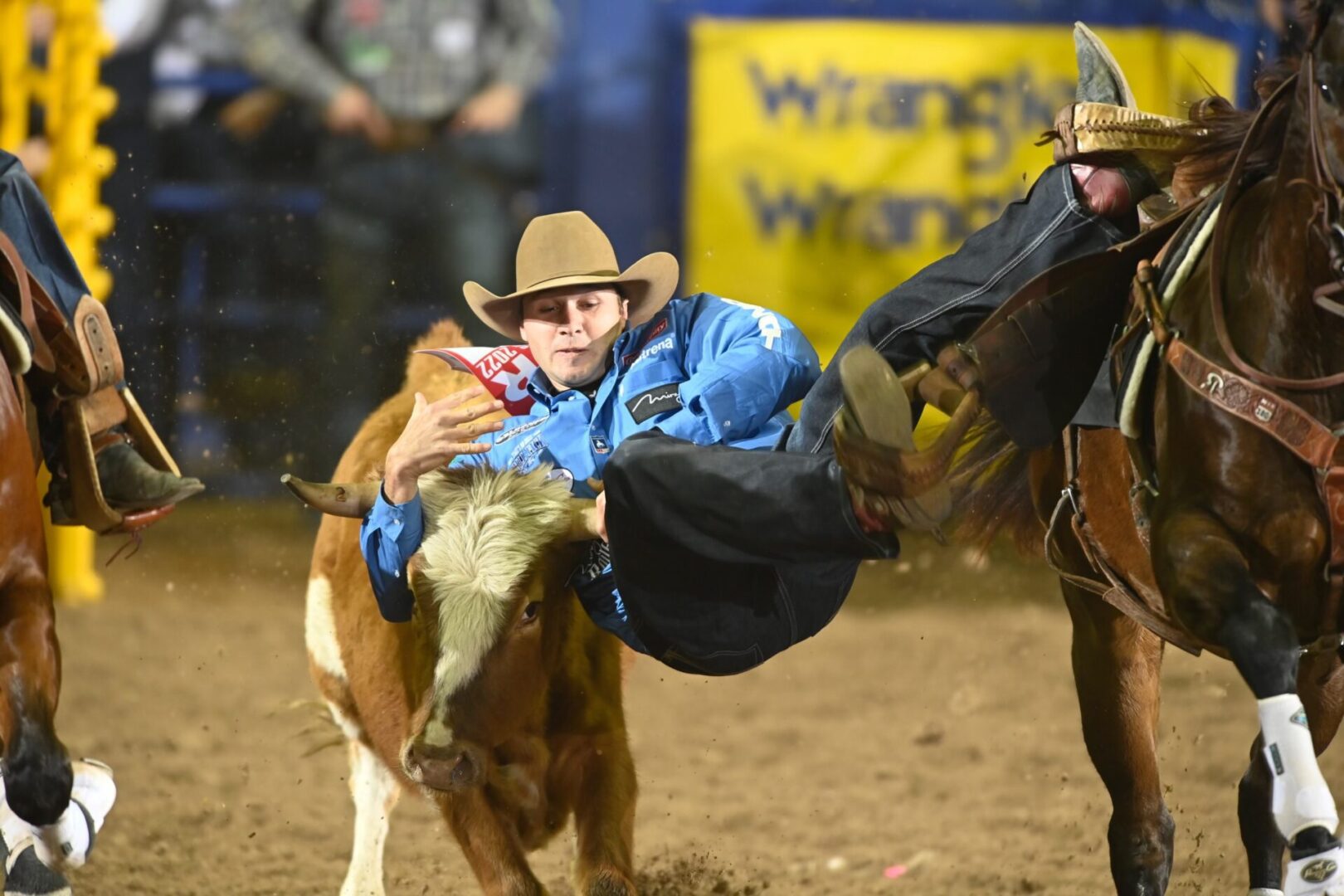
    “I grew up right south of Baton Rouge,” said 5x Professional Rodeo Cowboys Association Steer Wrestling World Champion Tyler Waguespack. “Everyone around here has always drunk Community Coffee. 

    “And my dad orders the signature roast by the box load,” he added. “So, if you want to drink coffee at our house, that’s what you drink.”

    Tyler said he loves the energy the Community Coffee team brings with their sponsorship. “When we are all out at the finals, they come over to talk to my family, and it never feels like I am working for them because they treat us like friends,” he said of the crew. “They are real and genuine people.”

    Before his five world titles, Tyler Waguespack had a job shoeing horses at home in Gonzales, Louisiana. He said he received an invitation to Rodeo Houston in 2013, and after placing in every round and winning around $17,000 that week, he decided to pursue professional rodeo full-time. “After that week in Houston, I was sitting on the couch, and my dad walked in asking if I had horses to shoe,” Waguespack said. “And I told him “No, sir, I’m entered up the next couple of weeks to see how rodeo treats me,” and I haven’t looked back.

    “In 2015, when I realized I was far enough into the top 15 to make my first NFR, I called my dad, and when he picked up, I said, “Hey, what are you doing the first ten nights in December?” Waguespack said. “My dad has done everything for me to get me to where I am today.” 

    According to statistics posted by the PRCA, Waguespack now has five world titles, nine Wrangler National Finals Rodeo appearances, and a whopping 2.29 million dollars in career earnings. 

    “Growing up, I was always the little dirty kid following my dad around in the practice pen,” Waguespack said. “I enjoyed calf roping, but bulldogging is what I always wanted to be serious about.” He said he attributes his ability to stay calm under pressure to 4x PRCA Steer Wrestling World Champion Ote Berry. “The winning mentality and the winning attitude that he has is what’s helped me when I’m going to different places,” he said of his former mentor. “He is a very situational type of steer wrestler. As crazy as it sounds, there really is a strategy to it when you’re out there. 

    “I had the opportunity to live with Ote for two years when I was first getting started,” Waguespack said. “He had always been a great friend of the family, and he told me I could come live with him if I wanted to start taking it seriously and learn to really win. “A lot of times, these guys out there don’t like to take the time to talk to people when they get a big name made,” he added. “But Ote, he was always willing to talk to the younger guys no matter what.” At the 2023 WNFR, Waguespack won his fifth world title, earning him one more gold buckle than his mentor. “Every time he would wave to me, he would wave with four fingers. I could only hold up as many fingers as buckles I had,” he said. “But this year, the student has surpassed the teacher, and we took a photo where I am holding five fingers up.” 

    Waguespack said he has now taken his own aspiring world champion under his wing. 

    “Cash Robb is a young man that attended Tom Carney’s bulldogging schools, and my dad and I have always helped with those,” Waguespack said. “Cash’s dad, Justin, had called me a couple of times; I finally told him if Cash wanted the best opportunity at success, he could come live at the house and practice with me.“That is a young man who puts forth a lot of effort and has a ton of potential,” he said. “He is one of the only people who can keep up with me in the practice pen.” Waguespack said Robb, the 2023 Steer Wrestling Resistol Rookie of the Year, currently lives and travels to PRCA rodeos with him while completing college classes online. 

  • On the Trail with Ky Hamilton

    On the Trail with Ky Hamilton

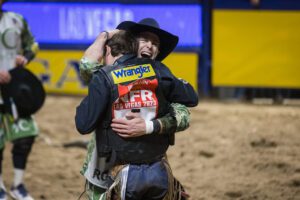
    Since the 2023 National Finals Rodeo in Las Vegas, Ky Hamilton has become a household name. The 23-year-old professional bull rider, originally from Queensland, Australia, rocked the rodeo industry after coming back to win a gold buckle following a serious injury after being bucked off a bull during round five of the finals. Just as shocked as fans, the other competitors were not expecting to see Ky at the round six performance.

    RodeoReady Photo

    “I know those guys didn’t think I was going to show up and win, and they damn sure didn’t want me to, and I went ahead and did it,” said the four-time National Finals Rodeo Qualifier and 2023 Professional Rodeo Cowboys Association Bull Riding World Champion.

    Ky, who joined the Professional Rodeo Cowboys Association in 2019, came into the National Finals Rodeo with over $250,000 in earnings in the regular season and started the finals in second place. Hamilton scored an 86.5 in the first round, a 78 in the second, 87.5 in round three, and an 89 in the fourth round of the NFR. 

    Still riding the high from his recent success, Ky drew the bull Bales Hay’s MAGA, owned by Honeycutt Rodeo, for the fifth round. During his ride, Hamilton’s head collided with the bull, rendering him unconscious. Fans and athletes watched as he was carried out of the arena on a stretcher and taken to University Medical Center Trauma Center in Las Vegas, where it was discovered he had suffered a concussion as well as injuries to his ribs and lungs. 

    Due to the severity of his injuries, medical professionals recommended he sit on the sidelines for the following rounds of the rodeo. However, the cowboy had different plans.

    “The whole time I was in the hospital, I knew I was coming back,” Ky said. Although he wanted to immediately return to the rodeo, he said he waited for a doctor to review any changes in his lungs the next morning before actually leaving the hospital. 

    “There was no doubt in my mind that as long as there was nothing worse with my lung, I was going to be riding,” said Ky.

    Not only did Hamilton return for the next performance, he tied for third place with 85.5 points and took home over $15,000 in round six alone. During round seven on Wednesday night, he was the sole rider and had a $99,000 payday. He continued his winning streak in the following days, earning over half of a million dollars overall in addition to a world championship title.

    RodeoReady Photo

    “I showed that I came there to win, and nothing was getting in my way,” said Ky.

    Although Hamilton has collected numerous wins in both the United States and Australia, he said the countries vary greatly when it comes to the rodeo industry. 

    “It’s a hell of a lot bigger,” Ky said about American bull riding and rodeos. He said that events are more spread out in Australia and have a smaller payout. Because of this, he said people in Australia must work a day job rather than travel full-time from rodeo to rodeo, which is a common practice for American cowboys and cowgirls.

    “Over there, you only get to go to about one rodeo per weekend, and there’s one performance, and that’s it,” Hamilton said. He also said that the stock and competitors of Australia are not on the same level of difficulty as the ones he has seen in the United States. 

    “Everything’s just on a smaller scale over there,” he said. 

    Ky competed for the first time in America at the age of fifteen, and a few years later, the bull rider decided to move from Australia to the United States to rodeo full-time. He now resides in Texas and travels to compete in rodeos across the nation. In 2023, Hamilton won rodeos in Texas, Arizona, California, Colorado, Oregon, North Dakota, Idaho, Utah, New Mexico, and Wyoming.

    With his successful 2023 season ending, Ky is now focused on the year ahead. 

    “It’s the same every year; just try to win a world title… I damn sure want to do it again,” he said. Ky said another goal he has for this year is to ride Bales Hay’s MAGA, the bull that cost him round five and sent him to the hospital.

    “He sure got the better of me, so I’d like to get even with him,” Hamilton said. 

    Ky plans to return to the arena in January 2024, sharing that he hopes to ride in Fort Worth, Texas and Denver, Colorado. Although he will be back on the road, he will be missing his travel partner, Stetson Wright, who is out due to a hamstring injury sustained at the NFR in December. 

    Despite the numerous injuries and Stetson’s absence, Ky will be continuing his chase for another gold buckle and won’t be throwing in the towel anytime soon.

    Editor’s Note: Ky was also featured in the November 2020 Edition of “On the Trail” by writer Siri Stevens  


  • Community Coffee: Rowdy Parrott

    Community Coffee: Rowdy Parrott

    [“Community Coffee is a Louisiana company, and being from there, that’s all I grew up knowing, and drinking is Community Coffee,” said Rowdy Parrott, a Louisiana native and 3x Wrangler National Finals Rodeo qualifier. “Every gas station and truck stop around there has Community Coffee.

    “I saw they were breaking into the rodeo world, and I had a contact with them that I knew from high school,” said the 29-year-old steer wrestler. “He told me I was on the list of people they were planning on reaching out to, and I signed with Community Coffee in 2021.” Rowdy said he likes his coffee simple and hot. His favorite being the Signature Blend Dark Roast with no added sugar or creamers.]

    Rowdy Parrott, originally from Mamou, Louisiana, but now living in Bellville, Texas, said he fell in love with rodeo and steer wrestling after he learned to chute dog in the 8th grade. Chute dogging is a step down from steer wrestling, where younger athletes can learn to throw a steer without jumping from a moving horse. 

    “I had a friend who lived down the road, and I started roping and chute dogging with him,” Rowdy said. “Then I steer wrestled all through high school, and I bought my pro card right after high school in 2013.” “I love the physical side of steer wrestling,” Rowdy said of his choice in rodeo events. “I played football and other sports, and I really liked the feel of being able to throw a steer down, and I was better at that than I was roping.” 

    Rowdy credits Tom Carney and Mike Waguespack, a Professional Rodeo Cowboys Association cowboy in the ‘90s, for teaching and helping him perfect his technique when he was younger. “I always looked up to those top guys like Luke Branquinho,” Rowdy said. “But the most help I received really came from Tom and the Waguespacks.” Rowdy said he and Tyler Waguespack, who has five PRCA Steer Wrestling world titles, competed in the National High School Rodeo Association together. “Wags was two years ahead of me in school, so we have been rodeoing together for a long time,” Rowdy added.

    Rowdy was crowned the Louisiana High School Rodeo Association steer wrestling champion in 2011. He also represented the state of Louisiana at the NHSRA Finals in 2009 as a team roper and in 2010-12 in the steer wrestling. 

    After high school, Rowdy said he hit the road chasing the end goal of a world champion gold buckle. In 2013, he won PRCA Rookie of the Year in the steer wrestling and made his first WNFR appearance in 2017. Now Rowdy travels with his younger brother Remey, who also steer wrestles, and Tyler. During the summer, when school is not in session, his wife and three children travel with him. “I have an amazing wife, Lynette,” Rowdy said. “We have three kids, two boys and a girl.”  

    Rowdy and Lynette met at a rodeo while they were both in college. While he said he did not compete in college rodeo longer than half of a single semester, Rowdy did receive his Bachelor of Science in criminal justice from McNeese State University. The couple married in 2015 and have two sons, Pacen and Bayler, and one daughter, Vail. 

    “The boys are wild,” Rowdy said. “They love steer wrestling. They wrestle each other and love being out in the arena when we are practicing.” “The boys are awesome, but my wife really wanted a girl,” Rowdy said. “They say girls stick to their daddies, but she’s still so young that hasn’t started to happen yet.” 

    In Bellville, around an hour west of Houston, the couple owns and operates Crawfish Outlet to Geaux, a seasonal crawfish hut. “From mid-February to the end of May, crawfish season, we sell boiled crawfish to-go,” Rowdy said. 

    “In 2020, when covid hit, I needed another job,” Rowdy said. “I grew up farming rice and crawfish, and they have these huts all over, so I decided I wanted to try it out.” The business started out under a tent on the side of a road in Bellville. But it soon rose in popularity, and now, Rowdy said, they have their own building. 

    “My house isn’t far from Houston,” Rowdy said. “So, all the steer wrestlers stay at my house and eat crawfish during the Houston rodeo.” While he did not make the 2023 WNFR, Rowdy said he is using that to motivate him going into the 2024 winter rodeos.  


  • 5 Star Champion: Randy Britton

    5 Star Champion: Randy Britton

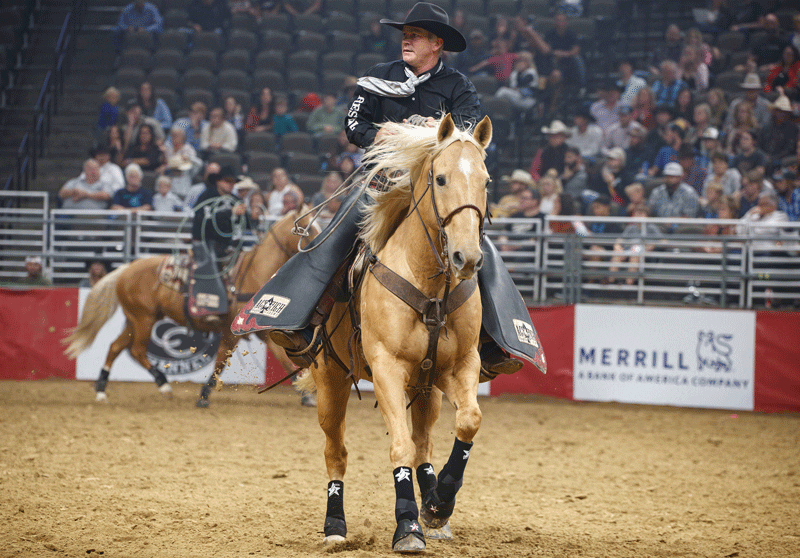
    Pickup man Randy Britton has 154 performances under his belt and thousands of miles on his odometer from the 2023 rodeo season alone. Working for Cervi Championship Rodeo since 2012 has kept the Kiowa, Colorado cowboy involved in the sport that hooked him from boyhood.
    “I started rodeoing when I was 12 or so. Me and a group of friends thought it was a good idea and we rode bulls for a while. Then I rode broncs until 2005 when I broke my neck, so I had to quit. I’d started picking up a little bit in 2002 when a friend of mine started an amateur rodeo company, and I did high school and Little Britches rodeos. Come 2005, I was trying to decide what route to take, because it would be hard to do them both [compete and pickup] but breaking my neck helped me decide. They said I could never ride bucking horses again, and I never asked if I could ride a horse again,” Randy says with a laugh.
    He landed a few rodeos with Cervi Championship Rodeo in 2012 and was brought on full time in 2014. Randy has eight geldings he can work off of right now, the youngest of them a 6-year-old blue roan named Levi. He’s particularly excited for Levi’s future since he and his wife, Kathryn, purchased the gelding as a weanling and spent the last five years working with him. “I just started picking up on him this year. He’s matured a lot this year and I think he’s going to be really good. Miss Rodeo America rode him in Colorado Springs this summer. She got seven or eight calls from people trying to buy him. He’s a true blue roan and a pretty flashy little horse.”
    Randy and Kathryn recently sold their broodmares and decided to go back to buying yearlings or the occasional ranch-broke horses, who transition into picking up nicely. They also have a weanling and 2, 3, and 4-year-olds coming along from their breeding program. “Kathryn is in charge of the young horses, and when we had the mares, she figured out what studs to breed them to. She’s very good at that. We had cow horse bred mares and bred them to barrel-type studs who could run but weren’t super hot, so it was trying to find that balance.” Some of the bloodlines they sought out included Sun Frost, Peppy San Badger, and Driftwood.
    Taking care of his horses is paramount to the success of Randy’s work. One of the ways he does this is choosing quality sport boots and saddle pads, which led him to 5 Star Equine’s products this year. “I’ve always heard good things about their pads and I needed some new ones this summer. I talked to them about getting sponsored, and luckily enough they thought it was a good idea to pick me,” says Randy. “I’ve had a few horses that are hard to keep saddles tight on, especially when they’re getting jerked on pretty hard from roping. I put a 5 Star pad on my yellow horse who’s been that way for years, and I had to keep backing my cinch off. It was not nearly as tight as it used to be. They form to the horses and when you pull the pads off they have perfect sweat marks.” Randy also appreciates the safety 5 Star’s sport boots offer his horses’ legs while they work next to broncs and bulls in the rodeo arena. “With two straps on the bottom instead of one it feels like you can get them snug. And a lot of boots I’ve had heck with filling up with dirt and these ones don’t do that. They’re taller than a lot of boots, so they cover more surface area, which is important for me.”
    Randy is enjoying being home more this time of year with his wife and their four-year-old daughter, Tessa. His rodeo schedule picks right up starting with Denver in January, followed by San Antonio and Houston, where he stays for about two months straight. Kathryn and Tessa often fly out to visit him for several weeks during that time, and they hope to travel with him more as Tessa gets older. Randy has been chosen to work the Mountain States Circuit Finals three times, and the 2022 NFR Open. “I’d like to pick up the NFR ones of these days,” he finishes. “That’s really the only thing left on that list to get.”

  • Community Coffee: Riley Webb

    Community Coffee: Riley Webb

    [“Ryan Rouse is the western sports manager for Community Coffee and my family has known the Rouses for a long time.,” said Riley Webb, now a 2x Wrangler National Finals Rodeo qualifier in the tie-down roping. “We have always been close, but the Community Coffee Team is one big family, so it made sense to be a part of it.
    “I tend to like the iced coffee more than hot coffee, so I always drink the vanilla waffle cone lattes,” said the 20-year-old cowboy.
    According to statistics the Professional Rodeo Cowboys Association posted, Riley earned $188,597 during his rookie year in the PRCA.
    “I’ve been with Community Coffee for three years,” Riley said. “My girlfriend [Josie Connor, a breakaway roper in the Women’s Professional Rodeo Association] is also a part of the team, as well.”]

    Riley Webb is a rising superstar in the PRCA and said he attended his first rodeo at only two weeks old. “I was born the first week of August, and the North Texas Fair and Rodeo is the third week of August. “My mom and dad have lived in Denton, Texas, for 25-plus years, and I grew up here,” he said. “They put on different roping events and junior ropings, so I started out just riding my pony around at those.” Together, Dirk and Jennifer Webb own and operate Webb Roping Productions and Ultimate Calf Roping. Together, they provide roping opportunities for ropers ages 8 to 80 plus. These are Junior World Finals sanctioned events.
    “My mom and dad have always helped Roy Cooper put on his junior ropings for as long as I have been alive,” Riley said. “So, my dad already had an in with the Cooper Family when I started roping. Clint Cooper, who has made the NFR several times, helped me get started with my horse at the time,” he added. “He has always encouraged me and always wanted me to reach my full potential.”
    Riley said for him, it has always been roping that he wanted to pursue a career in. “Ever since I was a kid, it was always my dream to make the NFR and win rookie of the year,” he said. “I played baseball for a while, but when I turned 11, I decided to really focus only on roping.
    “I did the church play days and rodeoed in junior high school, and then when I got to high school, I went to White Horse Christian Academy and did their distance learning program, so I did not have to be in a classroom,” he said. “My high school rodeo career was a little different than most kids.”
    Riley was the 2020 Texas High School Rodeo Association Reserve Tie-Down Champion his sophomore year and then won the National High School Rodeo Association Tie-Down Roping title the same year.
    During this time, he also made history by being the youngest person to qualify for the San Angelo Fiesta Days roping and The American Rodeo in the same year. “I was roping for a million dollars at 16.”
    He bought his PRCA permit shortly after he turned 18. “It really was like a dream. I roped at Mesquite, Texas, Wichita Falls, Texas, and Denton, Texas, all in the same weekend,” he said. “I won all three rodeos that first weekend to fill my permit. I set the arena record at Denton, my hometown rodeo,” he added. “That was huge for me. Everyone wants to get the hometown win, but to do it in my first go was amazing.”
    Riley said when he stopped worrying about where he was ranked in the standings and started to focus solely on roping, he began to realize he could achieve the goals he had set at such a young age. “I always pray and ask God for protection and ask him for the ability to show off the talent that he’s given me before every run.”
    At the 2022 WNFR, Riley was awarded the Resistol Rookie of the Year in the tie-down roping and the all-around. “I’d say I had a good rookie year. I didn’t have the best NFR last year, but that made me want to work harder and get off on the right foot when I was going into the 2023 season,” he said. “I really had a chance to show up and show out this year.”
    According to statistics posted by the PRCA, in 2023, Riley had 28 go-round wins and won $280,405 before the WNFR. He will be going into his second WNFR leading the tie-down roping.
    At the 2022 WNFR, Riley wore back number 40. This year, he will wear back number 2.

  • Back When They Bucked with J.C. Trujillo

    Back When They Bucked with J.C. Trujillo

    [ “Never did I think I would be that caliber of cowboy to be inducted into the hall of fame.” ]

    “I think I was just cut out to be a bareback rider. I love that event and the attitude it took to be a bareback rider. And a bunch of my lifetime heroes ended up being bareback riders. It was what turned me on,” says J.C. Trujillo. When the Arizona-born cowboy nodded his head and burst into the sport of rodeo as a child, it swiftly became a way of life, presenting him with opportunities, lifelong friendships, and numerous accomplishments, which he rode to the buzzer and continues to enjoy today. One of these accolades includes his induction in November to the National Cowboy Hall of Fame in Oklahoma City, an honor that J.C. says comes from the many people who stood behind him all his life.
    Born May 10, 1948, in Prescott, Arizona, J.C. started rodeoing at age 6. He and his older brother and sister, Frank and Irene, were launched into the sport by their parents, Albert and Stella Trujillo. “My mom and dad were so instrumental through my whole rodeo career that I just wish they were here to see this also,” says J.C. of his recent induction. “They drug us around to rodeos, paid entry fees, bought horses and horse trailers. They were by no means wealthy people, but we pinched our pennies and got to all our rodeos. Every honor I receive is because of my mom and dad.”
    J.C. and his siblings and cousin, Joe Vecere, who grew up with them, competed in all the events of the Arizona Junior Rodeo Association. J.C. moved into high school rodeo and won state his senior year in the bareback riding, traveling with his dad to the NHSFR held in Watonga, Oklahoma in 1966. On the way, they stopped at the National Cowboy & Western Heritage Museum and walked through the hall of fame. “Never did I think I would be that caliber of cowboy to be inducted into the hall of fame.”
    J.C. took third in the nation at the NHSFR, and despite his rodeo successes, thought he wanted to be a football player. He joined the Eastern Arizona Junior College team in 1967. “Those were big guys. I was too little and too slow, and it was a good thing, because they were the ones who convinced me I wanted to be a bareback rider. I was only there for a semester and then I went to Mesa Community College and rodeoed on their team.” From there, J.C. competed on the Arizona State University rodeo team, winning the college finals in 1968. He had already obtained his PRCA card in 1967 and pro rodeoed while finishing his degree in elementary education, graduating from ASU in 1972. “But I went to rodeoing and never used it. But teaching runs in my blood, because I used what I gained there to do rodeo schools all over the country.” J.C. taught with his good friend and a fellow rodeo champion, saddle bronc rider Shawn Davis, along with champion bull rider John Davis, and later, Gary Leffew. “We did three or four a year while we were going down the road, sometimes more. I really enjoyed those schools. It was fun to get to know the kids and I could see myself in a lot of them, trying to learn how to win.”
    Winning came to J.C. with hard work and the sacrifice of thousands of miles on the road. He crisscrossed the country, sometimes flying but more often driving. J.C. clinched more than 30 PRCA wins alongside his 12 qualifications to the NFR, including the Turquoise Circuit title in 1975, Mountain States Circuit title in 1985, four wins at California Rodeo Salinas, two at the Pendleton Round-Up, four at his hometown World’s Oldest Rodeo Prescott Frontier Days, and many more. One of his most unique achievements was splitting the bareback riding title with T.J. Walter at the Command Performance Rodeo in 1983, a White House invitation-only event. President Ronald Reagan awarded them their buckles.
    J.C. won the world title at the NFR in 1981, a newlywed to his wife Margo, the backbone of their rodeo life, whom he married in 1980. They met through mutual rodeo friends, and Margo was no stranger to the rodeo world, having grown up with her brothers, John and Mike, who eventually founded Growney Brother Rodeo Company in 1979. Margo and J.C. welcomed their two daughters, Annie and Sammie, into the world, and the family traveled to as many of J.C.’s rodeos as possible, sometimes sleeping overnight in a van. There were not luxurious living quarters trailers at the time. They made Steamboat Springs, Colorado their home in the early 1980s. J.C. purchased a 50-acre ranch outside of town with his $50,000 winnings from the Calgary Stampede, won in 1982. “I had a friend that owned it, and when he was changing things around, I bought it. I’d seen so many people in the rodeo business that did well, but when they retired they ended up with nothing to show for it. But we were fortunate enough that we have a little to show for it, other than great memories.”
    A year later, J.C.’s rodeo career took a hit when he got hung up on a bronc during the 1983 NFR in Oklahoma City. He was aboard Jim Sutton’s bronc Big Bud when he got hung up, dislocating his knee, breaking several ribs, and puncturing a lung. J.C. sat out much of the 1984 season as he recovered, competing in enough rodeos to land him in the top 20 that year. He contemplated retirement, but wanted to experience the finals one last time, which moved to Las Vegas in 1985. “I made the finals that year, but I was missing a pretty important part of raising kids and it was time for me to bow out. That year at the finals I was 36, the oldest guy in the bareback riding there. I won third in the average and about $28,000 and thought it was time to quit. It was pretty important for me to quit a winner.”
    J.C. traded his bronc rein for ski poles after that, taking a job in the race department at the Steamboat Ski Area. Margo also worked there, teaching in the ski school. A few years earlier in 1982, J.C. had attended the second Cowboy Downhill after hearing what fun it was from all his friends who attended the year before. “I’d never been on skis, but I went to the Cowboy Downhill and started skiing, and it became a great love of mine.” Larry Mahan, who was one of the founders of the Cowboy Downhill, introduced J.C. to Billy Kidd, an Olympic skier who lives in Steamboat, and the two champions of their sports hit it off. As part of the race crew, J.C. set up courses and prepared the ski mountain for everything from world cup competitions to amateur races. “I got to hang out with guys who really skied well, like Billy Kidd, Hank Kashiwa, Dick Haller, and Jim “Moose” Barrows, who were pro ski racers. One of the reasons I liked it so well was that ski racing and rodeo had a lot of things in common. Both are a single sport, not a team sport. It was me and a bareback horse or me and the ski mountain, and I liked that challenge,” says J.C. who was even invited to a celebrity ski race in Vale, Colorado by President Gerald Ford.
    Never one to let the grass grow beneath his cowboy boots, J.C. ran an outfitting business from his and Margo’s ranch for more than 20 years. He guided elk hunts, along with three or four other guides he hired, and Margo hosted and cooked for the visiting hunters, even packing a few elk out herself. “We had six mules and about ten saddle horses, and when they started getting old and I started getting old, we decided it was time to bow out. Our last year was in about 2017.”
    While running the outfitting business, J.C. also divided his time between Colorado and Arizona, working as the general manager of Prescott Frontier Days from 2004 until 2020. He and Margo had moved back to Prescott, where J.C.’s parents were still living at the time. “I enjoyed it. It was being part of the rodeo business, and it was a whole different experience on the other side of the fence. We were there for 16 years and then we decided we needed to spend more time in our Colorado place. Now we spend most of our time up here.”
    J.C. and Margo know the road between Colorado and Arizona well, however. They spend their winters in Aguila, Arizona, heading south in their RV before too much snow accumulates at their ranch, which sits at about 8,000 feet with the National Forest out their back gate. They load up their horses and stay at Silver Bit Ranch, owned by their friend Scott Whitworth. “We stay until the snow is about gone, which is late April or early May. Margo and I both team rope. She’s a really good header and a really good heeler, so I just do whatever other end. We jackpot a little bit but not much. We’re practicers, and we enjoy the camaraderie and being horseback.”
    Their two daughters and their families also live in Arizona. J.C. and Margo’s seven grandchildren all rodeo, from the Arizona Junior Rodeo Association all the way up to the professional level. Their grandson JC Mortensen finished 21st in the PRCA bull riding this season, and his brother Jaxton Mortensen, competes in the PBR.
    All of their children and grandchildren attended J.C.’s induction into the National Cowboy Hall of Fame, along with his brother and sister, cousin, and members of Margo’s family. “I was thrilled in 1994 when they inducted me into the Pro Rodeo Hall of Fame, and to be in the same halls as all my rodeo heroes I had in my lifetime is just unbelievable for me. It’s very surreal. Probably the biggest honor I have received is that my family can be part of it.”

  • On The Trail with Kirsten Vold

    On The Trail with Kirsten Vold

    [ “I will always have bucking horses in my life. I can’t imagine my life without them.” ]

    “Rodeo is my passion,” said Kirsten Vold, who has continued her father’s (Harry Vold) legacy as a stock contractor. “Rodeo has fed me, given me a college education, and allowed me to be part of a lot of firsts – from a young PRCA cowboy to a young horse. To watch a bucking horse go from when you saw them buck for the first time to being an experienced veteran where every cowboy knows them – that brings me great joy.”
    The youngest of six children, Kirsten Vold was born in 1973 and started taking over the Vold Rodeo Company when she was 25 years old. She spent her young years traveling with her parents, Harry and Karen Vold, to all corners of the US and Canada producing and providing stock for rodeos. “I always worked for the company growing up. I had a tutor and didn’t attend public school until high school.” When her parents were traveling, the people working at the ranch, looked after her. The school bus came to the red gate at the end of the ranch, she drove the feed truck up to the gate, and rode the bus an hour and 15 minutes each way. In the beginning it was fun, because I got to sit in the back row with my friend.”
    Kirsten was sure she wanted to be a lawyer. “I watched LA law and that was the life I wanted.” She went to the University of Southern Colorado, graduating in 1996 with a BA in Communications. “After graduation, I knew I wanted to do something with rodeo, but at the corporate level. I didn’t enjoy being in an office and I was ready to go back to the ranch.” She has no regrets about her stint in the bright lights. “I got to do a lot of things with that – I flew all over the place – I was 23 and very social. I had a great time but I came to the realization that I missed the hands-on, grass roots aspect of rodeo.”
    Harry Vold was having a tough time finding someone to take hold and run things. He had foremen in the past, but he didn’t really have anyone to take that job over at the time and run it. “He was looking for a change and so was I; the timing was right.”
    Harry had built the company from scratch and over the past 60 years, the Vold name has become synonymous with rodeo. “It’s very important to me to uphold what he started. We’ve got a reputation of quality, professionalism and ethics.” She does a few things differently than her dad; she doesn’t travel as much as he did and she has incorporated more time in the chutes for the stock. Kirsten stopped going south for winter rodeos, preferring to be home. “I’ll never be sad to be home.” She lives a stone’s throw from her mom, Karen Vold, who is still involved in her church, trick riding clinics, and spending time in her kitchen preparing some of the recipes in her cookbooks. Kirsten travels solid from June until September, creating a string of great rodeos that have been part of the Vold name for years. She does a few spring, fall, and winter rodeos, but is careful to pencil out each trip to be profitable. “The events I have now, I’m lucky to have. I work with great people, and we have been with them multiple years and the people are amazing.”
    She keeps her stock close to home to handle and see them every day. “From the time we wean them, we keep them up close, and we feed them daily until they are yearlings.” The young stock runs through the chutes several times, learning by the time they are five years old that the chute isn’t a scary place to be. “It’s different from how my dad did things; the horses were five before they got bucked and handled for the first time.”
    Kirsten has been married twice and admits that her lack of free time doesn’t help. “The majority of my failed relationships are because I didn’t have enough time to devote to the relationship.” She admires couples in the rodeo industry that make it work.
    For the first time since the inception of the NFR 65 years ago, the Vold Rodeo Company did not have bucking stock selected to go to the 2023 Wrangler National Finals Rodeo.
    “It makes me focus on doing a better job in 2024.”
    In order to get stock to the NFR, contestants pick the animals from the animals that stock contractors nominate – each animal must make 8 trips in a year to be eligible. The top 15 riders select the final animals. “I don’t have any il will, it’s a drawing contest on our end too – the animal must draw the right cowboy at the right time.”
    Kirsten has had her time to shine in the past, raising a stud, Painted Valley. “Painted Valley was one that I raised myself and he was actually mine. He was the first I put my brand on and was my own. He was very dear to my heart. I raised him in my back yard and he was very gentle.” The stud was selected to six Wrangler National Finals Rodeos, and was voted best Saddle Bronc Horse of the WNFR in 2009 and in 2010 Painted Valley was named PRCA Saddle Horse of the Year.
    “If you ask me the number one reason why I do what I do, it’s because of the animals,” she said. “I love working with animals.” Life has been very good to me; not the way I planned, it but that’s not a bad thing. You look back in your 20s and think you know, but you realize in your 40s that you are what you are and you accept life as it is. I’m trying new things, but I’m more self-accepting – accepting failure and success. I’m a lot more chilled out now than I was 20 years ago.”