Rodeo Life

Category: Archive

  • Our success depends on the success of our students.

    Our success depends on the success of our students.

    Coaching students that want to get better is fun and for the most part it is easy. Students that are eager to improve show up to practice ready to learn and ready to work. If you have any doubts, go watch a practice of a college team.  I’m not talking about rodeo practice, go watch a good college football or basketball team practice. Within a few minutes you will be able to see the student athletes that are different from the rest.

    For coaches it’s easy to spot.  Athletes separate themselves by what they do and how detailed they do their work. It’s noticeable and they are coachable. Coaching is fun and exciting when you have students that are willing to embrace practice. Coaching is exciting to see students reach their full potential.

    Believe it or not—after a few practices every year I can tell you the students that have a chance to make the CNFR. I’ll repeat that, coaches can tell very early in you have what it takes to take your abilities to the next level. For everyone wondering what I am talking about, championships are won by the work you do in the practice pen. How coachable you are in the practice pen. Your attitude and effort that you bring.

    Coaching is easy when students listen to improve. That is becoming more and more rare. Now many students are only listening to reply. Instead of hearing what the coach has to say, they are just waiting to reply with an excuse or an explanation. As a coach—this is when coaching becomes difficult. How do you help someone improve when they can justify excuses to themselves and to coaches? Student athletes that have this attitude become very difficult to coach and honestly take the fun out of coaching.

    To be an elite athlete, students need to embrace being coached.  Hearing the things that are uncomfortable to hear. Making changes that are not easy to make. The old cliché to be different than everyone else to have to do things that others are not willing to do. Coaches want to see you do well.  Trust me.

    What most students don’t understand about coaching is that as a coach our success depends on the success of our students. For us to be successful we need our students to be successful. We need our students to be coachable. Coaching is fun and rewarding when we see our students be successful.

    For all the athletes out there remember your coach wants to see you be successful. Don’t take it personal when they hold you to a higher standard—they know what you are capable of.

  • I’m just taking it week by week right now. Whatever doesn’t kill you makes you stronger!

    I’m just taking it week by week right now. Whatever doesn’t kill you makes you stronger!

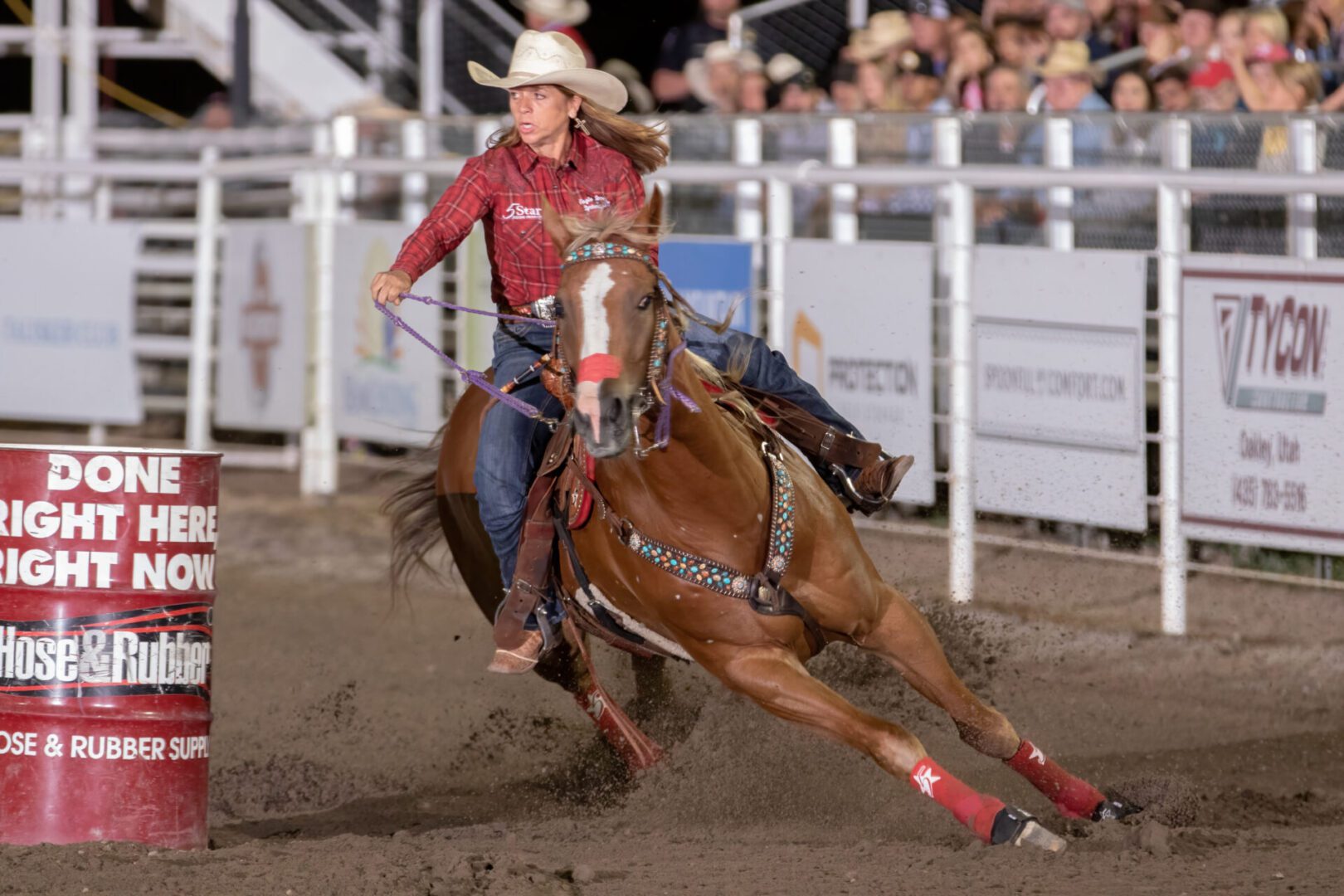
    Pro barrel racer Shelley Morgan is no stranger to the ebbs and flows of life on the rodeo trail. The 50-year-old from Eustace, Texas, who’s won more than a million in career earnings, has experienced the exhilaration of winning The American in 2022, and knows the sting of losing her beloved horse Short Go in 2010. The 2023 season lands somewhere in the middle of those valleys and peaks, and Shelley and her sorrel mare Kiss are doggedly working their way through it.

    At the time of writing, they are sitting 21st in the world standings with $61,709.87. “We’re having a good season. Maybe not great, but good,” says Shelley. “Kiss always tries hard. Our goals are always the NFR, but as long as she’s healthy and sound at the end of the season, I’ll be happy.” Shelley planned to compete on both Kiss and another mare, Phoebe, this year, but with Phoebe working through a lameness issue, the bulk of the competition has landed on Kiss. Shelley and Kiss have been competing together for more than five years, beginning with futurities when Kiss was three. The mare, who won WPRA Horse With The Most Heart in 2020, excels in big outdoor arenas and is clocking steadily faster in indoor arenas now too.

    With such a demanding season for the duo, Shelley is grateful for good tools that protect Kiss and keep her sound. She rides in a 5 Star barrel racer saddle pad, and boots up in their sport boots. “I consider them pretty versatile. I use just about the same kind of pad on all my barrel horses. I have a swaybacked horse, then there’s Kiss who has high withers, and I have a young horse with no withers, and it doesn’t matter what horse I put them on,” says Shelley, who has been on the 5 Star team for three years. “I never feel like I have to girth my horse in two trying to get it tight enough. They fill in the imperfections in a horse’s back and they’re not nearly as sweaty under those pads. They never have sore backs when we go to the vet or chiropractor. The boots keep the dirt out well and have really good Velcro, plus they are so bright and pretty. All of those are positives when we’re asking our horses to give their best. Anything I can do for them to keep them feeling good is a positive.”

    Shelley travels with her husband of 31 years, Rex, along with their German Shepherd and two Yorkies. They also have two grown sons, Zach and Tanner. She’s entered more than 40 rodeos this season, a highlight among them competing in the Calgary Stampede for the first time in her career. “This was my fourth invite, but the first time I actually got to attend. The first time, I lost my horse, Short Go, right before Calgary and I didn’t have another horse to take. The last two years there were COVID limitations, so this year it was pretty cool to actually get to go.”

    As the 2023 season draws to a close, Shelley is anxious to return home to Texas and pick up working with several young horses she has started. “I think I do better if I ride my own horses that I’ve trained.” Much of her focus will be on the full brother to Kiss, a three-year-old named Smooch. “He’s become very sentimental to me. Not only because he’s Kiss’s brother, but we lost my dad (Bobby Bridwell) in May, and I had half interest in him with my dad. He’s the last horse I owned with my dad.” Shelley also has a four-year-old by Streak of Fling and out of Fames Fiery Kiss (Kiss’s dam). “I’ve been really slow with him to let him develop, and I’m excited to add the speed and get him to where he can help Kiss next year.

    “My next goal if I don’t make the NFR is to stay in the top 20 or 30 to enter the big winter rodeos. As long as Kiss stays feeling good, I’d like to make it to Sioux Falls (Cinch Playoffs) and continue making it to those final rodeos. I’m just taking it week by week right now.  Whatever doesn’t kill you makes you stronger!”

  • Community Coffee: Shane Hanchey

    Community Coffee: Shane Hanchey

    Community Coffee has been part of Shane’s life for a few years now. “What a better fit,” he said of the partnership. “Their consumers are the western world, and we are the people they sell to.” Shane, a chef himself, loves the coffee; his favorite is the Signature Blend. Shane and his wife, Taylor, run a food trailer, Bo’s Boil n Geaux, specializing in crawfish boils, shrimp, gumbo, and all things Cajun. “We go from Stephenville to Weatherford, and Giddings.” The food trailer is a side job for now.
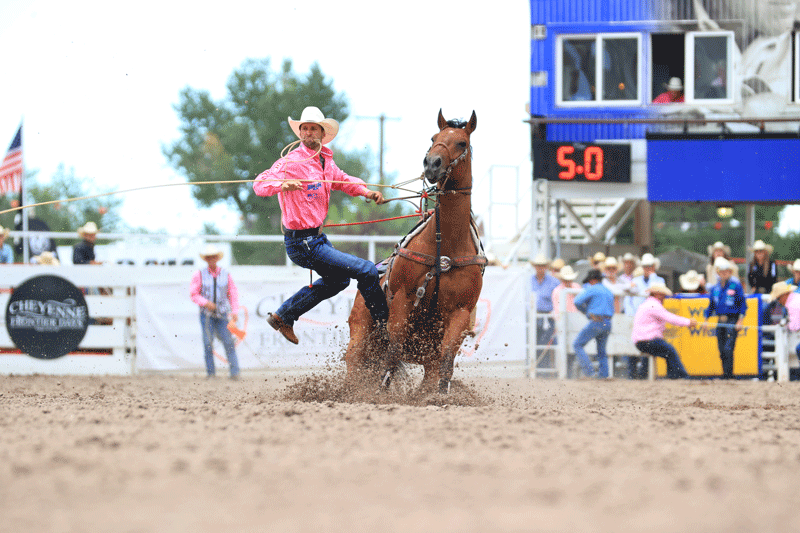
    Shane’s fulltime job is tie down roping and he has made 13 consecutive world finals with his skills. The Sulphur, Louisiana, native started roping left handed, but switched to right handed when he was young. He played a lot of sports and didn’t get serious about roping until high school. “I realized I could make a living at this.” He went through the Louisiana High School Rodeo Association, making Nationals all four years, and winning the state twice. He went to college in 2009, making the CNFR, and earned Resistol Rookie of the Year in 2009. He made his first of 13 appearances at the Wrangler National Finals in 2010.
    Shane has had his share of misfortune, missing two world championships by one tenth of a second. He has also lost two horses, one two weeks before the 2021 WNFR. He has never let any of adversity stop him. “I still battle with it every day – I still think about it; but in order to move on and keep my head up, I’ve got to be confident and trust what God has in store for me and He has a bigger plan than what you think you have.”
    This year started off great. He won Greeley and has moved into the fourth position in the world for now. “I’ve been on the road since the beginning of June,” he said. “My wife is breakaway roping so we have different schedules. I get to see her, just not rodeo with her.” Shane plans to be home after Pendleton for a short time before heading out again. Shane met his wife, Taylor Jacob, through rodeo. As fate would have it, she broke down coming back from Calgary and he pulled up to help … and the rest is history. They share a love of horses, rodeo, roping, and business. She made the WNFR in 2013 and 2015. They started dating in 2015 and got married in April of 2021. They have relocated to Texas.
    He knows and appreciates all of his sponsor partnerships. “If I want them to stay on my shirts I’ve got to compete at the highest level.”
    The first thing that comes to his mind about future goals are more world titles. “That is obviously the first thing, but after that, we want the food trailer to be successful. We hope to have kids and I’d like to be retired from rodeo by the time I’m 40. Then I want to ride off into the sunset with no regrets.”

  • On The Trail with Wacey Schalla

    On The Trail with Wacey Schalla

    [ “I try to not over think it too much. I stay pretty mentally focused. I don’t let things distract me a whole lot.” ]

    He’s racking up titles, stacking up prizes, pocketing checks while keeping his eyes focused on the future with the same determination he has when he nods his head in the chute. Wacey Schalla, 17, is no stranger to competition and for most his life has been no stranger to the top of the results board.
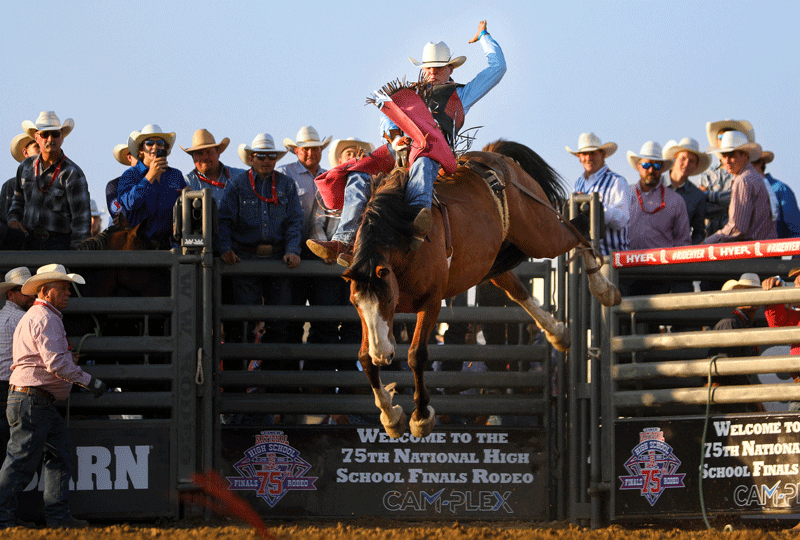
    The talented “roughie” from Arapaho, Okla., won the 2023 National High School Rodeo Finals All Around and Bull Riding championships in Gillette on a recent Saturday night. By Wednesday he was back in Oklahoma at the Lazy E ready to ride to defend his title as the World Champion Junior Bull Riding Champion.
    If there is an argument about whether champions are born or made, Wacey might tilt the scale to the “made” side of things. But his journey to this point is a map of just how that happens with what family friend and mentor World Champion Bull Rider Cody Custer describes as “overly committed to discipline.”
    “In my mind, work ethic outweighs talent every time,” said Cody. “Wacey’s goal is to make a living riding bulls. Even when he was really little, if he didn’t ride well, he’d set out to do something about it.”
    Wacey grew up at the bucking chutes with his dad, rough stocker/saddle bronc rider Luke Schalla. He soon had his own gear and was riding sheep, calves, steers and finally junior bulls. Luke and Wacey shared a moment at the NHSRF while touring the memorabilia set out for the 75th Anniversary of Nationals when they located photos of Luke with the New Mexico team in 1996. What did Wacey think about that? “He thought I was old,” laughed Luke.
    Luke’s New Mexico rodeo roots and best friends are one of the reasons Wacey ended up rodeoing in New Mexico this past year. “My parents are still in Chama, NM with their Guide and Outfitting business,” explained Luke. “Our daughter Madison is a PRCA Specialty Act trick rider and was contracted to the NM State Fair Rodeo last fall and so we were going to be in the state a lot. And all my friends that I used to rodeo with now have kids that high school rodeo in New Mexico. Wacey is homeschooled so it just seemed like it might be a fun year to put together.”
    After spending his junior high through sophomore years rodeoing in Oklahoma, qualifying for Nationals every year in one or more rough stock event, Wacey packed his gear bag as a junior and came to New Mexico. With some extra travel time, he made it to all the rodeos, even flying into one that conflicted with him competing at a Stetson Wright Invitational. Wacey’s mom Nikki recalls, “It was a crazy trip of getting from Utah to Durango, and then rolling into the rodeo in Farmington an hour before it started. But he won both the Saddle Broncs and the Bulls that day.”
    Wacey finished the season with state Bull Riding and Bareback titles and third in the Saddle Bronc Riding. He proudly joined Team New Mexico in Gillette competing in all three rough stock events, placing in Barebacks and Bulls and earning the 2023 NHSRF Bull Riding and All-Around titles.
    “It was pretty neat,” he said. “Very first day of the NHSRF, I won the first perf in the Bareback Riding (80.5 points) and I didn’t really expect it to hold, but it did. I had to wait three days to know that, but the next day I got on my Saddle Bronc horse and I missed him out, probably to make the short round. That Wednesday I got on my first bull, he wasn’t too good, I was only 62 points. And so I didn’t expect to win the Bull Riding but it all kind of worked out.”
    Even with three events, Wacey says his process behind the chutes is pretty simple. “I try to not over think it too much. I stay pretty mentally focused. I don’t let things distract me a whole lot.” Other than that, Wacey says he’s pretty particular about his gear being in order and likes to keep his ropes and gloves pretty new.
    Wacey’s recall of his week-long climb to the NHSRF championship was fairly clinical considering the actual mechanics of any successful rough stock ride, let alone the grueling mental and physical toll of three events. Both titles came down to Wacey’s last bull ride in the short go. “I knew I couldn’t have drawn better,” Wacey recalled. “Grady Young won the short round the year before on that bull. Everybody wants to draw him. I knew what he was, and I was pretty confident I’d get him rode.” A jumping hard right spin in the gate and 86 points later, Wacey owned the short-round and the 2023 title.
    Cody Custer summed it up. “Fast forward to today and he’s graduated from high school early, he’s committed to a year of college at Clarendon and the day he turns 18 this November, he’ll have his PRCA permit and be on this way. The difference with Wacey is his discipline. I continually at schools use him as an illustration.”
    Wacey concurs. “I’m buying my permit as quick as I can and hopefully go to the NFR in 2024. So that’s my plan.’ Recognizing that he will also be college rodeoing he adds, “It’d be pretty awesome to make the College Nationals the same year.”
    When Wacey’s not shoving his hand in a bull rope or getting set to nod from the back of a horse, his main entertainment he says is “Cowboy Channel on the road. That’s about it. I try to keep up with some of my good friends like Justin Woodard (top-ranked PRCA Rookie bullrider). He came by the NHSFR twice to watch me ride.”
    If he was in a situation to pick just one event, Wacey is quick to say he’d be pretty crazy not to stick with the bull riding, although stacked up against the bareback riding, he says he enjoys them equally. He just started riding saddle bronc horse this past year. “He was small and just not ready for them, so we waited.” Said his dad. “But he’s coming along.”
    In the background and working toward a tomorrow he cannot yet see, entrepreneur Wacey has his own bucking bull business. “I mostly have a bunch of 2-year-olds that I buy and sell,” he said. “I have a few cows and I raise a few calves every year. I want to get where I have my own rodeo company and bucking bulls, that would be pretty neat. As of now, if I have a good bull. I end up selling him.”
    Wacey told of a recent success with a young bull that was given to him. “He was not outstanding at all. He was a psychopath; he’d flip over in the chutes and he wouldn’t eat. My dad and I took him over, we bucked him for a while, and he got pretty crazy again. He didn’t like anybody, was real hooky. So we just fed him and he grew up and a couple years later he became pretty much our family pet. He got really big and we were hauling him to some junior rodeos. He was never getting rode, so we decided it was probably best for him to go and do better things. I ended up selling him to Chad Berger. First time out, Chad hauled him to a PBR event and he bucked off the number one guy in the world. That was kinda neat.”
    Wacey is quick with recognizing his dad Luke and Cody Custer as his heroes, his mentors. He also says Clay Taylor has been extremely important to him since started getting on bulls at the age of 13. His sponsors are Taylors Rafter C Cattle and Vexil.
    By all accounts, Wacey likes to fly under the radar in his quiet confidence and not draw attention to himself. He also has been described as “a really good human being.” None of those things will hinder his success, although Cody laughingly said, “Getting this guy to do interviews is like trying to get him to talk to a group of pretty girls but he better get used to both.”

  • Back When They Bucked with Ed Sundby

    Back When They Bucked with Ed Sundby

    Ed Sundby averaged 70,000 miles a year on his 1966 Ford pickup with a little white topper camper, while he rodeoed, and he loved every minute of it.
    And to make money for entry fees, the North Dakota cowboy did some Roman riding as a specialty act.
    Born in 1952 to Orvin and Ginger Sundby, he was raised in Williston and started out in horse shows and doing the cow cutting. But it was too slow-paced for him.
    “That wasn’t enough action for me,” he said, so he started with Little Britches Rodeo, then progressed to high school, college, amateur and the professional ranks.
    In high school, he was a steer wrestler, bareback rider and cutter, then added saddle bronc riding and bull riding.
    He was the 1968 North Dakota High School Rodeo All-Around winner, and in college won the bareback riding for the Great Plains Region three times (1970-71, 74), twice while at the University of North Dakota-Williston, then at the National College of Business (NCB) in Rapid City.
    He and his dad believed in practice.
    His dad, who never competed much but had been a steer wrestler, built an indoor arena.
    The Sundbys borrowed bucking horses from Marvin Brookman and Jack Fettig, and had plenty of steers.
    “There were nights when I would bulldog fifty head of steers,” Ed said. “Dad would haze for me. He enjoyed it as much as I did.”
    Then, he’d ride two or three bareback horses, and the next night, switch to saddle bronc riding. It was good practice time. “When I practiced, I practiced with a purpose. You have to, if you want to go on with rodeo.”
    Even in the winter, they practiced, seven nights a week. The only time they didn’t was if it got to -5 degrees F, because they thought at that temperature it was too hard on the horses. The barn wasn’t heated, but with the bucking stock and steers, it was comfortable, he said.
    Orvin liked it as much as his son did. “He was down in the barn with us, every night. He really loved it.” Orvin believed in hard work; his work day started at 5 am, and after work, they’d be in the barn practicing till 10:30 or 11 pm each night.
    While in high school, Ed added a bit of Roman riding to his repertoire. He had been Roman riding a mare and her son, a gelding, in the practice arena at home.
    As he got better at it, he was asked to perform at rodeos, mostly amateur, with his pay going towards his entry fees.
    For a time, he put his younger brother Lynn, thirteen years his junior, on his shoulders as he Roman rode and jumped the horses.
    The UND-Williston college rodeo team practiced at the arena, as did many of Ed’s friends, including college teammates Mark Ellis, Don Schwalbe, and Rick Woodward.
    Between his time at UND-Williston and NCB, he sat out of college for a year, while he worked for his future father-in-law.
    Ed had met Connie Schatz, also a high school rodeo contestant, at a high school rodeo, and he jokes that she chased him. “She was running after me,” he laughed, “and she just wouldn’t leave me alone.” While she finished high school, Ed worked for her dad, till she was college age. Then the two of them went to Rapid City’s NCB.
    They courted for several years before marrying in 1974. “She had to chase me for a couple years before she caught me,” he joked. But in seriousness, he said, “She was always the one for me.”
    After college, the couple moved to Williston. Ed began pro rodeo competition, but felt the obligation to get a job, rodeoing on weekends. “I thought, if you’re married, you should have a job,” he said.
    For several years, he was a heavy equipment operator. Then his dad, who owned a federal meat processing plant, asked him to join the business. When Orvin passed in 1982, Ed and a partner, Gene Storoe, purchased it. When Gene wanted out, Ed got out as well, selling the company.
    Then he went into the oilfield business in the abandoned well segment for several years, including buying and selling equipment.
    After that, he managed Schatz Truck Stop in Minot for 18 years, then went back to the oilfield, till he retired in 2019.
    Ed had become a Rodeo Cowboys Association (forerunner to the PRCA) member in the early 1970s, while in college, and continued to rodeo for the next decade.
    He competed at a few N.D. Rodeo Association events, but at the time, cowboys couldn’t do both associations: they had to choose one. So he chose the pros. “And it was the right move for me. I did all right.”
    At first, he did the steer wrestling and the three roughstock events, but by 1976, he concentrated solely on the steer wrestling and bareback riding.
    He traveled across the western half of the nation, from Denver to Edmonton, and from Calgary to Texas. He and Connie’s honeymoon was at the Cow Palace in San Francisco, where he joked, “I was going to leave her at Alcatraz, but they didn’t want her.”
    In college, he made lifelong friends, rodeoing with Paul Tierney, Monte Melvin, Billy Zurcher and Doug Corrington on his rodeo team. “College was great,” Ed said. “We didn’t get a lot of schooling in.”
    He didn’t drink or smoke and attributes his good health to that fact. “I’ve never had a drink and never had a cigarette,” he said. “I was serious about what I wanted to do.” Hauling his steer wrestling horses was part of the motivation to not drink. “I always drove,” he said. “I never let anybody else drive, and I wanted to know where my hat was the next morning and where my vehicle was.”
    He rodeoed against Tom Miller, who was a student at Black Hills State University (Rapid City, S.D.) from 1967-1971.
    Ed “rode awfully well,” Tom said. “He was very correct in the way he rode. He just didn’t buck off many.” Tom remembered Ed always having a smile on his face. “Ed was very much a gentleman and a good person. Still is.”
    Ed has made sure to give back to the sport. He held bulldogging schools for young people at the family arena in Williston, and judged rodeos, including high school events in North Dakota, South Dakota, and Montana, and some pro rodeos as well.
    He figures it was his duty to contribute. “I felt it was a way to give back,” he said, “to the people who helped me.”
    Ed’s last ride was in 1982 in Sidney, Montana. Between work and a family, it was time to stay closer to home.
    He and Connie have two sons: Ty, who lives in Bismarck, N.D., and Cody, a former PRCA and PBR bull rider who lives in Williston. They have two grandchildren and a great-grandson.
    The couple spends winters in Gold Canyon, Arizona and summers in Hill City, S.D.
    He enjoyed the sport. “When I went to a rodeo, I loved going. If I won anything, it was a bonus.”
    The friends are life-long. “They’re amazing, and they’re for life. It’s like college. You never forget your college buddies, and rodeo is the same way. If you see them after 30 years, you pick up right where you left off.
    Does he miss it? “I’d have to say I do. If I was 18, I’d love to start all over.”
    Ed is a 2016 inductee in the North Dakota Cowboy Hall of Fame, a 2018 inductee in the University of North Dakota-Williston Sports Hall of Fame, and a PRCA Gold Card Member.

  • 6 Over 60: Martha Josey

    6 Over 60: Martha Josey

    World champion barrel racer Martha Josey’s small beginnings cultivated a strong work ethic and determination in the Texas cowgirl. So strong, that her trailblazing not only propelled her through four highly successful decades in the arena, but also building a rodeo school, marketing the Josey Ranch brand, and sustaining the business for 56 years and counting. And the ripple effect continues to influence each generation of barrel racers that follow.

    “I started teaching with my husband,” says Martha, who married tie-down roper R.E. Josey in 1966. The couple was invited to teach a barrel racing clinic that same year in Connecticut—one of the first in the area—and three girls that attended later went on to qualify for the NFR, including Lee Natale of New Jersey. Martha and R.E. had moved to West Texas after they married, but after the success of their clinic, a homesick Martha talked R.E. into moving back to her mother’s home in Marshall, Texas, and opening a rodeo school on the property. Thus Josey Ranch was founded in 1967 with 33 students in the first class. Today it is the longest-running rodeo school in the country.

    When she wasn’t teaching, Martha rodeoed hard. The young woman who previously had to rent a horse trailer and tow it with her mother’s worn Buick went on a winning streak. Before joining the WPRA in 1968, she won 52 consecutive barrel races and 7 horse trailers aboard CeBe. She qualified for her first NFR that same year.

    Her success and R.E.’s—who won three AQHA world calf roping titles in the early 1970s—caught the attention of companies such as Purina, Hesston, Wrangler, Priefert, and many more, who approached the couple with sponsorships for Josey Ranch. “When you’re winning, students want to ride what you ride, eat what you eat, and feed what you feed,” Martha explains. “There are many, many banners at our ranch.”
    She invested the money from the first rodeo school into promoting Josey Ranch. “I didn’t go to college since I started rodeoing, but I always had marketing on my mind. Out of sight is out of mind, so you always have to put things before people.” Martha attributes some of her business savvy to her grandmother, Mattie Castleberry, who after working in a cigar store in Tulsa, Oklahoma, decided to start her own business purchasing small buildings and turning them into night clubs. “She didn’t drink or cuss, but she was a businesswoman. She started in Kilgore, Texas and put in Mattie’s Ballroom.  When the Reo Palm Isle was the largest night club in Texas, the owner went off to war and he asked Mattie to run it. When the war was over, she bought it from him. So many country singers started right there at Reo Palm. I live on her property, and the top of the barn she built is my trophy room,” says Martha.

    Another area of her business savvy began in the 1970s with her need for a saddle she could stay in. Her main barrel horse at the time was Cebe Reed. “He was such a turner and could be quick, and I couldn’t find a saddle I could stay on. I kept looking, and every saddle I’d win I couldn’t ride.” Martha, who calls herself a perfectionist when it comes to designing her saddles and bits. She designed a saddle for herself through Circle Y Saddles that not only helped the rider, but also the horse. “One thing that’s really different is that the saddle tree is in close contact with the horse. And the stirrup is on a swivel so you can put your feet in front of you or behind but not get thrown backward. Circle Y has been phenomenal to work with, and we have many champions riding it now.”

    Although her rodeo career was peppered at times with serious riding injuries, Martha qualified for the NFR four consecutive decades—one of the only women to do so—and represented the U.S.A in the 1988 Winter Olympics in Calgary, Canada. In 1980 after winning the AQHA World Championship aboard her horse Sonny Bit O’Both, she won the WPRA world title just ahead of one of her past students, Lynn McKenzie. Sonny still holds the record as the only horse to carry a rider to both titles in the same year. Recently, Martha was the recipient of the prestigious Tad Lucas Award, and at 85, she continues to ride and teach at Josey Ranch, as did R.E. until his passing in February of 2022.

    Josey Ranch has welcomed more than 300,000 students and given out more than $350,000 in college scholarships. “This year is the first time ever we’re holding the Josey Gold Cup Senior Barrel Race, and we just had a meeting about the Junior World Cup and how to be bigger and better,” says Martha. “Gary Arthur, my nephew, is helping me run this place. Without him I’d be in a heap of trouble. Team Josey goes to the out of state clinics—that’s Ty and his wife Lisa—and Mark Burke is our video man at all of the clinics.”

    Martha continues to impart to her students the values that carried her through her titanic career. “They need that passion and they need to stay positive and be motivated, because sometimes you have to be your own best cheerleader. After finishing a rodeo you didn’t do good at, you have to learn how to put that behind you and let it help you be better for the next one. And enjoy the moment. How enjoyable it is to do something we love so much, and have the family involved.”

  • Back When They Bucked with Harris Family – Cowtown New Jersey

    Back When They Bucked with Harris Family – Cowtown New Jersey

    [ Cowtown Rodeo “Best Show on Dirt”
    spanning five generations.]

    Congratulations to the entire Harris family for their induction of their Cowtown Rodeo, located in Pilesgrove, New Jersey, to the ProRodeo Hall of Fame. Grant and Betsy Harris, 4th generation of Harris’ to own the rodeo are thrilled with the honor. Betsy said, “When I got the call I didn’t recognize the number, and hung up on him. But he called right back. Grant never gets excited, but he’s excited over this recognition by the ProRodeo Hall of Fame.”
    Grant’s great-grandfather, Howard Harris, started a livestock auction in Woodstown in 1926. Many farms growing vegetables, corn and hay existed in that part of New Jersey and they all needed mules and horses to do their farm work. The auction was a necessity and did well.
    Rodeo in the family started as early as 1929 When Grant’s great-grandfather, Howard Harris, and son ‘Stoney’, started a rodeo in conjunction with the Salem County Fair. The Miller brothers, of 101 Wild West fame, good friends of the Harris family, had a hard time financially and were stranded in Washington D C in 1931. The Harris family bought some of the broncs owned by the Millers, and purchased one-way tickets for some of the Miller cowboys to return to Oklahoma, if they would help put on the Harris’ rodeo in Woodstown, New Jersey. The Woodstown rodeo continued during the 1930s Colonel Jim Eskew, well known rodeo and wild west producer, wintered in Woodstown and also shared his knowledge with the Harris’ family. They also put on rodeos in various locales around the northeast, including the 1932 New York State Fair Rodeo in Syracuse; a Sesquicentennial rodeo celebration for Philadelphia in 1926 and assisted the Madison Square Garden rodeos, in New York City, in the early 1950s.
    During the War Years, the rodeo was not held. Howard Harris, Grant’s dad, went to college at the University of Idaho and was on their rodeo team. In 1954 Howard qualified for the NIRA Finals and won the All-Around Cowboy honor. He entered the saddle bronc and bulls events, roped and was in the wild cow milking.
    In June 1955 rodeo in Woodstown began again, and Howard named it ‘Cowtown New Jersey Rodeo’. It was held from May through September. ‘Cowtown NJ Rodeo’ joined Rodeo Cowboys Association (R.C.A.) and it was the first summer rodeo to get approval to become a member.
    Cowtown Rodeo had a problem after only being in the R.C.A. four weeks. Television was just getting accepted and a Wilmington Delaware Channel approached Howard about televising the Cowtown Rodeo. At this time, 1955, R.C.A. considered television to be ‘taboo’ for rodeo, and would only ‘ruin’ the sport. However, Howard knew having the rodeo on television would be good for Cowtown business and he accepted the Channel’s offer. Not only did the television feature the rodeo, the cameras panned the audience. People came in droves, hoping to be seen on television.
    In 1958 an ABC television affiliate, Channel 6 in Philadelphia, had picked up Cowtown New Jersey Rodeo. Although Howard had submitted the plans to R.C.A. it was not approved and ‘Cowtown New Jersey Rodeo’ was on their blacklist. ‘Cowtown’ was receiving such good revenue from being televised Howard continued to allow it to be televised, meanwhile paying a fine of $3,000 to R.C.A, the largest fine R.C.A. had ever assessed, up to that time. By the mid-1960s, the attitude of R.C.A. changed and ‘Cowtown’ was no longer fined nor on their blacklist. In fact, the Harris’ signed a contract with the Philadelphia ABC affiliate and every performance gave them two one hour television rodeos, then it went into syndication. Cowtown outgrew the original arena in 1967 and built the existing arena that seats 4,000 fans today.
    Meanwhile, Grant began competing at the age of 5 in the Jr. Bull Riding at Cowtown. By the time he was a teenager Grant continued to compete at Cowtown, as well as other area rodeos, and doing quite well. He joined the professional ranks at age 14 and got his RCA card at 17. He attended Casper College, in Wyoming on a full rodeo scholarship. Grant was the R.C.A.’s Northeast Circuit Saddle Bronc Champion in 1975, ’77 and ’78.
    Grant was seen competing so often when Cowtown was being televised, that he had quite a following. When he went to the Denver rodeo in January, 1977, Grant was 23 years old, but he was hounded by teen age girls who were seeing the taped rodeos with him, as a teenage saddle bronc rider, from years past.
    Grant was not just a competitor, even in his young years he was always very involved in the working part of the Cowtown rodeo and had gleaned as much as possible from his talented dad. He was also the pickup man for each performance. Junior Meek, a bullfighter and steer wrestling competitor from Texas spent a summer working for the Cowtown Rodeo and also did the bullfighting. He said about Grant’s dad, “He was a real cowboy. If you didn’t think so, just try and keep up with him all day. If you roped ten cows, he’d rope fifteen.” He also said, “Lots of cowboys from the West thought you could go back east and easily win a rodeo. That wasn’t so at Cowtown.”
    In 1978 Howard decided to retire, and he and wife, Irene, moved to Oklahoma. Grant and bride, Betsy Douglass, bought the Cowtown rodeo from his parents. Betsy handled the secretarial end of the rodeo and much of the publicity. Eight years later Grant bought the auction company and flea market, that had started in 1929, from his granddad, ‘Stoney’. Betsy held various officer positions in the circuit system once PRCA started the circuit system. She was President of the First Frontier Circuit from 1993 to 2019, and before that was secretary and treasurer. The last four years she has been the stock contractor representative. Betsy traveled extensively across the country representing the northeastern circuit group. She retired in January of this year, after 45 years of service. She still attends the PRCA Convention, held in Las Vegas just prior to the National Finals, as does Kate & RJ. “I go to represent Cowtown Rodeo and Three Hills Rodeo livestock, and go to the secretary/timers meeting, and see my kids and visit with old friends,” Betsy explained.
    Grant and Betsy have two daughters, Courtney and Kate, that have been involved in Cowtown as long as they can remember. Courtney married Jake Morehead, and are co-owners of Three Hills Rodeo in Bernard, Iowa. They have three children, Sam, age 16; Lily, age 15 and Cade 13.
    Kate and husband RJ Griscom, have owned Cowtown since 2019, when buying it from Betsy and Grant. They have two children, Nate, age 10 and Olivia who is 4. Grant and Betsy, aren’t retired by any means, and still work for Kate and RJ. Plus they still own the flea market, and their 1,800 acre ranch, where they raise enough feed for their beef herd and their rodeo stock.
    The 5th generation, including Kate and Courtney, and their husbands are totally immersed in rodeo business, and also are taking the up-and-coming 6th generation to youth rodeos. They raise most of their own bucking stock, but they admit there is more buying and selling than earlier when Cowtown owned all their own stock.
    Today Cowtown Rodeo is advertised as “Best Show on Dirt!!” It is held on Saturday night, beginning the end of May and continuing through the end of September. The arena also has the PBR Bull Riding there on particular weekends in July and August.
    Kate and sister Courtney were always their dad, Grant’s right hands. From age 10 they worked every summer either at the flea market, the auction barn or the rodeo. Kate admits they didn’t see all of it as work, as some of it was definitely fun. But while they worked growing up they learned every aspect of rodeo.
    Kate married RJ Griscom in 2010, and although he was raised on a farm, he had also become a professional electrician. Kate said laughingly: “That only lasted about a year, then he became totally involved with the rodeo, the flea market and auction.” When asked how she balanced her responsibilities for Cowtown Rodeo and their children, she said, “It’s been easy, except right now Nate, age 10, has sports practices and rides bulls. But we make it work. We’ve got great support.”
    When asked how she handles what her folks do as well as their own jobs for the rodeo, Kate said, “The folks keep doing what they’ve always done. I won’t take over doing what mom does until she asks me.”
    When I asked how they would handle the family going to Colorado Springs to receive their honor of being inducted, who would stay at Cowtown Rodeo and put on that Saturday night performance, she said, “We’ve got a very good group of guys and gals that have been with us for a long time. They know how to do everything. We won’t be worried about it.”
    Cowtown Rodeo in Pilesgrove, New Jersey, is in excellent hands. The honor of being inducted in to the ProRodeo Hall of Fame is an honor that surprised the Harris family completely, but according to those who have been to Cowtown Rodeo and know the Harris’ history and what they have accomplished are in agreement – this honor is certainly one they have earned.
    Harris Male Ancestors Kept Journals:
    Very few families can boast that their history was kept by the male members of the family in diaries or journals. But the Harris family from Woodstown/Pilesgrove, New Jersey, can give you accounts of happenings from the time they arrived in America 327 years ago.
    The Harris ancestors came from Wales in 1696. They landed in Manhattan and continued on to Salem County, New Jersey, where they settled, receiveing a deed to their property dated 1696. Their Salem County livestock brand was registered with the King of England in 1706.
    Various men of this family did interesting things during those early days. Their experiences and adventures would never have been remembered if these early ancestors had not used diaries and journals to pass on the history of their family and what they accomplished.
    During the Revolutionary War John Harris joined the Continental Army and fought at Valley Forge with George Washington. His responsibility was to take cattle and wagon loads of food to the soldiers. He was also a bombardier, responsible for aiming the cannon during battle. Later he was assigned to an area in western Pennsylvania because the government anticipated the British would attack them from the West at this location – but it never happened. It was the custom of the government to give soldiers money when they mustered out. But because the government ran out of money, they gave Captain John Harris a parcel of land at the confluence of the Ohio River and the Monongahela River. At that time it was the opinion of everyone that ‘No white man would ever live that far west!” Because of that opinion Captain John sold it for a gallon of whiskey!! Today that area is Pittsburgh, Pennsylvania. Imagine what the family could get for that parcel of land once it became such a viable city.
    The Harris family for generations have been fortunate the men of their earliest days here kept journals and relayed such important information through their writings. It is something that 95% of our families wish they had on their families in written form.

  • On The Trail with JJ Hampton

    On The Trail with JJ Hampton

    [ The only thing faster than the words coming out of JJ Hampton’s mouth is her breakaway loop. She’s the no nonsense type of person who’s found a way to speak her mind while wearing her heart on her sleeve and the rodeo world is better for it. ]

    The first time JJ Hampton discovered she didn’t know what it meant to quit; she was only 4 years old. “The water was draining out of the bathtub and somehow I hit my head and there was enough water left that my head went under,” JJ explained of the almost fatal incident. “When they got to me, I was purple. The doctor didn’t know if I would even make it or have function when I woke up. I think that perfectly illustrates that there’s a purpose and a plan for my life.” That same resilience and tenacity now play out in the arena. And perhaps there’s a link between physically turning purple and JJ’s lifelong affinity for the color. Simply put, JJ likes purple because it’s the color of royalty and power, and it’s been her color for a long time.
    “There is no quit in me, and I think that’s carried me further than anything,” JJ said. “I don’t give up and I have a will like no other. No matter what happens, I figure out a way to deal with it and use it for good. I don’t have to be the best if I refuse to give up.” With more than $450,000 in career earnings to date, JJ holds 18 WPRA world titles as a breakaway roper, header, women’s tie-down roper and in the all-around. On top of that, she’s qualified for the National Finals Breakaway Roping every year since it began in 2020. Many would argue that resume alone sits her among the very best in the industry. But there’s quite a bit more to JJ’s story than titles and checks won.

    Catch Her if You Can
    “Thank goodness for my dad [Johnny Wayne Hampton] who taught me to love the sport,” JJ said about learning to rope when she was 6 years old. “It took me awhile to start catching. I was better at goat tying, but I loved to rope.” It took a few years for JJ to catch live cattle with a significant amount of consistency. But one thing has never changed about her roping, even from that very first loop. “I could always rope fast, but for a long time that meant I didn’t catch as many,” she said. “I always roped to win because that’s how my mom [Barbara] taught me to practice.”
    While JJ’s dad was the professional roper in the family, it was her mom who helped in the practice pen most often. JJ and her siblings – Angie and Row – all improved under her guidance, despite her lack of personal experience inside the arena. “I guess in those years, when I was figuring out how to catch, I wouldn’t throw my rope,” JJ said. “Mom taught me to nod, kick, swing and throw. My mom had everything to do with me learning how to practice to be fast.”
    Coming in alongside her mom, was JJ’s grandpa – Johnnie Hampton – who she called Papa. The two forged a special bond; the kind JJ still feels privileged to have experienced. “My Papa was special to me; it didn’t matter what I did, he believed in me and told me I could do it,” JJ said. “He made me feel special and loved me like a grandparent should. And I know that set me up to be successful.”
    More often than not, Papa was in the passenger seat while JJ was rodeoing for Tarleton State University. It’s a traveling partner very few can claim, but for JJ, he truly made all the difference in the world. “I’ve always had a lot of try and heart, it didn’t matter what I did, I was going to be good at it and put everything into it,” she said. “But my Papa built up my confidence. I think I would be where I’m at today, but it was a lot easier with him loving me.” When her Papa wasn’t in the passenger seat, her late brother-in-law Marty Yates (“Big Marty”), took his place. Hauling to amateur rodeos together took JJs roping to the next level, and he would eventually be the reason she became a world champion tie-down roper.

    A Champion to Boot
    It was the influences of Roy and Bill Duval and Betty Gayle Cooper that JJ’s affinity for calf roping grew. But Big Marty also played a significant role. “Marty Yates was a big influence in me becoming a better roper and I wouldn’t have got into tie down roping if it wasn’t for him,” JJ said. “I grew up roping with him because he married my sister. I would rope with Marty almost every day.” About the time Jayme was trying to get JJ to join her at WPRA events, Big Marty was pushing the same agenda.
    “When we discovered these all-girl rodeos, Marty told me: ‘You’re going to be the next girl’s world champion tie down roper,” JJ said. “He died in 1993 and I won it, the first time, in 1994.” The early 90s proved to be monumental in JJ’s life: she lost her Papa but found a friend; and she lost her roping partner in Big Marty but found success in a whole new association, which opened the flood gates.
    “That’s one thing about JJ, she’s always roping for first; she doesn’t settle for second place and she’s not about to take an extra swing,” Jayme said. “She was always going for first and you can come along for the ride and if you accidently beat her then that’s great too.” The type of competitive friendship between JJ and Jayme is often pursued but very rarely achieved. Even 30 years later, both women can spot where the other is struggling both in person and on video. It comes in handy now that they’re back roping on a regular basis.

    Double Bubble, Everywhere
    Long before JJ was wicked fast with a rope, she was quite literally buzzing around the rodeos her dad entered. That’s where Jayme first remembers encountering a girl who would not only become her best friend but also a traveling partner of almost 30 years. “I’m 7 years older than JJ, and the first time I saw her they had a bell on her so they could know where she was at because she was running around so fast,” Jayme said. Their paths continued to cross through the AJRA until fate wrote their names together in the rodeo book of life.
    “It was July of 92, when my Papa’s health was giving out, and he said, ‘Go win Amarillo for me, bird,’” JJ explained. “I won the rodeo, and that was definitely a God thing.” That rodeo inadvertently brought JJ and Jayme together. As the story goes, JJ asked Jayme what happened at Amarillo and her answer came off the wrong way. “She thought I was kind of grouchy after that, but it wasn’t even two weeks later that we became friends and started hauling together,” Jayme said with a laugh. “We started hauling anywhere the truck would go, and I mean anywhere.”
    Back when they were lucky to have nine entries in the breakaway at any given rodeo, both JJ and Jayme felt like they couldn’t miss one. Their drive to compete was perfectly in sync that way. “We did whatever it took to get to every rodeo that had breakaway,” Jayme said. “Lots of those rodeos only paid out first and second and we needed to win to go on to the next one.”
    Most of Jayme’s time on the road was behind the wheel, especially at night, but when JJ took the wheel, she always kept it interesting. On a drive through the night to El Paso, a large package of Double Bubble gum took to the sky. “She would open a piece and chew it for maybe two or three minutes, until the flavor ran out, and then throw it out the window,” Jayme explained. “The next day, I went to crawl up to the hay pod where I found all that gum stuck to the ladder. That’s probably one of our best stories.”
    Originally JJ had plans to attend law school after graduating with a degree in criminal justice from Tarleton State. Rodeo effectively took over her life until the early 2000s. “Life just kind of happened where I had a couple good horses die and it just wasn’t fun, so I didn’t go for a while,” JJ said. “I took a break and started working in real estate with my mom and eventually got my license and opened my own business [JJ Hampton Realty].”

    Rooted in Roping
    That break from chasing highway lines only lasted a year before JJ got back to it, but it took a bit to get literally and figuratively get back in the swing of things. The people standing behind her, both in business and at home, made it possible then and now for JJ to compete at an elite level. “I can remember when JJ first started back, we’d leave as late as possible on Friday so she could finish at work and then we’d come home that night so she could go show houses on Saturday,” Jayme said. Much like those early days, Jayme was behind the wheel with JJ riding shotgun. Only now, JJ was wheeling and dealing as the miles pass by.
    “Her success in business hasn’t changed her mentality for roping,” Jayme said. “She’s sold houses at 11 at night and even after she’s on her horse she’ll still answer her phone for clients. But her mind is still naturally programmed to be fast, to win.” Keeping things together at home is JJ’s husband, Ricky Prince, and her son, 13-year-old Kason. The pair keeps horses fed and the cogs turning at the business when JJ’s out of town.
    The balancing act of being a mom, wife, business owner and professional athlete is precarious at best. “It’s difficult, and there are no buts; my son needs me, and I need him,” JJ said. “When you’re 51 years old, you don’t give up this opportunity.” Much like JJ herself, Kason has grown up roping alongside Marty Yates (“Little Marty”). Kason’s passion for roping is only matched by his mom, who’s in the practice pen every chance she gets at their home in Stephenville, Texas.
    “I really don’t like to drive, so as long as Kason doesn’t have a rodeo or a game, they’ll both come with me and I love that more than anything,” JJ said. “Ricky is an amazing dad. He does anything and everything to help me, the business and Kason.” Dubbed jack of all trades and peacekeeper, Ricky’s sacrifices don’t go unnoticed. With only four years left of high school rodeo for Kason, some day it’ll be Ricky’s turn to pursue his own passions. For now, he’s happy and content making dreams for both JJ and Kason come true.

  • 5 Star Champion Rylie Smith

    5 Star Champion Rylie Smith

    Team ropers Rylie Smith and Hope Thompson walked out of AT&T Stadium in 2020 as the first female team roping champions in the WCRA. They each pocketed $90,000. The team repeated, winning the Challenger in 2022. “I bought a couple horses with the money,” said the 21-year-old from South Texas. “We live where my mom (Misty) grew up – between San Antonio and Corpus Christi on 37.”
    She started roping when she was 13, heading for her dad, Ricky. “He wouldn’t let me dally,” she remembers. “I actually started competing in barrel and goats and poles when I was younger, and started roping when I got older.” She switched to roping calves when she was 14. “My dad told me I had to rope calves good before I could go back to team roping.” The 5’3”, 100 lb. the 21-year-old year old tie-down ropes in the WPRA, using all the finesse she has learned from Justin Mass, 8x NFR Qualifier. “I breakaway rope more now, but I still look for a small horse if I can find one.” She has been watching the rapid progression of breakaway roping. “It’s competitive and the girls are mounted,” she said. “If a horse doesn’t fit you, you are going to struggle out there.” Rylie knows first hand about that. “I have a horse that’s good, but I’m not 100% clicking with her. I do enter breakaway, but I’m not hitting the rodeo trail right now.”
    Instead, she is focused on training, roping in the All Girl Ropings, and competing at the UPRA and CPRA rodeos. “From where I live, it’s a drive, but it’s worth it. I want to stay in the horse industry – I don’t want to make a living as a rodeo cowgirl – I enjoy the aspect of training the young horses.” Once they are broke, Rylie likes to take them from there. “Going from the dummy to steers and taking them to their first outing – a few backyard jackpots – that’s fulfilling to me.”
    The #6 heeler and #4+ header is a huge fan of 5 Star Equine Products. “I love them. I’m not one for flashy stuff; I’m into it for the protection of my horses. In my opinion it’s the best I can do for my horses – they are giving me everything, so I want to keep them protected as well.” She has a lot invested in her horses, riding two mares that she purchased from LA Quarter Horses (Madison Outhier’s grandparents). She is beginning to see the babies of the stud, BetHesa Cat, he’s out of a Spot Tot mare, his name is Rhyme Tight, she purchased as a two-year-old colt from the Ruby Buckle Sale. “I didn’t plan to keep him a stud, but I never cut him. He’s a pain, but his personality and the way he moves, and the grit – that’s what I want in my horses.” She has six performance horse mares and her stud. She has two babies on the ground and one on the way. VeHesa Cat, Ryme tight.
    Rylie would rather stay close to home and jackpot, she spends most of her time training young horses. “If you’re in the seller’s market, this is a great time.”

  • Back When They Bucked with Rodney Towe

    Back When They Bucked with Rodney Towe

    Rodney Towe held down a fulltime job while he rodeoed, with a rodeo career that spanned fifty years.
    The Hilmar, California cowboy worked for 36 years at the Turlock Irrigation District, while he rodeoed, hitting sometimes as many as 60 rodeos annually.
    Born in 1941 in Fillmore, Calif. to William and Minnie Towe, he grew up on the Rancho Sespe. His dad was an irrigator for the citrus orchards that dotted the ranch.
    As a child, he loved the gymkhanas that took place. “I was a gymkhana nut,” he said.” He rode a grade mare, purchased for $150.
    The family moved to Oxnard, California, where they built an arena on their two acres. They formed a riding club, the Rio Riders. As a teen, his mother pulled the trailer to Turlock, where he competed at the California State Horsemen’s Association Gymkhana and won the state championship in the ring spearing once and was two times a runner-up behind his uncle Frank Cox.
    But he wanted to do more than gymkhanas. His cousin Gordon Cox, two years his senior, wanted to be a bull rider. So in 1955, Gordon entered himself and Rodney in the steer riding at the Monterey County Sheriff’s Rodeo in Salinas. The boys drove six hours from home to ride; out of 75 riders, Rodney won it.
    “Gordon hated me all the way home,” he chuckled. “He was supposed to be the bull rider.” For first place, Rodney won a pair of black and white Acme boots with black wingtips.
    “That was the start,” he said, of a rodeo career that would take him across the nation.
    At age seventeen, he started riding bareback horses at amateur rodeos. A strong upper body, in part due to tumbling and gymnastics, helped him succeed, along with a natural athleticism.
    After high school graduation in 1958, Rodney went to work in a variety of places. He did construction, drove a forklift, installed ceilings, whatever he could find.
    And he continued to rodeo, competing at the Western Approved Rodeos (WAR), the California fair rodeos. The family moved to northern California in 1961, where he cowboyed for $10 a day, worked for the turkey plant in Turlock, and rode bareback horses.
    He began team roping, too, at jackpots and area arenas.
    But it was the bulldogging that intrigued him. “I kept watching it, and it looked like a lot of fun,” he said. One day, Frank Costa asked him if he’d like to do it, and offered his old baldy mare to him to try. Rodney was nervous. Riding bareback horses “wasn’t no big deal,” but jumping onto a steer was. Three times, he ran by the steer, and “I couldn’t get off.”
    John Wheatley, Sr. was hazing for him, and on Rodney’s fourth try, “I made up my mind, I’m going to jump this steer,” he said. “I jumped plum over the steer and under the hazing horse, who rattled me like a tin can down the arena. I landed on my feet, so I could catch the mare and do it again.”
    His new career began. It was 1963, and two years later, he was done riding bareback horses. “The steer wrestling fit me better, and wasn’t near as hard on my body.”
    In 1964, he won second for the year-end steer wrestling title at the WAR rodeos, behind John Wheatley, Jr. In 1967-68, he won the year-end.
    Rodney practiced with and competed against all of the California cowboys of the day: Jack Roddy, Harley May, Bob Marshall, Tommy and Larry Ferguson and Jim Warren.
    In the early 1960s he got his Rodeo Cowboys Association permit. For the next two decades, he competed not only in California and the Northwest, but across the nation: Cheyenne, Tucson, Phoenix, Yuma, Dickinson, N.D.; Red Lodge, Livingston, Calgary, and more.
    He had several good horses throughout the years.
    One of the first ones was a barrel-turned bulldogging horse named Dexter. Another was a horse named Woodstock who “ran like a locomotive, and scored like a champ”.
    Another mare he got was Duster, a bay mare who was broke by Rodney’s father-in-law and was “so simple and easy to ride, with a super-soft mouth. She’d let you catch every steer.” Duster had a filly colt, Twinkle Star Bars, who was broke and trained by Rod’s father-in-law and who Rod used as a hazing horse.
    One of the best horse stories Rod has goes to one of his later steer wrestling horses, Mama. In 1971, he flew to Springdale, Ark., to bulldog. He needed a mount, so Jim Poteet asked Bob Littrell who owned Mama, if Rod could ride her. “Damn, Jim, you know I got everybody” mounted on her,” Bob said, which included 18 bulldoggers. But he relented and let Rodney ride her. Rod won second in the first round and second in the average, behind Roy Duvall.
    He rode Mama at Cheyenne, winning third on her. So he asked Bob if he would sell her. “These Okies would kill me if I sold the mare,” he told Rod, knowing the Oklahoma steer wrestlers mounted out on her.
    In 1972, Littrell had a career-ending broken leg. The next February, as Rod sat at a restaurant, eating breakfast with Jim Warren, Barry Burk came in and told him, if he still wanted to buy Mama, Littrell was willing to sell.
    Rodney and Jim looked at each other, “we ran to the phone, and bought her,” Rod said. They paid $4,000 for her, “which was a lot of money,” and brought her to California. “We rode her everywhere.” Bob Marshall was a part-owner of Mama, on whom he won the 1973 world title.
    Rod met his wife of 50 years, Deb, when she came to California with a friend who was dating Jim Warren at the time. Deb grew up on an Arizona ranch, roping and riding, so she was familiar with horses and rodeo.
    The couple has four children: sons Odle and Traxel, and daughters Zantha and Abbra.
    The kids went with them when Rodney rodeoed, traveling in their 24-foot motorhome.
    In the early 2000s, Rodney became a committeeman for the Salinas Rodeo. He had won the steer wrestling there in 1980 with a buckle, and eight years ago, the committee honored him as “committeeman of the year,” with another buckle. His job is to take care of the roping box.
    In 2012, he jumped his last steer, at the age of 71. He attributes his longevity to the fact that he stayed healthy, and “I was just loving what I was doing, and having fun.”
    Juggling work and rodeo wasn’t easy. He worked 40 hours a week, which included evenings so he could leave early on Fridays to make a rodeo. And he had to shift his focus from work to rodeo and back again, where the fulltime competitors only had to think about rodeo.
    “The other guys I was competing against were rodeoing for a living, and that was all they were thinking about. They’d get someplace and have time to practice. It made it tough. It was very hard, and it kept me from wining a lot of money.” Even with part-time rodeo, he came within $10,000 of making the National Finals Rodeo in 1980.
    But the job was a necessity. “I had a job, with insurance, to take care of my family. That was important, taking care of my family.”
    He was still bulldogging until ten years ago.
    “It was fun for me. I saw so many guys with more talent than I had, that quit. It wasn’t fun for them, it was just a job. I never could understand that.”
    His family was behind him, all the way. “I had the full support of my wife and kids, or none of this would have happened,” he said.
    He and Debbie say the best part of rodeo is the people, “the people you meet and get acquainted with, from all parts of the country. You can reconnect with them ten or thirty years later, and it’s just like it was yesterday.”
    He looks back fondly on his rodeo days.
    “We had quite a time.”
  • On The Trail with Josh Frost

    On The Trail with Josh Frost

    “The way to ride a bull is different than the way to hang on to a bull,” said 3x Linderman recipient, and 3x WNFR qualifier, Josh Frost. “You’ve got to be 100% committed to make the whistle, but sometimes it’s better to accept that the bull beat you and know that there will be another ride.” The 27-year-old wrestled growing up. “We rodeoed from March to November; when it got cold, we were in the wrestling room.”

    Shane and Lisa Frost have four children. Joe, Josh, Jate, and little sister, Jacelyn. Josh’s rodeo roots run deep as he grew up in a rodeo family – three generations. His cousin is the legendary Lane Frost. “All of my family rodeos and it’s something that we have always done.” Joe Frost (grandpa), and his dad, Shane, were PRCA members. His great-uncle, Clyde Frost, competed at the first NFR in 1959 in the bareback riding and went on to qualify in 1960 and 1962-64 in the saddle bronc riding. His older brother, Joe, was on the cover of the Rodeo News June 15, 2012. The five-time WNFR qualifier for bull riding now lives on the family ranch with his wife, Kylee (Cahoy) … , and their two children, Luella and Lanae. Joe quit riding bulls in 2019, after breaking his leg and developing a blood clot. Luckily he’d had a very successful career, and is raising kids, ranching and training dogs (border collies) and bull riders.
    Josh started competing on sheep and went from there to junior high and high school rodeo. He went to OPSU and graduated with a degree in Ag Education. He is living a goal he set for himself more than 8 years ago when he was featured as a meet the member for Rocky Mountain Pro Rodeo Association. “I want to rodeo for a while and then maybe begin teaching later,” he was quoted as saying. “I’ve always wanted to make a career out of rodeo, so that’s what I’m doing now.” The road to success did not come easy for Josh. He won the Utah High School Rodeo Finals in bull riding in 2013 and went on to college rodeo for Oklahoma Panhandle State University. He qualified for the college finals in 2015-2017, winning third twice and fifth in his senior year. 2015 was his Rookie year and he didn’t qualify for the Finals for four years. “I couldn’t crack the top 15 – then in Reno over the fourth I got hurt.” He had a shot to make it a couple more times, but got hurt every year. “I started realizing that health was a priority; I worked out more and I got hung up less. I also switched to a Brazilian rope in 2018. I started not hanging off the side of bulls – that was a big factor.” In 2019, he finally made the finals.
    “I bucked off all ten bulls the first NFR, then won the average the next year,” he said. “I worked more on the mental game and then the consistency. I had to figure out how come I’d ride good one year and not the rest.” He worked on his process and getting into his zone to perform at the elite level he needed to be. “Then I figured out how to repeat my successes.”
    Besides his teaching certificate, the best thing that happened for Josh in college was meeting and marrying Erika Chartrand. Traveling south from Canada, Erika was college rodeoing for Panhandle State . She remembers her father warning her not to fall in love with an American cowboy. “I liked her, but I was focused on bull riding – I was hardheaded for the first six months. I wasn’t supposed to have a girlfriend.” It was meant to be, though, and the more time he spent with her, the more he felt she was the one. “She was the first one I met that I had those feeling for.” Within the first year, he had taken her home to meet the family. See Erika’s story on RMPRA page 90. They married on October 2, 2021, and went to Hawaii for their honeymoon.
    Then they set about accomplishing their goals. Hers was to make the NFR in the breakaway and win the coveted Resistol Rookie of the Year. His was to make the PBR and NFR finals. “She’s gone more than me – it’s been fun – we’ve been balancing it up pretty good.” They are able to do that because of the team they have behind them. His parents are holding down the ranch while they chase their dreams. “I come home from rodeoing and dad still kicks my butt working around the ranch,” said Josh. “Dad’s primary focus is ranching. Joe and I run a lot of cattle within the same herd.” When the cattle move off to summer pasture, Josh moves on down the rodeo road.
    “We support them in everything they want to do and have fun,” explained Lisa. “Their dad spends hours out there helping them.” They also enjoy watching the babies being born, looking to see if they will be the next great bucking bull. “It’s been a great lifestyle and it’s helped the kids in everything they do.” All four are huge goal makers. “When I met Shane, he had his goals written every year; we had the kids do that every year.” Lisa gets up every day and writes down what she’s grateful for; many times, that list includes the ranch and the life they live. Located between Vernal and Roosevelt, Utah, the cattle operation works around Mother Nature, having received 200% of normal snowfall of a foot a year by April. The family lives in the same house that Shane grew up in. “I didn’t come from a rodeo family, I married into it. That and ranching,” she said. “I wouldn’t trade it for anything. How can you not support your kids’ dreams and goals? I’m going to support it with anything I have and teach them how to do it to be the best they can at it – it’s been a blessing.” It just happened that all her kids had a passion for rodeo. The ranch is located 30 minutes from Vernal, and 27 minutes from Roosevelt. “You go by our house to go to Pelican Lake. We go there once a year for Easter and that’s our tradition.” They simply don’t have time to go more often. “When the boys were rodeoing during high school, Shane or I had to stay home. It was better for Shane to put them on bulls than me, and I stayed home and calved.”
    The other passion her boys shared was wrestling. They were in the wrestling room from November until March, then back to the arena. “Wrestling is one of the toughest sports,” Josh explains. “It’s about how hard you work out and making weight; you have to do all that before you step on the mat. It teaches you work ethic, and how to love the process.”
    Under the guidance of Shane, Josh has become the only man to make both PBR Finals and the NFR the same year, and he’s on track to do that again this year. “It’s hard,” he admits. “The PRCA is still number one to win the gold buckle.” It was exciting – that was one of my goals and it’s always exciting to get a goal done … it came with a $50,000 bonus – that’s always nice. He just won the Velocity Tour and is headed to the PBR finals. While his focus is on riding bulls, Josh has also won the prestigious Linderman Award three years in a row. His brother, Joe, won the award in 2014. The award recognizes the man who wins at least $1,000 in three events, and those events must include at least one rough stock and one timed event. “It’s cool – it’s a very cowboy award and I take a lot of pride in it.”
    For Shane, entering multiple events meant more chances to win. “You couldn’t win if you didn’t enter. I rode bareback, bulls, steer wrestled and roped calves We didn’t team rope a lot, but when the kids started, we rode calves, and roped; we did the events I knew how to coach them in. We pretty much roped every day, and we’d buck calves and steers in the arena in our front yard,” explains Shane. “We’d move sprinklers, then we’d swing by and push the snow out of the arena to dry out quicker.” Shane said that even in February there is decent weather to get out and practice. He is quick to clarify that the ranch is not raising bucking bulls. “I was raising bull riders, so I raised rider-friendly bulls to teach my kids how to ride.” Because of Shane’s background in multiple events, he taught his kids how to rope as well. “At one time there were a lot of guys that did multiple events, but now there aren’t and there’s very few that can do both ends of the arena.”
    When the youngest went off to college, Lisa and Shane filled their time on the ranch and followed them all on their journeys. “We barely turned the cows out, and I flew down to Texas (Frank Phillips college in Border, Texas) to drive Jacelyn home with her three horses.” With 13 years between the oldest and youngest, Lisa and Shane have spent 30 years raising their children. There are six years between Josh and Jate, Joe is 31, Josh 27, Jate, 22, and Jacelyn is 18. “I’ve been a mom for a long time, and when the last one went to college it makes you feel like ‘what do you do now?’. It’s been great. Joe has 2 kids and Jate has one, so we are grandparents now. Mainly we just do the same thing – helping the kids and watching rodeos. When they are gone, we work at the ranch. We are truly blessed that we get to do what we love to do. We do all our favorite things – working with cattle, ranching, rodeoing and being a family.” They have been able to raise bulls that they trust their sons to learn on. “Shane is the bull fighter, so we don’t want anyone getting hurt.”
    “If you want something, it takes hard work,” said Lisa. “The biggest challenge they had was they couldn’t rope until they moved sprinklers or hauled hay; they wanted to practice so they worked hard to make time to practice.” All the kids learned by watching the example set before them in their parents.
    “They are hardworking driven boys,” said Shane Frost of his sons. “I get up at five and come in at nine. They’ve been following me their whole life.” For Josh, his rodeo goals include a PRCA gold buckle and a PBR gold buckle. Then he plans to slow down a bit and quality for the calf roping and bull riding I the same year. The only one to accomplish that is Phil Lyne – and he won the average in both events (1972 NFR). He admits he is living his dream right now.
    “I have my Ag Ed degree; I taught for three months, and I really enjoyed that. I see myself doing that – but I want to be my dad when I grow up – here at the ranch with my wife and kids.”

  • 5 Star Featured Partner Southern Junior Rodeo Association

    5 Star Featured Partner Southern Junior Rodeo Association

    This was the biggest year we’ve had,” said Sam Dixon, past president of the SJRA, Southern Junior Rodeo Association. “It’s given the girls a great start on life in general, and not just rodeo. They learn responsibility by taking care of animals and the life lessons are the best in rodeo.” Hadlie Dixon and Reiny were two and three when they started.
    Sam and Heath and two of the other board members, were contestants in the first SJRA finals in 2001. Miss Robin Blankenship had the idea and put a notice in the local paper and a few people showed up and it started. It got big enough to make it a nonprofit. “This year we gave a little over $225,000 worth of prizes – it’s growing,” said Sam.
    One thing that sets the association apart from others is all the rodeos are held in the same place – Saline County Fairgrounds in Benton, Arkansas. “We gave them their first buckle this year and it said, ‘home of the SJRA’. We run 7,924 entries in ten weekends,” said Sam. The partnership with 5 Star has lasted for since the beginning. “He was open minded with it and believed in what we were doing. We try to do as much local as we can.” The 5 Star shop is located about an hour from the arena.
    Heath Harrison, past board member, serves as the AM arena director. “I work with the 10 and under kids, keeping the arena going.” Heath has two boys, Hudson (11), and Han (9), that are current members, as well as a newborn coming up that will be in the association. “Four-month-old, Hattie, is going to be the next All Around. She was 10 days old when she went to her first SJRA. We wrapped her up and took her with us.” Heath’s oldest boy, Hudson, won the reserve all around. “We all use 5 Star products, from the pads to the boots to the breast collar. We won the All Around because of 5 Star.” Heath was a bull rider and didn’t do a lot of roping, but he knew with all the aches and pains of riding bulls he didn’t want his boys doing that. “When we joined, my oldest boy was five, and had never been on a horse. In this association, they see other kids their age doing things on horses – it gives them the courage to try. It taught them how to ride and rope, and the friends they made helped them chase their goals. It gives them a broader base of friends than our little town.” Both his wife (Summer) and Sam’s wife (Allison) work in the office. “We volunteer and give everything we can to the association to give those kids the same opportunity our kids had.”