Rodeo Life

Author: Lily Landreth

  • Shorty Gorham

    Shorty Gorham

    IMG_1238.jpg_WEB
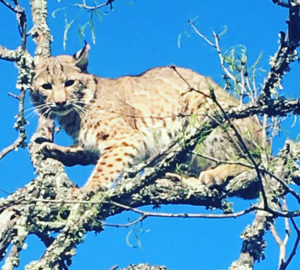
    Bobcat- Courtesy of Shorty

    By day, Shorty Gorham is a bullfighter, now in his 12th season working PBR events across the country. By night – and even into the wee hours of the morning – he’s a hunter, either hunting deer or tracking bobcats with as many as 14 hunting dogs leading the way.
    Originally from Orange County, California, Shorty moved to Cotulla, Texas, after marrying his wife, Amanda. “There are a few things I miss about California, but not very many,” says Shorty. “One of the cool things about south Texas is it’s really easy to transplant any game that’s non-native, like elk and a lot of different African game.” Cotulla is on the edge of what hunters call the Golden Triangle, a region that produces some of the country’s best whitetail deer through rigorous deer management, feed, and genetically improved breeding stock. Shorty uses Record Rack deer feed, while his hunting dogs are on Nutrena food, the parent company of Record Rack. “The deer are healthy as can be, and I’ve noticed with both my dogs and the deer that their coats are shinier and they’re fleshier,” Shorty explains. “I’ve been hunting my dogs hard enough to know that their food is doing them justice.”
    Shorty did his share of coon hunting in California, but had to transition from coon hounds to fox hounds when he started hunting bobcats in Texas. “These dogs are Running Walkers, and they have more endurance and speed. Coon hounds are bred for their treeing ability, but these dogs are bred for running game. About half of them I’ve purchased already trained, but the other half I’ve trained myself.” The bobcat population is so dense that they are considered varmints, and Shorty does predator control for several ranches in the area, which also benefits the turkey and quail population. “I have GPS trackers on all my dogs so I know where everyone is at all times. You turn the dogs loose and follow them; I try to drive through areas that are bobcat habitats. You wait for the dogs to pick up a scent, which they’ll hopefully follow, and then you listen to some good old-fashioned hound music.
    “The down-side to these dogs is that you have to hunt them really hard to keep them tuned in,” Shorty adds. “There are days I’m tired, but the dogs don’t care – they still need to hunt. When I’m beat up and sore, it can feel like a job, but this is my enjoyment and my therapy. I hunt alone a lot, and it’s peaceful. It lets my mind rest and just enjoy good dog work. And hopefully we catch some cats!
    During the first few months of the year, Shorty’s PBR schedule keeps him on the road five or six days a week, flying from San Antonio to any of the major cities hosting the PBR. “This season has been going really good. We’re on track to break records again as far as attendance, and we have a young bunch of bull riders coming on the scene with that old school mentality of coming to win a world championship, not just be there their first year. If it keeps on course, this will be one of the more exciting years of my career,” he says. “When I was working rodeos, there were three or four month stretches where I never saw home, but now it’s just three to four days a week. I’m gone just enough that my family doesn’t get tired of me, but the dogs don’t bark at me.” Shorty and Amanda have a son, Tanner, and a daughter, London, who both compete in rodeo.
    Shorty has also entered the stock contracting world, recently partnering with his wife’s cousin to put together a string of Spanish fighting bulls. “The freestyle bullfighting industry has taken off,” says Shorty. “It’s been on hiatus for twenty years, and it’s making a resurgence. I’m getting a little long in the tooth to be fighting bulls, so hopefully we’ll have everything together with our bulls so when I’m ready to hang up bullfighting, I can step into the stock contracting. I’m also working with Nutrena on building a feed for our fighting bulls, so we’re experimenting with different energy sources to enhance their performance. It’s been fun to have that relationship with Nutrena and Record Rack.”
  • On The Trail with Faith Hoffman

    On The Trail with Faith Hoffman

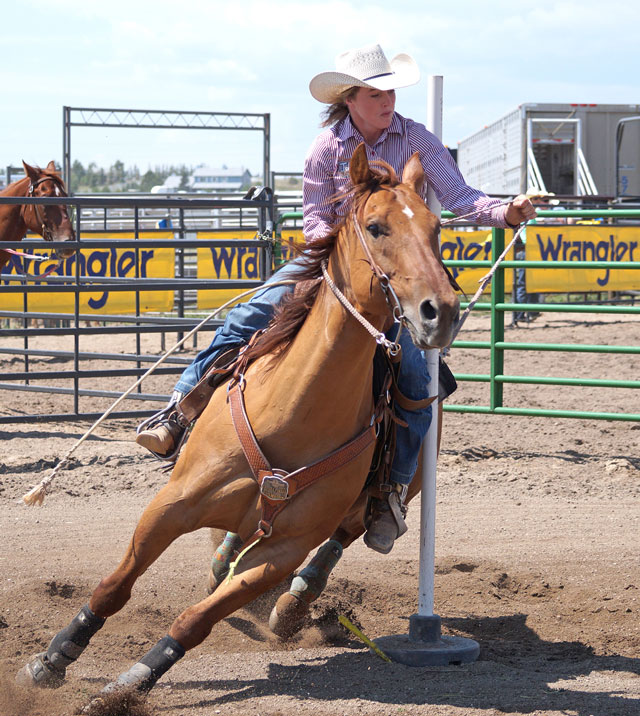
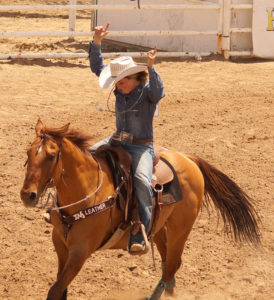
    Faith Hoffman of Kiowa, Colorado, is the reigning CSHSRA goat tying champion. The 18-year-old plans to defend her title at state finals at the end of May, earning her third trip to the NHSFR. Yet as quick as her hands and feet are in her favorite event, Faith is even quicker to encourage her fellow competitors, friends, and family.


    DSC01423-faith-glory.jpg_WEB
    Faith celebrating at 2016 CSHSRA Finals – Chelsea Hoffman

    Whether it’s giving someone a pep talk at a rodeo or sharing Bible verses, Faith is passionate about helping others. “Our family anthem is Ephesians 4:29, ‘Do not let any unwholesome talk come out of your mouths, but only what is helpful for building others up according to their needs, that it may benefit those who listen.’,” says Dave Hoffman, Faith’s dad. “She’s really an encourager of others, and I think because of her, other kids are encouraging as well.”

    Faith’s introduction to the rodeo world came through her dad, a first generation rodeo cowboy and bareback rider turned farrier. Dave competed in the CPRA and PRCA Mountain States Circuit, and later coached the Air Force Academy college rodeo team. Faith started traveling with him when she was five or six, making fast friends with his traveling partners and their children. She was competing in peewee barrels by the time she was eight, and two years later, Faith was a member of the NLBRA and had discovered her passion for goat tying. “It’s such an aggressive and quick sport,” says Faith, who also competes in barrel racing, pole bending, and breakaway roping. She even team ropes on occasion when someone needs a header. “I play basketball too, and I think that sport and goat tying cross over.


    When I’m teaching girls to tie, I compare it to basketball moves and how you have to be quick and aggressive in both. I also like how you don’t need an expensive horse to compete in goats – it’s about the work you put into it. I feel like everywhere I turn, there’s someone who has my back or will pick me up, and that’s really shown me that rodeo’s not all about what you put into the arena, but also who you are outside.”


    FAITH-HOFFMAN-GOATS-ELIZABETH.jpg_WEB
    Faith goat tying at CSHSRA Elizabeth 2015 – Chelsea Hoffman

    Last summer, Faith had the opportunity to teach goat tying at High Plains Rodeo Bible Camp in Hugo, Colorado. She also teaches goat tying lessons from home and at clinics. “It was super fun in Hugo. There were about sixteen kids in the goat tying, and it was a lot of fun to teach them and be in a spiritual environment. I was also a group leader there, so I lead devotions and prayer with five or six girls. It was pretty cool seeing them learning and realizing what Jesus is all about.” Faith also spoke during Cowboy Church at a CJRA rodeo in Yuma, Colorado, last summer when Dave wasn’t able to be there. He’s been involved in the rodeo ministry since he was 19, and has lead Cowboy Church in the CSHSRA the last year and a half. Last summer, he performed a number of water trough baptisms in arenas.

    For Faith, rodeo especially complements her relationship with the Lord. “My favorite verse is Jeremiah 29:11, ‘”For I know the plans I have for you,” declares the Lord, “plans to prosper you and not to harm you, plans to give you hope and a future.”’ I have that written down all over, and I can really see that in the rodeo world, because things can change so quickly. You can get hurt and be out a rodeo or a whole season, or other things can happen, and I think that it really puts an emphasis on faith. My mom tells me all the time if I have a bad rodeo or don’t win that God had the win planned for someone else that day.”

    Faith received her own encouragement two autumns ago when her barrel horse, Cracker, fell during practice and broke his leg. “This was after Faith won state finals in the average on him. He was an amazing horse,” says Chelsea Hoffman, Faith’s mom. She works in marketing in Denver and does some of the photography for the CSHSRA. “We had ten people offering horses to her, which is huge in barrels. Rodeo has been really amazing for Faith and opened up opportunities like scholarships and being part of an amazing rodeo family. In junior high, she had sessions with college barrel racers, and she’s worked with Kaylee Moyer and Jill Francis, who are great goat tyers. She’d tie until midnight with them if she could. Logan Kenline and his family are very close and have helped her with her roping, and she’ll also rope with the Meeske family.”


    DSC02145-family-hoffmans.jpg_WEB
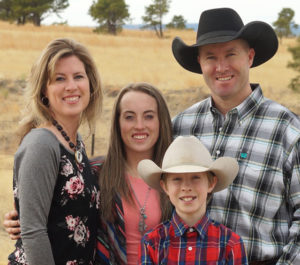
    Chelsea, Faith, Cade and Dave Hoffman – Courtesy of the family
    faith-cade-tree-bv-large810.jpg_WEB
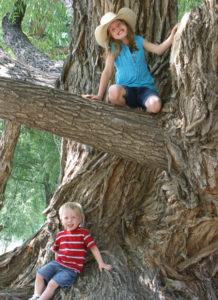
    Faith at age 10 and her little brother, Cade at age 3 in Buena Vista – Courtesy of the family

    At home, Dave helps Faith exercise horses, and Chelsea holds goats and videos runs. Faith competes on Johnny in pole bending, goat tying, and barrel racing. Johnny was voted CJRA Senior Girl Horse of the Year in 2016. Faith has also run barrels on Drifter, and recently brought home a mare, Barbie. “She’s a diva,” Faith says with a laugh. “She’s started in the breakaway, and I’m so excited to see her finish up. I’ll probably start her in barrels, too, since she’s super quick.” Family time is spent in the practice pen and at rodeos, and Faith’s itinerary this summer includes The Best of the Best Timed Event Rodeo in Gallup, New Mexico, the IFYR in Shawnee, Oklahoma, and the NHSFR in Gillette, Wyoming. Her 11-year-old brother, Cade, travels to many of the rodeos and is an avid hiker. Over spring break, he and Dave went on a hiking trip in the Grand Canyon, and they have several other national parks on the list to visit.

    This school year, Faith has started her mornings at Abbott Ranch in Kiowa before finishing her afternoon classes at Kiowa High School, where she’s a senior. “One day I might be pulling manure, the next we’re moving cows or hauling hay,” says Faith. “I didn’t grow up on a ranch, so it’s nice that I get to learn these things.” She’s also helping plan the class of 2017 graduation, and finished a banner year playing basketball with the Kiowa Indians.

    This fall, she plans on attending Sheridan College in Wyoming on a rodeo scholarship. Faith’s focus is on goat tying and breakaway, as well as majoring in athletic training. “My dad was a coach in the Central Rocky Mountain Region, and I still know a lot of the coaches there. I’d eventually like to transfer to a university so I can get my masters and rodeo a fifth year in college,” says Faith. “I want to win the state championship in goats again, and we have some tough competitors this year. I’d like to go on to Nationals and win there, but I’m not going to stress over anything, because God has a plan.”

  • Rhett Beutler

    Rhett Beutler

    Beutler & Son Rodeo Company put its roots down in the rodeo world in 1929, starting out as Beutler Brothers Rodeo Company. Rhett Beutler, the fourth generation to work in the family business, and the son of Beutler & Son, brought a new angle to the company’s ranch outside of Elk City, Oklahoma, when he started guiding hunting trips in the late 1990s.
    As a college student with a lean wallet but a robust passion for whitetail deer hunting, Rhett decided he would guide hunting clients on weekend hunting trips on The Beutler Ranch. “In the early ‘90s, we started getting deer on our ranch in western Oklahoma, so all through high school, they were progressing and multiplying,” says Rhett. “I graduated high school in 1995 and went to college, but we had deer on the ranch and I had stands and food plots and feeders I was taking care of. I was a broke college kid running back forth between school and the ranch trying to hunt. I knew there were places I wasn’t even hunting yet.”
    Rhett mentioned his idea of guiding hunters to a friend, and within a few weeks, he had his first job. What should have been a three day hunt took only 30 minutes. The hunter filled his tag, paid for all three days, and was gone the same morning. “The next year wasn’t that easy,” Rhett says with a laugh, “but as I realized all the places I had to hunt and how much game there was, I knew there was no way I could hunt it all. Instead of poachers getting the deer, I decided to take a few days each year to take hunters out and make some money on the side.”
    Many hunting trips are scheduled in October and November between the lull in rodeo season and the WNFR, but they run through the end of bow season in January. Though the ranch is known for its whitetail hunting, it also offers quail, duck, and wild turkey. Among the rolling Oklahoma hills are prairies, timber, brush, and lakes, and the Beutlers have set up blinds, stands, and cameras to track where the mature bucks are. “We probably have forty different places to hunt, and we try to make the habitats the best we can for the game,” says Rhett. He teamed up with Record Rack feed last summer after extensive research on their feed and feeding programs, and recently started putting it out on his food plots.
    Numerous hunters fly into The Beutler Ranch, located 100 miles west of Oklahoma City. If they don’t want to fly the venison home, Oklahoma is one of several states employing Hunters Against Hunger, a program that donates meat to families in need around the state. “A lot of my guys will take their meat to a supporting meat locker, and then it will get distributed,” Rhett explains. “Some of the other guys will bring their ice chests and take their meat home. I’m more of a horn hunter myself, and I like to make jerky. We’re not like Kansas with the potential to kill a 180 – 200 inch deer,” he adds, “around here getting 150 – 160 is pretty good.”
    With the state department recently capping the number of bucks to two per hunter per season, along with running an education campaign on allowing bucks to mature before hunting them, Rhett has noticed a positive difference in the numbers and quality of deer. That, along with the food and hospitality The Beutler Ranch offers, has brought many hunters back for the last 10 – 12 years. “We have a big barn we turn into a hunting and lodging camp. I bring in some people I know from Texas to cook for them, and we have drinks and satellite TV, so we’ll be watching football or NASCAR. Everyone has a good time!”
    Many of the Beutlers are involved with the hunting on the ranch, including Rhett’s two children, Taylor, 12, and Jake, 9; his cousin, Justin Shireman; and his children. “My dad, Bennie Beutler, is a diehard quail and bird hunter, but he’s right in the middle of the deer hunters helping with whatever needs to be done,” says Rhett. “I enjoy doing it and making a little money to supplement everything we put into it. It’s good for the ranch and our family, and it’s about having a good time. I think most people keep coming back because they enjoy the food and hospitality that goes with the hunting.”

  • ProFile: Matt Reeves

    ProFile: Matt Reeves

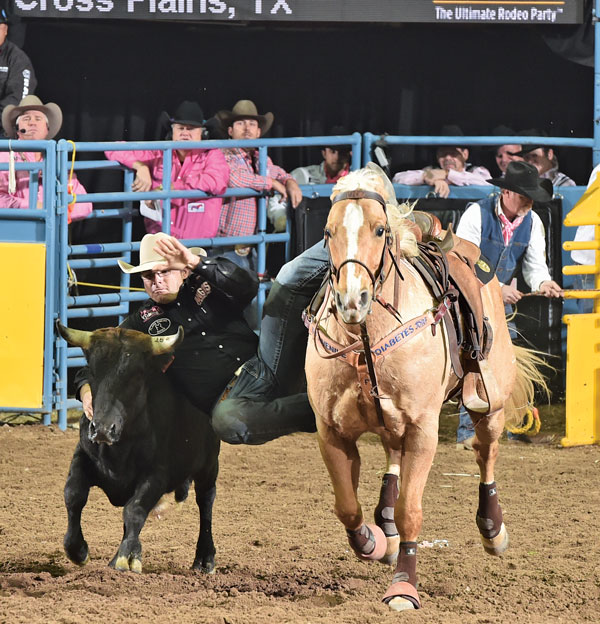
    Steer wrestler Matt Reeves finished second in the world standings following the 2016 WNFR and hit the ground running by February, currently sitting #15 in the World Standings. He’s backed into the box at Texas rodeos including San Angelo, Belton, San Antonio, Los Fresnos, and The American. Of the myriad of rodeos the 38-year-old from Cross Plains, Texas, has competed in, Los Fresnos remains especially meaningful. “I went to that rodeo in 2006 with my friend Brent Arnold and my future father-in-law, Sam Koenig, and it changed my life,” Matt explains. “In 2005, I had been one out of the money thirty-eight times, and I wanted to win more. On the way home from Los Fresnos, we had a discussion on what I needed to do to win more, and the best advice I got was that I needed to ride a faster horse. I rode Brent’s horse Junior Brown through 2006, won the Texas Circuit in 2007, and made the WNFR. I never dreamed I’d rodeo for a living, but I’ve had a ball doing it.”
    Growing up in the Texas Panhandle, Matt and his sister junior rodeoed. Their dad roped and Matt followed suit, but switched to steer wrestling in high school. “There’s a lot more adrenaline rush for me in steer wrestling, and I was much better at it.” Matt high school rodeoed for Texas before competing in college for Texas A&M University and Oklahoma State University. He graduated with a bachelor’s degree in animal science, then coached the rodeo team at Clarendon College in Texas for a year. “Coaching wasn’t for me, so I rode horses for some people, and then I ran a water well shop that my sister owned.” Not long after that, Matt found his stride in the rodeo world and took home checks from numerous rodeos the winter of 2007. With his goal set of winning the Texas Circuit in 2007, which he achieved by April of that year, Matt knew it was time to take a chance and rodeo full time. “I loved the traveling, and I saw lots of rodeos I’d never seen before.” For Matt, another highlight of rodeoing is making his own horses, qualifying for the WNFR on three that he’s trained. He qualified for the most recent WNFR on Nacho, but sadly, the horse had to be put down in the fall after an accident in the pasture. Matt rode Ote, owned by Bray Armes, at the finals, and his own up-and-coming steer wrestling horse, Roy, is Ote’s son. “I hauled Roy last year and rode him at a lot of circuit rodeos; he’s a cool horse.” Matt uses the slower winter months to start his younger horses in the box, but adds, “You can’t make them until you haul them. Once you get your horses to where you can practice on them, you need to rodeo on them. I practice a few days a week, and most of the time it’s for the horses, but if I don’t feel good, then practice is for me.”
    Matt recently joined the team at Short Go Xtreme, whose products, like protein shakes and juices, promote energy, strength, and weight loss. “Having the energy I need and feeling my best were the biggest factors for me. Being diabetic, I had to do a few different things they suggested, but my blood sugar has been more stable and I have good energy,” he says. Matt, who learned he had type 1 diabetes as a teenager, also uses his success in the arena to bring awareness to the disease and the Juvenile Diabetes Research Foundation (JDRF). During the WNFR, his tack included a Flavio Ribeiro breastcollar tooled with the JDRF name and signed by all of the steer wrestlers. It sold at auction for $1,000, and the proceeds went to Bacon Bash Texas, which raises funds for children with type 1 diabetes
    When he’s not traveling, Matt enjoys hunting in the Panhandle and managing his small but ever-growing cow herd. “My in-laws run a lot of cattle, and I’ll help them out when I’m home. I also enjoy riding my younger horses, but we’re gone so much that it’s nice to just be home and see my son, Carson, and my wife, Savanah. She ran barrels for quite a while and won Calgary in 2010, so she’s rodeoed and had a lot of success.”
    Matt’s next destinations on the rodeo trail include stock show rodeos around Texas, and Kissimmee, Florida, for the RNCFR after winning the Texas Circuit for the fourth time. “In April, I’ll be heading to the Champions Challenges, and by the end of June, I’ll be on the road for good,” he finishes. “My goal is to get Roy to the WNFR, and I’d like to finish first there sometime. When you get to this level, that might as well be your goal!”

  • Kristy Lee Cook

    Kristy Lee Cook

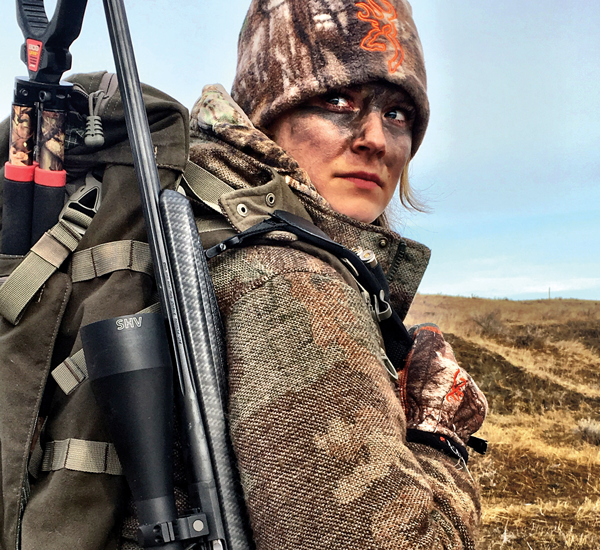
    Kristy Lee Cook didn’t grow up in a rodeo or hunting family, but once she discovered those passions, she planted herself firmly in both worlds. Originally from Oregon, the 33 year old presently makes her home in Amarillo, Texas. Kristy is a country singer and songwriter who made her debut through American Idol, and has since released an album and four singles. She’s hosted the Outdoor Channel’s “Outdoors 10 Best” and Versus Channel’s “Goin’ Country”, while she’s currently the host of “The Most Wanted List”. The show is finishing its third season on the Sportsman Channel in March, with filming for the fourth season underway. “I really love sharing the outdoors with friends and family, and being able to go on adventures with people who have always wanted to do those things,” says Kristy. “That’s what started the show. I’ve gotten to check a lot of things off my bucket list and take other people along to check things of theirs. Capturing it on TV is even more rewarding, and sharing those memories with friends and family for the rest of my life.”
    Kristy plans and organizes every episode of the show, and season three promoted elk, mule deer, and even Tahr hunting in New Zealand. “I’d like to try an Alaska hunt for something different next season,” she adds. Kristy’s sister, Terina Dutton, appeared on Kristy’s first TV show “Goin’ Country”, while their brother, Sonny Cook, has come on to “The Most Wanted List”. “My brother was really excited when I started hunting since he was the only one in the family that did it. He tried getting me to hunt years back, but I didn’t start until I was probably twenty-two. My boyfriend at the time wasn’t into horses and I wasn’t into hunting, so we decided to make a trade and get into each other’s hobbies. That started my hunting life!”
    Near her home in Texas, the hunting opportunities include coyotes, hogs, and whitetail deer. Kristy often hunts coyotes with her boyfriend, Lee Orr, who does predator control for ranchers. “The coyotes are so over-populated here because they are the predator; there’s not very many mountain lions or wolves. There are hundreds of coyotes in a small area, and I think they’re coming in close to these ranches and going after livestock because the food is easier to hunt,” Kristy explains.
    She and Lee recently took part in a weekend-long coyote hunting contest, while they hunt whitetail deer on one of the ranches Lee works for. “We take the Rangers out and load the feeders with Record Rack. Lee got a whitetail deer recently, and I was with him on his hunt, which was very cool. We use Record Rack to keep the deer around and keep them healthy. They’re a reputable company and their product works, and that’s why I’m stoked to have them also be a part of my TV show.”
    When she’s not on her latest hunting trek, Kristy is patterning and seasoning a pair of stallions in the barrel racing. She grew up riding her friend’s horses and learning to work cattle and even move pipes and water lines on her friend’s family ranch. “I think it’s really rewarding and very challenging to make your own horses, and it’s really awesome when you’ve worked so hard to have a really good run,” says Kristy. She refers to the stud she raised from a baby, Tazer, as her miracle horse. In his six years, Tazer has broken his jaw, which was repaired with 300 stitches, colicked, overcome a problem with his suspensory ligament, and lacerated his right eye, which is 100% blind due to glaucoma. Kristy has mainly been running her horses in jackpots and barrel races around Texas, but her goal is to enter them in rodeos in the future. “I’m working so hard to rodeo on Tazer because I think his testimony of not giving up and his will to live is really powerful!”

    Kristy competing at a jackpot rodeo in Clovis, NM – Christpher Cook

    Though Kristy had taken a break from her music to work on horses and focus on her show, she’s written several songs in the meantime and plans to start recording soon. “It’s been nice to take a break from the road and spend time with the horses and get them where I want to go – it was hard to get them legged up and working and then leave for a month,” she says. “You can be overworked in an area sometimes, and all you need is a break to come back stronger. I’m excited to get some music going again.”

  • On the Trail with James Hajek

    On the Trail with James Hajek

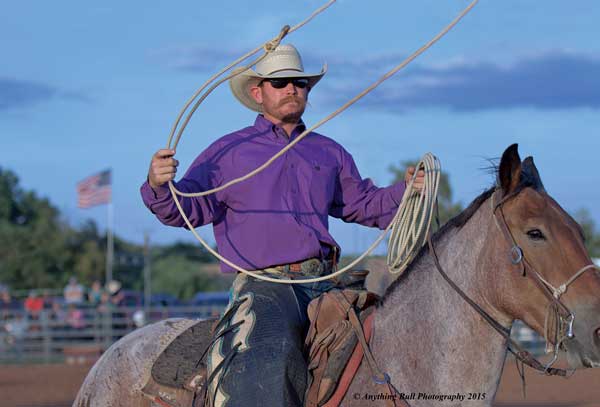
    James Hajek at the NIRA Rodeo in Stillwater, OK 2015 – Hirschman Photography

    James Hajek is a cowboy by blood and by choice, making a living in the stock pens and arenas of the South and Midwest since he was a child. Today, the 32-year-old from Hennessey, Oklahoma, is known for his finesse as a pickup man, finding his niche in the rodeo world while attending Northwestern Oklahoma State University.

    “My dad used to rodeo and he co-owned Carpenter Rodeo Company in Kansas, so from the time I was little, rodeo is all I’ve done,” says James. “Growing up, I knew where every playground and park was in Kansas. We went somewhere every weekend, and I had friends all over the place. I didn’t know any different, or what it was like to go to the lake, but I loved it!” James and his older sister, Jena, became all-around hands, even riding a pair of mini mules to move cattle. “They were about the size of Shetland ponies, and we’d take them to every rodeo and drive cattle out. If there was a return alley, we’d bring the timed event cattle back up. We ran 140 – 150 team ropers a night, so we’d be there a while.”

    When James was ten, his parents, Danny and Aronda Hajek, sold their half of the rodeo company. They kept a handful of bucking bulls, and James and his dad continued to raise bulls until 2014. In 2004, the rodeo coach at Northwestern Oklahoma State University had offered James a scholarship for supplying the team’s bucking bulls. Rodeo clown Justin Rumford was also a NWOSU student at the time, and James recalls, “We weren’t in very many of the same classes, but we did lots of extracurricular activities together. There were always good times to be had with him around.”


    James Hajek at the PRCA NTFR (North Texas State Fair & Rodeo) – Todd Brewer
    James with his son Hagen and dad, Danny Hajek – courtesy of the family

    James also watched rodeo practices and helped run the roping chutes, but the itch to be doing something more was always there. His sophomore year, James brought a trailer full of broncs to college, partnering with Andrews Rodeo Company, who sends James colts to start bucking every year. They’ve started a number of WNFR broncs such as Cool Water, PTSD Power Play, and Fire Lane. Picking up broncs naturally came next, and though James hadn’t spent much time on horseback during his teens, the muscle memory was still there. “When we sold the rodeo company, I’d sold my horse and mules, and I never even rode when I was in high school. I’d mainly worked rodeos, and I never had too much interest in competing since I was guaranteed a paycheck. I started picking up at practice, and the finessing and fine-tuning took a while to learn, but as far as setting riders down, I’d cowboyed enough to know where I needed to be and what to do.”

    Nearly 12 years later, James works as many as 25 rodeos a year, along with bull ridings like ABBI and PBR. “I work all of Andrews Rodeo Company’s rodeos, and I’ll fill in for Phil Sumner, who partnered with my dad on some rodeos.” This is James’ seventh year picking up pro rodeos, and he’s also picked up for Beutler & Son Rodeo Company and Frontier Rodeo Company. “I’m just enough of an adrenaline junky that I really enjoy that part of it, and it’s fun to be doing so many things at one time, even if nobody can see it all.”

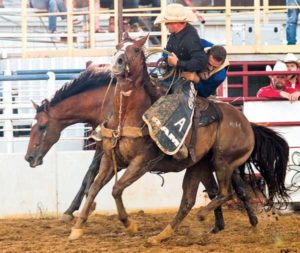
    Yet those unnoticed moments are what catch a photographer’s eye, as is the case with the cover photo, taken at the 2015 Rylee Miller Memorial Ranch Bronc Riding in Cherokee, Oklahoma. James started the annual bronc riding in memory of his girlfriend, who passed away in 2013. “We did a winter series jackpot bull and bronc riding first, and after that I decided I wanted to set up a scholarship fund and do the ranch bronc riding,” says James. “Phil Sumner and Jaymie and Rooster Swartz have brought horses to the bronc riding, and we do it early in the year so the horses are coming in fresh and ready to go. That makes it pretty wild. We’ve also had women’s bronc riding, junior broncs, and mini broncs, which are a crowd favorite. We won’t be able to hold the bronc riding this year, but the goal is to come back next year and do it bigger and better.”

    While he’s on the road for the summer, James’ family and friends look in on his livestock. He has 125 head of cows, originally starting with 30 – 40 head to help pay for his rodeo habit. “I work at a sale barn about twenty miles from the house, and I buy cows like some people buy shoes. I’ll go to work a sale and come home with four or five more. My fiancée, Jill Shaw,  and I are partnering on forty head of mama cows, so we have a nice little ranch, and it keeps me going in the winter. It’s also something to do with my horses to get their minds back after a long summer of rodeos.”
    James says his horses share his love for adrenaline, adding that they have to be gritty and tough, with plenty of run in them. “They’re all a little kamikaze with no hesitation in them. My dad said you know you have a good pickup horse if you can run them into a brick wall. I run my horses at anything I think they’ll be scared of.” Scooby, a 19-year-old gelding, is his best horse, starting out as Jena’s barrel horse in college. “Scooby had a motor on him, but he didn’t want to run the pattern, so Jena asked me to ride him a while. I was working at three sale barns at the time and cowboying. Scooby picked up rodeos so well, I told Jena she could either sell him or give him to me, because I wasn’t giving him back.” James found another of his horses, Colonel, in college, while he recently purchased Peso from Cody Webster. He also rides Cisco and Pepper, while the red roan featured on the cover is a former Canadian bronc. “Bromby didn’t have an ounce of buck in him, so I bought him from Sammy. I don’t pick up on him very much because he’s seventeen hands and it’s a long way to reach some of those broncs.” Bromby and James received a standing ovation several years ago at a rodeo in Longview, Texas, when a barrel truck was stuck in a muddy arena. James threaded his rope through the front tow of the truck and Bromby pulled it out within minutes.

    “I think pickup horses are about the toughest horses in the rodeo,” James adds. “We get them hot and tired as they can handle, but then we don’t always have time to cool them off before getting another horse and going back to work. Jill takes off work to travel with me, so she’ll go back and cool horses out for me between events.” James met Jill six years ago at the North Texas State Fair, which her family has helped produce for many years. “Jill is part of a drill team and a flag team down there, which she’s really passionate about, and she runs sponsor flags. I met her while I was working that rodeo, and in 2015, we really hit it off and dated for about a year. I proposed to her in the arena, and we’ll be getting married in September in Texas.” The couple is taking their longest trip yet in August, on the road for two weeks traveling to rodeos. “We’ll see how much she likes me – it’ll be me and her and five dogs,” he jokes.

    James’ one-year-old son, Hagen, is also showing interest in the western lifestyle. “Whenever he goes to feed with me, all he pays attention to is the horses and cows. He may be the only kid around with a seventeen hand Canadian bronc for his first horse.” Any time at home is spent with Hagen, while James also enjoys catching up with friends and doing day work in the area. One of his goals is to bring the Rylee Miller Memorial back in 2018. “We always have good horses, and I’ve even had guys talking to me from Idaho and northern California about it. I want it to become the premier ranch bronc riding in the country, and I think we’re fairly close.”

    James Hajek at the NTFR 2016 Ranch Rodeo – Todd Brewer


  • Back When They Bucked with Dilton and Pat Emerson

    Back When They Bucked with Dilton and Pat Emerson

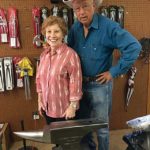
    Dilton and Pat Emerson of Bossier City, Louisiana, know the value of a horse shoe. Keeping equine athletes of all disciplines shod has sustained the husband and wife for many years, and their bootprints through rodeo history are accompanied by their ingenuity. This includes inventing a now widely-used anvil and starting their own horseshoe supply business – one of the largest in the country. They also support the rodeo industry with their time, serving on the boards of several rodeo organizations, and most recently, helping organize the Gold Card Reunion in Las Vegas during the WNFR. “The reunion originated last year, and we had about 150 gold card members come,” says Dilton, chairman of the reunion board and a gold card member himself. Shawn Davis, manager of the PRCA and one of Dilton’s longtime rodeo friends, recently asked Dilton to help organize the reunion. Open to all PRCA gold card members, the reunion takes place this year in the Thomas & Mack Center on December 8th. “We have someone in charge of getting interviews during the reunion for the Pro Rodeo Hall of Fame in Colorado Springs, and there will be slideshows and storytelling,” Dilton describes.
    His own rodeo career with the PRCA – known at the time as the RCA – began in 1954, the year he married Pat. The couple – both born in 1936 – were raised one town over from each other, Dilton in Taylor, Arkansas, and Pat in Bradley, Arkansas. Horses were Pat and her family’s means of transportation, but Dilton didn’t own a good horse until he was in his 40s. Instead, he competed in all three roughstock events and steer wrestling. “His family thought he was totally crazy and doomed from day one,” Pat recalls with a laugh. Yet Dilton paid all his expenses and made friends with competitors like Shawn Davis, Tom Nesmith, who put Dilton on his horse Old Brown, and Neal Gay. “Neal took a liking to me when I was a kid and helped me out, and I worked for stock contractor Tommy Steiner. I got on everything he turned out,” says Dilton. “Steiner had a bronc saddle in his tack room that became mine, and I had a bareback riggin’ of my own.” His bronc saddle is now on display in the Lynn Hickey American Rodeo Gallery of the National Cowboy and Western Heritage Museum in Oklahoma City,  its cinch tightened on a bronc sculpture rearing from the chutes.


    Near the time Dilton’s RCA career began, Pat tried her hand at riding bareback horses in the Girls Rodeo Association (GRA). “I hadn’t thought about competing, but I had an older sister that rode roughstock. I was staying with her one summer and she took me to rodeos,” says Pat. “There weren’t more than six or seven bareback riders, but enough to have a rodeo. I messed with it for two or three years, and did exhibitions in saddle bronc riding the summer of ‘55. But once I started raising our three kids, I quit.”
    Dilton was rodeoing with Pat’s brother when the couple met. While their children – Peaches, Joe, and Ross – were young, Pat worked as a secretary for several steel firms and Dilton rodeoed full time. When he eased off the gas pedal in the mid 1960s to start shoeing horses on racetracks, Pat was a mutuel teller, cashing tickets for the bidders. They travelled with their children to Detroit, Chicago, Omaha, Nebraska, and the Louisiana Downs in Bossier City, Louisiana, where they eventually settled. “We never had a horse trailer when we rodeoed or worked on the racetracks, we rented apartments,” says Pat. “We worked together for three or four years before starting our horseshoe supply business. Everything Dilton has done, he’s taught himself.”
    “When I started shoeing horses, it was at an all-time low for farriers,” Dilton recalls. “A big horseshoe company went out of business in 1965, and people were predicting that it was the end of the horse era. Back then, they didn’t have playdays or horse shows. Horses were mainly used on ranches for working cattle, and the ranchers did their own shoeing.” Yet the Emersons still saw a need for horseshoeing, though they never intentionally set out to start a business. “Dilton always had a good supply of stock that he shod with, which a lot of horseshoers didn’t, so they’d buy or borrow from him. He got a distributorship specifically for thoroughbred racing shoes, and then we were able to get distributorships for bigger companies.” Within ten years, Emerson Horseshoe Supply was one of the larger horseshoe suppliers in the business. The anvil Dilton designed in the mid 1990s also set them apart. “There’s a lot of nickel in the anvil, which gives it good bounce-back,” he explains. The Emerson Anvil is preferred for many horseshoeing contests and even knife makers, and is shipped across the country and even as far as England. Their anvil is in use in the bladesmithing TV show Forged in Fire, and Dilton designed a commemorative 25th anniversary anvil for the 2004  World Championship Blacksmiths’ Competition, held during the Calgary Stampede.
    Emerson Horseshoe Supply has been distributing horseshoes and farrier supplies for 35 years, the shop right next door to the Emerson’s house. “It works well for waiting on customers after hours. Before cell phones and ordering ahead of time, I’d be up at six in the morning selling horseshoes,” says Pat, who runs the store. “Grandma is really amazing – she can tell you about all the shoes, their differences, and the prices,” says Seth Emerson, their grandson. He’s worked in the store since he was old enough to stock shelves, and only recently left to become an auditor for the state and continue his rodeo career, tie-down roping in the PRCA. “My grandparents have done so much for me, and it was very rewarding for me to work with them. My grandpa started team roping in his 60s, and I’ve always roped at their place. I’ve been good friends with Shane Hanchey since high school, so he’s stayed there. I also used to hold a big jackpot there and guys like Cody Ohl and Marty Yates would come and Grandma would cook for them. Grandpa’s always been there when I rope, even if it’s cold, and then he pulls the truck up next to the arena to watch.” The Emersons also have three granddaughters, Cassie, a breakaway roper, Stewart, an aspiring actress in New York City, and Kirby, a junior in college at the University of Edinburgh in Scotland.
    Prior to team roping, Dilton took up chuckwagon racing, living just a few hours from the National Championship Chuckwagon Races in Clinton, Arkansas. Dilton and his team, racing under Emerson Horseshoe Supply, won the classic division in 1997 racing thoroughbreds. He built his own wagon, weighing approximately 1,000 pounds, but his interest moved to team roping around 2000. He currently heels in the USTRC and local team roping associations. “I practice three times a week, but I generally go to Stephenville (Texas) so I can rope with Rickey Green,” says Dilton.
    Pat enjoys snow skiing, and is planning a skiing trip with her granddaughters and grandson’s girlfriend in February. She’s also active in her church, and one of 50 rodeo wives that make up H.A.N.D.S. (Helping Another Needy Diva Survive). The organization, started by Sharon Shoulders and Donna McSpadden, sends anything from money, food, cards, or even personal visits to rodeo families going through hard times. “We were in Oklahoma City recently for Rodeo Hall of Fame inductions, and we also go up to Colorado Springs for the Pro Rodeo Hall of Fame, and then Las Vegas in December,” says Pat. “We’re both very active and very social. We’ve been blessed with good health, good friends, and good family!”

  • ProFile: Layne Ward

    ProFile: Layne Ward

    Bull rider Layne Ward won the NIRA’s Southwest Region in 2015 competing in just five rodeos – half of a college rodeo season. This year, he’s sitting second in the region with plans to defend his title and represent Odessa College a second time at the CNFR. “This year is going good – I won the first rodeo of the season and placed in the second,” says the 22 year old from Almo, Idaho. He attended Utah State University for a semester in 2014 but competed in a full season of rodeo. When he arrived at Odessa College, he needed 24 previous credits before he was eligible for a second season of college rodeo, giving him just the spring of 2015 to qualify for the CNFR, which he accomplished by winning three rodeos and placing second in another. “College finals was rough – I’d separated my shoulder the week before in an accident and then went to two pro rodeos before the CNFR, so it was a hard week. But the experience was great and it’s a really fun rodeo to be a part of – it makes me hungry to do good this year and get back there!”
    Odessa College came onto Layne’s radar when several of his friends, including a cousin, chose to attend school there. “C.J. Aragon, our rodeo coach, recruited my cousin, and I thought it would be pretty awesome to rodeo here,” Layne recalls. “C.J. put a scholarship together for me, and this is my second year here now. I love it here – the college and their rodeo program are great, and so is C.J. He’s always encouraging me, and any time I’m down, he’ll give me a boost. If I’m ever going through a rough time and have to ask myself why I’m doing this (rodeo), I’m reminded that I’m doing it to win titles, but I mainly want to push myself to see how great I can be. If I’m not at that point, then I need to keep working, and my coach and my parents do a great job of keeping me going. It’s always good to have those outside sources, but if you don’t have the internal drive to push yourself each day, it can be pretty tough.”
    Growing up on a ranch in southeast Idaho gave Layne the foundation for the self-motivation and hard work bull riding requires. His parents, Steve and Tonya Ward, took him to gymkhanas where he rode sheep and calves before he competed in a year of junior high rodeo, while his brother and two sisters also compete. “I stick to the thrill side of things – I’m usually the one up for doing the scariest stuff,” Layne says with a laugh. “I try to take anything to the next level, whether it’s boating or riding my dirt bike.” In high school, he competed in amateur rodeos in the area, but after graduating, made a difficult choice to pause his rodeo career and serve a two year LDS mission in Mesa, Arizona. “Right as you graduate high school, it’s an important time in a rodeo career as you transition and practice for the college and pro level. It was a tough decision and I had to leave everything – I couldn’t ride bulls or horses or go to a rodeo for two years, but I don’t think I’d be as good as I am today if I hadn’t gone on that mission. I was able to heal up and work out, and let my body grow. But it was also a mental break that helped me forget about rodeo for a while and serve other people. It helped me grow up and mature, and put a lot of things into perspective.”
    Returning to the chutes two years later wasn’t as challenging as Layne expected, but he admits it was still rough. “It was frustrating to re-learn some things, but I’d also forgotten some bad habits, and once it clicked, I knew how it should feel again,” he says. “Rodeo down here in Texas is a different level. It’s not better than anywhere else, but everybody here is ready to do well and help everyone else do the same. They step up the game and make rodeo what it is.”
    Layne filled his PRCA permit this year and plans to ride on his card starting with the 2017 season. He’ll graduate in the spring with degrees in business administration and general studies. “I couldn’t have done a lot of this without the help of my sponsor, Brahma Lending and Leasing,” he finishes. “I’d like to win the college region here again and win the CNFR. I want to rodeo as hard as I can and see how far I go, but the aim is to make the NFR and win a gold buckle. I plan on going all the way!”

  • Roper Review: John Gaona, Jr.

    Roper Review: John Gaona, Jr.

    John Gaona, Jr., may be a senior at Hayden High School with plans for college, but he already knows what he wants to do with his life – rope. He’s been roping competitively since just five years old, and this summer, the 17 year old from Winkelman, Arizona, won the team roping at the NHSFR with his partner, Marcos Martinez. It was John’s first year heeling in high school rodeo, having qualified for the NHSFR his freshman year in the heading, where he finished tenth in the nation. “I felt pretty confident about Nationals – I’ve been there plenty of times, and I knew Marcos just had to do his part and I had to do mine,” says John. The friends have been roping together at least six years, though this was their first season rodeoing together. “We were mainly doing jackpots before. It helps that we’ve roped together for a while, and Marcos is fully committed to heading and everything being perfect.”
    John inherited the roping gene from his dad, John Gaona, and receives pointers from both him and his older brother Steven. They tell the two Johns apart by calling John Jr. his nickname, Gordo. “I was chubby when I was little, so that’s my nickname,” John says with a laugh. He and his dad and brother compete in the USTRC, while Steven holds cards with the GCPRA and PRCA, and won the NIRA Grand Canyon region in the team roping last year. “I rope with my dad or my brother every day – we have an arena, plus I have heeling dummies outside and in the house to practice on.” John enjoys heading and heeling equally, but switched to heeling when he and Marcos teamed up for the AHSRA this year. John’s first qualification at the national level was his seventh grade year, where he won reserve in the team roping, followed by another trip to the NJHFR in eighth grade.
    The high school rodeo season in Arizona doesn’t start until mid-September, but John stays occupied with jackpots, team ropings, and training horses with his brother. Steven trained John’s head horse, Kansas, while John trained his heel horse, Sparticus, using them for practice, jackpots, and the occasional rodeo. His main mount is Frito, Steven’s ten-year-old palomino gelding. John and Marcos flew to Nationals and met Steven, who was rodeoing in Wyoming, where they competed on Frito and Penny, Steven’s other horse.
    The brothers have a sister and older brother, also ropers, and they leave the roping pen just long enough to go fishing on the Salt River or deer hunting in the winter. Their mom, Angie Gaona, doesn’t rope, but is skilled in the art of hauling horses and packing food for the entire family.
    A senior at Hayden High School, John enjoys playing basketball and dodgeball in P.E. He played football last year, but chose to focus on rodeo this season. “I’m pretty happy with just rodeoing,” he explains. John never pulls out of the driveway for a rodeo without his roping dummy to warm up on, and his favorite high school rodeo is the state finals held in Payson, where he can also compete in jackpots following the performances. His plan is to start pro rodeoing in the next few years, though he also intends to college rodeo. “I’m still looking at schools, but I want to stay in Arizona,” he finishes. “My current goal is to try and win Nationals again.

  • ProFile: Austin Singley

    ProFile: Austin Singley

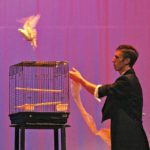
    Steve Martin advises, “Be so good they can’t ignore you,” and 24-year-old barrelman, hypnotist, and professional stuntman, Austin Singley, took the advice to heart. Now in the middle of his second year as a PRCA barrelman, while also performing part time in Universal Studios’ WaterWorld, Austin has been developing and refining his panache since seventh grade. “I was pretty shy through elementary and kept to myself, but in seventh grade, I auditioned for the school musical, Grease, and that’s what really sparked the fire for performing,” Austin explains. His senior year of high school, Austin and several friends put together an illusion magic show, with all original illusions and routines, which they took on the road and performed in professional theatres around their home state of Utah.
    Yet it was the dusty stage of rodeo that Austin wanted to command. Growing up a rodeo-goer rather than a competitor, he was in the audience of the Ogden Pioneer Days Rodeo in 2009 when Keith Isley performed his trick horse act. “That night, everyone kept telling me I had a similar personality to Keith’s and that I’d make a great rodeo clown, so two days later, I booked my first rodeo in Duchesne, Utah. I’m a guy who gets something in my mind and I don’t stop until I achieve it!” For the high school junior, the performing aspect was no difficulty, but he’d spent little time in the arena, let alone in a clown barrel. A family friend from Ogden Pioneer Days, Jackie Belnap, found out Austin was making his debut, and surprised him with an interview with Keith Isley before Austin left town. “It was a huge star struck moment for me,” Austin recalls. “He sat for 20 minutes and coached through some things to do and watch out for. To this day, I can call and ask him questions, and he and his wife, Melanie, have become good friends and are very supportive of me. Keith has helped me in more ways than he’ll ever know!”


    Rodeo clown greats like Keith Isley and John Harrison, who endorsed Austin for his pro card, have inspired him. “I watch them and observe what makes them successful, in addition to being funny. I think it’s having acts that require some kind of talent that puts them above the rest,” says Austin. “Too many rodeo clowns nowadays go into the arena and make fools of themselves at the expense of a laugh, but these are genuinely hilarious guys that took years to put their acts together.” Austin uses his own strengths, such as creating illusions and training trick horses, and infuses them with comedy. “When I got into the industry, I promised myself to always bring fresh and new material to rodeo audiences. It’s hard to choose a favorite act – they’re like my children – but I have a horse appearing illusion act, and another with a custom inflatable version of me as a rodeo clown that are two of my favorites. With my acts, I want to be sure everyone, of any age, can see and enjoy them from any seat in the house.” His trick horse, Tess, is a half-Quarter Horse half-Arabian mare he rescued four years ago and trained. He’s copyrighted all of his acts, explaining how important branding is to success. “I always have the same costume and makeup and the same acts – I don’t want people confusing my acts and material with any other clown.
    “If someone had asked me in high school what I thought I’d be doing in 2016, this would not be my answer, but I can’t think of anything better suited for me,” says Austin. “I love being on the road and meeting new people. The rodeo family is a very close knit community, and it’s nice to go almost anywhere and know the people there.” He’s performed as far east as Colorado, covering most of the western states, while he anticipates branching out to Oklahoma and South Dakota as his PRCA career takes root within the next year. Stops this summer have included the Tehachapi Mountain Rodeo in California, ten nights at the Cody Nite Rodeo in Wyoming, Flagstaff Pro Rodeo in Arizona, and many more.
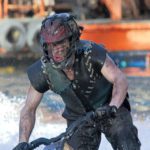
    His travels have even taken him to Hollywood, where he’s performed in Universal Studios’ WaterWorld Stunt Show since February. He plays one of the villains called the Smokers, shooting through a wall of fire on a stand up jet ski. The show, though only 20 minutes long, plays up to ten times a day, and actors may perform in a maximum of five shows a day since it is so physically demanding. “We have six people for a single part, for flexibility, which is nice for my rodeo schedule,” says Austin. The show has been running since 1995, and Austin was four when he saw it first. Jet skis dancing in his head, he came across a casting call for auditions for the Universal Studios in Japan several years ago. A few weeks before auditions, he bought a stand up jet ski and practiced on the lake, but wasn’t cast. Two years later, he auditioned for the show in Hollywood and made is as far as callbacks, but didn’t make the cut. “It was a long drive back to Utah,” Austin recalls. “I was teaching a stunt workshop at the University of Utah when I got a call saying they wanted me back for water callbacks that weekend. So I drove down for those, and the following Thursday they gave me the job and told me I started on Monday.” He’s made his home temporarily in Lake Elsinore, California, but will be moving back to Clearfield, Utah, this fall. “Being in the show was a bucket list thing for me, and my eyes are usually way bigger than my stomach, but somehow I’m always able to pull it off!”
    He attributes that to the support of his family, including his mom, Sherie Reynolds, brother, Brayden, a dancer, teacher, and choreographer for the NBA’s dance teams, and their sister, McKenna, a sophomore at Oregon State University with a position on the gymnastics team. “There’s something in the water at the Singley household!” Austin jokes. “We were raised by an amazing woman, and my mom is my hero. I know I speak for myself and my siblings when I say we owe everything to her.”
    Austin’s goals include marrying and raising a family of his own someday. “Until then, I’ll focus on building my rodeo career and earning as many buckles as I can. As long as I can keep audiences entertained, and bring in fresh material and acts, this is what I believe I’m meant to be doing with my time on this earth.

  • ON THE TRAIL WITH Daylon Swearingen

    ON THE TRAIL WITH Daylon Swearingen

    Daylon Swearingen split second and third place in the bareback riding at the NHSFR this July, riding all three of his horses after making the 34 hour drive from his home in Attica, New York. The 16-year-old bareback and bull rider won 2015 NHSFR All-Around Rookie Cowboy and qualified all three years of the NJHFR, the fruition of his hard work in the arena and on the spur board.

    The oldest son of Sam and Carrie Swearingen, owners of Rawhide Rodeo Company, Daylon learned the art of balancing rodeoing and rodeo production from an early age. Sam finished the 32nd Annual Benton Rodeo before flying to Wyoming to watch Daylon and his 15-year-old brother, Colton, compete in the NHSFR. The family visited Devil’s Tower during their travels, but were immediately back to work as soon as their truck turned in the driveway. Daylon was introduced to rodeo by Carrie, a barrel racer and former trick rider for Longhorn Rodeo. He made wooly-fisted mutton busting runs before putting the Barstow youth bareback rigging from his uncle, Kenny Phillips, on a pair of roman riding ponies. “Me and a buddy built bucking chutes at the house when I was eight,” says Daylon. “We had one pony that bucked a little bit, but that was it. When we started bucking steers under the rigging and saddle, they worked out better.” He was competing at the National level by sixth grade in the bull riding, chute dogging, and breakaway roping. Colton followed in the tie-down roping. “I did the timed events for the all-around – and to beat Colton,” Daylon jokes. “I couldn’t lose to my little brother!”

    Along with high school rodeo, Daylon competes in the SEBRA, IPRA, and APRA, where he was leading in the bareback riding his rookie year until heading out to Nationals. “I missed quite a few rodeos, and now I’m sitting third. It’s a little frustrating, but it doesn’t bother me too much because we still have quite a few rodeos left,” he says. Putting on 80 performances and 30 ropings from June to October, in addition to the usual rigors of summer haying, has its pros and cons. “I can always make it to at least two rodeos a week, and we have a weekly rodeo we put on. I usually get on every performance in at least one event,” Daylon explains. “We have good rodeos up here, there’s just not as many of them, so there’s not as many people to push you to get better.” His drive to be the best he can be motivates Daylon, along with the coaching from his dad, Kenny, Jerome Davis, Clint Cory, Dave and Tyler Waltz, and Doug Lutz. “Kenny is in Oklahoma, and I send him videos and talk over the phone. I went to Clint Cory’s bareback riding school this spring, and Jerome Davis has a bull riding school. He was a really good bull rider, and he got hurt, but he still has such a positive outlook on life, and he and his wife have helped me learn about the bull business.”

    Two year ago, Daylon purchased several heifers and bred them. He has a crop of calves are on the ground and bucked his yearlings this summer. “They bucked pretty good, and so did my heifers. When they’re old enough, I’ll take them to a few futurities, and then start bucking them in my dad’s rodeos.” Rawhide Rodeo Company raises its own roping calves, broncs, and bulls, and purchases its steers. They produce everything from high school rodeos to PRCA and IPRA rodeos, including the Canadian rodeo company Sam is a partner of. “We’re also doing some novice bronc riding at seven of the big rodeos,” says Sam, who founded the company in 1987. “I want to give Daylon and all the young kids the opportunity to rodeo. The younger generation can go play video games and be competitive without the effort, and I think now anything that takes a lot of effort is dying off.” Sam is a first generation saddle bronc rider, growing up on a farm with 40 – 50 horses to ride. “You didn’t know you weren’t out West. My dad was a collector of horses, and as a kid, I’d get on one until it quit bucking, then get on another one! I rode saddle broncs for years and did pretty good, then started buying livestock and an arena and went from there. Daylon will get on the spur board and have me come down, or go over videos with me, but he knows what he’s supposed to do, so it’s more of a conversation.”

    Sam and Carrie were married in 2011, joining their families – Carrie’s sons, Daylon and Colton, and Sam’s daughters, Katie and Molly. “Competing in rodeo is what both my kids strive for, and that’s all we really have in our life is our passions,” says Carrie, an RN and a vital part of the rodeo company. “We’ve met so many great people in rodeo – people competing, committees, and those who come to watch. It’s a great sport, and God has blessed us. We have a lot of fun, and it teaches our kids to work hard. It’s never easy, and sometimes you work hard and you don’t win, but that’s the way it can happen.” Carrie is barrel racing at the rodeos on a horse she’s been training, and is what Daylon calls the go-getter of the family. “We always come home with a ton of laundry, so we empty everything Monday morning and wash it, and get the crew’s western shirts to the dry cleaners,” says Carrie. “The Hazletts cook for the crew and anyone working the rodeo when we’re on the road, and that time is a definite blessing for our rodeo crew to get together.” Carrie often serves as a timer and keeps the company’s equipment organized on the road, which is even down to the arena itself. “Other parts of the country have permanent arenas, but up here, we don’t,” Daylon explains. “It takes about five hours to set up. We bring everything, from the chutes and fencing to the roping box. Colton and I help with that, and I do the feeding and help check calves.”

    When Daylon’s not on the road with the company’s four trailers and motor home, he enjoys riding colts, mountain biking in the nearby state park, cross-fitting, and wrestling for Attica Central High School, where he’s a junior this fall. “I’ve wrestled since second grade – it gave me something to do during the winter,” he says. “You have to have mental toughness, and if something goes wrong, you can’t blame it on a teammate. It’s just you, like rodeo.” In the winter, Daylon rides practice bulls at home until the temperature is below 30 degrees. “We have about 500 acres, and the summers are good, but the winters suck,” he admits. Year round, he’s working toward his goals of competing in the PBR, and qualifying for the WNFR in both his events. Along with the APRA finals, he intends to compete in the SEBRA and IPRA finals this year, where he’s sitting 12th in the bareback.
    “It’s a short rodeo season, but we’re blessed, and the boys work very hard at it,” Sam finishes. “They want it much more than I did, and it’s nice to see them getting involved and growing into rodeo.”

  • ProFile: Jayde Atkins

    ProFile: Jayde Atkins

    “My mom (Sonya) was the typical horse crazy girl who grew up on a hobby farm in Missouri. My dad (JB), who grew up farming and raising cattle and hogs, learned to rope after they were married. They ended up in the horse world training and showing reiners and reined cow horses,” said Jayde Atkins.
    Jayde is still rolling with interviews pertaining from her current achievements: Champion All Around Cowgirl at the National High School Finals and Champion Reined Cow Horse as well. At the Nebraska State level, she won the pole bending, the reined cow horse, and all around, second in cutting, third in barrels, knocking a barrel to potentially win it.
    “Nationals was pretty awesome,” she said. “I won the reined cow horse and the All Around, competing in barrels, poles, cutting, and the cow horse.” Her family trains reined cow horses and rope horses. “We’ve used similar bloodlines for cow horse and roping, since we are in the rodeo world. My reined cow horse is also my number one breakaway horse and is a proven tie down horse. And now I’ve got two futurity barrel horses as well to take down the road.” Her dad has a regular job as a territory manager for Vermeer Manufacturing. Her mom is a nutritionist at Backbone of Healthcare in Broken Bow.
    She worked hard this year to get better at her events. “Last year I really wasn’t confident in myself or my horses and I wanted to do really good but tried to force a lot of things too much. Last year she ended up second in reined cow horse and third in the all around at NHSFR. “I went to several different trainers last year and this year for help, but this year I determined to be more focused. I was more confident in myself and sought out just a few skills I needed to work on.” In Nebraska, she competed in everything – including goat tying, team roping, breakaway, and even tied her first calf down the week before Nationals.
    Jayde started riding early. “I can never remember a time I wasn’t riding. Some of my earliest memories are from when my parents were showing, and I helped them cool down horses.” She did some of the junior rodeos when she was younger. Her older brother, Sterling, got into high school rodeo when she was in sixth grade. “I didn’t really get to rodeo much until my freshman year.” Sterling won the Nebraska State High School Cutting title and his shoes were hard to fill. He passed away his freshman year in college from basically a heart attack that happens to athletes. “They didn’t know at first why he had a heart attack. And for pretty much a year we did tests to make sure I didn’t have it – you go from everything being good to everything awful. I was running cross country and track and I wasn’t allowed to do anything until results came back. I rodeoed to keep us sane,” she recalls. “I was riding his cutting horse and his tie down horse, Harry, who ended up winning the reined cow horse with me.”
    When the National High School officially introduced the reined cow horse her junior year, Jayde had already done the demonstration at Nationals her sophomore year. “I’ve been involved in the implementation of the event in Nebraska,” she said. “It’s a show horse event and we’ve been involved in the AQHA for years. I haven’t shown there for years, because high school rodeo took precedent over that.”
    Jayde is heading to Chadron State College – about four hours from home – this fall. “It’s the same college that Sterling went to and I know a ton of people from Broken Bow that have gone there and loved it.” She is not going to rodeo the first year, although she’s taking some futurity horses with her. She is going to major in Ag Business and plans to concentrate more on the economic and financial end of it.
    After college, her dream is “Marry a rich rancher from the Sand Hills that will let me rodeo for the rest of my life … and if that doesn’t work out, I will live where I can give back to the ag community – I am a huge believer in FFA, and I want to keep the way of life that I’ve lived going. Horses are what we’ve always done, it’s our life.”