Rodeo Life

Author: Lily Landreth

  • Matt Scruggs

    Matt Scruggs

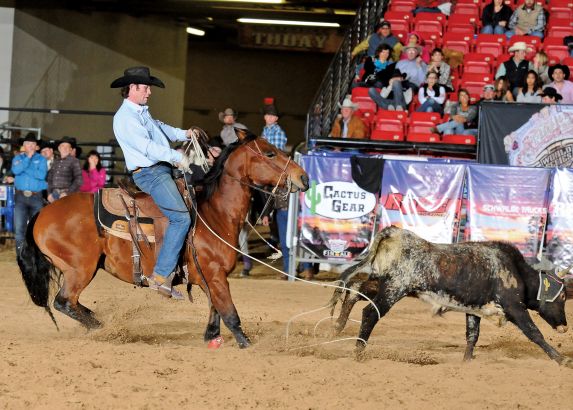
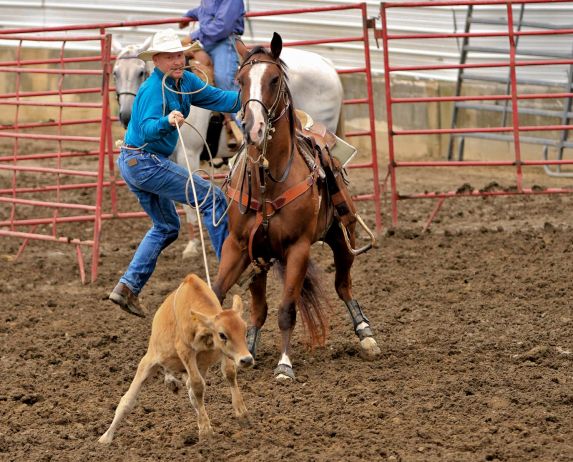
    Matt Scruggs is a third generation rodeo cowboy who was taught to rope by his grandpa and role model, Junior Scruggs. “My grandpa was a big role model to me. I grew up around horses and cattle, and I’ve always had a lot of rodeo experience (in the family) to inspire me. One of my favorite memories from growing up is rounding up cows and calves to cut calves and spray for flies.” Matt has been rodeoing in the CSRA for two years, although he has been competing in the sport since he was 16. He competed in team roping for a time, but found his niche in tie down roping, which he has been doing ever since.

    Up until recently, Matt roped off of the same horse for 21 years – a bay named Whiskey. When it came time to retire the horse, Matt, now 37, was considering retiring from rodeo himself. Then he bought Drifter. Little did he know that the unbroke two and a half year old he brought home from South Dakota would prove to be such a steady horse. In the winter of 2012, Matt trained Drifter, and took him to his first rodeo the following spring. “I was roping calves off of him only 30 days under saddle,” Matt recalls. “I pushed him really hard and he had no issues. He’s a very seasoned horse – in the last two years I’ve taken him to close to 80 rodeos.”

    Matt’s primary job is running his ag. equipment repair business, Scruggs Equipment. “It gives me flexibility,” he said. Matt often takes the summer off from his business to rodeo or train tie down roping horses for clients. In 2012, he went to nearly 50 rodeos, although he didn’t rodeo quite so hard last year. Matt lives outside of Hagerstown, IN. on several acres with his son, Noah. Noah, 11, enjoys riding, and he often runs the chute when his dad practices tie down roping. Matt currently has seven head of horses, as well as several tie down roping calves. “I get along a lot better with animals than I do people,” Matt said with a laugh, which is another reason he enjoys rodeo.

    When he’s not working his main job, Matt can almost always be found astride a horse in his arena. In the summer, he gets up early several mornings a week to rope a pen of steers before it gets hot. Matt enjoys hunting coyotes and fishing, but he says, “You can’t go too far away when you have seven head of horses. If I’m not working, then I’m probably in the roping pen or on horseback. I’m not a vacation person – I don’t need sand between my toes. As long as I have a horse between my legs, we’re good.”

    As Matt sees the great potential of his horse, Drifter, he is encouraged to pursue rodeoing again at a higher level. “Keeping up with him (Drifter) is the problem,” Matt said. “He picks up on things faster than I can comprehend. I’d like to push and get back to where I was before changing horses. I’ve gone to a lot of IRA rodeos but I’d like to make it to their finals. I always want to improve my roping and I’d like to make it back to the CSRA finals. Drifter has taken me there twice.” To sum it all up, Matt says of his goals for the coming year, “I want to go to as many rodeos as I can and better myself.”
  • Ray Beechy

    Ray Beechy

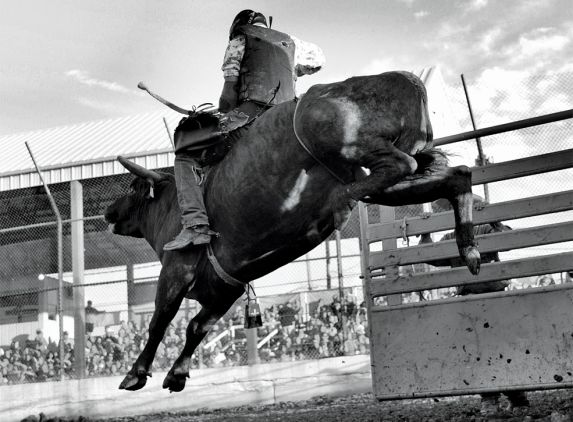
    Ray Beechy is a cowboy who has overcome many obstacles. When he was 12 years old, he was involved in a sawmill accident, which resulted in his right arm having to be amputated below the elbow. The loss of his hand did not slow him down for long, however. It served to make him very competitive and he quickly became adept with using one hand. “It’s never kept me from much of anything other than shuffling cards – or clapping,” Ray said with a laugh.

    As Ray grew up Amish, he did not start competing in rodeo until after he moved away from the Amish community when he was 16. He tells the story. “I was 16 when I really took an interest in the rodeo circuit. A friend of mine that lived close by was riding bulls at the time, and got me interested.” Ray was given a boost into rodeo by Galen “Peewee” Helmuth. “He got me started way back in the day and has taught me more than anyone else,” says Ray. He has also been inspired by Ray Cox, owner of Lazy C Rodeo School in Jacksonville, Ill.

    Ray rode bulls for five years until he had a serious accident in the arena with a bull. “I broke my entire face,” Ray explained. “My thought was that I might try to build a career that has a better retirement plan than bull riding,” he said with a hint of humor. “I can pick up good trade skills, but I got tired of watching bull riding and I needed a hobby.” After four years, Ray climbed once more onto the back of a bull. He practiced on 20 bulls and set off to a rodeo. By his second rodeo he was winning money with a renewed vigor in the sport. After his four year retirement from bull riding, Ray, now 27 says, “I approached it with a completely different mindset, and learned the respect you have to have for the sport of bull riding.” He further explains his mindset about riding bulls. “You don’t think about the ride until you nod your head. I try to think about anything other than bull riding right before I go to the chutes.”

    While the rodeo season is fairly slow for the CSRA during the winter, Ray works his full time job as a concrete finisher. Having use of one hand has not slowed him down in rodeo, nor in anything else. The avid outdoorsman lives in Hammond, Ill., and whether golfing or playing sports, he pursues it all enthusiastically. He also enjoys music of all varieties and loves going to concerts and supporting local bands in his area. One of Ray’s favorite things is to work with horses, and while he doesn’t have any of his own right now, he helps his friends with training and riding. “I’ve developed my own training techniques and routine I go through. It’s a combination of a lot of other successful trainers,” Ray says.

    This winter, Ray is helping his friend Galen Helmuth put on rodeos every other week at the “Blue Barn”, a barn that Helmuth is leasing near Sadorus, Ill. “Rodeo is pretty popular in my state, just not in the area I live,” Ray explains. “We’re trying to promote this for young people and help them get exposed to rodeo.” Ray and Galen are additionally putting on ranch rodeos and bull ridings in an effort to introduce their community to several aspects of rodeo.

    Ray’s goal for his rodeo competition is to win the bull riding in the CSRA in 2014. “I want to get on as many bulls and win as much money as I can,” says Ray. During 2013 in the CSRA, he won the bull riding in Kankakee and Brownstown. He is considering competing in several other rodeo associations as well, but his fondness for the CSRA is evident when he says, “I like having a rodeo association in Illinois, and my main goal is to do whatever I can to make it an even better rodeo association.”

  • Wade Hazlet

    Wade Hazlet

    Wade Hazlet has been fighting bulls for nearly 12 years. Today he is a bull fighter for the APRA and the IPRA, as well as high school and local rodeos. Wade is the 2013 Funny Man of the Year in the APRA, and he has fought bulls for the associations finals on three different occasions.

    The funny man and bull fighter grew up in North Washington, Penn. While his family did not farm, Wade experienced farm life whenever he helped his dad’s cousin on his ranch – riding, moving cattle, and doing field work. Wade also helped behind the chutes at the North Washington Rodeo every year, which is what inspired him to want to ride bulls. Before Wade had a chance to ride any bulls, however, he and his best friend, Jarrod Sankey, met a bull fighter named Cory Wall. Wall was fighting bulls at a local rodeo. “Cory Wall happened to have been through a Sankey rodeo school,” says Wade. “We got to talking and found out that Jarrod was related way off to Lyle Sankey.” This news, combined with their keen interest in bull fighting, sent Wade and Jarrod to a Sankey Rodeo School in Rose Hill, Kan. “We were fighting bulls for the guys learning to ride at the school,” Wade recalls. “It was there I turned away from wanting to ride bulls and decided that the safety of the riders was more important.”

    Over the four days of the school, Wade and the other Sankey students had the opportunity to fight 300 – 400 bulls. Wade describes some of the ways he learned to bull fight at the school. “We’d watch some videos, but mainly we were chased around by a guy with a wheelbarrow. A person with a wheelbarrow can’t turn a tighter circle than a bull can, so you learn how to maneuver out of the way.” Wade, 20 years old and fresh from the rodeo school, was ready to start his career as a bull fighter. “When I came home from the rodeo school, it was a year and a half before I found a stock contractor who would let me into the arena. It’s extremely hard to find a stock contractor who has an opening or is willing to let you step into the arena. Sam Swearingen from Rawhide Rodeo Company helped me get my IPRA card, and Bill Slader helped me get my APRA card.”

    Along with bull fighting, Wade explains the other aspect of his rodeo career – working as a funny man. “Bill McEnaney got me my start as a funny man, as well as Rockin’ Robbie Hodges, another funny man. They let me borrow acts from them to get started. I’m kind of a natural with acting funny and being able to come up with stuff. I’m quick on my feet and my mind is always working.” Wade travels the Northeast through the summer, fighting bulls for APRA and IPRA rodeos, as well as high school rodeos. In 2013 he worked more as a funny man than a bull fighter since he was working on strengthening his knee, which he had torn in 2012 at the beginning of his rodeo season. “I had enough rodeos lined up to fight bulls at the IFR but then I ended up tearing my ACL. I had to have reconstructive surgery. But I made a comeback in 2013.”

    Not all of Wade’s time is spent in the arena, however. When rodeo season is slow, Wade works at his full time job as a bridge repairman. He is happily married to his wife, Renee, and together they are raising their 10 month old son, Walker. When he has the opportunity, Wade also enjoys trekking through the great outdoors and hunting.

    At 32,  Wade plans to log many more years in the rodeo business before retiring, and he continues to work toward his goal of fighting bulls at the IFR.

  • Edward Young

    Edward Young

    Edward Young was born and raised in Walker, La. and he still calls the town home to this day. He has been competing in the CRA since he was 16 years old, competing in the association’s finals for the first time as a teen. Today, 35, Edward still enjoys competing in the CRA, and makes time to rodeo even with his full schedule. “I love it,” Edward says about of the sport. “I love the competition and the horses. I’ve loved it since I was a little kid. Now it’s my favorite hobby and I do it between raising kids and working.”

    Edward competes in team roping as a heeler. For several years he also competed in calf roping, but he says, “I’ve broken far too many bones to step off a calf horse anymore.” Edward’s team roping partner is his longtime friend Lane Holland. They grew up a mile from each other and still live nearby today. Even though both men have children to raise and full time jobs, they still get together once or twice a week to practice roping. “It’s pretty fun to travel with a guy that has become my best friend. It works good for us. We may rope early in the morning or right at dark, be we get it in when we can.”

    Two men who have been very influential in Edward’s life and rodeo pursuits are George Milton and Wendy Windorn. “I would be nowhere close to where I am today without those two guys, “ Edward said gratefully. “They are pioneers for this part of the world and I’ve spent a lot of time around them. I’ve known Mr. Wendy all my life – he lived across the road when I was growing up. Mr. George helped me rope when I got to roping. They’re both longtime family friends.”

    Edward makes a living as an Assistant Fire Chief in Livingston Parish. He has been a fireman for nearly 10 years. Additionally, Edward is raising his two daughters, Cheyenne, age six, and Katelyn, age four. “Cheyenne lives and breathes horses and rodeo,” Edward says happily. “She is goat throwing, pole bending, and barrel racing in youth rodeos.” His daughter Katelyn has started doing some goat tail pulling, but she hasn’t caught the rodeo bug quite yet. Another member of the Young family is Edward’s team roping horse, an American Paint. “He’s got a real original name,” Edward said with a laugh. “His name is Paint.” Paint has been Edward’s roping horse for nine years and has also proven to be a wonderful sort of babysitter for Edward’s daughters. “I’ll put my four-year-old on him and he’ll walk around and never break into a run. Then I’ll put my six-year-old on him and he’ll run a 20 second barrel pattern, and then I can get on him and rope. He’s proficient.”

    While Edward doesn’t have much spare time on his hands, if he were to have a day to spend however he chose, he says, “I’d rope at the CRA slack in the morning, have a good fun day with my kids, then go to a football game that night. I have season tickets to see the LSU Tigers and I see them play whenever they’re at home.”

    In pursuit of his other hobby, rodeo, Edward won 2013 Champion Heeler at the CRA finals. He has competed in the association’s finals every year since joining as a teenager. Edward was quite pleased when the CRA started up again after the association was dissolved for several years. “Billy Allemand started it back up and I’m sure glad he did. He’s doing a great job with it.” Edward is the association’s Team Roping Director (Heeler) for 2014, and he summed up his goals for the coming rodeo season by saying, “I want to keep having fun and win as much as I can.”

  • Lane Gilbreath

    Lane Gilbreath

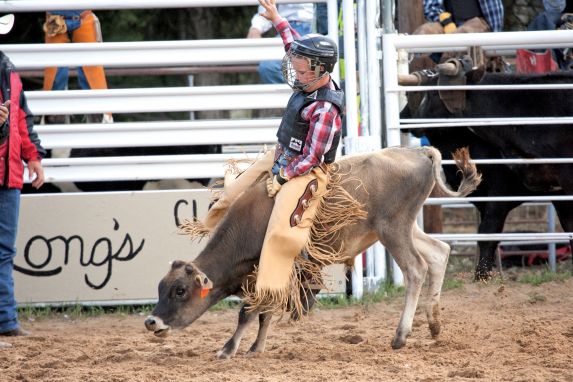
    Lane Gilbreath is a calf rider in the KJRA. He rode sheep for three years in the association and has progressed to calf riding. “My dad rode bulls and that’s what interested me in rodeo,” says the 10-year-old from Emporia, Kan. Lane’s dad, Mike Gilbreath, coaches him in calf riding, and Lane says, “I look up to my dad – he’s my role model.” Lane has several friends that compete in the KJRA as well. “I think it’s fun (rodeo), and it’s a good sport.”

    Lane lives with his parents, Mike and Tracy Gilbreath, in the country outside of Emporia, Kan. Lane also has an older sister, Bailey. “We have a dog and a cat and a horse,” Lane says. His horse, a mare named Maggie, has won Grand Champion Mare at the Chase County Fair for two years, 2012 and 2013. Lane competes in saddle club shodeos during the summer in barrel racing, pole bending, goat tying, and flag racing. In 2013 he was the All-Around Cowboy in the 7 – 9 age division in the Burlinggame Saddle Club series, and the Reserve All-Around Cowboy in the Eagle Creek Saddle Club/Olpe Downhome Days.

    The Gilbreath family enjoys hunting together in the winter, as well as playing darts, cards, and checkers. During the rest of the year, they are busy rodeoing and helping their neighbors haul hay and work cattle. Lane also loves to play catch with his dad and he spends a great deal of time roping the dummy, as well as practicing for his event on the mechanical bull. In his spare time, Lane enjoys reading the I Survived historical series by Lauren Tarshis, and listening to Red Dirt.

    Lane is a fifth grader at Chase County Elementary School, where he was on the A honor roll last school year. His two favorite subjects are math and social studies. “In math I like multiplying and dividing and doing fractions, and in social studies we’re learning about Native Americans and explorers.” Lane loves to play sports, and he plays on his school’s football, basketball, and baseball teams. He is also very active in 4-H. His projects this year are horse, goats, shooting sports, and welding. Lane has been in 4-H for four years, and this will be his first year in the goat project. For his welding project last year, Lane made a table that he was very pleased with. His grandpa also welds and they enjoy working together. At the Chase County Fair, Lane has been the Grand Champion in the Shooting Sport – BB Gun for two years in a row.

    During the 2013 KJRA rodeo season, Lane finished third in the 7 – 9 calf riding. What he is most excited about is competing in steer riding in 2014. It will be the first year that he can compete in the event. “I want to try to win first place in the KJRA in steer riding,” he says. Lane is sure that he wants to keep rodeoing as he gets older, and his motto for riding roughstock is, “If you ride, you ride, and if you buck off, you get back on!”

  • Waylon Davis

    Waylon Davis

    Waylon Davis has been team roping competitively for only a year, but in 2013 he roped himself a chance to compete in the World Series of Team Roping Finale. The 24-year-old cowboy came home from the famous event with $130,600. For Waylon, the journey to the WSTR took hard work and smart thinking. “You’ve got to do your homework, work hard, and practice a lot,” he says. “A lot of people have helped me along the way.”

    Waylon grew up in Breckinridge, Texas with a rope in hand, but he didn’t become involved in rodeo until he was 12. “My older brother (Reece Clark) took me around with him when I was 12 and let me cowboy with him. I started riding horses and broncs and roping and shoeing.” When he was 16, Waylon started competing in ranch rodeos and ranch bronc ridings, as his serious pursuit of roping was yet to come.

    After graduating from high school, Waylon went to Ranger Junior College with a rodeo scholarship and competed on the school’s rodeo team in saddle bronc riding. Funding his schooling required working several jobs, and after a semester and a half of such a demanding schedule, Waylon decided to quit school. He began working day jobs at ranches, riding colts, and shoeing horses. “I cowboyed mainly until everyone shipped their cattle out during the drought. Then I got a chance to go to TCU (Texas Christian University) for the ranch management program. I graduated and that’s how I go to Weatherford (Texas).”

    Following his graduation from TCU, Waylon found a place to live in Weatherford where he met Slick Robison. Robison trains roping horses, and ended up being the person to help Waylon with his big start in team roping. “I was roping and riding with him every day,” says Waylon. “We’d go to jackpots around home. I started out a #4 header and heeler. I got my card and the first one (WSTR team roping) I went to I won $5,000. Then we went to Stephenville (Texas) with the same #4 card. I roped with A.P. Jones and we won $3,200 in that one. After that they finally bumped me to a 5 elite. I went to Graham and entered the #12 finale and won that and split $35,000 with my partner, Clint Johnson.”

    During this whirlwind of team roping, Waylon and a group of cowboys he knew from ranching were competing in ranch rodeos. At the Western Heritage Classic in Abilene, Texas, Waylon won Top Hand, earning him a bit and a hand tooled saddle. Not long after that, he won Top Hand at the All-Around Performance Horse Ranch Rodeo Challenge in Glenrose, Texas and came home with another saddle. At that same ranch rodeo in Glenrose, Waylon and his teammates Nathan Carter, Cody Carter, Slick Robison, and Reid McGee won the entire rodeo. Over roughly 30 days during the spring, Waylon won nearly $30,000 dollars from team roping. He is the owner of eight new saddles and more belt buckles than he can recall. Team roping has turned into his fulltime job.

    After Waylon qualified for the WSTR Finale, his main team roping horse, a six-year-old bay called Day Trash was kicked in the knee in early November. X-rays showed that it was a bone chip. Day Trash was still able to compete in Las Vegas, where he helped Waylon win the big money in the #10 roping. Waylon had been practicing with the brother-sister duo Shawn and Danielle Darnall while preparing for the WSTR in Las Vegas. Among the roping horses that Waylon drove to Las Vegas was Funny Face, a head horse that he borrowed from Danielle Darnall and her boss, Jeff Busby.. Waylon set off to Vegas with the Darnells, splitting the 20 hour trip into two days.

    Waylon’s roping partners for the WSTR were John C. Brian, Clint Johnson, Troy Brown, Bud Lowrey, and Chase Harris. Waylon competed in five ropings altogether, but ropings #10 and #13 are where he and his partners had successful runs. Waylon was heeling for John C. Brian in the #10 when they won $250,000, cutting a $125,000 check for each cowboy. He topped off his winnings with the $5,600 that he won heading with Clint Johnson in the #13. “It turned out really good for all three of us,” says Waylon. His girlfriend, Hannah Flowers, flew in to surprise him in Las Vegas, arriving just after he won the #10. When it was all over after 11 exciting yet long days away from home, Waylon was ready to put his truck into gear and head home.

    In one year, Waylon’s team roping has earned him nearly $180,000. He is greatly encouraged by his success in 2013, and in conclusion, he said, “I’m just going to keep team roping and try to qualify again (for the WSTR Finale) next year. I’m going to keep doing what I’m doing and try to be more successful.”

  • Bill Feddersen

    Bill Feddersen

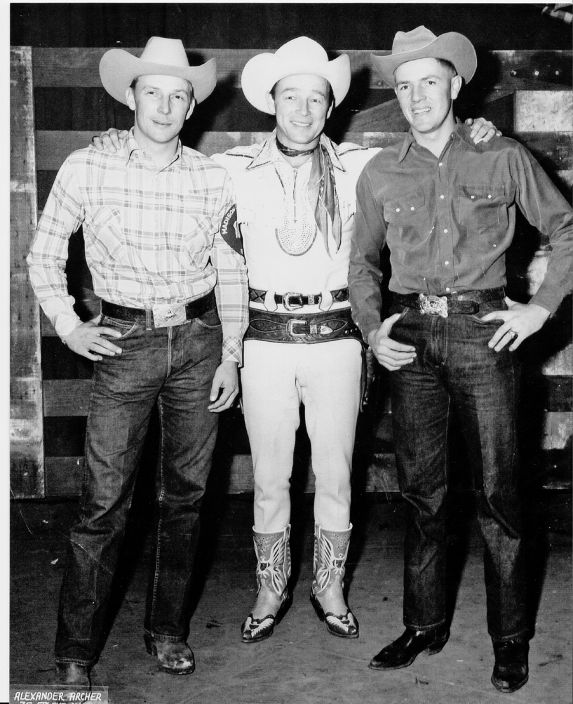
    Bill Feddersen was the first saddle bronc rider out of the chutes at the first NFR in 1959. At the time, the NFR took place in Dallas, Tex. and $10,000 was put up as prize money for each of the five events. Bill reflected on the difference just in prize money alone between today’s NFR and the first one held in 1959. “A few years ago I was going home with a cowboy from Oklahoma after going to the NFR. We were talking, and he told me that he rode four bulls at the finals and won $53,000. I told him, ‘You got more money riding four bulls than all of the money put together for the first NFR!’. Although, we probably ended up with as much money then as they do now, since gas was only 25 cents and a hamburger was a dime.”

    Bill was born in Union City, Okla. in 1927. He had a younger brother, Don, and their family ran a farm and raised beef cattle. Bill loves to tell the story about his first “horse”. “When I was four years old, I told my mother that all I wanted in life was a horse. One day she got me a horse and I ran outside all excited. It was a stick horse and I loved that horse. I taught it to walk and trot and backup, and I even rode it to school. I tied it up with the big horses. One day I came out of school and someone had stolen my stick horse. But what bothered me the most is that I had to walk home.” In high school, Bill rode a four legged horse the four miles between home and the schoolhouse. It was in high school that Bill had his first chance to compete in rodeo. “Ed Curtis was a rodeo cowboy and he moved down by me. I rode horses and calves and cows – everything I could get on. When I was in high school, he (Ed) took me to my first rodeo in 1943.” Bill loved his first rodeo, held on a baseball field, and became further involved in the sport when he joined the Cowboys’ Turtle Association. In 1946, the association became the Rodeo Cowboys’ Association (RCA), which would later become the PRCA. Bill’s rodeo pursuits were put on hold, however, when he was drafted into the Army during WW II. He got out of the Army in 1948 and continued on with the RCA. Altogether, he was their vice president for seven years, and Bill helped start the association’s first rodeo judging school. “That was quite an experience for me. I didn’t have anything written down on how to judge. I asked a lot of questions and we had to change some rules. It was just start from scratch and we figured out how to watch the barrier and where to stand and how the calves should be tied down. I went all over the United States and Canada teaching schools. I did that for about five years.”

    Bill met his wife, Donna, in 1948 and they married soon after. It was in 1952 that Bill began rodeoing professionally, competing in the rodeos at Madison Square Garden and Boston Garden. “I rode down Fifth Avenue on horseback in New York City. They had a parade to advertise for the rodeo.” When Bill was embarking into rodeo competition, there were not many rodeo schools to attend or instructional films. “It was just learning by watching people and practicing with people,” Bill explains. Over the first few years, Bill experimented in all of the events, trying them out and seeing what he was best at. “I may hold a record in the rodeo business,” he said with a laugh, “I placed in nine different events. Bull riding, bareback, saddle bronc, team roping, bull dogging, calf roping, wild cow milking, the wild horse race, and the steer decorating up in Canada.” Bill settled in with bull dogging and saddle bronc riding and went to compete at the first NFR in both events. His brother, Don, joined him at the NFR in 1960, and they were the first brothers to compete in a timed event at the finals. They often hazed for one another. Bill says about bull dogging, “I weighed 163 pounds and I looked like a water boy to the Green Bay Packers.” He and his brother won the bull dogging at the Cow Palace three years in a row, from 1959 – 1961. Bill also won the saddle bronc riding in 1960 at the Los Angeles Coliseum in front of 98,000 people. He travelled down the road with his rodeo buddies Ed and Andy Curtis and Marty Wood, and Bill always admired Casey Tibbs when it came to rodeo idols. Bill was also travelling with his family to rodeos. “It was kind of a family affair. A lot of cowboys had their wives and kids with them.” One of the highlights for the Feddersen family was going on a free trip to Hawaii when Bill was invited to compete in a rodeo there. Another favorite memory of Bill’s is the day that Marty Wood gave him a pair of chaps and nick named him Good Times. “I always had a good time at the rodeo,” Bill remembers.

    When Bill retired from rodeo in 1962, he had ridden approximately 4,000 saddle broncs in his rodeo career and in all those rides, he never once was injured badly enough to go out in the ambulance. During his last year of rodeo, Bill went to 55 rodeos and placed 76 times. After retiring from the sport, he continued his job as a switchman for Rock Island Railroad. He had been working for the railroad since 1950, even through all of his years as a professional cowboy. “Jim Shoulders said he couldn’t believe that anyone could hold a job and go the NFR in two events. The railroad treated me real good.”

    Today, Bill lives with his wife of 65 years, Donna, in El Reno, Okla. They have two children, two grandchildren, and three great-grandchildren. Bill and Donna are sure to go watch the WNFR every year, which for Bill, brings back memories of the years he competed there during his rodeo career. Fittingly, Bill was inducted into the National Cowboy Hall of Fame in 2013, and he concluded, “After all those years of rodeoing, it’s an honor for me to make the Cowboy Hall of Fame.”

  • Halle Johnson

    Halle Johnson

    For Halle Johnson, rodeo is not only a sport, it is also a means of bringing her family together. Her great-grandparents, grandparents, aunts, and uncles come to watch, and her grandfather, parents, and siblings all love to compete in rodeo. “That’s one of the reasons I like rodeo so much – I can compete with my whole family,” says Halle. The 13-year-old has been competing in the KJRA for six years and is the association’s 2013 All-Around Champion in the 10-13 age division. “I like competing with my horse and I love animals,” says Halle. “Rodeo is something I’ve always done and I meet a lot of friends there.”

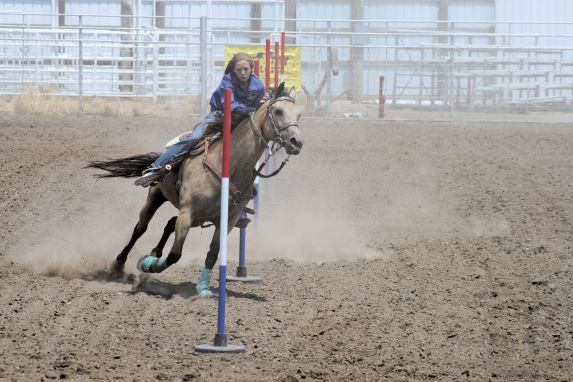
    Halle competes in barrel racing, pole bending, breakaway roping, goat tying, ribbon roping, and team roping. This year, Halle started team roping in the KJRA with her sister, Kya. They each switch from heading to heeling for one another. Halle is coached in her events by her parents and also by Jessica McMillan. Halle’s dad, Mark Johnson, helps her with her roping events since he competes in team roping as well as tie down roping. Halle’s mom, Michelle Johnson, also team ropes in addition to barrel racing.

    The Johnson family lives in the country on 80 acres outside of Bennington, Kan. Halle is the oldest – her sister Kya is 12 and her brother Hunter is five. Both Kya and Hunter compete in the KJRA. Halle has three horses that she rodeos with. Beamer is a 14-year-old mare who Halle does barrels and poles on. Tank is her breakaway horse, and Colonel is the team roping and goat tying horse that Halle shares with her sister Kya. The Johnsons also keep Black Angus beef cattle, cowdogs, and cats, along with steers, calves, and a goat for roping.

    A student at Bennington Middle School, Halle is in the eighth grade. Her favorite subject is English. “I like to write stories and I love to read,” she says. She  enjoys reading adventure stories, and she just finished The Divergent Series by Veronica Roth. When Halle is not lost in a book, she enjoys playing guitar and clarinet. She plays clarinet in band at her school, and during the school year she also plays volleyball, runs track, and does cheerleading. Additionally, Halle is involved in 4-H, having shown sheep and dogs for the past five years. She also competes in the horse events and has won the breakaway roping at state fair for the past two years.

    Recently, Halle won her very first team roping check at a HYRA (Heartland Youth Rodeo Association) rodeo. Other highlights of her year include coming in fourth in the barrel racing and second in the breakaway roping at the American Royal Invitational Youth Rodeo. She also won the open and youth buckles in barrel racing at the Labor Day open rodeo in Brookville. In 2012, Halle and her sister Kya competed in Gallup, N.M. at the NJHFR, with Halle placing 22nd overall. One of her goals is to compete there again. “I want to make it to nationals in multiple events,” says Halle. Her other future goals include rodeoing through college and beyond, as well as becoming an orthopedic surgeon.

  • Irene Wilson

    Irene Wilson

    Irene Wilson is one of only a handful of women to be inducted into the Idaho Rodeo Hall of Fame. She rodeoed with the Idaho Cowboys Association in 1959, the first year that the ICA would present a saddle to the barrel racing champion. Irene was determined to be that champion. “I had never won a saddle, and I wanted a saddle,” Irene said. Married with two children, Irene rodeoed on the weekends, sometimes bringing her two sons with her. “I had an old Ford pickup. My youngest son was one and a half and my oldest son was three. We only had room for the horse in the bed of the pickup, with a suitcase on one side of him and the diapers on the other.” At that time, many people transported their horses in their pickup beds as it was more affordable than hauling a horse trailer. Irene’s dedication paid off. She was the first woman to win a saddle in the ICA and was the 1959 barrel racing champion.

    While Irene grew up with horses, she did not begin barrel racing until her twenties. Born in 1935 in the mining town of Pearl, Idaho, Irene grew up living in both Pearl and Star, Idaho. Her parents, Fred and Irene Turner, owned a ranch and grew hay in Star, and Irene’s father also worked in the mines of Pearl. When Irene was six years old, her father decided that she and her older sister, Mary, should begin trick roping. “My dad brought home two ropes and said ‘you girls are going to learn to rope’. And we did, an hour every day whether we wanted to or not,” Irene remembers. The sisters performed their trick roping act in Idaho with the Roser, Moody, and Kershner Rodeo Producers, and in Oregon with the Roland Hyde Rodeo Producer. Irene recalls that she didn’t find trick roping on the horses enjoyable at all. “It was scary,” she says, “There were always nerves right before you went on.”

    When Irene was about 15, her sister married and went on to train horses with her husband. The rodeo act split up, Irene’s father wanted her to start competing in cow cutting. “I didn’t like it, but my dad did,” says Irene. After several years of cutting, Irene was anxious to move on. By this time she was married and in her early twenties. She began competing in barrel racing and pole bending in the IGRA (Idaho Girl’s Rodeo Association). Irene was self-taught. At that time they took movies instead of photographs of Irene barrel racing so that she could watch what she was doing. In the 1950’s, Quarter Horses were being introduced in Idaho, and Irene bought a gelding named Candy Bill. They were a talented team, and won the IGRA barrels and poles from 1957 through 1959.

    Irene also tried out for Snake River Stampede Rodeo Queen for five years. While out of nearly 50 contestants Irene never won the title, she was runner up several years. “It was more fun to not be queen,” says Irene. “After the contest, they took all of the girls, three to a convertible, and went to every town from Ontario, (Ore.) to Mountain Home (Idaho). We went to every town at a certain time and they were ready for us. They’d give us ice cream or Coke, whatever we wanted. Then the new queen would stand up and say something about the rodeo. It was a big advertisement for the rodeo.”

    It was after winning the ICA saddle in 1959 that Irene decided to quit rodeoing. She was married to her second husband, Bert Wilson, and her two sons, Dan and John, were old enough to start their own activities. However, Irene admits that she didn’t want them to rodeo. “I knew they weren’t going to rope, and I didn’t want them to ride roughstock.” Instead, they began showing Quarter Horses, which they continued to do for over ten years. When Dan graduated from high school in 1974, he went to Alaska to get a job in the fishing industry and John went with him.

    After their sons had left home, Irene and Bert were no longer showing horses. Although Bert worked as a state policeman and Irene was a secretary and dispatcher for a trucking company, they needed a hobby to occupy their weekends. “We fished for a year, but we were at loose ends,” says Irene. Instead, they became involved with horse racing in Emmett, Idaho. Soon they branched out to races in Portland, Spokane, and even Phoenix. The husband and wife raised and trained their race horses, standing two studs and occasionally buying other prospective horses. Bert passed away in 1997, but Irene continued to race horses with the help of her two granddaughters, Tanya and Samantha Tackitt. In 1999, Irene’s mare Irish Staff won the prestigious Idaho Cup race, a race that only ten of the best racehorses in Idaho qualify for. Following her win, Irene retired from horse racing.

    Irene’s son, Dan, was now running petting zoos and he asked Irene to start a pony ring with him. She travelled with sixteen ponies, but that became such a hassle that she decided to open a farm on her ten acres in Star. The pony ring and petting zoo became specifically a place for kindergarteners, as well as children with disabilities, to visit.  The children were given hay rides around the zoo, where they saw a zebra, a camel, emus, reindeer, sheep, and over ten breeds of horses.

    In 2010, Irene sold the petting zoo and pony ring, which is still in operation. She continues to live in Star. Irene is a director for the Idaho Horse Council and is on the Idaho Horse Expo committee. While she doesn’t ride anymore, two of Irene’s great granddaughters ride with the EhCapa Bareback Riders, and Irene travels with the group throughout the summer. EhCapa performed in honor of her induction into the Idaho Rodeo Hall of Fame at the Gooding Pro Rodeo. “Looking back, it seems like I’ve done something new about every ten years,” Irene said with a laugh. “I wonder what I will do in the next few years.”

  • Will Smith

    Will Smith

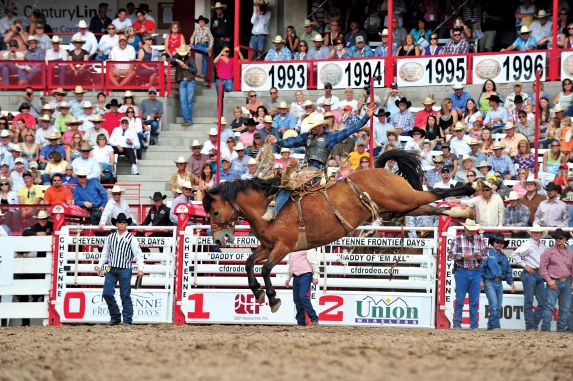
    Determined is the word that best describes PRCA cowboy Will Smith and his rodeo career. Coming from a family that did not have roots in rodeo, Will’s leap into the sport began when he was 13 at a weekend rodeo school. After buying his PRCA permit twice, then filling both permits at his first rodeos, Will acquired his rookie card in 2010. Since then, the 24-year-old saddle bronc rider from Marshall, Mo. has persistently worked his way to now being 16th in the PRCA world standings.

    Will’s introduction to rodeo came from watching a friend of his compete in high school rodeo. His interest piqued, 13-year-old Will told Jim Smith – his grandfather and close friend – that he wanted to ride a bucking horse. “He told me that I would have to ask my mom,” Will recalls. “She wasn’t very excited about it, but I went to Summerville, Ga. (for the Sankey Rodeo School) and I got on seven broncs that weekend. The last one I broke my arm on. When my dad took me to the doctor and found out it was broken, he knew that I really wanted to ride broncs, since I’d broken my arm and still wanted to do it.” After his first taste of saddle bronc riding, Will was sold on the sport.

    Following the weekend at the Sankey Rodeo School, Will began competing in high school rodeos in saddle bronc riding and calf roping. He and his family, especially his grandfather, plunged into rodeo together. Being a town kid, Will spent a considerable amount of time riding horses on his grandparent’s farm outside of Lugoff, S.C. Will and his grandfather traded with a friend for an old bay mare which Will would practice bucking on. The mare was put on a lunge line and Will was put on her back. “That horse bucked like crazy and that got us our big start,” says Jim Smith.

    Although Will and his family had been involved in horse 4H, they were now off to rodeos. Will would travel with his grandparents, Jim and Myra Smith, in their RV, and his parents, Billy and Lynn Smith, would come after getting off work. Though competition was fierce his first year of high school rodeo, Will made it to the national high school finals that year, and every year after. In addition to his family, Will was greatly supported by SCHSRA board members Eddie Truesdale and Scott Smith. Will spent his high school years going to rodeos, wrestling, or working on projects for student government. His senior year of high school Will ran an extensive campaign for student government. “I could’ve been mayor of the town,” he said with a laugh. “It was a pretty big campaign.”

    It was at the national high school rodeo finals that Ken Mason, rodeo coach at Missouri Valley College, first saw Will riding a saddle bronc. He recruited him to the rodeo team, and in 2007 Will took the next step towards his rodeo career. Coming from the east coast, Will stood out amongst his teammates from the Midwest. His skinny jeans and long hair made him look a little different, according to his friend Brady Wilson, who first met Will in college. However, his teammates always wanted him to win, and Will was on the team when they won second in the nation at the college national finals rodeo in 2010.

    Will’s bronc riding improved significantly through college rodeo. “He wanted to get better. He craved it,” says Brady Wilson. Then Ken Mason put him to work on the spur board, and Will worked at it feverishly, getting his legs into shape. “Will would get on as many broncs as we had at practice. If we had ten horses to buck, Will would get on every one,” Ken Mason says. “He’s a winner. He loves riding broncs and he loves Christ.”

    Will began college studying political science, thinking he would go into politics later in life. However, he says, “I fell into a good group of kids. They started a Bible study, God led me in that direction, and the next thing I knew I was a religion major.” Will has also started working on a double major in business, which he hopes to finish when rodeo slows down for him. He hopes to earn his master’s degree in theological studies and become a professor, and even pursue a mission trip to Papua New Guinea someday. Another goal that is very significant to Will is settling down to have a family.

    Since finishing his degree and leaving college, Will has been on the road to rodeos all over the U.S., as well as Canada in CPRA rodeos. He is constantly looking for ways to improve his riding. One approach that he has taken is travelling with fellow saddle bronc riders and PRCA cowboys Cody DeMoss, Curtis Garton, Ty Atchison, and Wade Sundell. Another asset to Will’s success is being surrounded by so many supportive people. Of his role models, Will says, “My granddaddy, Jim Smith, is always telling me that you only live once. Ken Mason, (Will’s rodeo coach) is like a second dad/brother. I call him all the time.” Will looks up to his dad for his discipline, and he says of his mother, “I love her to death. Her motherly love keeps my heart full and my hopes up.”

    The support that Will has received from family and friends has done wonders, as he has many titles and accomplishments under his belt. Will is most proud of winning the 2010 Great Lakes circuit championship in saddle bronc riding. And one of his most recent accomplishments, winning the Casey Tibbs Match of Champions with a 90 point ride on Chuckulator. “Not very many guys can say that they won that. I’m proud to be one of them.”

    Will has the WNFR in his sights, and many of his friends and mentors expect to see him riding broncs there this December. “I think every cowboy’s goal is to win a world title. For sure that’s my goal someday.” But Will is not in rodeo only for titles and championships. He says, “Growing up, my granddaddy had really cool stories of travelling. I want to have those stories to tell my grandchildren.”