Rodeo Life

Author: Lily Landreth

  • On The Trail with Coco van den Bergh

    On The Trail with Coco van den Bergh

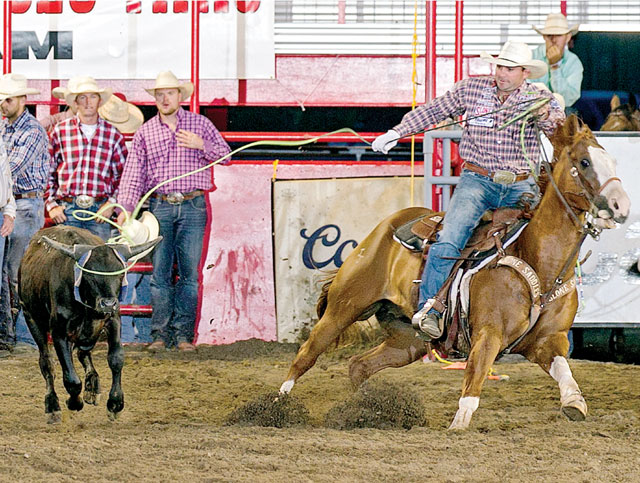
    Coco van den Bergh saw her first pair of Wrangler jeans and a Western saddle when she came to the United States as a college exchange student from Holland. Today, the 51-year-old is a breakaway roper in the RMPRA, making her home near Ferron, Utah, at the base of the La Sal Mountains, happily ensconced in the rodeo and Western lifestyle.

    Coco started riding English as a child, first learning to ride bareback on a pony. “In Holland, kids usually go to a stable and ride ponies, and a fun thing they do is give you coins or money, and if you’re able to keep that money between your bum and your horse, you can spend it at their candy store,” she says. Her mother and grandmother both rode horses, and though Coco didn’t have her own horse until she moved to the U.S., she rode horses for friends, including a black Arabian stallion. “I did dressage and jumping, but the most wonderful thing is I lived at the coast, and you can ride your horse through the forest to the beach and go swimming with your horse.”

    All of the disciplines Coco rode gave her a horsemanship foundation that made it easy to start riding Western, and the rodeo community was quick to show her the ropes. “The people are so friendly, and they treat you like you’re a part of their family. It’s so pleasant to go, and it’s fun and educational,” says Coco. “I love to watch human and equine athletes perform. I’ve been an athlete my whole life — I used to fence and figure skate, but horses are my whole life. That’s what I live for.”
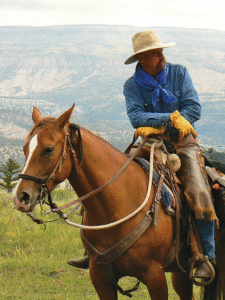
     

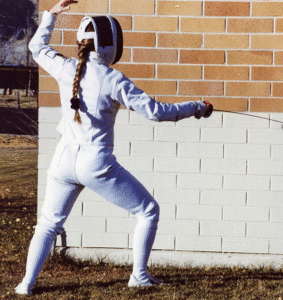
    A love of learning brought Coco to Utah, where she did her research for one of her two master’s degrees in geology, but she stayed for the Western lifestyle. She earned a welding degree taking evening classes, and she’s also tried her hand — and feet — at ballet, field hockey, surfing, sailing, and skiing. Coco was even on the college fencing team at her university in Holland and University of Wisconsin-Madison, competing with other schools much like any other college sport. Coco finished her second master’s degree in geology at University of Wisconsin-Madison at the request of ExxonMobil, where she worked for a year. “It means so much more when you see the landscape and understand the carbonate rocks, or fluvial or volcanic. I just love it (geology) because I love nature. I’ve found Indian arrowheads and pottery, and I love the wildlife you see out in the middle of nowhere by yourself. After that (ExxonMobil) I started my own business as a geologist doing research for oil companies, but the income was too inconsistent, so I got the job I have now so I could live the Western lifestyle.”

    Coco purchased her very first horse in 1996 after moving to Utah, and once she’d run a few chutes for friends, she wanted to back into the box herself. She learned to team rope first before switching to breakaway roping. The first rodeo she entered was in Salina, Utah, and Coco even went to a Stran Smith roping clinic. She has four quarter horses, several of which are bred by Mary Journigan of the K Cross Ranch in Lamoille, Nevada. “My partner, Brad Richman, is a cowboy, and he takes my horses for five months and does nothing but cowboy on them and get them broke for two summers. After that, I take them over and cowboy on them myself because I help the local ranchers.” Coco met Brad in the mountains where he was herding cows and she was helping the local ranchers, and they cemented their friendship looking for several horses that got loose. Coco also welds on the ranches when needed and takes much of her vacation time to work cattle with local ranchers. “I cowboy on my horses for two years before I rope on them. It takes a lot of years to make a good horse, and I get nothing but compliments about them.” She’s especially excited about her 3-year-old gelding, Charlie, whom she started breakaway roping off of in the last few months. “I went to two Clinton Anderson clinics and put that foundation on him, and Todd Fitch put three months on him. My goal is to make it to the RM (RMPRA finals) by basically training this horse all by myself.” Steve Young has also trained a few of Coco’s horses and helped her with the team roping. Brady Ramone works with her in the breakaway, while Coco says the Mascaros, Clowards, Webers, and Foxes have become like family. Her own family, who live in Holland, love that she rodeos, and her mom comes to visit for a month every summer.
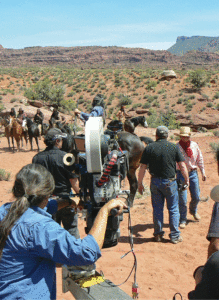
     

    In 2012, Coco’s horse training earned her a spot in the credits of Disney’s John Carter, a sci-fi movie that she worked on in Moab, Utah. “I worked for three weeks training the horses and then training the actors how to ride. There were five horses from Hollywood, and then a whole herd of horses from Washington.” One of the horses Coco trained — the backup horse to the lead horse from Hollywood — starred in the movie, and she also trained them to accept riders jumping on and off their backs at a lope. “It was so cool, and I got such nice friends out of it too.”
    Along with her horses, Coco runs a small herd of Corriente cattle, which she raises for roping. “It takes time for them to grow horns, so in the meantime, I breakaway on them, and when they’re ready to team rope, they’re already broke in and they run nice and straight. It’s so much easier on the head horse.” She ropes at least four times a week at friends’ arenas, or the indoor arena in town. She’s now the branch manager of a laboratory that analyzes coal and water, and Coco uses her breaks to rope the dummy in the bed of her truck. “I have that Jackie Crawford DVD Elevate, and that’s made a huge difference. I met her at a clinic in Utah one day, and last year I went to her house for a week to rope. Jackie Crawford and Jake Barnes are my heroes and role models.

    “My whole life is horses and roping and rodeo,” says Coco, who’s entering her third season in the RMPRA. “This year, my goal is to make it to the RM finals, and then go to the Rehab Productions open breakaway roping during the NFR in Las Vegas. Another goal is to show people that it doesn’t matter how old you are. Live life to the fullest and make your dreams come true by setting goals, creating a plan, and working hard. Believe in yourself and go for it.”
  • Hunter Herrin

    Hunter Herrin

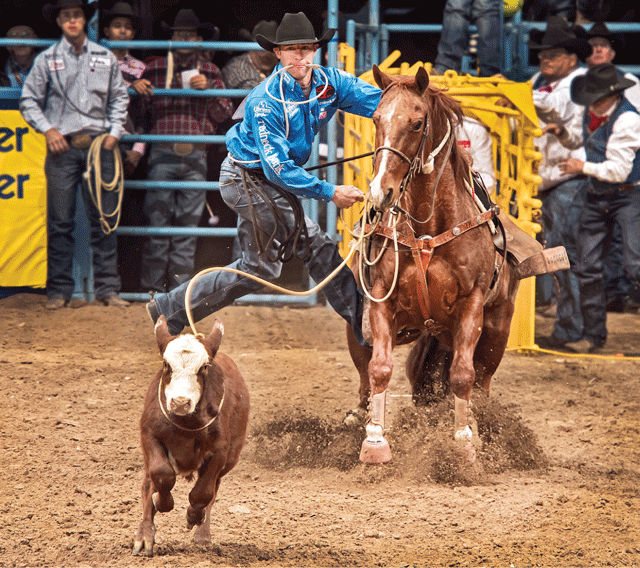
    Nine-time WNFR qualifier Hunter Herrin has been involved in a variety of sports, especially rodeo, since childhood. Within the last few years, the 33-year-old from Apache, Oklahoma, has added a new pursuit—hunting—to his list of interests thanks to his son, Houston. “I’m learning more from him than he is from me,” says Hunter. “He’s 11 and he really enjoys deer hunting. I’ve done a whole lot more of that in the last three years than I have in my entire life.” Hunter is no stranger to long nights on the road and admits that he’s not the deer hunting kind of early riser, but he’s enjoyed the new experience nonetheless. “If you are out there when the earth wakes up, it seems to be refreshing, the way the animals move and the birds wake up when the sun starts to rise. It’s pretty cool. You can reflect on this, that, and the other, and enjoy the moment.” Houston, who learned about the hunting lifestyle from his grandpa, has harvested several deer. The meat is often shared among the family, and Hunter enjoys a bowl of deer chili.
    Tracking calves is still his favorite pursuit, however, and rodeo is another thing that Hunter and Houston enjoy doing together. Family has often cheered him on from the stands at rodeos like the WNFR and The American, which he won in 2016, while Hunter and Houston spend several weeks in the summer on the road together. “He enjoys getting to hang out with his buddies that I’ve rodeoed with, like Shane Hanchey and Marty Yates. He’s a big fan of them and they spend time with him on the road.”
    Hunter made a run at the winter stock shows and rodeos, working to find the balance between recovering from his October 2017 hip surgery but still getting a start on the 2018 season. “With a surgery or injury, you change your goals and double down and work harder like I should have in my 20s,” says Hunter, who first qualified for the WNFR in 2006. He was his son’s age when he started roping, encouraged by his step-dad, Bob Nunn. Hunter junior rodeoed and focused more on basketball and football in high school, but rodeo was back on his radar in his late teens. “I went to three semesters at Weatherford in Oklahoma and did college rodeo there, and in the winter of ’05, I started rodeoing full time. My parents bought my PRCA permit for me in ’04.” When Hunter stepped up his competition in 2006, it was the first of four consecutive qualifications to the WNFR. He went through a pattern of getting horses ready for the finals every other year, and in 2014, his horse Dualin Demon “Rambo” won PRCA Tie-Down Roping Horse of the Year.
    Presently, Hunter is working on several horses that he anticipates being ready to rodeo on in the fall. “But I’m looking for that kind of rodeo horse now. Clint Akin has a horse that I rode in Houston and there’s a possibility I can rodeo on him some, but we’re still keeping our eye out for one that fits the mold of what we’re looking for.” Hunter and his dad train horses and have three in particular they’ll start hauling this summer. With the exception of his first year at the WNFR, Hunter has qualified for the finals every time on a horse he trained. What fuels his horses is equally as important as their training, and he recently started feeding Nutrena’s SafeChoice horse feeds. “My horses have done really well on it, and they have a whole lineup of different products to feed depending on what you’re looking to get out of your horse. One thing I’ve noticed is that it does keep their weight on them without them getting overly hot. We have six to seven horses out here and ride four or five of them every day and we haven’t had that problem.”
    Along with horse training, Hunter also enjoys going to his son’s baseball games. Houston plays on a summer league but loves any sport that involves a ball. “He’s previously been in football and basketball, and now it’s baseball,” says Hunter. “If it’s a sport, he’s into it.”
    Hunter anticipates competing in several rodeos in Texas or California in the next month, such as Corpus Christi and the Red Bluff Round-Up, but he’s mainly focused on being ready to go by June. “If the health comes along and I find a horse, I’d like to rodeo this summer and try to get back to where I was in the past and make the NFR again. If that doesn’t happen, I’ll just try to get everything squared away and for sure go for next year.”

  • Stevi Hillman

    Stevi Hillman

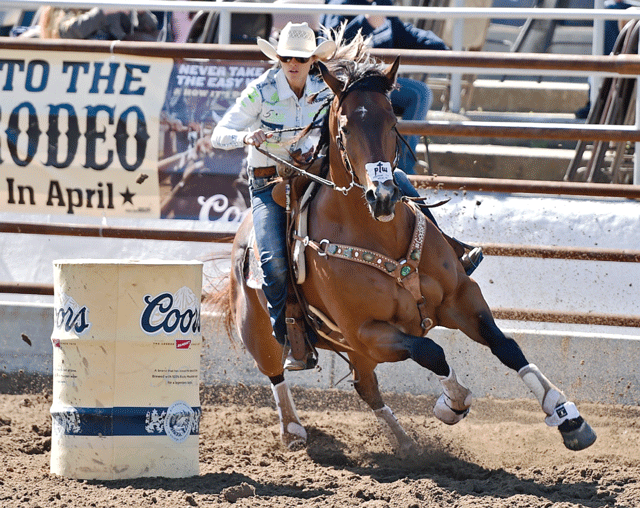
    With warmer weather comes barrel racer Stevi Hillman’s favorite time of year. Outdoor rodeos are her and her horses’ forte, and while the two-time WNFR qualifier from Weatherford, Texas, pulled a check in Houston, she won the first two outdoor rodeos of the year at Los Fresnos and Goliad, Texas. “The horses are really ready to be outside,” says Stevi. “I like Cheyenne, it’s a big outdoor rodeo, but I just like the summer run. We get to go from one outdoor rodeo to the next. Some people don’t like it because the weather can change from one run to the next, but I like the challenge, and the travel is fun.”
    Stevi took her horses Truck and Layla with her for the California run in April, and she’ll load up Sharpie, the newest addition to her barn, for the summer run. Whether at work or at play, Stevi always saddles up with a 5 Star Equine pad, which she started using even before her rodeo career took off in 2016. “I’m a firm believer in the pads—they last a long time. I really like the quality of the pads. There are some other good pads out there, but with hundredths of seconds’ difference between you and your competitors, going from a good pad to a great pad makes all the difference. I like to represent companies that stand for a good cause and are good people.” Since using the pads, Stevi also noticed her horses needed fewer chiropractic adjustments. “I feel like the pressure of a saddle and the pressure of a pad over time is a huge impact on the horse’s body condition.”
    Her latest venture, which Stevi embarked on with her husband, Ty, is raising their own colts and training them. She’s been training horses since childhood, learning from her step-dad, Dave Salzbrenner. They got an embryo out of Martini, the mare that helped Stevi get to her first WNFR in 2016, and bred to Dash Ta Fame, which gave them Pendleton, now a yearling stud prospect. “We flushed our Dash Ta Fame mare this last year to Slick By Design, which gave us our baby this year. We’re not really wanting to get into the breeding business, but our goal is to have a great mare to sell embryos from. I went from training full time with 17 head of horses around here, including our own, to having our own colts, and I have one of the Dunn’s 3-year-olds here in training.”
    Horse training led Stevi to the rodeo world when she trained an off-track quarter horse Im A Royal Design “Hammer” and ran him her rookie year in the PRCA, winning Reserve Barrel Racing Rookie of the Year in 2012. He went on to the WNFR with Carlee Pierce and Jana Bean, while Stevi’s mare she trained, Perfectos Dually “J-Lo” took her to Houston, and later, J-Lo ran with Christina Richman at the 2012 WNFR. “A huge part of my rodeo career was getting into Houston for the first time, and I’m very thankful to be able to train such an amazing animal to do so well,” says Stevi.
    She grew up with a strong work ethic that included animals’ needs coming first, but Stevi says setting aside time to take care of herself is also important. “It’s (rodeo) a 24/7 job. I talked to someone recently about being out at 11 at night flexing my horse or giving a massage. It really comes down to your passion. At times, you get mentally or physically tired from going 24/7. It’s all about the horses all the time, which is important, but so is taking time for yourself to refresh.” Hot yoga is her favorite way to shift her focus for a few minutes, along with jogging with her husband. “My motivation lately has been that I’m truly blessed to be doing what I love, and how many people get to be in that position? I not only get to do what I love, but I help other people do what they love, and that’s the dream life in my opinion.”
    Stevi’s husband feels similarly. Ty, formerly a professional roper, started his business Prepare To Win in 2016. A success coach, he helps clients reach their peak performance in life and in the arena, and his work allows him to travel all year with Stevi. “We listen to all kinds of motivational books, and that definitely sparks conversation around that, and it helps me,” says Stevi. “We’re both very competitive. He’s been my motivation through my competitive years, and my step-dad is a huge inspiration to me and put that fire in me at a young age. Being able to watch people like Lisa Lockhart and Sherry Cervi growing up and being able to talk to them whenever I want has helped, and Jana Bean has been a great help to me.
    “My future goals are always to become better, physically and mentally. Competition wise, I always want to win. I know that’s always in God’s timing in what you win and where you’ll go, and I hope for more doors to open this year for me to help more people.”

  • Rowdy Parrott

    Rowdy Parrott

    A conversation with Rowdy Parrott could easily whip up a person’s appetite. The 24-year-old professional steer wrestler comes from Mamou, Louisiana, and has Cajun cooking in his genes, whether it’s with game he’s harvested or crawfish that his family raises. “We eat a lot of wild game,” says Rowdy. “We get duck, squirrel, deer, all kinds of different things. You can put squirrel in rice gravy, and ducks, we breast them or bake them, or cook them in rice and gravy too.”
    Rowdy grew up knowing where the food on the table came from, helping his family farm until they switched to raising crawfish four or five years ago. They raise the crawfish in ponds formed by rice fields. The crawfish burrow underground when the rice fields are drained and harvested, then return to the surface when it rains and are harvested from November through July. Rowdy’s family harvests as many as 400-500 sacks of crawfish a day, and he helps with loading and shipping them to restaurants and stores.
    Rowdy also loves hunting with his family, especially duck hunting with his dad and brother. “We love it. We get up early in the morning and go hunting in the rush fields, and we have some pretty good dogs. I have a cousin who does the training. It’s so fun; it’s addicting. Duck hunting is usually fast-paced. You might sit in a blind and talk, and deer hunting is more quiet, sitting in a stand and waiting.” As much as he enjoys the action of duck hunting, Rowdy likes the quiet of deer hunting even more. He hunts white-tail deer on his in-laws’ ranch in West Texas, where deer season runs November to January. “They’ve done a lot of work out there, so it’s all set up. Duck hunting is fast-paced, but I like sitting and watching all the deer and being outdoors. My wife, Lynette, likes to hunt. She doesn’t do it as much now that we have our son, Pacen, but she went with me a couple times this year, and I’m ready for Pacen to start getting old enough to do it.”
    While Pacen isn’t quite old enough to go hunting yet — he’ll turn 1 in May — he is a seasoned traveler already, trekking down the road with his parents since he was 6 weeks old. Rowdy met Lynette through rodeo, competing with one of her cousins before he started pro rodeoing. She rodeoed in high school and continues to ride horses with Rowdy. “I couldn’t do this without my family,” says Rowdy. “They have been amazing and always supported me and helped me get up and down the road.” He’s the first in his family to rodeo at this level, though his grandfather fought bulls. “We showed cattle and would always go to rodeos. I just liked it and decided I was going to try to do it, and I got hooked!” Rowdy started with team roping and made it to the NHSFR in 2009, followed by winning the LHSRA state title in steer wrestling in 2011. “I used to do all the events, but I just love the rush that you get steer wrestling, and the contact. I’ve always loved it since I first started,” says Rowdy, who made four trips in all to the NHSFR. He and his parents, Mitch and Tammy, and brother and sister, Remey and Tobi, also traveled to the IFYR during his high school career. Rowdy won PRCA Steer Wrestling Rookie of the Year in 2014 and made his debut at the WNFR in 2017 riding his gelding George. “To go there and do it was awesome — there’s not many other words for it. That topped it all, and I wanted to do better, of course, but I was satisfied with my first NFR and I’m just ready to go back.”
    Rowdy finished 12th in the steer wrestling world standings, and he’s sitting in the top 20 this season after making the rounds at the winter stock shows and rodeos in Texas, including The American Semi-Finals. His younger brother, Remey, is steer wrestling for McNeese State University in Lake Charles, Louisiana, and entering PRCA rodeos as well. “He goes at it pretty hard, and he’s doing pretty great,” says Rowdy, who also rodeoed on the MSU team and majored in criminal justice. “This is my job and it’s all I want to do. I love competing. The main goal is to go back to the NFR and chase that gold buckle.”

  • Caleb Smidt

    Caleb Smidt

    “I’ve always wanted to rope since I could walk and be around horses, and it’s what I’ve always done,” says Caleb Smidt. “I watched the NFR on TV and it’s what I’ve always wanted to do.” The four-time WNFR qualifier and 2015 World Champion Tie-Down Roper is the first of his family to travel the professional rodeo trail. But the horse training and roping he learned growing up, particularly from his dad, Randy Smidt, gave him the foundation of skills that took him from Bellville, Texas, to the arena floor of the Thomas and Mack Center.
    Caleb, the All-Around and Tie-Down Roping Rookie of the Year in 2013, competed at the WNFR for the third consecutive year in December and won $60,000. Although the 2017 season didn’t have gold buckle returns, he finished fifth in the world standings and split first place in Round 8 with his high school friend Cory Solomon. “I had a really good year all last year leading up to the finals, and then got to the finals and just didn’t do very good,” he says. “It’s been really wet here all winter, so hopefully it dries up and we can be roping and practicing and back into the swing of things. Justin Maass has a covered arena and I’ll go over there. He tunes me up and keeps me in line and always has good advice for me. We rodeoed together in 2013 and he’s been my coach through the whole thing.”
    Caleb credits riding good horses just as much with his success as his motivation. “A good horse is a big part of my success, and being able to have my family up here with me rodeoing and joining in. I don’t like the driving part, but when you have a good horse and family with you, it’s a lot easier. It’s been successful for me the last four or five years.” He continues to ride Pockets, the horse that carried him to the WNFR and the world title in 2015. The pair won $130,000 last year, and Caleb also rode Walter Johnson’s horse Iron. The latest member of his equine team is Bart Hutton’s horse El Gato, who carried Caleb through his winning run at the Dixie National Rodeo in Jackson, Mississippi, in February. “He’s a smaller horse, and he’s got a lot of try and a big heart. He gives it everything every time you ride him, and he can run and handle big cattle. He’s still a touch green at the bigger and louder rodeos, but he’s getting better,” says Caleb, who set the horse on his biggest stage yet at The American in February.
    Between every one of Caleb’s horses and his saddle is a 5 Star Equine pad, which he started using in 2015 and rode at the WNFR. He officially joined the 5 Star team in 2016 when time and hard use proved that the pads should be a staple in his tack room. “I like them. They last a really long time and seem to fit my horses good, so I’ve ridden them ever since 2015,” says Caleb. Along with spreading the word about their products through his social media, he also signs autographs at the WNFR. They’re also put to use for everyday jobs like working cattle and riding colts, which Caleb enjoys doing when he’s home. He also enjoys team roping, which he’s done professionally in the past. Caleb tried his hand at steer wrestling, but that set him back almost a year in 2014 when he broke his leg, so tie-down roping remains his primary focus.
    “I love hunting,” Caleb adds. “My father-in-law has a few places to hunt, so I do a lot of deer hunting and hunting wild pigs.” Hunting will take a back seat by March and April when the PRCA Texas Circuit rodeos pick up, followed by the summer run. “Dodge City is one of my favorites and I always seem to do good there. Coming out of the head box at Salinas is always pretty exciting, and Deadwood, South Dakota, is another good one. My family has been with me (rodeoing) every year since I got married,” Caleb says of his wife, Brenna, and their son, Cru. “Now that we have a 2-year-old kid, we might start seeing more stuff on the road and doing more things. He likes horses a little bit, but he likes tractors more than anything, and big machinery.
    “Since I make a living doing this, I want to make the finals and try to win another gold buckle,” Caleb finishes. “I’ve always kind of had the mindset that it’s what I do for a living, so I have to make a living at it. It’s what I do to support my family, and always my main goal is to be successful and rodeo.”

  • Olin Hannum

    Olin Hannum

    Olin Hannum wasted very little time beginning his rodeo career. He was just three when he started chasing calves astride his dad’s pony, then roped and steer wrestled his way through high school rodeo. The 40-year-old, originally from Ogden, Utah, won his first state titles in 1995 in tie-down roping and steer wrestling, followed by a stint of college football on University of North Carolina’s team. His rodeo roots ever tugging, he joined the PRCA in 2003 and qualified for his first WNFR in 2011. “Rodeo has been a part of my family for as long as I can remember,” says Olin, whose dad, Jack Hannum, was a 5-time WNFR qualifier, and mom, Lynn Hannum, worked the WNFR twice as a timer. Olin returned to the floor of the Thomas & Mack Center in December of 2017 in the steer wrestling and finished 9th in the world standings. “I felt like I should have done better — I had high expectations — but I’ve been around long enough to know that you can sit and dwell on it, or you can go and fix some of the things you made mistakes on.” He finished the season with $145,630 and invitations to The American and the Calgary Stampede. “I’m really excited to make it back to those rodeos. They do a good job of putting you up, and I’ve done good at Houston, so I’m really excited about getting back there.”

    Olin Hannum – Hubbell

    Also on the radar is the 3rd Annual Olin Hannum Open Jackpot, taking place in Tremonton, Utah, on May 5. Olin says he was talked into hosting the first jackpot by a good friend, and the event took hold and now counts as a Junior NFR qualifier. 5 Star Equine sponsored the jackpot last year, and Olin joined their team of riders that fall. “I ride Burns Saddlery’s saddles, and they sell a lot of 5 Star pads, so we got a relationship going,” says Olin, who’s used their pads a number of years. “When they sponsored my jackpot, they gave a couple of their pads away. It was something good for these younger guys to realize that having a good pad and a good saddle will help your horse’s longevity, and that some of these investments will pay dividends in the long run. I like the fact that I don’t have to use multiple pads, and they fit your horse after a couple of rides.”
    His horses, Turtle and Maverick, are his main mounts again this year, while Olin recently started jumping practice steers again since he’s on the mend from a shoulder injury sustained during the WNFR. “The hardest part about where I live is finding a place to practice indoors and having availability,” Olin explains. He and his wife, Natalie, moved to Malad, Idaho, several years ago, looking for a rural community to raise their children, Cheznie (5), Kennedy (3), and Jackson (1). “My wife is a second-grade teacher, so she stays home most of the time, but my daughters traveled with me a lot last year and we had a lot of fun. I have a little pony for them, and they kind of take over on my horses.”
    Olin also operates a custom cabinet business, Arrowhead Cabinets, which he originally started in Ogden before moving his shop to Malad. “I mostly do kitchen cabinets, but we’ve done some furniture, so it’s a little bit of everything. I used to hunt and fish, but with the cabinet shop and rodeoing, I don’t do it as much as I used to. My wife and kids and I love to go camping, especially in the summer.”
    Rodeoing on the Wilderness Circuit keeps Olin closer to home, while he’s qualified for the RNCFR three times and finished third in the average at the Wilderness Circuit Finals last year. “There are so many good rodeos on this circuit, and I enter a few in the calf roping, but I’m a long way from calling myself a calf roper,” Olin says with a laugh. His younger brother, Jake Hannum, is the tie-down roper of the family, qualifying for the WNFR in 2007. “I think passion is one of the biggest things (that motivates). It’s something you love to do, and you get up and do it every day. I think the people that really love it have a hard time knowing when the end is, and I think I’ll be one of those guys down the road who might slow down, but I still see myself going down the road and circuit rodeoing.
    “I try to take things one day at a time. All of us have the big goals in mind as far as making the National Final Rodeo and doing well there, but I just want to be prepared and ready to go to these winter rodeos. I want to bulldog to the very best of my ability, and if I can do a better job at that, the winning will take care of itself.”

  • Colby Lovell

    Colby Lovell

    Rodeo and hunting are two lifestyles that often complement each other — one season picking up where the other leaves off — but Colby Lovell calls hunting his greatest weakness towards rodeo. “My biggest deal with hunting is that I love to raise dogs,” explains the professional team roper from Madisonville, Texas. “I’ve grown up with such a love for that. There’s nothing better than raising a set of puppies and seeing them grow and develop. It’s something money can’t buy, and the hard work and effort I’ve put into it has taken a lot away from my rodeoing, but it’s something that I love to do.”
    Colby has 25 bloodhounds, many of which he’s raised and trained himself. “It’s hard to get a real solid dog — it takes a lot of time and it takes a special type of dog to be very good. They need to go eight to ten hours one day and want to get up in the morning and do it again. They have to love it as much as you do. I hunt with my best friend and seven or eight other guys. We’ve done it religiously since we were kids hunting with the older men, and these dogs we’re hunting with have originated from right here for the last 50 or 60 years.” With Colby returning to the rodeo trail this season after taking a year off, he has several friends who care for his dogs and exercise them while he’s on the road. They have to stay legged up much the same as horses, though Colby runs them less in the summer when they’re prone to overwork themselves in the heat.
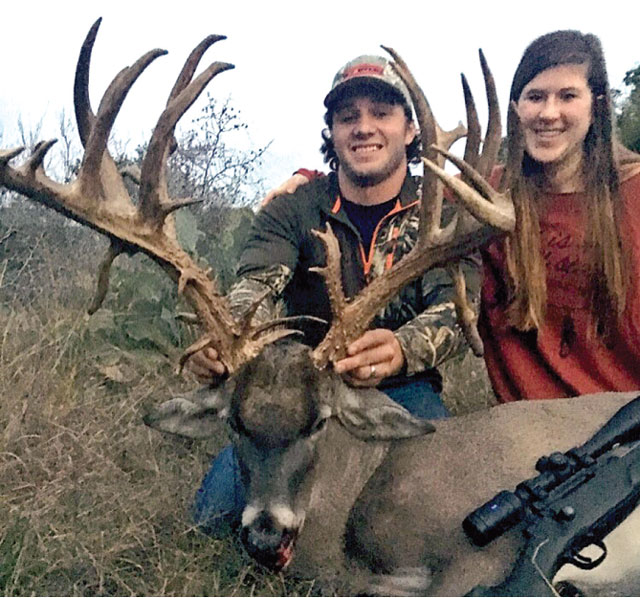
    Hog hunting and deer hunting are two of his favorites, though hog hunting is more likely to spike the adrenaline since the quarry can charge and has tusks that grow several inches long. “I put a tracking system on the dogs, and once they have the hogs bayed up, we usually try to rope them. A couple of the videos I’ve taken have gone pretty viral.” Since feral hogs cause so much damage to property and waterways, hog hunting goes year round in Texas. During deer season, Colby and his son, Levi, hunt on Colby’s grandfather’s ranch near the Trinity River. A year ago, Colby started feeding Record Rack deer feed on the ranch. “We haven’t seen a deer big enough to kill on the river in three years, and last year, my little boy killed the biggest deer we’ve seen since putting the feed out. He scored a 160 — I’m a big believer.” Colby and his friends donate a large portion of their meat, and also make steak, pork chops, and an abundance of summer sausage.
    The time Colby enjoys with his son and his daughter, Jewel, will carry into the rodeo season since the Lovell family plans to travel with him more this year. His wife, Kassidy, runs an equine swimming facility, Champion Fit Equine, with her mom and will fly home for work when needed. One of the reasons Colby, a six-time WNFR qualifier, decided to take time off was the wear and tear from traveling and being apart from his family. “There’s no downer to having your kids with you,” he says. “There might be frustration when I leave the arena, but when I get around my wife and kids, I can’t express how much that picks me back up and makes me want to go to the next rodeo.”
    Colby grew up heeling and his hard work took him far, such as winning seven USTRC open ropings when he was 18, but it wasn’t far enough. When finding the caliber of header he needed to make the WNFR didn’t pan out, Colby became a header himself. Within four months of roping horns instead of heels, he was approached by several professional heelers. “I was so lucky to accomplish making the NFR on my first try. I look back, and I was just lucky to have Kory Koontz behind me.”
    Currently, Colby ropes with one of his best friends, Ty Arnold, and he and Cory Petska are teaming up to see how far the summer run takes them. “Ty is one of those good up-and-coming heelers, and I’ve been roping with him this winter. He’s one of the best young guys I’ve seen. You don’t get very many opportunities to rope with Cory Petska, and my second year of rodeoing, I got to rope with him that winter right after the NFR,” says Colby. “He could motivate you to do anything rodeo-wise. Ty Arnold being a good friend — he motivates me and pushes me, and I’ve been close with his family since I was young. What motivates me is all my friends and family getting to share the (WNFR) experience and getting to enjoy that with them. Without them, there wouldn’t be any motivation to do it.”

  • Back When They Bucked with Butch Stewart

    Back When They Bucked with Butch Stewart

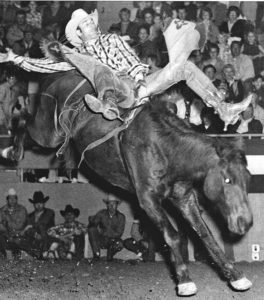
    Butch Stewart spurred his first bronc in the IPRA — known then as the IRA — in 1966 as a senior in high school. It was the start of a long and wide-ranging career in the association, from winning World Champion Bareback Rider in 1973, to working as an IPRA field representative, and eventually, serving as the executive director for five years. “One of the things I admire and respect about Butch is his integrity,” says IPRA General Manager, Dale Yerigan. “He’s an old-school, look you in the eye and tell you the truth kind of guy. When he tells you something, you don’t have to wonder if he’s going to do what he says.”
    Butch was born into that dependable lifestyle in 1946 on the ranch his dad, Bill, managed in Arkansas. The family later moved to North Carolina, and Butch and his three brothers all rodeoed. His two older brothers, Billy and Jim Bob, competed in timed events, and his younger brother, Ricky, rode bulls. Their dad rodeoed, but he passed away when Butch was 10. “I’d go to the rodeos in my early days, and the bareback riding would be the event I’d watch. Why I don’t know, but that’s what I wanted to be,” Butch recalls. “There were no rodeo schools, but when I was 13 or 14, there was a horse trader in town and my family was good friends with him. He would have something he thought might buck, and I just started getting on them. When I got up into high school, I went to rodeos in North Carolina and South Carolina and Georgia. It took me forever before I won any money, but I never did give up. One night at a rodeo, it just clicked, and from that point on my skills got better and better, but I really had to work on it. I won second at Rock Hill (South Carolina) and won $57, and I thought there would never be another dry time.”
    Butch continued practicing on anything that would buck and traveled to rodeos with his older brother or his good friend Charles Malcolm, a bull rider who also helped Butch in the bareback riding. In 1966, Butch bought his IRA card and ventured into Florida for several rodeos, where he met Harry Watt of Meeker, Colorado. “Harry rodeoed for a living, and I told him I was going to graduate from high school and (asked) what would be the chances of me getting in and going to rodeos with him. He’s a very plain-spoken person, and he said, ‘Just tell me where you want me to pick you up. But I tell you right now, you hold your end up or you can go home.’” Butch graduated and left the same night on a Greyhound bus to meet Harry. “My mother, Pauline, was standing in the door just bawling. I stayed in contact with her and my oldest brother, and I’d call once a week.”
    While in the past Butch made it to 15 rodeos a year at most, he and Harry entered 120 rodeos in 1966 throughout the eastern half of the country. Butch would eventually rodeo as far away as California, and even tried bull riding, but he primarily entered on the IRA circuit. He and Harry traveled in the Coloradoan’s single-cab pickup and camper, minus air conditioning, with as many as four other cowboys joining them at times. “I loved it! I couldn’t get to enough of them,” says Butch. “Those first rodeos we went to I drew some great horses and won first, and everything just clicked. Harry taught me how to get to rodeos, where to go, and how to enter. He’s been a great friend and we still talk all the time, and he’s the one who really taught me how to rodeo.”

    Butch had to set his gear bag aside when he was drafted into the Army in 1967, but after serving two years in Germany, he returned to the IRA. By that time, he had a world title on his mind and was runner up to the IRA world bareback riding champion in 1971 and 1972. “I went back home in the fall of ’72 and saw a friend of mine, R.D. Thompson. We went to school together and he was a teacher and a coach, and he wanted to know what I was doing. I told him I got real close to winning a world title the year before. He said, ‘You can win if you want it worse than anybody else,’ and that stuck in my mind. That following year I won my world title. Maybe my skills got to a higher level, but it was just the want-to. I set my sights on something and I went after it. It was a great feeling.”
    Several years before winning the world title, Butch met his future wife, Brenda, at a rodeo in Eunice, Louisiana. They were married in 1971, and Brenda’s background in ranching and high school rodeoing fit the newlywed’s lifestyle like a hand to a roping glove. She worked with the IRA on merchandise while Butch worked for the association as a field representative from 1977 to 1983. He traveled often and worked with current stock contractors and recruited new ones, along with staying in touch with the contestants. Once Butch and Brenda’s two children, Heath and Carissa, were born, however, he wanted to stay closer to home. Butch took a job managing several large cattle ranches in North Carolina and Oklahoma from 1983 — when he retired from rodeo — until 1999.
    The family moved from ranch to ranch sometimes every six or seven years, and the ranching lifestyle and Butch’s work in the IPRA proved valuable for his children. Carissa started working in the association in the early ‘90s as a receptionist and is now in charge of the IPRA rodeo sanctions, results, and standings. Heath started working with Jerry Nelson’s Frontier Rodeo Company in the early ‘90s as well, and is now the rodeo manager of the company. “Dad ran Five R Rodeo Company for a guy, and he always made sure his family was taken care of, and the livestock, before he went on the road,” says Heath, who took 18 horses and two bulls to the 2017 WNFR. “He took good care of things and has a good work ethic.” Heath’s sister, Carissa, adds, “I’m glad my dad chose to be a rodeo cowboy back in the day. The people you meet in rodeo become your rodeo family, and some of my lifelong friends I met through my dad rodeoing.” When Butch returned to work in the IPRA in 1999, Brenda started helping with the IFR, the IPRA convention credentials and check-in, and securing sponsors to cater food for the VIP room.
    In 2002, Butch became the executive director. “It was the day-to-day business of running the association, the bills, the IFR, the sponsorships, and the contestants’ needs and concerns,” says Butch. He and Ronnie Williams, a longtime IPRA member and former executive director, were also instrumental in working with the governor of Oklahoma at the time, Frank Keating, on declaring the third week of January “IFR Week.” “I enjoyed seeing the success of the association and the new contestants coming on, the friends that you meet, the awesome staff, and the people in Oklahoma City that we worked with.”
    Butch retired from his job as executive director in 2007 and managed a ranch in Davis, Oklahoma, for six years until it was sold. Presently, he works for Jerry Nelson’s Frontier Rodeo Company in Freedom, Oklahoma, feeding the livestock and running the ranch when the crew is on the road. “I really love what I’m doing, being around these bucking horses, and Brenda and I are very proud of our two kids and our grandkids.” He and Brenda make their home just a few hundred yards from Heath and his wife, Shay, and their children, Jade, Brooke, and Chase, who is on the Northwestern Oklahoma State University rodeo team. Butch is happiest caring for the equine athletes who made his rodeo career possible, but he often travels to the WNFR, and he never misses an IFR. “I tell them if there’s anything I need to do for them, I’m glad to do that, but I just have a good time, sit back and watch, and visit with old friends.”

  • Clayton Hass

    Clayton Hass

    There’s nothing like the morning when the animals wake up and you hear the birds come alive, and everything starts to move around,” says Clayton Hass of hunting. The 33-year-old professional steer wrestler, tie-down roper, and team roping header from Weatherford, Texas, juggles his passions of rodeo and hunting in the fall every year, but he feels his time spent in the deer stand or following his hunting dog is always worth the effort. “I started hunting with my dad as a kid growing up, and we hunted birds and deer and ducks. I go with family and friends, and I do like to be by myself sometimes too. You do a lot of thinking. Out there, everything is good, and there’s no cell phone service and no one calling me. You can just be out there in the wild, enjoy nature, and blow off some steam. There’s a lot of similarities between rodeo and hunting. Just like if you make a bad run, if you make a bad shot, there’s nothing you can do about it now. The ultimate thing is to take the next shot or the next run. In a way, it’s like riding a bike—you don’t forget—but first of the season, you practice a bit.”
    Clayton has never had to step out of his state for hunting opportunities since Texas wildlife is so diverse. He often hunts on the Waite Ranch near Fredericksburg, Texas, and stays at the lodge for the weekend since it’s several hours from home. Clayton narrows his favorites down to quail and white tail deer, though he wants to harvest an elk this year as well. “I really enjoy quail hunting and watching the dogs work and seeing how smart they are. Most of them are my friends’ dogs, but I have an 11-year-old dog, Max, that I’ve had since he was 6 months old. My cousin is a dog trainer in Texas, and he started Max. The hunting is fast—not as long as sitting in a deer stand. I can go quail hunting and then get back and do whatever I need to for the day. I like dove hunting as well. You breast one out, wrap it in bacon, and put a jalapeño in it and bake it. It’s not bad at all.”

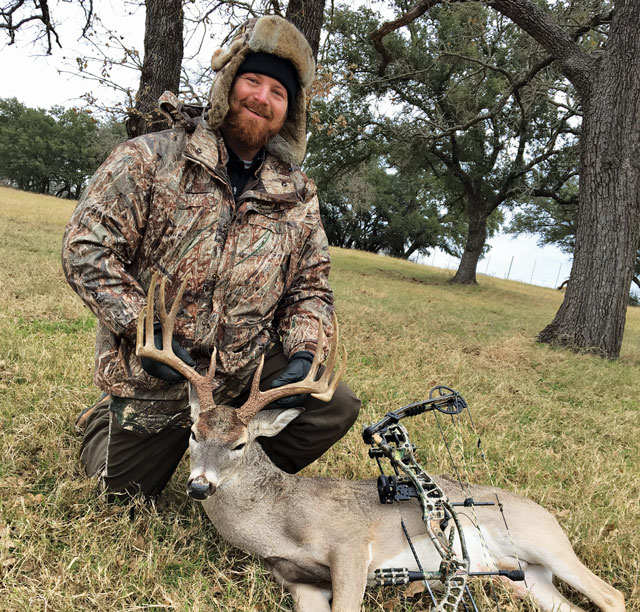
    Within the last seven or eight years, Clayton discovered how much he enjoys bow hunting, particularly the extra challenge and being that much closer to the deer. “With a rifle, guys are shooting 500–700 yards, but with a bow, the maximum is probably 110 yards, and most people don’t shoot over 50. I grew up shooting my bow around the house, but I never hunted with it. I decided to buy one, and after I harvested my first deer with it, I was hooked. The hardest thing about wanting to go hunting is that elk archery season starts the first of September, which is hard with rodeo season. But after the All American finals in Waco, I was able to slip away and do some hunting. I have some acreage here in Weatherford, but we just leave the deer in the pasture alone. I’d like to set up a feeder here just so the kids can see the deer come in.”

    Clayton’s wife, Alex, enjoys bird hunting with him, and Clayton hopes their six-month-old son, Maclaren, will be his hunting buddy a few years down the road. “My daughter, Addy, (5) isn’t much into hunting, but she likes the meat. We make breakfast sausage with it, and last year, we did the process ourselves and made some links and breakfast sausage.”
    Clayton also uses his down-time between rodeo seasons to travel with his family and train horses. Though he mounted out most of the year on Sterling Wallace’s horse, Cadillac, a two-time AQHA–PRCA Horse of the Year, Clayton did win Pendleton in the all-around and steer wrestling riding his 19-year-old gelding, Rusty. “I use Nutrena for my horses and steers. They digest it better and the fiber is lower, and they’re dang sure looking good,” says Clayton. He won numerous rodeos in the all-around, team roping, and steer wrestling this year, and missed qualifying for the WNFR by $606. “But I’m going to work hard, get better, and come back strong next year,” he says. Until then, the three-time WNFR qualifier will be soaking up time with his family, and working toward his goal of harvesting an elk or a bear this season.

  • Lee Brice

    Lee Brice

    Lee Brice is best known for crafting music born of his Southeastern roots, but loved the country over for its down-home emotions and values. He recently released a new single, “Boy,” and his fourth album comes out in November. Lee has won numerous awards, including Song of the Year at the CMA and ACM awards in 2012 for his single, “I Drive Your Truck,” but like most artists, his inspiration isn’t found in any one area alone. Yet the time he spends outdoors while hunting or fishing often kindles the ideas that eventually make their way to our radios.
    Lee started fishing as soon as he could cast a rod, and was given his first shotgun when he was 10, hunting often with his dad or brother near their home in Sumter, South Carolina. “My daddy took us, and every chance we had, we were dove hunting or deer hunting, or hunting for rabbits or squirrels—anything we could find,” says Lee. “It’s been a part of my life since I was little. I got into duck hunting in the last ten years, and I just went turkey hunting for the first time last year, which was really cool. It’s a whole different style. Being on the road so much, I meet people from other places, where they have elk and other types of hunting that’s a whole different ball game. I want to get in to that.”
    As a father raising three children with his wife, Sara—including their daughter who was born in June, Trulee—Lee says those new hunting opportunities will have to wait. But last year, he purchased 240 acres of land not far from his home near Nashville, Tennessee, and he’s making improvements to bring in more deer with the help of Record Rack feed. “I just got the farm last September, and it had no food on it whatsoever. I killed a ten (point) last year, and a buddy came over and killed one, but there was no food, so that was my first priority. I have four different food plots and some feeders, and I put some new stands up. We recently saw twelve bucks in the same night, and what a difference from last year when there were just three bucks. I have a farm manager out there who’s helped me. It’s a tough process, but the bucks have grown so much and they have so much mass. I’m not used to that. I’m from South Carolina where the deer are smaller than here in Tennessee.”
    The land, where Lee plans to build a house in the future, is surrounded by the Harpeth River. Lee is in the process of turning a small cow pond into a seven-acre bass pond. “I’ve been getting in to fly fishing the last few years, and the farm is going to be my sanctuary for all of that. The point of it is to try and get out there and relax and decompress. But because it is the one time when I can really breathe and rest my mind, that’s when there’s a freedom of inspiration. Sometimes I think of song titles, and even an emotion’s an inspiration in itself. I go there to get away from work, but it turns back into how work started, and being inspired.”
    Lee also loves sharing his passion of the outdoors with his children, especially his oldest son, Takoda. “He’s been going and sitting with me the last couple of years, and my youngest son (Ryker) can now spot deer, and he’s getting the excitement for it. I’ve learned that hunting is such a great thing, and I think it’s important to have kids around it. There are so many facets to it—not only the hunting itself, but the preparation. It’s the little things they learn growing up that stick with them their whole lives, because it did me.”
    Rodeo has stuck with Lee as well over the years, particularly when he was first starting his music career, and playing in Las Vegas at the South Point Hotel. “I got to meet a lot of guys out there, and through my manager Enzo, I got to be good friends with Tuff Hedeman. I’m a fan,” says Lee. “We play the Houston Rodeo and a lot of the big ones, and I sure do respect it like crazy.
    “Early on, my whole life was music and football and hunting and fishing. I played football for Clemson all the way through college, and once that was over, music was the natural thing for me. Now, even though it’s a job and it’s definitely hard work, it’s a job that I love. I’m so fortunate to do what I love for a living, so that leaves hunting and fishing as something I love to do that I don’t get paid for. I still work for it—I still put up the stands and food plots and clean the deer—but it’s good.”

  • Back When They Bucked with Ken Adams

    Back When They Bucked with Ken Adams

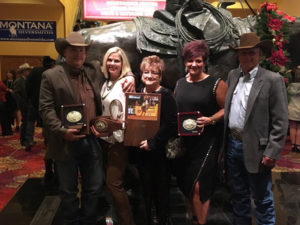
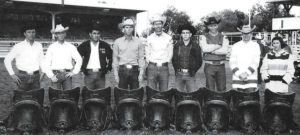
    In 1957, Ken Adams was the year-end NIRA Bull Riding Champion. The Arizona cowboy qualified four times for the CNFR and competed there twice when it was held in Colorado Springs, Colorado. As a college student on a shoestring budget, he used his winnings to buy books while attending Arizona State University, and his experiences inspired him to start a scholarship for the NIRA Bull Riding Rookie of the Year four years ago. Since then, the NIRA Alumni have created a scholarship for the rookie of the year in each event, and in 2017 alone, they contributed $10,500 in scholarships to the CNFR.
    Born in 1933 to Kenneth and Gladys Adams, Ken was the second of three boys. His parents had moved from Missouri during the Great Depression, and while en route to California, Ken’s dad was offered a job driving delivery trucks in Arizona. The family stayed and made their home near Phoenix, and Ken got his first job riding horses with a girl his age at a livestock auction nearby when he was 11 or 12. “I hadn’t ridden at all to speak of – we just started riding whatever horse we could a hold of,” Ken recalls. “We got a dollar apiece riding horses for them back in the ‘40s. I guess people thought it was a pretty good horse if a couple of kids could ride it, but anyone could ride in that ring.”

    Not long after that, Ken started riding calves and cows in junior rodeos around the area, catching a ride with anyone who had a car. “I think the first time I ever won money, I was riding cows. The horses didn’t show up to the rodeo, so I got into cow riding. Someone would give you tips, but mostly they just let you get on and learn. There were no schools, and I didn’t have anybody I traveled with that was older, so all of us were pretty much in the same boat. I think the opportunities to learn are much improved now, and the biggest thing to me is videotaping performances to watch them and learn.”
    Ken continued riding roughstock in the bareback and bull riding, though he won the most riding bulls. “I think at the time I had really good balance, and it was easier to find bull ridings than anything else.” Ken also worked on two or three ranches during high school, including the Boquillas Ranch, which now belongs to the Navajo Nation and is in the top 25 of the largest working cattle ranches in the United States. “I gathered horses for them, and then I’d enter rodeos and hope I learned something every time. The Palace Bar in Prescott was like an employment agency. Ranchers who needed a cowboy would go in there, or if you needed a job you went in there,” says Ken. He also worked at the copper mine in Baghdad, Arizona, for several months, living on site and hauling debris from the mill, but he hadn’t been there long when he was drafted into the Army during the Korean War. Although the cease-fire was signed by the time Ken finished basic training, he still shipped to South Korea where he drove supply trucks. “There was not much glamour in our jobs, unless you wanted to eat! Seoul was pretty much a mess – it had changed hands four times, but those trucks we had could go pretty much anywhere. All the roads were narrow and dirt, and in the summer they were very dusty. They had huge trucks, but the ones I was driving were three axles.”
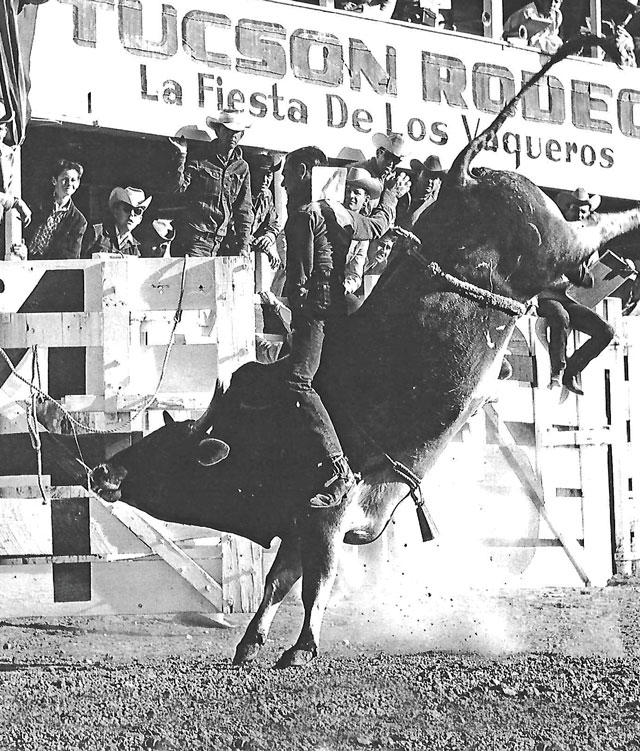
    Ken was discharged from the Army in 1955, and he enrolled at Arizona State University in 1956, majoring in animal science. Though he had dropped out of high school, he finished his GED in the Army, and he joined the rodeo team and competed in the West Coast Region. He even tried his hand at steer wrestling. “I wasn’t too good in timed events. I told everybody I had a record in the bulldogging – I was in the bulldogging seven or eight times and never got a flag,” Ken says with a laugh. He was helped along the way by college teammates John Fincher and Jon Nickerson. Ken enjoyed rodeoing in California and as far north as Klamath, Oregon. He was also a member of the RCA when a membership cost $10, and on summer breaks, he competed in Colorado, Utah, Texas, Arkansas, and Missouri, though many of his favorites were in Arizona, such as Phoenix, Prescott, and Tucson. “Some of the little towns didn’t have anything (like motels) to sleep in, so we’d sleep in the back of a car. You stayed in rooms when you were prosperous, and we’d split rooms with three or four people usually.”

    Ken met his wife, Sharon, at school, and they were married after he graduated and she finished her teaching certificate. “We got married in July of 1960. I’d been teaching school for a year, and Ken won second in the bull riding at Prescott, so we had enough money to get married,” says Sharon. After he finished college, Ken was a brand inspector for several sale barns, then went into the crop spraying business with his brother-in-law before finding his niche in the animal health business selling medicine. Though Ken quit rodeoing not long after they were married, he stayed involved with rodeo by judging several of the law enforcement rodeos a college friend of his organized, along with jackpot bull ridings. In the late 1970s, one of Ken’s friends Stan Harter, a college champion tie-down roper, asked Ken to be the manager of the PRCA Turquoise Circuit when the circuit system was just getting started. Ken served on the board for three or four years and helped put on the finals, along with soliciting saddle donations. “The Turquoise Circuit Finals Rodeo was in Phoenix at the fairgrounds, and for some reason, there was a mix-up one year and all of the trophy saddles got shipped to our house!” says Sharon. “Each saddle came in a big box, and we had them everywhere in the house because we couldn’t leave them outdoors.”
    Ken became involved in the NIRA Alumni when he attended the NIRA reunion in Rapid City, South Dakota, in 1997, the 40th anniversary of his NIRA bull riding championship. The following year, his friend Stan Harter was waiting for a kidney transplant, and he asked Ken to represent him on the NIRA Alumni board during the annual meeting. Together, Ken and NIRA founder, Evelyn Bruce Kingsbery, put together the 50th Anniversary Reunion of the NIRA in 1999, and Ken was president of the NIRA Alumni from 1999-2001. Sharon served as the NIRA Alumni secretary for 12 years, and Ken continues to serve on the board of directors. He hasn’t missed a performance of the CNFR since he started attending 20 years ago. When he started raising money for his bull riding rookie of the year scholarship, his plan was to ask former champions to donate $100 each, and by the next year, donations were coming in to provide scholarships for all nine college rodeo events, including team roping header and heeler. “I never had a scholarship, and even the year I won, I was never offered a scholarship,” Ken explains. “They’re giving quite a few scholarships now, but I just thought the rookie scholarship was something somebody wasn’t already covering.”
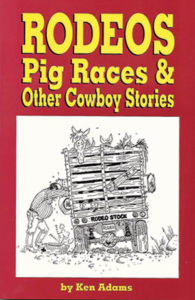
    When they’re not off to the next CNFR, Ken and Sharon make their home in Phoenix, not far from where Ken grew up. They have a son, Ira Adams, and daughter, Adrienne Schiele, and her husband, Mark Schiele, while Ken and Sharon’s two grandsons, Mike and Matt Schiele, live in California. Ken stays current with rodeo via television and never misses a rodeo or bull riding, while he wrote and published a book of short stories about rodeo called “Rodeos, Pig Races & Other Cowboy Stories.” He and Sharon continue their passion of supporting the NIRA and alumni, and they are searching for all NIRA champions, top finishers, faculty, and board members from years ending in eight to join them for the 2018 Annual Reunion.

  • On The Trail with Cooper Nastri

    On The Trail with Cooper Nastri

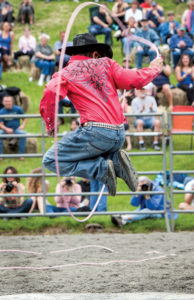
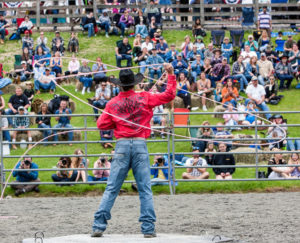
    With the flick of a wrist and the twirl of an arm, Cooper Nastri has entertained scores of rodeo audiences up and down the East Coast in the last six years. The 17-year-old trick roper, who alternately makes his home in Ballston Spa, New York, and Screven, Georgia, became one of rodeo’s youngest trick ropers in the country when he started performing at 11. Yet he was no stranger to the roping world before that. Cooper had already been competing in rodeos for several years, and is even named after the Super Looper himself, Roy Cooper, but his decision to become an entertainer was a surprise to his parents, Carmine and Sheri Nastri. “Cooper was real shy when he was little, and when he said he wanted to trick rope, I was impressed that he wanted to get in front of an audience and do something like that,” says Carmine. “His work ethic has always been really good, and when he decided he wanted to trick rope, he practiced seven days a week for hours. It turned him right out of his shell, and he’s not very shy anymore.”


    Cooper originally wanted to be a rodeo clown and worked with Dusty Barrett as a rodeo clown and helped Hollywood Harris a couple times but he first saw trick roping when Mark Madden came to the Natri’s home and showed him several tricks. He’s also met professional trick ropers including Anthony Lucia, who performed on America’s Got Talent, and Austin Stewart, who also performed on America’s Got Talent, and at Dolly Parton’s Dixie Stampede. “Mark Madden helped me a lot with my trick roping. A lot of people don’t understand that it’s very easy once you figure it out, but it takes a lot of time to learn,” explains Cooper. “I was really impressed by it, and you get paid every rodeo. I try to get one of my family members to video me every time I perform so I can watch and see if there’s anything I need to improve. I watch a lot of horse training videos, too.”

    Cooper started by performing at open rodeos, then worked his way up to events like the Painted Pony Rodeo in Lake Luzerne, New York, and Cowtown Rodeo in Pilesgrove, New Jersey, which his grandfather, Dusty Cleveland, has announced for many years. He also performs in Georgia, and was honored to trick rope at AFR 35 and AFR 39. The materials are simple enough – Cooper buys 100 feet of cotton spot cord and cuts it into the four different lengths he performs with. The shortest is 15 feet, and the longest is 50 feet, which he uses to perform a trick called the wedding ring. “The first trick I do is the butterfly, and some high spirals. The big trick I really like is the Texas Skip, which is the hardest trick in the book to do. That’s where the rope is on one side of you, and you jump back and forth through it. I feed off the crowd, so if I can tell the crowd doesn’t like something, I might stick something new in there. Keeping the tricks tuned up is probably the most challenging. I’m pretty busy riding horses every day, so I don’t get to practice as much as I’d like to. Once I get to a rodeo I might practice before the performance. I try to keep the tricks pretty snappy and tuned up.”

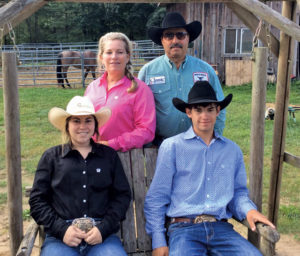
    This year alone, Cooper will perform in 45 rodeos, many of which are APRA rodeos that he enters in the team roping with his dad or Robbie Erck. Cooper is also practicing his tie-down roping, but prefers to team rope in the USTRC and APRA. He changes footwear – going from sneakers to boots since sneakers allow him to jump higher during his performances – and often heels for his dad. Carmine is a 24-time PRCA First Frontier Circuit Finals Champion, and he’s won the APRA six times between team roping, tie-down roping, and the all-around. He’s competed in the APRA on and off since the 1980s, and his wife, Sheri, is also a First Frontier Circuit Champion in the barrel racing. She team ropes every October at the USTRC Cruel Girl Championships with her partner, Kim Breyo, and has competed in the APRA in the past. “She backs us 100%,” says Carmine. “She drives, rides horses, and helps keep this whole thing afloat. Whether it’s the four of us here or we have ten cowboys staying with us, she keeps everything going.”


    Sheri’s grandfather, Harry Cleveland, was the Painted Pony Champion Calf Roper in 1953 when it was part of the Cowboys’ Turtle Association, and he taught many of his generation in the Northeast how to rope. Her dad, Dusty Cleveland, taught her how to rope, and he comes to several Painted Pony Rodeos a year to watch Cooper and his sister, Shelby, compete. Shelby is also an APRA member, competing in breakaway roping and barrel racing, and her senior year of high school, she was the NYSHSRA barrel racing and all-around cowgirl champion. She holds her WPRA card, but primarily competes in the APRA, and her goal is to qualify for the association’s finals in the next few years.

    The Nastris put on several roping schools each year with ropers including Speed Williams, Roy Cooper, and Rich Skelton, all friends of Carmine. They also hold weekly roping lessons, and Carmine takes in outside horses to train, along with buying young horses he turns into rope horses. “One of the head horses I made and sold was voted Head Horse of the Bob Feist Invitational this year,” says Carmine. Cooper, who is homeschooled, helps with all of the training and riding, and has become especially passionate about the horsemanship side of roping. “When people come for lessons and have horsemanship questions, Cooper’s a fanatic about it – he’ll spend 15 minutes answering the question.”

    Cooper helped finish his own roping horse, Shorty, a bay gelding that stands 14.1 hands high. “He’s a pretty cool little dude. He’s really stout, so I can head on him, heel on him, and rope calves on him,” says Cooper. “He’s got a lot of grit.” Every year since 1987, the Nastris load all of their animals and spend their winters in the southeast corner of Georgia. “We’ve got a pretty good routine, and we know how to get things packed in a hurry and get the trailers organized,” says Carmine. “My mom, Patricia, spends the winter months with us. She’s been a big supporter all my life and pushed us to do whatever our dreams are.

    “The nice thing about the summer rodeos up here is that they’re all really close,” Carmine adds. “Painted Pony Ranch does two rodeos a week, and they’re only 27 miles away. My daughter, Shelby, works at a western store in town, and she can come home, practice a little, and go to the rodeo. We live right next to Saratoga, where the big thoroughbred race track is. For Shelby’s birthday, we went to the Saratoga Race Track and took the day off riding and roping.” Sheri adds, “We’re usually all in the arena, but every now and then we take a day off to go to the movies. Our vacation every year is to go to the US Finals, and go to Rich Skelton’s and see Speed Williams.” Cooper plans to continue trick roping, but he has a growing passion for horse training. “One of the biggest things I want to do is go work for a top horse trainer like Bob Avila, Jay Holmes, or other AQHA people,” he finishes. “I’ll still trick rope now and again, but that’s the biggest thing I’m working on.”