Gus Duncan grew up in Oklahoma with an arena and a roping in his backyard every weekend, but while his family grabbed their ropes, he grabbed his rifle and spent his weekends hunting. “I’ve always had such a passion for wildlife, and that’s what’s important to me,” says Gus, a Cargill Feed Consultant who focuses on equine and wildlife. “My passion for the rodeo industry is helping, not necessarily roping. I love the sport, but I get more of a thrill helping those people win, as opposed to roping myself.”
Rodeo companies, equine breeding operations, and wildlife and equine ranches all run on the well being of their animals, and Gus shares the same commitment with his customers. He’s been in the feed industry for 15 years, and since joining the Cargill team in 2013, Gus has worked alongside prestigious companies like Beutler and Son Rodeo Company and the Lazy E Ranch. “The focus on my equine customers is 100 percent performance driven,” Gus explains. “I work with large bucking stock and performance animals, whether it’s barrel horses, rope horses, or bucking horses, and I work with many large racing facilities. With horses, we look at everything from the outside and take a wide view, then trim it down and look at individual animals and how they perform and move. By talking to the customers and finding out their goals, I can go more in depth to get to those goals. It may be a horse that needs more calories, or a horse that has a digestive problem. I work with some of the largest of the large, and it’s very exciting to see what they do.”
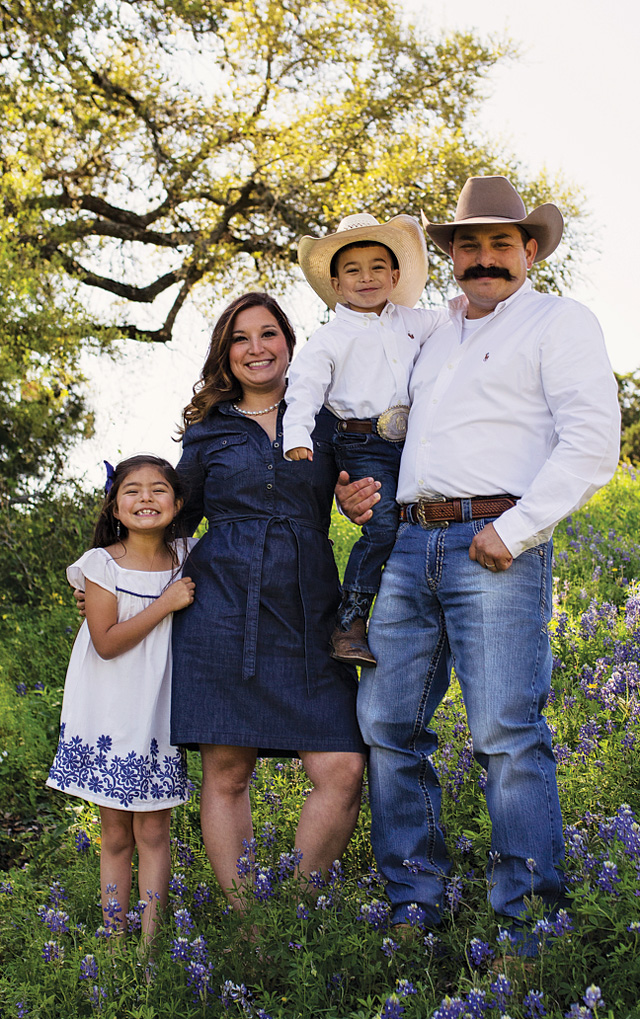
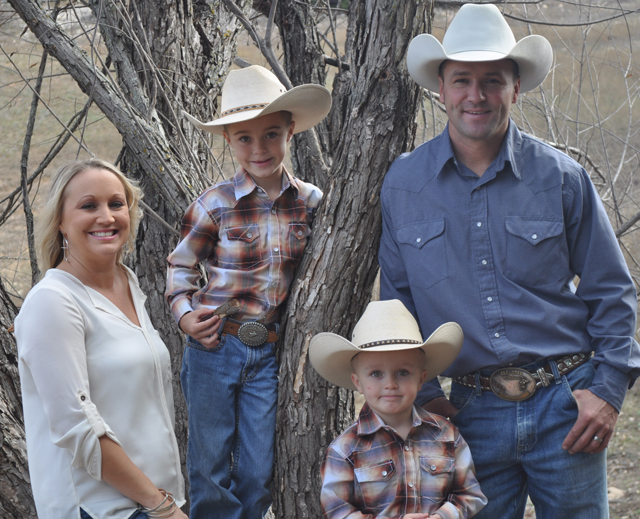
Bobby Deeds with wife Chelsi and daughter Bailey – courtesy of the family
Along with his work feeding all of the breeding horses at Lazy E Ranch, Gus also works with Nutrena, the official feed sponsor of The Lazy E. “I work directly with the arena, providing feed for events and marketing, and we’ll do a lot of giveaways for fans, so it’s anything we want to partner on with them,” says Gus.
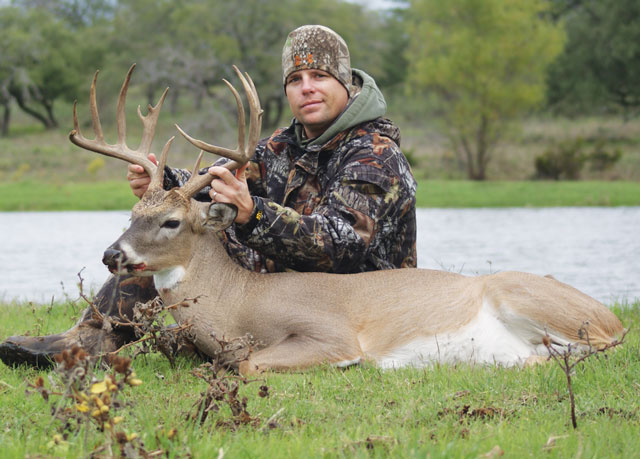
In the wildlife field, Gus focuses on wildlife breeding operations of white tail deer, mule deer, and elk. “The number one thing I’m always looking at first is herd health, and then antler growth. Without correct herd health and a management program, you won’t get the antler growth you want.” Though Record Rack feed has been around for many years, Gus feels it has improved greatly as the research in wildlife nutrition continues. “I feel like we are leading the way when it comes to wildlife nutrition. I work hand in hand with another gentleman that works for Cargill, Bobby Deeds, and he has made leaps and bounds in the wildlife nutrition department. In my position, you have to be passionate about whatever it is you do, and knowledgeable. You also have to be a likeable person that people trust – you have to be genuine – and if you can tie those three together, you can be successful.”
Gus traverses the entire state of Oklahoma and the Texas Panhandle visiting customers, which are roughly 60% large equine ranches and 40% wildlife ranches. “With Cargill, we have a no-phone policy in our vehicles, so I listen to music. I love every genre – it doesn’t matter if it’s classical to rock and roll. Music is how we keep our blood pumping.” Since Gus and his wife, Chelsi, have jobs that involve traveling between Oklahoma and Texas, they have homes in both states. In the fall, Gus also enjoys guiding deer hunts for ranches in Oklahoma, Texas, and Colorado. “In Texas and Oklahoma we don’t pack on horseback, but in Colorado when we go on big elk hunts, we pack in on horseback and camp in the mountains. I like the peacefulness, and the outdoors in general. It’s just relaxing, and a lot of the time when I’m hunting, I’m taking someone who hasn’t had the opportunity to hunt and harvest animals like I have. To see the passion and excitement in their eyes when they do it – there’s nothing better than taking a kid hunting that loves the outdoors and hasn’t has the opportunity to do it.” On weekends when he’s not hunting or fishing, Gus travels to barrel races around Oklahoma and Texas with his wife, who competes, and their 4-year-old daughter, Bailey. Chelsi worked in medical research with animals until they started their family, and she now works in the commercial industry, while their daughter loves to go shed hunting with Gus.
“I want to provide the best service possible for everyone I work with, and to be known as the guy who is honest and up front about everything,” Gus finishes. “I want people to know I have their business in mind first hand. I love working for Cargill, and I strive to be the best and I want my customers to have the best. Same with my family – I strive to be the best husband and father that I can. Those are the things that are important to me.
Ritchie Bros. auctioneer started as a country boy.
John Korrey is a native of Iliff, Colorado, living on the same farm he was born on 64 years ago, but his voice has been heard throughout the United States and internationally as far as Dubai, the Netherlands, and Australia. Since 2003, he’s worked for Ritchie Bros. Auctioneers, one of the world’s largest auction companies of heavy equipment and transportation equipment.
The team roper and auctioneer of more than 40 years grew up helping his dad farm and raise livestock, and he was intrigued early on by the auctioneers he heard when they went to livestock auctions to sell produce. Even his classmates in grade school told him he’d make a good salesman. John graduated from Northeastern Junior College in 1972 and attended Reisch Auctioneer College soon after, but the work was barely beginning. “This occupation is no different from other occupations – you have to pay your dues,” says John. “You’re sometimes selling people’s whole livelihood, or a year’s wages, and it’s really crucial. For someone to give you an opportunity to go up and sell is tough, so you practice on your own. I went to an auctioneer school and they teach the basics, but you can’t leave there and be an auctioneer. You have to practice and get better. I was pretty determined and I listened to a lot of auctioneers. I thought if I was going to do it, I would try the very best I could.
“I went to different markets to try and get a job. My dad was one of my biggest fans, and he and my mom helped me get started and hooked me up with some livestock markets, and I went to various livestock auctioneer contests in the country,” John explains. With his background in rodeo – competing during his childhood, and team roping and tie-down roping on the college rodeo team – John found he was equally competitive in the auctioneer contests. He also found the bond between livestock auctioneer families much the same as with rodeo families. “I competed quite a few years before I won the contest and realized it wasn’t about me, it was about meeting other auctioneers and families in the business. I finally won it (World Livestock Auctioneer Champion) in Dunlap, Iowa, in 2002, and it didn’t skyrocket my career, but I had more confidence. People won’t hire you because you’re a world champion or not, but because they trust your ability to do a good job.”
John also won the Calgary Stampede International Livestock Auctioneer Championship in 1998, among several other championship titles, and he was inducted into the Colorado Auctioneer Association Hall of Fame in 2009. He and his late wife, Janna, were married for 35 years and owned and operated Korrey Auctions for 23 years until he started working for Ritchie Bros. John’s specialty was in livestock and farm equipment when he started with the company, but he says it was an easy transition into selling industrial equipment. “My chant is diverse enough to sell livestock, real estate, equipment, and charity. I’ve done all those in one week, and you have to do them all different. Sometimes you’re dealing with novice buyers, or buyers who go to more sales than you do. Especially with the diversification between Colorado or Washington or Dubai or the Netherlands, communication is crucial. If you can’t communicate, there’s nothing. I can change my chant to work with all aspects of the profession, but still create urgency to bid and be entertaining.”
Another challenge is working not only with bidders and proxy bidders at the actual auction, but also internet bidders, where the rapport with the crowd and the eye contact isn’t possible via the computer. “There are so many tools, and whether you’re selling livestock or equipment, it’s pretty competitive,” John adds. “People have said the auction profession won’t need any more auctioneers with computers now, but I hope they’re not right. I still think there’s a need for that excitement.”
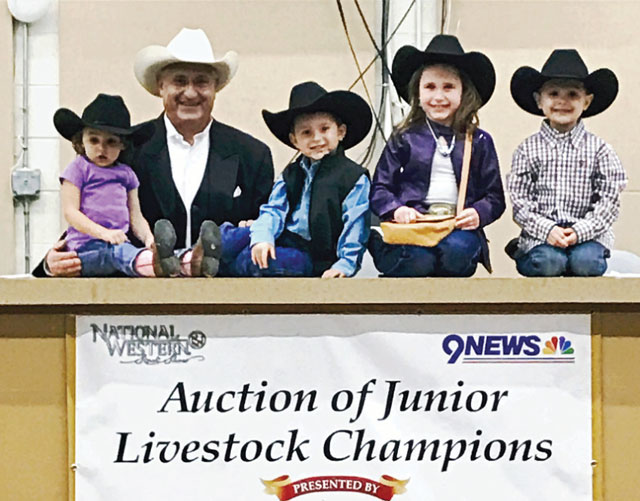
John shares some of his auctioneer knowledge in his instructional DVD Chant of a Champion, which was released in 2007. “It’s not to take the place of a school, but to help with things that might be missing,” he explains. “I’m working on putting out something else like a CD that people can listen to in their vehicles.” Along with helping the next generation of auctioneers, he’s passionate about giving back to the community. One of his favorite events is auctioneering at the National Western Junior Livestock Sale in Denver for the last 15 years, where 90% of the proceeds from sales go to the young exhibitors, and the other 10% is donated to the National Western Scholarship Trust.
When he’s not traveling to the next auction, John enjoys roping in the NSPRA and local jackpots. He competed on his PRCA permit one year shortly after college, but he didn’t like the intense traveling. “And now what am I doing? I’m traveling!” he says with a laugh. A few of his horses have been ridden by professional ropers Troy Pruitt and Chris Anderson, while John is the rodeo chairman of the PRCA rodeo in Logan County. One of his goals is to qualify for the World Series of Team Roping Finale in Las Vegas, but his main priority is spending time with his two daughters and sons-in-law, and his five grandchildren. They also run a small cow/calf operation on John’s farm.
“I feel so blessed with the things given to me in the auction profession,” he finishes. “Who would ever dream that the little country boy with no experience in the auction business would be doing what I’m doing. I have to pinch myself sometimes.”
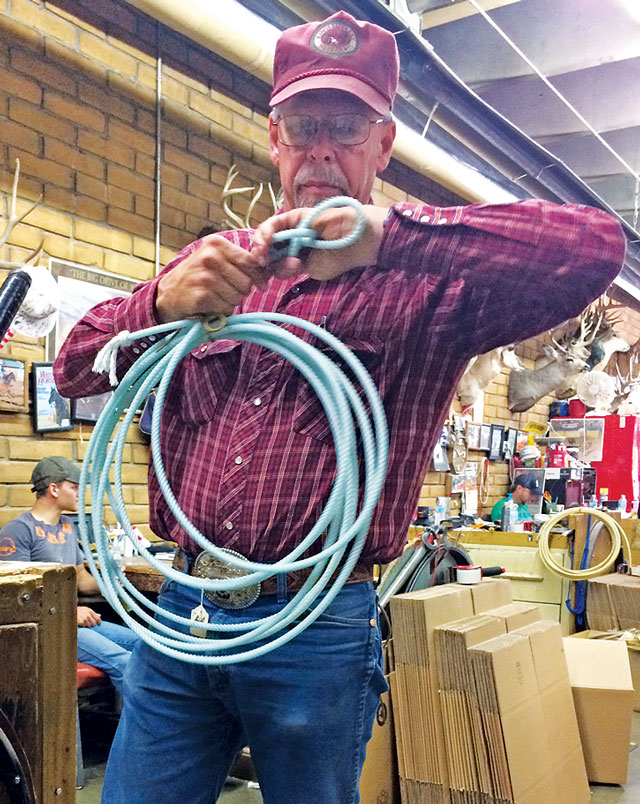
Gary Mefford found his vocation as a sophomore in high school in 1974, working part time at King Ropes in Sheridan, Wyoming. He started out tying knots and rapidly expanded to tying burners and picking up orders. Nearly 43 years later, he knows the shop like one of his favorite four strand ropes, and co-manages it with Dan Morales. “My brother grew up with Bob King, and they got me the job here,” says Gary. “It was just going to be part time while I was going to school, but I went to college in Sheridan and kept working here. I got my degree in mine maintenance – hydraulics and welding – but by that time, I was close enough friends with Bobby that if I needed some extra time off to go down the road, I could get my work done ahead of time and then take off. There’s not a lot of jobs in this world that allow you to do that. You get to enjoy what you do, and you’re working with the public a lot. We get a lot of walk-in trade here, especially in the summer months. We get Europeans in here all the time, and a lot of Argentines, Canadians, and South Africans. We ship ropes all over the world, like Brazil, Australia, and Europe. It’s a world-wide operation, but percentage-wise, the majority of our business is in the states.”
An average day for Gary at King Ropes starts with picking out ropes for the latest orders, giving the knot tyers ropes to work on, tying hondos, pulling grass ropes down, and working on stock. From June through August, they’re stocking trailers for 3 – 4 weeks to go to the NHSFR and Cheyenne Frontier Days, followed by the WNFR in December. “I’ll start working on trailer ropes 6 to 8 weeks before they leave for Vegas,” says Gary. “We take 1,500 to 2,000 ropes and we might sell 700 to 800, but we’ve figured out over the years what we sell a lot of. When we have 500 variations of ropes, you never know what people will ask for, between different sizes and materials and stiffnesses and lengths. It’s such personal preference on what people like in a rope. Team ropers are always looking for the new fix, but the rope only does what the hand tells it to, and the hand only does what the mind tells it to. We’ve stayed pretty much with the old style ropes we’ve had for fifty years.”
The YouTube television series How It’s Made created a documentary four years ago on how ropes are made, featuring King Ropes. “I like the four strand ropes. We buy all our four strands in bodies and put them through our stretching process, and they feel quite different when they’ve gone through the stretching process,” Gary explains. “The rope is stretched at a field outside of town. The rope comes in 600 feet coils and we tie it off at the end of the field and roll it with the tractor and pull it to the other end. It might take several days or three weeks or three months before they’re straight. The poly grass ropes that calf ropers like to use we do in a hot room in the basement that’s 130 degrees. But the Nylon comes out better if it’s stretched outside in the natural cooling and heating – the whole process makes them better than if we were doing them in the hot room.”
While Gary grew up in town in Sheridan, his grandparents homesteaded on the Montana/Wyoming border in the early 1900s. His dad worked on ranches and later did highway construction. Gary was given an old rope horse by his older brother Dick when he was 9 or 10. “I high school rodeoed my junior and senior year, and college rodeoed locally. I jackpotted and team roped after that,” says Gary, who prefers to heel. “It’s such a challenge to do it well.” He competes in mixed team roping with Miff Koltiska, and competed several times with Mark Moreland at the Reno Invitational. He’s also roped at the WSTR Finale in Las Vegas at least eight times. “I cut my thumb off at the Reno Invitational in 2011 – I did it on the biggest stage,” says Gary. “They tried putting it back on, but it didn’t take. I just reach for stuff differently – I don’t even think about it. That was in the spring and I’d only won a few hundred dollars at some winter and spring ropings. After losing my thumb, I won $3,800 and three buckles. I’d been in a slump, and after that happened, I relaxed and things fell in place. I guess my thumb was just getting in the way.”
Gary also puts on roping jackpots and contracts roping steers to high school, college, and cowgirl rodeos. He has 100 head of longhorn cows and raises his own roping steers at his home outside of Sheridan. His wife, Sara, helps put on the jackpots, works as secretary, runs chutes, and moves steers. She worked at King Ropes for several years, and enjoys team sorting and team roping. Their four-year-old daughter, Londyn, competes on her pony in barrel racing, pole bending, and goat tail untying.
“My mind is always working on what I have to do after work,” says Gary, who works six days a week at King Ropes, along with hauling steers and putting on jackpots and team sortings. “I just make sure everything is prearranged in my brain on what I need to do. This doesn’t leave me very much time to practice. While working at King’s Saddlery over the years, I have met a lot of team ropers and have become friends with several them such as Bobby Harris, Rich Skelton, Mike Beers who are some of the best heelers in the world. They all have offered me a chance to go rope with them. I just don’t know how I would ever fit it in, without my wife having to do all the work at home. But there would be nothing better than to take the time and go rope with them for a month.”
Kenny Pfeifer is always on the move. In his earlier days, it was on horseback, whether training horses, or riding broncs and bulls in the ICA and RCA. Today, he’s entering his 45th year as a business owner, operating Western States Movers, LLC, out of Nampa, Idaho, and staying involved in the rodeo world with his granddaughter, even helping at several Martha Josey Clinics a year.
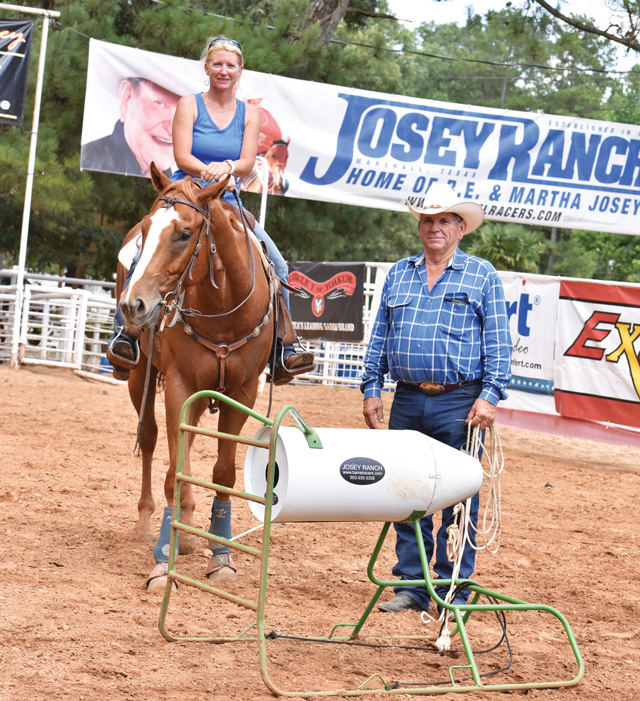
Kenny and his daughter, Tammie, with the tie-down roping dummy he made for Josey Ranch – Rodeo News
Born in 1947 in Caldwell, Idaho, Kenny grew up northwest of there in Parma, Idaho, riding the horses his dad brought home. “We always had horses around, and I did everything on horseback. The first date my wife and I went on was horseback,” says Kenny. “I was riding a bunch of horses for people, and I’d ride one to school, tie it up, and ride a different one home. I didn’t even own a vehicle until I was a senior in high school. It was seven miles to town, and my dad told me if I wanted to play sports, I’d have to get myself there and home, so I rode horses there. When I was a kid, there weren’t any kid rodeos around,” he adds. “Leonard Hamilton produced rodeos around the area, and he had an arena we built. We’d go over there all the time. He bought all the horses from the ‘Run, Paint, Run’ movie, and we had to rope them all to catch them. Some were like a bull – if you were on the ground, they’d come after you.” Kenny even started horses on wagons, mowing and hauling hay. “It turned into a lot of wrecks, but we had a lot of fun!”
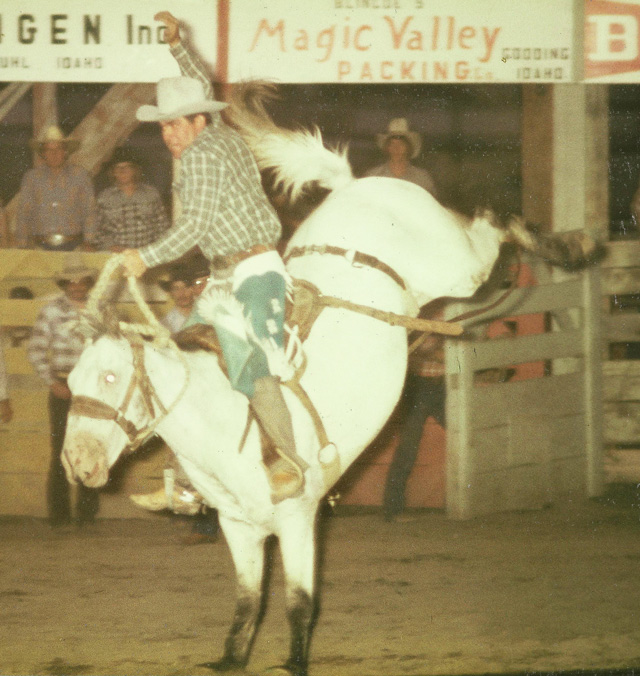
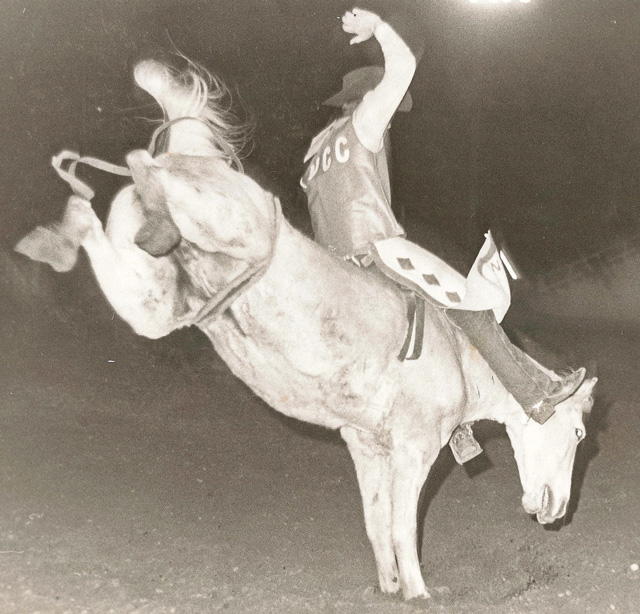
Kenny’s horse training made him the perfect candidate for riding roughstock. He and his dad put bronc saddles on the horses they started and snubbed them up to a post while Kenny climbed on. “It was just in a big dry lot, and it was harder than a pancake,” Kenny recalls. “I went to Polson, Montana, in the winter where the snow was deep and the ground was frozen, and I was riding bucking horses in a building. I never broke any bones, but I had lots of sprains, and I got stepped on and run over. I even fought bulls a couple of times. I liked riding bulls, but I got hurt too many times, so I quit that.”
Kenny started rodeoing in high school, including high school rodeos, jackpots, and local rodeos. Little Britches started when he was a senior, and he competed there for a year. With just one rodeo to qualify for the NHSFR at the time, Kenny often placed just one out of the qualification, though he won several high school rodeos in all his events and the all-around. He also college rodeoed, helping start the Treasure Valley Community College rodeo team with Joe Mayor in the 1960s. “Joe was the first president, and I was the second. I rode three years with them, and I made the ICA finals probably ten times in a row.” One cowboy who helped Kenny with his roughstock was Cotton Rosser, the producer of the Caldwell Night Rodeo at the time. “He had a paint bucking mule I rode for him during the rodeo, and he always started the rodeo with a buffalo scramble,” says Kenny. “They were all turned out at the same time, and I learned after riding the first one, that halfway down the arena, you’d better get off because they’d turn into a herd and you couldn’t get off.”
Following college rodeo, Kenny competed in professional and open rodeos around the Northwest, traveling with his wife, Kris. They met in 1965 on a trail ride after her horse – one that Kenny had trained – threw a shoe, and Kenny put it back on by campfire light. They were married in 1970, and Kris college rodeoed and competed in several rodeo queen contests afterward. Their two children, Shawn and Tami, rodeoed when they were growing up. Shawn also played football and went to school on a football scholarship, while Tami barrel raced in the PRCA.
Kenny Pfeifer riding while in college
It was at the Days of ’47 Rodeo in Salt Lake City, Utah, where Tami was competing that Kenny became acquainted with Martha Josey, holding her horse, Orange Smash, during the rodeo. They met again in Ogden, Utah, and when Kenny learned they were headed to Nampa next, he invited Martha and R.E. to stay at his place. “They’d come to the Northwest and stay with us for two or three nights, any time of day or night,” says Kenny. “Right after the Caldwell Night Rodeo, they started doing clinics each year, and my wife and I and both our kids helped. We’d rent the Caldwell rodeo grounds, the fair building, and the Charolais Barn. There was anywhere from 40 to 70 students depending on the year.” Kenny has also stayed involved locally judging the Snake River Stampede parade that kicks off the Snake River Stampede Rodeo. He judged the drill teams for many years, and most recently judged the wagon entries. “It’s originality for me – no rubber tires,” he says. “I also look at condition, cleanliness, and the type of harness. I’ve also judged horsemanship in some queen contests.”
While Kenny retired from rodeo in 1981, he started his moving business in 1972 on 40 acres in Nampa. “I started everything from scratch – it was tough! Back then, you had to have PUC (Public Utilities Commission) authority, which was a license you had to get. It usually took a few years to get them. I invented a machine that will raise a house or any load without jacks or dollies, and it runs wirelessly by remote control and raises and steers hydraulically. We do all our own machining and fabrication right here in the shop.” Over the years, they have moved silos, bridges, houses, historical buildings, and tanks – anything heavy or oversized. “It’s kind of like rodeo,” says Kenny. “They said it couldn’t be rode, so you try it anyway. Every one is different, and that’s the challenge. We moved a historical town, Sherman Station, to a park in Elko, Nevada. There was a livery stable, blacksmith shop, creamery, and a schoolhouse. It was 117 miles south of Elko, and it took two and a half months to move because it was in the mountains and we brought (the buildings) down narrow roads and through a creek. We moved another building in Battle Mountain, Nevada, they said couldn’t get out, and we raised up a bridge to get the building across it.”
Kenny’s inventiveness has also benefited the Joseys. Last year, they were in need of more drag dummies, and after putting together CAD drawings, Kenny fabricated 55 dummies out of half-inch pipe. “They’re a little wider and longer, so they don’t tip over so easy on the side. There’s a little drag to them, and when you rope them, they stand up and lay down when the rope comes back.” Kenny makes the 31 hour drive to Josey Ranch often three times a year, helping with their clinics and calf roping reunion, and taking his granddaughter, Kylie, to their roping and barrel racing clinics. “It’s Texas Disneyland,” says Kenny. “We’ve been doing that for 17 to 19 years.” His goal is to continue working at Josey Ranch and helping his granddaughter – and moving the West one project at a time.
Sammy Castaneda loves a challenge. For the Cargill Animal Nutrition Consultant from San Antonio, Texas, improving everything from the size of deer antlers to the stamina of a rodeo horse is what makes him tick. “It is very satisfying finding solutions for new and current customers and building long lasting relationships along the way,” says Sammy, who started working for Cargill in their cattle feed division 10 years ago. “Helping people reach their goals and implement a sound nutritional program long-term is success to me. Some days I am working to figure out how to help a cow/calf operation increase conception rates and increase weaning weights, or feedlots looking to improve costs and increase average daily gain (ADG). The next day I’m on a deer ranch discussing body condition and growing big healthy deer with antlers that stop you in your tracks.” Sammy also works with rodeo and performance horse owners to maintain healthy toplines and energy. “In the nutrition business the needs of customers are always changing. It is important to stay informed and understand markets and trends, as well as environmental changes that affect feed consumption, gain, and performance.”
Sammy has always been interested in the field of animal science. Many generations of his family have lived and worked on ranches throughout South Texas including the King Ranch, home of the “Running W” brand. “They were the true cowboys called vaqueros and roped wild cows in the brush, trained horses, and worked cattle with the best of them. It was their life and they were good at it. This is where some of my roots come from and I can certainly appreciate their hard work, dedication, and love for the cowboy way,” says Sammy. Growing up, Sammy worked on feedlots and ranches and took every chance he could to work cattle, rope, and be around that lifestyle. Sammy’s interest in animal nutrition led him to achieve an associate’s degree in agriculture and a welding certificate, while he finished with a bachelors in animal science from Texas A&M Kingsville.
“My dad always said that hard work and smart work will lead you there and it is up to you to figure out what “there” is. I graduated and then started working for Cargill in 2007. I worked at a few feedlots in the Panhandle as a feed and cattle manager, and my wife worked with me as the office manager. Taking care of over eighty-five thousand head of cattle, I gained large scale production knowledge and eventually ventured into the position I am in now. I’ve always loved the nutrition side of things. Most days I am visiting ranches, feed dealers and different breeders including cattle deer and equine. South Texas is home to millions of acres of brush country and prairie, providing habitat for lots of wildlife – white tailed deer in particular – which is a big part of my business today,” says Sammy. Nutrena and Record Rack are two of the major brands that he represents. They have a team of research scientists, specialists and consultants who work together and strive to be the leaders in providing innovative solutions to their animal feed customers worldwide. “Our customers rely on us to help them, so we have to be very effective in what we recommend, and we take it very seriously. Sometimes we’ll formulate a specific feed depending on that customer’s needs.”
Sammy is also involved with organizations like the Texas Deer Association and is part of the committee that recently put on the Texas Deer Association’s first annual Ropin’ & Smokin’, sponsored in part by Record Rack and Nutrena. “Deer breeders are such a big part of our business, and I want to bring some of my knowledge to the table,” he says. In the last year, Sammy partnered with BXB Productions, a rodeo production company, in putting on ranch rodeos and team ropings. “We do one to two ropings a week around San Antonio and take the ropings on the road every other month or so throughout South and Central Texas. It’s helped me grow and meet new people, and it’s really cool to put something like that on. We also do some charity events to help local causes. At our first annual Nutrena Roping, we had over eight hundred teams and we gave lots of custom prizes and cash. We have also partnered with Sosa Buckers, owners Shiloh and Shane Sosa, and do different segments with bulls. There’s a huge link between rodeo and hunting. A lot of the contestants are ranch managers or avid hunters and they rodeo for fun, and these ropings are a very good way to interact and meet new people.”
Every chance he gets, Sammy takes part in the hunting and team roping lifestyle he promotes. He’s also an avid fisherman and enjoys team roping locally, while his two children, Delina, 8, and Samuel, 5, ride and work cattle with him and have started rodeoing. His wife, Fela, works for Animal Health International Inc., and even shares some of the same clients with Sammy. “We have cows, and it’s not a big operation, but enough for the family to get together and work. I do things so I’m a role model for my kids and youth in general,” says Sammy. “I try and lead them in the right direction and strongly support them in activities such as sports, rodeo and FFA. I believe teaching those hands-on skills, discipline, hard work, and dedication will help them achieve what they set out to accomplish. I want to help my kids grow and rodeo and hopefully they can lead successful lives.
“I’d like to continue doing these rodeo events and making them better, and get Nutrena’s name out there,” he finishes. “I also want to keep growing my business and helping these ranchers meet their goals, which is something I take a lot of pride in.”
Texas has one of the largest deer populations in the United States, and Cargill Wildlife Specialist Bobby Deeds is at the forefront of keeping that deer population thriving. “I’ve been with Cargill ever since I finished my master’s at Angelo State University in 2004,” says the 37-year-old from Goldthwaite, Texas. “I was a territory manager for them and then I went into the wildlife specialist role. It’s the fastest growing segment in the feed side because of recreational hunting. I love getting into the country and working with different land owners, helping them grow bigger deer. I never would have thought in college that a job like this existed – I wanted to keep rodeoing and not go to work. If I’d known the job was here the whole time, I would have been running hard to get it!”
Bobby grew up on his family’s ranch in central Texas, where hunting and rodeoing were not hobbies, but lifestyles. Bobby started rodeoing when he was five or six, beginning with riding calves, then steers. He worked up to riding in all three roughstock events, and after rodeoing in high school for Texas, he competed on the Angelo State University rodeo team. “I had a back injury and I wasn’t rodeoing, and I think it was God telling me to get a real job,” Bobby jokes. “I had a graduate professor, Doctor Cody Scott, who was one of the most influential people besides both my parents, driving me toward what I had a desire and passion for. It’s by the grace of God that this all fell in line, and I’m lucky to be where I am today.”
A day in the life of Bobby has him traveling anywhere in Texas to perform habitat analyses and design a feeding program for whatever the habitat is producing. “I go from one ranch to the next, and the first thing we talk about is their goals,” he says. “Every ranch and its resources are different. Whether they want the biggest deer they can grow, or exotics, we can figure it out. Nutrition is the easiest thing to change, but if everything else isn’t dialed in to it, you won’t get a lot of response from it. I make recommendations other than nutrition and make sure the habitat is doing the most for them, because feed is a big investment from a management standpoint. Nutrition, age, and genetics are the three things that grow big whitetail deer. Texas is probably ten to thirty years ahead of some states with what we’re doing with whitetail deer, and we have a pretty lengthy hunting season. The forefathers of deer management like Aldo Leopold managed habitats and were really dialed in on the deer management standpoint.”
Every other moment of Bobby’s is spent with his family. He and his wife, Ashley, have three sons, Ethan, 9, Evan, 6, and Easton, 6 weeks. “When I’m not working, I’m typically coaching one of their baseball games or I’m in the practice pen with them,” says Bobby. “Ethan is in the top ten of the AJRA steer riding, and we have a small practice pen behind the house with a bucking chute. There’s a reason rodeo kids are typically the best I come across in manners and how they succeed in life because of what’s engrained in them from a work ethic standpoint. My number one goal in life is to raise good kids and have God in their lives.”
Bobby also breaks colts for his dad, who runs 20 head of broodmares. “We have no shortage of horses! We’re training those for our own horses since my boys are getting started in roping, and we have two or three good roping prospects. I’m really happy with where I’m at right now with Cargill,” Bobby finishes. “If I have an idea, we run with it, and they support me and get behind it. I want to continue being successful and leading on the wildlife management side. I want to think of something that will take it to the next level on the feed side, and I want to be remembered as someone who helped raise really good whitetail deer, and great kids.”
“No matter where you go or what you’re doing, it’s not going to be easy to win first place,” says Myles Neighbors. The 18-year-old from Benton, Arkansas, has won numerous titles, including 2016 NLBRA World Champion Steer Wrestler, but he also knows the feeling of leaving empty-handed. Yet Myles’ approach to his favorite sport is always the same. “Whenever I’m not going to a rodeo, I’m at home practicing. I think about rodeo all the time. Whether it’s calf roping or steer wrestling or team roping, I’m thinking about a way I can make that run better.”
While Myles has gold buckle dreams now, he didn’t used to be so passionate about rodeo. “Myles was four or five when he started in the Southern Junior Rodeo Association. When he started, I didn’t think he’d have a competitive bone in his body,” says his mom, Sheila Neighbors. “I had to chase him down and throw him on his horse to do his events – he’d be under the bleachers playing or in someone’s trailer. I don’t remember when he turned competitive, but one year we were rodeoing and it just clicked.”
Rodeo started in the Neighbors family with Myles’ grandpa and great-uncle, James and Philip Neighbors. His grandpa James competed in tie-down roping and steer wrestling and his uncle, Philip, competed in steer wrestling. Both qualified for the IFR. His grandfather, James, served as president of the IPRA and worked as a stock contractor, producing ARA, CRRA, IPRA and PRCA rodeos. James passed away several years ago, but not before seeing his grandson compete. Myles’ dad, Howard Neighbors, carried on the tradition of steer wrestling. He runs his own plumbing business, and currently competes in team roping, entering ARA rodeos with Myles, who was the youngest contestant ever to win the all-around title in the ARA at age 16. He’s also won ARA rookie of the year titles in heading, steer wrestling, and tie-down roping, and currently competes in the ARA, ACA, CRRA, AHSRA, and NLBRA.
“I love the people in Little Britches,” says Myles, who won the 2014 NLBRA Rookie of the Year. “They are one of the nicest families in the rodeo world, and you don’t meet people like that everywhere you go. They always want to help you with something, and if there’s not one, there’s twenty people anytime you need something.” Sheila adds, “I loved every bit of the finals at the Lazy E. We stay at a friend’s house for the Little Britches finals and turn our horses out since Little Britches and the IFYR and NHSFR put us on the road for three weeks. We’re going into those three rodeos with a bit of a handicap this year – Myles’ good rope horse blinded himself in one eye a few weeks ago and his steer wrestling horse has been under the weather. He competed on friends’ horses at high school state finals and went in with the possibility to win four titles. He came out with one of those, the All Around, and that’s OK. God has a plan.”
As for the setbacks with his horses, the rodeo family readily came to his aid, and Myles was still able to qualify for the NHSFR in all three of his events. He’s been riding Jason Thomas’ steer wrestling horse, and his family’s horse trainer and close friend, Weldon Moore, sent Myles to state finals on his calf horse. “They were generous enough to let me borrow their horses so I could get it done. When I got to know Weldon, I stayed with him and worked on my roping, and now he and his wife are like my grandparents. Jason Thomas letting me ride his bull dogging horse was a big step for me, and his parents, Jim and Leann Thomas, do a lot for me. I go over and use their arena all the time. My mom and dad do a whole lot for me – they pay for everything and they never miss a high school or Little Britches rodeo. I would also like to thank Keith and Diane Everett for all they have done for me through the years. I travel a lot with two of my best friends, Austin Wake and Benjamin Cox. We’ve grown up together and they’re really good at keeping me going. We all help and support each other.”
Last winter, Myles moved his horses, calves, and steers to Benjamin’s house and stayed there a couple of months to practice in his indoor arena. “My good calf horse, Cadillac, is one of the ones that got hurt,” says Myles. “I just went to catch him one day to go to a rodeo and his eye was solid white. His retina is partially detached, so he might have to have his eye taken out. My mom will probably run barrels on him, and I’ll get another horse. Frosty is Jason Thomas’s horse that I’ve been riding lately, and I’ve been bouncing around on heel horses.”
2 years old holding his dad’s heading horse “Spot” at the ARA Finals in Benton, AR
9 years old at the Breakaway and Goat Tying Clinic held at the Circle T Ranch in Benton, AR owned by Leann and Jim Thomas
Third grade football team
the “Razorbacks”
Senior picture taken at Circle T Ranch with his bull dogging horse “Juice”
Taken at the 2017 Jr. Ironman Championship tie down roping on June, owned by Nila and
Weldon Moore- RodeoBum.com
Myles was still able to qualify for the NHSFR in all three of his events, including the team roping with header Jacob Scroggins. They have roped together in both Little Britches and high school rodeos since Myles’ junior year when he switched from heading to heeling. “Myles is a natural born header,” says Sheila, who grew up showing horses and took up barrel racing in rodeos after marrying Howard. “Myles got his first rope horse when he was seven, and the second time he roped off that horse, he caught his steer.” But ultimately, steer wrestling is Myles’ favorite event. “I like everything about it – I like the speed and I like when I get off and the steer hits flat on his side.” He’d love to spend a day dogging steers with Luke Branquinho, and roping with Clay O’Brien Cooper. His latest branch on the rodeo trail starts this fall competing on the Northeast Texas Community College rodeo team. “I’m going on a full-ride rodeo scholarship, and I like the coach there a lot,” says Myles. “I’m going for an Ag. business degree, and I’m hoping I can better myself at the college rodeo level and keep my grades up.” He had plenty of practice studying on the road since he was homeschooled all four years of high school. The flexibility allowed him more opportunities to rodeo, including competing in the first ever Jr. Ironman Championship at the Lazy E Arena this March. Selected from the top five of the world standings in team roping, steer wrestling, and tie-down roping, Myles won the first round of the Jr. Ironman Championship. “ It sure was competitive, and I didn’t go out of there with an empty pocket!”
Myles occasionally trades his rope for a fishing pole and goes to one of the numerous lakes near his home, but rodeo always takes priority. He likes that his hometown of Benton, Arkansas, is centrally located to a number of rodeos, and plans to buy his PRCA permit and start pro rodeoing this year. “I’m always wanting to better myself, whether it’s with my horses or my rope,” he finishes. “Some kids like football and basketball, and I like rodeo. My whole life, I’ve always wanted a gold buckle with my name on it.”
“To rodeo is not just one or two people committing – it’s the whole family,” says Mike Winchell. He and his wife, Shawna, committed wholeheartedly the day their daughters, Shelby and Libby, now ages 25 and 18, stepped onto the rodeo trail. Since then, the sisters have won several state and national titles apiece. Shelby is the assistant rodeo coach at Sheridan College in Wyoming and Libby, who won the 2016 Champions Challenge in Omaha, Nebraska, will be a freshman this fall at Eastern Wyoming College. Yet all the roots lead back to home in Scottsbluff, Nebraska, and the foundation of hard work that Shelby and Libby built their careers on.
The rodeo tradition comes from both sides of the family, and Shawna’s dad, a steer wrestler named Dick Phillips, helped start the Chadron State College rodeo team in the 1960. Shawna also rodeoed on the college team after competing in Little Britches and high school rodeo, while Mike’s background is in ranching. They wanted their daughters to experience several different sports, including basketball and volleyball, but the rodeo spark is what took off.
Libby Winchell goat tying at the 2015 National High School Finals Rodeo – JenningsRodeoPhotography.com
Shelby started rodeoing when she was nine, and Libby occupied herself with stick horse barrel racing and pole bending, and helping carry goats to the arena for goat tying, until she was old enough to compete. Both she and Shelby showed in 4-H, where Shawna was a leader, and FFA. They also competed in the WJRA, NLBRA, and Nebraska junior high and high school. They entered the barrel racing, pole bending, goat tying, and breakaway roping, but they’ve especially excelled in goat tying. Their mom, Shawna, was also a goat tyer. “It’s an event that’s not all about the horse – you get out of it what you put into it,” she explains. “It also requires athletic ability for getting off a horse that’s going thirty miles an hour. We call competitiveness the family sickness, but we’re fortunate the girls are willing to work hard at being their best. Mike and I have always been involved, going to clinics and learning new techniques right alongside them so when we’re in the practice arena, we know how to help them.”
Through one such clinic, Shelby met goat tyer and Cochise College rodeo coach, Lynn Smith. “In high school, I had the opportunity to travel with Lynn Smith and help with goat tying clinics. It instilled that desire to teach – I’ve always wanted to be a rodeo coach so I could share that knowledge. Not many people can say they are twenty-five years old and living their dream job!”
Before Shelby started rodeoing, she’d already overcome incredible odds, having been born 16 weeks early and going through extensive physical therapy as she grew up, making her drive to rodeo and compete twice as strong. She qualified for the NJHFR in 2006 and the NHSFR from 2008 – 2010, and after graduating from Scottsbluff High School, she attended Eastern Wyoming College. Shelby later transferred to Chadron State College and graduated with a bachelor’s degree in education. She qualified for the CNFR in goat tying in 2012, 2013, 2014, and 2016, also competing in breakaway in 2013 after winning reserve all-around in the Central Rocky Mountain Region. She won the region in goat tying last year before clinching the national title at the CNFR. That same day, Libby won the goat tying at the Nebraska state finals, and she and Shawna watched the live feed of Shelby competing in the CNFR on their way home.
Shelby Winchell goat tying at the 2016 CNFR – Hubbell
“It’s interesting, because I’m known more for my goat tying success, but I also trained barrel and breakaway horses and seasoned them at college rodeos and sold them,” says Shelby, who is also finishing her master’s degree in K-12 school counseling through CSC. She enters jackpots, and will compete in the NRCA this summer. She plans to start seasoning a four-year-old in the breakaway roping and goat tying this summer, while she’s also riding Ace, whom she purchased from CSC rodeo coach Dustin Luper. “I’m able to keep my horses at the school and work them every day, which is a special thing for me, because I can observe the students and their different methods of training. I’ve also taken in several outside horses.”
Many of Shelby’s winning goat runs have been off Hadley, a 20-year-old gelding she’s shared with Libby. He returned to Scottsbluff last fall in time for fall high school rodeos. “Hadley used to be a steer wrestling horse, and he has a good personality,” says Libby. “Blaze is my barrel horse, but he got turned into a goat horse two weeks before Nationals my sophomore year when Hadley got hurt.” Blaze, whom they purchased from Wanda Brown, was trained by professional barrel racer RaNelle O’Keeffe from North Dakota, and Libby’s rope horse, Chase, came from PRCA tie-down roper Chase Williams. “Our good friends Troy and Riley Pruitt helped us find Chase. We rope at the Pruitt’s house, and they’ve been great. I can’t thank the people who have helped me and my family out enough: our vet and chiropractor, the Pruitts, and Lari Dee Guy and Hope Thompson. And without my mom and dad, I wouldn’t be here for sure.”
Libby has qualified for the NHSFR the past three years, winning Reserve National Goat Tying Champion in 2015 and 2016, along with the state reserve all-around title last year. She competed in the NJHFR twice, and is a two-time Nebraska state goat tying champion. For her senior year, she decided to rodeo with the WHSRA, and she’s currently leading the goat tying, seventh in the breakaway roping, 17th in barrels and third in All Around. “I like all my events equally,” Libby says. “Shelby has had a lot of success in the goat tying, and we’ve had lots of people help with that. We work hard at it – we’re in the arena every night like everyone else, roping after school and riding horses.”
Libby frequently sports a 100X Helmet when she steps into the saddle, a decision she made after taking a tumble at a rodeo her seventh grade year, causing her optic nerve to swell. “If I take another fall, I could permanently lose my vision, so I’m going to wear a helmet so I can do what I love.” In sixth grade, Libby spent two weeks in a children’s hospital with a perforated ulcer and optic neuritis. She’d had pain in her left side for three months before it was diagnosed, and her vision, which was 20/400 near and far at that time, has since improved. “I wear glasses to read and drive, and I still have headaches, but I’m learning to manage them,” says Libby.
“When Libby was at a Mayo clinic, her doctor was helping her with exercises for her headaches, and he suggested those same things for athletes in breathing and visualization,” says Mike, who played high school sports. Shawna adds, “Mike’s dad was an excellent basketball coach, and looking into rodeo from the outside perspective, Mike has instilled in the girls the usefulness of reading books and that mental game.” Mind Gym by Gary Mack was a favorite of Shelby’s, while Libby has found inspiration in books by golfers discussing the mental aspects of the game. “I have a saying that a champion is a champion that acts like one,” says Mike. “The girls do the work and have the work ethic, but it’s not a one-time deal. They’ve both barely missed national championships, and that just makes them want to come back. I think a lot of their success has come from learning about where we’re going before we get there. They’ll YouTube the arenas or use Google Earth so there are no big surprises. When they don’t have to worry about the little things, the bigger things come faster. Part of the reason Libby wanted to stay in the Central Rocky Mountain Region is because she’s competed in a lot of those same college arenas in the WHSRA, and that will help her collegiate career as a freshman.”
Along with helping their own two athletes, Shawna and Mike are passionate about bringing the best goats possible to junior high, high school, and college rodeos. They also contract goats for jackpots, and state and county fairs. “Our girls were running through so many goats at practice that we’ve always had an influx of practice stock,” says Mike. “There’s nothing I hate more than an animal making the winning decision in a rodeo and not the athlete. We work hard at providing the best stock possible.” Last year, the Winchells had more than 90 goats, and they do much of the hauling themselves for high school and college rodeos.
Shelby comes home periodically to trade out goats for her rodeo team, and she loves the camaraderie of her team. “At roughstock practice, we have the timed event athletes sorting stock and opening chutes, and the same with the roughies at timed event practice,” she says. “We have a fairly young team this year, but we had some phenomenal girls return to rodeo with us. It’s spectacular to see that improvement of self, and to see the student athletes improve not only in the rodeo arena, but in life.
“I’d love to continue being a rodeo coach, and continue training horses as long as I’m able. I have the lifelong goal to make it to the WNFR, and I’d like to start roping in the WPRA and train a horse that’s up to par for that avenue.”
Following graduation from Scottsbluff High School, Libby’s goal is to win state in goat tying and also go to Nationals in breakaway roping. “I’d love to win Nationals – I know what it’s like to get there, but I just need that extra step. I plan on getting a degree in sports medicine and college rodeoing all four years, and hopefully get my master’s and rodeoing a fifth year before going pro.”
Libby, Mike, Shelby and Shawna – Courtesy of the family
“There’s not a sibling rivalry, but Shelby and Libby each want to walk their own road,” Shawna and Mike conclude. “We’ve met a lot of good people all over the United States. Kids that Libby and Shelby high school and Little Britches rodeoed with are competing together on the collegiate level, and so many people have helped us and we’ve enjoyed helping others. We don’t think there’s another sport in the world that has that.”
Hailey Kinsel’s qualification for RFD-TV’s The American and subsequent win in the barrel racing – and a third of a million dollars – has put the 22 year old from Cotulla, Texas, on the largest stage of her life. “I don’t know if there’s a bigger stage than that besides the WNFR,” she says. “It’s not just the money – the atmosphere there is insane, and pressure wise, I like the excitement and the challenge. The crowd makes you feel happy to be there, and when I’m happy to be there, I compete at my best.”
Competing in the NHSFR, IFYR, PRCA, and CNFR prepared Hailey for the most famous run of her career thus far. But it was the support of her family, a resolute work ethic, and three horses in particular who helped her get there. Her parents, Dan and Leslie Kinsel, both rodeoed in high school and college – Leslie representing the Lone Star State as Miss Rodeo Texas in 1980 – and Hailey was rodeoing by the time she was four. “We ranch and run cattle in South Texas, and my brother and I had to learn to ride so we could work cattle. We don’t have an arena, but when I wanted to work barrel horses starting in junior high, we plowed up an area in the middle of the pasture. We’re really blessed with awesome red dirt – it’s maybe every six months that we have to disc it,” says Hailey. “Both my parents taught me how to work with what I had, and that made me more of a competitor and trainer when I could make the best of every situation. Both my grandmothers were paramount in my early years, being supportive and telling me I could do it.”
Hailey, who was homeschooled starting in seventh grade, rodeoed in THSRA Region 8 in all the girls events, while also showing steers and goats in 4-H and serving as a FFA and 4-H officer at the local and district level. Her older brother, Matt, rodeoed through junior high. “He’s very athletic and he’s had his own website design company since he was thirteen. He does all the IT work for the family business and he’s an entrepreneur in College Station. He’s probably the most supportive business man – he’ll show up at rodeos in a suit to watch me run.” Hailey was the THSRA state president, and won the state barrel racing title in 2011, returning to the NHSFR in 2013 in breakaway. But barrels are a longstanding favorite. “It’s the event I’ve done the longest, and the one my mom and I have most in common. I had good, trustworthy horses that made it fun for me. We weren’t winning, but I was going slow enough to learn to ride well, and I never had a bad experience. In junior high, my mom and I bought my first competitive horse together, Josey. She was a project, and she became my all-time favorite. Having that one good horse made me fall in love with barrel racing, and makes me look for good in other horses.”
DM Sissy Hayday, or Sister, carried Hailey to The American, but it was the mare’s half sister, Baja, who made the win possible. “Baja was running fast everywhere and coming on this year, but during everything with The American, she came up lame, and a week after The American, we lost her to melanoma. She served her purpose, because we wouldn’t have bought Sister without her.” The Kinsels bought Baja on Craiglist as a two-year-old and loved her so much they called the breeder, learning he had just one left – Sister – and was selling the broodmare. “We took a chance on Sister. She was a funny looking two-year-old, but she was pretty solid-minded and a good turner,” says Hailey. “Sister started showing some fire when she was three or four and she bucked for the first time. She was so strong willed that I kept her slow and focused for a long time and entered her in her first futurity the end of her four-year-old year. She broke pattern and ran off, but I worked her and she did awesome in the second round. Since then, she’s been running in the 1D, and when Sister wants to do something, she is going to do it.”
Hailey and Sister’s next national appearance is the CNFR, where Hailey has competed twice before in the barrel racing. Texas A&M University’s women’s team won reserve in the Southern Region, and Hailey graduated in May with a degree in agricultural economics. She’s also two classes away from her real estate license. “Training futurity horses is my ultimate goal, but I’m glad to have my degree as backup. Here at school, we have two Bible study groups that I lead – one for the college girls on the rodeo team, and one with some freshman high school girls before school in the morning,” Hailey adds. “I play the guitar and keyboard a little bit, and I always sang in church growing up. My faith is the reason I do rodeo. I have my relationship with the Lord, and he allows me to rodeo. Rodeo has led me so many places, and I know my purpose is to share the good news of the Lord and connect with people.”
One of her favorite connections is with the Elizabeth Stampede, where last summer, Hailey won both her first rodeo on Sister and her first PRCA rodeo. “I’d seen it on the WPRA Today show, and I know girls that talked about the great ground. I went to it on the way to the college finals, and I had a blast! Their pancakes were amazing too, and some of the committee came out to Denver when I competed there this winter. It was so nice that they cared and stayed in touch.” Another favorite destination was the IFYR during high school, where Hailey finished third in the average in barrels her junior year, and the top 15 in the average in barrels and poles her senior year. “I always wanted to enter because I heard so much about it from my friends, and I loved the payout for a youth rodeo, as well as seeing my friends.”
When she’s not traveling – passing time on the road listening to music, sermons, or motivational speeches – Hailey works on her family’s ranch and trains horses with her mom. “We’re mostly focused on whatever horses we need for the two of us. We start with a two-year-old each year, and we’ve gotten into some breeding. Now that I’m done with college, I’m really looking forward to taking in outside horses and having more in training at one time,” says Hailey. “I’m going to the rest of the PRCA circuit rodeos in May and I’ll see how much I get done. I’m planning on riding my two main horses and hauling some three-year-olds to give experience. If we’re doing well, we’ll go hard this summer and go as far as we can!”
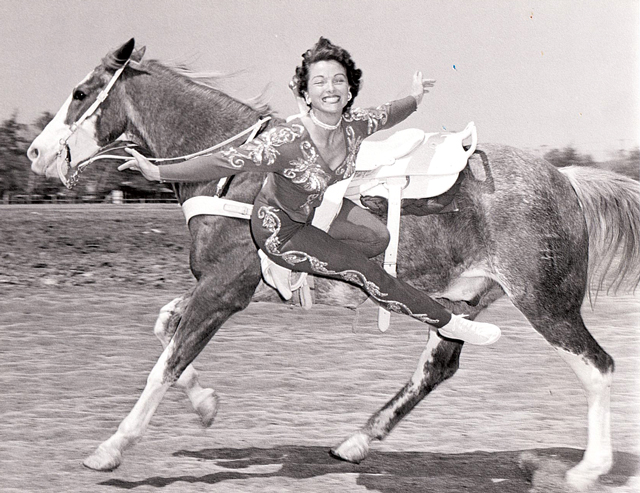
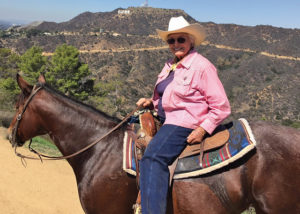
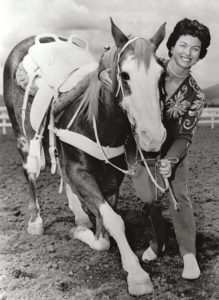
Pat riding in Hollywood, Los Angeles, CA posing near the Hollywood sign – courtesy of the familyPat Ommert with her horse, Strawberry Shortcake – Courtesy of the family
Laces tied snug, tennis shoe cowgirl Pat North Ommert made hundreds of laps around as many arenas throughout the United States from the 1940s to the 1960s, dazzling crowds with her signature one-foot stand and vivid smile. The trick rider, jockey, and stunt double from California traveled and performed extensively, including 56 performances at the Madison Square Garden Rodeo in New York, and riding in Powder Puff Derbies at the Caliente Racetrack in Tijuana, Mexico. Yet her favorite place is still the back of a horse, and her accomplishments, whether astride or beside her equine friends, recently earned her an induction into the National Cowgirl Museum and Hall of Fame in Fort Worth, Texas.
Pat was nominated 18 years ago for the National Cowgirl Hall of Fame before her induction in October of 2016. “I know many of the former inductees, so I was very honored,” she says. In 1999, Pat and her husband, Dr. Willard Ommert, received the California Professional Horsemen’s Association Lifetime Achievement Award for their devotion and contributions to the horse world. Pat is also active in preserving horse trails and the equestrian lifestyle in Southern California, where she grew up and continues to live today.
Born in 1929, Pat was the second daughter of Bob and Vera North. A savvy businessman, Bob started Bob North Hardware Store in Bell, California, during the Great Depression, and the store flourished. The North’s home in Bell was eight miles away from the Los Angeles Union Stock Yards, and the vacant lots around Bell and the Los Angeles riverbed offered plenty of riding opportunities. The North family, including Pat’s sister, Laura, shared a love of horses. Vera, Pat’s mother, came to love horses after being sent to the Mohave Desert in 1912 with her younger sister. They boarded with a family to avoid the polio epidemic in Los Angeles and rode a horse to school. Vera later learned to train trick horses from a circus trainer stabled in Bell. She entered the show business, and even performed in the Hawaiian Islands with the E.K. Fernandez Wild West Show in 1934.
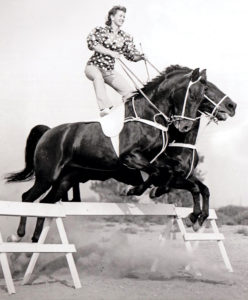
Pat’s sister, who had an act with their mother, was married in 1943 and retired from show business. Pat was 14 at the time and performed the Patsy North and Her Trick Horse Rex act through World War II. Her own trick riding career started when she was 16, and she performed in rodeos and fairs around California. She still holds gold card number 1890 with the PRCA. “The trick riding was easy,” says Pat, who trained her own Roman riding and jumping team of horses. “I was an athlete. During World War II, my family moved to some acreage and we raised calves and did all our own work. My Roman riding was the most fun, and I think more spectacular. The hippodrome is one of the easiest tricks, but to do it with grace is something else. The one-foot stand was really my specialty. I consider myself a tennis shoe cowgirl because I had boots, but it was usually tennis shoes for trick riding and even working the trick horse.” Rex, who was half Morgan, was Pat’s left hand horse in the Roman riding, and Juan Monroe, a registered American Saddlebred, was the outside horse. Pat competed in many of the Los Angeles Sheriff’s Rodeo Roman races, and even did several publicity shots for the rodeo.
When one of the North’s horses was sick in the 1940s, the regular vet sent his new associate, Dr. Willard Ommert, to make the farm call. Dr. Will and Pat took an instant liking to each other, and they were married in 1947. “Will was my best fan and loved what I did,” says Pat. “Like my dad, he never had a problem with me performing or being in show business. It didn’t make much money in the early days, but it did take care of the horse costs, and it was always fun.”
Pat’s dad had passed away in 1951 from a heart attack, and after Pat and Dr. Will were married, Vera greatly encouraged Pat to continue her show career. Starting in 1951, Pat performed at the Salinas Rodeo with 14 or 15 other trick riders on her horse Shortcake, working her way into bigger rodeos. “Edith Happy and I worked many California rodeos together. She was a beautiful, long-torso lady who did the most beautiful stand ever,” says Pat, who performed at Salinas for 11 years. “I’m delighted that California Rodeo Salinas is using Edith’s hippodrome stand for their poster this year.”
The year 1953 took Pat to New York City and Boston for several weeks, and Dr. Will used some of his vacation time to travel with her and watch several performances. Everett Colborn from Dublin, Texas, co-owned the World Championship Rodeo Company and produced both the Madison Square Garden Rodeo and Boston Garden Rodeo. Colborn’s own rodeo in Dublin became the Pre-Madison Square Garden Rodeo. Following the Texas performance, the entire production, joined by Pat and her husband, boarded the 24 car train for New York, stopping to perform in Fort Madison, Iowa, on the way. Many rodeo and western movie figures including Tad Lucas, Jim Shoulders, Gene Autry, Roy Rogers, and The Lone Ranger performed in Colborn’s rodeos. Pat rode Quadrille and the trick riders did publicity work for the rodeo. “That was really fun. The head of publishing for Madison Square Garden owned a white convertible, and five of us trick riders were seen around town. We were always in our western outfits,” says Pat. “We had lunch at the 21 Club, saw the premier opening of a movie, visited the Bellevue Hospital, and had a parade. We also had a rodeo parade in Boston. I rode my Roman team and my husband rode in the parade with me. After the parade, they had a Cowgirl Special thoroughbred race in Rockingham Park in New Hampshire, which I won.”
By this time, Pat and Dr. Will’s first daughter, Annie, was three, and her sister, Janie, was born in 1954. In the 1950s, Pat acquired her Screen Actor Guild card and worked in several motion pictures as a stunt double and driver. One of her friends, showman Monte Montana, needed six women for a horse catch scene in “A Star is Born”, starring Judy Garland and James Mason. Pat was one of the six, along with her mentor, Polly Burson, Faye Blessing, Shirley and Sharon Lucas, and Louise Montana. “The last movie I worked was ‘Cimmaron’, and I was in Tucson for two weeks. They needed girls to ride and drive wagons for the Oklahoma land rush scenes. We made money on those shows, but it was a hurry-up-and-wait business. I had kids and horses at home waiting on me, and I thought of how I could use that time to be home riding!”
In the 1950s, Pat also raced horses, even while on tour with the Bob Estes Wild West Show in 1957 in Mexico City. She retired from show business in 1962, and by then, her daughters were showing in the hunt seat division. Pat also showed hunters and jumpers for a time, and when she wasn’t taking Annie and Janie to horse shows, she was traveling and working with Dr. Will. Originally in the cavalry, he was transferred to the U.S. Army Veterinary Corps after the cavalry was dismounted. He worked with Dr. Bob Miller as the official veterinarians of the NFR from 1962- 1964 when it was hosted by Los Angeles, and his renown as a veterinarian was international. He advanced equine medicine in a number of ways, performing the first equine arthroscopic surgery, and even fitting a horse for contact lenses. “Will was the chief veterinary officer for the 1984 Olympics, and he was the vet for a lot of the California horse shows. I was in the horse show world with him,” says Pat. In 1969, the couple moved to Temecula, California, where Dr. Will built the state-of-the-art Los Caballos Veterinary Hospital, the first privately owned equine clinic and surgery in California. Pat managed the neighboring Los Caballos Farm, a facility for resting and retired horses, and they also raised several colts. Pat leased the ranch out several years after Dr. Will’s passing in 2004, and continues to make her home in Temecula.
Now 87, Pat rides daily, boarding her horse a short distance away. She has four granddaughters and five great-grandsons, all of whom learned to ride from Pat. “I feel that it’s so important for kids to learn about the good earth and see livestock. I love seeing kids who know how to sit on a horse and ride,” says Pat, who supports the Pacific Crest Trail. She’s a member of Saddle Sore-Ority, along with the Rancho California Horsemen’s Association since 1970. “I feel so lucky to have been able to experience several different phases of the rodeo world. I feel I had the best of all of it.”
“My brain is just wired to be passionate about what I do,” says 33-year-old horse trainer and breeder Ryann Pedone. “I’m very fortunate – I don’t think everybody gets the opportunity to do what they love so much that they eat, sleep, and drink it. Even though I’ve been knocked down, I’m the type to pin my ears back and say, ‘I’ve got this.’”
Ryann, who is currently training six horses by A Streak Of Fling – including one straight from Fulton Family Performance Horses – started out not on a horse farm, but a dairy in Florida owned and operated by her dad. She was the first of her family to enter the horse world, but her dad, Lee Pedone, jumped in to support her. “My dad took me to my first barrel race when I was almost four, and I just loved it!” says Ryann. She rodeoed in high school, but her passion has always been futurities and derbies, recently winning the long-go at the 2017 Diamonds and Dirt Barrel Horse Classic on Streakin Queenie. “My dad was really great. Anything we had a passion for, he would bust his butt to help us with, or take us to someone who knew more about it. When I was little, we got help from Alan and Wendy Parker. They gave me my very first barrel horse, Idget, and really helped with my horsemanship. They were a huge stepping stone to breeding and training horses.”
Another stepping stone was the broodmare Ryann’s dad gave to her when she was 18. Originally a barrel horse, Kiss Kiss This hadn’t passed vet checks because of her knees, but proved an excellent broodmare, and eventually, the cornerstone of Ryann’s R Barrel Horses breeding program. “She’s been in the top twenty-five of barrel racing broodmares of the decade, and she’s a phenomenal mare. I didn’t know it at the time, but that’s where it all started.”
Ryann finished her finance degree from University of Southern Florida while working on her family’s dairy and running a firewood business, then moved to Texas in 2006 for the horse opportunities. She returned to school, this time in human acupuncture. “I was driving back and forth between Weatherford and Austin. I’d leave Weatherford at five in the morning and go to school until five or six in the evening. I’d go back to Weatherford and ride colts until one in the morning, then do it all over again. I don’t sleep much – I have so much I need and want to do. Some of that might be because I was raised on a dairy where we had no concept of time. We milked cows around the clock.”
While Ryann was living in Weatherford, she met a longtime horse breeder, Eddie Henderson. “I would spend hours talking bloodlines with him, and he did so much for me in that area. I bought some great mares from Eddie, and one of the mares, Barbi Bugs, produced Nastee Leader, the horse that Charly Crawford rides in the heading. I’d also talk to horse trainers like Kassie Mowry, Kelly Conrado, and Pete Oen. I’m always reading and researching, and living here, I’m around very smart and successful people. I keep paying attention to the breeding and bloodlines of successful horses.”
Ryann’s relationship with the Fultons started in 2013 when she went up to look at several of their colts for clients. “I liked their bloodlines, and I met Brian and Lisa and rode some colts. I bought Streakin Lena Whiskey for Shoppa Ranch, and the next year I bought Streakin Queenie for Shoppa Ranch, and my dad and I bought Streakin Ms Wink. In January of 2015, Brian called me and asked if I would take A Dash Ta Streak. I was so excited they would ask me, and I started running him that September. A Dash Ta Streak is how I got to know the family, and I love how honest they are in their sales and how tough Lisa is and Brian was.
“My career as a trainer is coming around. It took a while, and I still have so much more to accomplish. About six years ago, I started getting those better colts I raised and everything started coming together.” Ryann calls 2011 a pivotal year in her career and confidence. The year before, she went to the BFA World Championship on her mare, Cause For A Kiss, having qualified with the second fastest time. They tipped the first-go and were second in the second-go, but when Ryann got to the short-go, her nerves got the best of her. “My weakest thing was my brain, but I was gritty and I kept going. A good friend bought me the book Mind Gym, and I really came on in the fall of 2011, winning rodeos on TCS Runaway Susie. I won the Consolation at Fort Smith on Cause For A Kiss, and futurities on Kiss This Guy, who was voted Futurity Gelding of the Year via Barrel Horse Report.”
Ryann runs her ranch and 80 head of horses, which includes broodmares, babies, yearlings, two-year-olds to five-year-olds, and outside horses. She does it with the help of her dad, and her intern from South Dakota, Shae Volk. “Jax Johnson comes out for one or two months and then goes home for school, and I think he’ll make a great trainer. Lisa Downs is my main girl and she does everything. Sierra Emmett helps me feed on weekends, and my boyfriend, Don Lee, is a vet and a lot of help, and so is Sid Meyers, my farrier.
“I want to end up being a top trainer, competitor, and breeder, raising colts from my program,” she finishes. “I want to be remembered, and I want to help the people that come into my life just like all the people who helped me.”
Ryann also extends her thanks to her sponsors and friends/family: Jeye Johnson and Classic Equine, Equibrand, Martin Saddlery, Platinum Performance, Oxy-Gen, Shefit, the Fulton family, the Ashley family, Janie and Jimmy Shoppa, Kimmi Byler, Lisa McCool, Martha Reeves, Kim Landry, Alan Staley, Shawna Turner, Ronny and Sandi Dickinson, and all of her clients.
Breakaway roper Ronda Skinner is the co-owner of The Bar R Ranch in Idaho Falls, Idaho, a boarding and training facility she first envisioned while driving to school years earlier. Established in the late 1990s, The Bar R Ranch was many years in the making, starting with Ronda saving money as a child to buy her first horse. “My family lived in town in Shelly (Idaho), so I wasn’t able to get my own horse until I had a way to pay for it, and then I rode, rode, rode,” says Ronda, 50. “When I was eighteen years old, I was driving to school, where I was studying to be a legal secretary. I remember very clearly telling myself that I was going to buy at least five acres of ground, and I was going to have horses and an arena and a house. It’s since grown and changed in direction, but that was the original idea.”
Roughly seven years later, Ronda’s opportunity came when her sister and brother-in-law were purchasing 20 acres of ground near Idaho Falls. “They only wanted twelve acres, so they asked me about buying the other ground and helping make payments. It was just a hay field, but I got it paid for, and we found a really ugly mobile home in a potato field. A good friend remodeled the inside and we moved it up here around 1997. That’s when I really started giving lessons, and then starting colts.”
Embarking with her on the business venture was Ronda’s new husband, Bill Skinner. They had met in college, where Bill was Ronda’s biology professor, and they later hit it off when Ronda attended one of Bill’s safety classes. “When Bill asked me to marry him, he said he’d give me a really nice house, a really nice horse trailer with living quarters, or a really nice barn. I chose the barn,” Ronda says with a laugh. “We built it in 1999, and I also finished out my master’s degree in health education.”
Along with horses, Ronda and Bill were also the first of their families to break ground in the rodeo world. Bill was team roping when he met Ronda, and after teaching her to rope, they started team roping together. “That lasted about ten minutes until I saw breakaway, which looked like a whole lot more fun. Bill wanted to be a tie-down roper more than a team roper anyway,” says Ronda. The husband and wife started buying calves, and since they were without a chute, they fashioned one out of two large fence panels and took turns opening the gate. “Bill found me a really good coach and we found some other good coaches along the way. Then we started buying a few rope horses and training our current horses to rope. I greatly benefited from those years leading up to roping because I spent those training horses under the mentorship of Pat Wyse. Putting a basic handle on a horse makes a person a much better horseman, and basic horsemanship makes for better ropers.”
Today, Ronda breakaway ropes in the IMPRA and RMPRA, along with a local association, the GVGRA. “I also do the Jackson Open season, and in the past, I’ve been a part of the ICA and associations in Wyoming and Montana. It helped a great deal that I was already a proficient rider, but learning to get my rope on took a little while. It takes about five hundred calves down the arena before a person figures out how to get their rope on. It’s a constant journey, and I’m still learning.”
Ronda is equally passionate about teaching others of all ages to rope and ride, and she also teaches the foundations of barrel racing. “My early experiences training horses taught me love of molding and channeling horses into their greatest potential, and making them safe companions that are competitive if they have the athletic ability. I like to pass that on to others so they can enjoy their horses, and teach them how to communicate with and listen to their horses.”
Ronda takes in outside horses for training, and occasionally shops for roping prospects. Her own rope horses include a 13-year-old buckskin, Jack. “He’s incredibly fast, and I started him as a two-year-old. A friend owned him at the time, and later I bought him and trained him to be a breakaway and tie-down horse for Bill. I have Roxy, an eight-year-old mare that’s cutting bred. She’s very quick and has quite a personality – she squeals at the calf when she’s coming out of the box. My golden oldie is Boy. I learned to rope on him twenty-six years ago, and I’m still competing on him. I won some money on Boy in Tremonton (Utah) last October, and I’ve given over a hundred riding lessons on him.”
Within the last few weeks, Ronda has returned to her horses and business full time, after working three years in safety oversight for a small environmental group. She originally came across the job opening for Bill, who is a certified safety specialist, but took it instead after doing the job interview on horseback. She and Bill also lived in Kuwait for several years and worked in safety oversight before moving back to Idaho. Bill’s son, David, looked after the ranch, while several of their horses stayed with Bill’s dad in eastern Idaho. Presently, Bill is working overseas at the US Naval Support Facility Diego Garcia, in the British Indian Ocean Territory.
When Bill is away, Ronda finds a variety of people willing to open roping chutes for her; she says she now understands why Trevor Brazile famously said, “I wear out a lot of chute help.” Her latest goal is learning to heel. “A client who purchased one of my horses, Pearl, wants to start competing,” she adds. “My goal is to get him rolling, and my breakaway goal is to go as often as I can to as many rodeos as I can.”