Rodeo Life

Category: Back When They Bucked

  • Back When they Bucked with Bobby Rowe

    Back When they Bucked with Bobby Rowe

    story by Lindsay Welchel

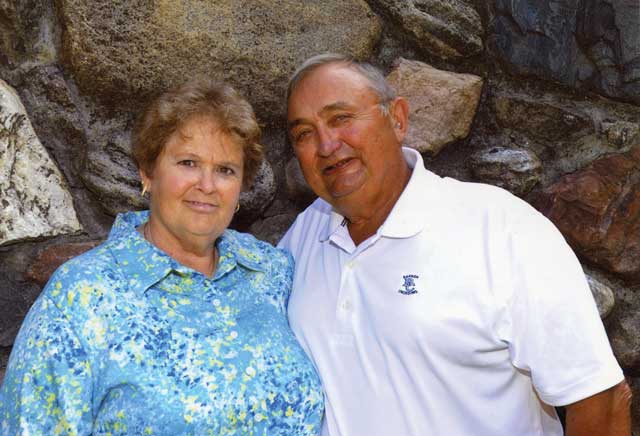
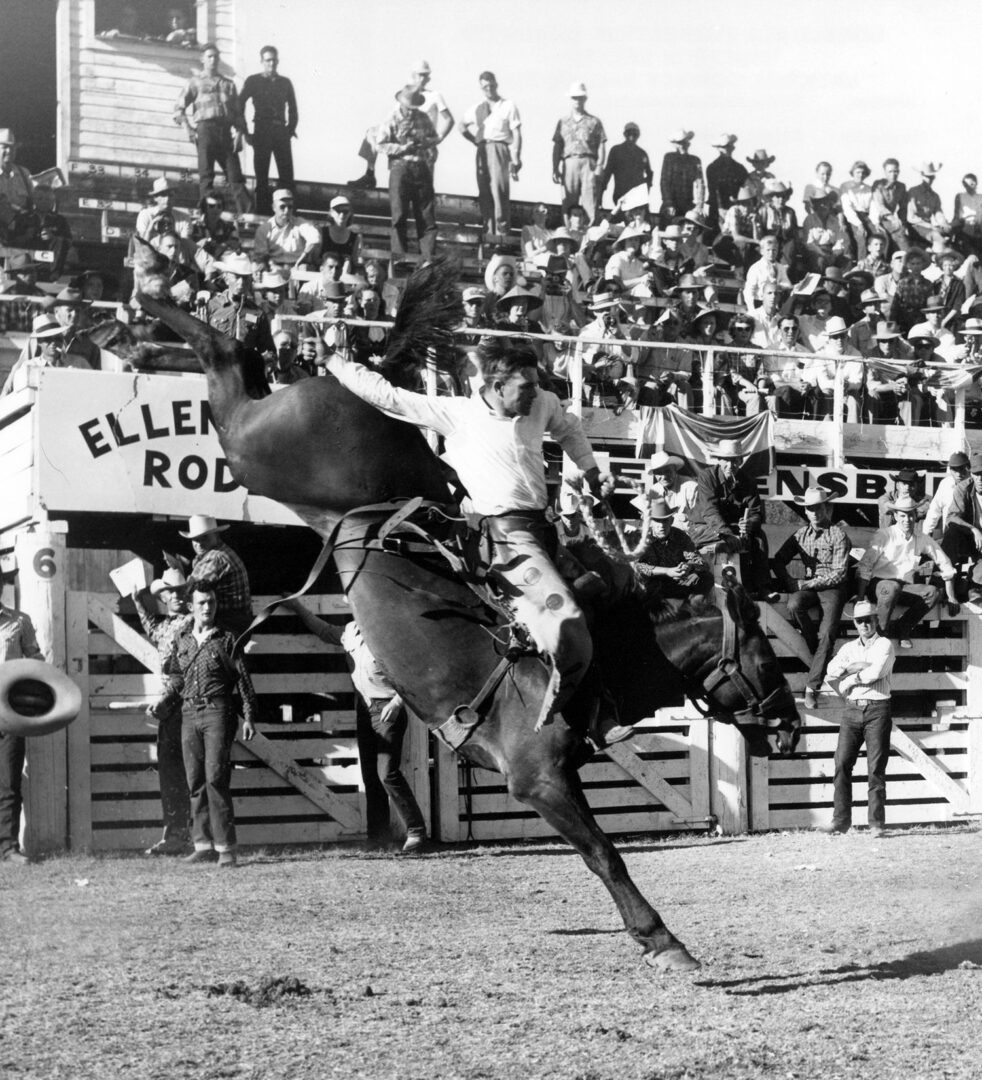
    It was around 1940 that a young Bobby Rowe went to his first rodeo. It became the doorway to a lifetime filled with the sport. Rowe, now 81, has been a multi-event competitor, as well as a stock contractor and rodeo producer. He became the 1965 IPRA World Champion Saddle Bronc rider and has a treasure trove of stories and experiences from his life spent on the rodeo road.
    At around 6 years old, Bobby’s father bought his older brother a horse from the sale. “They got him home, got on him, and of course he threw my brother off and tore up the saddle, and that kind of hooked me right there. I thought ‘well shoot, that’s what I want to do, but I don’t want to get thrown off,” Bobby laughs.
    It wasn’t long before Bobby and his brother were entering rodeos. At first they stayed near home in New York.
    “I always thought, ‘we never will amount to anything coming from here,’ but when we found out it didn’t matter where you were from, it was however bad you wanted it, why that helped us a bunch, because when we nodded our head we figured we could beat anybody.”
    Bobby also found out something else about rodeo. It was everywhere, and you could make a living at it.
    The opportunity was his for the taking. He left the family farm at an early age and hit the road.
    “When we found out there’s rodeos down in Florida all winter, there’s rodeos in Georgia, we headed south and to heck with milking cows,” Bobby says and adds, “Back then there weren’t any schools like there are now, so if you learned something, you learned it on your own, and I finally learned to keep my mouth shut and just listen and watch.”
    Bobby started competing in four events; saddle bronc, bareback, bull riding and steer wrestling.  He also did Wild West-type shows where cowboys got paid by the head, so he’d get on as much stock as he could in a performance. When thrill shows got blended into rodeos, where daredevils would do car stunts, Bobby did that too. “I might go out there and crash a car and run back, get my chaps back on, spurs back on, go to the bucking chutes and get on a horse or bull or something,” Bobby laughs.
    When he broke his leg, he was in the concession stand frying burgers and taking tickets. “You didn’t lay around and expect to make any money, you had to get out there, whether it was on crutches or whatever.”
    When he wasn’t competing, Bobby ended up in Georgia working for a stock contractor. He was in charge of hauling all of the stock to various rodeos. Through this, he found a career in stock contracting and producing rodeos. He also found love.
    Bobby’s work led him to meeting his wife Lenore, a barrel racer. They married in 1957.
    “Lenore and I got married. I was putting on a rodeo in Florida, we had an afternoon performance and then a night performance, so as soon as the afternoon performance was over with we hauled boogey to Georgia to the courthouse to get married and got there, and the courthouse was locked up,” Bobby recalls. It was a holiday, and so Bobby called in a favor to his influential boss who persuaded the disgruntled judge to come open the courthouse and marry the young couple.
    “I told [the judge] I sure thank you, and she said ‘just get the heck out of here,’ Bobby laughs. He and Lenore hurried back to the rodeo, and that night she won the barrel racing, and he won the bull riding. “We did good, and we thought ‘man oh man we should’ve got married when we were 10 years old. We’d have been rich by now.”
    Lenore and Bobby moved into the bunkhouse on the ranch he was working, and he remembers with humor how he’d gone back to focusing on his stock after a few days, and his young bride was trying to help him, but at one point he had snapped at her.
    “Finally she said ‘to heck with this mess,’ and she went to the house. The boss’ wife told her ‘There’s two ways you can do it, you can go out there and pack your stuff, I’ll put you on a bus, and you can go on home, or you can go out there and get a stick and tell him ‘now it’s you and I,’ so first thing I knew she was coming across the fence with a stick in her hand,” Bobby laughs.
    Their marriage stayed strong for decades after that. Rodeo only made their love story richer. Lenore went on to greatness as a trick rider and specialty act known for the ability to train her performance horses. She performed around the world. “You talk about a showman, now she was,” Bobby says.
    Bobby and Lenore raised two sons, Bill, who competed some in rodeo and Justin, who went on to be a world champion in saddle bronc just like his dad.
    Sadly, Lenore passed away of breast cancer in 2005.
    Early on, Bobby worked for Loretta Lynn and husband Mooney’s Longhorn Rodeo and competed in his four events. He won the world in saddle bronc in 1965. Then, Bobby’s rodeo company, Imperial Rodeo Productions, put on many events, including the Salem Stampede Rodeo, beginning in 1968 in Virginia, and the Dickson Stampede Days Rodeo, founded in 1988 by Bobby and Lenore, in their hometown in Tennessee.
    Bobby admits he had to slow down on his competition when producing rodeos and focus on the finer details of the show.
    “I always had in mind those people sitting over there in the seats. I wanted to make sure they were having a good time. I couldn’t be thinking about stock I drew and still paying attention 100 percent on putting on a good rodeo, so that was my main concern. That was one of the first things I learned, if you don’t do it quality then don’t be doing it.”
    But Bobby was 72 by the time he fully quit competing in the steer wrestling.
    “I was trying to set a record; the oldest man to run a steer. I had good intentions but the old steer he had intentions also, so it didn’t work out the way I wanted it to,” Bobby jokes.
    These days, Bobby is living in Oklahoma to be near some family for a while before heading back to Tennessee. He’s still producing some, namely the Salem Stampede, but he’s cut down on his schedule.
    Rodeo has had a life-long impact. “In rodeo, you’ve got to believe in yourself. When you crawl up that chute, if you don’t have it in your mind that you can ride this son of a buck until the sun goes down, you better take off your stuff and go on home. That’s something I learned early on, believing in myself and honing on my abilities all the time. You never can get as good as you can get, you can always get better.”
    And that’s still his motto with every rodeo he produces.


    Story also available in our August 15, 2015 issue.
     

  • Back When they Bucked with the Schott Family

    Back When they Bucked with the Schott Family

    Imagine trying to escape oppression in Russia during the late 1880’s! After long miserable months on slow, overcrowded vessels your feet touch solid ground only to be herded through Ellis Island, where you discover the only word you can speak that anyone understands is “Oberdauer”. . . something someone in the Old Country told you to remember from a land promoter’s letter.  You’d have no way to know speaking that name would get you shuttled to a place named Fredonia, in an Indian reservation along the rocky unforgiving North /South Dakota borderlands.  Neither would you know that if you’d said “Schwartzkopff” you’d have been trundled off to Nebraska’s Sandhills country!
    Difficult to imagine – yet that’s the history of Harlan Schott’s paternal ancestors.  When the Northbound rails disappeared into the prairie grass the Schott family continued their great adventure by loading wagons with provisions and whatever meager belongings survived the voyage.  The ferry at Kennell got them across the Missouri River, but they could not ascend the wet gumbo bluffs along the river bottom.  For three days and nights the rain continued, swamping the chilled family who waited, huddled together beneath their wagons.
    At last they reached Fredonia, where they persevered.  Eventually, another generation sprang up.  By the time Harlan was big enough to ride, his father owned several hundred horses and was becoming a master horse trader. Only broke horses commanded premium prices, so Harlan had ample opportunity to study for a Ph. D – even go on for his Master’s – in “wild broncmanship.”
    It started with riding or driving three and a half miles to school and home again each day. The Maple Leaf School provided a barn for student’s horses.  For the cold winter days the elder Schott built what he called a “Whippet” for the girls.  Made from the wheels and axle of a Whippet automobile, the cart sported shaves so a single horse could draw it.  The girls may even have enjoyed the luxury of a lap robe when weather turned really bitter.
    As for the boys, “One of us would ride a gentle horse, one a bronc, and Dad would ride alongside for a quarter mile or so to get us started,” Harlan recalls.  He remembers a pretty Palomino mare that took the snaffle in her teeth and flat ran off with his brother . . . but he eventually got her under control without anybody getting hurt, except they overshot the schoolhouse by a mile and a half and were tardy by the time they got back.
    He also vividly remembers the blizzard that trapped him (at eight years old) and his horse overnight at an abandoned house about a mile from the school.  “The teacher was reluctant to let us go because we could see the storm coming.  By the time I made it across the wooden bridge on Oak Creek the storm was a lot worse.  I saw the turn to that house, so I headed for it.  The doors and windows were gone, but my horse and I found a corner mostly out of the wind. I stood up by his side all night long, moving around and stamping my feet and pounding my hands.  He kind’a kept me warm. Dad had told us to never lie down or sit still in a case like that or you might go to sleep and freeze to death. Finally daylight came, and we were still alive.  Pretty soon here came old Dash, our English Shepherd.  I was sure glad to see him!  Then he left, and pretty soon here came Dad, through the storm to get us.”
    Along with riding and farming with their many horses, the Schott’s roped off them, to get the branding done and doctor whatever had to be doctored.   Harlan admired and wanted to emulate his brothers-in-law Marvin Dietrich and Johnnie Keller, who rodeoed when they came back from the war.

    Full story available in our August 15, 2015 issue!


  • Back When They Bucked with Arlene Kensinger

    Back When They Bucked with Arlene Kensinger

    story by Siri Stevens

    Arlene Kensinger came to Cheyenne, Wyo., in the early 1950s to go to beauty school. “I wanted to be in the circus, but my dad said I needed to go to school,” she said. She made the trip to Cheyenne from her home in Hawk Springs, where she grew up. Her father, S Paul Brown, was a school superintendent in Hawk Springs for 11 years. She learned to trick ride and rodeo through babysitting. “She was a trick rider and he was a roper,” she said of the parents.
    She met her husband, Don, who owned the only trailer park in Cheyenne, where Arlene lived when she came to town. “He found out I was a trick rider and liked to do rodeo, and he had started the Cheyenne Riding Club. He talked me into joining the PRCA and getting a secretary card and so I was the secretary out there at the riding club.” She obtained her cosmetology license and worked in the industry 30 years. She started buying and selling wigs in the 1950s and still does. “I started wearing them when I was in my 30s –it’s so much easier,” she said, of her collection of more than 30. “I like change, and with wigs I can have different colors and different length.”
    She split her time between working at the Plains Beauty Shop and secretarying rodeos for Don. “I wore a uniform and the Greyhound bus depot was there so I’d change and go work a rodeo – either secretary or carry a flag.” She and Don married in 1960. “I told him, ‘you’ve been my boss for ten years and it’s time I changed that.’”
    Arlene is credited for starting the Cheyenne Frontier Day Dandies in 1970. “I started the first barrel racing club in Wyoming,” said Arlene. “Don was working for Vern Elliot at the Wild West Show in Brussels, Belgian and he hired me to work that and that’s where I learned how to quadrille. I started the Quadrillette with my barrel racing club.” Arlene taught her barrel racing club how to do it. “The Frontier committee asked us if we would set the pivots for the Serpentine and we did that for ten years. That’s when it would rain and snow and the arena would be so deep. My station was down by the roping chutes and the cowboys loved to splash me with the water.” Don came up with the idea to put sand in the arena, something they did in Brussels.
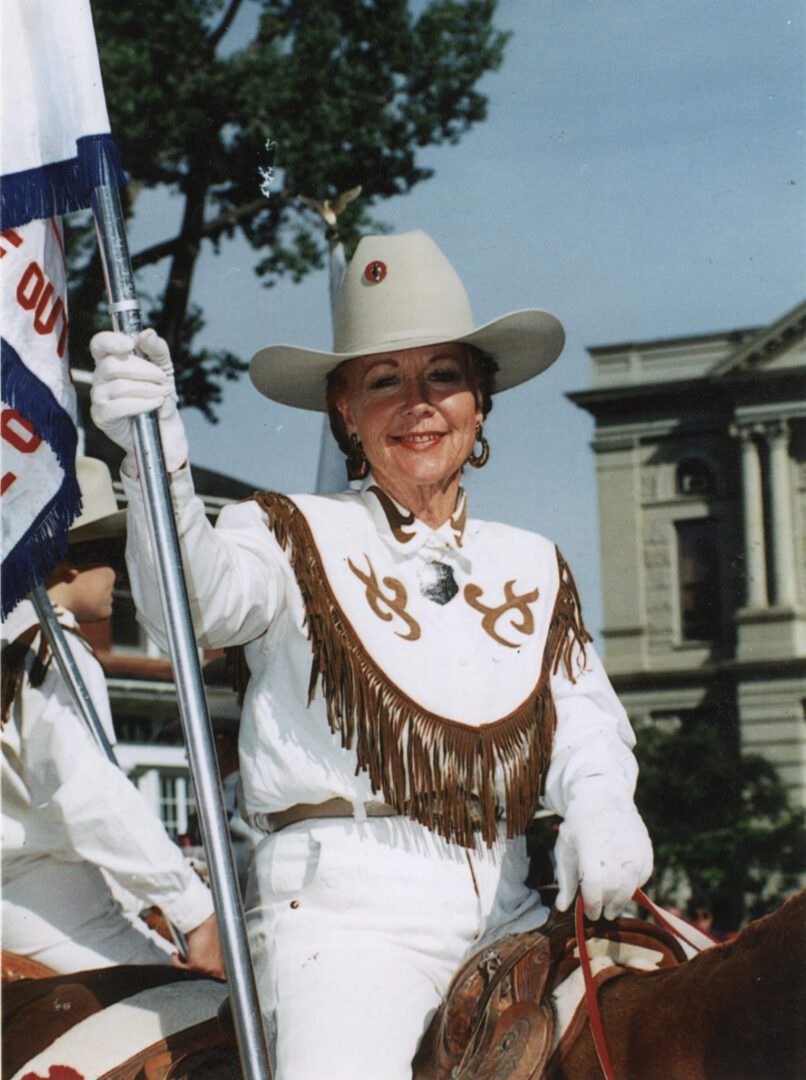
    After ten years, the Frontier committee wanted to do something different and asked if Arlene could come up with something. “That’s when I started the Dandies.”  The Dandies of the Daddy of “em  All began in 1970, and Arlene was the director until 1998.  “We had a competition and I picked 12.” She came up with the idea of carrying all the American flags that had ever flown over Frontier Days, along with the Canadian flag. “After that first year, we got invited a lot of places and had an auction to raise money to buy different flags.” Her position as director of the Dandies was a perfect blend with her husband’s role with Cheyenne Frontier Days. Don was the livestock superintendent and chute boss at Cheyenne for 65 years. “He was here longer than anybody,” she said. Don had come to Cheyenne as a jockey from Nebraska, where his dad raised race horses. He rode horses for CB Irwin when he came to town. “He still thought he was a jockey,” Arlene laughed. “Vern convinced him he was a cowboy.”
    Arlene and Don provided trailers, food, and drinks to all of the bands and performers that crossed the stage of Cheyenne for at least 30 years. “Don would pull trailers in to be their dressing room,” she said. Arlene also added coordinating Miss Frontier for 14 years. “Queens didn’t used to travel much and I was their coordinator for 14 years, so I traveled with them,” she said.  That connection led her to be involved in Miss Rodeo America. She often hosted the various state queens at her home, something she has done every year since 1984. She was the first woman elected on the board for Miss Rodeo America and implemented the scholarship program into the contest. “I convinced the PRCA to use the Miss Rodeo America as the spokesperson.” She was the schedule coordinator and chaperon for Miss Rodeo America at the pageant for 25 years. She was also the president of Miss Rodeo Wyoming for ten years.

    Arlene and Don spent their winters in Acapulco where they performed as trick water skiers. An accident in 1994 altered that, but not for long. They had bought a place in Lake Havasu, and were heading out to do a little trick ski practicing and as the boat circled around to pick her up, the rope became tangled in the propeller. The result was a mangled arm, and as she was getting ready to maneuver her way into the boat, she looked down and her leg was gone. “I said one prayer, keep me calm – I’m in Your arms. It was 110 that day and my leg was gone from the knee down is all I thought.” Due to the rope tangled in the propeller, the boat had to be towed back to shore, which took more than an hour. “I remember feeling like there was a scratchy blanket on my leg, so I found enough strength to rare up and take it off. My leg filleted open – what I thought was the blanket was actually little bone chips. I never looked again.”
    Arlene remained calm and awake during the entire trip from the accident to the hospital. “When they loaded me up on the ramp, I heard somebody say ‘Sis keep your eyes shut.’ I heard someone say, ‘Your skin stretches a mile.’ My foot was in the boat, and they got it out and laid it on my stomach. I almost fainted then. But I remember when we got to the hospital the doctor asking me my mother’s maiden name.” That was the last she remembers until eight days later. “They kept me unconscious for eight days as I fought for my life. I was given 24 pints of blood in the first 24 hours.” Two months to the day after her accident, Arlene got on an airplane, rented a car, and resumed her duties chauffeuring Miss Rodeo America around. “I wear prosthesis and still dance,” she said.
    Last year, Arlene stepped down from her duties as the chauffeur for Miss Rodeo America. She still invites people into her home in Cheyenne, a museum of photos, cowboy hats, and mementos from a lifetime of service to Cheyenne Frontier Days and the western industry.
    “My dad’s motto was discipline, love what you’re doing, and have fun,” she said, adding the most important part. “In that order or none of that works.”


  • Back When They Bucked with J.W. Stoker

    Back When They Bucked with J.W. Stoker

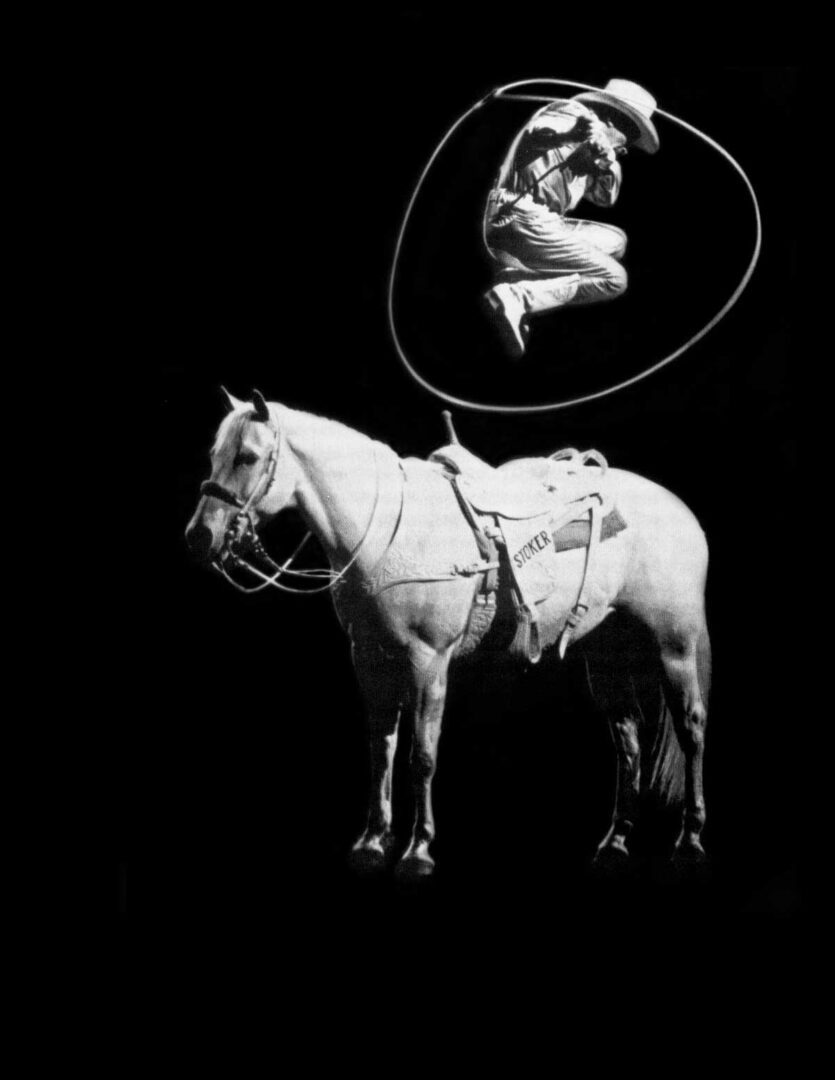
    For seven of his eight decades, J.W. Stoker has entertained rodeo and western fans.
    The Weatherford, Texas cowboy has criss-crossed the nation and the globe, trick riding and trick roping for hundreds of thousands of people.
    Born in 1927, it began for J.W. when his parents moved from Colorado Springs to Kansas City when he was eight. J.W. attended the Santa Fe Trail Riding Club in Kansas City, and one week, a cowboy by the name of Pinky Barnes came to town. Barnes, a trick rider and trick roper, gave lessons to the club kids. “I liked it real well, and he was a good teacher, too,” J.W. remembers. Even though he didn’t know it yet, his career path was born.
    J.W. took to the roping, spending his lunch times and recess at home practicing.
    The next spring, Pinky brought a guest to town. Clyde Miller, who put on rodeos and Wild West shows, had heard how good J.W. was. “I was practicing, and they asked me if I’d take them down to the house. They’d like to see my parents.” Clyde wanted to hire J.W., who was the tender age of ten years old. “Of course my folks weren’t going to send me down the road at ten.” So Clyde had a different proposal for them. It was the Depression days, and money was scarce. He offered the whole family a job: J.W.’s dad could haul the bucking chutes, his mother would care for kids, and J.W. and his sisters Frankie and Bessie would trick rope.  His parents decided to do it. It brought him notoriety and fame. In 1939, he was billed as the “Juvenile World Champion Trick Rider,” with his picture featured on a box of Wheaties. To his knowledge, he is the only western lifestyle person to be put on the iconic cereal box.
    J.W.’s work with Miller continued till Miller suspended his rodeos during World War II due to gasoline and tire rations. Stoker had begun booking his own shows as a brother/sister act with his sisters. One of his first rodeos was Burwell, Neb., in 1940, which he worked for 25 years.
    He continued to trick rope and ride till he was drafted for the Korean Conflict. Basic training was at Ft. Benning, Georgia then he was sent overseas, where he was put in the Special Services, the entertainment division of the Army. “I was wanting to trick rope, the same thing I’d been doing in the States,” he remembers. “They auditioned me, and said we’ve never had a trick roper before, but we’ll try it and see what happens. I trick roped and got along real good.” Stoker spent his entire time overseas entertaining the troops, with artillery fire occasionally going on overhead during shows.
    He was discharged in 1952, when he came home and his career continued.
    In addition to rodeos, Stoker worked Wild West Shows and served as a stuntman in movies. He went to Europe with Rodeo Far West in 1970 for Buster Ivory, and in 1973, worked with Casey Tibbs at a Wild West show in Japan. When the show didn’t go well, Casey got him a job promoting Las Vegas and Nevada outside a log cabin, similar to the one from the Bonanza TV show.
    He worked in the movie “Bus Stop” with Marilyn Monroe  in 1956 (“she was late every day,” he says, and much shorter than he expected), in “The Kansan” in the late 1940s, where he trick rode and roped, and in “Bronco Billy,” where he doubled for Sam Bottoms, who played Lariat Leonard James in the movie. Stoker taught Bottoms basic spins and for the more difficult spins, trick roped and was filmed from behind him.
    Stoker trick roped in Harry Truman’s inaugural parade in 1948. That was back when news reels were shown prior to movies, and Stoker’s trick roping showed up in those reels. He entertained President Ronald Regan and future president George H.W. Bush at the 1984 Republican convention in Dallas. He’s also entertained in nine countries: Venezuela, Germany, England, France, Switzerland, the Dominican Republic, Finland, Japan, and Cuba. He served as entertainer at the Calgary Winter Olympics in 1988, and worked on Michael Martin Murphy’s West Fest for a decade.
    Stoker served as a stunt double for Roy Rogers, and Roy even rode one of J.W’s horses. It was while Stoker was working the Houston Rodeo in 1969. Rogers was there, and he’d been told by his doctor he shouldn’t ride because of heart problems. On the second performance, he said to J.W., “I don’t feel right walking out (in the arena to do the Sons of the Pioneers). Can I use your horse to enter and leave on?” J.W. was honored to share his horse.
    He made his own trick riding horses, and two of them stick out as favorites. One of them was Pumpkin, the same horse that Roy Rogers rode. He was a palomino with stocking legs and a wide blaze, and “he really ran,” Stoker says. Pumpkin was purchased from the famous woman trick rider and bronc rider Tad Lucas.
    Another favorite horse was Hot Diggity. Hot Diggity was purchased from Rex Rossi, another famous trick rider who worked a lot of shows with Stoker. Stoker’s trademark was white horses and Hot Diggity fit the bill. His current horse, Romeo, a paint stallion, is exceptionally intelligent and has a big personality. “I wish I’d had that horse decades ago,” Stoker says.
    Living 50 miles from Dallas, he had the opportunity to work conventions as well.
    About six years ago, he was forced to slow down and eventually retire. He was diagnosed with spinal stenosis, which pinches nerves and causes leg pain. He can walk to the barn, but once he’s there, he has to sit down for a bit before he can continue. “You can’t trick rope sitting down,” he says.
    But Stoker hasn’t quit for good. He has been willing to help anybody who asks. “People would call up and say, ‘I need help with the roping.’ I’d say, come over. I didn’t charge them. I figure it’s been good to me.” He currently works with the Cowgirl Chicks, an entertainment and trick riding group. He and the Cowgirl Chicks are on RFD-TV weekly.
    The 87-year old cowboy has had numerous honors and awards. He’s been a two-time Pro Rodeo Cowboys Association Entertainer of the Year. He’s inducted into the National Cowboy Hall of Fame in Oklahoma City, the Texas Cowboy Hall of Fame, the Texas Rodeo Cowboy Hall of Fame, and the ProRodeo Hall of Fame.
    And life’s been good for the entertainer. “I’ve done so many things, there’s no end to it,” he recalls. “I just lived life, and lived it good.”


    Story also available in the July 1, 2015 issue.

    WEB_shoulderstand
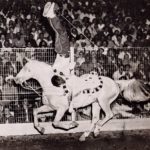
    Stoker doing a shoulder stand
    WEB_CCI03202015_00008
    J.W. Stoker, age 12
    WEB_jw-and-hot-diggity-(2)
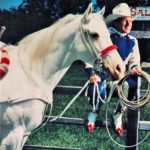
    J.W. and Hot Diggity
    WEB_romeo-and-jw-stoker-(1)
    Romeo, the paint with JW: JW loves his current horse, a paint stallion he wishes he had had years ago.


  • Back When they Bucked with Jim Aplan

    Back When they Bucked with Jim Aplan

    Jim Aplan grew up in Casey Tibbs’ shadow.
    The Rapid City, S.D. cowboy was born in Casey’s hometown of Ft. Pierre, S.D., and Jim followed Casey and his rodeo buddies down the rodeo road. But since Tibbs was two years older, Jim’s mother wouldn’t allow him to travel with the soon-to-be-famous cowboy, and Casey went on to national fame and recognition while Jim stayed closer to home.
    Jim was born in 1931, the youngest child of Frank and Helen Fischer Aplan. His family owned Fischer Bros. General Store in town, and anything that happened in the county was “duly reported in the general store,” Jim said. “I was always kind of thrilled with the cowboys who came into the store,” he remembered, “much to my family’s dismay. They were dead set against anything rodeo.”
    Jim’s mother’s family, the Fischers, also owned two large ranches, and even though they were in the cattle business, there was no tolerance of rodeo. “Of course, wherever the cowboys were, you could find me.”
    The rodeo bug had bitten Jim, and he loved to follow Tibbs and another South Dakota cowboy, Billy Myers, as they went to rodeos. Tibbs and Meyers won money at the Ft. Pierre rodeo, and went on to Huron, and Jim followed. He was only sixteen, and hadn’t gotten permission from his mother, so she sent after him to come home. Tibbs and Meyers went on to compete across the country while Jim stayed home.
    His mother sent him to a boarding school in Canon City, Colo. The school had its own herd of horses, with students caring for them, and it had its own rodeo. The first rodeo paycheck Jim won was in the wild cow milking at that school. He graduated from boarding school and went on to junior college in Trinidad, Colo.
    That’s where his pro rodeo began in earnest. He was befriended by stock contractor L.D. Ward, and traveled with Ward and rodeoed. It got him away from his family, which was an advantage. “I couldn’t rodeo in South Dakota. Too much pressure. A lot of families encourage their kids in rodeo. Nobody encouraged me, they discouraged me.”
    He worked all the events as he traveled with Ward, but the saddle bronc riding and bull riding were his strength. He was best at the bucking horse riding, mostly because he’d grown up breaking horses. “I could ride a tough horse, but nobody ever showed me how,” he said. “I never looked very good doing it. I could usually place because I didn’t buck off. That’s how I got by.”
    Jim’s rodeo life might have looked a lot different if he’d have gone to North Dakota in 1955. All-around hands Jim and Tom Tescher, excellent bareback, saddle bronc and bull riders and bulldoggers as well, asked him to come north with them for the summer. “Had I done that, it would have helped me,” Jim said. Instead, he went to work for East Coast rodeo producer Jim Eskew, who was well-known for the western entertainment at his rodeos. Aplan fought bulls and clowned for him, and competed as well.
    In those days, nearly anyone would work as a bullfighter, and at some rodeos, the cowboys would stand in the arena, in front of the chutes, and randomly step out in front of a bull during a ride. “It sure made me mad when they did it to me,” while he was riding, Jim said, as it could ruin a ride and the score.
    There wasn’t much training for bullfighting in those days. “It wasn’t like today, where they go to school for it and learn moves. Then we just got out there and did it and hoped we didn’t get killed or get some rider hurt. That’s the nightmare of all bullfighters.”

    Full story available in our June 15, 2015 issue.
     

  • Back When they Bucked with Howard Barker

    Back When they Bucked with Howard Barker

    Howard Barker lived out his dreams.
    Ever since he was a little boy, he wanted to be a cowboy, and he wanted to fly, and he did both.
    The Houma, La. man spent his time flying through the air on bareback and saddle broncs and bulls, and when his rodeo days were over, he spent the rest of his life flying through the air in sprayer aircraft.
    He spent seven years full time rodeoing, and when he was done, came home to begin an aerial application business.
    He was born in Yumatilla, Fl. in 1937, the oldest child of Howard, Sr. and Adelade Barker. Soon after he was born, the family moved to Groveland, Fl., where he spent most of his growing-up years.
    His interest in rodeo stemmed from being around cattle, and even though no one in his family competed, he wanted to. “It interested the heck out of me,” he said. His dad didn’t approve. “My father always told me I needed to quit that foolishness and get a job.”
    At the age of fifteen, he entered his first rodeo. He didn’t have the entry fees, so he went to the bank to get a loan. “I just went in and talked to the president of the bank,” Howard recalled. “He took the money out of his pocket and loaned it to me.”
    He also entered high school rodeos, of which there was one a year, hosted by the FFA chapter in Inverness, Florida.
    At first, Howard rode bareback broncs and bulls. There wasn’t a lot of saddle bronc riding in Florida, but when he could find it, he entered it, choosing to quit riding barebacks.
    By the time he graduated from high school in 1956, he was competing in amateur rodeos across the state. He worked on large ranches in Florida, some with spreads as big as 500,000 acres. He loved the work. “I was happy in the woods, working cows, just about as happy doing that as being at a rodeo.”
    When he was nineteen, he left Florida to rodeo. He didn’t make a big splash, but made enough to pay entry fees and living expenses. “You’d be broke one day, then have a pocketful of money the next, then broke again.”
    In 1958, he joined the Rodeo Cowboys Association, forerunner to today’s Pro Rodeo Cowboys Association, and competed full time. Most of Howard’s rodeos were in the Northwest and Canada. By then, he had quit the broncs and was riding bulls only. In the winter, he’d come home, get a ranch job, and save up money to leave again in the spring.
    He traveled with good friends Ronny Welch, Tex Martin, Winston Bruce and his brother Duane, and bull rider Leo Brown, “one of the best hands to ever come out of Canada, maybe the best,” Howard said.
    Then, after being on the road for most of seven years, he decided to retire.
    In 1966, he got his pilot’s license and begin a crop dusting business two years later. He lived in Belleglade, Fl., at the time, and sprayed not only crops but for mosquitoes. He sprayed over a million acres a year, with contracts with county, state and federal governments. In the summer, his business went west and he sprayed for grasshoppers in the western states.
    In 1991, he moved to Houma and his business changed. He sprayed oil spills with dispersants, chemicals that break oil into tiny droplets that suspend in water so naturally occurring bacteria eat the droplets. His company, Airborne Support, was instrumental in the BP Oil spill in 2010. A picture of one of his planes spraying was on the front page of the New York Times and a South African friend even saw the picture in a newspaper in that country.
    Howard never suffered any major injuries in his rodeo days. Sprains and a broken cheekbones and a couple of concussions were it. He had temporary amnesia twice, due to the concussions.
    The Calgary Stampede was his favorite rodeo because of all the activities. “It was  like a three ring circus,” Howard said, with bucking stock in the arena, “some movie star singing a song, and a horse race going on all at the same time.” And his favorite bull was HB, owned by Howard Harris. Howard drew him three times: once in Cowtown, N.J., and in the West, after he was sold to someone else. Very few people covered HB, but Howard did it three times, as did a friend, Joe Chase, who Howard gave advice as to what to do when riding HB.
    In 1968, he married Evelyn, and they had four children, two boys and two girls: Vance, who lives in Minnesota, Laura Beth, who lives in Boston, and Brad and Nancy, who both live in Houma. He and Evelyn have seven grandkids, with a grandson, Reese Barker, who rides bulls and is a three-time state champion junior bull rider in the Louisiana Little Britches Rodeo Association.
    It was tough quitting rodeo when he did it in 1966. “I had to stay away from it completely,” he remembered. But he had a business to run. “I couldn’t afford to get hurt and not be able to fly.”
    Three years ago, his health forced him to retire from the aerial application business, and now son Brad runs it.
    Rodeo was a passion he loved. “When I’d make a good bull ride, I don’t know of a better feeling in the world.”
    But he loved flying too. “A lot of people go through life with a job they don’t like,” he said. “But I’m the luckiest man in the world. I got to do two jobs I really liked. I’m glad I rodeoed. I wasn’t a champion but I got to ride with those that were.”

    Story is also available in our June 1, 2015 issue.
     

  • Back When They Bucked with Dixie Mosley

    Back When They Bucked with Dixie Mosley

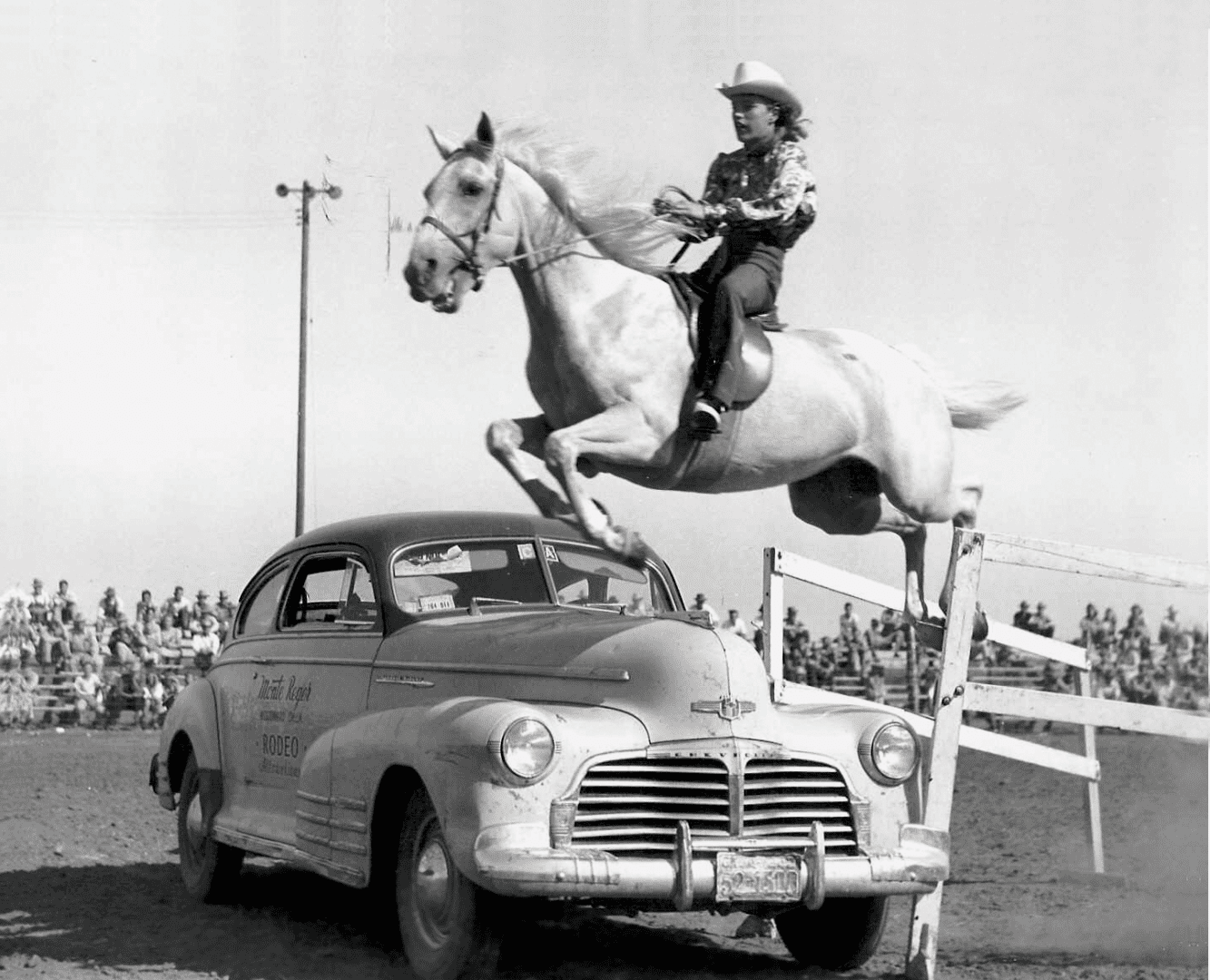
    Dixie Mosley of Amarillo, Texas, had a most unusual childhood. The third and youngest child of Monte and Opal Reger, Dixie was born in Buffalo, Okla., on October 3, 1930. Before her sixth birthday, she had travelled more of the U.S. with her family than most people of that era saw in a lifetime. The Reger family were rodeo entertainers, fulfilling rodeo contracts in the eastern half of the country, and travelling with an 18 foot Schult house trailer, several trick horses, and a longhorn steer in tow.
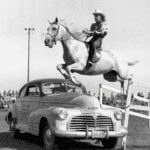
    It was Bobby the Longhorn Steer that propelled the Regers into their lifestyle of greasepaint faces and trick riding Death Drags. The Longhorn/Brahman cross had curvy horns measuring 8′ 6″, and at the time he was discovered by Monte Reger, the steer was known for his rank personality. But Reger saw potential in the tremendous bovine, and with dreams of leaving the farming life behind, he tamed Bobby. Soon, Reger was riding the steer like he was a trusty cowhorse, as were Dixie and her brother, Buddy, and sister, Virginia. Bobby and Reger even appeared in a movie, Wheels of Destiny, in Hollywood, and advertised for a barbecue chain in Burbank, Calif. But Bobby was best known for his iconic jumps, clearing a convertible with ease while directed on a lunge line by Reger.
    Though Reger had helped start the rodeo in Doby Springs, Okla., he had bigger dreams. Eventually, he was announcing for the Beutler Brothers and performing with Bobby in Colonel Jim Eskew’s Wild West Show. Eskew’s son, Jim Eskew, Jr., taught Dixie to trick ride and rope by the time she was five. She began performing alongside her brother and sister, riding a Shetland pony named Tom Thumb. Her brother, Buddy, was a rodeo clown, while Dixie and her sister represented the family in trick riding and roping. Their mother, Opal, occasionally took off her apron to perform the Quadrille – square dancing with horses – but she preferred to live outside of the spotlight. “She had more than a full time job looking after Dad and us three kids, feeding us and sewing all our clothes,” Dixie recalls. “She kept us together.”
    Dixie’s rodeo debut came in 1935 in Pittsburg. At five years old, she was a fearless performer. “I was never afraid of anything at a young age, and when you’re a teenager, you’re really not afraid!” says Dixie. She showed horses in western pleasure, and although she found nothing remarkable in her trick riding talents, rodeo spectators thought otherwise. As she grew, Dixie rode her family’s palomino American Quarter Horses that they bred, their fair coats reflected in the shining cars that Dixie jumped them over. Though the Regers stayed in their trailer or motels, they returned often to their home in Woodward, Okla., to “get cleaned up and go again,” according to Dixie. It was there that the family trained their show horses. They laid three 55 gallon drums down, placed two more on top, and finished with a heavy wooden door at the top to re-create the size of car Dixie jumped over, before practicing on the real thing.
    For all the excitement of living on the road, Dixie at times longed for what she calls a normal life. “I wouldn’t take anything for the life I’ve had, but sometimes I wonder what it would’ve been like to have a different type of life,” Dixie says reflectively. “We had to be careful in the summertime to go swimming in the late afternoon. We didn’t want to take the chance of getting sunburned and not being able to ride the trick horse. Even rollerskating you had to be careful to not twist an ankle. We were being paid to be at the rodeo, and we couldn’t get hurt having fun!” Missing out on regular schooling was what Dixie regretted the most. Up until high school, she and her siblings were homeschooled by their mother, a box of curriculum from Calvert Correspondence School arriving once a year with schoolbooks. When she entered high school, she came to school several weeks late and left in May to accommodate rodeo season. Yet homeschooling had agreed with Dixie, and she was several grades ahead of children her age, entering high school when she was 12 and graduating  in 1946, when she was 16.
    In 1947, Dixie was clowning and performing in an all-girl rodeo in Amarillo, Texas, and the following year, the all-girl rodeo in San Angelo, Texas, was the birthplace of the Girls Rodeo Association (GRA). Dixie was a charter member, and later served as a contract representative and vice president for the association. In addition to trick riding and roping, she rodeo clowned for the GRA, the only woman in the area to do so. Dixie even rode several bulls and bareback horses, but the roping events like ribbon roping, breakaway, and calf roping, were what brought out her competitive side. “I’ve been bucked off and had horses fall with me, and I’ve never broken a bone,” says Dixie. “I’m real proud to be a charter member of what is now the WPRA. I met some wonderful cowgirls!” One of these cowgirls was the rodeo-renowned Tad Lucas, a bareback bronc rider and trick rider that Dixie created and performed several rodeo skits with. “She was a very nice lady, and she would do anything to help make the rodeo a better performance.”
    By 1953, Dixie was 23 years old and ready to make a bold move. She retired from rodeo. Her final performance in the public eye was the inaugural all-girl rodeo in Colorado Springs, Colo. Following that, she married William Mosley in August of 1953. Bill was a cattleman, who served in both WWII and the Korean War, and was a friend of Dixie’s brother-in-law. “Growing up, I pretty much knew I didn’t want to marry a rodeo man,” says Dixie. “I think they are the most wonderful people in the world, but they’re always on the go! I wanted to stay home. Bill went back to college after he got out of the military, and I became a college wife. I got my PHT – Putting Husband Through,” she says with an infectious laugh.
    After finishing college, Bill and Dixie settled in Amarillo, Texas, where they still make their home today. With partners, they built a meat packing house, and Dixie lived the life she’d dreamt of as a child, becoming a full-time wife and mother and living in a house that wasn’t on wheels. Their children, Judy, Clay, and Paul, all grew up riding horses, but didn’t pursue rodeo. Once their children were grown, Bill sold the packing house and became a cattle inspector. He and Dixie travelled the U.S. extensively, some of Dixie’s favorite travels taking her to the annual induction ceremony for the National Cowgirl Hall of Fame. She also attended Rodeo Clown Reunions held by Gail Woerner, where Dixie was the only female rodeo clown. Dixie herself was inducted into the Cowgirl Hall of Fame in 1982 and the National Cowboy Hall of Fame in Oklahoma City in 2003. She was named the Pioneer Woman of the Year in 2004 at the National Cowboy Symposium in Lubbock, Texas. Bobby the Longhorn Steer, who started it all, also holds a place of honor, his head mounted in the National Cowboy and Western Heritage Museum.
    Memories abound, and Dixie has no regrets. She concludes happily, “I’m glad it’s all worked out the way it’s worked out.”

    Story also available in our May 1, 2015 issue.
     

  • Back When they Bucked with Wayne Cornish

    Back When they Bucked with Wayne Cornish

    Wayne Cornish followed in his dad’s footsteps, and the rodeo world was a better place because of it.
    Born February 2, 1935 in Waukomis, Okla.,, the son of Cecil and Juanita Cornish, Wayne grew up doing the same thing his dad did. His dad had a variety of famous specialty acts, and after high school, Wayne joined him, criss-crossing the country with the Cornish animal acts, and working as a barrelman as well.
    He was part of his dad’s acts, but made his first rodeo money when he was five. At Ponca City, Okla., barrel men and bullfighters Hoyt Heifner and John Lindsay put him on a Brahma bull calf. Wayne rode him all the way across the arena, lost his boots, but didn’t fall off the calf. And he won his first rodeo check with that ride, after Heifner and Lindsay gathered money to pay him for his effort.
    At age thirteen, Wayne began clowning. He put on a “dude” suit and rode into the arena on a donkey, carrying a suitcase. Someone behind the scenes would shoot a gun, the suitcase would open, and live chickens would fall out.
    Wayne graduated from high school in 1954, but barely. He had missed several days of school while on the rodeo circuit, and the school board threatened to dismiss him. Wayne’s dad told the principal his son had learned more in those few days he was gone than he did in school.
    After high school, Wayne hit the road with his dad. Together, they had a variety of acts, mostly involving animals. Cecil had started in 1935 or ’36 with his trick horse Smoky, which would become his most famous act. But the family had a lot more up their sleeves. There was Danger, the Brahma bull who jumped over a car, and six golden liberty horses. They had a bull that pulled a cart, and a roman team that Wayne rode called the Golden Eagles. Wayne had a pig he put in a suitcase and called the “Handy Dandy Garbage Disposal,” and a skunk whose act was called Mr. Stinkbottom. He had a roman team named Susie and Sally, sisters, who he called the Flying White Clouds. They did figure eights, jumped through hoops of fire, and re-enacted the Days of Ben Hur. Wayne, like his dad, had an affinity for training animals, and Juanita made their flashy costumes.
    He kept up his specialty acts, mostly his roman riding, but because of his early friendship with Heifner and Lindsay, he preferred to be a barrel man and clown.
    Together, Wayne and his dad traveled across the nation and Canada, working big rodeos and small ones alike. One of his favorite stories is that he drove a load of bucking horses and his barrelman equipment to a rodeo in northern Canada. He was supposed to leave the truck and horses and meet his dad at the North Platte, Neb. rodeo, but he had no way to get there. He called his dad and asked him to pick him up in Calgary. He told his dad, laughing, “did you ever try hitchhiking with a barrel?”
    Being a barrelman came with the usual broken bones, and Wayne had his share. He broke his neck in Carlsbad, N.M., in 1962, when a bull stuck his horn in the barrel. The bull threw him into the air, and even though his neck hurt, he went on and rode his roman team that same night. After the injury continued to ache, he decided to have it checked out.
    Another time, he broke a shoulder in Crockett, Texas, when a bull did the same thing. And he suffered so many broken ribs, he learned to bandage them himself.
    Wayne would work as a barrelman at the same rodeos where his dad and he entertained. He got his Rodeo Cowboys Association card in 1953. About twenty years later, after the Evanston, Wyo. rodeo, Cecil had had enough. He came home and decided to retire. Wayne quit then, too. His roman team was old, and having to train a new team would be time consuming.
    That was in 1971, and he began driving. He hauled horses for Hull and Smith out of Ashland, Neb., one of the nation’s largest horse haulers. He hauled livestock for A.J. Foyt, Dale Robertson, and race horse breeder Walter Merrick. He hauled horses for Dee Raper, and hauled cattle. Driving was something he enjoyed, and even though he can’t drive now, he can still tell his wife Jackie what roads to take, and when to turn.
    And, in typical rodeo style, Wayne has lots of stories to tell. He traveled with Slim Pickens, who told him he was glad God gave him such an ugly face so he didn’t have to paint it up like Wayne did. And once, at a rodeo in Independence, Mo., the hometown of Harry Truman, he came home and told his wife he’d have to shoot his dog, because Margaret Truman, who was in the stands watching the rodeo, had stepped on its tail and the dog had yelped, “Ike, Ike, Ike” (the nickname for Dwight Eisenhower.)
    He and Jackie, who were high school sweethearts, went their separate ways after school but were reunited and married in 1995. They each brought three daughters to the marriage: Donna Kay, Shawna and Jacquetta from Wayne, and Jackie’s Kelly Ann, Kimberly and Karen. Two of the six girls have passed: Donna Kay and Kelly Ann.
    Two years ago, Wayne suffered an aneurysm that nearly killed him. It has affected his eyesight and speech, but he is able to get around. Jackie serves as his eyes and voice, and is happy to do it, because she’s glad he’s still alive.
    Wayne is proud to have worked for some of the best rodeo producers in the business: Beutler Bros., Harry Knight, Todd Rodeo, Jim Shoulders, Gerald Roberts, Casey Tibbs and Associates, Beutler & Son, Ralph Collier, Neal Gay, Lawrence Winfrey, Harry Nelson, Reg Kesler, Tommy Steiner, and Summit Rodeo, among others.
    And he’s glad to have worked with some big names: Slim Pickens, Gene Autry, Marty Robbins, Rex Allen, Roy Rogers, Michael Landon, Jack Lord, and Edgar Buchanan.
    If he could, Wayne would still be on the rodeo trail. “He’d still be rodeoing if he possibly could,” Jackie said. “That was his life. He just loved it.”
    And he’s still living the memories.

    Story also available in our March 2015 issue.

  • Back When they Bucked with Dean Oliver

    Back When they Bucked with Dean Oliver

    Dean Oliver attended his first rodeo when he was 15 years old. It may have been the heady feeling of stealing into the Snake River Stampede without a ticket, but as Dean watched a tie-down roper win $300 in a single run, he decided that rodeo was the life for him. Little did he know that he would become a record holder at that very rodeo, winning the tie-down roping ten times, and that a drawing of him would be featured on the Snake River Stampede’s rodeo poster 70 years later, heralding him an 11 time world champion.
    Born in 1929 to Verne and Vesper Oliver in Dodge City, Kan., Dean was the fifth of seven children. Each child was born in a different state, but all of Dean’s childhood memories reside in Idaho. His family moved to the Gem State in the late 1930s. Dean’s father was a private pilot, and he sold automobile and airplane parts and accessories, while also managing the Nampa (Idaho) Airport. In February of 1940, Verne and his friend Guy Givens were contracted by a farmer to hunt coyotes. The men did so from Verne’s airplane, with Guy shooting the predators from an open door. During one of their close passes to the ground, Verne’s plane crashed into the side of a snow-covered mountain, killing both men.
    Following the tragic accident, the Oliver family worked even harder to survive in a country just recovering from the Great Depression. Dean began working at dairy farms by his early teens. Sitting in a classroom didn’t suit the restless boy, and he dropped out of ninth grade, never to darken a school doorway again. That same year, he and his older brother snuck into the Snake River Stampede rodeo in Nampa. “When the rodeo came around, I really liked the cowboys’ western gear, and their horses and cars and trailers,” says Dean. “It looked like a fun way of life!”
    Inspired, Dean began his rodeo quest that same year, purchasing his first horse for $50 dollars and riding it bareback with just a rope around its nose to guide it. He began roping fence posts and hay bales, and even the calves at the dairy farm in the cover of night. While Dean was persistent about his roping, he was equally persistent in pursuing Martha Reisenstein, the daughter of one of the farmers he worked for. They were married in 1950, the year that would mark the beginning of Dean’s rodeo competition. He purchased another horse – this one green – for $400, and spent another $10 on a roping calf, which Martha would hold until Dean gave a nod.
    The self-taught cowboy made his debut at several local amateur rodeos in Idaho and soon won his first tie-down roping at the rodeo in Kuna. The taste of success was so satisfying that Dean told his boss at the dairy farm he might quit and rodeo instead. “What makes you think you’re a star? You couldn’t win anything!” The man replied hotly. Dean quit his job that summer and rodeoed until he ran out of money, returning to work in the fields until he could pay his entry fees.
    In December of 1950, Dean and Martha’s first child, Sheryl, was born. Her birth kept Dean from being drafted into the Korean War, changing him from a I-A (available for service) to a III-A (deferred because of dependents). After running into questionable rules at some amateur rodeos, Dean decided to join the Rodeo Cowboys Association in 1952. He went to his first professional rodeo in Jerome, Idaho, then leaped to Albuquerque, N.M., where the top professional ropers were competing. He was afoot, no longer trying to train a rope horse, but instead borrowing horses and paying the owners a percentage of his winnings. “There were 80 ropers, and not one of them would mount me, until finally a guy put me on a great, big tall horse,” Dean recalls. He won second in Albuquerque, then went to Denver’s new coliseum the following week, where he placed second in the average. He felt so optimistic with $1,700 in winnings that he purchased a gelding named Buck. He spent $1,750 on the buckskin with a knot on its knee, anxious to find a good rope horse. Dean made a makeshift trailer in the bed of his pickup for Buck and went home with an empty wallet.
    After working through the winter feeding cattle, Dean had enough money to rodeo again in May. He and Buck won several rodeos that summer, yet Dean still lacked an edge in his competition that could only come with practice. The winter of 1953-1954, Dean lived with tie-down roper Dan Taylor in Doole, Texas, and the Idaho cowboy finished third in the RCA standings at the end of 1954 with roughly $11,000. Dean stayed with another roper in Oklahoma the following winter, and despite dismounting on the left to tie calves, he still had the fastest time, finishing the 1955 rodeo season with $19,963 and a glistening gold buckle reading World Champion Calf Roper.
    His professional rodeo career soared out of the chutes, and Dean was rodeoing 11 months out of the year, often putting 80,000 miles on his station wagon each season. He competed in 70 to 80 rodeos a year, winning every professional rodeo he went to over the course of his career. Dean competed in the first National Finals Rodeo in 1959 on a horse named Mickey, whom he’d searched long and hard for after retiring Buck. Mickey and Dean won five world championships in a row from 1960-1964, and Dean also won three all-around world championships from 1963-1965. He had started steer wrestling and was just as talented in the event as tie-down roping with his 6’3″, 200 pound frame. But after breaking his leg at Madison Square Garden during the event, Dean feared further injuries and kept tie-down roping as his main focus, eventually dismounting on the right when he was in his 40s for faster time.
    Not only did Dean’s achievements catch the eyes of rodeo fans nationwide, but also magazines and other publications. Time magazine, People magazine, Sports Illustrated, Saturday Evening Post, and western publications all wanted an interview with the rags-to-riches cowboy. Dean even modeled jeans for Wrangler. He and Martha purchased a ranch in Boise, Idaho, with 80 acres and calves aplenty for roping. While he traveled the length and width of the United States, one of Dean’s favorite rodeos remained the Snake River Stampede. He won his hometown rodeo ten times in the tie-down roping, a record yet to be broken, while also winning the local Caldwell Night Rodeo eight times. He secured his eighth and final world title at the NFR in 1969 at the age of 38, with record earnings of $38,118 for the most money won in a single event in one year. That record has since been broken, but Dean’s eight world tie-down roping championships still sets the bar.
    Dean continued to rodeo into his 40s, but sorely missed his growing family of five daughters, Sheryl, DeAnn, Nikki, and twins Kelli and Karla. Martha had travelled with him as often as she could, but that didn’t make up for life at home. Yet Dean’s involvement in rodeo was hardly over. He served on the PRCA’s board of directors in 1979 and was inducted into seven halls of fame, including the National Cowboy Hall of Fame and the ProRodeo Hall of Fame. Texas sculptor Edd Hayes even included a bronze statue of Dean tie-down roping in a series of bronzes he called “Legends of Rodeo.”Dean also pursued his hobby of golfing, which he’d started in the 1950s, setting course records around the Treasure Valley and winning several tournaments.
    Today, Dean and Martha’s home sits just off a farm road in Greenleaf, Idaho. Dean raises calves for beef cattle, but finds himself busiest during the Snake River Stampede rodeo in July, where he grooms the arena, and contracts the sheep and calves for the mutton bustin’ and the calf scramble. He has been serving on the rodeo’s board of directors since 1990, and dons his media credentials every December to work as a grip for a television crew covering the WNFR.
    Dean’s story is marked with extraordinary grit and perseverance, but the rodeo legend says humbly, “I never did want to quit rodeo. When I started, I didn’t know I’d be any good. I was lucky enough that I had the ability, and I stuck with it.”


    Story also available in our February 2015 issue.
     

  • Back When they Bucked with Peggy Fifer

    Back When they Bucked with Peggy Fifer

    Peggy (Green) Fifer was born in the small town of Meeker, Okla., where she was raised with two sisters by a single mother. She had just turned 14, when her mother died of cancer, leaving her and her two sisters in foster care for eight months. “My grandmother came and raised us in a house that we were able to purchase with insurance money,” said Peggy, who lives in Eufaula, Okla., 45 miles from her childhood home.
    She met her first horse when she was four and a photographer came by with a Shetland pony to take pictures of the girls. Her horse experiences ended for several years, until she met and married a rodeo man. After graduating high school, Peggy went to business school in Tulsa, Okla., where she first met Earl Fifer. “He was real cute and had a good sense of humor,” she recalled. “I kinda fell for him.” They married and Peggy got her first introduction into the rodeo world. “On weekends they would have a rodeo at the city park. Earl would go over there and ride horses and bulls and listen to Jim Shoulders give ideas on how to ride,” she said. Peggy and Earl had two daughters, Wauthena and Earlene. “Wauthena would rather take dancing lessons than rodeo, so she stayed with her grandmother most of the time. Earlene started riding horses at the age of two. In July of every year, we would go to Pawhuska to the International Calvacade Rodeo. In 1967, Earlene competed in the queen contest and won. Wauthena rode in all girl rodeos when she was in high school. She rode Bareback Horses and bulls. She placed with her horses but that lasted one year. Earlene started the all girl rodeos too and after one bull, decided that wasn’t for her, so she continued to stay with training horses and running barrels. She ran barrels for about 5 years after graduation from high school. Earl started rodeoing more and Peggy would go with him, sometimes waiting until the wee hours of morning for him to compete.
    Peggy got tired of waiting, so she volunteered to help out and that was her start as a rodeo secretary. “We would go to rodeos where we had to set up pens and the announcer stand was a flat bed truck. I would make a bed below that and put the girls there so I didn’t have to worry about them. Later, Earl was placing consistently so we traveled more and I would fry two chickens, butter a loaf of bread, make a chocolate cake, buy a bag of chips and away we would go to meet whoever was competing that night where we would have pot luck and visit before the rodeo. Lots of times it was before you  had to call in, they just entered when they wanted to.”

    Full story available in the January 2015 issue.
     

  • Back When They Bucked with Deb Copenhaver

    Back When They Bucked with Deb Copenhaver

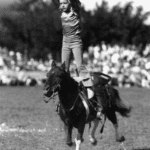
    Deb Copenhaver grew up in a ranch family in Wilbur, Wash. “I worked for a lot of different ranches riding colts,” said the 89-year-old World Champion Saddle Bronc Rider. Born January 21, 1925, Deb is considered one of the greatest bronc riders to come out of the Pacific Northwest He lived through the Depression and at 17, enlisted in the Navy during World War II. “I was in the construction battalion of the Navy, the Seabees. I had always liked construction work as a kid, so that was my reason for joining the Seabees. It was a branch of the Navy put together during WWII – the Seabees kid the Marines that they came in on the road the Seabees built.” Deb spent two years in North Africa running a bull dozer for $70 a month.
    “When I got out, I made up my mind I was going to rodeo and I started going to a few rodeos close to home.” The first year, 1946, he went to Calgary and won day money in the bull riding. “I was riding broncs and barebacks, but I got a little sore and kept to bronc riding. I had a good beginning -God gave me the ability to win right off the bat. I was fortunate to win Calgary three times, New York (Madison Square Garden) twice; Denver, Ft. Worth, Houston, Phoenix, Pendleton, Cheyenne, and Salinas.”
    In the 1950s, Deb teamed up with Paul Templeton, and Bill Linderman and went airborne in Paul’s 180 Cessna. “We were all over the country for rodeo—Calgary, Elko, Omaha, Kalispell, Butte. We did them all.” Dedication paid off and Deb came in second in the world in 1951, ’53, and ‘54 to his good friend, South Dakota roughstock rider, Casey Tibbs. He won it the next two years.
    Deb was elected to the RCA Board of Directors in 1958. “While on that Board I had a vote in having the first National Finals Rodeo. It was held in Dallas, Texas, in 1959.”
    He took his earnings from rodeo and invested in land near Creston, Wash., where he bred and raised quality quarter horses and operated Deb’s Cafe in town. “This little restaurant had belonged to my dad and was in the town that I was born in,” said Deb, who had made the last ride of his career in Pendleton in 1974 and was looking for a source of income for his family. “At that time it was a small restaurant and gas station. We bought a big building, 40 x 80, and moved it across the road and tied it into the existing building and had enough floor space for nice consequences.” The decision paid off; Deb and Cheryl built the restaurant into the heyday of Deb’s Cafe, decorated in true western style, and his ‘Steak Nights” were a hit with the town’s people as well as the country bands that he’d bring in to play on Saturday nights. Hank Thompson, Bonnie Guitar, and Earnest Tubb, and other country music greats all played at “Deb’s”.
    Cheryl was not as excited about the purchase of the restaurant. “It was open 7 days a week from 5 am until the last dog went home. We did that for 16 years and raised three kids in the midst of it.” Deb’s daughter Debra is a former Miss Rodeo Washington and a respected bronze sculptor (see Art of Rodeo, page 42). His son Jeff was ’75 World Champion Calf Roper and founding  pastor of the store of the New Frontier Cowboy Church in Texas (see Christian Corner, page 7). Deb is proud of his boys Matt and Guy, who are in the construction business, and his daughter Kelly, who is a Florida businesswoman and mom to three.
    It was Jeff that led Deb and Cheryl to the Lord in 1979. It wasn’t long after that they sold the restaurant. “If we are going to serve God, we are not going to serve booze,” Deb had said. “And that was the end of the restaurant. In two months time we had it sold, so our lives went on – we run cattle and quarter horses. If you are doing something that is not in God’s good will, if you pray about it, He will take you out of it.” After that, Deb and Cheryl sold the restaurant and settled into raising quarter horses and spreading the Gospel. “The most important thing that I could add is our Love for God – that’s more important now than anything you might write about us.”
    Today, Deb and Cheryl Copenhaver keep busy with their quarter horses, and Deb spends time in the log chapel he built down the road from his house.  Deb says proudly. “I want to be remembered for serving
    the Lord.”
     

    Story also available in the December 2014 issue.
  • Back When They Bucked with Olin Young

    Back When They Bucked with Olin Young

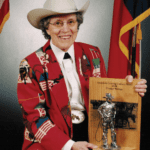
    In 1954, Olin Young started his professional rodeo career at Pecos, Texas.  From there, the young cowboy competed in, and placed in all the major and small town rodeos of the time, vying for a chance at the World Title, a dream he would achieve many times in the coming years. In fact, the cowboy was so dedicated to his career, that in the early 1960’s, Young designed his own roping saddle, that was built by Windy Ryon. Later, Ryon manufactured and sold “The Olin Young Roper” at his store, Ryon’s Saddle Shop & Western Store in Ft. Worth.
    Of course, winning multiple world titles requires much travel. Some memories of traveling are not always good ones, like the night he and a crew of fellow ropers were traveling from Salinas, California in separate vehicles. Glen Franklin, and Herschel Romine had new cars. Olin and Jake Bogard were in an older 1957 Chevrolet pulling a horse trailer.  Coming out of Salinas Olin was driving, vividly recalling the horrific traffic. He witnessed a vehicle almost hitting Glen. Because of it, Olin had to swerve hitting cement causing two tires on the trailer to blow out.
    “That was pretty scary,” Young admits.
    According to Young, during his travels, following a long day on the road, he would try to locate rodeo grounds to spend the night. He carried with him as part of his gear, an army cot so he could sleep near his horses. Of course, this wasn’t the case when his wife, Letha, traveled with him. Hotels/motels were not as commonplace as they are today, and according to Letha, there were no accommodations at all in Burwell Nebraska, Sidney Iowa, and Cheyenne Wyoming.  However, local residents would open their homes to cowboys, and their wives, if traveling with them.   As far as restaurants go, not only did Sidney, Iowa not have a motel, the town didn’t have a restaurant. The ladies from the local Baptist Church would feed the cowboys in the basement of their church.
    Young didn’t always travel by vehicle, but sometimes flew to rodeos. Flying, however, didn’t come without it’s share of excitement.  Once, six cowboys decided to ride in a small plane to quickly get to another rodeo. Although six were aboard, the plane was only rated to hold five passengers.  Leaving Salinas, California headed to Nampa, Idaho, the passengers were Shawn Davis, John W. Jones (a steer wrestler), Barry Burk, Jim Kenney, the pilot, Harley May, and Young. Jones was riding in the front of the plane, and announced to the passengers ‘we got a problem.’ The hydraulic light and the landing gear came on indicating a possible malfunction.  Obviously relaying the message from the pilot, Jones announced they would have to land in the dirt beside a track. He instructed the group to ‘get out’ when the plane slowed down enough to do so. Kenney ‘abandoned ship’ before the plane even stopped.

    Full story available in November 1, 2014 issue.