Rodeo Life

Category: Back When They Bucked

  • Jim Watkins

    Jim Watkins

    Jim Watkins was born in Fairfax, Missouri. His dad was a tanker driver for Farmers for MFA oil company. After getting his start in Little Britches, Jim competed in bareback, bull riding, steer wrestling, and calf roping in high school rodeo in Missouri, graduating in 1963. He was National High School Vice President from Missouri in 1963 and qualified for the high school finals in the bareback and calf roping, adding bull riding to that list his senior year.
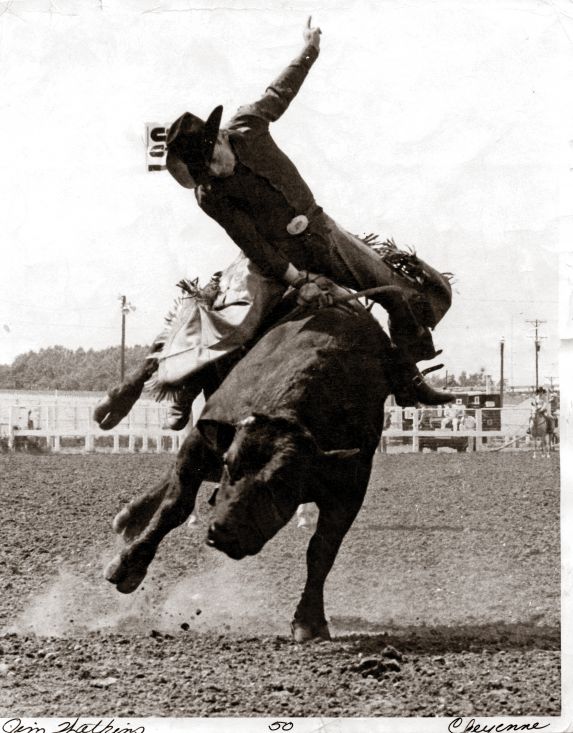
        He went on to college, graduating from Sul Ross State University in 1968, and rodeoing on his PRCA card in the summer. “I rodeoed full time after college,” he said. Jim made the big ones across the country from Cow Palace to Cheyenne. “I was in the top 15 and tore a groin – that finished that year,” he said. His wife had been calling him about a job offer in Odessa as an Industrial Technology teacher. “I was going to teach for one year, just until I got healed up, and I ended up teaching and coaching for a total of 40 years,” he said. “I’ve never done anything I’ve enjoyed more. My wife says I never had to grow up because I got new kids to play with every year.” He kept rodeoing, weekends and summers, until 1984. He also judged a lot of rodeos including Cheyenne Frontier Days, Pikes Peak or Bust, Pecos and Odessa for several years. He was also the chute boss at Deadwood, SD, after Jack Buschbaum. 
        Jim and his wife, Katherine Carol (KC), met in college. They have three children, two boys and a girl in the middle -Todd, Jamie, and Ty. “My wife was a teacher of chemistry and biology at Crockett Junior High – she taught for 31 years. When I started teaching, she stayed home with the kids and went to school part of the time.” They built a place north of Odessa that included an arena.  “We built a bucking barrel and roping dummy at school the second year I taught and the kids would get off the bus with rigging bags and rope cans and we’d ride the bucking barrel and rope,” he recalls. In 1974, Joe Turner, with El Torro Bucking Machines, found out what Jim was doing and donated a brand new bucking machine to the cause. “We bucked that thing until we wore it out,” he said. He charged $.05 to ride during the week and then had trophy days on Fridays – the winner got the trophy. “We had a lot of fun with that bucking machine.” 
        Jim supplemented his income as a teacher by making bull ropes. “Booger Bryant and I were rodeoing together in the summer of 66. He was building bull ropes and I was braiding the tails. I braided tails for him all summer. During the spare time during the rodeos that’s what we did. Come time for me to get a new bull rope, I asked Booger to do it and he said for me to make it myself. He taught me how and I’ve made them over the years for several world champions – Harry Tompkins, Freckles Brown, Benny Reynolds, Bobby Steiner, Larry Mahan, Cody Snyder, Jim Sharp – he was still wanting them when I quit in 1993. That was the best insurance policy I had.” The first ones he made he charged $35 each, when he quit they were $175. “I’d work after supper 11:30 to 2:30, and in three nights I’d finish a rope. I’d start the next one the third night. Then I’d get up at 6:30 and go to school. I’d do that three nights a week. School teacher didn’t make a whole lot of money and making ropes saved my bacon more than once.”
        All three of their kids started in junior rodeo and worked their way up. “Both boys rode steers and roped calves, my daughter did everything. And long story short, they were all three several times AJRA world champions, Texas State High School Champions, national high school go around winners and my oldest son held the record for highest marked bull ride at the high school finals.” Ty went on to be the PRCA rookie of year in 1991. One arena turned into two at the house and in 1983 Dr. Miles Eckert from Odessa College got in touch with him to see if he would be interested in putting together a rodeo program.
        “They had a rodeo club and they had two kids that college rodeoed. Dr. Clara Willis was the rodeo club advisor,” said Jim, who accepted the job, and started the program in 1984. “They used my facility because the college didn’t have anything. The first year was very lucrative for me. I got $5,000 for the whole year – that included my coaching and the use of my facility.” Jim recruited some great rodeo athletes including Jim Sharp (two-time bull riding world champion), who won Rookie of the Year in 1985, and the college championship in 1986 and 1987. “We hauled Jim to the high school finals – the same one Lane Frost won.” He also coached nine-time world champion and seven-time all-around champion Ty Murray, the late Shawn McMullan, Jerome Davis, Adam and Gilbert Carrillo, Cimmaron Gerke, and Ryan Gray, who won Jim’s last college championship – bringing the total to 11.
        Jim taught public school and coached the Odessa Rodeo Team from 1984 – 1998. “I’d teach all day, get off at 4:30. The team would be at my house and we’d start practice at 6 and be out there until 11 at night.” In 1998, his 4.5 acre place with two arenas, was also home to 28 kid , 20 calves, 20 steers, five goats, and ten bucking horses. “We had panels put up and horses everywhere.”
        All that changed in 1999. “Herbert Grahm called me at Thanksgiving – he owns Grahm Central Stations across the country. He said ‘Jim, looks like you’ve outgrown your place. I came by there the other day with Kenny Carr, a promoter who put on all the top gun PBR in Odessa, and we both agreed that you can’t grow anymore.’” Herbert gave credit to Odessa College for a lot of his success and after talking it over with his family, they decided to donate the West Texas Stud farm (120 acres) to the rodeo program. There were no arenas, but lots of horse stalls (400). “I could see where the arenas could go and that’s what became a reality.” Jim convinced the board and Dr. Vance Gipson (president of the college) that he could do it and when they agreed, he went to Butch Pinkerton with WW Arena. Butch improved on his schematic of the layout which included three arenas. “$59,000 is what it cost for everything – now something like that would be more than $500,000. In 11 days we had the whole thing done.” 
        Jim retired in 2009, and was honored as coach of the year for the NIRA and was inducted into the Texas Rodeo Cowboy Hall of Fame in 2010.  “I loved teaching, rodeoing, and coaching – It was a great way for my wife and I to raise a family and we did it all together. She was my best supporter and critic. Now we stay busy on our place taking care of her mom and dad. My goal is to get to team rope a little bit and travel more in Europe. We’ve raised three great kids, have wonderful daughters’ in law, a great son in law, and four fantastic grandchildren. We are all doing well. We’ve been blessed all the way around. What more could we ask for?”

  • Willie & Loretta Cowan

    Willie & Loretta Cowan

    Willie and Loretta Cowan believe in giving back. The Pierre, S.D. couple grew up in hard times, built a home and made a family, all the while contributing to others through rodeo. Willie was born into the rodeo world in Highmore, S.D. in 1937, the son of Art and Mary Cowan. His dad rodeoed and owned a rodeo string when Willie was young. His mom’s dad, Boots Gregg, put on rodeos on the Crow Creek Indian Reservation.

    Willie can’t remember a time he wasn’t horseback. His dad bought, sold and traded horses for a living, and after World War II, he helped with a U.S. Government contract to supply horses to Eastern Europe, to rehabilitate the small farmers whose stock had been killed or destroyed. The story goes that the night Willie was born, Art was trading horses with Pete Metzinger, his future wife’s grandfather and another horse trader, and “there may have been a little brown jug involved,” Loretta laughed.

    Because the Cowan place saw so many horses come through it, Art kept back the potential bucking horses. “My dad sent 10,000 horses to Yugoslavia,” Willie said. “Me and my brother were horseback forever.” Any time anyone found a horse that would buck, they’d hang on to it. “We had an arena and chutes, and pretty quick we found out (if they’d buck). We kept the good ones and sold the rest.” And Willie grew to appreciate good horseflesh. “We had to ride all kinds of junk. Dad was trying to make a living, so if we got something that worked good, he’d sell it.”

    As a youngster, there were no youth rodeos. He rode bucking horses at home and did some roping, but it wasn’t till high school that he competed in a more structured setting. He competed in every event: barebacks, saddle broncs, bulls, roping, bulldogging, even the cutting, and qualified for the South Dakota State High School Finals in 1954 and 1955, winning the saddle bronc riding championship in 1955. He qualified for the 1954 National High School Finals, but getting to Huntsville, Texas “was out of the question with a ’49 Chevy pickup,” Willie said. When Nationals were at Harrison, Neb. the next year, he attended.

    After high school, Willie had a scholarship to play football at South Dakota State University in Brookings, but he didn’t want to go. The next year, when he was ready to go to college, “Brookings wasn’t interested in me,” he laughed. Two friends from Texas were attending Sul Ross State University in Alpine, Texas, and they got him a rodeo scholarship and supposedly a football scholarship, so Willie was headed south. But the day before he left, a bull stepped on him and broke four ribs, so his football career was over before it started, “but that’s probably a good thing anyway.”

    The Sul Ross team made the College National Finals, but that summer, Willie was home in South Dakota and the funds weren’t available for him to travel. “Money didn’t grow on trees then,” so he didn’t go. After one year of college, he was back home, ranching with his dad.

    But his rodeo wasn’t over. He competed in the South Dakota Rodeo Association, winning the saddle bronc riding, tie-down roping, team roping, and even the all-around. Saddle bronc riding was his strength. “I never could ride bareback horses worth a damn,” he remembered. “And the bull riding, sometimes I would and sometimes I wouldn’t. I would never say I was really good at it, just good enough to stay in it.” His rodeo competition didn’t last long, however. “I quit pretty young,” he said. “I didn’t think a guy should be on the road when he had a wife and family.”

    Willie had married in 1960, and he and Loretta began ranching near Harrold, S.D. After the ranch owner died in a blizzard, they spent several months calving for Raymond Sutton near Gettysburg. Then the chance to buy some land came, and they bought the ranch where they live now, 15 miles northwest of Pierre, on Lake Oahe. That was in 1963, and by then, they had two children, Shane and Kim.

    When he and Loretta were done, there were six Cowan kids: the first two, plus Carmen, Colleen, Casey and Lori, and the kids competed in 4-H rodeo. In 1972, he and Loretta helped begin the South Dakota 4-H Finals Rodeo, because “there was a need,” Willie remembered. “We really thought we could keep the older kids in 4-H, so we started the finals. It just evolved and got bigger and bigger.” Willie served as president and Loretta secretaried the finals for fifteen years.

    He also worked as a pickup man. He began for his dad, and then worked for Korkow Rodeo and Sutton Rodeo for several years. He picked up the National High School Finals Rodeo five times, and the College National Finals once. And he did so much more. He served on the Hughes County Fair Board for nine years, and won the Heartland Saddle in 1992 for helping the youth of Central South Dakota. In 1982, he won the South Dakota 4-H Outstanding Service Award, and was inducted into the South Dakota 4-H Hall of Fame during its centennial celebration. He was the 2002 National High School South Dakota High School Rodeo Person of the Year, and in 2006 was the Casey Tibbs Honoree as a Past Rodeo Great.

    Just last year, he retired as arena director for the Casey Tibbs Match of Champions, which he had done for twenty years. Willie credits his family for his volunteering service. “Everything she and I have done, we’ve done for our family. We’ve been blessed with a good family, we haven’t had any trouble with our family. We’re really blessed. Our health is good.”

    At the young age of 76, Willie is still going strong. He and his daughters made an eight day, 132 mile wagon trip from Buffalo, S.D., to Medora, N.D., and he was delighted that his girls went with him. He and Loretta are partners with one of their sons on their beautiful ranch in the Missouri breaks, where they run a cow-calf operation. They lost a daughter, Kim, to cancer in 2003 and are proud to enjoy their thirteen grandkids and four great-grandkids. And his giving back? “All this stuff I’ve done, if it wasn’t for my family, I’d never have done it. You do it with your family and for your family.”

  • Irene Wilson

    Irene Wilson

    Irene Wilson is one of only a handful of women to be inducted into the Idaho Rodeo Hall of Fame. She rodeoed with the Idaho Cowboys Association in 1959, the first year that the ICA would present a saddle to the barrel racing champion. Irene was determined to be that champion. “I had never won a saddle, and I wanted a saddle,” Irene said. Married with two children, Irene rodeoed on the weekends, sometimes bringing her two sons with her. “I had an old Ford pickup. My youngest son was one and a half and my oldest son was three. We only had room for the horse in the bed of the pickup, with a suitcase on one side of him and the diapers on the other.” At that time, many people transported their horses in their pickup beds as it was more affordable than hauling a horse trailer. Irene’s dedication paid off. She was the first woman to win a saddle in the ICA and was the 1959 barrel racing champion.

    While Irene grew up with horses, she did not begin barrel racing until her twenties. Born in 1935 in the mining town of Pearl, Idaho, Irene grew up living in both Pearl and Star, Idaho. Her parents, Fred and Irene Turner, owned a ranch and grew hay in Star, and Irene’s father also worked in the mines of Pearl. When Irene was six years old, her father decided that she and her older sister, Mary, should begin trick roping. “My dad brought home two ropes and said ‘you girls are going to learn to rope’. And we did, an hour every day whether we wanted to or not,” Irene remembers. The sisters performed their trick roping act in Idaho with the Roser, Moody, and Kershner Rodeo Producers, and in Oregon with the Roland Hyde Rodeo Producer. Irene recalls that she didn’t find trick roping on the horses enjoyable at all. “It was scary,” she says, “There were always nerves right before you went on.”

    When Irene was about 15, her sister married and went on to train horses with her husband. The rodeo act split up, Irene’s father wanted her to start competing in cow cutting. “I didn’t like it, but my dad did,” says Irene. After several years of cutting, Irene was anxious to move on. By this time she was married and in her early twenties. She began competing in barrel racing and pole bending in the IGRA (Idaho Girl’s Rodeo Association). Irene was self-taught. At that time they took movies instead of photographs of Irene barrel racing so that she could watch what she was doing. In the 1950’s, Quarter Horses were being introduced in Idaho, and Irene bought a gelding named Candy Bill. They were a talented team, and won the IGRA barrels and poles from 1957 through 1959.

    Irene also tried out for Snake River Stampede Rodeo Queen for five years. While out of nearly 50 contestants Irene never won the title, she was runner up several years. “It was more fun to not be queen,” says Irene. “After the contest, they took all of the girls, three to a convertible, and went to every town from Ontario, (Ore.) to Mountain Home (Idaho). We went to every town at a certain time and they were ready for us. They’d give us ice cream or Coke, whatever we wanted. Then the new queen would stand up and say something about the rodeo. It was a big advertisement for the rodeo.”

    It was after winning the ICA saddle in 1959 that Irene decided to quit rodeoing. She was married to her second husband, Bert Wilson, and her two sons, Dan and John, were old enough to start their own activities. However, Irene admits that she didn’t want them to rodeo. “I knew they weren’t going to rope, and I didn’t want them to ride roughstock.” Instead, they began showing Quarter Horses, which they continued to do for over ten years. When Dan graduated from high school in 1974, he went to Alaska to get a job in the fishing industry and John went with him.

    After their sons had left home, Irene and Bert were no longer showing horses. Although Bert worked as a state policeman and Irene was a secretary and dispatcher for a trucking company, they needed a hobby to occupy their weekends. “We fished for a year, but we were at loose ends,” says Irene. Instead, they became involved with horse racing in Emmett, Idaho. Soon they branched out to races in Portland, Spokane, and even Phoenix. The husband and wife raised and trained their race horses, standing two studs and occasionally buying other prospective horses. Bert passed away in 1997, but Irene continued to race horses with the help of her two granddaughters, Tanya and Samantha Tackitt. In 1999, Irene’s mare Irish Staff won the prestigious Idaho Cup race, a race that only ten of the best racehorses in Idaho qualify for. Following her win, Irene retired from horse racing.

    Irene’s son, Dan, was now running petting zoos and he asked Irene to start a pony ring with him. She travelled with sixteen ponies, but that became such a hassle that she decided to open a farm on her ten acres in Star. The pony ring and petting zoo became specifically a place for kindergarteners, as well as children with disabilities, to visit.  The children were given hay rides around the zoo, where they saw a zebra, a camel, emus, reindeer, sheep, and over ten breeds of horses.

    In 2010, Irene sold the petting zoo and pony ring, which is still in operation. She continues to live in Star. Irene is a director for the Idaho Horse Council and is on the Idaho Horse Expo committee. While she doesn’t ride anymore, two of Irene’s great granddaughters ride with the EhCapa Bareback Riders, and Irene travels with the group throughout the summer. EhCapa performed in honor of her induction into the Idaho Rodeo Hall of Fame at the Gooding Pro Rodeo. “Looking back, it seems like I’ve done something new about every ten years,” Irene said with a laugh. “I wonder what I will do in the next few years.”

  • Lloyd Palmer

    Lloyd Palmer

    Lloyd Palmer learned how to ride bucking horses by being born in the ranching business. “Your transportation was horses,” said the 87-year-old rancher from Kremmling, Colo. “I was born in Summit County up the Blue River just before the great Depression. We rode horses to school and kids that were born on these small ranches seem like they could get started in life if they were a good hand. Riding horses was part of the business. Rodeo was a way of getting ahead. I wasn’t the greatest, but rodeo never owed me nothing when I was done. I wasn’t crippled up and I wasn’t an alcoholic. I came out ahead.”
    Lloyd was drafted into the Army in 1945 and served 17 months, 28 days, and four hours. “I was a limited assignment guy on account of injuries.” After he got out of the Army, Lloyd broke colts, trapped, and went to work at the saw mill in Kremmling. He met his wife, Edna, during WW11. “I went to a bond drive dance. She was there with her dad and mother and he was buying war bonds.” That was November of 1944, and the couple married on October 26, 1947, after Lloyd got out of the Army. “I won enough money riding broncs to buy the rings.” He went to work on a ranch for six years, rodeoing on the weekends. He saved and borrowed money to buy the ranch where he still lives in 1963. Two years after that, in 1965, after 20 years, he quit riding bucking horses. “The last horse I got on was in Walden, Colo.”
    Edna passed away March 19, 2012. They had been married for 64.5 years of marriage. Together they raised two sons and two daughters, created a ranch and a raised a herd of Maine Anjou cattle. “I sat on a stump and had a long talk with myself about the cattle business. I applied my ignorance put everything I had learned together to start raising a champion herd.” Along with their ranch, Lloyd and Edna built a castle in the pines – a two story cabin nestled amongst the forest service ground they ran their cattle on. Lloyd is quick to share some advice he has learned from his years. “After 60 years old, a person should start after the things they have missed in their life. I’m too old to enjoy this cabin,” he admits, but is quick to add that he is proud of his family. “I raised world class athletes – they weren’t just ordinary – my boys, Zane and Weston, were ski jumpers. Zane made a good bronc rider, and Weston was a bull rider, but they both were skiers. Edna and I saw the world with the accomplishments of our sons.” He was able to offer his sons a program that was done in Winter Park through the Denver Post. “They were putting on a ski school for Nordic ski jumping. An old Olympic coach was teaching it. I got them into that and moving on, and the next thing they made the Junior team and Zane moved on. When he made the National Team, we got to see the world. I went to the World Championships Ski Flying in Planicia in Sylvania in 1997. Zane jumped there prior to that on the circuit. He went across the ocean 40 times. He now lives in Edward with his family. Weston is in the ranching business and lives about a mile and a half from me.” Their two daughters are Martha and Joyce – Martha lives in Limon and Joyce lives at Edwards.
    Lloyd learned the cattle business from years of watching the ranchers he worked for. “I left home and had a job at 12 years old working for a rancher,” he said. “He raised World Champion Herefords. I went from there to Kremmling and worked for a great cattle man. They had Scottish Herdsman – most of them came from Scotland. They knew how to feed and show cattle. I worked with those guys and watched them feed those cattle. I self-educated myself.” Lloyd was raised with four brothers and sisters on a ranch that was a distance from the middle and high school. When he finished the ninth grade, he had to drop out because he could not find enough work to pay for board and go to school at the same time.
    Lloyd has accomplished a lot for his limited education. “I’ve done whatever it took to keep active and busy,” he said. He is a self-proclaimed world champion post hole digger and trap shooter and bench rest shooter, spending hours loading his own ammo. “As I grew old I lost my ability to do the job, so I kept my home here and sold the rest.” He spends his days visiting with friends that stop by and whenever he can, he gets up to his castle in the pines. Lloyd was honored at the 2011 WNFR during the rodeo as a member of the Old Cowboys Turtle Association.”

  • Gene DiLorenzo

    Gene DiLorenzo

    Gene Dilorenzo grew up in Pelham Bay, Bronx, NY. “We had five riding stables close by and I started riding at an early age because of my dad. He was an instructor in the Calvary, so that’s how I started my life with horses and riding. I rode every day from the time I was 8 years old.” As a young boy, Gene went to Madison Square Garden in hopes of getting to meet some of the cowboys competing there. “I was one of those kids that would go down to Belevadare Hotel and hang out there.  I would try to get a contestant to give me a pass to see the rodeo.”  There were no schools when Gene started and nobody wanted to give much information. “They didn’t want you beating them,” said Gene, who resides in Spring Valley, New York. “I got my start by joining the Wild West rodeos. There were three producers in New Jersey – Jackie Westcott, Westcott rodeos, Buddy Baldwin and Circle K. Tillie Baldwin, from Norway, won the ladies bronc riding in Oregon. At the Wild West shows they paid $5 a head for any stock you got on. Madison Square Garden used to give me $20 to get on the rank horses. One evening I rode one of their best horses – El Capitan. I also set up and tore down the rodeo arenas, from putting the spikes in the ground, to stretching the wire.” When Gene started steer wrestling, the horses weren’t trained like they are today and the steers weighed from 750 pounds up. He was able to put his mind and body into it with the help of his background as an amateur fighter. “At the riding stables we had quite a few professional Italian fighters – including Tony Canzoneri (three-time world champion) – and they helped teach me boxing skills and how to punch effectiveley. In my first Golden Glove fight I was shocked with the first punch I threw I knocked my opponent down for the count.  Gene was drafted in 1953 and volunteered for the 82nd Airborne and spent two years in the service, stationed at Ft. Bragg, NC. “At a rodeo I ruptured my liver from a bull and my father wanted me to quit rodeo. I didn’t rodeo for four years.”  In 1957, a friend of his asked him to go to Cowtown, NJ, where there were televised rodeo and quite a bit of added money per event. He found some good bull dogging horses to steer wrestle off of and won $550 in one day in 1957. “From then on I was hooked. I rodeod with a changed name – you couldn’t be RCA and amateur – so I changed my name to Gene Newman because he had an RCA card and I could use it.”
        Gene fell in love with Janet in 1957 was engaged the following year. “I went to some rodeos during the Syracuse State Fair and I won $1,200 and bought my wife a two carat diamond with the money.” They were married in Pleasantville, NY, in 1959. He continued to rodeo, and built a practice arena in the Bronx on rented property from the railroad. We roped and bull dogged right there. I knew a rodeo producer who would let me practice on some of his good bucking horses.” 
        His traveling partner, Jack Meli,  who now lives in St. Cloud Forida,  and Gene did everything they could think of to earn money on the road. Together they purchased $10,000 worth of Wrangler jeans to sell at the rodeos. “We’d sell four pair for $20 out of the trunk of the car.”
        When Gene started on the rodeo road, he loved traveling and camping on the grounds. He would stay at the same rodeo for a week – six performances, three head a day. “Everybody spent the week together. At that time, Waverly, NY, was the rodeo capital of the East, and the producer was Colonel Jim Eskew. After my experience in the cook tent, I told myself I better learn how to win because the cook would buy his whiskey first and buy the food after that.” 
        He and Jack were responsible for starting the first bull dogging schools on the east coast (Dover, N.J.) in 1967. “We would fill up,” he said. “We would have anywhere from 20-25 students.” He put on the schools until 1970. 
        Gene’s life changed when he turned 40. “I had to change positions in life. I felt I didn’t want to rodeo past then. I had four young children (Eugene, Christopher, Lisa, and Janine) and I wanted to send them all off to good schools so I thought I had to earn some serious money at my business.” When he got out of the military, he started in the display business. He concentrated on window displays for liquor,  wine, and beer industry. He gets his creativity from his family. “My father was a show card writer, a painter, and a very creative person. My grandfather was political cartoonist.” He decided to branch out of the display business and get into the manufacturing part of it. “The wine boom came and I thought I was the wine rack king, I had patents on the racks. I developed a whole line of promotional bar accessories. If you’re creative you have to adapt to the situation. I should have been out of  business a dozen times. I hitchhiked through the various ups and downs in the economy. It’s a creative business so it’s endless. It’s an exciting place to be because it is very technical. We are creative design manufacturers. We make point of sale displays. I could do anything for anyone, but we’re in the liquor industry.” At 82, Gene has built 7 companies, including a real estate business. 
        Their sons are running the business, along with a partner, and Gene goes in two or three days a week to check the cash position. “I take care of my little ranch, go to work, and head to the Caribbean for the winter. We have a place in the Dominican Republic – it’s nice and warm, we are right in front of the beach.” Gene enjoys riding in the mountains of the Harriman State Park, close to his home in New York. “I have 130,000 acres of parkland. In five years,  I’ve only seen five riders.” 
        Gene is proud of his rodeo background. It taught him to be competitive and have staying power. “It’s not always peaches and cream – rodeo taught me how to set my standards and achieve my goals. When I got into the injection molding business, they told me I needed one good tool to be successful and I had one. It makes me think of the rodeo business, when a cowboy only needs one good horse to win.” 
        In December of 1969, Sports Illustrated did an article on the Effette East. It was about Cowtown, New Jersey, and its rodeo contestants. It ended with: when the coffee pot is empty and the campfire is out, a rodeo cowboy will always be there.

  • Dale Motley

    Dale Motley

    With a rodeo career that currently crosses six decades; the full story of Dale Motley is yet not finished. Not by a long shot. But, here’s what we know so far. Dale was born in Bowie, Texas, lived in Oklahoma until his family moved to Colorado when he was 13. He began competing in Little Britches rodeos in the Denver area. “My dad owned a boarding stable down by Mississipi and Colorado Blvd. in Denver. All the kids around there were entering the Little Britches rodeos so I entered too. I think I entered everything they had and I went to Little Britches Finals; I think I was 17 or so when I got started. I didn’t do any high school rodeo and went to the amateurs after high school.”

    From there Dale began entering any and every amateur rodeo that he could. “I didn’t start roping until a little bit later because I just wasn’t around any ropers to learn from. When I did get started, Dean Pariott from Westminster helped me learn; I didn’t even know how to tie a calf. I steer wrestled quite a bit then and rode bareback horses for a couple of years. But calf roping has always been my main event. Back then I learned to get off the horse on the left and it took me a long time to convert over.”

    He recalls some of the early jackpots that brought him into contact with ropers that helped launch his career. “Every Saturday we’d be at somebody’s place to rope. We’d throw in a dollar; 50 cents for the calf and 50 cents for the jackpot. That was in the early ’60s.” Dale talks about his first calf horse. “I bought her to train for calf roping and she was really a good one. She had to train herself because I didn’t know anything about training at that time.”

    He joined the PRCA in 1967 and served as circuit manager for three years in the ’70s. “I organized the Finals and ran meetings. I was calf roping director under Dean Oliver; I had Colorado and Wyoming.” Dale competed in the Pro’s until well into his 50’s “The last time I went to the Circuit Finals, I was 50 years old.” Some of his most memorable PRCA rodeo accomplishments include winning the short round in Houston and winning the Greeley All Around in 1973. “These are my biggest and most exciting wins. I have placed at nearly every big rodeo once or twice in my life. I’ve placed at Cheyenne a couple of times. I’ve made the Circuit Finals several times.” Dale is now a Gold Card member of the PRCA.

    He began in the Senior Pro association when he turned 40. Between age 40 and 50, Dale was competing in both the PRCA and NOTRA (National Old Timers Rodeo Association, forerunner of the Senior Pro Rodeo Association). “I compete in the calf roping, team roping, steer wrestling, and ribbon roping. My wife, Jody was my ribbon runner for a lot years and she was fast. The Senior rodeo is a lot fun and geared more towards that than the PRCA. The camaraderie is great, you have time to stay in one place and have BBQ’s and get to know people.” He also served as association president for three years.

    With a little bit of a laugh he adds, “Since I’ve had both my knees replaced, it’s become more fun to stay on the horse than it is to get off.” He’s recovering from a recent knee replacement and is thinking he might be ready for some events in this year’s Frontier Circuit and the Finals. In the course of his Senior Pro competition he has won the 2002 Reserve Champion Calf Roping title, the All Around title in 2007, the All Around title in 2010 along with the Champion Ribbon Roping and Champion Calf Roping titles. He was inducted into the NSPRA Hall of Fame in 2004.

    In the mid-1970’s Dale became a member of the Major League Rodeo Association that established rodeo competitions between teams from various cities. “I was on the Los Angles team and we’d travel to other cities to compete against their teams. It was kind of like football leagues today. Casey Tibbs was our coach and that was one of the really neat things in my career was to meet him and get to know him. He was a real character. Steve Ford, President Ford’s son was on our team; he was a team roper.”

    The Major League Rodeo led to him being tapped to star in a beer commercial while he was in California.”This was for a South African brewery and I was the main guy in the filming. Just about everyone on our rodeo team was in the commercial. In one scene, a fallen tree was on fire and had me trapped, and I rode a horse that would jump the tree. It was a lot of fun to do that.” No beer commercial would be complete with the obligatory swig of the goods and Dale recalls, “There was a scene where another cowboy tosses me a bottle, I open it, and take a drink and I don’t normally drink beer. Well, they had to re-take the shot about 10 times and by the final shot, I was beginning to ‘feel’ the part.”

    He later appeared in a Pepsi commercial. “We were in Tucson at a rodeo and they were filming some blind taste tests and paying $5. So another guy said, ‘Let’s go get the $5 and go get breakfast.’ Being cowboys, we really just wanted the five bucks for breakfast. It was on TV a few times back then.”

    Besides his rodeo career Dale worked on the Denver fire department for 36 years before his retirement 10 years ago. “I was at station 15 in Denver for 15 years, on a crash team at the old Stapleton Airport, and at DIA for 10 years. I saw some pretty big fires and was in on one crash. I had to adjust my time off so that I could get to rodeos, so that limited some of what I could do. I traveled by myself quite a bit because of needing to get back to work.” Dale and his wife, Jody have two grown children, Josh and his wife, Jeane; and their daughter, Laura and her husband Ricky Lambert.

    Looking back over his years in rodeo, Dale says that all he ever really wanted was, “…to be a good cowboy, to keep my family together and provide for them. The PRCA was a dream come true for me, to do as well as I did and accomplish what I did. And the Senior Pro now is a real big deal for me. It’s a way of life that has been good for all of us. Josh is in the Senior Pros and Laura is running in the PRCA.”
  • Jim Baker

    Jim Baker

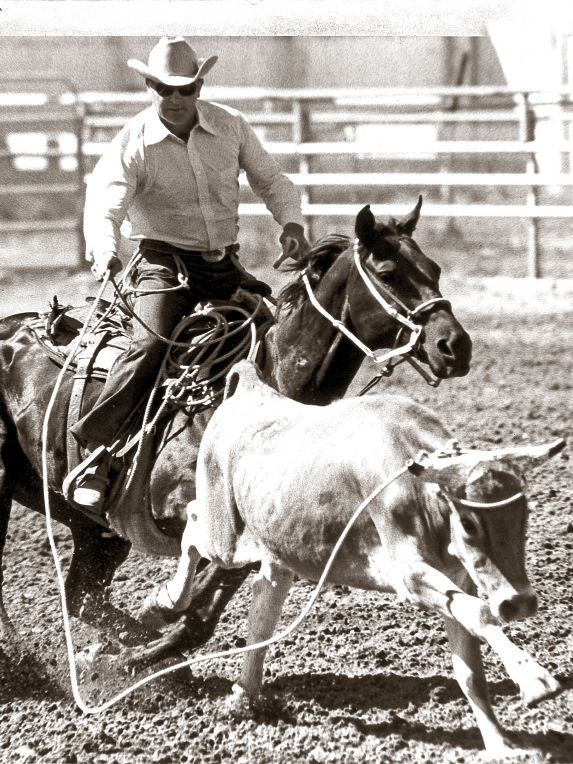
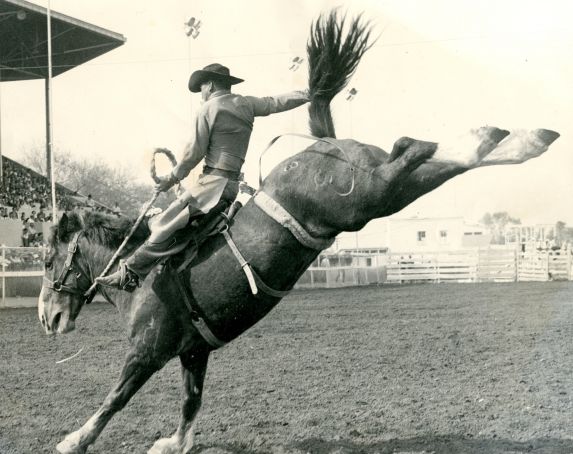
    Dr. Jim Baker was born in Lusk, Wyo. His dad was a dirt contractor. “When I was a kid I thought if you didn’t play basketball and rope calves they’d send you away,” said the 78-year-old retired veterinarian. “I was too tall and skinny to play football.”

    He graduated from Natrona County High School in Casper, Wyo., and went to Casper Junior College on a basketball scholarship when it was on the third floor of the high school. “I was the first pre-vet student that they had at Casper Junior College.” He was going to be an engineer, but changed his mind thanks to the encouragement of a teacher. “I was good in science and my physics teacher said that I should go into veterinary medicine. She pointed out my love for animals and scientific mind and that got me and it fit. I’ve been more content than most people with my chosen profession.” He was in the top ten percent academically in both junior college and veterinary school. “I wasn’t as smart as I was persistent – still am today.”

    He transferred to Ft. Collins, Colo., and continued with their rodeo team, competing in calf roping, bull dogging, and ribbon roping. He had used up two years of eligibility at Casper College where he was part of the first Casper College Rodeo Team that consisted of himself and Bob Sager. He was the director for the Rocky Mountain Region for the NIRA. “My bulldogging was good, but I got hurt in the early 60s and that ended that. This old steer tried to get under the horse and I was in position. The hazing horse hit me with his stifle and threw my head around and I went end over end and that was it. T11 had a compression fracture. It was severe enough for 24 hours that I couldn’t feel my feet so I was in traction.”

    Jim qualified to go to the college finals in 1955 but didn’t have enough money to go to Lake Charles, Louis. “I didn’t think my old Plymouth would make that trip. Besides that I had two kids and was working for the college grading papers for the chemistry class for $1 an hour.” Steve was born when Jim was in his second year of college in junior college. Dan was born 11 months later. He and Lynne were married for 20 years.

    Jim graduated from CSU in 1959 and began his practice. “I did it all for about three or four years but the large animal side got so demanding that I stuck with that. Our generation of vets was responsible for the beginning of preg testing. Locally I did a lot of fertility and breeding soundness in bulls. As time went on I went to work for the True Ranches – preg checking their cows – the biggest year I had was 17,000 cows total.” Jim could preg check 900 head a day. “My record was 1,050 – I was a work horse testing cows – I had some really big clients.”

    He and his partner, Dr. Keith Doing, had a general practice based out of Casper – Animal Clinic – a block and a half from the Fairgrounds. They worked together for 20 years, from 1959 – 1979. While was Jim lived in Casper and after he purchased the ranch, he served on the Central Wyoming Fair Board, Wyoming Pari-mutuel Board and the Wyoming PCA. When he sold the clinic, he rodeoed for a year and a half before buying a place called the Split Rock Ranch out of Muddy Gap Wyo. “We spent 22 years up there – it was a lifetime dream.” Jim continued his rodeo competing mostly in steer roping, making the finals four times 1967, 68, 74, and 77. “I’ve never been a real champion – I’ve just gone and nipped at their butts. I roped along pretty good, but never up in front. Work always came first – rodeo is a hobby. I’m truly a part-time rodeo hand.”

    Jim and Shirley bought the Split Rock Ranch in 1980 which consisted of about 200 sections. While he was at the ranch he constructed 52 miles of water pipeline for livestock and wildlife. “One spring I put in 30 days and figured if I’d ridden in a straight line, I’d be in the Pacific Ocean.”

    With his hard work and improvements on the ranch, he and his wife, Shirley, won the environmental stewardship award in 2000. “I got old too quick and got tired of fighting the state, BLM, and age all at the same time. You know you can trick Mother Nature but you can’t outrun Father Time. I sold the ranch because there were some things I wanted to do – I wanted to rope some more and travel a little bit.” Jim recognized that about every 20 years he’s switched saddles somehow. “It’s my personality – I’m involved in the growth phase but to maintain it, I’ve got to move on.”

    The other business that Jim started with his partner Bud Howard, was the Budweiser Distributorship in Casper. “We went from leased property, one pickup and one truck, and ended up with a business that sold 420,000 cases a year,” he said. “At one point in my life, I was involved in seven sets of books.”

    His biggest accomplishment is finding Jesus Christ. “When I sold the ranch the Good Lord sent me down to Leota, Kan. We had 144 heifers I didn’t want to sell and they were too good to give away. So I went down to Kansas and had two guys look after them. They were two good Christian men and they led me to the Lord.”

    “I’ve had the privilege and pleasure of doing things and living at the right time. There’s a girl or two I should have danced with longer, a whiskey or two I should have put down, and a fellow or two I should have whipped, but I think God is behind this whole thing and He’ll send you the people you need when you need them. I’m not going to tell you I don’t worry, because I do. My goal is to spend the rest of my life trying to feel good.”

  • Tommy Tibbitts

    Tommy Tibbitts

    Tommy Tibbitts was born August 15, 1928, on a ranch about 25 miles south of Merriman, Neb. The ranch was called the Churn Ranch and was owned by Tom Arnold. His dad (Tom) was a straw boss as they were called in those days. Tommy had four sisters older than he and two younger. Mr. Arnold sold the ranch and the family moved to South Dakota when Tommy was a year old. He went to a country school on the Arnold Ranch through the 8th grade and went to high school in Mission, SD.
    The Arnold Ranch was so big that it took up to ten days to brand all the cattle. When Tommy was 8, he went on his first branding. His job was to herd the horses while the hands were busy branding. His next job was breaking colts, and he was paid $5.00 a colt. At that time, the men working in the hay field were getting $1.00 a day and meals. “The first year it took me all summer to break four colts to ride. The second year I broke enough colts I made more than the hands in the hay field did, so the next year Mr. Arnold put me on a hay rake.” The Arnold Ranch had about four hundred head of horses, both riding horses and work horses. They had about 3,000 head of mother cows and 12,000 head of sheep. The sheep farm and the cattle ranch were connected but apart from each other.”

    After World War II was over the US Marines Air Corp offered an enlistment for two years. Tommy was 17 years old, and in his senior year of high school when he enlisted. “I was sworn in on April 9, 1946. Since I enlisted before duration was signed, I am considered a World War II veteran.” After his time in the Marines, Tommy moved to Ft. Pierre along with a couple of friends. “We found work at the Old Horse and Mule Ranch which had been sold to Billy Barrak.” It was here that Tommy started riding saddle broncs at a few rodeos. He joined the Rodeo Cowboys Association (RCA now PRCA) in the spring of 1948. “My PRCA gold card number is 1198. In my beginning years of rodeo I rode bareback horses and saddle bronc. The last years of my rodeo career I just rode saddle bronc. I tried bulls but they just didn’t work for me.”

    Tommy worked local rodeos in South Dakota, Nebraska, Kansas and North Dakota until a bareback horse bucked him off and broke his left knee which put him out of commission for a few months. “While I was healing I went to work in the oil fields at Lovington, New Mexico – that was a new experience. I worked there all winter until spring and I started to rodeo again.” While at a rodeo in Springfield, Missouri, he got an opportunity to make money and rodeo. A rodeo act called the Valkeries asked Tommy to drive their truck, hauling their horses. The act consisted of three girls standing on the back of horses and jumping hurdles. They had seven white horses to haul. “Their offer was to pay my expenses, pay my entrance fee at the rodeos plus a small wage. I accepted the job offer as it was a god send to a cowboy just getting started. “ His new position allowed Tommy to see the nation – they went to Denver, Ft. Worth, El Paso, Phoenix, Cheyenne, Chicago, New Yor,k and the Cow Palace to name a few. “The girls were like sisters to me, more or less like a family. We laughed and argued like a family but we still got along.”
    He worked with the Valkeries for three years. “They got a contract with a circus so I quit and went on my own. Later that spring at a rodeo at Tulsa Jake Beutler of the Beutler Bros. Rodeo Producers, asked me to go to work for them hauling livestock. I went to work for them and worked until I quit rodeoing in the fall of 1959.”

    He recalls his best year of rodeo – 1956. “I bucked off five horses all year and I believe I finished some where in the top 15 standings for that year. The national finals hadn’t started-yet.”
    On August 2, 1958 Tommy married Linda. “That was the best thing I did in my life time. She was not only beautiful on the outside but she is beautiful on the inside. We have had two children a girl and a boy. The girl (Sonya) is an accountant in Phoenix and the boy (Tom) does a lot of work for the department of defense. He works out of Santa Diego.” After getting married, Tommy left Beutler Bros. “I rodeoed some in 1959 but I decided to give up rodeo all together.” He got a job driving truck out of Amarillo, Texas. “I drove from there for about six years. In 1967 I changed companies and started driving for Leeway Motor Frieght out of Oklahoma City. My total time driving truck was about thirteen years. During that time I logged over 2,000,000 miles.”
    In the fall of 1974, he left trucking and moved back to South Dakota to ranch, farm, trade horses and work as a tribal ranger for the Pine Ridge Indian Reservation as well as in the tourism industry. “In 1995 I was named as one of the delegates, from South Dakota, to go to Washington D.C. to the conference on travel and tourism. Every state had delegates at the conference, a total of 1700 delegates, in all. That has been the only conference on tourism that has ever been held at Washington D.C.”

    In the year of 2001 John Hadley and his wife Lois talked Tommy into trying to make rodeo the official sport of South Dakota. “It took me two years before I was able to get it to the legislator for approval. Congressman Larry Rhoden and state senator Eric Bogue introduced the bill to the legislator and it passed by a land slide on February 27, 2003 The governor, Michael Rounds signed the bill into state law making it the official sport of South Dakota.”
    Tommy retired in the late 1990’s and volunteered to be a council member on a resource, conservation and development (RC&D) program. RC&D is a community development program. “The area we covered was four counties. I worked on that until the government stopped funding the program two years ago.”

    He and Linda still live on the ranch outside of Martin, SD. “We live 32 miles from town,” he said. They started going to Arizona for the winter about three years ago. “It can snow really hard and the electricity goes out for days,” said Linda. They both like the change of pace for the winter.

    They still enjoy going to rodeos and seeing people that they remember. “I like being able to walk into an arena and know everybody.” They enjoy their life now. “We didn’t get anything done, but we’re busy.”

  • Donna Shedeed

    Donna Shedeed

    Opportunities for girls to barrel race or rope were rare as Donna Armstrong (now Shedeed) grew up on a farm near Gordon, Neb. It was the early ’50s; before organized barrel racing associations and the newly formed WPRA was just getting off the ground. “I had always loved horses growing up, but there weren’t places to go and compete for girls. Especially in the roping; women just did not rope, it was all men roping. It was quite a while after high school that I got started doing some barrel racing.” One of the first early organizations that Donna joined was the Wyo-braska Association, a part of the WPRA. In 1961 Donna and her friend, Jean Reeves began competing in barrel racing in Gordon, Neb. “Somewhere along the way I picked up roping and began competing where ever I could.”

    Donna competed in the WPRA Badlands Circuit for several years and continues to make her presence known. “I’ve won the Badlands Circuit Team Roping Heeling Championship in 2010, ’11, and 2012. I was in the top 15 and I’m planning on trying to get that again this year.” She doesn’t limit herself to just rodeo and has her set her sight on some of the big USTRC ropings. “I’m going to the Big Horn Classic and rope in the all-girl roping. It’s co-approved for WPRA so it counts in both associations.”

    Donna met Bob Shedeed in 1964 and they were married a year later. The couple settled in the town she was born in, Rushville, Neb. “We had a hardware store and ran that for 30 years. We had a farm outside of town and built an indoor arena. We used to have jackpots there and even had Oldtimer Rodeos there in ’85 and ’86.” They ran their store, farmed, and rodeoed there until 2000 when they retired and moved to Hermosa, S.D.

    They joined the National Old Timer’s Rodeo Association, fore-runner of today’s National Senior Pro, in 1978. “We traveled all over, going to rodeos in Canada, and in the States. In those years, it seemed like that if he placed in the calf roping; then I wouldn’t place in the barrels. And if I place in the barrels; he’d wouldn’t place in the calf roping. One of us would win enough to keep our entry fees paid.” She was also active in the association as an officer and served as the barrel-racing director for six years.

    To say that Donna was successful in the Senior Pro association would be an understatement. Over the years, she teamed up with Bob to claim the titles as the World Champion Ribbon Runner in 1993, 1994, Reserve World Champion Ribbon Runner in 2003, and the Reserve World Champion Barrel Racer in 2002 and 2004. She was the women’s All Around Champion in 2001, 2003, and 2005. She was the Reserve All Around World Champion in 2004, the Frontier Circuit Champion Barrel Racer in 2006, and the 2007 Champion Heeler. In the Canadian Senior Pro association she has the 2003 Reserve Champion Ribbon Runner title and was the Champion Ribbon runner in 2004.” For Donna the win that has the most meaning is the 2005 Women’s All Around Championship. “Both Bob and I won the All Around titles that year, and he was Reserve World Champion Calf Roper.” The pair also won the 2003 Reserve Champion Ribbon Roper and Ribbon Runner. Donna and Bob were inducted into the National Senior Pro Hall of fame in 2008.

    She gives credit to the equine partners that she has had over the years and says, “You have to have a good horse. That is so important to any event , whether its team roping, barrel racing or calf roping, that can make the difference between winning and losing.”

    It was in 1983 that Donna and Bob began a life-changing work by starting a ministry. “We bought a building and started our Christian Community Center. We put on Cowboy Church services for 15 years and that is still a big part of our lives. Now we’re combining church services with team roping since we’re roping more now. People need to have that in their lives; all you have to do is look around to what is happening in this world. The good news is Jesus, you have to focus on that. Now we’re moving towards doing cowboy church at team ropings and have done that for Dennis Tryan in Dillon (Mont.). We’ve done some for Larry Steele in Rapid City.”

    Donna says that the Senior Pro Association gives her the incentive to stay in shape and work out. “It’s pretty demanding competing in rodeos and you do need to be in shape to keep up.” But by far it’s the friendships and people that Donna and Bob have come to know and love that given them their biggest reward. She has shifted from competitive barrel racing to team roping but continues to train and work with barrel horses. “I have stopped barrel racing a couple of years ago and now I train barrel horses for my granddaughters.”

    Their permanent residence is Hermosa, S.D. and they winter in Arizona. “We do a lot of team roping down there. There are jackpots you can go to every day and sometimes two in a day. I won a jacket down there this last winter in a jackpot that had over 200 teams. So I’m pretty proud of that jacket.” They have a daughter, Denell, and four sons, Stacy, Troy, Cory, and David Dunn. Donna and Bob have 15 grandchildren and seven great-grandchildren with one more due yet this year.

    Donna plans to keep running in the Senior Pro rodeos with no quit date set. “Don’t ever give up. The story for us is continuing. You have to set your goals. That’s what keeps you going is riding and roping. You ever been to a hospital lately and see people that have some real problems.

  • Gene Peacock

    Gene Peacock

    Gene Peacock has spent his life immersed in rodeo and the cattle business. The 84 year old Cottonwood Falls, Kan. man was a rodeo contestant, laborer and judge, as well as a feedlot manager and order buyer.

    He was born in 1928 south of Seminole, Okla., one of nine children of Curtis and Marie Peacock. After his schooling ended with the eighth grade. he helped his parents ranch and farm. By the time he was 15, he was competing in the bareback riding, bull riding and saddle bronc riding. In his late teens, Gene made a dollar a day working for a local farmer and rancher. A 4th of July rodeo was advertised in Oilton, Okla., and Gene had a friend with a car, so they entered the rodeo. He won $75 at the rodeo, “and I only had made $65 working all winter,” he marveled. His rodeo career began in earnest.

    Gene joined the Rodeo Cowboys Association, predecessor to the Pro Rodeo Cowboys Association, in 1945. At that time, cowboys could not cross over and compete in both RCA and amateur events, so Gene stuck with RCA rodeos. Bareback riding was his strength, but he also competed in the bull riding, occasionally the saddle bronc riding, and even roped and bulldogged a little bit.

    He rodeoed “all over,” he said, “from Washington State to the East Coast.” Gene competed at Madison Square Garden in New York City and the Boston Garden five times. “Those were the biggest rodeos there were back then.” Madison Square was 53 performances, and Boston followed it. Together, they ran about seven weeks in length. Gene competed there five times, from 1945 to 1952, only missing one year, in 1949, when he was injured. New York City was big time for the Oklahoma cowboy. Madison Square was a 15 header, Gene remembered, “but I couldn’t stay sound. I never did win it but I won go-rounds there.” He had broken his neck when he was young, and “it bothered me at times.”

    During his rodeo days, he became friends with Gerald and Ken Roberts. Gerald was the RCA’s all-around champion in 1942 and 1948, and Ken won the world bull riding title three times. Gene lived with the family on and off for several years. E.C. and Clara Roberts, parents of the boys, requested that Gene work for them. “They raised a lot of horses. I’d go nearly every year in the spring and break horses for them. They’d call and need me, and I’d go and stay a while.” For a couple of years, Gerald did the entering for Gene, and paid his entry fees and expenses, and if Gene won, Gerald got half of Gene’s winnings.

    He also worked for the world champion brothers with the Roberts’ stock contracting business as arena director and flankman, first as part time and then full time in 1948. He often competed at the same rodeos at which he worked. At that time, the Roberts family provided stock for rodeos in Phillipsburg and Abilene Kan., Vinita, Okla., Burwell, Neb., and many others. When the Roberts brothers sold their company in 1961, he continued to work as arena director for other stock contractors. He was also on the labor list for many contractors, helping feed, sort and load timed event cattle at rodeos across the nation.

    Gene had been an order buyer in Oklahoma, and in the early ‘60s, his company moved him to Strong City, Kan., to work at their feedyard, the Crofoot Cattle Co. He wound up managing the feedyard, and became a board member of the Strong City, Kan., PRCA rodeo.

    Gene quit competing in 1965 (his last ride was in Strong City), but he didn’t leave rodeo. By that time, he had begun to judge PRCA shows and high school rodeos. Throughout his career, he traveled with the likes of Charlie Beales, Jack Buschbom, and Wallace Brooks, brother to world champion Lewis Brooks. He suffered injuries like any rodeo contestant, but they were never career-ending. He broke his neck three times, his ankle once, and numerous ribs, fingers, and a leg a time or two. The injuries slowed him down temporarily, but he always bounced back from it.

    Gene’s favorite horse was the 1961 Horse of the Year, Jesse James. At the time, Gene worked for Walter Plugge, a stock contractor in Nebraska, and Gene bought the straight palomino, a saddle bronc, for $100 in Ft. Pierre. When Plugge went to sell the horse, E.C. Roberts was at the sale and refused to buy him, thinking he was too high-priced at $320, which was what Plugge wanted for him. Gene said, “I’ll buy him,” and sent the horse home with Mr. Roberts. Jesse James had an illustrious career with the Roberts’. “He’d rear out of the chute, and the farther he went, the harder he bucked.” Gene never had the chance to ride him, but flanked him plenty of times. When Mr. Roberts sold the horse in 1961, he went for $2300, a significant amount of money paid for a bucking horse at that time.

    Gene was married to Walter Plugge’s daughter, the late Barbara Nichols, and they had two sons, Allan, and Phil. They were later divorced and in 1977 married Patty. Together they have fourteen grandchildren and four great-grandchildren.

    Rodeo was different back then. Contestants don’t stay in the same town as long. “Back then, we used to go to a lot of two or three day rodeos, a day ahead of time, and stay till it was over,” Gene said. Oftentimes those early day rodeos were multiple go-round events. “Now, sometimes (cowboys) are there two hours” and then leave. And rodeo has more money. “I remember in 1950, I won the first go round in the bareback riding in New York. It paid $860, and Gerald (Roberts) and I thought we were rich and had plenty of money.”

    At the age of 84, Gene just quit his order buyer business, but it’s still in his blood. He heads to the sale barn every week, and continues as a board member on the Strong City rodeo committee. He’ll celebrate his 85th birthday this June, and jokes that his family threw him a party for his 80th because “they thought I’d never have another one.” On June 9, they’ll throw another party this year, with family from Oklahoma and friends from all over in attendance.

    The cowboy may be aging but his rodeo friends and memories are still young in his mind. He loves his rodeo memories. “I met a lot of great people that I cherished and we liked each other. I made a lot of friends.”

  • Terry Etzkorn

    Terry Etzkorn

    “He was one of those little tough guys that was all muscle, who rodeoed for 25 years and took everybody’s money, and never seemed to get old.”

    Those are the words Jim Korkow uses to describe Terry Etzkorn, a four-event cowboy from Pierre, S.D., who rode broncs till he was fifty years old and still, at the age of 78, helps run the family ranch.

    Born in 1934, Terry grew up along the Missouri River, in the DeGrey area, 25 miles east of Pierre on Highway 34, the son of Anton “Tony”, a full-blood German from Wisconsin, and Bernice, an Irishwoman. He jokes, “I’m Irish and Dutch and don’t amount to much.”

    But he did amount to a lot. He began riding at a very young age, and as he got older, he broke horses and “liked the action,” he said. He began riding bucking horses, and “it just materialized, and then I finally got to where I was riding real good.”

    Etzkorn competed in area rodeos and became a member of the South Dakota Rodeo Association, winning the bareback and the all-around titles in 1955.

    In the fall of 1955, he was riding well enough that he joined the Rodeo Cowboys Association. He entered the National Western Stock Show and Rodeo in Denver, and rode there with Irv Korkow, a Blunt, S.D. stock contractor delivering a load of livestock. After Denver, he rode with rodeo legend Casey Tibbs to the spring rodeos: Houston, San Antonio, El Paso, and his pro career began.

    Etzkorn juggled ranch work with rodeo work, and in the early years, rodeo was his primary income. He competed in all three roughstock events, and sometimes entered the bulldogging, too. “I survived on my rodeo money for a few years. We didn’t have too much when we first started out, of course. It bought a lot of bread for the kids.”

    Rodeo helped him build up his cattle herd, and he worked with his parents, feeding cattle, haying, and even running a lumber mill on the river.

    In 1960, he bought the home place, which has been in the family for over 100 years. They ran a registered red Limousin cattle herd, and Etzkorn continued to rodeo.

    He competed in North Dakota, South Dakota, Nebraska, Iowa, Minnesota, Wisconsin, and the big shows, too: Denver, Houston, Calgary, and more. He never got too far from home, because there was cattle to feed, hay to mow, and kids to raise. He’d go hard on the weekends, and be ready to work first thing Monday.

    In 1956, he married Reita Maher, and together they raised six children. Reita and the kids often traveled with him, and he remembers a funny occasion. “We had the pickup, and we went to a rodeo, and the five kids (at that time the youngest wasn’t born), they all started rolling out of the pickup. Of course, everybody laughed.” But that was a way to get the job done. “You gotta do what you gotta do.”

    Terry competed at between thirty and forty rodeos a year, putting in long days. “Sometimes I’d come home and work all day, and all night, and take off for a rodeo.” He often traveled with other cowboys. Ken Badger, Scott Hall, Harold Alleman, and Bernard Gregg were traveling partners. “They were good hands.”

    His strength was the bareback riding, but when he was in his forties, he “kind of had a little slump, of course, I was getting up a little then.” So he quit riding barebacks but continued with the saddle bronc riding and bull riding. The last bull he got on was Korkow’s Dick, at Mobridge, S.D. Dick had a horn “an inch long, and he punched it right between my eyes, and drew a little blood,” Terry laughed. “I was struggling on bulls so I quit getting on them.”

    It wasn’t until 1984, when he was fifty years old, that he quit riding saddle broncs and rodeo altogether. His last rodeo was Ft. Pierre. He wanted to quit while he was still riding well, and he did. But his involvement with rodeo did not end. He judged rodeos in the SDRA and PRCA for many years, and became a PRCA gold card member.

    Injuries never plagued his career. A few animals took a shot at him, but nothing major. “I think I got kicked a couple three times. Getting off, you’d sometimes get off and they’d buck in a whirl and kick and get you, but I never got anything busted up bad.”

    The couple’s six children: Allen, Leon, Karrie, Lisa, Jay, and Julie, all competed in rodeo as youngsters. Allen was a bareback rider, and Leon was a saddle bronc rider and pickup man. Many of the ten grandchildren and four great-grandchildren also competed in rodeo.

    Now Terry and Reita semi-retired, helping on the ranch and with the family’s commercial pheasant and goose hunting business.

    A house fire in 1980 destroyed many of his trophies, saddles, buckles, and pictures, but the memories remain. He considers that today’s bucking horses and bulls are getting better and the cowboys are tougher. “Everything changes,” he said. But they can’t be any tougher than the cowboy from DeGrey who competed in four events, rodeoing for nearly 30 years in the pro ranks.

  • Tom Grigg

    Tom Grigg

    Tom Grigg was born in Shoshoni, Wyo., March 5, 1926. The 87-year-old still makes it to the Central Wyoming College three or four times a week to watch the rodeo team practice. “If somebody asks for help, I make a little suggestion on what to do,” he said. “Rodeo has been my life. Comes natural I guess.”
    He didn’t start competing until he was at the University of Wyoming. He was able to go to college thanks to the GI Bill. He served during WWII in the Air Force, joining right after he graduated from high school. “I was playing football there and was a pledge at a fraternity. They were forming the rodeo team and since I came from a ranching family, I represented them on the team.” He went to two rodeos, winning the Fort Collins rodeo in the bronc riding, and that was the end of his college career. He finished out the year, came home, and went down the road. “At that time it was a whole different world. I joined the RCA and went to Denver and Cheyenne – traveling with guys, pulling a trailer with a car. He added bull dogging to his rodeo skills in 1952 and then started tie down roping as well. “My dad used to run the Pitch Fork Ranch and he came down to watch me in Shoshoni. He needed help and told me to come home, so I went with him.”

    From there on, Tom’s rodeo career was limited to weekends and when he could get away from the ranch. His ranching career actually started when he was ten years old. “The Chapel Brothers ran horses in the northwest, and the CBC round up happened once a year where they would gather up thousands of horses, on thousands of acres. My dad took me on my first roundup when I was ten. We gathered those horses and I got paid $1 a day to help bring them in.”

    He met his wife of 60 years, Shirley, while he was working at the Pitch Fork, running 1,500 head of cattle, 20,000 head of sheep and a round up wagon. “She didn’t like me at first – you know how cowboys are.” She came around after a couple years and the two brought three children into the world, Tracy, Tom, and Christy. “My oldest son (Tracy) passed away three years ago from a heart attack, he rodeoed. My youngest son, Tom, high school rodeoed too, but Christy wasn’t that interested in it. The kids were raised on a ranch, they had to work hard. From the time they could ride, they helped me.”

    The family spent weekends going to rodeos with dad. Tom won All Around at the 1953 Cody Night Rodeo for the summer. Back in those days you had to work both ends of the arena. “We drove the 50 miles to Cody about three times a week to the night show,” said Shirley. “We pulled a two horse trailer with a car. Nobody in those days had a pick up. I loved going to the rodeos and I met lots of friends.” Tom trained all his rodeo horses except one calf roping horse that he bought. Tom added team roping to his events when he turned 50. “They didn’t have it in this country for years,” he said. Tom continued to rope until he was 70. He was in the Senior Pro Rodeo, making their finals several years.

    Tom and Shirley supported their kids in rodeo during the school years. His support continued when they went to college, supplying rope horses and steer for practice, practice cattle and feed to the kid’s rodeo teams in Montana. He also supplied rough stock horses to Dale Stiles rodeo teams at Casper College during the late 1960s and early 70s.
    Tom took a job as brand inspector for Freemont County, and then he had the opportunity to go to work at the Matador Ranch in Montana where he moved his family for ten years. They moved back to Riverton in the late 1970s and continued brand inspecting, retiring at age 70. He continued to teach young people how to rope and steer wrestle and was one of the founders of the Old Timers Arena in Lander.

    When Central Wyoming College moved the rodeo program to their present location, the college did not have an outside arena and Tom allowed the college rodeo team to practice at his arena. He continues to be a familiar face at the practices and events, allowing some of the team members to board their horses at his place. During his life, he has had two major shoulder surgeries, two knees replaced, and open heart surgery to replace a valve and repair five bypasses.

    He has a simple philosophy in life: Treat everybody the same and do your best in everything you do. “I remember lots of days it was 50 below and after waiting until it was 30 below, saddling up my horse to take care of the cattle. We used to calve 2,800 head of first calf heifers in Dillon, Montana. That’s where my kids learned everything.”