Rodeo Life

Category: Uncategorized

  • Clayton Hass

    Clayton Hass

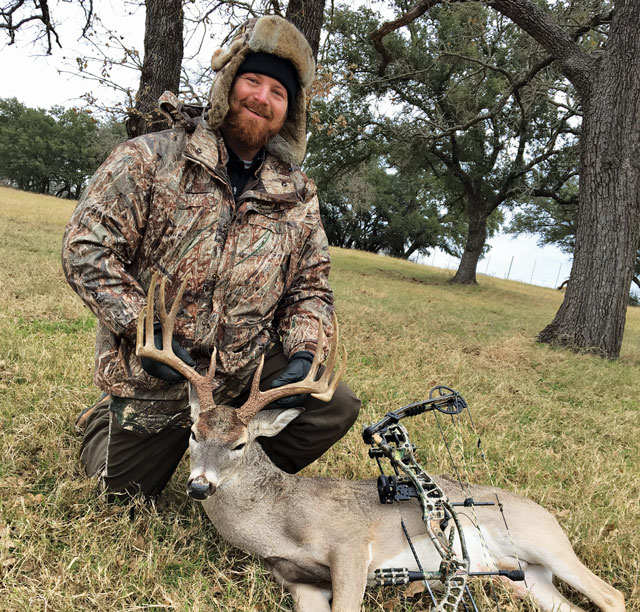
    There’s nothing like the morning when the animals wake up and you hear the birds come alive, and everything starts to move around,” says Clayton Hass of hunting. The 33-year-old professional steer wrestler, tie-down roper, and team roping header from Weatherford, Texas, juggles his passions of rodeo and hunting in the fall every year, but he feels his time spent in the deer stand or following his hunting dog is always worth the effort. “I started hunting with my dad as a kid growing up, and we hunted birds and deer and ducks. I go with family and friends, and I do like to be by myself sometimes too. You do a lot of thinking. Out there, everything is good, and there’s no cell phone service and no one calling me. You can just be out there in the wild, enjoy nature, and blow off some steam. There’s a lot of similarities between rodeo and hunting. Just like if you make a bad run, if you make a bad shot, there’s nothing you can do about it now. The ultimate thing is to take the next shot or the next run. In a way, it’s like riding a bike—you don’t forget—but first of the season, you practice a bit.”
    Clayton has never had to step out of his state for hunting opportunities since Texas wildlife is so diverse. He often hunts on the Waite Ranch near Fredericksburg, Texas, and stays at the lodge for the weekend since it’s several hours from home. Clayton narrows his favorites down to quail and white tail deer, though he wants to harvest an elk this year as well. “I really enjoy quail hunting and watching the dogs work and seeing how smart they are. Most of them are my friends’ dogs, but I have an 11-year-old dog, Max, that I’ve had since he was 6 months old. My cousin is a dog trainer in Texas, and he started Max. The hunting is fast—not as long as sitting in a deer stand. I can go quail hunting and then get back and do whatever I need to for the day. I like dove hunting as well. You breast one out, wrap it in bacon, and put a jalapeño in it and bake it. It’s not bad at all.”

    Within the last seven or eight years, Clayton discovered how much he enjoys bow hunting, particularly the extra challenge and being that much closer to the deer. “With a rifle, guys are shooting 500–700 yards, but with a bow, the maximum is probably 110 yards, and most people don’t shoot over 50. I grew up shooting my bow around the house, but I never hunted with it. I decided to buy one, and after I harvested my first deer with it, I was hooked. The hardest thing about wanting to go hunting is that elk archery season starts the first of September, which is hard with rodeo season. But after the All American finals in Waco, I was able to slip away and do some hunting. I have some acreage here in Weatherford, but we just leave the deer in the pasture alone. I’d like to set up a feeder here just so the kids can see the deer come in.”
    Clayton’s wife, Alex, enjoys bird hunting with him, and Clayton hopes their six-month-old son, Maclaren, will be his hunting buddy a few years down the road. “My daughter, Addy, (5) isn’t much into hunting, but she likes the meat. We make breakfast sausage with it, and last year, we did the process ourselves and made some links and breakfast sausage.”
    Clayton also uses his down-time between rodeo seasons to travel with his family and train horses. Though he mounted out most of the year on Sterling Wallace’s horse, Cadillac, a two-time AQHA–PRCA Horse of the Year, Clayton did win Pendleton in the all-around and steer wrestling riding his 19-year-old gelding, Rusty. “I use Nutrena for my horses and steers. They digest it better and the fiber is lower, and they’re dang sure looking good,” says Clayton. He won numerous rodeos in the all-around, team roping, and steer wrestling this year, and missed qualifying for the WNFR by $606. “But I’m going to work hard, get better, and come back strong next year,” he says. Until then, the three-time WNFR qualifier will be soaking up time with his family, and working toward his goal of harvesting an elk or a bear this season.

  • Rodeo Scholarships

    For high school seniors there are plenty of opportunities to earn scholarships.


    Here are a few tips that I think may help as you look to find the school that is the right fit for you:

    • I just want to keep it real. Less than six percent of all student athletes are on a full ride scholarship. Not rodeo students, all student athletes, every sport, every college. Football, basketball, baseball all sports combined amount to less than six percent on true full ride scholarships. And when you really look at the full ride scholarships, they are in the big revenue sports such as football, and basketball, the sports that fill stadiums and generate revenue for the schools. Rodeo has never filled a 100,000 seat stadium six or eight times a year like an SEC football team will. Scholarships are there—full rides are scarce.

    • The dollar amount of the scholarship should not be the determining factor for your choice of schools. I know students that made the choice based simply on dollars. They took a $3,000 scholarship to Rodeo Time University where tuition is $12,000 per year and turned down a scholarship of $2,000 to Rodeo Tech College where tuition is only $4,000 per year. They took $1,000 more in scholarship money but the choice really cost them thousands of dollars. Look at the big picture and make wise decisions.

    • Many times the schools that make the best offers scholarship wise, have the least to offer in other areas. Check out the dorms, the academic programs you are interested in, the practice facilities, the stalls, the coaches. How many times a week you can practice. How long do you practice in the fall and spring seasons. Does the school offer tutors for you, athletic trainers. Will your classes transfer to other schools? How big is the team? Make sure you are a good fit for the school and the school is a good fit for you.

    • There are a lot of other scholarships available. From having attended three different colleges and working at a couple as well, there is much more money available in academic scholarships than there are in athletic scholarships at every college you will look at. From your freshman year of high school on, your high school grades can help or hurt you when applying for scholarships when you get to college. When combined with athletic scholarships, academic scholarships can be huge, they can truly help you earn that full-ride. Many of the students that I have had that had the best scholarships were on rodeo scholarships combined with academic scholarships. You are a student athlete first, and if you truly are, there can be financial rewards.

    • Apply for as many scholarships as you can. Local scholarships. High School Rodeo Scholarships. Foundation scholarships. Search for scholarships on the internet. There are thousands of scholarships available if you are willing to put in a little work. Don’t be afraid to write a few essays, or fill out some applications. I know several students who have earned over $5,000 for just a little effort in applying for scholarships.

    • Know the employees in your colleges Financial Aid Office on a first name basis. If they know you are willing to apply and put forth effort to get additional scholarships they will help you out.

    • By NIRA rules Letters of Intent cannot be signed until March 1st of your senior year. Start the recruiting process now contact the programs you are interested in now. Visit schools, visit coaches, do your research on the school and rodeo programs. When March 1st rolls around you should have a good idea of which school you are interested in attending. Don’t be fooled or pressured into signing your LOI before March 1st.

    • Once you land a scholarship on a rodeo team make yourself an asset to the team. Get good grades, chances are you can earn an academic scholarship in the future. Score lots of points, you may earn a better rodeo scholarship. Treat college like a job, and be a great employee, chances are you may get a raise in some form of a scholarship.

    Final thought—Scholarships are a privilege not a right. When you receive a scholarship it is fair that the coach/college have expectations for you to do well in the classroom and in the arena. You need to be a good student, a good athlete and a good representative for the school. If you don’t hold up your end of the deal, don’t expect the college to keep you around.

  • Lee Brice

    Lee Brice

    Lee Brice is best known for crafting music born of his Southeastern roots, but loved the country over for its down-home emotions and values. He recently released a new single, “Boy,” and his fourth album comes out in November. Lee has won numerous awards, including Song of the Year at the CMA and ACM awards in 2012 for his single, “I Drive Your Truck,” but like most artists, his inspiration isn’t found in any one area alone. Yet the time he spends outdoors while hunting or fishing often kindles the ideas that eventually make their way to our radios.
    Lee started fishing as soon as he could cast a rod, and was given his first shotgun when he was 10, hunting often with his dad or brother near their home in Sumter, South Carolina. “My daddy took us, and every chance we had, we were dove hunting or deer hunting, or hunting for rabbits or squirrels—anything we could find,” says Lee. “It’s been a part of my life since I was little. I got into duck hunting in the last ten years, and I just went turkey hunting for the first time last year, which was really cool. It’s a whole different style. Being on the road so much, I meet people from other places, where they have elk and other types of hunting that’s a whole different ball game. I want to get in to that.”
    As a father raising three children with his wife, Sara—including their daughter who was born in June, Trulee—Lee says those new hunting opportunities will have to wait. But last year, he purchased 240 acres of land not far from his home near Nashville, Tennessee, and he’s making improvements to bring in more deer with the help of Record Rack feed. “I just got the farm last September, and it had no food on it whatsoever. I killed a ten (point) last year, and a buddy came over and killed one, but there was no food, so that was my first priority. I have four different food plots and some feeders, and I put some new stands up. We recently saw twelve bucks in the same night, and what a difference from last year when there were just three bucks. I have a farm manager out there who’s helped me. It’s a tough process, but the bucks have grown so much and they have so much mass. I’m not used to that. I’m from South Carolina where the deer are smaller than here in Tennessee.”
    The land, where Lee plans to build a house in the future, is surrounded by the Harpeth River. Lee is in the process of turning a small cow pond into a seven-acre bass pond. “I’ve been getting in to fly fishing the last few years, and the farm is going to be my sanctuary for all of that. The point of it is to try and get out there and relax and decompress. But because it is the one time when I can really breathe and rest my mind, that’s when there’s a freedom of inspiration. Sometimes I think of song titles, and even an emotion’s an inspiration in itself. I go there to get away from work, but it turns back into how work started, and being inspired.”
    Lee also loves sharing his passion of the outdoors with his children, especially his oldest son, Takoda. “He’s been going and sitting with me the last couple of years, and my youngest son (Ryker) can now spot deer, and he’s getting the excitement for it. I’ve learned that hunting is such a great thing, and I think it’s important to have kids around it. There are so many facets to it—not only the hunting itself, but the preparation. It’s the little things they learn growing up that stick with them their whole lives, because it did me.”
    Rodeo has stuck with Lee as well over the years, particularly when he was first starting his music career, and playing in Las Vegas at the South Point Hotel. “I got to meet a lot of guys out there, and through my manager Enzo, I got to be good friends with Tuff Hedeman. I’m a fan,” says Lee. “We play the Houston Rodeo and a lot of the big ones, and I sure do respect it like crazy.
    “Early on, my whole life was music and football and hunting and fishing. I played football for Clemson all the way through college, and once that was over, music was the natural thing for me. Now, even though it’s a job and it’s definitely hard work, it’s a job that I love. I’m so fortunate to do what I love for a living, so that leaves hunting and fishing as something I love to do that I don’t get paid for. I still work for it—I still put up the stands and food plots and clean the deer—but it’s good.”

  • Time Management Skills

    Time Management Skills

    Successful collegiate rodeo contestants must be effective time managers. There is no choice in the matter as they are responsible for themselves and in many cases for their animals. Time management skills are critical for your success.
    When you consider the amount of time in a day that must be allocated to sleep, eating, attending classes, practice, studying, doing laundry, running any necessary errands, and hopefully having some free time for a social life, you will quickly realize that a college rodeo athlete has very little spare time.
    All of this is built on the assumption that they are not traveling to a rodeo.
    The major key for success in the classroom and in the arena is being able to have good time management skills. Some students are able to find the balance. Others are able to master the rodeo side, and struggle with the class side. Some are on the other side of the fence and do well in the classroom and struggle in the arena. Develop the balance.
    As a college rodeo student it is critical that you cultivate your time management skills if you want to be successful. These skills will benefit you now and in the future.
    Here are some suggestions that we give our student athletes:
    Learn to keep a calendar with your dates and deadlines. You can do this on most smart phones now. You don’t want to miss an assignment because you were out of town or traveling or simply forgot.
    Know what you need to accomplish each day. Classes and Practices included.
    Do not let your social life take first priority. Classes first, practice second, social life down the list somewhere.
    Make sure you are prepared for your assignments when you are traveling. Yes you are on the road at a rodeo. You are still responsible for completing your class work on time.
    Have a good practice plan so that you don’t have to spend more time than necessary in the arena practicing.
    Work with your roommates and teammates to split your chores. This will help everyone maximize their time and effort. But also make sure you have good roommates and teammates that will pull their weight as well.
    Wake up early. You can get a lot accomplished while everyone else is sleeping. This also requires you going to bed early.
    Listen to your Coach when they are trying to help you. Most of them have been at this for a long time. They really can help you shorten the learning curve. If you don’t listen you may just learn the hard way.
    Do not procrastinate, you will do better work when you are not rushed. Plus your grades will reflect your effort.
    The sooner you learn these skills, the better chance you have to be successful as a college rodeo athlete.
    Good luck!


  • Salmon Patties & Apple Snack Cake

    Salmon Patties
    in memory of Mrs. Paul (Velda Barnhart) Morehouse
    from The Pioneer Journey Cookbook

    Ingredients:
    1 can (15 ½ oz.) salmon
    1 cup fine dry bread crumbs
    ½ cup chopped onion
    ¼ cup chopped parsley
    2 eggs, beaten
    2 Tbsp. lemon juice
    ¼ tsp. pepper
    2 Tbsp oil
    Lemon wedges


    Directions:
    Drain salmon, reserving 1/3 cup liquid; flake. Combine salmon with bread crumbs, onion and parsley. Add reserved salmon liquid, eggs, lemon juice and pepper and mix well. Shape into patties. Fry salmon parties in oil over medium heat until lightly browned on both sides. Serve hot; garnish with lemon wedges. Makes 6 servings.


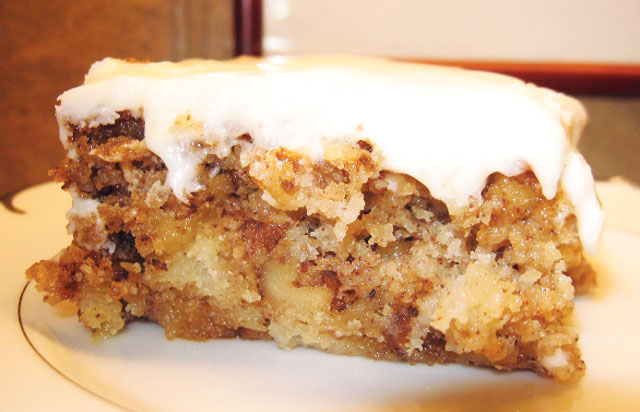
    Apple Snack Cake
    recipe courtesy of Nicki Ulberry

    Ingredients:
    1 ¾ cups sugar
    2 cups flour
    1 tsp. baking soda
    ½ tsp. salt
    3 eggs
    1 cup oil
    1 tsp. cinnamon
    ¼ cup milk
    1 cup chopped nuts
    3 cups apples

    Directions:
    Mix eggs, oil, cinnamon, salt, soda, flour, sugar and milk; mix well. Add in nuts and apples. Stir until well blended. Bake are 375 degrees for 45 minutes in an ungreased 9×13 inch pan. Can use 2 round cake pans. Can frost or eat as is, warm.

  • Gus Duncan

    Gus Duncan

    Gus Duncan grew up in Oklahoma with an arena and a roping in his backyard every weekend, but while his family grabbed their ropes, he grabbed his rifle and spent his weekends hunting. “I’ve always had such a passion for wildlife, and that’s what’s important to me,” says Gus, a Cargill Feed Consultant who focuses on equine and wildlife. “My passion for the rodeo industry is helping, not necessarily roping. I love the sport, but I get more of a thrill helping those people win, as opposed to roping myself.”
    Rodeo companies, equine breeding operations, and wildlife and equine ranches all run on the well being of their animals, and Gus shares the same commitment with his customers. He’s been in the feed industry for 15 years, and since joining the Cargill team in 2013, Gus has worked alongside prestigious companies like Beutler and Son Rodeo Company and the Lazy E Ranch. “The focus on my equine customers is 100 percent performance driven,” Gus explains. “I work with large bucking stock and performance animals, whether it’s barrel horses, rope horses, or bucking horses, and I work with many large racing facilities. With horses, we look at everything from the outside and take a wide view, then trim it down and look at individual animals and how they perform and move. By talking to the customers and finding out their goals, I can go more in depth to get to those goals. It may be a horse that needs more calories, or a horse that has a digestive problem. I work with some of the largest of the large, and it’s very exciting to see what they do.”

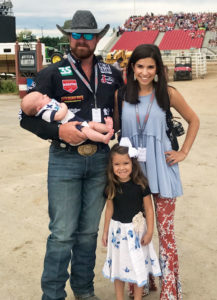
    Bobby Deeds with wife Chelsi and daughter Bailey – courtesy of the family

    Along with his work feeding all of the breeding horses at Lazy E Ranch, Gus also works with Nutrena, the official feed sponsor of The Lazy E. “I work directly with the arena, providing feed for events and marketing, and we’ll do a lot of giveaways for fans, so it’s anything we want to partner on with them,” says Gus.
    In the wildlife field, Gus focuses on wildlife breeding operations of white tail deer, mule deer, and elk. “The number one thing I’m always looking at first is herd health, and then antler growth. Without correct herd health and a management program, you won’t get the antler growth you want.” Though Record Rack feed has been around for many years, Gus feels it has improved greatly as the research in wildlife nutrition continues. “I feel like we are leading the way when it comes to wildlife nutrition. I work hand in hand with another gentleman that works for Cargill, Bobby Deeds, and he has made leaps and bounds in the wildlife nutrition department. In my position, you have to be passionate about whatever it is you do, and knowledgeable. You also have to be a likeable person that people trust – you have to be genuine – and if you can tie those three together, you can be successful.”
    Gus traverses the entire state of Oklahoma and the Texas Panhandle visiting customers, which are roughly 60% large equine ranches and 40% wildlife ranches. “With Cargill, we have a no-phone policy in our vehicles, so I listen to music. I love every genre – it doesn’t matter if it’s classical to rock and roll. Music is how we keep our blood pumping.” Since Gus and his wife, Chelsi, have jobs that involve traveling between Oklahoma and Texas, they have homes in both states. In the fall, Gus also enjoys guiding deer hunts for ranches in Oklahoma, Texas, and Colorado. “In Texas and Oklahoma we don’t pack on horseback, but in Colorado when we go on big elk hunts, we pack in on horseback and camp in the mountains. I like the peacefulness, and the outdoors in general. It’s just relaxing, and a lot of the time when I’m hunting, I’m taking someone who hasn’t had the opportunity to hunt and harvest animals like I have. To see the passion and excitement in their eyes when they do it – there’s nothing better than taking a kid hunting that loves the outdoors and hasn’t has the opportunity to do it.” On weekends when he’s not hunting or fishing, Gus travels to barrel races around Oklahoma and Texas with his wife, who competes, and their 4-year-old daughter, Bailey. Chelsi worked in medical research with animals until they started their family, and she now works in the commercial industry, while their daughter loves to go shed hunting with Gus.
    “I want to provide the best service possible for everyone I work with, and to be known as the guy who is honest and up front about everything,” Gus finishes. “I want people to know I have their business in mind first hand. I love working for Cargill, and I strive to be the best and I want my customers to have the best. Same with my family – I strive to be the best husband and father that I can. Those are the things that are important to me.

  • COMING TOGETHER

    One of my favorite quotes is “Success is not a goal, it’s a byproduct.”
    So what is success a byproduct of? Your daily effort at practice?
    One thing that always amazes me every year is how much time some students are willing to spend in the practice pen. They spend a lot of time there, and they don’t accomplish much because of their approach to practice. Here is my advice to many students every year it’s not how much time you put into your practice that counts.
    Practice with a purpose, other than spending a lot of time in the arena. Just because you spend a lot of time in the arena does not mean you are making progress or even improving.
    It’s always what you put into that time in the practice pen that matters. It is how you practice that ultimately makes the difference between your success and failure, between you reaching your goals or falling short. Time is a terrible measuring stick in the practice pen. Progress and improvement are what you should strive for.

    When you commit yourself to train mentally and physically the quality of your practices will improve. Make your runs matter in the practice pen. Make consequences for poor runs or poor efforts in the practice pen. Eventually you will perform like you practice. You can’t practice on cruise control and then go expect to perform at a high level.
    As a high level athlete you need to be willing to directly connect what you are doing in practice pen with the ultimate performance that you’re training for in the future. When you are able to do this you will get the very most out of each practice session.
    Don’t just practice. To be a top competitor you must have a practice plan and be able to prepare to get better. Don’t practice and hope to get better, Practice with the purpose and intent to get better every day.
    Don’t just go through the motions.
    Understand why you’re doing what you’re doing in the practice pen today and how it will help you when you have entry fees up in the future.
    Success is not a goal, it’s a byproduct of your daily practice efforts. What are your practices producing?

    C.J. Aragon was named the 2008-2011 Grand Canyon Region Coach-of-the-Year. 2014-2015 WJCAC Coach-of-the-Year, 2016 Southwest Region Coach-of-the-Year, and 2010 National Intercollegiate Rodeo Association Coach-of-the-Year.

  • A Little Encouragement

    Continued from the August 1 issue on the five things rodeo contestants want their parents to know…

    3. Slumps happen! Slumps are the worst! When nothing will fall your way, it seems like the world is ending. The best thing about slumps is that they only last forever if you quit. Parents, keep entering them. Keep going to the practice pen. Keep letting them know this is a temporary thing and try to take off all the pressure on these kids that you possibly can because they are putting more than enough pressure on themselves. Step back and support them through it.
    4. Rodeo is HARD! When you mix kids that aren’t even old enough to drive with thousand pound animals moving fast enough to get you a speeding ticket in a school zone, things can get hairy. Once you enter the arena or nod your head, things happen quick! If you are a parent that has never entered a rodeo event, it’s difficult to describe what your kid is experiencing. Horses and stock don’t always cooperate. Plus there are other kids there that work just as hard on just as nice of horses trying to achieve the same thing. Competition in rodeo is TOUGH these days. Be reasonable with your expectations of how your kid should perform each rodeo. They have off days just like we do, especially around those teenage (aka hormones stole my kid) years.

    5. They wish you wouldn’t compare them to other kids. Every kid’s journey is different and each kid will face different obstacles along the way. You might not see some of these obstacles because many times these obstacles are mental. Mind Gym is a fantastic book that can really help your kids with the mental aspect of all sports. I highly recommend all kids read this book or listen to it on those long road trips! Some kids are not natural athletes and they will have to work 10x harder than other kids. In these kids, acknowledging their hard work and encouraging them for one more tenth of a second faster time will get more out of them than expecting them to perform out of their level of ability. You can’t expect Michael Phelps to compete with Usain Bolt and vise versa. We all have our own talents and abilities. Making comparisons between your kid and others makes them feel like you wish the other kid was your kid or you are more proud of one kid than the other and it can be very damaging to your relationship.
    This is just my take on things from the points of view I have been lucky enough to see. Many hours in a trailer and late night drives have been a great way to connect with these kids and hear about what they experience and need from us. We are all going to fail at this from time to time but I’m going to attempt to be a good rodeo parent for my little cowboy and enjoy this ride for the short time it’s going to last.

    C.J. Aragon was named the 2008-2011 Grand Canyon Region Coach-of-the-Year. 2014-2015 WJCAC Coach-of-the-Year, 2016 Southwest Region Coach-of-the-Year, and 2010 National Intercollegiate Rodeo Association Coach-of-the-Year.


  • A Little Encouragement

    This was taken from a friend of mine who is a great coach, Stacey Elias Martin. She has coached from the pee wee level to the college level and here are a few observations that we share.
    After being around some of the best (and worst) parents and kids in the rodeo world, there are a few things I want parents to know about their little cowboys and cowgirls. This is about those kids that are internally driven to strive for success and are out there working all week for those weekend rodeos. Here are 5 things they want their parents to know…

    1. Their fear of disappointing the people who support them and love them can be overwhelming and can cripple them in a competition. These kids WANT to win. They know YOU really want them to win and so they enter the arena with the weight of all of that pressure on their shoulders. The kids I have seen be amazing in the arena, never had to walk out and worry about parents that were mad/yelling/upset with them. These kids were free to lay it all on the line every time they rode in the alley so they won a lot more than the kid that was scared to make a mistake. We ALL want to win but is it worth losing the respect of our kids when we act like jerks by being loud, embarrassing, and insulting if they don’t win? I want to win as much or more than anyone but I try really hard to let my son know that as long as he gives it his best effort, win or lose, I love him and this is something we do for fun. Wins and losses will never be allowed to define who we are or change our love for him.
    2. These days are numbered and when these kids are gone, you will beg for one more rodeo road trip, win or lose. I hear it from so many parents… “We can’t wait for high school rodeo to be over.” Then two years later they are wishing for one more trip to nationals with their kids because they finally realize how amazingly blessed we are, that we get to haul our kids all over the country every summer and make some amazing memories. The memories we make and time with our kids is much more valuable than any saddle or buckle you could ever bring home.

    TO BE CONTINUED in August 15, 2017 issue…

  • Bobby Deeds

    Bobby Deeds

    Texas has one of the largest deer populations in the United States, and Cargill Wildlife Specialist Bobby Deeds is at the forefront of keeping that deer population thriving. “I’ve been with Cargill ever since I finished my master’s at Angelo State University in 2004,” says the 37-year-old from Goldthwaite, Texas. “I was a territory manager for them and then I went into the wildlife specialist role. It’s the fastest growing segment in the feed side because of recreational hunting. I love getting into the country and working with different land owners, helping them grow bigger deer. I never would have thought in college that a job like this existed – I wanted to keep rodeoing and not go to work. If I’d known the job was here the whole time, I would have been running hard to get it!”
    Bobby grew up on his family’s ranch in central Texas, where hunting and rodeoing were not hobbies, but lifestyles. Bobby started rodeoing when he was five or six, beginning with riding calves, then steers. He worked up to riding in all three roughstock events, and after rodeoing in high school for Texas, he competed on the Angelo State University rodeo team. “I had a back injury and I wasn’t rodeoing, and I think it was God telling me to get a real job,” Bobby jokes. “I had a graduate professor, Doctor Cody Scott, who was one of the most influential people besides both my parents, driving me toward what I had a desire and passion for. It’s by the grace of God that this all fell in line, and I’m lucky to be where I am today.”
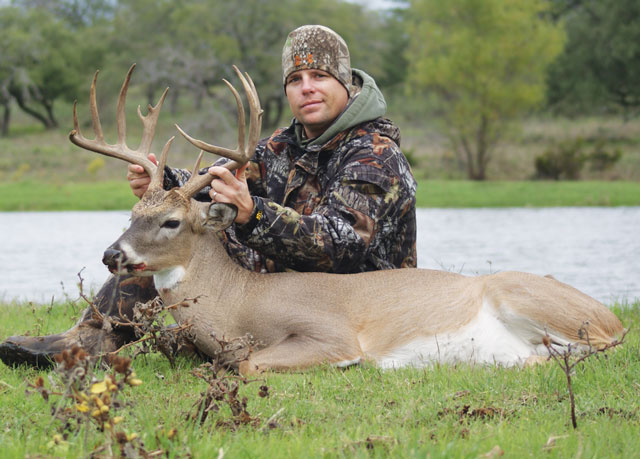
    A day in the life of Bobby has him traveling anywhere in Texas to perform habitat analyses and design a feeding program for whatever the habitat is producing. “I go from one ranch to the next, and the first thing we talk about is their goals,” he says. “Every ranch and its resources are different. Whether they want the biggest deer they can grow, or exotics, we can figure it out. Nutrition is the easiest thing to change, but if everything else isn’t dialed in to it, you won’t get a lot of response from it. I make recommendations other than nutrition and make sure the habitat is doing the most for them, because feed is a big investment from a management standpoint. Nutrition, age, and genetics are the three things that grow big whitetail deer. Texas is probably ten to thirty years ahead of some states with what we’re doing with whitetail deer, and we have a pretty lengthy hunting season. The forefathers of deer management like Aldo Leopold managed habitats and were really dialed in on the deer management standpoint.”
    Every other moment of Bobby’s is spent with his family. He and his wife, Ashley, have three sons, Ethan, 9, Evan, 6, and Easton, 6 weeks. “When I’m not working, I’m typically coaching one of their baseball games or I’m in the practice pen with them,” says Bobby. “Ethan is in the top ten of the AJRA steer riding, and we have a small practice pen behind the house with a bucking chute. There’s a reason rodeo kids are typically the best I come across in manners and how they succeed in life because of what’s engrained in them from a work ethic standpoint. My number one goal in life is to raise good kids and have God in their lives.”
    Bobby also breaks colts for his dad, who runs 20 head of broodmares. “We have no shortage of horses! We’re training those for our own horses since my boys are getting started in roping, and we have two or three good roping prospects. I’m really happy with where I’m at right now with Cargill,” Bobby finishes. “If I have an idea, we run with it, and they support me and get behind it. I want to continue being successful and leading on the wildlife management side. I want to think of something that will take it to the next level on the feed side, and I want to be remembered as someone who helped raise really good whitetail deer, and great kids.”

  • COMING TOGETHER

    Just a few short weeks ago the rodeo world was abuzz for a speech Joe Beaver made at the Texas High School Finals Rodeo. I will admit it I was caught up in watching the video and reading the comments from parents and contestants across the country.
    I have an unusual perspective on his speech, you see I am an Idaho native that has moved to Texas to coach college rodeo. From my view on it there is rodeo talent from across the country and around the world. It is not simply localized in one area. What was disturbing was how easily the rodeo world took offense to Beavers speech and how easily it separated the rodeo world based on state lines.
    The speech did start to drive a divide between the rodeo families across the country. But then at the CNFR a young bull rider from Australia was severely injured in the third round.
    Bradie Gray faced life threating injuries after a bull stepped on his chest. He was rushed to the hospital where they did an emergency surgery in the ER to save his life. As I write he is still in the ICU in the Wyoming Regional Medical Center in Casper, Wyoming.
    As the word of Bradie’s accident quickly spread the rodeo world quickly and quietly threw away their differences and came together in support of the young cowboy that few of them knew. The rodeo family was quickly united, in a time of need for one of their fellow members.
    Bradie and his family received help in many ways from across the country and around the world. Donations flew in to help with medical expenses from Texas, to Canada and from New York to Australia. Unfortunately in most cases it takes a tragedy to unite all of us involved in rodeo.
    The hosting city of the CNFR, Casper, has treated the Gray’s as if they were a member of their community. The out pouring of support has been overwhelming at times.
    We can all be thankful that we are involved in a sport like rodeo, and that although we may have our differences of opinion on certain things that we can all still come together and support one of our own in a time of need.

  • Crawford and Stahl win $41K during Wrangler BFI Week   

    Crawford and Stahl win $41K during Wrangler BFI Week  


    RENO, Nev. (June 22, 2017) – The $146,340 paid out on June 22 to the world’s best female ropers made the first-ever Charlie 1 Horse All-Girl Challenge in Reno, Nev., the highest-paying women’s roping of all time.

    Ashley Moreau of Huntsville, Texas, roped three calves in 8.86 seconds to win the breakaway and $4,540, while fellow Texans Jackie Crawford and Annette Stahl roped four steers in 33.69 seconds to win the team roping and $20,500 per woman. Crawford then claimed an additional $2,500 bonus as the first-ever Charlie 1 Horse All-Around champion.

    “We don’t have things for girls like this!” said Moreau, 29, who owns a salon and boutique in Huntsville. “I could not be more excited. I don’t think I’ve ever won that much! Everyone at home has been watching the live stream all day, and blowing up my phone.”

    Wrangler BFI Week, which kicked off in Reno on June 19 with the 40th Annual Bob Feist Invitational (BFI) and wrapped up with the Charlie 1 Horse All-Girl Challenge, was live-streamed daily on www.wranglernetwork.com. Producers Ullman-Peterson Events not only expanded the annual All-Girl team roping to incorporate incentives for ladies with lower classifications and young girls, but also added a breakaway competition and all-around bonus.

    The ladies were greeted with a welcome reception and Charlie 1 Horse gift bags. Each cowgirl also received a custom wine glass and bottle of merlot thanks to Purple Cowboy and the “Tough Enough to Wear Pink” team-roping Wheatley family.

    Crawford and Stahl were the high-call team in the short round – which was the exact same position Stahl was in a year ago with seven-time world champion Lari Dee Guy. In 2016, in the lead by seven seconds, Stahl had dallied on two feet and then watched her top wrap pop off the horn for a no-time.

    “I was nervous all day,” she said. “Before this last one, I was about to puke after last year. I just had to breathe. I just sat there and prayed.”

    Again, she needed only a 12-second run to win. Crawford and Stahl came tight on a smooth eight-second effort to win the roping by almost four seconds over Beverly Robbins and reigning WPRA world champion heeler Jessy Remsburg. Stahl then rode to a portion of the arena wall to give her winning Cactus rope to an excited little girl in the stands, and Crawford did the same with her Classic head rope.
    “I appreciate these producers so much for the way they leave this roping Open, for those of us who take it seriously – it lets us show what we can do when they don’t cap classification numbers,” said Crawford, who is classified as a #6, while Stahl is a #7 heeler. “We’re always struggling to get better, and for producers to allow us to show what happens when good teams get together is great. I realize not all women do this for a living, but how good was this short round to watch?”

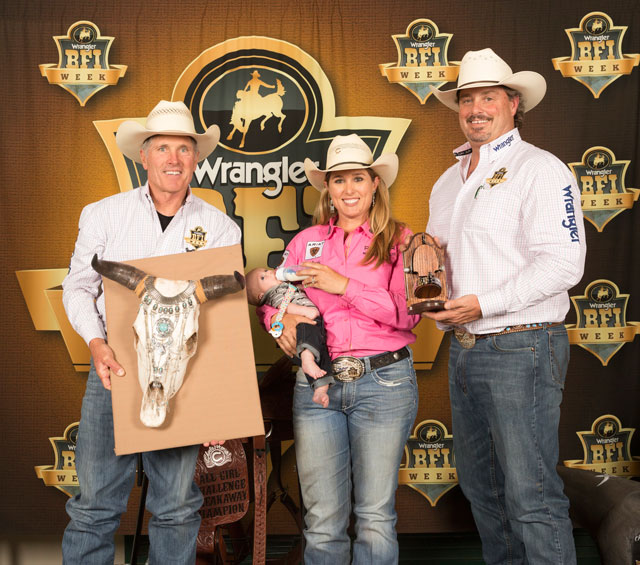
    The win was also a timely confidence boost for Jackie, a 17-time Women’s Professional Rodeo Association (WPRA) world champion from Stephenville who gave birth to her son, Creed, eight weeks before the roping.

    “I’m sure I figured I’d come back easily, but when it came time to ride again, I realized, ‘This is going to take a minute!’” said Jackie, who’s married to eight-time NFR header Charly Crawford. “I’d asked Charly, ‘You think I’m ever going to get back good again?’ and he said I would. He told me after our first steer, ‘You and Annette are going to win the roping.’”

    Jackie and Annette have won the Wildfire Ladies Open Championship in Texas twice together – but never the Reno roping, despite six or seven attempts.

    “For both of us, this has eluded us,” Crawford said. “I was not going to beat myself this year. I told her, ‘Let’s just make some practice runs this morning.’ Then, when it came down to the short round, I said, ‘Let’s finish this!’”

    Stahl and her husband, C.R., live and work on a ranch near Salt Flat, Texas – 65 miles from the nearest Wal-Mart. The two often practice, and have six heel horses between them. In Reno, Annette rode her self-trained 14-year-old gelding, Rocky Mountain “Twister,” who won the “best heel horse of the roping” bronze from Montana Silversmiths, along with Jackie’s winner of the “best head horse” award, her buckskin Two Eyed Dobee (“Outlaw”).

    “Annette is the baddest there is,”” said Crawford of her partner, who chooses to dally instead of use a tied-on rope. “You can literally put anybody in front of her and she’ll win.”

    Reserve champion header Robbins, who earned $14,100 plus prizes on the day, has placed at the prestigious BFI with the boys and was even second-high callback at the BFI one year. She gave a nod of approval for the “great cattle” at the Charlie 1 Horse All Girl, and the new incentive that paid $5,000 for first place.

    Wrangler BFI Week co-owner Kami Peterson, a recreational team roper herself, was the driving force behind the format tweaks.

    “We wanted women coming all this way to be able to rope with their usual WPRA partners, and we also added the #8 and Youth incentives to provide an opportunity for young girls who maybe felt intimidated competing against the world champs,” said Peterson.

    She also spearheaded the staggering prizeline, which rewarded ladies with Cactus saddles, ropebags and breastcollars, Charlie 1 Horse hats, Gist buckles, Best Ever pads, Yeti coolers, Heel-O-Matic Bones, Bex sunglasses, Nocona boots, Cactus and Fastback ropes, and more.

    “I want to thank Ullman Peterson Events for putting on the best roping we’ve ever had the opportunity to rope at,” said Stahl. “The production was awesome; the prizeline was awesome. I just want to thank my Lord and savior and my family for all their support.”

    In time for the afternoon breakaway competition, several elite cowboys in town for the Reno Rodeo grabbed a seat to watch the ladies. In the short round, Moreau had the fourth call-back, just .41 seconds behind leader Lari Dee Guy. Moreau got the flag in 2.72 seconds while Guy uncharacteristically missed. In the end, Moreau edged current WPRA breakaway world standings leader Kelsie Chace by just five-hundredths of a second for the win.

    “I’ve never left my store for more than a few days before,” said Moreau, a Cowboys Professional Rodeo Association (CPRA) champion. “And we drove 26 hours, but we were pumped the whole time. It’s an all-girl!”

    Chace, Guy, and Crawford each rode Crawford’s horse, T-Boy, in the breakaway, and the horse earned a collective $4,910. The 12-year-old sorrel is by Zan’s Diamond Shine, a stallion that Crawford and Guy had roped on while both training horses in Abilene. T-Boy is also Crawford’s tie-down roping horse, and has been headed on in Reno in the past.

    “So many people can step on that horse; he’s easy to win on,” said Crawford, whose broken barrier on one calf prevented a fourth-place finish. She still won the short round, however. More importantly, she won the $2,500 bonus and prizes as the first-ever Charlie 1 Horse All-Around champion.

    For more information about Wrangler BFI Week, visit www.bfiweek.com.


    Complete results from the 2017 Charlie 1 Horse All-Girl Challenge:


    All-Girl Team Roping:  First Round:  1. Beverly Robbins and Jimmi Jo Montera, 7.62 seconds, $1,500 (per team); 2. Lari Dee Guy and Jessy Remsburg, 7.98, $1,000. Second Round:  1. Rylea Rae Fabrizio and Lorraine Moreno, 6.21, $1,500; 2. Kayelen Helton and Kelsie Chace, 6.36, $1,000. Short Round:  1. Beverly Robbins and Jessy Remsburg, 7.61, $1,500. Average:  1. Jackie Crawford and Annette Stahl, 33.69, $41,000; 2. Beverly Robbins and Jessy Remsburg, 37.57, $25,200; 3. Megan White and Whitney Salvo, 39.88, $14,700; 4. Bailey Corkill and Kera Washburn, 42.75, $10,500; 5. Rylea Rae Fabrizio and Debbie Fabrizio, 45.60, $7,350; 6. Keely Kirkman and Jillian Murray, 57.32, $4,200; 7. Taya McAdow and Bonnie Matlack, 33.23 seconds on three, $2,050.  #8 Incentive:  1. Keely Kirkman and Jillian Murray, 46.35 seconds on four, $5,000; 2. Lynn Smith and Vivian Robinson, 20.31, $4,000; 3. Haley Bowen and Bailey Fullmer, 27.88, $3,000; 4. Tami Medlin and Katie Steele, 29.74, $2,000; 5. Marcie Neher and Hannah Solesbee, 32.86, $1,000.  18 And Under Incentive:  1. Haley Bowen and Bailey Fullmer, 27.88 seconds, $2,500.


    All-Girl Breakaway:  First Round:  1. Shawnee Sherwood, 2.38 seconds, $900; 2. Debbie Fabrizio, 2.47, $600. Second Round:  1. Taylor Engesser, 2.59, $900; 2. Lari Dee Guy, 2.65, $600. Short Round:  1. Jackie Crawford, 2.64, $900; 2. Janey Reeves, 2.70, $600. Average:  1. Ashley Moreau, 8.86 seconds on three, $4,540; 2. Kelsie Chace, 8.91, $3,410; 3. Suzanne Williams, 8.95, $2,260; 4. Ali Bilkey, 11.61, $1,130; 5. Rashell Hermann, 12.71, $600.

    18 & Under Incentive:  1. Dally Goemmer, 21.29 seconds on three, $900.

    ###