Rodeo Life

Category: Articles

  • American Hat: Caden Ussery

    American Hat: Caden Ussery

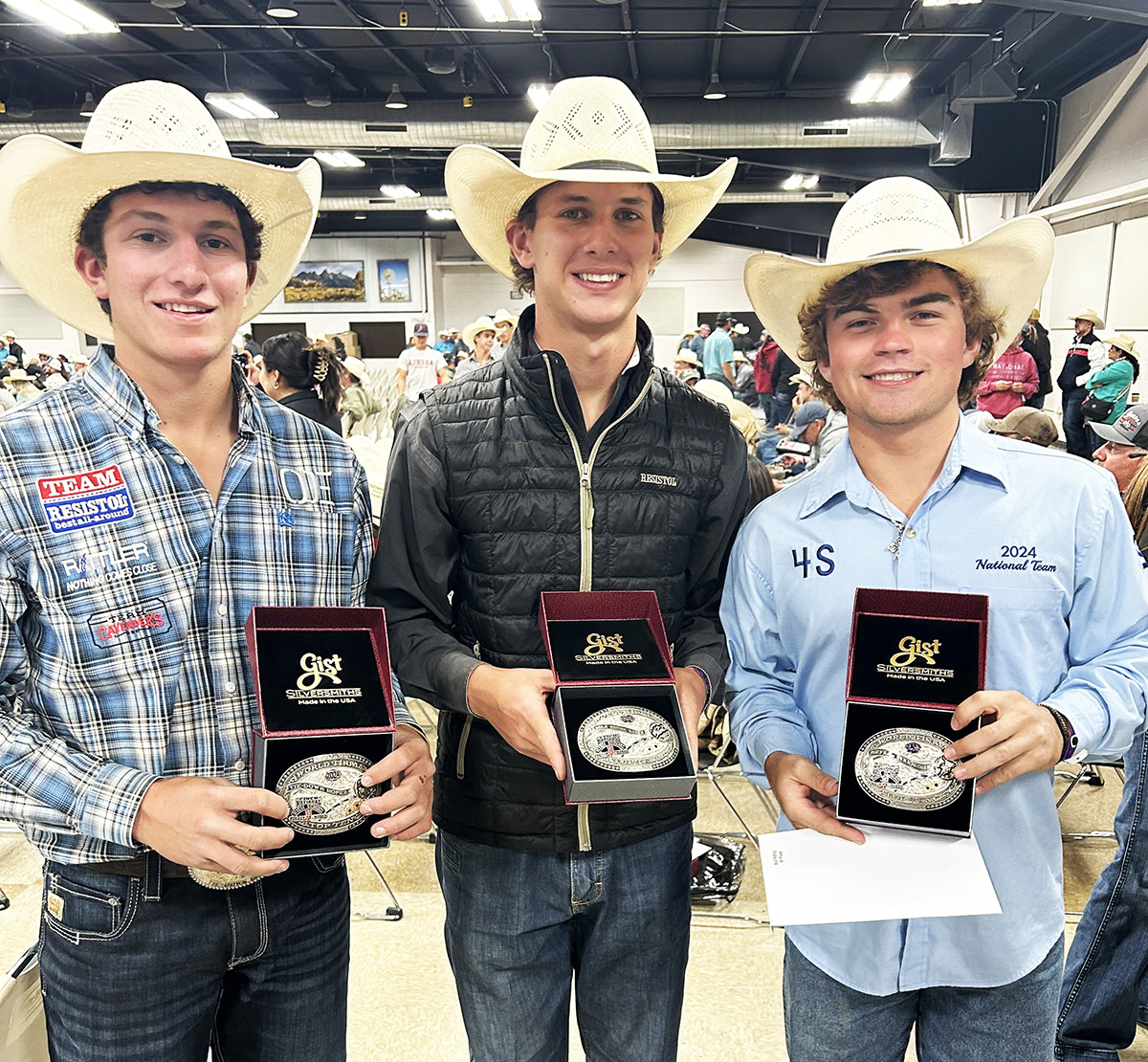
    “I’ve been with American since I was in the sixth grade,” said North Carolina cowboy Caden Ussery. “It’s been a long time. “My mom and I wrote a letter to Keith Mundee. He immediately wrote back and was very welcoming,” he said. “He said he was impressed that I would put myself out there at such a young age. “It really is a relationship I have built with them,” Ussery added. “They always take care of me, and being a part of the American family has been a huge blessing.”

    Caden Ussery from Huntersville, North Carolina, now calls Martin, Tennessee, and the University of Tennessee Martin (UT Martin) his home. “I originally did not want to college rodeo,” Ussery said. “But my mom always wanted me to go to college.” After two years at Central Piedmont Community College, Ussery transferred to UT Martin, where he is now pursuing a bachelor’s degree in business marketing. He still has some time left in school, but Ussery said he hopes to continue his relationship with American.

    “I went to a community college first, and then last summer, right before school started, I got a call from Coach Thrasher at UT Martin,” he said. “He was looking for new talent because they had lost some seniors last year. “People were sending him my videos just from some local and amateur rodeos,” he said. “So, I talked with him and moved to Tennessee.”

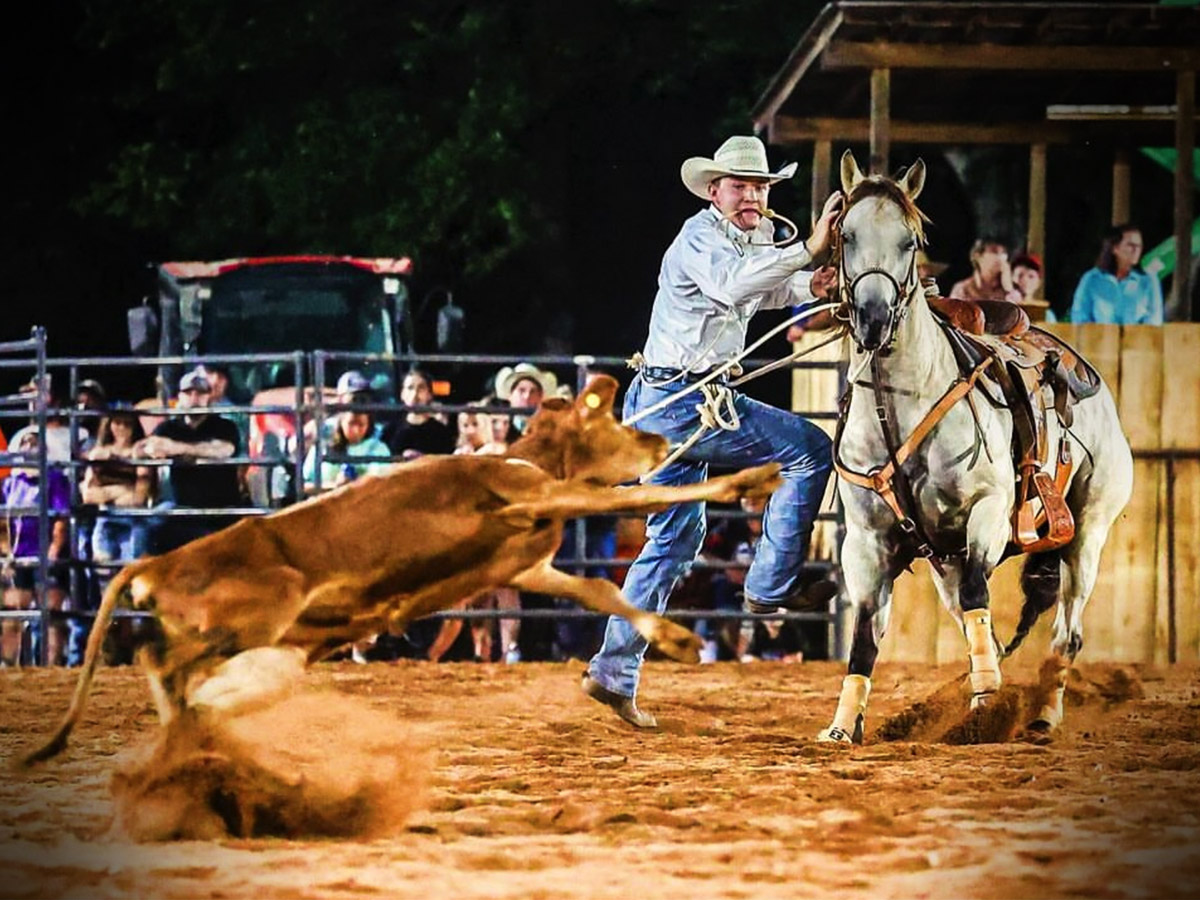
    He said he barely missed qualifying for the College National Finals Rodeo this year. “I missed out on the finals by only a few points,” he said. “But I won our home rodeo. That was pretty awesome.” Ussery, a sophomore then, won the tie-down roping average with a time of 20.1 and the short go with a 9.8. He tied for second in the first round with a 10.3. “I started roping at a very young age,” he said. “My grandpa introduced roping into my life before anyone else.

    American Hat Rider Caden Ussery

    “I was pretty small growing up and couldn’t handle my rope to dally that well. So I started just breakaway roping,” he added. “I just had an old rope horse I would rodeo on, and he was awesome. When I got to junior high and high school, I bought a few more horses and got a little more serious.
    Ussery had a very successful Junior High and High School Rodeo career. He made the North Carolina High School Finals all

    four years. He said he won the reserve tie-down title during his freshman and sophomore years. He captured the state title in his junior and senior years.
    While Ussery occasionally team ropes, he said his heart is in the tie-down roping. “I fell in love with calf roping. There are a lot of really good team ropers, but the thought of working hard and not having to rely on anyone else to work to succeed appealed more to me,” he said.

    Although he enjoys the sole accountability of tie-down roping, Ussery said his biggest motivation comes from his family.“They have always encouraged me and allowed me to put myself out there,” he added. “If they believe I can do it, then there is no reason I can’t put my mind to it and get to where I want to be.”

    Learn more about American Hat Company!

    -Article by Charity Pulliam


  • Western Art Round-up: Sammy Bird

    Western Art Round-up: Sammy Bird

    Sammy Bird created her first painting to be auctioned off at a friend’s benefit. This spirit of giving, positivity, and hope has prevailed as her career as an artist has grown. Today, Palomino Paintings by Sammy Bird can be seen at art shows, rodeos, and in homes across the West.

    Discovering Her Talent

    Sammy Bird shares her heart and story through colorful, detailed paintings. Most of her subject matter includes horses, and elements of her Native American culture are always represented. She also expresses her style and culture through wearable art, like hats and clothing, which have been featured in western fashion shows. Bird grew up on the Blackfeet Reservation, located in northwest Montana, and comes from a multi-generation rodeo family. Today, she balances her career as an artist with life on the rodeo road.

    Bird dabbled in art projects growing up, but didn’t foresee a career as a painter. “I took high school art, but wasn’t the best one in my class,” Bird recalled.

    It wasn’t until she wanted to donate something unique to a friend’s medical benefit that she discovered her talent. “In a small town you can only get so many donations, so I thought I would try to paint,” Bird shared.

    Her donated painting was a hit, and soon another community member asked if she would donate a painting for another fundraiser. This soon snowballed into requests for commissions, and before Bird knew it she was making money as an artist. “I truly believe God works in mysterious ways,” she said. “It caught on like wildfire, and within a few years I was doing it almost full-time.”

    She continues to donate to fundraisers, but painting is much more than a hobby now. Bird participates in western art shows, is hired for commission work, and has a regular clientele she sells paintings to.

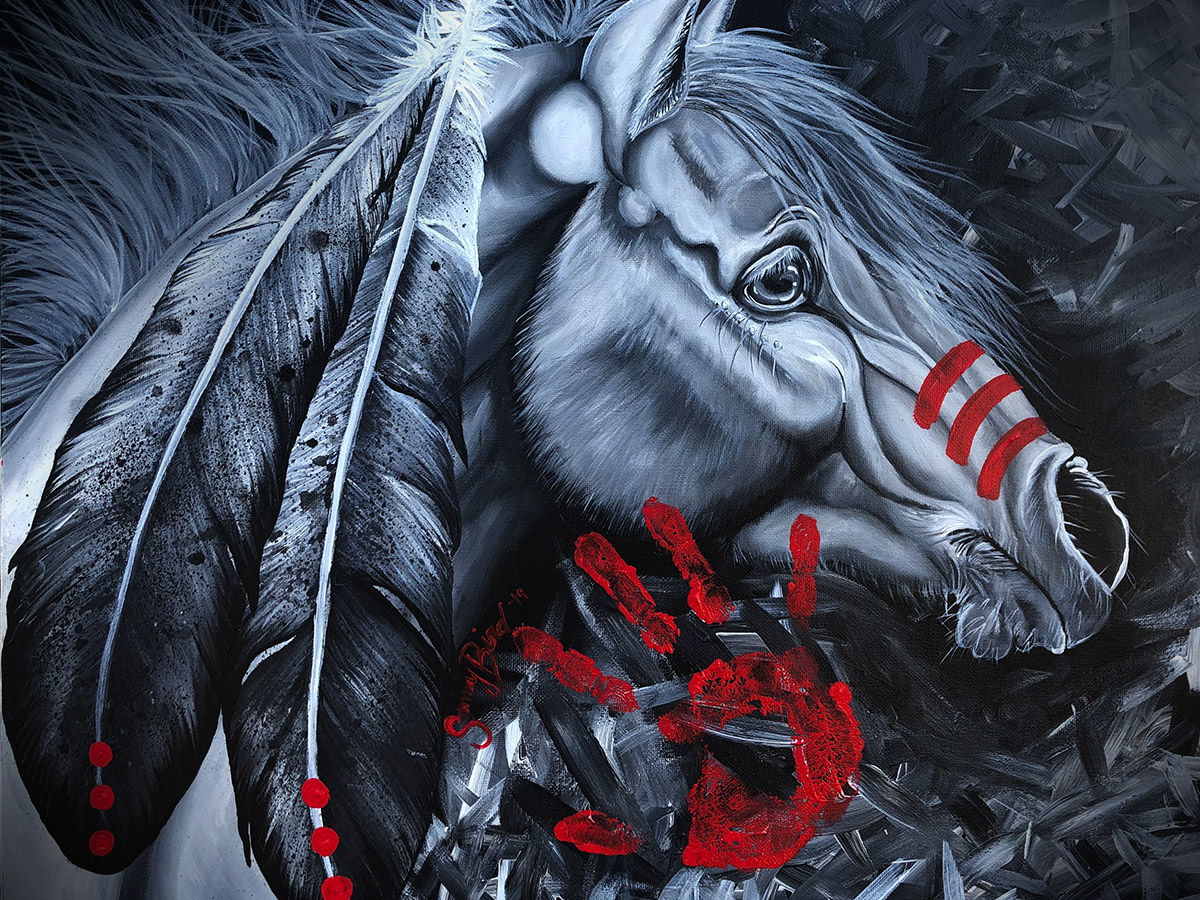
    Bird’s paintings are colorful, abstract, often large, and intricate. This style came completely from her imagination. “You do what feels right for you, and what makes you feel good,” she reflected. “Whenever I start a new painting I honestly don’t really know what I’m going to paint. I might have a general idea in my mind of what I want it to look like, but I usually start at the horse’s eye and work my way out.”

    Art is ultimately the expression of the artist, and Bird wants to spread positivity. “When someone looks at one of my paintings, I want them to feel good, even if it’s just for a moment in their day,” she shared. “For me, it’s a lot of bright, vibrant colors — hopefully it brings positivity to someone.”

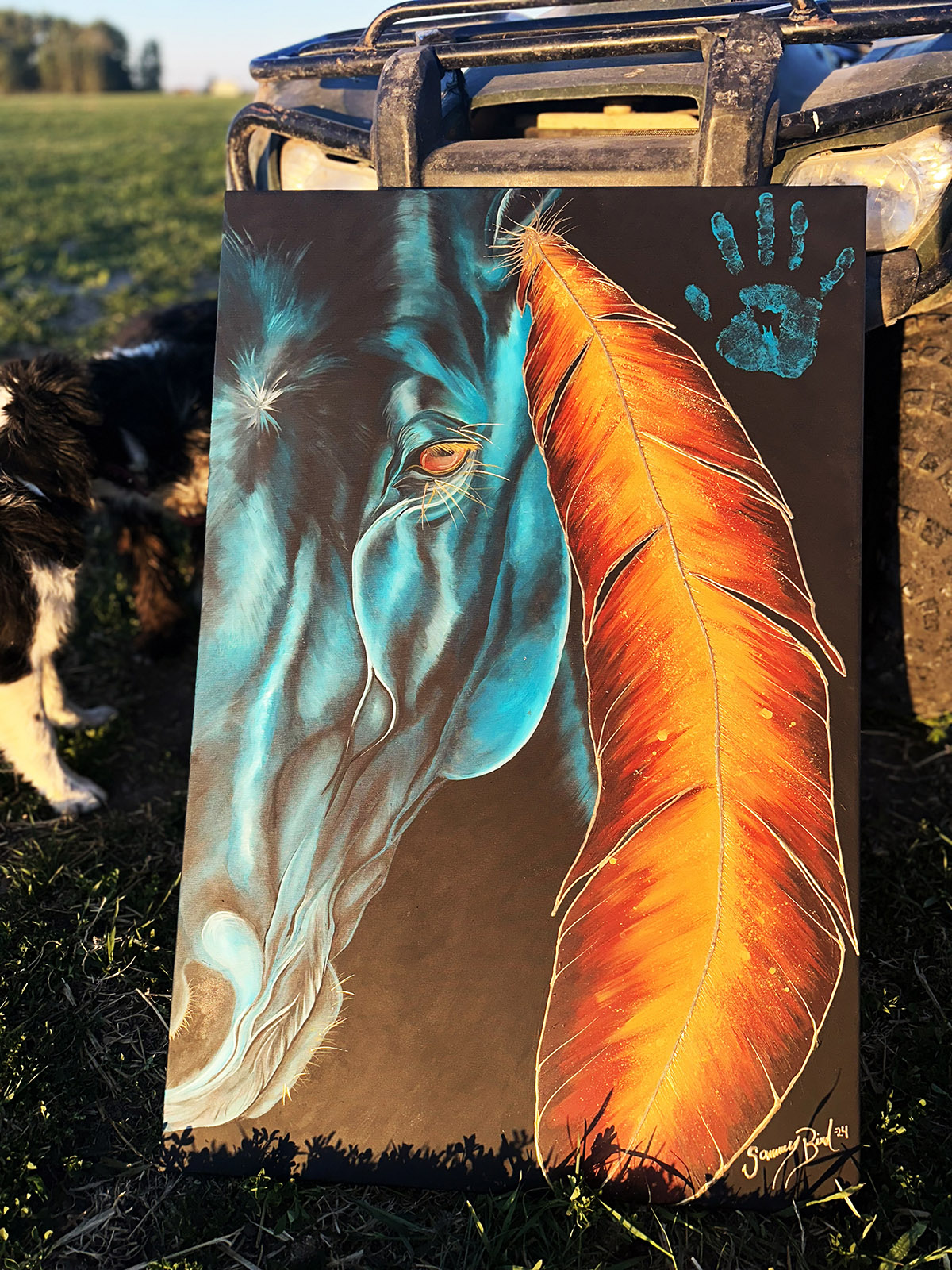
    Bird’s handprint is one of the hallmarks of her work. Somewhere in each of her paintings you will see where she has pressed her hand into paint and imprinted it on the finished painting. She started doing this both because it represents her Native American culture, and as a unique way to sign her work. “The handprint stands for resilience,” she explained. “It also represents missing and murdered indigenous women. I started putting it on my paintings for awareness, and because it’s my own fun spin on things. Even if you don’t see it, there’s a handprint somewhere in each of my paintings.”

    Beyond her handprint, Bird also includes other elements of her Native American culture in each painting. “I am very proud of where I come from, and where I’m going. I have always respected and loved where I come from, and I hope to inspire kids on the reservation who feel stuck. I want to show that if I can do it, they can too,” Bird shared.

    She also shares her art through fashion. “I really got into western fashion right after college. I started creating my own pieces, and collaborating with other Native American artists. I think it’s so cool when you bring two creative minds together,” Bird said.

    Rodeos have long been events where people express their style — from contestants to viewers — and fashion shows have become increasingly popular. Bird has participated in many of these, both as a model and creator. At last year’s Indian National Finals Rodeo in Las Vegas, Nevada, she participated in a Native American fashion show that included creators from across the country. “It was really cool to see everyone’s backgrounds come out in their fashion,” she recalled.

    Bird’s business page on Facebook, Palomino Paintings by Sammy Bird, has gained a large following, and she does most of her business through this platform. While there is a lot of demand for her art, Bird has been careful to only create when she feels called to.

    Photos of Bird’s paintings on social media are often accompanied by a motivational saying or short story. “I put my heart and what’s important to me into every painting I do,” she said.

    Breakaway Roper Sammy Bird

    Raised in Rodeo

    Bird comes from a rodeo family, and has had many successes in the arena. She grew up going to rodeos, and was competing as soon as she was able. “I’ve been horseback since I was probably three years old,” she shared.

    Her mother and father both competed during her youth, and Bird spent many hours in the stands before she could even walk. Early on, she started competing in the Native American Rodeo Association, and at local and regional rodeos. These rodeos are very family-oriented, including youth, adult, and senior events. “A lot of times you’ll have families that get to travel with their kids, parents, and grandparents,” Bird explained.

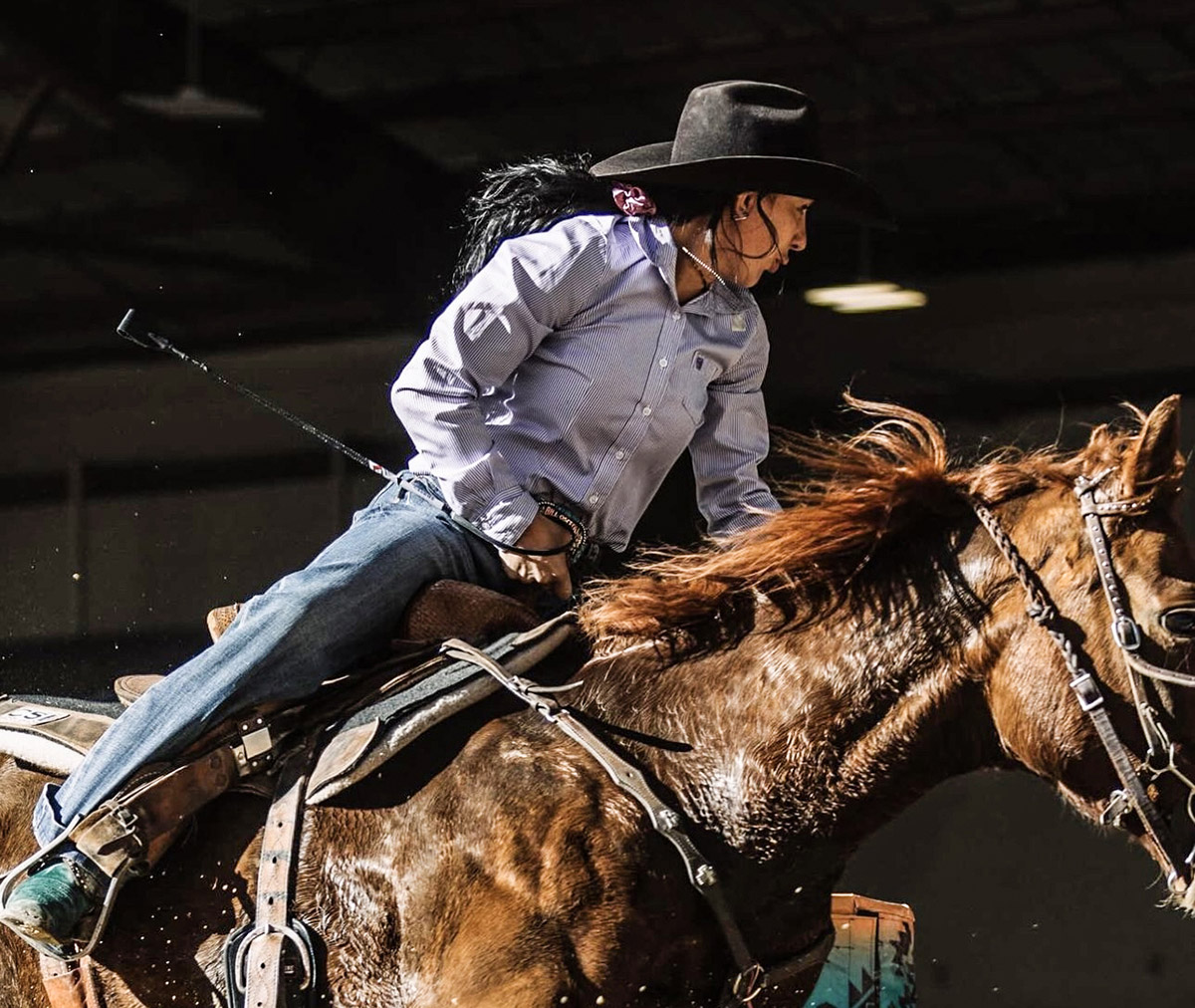
    She also competed in high school rodeo, and went on to rope and run barrels at the college level while attending the University of Montana-Western.

    Recently, Bird has been taking advantage of the addition of breakaway roping to the professional rodeo circuit. “As soon as they started including breakaway roping at pro rodeos I started competing there as well,” Bird said.

    The addition of the event has been celebrated by the rodeo community, and Bird has been enjoying competing at a higher level. “It brings in contestants, brings in fans, and it’s a fast, exciting event,” she said. “It’s giving us as contestants equal money, which means everything because we travel hard, and we put just as much work in. Being included means the world. We put a lot of blood, sweat, and tears into it, so being on a stage where we can showcase that means so much.”

    Rodeo has opened up Bird’s world. The Blackfeet Reservation is isolated, and opportunity can be sparse for young people. Horses, ranching, and rodeo have always been there for Bird. “Living on the reservation can be very oppressive for kids,” Bird shared. “Rodeo really played a huge role in keeping me out of trouble, giving me responsibility, goals to shoot for, ambition, and motivation. I always give a lot of credit to the rodeo way of life, and horses in general, for inspiring me to want to be better, and to want more.”

    Something in the Orange – Many of Bird’s paintings are large, like this one, titled “Something in the Orange”.

    The Big Picture

    Bird represents her home and western culture, both through art and rodeo. She was recently featured in a Boot Barn campaign about Native American rodeo and ranching. She also has a strong online presence, sharing her style, rodeo lifestyle, and art through Instagram and Facebook.

    Artists and rodeo competitors often lead similarly unconventional lives, and these two endeavors go hand-in-hand for Bird. Finding the time to paint during the busy rodeo season can be difficult, but also motivating. “It inspires me, because I know that if I’m not winning I can go home and paint,” Bird shared. In turn, her art business allows her to have a flexible career. Winter in northwest Montana puts a damper on roping, so she and her family travel south to Arizona each winter.

    Bird spreads hope and positivity through her paintings, and also remains focused on the opportunity in her rodeo career. Skill is only one element of competing in rodeo, and keeping perspective on what really matters helps Bird navigate the pressure to win. “I have learned that you can’t define your happiness based on that one run. Your breakaway run does not define you, and it doesn’t show your value as a person,” she shared. “Any time I’m having a tough time I check and see where my heart posture is, and thank God for everything I do have.”

    Gratitude for life guides Bird every day in and out of the rodeo arena. “It’s just so easy to have a closed mindset, but we live in such an abundant time,” she concluded. “If you want something, go after it. The worst thing that can happen is you will end up back where you were. Don’t be afraid to go out and try to do whatever you want. We live in an abundant time, and you should match your mindset to that. Be inspired, and just do what you want. Do be afraid of rejection, because rejection is just redirection.”

    Article by Lilly Platts


  • Team Cavender’s: Brodey Clemons

    Team Cavender’s: Brodey Clemons

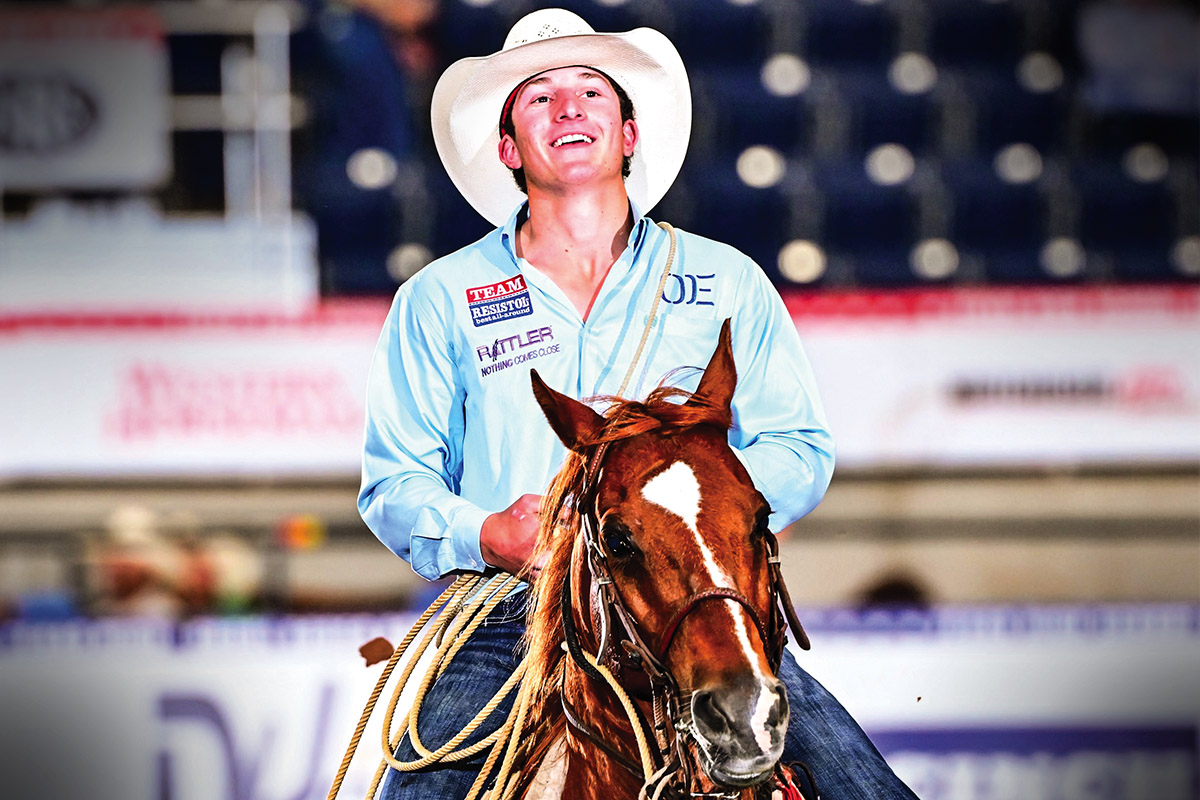
    “I have a few friends that were on Team Cavender’s in the past, and this year at the Texas High School Rodeo Finals, they set me up to talk with some people. I did well enough that they offered me a spot on the team right before nationals,” said Brodey Clemons, a senior on the team. “I really feel like I am part of the family now.”

    Although he will only have one year, Clemons said he is excited to settle into his newfound home on Team Cavender’s.

    “I am from Florida but moved to Weatherford, Texas a year ago,” he said. “There is not a lot of rodeo in Florida, and to progress and get better, I had to move to where there is more of an opportunity to rope and rodeo.”

    Many cowboys move to Texas from their home states every year. The state boasts a long list of PRCA world champions and countless roping jackpots and rodeos year-round.

    Moving from Okeechobee, Florida, to the Lone Star State was always in the plans for him and his family, Clemons said. But the move was a bit easier after his brothers came to Texas for school.

    “Weatherford is the place to go if you are going to be a better calf roper,” he said. “Now that I am here, I have the opportunity to travel with people like Kincade Henry, my brother Cole, and Riley Webb.”

    Kincade Henry has qualified for the National Finals Rodeo twice. Riley Webb, who has also made two NFR appearances, was the 2022 Rookie of the Year and the 2023 PRCA Tie-Down world champion, and Cole Clemons is on track to make his first trip to Las Vegas this year.

    “I like to set goals. Last year, I set the goal to win the state tie-down roping title, and I got that done,” he said. Clemons won the short go with a 7.8 to secure the THSRA Tie-Down championship.

    The next goal he said he has set for himself involves playing with the big boys in the Professional Rodeo Cowboys Association.

    “I will buy a PRCA permit in December after I turn 18 and rodeo on my permit for the next year,” he said. “Then, buy my card once I have a year under my belt and hopefully win Rookie of the Year and make the NFR.

    “Because my brother is in the top 15, and he is winning rookie of the year right now, I have some big shoes to fill,” he added.

    Although he has gold buckle goals, Clemons said he started out learning the same way numerous other cowboys do.

    “When I was a kid, I rode calves and sheep, but then I got into calf roping,” he added. “I learned a lot from Jason Hanchey, and my mom started hauling me and my older brothers to clinics and rodeos.

    “I started home school in junior high. If you are going to rodeo at a truly competitive level, it is hard not to be homeschooled,” Clemons said. “If you are truly going to be the best and at the top of your game, you really have to devote your life to it. I love it, and I wouldn’t change it for the world.”

    Learn More About Team Cavender’s

  • Western Art Round-up: Whey Jennings

    Western Art Round-up: Whey Jennings

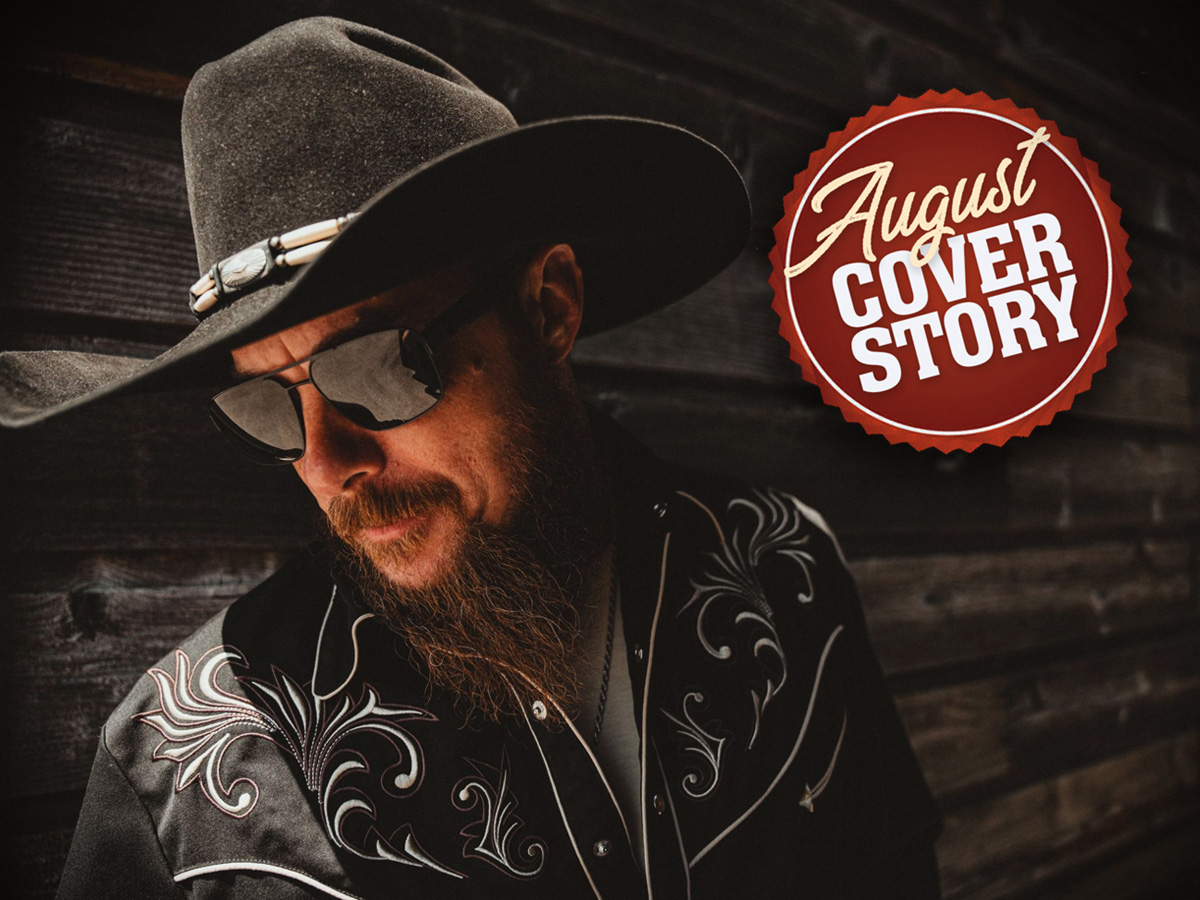
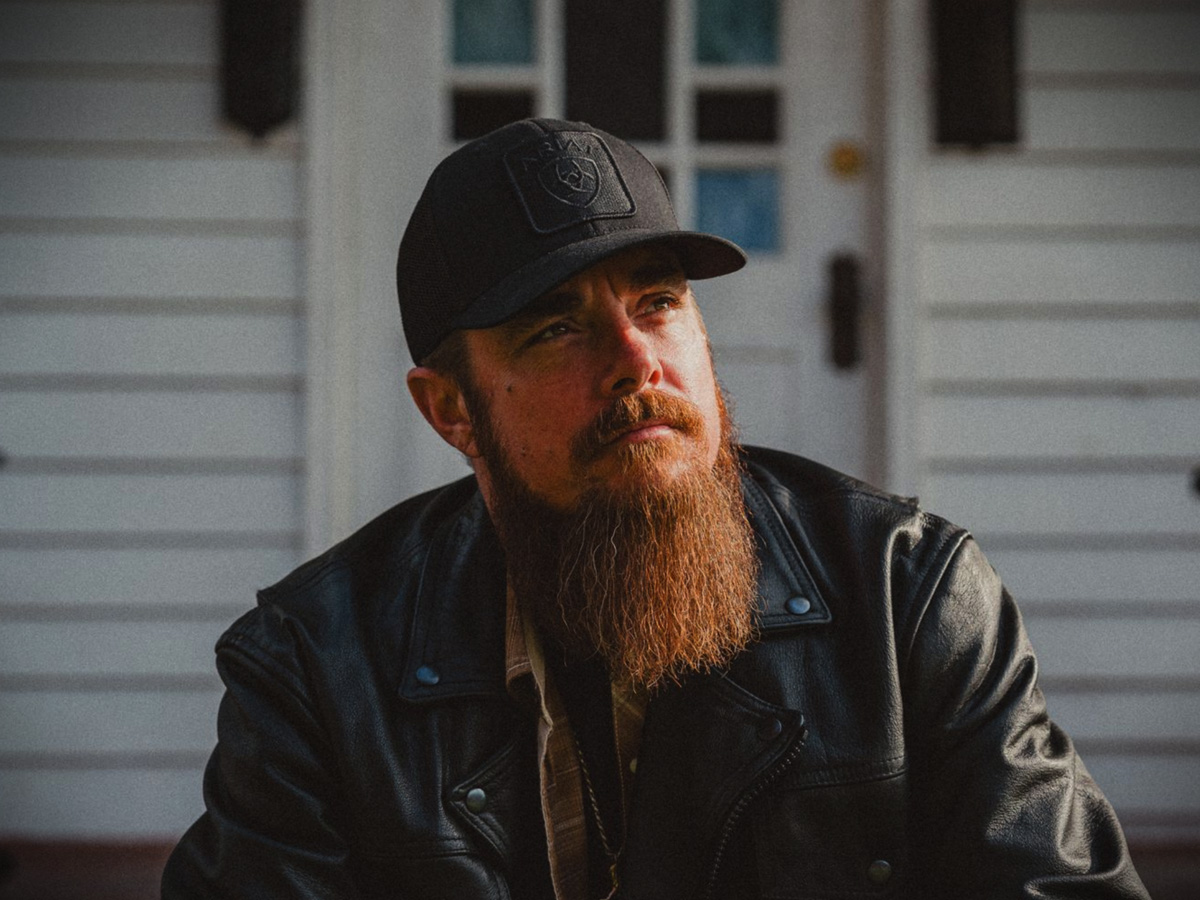
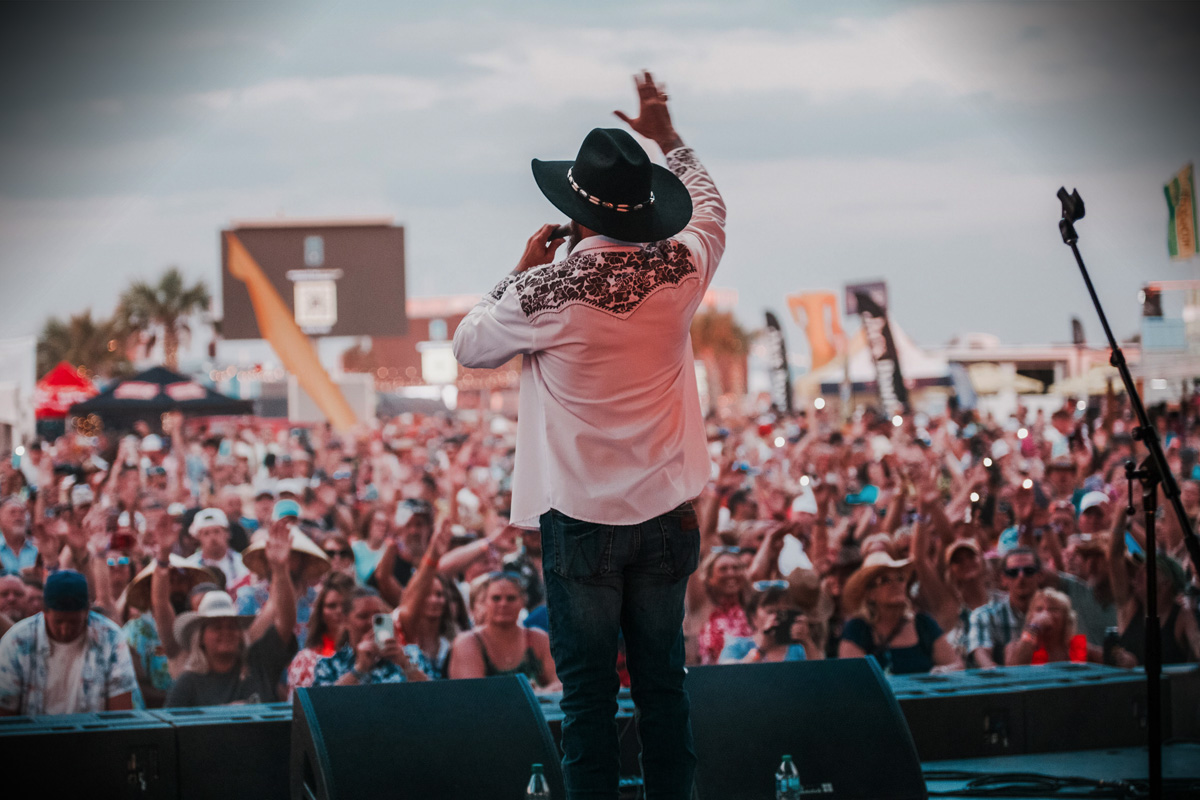
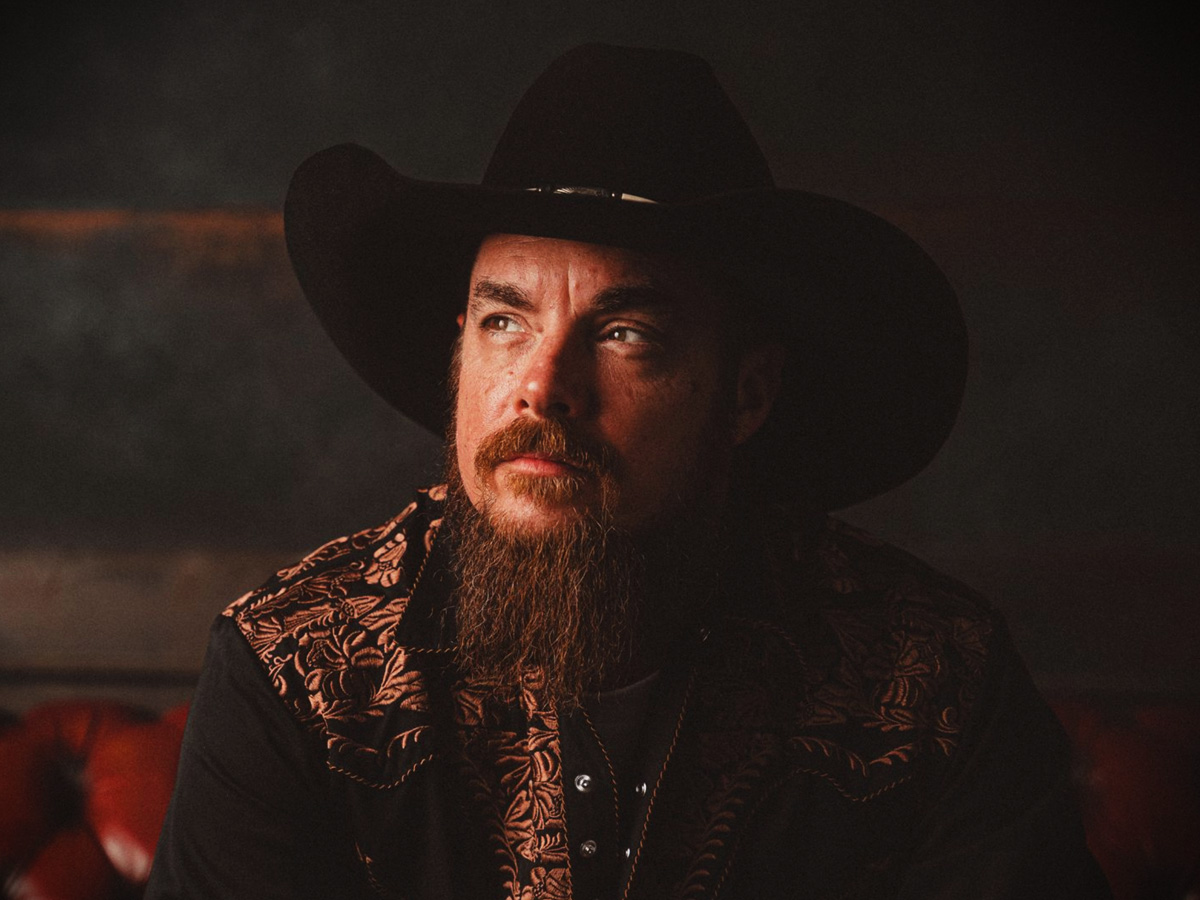
    Country singer-songwriter Whey Jennings’s story contains multitudes, from the depths of addiction to finding sobriety and peace through faith, music, and the people he loves. The grandson of Waylon Jennings, he is putting his own stamp on country music, and helping others along the way. Jennings’s most recent writing is vulnerable and reflects the years of work he has put into improving himself — and the positive that has come from it. His upcoming full-length record, Jekyll & Hyde, due out August 23 on Dirt Rock Empire, includes songs about finding sobriety, country life, horses, family, patriotism, and the future.


    Making His Way Back to Music

    Country music has always been a part of Jennings’s life, growing up around his grandfather, Waylon Jennings, and grandmother, Jessi Colter. “I learned pretty young that I had a good vocal range. I went on stage with my grandfather a few times when I was young, and I had a great time,” he shared.

    Once Jennings became a teenager, fear replaced the excitement he previously felt in the spotlight. One experience stands out in his memory. “I went out there one time when I was around 13 and was becoming a young man. It scared me to death,” Jennings remembered. “I froze like a deer in the headlights.”

    Singing remained a part of Jennings’s life, but he didn’t foresee a career in it. As a young man, he moved from his childhood home near Dallas to the high plains of the Texas Panhandle, working on a cotton farm for many years. During this time, he struggled with addiction. It took a call from his mother, Katherine, to bring him back to music. “My mom told me that she had lung cancer. So I moved back to Dallas, and I spent the rest of the time she had on this earth with her. During this time, we talked about a lot of things, and she really wished I would do something with music. She had heard me sing my whole life, so I promised her I would do it,” Jennings remembered.

    He returned to the business, but it would be several years before Jennings would find his footing and voice. Music is often the center of the party, and from bars to stadiums, alcohol and other substances are easy to come by. This puts musicians in a particularly unique and often difficult situation since their job requires constantly being around people who are letting loose. Jennings continued to struggle with addiction and admits to many missteps. “I made every mistake you could possibly make. The first mistake I made was thinking it was about a party and not about the music. It took me a lot of years to get over that,” he shared.

    Fortunately, Jennings had supportive people in his corner, like his manager, or “momager” as he lovingly calls her, Tammy Carolus, and girlfriend Taryn Rae, who later became his wife. “They sat me down and told me they weren’t going to watch me kill myself, and at that point, I felt like I had a lot to lose because no matter what I didn’t have, I always had them,” he said. He entered rehab and started finding his unique voice as an artist. Jennings chose a faith-based rehab facility, which helped him further discover who he wanted to be and how to navigate his future. “I’ve always been a faith-based person, and I felt like that was the route for me. I went to church for all 28 days that I was there and took my guitar with me,” Jennings recalled. The community he found through music changed his outlook on the future, and he remembers learning Hallelujah, which Jennings now sings for his fans and has recorded on the new album. “We made some beautiful memories in there playing and worshiping God,” he said. Jennings’s wife, Taryn, knew how to support him through this difficult time. “When I met my wife, I didn’t have two nickels to rub together, but she helped me go out and do what I knew I needed to do in my own heart, to make myself okay with the life I’m living,” he shared.


    A New Chapter

    Taryn’s support was critical for Jennings, and he is now focused on supporting her and his six children while balancing his career in music. “I thank God every day for my family,” Jennings stated. “They have really rallied around me.” His children range in age, from his youngest daughter, who is three, to his oldest son, who graduated from high school in 2023. Being there for his youngest — Jennings always travels home between gigs no matter the distance or cost — and watching his older kids begin their own adult lives brings him great joy. “They don’t live the way I did when I was young. They’re all happy and thriving. To see my family thriving means the world to me. That’s what keeps me on the straight and narrow, knowing that I’m able to support my family in a way that I was never supported,” Jennings reflected.

    Faith was important to Jennings long before he entered rehab and continues to be a guiding tenet. “My faith has always been there through life,” Jennings said. “I’ve never found a problem that I needed to solve and couldn’t find the answer to it within the walls of the Bible.”

    Jenning’s new record, Jekyll and Hyde, comes out on August 23 on the Dirt Rock Empire label and is the culmination of these years of finding his voice and learning how to tell his story. He has released three studio EPs, including 2020’s Gypsy Soul, 2022’s If It Wasn’t for The Sinnin’, and 2023’s Just Before The Dawn. This will be his first full-length record, and Jennings is extremely proud to share it with the world. “When my kids are all grown, and I’m old and looking back on my life, I feel like I’m always going to look back to this album,” he shared.

    While Jennings often sings about very personal subject matter, he maintains a grit and honesty that his fans relate to. His baritone voice carries, and like his grandfather, people pay attention when Jennings sings; this attention is going toward a worthy message. Songwriters often say to write about what you know, and Jennings is doing just that. With almost five years of sobriety under his belt, he knows first-hand how difficult it can be to get help and the positive that will come from it. Learning how to share about this in a meaningful way has been a journey in itself. “When I got out of rehab, the first thing I wanted to do was save the world. I found something I wanted to share with everyone,” he reflected. “You feel like you’re healed, but you still have a lot of healing to do before you can try to help others.”

    Looking at the bigger picture and discovering how to share the negative things in his past in a way that can help others has taken time. “What I’ve learned is that I can’t just share about where I’m currently at in my music. I have to share about everywhere I’ve been through my music because I want to be able to relate to everyone. I can’t just disregard the life I’ve led. In this new album I was able to do that. I was able to touch on every area of life that’s important to me,” Jennings shared.

    Taking responsibility for his own actions was critical. “You can dwell on horrible things. One of the biggest mistakes we make in our relationship with God is that we like to blame our lives on him,” Jennings reflected. “We forget about the fact that the first thing He gave us was free will, and with free will comes responsibility.” His own recovery story also helps him relate to others and meet people where they’re at. “I’ve come to realize that while it’s important to sing songs that push people toward recovery, that isn’t enough,” Jennings reflected. One of the most difficult aspects of recovery, and one of the primary areas where people will fail, is having a support system. Addiction pushes loved ones out of a person’s life and destroys trust, which Jennings experienced himself. One of the songs on his new album, Sleeves, explores this. “I’m trying to show people the life their loved ones keep hidden from them,” Jennings explained. “They hide the bad part of their lives and the good parts. Being an addict doesn’t mean you’re no longer human. I’m trying to open up the hearts of people who may be supporting an addict so they have a better chance of success once they decide to enter recovery.”

    Jennings balances this serious message with lighter songs, calling on subject matter that has been a part of country music for generations. One of the tracks on Jekyll & Hyde, titled 10 Day Run, tells a wild, comical tale about an angry girlfriend who has reached her tipping point from being left home alone by her truck-driving man. Jennings enjoys creating music videos to pair with his songs, which bring the stories to life and give listeners a deeper look into each song. The video for 10 Day Run can be viewed on YouTube. Four singles from Jekyll & Hyde are currently available, and the full album will be released across all streaming platforms on August 23. Jennings is playing shows across the country, backed by an all-star band, including Pat Burr on guitar, Jack Dempsey on bass, and Cameron Dudley on drums.

    Jennings is grateful to have a supportive team behind the scenes, including Jason W. Ashcraft, who handles publicity and PR; Tammy Carolus, who works as manager; co-manager David Wade, who also assists with song selection and co-writes with Jennings; Brandon Yannotti, representing Dirt Rock Empire; Gary Carter, record producer; and Gio Gotay, who produces videos for Jennings.

    While a lot of the music business happens from a distance online, Jennings is passionate about connecting directly with his fans. “If people didn’t come out to my shows, I wouldn’t be able to support my family,” Jennings concluded. “I make friends with people while I’m at shows, and I don’t stay hidden. I love playing music, but I also love interacting with people and supporting my family. I’m grateful.” •

    -Article by Lilly Platts

  • Trust the Process with Breakaway Roper Rickie Fanning

    Trust the Process with Breakaway Roper Rickie Fanning

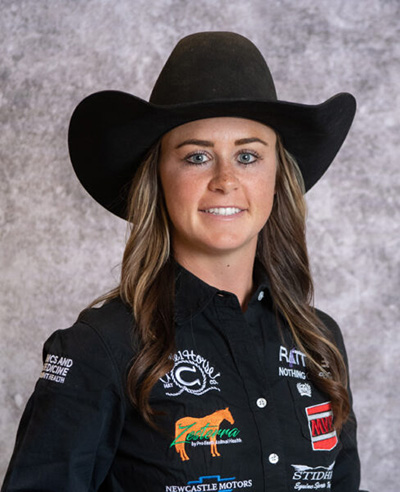
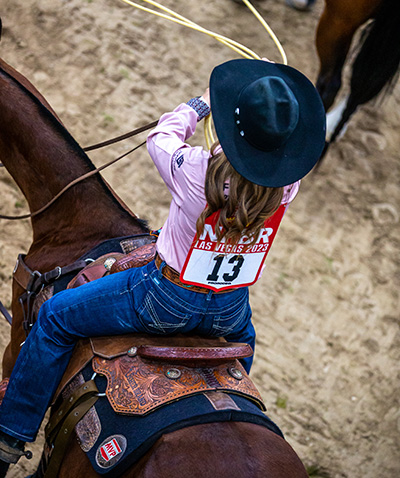
    Breakaway roper Rickie (Engesser) Fanning once again leads the standings in 2024, thanks to her exceptional horsemanship and consistency. Although she recently lost her number one horse, Rolo, Fanning is still roping well and staying at the top of the WPRA standings.

    We had the chance to interview Fanning before her busy Cowboy Christmas schedule. As a two-time Wrangler National Finals Breakaway Roping qualifier, she discussed her horses, goals, and even some of her favorite rodeos.

    Q&A with Rickie Fanning

    RL: Where are you from?
    RF: I was born and raised in Spearfish, South Dakota.

    RL: When did you first start riding horses and roping?
    RF: A lot of it was my dad. He grew up on a farm and ranch when he was younger, then when he married my mom, they bought some land outside of Spearfish where he had horses and roped. Then when we were all born, he got us all on horses at a very young age and we all really enjoyed doing it.

    RL: Have you always wanted to be involved in rodeo?
    RF: I always wanted to rodeo, it was always a big part of our lives. And it’s just such a family thing. I started in the pros, then it kind of took off. I don’t think I ever thought I’d still be going this hard. But I’m super grateful for the support and those things are always going to be a part of my life.

    RL: Did you attend college?
    RF: I went to college in Gillette for two years, then I transferred to Tarleton and finished my undergrad in animal science. Then I went on to get my master’s in consumer resources and science there. Going down south was a blessing, and being in Gillette was a great start to prepare me for college before I went to Texas. Everyone wants to go there, and getting that opportunity helped me meet new people and kind of get out of my box. I got to meet a lot of new people and a lot of them turned into family and so I’m really glad we did go down to Texas.

    RL: What do you like about rodeo and what makes you want to keep competing?
    RF: Competing is always fun, and I love the adrenaline. It’s also family oriented, like we get to bring our family with us to a lot of places. And then honestly, meeting so many great people and seeing new places are all factors in why I like being out on the road. I know there’s a lot of places I definitely wouldn’t see if it wasn’t for rodeo.

    RL: Which of your horses is your all time favorite, and what made them special?
    RF: I had some really cool horses growing up and they were all my favorites. But I think the one that stands out the most to me is my horse I just lost here a couple months ago. His name was Rolo, he was pretty dang special to me and it was a very God-given thing how I even ended up with him. But just the impact he left on me, the confidence he gave me, and the impact he made on the breakaway industry, was incredible. There were a lot of people that knew him. He was one-eyed and old, but he is probably by far one of my more special ones that I’ve had the privilege to own.

    RL: How did you find Rolo?
    RF: I decided I needed another horse when I was attending Tarleton State University for college. I just need something to help take some runs off my main horse. So I went and tried this horse out at a friend’s house. And I mean, I had seen pictures, but he wasn’t the cutest. He had a dent in his head. He had one eye, and the other one was blind. He had like no tail and his mane was roached. But I roped a couple handfuls on him and I went and talked to the guy that I was roping with there and I was like, gosh, I really like him, but I don’t know. He said, if you don’t write the check, I’m going to. So I called my dad and I said, dad, I’m buying the horse. I wrote him the check and brought him home, and after about a month of having him, my good mare got a bowed tendon and he was kind of my next thing I really had to go rodeo on. From then on, he was my number one.

    RL: What horses are you currently hauling with you?
    RF: First I’ve got my gray. He’s turned into my good one, and he’s the one I’ve been riding most of the winter rodeos. And then I just bought a six year old little gelding that I’m hoping to crack out on some of my circuit rodeos to kind of help my good one get a little bit of a break.

    RL: Who is your travel partner?
    RF: I travel with my sister, Taylor Engesser. She’s been roping since we were young as well. She actually started competing professionally more in barrel racing, and then eventually now does breakaway. We travel together all year long.

    RL: What are your goals for this year?
    RF: I think one of our major goals is we would like to be in the top 30 to get into the winter run or those winter rodeos. That’s always one of our main goals. But one of our smaller goals that we have is to focus on each run and not look so far in the future. A mid term goal for me is to make Puyallup and the governor’s cup. Another one of my major goals is to hopefully go back to the finals.

    RL: What are your favorite rodeos to rope at and what makes them special?
    RF: Oh gosh, that’s a hard one. I really like Calgary because that’s the first time we got to go up there, which was really fun. Pendleton’s always a big one because it’s a totally different setup. But I mean, there’s a lot of great ones out there. I love all the winter rodeos. They all do a really good job. The committee members are always great too, so it’s hard to really pinpoint one that is better than the other.

    RL: What are you most proud of achieving in your career?
    RF: There’s a couple big wins I was very fortunate to get. But one of my really favorite wins, especially now that I lost him, was getting to win the fifth round on Rolo two years ago at the 2022 National Finals Rodeo. That was probably the most special to me. My favorite part about that whole thing is, when we took the victory lap, my horse literally tried to run off the whole time. It makes me smile every time I think about it.

    RL: How do you keep yourself and your horses in top shape for your runs?
    RF: A lot of it comes down to roping the dummy, roping the sled and not changing how you rope when you get on the road. It can be hard because you’ll want to change things when it’s not working. But you need to trust the process of how you practice and you’ll be prepared.

    RL: What advice do you have for younger ropers?
    RF: If you want to be a breakaway roper and you want to be good at it, put your work and time into it, and make sure you’re always appreciating the people that have helped you along the way. •

    -Interview by Nicole Jasperson

  • In Memory of Trenten Montero

    In Memory of Trenten Montero

    A year, a month, a week, a day, a minute—we often forget how quickly life can change. August 2023 was a whirlwind of trying to survive the unimaginable for the Montero family.

    On Thursday, August 10th, it was like any other day. Trenten Montero was home with his wife, Maria, and their newborn son, Noah, getting ready to leave for Homedale, Idaho. At the Owyhee County Rodeo, Trenten got ready, talking with his friends behind the chutes. The NFR bareback rider had drawn Half Crow from Macza Pro Rodeo. He rode the horse for 79 points to end up second. That’s when an average day turned into the beginning of Trenten’s fight for life.

    After the whistle, Half Crow jumped up, kicked to the side, and lost footing while Trenten tried to dismount. This was the catalyst to catastrophe. With his hand still in the riggin, the gravity of the fall of the horse and Trenten’s weight all collided. His riggin was driven into his chest. The impact caused a hemorrhaged aorta, a ruptured pancreas, a lacerated spleen, a fractured sternum and pelvis, a punctured lung, and broken ribs. Life-long friend Joe Harper was the first one in the arena when it happened, saying, “Trenten was the toughest human I have ever met. Regardless of the outcome, he always got down on one knee to pray after a ride. After the wreck, he got up and stumbled down to his knee. When he tried to get up and then stumbled again, I knew something was wrong.” Harper jumped over the back of the chutes and ran to his friend, helping to shoulder him out of the arena for EMTs to do a checkup & monitor him.

    He opted for Maria to take him to the hospital when the bronc riding had started, and he still couldn’t catch his breath. The next twenty days at Saint Alphonsus Trauma Center in Boise brought excruciating times for Trenten, his family, and his friends. He suffered through over eleven surgeries. Maria said, “It was like being on the worst rollercoaster of my life. The doctors would come in telling us about another surgery that Trent needed and that the chance of survival was very low. They would try to find case studies, and most of the time, there were none.”

    On August 30th, Trenten was scheduled to go into his 11th surgery, where they were going to have to remove more of his intestines. According to the family, when the surgeons opened him up, the necrosis was past the point of repair. They called friends and family to allow them to say their goodbyes over the phone. At the age of 31, Trenten went to be with the Lord, leaving behind his wife and newborn son. He is one of a few NFR cowboys to succumb to an in-arena injury since Lane Frost in 1989.

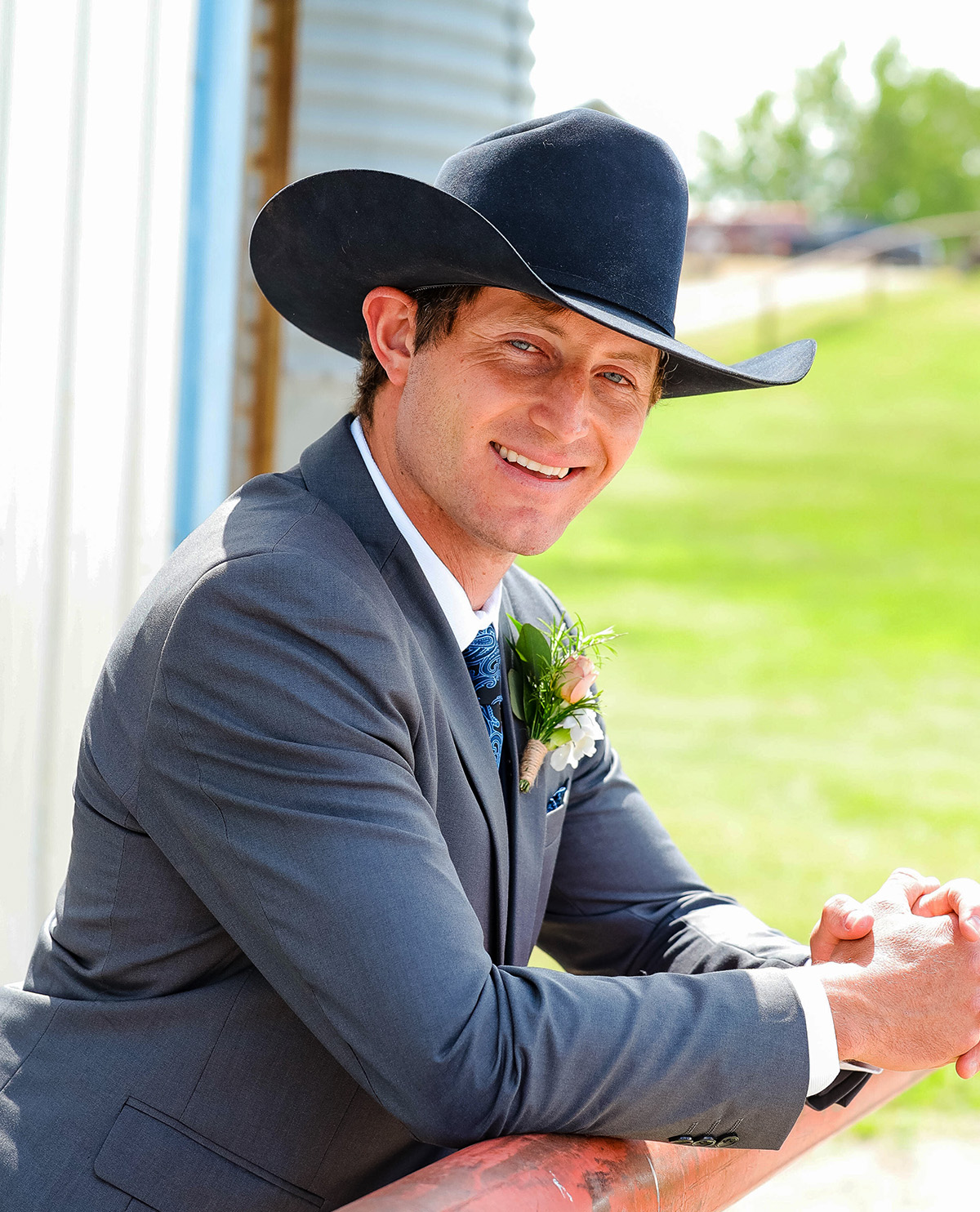
    Trenten Montero, at photographer Roseanna Sales’ Wedding.

    The series of events caused rodeo committees to ask what could’ve been done differently to prevent this from happening. We all know that in this sport, it’s not if injuries arise; it’s when and how bad. According to Professional Rodeo Athletic trainer Devin Dice, the common theme is that there needs to be qualified professionals who know and understand the risks of this very niche sport of rodeo on location in addition to the EMTs. He went on to say, “There are over 700 rodeos within the PRCA, and roughly 150 are covered by Justin Sports Medicine, with my company (Rodeo Sports Medicine) covering another 15 rodeos. There should be more than this for the safety and protection of the contestants.” Committees, like the Owyhee County Rodeo, have begun to do just that, bringing in experienced rodeo sports medicine professionals so when accidents do arise, they understand where the highest risk of injury came from.

    Trenten had a larger-than-life personality. To know him was to love him. Whether it was dedication to the western way of life (ranching and rodeo alike), his zest for life, his kindness, his goofy demeanor, or his joyful faith, you were always drawn to this incredible man. No matter what kind of mood you were in, Trenten always made it his mission to make you smile. It was the type of joyful kindness that followed you around for the rest of the day. His joy and love for life will not be forgotten. This is why his loss has been felt so deeply by so many. Now, it is our job to continue his kindhearted legacy.

    The loss of this wonderful man is felt throughout the world. Over 850 letters from all across the globe, Australia, Mexico, and Canada, were mailed to the Monteros, stating that they heard Trenten’s story and were praying for him. Since his passing, rodeo committees and contestants have found various ways to honor Trenten. On the final day of the 2023 Walla Walla Frontier Days (Walla Walla, WA), over $25,000 was donated in less than an hour by various patrons from the community that were in attendance at the rodeo. That money went to take care of Trenten’s family. Haley Proctor and the Ellensburg Rodeo (Ellensburg, WA) dedicated one of Haley’s trick-riding performances to him. The Jerome County Fair & Rodeo (Jerome, ID – where Trenten lived) and the Silver State Stampede (Elko, NV) have created awards in Trenten’s memory to go to a bareback rider each year at their rodeos. NFR bareback rider Mason Clements has led the charge, along with many of Trenten’s close friends, in building the Trenten Montero Foundation. Austin Foss, also an NFR bareback rider, put together a bareback riding and saddle bronc riding school, in conjunction with Legacy Pro Rodeo, to continue Trenten’s legacy. These are just a few of the many wonderful gestures people around the world have made to love on Trenten, his family, and his memory.

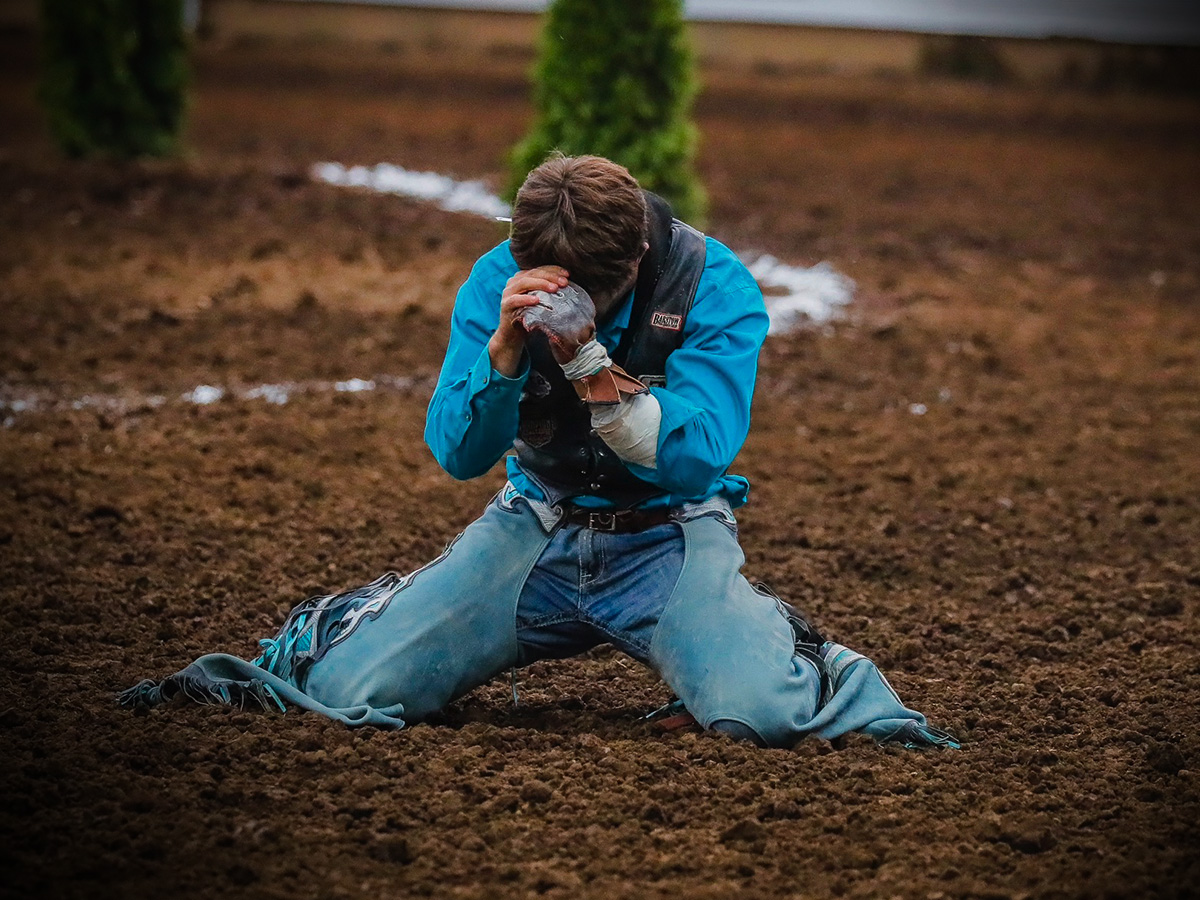
    Trenten Montero praying after a successful ride. -Photo Courtesy of Roseanna Sales

    After the passing of his best friend, Joe Harper wrote a beautiful cowboy poem in remembrance of Trenten. Later that fall, he recorded the poem to be edited it into a video with music written and performed by Joe’s dad.

    I apologize if today I can’t seem to see quite straight,
    You see there’s a empty riggin sitting over there, resting on the gate,
    A set of silver spurs hanging, that have some bronc-hair caught,
    And I’m sorry if I’m so lost in broken-hearted thought-


    There’s a set of bluish chaps that are folded up half neat,
    And a hat that’s a little crumpled up from the afternoon heat,
    The Nevada sky has lost some of its usual brightened hue,

    There’s a little less color, and a lot more blue,


    For our hero and our brother who’s no longer here,
    A man without equal, Rodeo hand without fear.

    Kind and gentle with a giants heart and movie star’s smile,
    If you needed anything, he would drive at least a thousand miles,


    Just to give you the shirt off his back and his last dollar.
    He was the one behind the chutes giving you a encouraging holler,

    A man who showed us how to unconditionally love,
    With his Maria at his side and his God up above.


    With A goofy grin and an unforgettable swagger, he walked,

    He’d drive cross the country when the others baulked
    At the broncs, they had drawn and entry fees bought,
    He was Riding the ones that were ridden and the ones that were not.


    He was a warrior that seemed to be of the unlikeliest sort,
    A man who cared more about his buddies than just the love of the sport.
    And Even when it put him 500 miles out of his way,
    If you called him up he’d be there with in the day.


    We had to say farewell to our hero a little too soon,
    With saddened hearts and mournful, lonely tune,

    You see he got the callback to a rodeo that’s a lot higher than down here on earth,
    Where horses have wings, the entries are paid, and the final Judge has already proven his worth.

    This month marks one year since we lost Trenten. While it is always the loss of the best cowboys that causes us to wonder why they are taken from us so soon, we find ways to keep their memories alive, seeing them in the little things in life, sending up a grateful prayer for the time that we had with them, and, in this case, asking how we can be more like Trenten.•

    Photo Courtesy of Roseanna Sales
  • American Hat: Erin Taorimino

    American Hat: Erin Taorimino

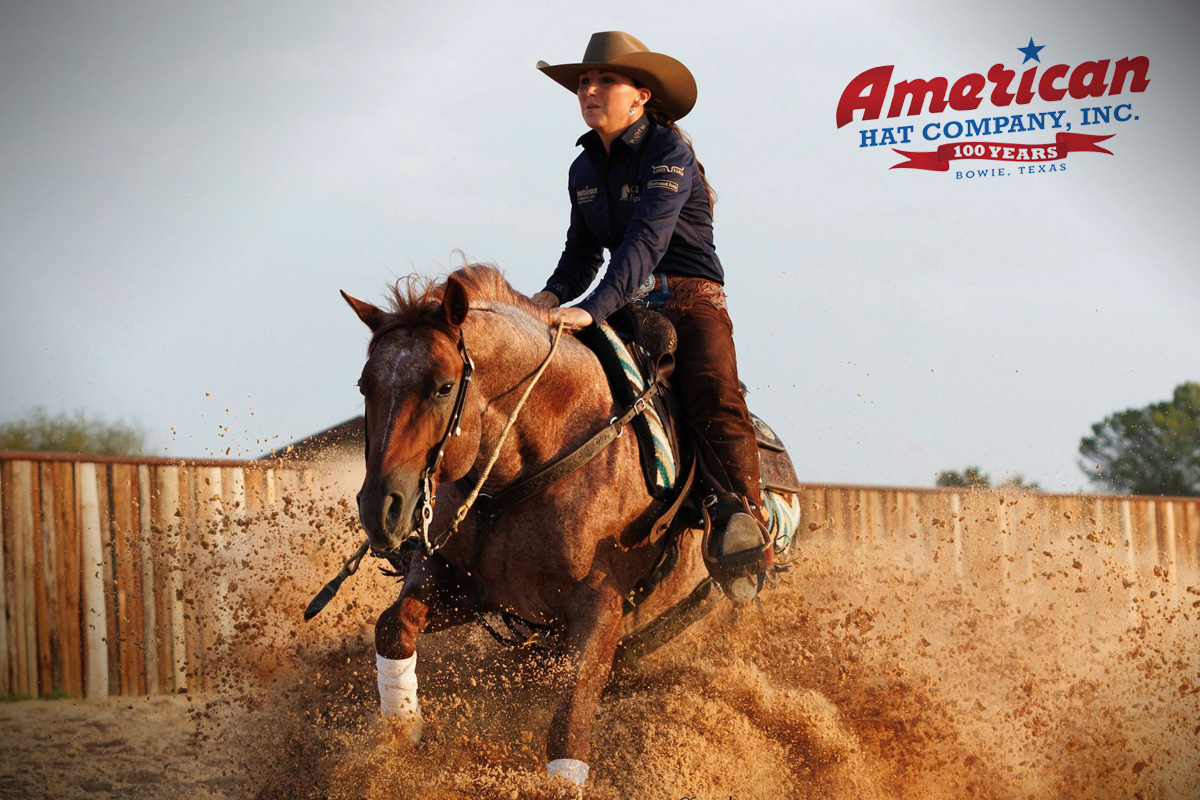
    “Originally, I wore only American straw hats. The brand was looking to expand farther into the western industry, outside of rodeo with their partnerships,” said NRCHA Trainer and rider Erin Taorimino. “I already had a close relationship with American athlete Jackie Crawford, and so it all just worked itself out.”

    Erin said her favorite hat she has been wearing recently is American’s 100X Black Cherry felt. “It’s a really great color,” she said. “I used to wear a plain solid black felt, but the Black Cherry has won my heart.”

    Originally from Saskatchewan, Canada, Erin Taorimino, a now household name in the National Reined Cow Horse Association, said she moved to Texas after graduating high school and her final trip to the Quarter Horse Congress.

    “I met some people at the Congress show and had the opportunity to come down to Texas to show my youth all-around horse,” she said. “I ended up selling him at that show and just never went back.”

    Erin said she started her career as an assistant in charge of riding a string of two-year-old prospects at the Jim Babcock Ranch in Gainesville, Texas. While there, she met Million-dollar rider and NRCHA Hall of Fame inductee Ron Ralls.

    “That is how I really got into the industry,” she said. “He was in charge of the cow horse at that ranch, and so I fumbled my way through learning as I went with his help.”

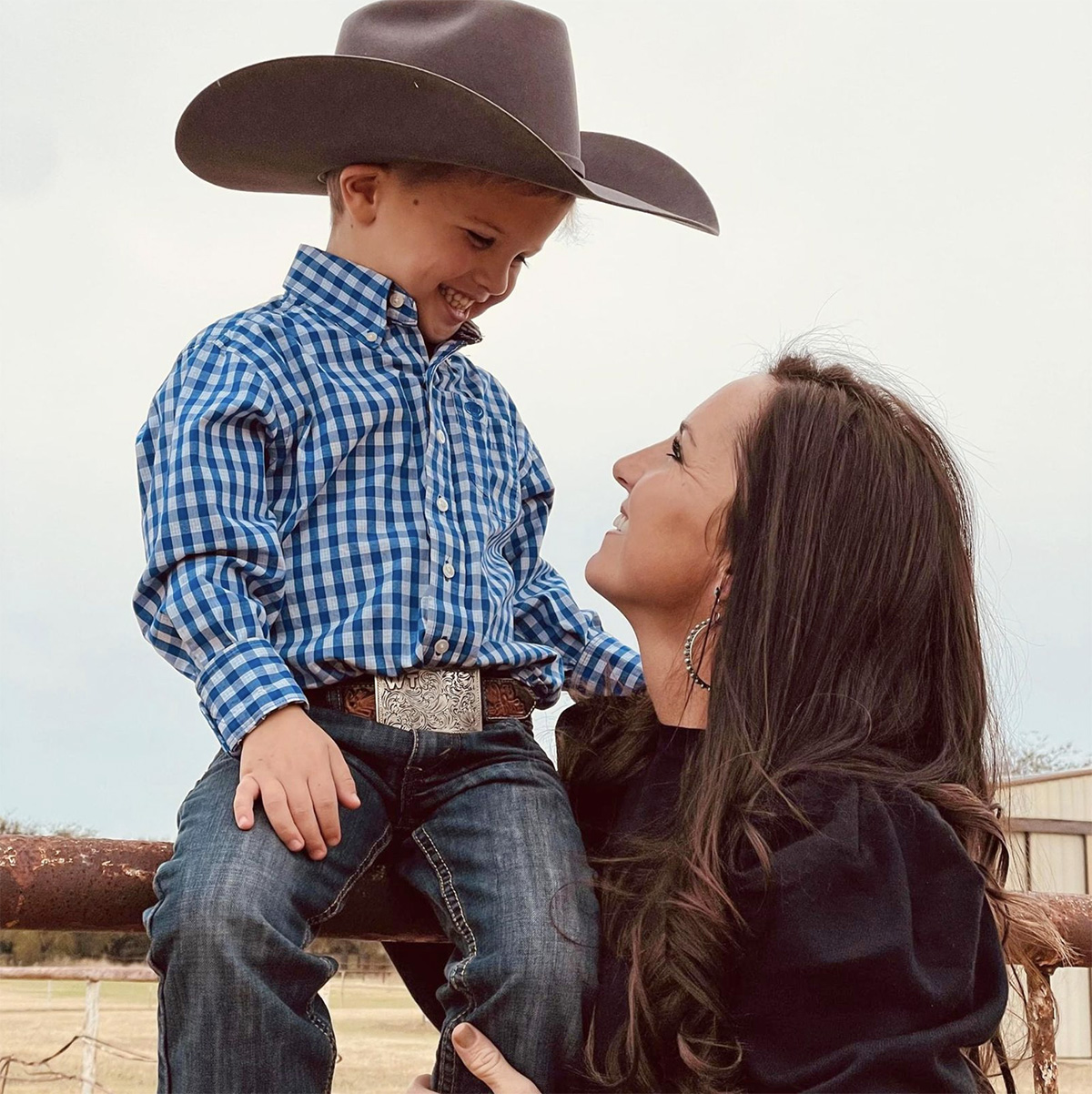
    American Hat Rider, Erin Taormino and her son.

    After Ralls left his position there, Erin said she went with him and worked as an apprentice under him for four and a half years. While working for Ralls, Erin met her husband, Anthony Taormino. Together, the couple moved from Ralls’ ranch in Texas to live in Idaho briefly before moving again to work under NRCHA Two-million-dollar rider and NRHA Million-dollar rider Todd Bergen in Oregon.

    “We stayed under Todd Bergen for five years,” she said. “From there, we moved to work with Garth and Amanda Gardiner at Gardiner Quarter Horses in Ashland, Kansas. We stayed there for two years before moving to Oklahoma and working out of Stuart Ranch for Terry Forst.

    “That’s where we started our business, at Stuart Ranch,” she said. “Terry was amazing. She really opened the door for us to start our own program.”

    Since then, the Taorminos have moved back to Texas, where they started their journey as independent trainers. Taormino Performance Horses is located at their home in Lipan, Texas.

    She said she is most proud of what she has accomplished aboard roan stallion Hazardouz Material (Metallic Cat x Scooters Daisy Dukes). “I won the NRCHA Stallion Stakes on him in 2021, and I made the World’s Greatest Horseman Finals on him last year,” she said.

    Erin also said her plans for her career are constantly changing and evolving.

    “I’d love to win the Snaffle Bit Futurity, going back to World’s Greatest Horseman next year and becoming a million-dollar rider are at the top of my list, also,” she said. “I want to keep climbing and be one of the best trainers in the industry as long as I can.”

    Erin said she does not keep track of her winnings to know how close she is to attaining her goal of being an NRCHA Million-dollar rider. According to the NRCHA, Erin has a lifetime earning of over $900,000.

    Check out American Hat Company Here!

  • Team Cavender’s: Kiley Hargrave-Batten

    Team Cavender’s: Kiley Hargrave-Batten

    While Kiley Hargrave-Batten only joined Team Cavender’s a year ago, she had nothing but good things to say about her experience.

    “It was really a wonderful experience the year I was on the team,” said the 17-year-old cowgirl from Trinity, Texas. “The whole organization is full of amazing and kind people. They have been some of my biggest supporters.”

    Kiley said she was honored to be a part of the youth team during her final year of high school in 2023-24, but she said her rodeo career started much earlier in life.

    “I have rodeoed pretty much my whole life,” she said. “I think I was six when I asked my Papa for a pony for Christmas. I knew from then on rodeo is all I ever wanted to do, and I have done that ever since.”

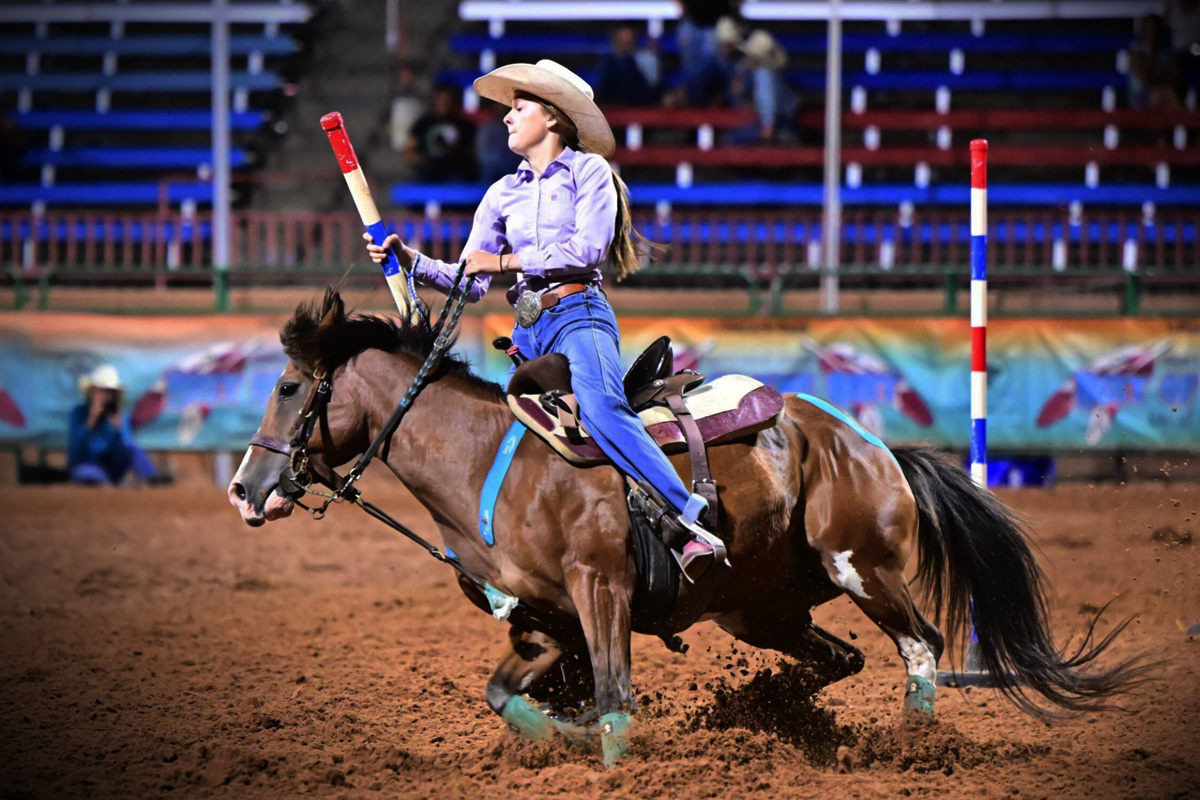
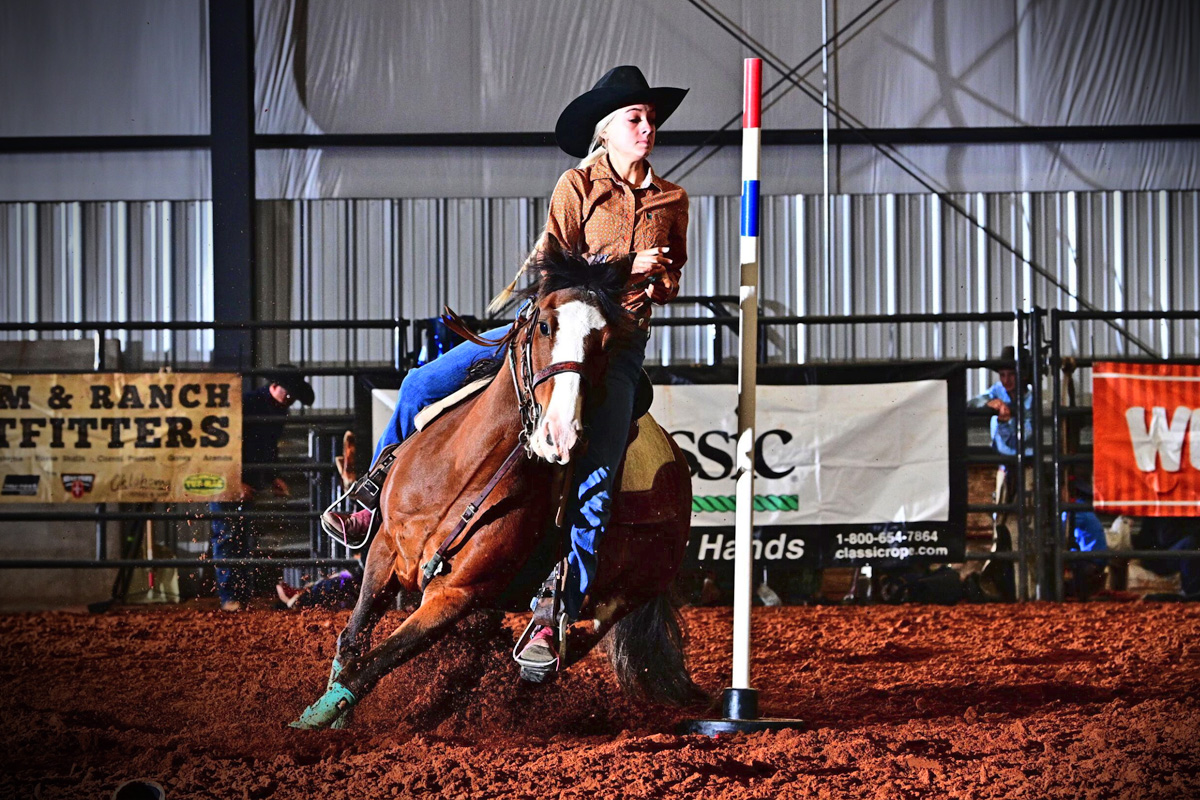
    Kiley now has quite the list of accolades that include qualifying for the Texas High School Rodeo finals, Jr. National Finals Rodeo, and the Hooey Patriot three times each. She also has been the THSRA Region 9 pole bending champion three times. All these awards and qualifications are thanks in part to her pony, Socks.

    “My Papa bought me my pony at my first rodeo in Waller, Texas. We then trained him together, and that has been such a special memory,” she said. “My Papa is easily the biggest influence I have had in my life. He taught me everything I know, and I am forever grateful for him and his experience.

    “I went on to win the Texas State High School Finals Pole Bending title and National High School Finals Rodeo Pole Bending title on him in 2021,” she said. “That is easily my proudest moment, to be able to win those titles on a horse that my Papa and I trained together.”

    Although Kiley now has several horses in her string, Socks holds a special place. “I have three horses. Socks, my pole horse, and then I have two barrel horses: Easy and Luna,” she said.

    “I have had Socks for 12 years now, and he has always been my favorite,” she said. “After winning me the state and national finals my freshman year, he really has made all my dreams come true.”

    She said Easy and Luna are newer to her herd, having both of them less than a year.

    “Easy came to me from a really great family about three months ago, and Luna, I have been riding for a family friend for about five months,” she said.

    Kiley said she attended public school in the Groveton ISD. She went to Groveton Elementary and then to Groveton Jr.-Sr. High school until she graduated in the spring of 2024. During her time there, she was a varsity cheerleader and cross-country runner. She was involved in the FCCLA, BETA, FCA, and UIL student youth organizations. Outside of school and rodeo, Kiley said she enjoys spending time with her family and friends, especially if it involves the swimming pool.

    Find out more about Team Cavender’s Here

  • Open Call for Editorial Submissions

    Open Call for Editorial Submissions

    Attention, all writers! Rodeo Life Magazine is now accepting editorial submissions.

    If you are eager to showcase your writing, here is an opportunity to do so in a well-established rodeo magazine.

    Submissions must be exclusive to us, meaning they have been sent only to us and have not been published online or in print elsewhere, including on personal blogs or social media channels. We prefer that the submission be between 400 and 1,000 words.

    Please use the form below to submit your potential Editorial. We will promptly reach out to authors of relevant articles. Thank you for you interest in Rodeo Life Magazine. For additional questions, please contact kristen@mwdatademo1.com

    Editorial Submissions

    Name(Required)
    Email(Required)
    Please use the area below to input your editorial submission. Please include Title, body copy, and author.
    Please upload your photos here. Please include image credits in the file name. Files might need to be uploaded separately.
    Drop files here or
    Accepted file types: jpg, png, pdf, Max. file size: 20 MB.
    • Western Art Roundup: Jessie Veeder

      Western Art Roundup: Jessie Veeder

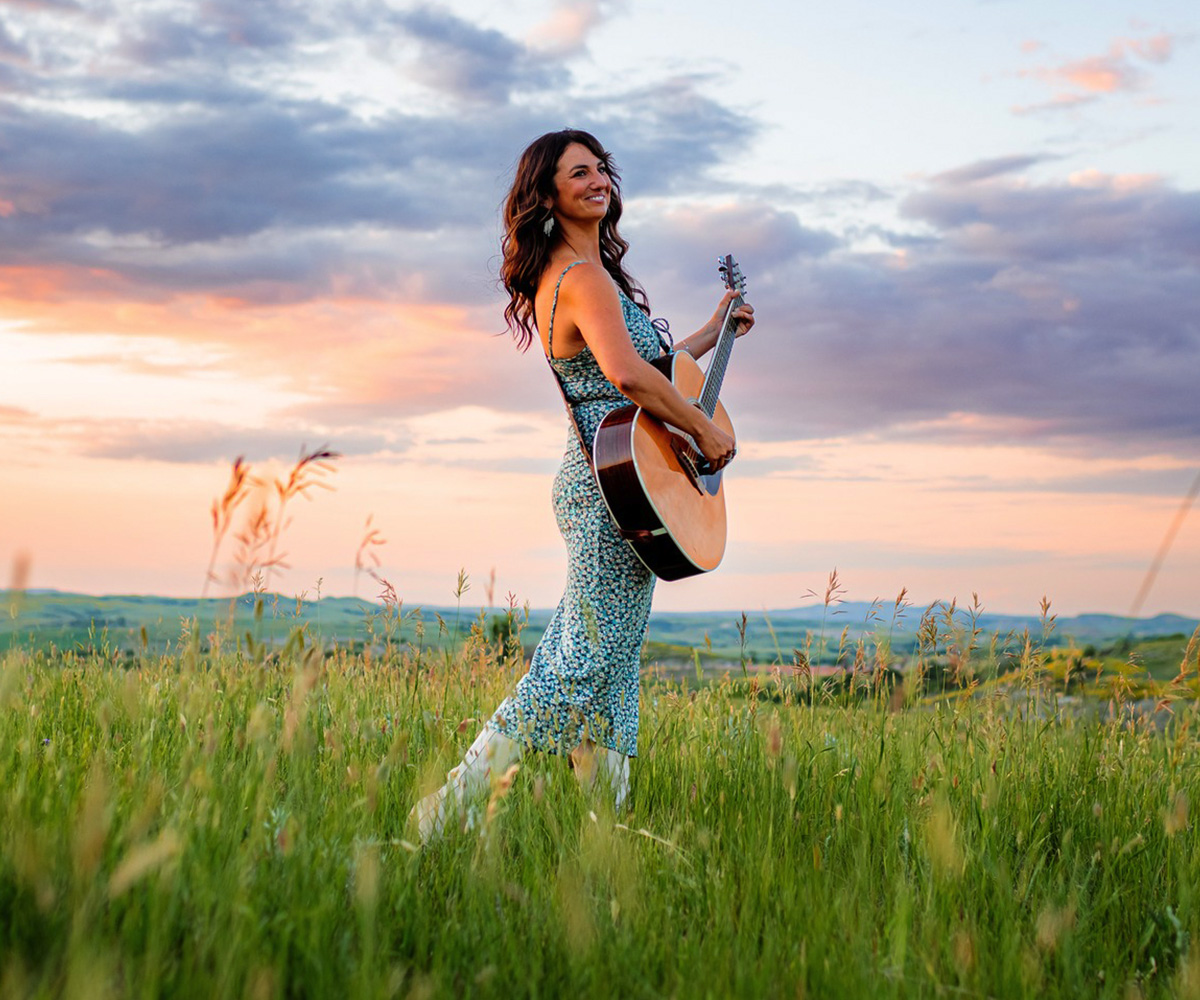
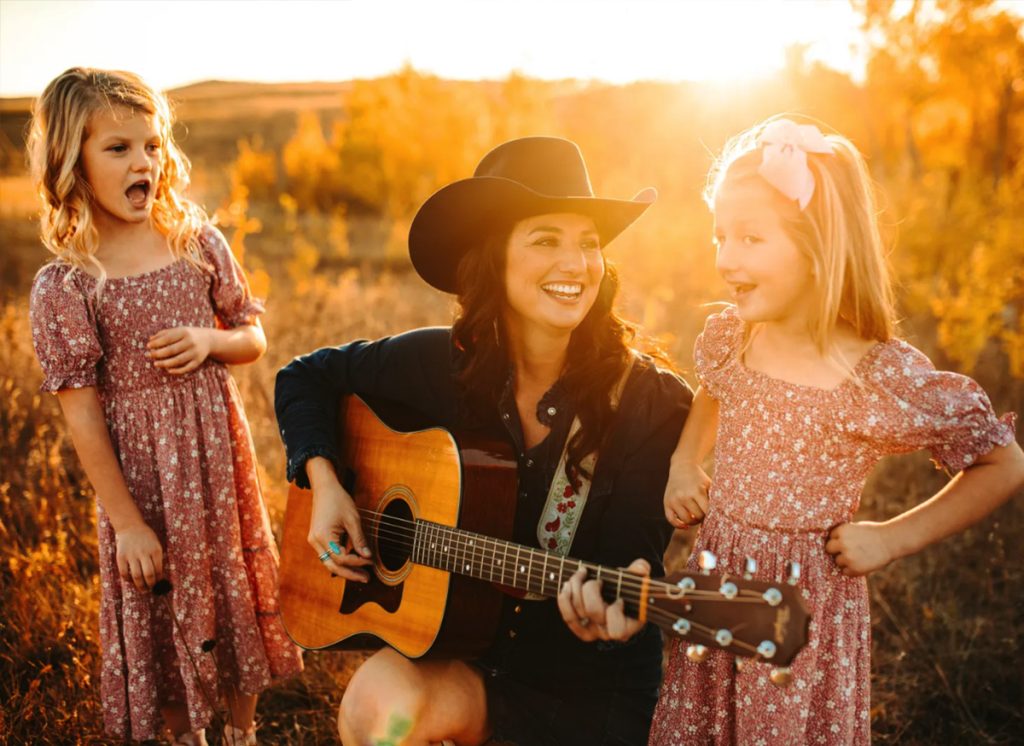
      Jessie Veeder is a songwriter, musician, journalist, North Dakotan, community builder, mother, and advocate for Western life. She explores rural living through her music, popular blog, and podcast, Meanwhile, back at the ranch, and is the director of the Long X Arts Foundation. Veeder’s latest album, Yellow Roses, was released in January 2024.

      Jessie Veeder’s music evokes a feeling that can only be replicated by driving through her home state of North Dakota, off the beaten path of the interstate. Its range and farmland, as far as the eye can see, only interrupted by grazing cows, oil flares, or a sign for the next small town’s annual summer rodeo. Western North Dakota hides a lot of its beauty below the line of sight, with much of its topography going down instead of up. This might be lost on someone who doesn’t take the time to look more closely, and Veeder has been learning how to see beyond the surface for her entire life. Her songwriting and journalism explore the moments, stories, people, and experiences that make life in the rural West unique.

      Veeder has always been surrounded by the Western lifestyle and grew up singing alongside her father, Gene, a musician and rancher. From an early age, she related to songs with a story to tell, identifying elements of her own life. “I thought it was so magical to be a kid out in the middle of nowhere,” she recalled.

      Her father performed throughout the community, and Veeder started getting on stage to sing with him at a young age. She entered and won a community talent contest, and the grand prize of $50 in “chamber bucks” was enough to buy a double tape deck. Now armed with the technology to record herself, Veeder kept practicing and writing songs.
      Knowing that her story was unique, Veeder continued pulling on the thread of rural life in her songwriting. This led to recording her first album of original material, This Road, at 16. “It was just a unique thing for a kid my age to be doing something like that,” she shared. “I think about how brave that was.”

      Veeder found a lot of support in her community, but the idea of becoming a professional musician seemed out of reach. “That was a pipe dream,” she shared. “Saying I wanted to play music professionally was a hard thing for me to say out loud as a teenager. I didn’t utter it out loud, but I did to myself.”

      This changed when she left home at 17 to attend the University of North Dakota. She studied communications and was also encouraged to pursue music further. A Nashville booking agent discovered her music, and beginning her freshman year, Veeder toured up and down the Midwest. She played coffee shops and colleges, traveling alone. “I was pretty independent and totally fine getting in the car and driving hours to play,” she shared.

      This experience was formative and taught Veeder how to use her unique qualities — like her thick North Dakota accent and childhood on a ranch — to connect with people. “Not being ashamed of it, but being proud and talking about it was interesting to these college kids,” she remarked. “Once I realized that people are curious about my upbringing and my songs about rural living, I gained confidence.”
      At 23, Veeder was engaged to her now-husband and high school sweetheart, Chad. The couple moved home to Watford City, where Chad worked in the oil field, and Veeder did various jobs while continuing to write and play music. Looking for change, the couple moved to Missoula, Montana, where she worked for a nonprofit. Chad was offered a job back in North Dakota, so they returned to the family ranch, living in the house where Veeder’s dad was raised.

      Once again, her roots and history in western North Dakota were pulling Veeder toward storytelling, and she committed herself to following this thread. “I stayed home for around a year and a half and just explored my creativity. I wasn’t going to work in a bank, in the oil field, or as a teacher. I was going to tell this story,” she shared.

      She recorded Nothing’s Forever, which features her popular song, Boomtown. The oil industry had completely transformed her hometown, and the once quiet rural area was suddenly filled with people from all over the country and the world. “You almost forgot you were in your hometown because it was so wild,” Veeder shared. This sudden growth, and the negative and positive effects, made national news. Veeder had started her blog, Meanwhile, back at the ranch, and her writing had also been picked up by local and regional publications. Soon, the media was calling her to comment on Watford City’s sudden stroke of luck — or misfortune — depending on who was asked.

      Veeder chose to look at the situation positively. Her father’s work in economic development offered perspective on the generational benefits that could come from this sudden influx of money, and Veeder used her writing skills to tell their story. “I was really curious about the stories that were coming in and wanted to help create a story for our community,” she said.

      National publications grabbed onto shocking stories of violence and oil field workers living in campers during below-zero weather. Veeder saw humanity in these people’s stories, understanding that everyone was making a sacrifice of some kind to be there. “There were people coming here who just wanted a better life for their family, and we wanted to figure out a way to keep them here or get them to bring their families here,” she recalled.

      Her high school classmates started returning home, and family ranchers who once feared not being able to pass their operations on to the next generation were able to bring their kids back home. “The next generation could make a living here and do it really well,” Veeder said.

      She honed her writing skills during this time. “I became really practiced at it and worked on seeing the magical everyday moments, or the story that could come from the turn of phrase that someone said,” she recalled. “I have always been fascinated by the stories in rural America.”

      Her latest album, Yellow Roses, further explores Veeder’s life in the rural West and her family’s deep history in North Dakota. She and Chad are the parents of two girls, Rosie and Edie, and motherhood has also become a strong theme in her writing. Released in January of 2024, Yellow Roses came on the heels of several trying years for Veeder. In 2020, right before the Covid-19 lockdown, she was diagnosed with a rare form of cancer. She had been fighting breathing issues, and having been told that she had asthma, kept trucking through life, singing and performing regularly.

      After flying to Elko, Nevada, for the National Cowboy Poetry Gathering, Veeder knew that something was very wrong. An ER doctor in Elko expressed extreme concern, and after performing for the festival and returning home, she sought out a larger hospital in Bismarck. As she drove away from the hospital toward home, the doctor called her and said she needed to return immediately. A large tumor was discovered in her airway — Veeder’s lungs were over 90% blocked. Thanks to a strong diaphragm and good posture, Veeder had miraculously been able to sing but was dangerously close to an emergency. After several surgeries, a lot of treatment, and downtime, Veeder recovered. Luckily, her voice was not affected despite the extremely invasive surgery to remove the cancer. Today, she is learning to slow down and does regular preventative scans, but Veeder is back to living life full-on.
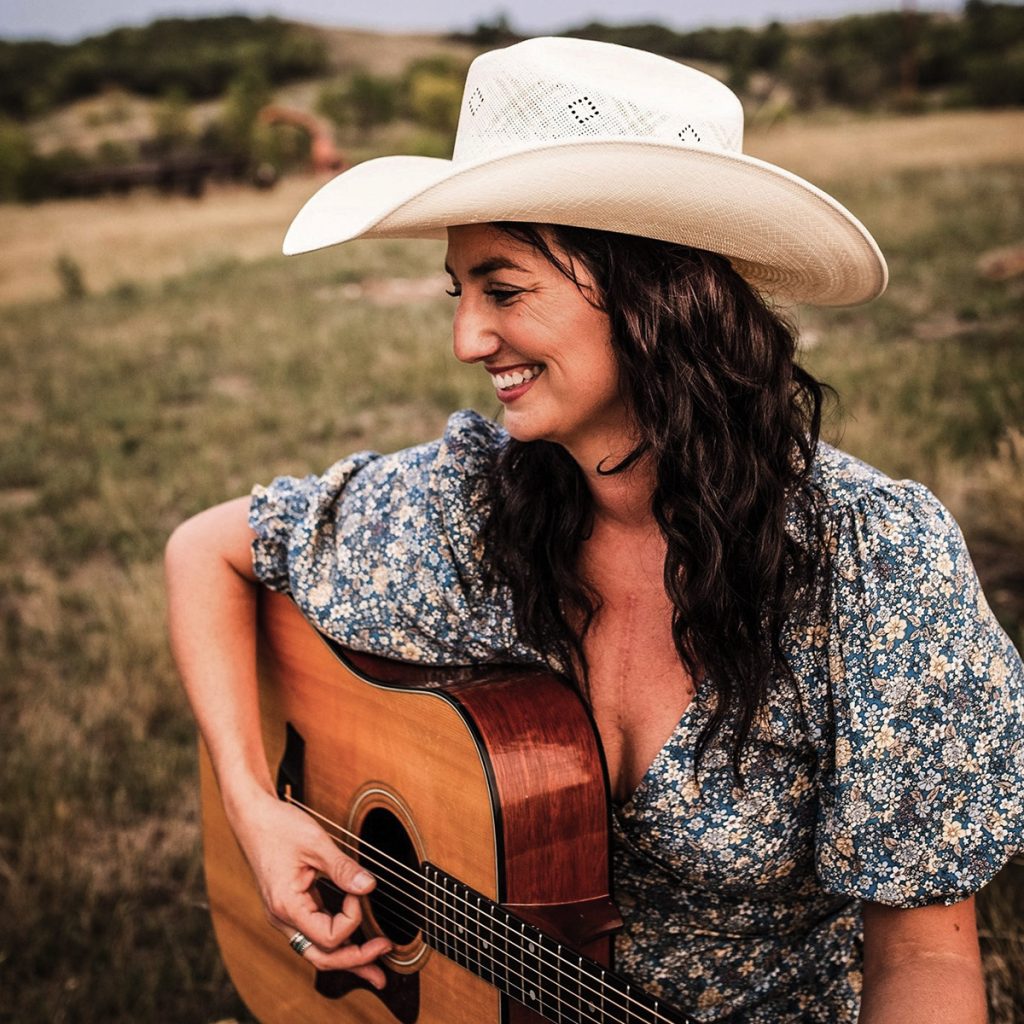
      In addition to sharing her own music, she works as the director for the Long X Arts Foundation, which brings art into the Watford City community. The organization helps plan events ranging from rodeo dances to art classes and classical piano concerts. When the oil boom brought money into the community, Veeder quickly advocated for the arts. “I knew that was something we lacked in our community because growing up here, I didn’t have as many opportunities to perform or explore the art world,” Veeder said.

      Other community members also advocated for supporting the arts, and in 2016 the Long X Arts Foundation was officially formed. “We have a permanent space in our visitor center with an art gallery and a full-time art teacher. We run a big concert series and go into the schools. We have facilitated public art projects and now are opening a retail space where we can really lift up local artists by giving them a place to sell their work,” Veeder shared.

      Art is front and center in the community, and Veeder is committed to bringing new and interesting performers into the community. Concerts have featured a Carnegie Hall trumpet player and a classical pianist.

      Veeder is an advocate for the Western lifestyle, and through her social media platforms, blog, and podcast, she shares her life on the ranch with people from across the country. Recently, she has been considering the popularity of Western culture and how that can be harnessed to benefit agriculture and Western culture. “I think we’re coming into an era where our story is our power,” Veeder shared. “I see that happening on social media in the world of agriculture, and we’re on those platforms showing people what it really looks like to be on a family ranch. This is what cowboy looks like, what being a farmer looks like, and what raising kids looks like. We’re able to grab a hold of that narrative on our own, and that’s what I think is so empowering and wonderful.”

      The newfound popularity of Western culture presents challenges, and Veeder recognizes the gap that needs to be bridged between popular culture and real life. “Let’s celebrate the culture and give people the opportunity to learn about what we do. If someone watches Yellowstone and then wants to come out to my ranch and let us show them what we do, all the better,” Veeder said.

      Rodeo is another thread connecting the general public with rural America. “I’ve been a participant in rodeo and, of course, an advocate for it. Those contestants are the ones representing our lifestyle. What we’re putting out front — and what cowboy means to us — matters to people,” she shared.

      Veeder is also the author of Prairie Princess, a children’s book written in collaboration with North Dakota artist Daphne Johnson Clark. The book celebrates rural living through the eyes of a young girl on a ranch.

      Veeder performs regularly at festivals and events throughout the country. She is a regular performer at the National Cowboy Poetry Gathering and has shared the stage with a long list of Western artists. Her efforts in music, community building, and advocacy have been recognized by several entities. Veeder is a recent recipient of the Governor’s Award for the Arts in Individual Achievement, she was named North Dakota’s favorite Folk Artist in 2016 and 2017, and she is the recipient of the North Dakota Ambassador Award.

      -Article by Lilly Platts
    • St. Paul Rodeo July 4th Rodeo

      St. Paul Rodeo July 4th Rodeo

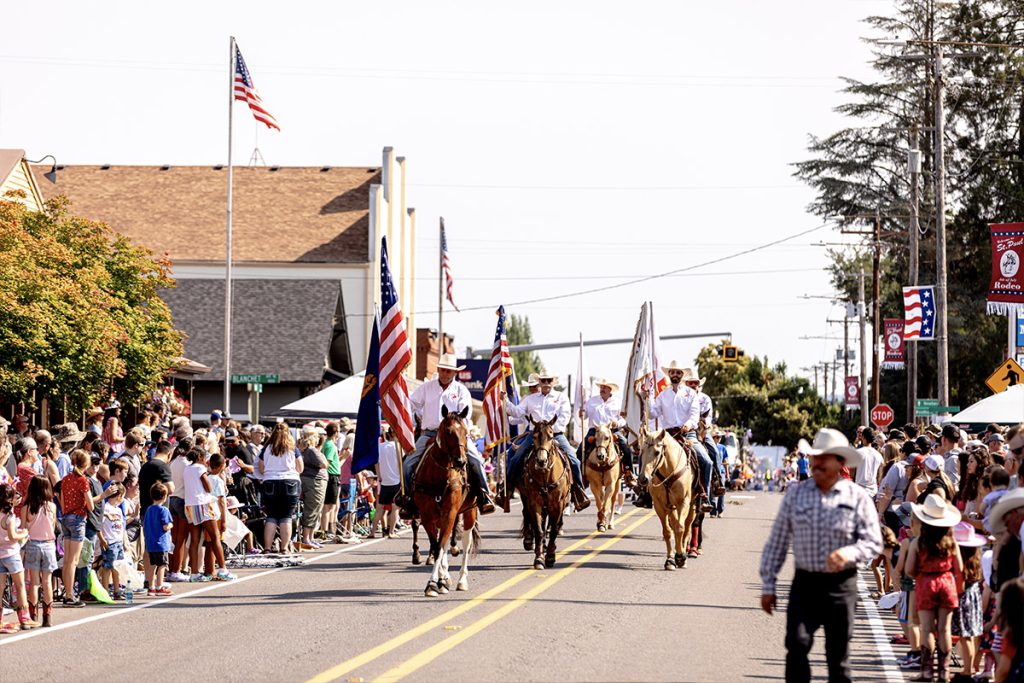
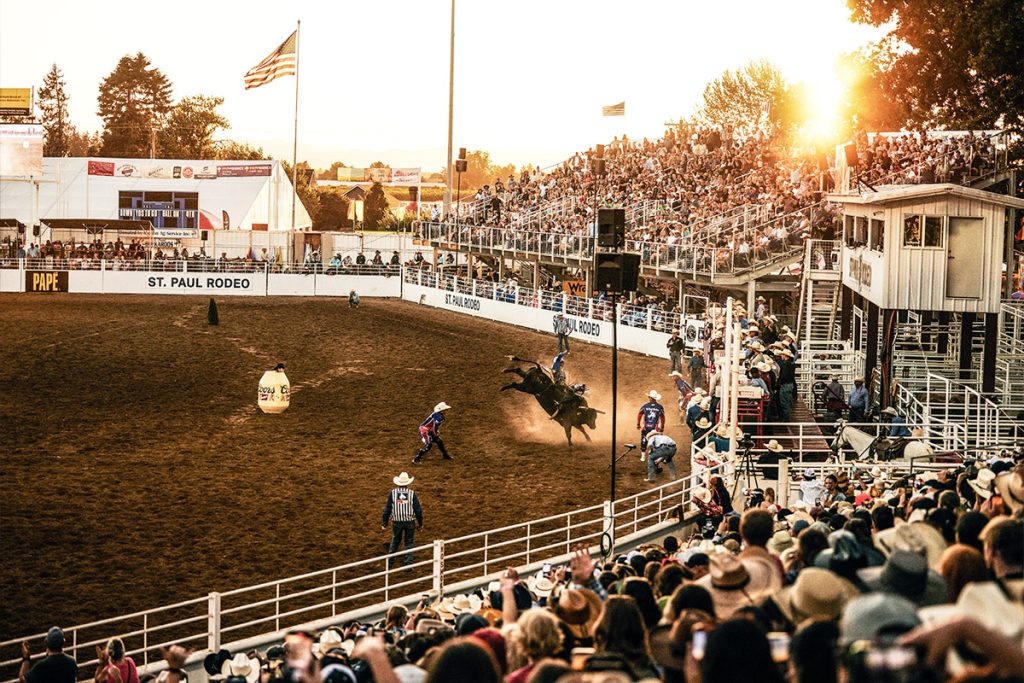
      Nestled in the heart of the Willamette Valley lies a tiny town with a big reputation. The town of St. Paul, Oregon, with a population of around 500 people, hosts over 50,000 visitors each summer for the nation’s greatest Fourth of July rodeo. Against a backdrop of star-spangled skies and crackling fireworks, the historic event captures the essence of Independence Day with the spirit of the American West. This year’s 88th annual St. Paul Rodeo will kick off on July 2nd, 2024, with nightly performances through July 6th. The rodeo will feature nightly performances followed by fireworks, an Independence Day parade, carnival games, fair food, and shopping vendors.

      History

      The Finest Rodeo in the Northwest was born in 1935 when a group of eight farmers and businessmen came together with the vision of preserving the Western spirit and creating an Independence Day rodeo like no other. Led by the first rodeo president, Bill Smith, the men — Ray Manegre, John McKillip, Carl Smith, Maurice Smith, Jim Gooding, Ralph Butt, and Ed Unger — brought the events of bareback, steer riding, roping, saddle broncs, hop buggy, and chariot racing to St. Paul on July 4, 1936 in what would eventually be known as the biggest rodeo held in a small town in the United States.

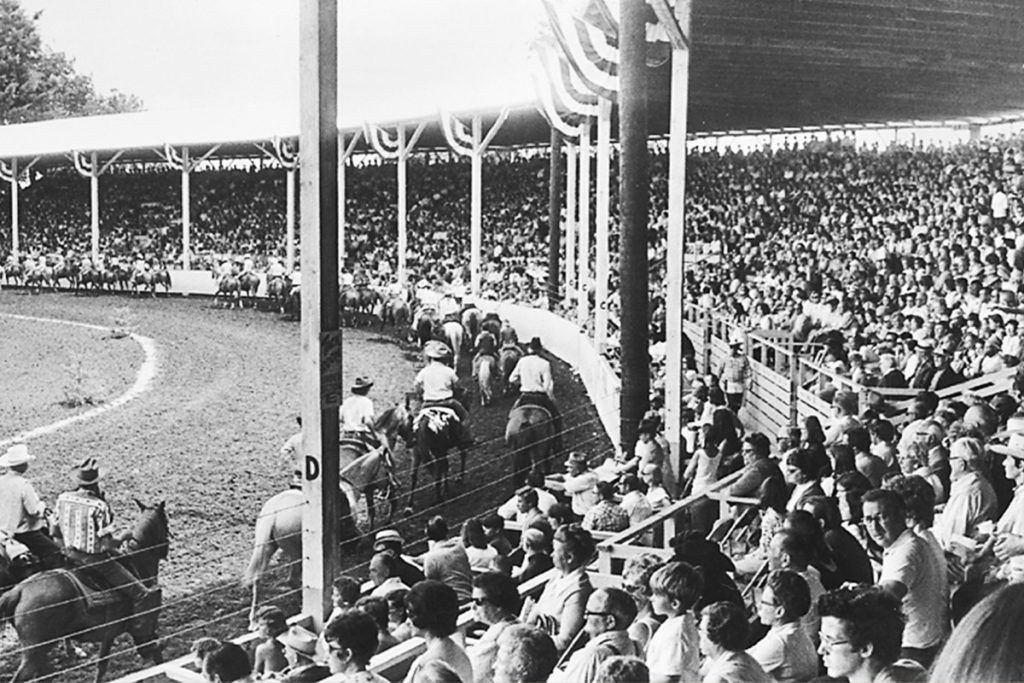
      The rodeo performance featured specialty entertainment acts, including trick riders and ropers. The performance boasted a $500 purse for competitors, and the grounds sported carnival food and beverages as well as a gambling tent with poker, blackjack, and slot machines. Ray Manegre was elected president of the rodeo following the unexpected death of Bill Smith in 1938. He served until 1955 when he passed the baton to John McKillip. But no matter who led the board, constant progress was made as the rodeo grew. In 1940, the rodeo added arena lights for night rodeos. Later, in 1945, new grandstands, bleachers, and bucking chutes were constructed. The new project created seating for nine thousand visitors — six thousand in covered stands and three thousand in bleachers.

      The rodeo has continued growing throughout the decades. In 1956, another project began to bring the arena’s seating capacity to its current 10,500. The year 1998 brought new beginnings to the rodeo, as the St. Paul Rodeo Foundation was formed. Its mission is to enhance and enrich the community by supporting education, local history, and Western heritage through the annual St. Paul Rodeo. The foundation provides scholarships to local youth and supports the St. Paul Rodeo Hall of Fame.

      National Recognition

      As successful decades have passed, the rodeo has been recognized by multiple organizations for its contributions to not only the surrounding area but the rodeo industry as a whole. In 1991, the Professional Rodeo Cowboys Association gave the St. Paul Rodeo a plaque proclaiming it the “Finest Rodeo in the Northwest.” The event was also the recipient of the 2019 PRCA Remuda Award. It received recognition in 2021 as the Columbia River Large Rodeo of the Year and was recently inducted into the Professional Rodeo Hall of Fame in 2023.

      2024 Personnel

      The St. Paul Rodeo has worked to outdo itself each year, and 2024 will be no different. The announcers narrating the action will be Justin McKee from Hico, Texas, and Marty Campbell from Pendleton, Oregon. The barrelman this year will be JJ Harrison from Walla Walla, Washington, working alongside bullfighters Dave Murdoch, Josh Daries, and Logan Blasdell. The pickup men include Jared Gill, Jerad McFarlane, J2 Brown, and Mitch Coleman. The animal athletes will be provided by stock contractors The Flying Five and Big Bend Rodeo Companies, Korkow Rodeos, and Big Stone Rodeo Company. Specialty acts for the nightly performances include trick rider and liberty performer Jessica Blair-Fowlkes and Dusti Dickerson. Independence Day will draw the nation’s top talent to the northwest, boasting a $500,000 payout for competitors willing to put their skills to the test.

      Hall of Fame

      The St. Paul Rodeo Association created a Rodeo Hall of Fame in 1998 to recognize outstanding individuals throughout the rodeo’s history. Inductees of the Hall of Fame include past champions, stock contractors, contract acts, local committee individuals, and top animal athletes. The 2024 Hall of Fame inductees will be honored on Monday, June 1. The 2023 St. Paul Rodeo Hall of Fame inductees included Brittany Pozzi Tonozzi, David Bothum, Eric Layton, Frank Kirsch, Sr., and Debi McKillip. Each inductee has left their mark on the rodeo and contributed to its overall success as an Independence Day staple in the northwest.

      Royal Court

      The 2024 St. Paul Rodeo Queen is Emelia Coleman from St. Paul, Oregon. Emelia comes from a seven-generation farming family and is 22 years old. She is a senior at Oregon State University studying business marketing with a minor in new media communications. Emelia is a four-year OSU Intercollegiate Horse Show Association member where she serves as the team captain. After graduation, she plans to continue working on the family farm and pursue a career in production within the Western industry.

      Princess Morgan Cuff is a fourth-generation hazelnut and grass seed farmer from Woodburn, Oregon. Morgan is currently a sophomore at OSU studying agricultural business. She competed in 4-H and on the Oregon High School Equestrian team in previous years and is currently a member of the OSU Collegiate Stock Horse Team.

      Princess Erin Anderson is from Sherwood, Oregon, and graduated from OSU in 2023 with a bachelor’s degree in bioresource research. Erin hopes to eventually return to school to pursue a graduate degree in bioinformatics or a similar field. Erin competed in 4-H and American Quarter Horse Association shows when she was young, and credits her love and knowledge of horses to her mother.

      Impact

      Over 400 volunteers work together each year to bring the St. Paul Rodeo to life. The day following the last rodeo performance, these volunteers plant grass in the arena to transform it into a football field for the St. Paul High School Buckaroos in time for football season in the fall. The rodeo has a $250,000 charitable impact on its host town, with $70,000 of that money coming from direct donations to local organizations. The rest comes from providing a significant fundraising venue for local organizations.

      Visit

      Tickets to the rodeo are available for sale on the St. Paul Rodeo website, StPaulRodeo.com.

      St.Paul Rodeo Facts

      Mission: Support our greater community and honor our western heritage
      by producing a world class rodeo.

      • 2024 marks the 88th St. Paul Rodeo.
      • The St. Paul Rodeo has a charitable impact of close to $450,000 including direct donations to non-profits, scholarships and partnering with many organizations to fund raise during the rodeo.
      • Held in a small farm town with population of 425 – boasts attendance of over 60,000 annually.
      • Farmers and coaches plant grass the day after the rodeo each year to turn the arena into a high school football stadium.
      • The St. Paul Rodeo Hall of Fame BBQ will be held on July 1, 2024 where those who have contributed their time and talents to the St. Paul Rodeo are recognized. Live and silent auction benefits the Austin Smith Foundation.
      • Five days with Six performances: Evenings at 7:30pm on July 2 – 6 with a 1:30 pm matinee on July 4.
      • July 2 is First Responder Night, offering ticket discounts to all emergency personnel.
      • Every night, tips are collected to benefit the Justin Cowboy Crisis Fund. Since 2011, the St. Paul Rodeo annual campaign has raised more than $245,000 in donations and tips to assist injured rodeo athletes and their families.
      • Celebrate Independence Day in style with the St. Paul Rodeo 4th of July Parade at 10:00 a.m. on Main Street. July 4 1:30 matinee is Family Day with reduced prices.
      • July 4 7:30 evening performance is Patriot Night, all active military and veterans are honored and receive discount tickets.
      • 2024 marks the first year to include WPRA Breakaway Roping at each performance.
      • St. Paul Rodeo Association will add $319,175 to the purse which draws the world’s top professional rodeo contestants every year. In 2023, a total of $440,702 was paid out.
      • Fireworks follow each evening performance!
      • Televised performances on The Cowboy Channel, official network of ProRodeo
      • The Specialty Act will be Trick Riders – Jessica Blair Fowlkes and Dusti Dickerson.
      • Justin McKee will be back as our announcer and fan-favorite JJ Harrison will be back in the barrel.
      • The top livestock in the nation are provided by livestock contractors including: Four Star Rodeo, Flying 5, Korkow Rodeos, Big Stone Rodeos, Macza Pro Rodeo, Sankey Rodeo Company, Julio Moreno and King Rodeo Company
        Carnival opens every day featuring rides for all ages by Davis Shows as well as a variety of food and concession vendors.
      • The Tack Room Saloon, voted one of the top 20 cowboy bars in the west, is open every day prior to the rodeo to those 21 and over. Full of historical rodeo memorabilia, located under the grandstands with live feed to view the rodeo while inside and stays open after the rodeo for nightly fun.
      • The Outpost tent offers casual seating for another adult gathering place to meet up with friends, with picnic tables and live feed viewing parties during each rodeo performance.
      • Yes, we have TREES in the arena (arborvitae!) A throwback to the early years with horse and pony races in the arena and the trees were used to mark the track.
      • Arena capacity of 9,600 and in 2023 we SOLD OUT all 6 rodeo performances.
      • Ticket prices range $20-$60. Tickets are available online at stpaulrodeo.com or by calling (800)237-5920.

      -Article by Nicole Jasperson | Photos Courtesy of St.Paul Rodeo

    • Cowboy Christmas: The Most Wonderful Time of the Year

      Cowboy Christmas: The Most Wonderful Time of the Year

      While most folks take time off work to barbecue, spend time with family, and hit the lake around Independence Day, professional cowboys and cowgirls load up their rigs and hit the road for the busiest and richest run of the year. For many, this involves driving through the night and making multiple runs per day in order to hit as many rodeos as possible.

      “Cowboy Christmas” consists of dozens of large paying rodeos scheduled for the last week of June and first week of July. Each rodeo has a whopping amount of added prize money, and competitors hope to take home their share of the purse. This time of year can be critical for competitors, and tends to shake up the world standings in all events across the board.

      On any other weekend throughout the year, around 15-17 rodeos are held across the country. These numbers skyrocket during the Fourth of July run, with over 30 rodeos July first through third alone. Professional cowboys and cowgirls hope to pull into the driveway thousands richer after competing in as many rodeos as possible during the most wonderful time of the year.

      Here’s a rundown of the biggest rodeos you won’t want to miss during Cowboy Christmas.

      Reno Rodeo

      Although not technically over Independence Day, some consider the Reno Rodeo the official start of the Cowboy Christmas run. The 105th annual Reno Rodeo runs from June 21-29, and has added money of $560,000. Created in 1919 when community members sought a way to celebrate the end of World War I, it dubs itself the wildest, richest rodeo in the West.

      Ponoka Stampede

      This year’s Ponoka Stampede is scheduled for June 25 through July 1 in Ponoka, Alberta. The 88 year old tradition has prize money of $955,000, and attracts around 80,000 visitors and rodeo fans annually. With a large purse comes tough competition, bringing some of rodeo’s top athletes to the event for their shot at a check.

      Greeley Stampede

      The Greeley Stampede takes place June 27th through July 3rd in Greeley, Colorado, at the Island Grove Arena. The rodeo has $267,173 in added money for competitors. Last year’s highest money earner was steer wrestler Gus Franzen, who left the rodeo $13,499 richer.

      World’s Oldest Rodeo

      The World’s Oldest Rodeo takes place July 1-6 in Prescott, Arizona, and features $160,000 in added money. It was born in 1888 and continues to draw the nation’s top rodeo athletes and performers to the area each summer. This year, the rodeo will host specialty acts Broken Spoke Clydesdales, Tomas Garcilazo, and barrelman Matt Tarr.

      Cody Stampede

      Launched in 1919, the Cody Stampede Rodeo brings Western sports fans and competitors alike to the Rodeo Capital of the World for Independence Day celebrations. The event takes place July first through fourth, with nightly performances at Cody’s Stampede Park and added money of $240,000.

      St. Paul Rodeo

      The small town of St. Paul, Oregon, hosts 50,000 visitors each summer for what they claim is the nation’s greatest Fourth of July rodeo. This year’s event will run July second through sixth, with a parade and an extra matinee performance on Independence Day. The rodeo has $298,900 added money for competitors.

      Livingston Roundup Rodeo

      Montana’s oldest rodeo, the Livingston Roundup, will take place July first through fourth this year. Created in 1924, it annually hosts sold out crowds and world class competitors. This year, the rodeo will celebrate 100 years of tradition with nightly fireworks and a special anniversary concert on June 28th.

      Calgary Stampede

      Created by Guy Weadick, the Calgary Stampede’s first exhibition took place in 1886, with the first rodeo occurring in 1912. This year’s event will run July 5-14 at Stampede Park in Alberta, Canada. The rodeo will feature a competitor payout of $1.79 million in front of over one million visitors. Last year’s rodeo left multiple cowboys and cowgirls with checks for over $12,000 each, setting them up well for the remainder of the season in the world standings.

      -Article by Nicole Jasperson