Rodeo Life

Category: Articles

  • Back When They Bucked with HL Todd

    Back When They Bucked with HL Todd

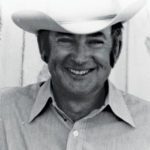
    HL Todd was larger than life.  Whether it was riding his famous horse Rufus as he steer roped, hosting cowboys at his home in Burlington, Colo., or chewing on one of his signature cigars, he stood out in people’s minds.
    The Colorado cowboy, who will celebrate his 79th birthday this year, qualified for the National Steer Roping Finals four times and took numerous victory laps at such rodeos as Pendleton, Cheyenne, and everywhere in between.
    He grew up the son of John and Bernice Todd, hardworking farmers in northwest Kansas who were good people but had no use for rodeo. “They didn’t like nothing about it,” HL remembers. “It was like pulling teeth, when you loaded up to go to one.”
    Their middle child of three, born in 1937, began roping at the neighbor’s. Elmer and Albert Garrett had a roping pen, and that’s where HL got his start. He was sixteen or seventeen years old, and he was looking for something different than farming. “I’d be out there, (in the field) in August, in the dust and it’d be hot and I’d be sleepy, and I was going to figure out some way to make a living without running this tractor,” he recalls.
    He roped in high school a bit, then in college at Kansas State University, he competed in the calf roping and steer wrestling.
    After college graduation, HL moved to Burlington, Colo., where he worked for an insurance company for ten years. In the early 1970s, he got into the feedlot business, with a 10,000 head operation. After ten years in the cattle business, he went broke and went back to the insurance company, living in Kansas City and Oklahoma City before moving to a ranch near Chickasha, Okla.
    He roped steers on weekends and when he could get away from work. He won rounds and placed at rodeos across the country: Cheyenne Frontier Days, Walla Walla, Wash., Miles City, Mont., Pendleton, Ore., Ponca City, Okla., everywhere he went.
    And he and his wife Rita’s place became a stopping spot for fellow cowboys. Their home north of Burlington included an indoor arena. It was on the way for those cowboys from Texas as they headed north for the summer run. “A lot of those steer ropers and calf ropers would come and stay with us,” Rita said. “They were coming from south Texas, and Burlington was over a day’s drive. They’d camp there, go to county fairs, and then go on to Cheyenne and Pendleton.”
    Some of the names legendary to the sport of rodeo stayed with the Todds. James Allen, the father of eighteen-time world champion Guy Allen, came with his kids. Sonny Davis, Olin Young, Roy Cooper, Dick Yates, Jimmy Brazile, and more sat at the kitchen table with the Todds. They stayed in their campers or living quarters, and Rita cooked supper for them. Beef was plentiful, in the feedlot business. Cowboys often brought their families along, and HL and Rita’s two daughters, Kim and Kelly, loved it. Their home was a gathering place. “The kids loved it,” Rita said, “and I did, too. It was fun.”
    Clark McEntire, the father of country music superstar Reba McEntire, roped steers in the same era as HL did, and he often stayed at the house with his four kids. After roping all day, Rita would fix a big cook-out, and the McEntire kids, mainly Pake and Reba, would pull out their guitars to sing and entertain. “Mom jokingly said they had to sing for their supper,” Kim remembers.
    Jeff Todd, HL’s nephew and a team roper, remembers the big personality his uncle had in his rodeo days. “He was just always a figure that was larger than life,” he said. People comment to him that they always wanted to be like HL when they grew up. “He was the guy who, everything he did, was first class. He wasn’t flamboyant, but he always had nice horses and took good pride in his stuff.”
    He didn’t always catch, but if he did, he won, Jeff remembers. “That was his mojo. He had that winner’s knack. He might completely miss one in the first round, and then win the next round. He was always a go-round threat.”
    HL rode good horses and his best-known horse might be one he raised, a roan gelding named Rufus, who was the AQHA’s 1995 Steer Roping Horse of the Year at the age of nineteen. Rufus was also ridden by HL’s son-in-law, Jimmy Hodge, who made the National Finals Steer Roping three times. The horse was the envy of every cowboy in the arena. One time, at Cheyenne after slack, as HL went to put horses away, one of his granddaughters said to her grandpa, “I want to ride Rufus.” Tee Woolman, overhearing her, said, “Yeah, and so does everybody else around here.”
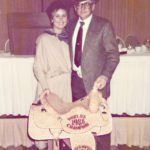
    HL qualified for the National Finals Steer Roping in 1973, 1975, 1976, and 1982, and continued to rope professionally till he was in his sixties. He won a go-round at Cheyenne at the age of 52, and went on to rope in the National Senior Pro Rodeo Association. He quit competing about seven years ago.
    HL mentored young cowboys, including the 1978 Tie-Down Roping Champion Dave Brock, and another steer roper, Rod Pratt. As a youngster, Pratt and his family neighbored the Todds, and Rod worked for HL, rebuilding his arena. “One thing led to another,” Rod remembers, “and he taught me how to rope.”
    Rod remembers HL with the big cigar in his mouth. “He always chewed on a cigar,” he said. “He’d light it twice, and it’d go out, and then he’d chew on it.” But when he spoke, it was time to listen. “He was pretty quiet and laid back, and you could tell when he spoke seriously, you needed to listen.”
    Pratt qualified for the National Finals Steer Roping eight times, winning the average in 1987. He rode one of HL’s horses for the last five rounds in 1987, and placed in every round. “If I needed something, he always helped me,” he said.
    HL worked hard to be a good roper, Rod said. “He was a good athlete. He had to work at it, but he wanted to, so that’s the driving factor right there. The ‘want to’ makes you do a lot of things well.”
    In addition to teaching him how to rope steers, HL taught Rod some life lessons, like how to enjoy the moment. “It didn’t matter where you were, he enjoyed life. Wherever he was, he enjoyed being there. He never did let life get him down.”
    HL and Rita enjoy retirement in Johnson City, Texas.  Their older daughter Kelly married Mark Dykes and they have two daughters and a son, and their younger daughter, Kim, married Jimmy Hodge, and the couple has twin daughters.
  • On the Trail with Timber Allenbrand

    On the Trail with Timber Allenbrand

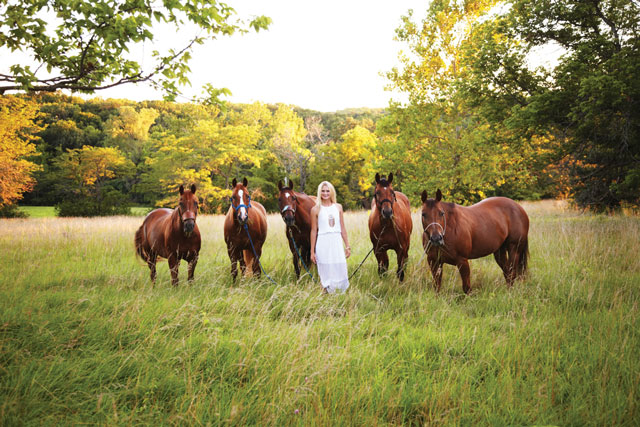
    For Timber Allenbrand, the sport of rodeo has been ideal preparation for a successful future.

    She has been competing in the sport, and leading with several association service positions, in the Kansas High School Rodeo Association in her young, yet accomplished life so far.

    Timber’s mother Trisha barrel raced some in her thirties, but Timber quickly picked up the sport of rodeo as the first person in her family to pursue it as a career.

    Trisha had bought a barrel horse when she wanted to try her hand at the sport and still had the horse by the time Timber could climb into the saddle.

    “She just took to it. Since she was little tiny I had her on the back of a horse, and by the time she was 3 she was doing the lead class out there she and I, and that’s really how we got started,” Trisha describes of her daughter’s beginnings into rodeo.

    “I was fortunate enough to get involved with close friends who were involved in rodeo, so I was exposed more to what rodeo was really about, and those people have been very influential in our lives and have been so gracious to include Timber and teach her things,” Trisha says. From the lead line class, Timber took the reins herself with help from her mother and her rodeo family.

    The KHSRA cowgirl went through the ranks of the Kansas Junior High School Association, all the way to nationals in Gallup, N.M. every year, was a Reserve World Champion her 7th grade year and won a National Championship in 8th grade.

    Through the years she’s also served as an event director, held offices like that of Secretary in the KHSRA last year. Now Timber is the student president of KHSRA.


    “It’s really built my network for my future, and you don’t find the people that you do in rodeo anywhere else. The family circle is amazing,” Timber says and adds of the responsibilities of her role as president. “I love setting up community service activities for the contestants of Kansas High School Rodeo. It’s been a lot of fun to do that.”

    One of Timber’s fondest memories was seeing the kids from a nonprofit initiative called Real Men, Real Leaders benefit. The kids were given contestant jackets and cowboy hats and were able to come watch one of the KHSRA rodeos.

    “It just makes my heart happy to see everybody that doesn’t get the opportunity to do what we do be able to watch and have the joy through another perspective,” Timber explains.

    In the arena, Timber’s competitive focus is on the All-Around. She competes in five events, barrels, goat tying, breakaway roping, pole bending and cutting.

    “I just have learned from many people along the way, and [I’m] very blessed to have everybody that’s came along to help me get where I am,” Timber says.

    She especially credits her mother for her endless support.

    “My mom is a big impact in my life. She travels with me and works long hours. We have a team. She is the one out there working chutes late at night and holding the goat and being my coach, best friend and everything you do to be a single mom, but we have many people that help us out, so that’s awesome,” Timber says, adding that her Aunt Vicki is a big help as well, by caring for their home and animals when she’s out chasing her rodeo dreams.

    Trisha too has benefitted from sharing this rodeo experience with her daughter on the road.

    “I don’t know of many other things that let you go down the road with your kids and spend that much time together most weekends of the year, and live life and overcome obstacles, work through things and have the typical mother-daughter ups and downs as well, but at the same time not trade it for the world,” Trisha credits.

    Trisha has two businesses, and she and Timber have developed a system to work together to accomplish the tasks that need done as the mother and daughter travel for Timber to pursue her goals.
    “We just work together, a team, whether it’s feeding the horses or exercising [horses], cleaning the barn, doing the laundry, cleaning the house, or taking care of school work, it is just, from the minute we get up to the minute we go to bed, a team effort, because we knew that, and we knew what she wanted to be,” Trisha describes.
    Trisha’s career allows her flexibility when it comes to helping Timber with horses or practice. Timber may be roping and tying goats at 7 a.m., or doing school obligations after hours in the evenings, but the aspiring cowgirl makes it work.
    Outside of the arena, Trisha’s career in business has inspired Timber too. Timber plans to go on to college rodeo and major in marketing and business.
    “Business, I’m very interested in, and marketing as technology grows is very important,” she says.

    Beyond rodeo, Timber likes to work with young horses and develop their athleticism. “I love to train on young horses and work with them and grow them, their mind and try to find their best abilities,” she says.

    Trisha agrees this work suits her daughter. “We tease her about being a horse whisperer, because she truly has a relationship with [the horses]. She loves working with them and finding out what makes them work and bringing out the best in them, and that’s her sincere passion. She’s fundamentally learned so many things that I believe that’s part of why she’s successful in the competitive [arena].”

    Trisha goes on to credit rodeo with helping allow Timber to grow into the young woman she has become. “Rodeo has given her the ability to see the world from many different lifestyles, perspectives, attitudes, beliefs, and it’s let her realize it takes a lot of hard work, but it takes a lot of people relationships to make your world complete,” Trisha explains and adds that Timber has become able to see people for who they are, and that she tries to pay it forward with all of the help she’s been given from the rodeo community. “I think [rodeo] has just given her this whole way to see life and appreciate it and be part of something bigger, and it’s taken lots of miles and lots of wonderful people that have allowed her, and us, to have this kind of life together.”

    Timber likes to have a plan when it comes to big steps in life, but overall, prefers to go with the flow day to day, and these days, she’s soaking up all that her last year in the KHSRA has to offer. “Senior year has been great to me. I’ve had a blast, and I’m excited for the future.”

    Trisha is confident in her daughter’s ability to succeed.

    “She’s a very insightful person, and I have full faith that she has great things ahead of her, a lot to experience and a lot to give back for what she has been able to experience so far in her life as well. She will continue living God’s plan for her purpose.”

    Timber has signed on with the rodeo team Tarleton State University in Texas. She has been accepted into the Tarleton Honors College program as well.

    And it’s clear no matter where that road takes her, Timber will go prepared because of her involvement in rodeo and the Kansas High School Rodeo Association.

  • On the Trail with Clifford Maxwell

    On the Trail with Clifford Maxwell

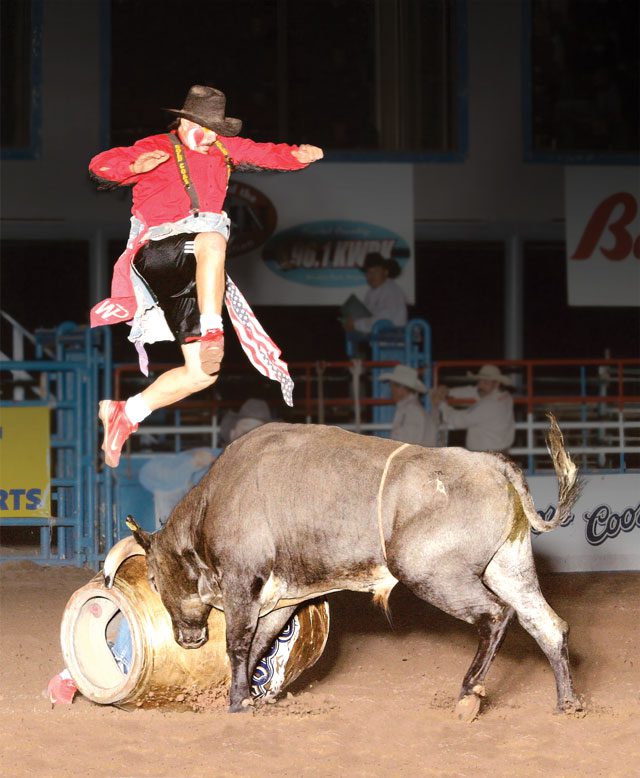
    After 15 years of fighting bulls at the Turquoise Circuit Finals, 47-year-old Cliff Maxwell from Taylor, Ariz., is making the 1,968 mile trip to Kissimmee, Florida to join Australian bullfighter Darrell Diefenbach as the bullfighters for the RAM National Circuit Finals Rodeo (RNCFR) April 5-10. “It’s Darrell’s last rodeo, and it will be an honor to work with him,” said Cliff, who is a full time firefighter paramedic as well as the owner of a custom cabinet shop, along with his wife and son.

    The bullfighters are selected to work the RNCFR from the pool of 24 bullfighters from the 12 circuits in the nation. The bull riders select the bullfighters that work the circuits, and a committee selects the ones that will go to the RNCFR.

    Cliff started his rodeo career after high school. As the oldest of six siblings, he spent his childhood playing softball. “My parents (Clifford and Gayle) supported me in everything I wanted to do,” he said. “With a big family, we always went on one big trip each year and went camping a lot.” After high school, Cliff went down to the valley (Taylor is located in the White Mountains, five and a half hours north of Flagstaff) for a few months and then moved to Texas to live with his uncle for a year.

    “I came back to go back to school. I got set up and started, but then I got married and started a family.” He married his high school sweetheart, Kim, when he was 20 and she was 19. Their first child (Kasey) was born a year later. “I worked at a cabinet shop in town and rode bulls.” In 1994, he got hung up and hurt. “The bull stepped on me and punctured a lung, broke some ribs, and one of them cut my spleen in half so they took it out. My daughter was four and asked me not to ride anymore. So I started fighting. I accomplished way more as a bullfighter than I ever would have as a bull rider.”

    He started his bullfighting career by going to a school taught by Mike Matt and Lloyd Ketchum. “That gave me the basis,” he said. “I recommend to anyone that wants to get into this to go to school.” After that it was trial and error. His family traveled with him to the rodeos around his region. “I started out working 35 rodeos a year, and now have settled into around 20 or more a year.” He works some high school, amateur, and PRCA rodeos, including several that he has worked for years. “It’s a family sport to us. I take pride that I’ve done rodeos for years – Scottsdale, ten years, Vernal 15 years. In being 47 years old and getting a chance to go to the RAM Finals – it’s incredible.”


    He bought the cabinet shop – Maxwells Custom Cabinets – that he worked at and added his firefighting career five years ago. “I got my paramedic last year after nine months of intense schooling. I still did my firefighter job, my bullfighting, and the cabinet job. I had 52 credit hours when I got done with the paramedic training. I enjoyed the medical side of the firefighting thing and thought why not learn more so I can do more.”

    His EMT training has come in handy in the arena. “Right after I got my EMT, we were at a rodeo in California. A bull rider got bucked off and the bull stepped on his leg, breaking his femur. I cut off his chaps and exposed the break. The femur was a compound fracture that hit an artery and he was bleeding out. We saved his life due to the training that I had. The medical side has helped me with a few accidents like that.”
    Cliff has added running to his schedule in preparing for the RNCFR. “My captain is a younger captain and he really pushes staying in shape,” he said. “He sent out an email three or four months ago to put a team together for a Tough Mudder in Mesa. I signed up and joined the team and then realized that the course was 10-12 miles with 30 obstacles.” In addition to training for that, he credits the cabinet shop for helping to keep him in shape. The shop is run by his 22-year-old son, Trevon, and Cliff works there at least 40 hours a week. “The cabinet shop is very physical. We order everything in sheets and we have to move it and cut it.” He and his wife, Kim, also chase after two grandchildren, a 6 year old granddaughter and 2 year old grandson.

    When Cliff first found out about being selected to work the RNCFR, he planned the entire family to go along, but that isn’t going to work, so he and Kim will make the drive to the Sunshine State. Cliff has been there before, helping with the hurricane damage a few years ago, but it will be Kim’s first trip to Florida. They are looking forward to the drive and taking in the sights along the way.

    Cliff would love to be considered for the WNFR, but admits that he doesn’t work enough rodeos for that. “I’ve got my career, my cabinet shop, and my family comes first,” he said, but adds that he plans to continue fighting bulls. “I’m an adrenaline junkie – I enjoy it – I enjoy rodeo.”

  • Back When They Bucked with Doc Gee

    Back When They Bucked with Doc Gee

    If it wasn’t for Will James, John Gee might never have been a cowboy. The Montana man grew up reading the western books written by James, while he and his buddies dreamed of riding bucking horses and living the cowboy lifestyle, and Gee did just that.
    Growing up in Delta, Ohio, on the west side of Toledo, John, also known as “Doc,” delivered newspapers to buy his first horse. “My father helped subsidize the horse,” Doc remembers. “I was nine or so.” Five years later he was at local county fairs and rodeos, riding bareback horses and bulls.
    He and childhood friends Tom and Don Decker and their buddies traveled together to rodeos, and Decker remembers when they rode at a rodeo in Findlay, Ohio. “They had a horse that was pretty rank,” Tom Decker said. John got on him in the saddle bronc riding. “The horse threw him over his head the first jump and took him down the arena, kicking every jump. John was unconscious for a short while, and on the way home, he didn’t remember his ride.” On the way home, he came to. “He didn’t remember anything. We told him his ride was like a Will James book,” he laughs.
    The boys were in training, Decker said. “We knew we’d have to be tough so we could become cowboys. We had to take cold freezing showers, to see who could stand in the shower longer.” The boys were daredevils on horseback, too. “”We’d ride this crazy horse down a gravel road, one-hundred miles an hour, bareback and double,” Decker said. “The horse was a renegade. John used to put the horse under the edge of the roof, and (the horse) would lift the rafter.”
    After high school graduation in 1953, John headed west. His interest in agriculture took him to Colorado A&M (now Colorado State University), in part for the education, and in part for their rodeo team. When the team was chosen that fall, John was not on it. “I was pretty broken up about the deal,” he said. In those days, a person could compete on the team or individually, so John went to some rodeos by himself and won. He was working three events: the bareback riding, steer wrestling, and bull riding. That spring, he was chosen for the team. Being voted on the team was done partly for a person’s talent and partly for if they had wheels:  “In those days, the team was picked by the people who were going to rodeo,” John says. “You put your name on the board, and the events you worked. And then each person who had their name up there got to vote. So you voted for somebody that had a car, you voted for yourself, and you voted for whoever you thought would be the best cowboys.”
    With paying out-of-state tuition, John had to concern himself with entry fees. “You didn’t go many weeks without winning something unless you were subsidized in some way,” he said. His
    dad, a truck driver, wasn’t paying his fees. “We weren’t that affluent.”
    In 1954, his first year of college, the Colorado A&M team won the national championship, and John won the National Inter-Collegiate Rodeo Association’s Steer Wrestling title. In his sophomore year, he won second place, and his third year of college, he won the title again. The Colorado A&M rodeo athletes knew how to get lots of points. In those days, there were no college regions and students could compete anywhere in the nation, “so some of us would get in the car and go to a rodeo and get on other people’s horses,” John recalls. Fuel was a quarter a gallon. “One weekend, we had a team 30 miles from the New Mexico border, and a team 30 miles from the Canadian line.” Because they borrowed horses, they could travel easier. “The Texans, if there were six on a team, there were probably six outfits, because they all hauled their own horses. We had an advantage.”
    After his first year of college, John switched his major from agriculture to animal husbandry. “Unless I married a rancher or inherited one, I couldn’t afford to be one.” After three years at Ft. Collins, he transferred to Ohio State to get his doctor of veterinary medicine degree.
    He graduated from Ohio State in 1960 and immediately headed back west. Doc, as he would be better known by, got a job for a veterinarian in Great Falls. Three years later, he went out on his own, establishing his practice in Stanford, Montana.
    And he kept rodeoing. He got his Rodeo Cowboys Association membership, predecessor to the Pro Rodeo Cowboys Association, in 1961. He worked all three events, never hitting the road full time due to his veterinary clinic, but going hard enough. Among his rodeos, he competed in Denver at the National Western Stock Show and Rodeo many years. He spent a few summers rodeoing in Ohio and back east. His practice never let him get too far from home.
    He rode bulls until 1964, quitting because he had married. He rode bareback horses for another ten years, and steer wrestled till he was in his forties.
    Doc’s wife, JoAnn Cremer always had an eye for horses, he said. She was the niece of well-known Montana stock contractor Leo Cremer, and grew up around rodeo. They met at a college rodeo in Bozeman. In her early years, she didn’t have a chance to rodeo, but after they married, she began running barrels. “She was a very good coach and fan,” Doc said. “She was always ready for the next good one,” eldest daughter Maria said. One year, Maria finished 17th in the Women’s Pro Rodeo Association barrel racing standings, missing qualification for the National Finals Rodeo by two places. JoAnn “laid a lot of groundwork” in getting Maria ranked in the top twenty, Doc said, even helping drive from rodeo to rodeo.


    Doc was and still is humble about his accomplishments “Dad always said, “God first, family second, work and rodeo after that,” Maria said. His family reflected those values. John’s son, John J., finished in the top twenty in the PRCA steer wrestling standings three times. The third time, his family only realized it later.  “That’s what my dad believed in,” Maria said. “You take care of other things first.”
    After he finished PRCA rodeo, he spent several years competing in the National Senior Pro Rodeo Association. He loved to compete. “He was pretty fun to watch,” Maria said. “He still gets that competitor grit in his eye.”
    He also judged PRCA and open rodeos, taking horses along that needed to be seasoned. “They usually figured he was the best bronc ride of the day,” Maria chuckled. He judged the open rodeo at Roy, Montana, for years.
    Doc was part of the group that started the Stanford, Mont. pro rodeo in 1965. The Jaycees, of which he was a member, produced the rodeo, and Doc was instrumental in building the arena from scratch.
    Last summer, he celebrated 50 years as veterinarian in the Judith Basin, Charles Russell Country in Montana. Childhood friend Tom Decker was on hand for the celebration. “We passed the mike around,” Decker said. “Everybody just loves him. He’s one of those kinds of people.” Decker, who served on the Board of Directors for the Russell Museum in Great Falls, kept in touch with Doc and his family. “He’s always been a hero of mine, and a mentor to me. His character is the finest. His Christian faith is what makes his character what it is.” Even on the rodeo trail, Doc went to church every Sunday. “If there was no ride, he walked,” Decker said. “He was razzed by a lot of his rodeo buddies about going to church.”
    His clients in the vet business love him, too. “He’s adored in Montana,” Decker said. “The people of Montana dearly love him. He’s a wonderful human being, and his Christian values are the center of it.”
    Doc and JoAnn had four children: John J., Leo, who passed away at age 19, Maria and Theresa. JoAnn passed away two years ago. At the age of 81, Doc still goes out and helps at his son’s feedlot and, if the phone rings for a call to doctor an animal, he answers. His grandkids continue the rodeo tradition. John, Jr.’s son, Luke, won the Montana Circuit bull riding title in 2014, and has qualified for the Montana Circuit Finals eight times: five in the bull riding and three in the steer wrestling.
    Even though rodeo had its place behind his faith, his family and his work, Doc loved it. “The people we’ve met, they’re priceless. You can go practically anywhere and see people you know and enjoy. That part is especially, in my advanced age, the great part of it.” He also loves to see his son, John, and grandson, Luke, compete.
    “This guy is a sensational human being, and I’m not the only one who thinks so,” Decker said.

  • Roper Review: Zac Small

    Roper Review: Zac Small

    Roper Currently sitting 10th in the PRCA world standings, Zac Small is not your typical team roper. He recently graduated from Tarleton University in Stephenville, Texas, finishing the necessary prerequisite courses for vet school in just three and half years. This fall Zac will head to Lincoln Memorial University in Harrogate, Tennessee to begin his veterinarian studies. He hopes to have the PRCA finals made by that time.
    Zac grew up in Afton, Oklahoma in a very tight knit family. His father, Tony, is a veterinarian who specitalizes in embryo transfer in cattle, in addition to working cattle sales. His mom, Kristi, works in his business.
    Zac, 21, and his siblings, sister, Courtney, 24, and brother, Blair, 22, attended private school as youngsters. During high school they were homeschooled using the accredited Christian based A Beka Academy. Even as adults the family remains very close. Blair is involved with the operations of the indoor arena, and Courtney works for her father.
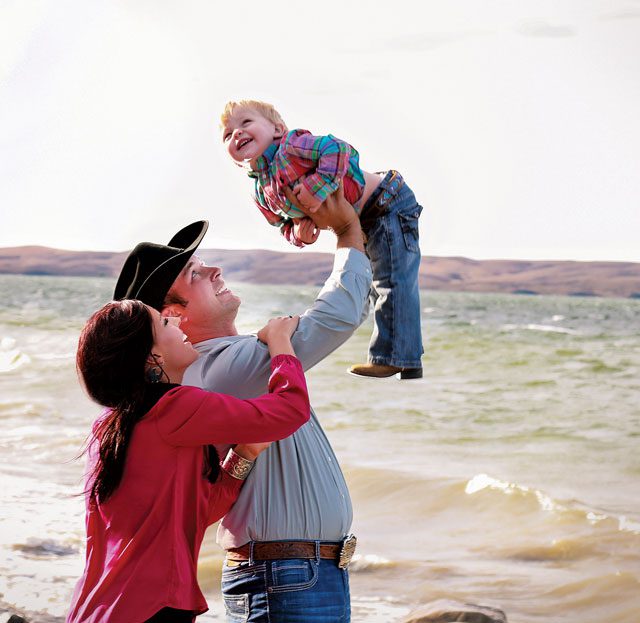
    As a child, Courtney’s love of horses got the family involved in their current lifestyle. Zac started roping from a pony when he was just eight. When he was ten, the family built an indoor arena in Grove, Oklahoma, giving the kids more opportunities to rope.
    “We would get up and rope the dummy or Hot Heels on colts in the morning, then do school work. There was a lot of emphasis on our school work,” says Zac. “Any time we weren’t doing school work, we roped.”
    Throughout high school a fairly large church gathered at their indoor arena with a very active youth group. Ingrained with an exceptional work ethic in roping as well as school, the Small family, has enjoyed their share of success at the USTRC Finals.
    Once he completes a four-year degree at veterinary school, Zac plans on returning to Oklahoma and working with his father.
    “I believe I’ve been blessed and I give all the glory to God to have the opportunities I now have to rodeo. I’m excited to see what happens in the future.”

    COWBOY Q&A

    How much do you practice?
    Every day possible. I ride three or four horses a day when I’m not competing.

    Do you make your own horses?
    My best horse was purchased as a two year old and his training was a family effort.

    Who were your roping heroes?
    My dad. He didn’t rope a lot until we got interested. When I was little he won a couple of trucks and trailer in a month’s time.

    Who do you respect most in the world?
    My parents.

    Who has been the biggest influence in your life?
    My family. Especially being home schooled, we’ve been very close.

    If you had a day off what would you like to do?
    I enjoy hunting occasionally.

    What’s the last thing you read?
    Good Call by Jace Robertson

    How would you describe yourself in three words?
    Dedicated, Positive, Hard Working

    What makes you happy?
    Making good grades and winning.

    What makes you angry?
    The opposite of my last answer.

    If you were given 1 million dollars, how would you spend it?
    I would probably invest it in land.

    What is your worst quality – your best?
    My worst quality is I tend to get stressed. Best quality is a good attitude.

  • Roper Review: Eddie Nieto

    Roper Review: Eddie Nieto

    Having a good attitude is essential to be truly successful at anything. Eddie Nieto is a prime example. It’s hard to believe that this #8E heeler did not start roping, or riding a horse, until he was fifteen years old. He watched some roping and decided that’s what he wanted to do.
    A neighbor showed him how to hold a rope and his grandfather gave him permission to ride the horse in their backyard. With no teacher, or arena, Eddie learned to rope by watching videos and roping the dummy relentlessly. He also roped a goat and a donkey. In a little over a year, Eddie progressed from a #1 to a #6 (in the old USTRC numbers).
    Almost immediately he enjoyed success. At 17, Eddie won $12,000 at the USTRC Finals by winning a Preliminary and placing in the Shoot Out. As a senior in high school he won the New Mexico High School championship for the year and qualified for nationals.
    After high school Eddie purchased his PRCA card and filled his permit at his second rodeo. He roped and traveled for a couple of years where at the George Strait Team Roping Classic he made it back to the top 50 both years. He also entered and roped at the BFI.
    About that time, when he was 21, Eddie met and married his wife, Melissa. Eddie realized his job would not support a family and allow him to rodeo as well. Knowing he had always wanted to give lessons and train horses, Melissa encouraged him to quit his job and give it a try. Now, twelve years later, they are still in business giving lessons, training horses, and working with a lot of kids.
    “My wife and I believe in God and try to live our lives accordingly. The only reason we have our place and are successful is because of God,” explains Eddie.
    When he was just four years old, Eddie and his parents were in a vehicle that was hit by a drunk driver. He lost his parents in the accident and was raised by his grandparents.
    “My grandparents raised me and did everything they could for me. They supported me 100 percent in anything I wanted to do,” says Nieto. “God spared me from the accident that took my parents.”
    Eddie feels blessed that he and Melissa are able to spend every day with their kids, Levi, 5, and Lexi, 2, in the arena roping and riding. Eddie credits Melissa for much of their success and being responsible for the unglamorous behind the scene chores.
    The couple often competes together and Levi just won second place in the 5 & Under Junior Looper in Albuquerque.
    “People tell me all time that they started roping too late,” says Eddie. “There’s really no excuse. If you put enough time into it and have enough heart you can succeed. I’m proof of that.”

    COWBOY Q&A

    Eddie with wife Melissa and kids Levi and Lexi – courtesy the family

    How much do you practice?
    Almost every day. I take two days off every week to give the animals a rest and to spend time with my family.
    Do you make your own horses?
    Yes. I’ve never bought a made horse.
    Who were your roping heroes?
    Jake Barnes and Clay O’Brien Cooper, Speed and Rich.
    Who do you respect most in the world?
    My wife.
    Who has been the biggest influence in your life?
    My grandparents. We didn’t have much but my grandpa did whatever he had to do for me to practice.
    If you had a day off what would you like to do?
    Spend it with my family.
    Favorite movie?
    Facing the Giants
    How would you describe yourself in three words?
    Quiet, fun loving, humble.
    What makes you happy?
    My family. Knowing I’m blessed with a healthy family. I try to keep life in perspective. We’re not here forever.
    What makes you angry?
    Not much.
    If you were given 1 million dollars, how would you spend it?
    I would like to pay off debt, but I would use most of it to help people who don’t have much.
    What is your worst quality – your best?
    My worst is sometimes I’m too laid back. My best quality is I don’t get mad.

  • Back When They Bucked with Henry Hainzinger

    Back When They Bucked with Henry Hainzinger

    Clem McSpadden called him the best match roper of his time.
    Henry Hainzinger may have never won a world championship, but he was well respected for his roping across the prairies of Oklahoma, Kansas, Texas, and beyond.
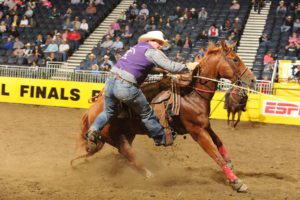
    He got his start at roping two blocks from his home in Bartlesville, Okla., with a neighbor, Art Saylor, who had a horse and goats. When he was twelve, he was spending time on Art’s horse, roping goats, and getting better at his craft.
    Many small towns had roping clubs, and Henry was part of the Bartlesville Round-Up Club. In those days, without social media, video games, and Ipods, kids made their fun at practice nights and Sunday afternoon ropings. Henry was one of them, and when they all got together, they often held match ropings: two calf ropers who went head to head, on two or four runs, with the fastest average time winning whatever had been bet, usually five or ten dollars, occasionally as much as one hundred dollars.
    Henry usually came out on top of the match ropings, and that’s what McSpadden referred to when he talked about the cowboy.
    He quit school at the age of sixteen and went to work for a local machine shop. In the summer of 1952, he worked for world champion steer roper Fred Lowry at Lenapah, Okla., breaking horses. Fred, who was the uncle of world champion steer roper Shoat Webster, would have Henry take horses to Shoat’s place for Shoat to look at and try. Fred was instrumental in Henry’s career, giving him tips and advice as they roped together nearly every day.


    In 1956, when he turned 21, he joined the Rodeo Cowboys Association, and his rodeo travels extended beyond jackpots and local shows to Little Rock, Denver, Ft. Worth, and farther.
    By that time, Henry spent his winters working in the machine shop in Bartlesville and saving money for entry fees so he could spend his summers roping.
    He often traveled with Ike Anderson, who he grew up with. Ike, who is 80 and still lives in Bartlesville, remembers some of the good times. He and Henry were at the Sidney, Iowa rodeo, on their way to two more that weekend, when they got the news that the county fair in Sedan, Kan., wanted to feature the two of them match roping and pay them $100 each. They left their horses in Sidney, and “drove like madman,” Ike said, to get back to Sedan. Ike’s mother hauled an extra horse to town, and Henry borrowed a horse. Henry beat Ike, “we got our $100, and drove like a son of a gun to get back to Sidney.”
    Henry was a jokester, Ike said. Once, at a rodeo in Kansas, the calves were “big, fresh black calves, off the cows, and it was like roping a mountain lion,” he said. Ike backed into the box, nodded, and his horse stalled on him. “The calf was going nine-oh across the arena, and finally the horse decided to go. I came a mile late, and ran this calf down the end of the arena, back up the other side, and through the hay where they’d fed the cattle the night before.” Ike roped the calf in 55 seconds. “I came back out of the arena, so angry I could have bit a piggin’ string in two. Henry comes up to me and says, ‘If you ever make another run like that, I’m not going to rodeo with you,’” Ike laughed. “That’s how we tormented each other, all the time. It was special.”
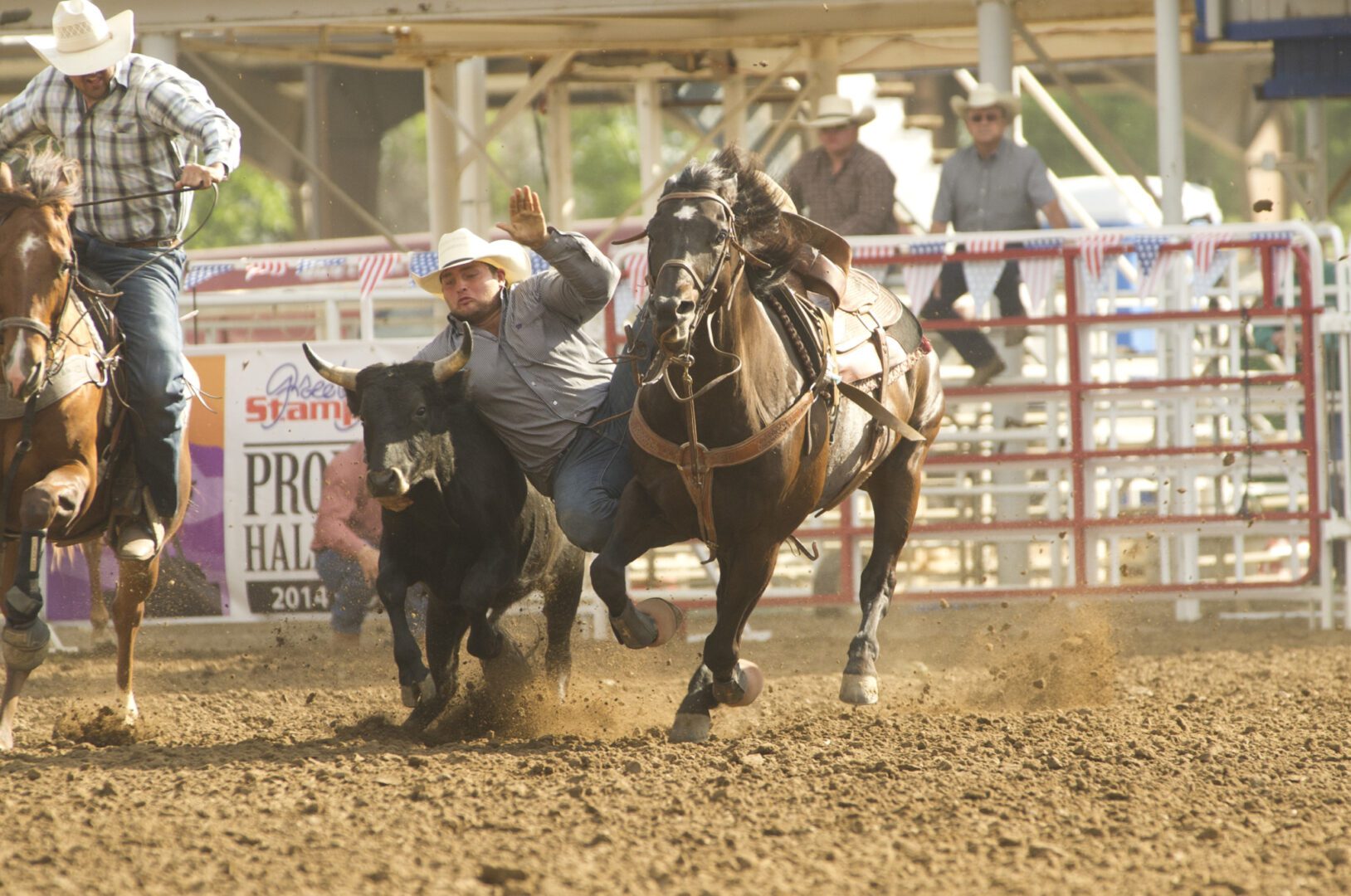
    In those days, calf roping was different. Ropers had a two minute time limit to rope and tie before they were disqualified, and they dismounted differently than today’s ropers. Henry was part of the era that roped, dismounted from the left, then ducked under the rope to flank and tie the calf. “We were still in the Dean Oliver mode of the right handed calf roper,” Ike said. “By the middle of the 60s, (that style of roping) was obsolete.”
    But in that north central part of Oklahoma, Henry and Ike were part of a special group of ropers. “With that era of the 50s, if you came into the Bartlesville community, there were a bunch of guys who were tough to beat,” Ike said. “I can’t remember a lot of that style of roper that was tougher than that bunch of guys was.”
    Henry remembered a unique roping he won in 1954, near Fairfax, Oklahoma, where the ropers roped deer. A rich oil baron had a section of ground with domesticated deer on it. The deer were run through the chute, and the ropers backed into a box. They were mature animals, and not hard to rope, Henry said. “It was like roping a goat. I believe it was easier than roping a goat. They held their heads up.”
    In 1957, when he was 23 years old, Henry took an adventure to California, hoping to extend his roping in the fall, when there were no rodeos at home. “I’d filled my pockets roping (at rodeos) and didn’t want to come back to work,” he said. He assumed they roped calves in California, but they did more team roping than calf roping, “and I didn’t know nothing about team roping,” he said. He stayed with Virgil Berry, Ace Berry’s dad, and when he came home, he was broke. “I had a nickel in my pocket when I come home.” Before he came home, he’d purchased cashews and nuts for his family. In Arizona, he stopped to fuel up, and his bill was $4.50. He handed the cashier his Phillips 66 credit card, but there were no Phillips 66 stations in Arizona. “I’m sorry, son, but we don’t take Phillips 66 cards,” he was told. An old Indian was sitting at the station. He was willing to buy one of his Australian shepherd puppies, but Henry said no. Instead, he sold the cashews to the Indian, paid his bill, and headed home.
    Ike remembered another story regarding Henry. The two of them roped at the annual rodeo held at the Cooper Ranch, between Bartlesville and Tulsa, and the lady who owned the ranch hosted a party at the house following the rodeo. Henry was the calf roping and all-around champion. Contestants were served drinks and food from a waiter in a bow tie and formal white jacket. After partying all night, the lady announced, “We’re going to stop the party and go to Collinsville, and the all-around champ is going to buy breakfast.” “I’ll never let him live that one down,” Ike said. “I bet it cost him over one hundred dollars to feed everybody, and money wasn’t easy to come by for all of us.”
    Rodeos back then were often two or more head, requiring cowboys to stay in town overnight. Henry knew how to beat the heat on the hot summer days, waiting for a performance to begin. He’d pay ten cents for a movie and stay in the air-conditioned theater all afternoon. “I’d take my nap inside the movie house, while a lot of them were laying out in the sun, and they’d be played out,” he said.
    In 1962, Henry married Ora Lee, a barrel racer, and a few years later, moved to Ponca City. After their marriage, he continued to rope but didn’t go as far from home. He bought a bulldozer, and had a successful business in the oilfield. He and Ora Lee raised two children: Hank and Nancy. Both competed in rodeo, and now the next generation is competing: Nancy’s daughter, Kathryn Todd, won the all-around in 2013 at the National Junior High Finals and was reserve champion in 2014.
    Henry loved his life of rodeo, roping, and work. “I enjoyed every bit of it,” he said. But whatever he did, he studied and practiced. “You gotta study it, whatever it is you choose to do. If you don’t study, it ain’t going to work. You’re just playing.”
    The rodeo life wasn’t always easy, Henry said. “It ain’t all peaches and cream in that rodeoing.” But the good days outnumbered the bad days. “I had a lot of fun.
  • On the Trail with Jackie Ganter

    On the Trail with Jackie Ganter

    Jackie Ganter grew up in Texas, born and raised in College Station. Unlike most people from Texas, Jackie chose the English discipline when she started riding at the age of six. “I’d been around horses through my mom (Angela), who ran barrels,” said Jackie. The family moved to Abilene, Texas, and at the age of 8, Jackie lost her father to a heart attack and complications from diabetes. “He owned nine bars and restaurants in College Station; one of them is the Dixie Chicken.” After he passed away, Jackie focused on her riding, entering shows and winning.

    “I rode English until I was 12.” Dixie was her English horse and when she got hurt, Jackie couldn’t find another fit. “I’d won every show I went to on Dixie and my mom still ran barrels, and so I decided to do what my mom did.” Riding English gave Jackie the foundation for running barrels.  “The judging (in English) involves watching body posture and it takes a lot more strength and body position to keep it correct. My English teacher used to make me jump the whole course without stirrups.”

    Switching to barrel racing involved years of trying to get it right. “I was slow at first,” she remembers. “I had an instructor, Jan Burns, who started me out slowly. I ran 18s and 20s. My mom had the best eye for horses and she kept me on the best horse every step of the way. I’ve gone through so many horses, getting a little faster each time. I learned from every horse she put me on.” Jackie worked her way up a few tenths at a time; a horse at a time; to get where she is now.


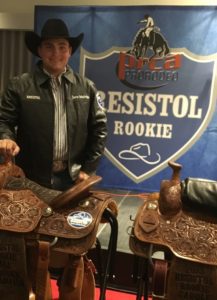
    When she got Frenchmans Jester, previously having been to the NFR with Jordon Briggs, she learned how to win. “That horse and Bobbie Gene drove my passion into what it is now and something I will do for the rest of my life. My goal had been to win the Resistol Rookie when I was 18 and I did it.” Jester passed away after a lengthy illness. Jester wrote Jackie’s ticket in the junior world.

    Jackie and her mother met the Alan and Teri Dufur family three years ago. “From the time my wife and I met them at their place in Abilene, we meshed,” said Alan, whose runs a registered Hereford cattle and Quarter Horse operation in Caddo, Okla. “We have onsite trainers on the Quarter horse side that teach all the rodeo principles.” They partnered with Jackie as a major sponsor and that sponsorship involves not only horses, but assisting with any challenges that may happen on the road, such as last week in Rapid City.  Jackie was stranded in Nebraska in a blizzard and Alan made sure she made it for the rodeo.  “We let them go through our young horses and pick out potential future mounts for her.” Guys French Jet, who she rode in Ft. Worth and the WNFR, is a partnership horse. “No matter what horse you have, you have to have the work ethic. It’s not unusual for her to ride and exercise her string at two in the morning. To me she is beyond her years in the way she handles herself.”

    The battle for the Resistol Rookie position was a tight race all the way to the end between Jackie, as the youngest competitor at the WNFR and Vickie Carter, the oldest competitor at 60. “I didn’t meet her until she started beating me,” said Jackie. “It was late winter and we’d never heard of her. She won several rodeos. It was crazy – towards the end, the last two months of the season, every single week we would trade off on the lead. It was literally week by week we would switch back and forth. I don’t think either one of us would have made the NFR without the other. We were fighting each other for the top spot. We are very good friends now.”

    The 19-year-old spent last year making the run for the WNFR. “I graduated high school in the middle of my senior year. I went to public school and graduated in December of my senior year, doubling up on classes so I could travel.” She could only make a few of the fall rodeos because of where her birthday fell, but after December, she hit the road. “I went back home between the California and Canada run to walk the stage with my graduating class.”

    She travels with her mom, who has been battling breast cancer since late 2010. “They diagnosed it after she had found a knot under her armpit. It came back Stage 3 breast cancer even after a clear mammogram a month prior. She had 28 lymph nodes removed, and went through chemo and radiation and nine surgeries. She is still on a chemo pill daily, so she is still not in remission.” Sometime in 2016, Angela has her last appointment. The cancer treatment has affected Angela’s balance, so she has not run barrels since then. Instead, she has focused on helping her daughter achieve her goals.

    “There are not a lot of people that can say they spent a year on the road with their 18-year-old daughter with only one argument,” said Angela. “Driving all the time was a major change for us all – but we experienced things that we would have never done if we weren’t chasing this dream. We spent a lot of time doing other things than just rodeo – we took a helicopter ride in the Canadian Rockies, we saw Mt. Rushmore. My dream of making the NFR was gone when I got sick, and Jackie started riding my horses and I never got them back.”

    They run down the road in a trailer from Stephenville Trailers. “It’s a 53’ Hart trailer, with a two bedroom living quarters. We put the bathroom in between the living room and the bed in the nose. You can shut both doors and have two bedrooms. I’m on the couch and we have two different satellites so we can both watch TV. The horse part has automatic waterers and a huge tack in the back.” They pull it with a Freightliner equipped with a 500 engine. “I could drive it up and down the mountains without a problem.” They haul four or five horses along with two dogs. “We get along great – in fact, the only time we had a fight was when I was in the middle of my slump.”

    The slump hit during the July Cowboy Christmas run. “When everyone is supposed to win big and make the NFR, I did not win one dollar. It was horrible and the worst slump I’ve ever been through in my career. I was having horrible runs and couldn’t pull it together. I watched myself go from the top 15 to the top 30. My main horse, Baby J, is only six, and Cartel is only 7. My older horse is 12, but I’d sent him home because he got tired on the road and wasn’t working his best. My young horses fell apart so it was a shock all the way around. I saw that it looked impossible to make the NFR, and I got discouraged because I had this goal to make the NFR and Rookie when I was 18. It looked like that was going up in flames and I kept telling myself how horrible it was and that’s what I told myself. I knew my attitude was affecting my runs.”

    Realizing the definition of insanity was doing the same thing over and over and expecting different results, Jackie changed everything from how she worked her horses to how she thought. “I watched videos from past NFRs and told myself how I wanted to be there. I told myself that over and over and it finally worked. After July, I finally placed somewhere in the bottom hole and won a check and then things started turning around.” She got on a pretty good roll the last two months and that landed her a spot at the WNFR. Jackie placed in four go rounds and won second in the average after Callie Dupier, who won the world and the average. “We were the only two that had all ten runs clean.” Jackie won more money than any other Resistol Rookie had won as a barrel racer. The race lasted all the way through the WNFR.

    “We set out to have a goal that nobody’s done, and about July I told her it was the stupidest thing we’ve ever done,” admitted Angela. “We were used to winning at the barrel races and I wanted to go home. She bawled and cried and I told her to find another driver. She made me give her until the end of July. And she did it. This life is like being in a carnival circus – I remember at the end drawing up as bad as could be and driving two full days and nights to get into four rodeos.” In the end, walking down the alley with her daughter at the Thomas & Mack was this mother’s best dream. And it’s not over.

    Jackie’s goal for this year is making the WNFR again, and getting the gold buckle. “Making the NFR is the most incredible thing I’ve ever done,” she said. “My horses are great and I’m going to go as long as I can.” She is also attending college online.

  • ProFile: Amy (Sutton) Muller

    ProFile: Amy (Sutton) Muller

    The Black Hills Stock Show celebrates its 39th anniversary this February, and for Amy (Sutton) Muller of Agar, S.D., the show is not only the brainchild of her family, but a showcase of the rodeo talent which runs thick through all six generations of Suttons.
    The history of the Suttons starts even before South Dakota became a state. Amy’s great-great grandfather, Edwin Sutton, homesteaded the family’s ranch in 1883, set in the hills near the Missouri River. He started putting on rodeos Sunday after church for the township using his ranch stock. By the late 1920s, he and his sons were producing three-day rodeos on their ranch, where a young Lawrence Welk from North Dakota occasionally stopped to contribute his sparkling music. Edwin’s son, James, ushered the rodeo company into the next generation by becoming a member of the PRCA. He later became the first stock contractor to be inducted into the PRCA’s Hall of Champions in 1982. James and his son, Jim, focused in on the breeding of the rodeo company’s livestock, particularly the bucking horses, which earned them several first runners up and three winners of the PRCA Horse of the Year. In the late ‘70s, Amy’s dad, Steve, who has picked up the WNFR five times, took over the ranch management. Amy was born soon after, going to her first rodeo at ten days old.
    Amy Muller, from Agar, SD - Dave Sietsema, Firesteel Creek Photography

    Her own history in rodeo includes competing through college, carrying the American flag in the 1995 WNFR, and most recently, timing during the 2015 WNFR. But the Black Hills Stock Show Rodeo holds a special place in Amy’s memories. “The show is second nature since it’s been there every year of my life, but I first remember being four years old and carrying the American flag,” she says. “Working alongside all those queens who were in their early 20,s and hanging out with the contestants’ kids made the whole thing feel like one big fun family celebration!”
    Amy carried flags and chased cattle out of the arena until she was 18 and off to college at South Dakota State University like her grandfather and father before her. She studied animal science and competed on the college team in breakaway roping and barrel racing. Her brothers, Brent and Brice, following suit a few years later. “When I was halfway through school, Dad and Grandpa told me and my brothers that they would like for us to come back and join the company as partners,” Amy recalls. “Just like when I was a kid, I stayed very active with the livestock. From the time we were old enough, we’d hop in the truck and do our part with feeding, haying, fixing fence, and whatever else needed done.”
    Within the last several years, however, Amy’s job description changed after the family’s bookkeeper of 21 years retired. “I took over the bookkeeping about the time I had my son, Shaden,” says Amy. “We work rodeos where we are the contractor for a committee, as well as producing rodeos as the committee and contractor ourselves. My day is filled with working on both of those types of rodeo events, as well as sponsorships, marketing, advertising, social media, and our Sutton Rodeo merchandising. I also keep the financial books and the livestock records. About three years ago, Dad started a cross breeding program and brought in outside stock contractors. Those colts are just getting to bucking age, so we’re very excited to see how the offspring from this program turns out.”
    In addition to her office work, Amy continues to time about 12 of the 20 to 30 rodeos Sutton Rodeo produces each year. She obtained her PRCA card when she was 19 and took over timing when her grandmother, Julie, retired. Both Julie and Amy’s mom, Kim, have timed the WNFR, and in 2015, Amy was given the opportunity to do the same. “There’s no feeling I’ve ever experienced like working that rodeo,” says Amy. “The tenth round in that room was electric – so much could happen, you could feel the excitement buzzing, from the contestants, to the personnel and all the fans! Working with Tammy Braden and Jessi Franzen was extremely rewarding. They made working the NFR such a positive experience – they are wonderful ladies, and they’ll be lifelong friends!”
    Alerted ahead of time by her mother and grandmother on how quickly the rodeo would move, Amy was prepared. “You don’t ever want to take your eyes off the arena for fear of missing anything, but you still have to record the times and penalties,” she explains. “One timer wears a headset that goes to the office, which puts out the official time for the record as the rodeo is running.” Along with timing, Amy and the other timers worked afternoons and evenings in the office putting together information such as the official stock draw and buck order, as well as updating the posted rodeo results, standings, and money. “Ultimately, it was one of the most interesting and rewarding experiences I’ve ever had!” says Amy.

    Amy with her husband Steven and son, Shaden - Alicia Berry, Chutin Flicks Photography
    Fortunately, timing and Sutton Rodeo also tie in to Amy’s role as a wife and mother. She and her husband, Steven, have a two-year-old son, Shaden, as well as running their own cattle herd and operating a cattle carcass ultrasound business, Midwest Sonatech.  A seasonal job that runs from December to May, Steven and hired friends and family travel around South Dakota, North Dakota, Minnesota, Iowa, and Nebraska, booking one or even two clients a day depending on the number of head to ultrasound. Amy does all the computer and bookwork while Steven does the imaging. “Steven and I travelled together exclusively for about five years until we had Shaden,” says Amy. “We ultra sounded until just a few hours before the c-section we’d scheduled for Shaden, and then went from the hospital to Rapid City to work the Black Hills Stock Show Rodeo!”
    With just eight of them to produce all rodeo events held during the Stock Show, Amy and her family – who all live within a few miles of each other on the family ranch – know how to divide and conquer. “We start planning the next stock show in April,” says Amy. “Most of the rodeos that land in the same category as us – large indoor rodeo of the year – have hundreds to thousands of volunteers. We joke that we’re still looking for our first volunteer.” The Suttons’ events include the PRCA Rodeo, Sutton Ranch Rodeo, Girls in Spurs, Wrangler Champions Challenge, Bucking Horse Sale, and the PRCA Xtreme Bulls Tour, while the SDHSRA 20X Extreme Showcase is especially important to Steve Sutton. “Dad is always looking to give back to youth rodeo,” Amy explains. “We keep the numbers the same each year, but we’re always looking to give those kids more things to compete for and a bigger platform to showcase them on.
    “As I’ve gotten older, I’ve realized how truly rewarding and exciting it is to work in this company and watch our animals develop and succeed,” says Amy. “You’re not going to get rich in this industry, but it’s really self-rewarding. Goal-wise, I’d love the opportunity to time the NFR again,” she adds. “And on a more personal level, I hope to keep expanding and improving our family business alongside my two brothers. Doing something like this for six generations doesn’t happen that often, and I want to keep this lifestyle going.”

    Jessi, Amy, and Tammy Braden 2015 WNFR timers - Rodeo News!

  • On the Trail with Jace Melvin

    On the Trail with Jace Melvin

    The 2015 PRCA Resistol Rookie All Around, Jace Melvin, was born and raised in Fort Pierre, SD. He moved to Texas for college, and now claims the road as his home. “I rope calves, team rope, and steer wrestle, but not everywhere because of scheduling conflicts; getting up in three events is tough.”

    The 23-year-old has been involved in rodeo his entire life, with three generations on his mom’s side, four on his dad’s before him. “I have two older sisters, Jessica (12 years older) and Jenny (10 years older); they were rodeoing a lot in the youth rodeos, National Little Britches and high school, so I went everywhere with them. They taught me most of what I know.”

    His parents, Mark and Diana, rodeoed and now they run stocker yearlings and raise quarter horses. “Some of the horses that I compete on are some that we have raised and with my brother-in-law’s (Brent Belkham) help, I’m hauling them.” Another brother-in-law, Cody Moore, won Rookie of the Year Steer Wrestling, riding the family horse, Talk, in 2010. That horse, Talk, was critical to Jace’s success as well. “I was blessed with a phenomenal horse in high school and college – horse power has such a huge part in rodeo.” Cowboys Talk helped Jace make it to the National High School Finals all four years (2008-2011) in the steer wrestling and the college finals the past two years in the steer wrestling. Jace also qualifed for the college finals in calf roping in 2015. “Talk is old now – 19, but I had him as I was growing up. He’s got an awesome personality – he’s a character … he’s always talking.”

    His dad, Mark, raised the horse on the race track, and Mark’s sister, Lorita Crowford, picked him and futuritied him as a barrel horse. “He was a great barrel horse, and my sister took him and raced barrels at the college rodeos. You can tie down, team rope, and it came time I started chute dogging and needed a bull dogging horse and he was as broke as it gets and was amazingly fast. Se we tried him as a steer wrestling horse. For as awesome as a barrel horse he was for my aunt and my sister, he was an extremely phenomenal bulldogging horse. He truly loved the steer wrestling.” Jace enjoys calf roping the best, but admits his strength lies in steer wrestling. “I really dedicate at all three events, but I see my most success in the steer wrestling. At a younger age I focused on it more.” His hard work and ingrained family competitive nature paid off when Jace won All Around at the National Junior High Finals in Gallup, NM, in 2007, as well as ended up third in the nation in steer wrestling his junior year and reserve his senior year of high school. “The nature of our family is extremely competitive,” he explains. “We could turn fixing fence into a competition. That goes for all of my family. Through that nature, I won the National Junior High All Around as an eighth grader. I went there to win first in every single event. Everything we do, we go with the intention of winning first and being successful. Being competitors, we know that losing is part of winning. If you don’t win something you learn something. I’ve learned that, and through God’s hand in it, things have fallen into place.”

    After high school, Jace went to college at Vernon for two years and spent the last two years completing his Bachelors in Ag Business at Tarleton, rodeoing with the team that won the Men’s National Championship last year. His degree is coming in handy as he builds his business supplying timed event cattle for several youth and amateur rodeos around his hometown in South Dakota. Melvin Timed Event Cattle happened quite by accident.


    15-113 Jace Melvin
    “I had bought 30 head of roping calves when I was a junior in high school. I had planned to train horses on those calves, but I blew my knee wrestling for the high school team, so I couldn’t. A stock contracting company called me and had heard I had these calves and they needed timed event cattle for a Little Britches rodeo and I said yes and hauled those calves to that rodeo.” Growing up in rodeo, Jace knew how important it was for kids starting out and making their goals of the finals to have the best quality stock possible. “My junior and senior year I supplied the timed event cattle at our high school finals,” he said. “I haven’t done a perfect job, but I have a vested interest and sincerely care about the stock these kids get. I know that there is always going to be a bad draw, but to the best of my ability I’m trying to make sure the cattle are even.” The addition of the business is good for the ranch too. “Turning roping calves into feeder calves has been a perfect addition to the ranch.” He admits the business is expensive, hard work, but he plans to continue with it as well as his own career in rodeo. “This past summer I was gone rodeoing and my mom and dad helped me manage the contracts. I was setting up truck drivers and coordinating the events. I can sit and watch the entire slack and pay attention to the details because I’ve trained myself to do that. We mostly put together cattle in the spring, keep over our light end, and keep over team roping and bulldogging steers to reuse at the early rodeos wherever they will fit.”

    Winning the All Around Resistol Rookie award was a goal Jace had set for himself. “It is an unbelievable accomplishment to get there – the trials and tribulations of trying to win this award and then when I won it, it really meant something. I had a really good year in the steer wrestling, but not so good in the team roping and calf roping. I won money, but scheduling and traveling and keeping horses in the trailer was difficult, but in the end it all worked out.” Jace hauls four or five horses at all times. “I travel with my two brother-in-laws and we have to have horses for team roping, hazing, steer wrestling, and calf roping. We’ll share horses and the horses will do more than one thing.”

    Resistol has sponsored the Resistol Rookie awards since the late 70’s and for the first time, they added an awards banquet, along with other prizes, to the event. “I am unbelievably grateful for everything they did for us and how we were treated. Resistol offered us all a sponsorship package that was awesome,” said Jace. “For a lot of us going down the road, our biggest sponsors are our mom and dad and knowing that a company that sponsors the best in the world would sponsor us was amazing. Joining their team is an unbelievable opportunity – everything they did was great.” The 2015 Resistol Rookie recipients received two all-expense paid trips to the WNFR, Cactus saddles, coats, shirts and hats for the year.


    FullSizeRender
    Now it’s time to look ahead to 2016, and Jace’s number one goal this year is to make it to the WNFR in the steer wrestling. “My next goal would be to qualify for the circuit Finals in the steer wrestling and calf roping. It’s hard to get the rodeo count in that many events. If you were just circuit rodeoing, it would be a little less difficult, but when you’re trying to get to the bigger and better rodeos, it’s hard to schedule it.” He is spending part of January practicing in Texas, then he’s up in Odessa in the calf roping and steer wrestling, heads to Louisiana, back to Denver in the steer wrestling and team roping, then to Rapid City for all three events. “The month of February – I look at the Sports News every day for a few hours to figure out my schedule – that month is really busy.” Coming off last year, Jace is confident about his skills. “I really feel good going into spring and every chance I get, I’m going to get in the practice pen and keep my confidence level up and go for first and see where it all shakes out. I’m looking forward and I’m ready to get started.”

  • Back When they Bucked with Wick Peth

    Back When they Bucked with Wick Peth

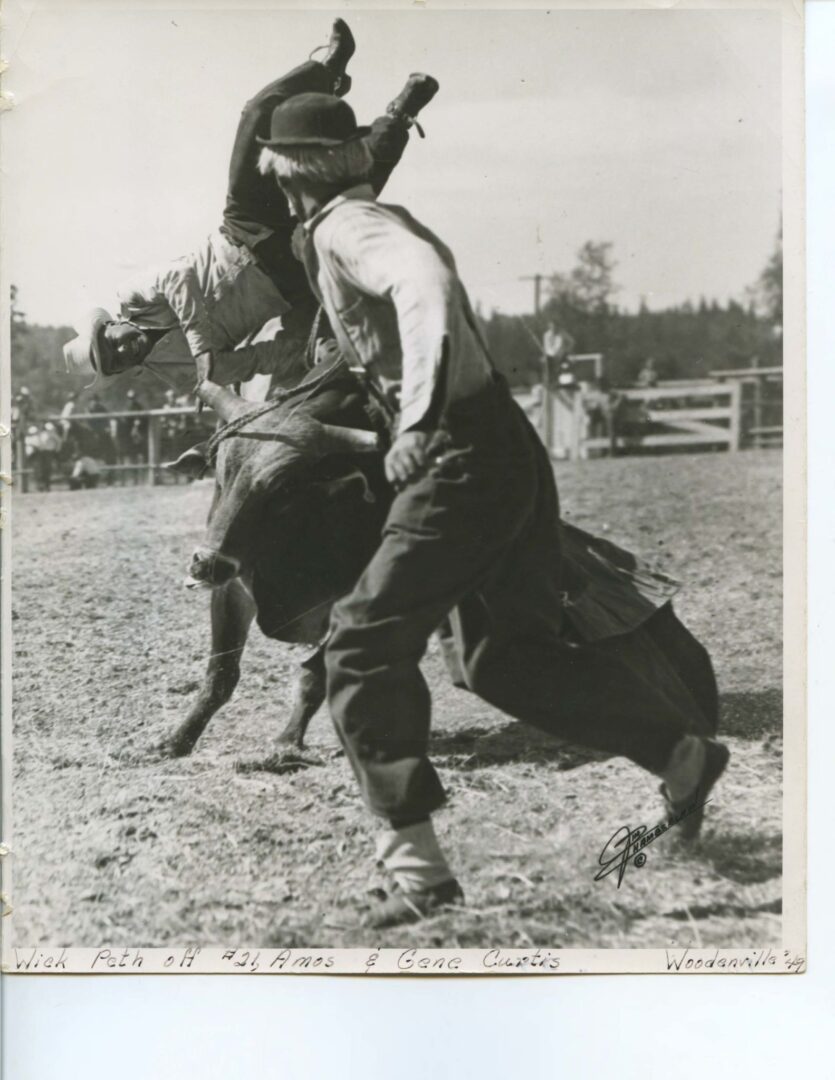
    Wick Peth was born in 1930 at Mt. Vernon, Washington. “My parents were farmers and ranchers. We run cattle and raised quite a few peas and potatoes.” In his early years, his dad and uncles put on a rodeo at the ranch that turned into a stock contracting business in the 1950s. “My father wanted to keep us out of town, so he had roping steers and calves for us. He asked one year what we wanted for Christmas; I was 17 or 18; I asked for some bulls. He had 20 come to town for us in a box car in the middle of January … we had as many as 60 living around here during the stock contracting years. The neighbors would come – my brothers (Jerry, Ted, and Buzz) were always roping, I steer wrestled a little but didn’t rope. Everybody would get on a bull and somebody had to get the bulls off, so I was good at that.
    “After we got bulls, at night I would crawl out in the pasture and lay down on the ground and watch them. I’d watch them fight in the daytime and watch where their feet were and where they are when they turn around. I did things with a bull that other bullfighters wondered how I figured it out.” One of the moves he used to make with a bull is to run up and grab him by the tail. “I don’t grab that until I get past his rear end. I swing around on his tail and on towards his head. He comes around in a circle. After he goes two or three times around, he figures he can’t hook me, I pull my butt away from his head, when he turns back the other way, he’s got all my momentum going and I can turn a summer sault in front of him and he can’t touch me. I’d show people how to do that in bull fighting schools after I studied the bulls and found ones that would work. It wouldn’t work on all of them, they think different. It’s hard to explain. It was a certain minded bull.”

    OLYMPUS DIGITAL CAMERA
    Wick studied the bulls. When he was growing up, he watched them and how they behaved and moved and took his job of taking care of the cowboys very seriously. He could predict what was going to happen and how the bulls were moving. He had a system. “When I was protecting the bull riders, I always went to the side of the right handed or left handed. I had a plan of what I was going to do if this or that happened or he got thrown off a certain side.” Wick never considered himself to be funny. “I always felt like the good bull fighters came off of cattle ranches that had some cow sense,” said Wick, who got his name from a neighbor. “I used to go with my father around the country to buy cattle,” he explained. “We would stop at the hardware store, and this guy’s name was Vick and they called me Little Vick. This guy had a stroke and he couldn’t say V and it became W, and that’s how it started.” His given name is Melvin, but he has never gone by that name. Wick put on bull fighting schools with Jerry Beagley over a period of ten years. “I had several students that picked up on them. The one main thing I told them is when you get knocked down, get up.” The schools were held all over the county.
    “Everybody is a genius at something and figuring out what that is is a blessing,” said his daughter Liza. “He was a genius at fighting bulls.” He changed the way rodeo clowns were in the rodeo. The art of the rodeo clown became the science of bull fighting. He took his job seriously. Not only did Wick study bulls, he rode them. Along with playing football, Wick competed in the bull riding, continuing that after high school. “I never went full time, because I had to work on the ranch.” He met his wife, Dorothy, at a rodeo. “She was always helping me,” said Wick, who considered her as his biggest support. “She never said “be careful” she was always trying to encourage me to go on.”
    Wick traveled thousands of miles to rodeo and fight bulls. As word got out about his abilities as a bull fighter, he gained the attention of the Beutler Brothers. “Lynn came over to me in Nampa, Idaho, and asked me to work all the rest of his shows and that kept me going.” Wick would stay gone for two or three weeks at a time, and then come home and spend hours on the tractor catching up. He and Dorothy had three children, Liza, and Lana, and Dan. He continued to ride until the late 1950s. “The reason I quit riding bulls is they kept me so sore, I felt like I owed it to the bull riders to stay healthy.” He quit fighting bulls in 1985 – after 35 years. “By that time, I was 55 years old and I couldn’t move as fast or heal up as quick. Age takes care of things.” He stressed the value of education and as a result all three of his children are college graduates.
    He still lives on the ranch and helps where he can. His son, Dan, and his grandson, Owen, run the day to day operation of the ranch, running 600 head of cows. Wick is there every morning to help and then he heads to the coffee shop. “Dad was so well received,” recalls Dan of his travels with his dad. “The bull riders looked up to him and appreciated what he was doing. They were really glad to have him around.”

    Wick Peth Cheyenne 1974
    The man in the red striped shirts, who helped change the way bull riders were protected, looks back on his life as a bull fighter and farmer. “I like fighting bulls and it was something that everybody couldn’t do. It got me off the farm and I could relax and go fight bulls.” Traveling down the road, he was always studying the soil, watching what other farmers did with the land. He has seen many changes in both bull fighting and farming. “We just started to irrigate the pasture ground 10 years ago, and we have a couple big reel sprinklers – we never used to have that here. What you don’t see, you don’t do.” His plans for the future are simple. “I just want to farm myself away – plow myself into the dirt.”
    Wick was inducted in the Pro Rodeo Hall of Fame in 1979, Cheyenne Frontier Days, Ellensburg Rodeo, and St. Paul Rodeo Halls of Fame. His family has nominated him for induction into the National Cowboy Museum in Oklahoma City.

  • On the Trail with Mousseau, Parkinson & Thigpen – IPRA’s All Around

    On the Trail with Mousseau, Parkinson & Thigpen – IPRA’s All Around

    This season’s All-Around title race in the International Professional Rodeo Association is just about as close as it can get. It’s as international as it can get too, with the top-three contenders hailing from Canada, America and Australia respectively.

    But if you look closer than the standings, you’ll find three friends who aren’t just trying to reach their own goals, they’re helping each other as well.

    “These guys have helped me a lot since I’ve been here this year,” explains Ty Parkinson of fellow All-Around contestants, Justin Thigpen and Cody Mousseau.

    Ty is from New South Wales, Australia and competes in just about every event he can, from bull riding to tie-down roping.
    Ty joined the IPRA for his rookie year this summer after he met Canadian Cody Mousseau, the 2014 World Champion Team Roping Header and Steer Wrestler. Cody had come to Australia to rope at the beginning of 2015. “I met him over there. He came in about June,” Cody says of convincing Ty to come rodeo in North America. “It’s all on me. You can blame me or congratulate me,” he jokes.

    By “blame” he probably means that Ty quickly shot to the top of the standings in several events, putting pressure on cowboys across the board.

    Beyond Cody, soon Ty could also call veteran IPRA competitor and 2014 World Champion Tie-Down Roper, Justin Thigpen from Georgia, a good friend as well.  “They’ve both helped me out in roping and tying. They both pull my bull rope every weekend. Good buddies [who are] no. 1 and no. 2 in the world, it’s a great feeling,” Ty says of his two allies.

    Rodeo is common in Ty’s part of Australia. He grew up with the aim of becoming a jack-of-all-trades in rodeo events like his father, a multiple event champion. Now Ty is seeing that dream to fruition across oceans.

    Like Ty, for Cody and Justin, rodeo was just something they were born into. And they’ve done it well. Each has multiple titles and IFR qualifications to his name.

    “My mom ran barrels, and my dad rode bulls, so I was running around in diapers, boots and cowboy hat. I’ve been at it my whole life. It’s about the only way of life I do now,” Justin explains of growing up in Waycross, Ga., with a rodeo family.
    At first Justin thought he was going to be a bull rider like his dad. “When I got on them I wasn’t good enough so I had to find another occupation,” he laughs. “I started roping and never looked back. I’ve been very fortunate. I’ve been blessed with a rope.”

    In addition to his successful rodeo career, Justin has also begun his own business as a stock contractor with T-T Rodeo Company. “I enjoy rodeo. It’s been great to me. It’s blessed me with a good life, and I want to give back to it. I hope to put on rodeos for many years to come,” he says and adds that there’s also a deeper meaning to what he does now that he’s a father.
    Justin and wife Laura have a 2-year-old son named Slade and a newborn, Trent. “It’s more about enjoying it with them now. Things that used to worry me, I used to think about, I don’t now,” Justin explains.

    Slade is always with him, behind the roping box cheering his dad on.

    “He’s pretty into the rodeo. He hollers throughout the week, ‘daddy, are we going to the rodeo?’ I’m like, ‘it’s not the weekend yet son,’ but he’s all about it,” Justin smiles.

    “It means more to me, because he comes out. Win, lose or draw, you’re still his hero, so that makes it a lot better. It makes you put life into perspective.”

    Justin has also enjoyed being able to travel with Cody and Ty a lot this year.

    “We support each other. We rope with each other, help Ty with the bull riding. We have a lot of fun, and that’s what it’s about. It used to be ‘have to win, have to win,’ now it’s ‘have fun, enjoy what you’re doing, enjoy your life,” he says.
    Despite this, or because of it, the wins have come just the same.

    Justin is leading the season standings in the All-Around race going into the International Finals Rodeo, held in Oklahoma City.
    Cody is not far behind him. “I like it more. I’ve been to a couple finals where I only did one event. I don’t like it as much. I like doing everything at one time,” Cody says of competing in tie-down roping, steer wrestling and team roping.

    Cody’s parents rodeoed, and he followed suit around the age of 10 or 11.

    Being from Canada, Cody explains that rodeos in the summer go on full-steam ahead and then slow down, or end altogether in the winter. That’s why going south to rodeo in the states, and even going to Australia like Cody did, is more common for Canadians.

    This summer Cody, Justin and Ty saw a lot of each other in Canada and the United States.  “We all traveled together a bunch this summer. We went for a couple of weeks, and two other Australians went with us, and Riley Williams went with us. One rodeo I do remember we went to in Pennsylvania, and every single one of us placed that day in every event, so it was good,” Cody recalls.

    There are not rivalries when it comes to rodeo competitors who happen to be traveling partners like this trio, Cody assures. “It’s a lot easier. Everybody helps each other out.”

    For Ty being so far away from home, the group has become a second family.

    He stays with Cody’s parents a lot while in Canada. They have a traveling support system. Ty has been able to borrow good horses. They push each other’s calves and rope together too, he says.

    The bond between the three guys no doubt contributes to their success.

    “It’s pretty awesome how three different countries can come together and work as a team,” Ty says. And that is no doubt one of the best parts about the International Professional Rodeo Association and rodeo as a whole.