Rodeo Life

Category: Articles

  • Back When They Bucked with Dick Carr

    Back When They Bucked with Dick Carr

    Dick Carr’s shop sits on the back of his house in Elk City, Oklahoma. The walls are papered with pictures; memories of a life spent in rodeo.   It’s full of tools, pieces of leather and strands of twine. The strands will be meticulously weaved together into- not just functional bull ropes for cowboys- but works of art.
    When Dick is finished with each rope he makes, he prays over it to ask God to watch over the cowboy who will cling to that very rope hoping for success and safety. And success and safety have come for multitudes of professional bull riders who would surely tell you those ropes are connected to their success.
    Dick’s customers have won too many world championships, National Finals Rodeo qualifications and other accomplishments, to count.
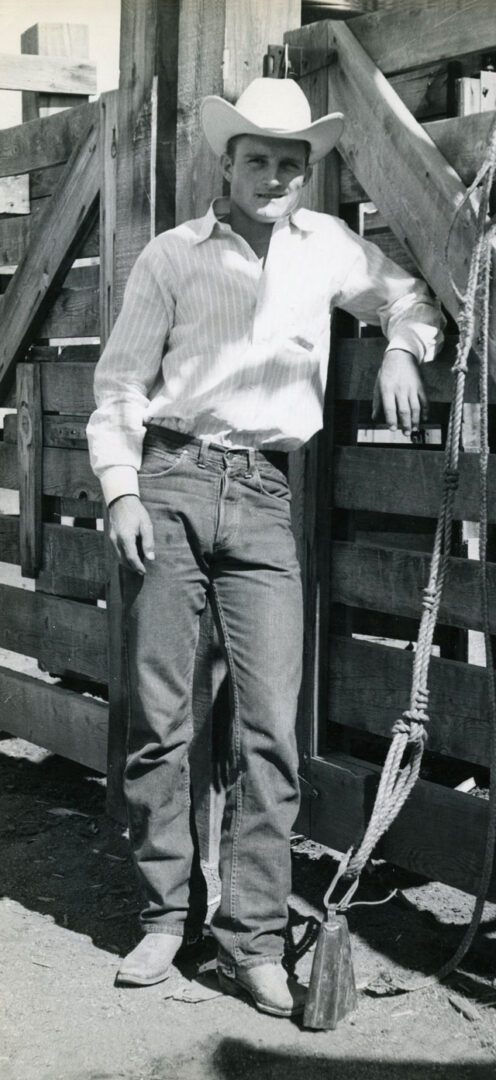
    Dick was raised near the Beutler Brothers’ Rodeo ranch in western Oklahoma. He credits them for his start in rodeo. He began in the sport as both a bull and bronc rider, but he soon focused all of his attention on bulls. Dick got his pro card at 17. His PRCA card number is no. 166.
    For six years he went strong on the rodeo trail as a professional cowboy, competing in the biggest rodeos in the land from Madison Square Garden in New York City, to Prescott and Cheyenne.
    Dick, whose grandfather taught him to plait; the technique to make a rope, had already started to make bull ropes during his own riding career, knowing firsthand their importance.
    “In 1950 I started entering. The next year I went to winning a little, but it was a tough life, and you rode the bulls ‘til the whistle blew. They didn’t have the kind of bull fighters they have now days, and it was a different world,” Dick describes, adding “in 1952 is when I got noticed for my ropes, and I only made ropes for people who asked me.”
    In 1956 Dick was drafted into the Navy.  He quickly showed his work ethic was dedicated and was given some of the luckier duties on base such as working in the library and tending the bar in the Officer’s Club.
    He went to a rodeo on an off weekend and won the bull riding. A Navy recruiter was working the rodeo and wrote an article about Dick’s performance that made the Sunday paper.
    On Monday he was called into the captain’s office.
    “I thought, ‘oh my gosh.’ I hadn’t ever seen him, and I took my hat off. I stood up straight, and he said ‘Carr, what’s this about you riding a bull,’ and I said ‘yes sir,” Dick recalls laughing.
    The captain was far from mad like Dick had feared. The base had rarely made the news, and the captain was pleased Dick had been able to shed some light on them through rodeo. He gave Dick the green light to go to rodeos whenever he wanted.
    When Dick went overseas on a ship to China and Australia, rodeo was humorously not far behind him.
    “When we were in China they had a ship party, and a guy came by driving a bunch of wild water buffalos. I saw them and said ‘my gosh I want to ride one of those buffalos,” Dick laughs.
    They had an interpreter and arranged to pay the man who was driving the buffalo to let them attempt the ride. Dick roped the buffalo and about 10 sailors held the bull so he could get on. Dick rode him as he ran down the beach, not really bucking. “I rode him I know for half a mile, and when I got back to the ship you’d have thought I rode some real rank bull,” he laughs.
    Dick got out of the service in 1957 and went right back to the arena. “One day after I got out I won the bull riding at Buckeye, Arizona, but I’d been on that ship so long I had my sea legs, and [the bull would] move, and I’d just beat him over there,” Dick says with a smile.
    Though he went to the major rodeos in 1958, he stopped riding bulls in the following years. Still, Dick stayed involved with rodeo. He was a judge for quite sometime and began making bull ropes full time in 1970.
    “That’s 45 years. That’s got to be God,” Dick says wriggling his fingers around nimbly, with no obvious arthritis issues that could’ve stopped him from his work.  His work has a deeper meaning than being a functional art form. Dick emphasizes putting quality into his ropes that make the bull riders able to ride to the best of their ability while maximizing comfort.
    “My ropes are very comfortable. It’s like putting your head on a pillow when you put your hand in there.” It fits like a Tiffany Glove, he says.
    Dick’s work goes beyond making a good and comfortable rope. He’s able to pick out talent in bull riders and give them tips where they can get the most benefit from the kind of rope they might need.
    Perhaps Dick’s favorite customer was Harry Tompkins.
    “He was probably the greatest bull rider that ever lived. I made him bull ropes for 19 years, and he’s now 88 years old, and in a rest home.”
    Like his close relationship with Terry Don West, Gary Leffew and Tompkins, the rodeo family Dick grew close with over the years is extensive. They all share a mutual bond and understanding, Dick says. “We just talk, and they just know where I’m coming from, and I understand where they’re coming from. It’s unspoken.”
    Dick continues, “so many friends have passed. All the great rodeo cowboys; I was very dear friends with. Casey Tibbs was one of the greatest people I knew in my life. He was so good to me. He was my friend, and he encouraged me. I never asked Jim Shoulders for anything he didn’t give me. He always helped me.”
    The rodeo people Dick could name for being a part of his life could go on and on, and that’s the most important part of preserving rodeo for the youth, making sure they have mentors like he did, Dick explains.
    “The bible says, ‘remove not the ancient landmarks which our forefathers have established.”
    For Dick, the Western lifestyle and the Christian one go hand in hand.
    “The cowboy way and the word of God are one and the same. ‘Do unto others as you’d have others do unto you,’ and believe in a higher power. There’s someone greater than us, and it’s Jesus Christ, who we’re supposed to imitate, and that’s what I do. I live for God every second of every day,” Dick says and readily admits his shortcomings and how he was saved and cured of his struggle with alcohol abuse through his relationship with the Lord.
    “June the 3rd 1986 I received the anointment of the Holy Spirit, and it totally changed my life,” Dick says. He hasn’t had a drink since that day. “Anybody that says it can’t happen, they’re wrong because God can do anything.”  Filling your heart up with God is in many ways like dedicating yourself to bull riding.
    “Riding bulls, you either were dedicated and you were going to ride that sucker, or you weren’t. There was no ‘making  excuses.’ You had to give yourself to it just like you’ve got to give yourself to the word of God. It’s not just when you crawl over the chute gate. You’ve got to have it all the time, in everything you do, if you’re mowing grass or driving a car, whatever you’re doing,” Dick says.  And it’s clear, his faith, like his bull ropes, is strong.
    For more information on Dick Carr visit: DickCarrBullRopes.com. Perhaps Dick’s favorite customer was Harry Tompkins.
    “He was probably the greatest bull rider that ever lived. I made him bull ropes for 19 years, and he’s now 88 years old, and in a rest home.”
    Like his close relationship with Terry Don West, Gary Leffew and Tompkins, the rodeo family Dick grew close with over the years is extensive. They all share a mutual bond and understanding, Dick says. “We just talk, and they just know where I’m coming from, and I understand where they’re coming from. It’s unspoken.”
    Dick continues, “so many friends have passed. All the great rodeo cowboys; I was very dear friends with. Casey Tibbs was one of the greatest people I knew in my life. He was so good to me. He was my friend, and he encouraged me. I never asked Jim Shoulders for anything he didn’t give me. He always helped me.”
    The rodeo people Dick could name for being a part of his life could go on and on, and that’s the most important part of preserving rodeo for the youth, making sure they have mentors like he did, Dick explains.
    “The bible says, ‘remove not the ancient landmarks which our forefathers have established.”
    For Dick, the Western lifestyle and the Christian one go hand in hand.
    “The cowboy way and the word of God are one and the same. ‘Do unto others as you’d have others do unto you,’ and believe in a higher power. There’s someone greater than us, and it’s Jesus Christ, who we’re supposed to imitate, and that’s what I do. I live for God every second of every day,” Dick says and readily admits his shortcomings and how he was saved and cured of his struggle with alcohol abuse through his relationship with the Lord.
    “June the 3rd 1986 I received the anointment of the Holy Spirit, and it totally changed my life,” Dick says. He hasn’t had a drink since that day. “Anybody that says it can’t happen, they’re wrong because God can do anything.”  Filling your heart up with God is in many ways like dedicating yourself to bull riding.
    “Riding bulls, you either were dedicated and you were going to ride that sucker, or you weren’t. There was no ‘making  excuses.’ You had to give yourself to it just like you’ve got to give yourself to the word of God. It’s not just when you crawl over the chute gate. You’ve got to have it all the time, in everything you do, if you’re mowing grass or driving a car, whatever you’re doing,” Dick says.  And it’s clear, his faith, like his bull ropes, is strong.
    For more information on Dick Carr visit: DickCarrBullRopes.com.
     

  • Roper Review: Colton Workman

    Roper Review: Colton Workman

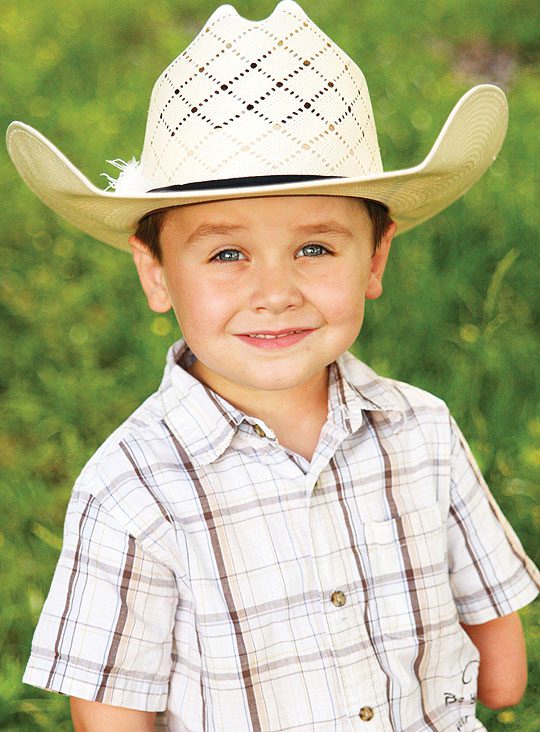
    Five year old Colton Workman of Lincoln, Ark., may have only one hand to rope with, but he has more than enough heart to catch any roping calf or steer he encounters in the arena.Described by his family as coming into the world like a firecracker on the Fourth of July, Colton was born with only half of his left arm, but twice the determination. Born into a rodeo family, his parents, Brittany and Lewis Workman, roped and ran barrels, as well as his two older sisters, Tabor and Kayden. Colton was roping the dummy not long after his first birthday, and once old enough to ride by himself, he quickly figured out how to hold the reins with his left arm, which he refers to as his nub, and swing his rope with his right hand, his coils held securely by an attachment on his saddle.
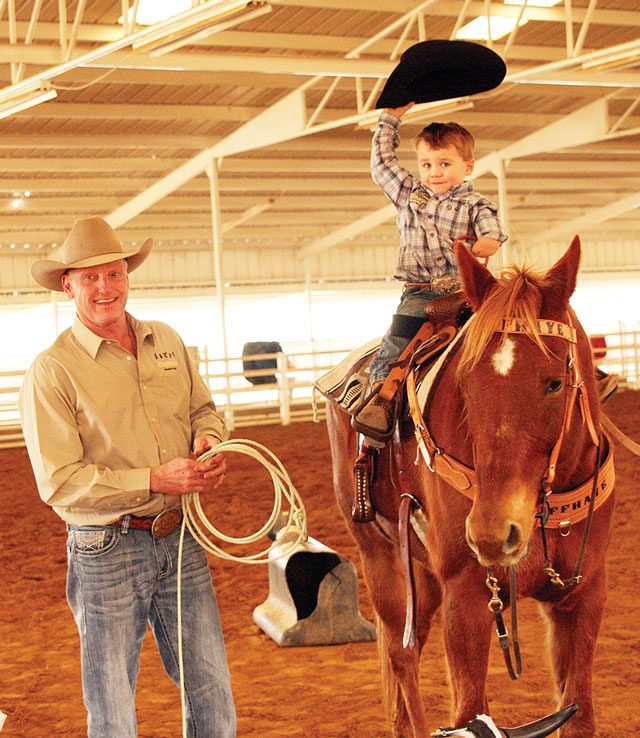
    When Colton’s dad passed away in 2013 after a car accident, thousands of people mourned the outgoing cowboy’s death. Eight-time world champion roper Roy Cooper heard about Colton losing his dad, and in December of that year, his foundation contacted Brittany, asking if the Cooper family could meet Colton in January. Roy, Clint, Clif, and Tuf, became fast friends with Colton, and he looks up to each one as a mentor. “After we met the Coopers, they took Colton into the Cooper Rodeo Foundation and the Rope Your Dreams Scholarship,” Brittany remembers. “Roy says Colton is family, and Colton is very close to the them.”
    “What a great little kid!” says Roy. “He doesn’t even know he’s disabled. He’s so sharp and smart, and he’s got a great attitude.” Since becoming part of the Cooper family, Colton not only participates in their clinics and competes in their ropings, but he also travels with Tuf to events like The American and the WNFR. Through his travels, he has met numerous figures in the rodeo world, including Lane Frost’s parents. Signing autographs with Tuf and Trevor Brazile, and attending Elevation Sunday during the WNFR are always highlights for Colton. Having just entered Kindergarten, he has a multitude of all-access passes to some of the largest rodeos in the U.S., which Colton keeps with other mementos in a shadowbox in his room. He even has a letter written to him by the House of Congress in 2014, stating that Colton “is an inspiration to all.”
    Colton’s travels have also helped him connect with other children who have disabilities. “Last year at The American, Colton met a little girl in a wheel chair, whose wish was to meet Colton,” says Brittany. “Other kids also want to meet him and touch his nub or ask him questions about it. Colton has met so many kids like him and he talks about them all the time. He doesn’t forget anyone.”
    Having made so many connections with kids his age, Colton wasn’t expecting to be bullied when he entered Kindergarten this fall. Brittany wrote a piece on Facebook to spread awareness about bullying, and it was shared 24,000 times. “We got calls worldwide from kids who wanted to talk to Colton,” says Brittany. “I didn’t expect it to take off like that! We’ve even been contacted by The One-Armed Bandit (John Payne) and Willie Hart, the one-armed team roper, who have encouraged Colton.”
    In November, the family started an anti-bullying project – Saddle Up and Together Let’s Rein in Bullying. “We designed a t-shirt for our project, and in January, we’re doing an assembly in Arkansas which will be televised by RFD-TV and local stations. We’re going to three schools in one day with several rodeo athletes who have disabilities, as well as athletes from other sports,” Brittany explains. “We’re hoping this will make children more aware of bullying, and for parents to talk to their children about it, because the change has to start at home.”
    While Colton loves travelling, he finds equal joy in roping at home and competing in Roy Cooper’s ropings, as well as the USTRC and the CWRA. In 2015, he won the CWRA finals average in his age division, as well as the CWRA 7 – 10 Breakaway Roping Champion title, earning him a saddle, and a buckle, which is his current favorite to wear. He ropes the dummy every day and practices on live calves three times a week, riding his dad’s 17-year-old roping mare, Molly. His sisters, Tabor (11), and Kayden (eight) join him in the practice pen. The siblings also have a younger sister, Andi (18 months). Their step-dad, Ray Huffaker, is a team roping heeler, and he is teaching Colton to team rope. Colton also plans to be a tie-down roper, and he has taught himself how to tie a calf dummy, pulling the piggin’ string tight with his nub.
    Colton further enjoys hunting and helping on his family’s ranch, from moving cattle to baling hay and cutting wood. He is also responsible for catching and feeding his horses, and he has even been known to stand on his roping dummy, pretending to crack the whip like John Payne. “Colton is very determined to be like everyone else,” says Brittany. “Whatever it is, he’ll figure it out! Shriners Hospital provided Colton with a prosthetic, and he uses it sometimes, but mostly he would rather use his nub.”
    Taught to meet challenges head on, Colton’s dream is to make a career out of tie-down and team roping. His family and the Cooper Rodeo Foundation have given him the confidence and tools to succeed, and their encouragement has helped make Colton the inspiration he is today to people around the world. “Through this anti-bullying project, God has really opened my eyes to the reason Colton is here,” says Brittany. “There are a lot of children out there struggling with disabilities and Colton’s story has been a huge influence for them. Even if it’s people who don’t have disabilities, I think one of Colton’s purposes is to help encourage other children and adults.”


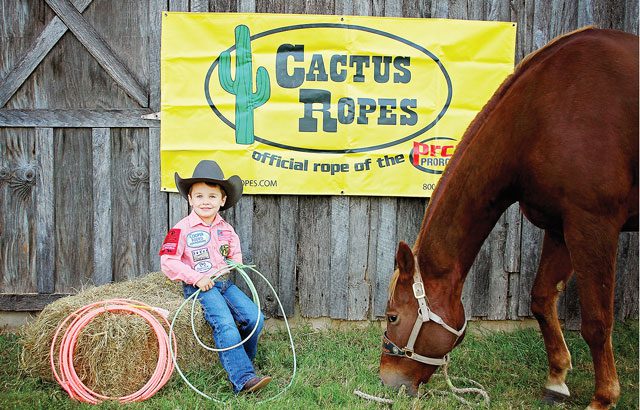
    Colton with Roy Cooper - BC Photography Colton with Cactus Ropes - BC Photography

  • ProFile: Roper Kiesner

    ProFile: Roper Kiesner

    Roper Kiesner is a man of many talents.
    The twenty-one year old cowboy who lives in Ripley, Okla., rides saddle broncs, makes and sells knives, and is a former trick rider.
    He grew up the son of a saddle bronc rider and barrel racer, and when his parents, Phillip and Julie, quit rodeo competition, they wanted to stay involved in rodeo.
    By then, Roper’s older brother, Rider, had learned to trick rope. So the boys’ parents formed a specialty act, the Kiesner Family Wild West Revue.
    Rider did the trick roping, Phillip did the cowboy mounted shooting, and Roper wanted to be involved in some way. “I wanted to do something,” he said, “but I’m not quite the ‘sit down and practice it’ like my brother, for hours on end. I’m more of a ‘get on and go’ person.”
    The family acquired two Shetland ponies and Roper learned to roman ride, his contribution to the family’s act.
    After he outgrew the Shetlands, he began trick riding. “I had fun with that,” he said. “I always liked adrenaline and going fast.”
    The Kiesner Family Wild West Revue was popular, performing at some of the biggest rodeos in the U.S. They took their show across the globe, entertaining in all of the 48 contiguous states, in Lebanon, China, Japan, Dubai, France, and for the Sultan of Oman in 2006.
    In 2010, when Rider, who is two years older than Roper, turned 18, the act slowly dissolved as he went out on his own.
    But Roper’s involvement in rodeo didn’t end. He had ridden sheep and steers when he was younger and always wanted to ride bulls. But he felt his size was a detriment, so he tried saddle bronc riding. During the second saddle bronc ride he made, at age 17, he got bucked off and broke his arm. After sitting out six weeks to let it heal, he got on three more horses. The third one bucked him off and shattered his collarbone, requiring surgery.
    Roper was deterred. “After that, I thought I’d hold off,” he laughed, but he didn’t hold off for long.
    He began drinking protein shakes to “make myself more durable” and put on some weight. He went from 95 to 130 lbs, and at the age of 19, got on a few more horses. “Fortunately I didn’t break anything,” he said.
    Now, two years later, he’s headed to his third Prairie Circuit Finals Rodeo, going in this year in sixth place, higher than he’s ever been ranked.
    Roper attributes much of his saddle bronc riding success to his trick riding abilities. “The trick riding helped a lot with balance and problem solving,” he said. “When I was roman riding, if I’d ever slip a foot down or backwards, or fall down, or lose my reins, I’d have to think on my feet really fast and get up, while the horses were going full blast, or I’d have to turf it. That’s helped me out a lot in saddle bronc riding. If I get out of position, I can get back down in the saddle.”
    The cowboy is also an artist. He designs and makes pocket and fixed blade knives and sells them via Facebook and word of mouth.
    It began when he needed a birthday present for his dad. He had the idea to make a knife. “I grabbed a horseshoe rasp and with a hand grinder, roughed it out and put a blade on it.” It was the beginning of his knife business. “Some people saw it and thought it was really cool, and wanted one, so I made more.”
    He’s refined his business to include better tools than hand grinders. Expert knife maker Jerald Nickles from Perkins, Okla. has taken Roper under his wing, teaching him the art and letting him use his equipment.
    Roper uses superior quality products for his knives, which started out as ranch and rasp knives and now are high-end. The blades are made of Swedish Damascus steel, which is folded and has layers, giving it swirls and patterns. The handles are made of mammoth, hippo and elephant ivory and exotic fossils and other bone. He estimates he’s made a couple hundred knives, and he loves it. “My whole life, I’ve loved dinking around making stuff, whatever I could think of. I’ve always liked knives. Knives are something you can go as crazy and wild as you want to with it.”
    The artistic talent runs in the Kiesner family. Roper’s grandpa and uncles made bronzes and did some drawing, and making knives works well with his rodeo schedule. He has a Facebook page which shows his products.
    When he has any spare time, Roper likes to hike and play the ukulele.
    Roper is living the dream; rodeoing, making knives, and living out life as a rodeo cowboy. Not bad for a boy who started roman riding on Shetland ponies.


  • Special Feature: Keith Maddox

    Special Feature: Keith Maddox

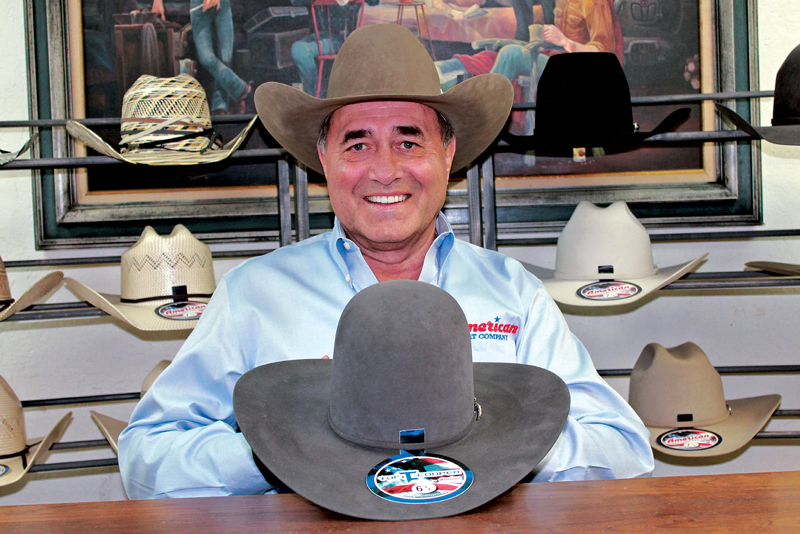
    Keith at the American Hat headquarters - Courtesy Keith Maddox
    Keith Maddox has “it.”
    Whatever “it” is, the Texas cowboy always attracts a crowd. People love being around him, they love his laugh, his positive outlook, and they want to be on his team.
    Keith Maddox’s team is the American Hat Company.
    He bought the business in 2003, bringing it from the brink of death to a thriving, flourishing company.
    But there’s a lot of history between when the rodeo contestant was born in Weiser, Idaho, to the business based in Bowie, Texas.
    Keith was born in 1945 on the family ranch, the son of Dwight and Marjore Maddox, and the eldest of three children. His dad was a bull rider and steer wrestler, and by the time he was fifteen, Keith was competing in the bareback riding and bull riding at pro rodeos. After high school graduation in 1963, he rodeoed a few years before going to college. He started at Casper (Wyo.) College, then went on to Walla Walla (Wash.) University, where he and classmate Leland Kelly began the rodeo program there, and graduated from Eastern Oregon University in 1971.

    Out of college, Keith went to work for Heyer Boot Co., with Texas as his territory. After a year he went to work for Tem-Tex Clothing, with the states of Colorado, Utah, Montana, Idaho, and Wyoming as his sales territory.
    Then his dream job came open. Tony Lama “was the most sought after job in the world in the western industry in those days,” Keith said. He was hired in 1972 with the state of Wyoming as his sales territory, selling Bailey Hats in addition to Lama Boots.
    Tony Lama “owned” the state of Wyoming, Keith said, and sales were brisk. He was an excellent representative, doing very well for the company as one of their top salesmen.
    Then the Urban Cowboy craze hit, and he was no longer one of the higher paid salesmen; they were in Texas, where demand was huge and everybody wanted to be a cowboy. He told his boss: play me or trade me, asking to be transferred. He was given Dallas/Ft. Worth and southeast Texas as his territory, where once again, he did very well for the company.
    He left Tony Lama in 1987, and a few years later, took over sales at the Larry Mahan Boot Co., doubling their sales from $6 million to $12 million.
    But Keith was restless. He wanted to own his own business. So he decided to buy the American Hat Company. He knew the former owners from being in the western industry, and when he went to visit them, they asked $10 million for the company.
    He put together the finances, and when he returned to American Hat, the owners had changed their minds and decided to give the company to their kids.
    Driving away from the meeting, he was furious. “I was trying to tear the steering wheel out of the pickup,” he remembered. He decided to open his own hat store and make cowboy hats.
    So he opened The Best Hat Store in the Ft. Worth Stockyards, and started making and selling hats, buying hat making equipment and learning how to make them from scratch.
    In 2003, his chance came. The American Hat Co. was in bankruptcy, and Keith bought it from the bank. He moved it from Conroe, Texas to Bowie, into a 35,000 square foot factory that was already in existence. A year later, “we were really rolling,” he said.
    And then disaster struck. In late November of 2005, a grass fire with winds blowing 40 miles per hour hit. When it got to the factory, the fire was so hot it melted the phone lines and the air conditioning vents, sucking smoke into the building. The walls even turned black with smoke. The inventory, $13 million worth of it, was ruined.
    But Keith is not one to focus on what he doesn’t have but what he can do. He got back to work, mortgaging his home, emptying out his retirement fund, borrowing money, to start over. The longest part of the wait, besides waiting for insurance to pay up, was waiting for raw materials. Five years later, the American Hat Co. was built back to where it had been before the fire.
    Keith, who is full of grit and determination, had doubts at times. “You look at yourself and ask, ‘Am I crazy for doing this?’ But you’re all in. It’s like the chicken and the pig, the ham and eggs. The chicken was involved, but the pig was committed. We were committed.”
    Keith builds the best cowboy hats in the business at the American Hat Co. “We’re really proud of the hat we build,” he said. “We’re the standard bearer for quality. We stayed with quality when everybody was making hats cheaper.”
    He knew what he wanted in a cowboy hat. “I’d worked for Bailey earlier (in his career), and I’d been at their factory. Since I was a little kid, I’ve worn a hat, and I knew the quality I wanted. If you know what you want, it’s a lot easier to get there.”
    American Hat Co. hats are made exclusively in the United States. Much of the raw materials comes from overseas, mainly because those products are not available in the U.S., like the furs which are from Europe. And Keith makes sure his product is quality. “The lacquer I put on those straw hats costs $1,099 per 55 gallon barrel. You can wear it in the rain, you can crush it and pop it back out.”
    He also surrounds himself with quality people. Keith Mundee, former president of Miller, International, the parent company of Cinch, Rocky Mountain, and Cruel Girl, is now president of American. Stan Redding, past president of Stetson and Resistol Hats, is sales manager. “If you’re the smartest person in the room, you’d better change rooms,” Maddox said.
    He’s full of maxims, and rarely has a bad day. “Someone asked me one time, if I ever had a bad day. No, but I had a bad fifteen minutes one time,” he said. “I’ve always been extremely positive.”
    Keith has “it”, said Keith Mundee. “He has a personality where people are automatically drawn to him. He has a big smile, he’s always happy to see you. He’s got that magnetic personality that people are drawn to. You want to hang out with him, you want to be his friend, and you want to do business with him.”
    The fire could have caused Keith to walk away, but he didn’t, said Mundee. “A normal human being would have given in, and said it didn’t work and ride off into the sunset. Not him. He hitched his belt a little tighter and gritted his teeth, got through it, and came out on the other side thriving.”
    Maddox is proud of what he’s built. When he was with Tony Lama, “we could cuss each other in the sales force, but nobody from the outside better cuss them. They’d be jumped on severely. We rode for the brand. That’s what I’ve always wanted to build, and that’s what I’ve built. My people believe in what we’re doing, and there’s not one person (among the staff) that I wouldn’t want to spend time with. We’re all together.”
    The American Hat Co. is exclusive hat sponsor for the National High School Rodeo Association, the National Junior High School Rodeo Association, National Little Britches Rodeo, and partners with three-time World Champion Tie-Down Roper Tuf Cooper on a line of Tuf Cooper hats.
    Keith’s wife Susan works alongside him, often managing The Best Hat Store in Ft. Worth. He has a son, Bret, who lives in Pendleton, Ore., and he and Susan have two daughters: Treasure, who lives and works in New York City as a fashion coordinator for a public relations firm, and Mercedes, who is a senior at the University of Oklahoma.
    Persistence is key to Keith Maddox’s vision. “If you never give up, you can never lose,” he said. “The only way you can lose is to give up. If you have a goal and a dream and you stay with it long enough, it will work.”
    And Keith Maddox and the American Hat Co. are proof of that. “It’s very rewarding, seeing all your hard work come to fruition. I knew exactly what was going to happen (with the company), I just didn’t think it would take me this long.”

  • Roper Review: Clay Smith

    Roper Review: Clay Smith

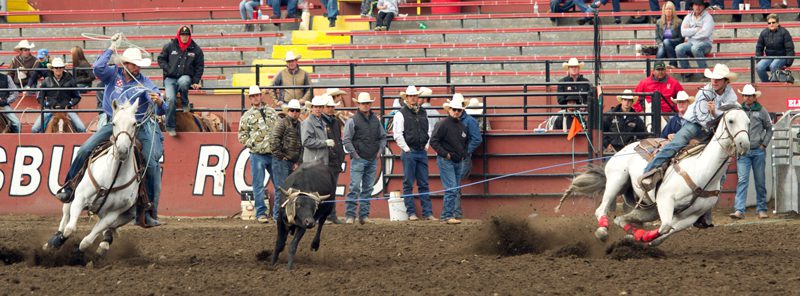
    Clay Smith heading for Jake Long in Ellensburg - Hubbell

    Clay Smith grew up in Broken Bow, Okla. “That’s where I’ve always been,” said the 24-year-old who will make his first trip to the WNFR, heading for Paul Eaves. “I’ve been thinking about this since I started roping when I was four. It’s all I want to do.” Clay ropes and rides – that’s it. “I don’t hunt or fish or anything, I just rope. I don’t get tired of it.” He is named after 7-time World Champion team roper, Clay O’Brien Cooper.
    Clay’s day revolves around riding horses and roping. “We ride horses for the public, and there’s always some young horses that we are trying to make better for us or other people. We ride the younger ones first, and then start practicing and roping,” he explained. “You never know who is going to show up – friends, family, and anyone interested in roping. We rope until 9 or 10 at night – we don’t eat supper until 11. We’ve got about 40 head of horses that we rope on.” Clay likes having that many horses around. “You don’t wear a horse out that way. That’s helped us with riding by roping on different horses.” The only down side to the number of horses is the time it takes to feed and clean stalls. “It’s a lot of work, but we don’t consider it work, because it’s all we know.”
    Clay has two brothers – Jake 22, and Britt 14. “Jake is two years younger and it’s been really good having him to rope with – he’s always wanted to rope as much as I do. It’s been a blessing to have such talented brothers. I’m lucky – I’ve got every single person in my family that loves to rope – it makes it fun.”  The brothers keep it competitive by creating match ropings. “We’re always pushing each other. Whoever loses has to clean stalls, feed, do laps, pushups or whatever we can think of.”
    The #9 header and #9 Elite heeler has been on a horse since he was born. “The day I got home from the hospital, dad (Mark) was holding me on a horse.”  Mark started roping when he was in high school and he rode and broke horses for people, so the boys have always been around them. “Ever since we could ride, he’d put us on ponies and we’d take them and sell them.” Mark started entering the boys in roping’s as soon as they could ride and rope. “We had no chance of winning – if I could catch 4 in 50 seconds I was doing good.” He was pulling steers around for the boys before they could even get their feet in a stirrup. “My dad would wear a head horse out pulling those steers.” Clay won his first roping when he was five.  “The association is called the OTRA and they had a roping every weekend. My dad would take us there every weekend.”
    The success of the young brothers caught the interest of the Tonight Show when Jake won the World Champion Dummy roping in Las Vegas when he was five. “When they called, Dad thought it was an April Fools joke because they called on April 1. They wanted us to come out there and be on the show. They flew us out to Hollywood and picked us up in a limo. We went to Disneyland, and Universal Studios – we had a special pass that let us go to the front of the line – I was 7 – that was a pretty cool deal.”
    The boys continued to compete together, eventually joining the Oklahoma High School Rodeo Association. “I never roped with anybody but Jake so I waited until he was old enough. We won fourth in the National High School rodeo my last year of high school.” They were home schooled through high school by their grandmother, a retired school teacher. Their mom, Tammy, was also a school teacher, and has recently retired. “Mom works more now than when she was teaching,” said Clay. “She’s the head cook and videographer. We’ve always got people looking for horses and people are always spending the week – we have a ton of people here all the time. And she still has to get up as early as she did when she was teaching, to take Britt to school every morning.”
    The highlight of Clay’s career so far is winning the 2015 Wildfire with his brother, Jake. Clay also competes in the Timed Event Challenge, something he has done for three years now. “Jake always helps me there, he hazes, heels, and heads for me – that’s kind of cool. He can do it all. I’ve won second and fourth last year – I broke the barrier to win it two years ago. I like that event– it’s a lot of fun.”
    Clay isn’t nervous about his first trip to the WNFR. “Right before I back in the box, I’m sure it will be a rush. I’m excited to go rope.” His family has been going there for 19 years in a row for the dummy roping. “Britt was too old last year, so we did not go. We said we weren’t going back until someone was in it.”
    Since he qualified for the WNFR, he can’t rope in the World Series, but both his dad and brother are entered at the South Point. “I’ve never entered out there – they just started having the 15 so I haven’t had a chance to enter.”
    Clay is engaged to Taylor Richey who he met after winning the Wildfire. “One of our sponsors set us up and ever since then I couldn’t run her off or she hadn’t left – she even cleans stalls.” Taylor traveled with Clay most of the summer, pulling more than 80,000 miles in the run for the WNFR. Clay likes the Rooftop Rodeo in Estes Park the best. “It’s a cool town and we got there a day or two early – it was cool to hang out.”  They traveled with Paul, Clay’s partner for most of the summer then borrowed a living quarters trailer, but when that broke down; then ended up pulling a three-horse bumper pull.  “We would sleep in motels or the truck. Moab Utah was interesting – we drove through town and the 30 motels were all booked, so we slept in the truck, because we don’t have a living quarters trailer, eventually we will have to get one. Some places we have people we stay with, but sometimes we have to rough it so having a living quarter trailer will take out some of the stress out of the travels.
    As for the future, Clay doesn’t plan on doing anything different. He and Taylor will get married next fall. “I’m going to ride horses as long as I can – we have fun doing it and that’s what I know how to do. Ride and rope.”

  • On the Trail: Sage Kimzey

    On the Trail: Sage Kimzey

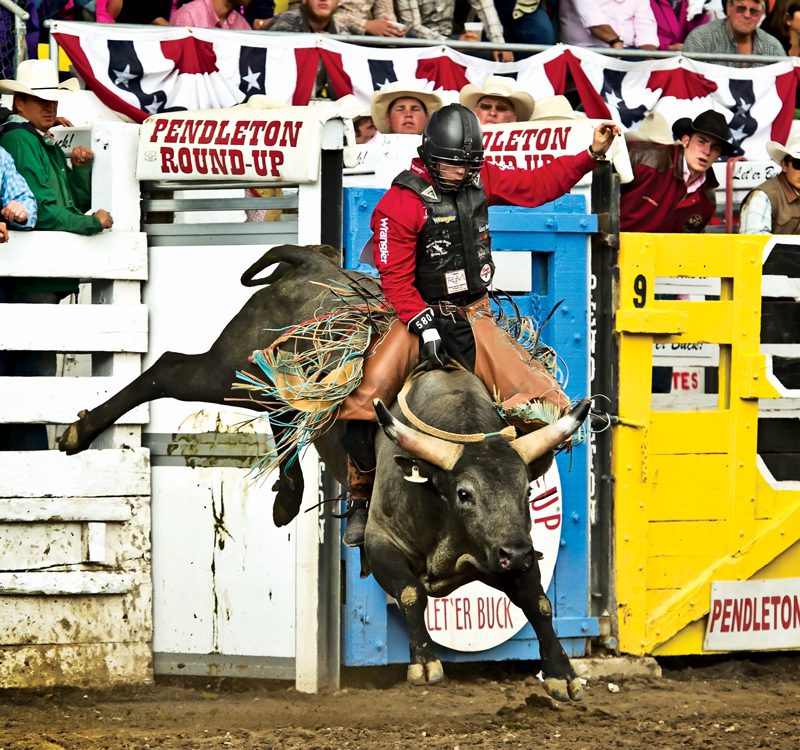
    Sage Kimzey, winning Pendleton in 2015. Making his second trip back to the WNFR, Sage won an event-record-tying four rounds of the Wrangler National Finals Rodeo to secure the average title and become the second rookie bull rider to win a gold buckle, following Bill Kornell (1963). - Hubbell

    It’s a rare occurrence in the sports world when someone comes into the game and has the potential to change the entire history of a discipline. For one in this position, one would almost expect the worst from the champion because they have the constant pressure of excelling in their event, while having others gunning for them. In just two short years, Sage Steele Kimzey, 21, has broken numerous records and is on the path to rewriting the history of bull riding. Ironically, for someone that is always in the spotlight, no one really knows him.

    When most people speak about Kimzey, the words “standoffish,” “fierce,” and “focused,” are often thrown around. Yet that is only describing him as a person, not his ability. Some believe that the Strong City, Oklahoma native was an overnight success because during his rookie year in the PRCA he managed to clinch the CBR World Champion title, the Ram Top Gun Award and he became the PRCA World Champion Bull Rider.

    In a sport that seems so demanding and complicated to most, Kimzey makes it look effortless. Everyone was created to excel in something, but Sage Kimzey has managed to create more bull riding fans with each ride and exceeds even his own expectations. Yet, as stated before, no one knows anything about him. We all know about his powers inside the arena, but so many fail to recognize him as a person when he takes off his Wrangler shirt and jeans and is simply, Sage. So, who is Sage Kimzey?

    Sage Kimzey is best described as a methodical person, who comes off as proud individual that is striving for perfection, even though he knows it’s unattainable. “People always see me as a fierce competitor that wants the sport of rodeo to grow, anytime there is a problem or some area is lacking, I definitely speak my mind and a lot of times it comes off as uncensored and pretty harsh,” says Kimzey when talking about reactions from his competitors. The nature of his competitiveness is nothing new; in high school as a senior point guard for the Cheyenne Bears he led his team to win the State Championship in basketball. Shortly thereafter, Kimzey was involved in a car accident that resulted in a broken hand. Fast-forward to college, where Kimzey finished fourth in the nation as a freshman representing Southwestern Oklahoma State University. So he had success in high school and in college, but could he hold up in the pro ranks?

    In 2014 the legacy of Sage Kimzey begins with wins at San Antonio, Tulsa, Rapid City, Spokane and many more. Then it comes time for the National Finals Rodeo and everyone was curious to see the 20-year-old wonder boy compete in the Thomas and Mack in front of thousands of people. He was put in the position that every real champion wants to be in, would he rise to the occasion or choke? Well $175, 466 in 10 rounds, tied him with the most rounds ever won at the NFR with four, to secure the average title and make him the second rookie in history to win a gold buckle.With such a prosperous first season coming to a wrap, everyone assumed that Kimzey was on top of the world. However, the newly crowned World Champion didn’t appear to be a kid that had just reserved his spot in history.“I felt like I had left a few things on the table, I wanted to ride all ten rounds of the NFR and after I bucked off the first round, I definitely felt defeated. I was happy to accomplish a life long dream, but it didn’t sit right, especially after I bucked off in the tenth round,” says Kimzey. When asked about his hard outer shell he portrays to the world, he said he is a competitor from the time he enters the arena, until he leaves. Anyone that wants to achieve greatness understands this quality. To some though, they don’t know why he is not like the other guys. For those that do not know him, have you ever considered the fact that the qualities that make him great are in fact what set him apart? For instance, he has been in several high pressure situations whether it’s facing JB Mauney in Calgary for the title or coming in the number one man in the standings as a rookie…Most of those situations are not ideal, yet he never looks nervous.

    Emotions, the downfall of many athletes or individuals; once you allow yourself to feel the emotions that are normal of high-pressure situations, you lose focus. Sage Kimzey has trained himself to shut out the emotions and treat bull riding like an art. For eight seconds, he is in a parallel universe where the world is not apparent and he is focused on conquering a beast that always comes in fighting condition. To be the best bull rider in the world, you have to negate any feelings of uncertainty and take care of the task at hand. “I expected to be at the place I’m in, just not this fast,” said Kimzey jokingly.

    Last year after he won the world title, they asked him, “What’s next?” and Kimzey responded, “You can only go up from here.” The success and fame from the gold that graced his belt did not faze him; instead it made him eager for the new season.

    With the 2015 season, Sage Kimzey managed to exceed even his first season with wins at Rodeo Houston, the Calgary Stampede, the Ellensburg Rodeo, the Pendleton Round-Up, the Xtreme Bulls Tour Finale, the Wrangler Champions Challenge Finale, Spanish Fork Fiesta Days Rodeo, Lawton and several more. Out of the major rodeos, the only ones that he was not able to win was the Salinas Rodeo and Cheyenne Frontier Days. As one can see, he has a lot to brag about when it comes to this season, coming into the National Finals Rodeo in the number one spot and with a title to defend, Sage Kimzey remains calm and focused. Every time someone is at the top of his or her game, people are going to talk and whether its good or bad…History remembers the rides, not the rumors. If Kimzey continues on the same path, every industry professional will agree that he is destined for the greatest of things.

    If you are a fan of rodeo and of bull riding, its a great time for you to get to witness this man on a path to break every record since bull riding began, at this point he is being compared to the greatest of all time. As they say, “the finest steel has to go through the hottest fire.”

  • Back When They Bucked: Karen Vold

    Karen performing the full shoulder stand - Courtesy the family

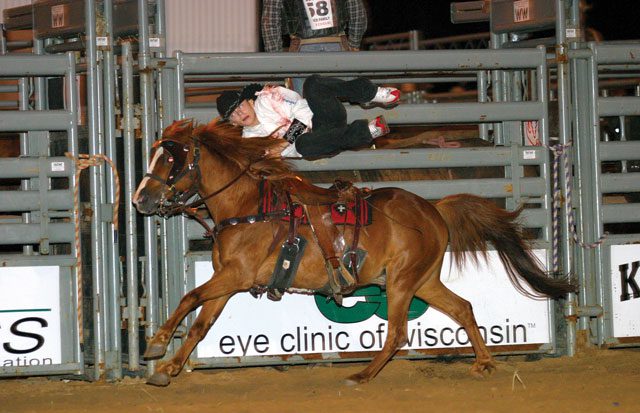
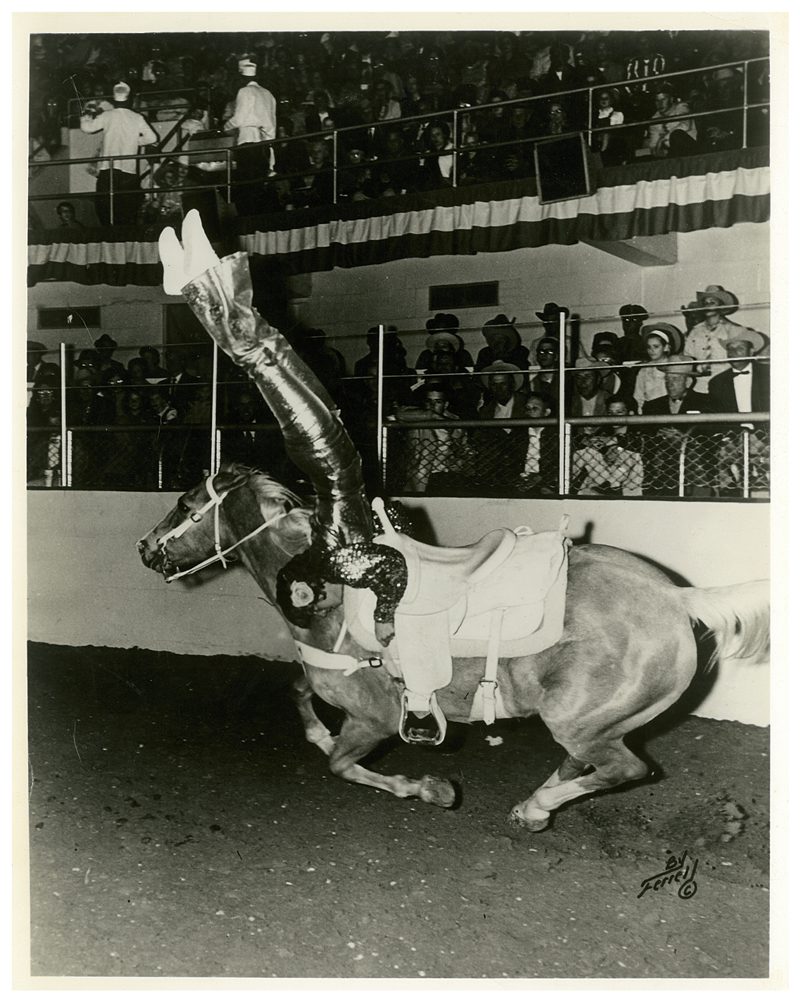
    “We were blessed to rodeo in the best of times,” said Karen Vold, who began her trick riding career at the age of ten. Karen prefers to be in the background. She spends her days helping her husband, Harry, and daughter, Kirsten, run the Harry Vold Rodeo Company  located near Fowler, Colo. Karen can be found cleaning chaps, rolling flags, or working on a wardrobe for pick-up men.Karen as a child - courtesy the family
    She got her start in the rodeo business at a young age. Her family owned a riding stables on the north edge of Phoenix and she would guide people out in the desert to ride. There was a lady that worked at the stables who had a palomino horse and a trick riding saddle. She taught Karen her first three tricks. Karen performed at a professional rodeo for the first time when she was 14. 17 years later she continued the tradition by putting on trick riding schools for 27 years, completing the most recent one in March of this year – 2015.
    “My parents were divorced when I was eight. I was the oldest daughter and had a hard time with the divorce so they bought me a horse and a saddle to get my mind off it. The stables were located next to the Arizona Canal and we had 60 acres of commercial citrus and our house was the last thing before many miles of desert. I practiced next to this canal which was like a big long straightaway. My Dad was the chairman of the Phoenix Jaycee Rodeo for three years and the horse he bought me was part of a roman riding team that jumped a car and was also broke for trick riding. The horse refused the car a few times so they sold him to my Dad for me to trick ride on. I was ten.”
    About the same time as her parents’ divorce, Jasbo Fulkerson, one of the rodeo clowns her dad had hired several times to work the Phoenix rodeo was killed on his way home from a rodeo. They had been close friends and were built physically alike so Karen’s dad took off from his construction business and teamed up with Jasbo’s partner to rodeo for six years. Karen stayed in Arizona with her Mom. “When he came back and saw how serious I was about trick

    riding, he sent me to Colorado to take lessons from world champion trick rider Dick Griffith. In the early days, trick riding was a competition like five other events. Dick was the world champion trick rider and bull rider and my Dad wanted me to master the full shoulder stand that Dick performed when he worked with him at Madison Square Garden in New York City. It was very hard to learn – you have to face front – not the side – and dive over the saddle horn. I drove to Colorado when I was 18 with a horse trailer and my girlfriend. Dick had a few other students there. I only knew

  • PROfile: Judy Wagner

    PROfile: Judy Wagner

    Photo courtesy Judy Wagner

    Judy Wagner is a storyteller. Growing up on a ranch in Montana nurtured her appreciation for the beauty and brevity of life, all while giving her experiences that ached to be retold over the dinner table among friends and family. Today, the wife, mother of two, and vice president of marketing for Montana Silversmiths still approaches life with the common sense that comes from her own brand of Ranch Grown Logic and her motto from Gladiola Montana: “The code of her West; use a short rope, a sweet smile, and a hot brand.”
    Judy’s story began in the Big Sky State. Born in 1953 in Avon, Mont., the oldest of eight children, Judy likes to tease that she is the real Avon lady. But instead of selling cosmetics, she was saddling horses in the early morning light and loading them into the bed of her dad’s pickup to go check cattle. Judy and her brothers and sisters learned to rope from their dad and were active in 4-H, but their responsibilities doubled when their dad was killed in a tractor accident. Judy was 16 at the time, and she and her siblings took over the ranch with young but powerful determination. “We grew up fast,” says Judy. “We learned that the cows didn’t know it was Christmas Day – feeding and caring for the animals came first. We had to be responsible for our actions, and ranching taught us what it means to invest your time and money into something.”
    Following high school, Judy went to Montana State University on a rodeo scholarship, as did all seven of her siblings, in either rodeo or other sports. She competed in team roping and majored in Home Economics with a minor in Child Development. “Back when I went to college, a marketing degree didn’t really exist yet,” Judy explains. “Most women went to college to become teachers or nurses. But I had 14 years of experience in 4-H and an entrepreneurial spirit!” She met her husband, Alvin, during college, and once she graduated, Judy went to work as a county extension agent for Teton County in Cheteua, Mont. Alvin was a sales representative in the western industry, and in 1988, he helped Judy as she entered into a partnership with another family to create Gator Ropes. “We met in a bar in Dillon to discuss the opportunity,” Judy recalls. “The whole thing just evolved! I didn’t have a lot of help, but I could have reached out to people. Now I realize as I mature in business how important it is to reach out. At the time my research on product development was through my family and my life experience as a roper and competitor. I didn’t focus much on our competitors at the time, because we were all young businesses then. Classic Ropes had been around a few years and Cactus Ropes was just starting. It was a fun time to be in the industry.”
    Owning Gator Ropes gave Judy all the marketing experience and more that college could have provided, and the common sense she had developed as a child on the ranch came to her aid. “The first trade show I took Gator Ropes to was for the first Cowboy Christmas during the WNFR, and I had the bright idea to create a rope rack that looked like a Christmas tree. I decorated all the ropes with evergreens from the ranch and made them look like wreaths,” says Judy. “I took over 100 wreaths and I didn’t sell one of them.” So she took her rope wreaths to the parking lot and cut the evergreen boughs off, selling her ropes and chalking it up to experience.
    In 1998, Judy sold Gator Ropes back to her original partners and tried her hand at freelance marketing, while she also helped establish an all-girl rodeo team in Helena and several other rodeo teams in her area. In 1990, she won the John Justin Boots Standard of the West award for the Rocky Mountain All Girl Team, a pre rodeo event for the Last Chance Stampede in Helena, Mont.
    By 2000, Judy found out Montana Silversmiths was looking for a marketing director.”Other than my two years with the county extension office, that was my second job interview,” says Judy. “I started fresh – it was a new position – and our sponsorship with the PRCA was just starting, as was our line of jewelry.” Judy found a way to put her ranch background to use even with Montana Silversmiths, knowing the value of a handshake and looking someone in the eye.
    When the company put up its website in 2005, it enabled Judy to share the stories of the business with an even wider audience. “Every one of our products has a story, from how it’s created by our master engravers, to how it’s packaged, or even merchandised in the catalogue,” Judy explains. “I get shivers whenever I have the opportunity to hand the buckles to rodeo champions. I know from Montana Silversmiths the talent it takes to produce that buckle, and I also know as a rodeo competitor how much went into making those rodeo champions, like parents driving all those miles for rodeos and making sure their kids have horses underneath them.”
    In 2014, Judy was promoted to vice president of marketing for Montana Silversmiths. For her, an average day at the headquarters on the Yellowstone River in Columbus, Mont., might involve leading a team for product development, touching on customer service, or even helping organize an events team, such as for the PRCA.
    At the end of the day, Judy makes the 20 mile drive to her home in Park City, Mont. Alvin is currently a sales representative for American Hats and Ariat boots, and both Alvin and Judy’s children inherited their parents’ entrepreneurial spirit. Their daughter, Tiffany, is a horse trainer, while their son, Ross, and his wife manage a barrel racing association, UBRC. Team roping continues to be one of Judy’s greatest pleasures, and she won the Team Roping Heading on the WPRA Montana Circuit in 2014, as well as the Team Roping Heading Rookie of the Year with the WPRA after buying her first card. She is also a member of the USTRC, and in February, she and Alvin plan to go south to Arizona to rope. Judy visits her three brothers’ ranches in Montana at every opportunity, and she has many nieces and nephews who all excel in sports. These include Ty Erickson, who is going into the WNFR sitting third in the steer wrestling, riding his horse, KR Montana Shake Em, who won 2015 AQHA Horse of the Year.
    “Between the Wagners, Bignells, Ericksons, and Ayers (Judy’s brothers and sisters) there’s a lot of competitiveness and athleticism, and it all stems from ranch grown logic and the ranch life of my siblings,” says Judy. “When it’s all said and done, I hope people will say about me that I was a trail breaker. I ride for the brand in my faith, family, work on the ranch, creating the brand Gator Ropes or stewarding the brand Montana Silversmiths. Who would imagine that some girl from Avon would grow up to do this, but you can do anything if you have the desire and work toward your goals! Life is about those connections – people who empower you – and I am blessed.”

  • PROfile: Shawn T. Wise Rodenberger

    PROfile: Shawn T. Wise Rodenberger

    Shawn with her three boys Landon, Hilton and Paxton - courtesy of the family

    Being crowned the USTRC Cruel Champion is quite an accomplishment. And Shawn has done it twice now. The first time was in 2001, heading for Kelli Jo Shurden. This year Shawn headed for California cowgirl, Ali Bilkey. The pair bested the field with an aggregate time of 36.96 on four head, splitting $16,200 in prize money in addition to Martin saddles and a year’s supply of Cruel Girl Jeans.
    Shawn can often be found in the winner’s circle, with recent wins at the Wiley Hicks roping in Amarillo, Texas. In 2013, she and Jennifer Williams were the Reserve All Girl Champs at the Wildfire Roping in Salado, Texas.
    Oddly enough Shawn didn’t start team roping until college. She has been riding her entire life and started breakaway roping when she was ten. She qualified for High School National Finals more than once in both Breakaway and Goat Tying. She earned a rodeo scholarship and attended Howard College in Big Springs, Texas and Southwest Oklahoma State in Weatherford, Oklahoma. She qualified for the college finals in both Breakaway and Goat Tying. Once she started team roping, she discovered it was both enjoyable and profitable.
    Shawn credits her parents for starting her roping as a kid. Her mom and dad, now retired, raise show cattle. Shawn grew up roping and stock showing. In addition to rodeo, during high school she played a variety of sports, including volleyball, basketball and track.
    For the last five years Shawn has been a Petroleum Land Man where she researches titles with regard to mineral or surface rights. She also owns and operates Baby Cakes Bakery in Vernon, Texas, where she takes custom orders for cakes, cup cakes, cookies, etc.
    If that’s not enough to keep her busy, she has four sons, Landon, 9, Hilton, 8, Paxton, 5, and Callon, 3. Shawn gives much credit to her family for helping out with her boys.
    An ideal weekend for Shawn T. is spending time with her kids and helping her parents with their show cattle. She has recently taken up fishing and finds it very relaxing. She is very thankful to the Lord and her friends and family that have helped her accomplish her goals. She extends a special thanks to Christy, Terry, and Daniel McBroom.
    COWBOY Q&A
    How much do you practice?
    I try to practice three or four times a week.

    Do you make your own horses?
    No.

    Who do you respect most in the world?
    My Lord.

    Who has been the biggest influence in your life?
    My father.

    If you had a day off what would you like to do?
    Relax. Maybe hunt or fish.

    Favorite movie?
    Steel Magnolias.

    How would you describe yourself in three words?
    Determined, caring, happy.

    What makes you happy?
    My family and my Lord.

    What makes you angry?
    Negativity.

    If you were given 1 million dollars, how would you spend it?
    Invest it.

    What is your worst quality? Your best quality?
    My worst is being unorganized. My best is that I’m hard working.

  • Rodeo Red Carpet: Las Vegas Rodeo Fashion Week

    Rodeo Red Carpet: Las Vegas Rodeo Fashion Week

    Las Vegas Rodeo Fashion Week

    Kacee Willbanks ~ “I am credentialed media and girlfriend to the toughest, comeback cowboy and Boyd Gaming Cinch Chute Out Bareback Riding contestant, Casey Colletti.”
    Tip: I created a private folder on Pinterest strictly for outfit creations. When I am in a hurry all I have to do is scroll through the photos, choose an outfit inspiration and put it together!
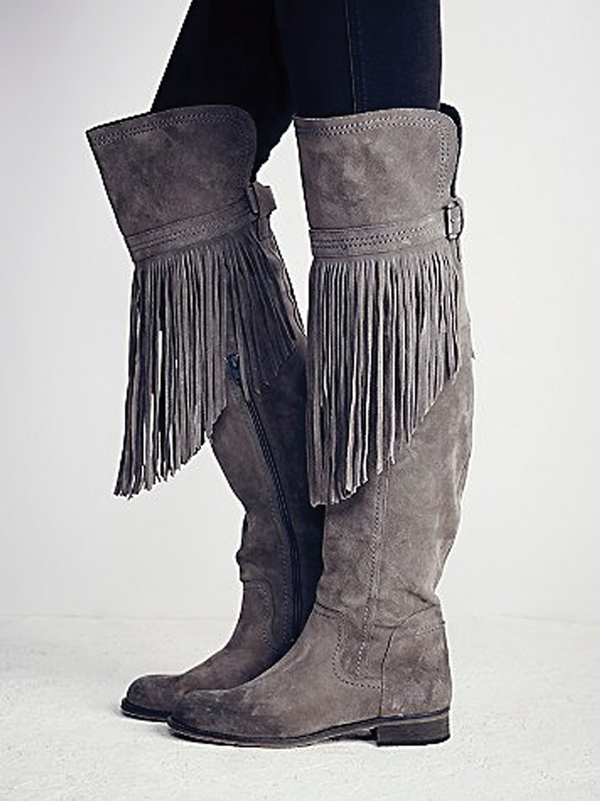
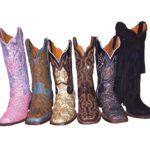
    Fringe over the knee boots freepeople.com
    Ear Jackets baublebar.com

    Cassidy Kruse ~ “I am a WNFR Barrel Racing contestant this year”
    Tip: I’m making sure I have double the western shirts, actually needed, pressed and ready to go for autograph signings, performances and additional appearances! All the horse stuff comes first, my stuff comes second!
    Juan Antonio Hand tooled leather purse jewelofthewest.com
    Tanner Mark Boots sheplers.com

    Lauren Crawley ~ “I’m the wife of the most handsome, red headed, WNFR Saddle Bronc Riding qualifier, Jacobs Crawley.”
    Tip: Take pictures of your pre-planned outfits.  If you are pressed for time, just scroll through your camera roll and pick one!
    Jessica Simpson Knee High boots jessicasimpson.com
    Graphic skirt zaful.com

    Bridget Ryan ~ “I am the girlfriend of WNFR Bareback Riding qualifier Austin Foss”
    Tip: I organize all my outfits and put jewelry with each of them before I pack. Then I have pre-made outfits once I get there!

  • On the Trail with Tyrel Larsen

    On the Trail with Tyrel Larsen


    story by Siri Stevens


    Tyrel Larsen obtained his undergraduate degree at Panhandle State University in Business Management and rode saddle broncs under the direction of rodeo coach, Craig Latham; he took it a few steps further, marrying his daughter, Chaney, October 17.  “Somebody was trying to talk me into buying her flowers one day for Valentine’s day and it went from there,” said the Canadian from Inglis, Manitoba. Tyrel has had a busy summer, preparing for his wedding and punching his ticket to his first Wrangler National Finals Rodeo in December. He took the 15th spot by $573 over Chad Ferley. “I was 16th two years ago so I know how it feels,” he said. “It was a little bit déjà vu from a few years ago. It all worked out. There were at least seven of us that last weekend that could have probably made it. Whoever drew good really and got lucky is what it came down to. There’s no hard feelings, but it’s tough. I’ve been there and you’re not ever mad at anybody but yourself.” Tyrel blew his knee out last year. “I got hurt when I was having the best year I’ve ever had.” He spent eight months recovering and working in Canada to put the money together to hit the rodeo road once he was cleared. “Chaney and I bought a house instead and so I had to scrape it together to go, but it worked out.” He will be riding broncs at the Thomas and Mack and his younger brother, Orin, will be there as well, riding barebacks, competing for the first time and making it in the 10th spot.

    Tyrel has been in the United States now for almost eight years, and during that time, he made five trips to the College National Finals Rodeo and won it his fifth year, 2012. The distance from Manitoba and his home in Weatherford, Okla., is 25 hours. “It was 21 hours from home to Guymon,” he said. “And we’d drive that straight through.” Driving is nothing new to Tyrel or his family. “We rode steers in the amateur association. Being in Manitoba we had to drive further I’d say an average of six hours to a rodeo a weekend to a CCA rodeo – so it didn’t seem like that big a deal to go to school so far away.” Tyrel’s dad, Kevin, who ranches, amateur rodeoed as a bull rider, and got the family interested.  His mom, Wanda, runs a hair salon, Wanda’s Barber Shop in nearby Roblin, Manitoba. In addition to his younger brother, Orin, Tyrel has an older sister, Cassie, and a younger brother, Kane, who is just finishing college.

    “Manitoba’s winters are really tough. Once we came down and had a full year, me and my two brothers, and could practice in February and March and the guys back home were feeding cows from the trucks, it was pretty awesome.” He has known his wife, Chaney, since his freshman year of college in 2008. The couple is expecting their first child in April.  He has been rodeoing in the PRCA since 2010, balancing his education with his rodeo career. After obtaining his Business Management degree, he went on to his Masters, completing his MBA in Business Administration in 2013 through Southwestern Oklahoma State University in Weatherford, Oklahoma. “My first year on my Masters was a reality check,” he said. “The work was piled on to make sure I was taking it serious. I was rodeoing full time and college rodeoing, so I’d stop at different colleges and write papers for a few hours and send stuff off, it was a little bit of dedication but I’m sure glad I did it.”

    He chose the business degrees for a variety of reasons. “Everything is a business whether it’s running your place, getting a job, or anything – it’s all business related in one way or another.” He is not sure what he’s going to do with his degree. “My biggest idea was to come down and go to school and get that paid for with rodeo.” He went on to get his masters to help him make some investment decisions and get as much education in the business world and financial world to make good decisions so he’s sitting better financially when he’s done. “I have to pay taxes on both sides of the border, so that takes a chunk out of my earnings,” he said. He’s investing in buying a place, putting on a wedding, and now that they have a place, he’s working on paying it off. “We’d like to buy a little bit of land and add on to the house and add value to the place so hopefully it’s worth more in the end.”

    Since Tyrel is Canadian, he can’t have a full time job in the United States. “I was fortunate enough to have a decent winter and go all year and keep a fire at the place, rodeo, and put a wedding on.” Tyrel and Chaney got married at their place in Weatherford and had the reception in Guymon. They took a short honeymoon in Florida and are focused on the finals. He’s planning to start on his green card now that he’s married. “Since I’ve been on two different student visas and a sport visa, it should be pretty easy. It can take some time, though. It depends on your paperwork – sometimes it takes a couple years to get. You never know.” Once he gets his card, he will continue to rodeo and be able to get some cows or do day work. “It would open up a lot more doors for me.” ”

  • Back When They Bucked with Chuck Henson

    Back When They Bucked with Chuck Henson

    story by Lily Weinacht

    Chuck Henson’s cowboy boots and bullfighting cleats have left their mark through rodeo history. From witnessing the Boston Garden Rodeo strike in 1936 to becoming the first contract member director in the PRCA, Chuck has spent a lifetime championing the sport of rodeo, even bringing the cowboy life to the silver screen through his work as a Hollywood stuntman, wrangler, and driver.
    The only child of Charlie and Margie Henson, Chuck was born in Arcadia, Fla., on February 4, 1931. Charlie Henson worked on the railroad and rodeoed during the winter. Margie (Greenough) Henson rode saddle broncs, formerly trick riding and competing in rodeos with her sister, Alice, and brothers, Bill and Turk, the siblings known as The Ridin’ Greenoughs. Several weeks after Chuck was born, the family packed up their Model A Ford Roadster and returned to their home in Red Lodge, Mont.
    Chuck was given a pony at an early age, and he was soon trick riding and roping from Blue Rocket’s back. One of his first experiences as rodeo entertainment was in 1940 at the Cowboy Coliseum in Chicago, where Chuck and nine other kids put on a show of trick riding and roping during the 30-day rodeo. The family also travelled as far as Canada and Mexico with Wild West Shows. “Mom would never let me ride broncs because she was afraid I would get hurt,” Chuck recalls. “It didn’t make much sense to me. She let me rope calves, but I probably would’ve been better off riding broncs. I was so little that every time I’d rope a calf, they’d meet me halfway and wreck me.”
    When Chuck wasn’t travelling the country, he travelled the mountain pastures of Montana for five years, helping his uncles, Bill and Frank, who worked for The Antler Ranch, one of the largest cattle ranches in the state at the time. By the time he entered high school at Lodge Grass High School, Chuck was an all-around athlete, rodeoing, playing basketball, baseball, and running track, which later earned him an induction into the Montana Sports Hall of Fame. Chuck steer wrestled like his dad, but the chutes held too much of a draw, and he started riding bareback and saddle broncs. Roughstock had come a long way since the time Chuck’s parents started, when broncs were tied to another horse and blindfolded, then turned loose into arenas made by a circle of buggies, wagons, and old cars.
    For a time, Chuck competed in or worked every rodeo event, though he drew the line at riding bulls. “I didn’t cherish the thought of getting on a bull, but I saw you could get good money for riding them, so I started, and that was probably my best event,” says Chuck. “There weren’t any rodeo schools, but I remember a few times I’d draw a horse in the saddle bronc riding and I’d have to ask my mom what kind of a rein to take on it – it was a little different to ask your mom how to ride a bronc!” He entered many of the same rodeos as his parents and also worked as a pickup man during high school, even picking up his mom and Aunt Alice. “You’d get a spanking if you didn’t pick them up good,” he recalls with a laugh.
    Chuck graduated high school in 1950 and won the Montana High School All-Around Cowboy title that year. Soon after, his family moved to Tucson, Ariz. Margie had developed a spot on her lung and was told to move to a warmer climate, though Chuck returned to rodeo in Montana every summer. In 1953 in Sidney, Mont., Chuck was behind the chutes when two gentleman approached him, informing him he hadn’t been in contact with his draft board. “I said I’d been rodeoing!” Chuck remembers. “I joined the National Guard for two years and then the Army. I don’t know how it happened, but I got into the Army Security Agency, and everything was top secret. I’ve never even told my wife or kids what we did.”
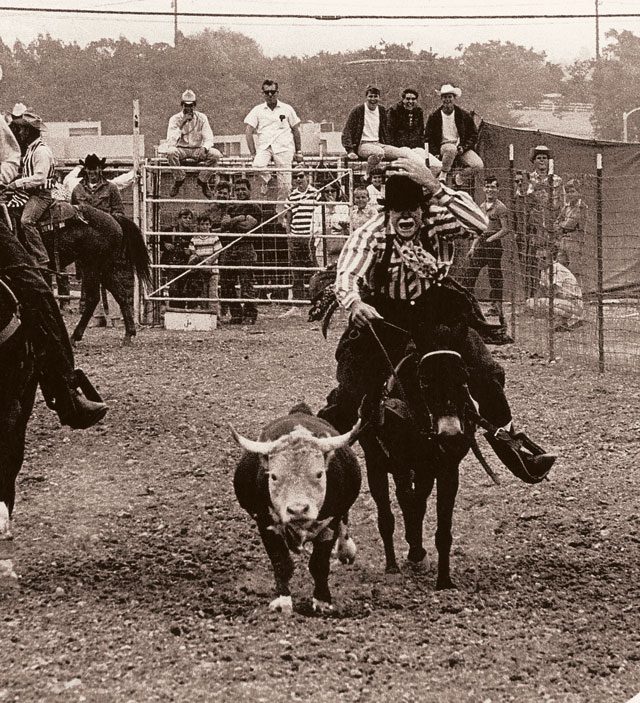
    Chuck was discharged in 1955 and used his G.I. Bill to go to the University of Arizona to play college football and rodeo for a year. In 1956 the team was at a rodeo on the Mexico border that couldn’t afford a rodeo clown. Chuck had clowned for one of his aunt and uncle’s rodeos in Montana during high school, and he offered to step into the role again. “Some of the girls in the theater group got me a shaggy wig, baggy pants, and some greasepaint,” says Chuck. “Swanny Kerby supplied the bucking stock, and after that, he asked me if I wanted to work some rodeos for him.” Chuck remained with the stock contractor for nearly six years before hiring on with stock contractors further east, all while still competing in four or five rodeo events.
    About the time Chuck married his wife, Nancy, in 1959, his rodeo clown career was also growing. The couple had met at a college rodeo in Alpine, Texas, two years earlier.
    Nancy was there with several girlfriends, taking a break from keeping books for George H.W. Bush’s oil company. A rancher’s daughter, she grew up barrel racing, and after marrying Chuck, she worked as a rodeo secretary and timer. After their first baby, Nancy Jane, was born, Chuck had a custom camper built for his truck to double as a dressing room. His mule, Nicodemus, and dogs, including one he called Beatrice, rode in a separate section near the tailgate. “Nick was a hard-headed little devil – sometimes he worked good, and sometimes he didn’t,” says Chuck. “Beatrice was pretty famous around the rodeo world –  she skipped rope and jumped through hoops and walked on her hind legs.”
    Chuck was asked to fight bulls at the NFR in Oklahoma City in 1968 and again in 1971. Two years later, he broke his left leg at a rodeo in Vernon, Texas, when a bull hooked his leg between two boards of a fence. A surgeon in Wichita Falls, Texas, put him back together with rods, mesh, and a hip cast. Chuck was fighting bulls four months later. “I had a special cast made that fit between my ankle and my knee,” Chuck recalls. “I couldn’t run real fast, but I could still go in circles!”
    From 1974 to 1977 Chuck served on the PRCA board of directors as the first contract member director, where he represented the specialty acts. “I passed a deal that if you worked the finals one year, you had to take a year off and give somebody else the chance – there were a lot of good hands that weren’t as well known that never got picked,” Chuck explains. He was also responsible for having buckles awarded to the bullfighters and clowns, which were sponsored by Lee, Wrangler, and Levi’s. Chuck’s own NFR bullfighting buckle still graces his belt to this day, and his work both in the arena and out earned him inductions into the ProRodeo Hall of Fame in Colorado Springs, Colo., and the National Cowboy Hall of Fame in Oklahoma City, as well as the Pima County Sports Hall of Fame.
    Chuck officially retired from fighting bulls in 1980, though he continued to work up to 12 rodeos a year until the late ’90s, and he performed his rodeo clown acts until 2000. After that, he focused his attention on Hollywood, which he had been working for since the 1960s. Chuck’s mom and aunt had driven buggies and wagons during the filming of Little House on the Prairie, along with several movies, and Chuck also made a name for himself in the movie industry. One of his first roles was riding in a posse of Indians. He found more work through word of mouth before getting his card with the Screen Actors Guild after working with John Wayne on El Dorado, released in 1966. “I worked with John Wayne quite a bit – he was a nice guy – and so was Robert Mitchum and Steve McQueen,” says Chuck. “I doubled James Coburn and Slim Pickens in a movie called The Honkers where the rodeo clown breaks his neck. I said I wanted a certain amount of money if I had to let a bull fling me through the air. It took six bulls before the camera man got the shot he wanted.” Chuck wrecked wagons and did stunt falls from horses, and even drove in car chases for shows like Mod Squad. He played himself in a documentary called The Ridin’ Greenoughs, which covered the story of his mother, Alice, and Bill and Turk, all of whom had roles in the documentary, narrated by Rex Allen.
    Today, Chuck and Nancy live in Tucson, Ariz., and commute to their ranch near Willcox, Ariz. Their two children, Nancy Jane and Leigh Ann, both rodeo competitors, live nearby. Leigh Ann’s husband, Eric Billingsley, is a former saddle bronc riding champion in the GCPRA. Chuck helps Nancy Jane and her husband, Jerry Dorenkamp, raise bucking horses for their rodeo company, Salt River Rodeo Company, as well as 75 – 80 cows with PBR bloodlines. “I don’t ride much anymore, but I watch Leigh Ann’s girls, Kaylee and Rayna, compete in the GCPRA,” says Chuck. “I’m pretty happy, and I’m really proud of my family!”