Rodeo Life

Category: Articles

  • NFR’s New Manager Is Ready To Go

    NFR’s New Manager Is Ready To Go

    Allen Rheinheimer’s first job at the Wrangler National Finals Rodeo was raking around the barrels after the event ended.

    Now he’s running the show.

    The Zionsville, Indiana, man was hired earlier this year as general manager of the Wrangler NFR. The president and owner of Showtime Jump Company, LLC, he has served in the capacities of production and management of many equestrian events, including as technical coordinator for the FEI World Cup Jumping Finals two years (2000, 2003), for the FEI World Cup Jumping and Dressage Finals four years (2005, ’07, ’09, ’15)  and as show manager for the 2020 FEI World Cup Finals.

    Allen grew up in Indiana on a farm that produced top show horses and beef cattle, with a father who was a horse trainer and blacksmith. As a kid, his family traveled with their dad to horse shows.

    It was at a World Cup Finals in Las Vegas where he got introduced to Shawn Davis, former manager of the Wrangler NFR. They were using bulls in the opening, and Allen volunteered to help Shawn, who was production manager for the event.

    Shawn told Allen, “if you can do that, you can get a job at the National Finals.”

    So Allen took him up on it.

    It was 2000, and that year, Allen’s job was to rake around the barrels after the barrel racing finished.

    “My job was 15 seconds a day,” he said. “I got to know everybody there well because I had a lot of time on my hands.”

    Since 2000, he’s done a little bit of everything at the National Finals: from construction maintenance manager to opening director and more, “basically about everything except judge, announce, and be chute boss,” he said. “So there’s not much that I haven’t touched in that rodeo and been a part of, over the 21 years that I’ve been there.”

    Allen notes there’s plenty of crossover between the equestrian events he’s worked and the National Finals.

    Both types of events have “contestants at a high level and spectators at a very educated level,” he said.

    But there are obvious differences. One is the variety of livestock needed for the rodeo. “One big difference in managing the rodeo versus managing horse shows is dealing with the livestock. We have 310 bulls and bucking horses, 120 steers and 70 calves. Caring for all of that is a big difference.”

    The ground conditions are another difference between horse shows and the Wrangler NFR.

    “On the equestrian side of it, it’s more of a synthetic sand surface or sometimes grass. And the rodeo is a sand/clay based arena, so it’s a big difference, in how you maintain those surfaces.”

    Communication is key to the role he plays, he believes. With over 250 contract employees hired by the Wrangler NFR, he’s emailing and talking, a lot.

    “I had to get an extra battery for my phone, because my phone didn’t stop ringing.”

    Meetings are part of the communication, too. He holds two weekly meetings and a monthly meeting with the PRCA. Zoom meetings help, though. “Zoom has made our lives so much easier this year, not having to travel,” Allen said. “We get a lot more done, and a lot more done ahead of time.”

    This year’s National Finals will have bigger openings and more entertainment. The stage used for the openings will be larger, and Congressional Medal of Honor winners have been invited to the rodeo and will be honored throughout the rodeo’s 10-day span.

    It is a privilege for him to be part of pro rodeo’s largest event.

    “It’s an honor to be in the position that I’m in and having the confidence of the people who work here, that I’ve worked with, side by side. It’s an honor to have the respect of those people.”

    And he says Las Vegas is ready for its rodeo fans to return.

    “Vegas is rolling out the red carpet for us, to make us feel comfortable, to welcome us back.

    “There’s no town in the world that can host this rodeo like Vegas can. It becomes a cowboy town, no doubt, when the Wrangler NFR is in town. I’m excited to be back, I’m excited for the fans to be back. We’re just happy we’re able to do it.”


  • Original Wrangler Bullfights Hall of Fame

    Original Wrangler Bullfights Hall of Fame

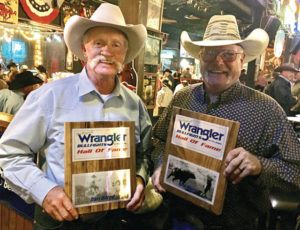
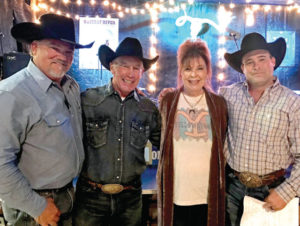
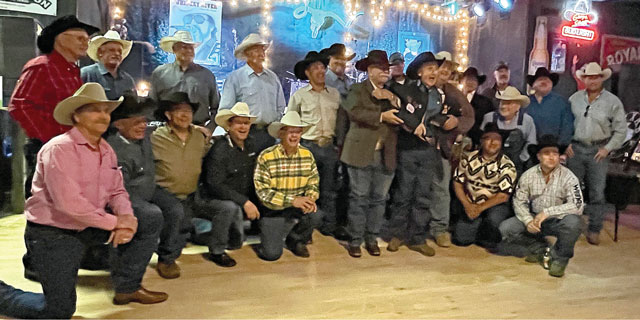
    The second annual Original Wrangler Bullfights Hall of Fame was held at Lil Red’s Longhorn Saloon in the Stockyards of Fort Worth, Saturday evening, October 16th. The Induction includes bullfighters from the second season, of the 1981 to 2000 Wrangler Bullfight Tour. A few more awards and honors were bestowed on people who were instrumental in getting this historic first time Professional Rodeo Cowboys Association (PRCA) event up and running..
    The Wrangler Bullfight Tour was started forty years ago in 1981, after several bullfighters from that era, Jim Sutton, a 2nd generation rodeo producer and stock contractor, and David Allen, the rodeo representative of Wrangler, at that time, got together and convinced the PRCA, it was sorely needed. The professional bullfighters and barrelmen had not had their own professional event to show their exceptional ability in fighting bulls prior to this Tour event. The Tour was held at various PRCA rodeos throughout the year. The bullfighters that were competing that year would compete at a set number of events and their scores were kept until the end of the season. The top six would then compete at the National Finals, which was being held in Oklahoma City, at first. Each of the six would fight one bull each night for four nights. The bullfighter with the top score would become the World Champion Bullfighter.
    Jim Sutton, from Onida, South Dakota, for two years added to some of his rodeos an extra added attraction of four bullfighters that would fight Mexican Fighting Bulls. He would include this in his advertising prior to the event. In time, it was evident the bullfighting brought more spectators to his rodeos, just to watch this event. The results of his ‘experiment’ were the catalyst to cause PRCA to include the Wrangler Bullfight Tour.

    The Original Wrangler Bullfights Hall of Fame was the idea of James Pierce, a 1991 bullfighter with the Wrangler Bullfight Tour. He fought bulls from 1990 to 2005, and calls Thibodeaux, Louisiana, home. He has taken the reins of this Hall of Fame, with other former participating bullfighters from the Wrangler Bullfights Tour – plus Craig & Jane Copeland who own Lil Red’s Longhorn Saloon the home of this annual affair. The plaques of all inductees are on display in Lil Red’s Longhorn Saloon.
    Those honored this year were: Leon Coffee; George Doak (deceased) with son George Jr. accepting for his dad; Eric Viers; Darl Allred; Steve Mowry and Kirby Birney whose acceptance was told by his daughter, Cody, Miles Hare and Michael ‘Smurf’ Horton. Stock Contractor of the year was Mr. Harry Vold (deceased) who was represented by his daughter, Kirsten who also accepted the Bull of the year, Crooked Nose, owned by Harry Vold.. Barrel Men honored were Tom Feller and John Taylor. The Resistol Supporting Legend Award was given to Jim Sutton and David Allen.
    Those doing introductions and more during the program were: Robert Blue Jeanes, former bullfighter and PRCA Bullfighter Director; five time World Champion Bullfighter Rob Smets; and Shelley Burmeister Mowery, former Miss Coors and very involved in the early day development of the Wrangler Bullfight Tour. All three did an outstanding job by not only giving the credentials for those receiving honors and awards, but also relayed personal stories of these special folks.
    It was a packed house and the main comment made was those in attendance were so grateful to see so many rodeo people – the rough and tough bullfighters, rodeo friends, they hadn’t seen in years, and all were smiling! Just to name a few of the former bullfighters in the audience were Rick Young, Ronny & Donny Sparks, Todd Propson, David Burnham, John Novotny, Steve Tomac, Jim Bob Feller, Miles Hare, Rob Smets, Doug Forzani, Eddie Hatfield, Barry Hankins and many more.
    Additionally a 3rd annual Knox Concrete Fund/Fun Raising Charity Golf Tournament was held by the Original Wrangler Bullfights Hall of Fame in collaboration with Cowboys Helping Cowboys Charity Events, which is ramrodded by Dave Samsel, former NFR bull rider, to benefit injured rodeo athletes in need.
    Also, at the Saturday night event a live auction was held, with a variety of rodeo and bullfighting related items to be bid on, including branding irons, donated by Kirsten Vold, that in the past were used to brand Crooked Nose, Bull of the Year, also a painting of George Doak fighting a bull by Buster Kenton, plus many other items. The recipients of this year’s Golf Tournament and auction by Cowboys Helping Cowboys were Kirby Birney, Inductee Bullfighter; Jeff Collins, World Champion Bareback Rider; and Cody Ohl, World Champion All-Around and Tie Down Roper.

  • ProFile: Jim Dewey Brown


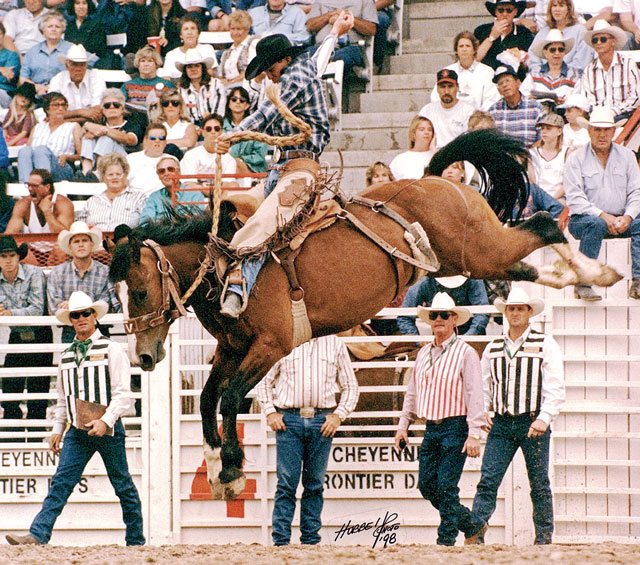
    Cheyenne 1998
    Jim competed at the 1998 Cheyenne Frontier Days Rodeo. – Dan Hubbell

    It’s double-duty for Jim Dewey Brown.
    The Arizona cowboy became general manager for Prescott Frontier Days in February and he will begin as commissioner for the National Intercollegiate Rodeo Association on Jan. 1.
    Although more than 1,100 miles separate his home-base and the NIRA office in Walla Walla, Wash., he will be serving both roles simultaneously.
    “I’m going to get a lot of frequent flyer miles,” Brown laughed. “Prescott is very, very proud and happy I have the position of commissioner because they see the importance of being connected to the youth of our sport and building those relationships so that when the kids go pro they can go to Prescott for the World’s Oldest Rodeo.”

    Brown, 44, earned a Masters in agriculture and a Bachelors in Animal Science from Tarleton State University while on their rodeo team and later as their assistant coach.
    “The cool thing with Tarleton was I could tailor my Masters to sports marketing and coaching classes,” Brown said.
    Brown started competing in high school rodeo in the spring semester of his junior year and climbed the ranks through college with Tarleton State. Now he wants to help others do the same.
    Brown also wants to help regional rodeos improve their productions to help grow college rodeo overall.

    “He’s a very well-prepared young man,” said standing NIRA commissioner Roger Walters. “He’s very personable and very organized and very driven and he wants everything to showcase itself to the best of its ability.”
    Brown was the New Mexico State University rodeo coach from 2002-15. There were 24 students on the team when Brown arrived, but that soon multiplied.
    “At my peak there was 92 and when I left there was 60-some kids on the rodeo team, which is much more manageable for one person,” Brown said.
    Under Brown’s leadership, the team had 157 CNFR qualifiers, 19 Academic All-Americans and 18 Scholar Americans.
    Brown coached six national champions: Matt Garza (TR 2005), Wyatt Althoff (AA 2008), Johnny Salvo (TD 2008 and ’11), Megan Albrecht (GT 2008), Bailey Gow (BA 2008).
    Helping younger students understand the steps they need to take to progress in rodeo is one of his goals. Some student-athletes get recruited, but Brown is more concerned about the ones who slip under the radar.
    “There’s some disconnect between high school and college and it’s important that we grow our student-athlete base and catch the kids who fall through cracks in getting to college rodeo,” Brown said. “One of the greatest things about college rodeo is it’s that next step — high school, college, then pro.”
    Walters has high hopes for his successor.

    Jim’s former student Trenten Montero qualified for the 2019 NFR. – Courtesy

    “I think he will do a lot more with social media than what has taken place during my tenure,” Walters said. “He will be good for students and sponsorships and just overall do a tremendous job.”
    Some of Brown’s students went on to excel professionally such as bareback rider Trenten Montero and breakaway roper Nicole Baggarley. Montero competed at the 2019 NFR and finished 10th in the world, and Baggarley is making her NFR debut this year, finishing 13th for the regular season.
    “The kids are what I am most proud of,” Brown said. “They’re outstanding individuals.”
    After 48 years of working in college rodeo as an assistant coach, coach, facility director, arena director and then commissioner for the last 13 years, Walters is looking forward to retirement.
    “I’ll be doing whatever my wife tells me to do,” Walters laughed. “We all need a to-do list and I have one so I feel like I’ll be good. I feel like new ideas and new blood will be good for the sport, especially college rodeo and Jim sure is the man to do that.”

  • ProFile: Quincy Segelke

    ProFile: Quincy Segelke

    story by Jaicee Williams

    A Snyder, Colo. native, Quincy Segelke, has had a college career full of leadership positions in the world of college rodeo. Quincy is currently the student president of the National Intercollegiate Rodeo Association (NIRA) and has served as a regional director for the Central Rocky Mountain region for the past three years. As a graduating senior at Chadron State College, Quincy took a moment to reflect on her time as the NIRA student president this past year. “[Being the NIRA student president has] definitely taught me a whole different perspective on rodeo. Mostly on the business side of things,” explains Quincy. By serving as the student president, Quincy has gotten to meet individuals from all over the country and even got the chance to travel to Las Vegas, Nev.
    Although she played a large role in the association, Quincy remembered to stay focused on school in conjunction with rodeo. Quincy describes a “go with the flow” mentality that she learned to master with all her involvements. Time management was a skill that Quincy had at the top of her list to conquer. “I was an online student…balancing my time between school and rodeo was definitely a big thing that I needed to learn,” Quincy adds. As a regional director, Quincy was in charge of different aspects of the regional rodeos such as bringing national sponsor banners and flags to each rodeo and attending meetings to help make decisions that were important for the region.
    Once she found a balance between remote schooling, her leadership positions, and rodeo, Quincy was able to finish her rodeo career at Chadron State College on a high note by qualifying for the College National Finals Rodeo (CNFR) in three events. She placed second in the region in the breakaway roping and third in the goat tying. Quincy also earned the Reserve All-Around title for the Central Rocky Mountain region and picked up barrel racing at the CNFR as her extra event.
    Rodeo has been a long-time family tradition for Quincy’s family. Her parents, Vickie and Tim, and grandfather, Francis, helped start her and her siblings in the sport at a young age. Francis and Tim both competed in steer wrestling and Tim earned the national title in the bulldogging at the National High School Finals Rodeo in Rapid City, S.D. in 1985. Tim continued on after high school and qualified for the NFR in steer wrestling in 1990 and 1998. Quincy’s mother, Vickie, competed in barrel racing, goat tying, and breakaway roping in college and has continued to raise futurity horses into the present. Quincy and her siblings all started rodeoing while living in Colorado, competing in the Colorado Junior Rodeo Association. The family also traveled all over the nation to major youth rodeos and barrel futurities.
    From her time in college rodeo, Quincy claims that her favorite part has been the friendships that she’s made. “That’s probably the best part of it…just the community we have of young kids,” Quincy says. Quincy has been a social butterfly since a young age. Throughout her years of rodeo, Quincy has made friends all over the country while competing in rodeos such as the International Youth Finals Rodeo and Roy Cooper’s Junior World Champion Calf Roping and Breakaway.
    Quincy is now a graduate from Chadron State College, but she has recently decided to pursue a master’s degree. “I am wanting to attend a program at the University of Wyoming for a master’s of business, science, and finance,” Quincy elaborates. While serving on the NIRA board, she discovered the importance of a master’s degree while they interviewed for a new commissioner which helped her decide to pursue the degree.


  • God’s Love is for Everyone

    God’s Love is for Everyone

    God’s love is for everyone! He doesn’t pick certain people to love more than others. He doesn’t pick people who have done better deeds and sinned less to love more. He is just in every situation. He loves every single person, even those who aren’t born yet. God loves us so much that he sent Jesus, his own son, to be sacrificed for our sins. All those years ago, he still chose us. Nothing we do can earn this gift. It is the free gift from God, for all who call on his name. The significance of Christ’s life, death, and resurrection is often overlooked. The easiness of being forgiven is often looked at as “to good to be true”. But it is true. It is that easy. No gimmicks. Ask for forgiveness and you will receive it. Anyone, anytime, anywhere, it is available because of what Jesus did for us.
    “Why then, does it look like God love’s others more than me?” you might ask. Or “God won’t love me because I don’t go to church or read a bible.” While we should fellowship with other Christian believers and we should spend more time in God’s word and prayer, it doesn’t make God love us more or less. Why do they have a fancier house and faster car than me? Why does she get splendid gifts from her husband, and all I get are messes to clean up, laundry to do, and a lazy slob that doesn’t help do the dishes? Why did my dad get terminal cancer, and theirs lived a full life with no health problems? Why did he get that promotion at work and I didn’t? Why does she get that new barrel horse and I don’t? Why did my house burn down? Why did my marriage end in divorce? Why was my car crash fatal, but the drunk driver’s crash ended in mere scrapes and bruises? Why did my horse wreck lead to paralysis but his didn’t? The list can go on and on. The truth is these things happen. Other people’s blessings might make it seem like God loves them more than you. Or worse yet, your struggles and hardships might make it seem like God has abandoned you and doesn’t love you at all. This could not be farther from the truth!
    Scriptures tell us “My thoughts are nothing like your thoughts,” says the Lord. “And my ways are far beyond anything you could imagine. For just as the heavens are higher than the earth, so my ways are higher than your ways and my thoughts higher than your thoughts.” Isaiah 55:8-9. The fact of life is, on this earth we are going to go through some things. Storms are going to come and rattle our lives. We are going to face hardships and struggles. But God’s ears are ready to hear our cry. His arms are open ready to hold us when we run his way. No struggle, hardship, or sin will ever keep God from loving us or holding his forgiveness back from us. If God is for us, who can ever be against us? (Romans 8:31)
    “Can anything ever separate us from Christ’s love? Does it mean he no longer loves us if we have trouble or calamity, or are persecuted, or hungry, or destitute, or in danger, or threatened with death? As the scriptures say, “For your sake we are killed every day; we are being slaughtered like sheep.” No, despite all these things, overwhelming victory is ours through Christ, who loved us. And I am convinced that nothing can ever separate us from God’s love. Neither death nor life, neither angels nor demons, neither our fears for today nor our worries about tomorrow-not even the powers of hell can separate us from God’s love. No power in the sky above or in the earth below-indeed, nothing in all creation will ever be able to separate us from the love of God that is revealed in Christ Jesus our Lord.” Romans 8:35-39.
    Adam and Eve, while in the Garden of Eden, made a choice to disobey God. The result of that choice was death. They were tempted and fell into the sin which lead to death for all humans. All our lives end in death because of the choice they made thousands of years ago. God’s creation of mankind became so corrupt that he sent a flood to wipe out the race and begin again by saving Noah and his family on the ark with the animals. After Noah, as the earth began to fill up with people again, God called Abram later known as Abraham, away from his homeland. God told Abraham to leave his native country and to go to the promised land. So, he began on his way. Humans remained human and still made unrighteous decisions leading them to Egypt where they became slaves. Then, came Moses, a Hebrew boy raised in the Pharaoh’s house by Pharaoh’s daughter. Moses was called by God to lead the Israelites out of slavery from Egypt. With over a million people following him and God leading them, Moses led the Israelites out of Egypt towards the land God promised to his people.
    While traveling towards the promised land, the people questioned Moses. They acted against God and did what was right in their own sight. God gave Moses precise instructions on the rules to give to the people. God used Moses to give the standard to live by. What we know as “The Law” came during that time. It was God’s law, Moses gave to the people, which made them righteous in God’s sight. Don’t kill, don’t steal, don’t murder, respect your parents, clear down to what to do if someone is accidentally killed in a work accident. Moses governed the people with God’s own law. God created humans in his own image when he created Adam and Eve and he was happy with his creation. He wants all mankind to be saved and to go to heaven. Our human nature, the nature to do what is wrong instead of right, our sinful nature, is what the “The Law” saved us from. The law was God’s way for us to live by that kept humans righteous and gave them eternity with God. By offering burnt offerings to the Lord, humans were made right for their wrong doings. While Moses led God’s chosen people, they rebelled, they whined, and wanted to go back to Egypt. Even after all that God had done for them, all he had led them through, and all he promised them, they still disobeyed God and did what was wrong.
    After Moses, came years and years of leaders, judges, and kings that ruled God’s chosen people. A lot of the leaders wanted to do right by God’s standard. Some of them didn’t care and led the people farther in sin and the worshipping of other gods and idols. For years and years, we failed! For over a thousand years we couldn’t do it. We fell short. We couldn’t live up to the standard that God had laid in front of them. So, instead of giving up on us. Instead of starting over. God sent Jesus. His own son. Born of the virgin Mary. As the perfect example and eternal sacrifice. Once and for all the problem was taken care of. God sent his very own sacrifice, as the eternal blood offering, for our forgiveness. Jesus’ blood covers our sins against God! And it is not by obeying the law that we are saved, but rather believing that Jesus came as our savior. It is not earned. We do not deserve it, yet God did it anyways. John 3:16 “For God loved the world so much that he gave his one and only son, so that everyone who believes in him, will not perish but have eternal life.”
    Romans 3:28 “So we are made right with God through faith and not by obeying the law.” This doesn’t mean we should go and live destructive sinful lives. But what it does mean is that we can come as we are, broken, sinful, and shamed. No matter what we have done in the past. No matter how big of a sin we have committed. We can come to God in prayer and ask for forgiveness and it will be granted. “For everyone has sinned; we all fall short of God’s glorious standard.” Romans 8:23. But, because of Jesus we are forgiven!
    So, no matter what struggle you are in. No matter what storm has come your way. No matter what mountain you face. No matter what heartbreak you have. No matter what sin you have committed. No matter what your past looks like. All we must do is have faith and believe Jesus came, died, and rose again. Ask for forgiveness, and we will be forgiven and spend eternity in heaven.
    Romans 10:9 “If you confess with your mouth that Jesus is Lord and believe in your heart that God raised him from the dead, you will be saved.” You will be SAVED!!
    Saved from heartache, sin, depression, shortcomings, failure, poverty, depression. ALL OF IT! We are saved from it all. Every single one of us has this opportunity. God wants us to accept his gift, his salvation, his grace and mercy. He wants to give it to us for free. All we must do is accept the gift, say it with our mouth, and believe it with our heart and we will receive. So, no matter what obstacle you face. No matter what struggle you are in. No matter how far away from God, you think you are. No matter if you think they are more loved than you. All you have to do, is turn to God, talk to him, tell him what you need, and thank him for all he has done. You are loved and he wants to bless you!
    “The faithful love of the Lord never ends! His mercies never cease. Great is his faithfulness; his mercies begin afresh each morning.” Lamentations 3:22-23
    “The Lord himself goes before you and will be with you; he will never leave you nor forsake you. Do not be afraid; do not be discouraged.” Deuteronomy 31:8

  • Profile: Clark & Brown Families

    Profile: Clark & Brown Families

    Related by Rodeo: How the Cowboy Sport Passes Down Family Values & Traditions

    In the last century and a half, what started as rough and tough bachelors wrangling cattle on the open plains has transformed into the largely family sport of rodeo as we know it today. Any cowboy or cowgirl who subscribes to or picks up The Rodeo News was likely inspired by someone in an older generation to become involved in or compete in the sport themselves. Two families who planted their roots just south of North Platte, Nebraska, the home of the first Wild West show hosted by Buffalo Bill Cody, have raised their children to carry on the traditions, values and morals that have been instilled by competing in rodeo.

    J.R. Clark, a 1970s National Little Britches Rodeo World Champion all-around cowboy and National High School Rodeo Association Student President, was influenced to begin his rodeo career because of the impressions his grandfather and father made on him with their own involvement in the sport.

    “All I cared about was bull riding, saddle bronc riding, and bareback riding,” said J.R. “My dad’s heart was truly in the roping events, but all I cared about was the rough stock.”

    J.R.’s wife of 34 years, Julie, was raised on a 4th generation ranch in the Sandhills of Nebraska. She and J.R. met at a high school rodeo when she was 16. Julie is a graduate of the University of Nebraska-Lincoln and has been an elementary school teacher for over 30 years, while J.R. competed on the rodeo team and graduated from the University of Wyoming.
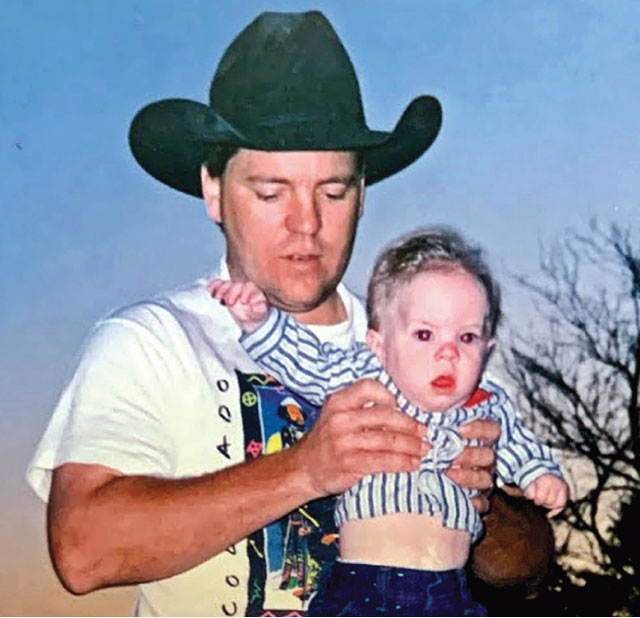
    “We both said we wanted our kids to experience Nebraska High School Rodeo like we did, so we moved back to Nebraska for that,” Julie said.

    Just up the road from the Clarks lives Ray and Kim Brown. Ray, the 1985 National High School Rodeo Finals All-Around Cowboy and Champion Tie-Down Roper, met Kim when he was competing at a pro-rodeo in her native state of California.

    “My mom ran barrels and my step-dad roped, and my grandparents roped. It was just a way we went and had fun together,” said Kim.

    Ray’s parents, Clark and Dorothy Brown, were both very involved and accomplished rodeo competitors who passed on their love for roping and riding to Ray and his brother Billy.
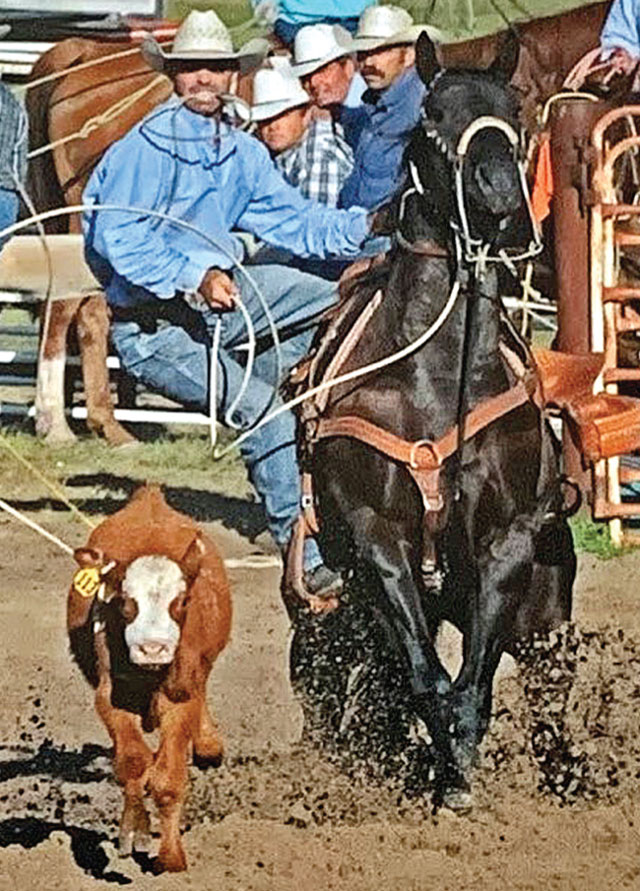
    “I just grew up around it, rodeo has been the only reason how we pay the bills basically,” Ray said. “If you aren’t teaching it, you’re selling it with your horses or through roping schools.”

    There was no question about it when it came to these couples continuing their rodeo involvement with their own children. The next generation of Clarks: Wyatt, Jaden, and Madison, competed alongside the Brown daughters: Brandy (Jamerman) and Bailey throughout youth, high school and college rodeos, just like dad’s J.R. and Ray and their siblings had decades before.

    “Everybody did it before us and we pretty much grew up in the arena,” said Bailey Brown. “When we’re around it everyday, we got to where we just wanted to do it so we wouldn’t have to work the chute anymore.”

    “As much. We didn’t have to work the chute as much,” remarked her sister Brandy with a laugh.

    Brandy and Bailey are Nebraska High School Rodeo champion breakaway ropers, Brandy was also a state champion barrel racer, and both have qualified for the College National Finals Rodeo, competing for Laramie County Community College and Oklahoma Panhandle State respectively as well.

    Back down Highway 83 at the Clark house, there are many prizes of saddles and belt buckles won in the rough stock events by brothers Jaden and Wyatt, following in their dad’s footsteps.

    “I think I was a couple of days old when dad had me spurring his knee with my legs like I was a bareback rider,” said oldest brother Wyatt. “I think it was instilled in me at birth that I was going to be a rodeo cowboy.”

    Wyatt went on to be the National High School Rodeo Association Student Present like his dad J.R., and Jaden would become the NHSRA Student Vice-President a few years later. Wyatt mirrored what his dad had said about his own father promoting roping events over rough stock as an attempt to keep them out of harms way.

    “Dad helped develop our horse-riding and roping abilities. Growing up though, dad, Uncle Jake, Uncle Doug, and grandpa competed in bucking horse and bull riding events,” said Wyatt. “I wanted to be like my heroes, and I felt like I had the grit and ability to be a good bareback rider.”

    Wyatt was a Nebraska High School Rodeo Champion bareback rider, the National Little Britches Rodeo All-Around Cowboy, and qualified for the CNFR in the bareback riding multiple times while competing at Eastern Wyoming College under his coach and uncle Jake Clark, at the University of Wyoming, and while completing his master’s degree at Chadron State College. Younger brother Jaden was a state champion saddle bronc rider, and CNFR qualifier while attending the University of Wyoming too.

    Though outnumbered, Madison Clark made up for the lack of girls in her family by competing in rodeo queen competitions starting at the age of 7, serving as the first National Little Britches Rodeo Little Wrangler Princess in 2004. Madison was also the 2013-2015 Nebraska High School Rodeo Queen and won first runner-up at the National High School Rodeo Queen Contest in 2014.

    “I felt like I had such high expectations watching my brothers,” said Madison. “That’s really what kept me on a straight path of wanting to be the best person I could be.”

    Like her father and brothers, Madison competed on the rodeo team at the University of Wyoming and graduated with her bachelor’s degree in 2018. The rodeo scholarships that the Clarks were able to garner over the years to help pay for college came at the sacrifice of their parent’s time and money, something they acknowledge and are thankful for.

    “I know that our parents got to compete in rodeo vicariously through us,” said Jaden Clark. “My parents ended up not having to pay a dollar for college for the three of us. While they invested in our rodeo careers, they didn’t have to put that money aside over a decade or two.”

    “And instead they were able to spend that time with us,” commented Madison. “We were able to spend more time together than any other family I knew, unless that family rodeo’d.” said Jaden.
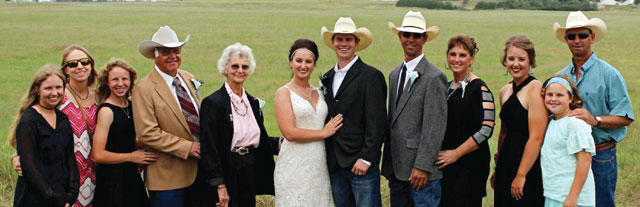
    While Ray Brown had a successful professional rodeo career, and was a many-time Nebraska State Rodeo Association champion calf-roper, he hung up his rope while following his daughters to their high school rodeos as well.

    “My dad told me that. He said you go to all of the rodeos and watch them, because when they’re over, they’re over,” said Ray. “We were lucky that the girls were really competitive and worked at it.”

    As the younger generation of the Browns and Clarks are starting their own careers and families, they are still finding ways to stay involved in the sport. J.R. and Wyatt Clark, and Ray Brown have been working as rodeo judges for the PRCA, the Nebraska High School Rodeo Association, and the Nebraska State Rodeo Association for the past few years.

    “I was a competitor for so many years and I missed it,” said Ray. “I saw that officiating was a great avenue for me to get back in.”

    “I got to be involved with it from competing, to picking up, and even getting to announce,” said Wyatt Clark. “About every position in the rodeo arena, we’ve been involved in one way or another. Continuing on we could go to any rodeo and help step in where needed.”

    Bailey Brown has found success competing professionally in the breakaway roping, having won the World’s Richest Breakaway in Billings, Montana, last summer amongst many other impressive winnings.
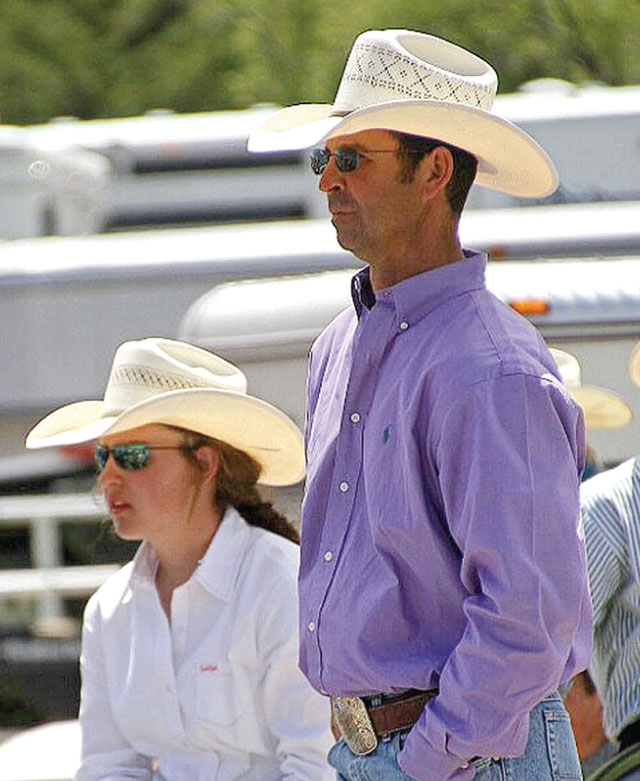
    “I got to buy my permit last year and filled it and it was a great experience,” said Bailey. “A long-term goal would be go to the NFR and show my skill, also just going to the circuit finals and making my goals step by step and rodeo by rodeo.”

    As Madison Clark prepares to get married this summer, she and the rest of the family are looking forward to hopefully sharing the sport with the next generation of Nebraska cowgirls and cowboys someday.

    “I think it’s going to kind of be a no question kind of deal like it was with the three of us,” said Madison. “Letting them have that chance to create a bond with their horse, their siblings and parents. Of course we can’t force them to, but I think just presenting it to most kids I’ve seen in my lifetime, they don’t turn it down when given a chance to compete.”


    *Note* The Clark and Brown families were interviewed about their rodeo experiences and the impact the sport has had on their families for Madison Clark’s master thesis project at the University of Wyoming. The documentary video can be found on Madison’s YouTube page and is titled “Related by Rodeo: How the Cowboy Sport Passes Down Family Values & Traditions.”
  • On The Trail with Colten Fritzlan

    On The Trail with Colten Fritzlan

    The 20 year old just won RFD TV the American in the bull riding with a show-stopper ride aboard Chad Berger’s Safety Meeting. “He had me bucked off a couple times and you ask yourself how bad do you want to win and I’m glad it worked out.” Colten now lives in Lipan, Texas. “I’ve lived in Texas for the past three years; there’s more opportunities for me down here and I wanted to be around it as much as I could.”

    Winning the American was a dream come true for Colten. “When the American started I was in high school and it’s always stuck out to me as somewhere I’d be and to win it was always something I wanted. To put it all together and come out on top – I was blessed to get it done. The Lord put that in my path to win and I’m glad he did and looking forward to weekends to come.”

    The win put $50,000 towards the PRCA standings and $100,000 in his pocket. “I’m savoring how to spend it I’ll put some toward my place or just whatever I need.”

    Colten grew up in Rifle, Colorado, learning to ride at a young age. When Colten’s interest in roughstock turned serious as a seven-year-old, the Fritzlans delved into buying and selling mini bulls, steers, and bulls.


    He competed in the National Little Britches, placing the first year he went. He made the short round in the team roping the other two years. The most instrumental for his bull riding comes from his mom, Velvet, who has been known to pull his bull rope, and his Dad, “I was blessed; whatever I needed I had, along with the responsibilities. Really a person I look up to is Kody Lostroh. I got around him at a young age. We had a rodeo Bible camp every year – He’s a world champion and one of the best guys I’ve met – and always wanted to be like him.”

    Kody taught rodeo Bible camps throughout his career and spent times with Colten at those camps. “I know that Colten is one of those kids that never missed an opportunity to practice so whenever we were bucking bulls he was there,” said the 2009 PBR World Champion Kody Lostroh. “The great athletes that have gone before me have always been my heroes and that inspired me – Colten grew up watching me and I was always around to help him.” Kody resides with his family, Candace, and two daughters, Sheridan and Odessa, in Ault, Colorado, raising bucking bulls and he has a small metal fabrication business. He also guides hunters in the winter – Comanche Wilderness Outfitters, where he is the mountain lion guide. “I’m so proud of the work he’s put in to get to where he’s at. He didn’t get where he is by luck, he’s put the work into it. I’m happy for him and his future.”

    Colten attended college at Western Texas College in Snyder. “It’s a great fit for me,” he said. “That school took care of me really well.” He went there for two years and under the guidance of coach Greg Rhodess, he learned how to take the sport of rodeo as a business. “He taught us how to be strong on the mental side. You get around guys like that – get the job done until it’s done – it ups your confidence and determination.”

    “Individuals like Colten separate themselves from the rest of the pack,” said Greg, who has been coaching for 24 years at Western Texas College. “It didn’t matter what needed to be accomplished he was all in. I don’t think he did any pick up duties before he showed up here and by the end of the first semester, he became handy at it. No matter if it was school or practice, he was all there. He never had to be told something twice – once he decides to nod his head it’s to get the job done.”

    On the physical side of things, Colten hits the gym every once in awhile, but he stays busy. “I don’t slow down at all. I ride horses, pick up bucking horses, and rope. I’ll do drills around the house.” Colten was always better at bull riding because he’s worked at it the most. “Bull riding is my favorite since I’ve been doing it the longest, but I also like that you’re not just competing against the animal or another competitor, but you’re bringing those forces together and seeing how it comes out when you make eight.”


    He admits to doing the other events to stay busy. “I don’t like standing around; I wanted to be a cowboy, just not a bull rider. Riding broncs and roping kept me from sitting around all day waiting to get on.” He competed as a wrestler until he was a freshman in high school. “I had a bad elbow injury and I had to get serious about my bull riding. I could wrestle for four years, or get it healed now and rodeo for the rest of my life.” Colten has had four surgeries on his elbow.
    Last year was his first trip to the NFR, placing 10th, riding 7 out of ten; and winning the average as well as Resistol Rookie of the Year. “I just knew I belonged there and I didn’t want to blow up anything – keep it as simple as I could, knowing my job at hand and that’s it – do my job and win. I’m glad it all worked out.”

    When Covid hit last year, Colten was trying for Houston. “I was 16th in the world. We were out of rodeo for a month or two. It drove me nuts – I didn’t want to be there or liked being there. I stayed in the gym and kept going to the practice pen. I knew when there was a rodeo to be at, I would be.” Cave Creek was his first rodeo back and he won second and it continued from there. He broke his jaw in July and the injury took him out of some of the summer rodeos. “I got jerked down and broke my jaw on both sides – they put plates and screws in my mouth. It wasn’t fun, but what I did during that time is hang out at the house, rode my colts and horses, and worked on my ranch pickup.”

    His win at the American will help keep him in the lead heading into summer. “I want to win a world title,” he concluded. “I didn’t get my bulls rode last year – they give you ten head and I fell short of riding all ten.
    The long term plan for Colten includes “a big old ranch with a bunch of horses and cows. I’d like to have some good pick up horses as well as a set of bulls for kids around to learn off of.”

    In the meantime, his advice to the younger generation coming up is to work at it every day. “It gets you down, and that’s when you get up and try harder. Don’t quit and keep going.” Colten knows that first hand. He was plagued with injuries at a younger age. “I couldn’t ride anything or anywhere. It was rough. I knew it was for a bigger reason and I got a hold of some different people to change my mentality and here we are.”

  • On The Trail with Jackie Crawford

    On The Trail with Jackie Crawford

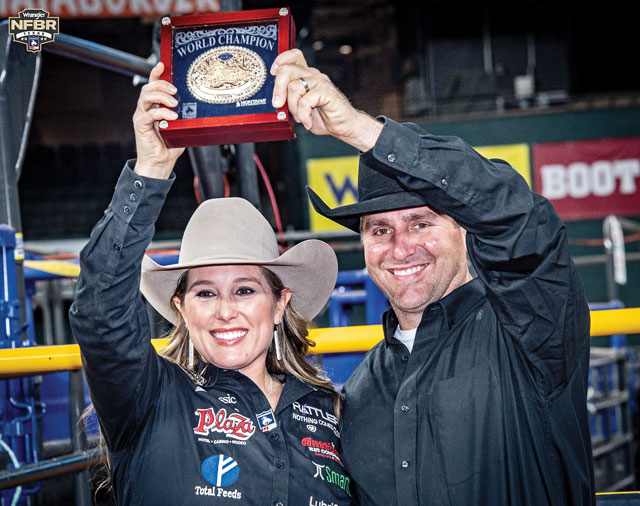
    Multi-talented Jackie Crawford won the 2020 WPRA (Womens Professional Rodeo Association) Breakaway Roping world title by less than $2,000. Her performance at the first ever Wrangler National Finals Breakaway Roping held in Arlington, Texas, propelled the 38-year-old to win her 20th (WPRA) World title. This isn’t her first Breakaway World Championship, she has won the WPRA title in 2016 and 2014. She is the second most decorated member of WPRA, trailing the late Wanda Harper Bush, also an inductee of the ProRodeo Hall of Fame, who won 32 titles during her rodeo career. Jackie’s other titles have been in All-Around, Team Roping, Tie-Down Roping plus she also barrel raced.

    The National Finals Rodeo, held in December happened to coincide with Jackie being six month pregnant with her daughter, due in March. “At first I wasn’t sure if I would compete. It was a bittersweet feeling because we have worked so hard and been on this journey to bring breakaway to this level; so to watch the inaugural year from the sidelines would have been tough. After much discussion with my family, doctor, and prayers, I told myself as long as I was comfortable, I was going to compete!”

    Jackie makes her home in Stephenville, Texas, with her husband, Charly; their daughter, Kaydence, age 16; and three year old Creed. The 38 year-old said, “I cut the horn off my saddle, to protect the baby. I trust my horse, T-Boy, so much and had so much confidence in him.” She had continued to compete three years ago until she was five and a half months pregnant with her son, Creed.


    The National Finals Breakaway Roping event was ten rounds, then they took the top eight into a shoot-out round, followed by the top four. Jackie managed it all. She even went back to the judges in Round 5 and admitted she had an illegal catch (the calf’s back leg in the loop) that the judges did not catch. The judges listened and changed her score to a ‘no-time’. But in spite of her honesty, winning $25,536 with two go-round wins, and placing in four rounds, she came out on top, with a total for the year of $47,185.
    Jackie thought the National Finals event was an awesome time. “I was suppose to be on that journey . . . what a way to end on a high and take a break!” She and Charly have named the ‘soon to be born little girl’ Journey.

    “My mom (Annette) and dad (Mark Hobbs) rodeoed in Illinois. My dad and his brother are the only two to win the National High School Finals Team Roping from Illinois.” Jackie explained that her mom cut the middle out of a foam pillow, for the saddle horn, and that is where she rode. Her mother was well known for training barrel and roping horses and she was inducted into the Murray State College Rodeo Hall of Fame. “You can’t have a cake without the ingredients – in other words, it took a good work ethic, dedication, horses, coaches, and sacrifice – you have to be willing to put it first,” said Annette, who got her work ethic from her dad.

    Jackie began competing in junior rodeos in barrel racing, poles and flags. When they moved to Oklahoma she added roping. “I was drawn to it – I was meant to be a roper. I turned my barrel horse into a roping horse. I started competing my sophomore year in high school.”

    Before they moved to Oklahoma her mom worked at Fairmont Park Race Track in Collinsville, Illinois. In Oklahoma she went to work for Blue Ribbon Downs, in Sallisaw, while she studied to be a radiologist. Jackie began working there cleaning stalls when she was 14. She got her pony license at 16. “To this day I have scars on by body from ponying horses. It taught me to appreciate a good minded horse and what those horses are, and what they do and how athletic they are.”

    Her first team roping horse came from the track. “I team roped and barrel raced off that big impressive bay gelding,” she said. “I sold him to buy my first truck – a 1996 extended-cab Dodge. It was the coolest thing in the world to me; I got to go to college from that horse.” She had several full scholarships from colleges in her area of Oklahoma. “Wanting to be the best and being so competitive I wanted to go to the toughest place there was. I knew the southern region was the toughest region. I took a scholarship for less money to go to Vernon Regional Junior College, Texas.” As she expected the competition was something she’d never seen before. She did win the NIRA Breakaway Roping Championship which helped the Women’s Team win that year, as well. “Iron sharpens iron and that was my mentality.”

    Jackie then went on to Tarleton State University, in Stephenville, TX, with her best friend in college, Tessie McMullan Doyle. They pushed each other every day to become better competitors. Their women’s team won the National title their senior year, 2005
    After college she went to work for Lari Dee Guy, in Abilene, TX, riding colts training roping horses, whatever was necessary. She admits she learned a lot. In 2009 Trevor Brazile won the calf roping and team roping on Sans Diamond Shine at the World Show and the owner of the horse sent us a bunch of that stud’s colts to train. “They were all good horses and I bought T-Boy out of that group,” she said. At first they didn’t get along. “He was so quirky, and we went through a battle,” she admits. “I had the feeling there was something about him – he isn’t fancy. He was a problem and hard to get to work, but he had an ability to win.” When he was five she took him to Joe’s Boot Shop that had a five-header and he won. He has been taking her to the pay window for a decade. Today she says, “He’s just a phenomenal horse. I don’t think anyone can dispute the fact he’s probably the highest money-earning horse ever in breakaway roping. He’s just a winner.”

    Jackie met Charly through the roping world. She was dating a mutual friend of his. “I thought she was a buckle bunny,” said Charly. “It turned out that wasn’t the case at all. We became friends and had a lot of things in common. One year she needed a head horse for the World Series Finale in Vegas so I let her use one of mine, and it went from there – I could tell right way it was a fit.”

    Charly started roping at a young age in Canby, Oregon. He roped with his dad and made it to the National High School Finals three times. He graduated in 1996 and went to Central Arizona College for two years. “I got my PRCA permit when I was 17 but didn’t have enough horses to really compete.” He bought his PRCA card in 1998 and won the Resistol Rookie (header) of the Year in Team Roping. He’s made 10 appearances at the National Finals which included 2020, when he and his partner, Logan Medlin, won the 7th go-round. He plans to slow down and concentrate on his family, his roping schools and clinics. “I’ve gotten five heelers to the NFR so I figure I better take that talent and use it to put on schools and lessons. My daughter wants to make the UPRA and CPRA finals this year so I want to help her as well as help Jackie however I can. I’m good with being a good dad and husband.”

    Jackie graduated with a degree in Business Administration, which she admits has helped her with communication, sponsorships, and everything else that goes with rodeo. She has hired Cheyenne Britain that acts as Jackie’s ‘right hand man’. “She helps me saddle, unsaddle, drive and everything in between. “I hired an agent and a social media person,” Jackie explained. Charly and Jackie are restructuring their program so they can do the things a replacement can’t do. “Nobody can replace a mother, a dad, wife, husband or a competitive roper,” she said.

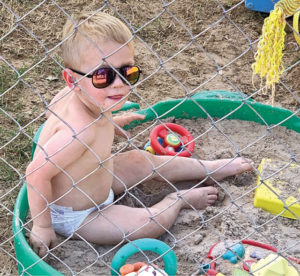
    Creed has grown up in the arena. “We have huge play areas set up inside a 10×20 chain link fence; slides, jungle gyms, etc.,” said Jackie. “In between horses, we play and do what we need to do.” The plan is to keep going. “Our biggest goal as a family is not to be broke cowboys – rodeo doesn’t have a 401K.” Jackie’s initial goals were to be in the conversation of the greatest women ropers in the world and get inducted into the Cowgirl Hall of Fame. Now that the doors are opening to breakaway roping opportunities, her goals are changing, but in the end she wants “to know that no matter what, I’ve accomplished the things, I’ve worked for. I did it and stamped my place in history … a sigh of relief that the first NFBR is in the books. Let’s rock on and keep this ball rolling. I’m so fortunate to do this – I get to be with my kids. Even though we are working, we are all together as a family all day. How many people get to say that.”

    “My vision for myself is continuing to help put this sport in a position that when I’m too old to do it, I’m sitting in the gold buckle seats watching my daughters roping at NFR.”


    CHAMPIONSHIP WINS
    2020 National Finals Breakaway Roping
    2016, 2014 Womens Professional Rodeo Association (WPRA) Breakaway Roping
    WPRA All-Around 2019, 2018, 2016, 2015, 2013, 2011, 2010, 2009 & 2008
    WPRA Team Roping 2016, 2014
    WPRA Tie-Down Roping 2014, 2013, 2011, 2010, 2009, 2008

    2003 National Intercollegiate Rodeo Association Breakaway Roping for Vernon Regional Junior College
    2003 National Woman’s Team for Vernon Regional Junior College
    2005 National Woman’s Team for Tarleton State University
    2000 Oklahoma State Champion Breakaway Roper
    2020 Betty Gayle Cooper Ratliff Fast-Time Award see story on pg 43
    Sponsors:
    American Hat, Ariat, Smarty, Hay Chix, Classic Equine, Rattler rope, Classic rope, Martin Saddlery, LubiSyn, Chute Help, Plaza Hotel and Casino, Total Feeds

  • On The Trail with Rider Kiesner

    On The Trail with Rider Kiesner

    Rider Kiesner has performed in every state and 15 different countries. “When I turned nine I got a Will Rogers trick roping kit for Christmas,” said the 29-year-old from Ripley, Oklahoma. Rider grew up as a fifth generation cowboy on his dad’s side and third generation on his mom’s side. He was competing in Youth and Little Britches rodeos, winning his first buckle when he was just 5 years old. Today he is a two time World Champion All Around Western Performer, four time World Champion Trick Roper, as well as a two time World Champion Gun Spinner. He has performed at the NFR seven times as well as the Ram National Circuit Finals and several circuit finals.

    He mastered the art of trick roping by pushing the living room furniture back and watching instructional videos over and over until he mastered each trick. “My dad (Phillip) trained Arab English horses and had as many as 30 horses in training.” His great great grandfather leased out horses and had a turn of the century full city block, three stories tall. The bottom floor held all the horses; the second and third floors were for the wagons. He leased out horses to all sorts of companies that needed horses to deliver things.


    “My grandfather would stop at wherever the train would stop and unload ten teams, based on whatever the logging camp needed.” said Phillip. “They would check them in and go to the next one. He had around 2,500 head of horses in Northern Minnesota that were used for loggers.”

    Phillip’s dad trained saddle bred horses in the late 60s and 70s, and then switched to Arabs – that’s where the money was. Phillip grew up training horses. He also competed in high school rodeo in saddle bronc riding. He met his wife, Julie, who was the Minnesota High School rodeo queen and qualified for the National High School Finals all four years and was state champion in barrel racing. They met when they were 24 and 25 and married within a year. They took a job training Arabs in Oregon and got into cutting and reined cow horses. “We moved around a lot training quarter horses,” said Phillip. “Rider was born in California. Roper was born in Colorado.” Phillip trained out of Randy Dunn’s (Bath Brothers Ranch) ranch in Laramie and trained for notable breeders as the Merritt’s in Laramie, Wyoming.

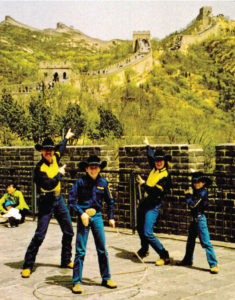
    Rider had gone to kindergarten in Laramie, the school was 30 miles west of Laramie and there were 13 kids enrolled. “They taught us to say yes ma’am and no ma’am,” said Rider. The family moved to Penrose, Colorado, and bought a house with 80 acres, where they continued to train horses and give riding lessons. After Sept. 11, 2001, it all stopped. “We got one gift each,” said Rider, whose gift was a trick roping set. The family was forced to sell their place and start down another path. “We started doing a mini Wild West show at rodeos. Dad started with cowboy mounted shooting, adding clowning and I would do rope tricks, and Roper did the trick riding. That’s how we made a living until I was 18.” The family booked enough little rodeos to fill their card. By 2005 the family was working some of the most prestigious rodeo in the PRCA. Not only did the family spend four months in Bejing, China in 2004 producing rodeos, but “my dad produced the first rodeo in Lebanon. It was really fun.” The family did everything during the rodeo. “I was the bull fighter .. we were in charge of the back pens and competed in every event … that was in 2010 – I was 18 Roper was 16.”

    Julie’s role was throwing props, occasional mounted shooting and keeping it all together. She also kept all four paint horses white along with the four white shirts. She also home schooled both boys. “I’d bathe them in the mud and snow – we lived on the road full time for ten years – we started with a four horse trailer with a four foot dressing room. The only splurge we did was an air conditioner … we all slept in the gooseneck of that trailer. It was the time of our lives .. we were all together and we had everything with us. It was absolutely phenomenal.” Julie still competes in barrel racing.

    “I am certain that God has a bigger plan … none of this would have happened if we hadn’t gone broke after 9/11,” said Phillip. “It was such a huge blessing – unanswered prayers… there was nothing I could do. It opened up the world to all of us.”


    They got their pro cards as team ropers. “I always thought I was going to be a team roper, but God had other plans.” Roper rides saddle broncs – and has gone to the Prairie Circuit finals 8 times. He makes knives (see page 114) The brothers often end up at the same rodeo. “We played golf and tennis yesterday.”
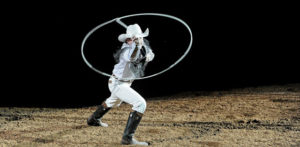
    Rider has added barrel man and clowning to his skills. “I was so bad as a clown at the first…I’m not funny and I don’t want to die.” He’s gotten better at it over time. “I do all the walk and talk – I try to make my own twist on it – I do fire eating and juggle – I’ve been doing that since I was six. I was also the 2012 Kansas State YoYo champion, so I do that too.” Rider remembers hearing Flint Rasmussen saying he made his own twist on rodeo clowns, so Rider took that to heart. “I like to perform – I have a lot of tricks and props and jokes.”
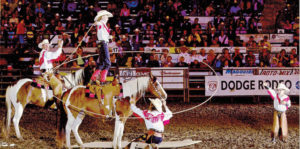
    The pandemic has been challenging for Rider. “I lost all my rodeos, but I got on the phone and hustled to get some other rodeos. I did a handful of rodeos and that filled in the gap. I did a lot of driving – from Florida to Montana. I had a better year than most, so I’m grateful.” He performed at the Cervi ranch last month. “Cervi is one of the biggest stock contractors that hired me – that was a pretty short notice and he called me up and asked if I would do it. He didn’t have to have acts – so for him to have me and perform at his house – he’s one of many stock contractors that have done a lot for me. I felt like I was performing at Dances with Wolves … it was awesome.”
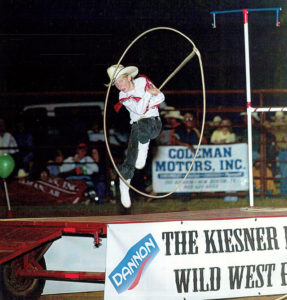
    Rider has been nominated for Coors Man of the Year as well as nominated for Dress Act of the Year for the seventh year. “I’ve built a truck with a stage on it; I’ve got pyro on it, and I do a lot of trick roping on my horse. Bethany and I are on the road, so I’ve got all the acts as a bigger wild west show act … just like I did as a kid. Without God, none of this would be possible.”


    Bethany Iles

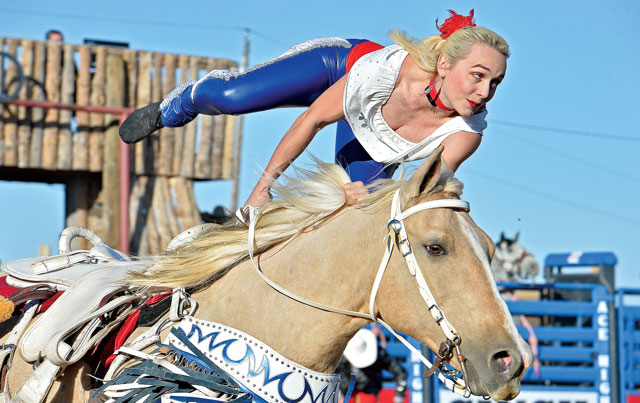
    “He’s the guy I’m going to end up with,” said Bethany Iles, who started 13 years ago as a trick rider. “My family was not rodeo – we had the white picket fence house.” After taking horseback lessons at 9, for about three months, the lady who was her coach now was about to get married and they put on a little trick riding show for the people trail riding. “My twin sister (Brittany) and I decided that’s what we wanted to do. We took lessons from her and about a year later we were doing some rodeos around Missouri.” When they were 18, they started trying to get their pro card. “She had a couple wrecks; she broke her back and neck and that stopped her trick riding.”
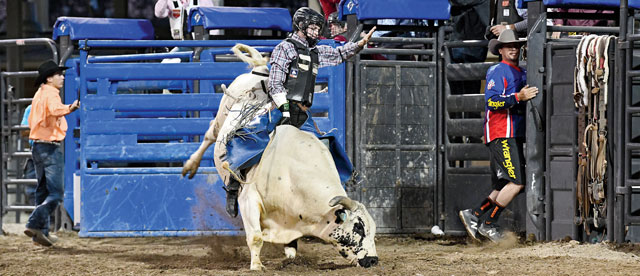
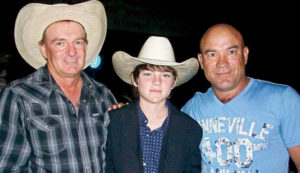
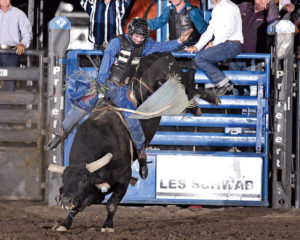
    Bethany went out on her own and has now joined up with Rider. “We have a lot of the same goals – dress act of the year and always to be better. I’m always working to improve to be better at what I do. Both Karen Vold and Linda Schotlz inspired me. I love God and He has been a big part of what we do. I want to be a light for Him and being an example is what I want to do.”


  • On The Trail with Ky Hamilton

    On The Trail with Ky Hamilton

    Ky Hamilton grew up in Mackay Queensland, Australia. “I actually grew up in town. My mom (Sharell) and dad (Micheal) had a house in town. My dad’s family lived three and a half hours south on a ranch – so I got to do cowboy stuff on the school holidays and stay with them. It was great.” Ky’s time in town was spent playing rugby and racing motocross with his brother, L’Koi. He also spent time watching PBR on TV. His dad drives a garbage truck, and his mom is a teacher’s aide. He rodeoed in America for the first time at the Junior High School Finals in Des Moines, Iowa, when he was 15.

    “I was always interested in bull riding,” admits the 20-year-old sophomore at Sul Ross University. “I bugged my dad enough to let me do it. I started riding steers when I was 12.” Ky and his dad did a lot of traveling chasing down the rodeos – from one to three hours for one rodeo. “He drove me everywhere- it was always me and dad on the road.”


    His determination to make it to the number one spot in the PRCA was instilled by his father. “This isn’t a sport that you can be half-hearted in – you’ve got to be 100% or it isn’t going to happen.” He learned the technique from his dad and Troy Dunn (1998 PRB Champion – only Australian). “He helped me out when I was 15 and he took me a lot further in it.” When Ky turned 18, he started doing the PBR in Australia. “I did that for about six months and then moved here.”

    “I always wanted to ride bulls professionally from the states and win a world title. I thought college was a great way to get started. CJ got a hold of me and offered me a scholarship and it’s opened a lot of doors for me.” He compares the caliber of the bulls here to those in Australia. “The bulls are definitely a big difference. I’d say 6 out of 10 at home are good, here it’s 9 out of ten. Over here there are so many events to go to and the money is bigger. I didn’t get to ride as much in competition at home as over here.” He admits to missing his family and not much else. He hasn’t been home since he came over two years ago. “My parents have come over here.”

    “He is probably one of the hardest workers I’ve ever coached in 14 years,” said CJ Aragon, his coach at Sul Ross State University in Alpine, Texas. “He’s a really good student in the classroom and the arena. Everything he does is at a high level.” CJ shares Ky’s workout routine at the University. “He goes to CrossFit at 5:30, and then runs up the hill – the hill behind campus is a mile and a half up to the top – basically the equivalent of 50 flights of stairs. We’ve gotten to where we can do it in 9 minutes to the top.” After the hill, Ky goes to the gym with the steer wrestlers and then he goes to classes. “If he is heading out to rodeos, he turns his work in early and stays on top of it.” One of his classes is with CJ – Event management and Planning. “He’s one of those students that is coachable. He wants to be good and he’ll work really hard at it. On the dash of his truck is a book – Mind Gym – and he’s read it a few times.”


    Whenever his travels take him close, he stays with Cody Lambert, who qualified for the National Finals Rodeo nine times between 1981 and 1993, consisting of seven trips in bull riding and three trips in saddle bronc riding. In 1992, he was one of 20 bull riders who helped establish the PBR; he’s been selecting bulls for the organization’s events ever since. “He’s a really good kid that’s worked hard and come a long ways in the year and a half that I’ve known him. I’ve gotten to know his parents and they are really good people that have instilled a work ethic and a level of respect for people – and appreciation – I can say he’s represented his country and his family and his sport really well.”

    Ky has a few online only classes that he can do while heading to rodeos. He is in his second year at Sul Ross, majoring in Industrial Technology – learning everything from welding to woodworking, small engine repair and industrial drawing. His real love is riding bulls.

    “I like it so much; when you love something that much, you do whatever you can to be better at it. There are a handful of guys out there that will go down as great – if I want to beat them; I’m going to have to work at it very hard.”

  • Back When They Bucked with Roy Lilley

    Back When They Bucked with Roy Lilley

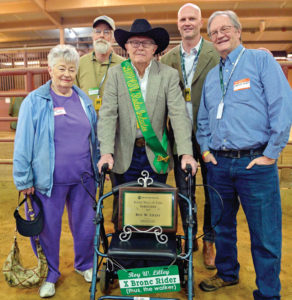
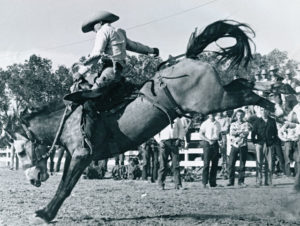
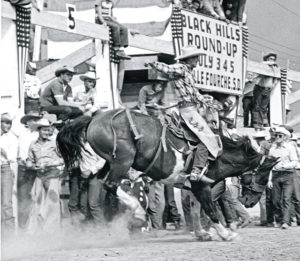
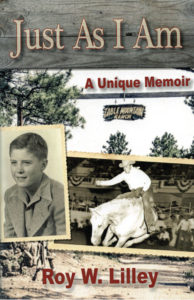
    “I’m pretty talkative and used to edit a magazine, so it just made sense to write a book,” said Roy Lilley, the 90 year old rough stock rider from Fort Collins, Colorado, who wrote a 567 page memoir called Just As I Am. The book took three years to complete.
    Born at the Table Mountain Ranch in Virginia Dale, Colorado, Roy was raised on the family ranch with two older brothers. “We had a lot of fun – and did a few ornery things. I followed my older brothers around everywhere.” His dad (Charles W. Lilley, Sr.) managed a family ranch. At the age of 10, the family moved to Fort Collins and his dad went to work for Producers Livestock in Denver and eventually the family moved to Lakewood.
    Roy worked on a dude ranch (Trail Creek Ranch) from the time he was a junior in high school. “As soon as I figured I could ride the milk cow, I entered the Larimer County Fair in the bull riding.” He borrowed his brother’s bull rope, Pete Burns spurs and came real close to riding a good bull. “He bucked me off hard on my shoulder, and I had to ride with my right hand the rest of the summer.” He was determined to rodeo. “My older brothers were doing it and felt like I could do it.”

    The first rodeo he went to, he drew a little bareback horse and won sixth – that was the first bareback horse he got on. He won a little money and that’s what gave him the encouragement to keep on. He had some natural talent.
    He spent the summer working at the dude ranch and rodeoing on the weekends. He started college at Colorado A&M, now Colorado State University and joined the rodeo team. He majored in animal science and joined the livestock club. “I didn’t go to the rodeo club right at first, but my brother managed the college rodeo that spring so I rode a bareback horse at that rodeo.”
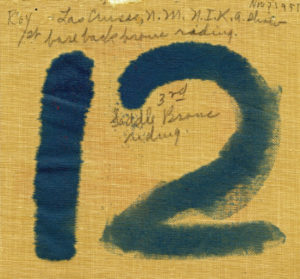
    The next year he started riding saddle broncs. “You learned by doing,” he said. “I got my NIRA card the first year they had them (1949) and won the bull riding at the college finals in 1952, my senior year.” Following that, he had the best summer of his career. He won the amateur bronc riding at Cheyenne and the pro rodeo in Loveland. “I had a really good year,” he said. He was second all around and second in all three riding events for the year in the NIRA, getting beat out by Jack Bushbaum. The finals were held in Portland Oregon and he split the bronc riding 3 and 4 with Cotton Rosser. “Cotton Rosser said that I made one of the best college bull rides he had seen at the NIRA Finals Championship rodeo. That meant more to me than anything!” He can remember the ride jump by jump to this day.
    After graduation he went to Korea. “I had just rodeoed that summer just waiting to be drafted – we were deferred if we kept our grades up during college.” He was a supply sergeant for the field artillery of the Army. “I was there when the war ended and we were having a fire mission at the same time – we sat around for 10 months after at the demilitarized zone.”
    He came back to the United States and got out of the Army on June 20, 1954 and was on a bareback horse two days later at Woodland Park, Colorado. “I’d gained 20 pounds and hadn’t been on a horse since I left. I figured I could pick up where I left off. I rode the bareback horse and the saddle bronc in a haze and got bucked off more during the next three months than I had the three years I was rodeoing. I was drawing good and riding bad.”
    He kept at it. “I wanted to get good enough so I could quit with some pride. My problem was I was thinking too much.” He gradually got better and by the time he quit in 1956, he was pretty good. He quit riding bulls when he came back from Korea. “I had an epiphany in Korea,” he said. “All of my injuries came from being stepped on by bulls.”
    He knew he would never be good enough to make a run for the NFR, so he mostly went on the weekends. In 1955, he rode both of his horses in Cheyenne. That’s when there were five big rodeos close by and he made all of them. The further he got from home, the broker he got. “Pulling into Durango, I blew the oil line on my 1955 Chevy. I spent my last few bucks fixing that and borrowed enough money to buy gas. He made it home and kept going for another year. He placed at three out of the last four rodeos he entered before he quit.

    Roy was 26 and living at the farm at home. His dad was working in Denver and got a job as the director of the first school lunch program in Denver. He knew the director of American National Cattlemens Association (now called the Beef Association), and he was looking for an assistant. “I was rodeoing soso and my dad got really sick and I decided to get a job.” He applied for many different jobs and finally got the job as the assistant for $350 a month.
    “It was the best thing I ever did – it was a great job. I worked there for four years,” he said. He met his first wife, Ingrid, at the dude ranch and they dated. “I wanted to impress her, so I entered a rodeo. I hadn’t been on a bucking horse for four years, but I’d broke a few colts. I drew Pretty Sox, the best draw Earl Anderson had – I qualified on him, but Pinto Pete drove my head in the ground.”
    He got offered a job in California as the assistant director for California Cattlemens. He moved out there in August and started riding broncs again in California for the fall. He didn’t like California very much and missed Ingrid. He flew back to Colorado, picked her up, and they were married in Ely, Nevada on their way back to California. Their daughter, Elizabeth, was born but the couple didn’t make it and eventually divorced.
    He got a job as the Executive Vice President of the international Brangus Breeders association in Kansas City. His next wife, Maxine, had two kids when they married and they had another one, Jennifer. They moved the office after seven years to San Antonio. The couple lived in Beorne, Texas. He worked there until 1979. After 17 years, he left that job and became executive VP of Nebraska Stock Growers – later Nebraska Cattlemens and stayed there 17 years as well. Maxine passed away in August of 1991. “I owed whatever success I may have had from the fact that I learned from my mistakes.”
    He retired in 1996 and married Donice in 1997. The couple settled in Fort Collins and Roy is active in the community with Larimer County Office of Aging. He is also part of the Alumni of Colorado State University rodeo team. He and Donice are enjoying a quiet time of old age together. “A guy at 90 doesn’t make long range plans. I’ve enjoyed my life.”

  • On The Trail with Malcom Heathershaw

    On The Trail with Malcom Heathershaw

    Malcom Heathershaw will spend the next few months healing up from breaking both bones (ulna and radius) in his left arm. “I drew a pretty wide stud and I was the first one out. I was three seconds and my stirrup on the left side snapped off – it sling-shotted me off the left side. My body weight folded my left arm. I tried getting up – it hit me like a bullet.” He had surgery where they inserted two plates and now is healing.

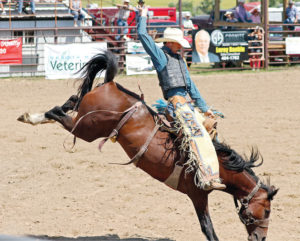
    The Quinn, South Dakota, cowboy started riding steer saddle broncs in junior high and got on his first saddle bronc in eighth grade. He got his start by his dad (Mike) and other family members. “I have a lot of cousins that do it.” The biggest thing that helped me this year was a new practice that has been set up in New Underwood, SD. Louie Brunson started a weekly practice deal and everyone came down and provided us with a chance to get better. There have been a lot of rough stock coaches and pick-up men that have come to help. It was there that I really made a change for the better last spring. If you stick to it long enough you can always change the outcome of your goal.”


    “I can relate that to my dad. His parents weren’t big on rodeo and he grew up learning from his older brother and mainly taught himself. He was very talented in his younger days – went to some pro rodeos – but as he got older he went to amateur rodeos and was in it for the sport of it instead of the world title.”

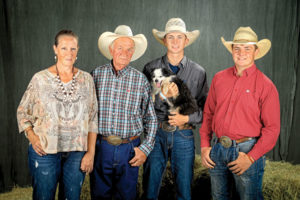
    “These older guys are giving back to the younger boys,” said Mike, who ranches and raises commercial cattle and Quarter horses. Mike helps several of the boys in his community. “I just liked to ride and they kept paying me for a little while in my younger days. I got to know and helped a lot of the younger boys get started back in the day and now they are giving back to my son. You can’t teach them anything on their back, but once you get them staying on, it’s another level.” Mike hopes that Malcom will pursue college. “We are paying for his tuition on the installment plan. I can throw things at him and he learns. He’s about to go to the next step and take advice from his cousins, who have won many Saddle Bronc Titles themselves, Cash Wilson and Jeremy Meeks.

    Along with a commercial cow herd the family owns Rockin T Quarter Horses. “We raise 15 to 20 baby colts a year,” explains Anita, a Title 1 teacher at Wall School in Wall, South Dakota. “In August, we take the colts up to the shed and spend three or four days halter breaking them. We do it slowly and then we sell them private treaty – we get a lot of repeat customers. My dad used to raise horses, his goal was to raise good looking buckskins.” They raise horses that can be used on the ranch or rodeo. “Our goal is to raise some nice bloodlines and good looking horses.” Malcom gets on the younger horses and gets them going good.

    “It’s a lot of fun,” said Malcom. “It’s a humbling experience doing that – it carries on to people – you’ve got to be able to read stuff to work with animals and it helps me deal with people.” Malcom is a junior and heads to school at 7:30. He used to drive in with his brother, Matthew, but since Mathew plays football, they take separate cars. They both drive older model Cadillacs. His classes include science, English, history, and math. “I’m a history buff, so I like that class.” Matthew and Malcom are a year apart, with their birthdays falling July 18 and 19.


    Matthew is a calf roper. Both boys started in steer saddle bronc riding and roping calves. Once they got to high school, they each chose to focus on one event – Matthew stuck with tie down roping and Malcom went with saddle bronc. Riding broncs has become Malcom’s passion – growing up he excelled at football and basketball and is a very good student. “You’ve got to find your passion and he’s developed such a passion and a drive for saddle bronc riding – he thinks about it all the time,” said his mom, Anita. “When he started riding this spring he was really struggling, his dad, who is his main coach and who has mentored many young cowboys worked hard at trying to figure out the problem. He ended up getting a bigger saddle and that seemed to help a lot. His dad and he are so dedicated to get where he wants to be.”

    Malcom ended his year fourth at state finals. His year started out rough – with the help of the practice pen and a new saddle, he got better each time he rode. At Nationals he ended up fourth as well. “I knew I was placing pretty good going into the short round and knew if I I just stayed on, I might get up there because the horses in the short go were tougher. I was ready to do good. My horse was probably one of the better horses I’ve gotten on; nice and smooth and even and I could show him off a little more.” It didn’t sink in that he ended up fourth in the nation for a few hours. “I was in awe that I got that far.” His goals for the future are to get better at rodeo, go to college, and keep performing at a higher level. “I know I want to continue to rodeo and work at the same time but I want a steady job to pay the bills.”