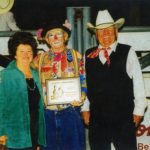
Rodeo Life

Category: Rodeo LIFE Cover Feature

  • Back When they Bucked with Jim Aplan

    Back When they Bucked with Jim Aplan

    Jim Aplan grew up in Casey Tibbs’ shadow.
    The Rapid City, S.D. cowboy was born in Casey’s hometown of Ft. Pierre, S.D., and Jim followed Casey and his rodeo buddies down the rodeo road. But since Tibbs was two years older, Jim’s mother wouldn’t allow him to travel with the soon-to-be-famous cowboy, and Casey went on to national fame and recognition while Jim stayed closer to home.
    Jim was born in 1931, the youngest child of Frank and Helen Fischer Aplan. His family owned Fischer Bros. General Store in town, and anything that happened in the county was “duly reported in the general store,” Jim said. “I was always kind of thrilled with the cowboys who came into the store,” he remembered, “much to my family’s dismay. They were dead set against anything rodeo.”
    Jim’s mother’s family, the Fischers, also owned two large ranches, and even though they were in the cattle business, there was no tolerance of rodeo. “Of course, wherever the cowboys were, you could find me.”
    The rodeo bug had bitten Jim, and he loved to follow Tibbs and another South Dakota cowboy, Billy Myers, as they went to rodeos. Tibbs and Meyers won money at the Ft. Pierre rodeo, and went on to Huron, and Jim followed. He was only sixteen, and hadn’t gotten permission from his mother, so she sent after him to come home. Tibbs and Meyers went on to compete across the country while Jim stayed home.
    His mother sent him to a boarding school in Canon City, Colo. The school had its own herd of horses, with students caring for them, and it had its own rodeo. The first rodeo paycheck Jim won was in the wild cow milking at that school. He graduated from boarding school and went on to junior college in Trinidad, Colo.
    That’s where his pro rodeo began in earnest. He was befriended by stock contractor L.D. Ward, and traveled with Ward and rodeoed. It got him away from his family, which was an advantage. “I couldn’t rodeo in South Dakota. Too much pressure. A lot of families encourage their kids in rodeo. Nobody encouraged me, they discouraged me.”
    He worked all the events as he traveled with Ward, but the saddle bronc riding and bull riding were his strength. He was best at the bucking horse riding, mostly because he’d grown up breaking horses. “I could ride a tough horse, but nobody ever showed me how,” he said. “I never looked very good doing it. I could usually place because I didn’t buck off. That’s how I got by.”
    Jim’s rodeo life might have looked a lot different if he’d have gone to North Dakota in 1955. All-around hands Jim and Tom Tescher, excellent bareback, saddle bronc and bull riders and bulldoggers as well, asked him to come north with them for the summer. “Had I done that, it would have helped me,” Jim said. Instead, he went to work for East Coast rodeo producer Jim Eskew, who was well-known for the western entertainment at his rodeos. Aplan fought bulls and clowned for him, and competed as well.
    In those days, nearly anyone would work as a bullfighter, and at some rodeos, the cowboys would stand in the arena, in front of the chutes, and randomly step out in front of a bull during a ride. “It sure made me mad when they did it to me,” while he was riding, Jim said, as it could ruin a ride and the score.
    There wasn’t much training for bullfighting in those days. “It wasn’t like today, where they go to school for it and learn moves. Then we just got out there and did it and hoped we didn’t get killed or get some rider hurt. That’s the nightmare of all bullfighters.”

    Full story available in our June 15, 2015 issue.
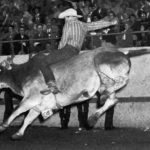
     

  • ProFile with Macy Fuller

    ProFile with Macy Fuller

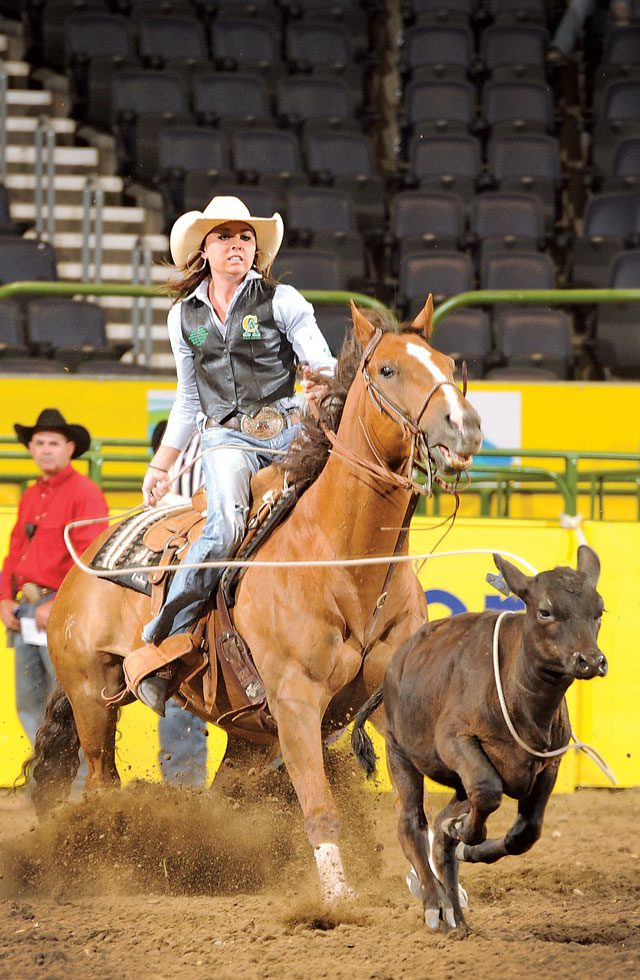
    Macy Fuller has spent her time since graduating from Central Arizona Community College searching for a barrel horse for the CNFR. “I’ve tried four so far,” said the defending Women’s All Around Champion, who is entered in three events this year – barrels, breakaway, and goat tying – the same events she has qualified for in the past four years. “My black horse is out until September, so I need to find one for the whole summer. The barn at the college finals is tiny, and indoors, so I am looking for a horse that fits that as well as the big outdoor arenas that I’m used to running in.”
    Her favorite event is a toss-up between tying goats and breakaway. “The goat tying I’ve really studied and I can give a lot more back with my style,” said the young lady that spends endless hours coaching students. “People ask me what I’m going to do when my career is over – and it’s not – it’s just beginning. I’ve got an outstanding stud and I want to give him every opportunity that I can.” The stud is Heza Judge of Honor, and she is excited to enter him in futurities. The other thing Macy is excited about is giving back all her goat tying knowledge to her students. “I have a few schools for the summer, but I like to do it over and over with my students and watch them progress slowly. When I’m in Arizona I have a goat practice every Tuesday night and we have fun and hang out. You really get to know them and that’s what I want – a long term relationship with the kids to make sure they are getting the most out of it that they can.”
    The style she teaches is one that she picked up through the years with the help of her mom, Karen, who made the college finals and was reserve champion goat tier. “I didn’t ever go to any clinics – it was me figuring new things out. Some kids use the style now – I get off late and flank by the collar and gather in the air. I don’t hang on the side of my horse at all. My horse is truly amazing and is so fast – when he feels me make a slight move, he slows down.” Now that her career chasing a goat tying title is about over, she is excited to have sold this amazing horse. “I’ve had him since he was six and he’s 19. Kaiden Ayers is the new owner – from California. I can’t wait … she has fire in her eye and likes to go fast so it’s a perfect match.”
    Macy got her start in rodeo through her dad, Mike, who was rodeoing hard when Macy was young. “When I was three weeks old, I’d been in 17 states while my dad was trying to make the NFR. I actually enjoy being in a truck – I don’t think I’ll ever stop traveling. It’s too much fun and I can’t imagine staying at home. I love to see new people and new rodeos and have fun going.” Mike finished 16th a couple different times, missing the NFR by just a few hundred dollars. He and Karen were college rodeo coaches at LCSC in Washington State, which is where Macy grew up. She continues to hold the record at the National High School Rodeo Association as the only person to win seven consecutive All Around championships at the junior high and high school level. She had plenty of opportunities to practice during those years in Washington and credits her dad with training all the horses she rides today.
    “He makes sure that if one’s down, I’ve got another one,” said Macy. “He and my mom always make sure I have the best opportunity I can have. She’s been the one on the phone telling me where to go to try horses.” Macy is an only child, something she has liked. “I am spoiled and I appreciate everything that’s been done for me. I don’t take anything for granted.”
    Macy started giving back her knowledge when she was in grade school. “I went to a school of 17 kids and there was a kid at school in the special needs program. I decided to make a change and became his best friend. I still stay in touch with him, but that friendship made a difference in my life. As long as I have something to offer and someone asks me for help, I’m going to give it to them. I’m sure if I’m stuck somewhere, I’m going to ask for help too.” Macy wasn’t involved in any school activities. “I played basketball for a couple years, but it cut into my riding time. My horses are my babies. They have shavings in their stalls and blankets on. They truly are like having kids. I’ve always been like that. Making sure they are comfortable and happy makes me happy.”


  • Roper Review with Ted Chancey

    Roper Review with Ted Chancey

    Ted Chancey, Dover, Florida, has been training horses for over forty years. During that time he has finished two AQHA Supreme Champions. In 2008, Ted earned the last points needed, in heading and heeling, for Mr Joe Im Kool to become the 47th AQHA Supreme Champion, the first in twenty years. Five years later, Ted helped Gotta Good Habit earn the remaining points for his open Supreme Champion title on December 31, 2013, in Tampa, Florida. Gotta Good Habit was the 50th Supreme Champion.
    As a kid, Ted grew up watching his elderly neighbor ride a big palomino and begging for a chance to ride. When he was about 12, his parents bought a little Quarter Horse stud. Ted was hooked and that was the start of his training career.
    “I got my first check for training a horse when I was 14,” says Ted. “I was doing something I loved and thought it was the greatest thing ever to get paid to ride a horse.
    “I didn’t know much but I would watch the people who were winning at the open horse shows and try to emulate what they were doing. I learned a lot from Jack Hennig. He was the first to talk to me about how a horse’s mind works and how they think. I’d ride all day and at night Jack would teach me to rope calves. It just kind of snowballed from there.”
    Ted credits several horsemen for teaching and shaping him as a trainer. Henry Kitchen from Plant City, Florida, produced calf ropings where Ted would watch great calf ropers and horsemen. There he learned about position and training calf horses.
    “Frank Barnett, Williston, Florida, is probably the best horseman I know. He was instrumental in teaching me how to control different parts of a horse’s body with the least resistance and how to work on position.”
    In addition to the two Supreme Champions, Ted will quickly tell you he has been blessed to ride many great horses. “The buckle I wear today I won on a horse named Cody’s Boogie Man. I bought him for just $3,500 and he turned into a phenomenal horse. He was a great head horse that Nelson Linares hauled on the rodeo trail. He was eventually bought by a professional calf roper for $45,000.”
    Ted has two grown sons, Trip and Ty, and one daughter Taylor, who is five. Trip and Ty are both farriers and avid team ropers.
    “I ride for a living and it’s all I’ve ever done,” explains Ted. “Going to work for me is not really going to work. I enjoy team roping, I just don’t get to go very often. I go to about 30 horse shows a year and that keeps me pretty busy.
    “I’ve been lucky to be around some great horses and people in my career, but my kids are still my greatest accomplishment.”

    COWBOY Q&A

    How much do you practice?
    We ride everyday. Sometimes we take Sundays off. I pretty much live at the barn.
    Do you make your own horses?
    Yes.
    Who were your roping or rodeo heroes?
    Jack Hennig. Roy Cooper changed the face of calf roping like the Camarillo brothers changed team roping. They might not necessarily be my heroes but I respect the impact they’ve had on the rodeo industry. Now days Trevor Brazile is someone for the younger guys to look up to.
    Who do you respect most in the world?
    Anthony J. Sacco – he gave me my first really good horse to ride when I was young and had confidence in me. He is still a good friend to this day.
    Who has been the biggest influence in your life?
    My dad.
    If you had a day off what would you like to do?
    Go fishing.
    Favorite movie?
    Lonesome Dove
    What’s the last thing you read?
    Bits by Lewis Taylor
    How would you describe yourself in three words?
    Driven, Laid Back, Patient
    What makes you happy?
    Listening to the horses eating early in the morning when it’s quiet, that brings me a lot of peace.
    What makes you angry?
    Abusive people – whether they’re abusive to animals or other people.
    If you were given 1 million dollars, how would you spend it?
    I’d build a covered arena and then give the rest to a children’s hospital.

    What is your worst quality –
    your best?
    Though I’m patient with horses, I have a definite lack of patience with people. My best quality is my patience with my horses.

  • On the Trail with Zack Jongbloed

    On the Trail with Zack Jongbloed

    Zack Jongbloed started riding when he was in diapers. His mom, Karen Jongbloed, came from a rodeo family and rodeoed in high school and college. Zack is fortunate to have two uncles, Jeff Corbello and Joey Roberts, that are multiple NRF steer wrestling qualifiers to serve as his coaches. His dad, Mike, didn’t come from a rodeo family, but started roping in high school. “That’s what my parents and my family did, so that’s what I grew up around,” said the 16-year-old quarterback from Iowa, Louis. He also played baseball when he was younger, but finds that football and rodeo keep him plenty busy. He credits his family as being his biggest supporters. “They are always out there tending to my animals while I’m at football practice. My family is always doing something to make it easier for me. I find myself running short of time with all the events that I work, maintaining my school work, and football practice.”

    Zack is partial to rodeo, even over football. “I like that its family oriented – we do everything together as a family and I like the people that we are around.”  Zack is a sophomore at Iowa High School, a school of more than 600 students, where he maintains a 4.0 GPA. He heads to school at 7:15, and after school he goes to football practice, where he is the varsity quarterback, until around 6. “Football helps me with rodeo in many different ways – it keeps me in shape and strong,” he said. After football is over, Zack heads to the arena to practice his events. He will usually concentrate on one event each evening. He competes in steer wrestling, tie down roping, team roping, cutting, and the new high school event, reined cow horse. “I’m still learning the reined cow horse, but I like it. It teaches me better horsemanship. In both the cutting and the reined event, the horse has to do a lot of the work.”

    His favorite event is bulldogging. “I have two uncles who made the NFR, they are always willing to take the time to come up and help me. I would not be where I am today in this event if it were not for them.  I like how it’s always full blast, there’s no safety up, its just reaction.” When Zack practices that event, he’ll jump 10 or 15 steers a night, while working on a young horse as well as riding his seasoned horse. Tie down roping is a close second favorite event, where he won all four major junior ropings this year and was the Louisiana Rodeo Cowboys Association Rookie of the year. “I am very fortunate to have family friend Jade Conner, an accomplished roper as my tie down coach which contributes to my success.” Then comes team roping, where he is a heeler for Riley Fontenot, his partner for the past two years. He works all his events using his pen of eight horses.  “I have three calf horses, a couple practice horses, a bull dogging horse, a haze horse and a team roping horse.” Zack likes his calf horse the best. I’ve been riding him for quite a few years and we’re starting to fit together. I feel confident on him and feel like he gives me a chance to win. We’ve begun to figure each other out and I’ve learned how to ride him better.”


    Full story available in our June 1, 2015 issue. Read online!
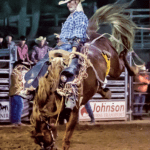
  • Back When they Bucked with Howard Barker

    Back When they Bucked with Howard Barker

    Howard Barker lived out his dreams.
    Ever since he was a little boy, he wanted to be a cowboy, and he wanted to fly, and he did both.
    The Houma, La. man spent his time flying through the air on bareback and saddle broncs and bulls, and when his rodeo days were over, he spent the rest of his life flying through the air in sprayer aircraft.
    He spent seven years full time rodeoing, and when he was done, came home to begin an aerial application business.
    He was born in Yumatilla, Fl. in 1937, the oldest child of Howard, Sr. and Adelade Barker. Soon after he was born, the family moved to Groveland, Fl., where he spent most of his growing-up years.
    His interest in rodeo stemmed from being around cattle, and even though no one in his family competed, he wanted to. “It interested the heck out of me,” he said. His dad didn’t approve. “My father always told me I needed to quit that foolishness and get a job.”
    At the age of fifteen, he entered his first rodeo. He didn’t have the entry fees, so he went to the bank to get a loan. “I just went in and talked to the president of the bank,” Howard recalled. “He took the money out of his pocket and loaned it to me.”
    He also entered high school rodeos, of which there was one a year, hosted by the FFA chapter in Inverness, Florida.
    At first, Howard rode bareback broncs and bulls. There wasn’t a lot of saddle bronc riding in Florida, but when he could find it, he entered it, choosing to quit riding barebacks.
    By the time he graduated from high school in 1956, he was competing in amateur rodeos across the state. He worked on large ranches in Florida, some with spreads as big as 500,000 acres. He loved the work. “I was happy in the woods, working cows, just about as happy doing that as being at a rodeo.”
    When he was nineteen, he left Florida to rodeo. He didn’t make a big splash, but made enough to pay entry fees and living expenses. “You’d be broke one day, then have a pocketful of money the next, then broke again.”
    In 1958, he joined the Rodeo Cowboys Association, forerunner to today’s Pro Rodeo Cowboys Association, and competed full time. Most of Howard’s rodeos were in the Northwest and Canada. By then, he had quit the broncs and was riding bulls only. In the winter, he’d come home, get a ranch job, and save up money to leave again in the spring.
    He traveled with good friends Ronny Welch, Tex Martin, Winston Bruce and his brother Duane, and bull rider Leo Brown, “one of the best hands to ever come out of Canada, maybe the best,” Howard said.
    Then, after being on the road for most of seven years, he decided to retire.
    In 1966, he got his pilot’s license and begin a crop dusting business two years later. He lived in Belleglade, Fl., at the time, and sprayed not only crops but for mosquitoes. He sprayed over a million acres a year, with contracts with county, state and federal governments. In the summer, his business went west and he sprayed for grasshoppers in the western states.
    In 1991, he moved to Houma and his business changed. He sprayed oil spills with dispersants, chemicals that break oil into tiny droplets that suspend in water so naturally occurring bacteria eat the droplets. His company, Airborne Support, was instrumental in the BP Oil spill in 2010. A picture of one of his planes spraying was on the front page of the New York Times and a South African friend even saw the picture in a newspaper in that country.
    Howard never suffered any major injuries in his rodeo days. Sprains and a broken cheekbones and a couple of concussions were it. He had temporary amnesia twice, due to the concussions.
    The Calgary Stampede was his favorite rodeo because of all the activities. “It was  like a three ring circus,” Howard said, with bucking stock in the arena, “some movie star singing a song, and a horse race going on all at the same time.” And his favorite bull was HB, owned by Howard Harris. Howard drew him three times: once in Cowtown, N.J., and in the West, after he was sold to someone else. Very few people covered HB, but Howard did it three times, as did a friend, Joe Chase, who Howard gave advice as to what to do when riding HB.
    In 1968, he married Evelyn, and they had four children, two boys and two girls: Vance, who lives in Minnesota, Laura Beth, who lives in Boston, and Brad and Nancy, who both live in Houma. He and Evelyn have seven grandkids, with a grandson, Reese Barker, who rides bulls and is a three-time state champion junior bull rider in the Louisiana Little Britches Rodeo Association.
    It was tough quitting rodeo when he did it in 1966. “I had to stay away from it completely,” he remembered. But he had a business to run. “I couldn’t afford to get hurt and not be able to fly.”
    Three years ago, his health forced him to retire from the aerial application business, and now son Brad runs it.
    Rodeo was a passion he loved. “When I’d make a good bull ride, I don’t know of a better feeling in the world.”
    But he loved flying too. “A lot of people go through life with a job they don’t like,” he said. “But I’m the luckiest man in the world. I got to do two jobs I really liked. I’m glad I rodeoed. I wasn’t a champion but I got to ride with those that were.”

    Story is also available in our June 1, 2015 issue.
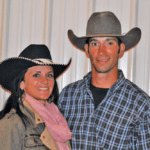
     

  • ProFile: Johnny Dudley

    ProFile: Johnny Dudley


    Johnny Dudley, Rodeo Clown, Rodeo News
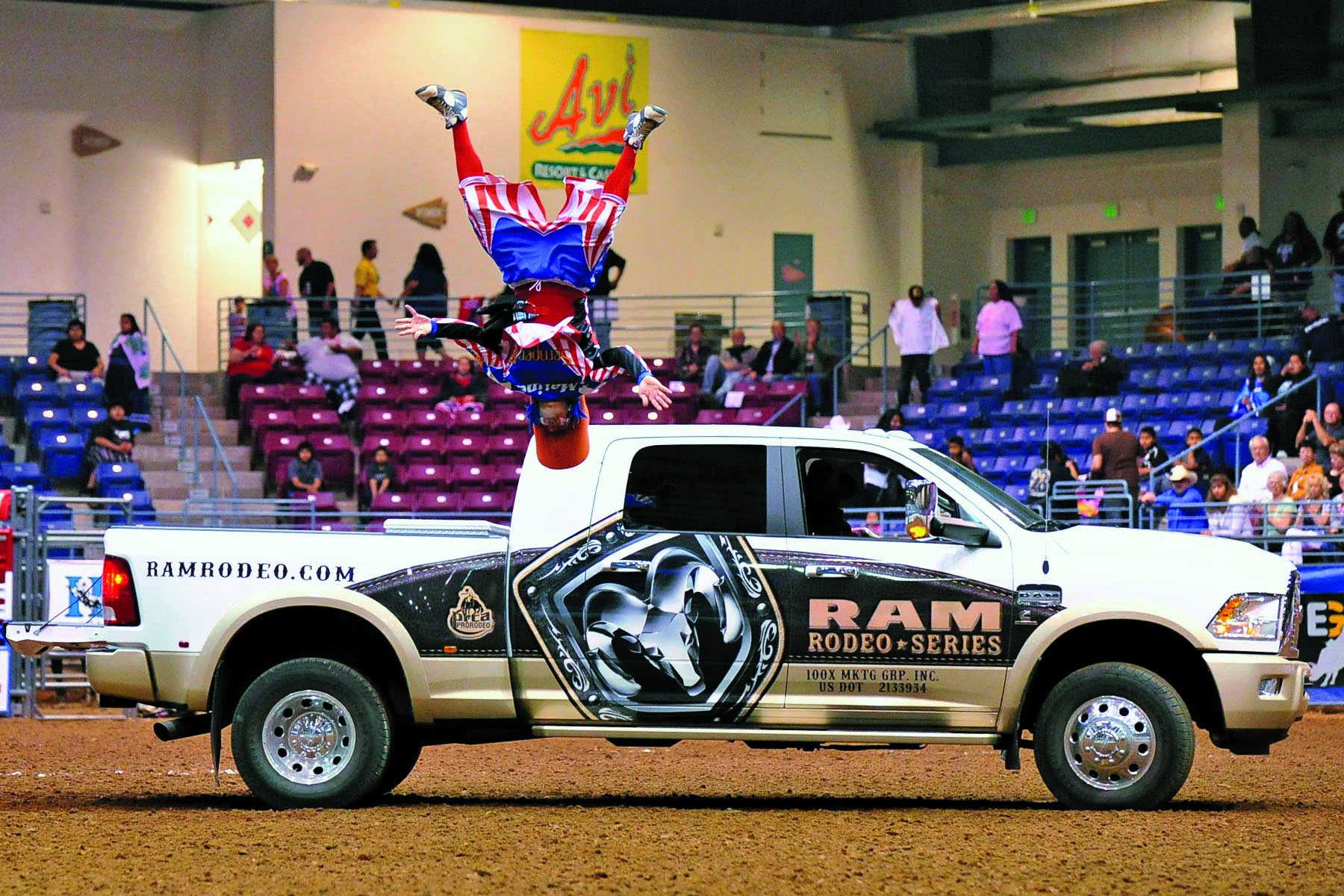
    Johnny’s famous backflip -Miller Photo

    Laughter is a precious commodity for “Backflip” Johnny Dudley. The rodeo clown, dubbed for his backward springs, has been splitting sides and spreading smiles at rodeos since 2006, but his dedication to his work is no laughing matter. “It’s my passion!” says the 37 year old from Aubrey, Texas. “I tell people all the time that I’d be a rodeo clown for free, I love it so much. I’m a certified air traffic controller, and I could be making $180,000 a year, but I love being a rodeo clown.”
    Though built like a steer wrestler at 6’3”, Johnny’s only ties to rodeo were the local rodeos in Dayton, Texas, that he and his family went to in the summer. The antics of the rodeo clowns were a highlight for Johnny, but by the time he was in third grade, his parents had divorced and he and his mom moved to Groesbeck, Texas. No more rodeos or rodeo clowns until 1999 on the Marine Corps base in Beaufort, S.C.. Johnny was 21 and had joined the Marines immediately after graduating high school. A rodeo was being held on the base and Johnny, who had no intention of going, was volunteered into taking tickets at the gate for the first half of the rodeo. He found a seat in the bleachers for the second half and unknowingly met his future. “I was paying attention to the clowns, and this short, chunky, older guy runs into the stands and sits on a good looking blonde lady’s lap,” Johnny says, recounting one of his favorite stories. “Her husband laughed, and a light bulb went on for me.” Johnny met the clown after the rodeo and was offered a role in his clown act the following night. “I bought some big pants and makeup and showed up as a clown. In my mind, I was thinking I’d be a clown, not a prop,” Johnny recalls humorously. “The fire was lit!”
    After getting out of the Marines in 2004, Johnny found the practice bull riding arena in his hometown of Dayton, Texas, and started learning to fight bulls twice a week. “I knew that bull fighting was my gateway to being a clown. I was young and athletic, and the guy who owned the practice pen also produced several local rodeos, so he hired me to clown for him. Cleveland, Texas, was my first rodeo. I made $50.” At the same time, Johnny attended San Jacinto College in Pasadena, Texas, paying for his degree in international business with his rodeo income and Montgomery G.I. Bill. He also continued to attend rodeos and study how other rodeo clowns worked. The experience wasn’t always comfortable. Some people were more welcoming than others, and a few rodeo clowns wanted nothing to do with the competition. “I didn’t have any buckles or boots,” says Johnny. “I was just some guy out of the Marines that wanted to learn! I didn’t know the rodeo terminology – I just wanted to clown.” Yet the people who were willing to help Johnny influenced one of today’s funniest men in ProRodeo. These included Rudy Burns and Lecile Harris, two of Johnny’s rodeo clown idols. “Rudy helped me with anything I wanted and sold me one of his clown cars. I learned from the old guys, so I’m more of a traditional clown. I’m not much for dancing around or clapping – I like to tell jokes and do clown acts.”
    Johnny has six different acts and a slew of jokes at the ready for what he calls “situational comedy”. “I don’t go out with a plan,” Johnny explains, “I just go out and wait for something to trigger a joke in my mind. It could be a girlfriend and boyfriend walking down the bleacher, or a guy with long hair. I want to relate to the crowd with a current situation that’s happening, not just tell little Johnny jokes out of nowhere.” None of Johnny’s banter with the rodeo announcer is ever scripted, and his title backflips are also spontaneous. The crowd pleasing maneuver is one of Johnny’s childhood talents that started with showing off for the girls at the swimming pool. Of the thousands of backflips he has made, only two have gone awry – once at a PBR event in Salt Lake City when the fence gave way beneath him, resulting in a broken neck, and one other rodeo where he slipped and barely made his rotation in time.
    Johnny is also known for his electric blue wig and large foam cowboy hat, courtesy of any mall in Texas. One of his best known acts is Cow Patty, performed to Jim Stafford’s song of the same title, completed by a mechanical bull mounted on a three wheeler, blowing smoke out the nostrils and shooting water from the rear. Another favorite act involves Johnny’s skunk, Rosie. His first skunk, Flower, was in the act for six years before passing away, and now Rosie performs to the frightened delight of rodeo audiences. “Everyone thinks she’s trained, but I just act off her instincts,” says Johnny. “If I want her to lift her tail, I’ll run at her to startle her a bit, or jump around in front of her. Then I’ll throw a dummy skunk into the audience, and depending on where I throw, they scatter!”
    Though the rodeo arena is a second home to Johnny, his home in Aubrey with his wife, Emily, and 18-month-old son, Jase, is still his favorite place to be. They recently purchased a 40 foot motor home so that Emily and Jase can travel with Johnny. The husband and wife first met in 2009 at a rodeo – Johnny clowning and Emily barrel racing. Emily is also the owner of Deuce’s Wild Tack, known by many professional barrel racers for its bright colors and bling. While helping Emily with the business, Johnny spends his time at home going to the gym, duck hunting, watching football and announcing barrel races, many of which Emily competes in. He recently became a certified hypnotist, and plans to do several shows during his off weekends. Johnny is also the cook of the family, having dinner with Emily’s parents several nights a week. “I have a killer lasagna, and I can put anything on a pit and smoke it,” he says.
    Taking to the road again, Johnny will be performing west of the Rocky Mountains this summer, with rodeos from Utah up to Montana, and even several in Alaska. He’ll work the All American ProRodeo Series Finals in October for the second year in a row, and is also the PRCA Turquoise Circuit Finals barrelman for the second time. “Everybody wants to do the biggest rodeos for the money and prestige, and I do too, but my favorites are the small hometown rodeos that I grew up working,” says Johnny. “When it comes to prestige in this business, I’d love to work Fort Worth, Pendleton, and of course the WNFR. But the one I thing I want even more is the Coors Man in the Can award, because that’s about who’s best at protecting the bull fighters. I’m just a family guy that likes clean comedy and rodeo.”

  • On the Trail with Bump Postlethwait

    On the Trail with Bump Postlethwait

    Just as the Buckeye tree plants its roots in Ohio, Bump Postlethwait, a natural-born cowboy from Byesville, plants his in rodeo. Born Raymond Postlethwait, or JP as his mom liked to call him, was given the name Bump when his dad heard the bump, bump sound of his heart beat while his mom was in labor. She passed away when he was only eight but, “The name’s stuck with me ever since.” Though raised in southern Ohio Bump now resides in Adrian, Mich. with his wife, Andrea and their four kids Chelsea, Haley, Hunter and Ayden.

    Following in the footsteps of a man he’s always admired, Bump took to rodeo at a young age watching his father. “I grew up around it, I wanted to be like him.” His father who placed 16th in the world at the RCA was one of Bump’s biggest supporters growing up and always helped him along the way. Starting at nine years old, Bump rode his first amateur bull then at fourteen he was doggin’ steers. He went to a clinic held by his friends who taught him how to bull dog and when he went to his first rodeo he placed. “I never really had to work at anything, never practiced much. I’ve just always been able to do it. If I wanted it I went and I did it.” The Buckeye Rodeo Company was a rodeo was where his dad went and where he grew up. Today, Bump competes in all three rough stock events: bull riding, saddle bronc and bareback as well as team roping and bull dogging.
    What started out as a fun, family affair soon turned into a job for Bump. He won all-around four years in a row in high school and did so well he qualified for a scholarship to Martin, Tenn. His rodeo career was doing well and as he continued to succeed he turned down the chance for the scholarship, “I was making good money and it was easier not to go to school.”

    It was while riding horses at a horse sale he met his future wife who was looking at horses to buy. In 2008 after dating a few years, Bump married Andrea and welcomed her four children as his own. “It’s hard when she’s not at the rodeo with me,” Bump explains. “She keeps the horses warmed up and ready for me. She makes my job a lot easier.” Andrea is his backbone and what he does couldn’t be possible without her support. As for his kids, “Hunter,” Bump says, “wants to go on with it more than the others.”


    Full story available in our May 1, 2015 issue. Read online!
     

  • Back When They Bucked with Dixie Mosley

    Back When They Bucked with Dixie Mosley

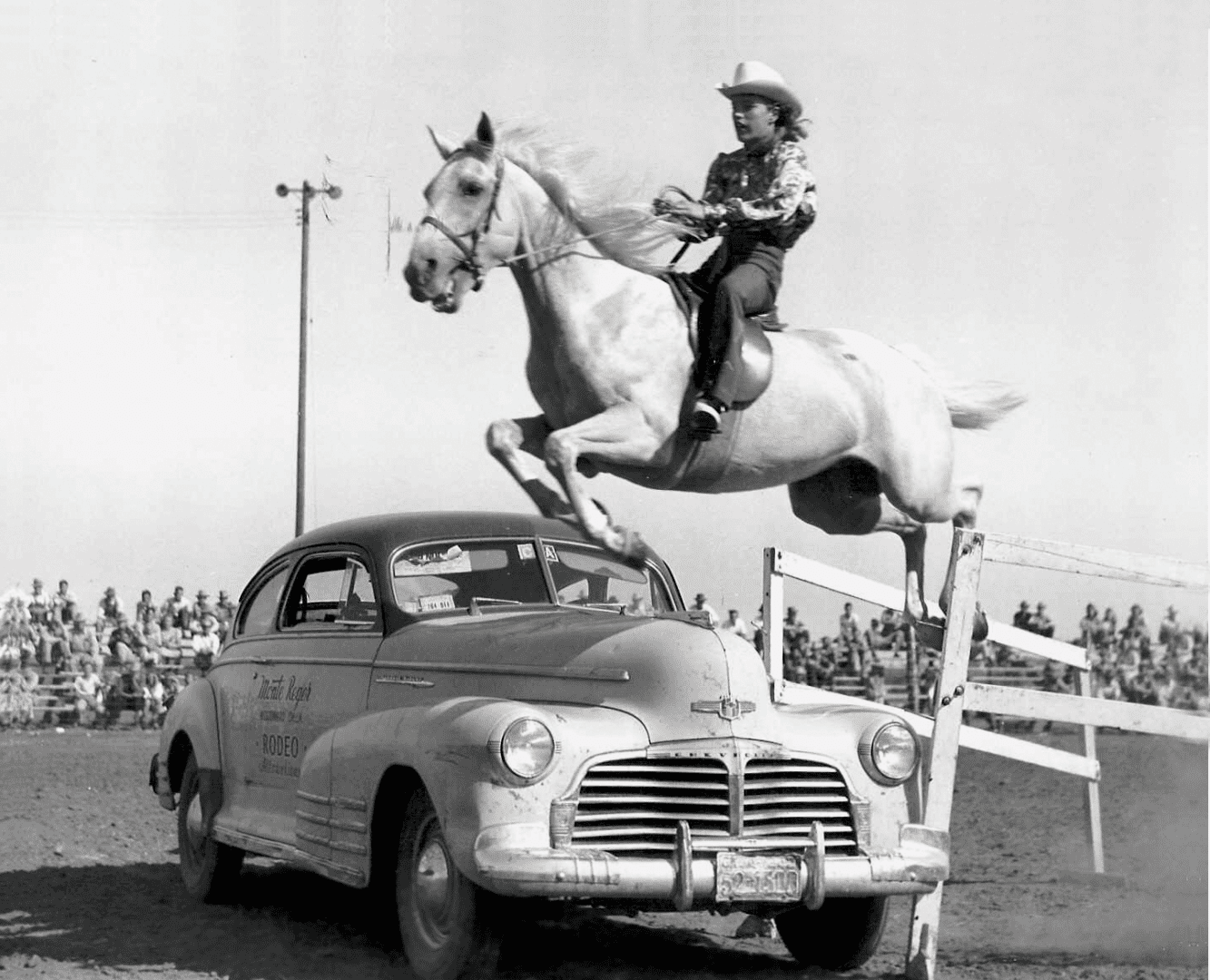
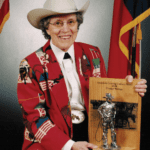
    Dixie Mosley of Amarillo, Texas, had a most unusual childhood. The third and youngest child of Monte and Opal Reger, Dixie was born in Buffalo, Okla., on October 3, 1930. Before her sixth birthday, she had travelled more of the U.S. with her family than most people of that era saw in a lifetime. The Reger family were rodeo entertainers, fulfilling rodeo contracts in the eastern half of the country, and travelling with an 18 foot Schult house trailer, several trick horses, and a longhorn steer in tow.
    It was Bobby the Longhorn Steer that propelled the Regers into their lifestyle of greasepaint faces and trick riding Death Drags. The Longhorn/Brahman cross had curvy horns measuring 8′ 6″, and at the time he was discovered by Monte Reger, the steer was known for his rank personality. But Reger saw potential in the tremendous bovine, and with dreams of leaving the farming life behind, he tamed Bobby. Soon, Reger was riding the steer like he was a trusty cowhorse, as were Dixie and her brother, Buddy, and sister, Virginia. Bobby and Reger even appeared in a movie, Wheels of Destiny, in Hollywood, and advertised for a barbecue chain in Burbank, Calif. But Bobby was best known for his iconic jumps, clearing a convertible with ease while directed on a lunge line by Reger.
    Though Reger had helped start the rodeo in Doby Springs, Okla., he had bigger dreams. Eventually, he was announcing for the Beutler Brothers and performing with Bobby in Colonel Jim Eskew’s Wild West Show. Eskew’s son, Jim Eskew, Jr., taught Dixie to trick ride and rope by the time she was five. She began performing alongside her brother and sister, riding a Shetland pony named Tom Thumb. Her brother, Buddy, was a rodeo clown, while Dixie and her sister represented the family in trick riding and roping. Their mother, Opal, occasionally took off her apron to perform the Quadrille – square dancing with horses – but she preferred to live outside of the spotlight. “She had more than a full time job looking after Dad and us three kids, feeding us and sewing all our clothes,” Dixie recalls. “She kept us together.”
    Dixie’s rodeo debut came in 1935 in Pittsburg. At five years old, she was a fearless performer. “I was never afraid of anything at a young age, and when you’re a teenager, you’re really not afraid!” says Dixie. She showed horses in western pleasure, and although she found nothing remarkable in her trick riding talents, rodeo spectators thought otherwise. As she grew, Dixie rode her family’s palomino American Quarter Horses that they bred, their fair coats reflected in the shining cars that Dixie jumped them over. Though the Regers stayed in their trailer or motels, they returned often to their home in Woodward, Okla., to “get cleaned up and go again,” according to Dixie. It was there that the family trained their show horses. They laid three 55 gallon drums down, placed two more on top, and finished with a heavy wooden door at the top to re-create the size of car Dixie jumped over, before practicing on the real thing.
    For all the excitement of living on the road, Dixie at times longed for what she calls a normal life. “I wouldn’t take anything for the life I’ve had, but sometimes I wonder what it would’ve been like to have a different type of life,” Dixie says reflectively. “We had to be careful in the summertime to go swimming in the late afternoon. We didn’t want to take the chance of getting sunburned and not being able to ride the trick horse. Even rollerskating you had to be careful to not twist an ankle. We were being paid to be at the rodeo, and we couldn’t get hurt having fun!” Missing out on regular schooling was what Dixie regretted the most. Up until high school, she and her siblings were homeschooled by their mother, a box of curriculum from Calvert Correspondence School arriving once a year with schoolbooks. When she entered high school, she came to school several weeks late and left in May to accommodate rodeo season. Yet homeschooling had agreed with Dixie, and she was several grades ahead of children her age, entering high school when she was 12 and graduating  in 1946, when she was 16.
    In 1947, Dixie was clowning and performing in an all-girl rodeo in Amarillo, Texas, and the following year, the all-girl rodeo in San Angelo, Texas, was the birthplace of the Girls Rodeo Association (GRA). Dixie was a charter member, and later served as a contract representative and vice president for the association. In addition to trick riding and roping, she rodeo clowned for the GRA, the only woman in the area to do so. Dixie even rode several bulls and bareback horses, but the roping events like ribbon roping, breakaway, and calf roping, were what brought out her competitive side. “I’ve been bucked off and had horses fall with me, and I’ve never broken a bone,” says Dixie. “I’m real proud to be a charter member of what is now the WPRA. I met some wonderful cowgirls!” One of these cowgirls was the rodeo-renowned Tad Lucas, a bareback bronc rider and trick rider that Dixie created and performed several rodeo skits with. “She was a very nice lady, and she would do anything to help make the rodeo a better performance.”
    By 1953, Dixie was 23 years old and ready to make a bold move. She retired from rodeo. Her final performance in the public eye was the inaugural all-girl rodeo in Colorado Springs, Colo. Following that, she married William Mosley in August of 1953. Bill was a cattleman, who served in both WWII and the Korean War, and was a friend of Dixie’s brother-in-law. “Growing up, I pretty much knew I didn’t want to marry a rodeo man,” says Dixie. “I think they are the most wonderful people in the world, but they’re always on the go! I wanted to stay home. Bill went back to college after he got out of the military, and I became a college wife. I got my PHT – Putting Husband Through,” she says with an infectious laugh.
    After finishing college, Bill and Dixie settled in Amarillo, Texas, where they still make their home today. With partners, they built a meat packing house, and Dixie lived the life she’d dreamt of as a child, becoming a full-time wife and mother and living in a house that wasn’t on wheels. Their children, Judy, Clay, and Paul, all grew up riding horses, but didn’t pursue rodeo. Once their children were grown, Bill sold the packing house and became a cattle inspector. He and Dixie travelled the U.S. extensively, some of Dixie’s favorite travels taking her to the annual induction ceremony for the National Cowgirl Hall of Fame. She also attended Rodeo Clown Reunions held by Gail Woerner, where Dixie was the only female rodeo clown. Dixie herself was inducted into the Cowgirl Hall of Fame in 1982 and the National Cowboy Hall of Fame in Oklahoma City in 2003. She was named the Pioneer Woman of the Year in 2004 at the National Cowboy Symposium in Lubbock, Texas. Bobby the Longhorn Steer, who started it all, also holds a place of honor, his head mounted in the National Cowboy and Western Heritage Museum.
    Memories abound, and Dixie has no regrets. She concludes happily, “I’m glad it’s all worked out the way it’s worked out.”

    Story also available in our May 1, 2015 issue.


  • ProFile: Sharin Hall

    ProFile: Sharin Hall

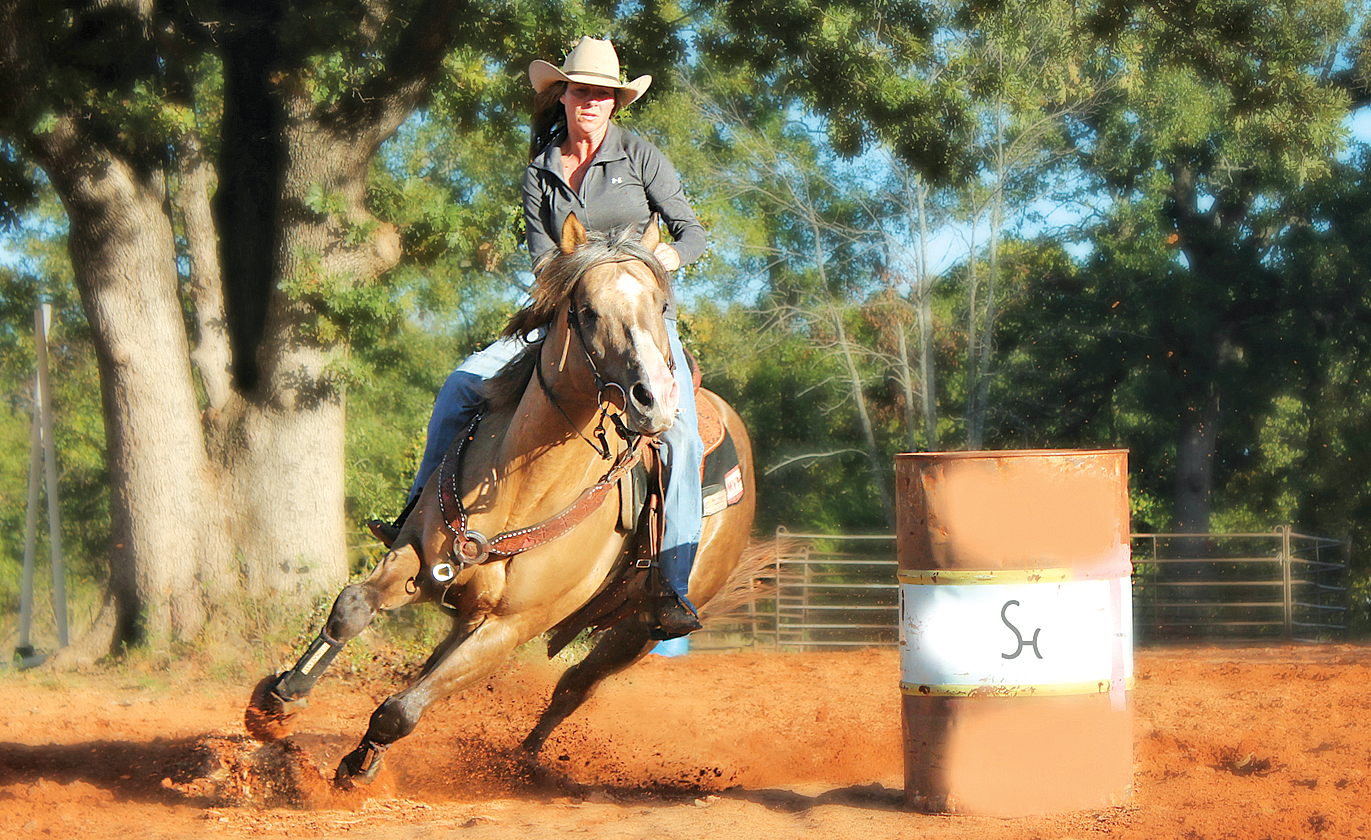
    From RFD-TV’s The American, to the Diamonds & Dirt Barrel Horse Classic, barrel racer and trainer, Sharin Hall from Kingston, Okla., has burst into the spotlight, but she’s by no means a stranger to the barrel pen. As a lifelong competitor, Sharin, originally from Sunbury, Ohio, was born to turn three barrels. Her father, Jackson Hall, was a barrel horse trainer. Sharin’s mom was also into horses, so it was only natural their daughter would saddle up as quick as she could.
    Every cowgirl has that one horse who really lights the fire, and for Sharin, that horse was T’ Heck, a winning barrel horse of her father’s. She was 8 years old when she started running barrels on the horse. “I won on him until I was 13. I basically learned how to ride and sit right on a horse, and then when I was 16 my mom bought my first horse to train for myself,” Sharin said.
    Since that first training project, Sharin has learned how to help shape different horses, while allowing for their individuality, and she’s made a career out of the skill. “I’ve learned that not every horse is the same, and you have to adapt sometimes to their style and their way of doing things, all the while asking for what I want.”
    Initially, Sharin’s grandmother stressed a college education, but Sharin quickly realized that a 9-5 desk job wouldn’t be something she could do long term, so she practiced cosmetology at first. “I did that for 10 years and rode my own horses, and then when I was 28 I got a phone call and got a job offer in Oklahoma training horses, so I took the job,” she said, eventually branching out into her own full time training business that’s still thriving today.
    It’s a profession where the biggest challenges are, in some ways, also the rewards. “The challenge has been when you pour your heart and soul and everything you have into a horse and develop it into a winner, and it gets sold or it goes back home, you separate from something that you love and created into a winner,” she said but added, “I love it though when they go on to win, that is probably the most satisfying thing that I experience in what I do.”
    Over the years, in addition to her training program, Sharin has competed in multiple futurities and pro-rodeos. She has a strong faith in God, and remains close to her family. Sadly, Sharin’s father passed away in December of 2011.
    In 2013 she organized an annual memorial barrel race in Ardmore, Okla., in his honor.
    To balance the difficulties of saying goodbye to horses she’s trained, Sharin is starting to ride more of her own horses these days, such as the breakout star of the Diamonds and Dirt, a mare named Bulleva Sharin co-owns with attorney Brad Oesch. They bought Bulleva in Oklahoma City. It didn’t hurt that the Bully Bullion breeding in the mare appealed to Sharin. “I picked her and just loved the way she felt, it was a good fit. We’ve just gotten better and she’s gotten better and more confident to the point of winning the slot race. It was my first slot win. It was really special to be on something I part owned, and I just feel very blessed,” Sharin said of her win at Diamonds & Dirt, where she and Bulleva took home over $110,000.
    This year also brought success when it came to RFD-TV’s The American. Sharin, riding a client’s horse, Streaking Ta Fame, whom she trained, was the only qualifier to make the final-four in the Shoot Out round, where she ended up third. In the long go, she ran the second fastest time of the entire rodeo against the world’s fiercest competition.
    “It’s really a lifetime experience. I think that the American is a golden opportunity for someone who is not able to be on the road and rodeo all year. It’s a great opportunity to be able to run at that money,” she said.
    Sharin plans to continue to rodeo on some of her mares and young horses this year, as well as continue down the futurity trail with Bulleva.
    It’s that don’t stop attitude that embodies Sharin, explained her apprentice Stevie Ann Tucek, who previously traveled and trained with NFR barrel racer June Holeman and chronicled her tales of inspiration for the rodeo world.
    Now, Stevie is finding inspiration in Sharin. “Sharin has amazing will power and drive and gives 110 percent all the time. I believe her having this mindset, faith, and hard non-stop 18-hour days, is what has gotten her to where she is, and where she is going.” Stevie said and added, “She is a great teacher and has passed down some of her techniques that I will cherish and apply in my career for a lifetime. She has a gift, and she knows what she wants from life: to live it to the fullest, and make herself better each day. We could always use more Sharin Halls in this field.”
    And if Sharin has anything to do with it, that field is only going to get faster.

  • Roper Review with Scot Brown

    Roper Review with Scot Brown

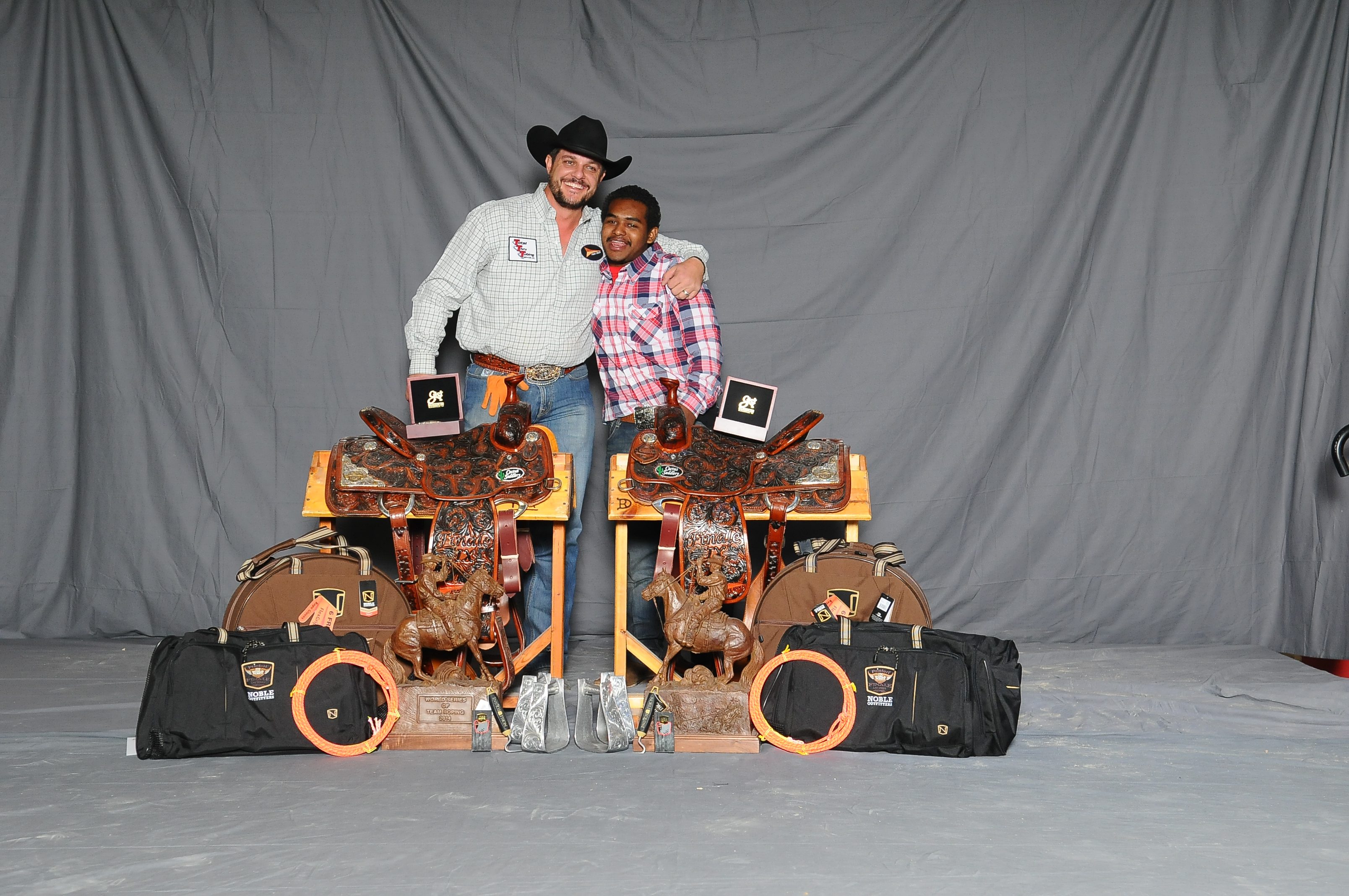
    Scot Brown and Clayton Moore
    Scot Brown and Clayton Moore

    Not many ropers have a week like Scot Brown enjoyed at the World Series of Team Roping Finals at the South Point last December. Scot, a #9 heeler and #6E header from Orange Grove, Texas, was entered up at the finals, thanks to one of his sponsors. Scot and Josh DeBord, won 6th in the #15, earning each man $20,000.
    Getting nothing done in the #12 and #13 was not devastating for Scot, who still had a $20,000 check in his pocket. In his last and final roping, the #11, Scot was scheduled to head for one of his sponsors, who ultimately couldn’t make the trip. Brown replaced him with Clayton Moore, a #5, who he had practiced with the week before back in Texas.
    The team drew three good steers for an average of 22.90, making them high team back. A short round steer that ran, along with a late start, caused the team to be 9.5 at the back end, but well under the 11.9-seconds needed to keep the lead. Brown and Moore split first place prize money of $288,000, in addition to $6,000 for a rotation fast time.
    “At the end of the run, the flagger, Brooks Bearden, rode up and told me that Clayton legged,” says Brown. “He was joking, but I didn’t even care. I told him, ‘That’s okay, we won second or third.’”
    Brown, 37, stays busy running his business, Absolute Terra Services and Maintenance. He started the herbicide business in 2007. ATS sprays and kills weeds for commercial farmers and oil well pads, among other businesses. In 2010, the business was expanded and added mowers, seeding, and mulching services.
    “Even though it’s a lot of work and responsibility, I enjoy owning my own business,” says Scot. “It enables me to spend more time with my family.”
    Brown and his wife, Michelle, have four children, three sons and a daughter: Spencer, 16, Jackson, 15, Makayla, 8 and Brooks, 4. Michelle teaches online for Waldon University.
    As a business owner with a large family, there’s not a lot of spare time for the practice pen.
    “I’ve been very fortunate,” explains Brown. “I’ve been able to ride good horses and rope with some of the best ropers in the world. My mental game is probably my strongest asset in the roping pen. I thrive on pressure. In the #15, at the World Series Finals, we came from 21st call back where we had to be 6.2 to take the lead and we were 6-flat. I just love that kind of pressure.”
    This May 8th & 9th, Brown will produce the 4th Annual Colton Rusk Memorial roping. This roping is held in memory of Colton Rusk, a Marine who was killed in Afghanistan. The proceeds are donated for scholarships. The first year it was held, in 2012, this roping raised $30,000. Each of the last two years the event has raised $100,000.
    “I’m extremely proud of what we’ve been able to accomplish,” says Scot. “Not only honoring Colton’s memory, but being able to help kids afford an education is amazing.”
    Scot is sponsored by Fast Back Ropes, Total Thru Tubing and Noble Outfitters.
    COWboy Q&A

    How much do you practice?
    I don’t get the opportunity to practice as much as I’d like due to running my business. I always practice before an event.
    Do you make your own horses?
    I used to when I was younger. Now I don’t really have time.
    Who were your roping (rodeo) heroes?
    Clay O’Brien Cooper
    Who do you respect most in the world?
    My dad.
    Who has been the biggest influence in your life?
    My family.
    If you had a day off what would you like to do?
    Spend time with my kids.
    Favorite movie?
    Tombstone, Lonesome Dove
    What’s the last thing you read?
    Lone Survivor
    How would you describe yourself in three words?
    Motivated, easy-going, hardworking
    What makes you happy?
    My family.
    What makes you angry?
    Lazy people.
    If you were given 1 million dollars, how would you spend it?
    I’d pay off bills, take my family on a vacation and invest the rest.
    What is your worst quality – your best?
    My worst quality is procrastination. My best quality is being happy go lucky.
    Where do you see yourself in ten years?
    I hope that the business I’m building continues to grow and be successful, allowing me to spend more time with my family.

  • ProFile: J.J. Elshere

    ProFile: J.J. Elshere

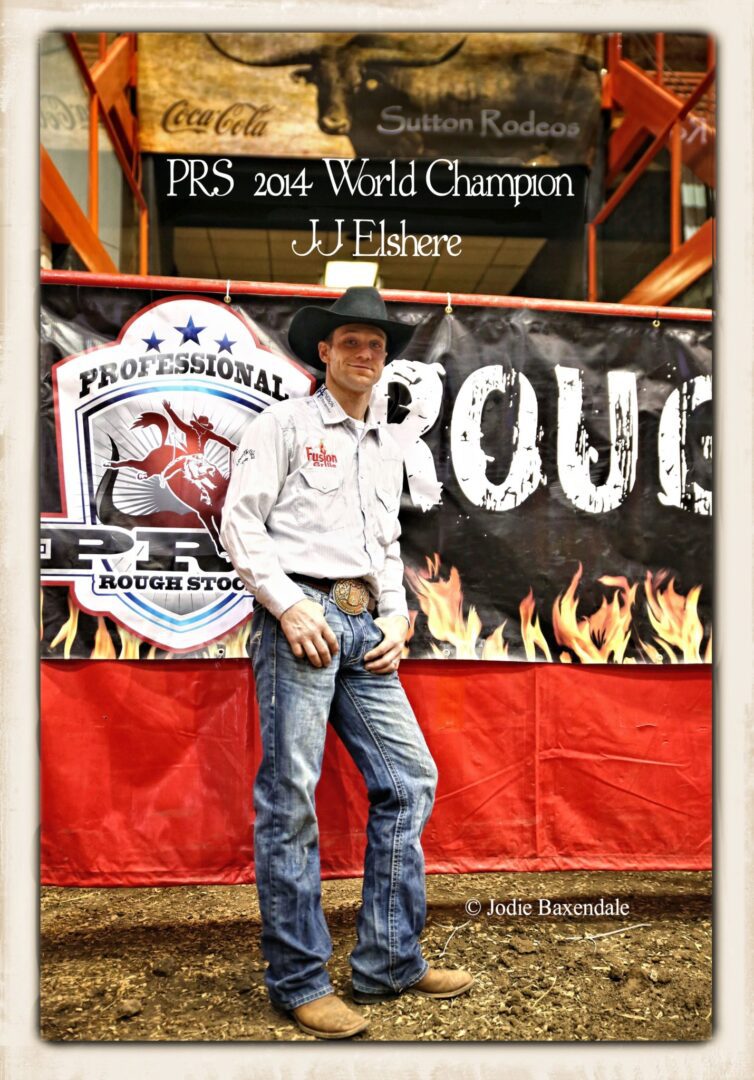
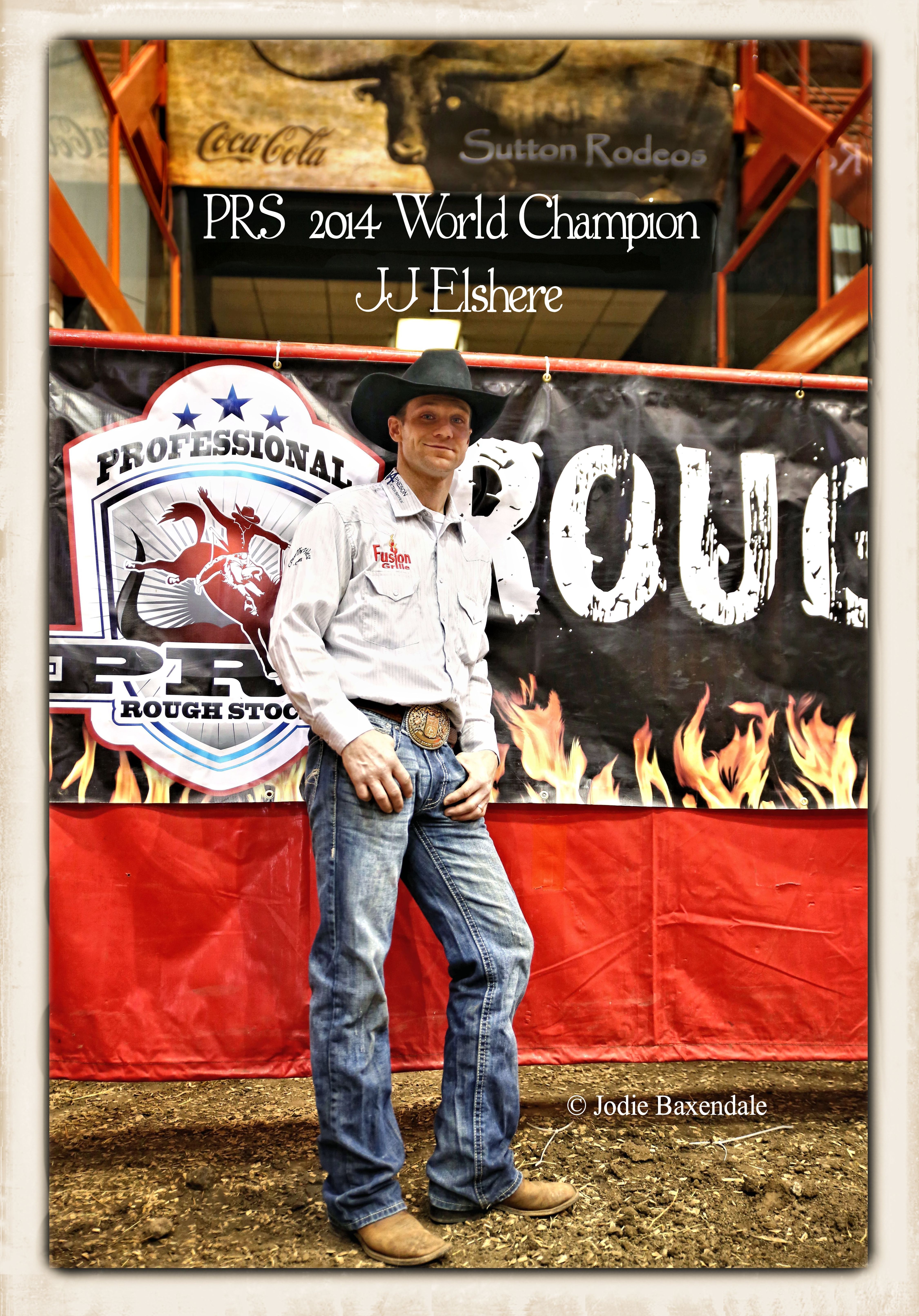
     JJ Elshere PRS 2014 Champ, ProFile, Rodeo News
    JJ Elshere PRS 2014 Champ – photo by Jodie Baxendale

    J.J. Elshere, Professional Rough Stock competitor and 2014 PRS World Saddle Bronc Champion, is carrying his gear bag into the AT&T Stadium for the first time this month. The recipient of one of The American’s coveted exemptions, J.J. has every intention of winning the saddle bronc riding at the world’s richest one-day rodeo. While winning the average in the saddle bronc riding at the 2006 WNFR is one of his career highlights, J.J.’s trip to Arlington, Texas, is equally exciting to him. “I think it’s going to be fun!” says the 34 year old from Hereford, S.D. “I’m just going to treat it like any other rodeo – you want to do your best at every rodeo you go to, and that’s what I’m going to do.”
    Following in the bootprints of his older brother, Ryan, J.J. started riding saddle broncs in high school. The boys’ father introduced them to rodeo early on, and both gravitated toward roughstock. “Our whole family went with us to our rodeos, and gave us the opportunity to compete,” J.J. recalls. “Ryan taught me a lot about saddle bronc riding, and that made it a little easier for me to learn.” While J.J. also rode bulls, it was rodeo’s classic event that he pursued after high school. He joined the PRCA in 2000. “Ryan bought my permit for me and got me started in pro rodeo. He entered me in rodeos – even some I didn’t want to go to, but I got money out of it!”

    Full story available in the March 2015 issue.
     

  • Back When they Bucked with Wayne Cornish

    Back When they Bucked with Wayne Cornish

    Wayne Cornish followed in his dad’s footsteps, and the rodeo world was a better place because of it.
    Born February 2, 1935 in Waukomis, Okla.,, the son of Cecil and Juanita Cornish, Wayne grew up doing the same thing his dad did. His dad had a variety of famous specialty acts, and after high school, Wayne joined him, criss-crossing the country with the Cornish animal acts, and working as a barrelman as well.
    He was part of his dad’s acts, but made his first rodeo money when he was five. At Ponca City, Okla., barrel men and bullfighters Hoyt Heifner and John Lindsay put him on a Brahma bull calf. Wayne rode him all the way across the arena, lost his boots, but didn’t fall off the calf. And he won his first rodeo check with that ride, after Heifner and Lindsay gathered money to pay him for his effort.
    At age thirteen, Wayne began clowning. He put on a “dude” suit and rode into the arena on a donkey, carrying a suitcase. Someone behind the scenes would shoot a gun, the suitcase would open, and live chickens would fall out.
    Wayne graduated from high school in 1954, but barely. He had missed several days of school while on the rodeo circuit, and the school board threatened to dismiss him. Wayne’s dad told the principal his son had learned more in those few days he was gone than he did in school.
    After high school, Wayne hit the road with his dad. Together, they had a variety of acts, mostly involving animals. Cecil had started in 1935 or ’36 with his trick horse Smoky, which would become his most famous act. But the family had a lot more up their sleeves. There was Danger, the Brahma bull who jumped over a car, and six golden liberty horses. They had a bull that pulled a cart, and a roman team that Wayne rode called the Golden Eagles. Wayne had a pig he put in a suitcase and called the “Handy Dandy Garbage Disposal,” and a skunk whose act was called Mr. Stinkbottom. He had a roman team named Susie and Sally, sisters, who he called the Flying White Clouds. They did figure eights, jumped through hoops of fire, and re-enacted the Days of Ben Hur. Wayne, like his dad, had an affinity for training animals, and Juanita made their flashy costumes.
    He kept up his specialty acts, mostly his roman riding, but because of his early friendship with Heifner and Lindsay, he preferred to be a barrel man and clown.
    Together, Wayne and his dad traveled across the nation and Canada, working big rodeos and small ones alike. One of his favorite stories is that he drove a load of bucking horses and his barrelman equipment to a rodeo in northern Canada. He was supposed to leave the truck and horses and meet his dad at the North Platte, Neb. rodeo, but he had no way to get there. He called his dad and asked him to pick him up in Calgary. He told his dad, laughing, “did you ever try hitchhiking with a barrel?”
    Being a barrelman came with the usual broken bones, and Wayne had his share. He broke his neck in Carlsbad, N.M., in 1962, when a bull stuck his horn in the barrel. The bull threw him into the air, and even though his neck hurt, he went on and rode his roman team that same night. After the injury continued to ache, he decided to have it checked out.
    Another time, he broke a shoulder in Crockett, Texas, when a bull did the same thing. And he suffered so many broken ribs, he learned to bandage them himself.
    Wayne would work as a barrelman at the same rodeos where his dad and he entertained. He got his Rodeo Cowboys Association card in 1953. About twenty years later, after the Evanston, Wyo. rodeo, Cecil had had enough. He came home and decided to retire. Wayne quit then, too. His roman team was old, and having to train a new team would be time consuming.
    That was in 1971, and he began driving. He hauled horses for Hull and Smith out of Ashland, Neb., one of the nation’s largest horse haulers. He hauled livestock for A.J. Foyt, Dale Robertson, and race horse breeder Walter Merrick. He hauled horses for Dee Raper, and hauled cattle. Driving was something he enjoyed, and even though he can’t drive now, he can still tell his wife Jackie what roads to take, and when to turn.
    And, in typical rodeo style, Wayne has lots of stories to tell. He traveled with Slim Pickens, who told him he was glad God gave him such an ugly face so he didn’t have to paint it up like Wayne did. And once, at a rodeo in Independence, Mo., the hometown of Harry Truman, he came home and told his wife he’d have to shoot his dog, because Margaret Truman, who was in the stands watching the rodeo, had stepped on its tail and the dog had yelped, “Ike, Ike, Ike” (the nickname for Dwight Eisenhower.)
    He and Jackie, who were high school sweethearts, went their separate ways after school but were reunited and married in 1995. They each brought three daughters to the marriage: Donna Kay, Shawna and Jacquetta from Wayne, and Jackie’s Kelly Ann, Kimberly and Karen. Two of the six girls have passed: Donna Kay and Kelly Ann.
    Two years ago, Wayne suffered an aneurysm that nearly killed him. It has affected his eyesight and speech, but he is able to get around. Jackie serves as his eyes and voice, and is happy to do it, because she’s glad he’s still alive.
    Wayne is proud to have worked for some of the best rodeo producers in the business: Beutler Bros., Harry Knight, Todd Rodeo, Jim Shoulders, Gerald Roberts, Casey Tibbs and Associates, Beutler & Son, Ralph Collier, Neal Gay, Lawrence Winfrey, Harry Nelson, Reg Kesler, Tommy Steiner, and Summit Rodeo, among others.
    And he’s glad to have worked with some big names: Slim Pickens, Gene Autry, Marty Robbins, Rex Allen, Roy Rogers, Michael Landon, Jack Lord, and Edgar Buchanan.
    If he could, Wayne would still be on the rodeo trail. “He’d still be rodeoing if he possibly could,” Jackie said. “That was his life. He just loved it.”
    And he’s still living the memories.

    Story also available in our March 2015 issue.