Rodeo Life

Category: Rodeo LIFE Cover Feature

  • Roper Review with Jennifer Williams

    Roper Review with Jennifer Williams

    Jennifer grew up horseback riding, playing polo, and helping her late father, Phil Shurden, a blacksmith and horse trainer. As a teen, Jennifer was an aggressive polo player with a bright future. She was also an avid golfer, just two strokes from qualifying as a pro, when she decided she wanted to rope. Knowing her own determination and “all or nothing” attitude, Jennifer sold her polo horses and laid down the golf clubs to devote her efforts to team roping.
    Roping was always a family affair. Phil and his five kids spent many hours in the roping arena, with mom, Linda working the video camera and cheering the family on. The Shurdens were regular competitors at Booger Barter ropings in the 1990’s.
    Not long after she started roping, Jennifer met her husband, Speed Williams at a roping clinic. The pair began a friendship that grew into the 18-year bond they have today. The couple married in 1997, the same year Speed won his first world title. He would go on to win seven more consecutively. Behind the scenes Jennifer was a vital part of the team. Besides regular rodeo duties like all-night drives and grooming, Jennifer’s horsemanship skills helped keep their horses light, responsive and ready for competition.
    After retiring from the rodeo trail, Speed developed a team roping training website, speedroping.com. The site features an extensive library of videos including instructional drills and horse training tips. Jennifer had always wanted to learn to heel and the couple agreed to document her learning journey on speedroping.com. By doing so, low numbered ropers would be able to recognize issues similar to their own and learn how to correct them.

    Jennifer is no stranger to the winner’s circle. She has won the Windy Ryon All Girl roping (with mother-in-law, Bobbi Williams). Earlier this year she won second at the Wildfire All Girl roping heeling. She has been the reserve champion header at the PDL Richest Roping in Reno. But undoubtedly she is most proud of winning the #10 at the 40+ Finals in Stephenville, TX, with her dad, shortly before he passed away.
    In addition to working on videos for their website, speedroping.com, the Williams’ stay booked with private clinics, mostly held at their home in DeLeon, Texas. Jennifer also home schools their two children, Hali, 10, and Gabe, 7.
    It would be hard to meet a nicer person in or out of the arena. But if you want to visit with Jennifer, you better have your track shoes on because she seldom slows down.

    COWGIRL Q&A
    How much do you practice?
    Every day
    Do you make your own horses?
    Sometimes. Usually we buy horses that need to be finished or fixed.
    Who were your roping (rodeo) heroes?
    Clay O’Brien Cooper and my husband, Speed.
    Who do you respect most in the world?
    God.
    Who has been the biggest influence in your life?
    My dad, my best friend, and my husband.
    If you had a day off what would you like to do?
    Do something fun with my kids.
    Favorite movie?
    The Big Easy and Lonesome Dove.
    What’s the last thing you read?
    The Bible.
    How would you describe yourself in three words?
    Patient, loyal, hardworking.
    What makes you happy?
    My family and friends.
    What makes you angry?
    Bullies and people who won’t put forth effort.
    If you were given 1 million dollars, how would you spend it?
    After tithing, I would pay off bills and build a covered arena.
    What is your worst quality – your best?
    My worst quality is I can be very blunt at times. My best quality is my loyalty to people I care about.

  • Back When they Bucked with Ladd Lewis

    Back When they Bucked with Ladd Lewis

    Ladd Lewis loves to tell stories, and he’s got lots of them.
    After 88 years of living, a hundred-thousand miles, thousands of bucking horses, ranch horses and mules, and a family, there are a lot of memories milling in his mind.
    He was born on March 12, 1926, to Glenn and Esther Lewis, a half-mile west of Eureka, Kan., in the “horse and mule days.”
    Agriculture, at that time, relied on horse and mule power and his dad was a trader. Since before he could remember, Ladd was outside, helping with his dad’s business. He spent his days breaking the mules and horses his dad bought, putting harness on them, leading them to the field, while someone else plowed and disked with them. When his dad brought home new livestock, Ladd was on horseback, bringing them home with a Johnson halter.
    When he was fifteen years old, the world was changed with the Pearl Harbor bombing. Ladd announced at the dinner table that as soon as he was old enough, he’d join the U.S. Navy. His mother didn’t want him to, but his dad didn’t say anything. Two years later, Ladd went off to the Navy. He got his GED during that time, and came home in March of 1946. A month later, he married his high school sweetheart, Mary Waltman.
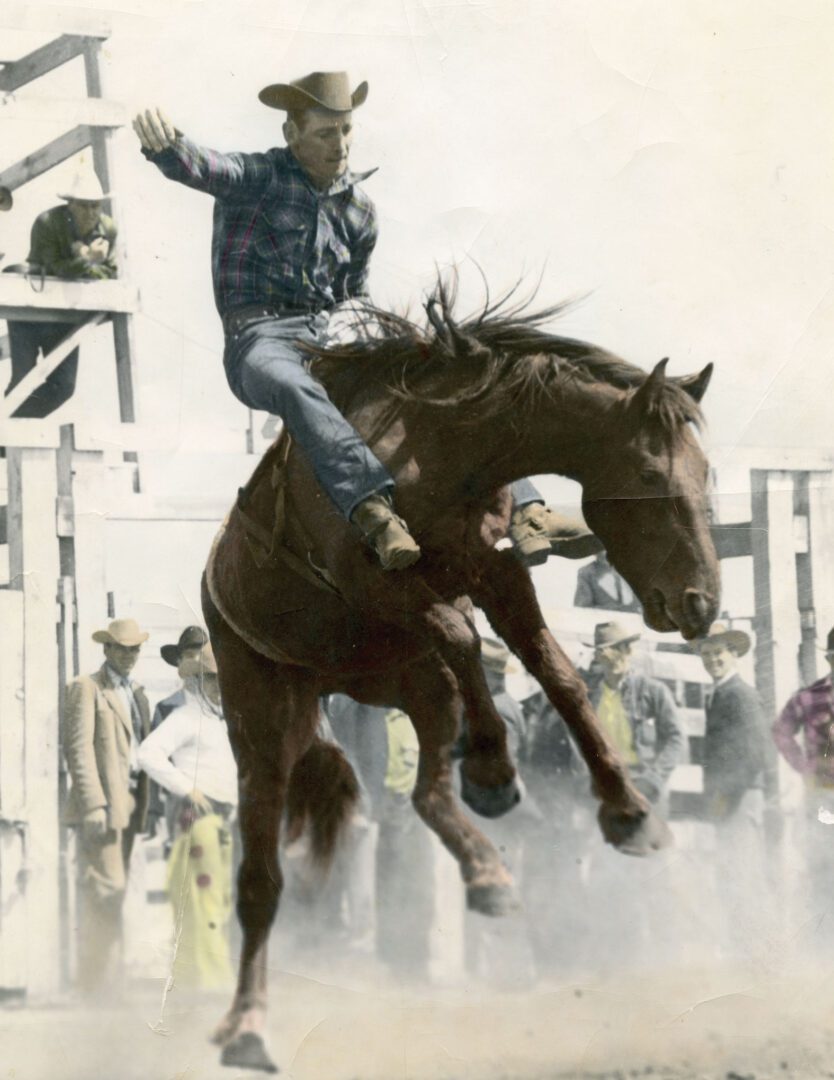
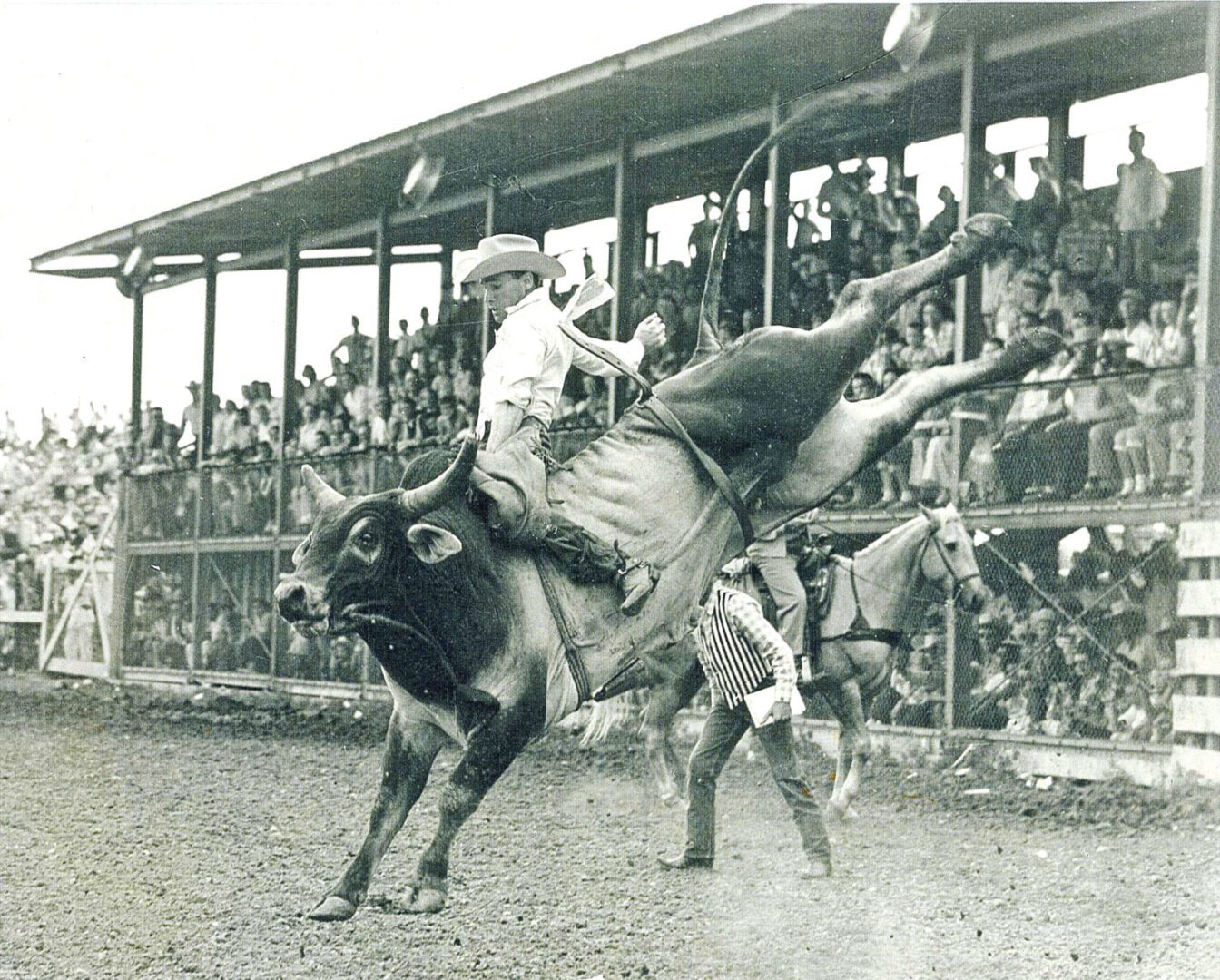
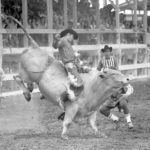
    Ladd began his rodeo career as a youngster, competing in the kids’ events. When he was 21, he joined the Rodeo Cowboys Association, riding bareback horses, saddle bronc horses, and bulls. Ladd was a student of anything he began, including rodeo. He studied the livestock, and he developed his own abilities as best he could. He made more money riding barebacks and saddle broncs than bulls, but when he drew well, anything could be a good ride.  “Part of it is a drawing game,” Ladd remembers. “You got to draw the ranker stock to win the money. You’d be drawing good bulls for a while, and when you draw those better bulls, it gets you deeper into development of that ride.”
    Studying the bucking horses and bulls was part of Ladd’s strategy. When he knew what he’d drawn, he’d watch for that animal. “If you had a chance to where you could watch that sensational horse or bull buck, you’d get to where you could see it the best you could, so you could study what was going on.” Studying livestock was something Ladd had done since he was a child. “When you’re raised as close to livestock as I was, it’s like reading people when you meet them. You look at their eyes, and watch them.”
    Ladd went to rodeos mostly in the area, from western Colorado to North Dakota, south to Oklahoma, and in Kansas. He stayed close to home, but he rubbed shoulders with the best, competing alongside Jim Shoulders and Casey Tibbs, among others. One of his fonder memories is riding a Roberts Rodeo Co. horse named School Boy. School Boy had thrown off all his previous riders, and Ladd rode him twice in one year: at Pretty Prairie, Kan., and at another rodeo which has escaped his memory, and winning both of those rodeos.

    Full story available in the October 15, 2014 issue.

  • On the Trail with Ace Berry

    On the Trail with Ace Berry

    It has been fifty two years since Ace Berry entered the arena in 1962 for his first National Finals Rodeo. The fifteen year old couldn’t drive yet, but he remembers being in awe of the moment. “Going out in the arena with the legends I’d heard about and competed with – there they were.” Ace was  the first one to qualify in the riding and roping – Jim Tescher had qualified in saddle bronc and steer wrestling. “I was really set on that. I never dreamed of winning them both – it just kind of happened.” Ace was the youngest contestant ever to enter the prestigious rodeo until JD Yates beat his record by three months.

    The 68-year-old is heading to the USTRC Finals in Oklahoma to compete in the #11 and the Century. “I haven’t roped 60 steers yet,” he admits, “I am practicing once or twice a week, running a half a dozen steers each time.” Ace hasn’t roped for nine years. “I quit roping because I had a lot of stuff going on with the ranch … and I was kind of burned out.” He is back to have fun with it, “I’m roping because I want to, not because I have to.”

    Ace is a true all-around hand, roping at 14 consecutive NFRs from 1962-75. He rode bareback horses at the Finals six times, in 1967, and from 1969-73. He judged the bareback riding at the NFR in 1985, and flagged the NFR team roping in 1986. He did all of this while managing a 10,000 acre ranch in California. “I went to a lot of rodeos through the years, but I never went to many each year. 65 was my tops,” he said. “I didn’t travel – I was always going back to the ranch. I’d leave in the winter and go to the winter rodeos, and then I’d go back to the ranch in the Spring.”

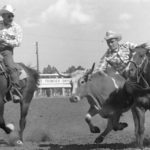
    Ace followed the California rodeos on the weekends and made enough to get to the Finals. “In those days it didn’t take near as much to make it.” Ace Berry and Phil Lyne are the only two cowboys in rodeo history to win rough stock and timed-event average titles at the NFR. “Winning the average in the NFR four times stands out as the biggest accomplishment I’ve made,” said Ace. “That’s the only thing I’ve ever done that nobody has done or tied me in – two times in timed event and two times in the riding event.” Ace attributes his success to having the “want to. It takes a lot of work and persistence. It’s something I set out to do.” He won the 1967 NFR team roping average heeling for Bucky Bradford, back when half the rounds were team tying and the other half were dally roping. In team tying, the header was tied on. After he roped the steer, he went left and the heeler was tied on too. When the steer was laid down, the header would step off, run down, and tie a square knot around both hind legs. Ace competed as both the header and heeler, depending on his partner. It took a lot of horse power and practice – something Ace learned growing up.


    Full story available in October 15, 2014 issue.


  • Tyler & Kathy Garrison

    Tyler & Kathy Garrison

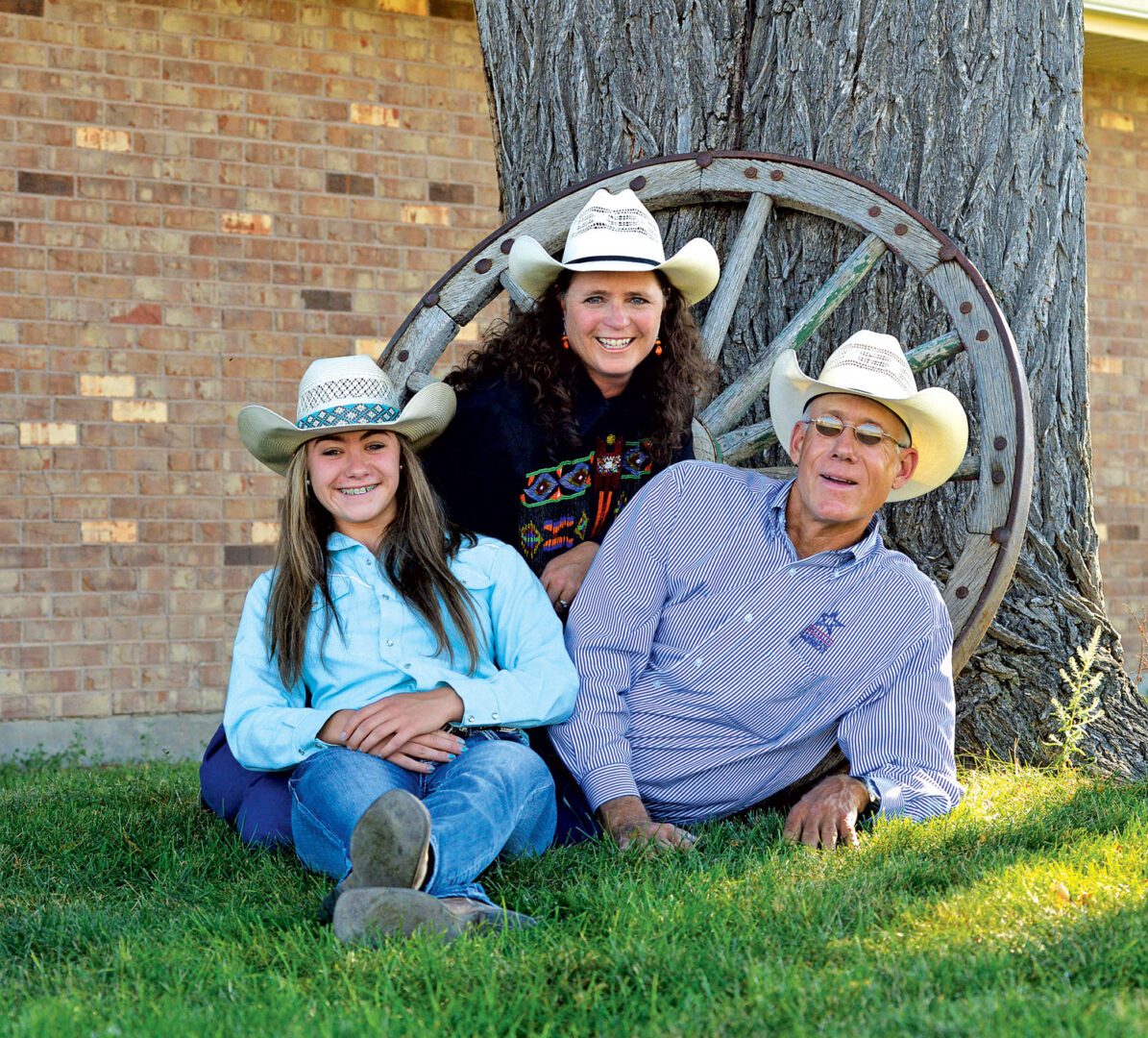
    SMS_3562_WEBTeam roping is a newer venture for the Garrisons, yet it has become a family pastime. This family of four who resides in Ft. Collins, Colo., enjoys being able to participate in a single event all together. Tyler and Kathy are 4 and 3 headers, respectively, in the USTRC and World Series. When they are not roping, Tyler is a farrier and Kathy is an Equine veterinarian.
    They have two sons, Lane and Levi who often travel with them and participate in dummy ropings that are held at events where mom and dad compete.
    Tyler grew up in Colorado and Kathy grew up in Montana and Texas. Both were introduced to team roping later in life. Tyler learned most of what he knows about roping from his uncle, Bruce Walter at age 20. Kathy grew up on a ranch and had roped at brandings, but she learned most of what she knows about team roping from her husband.
    The Garrisons hope to keep improving their roping skills and keep it a family affair as much as possible.

    Do have a motto that you try to live by?SMS_3157_WEB
    Tyler:  Champions do what others are unwilling to do.
    Kathy:  Hard work will bring rewards.

    Do you enjoy attending larger or smaller ropings?
    We like both but we really enjoy the camaraderie at the smaller local ropings.

    Who has had a big influence on your roping?
    Tyler: My uncle taught me a lot of what I know about roping and got me started.
    Kathy: Tyler has helped me the most but I have many people that I’m thankful for.

    How do you practice with both of you being headers?
    We take turns hazing for each when we practice at home on our cattle. We also have friends that are heelers that come over for practice and we go their arenas to practice with them. We also use the Heel- o Matic.

    Can you name some other aspects of roping that you enjoy?
    Tyler: It is a great way to meet people and have great competition at the same time.
    Kathy: It’s an adrenaline rush. Doing well makes you want to keep going.

    What do your boys like to do?
    They both enjoy riding the horses and traveling with us. Lane enjoys motorcycles and Levi is our little cowboy.

    What are some goals you have for your roping?
    Both of us would like to make it to the World Series Finals every year, make enough money roping to cover our expenses and just continue to get better.

  • Bob Robinson

    Bob Robinson

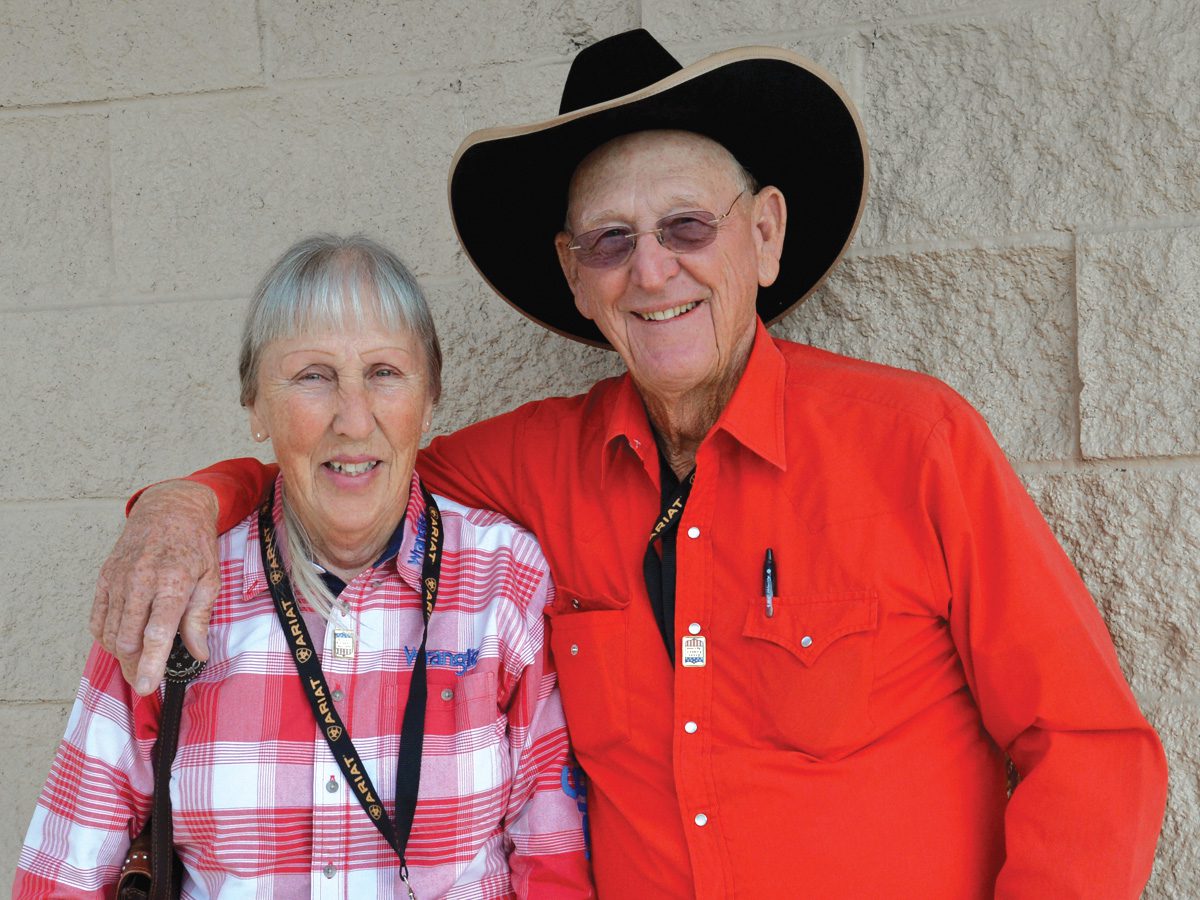
    R.J. “Bob” Robinson, one of Canada’s premier bull riders, spent his life competing and serving in the sport he loves. He is one of nine being inducted into the Rodeo Hall of Fame during the Rodeo Historical Society’s ceremony September 26-27 at the National Cowboy & Western Heritage Museum in Oklahoma City, Okla. He qualified for the National Finals Rodeo in 1962 and 1964, and held elective positions with the Rodeo Cowboy’s Association and the Canadian Professional Rodeo Association.
    Born in Calgary Alberta, Canada in 1931, Bob grew up around rodeos. His father, Sykes Robinson, was a top bronc rider and steer rider in the 1920s through the 1940s. Bob began his rodeo career at the age of eight, riding steers at Rolling Hills, Alberta. “I was too young and too weak,” he said. “They were riding steers and I didn’t have a rope, so they supplied me with a hard little 3/8” rope. I bucked off at the end of the gate and went home. My dad had gone to World War II so my Uncle John would hold calves at home and I would ride them.”  He got on again four years later and took fourth. His third try earned him a first place and $35. “I was on my way,” he said. “I didn’t really get into the rodeo business until I got out of high school.”
    Bob wanted to be a bronc rider like his dad, and was able to start that in his later teens. He graduated from Saint Mary’s High School in 1950, where he excelled in track, winning the mile run for his school in 1949 and 1950. He considers himself a natural at running and proved it by setting a new record of 4.57 in 1950. Bob remained involved in rodeo after high school, spending winters with Lawrence Bruce, his friend Winston Bruce’s father, in Central Alberta, where he rode bucking horses on the warmer winter days. He spent his summers working for Harry Vold in Dewinton, AB., driving truck and helping produce rodeos. “Bob was very reliable, he was a good hard worker,” said Mr. Vold. “He is a good honest person.”
    He also worked for Ted Glazier, a rodeo cowboy who was also a mixed farmer. “He hauled me to all the Alberta rodeos.”
    He  rodeoed whenever he could, learning how to win from his travelling partners Deb Copenhaver, Bill Linderman, Lyle Smith, Paul Templeton, Jim Shoulders, and Duane Howard. He had his first major win in 1953, winning the All Around title at Edmonton, Alberta, competing in saddle bronc riding, bull riding, and steer decorating. He purchased his RCA card in 1950 and in 1955 he crossed over into the states to compete.  In 1956 he won the All Around in Edmonton and the Saddle Bronc Riding at Calgary Stampede and became the 1956 Canadian Saddle Bronc Champion. 1957 was the year that Bob really developed into a world class bull rider. He won Salinas and Boston Gardens. He contributed being more consistent in bull riding to simply riding lots of stock. Jim Shoulders coached Bob, telling him to ride a little bit away from his riding hand. This advice helped him make the whistle more often.
    He got married for the first time in 1957 to Connie Ivins, her father was a roper. They had five kids and she stayed home while he was on the road.

    He served as the bull riding director for the RCA in 1959 and that same year he was asked by Lex Connally, General Manager of the RCA, to be the Executive Secretary (now called Rodeo Administrator). He held this job until the spring of 1962. His bull riding career took off when his tenure was up and he qualified for his first NFR that year. He managed to get to enough rodeos, even though he had a full time job in California as a project manager. He entered the Finals in 10th place and remained in the position with $8,417 at the end. He won the average at the National Finals, becoming the first Canadian to ever win a major event in professional rodeo history. He considers that as the greatest moment of his career. Jim Shoulders, Ronnie Rossen and Bob Wagner were all competing against Bob.
    The next year, he missed the cutoff for the finals by $16. He qualified again in 1964 in the 8th spot and ended the finals ninth. He wanted to be a dentist and returned to college that same year, enrolled in junior college at Porterville, Calif. He continued his love of track, running the mile in 5.20. He also started a rodeo school, charging students $150 a month. Bob decided teeth were not his future, and ended up obtaining a Bachelor of Arts degree in Radio and Television Broadcasting with a minor in Marketing from Fresno State in 1968. “I was announcing rodeos, so I was taking those classes and I just couldn’t do the chemistry and math.” He entered the sales profession equating sales to rodeo “except you have a lot better draw when you call on your accounts. I was a different type of sales person. I took their stock prepared a rate of sale of our product, suggested a fill in on their sales, then I showed them the new items and I almost always got an order.”
    The last buckle that Bob won was at Santa Marie, Calif., in the saddle bronc riding in 1969, one year before his last bull ride in Salinas, Calif. At the age of 38 he decided it was time to concentrate on his future. “I had a really good job with Levi Strauss in Canada and they didn’t want me to ride anymore.” He worked there until 1977. In 1978, 36 years ago, he realized he had a real problem with alcohol. “I called a well known 12-step program, with more than 1 million recovered members. By the grace of God, I have stayed sober for 36 years one day at a time.” From 1978 through 1980 he was a sales rep at GWG Ltd, a subsidiary of Levi Strauss on Canada, and switched to Blue Bell Canada Inc. (Wrangler) in 1981, working there until 1988.
    From 1988 until 2006, Bob had his own whole sales agency in Alberta. The itch to ride again became too great and Bob entered the bull riding at some Senior Rodeo Association events. He pulled his pelvis apart at a rodeo in 1980 and he traded his bull rope for a lariat and took up team roping. He continued to serve rodeo – President of the Canadian Rodeo Cowboy’s Association from 1973-74. “I led the CRCA board to putting on the first Canadian Finals Rodeo in Edmonton in conjunction with the Edmonton Exhibition led by Len Perry.” He was President of the CPRA in 1980 and 1981; President of the Canadian Senior Pro Rodeo Association for 1995-1997; President of the CPRA from 2004-2005. He was inducted into the Canadian Pro Rodeo Hall of Fame in 1997. He also received the Pioneer of Rodeo award from the Calgary Stampede in 2009.
    He and his second wife of 32 years, Peggy, live at Millet Alberta, Canada, and they are currently developing ¼ section of their land into small acreages. Between the two, they have eight children, 23 grandchildren, and ten great grandchildren.
    He continues to be an ambassador for rodeo. “Rodeo has been a lot of work, but I did it because I love it. I see lots of things that should be changed – it’s very hard to make a living rodeoing – and unless somebody goes into teams or getting a national league going with television. I’ve been in it for 60 years and it wouldn’t take much to make it work.” He has switched from running to walking after two knee replacements and one hip replacement.

    Story also available in October 1, 2014 Issue.

  • The Dickens Family

    The Dickens Family

    The Dickens, Jacy, Kim, and daughter Sara, are carrying on a family tradition. “Sara is the fourth generation on my side, and the third on Kim’s,” said 55-year-old Jacy, who started competing when he was 8 and still competes in the National Senior Pro Rodeo Association. Kim started competing at 9 and couldn’t wait to turn 40 so she could enter the Senior Pro rodeos. Sara spent her childhood at the Senior Pro Rodeos with her parents and started competing when she was 8. All three in the Dickens family got their start in the National Little Britches Rodeo Association.
    Kim was 29 and Jacy was 35 when they married. “I went to more than 75 rodeos a year,” said Jacy. “I was around a lot of good marriages and a lot of bad marriages and I knew I had to find someone that had things in common with me.” Jacy didn’t think he would ever get married and he loved kids. “I was training horses the winter of 1993 and I was praying in this fifth wheel and God told me it was time to get married. I didn’t have the money and I didn’t enjoy looking so I told him to bring her in front of me.” He remembers Kim was wearing a yellow sweats and cowboy boots when he met her at a rodeo. He knew she was the one. And then he just had to convince her.
    Born 1959 in Cortez, Colo., Jacy went to his first rodeo at the age of two. His parents rodeoed (Joe and Jane), and when they divorced, his stepdad (Hugh Green) stepped in and helped him achieve his rodeo goals. “You can’t rodeo successfully without help,” he said. Jacy was the state champion steer wrestler in 1977 and continued rodeoing at the University of Southern Colo. In 1984, he got his PRCA card and hit the road, training horses and doing odd jobs when the checks didn’t cover his expenses. He won the Colorado State Rodeo (CPRA), four times in the calf roping (1979, 83, 86, 93). In addition to calf roping, Jacy competed in steer wrestling and team roping. “I enjoyed roping calves, but I always won more team roping,” said the header, who currently ropes with Mike Clancey in the National Senior Pro circuit.  Once he got married, Jacy took a full time job with Weld County and concentrated on his family until he could enter the Senior Pro Rodeos.

    Full story available in October 1, 2014 issue.
  • Zucchini Bread Competition

    Zucchini Bread Competition

    We had a Zucchini bread bake off between the staff at the Rodeo News. The judging was difficult, but in the end, both of the recipes below won. “One is a bread and the other is more of a desert.” We’d love to hear your opinion of the two recipes listed as well as any other ideas you have for the use of that wonderfully abundant summer squash. Send your ideas to info@therodeonews.com.

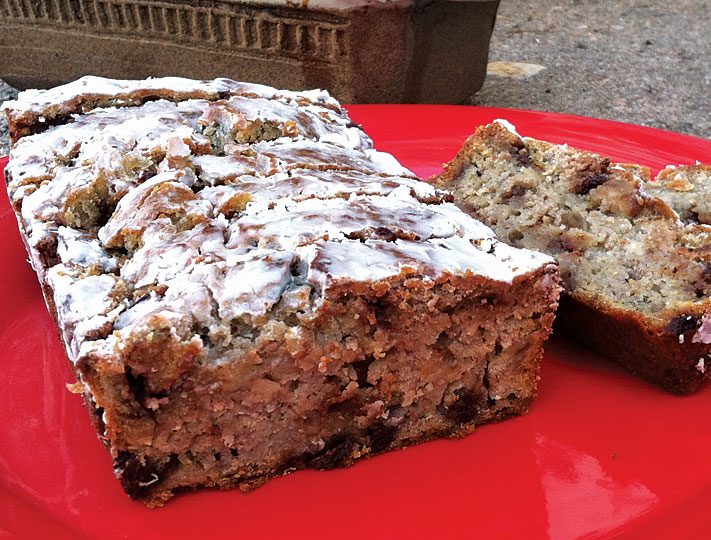
    ChocolateChip & Banana Zucchini Bread

    Choclolate Chip Banana Zucchini Bread
    Choclolate Chip Banana Zucchini Bread

    recipe by Anne Marie Martinez

    INGREDIENTS:
    •    2-3 ripe bananas
    •    3/4 c brown sugar
    •    6 Tbls butter, softened
    •    1 egg
    •    1 tsp vanilla
    •    1-1/2 c grated zucchini – 1 medium zucchini
    •    1-1/2 c all-purpose flour
    •    1/2 tsp baking soda
    •    1 tsp baking powder
    •    1/4 c semi-sweet chocolate chips + 1/4 c milk chocolate chips
    •  1/2 c crushed walnuts (if desired)

    DIRECTIONS:
    1.    Preheat oven to 325°F.
    2.    Grease and flour bread pan and set aside.
    3.    Peel and mash the bananas.
    4.    Stir in brown sugar, butter, egg, and vanilla until well combined.
    5.    Stir in grated zucchini.
    6.    Combine dry ingredients and add to the wet ingredients stirring just until combined.
    7.    Stir in chocolate chips and pour mixture into prepared pan.
    8.    Bake for 65-70 minutes or until an inserted toothpick comes out clean.
    9.    Let bread cool in pan for 10 minutes before removing.
    If you want an extra layer of goodness, frost loaf with cream cheese frosting before it’s completely cooled…yum!

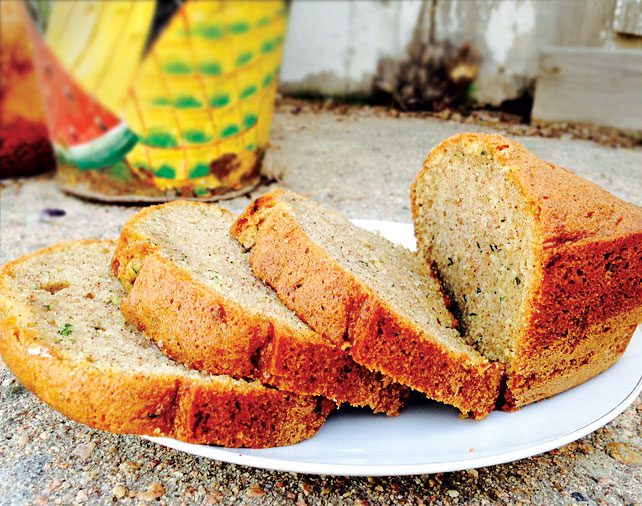
    Classic Zucchini Bread
    Classic Zucchini Bread

    Classic Zucchini Bread
    recipe by Siri Stevens

    INGREDIENTS:
    3 eggs
    1 c oil
    2 c sugar
    2 ½  c grated, peeled zucchini
    3 tsp. vanilla
    3 c flour
    1 tsp soda
    1 tsp baking powder
    3 tsp. cinnamon

    DIRECTIONS:
    Put all ingredients, one at a time, in mixer and blend after each addition. Place dough in two greased bread pans and bake at 325 for one hour. Tips: take the bread out even if the middle is not completely done – it will continue to cook. Once you place the dough in the pan, gently tap the pan on the counter to remove air bubbles. You can freeze the grated zucchini with one cup sugar for baking in the cold winter months.

  • John Stokes

    John Stokes

    John Stokes was raised around an auction barn in Lubbock Texas that his dad owned. “Somebody was always daring you to do something you don’t normally do,” said John. “I was an aggravating kid back then.” He shared a story about shooting a bow and arrow at the neighbor kids after watching Little Beaver do it at the movies. “I got a good spanking.”
    Born in 1939, he enjoyed life and as an only child, he tried many things at the sale barn that led him to raise, ride and fight bulls. “My dad sold cattle, horses, and calves and I remember we got 17 head of bucking horses, and 17 head of bulls that belonged to Gene Autry. They were there for Everett Colborn’s rodeos that were held in the college football field. My daddy trucked them over there.” Clyde had a trucking company as well as the auction barn on the north side of Lubbock. The auction barn had a straightaway race track and on Sundays they would have horse races. “My mule, Josephine, could outrun most of them,” he said. “I thought it was a neat deal – they would bring in bulls and calves and horses and we’d rope and ride.”  He picked up his dad’s livestock trading skills and took it on with him into the rodeo world. “When I was rodeoing I’d buy bulls from one producer and sell to another one.”
    He started competing in 1953 at Rising Star, Texas, as a small open rodeo. He entered the bull riding at the age of 13. Two years later, at the age of 15, he had his first “gig” as a clown/bullfighter at that same arena. When they came out with the Rodeo Cowboys Association permits in 1956, he ended up with one. “If you won money, you had to buy a card for $25. The First RCA rodeo I entered, in Taylor, Texas, I entered two in one weekend. It was a two head in the bull riding – I won $15, so I had to buy a card.” Like many bull fighters in his time, he showed up to ride at rising star event and the bull fighter didn’t show up, so they asked John to do it. “After that, I would get on my bull first, and then I’d fight bulls for everyone else. Some of those rodeos down in South Texas there would be thirty or forty bull riders – and I was the only bull fighter – I was pretty skinny and pretty quick.” He won many rodeos as a bull rider.
    John attended Tarleton College in Stephenville, and in 1958 he was instrumental in helping form the first rodeo club at the school. That year he entered the Tarleton rodeo in bull riding, wild horse race, bulldogging and bareback – winning the All Around
    He married Lynn Kirby, the girl down the street, who he had known since junior high. The two will celebrate being married for 50 years this coming January. They settled on a ranch near Sonora, Texas, ranching 90 miles from the border. Lynn went with him to all the rodeos after they were married.
    John was drafted into the military, but he couldn’t serve due to his lack of hearing. “I got hit by lightning when I was 12 and that started my hearing problem. We had a rock barn, with jersey heifers. I’d come in from school and was down at the barn. Lightning hit the barn right next to me – I had a bad taste of sulfur in my mouth for six weeks – it killed a bunch of the heifers.”
    He continued a trade that he started in high school “I got paid .35 an hour for welding when I was in high school, and I could see how gates worked from growing up in the sale barn and being around my daddy (Clyde Stokes).” John built a set of metal pens for a friend and that’s how his welding business started. “Over the period of years we built four different auction barns, repaired a large feed yard – all while I was rodeoing and ranching.”
    Lynn and John had one daughter, Tamara Shane. His welding business ended up employing 20 people – 15 of them rodeoed. His bull fighting and riding slowed down, but he still wanted to go and rodeo – so he took up team roping and steer roping. “I learned how to rope as a kid – .it’s something I did every day of my life when I had cattle, sheep, and goats. It wasn’t hard to take what I did every day and put it in the arena. I roped left handed for a long time, but I got my finger mashed in a door, and had to start roping right handed.”
    John not only went to ropings, he and Lynn started producing them in the 1978. “Our first roping we had at the ranch we had a progressive after six and we had two kids, one was 13 (Guy Allen), one was 14 (Tee Woolman), won the roping.” They produced ropings for fifteen years, and after they quit, John continued roping until he was 70. “I roped and tripped until five years ago,” he said. “I spent 53 years in rodeo.” During that time, he endured 88 broken bones.
    He is still involved in the industry, raising bucking bulls – he has six coming two-year-olds that will be entered in futurity derbies for ABBI and UBBI. “All my cows are registered. All the bulls are out of our cattle and I trained them all. When I sell one for $5,000, I think I’ve made a lot of money! I train them and gentle them up. You can’t sell a mean one. They are just like people – they’ve got their own little thing.” John and Lynn enjoy their life on the ranch. “We ranched all our life, I don’t think we’ll ever get away from it. As long as the Lord lets us, we’ll be in the cattle business.”


    Story is also available in the September 15, 2014 issue.

  • JD Schulze

    JD Schulze

    JD (James Daniel) Schulze calls Brighton, Colo., home, but he is most at home in the arena. The rodeo clown spends the summer working rodeos in Colorado and surrounding states. “From June until the end of September I will have worked 63 performances,” said the 39-year-old single dad. “I’ve been home a couple days all summer.” His ten-year-old son, Landon James, travels with him on the weekends JD has him. “This year he’s really taken a part in wanting to help out with the acts.” One of JD’s acts, the Shrinking Machine, features Landon as the small version of JD. Landon plays baseball too, a sport that JD helps by being one of the coaches.
    “When it comes to coaching, I really try to make it fun and have fun with the kids so they learn to love the game – and have fun – which in turn hopefully carries over to everyday life in all they do. In the rodeo arena, I’m there to be a goofball and be part of the bull fighting trio – the island of safety – that’s where the barrel man comes in.”
    JD grew up on the Eastern side of Aurora, Colo., and the middle of Denver. His parents were divorced and he and his three older brothers split their time between the two houses. He also has three younger sisters. “It was my norm,” he said of having two homes. Growing up in the city, JD got his break into rodeo through friends who were bull riders. “I always loved the Western lifestyle and hanging out with friends that rode bulls got me started riding.” JD rode bulls until injuries took him out.
    Full story is available in the September 15, 2014 issue.
  • Kyle Irwin

    Kyle Irwin

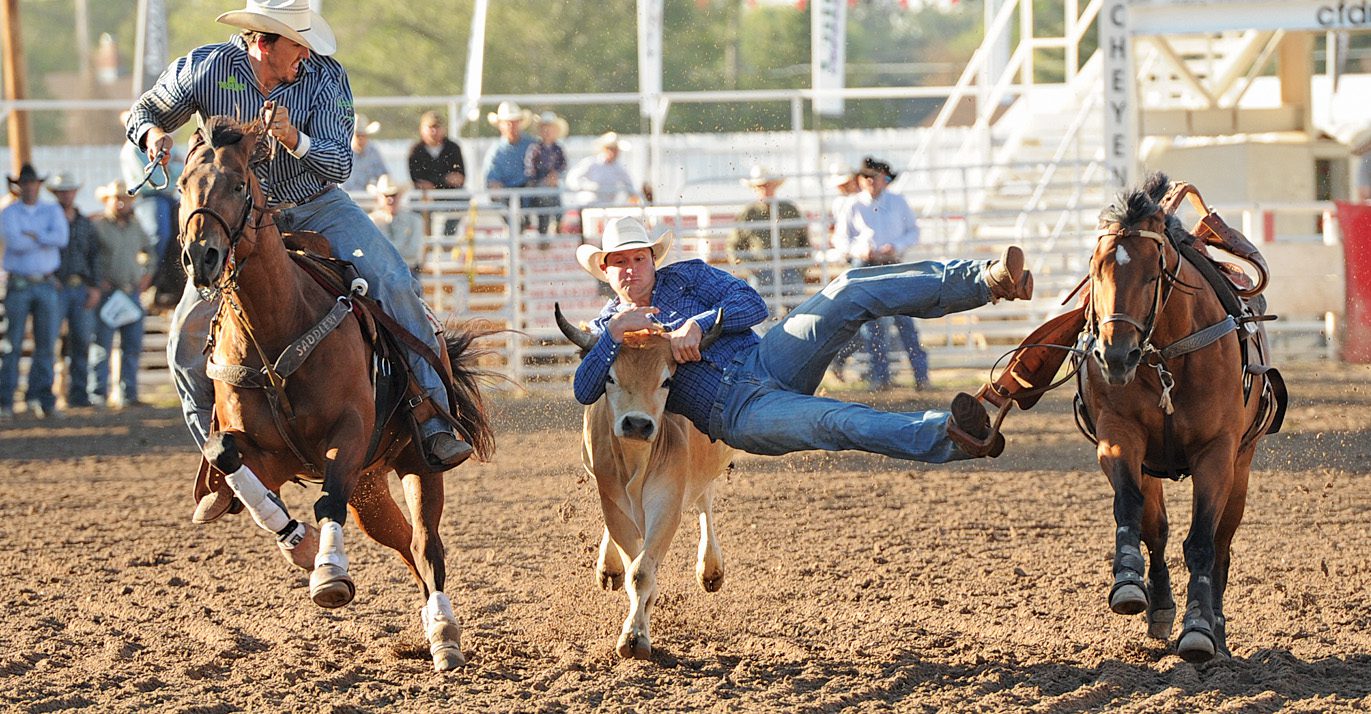
    Winning the Ram National Circuit Finals in Guthrie, Okla. earlier this year, the young gun, Kyle Irwin, 24, from Robertsdale, Ala. has big goals for his steer wrestling career. Clocking a record-tying time of 3.3 seconds naming him the 2014 RNCFR Champion, Irwin is confident and motivated with an eye on a gold buckle.
    “I’m inspired by the people that succeed when the odds are stacked against them. No one person in particular, just anyone you might read or hear about that started from rock bottom and had nothing, then beat the odds and excelled tremendously. Just to prove that nothing is impossible.”
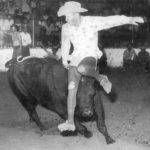
    Growing up around rodeo and cattle, Irwin began junior rodeo at the age of 11 competing in tie-down roping, chute dogging, and team roping. Irwin jumped his first steer at 13 years-of-age at Steve Duhon’s Steer Wrestling School.  Graduating from Northwestern Okla. State College, he was fortunate to have a mentor and coach, Stockton Graves. Graves taught Irwin not only about steer wrestling but about life and experiences.  Traveling with Kody Woodard and Dru Melvin his senior year in college, he had the opportunity to ride Dru’s horse, Moonshine.  By riding Moonshine, Irwin gained a tremendous amount of knowledge and confidence to keep pushing through any doubts about himself. Unbeknownst to Irwin, his adventure into a professional steer wrestler was headed in to a victorious one.
    “I remember when I was in high school and signed with Western Okla. State College. The local newspaper wrote an article that read, Robertsdale High Senior Wrestles His Way to Higher Education. I never knew I had a chance to make a career out of the sport of steer wrestling. I had watched guys on TV making a career and I was in awe at how good they were. Now, I am able to pay my bills and enjoy this life that I had dreamed about.”
    Full story is available in the September 15, 2014 issue.

  • On the Trail with Garrett Tribble

    On the Trail with Garrett Tribble

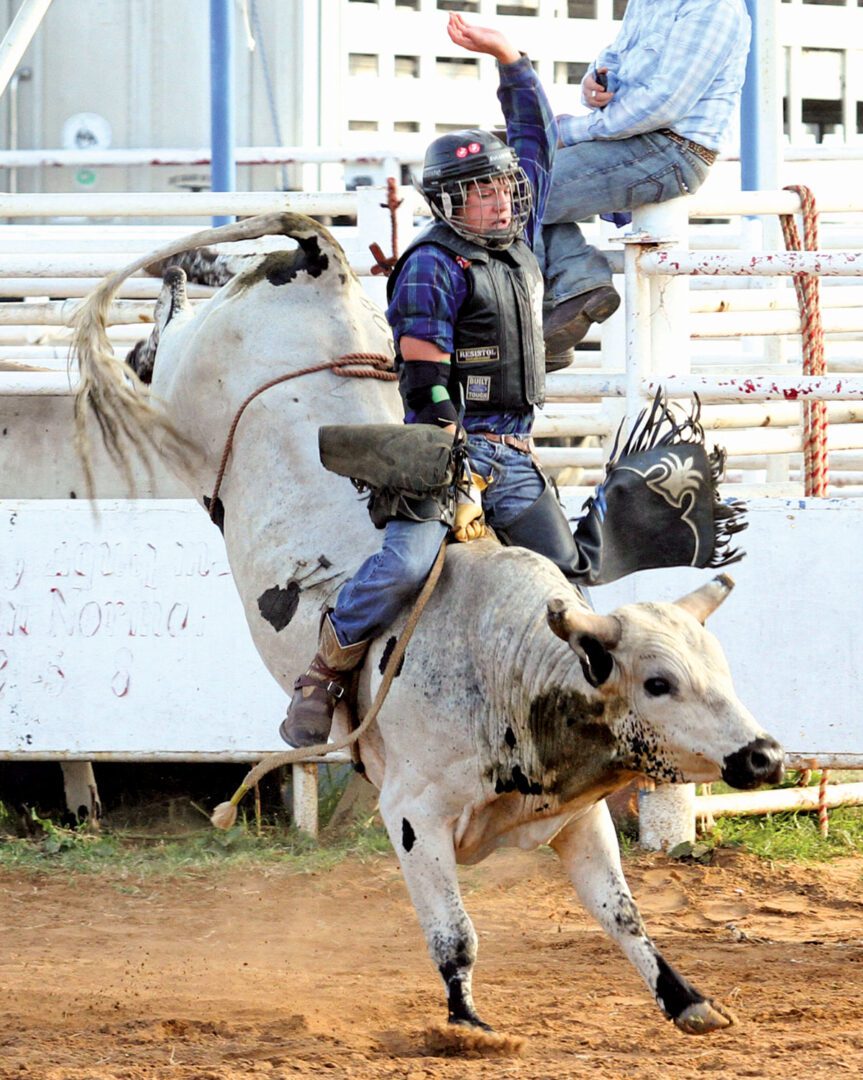
    “A lot of kids ride bulls, but some kids are just born to do it.” This is how Phil Fabela, a family friend and mentor, describes Garrett Tribble, who has been sitting first in the IPRA bull riding standings for nearly two months. Garrett isn’t the type to boast, but the bull rider from Slick, Okla. joined the IPRA in January 2014, and 11 states, three Canadian provinces, and nearly 50 rodeos later, he is sitting first in the world standings – ahead of second place by almost $20,000. And he’s only 17.

    “Garrett’s bull riding career really started when he was about two or three years old,” says his dad, Rodney Tribble. “He fell in love with bull riding and has wanted to do it since he was very young. From about the time he was three, he’d come home from school and put in Eight Seconds – he watched it every day!” Garrett’s bull riding dream took shape when he was about five. One of his friends was participating in the mutton busting at a local rodeo and invited Garrett to join him. Short as it was, the wooly ride made up Garrett’s mind. He was going be a bull rider. Although none of Garrett’s immediate family had ever competed in rodeo, his parents helped him join youth associations like the Junior Bull and Bronc Riders Association (JBRA), National Junior Bull Riders Association (NJBRA) and the Oklahoma Junior Rodeo Association (OJRA).


    Full story available in the July 15th edition.


    Full story available in the July 15th edition.
    Full story available in the July 15th edition.
  • Back When They Bucked with Ferrell “Flashbulb” Butler

    Back When They Bucked with Ferrell “Flashbulb” Butler

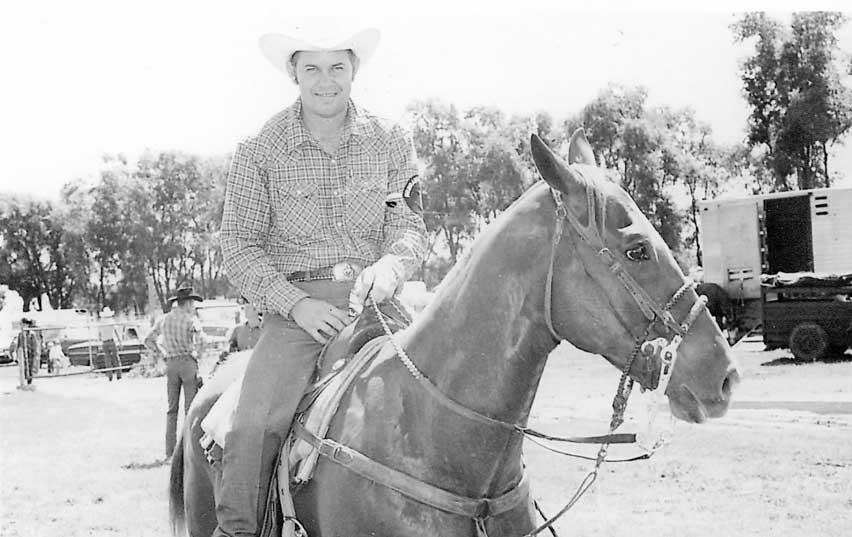
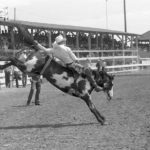
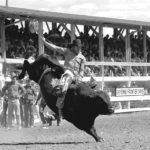
    Ferrell “Flashbulb” Butler hadn’t a penny left to pay his entry fees. So the calf roper took out his camera and started shooting rodeos, selling the photos for a dollar and a half apiece in the 1960s. Each click of the lens drew him closer to the acclaim he receives today for the moments of rodeo history captured with his German Rolleiflex T camera.
    Butler, born in 1936 in Davidson, Okla., was the only child of his parents, UJ and Hazel Butler. His family later moved to Mesquite, Texas, and young Butler began competing in rodeo when he was 15. “I wanted to rope calves like all the other kids in the ’50s. I wanted to ride bulls, too, but that didn’t last long.” Butler went on to compete on the Arlington State College rodeo team. He was a charter member of several rodeo associations, but much of the time he competed in his hometown in Mesquite. It was there that 24-year-old Butler began his photography, learning the trade as he went. “I started taking pictures for money and the picture taking got plumb out of hand!” In 1960 at the NFR in Dallas, Texas, Butler met rodeo photographer DeVere Helfrich, future friend and mentor. Helfrich pioneered the technique of classic saddle bronc pictures capturing the rein picked up and the horse stretched out, jumping and kicking.

    Full story available in the July 15th edition.