Rodeo Life

Category: Rodeo LIFE Cover Feature

  • Back When They Bucked with B.J. Pierce

    Back When They Bucked with B.J. Pierce

    story by Lily Weinacht

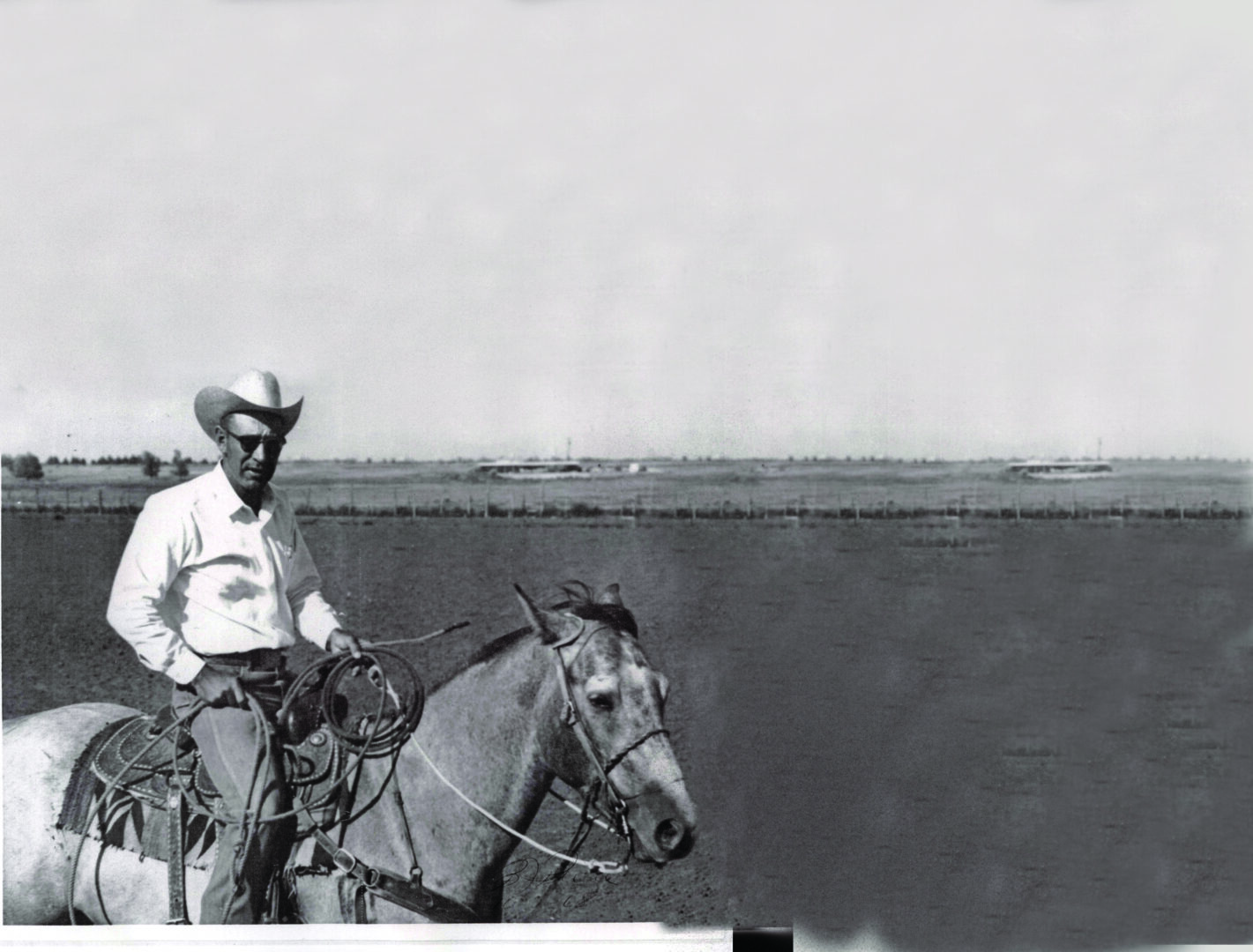
    Born on August 22, 1926, to Grady and Dolores Pierce in Clovis, N.M., B.J. Pierce was fated to wear dirt on his boots, but always with pride – first as a farmer, and forever as a cowboy.
    The Pierce family raised cattle and farmed in the shadow of the Dust Bowl, sleeping with rags on their faces and perpetually cleaning the Kansas dirt from their window sills. B.J. worked the fields alongside his parents, but his dad always left him the last few minutes of daylight to rope in the backyard. Inspired by the tales told by his grandfather, a cowboy from Oklahoma, B.J. was more passionate about roping than anything else. With high school and college rodeo yet to be created, he taught himself to rope calves, winning his first rodeo in Tucumcari, N.M. in 1945. After graduating high school the same year, B.J. met Shorty Matlock, a steer wrestler and fellow tie-down roper from Grady, N.M.
    The two cowboys became travelling partners, and a summer full of roping boxes, rodeos, sleeping in horse trailers, and bathing in creeks earned B.J. enough money to pay for a year of college. The fall of 1945, he attended Eastern New Mexico University in Portales, studying for a degree in industrial arts and playing basketball on a scholarship. There, he met his first wife, Patty Rawls, whom he married in 1947. The following summer, B.J. and Shorty set out again, and B.J. won enough money to finish paying for his college tuition, as well as Patty’s. By his junior year of college, B.J. quit playing basketball, knowing his future was in the arena, not the basketball court. He graduated in 1950 and immediately began rodeoing full time, frequently announced as one of only two full-time rodeo cowboys in the region that had college degrees.
    Though B.J. also competed in wild cow milking, team roping, and steer roping, tie-down roping was his main event. He even served on the RCA Board of Directors as the Calf Roping Director. He competed in the RCA and won the tie-down roping – often more than once – in rodeos across the Pacific West, including Pendleton, Ore., Ellensburg, Wash., and Lewiston and Nampa, Idaho. His truck and trailer traversed the U.S. even further, taking him to Denver, Colo., which he won in the tie-down roping, Cheyenne, Wyo., where he earned buckles on two separate occasions, and even as far as New York City and Calgary.
    One of the single largest paychecks he earned came from a one day tie-down roping in Los Angeles. B.J. returned home with $2,500 riding comfortably in his wallet. Another favorite of his was the tie-down roping invitational held in his hometown of Clovis in 1952, where 17 of the world’s best ropers came to compete. B.J. and every other roper put up $500, and he left with $5,200. The furthest B.J. and Patty travelled, however, was Cuba. In the mid 1950s, Colonel Jim Eskew held a rodeo on the island, the rodeo livestock and contestants alike arriving on boats from Florida. B.J.’s own horse, Iodine, stayed in the U.S., and B.J. borrowed a horse to avoid putting Iodine in quarantine.
    B.J. remembers Iodine as his best roping horse, winning his three world tie-down championships with the IRA on the gelding in 1952, ’53, and ’55. “He was very good to me,” B.J. recalls. “He went with me a long time, all over the U.S. He was featured on the cover of the Quarter Horse Journal in the early 1950s. Iodine’s daddy was Billy Clegg, and his foals were noted for becoming good cow horses.”
    The thousands of miles B.J. racked up on his speedometer also left a trail of friends in many states, including world champion tie-down roper Dean Oliver from Idaho, who became one of B.J.’s close friends. Connections like these propelled B.J. into selling ads for Western Horseman. Patty wrote articles for the magazine while B.J. rodeoed in California, where they lived for five years. When the advertising position came open, B.J. filled it.  “Since I’d been so many places rodeoing, people knew who I was. I got to go to big horse shows and meet people you’d never meet rodeoing, like Gene Autry, James Arness, and Miss Kitty (Amanda Blake). A lot of those people were in the horse business. The only negative thing was selling ads and people not paying for them,” B.J. remembers. “You just didn’t go back to them again!”
    By the early 1960s, B.J. was ready to hang up his rope. “I guess I got tired!” he says. “All I did for 13 years was rodeo. So I retired from the rodeo business and started teaching school. I had a degree in secondary education, and I was going to teach one year in sixth grade. I ended up staying 31 years in the school system.” B.J. was a teacher for 16 of those 31 years before moving to administration and becoming a principal. He worked at several schools in Clovis, including Highland Elementary and James Bickley Elementary School. Having lived all but five years of his life in Clovis, B.J. still sees many of his former students. Ever the cowboy, B.J. brought the lessons he’d learned in the arena to the classroom, teaching discipline and organization.
    In 1979, B.J., who was divorced, married his second wife, Sue. He had two children, Rena and Ben, and Sue had a son, John, while B.J. and Sue became the delighted grandparents of four grandchildren. They were married for 31 years until Sue passed away in 2008, and during much of that time, B.J. continued to teach, while training calf horses for ropers all over the region. He has also been a member of the Curry County Mounted Patrol for many years, serving as the organization’s captain, vice-president, secretary, and treasurer. The patrol was created in 1939 to promote horses, horsemanship, and sponsor western entertainment like rodeos and ropings. A lifetime member, B.J. continues to help put on the annual Pioneer Days PRCA rodeo in Clovis. At 89, riding has lost none of its charm, and B.J. still takes his horses up to the mountains to ride. “It’s fun if you don’t fall off!” he adds wryly.
    Recently inducted into the National Cowboy and Western Heritage Museum’s  Rodeo Hall of Fame, B.J. also attended the 100th anniversary of the Pendleton Round-Up as a guest of honor in 2010. Visiting today’s rodeos brings back many recollections of his own rodeo years. “The cattle have changed a lot, and so have the arena conditions, and there weren’t many standards,” he says. “The longest score I ever roped was at 75 feet, and of course getting off on the right in roping has made it a second to a second and a half faster. I was fortunate to rodeo when I did, but I would like to rodeo nowadays for the money. To make $250,000 – that would be pretty neat!”
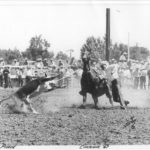
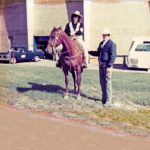
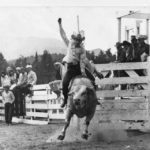
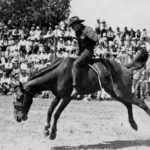
    B.J. Pierce at Cheyenne in 1967
    B.J. Pierce


  • On the Trail with Wade & Sabrina Kreutzer

    On the Trail with Wade & Sabrina Kreutzer

    Wade and Sabrina Kreutzer have been roping together for 24 years.  They have been part of the CPRA rodeo family since 1989; Wade served on the board for ten years as a team roping director in the late 1990s. “I always wanted to make a run at the NFR, but family came first,” said the 46-year-old # 7 header and 8+ heeler. “I’ve been able to rope with a lot of guys and I’ve met so many good friends through my roping. Back in the day, there was no point system, so it was open ropings. That’s all they had for a long time. We learned to reach; we didn’t rope close. We had to rope against all the toughs all the time. That made us better later on.”
    Wade belongs to the PRCA, a card holder since 1989, as well as the USTRC and the World Series. Wade and Sabrina live on a ranch that his grandpa owned, 15 miles west of where he was born in Walsenburg, Colo. He put a rope in his hand when he was 11. “My mom and dad ran a gas station in LaVeta for 25 years. When I was 11, we moved out to a ranch and that’s when I started riding and roping with my cousins. That’s all I wanted to do.” He started out tie down roping. Wade’s dad showed him how to rope a bale of hay and he learned on his own, trial and error. When he was a sophomore in high school, he added team roping, entering the high school rodeos with partners he drew. He made it to the high school finals twice.

    He went to college at LCCC in Cheyenne, rodeoing under Pinky Russel Walters for two years. “Tim Bath was our Timed Event coach and he taught a class in it.” He transferred to CSU Pueblo, where Sabrina was going to school, for two years. “College was outstanding for me. It was enter twice. I made the College National Finals my junior and senior year, and won third my last year, 1991, with Brian Espencheid.” That was the same year he married Sabrina. “We got married in March, and I went to the finals three months later.”

    He settled into married life, raising two sons with Sabrina, training horses, coaching for the basketball and football teams, for the next 17 years, rodeoing in the circuit and at the CPRA rodeos. He was the Dodge National Circuit Champion in 2004 with Ryan Zurcher and again in 2006 with Mark Kersting. He qualified for them 5 or 6 times.

    Wade and Sabrina had known each other through National Little Britches and started dating at the end of Wade’s sophomore year in college. She grew up in Penrose, Colo., and started her rodeo career before she was 8, competing in barrels and poles.  “I did Little Britches all through growing up and high school rodeo, competing in barrels, poles, goats, and breakaway. She started team roping in high school, roping with her dad.” She went to college for one year at Pratt College in Kansas, and then transferred to CSU Pueblo and was a member of the rodeo club. “Butch Morgan was our coach and we entered ourselves … it wasn’t a bonafide sport there.” Sabrina made it to the CNFR twice in college. “The first year I competed in the breakaway, barrels, and goats.” She got a degree in physical education because of her love of gymnastics, something she competed in for ten years. Her first job was teaching fifth graders. She taught for a year, and then they moved to LaVeta and she taught PE for kindergarten through fifth grade. She taught for a year, and decided that she needed to stay home with her boys. “Clancey was three and Kyon was one and I was spending all day with someone else’s kids while someone was spending the day with mine.” She subbed on and off until Kyon graduated from high school.  She coached gymnastics for two years in Florence and was assistant coach in Canon City for 1 year. The only thing that stopped Sabrina from roping was her two pregnancies. “I had Kyon in July 1994 but I still went to the CPRA Finals. I remember Wade roped with another girl when I couldn’t ride. But I was roping again in August.”


    Full story available in our September 15, 2015 issue.


  • Back When they Bucked with Lynn Smith

    Back When they Bucked with Lynn Smith

    High in the Rocky Mountains as the 1940’s were just cracking out, a desire to ride bulls and follow rodeo was brewing in young Lynn Smith’s heart. Lynn grew up on the Kremmling, Colo., ranch his granddad put together homestead by homestead beginning in 1881. His granddad raised many horses during those years even having a remount stud on the place to supply horses for the government. As natural progression goes, Lynn’s father took over the ranch and built a cow herd, kept some horses, and raised a family of three girls and Lynn, the youngest.
    The young mountain man’s interest in rodeo peaked one year at the National Western Stock Show and Rodeo. “Dad sold a big roan bucking horse to Verne Elliott at Denver when I was about four years old,” recalls Lynn. While in Denver the rodeo clown, Homer Holcomb, packed him all around on his shoulders, “and that’s when I decided I wanted to be a bull rider.”
    Lynn grew up without the luxury of electricity. He attended a one room multi-grade school of which he was the only student his 6th and 7th grade year. He would pack his .22 to school and shoot magpies in the school yard. Around the ranch he would ride calves and when he was 15 he started entering rodeos. He was a three event teenager taking part in the bull riding, cow riding and bareback riding. Although they didn’t buck him off many bareback horses, he confesses he didn’t like it very much. He laughs as he also confesses, “I rode barebacks like I rode bulls, and they didn’t pay much for riding like that.”
    His bull riding career spanned the two decades from 1953 to 1973, during which he made memories alongside the era’s best hands and on top of some of the best buckers in the business. Lynn met his late wife, Wilma (Willie), in the fall of 1956 during his short stint at college in Fort Collins, Colo. Before their marriage, he traveled with a few different cowboys including Gene Jordan of Durango, Colo. They were what rodeo folks call “splittin’” partners. When a partner placed he would split his winnings with the other.
    “This way you could live rodeo to rodeo,” chuckled Lynn. He went on to explain, “If it was a little rodeo that paid four places we’d split 10% and if it were a bigger rodeo, like Denver, we’d split 5%.”
    After his marriage, Lynn had a new traveling partner in Willie. “Naturally we didn’t have any extra money except what I won, and she got to working at rodeos then finally bought a timer’s card,” tells Lynn. This eventually worked into her becoming a rodeo secretary.
    Wheels to the rodeos were used Cadillacs. “I had a ’59 Cadillac I drove over 200,000 miles. Everybody gave me a bad time for driving it forever.”
    He used to tell people it was only an hour from Flagstaff to Phoenix-and it was back in those days because he drove 110 miles per hour! If Lynn won a check at a rodeo he and Willie would get a motel and if not, they would sleep in what they referred to as their “Cadillac Hotel.” Between the two, if they made $50 a rodeo they were making money. Wick Peth, the notable clown and bullfighter from that day, tried to convince Lynn to fight bulls. His response to that, “I train my feet to run from ‘em not to ‘em.” Even Willie thought a steady check at every rodeo might be a good idea. He told her, “Those bull riders aren’t going to like how I fight bulls.”
    He stuck with the riding and sure enough needed to win something in Gunnison, Colo., one year.
    “We pulled into town, filled up with gas, paid my fees and we had $1.43 left in our pockets. That’s it,” tells Lynn. He had drawn Little 8 of Walt Alsbaugh’s. “They just didn’t ride him anywhere,” he explains. According to Lynn, he was really a bucker and a fighter, too.


    Full story available in our September 15, 2015 issue.


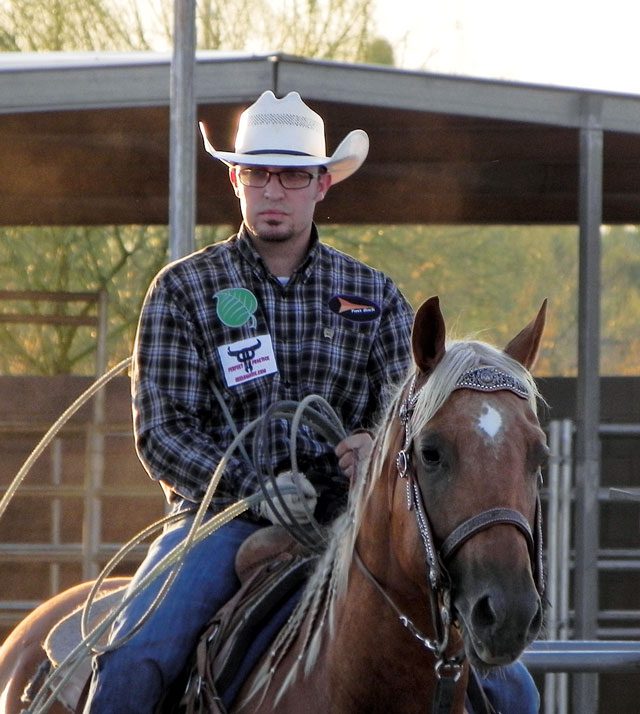
    Heading for his nephew Ron last winter in Arizona – Olie’s Images
    Lynn working the ground at the Grover Rodeo
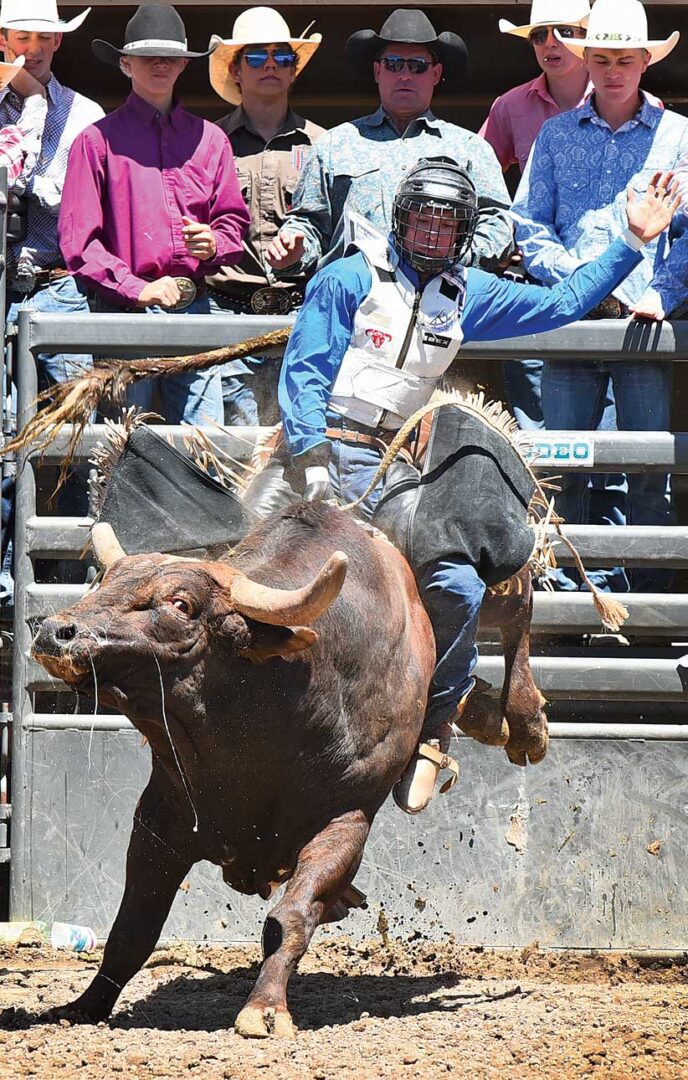
    Riding at the Boulder rodeo 1968
  • Roper Review with Steve Stone

    Roper Review with Steve Stone

    story by Siri Stevens

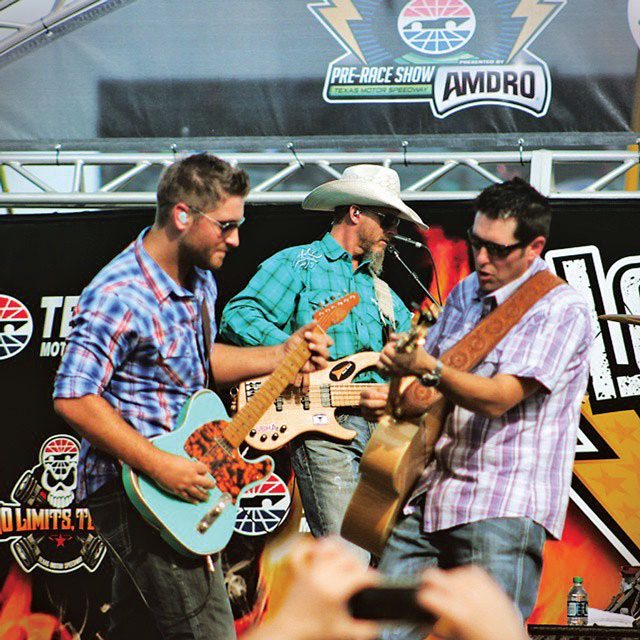
    Steve Stone lives in Rio Vista, Texas. “It’s a little slice of heaven,” he says. “I love Texas. I’ve been 10,000 miles in the last 45 days, and there’s some beautiful places in this country, but I love Texas.”  Steve is the bass guitar player for the Casey Donahew Band, something he’s done for 13 years. “I make a lot more money playing music than I do roping,” he said, but admits that whenever he’s home, he ropes. “I’m gone half the week, then I rope and raise bucking horses.” His wife, Jamie, and daughter, Kyndall (19), join him in the arena to rope steers. His son, Riley (18), who also ropes, took up his dad’s previous rodeo event, bareback riding, and that led the family into another adventure raising bucking horses. “When my son was 15 and he wanted to ride, I put bucking chutes in the arena and we bought some mares and he practiced on the mares and their babies ended up at the futurities and did pretty good, so now we’re part of the UBHA.”
    Steve started roping 10 years ago. “I grew up as a teenager riding bareback horses. I started roping in my late 20s.” Steve had a family, and once that happened, he was shoeing horses for a living, and playing bass on the weekends. “That’s when I got interested in roping.” Steve went to college at Sull Ross State University in Alpine, Texas, to rodeo and learn how to be a farrier. “I wanted to stay around rodeo and shoeing helped me do that as well as spend more time with my kids. The music got too busy to shoe, so I gave that up.” Music is something he picked up during college and he started playing with Casey, who was a friend of his, around the Stock Yards. “Here we are almost 13 years later doing 120 shows a year – from New York City to Alberta and Seattle.”
    COWBOY Q&A

    How much do you practice?
    I’m a #4 header and heeler – I don’t get to go much. I’m gone half the week, the last thing I want is for my wife to take care of roping cattle. It’s so nice to hook that Heel-O-Matic machine up and within an hour we’re done. I’ve only been home for a week from a tour, and there’s a lot I need to do – planting wheat is one. We also raise bucking horses.

    Who do you respect most in
    the world?
    My Lord Jesus – you can tell by the life I live – I’m humbled by the opportunities that I’ve been blessed with. I couldn’t ever imagine what my life is now –  I was in Youth ministry.

    What makes you happy?
    My family and home. This is a new chapter – my daughter and son have moved out, so my wife and I are at home without kids. I can’t wait to see what they do. My family means more to me than anything else.


  • On the Trail with the Thurston Family

    On the Trail with the Thurston Family

    story by Siri Stevens


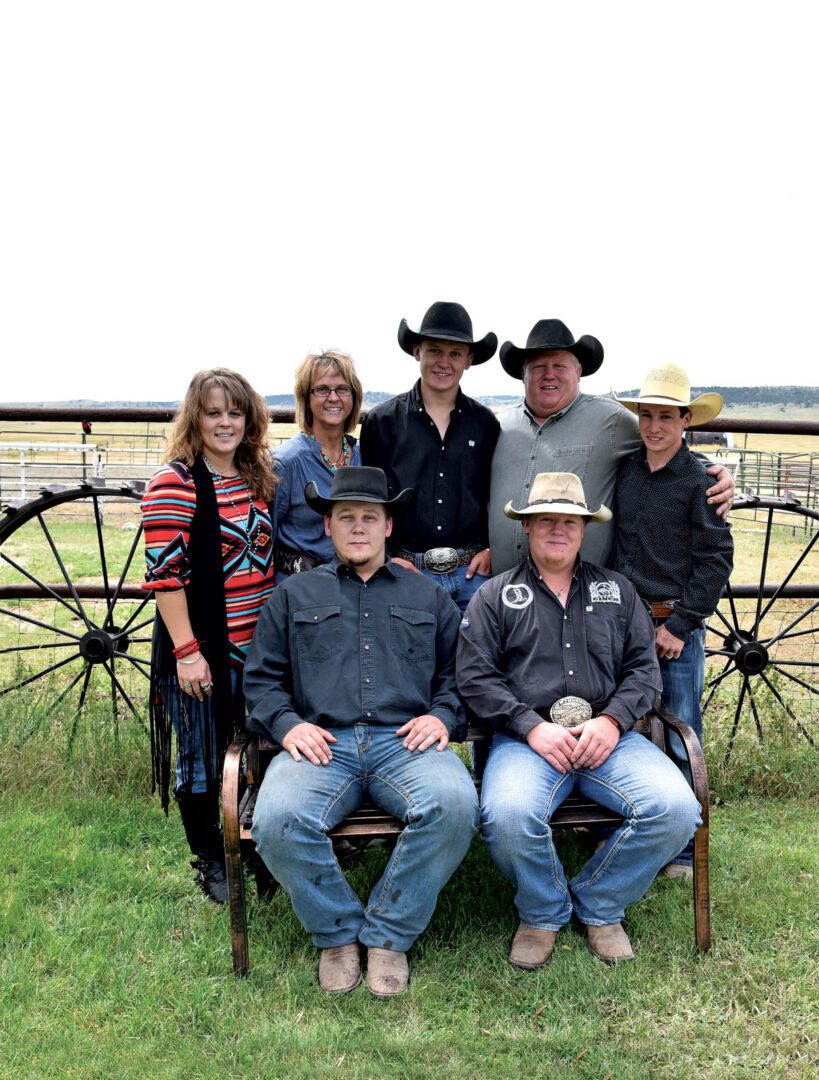
    John Thurston and Tiffany( Miller) Thurston grew up competing in rodeo -John did everything but steer wrestle and ride bulls. “I didn’t have a dogging horse and I entered the bull riding a couple times after my parents signed my release, but they told me never to try that again.” John was the 1981 Nebraska High School All Around Champion. He went on to college rodeo, riding broncs and team roping a little. “I was a broke college kid so I had to choose what events to enter,” he said. John graduated from college with a BA in AgBusiness.

    Tiffany graduated from Niobrara County High School, making the national high school finals in the goat tying. She went to college on a rodeo scholarship and graduated with a BS in Elementary Education. She met John while on the rodeo team at Casper College. “He was this really friendly guy that was always smiling,” she recalled. “That hasn’t changed-he’s still smiling.” They started dating in February of 1984 and were married in 1987.

    John took a ranching job 38 miles north of Harrison, Neb, and Tiffany had a teaching job with six students. “That community really welcomed us when we moved up there,” said John. “We moved every three years until we bought this place 16 years ago.” The place, 150 miles to the nearest Walmart, and 35 miles for a tank of gas, came from Tiffany’s grandad. The 600 acres was home to all the animals needed to keep all four kids in rodeo. “We figure there was always a sign that needed to be put on the ranch – Rodeo Ranch – it sustained the horses, 12 horses at tops, we hauled six, and goats to practice on,” said John. Shortly after they got the home place, another place came up for sale 8 miles away and they bought that too. That acreage sustains the goats and the various finds that John accumulates being a “scrapper.”

    By the time the family moved in, the kids were involved in rodeo.  Jordan, 25, Ace, 22, Colby, 20, and Brady, 18 all competed in rodeos, starting with the Wyoming Junior Rodeo Association. “We started with little rodeos around here,” explained Tiffany. “The first WJRA rodeo, we got one check for $8 and the fees for the weekend were $230. We decided that something had to change. We built the arena.”

    John went to Crawford with three dry cows and traded them for panels and made the arena the next day. Every day at 5, no matter what he was doing, John was at the arena, helping saddle horses or getting cattle ready to rope. “We treated it just like a sport. We are here to compete, not socialize,” said Jordan, who competed in barrels, poles, goats, and breakaway in high school. Her dedication to rodeo led her to be a four time Wyoming state goat tying champion and two college National Championships in the goat tying. “We tried to make the practice fun – we’d have four goats staked, Brady would be five steps ahead, Colby three steps, Ace two steps, and Jordan on the line.” They’d all go tie and the one that lost had to run to the roping chute and back. Ace practiced steer riding by John snubbing the team roping steers to the post with a blindfold on. This too was fun, with every one of the kids having a job so Ace would get the best practice possible. “By the time Brady started learning to ride barebacks we had a bucking chute, so it was a little easier,” Tiffany said.

    At first it was just Tiffany and Jordan going to the rodeos – John was either home with the other three or off to a junior rodeo. “I kept track of who did what and was always videoing so John could see the runs – it was a great teaching tool.” She remembers taking a cooler of food for the weekend for herself and Jordan, and when the boys joined them, that cooler was empty in two hours. When the whole family started traveling together, they slept in a tent and the trailer. “I remember one time we had all gone to bed but John, and when he came in the only sleeping bag left was Winnie the Pooh, it hit him about the waist.” Breakfast was tortillas, peanut butter, and honey. Family memories were made on the rodeo trail.

    Raising goats also started with the rodeo road. “The first year we rodeoed was 2002 and we only had four goats,” said John. “We had to get more. We sold those four goats and lost money. The next spring I bought doe goats, and that fall we put a billy with them and started raising our own. At the peak of it, we’ve had as many as 300-500 kids to feed out and 60-70 nannies to kid out.” John buys goats in the fall to feed over winter and sells them in the spring. The family has supplied goats to several high school rodeos as well as the Wyoming State High School Rodeo Finals for a number of years.

    Everyone pitches in when the goats go to the rodeos. “I remember being in Gillette with goats and John had stayed home because of calving,” said Tiffany. “A nasty spring blizzard came through and I was by myself trying to help Brady (who was super sick with the flu) saddle horses, warm horses up, film and just keep us warm.” Jordan and her husband, Chancy (Miller), came and helped the whole weekend. “We had to build protection along the arena with a tarp because of how hard it was snowing and the wind was blowing. I was trying to keep the goats from freezing after they were in the mud snow and rain. They (Jordan & Chancy) helped warm up horses, feed, get Brady’s saddle on his bronc etc. Whatever I needed help with. We could not have done it without them that weekend. Everyone of the kids has always jumped in and helped and for that we are proud of them all and grateful,” said Tiffany.


    Full story available in our September 1, 2015 issue.


  • Back When they Bucked with Earl Batteate

    Back When they Bucked with Earl Batteate

    story by Siri Stevens

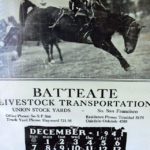
    Earl Batteate (Bud) was born Nov. 20, 1918. He grew up in Hayward, Calif. “I didn’t get to hear the news every night, nor were there the number of people and bad company around. It’s a lot different world. You could trust everybody then.”
    He started riding calves at the age of 7. “They had them in the chutes, with guys holding them, there was an old saddle bronc rider that took me with him. All the kids rode with two hands, but I had to ride with one, and I got bucked off a lot, but I rode better.” Bud’s dad was a rancher and in the slaughter house business. He had two cattle ranches and hauled a lot of cattle. “He had 33 trucks back in the 1940s. I came from a working family that wasn’t afraid to work.” He had one brother, Al, who has passed away, and a sister, Wilma, who is still alive.
    Bud left home in his late teens to rodeo. He had been going on the weekends with the cowboys at the ranch. He competed in bull riding, and bareback riding, and every bronc riding or any amateur bronc riding he could get in. He quit high school in his senior year and drove truck for his dad and got married when he was 18 to Patricia, who he met in school. She was six months older.
    “I drove truck and got into the cattle business, my mother set me up with the bank so I could get some money and I bought cattle and got into the cattle business before I was 20. My dad had a ranch at Oakdale, so I bought the cows and calves and put them on the ranch.” He has three boys, Mike is the oldest now – close to 70. The oldest boy, Dan, passed away, Nick is close to 60. “All the kids were nine years apart, I guess I was gone a lot. In the fall of the year, I would get on the road and end up in Oregon, Washington, Idaho, Montana, and Canada and would be gone for two months that was the only time I was gone that long.” He remembers one of his big wins at Salinas and the belt buckle he won. “Someone offered me $400 and I didn’t even read what was on the buckle … I sold it to him. My dad got into town and wanted it, I’ll never forget the look on his face. His eyes got watery – I had sold the buckle to have more money to go up north – I already had enough money to go up north.”


    Full story available in our September 1, 2015 issue.


  • Roper Review with Tyler Kaess

    Roper Review with Tyler Kaess

    story by Teri Edwards

    Tyler Kaess has found what most people search for, and more often than not, never find. A perfect day for Tyler is being horseback roping, and helping others with their roping. He has been able to do that with his roping facility, Hot Shot Equine, located in Surprise, Arizona.
    During the winter months many ropers relocate to Arizona for the season to take advantage of the beautiful weather. For this reason, Tyler relocated from Colorado to Arizona to start Hot Shot Equine almost two years ago.
    “Winters can be harsh in Colorado. I wanted to be roping, teaching, and training every day. When I saw what happens in Arizona in the winter, I decided to move and build a roping camp,” explains Kaess.
    Located eight miles from Surprise, Hot Shot Equine is just far enough from town that patrons will enjoy the peaceful atmosphere, while being centrally located to an abundance of jackpots and events.
    The facility features an arena, stalls, and RV hookups. Daily practices are held with both cattle and Heel-O-Matic. Tyler offers lessons and enjoys teaching private clinics and the individualized attention he is able to give.
    Tyler started roping at just seven. He feels fortunate to have had access to talented ropers such as his uncle, Brett Trenary, a NFR Qualifier, Jay Ellerman, and Ricky Green.
    As a youngster, Tyler competed in Colorado Junior Rodeo Association and high school rodeo. At just 15, he won a Shoot-Out in Oklahoma City, and a check for $38,000. Since then, Tyler has placed at the BFI, and competed in PRCA and amateur rodeos. Before moving to Arizona, he managed an indoor arena and produced ropings. This included a memorial roping in honor of his father and was, at one time, the biggest open roping in the mountain states.
    Tyler credits the time he spent with Ricky Green for his passion for teaching.
    “I like the whole process of learning, teaching, roping. My method is different than some, but I try to connect with people,” says Kaess. “We all make the same mistakes, it’s just a matter of how many times you make them.”
    For more information about reservations, lessons, or horses for sale visit hotshotequine.com.

    COWBOY Q&A

    How much do you practice?
    Every day.
    Do you make your own horses?
    Yes.
    Who were your roping (rodeo) heroes growing up?
    Clay O’Brien Cooper, Shot Branham.
    Who do you respect most in the world?
    My dad.
    Who has been the biggest influence in your life?
    My dad.
    If you had a day off what would you like to do?
    It would be fun to get on a horse and rope without having to do all the prep work. Just rope.
    Favorite movie?
    Star Wars
    What’s the last thing you read?
    Performance Psychology in Action
    How would you describe yourself in three words?
    Laid back, resourceful, passionate
    What makes you happy?
    Seeing improvement in horses and/or people that I’m working with.
    What makes you angry?
    People who gossip or mind other people’s business.
    If you were given 1 million dollars, how would you spend it?
    Pay off my bills and buy some horses to rodeo on.
    What is your worst quality? Your best?
    My worst quality is I can be lazy at times. My best quality is I’m easy to get along with.

  • Roper Review: BoDell Jessen

    Roper Review: BoDell Jessen

    story by Bailee Joe Mikesell & Siri Stevens

    BoDell Jessen of Altamont, Utah, had an outstanding and phenomenal rodeo season this year. Not only did he earn the title of All-Around Senior Boy in the NLBRA, he also won the All-Around Cowboy in Utah High School Rodeo Association, with the accomplishment of winning bareback riding at the UHSRA finals as well. BoDell has goals written on paper that he tapes to the mirror on his bathroom. He had the goal of being the All Around Champion at the NLBRA up for three years and he was able to take that down after two years as reserve champion. “I just went in to have fun this year and show people that I was there to rodeo. I used to worry about getting points and looked at the board – this year I didn’t do that.” Every year he has run for that title since he joined the NLBRA in 2012. The family did a lot of rodeos around the house and didn’t hit the rodeo road until 2011. The goals he has set for himself this coming year include a National High School Finals Rodeo title and someday a gold buckle from the National Finals Rodeo. BoDell made the National High School Finals Rodeo the past two years in bareback and bull riding. “This year it didn’t go too good – I got bumped out of the short round, so the goal is still hanging on the mirror.”
    The 17 year old, up and coming senior attends Altamont High School, which has around three hundred students from seventh to twelfth grade. BoDell competes in bareback riding, bull riding, calf roping, team roping, steer wrestling, and ribbon roping. He also plays football and wrestles for Altamont High, and in his spare time hangs out with friends, or watching Disney movies, something he loves to do.  Bareback riding is Jessen’s choice event, and he holds Utah native, Kaycee Field, a four-time world champion bareback riding and the first bareback rider to achieve four consecutive NFR average titles from 2011 to 2014, in high regard.
    Among his numerous achievements, he is most proud of his two calf roping horses. “I trained them myself, so that’s probably one of the things I am most proud of because I made my own horses.” When he got the horses, they were young and didn’t know a lot. He started riding and roping on them and took them into training. “I didn’t know what I was doing, and just did the easy basics of roping and they picked up the rest.” His other two horses are his bull dogging horse and a heeling horse he shares with his sister.
    The future goals and dreams of this cowboy are definitely intertwined with the sport of rodeo. After graduating from high school, he plans on serving a two year LDS mission, then attending college – he is looking at Texas or Oklahoma – and competing in rodeo for as long as he is able to. He plans to study business. “Out here the oil field is big, but it is crashing, so I need to find something that I can do in business world.”
    If BoDell could wish for any other talent besides his talents in the arena, or the football field or the wrestling mat, the talent would involve music, either being able to play an instrument, like the guitar, or singing. He sings in the shower and thinks he sounds good, but nobody knows for sure.
    The Jessen family, which consists of five members, including BoDell, are also involved in rodeo. His two younger sisters, Deklyn (15) and Mardy (10), compete in rodeo alongside their older brother. “They do different events than I do, but we help each other as much as we can.” His mom, Kristy and his dad, Kevin, are very proud of their kids.
    “I think what makes me the most proud is watching him both in the arena and outside the arena,” said Kristy, “It didn’t come easy for BoDell – he worked really hard for years for this and I don’t think he realizes this is anything more than a goal. I watched him down at finals and he would go behind the chutes and help the little boys coming up.”
    He is spending his time now getting ready for football. He will combine that with fall rodeos, and he’ll be busy. His coaches have given him a quote that he lives by: Never stop Trying.

  • ProFile: Sidney Amos

    ProFile: Sidney Amos

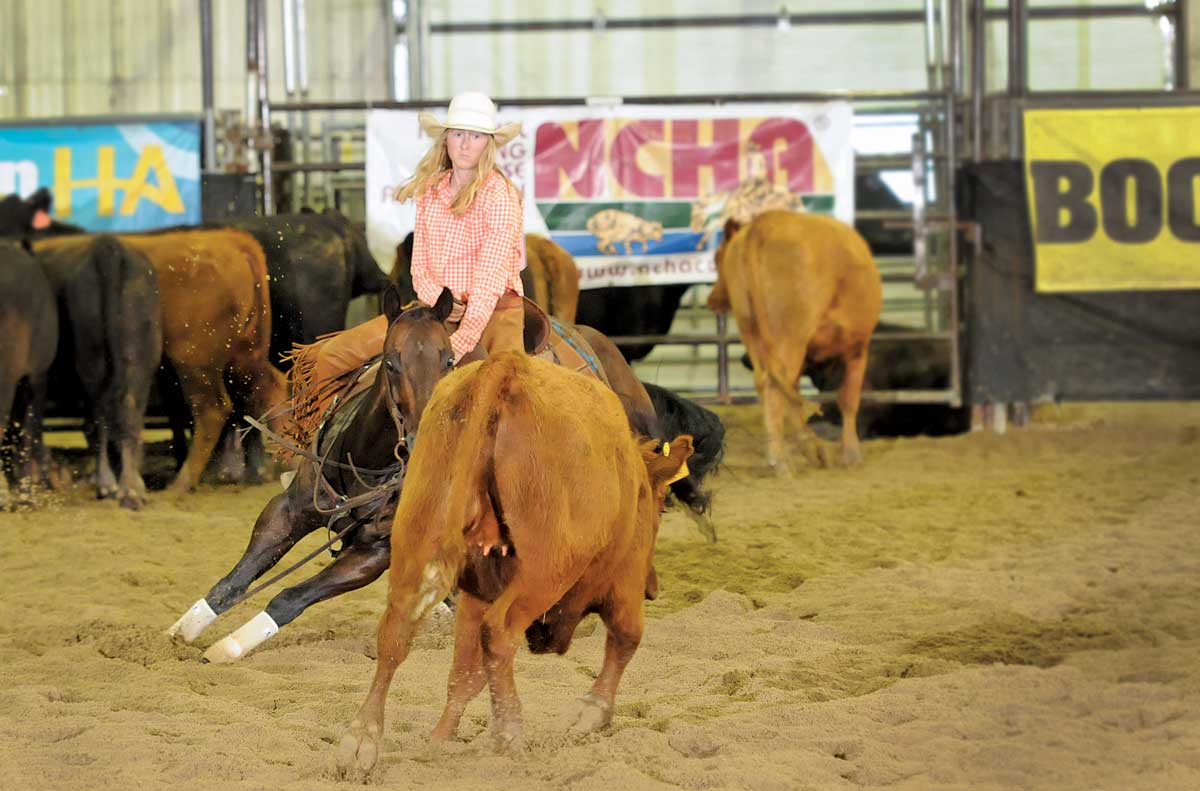
    Sidney Amos from Loma, Colo., is the 2015 NHSFR Girls Cutting Champion, rodeoing for Utah High School Rodeo Association. “We live 14 miles from the Utah border.” Her dad, Scott, is a cutting horse trainer, so Sidney has been riding cutting horses her entire life. “I started showing three years ago,” said the 16-year-old. “It’s my drug. It’s the only sport I compete in – I just love it.” Her sister, Sommer, in 8th grade, wants to start team roping and wants her to start. “I like my fingers,” she said about team roping. “I think I’m going to start with breakaway.” Sidney has an older brother, Suade, who is 19. He graduated two years ago and team ropes and breaks colts and competes in the cutting as well. Sidney’s mom, Rebecca, is a stay at home mom. She’s not really a horse person, “but she cheers from the stands a lot.”
    Scott started breaking colts in Oklahoma and later met Tim Denton, who helped him get started in cutting. He moved his family to Loma 20 years ago and began training cutting horses. Loma is a very small close-knit farming town. “We are the only horse trainer in the Grand Valley that I know of. We have around 37 horses on the place right now,” she said. “I help in the barn after school, on the weekends, and all summer long. I saddle, unsaddle and wash horses. We have a full time stall person, but I do that sometimes too.” Sidney loves having that many horses around. “Their personalities are all different and it’s great having that many horses to ride. When my dad’s gone I lope all the horses and help him at shows too.” Sidney shows in the NCHA shows as well as the high school.
    Sidney admits she was really nervous the first round of the NHSFR. “I had such a good horse, I just had to concentrate on myself.” She did that by keeping to herself on the outside of the arena, loping. “Once I start loping, I can relax.”  Clint Allen trained her horse, Dual Pep and sr Getting Busy, and the owners had turned him out to pasture and not ridden him a whole lot. “I had a horse that I was riding that turned out lame, and we called a bunch of our friends that knew about this horse. We went to work on him bringing him back to performance level. It’s taken about a year to figure him out. He’s really high strung, but he’s the kindest horse I’ve ever owned.” The pair clicked at the high school finals. Out of a possible 160, she got a 150 the first round and second round and a 152 the short go.
    Sidney is hoping to win state this year, missing it by four points. She also wants to go to more NCHA shows and get her earnings up. When she graduates from high school in two years, she plans to go to CSU and be an Equine Reproduction Vet. “I’ve been there to part of the campus, just the vet part, to drop a horse off.  I’ve always had a love of the vet industry and our vet has taught me a lot and I want to be in that field. I love seeing the new stock in the industry and especially the babies.”

  • Back When they Bucked with Bobby Rowe

    Back When they Bucked with Bobby Rowe

    story by Lindsay Welchel

    It was around 1940 that a young Bobby Rowe went to his first rodeo. It became the doorway to a lifetime filled with the sport. Rowe, now 81, has been a multi-event competitor, as well as a stock contractor and rodeo producer. He became the 1965 IPRA World Champion Saddle Bronc rider and has a treasure trove of stories and experiences from his life spent on the rodeo road.
    At around 6 years old, Bobby’s father bought his older brother a horse from the sale. “They got him home, got on him, and of course he threw my brother off and tore up the saddle, and that kind of hooked me right there. I thought ‘well shoot, that’s what I want to do, but I don’t want to get thrown off,” Bobby laughs.
    It wasn’t long before Bobby and his brother were entering rodeos. At first they stayed near home in New York.
    “I always thought, ‘we never will amount to anything coming from here,’ but when we found out it didn’t matter where you were from, it was however bad you wanted it, why that helped us a bunch, because when we nodded our head we figured we could beat anybody.”
    Bobby also found out something else about rodeo. It was everywhere, and you could make a living at it.
    The opportunity was his for the taking. He left the family farm at an early age and hit the road.
    “When we found out there’s rodeos down in Florida all winter, there’s rodeos in Georgia, we headed south and to heck with milking cows,” Bobby says and adds, “Back then there weren’t any schools like there are now, so if you learned something, you learned it on your own, and I finally learned to keep my mouth shut and just listen and watch.”
    Bobby started competing in four events; saddle bronc, bareback, bull riding and steer wrestling.  He also did Wild West-type shows where cowboys got paid by the head, so he’d get on as much stock as he could in a performance. When thrill shows got blended into rodeos, where daredevils would do car stunts, Bobby did that too. “I might go out there and crash a car and run back, get my chaps back on, spurs back on, go to the bucking chutes and get on a horse or bull or something,” Bobby laughs.
    When he broke his leg, he was in the concession stand frying burgers and taking tickets. “You didn’t lay around and expect to make any money, you had to get out there, whether it was on crutches or whatever.”
    When he wasn’t competing, Bobby ended up in Georgia working for a stock contractor. He was in charge of hauling all of the stock to various rodeos. Through this, he found a career in stock contracting and producing rodeos. He also found love.
    Bobby’s work led him to meeting his wife Lenore, a barrel racer. They married in 1957.
    “Lenore and I got married. I was putting on a rodeo in Florida, we had an afternoon performance and then a night performance, so as soon as the afternoon performance was over with we hauled boogey to Georgia to the courthouse to get married and got there, and the courthouse was locked up,” Bobby recalls. It was a holiday, and so Bobby called in a favor to his influential boss who persuaded the disgruntled judge to come open the courthouse and marry the young couple.
    “I told [the judge] I sure thank you, and she said ‘just get the heck out of here,’ Bobby laughs. He and Lenore hurried back to the rodeo, and that night she won the barrel racing, and he won the bull riding. “We did good, and we thought ‘man oh man we should’ve got married when we were 10 years old. We’d have been rich by now.”
    Lenore and Bobby moved into the bunkhouse on the ranch he was working, and he remembers with humor how he’d gone back to focusing on his stock after a few days, and his young bride was trying to help him, but at one point he had snapped at her.
    “Finally she said ‘to heck with this mess,’ and she went to the house. The boss’ wife told her ‘There’s two ways you can do it, you can go out there and pack your stuff, I’ll put you on a bus, and you can go on home, or you can go out there and get a stick and tell him ‘now it’s you and I,’ so first thing I knew she was coming across the fence with a stick in her hand,” Bobby laughs.
    Their marriage stayed strong for decades after that. Rodeo only made their love story richer. Lenore went on to greatness as a trick rider and specialty act known for the ability to train her performance horses. She performed around the world. “You talk about a showman, now she was,” Bobby says.
    Bobby and Lenore raised two sons, Bill, who competed some in rodeo and Justin, who went on to be a world champion in saddle bronc just like his dad.
    Sadly, Lenore passed away of breast cancer in 2005.
    Early on, Bobby worked for Loretta Lynn and husband Mooney’s Longhorn Rodeo and competed in his four events. He won the world in saddle bronc in 1965. Then, Bobby’s rodeo company, Imperial Rodeo Productions, put on many events, including the Salem Stampede Rodeo, beginning in 1968 in Virginia, and the Dickson Stampede Days Rodeo, founded in 1988 by Bobby and Lenore, in their hometown in Tennessee.
    Bobby admits he had to slow down on his competition when producing rodeos and focus on the finer details of the show.
    “I always had in mind those people sitting over there in the seats. I wanted to make sure they were having a good time. I couldn’t be thinking about stock I drew and still paying attention 100 percent on putting on a good rodeo, so that was my main concern. That was one of the first things I learned, if you don’t do it quality then don’t be doing it.”
    But Bobby was 72 by the time he fully quit competing in the steer wrestling.
    “I was trying to set a record; the oldest man to run a steer. I had good intentions but the old steer he had intentions also, so it didn’t work out the way I wanted it to,” Bobby jokes.
    These days, Bobby is living in Oklahoma to be near some family for a while before heading back to Tennessee. He’s still producing some, namely the Salem Stampede, but he’s cut down on his schedule.
    Rodeo has had a life-long impact. “In rodeo, you’ve got to believe in yourself. When you crawl up that chute, if you don’t have it in your mind that you can ride this son of a buck until the sun goes down, you better take off your stuff and go on home. That’s something I learned early on, believing in myself and honing on my abilities all the time. You never can get as good as you can get, you can always get better.”
    And that’s still his motto with every rodeo he produces.


    Story also available in our August 15, 2015 issue.


  • On the Trail with Kaytlyn Miller

    On the Trail with Kaytlyn Miller

    Kaytlyn Miller has been in National Little Britches Rodeo Association “NLBRA” since she was 7, when she won her first world title in the goat tail pull. That record held as the world record until last year. “I have been roping since I could remember,” said the 15-year-old freshman from Dammeron Valley, Utah. “When I was young, I’d ride anything – strap me on and I’d go for it – sheep, calves, roping steers.” Her ranch upbringing and her love of horses gained her the All Around Title at the National High School Finals Rodeo, as well as the Rookie All Around Title. She is the 2015 NHSFR Breakaway Champion and she just captured the World All Around Champion as well as Goat Tying World Champion at the 2015 NLBFR.

    A tomboy at heart, Kaytlyn, known as Kayt, grew up on a ranch on the Arizona strip in Utah. “We pushed cows all the time and I wanted to  rodeo competitively. We set barrels up in our back yard like we were going to the NFR,” she said. Roping is her favorite, doesn’t matter what event. “I love having a rope in my hand and to be able to compete with one is awesome.”

    She has three younger brothers, 8-year-old Mitchell, and 4-year-old twin brothers Wyatt and Weston, and an older brother, CJ, 19, who is on a mission trip in Boston. Kayt has always been competitive with CJ. “We would bet on everything from roping the dummy to who could be the fastest at taking their boots off or even eating dinner. Whoever lost had to do ten pushups.” As they began winning, they included who could win the most buckles to the list. CJ is the first Miller to serve a mission.

    The family is making a major move to a ranch in central Nevada, and Kat will be homeschooled beginning this fall. “It’s right in the middle of nowhere and ten minutes further,” said Heath, her dad, who has been commuting from the ranch to Utah each week for the past three years. The ranch is 86 miles long and 15 miles wide; 600,000 acres, running 1,400 mother cows. They also have roping steers they raise to sell to producers.

    The nearest school is 40 miles away and Kayt does not want to take time away from practice to make the daily trip to school. “I wouldn’t get the things done I need to get done,” said the high honor roll student, who enjoys studying government and geography. “I like to learn about other places and the troubles they have.” Her help will be needed at the ranch as well, as the ranch is run by her family and her grandpa. “There are five of us that ride.”  She will still travel to Utah to rodeo. “They rodeo on Sunday in Nevada, and we don’t do that. And I want to compete with the people that I’ve started with.”
    Heath tries to keep her grounded. “She has to put the time in,” he said. “There’s only one thing that matters and that’s the next one. That’s helped her along the way. She doesn’t get hung up on a bad run. She’s in seven events and that’s the best thing I could have taught her.”


    Full story available in our August 15, 2015 issue.


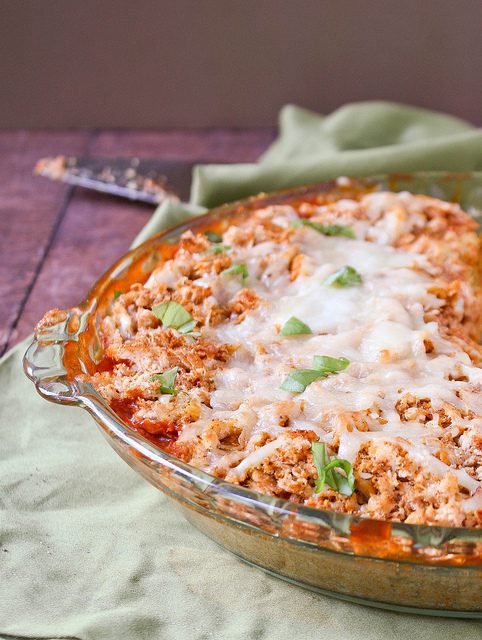
  • Tamale Pie

    Tamale Pie

    courtesy of “Ridin’, Ropin’ & Recipes” by Nancy Sheppard
    recipes submitted by Linda Griffin Brost: Mollie Griffin’s granddaughter

    INGREDIENTS:

    1 hen
    1 onion
    2-3 stalks celery
    Salt to taste
    (2) 14oz containers frozen red chili puree, such as Baca, thawed
    2-3 cups Yellow corn meal
    2 cans whole kernel corn
    1 can whole black olives
    2 sm. cans button mushrooms
    Flour
    Canola or olive oil

    DIRECTIONS:

    Boil hen with chopped onion and celery, with salt to taste. Remove chicken, cool, debone and chop.
    Reserve broth.
    Prepare roux to thicken chili puree into gravy consistency:
    4 TBSP canola or olive oil
    4 tsp flour
    Brown flour in oil and add water to make roux (approx. 1 chili container)
    Add 2 containers of defrosted chili to roux and stir
    Stir in chopped chicken and simmer

    Polenta

    2 cans whole kernel corn
    2-3 cups yellow corn meal, depending on amount of chicken broth reserved
    Add enough cold water to cornmeal to make it pour from bowl. Bring chicken broth to a boil and pour corn meal into broth, stirring constantly until thickened and smooth. Add whole kernel corn and mix.
    Pour enough polenta into 9×13” baking dish to cover a depth of approximately 1/3 of the dish.
    Reserve approx.. 1 cup to use on top of casserole
    Pour chili/chicken layer over polenta layer
    Dot the top of the casserole with dollops of the polenta mixture, whole black olives, and button mushrooms,
    Bake at 350 degrees for 30 minutes to set.