Rodeo Life

Category: Archive

  • Kenny & Mary Ann Brown

    Kenny & Mary Ann Brown

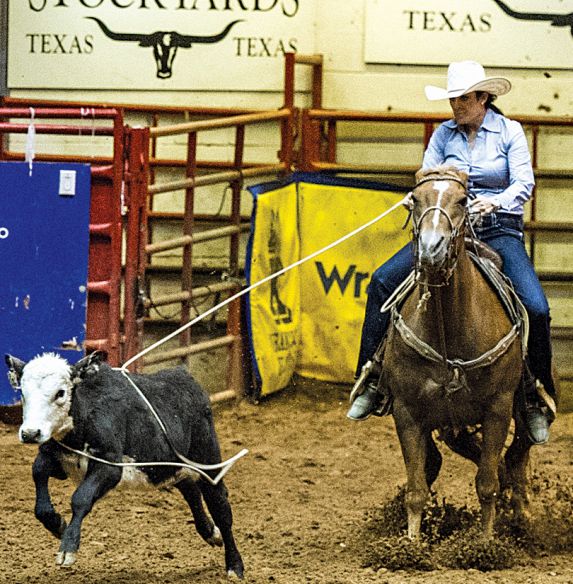
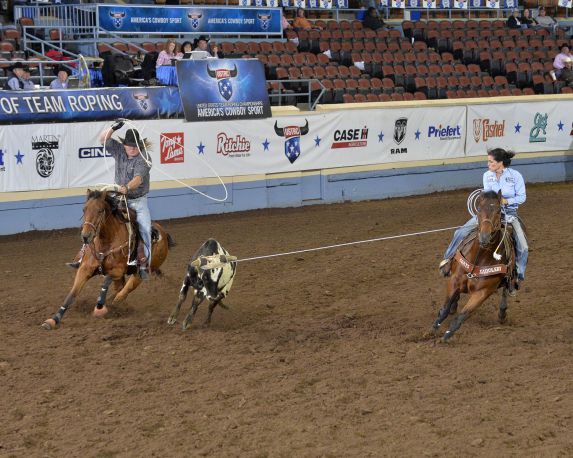
    Kenny and Mary Ann Brown, who have known each other since they were 15, have been at the National Finals Team Roping every year. They travel all over the east coast to the ropings. “Their commitment is a strong one. They don’t miss them back there – from Florida to Memphis,” said USTRC President, Kirk Bray. Kenny and Mary Ann traveled 22 hours to attend the National Finals Team Roping, held the end of October in Oklahoma City.
    “We stop about every six to eight hours, and walk the horses for half an hour, and make sure they have water,” said Kenny. “They are troopers, they are on the trail so much its second nature.”
    The couple spends their days roping. “We practice, eat lunch, practice, eat dinner,” admits Mary Anne. They haul four horses all spring and summer, and by fall they sell the practice cattle and any trading horses and head to Sarasota, Fla, to the JJJ Ranch.
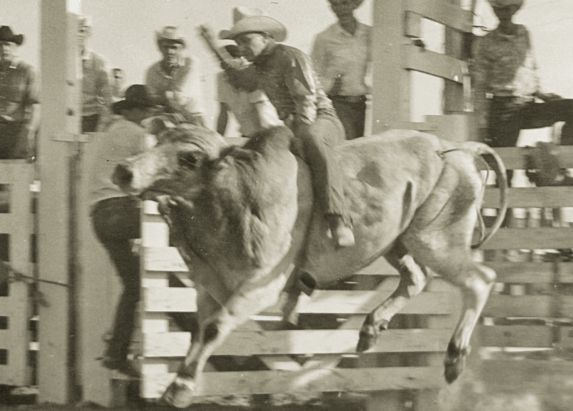
    Kenny Brown grew up 50 miles from Washington, in Keedysville, Maryland. “My dad, Kenny Brown, Sr., had a rodeo company (Triple K Rodeo Company), and raced horses,” he said. He grew up in the horse business along with his two brothers, Kevin and Keith. He tried rough stock, and after breaking a few bones, gave it up. He also steer wrestled a bit. He was also a member of the American Pro Rodeo Association, which his father helped start. “My ARA card number is 39 and I won the APRA 15 times. My ARA card number is 39.” Kenny worked in New York City, where he had a precious metal refinery in 1987. “I was around jewelry people and there has to be a process to recover the gold out of the dirt so I opened a refinery to do that.” He sold it ten years later and has concentrated on team roping ever since. The #6 Elite Heeler won the First Frontier Circuit six times, four heeling and two heading, the last time in 2001. He makes his living now trading rope horses and putting on roping schools. He ropes in the USTRC ropings, traveling at least five hours to get to a roping. “Johnny Johnson with JX2 has most of the ropings on the east coast and we go to all of his. His ropings are really good and they are customer friendly.”
    Mary Ann was born in Ohio, and spent summers on the family ranch in Montana. “I’ve rodeoed since I was in Little Britches,” said the #4 Elite. “I then went on junior rodeos, then high school. I qualified all four years of high school to the National High School Finals – from 1985-88.” She entered all the events and continued working on her dad’s ranch in Idaho after high school. Mary Ann went to the USTRC Finals this past October leading the Cruel Girl Standings, which is a huge accomplishment for someone who lives on the east Coast. They put the miles on a Dodge one ton and pull an Elite living quarters, 12’ short wall. “We lived in a 6’ short wall before that – we were on the road for three months – we lived in that for 12 years,” said Mary Ann, adding, “we are best friends and we love what we are doing. That’s the only way it would work I think.”
    Since Kenny has rodeoed his whole life, he has developed an eye for a good rope horse. “I’ve sold several horses that end up at the NFR and USTRC Finals. If you don’t have a great horse, you don’t win.” The Head Horse and Heel Horse of the Year for First Frontier Circuit came from Lightning B. “We find them, fix a few things, and sell them.” He has built his reputation up to people that buy on his word. “Most horses I buy I’ll watch at two or three ropings and then see if they are for sale.”
    Their goals for the future are to move somewhere warm and closer to the ropings, and eliminate the 22 hour drive to Oklahoma City for the USTRC Finals. “We’ve been looking for property around Stephenville,” said Kenny. “It’s central for all the ropings we go to and I know a lot of people. We’ll still head to Florida for a few months – it’s such a great facility and great people.”
    For this year, they have a pen full of longhorns that they purchase from a local rancher that raises them, and they are settled into the routine of practice, eat, sleep, and practice. “I love it,” admits Mary Anne. “Anything to do with my horse, I love.”
    “It’s addiction with a capital A – they need a roper rehab,” concludes Kenny. “There’s nothing else I’d rather do.”

    A special thank you to our sponsors: Cactus Ropes, Coats Saddlery and Lubrysin.
  • Zach Dicken

    Zach Dicken

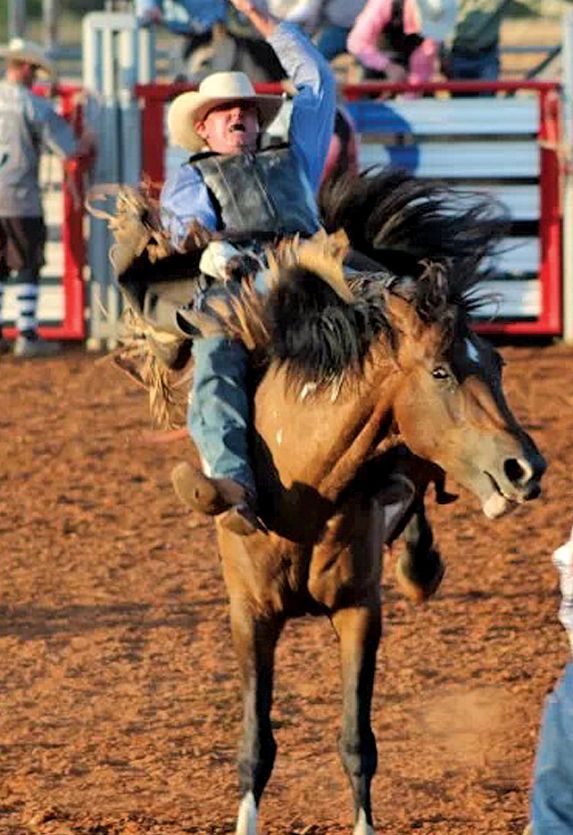
    Zach Dicken is the bareback riding director for the TCRA. “My job will be to raise money for sponsorships and coordinate the stock – just make sure things are running smoothly on my end,” said the fire fighter from Lubbock, Texas. “I work for Lubbock Fire and Rescue and am a full time horse shoer on my days off.” After college, he went to Fire Academy and back to the EMT school. He got hired on his first attempt and has been working there for five years. “Lubbock has a really good fire department. We have a good city council; our pay is good, our equipment is good, and everyone is really behind us. We are are really blessed here in Lubbock.”
    He goes to amateur rodeos in the summer; between work, shoeing, and rodeo, he is not around much in the summer. The 31 year old has been riding barebacks for a long time. “I started when I was 14,” he said. “I’ve got a bad wrist and a bad back, but other than that, I’m good to go.” He made the National High School Finals twice, in 1999, and again in his senior year, 2001. He went to college and qualified for the Playoffs, and broke his wrist, and missed the college finals. “I was pretty hurt through college so I never got anything done,” he said. He graduated with a degree in Wildlife Biology and Animal Science from Texas Tech, after going to Vernon for two years.
    His rodeo career began in east Texas, and he entered the high school and UPRA rodeos. “I wanted to rope calves; I told my dad that, and he came home the next day with a bareback riggin’. He said that was a lot cheaper than a rope horse.” His dad, Dwayne Dicken, is a farrier and firefighter back home in Merit, Texas. Zach is married to Amber – they have been married five years in September. She is a school teacher and got introduced to horses through Zach. The couple has two horses and she rides around the place. “No rodeos are in her future which is good because I probably couldn’t afford it,” he said.
    Zach is hoping to win the TCRA this year – he was leading going into the Finals last year and didn’t have the Finals he wanted to have. He has always stuck close to home to rodeo. “If I could have stayed a little more healthy, I would have really liked to go rodeo – I stayed close to the house and I wish I would have traveled a little. I always had to work – and couldn’t leave my shoeing business to go down the road.”
    He and his wife are building a house on a piece of land they bought. He is going to work his way through the Fire department by taking his Equipment Operator test and then think about starting a family. “If my kids want to rodeo, then we’ll take them.”

  • Mindy Elrod

    Mindy Elrod

    Mindy Elrod, from Sanger, Texas, competes in the breakaway roping in the IPRA. “My dad trains horses so I started roping when I was five or six,” said the 33-year-old who lives in north central Texas. Mindy competes in barrel racing as well, and has two prospects in training so she can compete next year. She also team ropes, but hasn’t competed since 2005. “I did all of it in high school,” she said. “I’ll probably start back with the World Series Ropings.” Mindy grew up in Oklahoma. Her family moved to north Texas when she was 13. “My dad (Jess) college rodeoed at Southeast Oklahoma and trains roping and calf roping horses and some reined cow horses (Elrodquarterhorses.com). He shows in the AQHA shows. Fortunately I’ve been blessed to have good horses and someone that can fix them.” Jess was an NIRA finalist and a college rodeo champion, and has trained and shown more than ten World Champions and more than 27 Reserve Champions in roping classes. Her mom, Sheryl, works at a bank, and was an Oklahoma high school rodeo finals qualifier in 1975-76 and World Show Qualifier in 1991-92. Jess and Sheryl started Elrod Quarter Horses right about the time they married, around 1980. They’ve become the best of partners, offering exceptional training, breeding and showing opportunities for the world’s best performance horses.
    Mindy won the Breakaway Championship for Texas State High School Rodeo her sophomore year (1997), and won the Windy Ryan twice, second once. “I took a break for the past ten years – I’d rope for about two or three weeks and rope in the Ryan,” she said. “I had some life changes and started rodeoing again last year; my goal was to make the UPRA Finals.” She ended up winning it, as well as the average at the CPRA Finals. She didn’t buy her IPRA card until late in the season, but her plans are to make the IFR this year. “I just barely missed the finals last year, but I plan to be there this year.” She is entering the weekly sanctioned rodeo in Fort Worth at the stock yards.
    She credits her parents for helping her attain her rodeo goals. “My parents work hard and taught me everything I know. I have never wanted for anything and have been fortunate to have good horses and help right here at home that most kids didn’t have.” Mindy has watched competition get tougher over the years. “You have to be mounted and you and your horse have to be sharp.” She has trained herself to be sharp by lots of practice. “It’s reaction. You practice until you get everything down to reaction and mind control. It has to be instinct. The past two or three weekends, I’ve gotten away from that and overthought things. You have to take the first shot that you have. You can’t let things outside the arena affect what you do inside the arena.”
    Even though Mindy qualified for the National High School Finals, she never went. Instead, she went to college at Texas Women’s University in Denton and ended up with a degree in business administration education and a minor in science. She teaches high school at South Lake Carrol. Her class, Principles of Information technology, teaches all of Microsoft Office. “I teach six classes, three each day.”
    Her goals for this year include the IFR, the UPRA Finals and the CPRA Finals. “I also hope to have two barrel horses going for next year (2015). You don’t know what life has to offer unless you take that leap of faith.”

  • Barrie Smith

    Barrie Smith

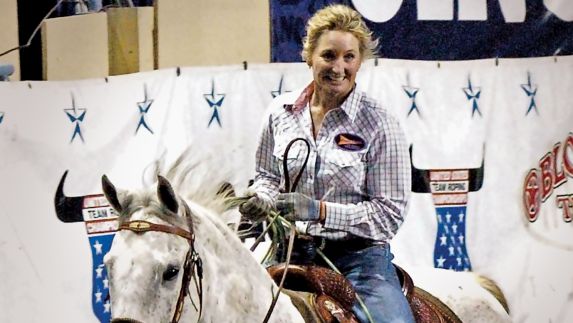
    Barrie Smith has been winning all of her life. Growing up in Gilbert, Arizona, Barrie began winning buckles and saddles at an early age. In high school and college, Barrie competed in Goat Tying, Barrel Racing, Breakaway and Team Roping. She was the National Goat Tying Champion for three years (74-76) in high school. She attended Central Arizona College and won the NIRA Women’s All-Around titles in ‘78 and ‘79, as well as a Goat Tying Championship in ‘78.

    Barrie has continued to win everything from Barrel Futurities to every major All Girl Roping in the country including the Windy Ryon and the Wildfire Ranch ropings. She has been crowned the USTRC Cruel Girl Champion header – twice. If pressed, you might get her to talk about her wins, but not likely. Barrie is friendly, happy and overly modest.
    “I don’t dwell on my what I’ve won,” says Barrie. “It’s fun today, and then it’s history. The best is when I win with my husband.”
    But win she does, and everyone wants her as a partner. She’s cool, calm, consistent and usually riding one of the best horses in the building. She is the perfect example of hard work plus positive attitude equals success.
    Barrie recognizes the positive influence of having been surrounded by good ropers. Her husband, Brad Smith, won a world championship in 1978. Her brother-in-law is Clay O’Brien Cooper, 7-Time World Champion, and her brother is Bret Beach, 3-Time NFR Qualifier (twice heading, once heeling).
    Barrie and Brad own and operate two ranches. Their ranch just south of Stephenville, Texas is 640 acres, and they also have a 100+ acre ranch in Beulah, Colorado. Both ranches produce hay, keeping the couple busy in addition to their construction company.
    The Smiths have two children, a son, Sterling, who qualified for his first National Finals Rodeo in 2013 in the Tie Down. Their daughter, Shelby, has almost completed her Marketing degree at Tarleton University.
    Though it’s a busy life, Barrie enjoys riding every day and working cows when needed. She loves to train and is a good hand with a horse, a fact that is obvious when she competes.
    “I love riding good horses. Obviously I don’t want to be the first to get on a young horse anymore. But I do love riding young horses and getting them started.”
    A perfect example is the 12-year old sorrel Turtle Powell rode at the 2013 National Finals helping him earn over $70,000. Dashin Otoe was raised by the Smiths and mostly ridden by Barrie and Shelby at rodeos and jackpots before being sold to Powell.
    Over the years Barrie has hauled many kids, including her own, to Junior rodeos and events. She continues to help youngsters and occasionally gives lessons.

    COWBOY Q&A

    How much do you practice?
    Usually every day.

    Do you make your own horses?
    Yes

    Who were your roping (rodeo) heroes?
    II was around good ropers all the time: my husband, Clay Cooper, my brother Bret Beach.

    Who do you respect most in the world?
    There are a lot of people I respect for various things.

    Who has been the biggest influence in your life?
    My husband.

    If you had a day off what would you like to do?
    Go to the movies.

    How would you describe yourself in three words?
    Driven, Happy, Friendly

    What makes you happy?
    People, winning.

    What makes you angry?
    Losing and people who brag.

    If you were given 1 million dollars, how would you spend it?
    We would probably buy a ranch.

    What is your worst quality – your best?
    Worst is I’m too particular. Best quality is being dependable.

  • Nicole Reeves

    Nicole Reeves

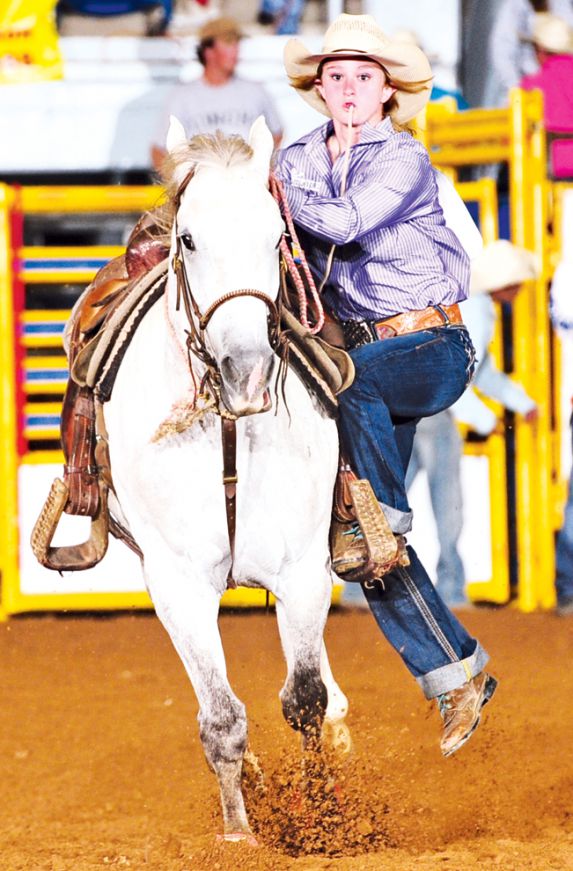
    Nicole Reeves is always on the go, never sitting still. The Longville, La. cowgirl loves to be moving and doing things. She competes in the Louisiana High School Rodeo Association in the goat tying, breakaway and team roping (she heads for Torey Little), and her favorite event is whichever one she’s doing well at, at the time.

    She has three horses for her rodeo competition. Rudy, a six year old, is her heading horse. She shares him with her younger brother. He’s laid back till it’s show time. Gin, her goat tying horse, is a six year old gray who is a “fun horse,” she says. “He’s small, fun to ride, and laid back, so you can do pretty much anything on him.” Her breakaway horse is a twelve year old gelding named Cowboy who the family has owned since he was two. He’s stubborn, Nicole says. “He has a mind of his own, but when it comes to breakaway roping, he actually does something right.”

    She is a senior at South Beauregard High School in Longville, and physics, her first hour class, is fun. The teacher is really enjoyable, and the class works in partners, doing fun things. Right now, they are building canoes out of cardboard that must hold two people and float from one end of a swimming pool to the other, for the students to get an A. The worst part of school is English class, because “I don’t like sitting still and reading,” she says. “I’m supposed to sit still in English and pay attention and actually listen.”

    Nicole has taken some stress off herself lately, when she decided where to go to college. This fall, she’ll attend Panola College in Carthage, Texas. She’ll compete in the goat tying and breakaway roping and major in elementary education. Someday, she’d like to teach elementary school, because she enjoys working with kids. She’d prefer third and fourth grade students, because at that age, “they have the yes, ma’ams and no rudeness,” she says.

    In her spare time, Nicole helps her goat tying coach, Stacey Elisa, with chores, helping care for goats and cleaning stalls. She also helps with clinics. Her favorite thing to do in her spare time is to chill out with family and friends. Her Uncle Ronnie Reeves loves to cook for them, and Nicole’s favorite meal he cooks is crawfish with corn, and “a lot of sweet tea,” she laughs. Nicole has two brothers: Justin, who is 22, and Jayce, who is twelve. She is an honor roll student, and is the daughter of Quintin and Janice Reeves.

  • Evan Darbonne

    Evan Darbonne

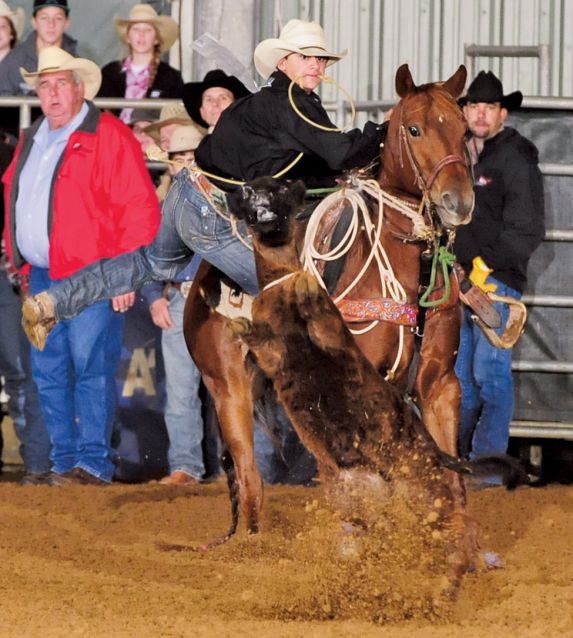
    Evan Darbonne competes in every boys timed event in the Louisiana Junior High Rodeo Association. The Moss Bluff, La. cowboy, who is 14, is a tie-down roper, ribbon roper (roping for Brooklyn Gunter), chute dogger, goat tyer, and team roper, heeling for Kamryn Duncan. His favorite event is the tie-down roping, because of the rush.

    For the tie-down and ribbon roping, he rides a ten year old mare named Roxie. She is his favorite horse, in part because he likes tie-down and because he has a great bond with her. In the goats, he rides a thirteen year old gray gelding named Jett, and his heeling horse is a twenty year old sorrel gelding named Little Man.

    Evan is in the eighth grade and homeschooled. He loves to study science, but English is not his favorite. He does enjoy reading and is currently reading a biography on St. Vincent de Paul. His favorite all time book is The Hunger Games. He’s seen the movie but prefers the book.

    In the last few years, he’s begun a new hobby. He works with Todd Broussard, the father of a fellow rodeo contestant and owner of T-Pop Leather Shop, with leather. He has made phone cases, rope can lids, breast collars and halters. Todd, who lives in Opelousas, taught him, and now Evan has his own workshop at his house. He loves doing the tooling most, and the biggest project he’s done so far was a rope can lid for his roping coach, a gift from his wife for Christmas. He sells his work and advertises through his mom’s Facebook page and his own Instagram page. “People see the pictures and say, ‘I want one of those.’”

    In addition to junior high rodeo, Evan competes in the Sulphur Rodeo Club and Little Britches Rodeo. He has qualified for the state junior high finals all three years, making National Junior High Finals in the goat tying and ribbon roping last year. He finished fourth in the nation in the goat tying last year and would love to make a return trip this year.

    This fall, Evan will go to St. Louis Catholic High School in Lake Charles. He has qualified for the National Little Britches Rodeo twice but has never made the trip. He has five brothers and sisters: Emma is nine, Ana is eleven, Alex is twelve, Andrew is 18 and Christopher is 20. The family has a boxer named Jazz, an outside dog. He is the son of David and Kelli Darbonne.

  • Beau Peterson

    Beau Peterson

    Beau Peterson loves to rodeo. It’s her “absolute favorite thing to do in the world,” she says. The thirteen year old cowgirl who lives in Council Grove, Kan., and is a member of the Kansas Junior High School Rodeo Association, competes in the breakaway, goat tying, and ribbon roping, as a runner for Kian Pepper Brown. Breakaway is her favorite event.

    For the breakaway, she rides a seven year old bay named Hustler. He’s sweet and curious, and always has to get his nose into whatever’s going on. For the goat tying, she rides a ten year old horse named P.W. who is antsy and excited all the time.

    She is an eighth grade student at Council Grove Middle School. P.E. is her favorite class, and playing dodge ball is her preferred game. Reading, however, is not her favorite class. Her favorite teacher ever is her P.E. teacher, Mrs. Mahanay.

    Beau plays basketball, is on her school’s honor roll, and is a member of the Neosho Valley 4-H Club, where she shows lambs and steers. In fifth grade, she had the grand champion bucket calf at the Morris Co. Fair, and has had reserve grand champion lamb two years in a row. Her dog Roxie was part of her 4-H dog project one year, where Roxie learned agility and obedience, and did well, winning reserve (and improving her manners at home).

    Roxie, a red merle Australian shepherd, is very sweet, lovable, and spoiled (by Beau). She gets treats and gets to come into the house. “She gets the good life,” Beau says. In basketball, her team won the Flint Hills Junior League Championship and were undefeated all season!

    Beau has qualified for the state junior high finals twice, and last year, made it to the National Junior High Finals in all three of her events. Nationals were “very exciting and fun,” and she made a lot of new friends that she hopes to see this summer at Nationals.  She is also a member of the Heartland Youth Rodeo Association, where she won the breakaway this year and placed third in the goat tying. She has competed at the Rising Stars Calf Roping twice and at the Joe Beaver Junior Superstars Calf Roping last fall.

    In the summers, Beau loves to tag along with her dad on the family ranch, the Hinchman Ranch, in the Flint Hills. She helps work cattle, feed, and ride, checking for sick cattle. When she grows up, she’d like to do something involved with horse therapy. Beau has an older sister, Michaela, who is a senior in high school. She is the daughter of Matt and Dustin Peterson.

  • Riley Bowen

    Riley Bowen

    Riley Bowen is in her final year of competition in the Kansas High School Rodeo Association. The 18-year-old cowgirl lives near Sylvia, Kan., about thirty miles west of Hutchinson. She competes in the breakaway roping, team roping (she heels for Mari Kate Crouch), and the goat tying. Of all her events, goat tying is her favorite, because “I’ve done it the longest and I like the rush of it.” She also enjoys goat tying practice, in part because of her two coaches, Stacey Ellias and Shelley Meier.

    Her breakaway, heading and heeling horse is an 18-year-old palomino gelding named Haynes, and her goat tying (and backup heading horse) is an eleven year old bay mare named Foxy. Both horses are always looking to see what they can get into, she says. “They are very ornery. They’ve learned that if I don’t latch the gate when I go to feed them, they run at it and run out the gate.”

    Foxy has also gotten into trouble when they are traveling. Riley sets up pens on the side of their trailer, where the hot water heater is located. In the winter, the horse will back up to the heater, and twice she has burnt a piece of her tail on it, setting off the carbon monoxide detector in the trailer. “I always joke that my goat tying horse is trying to kill me,” she says.

    As a senior at Stafford High School, Riley enjoys weights class and her weights teacher, Mr. Sweet. Mr. Sweet used to rodeo so he is more understanding of her schedule and has respect for her sport. Math is her least favorite class; she understands it, but she’d much rather be doing something else, like taking a science class.

    Science comes easily to Riley, which is a good thing, because she’d like to be a plastic surgeon someday. She first learned about plastic surgery when a friend had a bad facial injury, with all the bones on the left side of his face broken. A plastic surgeon repaired his face to where no one can tell that any injury happened. She shadowed a plastic surgeon in Wichita a month ago who has been on numerous mission trips, and her goal is to take her surgery skills on mission trips to help children born with cleft palates and cleft lips. Learning to be a plastic surgeon will require from eight to ten years of schooling, she estimates.

    Riley is a member of the National Honor Society, was parliamentarian for the FFA last year and is secretary this year, is on her school’s honor roll, and is on track to be valedictorian for her class. She also competes in Little Britches Rodeo and is the 2013 Senior Girls Goat Tying champion. Last winter, she won the Heartland Youth Rodeo Association’s all-around title.

    For fun, she loves to go to movies. The movie theater in Stafford shows movies every other weekend, so she and her friends usually go to Hutchinson. Her favorite movie ever is Despicable Me II, and the most recent movie she’s seen is Lone Survivor. If she had her choice, her most favorite thing to do would be to tie goats with Shelley Meier in Garden City. She really enjoys Shelley, Jason, and their three sons.

    Riley will head to Garden City (Kan.) Community College this fall on a rodeo scholarship. She’d like to have horses and rodeo in her life, and someday, she’d like to make at least ten mission trips as a doctor. She doesn’t care where she goes, so long as it’s somewhere where she can help.

    She has a pet border collie, Jack, who is very intelligent. He and Riley won the American Royal novice agility competition a few years ago. Jack sleeps on the floor next to Riley, and if she gave the word, he’d be right there in the bed. She is the daughter of Stoney and Cindy Bowen.

  • Shayne Porch

    Shayne Porch

    Shayne Porch works as a pickup man in the Northwest Ranch Cowboys Association. He grew up on the family ranch outside Wanblee, S.D., the son of Ralph and Dianna Porch. He started rodeo competition when he was eight years old, competing in Little Britches Rodeo, 4-H, and high school rodeo, in the tie-down roping, team roping, and steer wrestling.

    Shayne qualified for the National High School Finals in 1993 in the tie-down roping, and graduated from Kadoka High School that same year. He began  his NRCA competition in 1993, and also joined the South Dakota Rodeo Association. He qualified for the Indian National Finals in 2002.

    After high school, Shayne focused mostly on team roping, occasionally bulldogging.  He quit competing for several years in the late 1990’s, then, while watching high school kids ride broncs, he stepped in to help. They needed a pickup man, and Shayne took on the job. He learned from observing others and plenty of experience. Now he picks up at NRCA, SDRA and high school rodeos, and hopes to add some pro rodeos this summer.

    A good pickup man needs to know horses and bulls, he says. He needs “to be able to read livestock, see what’s going to happen, and be in the right place at the right time.” A good pickup man also needs good horses. “You’ve got to be mounted. I try to make sure I’m riding pretty broke horses. If a wreck starts happening, I have to be in the right place.” He currently has eight pickup horses at his ranch, with a few more young ones that might be worked into the rotation this summer.

    Shayne is married to Heidi, and they have two little girls: Shaylee is six and Haylee is three. The girls love to rodeo with their daddy and go with him about every weekend they can get away. A couple of his pickup horses are their horses. His daughters “come with me to take care of the horses,” he says. And the horses reciprocate. “Those horses take care of those little girls. They’re good babysitters.”

    He has been selected to pick up the NRCA Finals every year since 2008, and the SDRA Finals four times in the past six years. Of all his involvement in rodeo, picking up is his favorite. It’s an adrenaline rush, he says, and the best part is “getting a thanks from a cowboy or a parent if you save their kid, or get him out of a wreck.”  Shayne and Heidi ranch on a place adjoining his parents and run a herd of commercial black cattle.

  • Alvin Davis

    Alvin Davis

    All his life, Alvin Davis has worked hard to promote the western culture and cowboy way of life. At the age of seven, he got bitten by the “cowboy bug”, and devoted the rest of his life to cowboys, ranching, and the west.

    He was born in 1927 in Post, Texas, the son of Glenn and Viva Davis. When he was seven, his parents took him to the Texas Cowboy Reunion at Stamford, where Will Rogers was a guest. Rogers, who was killed two months later, became his hero, and still is, to this day.

    Alvin wanted to be a calf roper, but weighing 140 lbs., “soaking wet,” he knew he couldn’t handle the calves. And at that time, team roping hadn’t made its way from California to Texas. So Alvin devoted his life to the administration side of rodeo and the western heritage. He graduated from high school in 1944 and spent a semester at Texas A&M. But A&M was too far from home, and not what he envisioned, so he came home.

    When he turned 18, Uncle Sam beckoned, and he enlisted for 18 months in the army. He missed fighting in World War II by three months but felt an obligation to enlist; “I felt I owed my country something, since I missed out on the war.” He came home a 19 year old sergeant, and went straight to Texas Tech in Lubbock. During his college years, he devoted himself to 4-H, winning at the county and state levels, and for three years, winning trips to the National 4-H

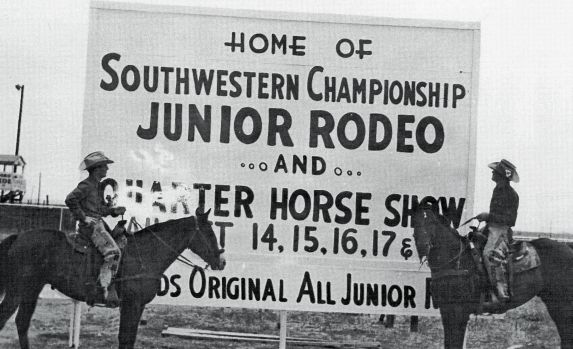
    His final 4-H project, in 1948, was the first of the numerous cowboy projects Alvin would be involved in. He produced the World’s Original All-Junior Rodeo. All participants, both contestants and directors, were ages 19 and under. It was held in Post, with an afternoon and evening performance the first year. The second year, it went to three days, and in its third year, in 1951, contestants came from three states, and news reels from across the nation covered it.

    In its fourth year, Alvin turned it over to the juniors, and began work on another rodeo project. He formed the American Junior Rodeo Association (AJRA), one of the first youth rodeo organizations in the nation. He served as administrator from 1952 to 1958. The AJRA celebrated its 61st year in 2013.

    People took note of Alvin’s ability to organize and administrate. The National Intercollegiate Rodeo Association (NIRA) came calling in 1955. They needed an administrator, and Alvin took the job. He set up headquarters for the AJRA and the NIRA in a one-room building he built in Post, decorated with a western theme. In 1958, he turned the NIRA to a new administrator, in good financial shape and order.

    During this time, he held down a fulltime job at the bank in Brownfield, earning $500 a month. His salary with the AJRA and NIRA was $125 a month, and after a short while, his rodeo income was increased by $25 for each association. But he wasn’t doing it for the money. “I wanted to provide a service, and support rodeo, wanting it to be big and great and fine.”

    Alvin didn’t stop at rodeo associations. He brought a cowboy poetry gathering to Lubbock in 1989, having seen it done in Alpine, Texas, and Elko, Nev., and he founded the National Cowboy Symposium and Celebration in Lubbock, the largest such event in the nation, which features cowboy storytellers, poets, musicians, chuckwagon cook-offs, and vendors.

    He also was executive vice-president and general manager of the National Ranching Heritage Center at Texas Tech, an indoor/outdoor museum with exhibits and 50 structures from historic Texas ranches.

    Alvin worked at the Brownfield bank till 1959, when he moved to Clovis, N.M., to work as executive vice-president and director of banks in Clovis and Melrose, N.M. He and his family spent a year in Clovis before coming back to Levelland, Texas, where he and a partner owned western stores there and in Brownfield. He first managed the Levelland store, but when the partnership split, his partner took the Levelland location and he and his wife moved to Brownfield to operate that store. He was in the retail business for twenty years, selling the store in 1979.

    It was while at a retailers’ meeting for western wear and equipment, that he and a group of men decided to form another organization to meet their needs. The Western/English Retail Association was born, with Alvin as its founding chairman for three years.

    And there are so many other ways Alvin supported, mentored and sustained the western heritage. He announced rodeos, including the NIRA Finals twice and the AJRA Finals. He spent thirteen years as director of the National Ranching Heritage Center at Texas Tech. He made many appearances as a cowboy poet, writing a poetry book and a children’s book (“A Day in the Life of a Cowboy”). He was a junior 4-H leader for years and often did the work of the county agent, when there was none. He is the only 4-H member to be inducted into the 4-H Hall of Fame, and in 2010, the newly formed National 4-H Hall of Fame.  He and his family raised and showed horses, owning and showing the World Reserve Appaloosa Cutting horse that topped the 1963 sale with a price of $8,300. He also owned a third place world calf roping horse and a national champion two year old halter stallion.

    When his future wife, Barbara Ann Hext, graduated from Texas Tech and moved to Brownfield to teach home-ec, he was waiting on her doorstep. The couple has been married for 59 years and have three children: Bob, who is married to Lee and works for a petroleum company in Houston, Debbie Garland, married to Mike and working as a banker in Jacksonville, Fla., and Todd, who is married to Lena and works for an education center in Lubbock. He and Barbara have four grandchildren.

    Looking back over his years, he’s most proud of all the things western he’s done, to keep the heritage going. His boundless energy and ability to organize have served him well. He is in his eighth decade but going strong: “I tell everybody I’m 86 years young, and except for using a cane to get around, I’m still in good enough physical condition to work day and night. “I thank the Lord that He’s allowed me to be able to do these kinds of things.”

  • Don Sunden

    Don Sunden

    Growing up in Ft. Madison, Iowa, Don Sunden wanted to be a cowboy. “We rode horses on my grandpa’s farm; took the buggy to town for groceries, and did all the plowing with horses. We picked all the corn by hand. I lived in the best time period in the world. I’ve seen the horse and buggy and the airplane.” His hometown, Ft. Madison, was the drop off for all the stock going to Madison Square Garden rodeo, hauled in by rail. “I’d go down to the stockyards when I was six until I got out of school. We’d ride the hay wagon and help them feed the stock.” All the western stars would come through – Roy Rogers and Gene Autry – they had their horses there and Don remembers talking to them. Don went into the tool and dye making trade after high school and continued in that trade until he retired. “I did it in high school and then went to a factory and got an apprenticeship. I worked in one factory, then went to a machine shop where we built everything. I was the supervisor there for 16 years and moved around as a supervisor for years.”
    He met his wife in Ft. Madison in 1964, the same year he started with the IPRA as a bull rider and a judge. “We met in Pizza Hut and three months later we got married. She rode barrel horses. I never went to a rodeo in my life that she wasn’t there. She went to every one – She ran barrels up until 1970.” They have one daughter, Sherry. Ron started judging in 1964. He likes the IPRA. “It’s a working man’s deal, so most rodeos are on the weekends. I lived 20 miles from H-C Rodeo company, Tonch Hartsell owned it, and we’d go up there and I’d buck out his young bulls for him. I did all my practicing at his place. When I was well I could ride bulls, but when I got hurt, I’d judge.”
    He remembers a rodeo in 1969, in Green City Missouri. “I drawed the same bull at all three rodeos, and I bucked off all three times. The last time I got thrown 15 feet above the bull, got kicked in the face, crushed my face, broke every rib, both collar bones, and had internal injuries. I went back to the chutes and spit out all my teeth; I thought it was dirt.” They hauled Don to the hospital and he remembers insisting that they take his jeans off instead of cutting them off. “They were brand new,” he said. “They pumped blood in me and told my wife that I had 24 hours, and call the family. They packed my whole body with ice, and I was in there for two weeks because of the swelling of my head and my body. My face swelled up so big – my wife gave them a picture so they could rebuild my face. I had no feeling in my face for seven years.” As his daughter got bigger, they trained futurity horses. She rode in her first IPRA when she was 7. Don moved to her place two years ago. “She was a school teacher for 19 years and was a chiropractor and started 2 High Dollar Ranch Rehabilitation and Conditioning Center – she’s an animal chiropractor and wanted to do more. We bought a hydrahorse swimming pool and we’ve got infrared lighting, five vibration therapy plates, and a hot walker.”
    Don judges about 30 rodeos a year and was selected to be one of the judges at IFR44, along with Ronnie Barnett, Rick Chaffin, and Steve Ratchford. He judges CBRA bull riding, co-sanctioned rodeos and several senior pro rodeos in the states. When he’s not doing judging, he helps his daughter. “We work 16 hours a day, 7 days a week.” The bull riding accident gave Don a different perspective on life. “From that day on every day was a free day – I was supposed to die and I didn’t. I take each day for that day and don’t let anything bother me. Live every day for that day.”

  • Anna Holland

    Anna Holland

    Anna Holland is a barrel racer and director in the Cajun Rodeo Association. The Walker, La. cowgirl was a member of the CRA when it existed years ago, and is a member again.

    She grew up in rodeo with a mom who ran barrels and team roped and a dad who team roped. She was on her first horse at six weeks of age, and by two years old, was competing in barrel races. She was a member of the Mississippi High School Rodeo Association (the farthest Mississippi rodeo was closer than the closest Louisiana rodeo), and she also competed in local and state-wide rodeo queen pageants, serving as the Livingston Parish Queen, the Tri-State Rodeo Association queen, and in 1999, as Miss Rodeo Louisiana.

    After graduating from Walker High School in 1999, she earned academic and rodeo scholarships to college, and will graduate this summer from Southeastern Louisiana University in Hammond with a Bachelors of Science in occupational environmental safety and health. She works for MAPP Construction, a regional company based in the southeastern U.S. Her job as corporate safety director entails ensuring project compliance with OSHA regulations and protecting worker safety.

    Anna met her husband, Lane, when he came to shoe her horses. They had grown up three miles from each other, and knew each other, but it wasn’t till 2008 when they began dating. When Lane proposed on Valentine’s Day of 2009, she accepted. The couple got out their calendars and looked at prospective wedding dates. At that time, Lane was a professional steer wrestler and she was running barrels, so it was either get married that month or wait till August. They decided to marry two weeks later, and Anna had the wedding planned within a week. Now the couple have two children, a son, Emmett, age four, and a daughter, Sarah, age two.

    In addition to her barrel racing, Anna is co-founder and president of a non-profit organization called the Christian Cowgirl Relief Fund. She and fellow co-founder Berkeleigh Cotten saw a need for an organized support system when a rodeo family or fellow barrel racer needed financial, emotional and spiritual help. “It seems like the more people we are able to help, the more readily we recognize other opportunities to provide assistance throughout the rodeo community.” The group’s motto, “Love one another,” is based on John 15:12-13. This May, a women’s conference is planned with LeAnn Hart, the wife of retired PBR bull rider J.W. Hart, as keynote speaker.

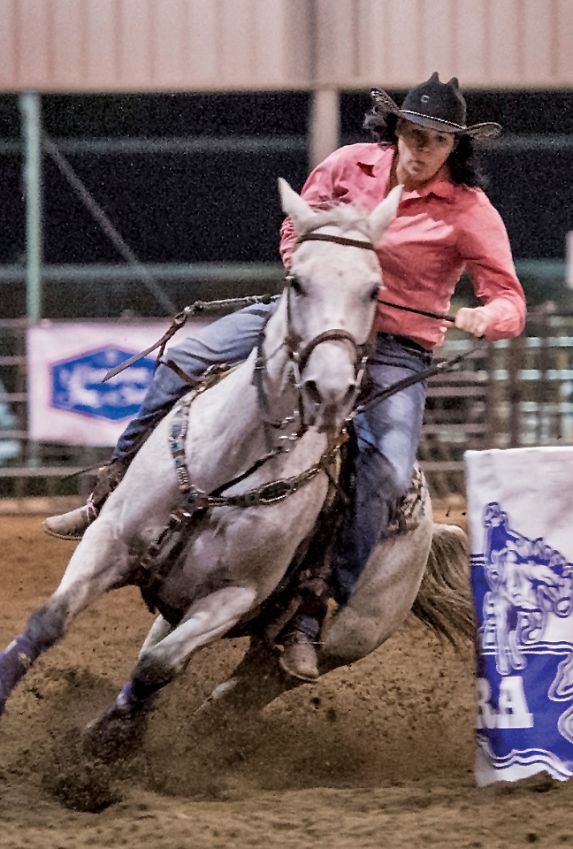
    Anna rides a seven year old gelding named Utah. Utah was a new purchase in June of 2013, and on his way to a barrel race, was involved in a minor trailer wreck. Because of his injuries, it was thirteen weeks before he could be ridden again. For the second half of last year, Anna borrowed several horses to qualify for the finals. Anna also serves on the board for the Baton Rouge Barrel Racing Association. Her husband Lane is vice-president of the CRA.