Rodeo Life

Category: Archive

  • Strawberry Rhubarb Pie

    Strawberry Rhubarb Pie

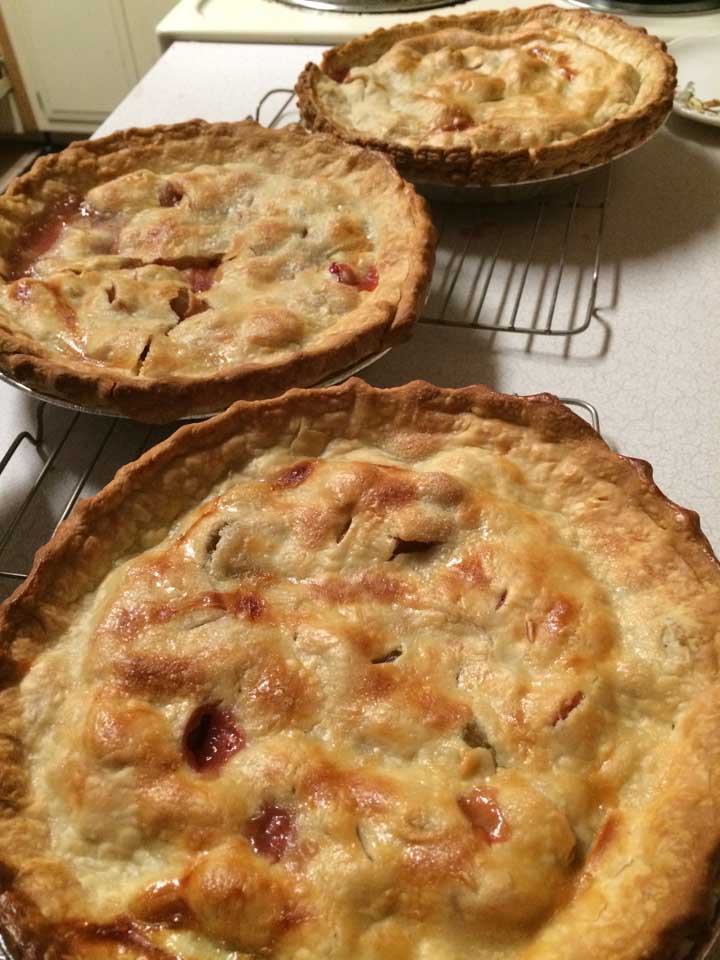
    This is an annual favorite that I have made for years. Pick rhubarb that is easy to pull from the base. The redder the better as far as the stalks go. It takes four cups for two pies.

    4 cups rhubarb, sliced one inch
    4 cups sliced strawberries
    1 ½ cups sugar
    ½ cup brown sugar
    ½ cup flour
    1 tsp. nutmeg
    ¼ cup fresh squeezed orange juice
    4 tbls butter

    Directions:
    Combine all ingredients above and let stand while you make the crust and bake it.

    Line bottom crust on two pie pans and brush with egg white. Bake for 10 minutes at 400.

    Divide filling between two pies and dot butter on top

    Put top crust on and pinch edges

    Brush with egg white, sprinkle with sugar, and pierce several times with knife.

    Bake 45 minutes at 375

    Make sure you put a piece of foil underneath to catch the runoff!

    Enjoy warm with ice cream or half and half

    Don’t step on the scale for at least a week

    Recipe and Photo by Siri Stevens
  • Strawberry Coconut Pound Cake

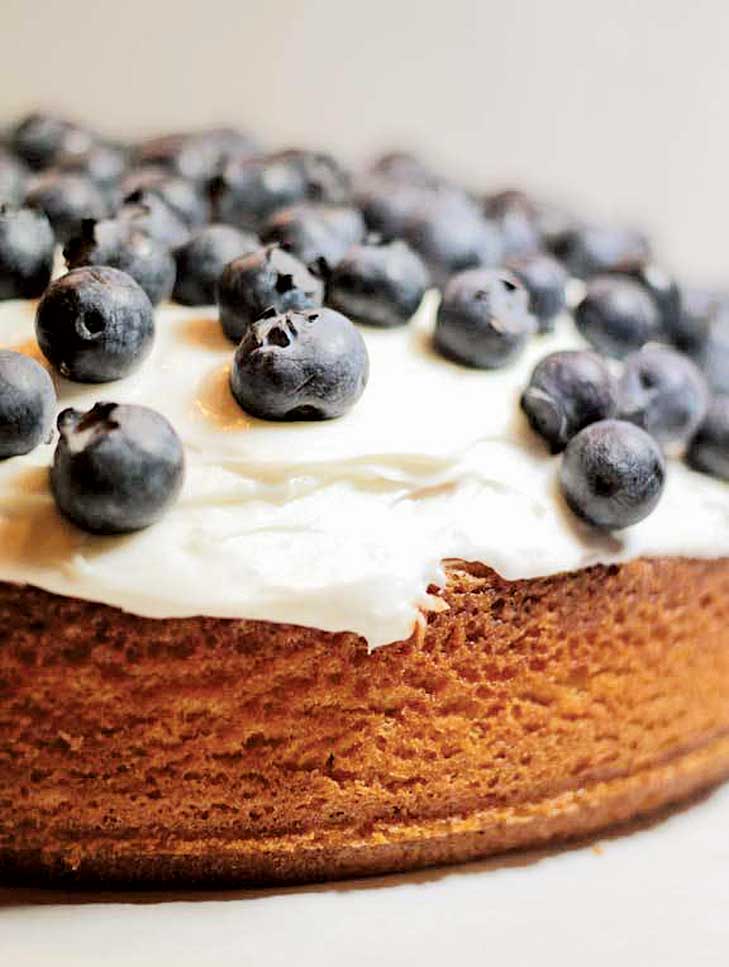
    Strawberry Coconut Pound Cake

    Cake:
    1 box pound cake (ingredients on box)1 cup strawberries, sliced
    1 tablespoon balsamic vinegar
    1 tablespoon sugar
    Frosting:
    1 jar whipped frosting
    1 cup whipped topping
    2 teaspoons coconut extract
    1/4 cup flaked coconut
    1 cup fresh blueberries

    Directions:
    Combine strawberries, balsamic vinegar, and sugar in saucepan and cook until consistency of jam. Let cool. Mix pound cake according to box. Pour into cake pan. Spoon all of strawberry mixture and use skewer to swirl on top. Bake according to pound cake mix. Combine whipped frosting, whipped topping, coconut extract, and flaked coconut. Spread frosting on top of cooled cake. Sprinkle blueberries on top of frosted cake and ENJOY!

    Recipe and Photo by Jessica Scherr
  • Mama Sharon’s Potato Salad

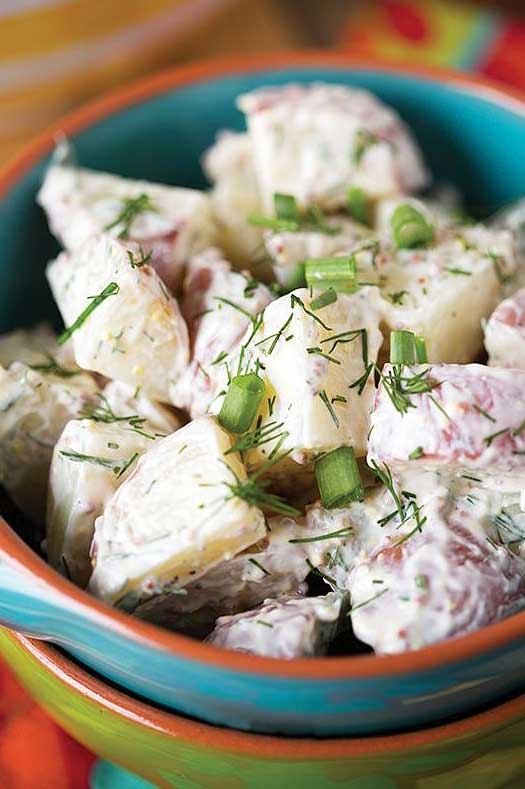
    Mama Sharon’s Potato Salad

    5 lbs. of Red Potatoes
    1 large onion – chopped
    1 ½ cups of mayonnaise
    3 tablespoons of yellow mustard
    1 tablespoon of salt

    Directions
    Season with dried parsley – a few fresh green onion tops – for color if desired

    Scrub potatoes – cut bite size chunks – boil until tender – drain completely – cool in refrigerator

    Mix mayonnaise, mustard, salt and parsley

    Blend into potatoes with onions

    Taste – then adjust to your liking

    Recipe from: Kaysie Burgess
  • Back When They Bucked with Ferrell “Flashbulb” Butler

    Back When They Bucked with Ferrell “Flashbulb” Butler

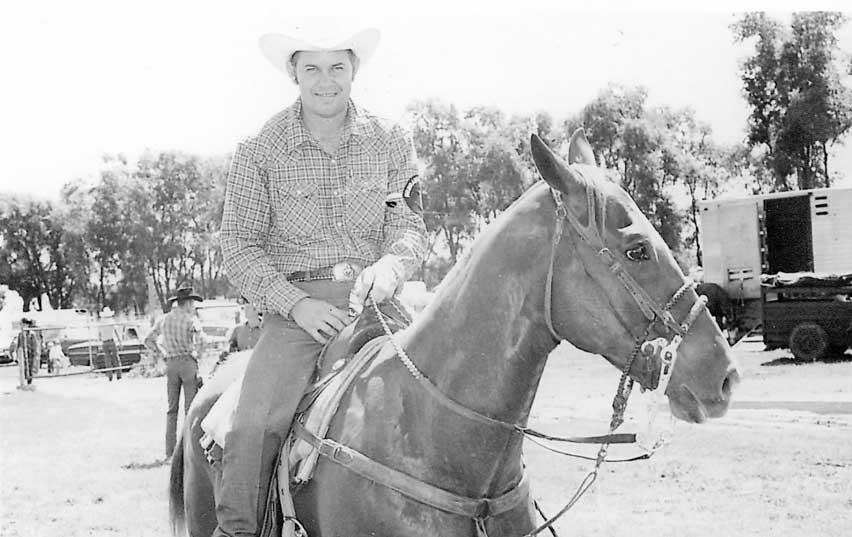
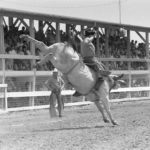
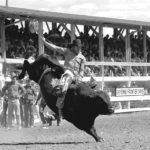
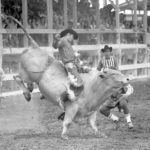
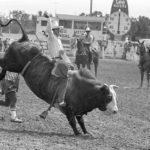
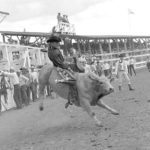
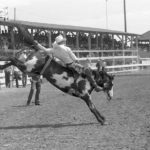
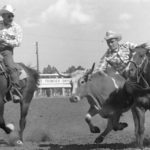
    Ferrell “Flashbulb” Butler hadn’t a penny left to pay his entry fees. So the calf roper took out his camera and started shooting rodeos, selling the photos for a dollar and a half apiece in the 1960s. Each click of the lens drew him closer to the acclaim he receives today for the moments of rodeo history captured with his German Rolleiflex T camera.
    Butler, born in 1936 in Davidson, Okla., was the only child of his parents, UJ and Hazel Butler. His family later moved to Mesquite, Texas, and young Butler began competing in rodeo when he was 15. “I wanted to rope calves like all the other kids in the ’50s. I wanted to ride bulls, too, but that didn’t last long.” Butler went on to compete on the Arlington State College rodeo team. He was a charter member of several rodeo associations, but much of the time he competed in his hometown in Mesquite. It was there that 24-year-old Butler began his photography, learning the trade as he went. “I started taking pictures for money and the picture taking got plumb out of hand!” In 1960 at the NFR in Dallas, Texas, Butler met rodeo photographer DeVere Helfrich, future friend and mentor. Helfrich pioneered the technique of classic saddle bronc pictures capturing the rein picked up and the horse stretched out, jumping and kicking.

    Full story available in the July 15th edition.


  • On the Trail with the Engesser Family

    On the Trail with the Engesser Family

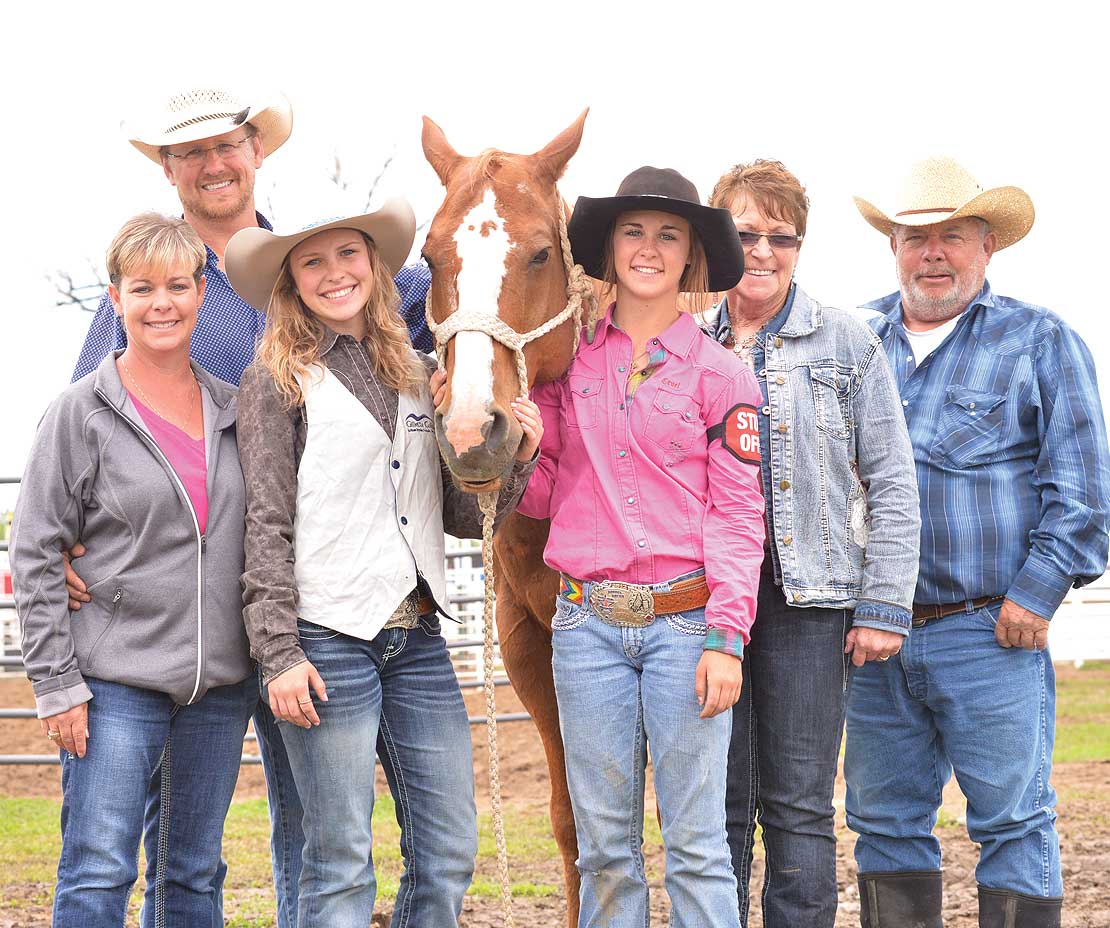
    Taylor and Rickie Engesser learned how to ride without a saddle – bareback. “They ran barrels with bucking riggings,” said their dad, Shorty. They started riding when they were two and competed at the Belle Jackpot, the starting place for other rodeo greats like Nikki and Kristi Steffes. Taylor finished her first year in college as the 2014 CNFR Barrel Racing Champion as well as Rookie of the Year. Rickie won the South Dakota State High School Barrel Racing Championship and is headed to Rock Springs, Wyo., to try for the National High School Barrel Racing Championship.

    Both girls run barrels on the same horse, a 19-year-old gelding named Rowdy. “I just bought him because I liked him,” said Shorty, who bought the gelding when he was four from a friend in Gillette. “We tried to sell him two or three times – he was strong and couldn’t keep the barrels clean.” It took several years for the horse to start clicking with the girls. The family credits younger brother, Jace, with helping to make Rowdy a champion. “When Jace started running flags on Rowdy, it seemed to free him up to run barrels.”

    Shorty is always looking for horses. The family currently has around 20 horses on the place in various stages of training. “I either fix them and sell them, or we keep them. Rowdy is the real deal.” With Dee Bar, Leo Bars, and Cool Deep bloodlines, Cool Rowdy has taken all three Engesser kids to the pay window on many occasions. “He set an arena record in Shawnee, he’s made it to the high school finals three years and won the short go there last year. He also took Jace to the World Champion in Flags in the National Little Britches Finals Rodeo last year.”


    Full story available in the July 15th edition.


  • Ride by Feel

    Ride by Feel

    FOR IMMEDIATE RELEASE

    Contact: Siri Stevens | info@therodeonews.com 

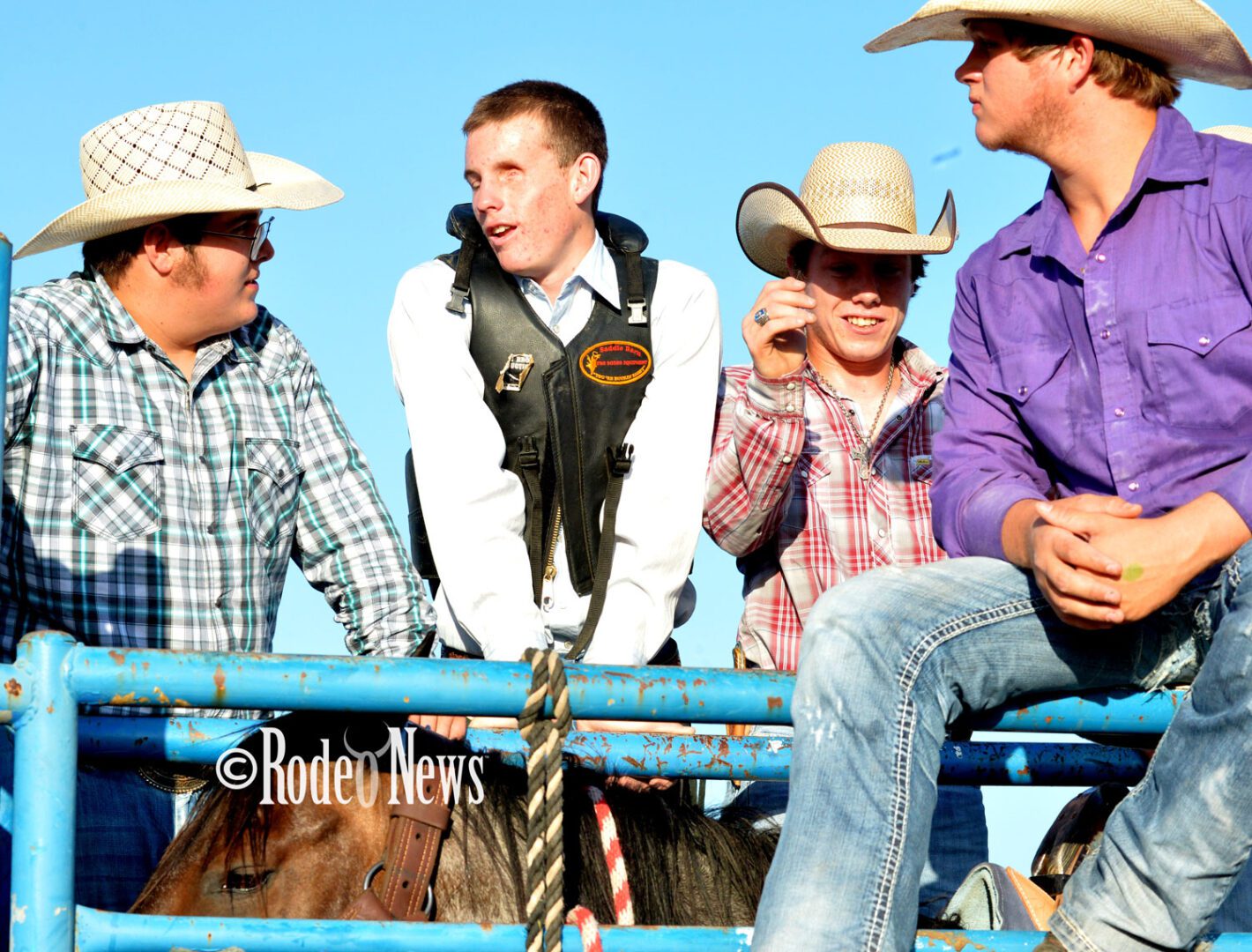
    fb1_Taylor_SMS_8212Taylor Howell, from Adon, Calif., outside Los Angeles, heard about the IFYR through an old world champion, Bill Cameron. The bareback rider did his research and decided to head east and give it a try. He got on his first bareback horse a little over a year ago at a high school rodeo. “I drew a big old stout horse and was upside down after four seconds. She launched me 13 feet up and every which way but good. From then on it’s been a work in progress,” he said. “I take something positive from every horse.”

    Taylor relies on his fellow rough stock riders to set his rigging and help him get down the road. He lost his vision to a rare retinal cancer at the age of two and has been legally blind ever since. “It’s all done by feel and hearing,” he said of his routine behind the chutes and life in general. “I memorize where everything is in my bag.” Once his rigging is set, he can take it from there. “I can feel the horse and he knows I’m there. Everything else is about getting comfortable.” Taylor believes that the inability to see is an advantage once the gate is open. “Once that horse leaves, you’ve got to be lifting on the rigging to feel the horse,” he explained. “You get on some dirty horses, and you can get faked out if you can see.” The most dangerous part of the ride is the dismount. “I think the toughest thing, and that goes for everybody, whether you can see or not, is getting off. Everything is happening at once. The pick up men are good about talking to me the whole time about when to get off. But I’ve been hung up, kicked in the head, and thrown in the fence.” He is helped out of the arena by his fellow contestants and always ready to ride again. 

    Taylor was raised around trail horses, and grew up riding colts. “You ride with your legs,” he said. He had been around rodeo through his uncles and cousins and has done some roping, relying on a bell to hear where the calf is. Taylor knew he wanted to get on bucking horses, and picked bareback over saddle bronc based on the cost to start. “A rigging cost less, and once I got on my first one, I was told I was a natural at it and it’s starting to work out good.” He took second at a recent rodeo, riding for a score of 71.

    He made contact with another bareback rider through Facebook who was blind in one eye. Brad Gower became his mentor and brought him to Oklahoma where he became friends with Willie Clyde McKinney and Ben Meek, two IFYR contestants. The three have become instant friends. “We met him and he changed us,” said Clyde. “I thought you had to see to ride, now I know it’s all about feel.”

    The three are heading to Connors State College in Warner, Okla. in the fall to rodeo and further their education. Jacob Lawson, rodeo coach for Connors State College, has welcomed Taylor to the team. “He seems like a really nice young man. We’ve had a couple kids go through our horse program that are visually impaired and he will start this fall.”

    Rodeo has brought Taylor from California to Oklahoma. He has not let his lack of vision stop him from achieving his dreams. “I’m looking forward to this summer with these two”  

    “He’s going to change the way people look at a rodeo career,” concluded Clyde. “Everybody can do something in the sport of rodeo.”

    Taylor agrees. “Looking back now, I wouldn’t change anything.”


    Shawnee Youth Rodeo International Finals Youth Rodeo 2014 Top 15 in GO 1 (Incomplete)

  • Dalton Ward

    Dalton Ward

    Roughstock. Flank straps. Quick thinking sharpened by adrenaline and put to the test at all speeds. This is the world of 22-year-old Dalton Ward, a pickup man for Harry Vold Rodeo Company, and the son of Billy Ward, seven-time WNFR pickup man. While it is no coincidence that Dalton is following in his father’s bootprints, the cowboy from LaGrange, Wyo. admits that being a pickup man wasn’t always his dream career. He grew up wanting to be a stock contractor, but had his first taste of picking up at a kid day rodeo in Odessa, Texas, when he was 12. “When I first did it, I didn’t like it all that well. It was fast, and to this day I don’t ever remember tripping a flank. I’d sit out there with my dad and that was it. Being 12 years old, I was just trying to save my own life, let alone someone else’s!”

    Dalton mainly worked college and ranch rodeos with his dad for the next six years. His mom, Marlo Ward, says, “Dalton was about 16 when he developed more of an interest in picking up with his dad. He’s always been so big and strong, and when everything came together, he was pretty efficient and got more comfortable with it. He’s always had a very strong work ethic – you could almost say he was born working! He and I used to travel to Billy’s rodeos together, and even before he could form many words he would talk to me for hours. He was always taking care of me.” Dalton and his younger brother, Denton, were paid five dollars a performance by their dad to do the bulk of the horse care, which Dalton continued to do until he was about 17. When they were younger, the boys brought out their play animals and semi trucks and played stock contractors. One Halloween, when the Wards were camped at a rodeo, Dalton and Denton borrowed a bareback rigging and a bronc saddle and rode their horses from trailer to trailer dressed as roughstock riders. They were given everything from chewing gum and cans of soup, to TV dinners and DVDs.

    Between helping their dad on the ranch and hauling with him to rodeos, Dalton and Denton were missing a lot of school. So their mom started homeschooling them. “It was a real good deal for us. A lot of people said that I didn’t have any friends, and I said I had a lot of friends in the rodeo world! I grew up around a lot of life lessons in rodeo. I think that contributes to who I am today.” Another influence in Dalton’s life is his parents. “The greatest thing about my dad was he always made his own horses – he’d trade them and make a pickup horse. My mom is always behind the scenes, but she’s the anchor. From my faith in Christ to my education, nothing would have happened without her.”

    Full story available in the June 15th edition.

  • Blizzard and Boo

    Blizzard and Boo

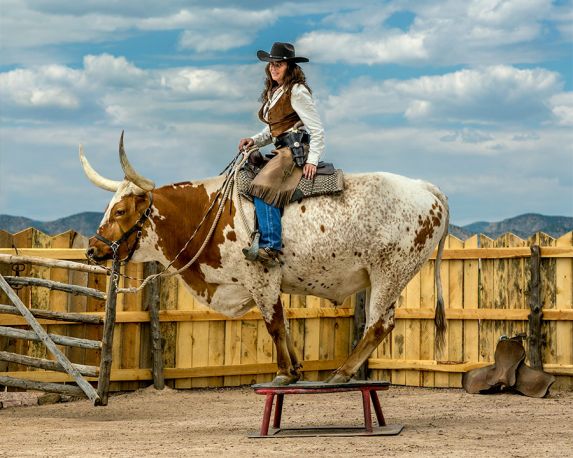
    Once upon a time, there was a beauty and a beast…actually, it wasn’t once upon a time, but a current bond between Blizzard and “Boo”. A rare pair of an eight-year old registered Texas Longhorn, weighing in at 2,000 pounds and his sidekick Sally Jo Wilkins, “Boo”, who is 5’6” tall and 115 pounds of all heart. “That big steer loves her to no end and shows it. It is one of those things that you have to see them work together to believe, as a petite lady riding a steer can really turn heads,” said Doc Dison, owner and trainer of Blizzard.

    Blizzard and Boo’s performances are determined and unyielding, bringing joy and astonishment to all audiences, as they perform under saddle, bareback or with just a bull rope and customizing acts to fit any need. Blizzard’s gentle nature and love of presentation make him the perfect crowd pleaser as he welcomes attention and photo opportunities outside of the arena. “He is an amazing animal and just loves people, especially women,” said Boo.

    Doc, the grounds keeper for the Canon City Fair Grounds, purchased Blizzard when he was 13-months old and being used as a halter show steer. Through his progression of training, Blizzard has been used in cowboy mounted shooting, been roped off of, has done barrel racing and pole bending and was once rode in a performance act of “Ring of Fire”. “We had to shut that one down, because the fire wouldn’t work in an open arena,” Doc explained. He and Boo are now quite famous for their pedestal ending, where Blizzard – mounted by Boo, steps on a 13-inch tall pedestal with all four feet. “He is the only longhorn performing this act at this time,” said Doc.

    The relationship began five years ago at the Royal Gorge Bridge and Park near Canon City, Colo., where Sally Jo worked a living Indian village and Doc captivated tourists with gun fight acts and would take Blizzard as an additional attraction. “I fell in love with him and then Doc asked if I wanted to ride him. From there, an amazing friendship grew between me and this steer,” recalled Boo. “Now, if he could figure out a way of not falling through the floor, he would probably come in the house and live with me.” The two have gone on to performing at the Bad Boys Bull Riding Series in Canon City, the Westcliffe Stampede and the West Best Bull Riding in Penrose, Colo. “The name Boo was more of a rhythmic thing. It just flowed with Blizzard’s name and fit with my smaller size,” explained Sally Jo.

    The consistent handling and gentle discipline of training has not been complete clear skies in the correlation. In August of 2011, while performing a salute to the bull riders-type act, Boo was bucked off of Blizzard. “Using a bull rope, I was to spin around on Blizzard’s back while he was standing on the pedestal and ride out of the arena holding a sign reading ‘The End’ for the finish,” explained Boo. “But when I turned around backwards, I had felt that I was too far back on Blizzard’s back and when I made the move to scoot toward the bull rope, I flanked him with both of my spurs and caused my own demise.” With the wind knocked out of her, and a later discovered bruised rib and kidney, Boo walked out of the arena that night. “Blizzard knew that he had done something wrong and my main concern was for him,” she said. Still feeling the pain in her back in February of 2012, Sally Jo made her way to the hospital for a checkup x-ray, where the result found was a fractured back in two places and severe Osteoporosis. “I’m hard headed, but doctors don’t listen to a pre-menopausal woman,” she said. “For that reason, I have started a blog called Boo News (The Osteoporosis Battle) on our website, blizzardandboo.com, to inform people of the things they don’t tell you or things to be aware of.”

    With Boo in recovery, Blizzard went on the road in 2012. By 2013, Boo got back on her old friend. “I consider Sally Jo a dear friend and business partner and she has been relentless in accomplishing her goals. She wasn’t supposed to ever ride again, but she didn’t give up,” said Doc. “As for Blizzard, he just knows how to conduct himself and uses caution, while still doing what she asks. That in whole makes him a wonderful animal.”

    The determination have the pair back working on the act that separated them for a short time. “Not riding, not going to happen. I just never gave up. I do see a huge difference between the rides – Blizzard is real at tentative and takes care of me,” said Boo at 50 years old. “We just have to end every day with me sitting on the pedestal and allowing him to love on me after each time.” …And they, continue, to live happily ever after…

  • Frankie Punkintown Smith

    Frankie Punkintown Smith

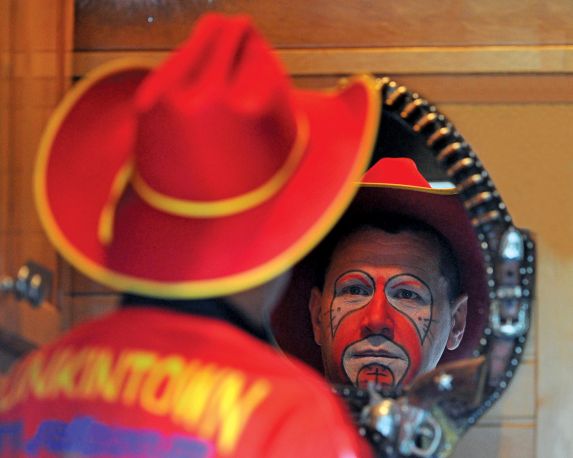
    In upstate South Carolina, the soft rolling hills of the Blue Ridge mountains meets the gentle slope of a valley shadowed by Table Rock. In the early 1800’s a trader traveling through the area spotted a large hill planted in pumpkins. He named the place, “Pumpkintown”, a name that stands today. It is here that PRCA rodeo clown and
    barrel man, Frankie Smith was born and raised.

    Frankie grew up with a strong Christian faith and obeying his parents was first priority until it came to bucking horses. “I wanted to ride bucking horses but my mom told me she wouldn’t sign for me to ride,” Frankie said. That didn’t stop Frankie. With his sister’s help, they forged his mom’s signature so Frankie could compete. Keeping it a secret from his mother, Frankie joined the South Carolina High School Rodeo riding bareback horses for two years. He had a knack for the event and quickly qualified for the National High School Finals. Frankie had to turn down the chance to go to the finals because his parents didn’t know. “My mom is part Indian and part bull dog, and she would whoop you at the drop of a hat. And she carried her own hat!” Frankie laughed.

    During all those high school follies, Frankie picked up a knack for dancing. “I was fifteen years old when my mom and dad took clogging lessons and I made fun of them because they looked like two dead dogs wallowing in the floor,” Frankie laughed. “Bobby Johnson and I went the next week to take lessons with my mom and dad,” he added. “Clogging is danced from the waist down and it has to be smooth. Our teacher would make us hold a cup of water, and I couldn’t slosh it out. I wanted to show her I could do it and I eventually put that in my routine,” he said. Frankie excelled at clogging and eventually went on to compete at the National Clogging Competition in Nashville, Tenn. where he was crowned the 1984 World Champion Clogger.

    Frankie always enjoyed the rodeo lifestyle and wanted to find a niche where he could still be involved. “I love the ranch life and western lifestyle even though my mom and dad weren’t ranch minded,” Frankie said. He never thought it would take him as far as he is today. One weekend Frankie got a call from long time friend and rodeo stock contractor, Ernie Treadway. Ernie asked Frankie to stand in as the rodeo clown and Frankie adamantly refused. “He told me to be there and just hung up on me,” Frankie laughed as he remembered his first gig. That’s all it took and pretty soon Frankie was performing at local high school rodeos and finals. It was Craig Copeland, a rodeo announcer, that suggested Frankie use a catchy stage name and coined the phrase, “Punkintown the Rodeo Clown”. The name stuck and helped catapult both Frankie and the small South Carolina town’s popularity. Frankie admitted he was against using the town’s name at first but he wouldn’t have it any other way now, as he pays homage to his down home roots.

    “You know acts are hard, but the jokes are easy. It’s easy to become comfortable and there’s a lot of folks who just copy jokes and acts. I like to be original. I’ve got one act that nobody can copy and that’s my clogging. Everybody loves the clogging wherever we go,” Frankie said. Along with his toe tapping dance, Frankie’s assistants are his multi-talented trick horse, Turbo, and Boston Terrior, Little Bit. “We call it the dog and pony show. Little Bit helps with my Cowboy Kit routine and she loves it!” he said. Frankie’s comic routines with his pets delight crowds of all ages.

    He’s definitely paid his dues and Frankie admits that making a name in the rodeo business is extremely difficult for performers east of the Mississippi. However, Frankie’s warm heart and contagious smile lent him special favor in the tough world of rodeo performers.

    What you see is what you get with Frankie Smith. “I don’t hide nothing, I’m just me,” he said. He also does not compromise the quality of his acts for popularity and fame. “I love what I do. If I can’t be hired off my talent and make a positive influence, then I’d rather not be there,” Frankie said. With a list of prestigious rodeos under his belt including Cheyenne Frontier Days, Cody Stampede and many more, Frankie’s certainly made a name for himself not only in the arena but in the communities as well. He strives to be a positive role model wherever he travels and loves making a difference in a child’s life. “I’ve accomplished what I’ve done because of the talent God has given me. I didn’t have to be the party guy to get where I am. The major highlight of my career and life are the kids. My goal is to make a positive influence in that community as well. A difference that will sustain, that’s what I want to leave behind,” he continued.

    Frankie’s long stint with the Cody Stampede had a bittersweet end last year as he said a farewell to the Wrangler Gold Tour rodeo. “There’s no other rodeo second to the Cody Stampede. I mean that with all my heart. We’ve embraced this community and we love the committee, they are a great bunch of guys,” he said. Frankie is booked solid for this year’s rodeo season. He and Laurie have their rig pointed west for some of the summer’s hottest rodeos on the PRCA circuit, including Spanish Fork, Utah, Coeur d’Alene, and Lewiston, Idaho.

    Frankie’s most important traveling partner and love of his life is his wife, Laurie. Laurie smiled as she recalled their courtship, “Since the day we said I do, we haven’t been apart. Frankie’s a very sentimental man, he is very passionate. He’s a romancer, He’s my partner and my best friend. He’s everything a women could dream of. I’m the most Blessed woman in the whole wide world,” Laurie said. Laurie and Frankie both admit they are blessed to be in their situation and wouldn’t change it for the world.

    During their very short stints at home, Frankie and Laurie enjoy working their cows on their western Tennessee ranch. “I’m pretty much my own vet, and I have a lot of neighbors that let me help with their cattle,” he said. Most folks would be surprised to know that this down home cowboy is also a very gifted comedian. Frankie is the ICGMA Artist of the Decade for the ‘90’s, and a five time winner of the Christian Country Music Association Comedian of the year. He’s even had some fun on the CBS Early Show with former host Dave Price. “They interviewed me for Cheyenne and I gave Dave a pair of clown baggies to take back to New York with him. I put him in the barrel and gave it a shove, he wasn’t ready for that one,” Frankie giggled. Not just a famous rodeo clown, clogger, and Christian comedian, Frankie is also an ordained minister and motivational speaker.

    It seems the sun continues to shine for Frankie since he recently added another venue to his calendar. Feld Motorsports, producers of Monster Jam approached Frankie to try their shows as a comic act to let their buildings “breathe” during intermission. “I danced on the crushed cars, and they loved it. So during the winter months I’ll be traveling and doing those shows with Feld Motorsports,” he said.

    The Punkintown rig won’t be slowing down anytime soon. Even though they love traveling, he and Laurie both love being home and taking care of their cattle. “Just being able to see God’s many colors, the towns, and the people we meet is what makes it worth it,” Frankie admitted. They also try to take a cruise once a year to have a little down time. But when the rig makes the final turn down the country road leading to his ranch, he feels an immediate rush of gratitude and peace. Frankie said, “I’ve had such a blessed life, if it ended today I’d be alright. I always told my mom once I got older and quit rodeo I was going to sit in my rocking chair and reminisce about how I done it instead of how I could have done it. We try to live like we’re dying, like every day is our last.”  Learn more about Punkintown the Rodeo Clown on his website: www.punkintown.com

  • Giles Lee

    Giles Lee

    Giles Lee grew up immersed in rodeo, as a ranch kid, a competitor, an organizer, a historian, and a fan. The Lovington, N.M. cowboy was born in Midland, Texas in 1922, the fourth child of Dick and Sarah Forrester Lee. When Giles was two, his dad and a partner bought a ranch in Lea County, New Mexico, and the family moved west. 

    Ranching, cowboying, and rodeo were all the Lee kids knew as they grew up. They helped out on the ranch, and Giles remembers their entertainment: cars parked in a circle to make an arena, with shotgun chutes and set-up pens. 

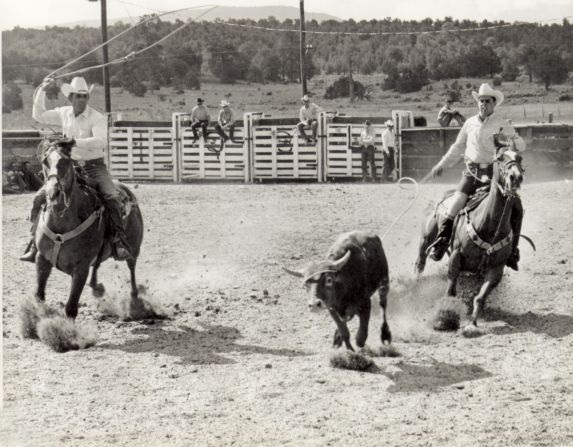
    Giles’ first time as a contestant in a formal rodeo setting was at the first Lea County Fair and Rodeo in 1935, where he and another rodeo legend, Tuffy Cooper, entered the junior calf roping. 
     

    His second time as a contestant was in 1938 in Midland. He placed high in the senior boys calf roping, winning a pair of boots and $150 cash, with the requirement that he had to write thank you notes to the sponsors! 
     

    The next time Giles got a taste of formalized rodeo was when he was a senior at Lovington High School. The intramural rodeo club at the junior college in Portales invited the seniors to rodeo with them. Giles didn’t have a way to get his little gray horse, Possum, to the rodeo. So “we borrowed a tiny little makeshift trailer somebody’d built, loaded ol’ Possum in this wooden trailer, and somewhere we got a pair of goggles to put on him.” Without a windshield, the horse needed protection for his eyes. Five seniors traveled together, in Giles’ father’s vehicle. “My dad had a little old Chevrolet coupe and we talked him into letting us drive that. Three of us sat in the front seat, and two sat in what they called the turtleneck, which raised up, in the back. It was quite a deal.” In Portales, they entered all the events they could. Giles and his friend Bill Spires won the wild cow milking and assumed they’d get prizes and buckles. But when they were called down to be introduced as winners, they each won a pair of socks and a necktie! 
     

    It was his first year of college at the New Mexico A&M (now New Mexico State) that Giles’ interest in organizing rodeo began. As a freshman in 1942, the University of Arizona had sent an 
    invitation to A&M to send a rodeo team. This begged the question: there was no rodeo team at A&M! Having a team required organization, officers, recognition from the college, sponsors, and someone to do the hard work of getting those things. With Giles as one of the thirteen team members, they got recognition from the administration and found sponsors: the Sheriff’s Posse and Paul Heffert’s Chevrolet garage, who provided two pickups and paid the bills for them. 

    The 1942 New Mexico A&M team traveled together, rode the same horses, used the same equipment, took bedrolls and slept in gyms at other universities. This was seven years before college rodeo had its official beginning with the NIRA. Then World War II interrupted, and contestants were thinned out as they either entered the service or were about to be drafted. Rodeos ceased, and Giles was called into duty. He joined the Army in 1943 and served three and a half years in the Army Air Corps as a Staff Sergeant and Crew Chief on B-17 aircraft in the Pacific.

    When he came home, it was back to school, but “what I had on my mind was rodeo, not college,” he laughed. They put together another college rodeo team again in 1946. There were a lot of small time rodeos going on, what Giles calls “brush rodeos,” with makeshift arenas and whatever stock could be rounded up, in Arizona and Texas, and “I was doing more rodeoing than going to school,” he said. Then the “showdown” came: “We got to electing rodeo team members, and ol’ Giles was left out because I didn’t have a C average.” He couldn’t travel with the team. He finally improved his grades enough to go back to college rodeo. And chemistry was a problem. “I took it three times,” he recalled, and still couldn’t pass it. “I decided, that was it. No more college.” He went home to ranch. 

    During his college days, Giles began riding barebacks and bulls in addition to his roping. Bareback riding went pretty well: “I was coming along pretty good in the bareback horse riding, but was never much of a bull rider.” It was while he was on leave from the Army that he met his future bride. Joie Anderson, who was the daughter of the new music teacher at Lovington, and in 1947, they married. He took her to a Beutler and Son rodeo in Tucumcari, N.M., and won third in the bareback riding. They went to the big dance east of town following the rodeo. That was their honeymoon! 

    When he left the arena at Tucumcari, somebody hollered, “you won some money! Give us ten bucks and you’ll be a member of the RCA!” And Giles’ Rodeo Cowboys Association membership began. Now he is a gold card member. After his marriage, Giles continued to rodeo, but it was mostly roping. “My mother convinced him that after they got married and had a baby that he didn’t need to be riding broncs anymore,” daughter Libby said. And he stayed close to home: rodeoing where he could get to and get back home to the ranch. 

    In 1959, he began Sunday team ropings on the ranch, the Lea Co. Championship Roping, which eventually turned into the Lea Ranch Roping. The Sunday ropings turned into Wednesday night ropings. The ropings were held until 1979, with many young men learning to rope at the arena, and casting an eye on the three Lee daughters: Libby, Becky and Mary Ann. The girls learned how to rope from their dad and competed in junior rodeos.

    When his team roping days ended, Giles began tripping steers. He and three other senior ropers organized the Senior Championship Steer Roping Association in Amarillo in 1984, and Giles served on the board for ten years. Tripping turned out to be his favorite event. “I think I enjoyed tripping steers more than anything else I did,” he said. “I wish I had been doing that all along. I was sixty years old when I started that. The last steer I tied down at a rodeo was in 1996. That’s a pretty good spread.”

    Now Giles directs ranch operations from he and Joie’s home at the Shinnery Oaks Community Home in Denver City. Daughter Libby and her husband Danny Berry run the ranch. “I’ve got a son-in-law running things,” Giles said. “He’s a good hand. I don’t have much to say.” Although he says that, he’s still involved with the daily operation; he and Danny regularly talk over what needs done at the ranch.

    Giles and Joie have seven grandchildren and three great-grandchildren, and hundreds of good memories of days past. They had fun, made memories, and he paved the way for future college contestants to get degrees doing what they loved: rodeoing. 
  • Cesar de la Cruz

    Cesar de la Cruz

    There are few things Cesar de la Cruz enjoys more than winning rodeos and ropings, unless it’s spending time with his family. He remembers roping the dummy as a kid with now wife, Arena. They grew up roping together and after winning a couple of Open ropings together, he knew she was a pretty good catch. They married in 2008, and have two sons, Camilo, 4, and Gio, 2.
    “My kids are so much fun right now and I don’t want to miss any of it,” he said. “Milo is a real comedian and keeps us entertained in the pick up going down the road. He reminds me of myself when I was little. I want to be the best dad I can be.”
    De la Cruz grew up in Tucson, Ariz., and though he lived in town, he always had access to a lead steer and donkey to rope. Cesar credits his uncle, George Aros, a 4-time NFR qualifier, for helping him along the path to professional rodeo. He credits his grandfather for his cowboy roots.
    “My grandfather was a really good cowboy. He told me a story about when his father took out to a deep sandy wash to bust a wild horse. He was eight years old. We wouldn’t dream of doing that with kids now days.”

    De la Cruz qualified for his first NFR at the age of 22 and now at 30, has over $1,000,000 in career earnings with the PRCA. He readily admits the rodeo life isn’t for everyone and can resemble a gypsy existence. It helps that he’s able to travel with his family most of the time.
    “Right now in my rig I have a miniature pony, three heel horses, a pygmy goat, a snake my son caught, and a tadpole that he’s hoping will grow into a frog,” laughs Cesar. “We’re a full fledged mobile petting zoo.”

    Currently Cesar is roping with the talented Brock Hanson. This works well for the duo as they live just thirty minutes apart, enabling them to practice together easily. On a good practice day they may run 80 to 100 steers.
    Cesar admits to owning a “herd” of horses and is especially fond of his old bay horse, Johnny Ringo. Though he was an outlaw when he got him, his uncle George assured him how nice the horse was. He was just five and little, but tough.
    “When I bought him, he was rearing over in the heeling box,” explains de la Cruz. “To get him over it I would run 50 slow steers a day, sometimes at a walk. He’s Doc O’Lena bred and super nice. Horsepower is everything in this game.”
    At any given time de la Cruz has at least five horses he could pick up and take to the NFR. Right now he has twelve horses in various stages of training.
    “During the summer when we’re going hard, I like to keep three horses with me and split them up in different parts of the country. That way I don’t have to put so many miles on just one horse.”

    COWBOY Q&A

    How much do you practice?
    As much as possible. Now that I’m roping with Brock, it’s handy because he lives 30 minutes away so we practice several times a week when we’re home.
    Do you make your own horses?
    I try to. I’ve bought a few that have been started. My style is a little different so I try to find a horse that’s just started. It’s hard to change an older horse. I enjoy training horses and have done it all my life.
    Who were your roping (rodeo) heroes?
    Clay O’Brien Cooper is a hero of mine for many reasons. When I was real young Steve Northcott won the world and had a video called “It Takes Two” where he would rope a goat, a donkey and then a steer. That’s how I learned how to rope.
    Who do you respect most in the world?
    The Lord, Jesus Christ, he is my savior. My mom, my wife. There are lots of people I admire and respect.
    Who has been the biggest influence in your life?
    My uncle George has been a major influence in my rodeo career. He gave me the guidance to reach the pro level.
    If you had a day off what would you like to do?
    Play golf – I’m a huge fan. I’m going to get my boys into it as much as possible. I watch it a lot on TV. I can relate to golfers because they have to travel like we do.
    Favorite movie?
    Lonesome Dove, The Cowboys
    How would you describe yourself in three words?
    Refuse to Lose – I hate losing more than I like winning.
    What makes you happy?
    My kids and family.
    What makes you angry?
    Roping a leg or missing for big money;
    If you were given 1 million dollars, how would you spend it?
    I would buy a place in Arizona to spend the winter, and a place in Montana to spend the summers.
    What is your worst quality – your best?
    I’m hard on myself and have a temper when I don’t do well. My best is I’m a perfectionist. I like my horses looking good and try to do the best by my family.
    Where do you see yourself in ten years?
    Hopefully wintering in Arizona and spending summers in Montana. When I quit rodeoing I’d like to teach people to rope.

  • Marcy Henderson

    Marcy Henderson

    Marcy Henderson lives near the town that claims to be the home of the World’s First Rodeo, held July 4, 1869. Deer Trail is 55 miles east of Denver, Colo., and Marcy grew up 20 miles from there. Her mother, Moni, and Dad, Mark, moved there from Eastern Colorado 17 years ago. “We actually live on the north end of the Black Forest,” she said, of their ranch in the pine trees. Mark manages the Orovaca Cattle Company, a 30,000 ranch by Agate, 20 minutes from their house. 

    “We run about 1,000 head of mama cows,” said the former rough stock rider that introduced Marcy to the rodeo life. “I rode all three bucking events, but the majority was saddle bronc—through high school and straight into full time rodeo after high school; mainly amateur in Colorado, Kansas, Utah, Nebraska.” He won the Colorado State Rodeo Association title in 1989. 

    In 1990, he was in a head on car accident with a drunk driver while heading to a rodeo. It crushed his legs pretty bad, and he was told he would never walk again. After therapy and numerous surgeries, he beat that prognosis after a couple years. “It was hard to swallow, but we had some good people around us—and we kept going on,” he said. “We found a different venue to go on and made the best of a bad thing. We’ve had numerous surgeries and pain and it’s one of those injuries that won’t be normal. We stay horse back as much as we can so we don’t have to walk.” 

    Marcy was just a year old and although he hung up his rodeo spurs, he helped Marcy get started. “I grew up riding at the ranch just for fun but I was afraid to lope,” she said. She joined 4-H and started doing gymkhana events and gradually worked her way into rodeos in fifth grade. After his rodeo career ended, Mark satisfied his competitive nature by entering dog trials with Border Collies, and Marcy took it up with him. She was ten when her dog got old enough he needed to be retired from the dog trials and Mark gave Marcy an option. “She could get a dog or a horse,” he said. “She thought about that for about a week and chose the horse—she said she could work dogs when she got older. “I was so competitive and so driven with it (rodeo); you don’t know if that’s what you want your child to jump into. We’ve had to make our own horses, with a lot of help with great people, and I don’t care where you go — when you nod your head you are 
    just as good as everyone else every given day. That’s the rules of rodeo. Basically we’ve been dogging, rodeoing and ranching and that’s about it,” sums up Mark about life in the Henderson household. 

    “My parents took me to National Little Britches Rodeos and Colorado State High School rodeos,” Marcy said. “Up until my sophomore year, I only had one horse, Flash. We competed in barrels, poles, goat tying, breakaway, dally ribbon roping, and trail. Things clicked for us and even though we never won any year end titles, I loved it.” Marcy spent a lot of Tuesday nights at Lancasters Arena roping. “Lee would put on roping lessons and there were ten to twenty of us there.” Marcy remembers her childhood fondly. “One year on my birthday I got to rope and take private piano lessons the same day.” Marcy got a young horse from a family member. Willy was ranch broke and with help from the Vick family, Willy became Marcy’s pole bending horse. “Flash had 
    to be put down over the fourth of July, right before I went to college. I used Willy until my junior year, and then he ruptured his small intestine and we had to put him down. It was pretty bad, but I learned not to take good horses for granted.” Six Guns came along right before the Little Britches Finals in 2008. “I breakaway roped and tied goats off him. He was a great horse and I’m trying to retire him in the near future.” 

    Marcy was fortunate that both her parents went to all the rodeos with her. “We had a small living quarters trailer and we’d go every weekend.” Her mom never missed a rodeo. She works as the office coordinator for Rocky Mountain Natural Meats—a bison and beef processing plant in Henderson, a 75 mile one way drive. “I love my job and I love where I live,” she says of the commute. Moni grew up a city girl and married a cowboy. She loves the western lifestyle and the life of the road that she experienced with Mark and Marcy rodeoing. “I still make Mark and Marcy my hobby, and I get excited to go with her.” She admits that when Marcy was done with high school rodeo, she struggled to fill the void. “We moved from the neighborhood — we weren’t going anymore.”

    Marcy had a rodeo scholarship to Northeast Junior College and after two years, transferred to Chadron. “It was too far away from home,” she said. “So I transferred to Colorado State University and finished my degree in Ag Business.” She works for JR Simplot as a crop advisor. “I make recommendations with fertilizer and pesticides, and sell the product,” said the 24-year-old. “Everyone is trying to feed a world of 9 billion and weeds and pests are becoming tolerant and to reach the goal creates more invasive product,” she admits. Her job works with her as far as rodeo goes. “They are very flexible with my rodeo schedule.” She rodeos for the Colorado Pro Rodeo Association where she holds the position of Breakaway Director. “I have a passion for breakaway roping and I wanted to make sure the event was taken care of.” She is buying her card this year to compete in the Kansas Pro Rodeo Association, the Wyoming Rodeo Association 
    and holds her WPRA card as well. “I’m excited to get started on rodeo again. I don’t like sitting at home,” she said.