Rodeo Life

Category: Archive

  • Roper Review: Gary Mefford

    Roper Review: Gary Mefford

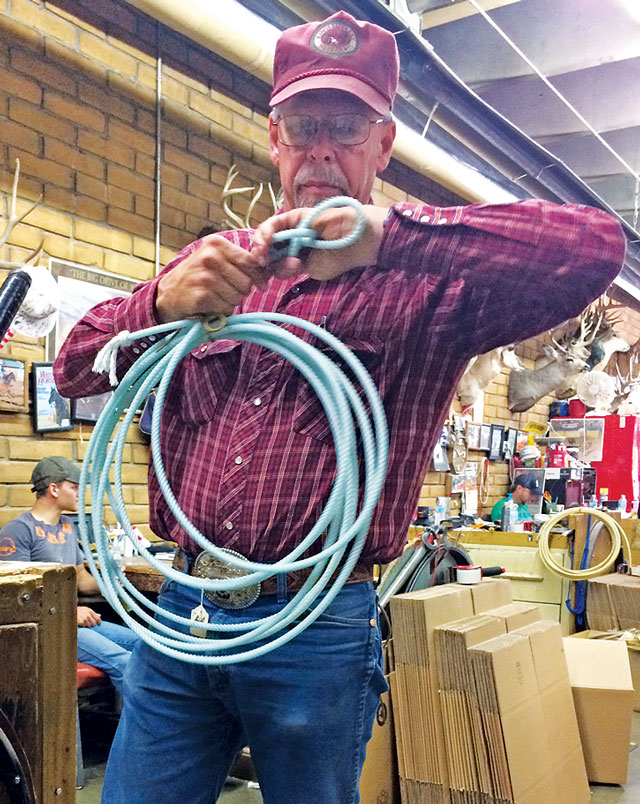
    Gary Mefford found his vocation as a sophomore in high school in 1974, working part time at King Ropes in Sheridan, Wyoming. He started out tying knots and rapidly expanded to tying burners and picking up orders. Nearly 43 years later, he knows the shop like one of his favorite four strand ropes, and co-manages it with Dan Morales. “My brother grew up with Bob King, and they got me the job here,” says Gary. “It was just going to be part time while I was going to school, but I went to college in Sheridan and kept working here. I got my degree in mine maintenance – hydraulics and welding – but by that time, I was close enough friends with Bobby that if I needed some extra time off to go down the road, I could get my work done ahead of time and then take off. There’s not a lot of jobs in this world that allow you to do that. You get to enjoy what you do, and you’re working with the public a lot. We get a lot of walk-in trade here, especially in the summer months. We get Europeans in here all the time, and a lot of Argentines, Canadians, and South Africans. We ship ropes all over the world, like Brazil, Australia, and Europe. It’s a world-wide operation, but percentage-wise, the majority of our business is in the states.”
    An average day for Gary at King Ropes starts with picking out ropes for the latest orders, giving the knot tyers ropes to work on, tying hondos, pulling grass ropes down, and working on stock. From June through August, they’re stocking trailers for 3 – 4 weeks to go to the NHSFR and Cheyenne Frontier Days, followed by the WNFR in December. “I’ll start working on trailer ropes 6 to 8 weeks before they leave for Vegas,” says Gary. “We take 1,500 to 2,000 ropes and we might sell 700 to 800, but we’ve figured out over the years what we sell a lot of. When we have 500 variations of ropes, you never know what people will ask for, between different sizes and materials and stiffnesses and lengths. It’s such personal preference on what people like in a rope. Team ropers are always looking for the new fix, but the rope only does what the hand tells it to, and the hand only does what the mind tells it to. We’ve stayed pretty much with the old style ropes we’ve had for fifty years.”

    The YouTube television series How It’s Made created a documentary four years ago on how ropes are made, featuring King Ropes. “I like the four strand ropes. We buy all our four strands in bodies and put them through our stretching process, and they feel quite different when they’ve gone through the stretching process,” Gary explains. “The rope is stretched at a field outside of town. The rope comes in 600 feet coils and we tie it off at the end of the field and roll it with the tractor and pull it to the other end. It might take several days or three weeks or three months before they’re straight. The poly grass ropes that calf ropers like to use we do in a hot room in the basement that’s 130 degrees. But the Nylon comes out better if it’s stretched outside in the natural cooling and heating – the whole process makes them better than if we were doing them in the hot room.”
    While Gary grew up in town in Sheridan, his grandparents homesteaded on the Montana/Wyoming border in the early 1900s. His dad worked on ranches and later did highway construction. Gary was given an old rope horse by his older brother Dick when he was 9 or 10. “I high school rodeoed my junior and senior year, and college rodeoed locally. I jackpotted and team roped after that,” says Gary, who prefers to heel. “It’s such a challenge to do it well.” He competes in mixed team roping with Miff Koltiska, and competed several times with Mark Moreland at the Reno Invitational. He’s also roped at the WSTR Finale in Las Vegas at least eight times. “I cut my thumb off at the Reno Invitational in 2011 – I did it on the biggest stage,” says Gary. “They tried putting it back on, but it didn’t take. I just reach for stuff differently – I don’t even think about it. That was in the spring and I’d only won a few hundred dollars at some winter and spring ropings. After losing my thumb, I won $3,800 and three buckles. I’d been in a slump, and after that happened, I relaxed and things fell in place. I guess my thumb was just getting in the way.”
    Gary also puts on roping jackpots and contracts roping steers to high school, college, and cowgirl rodeos. He has 100 head of longhorn cows and raises his own roping steers at his home outside of Sheridan. His wife, Sara, helps put on the jackpots, works as secretary, runs chutes, and moves steers. She worked at King Ropes for several years, and enjoys team sorting and team roping. Their four-year-old daughter, Londyn, competes on her pony in barrel racing, pole bending, and goat tail untying.
    “My mind is always working on what I have to do after work,” says Gary, who works six days a week at King Ropes, along with hauling steers and putting on jackpots and team sortings. “I just make sure everything is prearranged in my brain on what I need to do. This doesn’t leave me very much time to practice. While working at King’s Saddlery over the years, I have met a lot of team ropers and have become friends with several them such as Bobby Harris, Rich Skelton, Mike Beers who are some of the best heelers in the world. They all have offered me a chance to go rope with them. I just don’t know how I would ever fit it in, without my wife having to do all the work at home. But there would be nothing better than to take the time and go rope with them for a month.”

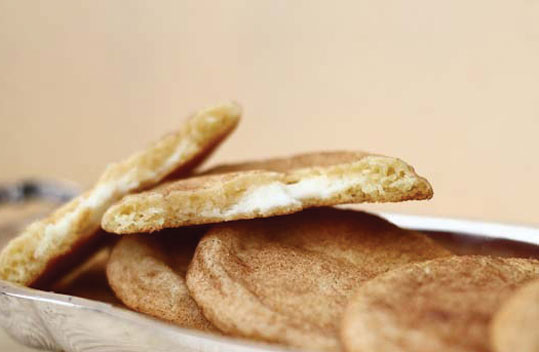
  • Cream Cheese Filled Snickerdoodles & Peanut Butter No-Bake Cookies

    recipes courtesy of Samantha Schemper

    Cream Cheese Filled Snickerdoodles:

    INGREDIENTS:
    Cookies
    1½ cups sugar
    1 cup room temp butter
    2 eggs
    1 tsp vanilla
    2¾ cups all purpose flour
    2 tsp cream of tartar
    1 tsp baking soda
    ¼ tsp salt
    ¼ cup sugar
    2 tsp cinnamon

    Filling
    8 oz cream cheese, softened
    ¼ cup sugar
    2 tsp vanilla

    DIRECTIONS:
    Make the cream cheese filling by mixing the cream cheese, ¼ cup sugar and 2 tsp vanilla. I used my hand mixer for this. Cover the cream cheese mixture and refrigerate for at least 30 minutes. Preheat oven to 400°.
    Cream butter and 1½ cup sugar until fluffy. Add eggs and 1 tsp vanilla. Mix until combined. On low speed mix in your flour, cream of tartar, baking soda and salt. Set dough to the side. In a small bowl combine remaining ¼ cup sugar and 2 tsp cinnamon, set that aside as well. Remove the cream cheese mixture from the refrigerator. For each cookie you will need 2 flattened balls of dough, 1 Tbsp each. (The flattened disk will be approx 2” in diameter) Place 1 tsp of the cream cheese mixture on top of one of the flattened dough disks. Then place the other flattened dough on top of the cream cheese. Pinch the edges together to seal. Carefully form into a ball and roll in the cinnamon sugar mixture. Place on a plate as you finish making each and refrigerate. Before baking the cookies they should chill for 15 minutes. When the dough is chilled bake on a parchment lined baking sheet 2” apart for 8 minutes. Transfer to wire rack to cool. NOTE: Store in an airtight container, refrigerate if keeping for more than 1 day


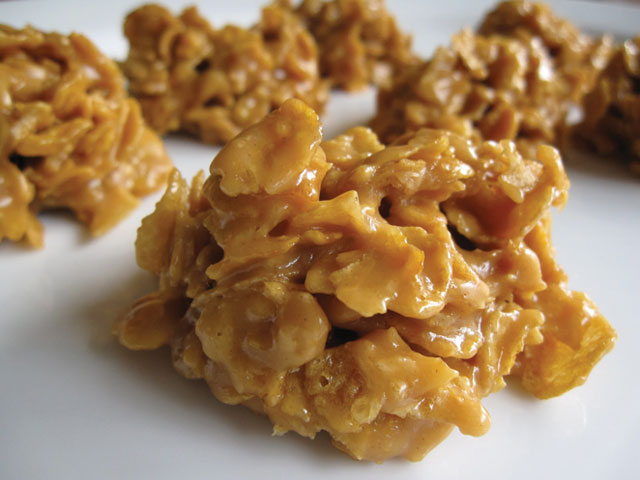
    Peanut Butter No-bake Cookies

    INGREDIENTS:
    1 cup peanut butter
    1 cup sugar
    1 cup corn syrup
    6 cups corn flakes

    DIRECTIONS:
    Heat the corn syrup and sugar until melted, add the peanut butter until it’s melted into the sugar. Add corn flakes and scoop onto parchment paper.


  • Back When They Bucked with Kenny Pfeifer

    Back When They Bucked with Kenny Pfeifer

    Kenny Pfeifer is always on the move. In his earlier days, it was on horseback, whether training horses, or riding broncs and bulls in the ICA and RCA. Today, he’s entering his 45th year as a business owner, operating Western States Movers, LLC, out of Nampa, Idaho, and staying involved in the rodeo world with his granddaughter, even helping at several Martha Josey Clinics a year.

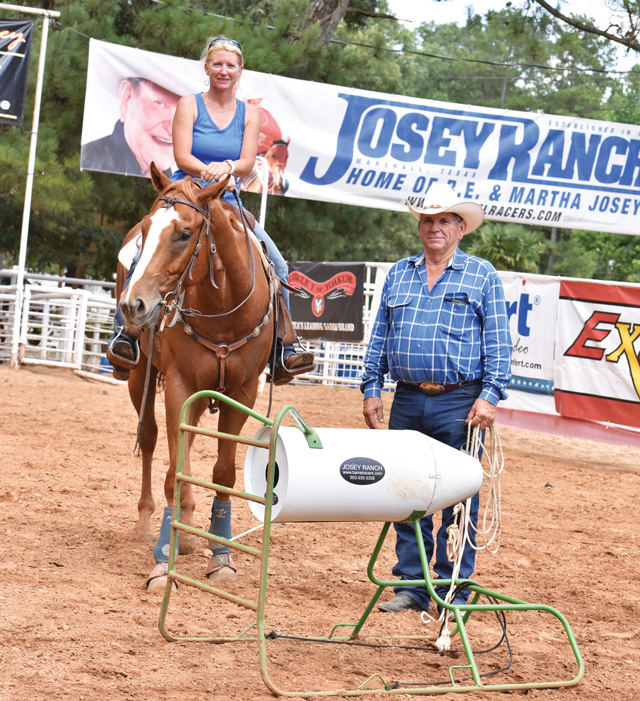
    Kenny and his daughter, Tammie, with the tie-down roping dummy he made for Josey Ranch – Rodeo News

    Born in 1947 in Caldwell, Idaho, Kenny grew up northwest of there in Parma, Idaho, riding the horses his dad brought home. “We always had horses around, and I did everything on horseback. The first date my wife and I went on was horseback,” says Kenny. “I was riding a bunch of horses for people, and I’d ride one to school, tie it up, and ride a different one home. I didn’t even own a vehicle until I was a senior in high school. It was seven miles to town, and my dad told me if I wanted to play sports, I’d have to get myself there and home, so I rode horses there. When I was a kid, there weren’t any kid rodeos around,” he adds. “Leonard Hamilton produced rodeos around the area, and he had an arena we built. We’d go over there all the time. He bought all the horses from the ‘Run, Paint, Run’ movie, and we had to rope them all to catch them. Some were like a bull – if you were on the ground, they’d come after you.” Kenny even started horses on wagons, mowing and hauling hay. “It turned into a lot of wrecks, but we had a lot of fun!”
    Kenny’s horse training made him the perfect candidate for riding roughstock. He and his dad put bronc saddles on the horses they started and snubbed them up to a post while Kenny climbed on. “It was just in a big dry lot, and it was harder than a pancake,” Kenny recalls. “I went to Polson, Montana, in the winter where the snow was deep and the ground was frozen, and I was riding bucking horses in a building. I never broke any bones, but I had lots of sprains, and I got stepped on and run over. I even fought bulls a couple of times. I liked riding bulls, but I got hurt too many times, so I quit that.”
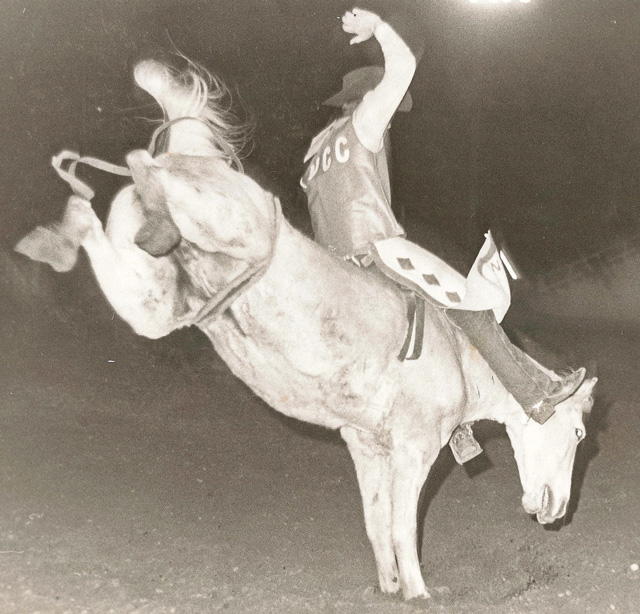
    Kenny started rodeoing in high school, including high school rodeos, jackpots, and local rodeos. Little Britches started when he was a senior, and he competed there for a year. With just one rodeo to qualify for the NHSFR at the time, Kenny often placed just one out of the qualification, though he won several high school rodeos in all his events and the all-around. He also college rodeoed, helping start the Treasure Valley Community College rodeo team with Joe Mayor in the 1960s. “Joe was the first president, and I was the second. I rode three years with them, and I made the ICA finals probably ten times in a row.” One cowboy who helped Kenny with his roughstock was Cotton Rosser, the producer of the Caldwell Night Rodeo at the time. “He had a paint bucking mule I rode for him during the rodeo, and he always started the rodeo with a buffalo scramble,” says Kenny. “They were all turned out at the same time, and I learned after riding the first one, that halfway down the arena, you’d better get off because they’d turn into a herd and you couldn’t get off.”
    Following college rodeo, Kenny competed in professional and open rodeos around the Northwest, traveling with his wife, Kris. They met in 1965 on a trail ride after her horse – one that Kenny had trained – threw a shoe, and Kenny put it back on by campfire light. They were married in 1970, and Kris college rodeoed and competed in several rodeo queen contests afterward. Their two children, Shawn and Tami, rodeoed when they were growing up. Shawn also played football and went to school on a football scholarship, while Tami barrel raced in the PRCA.

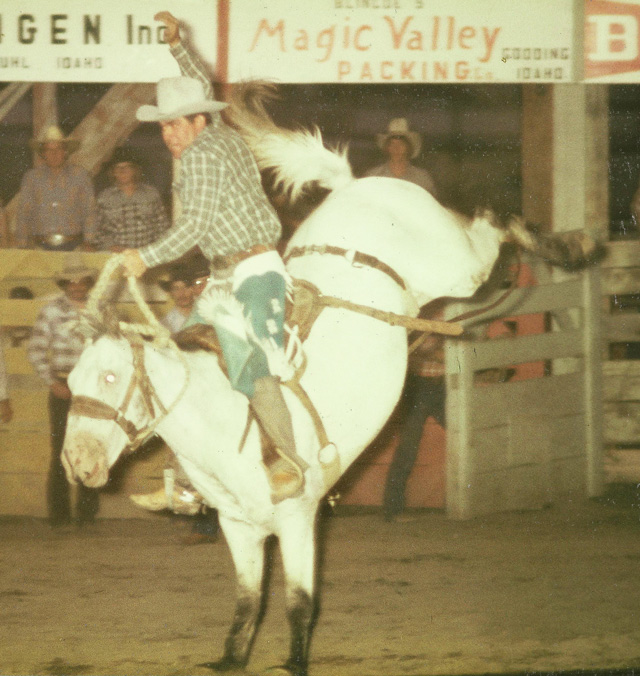
    Kenny Pfeifer riding while in college

    It was at the Days of ’47 Rodeo in Salt Lake City, Utah, where Tami was competing that Kenny became acquainted with Martha Josey, holding her horse, Orange Smash, during the rodeo. They met again in Ogden, Utah, and when Kenny learned they were headed to Nampa next, he invited Martha and R.E. to stay at his place. “They’d come to the Northwest and stay with us for two or three nights, any time of day or night,” says Kenny. “Right after the Caldwell Night Rodeo, they started doing clinics each year, and my wife and I and both our kids helped. We’d rent the Caldwell rodeo grounds, the fair building, and the Charolais Barn. There was anywhere from 40 to 70 students depending on the year.” Kenny has also stayed involved locally judging the Snake River Stampede parade that kicks off the Snake River Stampede Rodeo. He judged the drill teams for many years, and most recently judged the wagon entries. “It’s originality for me – no rubber tires,” he says. “I also look at condition, cleanliness, and the type of harness. I’ve also judged horsemanship in some queen contests.”
    While Kenny retired from rodeo in 1981, he started his moving business in 1972 on 40 acres in Nampa. “I started everything from scratch – it was tough! Back then, you had to have PUC (Public Utilities Commission) authority, which was a license you had to get. It usually took a few years to get them. I invented a machine that will raise a house or any load without jacks or dollies, and it runs wirelessly by remote control and raises and steers hydraulically. We do all our own machining and fabrication right here in the shop.” Over the years, they have moved silos, bridges, houses, historical buildings, and tanks – anything heavy or oversized. “It’s kind of like rodeo,” says Kenny. “They said it couldn’t be rode, so you try it anyway. Every one is different, and that’s the challenge. We moved a historical town, Sherman Station, to a park in Elko, Nevada. There was a livery stable, blacksmith shop, creamery, and a schoolhouse. It was 117 miles south of Elko, and it took two and a half months to move because it was in the mountains and we brought (the buildings) down narrow roads and through a creek. We moved another building in Battle Mountain, Nevada, they said couldn’t get out, and we raised up a bridge to get the building across it.”
    Kenny’s inventiveness has also benefited the Joseys. Last year, they were in need of more drag dummies, and after putting together CAD drawings, Kenny fabricated 55 dummies out of half-inch pipe. “They’re a little wider and longer, so they don’t tip over so easy on the side. There’s a little drag to them, and when you rope them, they stand up and lay down when the rope comes back.” Kenny makes the 31 hour drive to Josey Ranch often three times a year, helping with their clinics and calf roping reunion, and taking his granddaughter, Kylie, to their roping and barrel racing clinics. “It’s Texas Disneyland,” says Kenny. “We’ve been doing that for 17 to 19 years.” His goal is to continue working at Josey Ranch and helping his granddaughter – and moving the West one project at a time.


  • On The Trail with Rylee Jo Maryman

    On The Trail with Rylee Jo Maryman

    Rylee Jo Maryman spends her summer days roping the dummy and tying goats. Sometimes she goes swimming, but practice comes first. “I practice to increase how I run when I’m at a rodeo. That’s my favorite sport,” said the 9-year-old National Little Britches World All Around Champion Little Wrangler. She also holds the World Champion title in the Pole Bending, and Flag Racing. Her favorite event is pole bending. “I have an awesome horse and he always does what I ask him – I think I’m very athletic in that event and it’s very challenging and I like challenges. It makes me work harder and improve.”


    Rylee and her two horses named Coco and Pistol- 3 Lazy J Photography

    Rylee Jo knows how hard it is to win, and she feels like she’s got the horse to do it. “If I didn’t have Pistol, I don’t think I would have won so much.” Pistol is a 21-year-old gelding. “You can do anything on him – I use him for poles, barrels, and flags.” Pistol used to be her uncle’s team roping horse and won the Purina Super Horse this year. “He is not the fastest, and he’s not a bucking horse, but if I’m having problems in anything, I go back to him to help me fix it.” She also rides Dally. “She’s fast, but not as fast as my new horse, Smurf. Smurf runs really fast and I’m trying to get him back in my hands.”
    She has been in the NLBRA for three years. “I didn’t place at all my first year, and then I got a little better last year and I finally won the world this year. It feels good. I competed against a lot of good kids and good horses,” said the St. Francisville, Louisiana, native. She lives ten minutes out of town with her mother, Casey, and father, Joe and their 10 horses, four dogs, 18 goats, five cats, 6 chickens, and cattle.
    She spends her summers at her grandmother’s house while her parents work, but as soon as they get home; it’s off to the arena. “It hasn’t been dry enough lately to do anything, but I still rope the dummy and tie goats under the barn.”

    Her mom and dad help her the most with her rodeo. “Now we rodeo for her,” said her mom, Casey. “At about 2 ½ we put her on a horse and we turned her loose by herself. She had it – squeezing with her legs and riding on her own. Since then, she’s ridden every day. Her focus 24/7 is the arena. We go every day. We competed in two different associations last year since it was her last year in Little Wranglers. She went into the finals winning the barrels and poles and in the top four of all the rest – goat tail untying and flag racing.” Casey, who works during the day as an educator in the prison, started rodeoing when she was young. “We didn’t go as hard as she does when we were young.” She roped – team rope and breakaway. Her husband, Joe, who is a biologist for the Wildlife Fisheries in Louisiana, college rodeoed, calf roped and team roped. “We’re going to do whatever we can to give her what she needs. Right now she has two new horses she’s trying to get with.”


    Rylee Jo with her calf named Tiger

    Rylee Jo has also gone to three of Martha Josey’s clinics as well as Stacy Martin with Next Level Goat Tying. “When I first went to the goat tying school I was tying in 18, now I’m tying in 11s,” she said. The Josey clinics have helped her figure out the first barrel. “I’m still trying to figure that out. When I pull, I give back. When I do that, my horse runs by. I’m still working on that.” What the clinics have done for this young lady is give her confidence to figure out how to fix her problems in the arena. “I can try to figure it out on my own from going to the schools.” The other thing she is figuring out is how to manage her own money. She has a bank account and she pays for part of her entry fees.

    When she grows up, she wants to rodeo full time. That’s what she’s doing now – she’s rodeoeing all weekend and if she’s not, she’s in the arena at home practicing.”

    “Keep your dreams and one day they will come true. But you have to work on them or they won’t come true.”
    Her rodeo idol is Mary Burger. “She always tries to do better.”


  • Roper Review: Bailey Peterson

    Roper Review: Bailey Peterson

    Roping is in her blood – literally. Bailey (Cooper) Peterson, daughter of 7-time world champ, Clay O’Brien Cooper. Bailey grew up in Higley, Arizona where she lived until the age of eight. After a couple of years living in Idaho, the family made the move to Texas.
    A few years later, Barrie and Brad Smith, her aunt and uncle, along with cousins, Shelby and Sterling, left Arizona and also moved to Texas. Bailey would spend summers with them while her dad was gone rodeoing.
    “That’s really when I started roping. My Aunt Barrie hauled Shelby and I all over and I owe a big thanks to her,” says Bailey. “Shelby and I both made it to the state high school finals in Team Roping and Breakaway every year of high school.”
    Her favorite win is easily when she and Barrie won the Cruel Girl Championships in Oklahoma City. She and cousin, Shelby, were reserve champs and between the three of them, they won every round of the roping.
    Bailey remembers coming home from school every day and her dad would have horses saddled, ready for her to spin steers for him.
    “Our practice sessions were intense,” says Peterson. “It’s important to get everything you can out of every run. Every time I get on a horse I have a goal. It’s ingrained in me that you go to the practice pen with the intention of what you need to work on and it’s very serious.
    I’ve had the advantage of roping with and getting help from some of the best like Allen, Speed, David Key. A few years ago, I was going through a tough time and called Jade Corkill. He invited me over and we roped the dummy for five hours with the temperature in the single digits. I’m very grateful for those opportunities and don’t take it for granted.”
    Now, Bailey, 30, is married and has a daughter, Fallon, 9. Bailey and Cal Peterson spend most of their time in South Dakota ranching and training horses. During winter months, the family winters in Texas where they train horses, and go to rodeos and ropings.
    Fallon, it seems, will follow in her mom’s footsteps. “You can’t keep her off a horse,” explains Bailey. “She runs barrels, ties goats, and won her first buckle last year running barrels. She ropes with us in the practice pen, but isn’t ready for competition.”

    COWBOY Q&A

    So what does Bailey Peterson do for fun?
    “Every day is fun for me. As long as I’m with my family, have a rope in my hand, and am riding a nice horse… I’m happy. My life is fun.”
    How much do you practice?
    We try to practice e very day.
    Do you make your own horses?
    Yes. We raise our own and make our own.
    Who were your roping (rodeo) heroes?
    My dad and Jake.
    Who do you respect most in the world?
    First and foremost God. My dad, my husband, and my Grandma Pat.
    Who has been the biggest influence in your life?
    My husband and daughter.
    If you had a day off what would you like to do?
    Go fishing or go to the beach.
    Favorite movie?
    Lonesome Dove
    How would you describe yourself?
    Driven, honest, hardworking, kind.
    What makes you happy?
    Roping two feet. Family. Horses. Seeing other people win.
    What makes you angry?
    Missing or roping a leg for a lot of money. Not doing my job.
    If you were given 1 million dollars, how would you spend it?
    Invest in land and cattle.
    What is your worst quality – your best?
    Worst is indecisiveness. Best is striving for perfection.
    Where do you see yourself in ten years?
    Ranching and hauling my daughter to rodeos.


  • ProFile: Randy Corley

    ProFile: Randy Corley

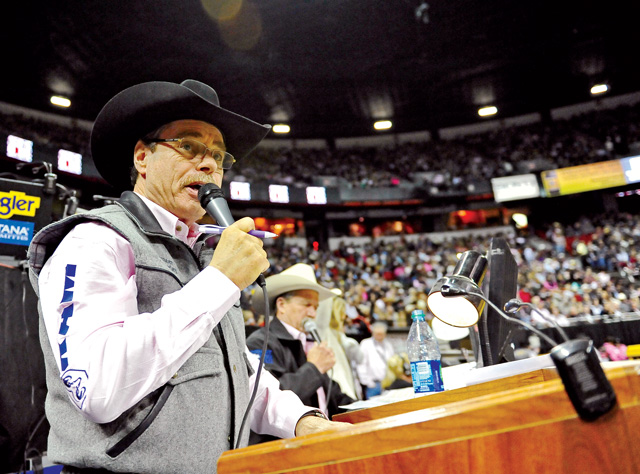
    Randy Corley, who lived in North Platte for two decades, is an inductee into the 2017 Pro Rodeo Hall of Fame.
    Corley never thought he’d make a living as a rodeo announcer, and there was a teacher at Niobrara County High School in Lusk, Wyo., who concurred.
    He was a high school kid, taking a speech class because it was an easy credit, and when he was asked to give a speech, it was always rodeo-related, about world champions like Larry Mahan or Jim Shoulders. The teacher did not approve. “She had threatened me a couple of times that I needed to talk about something different,” Corley recalled. “I’d always come back to rodeo.” One time, she couldn’t take it anymore. When he started yet another speech on rodeo, she “came running up and ripped the speech off the podium, and said, ‘you’ve got to think about your future. You’re not going to talk rodeo your whole life.’” Little did she know, Corley would make his living “talking rodeo.”
    He was born in 1951 in Miles City, Mont., spending his school years mostly in Lusk and Lance Creek Wyo., and his summers with his granddad, Waldo Parsons, a cowboy who he idolized. “I spent every summer at his ranch, and when I got older, I’d go out in the winters and help feed cattle. He was everything to me.”
    In 1977-78, he attended the Ron Bailey School of Broadcast in Seattle, then worked as a dj in Broken Bow before moving to North Platte, where he was on air at KODY AM and KX 104.

    In 1979, world champion saddle bronc rider Bill Smith started a nightly rodeo series in North Platte and hired Corley to announce it. He was acquaintances with Michelle and Trent Barrett, the children of the legendary North Platte native Hadley Barrett, also a rodeo announcer. Michelle, who ran barrels, and Trent, who roped at the rodeo, insisted their dad, a rancher north of town, come to the rodeo to hear this young announcer. He did, and Corley was nervous; he knew who Hadley was, and his accomplishments in the music world and the rodeo world.
    Hadley was impressed but wanted to hear Corley announce when he wasn’t aware of Hadley being in the audience. So the next week, Hadley made a trip to town for tractor parts, and again visited the rodeo, this time unannounced. He liked what he heard. A few weeks later, he asked Corley if he’d be interested in getting his PRCA card. Corley was, and Hadley assisted him in becoming a PRCA member.
    That was in 1980, and four years later, Corley won the PRCA’s Announcer of the Year award, an honor he would win eleven more times throughout his career, the most of any other announcer, in 1990-1996, 1998, 2003, 2011 and 2015.
    Throughout Corley’s career, he has announced rodeos across the nation: the big ones, and the little ones alike: North Platte; Puyallup, Wash.; Caldwell, Ida.; the RAM National Circuit Finals; Tucson, Ariz.; San Antonio, Texas; Phillipsburg and Pretty Prairie, Kan., and dozens more. He was selected to announce the Wrangler National Finals Rodeo sixteen times.
    He worked alongside his father-in-law at five rodeos: North Platte, San Antonio and Waco, Texas, Caldwell, Idaho, and Puyallup, Wash., till Barrett passed away on March 2 of this year.
    Corley vividly remembers what Barrett said after the final performance in San Antonio on Feb. 26, four days before he passed. “He laid his mike down, and said, that is the best rodeo I have announced in my life.”
    Corley and Barrett were good friends as much as they were son-in-law and father-in-law, and Corley relates a funny story Barrett told years ago. When he first started, Barrett asked him to live in on the ranch, to help take care of things when Barrett was on the road. By that point, Corley and Michelle were dating; they married in 1984. “I thought it would be nice to have somebody to help out when I wasn’t around,” Barrett said. “I made Randy a deal, and I thought he had good values. What I didn’t realize was, his values were my valuables: my clothes, the food in my refrigerator, my rodeos, and my daughter.”
    Barrett was inducted into the Pro Rodeo Hall of Fame in 1999, and now eighteen years later, Corley follows him. The ceremony is the first weekend of August. It was a team effort, he insists, throughout his career. “I need about 500 or 600 people to come up to the podium with me,” he joked. “There are a lot of people to thank, more than I can pinpoint. It’s stock contractors, great committees, really good entertainers and rodeo clowns and bullfighters and sound people that I’ve gotten to work with. It’s all the people that make those rodeos happen, and have given me a place to shine. All of them exemplify what the announcer does.”
    Corley knows the North Platte rodeo fans will miss Hadley; this will be the first time since 1964 that Hadley has not been behind the mike at the rodeo. He’s been preparing himself. “It’s something I’ve talked to God about every day,” he said. “I have to go into that rodeo, and make it good.” A special tribute will be done for Hadley; it won’t be sad, Corley said, but “we’ll pay tribute in a special way. We’ll hear Hadley.”
    Corley and his wife Michelle moved to Silverdale, Washington in 2001. Corley has two daughters, Kassi and Amanda, and together the couple has a son, Cole, and a daughter, Brittany.
    He is honored to be inducted into the Hall of Fame, and thankful for his life. “I realize more and more every day, how we don’t have the control we think we do. You can place it all in God’s hands, and it’s how God planned it.”

    The other inductees into the Pro Rodeo Hall of Fame are:

    The late Buck Rutherford (all-around champion, 1954)
    Enoch Walker (saddle bronc riding champion, 1960)
    Tommy Puryear (steer wrestling champion, 1974)
    Mike Beers (team roping champion, 1984)
    Cody Custer (bull riding champion, 1992)
    Bob Ragsdale (22-time National Finals Rodeo qualifier)
    Christensen Bros.’ Smith & Velvet, (four-time bareback horse of the year)
    the committee for the Ogden (Utah) Pioneer Days.


  • Belly Button Stew & Texas Trash

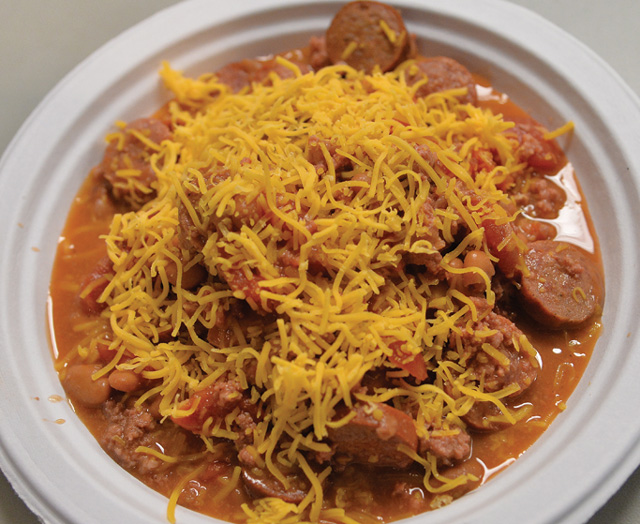
    Belly Button Stew
    recipe courtesy of Ken Stafford, Droffats Catering and Concessions,
    Shawnee, Oklahoma

    ingredients:
    Ground beef
    Polish sausage
    Hot links
    Onions
    Bell peppers
    Diced tomatoes
    Pinto beans
    Salt and pepper

    DIRECTIONS:
    Serve on a bed of cornbread and cover with grated cheese.
    We make about 40 pounds of this every year for the IFYR. It was named “Belly button” because a little girl thought the sausages looked like belly buttons. Enjoy!


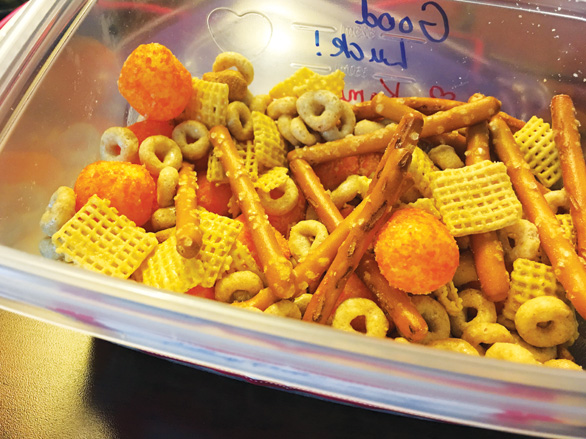
    Texas Trash
    recipe courtesy of Kambria McDougal
    Kambria competes in barrels poles and breakaway and this recipe was made up to accommodate her gluten free diet.

    ingredients:
    Gluten free pretzel sticks
    Cheese balls
    Rice Chex – both plain and honey nut
    Cheerios – both plain and honey nut
    Salted peanuts
    Honey roasted peanuts

    DIRECTIONS:
    Line up 15 tubs and add all ingredients to each tub, equal parts in all tubs, shake and go.


  • On The Trail with Roscoe Jarboe

    On The Trail with Roscoe Jarboe

    Roscoe Jarboe is “the Rock.” Or at least, that’s what his dad used to call him. When the number five bull rider in the PRCA’s world standings was a little boy, his favorite WWE wrestler was the Rock. His dad would walk through the house, asking if anybody could smell what the Rock was cookin’. And he’s cooked himself up a great start to a rodeo career.

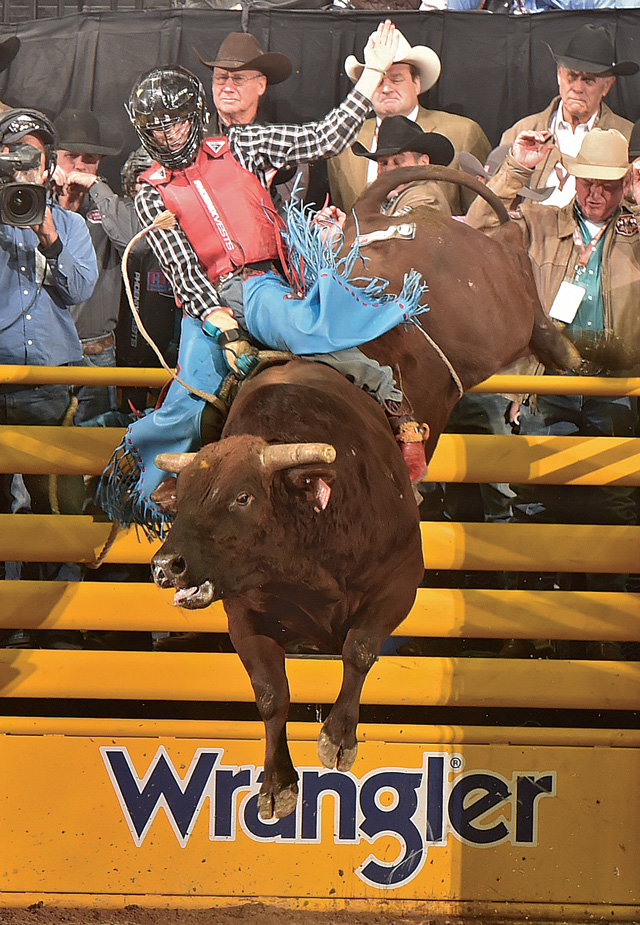
    The New Plymouth, Idaho bull rider won the 2016 Resistol Rookie of the Year award, plus qualified for his first Wrangler NFR last year.
    He’s been preparing to ride bulls since he was a kid, traveling with his dad, Bo Jarboe, as Bo rode bulls in the Columbia Circuit.


    “He cut his teeth (on bull riding) when he was a baby,” Bo said. “I used to load him up in the pickup when I went to rodeos, and it’d be just me and him. Well before he knew what was going on, he was at rodeos.”


    Roscoe at age 4 behind the chutes with his dad, Bo in 2000 – WT Bruce

    Bo rode bulls till about 2000, when Roscoe was four years old, and then he and his then-wife Miss (short for Melissa) built an arena and bucking chutes on his place outside of New Plymouth. They made sure their son had whatever he needed: first calves, then steers, mini-bulls, and bulls.

    At New Plymouth High School, Roscoe was in FFA and 4-H and showed pigs. He wrestled and rodeoed, competing in the Idaho High School Rodeo Association his freshman year, and then in the Oregon High School Association his sophomore and junior years. He finished as reserve state champion bull rider in 2012 and 2013, his sophomore and junior years, winning the average his junior year and finishing eleventh in the nation at the National High School Finals Rodeo in 2013.

    His senior year Roscoe went pro, getting his PRCA permit that year. He turned 18 in April of 2014, but chose to spend two years as a permit holder before he got his card and entered his rookie year. “I wanted to get the experience, to figure out the rough patches, what rodeos to go to, and what rodeos not to go to,” he said.
    For him, rodeo is not just the eight seconds on a bull. The sport is ninety percent mental, Jarboe believes. “Most of us are in good shape to ride bulls, and we work out, but mainly we’re working on our minds.” Riding bulls is like riding a bike; a person doesn’t forget how to, Jarboe said, but staying confident is important. “We just have to keep our minds positive; it’s a mind game. We read books (about mental psychology), and all we have to do is stay positive.”

    His traveling partners help. He travels with Dallee Mason, Brady Portenier, and Chase Robbins, and the four keep each other going. “It’s cool because we’re all really good friends, and say we get bucked off,” said Portenier, who is from Caldwell, Idaho. “We don’t talk about it till we get in the car, then we have our words, and everybody has their own opinions, and we usually get something productive out of our conversations. There’s no negativity in the car.”

    Roscoe and Brady have known each other since they were kids; their dads rodeoed together, and Brady remembers going to the practice pen with Roscoe. “We picked up horn tips, and thought we were cool,” he said.

    This year has been Roscoe’s best year of rodeo. As of press time, he was ranked fifth in the world standings and had $87, 455 won. After competing at his first WNFR and finishing his first year of pro rodeo, his maturity and confidence shows. “I’m just having fun this year,” he said.


    Roscoe at the 2016 WNFR, his first year qualifiing – Hubbell

    Part of that fun is being more relaxed on the road. With his paycheck from the WNFR, he bought a motorhome. He and his buddies are “taking it easy this year, and having fun with what we do.” They sightsee when they have time, taking in Mt. Rushmore and other places, and they bowl and golf. “We’re being kids,” he said. Golfing is big for him and his buddies. “We golf all the time. That’s like another job for me. It’s so relaxing to just get out there and hit some balls.”

    His biggest win this year was at the San Antonio Stock Show and Rodeo, where he won the finals on D&H Cattle Company’s Sweet Pro Bruiser, scoring 91 on the bull. It was a bull he would love to get on again. “He’d be good to get on any time. You don’t want to miss the opportunity to get on that bull.”

    Last year, Roscoe’s biggest win was Cheyenne Frontier Days, when he covered all three of his bulls, won the second round, finished fourth in the finals, and won the average with 246 points on three head.

    Jarboe didn’t let nerves get to him at his first WNFR, even though it was everything and more than he expected. “Everybody tells you it’s just another rodeo,” he said. “When you get there, it’s a lot bigger than that. But once you get behind the bucking chutes, you can’t see the crowd and the lights aren’t too bright, and it’s just another rodeo. You focus on riding your bull.” He covered his first two bulls, but regretted not riding more. When the WNFR was over, he wished there were more bulls to ride. “I could have gone a couple more rounds, but that’s because I was disappointed in how I finished.”

    He has several nice buckles, including one from his Cheyenne Frontier Days win in 2016 and one from round two of the WNFR, but he wears a buckle he won in 2011 showing pigs at the Payette County Fair. He was grand champion two years in a row, and loved showing pigs. “It was a good experience because you had to raise an animal and treat them as you want to be treated. Pigs have a personality of their own. They’re probably one of my favorite animals.” He doesn’t wear his good buckles, not wanting to scratch them.

    Roscoe’s younger sister, Harli Jo, is the pig showing expert in the family. She’s won grand champion several years in a row. The 16-year-old is graduating from high school a year early to move on to college. “My kids achieve what they set out to do,” Miss said. “They work very hard for their goals. The best thing is they are very humble about it.”


    Roscoe has his own style of bull riding. “Everyone likes to talk about how he’s got some crazy wild style,” Portenier said, “but when you break it down, he does the basics better than a lot of guys, and does them well. When he gets into those wild positions, he’s able to fall back to the basics, and go to home base, and doggone ride them.”

    His buddies have named it “the noodle.” “He noodles them,” Portenier said. “He can get into a really bad position, to where most guys would quit or plain not have the ability to get back in the middle. But Roscoe seems to do it more than not. Everybody has that one time when they’re hanging off to the side and can wiggle back, but I’ve seen Roscoe do that quite a bit.”

    His dad Bo, and his mom, Miss, divorced when he was 16. His dad travels for his job, and if the rodeo is close, will drive seven or eight hours to watch him ride. Roscoe’s style of riding isn’t like his dad’s. “He’s got his own style,” Bo said. “It’s a really strange style that works for him. I wish he would change it up just a little bit so his body lasts for a while. But the more time goes, he may change it up.”

    He and fellow bull rider Garrett Tribbles were neck and neck for the Resistol Rookie race all year. Both qualified for the Wrangler National Finals, but Roscoe edged out Garrett at the end of the season by over $20,000. Robbins, Roscoe’s traveling partner, finished third in the Resistol race.

    He’s ready for this year’s Wrangler NFR. Last year didn’t go as he wanted. “I started getting down on myself, and that’s the worst place to do it, at the (National) Finals.” This year he’ll know what to expect. “It’s still nerve-wracking when you get there, but I’ll feel like I’ve been there and done that.”

    Roscoe has qualified for and competed at the Columbia River Circuit Finals twice and competed at the PBRs early in his career.
    He’s ready to repeat what he did last year, when he was on a roll. “It’s hard not to win when you can’t fall off. There are ups and downs (in bull riding), but when you get one rode, you just roll with it, and let it happen till it starts not happening anymore.
    “I try to keep my head focused and do what I’m supposed to do.”


  • Back When They Bucked with Frank Beard

    Back When They Bucked with Frank Beard

    On the wall in the meeting room at the Sisters, Ore., Pro Rodeo hangs a bull’s head, a testament to a man and his family’s way of life. That bull, Cuddles, was one of many bucking bulls and horses owned by Frank Beard, of Beard Rodeo Co.
    Frank got his start in the bucking bull and horse business as a youngster. The son of Bill and Ruby Beard, the 89-year-old cowboy was born to a horse trader who also had race horses. Frank’s mother passed away when he was a baby, and by the time he was in his teens, he was riding bucking horses.
    As a teenager, he began riding horses for Ruth Parton, Toppenish, Wash., a trick rider and girl bronc rider. When he was in his twenties, he was working for area ranchers and stock contractors, including Bob Nicholson and John Van Belle, and during the off-season, packed on bucking horses on hunting trips around Mt. Rainier. Frank also rode barebacks and saddle broncs and galloped race horses at local tracks in the Northwest.

    Frank Beard on Widow Maker, Moses Lake, 1948 – Jim Chamberlain

    It was while working for Van Belle that a rodeo queen caught his eye. It was Charlot Van Belle, the Toppenish, Wash. rodeo queen and John’s daughter, and they married in 1947. For their honeymoon, they went to the Moses Lake, Wash. rodeo, where Frank won second in the saddle bronc riding, and the next year, won the rodeo.
    Frank and Charlot were both nineteen when they married, and the two made a home together. He continued working for his father-in-law, and together they welcomed “four studs and a filly,” as Frank likes to say: Casey, Tim, Kelly, who passed away four years ago, Pat, and Shannon, the daughter.
    Frank added pickup man to his resume, picking up for Van Belle and Flying Five. He shod horses, and volunteered with his kids’ 4-H club and horse shows. The older boys showed horses more than they rodeoed, but when Pat came along, he wanted to ride broncs, so Frank made sure there were practice horses for the kids.
    He and his father-in-law were providing stock for several amateur associations, including the Northwest Rodeo Association. In 1973, Beard Rodeo Co. was formed, and by the time the 1980’s rolled around, pro rodeo cowboys who got on his animals at amateur shows were urging him to get his Pro Rodeo Cowboys Association card.

    Australian cowboy Dave Appleton told Frank to come to the National Finals Rodeo in Oklahoma City, where Frank and his son Pat made the decision to go pro. The rule was that any new stock contractor had to bring five new rodeos to the PRCA, so Beard Rodeo Co. brought some of their amateur shows, , including Molalla and The Dalles, Ore., and Monroe, Wash. “Some of the better amateur rodeos we were doing at that time made the switch with us,” Frank said.
    The year 1987 was when they became PRCA members, and their shows were nearly all family-run. Pat picked up, along with Shannon’s husband Don Stewart. Frank’s nephew Randy Allan would also pick up. Charlot’s sister Ellen Pederson and Shannon timed. Charlot cooked, and the family traveled in a fifth-wheel, with the grandkids tagging along. Edie Longfellow was rodeo secretary: Charlot said she wouldn’t do that job. “That was not in the discussion,” remembers Daniel Beard, Tim’s son and Frank’s grandson. “Anything else would be OK with grandma, but not that.”
    The Beard Rodeo Co. had great bulls but even better horses. The most memorable was a saddle bronc named Profit Taker, a thoroughbred who had made $32,000 on the race track. Not only did he buck, but after each ride, Frank could get on him bareback and ride him around. At the rodeos, he was penned with the saddle horses, and he’d get washed and brushed just like them for the rodeo. Profit Taker bucked at the National Finals Rodeo when he was thirty years old.
    Beard Rodeo also had a bareback horse-turned saddle bronc named Roan Ranger who went to the National Finals Rodeo eight times, before Frank switched him to the saddle bronc riding, where he was ridden only three times in three years.
    Another outstanding horse was Heckle, a ten-time NFR bareback horse who was a thoroughbred/quarter horse cross. A bay, the horse was beautiful, confirmation-wise, “a gorgeous-made horse,” Frank said. “People would talk about what a good riding horse he would be, if they could break him, but he’d have been pretty cowboy-y. He was as hard muscled as he could be.”
    Frank had begun a breeding program with his horses and some registered mares from Barb McLean, but in 1991, his first crop of colts came, along with the main herd sire 101 Home Grown.

    50th wedding anniversary, 8/31/97. Back row, L to R: Tim, Shannon (Stewart), Kelly Front row, L to R: Pat, Frank, Charlot, Casey – courtesy of the family

    Frank and Charlot lived in Sunnyside, Washington, and when the state highway came through their property, were forced to move, so they went to Outlook. When Interstate 82 came through their property in Outlook, they had to move to Ellensburg. They live north of town, on an irrigated farm with good grass. Their log home is full of artifacts, western and Native American: spurs, bits, saddles, Indian handiwork, and more. Frank is “a trader,” said Edie Longfellow. During down time at rodeos, Edie, Charlot and Ellen would visit antique and thrift stores, and Charlot would always say, as she considered buying something, “how will this look at my estate sale?” Edie laughed.
    The Beards were the starting point for several contract acts. Rodeo clowns Flint Rasmussen and JJ Harrison got their starts with them, as did a young unknown name, Boyd Polhamus. “The promoter hired a kid right out of school named Boyd, to announce (a Beard rodeo), and he would have a hard time pronouncing those Indian names for towns. Everybody in the crowd would tease him,” Frank said. “You could tell pretty soon that he was pretty talented.”
    Frank and Charlot sold Beard Rodeo Co. to Mike Corey in 2007. Health reasons precipitated the sale, and “it was the best decision for everybody,” said Daniel. The Beards had bucking stock at the Wrangler NFR every year of the company’s existence.
    Frank and Charlot’s home is still open to traveling rodeo people, contestants and contractors, and they often stop by to visit.
    And the Beard family is still involved in the sport. Casey is general manager of the Pendleton, Ore. Roundup and served on the PRCA Board of Directors. Pat, a former Wrangler NFR pickup man, is the tourism director for the city of Pendleton. Don, Shannon’s husband, was a pickup man, Shannon worked as a timer, and the couple raised bucking horses. Daniel, Tim’s son, is a partner in Summit Pro Rodeo.
    And the bull on the wall in Sisters, Ore.? It’s Cuddles, a Beard bull, who cornered the Sisters rodeo president Jim Morris in a back pen and broke his wrist. Frank and his family provided stock in Sisters from 1990 till 2007.
    Frank doesn’t regret a minute of his life. “I got to do a lot of things that nobody had a chance to do,” he said. “I’ve enjoyed life, I’ll say that.”


  • ProFile: Karsyn Daniels

    ProFile: Karsyn Daniels

    Karsyn Daniels, from McKinney, Texas, won the National Junior High National Finals Barrel Racing Championship for 2017. Out of around 160 girls, and inclement conditions, she and her horse, Muffin, were able to get a total of three clean runs: 15.6, 16.0 and the short to 15.7. “The 16.0 was in the mud, but they took all the mud out and put new dirt in for the short go,” said the 13-year-old who has been chasing cans since she was three. “Muffin handled the ground even though it was raining and muddy. “I went in there going for it and she took care of me and herself and we did good.”
    Karsyn got Muffin when she was six and Muffin was five. “One of my mom’s friends had her, and we went to see her and bought her the same day. After I first got her, it went downhill,” she admits. “We took her to 4 time NFR qualifier Michelle McCloud and she had to completely restart her. She was there for a year, and when we got her back, we clicked.” Karsyn has been competing on Muffin for six years and it keeps getting better. “She’s come a long way – and so have I.” Karsyn never gets nervous, but at Nationals, she did. She came back in the number one hole to the short go and just needed a clean run. “I just had to keep all three barrels up and hope that I was fast,” she said. “I was in the lead by a ways and hoping it would hold.” After the run, she had to go do an interview, then pictures, and it was crazy. “I’m still in shock from what happened – there was so much stuff that went on – I just took it all in.” They left the next morning for the 14 hour drive home.
    Karsyn can blame her love of rodeo on her parents. “My parents took me to the NFR when I was four and ever since I was there I wanted to rodeo,” said the Texas Junior High competitor who also breakaway ropes. She spends her whole summer on the rodeo trail. “I just get in the truck and go,” she said. “My dad (Jack) drives and my mom (Kristen) is the videographer.” In addition to the TJHRA, she competes in the WPRA and has qualified for the American Semi Finals three times. She rides every day – all of her horses are at home, and she rides about four a day. She will be in 8th grade next year and this is her first year to do junior high rodeo. She was barrel racing a lot and didn’t have time to do junior rodeos. “I got into roping and I wanted to go do that and I thought it would be fun to be around kids my age.” Her roping horse came from the Driver’s, Marty Yates trained him and next year her goals are to make it to Nationals in Breakaway and Barrels and repeat as the champion.

  • ProFile: Cody Devers

    ProFile: Cody Devers

    Cody Devers is from Perryton, Texas, north of Amarillo by two hours. He started competing when he was young; he grew up on a horse. “Both my parents rodeoed, trained and sold horses for a living. My mom (Sabrina) is a barrel horse trainer/seller and does clinics, and my dad (Marty) was a PRCA steer wrestler and roper. He still hazes at most of my rodeos. ”
    Cody jumped his first steer off a horse when he was only 12 and was hooked on steer wrestling. He won the Texas JHSRA Region 1 and was Top 10 at the NJHSRA Finals for Texas, he was also Oklahoma State High School Finalist and won the Kansas State both KJHSRA and KHSRA associations, winning a NHSRA Finals go round for KHSRA. “I played high school baseball too, and the rodeos in the other states were closer to where I live. I would leave running from the field, jump in the truck to get to my rodeos.” He was also the NLBRA Reserve World Champion winning a go round at the finals that was .1 from a new world record, and IFYR Finals Top 5 twice.”
    His family owned horse business trains and sells performance horses all over the United States and several foreign countries, even to New Zealand has allowed him to meet a wide variety of clients from famous actresses to Cody’s own steer wrestling clinics where he has taught Dallas Cowboy football players to Canadian hockey players to steer wrestle. “Most of the 40 to 50 head of barrel, roping and steer wrestling horses on the grounds are on consignment to sell are on our website that we own, barrelhorse.com and in RODEO NEWS, of course! A lot of people know our Team Devers steer head brand, which is pretty cool to walk by and see your brand on horses at a rodeo or on tv.”

    Harry Vold and Roy Duvall with Cody as a young cowboy – courtesy of the family

    His brother, Matt, used to steer wrestle and rope, but is now busy building his own business, ProTech, that sells and fixes computers, security systems and cameras in horse trailers and businesses. “He knows all the technical stuff and I help him with the installations when I can. Rodeo schedules make it hard to have a “real job” but I do the networking labor on the job sites and I shoe horses. I shoe A LOT OF HORSES!”
    He’s spending the summer rodeoing not only pro but amateur as well. “We will be hitting five rodeos every week,” he said. Traveling with Maverick Harper for the first part and then he’ll jump in with Jule Hazen, WNFR steer wrestler for the last. Cody is the current 2016 KPRA Steer wrestling Champion, and hopes to have a repeat this year. He is also trying for the Prairie Circuit Finals, the Nebraska State Rodeo Finals and the Central Plains Finals. He has a good start on the year in all three associations.
    Cody is a Dean’s Honor Roll student that rodeos for Coach Stockton Graves at Northwestern Oklahoma State University and qualified for his second trip to the CNFR in steer wrestling. “This year I split the win for the first round with a 3.7 – that time was the fastest for the entire CNFR.” The rest didn’t go as well. “I drew two hard running steers and then broke the barrier in the short round – I was coming in fourth and was set to win reserve but Denver (Berry) is one of my good friends, we rodeo together in the Central Plains region, so I’m glad he won it.”
    The highlight of the CNFR, besides winning the round, was winning the Harry Vold Memorial Scholarship. “My third picture I ever had was with Harry Vold, I was four months old, and my dad was in the short go, and I ended up in a picture with Mr.Vold, World renowned PRCA stock producer and PRCA World Champion steer wrestler, Roy Duvall. 18 years later to the day, I was in the short go at the same rodeo, PRCA Dodge City Roundup, and I got my picture with him again. ”
    “I wrote an essay about an Army soldier – H.D. Hogan – that died in combat, he was a young rodeo cowboy, too. The topic was sacrifice and patriotism, so he’s the one I thought of. What he and all the service men have done for our country is what I think sacrifice means.” Cody gets to apply the $2,500 scholarship to his senior year. “I’ve got at least one more year to go for my Ag Business degree.”
    For Cody, pro rodeo is his future. “It’s what I love to do. It’s what I was born to do.”

  • Duck Gumbo

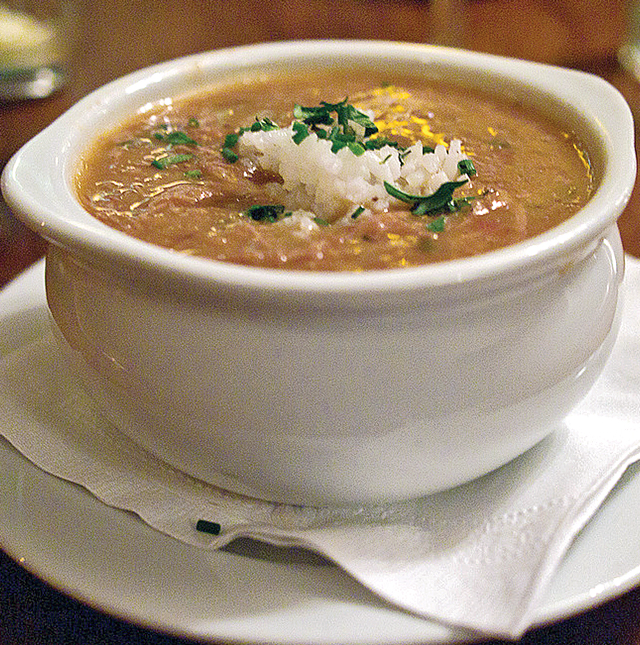
    Duck Gumbo

    recipe courtesy of Jada Lucky

    “As much as I would love to, I cannot take full credit for the gumbo recipe I use. Our very good friend, Rusty Wilson, from Lafayette, Louisiana is a true bred and born Cajun. I asked him for his roux recipe (which is the base of the gumbo) to make my duck gumbo (He usually uses chicken and sausage). So here it is, with a few tweeks.”

    ingredients:
    2 yellow onions
    1 bell pepper
    Fresh garlic
    1 avocado
    3/4 cup avocado oil
    1/4 cup of coconut flour
    Kitchen Bouquet sauce
    10 small duck breasts
    Down home green onion sausage
    2 tbsp. chicken bouillon
    Tapioca starch
    Tony’s, cayenne pepper, black pepper, salt, Tabasco, or hot sauce

    DIRECTIONS:
    1. Add 2 yellow onions, 1 bell pepper, and a little garlic chopped w/ a little avocado oil in the bottom of pan and cook until translucent.
    2. In a separate glass bowl: mix 3/4 cup avocado oil & 1/4 cup of coconut flour in a pyrex until smooth until there are no lumps. Heat it in microwave for 1.5 minute, 1 minute, 1 minute …should be pretty hot. This is the ROUX
    3. Add some kitchen bouquet (coloring for gravy, etc.) to get the color a little brownish & some of your cooked onions to stop roux from continuing to cook.
    4. Add roux to onions at bottom of pot and stir it around before browning meat… Add duck (I usually put in about 10 small duck breast) & cook until a little brown on the outside.
    5. Add amount of water you want depending on size of gumbo pot (you want it to look soupy). Cook for 2 hours on simmer & then add a pound of down home green onion sausage, cook for another 30 mins.
    6. Add 2 tbsp. chicken bouillon (flavor) & 1 tsp at a time of tapioca starch to thicken to liking, cook for another 30 mins.
    7. Spice w/ Tony’s, cayenne pepper, black pepper, salt, Tabasco, or hot sauce of choice.
    8. Once its almost done cut green onions & put in. Have file’ on table!