Rodeo Life

Category: Archive

  • Back When They Bucked with Butch Stewart

    Back When They Bucked with Butch Stewart

    Butch Stewart spurred his first bronc in the IPRA — known then as the IRA — in 1966 as a senior in high school. It was the start of a long and wide-ranging career in the association, from winning World Champion Bareback Rider in 1973, to working as an IPRA field representative, and eventually, serving as the executive director for five years. “One of the things I admire and respect about Butch is his integrity,” says IPRA General Manager, Dale Yerigan. “He’s an old-school, look you in the eye and tell you the truth kind of guy. When he tells you something, you don’t have to wonder if he’s going to do what he says.”
    Butch was born into that dependable lifestyle in 1946 on the ranch his dad, Bill, managed in Arkansas. The family later moved to North Carolina, and Butch and his three brothers all rodeoed. His two older brothers, Billy and Jim Bob, competed in timed events, and his younger brother, Ricky, rode bulls. Their dad rodeoed, but he passed away when Butch was 10. “I’d go to the rodeos in my early days, and the bareback riding would be the event I’d watch. Why I don’t know, but that’s what I wanted to be,” Butch recalls. “There were no rodeo schools, but when I was 13 or 14, there was a horse trader in town and my family was good friends with him. He would have something he thought might buck, and I just started getting on them. When I got up into high school, I went to rodeos in North Carolina and South Carolina and Georgia. It took me forever before I won any money, but I never did give up. One night at a rodeo, it just clicked, and from that point on my skills got better and better, but I really had to work on it. I won second at Rock Hill (South Carolina) and won $57, and I thought there would never be another dry time.”
    Butch continued practicing on anything that would buck and traveled to rodeos with his older brother or his good friend Charles Malcolm, a bull rider who also helped Butch in the bareback riding. In 1966, Butch bought his IRA card and ventured into Florida for several rodeos, where he met Harry Watt of Meeker, Colorado. “Harry rodeoed for a living, and I told him I was going to graduate from high school and (asked) what would be the chances of me getting in and going to rodeos with him. He’s a very plain-spoken person, and he said, ‘Just tell me where you want me to pick you up. But I tell you right now, you hold your end up or you can go home.’” Butch graduated and left the same night on a Greyhound bus to meet Harry. “My mother, Pauline, was standing in the door just bawling. I stayed in contact with her and my oldest brother, and I’d call once a week.”
    While in the past Butch made it to 15 rodeos a year at most, he and Harry entered 120 rodeos in 1966 throughout the eastern half of the country. Butch would eventually rodeo as far away as California, and even tried bull riding, but he primarily entered on the IRA circuit. He and Harry traveled in the Coloradoan’s single-cab pickup and camper, minus air conditioning, with as many as four other cowboys joining them at times. “I loved it! I couldn’t get to enough of them,” says Butch. “Those first rodeos we went to I drew some great horses and won first, and everything just clicked. Harry taught me how to get to rodeos, where to go, and how to enter. He’s been a great friend and we still talk all the time, and he’s the one who really taught me how to rodeo.”
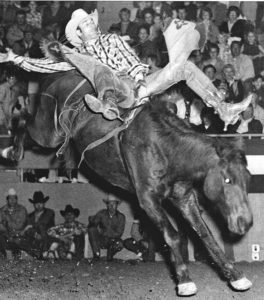
    Butch had to set his gear bag aside when he was drafted into the Army in 1967, but after serving two years in Germany, he returned to the IRA. By that time, he had a world title on his mind and was runner up to the IRA world bareback riding champion in 1971 and 1972. “I went back home in the fall of ’72 and saw a friend of mine, R.D. Thompson. We went to school together and he was a teacher and a coach, and he wanted to know what I was doing. I told him I got real close to winning a world title the year before. He said, ‘You can win if you want it worse than anybody else,’ and that stuck in my mind. That following year I won my world title. Maybe my skills got to a higher level, but it was just the want-to. I set my sights on something and I went after it. It was a great feeling.”
    Several years before winning the world title, Butch met his future wife, Brenda, at a rodeo in Eunice, Louisiana. They were married in 1971, and Brenda’s background in ranching and high school rodeoing fit the newlywed’s lifestyle like a hand to a roping glove. She worked with the IRA on merchandise while Butch worked for the association as a field representative from 1977 to 1983. He traveled often and worked with current stock contractors and recruited new ones, along with staying in touch with the contestants. Once Butch and Brenda’s two children, Heath and Carissa, were born, however, he wanted to stay closer to home. Butch took a job managing several large cattle ranches in North Carolina and Oklahoma from 1983 — when he retired from rodeo — until 1999.
    The family moved from ranch to ranch sometimes every six or seven years, and the ranching lifestyle and Butch’s work in the IPRA proved valuable for his children. Carissa started working in the association in the early ‘90s as a receptionist and is now in charge of the IPRA rodeo sanctions, results, and standings. Heath started working with Jerry Nelson’s Frontier Rodeo Company in the early ‘90s as well, and is now the rodeo manager of the company. “Dad ran Five R Rodeo Company for a guy, and he always made sure his family was taken care of, and the livestock, before he went on the road,” says Heath, who took 18 horses and two bulls to the 2017 WNFR. “He took good care of things and has a good work ethic.” Heath’s sister, Carissa, adds, “I’m glad my dad chose to be a rodeo cowboy back in the day. The people you meet in rodeo become your rodeo family, and some of my lifelong friends I met through my dad rodeoing.” When Butch returned to work in the IPRA in 1999, Brenda started helping with the IFR, the IPRA convention credentials and check-in, and securing sponsors to cater food for the VIP room.
    In 2002, Butch became the executive director. “It was the day-to-day business of running the association, the bills, the IFR, the sponsorships, and the contestants’ needs and concerns,” says Butch. He and Ronnie Williams, a longtime IPRA member and former executive director, were also instrumental in working with the governor of Oklahoma at the time, Frank Keating, on declaring the third week of January “IFR Week.” “I enjoyed seeing the success of the association and the new contestants coming on, the friends that you meet, the awesome staff, and the people in Oklahoma City that we worked with.”
    Butch retired from his job as executive director in 2007 and managed a ranch in Davis, Oklahoma, for six years until it was sold. Presently, he works for Jerry Nelson’s Frontier Rodeo Company in Freedom, Oklahoma, feeding the livestock and running the ranch when the crew is on the road. “I really love what I’m doing, being around these bucking horses, and Brenda and I are very proud of our two kids and our grandkids.” He and Brenda make their home just a few hundred yards from Heath and his wife, Shay, and their children, Jade, Brooke, and Chase, who is on the Northwestern Oklahoma State University rodeo team. Butch is happiest caring for the equine athletes who made his rodeo career possible, but he often travels to the WNFR, and he never misses an IFR. “I tell them if there’s anything I need to do for them, I’m glad to do that, but I just have a good time, sit back and watch, and visit with old friends.”
  • On The Trail with Kim and Taycie Matthews

    On The Trail with Kim and Taycie Matthews

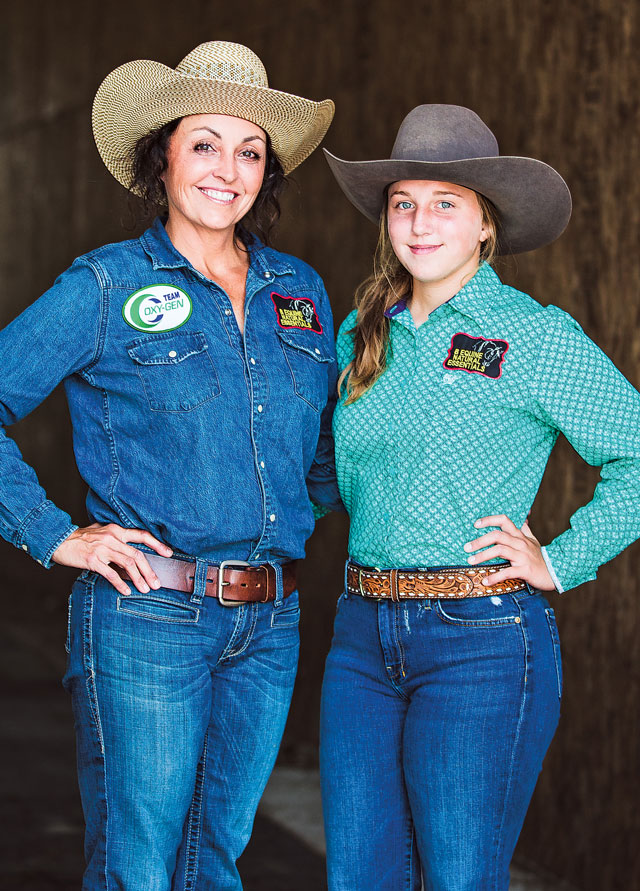
    When the lights shine down on the grand entry of the 48th Annual International Finals Rodeo this January in Oklahoma City, two cowgirls will have a stronger connection than most in the arena.

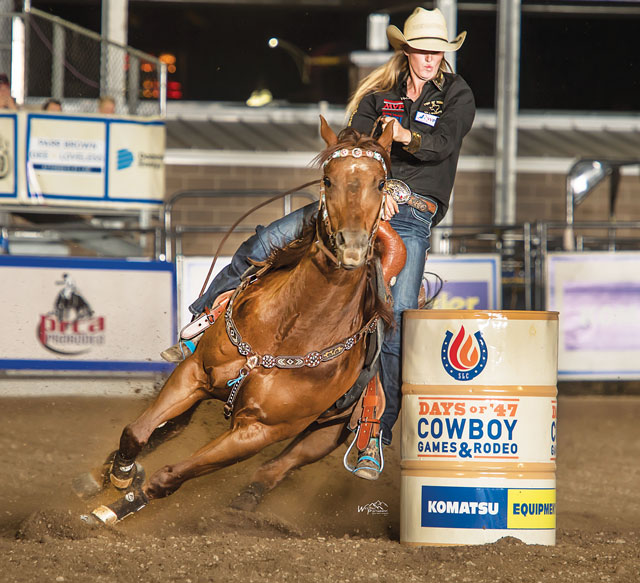
    Kim and Taycie Matthews, currently ranked no. 4 and no. 5 in the IPRA world standings, are mother and daughter qualifiers in the barrel racing. They’ve had a strong year in the IPRA, with Kim holding steady and Taycie making a late-season surge as a rookie. Did we mention Taycie was only 14?

    The Matthews family, from Wynne, Arkansas, has been involved in barrel racing for many years. Kim’s parents trained barrel horses as she was growing up in Caruthersville, Missouri before she went on to college at the University of Tennessee Martin on a rodeo scholarship. After college Kim kept up barrel racing some, but got married in 2000 and quit for eight or nine years to start a business and a family with her husband Terris.
    Together they own Matthews Ridgeview Farms, a large sweet potato operation where they supply to many major retailers across the United States.
    But when Kim had two young daughters, Jaylie who is 16 and Taycie, who just turned 15 in December, it was practically written in the stars the girls would have horses. Their grandparents were quick to ensure they had ponies as babies and grew up horseback from there.

    “They started riding, and that gave me an opportunity to get back in it,” Kim explains adding, “we were going to barrel futurities and big open shows, not really going to any rodeos, and three years ago we decided we were going to go to some rodeos. We went to about three or four with Kindyl Scruggs [the IPRA’s 2016 world champion barrel racer] and then we went back to the barrel races and barrel futurities,” But 2017 would be special Kim describes, “this year Taycie just begged, she said ‘I want to try to make the IFR, so I said ‘okay, if I’m going to have to haul you, I’m going to run too. So we just decided to go this year, and we went… a whole lot…” Kim laughs.

    All three Matthews women joined the IPRA’s 2017 season. And though Jaylie didn’t go as hard as Kim and Taycie, she plans to rodeo with them in 2018. Being involved in horses and on the rodeo road together with her daughters has been important to Kim.

    “I think it’s awesome. It’s a lot of bonding time and just keeps us having so many things in common. We got to spend a whole lot of time together this summer.” Taycie echoes that sentiment. “It’s fun. It’s just built our relationship more together,” she says.

    Going from the barrel racing and futurity world has been a fun change for the girls in particular.

    “You’ve got more driving, but a lot of it’s easier because you get there, and you’ve got all day to just rest until your run, and you don’t have as many horses to take care of because you can only run one horse at the rodeo,” Kim says. “We go to the futurities and the derbies, and we may carry 9-10 horses so that’s a whole bunch to take care of,” she laughs and adds of rodeo, “It’s a whole different life. You’ve got a whole different set of people, and you have no idea what the ground is going to be like when you get there. You have no idea what the weather is going to be. You just have to adapt or don’t run, which I did that a few times this year,” she laughs, but adds seriously, “it’s all about your horse. You can’t do it without your horse so you’ve got to take care of them first.”

    Being in the IPRA specifically has afforded the girls the opportunity to travel to rodeos internationally and places different than they were used to.


    “Going to Canada was an amazing experience in itself. We went up there three different times and the culture, the scenery, the hospitality, we loved it all, we really enjoyed the trip and not just that, but it changed my whole view of going north,” Kim says. “I could not believe the hospitality that we received from so many different people in so many different states. It changed my whole view about northerners, because you kind of hear they have that stigma just like we do as southerners, but we just had an awesome summer. As far as IPRA it’d been a long time since I’d been back going to IPRA rodeos, and it was really good. There were a lot of places I was amazed at how good the ground was and just how they treated us, and I was very impressed.”

    For Kim and Terris, giving their children a life with horses has a much bigger impact than the adventures. It teaches accountability, responsibility and confidence Kim says. “I just think it helps you be a well-rounded individual. It keeps you out of trouble, because it keeps you busy, and it teaches you. You’re responsible for a life. It’s not a human life, but it’s a horse that’s as important as a human, because you can’t go down the road without it,” Kim assures.

    And it’s clear the year has had an impact on Taycie.

    “I’ve learned how to ride different horses. It taught me how to be more responsible and to be more grateful for what I can do,” she says.
    The year for Taycie did not start off strong, and the Matthews’ stud horse she was riding got hurt, but Taycie rebounded when Kim let Taycie share her horse Feelin’ the Firewater, the newly crowned 2017 IPRA Barrel Racing Horse of the Year. The move to share the horse paid off big time. Taycie broke the arena record at the IPRA’s largest regular-season rodeo, the Festival Western de St. Tite in Quebec.

    “The beginning of the year was rough. I was getting ready to quit and just go back to barrel races, and it got better in about June, and it’s been getting better from then on,” Taycie describes, saying of her incredible accomplishment at St. Tite, “I was excited I couldn’t really believe it.”

    That win secured Taycie’s qualification to the IFR, and so now mother and daughter will get to share the experience together.

    “It means a whole lot to have qualified with my daughter, because she had a slow start to the year. It was just a struggle, because I’ve never seen as many tough barrel horses and as many people going and continuing up until the end as this year,” Kim says adding, “there were a couple of times where she got discouraged, and I almost was discouraged but tried not to let her know it, because things may not have been going her way, and we’re thinking ‘is she going to make it, is she not going to make it,’ and I made the comment, ‘if she doesn’t make it, I don’t want to go. It was just going to be special for both of us to do it.”

    Now that they both have done it, it will be exciting to watch them compete together in Oklahoma City Jan. 19-21 at the IFR. Then it’s full steam ahead for 2018.

    The Matthews have been expanding their farm business, and Kim is excited for her studs and breeding operation and to bring along some babies. By the end of the year she’ll have some 3-year-old horses ready to start their careers. “That’ll be a huge milestone, and I’m very excited about that,” Kim says.

    And as for her girls, Taycie wants to take up breakaway roping in addition to running barrels, and Jaylie plans to hit the trail hard too, so no telling what will happen for IFR49.


    The Matthews want to thank husband/ father Terris for his support of their endeavors, as well as hauling partners in the IPRA; Kindyl Scruggs, Cayla Fielder, Travis Gardner, Kylie Brueggeman and Sherry Rhea for helping with the driving. They also give credit to their sponsors; B Equine Essentials a therapeutic mud and poultice, Oxy-Gen Products and JHA Saddle and Tack.

  • On The Trail with Tyson Durfey

    On The Trail with Tyson Durfey

    Tyson, Shea & their daughter Praise Royal – Dashing Darling Photography

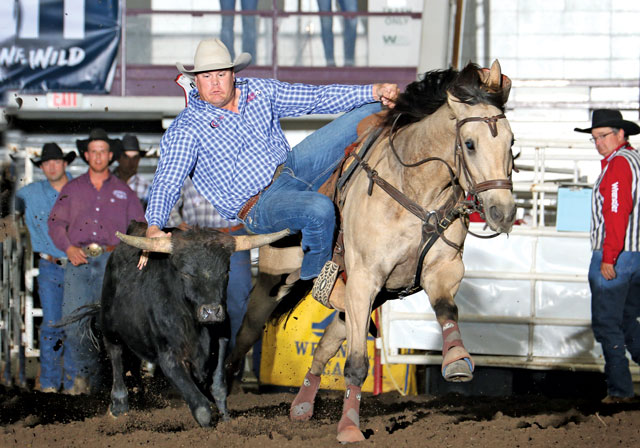
    Tyson Durfey is making his tenth appearance at the Wrangler National Finals Rodeo, defending his world champion title from last year in the tie down roping. Tyson grew up in Savannah, Missouri, training horses and ranching with his dad, Roy, and older brothers, Travis and Wes. “It was a miniature boot camp for guys. It was always me, my brothers, dad and at least one or two people there roping with us.,” said the 34 year old, who makes his home in Weatherford Texas with his wife, Shea Fisher, and 14 month old daughter Praise Royal. “We lived in a single wide trailer house – 10 feet wide by 75 feet long, with 75 spare tires holding the tin on the roof.” He remembers waking up to ice in his water glass. “Keeping the fire going was a huge part of life. Dad would wake us up and we would feed, then eat breakfast, then doctor cattle – ropers and feeders. We always said yes ma’am and no ma’am, but it was a bachelor pad. We’d rope from 9am until midnight every day, riding about 25 head of horses. Most Sundays were jackpot days at the Durfey Ranch and everyone would come by – we were the calf roping hub of the Midwest.”

    Tyson’s parents divorced when he was 2 and he spent the first five years with his mom. “I was pretty rotten – I would skip school. By the time fourth grade rolled around, I was hanging around with rough kids, riding skate boards. It wasn’t looking so good for me in school, and my dad told mom that we needed to come with him and he would straighten us out. My dad ruled with an iron fist – what he said was the way it was.” Tyson was in every learning disability class, and was getting Ds and Fs. His dad told him he was going to get straight As, and was expected to work as well. “I didn’t believe him, and one night I’d fallen asleep studying, and he gave me a whooping and it put the fire in me. I graduated with honors and it was because I had the motivation to apply myself.” Roy roped in the PRCA and passed that to his boys. At nine, Tyson competed at his first rodeo. “I wasn’t a stand out, but by the time I was 12, I would match people roping for money. I would sell horn knots, and sell pop cans.”

    That also gave Tyson a taste of money. “We grew up poor; we would light the hot water heater once a week and all share the same bath water,” he explained. “I wanted the fancy truck and Capri camper.” By the time he was 16, he was making $30,000 a year shoeing horses plus what he was winning. “Dad gave me the resources; cattle, horses, and ability, but never gave me a dime. I kept track of it all through FFA in a notebook.” His life was pretty routine – he’d get up around 4:30, flank and tie calves, go to school, get out and go shoe horses, then go home and rope.

    Tyson competed in Missouri High School rodeo, winning state his junior and senior year. “There was no prom or sports or extracurricular activities.” He went to Missouri Valley College in 2003 on a full ride rodeo scholarship. “I stayed in college for two months. I’ve always had a sense of urgency to be the best I can be, and I didn’t like the college atmosphere, so I left and cracked out rodeoing.” At nineteen years old, Tyson hit the rodeo trail, living in the back of his truck, and crisscrossing the country. “That first year was tough for me. My very first pro rodeo was Indianapolis, Indiana. I drove 14 hours to get there and the barrier rope wrapped around the stirrup, ripping it off and I fell off my horse.” He remembers the crowd laughing at him. He drove 45 hours to get to the next rodeo in Portland, Oregon, and broke the barrier. He won second in Spokane, and then drove straight through to Brent Lewis’s house in Arizona where he stayed for a few months working for him and learning from him. “From there it was history, I was off.” His achievements include three Canadian World Championships (the first ever non-Canadian resident to achieve this feat), winning “The American” in 2014, Winning Houston Rodeo in 2015, qualifying ten times for the WNFR, and 2016 world champion with well over one million dollars in PRCA earnings.


    His dad played another major role in Tyson’s career. “In 2007, before the Reno rodeo, I had a family friend call wanting to sponsor me,” he said. “It was my first sponsorship, and that $10,000 helped propel me to win Reno and another $25,000 over the week. I found out later that my dad had given this guy the $10,000 because he knew I wouldn’t take it from him.”

    Tyson met his wife, Australian country music singer, Shea Fisher, at Rodeo Houston in 2010. “I saw her in the hospitality room. For me, I knew I was going to marry her right then, but she didn’t know for a few years. I had gone to a movie after the rodeo, and I saw her in the horse area after the rodeo. I walked up and visited with her again. We sent Facebook messages back and forth for six months. She kindly rejected my request for her phone number nor would she agree to go to dinner with me. I was persistent – she never told me to get lost. I finally got her phone number and we visited for another 9 months on the phone before she went out on a date with me.” He flew to Nashville with roses in a shoe box in his suitcase to spend one day with her. “She told me if we are going to be official, you have to ask my parents. That couldn’t happen for four more months, when I met her parents at the WNFR.” They dated for one year, were engaged for 10 month and were married October 6, 2013 at Vista West Ranch, in Dripping Springs, Texas.
    The couple have launched several businesses together including Shea Michelle Buckle Designs which was launched by Shea in 2010. Designs by Shea and Designs by Durfey were launched in 2015. Shea’s dad had started a buckle company in Australia and Shea brought that knowledge to the company.

    Shea Baby is the latest launch. “It’s a baby boot line that we designed,” explained Tyson. “We had planned it out a couple years from having kids. My wife is very talented with design and how things come together. I had seen a pair at a store in Brazil, and knew we could make them really cute and neat. As fate would happen, we put a lot of time into it, but we stumbled onto really good manufacturers and sourced a really good leather, so they are all natural.” Praise Royal is a great model for the company.

    Tyson has also designed and launched his own line of boots TD Performance through Corral Boots that are available now at Boot Barn. “I like to credit myself as a pretty smart guy because I named all the businesses after my wife! The businesses fit my wife’s personality she is the workforce behind getting things done.”

    They travel as a family to all the rodeos. Shea has started entering as well, pocketing just over $20,000 this past year. “Now that I have a family, rodeo is not my main priority anymore,” he said. “At the end of the day I compete because I love to and I love the fans.” They travel in a pickup and Cimarron trailer. Most of the summer, they were traveling with Shea’s parents, who helped with Praise. “I get tired of the road sometimes, but when I get to come back to the trailer and see Praise smiling at me, it makes it all worthwhile.”


    The family has recently purchased some land in Texas, and Tyson is excited to get back into hunting, something he used to do a lot. “My family has a pheasant and deer hunting property in South Dakota, and deer season opens next week in Texas. I’m looking forward to setting up some feeders on that property in Texas and disappearing after the WNFR for a few weeks.”

    Tyson has his sights on one more world title. He is preparing for the NFR by training a lot, working out, spending time in the Bible. “We all go out there expecting to win. The way I train and prepare is to prepare for everything. It’s easy to win when you’re on a hot streak, but after you’ve been cold, it is hard. I’ll envision my emotions and body language if the calf kicks and how do I prepare for the next round. A lot of people will think they have to push … I like to go back to the basics and not push. If you have a bad day and push harder, then you could have a worse day.” He falls asleep listening to audio Bible readings. “It just downloads information in my mind and allows me to handle situations in my flesh. My overall favorite book is Proverbs – there is so much wisdom in there, second is James – I’m Irish, pale skin and have a temper. I’ve known that for a long time, and I have been able to train myself how to act.” James 1:19 is one of his favorite verses. My dear brothers and sisters, take note of this: Everyone should be quick to listen, slow to speak and slow to become angry,

    “I want to be a motivator for people – I want them to look at me and say that if you can do it, I can do it too. I’ve read or listened to a couple hundred self-help books – Tony Robbins is my all-time favorite, I’m obsessed with processes that can make people better human beings and understanding why people do certain things. “A wise man learns from other people’s mistakes and avoids his own.” Tyson continues to help people wherever he can. “I will always share what I learn and continue to learn about how to become the best reflection of myself. The greatest failure of all is to reach the pinnacle of your career and still be unhappy. I can use my title to motivate and help other people. We are put here to inspire, encourage, and help others.”

  • Back When They Bucked with Butch Morgan

    Back When They Bucked with Butch Morgan

    Butch Morgan believes his biggest accomplishment in life was marrying his wife, Charlene, 55 years ago. His life, like most, is a series of opportunities and change, culminating in doing the very thing he is best at – promoting the Western way of life through the trophy business and his more than three decades with Western Horseman.
    Albert Lewis Morgan was born June 13, 1940. He was nicknamed Butch by the Baggs Postmaster because of Butch Cassidy, the outlaw, who ran in the same country as they ranched. His dad, Lewis, was a rancher, running sheep and cattle near Baggs, Wyoming. His mother was killed in a water-heater explosion when he was nine months old. His father remarried but Butch was mostly raised by his sister, Carol Laramore Gipson. When he was in high school, he played basketball, selected twice to be on the all-state team. When he was a teenager, he moved in with his sister and her husband, Bill Laramore, who taught Butch how to rope. Since there was no high school rodeo, the only place he could compete was at the little local ropings.
    He went to Casper College on a basketball scholarship, but was pulled to the rodeo side of things early on. “I grew up in the western way of life and thought the rodeo life was cool,” said the 77 year old, who is only 5’10”. “I wouldn’t have made it as a basketball pro.” He competed in tie down roping and steer wrestling. After earning his associate’s degree, he transferred to Colorado State University and won the CSU men’s All-Around title in 1961, the same year teammate Charlene Hammond, received the All Around Women’s title.

    They met at the party after the awards. “I had a nice horse and she liked him. A year and a half later we got married.” Charlene’s brother, Dick Hammond, was a trick rider and wanted Butch to try it out. Turns out, he was pretty good at it and the couple started traveling with a group called the Fireballs, Dick and Deb Hammond, Karen Womack Vold and Butch. They worked all the major rodeos, Ft. Worth, Calgary and all over the United States and parts of Canada (Alberta, B.C. and Manatoba). The group traveled for three summers working for Harry Vold in Canada. They hauled in an old pickup and camper, then a van and four horse trailer. “We slept in the back of the camper shell back then.”
    Karen Vold was one of the members of that group and remembers Butch’s abilities. “Butch was so athletic it came easy for him. He could make more mistakes than anybody because he could bounce right back. People loved him; he was a crowd pleaser, and he was fun to work with.”
    Butch and Charlene traveled with the group for a three years and then decided it was time to settle down. When their first daughter was born, they moved to southeastern Colorado, where Charlene opened a ceramics shop and Butch got a job teaching fifth grade at Ordway. He made $300 a month, and he got his bus driver’s license because there were kids that had never gotten out of Ordway. Butch would take them on field trips. He taught for three years, traveling to rodeos and ropings in the summer.”
    He gave up teaching to join Charlene in the ceramic shop, expanding the business into a full line of trophies called Blue Ribbon Trophies, in 1964. “Charlene did a lot of sculpturing and that’s what helped our deal. The horse and livestock industry was our Trophy Stones that Charlene created.” Charlene created sculptured relief figures for every event that were then molded, cast, and finished. She did the creative art work and Butch did the marketing and sales. Things grew and they moved that business to Colorado Springs. What started in a little chicken coop grew to 50 employees. “We did the awards for American Quarter Horse Association, Reiners, Cutters – we concentrated on the horse events. That’s when I started roping steers.”
    He team tied with Dick Yates and Chuck King in the 1960’s and dally team roped in the early 70’s. When team roping came to Colorado around 1978, he lost his right thumb in the coil. “I had to learn to rope again, I was feeling pretty sorry for myself. I saw a sign in my doctor’s office that read: I used to gripe that I had no shoes, then I saw a man that had no feet. I remember it like it was yesterday.” In Butch’s typical witty personality, he has been known to pretend his thumb is stuck between the elevator doors and other objects and pull out the stub. He made the steer roping Finals in 1979, after he lost his thumb. “We had Blue Ribbon Trophies, it was hard to go team roping because I couldn’t always go when my partners wanted to, so I concentrated on steer roping.”
    The couple has three children, and all of them have won high point championships and continue the parents’ passion for the Western way of life. The oldest daughter, Rhonda Holmes, and her husband own Triple J Ranch in Sarasota, Florida. Jay is an AQHA and NRCHA world champion and they breed and train cutting, roping, and working cow horses. Their daughter, Morgan (22), attends Texas Tech and has won six world titles. Butch and Charlene winter there, heading south after the Wrangler National Finals Rodeo, which they have attended for nearly 40 years, every performance.

    Their son, C.L and his wife, Renee have two sons, Braxton and Brayden, who both rodeo and have started their own collection of award saddles. Braxton has eight saddles and Brayden has five. CL won the open at the US Finals when he was 21 and is the superintendent for a large contractor in Colorado Springs. Christy, the youngest, is in the top 20 in the non pros in the reining world for the past two years, and has a little boy, Cooper.
    Butch and Charlene sold the trophy business and Butch was managing Penrose Stadium in Colorado Springs when he was approached in 1988 by Pat Close and Randy Whitte to become the Director of Marketing for the Western Horseman magazine. “The first week I worked for them, I had to go to Scottsdale and got to play golf two days and rope three days – that was my first week. It’s been great.” His title changed about five years ago when the office moved to Ft. Worth. “I am now called Ambassador at Large. My job now is the face of the magazine –we go to a lot of shows and events and do the fun stuff.”
    He ropes a lot in the winter in Florida, and spends his summers roping with his grandsons in Colorado. The #4 Elite spends his mornings on the computer and his afternoons roping or playing golf. “I want to watch my grandkids grow up and help them as much as we can and teach them how to play. I’ve been pretty lucky – when Charlene and I got married, I had $60, she had $40. We had a horse trailer, one car and two good horses.”
    He attributes his success to the people he has known around the world that have helped him along. One of those people is his best friend, PRCA Commissioner, Karl Stressman. “We’ve roped a ton of steers together and laughed a lot over the past 30 years. Butch is good for a person’s soul – he’s a guy that really enjoys life and can get anybody rolling.” People refer to him as the ambassador of the Western Industry. “We need more people like Butch Morgan in the future to take on that responsibility. Butch and Western Horseman are complimentary to each other. We’ve been through thick and thin and anytime I needed somebody to fight or hold the light, it’s been Butch Morgan.”

  • Holiday Recipes from Karen Vold’s Spurs & Spoons Cookbook

    Holiday Popcorn Crunch

    Makes about 5 cups or 1 pound

    Ingredients:
    2/3 cup sugar
    1/2 cup butter or margarine
    (1 stick)
    1/4 cup light corn syrup
    1/2 tsp vanilla
    2/3 cup pecans
    1/3 cup almonds
    4 cups popped corn

    DIRECTIONS:
    Combine sugar, margarine and corn syrup in 1 1/2 quart heavy saucepan. Bring to a boil over medium heat, stirring constantly until sugar dissolves and mixture comes to a boil. Continue cooking stirring occasionally, to the soft crack stage (290 degrees). Mixture will have a light caramel color. Remove from heat and stir in vanilla.
    Meanwhile, toast nuts in slow oven (300 degrees) until almonds are light brown. Spread popped corn and nuts on lightly greased baking sheet. Pour hot syrup over popped corn and nuts. With two tablespoons, toss corn and nuts to completely coat with syrup. Let cool. Break popped corn and nuts apart and store, as soon as cool, put in a tightly covered container.
    **This is a fabulous holiday treat to eat, serve or give as gifts. My dear friend June Beaver from Basehor, Kansas, also gave me this recipe.

    Po Po’s Christmas Cake (Prune Cake)

    Serves 12

    Ingredients:
    1/2 cup shortening
    1 1/2 cups sugar
    3 beaten eggs
    2 1/4 cups sifted flour
    1/4 tsp salt
    1 tsp cinnamon
    1 tsp cloves
    1 1/2 cups pitted prunes
    3/4 cup buttermilk
    1 1/2 tsp baking soda
    1 cup chopped nuts

    DIRECTIONS: Cream shortening and sugar; add beaten eggs. Sift together flour, salt, cinnamon & cloves. Add alternately to shortening mixture the buttermilk with soda, and flour mixture. Add and stir in cooked pitted chopped prunes and chopped nuts. Bake at 350 degrees for 1 hour in greased and floured bunt pan. Cool 10 minutes on rack, then turn over and remove from pan. Frost if desired.
    **This was my fathers favorite holiday cake and I would always make him one at Christmas time. I got the recipe when I was just a teenager from my Aunt Rowena. This has always been a traditional holiday cake from Thanksgiving through New Years.

    Christmas Morning Wife Saver

    Serves 8

    Ingredients:
    16 slices white bread with crusts
    removed
    Slices of Canadian bacon
    Slices of sharp cheddar cheese
    6 eggs
    1/2 tsp salt
    1/2 tsp pepper
    1/2-1 tsp dry mustard
    1/4 cup minced onion
    1/4 cup green pepper chopped fine
    1-2 tsp Worcestershire sauce
    3 cups whole milk
    Dash red pepper (Tabasco)
    1/4 lb butter (1 stick)

    DIRECTIONS: In 9” x 13” buttered glass baking dish put 8 slices of bread. Add pieces to cover dish entirely. Cover bread with slices of bacon sliced thin. Lay slices of cheddar cheese on top of bacon and then cover with slices of bread to make it like a sandwich. Beat eggs in a bowl, salt and pepper, Worcestershire sauce, milk and Tabasco. Pour over the sandwiches. Cover and let stand in refrigerator overnight. In the morning melt butter and pour over top. Cover with crushed Special K or Corn Flakes. Bake uncovered for 1 hour at 350 degrees. Let sit for 10 minutes before serving. Serve with fresh fruit or hot cinnamon rolls for a great holiday breakfast, brunch, supper or just anytime.
    **This is another fabulous recipe from the “Best of Bridge” series from Canada. This one came out of the yellow book. Enjoy!

    Chalupa Pot Roast
    Serves 6

    Ingredients:
    2-3 lbs trimmed pot roast
    1 Tbs chili powder
    2 cloves garlic
    2 tsp garlic salt
    1 Tbs cumin
    1/2 tsp black pepper
    1 tsp oregano
    1 can Rotel plus 1 tsp Tabasco
    for hotter spice (if desired)
    1 medium chopped onion
    1 lb uncooked pinto beans

    DIRECTIONS: Wash and sort beans. Cover with boiling water 3” above roast and beans in large crockpot. Add all ingredients; cook 10-12 hours starting on high for 1 hour, then low for remaining time. Shred meat and serve burrito style on warm flour tortillas…or serve with cornbread and a green salad.
    **This recipe was shared by a dear friend Gail Steagall of Ft. Worth, Texas. She is married to popular cowboy, poet and singer, Red Steagall. When the National Finals Rodeo was held in Oklahoma City for 20 years, Harry and I used to love to go to Red’s dances. He had a great band and we loved to dance to his kind of music. I see them every year at the NFR, now held in Las Vegas. Gail is a fabulous cook and I so enjoyed them coming to our 2003 Spring Horse round up, Red riding with the men, and Gail helping cook for all the crew.

  • Roper Review: Coy Upchurch

    Roper Review: Coy Upchurch

    Growing up in the small Texas town of Itasca, Coy started riding and roping when he and his dad would help out on a local ranch. It wasn’t until high school that he truly caught the roping bug that would lead him to attend schools taught by roping legends like Dee Pickett and Mike Beers. In high school, he competed in both North Texas High School Rodeo Association and Texas High School Rodeo Association. Afterwards, Coy attended and graduated from Tarleton University, Stephenville, Texas, with a degree in Criminal Justice.
    “One of the guys who taught me to rope worked in a rope shop. He also taught me how to take care of my ropes and when to change lays due to weather conditions. That was Bill Shrum, who works at Fast Back today. Bill has been in this industry for over forty years.”
    Working full time, Coy and his brother, Kerry, went to pro rodeos on the weekends trying to fill their permits. It didn’t take long, however, for them to realize the pitfalls of competing against professional ropers.
    “We both worked full time and practiced when we could,” explains Coy. “We were competing against guys who roped full time. I didn’t enjoy traveling and I didn’t like getting beat by guys who did it for a living.”
    Coy spent ten years (’98 to ’08) working for Professional’s Choice when they produced ropes. While there, he performed every job in the shop: riding rope machines, tying eyes, and rolling ropes – basically every job with the exception of waxing. He also worked sales and trade shows and is grateful for the experience.
    When the oil field business boomed in north Texas, Coy accepted a position as a sales rep for a company that sold drill bits.
    “There is a general misconception about the oil field business where people tend to think the companies don’t care about the environment and waste a lot of money. That was not my experience at all. I met a lot of smart businessmen and developed great relationships that I still value today. But the western industry is what I truly enjoy.”
    During an oil field layoff in ‘09, Upchurch briefly tied ropes at Fast Back. He was impressed by the friendly atmosphere and never forgot it. Leaving the oil field again in 2015, Upchurch joined Fast Back Ropes as a Sales Manager. When the General Manager retired in 2016, he was offered that position.
    “I had never really ‘managed’ people before,” explains Coy. “So I read a lot and picked the brains of people I admired and respected. What I learned is that it’s important to find the best people you can, then get out of their way and let them do their job.
    “I’ve always loved Fast Back ropes. I started using them in ‘95 and have ever since, except for my time at Professionals Choice. I always felt they were the best feeling and longest lasting ropes on the market. I’ve always liked the people at Fast Back, many of whom have been in this industry for years and years. We have an incredible team. They are innovative and passionate about building the best ropes possible. This is, without a doubt, the best job I’ve ever had.”

    COWBOY Q&A
    How much do you practice?
    Several times a week.
    Do you make your own horses?
    Right now I’m riding a young horse that had been started on the machine. I used to enjoy riding young horses, but now it’s more enjoyable to get a horse you can go rope on. There is satisfaction in making one.
    Who were your roping heroes?
    Tee Woolman, Jake Barnes, Clay O’Brien Cooper, Dee Picket, the Camarillos.
    Who do you respect most in the world?
    Jesus Christ and Clay O’Brien Cooper.
    Who has been the biggest influence in your life?
    My parents.
    If you had a day off what would you like to do?
    Ride horses with my daughter.
    Favorite movie?
    The Cowboys.
    What’s the last thing you read?
    The Inner Game of Tennis.
    How would you describe yourself in three words?
    Honest, hardworking, fair.
    What makes you happy?
    Spending time with my daughter.
    What makes you angry?
    People who are rude or mean to others.
    If you were given 1 million dollars, how would you spend it?
    I’d given a portion to charity; take a trip with my daughter, and save the rest.
    What is your best quality – your worst?
    I think my best quality is the willingness to try new things and think outside the box. My worst quality is reacting too quickly sometimes.

  • ProFile: Staci Trehern

    ProFile: Staci Trehern

    story by Michele Toberer

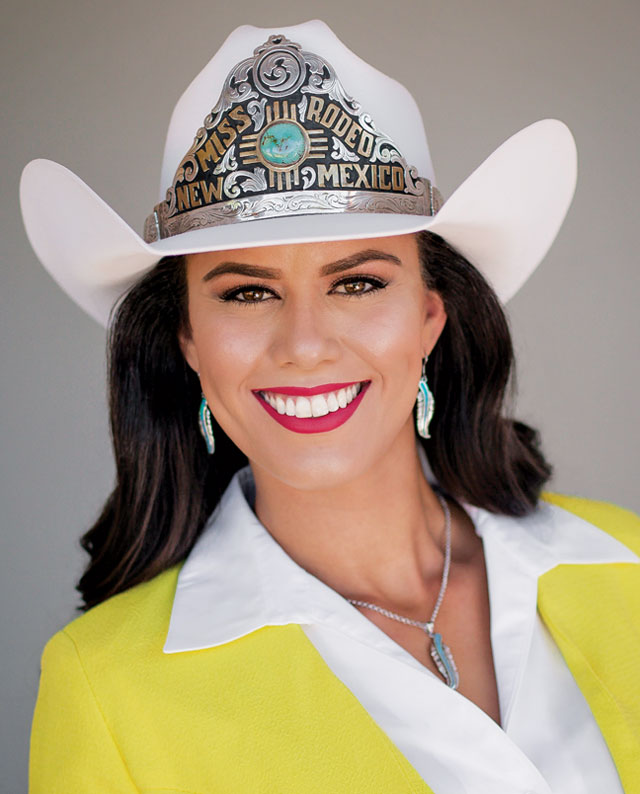
    From dusty boots to a shiny tiara, Staci Trehern, Miss Rodeo New Mexico 2016, has made it a mission to teach young girls to find the power and uniqueness they have inside. Staci grew up on her family’s cattle ranch, The Lazy Spear T, in northern New Mexico, with dreams filled of rodeo, ranching and the western way of life. Her parents were not involved in rodeo themselves; her father Glenn, a self-proclaimed “tennis-shoe cowboy” worked cattle on foot when he was not working as a fireman, and her mom, Elizabeth was more of a city-slicker transplanted to her in-law’s ranch, yet the fire and love for rodeo seems to have been born into Staci’s heart. Staci, the oldest of three girls, loved nothing more than helping with all aspects of working on the ranch as she grew up. She and her sisters, Amber, four years younger than Staci, and Brooke, seven years younger, carried that love of the western heritage into entering Little Britches rodeos in team roping, breakaway roping, barrel racing and pole bending. Staci chose to be homeschooled through high school, so that she had even more time to spend on the ranch, honing her horsemanship skills, between school and rodeos. At seventeen, being a rodeo queen was not even on her radar, until winning the title after a friend encouraged her to enter the Sandoval County Queen contest in 2009. “The title I held that year ultimately changed my path and direction in life,” Staci proclaimed.

    Miss Rodeo New Mexico 2016, Staci Trehern – LoveLettersPhotography

    Although Staci never considered herself a typical rodeo queen, she discovered how much she loved representing the sport of rodeo as she went on to win several titles. Staci was again Sandoval County Rodeo Queen in 2013, Miss New Mexico State Fair Rodeo Queen 2014, 2015 Miss Turquoise Circuit Rodeo Queen and 2016 Miss Rodeo New Mexico. Staci, who believes “Rodeo comes before Queen,” was proud to consistently win horsemanship titles through the pageants. She remembers growing as a person the year she was Miss Turquoise Circuit queen, flying on an airplane for the first time, as she flew to Kissimmee, Florida for a rodeo, and traveling and hauling by herself. As Miss Turquoise Circuit, she was appearing at mostly PRCA rodeos, and as she rode alongside many idols she had watched at the NFR as a young girl, she was grateful to be exactly where she knew God intended her to be. Staci learned that the crown atop her cowgirl hat was not just an award, or platform, but a key that would open doors for her and for future generations.
    Staci is the second of only two women to ever hold all three New Mexico Rodeo Queen titles, and chose to run for Miss Rodeo America 2016. This is where she won her eighth horsemanship title, yet finished 2nd Runner-Up for Queen. This was not a loss to her however, as she claimed “I’m no one special, I’m a girl from the middle of nowhere. I didn’t go to Miss Rodeo America to win a crown, my goal was to send the message that everyone is good enough. No matter what anyone tells them, everyone that has a dream in their heart, can succeed.”
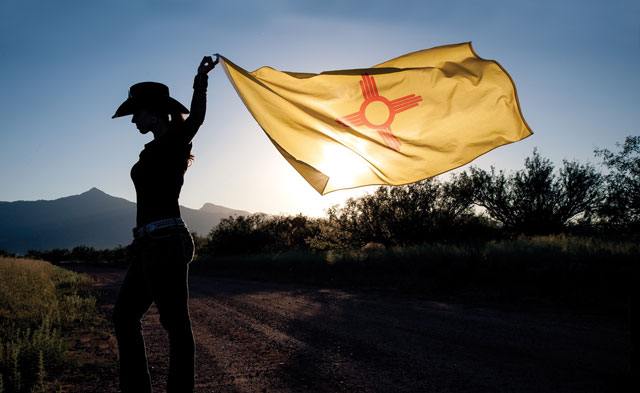
    Staci’s paths have led to opportunities she never dreamed imaginable. She is working towards her Masters in Communications degree at the University of New Mexico, thanks to over $11,000 in scholarships won through queen contests. She competes in the WPRA, recently placing at Ellensburg, Washington in barrel racing. She was Vogue Magazine’s “American Cowgirl” for their 125th Anniversary Celebration of Women, in January, and has modeled in Western Horse & Gun, and Cowboys & Indians Magazine. She empowers young girls through her online Wahya Warriors Rodeo Queen clinics, where from the comforts of home, aspiring rodeo queens learn lessons on all aspects of being better versions of themselves. Interested girls can message Staci on Facebook to join the clinics. Staci encourages rodeo athletes and queens by saying “an arrow can only be shot forward by first being pulled back, so when you feel like life is pulling you back, just know that you are going to be shot forward into something great. So, no matter what, always follow your arrow, wherever it points.”

  • Kellie Collier

    Kellie Collier

    Kellie Collier is heading to her first WNFR. The 21 year old dreamed about this for a long time. “I have the horse power and the dedication – I sat down and decided this was what I was going to do.” She is quick to add that none of this would be possible without the support from her parents, Kathleen and Matt. “My mom rodeoed and she taught me about what it took to rodeo. My dad stays home and runs the family business, Top of Texas Mill Wrights, which makes it possible for me to go.” Kellie has one older sister, Kayla, 25, who competed when she was younger, but ended up playing sports and has a Masters in accounting. “She does all of our taxes, so it works out great.”
    Kellie tried to make the WNFR last year and ended up 23rd. “My horses got tired,” she said. “I learned how to lose. I was very successful rodeoing growing up, making all the national finals –going out there on the road wasn’t as easy as I thought it was going to be – it was humbling. My mom was with me most of the year. She would come home for a week at at a time, so did my cousin, Kashli. I had two rigs going sometimes, so it took two drivers to get it done. I lived in airports towards the end of the year.” She had a trailer in Canada that stayed up there and one down here. “It was tiring and crazy, but it paid off.”
    After graduating from high school in 2014, Kellie went to college at Hobbs College in New Mexico and transferred to Texas Tech her second year. “Then Lolo happened.” Lolo is a 9 year old mare Streak of Fling mare that took Carlee Pierce to the WNFR in 2014. “When I was in college, I had a good horse, Oscar. I knew my goals of going down the road, and we were looking for a horse. We had the tapes from the NFR and my mom kept watching Lolo and loved her demeanor so she gave Carlee a call and bought her three years ago. Lolo has a heart and tries like none other. She’s a very quirky horse and doesn’t trust many people. She is a very mentally strong horse, very independent. She loves me and tries for me – it’s cool to have that feeling. She is not just a horse to me.” The other horse that has made it possible is Muffin, is a 13-year- old mare out of Jig French Truckle. “I rode Lolo most of the year, but Muffin has won a lot for me this summer too.”
    Kellie grew up in the rodeo world. “My mom rodeoed so when I was old enough to walk, I was on a horse going to play days, junior rodeoes, and went from there. I was more of a roper when I was younger. I had some great roping horses and I team roped. Then I got one horse, Oscar, and found my love for barrels. He helped me win in the barrels and poles.”
    Kellie had a farewell party in her hometown of Hereford, Texas. “It was great to realize what support we have at home – people drove up to seven hours to come celebrate. We ate and danced and called it a night. I signed a couple autographs.” Many of those people will make the trip to Las Vegas to cheer her on. “I’ve lived in Hereford my whole life – cows and feedyards is all there is here; Hereford is called the beef capital of the world.”
    Kellie is preparing for the WNFR by continuing to rodeo. “I’m headed to the Wilderness Circuit Finals, and then the next weekend is the Canadian Finals. Once I get back, I’ll work on my mental game, and make my schedule. I think if my horses don’t know how to run barrels by now, we’re in trouble. So I just keep their legs in shape and ready to run. I long trot a lot in the hay field around our house. I like to breeze them out there, stretch them out and let them run.”
    Kellie wants to keep going. She’d like to make the finals a few more years. “I’ve always wanted to do some clinics and breed Lolo and train some more barrel horses. I’ve got to get through this first.” It hasn’t completely sunk in yet that she will be running in the Thomas and Mack. “I’m more nervous about what I don’t know – I like to be in control and to not know where to go, what to say, and what to wear is what I’m nervous about. I keep telling myself this is just another rodeo, but I know that’s not the truth.”

  • D’Ann Gehlsen

    D’Ann Gehlsen

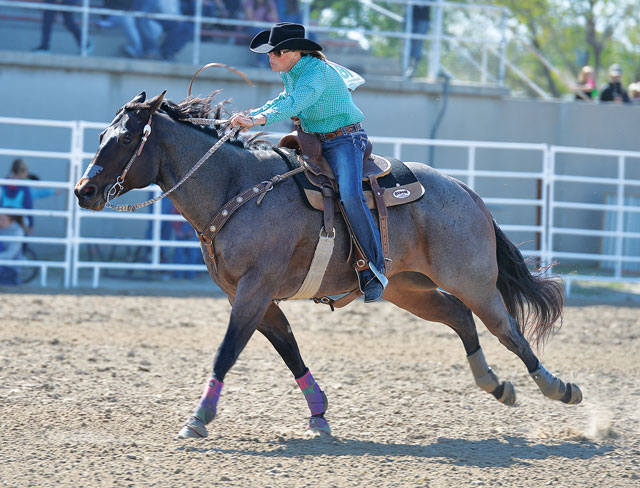
    D’Ann Gehlsen from Mission, South Dakota, has been barrel racing since she was ten. “I started riding when I was three and showed horses and switched to the speed events,” said the 54-year-old program technician for Farm Service Agency. D’Ann has a 32 mile commute to work and works nine hour days. She has every other Friday off, and that helps with traveling to barrel racing. “In 2016 I went to Badland Circuit Rodeos and had a futurity horse, plus I went to SDRA and NRCA rodeos; so that put a lot of miles on. I picked the amateur rodeos this year and good added money three day barrel races to save the miles on myself and horses. I had a great summer, I ran Radar at 15 rodeos and he placed at 10 and ran Flyer at 3 rodeos and he placed at all three!
    Her biggest win was last year with her favorite horse, nine-year-old Radar (Streaking Sonofagun). “He won every round, the average saddle and the year-end buckle of the Northwest Ranch Cowboys Association,” she said. “2016 was a stand-out year for him – he won that and a couple others – the Black Hills Stock Show Rodeo, the Breeders and the Open Derby/Maturity at the Cornhusker, the 1D average at the 5-States and qualified for the Badlands Circuit Finals. We won the target shoot out at the West Fest barrel race for running the same time in both rounds, the use of a stock combo trailer for a year.” I was invited to run at the Colorado vs World rodeo at the Denver Stock Show in January of 2017.

    D’Ann Gehlsen at the Mid-States Finals – Rodeo News

    Radar has lifetime earnings of $83,000; not bad for an unplanned gelding. “I had a full brother to him on the mare (Gunny) at the time and I had taken her to Valentine to have her ultra sounded. The vet told me she needed to be bred within a day or two and Streaker was standing at the vet clinic in Ainsworth, Nebraska. I hadn’t planned on another Streaker colt, but it was the best thing that ever happened. He’s a special horse – he’s one of those horses that I feel very fortunate to have in my lifetime.”
    Radar was born on a rainy Memorial Day. “My husband, Speed, imprinted him – he did too good of a job because Radar is very personable and in your space.” When he turned two, Gabe Taylor, a steer wrestler, took him for a month to start him. “He called me within the first two weeks and said I had a really nice horse – he was easy and wanted to do everything. If I could custom order a horse, this was it – the first time I rode him, I liked him.” He got his nickname, Radar, because of his ears and the way he looks around and checks things out. He continued his career as a futurity horse in 2013. “He did good – he was very competitive,” said D’Ann. “The next year, I alternated him and Flyer at the rodeos, and then he got an injury and was out for six months.” At 16.2 hands and weighing in at 1,450, Radar is big for barrel racing. His mother, Gunny was out of Back To Cash and a goes back to Go Man Go on the maternal side. She was the size of Go Man Go and all of her colts are big horses. “He stopped the clock at the 2016 Black Hills Stock Show Rodeo at 12.46, winning it – that was unbelievable for that little arena.”
    This year, Radar took her to the average win at the Mid-States Rodeo Assn Finals and the duo has been consistent all year. “He has a lot of heart and arrogance – he knows he’s cool and wants to get the job done – he’s just that type of horse.”
    D’Ann met her husband, Speed, at a rodeo. “A week later he called me and we’ve been together for 24 years this January.” He used to team rope and still does for fun. He goes to some of the closer rodeos with D’Ann, but for the most part, it’s D’Ann, dogs Murry and Tink and three horses. “We have a cow/calf operation southeast of Mission, South Dakota.” Along with Radar and Flyer, D’Ann has young colts coming along.
    Radar isn’t going anywhere. “He’s a very special horse to me – he makes barrel racing fun, he wants to do his job and do it well. He is also the last of the line. His mother was put down in October of 2016.” Although D’Ann doesn’t have set goals, she sees herself going to the American someday. “I’m going to keep doing what I do – going to my favorite rodeos and the bigger barrel races that pay good. Life is very good in my world.”

  • Cracked Pepper Brisket Roast & Spinach Salad


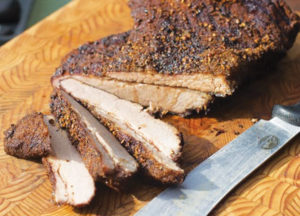
    Cracked Pepper Brisket Roast
    recipe courtesy of Jennifer Ericsson

    Ingredients:
    3 to 4 pounds beef brisket
    1½ tsp onion powder
    1 tsp salt
    3 tsp cracked peppercorns
    3 Tbsp dry mustard
    1 Tbsp lemon juice
    3/4 cup catsup
    1½ tsp garlic powder
    2½ tsp celery salt
    3 tsp Worcestershire sauce
    3 Tbsp brown sugar
    1½ Tbsp soy sauce
    6 drops hot sauce

    Directions:
    Preheat oven to 350 degrees. Place brisket in 13”x9”x2” baking dish. Combine garlic powder, onion powder, celery salt, salt. Worcestershire sauce and peppercorns. Mix and spread over brisket. Cover and place in oven. Immediately reduce temperature to 325 degrees and bake one hour. Mix remaining ingredients. Pour over brisket, cover and continue cooking 3 hours or until tender.

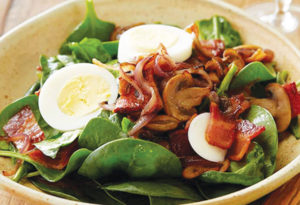
    Spinach Salad
    recipe courtesy of Donna Roddy, Ridin’, Ropin’ & Recipes

    ingredients:
    1 pound fresh spinach
    3 hard boiled eggs
    8 slices crisp bacon,
    crumbled
    2 cups fresh bean
    sprouts
    1 8 oz can water
    chestnuts, thin sliced

    dressing:
    (stir together)
    1 cup oil
    Salt to taste
    1/4 cup vinegar
    1 Tbsp Worcestershire sauce
    1/2 cup sugar
    1 medium onion, greated
    1/3 cup catsup

    Directions:
    Trim and discard tough spinach stems, rinse leaves well, dry and break into bite size pieces in a salad bowl. Add remaining salad ingredients. Toss salad with dressing, serve right away.


  • ProFile: Chason Floyd

    ProFile: Chason Floyd

    Just $87 was the difference between riding into the Thomas & Mack in December and not. Chason Floyd kept his hold on the 15th spot for a couple weeks. He had to keep going to keep ahead of Josh Peek, who was trying up until the last minute to get that spot. Neither pulled a check the last week. Chason got a couple checks the week before, but he hit three rodeos the last week, never pulling a check. “Josh wished me luck at a rodeo we were at that last week – hoping I would make it.”
    Chason has been trying to punch his ticket to Vegas since 2012. “I had a very good rookie year, and tried again for the next few years,” said the 28-year-old from Buffalo, South Dakota. “In 2015, I got hurt and had to sit out a year.” He went from 41st last year to 15th this year. “I try to learn something new every year, and this year I’m more mature and I know a little more. I also switched horses after Labor Day, jumping off Sean Mulligan’s horse. She fit me really good.”
    Chason got married May of 2014 to Jesika Garrett Floyd and the couple is expecting a new bulldogger into the family February 14. “She was joking one day saying if I ever made the Finals, she would probably be pregnant. I mentally told myself after we found out that I better get to winning if I was going to make this happen. And it did. ” The couple owns an assisted living facility in Buffalo South Dakota, and Jesika has a home health business as well. They are opening another one in Faith, South Dakota, within a year. “I also ranch with my family.”
    He is still adjusting to his first WNFR qualification. “We woke up and went over to the building and started working on it – you go back to normal. But I’m still getting the calls, and it will sink in that I did accomplish my dreams. It’s pretty neat.” Chason will stay in shape by jackpotting and going to his circuit finals in Minot. He won the year end at those Finals. He plans to enter a few others and continue jogging and staying in shape. “We’ve been moving cattle and shipping, so it’s kept me pretty busy. I’ll head to Oklahoma the middle of November to practice with Sean.”He has never been to the NFR – this will be his first trip. “I didn’t want to go until I made it. We’re super excited.”
    Chason grew up in Ludlow, it’s a school, a church, a hall and a bar. His family is still there on the ranch. He started rodeo when he was young, starting in the 4-H rodeos and then high school rodeos. He roped and rode saddle broncs when he was younger. “I got kind of big for bronc riding,” said the 28-year-old. His parents, Ron and Cindy, along with his sister CJ and two brothers, Colt, and Ckyler will all be heading to Vegas to watch.

  • Back When They Bucked with Herb Friedenthal

    Back When They Bucked with Herb Friedenthal

    Herb Friedenthal won the bull riding at the second RCA rodeo he ever went to. “It was the night of my 18th birthday and I split first with Walt Mason in Riverside, California,” said the 79 year old from Fallon, Nevada. “I feel so fortunate that in my career I was around the best rodeo cowboys that ever lived from three decades, the 40s, 50s, and 60s.” Herb Joined the RCA in March of 1956. “A couple guys came around to the amateur rodeos and they asked me to throw in with them. It was a big deal for me.”
    Herb was raised in Southern California; back in the 1950s there were lots of rodeos in his area. His dad was an insurance salesman and his mom raised him and his younger brother, John. Herb joined the Marine Corp and served for a little over a year before being honorably discharged. His rodeo career took off after that and he competed all across the west. “Andy Jauregui was a stock contractor and world champion team roper. I worked for him on the labor list, that’s what we did a lot in those days – it kept us busy when we weren’t competing and gave us some extra money.” Herb also worked for Cotton Rosser. “Most of my career I stayed on the West Coast. I was happy living the dream and there were a bunch of good rodeos out there. I placed at most of the major rodeos; Cow Palace, Ogden Prescott, Las Angeles coliseum, and Tucson (he won that one).” He met a lot of great cowboys, including Casey Tibbs, who put together a Wild West Show and Rodeo to take to Japan, and invited Herb to join the group.

    “We went over there in July of 1962,” he explained. The crew consisted of between 35 and 40 people; counting the Mexican bull fighters the Mariachi band, several Indians and the support crew. “Only about 15 of us were rodeo cowboys and out of that there were six past world champions; Gerold Roberts, Ben Johnson, Eddie Akridge, Clyde Vamvoras, Casey Tibbs, and Paul Mayo.” They were there for three months, which included six weeks in Tokyo. “It was a tough deal. We had two performances a day, three on Sunday, and Monday off. Casey took some national finals stock over there. If you got wiped out in the afternoon performance, you had to get on that night. There was no doctor release.” During that time in Japan’s history; 17 years after the war and two years before the Tokyo Olympics, the Japanese still believed that parts of the United States were the same as they had been watching in the old American Westerns, including cowboys and Indians. “It was 100% Japanese. You could get two blocks from the hotel and get lost. The way we made it was we had a business card from the hotel and the cab could drop us off.” After 125 performances, they headed home.

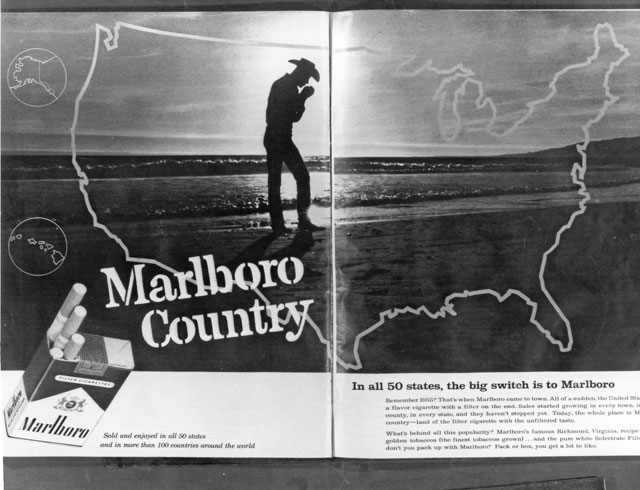
    When he returned, he landed a job modeling for Marlboro. “Clyde Cisco May had it and didn’t want it and gave it to me.” He was photographed in silhouette form for more than a month all over the country. Most of the shots were taken at recognizable landmarks and he wore his hat, spurs, and jeans. He posed with an unlighted cigarette because it took so long to get each shot. “I’ve never smoked or even lit a cigarette,” he said. The ads ended up in national magazines such as “Life” and the “Saturday Evening Post.” That exposure led to stunt work as a bull rider on the television series, “Cowboy in Africa,” which starred Chuck Connors. He also doubled for Michael Landon (Little Joe) on Bonanza and bulldogged a steer for a Buick commercial. He never cared for the Hollywood life, and decided to move on.
    He used his GI bill and went to aviation school. He also met and married his wife of 50 years, Starr. They have two girls, Carry Ila and Ila Carry, and two grandchildren. Herb worked as a flight instructor for two years before becoming a union carpenter. He made that his career for 20 years and moved up to become a business representative for the United Brotherhood of Carpenters until he retired at the age of 70. He took his competitive nature and became a marathon runner. “I finished the LA marathon three times and ran a couple hundred 5k and 10k runs.” He has also been a lifetime supporter of the Braille Institute. “Helping those who are blind or visually impaired is the right thing to do.”
    Herb has no regrets in life. “I’d do it all over again. For 15 years I didn’t have a boss, I got to see the whole world and be around the best guys. I’ve got five acres in Fallon, Nevada. I’ve got a horse, a great wife and family, and I hang out at the sale yard coffee shop (Stockyards Diner), with my friends. The older you get, the fewer friends you have.”