Rodeo Life

Category: Archive

  • On The Trail with Brody Cress

    On The Trail with Brody Cress

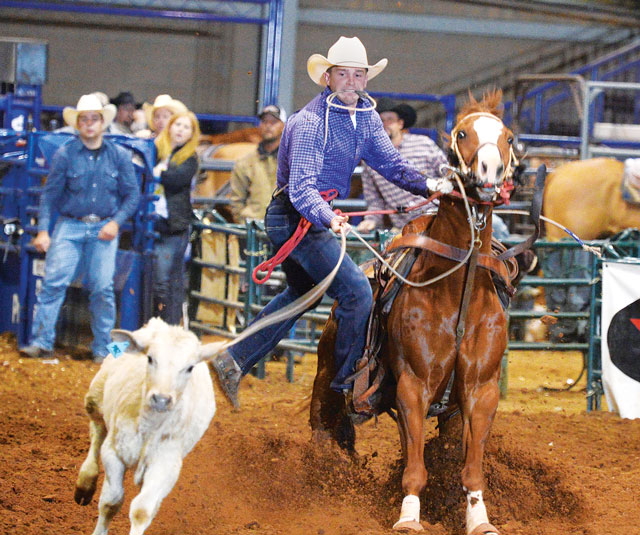
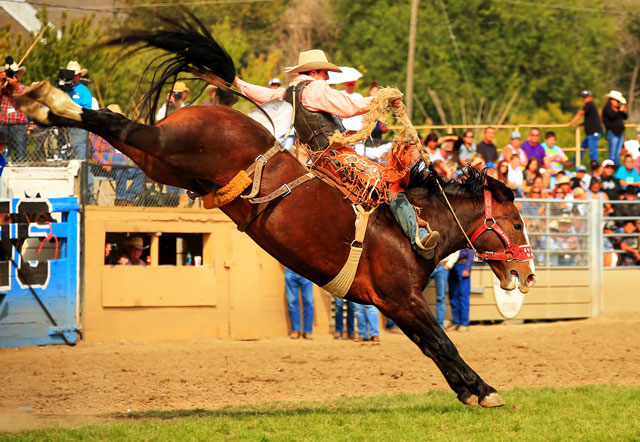
    Brody Cress ended his 2017 season with the PRCA with an 88 point ride on Dakota Rodeo’s Bartender to win the saddle bronc riding championship at the Wrangler Champions Challenge Finale on September 30 in Sioux Falls, South Dakota. “It is an outstanding feeling – the whole year has been. I can’t think of a weekend that I wasn’t able to win some money,” said the 21-year-old cowboy from Hillsdale, Wyoming. “That helps keep it going and keeps it exciting. You can’t ask for a better season. It makes you want to get on a bucking horse every day.” Brody did something that no other cowboy has done – he won Cheyenne, Salinas, and Pendleton in one season. “I didn’t go to any winter rodeos, but I came back to the first one and won and it’s been clicking – I’ve drawn good and it’s been a year of focus and shooting for the finals. I’ve never been this consistent – 90% this year – dang sure knew things were clicking,” he said. “I’ve always shot for going to the NFR. I’ve always thought if that wasn’t a goal, why rodeo. But this year it’s realistic.” Brody will be heading to the Thomas & Mack this December, but not before completing his finals for his Senior year at Tarleton State University where he is majoring in Ag Business. “I won’t be able to walk with the class, but that’s ok.”
     

    This year has been a lot better than last year, when Brody had a horse fall on him and injure his ankle at St. Paul. “After Cheyenne I took the rest of the year off; my ankle was hurting. I couldn’t walk for ten minutes after I got off the horses. Taking the rest of the year helped me refocus on getting to the gym.”

    Growing up, Brody stayed in the practice pen and didn’t ride a bronc at a rodeo until he was a junior in high school. He rodeoed at junior rodeos from the time he was big enough to steer his own horse, competing at Murray’s arena summer series. He was a member of Mountain States Junior Bull Riders, starting as a mutton buster and stopping with steer riding. He started wrestling at the age of six and concentrated on that, showing pigs and sheep, and being involved in FFA. “My dad was our Ag teacher for freshman year, and then moved into principal. I was around his FFA kids all the time, and I was very big into showing pigs and sheep.” He competed in the Creed his freshman year, as well as sales. FFA taught Brody how to interact with people. “I got put in a lot of situations – when I was practicing for the Creed, my dad would take me to speak in places I was really nervous about. It allowed me to learn how to turn an awkward situation into something I could handle.” FFA also helped Brody learn how to speak in front of large groups. “I built leadership skills – as I got older I liked helping out the younger kids.”

    His parents; Tommy and Lannette, both rodeoed when they were younger. “Mom grew up on a ranch, and she was a rodeo queen, and team roped, breakaway roped, ran barrels and poles in high school rodeo.” Tommy college rodeoed for LCCC and the University of Wyoming, as well as pro rodeoed, qualifying for the Mountain States Circuit Finals numerous times. He rode saddle broncs and got on a few bulls in college. Now Tommy is an assistant principal at Cheyenne East High School with 1,500 kids.

    “I’m really lucky to be in this system – these kids are great,” said Tommy. “It’s my 21st year, and times have changed, but the kids haven’t. My wife works as an Administrative Assistant for the Wyoming Supreme Court. She has a lot to do with the success of the boys – she’s the one they call for everything still.”

    “We did everything we could do to support them all along and the lessons they learned – the biggest one is that life’s not easy – and we never made any excuses for them. He’s done this on his own,” said Lannette. “I’ve helped him get plane tickets and motel rooms, but he tells us when and where. Brody was in the bucking horse sale two years ago and Blaze was in the permit challenge two years ago, and we went to one round, but this year it’s going to be so exciting. It’s a dream of our entire family. I’m really proud of Brody – he’s made this his goal and he got it done.”

    “My parents put me in wrestling to get the mental and physical aspects,” said Brody. “I almost wrestled in college. It started when I was six and I won nine state championships growing up. In high school I was the state champion my last three years.” Throughout those years, he would wrestle up to 140 pounds going wherever coach needed him. “I learned how to handle myself. At first when I would lose, I would get frustrated. As I got into high school I learned how to handle my emotions – I had to cut 16 pounds my Sophmore year and I learned how to go through that mentally. Wrestling also helped me learn how to take a loss and not just quit.” Working on the mental and the physical aspects of wrestling really coincides with riding broncs. “You have to give it all you have as long as it takes.”

    Brody gained respect for all of his coaches along the way. “I had such amazing coaches that helped me be a great young man as well as a good wrestler.”

    Both the boys worked on riding broncs for several years before competing on them. “My dad and Colt Bruegman really started us. We were lucky enough to get great horses from JD Hamaker, the Millers, Morgan and John Forbes. Frank Thompson would come pick up for us; we got help from Rick Griego flanking and my friends, Levi Romsa, Zane Thompson, Dax Cathcart, Anthony Green and Clayton Hanzlik helped on the neck ropes and pulled gates. It was whoever we could get to come help. Sometimes we would practice twice a week – as long as it was warm enough. I know during high school it was twice a week. Up until I was a junior that’s the only bronc riding I could do. I couldn’t go to a rodeo until I was a junior in high school. We had an amazing pen of practice horses, at one time we had nine. It was a great pen of solid horses.”
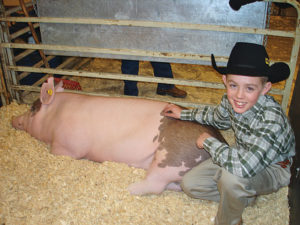
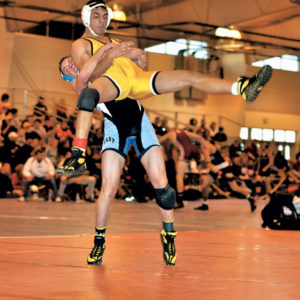
     

    His parents wanted to make sure Blaze and Brody knew what they were doing before they went to a high school rodeo. Tommy’s rule was they couldn’t get on until they were 100 pounds. “They wanted us to learn how to get off, and how to make somewhat of a successful ride – it made it a little more fun. It was still rough – but I won my first rodeo I went to my junior year, so that proved that staying home and learning paid off. Up till this year, there’s been bumps in the road, but I was more successful because I had a good start.”

    Brody is in his senior year at Tarleton State University in Stephenville, Texas. “I picked TSU for one because it’s warmer. I wanted to be on a rodeo team that would send me places and a bunch of people came here that went on to the NFR. This is a prestigious program and the kids know how to win. My coach knows I am moving up to the next level and he’s there for me. He is awesome – he helps us do more than rodeo, to be respectful and handle ourselves in front of people. He’s taught me not to make excuses – I face the fact of what I did wrong and how to fix it.”

    He also chose Tarleton for the academic side. “I didn’t want to waste my time, and this school will let me get it all done – all the way through my masters.” Brody is going for his Masters in Ag consumer science so he can teach. “If I get in situations where I could coach and be able to teach that would be awesome.” Classes start three weeks after the NFR.

    Between now and December 7, Brody will get back into the gym and finish up his undergraduate degree. “I’m going to get back to working out and get everything set for Vegas. One of the trainers, Shawn Ready, has put together a workout for me that I’m starting now that I’m home and settled. It’s hard to work out on the road. We stay in shape by getting on so many horses, and I still have college rodeos. I’d like to get on two or three a week to keep things going. I’d like to slow down some, but I want to keep things clicking.”

    He will be joined in Vegas by his family, including his brother, Blaze, who is working with Eric Wisehart in California training cutting horses. “Blaze has taken his love of riding colts to another level. He got the opportunity to go to California to ride cutting horses for Eric Wisehart. He’s riding two year olds and is getting to cut. We have different focuses in life and he’s in a great spot. We’re both doing what we want to do.”
    For now, Brody is basking in the texts and messages from everyone cheering him on. “It is awesome to be on the road and know there are people watching. It’s great to be a professional rodeo cowboy and know you have fans.” And Brody will warm up the same way in Vegas he has done all year. “I wear my tennis shoes in the locker room, the amount of time I spend jumping around getting ready – this warm up is left over from wrestling, and that makes sure my body is prepared.”
     

  • Roper Review: Makayla Boisjoli

    Roper Review: Makayla Boisjoli

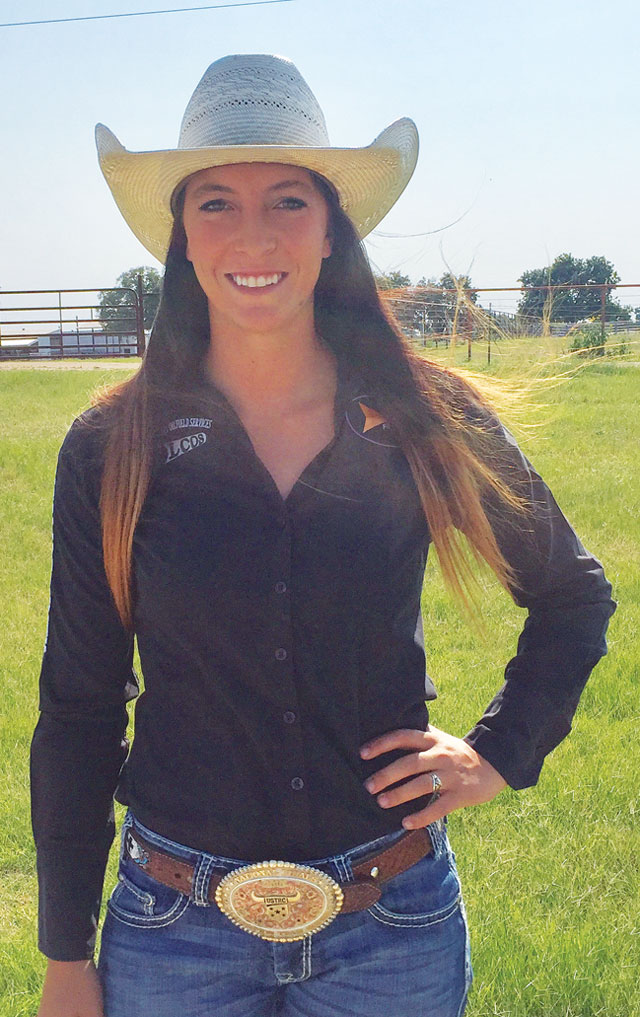
    Almost all parents encourage their children to follow their dreams… but not all parents change their lifestyle or location to help them pursue those dreams. The Boisjoli sisters, (Makayla, 20; Shelby, 19; Marissa, 17) grew up in the small hamlet of Langdon, Alberta.
    “I can remember stories of when my dad cut his thumb off,” recalls Makayla. “I decided then I didn’t want to rope. But when I went to nationals in Pole Bending during junior high, I saw these kids roping the dummy and I was hooked. It took a lot of work because we started later than most kids. Our Dad wouldn’t let us rope horseback until we could catch the dummy 50 times in a row, its harder than you think.”
    Makayla fell in love with roping and focused all of her time towards her goal of making nationals in breakaway. She attributes much of her success to practice drills and late nights at the barn roping the dummy with her dad and sister. The girls started out roping calves and were not allowed to team rope until, four or five months later when Garth felt they handled their rope well enough.
    Frequently on the road with work, Garth didn’t have the time to make a head horse. They refinanced a truck and bought the safest head horse they could find. The girls fell in love with “Handsome,” and couldn’t have asked for a better teacher.
    In January of 2012, Double C and Load ‘Em in the Dark Productions had a truck roping scheduled in Phoenix, Arizona. As true beginners, the Boisjoli sisters were all numbered low because they hadn’t really competed anywhere. After seeing the flyer, Sherry convinced Garth she “felt” they needed to haul the kids from Canada to Arizona for the roping. The “feeling” was right on target as Shelby ended up winning the #3 & Under truck.
    The Boisjolis sold the truck and used the money to buy property in Arizona. This gave the family a winter home enabling the girls to rope more. The girls home schooled leaving friends and other sports for the next two years working on their roping and making horses. With that came another truck and trailer, buckets of buckles, and a tack room full of saddles. The sacrifice was paying off.
    Extremely close, the Boisjoli sisters are tough competitors, both in breakaway and team roping. This summer, while home in Canada, the girls taught over twenty-five eager breakaway students.
    Makayla has chosen to attend college in Texas so she could “compete against the best.” She is currently attending Tarleton University in Stephenville where she is working on her Accounting degree. She plans to pursue a Masters degree and become a C.P.A.

    COWBOY Q&A

    How much do you practice?
    I try to rope calves every day, I make a point of roping the dummy every day, even if it’s just a few times. My dad always preached that to us.
    Do you make your own horses?
    Yes I love when you get a good one that loves what they do.
    Who is your favorite horse?
    Flop is our main man. He has made nine trips to nationals for us girls. He’s come close to a national title and we are hoping he gets one this year before we retire him after Marissa’s senior year. He’s one of the most honest horses I have ever swung a leg over.
    Who were your roping heroes?
    Melissa Reinhart, she was so handy and one of the best girl ropers in Canada. She always took the time to help my sisters and I and I thank her for that. I had always heard of Lari Dee and Jackie Crawford, but never realized how talented they are and hard they work until I got to Texas. I will always look up to my dad. He taught us everything.
    Who do you respect most in the world?
    My mom. She sacrificed everything for us and taught us how important it is to be a good person.
    Who has been the biggest influence in your life?
    My parents, they are giving and hard working; and my sisters because on my best and worst days they are always pushing me to be better. Whatever they are doing, I’m doing, and vice versa we are a pack.


    If you had a day off what would you like to do?
    Anything that involves my family, a game of basketball, go to the lake and ski or just chill on the couch.
    Favorite movie?
    The Notebook.
    What’s the last thing you read?
    Mental Toughness.
    How would you describe yourself in three words?
    Driven, focused, kind.
    What makes you happy?
    Getting to do the things I love: rope and the freedom that goes with it.
    What makes you angry?
    When I see people belittling other people. Rudeness.
    If you were given 1 million dollars, how would you spend it?
    Buy a place in Texas, for my parents and myself and buy my youngest sister a breakaway horse.
    What is your worst quality – your best?
    My best quality is I like to help people; I hate to see people struggle. My worst is I take better care of others than I do myself.

  • Chicken Spaghetti & Pumpkin Cake

    Chicken Spaghetti

    recipe courtesy of Clem and Donna McSpadden

    INGREDIENTS:
    1 (16 oz) pkg spaghetti (wheat, spinach or white)
    1 (10.75 oz) can condensed cream of mushroom soup
    3/4 lb. Velveeta cheese
    1 (10 oz) can tomatoes w/ chile peppers
    1 cup chopped green onion
    4 skinless boneless chicken breasts

    DIRECTIONS:
    Boil chicken breasts, then cut into bite size pieces. Bring a salted water to a boil. Add pasta; cook for 10 minutes; drain. Heat soup in saucepan over low heat; add cheese and melt, stirring constantly. As cheese melts stir in tomatoes w/ green chile peppers and green onion. Simmer 4 minutes over low heat, stirring…Add spaghetti and mix well; stir in cubed chicken. Heat thoroughly and serve. Accompaniment of green salad makes a delicious meal.

    __________________________________________________________

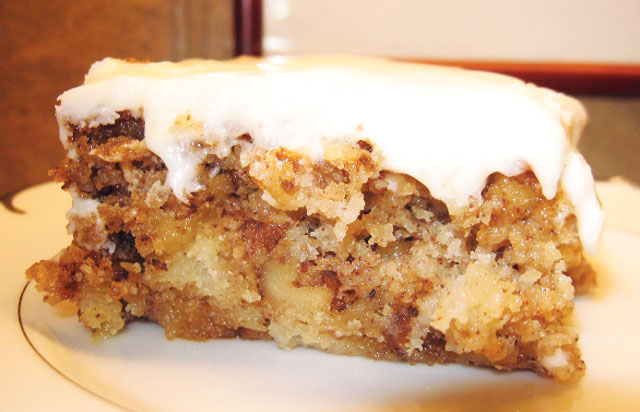
    Pumpkin Cake

    recipe courtesy of Nancy Sheppard, Ridin’, Ropin’ & Recipes

    INGREDIENTS:

    1 cup granulated sugar
    3 eggs, beaten
    One small can of canned pumpkin
    2 tsp ground cinnamon
    1/2 tsp ground ginger
    1/2 tsp salt
    1 can evaporated milk
    1 standard box of yellow cake mix
    1 cup chopped nuts
    1/4 cup melted butter
    Whipped cream topping when done

    DIRECTIONS:
    Mix sugar, eggs, pumpkin, cinnamon, ginger, salt and milk (you don’t need a mixer). Spray Pam in bottom of a 9” x 13” x 2” pan. Pour mixture in pan and sprinkle the dry cake mix on top. Sprinkle the nuts on top. Then pour melted butter over the top. Bake 350 degrees for about an hour. Should be a little brownish on top. Serve warm or cold with whipped topping.

  • On the Trail with Carmen Buckingham

    On the Trail with Carmen Buckingham

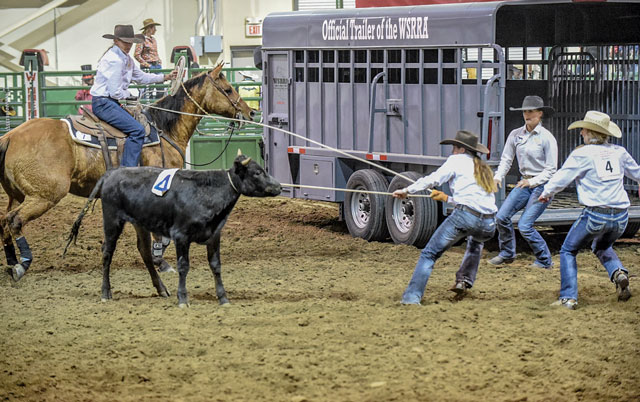
    Carmen Buckingham, from Bruneau, Idaho, was on the winning team at the first Women’s Ranch Rodeo team at the Western States Ranch Rodeo in 2013. That team, representing Outback Stallion Station, included Katie McFarlane, Kim Grubbs, Carmen Buckingham, and Marcia Eiguren. Her team won again in 2016 representing Miller Livestock from Nevada and included Carmen Buckingham, Katie McFarlane, Kayla Tiegs and Bailey Bachman. In between, she rode the 2014 and 2015 WSRRA National Finals Women’s All-Around Horse and was named the 2016 WSRRA National Finals Women’s Top Hand and was on the 2016 WSRRA Women’s National finals champion team. “I am very proud to win this year because this event is usually for men and there are a lot of really handy women and it really shows that. It is very tough competition and I am very lucky to have such a great team,” she said.


    Carmen grew up on a ranch in Mountain Home, Idaho. That’s where she learned her grit and the ways of ranch life. “My parents, Felipe and Mary Fran Aguirre, taught myself, my brothers- Richard and Felipe and my sister-Jeannie to do well, work hard and achieve our goals. I was on the swim team in high school, where my mom was the swim coach but I really like 4-H, riding horses and roping better than I did swimming. I decided to work at a feedlot in Grand View, Idaho during my high school days. This is where I really caught the “cowgirl bug,” Carmen states. “I loved working at the feedlot in high school. I learned how to look for sick cattle and how to treat them; I just loved every bit of the feedlot job. This is where I also started riding colts.”

    In 1992, when she was 18 years old, Carmen got a job offer in Sacramento, California where she worked on a ranch owned by Dwayne Martin. “I worked for Dwayne for year,” she states. The she moved to Eagleville, California, worked for a ranch owned by Simplot and there her daughters Bailey and Sami where born. After her daughters were born, Carmen moved back to Bruneau, Idaho, where she met Tom Buckingham. They will be celebrating 17 years of marriage this year.

    Bailey manages a ranch in Bruneau, Idaho and was also on the 2016 WSRRA National Finals Women’s Champion team. Sami lives in Lucas, Kansas where she keeps busy ranch/farm wife and a new baby boy. “Both of the girls are good hands. They helped us on the ranch,” Carmen says about her two daughters.

    Today Carmen and Tom, own a ranch in Bruneau, where they run mother cows and buy/sell horses. “We look for all-around Quarter Horses that are gentle,” she says. Carmen and Tom keep all their horses for a year just to see what they are like. “We like to know them before we sell them. We might event compete on them before we sell them.” A typical day for Tom and Carmen include riding horses, irrigating, hauling hay, branding calves, checking cows and roping. Achieving the balance of ranch life and ranch rodeo life is something that Carmen does very well. “Competing in ranch rodeos on sale horses is really good advertising for us and having a good horse to compete on is the key to success at the ranch rodeos.”

    Carmen and her ranch rodeo team have qualified for the 2017 WSRRA National Finals in Winnemucca, Nevada, November 2-5. “We don’t practice together; we just have the same style. You can say we just fit,” Carmen states about her 2017 WSRRA National finals qualified Women’s ranch rodeo team. Carmen also believe that it takes a mental and physical stagey to win such a big event. “We get together before each event and make a plan.”


    Author’s Note: I have learned a couple of really important lessons from Carmen. Cowgirls have a different touch of nature, you see, it’s a fact that cowgirls aren’t as strong as men but their finesse and teamwork is really inspiring to me. Watching Carmen and her team compete at a national level is a real example of team work; they know what to do and where to be. They finesse their horses and roping abilities to get the job done in fast times. Another thing that I have discovered is that these cowgirls are a true testament to sportsmanship. They are humble and efficient. They encourage each other. They all have class.

    __________________________________________________________________________

    WSRRA Women’s Ranch Rodeo Team

    Katie McFarlane, Kim Grubbs, Carmen Buckingham, and Marcia Eiguren

    There is a special group of cowgirls that aim to empower women who believe in showcasing their skills and determination in the arena and out.
    The world doesn’t seem to know these cowgirls but the ladies that compete in ranch rodeos are changing all of that. You see, these cowgirls have grit and know how to get a job done. They have no problem sorting and roping cattle, they can doctor sick animals, they can load and tie a calf, they can rope and brand calves and can put a handle on a ranch horse. They also have no problem pulling a rig down the highway, pulling a calf, and working right along with cowboys, they include mothers, daughters, sisters, grandmas, and wives who raise families, hold day jobs and help run ranches. They will do whatever it takes to get the ranch work done. The start of their day usually starts at the break of dawn. Whether it’s branding in the spring or fall roundup, these ladies know cattle. On the weekends, your will find them, competing in ranch rodeos-a true western sport that starting in 1900’s, and one that is preserving the heritage of the West.
    Women that compete in ranch rodeos have to have strength, good roping and riding skills, and raw courage. The secret of success is the bond that these ladies develop working together. Many of these cowgirls, either come from the same ranch, or neighboring ranches, have known each other for years, through marriage and friends. They trust each. They believe in each other. Take their cowgirl attitude and put it to work on top of a good, athletic horse in an action-packed timed event and you have an event that is worth watching.

    “Ranch rodeo really promotes team spirt because if you don’t work together you probably won’t do good.” Carmen, her team and all of the contestants will get to showcase their talents and abilities in authentic ranch events replicated in a competition setting.
    Ranch rodeos are team affairs for working cowboys and/or cowgirls, who compete in events that mirror the daily activities of ranch life. These outstanding women are a shining example of the fact that the women’s division of the WSRRA can compete in and expand the sport of ranch rodeo.
    The WSRRA National Finals in Winnemucca, Nevada is an entertaining demonstration of traditional cowgirl skills. The contestants showcase their talents and abilities and those of their horses in authentic ranch events replicated in a competition setting. “Ranch rodeo really promotes team spirt because if you don’t work together you probably won’t do good,” stated Carmen.
    Fifteen outstanding ladies will be competing in the women’s division of the WSRRA National Finals in Winnemucca, Nevada, November 2 -5. These 4 days will showcase cowboys and cowgirls from across the western states and Canada.

  • Back When They Bucked with Bob Ragsdale

    Back When They Bucked with Bob Ragsdale

    story by Steve Alexander, Blaine County Journal; PRCA, and Siri Stevens

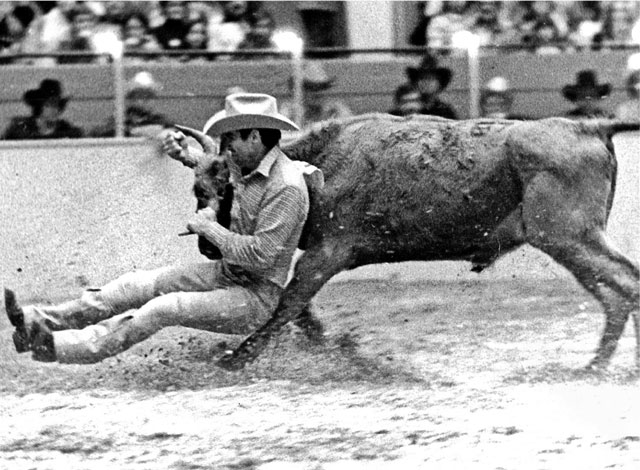
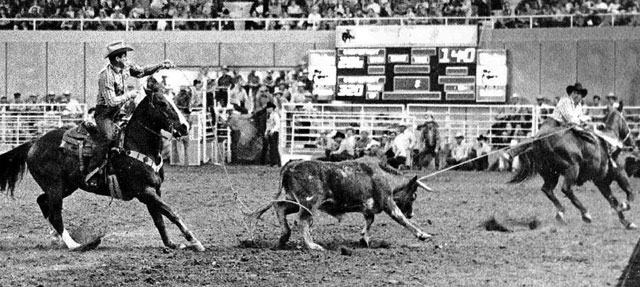
    Bob Ragsdale was an all-around Montana cowboy, competing in steer wrestling, as well as calf roping and team roping. He qualified for the National Finals Rodeo on 22 separate occasions. Bob never won a world title, but his impact on rodeo has been profound.
    He was the Montana High School All-Around Champion in 1956, and became an official member of the PRCA in 1961. He was one of only six left-handed tie-down ropers to qualify for the NFR, and he did so for 15 consecutive years from 1961-75. In that 15-year span, he finished as high as fourth in the world, and never lower than ninth. He competed at the NFR in steer wrestling five times, with two qualifications in team roping as well. Bob earned nine Top 10 finishes at the NFR in the all-around, including a second-place standing in 1972. He continued his support of rodeo by serving as the Vice President (1971-72) and President (1973-75) of the Rodeo Cowboys Association, and is credited as the one to propose the association include “Professional” to the organization’s formal title in 1975. – courtesy of PRCA
    Bob was born October 23, 1936 in Harlem, Montana. His father, Slim, always had horses and the family split their time between farming and living in town. “Wherever we were living dad would have horses and they would wander from north of Harlem to the Canadian border.” Bob’s mom told a story about a man coming to the house to see if Bob would round up some horses for him. When the man was introduced to Bob, and saw that he was just a little kid, the man said, “those horses are big,” to which Bob replied, “I’ll take a big rope.”
    Bob competed in the Montana High School rodeo. “Back then there was no divisional or regional rodeos, you went to state for a tournament that anyone could enter so long as you preregistered. I won Montana All Around and went on to the high school Nationals in Reno. I placed in a couple of events, but no wins.”
    In October, right out of high school, Bob went to the Toots Mansfield Roping School in Texas. “He was a great guy; he showed me how to ‘flank’ a calf. At the time most professional ropers were legging calves. That immediately took a couple of seconds off my time.” To cover the expenses of getting to Texas and paying for the roping school Bob and his dad went to the bank in Harlem and borrowed $300 for the month-long school.
    Bob met his wife, Ree, through high school. “We both went to the high school rodeos.” Ree and Bob married in December 29, 1956, after he completed the roping school and returned to Montana. “It was a pretty busy year.” He worked in the oil fields in the winter and that next summer, in 1957, went back into rodeo, working in Yellowstone Park and the following summer at the Cody Night Rodeo. “It was a rodeo,” Bob said, “but it was really a tourist show. We would work maintenance on the grounds for half the day, then do the rodeo show. They were looking for a calf roper, bulldogger and bareback bronc rider. That was 1957 and it was the last time I ever got on rough stock in the rodeo.”

    In 1958 the couple welcomed twin girls, Cathy and Cindy; then another girl, Jamie, in 1961.
    “With plans to ‘fill my permit’ with the RCA (becoming a member of the Rodeo Cowboys Association, later the PRCA) at the end of the rodeo season in 1961,” Bob said, “I won big at a rodeo in Caldwell, Idaho. The RCA representative for that region was waiting for me and said, “You had better have your permit before you show up at the next RCA rodeo.” Members of the RCA resented non-members winning and reducing members’ chances to go to the year-end national rodeo.”
    He moved his family to Chowchilla, California, in 1961 at the invitation of a farmer/rancher who also was a roper. “Dan Branco had a place where we could keep horses and practice roping.” They saved enough money rodeoing to buy a place there and that was home until just a few years ago when they retired. They now spend winters in Bakersfield, California and summers at their place in Landusky, Montana.
    Beginning in 1961, for the next fifteen years, Bob made his living roping calves, steer wrestling and team roping. “I followed the money to choose rodeos. In the 1960-70’s I’d go to 90-100 rodeos a year. If I got into a slump I’d do a small rodeo to earn some money and get back on the RCA (PRCA) tour for the bigger rodeos.” He drove a station wagon and it was equipped with a grub box. “We’d camp out – the twins were small enough they could sleep in the front seat and Ree and I slept in the back.”
    Because Bob roped left handed, he had to have horses that were comfortable seeing the rope on their left side. “A horse could be startled if it wasn’t used to a left-handed roper, which meant I had to have my own horse, sometimes more than one horse to keep up with the rodeo schedule.” He said often Ree and the kids would be driving one rig, pulling a horse trailer toward an upcoming rodeo, and he would be pulling a different horse to another rodeo on his schedule.
    He not only competed, he gave back to the industry through his service as an office holder and active volunteer in a number of rodeo associated groups and as a spokesperson for rodeo. After that, he continued competing in the National Senior Pro Rodeo Association, winning three All Around titles, four calf roping titles and one ribbon roping title.


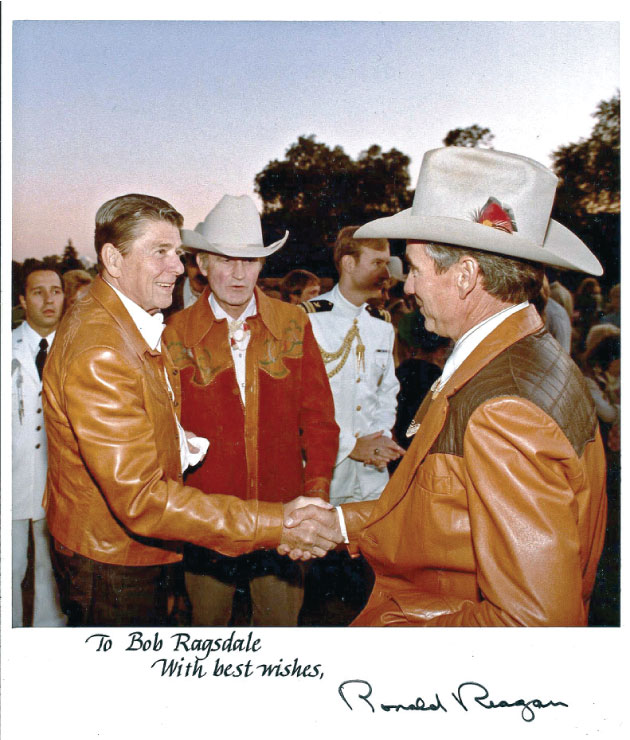
    In 1983 Mac Baldrige, the U.S. Secretary of Commerce under President Ronald Reagan, organized an ‘exhibition’ rodeo for the President and selected guests. He asked Bob to rope in the exhibition which was staged in an arena just outside Washington, DC. Bob also helped create Friends of Rodeo (FoR), a non-partisan group that responded to animal rights issues. “Through FoR we did a better job of telling our side to the media and even instituted ‘chute tours’ so critics and media personnel could see reality about animal treatment.” Bob served as President of FoR and was on governing boards of several other rodeo related organizations, including the Senior Pro Rodeo executive board, during the 1990’s.
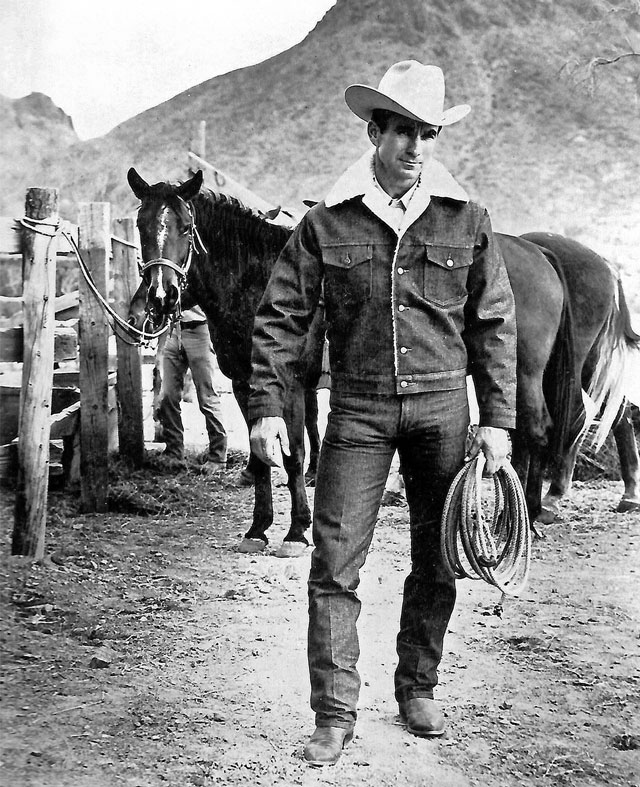
    From 1973 to 1981 Bob worked for Sears as a consultant for the company’s western wear brand of clothing. “There were several professional cowboys interviewed and I was chosen to help Sears with their western wear line of clothing.” He described his role as “helping Sears clothing buyers and designers meet with rodeo fans and cowboys to see what kinds of clothing they were wearing or would like to see available. I even went to some of the markets with the Sears buyers to help choose the clothing for the next year’s catalog.” Bob often was photographed in Sears western wear for their catalogs and in 1973 was on the cover of the annual western wear catalog.
    In the last two decades he’s been recognized with a number of inductions into rodeo related organizations: the St. Paul Rodeo Hall of Fame, St. Paul, Oregon (2001); the Senior Pro Rodeo Hall of Fame (2001); the National Cowboy and Western Heritage Museum in Oklahoma City (2003) and The Montana Pro Rodeo Hall and Wall of Fame in Billings. His latest accomplishment happened a few weeks ago in Colorado Springs, where he was inducted into the PRCA ProRodeo Hall of Fame. “It was a great event. I had no idea what to expect – I’ve never been to one before. This was the best one – it was developed by the professional cowboy.”
    Bob and Ree saw the world through his rodeo career. Cathy Watkins, one of their twin daughters remembers going to Hawaii with her parents as a result of Bob’s rodeo career. “After Denny (Cathy’s husband and a professional team roper) and I were married we were visiting mom and dad and a guy drove up into the yard. He was from Hawaii and wanted dad to come to Hawaii and teach a roping school. We all went to Hawaii and while dad taught ropers the rest of us were treated to the sites of the islands. I think it was at that point I realized just how special my dad’s role was in rodeo-he was known all over the world. My sisters and I got to see a lot of things and meet a lot of interesting people because of his career choice.” As to interesting people, Cathy told about meeting a fellow teenager she and her sister met while traveling with their dad. The teenager played the guitar and the girls all sang together. The guitar player was Reba McEntire, whose dad and older brother were both accomplished ropers. “Of course none of us kids, at that time, had any idea of how Reba would develop into a famous singer and actress.”
    For Bob, the biggest change in rodeo is in the rodeo competitors and the amount of money they make. “When I first got into professional rodeo, most of us were cowboys. The competitors now are truly athletes, devoting their lives to the sport and continually doing things to improve their ability to compete.” In the old days, “We often had to work other jobs between rodeos to keep our families going.”
    And the winnings have increased. “When I was RCA All Around runner up at the NFR in 1972, I think first place for All Around paid about $40,000. That number now is in the neighborhood of $300,000-400,000.
    “Whatever I’ve been able to accomplish has been through rodeo. I tore my knee up in 1976, and started looking for other things to do. But I had put enough away and then I got into the construction business. Everything I was able to do was because of rodeo.”

  • Back When They Bucked with Ken Adams

    Back When They Bucked with Ken Adams

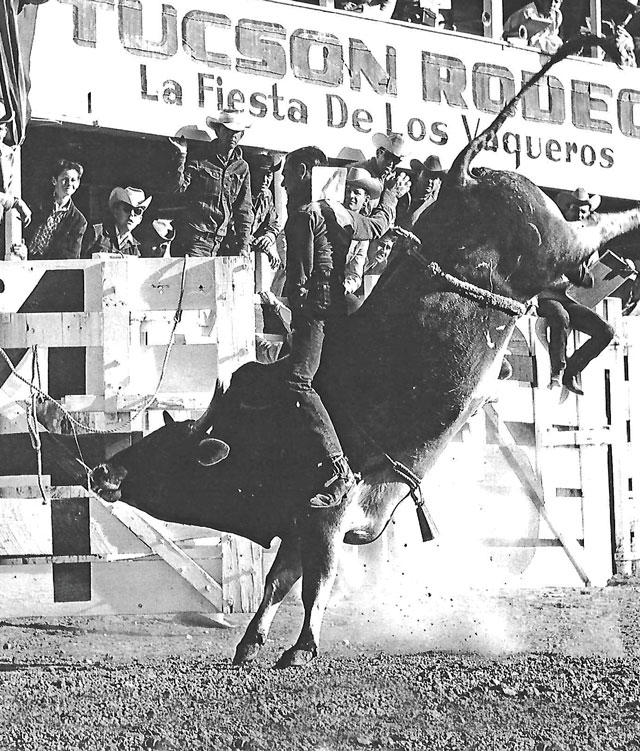
    In 1957, Ken Adams was the year-end NIRA Bull Riding Champion. The Arizona cowboy qualified four times for the CNFR and competed there twice when it was held in Colorado Springs, Colorado. As a college student on a shoestring budget, he used his winnings to buy books while attending Arizona State University, and his experiences inspired him to start a scholarship for the NIRA Bull Riding Rookie of the Year four years ago. Since then, the NIRA Alumni have created a scholarship for the rookie of the year in each event, and in 2017 alone, they contributed $10,500 in scholarships to the CNFR.
    Born in 1933 to Kenneth and Gladys Adams, Ken was the second of three boys. His parents had moved from Missouri during the Great Depression, and while en route to California, Ken’s dad was offered a job driving delivery trucks in Arizona. The family stayed and made their home near Phoenix, and Ken got his first job riding horses with a girl his age at a livestock auction nearby when he was 11 or 12. “I hadn’t ridden at all to speak of – we just started riding whatever horse we could a hold of,” Ken recalls. “We got a dollar apiece riding horses for them back in the ‘40s. I guess people thought it was a pretty good horse if a couple of kids could ride it, but anyone could ride in that ring.”

    Not long after that, Ken started riding calves and cows in junior rodeos around the area, catching a ride with anyone who had a car. “I think the first time I ever won money, I was riding cows. The horses didn’t show up to the rodeo, so I got into cow riding. Someone would give you tips, but mostly they just let you get on and learn. There were no schools, and I didn’t have anybody I traveled with that was older, so all of us were pretty much in the same boat. I think the opportunities to learn are much improved now, and the biggest thing to me is videotaping performances to watch them and learn.”
    Ken continued riding roughstock in the bareback and bull riding, though he won the most riding bulls. “I think at the time I had really good balance, and it was easier to find bull ridings than anything else.” Ken also worked on two or three ranches during high school, including the Boquillas Ranch, which now belongs to the Navajo Nation and is in the top 25 of the largest working cattle ranches in the United States. “I gathered horses for them, and then I’d enter rodeos and hope I learned something every time. The Palace Bar in Prescott was like an employment agency. Ranchers who needed a cowboy would go in there, or if you needed a job you went in there,” says Ken. He also worked at the copper mine in Baghdad, Arizona, for several months, living on site and hauling debris from the mill, but he hadn’t been there long when he was drafted into the Army during the Korean War. Although the cease-fire was signed by the time Ken finished basic training, he still shipped to South Korea where he drove supply trucks. “There was not much glamour in our jobs, unless you wanted to eat! Seoul was pretty much a mess – it had changed hands four times, but those trucks we had could go pretty much anywhere. All the roads were narrow and dirt, and in the summer they were very dusty. They had huge trucks, but the ones I was driving were three axles.”
    Ken was discharged from the Army in 1955, and he enrolled at Arizona State University in 1956, majoring in animal science. Though he had dropped out of high school, he finished his GED in the Army, and he joined the rodeo team and competed in the West Coast Region. He even tried his hand at steer wrestling. “I wasn’t too good in timed events. I told everybody I had a record in the bulldogging – I was in the bulldogging seven or eight times and never got a flag,” Ken says with a laugh. He was helped along the way by college teammates John Fincher and Jon Nickerson. Ken enjoyed rodeoing in California and as far north as Klamath, Oregon. He was also a member of the RCA when a membership cost $10, and on summer breaks, he competed in Colorado, Utah, Texas, Arkansas, and Missouri, though many of his favorites were in Arizona, such as Phoenix, Prescott, and Tucson. “Some of the little towns didn’t have anything (like motels) to sleep in, so we’d sleep in the back of a car. You stayed in rooms when you were prosperous, and we’d split rooms with three or four people usually.”

    Ken met his wife, Sharon, at school, and they were married after he graduated and she finished her teaching certificate. “We got married in July of 1960. I’d been teaching school for a year, and Ken won second in the bull riding at Prescott, so we had enough money to get married,” says Sharon. After he finished college, Ken was a brand inspector for several sale barns, then went into the crop spraying business with his brother-in-law before finding his niche in the animal health business selling medicine. Though Ken quit rodeoing not long after they were married, he stayed involved with rodeo by judging several of the law enforcement rodeos a college friend of his organized, along with jackpot bull ridings. In the late 1970s, one of Ken’s friends Stan Harter, a college champion tie-down roper, asked Ken to be the manager of the PRCA Turquoise Circuit when the circuit system was just getting started. Ken served on the board for three or four years and helped put on the finals, along with soliciting saddle donations. “The Turquoise Circuit Finals Rodeo was in Phoenix at the fairgrounds, and for some reason, there was a mix-up one year and all of the trophy saddles got shipped to our house!” says Sharon. “Each saddle came in a big box, and we had them everywhere in the house because we couldn’t leave them outdoors.”
    Ken became involved in the NIRA Alumni when he attended the NIRA reunion in Rapid City, South Dakota, in 1997, the 40th anniversary of his NIRA bull riding championship. The following year, his friend Stan Harter was waiting for a kidney transplant, and he asked Ken to represent him on the NIRA Alumni board during the annual meeting. Together, Ken and NIRA founder, Evelyn Bruce Kingsbery, put together the 50th Anniversary Reunion of the NIRA in 1999, and Ken was president of the NIRA Alumni from 1999-2001. Sharon served as the NIRA Alumni secretary for 12 years, and Ken continues to serve on the board of directors. He hasn’t missed a performance of the CNFR since he started attending 20 years ago. When he started raising money for his bull riding rookie of the year scholarship, his plan was to ask former champions to donate $100 each, and by the next year, donations were coming in to provide scholarships for all nine college rodeo events, including team roping header and heeler. “I never had a scholarship, and even the year I won, I was never offered a scholarship,” Ken explains. “They’re giving quite a few scholarships now, but I just thought the rookie scholarship was something somebody wasn’t already covering.”
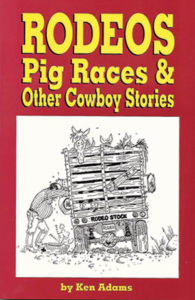
    When they’re not off to the next CNFR, Ken and Sharon make their home in Phoenix, not far from where Ken grew up. They have a son, Ira Adams, and daughter, Adrienne Schiele, and her husband, Mark Schiele, while Ken and Sharon’s two grandsons, Mike and Matt Schiele, live in California. Ken stays current with rodeo via television and never misses a rodeo or bull riding, while he wrote and published a book of short stories about rodeo called “Rodeos, Pig Races & Other Cowboy Stories.” He and Sharon continue their passion of supporting the NIRA and alumni, and they are searching for all NIRA champions, top finishers, faculty, and board members from years ending in eight to join them for the 2018 Annual Reunion.

  • On The Trail with Cooper Nastri

    On The Trail with Cooper Nastri

    With the flick of a wrist and the twirl of an arm, Cooper Nastri has entertained scores of rodeo audiences up and down the East Coast in the last six years. The 17-year-old trick roper, who alternately makes his home in Ballston Spa, New York, and Screven, Georgia, became one of rodeo’s youngest trick ropers in the country when he started performing at 11. Yet he was no stranger to the roping world before that. Cooper had already been competing in rodeos for several years, and is even named after the Super Looper himself, Roy Cooper, but his decision to become an entertainer was a surprise to his parents, Carmine and Sheri Nastri. “Cooper was real shy when he was little, and when he said he wanted to trick rope, I was impressed that he wanted to get in front of an audience and do something like that,” says Carmine. “His work ethic has always been really good, and when he decided he wanted to trick rope, he practiced seven days a week for hours. It turned him right out of his shell, and he’s not very shy anymore.”


    Cooper originally wanted to be a rodeo clown and worked with Dusty Barrett as a rodeo clown and helped Hollywood Harris a couple times but he first saw trick roping when Mark Madden came to the Natri’s home and showed him several tricks. He’s also met professional trick ropers including Anthony Lucia, who performed on America’s Got Talent, and Austin Stewart, who also performed on America’s Got Talent, and at Dolly Parton’s Dixie Stampede. “Mark Madden helped me a lot with my trick roping. A lot of people don’t understand that it’s very easy once you figure it out, but it takes a lot of time to learn,” explains Cooper. “I was really impressed by it, and you get paid every rodeo. I try to get one of my family members to video me every time I perform so I can watch and see if there’s anything I need to improve. I watch a lot of horse training videos, too.”

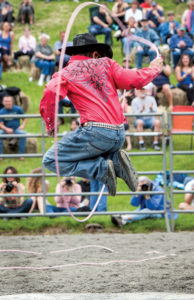
    Cooper started by performing at open rodeos, then worked his way up to events like the Painted Pony Rodeo in Lake Luzerne, New York, and Cowtown Rodeo in Pilesgrove, New Jersey, which his grandfather, Dusty Cleveland, has announced for many years. He also performs in Georgia, and was honored to trick rope at AFR 35 and AFR 39. The materials are simple enough – Cooper buys 100 feet of cotton spot cord and cuts it into the four different lengths he performs with. The shortest is 15 feet, and the longest is 50 feet, which he uses to perform a trick called the wedding ring. “The first trick I do is the butterfly, and some high spirals. The big trick I really like is the Texas Skip, which is the hardest trick in the book to do. That’s where the rope is on one side of you, and you jump back and forth through it. I feed off the crowd, so if I can tell the crowd doesn’t like something, I might stick something new in there. Keeping the tricks tuned up is probably the most challenging. I’m pretty busy riding horses every day, so I don’t get to practice as much as I’d like to. Once I get to a rodeo I might practice before the performance. I try to keep the tricks pretty snappy and tuned up.”

    This year alone, Cooper will perform in 45 rodeos, many of which are APRA rodeos that he enters in the team roping with his dad or Robbie Erck. Cooper is also practicing his tie-down roping, but prefers to team rope in the USTRC and APRA. He changes footwear – going from sneakers to boots since sneakers allow him to jump higher during his performances – and often heels for his dad. Carmine is a 24-time PRCA First Frontier Circuit Finals Champion, and he’s won the APRA six times between team roping, tie-down roping, and the all-around. He’s competed in the APRA on and off since the 1980s, and his wife, Sheri, is also a First Frontier Circuit Champion in the barrel racing. She team ropes every October at the USTRC Cruel Girl Championships with her partner, Kim Breyo, and has competed in the APRA in the past. “She backs us 100%,” says Carmine. “She drives, rides horses, and helps keep this whole thing afloat. Whether it’s the four of us here or we have ten cowboys staying with us, she keeps everything going.”


    Sheri’s grandfather, Harry Cleveland, was the Painted Pony Champion Calf Roper in 1953 when it was part of the Cowboys’ Turtle Association, and he taught many of his generation in the Northeast how to rope. Her dad, Dusty Cleveland, taught her how to rope, and he comes to several Painted Pony Rodeos a year to watch Cooper and his sister, Shelby, compete. Shelby is also an APRA member, competing in breakaway roping and barrel racing, and her senior year of high school, she was the NYSHSRA barrel racing and all-around cowgirl champion. She holds her WPRA card, but primarily competes in the APRA, and her goal is to qualify for the association’s finals in the next few years.

    The Nastris put on several roping schools each year with ropers including Speed Williams, Roy Cooper, and Rich Skelton, all friends of Carmine. They also hold weekly roping lessons, and Carmine takes in outside horses to train, along with buying young horses he turns into rope horses. “One of the head horses I made and sold was voted Head Horse of the Bob Feist Invitational this year,” says Carmine. Cooper, who is homeschooled, helps with all of the training and riding, and has become especially passionate about the horsemanship side of roping. “When people come for lessons and have horsemanship questions, Cooper’s a fanatic about it – he’ll spend 15 minutes answering the question.”

    Cooper helped finish his own roping horse, Shorty, a bay gelding that stands 14.1 hands high. “He’s a pretty cool little dude. He’s really stout, so I can head on him, heel on him, and rope calves on him,” says Cooper. “He’s got a lot of grit.” Every year since 1987, the Nastris load all of their animals and spend their winters in the southeast corner of Georgia. “We’ve got a pretty good routine, and we know how to get things packed in a hurry and get the trailers organized,” says Carmine. “My mom, Patricia, spends the winter months with us. She’s been a big supporter all my life and pushed us to do whatever our dreams are.

    “The nice thing about the summer rodeos up here is that they’re all really close,” Carmine adds. “Painted Pony Ranch does two rodeos a week, and they’re only 27 miles away. My daughter, Shelby, works at a western store in town, and she can come home, practice a little, and go to the rodeo. We live right next to Saratoga, where the big thoroughbred race track is. For Shelby’s birthday, we went to the Saratoga Race Track and took the day off riding and roping.” Sheri adds, “We’re usually all in the arena, but every now and then we take a day off to go to the movies. Our vacation every year is to go to the US Finals, and go to Rich Skelton’s and see Speed Williams.” Cooper plans to continue trick roping, but he has a growing passion for horse training. “One of the biggest things I want to do is go work for a top horse trainer like Bob Avila, Jay Holmes, or other AQHA people,” he finishes. “I’ll still trick rope now and again, but that’s the biggest thing I’m working on.”


  • Salmon Patties & Apple Snack Cake

    Salmon Patties
    in memory of Mrs. Paul (Velda Barnhart) Morehouse
    from The Pioneer Journey Cookbook

    Ingredients:
    1 can (15 ½ oz.) salmon
    1 cup fine dry bread crumbs
    ½ cup chopped onion
    ¼ cup chopped parsley
    2 eggs, beaten
    2 Tbsp. lemon juice
    ¼ tsp. pepper
    2 Tbsp oil
    Lemon wedges


    Directions:
    Drain salmon, reserving 1/3 cup liquid; flake. Combine salmon with bread crumbs, onion and parsley. Add reserved salmon liquid, eggs, lemon juice and pepper and mix well. Shape into patties. Fry salmon parties in oil over medium heat until lightly browned on both sides. Serve hot; garnish with lemon wedges. Makes 6 servings.


    Apple Snack Cake
    recipe courtesy of Nicki Ulberry

    Ingredients:
    1 ¾ cups sugar
    2 cups flour
    1 tsp. baking soda
    ½ tsp. salt
    3 eggs
    1 cup oil
    1 tsp. cinnamon
    ¼ cup milk
    1 cup chopped nuts
    3 cups apples

    Directions:
    Mix eggs, oil, cinnamon, salt, soda, flour, sugar and milk; mix well. Add in nuts and apples. Stir until well blended. Bake are 375 degrees for 45 minutes in an ungreased 9×13 inch pan. Can use 2 round cake pans. Can frost or eat as is, warm.

  • Roper Review: Wesley Sims

    Roper Review: Wesley Sims

    Happy, Texas, is a very small town in west Texas, south of Amarillo. That’s where Wes and younger brother Wyatt, grew up and caught the calf-roping bug. In the beginning, without cattle, the boys would sit on their horses in the yard and rope the dummy.
    Once they got calves, the boys tracked them around the arena and started entering Junior Rodeos and play days. During the summer Wes and Wyatt would spend a week with their brother-in-law, Josh Tim, who was instrumental in their training.
    “Everywhere we went in Happy, people would help us and give us pointers,” says Wes. “We were constantly picking people’s brains on technique and things we could do get our horses to work better.”

    During his early high school Wes started spending time with Johnny Johnson, a local calf horse trainer, where his horsemanship made vast improvements.
    “We would show up and he would put us on his horses. I might ride a horse once and never get on him again,” explains Wes. “He would mount us whenever we needed. He helped us a lot and gave us a chance to practice. “
    “Riding so many different horses has helped my confidence. If I show up at a rodeo, it doesn’t bother me to ride someone else’s horse, even if I’ve never been on him. Last fall my horse got crippled the day before a college rodeo. I got on roommate’s horse, that I’d never ridden, and placed.”
    Wes, 21, is currently working on his Accounting degree at Tarleton University in Stephenville, Texas, with plans to pursue a Masters degree in the same field.
    Wes received an Associates Degree from Weatherford College where he was part of the rodeo team. Wes gives credit to rodeo coach, Johnny Emmons, for helping him with his roping.
    “I wanted to go to school in the Stephenville area to experience the challenging competition. There are so many good cowboys in this area, even the amateur rodeos are pretty tough.”
    When not in school, Wes works at Fast Back Ropes in Granbury, doing everything from tying knots, sewing burners, to working in the office. Wes enjoys competing at amateur rodeos in Texas and plans to get his PRCA permit in the next year or so.

    COWBOY Q&A
    How much do you practice?
    When I’m home, usually every day.
    Do you make your own horses?
    I finished the horse I’m riding now.
    Who were your roping (rodeo) heroes?
    Tyson Durfey and Scott Kormos.
    Who do you respect most in the world?
    My brother, Wyatt.
    Who has been the biggest influence in your life?
    My parents. They’ve taught me to work hard and appreciate what I have.
    If you had a day off what would you like to do?
    Take a day trip. There’s lots to see in Texas.
    Favorite movie?
    Dallas Buyers Club.
    How would you describe yourself in three words?
    Hardworking, dedicated, student of the game.
    What makes you happy?
    Going to a rodeo.
    What makes you angry?
    Bad drivers.
    If you were given 1 million dollars, how would you spend it?
    Buy a place and invest the rest.
    What is your worst quality – your best?
    My best quality is I’m pretty easy going; my worst quality is sometimes I’m too hard on myself.
    Where do you see yourself in ten years?
    Working as an accountant and going to pro rodeos.

  • Back When They Bucked with ProRodeo Hall of Fame

    Back When They Bucked with ProRodeo Hall of Fame

    courtesy of PRCA, photos by Rodeo News

    Stars converged at the ProRodeo Hall of Fame Saturday as a new class was enshrined into the prestigious Hall.
    Randy Corley, a 12-time PRCA Announcer of the Year, joined five world champions to headline the 12-member 2017 induction class.

    12-time PRCA Announcer of the Year Randy Corley with Stace Smith

    Corley, along with gold buckle winners including the late Buck Rutherford (all-around, 1954), Enoch Walker (saddle bronc riding, 1960), Tommy Puryear (steer wrestling, 1974), Mike Beers (team roping, 1984) and Cody Custer (bull riding, 1992), were enshrined with rodeo notable Bob Ragsdale, a 22-time National Finals Rodeo qualifier in three events.
    Also inducted into the Hall were four-time bareback horse of the year, Christensen Bros.’ Smith & Velvet, and the committee for the Ogden (Utah) Pioneer Days.
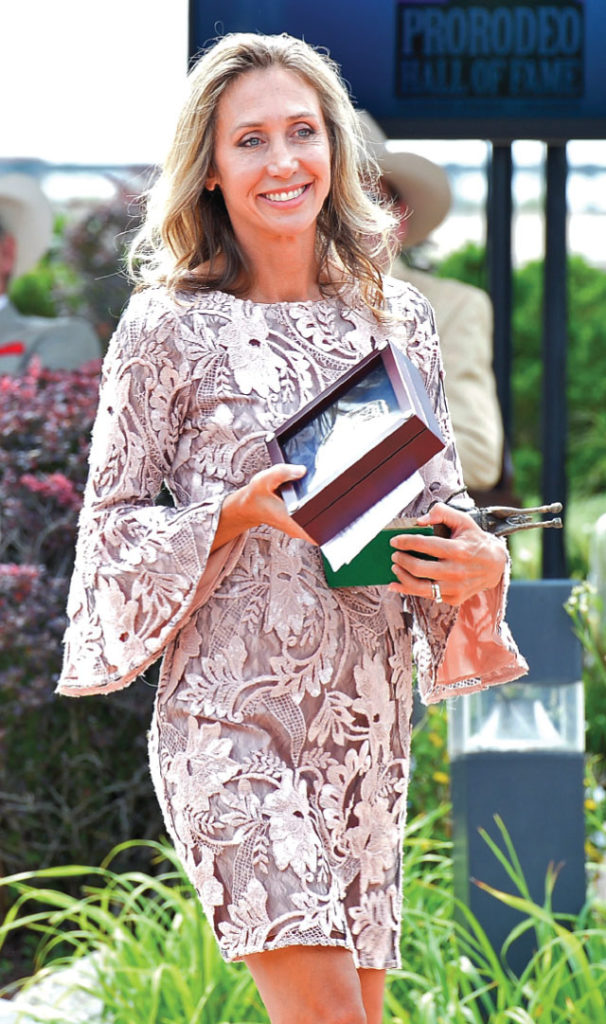
    For the first time in the history of the ProRodeo Hall of Fame, barrel racers from the Women’s Professional Rodeo Association (WPRA) were amongst the class of inductees. Their inaugural class was comprised of Wanda Harper Bush, Charmayne James and a joint PRCA/WPRA equine inductee – Star Plaudit “Red.”

    Corley’s résumé is ProRodeo Hall of Fame worthy. He has been selected PRCA Announcer of the Year 12 times (1984, 1990-96, 1998, 2003, 2011 and 2015). He also has been an announcer at the National Finals Rodeo 16 times (1985-86, 1992, 1994-96, 2007-2016).
    “It was the worst night of sleep I had (Friday night) in 45 years,” Corley said. “I just think it was nerves. There are 259 people in the Hall and that’s not a huge number for a Hall that opened in 1979. I’m in a pretty select group and I’m so honored. My whole thing is cowboys are the stars. When they are nodding their head, you’ve already told everyone who they are.
    “That’s what I strive for, and have forever, and to be a good person to everybody, inside the arena and outside the arena. Those are the deals that I think make you a better announcer because then you’re true, and true is the best way to announce.”
    Puryear qualified for the NFR nine times, eight of which were consecutive, from 1971-78, and then again in 1983. The Texas bulldogger also won the gold buckle in 1974 and the NFR average title in 1976.
    “This day is something that you never plan for when you’re out rodeoing. I’ve been ready for this to happen so I can stop thinking about it – it’s something you think about every day since the call that you’re in the Hall of Fame,” Puryear said. “One of the main reasons I’m here today is because of the people I had around me who supported and helped me. So many friends and family contributed to this. I never owned my own horse – I always traveled with horsemen and stayed in a positive rig. We’d go to 120 rodeos a year, and we loved every second of it.”

    Charmayne James

    Puryear first joined the PRCA in 1970, and now, 47 years later, he’s recognized as one of the best steer wrestlers in PRCA history.
    “Leon (Bauerle) and I rode up to Colorado Springs together – we didn’t fly, we drove up in the truck from Texas together just like we used to,” Puryear said. “It was one for the road and to relive the old times, and we still get along really well. Leon was always easy to travel with, as long as you agreed with him. But a great deal of the credit for me being here is due to Leon and his horses.”
    Rutherford was inducted into the ProRodeo Hall of Fame more than half a century after he was topping the world standings across four events – bareback riding, saddle bronc riding, steer wrestling and bull riding.
    The Oklahoma cowboy was in the Top 5 of the world standings 11 times between 1949-57, and was the 1954 all-around world champion and the first cowboy to ever win more than $40,000 in a single year (approximately $362,235 in 2017 dollars, according to the U.S. Bureau of Labor Statistics).
    “It’s quite an honor, and he’s a part of history,” said Claudine Rutherford, Buck’s sister-in-law. “He could do anything.”
    Becky Raetzsch, Rutherford’s daughter, also was thrilled about the honor bestowed on her father.
    “It’s exciting, and it gives us a chance to learn more about the history of him,” she said. “It really is quite an honor. I have his grandchildren here, all of his great-grandchildren are here, so it’s really exciting for all of them.”
    Although he never won an individual event championship, he placed second in the bareback riding standings the same year he won the all-around title.
    Rutherford twice finished third in the bull riding world standings (1951 and 1954).
    His rodeo earnings fell flat after a bad spill slipped a disk in his back in November 1958. He then retired from rodeo and resumed ranching in his hometown until his death at 58 years old on April 28, 1988.
    Walker, who won both the 1960 saddle bronc riding world championship and NFR average title, took to the skies in his ascent to ProRodeo fame – qualifying for 10 NFRs during his 20-year tenure with the Rodeo Cowboys Association.
    “It’s a pretty cool deal and pretty humbling to be around the guys who are world champs. I knew a lot of them like Cody Custer and Mike Beers, and you look up to a lot of those guys. My father would have been humbled to be with them,” said Jack Walker, one of Enoch’s sons.
    In 1960, the 28-year-old Walker had been knocking on the door of a gold buckle for years, placing third in 1957, second in 1958 and third again in 1959.
    Walker entered the 1960 season with a plan for earning the gold buckle that literally took flight. He teamed up with Paul Templeton, who flew him from one rodeo to the next when his rodeo road trips got too hectic.
    Walker arrived at the NFR in Dallas, Texas, leading the pack with $20,832 earned that season by placing 126 times at 56 rodeos and winning 21 rodeos throughout 1960, including Salinas, Calif., and Fort Worth, Texas.
    He rode all 10 horses at the NFR in Dallas, placing on five of them – winning the NFR and the world title.
    “I think it would have been great if he could have been here,” Jack Walker said. “It would have meant everything to him because of the caliber of people in the (ProRodeo) Hall of Fame; he would have thought it was really cool. These guys were all top of the world in their day, and I was on the bottom looking up, so it’s humbling for me to be here, but it would have been special for him to have seen it.”
    Beers, a heeler, won his world championship while roping with header Dee Pickett, who was inducted into the ProRodeo Hall of Fame in 2003. Beers qualified for the NFR 23 times in team roping (1980-95, 1997-98, 2000-03, 2007). He also qualified for the NFR in tie-down roping in 1981, 1983 and 1985 and for the Clem McSpadden National Finals Steer Roping in 1992.
    “I’m going into rodeo immortality and 50 years from now, they are still going to remember my name,” Beers said. “That’s something you never think about when you’re a kid growing up rodeoing. You want to win a championship or make the Finals, but it is never a thought of being in the Hall of Fame. There’s three things I guess in my career I really remember. One was winning the world championship with Dee Pickett, the second one was making the Finals with my son, Brandon, in 2007, and now being inducted into the ProRodeo Hall of Fame. This is the icing on the cake.”
    Custer’s eight trips to the NFR and 1992 bull riding world championship win landed him in the ProRodeo Hall of Fame.

    1992 bull riding world champion Cody Custer

    “I found out that my permanent position will be next to John Quintana, and that’s a big deal because he was my hero as a kid,” Custer said. “It’s one of those deals where I’ve looked at the stuff here (at the ProRodeo Hall of Fame) and to see it next to a guy like that and then Ronnie Rossen and Charlie Sampson, it’s a cool deal. I took a picture of it, and I’ll send it to his (Quintana’s) son. I never met John as an adult, but I knew him as a kid and he made me feel like I belonged. I remember how he made me feel as a kid, and I try do that for kids now.”
    Custer first joined the PRCA in 1985 and went on to qualify for the NFR from 1987-92, and again in 1998-99. He remained an active competitor through 2002.
    “The people that have come here to be with me – everyone has a piece of this and it’s not just mine,” Custer said. “Corey Navarre is here too, I rodeoed with him and if it wasn’t for him I wouldn’t have gone to the NFR in 1999 because I had wanted to go home.
    “I told everyone here with me that this is theirs too – everyone from my mom and dad to the guys I rodeoed with, it’s an awesome thing. I’ve said it before and I’ll say it again, everything I accomplished in the arena was because of my hard work and some talent. Being inducted is just a gift in my book.”
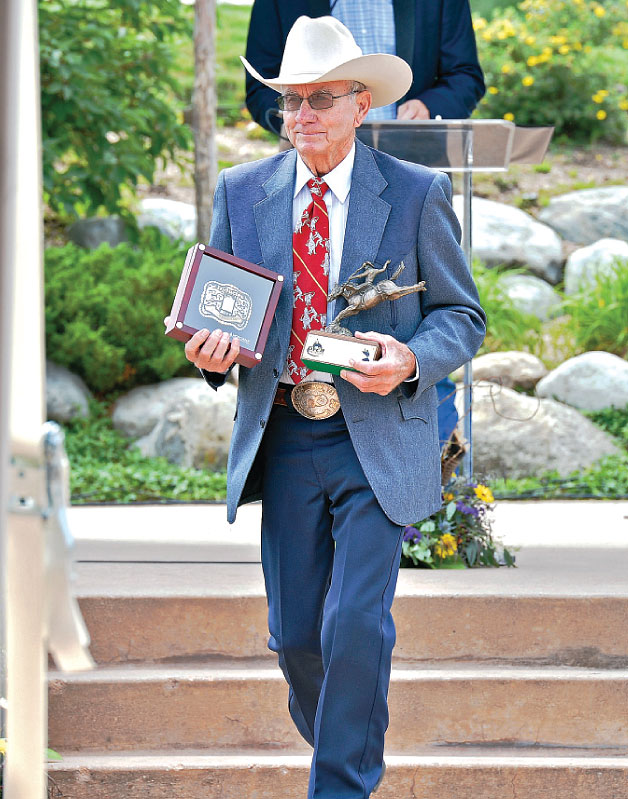
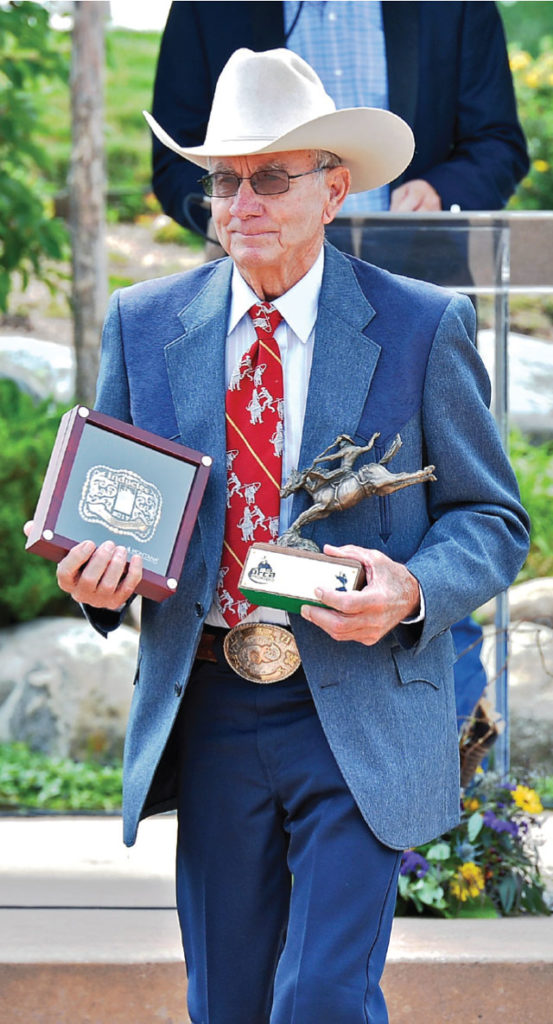
    Ragsdale, for most of his adult life, has served the sport of rodeo as a competitor and as an ambassador. On Saturday, the cowboy they call “Rags” added “Hall of Famer” to his one-of-a-kind résumé.
    “It’s been a whirlwind,” Ragsdale said. “It’s just been a great experience. Kind of the last of the big events probably, for me. I’m not rodeoing anymore, so I’m reminiscing like we used to in the old days.”
    Ragsdale, a 22-time NFR qualifier in steer wrestling, team roping and tie-down roping, recognized he will forever be cemented into history among the legends of the sport he holds so dear.
    “Going through the Hall, that’s what’s amazing,” he said. “I know so many of them, and I can remember stories, and when I see someone, a story will pop up in my head or some event that happened. It’s neat. Even though they’re gone, I relive that in my mind.”
    Ragsdale became the first and only left-handed roper to qualify for the NFR for 15 consecutive years from 1961-75. He also served as both the Vice President and President of the Rodeo Cowboys Association in the early ‘70s, and is credited as the one to propose the association include “Professional” to the organization’s formal title.

    Bobby Christensen accepting the hall of fame induction award for his late horse, Smith & Velvet

    Smith & Velvet was the definition of a late bloomer.
    The horse, which was honored as the PRCA’s top bareback horse four times (1977, as Mr. Smith, and then 1979-80 and 1982, as Smith & Velvet), didn’t become an award-winning bucker until he was into his 20s.
    This is Bobby Christensen’s third horse to be inducted into the ProRodeo Hall of Fame. Christensen also has saddle bronc horses Miss Klamath (1998) and War Paint (2011) in the Hall, but Smith & Velvet is his first bareback horse to be enshrined.
    “Early on, I never would’ve believed that he’d be in the Hall of Fame, but after he won horse of the year a few times I was thinking it would happen. It’s been 34 years since the horse died – I think the best way to describe this is late in coming, but well-deserved.
    “When Smith & Velvet was in his prime, everybody wanted to see him and everybody wanted him at their rodeo. I could go to a committee and say, ‘Hey, I have the bareback horse of the year if you want to hire me to bring stock to your rodeo.’ That worked a lot of places.
    “Smith & Velvet knew what he was doing, and liked what he was doing. He was even-tempered, and I rode him in his early years. But I wouldn’t have wanted to ride him in his later years, that’s for sure.”
    Smith & Velvet died in 1983 in a tragic car accident that killed many of Christensen’s prized NFR horses. He says the horse was the pride and joy of his rodeo company.
    The Ogden (Utah) Pioneer Days celebrated its 83rd year of existence July 20-24.
    The event has come a long way since its inception in 1934, when Ogden City Mayor Harman W. Peery organized a Western festival to boost the spirits of the locals and entice tourists to visit the city.
    “We just got done with this year’s rodeo, and it really settled in with the community and the rodeo and the committee,” said Dave Halverson, the rodeo’s director. “We have had honors and people have shed tears of joy. People have been outstanding, and we are humbly honored to be recognized.”
    The Ogden Pioneer Days is more than just a rodeo, it’s an event. It includes concerts, parades, farmer’s markets, and, of course, the rodeo at historic Ogden Pioneer Stadium.
    “When you look at the community of Ogden – this is one of the biggest awards this city will receive, and so on behalf of the committee and the city, we’re honored and delighted to be so recognized,” said Alan Hall, chairman of the Ogden Pioneer Foundation. “We appreciate the (ProRodeo) Hall of Fame and the committee for the selection and all those who make this organization world class.”
    Bush was multi-talented, becoming the most decorated cowgirl in the history of the WPRA (formerly the Girls Rodeo Association).
    When the GRA first formed in 1948, Bush was one of the first to sign-up. All totaled, she won 32 world titles – nine all-around (1952, 1957-58, 1962-65, 1968-69), two barrel racing (1952-53), two cutting (1966, 1969), one flag race (1969), 11 calf roping (1951-56, 1960, 1962, 1964, 1966-67) and seven ribbon roping titles (1951, 1953-54, 1956-59). She finished as reserve world champion in barrel racing three separate times.
    While Bush’s barrel racing world titles came before the NFR began, she qualified seven times (1959-60, 1962-65, and 1974) for the NFR during her career.
    “I’m honored to accept this honor for my mom, a famous legend, an icon, and my very best friend,” said Shanna Bush, Wanda’s daughter, who qualified for the NFR in 1984. “For my dear uncle, A.C. Harper, who said my mom was a world champion sister. How deserving to be the first woman inducted into the ProRodeo Hall of Fame. History is made today, and she did it by being just Wanda.”
    Bush was inducted posthumously, having passed away Dec. 29, 2015.

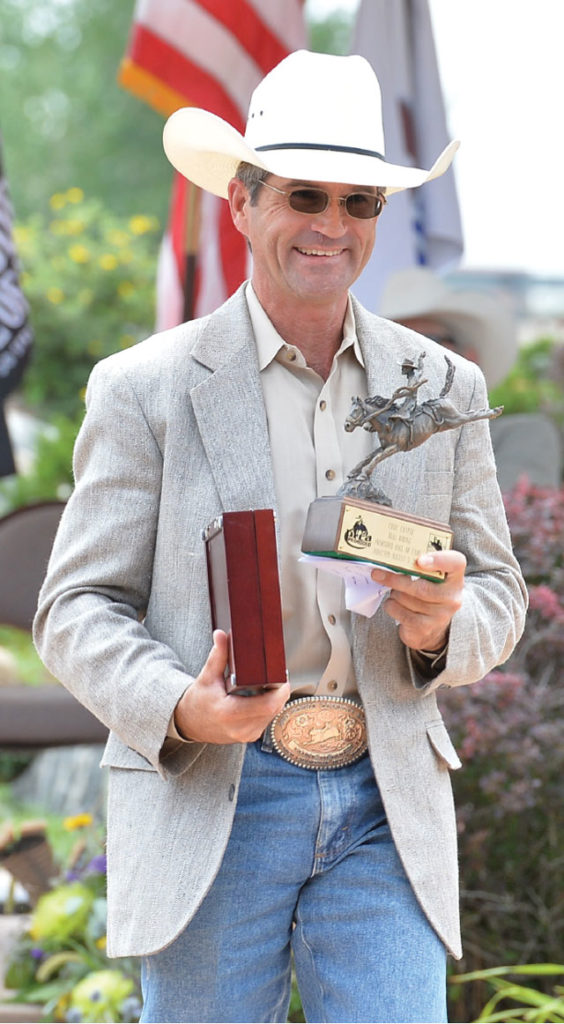
    Bob Ragsdale

    “She was one to shy away from publicity, interviews and pictures,” Shanna said. “Material things just didn’t mean much to mom. She taught many movie stars, singers, governors, vice presidents and their kids to ride, or they bought horses from us. But no one ever knew when they came or went from our ranch, that’s just how our family was. She was a really appreciative person always content with just what she had.”
    James may have had to wait 22 years to join her legendary horse, Scamper, in the ProRodeo Hall of Fame, but was ecstatic to be a part of this historic class.
    “I finally get to join him (Scamper), and that’s emotional,” said James, who now makes her home in Boerne, Texas. “Today is really a big deal, not only for me, my family, but I think for all the barrel racers of the WPRA. I couldn’t be more proud and humbled to be one of the first inductees as one of the barrel racers.”
    James, who grew up in Clayton, N.M., the home of the very first barrel racing National Finals Rodeo in 1959, won the first of 10 consecutive world titles at the youthful age of 14 in 1984.
    James was the first WPRA member to wear the coveted No. 1 back number in 1987, and became the first barrel racer to cross the $1 million mark in career earnings. In addition to the 10 consecutive world titles (1984-1993), James and Scamper won the NFR average title six times (1984, 1986-87, 1989-90 and 1993). In 1996, Scamper became the first and only barrel horse (until 2017) to be inducted into the ProRodeo Hall of Fame.
    James would add a cherry on top of her illustrious career, returning to the top of the sport aboard Cruiser (Cruisin on Six) in 2002, winning her 11th world title and seventh NFR average title.
    “My mom traveled a million miles with me and my whole family sacrificed, so this induction is not just about me, but also your family and friends,” James said. “The horses along the way, I couldn’t have been here without the great horses. Obviously, Scamper was a godsend. This is just like icing on the cake getting up here today and accepting this honor.”
    Star Plaudit “Red” holds a very unique record in the world of professional rodeo, one that is not likely to ever be duplicated. The bay gelding won two world championships in the sport in a single year and contributed to a third, at the age of 12.
    In 1962, Red, as he was affectionately known, carried his owner Sherry (Combs) Johnson to the GRA world title in the barrel racing. The horse also helped close family friend Tom Nesmith to the RCA world title in the steer wrestling, as well as the RCA all-around championship.
    Johnson credits the steer wrestling with teaching Red how to run hard through the pattern.
    “He (Red) was such a special, special horse,” Johnson said. “He was a really good bulldogging horse. We went to Denver, his first rodeo, and we won the go and I found out that day what run meant. He always ran his hardest. He was the best horse. I never had a horse like him, and he had heart. I believe that a barrel racer better know her barrel horse better than her husband, and I think we do.”
    Red passed away at the age of 22.
    With the 2017 class, the ProRodeo Hall of Fame now has enshrined 259 people, 33 animals and 28 rodeo committees.

  • On The Trail with Jordan Driver

    On The Trail with Jordan Driver

    story by Holly Wilson


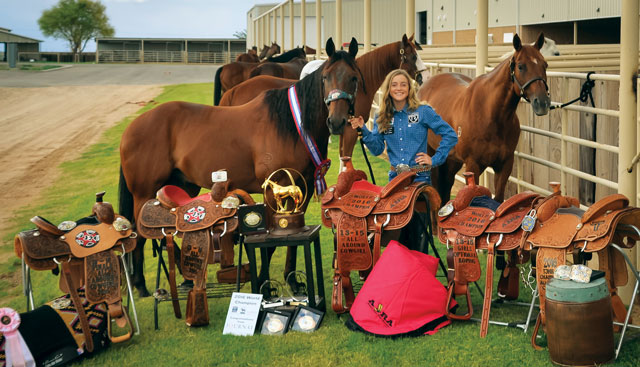
    Jordan with all of her 2016 champion saddles and trophies – Amy Niehues, Captured Moments


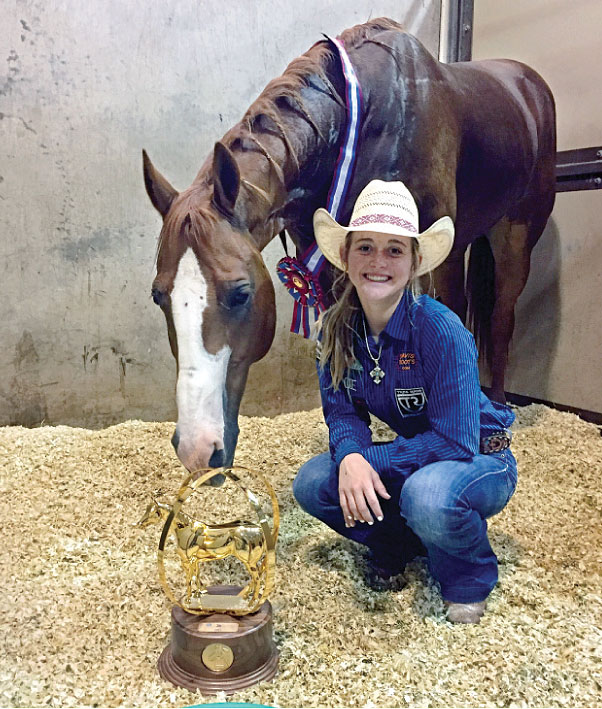
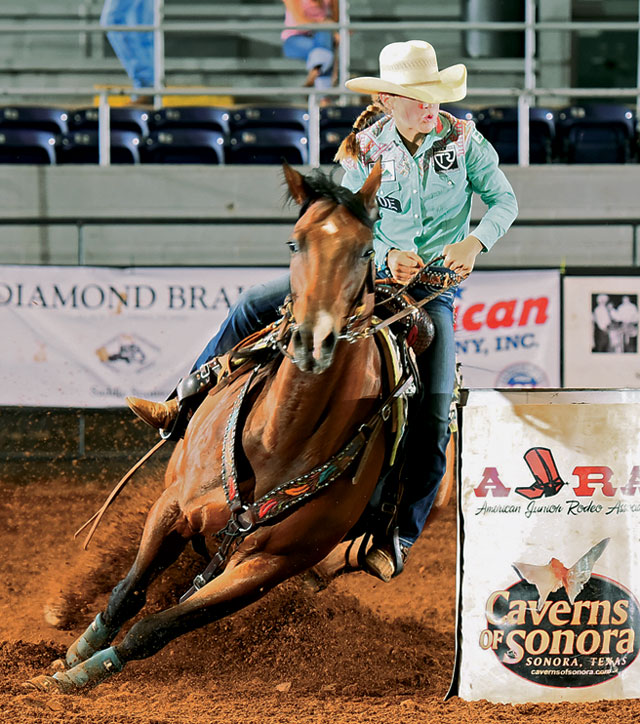
    Jordan Driver is the product of seven generations of cattle ranching and rodeo heritage. Jordan is involved in basketball, track, cross country, hunting, fishing, competitive light rifle shooting, and 4-H. However, the majority of her time is split between ranching, rodeo, and school.


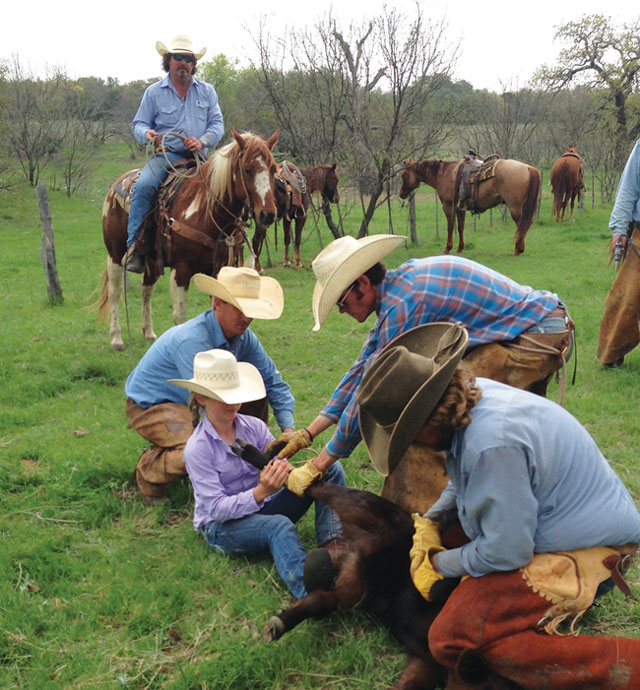
    Another day’s work on The Driver Ranch – Courtesy of the family

    “It gets hectic sometimes but it is really how we live. There are busy times like branding season that we don’t get to practice as much and I have to do my school work late at night,” Jordan said. “Sometimes we have to drive all night to get to a rodeo and drive all night to get back to school. It all kinda equals out, we do what needs to be done.”

    Her parents, Dane and Jennifer Driver, both come from ranching backgrounds and continue the family traditions. “The Driver Ranch was homesteaded in 1878 in West Texas, so Jordan’s dad is a sixth generation rancher on his families working cattle ranch,” Jennifer said. “My family’s cattle ranch in located in Central Texas, where I am the fourth generation. So to say that the western way of life is what we know would be a very true statement.”

    “This ranch has been in the family for close to 140 years,” Dane said. The Driver Ranch runs around 1000 head of cattle, depending on the yearly rainfall. Jennifer and Dane pass down their family history and tradition to Jordan, in the hopes that she will continue the western lifestyle.

    “Hard work, dedication, and responsibility is something that is learned and cherished in living the western lifestyle,” Jennifer said, “Having Jordan learn and appreciate her family’s history and hoping she will continue to carry on the traditions is something that her father and I truly hope she will want to do.”

    This deep appreciation also comes with a set of responsibilities, which Jordan does with pride. “Some of my responsibilities on the ranch or at the barn include getting home from school every day and riding all of my competition horses,” Jordan said. “I make sure everything has blankets, feed, and that [they are] sound before I head to the house.”

    Jordan, who started rodeoing at just five years old, is a member of the American Junior Rodeo Association, and the Texas Junior High Rodeo Association Region 2.


    Jordan and her horse Ever Sozippy (aka. Sergio) just won the AQHYA WORLD in the Barrel Racing – courtesy of the family

    This year she won the All-Around Cowgirl title in both associations as well as then taking home that coveted title at the Texas Junior High Rodeo Association State Finals where she qualified in six events; barrel racing, pole bending, breakaway roping, ribbon roping, goat tying and team roping. Jordan took home the World Champion Barrel racing title at the 2016 American Quarter Horse Youth World Show on Honors Past Due, then came back in 2017 and defended that title on her horse Ever SoZippy (aka. Sergio). She also qualified two horses last year for the 2017 American Semifinals and has already qualified one so far for the 2018 American Semifinals. Competing in The American as an eighth grader can be a daunting task, “It was overwhelming,” Jordan said of last year’s semi finals. “It wasn’t the best runs I’ve made but I was proud of my horses and myself at the end.”


    Jordan barrel racing at the 2016 AJRA Finals – JenningsRodeoPhotography.com

    She qualified with her best friend, Karsyn Daniels, last year and this year as well. Jordan and Karsyn met through barrel racing, and became friends while competing. “Since we live a long ways apart we don’t get to see each other unless we are at a rodeo,” Jordan said. “But sometimes Karsyn gets to come out to our ranch, and we hang out and go hunting.”

    Jordan attributes a lot of her success to her biggest supporters, her parents.

    “My parents have listened to me and know what I like to ride, and they found me some of the toughest rodeo horses,” Jordan said. “I appreciate them taking me to all of my rodeos and helping me succeed more and more as I grow as a competitor.”

    Jordan and her family train some of their own horses, although they find most of their horses through other rodeo contestants.These tough horses include; Ever So Zippy “Sergio”, TK Judges Easy Money aka “Price”, VF The Final Design “Final”, and May B Noble “Missy”.

    “Finding the right horse is hard. Trying horses is exciting and makes me nervous. My parents know a lot of people because they rodeoed as well, [so] we look for horses all over,” Jordan said. “My mom found Sergio and got to know Billie Ann Harmon, she was showing him for a friend of hers. Angela and Jackie Ganter have helped us find some of our horses and Price was the latest they help us find.”

    It takes a team to keep Jordan’s horses ready for competition, but she’s got plenty of help. “I am lucky to get to spend some time with some barrel racing greats Talmadge Green and Dena Kirkpatrick,” Jordan said. Talmadge also helped the Drivers find Final, who is one of Jordan’s barrel horses.
    Jennifer and Dane both come from rodeo backgrounds, and rodeoed for Tarleton State University. “Dane qualified for the College National Finals Rodeo five times and was the Student Director for the Southwest Region; he roped calves, team roped, and bulldogged,” Jennifer said. “I went to the College National Finals Rodeo all four years and was the 1999 CNFR Champion Barrel Racer and the 1999 CNFR All-Around Cowgirl.”


    Jordan hungting at age 7 – Courtesy of the family

    Jennifer was also inducted into the Tarleton State University Hall of Fame in 2015, and continues to show horses. However, she also enjoys helping Jordan prepare for her competitions, and cheering her on.

    “We have a daily schedule for all the horses, as far as what they need, how they need to be worked and when they need to be practiced on. But in addition to the horses, her dad and I split duties in helping Jordan practice,” Jennifer said. “I try to be her number one supporter on and off the road. Keeping everything on track and on schedule helps keep Jordan focused on her event and allows her to be a kid.”

    “It has been a true blessing to watch her grow and become the competitor and horseman she is,” Jennifer said. “With her dad and I both being from ranching and rodeo backgrounds, having her to continue the family heritage is a dream come true.”

    Jordan and her horses have big goals for the coming years, and she has faith that they will accomplish great things together. “I completed one of my goals this year – competing at the national level in my last year of junior high.” She not only competed, she and her ribbon roping partner, Jacob Walters, won the National title. “Texas is expected to do good – and the second round was a muddy mess – it was a mental game.” They duct taped their boots on so they wouldn’t come off.

    Later in her career, she wants to rodeo in college and hopefully pursue her goal of winning the rookie of the year in the WPRA, and then also making a trip to compete in Las Vegas at the WNFR.

    Jordan with her horse, Honors Past Due, or “Robin,” they won the AQHYA World Champion Barrel Racing – Amy Niehues, Captured Moments

    Along with all of her rodeo dreams, Jordan also plans to stay involved with the family cattle ranch. “I love it! Being a seventh generation Driver is definitely in my blood,” Jordan said.


  • ProFile: John Korrey

    ProFile: John Korrey

    Ritchie Bros. auctioneer started as a country boy.

    John Korrey is a native of Iliff, Colorado, living on the same farm he was born on 64 years ago, but his voice has been heard throughout the United States and internationally as far as Dubai, the Netherlands, and Australia. Since 2003, he’s worked for Ritchie Bros. Auctioneers, one of the world’s largest auction companies of heavy equipment and transportation equipment.
    The team roper and auctioneer of more than 40 years grew up helping his dad farm and raise livestock, and he was intrigued early on by the auctioneers he heard when they went to livestock auctions to sell produce. Even his classmates in grade school told him he’d make a good salesman. John graduated from Northeastern Junior College in 1972 and attended Reisch Auctioneer College soon after, but the work was barely beginning. “This occupation is no different from other occupations – you have to pay your dues,” says John. “You’re sometimes selling people’s whole livelihood, or a year’s wages, and it’s really crucial. For someone to give you an opportunity to go up and sell is tough, so you practice on your own. I went to an auctioneer school and they teach the basics, but you can’t leave there and be an auctioneer. You have to practice and get better. I was pretty determined and I listened to a lot of auctioneers. I thought if I was going to do it, I would try the very best I could.
    “I went to different markets to try and get a job. My dad was one of my biggest fans, and he and my mom helped me get started and hooked me up with some livestock markets, and I went to various livestock auctioneer contests in the country,” John explains. With his background in rodeo – competing during his childhood, and team roping and tie-down roping on the college rodeo team – John found he was equally competitive in the auctioneer contests. He also found the bond between livestock auctioneer families much the same as with rodeo families. “I competed quite a few years before I won the contest and realized it wasn’t about me, it was about meeting other auctioneers and families in the business. I finally won it (World Livestock Auctioneer Champion) in Dunlap, Iowa, in 2002, and it didn’t skyrocket my career, but I had more confidence. People won’t hire you because you’re a world champion or not, but because they trust your ability to do a good job.”
    John also won the Calgary Stampede International Livestock Auctioneer Championship in 1998, among several other championship titles, and he was inducted into the Colorado Auctioneer Association Hall of Fame in 2009. He and his late wife, Janna, were married for 35 years and owned and operated Korrey Auctions for 23 years until he started working for Ritchie Bros. John’s specialty was in livestock and farm equipment when he started with the company, but he says it was an easy transition into selling industrial equipment. “My chant is diverse enough to sell livestock, real estate, equipment, and charity. I’ve done all those in one week, and you have to do them all different. Sometimes you’re dealing with novice buyers, or buyers who go to more sales than you do. Especially with the diversification between Colorado or Washington or Dubai or the Netherlands, communication is crucial. If you can’t communicate, there’s nothing. I can change my chant to work with all aspects of the profession, but still create urgency to bid and be entertaining.”
    Another challenge is working not only with bidders and proxy bidders at the actual auction, but also internet bidders, where the rapport with the crowd and the eye contact isn’t possible via the computer. “There are so many tools, and whether you’re selling livestock or equipment, it’s pretty competitive,” John adds. “People have said the auction profession won’t need any more auctioneers with computers now, but I hope they’re not right. I still think there’s a need for that excitement.”
    John shares some of his auctioneer knowledge in his instructional DVD Chant of a Champion, which was released in 2007. “It’s not to take the place of a school, but to help with things that might be missing,” he explains. “I’m working on putting out something else like a CD that people can listen to in their vehicles.” Along with helping the next generation of auctioneers, he’s passionate about giving back to the community. One of his favorite events is auctioneering at the National Western Junior Livestock Sale in Denver for the last 15 years, where 90% of the proceeds from sales go to the young exhibitors, and the other 10% is donated to the National Western Scholarship Trust.
    When he’s not traveling to the next auction, John enjoys roping in the NSPRA and local jackpots. He competed on his PRCA permit one year shortly after college, but he didn’t like the intense traveling. “And now what am I doing? I’m traveling!” he says with a laugh. A few of his horses have been ridden by professional ropers Troy Pruitt and Chris Anderson, while John is the rodeo chairman of the PRCA rodeo in Logan County. One of his goals is to qualify for the World Series of Team Roping Finale in Las Vegas, but his main priority is spending time with his two daughters and sons-in-law, and his five grandchildren. They also run a small cow/calf operation on John’s farm.
    “I feel so blessed with the things given to me in the auction profession,” he finishes. “Who would ever dream that the little country boy with no experience in the auction business would be doing what I’m doing. I have to pinch myself sometimes.”