Rodeo Life

Category: On The Trail

  • On The Trail with Kim and Taycie Matthews

    On The Trail with Kim and Taycie Matthews

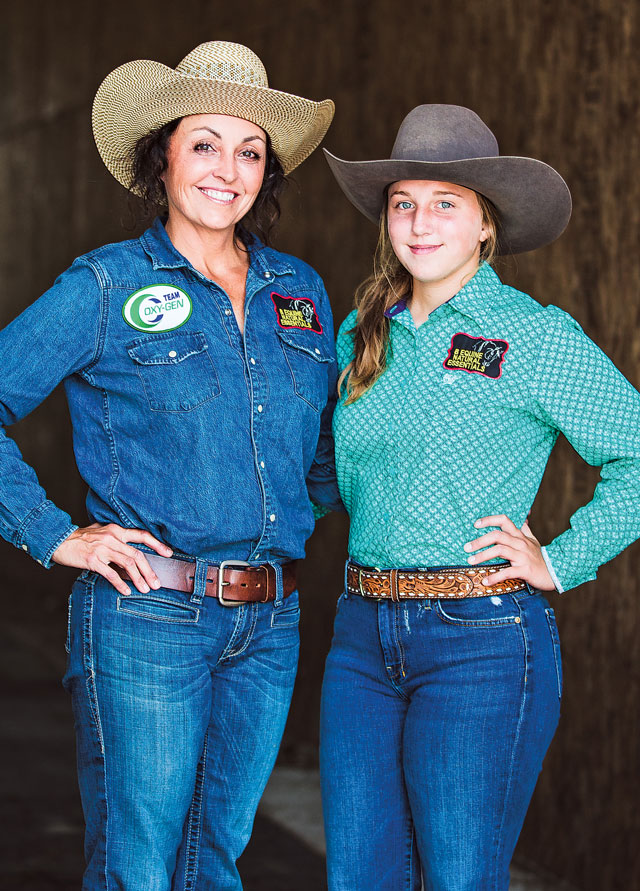
    When the lights shine down on the grand entry of the 48th Annual International Finals Rodeo this January in Oklahoma City, two cowgirls will have a stronger connection than most in the arena.

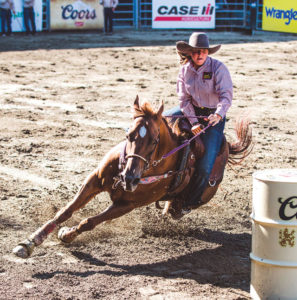
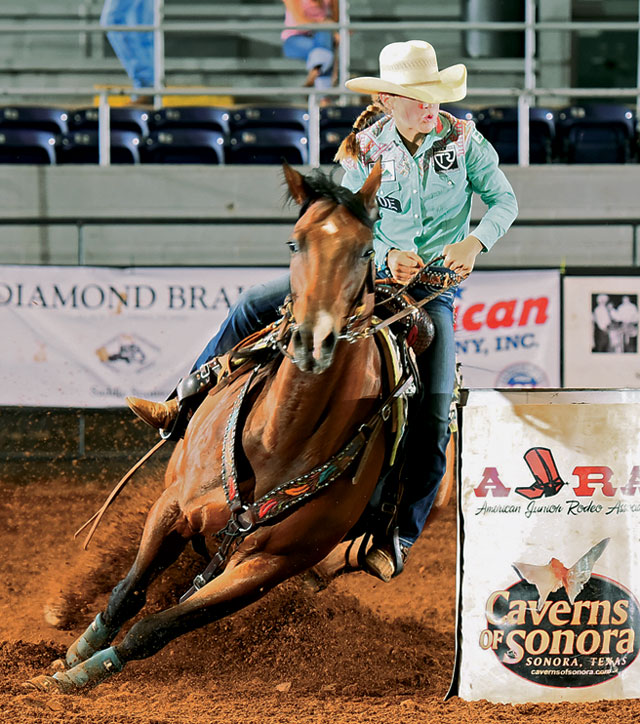
    Kim and Taycie Matthews, currently ranked no. 4 and no. 5 in the IPRA world standings, are mother and daughter qualifiers in the barrel racing. They’ve had a strong year in the IPRA, with Kim holding steady and Taycie making a late-season surge as a rookie. Did we mention Taycie was only 14?

    The Matthews family, from Wynne, Arkansas, has been involved in barrel racing for many years. Kim’s parents trained barrel horses as she was growing up in Caruthersville, Missouri before she went on to college at the University of Tennessee Martin on a rodeo scholarship. After college Kim kept up barrel racing some, but got married in 2000 and quit for eight or nine years to start a business and a family with her husband Terris.
    Together they own Matthews Ridgeview Farms, a large sweet potato operation where they supply to many major retailers across the United States.
    But when Kim had two young daughters, Jaylie who is 16 and Taycie, who just turned 15 in December, it was practically written in the stars the girls would have horses. Their grandparents were quick to ensure they had ponies as babies and grew up horseback from there.

    “They started riding, and that gave me an opportunity to get back in it,” Kim explains adding, “we were going to barrel futurities and big open shows, not really going to any rodeos, and three years ago we decided we were going to go to some rodeos. We went to about three or four with Kindyl Scruggs [the IPRA’s 2016 world champion barrel racer] and then we went back to the barrel races and barrel futurities,” But 2017 would be special Kim describes, “this year Taycie just begged, she said ‘I want to try to make the IFR, so I said ‘okay, if I’m going to have to haul you, I’m going to run too. So we just decided to go this year, and we went… a whole lot…” Kim laughs.

    All three Matthews women joined the IPRA’s 2017 season. And though Jaylie didn’t go as hard as Kim and Taycie, she plans to rodeo with them in 2018. Being involved in horses and on the rodeo road together with her daughters has been important to Kim.

    “I think it’s awesome. It’s a lot of bonding time and just keeps us having so many things in common. We got to spend a whole lot of time together this summer.” Taycie echoes that sentiment. “It’s fun. It’s just built our relationship more together,” she says.

    Going from the barrel racing and futurity world has been a fun change for the girls in particular.

    “You’ve got more driving, but a lot of it’s easier because you get there, and you’ve got all day to just rest until your run, and you don’t have as many horses to take care of because you can only run one horse at the rodeo,” Kim says. “We go to the futurities and the derbies, and we may carry 9-10 horses so that’s a whole bunch to take care of,” she laughs and adds of rodeo, “It’s a whole different life. You’ve got a whole different set of people, and you have no idea what the ground is going to be like when you get there. You have no idea what the weather is going to be. You just have to adapt or don’t run, which I did that a few times this year,” she laughs, but adds seriously, “it’s all about your horse. You can’t do it without your horse so you’ve got to take care of them first.”

    Being in the IPRA specifically has afforded the girls the opportunity to travel to rodeos internationally and places different than they were used to.

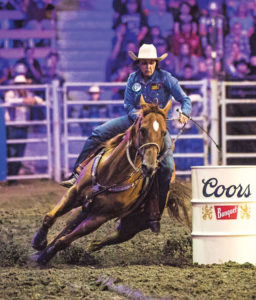
     

    “Going to Canada was an amazing experience in itself. We went up there three different times and the culture, the scenery, the hospitality, we loved it all, we really enjoyed the trip and not just that, but it changed my whole view of going north,” Kim says. “I could not believe the hospitality that we received from so many different people in so many different states. It changed my whole view about northerners, because you kind of hear they have that stigma just like we do as southerners, but we just had an awesome summer. As far as IPRA it’d been a long time since I’d been back going to IPRA rodeos, and it was really good. There were a lot of places I was amazed at how good the ground was and just how they treated us, and I was very impressed.”

    For Kim and Terris, giving their children a life with horses has a much bigger impact than the adventures. It teaches accountability, responsibility and confidence Kim says. “I just think it helps you be a well-rounded individual. It keeps you out of trouble, because it keeps you busy, and it teaches you. You’re responsible for a life. It’s not a human life, but it’s a horse that’s as important as a human, because you can’t go down the road without it,” Kim assures.

    And it’s clear the year has had an impact on Taycie.

    “I’ve learned how to ride different horses. It taught me how to be more responsible and to be more grateful for what I can do,” she says.
    The year for Taycie did not start off strong, and the Matthews’ stud horse she was riding got hurt, but Taycie rebounded when Kim let Taycie share her horse Feelin’ the Firewater, the newly crowned 2017 IPRA Barrel Racing Horse of the Year. The move to share the horse paid off big time. Taycie broke the arena record at the IPRA’s largest regular-season rodeo, the Festival Western de St. Tite in Quebec.

    “The beginning of the year was rough. I was getting ready to quit and just go back to barrel races, and it got better in about June, and it’s been getting better from then on,” Taycie describes, saying of her incredible accomplishment at St. Tite, “I was excited I couldn’t really believe it.”

    That win secured Taycie’s qualification to the IFR, and so now mother and daughter will get to share the experience together.

    “It means a whole lot to have qualified with my daughter, because she had a slow start to the year. It was just a struggle, because I’ve never seen as many tough barrel horses and as many people going and continuing up until the end as this year,” Kim says adding, “there were a couple of times where she got discouraged, and I almost was discouraged but tried not to let her know it, because things may not have been going her way, and we’re thinking ‘is she going to make it, is she not going to make it,’ and I made the comment, ‘if she doesn’t make it, I don’t want to go. It was just going to be special for both of us to do it.”

    Now that they both have done it, it will be exciting to watch them compete together in Oklahoma City Jan. 19-21 at the IFR. Then it’s full steam ahead for 2018.

    The Matthews have been expanding their farm business, and Kim is excited for her studs and breeding operation and to bring along some babies. By the end of the year she’ll have some 3-year-old horses ready to start their careers. “That’ll be a huge milestone, and I’m very excited about that,” Kim says.

    And as for her girls, Taycie wants to take up breakaway roping in addition to running barrels, and Jaylie plans to hit the trail hard too, so no telling what will happen for IFR49.


    The Matthews want to thank husband/ father Terris for his support of their endeavors, as well as hauling partners in the IPRA; Kindyl Scruggs, Cayla Fielder, Travis Gardner, Kylie Brueggeman and Sherry Rhea for helping with the driving. They also give credit to their sponsors; B Equine Essentials a therapeutic mud and poultice, Oxy-Gen Products and JHA Saddle and Tack.
  • On The Trail with Tyson Durfey

    On The Trail with Tyson Durfey

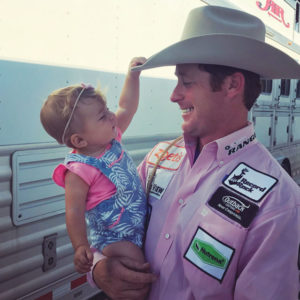
    Tyson, Shea & their daughter Praise Royal – Dashing Darling Photography

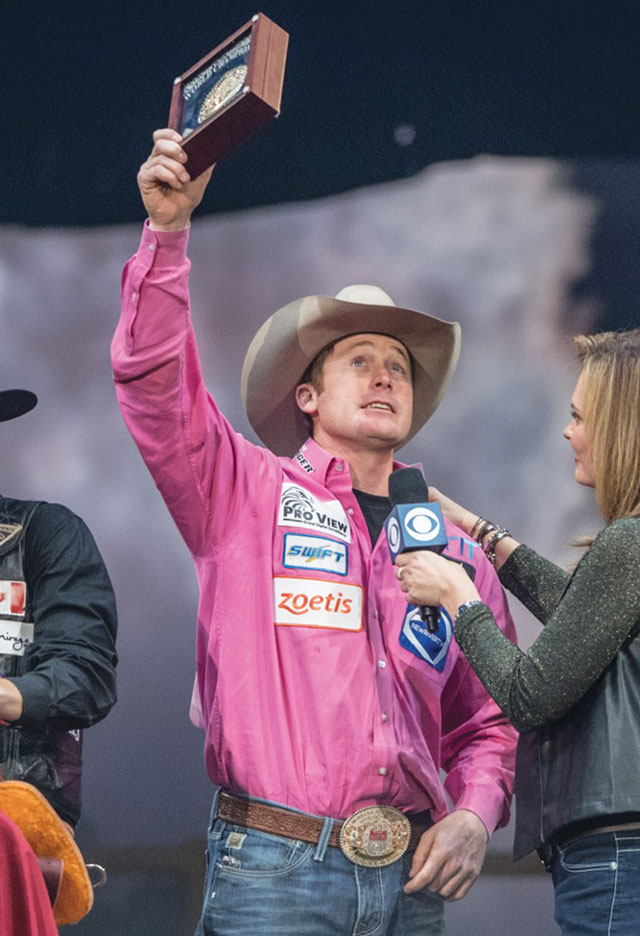
    Tyson Durfey is making his tenth appearance at the Wrangler National Finals Rodeo, defending his world champion title from last year in the tie down roping. Tyson grew up in Savannah, Missouri, training horses and ranching with his dad, Roy, and older brothers, Travis and Wes. “It was a miniature boot camp for guys. It was always me, my brothers, dad and at least one or two people there roping with us.,” said the 34 year old, who makes his home in Weatherford Texas with his wife, Shea Fisher, and 14 month old daughter Praise Royal. “We lived in a single wide trailer house – 10 feet wide by 75 feet long, with 75 spare tires holding the tin on the roof.” He remembers waking up to ice in his water glass. “Keeping the fire going was a huge part of life. Dad would wake us up and we would feed, then eat breakfast, then doctor cattle – ropers and feeders. We always said yes ma’am and no ma’am, but it was a bachelor pad. We’d rope from 9am until midnight every day, riding about 25 head of horses. Most Sundays were jackpot days at the Durfey Ranch and everyone would come by – we were the calf roping hub of the Midwest.”

    Tyson’s parents divorced when he was 2 and he spent the first five years with his mom. “I was pretty rotten – I would skip school. By the time fourth grade rolled around, I was hanging around with rough kids, riding skate boards. It wasn’t looking so good for me in school, and my dad told mom that we needed to come with him and he would straighten us out. My dad ruled with an iron fist – what he said was the way it was.” Tyson was in every learning disability class, and was getting Ds and Fs. His dad told him he was going to get straight As, and was expected to work as well. “I didn’t believe him, and one night I’d fallen asleep studying, and he gave me a whooping and it put the fire in me. I graduated with honors and it was because I had the motivation to apply myself.” Roy roped in the PRCA and passed that to his boys. At nine, Tyson competed at his first rodeo. “I wasn’t a stand out, but by the time I was 12, I would match people roping for money. I would sell horn knots, and sell pop cans.”

    That also gave Tyson a taste of money. “We grew up poor; we would light the hot water heater once a week and all share the same bath water,” he explained. “I wanted the fancy truck and Capri camper.” By the time he was 16, he was making $30,000 a year shoeing horses plus what he was winning. “Dad gave me the resources; cattle, horses, and ability, but never gave me a dime. I kept track of it all through FFA in a notebook.” His life was pretty routine – he’d get up around 4:30, flank and tie calves, go to school, get out and go shoe horses, then go home and rope.

    Tyson competed in Missouri High School rodeo, winning state his junior and senior year. “There was no prom or sports or extracurricular activities.” He went to Missouri Valley College in 2003 on a full ride rodeo scholarship. “I stayed in college for two months. I’ve always had a sense of urgency to be the best I can be, and I didn’t like the college atmosphere, so I left and cracked out rodeoing.” At nineteen years old, Tyson hit the rodeo trail, living in the back of his truck, and crisscrossing the country. “That first year was tough for me. My very first pro rodeo was Indianapolis, Indiana. I drove 14 hours to get there and the barrier rope wrapped around the stirrup, ripping it off and I fell off my horse.” He remembers the crowd laughing at him. He drove 45 hours to get to the next rodeo in Portland, Oregon, and broke the barrier. He won second in Spokane, and then drove straight through to Brent Lewis’s house in Arizona where he stayed for a few months working for him and learning from him. “From there it was history, I was off.” His achievements include three Canadian World Championships (the first ever non-Canadian resident to achieve this feat), winning “The American” in 2014, Winning Houston Rodeo in 2015, qualifying ten times for the WNFR, and 2016 world champion with well over one million dollars in PRCA earnings.


    His dad played another major role in Tyson’s career. “In 2007, before the Reno rodeo, I had a family friend call wanting to sponsor me,” he said. “It was my first sponsorship, and that $10,000 helped propel me to win Reno and another $25,000 over the week. I found out later that my dad had given this guy the $10,000 because he knew I wouldn’t take it from him.”

    Tyson met his wife, Australian country music singer, Shea Fisher, at Rodeo Houston in 2010. “I saw her in the hospitality room. For me, I knew I was going to marry her right then, but she didn’t know for a few years. I had gone to a movie after the rodeo, and I saw her in the horse area after the rodeo. I walked up and visited with her again. We sent Facebook messages back and forth for six months. She kindly rejected my request for her phone number nor would she agree to go to dinner with me. I was persistent – she never told me to get lost. I finally got her phone number and we visited for another 9 months on the phone before she went out on a date with me.” He flew to Nashville with roses in a shoe box in his suitcase to spend one day with her. “She told me if we are going to be official, you have to ask my parents. That couldn’t happen for four more months, when I met her parents at the WNFR.” They dated for one year, were engaged for 10 month and were married October 6, 2013 at Vista West Ranch, in Dripping Springs, Texas.
    The couple have launched several businesses together including Shea Michelle Buckle Designs which was launched by Shea in 2010. Designs by Shea and Designs by Durfey were launched in 2015. Shea’s dad had started a buckle company in Australia and Shea brought that knowledge to the company.

    Shea Baby is the latest launch. “It’s a baby boot line that we designed,” explained Tyson. “We had planned it out a couple years from having kids. My wife is very talented with design and how things come together. I had seen a pair at a store in Brazil, and knew we could make them really cute and neat. As fate would happen, we put a lot of time into it, but we stumbled onto really good manufacturers and sourced a really good leather, so they are all natural.” Praise Royal is a great model for the company.

    Tyson has also designed and launched his own line of boots TD Performance through Corral Boots that are available now at Boot Barn. “I like to credit myself as a pretty smart guy because I named all the businesses after my wife! The businesses fit my wife’s personality she is the workforce behind getting things done.”

    They travel as a family to all the rodeos. Shea has started entering as well, pocketing just over $20,000 this past year. “Now that I have a family, rodeo is not my main priority anymore,” he said. “At the end of the day I compete because I love to and I love the fans.” They travel in a pickup and Cimarron trailer. Most of the summer, they were traveling with Shea’s parents, who helped with Praise. “I get tired of the road sometimes, but when I get to come back to the trailer and see Praise smiling at me, it makes it all worthwhile.”


    The family has recently purchased some land in Texas, and Tyson is excited to get back into hunting, something he used to do a lot. “My family has a pheasant and deer hunting property in South Dakota, and deer season opens next week in Texas. I’m looking forward to setting up some feeders on that property in Texas and disappearing after the WNFR for a few weeks.”

    Tyson has his sights on one more world title. He is preparing for the NFR by training a lot, working out, spending time in the Bible. “We all go out there expecting to win. The way I train and prepare is to prepare for everything. It’s easy to win when you’re on a hot streak, but after you’ve been cold, it is hard. I’ll envision my emotions and body language if the calf kicks and how do I prepare for the next round. A lot of people will think they have to push … I like to go back to the basics and not push. If you have a bad day and push harder, then you could have a worse day.” He falls asleep listening to audio Bible readings. “It just downloads information in my mind and allows me to handle situations in my flesh. My overall favorite book is Proverbs – there is so much wisdom in there, second is James – I’m Irish, pale skin and have a temper. I’ve known that for a long time, and I have been able to train myself how to act.” James 1:19 is one of his favorite verses. My dear brothers and sisters, take note of this: Everyone should be quick to listen, slow to speak and slow to become angry,

    “I want to be a motivator for people – I want them to look at me and say that if you can do it, I can do it too. I’ve read or listened to a couple hundred self-help books – Tony Robbins is my all-time favorite, I’m obsessed with processes that can make people better human beings and understanding why people do certain things. “A wise man learns from other people’s mistakes and avoids his own.” Tyson continues to help people wherever he can. “I will always share what I learn and continue to learn about how to become the best reflection of myself. The greatest failure of all is to reach the pinnacle of your career and still be unhappy. I can use my title to motivate and help other people. We are put here to inspire, encourage, and help others.”

  • On The Trail with Brody Cress

    On The Trail with Brody Cress

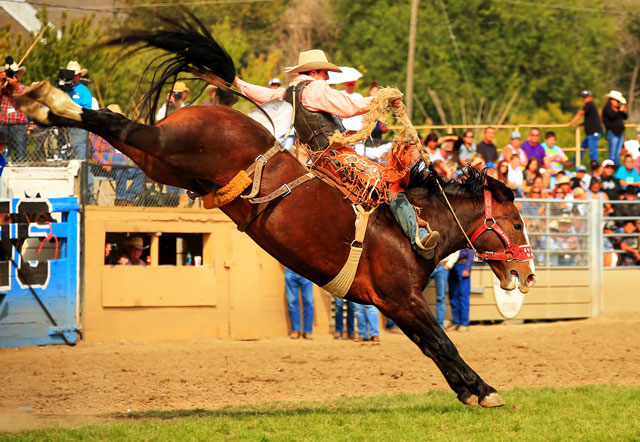
    Brody Cress ended his 2017 season with the PRCA with an 88 point ride on Dakota Rodeo’s Bartender to win the saddle bronc riding championship at the Wrangler Champions Challenge Finale on September 30 in Sioux Falls, South Dakota. “It is an outstanding feeling – the whole year has been. I can’t think of a weekend that I wasn’t able to win some money,” said the 21-year-old cowboy from Hillsdale, Wyoming. “That helps keep it going and keeps it exciting. You can’t ask for a better season. It makes you want to get on a bucking horse every day.” Brody did something that no other cowboy has done – he won Cheyenne, Salinas, and Pendleton in one season. “I didn’t go to any winter rodeos, but I came back to the first one and won and it’s been clicking – I’ve drawn good and it’s been a year of focus and shooting for the finals. I’ve never been this consistent – 90% this year – dang sure knew things were clicking,” he said. “I’ve always shot for going to the NFR. I’ve always thought if that wasn’t a goal, why rodeo. But this year it’s realistic.” Brody will be heading to the Thomas & Mack this December, but not before completing his finals for his Senior year at Tarleton State University where he is majoring in Ag Business. “I won’t be able to walk with the class, but that’s ok.”


    This year has been a lot better than last year, when Brody had a horse fall on him and injure his ankle at St. Paul. “After Cheyenne I took the rest of the year off; my ankle was hurting. I couldn’t walk for ten minutes after I got off the horses. Taking the rest of the year helped me refocus on getting to the gym.”

    Growing up, Brody stayed in the practice pen and didn’t ride a bronc at a rodeo until he was a junior in high school. He rodeoed at junior rodeos from the time he was big enough to steer his own horse, competing at Murray’s arena summer series. He was a member of Mountain States Junior Bull Riders, starting as a mutton buster and stopping with steer riding. He started wrestling at the age of six and concentrated on that, showing pigs and sheep, and being involved in FFA. “My dad was our Ag teacher for freshman year, and then moved into principal. I was around his FFA kids all the time, and I was very big into showing pigs and sheep.” He competed in the Creed his freshman year, as well as sales. FFA taught Brody how to interact with people. “I got put in a lot of situations – when I was practicing for the Creed, my dad would take me to speak in places I was really nervous about. It allowed me to learn how to turn an awkward situation into something I could handle.” FFA also helped Brody learn how to speak in front of large groups. “I built leadership skills – as I got older I liked helping out the younger kids.”

    His parents; Tommy and Lannette, both rodeoed when they were younger. “Mom grew up on a ranch, and she was a rodeo queen, and team roped, breakaway roped, ran barrels and poles in high school rodeo.” Tommy college rodeoed for LCCC and the University of Wyoming, as well as pro rodeoed, qualifying for the Mountain States Circuit Finals numerous times. He rode saddle broncs and got on a few bulls in college. Now Tommy is an assistant principal at Cheyenne East High School with 1,500 kids.

    “I’m really lucky to be in this system – these kids are great,” said Tommy. “It’s my 21st year, and times have changed, but the kids haven’t. My wife works as an Administrative Assistant for the Wyoming Supreme Court. She has a lot to do with the success of the boys – she’s the one they call for everything still.”

    “We did everything we could do to support them all along and the lessons they learned – the biggest one is that life’s not easy – and we never made any excuses for them. He’s done this on his own,” said Lannette. “I’ve helped him get plane tickets and motel rooms, but he tells us when and where. Brody was in the bucking horse sale two years ago and Blaze was in the permit challenge two years ago, and we went to one round, but this year it’s going to be so exciting. It’s a dream of our entire family. I’m really proud of Brody – he’s made this his goal and he got it done.”

    “My parents put me in wrestling to get the mental and physical aspects,” said Brody. “I almost wrestled in college. It started when I was six and I won nine state championships growing up. In high school I was the state champion my last three years.” Throughout those years, he would wrestle up to 140 pounds going wherever coach needed him. “I learned how to handle myself. At first when I would lose, I would get frustrated. As I got into high school I learned how to handle my emotions – I had to cut 16 pounds my Sophmore year and I learned how to go through that mentally. Wrestling also helped me learn how to take a loss and not just quit.” Working on the mental and the physical aspects of wrestling really coincides with riding broncs. “You have to give it all you have as long as it takes.”

    Brody gained respect for all of his coaches along the way. “I had such amazing coaches that helped me be a great young man as well as a good wrestler.”

    Both the boys worked on riding broncs for several years before competing on them. “My dad and Colt Bruegman really started us. We were lucky enough to get great horses from JD Hamaker, the Millers, Morgan and John Forbes. Frank Thompson would come pick up for us; we got help from Rick Griego flanking and my friends, Levi Romsa, Zane Thompson, Dax Cathcart, Anthony Green and Clayton Hanzlik helped on the neck ropes and pulled gates. It was whoever we could get to come help. Sometimes we would practice twice a week – as long as it was warm enough. I know during high school it was twice a week. Up until I was a junior that’s the only bronc riding I could do. I couldn’t go to a rodeo until I was a junior in high school. We had an amazing pen of practice horses, at one time we had nine. It was a great pen of solid horses.”


    His parents wanted to make sure Blaze and Brody knew what they were doing before they went to a high school rodeo. Tommy’s rule was they couldn’t get on until they were 100 pounds. “They wanted us to learn how to get off, and how to make somewhat of a successful ride – it made it a little more fun. It was still rough – but I won my first rodeo I went to my junior year, so that proved that staying home and learning paid off. Up till this year, there’s been bumps in the road, but I was more successful because I had a good start.”

    Brody is in his senior year at Tarleton State University in Stephenville, Texas. “I picked TSU for one because it’s warmer. I wanted to be on a rodeo team that would send me places and a bunch of people came here that went on to the NFR. This is a prestigious program and the kids know how to win. My coach knows I am moving up to the next level and he’s there for me. He is awesome – he helps us do more than rodeo, to be respectful and handle ourselves in front of people. He’s taught me not to make excuses – I face the fact of what I did wrong and how to fix it.”

    He also chose Tarleton for the academic side. “I didn’t want to waste my time, and this school will let me get it all done – all the way through my masters.” Brody is going for his Masters in Ag consumer science so he can teach. “If I get in situations where I could coach and be able to teach that would be awesome.” Classes start three weeks after the NFR.

    Between now and December 7, Brody will get back into the gym and finish up his undergraduate degree. “I’m going to get back to working out and get everything set for Vegas. One of the trainers, Shawn Ready, has put together a workout for me that I’m starting now that I’m home and settled. It’s hard to work out on the road. We stay in shape by getting on so many horses, and I still have college rodeos. I’d like to get on two or three a week to keep things going. I’d like to slow down some, but I want to keep things clicking.”

    He will be joined in Vegas by his family, including his brother, Blaze, who is working with Eric Wisehart in California training cutting horses. “Blaze has taken his love of riding colts to another level. He got the opportunity to go to California to ride cutting horses for Eric Wisehart. He’s riding two year olds and is getting to cut. We have different focuses in life and he’s in a great spot. We’re both doing what we want to do.”
    For now, Brody is basking in the texts and messages from everyone cheering him on. “It is awesome to be on the road and know there are people watching. It’s great to be a professional rodeo cowboy and know you have fans.” And Brody will warm up the same way in Vegas he has done all year. “I wear my tennis shoes in the locker room, the amount of time I spend jumping around getting ready – this warm up is left over from wrestling, and that makes sure my body is prepared.”


  • On the Trail with Carmen Buckingham

    On the Trail with Carmen Buckingham

    Carmen Buckingham, from Bruneau, Idaho, was on the winning team at the first Women’s Ranch Rodeo team at the Western States Ranch Rodeo in 2013. That team, representing Outback Stallion Station, included Katie McFarlane, Kim Grubbs, Carmen Buckingham, and Marcia Eiguren. Her team won again in 2016 representing Miller Livestock from Nevada and included Carmen Buckingham, Katie McFarlane, Kayla Tiegs and Bailey Bachman. In between, she rode the 2014 and 2015 WSRRA National Finals Women’s All-Around Horse and was named the 2016 WSRRA National Finals Women’s Top Hand and was on the 2016 WSRRA Women’s National finals champion team. “I am very proud to win this year because this event is usually for men and there are a lot of really handy women and it really shows that. It is very tough competition and I am very lucky to have such a great team,” she said.


    Carmen grew up on a ranch in Mountain Home, Idaho. That’s where she learned her grit and the ways of ranch life. “My parents, Felipe and Mary Fran Aguirre, taught myself, my brothers- Richard and Felipe and my sister-Jeannie to do well, work hard and achieve our goals. I was on the swim team in high school, where my mom was the swim coach but I really like 4-H, riding horses and roping better than I did swimming. I decided to work at a feedlot in Grand View, Idaho during my high school days. This is where I really caught the “cowgirl bug,” Carmen states. “I loved working at the feedlot in high school. I learned how to look for sick cattle and how to treat them; I just loved every bit of the feedlot job. This is where I also started riding colts.”

    In 1992, when she was 18 years old, Carmen got a job offer in Sacramento, California where she worked on a ranch owned by Dwayne Martin. “I worked for Dwayne for year,” she states. The she moved to Eagleville, California, worked for a ranch owned by Simplot and there her daughters Bailey and Sami where born. After her daughters were born, Carmen moved back to Bruneau, Idaho, where she met Tom Buckingham. They will be celebrating 17 years of marriage this year.

    Bailey manages a ranch in Bruneau, Idaho and was also on the 2016 WSRRA National Finals Women’s Champion team. Sami lives in Lucas, Kansas where she keeps busy ranch/farm wife and a new baby boy. “Both of the girls are good hands. They helped us on the ranch,” Carmen says about her two daughters.

    Today Carmen and Tom, own a ranch in Bruneau, where they run mother cows and buy/sell horses. “We look for all-around Quarter Horses that are gentle,” she says. Carmen and Tom keep all their horses for a year just to see what they are like. “We like to know them before we sell them. We might event compete on them before we sell them.” A typical day for Tom and Carmen include riding horses, irrigating, hauling hay, branding calves, checking cows and roping. Achieving the balance of ranch life and ranch rodeo life is something that Carmen does very well. “Competing in ranch rodeos on sale horses is really good advertising for us and having a good horse to compete on is the key to success at the ranch rodeos.”

    Carmen and her ranch rodeo team have qualified for the 2017 WSRRA National Finals in Winnemucca, Nevada, November 2-5. “We don’t practice together; we just have the same style. You can say we just fit,” Carmen states about her 2017 WSRRA National finals qualified Women’s ranch rodeo team. Carmen also believe that it takes a mental and physical stagey to win such a big event. “We get together before each event and make a plan.”


    Author’s Note: I have learned a couple of really important lessons from Carmen. Cowgirls have a different touch of nature, you see, it’s a fact that cowgirls aren’t as strong as men but their finesse and teamwork is really inspiring to me. Watching Carmen and her team compete at a national level is a real example of team work; they know what to do and where to be. They finesse their horses and roping abilities to get the job done in fast times. Another thing that I have discovered is that these cowgirls are a true testament to sportsmanship. They are humble and efficient. They encourage each other. They all have class.

    __________________________________________________________________________

    WSRRA Women’s Ranch Rodeo Team

    Katie McFarlane, Kim Grubbs, Carmen Buckingham, and Marcia Eiguren

    There is a special group of cowgirls that aim to empower women who believe in showcasing their skills and determination in the arena and out.
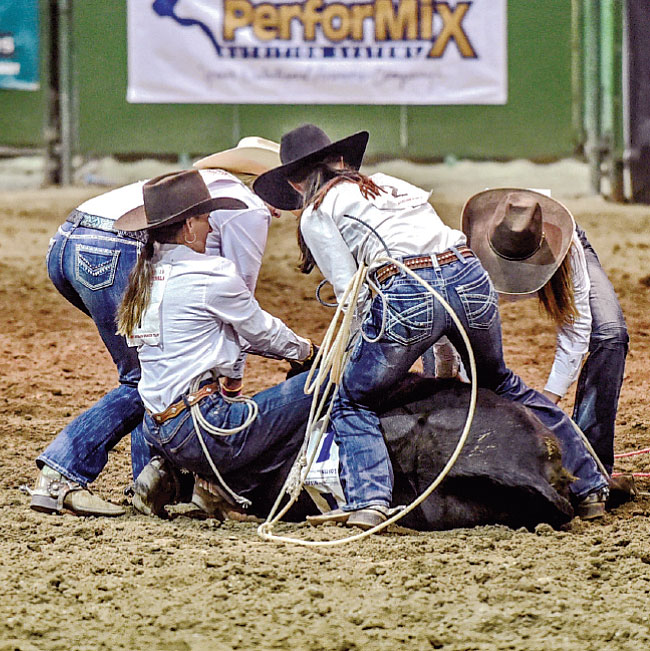
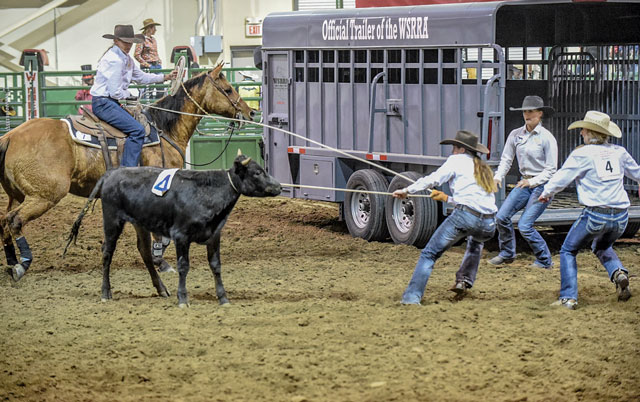
    The world doesn’t seem to know these cowgirls but the ladies that compete in ranch rodeos are changing all of that. You see, these cowgirls have grit and know how to get a job done. They have no problem sorting and roping cattle, they can doctor sick animals, they can load and tie a calf, they can rope and brand calves and can put a handle on a ranch horse. They also have no problem pulling a rig down the highway, pulling a calf, and working right along with cowboys, they include mothers, daughters, sisters, grandmas, and wives who raise families, hold day jobs and help run ranches. They will do whatever it takes to get the ranch work done. The start of their day usually starts at the break of dawn. Whether it’s branding in the spring or fall roundup, these ladies know cattle. On the weekends, your will find them, competing in ranch rodeos-a true western sport that starting in 1900’s, and one that is preserving the heritage of the West.
    Women that compete in ranch rodeos have to have strength, good roping and riding skills, and raw courage. The secret of success is the bond that these ladies develop working together. Many of these cowgirls, either come from the same ranch, or neighboring ranches, have known each other for years, through marriage and friends. They trust each. They believe in each other. Take their cowgirl attitude and put it to work on top of a good, athletic horse in an action-packed timed event and you have an event that is worth watching.

    “Ranch rodeo really promotes team spirt because if you don’t work together you probably won’t do good.” Carmen, her team and all of the contestants will get to showcase their talents and abilities in authentic ranch events replicated in a competition setting.
    Ranch rodeos are team affairs for working cowboys and/or cowgirls, who compete in events that mirror the daily activities of ranch life. These outstanding women are a shining example of the fact that the women’s division of the WSRRA can compete in and expand the sport of ranch rodeo.
    The WSRRA National Finals in Winnemucca, Nevada is an entertaining demonstration of traditional cowgirl skills. The contestants showcase their talents and abilities and those of their horses in authentic ranch events replicated in a competition setting. “Ranch rodeo really promotes team spirt because if you don’t work together you probably won’t do good,” stated Carmen.
    Fifteen outstanding ladies will be competing in the women’s division of the WSRRA National Finals in Winnemucca, Nevada, November 2 -5. These 4 days will showcase cowboys and cowgirls from across the western states and Canada.

  • On The Trail with Cooper Nastri

    On The Trail with Cooper Nastri

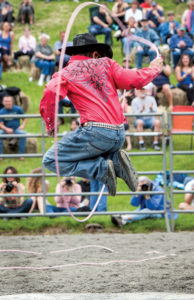
    With the flick of a wrist and the twirl of an arm, Cooper Nastri has entertained scores of rodeo audiences up and down the East Coast in the last six years. The 17-year-old trick roper, who alternately makes his home in Ballston Spa, New York, and Screven, Georgia, became one of rodeo’s youngest trick ropers in the country when he started performing at 11. Yet he was no stranger to the roping world before that. Cooper had already been competing in rodeos for several years, and is even named after the Super Looper himself, Roy Cooper, but his decision to become an entertainer was a surprise to his parents, Carmine and Sheri Nastri. “Cooper was real shy when he was little, and when he said he wanted to trick rope, I was impressed that he wanted to get in front of an audience and do something like that,” says Carmine. “His work ethic has always been really good, and when he decided he wanted to trick rope, he practiced seven days a week for hours. It turned him right out of his shell, and he’s not very shy anymore.”


    Cooper originally wanted to be a rodeo clown and worked with Dusty Barrett as a rodeo clown and helped Hollywood Harris a couple times but he first saw trick roping when Mark Madden came to the Natri’s home and showed him several tricks. He’s also met professional trick ropers including Anthony Lucia, who performed on America’s Got Talent, and Austin Stewart, who also performed on America’s Got Talent, and at Dolly Parton’s Dixie Stampede. “Mark Madden helped me a lot with my trick roping. A lot of people don’t understand that it’s very easy once you figure it out, but it takes a lot of time to learn,” explains Cooper. “I was really impressed by it, and you get paid every rodeo. I try to get one of my family members to video me every time I perform so I can watch and see if there’s anything I need to improve. I watch a lot of horse training videos, too.”

    Cooper started by performing at open rodeos, then worked his way up to events like the Painted Pony Rodeo in Lake Luzerne, New York, and Cowtown Rodeo in Pilesgrove, New Jersey, which his grandfather, Dusty Cleveland, has announced for many years. He also performs in Georgia, and was honored to trick rope at AFR 35 and AFR 39. The materials are simple enough – Cooper buys 100 feet of cotton spot cord and cuts it into the four different lengths he performs with. The shortest is 15 feet, and the longest is 50 feet, which he uses to perform a trick called the wedding ring. “The first trick I do is the butterfly, and some high spirals. The big trick I really like is the Texas Skip, which is the hardest trick in the book to do. That’s where the rope is on one side of you, and you jump back and forth through it. I feed off the crowd, so if I can tell the crowd doesn’t like something, I might stick something new in there. Keeping the tricks tuned up is probably the most challenging. I’m pretty busy riding horses every day, so I don’t get to practice as much as I’d like to. Once I get to a rodeo I might practice before the performance. I try to keep the tricks pretty snappy and tuned up.”

    This year alone, Cooper will perform in 45 rodeos, many of which are APRA rodeos that he enters in the team roping with his dad or Robbie Erck. Cooper is also practicing his tie-down roping, but prefers to team rope in the USTRC and APRA. He changes footwear – going from sneakers to boots since sneakers allow him to jump higher during his performances – and often heels for his dad. Carmine is a 24-time PRCA First Frontier Circuit Finals Champion, and he’s won the APRA six times between team roping, tie-down roping, and the all-around. He’s competed in the APRA on and off since the 1980s, and his wife, Sheri, is also a First Frontier Circuit Champion in the barrel racing. She team ropes every October at the USTRC Cruel Girl Championships with her partner, Kim Breyo, and has competed in the APRA in the past. “She backs us 100%,” says Carmine. “She drives, rides horses, and helps keep this whole thing afloat. Whether it’s the four of us here or we have ten cowboys staying with us, she keeps everything going.”


    Sheri’s grandfather, Harry Cleveland, was the Painted Pony Champion Calf Roper in 1953 when it was part of the Cowboys’ Turtle Association, and he taught many of his generation in the Northeast how to rope. Her dad, Dusty Cleveland, taught her how to rope, and he comes to several Painted Pony Rodeos a year to watch Cooper and his sister, Shelby, compete. Shelby is also an APRA member, competing in breakaway roping and barrel racing, and her senior year of high school, she was the NYSHSRA barrel racing and all-around cowgirl champion. She holds her WPRA card, but primarily competes in the APRA, and her goal is to qualify for the association’s finals in the next few years.

    The Nastris put on several roping schools each year with ropers including Speed Williams, Roy Cooper, and Rich Skelton, all friends of Carmine. They also hold weekly roping lessons, and Carmine takes in outside horses to train, along with buying young horses he turns into rope horses. “One of the head horses I made and sold was voted Head Horse of the Bob Feist Invitational this year,” says Carmine. Cooper, who is homeschooled, helps with all of the training and riding, and has become especially passionate about the horsemanship side of roping. “When people come for lessons and have horsemanship questions, Cooper’s a fanatic about it – he’ll spend 15 minutes answering the question.”

    Cooper helped finish his own roping horse, Shorty, a bay gelding that stands 14.1 hands high. “He’s a pretty cool little dude. He’s really stout, so I can head on him, heel on him, and rope calves on him,” says Cooper. “He’s got a lot of grit.” Every year since 1987, the Nastris load all of their animals and spend their winters in the southeast corner of Georgia. “We’ve got a pretty good routine, and we know how to get things packed in a hurry and get the trailers organized,” says Carmine. “My mom, Patricia, spends the winter months with us. She’s been a big supporter all my life and pushed us to do whatever our dreams are.

    “The nice thing about the summer rodeos up here is that they’re all really close,” Carmine adds. “Painted Pony Ranch does two rodeos a week, and they’re only 27 miles away. My daughter, Shelby, works at a western store in town, and she can come home, practice a little, and go to the rodeo. We live right next to Saratoga, where the big thoroughbred race track is. For Shelby’s birthday, we went to the Saratoga Race Track and took the day off riding and roping.” Sheri adds, “We’re usually all in the arena, but every now and then we take a day off to go to the movies. Our vacation every year is to go to the US Finals, and go to Rich Skelton’s and see Speed Williams.” Cooper plans to continue trick roping, but he has a growing passion for horse training. “One of the biggest things I want to do is go work for a top horse trainer like Bob Avila, Jay Holmes, or other AQHA people,” he finishes. “I’ll still trick rope now and again, but that’s the biggest thing I’m working on.”


  • On The Trail with Jordan Driver

    On The Trail with Jordan Driver

    story by Holly Wilson


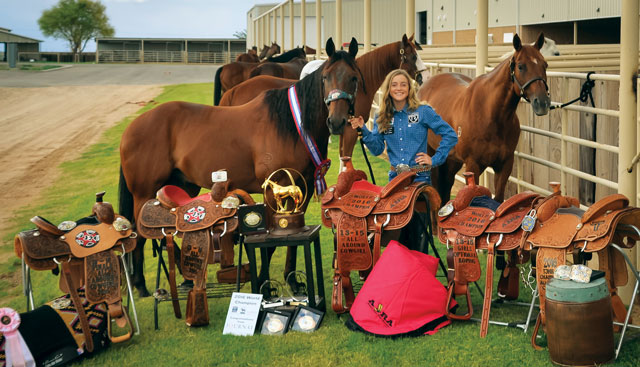
    Jordan with all of her 2016 champion saddles and trophies – Amy Niehues, Captured Moments


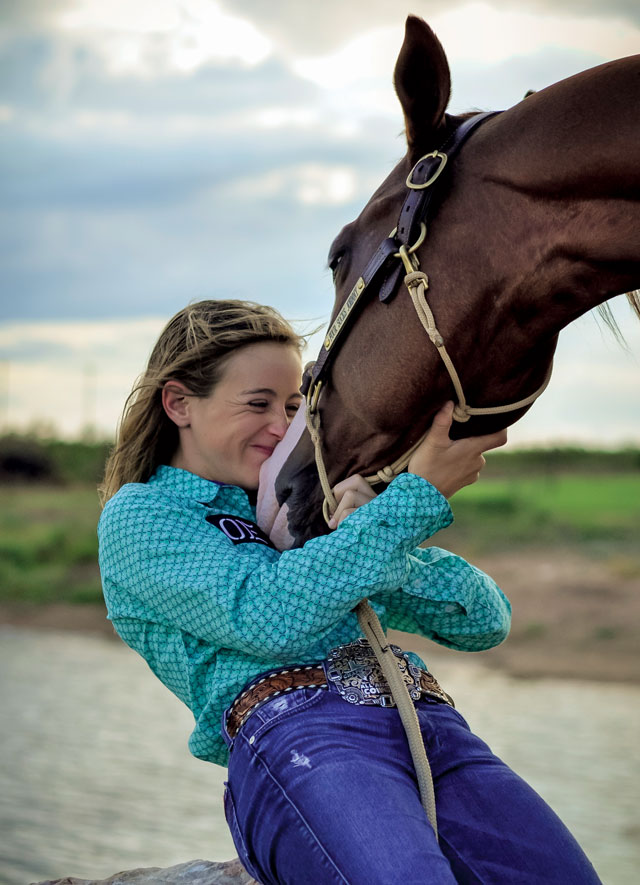
    Jordan Driver is the product of seven generations of cattle ranching and rodeo heritage. Jordan is involved in basketball, track, cross country, hunting, fishing, competitive light rifle shooting, and 4-H. However, the majority of her time is split between ranching, rodeo, and school.


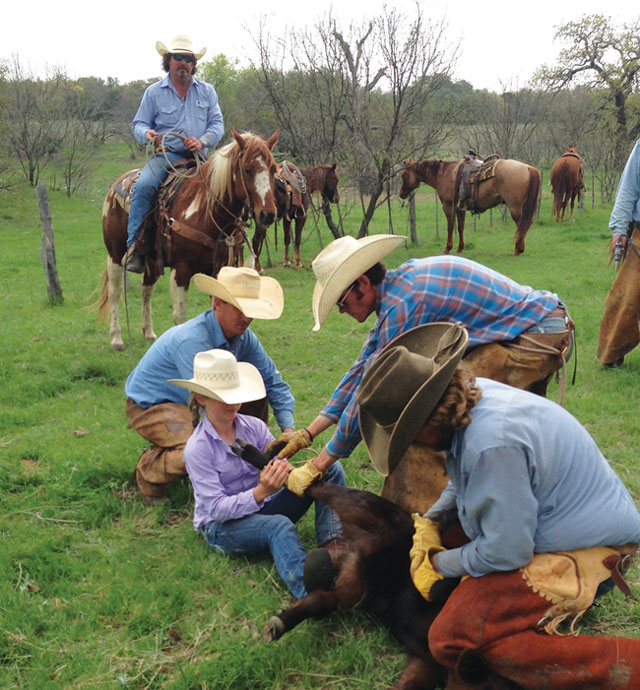
    Another day’s work on The Driver Ranch – Courtesy of the family

    “It gets hectic sometimes but it is really how we live. There are busy times like branding season that we don’t get to practice as much and I have to do my school work late at night,” Jordan said. “Sometimes we have to drive all night to get to a rodeo and drive all night to get back to school. It all kinda equals out, we do what needs to be done.”

    Her parents, Dane and Jennifer Driver, both come from ranching backgrounds and continue the family traditions. “The Driver Ranch was homesteaded in 1878 in West Texas, so Jordan’s dad is a sixth generation rancher on his families working cattle ranch,” Jennifer said. “My family’s cattle ranch in located in Central Texas, where I am the fourth generation. So to say that the western way of life is what we know would be a very true statement.”

    “This ranch has been in the family for close to 140 years,” Dane said. The Driver Ranch runs around 1000 head of cattle, depending on the yearly rainfall. Jennifer and Dane pass down their family history and tradition to Jordan, in the hopes that she will continue the western lifestyle.

    “Hard work, dedication, and responsibility is something that is learned and cherished in living the western lifestyle,” Jennifer said, “Having Jordan learn and appreciate her family’s history and hoping she will continue to carry on the traditions is something that her father and I truly hope she will want to do.”

    This deep appreciation also comes with a set of responsibilities, which Jordan does with pride. “Some of my responsibilities on the ranch or at the barn include getting home from school every day and riding all of my competition horses,” Jordan said. “I make sure everything has blankets, feed, and that [they are] sound before I head to the house.”

    Jordan, who started rodeoing at just five years old, is a member of the American Junior Rodeo Association, and the Texas Junior High Rodeo Association Region 2.


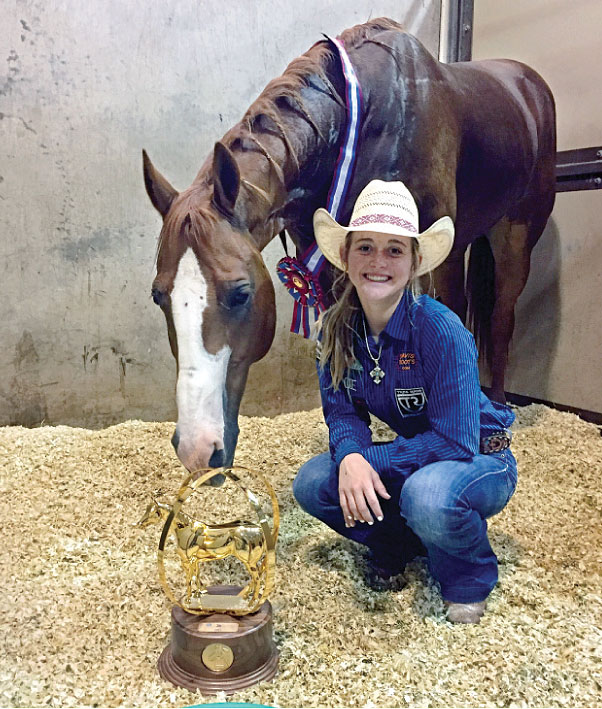
    Jordan and her horse Ever Sozippy (aka. Sergio) just won the AQHYA WORLD in the Barrel Racing – courtesy of the family

    This year she won the All-Around Cowgirl title in both associations as well as then taking home that coveted title at the Texas Junior High Rodeo Association State Finals where she qualified in six events; barrel racing, pole bending, breakaway roping, ribbon roping, goat tying and team roping. Jordan took home the World Champion Barrel racing title at the 2016 American Quarter Horse Youth World Show on Honors Past Due, then came back in 2017 and defended that title on her horse Ever SoZippy (aka. Sergio). She also qualified two horses last year for the 2017 American Semifinals and has already qualified one so far for the 2018 American Semifinals. Competing in The American as an eighth grader can be a daunting task, “It was overwhelming,” Jordan said of last year’s semi finals. “It wasn’t the best runs I’ve made but I was proud of my horses and myself at the end.”


    Jordan barrel racing at the 2016 AJRA Finals – JenningsRodeoPhotography.com

    She qualified with her best friend, Karsyn Daniels, last year and this year as well. Jordan and Karsyn met through barrel racing, and became friends while competing. “Since we live a long ways apart we don’t get to see each other unless we are at a rodeo,” Jordan said. “But sometimes Karsyn gets to come out to our ranch, and we hang out and go hunting.”

    Jordan attributes a lot of her success to her biggest supporters, her parents.

    “My parents have listened to me and know what I like to ride, and they found me some of the toughest rodeo horses,” Jordan said. “I appreciate them taking me to all of my rodeos and helping me succeed more and more as I grow as a competitor.”

    Jordan and her family train some of their own horses, although they find most of their horses through other rodeo contestants.These tough horses include; Ever So Zippy “Sergio”, TK Judges Easy Money aka “Price”, VF The Final Design “Final”, and May B Noble “Missy”.

    “Finding the right horse is hard. Trying horses is exciting and makes me nervous. My parents know a lot of people because they rodeoed as well, [so] we look for horses all over,” Jordan said. “My mom found Sergio and got to know Billie Ann Harmon, she was showing him for a friend of hers. Angela and Jackie Ganter have helped us find some of our horses and Price was the latest they help us find.”

    It takes a team to keep Jordan’s horses ready for competition, but she’s got plenty of help. “I am lucky to get to spend some time with some barrel racing greats Talmadge Green and Dena Kirkpatrick,” Jordan said. Talmadge also helped the Drivers find Final, who is one of Jordan’s barrel horses.
    Jennifer and Dane both come from rodeo backgrounds, and rodeoed for Tarleton State University. “Dane qualified for the College National Finals Rodeo five times and was the Student Director for the Southwest Region; he roped calves, team roped, and bulldogged,” Jennifer said. “I went to the College National Finals Rodeo all four years and was the 1999 CNFR Champion Barrel Racer and the 1999 CNFR All-Around Cowgirl.”


    Jordan hungting at age 7 – Courtesy of the family

    Jennifer was also inducted into the Tarleton State University Hall of Fame in 2015, and continues to show horses. However, she also enjoys helping Jordan prepare for her competitions, and cheering her on.

    “We have a daily schedule for all the horses, as far as what they need, how they need to be worked and when they need to be practiced on. But in addition to the horses, her dad and I split duties in helping Jordan practice,” Jennifer said. “I try to be her number one supporter on and off the road. Keeping everything on track and on schedule helps keep Jordan focused on her event and allows her to be a kid.”

    “It has been a true blessing to watch her grow and become the competitor and horseman she is,” Jennifer said. “With her dad and I both being from ranching and rodeo backgrounds, having her to continue the family heritage is a dream come true.”

    Jordan and her horses have big goals for the coming years, and she has faith that they will accomplish great things together. “I completed one of my goals this year – competing at the national level in my last year of junior high.” She not only competed, she and her ribbon roping partner, Jacob Walters, won the National title. “Texas is expected to do good – and the second round was a muddy mess – it was a mental game.” They duct taped their boots on so they wouldn’t come off.

    Later in her career, she wants to rodeo in college and hopefully pursue her goal of winning the rookie of the year in the WPRA, and then also making a trip to compete in Las Vegas at the WNFR.

    Jordan with her horse, Honors Past Due, or “Robin,” they won the AQHYA World Champion Barrel Racing – Amy Niehues, Captured Moments

    Along with all of her rodeo dreams, Jordan also plans to stay involved with the family cattle ranch. “I love it! Being a seventh generation Driver is definitely in my blood,” Jordan said.


  • On The Trail with Rylee Jo Maryman

    On The Trail with Rylee Jo Maryman

    Rylee Jo Maryman spends her summer days roping the dummy and tying goats. Sometimes she goes swimming, but practice comes first. “I practice to increase how I run when I’m at a rodeo. That’s my favorite sport,” said the 9-year-old National Little Britches World All Around Champion Little Wrangler. She also holds the World Champion title in the Pole Bending, and Flag Racing. Her favorite event is pole bending. “I have an awesome horse and he always does what I ask him – I think I’m very athletic in that event and it’s very challenging and I like challenges. It makes me work harder and improve.”


    Rylee and her two horses named Coco and Pistol- 3 Lazy J Photography

    Rylee Jo knows how hard it is to win, and she feels like she’s got the horse to do it. “If I didn’t have Pistol, I don’t think I would have won so much.” Pistol is a 21-year-old gelding. “You can do anything on him – I use him for poles, barrels, and flags.” Pistol used to be her uncle’s team roping horse and won the Purina Super Horse this year. “He is not the fastest, and he’s not a bucking horse, but if I’m having problems in anything, I go back to him to help me fix it.” She also rides Dally. “She’s fast, but not as fast as my new horse, Smurf. Smurf runs really fast and I’m trying to get him back in my hands.”
    She has been in the NLBRA for three years. “I didn’t place at all my first year, and then I got a little better last year and I finally won the world this year. It feels good. I competed against a lot of good kids and good horses,” said the St. Francisville, Louisiana, native. She lives ten minutes out of town with her mother, Casey, and father, Joe and their 10 horses, four dogs, 18 goats, five cats, 6 chickens, and cattle.
    She spends her summers at her grandmother’s house while her parents work, but as soon as they get home; it’s off to the arena. “It hasn’t been dry enough lately to do anything, but I still rope the dummy and tie goats under the barn.”

    Her mom and dad help her the most with her rodeo. “Now we rodeo for her,” said her mom, Casey. “At about 2 ½ we put her on a horse and we turned her loose by herself. She had it – squeezing with her legs and riding on her own. Since then, she’s ridden every day. Her focus 24/7 is the arena. We go every day. We competed in two different associations last year since it was her last year in Little Wranglers. She went into the finals winning the barrels and poles and in the top four of all the rest – goat tail untying and flag racing.” Casey, who works during the day as an educator in the prison, started rodeoing when she was young. “We didn’t go as hard as she does when we were young.” She roped – team rope and breakaway. Her husband, Joe, who is a biologist for the Wildlife Fisheries in Louisiana, college rodeoed, calf roped and team roped. “We’re going to do whatever we can to give her what she needs. Right now she has two new horses she’s trying to get with.”


    Rylee Jo with her calf named Tiger

    Rylee Jo has also gone to three of Martha Josey’s clinics as well as Stacy Martin with Next Level Goat Tying. “When I first went to the goat tying school I was tying in 18, now I’m tying in 11s,” she said. The Josey clinics have helped her figure out the first barrel. “I’m still trying to figure that out. When I pull, I give back. When I do that, my horse runs by. I’m still working on that.” What the clinics have done for this young lady is give her confidence to figure out how to fix her problems in the arena. “I can try to figure it out on my own from going to the schools.” The other thing she is figuring out is how to manage her own money. She has a bank account and she pays for part of her entry fees.
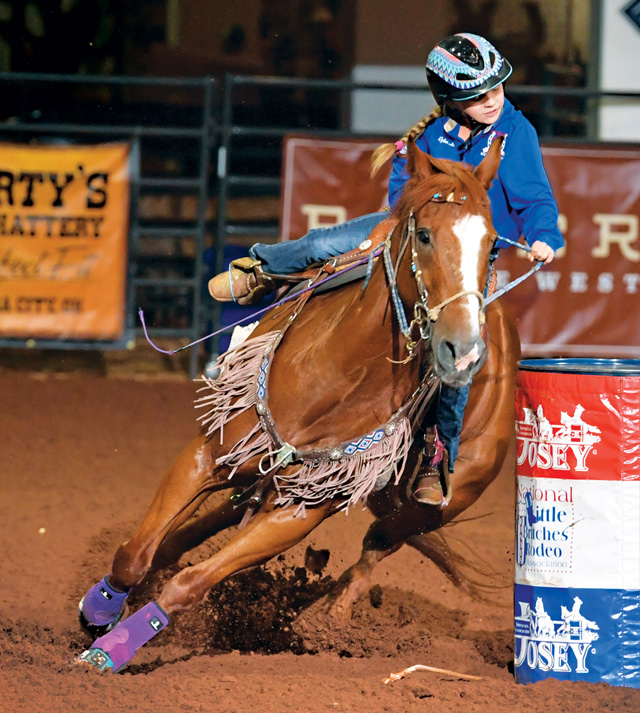
    When she grows up, she wants to rodeo full time. That’s what she’s doing now – she’s rodeoeing all weekend and if she’s not, she’s in the arena at home practicing.”

    “Keep your dreams and one day they will come true. But you have to work on them or they won’t come true.”
    Her rodeo idol is Mary Burger. “She always tries to do better.”


  • On The Trail with Roscoe Jarboe

    On The Trail with Roscoe Jarboe

    Roscoe Jarboe is “the Rock.” Or at least, that’s what his dad used to call him. When the number five bull rider in the PRCA’s world standings was a little boy, his favorite WWE wrestler was the Rock. His dad would walk through the house, asking if anybody could smell what the Rock was cookin’. And he’s cooked himself up a great start to a rodeo career.

    The New Plymouth, Idaho bull rider won the 2016 Resistol Rookie of the Year award, plus qualified for his first Wrangler NFR last year.
    He’s been preparing to ride bulls since he was a kid, traveling with his dad, Bo Jarboe, as Bo rode bulls in the Columbia Circuit.


    “He cut his teeth (on bull riding) when he was a baby,” Bo said. “I used to load him up in the pickup when I went to rodeos, and it’d be just me and him. Well before he knew what was going on, he was at rodeos.”


    Roscoe at age 4 behind the chutes with his dad, Bo in 2000 – WT Bruce

    Bo rode bulls till about 2000, when Roscoe was four years old, and then he and his then-wife Miss (short for Melissa) built an arena and bucking chutes on his place outside of New Plymouth. They made sure their son had whatever he needed: first calves, then steers, mini-bulls, and bulls.

    At New Plymouth High School, Roscoe was in FFA and 4-H and showed pigs. He wrestled and rodeoed, competing in the Idaho High School Rodeo Association his freshman year, and then in the Oregon High School Association his sophomore and junior years. He finished as reserve state champion bull rider in 2012 and 2013, his sophomore and junior years, winning the average his junior year and finishing eleventh in the nation at the National High School Finals Rodeo in 2013.

    His senior year Roscoe went pro, getting his PRCA permit that year. He turned 18 in April of 2014, but chose to spend two years as a permit holder before he got his card and entered his rookie year. “I wanted to get the experience, to figure out the rough patches, what rodeos to go to, and what rodeos not to go to,” he said.
    For him, rodeo is not just the eight seconds on a bull. The sport is ninety percent mental, Jarboe believes. “Most of us are in good shape to ride bulls, and we work out, but mainly we’re working on our minds.” Riding bulls is like riding a bike; a person doesn’t forget how to, Jarboe said, but staying confident is important. “We just have to keep our minds positive; it’s a mind game. We read books (about mental psychology), and all we have to do is stay positive.”

    His traveling partners help. He travels with Dallee Mason, Brady Portenier, and Chase Robbins, and the four keep each other going. “It’s cool because we’re all really good friends, and say we get bucked off,” said Portenier, who is from Caldwell, Idaho. “We don’t talk about it till we get in the car, then we have our words, and everybody has their own opinions, and we usually get something productive out of our conversations. There’s no negativity in the car.”

    Roscoe and Brady have known each other since they were kids; their dads rodeoed together, and Brady remembers going to the practice pen with Roscoe. “We picked up horn tips, and thought we were cool,” he said.

    This year has been Roscoe’s best year of rodeo. As of press time, he was ranked fifth in the world standings and had $87, 455 won. After competing at his first WNFR and finishing his first year of pro rodeo, his maturity and confidence shows. “I’m just having fun this year,” he said.


    Roscoe at the 2016 WNFR, his first year qualifiing – Hubbell

    Part of that fun is being more relaxed on the road. With his paycheck from the WNFR, he bought a motorhome. He and his buddies are “taking it easy this year, and having fun with what we do.” They sightsee when they have time, taking in Mt. Rushmore and other places, and they bowl and golf. “We’re being kids,” he said. Golfing is big for him and his buddies. “We golf all the time. That’s like another job for me. It’s so relaxing to just get out there and hit some balls.”

    His biggest win this year was at the San Antonio Stock Show and Rodeo, where he won the finals on D&H Cattle Company’s Sweet Pro Bruiser, scoring 91 on the bull. It was a bull he would love to get on again. “He’d be good to get on any time. You don’t want to miss the opportunity to get on that bull.”

    Last year, Roscoe’s biggest win was Cheyenne Frontier Days, when he covered all three of his bulls, won the second round, finished fourth in the finals, and won the average with 246 points on three head.

    Jarboe didn’t let nerves get to him at his first WNFR, even though it was everything and more than he expected. “Everybody tells you it’s just another rodeo,” he said. “When you get there, it’s a lot bigger than that. But once you get behind the bucking chutes, you can’t see the crowd and the lights aren’t too bright, and it’s just another rodeo. You focus on riding your bull.” He covered his first two bulls, but regretted not riding more. When the WNFR was over, he wished there were more bulls to ride. “I could have gone a couple more rounds, but that’s because I was disappointed in how I finished.”

    He has several nice buckles, including one from his Cheyenne Frontier Days win in 2016 and one from round two of the WNFR, but he wears a buckle he won in 2011 showing pigs at the Payette County Fair. He was grand champion two years in a row, and loved showing pigs. “It was a good experience because you had to raise an animal and treat them as you want to be treated. Pigs have a personality of their own. They’re probably one of my favorite animals.” He doesn’t wear his good buckles, not wanting to scratch them.

    Roscoe’s younger sister, Harli Jo, is the pig showing expert in the family. She’s won grand champion several years in a row. The 16-year-old is graduating from high school a year early to move on to college. “My kids achieve what they set out to do,” Miss said. “They work very hard for their goals. The best thing is they are very humble about it.”


    Roscoe has his own style of bull riding. “Everyone likes to talk about how he’s got some crazy wild style,” Portenier said, “but when you break it down, he does the basics better than a lot of guys, and does them well. When he gets into those wild positions, he’s able to fall back to the basics, and go to home base, and doggone ride them.”

    His buddies have named it “the noodle.” “He noodles them,” Portenier said. “He can get into a really bad position, to where most guys would quit or plain not have the ability to get back in the middle. But Roscoe seems to do it more than not. Everybody has that one time when they’re hanging off to the side and can wiggle back, but I’ve seen Roscoe do that quite a bit.”

    His dad Bo, and his mom, Miss, divorced when he was 16. His dad travels for his job, and if the rodeo is close, will drive seven or eight hours to watch him ride. Roscoe’s style of riding isn’t like his dad’s. “He’s got his own style,” Bo said. “It’s a really strange style that works for him. I wish he would change it up just a little bit so his body lasts for a while. But the more time goes, he may change it up.”

    He and fellow bull rider Garrett Tribbles were neck and neck for the Resistol Rookie race all year. Both qualified for the Wrangler National Finals, but Roscoe edged out Garrett at the end of the season by over $20,000. Robbins, Roscoe’s traveling partner, finished third in the Resistol race.

    He’s ready for this year’s Wrangler NFR. Last year didn’t go as he wanted. “I started getting down on myself, and that’s the worst place to do it, at the (National) Finals.” This year he’ll know what to expect. “It’s still nerve-wracking when you get there, but I’ll feel like I’ve been there and done that.”

    Roscoe has qualified for and competed at the Columbia River Circuit Finals twice and competed at the PBRs early in his career.
    He’s ready to repeat what he did last year, when he was on a roll. “It’s hard not to win when you can’t fall off. There are ups and downs (in bull riding), but when you get one rode, you just roll with it, and let it happen till it starts not happening anymore.
    “I try to keep my head focused and do what I’m supposed to do.”


  • On The Trail with Dale Brisby

    On The Trail with Dale Brisby

    Dale can go “90 on anything that pitches,” even a unicorn!

    “Of course I’ll talk to ya, I’m so honest you can shoot dice with me over the phone!” Dale Brisby is not afraid to wear his name on his hat. “I am the best there is, was, or ever will be! I’ve been to the winning circle so many times, it’d make a normal man dizzy!” boasts the Texas bull rider. His rodeo career began early. “Rodeo has been my life, I’ve been goin 90 since before the war!” He started riding sheep, then graduated to steers and bulls, and went on to college rodeo. Where he obtained an undergraduate and a graduate degree in – ag leadership and education. “I done been 90 in the rodeo arena and the classroom ol’ son!”


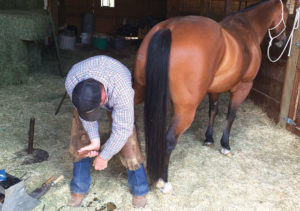
    His dad was a hand at all things cowboy. Watching as his father shoes a horse. – Courtesy of the family

    “I have a really good time rodeoing and I like to live that life through social media. I am grateful every day that anyone might find what I do entertaining enough to give me a second look. I thank God everyday that He blessed me with a path to salvation through His son, with living in this country, for making me a cowboy, and for making me the most humble bull riding legend ever to walk the earth. If there’s a better life, I don’t know it.”
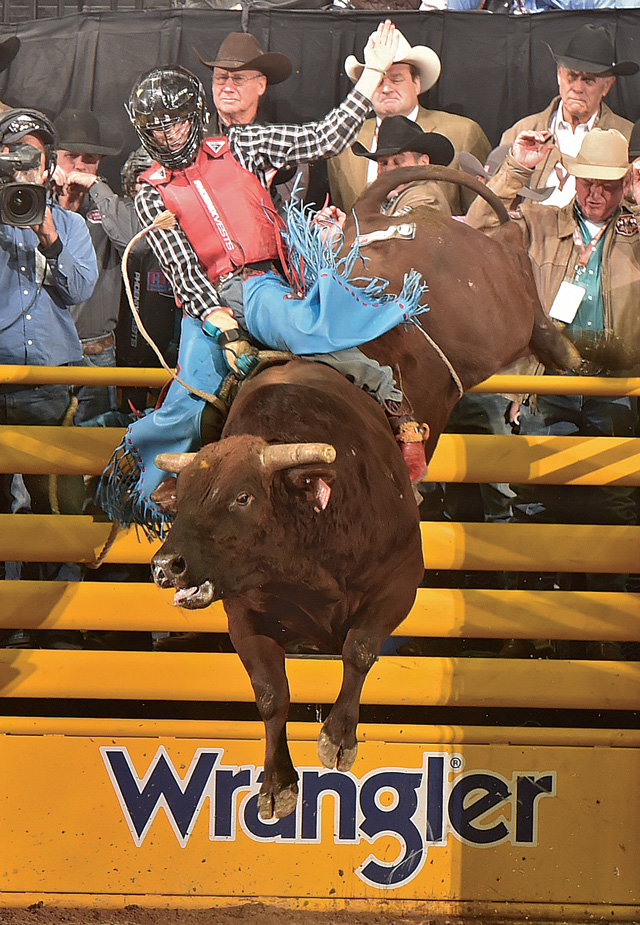
    “Whenever I get together with my camara man, Randy Quartieri, and Leroy Gibbons, we’re like a bunch of little kids giggling and building a tree house. It’s just fun. And that’s how life should be! Especially if you’re a cowboy, and especially if you’re a Christian. I want to live my life through social media in a way that people see that.”

    “The Lord put me on this earth to spend time in the rodeo arena. I’ve competed and mastered all three rough stock events professionally and I have also fought bulls professionally. It was shortly after college rodeo that I decided to pursue one event and only enter the bull riding. As many goals as I have set and accomplished, it’s getting a bit mundane. So I am always looking for new horizons!”


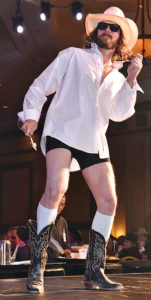
    Dale Brisby shows up to Justin Sports Medicine Fashion Show ready to handle a little ‘Risky Business’ – Rodeo News

    He has mastered social media – his videos have been seen by millions. “I was always considered the class clown, but I think that was only because I was different than everyone else. I didn’t conform my personality to the status quo then, and I still don’t today. How many other people do you see walk into Cowboy Christmas in Las Vegas with mud boots, holes in their jeans, only a vest on, and their only concern is that everyone know it is ‘Rodeo Time’.”


    Getting ready to ride – Randy Quartieri

    He has brought his concept not only to social media, but to the retail market and motivational speaking engagements. He lives his ministry through focusing on his faith. “My business plan is prayer. I have some goals, but mainly, I want to please the Lord. That comes first. If that remains my priority then I will be at peace with whatever the outcome is.”

    “I believe social media is merely a tool. A very powerful one that can be used for good or bad. For me, it is where I can hopefully give someone a break in their stressful day and make them laugh. Everyone of my videos may not quote scripture, but hopefully they can see Christ’s love through the way I live my life. Thank you to anyone who follows or subscribes to my shenanigans, you are why I do what I do. Hit me up in the DM’s!”

    He partnered up with Fallon Taylor to create a series of videos poking fun at the barrel racing world. “We give barrel racers an inside look at bull riders and she gives bull riders and inside look at barrel racing. We do Snapchat takeovers where we run each others’ Snapchat.”


    He has produced more than 100 videos and his goals for the future include more retail adventures. “I’d love to be the one spot people go for all things rodeo and obviously continue to rodeo.”


  • On the Trail with Myles Neighbors

    On the Trail with Myles Neighbors

    “No matter where you go or what you’re doing, it’s not going to be easy to win first place,” says Myles Neighbors. The 18-year-old from Benton, Arkansas, has won numerous titles, including 2016 NLBRA World Champion Steer Wrestler, but he also knows the feeling of leaving empty-handed. Yet Myles’ approach to his favorite sport is always the same. “Whenever I’m not going to a rodeo, I’m at home practicing. I think about rodeo all the time. Whether it’s calf roping or steer wrestling or team roping, I’m thinking about a way I can make that run better.”

    While Myles has gold buckle dreams now, he didn’t used to be so passionate about rodeo. “Myles was four or five when he started in the Southern Junior Rodeo Association. When he started, I didn’t think he’d have a competitive bone in his body,” says his mom, Sheila Neighbors. “I had to chase him down and throw him on his horse to do his events – he’d be under the bleachers playing or in someone’s trailer. I don’t remember when he turned competitive, but one year we were rodeoing and it just clicked.”

    Rodeo started in the Neighbors family with Myles’ grandpa and great-uncle, James and Philip Neighbors. His grandpa James competed in tie-down roping and steer wrestling and his uncle, Philip, competed in steer wrestling. Both qualified for the IFR. His grandfather, James, served as president of the IPRA and worked as a stock contractor, producing ARA, CRRA, IPRA and PRCA rodeos. James passed away several years ago, but not before seeing his grandson compete. Myles’ dad, Howard Neighbors, carried on the tradition of steer wrestling. He runs his own plumbing business, and currently competes in team roping, entering ARA rodeos with Myles, who was the youngest contestant ever to win the all-around title in the ARA at age 16. He’s also won ARA rookie of the year titles in heading, steer wrestling, and tie-down roping, and currently competes in the ARA, ACA, CRRA, AHSRA, and NLBRA.

    “I love the people in Little Britches,” says Myles, who won the 2014 NLBRA Rookie of the Year. “They are one of the nicest families in the rodeo world, and you don’t meet people like that everywhere you go. They always want to help you with something, and if there’s not one, there’s twenty people anytime you need something.” Sheila adds, “I loved every bit of the finals at the Lazy E. We stay at a friend’s house for the Little Britches finals and turn our horses out since Little Britches and the IFYR and NHSFR put us on the road for three weeks. We’re going into those three rodeos with a bit of a handicap this year – Myles’ good rope horse blinded himself in one eye a few weeks ago and his steer wrestling horse has been under the weather. He competed on friends’ horses at high school state finals and went in with the possibility to win four titles. He came out with one of those, the All Around, and that’s OK. God has a plan.”

    As for the setbacks with his horses, the rodeo family readily came to his aid, and Myles was still able to qualify for the NHSFR in all three of his events. He’s been riding Jason Thomas’ steer wrestling horse, and his family’s horse trainer and close friend, Weldon Moore, sent Myles to state finals on his calf horse. “They were generous enough to let me borrow their horses so I could get it done. When I got to know Weldon, I stayed with him and worked on my roping, and now he and his wife are like my grandparents. Jason Thomas letting me ride his bull dogging horse was a big step for me, and his parents, Jim and Leann Thomas, do a lot for me. I go over and use their arena all the time. My mom and dad do a whole lot for me – they pay for everything and they never miss a high school or Little Britches rodeo. I would also like to thank Keith and Diane Everett for all they have done for me through the years. I travel a lot with two of my best friends, Austin Wake and Benjamin Cox. We’ve grown up together and they’re really good at keeping me going. We all help and support each other.”

    Last winter, Myles moved his horses, calves, and steers to Benjamin’s house and stayed there a couple of months to practice in his indoor arena. “My good calf horse, Cadillac, is one of the ones that got hurt,” says Myles. “I just went to catch him one day to go to a rodeo and his eye was solid white. His retina is partially detached, so he might have to have his eye taken out. My mom will probably run barrels on him, and I’ll get another horse. Frosty is Jason Thomas’s horse that I’ve been riding lately, and I’ve been bouncing around on heel horses.”


    Myles was still able to qualify for the NHSFR in all three of his events, including the team roping with header Jacob Scroggins. They have roped together in both Little Britches and high school rodeos since Myles’ junior year when he switched from heading to heeling. “Myles is a natural born header,” says Sheila, who grew up showing horses and took up barrel racing in rodeos after marrying Howard. “Myles got his first rope horse when he was seven, and the second time he roped off that horse, he caught his steer.” But ultimately, steer wrestling is Myles’ favorite event. “I like everything about it – I like the speed and I like when I get off and the steer hits flat on his side.” He’d love to spend a day dogging steers with Luke Branquinho, and roping with Clay O’Brien Cooper. His latest branch on the rodeo trail starts this fall competing on the Northeast Texas Community College rodeo team. “I’m going on a full-ride rodeo scholarship, and I like the coach there a lot,” says Myles. “I’m going for an Ag. business degree, and I’m hoping I can better myself at the college rodeo level and keep my grades up.” He had plenty of practice studying on the road since he was homeschooled all four years of high school. The flexibility allowed him more opportunities to rodeo, including competing in the first ever Jr. Ironman Championship at the Lazy E Arena this March. Selected from the top five of the world standings in team roping, steer wrestling, and tie-down roping, Myles won the first round of the Jr. Ironman Championship. “ It sure was competitive, and I didn’t go out of there with an empty pocket!”

    Myles occasionally trades his rope for a fishing pole and goes to one of the numerous lakes near his home, but rodeo always takes priority. He likes that his hometown of Benton, Arkansas, is centrally located to a number of rodeos, and plans to buy his PRCA permit and start pro rodeoing this year. “I’m always wanting to better myself, whether it’s with my horses or my rope,” he finishes. “Some kids like football and basketball, and I like rodeo. My whole life, I’ve always wanted a gold buckle with my name on it.”

  • On The Trail with Shelby and Libby Winchell

    On The Trail with Shelby and Libby Winchell

    “To rodeo is not just one or two people committing – it’s the whole family,” says Mike Winchell. He and his wife, Shawna, committed wholeheartedly the day their daughters, Shelby and Libby, now ages 25 and 18, stepped onto the rodeo trail. Since then, the sisters have won several state and national titles apiece. Shelby is the assistant rodeo coach at Sheridan College in Wyoming and Libby, who won the 2016 Champions Challenge in Omaha, Nebraska, will be a freshman this fall at Eastern Wyoming College. Yet all the roots lead back to home in Scottsbluff, Nebraska, and the foundation of hard work that Shelby and Libby built their careers on.

    The rodeo tradition comes from both sides of the family, and Shawna’s dad, a steer wrestler named Dick Phillips, helped start the Chadron State College rodeo team in the 1960. Shawna also rodeoed on the college team after competing in Little Britches and high school rodeo, while Mike’s background is in ranching. They wanted their daughters to experience several different sports, including basketball and volleyball, but the rodeo spark is what took off.


    Libby Winchell goat tying at the 2015 National High School Finals Rodeo – JenningsRodeoPhotography.com

    Shelby started rodeoing when she was nine, and Libby occupied herself with stick horse barrel racing and pole bending, and helping carry goats to the arena for goat tying, until she was old enough to compete. Both she and Shelby showed in 4-H, where Shawna was a leader, and FFA. They also competed in the WJRA, NLBRA, and Nebraska junior high and high school. They entered the barrel racing, pole bending, goat tying, and breakaway roping, but they’ve especially excelled in goat tying. Their mom, Shawna, was also a goat tyer. “It’s an event that’s not all about the horse – you get out of it what you put into it,” she explains. “It also requires athletic ability for getting off a horse that’s going thirty miles an hour. We call competitiveness the family sickness, but we’re fortunate the girls are willing to work hard at being their best. Mike and I have always been involved, going to clinics and learning new techniques right alongside them so when we’re in the practice arena, we know how to help them.”

    Through one such clinic, Shelby met goat tyer and Cochise College rodeo coach, Lynn Smith. “In high school, I had the opportunity to travel with Lynn Smith and help with goat tying clinics. It instilled that desire to teach – I’ve always wanted to be a rodeo coach so I could share that knowledge. Not many people can say they are twenty-five years old and living their dream job!”

    Before Shelby started rodeoing, she’d already overcome incredible odds, having been born 16 weeks early and going through extensive physical therapy as she grew up, making her drive to rodeo and compete twice as strong. She qualified for the NJHFR in 2006 and the NHSFR from 2008 – 2010, and after graduating from Scottsbluff High School, she attended Eastern Wyoming College. Shelby later transferred to Chadron State College and graduated with a bachelor’s degree in education. She qualified for the CNFR in goat tying in 2012, 2013, 2014, and 2016, also competing in breakaway in 2013 after winning reserve all-around in the Central Rocky Mountain Region. She won the region in goat tying last year before clinching the national title at the CNFR. That same day, Libby won the goat tying at the Nebraska state finals, and she and Shawna watched the live feed of Shelby competing in the CNFR on their way home.


    Shelby Winchell goat tying at the 2016 CNFR – Hubbell

    “It’s interesting, because I’m known more for my goat tying success, but I also trained barrel and breakaway horses and seasoned them at college rodeos and sold them,” says Shelby, who is also finishing her master’s degree in K-12 school counseling through CSC. She enters jackpots, and will compete in the NRCA this summer. She plans to start seasoning a four-year-old in the breakaway roping and goat tying this summer, while she’s also riding Ace, whom she purchased from CSC rodeo coach Dustin Luper. “I’m able to keep my horses at the school and work them every day, which is a special thing for me, because I can observe the students and their different methods of training. I’ve also taken in several outside horses.”

    Many of Shelby’s winning goat runs have been off Hadley, a 20-year-old gelding she’s shared with Libby. He returned to Scottsbluff last fall in time for fall high school rodeos. “Hadley used to be a steer wrestling horse, and he has a good personality,” says Libby. “Blaze is my barrel horse, but he got turned into a goat horse two weeks before Nationals my sophomore year when Hadley got hurt.” Blaze, whom they purchased from Wanda Brown, was trained by professional barrel racer RaNelle O’Keeffe from North Dakota, and Libby’s rope horse, Chase, came from PRCA tie-down roper Chase Williams. “Our good friends Troy and Riley Pruitt helped us find Chase. We rope at the Pruitt’s house, and they’ve been great. I can’t thank the people who have helped me and my family out enough: our vet and chiropractor, the Pruitts, and Lari Dee Guy and Hope Thompson. And without my mom and dad, I wouldn’t be here for sure.”

    Libby has qualified for the NHSFR the past three years, winning Reserve National Goat Tying Champion in 2015 and 2016, along with the state reserve all-around title last year. She competed in the NJHFR twice, and is a two-time Nebraska state goat tying champion. For her senior year, she decided to rodeo with the WHSRA, and she’s currently leading the goat tying, seventh in the breakaway roping, 17th in barrels and third in All Around. “I like all my events equally,” Libby says. “Shelby has had a lot of success in the goat tying, and we’ve had lots of people help with that. We work hard at it – we’re in the arena every night like everyone else, roping after school and riding horses.”

    Libby frequently sports a 100X Helmet when she steps into the saddle, a decision she made after taking a tumble at a rodeo her seventh grade year, causing her optic nerve to swell. “If I take another fall, I could permanently lose my vision, so I’m going to wear a helmet so I can do what I love.” In sixth grade, Libby spent two weeks in a children’s hospital with a perforated ulcer and optic neuritis. She’d had pain in her left side for three months before it was diagnosed, and her vision, which was 20/400 near and far at that time, has since improved. “I wear glasses to read and drive, and I still have headaches, but I’m learning to manage them,” says Libby.

    “When Libby was at a Mayo clinic, her doctor was helping her with exercises for her headaches, and he suggested those same things for athletes in breathing and visualization,” says Mike, who played high school sports. Shawna adds, “Mike’s dad was an excellent basketball coach, and looking into rodeo from the outside perspective, Mike has instilled in the girls the usefulness of reading books and that mental game.” Mind Gym by Gary Mack was a favorite of Shelby’s, while Libby has found inspiration in books by golfers discussing the mental aspects of the game. “I have a saying that a champion is a champion that acts like one,” says Mike. “The girls do the work and have the work ethic, but it’s not a one-time deal. They’ve both barely missed national championships, and that just makes them want to come back. I think a lot of their success has come from learning about where we’re going before we get there. They’ll YouTube the arenas or use Google Earth so there are no big surprises. When they don’t have to worry about the little things, the bigger things come faster. Part of the reason Libby wanted to stay in the Central Rocky Mountain Region is because she’s competed in a lot of those same college arenas in the WHSRA, and that will help her collegiate career as a freshman.”

    Along with helping their own two athletes, Shawna and Mike are passionate about bringing the best goats possible to junior high, high school, and college rodeos. They also contract goats for jackpots, and state and county fairs. “Our girls were running through so many goats at practice that we’ve always had an influx of practice stock,” says Mike. “There’s nothing I hate more than an animal making the winning decision in a rodeo and not the athlete. We work hard at providing the best stock possible.” Last year, the Winchells had more than 90 goats, and they do much of the hauling themselves for high school and college rodeos.

    Shelby comes home periodically to trade out goats for her rodeo team, and she loves the camaraderie of her team. “At roughstock practice, we have the timed event athletes sorting stock and opening chutes, and the same with the roughies at timed event practice,” she says. “We have a fairly young team this year, but we had some phenomenal girls return to rodeo with us. It’s spectacular to see that improvement of self, and to see the student athletes improve not only in the rodeo arena, but in life.

    “I’d love to continue being a rodeo coach, and continue training horses as long as I’m able. I have the lifelong goal to make it to the WNFR, and I’d like to start roping in the WPRA and train a horse that’s up to par for that avenue.”
    Following graduation from Scottsbluff High School, Libby’s goal is to win state in goat tying and also go to Nationals in breakaway roping. “I’d love to win Nationals – I know what it’s like to get there, but I just need that extra step. I plan on getting a degree in sports medicine and college rodeoing all four years, and hopefully get my master’s and rodeoing a fifth year before going pro.”


    Libby, Mike, Shelby and Shawna – Courtesy of the family

    “There’s not a sibling rivalry, but Shelby and Libby each want to walk their own road,” Shawna and Mike conclude. “We’ve met a lot of good people all over the United States. Kids that Libby and Shelby high school and Little Britches rodeoed with are competing together on the collegiate level, and so many people have helped us and we’ve enjoyed helping others. We don’t think there’s another sport in the world that has that.”

  • On The Trail with Hailey Kinsel

    On The Trail with Hailey Kinsel

    Hailey competing at the IFYR- RodeoBum

    Hailey Kinsel’s qualification for RFD-TV’s The American and subsequent win in the barrel racing  – and a third of a million dollars – has put the 22 year old from Cotulla, Texas, on the largest stage of her life. “I don’t know if there’s a bigger stage than that besides the WNFR,” she says. “It’s not just the money – the atmosphere there is insane, and pressure wise, I like the excitement and the challenge. The crowd makes you feel happy to be there, and when I’m happy to be there, I compete at my best.”

    Competing in the NHSFR, IFYR, PRCA, and CNFR prepared Hailey for the most famous run of her career thus far. But it was the support of her family, a resolute work ethic, and three horses in particular who helped her get there. Her parents, Dan and Leslie Kinsel, both rodeoed in high school and college – Leslie representing the Lone Star State as Miss Rodeo Texas in 1980 – and Hailey was rodeoing by the time she was four. “We ranch and run cattle in South Texas, and my brother and I had to learn to ride so we could work cattle. We don’t have an arena, but when I wanted to work barrel horses starting in junior high, we plowed up an area in the middle of the pasture. We’re really blessed with awesome red dirt – it’s maybe every six months that we have to disc it,” says Hailey. “Both my parents taught me how to work with what I had, and that made me more of a competitor and trainer when I could make the best of every situation. Both my grandmothers were paramount in my early years, being supportive and telling me I could do it.”

    Hailey, who was homeschooled starting in seventh grade, rodeoed in THSRA Region 8 in all the girls events, while also showing steers and goats in 4-H and serving as a FFA and 4-H officer at the local and district level. Her older brother, Matt, rodeoed through junior high. “He’s very athletic and he’s had his own website design company since he was thirteen. He does all the IT work for the family business and he’s an entrepreneur in College Station. He’s probably the most supportive business man – he’ll show up at rodeos in a suit to watch me run.” Hailey was the THSRA state president, and won the state barrel racing title in 2011, returning to the NHSFR in 2013 in breakaway. But barrels are a longstanding favorite. “It’s the event I’ve done the longest, and the one my mom and I have most in common. I had good, trustworthy horses that made it fun for me. We weren’t winning, but I was going slow enough to learn to ride well, and I never had a bad experience. In junior high, my mom and I bought my first competitive horse together, Josey. She was a project, and she became my all-time favorite. Having that one good horse made me fall in love with barrel racing, and makes me look for good in other horses.”

    DM Sissy Hayday, or Sister, carried Hailey to The American, but it was the mare’s half sister, Baja, who made the win possible. “Baja was running fast everywhere and coming on this year, but during everything with The American, she came up lame, and a week after The American, we lost her to melanoma. She served her purpose, because we wouldn’t have bought Sister without her.” The Kinsels bought Baja on Craiglist as a two-year-old and loved her so much they called the breeder, learning he had just one left – Sister – and was selling the broodmare. “We took a chance on Sister. She was a funny looking two-year-old, but she was pretty solid-minded and a good turner,” says Hailey. “Sister started showing some fire when she was three or four and she bucked for the first time. She was so strong willed that I kept her slow and focused for a long time and entered her in her first futurity the end of her four-year-old year. She broke pattern and ran off, but I worked her and she did awesome in the second round. Since then, she’s been running in the 1D, and when Sister wants to do something, she is going to do it.”
    Hailey and Sister’s next national appearance is the CNFR, where Hailey has competed twice before in the barrel racing. Texas A&M University’s women’s team won reserve in the Southern Region, and Hailey graduated in May with a degree in agricultural economics. She’s also two classes away from her real estate license. “Training futurity horses is my ultimate goal, but I’m glad to have my degree as backup. Here at school, we have two Bible study groups that I lead – one for the college girls on the rodeo team, and one with some freshman high school girls before school in the morning,” Hailey adds. “I play the guitar and keyboard a little bit, and I always sang in church growing up. My faith is the reason I do rodeo. I have my relationship with the Lord, and he allows me to rodeo. Rodeo has led me so many places, and I know my purpose is to share the good news of the Lord and connect with people.”

    One of her favorite connections is with the Elizabeth Stampede, where last summer, Hailey won both her first rodeo on Sister and her first PRCA rodeo. “I’d seen it on the WPRA Today show, and I know girls that talked about the great ground. I went to it on the way to the college finals, and I had a blast! Their pancakes were amazing too, and some of the committee came out to Denver when I competed there this winter. It was so nice that they cared and stayed in touch.” Another favorite destination was the IFYR during high school, where Hailey finished third in the average in barrels her junior year, and the top 15 in the average in barrels and poles her senior year. “I always wanted to enter because I heard so much about it from my friends, and I loved the payout for a youth rodeo, as well as seeing my friends.”
    When she’s not traveling – passing time on the road listening to music, sermons, or motivational speeches – Hailey works on her family’s ranch and trains horses with her mom. “We’re mostly focused on whatever horses we need for the two of us. We start with a two-year-old each year, and we’ve gotten into some breeding. Now that I’m done with college, I’m really looking forward to taking in outside horses and having more in training at one time,” says Hailey. “I’m going to the rest of the PRCA circuit rodeos in May and I’ll see how much I get done. I’m planning on riding my two main horses and hauling some three-year-olds to give experience. If we’re doing well, we’ll go hard this summer and go as far as we can!”