Rodeo Life

Category: On The Trail

  • On The Trail with Riley Wakefield

    On The Trail with Riley Wakefield

    I’ve learned how to win and lose – to deal with adversity – that’s easier said than done. I try to be thankful from the beginning and look failure in the eye.

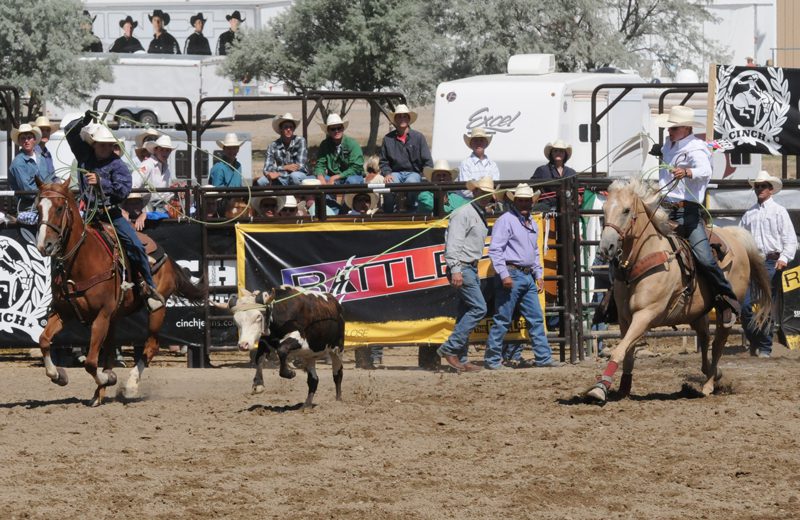
    he first time Riley Wakefield went to the Cinch Timed Event Championships, he and his older brother Brady were star-struck. The next time he attended, 15 years later, he went as a contestant, finishing in fourth place. At the 2023 Cinch TEC, the O’Neill, Neb. cowboy turned in a time of 366 seconds throughout five rounds to finish fourth and win $10,000. After applying for the prestigious event for the past five years, Riley was first on the alternate list this year. He got the call in early February that someone couldn’t make it, and there was a spot for him. He prepared, making four or five runs in each event, every day.
    It was in 2008, when Riley was eleven years old, that he and his family, including parents Jim and Susan Wakefield, went to Guthrie’s Lazy E Arena as spectators. “It was a treat,” Riley said. He and Brady saw their heroes among the competitors. “I just remember seeing role models,” he said, “seeing people in places that I wanted to be, people with extreme talent. We had old videotapes of the finals so we knew who guys were, and when they’d walk by us, we’d stare at them. And to see them in person, we were star struck. It was a pretty amazing experience.”
    He and Brady, who passed away in a vehicle accident in 2015, got their picture taken with Trevor Brazile.
    The CINCH Timed Event Challenge is an invitational event, taking the best twenty cowboys in the world, to compete in five events: steer wrestling, tie-down roping, heading, heeling, and steer roping, in four rounds, with the best fifteen going on to the fifth round. Fastest time in all four events, over five rounds, wins. Riley was leading the average going into the fifth round but a sixty second run in the team roping put him in fourth place for the finish.
    A 2020 graduate of Northwestern Oklahoma State in Alva, Riley has been living in Stephenville, Texas. But this winter, he was at home on his parents’ (Jim & Susan) ranch near O’Neill, during what was the worst winter in the last ten years in north-central Nebraska; O’Neill has had 57 inches of snow. The snow and cold weather made everything harder to accomplish. “We had three feet of snow on the ground, and it was an absolute workout to get to the horses. You had to lift each leg through the snow.” All the watering was done by hand, because the tanks would freeze to the bottom by morning. “We hand watered everything,” he said. Riley’s girlfriend Jenna Dallyn helped him, loading cattle, roping with him, until she had to return to High River, Alberta, to work. Then his dad helped. Jim “was out there every day, all day, pushing cattle. When Jenna left, he had to fill in and be the guy to help me. He was a huge part of this.”
    Cinch TEC contestants designate “helpers,” who head, heel and haze for them. Cinch TEC contestants cannot head or heel for each other, but they can haze for each other. Riley’s header was CJ DeForest; his heeler was Tanner Braden, and Allen Good was his hazer for three rounds with Mason Couch for the last two rounds. Nerves wore on him for round number one, which showed up in the heading. “That first head loop I threw, it was not a good head loop but a nervous head loop. It was sloppy,” he said. “I was feeling the nerves.” But when the tie-down roping came around, he settled in. “As soon as I tied my first calf, I felt a lot more comfortable. The set-up fit my horse perfectly. He has a lot of run, he’s fairly free, and he doesn’t take my shot away.”
    In February, after getting the call that he would be competing at the Cinch TEC, Riley was nervous. The event was so important to him, the concept of being a “true” cowboy and showing skills across four disciplines, had him anxious. So nervous, that he’d never felt this much nerves since he and Brady backed into the box at the 2012 National High School Finals Rodeo, when he was a freshman. The brothers had done some mental training, with one of the pieces of advice being that they should visualize the best thing that could happen and the worst thing that could happen. It worked; he and Brady finished as reserve team roping champions that year.
    So Riley applied the same concept to the Cinch TEC. He knew, if he failed, that he’d still have family and friends who still cared about him, and he could still have the chance of being invited to compete at next year’s Cinch TEC. “After I looked failure dead in the eyes,” he said on a Facebook post, “the rest of the Cinch TEC was pretty smooth sailing.”
    He grew up on the family ranch south of O’Neill, in the Sandhills of Nebraska, with a dad who was a pro steer wrestler and roper.
    When family friends came over to the Wakefields to rope, it was Brady and Riley running the chutes, and looking up with respect to the men who practiced with their dad.
    “It was an honor to ride their horses around after practice.”
    Like many young cowboys, they fell in love with the sport. Jim and Susan hauled their boys to Little Britches Rodeos and youth events all over the region.
    The brothers loved it, Riley said. “We took a liking to it and got small successes along the way, that keep you going, and sooner or later, you get bigger successes, then bigger and bigger, and by that time, we were hooked.”
    In junior high, Riley wanted to be a bull rider. He followed the PBR faithfully and got on roping steers at home. But in eighth grade, he realized the timed events were more his thing.
    In high school, he qualified for state finals and the National High School Finals all four years, competing at Nationals four times in the team roping and once in the steer wrestling.
    In college at Gillette (Wyo.) College, he made it to the College National Finals Rodeo in 2017 in three events, then two years later, won the tie-down in the Central Plains Region while a student at Northwestern Oklahoma State.
    Riley rode his horse Gator for the tie-down roping and his horse William for the heeling, borrowing horses for the other three events. Gator has been a long-time project for the cowboy. When Riley’s horse died of colic three years ago, friend Austin Barstow suggested that Riley borrow Gator, who showed potential but was really green. “I knew from the start that Gator had tremendous ability and athleticism,” he said. “But he is extremely playful. He is difficult to catch, he messes around, and he sees how much he can get away with. That’s been the struggle, to get the business attitude out of him.”
    At a rodeo in 2021, after Riley roped a calf, Gator misbehaved, stepping away from him as he tried to re-mount. “It took me a full minute to get on him. He was inching away from me in a circle. He wasn’t dragging the calf, but he was moving away.” A few weeks after that, Riley took him to the Badlands Circuit Finals Rodeo, where he worried how the horse would respond to an indoor arena with noise and lots of activity. “I was nervous and had no idea what he would do, but the circuit finals was a turning point. He worked better than he ever had, in a loud and pressure-filled environment.” The twelve-year-old bay has improved. “He’s more business-like now, and I think we’ve both grown up together. I’ve learned how to train one and ride one correctly, and that’s more important than a lot of people understand. A horse is sometimes only as good as his rider.”
    For the steer tripping, he rode Todd Eberle’s horse Mississippi, and for the heading, he rode Danielle Wray’s horse, Peanut. Danielle was instrumental in helping him in 2021 when he qualified for the Badlands Circuit Finals Rodeo in three events, and at the Cinch TEC as well. “I couldn’t have done either without her.”
    Riley, at age 26, is working at making rodeo his fulltime job. It’s not easy. Last year, he competed across the nation, at times broke and trying to prove himself, not only to the rodeo world, but to himself. “I went through some hard times, really low times,” he said. “I questioned why the heck I was doing this. I have my (college) degree, why am I not at home, working, making for-sure money.” He remembers tough times last summer, traveling in a small trailer with a shower, no bathroom, and two bunk beds, and the time in Caldwell when his traveling partner headed to another rodeo but Riley stayed for the short round. From 6 am, when his buddy got on the road, till 4 pm, when a friend arrived, he sat on the grounds with his lawn chair and phone, while Gator grazed, “taking it all in.”
    Rodeoing isn’t cheap, either, with entry fees and fuel bills. “You pull the trigger anyways,” he said. “You can’t be emotional about (spending) the money. You have to trust your talent. If you worry about the money, you’re going to be worried all the time.” During the hard times, he talked to his dad, telling him he was ready to come home. “I remember calling my dad, and he said, ‘you chose to do this, you’re going to stay on the road.”
    It can be a game of confidence, Riley said. “When you’re new on the trail, you feel like you have something to prove. You feel like you’re not trying to lose, instead of trying to win, not looking like an idiot, instead of going out there and wining first.
    The fourth place finish at the Cinch TEC has boosted his confidence. Now, when backing into the box, “I’m thinking about how fast I can be instead of how not to mess up. I’m thinking of what can go right instead of what can go wrong.”
    His parents are behind him one hundred percent. “If I didn’t have my parents helping me out, I would be working a nine-to-five,” he said. “My wins are just as much theirs as they are mine. We’re a team.”
    This summer, he will rodeo full time, competing at 80 rodeos, heading to California in April, with a bounce in his step and more confidence under the cowboy hat.
    Rodeo hasn’t always come easy to him. “I wasn’t one of those guys that was consistently winning,” he said. “It took some things I needed to work through.”
    There were several times he could have quit, but he didn’t. “To me, it’s the fact that I put all the work in and I didn’t want to waste it. I wanted it to pay off somehow.”
    “I felt like I could have decided to teach school, forget about rodeo and make some money. I could have, and I’ve had ended up OK. But I had the opportunity (to rodeo) and I have so many people behind me, and it’s what I love to do and what I’ve worked for, so why not let it pay off? And if it doesn’t, that’s fine, but I want to give it the chance.”
    His hard work and perseverance is yielding a profit. “I’m so glad it’s paying off now. There’s nothing better than hard work paying off.”
    Riley credits his sponsors with helping him stay on the rodeo road. They are Rattler, Wrangler, Wakefield Insurance Agency, Pritchett Twine and Net Wrap, Laursen Chiropractic, Twin Creek Ranches, and Make An Impact.
    Cody Doescher won the 2023 Cinch TEC with a time of 312.7 seconds (total on 25 head); Russell Cardoza was second (321.7 seconds); Lane Karney was third (355.3 seconds.)
  • On The Trail with Tru Most

    On The Trail with Tru Most

    Similar to Dorothy Gale in The Wizard of Oz, a pair of ruby red shoes were hard to remove from Tru Most’s feet. These, however, were glittering cowgirl boots that accompanied Tru everywhere from the time she was 2 years old until the shoes were no longer sold. They were part of the outfit that brought Tru’s favorite Toy Story character, Jessie, to life. “She was obsessed with those boots and wore them until all the glitter fell off,” said Tru’s mom, Nichole Most. “I probably replaced those boots three times before I couldn’t find them anymore. Tru wanted to be a cowgirl like Jessie, so she had a rope and would chase our English bulldog around the house trying to catch him.” Tru’s older sister, Alivia, took an interest in horses first. At the end of her sister’s riding lessons, Tru found her way into the saddle for a few minutes. It was enough to appease the brewing horse craze, but in a few years that passion would explode and take her family on a wild ride. “My brother [Michael Paulsen] got married and they lived on a ranch with horses,” Nichole explained. “Tru was probably 7 at the time and she’s been hooked [on horses] ever since.”

    The Tornado
    “We didn’t grow up with horses, but there was no stopping Tru,” said her dad, Josh Most. “When she has a goal in mind, she’s relentless and there’s no stopping her so you might as well get on board.” The Longview, Washington, cowgirl is a tornado, personified. She’s the only type of natural disaster that can be classified as good. Those first few years of lessons were on western pleasure horses. And while Tru loved horses of any discipline, she knew speed was in her future. “We found ourselves in my hometown at the 4-H fair horse show when Tru saw barrels for the first time and that’s all she wanted to do from then on out,” Nichole said.
    Diving in with both feet, Josh and Nichole bought Tru a barrel horse. The seller disclosed that the horse, Cash, was herd bound, but that didn’t resonate until they got him home. “We just didn’t know what that meant, so we eventually had to get a pony [Flo] to even get Cash on the trailer,” Nichole said. “For a long time it was Flo and I in the arena while Tru and Cash ran their barrels.” He was a strong, powerful horse that didn’t actually enjoy his job running around the barrels. He loved his little girl and would do anything for her, but their story didn’t begin that way.
    “I was scared of him at first and even hated him because of that. Probably because I was used to lesson ponies who listened to me,” Tru said. “We had some family stuff going on at the time and I found my comfort in Cash. He became my best friend, and we formed a bond on the ground. After that we worked a lot better together in the saddle.” That transformation took about six months. Even though Tru trusted Cash, every ride was a little more about survival than anything else according to her dad. He was a lot of horse for Tru, but he’s very likely one of the reasons Tru found success at the 2022 Junior World Finals.

    A Step Up Mount
    “Knowing what I know now, I would have never put my little girl on Cash, but we just had no idea at the time,” Nichole said. “We took him to a clinic put on by Ryan Lovendahl and KC Groves hoping they could fix him.” Ryan and KC fixed Cash’s problem, but not in the way Tru or her parents expected. “Ryan came up to me and said quietly: ‘I’ve seen thousands of horses and only said this to one other person, your daughter is not safe on that horse. He takes care of her, but he hates his job and he’s fighting everything,’” Josh explained of Cash’s immediate retirement. “Ryan and KC got us on the path we’re on now with Tru; from running barrels as a hobby to executing the plan Tru always had in her head.” Leo was one of Ryan and KC’s horses who became Tru’s next barrel mount. He was the type of horse who ran the same pattern every time. Where Cash made Tru fearless, Leo kept her honest and developed her horsemanship as a jockey.
    “She’s always been a great rider, but Leo helped Tru get comfortable so she could work on her skills,” Josh said. “He taught her how a barrel turn should feel but he was also the kind of horse who would hit the barrel if she gave him too much rein. It was such a great experience for her.” It only took a year before Tru was ready for her next step up in horsepower. Since Cash always had a home with the Most family, Leo had to move on down the road to make room for Tru’s next mount. “It was really hard for Tru to make that decision, but also for me,” Nichole said. “I looked that horse in the eyes and told him to take care of my little girl. And then we all bonded with him and loved him, and it was hard to let him go.” The Most’s were reunited with Leo in Vegas where he carried his new little girl through the pole pattern. He’s thriving with his new family, just like Tru is with his replacement.

    The Rocket
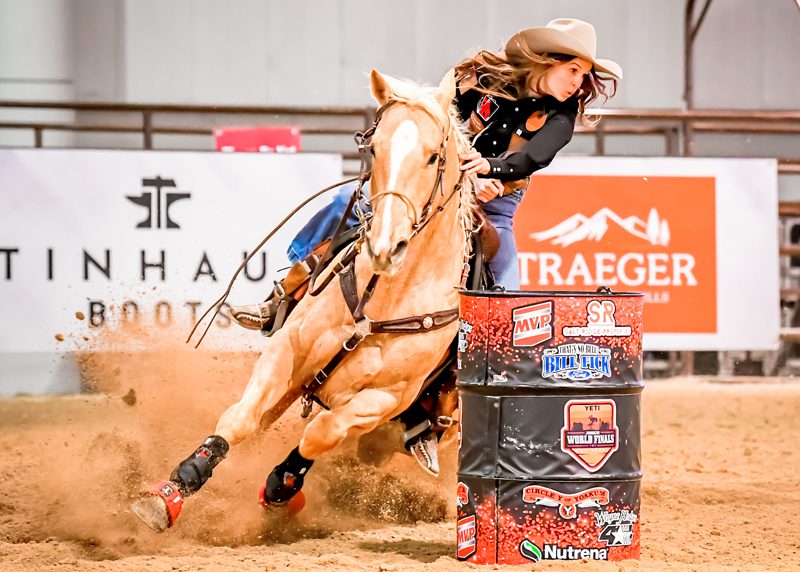
    Firewater Requests, Rockette for short, comes by her name honestly. The 9-year-old palomino is everything Tru needed in a barrel horse and much more. “We actually bought Rockette two months before I ever rode her,” Tru said. “There was a jackpot nearby when we came to pick her up in Utah. It was a KK qualifier. I had only run her once before we entered up. I was just test running her before we took her home, but we won the qualifier. I was shocked because I didn’t know what to expect from her.” Their honesty about Cash poured the foundation of trust that’s built a strong friendship between Ryan and KC and the Mosts. The fruit of that trust was picked in Vegas when Tru not only won the Junior World Finals in the senior barrels but also took home the youth championship at the All In Barrel Race as well as ninth in the open average.
    From the outside, Tru’s success looked easy. Even though Tru and Rockette clicked instantly, their climb to the top in less than a year as a team was anything but. “As Tru finished out junior high last spring, she just swept everything she entered,” Josh said. “By the time summer hit, Rockette started declining; and by that, I mean she wasn’t winning every race she entered anymore. We didn’t know that her hocks could get sore or that she might get ulcers being hauled a lot.” After getting Rockette back to peak condition, Tru had some work to do as a rider. But the pair also had to figure out how to get all 16 hands of Rockette around the NFR-sized pattern, something neither had much experience with at that point.
    “We had about four months to really train for Vegas, and all of our high school rodeos were in big outdoor pens,” Tru said. “We ended up going to a local jackpot – Rocky Top – almost every week this fall because the pattern was only 12 feet off what we’d do in Vegas. It was rough at first because I wasn’t sure how to set up such a big horse in a small pen.” Through the trials and tribulations that indoor pen presented, Tru never wanted to throw in the towel. It’s this relentless determination that her parents are most proud of, more than anything Tru’s ever won. “She could’ve walked out of there and said she never wanted to go back, but she didn’t,” Josh said. “She never gave up. By the end of that series, she finished third against some top riders who consistently put up times that were tough to beat. Tru needed to see that she wouldn’t win every time she got on that horse, that she had to work for it. That’s when I knew they were ready for Vegas.” As a push-style horse, Rockette was nothing like other horses Tru had ridden before, with the exception of Cash, who shared one similarity.

    Fearless Freshman
    “When Tru first ran Rockette, Ryan turned to me and said: ‘Because of Cash, she has no idea that she’s riding a literal rocket,’” Josh said. “At 10 years old, Tru learned how to handle a beast and then every other horse out there is nothing by comparison. Her only game plan is to ride well, and it never crosses her mind to be scared to go fast.” It’s this fearless approach that fuels Tru’s confidence. She gets nerves and even entertains occasional doubts much like her peers, but Tru doesn’t let it take hold of what she knows to be true: she’s a skilled horsewoman riding one of the fastest rockets out there.
    “Tru went to the world finals never thinking anything less than she could win it,” Josh said.
    Taking her turns a bit wide was a safe gamble in the first two rounds of Vegas. Tru knew Rockette had the speed to get them to the finals if they could stay clean. Once in the finals, Tru left it all out in the arena. She pushed Rockette harder simply because she was proud of the fact they even made the short round. Anything after that feat was just extra for Tru. “The whole experience in Vegas was better than I could have ever imagined it to be,” Tru said. “We’ve joked that we won’t be able to top it.”
    While outdoing 2022 will be tough, Tru has the determination, work ethic and the horsepower to accomplish anything she sets her mind to.
    Tru’s cheering section in Vegas is the perfect illustration of the community surrounding her in this endeavor. “We probably had 15 people fly in from Washington and California to watch her in the short round,” Nichole said. “We’ve all fallen in love with the sport and the people. We get to spend so much time together as a family because of rodeo and that’s been such a blessing.” At 18, Tru’s older sister didn’t pursue horses after hitting the dirt during a riding lesson. “Alivia was a beautiful dancer and later did voice lessons and theater in high school, she just didn’t have any interest in horses like Tru did,” Nichole said. “She’s literally the exact opposite of a cowgirl; like picks up a pitchfork with two fingers.”
    Regardless of their divided interests, Alivia is at every one of her sister’s events.
    For a family that knew nothing about rodeo only eight years ago, they’ve come a long way together. “Being so big, horses seem like they should be really dangerous but they’re so docile,” Nichole said. “It’s so therapeutic to go out and just brush a horse or clean their stall. I think riding horses makes Tru feel like she’s part of something bigger than herself. She’s a lot more spiritual than anyone else in our family and I think it’s cool that horses brought her closer to God.” Perhaps qualifying for the Junior World Finals was the happiest accident of Tru’s life so far. Or maybe it’s just the very beginning of her story as a barrel racer. “Anyone can be like Tru; yes, it will cost money and be a lot of work, but anyone can make it big,” Josh said. “There are so many kids out there who don’t have anyone propelling them to the next level, but they should all know that it’s within their reach if they work hard.”

  • On The Trail with Killer Bee

    On The Trail with Killer Bee

    “Cowboys don’t know what pen to put her in,” said 4x World Champion Saddle Bronc Rider, Clint Johnson, about Killer Bee. “She is probably the greatest in this generation. She’s been a little bit of an exception all along. She is an outstanding bronc – one of those horses that comes along once in a lifetime – like Secretariat, Scamper, and a handful of others that were exceptional in their discipline.”
    Killer Bee is the daughter of Commotion and Molly Bee. “Molly Bee had been to the finals four or five times and we bred her to Commotion as we retired him. That mare colicked when we were in Nebraska and she didn’t survive the surgery,” said Bennie Beutler. “Killer Bee was two months old, and we raised her on a bottle. She never got real gentle.”
    She bucked her first time as a four-year-old, at a college rodeo. “We eased her along to some of the smaller rodeos,” continued Bennie. “We knew we had something – she was rank in the bareback.” Cowboys couldn’t mark her high enough, so she was switched to bronc riding. The Wrights got on her – that was in 2015 – the bronc riders wouldn’t get on her because they couldn’t ride her. When cowboys could ride her, they, they were in the 90s and same in the bronc riders. “She’s just as rank one way as the other.”
    At 17, Killer Bee went out on top – Dawson Hay scoring a 92 point ride in Round 9 of the 2022 WNFR. Among her other accolades Killer Bee was the 2020 Wrangler NFR top bareback horse. She was the 2019 PRCA Bareback Horse of the Year and voted top bareback horse of Round 3 of the 2019 NFR after bucking off Austin Foss. Killer Bee was also the top bareback horse of the 2018 NFR and top saddle bronc horse of the 2013 and 2014 NFRs. Her job now? Raise colts. “Now the hard part comes.”

    The Beutler name has long been connected to rodeo stock and this year their ranch-raised stock took all three awards for top-scored rough stock of the Finals. Beutler & Son were awarded best bareback, bronc, and bull of the Finals. This comes from the judges scores – and with 105 in each event, winning one is an honor and winning all three has never been done.
    “We were pretty fortunate.”

    Killer Bee Accomplishments
    2013 – Top Saddle Bronc of the NFR
    2014 – Top Saddle Bronc of the NFR
    2018 – Top Bareback Bronc of the NFR
    2019 – PRCA Bareback Horse of the Year
    2020 – Top Bareback Bronc of the NFR
    2022 – Top Saddle Bronc of the NFR

    Beutler & Son Accomplishments

    Most Top Bucking Stock of the NFR Awards for a Single Rodeo Company – (14), six bucking bulls, four barebacks, and four saddle broncs.
    Most Top Bucking Stock of the NFR Awards – Killer Bee (5), 2013, 2014 & 2022 as a saddle bronc and 2018 & 2020 as a bareback horse (Tied with Sippin’ Velvet (Bernis Johnson).
    Most Top Saddle Bronc of the NFR Awards – Killer Bee (3), 2013, 2014 & 2022 (Tied with Angle Blue (Flying U), Trade Winds (Big Bend), & Trails End (Zumwalt).
    First Stock Contracting Company to Win All Three Top Bucking Stock of the NFR Awards In A Single Year – 2022 with Killer Bee (saddle bronc), Ghost Town (bareback), and Smoke Stack (bull).
    4th Highest Scored Bareback Ride in PRCA History (13-way tie) 93 points by Devan Reily on Beutler & Son Rodeo’s Killer Bee in Tucson, Arizona, in 2018.

    Ranch Raised

    The Beutler name has long been connected to rodeo stock and this year their ranch-raised stock took all three awards for top-scored rough stock of the Finals. Beutler & Son were awarded best bareback, bronc, and bull of the Finals. This comes from the judges scores – and with 105 in each event, winning one is an honor and winning all three has never been done.

  • On The Trail with Jackie Crawford

    On The Trail with Jackie Crawford

    Multi-talented Jackie Crawford won the 2020 WPRA (Womens Professional Rodeo Association) Breakaway Roping world title by less than $2,000. Her performance at the first ever Wrangler National Finals Breakaway Roping held in Arlington, Texas, propelled the 38-year-old to win her 20th (WPRA) World title. This isn’t her first Breakaway World Championship, she has won the WPRA title in 2016 and 2014. She is the second most decorated member of WPRA, trailing the late Wanda Harper Bush, also an inductee of the ProRodeo Hall of Fame, who won 32 titles during her rodeo career. Jackie’s other titles have been in All-Around, Team Roping, Tie-Down Roping plus she also barrel raced.

    The National Finals Rodeo, held in December happened to coincide with Jackie being six month pregnant with her daughter, due in March. “At first I wasn’t sure if I would compete. It was a bittersweet feeling because we have worked so hard and been on this journey to bring breakaway to this level; so to watch the inaugural year from the sidelines would have been tough. After much discussion with my family, doctor, and prayers, I told myself as long as I was comfortable, I was going to compete!”

    Jackie makes her home in Stephenville, Texas, with her husband, Charly; their daughter, Kaydence, age 16; and three year old Creed. The 38 year-old said, “I cut the horn off my saddle, to protect the baby. I trust my horse, T-Boy, so much and had so much confidence in him.” She had continued to compete three years ago until she was five and a half months pregnant with her son, Creed.

    The National Finals Breakaway Roping event was ten rounds, then they took the top eight into a shoot-out round, followed by the top four. Jackie managed it all. She even went back to the judges in Round 5 and admitted she had an illegal catch (the calf’s back leg in the loop) that the judges did not catch. The judges listened and changed her score to a ‘no-time’. But in spite of her honesty, winning $25,536 with two go-round wins, and placing in four rounds, she came out on top, with a total for the year of $47,185.
    Jackie thought the National Finals event was an awesome time. “I was suppose to be on that journey . . . what a way to end on a high and take a break!” She and Charly have named the ‘soon to be born little girl’ Journey.

    “My mom (Annette) and dad (Mark Hobbs) rodeoed in Illinois. My dad and his brother are the only two to win the National High School Finals Team Roping from Illinois.” Jackie explained that her mom cut the middle out of a foam pillow, for the saddle horn, and that is where she rode. Her mother was well known for training barrel and roping horses and she was inducted into the Murray State College Rodeo Hall of Fame. “You can’t have a cake without the ingredients – in other words, it took a good work ethic, dedication, horses, coaches, and sacrifice – you have to be willing to put it first,” said Annette, who got her work ethic from her dad.

    Jackie began competing in junior rodeos in barrel racing, poles and flags. When they moved to Oklahoma she added roping. “I was drawn to it – I was meant to be a roper. I turned my barrel horse into a roping horse. I started competing my sophomore year in high school.”

    Before they moved to Oklahoma her mom worked at Fairmont Park Race Track in Collinsville, Illinois. In Oklahoma she went to work for Blue Ribbon Downs, in Sallisaw, while she studied to be a radiologist. Jackie began working there cleaning stalls when she was 14. She got her pony license at 16. “To this day I have scars on by body from ponying horses. It taught me to appreciate a good minded horse and what those horses are, and what they do and how athletic they are.”

    Her first team roping horse came from the track. “I team roped and barrel raced off that big impressive bay gelding,” she said. “I sold him to buy my first truck – a 1996 extended-cab Dodge. It was the coolest thing in the world to me; I got to go to college from that horse.” She had several full scholarships from colleges in her area of Oklahoma. “Wanting to be the best and being so competitive I wanted to go to the toughest place there was. I knew the southern region was the toughest region. I took a scholarship for less money to go to Vernon Regional Junior College, Texas.” As she expected the competition was something she’d never seen before. She did win the NIRA Breakaway Roping Championship which helped the Women’s Team win that year, as well. “Iron sharpens iron and that was my mentality.”

    Jackie then went on to Tarleton State University, in Stephenville, TX, with her best friend in college, Tessie McMullan Doyle. They pushed each other every day to become better competitors. Their women’s team won the National title their senior year, 2005
    After college she went to work for Lari Dee Guy, in Abilene, TX, riding colts training roping horses, whatever was necessary. She admits she learned a lot. In 2009 Trevor Brazile won the calf roping and team roping on Sans Diamond Shine at the World Show and the owner of the horse sent us a bunch of that stud’s colts to train. “They were all good horses and I bought T-Boy out of that group,” she said. At first they didn’t get along. “He was so quirky, and we went through a battle,” she admits. “I had the feeling there was something about him – he isn’t fancy. He was a problem and hard to get to work, but he had an ability to win.” When he was five she took him to Joe’s Boot Shop that had a five-header and he won. He has been taking her to the pay window for a decade. Today she says, “He’s just a phenomenal horse. I don’t think anyone can dispute the fact he’s probably the highest money-earning horse ever in breakaway roping. He’s just a winner.”

    Jackie met Charly through the roping world. She was dating a mutual friend of his. “I thought she was a buckle bunny,” said Charly. “It turned out that wasn’t the case at all. We became friends and had a lot of things in common. One year she needed a head horse for the World Series Finale in Vegas so I let her use one of mine, and it went from there – I could tell right way it was a fit.”
    Charly started roping at a young age in Canby, Oregon. He roped with his dad and made it to the National High School Finals three times. He graduated in 1996 and went to Central Arizona College for two years. “I got my PRCA permit when I was 17 but didn’t have enough horses to really compete.” He bought his PRCA card in 1998 and won the Resistol Rookie (header) of the Year in Team Roping. He’s made 10 appearances at the National Finals which included 2020, when he and his partner, Logan Medlin, won the 7th go-round. He plans to slow down and concentrate on his family, his roping schools and clinics. “I’ve gotten five heelers to the NFR so I figure I better take that talent and use it to put on schools and lessons. My daughter wants to make the UPRA anc CPRA finals this year so I want to help her as well as help Jackie however I can. I’m good with being a good dad and husband.”
    Jackie graduated with a degree in Business Administration, which she admits has helped her with communication, sponsorships, and everything else that goes with rodeo. She has hired Cheyenne Britain that acts as Jackie’s ‘right hand man’. “She helps me saddle, unsaddle, drive and everything in between. “I hired an agent and a social media person,” Jackie explained. Charly and Jackie are restructuring their program so they can do the things a replacement can’t do. “Nobody can replace a mother, a dad, wife, husband or a competitive roper,” she said.

    Creed has grown up in the arena. “We have huge play areas set up inside a 10×20 chain link fence; slides, jungle gyms, etc.,” said Jackie. “In between horses, we play and do what we need to do.” The plan is to keep going. “Our biggest goal as a family is not to be broke cowboys – rodeo doesn’t have a 401K.” Jackie’s initial goals were to be in the conversation of the greatest women ropers in the world and get inducted into the Cowgirl Hall of Fame. Now that the doors are opening to breakaway roping opportunities, her goals are changing, but in the end she wants “to know that no matter what, I’ve accomplished the things, I’ve worked for. I did it and stamped my place in history … a sigh of relief that the first NFBR is in the books. Let’s rock on and keep this ball rolling. I’m so fortunate to do this – I get to be with my kids. Even though we are working, we are all together as a family all day. How many people get to say that.”

    “My vision for myself is continuing to help put this sport in a position that when I’m too old to do it, I’m sitting in the gold buckle seats watching my daughters roping at NFR.”


    CHAMPIONSHIP WINS
    2020 National Finals Breakaway Roping
    2016, 2014 Womens Professional Rodeo Association (WPRA) Breakaway Roping
    WPRA All-Around 2019, 2018, 2016, 2015, 2013, 2011, 2010, 2009 & 2008
    WPRA Team Roping 2016, 2014
    WPRA Tie-Down Roping 2014, 2013, 2011, 2010, 2009, 2008

    2003 National Intercollegiate Rodeo Association Breakaway Roping for Vernon Regional Junior College
    2003 National Woman’s Team for Vernon Regional Junior College
    2005 National Woman’s Team for Tarleton State University
    2000 Oklahoma State Champion Breakaway Roper
    2020 Betty Gayle Cooper Ratliff Fast-Time Award see story on pg 43
    Sponsors:
    American Hat, Ariat, Smarty, Hay Chix, Classic Equine, Rattler rope, Classic rope, Martin Saddlery, LubiSyn, Chute Help, Plaza Hotel and Casino, Total Feeds

  • On The Trail with Junior Nogueira

    On The Trail with Junior Nogueira

    “Whatever you choose to do, do with all your heart and all your passion and be the best you can be at it.”

    When Junior Nogueira came to the United States at the age of 24 from his home country of Brazil he had learned to rope with his dad (Lucinei Nogueira) and was a team roper. He began roping with former World Champion and ProRodeo Hall of Famer, Jake Barnes. “I was scared – of not knowing English, or anybody. Everything was scary!” Thanks to Jake, who he lived with for two years, Junior learned much of what he needed to know. “I can never pay him back for what he and his wife (Tina) did for me. I made it because of him – he taught me how to work hard and be professional. It was God’s plan to put him in my life. I’m not perfect, but for sure without God, I wouldn’t be anything.”
    “My dad taught me to rope, in the round pen, I was four years old,” said Junior. “He taught me how to ride, how to build my loop, and chase the calf until I caught it. I would do it for hours. I lost my dad when I was six. My mom, Eliziane, was the first female calf roper in Brazil! Her dad had a cattle ranch and was a cowboy. My grandpa bought her a horse, and she began to compete. My parents met through roping.”

    After the untimely death of his father, Junior stepped up to be ‘the man of the house’. His mom was by his side and encouraged him. He spent hours watching videos of his American roping idols – Clay Cooper, Jake Barnes, Leo Camarillo, etc. Junior started roping professionally when he was 14. “I didn’t know what I was doing, just working hard and learning, but I was able to provide for my family and that was good.”

    Jake Barnes, the seven times world champion header with 27 NFR qualifications, said, “I thought I was done rodeoing hard when Junior showed up. I’d sold my truck and trailer, and our youngest son was off to college, so Toni and I were empty nesters. Helping Junior felt like giving back for what guys like Leo did for me. It’s neat when you can make a difference in someone’s life. Junior made a difference in my life, too.”

    Shortly after Junior arrived here, he and Jake were traveling to South Dakota to compete in Rapid City and spun out on black ice five minutes from the arena. “We lost Jake’s truck and trailer,” recalled Junior. “I thought I was going to die – my horse wasn’t hurt, but Jake’s horse was. A bull dogger drove by, picked us up, and put all our stuff inside his rig. The slack had already started, so I saddled my horse, Jake borrowed a horse, and we roped the steer and ended up placing 4.6. God’s amazing.” Jake and Junior made their first NFR in 2014, Junior’s rookie year, and Junior claimed the prestigious 2014 Rookie of the Year as well. Jake and Junior made a second NFR together in 2015, but Jake suffered a serious head injury when a horse fell practicing right before the Finals, so JoJo LeMond filled in and headed for Junior. “Good mind, that’s what I learned from Jake – stay in the middle, stay focused on what you are doing and get it done. Don’t let anything else take your focus.”
    Junior married Jaqueline, a girl he fell in love with from his hometown, Presidente Prudente, Sao Paulo, Brazil. Once he had become successful, he brought her to the States and they are now able to travel together much of the time. “My wife is very supportive. It’s the whole team; family, horses, and help at the house to ride when I’m gone, that makes this work.” He has roped with Kaleb Driggers for six years.

    Junior continues to work on his skills. “I try to be a master at what I do and figure everything out – now it’s paying off.” He has spent a lifetime working on his horsemanship, starting in Brazil with his father and continuing in the United States. Junior lived with him two different times early in his career. “Keeping your horse working, knowing him, and always helping him be better is important. You can overcome any kind of issue with good horsemanship.”
    This will be Junior’s ninth trip to the NFR. “I get excited and my heart beats so fast and nervous. It’s a good feeling and I don’t think that will ever change.” He and Kaleb will practice for the NFR at Kaleb’s house after the AQHA World Show in Oklahoma City. “We set up Kaleb’s arena (40 minutes from Junior’s house near Brock, Texas) with the same measurements for NFR and pull the chutes the same way.” Junior likes the small arena. “I like it – love it. it’s the NFR.”
    Junior also loves the United States. “For sure with no doubt it’s the greatest country in the world. I have my house, my family, and have this life – I’m very blessed.”

  • On The Trail with Erin Johnson

    On The Trail with Erin Johnson

    Erin Johnson has always believed in being consistent over the long haul. That consistency has brought the 42-year-old mother of three to the NFBR three years in a row. Erin is going into the NFBR finals in second place. She went in last year in third place and the first year breakaway was offered during the NFR, she was 15th.

    Erin was the first one to ever leave the box for a NFBR event. “By the time I got there, all the excitement took over the nerves. What helped with the nerves was the opportunity to be the very first one – the first girl to rope at the NFR Breakaway Finals – I wrote my name in the history books that day.”

    That first finals fell on the heels of Covid, when most of the rodeos were canceled. “That summer I enjoyed staying home,” she admits. “When you do something for so long, you feel like you have to do it.” Towards the end of that summer her husband, Darnell, entered some circuit rodeos and Erin tagged along. Before too long, her world standing went from 54th to 17th and after discussing it with Darnell, she hit the road. “I’d never gotten to do that before – I went all over the Northwest to the ones they had. We drove a lot of miles to go to very few rodeos.” Her success spurred her on and before she knew it, she was heading to Arlington. “I stumbled into it, that’s for sure.”

    Erin grew up north of Burlington, Colorado on the Republican River. She was a “ranch kid,” and spent her time showing horses and cattle in 4-H. Erin and her family team roped for fun, and she dabbled in all the events at the local gymkhanas, but never competed in high school rodeo. When her parents divorced, she moved to La Junta, Colorado with her mom, graduating from Swink High School in 1998.

    It was in college that the rodeo bug bit. She took her horses with her to Chadron (Neb.) State College, and the kids on the team talked her into college rodeo. She began breakaway roping, and “I really had a lot of fun. I didn’t have a lot of success, but I had enough to keep me hooked. That’s what got the bug started,” Erin remembers. After a year in Chadron, Erin transferred to the University of Southern Colorado in Pueblo (now Colorado State University-Pueblo.) She continued to compete in college rodeo, earning an accounting degree in 2004.

    During her college summers, and after college, Erin continued to compete. She became a member of the Colorado Pro Rodeo Association in 2000 but didn’t win a check until the final rodeo that year. As other kids had learned the ropes when they were young, Erin spent her college rodeo career learning the mental aspect of rodeo. In the CPRA, she was intimidated by the women who roped well. “I was still on a learning curve,” she says.

    In 2001, her second year of CPRA rodeo, she made the finals. Her learning was advancing. “It was gradual. I was gradually learning how to win, and gaining the confidence to win.” She won her first CPRA breakaway year end Championship in 2003.

    In 2003, at a U.S. Calf Roping Association event, she ran into another roper, a young man named Darnell Johnson. Erin knew him from college rodeo, but he was just an acquaintance. They got to be friends, and, when she told him she was looking for another breakaway horse, he helped out. “That gave him an excuse to call,” she laughs.

    After dating for three years, they married in October of 2007. Darnell, a tie-down roper, moved to her home near Pueblo, and he added a barn, corrals, and arena to the place. Erin, who worked in accounting for several years, focuses her time now on her roping and her family. In addition to the CPRA, Erin competed in the Wyoming Rodeo Association, the New Mexico Rodeo Association, and occasionally ventured into Texas for their rodeos.

    She has qualified for nearly every CPRA Finals in the last 20 years, winning the breakaway title in 2003, 2005, 2006, 2008, 2011, 2015, 2019 and 2021. She won the breakaway roping title in the WRA in 2005 and 2006 and in the NMRA in 2003 and 2005. In 2007, she began competition in the Women’s Pro Rodeo Association, mainly at their co-sanctioned events in the CPRA. She qualified for her first WPRA Finals in 2007, and has won the WPRA Breakaway Roping World Championship in 2011, 2012, and 2015.

    Being consistent is important to Erin. “Rodeo is one big average roping over the course of the year. Whoever ropes the most calves the best is going to win.” She sets goals in her mind every year, and if she doesn’t reach them, “it makes you tougher the next year.”

    She and Darnell were blessed in February of 2011 with a little cowboy, Denton. He’s playing football, baseball, and is wrestling. They have two daughters, Evin, 8; and Annie, 6. “It’s not easy,” she admits about leaving the family for the rodeo road. “I don’t know how long I can sustain it – this year was harder than last year. Seeing all the big cool rodeos that I never got to see carried me – but now my kids are loving horses and riding. They have little gymkhana horses, and they will soon become the priority.” Erin missed several of Denton’s games this season and has found greater enjoyment in being part of the little farm than part of the rodeo trail. “I don’t like missing any of it.. I want to help the kids excel.” Now her goals are more “one day at a time – We have a little farm and a lot of animals; it would be nearly impossible to go down the road all the time as a family and I’m not willing to sacrifice where we are and our lifestyle.” She is quick to recognize that her parents were crucial in her rodeo career. “Both my parents are extremely supportive. My mom (Gail Downey) has supported me in every way in order for me to get started and learn, and my dad (John Homm) encouraged me and raised and gave me a lot of the horses I’ve won on.” She credits Darnell with her accomplishments. “If I didn’t have his support, encouragement and advice, my roping wouldn’t be where it is today. I’m ready to help my kids the same way. I am content with the accomplishments that I have, and my goals have changed. I’m going to play it one day at a time.”

    Erin has spent her time preparing for the NFR by roping and practicing on her young horses. “I’ve also taken a break from the whole scene which has been good for my mind. I’ve been sitting on a swather and helping Darnell catch up and I love it. It’s fun to spend time in the arena together as a family – there’s no pressure and that’s my preparation – remembering we do this because we enjoy it and it’s not all about winning.”

    She will compete at the Mountain States Circuit Finals and then head to Waco for the WPRA Finals. “We are going to rope through the NFR calves. Then I can come home and gear my practice and preparation based on what it’s going to be.”

    Erin and her family from a little ranch in eastern Colorado have etched out part of rodeo history by paving the way for breakaway ropers to rope for more money. “I’ve been learning as I go,” she admits. “You have to approach it humbly and say thank you, no matter what happens.”

  • On The Trail with Sherry Smith

    On The Trail with Sherry Smith

    It’s not about the money, it’s about the memory for the girls
    “Make every day count, you aren’t promised tomorrow. Be the best and the most you can be in that day,”
    From behind the sewing machine to behind the camera, Sherry Smith has forged her way to become the queen photographer for all professional rodeo. Starting with Miss Rodeo USA twelve years ago, she became the official pageant photographer for Miss Rodeo America in 2016. She is the photographer for five state competitions as well as the judge for several pageants.
    Before the boots, buckles, and curls, Sherry sparked her passion for photography during community college where she was studying to be an art major. She picked up a job with a professional photographer, working on touch-up with film, before digital was ever on the radar.
    Married in 1989, Sherry devoted her time to her husband, Keith, and her growing family. She kept her passion for photography going with her children, photographing her son, Ike, through football, and her daughters (Bethani and Faith), through horses and rodeo.

    Designs By Sherry

    When Bethani decided to compete in the rodeo queen world, Sherry started sewing. “We couldn’t afford the clothes on a one-income family,” she said. She used her creativity and artistic ability to hand-design and sew her daughters’ wardrobe. “It was an entirely new medium. I couldn’t sew, I was the art nut.” she explains. She could draw how it would look, but then had to get that drawing into a piece of clothing. “I don’t do anything simple, so my first creation was a dress combination of leather and lace before anyone did that,” said Sherry, “Making it all hold and stay in place was the hard part–and there was nobody to call and ask.”
    With a graduation-gift sewing machine, and sheer determination, Sherry created jaw dropping designs for not only her daughter, but everyone else too. Designs by Sherry lasted for 14 years. One year in the prime of her business, she created more than 23 leather dresses, not counting the arena shirts, painting and stoning boots, chaps, hats, and bags. She even became and continues to be the special event clothing designer for World Champion and Hall of Fame Inductee, Martha Josey, who continues to give Sherry new ideas. When grandbabies started to arrive, Sherry wanted to spend less time in the sewing room and more time behind the camera.

    Sherry Smith Photography
    The goal with Sherry Smith Photography was to capture fleeting moments for pageant contestants as she had done for her own kids. “These girls should be able to afford these memories and have them last a lifetime. They have invested so much into wardrobe and themselves.” When she met Tom House, a Miss Rodeo America hall-of-famer for his photography and videography, at the Miss Rodeo USA pageant, Sherry’s notoriety as a photographer took off. Tom brought Sherry on board for the Miss Rodeo Oklahoma pageant behind the camera and it became clear snapping pageant shots was where she needed to be. As if it was fated, the photographer for the 2017 Miss Rodeo America Pageant couldn’t make it, so with the recommendations of Tom House, Doug Wade, Lauren Heaton (Miss Rodeo America 2015), and Melissa Heaton, Sherry Smith Photography was contracted by the Miss Rodeo America Association to shoot the pageant for the first lady of Pro Rodeo.
    Learning how to photograph pageants that have about as many moving parts as a rodeo performance was a learning curve for Sherry. The first Miss Rodeo USA she shot, Trisha Smeenk at the 2012 IPRA Finals, was the subject of the most humbling event in Sherry’s photography career. “I was told the house lights in the arena would be on for her debut, so my equipment was prepared for that lighting. When we were already out in the arena, the house lights shut off. Due to my lack of experience, I missed Trish’s first run as Miss Rodeo USA. That moment taught me so much about what I was getting into,” she recalls. Now more experienced, Sherry can get images from pageants out to media in a mere day and whole packages out in two weeks. The near all-nighters she and her team pull at pageant week are worth the shots. She also quadruple backs up her images in the rare case something goes wrong and they are lost.
    The integrity Sherry puts behind her photos is what makes them so original. “Whether I was designing or shooting headshots for a pageant, there is nothing more rewarding than a seeing a girl see herself as a rodeo queen for the first time.”
    In each pageant, she will take more than 2,500 images of one portion of the pageant. She sorts and puts the images in the contestant folders; divided from days to events, to contestants. There are hundreds of images for each contestant to purchase as a package. “I do this a little different than most – I want those girls to have the most they can have to create the once in a lifetime memory.” Her equipment takes up the entire back end of her vehicle. She has a portable backdrop to do initial shots. She takes them outdoors to do product shots. She knows where to put what piece of equipment where. To do the job at Miss Rodeo America, she takes Keith (her husband) and another shooter but does all the sorting herself. She also builds a recap video. She takes interns with her to pay it forward. She is hoping to book more state pageants, “We need to build the industry up and I think what we offer to promote the rodeo queen will help put a visual out there for the younger girls to want to be a part of.”
    Her very own studio just opened over a year ago in Lincoln, Arkansas. Sherry made the living room work great as a studio, but was urged by Keith, to expand into her own, permanent space. Contestants fly in for official head shots or content shots. Sherry still consults on wardrobe decisions, but no longer sews commercially. She is committed to photographing pageants, weddings, special events, and portraits of all kinds. She also gives back by judging several pageants each year.
    As a judge, Sherry has a unique compassion for and perspective of the contestants, “They get judged in such a short time on their ability. “What I say or how I read a situation could alter how that young lady feels about herself. I want her to take her experiences and grow from them.”
    The success she has achieved is all for the young ladies, but Sherry really gives the credit where credit is due, “I give the glory to God. I want to be the person that the Lord wants me to be. I want to be where he can use me in the biggest ways.”

    Editor’s Note: Her work can be seen at sherrysmithphotgraphy.photoreflect.com and through Miss Rodeo USA and Miss Rodeo America.

  • On the Trail With Rayne Grant

    On the Trail With Rayne Grant

    Wheatland, Wyoming, cowgirl, Rayne Grant, took home the 2022 National High School Finals Rodeo All Around title, AQHA horse of the year, pole bending championship as well as reserve world champion in the barrels. “It feels crazy still,” said the 18-year-old. “I remember in junior high looking at all the national champions; those kids seemed so cool to me. Now that I’ve won it, it doesn’t feel any different, I’m still just a normal person.”

    Growing up on a fifth generation ranch south of Wheatland, Rayne is accustomed to roping and riding. She started riding when she was three, and watched her older sister, Allie, and her dad, Mike, compete. Rayne started competing in Colorado Junior Rodeo Association when she was five, entering all the events she could. Rodeo News wrote about her seven years ago. https://mwdatademo1.com/association/meet-the-member-rayne-grant/

    She moved up to Wyoming High School rodeo and also helped her parents put on a weekly team roping jackpot in the summer. Rayne competes in the Colorado Pro Rodeo and the Wyoming Rodeo Association as well as entering futurities with her barrel racing prospects.

    Her barrel racing and pole bending horse, Chily, won the girls AQHA Horse of the Year award at the 2022 NHSFR. VF A famous Lady, has been part of the Grant family for four years. “We were looking for a barrel horse and she was a really nice horse – Chily was 8 and I took her to some races and it went good. A year and a half later, my pole horse got hurt so I entered Chily in the event. Her first time running, she clocked a 20.3 – the fastest time I’ve ever made.” The Grant family all ride Quarter horses. “They are the best – I don’t know why I’d try anything else.”

    Rayne will be a freshman this fall at Laramie County Community College in Cheyenne, Wyo., where she will continue to compete in college rodeo in team roping, breakaway, barrels, and goats. “This region (Central Rocky Mountain) is so tough; I feel like I fit in well here. I’ve been fortunate to go to Arizona in the winters, but I don’t want to go to school there.” She is studying applied management; “to do something with horses. I want to train futurity barrel horses – they are amazing, and I love being in that industry.” She will take five of her quarter horses with her to school; four to compete on and one colt that she will continue to train and futurity on. “I’m confident about going to college and making it all work with the horses and school. My parents have prepared me very well. I am pretty independent, and I’ve taken five or six horses to rodeos all year, so I can handle it.”

    The Grants have been buying, training, and selling Quarter horses for years. “We have one that we raised, but for the most part we buy two or three-year-olds,” explained Rayne. “You are investing in bloodlines, and you find the bloodlines that are winning and you like and go from there. My dad trains more of the head horses and I do more with the breakaway and barrel horses. Mom (Becky), videos and supports us and gets mad when we buy more horses.” Mike still does general ranch work on the family ranch, but he also manages Fox Farm Storage, a company the family has built up. Rayne is quick to be grateful to her parents for providing her with horses all of her life. “I’ve ridden so many – I’ve had four-year-olds since I was 12 and then I’d sell them. It’s what I want to do for a living, train and sell horses. You keep going and better yourself to move up.”

    One of the obstacles Rayne had to overcome at the National High School Finals was three broken vertebrae. “I had a horse fall with me a month ago before Nationals and broke L1, 2, and 3.” Doctors orders as well as the pain made practice for Finals impossible. “I think I went to two jackpots between state Finals and Nationals and I wore a back brace at Nationals. The doctor said I could do what felt ok to me – they told me to take it easy, that’s why I didn’t go anywhere but it didn’t stop me from going to Nationals.”

    She made Nationals all four years of high school. “Nationals is a completely different set up – it’s not like any other rodeo you’ll compete at in the high school level. It’s the top four people from every state and the competition is tough.” One of the advantages that Rayne had was the winters spent in Arizona. “We would head down in November and come back in May. My sister (Allie Eddington) and her husband – he’s a banker in Wheatland – live on the ranch and they stay and take care of everything. We take all the horses – we have three rigs that go down every year.” With this win, Rayne will add three more saddles to her collection of 9 trophy saddles. Rayne’s interest is strictly horses. “I honestly don’t think I could do anything else.”

    For now, Rayne is heading to Cheyenne for college. “I’m excited about college – I’m ready to experience something new, move out and be on my own.” She’s not sure she’s excited about the winter though. “Wyoming will always be home, but I can train horses a lot better in the heat than in the cold. When it’s hot, I can still ride in the early morning – when it’s cold I just can’t get away from it.”
    One thing she is sure of is that she is following her passion. “Do whatever makes you happy and have fun. I think part of myself having this success, is I’ve always wanted to rodeo. It truly makes me happy and I focus on all the positives and have fun. I think people forget to have fun – I love my horses and I want to take care of them, and you do whatever you have to do. It makes winning a lot sweeter.”

  • On the Trail With Statler Wright

    On the Trail With Statler Wright

    The last of the Wright’s is making his run for the Resistol Rookie of the year, joining his three brothers, Rusty, Ryder, and Steston, on the rodeo road. The Utah All State Linebacker, owes his love of riding broncs to Covid. “I was part of an undefeated football team – we took state two years in a row – and then Covid hit and we couldn’t play anymore,” said the 18-year-old who graduated six months early to hit the rodeo trail. “I got after dad to let me get on, and ever since, it’s been a full head of steam.”

    Growing up, he didn’t participate in much of what his older brothers were doing. “If they needed help, I was the pickup man, I did get on one saddle bronc steer and the only saddle that would fit me was too big and after that I didn’t get on another bucking horse until I was a junior (in high school).” He liked going with Stetson to ride bulls. “My freshman year, I got on a few and the third bull I got on slammed me and broke my collar bone; I hung it up after that.”

    The main reason Statler started riding later in life was due to his size. Statler got his mom’s genes for being bigger than the rest of his siblings. “My dad was 6’4”,” said his mother, ShaRee. “He was always eager to rodeo. Cody (his dad) was hesitant because Statler was bigger than the other boys. When you grow that fast, you get hurt easier. Cody would just tell him in due time, you will get on.’” ShaRee has supported her husband as well as all her kids in whatever endeavors they pursued .. except riding bareback and bulls … and she continues to be their biggest fan. “Now we’ve got five grandkids and one on the way. As a mom with busy kids and lots of grandkids you don’t have time to think about anything else.”

    Cody started all four of his sons to ride bucking horses the same way, on a saddle horse. “He told us that if we could spur a saddle horse, then we could spur a bucking horse – the kicking helps you throw your feet forward,” explained Statler. “I started riding bucking horses right handed and I bucked off to the left. Dad told me to ‘get my riding boots on and walk across a real thin metal pole. Whatever arm you stick up to balance is the one you use to balance.’ I stuck my right arm up and so I started riding left-handed and it’s worked out.”

    All the boys lean heavily on Cody for advice as well as entering. “It’s the respect that they have for him – not just as a cowboy that’s done it, but as a dad and a person … we are a super close family – we all live within a couple miles of each other,” explained ShaRee. “We are always together when they are home.” Their younger sister, Lily Jo, is chasing cans when she’s not playing softball or basketball. “My boys always tease that as athletic as they are, she got far more genes than any of them.”

    ShaRee has spent her life supporting her rodeo family. “I remember when Cody and I were married, we had Rusty and Ryder; he was pouring concrete for his dad. Cody put together a video of his bronc rides to send to Shawn Davis, the rodeo coach for college of Southern Idaho. He told Shawn that he wanted to be a bronc rider needed to be learning from someone like Shawn. When Shawn accepted him to CSI, he packed up his clothes in a truck with a camper shell and headed to CSI.” ShaRee stayed behind with Rusty and Ryder. Cody found an apartment after a couple months of living in the back of his truck and we moved to Twin Falls, Idaho.”

    Cody, one of 13 siblings, came from a small town called Milford, Utah, in Southern Utah; a town with no stoplight and where the Wrights are the main attraction. He ended up a father with 13 NFR qualifications and two world titles and three sons with a combined 15 NFR Qualifications and seven world titles, and a young daughter, Lily Jo, who is capable of joining her brothers either as a barrel racer or softball or basketball star. Statler feels very blessed. “I love being the youngest (of the boys). I get to be in the truck with three world champs. As a rookie, you don’t get that privilege and it’s awesome.”

    All three of his brothers give him advice on different things. “Stetson likes the pressure moments and it’s all on you and coming out on top. Got nothing to lose and everything to gain. Rusty is like the all around situation- he’ll tell you what you need to hear. He knows everything it seems like. He’s good with the bronc saddles, he knows a lot about those. Ryder – he’s the motivator – I love it when I go after Ryder, he’s on the back of the bucking chutes. He always says; ‘lift and stay back’ – that’s the one jump that’s mandatory is the mark out – Gas it and give it to ‘em. All these guys were trial and error and they get to tell me what to do and how to do it.”

    As far as getting advice from his dad. “He’s still the boss – I can totally get in trouble with my dad, I’m the king of it. I’ve always been the troublemaker. My dad does the entering, from the horses to the days to get up. I love it – they’ve all been pro rodeoing and I get to benefit from that.”
    Growing up with a football background has helped him as well. “I was either the leading tackler or second with that – I was all over the field, either guarding the receiver or stopping the run. I had to read what the quarterback was going to do. You still have to try like it’s 0-0 like anything else. I’m not number one but the come behind win is always better than the pull away win.”

    In his pursuit of the Resistol Rookie of the Year, Statler has been on more bucking horses this year than he’s on in the last two years. “I love it – I love getting on bucking horses. Waking up getting to do what you love there’s nothing better.” He also loves it when the little kids come over to take a picture. “I’ve only been graduated a month and to have that impact on that kid is mind blowing to me.”
    Cody has instilled the most important quality he could to his family – humbleness. “If they feel they got jaded, he tells them ‘You do you and don’t worry about anything else’. Cody is super humble and he’s instilled that in his kids – to appreciate the opportunity to do what they do and be competitive at it.

    “They know their dad opened lots of doors for them,” concluded ShaRee, “but they work hard – people may not realize they aren’t winning because their last name is Wright – they put a lot of work into it. They appreciate the family for the guidance, but they put the time in. Just because you’re a Wright, the work never ends. There is always a way to do better. It’s a humbling sport for sure.”

  • On the Trail With Tristan Martin

    On the Trail With Tristan Martin

    “This year has been absolutely the best season I’ve had so far,” says professional steer wrestler Tristan Martin. “I’m third in the world with $56,000 won, and coming off a great first WNFR gave me a lot of confidence. We just had our first baby, and knowing I have him to support I guess made me step it up.”

    The 26-year-old from Sulphur, Louisiana, has always been spurred on by family to do his best, from the youngest to the oldest. And as the oldest of 54 grandchildren in the Martin family, Tristan has the best chute help, practice buddies, and cheering section just a few miles away from his front door. His uncle, Casey Martin, steer wrestled professionally and made the WNFR five times, quickly making the event stand out to Tristan, who attended each Finals with his family.

    Tristan’s dream of walking into the box of the Thomas and Mack Center himself became reality in 2021, an accomplishment that was all the more meaningful for the hard work and sacrifice it took to get there. When Tristan reached September of 2021 and the last few pivotal weeks of the season, his grandmother, Betty Martin, passed away. Tristan had the difficult choice of flying home to attend her funeral and turning out of three rodeos, or staying out to finish the season. “I was 17th or 18th in the world and making the short round at Ellensburg, and I had Sulphur Springs and Walla Walla. I talked to Grandpa and my wife, and we decided Mawmaw’s biggest dream was for me to make the WNFR. I won White Sulphur Springs, Montana, and set an arena record with a 3.2, and I placed at Ellensburg the day of her funeral,” says Tristan, who also won second at Walla Walla, Washington. “Without that, I wouldn’t have made the WNFR.” Tristan flew to Albuquerque for the New Mexico State Fair and Rodeo, then hustled back to Oregon for the Pendleton Round-Up. On an impulse, he called his wife, Josee, and asked if she could get off work early the following day and fly to Pendleton to watch him compete. “She was pregnant, but she flew to Pendleton, and I won the short round and secured my spot for the WNFR. It was all part of the plan—God has a bigger design.”

    Tristan and Josee’s first WNFR was no less remarkable, with Josee nine months pregnant and due any day of the rodeo. “First things first, I was more worried about her than anything. We went twice to the doctor while we were there to check and make sure everything was okay,” says Tristan. “But it was maybe a blessing in disguise that we weren’t busy keeping up with everyone. My sponsors were awesome, knowing I couldn’t leave Josee some days but I could do autographs other days. I think that helped me a lot staying focused, not only to do good, but knowing that I had a baby to pay for in a couple of days, so I’d better make some money.” Tristan and Josee also had the support of their family, nearly all of whom made it to Las Vegas for the WNFR by the final days of the rodeo. It took two 30-passenger buses to transport Tristan’s cheering section to the rodeo. Josee attended every performance, as well as the ceremonies. “It wasn’t easy, but there’s nothing like that back number ceremony and watching him in grand entry,” says Josee. “Whether I was nine months pregnant or I had a baby on the hip, I wouldn’t have missed it.” Tristan placed in three rounds and won Round 3, finishing the WNFR fifth in the world standings with $172,827. He and Josee, along with Tristan’s dad, uncle, and younger brother, started the long drive home the very next morning, December 12. With several drivers, they traded off and drove straight through, stopping in Texas to drop several horses off before hurrying the rest of the way home. They made it home at 4:00 PM on December 13, and Tristan and Josee’s son, Boudreaux, was born at the hospital less than three hours later.

    Little Boudreaux went to his first rodeo about six weeks later, watching his dad win the 2022 Fort Worth Stock Show and Rodeo. “Tristan bought an 18-wheeler semi, and it’s Boudreaux’s truck,” says Josee. “He rides good in that.” She plans to take Boudreaux to Wyoming after the Fourth of July, where her family lives, and meet up with Tristan there to watch him compete. She and Tristan met at the NHSFR in 2014 where she was goat tying and he was steer wrestling, and they reconnected several years later at another rodeo. They got married in November of 2020, and Josee moved from her family’s ranch in Wyoming to put down new roots in Louisiana. “I really fell in love with Tristan’s family, and there’s such a great community here with them. Anywhere, from California to Florida, if you’re with rodeo people, you’re going to feel at home, I think. I miss doing the ranch stuff, but that’s probably the biggest difference—that and we don’t get snowstorms here.”

    Like Josee, Tristan was involved in rodeo from a young age—although her family wasn’t known for showing up with a freezer plugged into the horse trailer, packed with meat to feed a large family through a week of finals. “I roped a lot in junior high and high school, and I played sports up until I was in sixth grade. My dad said I could play sports or do rodeo because of the financial burden. Obviously, I chose rodeo, and I’m so glad that I did,” says Tristan, who is the oldest of his six sisters and one brother. Their parents are Stoney and Mandy Martin. Tristan is the second generation in his family to rodeo, although the family legacy really begins with his great-grandfather, Preston Martin, who owned a feed store and helped supply Tristan’s dad and uncles with horses to train and ride. “If I hadn’t seen the success my uncle Casey had, I probably would’ve stuck with team roping or tie-down roping, but bulldogging is like nothing else. Once I started jumping off a horse and seeing success in it, I didn’t want to touch a rope.”

    Tristan’s accomplishments in high school rodeo frequently put him at the top of the leaderboard—and on top of the world. He won steer wrestling his senior year, 2014, both at state finals and the NHSFR, as well as the IFYR. “I thought it was easy, and that the next year I would made the WNFR. Little did I know, it takes a lot more than thinking you’re going to be there,” Tristan recalls. He joined the McNeese State University rodeo team in 2015, but found he wasn’t meeting his school or rodeo goals. “2017 was when I made up my mind that I was either going to give rodeo 100 percent and be the best I could be, or I was going to take a different path in life. Since 2017, I’ve done nothing but try to make the WNFR every day. In 2018, I won the College Finals and ended up top 30 in the World.” Tristan also completed his college goals, graduating from East Mississippi Community College with degrees in fine arts and applied science of marketing.

    An integral part of Tristan’s newfound purpose was the mentorship of his uncle Casey and another professional steer wrestler, Bray Armes. Tristan moved to Texas in 2015 and lived with Bray for about six months. “Bray helped me grow up and get out of the college partying deal, and he was a great mentor to me. He and my uncle Casey are always God first, and both very spiritual men. They taught me how to be a man and take care of my business.”

    Fitness also became a top priority for Tristan in 2017. Several of his uncles committed to going to the gym with him at 4:30 each morning for six months. “I went from weighing 160 pounds soaking wet to 215 pounds. It was really a game changer for me, not only being bigger and stronger, but the mental aspect of being bigger and stronger too. When I’m in the gym and I feel ready to compete, that eases my mind a little bit. Even if I mess up, I won’t say, ‘If I’d been in shape, I wouldn’t have done that.’”
    Practice is a widespread family affair at the Martin’s arena located on Tristan’s grandparents’ property. “Most of my aunts and uncles live on the same family land, and me and Josee live three miles down the road through the woods on the same land.” Some of Tristan’s younger cousins compete in rodeo and practice in the arena with him. “I’ve never had trouble trying to find someone to help me practice or open the gate, and if I do, I find the first car coming down the driveway. There’s always someone around,” says Tristan. “There are six little cousins in junior high rodeo or younger, and that’s who I practice with, and the boys love it. They’ll have all the steers ready, including mine. They push me as much as I push them, and they make me want to do better. One day, I hope they are that for my son.”

    Tristan is traveling with fellow steer wrestlers Hunter Cure, Tanner Brunner, and Ryan Nettle this summer. Hunter is leading the steer wrestling standings currently. “At the end of the day, we’re not trying to beat each other, we’re trying to beat the steers. Because we’ve traveled together before, we know how to help each other or push each other. I love rodeoing with Hunter.” Also on the road with Tristan are his two horses. FedX, who carried him through the second half of the 2021 season and into the WNFR, belongs to Amy Craig and Kate Stayton. He is also hauling his own horse, Rez, to expose him to more rodeos this summer.

    Before the summer run started, Tristan and his uncle Casey hosted the Martin Family Bulldogging School in May. They had 29 kids attend, 6 of them Tristan’s cousins, who also pitched in with coaching. The family also helped host the Betty Martin Memorial Pro Rodeo in May, an LRCA benefit rodeo in memory of Tristan’s grandmother.

    There aren’t many rodeos on Tristan’s summer run that he hasn’t been to before, and he’s especially looking forward to Deadwood, South Dakota, which is close to Josee’s family, as well as Pendleton and St. Paul, Oregon. “Most importantly, taking care of my family is my main goal,” he finishes. “But as far as rodeo, my main goal is to win the WNFR and the gold buckle.”

  • On The Trail with Karissa Rayhill

    On The Trail with Karissa Rayhill

    “Glory be to God – it’s a big thank you to Him – everything in my life is thanks to Him. I’m stronger in my faith and my relationship than I’ve ever been and I want to continue that.”


    Karissa Rayhill was raised in Martin, South Dakota, on a farm and ranch. Besides the normal things found in a small town; banks, a post office, churches, and schools, Martin sports a sale barn, a bowling alley and a casino just east of town. Karissa spent most of her spare time on a horse or a tractor, helping her dad and grandpa with cattle or crops. “We worked hard doing what had to be done,” she said. “Our dad (Kory) taught us how to do it all, from pulling calves to grinding hay. My grandparents lived down the road, so we spent a lot of time there and being part of their lives. We played sports in school, and we had friends, but we lived in the boonies, and we always had a good time out there.” Her most heartfelt memories were at home in the practice pen with her parents (Kory and Angela) and grandparents (Rodney and Lawonda).

    Dinnertime was almost always spent together around the table talking about the day. Kaitlyn, 29; Kyler, 27; Karissa, 23, and Keisha, 21, grew up like most farm kids. “They worked on the farm and spent the evenings practicing,” said Kory, who calf roped, team roped, and steer wrestled when he was younger. “That taught them a good work ethic.”

    Karissa played volleyball, but eventually turned all her attention to rodeo, thanks to her older sister, Kaitlyn, who got her interested. The journey began with the Sandhills Barrel Racing Association and 4-H rodeos. “From there we went into high school and SDRA, and that all led to college rodeo.” During the summer, they were gone every weekend to rodeos. Sometimes it was the whole family, but Kyler only rodeoed a year, so he’d stay home and help with the chores. Once Karissa got older, Kaitlyn didn’t rodeo, but Keesha continued. “Mom and dad were almost always there as well as my grandparents.”

    Karissa earned a spot at the National High School Finals twice (2015, 2017), winning the goat tying in the South Dakota High School Association as well as the 4-H Finals, setting an arena record for two years. “I got multiple state titles in goats and barrels mostly. I also did well in breakaway and almost made it to the National Finals in poles and breakaway but was one hole out.” Her accomplishments have resulted in several saddles as well as a trailer and hundreds of buckles. She owes much of her success to her sister. “My sister was in high school, and I drove myself to be as good as she was,” she recalls. “I would actually make a great run during practice and shed a few tears that I wasn’t going fast enough. I was so driven to be as good as those older girls. I grew to love it and it’s always been rewarding to me.”

    Karissa chose Eastern Wyoming College to continue her education. “It was close to home and both my parents came to Torrington. I love it here – it’s small and ag-related; I know most of the people in school. It was God’s plan to bring me here to meet Brock.”

    Brock Gotschall, who just turned 28, proposed to Karissa at the final Central Rocky Mountain regional rodeo in Laramie, Wyo. He owns a welding company in Torrington and the proposal made a great ending to Karissa’s third year of college rodeo; she left with three titles and a diamond ring. The couple has a 14-month-old daughter, Silva. Karissa took a year off of college to concentrate on becoming a mother. “I don’t regret one bit of that. It was the best thing I could have done.” She still had the goal of winning, and knew that rodeo would still be there after her baby was born. She worked for Brock, helping him build his business, and she was able to see the other side of things – the not entering side. Her younger sister was still college rodeoing and Karissa went to support her from the stands. “I got to watch how people handled themselves and pushed themselves. I also was able to help other girls with goat tying.” It lit a fire under her to get back in shape. “It put a passion in me to win; it wasn’t easy to say the least. Throughout the summer she went with her sister to some rodeos in the amateur circuit. “I struggled with confidence, and I wasn’t in great shape,” she admitted. “I knew I wanted to come back to school, and I actually had a hard time for a bit, I’m not going to lie. Once I went back to school, I hit the gym and put my mind in a place to build confidence. I had to be religious about my workouts – that’s all there is to it.”She also had to focus on her horses to make sure they were in the best shape and be the best they could be. She has six horses in her string. Her goat tying horse is also her breakaway horse. “Teepee is nine this year and I broke and trained her,” said Karissa. “My grandpa picked her out; she came from Tom O’Grady in northern South Dakota. She was supposed to be my grandpa’s horse, but after I won my first goat tying in college, he let me have her.” Karissa’s good goat horse, Doris, died from cancer. “In 2019, the year when I was going to CNFR, she had a big lump on the side of her face. We were trying to figure out what it was, and she had gotten some pretty bad rope burns so I wasn’t going to use her except for the short go. I used my barrel horse up to the short go.”

    Her barrel horse, Vegas, came from the Fall Extravaganza sale in Phillip. “I was about 10 and I told my dad he was the one. I still have the number tag from when we bought him. We got him for a great price and from the first day we got him, he was gentle. My dad sent him to some guys to ride, and it took nothing to get him going. We picked him up and stopped at a pasture to get some cows in. I jumped on him bareback with a halter and got the cows in. He’s 13 this year.”

    Kory has ridden Vegas on several occasions on the ranch. “One blizzard, I had to pull a calf out of a crazy heifer,” he said. “We couldn’t get her in, and Vegas was the only horse in the barn, so I saddled him up and roped that cow and pulled the calf in the middle of the blizzard. Karissa can do about anything she wants to on him.” Kory recognizes the gift Karissa has with horses. “She knows them,” he said. “She can read them and figure out what they are thinking.”
    Silva goes with Karissa from the practice pen to the rodeos to the gym. “She’s been many miles in her 14 months. My mom has been great help, and Brock comes when he can,” she said. “The rodeo family makes it easy to have little kids running around – I struggled with some sick days, but my mom would come through. And of course, Brock – he’s a great dad. I trusted and had faith that it was going to be fine and it was.”
    “I’m going to bust my butt to do the best I can,” said Karissa of preparing for the CNFR. She took a few days off after regional finals to let her horses rest, but she’s back working harder than ever to prepare. “I want to make the goal I’ve had for a long time – winning the goat tying at the CNFR.” Karissa has goals beyond rodeo. “On a bigger scale, I want to be a better person, to have a better relationship with God. As a role model, I need to spread that and encourage others. I want to use that relationship with God to help others. Winning the CNFR would be amazing, but there are bigger things, and I have learned that with age.”

    Karissa has a passion to teach others what she has learned about goat tying and horsemanship. She is putting on a clinic right before the CNFR, expecting 10 girls to come. “We work on building and/or correcting the fundamentals.”

    As far as the future. “I’ll continue to pursue training horses and helping others. As of right now, I’d like to go back to college, but I have a responsibility to take care of. Life is crazy and things happen all the time. It’s God’s plan and I am trying to listen to what He is telling me to do.”

  • On The Trail with Jesse Pope

    On The Trail with Jesse Pope

    “I try to keep things simple,” he said about riding bucking horses and life in general. “It’s only as hard as you make it, and the windshield is always bigger than the rear-view mirror. I get up and do whatever I’ve got for the day and try not to make life any more difficult than it needs to be.” Jesse looks at rodeo as a competition with himself. “What everyone else does, I can’t control, the only thing I can control is what I do on the animal I’m given.”


    Jesse Pope has lived in the foothills outside Waverly, Kan., since he was four. “It’s cowboy country – it’s where I like to be,” said the 23-year-old who lives on a farm with his mom, Jennifer; dad, Bret; and two younger brothers, Ty (20) a sophomore at Missouri Valley College, and Judd (16) a sophomore at Waverly High School. “Growing up, we rode each other and bucked each other off – we just wanted to be cowboys, no other ideas in life.” Today all three are cowboys – “that’s about the only thing we are good at.”

    His parents run some cows and his dad is an automotive technician and instructor at Flint Hills Technical college. “He loves it,” said Jesse. “He works with juniors and seniors and likes giving back to the industry. My younger brother, Judd, will start the program in the fall.” His mom works for the Social Security Administration in Kansas City.

    Jesse started rodeo in first grade – he got on sheep, then calves, and went from there to bulls. Jesse competed in all three rough stock events in high school. “Where I started, there was an older man (George Steinberger) who had a weekly practice and put on two schools a year. He started several guys in bareback and bull riding. When I was a little kid, he always said I was going to go to school at Missouri Valley. I had no idea what that was, but it’s kind of funny how things work out.” George passed away in 2017. “I learned a lot from that guy – he taught me how to be a man, morals, and what it meant to be a Christian – he was probably one of the most perfect humans I’ve ever met.” George was right about Jesse’s future college plans. He earned a scholarship to Missouri Valley College where he settled on bareback riding. “Coach (Ken Mason) told me it was up to me to ride whatever event – so I focused on bareback – to focus in on one craft was better than trying to be great at all three.” His talent through high school in the bareback riding was evident; 2015 NLBRA World Champion Bareback Rider; 2016 National High School Champion Bareback Rider and the 2017 IFYR National Bareback Champion. “I was always the best at it.”

    Ty and Judd competed right along with Jesse and the family spent many weekends hauling up and down the road. “It hasn’t always been berries and cherries, but we did it,” said Jennifer. “The handful of times we left empty handed were pretty somber rides home.” We learned from each experience, what can we work on, and what can we do better next time. They competed in the JBR-Junior Bulls & Broncs, driving down Saturday to rodeos in Oklahoma, and coming home after the rodeo was over. “We had to come home to take care of bottle calves or whatever we had to do around here.” Jennifer is used to driving – her job requires driving 77 miles from her driveway to the Federal parking lot.

    The boys did the after-school program; Bret worked closer so he could pick them up and bring them home. When Jesse turned 14, he could drive with his farm permit, so he would bring his brother’s home. “We were pretty ornery and hard on each other,” said Jesse. “We were boys, and we were wild. We hunted, wrestled, and fought, but it was all in fun and we gave each other a hug after.” They hunted anything that would move – squirrels, racoons, birds. “We weren’t very successful at it, but we tried. Ty still hunts, we grew up coon hunting and that’s my favorite thing to do. I don’t have time to sit in a deer stand.” He and his brothers are as tight as can be and he has told them, “Here’s the deal, I can always beat up on you but there isn’t anyone else that can touch you.”

    Jesse does a lot of day work for neighbors or at the grow yard in Marshall. “I raise Catahoula’s and Border Collies and I like to go catch wild cows for the neighbors,” he said. “You can get yourself in a bind once in a while – but you just have to do the best at that point and time.” Jesse’s entrepreneurial skills started early in life. One of his school projects for business in high school was to learn how to borrow money to start a business and how to make it work. He went to First National Bank of Kansas, Waverly and talked to the president about how to buy cows, the cost per acre to feed them and how to repay the loan. The banker Craig Meader was really impressed. As a senior, he was able to buy a neighbor’s heifers thanks to his presentation – that same banker gave Jesse a line of credit at the age of 18. He has figured out how to lease ground and run his small herd, which is up to 40 pairs.

    The first time Jesse went to watch the NFR was 2014. The family made the trip to Vegas for three days. Six years later (2020), he made his first appearance at the NFR, which was held in Ft. Worth, due to Covid. “That was the hardest year of rodeo,” said Jesse. “You are competing against everybody everywhere you went because of all the Covid cancellations. You were matched up against everybody and anybody that had a card. It made it difficult – a lot harder for someone like me to get ahead in the money.” In 2021 he returned to the NFR, competing at the Thomas & Mack. Jesse won the average and took second in the world. He has had a few bumps along the way. On his race to earn Resistol Rookies of the Year, he tore his hamstring the first of August, forcing him to take some time off. His $14,000 lead over Garrett Shadbolt didn’t hold, and he missed that title by a couple hundred dollars. “It was a hard decision to make – I wanted that Rookie buckle and saddle, but it was the right decision.” He ended up hurt last year too, fracturing an outside vertebra – taking away his slot for the college finals by five points.

    “I try to keep things simple,” he said about riding bucking horses and life in general. “It’s only as hard as you make it, and the windshield is always bigger than the rear-view mirror. I get up and do whatever I’ve got for the day and try not to make life any more difficult than it needs to be.” Jesse looks at rodeo as a competition with himself. “What everyone else does, I can’t control, the only thing I can control is what I do on the animal I’m given.” Jesse graduated from Missouri Valley College in 2021. “I still come and pick up at practices for Coach Mason and the kids. I get on the spur board and bucking machine as much as I can. Part of my scholarship was to be the pickup man for them.” He majored in Public Relations and minored in Business. “I learned how to smile and talk in front of the camera,” he said, admitting he could have tried harder in school. “I wanted to rodeo instead of sit in the classroom.” He learned about return on investments in his business classes, which will equip him to continue growing his herd and hopefully someday become a rancher. “I’ll see where the cards lay.”

    “He’s pretty special,” said his coach, Ken Mason, from Missouri Valley College. “He’s a cowboy’s cowboy every day. Whatever he decides to do, he does. He’s mentally and physically tough.”

    He has two favorite Bible verses. James 1:19 My beloved brothers, understand this everyone should be quick to listen, slow to speak, and slow to get angry. … “The world could learn from that. Slow to take it in and think about it.” His other one comes from Numbers 6:26-27 May the LORD show you his favor and give you his peace. “There was a Bible study the Monday before the 2018 AMERICAN at the rodeo dorms. We were pulling Bible verses out of a jar. Mine was Numbers 6:26 – May the lord show you his favor and peace. I remember driving from the college rodeo in Meridian, MS. to the AMERICAN, and I had that verse sitting on my rear-view mirror. I was nervous going into the AMERICAN, and I thought of that verse. May He show you His favor and give you, His peace.”

    His younger brother, Ty, is attending Missouri Valley College, being coached by Ken Mason. Ken is a great coach in each event. Coach rode bucking horses himself. He understands what we go through, his passion and knowledge for bareback riding is what we call Moval Magic. It’s pretty special and what we call the “good stuff”. I have learned so much from Coach and consider him one of my best friends. The goal is to see Ty follow his older brother to the NFR. “This is a craft you have to learn on your own, but I’d like to think I helped him out,” said Jesse. “He’s on his permit. I just won Arcadia (94th Annual Arcadia All-Florida Championship Rodeo) and he won second there. That will forever be one of my favorite memories. In 2023, I’d like to be at the Thomas & Mack with my little brother – I think that would be stinking cool.”

    “Smile all the time and be happy – life’s too short to have a stump on your shoulder.”