Rodeo Life

Category: Back When They Bucked

  • Back When They Bucked with Bob Hagel

    Back When They Bucked with Bob Hagel

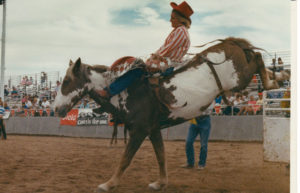
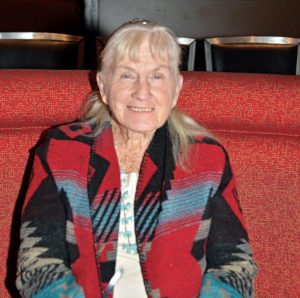
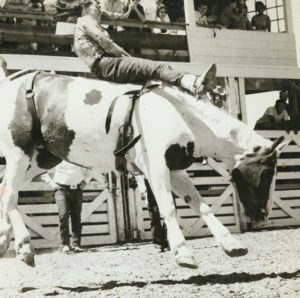
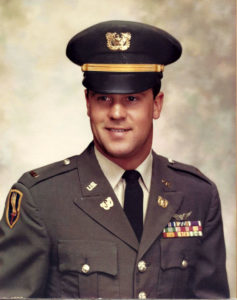
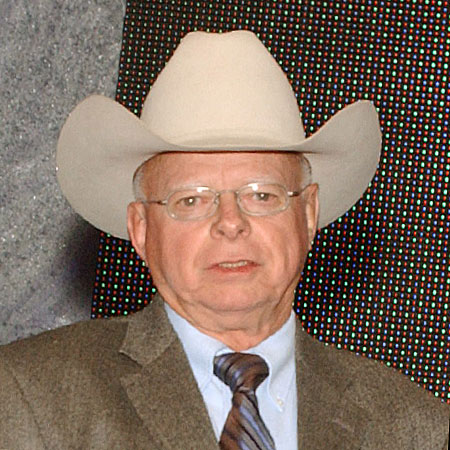
    As a kid, all Bob Hagel wanted to do was be horseback.
    The saddle bronc rider, now a resident of Mobridge, S.D., was born on Feb. 25, 1935 and grew up in Ft. Pierre, riding horses at his maternal uncle’s ranch every minute he wasn’t in school.
    When he was six years old, his dad, Carl Hagel, took a construction job in Rapid City, S.D., and the family moved.
    Bob hated it. There were no horses to ride in Rapid City, so, every summer, he went back to his uncle’s to ride. “The day school got out, I went to Ft. Pierre,” he remembered. His mother, Marion Hagel, knew the bus driver personally, “so she’d put me on the bus, and I’d stay (in Ft. Pierre) till the day before school started, and then I’d come back home.”
    Two days after his fourteenth birthday, his mother died, and Bob’s life changed. His incentive to stay in school waned, and in 1952, Bob packed his suitcase and hitchhiked to Ft. Pierre and his uncle’s.
    His uncle and aunt bought a ranch near Lake Andes, S.D., and they made him an offer: if Bob would go with them and finish high school, they’d get him started in the cattle business. But Bob had a girlfriend, so he stayed in Ft. Pierre.
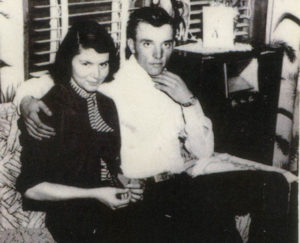
    In 1953, at a dance at the Timber Lake rodeo, he met a pretty black-haired woman and danced with her. Audrey Ducheneaux and he dated for three years, and on March 30, 1956, they married.
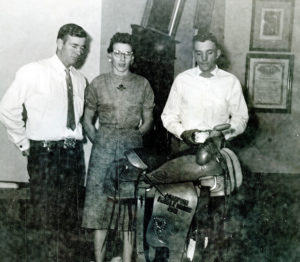
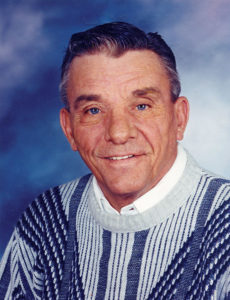
    They lived in Timber Lake for several years, Audrey working in the soil conservation office and he working for ranchers and then for the Rural Electric Association as a lineman. He worked in Wyoming on oil rigs, and then a lineman job came up in Flasher, N.D., so they moved. In North Dakota, Audrey worked for the Bureau of Indian Affairs and then for the Agricultural Stabilization and Conservation Service (now the Natural Resources Conservation Service) office.
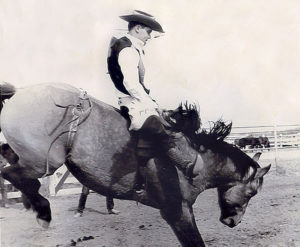
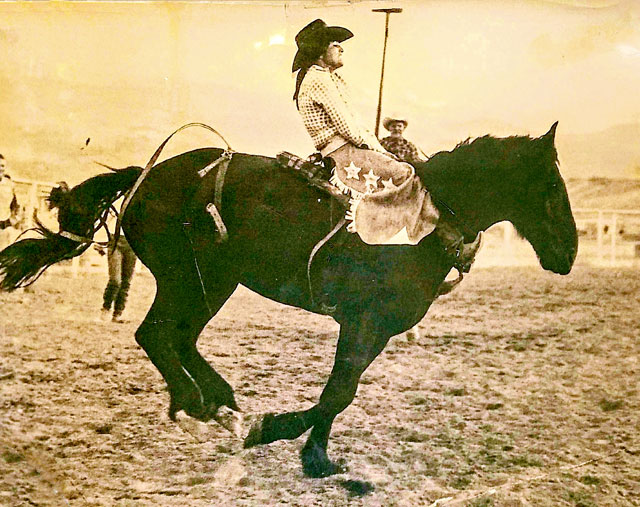
    It was before he married when Bob was introduced to saddle bronc riding. He was running around with his future brother-in-law, Delbert Lamb, a bronc rider.
    Bob got on practice horses, and at a bucking horse sale in McLaughlin, S.D., he won first place and a buckle. His career was started.
    He ran into Mervel Hall, an accomplished bronc rider, who offered to take Bob with him rodeoing. “Mervel said, ‘I’ll pack you for twenty-five percent,’ and I said, ‘I’ll do that.’” A week later, Mervel was in Fargo but Bob had no way to get there. So he caught a ride with Emerson Chase, another bronc rider. They competed at the Badlands Saddle Club Rodeo, where Bob won first, and Emerson told him, “you stay with me and we’ll go to Florida this winter, to rodeo.”
    But Bob had made a promise to Mervel, so he and Hall took off, along with Dale Harper, a bareback rider from Carson, N.D. They rodeoed across Arizona and southern California, coming home in the spring.
    Bob was never more than a weekend cowboy, he said. He considered joining the RCA, the Rodeo Cowboys Association, predecessor to today’s PRCA, but he didn’t. “I was married, I had a job, and I knew damn well I could make more money working.”
    He competed in the South Dakota Rodeo Association, the North Dakota Rodeo Association, the Northwest Ranch Cowboys Association, and the International Rodeo Association. He finished as the SDRA’s reserve champion in 1961, to Bud Day, and in 1962, to Willie Cowan.
    At the time, the IRA (predecessor to today’s International Pro Rodeo Association), co-approved SDRA rodeos, and Bob qualified for their finals, held in Chicago, in 1962. He finished the year as reserve champion, one point behind Buzz Seely. It was the old-style of scoring at the time; Bob scored 172 points in the second round aboard a little black stripe-faced horse named Rastus, to win the round; Seely had 173 points in the third round to win the rodeo. Seely went on to win the bronc riding at the National Finals Rodeo in 1969.
    At the age of 85, Bob remembers the horses he got on and the rodeos he went to like they were yesterday. His favorite bucking horse was Dakota Chief, a horse owned by O’Leary Brothers and Annis, stock contractors. He won second on him, to Dean Reeves, at the IRA finals in Chicago, in a round. He recalls the horse, a Roman nosed bay named Friday, who he rode while doctoring for screwworms on his uncle’s ranch when he was in his teens, and his first horse, an old bay named Buster, which “I rode all day.”
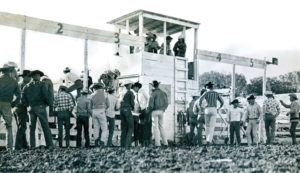
    He got on his last horse in 1967, when he was 32 years old. He and Audrey had just moved to North Dakota, and he was on call every other weekend for the electric company. “You can’t rodeo that way,” he said, “so I just quit. But my powder was getting damp anyway.”
    All these years later, he still misses the friends and the competition of rodeo. “The thing I missed the most when it came to an end, was not seeing them guys every weekend, and the B.S., and what goes along with rodeo. It was hard to get used to.”
    He and Audrey raised two sons: Clayton and Todd. Todd lives in Bismarck with his wife Lynn and their two sons and a daughter. Clayton lives in Ft. Yates with his wife Maria and their two sons. (Two of their sons have passed away.) Todd was never interested in rodeo, Bob said, but Clayton was, and Clayton did well, winning a state high school title, two NDRA titles, and a Great Plains Rodeo Association title, all in the saddle bronc riding. Clayton and Todd were among 59 first cousins on the Ducheneaux side, and one time, at the Timber Lake Rodeo, there were eleven first cousins riding saddle broncs, with Clayton included.
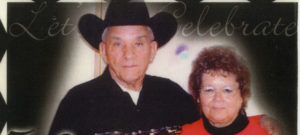
    Audrey was the best thing that happened to him, Bob said. They were married sixty-two years before she passed away from cancer in 2018. “She was a good woman and a hard worker,” he said. “She never complained, even when she had cancer.”
    In January of 2000, Bob took his last drink. He wasn’t an everyday drinker, but if he got started, the next morning he’d crave more and keep drinking. He got up one morning, and Audrey had made a line of every bottle he’d drank, on the wall. “I looked at that, and said, ‘I’ll never take another drink as long as I live.’ Audrey’s reply was, ‘I’ve heard that before.’” Bob told her, “No, I’m done.” And he was. Sixteen years later, one of her sisters told him Audrey had said it was the happiest sixteen years of her life. “Thank God I quit,” Bob said. “By the time she died, I had eighteen years alcohol free.” Marriage “was the best thing I did.”
    Now he golfs, shooting under fifty, and would play every day if someone is willing to play with him, Clayton said. He enjoys reminiscing about old times and rodeo. He was never a superstar but he loves the sport.
    “I enjoyed it. I rode some, and I rode with some good guys. I never made a lot of money at it, but I enjoyed it.”

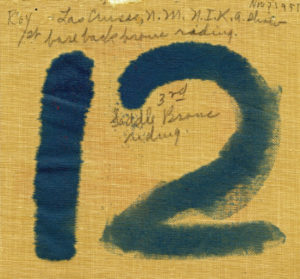
  • Back When They Bucked with Roy Lilley

    Back When They Bucked with Roy Lilley

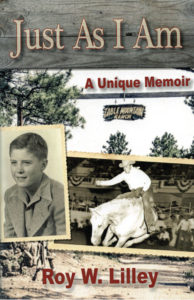
    “I’m pretty talkative and used to edit a magazine, so it just made sense to write a book,” said Roy Lilley, the 90 year old rough stock rider from Fort Collins, Colorado, who wrote a 567 page memoir called Just As I Am. The book took three years to complete.
    Born at the Table Mountain Ranch in Virginia Dale, Colorado, Roy was raised on the family ranch with two older brothers. “We had a lot of fun – and did a few ornery things. I followed my older brothers around everywhere.” His dad (Charles W. Lilley, Sr.) managed a family ranch. At the age of 10, the family moved to Fort Collins and his dad went to work for Producers Livestock in Denver and eventually the family moved to Lakewood.
    Roy worked on a dude ranch (Trail Creek Ranch) from the time he was a junior in high school. “As soon as I figured I could ride the milk cow, I entered the Larimer County Fair in the bull riding.” He borrowed his brother’s bull rope, Pete Burns spurs and came real close to riding a good bull. “He bucked me off hard on my shoulder, and I had to ride with my right hand the rest of the summer.” He was determined to rodeo. “My older brothers were doing it and felt like I could do it.”

    The first rodeo he went to, he drew a little bareback horse and won sixth – that was the first bareback horse he got on. He won a little money and that’s what gave him the encouragement to keep on. He had some natural talent.
    He spent the summer working at the dude ranch and rodeoing on the weekends. He started college at Colorado A&M, now Colorado State University and joined the rodeo team. He majored in animal science and joined the livestock club. “I didn’t go to the rodeo club right at first, but my brother managed the college rodeo that spring so I rode a bareback horse at that rodeo.”
    The next year he started riding saddle broncs. “You learned by doing,” he said. “I got my NIRA card the first year they had them (1949) and won the bull riding at the college finals in 1952, my senior year.” Following that, he had the best summer of his career. He won the amateur bronc riding at Cheyenne and the pro rodeo in Loveland. “I had a really good year,” he said. He was second all around and second in all three riding events for the year in the NIRA, getting beat out by Jack Bushbaum. The finals were held in Portland Oregon and he split the bronc riding 3 and 4 with Cotton Rosser. “Cotton Rosser said that I made one of the best college bull rides he had seen at the NIRA Finals Championship rodeo. That meant more to me than anything!” He can remember the ride jump by jump to this day.
    After graduation he went to Korea. “I had just rodeoed that summer just waiting to be drafted – we were deferred if we kept our grades up during college.” He was a supply sergeant for the field artillery of the Army. “I was there when the war ended and we were having a fire mission at the same time – we sat around for 10 months after at the demilitarized zone.”
    He came back to the United States and got out of the Army on June 20, 1954 and was on a bareback horse two days later at Woodland Park, Colorado. “I’d gained 20 pounds and hadn’t been on a horse since I left. I figured I could pick up where I left off. I rode the bareback horse and the saddle bronc in a haze and got bucked off more during the next three months than I had the three years I was rodeoing. I was drawing good and riding bad.”
    He kept at it. “I wanted to get good enough so I could quit with some pride. My problem was I was thinking too much.” He gradually got better and by the time he quit in 1956, he was pretty good. He quit riding bulls when he came back from Korea. “I had an epiphany in Korea,” he said. “All of my injuries came from being stepped on by bulls.”
    He knew he would never be good enough to make a run for the NFR, so he mostly went on the weekends. In 1955, he rode both of his horses in Cheyenne. That’s when there were five big rodeos close by and he made all of them. The further he got from home, the broker he got. “Pulling into Durango, I blew the oil line on my 1955 Chevy. I spent my last few bucks fixing that and borrowed enough money to buy gas. He made it home and kept going for another year. He placed at three out of the last four rodeos he entered before he quit.

    Roy was 26 and living at the farm at home. His dad was working in Denver and got a job as the director of the first school lunch program in Denver. He knew the director of American National Cattlemens Association (now called the Beef Association), and he was looking for an assistant. “I was rodeoing soso and my dad got really sick and I decided to get a job.” He applied for many different jobs and finally got the job as the assistant for $350 a month.
    “It was the best thing I ever did – it was a great job. I worked there for four years,” he said. He met his first wife, Ingrid, at the dude ranch and they dated. “I wanted to impress her, so I entered a rodeo. I hadn’t been on a bucking horse for four years, but I’d broke a few colts. I drew Pretty Sox, the best draw Earl Anderson had – I qualified on him, but Pinto Pete drove my head in the ground.”
    He got offered a job in California as the assistant director for California Cattlemens. He moved out there in August and started riding broncs again in California for the fall. He didn’t like California very much and missed Ingrid. He flew back to Colorado, picked her up, and they were married in Ely, Nevada on their way back to California. Their daughter, Elizabeth, was born but the couple didn’t make it and eventually divorced.
    He got a job as the Executive Vice President of the international Brangus Breeders association in Kansas City. His next wife, Maxine, had two kids when they married and they had another one, Jennifer. They moved the office after seven years to San Antonio. The couple lived in Beorne, Texas. He worked there until 1979. After 17 years, he left that job and became executive VP of Nebraska Stock Growers – later Nebraska Cattlemens and stayed there 17 years as well. Maxine passed away in August of 1991. “I owed whatever success I may have had from the fact that I learned from my mistakes.”
    He retired in 1996 and married Donice in 1997. The couple settled in Fort Collins and Roy is active in the community with Larimer County Office of Aging. He is also part of the Alumni of Colorado State University rodeo team. He and Donice are enjoying a quiet time of old age together. “A guy at 90 doesn’t make long range plans. I’ve enjoyed my life.”

  • Bud Tillard

    Bud Tillard

    For the first time in history, three generations of one family will qualify for the National Finals Steer Roping, held in Amarillo, Texas, Nov. 19 – 21. Steer roping is the only Pro Rodeo Cowboys Association (PRCA) final event not held at the Thomas and Mack Arena in Las Vegas, Nev., Dec. 3-12. “The arena isn’t big enough to rope steers,” explains Ann Bleiker, Senior Media Coordinator for the PRCA.

    Wyoming rancher, Bud Tillard, qualified for the National Finals Steer Roping twice. “I made it in ’68,” says the 81-year-old who decided not to go that year. “I had some shipping dates,” he explained. “I never sacrificed my business for roping.”

    Tillard qualified again the next year, and headed to Pecos, Texas, with his wife, Betty. “It was hot and the arena was not that good” recalled Bud. There were no commemorative T-shirts that year, only Tillard’s back number that hangs in his home. “They didn’t make a big to-do out of the finals then. I remember we went to a picnic there,” he said. “The tables were set up as long as this house. They were lined with brown bags full of whiskey. There were no bars in Pecos; it was a dry county.” Tillard borrowed a horse, didn’t do any good, and went home. He continued roping until 1971. “I roped my last steer in Pendleton,” recalls Bud. “I won the second day.”

    He quit roping cold turkey and has had to work around it ever since. “I don’t pack a rope,” he admits. “I might want to rope something.”

    Tillard and his wife, Betty, grew up together and they were married in 1947. “She took to the place,” he said. “You either like this or you don’t.” They raised three boys; Andy, Marty, and Tim.

    “I taught all the boys to rope,” says Tillard (arena is pictured above). “We roped calves to start.” Tillard built a calf-roping arena below the house and doubled the size (250 yards long) to accommodate steer roping. “We roped every night,” recalls son, Marty. “Dad made sure we had that. Steer roping was my passion because it was available.” Little did he know at the time that Tillard was making sure his boys were too tired to drive into town. “He was keeping us off the road,” explains Marty. “It was great. We didn’t know any different.”

    “Dad raised us that the ranch is first,” says Marty, the second generation to qualify for the finals. “Steer roping was my passion because it was available.”

    Marty, went to the finals two times; the first one was in Laramie, Wyo., the second in Guthrie, Okla. “I placed in some gos and won one or two.” Then Marty followed family tradition and went home to ranch.

    Competing on the road was always a struggle for the Tillards. “Somebody stayed home at all points and time to watch the chicken coop,” explained Tillard. “Back in my time there weren’t many steer ropings, maybe three all summer. It’s different now.”

    Troy Tillard is the 26-year-old son of Tillard’s son, Tim. “I’m sitting thirteenth right now,” says the grandson who lives “down the creek” from his grandfather. “There are a couple of rodeos left and if I have to, I’ll go.” As long as he is in the running for the National Steer Roping Finals in Amarillo, Texas, he’ll stay on the ranch and work rather than attend any more rodeos.

    When the Tillard family enters a roping, there are six entries with the same last name. “The whole family steer ropes,” explains Marty. “It’s a bad habit.”

    Tillard’ son, Andy, passed away from cancer when he was 42. The Isenbergers, good friends, put on a memorial roping in his honor every year at their place. A saddle is given away each year. Many of the ropers that have won saddles have passed them on to either Andy’s sons or grandsons. “All of them have saddles now,” says Tillard.

    The Tillard ranch encompasses 100,000 acres of rolling rough country north of Douglas, Wyo. It takes three road graders to maintain the roads, of which 17 miles are the driveway. Upkeep on the fences requires 2,000 steel posts a year. Nine thousand sheep and 1,200 cows call the ranch home.

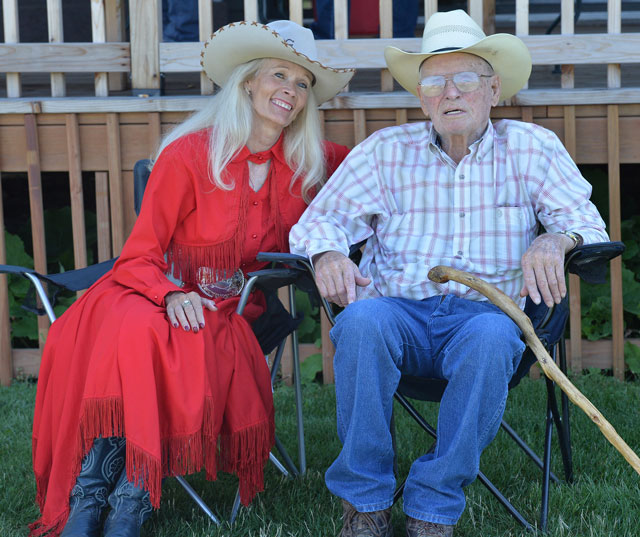
    Publisher’s Note: This story was published in November of 2004 (added to story in 2020) Bud Tillard and Glee Net at the 2019 Don King Days
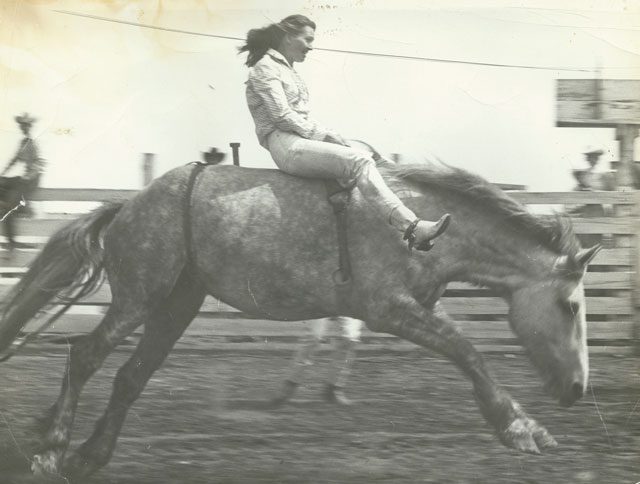
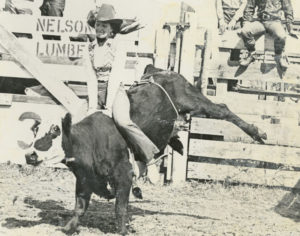
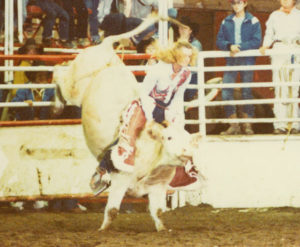
  • Back When They Bucked with Jan Youren

    Back When They Bucked with Jan Youren

    If the boys could do it, Jan Youren was there to prove that girls could do it, too.
    The Idaho woman was a roughstock cowgirl for nearly all of her life.
    Born in 1943 as the second oldest child of Sterling and Madelyn Alley, the family lived on a farm and ranch near Garden Valley, Idaho.
    The Alley place was the last house on the road up Alder Creek, Jan said, and it was seven miles to town. “When I was six years old, I would ride to Crouch,” a village near her home, Jan remembered.
    She wasn’t big enough to saddle her own horse, and they didn’t have an extra saddle for her anyway, so she rode bareback, “all the time, all over the mountain. I was a bit of a wild child, so most time it was at a high rate of speed.”
    That’s how she was raised, she said. “You did your chores and the day was yours. You could go do what you wanted to, if dad and mom didn’t have anything special for you to do.”
    By the age of eleven, Jan was riding bareback broncs and bulls. Her daddy produced the first full all-girl rodeo, and he entered her in every event. The rodeo was in Emmett, Idaho, and she placed in two events: the bareback broncs and cow riding. “I won $54 for twenty-four seconds of work and I thought I was on the road to riches,” she said.
    Jan competed at junior rodeos and all-girl rodeos, and in 1960 she graduated from high school.
    She was married and had her first two children within eleven months.
    After her first two babies were born, she continued to ride barebacks, but not with the skill she had possessed before.
    It was 1962, and her dad told her something she didn’t want to hear. “My dad said, ‘Babe, you better quit and be a mom. You’re just not riding like you used to.’” That set a spark back into Jan. “You talk about waving a red flag in my face,” she said.

    She went to prove him wrong. At a rodeo in Glenns Ferry, Idaho, she drew a buckskin horse. Her timing was right, she spurred him, and her dad changed his mind. “He came up to me and said, ‘Babe, I take it all back. That’s the best ride I’ve ever seen you make.’ I was in seventh heaven.”
    She continued to rodeo at all-girl events. She was a charter member of the Idaho Girls Rodeo Association then the Girls Northwest Rodeo Association, which included events in Oregon, Washington and Montana.
    In 1966, she was invited to an invitational international all girl rodeo in Calgary.
    The rodeo was organized by Pearl Borgul, a public relations person who was excellent at promoting rodeo but didn’t always understand the sport. Jan remembered one time that Pearl insisted the contestants wear corsages donated by the chamber of commerce. She balked at that. “I said, ‘Pearl, I am not riding a bucking horse with a three-inch pin under my chin.’” Pearl conceded.
    From that rodeo, the Girls International Rodeo League (GIRL) was formed, and Jan became a charter member of that organization, too. The League had good events. “They were probably the best, and the best paying rodeos,” she said.
    All the time, she continued to work as a waitress, a job she had started as a twelve-year-old girl at her aunt and uncle’s restaurant.
    By this point, she had divorced her second husband, Roger, in 1965.
    At a rodeo in 1970, she met her third husband, Dee Edmondson. He rodeoed, and when Jan’s oldest daughter was old enough to ride, Jan and the kids moved to Texas, where the spring and fall shows took place. Dee moved to California and worked for Cotton Rosser.
    A few years later, at the Cow Palace in San Francisco, Jan ran into her uncle, Jim Youren. Jim had been married to her mother’s sister, and his wife died of cancer. Jan knew Jim well; Aunt Carol had lived with her family when she was dating Jim.
    They began to call each other. Jim wanted to marry her, but Jan wasn’t ready yet. But he persisted, and they married on January 31, 1984. “I saved the best till last,” Jan joked. “I tell people practice makes perfect.”
    Jan continued to rodeo. Bareback riding was her best event, in part because she had ridden bareback so many years as a kid. For the first twenty-five years of her rodeo career, she did the timed events too. But when she moved to Texas with the kids, she didn’t have an arena and access to calves, and it was cheaper to throw a riggin’ bag in a truck and leave.
    She never felt discriminated against by cowboys. She never competed against the men; it was only women’s rodeos that she competed in. And the men knew she wasn’t trying to be one of them. “Too many girls thought you were doing a man’s event and had to act like one,” she said. Her daddy had set her straight years ago. “My dad told me, you are a lady. You can be as tough as you can, but when you start getting rough, you’re done.” Usually, she said, after the men realized she was a professional at her sport, they accepted her. “Most of them were very respectful and helpful to us,” she said, recalling that Lane Frost and world champion Bruce Ford had pulled her rigging many times.

    In 2006, she and Jim moved from their ranch in Bruno, Idaho, to Cimarron, Kansas. Horse properties in Idaho were expensive, and Jim was tired of flood irrigating 400 of the ranch’s 700 acres. They were there seven years, then they moved back to Idaho. Jim didn’t appreciate the never-ending wind, and they missed home.
    Jan’s list of accolades stretches far. In 1965, she won the first saddle for the all-around in the Idaho Girls Rodeo Association, also winning the bareback riding and tie-down roping. In 1981, she won the bareback riding in the Girls Rodeo Association, and in 1987 she won it again, this time with a broken back. “I didn’t realize my back was broken,” she said. “I thought I was just being wimpy.” In 1994 and ‘95, she won the bareback riding again.
    Through this, she was taking her kids rodeoing and supporting them at their events.
    Between her and Jim, they have fifteen kids. Hers are Tonya, Jim, Todd, Dawnita, Susie, Kristen, and Ty. Jim’s are Deanie, Deb, Dusty, Dixie, Doug, Don, Dodi, and together, their last child, is Cole. Jan rode against all four of her daughters throughout her career.
    She always said she’d quit when her granddaughters beat her. In 2005, she shattered her arm at a rodeo in Grand Valley, Idaho in August, breaking it in seven places. The repair work required plates, a rod and three pins. The finals were in October, and she wasn’t supposed to ride, but she did. Her second granddaughter, Tavia, got ahead of her in points, and at the finals, Tavia beat her grandma for the year-end title, finishing one place ahead of her. That was her last professional rodeo; she had competed for 51 years.
    Her last ride was six years ago, at a women’s roughstock reunion when she was nearly seventy years old. Son Cole and grandson Zane discouraged her from riding, hiding her riggin’ bag and then, when they realized she couldn’t be stopped, finding a horse that was as safe as possible. Cole chose a good bronc, instead of the runaway, because she wasn’t able to get off on the pickup man. She got on, but after the whistle, her dismount was straight to the ground. “I was satisfied with my last ride but when I bailed off, I hit the ground like a ton of bricks.” She told Jim, “I didn’t bounce.”
    Jim passed away in 2014. She fills her life with her kids, grandkids (there are 64 of them) and great-grandkids (97 of them and counting.) Most of the grandkids are in Idaho, but some are scattered from Washington to Florida and she loves being grandma. “I said I’d see them all at least twice a year so they know who I am.” She goes to whatever activities they participate in: rodeo, football, basketball, track, and more.
    Rodeo was great to her. “I was on the road for a lot of years and had a lot of riches, but not necessarily monetary,” she said.
    Her family is her biggest accomplishment. “I raised nine kids that have never been in any serious trouble and never into drugs.
    “I tell everybody I’m the most blessed woman in the world. I have all those kids, grandkids, and great-grandkids, and they’re all healthy. I did something I thoroughly enjoyed my whole life and had a small measure of success at it. And I still get around as well as most women my age, and they didn’t have half the fun I’ve had.”

  • Back When They Bucked with Bill Skavdahl

    Back When They Bucked with Bill Skavdahl

    Bill Skavdahl has gotten plenty of adrenaline rushes in his life. Some of them were ones he planned on, like when he rode bulls and bulldogged, and some were unpleasant ones, like when his helicopter was shot down while serving in the Army Air Corps in Vietnam in 1968.
    The northwestern Nebraska man was born near Harrison in 1946 to Harold and Ellen (Howard) Skavdahl. His parents were ranchers and had never rodeoed, but Bill loved to ride the milk cow, much to his mother’s consternation. He was a hand with a horse; ranch work at the Skavdahls was done on horseback.
    As a freshman at Harrison High School in 1961, he competed at the state finals, held in Harrison. There were no regular season rodeos; anyone who wanted to could compete at the finals, and the top three in each event went on to the National High School Finals. He rode bareback horses and bulls, mostly because the equipment was easy to come by. An old bareback rider bequeathed him a riggin’, and bull ropes were cheaper than horses.
    At the state finals, he won second place in the bull riding. At that time, if a contestant qualified in one event for Nationals, they could add two more events in which to compete. So Bill added bareback riding.
    Nationals were in Douglas, Wyo., and he caught a ride to them with a friend. He made a qualified bull ride in round one, then made it to the finals, ending up tying for third with Denny Wall from Montana.

    Third place was a pair of spurs, nice ones, and fourth place was a certificate for a 20X Resistol hat. Bill loved the spurs but needed the hat. “I’d never had a felt hat,” he said, “and I wanted one, so I told (Denny) I didn’t need to flip (for third place prize), I’d just take the hat. I had that hat for a long time.”
    As a high school junior, he won second at state in the bull riding again. This time, Nationals were in Tarkio, Missouri, and he chose bareback and saddle bronc riding as his additional events. He rode one of his bulls and both of his saddle broncs, missing the short round by two places in the saddle broncs. He rode one of his bareback horses, but missed out the second horse.
    In 1964, four high school regular season rodeos were held in Nebraska, and Bill competed at two of them. At Thedford, he won the steer wrestling and bull riding, finished second in the barebacks, and won the all-around. In Crawford, he won the steer wrestling, bull riding and the all-around again. “I was on a roll for state,” he said.
    But in Crawford, he broke his ankle. He was in the chute on a Hollenbeck bull, one that hadn’t been ridden. “The bull threw a fit,” Bill said. He made a qualified ride in spite of the break.
    State finals were the next week, and he had a plan. He had won a pair of spurs in Thedford, and he modified one of them for his cast. “I took one of them out to the shop, took a blow torch, heated her up, and fitted it around that cast. I got me some plaster of Paris and baling wire and got that thing fastened on there pretty good.”
    The spur worked. He covered his first two bulls, but in the short round, the bull spun to the left. “I had a broken right ankle and that didn’t work out too good,” he remembered. He finished fourth in the state, one hole out of qualifying for Nationals.
    After high school graduation, Bill worked on the ranch for his dad. Times were tough, so he decided to go to California. He had an aunt there, and he found a job working for a paving company, making $150 a week. It was a good job, considering it would take a month at home to make that same amount. While in California, he competed at a few rodeos.
    He was there for a year when a letter came from his dad. A draft notice had arrived addressed to him in Nebraska, and Bill needed to take care of business. He got a physical in California, and passed it. The draft board told him he’d have to go back home to be inducted.
    So Bill went home and talked to a recruiter, asking what his options were. His test scores were good enough that he could choose several things. He wanted to be a pilot.
    Basic training was in Louisiana then he was on to flight training at Ft. Wolters in Mineral Wells, Texas and advanced flight training at Ft. Rucker, in Dothan, Alabama.
    The Army was short on helicopter pilots, so he volunteered. After more training in Ft. Benning, Georgia, he was one of 52 pilots in the 235th Aviation Co., an attack helicopter company formed by the Pentagon, and on October 10, 1967, he was sent to Vietnam.
    The attack helicopter’s main job was to escort the helicopters carrying troops into a landing area and to drive the enemy from the landing site till the men were unloaded. They also provided support fire for ground troops.
    Within a month, he was the aircraft commander and the fire team leader. Pilots spent about forty hours a week in the air, and Bill flew 805 missions, over 1,050 hours.
    The helicopters rarely went unscathed. At the end of every mission, the bullet holes in the sides were counted and recorded. Bill’s record was 29 holes in one mission.
    His helicopter was shot down on April 14, 1968. He and his crew were providing air support as a medivac unit worked to evacuate crews from two downed helicopters. Enemy fire knocked out the tail motor gear box on Bill’s helicopter, and he and his crew knew what was coming.
    “The feeling you experience is like that of having a horse fall with you,” he said. “It happens so fast you don’t get scared, you just try to get away.”
    The enemy was all over the area, but Bill’s helicopter had hit the ground farther away from the actual fighting. It wasn’t long till another crew was there to rescue them. It was only after he was on the rescue flight that he realized a piece of the helicopter had been driven through his leg. During his time in Vietnam he broke his back, and he received a Purple Heart for being wounded while serving his country. He also was awarded the Distinguished Flying Cross twice, for “heroism or extraordinary achievement while participating in an aerial flight.”
    A year to the day that he went to Vietnam, he was sent home. It was October 10, 1968.
    He spent another year in the Army, this time at Ft. Carson, Colo., where he and fellow soldiers filled in for the National Guard unit in Kansas City, Mo., as replacements, as the guard members were sent to Vietnam.
    While in Colorado, he rode bulls at Canon City and Pikes Peak or Bust, where he got to rub shoulders with bull riding greats like Freckles Brown and Larry Mahan.
    He was discharged in 1970, and headed back to the ranch.
    By this time, his dad had bought a second ranch, and Bill took over management of it. He married and had three sons: Josh, Jud and Joe, and a daughter, Tomi Jain.

    He rodeoed a bit, riding bulls at regional rodeos in Nebraska, but he had a family, ranching obligations, and aches and pains from Vietnam. “You borrow a lot of money from the bank (to ranch),” he said, “and you can’t afford to get hurt.”
    But there was one more bull ride for him. At the age of 45, in 1991, he got on a bull at the senior pro rodeo in Crawford. He didn’t make the buzzer, but it “felt pretty good. I wanted to get on again. There’s a rush, you know.”
    His children didn’t compete in high school rodeo, but Jud, the middle son, rode saddle broncs at county fairs and was on the University of Nebraska-Lincoln rodeo team in the mid 1990s. He continued to rodeo in the Nebraska State Rodeo Association, making the finals several times. But, like his dad, he had a family to support and a ranch to run, so he career wound down, and, again like his dad, he rode his last saddle bronc at age 45, at the senior pro rodeo in Crawford last summer.
    All three boys attended the University of Nebraska, and help with the ranch. All three boys live close to each other and ranch and work together, even though their operations are separate. Joe is also a veterinarian at the Torrington (Wyo.) sale barn. Daughter Tomi Kirkland lives in Riverton, Wyo., and is an English teacher. Bill has ten grandchildren.
    Last summer, Bill went through another ordeal. He contracted a rare virus called campylobacter fetus, the “human” form of brucellosis in cattle. The bacteria can cause sepsis and localized infections in the brain, lungs, joints, and the pericardial sac around the heart. The virus got him down. He was in Rock Springs, Wyo., to watch a grandson compete at the National High School Finals and felt so poorly he couldn’t get out of the vehicle.
    He went misdiagnosed for two months and after a spinal tap, it was a doctor in Casper, Wyo., who diagnosed him. He made a full recovery and is back to feeding cattle and doing nearly everything he used to do.
    He, son Jud, and grandson Jack, a saddle bronc rider, all wore the same chaps as they competed. Bill purchased the “Jim Shoulders” brand out of a catalog in 1963 for $44, which “was a lot of money then,” he said.
    And one of his fondest memories was from the 1961 National High School Finals. He was the last bull rider for the evening, and the crowd roared when he made the buzzer. “I can remember the crowd was thunderous,” he said. The ride “was a crowd pleaser.”
    His mother gave her sons advice when they were growing up. There were two things they were not allowed to do: ride bulls and join the service. Bill did both, and loved it.
    Surrounded by his children and grandchildren, Bill’s life has been full and happy. He has served his country, has four children, kept a ranch going into the next generation, and rodeoed. The patriarch of the family is well-loved and is doing what he loves: ranching, working, and enjoying his kids and grandkids.

  • Back When They Bucked with Bob Click

    Back When They Bucked with Bob Click

    Bob Click was never a threat to any big-name cowboys, but he loved to compete. “Jim Shoulders never lost any sleep over me,” Bob quipped, “although I knew him personally and liked him.”
    Born the son of O.B. and Thelma Click, on the family farm near Warren, Oregon, just south of St. Helens, Bob rode calves and cows at junior rodeos, helped feed the polled Herefords on the farm, and was derisively nicknamed “Cowboy Bob” by his classmates at school.
    He and a buddy, both farm kids, were members of 4-H and FFA and “we were taunted at school,” Bob remembers. “They thought you were a clod and a hick” if a person did 4-H and FFA.
    But rodeo remained a constant throughout Bob’s life.
    In junior rodeos, he competed in every event, but in high school, it was narrowed to bareback horses and very few bulls, “mostly to please my mother, because she didn’t want me getting on bulls,” Bob remembered. He qualified for the Oregon amateur finals (now the Northwest Pro Rodeo Association) in the bareback riding, and added bull riding to his repertoire.
    In 1954, at the age of seventeen, he enlisted in the U.S. Navy. He saw guys, during their leave, who would buy a bottle, sneak it into the movie theater, finish off the bottle and sleep it off, then head back to the boat after leave. That was not for him. “I saw enough of that that I wanted no part of it,” he said. One day, in the paper, he saw a rodeo being advertised in Santa Anna, Calif., so he got a Greyhound bus ticket, headed to Santa Anna, and watched the rodeo.


    The bucking bulls didn’t look any tougher than what he’d ridden back at home. “I looked at the stock, and it didn’t look any worse than what I was getting on at amateur rodeos,” Bob said.
    At the time, the Rodeo Cowboys Association, the predecessor to the PRCA, was allowing those serving in the military to compete without having a card, so Bob went for it.
    And any time he had “liberty,” or leave, he was at a rodeo. “I had a 72 hour pass every weekend,” he said. Stationed at Mare Island Naval Ship Yard in Vallejo, Calif., northern California was full of rodeos in the summertime. “I was at a rodeo every weekend, sometimes two a weekend.”
    In 1957, before Bob left the Navy, he bought his RCA card. Stationed in an active submarine, he made port in Japan, and mailed his membership fees to Denver, so he could compete at the Cow Palace in San Francisco, Calif.
    After the Navy, he got a job at the phone company and continued to ride bulls. He wasn’t the best bull rider around, but that didn’t bother him. “I was getting bucked off bulls all the time, but I didn’t care,” he said. “I loved being there, being part of it.”
    He’d come to work with the typical bull riding injuries, and be put on “light duty.” After a six month probation, workers couldn’t be fired, so he knew that wasn’t an issue. But one day, his supervisor pulled him aside. “You’re a hard worker,” he told Bob, “when you can work, and we love your rodeo stories. But you can’t make a career out of light duty.” Bob told him he’d take his words under advisement.
    Not long after that, in 1963, Bob was in a bad car wreck, breaking vertebrae, and his bull riding days were over.
    After he healed, he did some scuba instructing. He had learned to scuba dive in the Navy for submarine escape training and took instruction on shooting a camera underwater. His parents had given him a Brownie Kodak camera for eighth grade graduation, and he enjoyed taking pictures. This knowledge would come in handy down the road.
    Married to his first wife Beverly in 1958, she loved rodeo as much as he did, and even after he got hurt, they would attend rodeos. But it was hard to buy a ticket and sit in the grandstand when he was used to being behind the chutes.
    One year, the county fair was happening in Vancouver, Wash., and Bob noticed there was a bull-a-rama. He bought a ticket, grabbed his camera, and took a few pictures.


    The next week, at a rodeo in Longview, Wash., he took his developed pictures from the prior week and went behind the chutes. Ron Hall, a bull rider whose dad, Tom Hall, had been one of Bob’s rodeo peers, grabbed his buddies and said, “come look at this guy’s pictures,” Bob said. “I had printed eight by tens, and they bought them all immediately. I was hooked then,” he remembered.
    Bob also helped his friend, Jim Smith, a tie-down roper, with a roping jackpot he produced near Molalla. Bob was the chute boss, but he brought his camera along and took pictures. The cowboys “loved having pictures of themselves,” he remembered.
    His underwater photography learning came in handy. “I learned the basics of photography from my underwater photography,” Bob said. “That helped more than anything.” The use of a strobe light in dark settings, like underwater, was similar to the use of a strobe shooting rodeo pictures after the sun went down.


    His hobby grew. It was the early 1990s and he was still working for the phone company, and taking rodeo pictures in the evenings and weekends. At the time, there were six rodeos in the Portland area that he could work and still be home every night.
    Being adept at photography and understanding rodeo didn’t necessarily mean that rodeo photography was easy, he said. “I had a lot of rodeo experience and a lot of photo experience but I did not have rodeo photography experience,” he said. “I had to learn it.”
    One of the people who helped him was Fred Nyulassy, also a rodeo photographer. “I was very fortunate to meet a nice guy,” Bob said. The two were Navy veterans, and they hit it off. “He is one of the best.”
    Bob also worked for three different news services, providing rodeo photos for them. The East Oregonian (Pendleton, Ore.), the Bend (Ore.) Bulletin, and the Spokane (Wash.) Spokesman-Review used his photos and loved them.
    Before he retired from the phone company, Bob worked as many as twenty rodeos a year, including the National Finals Rodeo, which he photographed for eighteen years.
    He retired from the phone company in 2003, and by this time, he had remarried. Jean, his second wife, had helped care for his three kids while Bob was on the road doing construction for the phone company. They became close, and married in 1963.
    In 2013, while he was shooting the National Finals, he got a call as he traveled home. Jean had died in her sleep. He had adopted her daughter, Michelle, who is handicapped and lives with Bob. The next year was his last one to work the National Finals; he couldn’t be gone from Michelle, who needs him at home.
    Now retired, he takes photos at about a dozen rodeos a year: Red Bluff and Redding Calif.; Sisters, St. Paul, Hermiston, Canby and Pendleton, Ore.; and Bremerton and Ellensburg, Wash.


    Rodeo photography has changed since he started snapping pictures at the bull-a-rama in Washington. The technology has advanced, Bob said. “When I started, everyone shot film. It has improved so much, and it’s so much easier to do than when I started.” One of his photographer heroes is Devere Helfrich, who shot rodeo pictures from the 1940s through the 70s. “I didn’t realize, when I was riding, how good Devere was. He didn’t have the great cameras they have now, and all the support, like Photoshop. Photography has changed dramatically in a twenty-five year period. Frankly, it’s not that hard to do anymore.”
    And it will require fewer skills to be a photographer in the future, Bob believes. Cell phone cameras have improved, and he foresees the day when high quality still shots can be pulled out of video.
    When he was riding bulls, he dreamed of the day his picture might be in the Western Horseman. He did have pictures in the magazine, but they were taken by him, not of him.
    Bob is the 2010 PRCA Media Award for Excellence in Rodeo Photography winner.
    But it’s not the awards and honors that satisfy him. It’s the friends he’s made.
    “It’s like you’re all one family,” he said. “We’re not blood related but we’re still family to each other.”
    Rodeo is one of the best parts of his life, he said. “All the unhappiness you see,” in the world, is forgotten when a person attends a rodeo. “With rodeo, for the most part, you get away from it. Rodeo people care about each other.”

  • Back When they Bucked with Sammy Thurman Brackenbury

    Back When they Bucked with Sammy Thurman Brackenbury

    Whether it was with wild horses, barrel horses or movie horses, Sammy Thurman Brackenbury lived her life with spirit, a sense of adventure, and a shot of adrenaline. By the age of seven she was breaking mustangs with her dad and selling them.
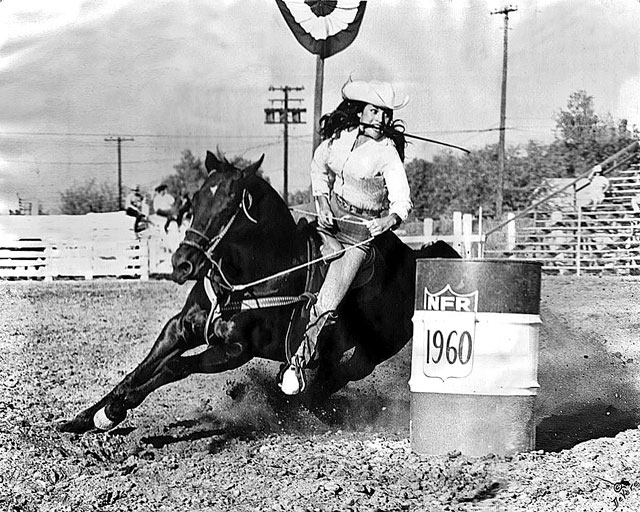
    At the age of 27, she ran barrels at her first of what would be eleven consecutive National Finals Rodeos, and five years later, she was the world champion barrel racer.
    She even doubled famous movie stars in the industry, doing horse riding and other stunts for them.
    She was born in 1933 on a ranch in the Big Sandy, near Wickieup, Ariz., the daughter of Sam and Mamie Fancher. Her mother had three children from a previous marriage, but they were grown and out of the house. Named after her dad, he wanted a boy and treated her like one. “I did everything a boy would do,” she said.
    Her father ran a ranch in Arizona, and when she was five years old, he quit his job to rodeo. The family moved to California to be closer to rodeos, since there weren’t a lot in Nevada at the time. After Sammy’s dad’s horse was injured, the family packed up again, this time moving near Imlay, Nevada, to work on another ranch. Her dad had bought interest in the ranch and rodeoed again to help pay the bills, and the mustangs Sammy broke were sold as kids’ ponies, which brought in a bit more income for the family.

    She attended rodeos with her dad, but few of them included women’s barrel racing. Barrel racing hadn’t found its way to California yet; it was more common in Oklahoma and Texas. She match raced, riding her dad’s horses, and rode calves, and read all she could about the Girls Rodeo Association, the forerunner to the Women’s Pro Rodeo Association.
    By this time, the family was living near Las Vegas, Nev., and Sammy was sixteen. Every horse her dad had she turned into a barrel horse. One fall, she and her cousin tried to convince the organizers of a small rodeo in Las Vegas to add barrel racing. They talked them into it, and the first year, with forty entries, Sammy won first and her cousin won second.
    By about 1950, a California rodeo advertised it was adding barrel racing, and Sammy went there, excited to run. But when she got there, there was no barrels; it was poles. She rode her barrel horse, having to “rein him through” the pattern. The girl who promoted the pole bending won the event. Sammy got even; on the second run, she got her dad’s rope horse: “you could do anything on him,” she said, “and he smoked the poles and I won the second round.”


    Sammy’s life was full of training horses, running barrels, and roping with her dad. Her first time competing with him at an RCA rodeo came about by accident. His partner didn’t show up, so she took his place. She hadn’t dally roped much, and her dad “was as nervous as a whore in church,” she laughed, about his daughter. “I got out perfect, laid it on (the steer),” Sammy said, “and when I roped him, my dad was looking at me to see if I was getting my dally, and went right on past the steer.”
    Her daddy spoiled her, she said. One time, at a rodeo in Delano, Calif., she ran her rope horse in the barrels. When it was announced she’d have to run again because they missed her time, she told her dad she was going to ride Punkin, an exceptional palomino that her father used for the hazing, bulldogging, heading, heeling and calf roping. “No, you’re not,” he told her, and she replied, hide and watch! “I was a brat,” she laughed.
    At the time, women were not allowed to compete in RCA rodeos, but Sammy and her dad were friends with Bill Linderman, RCA secretary and former president.
    Linderman helped Sammy out several times, paving the way for her to rope with her dad. Bill told her, “when you want to enter, you tell them I said you could enter. If they give you grief, have them call me. So I started roping with my dad,” she said.


    Because she did so well in the barrel racing, the Utah and Idaho rodeos often barred her from entering. She’d call on her friend Linderman again, and he’d say, “you tell them if they won’t let you enter, they can’t have barrels at the rodeo,” she remembered.
    By then, barrel racing was becoming more common and more rodeos were including it. It helped, Sammy said, that world champion Wanda Bush and Florence Youree came to California to promote the event.
    In 1960, she qualified for her first National Finals Rodeo. Living in Nevada, she competed in her home state and across California, Utah and Idaho. She and her dad made all the horses she rode, including what she considers her best horse, a bay mare named Ugh “because she was ugly,” Sammy remembers. The first time she had a chance to buy the mare, who wasn’t papered, the cost was $350. Her husband at the time, Anson Thurman, wouldn’t let her buy the horse. By the time she got her, the price was $850. But Ugh was worth it. “She was an outstanding barrel horse. You could do anything on her.”
    Sammy qualified for the NFR every year from 1960-1970, winning the world in 1965. That year, she rode Ugh for most of the season but due to injury, the horse was out for the NFR. She rode a borrowed horse, Roanie and still finished third in the average. Sammy didn’t often rodeo back east; it was too far. But when she did, she borrowed horses, to cut down on the expense of driving a horse trailer and because the rodeos didn’t pay well enough to haul a horse.
    One of the more innovative things she did for the sport was switching hands between the first and second barrel. Her dad taught her that. While most barrel racers ran with one hand, leading to the neck rein making horses stiff in the turn, Sammy changed hands between the first and second barrels. “Left hand, left turn, right hand, right turn,” she would chant to the students she later taught at clinics.
    Sammy won rodeos all over: Rodeo Salinas (Calif.) several times; the Grand National at the Cow Palace in San Francisco; Phoenix; Red Bluff; Oakdale; Redding; Tucson; Denver; and Caldwell, among others.

    In the mid 1960s, she began hosting barrel racing clinics. The concept was relatively new; Wanda Bush and Florence and Dale Youree had done some, and so had horse trainer Monte Forman, after whose she patterned hers. Barrel racing was so new that many of her students had only seen the event on TV.
    They were three days in length, with the first day for observation. “I’d give (the students) a paper to fill out, a brief story on them and their horse. Then I’d watch them all make a run and analyze their runs,” she said. On day two, Sammy worked with each girl on any problems they might have, and the third day was competition, for students to put into practice what they had learned. She did the clinics for ten years.Another part of her life was doing stunt work in Hollywood. When she was eighteen, she had a part in the movie In Cold Blood. Then movie work was put on the back burner to rodeo, but after she married husband Bill Burton, a team roper, steer wrestler, bull rider, and stuntman, she became involved in movies again. In addition to horse riding, she did whatever stunts were needed, including swimming, even though she couldn’t swim. In the 1993 movie Another Stakeout, she had to jump off the dock into the Fraser River in Vancouver. “I told them I couldn’t swim,” she said, “and they had security guys all over to keep me safe.” After jumping in and coming up, she swam for the ladder. The safety man said, “I thought she can’t swim,’ and she told him, “I can sure swim when I need to,” she laughed.
    She doubled for well-known actresses like Kathy Bates, Linda Evans, Jane Fonda and Dolly Parton. She was a charter member of the United Stuntwomen’s Association.
    She also held positions in the GRA, serving as west coast director in the early 1970s and director at large. In 1975, she was voted president of the GRA, but didn’t stay in that role for long. Her new marriage to Burton and her work with the picture business kept her busy.


    Sammy ran at her last pro rodeo in 1990, the same year she married her seventh husband, Jesse Brackenbury, a reined cow horse trainer, “possibly the best horse trainer I know,” Sammy said. She had her first daughter, Patti Parker, “before I was born,” she quips, joking about her age. She has two other daughters, Jodi Branco and Syd Thurman. Two of Jodi’s children, Stan Branco and Roy Branco, have continued the rodeo tradition. Stan, a steer wrestler, competed at the 2013 NFR and Roy has qualified for the California Circuit Finals in the tie-down roping. Her step-children include Billy Burton, Jr., David Burton, and Heather Gibson-Burton, along with six grandkids and four great-grandkids.
    Thurman was inducted into the Pro Rodeo Hall of Fame in August of 2019 and is a member of the National Cowboy & Western Heritage Museum’s Rodeo Hall of Fame. She has also been honored with the 2013 WPRA California Circuit True Grit award and the WPRA California Circuit Pioneer Cowgirl award in 2016.
    The best part of her life, she says, started “when I was one year old and it’s still happening. I love my life, I love everything that’s happened in my life. I worked the picture business, I rodeoed, I loved it all and I still do.”

  • Back When They Bucked with Florence Hughes Randolph

    Back When They Bucked with Florence Hughes Randolph

    Early Day Madison Square Garden Cowgirl

    When searching for information about rodeo history, it is not unusual to be diverted in my quest to find a cowgirl or cowboy with unusual and interesting experiences other than rodeo. My attention goes directly to that person. Florence Hughes Randolph is just such a person. Her experiences just have to be re-told!
    Cleo Alberta Holmes was born to John and Mary Holmes in Augusta, Georgia in 1898. She didn’t like her name and let it be known. Her father, in jest, called her Florence instead. The name stuck and when she began her career it was Florence, not Cleo or Alberta, that she chose to call herself.
    She spent as many days as she could with her grandfather, on his cotton plantation, making rounds. She rode behind him on a mule. When she began riding alone, at age 13, she wasn’t satisfied with the mules. She rode horses instead, and eventually persuaded her mother to let her travel with a circus equestrian family as an apprentice.
    She loved the excitement of the Colonel King’s IXL Ranch Wild West. She practiced with tutors, did the hard work she was also asked to do, and watched others, to learn, as they practiced their specialties with horses. She became a trick and Roman rider and a trick roper. A few years later, 1915, the troupe disbanded and Florence was free to do what she wanted.

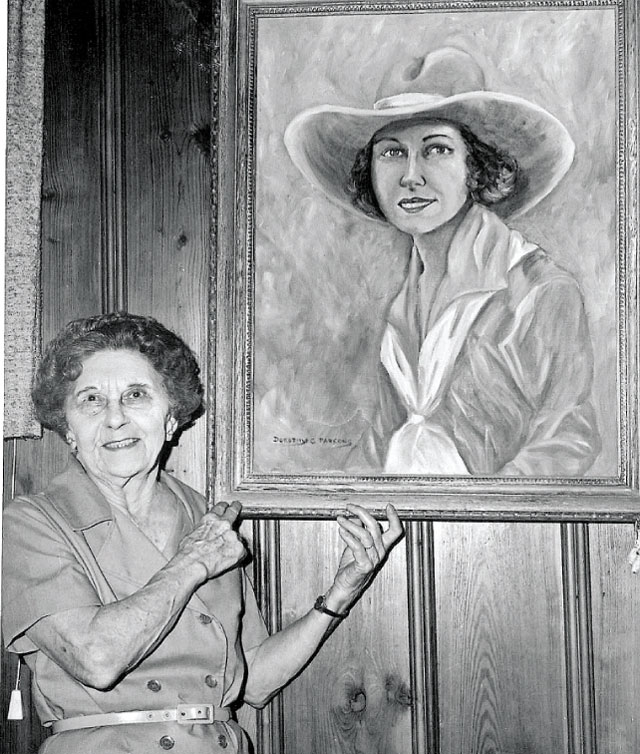
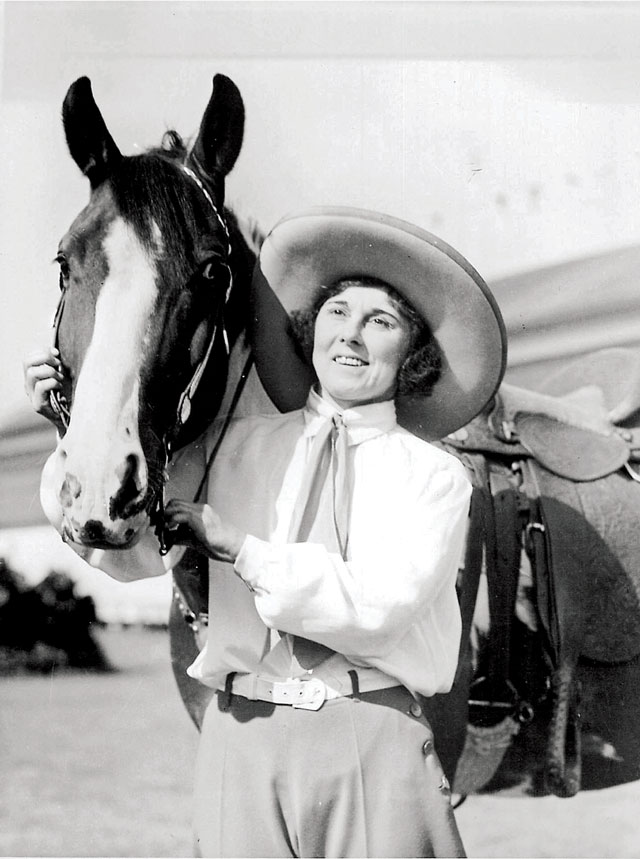
    Florence – Courtesy of granddaughter, Madonna Pumphrey

    Florence never grew very big. She was four feet six inches tall and weighed all of 90 pounds, but her experiences had allowed her to gain so much confidence during those years she formed her own show. She named it ‘Princess Mohawk’s Wild West Hippodrome’. The group grew to sixty people, which in addition to the performers, included cooks and crew to set up and tear down. Often they traveled with other shows and carnivals. It lasted several years until a disaster struck in Kentucky. The bleachers collapsed on opening night and numerous spectators were injured. Florence lost everything!
    There was no time to waste, she had to earn some money! She joined the Barnum & Bailey Circus. While there Florence learned resinback riding from May Wirth, a well-known specialist in that endeavor. She learned much from this fine lady, including how to turn a backward somersault from one horse to another. Florence’s ability to perform could amaze and excite the audience.
    Meanwhile, between circus engagements she began to enter rodeos as a bronc rider and trick rider to try and win money. It took awhile to prove herself in rodeo as she was known as a ‘wild west gal’. In 1919 she heard of the rich purses offered at the Calgary Stampede and hungry for money she headed that way. Florence entered the three mile Roman standing race. The winner would receive the Prince of Wales Trophy and a silver mounted saddle. She was the only woman entered against eight men. When it was over she had won, the only woman to ever win that event. Plus the Prince of Wales trophy she won a silver-mounted saddle worth $1,500. She quickly sold the saddle to Edith Sterling, a silent movie actress. She needed the $1,500 much worse than the saddle.
    After this Canadian win she had confidence galore, and began entering all the big rodeos, such as Cheyenne Frontier Days, Pendleton RoundUp, Chicago and Fort Worth. Florence competed under the last name Holmes, Hughes, King, Fenton and Randolph, and occasionally as Princess Mohawk. Florence married a bronc rider named Angelo Hughes who was killed in an automobile accident at Mexia, Texas four months later. Suddenly she had to support herself plus support her mother and two younger sisters.
    When a Phoenix rodeo ended she went to Hollywood to visit friends. While there she was encouraged to double for Shirley Mason, a movie star. Florence would get two or three hundred dollars for doing risky horse riding chores, that actors refused to do for movies, such as riding horses over cliffs. She also posed as a Mack Sennett bathing beauty. But the desire to rodeo won out. Back in Texas she threw her saddle behind an open cockpit of a Curtiss bi-wing at Love Field in Dallas and took off in to the air to promote the Dallas Dunbar Rodeo.
    Her first New York competition was Tex Austin’s 1923 Championship Rodeo at Yankee Stadium. She entered all three cowgirl events – Bronc Riding, Trick Riding and Relay Racing. Later in life she was quoted as saying, “I didn’t win all the time, but I got my share of the prizes most of the time.”

    Florence – Courtesy of granddaughter, Madonna Pumphrey

    The rough and tumble world of rodeo did cause Florence to experience some bad spills. In Houston a bronc named ‘Dumbell’ fell on her and she was dragged to safety by world champion Bob Crosby. At the Shrine convention rodeo in Washington D. C. a notorious bronc named ‘School Girl’ turned a somersault and landed on Florence, who was declared dead, but after going to the hospital by ambulance she came back to ride again! Once, when she was taken to the hospital after a serious accident, Ruth Roach went with her. Florence had been unconscious and was coming to when she heard the doctor tell Ruth that she would never walk again. Florence bolted, got up and ran out, heading to the front door, with the doctor and Ruth after her, when she realized she was only wearing a sheet! One of her most embarrassing moments.
    In 1924 Florence was asked to go with the Tex Austin entourage to London, England, to compete in Wembley Stadium, the first rodeo ever held in England. It was a 14 day trip by ship with the cowboys and cowgirls, and the stock. The Prince of Wales, who by then was the Duke of Windsor, took a group of competitors to supper after one performance. He had remembered Florence when she won the Prince of Wales Trophy at Calgary five years earlier and was fascinated by her. Later he escorted her to Buckingham Palace to be presented to his parents, George VI and Queen Mary. He also took her to view the crown jewels of Great Britain.
    In 1925 she met Floyd Randolph of Ardmore, Oklahoma, who was judging a rodeo at Dewey, Oklahoma. He also furnished stock for the big rodeos, including 200 head of horses and steers for the first Madison Square Garden rodeo. They were married at Newkirk, OK later that year. They went on to the next rodeo since there was no money for a honeymoon. Florence’s desire to win at the Garden caused her to have an arena made, to the same dimensions as Madison Square Garden, at the Randolph ranch near Ardmore, Oklahoma. Regardless of the weather Florence could be found working out in the arena every day of the year.
    She also made and designed her own costumes. New ones were made for each season. Sometimes as many as sixteen costumes or more were made yearly. Many were made out of satin and when they wore out she would rip them up and make satin quilts from the fabric.
    Florence had several horses she trained for trick riding. The most famous was “Boy” a five year old that she bought completely untrained. During his training Florence lost two teeth to his wild ways, but she and husband Floyd finally got him settled down. “Boy” and Florence were featured at many rodeos. At one of their Madison Square Garden performances a representative of ‘Ripley’s Believe it or Not’ discovered ‘Boy’ had a clear map of the United States on his right side. Believe it or not, Florence had never noticed it before. In Philadelphia they were invited to a Rotary Club gathering and ‘Boy’ traveled by elevator up sixteen floors in the Bellvue-Stratford Hotel. She had him wear special made rubber boots so he would not slip on the tile floors.
    The SesquiCentennial in Philadelphia, 1926, is where she won her first All-Around cowgirl trophy. It was presented to her by Jack Dempsey, the well-known boxer of the era. All together she had won $6,000 there with wins in bronc riding and trick riding. She moved on to the Chicago rodeo and won the same two events there.
    Madison Square Garden rodeos were held in late October or November. Through the years the New York rodeo became bigger and bigger, with standing room only at times. Florence was one of the favorite cowgirl competitors and always sought out by various reporters. In 1927 she won the Cowgirl All Around Championship, plus the Cowgirl Trick Riding Championship. She was the first cowgirl to win the Metro-Goldwyn-Mayer Trophy, valued at $10,000. The trophy would not be given to a cowgirl to keep until someone had three consecutive wins.
    During her rodeo years Florence continued to go to the Madison Square Garden Rodeo. She remembered in 1932 when Mrs. William Randolph Hearst, Chairman of the Milk Fund, had a luncheon for the cowgirls competing that year. Mrs. Hearst gave each of them a purse for their enthusiastic participation in the rodeo which aided her favorite charity. After the presentation the cowgirls became silent. Florence got to her feet, in behalf of the group, and thanked Mrs. Hearst for her kindness and hospitality. From that time forward Florence became the ‘unofficial’ spokesperson for the cowgirls whenever there was any public speaking required.

    Florence – Courtesy of granddaughter, Madonna Pumphrey

    Her achievements were amazing. She won the Metro-Goldwyn-Mayer $10,000 Trophy; the George W. Nixon trophy for World Champion Girl Bronc Rider in Chicago in 1926; the Juergens and Anderson World Champion Cowgirl Trick Rider in 1927 and 1928; and the Champion All-Around Cowgirl at Philadelphia in 1930, plus many more.
    In 1939 Florence “Princess Mohawk” Hughes Randolph announced she was hanging up her saddle. “I have done everything in rodeo that I set out to do,” she reported. Her retirement dinner was held at Madison Square Garden, and she was presented a huge bouquet by Paul Whiteman, a popular bandleader of that era.
    She did not retire when going home, but began teaching her granddaughter, Madonna, age 5, to trick ride. Floyd’s daughter, Mary Louise had married Jim Eskew, Jr., world champion trick roper, and Madonna was their child. As a teenager Madonna became a well-known trick rider and trick roper. She retired from trick riding at 16, but continued to perform as a trick roper.
    Florence did many things during her retirement in Ardmore including assisting her husband politically when becoming sheriff. She was also active in her church. Madonna said, ‘There was never a Sunday that she didn’t have me at Sunday School and Church at the First Christian Church in Ardmore.’ Additionally, she and Floyd also helped start the Ardmore VFW Rodeo in 1946, and worked on it for many years.
    Florence was inducted into the Rodeo Hall of Fame at the National Cowboy & Western Heritage Museum in 1968. The only two women to be honored in that Hall of Fame at that time was Florence and Tad Lucas. Many of her trophies she had won during her rodeo career are housed there in the Oklahoma City Hall. Her most treasured were The Metro-Goldwyn-Mayer Trophy which she won in 1927 as “a tribute to the charm and courage of western womanhood’. The second trophy, also from Madison Square Garden, was from 1933 when she won as the Champion Trick Rider. She was also inducted to the National Cowgirl Hall of Fame in Fort Worth in 1994 posthumously. Florence had passed away April 14, 1971.
    The cowgirls from the 1920s and 1930s were fiercely driven and it was extremely difficult in those days. Once they honed their rodeo skills, won some prize money, learned how to travel from one rodeo to the next, and became friends with other cowgirls and cowboys, you couldn’t keep them away. It became their life, and some excelled at it, like Florence.

    Gail Woerner, rodeo historian, is writing a book about professional rodeo from 1920 to 1959, with an emphasis on the Madison Square Garden rodeos. She has always called the early day Madison Square Garden Rodeos the ‘unofficial’ predecessor to the National Finals.

  • Back When They Bucked with Jon Temple

    Back When They Bucked with Jon Temple

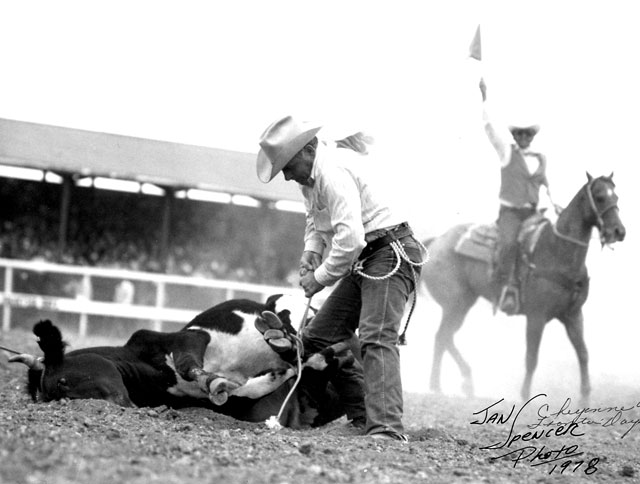
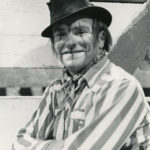
    Jon Temple loved his time in the rodeo arena. The retired bullfighter and clown spent more than twenty years in regional and pro rodeos across the nation, protecting bull riders and making fans laugh. Born in Cleburne, Texas in 1937, he saw a rodeo clown for the first time when his granddad took him to the Cleburne rodeo. He was about six years old, and he was fascinated. “I watched that fella real close, and I thought, I believe I could do that someday.”
    As a youngster, he rode calves and bulls, but that wasn’t where his dreams were. His bullfighting practice was during the weekends, at the buck outs in Fort Worth. There, he learned his way around an arena and around bucking bulls.
    Jon worked regional rodeos till his friend and fellow bullfighter Junior Meeks, who held a Rodeo Cowboys Association card (the predecessor to the PRCA), asked him to come to the RCA’s national convention, held in Denver at the Brown Palace. Jon accepted, but didn’t plan on getting his RCA membership. “I went up there with no intent of buying my card,” he said. Meeks and other friends introduced him to stock contractors and producers. Another friend, Jon Routh, introduced him to stock contractor Harry Vold. The three of them went across the street to a café for a cup of coffee. As they visited, Harry began writing on his placemat. He pushed the paper to Jon. It was a list of 33 of Harry’s rodeos, where he needed a rodeo clown. “You can have any of them or all of them,” he said. Jon took a look. “I didn’t want to look shocked so I looked it over,” he said. “And I said, I think I’ll take them all.” It was 1960, and his pro rodeo career was started.
    Jon Routh made sure Harry knew Jon was a good choice. As they walked out of the café, Routh called to Vold, “Harry, if he doesn’t make you a good hand, you call me and I’ll work the rodeos.”
    Another bullfighter Carl Doering also helped with his career. He worked with Carl, off and on, for three years. Carl helped him fill in his gaps in his schedule, and Jon loved working with him. “He was a swell guy,” he said.

    Each fall, Jon went to the RCA convention, prepared to book shows for the next year. Vold had told him he changed clowns each year. For two years, in the fall of ’60 and ‘63, he got a call from Vold, asking him to return to the rodeos. The committees liked the way he worked and wanted him back.
    In addition to Vold, Jon worked for a variety of stock contractors, at rodeos across the nation and Canada: Neal Gay, Reg Kesler, Bernis Johnson, Joe Kelsey, Roland Reid, Jim Shoulders, Beutler and Son, Wayne Vold, and more.
    One of his acts was a Model A Ford car. With the top cut out, he painted big flowers on it and called it a “hippie van”. The next year, to have a different act for the rodeos he returned to, he had a different paint job put on it and called it a “Tijuana Taxi.”
    Jon also had a mule he called Jenny Lou. Trained by a man from a carnival, she could “count.” In the arena, Jon and the announcer would banter about Jenny Lou’s intelligence, then they would come up with a problem, and she’d answer it. Scratched at a spot on the base of her mane, she’d turn her head up and down. Touched on the left shoulder, she’d turn her head back and forth. Jenny Lou was smart, “a whole lot smarter than I was,” Jon quipped. She could sense when they were about to leave for a rodeo. She wouldn’t eat and would drink just a little. During the travels, when they stopped for a water break, she’d get out, take a sip of water, roll, and jump back in the trailer.
    She also loved sweets. Tied to the trailer at a rodeo, the kids gathered around her. Jon would tell them to watch their cotton candy and ice cream because she’d try to eat it. As she moved toward the treat to take a bite, the kid would jump back and she’d keep the treat. One time, she took a bite of someone’s cotton candy and got the whole ball, making a mess all over the trailer.
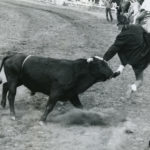
    Jon had few serious injuries. He bruised a kidney once at a rodeo in Missouri when a bull rolled on him, which took a long time to heal. In British Columbia, an indoor rodeo was held on a hockey rink with sawdust and dirt over the ice. A bull got in a corner, facing Jon, and Jon slipped in a pocket of shavings. He fell, sliding between the bull’s front legs “like I was sliding into second base,” he joked. The bull “dropped to his knees and went to thrashing me with his horns,” he remembered. “I tried to grab him by the neck, to pull myself out.” A committee man saved him. “A big, heavyset committee guy in a starched white shirt jumped off the gate. The bull saw the flash and jumped to get it. That’s when I made my getaway.” Medics wrapped Jon’s head in gauze and sent him to his hotel. “My old head was throbbing,” he said. With gauze wrapped around nearly everything but his eyes and mouth, “I looked like a freak.” The next day, before the rodeo, he stopped at the doctor’s office for someone to cut the gauze off and put new wrap on it. And his hat and wig didn’t fit; he went without them for that performance.
    Another injury happened in Washington. When a bull rider hung up, Jon came in from the off-side, got him loose, and when the bell on the bull rope fell, it hit the back of his hand. He had seen a blur coming at him and put his hand up to his face for protection. It broke two of his fingers; the injury could have been worse if his hand hadn’t been there. And a broken ankle suffered in Mesquite kept him from working the 1969 National Finals Rodeo.
    The injury that propelled him to retirement was in 1969. When a bull rider got hung up, Jon moved in, got him loose, but didn’t get far enough back. The bull “gave me a judo chop” on his right ankle. “They put me in the limo (ambulance) and I went to the hospital,” he said. He had broken his leg, which put him out of commission. The doctor told him, “you’re in the wrong occupation. You won’t be walking when you’re fifty.” Jon decided to rodeo one more year, then retire.
    After retiring in 1970, he went to work for the Missouri-Kansas-Texas Railroad in Ft. Worth. He worked for them till 1999, when he retired from Union Pacific Railroad.
    After that, Jon did carpenter work, refurbished houses, and worked with his wife, Norma, who was a real estate agent. He and Norma owned and operated several car washes. He served for twelve years on a local school board and the couple is active in their church.
    Now he and Norma, who married in 1998, sell window treatments, and Jon golfs for a hobby.
    He has 3 beautiful redheaded daughters: Marla Roper, who lives in San Antonio, Jeana Temple, in Ft. Worth, and Jonelle Luce, who lives in Joshua, Texas. Norma has a daughter, Shelby Lloyd, who lives in Cleburne. Between the two of them, they have 8 grandchildren and 5 great-grandchildren.
    Jon is a 2001 Texas Rodeo Cowboy Hall of Fame inductee, and he loves attending the rodeo clown reunions and catching up with old friends. He appreciates the friends he’s made through rodeo. “The friendships over the years have been God’s blessings,” he said. “They connect me to the right things. That’s how my life has gone. I’ve had some good friends.”

  • Back When They Bucked with Lyle Smith

    Back When They Bucked with Lyle Smith

    Because of a box of western magazines, and his dislike of cows, Lyle Smith became a saddle bronc rider. The Canada native now living in Reno, Nev., competed at four National Finals Rodeos and finished in the top ten in the world six times, making his mark in the rodeo industry. He was born in 1930 to George and Louise (Reuther) Smith, the third of eight children, on a farm near Donalda, Alberta.
    When he was seven years old, his dad died, leaving his mom with eight mouths to feed and not much to put on the table. The family milked cows, raised chickens and gardened, to make it through. His older brothers milked three cows, morning and night, “so I grew up hating cows,” Lyle said. “I couldn’t get away fast enough from that farm.”
    He attended a country school that went through the ninth grade, and when it was time to go to high school, he couldn’t go. There was no school busing in that district, and the family couldn’t afford to make the sixteen mile trip to Donalda High School.
    So he went to work for a rancher named Herman Linder, and the trajectory of his life changed.

    Linder, himself a world champion bronc rider in his time, had a box of Hoof and Horns and Western Horseman magazines in the attic where Lyle slept. In his spare time, he would read them. “I read about Jerry Ambler, Carl Olson, and others who were world champions, and I thought to myself, ‘that’s the life for me.’”
    So he gave Linder two weeks’ notice, then went home. His cousin, Lawrence Bruce, had bucking horses, and invited Lyle over to try some out for Harry Vold, who was scouting prospects for Leo Kramer, a stock contractor from Montana. Lyle got on four horses that day and bucked off three of them.
    It was 1948, and he helped Lawrence as they drove horses to a rodeo in Holden, Alberta, where Lawrence was taking saddle broncs. Lyle entered the amateur bronc riding and won fourth place and ten dollars. His mind was made up. “That made me think rodeoing would be a way to get away from the farm and working for farmers,” he said. He entered the amateur bronc riding at other stampedes, which was what rodeos were called in Canada at that time.
    In 1949, his big win came in St. Paul, Alberta, over the fourth of July. He won first place and $275 and used it to buy a Hamley association saddle. Prior to that, he had borrowed one from whoever he could.
    The next few years, he competed in the amateur bronc riding at stampedes across Canada, wining here and there. His skills improved in 1951 when he worked for Lawrence, the father of Duane and Winston. He helped build a poplar rail and post arena, and the boys would try out horses and practice each day. “I got to riding better,” he said. He competed again across Canada but added a few stops in the U.S., too, including Lewiston, Idaho, and Pendleton, Ore. That same year, he got his Rodeo Cowboys Association (RCA) card.
    Rodeo wasn’t his main income; he worked on an oil well drilling rig. He, along with the other cowboys who were short on cash, knew how to stretch their dollar, eating one meal a day and piling into the cheapest hotel rooms they could find.
    It was in 1954 that his rodeo career took off. In Denver, he won fourth in the day money, a check for ninety dollars. But that was it, and Lyle was out of money. He competed at Ft. Worth, San Antonio, Houston, squeaking by on his winter earnings. Phoenix was the last of the big spring rodeos, and after Lyle rode there, he went home with Deb Copenhaver. Copenhaver, a two-time world champion, put Lyle to work on his ranch in Idaho, where he dug postholes and fenced. Deb entered him in Red Bluff, Calif. in April, where Lyle earned a fourth place day money check again. After that, he kept on winning rodeos from Vernon, Texas to Madison Square Garden in New York City, Boston Garden, and San Francisco.
    The good days were here.
    He rodeod all year, across the nation, from Denver to Ft. Worth, and from Baton Rouge to Oakdale, Calif. In 1957, he won $7,100 for the year and bought a brand new 1957 Chevrolet for $1,900. The next year, his annual earnings were $10,264 and he finished sixth in the world.
    In 1959, he went to the first National Finals Rodeo, in Dallas, Texas, where he won a round and fourth in the average. He also was the high mark saddle bronc ride for the Finals, with a score of 187 points on a horse from Ray Kohrs, a stock contractor from California. (At that time, 210 points was the highest possible score in the roughstock; the scoring system changed to its present form of 100 points as a perfect ride in the mid 1960’s.)
    The next two years, he went to the National Finals, wrapping up the 1960 season in sixth place with $11,285 in earnings, and the next year in seventh place, with $10,577 for the year. The year 1962 was the last time he would qualify for the Finals. By that time, Lyle was living in San Diego, working for rodeo cowboy Bob Robinson in a housing development. He was married with a son, and there were bills to pay. “You’ve gotta have money coming in when you’re married,” he said. “You can’t get by on one meal a day.”
    He and his buddies lived in San Diego, working during the week and rodeoing on weekends. At the time, there were lots of little rodeos around the area. “It was probably the best time I had rodeoing,” he remembered.
    In 1964, the job ended. He found work in Reno for a painting contractor. His rodeoing was slowing down, and in 1967, he rode his last bronc at the rodeo in Fallon, Nev., wining first place. Lyle had other priorities: his family and his work. “I was busy working, making pretty good money, and I couldn’t afford to go to a rodeo.”

    He got his contractor’s license in 1971 and has been working as a painting contractor ever since.
    Lyle had met his wife Joan in 1958 in Boston. He and his friends were there to compete at Boston Garden, killing time during the day, walking through Johnny Walker’s western store. She had tickets for the rodeo that night, and now she had a cowboy to cheer for. Her family loved him. They were excellent cooks. When the cowboys came to Boston Garden to rodeo, they would all be invited over for a meal. “Her uncles would cook. They were really great people,” eh said. They married on April 5, 1959.
    Lyle suffered a broken back in 1956 when a bronc fell over in the chute with him at the Oakdale, Calif. rodeo. He was in the hospital for twenty days, and the nurse, who was the same age as his mother, took him under her wing after his hospital stay was over. She was married to a ranch cowboy and understood his predicament, caring for him a month at her home after he got released from the hospital.
    His other two serious injuries were from vehicle accidents. In 1980, he was in a car accident, breaking his right shoulder and a bone in his leg. And eleven years ago, as a pedestrian, he was hit by a car, breaking his pelvis and spending time in the intensive care unit and rehab.
    The couple had a son, Chris, who was born in 1960, and who is married to his wife Seanne. Lyle and Joan have six grandkids, “every one a success and a great kid,” he said, and five great grandkids. One of his grandsons is named after him, and all of the grandsons are in the Air National Guard.
    He and his son Chris still own and operate the painting contracting business, and at the young age of 89, he still goes to the office. He no longer drives; Chris picks him between 5:30 and 6 am in the summer and at 8 or 9 am in the winter. He hasn’t painted for the past five years, but he answers the phone, does paperwork, and bids jobs.
    There’s still plenty to do, and he loves it. “I don’t know what I’d do if I completely stopped and sat in the house. I wouldn’t last long.”
    He was admired by his peers, and still is, says his friend Herb Friedenthal, a bull rider who is ten years his junior. “He was level headed,” Herb said. “He was real popular. Everybody liked him.”
    Herb acknowledged Lyle’s skill in the arena. “He was one of the best. He could ride those big old rank horses, those horses that came out of the north from Canada, Montana, the Dakotas. You would hardly ever see him hit the ground. He might not win every rodeo, but he wouldn’t get bucked off.”
    Lyle loved his rodeo days. “I loved to rodeo,” he said. “I loved the guys I was with. I made friends that I’m friends with, to this day.” Since the Wrangler National Finals moved to Las Vegas in 1985, he’s missed only one year of attending the reunions held in conjunction with it.
    The hardships of his childhood helped him succeed in rodeo and in life and made him tough, he believes. “Learning to make it as a rodeo cowboy got me away from the farm,” he said.
    “He’s a real good guy, a real good guy,” Herb said. “And he still is.”

  • Back When they Bucked with Veach Saddlery

    Back When they Bucked with Veach Saddlery

    Monroe Veach was fascinated when he saw his first cowboys. His dad took him to Pawnee Bill’s Wild West Show in Saint Jo, Missouri, when he was eight. He was amazed at how they dressed, their horsemanship and ability to rope. He saw a Charro spin a rope like he’d never seen before. Once he got home he began to practice trick roping, he trained his horse to do tricks — he was hooked!
    Monroe Veach was born in Missouri in 1896. The frontier had moved westward by then so when he was offered a job to cowboy near Eads, Colorado, in 1916. When he arrived at the train depot he unsaddled and unbridled his horse, slapped him on the butt and his horse headed home. Monroe took the saddle and bridle with him. He didn’t tell his family he was leaving. He hopped a freight train and headed west. He knew how they felt about his ‘cowboy ways’ so he wrote a letter when he arrived in Colorado. The folks thought Monroe’s cowboy dreams were a young man’s folly and he would grow out of it. Although his father raised sheep and trapped he wasn’t surprised at Monroe’s choices and accepted his decision.

    The following year his cowboy job ended due to World War I. He joined the Army and was sent to Fort Riley, Kansas, to the cavalry division, which he hoped would allow him to utilize his horsemanship skills. Much to his dismay his military time was spent in the saddle and equipment repair shop. Little did he realize how much impact this brief time in the saddle and equipment repair shop would mould his later career and allow him to continue in cowboy fashion. This was the only professional leather-making training he ever got. Monroe’s training as well as his creativity in working with leather expanded his horizons.
    Monroe left the Army in 1919 and went home to Missouri and started a leather shop in a small building on his home place near Trenton. Mostly repairs on harness, saddles and such kept him busy in the shop. Shortly thereafter he married his childhood sweetheart, Alta. They had six children over a span of twenty years; with Billy, the oldest, Imogene, Mary, Letty, Ben and Peggy, the youngest.
    When a friend asked if he could build a western saddle he had enough experience with saddle repairs that he knew he could do it. He made the saddle to the friend’s satisfaction. Meanwhile, as his children grew up he introduced them all to the leather-making business and at one time or another they were all trained in various aspects of the business, particularly saddles.
    But Monroe had other talents as well. He loved ‘The West’ and his trick roping talents had expanded. He was asked to entertain at the local movie theater between silent movies. He also joined Foghorn Clancy’s rodeo and performed trick roping and trick riding. Trick riding was just getting popular and Monroe could see how necessary and important for the trick riding saddle to be strong enough, with the rider’s variety of tricks. They generally always used the saddle as their base. It is not surprising that his children also became fascinated and were passionate about the rodeo world of competition and performing.
    His shop on the family place finally became too small for all the work he was hired to do. After a time, 1938, he moved to a location in Trenton on Main Street. The following year, Fred Lowry, a well-known steer roper who had won many of the biggest rodeos in the country, contacted Monroe. Lowry had won a trophy saddle, made by Monroe, and liked it so well he wanted a second saddle made like it with a few minor adjustments. The adjustments Lowry requested were for a stronger saddle than generally made. Lowry roped steers weighing 800 pounds or more and the weight was hard on a regular saddle. Lowry wanted a double rawhide saddle tree for additional strength. Once Monroe had made the new saddle and named it the, “Fred Lowry Roper” the orders from steer ropers all over the country came pouring in.
    When World War II began Monroe found that the few companies who furnished a saddle-tree, which is the basis of every saddle, were hard to come by. Most all materials were going to the war-effort and were difficult to get for any reason other than the military. Monroe decided to make his own saddle trees. He used the Linn tree for wood, because it was strong and would not split when nails were used. He brought it to the shop to dry. Letty’s husband, George McAlister, ran the first ‘tree shop’. Monroe was very innovative in this endeavor, as he was in many things he did through his life.
    He tried to get a foundry to produce metal saddle horns, but again the war-effort was using the majority of the metal. Monroe explained he was building saddles for ranchers, the very people who raised cattle to feed the soldiers. Once the company executives heard that they immediately agreed to provide them. “Those boys need beef!” He got their attention, and his metal saddle horns!
    Monroe set the standards high in saddle-making. He set the trends for years to come and demanded a product (saddle) that was not only functional but of the best materials. He became the premier trick riding saddle-maker and had as many as ten people working in his shop. Having been a trick rider he had an edge on knowing what was most important in the development of trick saddles and made sure they were of the finest quality. Today an old Veach trick riding saddle is an important find, but a retired trick rider will seldom let their Veach saddle go.
    Monroe and son, Billy, produced rodeos by Veach Rodeo Company. While Monroe ran the shop, Billy did the ramrodding of a rodeo but Monroe would perform, and act as secretary and timer. Other family members were always present to handle a variety of duties and responsibilities required to put on a good rodeo. At one of the rodeos son-in-law George McAlister was the announcer, and just prior to the Saturday night rodeo, a deluge of rain came and the performance had to be postponed until Sunday. George couldn’t stay over until Sunday afternoon because he had to head back to Trenton. When he let Monroe know he enlisted Clem McSpadden to take over his first announcing chores.
    The Veach Saddlery grew and a boot department was added. His daughter, Imogene loved working in the shop and learned to weave cinches and stitching boot tops on a treadle sewing machine. In time, she got to do more intricate designs made by Monroe. He always had a pencil handy and once he created a design Imogene would then stitch it out.
    When Peggy was ten or eleven, she recalled the pony business was booming and a gentleman in the Midwest had a large pony ranch and held a two day sale every year. He commissioned Veach Saddlery to make pony halters out of white latigo leather so each pony he sold was wearing a white halter at the sale. Monroe had all the leathers cut, and Peggy could put together a gross (144 halters) in a day. Peggy remembered her dad took her to the pony sale one year and saw all her halters leaving the auction area on those ponies. The Veach Saddlery was truly a ‘family affair’.
    When Robert Robinson, Peggy’s husband, went to work for Monroe he built saddle trees. Robert remembered being taken to the tree shop, and Monroe showed him the patterns, the band saw, and described the process of making a saddle tree. “When I went to ask a question I turned around and Monroe was gone” recalled Robert. “He let his employees learn from their mistakes,” said Robert and Peggy’s son, Craig, who also has been on the payroll since he was fourteen. Monroe never got mad. He’d just say “Don’t let that dog bite you again.”
    Veach Saddlery sold to numerous dealers across the country. They began putting out a catalog of their various leather goods and inventory. Robert Robinson was their salesman and he traveled and called on dealers in Iowa, Illinois, Kansas, Oklahoma, Missouri and Indiana. They also had a booth at the Western Market in Denver in the 1960s and 1970s. Other dealers ordered from the catalog. The last catalog was sent out in 1983 and was #14.
    In 1976, the Bicentennial USA year, Monroe went to the Smithsonian Institute in Washington D. C. at their invitation to do a saddle-making demonstration. It was held near the Washington Monument Mall and in addition to the saddle that he made there, he brought a completed ‘Bicentennial’ saddle that he gave to the Smithsonian. Bryan Dew, a film-maker from New Zealand, attending the event watched Monroe build the saddle. Visiting with Bryan, Monroe’s passion for the West became evident and Dew began an extensive film shoot featuring Monroe. Dew and his crew worked on this project for ten years. Although it took longer to complete than Dew had anticipated Peggy remembers that it was her job to keep Monroe in the same shirt, hat, etc. – – – for the ten year span so the resulting documentary looked like it was done in a brief length of time. “A Ten Dollar Horse and a Forty Dollar Saddle” was the result, and was released in 1986. It was all about Monroe and his talents in the leather-making industry, his love of rodeo and performing as a trick roper, and telling tales of the West and so much more. When it was completed Dew learning that Monroe was ninety years old, and not in good health, hurried to Trenton and the film was shown at the local junior college for the entire community. Monroe passed away that year on Christmas Day. Two years later “A Ten Dollar Horse and a Forty Dollar Saddle” was given a Bronze Wrangler Award by the National Cowboy & Western Heritage Museum in Oklahoma City, OK. In 1993 Monroe Veach was inducted to the Rodeo Hall of Fame there as well.
    Veach Saddlery has continued to prosper, with Peggy, husband Robert and son Craig in charge. Things have changed somewhat but the basic principles taught family members, spouses and friends have never been forgotten. In fact, knowing how far-reaching Monroe’s creativity and his love of the West have spread, it seems the entire family can be called ‘Throwbacks’. The definition of throwback is: ‘a return to a former type or ancestral characteristic’. A tradition in the family of Monroe Veach and his talents and desires that have carried over and influenced the lives of each and every generation since then.
    Peggy, Robert and Craig, have continued to build saddles and leatherworks. Craig started his career sweeping floors. He has moved up to the responsibility of becoming their custom saddle expert. Peggy, who has kept her dad’s books which include the list of saddles by serial number (which is the actual number of the saddle made at the shop) remembered that in 1932 the first trick riding saddle was made for Lucyle Richards, a beautiful trick rider and lady bronc rider that the family kept a friendship with for her lifetime. Peggy also reported that the last saddle finished at the end of 100 years was number 18,949!
    In their spare time the Robinsons have been ropers. In fact, Peggy, cut her thumb off roping, a common roping injury. Fortunately, she was able to have it reattached. They also attend and keep up with the rodeo world and the people in it, not only in their home state but across the country and in Canada. Through the customers they have satisfied during the past century they can name people from every state, as well as Canada, and they have sent saddles to Belgium and South Africa.

    Billy, Munroe’s first born, put on rodeos until he was killed in a truck accident in 1957. Many members in the family came together to complete his rodeo contracts, after his demise, then sold the rodeo stock. Billy’s sons, Kenny and Cary both worked in Monroe’s shop, and now have their own shops. Kenny Veach Custom Leather is in Mount Vernon, Missouri. Cary after being a saddle bronc contestant makes and repairs rodeo equipment for the roughstock events, and is located in Ankeny, Iowa.
    Roughstock rider, Charley Beals, married oldest daughter, Imogene, and once World War II was over Charley worked for Monroe and learned the trade. In 1945 they opened Veach Saddlery in Tulsa Oklahoma. Rodeo cowboys traveling through Tulsa never hesitated to stop at the shop and say hello. Charley and Imogene had one daughter, Donna Kay. She married Duke Clark, a roughstock rider from Trenton, who also trained horses, played polo, and has competed in pulling horse contests and presently ranches. Duke did work in the Tulsa shop and Imogene trained him to tool and make saddles. Charley retired in 1985 and closed the shop. In 2007 their grandson, Drew re-opened it at Colcord, OK. One of his specialties is the Doug Clark Roping Saddle. Doug, another grandson, was All-Around Cowboy at Cheyenne Frontier Days and Steer Roping Winner at Pendleton RoundUp, two of the largest, prestigious rodeos in the country. He also trains timed-event horses and has had horses he trained in National Finals rodeos every year for over 35 years. Doug and wife Linda’s daughter, Darcy, and her husband, Billy Good are roping presently and doing well. Third grandson to Charley and Imogene, Derek, was a saddle bronc contestant and qualified for the National Finals Rodeo fifteen times.
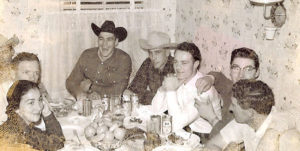
    Mary, second daughter of Monroe, and husband Al Cunningham, had a Veach Saddlery shop in Branson, Missouri, for a time. Both are deceased. Letty, Monroe’s third daughter, and husband, George McAlister, not only handled the tree shop in the beginning for Monroe, but also announced rodeos for the Veach Rodeo Company. Letty in her younger years was a trick rider and she and her three sisters were always available when Monroe did his trick roping horse catch of the four girls.
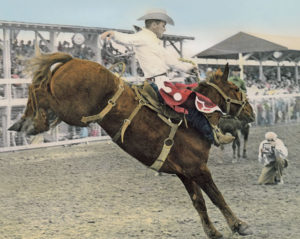
    Ben, Monroe’s youngest son, invented a stainless steel, one piece, stirrup buckle. He was the rodeo clown in the 1940s rodeos for Veach Rodeo Company .
    Throwbacks, each and every member of Monroe Veach’s family and their off-spring and the next three generations are connected in some way to the world he created. When interviewing these individuals their answer to the question: “Have you ever considered doing anything else?” The answer is always the same, “No, why should I? I love what I do.”
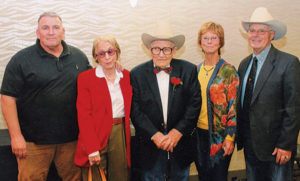
    A hundred years later there is no question to the stability of Veach Saddlery in Trenton, Missouri, and the others scattered around the country that came from Monroe’s passion for the cowboy life. The legacy he created and left has only expanded the commitment and desire for saddle-making, trick roping, trick riding, and competing in rodeo. Some of his youngest family members may not do it all, but they at least are involved in one or more aspects of the life he lived.
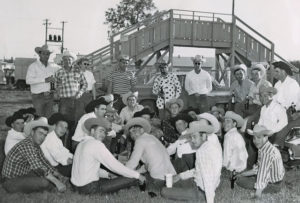
    Monroe Veach was posthumously inducted to the National Cowboy & Western Heritage Museum’s Rodeo Hall of Fame in 1993. His son-in-law Charley Beals was inducted in 2010. His great-grandson, Derek Clark was inducted in 2018. His daughter, Imogene was the recipient of the Tad Lucas Memorial Award, and his great-grandson, Doug Clark was the recipient of the Ben Johnson Memorial Award. These honors were bestowed on these members of Monroe and his family because “they loved what they did for a living”. Can it be any better than that?

  • Back When They Bucked with Florence Youree

    Back When They Bucked with Florence Youree

    story by Rhonda Sedgwick Stearns

    Tiny Florence Price, from Addington, Oklahoma, learned cowboy skills early and well, in the footsteps of her Daddy, John Henry Price, and many other top hands. She cut a wide swath into the world of rodeo and followed it faithfully for decades, claiming amazing victories in equality for cowgirls. Last July, Florence pioneered even more territory for them, becoming the first “Notable” the ProRodeo Cowboy Hall of Fame inducted under the umbrella of the Women’s Professional Rodeo Association (WPRA).
    “That was REALLY something! I never dreamed of such a thing,” Florence said. Her “desire for women to rodeo, and to help get bigger and better barrel races for them” was incidental in her mind; and she claims her 2019 induction “just kind’a happened.”
    “My folks had box seats at the Fort Worth rodeo, and they always had horseback ‘Musical Chairs’ there,” said Florence about her beginning in rodeo. “I thought that was the neatest thing I had ever seen, but I had never done anything like that! I’d heard about barrel racing, so I got one of Dad’s best pasture (working ranch) horses and started training him.” By the time she was 14 Florence and that horse competed in small rodeos close to home.
    Those were pioneer days for women’s rodeo, with some of those events having no set pattern and possibly old, used water heaters for markers if there was a pattern. Possessing foresight beyond her years, such infrequent, novelty events weren’t part of Florence’s vision. She identified a need for organization, standardization, and recognition for girls and their horses – and set out to make it happen.

    Florence called her favorite arena horse ‘Chubby’, but the beautiful Palomino Quarter Horse’s registered name was Chubby Dun. “Grandad bought him as a stallion, and stood him for several years. When he didn’t want any more foals from him he gelded him. He was always real nice, and easy to work with,” Florence remembers. “He was a natural at working cows, and he learned the barrels pretty fast. I used a regular little old grazing bit, never needed anything else on him.”
    Florence wasn’t the only good cowgirl in her family . . . sister Sherry Price shared the passion for horses and competition. Competing in rodeo was a rare treat for the Price sisters – busy growing up, going to school, and helping on the ranch – yet Florence did everything she could to help promote it, especially for women. Those efforts birthed the pioneering Girl’s Rodeo Association (GRA). “I didn’t travel to rodeos until after Dale Youree and I married,” Florence says. “He was a calf roper, and we pulled two horses behind a car in an old open top 2 horse trailer.” She remembers a storm that came up as they were heading to a rodeo in West Texas. “We pulled into a lumber yard in some little town, and got a big tarp. We tied it on there to cover the top and protect the horses a little,” Florence explained. “And when we pulled into the rodeo grounds Dale said, ‘Let’s just stop out here, I don’t want those people to see what we look like!’”
    “We traveled some with Manuelita and Jim Mitchell before we girls joined the GRA. Fay Ann Leach and Billy were also great traveling companions,” Florence says. “By that time we had bought a pickup and a little 8’ camper, so we’d park out in the infield, on the backside of the rodeo grounds. Our kids John and Renee went along from 4-years of age, and I wouldn’t have it any other way. That kind of life was a good education in itself. They learned to meet, socialize and talk to people. We and our kids sit and talk and reminisce a lot about those times today, remembering and wondering about people we used to camp next to – you remember them forever, and wonder where they are now.”
    Two Youree’s rodeoing worked so well, they often even rode the same horse. They didn’t even change bridles, as Florence explains, “I rode with whatever he had on the horse’s head. There was usually only a couple or three events between the calf roping and barrels . . . lots of times we just had time to change saddles.”
    Rodeo can be a dangerous sport, even in women’s events, but Florence says, “I can’t remember having many bad wrecks.” Then she giggles, “There was that time at a rodeo in Weatherford.” Florence was on Mr. Ed, given to her by R.A. Brown from Throckmorton, Texas; a ranch horse he’d told her she needed, and he wanted her to have. His solid ranch horse background was about to be tested. Florence recalls,
    “That day he turned the most awesome barrels, and was making the best run of my life. As we turned the end barrel to come back a big bucking bull escaped from the chutes, coming right at me! I just kept right on running for the line, and the bull swerved around and went behind me . . . I won it!”
    There was no room for weak hearts in the barrel racing arena . . . but there was a lot of class and color, flash and pizzaz! A new fabric called “stretch lame’” sparked the rodeo fashion scene in the 1950’s. Tailored lame’ pants, electrically shiny as tinfoil and rainbow in color, fit cowgirls like a second skin.
    “Manuelita Mitchell was the first person I saw wearing that fabric,” Florence remembers. “She lived over there by Maude McMorries who sewed fashions for Manuelita, and June Ivory and Jo Decker. I had her make mine also.”

    She did join the fledgling GRA in 1951. She became a Director, then 1960-1964 President. During many years as Secretary-Treasurer, Florence was instrumental in the National Finals Rodeo (NFR) approving women’s Barrel Racing as a sanctioned event. “I loved working in the GRA office . . . I knew all those names from typing rodeo results, over and over! This year, in Colorado Springs for my Induction, I met Wanda Cagliari. I knew that name and had written it forever. I was honored to meet her!”

    Somehow, along with doing all that GRA business, Florence and her fast horses raced their way into the GRA’s annual Top 15 six times! She then transitioned with GRA into the WPRA and captured their All-Around title in 1966.
    Ever willing to share their talents and knowledge, Youree’s instituted a program for youth. “We held horsemanship camps here at the ranch for 14 years. We also held them other places – all over. We’d fly out of here Friday morning and go wherever, have a lecture that night and teach all day Saturday and Sunday; and then get home as fast as we could for Monday morning,” Florence explains. “We were training horses for the public and if a day passed we didn’t ride your horse, we’d only charge you for feed. We’d have as high as 18 or 20 horses in the barn, and after we got bigger Martha Tompkins and Sandy Hickox Bowden came and lived with us and rode for us, also Connie Combs fom Comanche.”
    “When we got enough others that could help with the training, I backed off and did the cooking,” Florence explains. “Now Renee has three daughters and they all train here every day, and I cook lunch for them.”
    Florence started a family tradition of barrel racing excellence and is proud to say, “My granddaughter Janae Ward Massey won the World title in 2003, and also won the National Finals Average. During the time she was in Vegas for that NFR, she had to complete the Finals Exams for her college degree. The teachers sent the tests out there to the University and she went and took them. She made it, and won the College National Finals barrel racing average, also.”
    Barrel racers revere Youree for elevating the status of their event. “Jack Buschbomb was the RCA President when I met with them and convinced the Board to rule that any barrel race held at an RCA rodeo would have to be GRA approved. I asked for 10% of the approved purse, too, and that happened. Before that, we might go to a rodeo and all we’d have to run for would be $50 or $100 the committee had put up.”
    The National Finals Rodeo incorporating Barrel Racing was another major Youree coup. “It was like a dream come true, we were very grateful. I met with Stanley Draper and Clem McSpadden and convinced them the NFR needed pretty girls and fast horses. They needed the GRA . . . they needed some color!”
    She’s still pushing and providing NFR color. “Last year my granddaughter Kylie Weast went to the NFR, so my daughter and I bought white Wranglers and dyed them purple, red, brown, green, all bright colors. She had a sponsor out of Canada who sent her a dozen shirts in all colors, too,” Florence says.
    All Girl Rodeos is another avenue that Florence and Dale explored. “Dale and I produced some all-girl rodeos years after they’d quit having them,” Florence remembers. “When we started doing that at Duncan, in the 70’s, we got some of my Daddy’s young beef bulls and flanked them for buckin’ bulls. We took all our barrel and pasture horses and used them for bareback broncs. We didn’t have any better sense but to try and do things! And as long as we were doing, we had a very blessed life!” she says.
    “We’ve had happiness, and I’ve had the best husband a girl could ever have. My life has been a blessing, and the most wonderful thing. My success, I think, is because I had God with me all the time, and still do! Without Him we are nothing . . . and He’s not through with us yet! I am 86, and Dale is 91 . . . he’s kind’a tired this afternoon, he just got done sowin’ his wheat…”