Rodeo Life

Author: Siri Stevens

  • ProFile: Kaycee Feild

    ProFile: Kaycee Feild

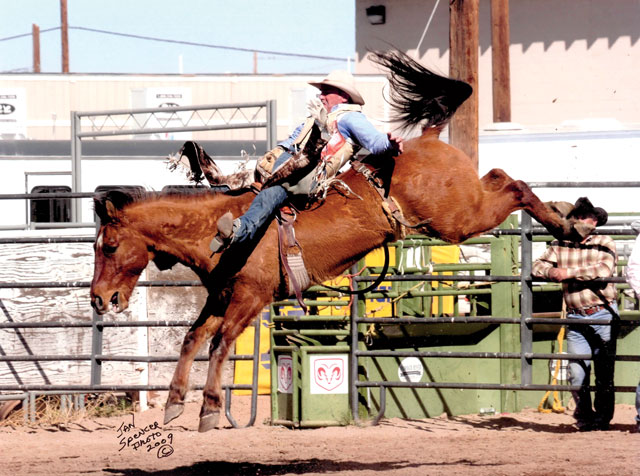
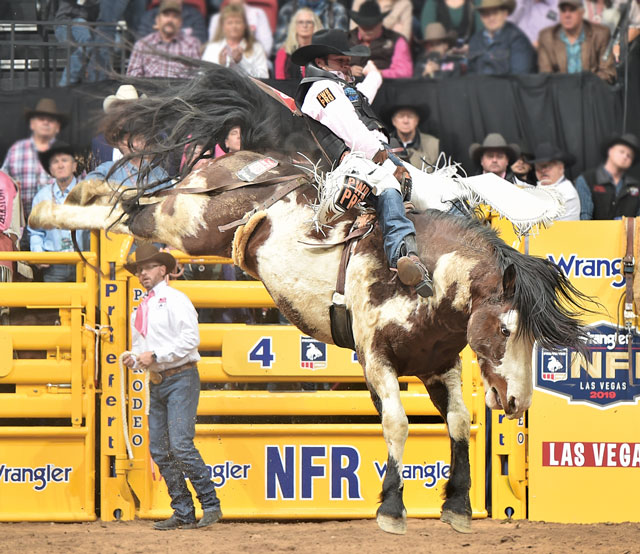
    Kaycee Feild is 10x WNFR bareback riding qualifier, winning the world as well as the average standings four times (2011-2014). The father of three (Chaimberlyn, Remingtyn, and Huxyn) lives in Genola, Utah, with his wife, Stephanie. Kaycee is the son of 5x PRCA World Champion Lewis and Veronica Feild. He started getting on bucking horses and taking is seriously in 2003, getting his PRCA card in 2007. “I’m fortunate, I’ve broke my riding arm three times, my left collar bone; I’ve had hip surgery, ruptured ribs, cracked my jaw, fractured my skull, but when you’ve done it as long as I have and seen what I’ve seen, I feel fortunate to still do what I love to do.”
    He sustained an injury last year on March 31 in Austin that kept the 32 year old sidelined for three full months. “I hit my head, my face, and got kicked on top of my head. I was unconscious for four minutes and when I came too, my vision was blurry and my brain was swelling. They scanned my brain every two hours to check for pressure.” His recovery took a full three months, and he was able to stay on top of the leaderboard all the way through his recovery time until Clayton Biglow passed him.
    Kaycee has found a product that he relies on to keep him riding strong and hastens his recovery time. He discovered PWRr Pro CBD while searching for a product to help his youngest son, Huxyn. “My little boy has been hospitalized several times with asthma. They’ve had him on every kind of steroid as well as a puffer. All of that was changing who he was. I felt at the age of four, he shouldn’t have a personality change.” When they were at the NFR a year ago, he had a flair-up and had to be rushed by ambulance to the ER. “I found what I thought was the purest CBD oil – I’d heard it helped with asthma. We saw a difference in him,” explained Kaycee. “Before when he knew his breathing was bad, he would get really nervous and panic. With the CBD, and the inflammation fighters in that, it would calm his breathing. He hasn’t been to the hospital since that.” When he returned home from the NFR, he reached out to a friend who had been researching CBD oil and discovered PWR Pro CBD. “My partners have been formulating nutritional products and personal care products.”
    “When I was in the hospital after my accident, my wife and brother got to the hospital the next day and brought my CBD oil. Instead of the nausea I went to sleep,” he remembers. “When I woke up, I didn’t have a headache and I could see. I credit a lot of my success and my comeback on the July 2 to CBD.”
    Kaycee has no intent to stop rodeoing. “I still crave it – there was a point after I lost my dad that I didn’t want to get on bucking horses,” he admits. “I had a bad attitude, but leading up the American when I won it in 2016, there were some things that fell together to make it fun again. Winning the American was like finding the fountain of Youth again. Things changed and I still get hungry to ride. You’ll know when it’s your time – I heard that from my dad and I know that will come someday.
    “I know I can still go – my body is doing great. I want a fifth world title, but with life and the things that It brings – we will see.” He knows that the time will come for him to quit. “My kids will be at the perfect age. It takes selfish time to be in a world champion’s caliber. You have to push a lot of things to the side and keep your head down and focused to ride bucking horses. This is a young man’s sport for sure.”
    “Life after rodeo is important, and I’ve got to take care of business to take care of my family. I want to give back to the sport of rodeo – somehow I will use some of the profits that this company makes to help me give back to rodeo and to the military. I dream of having a ranch someday that I can offer military men and women to come to that are experiencing PTSD and help them.”

    To learn more about the company, go to PWRProCBD.com,
    Or look on the outside back cover
  • On The Trail with Jordan Tierney

    On The Trail with Jordan Tierney

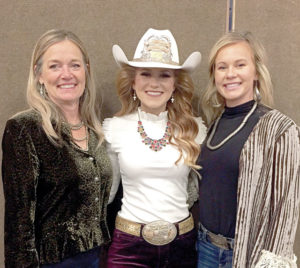
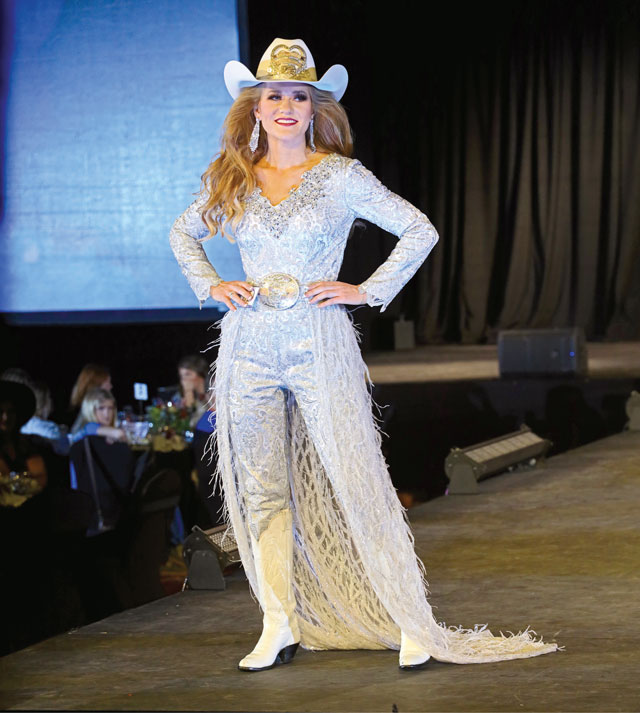
    “When I was dedicated as a baby, they said I would flow through the lives of people like the Jordan River,” said Jordan Tierney, 2020 Miss Rodeo America. “I remember being at work one day and having this feeling that I was made to do more than that job.” Her sister, Amy, encouraged her to run for Miss Rodeo South Dakota and now the 25-year-old from Oral, South Dakota, has an opportunity to live a bigger life and have a positive impact on those around her. “I want to leave people feeling better after having talked to me.”

    Oral, South Dakota, has a population of 60 and Jordan grew up on a ranch, south of town, riding with her father, Paul Tierney. They raised AQHA horses and cattle. “I just this past year bought my own set of cows and now I’m fully invested.” The youngest of four, Jordan considers herself to be the caboose in the family. “I spent a lot of time with my dad, when he went out to the pasture, I went with him. I was on the stud, Cash, and I remember riding double with him. We had a pony, Teddy, I remember riding him while my dad practiced.” Jordan sees her father as an incredible hard working man. “He works sun up to sun down and is always willing to help anyone that comes along. He gives roping lessons and wants to see people succeed – it all came from his desire to be a rodeo cowboy and that’s taken him far.” Paul qualified for the NFR qualifier from 1977-1986, only missing one year. He was the World All Around Champion in 1980 and Tie Down Champion in 1979.

    Her mom, Robin, was the 1985 Miss Rodeo South Dakota and second runner up to Miss Rodeo America. “She sacrificed so much for our family,” said Jordan. “When I was a junior in high school, my mom switched careers – she had been a dental hygienist for 25 years and quit that to start her own oil field service company.” That job required Robin to be away from home for two weeks at a time while she built it up. “She always made my important volleyball and basketball games as well as my rodeos.” That leap of faith has allowed her the flexibility and freedom to continue her love of raising good horses and riding. “She’s an incredible horsewoman.”

    Jordan has two older brothers, Jess and Paul David, as well as an older sister, Amy. “I’ve followed in her footsteps my entire life, from sports to school leadership. She and my brothers have been huge encouragers to me in my dream to become Miss Rodeo America.”

    Jordan started competing in rodeo in elementary school, competing in 4-H rodeo junior division. She eventually joined the National Little Britches and the South Dakota High School Rodeo Association. “I had a horse accident when I was five on the ranch. I was going out to get cows with my dad and my horse took off with me.” Jordan fell underneath the horse and he jumped over her. “I refused to get on a horse for three years. I started riding again when I was 8 and was very fearful – I didn’t want to go fast. My parents were very persistent and I eventually got faster.”


    Robin remembers those three years. “We wanted her to go, but really a neighbor girl, Megan Harkless, is the one who got her going again. She would come over and ride and she would ask Jordan to start coming out with her and pretty soon she was walking the horse around the arena while they talked. She was so patient and understanding.”

    After that, the best part was taking her to her first 4-H rodeo. “She walked the whole pattern and we were so thankful – and it was such a good feeling,” said Robin. “Here’s what we always knew about Jordan – her personality and the way she was – a slow starter and a strong finisher. She finished amazing and we have been so proud of her determination and diligence to perfect her craft.”

    When Jordan got back into rodeo, she didn’t win a lot, but by the time she hit middle school she had a very competitive mare that she ran barrels on (her name was Princess and she was also her brother Paul’s main heel horse). “I won the Junior girls state 4-H championship in goat tying in 2008,” she said. “I do think winning is important because I am a very competitive person so I didn’t like not winning in the crucial times that could’ve resulted in going to nationals, but when you start finding your identity in worldly successes that can be detrimental. I want to be an inspiration for rodeo and ranch girls to try rodeo queening as an addition to all that they do.”

    Her rodeo abilities earned her a scholarship to Chadron State College where she competed in barrel racing, breakaway roping and goat tying. She earned a degree in business administration and plans to continue her education after her reign as Miss Rodeo America. “I would like to get the masters online program and start working in a career path in marketing and the agriculture realm.”


    For now, she is watching the calendar fill up with appearances across the country. “I’ve always been a people person – when I went with my dad, he would give us $5 and tell us to meet him back at the trailer. I found friends and that’s how it all started. This past year as Miss Rodeo South Dakota, I was telling people that I thought I was outgoing; I got out of my comfort zone – figuring out how to bring up conversation.” Her secret is asking people about themselves. “I like learning more about people and their history.” Her platform is Rodeo, Agriculture and building relationships with fans and new comers that foster understanding for the western way of life. She uses part of a Bible verse on her autograph sheets. Psalm 139:14. “I praise you because I am fearfully and wonderfully made; your works are wonderful, I know that full well.”

    “I shorten it and say you are fearfully and wonderfully made – that’s a verse I’ve carried with me,” explains Jordan. “I am made in His image and I should be proud of that. I want to make people know that I care and they are worth caring about. I love where I’m at now – I’m having a great time and after this year, I will get back to rodeoing, breakaway roping and team roping.”

    “My why is to help build people up the same way that I was built up during my early adolescent years when I had a lack of self confidence. My parents really gave me a strong foundation to stand on with all the good information they gave me to overcome my mountains in life.”

    Jordan hopes that as she represents rodeo and meets thousands of people this coming year that they will see her genuine authenticity for the sport of rodeo and the western lifestyle. “It’s what I was raised in and I’m proud to represent it. I hope they remember me for that genuine feel.”

  • Tara Stimpson & Painted Fling

    Tara Stimpson & Painted Fling

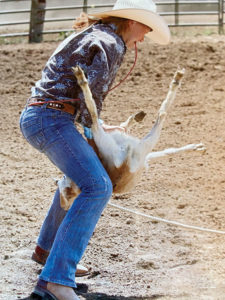
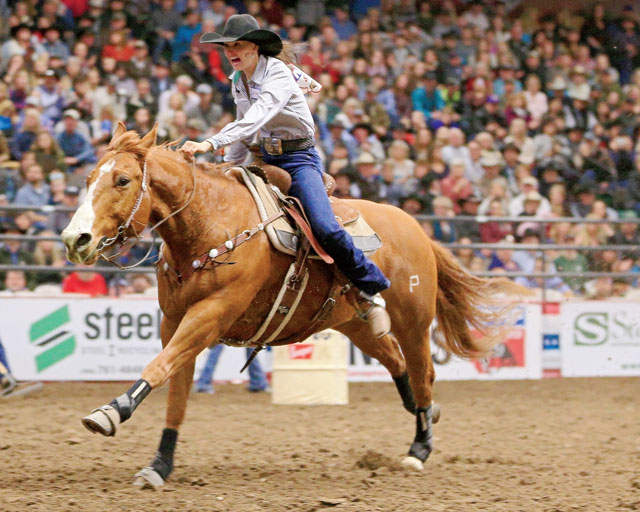
    Tara Stimpson from Lodge Grass, Montana, won the Montana Circuit Finals in barrel racing for the second year in a row. “There are lots of good horses in this circuit and a lot of girls that could go on and make the NFR,” said the 24-year-old who is fortunate to be running one of those good horses – Painted Fling sired by a Streak of Fling from Fulton Family Performance Horses.
    “He came from Sara Cheeney, who trains futurity horses,” explained Tara. “I bought my other good barrel horse, Peanut, from Sara, and I’d watched Painted Fling at some futurities and bought him two years ago. I’ve never gotten along with psycho horses and he’s real quiet. Nothing really bothers him too much – he’s real push style and he’s been pretty easy to ride.”
    Tara started competing in 8th grade. “I’d always rode horses on the ranch, and since I didn’t grow up in a rodeo family, we didn’t do it. Both of my older sisters wanted to but we couldn’t take the time or money to go.” The family ranch, Stimpson and Brothers, located in Lodge Grass, is located 45 minutes north of Sheridan and an hour and a half from Billings. “I had some friends in middle school that rodeoed and I jumped in with them with an old ranch horse and that’s how it started.” She joined the Wyoming High School Rodeo Association her sophomore year in high school. “I was a way better roper through high school than a barrel racer. I almost made the National High School Finals my senior year in the team roping.”
    Her mare, Peanut, is the horse that lit a fire under Tara for barrel racing. She bought Peanut her junior year at MSU Northern, and she got Tara going to where she wanted to do more with barrel racing than roping. Now, she ropes at the brandings and occasionally at a breakaway roping. “I sold all of my good rope horses to buy Peanut.”
    This will be her second trip to Florida, which according to Google Maps, is a 34 hour drive. “The hospitality there is great – what they do for everybody is fun.” She will break up her trip this year by stopping first at the American Semi Finals where she is qualified to make a run at the AMERICAN.
    Although she spends as much time as she can going to rodeos, she has an obligation to the ranch. “I come back and help my dad with his cows and my cows as much as I can.” One of her goals is to make a run for the NFR, and she plans to go to a few winter rodeos in Texas to see how it goes. “If it goes well, I’ll keep going. I’d like to get out of my comfort zone and go to some of the bigger rodeos.”
    Her family is behind her 100% of the way. “My mom, Tana, and my sisters, Stephanie and Ashley, were in Florida with me last year.” Her dad, Dale, stays home to run the ranch. “It’s hard to leave – it’s my home, but I want to try for the NFR someday.”

  • Forrie J. Smith

    Forrie J. Smith

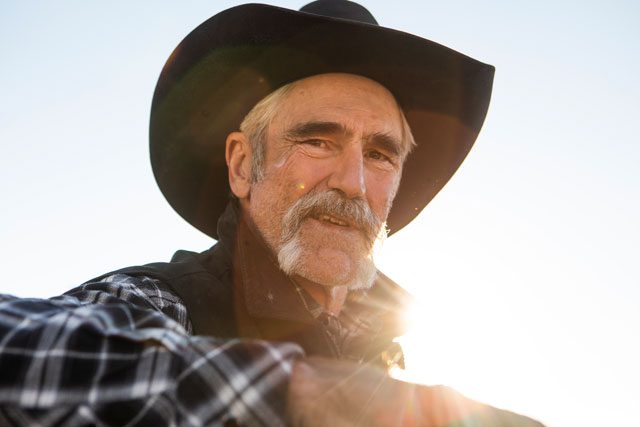
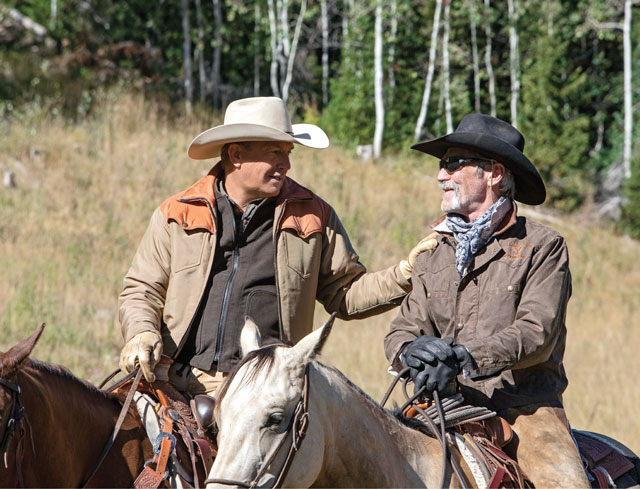
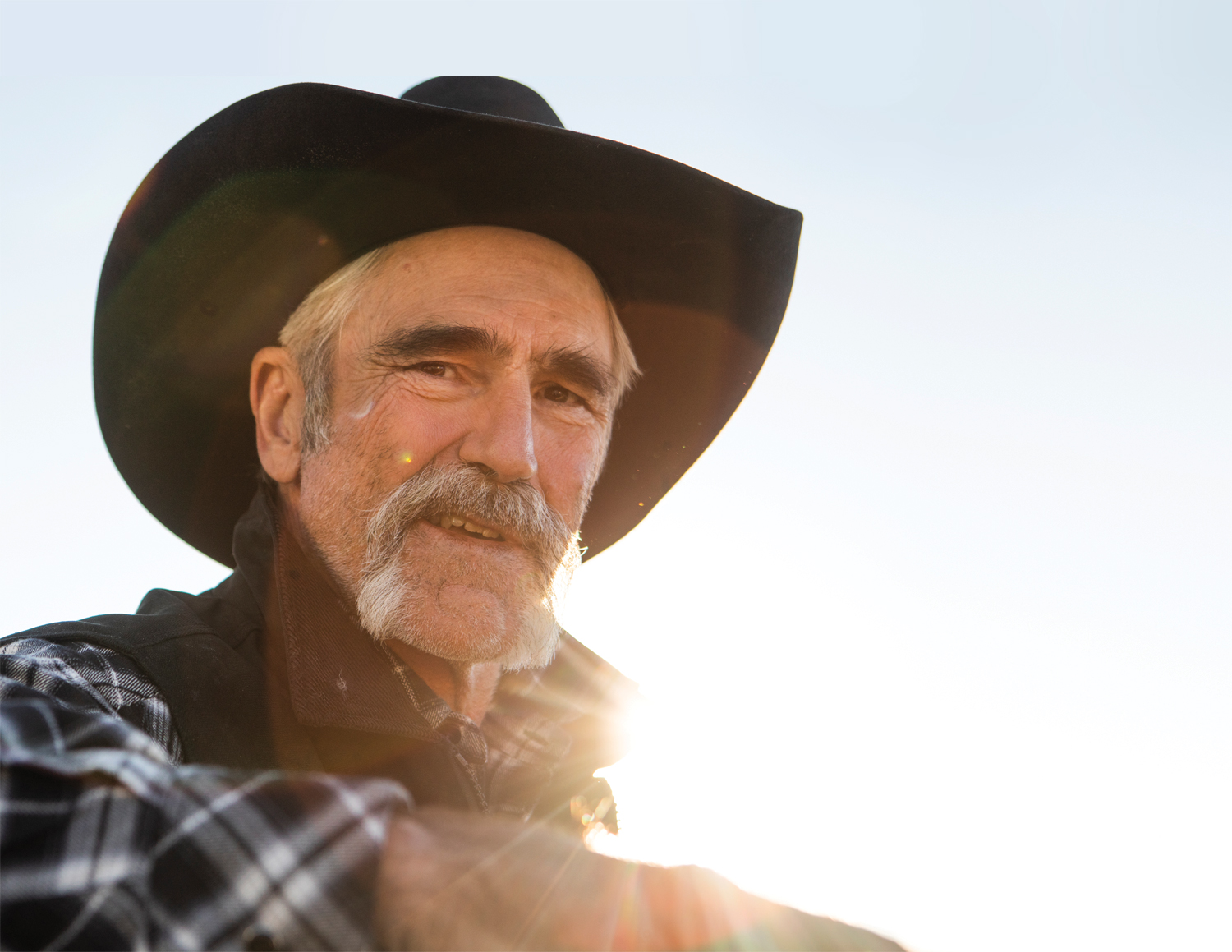
    Forrie Smith fell off a horse in front of his mom and step dad when he was 6 and proclaimed that he was going to be a stunt man. 54 years later, he’s doing just that. Forrie plays Lloyd Pearce on Paramount Network’s hit series Yellowstone and recently completed shooting the third season of the show. He has been involved in Yellowstone since season one. “I was a guest star and now I’m on contract. I’m the cow boss. We started shooting season three the first week of August, and just finished up. It takes 8 days to do an episode.”

    Rodeo paved the path from bronc rider to stunt man. Born in Helena, Montana, and raised on his grandpa and grandma’s ranch southwest of there, he spent his early years going down the rodeo road with his parents. “I went to grade school at Montana City – there were 13 kids in 8 grades.” He started competing in rodeo when he was 8. “I was on my second pair of chaps already – I wore one out riding at home.” His grandma (Josephine Palmer) didn’t want him riding bucking stock, so he was raised in the timed events. “My granddad rodeoed when they circled the cars and snubbed the horses,” recalls Forrie. “I was drawn to it. I’m known as a horseman. I’ve started a lot of warm bloods for the equestrian people.” He always knew his call was riding bucking stock. He started riding bareback horses when he was 11. “I would get on turnout horses and people like Pat Linger and Steve Loney would help me out.”

    He was still spurring bucking horses in 2009, taking after his dad. “I was raised in the back seat of a station wagon. My dad was winning checks until he was 52 in the RCA.” His mom, Chick, was a barrel racer and when she had troubles with her horse she would time and secretary. “I started working the labor list when I was eight under guys like Sonny Linger, Reg Kesler, and the Big Bend Rodeo Company.” Through the years, he did anything necessary at a rodeo including flanking, loading, and riding. “I’ve been on 17 horses in one day and 11 head of bulls in one day. Everything good in my life was because of rodeo.”

    He is quick to say that it was rodeo that got him into the film business. “I use a lot of the things I learned from rodeo in the film industry – like breaking things down into steps, thinking positive and not being negative. Thinking about what you did wrong and forgetting it; thinking about what you did right and building on it. Hurry up and wait – that’s all learned from rodeo.” He relates his acting to riding a bucking horse. “You read that dialog and figure out the scene and why you’re saying what you’re saying. If you look at the script and say ‘I got this’ – that positive attitude will work out for you and the energy will carry you – same as riding a bucking horse. If you say you’re not going to ride it, you probably won’t.”

    Forrie has been a stunt man for 25 years. His first part was in Desparado. “I had started in the movie business a year before as a wrangler, my first movie was that remake of Stagecoach with Willie Nelson. Then they needed a guy that could rope a guy off a roof. I was the only one that showed up with a rope long enough to reach him. Then I had to get the dialog … my name was Harley.” He had only been in the film business for a week when he went to sign up for the teamsters union. “I had to have references and they were all old rodeo partners. The guy looked at me and said ‘who are you, you come with some of the best and highest recommendations I’ve ever seen’ – that was 1986 – almost to the day I got my screen actors guild card.”

    With his look and voice, he was encouraged to take acting lessons. “I just wanted to do stunts .. but I went to Lawrence Parks for acting lessons and learned how to break down a character and a script. That was 25 years ago and I’ve been in it ever since.” Everybody that was in the stunt business back then had some kind of rodeo background. The hardest stunt he’s had to do are horse falls. “There’s a lot of components that go into that – you’ve got to hit your mark, set your horse up and follow through with it. Doing high falls isn’t as bad – it’s just that first step that’s hard. And I didn’t really like the fire gigs – you usually lose all your eyebrows.”

    Forrie was raised in Helena, Montana, and moved to Arizona 30 years ago, and now calling San Acacia, New Mexico, home. “I fed cows with a team and sleigh when it was 50 below and it was 106 in August when I was setting posts,” he recalls of his days in Montana. “I drove my cousin back to Texas – 20 years ago – right after Urban Cowboy came out and cowboys were in.” He started doing day work and rodeoing, competing in open rodeos and he filled his permit in 1982 and started competing in pro rodeos. “That was easy back then, there were 100 rodeos in Texas.” He was part of the National Senior Pro Rodeo Association, joining in 2006, when he was 47. He competed for three years there, never winning the world, but winning his circuit twice and taking the average at the Finals. “I was raised to make money – if I didn’t make money rodeoing, I didn’t do it.” He spent his off time wrangling or hauling horses before getting his gig with Yellowstone. He still does wrangling jobs, the latest one for an upcoming Tom Hanks movie.

    At 60, Forrie has no plans to slow down. “Thank God to the movie business I’ll have a decent retirement through the teamsters guild. As long as I can stick my feet in the stirrup, I’ll always do day work and I’ll still do movies.” Any chance he gets, he goes home. “I like sleeping in my own bed, petting my own dogs, and saddling my own horses. It’s getting better around home about going out and having a meal and not getting interrupted. I’m not complainin’ – it’s so cool – the excitement and joy you bring people with just a hug and a picture. Without them, I wouldn’t have a show. It’s kind of wild.” Season three of Yellowstone comes out in summer 2020. “I’m a very blessed man – I thank God and my Lord and Savior Jesus Christ that I’m still on the ride. It ain’t over yet.”

  • RFD TV and THE COWBOY CHANNEL Announce Canada Launch as well as launch of ProRodeo Tonight.

    RFD TV and THE COWBOY CHANNEL Announce Canada Launch as well as launch of ProRodeo Tonight.

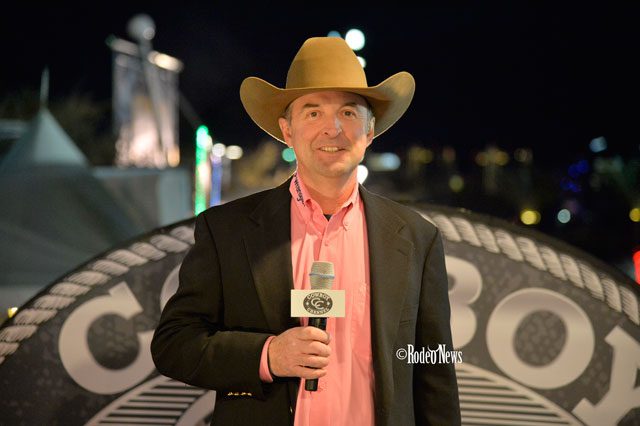
    Pro Rodeo Tonight is launching tonight that will feature only PRCA rodeo coverage with anchors Justin McKee and Joe Beaver. “It’s beyond a dream,” said Justin. “It has potential to change the game by creating fans that truly are excited about following the game because they can understand the story lines from week to week.” He is so excited about this opportunity that he is making the sacrifice to leave the ranch and cattle operation he has built up to make the six hour commute to his new job. Justin and Joe will have different guests every night. Jeff Medders will take over the Western Sports RoundUp, with co-hosts Amy Wilson and Steve Kenyon.

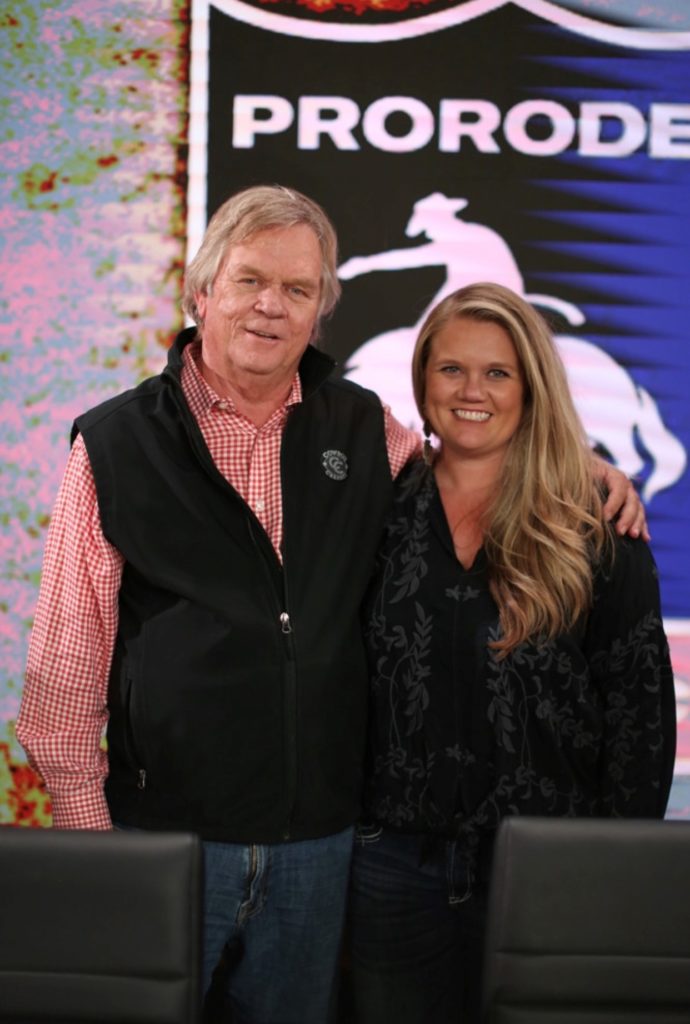
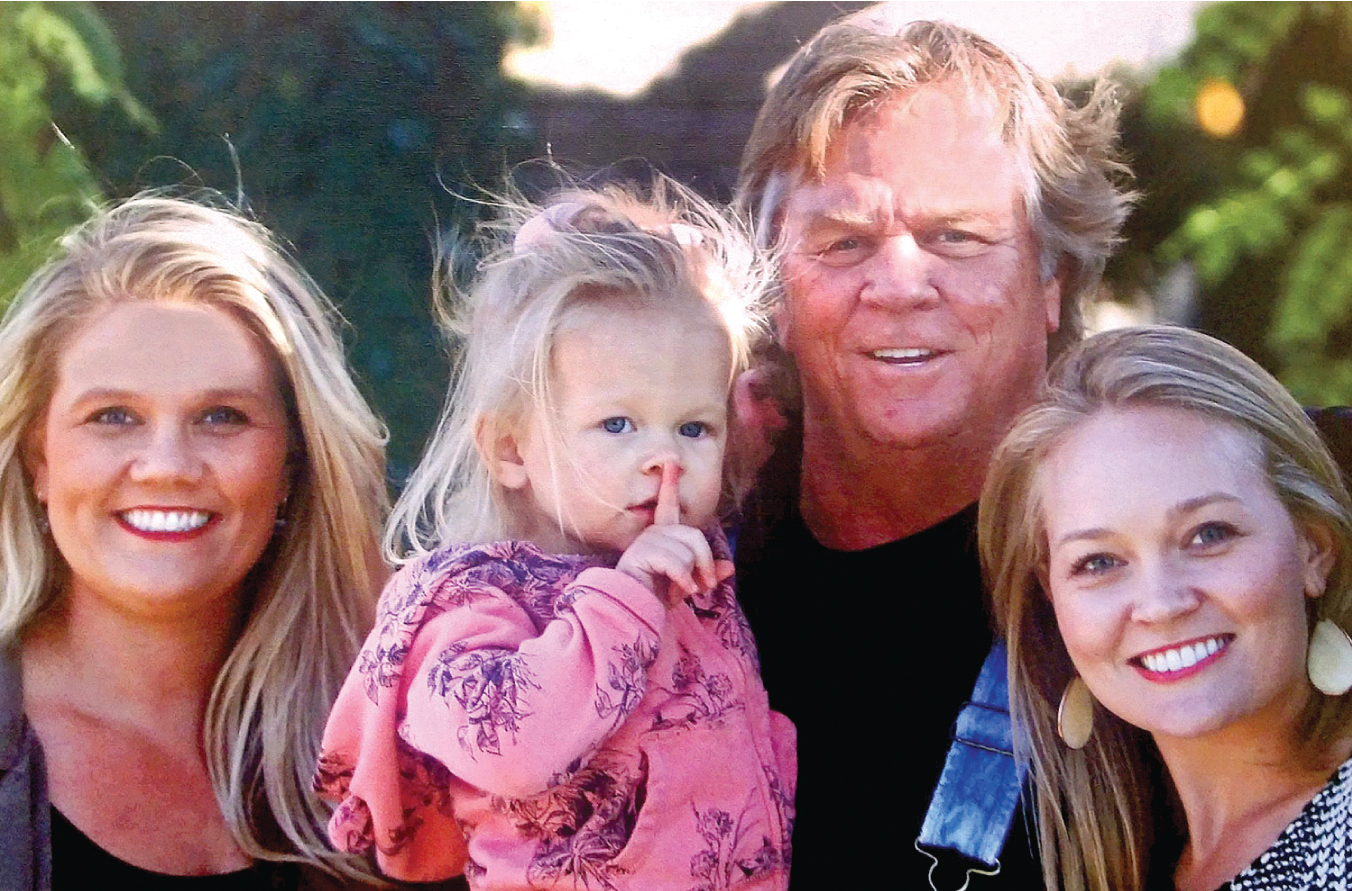
    “Steve and Amy will be focused on our daily broadcast of rodeo, we are doing 23 days of Ft. Worth starting tomorrow. Amy will be the behind the scenes reporter for all 23 broadcasts,” explained Patrick Gottsch, Founder & President of Rural Media Group, Inc., pictured below with his daughter, Raquel Gottsch (The Cowboy Channel CEO).

    The expansion to Canada will transpire February 1 thanks to a partnership with Canada’s top-rated outdoor adventure network WILD TV., to launch RFD TV and THE COWBOY CHANNEL CANADA beginning February 1st, 2020. “We get lots of requests from Canadians that want this up there, so we finally got that answered,” said Patrick. “I’ve been trying to get into Canada for 20 years and I’m really excited about this. The dedication to agriculture and to embrace the Western lifestyle knows no borders, and we are so pleased to be working with Ryan Kohler of Wild TV Inc. to finally bring these two cultures together to connect city with country throughout North America.”

    Wild TV is available 24 hours a day, seven days a week nationally to Canadian households, and available to a growing number of European countries. With hundreds of top tier outdoor personalities, over 3,000 shows and beyond 125,000 hours aired, they are the leading destination for all hunting, fishing and outdoor enthusiasts. The programming will be a mixture of content. “We will be producing programming from Canada, but will be mostly what we’re doing with RFDTV and the Cowboy Channel.”

    For Patrick and the entire team at Rural Media Group the future keeps marching along. “We’ve got the Ft. Worth rodeo, then the AMERICAN, then Rodeo New York and then the NFR. We have adopted a new culture, acquired a powerhouse sales team, and increased our staff to accommodate even more new channels in addition to RFD TV Canada and The Cowboy Channel Canada.”


  • Benny Binion Statue at South Point

    Benny Binion Statue at South Point

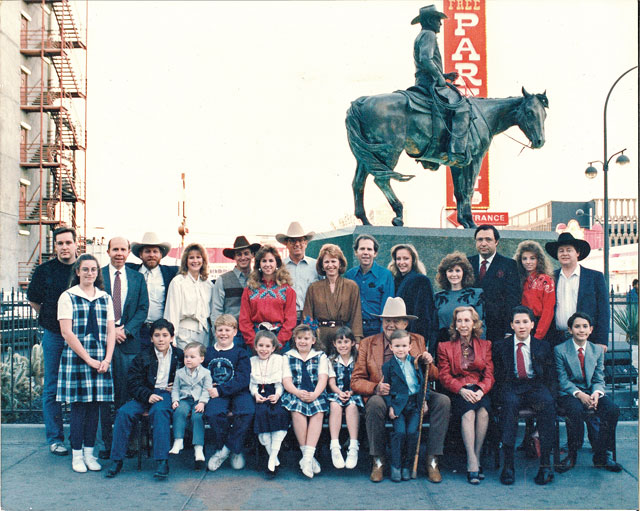
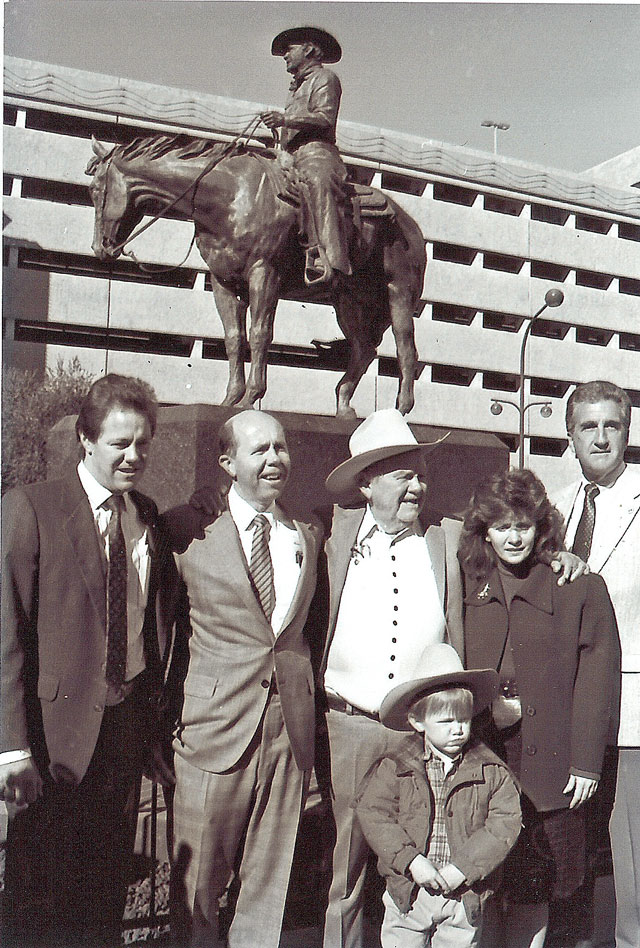
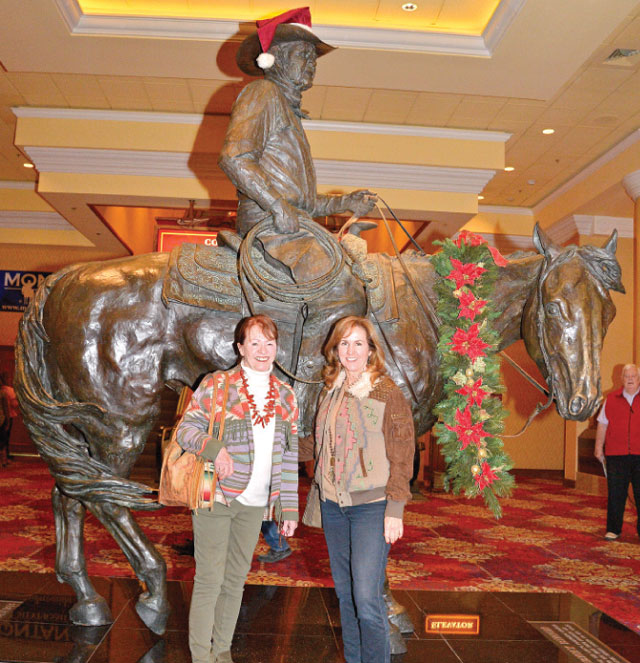
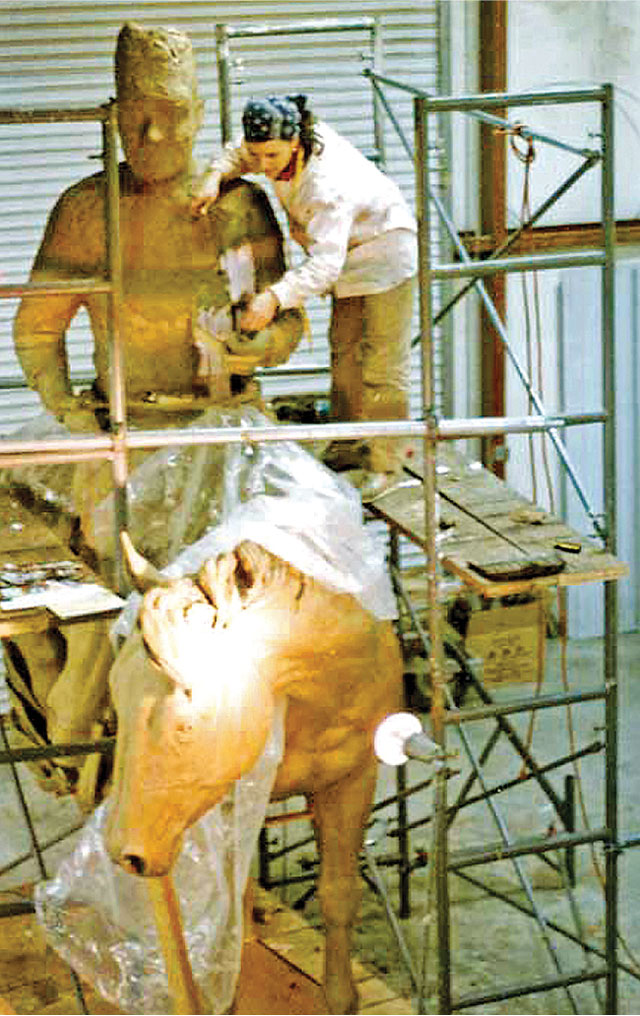
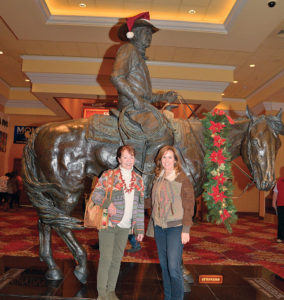
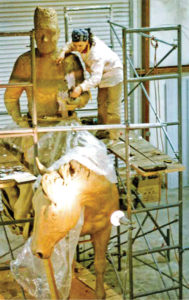
    The huge statue sitting in the walkway of the South Point Hotel and Casino in Las Vegas of Benny Binion on his horse, Trece, has traveled far to find a home here in this very busy thoroughfare within the confines of the headquarters of the Professional Rodeo Cowboy Association when the National Finals Rodeo comes to town. It is a larger than life bronze 15 feet tall and 16 feet long, weighing 2,800 pounds created by well-known sculptor, Deborah Copenhaver.

    Benny Binion was a successful businessman, who found his fortune in gambling in Dallas, Texas before moving to Las Vegas. The horse was owned by his daughter, Brenda, but Benny, who always wanted to live the western way of life, wanted her to sell him to her to use on his ranch in Montana. “No dice,” she said. Trece was one of 18 foals from the mare, Brenda Joe. “I think my dad thought if he made a bronze of him, I’d let him have the horse,” explained Brenda Binion Michael. The Texas Historical Society paid for Copenhaver to sculpt the bronze. It was placed in front of the famous Billy Bob’s, The Largest Honky Tonk in the World, in the Stockyards at Fort Worth, Texas and was unveiled on Benny’s 80th birthday. When Billy Bob’s was sold, Ronnie Campbell hauled the statue to Las Vegas and it was placed in front of the parking garage of The Horseshoe, Benny’s casino, on 2nd Street in downtown Las Vegas.
    Michael Gaughan, owner of South Point, wanted it once Binion’s were no longer owners of The Horseshoe. “It was out in a back street collecting bird shit,” said Gaughan. “Mr. Binion was very close to me – he never said no to me. I tried to get the statue a couple of times, and finally got it for $1. Getting it into South Point was a challenge. First it had to be cleaned – which took two people three days working on it. “We were told not to tilt it or use steel wool,” explained Gaughan, “So we used warm water, soap, and Irish-cut oatmeal to get it cleaned up. They cut a hole in the building, and a second hole to get it into the casino. It took an entire day – it was like moving a Trojan horse.”

    Benny Binion had a love of the west, and a high regard for cowboys. He was very instrumental in getting the Professional Rodeo Cowboys Association National Finals Rodeo to move to Las Vegas. Since South Point has become the destination of the PRCA Convention, the Benny Binion World Famous Bucking Horse Sale, and so much more during the National Finals Rodeo plus so many other western events and competitions held there during the year the bronze of Benny Binion and Trece is destined to be a focal point at South Point forever.

  • Children’s Western Wish Foundation

    Children’s Western Wish Foundation

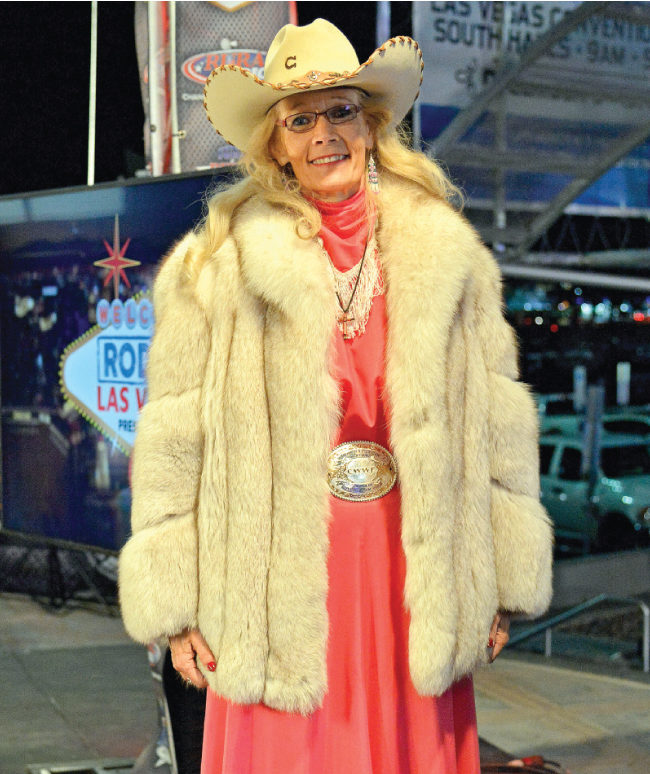
    Glee Nett was born in the Southern Black Hills in Edgemont, SD, her parents and grandparents homesteaded in South Dakota. She enjoyed her 4H activities, loving horsemanship, which was taught by her relatives. She competed in 4H rodeo and went from there to amateur rodeos. There were seven children in her family and they’ve all had horses throughout their lives. She competed in many available activities. “None of my competing was on a high level – I just did it for fun,” she said. She dreamed of obtaining her degree in Range Management, however with the start of her family and ranching obligations, she realized her responsibilities would require her to be at home. “I chose to have my children while I was young, so I could be active with their lives, plus be able to be enjoy my wonderful grand children.”
    She went to work for a pathologist and a well known necrologist. “He was the greatest boss that ever existed – I learned how to succeed in life and that was to be respectful and be mindfully kind to everyone.” Glee had four children and the Good Lord has called two of them home. Both losses were unexpected and immediate. Their passing have taught her to be thankful and to live every day to its fullest capacity. “God gives us life and thus He has the right to call us home on His terms and on His timeline. You can either let it get the best of you or you can make the best of it.” Kindness is the most generous gift an individual can give, as we do not know what another may be experiencing in their life.”

    She also worked in law enforcement. “I was asked by an amazing sheriff to come work for him” and as she was the only female, she transported female prisoners to the state hospital and did intake interviews for rape, abuse and incest. It was difficult to leave this type of work at the office with young children at home. She switched from that to being a legal secretary and from there she became a multi peril-crop hail adjuster and traveled nine states doing that. Her career took her to Texas for six years with the children in tow. “Texas was a unique and exciting family and work experience.”
    After that career she managed two major airlines – America West and United, United Express. Starting out as a full time employee, she advanced into management quickly. “I was a field station manager in Lubbock, TX and opened new stations in Vail, CO and many other cities.”
    She went to work as a Fed X courier and that’s where she had her second major accident and decided to retire. “I had been dispatched to the water treatment plant and I went around a 90 degree corner, and caught the bladed berm left on the road when the passenger’s back wheel pulled the van and as she tried to correct the direction of the van, the passenger’s front wheel caught and the vehicle rolled end over end 2 ½ times, while only traveling 22 mph! Her injuries were not life threatening, however they were substantial. The doctors did not project a life of full activity, however she relied on her faith in the Lord to walk, ride and have a full productive life again so she took time off to heal. She wanted to remain amongst her rodeo family,,,,but how? She made the decision to do so by giving back to others and sharing her western heritage with idea of granting wishes and connecting the western world with the rest of the world. This year marks the 15th anniversary of Children’s Western Wish Foundation
    “It actually started with me helping to grant a wish for another organization. I knew from that moment that I wanted to start this foundation.” She applied for her non profit and was rejected three times. “I didn’t have an age limit or a specific challenge identified. When I got rejected for third time, I put on the letter,” Talk to God” and we got our 501c{3}. We didn’t have to change a thing.”
    She was off and granting wishes around the United States and Canada. The wish recipient’s are local community members and their immediate family. Some rodeos request more than one wish at their event and there has been a committees where a total of 6 wishes were granted at their venue. Glee coordinates every aspect of each wish and is present at all of the wishes.
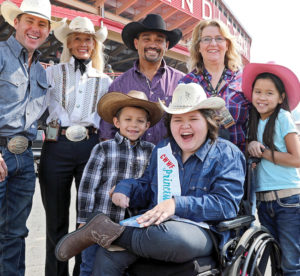
    She is blessed to work with her Board of Directors whom are all rodeo personnel and as they are all in attendance at the NFR, they hold their Annual Meeting in Vegas. Glee has many responsibilities in life, ts, but the foundation is her priority. “I spend as much time as it takes – probably around 15 hours per wish.” There isn’t an application process, it’s all recommendation. “If the rodeo doesn’t have a recipient, they ask us to find one.” All the wishes are handled by Glee. “The confidentiality remains where it should. I take all of it through phone calls and emails – we give each recipient . We find out what their hobbies are so we can get the buckle to represent that. They get a buckle, hand autographed Bible by Clyde and Elsie Frost. Every quilt is made by a local quilters from Laramie, Wyoming. Every knot that is tied on that quilt is tied with a special prayer for that individual. They are customized with their name on the inside as well as one block in the center dedicated to their hobby or something special and unique to that individual. Each recipient also receives an autographed signed hat, and the female wish recipient receives a tiara and a personalized sash, many times with the title “honorary princess of the rodeo.” Each of them get to do a lot of the meet and greet with the competitors and any country western artist that may be there. A compliment we hear often, especially from the families that have never experienced a rodeo or western event, is they are so appreciative as “not very often is a special needs or challenged person been given VIP treatment and treated with such a great honor.”
    She works with approximately 80% repeat rodeos and 20% new rodeos. “I have been granting wishes at the NFR for fifteen years. We grant the girls presentation wish during the WPRA luncheon – they are escorted on stage by one of our barrel racing qualifiers and presented with their gifts. This is the kick-off for the wonderful banquet the WPRA does for its qualifiers, their families, sponsors and many rodeo committees are present as they are awarded many honors. The boys recipient is honored at various venues during the NFR. Last year, it was presented during the Junior NFR (Junior World Finals.)
    For Glee matching the families with the rodeos brings the western way of life to the outside world. “I’m very proud to be part of rodeo – our rodeo family and our contestants aren’t afraid to pray or show their faith and it’s great for others to see.”
    “I’m not doing this for my glory – it’s not about me. I don’t care for the accolades and credit, it’s about the families.” She has had that attitude for most of her life. “When I was in fifth grade Sunday school – there was a verse in my Bible, that I always remember, whereas if you do good deeds and expect accolades, the gates of heaven will be closed. That verse is followed by: If you give alms and do not expect accolades, the gates of heaven shall be open to you.”
    “I choose to never use someone’s hardship to make my foundation better.” She feels that all the recipients are special people. “To me, God chooses the parents and the people to take care of these people. I am grateful to the parents and children for allowing me to do this. I also believe that special needs people are “Special Gifts from God.”
    This is her full time ministry. She assists friends as a caregiver whenever necessary, but mostly she coordinates and grants wishes. She has an abundant amount of windshield miles. The two tragedies of losing her daughter and son have helped shape the giving, kind person that she is today. “I wanted to just stay home after losing my son, and little by little, my rodeo family coxed me back into the arena to grant wishes. It’s the greatest personal satisfaction – when you get to work for the Man above and give from your heart – what more is there.”
    The website for the Children’s Western Wish Foundation is currently being reconstructed so keep checking. www.cwwf.org. In the meantime, follow them on Facebook.

  • Patrick Gottsch

    Patrick Gottsch

    “I’ve always felt confident that there was an audience in America for rural progarming that was being ignored by urban broadcasters,” said Patrick Gottsch, the man behind RFD-TV and the new Cowboy Channel, both owned by Rural Media Group. Born and raised on a farm outside of Elkhorn, Nebraska, Patrick knows firsthand the role rural America plays in the lives of all Americans. His father, Pat, was a farmer. He grew corn and raised cattle and had a feedlot as well as two other farms. “The cowboy values are important and main stream media doesn’t cover it. The best memory a kid has is of the county fair and now RFD-TV and the Cowboy Channel bring viewers the county fair 365 days a year.”
    Patrick went to college at Sam Houston State University for two and a half years. “I wanted to go back and farm with my dad; which I did for three years; the three worst drought years in Nebraska. My dad encouraged me to find a job in town.” He moved to Chicago in 1977 and worked as a commodity broker for the next two years. “I wanted to come back home to Nebraska – I didn’t want to live in downtown Chicago, so I was a commodity broker in Omaha. The Carter Grain embargo in 1980 wiped out a lot of people and I went broke.
    “My daughter was born Dec 13 1984 and I came down the hill from the hospital and there was a guy trying to put a dish together. I pulled in and was interested in buying a satellite dish – he asked me if I had any tools, and I ended up helping him. It took us six hours and we were turning the dish and all of a sudden HBO came on and I was hooked.” He got a job that day installing dishes for him and started E.T. Installations, a company that sold and installed C-band home satellites. “I always followed up after installing one, and everyone loved them.” As Patrick traveled through rural America, he heard customers wondering why there was a lack of rural programming as well as old westerns like Gunsmoke, which seemed to be taken over by shows about urban cops or suburban housewives. There wasn’t anything directed at rural folks.
    He launched RFD-TV (Rural Free Delivery Television) in 1988 and the company had the right idea but the timing was off. In March 1991, Patrick moved to Fort Worth, Texas and served as the Director of Sales for Superior Livestock Auction from 1992 to 1996. Superior Livestock Auction was the first to introduce satellite video marketing, which was carried on RFD-TV, to the livestock industry and has since grown to become the largest livestock auction enterprise in the United States. He was putting programming on RFD-TV, but he was still trying to fill programming. “We got our break in December of 2000, when DISH network agreed to launch it. It was a one man and two daughter network, we’d put all the programming on a hard drive a week at a time.”
    Today, RFD-TV is available in more than 52 million homes nationwide. Rural Media Group, Inc. has since expanded to include RFD-TV The Magazine (2003), RFD HD (2008), RURAL TV (2009), RURAL RADIO (2013) on SiriusXM channel 147, and most recently the Cowboy Channel, launched in July of 2017.
    “I am always amazed that when Patrick has a vision, he has the ability and tenacity to see it through to fruition,” said Pam Minick, who has known Patrick since before he launched RFD-TV. “When he came to work here (in Ft. Worth) for Superior, you could find his daughters sleeping in his office.” Pam has recognized his passion for rural America for years. She has been part of American Rancher, one of the first shows that aired on RFD-TV as well as Gentle Giants. “A lot of things he does, he does with the intention of making rural America look good. I applaud him for that.”
    The latest venture, the Cowboy Channel, has been a dream of Patrick’s since 2013 when Randy Bernard came along with the AMERICAN. “I’ve always thought there was a void with the other sports channels, why not a rodeo channel? If there was one thing missing in our sport in regard to linear TV, it was a TV devoted to rodeo – and everything that has to do with western sports.”
    The partnership between the Cowboy Channel and the PRCA was announced the first of September “We tried five years ago to get PRCA and didn’t get it –quite frankly I was upset at the time, but it’s been a blessing in disguise,” admits Patrick. “We’ve really worked hard the last four years to build the Cowboy Channel up and tried to prove ourselves. The goal was always to have the Cowboy Channel the premier rodeo channel.
    “We’ve got content now, and media is changing at a rapid pace. We will be distributing content through any means possible. We want the younger audience – we haven’t made any announcements yet on that but be assured we are looking to stream any way possible to create more fans.” Although he’s not home much, Patrick lives in his hometown of Elkhorn where his brother continues to raise corn and soybeans. Patrick has three daughters—Raquel, Gatsby and Rose. Raquel currently serves as the CEO of the Cowboy Channel, based in Ft. Worth. Raquel and Gatsby currently serve on the Company’s Board of Directors. Patrick jumps out of bed in the morning and spends his time promoting the Cowboy Channel and the western industry. “Helping spread Western culture and the rural values back into the cities – that’s my fun and it’s a real challenge. There’s a wall being built between urban and rural and we have to work at it.
    “Our goal is to serve the needs and interest of rural America,” he concludes. “We want to reconnect city and country – it’s a fight and a struggle – but we have found that we have as much interest in the urban area.” The Cowboy Channel has seen an increase in homes from 12 million to 40 million in the last two years. “We are doing everything we can with our own company to expand the fan base.” One thing the company is doing is hosting the first rodeo in New York since 1984. Madison Square Gardens began in 1922, Tex Austin produced it. Madison Square Gardens continued as an annual rodeo until 1959. In 1925, there was no rodeo as a new facility was being built. “We are inviting a lot of the folks that competed there to make it a celebration,” he said. “All the major distributors for cable are in New York – we are going right where they are and somehow we will get them to come to the event.” The other opportunity he sees in New York is the expanded opportunities for advertising. “90% of advertising comes out of New York and we are hoping to get a lot of them to come and attend, and maybe get main stream advertising.” For now, Patrick is crisscrossing the country promoting the Cowboy Channel and Rodeo New York. “We are just going to keep doing what we’re doing. I’m proud of what RFD-TV has done over the past 31 years.”

  • Brenda Michael

    Brenda Michael

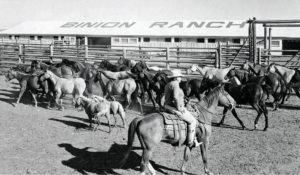
    Brenda Michael adored her dad, Benny Binion. She and her dad had a relationship like no other. Although he was a successful business man that made his fortune in the world of gambling, his passion was to be a cowboy. Eventually, after moving his family from Dallas to Las Vegas and getting them situated comfortably he amassed a ranch in Montana in 1943. Brenda was only two.
    Brenda was born in Dallas, Texas, the middle child of five. Barbara was six years older, Jack was four years older, then Brenda, Ted was 16 months younger, and Becky was three years younger. “We moved to Las Vegas, when I was five. It was a very small town, only 15,000, when we got there. But gambling was becoming a major force and it grew rapidly. Daddy ran crap games and a policy game in Dallas, but after World War II was over, the ‘powers that be’ tried to shut down gambling. So we moved,” explained Brenda.
    “My dad was always particular about his girls. He didn’t want us around the casino,” Brenda remembers. “We’d go eat and that was it.” Brenda remembers her mother staying at home with the children and driving them to Saint Joseph Catholic School growing up. She graduated from Catholic High School with 42 in her graduating class. “Daddy bought our home because it had a place for horses. I don’t think he even looked in the house. It was seven acres and we always had horses,” she laughed.
    The ranch finally grew to 210 sections, including one pasture that was 98 sections. “I looked forward to going back to Montana in the summer. I always liked the ranch. I’d cry when I had to come back to Las Vegas. I was the only one that cried,” she admitted.
    Benny wanted everything done on the ranch the way it used to be done. “He refused to use four-wheel-drive pickups because it tore up the land. We did everything with horse and wagon. Daddy bought fifty WWI wagons that had never been uncrated. They would fill them with cake, take them out in the pastures, feed, and come back,” remembers Brenda. She has a very vivid memory of everything that was done on the ranch.

    When Benny Binion was sent to the penitentiary over income tax, when Brenda was 12, she was very sad because she didn’t get to go to the ranch. She just knew no one would take care of the horses, and she couldn’t see them. He didn’t get released until 1957, on a technicality. Turned out Brenda was right. The hired hands that were left to tend to things on the ranch were told not to sell the horses, but they did sell the cattle. When the hired hands heard Benny was out they disappeared. There was only one filly left. “We had no idea where they went, and those that were left had gotten down in the Missouri breaks, so Ted and I started riding the Missouri River breaks trying to find them. The horses knew the trails but we didn’t. It took years and since none of the studs had been cut we ended up gathering nearly 1,200 horses. Two that we found were named ‘Happy’ and ‘Sappy’. We took them to a rodeo and boy could they buck,” said Brenda with a big smile. “We took nineteen horses, including Happy and Sappy, to Harry Knight at Great Falls and he bought them and they ended up in a rodeo in Belgium. Benny recognized Brenda’s interest in the horses and although she was only seventeen he asked her to register all their horses with the American Quarter Horse Association. “The inspector came from Amarillo to inspect them, they were all cataloged. Every summer they would upgrade until they got papers.
    Brenda fell in love with Bert France, a cowboy from Las Vegas, who rode bareback and saddle broncs. She was just eighteen. He qualified for the first National Finals Rodeo in 1959 in the bareback event. Three months later he was killed, on July 4th, in an automobile accident. At the time he was leading for the All-Around in the Rodeo Cowboys Association. Brenda had traveled with him that summer, but was at the ranch at the time of his accident. She tried going back to school but she couldn’t concentrate on her studies. She went to work at Bank of America, but spent summers at the ranch in Montana that she loved.
    A bronc rider from South Dakota was coming to the ranch and starting horses for Benny. His name was Andy Michael and in 1963 he and Brenda were married. Their daughter, Mindy, was born the following year. They lived on the ranch until Mindy needed to start school. They moved to Amarillo in September, 1969. Brenda and Andy were married 27 years, and divorced in 1990.

    Brenda had always wanted to get in to the cutting horse competition, but was always too busy. The year after Benny died she bought a mare, ‘Lena Leo War Lady’ and the first cutting competition to which she took her, in Reno; the horse won the open. Brenda went home with more than $25,000! Brenda admitted, “she was a lop-eared mare, that was pretty plain looking, but she could cut.” She spent the next four years in the cutting circle and did quite well.
    When Brenda’s mother passed away, in 1994, Brenda was named the executrix of the estate. It was a full time job and she had to give up her cutting competition. “Everything had to be appraised and taxed, and finally we had to sell the ranch.” All of the stress had contributed to Brenda’s poor health. She broke her femur due to an infection and spent 20 days in the hospital battling osteomyelitis. It look Brenda three years to recover from this debilitating health issue.
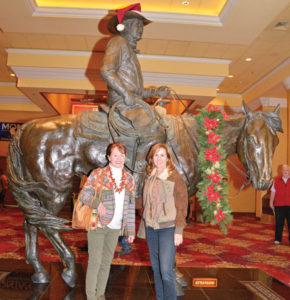
    Brenda continues to live in Amarillo. She bought Lighthouse Ranch which is next to Palo Duro Canyon and runs cattle on it. She has watched her two grandchildren, from Mindy and Clint Johnson, past Saddle Bronc World Champion 1980, 1987, ’88,’89, grow to adults. Ben, winner of the Texas High School Cutting Horse title in 2009, now owns restaurants, and he and wife, Kaitlin, have two children, Porter and Emory, and are expecting twins in February. Janie is a WPRA barrel racer, works for Ride TV with the PBR Velocity Tour and is presently a sideline reporter.
    Brenda continues to be heavily involved in the bucking horse business through the Benny Binion World Famous Bucking Horse Sale which is held during the National Finals Rodeo in Las Vegas, and watches son-in-law Clint work with Dr. Gregg Veneklasen with Timber Creek Veterinary Clinic in creating clones and taking embryos of proven bucking stock. She supports many projects held in Amarillo involved with rodeo and the western way of life. Brenda received the Ken Stemler Pioneer Award in 2015 at the ProRodeo Hall of Fame in Colorado Springs, Colorado, for her commitment to professional rodeo through the Binion Bucking Horse Sale that benefits the ProRodeo Hall of Fame and is used for youth educational scholarships.
    Brenda proudly continues to do the things her dad taught her that were important. “He was part of the vanishing breed of westerner that saw that the western way was not lost. He thought a handshake was better than a bond. His word was better than any written agreement. He taught me a lot of great things. I met a lot of nice, interesting people. I’ve always been proud to continue my dad’s work,” said the red-headed, quiet spoken woman, who has always been there to support her community, the rodeo world and the people in it with their western way of life.

  • Benny Binion Statue at South Point

    Benny Binion Statue at South Point

    The huge statue sitting in the walkway of the South Point Hotel and Casino in Las Vegas of Benny Binion on his horse, Trece, has traveled far to find a home here in this very busy thoroughfare within the confines of the headquarters of the Professional Rodeo Cowboy Association and the World Series Finale when the National Finals Rodeo comes to town. It is a larger than life bronze 15 feet tall and 16 feet long, weighing 2,800 pounds created by well-known sculptor, Deborah Copenhaver.
    Benny Binion was a successful businessman, who found his fortune in gambling in Dallas, Texas before moving to Las Vegas. The horse was owned by his daughter, Brenda, but Benny, who always wanted to live the western way of life, wanted her to sell him to her to use on his ranch in Montana. “No dice,” she said. Trece was one of 18 foals from the mare, Brenda Joe. “I think my dad thought if he made a bronze of him, I’d let him have the horse,” explained Brenda Binion Michael. The Texas Historical Society paid for Copenhaver to sculpt the bronze. It was placed in front of the famous Billy Bob’s, The Largest Honky Tonk in the World, in the Stockyards at Fort Worth, Texas and was unveiled on Benny’s 80th birthday. When Billy Bob’s was sold, Ronnie Campbell hauled the statue to Las Vegas and it was placed in front of the parking garage of The Horseshoe, Benny’s casino, on 2nd Street in downtown Las Vegas.
    Michael Gaughan, owner of South Point, wanted it once Binion’s were no longer owners of The Horseshoe. “It was out in a back street collecting bird shit,” said Michael. “Mr. Binion was very close to me – he never said no to me. I tried to get the statue a couple of times, and finally got it for $1. Getting it into South Point was a challenge. First it had to be cleaned – which took two people three days working on it. “We were told not to tilt it or use steel wool,” explained Michael, “so we used warm water, soap, and Irish-cut oatmeal to get it cleaned up. They cut a hole in the building, and a second hole to get it into the casino. It took an entire day – it was like moving a Trojan horse.”
    Benny Binion had a love of the west, and a high regard for cowboys. He was very instrumental in getting the Professional Rodeo Cowboys Association National Finals Rodeo to move to Las Vegas. Since South Point has become the destination of the PRCA Convention, the Benny Binion World Famous Bucking Horse Sale, the World Series Finale, and so much more during the National Finals Rodeo plus so many other western events and competitions held there during the year the bronze of Benny Binion and Trece is destined to be a focal point at South Point forever.

  • Forrie J. Smith

    Forrie J. Smith

    Forrie Smith fell off a horse in front of his mom and step dad when he was 6 and proclaimed that he was going to be a stunt man. 54 years later, he’s doing just that. Forrie plays Lloyd Pearce on Paramount Network’s hit series Yellowstone and recently completed shooting the third season of the show. He has been involved in Yellowstone since season one. “I was a guest star and now I’m on contract. I’m the cow boss. We started shooting season three the first week of August, and just finished up. It takes 8 days to do an episode.”
    Rodeo paved the path from bronc rider to stunt man. Born in Helena, Montana, and raised on his grandpa and grandma’s ranch southwest of there, he spent his early years going down the rodeo road with his parents. “I went to grade school at Montana City – there were 13 kids in 8 grades.” He started competing in rodeo when he was 8. “I was on my second pair of chaps already – I wore one out riding at home.” His grandma (Josephine Palmer) didn’t want him riding bucking stock, so he was raised in the timed events. “My granddad rodeoed when they circled the cars and snubbed the horses,” recalls Forrie. “I was drawn to it. I’m known as a horseman. I’ve started a lot of warm bloods for the equestrian people.” He always knew his call was riding bucking stock. He started riding bareback horses when he was 11. “I would get on turnout horses and people like Pat Linger and Steve Loney would help me out.”
    He was still spurring bucking horses in 2009, taking after his dad. “I was raised in the back seat of a station wagon. My dad was winning checks until he was 52 in the RCA.” His mom, Chick, was a barrel racer and when she had troubles with her horse she would time and secretary. “I started working the labor list when I was eight under guys like Sonny Linger, Reg Kesler, and the Big Bend Rodeo Company.” Through the years, he did anything necessary at a rodeo including flanking, loading, and riding. “I’ve been on 17 horses in one day and 11 head of bulls in one day. Everything good in my life was because of rodeo.”

    He is quick to say that it was rodeo that got him into the film business. “I use a lot of the things I learned from rodeo in the film industry – like breaking things down into steps, thinking positive and not being negative. Thinking about what you did wrong and forgetting it; thinking about what you did right and building on it. Hurry up and wait – that’s all learned from rodeo.” He relates his acting to riding a bucking horse. “You read that dialog and figure out the scene and why you’re saying what you’re saying. If you look at the script and say ‘I got this’ – that positive attitude will work out for you and the energy will carry you – same as riding a bucking horse. If you say you’re not going to ride it, you probably won’t.”
    Forrie has been a stunt man for 25 years. His first part was in Desparado. “I had started in the movie business a year before as a wrangler, my first movie was that remake of Stagecoach with Willie Nelson. Then they needed a guy that could rope a guy off a roof. I was the only one that showed up with a rope long enough to reach him. Then I had to get the dialog … my name was Harley.” He had only been in the film business for a week when he went to sign up for the teamsters union. “I had to have references and they were all old rodeo partners. The guy looked at me and said ‘who are you, you come with some of the best and highest recommendations I’ve ever seen’ – that was 1986 – almost to the day I got my screen actors guild card.”
    With his look and voice, he was encouraged to take acting lessons. “I just wanted to do stunts .. but I went to Lawrence Parks for acting lessons and learned how to break down a character and a script. That was 25 years ago and I’ve been in it ever since.” Everybody that was in the stunt business back then had some kind of rodeo background. The hardest stunt he’s had to do are horse falls. “There’s a lot of components that go into that – you’ve got to hit your mark, set your horse up and follow through with it. Doing high falls isn’t as bad – it’s just that first step that’s hard. And I didn’t really like the fire gigs – you usually lose all your eyebrows.”
    Forrie was raised in Helena, Montana, and moved to Arizona 30 years ago, and now calling San Acacia, New Mexico, home. “I fed cows with a team and sleigh when it was 50 below and it was 106 in August when I was setting posts,” he recalls of his days in Montana. “I drove my cousin back to Texas – 20 years ago – right after Urban Cowboy came out and cowboys were in.” He started doing day work and rodeoing, competing in open rodeos and he filled his permit in 1982 and started competing in pro rodeos. “That was easy back then, there were 100 rodeos in Texas.” He was part of the National Senior Pro Rodeo Association, joining in 2006, when he was 47. He competed for three years there, never winning the world, but winning his circuit twice and taking the average at the Finals. “I was raised to make money – if I didn’t make money rodeoing, I didn’t do it.” He spent his off time wrangling or hauling horses before getting his gig with Yellowstone. He still does wrangling jobs, the latest one for an upcoming Tom Hanks movie.
    At 60, Forrie has no plans to slow down. “Thank God to the movie business I’ll have a decent retirement through the teamsters guild. As long as I can stick my feet in the stirrup, I’ll always do day work and I’ll still do movies.” Any chance he gets, he goes home. “I like sleeping in my own bed, petting my own dogs, and saddling my own horses. It’s getting better around home about going out and having a meal and not getting interrupted. I’m not complainin’ – it’s so cool – the excitement and joy you bring people with just a hug and a picture. Without them, I wouldn’t have a show. It’s kind of wild.” Season three of Yellowstone comes out in summer 2020. “I’m a very blessed man – I thank God and my Lord and Savior Jesus Christ that I’m still on the ride. It ain’t over yet.”
  • Shad Mayfield gets ready for his first NFR

    Shad Mayfield gets ready for his first NFR

    Shad Mayfield, from Clovis, New Mexico is the 2019 National High School Champion Tie Down Roper and has now qualified for his first WNFR. He grew up rodeoing. “My dad, Sylvester, did it, when we were little we went with them.” Sylvester made it to the NFR Finals twice (1985, 1987). “Since I turned 7, my parents took me to the junior rodeo associations.” He competed in New Mexico Junior Rodeo Association, making nationals all three years. He won the national title his sixth grade year in the ribbon roping, with his sister, Shelby. The next year he won the calf roping. Shad went on to high school rodeo, the first two years for New Mexico and then switched to Texas.

    This is his first year rodeoing in the PRCA and he had his sights set on making the NFR his rookie year. He got a big boost in that direction after making enough money at Cheyenne to boost him into the #14 spot. He traveled with his dad. “He’s taught me everything about roping and everything around that. Since he made the NFR, he knows all about how to make a living at it and the mental game.” Shad listens to Tyson Durfey about having a strong mind. “That’s how you think … it’s a big part of it. Just blocking everything out – the interviews – the other runs, the bad draws and all of it.”

    He also attributes his success to riding a lot of different horses over the years and having a rope in his hand constantly. “I rope a lot at home,” said the 18 year old. “I’ve roped on a lot of different horses so I know how to ride a horse. I rope the dummy a lot.” His main competition horse is a 16-year-old gelding named Jango. “He is probably the most honest horse out there. He’s the same horse when you back in the box and never going to cost you anything.”
    He also likes the road. “There’s nothing but a Walmart in Clovis. I like to drive and see different places.”  He also likes traveling with his dad. “Most people don’t rodeo like I do and that’s why he’s with me. He may think I don’t listen, but I do.”

    Mom, JoEllen, stays home.  “I’m the hired hand at home,” she jokes. “I worked as a mortgage loan process up until I had Shad. Once he was born I chose to stay home and be with them. I was able to do that – I’m a substitute teacher now.” Sylvester can work on the road – he buys and sells cattle.

    She is very proud of both her kids. “I have two great kids – my daughter is at Texas Tech and has a lot of ambition. She is focused on school and her career. God blessed Shad with a talent – and he’s worked extremely hard. He sacrificed basketball and other things to make rodeo first. He amazes me – I have all the confidence in the world in him.”

    Shad intends to continue his education, hoping to start college within a year. “I want to have an education and start doing something else to fall back on.” For now, it’s rodeo that he’s concentrating on. He’s especially grateful to his sponsors, which include CSI, American Hat Company,  Hooey, Outlaw Equine, Tres Rios, Rock and Roll Denim, and Rattler Ropes.