Rodeo Life

Author: Siri Stevens

  • Jerry Derby

    Jerry Derby

    Since his first introduction to rodeo in 1956, Jerry Derby has made a career surrounding the sport of rodeo. First he started out as a competitor and a judge in the arena and later became a supplier to rodeo athletes and fans alike through his large list western wear stores stretching through seven states. His love of the sport has never faded and at the ripe age of 70, continues to attend rodeo events as a big supporter. “It doesn’t matter if it’s a pro show or a Little Britches rodeo, I’m just anxious to be around the sport. I just love rodeo,” said Jerry.

    Born to Harold and Alma Derby on Nov. 16, 1942, Jerry grew up on a farm between Bandera and San Antonio, TX. Although Harold was not a competing cowboy, Jerry states that he was a cattleman and backed his sons’ play, while Alma did not approve of Jerry’s choice in extracurricular activities. “She never attended a single rodeo. She always said that I would get hurt,” said Jerry. At the same time, Alma worked as a bank teller. “Every time I went in to cash a winning check, my mother always made sure that the whole bank knew what I was in there for,” said Jerry of his mother’s bragging rights. Jerry was the youngest of three boys. While oldest brother Jack competed in the RCA as a bareback rider, middle child Tommy was not interested in rodeo.

    By 1956, Jerry got his first taste of rodeo during a trip with brother Jack to the “Daddy of ‘Em All” in Cheyenne, Wyo. Upon his return home, Jerry began riding calves and steers at local events. His progression grew into high school competition where he was able to compete at one of the first high school finals rodeo held in Hallettsville, TX., in 1961. “In those days, there weren’t too many, if any, rodeo schools to attend. We would learn our skills and trades from each other,” said Jerry of his growing skills of the time. He quickly earned the mentorship of Fred White, who traveled with Jack. “He was an extraordinary college and rodeo athlete,” Jerry remembered.

    After graduating from high school, Jerry bought his RCA permit in 1962, focusing on bulls and barebacks. “I was a good average bull rider and could make enough to live off of my rodeo checks,” he said. He stuck with the association for approximately two or so years before turning his attentions to the International Professional Rodeo Association and the Southwestern Rodeo Association. “It was a time when judging was tough in the pros. I was a rookie competing against guys like Jim Shoulders and at times it was a name that earned the points,” he said of his reasons for quitting the RCA. “But the SRA was one of the toughest amateur associations. There were quite a few members that went on to qualify to the NFR.”

    It wasn’t long until Jerry fell into a group of friends, all with the first name – Jerry. This is where he adopted the name Derby or “Derb”, which he is still referred to as today. Jerry McDannald, who rode saddle broncs and steer wrestled, was Derby’s traveling partner through the 60s and 70s. “Jerry was a solid hand and went to a lot more rodeos then I did. He was still a member of the RCA even after I quit and competed in places like Madison Square Garden,” said Derby. The pair would meet up with Jerry Simms, who competed in the bull riding and the three of them would run around the rodeos together. “We were all just some average cowboys, but the memories that we made are better than any championship,” said Derby.

    With cell phones not in existence in the early 60s, it was common that rodeos were heard about through the word of mouth. Derby and other rodeo cowboys began hanging around Stelzig Saddlery and the American Hat Company in downtown Houston, TX. Here, is where Derby got his interest in the western wear business. “Bubba Silva and Mr. Cohen [owners of the American Hat Company] would allow me to shape hats for my rodeo buddies while we were hanging around the stores,” said Derby. Through his travels and living in Texas his entire life, Jerry knew that the large cattle industry laid near the coast, but cowboys had to travel far distances to any western store. With his go-getting spirit, Jerry opened his first store in Dickinson, TX., where he specialized in making cowboy hats.

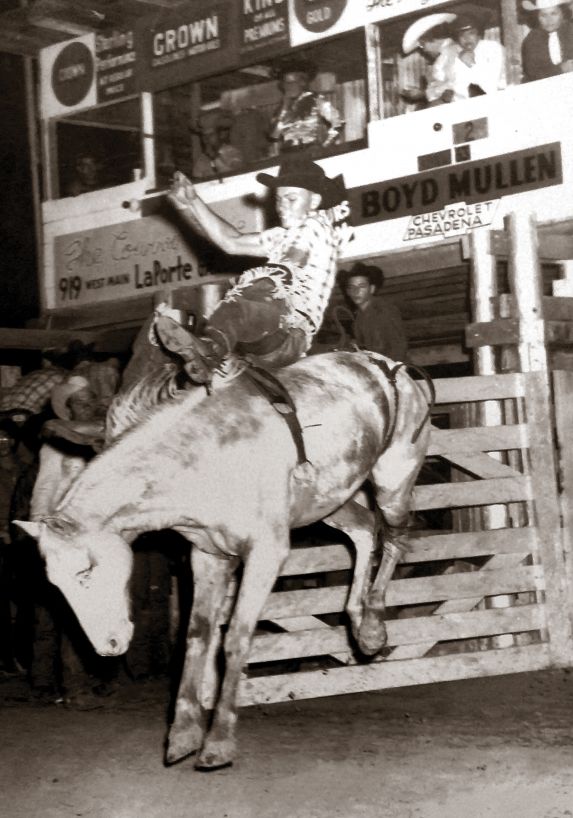
    Although a small business owner and operator, Jerry continued to rodeo hard until 1973. His bull riding and bareback riding careers were brought to a sudden end after breaking his back in Pasadena, TX. His luck looked to spiral downward as his little store in Dickinson began struggling with its small list of inventory and Derby began thinking about closing the doors. In a stroke of luck, Derby was offered the opportunity to buy the inventory out of a western store in Victoria, TX., with a net worth of $43,000. “I was about to close the doors myself and didn’t have that kind of money, so offered $3300 and won the bid,” Jerry said. His new large supply of inventory allowed business to skyrocket and he had to build a new big store in Alvin, TX. By 1974, Tandy Corporation had decided to get into the western wear business and purchased the store from Derby at the age of 29.

    At the age of 35, Jerry took a ski trip with Jerry McDannald to Colorado, where they met some people, who he spent some time with in Grand Junction, Colo. With very few and small western stores located in the western Colorado town, Jerry moved from Texas in 1977 and built a new store in 1978. “I hit another stroke of luck, because the movie Urban Cowboy came out in 1979 and the people went crazy in the western fashion. I couldn’t even get inventory out of the boxes and on to the shelf before they bought it,” he said of the two-year craze. In the meantime, Derby continued in buying and selling smaller stores and their inventory to generate a steady cash flow. His addiction to the arena struck again and Jerry began steer wrestling and judging rodeos in the PRCA and the Colorado Pro Rodeo Association. His competition years then stretched until he was 52-years old and he was forced to stop once again after continuing injuries to his knees.

    Jerry still resides in Grand Junction and currently owns and operates his 57th store called Rocky Mountain Hats and Boots and still specializes in building custom hats and renovating old ones. He maintains that it is his last store due to his age factor, but says that he’ll be a cowboy until he dies. His ongoing support of rodeo has never let down and he has been known to donate buckles and horse trailers to the Colorado Stampede. “Rodeo was good to me through my winnings as a competitor and the selling of my products throughout the years. It’s just one way that I can pay it back,” he said.

    Looking into his past, and even with the injuries and hard luck that Jerry sustained, he claims that he would do it all again. “I’ve met a lot of people through rodeo and there is just no better people then rodeo people. I’ve had the privilege of meeting great people and I think I’ve like each and everyone of them through the years,” he concluded.
  • Raymond Josey

    Raymond Josey

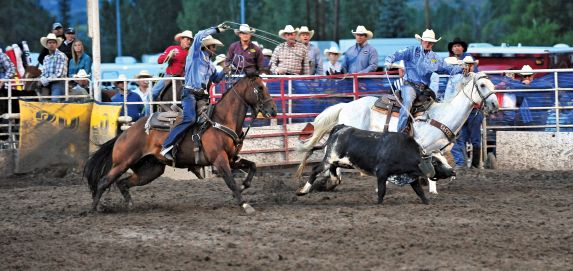
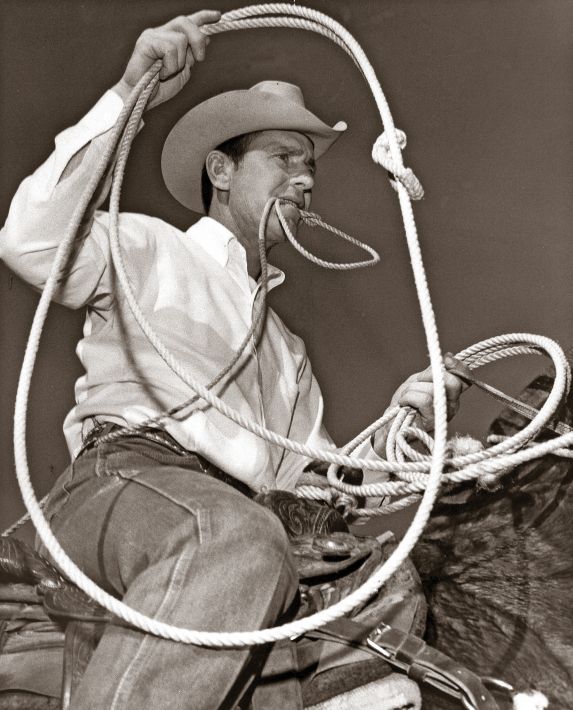
    Raymond Josey was raised at Post, Texas, population 4,000. “We farmed, ranched, and had cattle. I started pretty young swinging a rope,” said the cowboy that got his start roping goats. “We’d carry a trailer load of them in a pasture, and turn one out. If you missed, you got out of the way and the next one would try until they got back to the barn. There were six or eight of us on a Sunday afternoon. I was 12 or 14 when dad finally built the arena and we’d rope goats and calves.”

    He started competing in calf roping in the American Junior Rodeo Association when he was 17 or 18, one of the first to serve on that Board. He continued in the amateur rodeos. “Out there in west Texas they had a lot of match roping. I’d go watch that and then go home and try what I’d seen. Those guys had that down and I knew I had a lot of work to do.”

    R.E., short for Raymond, went to work for an oil company, traveling a 200 mile radius that he could drive in about four hours. “I’d take off work and hurry to the rodeos. I had a true friend, Ed Dye that liked to go and he’d drive me back every night so I could go to work the next day. We drove a Chevy car and pulled a two horse trailer – an old Miley. Ed Sims of Ed Sims Bits and Spurs was also one of my hauling partners.” Josey as he was often called, was winning at the amateur rodeos and decided he could win more rodeoing than at the oil company, so he quit and started rodeoing full time in 1965, traveling all over the country including Calgary and Salinas. “I rodeoed with Ronnie Sewalt during that time. I didn’t lack but a little making the National Finals when I came home. I started showing Quarter horses and selling a few along the way.”

    When R.E. first moved to Marshall in East Texas, he started riding outside horses. “I had some of my own that I would train, season, and sell. I started going to a lot of Quarter Horse shows because they were close to home. I won the World in the AQHA Calf Roping in 1970, 72, and 74 on three different horses. The first horse I won on I hauled to rodeos, then when I won the World I sold him for $3,500 to James Harper. That was big money then. I had a pretty good eye for horses and I made good money trading horses.”

    Josey liked bulldogging, but his true love was roping calves. He met his partner in life, Martha, at a roping in Hillsboro, Texas. “She was running barrels and I was roping. She won the barrel race and I won the roping that day. I loved her horse, Cebe Reed, she won 52 barrel races in a row on him. I invited her out and we got to going together and I got the horse.”

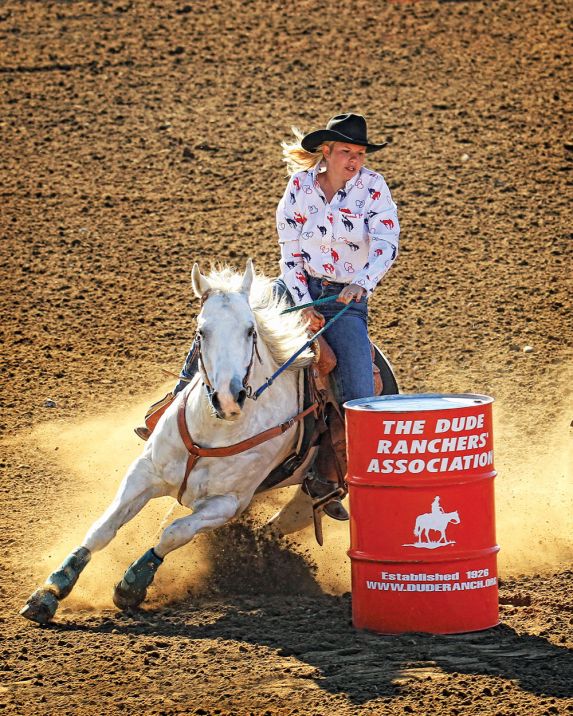
    They got married in 1966 and started their schools and clinics in 1967, while they continued rodeoing. “Our first clinic was in Connecticut and as far as we knew, that was the first clinic ever. We had a bunch of 4-H kids that wanted us to help them and that’s the reason we decided to start our 2 week Calf Roping and Barrel Racing Schools.” Neither of them knew what an impact they were going to have on the world. “We just enjoyed working with kids, people and horses, making dreams come true.” This partnership has inspired more than 150,000 students over the last 46 years. Josey said, “I teach calf roping and individual work on first barrel, what we like to call the ‘money barrel’. I stand out there and talk each rider through their approach to the barrel and how to get that quick, snappy turn leaving the barrel, keeping their hands right and their horse right.”

    While Josey stresses the importance of horsemanship, he also teaches students how to prepare for competition and to make the same run at a show that they make at home in the practice pen. “When they come down the alley to make their run, it’s as if a giant vacuum cleaner sucks their brain out. When they run out the alley, it puts their brain back in. They stop their horse and say, ‘What happened?’ Once I can get their nerves settled down and help them focus on their horse, then it’s no problem at all.”

    R.E. asks his students to figure out what would settle their nerves. “Maybe they need to jump off the horse, run around him singing the national anthem – everybody will think they are nuts, but once they win a few barrel races, everybody will be jumping off their horse and singing too. Whatever it takes, we help them get it done.”

    “I’m just enjoying it.” said Josey. “We still have over 20 clinics a year plus the Josey Reunion and Josey Jr. World. We go to functions like the IFR, WNFR and NBHA World shows and visit with friends. Many of our students have won in High School NIRA, WPRA and PRCA and many have gone on the NFR. We love keeping up with them. ‘When they Win, we Win!’, such as World Champion, Mary Walker, one of our former students.”

    R.E. Josey is well respected in both the equine and sports industry and is inducted into the Texas Cowboy Hall of Fame in Fort Worth, Texas, the Texas Rodeo Hall of Fame in Fort Worth, Texas and the Ark-La-Tex Sports Museum in Shreveport, Louisiana.

    “We have a drag dummy they rope and jerk over backwards called the Calf Tracker. This gets them where they can ride their horse and learn to handle the rope. Then we go to a practice pen and I’ve got the arena set up where I can run two different ways. The students that are on a horse that doesn’t track the calf, I put them in a narrow pen to help teach the horse and the ones that are on experienced horses go to the bigger pen.”

    R.E. and Martha helped start NBHA, the National Barrel Horse Association. “Billy Morris sent his team to Ft. Worth to meet with us and after looking at it, Martha and I both said this will work, so then the NBHA was formed and we’re still on the Board. Through the years, NBHA has grown to be one of the most successful associations in the country.”

  • Justin Rumford

    Justin Rumford

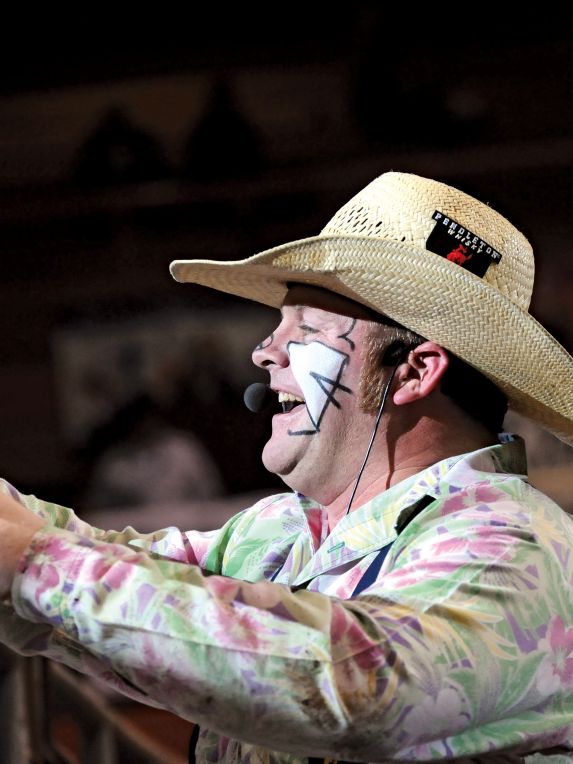
    Justin Rumford is the same guy in the arena as he is out of the arena. “I’m just dressed different,” said the 32-year-old rodeo clown from Ponca City, Okla. After only three years as a rodeo clown, Rump won the prestigious 2012 Clown of the Year Award from the Professional Rodeo Cowboys Association. “I never thought I’d get into this part of it – I steer wrestled pretty hard in 2004 and blew my knee out in Reno and that set me back pretty good – that’s why I went to work for Bennie Beutler driving trucks – I could have a job and still steer wrestle.”

    Longtime family friend, Mike Greenleaf, got him started clowning. “We steer wrestled together and he told me I’d be good. He asked me to clown the Kansas Pro Rodeo membership rodeo for him. I had a weekend open and I borrowed a barrel and an outfit. My second time was Pretty Prairie at the bull riding and it was fun and I got a check – that’s one thing that’s great about clowning – it pays.”

    Rump grew up on the rodeo road. “That’s the only thing I can remember is rodeoing.” His family has been in the stock contracting business since the 1950s and Justin, along with his sister Haley and brother Ty grew up in the trailer. All three have continued their careers in rodeo. Haley is married to Jerome Schneeberger and has won PRCA Secretary of the year for six years straight. Ty is a pick up man at Ft. Hays State University. He’s been picking up for the Worlds Toughest Rodeo for ??? years.

    He competed in saddle bronc and steer wrestling and fought bulls in high school, making the high school finals three out of four years. He went on to college at Northwestern Oklahoma State where he made the College Finals in both events three years (2001-2004), and one year in the bulldogging. He graduated with an Ag Business degree and kept on rodeoing.
    Rump met his wife, Ashley, Wife, 2005 Miss Rodeo Oklahoma, through mutual friends and after two years of dating, they married in 2007. She has put her profession as a registered nurse on hold and is an integral part of Rump’s success. “She’s on board, she’s great – she goes with me full time and does a lot of the work. A lot of people don’t understand the clown business; the easiest part is in the arena. It’s the travel – I fly in and out and we have to do our own taxes, plus expense out everything we do. Ashley does all the business part of it, all the contracts.” The couple rodeoed hard last summer, spending about 10 months straight on the road in their Road Warrior Toy Hauler. “There’s no possible way I could do this without her. She’s loved rodeoing as long as I have. She times at a lot of the rodeos that I do and we talk about it all the time about how happy we are to do this. Every rodeo we go to, I have to be my best and it’s hard to do that and do all the driving too, so she does most of the driving and the cooking too.”

    Rump considers himself to be a normal guy. “You can’t make yourself be funny – you just have to let it come. I don’t hardly do jokes at all. I think people don’t want to hear them. They want to laugh and it’s better to make them laugh at themselves.” One of his current acts involves a spectator’s cell phone. He takes it and actually reads the text messages. “I’m actually reading the texts that they are sending. People would rather laugh at the crowd than at me, so I’m the middle man.”

    Rump spends a lot of time talking to people off the mic while the events are going on. “You get to know your crowd and you can gauge what you’re going to do. Rodeo comedy is not a one size fits all, everything has to be tailored.”

    He is continually changing his acts. One of his acts, Spiderman, was the result of watching the Spiderman 3 movie. “During the perf the announcer asked me what I did that day – and I told him I went to Spiderman, and then showed him what I learned. It worked the first time and not the next ten, but I’ve got it down and it’s a crowd pleaser.”

    “You can’t have a canned product. It would be so easy to find something that works, like the cell phone, but you have to keep finding the next thing. I find them from current events. There’s so many kids here- everybody knows Jersey Shore and Duck Dynasty. You have to keep in the know of what’s going on. Fist bump to the music – those kids know how to do it and I’m part of what connects them to the rodeo.” Rump stays up with pop culture and what’s going on in the world. “You can find so many things to laugh at in our world – 50 shades of grey, driving a Prius…” He also spends time laughing at himself and his weight. “I grew up watching Chris Farley, the fat guy on Saturday Night Live.” Even though he’s slightly overweight, Rump is in great shape. “I do about 130 perfs a year and I run over every inch of the arena during each perf. By the end, I’m worn out.”

    He is very careful not to do anything that would hurt anyone or offend them. “With the age of technology you have to be very careful.” The challenge for him is to perform good every time. “There’s a big difference between being a contestant, which I’ve been, and being a clown. If a contestant has an off day, he can go run another one. If a clown has a bad perf, people remember.”
    For now, Rump and Ashley are very content going down the road. When they start a family, no doubt their kids will do the same thing he did when he was growing up. “We all grew up rodeoing and playing together and most of those people are still my friends. So when we have kids, they’ll be just like us, get in the truck and go down the road.”

  • Garrett Tonozzi

    Garrett Tonozzi

    Garrett Tonozzi won the George Strait with Dugan Kelly and now he’s “shooting to make the Finals, and the gold buckle for sure. I changed my style up last fall; I worked with my Uncle Bret (9x NRF team roping heeling qualifier; 2x NFR champion) last year; I’m trying to get better every day.” The 28-year-old from Fruita, Colo., has made two trips to the NFR (2006 and 2008) and finished 20th last year. “I didn’t have the right horse and everything didn’t click.” He ended up going home and going to work in the oil field. “Going home is a horrible feeling. You have to learn from it – I learned how to get better and that’s what I’ve been trying to do. I fell back into some old habits in my roping style and riding.”

    One of the ways Garrett has gotten better is by watching the best headers. “Their body posture was a lot different than mine. I was watching myself roping and I notice my body posture wasn’t like the other headers I was watching – like Trevor. I was leaning a little too much.” Another thing Garrett has changed is his commitment to practice. “I’m staying on my grind every day. It was below 0 a lot when I was out riding. When I couldn’t get anyone to rope with me, I roped by myself. In the practice pen you have to concentrate on something every day. When it’s that cold, the rope is horrible, but if you concentrate on how your horse is doing and how you’re riding, it will make a difference in the end.”

    The horse he won the George Strait on is a gelding he bought from Nic Sarchae (spelling). “He was 6 when I bought him and the last three years I’ve been preparing him for rodeos and riding him a lot. I’ve been riding him all winter long and he’s done great for me.” The $25,000 investment has paid off. I was at Nic’s house hanging out – he’s one of my best friends. Jake cooper tried him and told me I should try him. I took him. $25,000.

    Garrett has been roping since he was nine and rodeoing for the past eight years. He was the Colorado State High School team roping header champion for three years and he is also one of the youngest team roping directors the PRCA has ever had. “My Uncle Bret has been on the board for 15 years now and we talked about it for a long time before I decided to do it. With his help, it was an easy transition. You just have to roll with the punches and remember the positive things you’re doing and make sure you’re doing the best job you can. If you do that, then it’s easy to get along with the negative stuff.”

    He has seen a lot of change in the team roping during his 20 years of competing. “I attribute that to the jackpots. You start growing up and roping at so much money that pressure is not an issue. The USTRC and World Series have so much money, the kids can be aggressive because there’s another one next weekend.” Garrett comes from a rodeo background. His granddad (Tony Tonozzi) was an Old Timers World Champ in the team roping, starting in his mid 30s after a career in the race horse industry. “My personal idol is my Uncle Bret. Growing up he was my uncle, my friend, my brother, my dad, but he was my major influence.” He was raised by a single mom, Michelle, who was a barrel racer and “the greatest in the world. It was easy.”
    Michelle is a practice for a doctor’s office. “Garrett is a wonderful son. He’s my best friend. Bret was rodeoing when Garrett was little so my mom and dad hauled him a lot. It was a family affair – everybody helped us a lot. We’re a pretty tight family. Now he’s living his dream.”

    He won $183,000 at the George Strait and a new rig. “Wen I heard the payoff, I was in awe. It’s amazing what George has done with that roping.” The George Strait started 31 years ago as a little roping and a concert. This year, there were 680 teams at $500 a man. Garrett and Duggan were second high call last year and Duggan roped a leg and Clay Tryan and Patrick Smtih won it. “We reversed it this year,” said Garrett, who will take his earnings and put a down payment on a place in Fruita. The win will also take some of the pressure off being on the road. “This one solidifies that I’m going to be out here all year and I can concentrate on my job a little more.”

    Garrett spends the whole month of May at home in Fruita, hanging out with his granddad and family. He helps his Uncle Bret get steers ready for summer. “We have steers at three weekly rodeos so we get them ready and I prepare myself for the summer.” For Garrett, going down the road is a dream come true. “We all grow up wanting to be a pro rodeo cowboy. Everybody has those roots and now we are that.” His goal is to retire after he is done rodeoing.

    Garretttonozzi@yahoo.com
    970-260-0798

  • Ilene Choal

    Ilene Choal

    “I’m nervous and excited and glad I get to go,” said 24-year-old Ilene Choal, talking about her first trip to the Ram Circuit Finals in Oklahoma City, Okla. “It’s a lot to get my mind around.” Ilene is in her first year of dental school at the University of Nebraska. “The stars are lining up for me. April is the worst month of our curriculum with exams and finals. It just happens to be the only week for the next month that I don’t have an exam.”

    Right up until she leaves for Oklahoma, Ilene will be studying and preparing for the last stretch of her first year at the University of Nebraska. “We’re going in as a dental student, that’s my full time job,” she said. Taking 21 credits, her classes include Pathology, Immunology, Microbiology, Physiology, Anatomy, Occlusion, Operative, and Histology. “It’s a set up program, so everybody takes the same course load. It’s a really rigorous year because we take our boards after the first year, not the second like most schools. I’ve been told it quiets down after this.”

    From Laramie, Wyo., Ilene and her younger sister, Joann, learned how to ride at their grandparents ranch near Sheridan. “My cousins were entered in a little rodeo and I wanted to enter. My grandparents said if I could learn the pattern, I could compete. My cousin stayed up all night long showing me how to make the barrel pattern. I showed my grandparents the next morning that I knew the pattern and they entered me. That was when I was 11.” Her parents, Ross and Cheryl Hilman, never competed in rodeo, so it was a learning curve for the entire family. “My dad works for the state archaeologist and mom works in the engineering department and runs the computer lab at the University of Wyoming. My dad grew upon on a ranch and got away from horses and through his kids he ended up right back in them.”

    Ross and Cheryl hauled Ilene to all the Wyoming high school rodeos and weekly 4-H practices. Joann went another direction, competing in shot put and recently completing a year abroad in South Korea as a foreign exchange student. During Ilene’s senior year in high school, she bought a horse named Zip. The pair rodeoed for the University of Wyoming while Ilene completed a degree in archeology and they made the College Finals during her junior year in 2010. “It’s taken both of us learning each other and getting comfortable. I’ve learned a lot as a rider and he’s come a long ways.”

    Although she liked her career options in archeology, Ilene realized that she wanted a career that would allow her to rodeo. “I really like working with my hands – and I wanted a hands-on career. As a dentist, I can work with my hands, help people, and have the flexibility I need to rodeo.”

    She also wants to make the NFR, and started the process by getting her permit this past year. “I was planning on filling my permit this summer – that was my goal. I ended up filling it a lot quicker than I expected. I learned about the Mountain States Circuit Finals, and had a little less than a month and a half to qualify before I went to school. My husband (Tyler) and I sat down and made a plan. We qualified and then we came to Lincoln and I hoped that I had enough money made to go. That’s how I got there.”

    Tyler and Ilene have been together for eight years. They started dating in high school and got married four years ago. “He’s been my rock and best friend through everything. He’s not a horse person, but he helps me in the arena and will feed and helps me exercise Zip. He helped me to figure out how to make rodeo possible in the summer so we could make the Circuit Finals. Ilene and Zip made the trip to Rock Springs and won the average. “Now we’re off to Oklahoma.” Ilene and Christi Loflin represented the Mountain States Circuit in Oklahoma City.” She was the first person that said hi to me at a pro rodeo. She’s been great about making sure I felt welcome and congratulating me on chasing my dreams.”

    Part of chasing those dreams for Ilene included overcoming Dyslexia. “At the end of my third grade year I was almost completely illiterate,” she said. “The teacher told my parents that I would never learn to read.” Thanks to family support, and Ilene’s determination, she is now a student in one of the best dental programs in the nation. “I think a person’s success has to do with how dedicated a person is to their dreams and how much work they are willing to put into achieving those dreams. I dreamed about being a dentist and someday competing at the NFR and I am working towards reaching those goals. Being dyslexic has made me have to work harder but has not stopped me from achieving what I set out to do.”

  • Bob Christophersen

    Bob Christophersen

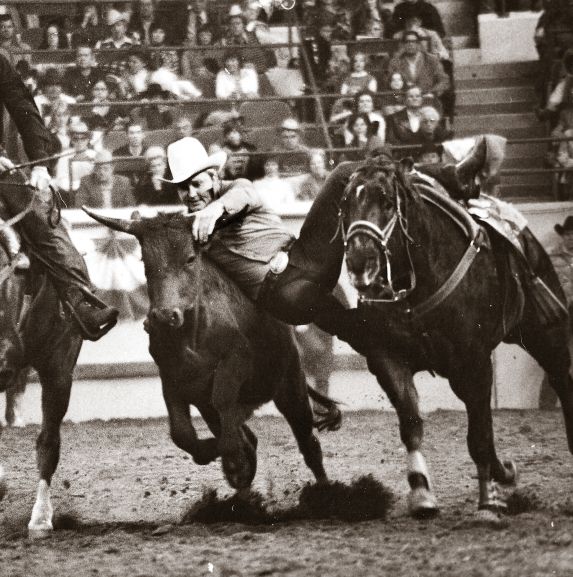
    Bob Christophersen has jumped a steer in each of seven decades.The North Dakota man took his first jump off a horse in 1959 when he was nine years old, with the help of his dad, John Christophersen, a Rodeo Cowboys Association bulldogger, on the family place in Sioux City, Iowa. And he turfed his last steer at Rapid City’s summer rodeo in 2010. Between 1959 and 2010, he traveled the country, rodeoing from coast to coast and in Canada, making the National Finals Rodeo six times and winning numerous rodeos.

    Christophersen grew up around rodeo, competing in Little Britches Rodeo and Iowa High School Rodeo. In addition to steer wrestling, he was a calf roper in youth rodeo, and tried the roughstock events, although “I had a short career in bareback and bull riding,” he jokes. Bob won the Iowa Little Britches All-Around and Steer Wrestling titles in 1963, and in high school rodeo, won the all-around and steer wrestling titles as a freshman and senior, and finished third as a sophomore. At the National High School Finals Rodeo, he won the steer wrestling championship three times and finished as reserve champion once.

    After graduating from Bishop Heelan High School in Sioux City in 1969, Bob attended the National College of Business in Rapid City, S.D. He had already bought his RCA card at the age of 17, so he competed collegiately and professionally at the same time, winning the College National Finals Rodeo in 1970, and qualifying for the National Finals Rodeo from 1971 through 1975, and again in 1977. Bob’s steer wrestling was just as consistent professionally as when he was young; he won the average at the NFR in 1971 and 1975.

    He graduated from college with a business degree and a minor in accounting, but his office was on the back of a horse in the timed event box. Bob continued to rodeo full time, making his home base in Glendive, Montana.

    He often traveled with Walt Linderman, and often rode borrowed horses. Bob rode Linderman’s horse Scotty, who carried many steer wrestlers to average wins, including Linderman, Warren Wuthier, and John W. Jones, Sr. He also rode Roy Duvall’s horse Whiskey, and C.R. Jones’ horse, Peanut. In 1975, he rode his own horse, Coffee, who had been his sister’s barrel horse.

    Bob left his name as champion at some of the biggest rodeos of his time: the Cow Palace in San Francisco in 1973, Edmonton, Alberta; Ellensburg and Walla Walla, Washington. He never won Pendleton, but finished second there in 1977. He entered Puyallup only three times in his career and won it all three times: in 1975, 1976 and 1977. At that time Puyallup was five head: “it was a mini-NFR.”

    In 1977, at Ak-Sar-Ben in Omaha, he blew out his knee. It wasn’t a career ending injury, but it slowed him down. “I still rodeoed for many years after that, but more in the circuit.”

    With his focus switched to rodeos closer to home, he won the Montana Summer Circuit in 1977, and was reserve champion once in the Badlands Circuit. Bob hurt his shoulder in 1978, but still continued to compete. His last hot streak was in 1987. He traveled with Ivan Teigen that year, and the two of them did well, with Bob winning Cheyenne (Wyo.) Frontier Days. That year, he ended up in the top 25 in the world.

    Bob had married during college, but in 1987 that marriage ended. He met a North Dakota ranch girl, and left Glendive in 1989 to move to Eunice’s ranch near Grassy Butte. They married, and since, have acquired another ranch. They run 275 head of cattle on their two places.

    He marvels at how rodeo has changed. He competed in Oklahoma City, the original home of the National Finals Rodeo, and a first place go-round win was worth $486. He laughs when he compares it to what Tiegen won at the NFR in the 1990’s. “I remember I was teasing Ivan, he won more money in a go-round at the Finals than I ever did in six years of the Finals.”

    When he decided to quit at 60 years old, it was on his own terms. His bulldogging “wasn’t up to my expectations,” he says, and he was competing against grandkids of the guys he first rodeoed with. “I told them, it’s probably time to quit,” he laughs. “I rodeoed against (Montana steer wrestler) John Gee, then his son, John, Jr., and John’s son Luke.”

    Bob’s older son, Chad, lives in Billings, Mont. with his wife, daughter and son. He works for a refinery, and Bob and Eunice see him and his family several times a year. Bob’s younger son, Rusty, works with him on the ranch. Rusty’s knee injuries have forced him to quit bulldogging, but he continues to team rope. He also hunts mountain lions.

    Bob looks back fondly on his rodeo career. “The best part was not having to get up for an eight to five job every morning,” he chuckles. Mainly, though, it is the people. “The best part is all the people you meet. I have friends in every state west of the Mississippi. I enjoyed it.”

  • Shawn Minor

    Shawn Minor

    Shawn Minor has claimed the All Around title for the International Pro Rodeo Association for seven years and will make 2012 his eighth. “Sheer determination,” the 37-year-old said of his success. “I really don’t ever set out to win the All Around – I make my living with rodeo and wherever that leads me at the end of the year is where my goal ends. Every time I ride I try to do the best I can and if I do my job, then I win titles.” He loves getting on good horses. “I figure as long as I can do it and still win, and love doing it, why quit?”

    Shawn competes in bareback and saddle bronc riding. He rode bulls when he was young and could never get off right. “I always lit on my head or got stomped or hooked and I figured they looked a lot better on my plate.” He team roped and tripped, and never roped calves because he was left handed. “I’m going to start adding that to my entries as soon as I find a good little horse. I’ve got some colts that I raised that have the potential, so when they’re ready, I’ll start.”

    Shawn grew up in Gordon, Neb., ranching. His dad, Steve Dent, still ranches in Mullen, Neb. “He was a great bronc rider and raised two bareback riders – both myself and my brother, Steve, who made his fifth trip to the WNFR.” Steve went into the 2012 WNFR in the second position in Bareback Riding and second in the All Around behind Trevor Brazile.

    He got on his first bareback horses when he was 12 with a mane and tail hold, no riggin. “I held on to the mane with one hand and the tail with the other. I got drilled. I got on with a riggin when I was 13. I’ve been around rodeo my whole life from playing behind the chutes – I was never a bleacher kid. I would ride some pretty bad old broncs on somebody’s bronc saddle in the dirt. After the rodeo if we stuck around, we’d get in the chutes and open the gate and run around and kick like a bucking horse.”

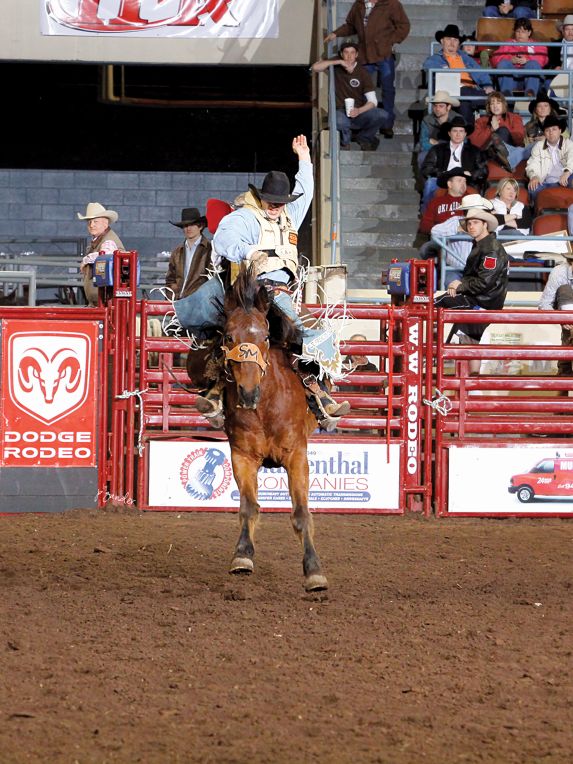
    He high school rodeoed in Nebraska, winning four state championships in the bareback three times and the saddle bronc once. He college rodeoed winning the all around in the Central Plains in 1997. Shawn went to college in Snyder, Texas, for two years and then transferred to Weatherford, Okla., for two years. He lived there and rodeod for six years. Shawn’s professional rodeo career began in 1994. “I bought my PRCA permit in 1995, filled it and bought my card in 1996. I bought my first IPRA card in 2003. We went to the bucking horse sale and I watched Cord McCoy win $7,000 in one night and decided to buy my card and give it a try. It’s been good ever since.”

    He met his wife, Tara, in Huntsville, Ala., in 2004, and they have three children, Tate, 5, Kole, 7, and Trayli, 18. She is a stay-at-home mom and supplements the family income by training barrel racing horses. “She’s my best friend – really. We do everything together – it just works. About five minutes after I met her, I knew she was it. It wasn’t very long – a couple months.”

    Shawn takes his family with him as much as possible, but now that the boys are in school, they don’t go as much. “The boys have been riding steers at every one of the rodeos we go to and it’s a great crowd pleaser. I think about the future of rodeo and I’m proud that they are following in my footsteps.” They have considered home schooling, but feel the boys need the interaction with the kids in school and the structure of a school setting. “If they can’t skin out and go, I’ll drive all night and get back. Their education is more important than me rodeoeing. As far as getting the bills paid, I have to go. Tara’s mom and dad watch them for us when we’re gone for long times – like St. Tite – when we’re gone for 10 days.” Shawn has traveled all over the US and Canada and St. Tite is his favorite rodeo. “As far as an atmosphere, that rodeo is one of the greatest things – the crowd is so wild and loud – it’s just awesome. You can’t understand a word they say, but it’s a lot of fun. The stock contractors bring their best stock and it’s a riding contest with lots of added money.” He puts his runs together about every two weeks. “I’ll look at the schedule and a map and decide where to go. In June, July and August you can go to one every day. I just look and put a run together. I do a lot of it by added money and some of the smaller ones, I’m looking for the stock I want to get on.”

    Shawn added a PRCA card to his list this year. “I won a few checks here and there, but I was going to have to be gone and leave my kids – I don’t want to miss anything with my boys, so I put it aside. I’m back home riding colts during the week and go on the weekend. My priorities have changed a lot. Through the week, we get up, get the boys to school, feed, wait for the horses to get done and go to ride. We pick the boys up and the activities start – we are either riding, hunting, or practicing on the miniature Zebu bucking bull and sometimes we have to have a little rodeo here at the house.” Riding colts and chasing after his boys keeps Shawn in good shape. “We’ve got six horses we’re riding right now. I’ve got some outside customers and we’ve got some of our own that keep me pretty busy.”

    Shawn lives in Camden, Ohio. “This is where my wife was born and raised and her parents live about a mile from us. We’ve lived here for about ten years but we’re hoping to move someday where the boys can rodeo throughout the year. So that probably means Oklahoma.” Shawn makes the most of the colder temperatures with his welding. “I have just about every tool in a welding shop you can imagine so I do some of that. I’ve made everything from Xray welds on gas lines to building lamps out of horse shoes. I always have something to fall back on.” When he is done rodeoing, he is thinking about doing some pick up work and doing some schools. “I would really love to be a rodeo coach,” he concluded.

  • Dick and Lois Cory

    Dick and Lois Cory

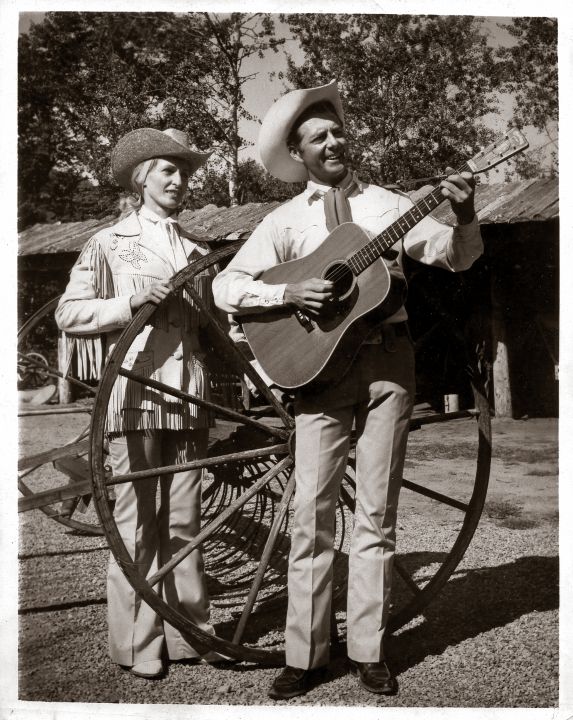
    “Spinning my ropes and smiling at the folks.” That was Dick and Lois Cory’s motto throughout 60 years of rodeo. And spin ropes, smile at folks was what they did best. The husband-wife team, entertained thousands of fans with their trick and fancy roping.

    Dick was born in 1933 in upstate New York with a love for the West. “I never wanted to be anything but a cowboy,” he remembers. He rode every horse his dad, a horse trader, brought home, and when the family went to rodeos, Dick was mesmerized with the cowboys. “I wanted to do it all: ride broncs, rope calves, but I was particularly fascinated with the trick and fancy roping. At that time, it was a part of every rodeo.”

    He got the idea to put on a show, and learned to play guitar. At age 14, he began performing, singing and trick roping, and in 1949, he worked his first rodeo. “We went wherever they’d let us set up,” he remembers. “I sang, “I’m a Happy Roping Cowboy.” They’d pass the hat, and I made enough money to buy a new guitar. I thought, ‘this is it!’ And we were on our way.” In addition to entertaining, Dick also competed in the calf roping at his first rodeo.

    It took a good ten years for his western entertainment act to get established full time, and during that time, Dick worked at radio stations. He started playing guitar on the radio at age 16, when stations would give up and coming musicians “sustaining time” – air time for the musician to play his music and promote his shows. An announcer at the station took Dick under his wing, teaching him the radio business. Dick started with broadcasting the morning farm reports, and did nearly everything in radio but the engineering.

    When the rodeo business grew, he and Lois, who had married in 1956, put their full attention into western entertainment. They worked rodeos all across the eastern coast and the Midwest, and also entertained at theme parks. They spent winters in central Florida, the “cowboys headquarters” for eastern cowboys. In the slow rodeo seasons, Dick worked at “The Mighty Five – WFIV” radio station, and did on the scenes reporting for the Silver Spurs Rodeo. During the winter, he and Lois entertained at campgrounds and conventions, with their country and old cowboy western music band. Dick played the guitar, fiddle, mandolin and banjo, and Lois played the keyboard.

    During the early years, when things were a bit leaner, Dick even announced rodeos. At that time, he was still calf roping, so often, he’d announce up to the minute he was up, then he’d jump on his horse, rope his calf, and run back to the announcer’s stand.

    In 1965, being self-taught, Dick had learned as much as he could about trick roping. Buddy Mefford, a legendary trick roper, gave lessons to him and Lois for five years. “He made me realize what I didn’t know,” Dick says. “I was fortunate to be around him.” Mefford was a very respected trick roper who was willing to share his knowledge. “He helped me extensively in understanding the trick and fancy roping.”

    Dick and Lois joined the International Pro Rodeo Association (then the International Rodeo Association) in 1965, and later joined the Pro Rodeo Cowboys Association. They held cards in the Southern Rodeo Association, the American Pro Rodeo Association, and the Mid-States Rodeo Association. “We pretty well covered the east and the Midwest” with western entertainment. Their act, the Roping Corys, involved much more than trick and fancy roping. Dick would often ride into the arena with a wireless microphone, singing cowboy songs as he rode the fence line.

    In 2010, while at the Attica, N.Y. rodeo, Dick suffered a stroke. It affected his hearing, coordination, and balance, and his rodeo career was over. “Until I was 77, we were actively performing, and I did everything. I was still breaking colts at age 77.” The stroke has been an adjustment for him. “I didn’t have the luxury of growing old gradually,” he says, regarding the stroke. “I got old overnight.”

    He and Lois miss the road, which was their home. “I’d get cleaned up in the morning, sit under the neck of my trailer with a cup of coffee, and I was home. By the same token, while we miss it, it’s gone, and a person has to adjust. It’s been hard for me, because for years, I rode into the arena in the spotlight and now I’m out kicking cow manure. But then, again, we were always homebodies. Being with horses, training horses, raising cattle, that was always the goal. I always wanted a ranch and cattle, and now I’ve got it, so what am I complaining about? A person has to take hold of themselves and go on.”

    In 1990, he and Lois sold their winter acreage in Florida and moved to South Carolina. There, they have a cattle ranch and leather shop. The couple has two children. Rand, their son, lives in Stephenville, Texas and is an IPRA tie-down roper. Shawna, their daughter, is a legal secretary, and she and her family live on the South Carolina ranch with them. Rand’s son Ethan competes in ranch rodeos, and Shawna’s daughter Lindsey is married to Mike Wentworth, an IPRA rodeo clown. Lindsey and Mike also live on the ranch. Shawna’s son Ronnie Heid also grew up on the ranch and is now a team roper and pickup man.

    Dick and Lois have been recognized for their achievements in the rodeo arena. They are gold card members of the IPRA, and lifetime members of the SRA. They were Contract Act of the Year in 1993 for the Mid-States Association, and in 2002, they received a Lifetime Achievement Award from the Wild West Arts Club. Dick often served as a judge for the Wild West Arts Club contests, which included trick roping, among other things.

    Even though their rodeo days are over, they look fondly back at them. “To tell you the truth, although I miss it an awful lot, it feels good on Friday mornings. Lois and I look at each other and say, ‘Isn’t it nice to not have anywhere to go?’” And his childhood dream of being a cowboy has been fulfilled.