Rodeo Life

Author: Siri Stevens

  • On The Trail with Ky Hamilton

    On The Trail with Ky Hamilton

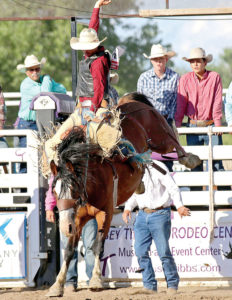
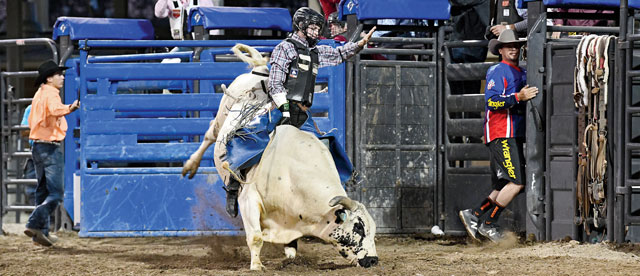
    Ky Hamilton grew up in Mackay Queensland, Australia. “I actually grew up in town. My mom (Sharell) and dad (Micheal) had a house in town. My dad’s family lived three and a half hours south on a ranch – so I got to do cowboy stuff on the school holidays and stay with them. It was great.” Ky’s time in town was spent playing rugby and racing motocross with his brother, L’Koi. He also spent time watching PBR on TV. His dad drives a garbage truck, and his mom is a teacher’s aide. He rodeoed in America for the first time at the Junior High School Finals in Des Moines, Iowa, when he was 15.

    “I was always interested in bull riding,” admits the 20-year-old sophomore at Sul Ross University. “I bugged my dad enough to let me do it. I started riding steers when I was 12.” Ky and his dad did a lot of traveling chasing down the rodeos – from one to three hours for one rodeo. “He drove me everywhere- it was always me and dad on the road.”
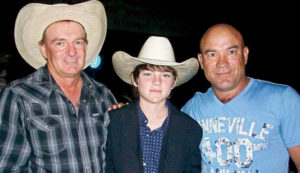
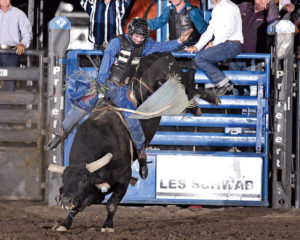
     

    His determination to make it to the number one spot in the PRCA was instilled by his father. “This isn’t a sport that you can be half-hearted in – you’ve got to be 100% or it isn’t going to happen.” He learned the technique from his dad and Troy Dunn (1998 PRB Champion – only Australian). “He helped me out when I was 15 and he took me a lot further in it.” When Ky turned 18, he started doing the PBR in Australia. “I did that for about six months and then moved here.”

    “I always wanted to ride bulls professionally from the states and win a world title. I thought college was a great way to get started. CJ got a hold of me and offered me a scholarship and it’s opened a lot of doors for me.” He compares the caliber of the bulls here to those in Australia. “The bulls are definitely a big difference. I’d say 6 out of 10 at home are good, here it’s 9 out of ten. Over here there are so many events to go to and the money is bigger. I didn’t get to ride as much in competition at home as over here.” He admits to missing his family and not much else. He hasn’t been home since he came over two years ago. “My parents have come over here.”

    “He is probably one of the hardest workers I’ve ever coached in 14 years,” said CJ Aragon, his coach at Sul Ross State University in Alpine, Texas. “He’s a really good student in the classroom and the arena. Everything he does is at a high level.” CJ shares Ky’s workout routine at the University. “He goes to CrossFit at 5:30, and then runs up the hill – the hill behind campus is a mile and a half up to the top – basically the equivalent of 50 flights of stairs. We’ve gotten to where we can do it in 9 minutes to the top.” After the hill, Ky goes to the gym with the steer wrestlers and then he goes to classes. “If he is heading out to rodeos, he turns his work in early and stays on top of it.” One of his classes is with CJ – Event management and Planning. “He’s one of those students that is coachable. He wants to be good and he’ll work really hard at it. On the dash of his truck is a book – Mind Gym – and he’s read it a few times.”
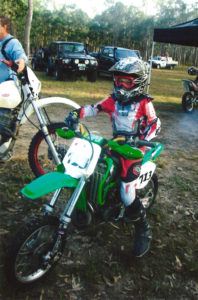
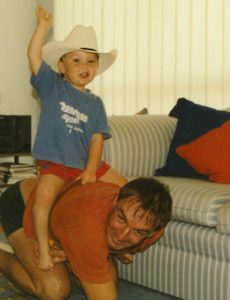
     

    Whenever his travels take him close, he stays with Cody Lambert, who qualified for the National Finals Rodeo nine times between 1981 and 1993, consisting of seven trips in bull riding and three trips in saddle bronc riding. In 1992, he was one of 20 bull riders who helped establish the PBR; he’s been selecting bulls for the organization’s events ever since. “He’s a really good kid that’s worked hard and come a long ways in the year and a half that I’ve known him. I’ve gotten to know his parents and they are really good people that have instilled a work ethic and a level of respect for people – and appreciation – I can say he’s represented his country and his family and his sport really well.”

    Ky has a few online only classes that he can do while heading to rodeos. He is in his second year at Sul Ross, majoring in Industrial Technology – learning everything from welding to woodworking, small engine repair and industrial drawing. His real love is riding bulls.

    “I like it so much; when you love something that much, you do whatever you can to be better at it. There are a handful of guys out there that will go down as great – if I want to beat them; I’m going to have to work at it very hard.”
  • Clayton Hass heading back to NFR

    Clayton Hass heading back to NFR

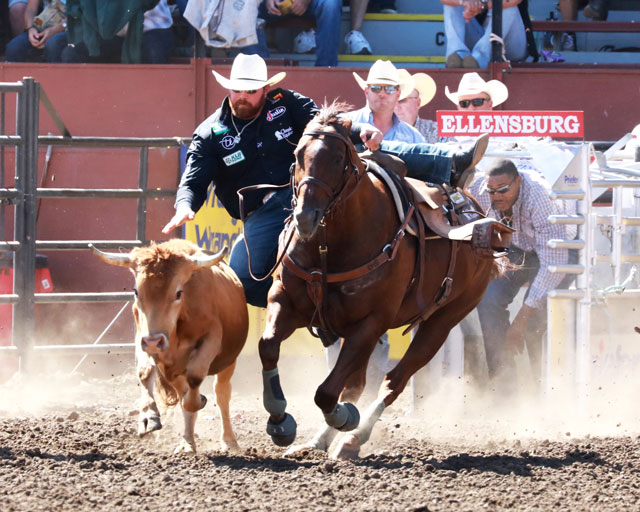
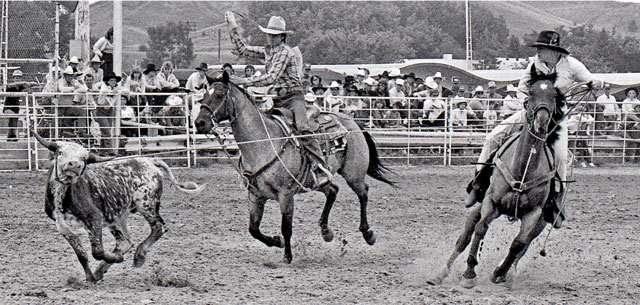
    Clayton Hass has made three trips to the NFR and ended this season in the 12th spot with $41,840.34 won in the steer wrestling. He competes in team roping as a header and tie down roping as well. He went to the NFR 2014, 2015, and 2016. “In 2017 I missed it by $300,” said 36 year old from Weatherford, Texas. “I went through a couple transition years and changed some things, like my horse, who got crippled so I started a new horse. He was young, but worked great. I was trying to train instead of doing my job.”

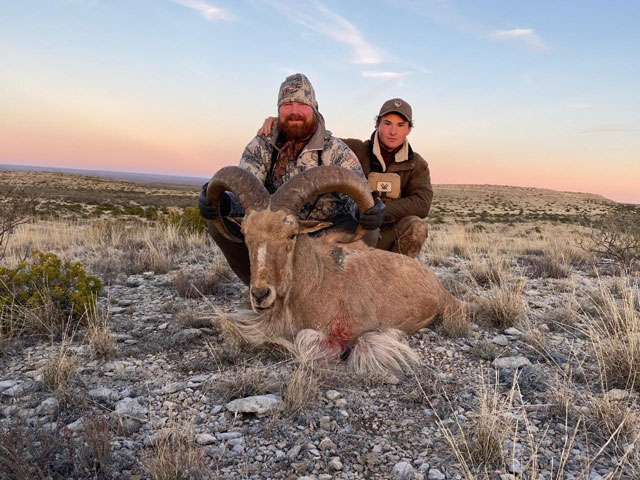
    Clayton started early in rodeo – 7 years old. “I grew up on a ranch in Texas, so it just went from there.” He joined the Nutrena team and is now part of the Record Rack team, preparing to go to his first Bucks for the Brave this November. “I think it’s a great opportunity to give back to the guys that serve our country. It’s awesome to see what they’ve gone through and how they come out of it.” Clayton is an avid archery hunter. “I hunt everything from waterfowl to elk, deer – I’ll try anything once.” He hunts in Montana and south Texas, bringing home meat for his family every year. His wife, Alex, is an excellent cook and she loves the elk and exotic animals. “We’re always coming up with new recipes.”

    He got his first bow in high school. “Growing up I heard how much fun it was, so I tried it. Once you harvest your first animal, you never go back. It’s more of a hunt.”
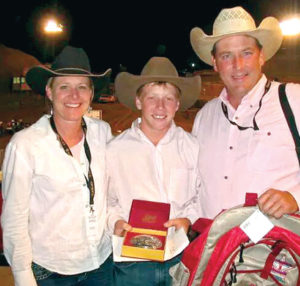
    Along with rodeo and hunting, Clayton has a small construction company and trains horses. His wife, Alex, owns a children’s boutique, AddyMay Kid’s Shop.  She also trains a few horses and ponies. They have three children, Addy, Izzy, and Mac.

    Covid has made rodeo a little different. “There’s a lot more miles in between,” he said. “We got to rodeo more than I thought we would. There are a lot more one headers than ever, not as much money to be won and a lot more guys to split the money up.” He is excited that the NFR is moving to Texas. “It’s about 45 minutes from my house.” He spends time in between rodeos playing a little golf. “I’m above average – not great but decent.”

    He plans to continue rodeo and continue to build up his construction business. “

  • ProFile: Brenda Youtsey Reay

    ProFile: Brenda Youtsey Reay

    Brenda Youtsey Reay was the first girl to win the National High School Finals rodeo in the team roping in 1986. “I’m happy for all the kids that win the high school finals – -it pays for college educations as well as is a great honor for all kids.” Brenda’s story was quite similar to Quincy’s. “I started the year roping with Skeeter Duby and we were having a phenomenal year – everything seemed to be clicking for us and we were having an amazing year. Unfortunately, Skeeter got hurt – he injured his knee on the chute practicing and that accident ended Skeeter’s run at Nationals and forced me to find another partner. I was lucky enough to find a partner and ended the year roping with Brett Kamm. We ended up winning third in the state and qualified for Nationals. At state finals, my number one head horse also suffered an injury so I had one month to practice and decide what horse I wanted to ride at nationals. At that time I had a nice heel horse that was also my barrel horse that I thought scored very well and so I decided to ride him.” In 1986, the high school finals were held in Rapid City , South Dakota. “While traveling to Nationals, Brett’s horse got over the divider in the trailer so he had to ride one of his friend’s horses.” She attributes that win to setting specific goals, creating an action plan and a large amount of resilience. “My health teacher was teaching goal setting so I actually called the National office my freshman year to see if there had ever been a girl who had won the nation. After finding out there had not been, I set the goal to be the first girl to win the Nation. I actually still have my goal sheet and I wrote that long-term goal down and stuck to my short term goals to meet the end result.”
    Brenda grew up in Applegate, a small farming community outside Grants Pass, Oregon. Her dad (Jay Youtsey) was a calf roper, team roper and built Westline Horse Trailers, a custom horse trailer business which were some of the first living quarters in the 1970s. “We ran cattle, raised some horses, built horse trailers and did a lot of bass fishing. My mom, Beverley was a ranch wife and helped with the horse trailers.” Brenda competed in volleyball, basketball, track along with rodeoing in high school. When she graduated, she went to Blue Mountain Community College where she played volleyball, basketball and rodeoed. She also attended Eastern Oregon University and then obtained a degree in health and physical education from Southern Oregon State College. She has been a Health and Physical Education teacher for 29 years, 27 of them at Homedale Middle school. During her time in education she has been a volleyball, basketball and track coach. In 2017 Brenda was Idaho’s Physical Education Teacher of the Year.

    Brenda amateur rodeoed and attended local ropings with her family until her two boys, Bryan and Tyler became old enough to be involved in rodeo and sports. Along with her husband of 30 years, Mike they both focused on their kid’s development in school, sports and all of their other activities. “I became a mom and focused on my family and my career. At some point you realize your children are your biggest asset and your energy is focused on them. Watching both my boys compete and be successful was one of the biggest gifts I have ever been given.” She spent her time keeping their horses in shape, running the chute, untying calves and making sure they were focused on their education. “It was their turn to shine.” Mike was also an athlete and played college basketball, but always enjoyed the rodeo community and lifestyle and now he’s turned into a roper. “We have an arena at our house in Adrian as well as a family place in Morristown, Arizona and we all continue to rope together. We always say—the Family that ropes together-Stays Together!
    Only a few years from retirement, Brenda has spent many of her adult years giving service to others in the rodeo world. That included serving as the secretary for the Idaho Junior High Division for ten years. She also serves as the vice president of the Idaho Girls Rodeo Association, which she has been part of off and on since moving to Eastern Oregon. The Idaho Girls Rodeo Association has been around for 65 years, offering a place for competitors to compete side by side with their grandmothers, mothers, daughters, and nieces. She won the all around last year, competing in pole bending, barrel racing, team roping, steer stopping, and steer daubing and goat tying. Although it wasn’t her intention to start pole bending or doing the other events she entered so her and her eight year old niece, Jayne could rodeo together. This year Jayne started roping and won a new event to the association which was the dummy sled breakaway roping. ‘I am very excited to see Jayne get her first buckle and even more excited that she won it on Tyler’s old calf horse.’
    Brenda had a minor set this spring after recently getting bucked off “I got bucked off super hard – I fractured my back and ended up with contusions on my liver and lungs. Unfortunately, that put me out for a few weeks. At 18 that isn’t a big deal but at 51 that’s not fun and probably the most disappointing part of being bucked off not once but twice within 8 weeks. However, one thing that a lot of people don’t know about me is that I have lived with epilepsy since I was 16 years old. I figure if I can handle that set back I can handle getting bucked off a couple of times. But in all seriousness, I am grateful I wasn’t hurt worse and extremely grateful my son, Bryan loaned me his good horse so I could rope in the Idaho Girl’s Rodeo Finals last weekend.
    Brenda is still coaching and teaching and most importantly loves sharing her passion for competing, sports and lifetime wellness with her students.
    “I love everything about the rural lifestyle- we are blessed to live in an amazing rodeo heavy neighborhood – My bucket is full of gratitude and continued opportunity to grow as a person. I feel we can all choose our attitude in life and are in complete control of making that happen on a daily basis. From my family, career, to amazing life-long friends as well as ability to follow my dreams I have been a very lucky girl” she concludes. “I’ve very goal driven and that will always be how I am hard wired. I honestly never thought I couldn’t achieve something. At the end of the day, winning the nation never defined who I was but it did pave the road for me to realize how much is within our reach if we simply have the dedication, attitude, and desire to put in the work it takes to reach our goals.’

  • Back When They Bucked with Roy Lilley

    Back When They Bucked with Roy Lilley

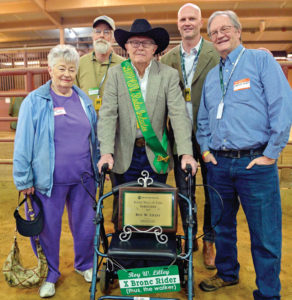
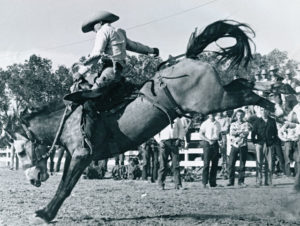
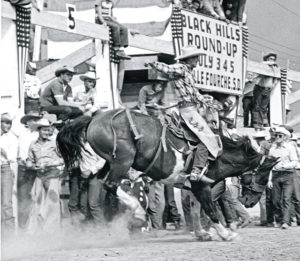
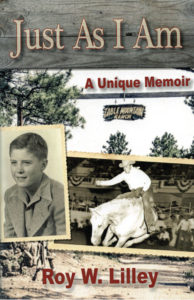
    “I’m pretty talkative and used to edit a magazine, so it just made sense to write a book,” said Roy Lilley, the 90 year old rough stock rider from Fort Collins, Colorado, who wrote a 567 page memoir called Just As I Am. The book took three years to complete.
    Born at the Table Mountain Ranch in Virginia Dale, Colorado, Roy was raised on the family ranch with two older brothers. “We had a lot of fun – and did a few ornery things. I followed my older brothers around everywhere.” His dad (Charles W. Lilley, Sr.) managed a family ranch. At the age of 10, the family moved to Fort Collins and his dad went to work for Producers Livestock in Denver and eventually the family moved to Lakewood.
    Roy worked on a dude ranch (Trail Creek Ranch) from the time he was a junior in high school. “As soon as I figured I could ride the milk cow, I entered the Larimer County Fair in the bull riding.” He borrowed his brother’s bull rope, Pete Burns spurs and came real close to riding a good bull. “He bucked me off hard on my shoulder, and I had to ride with my right hand the rest of the summer.” He was determined to rodeo. “My older brothers were doing it and felt like I could do it.”

    The first rodeo he went to, he drew a little bareback horse and won sixth – that was the first bareback horse he got on. He won a little money and that’s what gave him the encouragement to keep on. He had some natural talent.
    He spent the summer working at the dude ranch and rodeoing on the weekends. He started college at Colorado A&M, now Colorado State University and joined the rodeo team. He majored in animal science and joined the livestock club. “I didn’t go to the rodeo club right at first, but my brother managed the college rodeo that spring so I rode a bareback horse at that rodeo.”
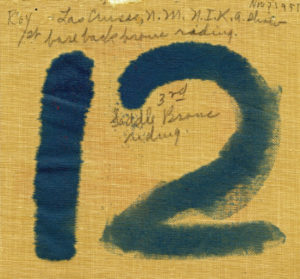
    The next year he started riding saddle broncs. “You learned by doing,” he said. “I got my NIRA card the first year they had them (1949) and won the bull riding at the college finals in 1952, my senior year.” Following that, he had the best summer of his career. He won the amateur bronc riding at Cheyenne and the pro rodeo in Loveland. “I had a really good year,” he said. He was second all around and second in all three riding events for the year in the NIRA, getting beat out by Jack Bushbaum. The finals were held in Portland Oregon and he split the bronc riding 3 and 4 with Cotton Rosser. “Cotton Rosser said that I made one of the best college bull rides he had seen at the NIRA Finals Championship rodeo. That meant more to me than anything!” He can remember the ride jump by jump to this day.
    After graduation he went to Korea. “I had just rodeoed that summer just waiting to be drafted – we were deferred if we kept our grades up during college.” He was a supply sergeant for the field artillery of the Army. “I was there when the war ended and we were having a fire mission at the same time – we sat around for 10 months after at the demilitarized zone.”
    He came back to the United States and got out of the Army on June 20, 1954 and was on a bareback horse two days later at Woodland Park, Colorado. “I’d gained 20 pounds and hadn’t been on a horse since I left. I figured I could pick up where I left off. I rode the bareback horse and the saddle bronc in a haze and got bucked off more during the next three months than I had the three years I was rodeoing. I was drawing good and riding bad.”
    He kept at it. “I wanted to get good enough so I could quit with some pride. My problem was I was thinking too much.” He gradually got better and by the time he quit in 1956, he was pretty good. He quit riding bulls when he came back from Korea. “I had an epiphany in Korea,” he said. “All of my injuries came from being stepped on by bulls.”
    He knew he would never be good enough to make a run for the NFR, so he mostly went on the weekends. In 1955, he rode both of his horses in Cheyenne. That’s when there were five big rodeos close by and he made all of them. The further he got from home, the broker he got. “Pulling into Durango, I blew the oil line on my 1955 Chevy. I spent my last few bucks fixing that and borrowed enough money to buy gas. He made it home and kept going for another year. He placed at three out of the last four rodeos he entered before he quit.

    Roy was 26 and living at the farm at home. His dad was working in Denver and got a job as the director of the first school lunch program in Denver. He knew the director of American National Cattlemens Association (now called the Beef Association), and he was looking for an assistant. “I was rodeoing soso and my dad got really sick and I decided to get a job.” He applied for many different jobs and finally got the job as the assistant for $350 a month.
    “It was the best thing I ever did – it was a great job. I worked there for four years,” he said. He met his first wife, Ingrid, at the dude ranch and they dated. “I wanted to impress her, so I entered a rodeo. I hadn’t been on a bucking horse for four years, but I’d broke a few colts. I drew Pretty Sox, the best draw Earl Anderson had – I qualified on him, but Pinto Pete drove my head in the ground.”
    He got offered a job in California as the assistant director for California Cattlemens. He moved out there in August and started riding broncs again in California for the fall. He didn’t like California very much and missed Ingrid. He flew back to Colorado, picked her up, and they were married in Ely, Nevada on their way back to California. Their daughter, Elizabeth, was born but the couple didn’t make it and eventually divorced.
    He got a job as the Executive Vice President of the international Brangus Breeders association in Kansas City. His next wife, Maxine, had two kids when they married and they had another one, Jennifer. They moved the office after seven years to San Antonio. The couple lived in Beorne, Texas. He worked there until 1979. After 17 years, he left that job and became executive VP of Nebraska Stock Growers – later Nebraska Cattlemens and stayed there 17 years as well. Maxine passed away in August of 1991. “I owed whatever success I may have had from the fact that I learned from my mistakes.”
    He retired in 1996 and married Donice in 1997. The couple settled in Fort Collins and Roy is active in the community with Larimer County Office of Aging. He is also part of the Alumni of Colorado State University rodeo team. He and Donice are enjoying a quiet time of old age together. “A guy at 90 doesn’t make long range plans. I’ve enjoyed my life.”

  • On The Trail with Malcom Heathershaw

    On The Trail with Malcom Heathershaw

    Malcom Heathershaw will spend the next few months healing up from breaking both bones (ulna and radius) in his left arm. “I drew a pretty wide stud and I was the first one out. I was three seconds and my stirrup on the left side snapped off – it sling-shotted me off the left side. My body weight folded my left arm. I tried getting up – it hit me like a bullet.” He had surgery where they inserted two plates and now is healing.

    The Quinn, South Dakota, cowboy started riding steer saddle broncs in junior high and got on his first saddle bronc in eighth grade. He got his start by his dad (Mike) and other family members. “I have a lot of cousins that do it.” The biggest thing that helped me this year was a new practice that has been set up in New Underwood, SD. Louie Brunson started a weekly practice deal and everyone came down and provided us with a chance to get better. There have been a lot of rough stock coaches and pick-up men that have come to help. It was there that I really made a change for the better last spring. If you stick to it long enough you can always change the outcome of your goal.”


    “I can relate that to my dad. His parents weren’t big on rodeo and he grew up learning from his older brother and mainly taught himself. He was very talented in his younger days – went to some pro rodeos – but as he got older he went to amateur rodeos and was in it for the sport of it instead of the world title.”

    “These older guys are giving back to the younger boys,” said Mike, who ranches and raises commercial cattle and Quarter horses. Mike helps several of the boys in his community. “I just liked to ride and they kept paying me for a little while in my younger days. I got to know and helped a lot of the younger boys get started back in the day and now they are giving back to my son. You can’t teach them anything on their back, but once you get them staying on, it’s another level.” Mike hopes that Malcom will pursue college. “We are paying for his tuition on the installment plan. I can throw things at him and he learns. He’s about to go to the next step and take advice from his cousins, who have won many Saddle Bronc Titles themselves, Cash Wilson and Jeremy Meeks.

    Along with a commercial cow herd the family owns Rockin T Quarter Horses. “We raise 15 to 20 baby colts a year,” explains Anita, a Title 1 teacher at Wall School in Wall, South Dakota. “In August, we take the colts up to the shed and spend three or four days halter breaking them. We do it slowly and then we sell them private treaty – we get a lot of repeat customers. My dad used to raise horses, his goal was to raise good looking buckskins.” They raise horses that can be used on the ranch or rodeo. “Our goal is to raise some nice bloodlines and good looking horses.” Malcom gets on the younger horses and gets them going good.

    “It’s a lot of fun,” said Malcom. “It’s a humbling experience doing that – it carries on to people – you’ve got to be able to read stuff to work with animals and it helps me deal with people.” Malcom is a junior and heads to school at 7:30. He used to drive in with his brother, Matthew, but since Mathew plays football, they take separate cars. They both drive older model Cadillacs. His classes include science, English, history, and math. “I’m a history buff, so I like that class.” Matthew and Malcom are a year apart, with their birthdays falling July 18 and 19.


    Matthew is a calf roper. Both boys started in steer saddle bronc riding and roping calves. Once they got to high school, they each chose to focus on one event – Matthew stuck with tie down roping and Malcom went with saddle bronc. Riding broncs has become Malcom’s passion – growing up he excelled at football and basketball and is a very good student. “You’ve got to find your passion and he’s developed such a passion and a drive for saddle bronc riding – he thinks about it all the time,” said his mom, Anita. “When he started riding this spring he was really struggling, his dad, who is his main coach and who has mentored many young cowboys worked hard at trying to figure out the problem. He ended up getting a bigger saddle and that seemed to help a lot. His dad and he are so dedicated to get where he wants to be.”

    Malcom ended his year fourth at state finals. His year started out rough – with the help of the practice pen and a new saddle, he got better each time he rode. At Nationals he ended up fourth as well. “I knew I was placing pretty good going into the short round and knew if I I just stayed on, I might get up there because the horses in the short go were tougher. I was ready to do good. My horse was probably one of the better horses I’ve gotten on; nice and smooth and even and I could show him off a little more.” It didn’t sink in that he ended up fourth in the nation for a few hours. “I was in awe that I got that far.” His goals for the future are to get better at rodeo, go to college, and keep performing at a higher level. “I know I want to continue to rodeo and work at the same time but I want a steady job to pay the bills.”

  • ProFile: Cassidy Brown

    ProFile: Cassidy Brown

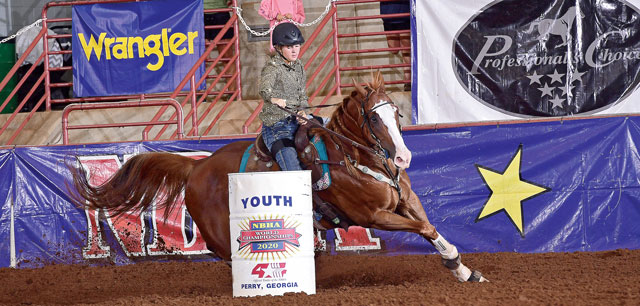
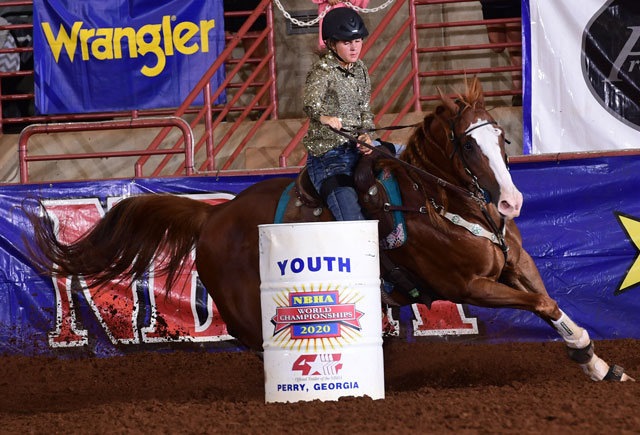
    Cassidy Brown from Montgomery, Alabama, made NBHA history. For the first time, a run off happened to crown the 1D Champion at the 2020 NBHA Youth World Champion Teen Division. Cassidy and Caleb Cline stopped the clock at 14.686 in the short round. They came back and Cassidy won it with a 14.682. “I’m over the moon – I did not go into this past week thinking this would happen; I really didn’t,” said the 19 year old.
    Cassidey began her clover leaf career at a very young age, learning the art of three barrels from her mom Tracey. She attended a Martha Josey Clinic when she was nine. “Chuck and Linda Gail Steward helped me a lot as well,” she said. “The morning of the finals, we received the news that Mrs. Linda Gail lost her battle to cancer that night. I told myself the day of the finals that I’d be running for her and Mr. Chuck. One other thing that really helped my nerves is I knew she’d be riding with me the whole time and I know I had made her smile from heaven.”
    She also handles her nerves by having a huge support system around her. “They stayed in the back talking to me; people come and pray with me – it was sweet of everyone to be there with me – it helped my nerves. I love having people there with me – if I was there by myself, I’d overthink everything and get too nervous.”
    Cassidy gives all the credit to Tito, a nine-year-old gelding that she’s been riding for five years. “His name is Chasin’ Memories, and he’s pretty cool,” she said. “It takes a whole lot of heart to run a 14.68 twice and he did it.” Tito was clocking like he should for a four year old, but it wasn’t consistent. “Buying him as a four year old – there’s a lot of unknowns. Now he’s consistent and I think taking him to Craig Brooks – who we bought him from – helped us a lot.”
    Cassidy is a sophomore studying finance at the University of Alabama. “I enjoy the business aspect of things and I’m good with numbers and finance.” Since her classes will be online only, she is looking forward to being on the road more. Her next big race is the Good Times Barrel race over Labor Day weekend, where she will race to qualify for the Junior American. “I’m excited to take a shot at it.” Throughout the week she keeps Tito in shape by working circles keeping him bending and loose and good in the face and mouth. “Whenever I get to the event, I’ll do the same thing. I might put him on the barrels for muscle memory, mostly for me. He’s got a good mind and heart so when it’s on barrels it’s me.”
    Cassidy is well on her way to her degree having completed several of her undergraduate classes in high school. After that, she plans on hitting the barrel racing road. “The futurity side of things seems like a really good place to be – maybe someday I can do that.” For now, ”I hope to do good and see others do good. I hope I can do my horse justice – he’s awesome.”

  • On The Trail with Quincy Sullivan and Luis Mendiaz

    On The Trail with Quincy Sullivan and Luis Mendiaz

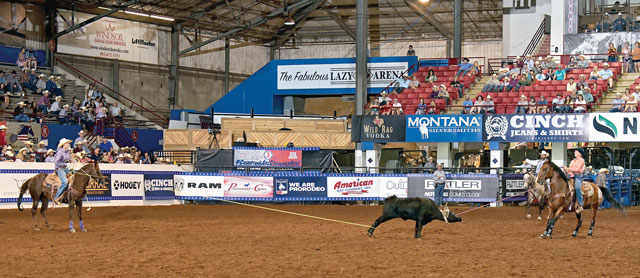
    Quincy Sullivan is the second girl to ever win the National High School Finals in team roping..Brend Youtsey Reay was the first in 1986. The odds were totally against Quincy Sullivan and Luis Mendiaz, team ropers from New Mexico, that won the National High School Team Roping title for 2020. The last New Mexico high school rodeo was in October, 2019. 17 year old heeler, Luis Mendiaz, from Santa Fe, ended the fall season in 5th place. Header Quincy Sullivan, age 16, was in 6th place. The New Mexico first place team was unable to go to Nationals, and Luis was next in line. When his header couldn’t go Quincy was next in line. Quincy and Luis had only roped together once before making the trip to the National High School Finals in Guthrie, Oklahoma. “We each drove 80 miles to rope together before heading to the Finals,” explained Quincy.

    “In the first round, we did pretty good,” she continued. “I didn’t rope the first one as good as I should and we ended up 8th in the round. The second round we drew a stronger steer – Luis pulled off an incredible heel shot!” In the short go, which eliminated all earlier scores, there were four teams ahead of Quincy and Luis, including another New Mexico team. Quincy continued: “I really didn’t think we were as fast as we were. But we did it in 9 seconds and took the lead.” After the first place team missed. —– We won it!”


    Quincy grew up in rodeo, both parents competed. She began by competing in all events – barrels, poles, goat tying, team roping and breakaway. Finally settling on team roping and breakaway roping. She works every day on her events. “I have 15 horses now and I ride them all. My head horse, Hondo, is amazing. He tries his hardest every time and even if a steer is slow or fast, he’s solid. My dad’s team roping partner sold him to us, and he’s worth every penny we paid for him,” she proudly reported, adding: “I hang out with the boys more, because most of the girls don’t rope as much as I do. I’m not your average high school girl.” She will be team roping with Hadley Oder this year and Luis is team roping with her cousin, Weslynn Reno.
    With two more years of high school, Quincy is setting her sights on Oklahoma State University in Stillwater. “I want to be a lawyer,” she explained. “I took mock trial last year in school and really enjoyed it. I’m pretty passionate about it!” She is also running for president of the student council at her school which has 100 students. She added, “I want to make some changes to our school and have a voice.”

    When Quincy was in the 7th and 8th grades she qualified in both the team roping and breakaway roping for Junior High National Finals. She has made the National High School Finals both her freshman year and this past year in both events again. She also qualified for the Junior World finals last year in both the ’15 and under’ as well as the ‘19 and under’ breakaway roping. She won the ’15 and under breakaway roping’.


    Quincy’s mother, Shacey, grew up in rodeo, competing in speed and roping events in high school. She said of daughter, Quincy, “She works hard at her rodeo events and I’m glad she’s getting recognition for it.” Quincy’s dad, Russell, competed in calf roping and team roping in high school and won 2nd in team roping as a heeler. He went to the college finals in both events from 1996 through 1999.

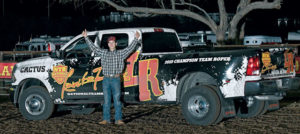
    Heeler, Luis Mendiaz, rode a quarter horse, Sus Beetle, his dad’s friend sold him. He’s a head and heel horse. “I won a truck on him heeling. He’s a good horse,” said Luis. He let’s his dad drive the Dodge Ram truck he won because it is standard shift. Luis admits he’s not good driving a standard shift vehicle. “My dad works construction, and didn’t rodeo until he came to New Mexico in 1999 and started watching roping. He began roping in 2005. He taught me to rope.” In 2010 his dad roped in the USTRC Finals at Guthrie and Luis watched him win 10th place in the #8 Division. “I like to rope the dummy during the day, before I practice on my horse,” Luis explained. His parents don’t speak English but we asked him to ask his mother how she felt about her son winning the world. He said, “She feels really happy for me and for her – that she had a son that won the world and how far I’ve gone in roping.” Luis will be a senior and when he finished he plans to go to college and learn to shoe horses. He said, “I want to thank my parents for supporting me and Quincy and her family.”

    Quincy, with the support and rodeo experience from her parents, and the fact that Luis has his dad’s roping history to aid him, and with their hard work and determination we are sure tol continue to hear about their successes in the arena for years to come.

  • The Day That Two U.S. Marshals Learned To Ride In The Rodeo

    The Day That Two U.S. Marshals Learned To Ride In The Rodeo

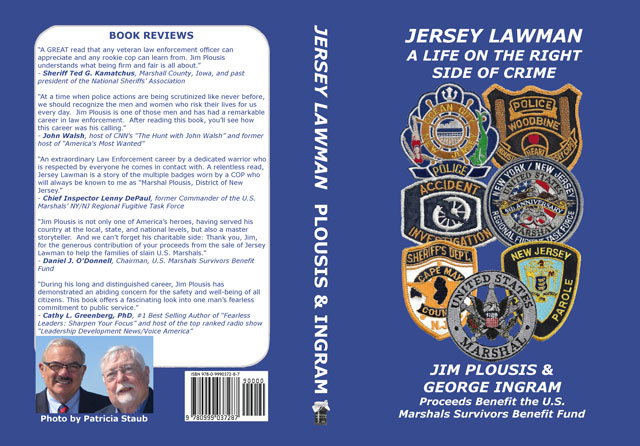
    Story by Jim Plousis

    More than a decade ago, an important anniversary was approaching.

    On September 19, 2009, the U.S. Marshals Service would celebrate the 220th anniversary of its founding. Each district was encouraged to generate special events to focus public attention on the history of a great law enforcement organization.

    As the U.S. marshal for New Jersey, I envisioned an event that would recall those thrilling days of yesteryear when intrepid marshals brought law and order to the West.

    My problem was that, to most people, the Garden State is better known for tomatoes, blueberries, the Sopranos, and corrupt politicians than cowpokes and quick-on-the-draw marshals.

    But in South Jersey’s rural Salem County we have CowTown Rodeo, which bills itself as the “oldest weekly rodeo in the United States.” Every Saturday evening from May to late September this venue offers bull riding, steer wrestling, tie-down roping, bare back riding, and other traditional events.

    The man running CowTown is Grant Harris, whose great-grandfather started the first rodeo there. So I called the local sheriff and asked him to arrange a meeting with Harris to discuss hosting a rodeo event marking the historic anniversary. “I just want to give you a heads up,” Sheriff Chuck Miller confided before we met the rodeo kingpin. “When you shake hands with Grant, he’s missing a finger on his right hand. He’s a real cowboy, and he lost his thumb in a roping accident that took it clear off at the joint.”

    A real cowboy, indeed. At age 8, Grant Harris was a Junior Bullriding Champion. He was a professional rodeo competitor at age 14, and later went to Casper College in Casper, Wyoming, on a full rodeo scholarship.

    Soon I was face-to-face with a mountain of a man, someone just a little shorter than John Wayne, who spiked his conversation with aphorisms like, “That guy has a big hat but no cattle.”  Grant invited us to lunch at a local down-home bar. On his recommendation we ordered a prime rib sandwich an inch thick, including gristle.

    Munching on food that would horrify a cardiologist, I explained my idea for a rodeo ceremony to highlight our anniversary. Grant listened thoughtfully.

    When I finished, he said: “I’ll have a rodeo for you. But there’s one thing I want. If we’re doing this for the Marshals Service, we have to have marshals riding in the opening ceremony.”

    “OK,” I said. “I’ll get some marshals.” I called Arlington, Virginia, knowing that our director had grown up on a farm and rode horses. He declined. No one else there was interested as well.

    Grant Harris was not pleased when he heard the news. “Then I’m just not gonna do it,” he told me. “It makes no sense to have a ceremony for the Marshals Service with no marshals in it.”

    After a pause he said, “What about you?”

    “Grant, I haven’t been on a horse in 30 years.”

    “I’ll teach you.”

    I called U.S. Marshal Dave Thomas in neighboring Delaware. “Get ready,” I said. “It’s you and me. We’re taking riding lessons because you’re the only other marshal I could get.”

    Our first session with Grant was like a first day in Kindergarten.

    “Here’s how you put the blanket on the horse,” he explained. “Here’s how you put the saddle on…This is how you strap the saddle…You put the bit in the horse’s mouth this way…”

    Then we mounted up and rode in circles, learning how to stop and start. After six hours of instruction, Grant said it was enough for one day.

    As we started to dismount, Dave, who was wearing combat boots, got his foot stuck in a stirrup. He tumbled to the ground, smacking his head. Grant could not conceal his disdain. “What are you guys, jackasses?!” he yelled. “You gotta have cowboy boots to ride a horse! You can’t wear things like that!”

    After our third lesson, which included Sheriff Miller, Grant told us we had done so well that he would let us herd some cattle. Our assignment was to move 40 head from a pasture across the road from CowTown to an adjacent field.

    It was a blazing hot day and we were in the saddle until 4 o’clock in the afternoon. My backside was as sore as a baby with an unchanged diaper.

    The night of the big rodeo finally arrived. Dave Thomas, Sheriff Miller, and I waited on horseback in the chutes. With some 3,000 spectators looking on, the rodeo contestants and the three of us were supposed to parade into the arena carrying the Marshals Service flag and other flags.

    But Dave had trouble controlling his horse. “Get that horse straight!” Grant barked. He finally got the critter positioned, and the event began.

    The crowd cheered when we were introduced and trotted out into the arena like Glenn Campbell’s rhinestone cowboys, except that we were attired in our uniforms. The script called for us to line up, salute the American flag and in unison with the audience, recite the Pledge of Allegiance and sing the National Anthem. (Back in those days, no one took a knee.)

    In addition to the pomp and circumstance, we had a colorful display of Marshals Service paraphernalia, including body armor, shields, and stick-on badges. Winners of the various events also received belt buckles embossed with the Marshals Service emblem.

    I’ll bet a glass of sarsaparilla at your neighborhood saloon that the event that year garnered more attention than any other anniversary celebration for the Marshals Service.

    Jim Plousis is a former U.S. marshal. This article is adapted from “Jersey Lawman,” a memoir of his 40 years in law enforcement. Proceeds from the book go to the U.S. Marshals Survivors Benefit Fund.

  • Cassidy Brown made NBHA History

    Cassidy Brown made NBHA History

    Courtesy Siri Stevens

    19-year-old Cassidy Brown from Montgomery, Alabama, made NBHA history Saturday night. For the first time in NBHA history, a run off happened to crown the 1D Champion at the 2020 NBHA Youth World Champion Teen Division. Cassidy and Caleb Cline stopped the clock at 14.686 in the short round. They came back and Cassidy won it with a 14.682. “I’m over the moon – I did not go into this past week thinking this would happen; I really didn’t.”

    Cassidey began her clover leaf career at a very young age, learning the art of three barrels from her mom Tracey. She attended a Martha Josey Clinic when she was nine. “Chuck and Linda Gail Steward helped me a lot as well,” she said. “The morning of the finals, we received the news that Mrs. Linda Gail lost her battle to cancer that night. I told myself the day of the finals that I’d be running for her and Mr. Chuck. One other thing that really helped my nerves is I knew she’d be riding with me the whole time and I know I had made her smile from heaven.”

    She also handles her nerves by having a huge support system around her. “They stayed in the back talking to me; people come and pray with me – it was sweet of everyone to be there with me – it helped my nerves. I love having people there with me – if I was there by myself, I’d overthink everything and get too nervous.”

    Cassidy gives all the credit to Tito, a nine-year-old gelding that she’s been riding for five years. “His name is Chasin’ Memories, and he’s pretty cool,” she said. “It takes a whole lot of heart to run a 14.68 twice and he did it.” Tito was clocking like he should for a four year old, but it wasn’t consistent. “Buying him as a four year old – there’s a lot of unknowns. Now he’s consistent and I think taking him to Craig Brooks – who we bought him from – helped us a lot.”

    Cassidy is a sophomore studying finance at the University of Alabama. “I enjoy the business aspect of things and I’m good with numbers and finance.” Since her classes will be online only, she is looking forward to being on the road more. Her next big race is the Good Times Barrel race over Labor Day weekend, where she will race to qualify for the Junior American. “I’m excited to take a shot at it.” Throughout the week she keeps Tito in shape by working circles keeping him bending and loose and good in the face and mouth. “Whenever I get to the event, I’ll do the same thing. I might put him on the barrels for muscle memory, mostly for me. He’s got a good mind and heart so when it’s on barrels it’s me.”

    Cassidy is well on her way to her degree having completed several of her undergraduate classes in high school. After that, she plans on hitting the barrel racing road. “The futurity side of things seems like a really good place to be – maybe someday I can do that.” For now, ”I hope to do good and see others do good. I hope I can do my horse justice – he’s awesome.”

  • On The Trail with Gauge McBride

    On The Trail with Gauge McBride

    Gauge McBride has found success in the rodeo arena as well as the wrestling floor. He finished his senior year at Kearney High School as the Class A 152 pound state wrestling champion for Nebraska. He also finished his four years of high school rodeo as state champion in the bareback and bull riding, third in saddle bronc riding as well as the All Around title. He headed to the National High School Finals in Guthrie in all three events. Gauge was born without his 7th cranial facial nerve. The congenital defect affects the muscles that control facial expression and eye movement. “Just one side works – my left eye’s not great either. I can’t see out of it very well. I’ll wear my contacts for wrestling and sometimes for riding too.” He admits getting made fun of growing up. “I got in a couple fights about it, other than that, I try to find a good come back … it’s never been something that’s impacted me that much with friends or rodeo; it hasn’t stopped me from doing what I want.”

    “From the second that Gauge was involved in high school wrestling it was apparent that he was a tough kid,” said his wrestling coach, Ty Swarm. “He brought a level of toughness and grit to him that helped our wrestling room and program for the four years he was at Kearney High School. He’s super coachable and driven, so if you tell him why and what he exceeds expectations. I’m not surprised he made a state champion. He is just a good competitor and has the mind-set of how to win and find success. If he knows something is going to benefit him, he’s into it full on. He’s a kid that has flourished under everything he’s done. He’s lighthearted and fun to be around.”


    Gauge has had plenty of coaching on the rodeo side from his dad, Cooper, a 7x NSRA saddle bronc champion, as well as his Uncle Justin McBride, 2x PBR champion. “I was pretty little when he was winning, so I never went to Vegas. But I learned a bunch from him. I used to go down there every summer for a week.”

    Justin made the finals ten times, winning the world twice (2005, 2007). “From the time I was 19 until I was 29,” said Justin, who went from riding to the analyzing side of bull riding for CBS sports and regular CBS. The 40-year-old got his permit when he was 18 and made the finals the next year. “Gauge is a really tough kid; in fact I think that’s his best attribute. A lot of that toughness comes from his dad. Wrestling really translates in rough stock and that gives him an advantage.” Justin is ready to help again and sees ways to help him improve in the bull riding. “They’ve got to believe what they are saying. Even taking away that he’s my nephew, Gauge never looks for a shortcut, and he’s willing to do the work to get there.”

    There are others that have given Gauge guidance and advice. “A bunch of us have,” said his dad. “Steven Dent has helped us a lot too – it’s a group effort.” Cooper thinks his son is “doing real good; he’s got a lot of good things ahead of him if he just takes care of business,” and gives him this advice: “Don’t be scared, scared gets you hurt.” Cooper started riding broncs after high school and went on to win the NSRA in the saddle bronc riding from 1998-2004. He quit riding in 2007 after breaking his leg. “I was going to the circuit finals and amateur finals one more year, but I broke my leg and hung it up.”

    Cooper and Gauge ride to work together every day. Gauge works on gas lines for the Natural Gas Company. “I’m out there with dad; it’s not a bad gig. I’m a welding helper – when they make a well, I use the grinder and clean it off, or I’ll hand them a welding rod when they are finished with their last one. I run the shovel a lot, when they dig up the holes, I have to go in there and clean it up and find the pipe. Eventually I want to be welding for the pipeline. It’s fun and I’m learning a lot right now. It helps me stay in shape running the shovel.” Gauge is going to pursue a welding degree at Panola College in Carthage, Texas. “I really like the coach, Jeff Collins; his attitude and how he goes about business – he was really adamant that you stay in shape, on the right path, doing your schoolwork and things that a guy needs to do to be good at what he wants to be good at. They’ve got a good team; it’s the perfect spot for me … and it’s warmer than Nebraska.”

    “I’m going to agree with Gauge – he’s going to be a blessing for our team,” said Jeff Collins, rodeo coach for six years at Panola. Panola College, known for its vocational degrees, is home to 2,500 students, with 35 on the rodeo team. “I’ve had really good luck with wrestling athletes; they are disciplined, in shape, and willing to give and do a lot of things other guys aren’t. Gauge told me he wants to ride all three like Ty Murray, and there hasn’t been a guy as talented in all three in a long time. When I say Ty Murray – at 51 he’s still one of my heroes to this day. I’ve got great expectations of Gauge.”Gauge will take 14 years of training, and success with him to college. He started muttin’ busting and wrestling when he was four. “When I was little I tried every sport and I really liked wrestling. I played soccer, football, and baseball but they were during rodeo season.” He moved from sheep to calves, to steers, and then mini bulls. “In junior high, I did goat tying, and breakaway roped, team roped, and rode all the rough stock.” Gauge admits he wasn’t that great at the timed event end. “I could have been, but getting on three every day and then to the timed event it was getting to where I wasn’t prepared for each event, and it cost me in the long run.”


    Preparing for each rough stock event is different, but they all include stretching and praying. He can’t choose one event he likes better. “Somedays the bareback goes good, sometimes the bull riding; I’ve been riding bulls the longest, but I think I’m better at the bareback; the bronc riding is a rough story.” He’s having a hard time getting the hang of it. “For some people it clicks, but there’s a lot of moving parts. In the bareback and bulls, you grit your teeth and hold on … in the bronc riding you’ve got to move your feet and when you’re in all three, it’s a different way of lifting with your body and it’s hard to get it. I end up lifting like I’m in the bareback and it ends up getting me out of there or getting me drilled.” The combination of wrestling and rough stock has worked well for Gauge. “Wrestling helps with roughstock a lot; being in shape and helping me in the way I land and flexibility.” It has also helped his mental game. “It’s helped me be mentally tough – never show you’re tired, never give up – it gets tiring getting on three every day, but having a tough mind keeps you from weakening.”

    He prepared for the National High School finals by working out every day and riding the spur board. “Along with bench squat and curls, I run around the track at the YMCA and I’ve got intervals, sprint for 30, jog for a minute, then sprint for a minute and jog for a minute.” His experience last year at the NHSFR wasn’t the best. “I got bucked off in the first round of the bareback and both runs in the bull riding. Second round I was 72. This year I’m better mentality, last year I got worked up on wanting to win win win … it’s hasn’t changed, I still want to win, but I was so focused on winning I wasn’t thinking about how I was riding.”

    His family, along with grandparents, and younger sister, Carsyn, 12 were in Guthrie to cheer him on. “He is extremely humble,” said his mom, Jacque, who competed in all the events in high school except cutting and team roping. “He can light up any room.” Gauge put on dances for all the high school rodeos. “He’s got Party Rockers; and he puts a party on at all the rodeos. He loves to dance.”

    Along with Party Rockers, both Gauge and Cooper are guitar players. He’s been playing for about three years and plays any songs he can figure out. “I play a little country and a lot of rock and roll as long as I can crank the volume and not annoy mom and dad. Dad plays too, playing a lot longer than I have.”

    Gauge finished seventh at the high school finals and he’ll be home one night and he’s off to his first PRCA rodeo in Deadwood, SD. After that it’s Phillipsburg on the 30th.

    “Finals was a lot of fun,” he said. “I got bucked off my saddle bronc. I rode my second one for a 64 and I opted for a reride. I ended up getting three rerides and bucking off.” In the bull riding, he bucked off both of them.
    “I have a short memory – I keep going and get ready for the next one.”

    “I’ll make a shot for Resistol Rookie maybe next year. I’m just going to a couple this year and dip my feet in the water and hopefully not end up with my head in the ground. Next year when I have a little more time, I’ll get to a few more. I think college will be a big step up and I’m excited to see where that goes.”

  • WCRA ANNOUNCES COMPETITION FORMAT FOR AUGUST STAMPEDE AT THE E

    WCRA ANNOUNCES COMPETITION FORMAT FOR AUGUST STAMPEDE AT THE E

    Courtesy 

    WCRA ANNOUNCES COMPETITION FORMAT FOR AUGUST STAMPEDE AT THE E

    –New Opportunity For Youth and Open Athletes To Compete In $300,000 Main Event–


    AUSTIN, TEXAS- WCRA (World Champions Rodeo Alliance) today announced format details regarding the August 11-15 Stampede at The E along with entry dates. The newly added open qualifying pool format will give both DY (youth) and open timed event athletes the opportunity to enter and potentially qualify to compete in the August 15 one-day $300,000 rodeo.


    Contestants in nine disciplines—bareback riding, women’s breakaway roping, saddle bronc riding, steer wrestling, tie-down roping, barrel racing, bull riding, and team roping (heading and heeling)—will compete for their piece of the $300,000 purse. Athletes in each discipline will compete for a share of $28,000 in the main event with the champions walking away with a minimum of $12,500 each. All 10 qualifiers will earn money in the main event.


    “As far as we can see, this $300,000 main event will be one of the single biggest opportunities this year,” said WCRA President Bobby Mote. “Paired with a qualifier, the projected payout could be greater than $600,000.”


    WCRA also announced that open timed event athletes will now have the opportunity to compete in the Stampede At The E through the “Open to the World Qualifying Pools”. These pools will give any open athlete the opportunity to enter and earn a spot in the August 15 one-day $300,000 rodeo. In addition, the timed events will be multiple entry allowing athletes to potentially compete in both the WCRA Pool and Open Pool.


    In addition; DY athletes (competing in timed events only) can enter the DY qualifying pool  and compete in a two head aggregate where the number one youth athlete in each timed event discipline will advance to the main event and go head-to-head with the pros at the Stampede At The E for their share of the $28,000 per discipline.


    DY athletes will have the option to enter in either the open pools or the DY pool. All youth athletes that have been participating in segment six have until Friday, July 10 to contact support@wcrarodeo.com to switch to the DY pool.


    All timed event athletes competing in the Open To The World Qualifying Pools will compete in two rounds of competition with 16 athletes advancing to the progressive round of competition.


    In the progressive round- the 16 athletes from the open pools in each discipline will compete in a single pool with the top four advancing to the main event.


    Entries for the Open to the World pool will open July 13 at Noon CT and close August 5 at 5 p.m. CT. Entry fees for the open division will be $625 while DY fees will be $500. All entries will be taken on entrytool.com.


    Athletes from around the globe have the opportunity to compete in the Stampede at the E and may qualify and earn points by nominating their efforts through the WCRA Virtual Rodeo Qualifier (VRQ) until July 26. All timed event athletes ranked 1-16 on the segment six leaderboard as of July 26 will not be required to pay an entry fee. All timed event athletes ranked 17-64 will be required to pay a reduced entry fee of $250. The confirmed athletes advancing through the WCRA Leaderboard will enter the event on August 4 at 9 a.m. CT through August 5 at 5 p.m. CT.


    The number one athlete on the segment six leaderboard in each discipline as of July 26 will earn a direct spot in the $300,000 main event. The number one athlete will also have the option to enter and compete in the qualifying rounds if they choose without forgoing their position.


    All timed event athletes ranked in the top 64 on the leaderboard as of July 26 will compete in a separate pool. Following two-rounds of competition, 16 will advance to a one-run progressive round consisting of a single pool. The top four times in each discipline will advance to the main event, joining the number one athlete from the leaderboard, the number one DY athlete, and the four open pool qualifiers.


    Rough stock athletes ranked 1-10 on the segment six WCRA leaderboard as of July 26 will earn a direct position into the $300,000 main event on August 15 with no entry fees.

    The Stampede at the E will be coupled with the historic Lazy E Arena Bullnanza, a PBR (Professional Bull Riders) event, creating a weekend of can’t miss western sports action. Details regarding bull riding format will be released at a later date.

    The CBS Television Network will broadcast the Stampede At The E on Saturday, Aug. 29.


    All rodeo athletes interested in learning more about the VRQ should be directed to wcrarodeo.com or contact support@wcrarodeo.com

    Since launching in May of 2018, the WCRA and its partners have awarded more than $7,300,000 in new money to rodeo athletes.

  • WCRA ANNOUNCES $300,000 STAMPEDE AT THE E TO REPLACE PUGET SOUND SHOWDOWN

    WCRA ANNOUNCES $300,000 STAMPEDE AT THE E TO REPLACE PUGET SOUND SHOWDOWN

    Courtesy 

    –Event to Offer Open Entry For Both Youth And Open Athletes–


    AUSTIN, TEXAS- World Champions Rodeo Alliance (WCRA) today announced that in light of COVID-19 restrictions in the state of Washington, the Puget Sound Showdown will be replaced with a one-day $300,000 rodeo in Guthrie, OK at the Lazy E Arena on August 15. The “Stampede At The E” will be coupled with the renowned Bullnanza on May 14, creating a weekend of premier western sports action.


    The Stampede At The E will be preceded by timed event and rough stock qualifier August 11-14 which will raise the week’s total payout upwards of $600,000. The top eight athletes in each discipline from the qualifier will earn a spot in the Saturday night Stampede At The E main event.


    Contestants in nine disciplines—bareback riding, women’s breakaway roping, saddle bronc riding, steer wrestling, tie-down roping, barrel racing, bull riding, and team roping (heading and heeling)—will compete for their piece of the $300,000 purse. Athletes in each discipline will compete for share of $28,000 in the main event with the champions walking away with a minimum of $12,500 each.


    Bull riders will compete for a total $78,000 purse as the $50,000 payout from Kansas City is carried over due to no qualified rides in the showdown round at the Royal City Roundup. The bull riding event champion will earn a minimum payout of $62,500.


    Athletes from around the globe have the opportunity to compete in the Stampede at the E and may qualify and earn points by nominating their efforts through the WCRA Virtual Rodeo Qualifier (VRQ) until July 26 at 11:59 p.m. CT. The number one athlete on the segment six leaderboard in each discipline as of July 26 will earn a direct spot in the $300,000 main event.


    WCRA also announced any athlete has the opportunity to compete at Stampede At The E through the addition of the “Open to the World Qualifying Pools” for the opportunity to compete in the August 15 main event.


    Youth athletes ages 13 and up will also have an opportunity of their own to run at the Stampede At The E, as the WCRA also announced the addition of DY Youth Pool of competition.


    Open To The World Entries for the Stampede at The E will begin on July 13 at Noon CT and close on August 5 at 5 p.m. CT. Early entry fees for the open division will be $625 while youth fees will be $500. All entries will be taken on entrytool.com.


    A total of 10 positions in timed events and nine positions in rough stock will be available in the Stampede at The E with multiple combinations of pay-outs available throughout all stages of qualification.


    All athletes ranked 1-16 on the WCRA Leaderboard in timed events and 1-9 in rough stock will not be required to pay an entry fee.


    Additional details on open entry, entry fees, and event format will be released next week.


    If WCRA athletes would like to request a refund for their segment six nominations, please email support@wcrarodeo.com by Friday June 26 at Noon for a full refund.


    All rodeo athletes interested in learning more about the VRQ should be directed to wcrarodeo.com or contact support@wcrarodeo.com

    Since launching in May of 2018, the WCRA and its partners have awarded more than $7,300,000 in new money to rodeo athletes.