Rodeo Life

Author: Ruth Nicolaus

  • Evan Allard

    Evan Allard

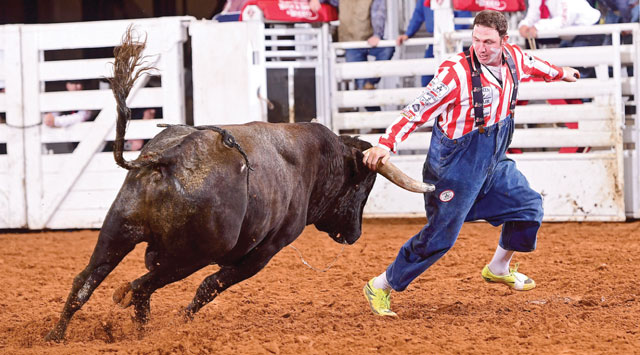
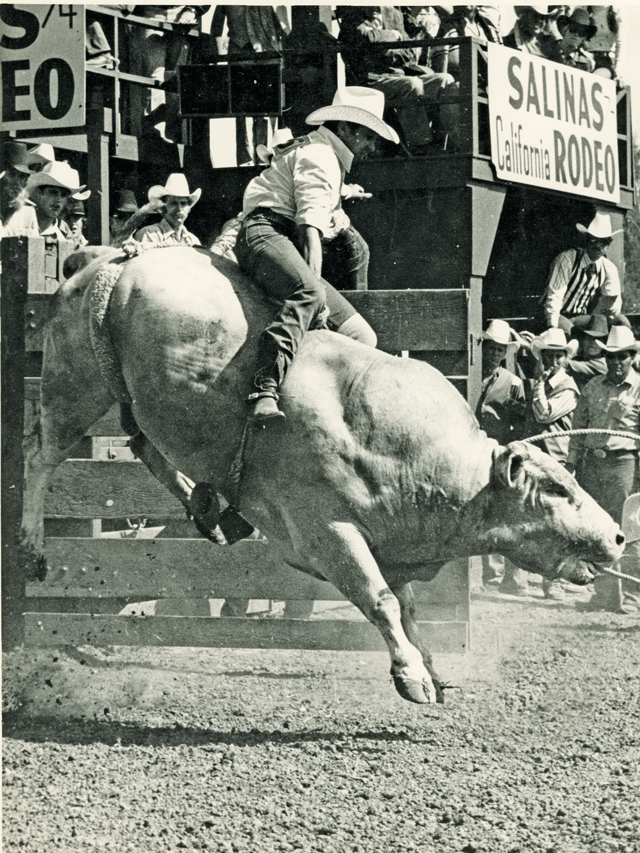
    When Evan Allard was a kid, while his friends were playing football under the bleachers during the Vinita, Okla. rodeo, he was glued to the rodeo, watching the rodeo clown.
    He loved rodeo, and every time the Will Rogers Memorial Rodeo came to town, he was there, with a singular focus, observing. And when he showed cattle at the Inter-State Fair and Rodeo in Coffeyville, Kan., just thirty miles north of Vinita, he was watching there, too.
    And now he’s headed to the biggest stage in pro rodeo: as a bullfighter at the Wrangler National Finals Rodeo.
    Allard grew up around cattle in a family that didn’t rodeo, but he idolized the rodeo clowns and bullfighters.
    When he was fifteen years old, he snuck behind the chutes in Coffeyville and introduced himself to Cory Wall, who was fighting bulls. Wall invited him to a Sankey rodeo school in late August, where Wall was the bullfighter instructor, and Evan went. “I wanted to do it so bad I couldn’t stand it,” he remembered.
    He got ahold of a Humps and Horns magazine, with a listing of stock contractors and associations, and started making phone calls, asking for jobs. “I didn’t know any better,” he said. “I didn’t know the difference between the PRCA and the NFL, for that matter. It didn’t matter to me. I sure wanted to fight bulls and wanted somebody to give me a shot.”
    He began working a junior bull riding association, two events a month for thirty dollars an event. “I was uptown,” he said, thinking he had it made. Ironically, he was working with Cody Webster, who he’ll work alongside in front of the yellow chutes in Las Vegas. “He was just a pup,” Evan said. “We were just babies.”
    In 2005, thanks to Jim McClain, he got introduced to freestyle bullfighting, which became his forte. “That’s where I really made a name for myself,” Evan said. He worked Two Bulls Protection shows, which were owned and produced by McClain.
    In 2006, he went to his first freestyle bullfighting competition, and four years later, he won his first freestyle national championship, with two more titles after that, in 2014 and 2015.


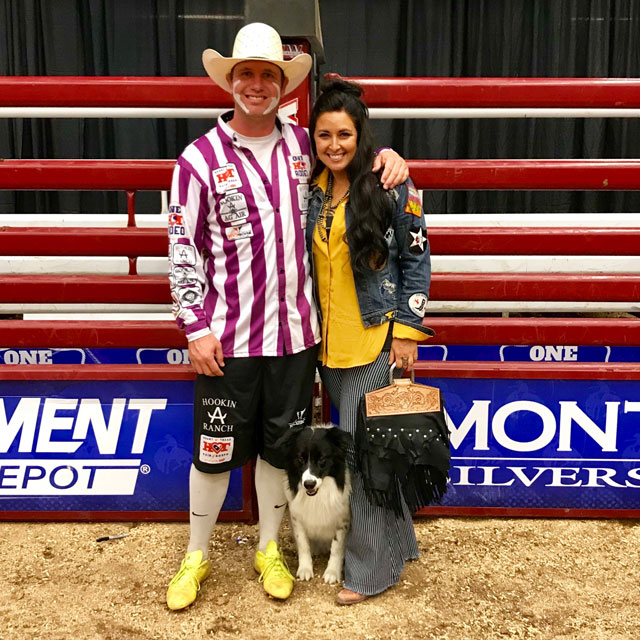
    At the time, he worked a fulltime job as a journeyman substation technician, testing and maintaining high voltage transformers. His job supplemented his rodeo income, helping him buy his place, the Hookin’ A Ranch, and start his herd of fighting bulls.
    Then he got a call to work a rodeo as a bullfighter. He had done plenty of cowboy protection, but freestyle was his main work. He couldn’t refuse this job, but didn’t have any vacation time away from work. “I thought, one of these days, I’ll work when I can’t fight bulls,” he said. “So I quit my job.” It was 2015, and he became a PRCA member.
    He estimates he works more than 100 performances a year protecting cowboys, at rodeos from Oklahoma to California and everywhere in between: the Ft. Worth Stock Show, several PBRs, the Texas Circuit Finals, and more.
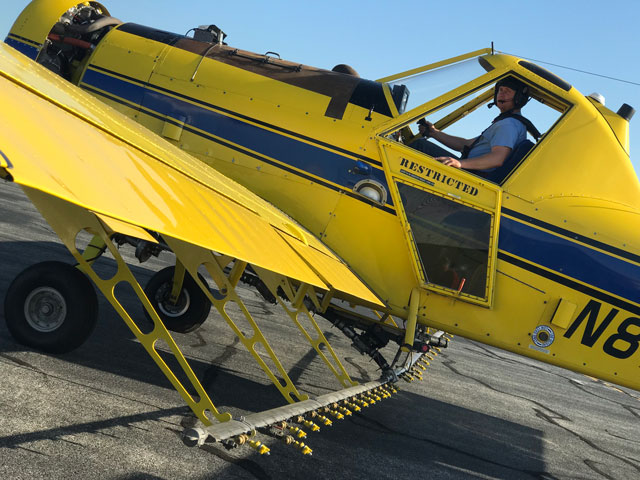
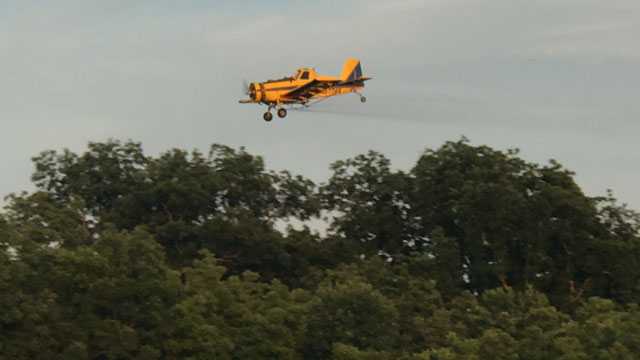
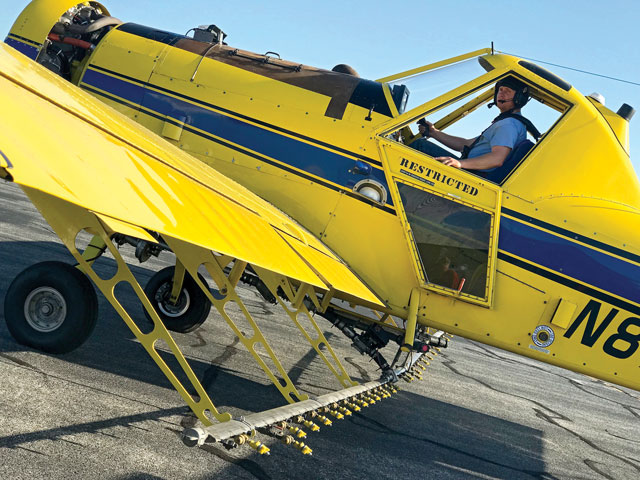
    There’s more to Evan than rodeo. He got his pilot’s license three years ago, with the sole purpose of flying to rodeos. Last year, he got his aerial applicator’s license, to crop dust, and this year, he bought an agricultural plane. He’s growing his business, spraying farmers’ crops and pastures in northeast Oklahoma and southeast Kansas, with his long-time girlfriend, Kelsea Walker, helping out.


    When he got the call that he was selected to work the WNFR, it was a surreal feeling. “Getting that phone call was an unreal moment,” Evan said. “I instantly was glad it was six weeks away. I don’t want to lose that feeling.” The two bullfighters who signed for his PRCA card four years ago are the men he’ll work alongside in December; Cody Webster and Dusty Tuckness.
    When he was a little bitty kid, he never thought his dream would take him this far. As a kid, all he wanted to be was a rodeo clown, because he didn’t understand the difference between the clown and the bullfighters. Having the natural athletic ability to fight bulls took him in that direction instead of clowning. He knows there might be a kid in the audience who looks up to him, just like when he was young. “That’s why it’s important to me to put on the face paint and the baggies,” he said. He knows that for the kids in the crowd, the bullfighters and clowns are bigger than life. “At the end of the day, protecting bull riders is very important, and it has turned into an art, but without somebody in that crowd, we have no job, and the only way to get people in that crowd is to entertain them. There’s more to it than just fighting bulls and going home.”
    Evan knows that when he gets to Las Vegas, the ten days will fly. He’s not ready for that, but he’ll savor every moment. “I don’t want it to be over. I know once I get out there, it will go so fast it’ll seem like it’s over before it starts.”

  • ProFile – Evan Allard

    ProFile – Evan Allard

    When Evan Allard was a kid, while his friends were playing football under the bleachers during the Vinita, Okla. rodeo, he was glued to the rodeo, watching the rodeo clown.

    He loved rodeo, and every time the Will Rogers Memorial Rodeo came to town, he was there, with a singular focus, observing. And when he showed cattle at the Inter-State Fair and Rodeo in Coffeyville, Kan., just thirty miles north of Vinita, he was watching there, too.

    And now he’s headed to the biggest stage in pro rodeo: as a bullfighter at the Wrangler National Finals Rodeo.

    Allard grew up around cattle in a family that didn’t rodeo, but he idolized the rodeo clowns and bullfighters.

    When he was fifteen years old, he snuck behind the chutes in Coffeyville and introduced himself to Cory Wall, who was fighting bulls. Wall invited him to a Sankey rodeo school in late August, where Wall was the bullfighter instructor, and Evan went. “I wanted to do it so bad I couldn’t stand it,” he remembered.

    He got a hold of a Humps and Horns magazine, with a listing of stock contractors and associations, and started making phone calls, asking for jobs. “I didn’t know any better,” he said. “I didn’t know the difference between the PRCA and the NFL, for that matter. It didn’t matter to me. I sure wanted to fight bulls and wanted somebody to give me a shot.”

    He began working a junior bull riding association, two events a month for thirty dollars an event. “I was uptown,” he said, thinking he had it made. Ironically, he was working with Cody Webster, who he’ll work alongside in front of the yellow chutes in Las Vegas. “He was just a pup,” Evan said. “We were just babies.”

    In 2005, thanks to Jim McClain, he got introduced to freestyle bullfighting, which became his forte. “That’s where I really made a name for myself,” Evan said. He worked Two Bulls Protection shows, which were owned and produced by McClain.

    In 2006, he went to his first freestyle bullfighting competition, and four years later, he won his first freestyle national championship, with two more titles after that, in 2014 and 2015.

    At the time, he worked a fulltime job as a journeyman substation technician, testing and maintaining high voltage transformers. His job supplemented his rodeo income, helping him buy his place, the Hookin’ A Ranch, and start his herd of fighting bulls.

    Then he got a call to work a rodeo as a bullfighter. He had done plenty of cowboy protection, but freestyle was his main work. He couldn’t refuse this job, but didn’t have any vacation time away from work. “I thought, one of these days, I’ll work when I can’t fight bulls,” he said. “So I quit my job.” It was 2015, and he became a PRCA member.

    He estimates he works more than 100 performances a year protecting cowboys, at rodeos from Oklahoma to California and everywhere in between: the Ft. Worth Stock Show, several PBRs, the Texas Circuit Finals, and more.

    There’s more to Evan than rodeo. He got his pilot’s license three years ago, with the sole purpose of flying to rodeos. Last year, he got his aerial applicator’s license, to crop dust, and this year, he bought an agricultural plane. He’s growing his business, spraying farmers’ crops and pastures in northeast Oklahoma and southeast Kansas, with his long-time girlfriend, Kelsea Walker, helping out.

    When he’s not fighting bulls, Evan Allard is flying as an aerial applicator. – courtesy of the family

    When he got the call that he was selected to work the WNFR, it was a surreal feeling. “Getting that phone call was an unreal moment,” Evan said. “I instantly was glad it was six weeks away. I don’t want to lose that feeling.” The two bullfighters who signed for his PRCA card four years ago are the men he’ll work alongside in December; Cody Webster and Dusty Tuckness.

    When he was a little bitty kid, he never thought his dream would take him this far. As a kid, all he wanted to be was a rodeo clown, because he didn’t understand the difference between the clown and the bullfighters. Having the natural athletic ability to fight bulls took him in that direction instead of clowning. He knows there might be a kid in the audience who looks up to him, just like when he was young. “That’s why it’s important to me to put on the face paint and the baggies,” he said. He knows that for the kids in the crowd, the bullfighters and clowns are bigger than life. “At the end of the day, protecting bull riders is very important, and it has turned into an art, but without somebody in that crowd, we have no job, and the only way to get people in that crowd is to entertain them. There’s more to it than just fighting bulls and going home.”

    Evan knows that when he gets to Las Vegas, the ten days will fly. He’s not ready for that, but he’ll savor every moment. “I don’t want it to be over. I know once I get out there, it will go so fast it’ll seem like it’s over before it starts.”

    MAKE SURE YOU READ THE DECEMBER ISSUE OF RODEO NEWS FOR MORE GREAT STORIES

  • 5 Star Equine Products – Hazlee McKenzie

    5 Star Equine Products – Hazlee McKenzie

    Hazlee McKenzie had a unique babysitter when she was a little girl.

    When her parents would go to a roping, they’d put her in a pen, on her pony Trigger. She’d ride Trigger for hours, and they didn’t have to worry about her. That’s how she fell in love with horses, and her love hasn’t abated since then.

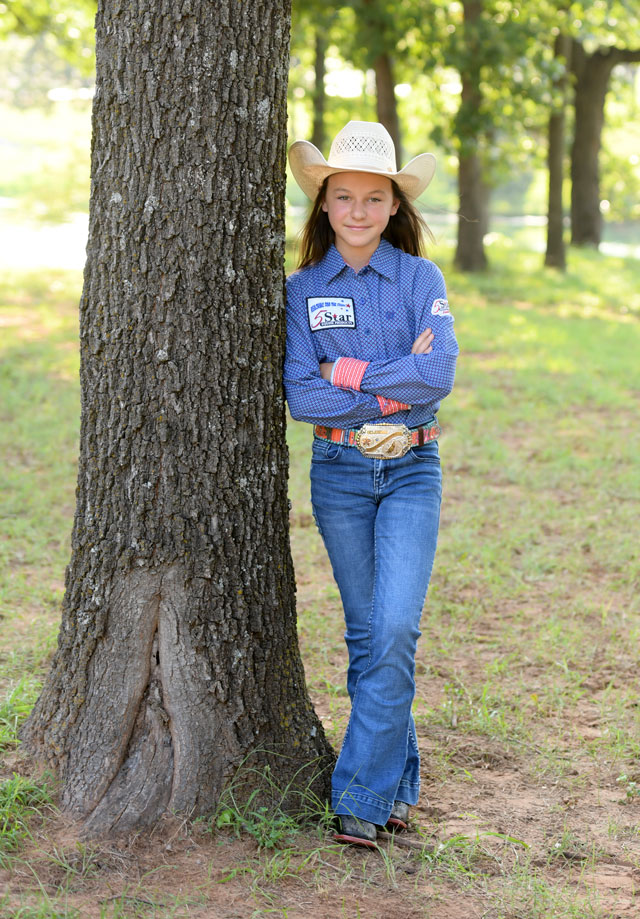
    The twelve-year-old cowgirl, a resident of Muldrow, Okla., is proud to be a part of the 5 Star Equine Products team.

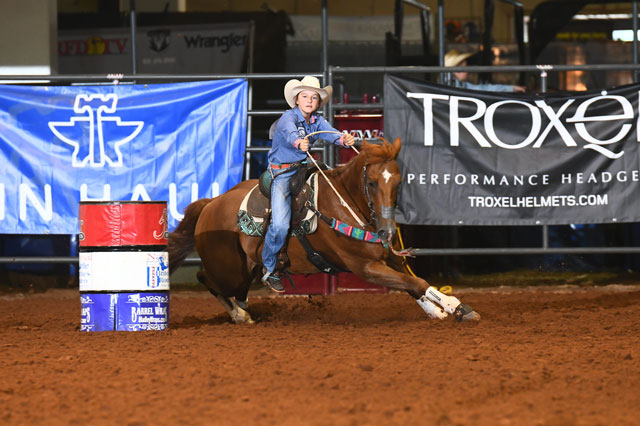
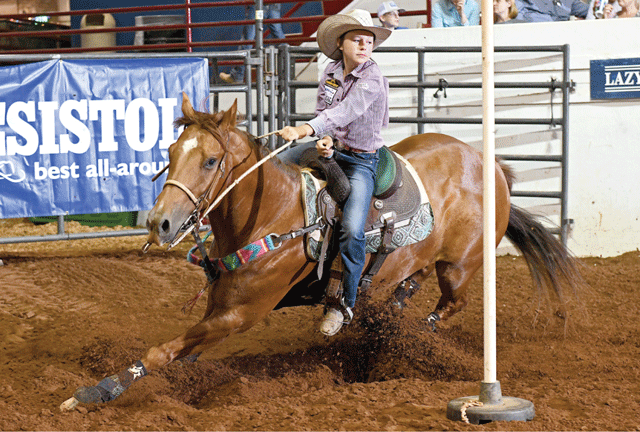
    Hazlee competes in the barrel racing, pole bending, ribbon roping (running for Creek Williams) and breakaway roping.

    She uses three different horses for her events.

    Scooter, an eleven-year-old sorrel, is her barrel horse. A poor fit in the cutting horse industry, the family got him as a four-year-old, originally for Hazlee’s mom Tera to rope on. Scooter is hard-headed, Hazlee said, but he’s smart, really athletic, and loves to run barrels.

    BB is her pole horse. The eight-year-old sorrel was trained by her dad, Jason, and can also be used for the barrels and roping. He’s very personable, Hazlee said. “He loves attention and he does anything you ask him to do.”

    Her breakaway horse is a four-year-old named Junior. Junior is also good at the poles, but is used mostly for roping. He’s really calm and sweet, she said.

    Hazlee is home schooled, with her favorite subject being math and history a close second. Reading is not her favorite; she’d rather be on horseback. That’s why homeschooling is good for her; she can get her work done and head outside.

    She uses several 5 Star Equine Products.

    The saddle pads are her favorite, because they’re made out of wool and fit the horse well. They can be designed by the customer, and Hazlee has designed some of her own. “You can make them look the way you want them to look,” she said. She also appreciates the fact that saddle pads and horse boot colors can be matched. It’s important to her that her things match, with blue being the predominant color among her things. Her favorite saddle pad is white with a turquoise border, and the matching boots are navy with turquoise straps to match the pad. (Hazlee’s favorite color is teal.)

    The saddle pads also come with her initials on the backside. There are plenty of color options with the saddle pads, which is important to a girl who likes fashion. “It’s definitely a benefit for girls who want to bling up their pads, for sure,” Hazlee said.

    Jason and Tera, both ropers, have been using 5 Star Equine Products long before Hazlee became a member of their team. “We just really like the saddle pads,” Tera said, “because you can order them in different thicknesses, depending on the horse.” They come in different lengths, too, a little longer for roping saddles, a little shorter for barrel saddles.

    The McKenzies believe in the value of 5 Star Equine products. “We’ve owned several (saddle pads),”said Hazlee, “and as long as you take care of them, they last a long time.” They also come with a liner that can be used in the spring to protect the saddle pad so shed hair doesn’t get embedded. The liners can be used for dog or cat beds when they’re no longer needed, but the family has found that they can be used several years.

    When it comes to meals, Hazlee’s favorite is steak, corn on the cob, strawberries, and ice cream for dessert. She loves to drink Pepsis and eat Sweet Tarts.

    The best trip she’s taken was to Cheyenne Frontier Days a few years ago, when the family went to a rodeo performance and walked through the exhibits afterwards. She also enjoyed her time in Las Vegas when her dad qualified for the World Series Team Roping in 2017. They took in a night at the Wrangler National Finals Rodeo and some of the trade shows.

    The McKenzie family has several pets.  In addition to their horses, they have Cowgirl, a full-blood blue heeler, who is three-legged, and Reins, a Jack Russell-blue heeler mix. They have a barn cat, Lizzy, who is supposed to be a mouser, but prefers her free meals from Hazlee. They also raise cattle.

    When she grows up, she’d like to be an interior designer and train and run barrel horses.

    She competes in the Oklahoma Junior High School Rodeo Association and the Cowboys Regional Rodeo Association (CRRA). Hazlee qualified for the National Junior High Finals Rodeo in the pole bending, finishing twenty-third in the nation this past summer. She competed at the CRRA Finals in Ft. Smith, Ark. last month in the barrel racing and won Rookie of the Year.

    Her mom and dad enjoy how determined and hard working their daughter is. “She knows the effort she has to put in to achieve the goals she has set for herself,” Tera said. Hazlee loves to just be on a horse. “She likes to be on them,” her mom said. “She doesn’t have to be working barrels or poles or roping. She enjoys just getting out and riding across the pasture.”

  • Featured Athlete: Hazlee McKenzie

    Featured Athlete: Hazlee McKenzie

    Hazlee McKenzie had a unique babysitter when she was a little girl. When her parents would go to a roping, they’d put her in a pen, on her pony Trigger. She’d ride Trigger for hours, and they didn’t have to worry about her. That’s how she fell in love with horses, and her love hasn’t abated since then.
    The twelve-year-old cowgirl, a resident of Muldrow, Okla., is proud to be a part of the 5 Star Equine Products team.
    Hazlee competes in the barrel racing, pole bending, ribbon roping (running for Creek Williams) and breakaway roping.
    She uses three different horses for her events. Scooter, an eleven-year-old sorrel, is her barrel horse. A poor fit in the cutting horse industry, the family got him as a four-year-old, originally for Hazlee’s mom Tera to rope on. Scooter is hard-headed, Hazlee said, but he’s smart, really athletic, and loves to run barrels.
    BB is her pole horse. The eight-year-old sorrel was trained by her dad, Jason, and can also be used for the barrels and roping. He’s very personable, Hazlee said. “He loves attention and he does anything you ask him to do.”
    Her breakaway horse is a four-year-old named Junior. Junior is also good at the poles, but is used mostly for roping. He’s really calm and sweet, she said.
    Hazlee is home schooled, with her favorite subject being math and history a close second. Reading is not her favorite; she’d rather be on horseback. That’s why homeschooling is good for her; she can get her work done and head outside.
    She uses several 5 Star Equine Products. The saddle pads are her favorite, because they’re made out of wool and fit the horse well. They can be designed by the customer, and Hazlee has designed some of her own. “You can make them look the way you want them to look,” she said. She also appreciates the fact that saddle pads and horse boot colors can be matched. It’s important to her that her things match, with blue being the predominant color among her things. Her favorite saddle pad is white with a turquoise border, and the matching boots are navy with turquoise straps to match the pad. (Hazlee’s favorite color is teal.)
    The saddle pads also come with her initials on the backside. There are plenty of color options with the saddle pads, which is important to a girl who likes fashion. “It’s definitely a benefit for girls who want to bling up their pads, for sure,” Hazlee said.
    Jason and Tera, both ropers, have been using 5 Star Equine Products long before Hazlee became a member of their team. “We just really like the saddle pads,” Tera said, “because you can order them in different thicknesses, depending on the horse.” They come in different lengths, too, a little longer for roping saddles, a little shorter for barrel saddles.
    The McKenzies believe in the value of 5 Star Equine products. “We’ve owned several (saddle pads),”said Hazlee, “and as long as you take care of them, they last a long time.” They also come with a liner that can be used in the spring to protect the saddle pad so shed hair doesn’t get embedded. The liners can be used for dog or cat beds when they’re no longer needed, but the family has found that they can be used several years.
    When it comes to meals, Hazlee’s favorite is steak, corn on the cob, strawberries, and ice cream for dessert. She loves to drink Pepsis and eat Sweet Tarts.
    The best trip she’s taken was to Cheyenne Frontier Days a few years ago, when the family went to a rodeo performance and walked through the exhibits afterwards. She also enjoyed her time in Las Vegas when her dad qualified for the World Series Team Roping in 2017. They took in a night at the Wrangler National Finals Rodeo and some of the trade shows.
    The McKenzie family has several pets. In addition to their horses, they have Cowgirl, a full-blood blue heeler, who is three-legged, and Reins, a Jack Russell-blue heeler mix. They have a barn cat, Lizzy, who is supposed to be a mouser, but prefers her free meals from Hazlee. They also raise cattle.
    When she grows up, she’d like to be an interior designer and train and run barrel horses. She competes in the Oklahoma Junior High School Rodeo Association and the Cowboys Regional Rodeo Association (CRRA). Hazlee qualified for the National Junior High Finals Rodeo in the pole bending, finishing twenty-third in the nation this past summer. She competed at the CRRA Finals in Ft. Smith, Ark. last month in the barrel racing and won Rookie of the Year.
    Her mom and dad enjoy how determined and hard working their daughter is. “She knows the effort she has to put in to achieve the goals she has set for herself,” Tera said. Hazlee loves to just be on a horse. “She likes to be on them,” her mom said. “She doesn’t have to be working barrels or poles or roping. She enjoys just getting out and riding across the pasture.”

  • TOPS IN MINOT

    TOPS IN MINOT

    Badlands circuit champs competing at the Minot Y’s Men’s Rodeo gain berths to National Circuit Finals in Florida

    MINOT, N.D. (October 6, 2019) – The cowboys and the cowgirls came to Minot to play, and they did.

    For the 65th year, the Minot (N.D.) Y’s Men’s Rodeo took place, hosting the RAM Badlands Circuit Finals Rodeo at the State Fair Center Oct. 4-6.

    Ninety cowboys and cowgirls converged on the Magic City to compete for nearly $200,000 and the title of Badlands Circuit champion. Champions were crowned in each of eight events, with the final destination being the RAM National Circuit Finals Rodeo, where the champs from each of the continent’s fourteen circuits will duke it out for national titles in April of next year.

    It was steer wrestler Joe Nelson’s first trip to a circuit finals rodeo, and he made this one count.

    The Alexander, N.D. cowboy came into the RAM Badlands Circuit Finals Rodeo in third place in the standings, and won a check in three out of four rounds to win the average, the fastest time on four runs.

    His 20.2 seconds on four head was only one-tenths of a second faster than Cameron Morman, Glen Ullin, N.D., who finished second in the average with a time of 20.3 seconds.

    “I was pretty excited to get here,” Nelson said. “My main goal was to catch all four (steers), get out of the barrier, and get four down.”

    Eli Lord, Sturgis, S.D., won the year-end steer wrestling title and was leading the average till the fourth round, when he missed his steer and didn’t get a time. But rodeo contestants, especially steer wrestlers, are the first to help their competitors; Nelson was helping with Lord’s steer in the chute before. “We all root for each other,” he said. “We want everybody to do well.”

    Nelson rode his  horse named Balls, who he purchased last year. The horse is outstanding, he said. “He scores really good, runs hard, tries, and gives me a good chance.” When Alexander’s traveling partner Tyler Thorson’s horse was hurt in July, Thorson also rode Balls. “For the month of July, that horse had at least four runs on him everywhere we went,” Alexander said.

    Nelson won the Badlands Rookie of the Year Award. He is a graduate of North Dakota State College of Science at Wahpeton, N.D.

    He and Lord will represent the Badlands Circuit at the RCNFR in Kissimmee, Florida April 2-5, 2020.

    Two more “newbies” left the circuit finals as champions.

    Team ropers Jon Peterson and Trae Smith have roped at jackpots before, but this year, for the first time, they partnered up for pro rodeo, and did well all year.

    They entered the circuit finals in first place with enough of a lead to fend off the competition, which was good, since they only placed once, winning first place in the first round.

    “Luckily we won that first round or we wouldn’t be doing this interview,” Peterson joked.

    The two are students at Gillette (Wyo.) College, where Peterson is an upperclassman and Smith is a freshman. They’re doing well in the collegiate ranks, too, having won the college rodeo at Riverton, Wyo. two weeks ago and being ranked in the top four in the collegiate region. “It was good to get that win in Riverton before coming here,” Peterson said. “It was a confidence builder.”

    Peterson’s horse was injured two weeks ago, so his friend and fellow roper Levi O’Keefe lent him his good horse. Guy Howell also rode O’Keefe’s horse, named Slick, at the circuit finals. “He didn’t mess up a single time,” Peterson said of the bay gelding. “I think that is the best head horse right now. It was unreal. He was outstanding.”

    Turner Harris, Killdeer, N.D. and Jade Nelson, Midland, S.D., won the year end title.

    In the bareback riding, it was a sparring match between South Dakota’s Jamie Howlett and Norht Dakota’s Ty Breuer.

    The two were atop the board for each the four rounds of rodeo, with each one of them winning two rounds and placing second in two rounds.

    But it was Howlett who won the average, a mere two and a half points ahead of Breuer.

    Howlett, who is originally from Australia but now lives in Rapid City, S.D., rode with broken bones in his foot and a swollen hand because of being smashed in the chute during the matinee on Oct. 5.

    Shorty Garrett dominated the saddle bronc riding.

    The Eagle Butte, S.D. cowboy won money in three of four rounds (first place twice and tied for first once) to win the average.

    The 26 year old cowboy has qualified for the Badlands Circuit Finals four times, but this was his best year ever, due to new traveling partners, Isaac Diaz and Brody Cress. “I jumped in with a whole different crew, and I’ve been fortunate to have them as traveling partners. I owe a lot to Ike (Diaz). He keeps a guy positive and keeps a guy going. I look up to that man quite a little.”

    The three cowboys make it fun. “Whenever we get in the rig,” he said, “we’re not going to work, we’re going to have fun, and that pays off.”

    JJ Elshere, Hereford, S.D., won the year-end title. He had more than a $10,000 lead coming into the circuit finals, but because of a broken leg suffered ten days ago, wasn’t able to compete at the circuit finals.

    In the barrel racing, Amanda Harris won the average title with a time of 55.05 seconds on four runs, just two-tenths of a second ahead of Cally Kindred, Spearfish, S.D.

    She never dominated the leaderboard, but she was one of only five cowgirls out of the twelve to not knock down a barrel, adding a five second penalty to their time.

    “My big thing was to take it one run at a time,” she said, “and not get caught up in the average, because you have to make four runs first before that pans out. That was my big deal, to take it one run at a time.”

    She was aboard her nine-year-old gelding, Frenchmans Firefly, “Firefly” a horse raised and trained by her parents, Bob and Peggy Welsh of Gillette, Wyo. She first brought him to the circuit finals in 2016, as a six-year-old. In 2017, she was pregnant with her son, and last year, she rodeoed in a different circuit.

    The horse has developed and grown, she said. “This year, he seemed a lot more mature mentally, and he’s been awesome for me all year.”

    She and her husband Shawn’s kids, a daughter, who is four, and a son, who is two, are already anticipating a trip to Disney World, when their mother competes at the RNCFR.

    Jessica Routier, Buffalo, S.D., won the year-end title for the Badlands Circuit.

    Tie-down roper Trey Young, Dupree, S.D., won both the year-end and average titles for his event, aboard his horse Fozzy, an eleven-year-old sorrel who has twice been chosen the Badlands Circuit Tie-down Roping Horse of the year. This will be Young’s second trip to the RNCFR; he competed there in 2017, finishing in third place.

    Bull rider Jeff Bertus snuck out a year-end win in his event, riding two of his four bulls with enough of a lead to take the title. Bertus, Avon, S.D. finished second in the average to Chance Schott, McLaughlin, S.D., who won the average with a score of 255 points on three head.

    In the breakaway roping, Samantha Jorgenson, Watford City, N.D. won the year-end title. Tanegai Zilverberg, Holabird, S.D., won the average (10.4 seconds on four head.)

    The all-around title for the year-end and the finals went to Eli Lord, Sturgis, S.D.

    Rodeo Rapid City was voted by the contestants as the Rodeo of the Badlands Circuit.

    Stock of the year for the circuit was chosen. In the bareback riding, Korkow Rodeos’ Onion Ring won top honors. In the saddle bronc riding, South Point, owned by Sutton Rodeo, was voted as top. The Mosbrucker Rodeo bull named Chills and Thrills was selected as the Badlands Bull of the Year.

    For the finals awards, the Bareback Horse of the Badlands Circuit Finals went to Blessed Day, owned by Championship Rodeo. The Saddle Bronc Horse of the Finals was won by Scandal, of Sutton Rodeo, and the Bull of the Circuit Finals went to Extra Dirty Martini, owned by Fettig Rodeo.

    During the Sunday rodeo, the 2020 Miss Rodeo North Dakota was crowned.

    Callie Enander, Fargo, N.D., won the title. The 23-year-old cowgirl is a graduate of Kindred High School, where she was involved in FFA through livestock judging and horse judging and won several national and state awards for her work. She is a barrel racer and the daughter of Randy Enander, Sandy Johnson and Jeremy Alm.

    The Minot Y’s Men’s Rodeo is a not-for-profit venture by the YMCA Men of Minot, N.D. Proceeds from each year’s rodeo benefit the Triangle Y Camp at Lake Sakakawea, near Garrison, N.D. Next year’s Badlands Circuit Finals Rodeo is tentatively set for October 9-11, 2020. Hess and 4- Bears Casino & Lodge are proud sponsors of the Badlands Circuit Finals Rodeo. National sponsors include the PRCA, WPRA, RAM, Cinch, Justin Boots, Pendleton, Montana Silversmith, American Quarter Horse Association, Pro Rodeo Hall of Fame, Only Vegas and Experience Kissimmee.

    – ### –

    Ram Badlands Circuit Finals Rodeo, Minot, ND

    4th performance October 6, 2019

    Year end and average winners for the Badlands Circuit


    All-around Champion: Eli Lord, Sturgis, S.D.

    All-around champion for the Finals: Eli Lord, Sturgis, S.D.


    Bareback riding

    Bareback Riding Year End Champion: Jamie Howlett, Rapid City, S.D.

    Bareback Riding Average Champion: Jamie Howlett, Rapid City, S.D.


    4th go round results:

    1. Jamie Howlett, Rapid City, S.D. 87 points on Fettig Pro Rodeo’s Adam’s Pet; 2. Ty Breuer, Mandan, N.D., 85; 3. Jake Camody, Mobridge, S.D., 76.5; 4. Ben Kramer, Towner, N.D., 69.5.


    Average results:

    1. Jamie Howlett, Rapid City, S.D. 338 points on 4 head; 2. Ty Breuer, Mandan, N.D. 335; 3. Jake Carmody, Mobridge, S.D. 289.5; 4. Ben Kramer, Towner, N.D. 218 on 3 head.


    Steer Wrestling

    Steer Wrestling Year End Champion:  Eli Lord, Sturgis S.D.

    Steer Wrestling Average Champion: Joe Nelson, Alexander, N.D


    4th go round results:

    1. (tie) Reed Kraeger, Elwood, Neb. and Colt Floyd, Buffalo, S.D. 3.7 seconds each; 3. Carson Good, Long Valley, S.D. 4.3; 4. Joe Nelson, Alexander, N.D. 4.4.


    Average results:

    1. Joe Nelson, Alexander, N.D. 20.2 seconds on 4 head; 2. Cameron Morman, Glen Ullin, N.D. 20.3; 3. Colt Floyd, Buffalo, S.D.12.6 on 3 head; 4. Eli Lord, Sturgis, S.D. 14.2.


    Team Roping

    Team Roping Year End Champion Header: Jon Peterson, Belle Fourche, S.D.

    Heeler: Trae Smith, Georgetown, I.D.

    Team Roping Average Champion Header: Turner Harris, Killdeer, N.D.

    Heeler: Jade Nelson , Midland, S.D.


    4th go round results:

    1. Cooper W White, Hershey, Neb./ Tucker White, Hershey, Neb. 4.4 seconds; 2. Jade Schmidt, Box Elder, S.D./ Matt Zancanella Aurora, S.D. 4.5; 3. Alfred Hansen, Dickinson, N.D./ Levi Tyan, Wallace, Neb. 4.6; 4. Wyatt Bice, Killdeer, N.D./ Parker Murnion, Bowman, N.D. 5.5.


    Average results:

    1. Turner Harris, Killdeer, N.D./Jade Nelson, Midland, S.D. 23.8 seconds on 4 head; 2. JB Lord, Sturgis, S.D./Jake Beard, Menoken, N.D. 25.0; 3. Jade Schmidt, Box Elder, S.D./Matt Zancanella, Aurora, S.D. 25.6; 4. Wyatt Bice, Killdeer, N.D./Parker Murnion, Bowman, N.D. 38.5.


    Saddle Bronc Riding

    Saddle Bronc Year End Champion: JJ Elshere, Hereford, S.D.

    Saddle Bronc Average Champion: Shorty Garrett, Eagle Butte, S.D.


    4th go round results:

    1. Shorty Garrett, Eagle Butte, S.D 87 points on Sutton’s Painted Fire; 2. Jade Blackwell, Rapid City, S.D. 84.5; 3. Cole Eshere, Faith, S.D. 83.5; 4. (tie) Jeremy Meeks, Scenic, S.D. and Louie Brunson, New Underwood, S.D. 83 each.


    Average results:

    1. Shorty Garrett, Eagle Butte, S.D. 336.5 points on 4 head; 2. Jade Blackwell, Rapid City, S.D.320; 3. Ty Manke, Rapid City, S.D. 319; 4. Jeremy Meeks, Scenic, S.D. 310.


    Barrel Racing

    Barrel Racing Year End Champion: Jessica Routier, Buffalo, S.D.

    Barrel Racing Average Champion:  Amanda Harris, Spearfish, S.D.


    4th go round results:

    1. Britany Diaz, Solen, N.D. 13.40 seconds; 2. Nikki Hansen, Dickinson, N.D., 13.59; 3. (tie) Amanda Harris, Spearfish, S.D. and Molly Otto, Grand Forks, N.D. 13.64 each.


    Average results:

    1. Amanda Harris, Spearfish, S.D. 55.05 seconds on 4 runs; 2. Cally Kindred, Harrold, S.D. 55.07; 3. Carey Rivinius, Carson, N.D. 55.37; 4. Molly Otto, Grand Forks, N.D. 55.55.


    Tie-down Roping

    Tie Down Roping Year End Champion: Trey Young, Dupree, S.D.

    Tie Down Roping Average Champion: Trey Young, Dupree, S.D.


    4th go round results:

    1. Dane Kissack, Spearfish, S.D. 8.1 seconds; 2. Jason Vohs, Dickinson, N.D. 8.9; 3. Myles Kenzy, Iona, S.D.  9.6; 4. Trey Young, Dupree, S.D. 10.0.


    Average results:

    1. Trey Young, Dupree, S.D. 37.0 seconds on 4 head; 2. Jason Vohs, Dickinson, N.D. 39.4; 3. Myles Kenzy, Iona, S.D. 45.7; 4. (tie) Dane Kissack, Spearfish, S.D. and Rex Treeby, Hecla, S.D. 29.5 seconds on 3 head.


    Bull Riding

    Bull Riding Year End Champion: Jeff Bertus, Avon, S.D.

    Bull Riding Average Champion: Chance Schott, McLaughlin, S.D.

    4th go round results:

    1. (tie) Chance Schott, McLaughlin, S.D. on Sutton’s Danielson, TJ Schmidt, Belle Fourche, S.D. on Bailey Pro Rodeo’s Cougar; and Coleman Entze, Golden Valley, N.D. on Sutton’s Mississippi Mud, 86 points each; 4. Riley Blankenship, Killdeer, N.D. 84.5.

    Average results:

    1. Chance Schott, McLaughlin, S.D. 255 points on 3 head; 2. Jeff Bertus, Avon, S.D. 166.5 points on 2 head; 3. TJ Schmidt, Belle Fourche, S.D. 166 points; 4. Riley Blankenship, Killdeer, N.D. 165.6.

    Women’s Breakaway Roping

    Year End Champion: Samantha Jorgenson, Watford City, N.D,

    Average Champion: Tanegai Zilverberg, Holabird, S.D.

    4th go round results:

    1. (tie) Samantha Jorgenson, Watford City, N.D., Jennifer Belkham, Holabird, S.D., and Brandi Guttormson-White, Hazen, N.D. 2.9 seconds each; 4. (tie) Brooke Howell, Belle Fourche, S.D. and Tanegai Zilverberg, Holabird, S.D. 3.0 each.

    Average results:

    1. Tanegaie Zilverberg, Holabird, S.D. 10.4 seconds on 4 head; 2. Brandi Guttormson-White, Hazen, N.D. 11.7;3. Brooke Howell, Belle Fourche, S.D. 12.0; 4. Jennifer Belkham, Blunt, S.D. 12.2

    ** All results are unofficial.  For more information, visit www.MinotYsMensRodeo.com and www.ProRodeo.com.


  • Back When They Bucked with Lee & Dixie Wheaton

    Back When They Bucked with Lee & Dixie Wheaton

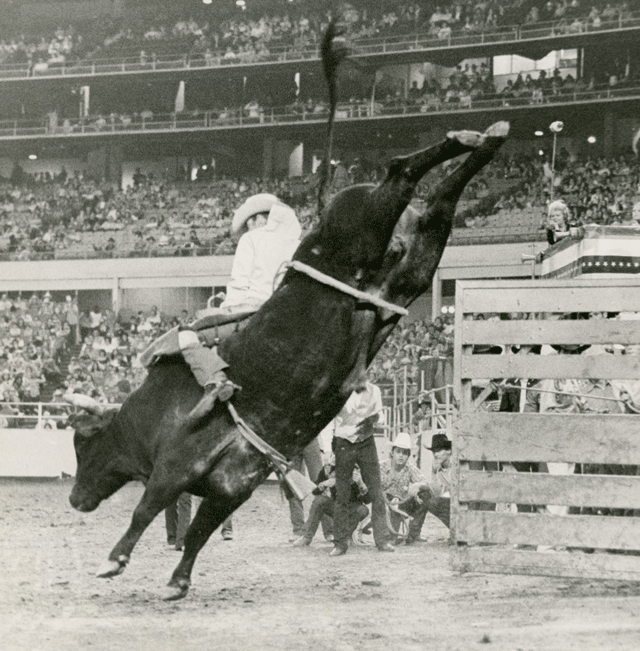
    Lee and Dixie Wheaton have five PRCA gold cards within their family. Lee, a former multiple-event contestant, and his wife Dixie, a barrel racer, each have one. Their daughter Deena Wheaton, has hers, and Dixie’s dad, 1939 world champion steer roper Dick Truitt, had his gold card. Lee and Dixie’s niece, Trula Truitt Churchill, also has hers.
    Lee began life in Rochester, New York, the son of Mel and Dee Wheaton. His dad owned a dude ranch, with weekend and overnight guests, and part of Lee and his older brother Jim’s job was to take care of the up to 100 head of horses that were kept. Each year, Mel would send for a new load of horses from the west, and Lee and Jim’s job would be to make dude horses out of them. “Some of the horses that came to us were not gentle enough for eastern dudes,” Lee remembered.
    When Jim started rodeoing, Lee wasn’t far behind. Lee began riding bulls in 1947, when he was twelve years old. His dad had produced rodeos for a few years, at which Lee sometimes served as the bullfighter, and his parents were supportive. At the time, New York State had lots of open and amateur rodeos. Lee competed at rodeos put on by Pappy Westcott and his son Jackie, and the Baldwin family, among others.
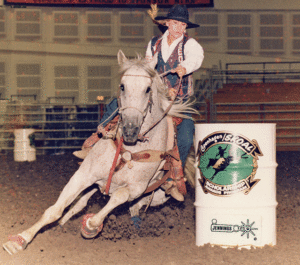
    Dixie Truitt was born in 1940, in Ada, Oklahoma, the daughter of Dick and Juanita Truitt. She traveled with her daddy as he rodeoed, and when she was twelve, she began barrel racing. In 1956, she got her Women’s Pro Rodeo Association card when it was the Girls Rodeo Association, and in 1959, she qualified for the first National Finals Rodeo, but her daddy wouldn’t let her compete because it was during college finals tests.

    Lee graduated from high school in 1954 and amateur rodeoed up and down the East Coast. Two years later, he joined the Rodeo Cowboys Association, and went farther, traveling to the south and crossing the Mississippi River, going to rodeos in Missouri.
    He was doing all three roughstock events and even steer wrestling, occasionally. In 1956 and 57, he worked for Frontier Town, a tourist attraction in New York. Frontier Town held three mini-rodeos a day, featuring one bareback ride, one saddle bronc ride, one calf roping run, one steer wrestling run, and one bull ride, plus contract acts. Lee was the roughstock cowboy and even steer wrestled a time or two. On Saturday nights, he’d drive the sixty miles to the pro rodeo in Lake Luzerne. “We’d drive like hell to get there, and contest there,” he said. He won the saddle bronc riding and the bull riding at Lake Luzerne’s series one year. He and his buddies would also take off for Cowtown, New Jersey, and compete there.
    Once he expanded his territory because of his pro card, he went to Florida one January, but with no success. “I rode every bull I got on, and never won a penny,” he remembered. It was before public announcement systems and riders didn’t know their scores till they looked at judges’ sheets after the rodeo. In Okeechobee that year, he rode a bull they had placed on regularly. “Everybody patted me on the back and said, ‘that ride looked great.’” But he didn’t win anything. Afterwards, he went to the judge, Buddy Medford, and asked why he didn’t place. “Buddy said, ‘that bull jumped and kicked but he didn’t spin.’”
    The next week in Kissimmee, Lee covered another bull with a good ride. “I had a bull that spun, wound it up, and again, everybody was saying, ‘that was a good ride.’” When the rodeo was over, Lee hadn’t won a dime. Medford was judging again, and Lee asked what the problem was. Medford replied, “Lee, he spun real good but he didn’t jump real good.’” They held it against him, that he was a Yankee and was a newcomer to the South.
    Every October, when rodeos had slowed down, he headed back to New York. Depending on how he had done, he either got a job or hunted all winter. Then, in January, he’d head back to Florida and start all over again.
    Lee met Dixie at a rodeo in Cookeville, Tennessee in June of 1961. They married in Iowa two and a half months later. They had planned to rodeo in place of a honeymoon, but Lee had torn up the palm of his hand and it wasn’t healed, so they took off. “We honeymooned in 21 states and five provinces,” Lee said, visiting Niagara Falls and other sites. The first bull he got on after marriage was one he’d won on a few times. For that ride, “I fell off like a big toad,” he said. “My buddies came around and said, “Damn, Lee, married life doesn’t agree with you, does it?” he laughed.
    That fall, Dixie, who had graduated from East Central College in Ada, Okla., had a contract to teach physical education in Wichita, Kan. So they got an apartment in Wichita, got Dixie settled in, and Lee hit the rodeo trail again.
    They stayed in Wichita for a year before going to Scott City, Kan., where Dixie spent four years teaching physical education: archery, swimming, bowling, basketball, tennis, and more. They moved again, this time to Dixie’s home state. “That Oklahoma girl got homesick,” Lee said. She had been working on her master’s degree and got a teaching job in Tulsa. It was 1965, and they moved to the place where they still reside, near Mounds, Okla., just south of Tulsa.
    Dixie taught school in Tulsa from 1965 to 1992, teaching P.E. and coaching basketball. She was awarded the girls basketball coach of the year honors in the First Frontier Conference, and finished her teaching career at Will Rogers High School in Tulsa. She switched to the classroom, teaching child development, parenting, and psychology.
    While at Will Rogers High School, the school had an annual roping contest among staff. Dixie won it several times, having grown up with her dad, the world champion steer roper, her uncle Everett Shaw, a six-time RCA steer roping champion, and her maternal granddad, Cole Underhill, a steer roper before the formation of the RCA.
    Lee and Dixie rodeoed through the summers and during the school year, when she came home from school each night, Lee would have her horses saddled and ready to go. They usually bought race horses and Dixie trained them for the barrels. During her years, she had four bays that she considered her best. Levan II, “Reverend,” she considered her fastest horse ever. On Reverend, she won three rounds in Salinas, Calif. one year.
    Cajun was another horse that was one of her best, as was Tiny Mark, a gelding from Arkansas, and Strongwall Snip. Dixie was a good trainer, coming by it “honest,” she said. Her daddy trained his own horses, and if a horse didn’t make it as a steer roping horse, Dixie would get him.
    Their daughter Deena was born in 1962, and when she was sixteen, she had her WPRA card. Clem McSpadden called Deena “the teenage sensation from Mounds, Okla.,” and she ran barrels along with her mother.
    Several times, while he was injured, Lee was called on to judge. In 1965, with a broken arm, he judged rodeos in Ft. Worth, Miami, Fla., and Chicago. He also judged the College National Finals Rodeo three times.
    In 1975, Lee quit riding bulls. He’d been an RCA card holder for 21 years, and he still loved the sport, but it was time to quit. Dixie and Deena were still running barrels, but Lee couldn’t go with them. “I wouldn’t hardly go to a pro rodeo with them,” he said. “I knew, if I went, I’d want to get on. I was 41 and that was old enough to quit.”

    In 1980, when Dixie turned forty, her good friend Florence Youree entered her in a senior pro rodeo in Canadian, Texas. Lee went with her, and he saw that the senior bull riders were all guys he had rodeoed with for twenty years. He watched the rodeo and said, “If those guys can still ride bulls, I can too.” The senior pros were fun for them. Rodeoing “wasn’t stressful,” Lee said. “When you left home, you had money in your pocket, and you knew you could pay your bills. You didn’t have to win anything.” The two of them qualified for the National Senior Pro Rodeo Finals each year from 1980 to 1985.
    In 1982, Dixie won the year-end barrel racing title for the Senior Pros. That year, at every senior rodeo she ran, she won first place. She rode Dial Doc, a sorrel gelding that she and Lee traded for one of their horses and a tractor and brush hog. Doc, Lee said, was “half lunatic,” a horse who had been soured going into the arena. But Dixie figured out a way to get him down an alley. Two great big Native Americans who were at the senior pro rodeos would get ahold of the cantle and walk him up to the gate. “As soon as he got through the gate, he’d do his job great,” Lee remembered.
    Towards the end of his bull riding career in the RCA, Lee took a job with the Oklahoma Department of Agriculture. He worked for them for twenty years, testing for brucellosis and later visiting horse events checking for health papers.
    Dixie continued to train horses and ran barrels up to just a few years ago. Between she and Deena, they have trained eight world champion breed horses.
    Dixie had a stroke a few years ago but she and Lee still live in their home of 54 years. They celebrated 57 years of marriage in 2018.
    They also enjoy Deena’s son, Jesse Chelf, who is in the U.S. Army. Jesse has been stationed at Fairbanks, Alaska and has served tours in Afghanistan, Vietnam, the Philippines and Germany. Lee and Dixie have two great-granddaughters.
    Rodeo days were good days, and Lee loved riding bulls. “It was the biggest adrenaline rush I could imagine,” he said. “I still look at bull riding pictures and my heart gets to beating fast, thinking about how good it felt. I loved it.”
    They’ve had a good life. “We feel really fortunate. We’ve both never had a job that we didn’t enjoy. It’s been a wild ride.”

  • Back When They Bucked with Terry Peek

    Back When They Bucked with Terry Peek

    Terry Peek craved riding bulls. And although he never made a living at it, it was his hobby, his lifestyle, and where he made many friends. The Bandera, Texas cowboy was born in 1945 in Paris, Texas, the son of Joe Bailey and Robbie Lee Peek. When he was seventeen years old, he was at a rodeo, behind the chutes, when someone asked him, “Son, do you want to get on this bull?” He thought it was a good idea, so he said, “You bet.” The man asked, “Did you sign a release form?” “I said, sure I did,” he recalls. “I didn’t even know what a release form was.”
    So he found a cotton rope, wrapped it around the bull’s girth, and got on. He rode him for six seconds, got bucked off, and “from then on, I said, boy, this is fun and this is what I want to do.” The next Monday, he bought a bull rope and a pair of spurs, and his rodeo career began.
    Terry, who had worked for local farmers and ranchers around Paris, had broken and ridden horses for people, earning $35 a head. After his first bull ride, he went to every junior rodeo he could get to, hitching rides with buddies or going on his own. He was friends with Sammy Andrews, Gerald Smith, who owned Wing Rodeo, and Robert Wright. Friends would meet at Robert’s, near Talco, Texas, every Sunday, to ride bulls.

    He was also friends with Todd Whatley, who introduced him to world champion bull rider Freckles Brown. Freckles’ home in Soper, Okla., was just across the state line from Paris, and Terry went to work for Freckles, putting up hay on his ranch. Terry rode bulls at the Paris rodeo, where Freckles was the judge, and when Terry won a go-round, Freckles was “tickled to death,” he said. “He said, Terry, did you get your check? I said, I don’t even know where to go.” Freckles laughed and said, “Son, go right up those stairs to the announcer’s stand and there will be a secretary there with a check.” It was a check for $250, “which was huge for me. I came back, showed it to Freckles, and he said, ‘that-a-boy.’”
    His parents were not pleased with his decision to ride bulls. His junior year in high school, he declared to his parents that football did not interest him anymore; he’d be rodeoing. His mother had something to say about that. “She said,” Terry remembers, “let me explain something to you. You’ve made a commitment to play football to the coach. You’re going to fulfill that commitment. You can ride bulls, but you’ll play football.” He did, but “I was thrilled when the season was over,” he said.
    His parents grew to accept his choice to rodeo. “They finally understood, this boy is going to do what he’s going to do. My mother said to my dad, let’s just go to some of his rodeos and watch him, so they did.”
    After high school graduation, Terry was a student at Paris Junior College. He was still rodeoing, and to him, rodeo was more important than school. He declared to his mother that he was going to quit school and rodeo full time. “My mother had this look on her face,” he recalled. “She didn’t say anything.” A few weeks later, his mother told him Sonny Sikes, the rodeo coach at Sam Houston State University, had called, asking him to rodeo for the team. “I said, ‘he does?’” And she said, yes. “They have a great team there and he’s heard about you and he wants you to come and rodeo at Sam Houston.” It was a set-up; Sonny Sikes had never heard of Terry but his mother arranged it so that Terry would go back to college.
    It worked. Terry attended Sam Houston State for two years, riding bulls for them and earning a degree.
    While in college, he qualified for the College National Finals Rodeo in 1967 and 1968, finishing the ’67 season as Southern Region bull riding champion. Terry was in good company, competing alongside the likes of Phil Lyne, Carl Deeton, Ronnie Williams, and other good cowboys.
    His parents made a real sacrifice to send him to college. Before he left for Huntsville, his mom and dad gave him fifty dollars. It was what they were able to save for him. His mother told him, “your dad and I have saved fifty dollars and we want you to have it, to get off to a good start.” Each week, his mom would put a case of Campbell’s soup on the bus to him. Terry would meet the bus at Huntsville to pick it up. “I always had food,” he said, even if he did get tired of soup. Sometimes he’d trade a buddy a can of soup for a hamburger. In 1968, he graduated from college with a degree in ag education. He enrolled in the master’s program at Sam Houston, but got drafted into the Marine Corps. He spent two years in the Marine Corps, stationed in various places on the west coast and in the Pacific, before his honorable discharge.
    When he got out of the Marines, he got a job in Coldspring, Texas, teaching agriculture. He was still competing at 35 or 40 rodeos a year, all over east Texas, Louisiana, and farther. They were regional and International Pro Rodeo Association events.
    After two years in Coldspring, he moved to Cortez, Colo., spending five years there as an ag teacher and the high school rodeo coach. He was still rodeoing, this time in Colorado, Utah and that part of the country.
    In 1979, Terry moved to Ft. Collins, to work on his doctorate in ag science at Colorado State University. After earning his advanced degree, he moved to Glenwood Springs, Colo., to work for Colorado Mountain College as dean of community education. He had worked with Exxon Mobil, getting students jobs with the oil company. When Exxon offered him a job, he took it. They sent him to Colombia, South America for three years, then Mexico, then back to the States: Houston, Illinois and California.

    But he decided he missed teaching, so he went back to the classroom, as ag mechanics instructor and rodeo coach at Texas A&I in Kingsville (now Texas A&M in Kingsville). He loved the classroom and helping rodeo athletes. For the five years he was in Kingsville, his athletes qualified for the College National Finals every year.
    It was there that he got on his last bull. Terry had quit riding at age 35, but at the age of 49, he got on one more. During an evening practice, the college bull riders couldn’t stay on. “They couldn’t ride a milk cow that night,” Terry remembered. “I said, ‘golly, you boys are pathetic. Let me show you how this works.” He got on a bull, rode for eight seconds, and when he dismounted, he fell and the bull stepped on him, breaking his pelvis and separating it three and a half inches. The college kids were laughing. “Yeah, yeah, Dr. Peek,” they said, as the ambulance came. “I was always one to take a dare,” Terry said.
    After five years in Kingsville, the wanderlust in Terry returned, and he moved to Farmington, New Mexico, where he worked at San Juan College for five years. Then it was on to Roseburg, Oregon, to Umpquah Community College as vice-president. Two years later, he was on to Wenatchee (Wash.) Valley College.
    He and his first wife had two sons: Josh Peek and Jason Peek (Terry and his sons are no relation to the steer wrestler Josh Peek from Colorado), and one of his grandsons, Idan Peek, needed some extra attention, so Terry raised him. After his divorce, he was single for many years. “That was good,” he said. “I wasn’t distracted. I was able to do my work and do a good job of raising that child.”
    Then a chance encounter on a plane brought him his wife, Dorene. It was on a flight from Austin to Portland, and he was seated next to her. As they visited, he discovered that she was a barrel racer and her father had raised some National Finals Rodeo bucking bulls. After the plane ride, they stayed in touch, then married in 2008.
    Terry retired in 2009 and the couple settled in Bandera, Texas. He still receives phone calls from former college kids who were inspired and helped by him. He was an example to them, that rodeo and a good education aren’t exclusive of each other; he was able to get his schooling done yet still ride bulls. He loves to talk to former students. “They appreciate what I did for them, and I was lucky to have them,” he said. He also has a high respect for Sonny Sikes, and the two stay in touch.
    He is a member of the Rodeo Cowboy Alumni Association, a group that gets together twice a year and raises funds for scholarships for young people. He enjoys getting together with other rodeo friends.
    In retirement, he golfs and works in a saw mill he and a friend purchased. He makes furniture, and still attends rodeos, including the National Finals Rodeo, Pendleton, Bozeman, Mont., and others. There are several retired cowboys in Bandera, and they get together. “We talk about how good we were, back when they bucked,” he laughed.
    Bull riding was his love. “I loved to get on those things,” he said. “I just craved getting on bulls. I couldn’t wait to get on the next bull, for so many years.”
    “I wasn’t one of the best, but I had a lot of passion for what I was doing.”

  • Repeat Winners at the Last Chance Stampede

    Repeat Winners at the Last Chance Stampede

    Two Helena pro rodeo champions repeat their titles; champs are crowned in Helena

    Helena, Mont. (July 27, 2019) – Clayton Hass loves coming to Helena.

    For the second time, the Weatherford, Texas man won the steer wrestling title at the Last Chance Stampede.

    He turned in a time of 3.6 seconds to tie the arena record, and become the two-time consecutive titlist.

    The steer he had was the same one he drew in Salt Lake City, Utah, earlier in the week, but the steer stumbled and fell. “This is kind of a bittersweet rematch,” he said, “and it worked out in my favor.”

    Hass, who has qualified for the Wrangler National Finals Rodeo three times, is ranked twenty-third in the PRCA world standings and has competed in Salt Lake City twice this week, Deadwood, S.D., in Joseph, Ore., and tonight in Helena. “We’ve been all over the place,” he said.

    Hass loves competing in Helena. When he and traveling partner Dakota Eldridge pulled into the parking lot, they were awed that the parking lot was full. “Dakota was like, are you sure the

    rodeo doesn’t start at 7 pm?” Hass said. “I said, no, it’s 8. They’re just here for a good time.”

    There’s plenty of rodeo left before the season ends on Sept. 30, and Hass and Eldridge won’t take many days off. “There’s tons of money left to be won,” he said. “We just have to bear down.”

    Hass’ winning time last year was 3.7 seconds; he tied for second place in 2017 and won the all-around, taking the coveted elk ivory ring.

    In the bareback riding, a Utah man walked away with the championship.

    Mason Clements, Draper, Utah, scored 87 points on the Kesler Rodeo horse Candy Smile to win the championship spurs. She was the horse to have, he said. “She’s just a great horse. When she comes out there, she does her job. If you get a good mark out on her, and she does her job and you do yours, it feels great.”

    Clements had an ACL and meniscus worked on in a knee and didn’t begin his rodeo season till April 1. “I just kind of eased into it,” he said. “I wanted my knee to be one hundred percent so when I came back, I didn’t have to rush, I didn’t have to panic.”

    He’s ranked in the top thirty in the world, but figures there’s about $10,000 between the number thirty man and the number fifteen man, and earning $10,000 is feasible. “For as many rodeos as are going on, and as many as we are hitting, ($10,000) is just a solid week of rodeo, really.

    “I’m making short targets and riding one horse at a time,” he said. “Not getting ahead of myself has been key. I’m just trying to do my job correctly and ride my horse, jump for jump.”

    Clements keeps a strong mental game. “It’s important to stay confident in your craft, in your training, hit those short targets, and when the opportunity presents itself, you have to take it.”

    Another man repeated his title in Helena.

    Bull rider Jordan Hansen bested the field with a score of 84 points on the Kesler bull Goose Bumps to win his second Last Chance Stampede title.

    He was prepared for the bull. “I’d seen him around a little but never had the chance to get on him. A lot of guys slap him (with their free hand), because he’s up and down and one of the stronger bulls. I knew if I did my part right, I should be able to get a good score and luckily things worked out for me.”

    The Ponoka, Alb. man won the Helena pro rodeo two years ago, and he’d like another pair of trophy spurs like he was awarded in 2017. “They’re my favorite set,” he said. “I’d like to have two sets. The first set actually has a couple of rubies, and they’re pretty.”

    Other 2019 Last Chance Stampede champions include team ropers Shawn Bessette, Great Falls, Mont. and Ike Folsom, Dillon, Mont. (4.7 seconds); saddle bronc rider Kade Bruno, Challis, Idaho (84.5 points); tie-down roper Colton Farquar, Oakdale, Calif. (8.5 seconds); and barrel racer Dona Kay Rule, Minco, Okla. (17.44 seconds).

    The 2019 Miss Last Chance Stampede Queen was crowned tonight. Hunter Brewer of Helena won the title. Brewer, who is eighteen years old, will be a freshman at Montana State University-Northern this fall. She is the daughter of Walt and Heather Brewer.

    The 60th annual Last Chance Stampede and Fair will be July 23-25, 2020.

    For more information on the Stampede, visit LastChanceStampede.com. For complete rodeo results, visit ProRodeo.com.
     

    Final results, Last Chance Stampede,  Helena, Mont. July 25-27. 2019

    All-around champion: Landon Williams, Helena, Mont.

    Bareback riding champion: Mason Clements, Draper, Utah

    1. Mason Clements, Draper, Utah 87 points on Kesler Rodeo’s Candy Smile; 2. Trenten Montero, Winnemucca, Nev. 82; 3. Wyatt Denny, Minden, Nev. 81.5; 4. Skyler Erickson, Powell, Wyo. 81; 5. (tie) Caleb Bennett, Corvallis, Mon. and Pascal Isabelle, Okotoks, Alb. 80.5 each; 6. Devan Reilly, Great Falls, Mont. 77.5; 7.Spur Lacasse, Calgary, Alb. 77.

    Steer wrestling champion: Clayton Hass, Weatherford, Texas

    1. Clayton Hass, Weatherford, Texas 3.6 seconds; 2. Jake Nelson, Belgrade, Mont. 3.8 seconds; 3. Stetson Jorgensen, Blackfoot, Idaho 4.0; 4. Curtis Cassidy, Donalda, Alb. 4.1; 5. (tie) Hank Hollenbeck, Molt, Mont. and Blake Knowles, Heppner, Ore. 4.2 each; 6.(tie) Bart Slaney, Whitefish, Mont. and Ty Erickson, Helena, Mont. 4.3 each.

    Team Roping champions:  Shawn Bessette, Great Falls, Mont. (header) and Ike Folsom, Dillon, Mont. (heeler)

    1. Shawn Bessette, Great Falls, Mont./Ike Folsom, Dillon, Mont. 4.7 seconds; 2. Garrett Rogers, Baker City, Ore./Jake Minor, Ellensburg, Wash. 5.1; 3. (tie) Jr. Dees, Aurora, S.D./Lane Siggins, Coolidge, Ariz. and Brady Tryan, Huntley, Mont./Clay Futrell, Union Grove, N.C. 5.4 each; 5. Jade Stoddard, Sugar City, Idaho/Cole Cooper, Clearmont, Wyo. 6.3; 6. Clay Robertson, Augusta, Mont./Caleb Guardipee, Cut Bank, Mont. 6.5; 7. (tie) Joshua Torres, Stephenville, Texas/Jonathan Torres, Stephenville, Texas and Riley Minor, Ellensburg, Wash./Brady Minor, Ellensburg, Wash. 10.8 each.

    Saddle bronc riding champion:  Kade Bruno, Challis, Idaho

    1. Kade Bruno, Challis, Idaho 84.5 points on Kesler Championships Rodeo’s Break Away; 2. Joe Harper, Paradise Valley, Nev. 82; 3. Allen Boore, Axtell, Uatah 81.5; 4. Travis Nelson, Broadus, Mont. 77; 5. Keenan Reinhardt, Cochrane, Alb. 76.5; 6. Alan Gobert, Browning, Mont. 75; 7. Logan Hay, Wildwood, Alb. 69; 8. Houston Garrett Brown, Miles City, Mont. 61.

    Tie-down roping champion: Colton Farquer, Oakdale, Calif.

    1.Colton Farquer, Oakdale, Calif. 8.5 seconds; 2. Reese Riemer, Stinnett, Texas 8.7; 3. Landon Williams, Helena, Mont. 9.4; 4.(tie) Shane Hanchey, Sulphur, La. and Jake Pratt, Ellensburg, Wash. 9.6 each; 6. Bode Scott, Pryor, Mont. 9.8; 7. Jack Graham, Lakeview, Ore. 10.3; 8. Cimarron Boardman, Stephenville, Texas 10.5.

    Barrel racing champion: Dona Kay Rule, Minco, Okla.

    1. Dona Kay Rule, Minco, Okla. 17.44 seconds; 2. Teri Bangart, Olympia, Wash. 17.52; 3. Shai McDonald, Gardiner, Mont. 17.66; 4. Heidi Schmid, Kalispell, Mont. 17.76; 5. Valee Miller, Billings, Mont. 17.81; 6. Mary Walker, Ennis, Texas 17.84; 7. (tie) Casey Wagner, Park City, Mont. and Tia Murphy, Cut Bank, Mont. 17.88 each; 9. Lindsay Kruse, Great Falls, Mont. 17.90; 10. Rene Cloninger, Helena, Mont. 17.91; 11. Shelby Gill, Helena, Mont. 17.96; 12. Olivia Grimsley, Power, Mont. 17.98.

    Bull riding champion: Jordan Hansen, Ponoka, Alb.

    1. Jordan Hansen, Ponoka, Alb. 84 points on Kesler Rodeo’s Goose Bumps; 2. Luke Gee, Stanford, Mont. 76; no other qualified rides.

    ** All results are unofficial.  Visit Prorodeo.com for results and LastChanceStampede.com for fair and rodeo information.

  • SPECIAL HORSE AND A SPECIAL RIDE

    SPECIAL HORSE AND A SPECIAL RIDE

    Barrel racing horse makes recovery, leads St. Paul Rodeo with Oregon cowgirl

    St. Paul, Ore. (July 2, 2019) – A special horse made a special run tonight at the St. Paul Rodeo.

    High On A Bronsin, an eighteen-year-old black gelding whose barn name is Splinter, carried barrel racer Bobbie Correa to the lead in the barrel racing at the 84th annual St. Paul Rodeo.

    Splinter was back after sitting out three years due to a suspensory injury and a tear in the soft tissue, and his owner and rider, Correa, wasn’t sure he’d ever be back to running barrels.

    “I’ve just hoped and prayed and never gave up,” she said, of Splinter’s injury and recovery.

    Together, the team clocked a 17.79 second run to take the lead by two-hundredths over the number two cowgirl, Sabra O’Quinn, Ocala, Florida.

    St. Paul was the third rodeo back for the pair. They tied for twelfth place at the Prineville, Ore. rodeo last weekend, and after running in Molalla, Ore., on Monday night, they’re sitting third.

    The horse is a character, Correa said. “He’s really sweet, but he has a fire in him. He knows he has a job, and I just try to stay out of his way and let him work. I’m along for the ride.”

    Splinter, named after one of the Ninja turtles, has another name, given to him by other barrel racers, Correa said. “A lot of people give him the nickname “dragon,” because he gets a little wild. But it’s a contained wild.”

    Correa, who lives in Echo, Ore., is a licensed equine therapist and has a master’s license as an aesthetician. She had a job lined up, but because of Splinty’s return to competition and his skill at running barrels, won’t start till September. “Since I’ve been able to rodeo (on Splinter), my family said you need to rodeo.” Her parents, Sue Ellen and David Correa, and her whole family, have been supportive, she said.

    At Splinter’s age and with the severity of the injury, it was unusual for the horse to make the recovery. But Correa is delighted.

    “I’m over the moon, just being back on him and have him come back so fast.”

    Other high scores and fast times from slack and the first night of rodeo at the St. Paul Rodeo are bareback rider Tony Barrington, Elko, Nev. (81 points); steer wrestler Cimarron Thompson, Hobbs, N.M. (4.0 seconds); tie-down roper King Pickett, Collinsville, Texas (9.0 seconds); saddle bronc rider Cody DeMoss, Heflin, La. (81 points); team ropers Cody Snow, Stephenville, Texas and Wesley Thorp, Stephenville, Texas (5.0 seconds). No bull riders made a qualified ride.

    The second performance of the 84th annual St. Paul Rodeo is July 3 at 7:30 pm. The rodeo continues through July 6 with performances at 7:30 pm each night and a 1:30 pm matinee on July 4. Fireworks follow each night of rodeo.

    Tickets are available online at www.StPaulRodeo.com and at the gate. For more information, visit the website.

    • ### –


    Results from the slack and evening performance, St. Paul Rodeo, July 2, 2019

    Bareback Riding

    1. Tony Barrington, Elko, Nev. 80.5 points on Big Stone Rodeo’s Mayhem; 2.Dantan Bertsch, Eastend, Sask. 78; 3.Wyatt Bloom, Bozeman, Mont. 76.5; 4. Leighton Berry, Weatherford, Texas 76.

    Steer wrestling

    1st round leaders:

    1. Nick Guy, Parker, Colo. 4.5 seconds; 2. Kalane Anders, 5.4; 3. Aaron Vosler, Cheyenne, Wyo. 8.9; 4. Blake Knowles, Heppner, Ore. 10.2.

    2nd round leaders:

    1. Cimarron Thompson, Hobbs, N.M.  4.0 seconds; 2.Sean Santucci, Prineville, Ore. 5.0; 3.Nick Guy, Parker, Colo. 6.1; 4. Mike McGinn, Haines, Ore. 7.1.

    Bull riding

    No qualified rides.

    Tie-down roping

    1st round leaders:

    1. Treg Schaack, Stinnett, Texas 9.2 seconds; 2. Westyn Hughes, Caldwell, Texas 11.0; 3. Ty Baker, Van Horn, Texas 11.2; 4. Tyler Forsberg, Fillmore, Calif.

    2nd round leaders:

    1. King Pickett, Collinsville, Texas 9.0 seconds; 2. Justin Brinkerhoff, Corinne, Utah 9.1; 3. Tyler Prcin, Alvord, Texas 11.0; 4. (tie) Jason Minor, Ellensburg, Wash. and Treg Schaack, Stinnett, Texas 4.0 each.

    Saddle bronc riding

    1. Cody DeMoss, Heflin, La. 81 points on Big Stone’s Batter Up; 2. CoBurn Bradshaw, Beaver, Utah 80; 3. Jake Watson, Hudsons Hope, B.C. 77; 4. Dawson Hay, Wildwood, Alb. 76.

    Team roping

    1st round leaders

    1, Cody Snow, Stephenville, Texas/Wesley Thorp, Stephenville, Texas 5.8 seconds; 2. Cody Hilzendeger, Baldwin, N.D./JC Flake, Laramie, Wyo. 7.0; 3. Kelsey Parchman, Cumberland City, Tenn./Matt Kasner, Valentine, Neb. 10.3; 4. Nelson Wyatt, Llano, Texas/Levi Lord, Sturgis, S.D. 11.4.

    2nd round leaders

    1. Cody Snow, Stephenville, Texas/Wesley Thorp, Stephenville, Texas 5.0 seconds; 2. McKennan Buckner, Powell Butte, Ore./Bill Justus, Haines, Ore. 5.9; 3. Logan Olson, Stephenville, Texas/Blaine Vick, Dublin, Texas 10.0; 4. Chace Thompson, Munday, Texas/Tyson Thompson, Munday, Texas 11.3;

    Barrel racing

    1. Bobbie Correa, Echo, Ore. 17.79 seconds; 2. Sabra O’Quinn, Ocala, Fla. 17.81; 3. Holly Schoenberg, Kennewick, Wash. 17.87; 4. Cheyenne Allan, Mabton, Wash. 17.88.


    ** All results are unofficial.  For more information, visit www.StPaulRodeo.com.
     

  • Back When They Bucked with Ronnie Bowman

    Back When They Bucked with Ronnie Bowman

    Ronnie Bowman was part of the pro rodeo bull riding scene in the 1960s and 70s. The Durant, Okla. cowboy qualified for the National Finals Rodeo four years, never going to more than 55 or 60 rodeos each year, and rarely going far from home to compete. He was born in 1941, the son of Paul and Leota Bowman. His dad was a calf roper who made sure his sons always had horses and calves to rope. Living close to Southeastern Oklahoma State University (SOSU) in Durant, college boys were always on hand for practice sessions with the Bowmans.
    When he was a senior in high school, Ronnie started riding bulls. He graduated high school in 1959 and went to SOSU. The college didn’t have a National Intercollegiate Rodeo Association team, but Ronnie competed collegiately in both of his events.
    During the summers, he and buddies would jump into a vehicle and be gone each weekend, traveling as far as Nebraska and winning money. Not one to brag, Ronnie won his share of the checks. “We got to beating them a little bit,” he said. One summer, he and a friend worked on a ranch south of Valentine, Neb., in the Sandhills. They would put up hay Monday through Thursday noon, then hit the rodeo road, competing Thursday, Friday, Saturday and Sunday afternoon before heading back to the hayfield on Monday morning.

    After graduation from SOSU in 1964, he spent six months in the Army Reserve. “That sure did interfere with my rodeoing,” he said, of the weekends he had to spend in training. Often they would let him make up training in advance.
    Ronnie competed in International Rodeo Association events (the forerunner of the International Pro Rodeo Association), and in 1965, got his Rodeo Cowboys Association (the predecessor to the Pro Rodeo Cowboys Association) membership. He was roping calves and riding bulls, when two of his good calf horses died. One went down due to colic and the second one was struck by lightning. He bought another horse, and after placing at three rodeos, the horse was paid for. Ronnie came home, put the horse out to pasture, and went on with his bull riding. “I didn’t rope much after that,” he said.
    He often traveled with world champion bull rider Freckles Brown, who was towards the end of his career. For five years, they hit the road together. He also traveled with Spanky Brown, Randy Majors, and Benny Holt. Benny, from the Durant area, never rodeoed much but rode really well, Ronnie said.
    Ronnie qualified for the National Finals Rodeo the first year he had his membership, 1965, and three more times: 1967, ’69, and ’70. In ’66, 68 and 74, he was never more than $300 from making it. He rodeoed close to home, never straying far except for three or four weeks in the summer, when he’d go real hard. “I’d get in with Freckles and we’d go to Cheyenne, Albuquerque, Omaha, Pine Bluff, Ark., and back to Oklahoma City,” he remembered. The money wasn’t as good at the NFR as it is now, and he didn’t have the inclination to travel so hard. “A fella would have to go hard to get (to the NFR) now.”
    Even with his low rodeo count, he still won the big shows. He won Houston in 1974, taking home a check for $3,700. He won Odessa and Albuquerque, and out of eight trips to Cheyenne, he placed six of those times. He won a short round in Ft. Worth and competed at the American Royal in Kansas City in the calf roping and the bull riding three times, winning the all-around twice. “Some of the good big ones were awful good to me,” he said. When other bull riders were riding at 100 rodeos a year, he was doing a bit more than half of that, and still making it into the top fifteen in the world.

    For a while, he bought and sold bucking bulls. His dad had bought some and used them for practice bulls with Ronnie and the college boys, and Ronnie kept that business going. They were sale barn bulls, good practice bulls, but as Ronnie culled the herd, he “was the victim on most of them,” he said. He sold several bulls that went on to do well in the IPRA and the PRCA. Beutler and Son bought a dozen of his bulls, with two of them making the National Finals Rodeo. He also sold No. 77, Sunset Strip, to J.C. Ward. The bull was the 1970 IPRA Bull of the Year and was only ridden twice in his career.
    He and Freckles also put on bull riding schools in southeastern Oklahoma, commenting that if they’d have worked that hard at anything else, they’d be rich.
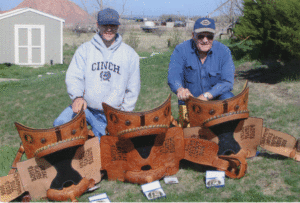
    In 1970, he won a prestigious award at the NFR: the George Paul “Great Guy” Memorial. George Paul had been a bull rider, killed in a plane crash that year at the age of 23. It was an award voted on by his peers, going to the bull rider with “character, personality, appearance, congeniality, ability, rodeo image, personality, conduct, and most likely to succeed.” The four-foot tall trophy still sits in his house today.
    Ronnie was careful with his winnings, putting them away in savings. In 1977, when he figured his income tax and didn’t make a profit, it was time to quit. The next two years, he only entered July Fourth rodeos. “Most of those boys spent all they could make,” he said. “I used it for a job. I bought and paid for a five-hundred acre place.”
    He married his wife Judy in 1965. While both were students at SOSU, a mutual friend introduced them while Judy was working in the library. She taught school and during the summers, traveled with him.
    He and Judy raised two daughters, Marci Jackson and Jeana Holt. The girls were good hands, “pretty tough,” their dad said, rodeoing through high school. Both girls qualified for the National High School Finals Rodeo, each in four events; Jeana won the goat tying and the all-around titles in high school rodeo.
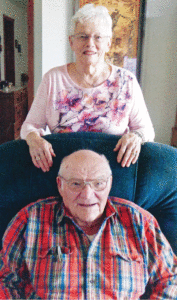
    His worst injury was a broken jaw, an injury occurring on the last bull at the 1969 NFR.
    Ronnie got on some memorable bulls throughout his career, some of them who are just memories but at the time were “bulls that everybody knew back then,” he remembered. One of them was No. 107 of Steiner’s. The bull went seven and a half years unridden, but Ronnie covered him four times. “The first time I drew him he like to threw me out of the arena.” One of those times, was in Belton, Texas. An insurance company was giving a one hundred dollar bill to the high marked ride. Ronnie rode No. 107 and got the money.
    He rode No. R-100 of Beutler and Son’s, and Tex M of Hoss Inman’s. And he won a go-round in Ft. Worth on Billy Minnick’s V61, the 1970 RCA Bucking Bull of the Year.
    He and Judy enjoy life on their place near Durant, raising black Simmentals and enjoying their granddaughter and grandson. He’s a humble person, not talking about his rodeo success. But he’d do it all over again, if he could. “I got along pretty good with it,” he said. In 2017, he was inducted into the SOSU Rodeo Hall of Fame.

  • Back When They Bucked with Franklin Manke

    Back When They Bucked with Franklin Manke

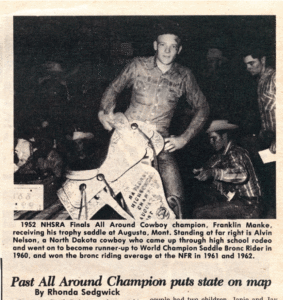
    The Edgemont, S.D. cowboy was the 1952 National High School Rodeo Bareback Riding champion, and it wasn’t until fellow South Dakotan Shane O’Connell won it in 2013, that the drought was over.
    Manke not only competed in the bareback riding, but also as a steer wrestler, cow cutter, wild cow rider, and occasional calf roper.
    He was born in 1935 to Alfred (Allie) and Dorothy (White) Manke, who ranched twenty miles south of Edgemont. As most country kids did in those days, he rode the three miles to the country school every day.
    By the time he was ten years old, he was riding calves at local county fairs, and as a freshman in high school, he got on his first bareback horse.
    High school rodeo wasn’t as prevalent then as it is now, and there were fewer rodeos to go to. But Franklin went to several, one of them being the Harrison, Neb. rodeo in 1952, when he won the bareback riding, calf roping, second place in the cow riding, and the all-around.
    That same year, his senior year, he won the S.D. state bareback riding and calf roping titles and split first in the cow cutting.
    Back then, if a high school finals rodeo contestant qualified for the National High School Finals in one event, they could enter a second event, and the all-around winner could enter as many events as they chose. He finished his high school rodeo career with not only the national bareback riding title, but the all-around as well, having competed at Nationals in Augusta, Montana in the tie-down roping, too.
    After high school, he came home to ranch with his parents. They owned two ranches, one south of Edgemont and the other about twenty-five miles away, in southeastern Wyoming.

    But he continued to rodeo, this time in the Northwest Ranch Cowboys Association (NRCA) and at local county fairs.
    In 1955 he went to a rodeo that was lacking steer wrestlers. The committee told Franklin they would pay his entry fees if he would bulldog. He’d ridden his rope horse in high school to bulldog, but the horse didn’t work out well. “I’d go to get off and he’d stop,” he said. “That left a lot of air between me and the steer.” But he borrowed a horse, rode him at that rodeo and all summer, finishing the year second in the steer wrestling for the NRCA.
    His dad, Allie, team roped when he was older, but as a young man, his hobby was race horses. He had a string of thoroughbreds he’d take to the county fair races, and some of them Franklin rodeoed on. It wasn’t a perfect situation, but back then, they made do. Every now and then the race horses didn’t know when to quit. “Sometimes it wasn’t very pleasant when you rode a race horse and you went to turn a cow and the horse just kept going,” Franklin chuckled.
    Franklin continued to rodeo in the NRCA. In 1956, he won the bareback riding, was second in the steer wrestling, and won the all-around. In 1957 and ’58, he won the steer wrestling both years. He competed in 1959, but injuries slowed him down.
    In ’59, he broke his riding hand while riding barebacks. As the pickup man approached, he worked to get his hand out of the rigging. Before he had it out, the bucking horse stopped, throwing Franklin’s body weight over the top of his hand and breaking a bone.
    The same year, he tore ligaments in a knee while bull dogging. There was no surgery for torn ligaments then; the only cure was time off. Franklin built a brace and wore it to bulldog, but his bulldogging days were coming to an end.

    After 1959, he quit rodeo for a few years, continuing to ranch on the family operation, which included mama cows, yearlings and sheep. His dad passed away in 1972, and by this time, Franklin and his wife Audrey had bought another place, between the Edgemont ranch and the Wyoming ranch. Without his dad’s help, it was too difficult to run both places, and he didn’t want to hire help. They also had a grazing lease that had expired, so it made sense to sell the S.D. ranch.
    Franklin’s parents owned and managed three motels in Edgemont, and after his dad’s death, his mom ran them for three years. It was more than she could handle, so Franklin and Audrey bought them from her, with the intent of running them for three years and then selling them. Two of them were side by side and shared an office, and one of them closed during the winter. They ran them for 22 years, before selling them in 1997.
    In the mid-1960s, when dally team roping became popular, Franklin began rodeoing again, at jackpots and a few rodeos close to home. He never ventured far from home, choosing to rodeo at NRCA events, local county fairs and jackpots in South Dakota and Wyoming. He didn’t go full time, believing it was difficult to do both well. “You either have to be a rancher and a part-time rodeo cowboy, or a full-time rodeo cowboy. That’s how I look at it.”
    Franklin team roped in the Old Timers Rodeo Association (now the National Senior Pro Rodeo Association.) He headed for a while, then switched to heeling, often partnering with Bob Stoddard of Douglas, Wyo. He enjoyed the jackpots the NSPRA held before the rodeo. He doesn’t brag, but “I guess I claimed my share of the money in the ropings.” He quit roping in 1994, after having a hip replaced.
    Franklin and Audrey first met when they were in country school. He had had his eye on her, he says, and asked her out on July 4, 1953. They married later that year and celebrated their 65th anniversary in October of 2018.
    And the rodeo gene didn’t end with Franklin. The couple’s daughter, Janie, was the 1971 Wyoming High School Girls All-Around champion, and their son, Jay, was the 1976 S. D. State High School Team Roping champion. Janie and her husband Butch Tinint live in Valentine, Neb., and both of Janie’s daughters competed in rodeo. Jay’s daughter and son, Katie and Ty, have also done well. Katie and her husband Jeremy Langdeau have three children who ride and compete, and Ty, who is married to Trista, has won the saddle bronc riding average at the Badlands Circuit Finals Rodeo twice. Franklin started Ty in the saddle bronc riding while in high school, buying him his first saddle. “In fact, I think he still owes me for that saddle,” he joked.
    Franklin and his great-grandson Jackson Langdeau goat rope together. On foot, Jackson heads and Franklin heels, and Franklin loves it.
    The couple sold the ranch in 1989, when the work with the motels became too much. They fully retired in 1997, when they bought forty acres and built a house on the east side of Edgemont. They stay busy: Franklin, traveling to rodeos to watch his grandchildren and great-grandchildren, and Audrey, who paints. Her artwork is excellent, Franklin said, and jokes that they’ll have to build longer walls to hang her work.
    He loved his days in rodeo. He and Audrey made it through the bad times, of which there weren’t many. They lost a granddaughter, Jay’s daughter Jayme, when she died in a car accident, but life is still good, filled with children, grandchildren and great-grandchildren. “We’ve never really had any downs in life.”

  • Back When They Bucked with Argene Clanton

    Back When They Bucked with Argene Clanton

    Argene Clanton laughs, and life laughs with him.
    The cowboy, an Okie, former calf roper, café and truck stop owner, veteran, rodeo committee member and daddy of three girls, loves a good joke.
    And at the age of 94 years young, he’s still laughing.
    He was born in 1924 to Cleve and Verda Clanton in Barnsdall, Okla., weighing in at two pounds, seven ounces and sleeping in a box in the closet. When he was born, he was a “blue baby,” and one of the midwives attending his mother asked if there was any whiskey in the house. There was; she took it, warmed a teaspoon of it, and gave it to him. He lived, and says with a twinkle in his eye, “I’ve had a few drinks since then.”
    As a child, the family lived on a farm near Chelsea, Okla. He loved to rope and would try to rope everything: chickens, pigs, anything that walked across his path. In high school FFA at Chelsea Public Schools, the FFA kids would be hired out to help farmers work their cattle, sheep and hogs. Argene would load his horse in the FFA trailer, and the crew would go to work. People didn’t have good corrals and chutes in those days. Animals often got out, and Argene and his buddies got to rope them. But the animals weren’t always getting out on their own. “I guarantee you, somebody’d let one out so we’d get to rope,” Argene chuckled.
    Argene calf roped with his good friend Roger Morris. Roger’s dad was a horse trader, and Argene would ride a lot of the horses he brought home. One time, he bought a cow horse and Argene couldn’t wait to get on him. Roger’s dad “wanted me to ride him, to see what kind of a horse he was. I was always a fool to get on,” he said.

    So Argene decided to skip school so he could ride this cow horse. The horse “was snorty when I got him in the corner,” Argene remembered. “I got up on him, and boy, he broke in two. He ducked his head, bucked, and threw me right into the saddle room.” Argene got up and this time opened the gate to the pasture. He was going to ride this horse. He got back on him, spurring and whipping, and “out the gate I went. He hit three licks and settled down.”
    It just happened that the Clanton barn and pasture was next to the school, and the principal had seen Argene riding. The next day, over the speaker, came the principal’s voice, asking him to report to the office. Argene lied about skipping school, telling the principal that his dad had asked him to get cattle in that day. The principal told him he was going to get three licks. Argene said, “no, sir.” The principal locked the door and Argene told him, “you’re going to have to give them to me.” The principal “got hot, and everything turned red.” But he unlocked the door, and “I felt better,” Argene said. The principal told him to ask his dad to come and talk to him the next time he was at school. “I said I sure will,” Argene laughed. “And then I forgot to tell him.”
    In 1943, the year before he would have graduated, Argene entered the Navy. Six Craig County boys all went at the same time, and Argene was sent to San Diego to machinist school. He was on a troop transport ship, the Admiral RE Coontz AP122, going through the Panama Canal seven times hauling Puerto Ricans back and forth from Europe, where they were serving in the U.S. military. After World War II ended, the ship was stationed in the New York Bay, and Argene stayed with the ship as it was decommissioned to the merchant marines. He was assigned the task of teaching them how to run the ship, and given the option to take his thirty day leave and then return for his final two months of service, or stay for three months and then be discharged. He chose to stay. “I said, if I get back to Oklahoma, I won’t want to leave.” He was on the ship longer than any other Navy personnel; he was on board when it was commissioned and when it was decommissioned.
    In 1946, Argene was honorably discharged from the Navy and came back to Oklahoma, never to leave again.
    He bought a farm on Route 66, halfway between Vinita and Chelsea. He had beef cattle and dairy cattle, married Martha Carter, and started a family, having three daughters: Connie Butler, Peggy McGehee and Pam Swift. A small arena was behind the dairy barn, and friends stopped by to rope. He served on the school board for the White Oak School as well.
    His paternal grandpa Grant Clanton, known as “Sweet Tater” started Clanton’s Café in 1927. Cleve and Verda took it over in the 1940s, and when they decided to retire, Argene bought it from them. He moved his family to the house behind the café and his parents moved to Argene’s farm. Then he bought the service station next to the café and ran it. After eleven years of running the café, he sold it to his sister and bought a truck stop at Big Cabin, running it for seventeen years.
    He and Roger Morris competed at area ropings and rodeos. They never went pro, but they loved to rope. They stayed in the area, never venturing more than 100 miles from home, to rodeos in Oklahoma, Arkansas and Kansas. He also competed in the calf mugging and wild cow milking.

    Argene played a vital part in the Original Will Rogers Memorial Rodeo, held in Vinita every August. He has served as rodeo chairman and has been on the rodeo committee for years. When he was fifteen, he rode his horse eighteen miles, from his home to Vinita to watch the rodeo. He has gone to at least one performance of the rodeo every year of its 82 year existence, except for the three years he was in the Navy. He has carried the flag in the rodeo parade and posted colors at the rodeo for forty years. He attended the PRCA convention and the National Finals Rodeo many times, and one time, when there was no money to put on a rodeo, he and his good friend Bob McSpadden, brother to Clem McSpadden, took out a personal loan to finance it.
    When he returned from the Navy, World War I veteran George Franklin paid his dues to join the Chelsea American Legion. Two years later, he joined the Vinita American Legion Post 40, and has been an active member for 72 years, serving as commander of the Legion several years.
    Argene also was active in politics, volunteering as Craig County Republican Party chairman many years. He knew Clem McSpadden, a Democrat, from playing high school basketball against him and going to rodeos with him, and Clem knew Argene had influence in Craig County. When Clem ran for Oklahoma Senate in the 1950s, he asked Argene to go with him to be introduced to folks in the area. Argene knew the real reason Clem wanted him along: to open the gates. In the 1970s, when Clem ran for U.S. Congress, he asked for Argene’s help again. Argene told him, this time you’re opening the gates, and he did. “I drove, and he opened.”
    In 2002, he, along with the other Chelsea veterans who didn’t graduate from high school due to their service, were asked to walk across the stage for high school graduation. His graduation party was at the senior citizen center!
    Six years ago, he, his daughters, and other veterans were part of an Honor Flight to Washington, D.C., where he saw the sights for the first time. The Clanton Café, which his dad started and he owned, is the oldest continuously owned family restaurant on Route 66 in Oklahoma (it’s now owned by Argene’s niece and her husband), and he still loves to dance, having taught all three of his girls by them standing on his boots.
    Argene’s wife Martha died in 1992 and he married Roberta Millarr two years later. Roberta has three boys and a girl; together, the couple has so many grandkids, Argene said, “we quit counting them.”
    Life is good for the old timer. He and Roger live two miles from each other and get together to tell old stories. Argene frequents the American Legion, where he likes to partake of the beverage that got his lungs working as a baby, and he counts his blessings. Life has “all been good, it really has,” he said. “Raising three girls and having two good wives, I don’t know how you could beat it.”
    It’s a life-well lived.