Rodeo Life

Author: Ruth Nicolaus

  • New Equipment, First Place

    New Equipment, First Place

    Bareback rider makes winning ride on new riggin’; champions determined at N.D. Winter Show PRCA rodeo

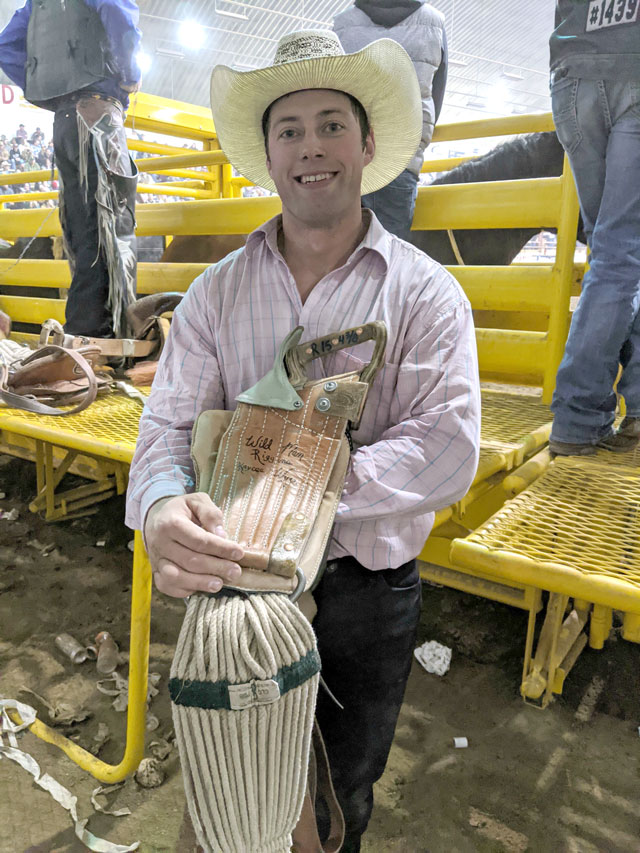
    Valley City, N.D. (March 7, 2020) – Tucker Zingg was dreading breaking in a new bareback rigging.

    When they’re new, the riggin’, which looks similar to a suitcase handle on a band of leather, is stiff and doesn’t have the broken-in feeling like a comfortable old shoe.

    But his new riggin’ worked just fine.

    The Crow Agency, Mont. cowboy won the bareback riding at the N.D. Winter Show PRCA rodeo in Valley City on March 7.

    He scored 83 points aboard the Championship Rodeo bronc called Bunny Hugger, a horse that has bucked in the saddle bronc riding in the past.

    “I really didn’t know the horse,” Zingg said. He was looking forward to riding the horse in an indoor arena, where they are more likely to buck quicker because they see walls, unlike at an outdoor arena. “I figured he’d be good inside, and he was awesome. He bucked in front of the chutes for half the ride before he moved,” he said. “Shoot, he made the ride for me.”

    The thirty-one-year-old is an “old-timer” in bareback riding terms, but he still loves to go. “I’d rodeo more if I could,” he said. He and his fiancée, Jamie Riley, live on a ranch, where she runs some race-bred horses. “I’m just a hired hand,” he joked.

    Zingg, who grew up in Bismarck, N.D., was on horseback at a young age. “Like all us ranch kids, I started before I could walk,” he said. He began riding junior bulls at age thirteen, then added bareback horses when he was sixteen. In college, he also team roped and tie-down roped, but bareback riding was his strength. Since he began his PRCA career, Zingg has qualified for a circuit finals rodeo eleven times: once in the Badlands Circuit (North Dakota and South Dakota), several times in the Montana Circuit, and once in the Mountain States Circuit (Wyoming and Colorado).

    He and Jamie will marry on September 19 of this year, the same day as his parents wed 39 years ago. It’s a lucky day, he says, even though his mom passed away seventeen years ago.
    In the saddle bronc riding, a young cowboy won the Winter Show.

    Qwint Stroh, Dickinson, N.D., was 85 points on the Bailey Pro Rodeo horse Big Casino for the win.

    Stroh, who is 21 years old, is the son of five-time Wrangler National Finals Rodeo qualifier Shaun Stroh. In his first year of pro rodeo, he also competes at regional rodeos in the North Dakota Rodeo Association and the Rough Riders Association. He won both the NDRA and Rough Riders saddle bronc riding titles last year.

    In the bull riding, a Minnesota man topped the scoreboard.

    Reid Oftedahl, Pemberton, Minn., scored 87 points on the Bailey Pro Rodeo bull The Preacher.

    It was Oftedahl’s first trip to the Winter Show, and the win is a good start for his year. “It’ll give me a little push,” he said. Oftedahl is 26 years old.

    Other champions from the 83rd annual Winter Show include steer wrestler Scott Kleeman, Killdeer, N.D. (4.0 seconds); tie-down roper Jason Vohs, Dickinson, N.D. (9.9 seconds); team ropers Alfred Hansen, Dickinson, N.D. and Luke Morast, Halliday, N.D. (5.3 seconds); and barrel racer Kaylee Gallino, Wasta, S.D. (12.16 seconds).

    The 83rd annual North Dakota Winter Show concluded on March 7. Dates for the 2021 event are tentatively set for Feb. 28-March 6.

    For more information, visit www.NorthDakotaWinterShow.com or call 701.845.1401.


    ###

    Results, North Dakota Winter Show PRCA Rodeo, March 6-7, 2020 –N.D. Winter Show

    All-Around champion: . –steer wrestling and tie-down roping

    Bareback riding champion- Tucker Zingg, Crow Agency, Mont.
    1. Tucker Zingg, Crow Agency, Mont. 83 points on Championship Pro Rodeo’s Bunny Hugger; 2. (tie) Garrett Shadbolt, Merriman, Neb. and Blake Smith, Zap, N.D. 81 each; 4. Ty Breuer, Mandan, N.D. 80; 5.(tie) Jamie Howlett, Rapid City, S.D. and Ben Kramer, Max, N.D.79 each.

    Steer wrestling champion – Scott Kleeman, Killdeer, N.D.
    1. Scott Kleeman, Killdeer, N.D. 4.0 seconds; 2. Riley Reiss, Manning, N.D. 4.2; 3. Lane Day, Bartlett, Neb.4.5; 4. Evan Entze, Golden Valley, N.D. 5.0; 5. Kody Woodward, Dupree, S.D. 5.5; 6. Jason Reiss, Manning, N.D.5.7.

    Saddle bronc riding champion – Qwint Stroh, Dickinson, N.D.
    1.Qwint Stroh, Dickinson, N.D. 85 points on Bailey Pro Rodeo’s Big Casino; 2. Josh Davison, Miles City, Mont. 83; 3. Jacob Kammerer, Philip, S.D. 82.5; 4. (tie) Chuck Schmidt, Keldron, S.D. and Shorty Garrett, Eagle Butte, S.D. 81 each; 6. Taygen Schuelke, Newell, S.D. 81.5.

    Tie-down roping champion – Jason Vohs, Dickinson, N.D.
    1. Jason Vohs, Dickinson, N.D. 9.9 seconds; 2. Tanner Wznick, Cavalier, N.D. 10.4; 3. Rex Treeby, Hecla, S.D. 10.7; 4. Will Powell, St. Ignatius, Mont. 11.1; 5. Cody Rood, Bengough, Sask. 11.2; 6. Jordan Staton, Hickson, S.D. 11.5.

    Team roping champions – Alfred Hansen, Dickinson, N.D. and Luke Morast, Halliday, N.D.
    1. Alfred Hansen, Dickinson, N.D./Luke Morast, Halliday, N.D. 5.3 seconds; 2. Butch Levell, Ft. Calhoun, Neb./Martin Walker, Belzoni, Miss. 6.5; 3. Wyatt Treeby, Hecla, S.D./Jimmy Jacobsen, Jr. Stacy, Minn. 7.2; 4.Turner Harris, Killdeer, N.D./Jade Nelson, Midland, S.D. 10.5; 5. Mikey Loiseau, Egan, S.D./Emit Valnes, Eden, S.D. 11.2; 6. Layne Carson, Grassy Butte, N.D./Jake Beard, Menoken, N.D. 11.7.

    Barrel racing champion – Kaylee Gallino, Wasta, S.D.
    1. Kaylee Gallino, Wasta, S.D. 12.16 seconds; 2. Amanda Harris, Spearfish, S.D. 12.21; 3. Jill Moody, Pierre, S.D. 12.29; 4. Carmel Wright, Roy,Mont. 12.54; 5. Terri Kaye Kirkland, Billings, Mont. 12.58; 6. Brandee Wardell, Buffalo, S.D. 12.61; 7. Heidi Gunderson, Murdock, Minn. 12.64; 8. Carey Rivinius, Carson, N.D. 12.68; 9. Summer Kosel, Glenham, S.D. 12.69; 10. Austyn Tobey, Bemidji, Minn. 12.70.

    Bull riding champion – Reid Oftedahl, Pemberton, Minn.
    1. Reid Oftedahl, Pemberton, Minn. 87 points on Bailey Pro Rodeo’s The Preacher; 2. Coy Thorson, Fergus Falls, Minn. 80; 3. Cleve Spang, Billings, Mont. 75; 4. Tate Smith, Litchville, S.D. 74; 5. Dalton Wright, Keene, N.D. 72.5.

    ** All results are unofficial. For more information, visit www.NorthDakotaWinterShow.com.
  • Battling It Out

    Battling It Out

    N.D. Winter Show hosts high school rodeo contest between North Dakota, Minnesota competitors

    Valley City, N.D. (March 7, 2020) – It was a battle between neighboring states’ high school rodeo athletes at the annual N.D. Winter Show.

    The Battle of the Border High School Rodeo pitted North Dakota high school contestants against Minnesota high school contestants in ten events, and at the end, North Dakota won.

    North Dakotans won the breakaway roping (Haley Vollmer, Wing); the tie-down roping (Cael Hilzendeger, Baldwin); the barrel racing (Breanna Benson, West Fargo); the steer wrestling (Ken Hagen, Mandan); the goat tying (Haley Vollmer); the team roping (Trevor Sorge, Bismarck/Riley Staton, Hickson); and the bull riding (Kasen Johnson, Mandaree).

    Minnesota took two events: the bareback riding (Cody Cole, Warroad, Minn.); and the pole bending (Austyn Tobey, Bemidji, Minn.). In the saddle bronc riding, there were no qualified rides.

    To be invited to participate, the cowboys and cowgirls had to be ranked in the top ten in their respective events.

    Vollmer entered the Battle in first place in the breakaway roping and seventh in the goat tying and won both. A senior at Wing High School, she is a member of the National Honor Society and is on the honor roll. She won the breakaway with a time of 2.06 seconds and the goat tying with a time of 7.65 seconds.

    At the Winter Show, she rode her sister’s horse Wrangler in the breakaway roping. The horse did well. “I have a good breakaway horse,” she said, “but I wanted to try him out and this is a nice weekend to do it. He’s awesome. I really, really love him.”

    This fall, Vollmer will work towards an ag marketing degree in college. In high school, she is a member of the National Honor Society, is student council president, a member of the Academic Olympics team and in choir.

    Her senior class has five people in it, and she appreciates that. “Everybody is very close to each other,” she said. “We have tight-knit relationships.”

    She is the daughter of Troy and Sara Vollmer.

    Austyn Tobey was one of two Minnesota champions in the inaugural Battle of the Border.

    Tobey, a resident of Bemidji, Minn., won the pole bending with a time of 20.025 seconds.

    She was aboard her thirteen-year-old mare named Buttons, who is also her barrel racing horse. It was the first time Buttons had practiced on the pole bending pattern since the fall rodeo season. But the mare did well. “I’m happy with my horse,” she said. “She’s great. She’s consistent with everything she does.”

    Tobey would have won the barrel racing but she hit a barrel, adding a five second penalty to her time. Buttons rarely knocks down barrels, Tobey said. “That’s the first one in a year. It doesn’t happen very often.”

    A senior in high school, she will attend Bemidji State University this fall, majoring in pre-medicine. Her dream is to become a radiologist. She’s had firsthand experience in the field.

    When she spent two weeks in the hospital four years ago for a ruptured appendix, the radiologist helped her read the image taken of her. But the hospital stay became serious; she was so full of infection that the doctors couldn’t take her appendix out. She still has it; the doctors never did remove it.

    Tobey played four years of high school hockey, is a member of the National Honor Society, is on her school’s honor Roll and is a member of the Link Leadership team at her school.

    Tobey also competed in the PRCA rodeo on Saturday evening and finished in tenth place (12.70 seconds.)

    She is the daughter of Gary and Amy Tobey.

    Another Minnesotan proudly won his event in Valley City.

    Cody Cole made a 68 point ride in the bareback riding to best the field.

    The Warroad, Minn. cowboy entered the Battle of the Border in third place in the Minnesota rankings after suffering what could have been a career-ending injury.

    Last spring, he fractured four vertebrae and bruised another one and was out of rodeo for eight weeks, returning just as the fall season started up. “I made a strong comeback,” he said.

    He loves riding bareback horses. “I love doing it. It’s so much fun, so much adrenaline.”

    This fall, he will be a student at Iowa Central Community College, where he will compete collegiately and work towards his associates degree in business management. After two years of college rodeo, he’ll get his PRCA membership. “I’ll climb the ladder a little before I pro rodeo,” he said.

    He is the son of Kelly and Sarah Cole.

    Unofficial results from the Battle of the Border High School Rodeo follow.

    The 83rd annual North Dakota Winter Show concluded on March 7. Dates for the 2021 event are tentatively set for Feb. 28-March 6.

    For more information, visit www.NorthDakotaWinterShow.com or call 701.845.1401.


    Unofficial Results, Battle of the Border High School Rodeo, March 7, 2020 –N.D. Winter Show

    Bareback Riding
    1. Cody Cole, Warroad, Minn. 68 points; 2. Chance Isaak, Richardton, N.D 62; 3. Seth Berg, Mandan, N.D. 55.

    Breakaway Roping
    1. Haley Vollmer, Wing, N.D. 2.06 seconds; 2. Danielle Fladeland, Minot, N.D. 3.70; 3. Jordan Vanvickle, Pillager, Minn. 6.05.

    Tie-down Roping
    1. CaelHilzendeger, Baldwin, N.D. 13.54 seconds;2. Chase Heim, Bismarck, N.D. 16.34; 3. Riley Staton, Hickson, N.D. 16.66.

    Barrel Racing
    1. Breanne Benson, West Fargo, N.D. 12.839 seconds; 2. Austyn Schafer, Wilton, N.D. 13.026; 3.Jaida Hagen-Marben, Elk River, Minn. 13.105.

    Steer Wrestling
    1. Ken Hagen, Mandan, N.D. 6.41 seconds; 2.Justin Inglis, Regan, N.D. 9.91; 3.Caydon Roshau, Bismarck, N.D. 12.49.

    Goat Tying
    1. Haley Vollmer, Wing, N.D. 7.65 seconds; 2. Jayda Miller, Bowman, N.D. 8.53; 3. Victoria Skiba, Cambridge, Minn. 9.45.

    Team Roping
    1. Trevor Sorge, Bismarck, N.D./Riley Staton, Hickson, N.D. 13.43 seconds; 2. Lathan DeMontigny, Ruby, N.D./Chance Mickelson, Foxholm, N.D. 17.39; 3. Weston Klatt, Dickinson, N.D./Sam Andrews, Bowman, N.D. 22.47.

    Pole Bending
    1. Austyn Tobey, Bemidji, Minn. 20.025 seconds; 2. Danielle Fladeland, Minot, N.D. 20.134; 3. Austyn Schafer, Wilton, N.D. 20.197.

    Bull Riding
    1. Kasen Johnson, Mandaree, N.D. 77 points; 2. Lane Wilkens, Bismarck, N.D. 68; no other qualified rides.

  • Back When They Bucked with Jon Temple

    Back When They Bucked with Jon Temple

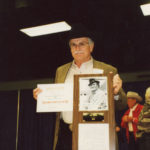
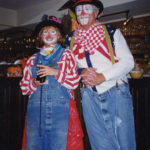
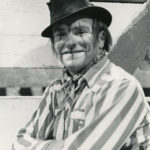
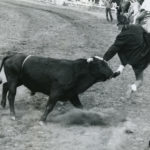
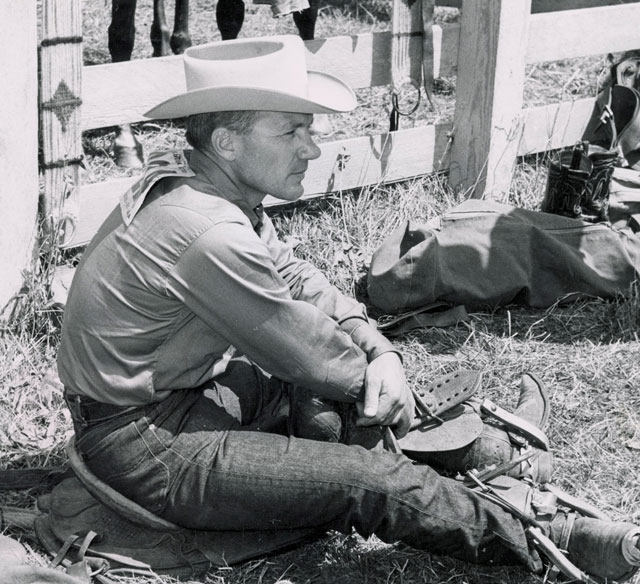
    Jon Temple loved his time in the rodeo arena. The retired bullfighter and clown spent more than twenty years in regional and pro rodeos across the nation, protecting bull riders and making fans laugh. Born in Cleburne, Texas in 1937, he saw a rodeo clown for the first time when his granddad took him to the Cleburne rodeo. He was about six years old, and he was fascinated. “I watched that fella real close, and I thought, I believe I could do that someday.”
    As a youngster, he rode calves and bulls, but that wasn’t where his dreams were. His bullfighting practice was during the weekends, at the buck outs in Fort Worth. There, he learned his way around an arena and around bucking bulls.
    Jon worked regional rodeos till his friend and fellow bullfighter Junior Meeks, who held a Rodeo Cowboys Association card (the predecessor to the PRCA), asked him to come to the RCA’s national convention, held in Denver at the Brown Palace. Jon accepted, but didn’t plan on getting his RCA membership. “I went up there with no intent of buying my card,” he said. Meeks and other friends introduced him to stock contractors and producers. Another friend, Jon Routh, introduced him to stock contractor Harry Vold. The three of them went across the street to a café for a cup of coffee. As they visited, Harry began writing on his placemat. He pushed the paper to Jon. It was a list of 33 of Harry’s rodeos, where he needed a rodeo clown. “You can have any of them or all of them,” he said. Jon took a look. “I didn’t want to look shocked so I looked it over,” he said. “And I said, I think I’ll take them all.” It was 1960, and his pro rodeo career was started.
    Jon Routh made sure Harry knew Jon was a good choice. As they walked out of the café, Routh called to Vold, “Harry, if he doesn’t make you a good hand, you call me and I’ll work the rodeos.”
    Another bullfighter Carl Doering also helped with his career. He worked with Carl, off and on, for three years. Carl helped him fill in his gaps in his schedule, and Jon loved working with him. “He was a swell guy,” he said.

    Each fall, Jon went to the RCA convention, prepared to book shows for the next year. Vold had told him he changed clowns each year. For two years, in the fall of ’60 and ‘63, he got a call from Vold, asking him to return to the rodeos. The committees liked the way he worked and wanted him back.
    In addition to Vold, Jon worked for a variety of stock contractors, at rodeos across the nation and Canada: Neal Gay, Reg Kesler, Bernis Johnson, Joe Kelsey, Roland Reid, Jim Shoulders, Beutler and Son, Wayne Vold, and more.
    One of his acts was a Model A Ford car. With the top cut out, he painted big flowers on it and called it a “hippie van”. The next year, to have a different act for the rodeos he returned to, he had a different paint job put on it and called it a “Tijuana Taxi.”
    Jon also had a mule he called Jenny Lou. Trained by a man from a carnival, she could “count.” In the arena, Jon and the announcer would banter about Jenny Lou’s intelligence, then they would come up with a problem, and she’d answer it. Scratched at a spot on the base of her mane, she’d turn her head up and down. Touched on the left shoulder, she’d turn her head back and forth. Jenny Lou was smart, “a whole lot smarter than I was,” Jon quipped. She could sense when they were about to leave for a rodeo. She wouldn’t eat and would drink just a little. During the travels, when they stopped for a water break, she’d get out, take a sip of water, roll, and jump back in the trailer.
    She also loved sweets. Tied to the trailer at a rodeo, the kids gathered around her. Jon would tell them to watch their cotton candy and ice cream because she’d try to eat it. As she moved toward the treat to take a bite, the kid would jump back and she’d keep the treat. One time, she took a bite of someone’s cotton candy and got the whole ball, making a mess all over the trailer.
    Jon had few serious injuries. He bruised a kidney once at a rodeo in Missouri when a bull rolled on him, which took a long time to heal. In British Columbia, an indoor rodeo was held on a hockey rink with sawdust and dirt over the ice. A bull got in a corner, facing Jon, and Jon slipped in a pocket of shavings. He fell, sliding between the bull’s front legs “like I was sliding into second base,” he joked. The bull “dropped to his knees and went to thrashing me with his horns,” he remembered. “I tried to grab him by the neck, to pull myself out.” A committee man saved him. “A big, heavyset committee guy in a starched white shirt jumped off the gate. The bull saw the flash and jumped to get it. That’s when I made my getaway.” Medics wrapped Jon’s head in gauze and sent him to his hotel. “My old head was throbbing,” he said. With gauze wrapped around nearly everything but his eyes and mouth, “I looked like a freak.” The next day, before the rodeo, he stopped at the doctor’s office for someone to cut the gauze off and put new wrap on it. And his hat and wig didn’t fit; he went without them for that performance.
    Another injury happened in Washington. When a bull rider hung up, Jon came in from the off-side, got him loose, and when the bell on the bull rope fell, it hit the back of his hand. He had seen a blur coming at him and put his hand up to his face for protection. It broke two of his fingers; the injury could have been worse if his hand hadn’t been there. And a broken ankle suffered in Mesquite kept him from working the 1969 National Finals Rodeo.
    The injury that propelled him to retirement was in 1969. When a bull rider got hung up, Jon moved in, got him loose, but didn’t get far enough back. The bull “gave me a judo chop” on his right ankle. “They put me in the limo (ambulance) and I went to the hospital,” he said. He had broken his leg, which put him out of commission. The doctor told him, “you’re in the wrong occupation. You won’t be walking when you’re fifty.” Jon decided to rodeo one more year, then retire.
    After retiring in 1970, he went to work for the Missouri-Kansas-Texas Railroad in Ft. Worth. He worked for them till 1999, when he retired from Union Pacific Railroad.
    After that, Jon did carpenter work, refurbished houses, and worked with his wife, Norma, who was a real estate agent. He and Norma owned and operated several car washes. He served for twelve years on a local school board and the couple is active in their church.
    Now he and Norma, who married in 1998, sell window treatments, and Jon golfs for a hobby.
    He has 3 beautiful redheaded daughters: Marla Roper, who lives in San Antonio, Jeana Temple, in Ft. Worth, and Jonelle Luce, who lives in Joshua, Texas. Norma has a daughter, Shelby Lloyd, who lives in Cleburne. Between the two of them, they have 8 grandchildren and 5 great-grandchildren.
    Jon is a 2001 Texas Rodeo Cowboy Hall of Fame inductee, and he loves attending the rodeo clown reunions and catching up with old friends. He appreciates the friends he’s made through rodeo. “The friendships over the years have been God’s blessings,” he said. “They connect me to the right things. That’s how my life has gone. I’ve had some good friends.”

  • Featured Athlete: Jimmie Smith

    Featured Athlete: Jimmie Smith

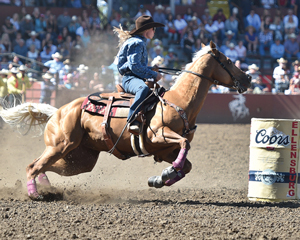
    Jimmie Smith is the 2019 Texas Circuit champion barrel racer and the 2018 WPRA Resistol Rookie of the Year. The McDade, Texas cowgirl won all her Texas money on a special horse, a ten-year-old mare, LenaOnTheRocks, “Lena.”

    The mare, a palomino, loves the winter rodeos, and she and her rider did well in 2019, finishing third at Ft. Worth, San Angelo and Corpus Christi, and making the finals at Houston and San Antonio.

    At that point, Jimmie was sitting in the top ten in the WPRA barrel racing world standings, and they hit the road hard.

    But after Calgary, in July, Jimmie knew something was wrong with her partner. It was nothing major, but she didn’t want Lena’s soundness to be jeopardized.

    “I could have kept running her,” she said. “She was never lame and never took a lame step. I could just tell something was off. If I had ignored it and kept on running, we maybe would have made the (National) Finals. But I also maybe wouldn’t have her running as strong as she is now.”

    The horse is out of Tourlena by FirewaterOnTheRocks. Jimmie purchased her as a five year old from Cindy Skinner. Susie Campbell had started her on the barrels, and Jimmie filled her permit on Lena in October of 2017.

    The horse is tiny but thick and strong, and a “total princess,” she said. “She knows that I love her, and we just have that special bond. She knows she gets treats before and after she runs. She just loves being pampered.”

    Jimmie, who is 23 years old, made the Texas High School Finals all four years of high school. In college at Texas A&M, she earned a bachelors degree in communications and journalism. She qualified for the College National Finals Rodeo three times in three events: the barrels, the breakaway, and the goat tying.

    When Lena was out of commission last year, Jimmie rode several backup horses, all of them leased. It was not ideal. “It was a pressure situation,” she said. “I knew I had to win money on these horses but had no clue how to ride them.” She kept switching back and forth between them, trying to get with each one, “and it never really clicked.”
    By September, Lena was released for competition but Jimmie took it slowly on her, not running her till Thanksgiving.
    The wait was worth it. At the Christmas Classic in Alvarado, Texas, she broke the arena record twice. The first time was on Pixie, one of the borrowed horses, with a time of 14.901. The second time was aboard Lena, with a run of 14.894 seconds.
    And at the Texas Circuit Finals in January, Lena won second place in the third round for her.

    Jimmie is a member of the 5 Star Equine team and loves their products, especially the saddle blankets. All eight of her barrel horses wear the 7/8 barrel racer saddle pad. She has been using it for the past four years, “and I have had no back issues. All my horses stay sound with no soreness in the back.”

    The saddle pad wicks away moisture, and is customizable, too. “They’re very pretty,” she said. “I love how pretty they are. You can match them to your personality and customize one for each horse.”

    Even though Lena being out for several months last year was hard, Jimmie sees the blessing. “If I had never had to go home (from rodeoing), I would never have had the two backups I have for this year.” She has Pixie and Minnie as her secondary horses. “I’m not stranded this year. I’m not a one-horse show.”

    Jimmie is taking this year slow, taking her cues from Lena. “We’re going one run at a time,” she said. She finished as reserve champ in Denver. “We’ll see where it takes us.”

  • Featured Athlete: Hope Thompson

    Featured Athlete: Hope Thompson

    Hope Thompson is one of the lucky women in rodeo who can make her living with horses. The Abilene, Texas cowgirl, a breakaway roper and team roper, trains horses and gives clinics on roping. She was born and raised in Atlanta, Texas and attended McNeese State in Lake Charles, La., where she won the College National Finals Rodeo in 2008 in the breakaway.
    After college, she made her way to Abilene, where she works with Lari Dee Guy, training and teaching.
    She won the breakaway and $7,000 at the WCRA’s semi-finals in Guthrie, and advances to the WCRA’s Royal City Roundup in Kansas City on Feb. 28.
    For the breakaway, she rides an eleven-year-old cutting reject named Ink, who she trained. The mare, who is solid black, “is my partner,” Hope said. “I couldn’t do it without her.” Ink has won horse of the year titles in several different associations and jackpots and was the reserve world champion AQHA Horse of the Year in the tie-down roping. Ink is a sweetheart, she said. “She’s very laidback. She wants to give you 100 percent. She wants to please.”
    For the heading, Hope rides a seven-year-old gelding named Andre. Hope’s heeler is usually Whitney DeSalvo.
    Of her two events, she’s been a breakaway roper longer, and might love it a tad more than the team roping. “I’m most passionate about the breakaway,” she said. “I’ve always been a breakaway roper. But I love anything to do with a rope. I love being able to do all of it.”
    She does it with 5 Star Equine products. Her favorite 5 Star item is the saddle pad. “It’s the best material and the best product I’ve found in our industry. The wool is 100 percent virgin and it conforms to your horse’s back, even when (the pad) is brand new. They don’t break down, either. They last forever. My horses love them, which is important to me, because without my horses I’m nothing.”
    She uses the 5 Star saddle pad with the fleece liner built in, and appreciates it. “Those are new for me. I just started using those and I really like those, too.”
    She also loves the sports boots. “They’re my favorite. They fit well and they’re not bulky.”
    5 Star items can be customized, and Hope values that touch. She owns several different colors of boots and tries to match the embroidery on her horse’s saddle pad to the color of the boots.
    Hope loves training horses. “I’m passionate about training horses. I love getting to start and train them, and when I sell them, I love to see them go and do big things for other people.”
    She also finds great satisfaction teaching people how to rope, and then seeing them compete, sometimes at the same events she’s competing at. “That’s pretty cool when you get to teach somebody your craft and they go and do it, and then you meet up with them again in competition.”
    Working with people inspires her. “It goes beyond teaching people to rope,” she said. Some of her students might have faced obstacles in life, and roping heals them. “Getting to come and do something like that helps them.”
    She is excited about the future of rodeo and breakaway roping. “I feel that more women are going to get to make a living breakaway roping.” The WCRA and the American Rodeo are instrumental in changing rodeo, she believes. “If it’s something young women are passionate about doing, I feel their time is now. (The WCRA and the American) are giving us the opportunity to make the same money as the men.”
    Hope is a member of the 5 Star Equine team.

  • Back When They Bucked with Lyle Smith

    Back When They Bucked with Lyle Smith

    Because of a box of western magazines, and his dislike of cows, Lyle Smith became a saddle bronc rider. The Canada native now living in Reno, Nev., competed at four National Finals Rodeos and finished in the top ten in the world six times, making his mark in the rodeo industry. He was born in 1930 to George and Louise (Reuther) Smith, the third of eight children, on a farm near Donalda, Alberta.
    When he was seven years old, his dad died, leaving his mom with eight mouths to feed and not much to put on the table. The family milked cows, raised chickens and gardened, to make it through. His older brothers milked three cows, morning and night, “so I grew up hating cows,” Lyle said. “I couldn’t get away fast enough from that farm.”
    He attended a country school that went through the ninth grade, and when it was time to go to high school, he couldn’t go. There was no school busing in that district, and the family couldn’t afford to make the sixteen mile trip to Donalda High School.
    So he went to work for a rancher named Herman Linder, and the trajectory of his life changed.

    Linder, himself a world champion bronc rider in his time, had a box of Hoof and Horns and Western Horseman magazines in the attic where Lyle slept. In his spare time, he would read them. “I read about Jerry Ambler, Carl Olson, and others who were world champions, and I thought to myself, ‘that’s the life for me.’”
    So he gave Linder two weeks’ notice, then went home. His cousin, Lawrence Bruce, had bucking horses, and invited Lyle over to try some out for Harry Vold, who was scouting prospects for Leo Kramer, a stock contractor from Montana. Lyle got on four horses that day and bucked off three of them.
    It was 1948, and he helped Lawrence as they drove horses to a rodeo in Holden, Alberta, where Lawrence was taking saddle broncs. Lyle entered the amateur bronc riding and won fourth place and ten dollars. His mind was made up. “That made me think rodeoing would be a way to get away from the farm and working for farmers,” he said. He entered the amateur bronc riding at other stampedes, which was what rodeos were called in Canada at that time.
    In 1949, his big win came in St. Paul, Alberta, over the fourth of July. He won first place and $275 and used it to buy a Hamley association saddle. Prior to that, he had borrowed one from whoever he could.
    The next few years, he competed in the amateur bronc riding at stampedes across Canada, wining here and there. His skills improved in 1951 when he worked for Lawrence, the father of Duane and Winston. He helped build a poplar rail and post arena, and the boys would try out horses and practice each day. “I got to riding better,” he said. He competed again across Canada but added a few stops in the U.S., too, including Lewiston, Idaho, and Pendleton, Ore. That same year, he got his Rodeo Cowboys Association (RCA) card.
    Rodeo wasn’t his main income; he worked on an oil well drilling rig. He, along with the other cowboys who were short on cash, knew how to stretch their dollar, eating one meal a day and piling into the cheapest hotel rooms they could find.
    It was in 1954 that his rodeo career took off. In Denver, he won fourth in the day money, a check for ninety dollars. But that was it, and Lyle was out of money. He competed at Ft. Worth, San Antonio, Houston, squeaking by on his winter earnings. Phoenix was the last of the big spring rodeos, and after Lyle rode there, he went home with Deb Copenhaver. Copenhaver, a two-time world champion, put Lyle to work on his ranch in Idaho, where he dug postholes and fenced. Deb entered him in Red Bluff, Calif. in April, where Lyle earned a fourth place day money check again. After that, he kept on winning rodeos from Vernon, Texas to Madison Square Garden in New York City, Boston Garden, and San Francisco.
    The good days were here.
    He rodeod all year, across the nation, from Denver to Ft. Worth, and from Baton Rouge to Oakdale, Calif. In 1957, he won $7,100 for the year and bought a brand new 1957 Chevrolet for $1,900. The next year, his annual earnings were $10,264 and he finished sixth in the world.
    In 1959, he went to the first National Finals Rodeo, in Dallas, Texas, where he won a round and fourth in the average. He also was the high mark saddle bronc ride for the Finals, with a score of 187 points on a horse from Ray Kohrs, a stock contractor from California. (At that time, 210 points was the highest possible score in the roughstock; the scoring system changed to its present form of 100 points as a perfect ride in the mid 1960’s.)
    The next two years, he went to the National Finals, wrapping up the 1960 season in sixth place with $11,285 in earnings, and the next year in seventh place, with $10,577 for the year. The year 1962 was the last time he would qualify for the Finals. By that time, Lyle was living in San Diego, working for rodeo cowboy Bob Robinson in a housing development. He was married with a son, and there were bills to pay. “You’ve gotta have money coming in when you’re married,” he said. “You can’t get by on one meal a day.”
    He and his buddies lived in San Diego, working during the week and rodeoing on weekends. At the time, there were lots of little rodeos around the area. “It was probably the best time I had rodeoing,” he remembered.
    In 1964, the job ended. He found work in Reno for a painting contractor. His rodeoing was slowing down, and in 1967, he rode his last bronc at the rodeo in Fallon, Nev., wining first place. Lyle had other priorities: his family and his work. “I was busy working, making pretty good money, and I couldn’t afford to go to a rodeo.”

    He got his contractor’s license in 1971 and has been working as a painting contractor ever since.
    Lyle had met his wife Joan in 1958 in Boston. He and his friends were there to compete at Boston Garden, killing time during the day, walking through Johnny Walker’s western store. She had tickets for the rodeo that night, and now she had a cowboy to cheer for. Her family loved him. They were excellent cooks. When the cowboys came to Boston Garden to rodeo, they would all be invited over for a meal. “Her uncles would cook. They were really great people,” eh said. They married on April 5, 1959.
    Lyle suffered a broken back in 1956 when a bronc fell over in the chute with him at the Oakdale, Calif. rodeo. He was in the hospital for twenty days, and the nurse, who was the same age as his mother, took him under her wing after his hospital stay was over. She was married to a ranch cowboy and understood his predicament, caring for him a month at her home after he got released from the hospital.
    His other two serious injuries were from vehicle accidents. In 1980, he was in a car accident, breaking his right shoulder and a bone in his leg. And eleven years ago, as a pedestrian, he was hit by a car, breaking his pelvis and spending time in the intensive care unit and rehab.
    The couple had a son, Chris, who was born in 1960, and who is married to his wife Seanne. Lyle and Joan have six grandkids, “every one a success and a great kid,” he said, and five great grandkids. One of his grandsons is named after him, and all of the grandsons are in the Air National Guard.
    He and his son Chris still own and operate the painting contracting business, and at the young age of 89, he still goes to the office. He no longer drives; Chris picks him between 5:30 and 6 am in the summer and at 8 or 9 am in the winter. He hasn’t painted for the past five years, but he answers the phone, does paperwork, and bids jobs.
    There’s still plenty to do, and he loves it. “I don’t know what I’d do if I completely stopped and sat in the house. I wouldn’t last long.”
    He was admired by his peers, and still is, says his friend Herb Friedenthal, a bull rider who is ten years his junior. “He was level headed,” Herb said. “He was real popular. Everybody liked him.”
    Herb acknowledged Lyle’s skill in the arena. “He was one of the best. He could ride those big old rank horses, those horses that came out of the north from Canada, Montana, the Dakotas. You would hardly ever see him hit the ground. He might not win every rodeo, but he wouldn’t get bucked off.”
    Lyle loved his rodeo days. “I loved to rodeo,” he said. “I loved the guys I was with. I made friends that I’m friends with, to this day.” Since the Wrangler National Finals moved to Las Vegas in 1985, he’s missed only one year of attending the reunions held in conjunction with it.
    The hardships of his childhood helped him succeed in rodeo and in life and made him tough, he believes. “Learning to make it as a rodeo cowboy got me away from the farm,” he said.
    “He’s a real good guy, a real good guy,” Herb said. “And he still is.”

  • Featured Athlete: Jennifer Sharp

    Featured Athlete: Jennifer Sharp

    ennifer Sharp competed at the Wrangler National Finals Rodeo last month. It was the first qualification for the 5 Star Equine team member, who lives in Richards, Texas. She and her husband Robbie own and operate Sharp Performance Horses, riding colts for the public and training barrel and performance horses.
    Last year, her horse Six French Smooches “Smooch”, an eight-year-old mare, took to the training and rodeo world well, “so we kept going,” Jennifer said. “We hadn’t planned on rodeoing for the Finals this year, but we realized we might have a shot at it.”
    So she and Smooch, plus a second horse, KR Famous Tequila “Tequila” hit the road, competing at more than ninety rodeos, and qualifying for the Wrangler NFR for the first time.
    In November, two weeks before the Finals started, Jennifer got kicked in the right shin, fracturing the fibula head and tearing the PCL. Doctors told her she’d need twelve weeks of rest, but that wasn’t an option with the world championship of rodeo around the corner. So she did physical therapy twice a day, to get her quad muscle working.
    She wore a hard brace, and at the Finals, visited the Justin Sportsmedicine trainers two and a half hours prior to each night’s rodeo. They taped it and used a TENS unit (a transcutaneous electrical nerve stimulation device) to alleviate pain and get the muscles to fire.
    She wasn’t able to ride Smooch at the Finals, as the mare suffered an injury during the Texarkana, Ark. rodeo in September. So Jennifer took Tequila to Las Vegas, along with a second horse, Mitos Cutter, “Commander.” Tequila ran in all of the rounds except for round eight, when Commander took over to give Tequila a break.
    Tequila does very well in smaller pens, Jennifer said, and is good when he knows the first barrel isn’t near the fence. “He’s definitely going to turn his barrels,” she said. The first barrel is blind at the Thomas and Mack arena, and Tequila “knew that first barrel was there and he was going to it,” she said. Unable to use her right leg fully to guide him, she “wasn’t able to be as aggressive as I needed to be,” causing several tipped barrels.
    As a 5 Star Equine team member, Jennifer loves using their saddle pads. “I use the three-quarters inch thickness, and I love those pads. They hold up, I have no issues with them, and my horses’ backs never get sore.” She also uses 5 Star’s sports boots. “I love that they don’t get any dirt inside of them, their legs look clean when they come off, everything about them.” The color choices are good, too. “And obviously I love the color selection.” She tries to coordinate boot colors with whatever she’s wearing.
    In Las Vegas, her husband and a friend, Chris Bradshaw, took care of her horses. “They brought horses to me every night, and took them back (to the place where they were staying.) They fed and watered. I didn’t get to see my horses much, which I did not like, but I knew they were taken care of.”
    The couple has been together for ten years and spends their working and relaxing time together. “We’re together twenty-four, seven,” Jennifer said. “We have an awesome relationship. We complement each other in aspects that we need.” With the business, Robbie, a team roper, starts colts, puts them on the barrels, then Jennifer finishes them. If they need a tune-up, Robbie works with them.
    Now that the Wrangler NFR is over, Jennifer will let her leg heal. Smooch will make a full recovery, and then the two of them will hit the rodeo road again. “I hope to be back at the NFR, without a broken leg,” she said.
    Jennifer placed in two rounds, both times aboard Tequila. She finished the rodeo season in fourteenth place in the world.

  • ProFile: Tory Johnson

    ProFile: Tory Johnson

    Tory Johnson knows how good it feels to achieve goals. And the Oklahoma man did just that, when he won the Permit Challenge in December, held at the South Point Casino Arena in Las Vegas.
    The steer wrestler didn’t begin his rodeo career in that event. He high school rodeoed as a tie-down roper. In college, first at Bacone College in Muskogee, Okla., then at Langston (Okla.) University, he rode bulls and added steer wrestling, in part because of the adrenaline rush. “I was more of an adrenaline junkie,” he said, “and steer wrestling and riding bulls have more adrenaline activity for me than just roping calves.”
    Actually, his bulldogging career began in unlikely fashion. He was in college as a roper, watching the bulldoggers practice, when he talked smack to them. “I got to talking noise with them,” Tory said, when eight or nine of them decided to put $25 each in a hat, and if Tory would run and throw a steer, they’d pay him. “Me, being the daredevil I am, I did it.” That was in 2004, and he came home from college that summer and worked hard, learning all he could from world champions and other steer wrestlers like Clarence LeBlanc, Jesse Guillory, Romon Jones, and others. “I took to it like a natural.”
    After graduating from Langston in 2009 with a degree in business agriculture, he came home to Oklahoma City, working as a cement truck delivery man, and rodeoed.
    For the past ten years, he’s competed in the Bill Pickett Rodeo organization, the United Pro Rodeo Association, the Cowboy Pro Rodeo Association, based in Texas, and the Texas Cowboy Rodeo Association. Between the four organizations, Tory has won ten steer wrestling titles, three reserve titles, two tie-down titles, one bull riding title, and five all-arounds.
    In 2019, he decided to do things differently. He had purchased his PRCA permit ten years ago, filling it several times over but never getting his rookie card.
    Last January, the time was right. “I’ve been wanting to (be a PRCA member) for the longest time,” he said. “I got out of my comfort zone and said, hey, I have the horsepower, I have the talent, I’m ready, I’m going to do it.”
    The thirty-four-year-old wrote his goals down, three big ones: fill his permit again, qualify for the permit challenge, and qualify for the Prairie Circuit Finals. He did all three, finishing the rodeo season twelfth in the Prairie Circuit and finishing as the number one permit holder.
    At the permit challenge, he was the only man to throw both steers, thus winning the average and the title of champion.
    The permit challenge wasn’t his first monumental win, though. At the World Champions Rodeo Alliance (WCRA), he won the average at Guthrie, Okla., and second in Green Bay, pocketing $25,000. And in the Prairie Circuit, he won or placed at rodeos in Ponca City, Henrietta, and Elk City, Okla.; Texarkana and Hot Springs, Ark., and others.
    Competing in Las Vegas at the permit challenge while the Wrangler National Finals Rodeo was taking place was a thrill, Tory said. “It was pretty awesome to feel like you were one step out of being in the ‘big house.’ It was fun to be able to run a steer in Vegas, at the same time the Finals were going on.”
    He had a large cheering section, too. More than 25 people: cousins, aunts, friends, his dad, even sponsors, were on hand to cheer him on.
    For much of the year, he rode Queenie, an eleven-year-old mare owned by Denise Mooney and Marvel Rogers. “Me and her have been clicking everywhere we’ve been,” he said. She’s a typical mare, though. “She’s fun to be around. She can act like a mare every now and then, she gets moody, but she’s a winner and that’s all that matters.”
    When he’s not rodeoing, Tory works installing window blinds in new homes across Oklahoma.
    He’s set his 2020 rodeo plans, written in the same calendar book where he keeps pro rodeo entry information. His new objectives: win rookie of the year, and make a run at the NFR. “I’d like to go to the Thomas and Mack and run ten (steers).”

  • Roper Review Erin King

    Roper Review Erin King

    Erin King knows she’s led a blessed life, and the blessings keep coming.

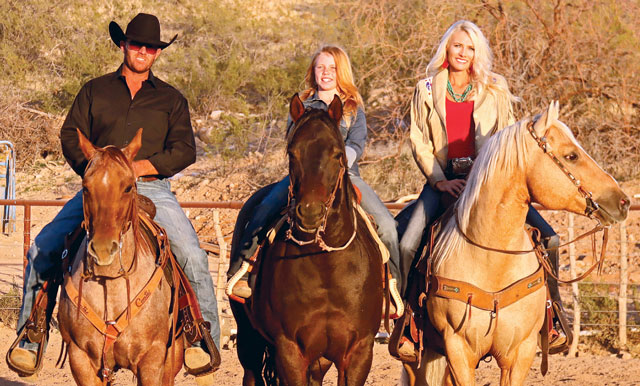
    The cowgirl who lives in Wickenburg, Ariz. with her fiancé Brandon Bates and their daughters, Madison and Brooklyn, has loved every bit of her life.

    She grew up in Sheridan, Wyo., a member of the King ranching and roping family, with parents Bob and Debbi King who were horse people. Debbi did combined training with horses, and Bob, who co-owned King Saddlery with his family, was a highly respected team roper.

    Even though her family made the world-renowned King ropes, she and her younger sister Kristen were never forced to rope as kids. “We didn’t grow up roping, which is funny, because our dad made the ropes,” Erin said. “He never pushed that upon us. He knew, when we wanted to rope, we’d come to him.”

    The girls were involved in a variety of activities, though. Erin was a member of 4-H, FFA, gymnastics, dance, and ran barrels, poles and breakaway roped throughout junior, high school and college. Debbi always told her daughters there were two kinds of people: those who loved horses, and those who were in love with horses, and Erin was the latter.

    It was when Erin met Brandon twelve years ago that the roping bug really bit. Erin had dabbled in breakaway, but it “wasn’t her thing,” she said. She was riding and training horses, but when Brandon came into her life, that changed. “That’s all they do,” she said, referring to their roping and riding, “and rodeo for a living. I was thrown into the atmosphere.”

    Erin learned quickly, in part because of her horsemanship skills. Because she knew how to ride and had ridden colts, barrel horses and jumping horses, the riding part was easy. Brandon helped her learn how, providing the best teacher she could have: a good horse. “That horse took me to the same spot every time and backed into the box the same every time. I still remember the first money I won. It was at a round robin, it paid $700 and I thought I was the coolest thing ever.”

    She headed for a while, then after selling two good head horses, switched to heeling for a good reason. “Brandon’s a heeler, so we’ll always have good heel horses around,” she said. The heeling did good things for her heading. “I love heeling,” she said, “but with heeling, your arm has to be stronger, and heading became more simple for me.” Her heading improved, and “I started winning a lot and they raised my number,” she laughed.

    For several years, the couple lived in Idaho, then moved to Texas and California. But those places weren’t a good fit for them, so they moved to Wickenburg a year ago.

    Wickenburg, the team roping capital of the world, is the perfect place for them. They just opened up their new place: the Wickenburg Winter Cowboy Camp.

    WWCC, as it’s known, boasts sixteen plug-ins for RVs and trailers, two barns with thirty stalls combined, a third barn under construction, and two arenas.

    The plug-ins are full electricity and water with most of them having sewer as well. A lot of people park their RVs or trailers and rent or borrow a smaller trailer to haul horses to ropings so the big trailer doesn’t have to be moved.

    “We’re more than a place to stay and plug in,” Erin said. “People can come here and do it all in one spot.” They offer lessons, horse training, and their arena is open from 10 am to 4 pm every day, for ropers to practice or train a horse.


    Erin and Brandon also take in consignment horses, and Brandon is building a deck onto a barn so they can host cookouts as well.

    Erin has qualified for the World Series Finale, held in Las Vegas at the South Point Hotel and Casino, in December. This is her first time to compete at it, even though she’s qualified four previous times.

    She loves what the Arizona atmosphere has done for team roping. “No matter what roping you go to, the cattle are incredible, the competition is unbelievable, and you have to be your very best. You can’t make mistakes, and I think that is amazing.

    Her dad used to compare team roping with golf to explain its complexities and challenges. “He said, ‘how do you ever conquer them?’”

    The environment in Arizona also makes it fun. “Everybody’s in a good mood,” she said. “Everybody’s on vacation and is so happy to be here. It’s sunny, it’s dry, and we feel so blessed to be here.”

    And Erin is thankful for her family, her horses and her roping. “It makes you truly appreciate being here and doing what we love to do.”

  • Tickets on Sale for St. Paul Rodeo

    Tickets on Sale for St. Paul Rodeo

    More than 50,000 people attended the rodeo this year, making it one of the bigger events in the area.

    It’s a long-time tradition, said Cindy Schonholtz, general manager of the rodeo. “There simply isn’t a better place to spend the Fourth of July than at the St. Paul Rodeo. Fans enjoy the patriotism, the bucking horses and bulls, the fireworks, even the novelty of arbor vitae trees in the arena. They appreciate being part of the history and tradition of St. Paul and the American West, and they are delighted and surprised when they come to the rodeo, because it’s so much more than rodeo.”

    Tickets range in price from $16 to $26. All seats are reserved, so purchasing tickets early guarantees a better selection of seating, Schonholtz said.

    Tickets can be purchased online at www.StPaulRodeo.com. For more information, visit the website or call 800.237.5920.

    The rodeo is a fundraiser for many service and youth organizations around the area; it is produced by nearly one hundred percent volunteer labor.

  • Dona Kay Rule

    Dona Kay Rule

    Dona Kay Rule is a 5 Star Equine Products Team member, and she’s headed to her first Wrangler National Finals Rodeo this month.

    One of best friends, High Valor “Valor” is going along.

    Actually, he’s the reason she’s headed to Vegas.

    Valor, a ten-year-old sorrel gelding, out of Rare High by Valiant Hero, is the 2019 AQHA/WPRA Horse of the Year.

    He was purchased late in his fifth year, and Dona Kay started him on the barrels at age six.

    The long-time horse trainer was hauling and riding her good horse Juice at the time, but Valor went along. “My program is that wherever I go, whoever’s in the barn goes along. I exhibition when I can, and by the time Valor was ready to enter, I’d enter both horses.”

    Valor is big and strong, and it took a while before Dona Kay decided she wanted to let him run. “He was the first full-on race horse I bought,” she said. “In the past, I’ve preferred half cow horse, half race horse.” But the barrel horse world is changing and she has adapted with it. “In today’s climate, you’d better have some power,” in your horse, she said. “It doesn’t matter how good a trainer you are. If you don’t have power, you’ll get outrun.”

    Dona Kay began training horses under the tutelage of Billy Perrin for a year in the 1970s, then struck out on her own. She likes to bring a horse along slowly, believing that confidence and manners in a horse are just as important as performance. “It takes me a long time to train one,” she said, “because there are so many variables when you get to an event. Somebody will push a baby stroller in front of you, and you need to be able to stop your horse and get his head back together.” She likes taking horses to the pasture or around the outbuildings at an event to expose a horse to a variety of things. “I’ll go to the pasture, we stop, we turn. I set him up correctly for things I know I’ll ask him to do in the arena.” At rodeos and barrel racings, it’s no different. “You ride him around, stop when people are in the way, ride him through people, let him know everything’s all right. You get him to count on you, to ask, am I all right? Yes, you’re fine,” she said.

    Not only is Valor especially competent in the arena, he’s good outside of it, too. He’s a kind horse, his rider said. “He’s really interested in stuff around him, and he doesn’t have any silly quirks.” He loves Dona Kay and relies on her. “He does count on me,” she said. “He’s my vehicle, but he’s also my friend.”

    Dona Kay calls herself a “planner,” when it comes to preparing for the Finals. “I like to know what’s expected of me, so I can plan that and schedule in time for Valor. I need to not be in a mad rush every time I put a halter on him.” Prior to heading to Las Vegas, she will put some runs on her horse, to keep him fresh and ready.

    She has used 5 Star Equine Products for years and especially likes the saddle pads. “I really like the quality and the consistency of the wool,” she said. “I like a wool pad next to my horse. It wicks moisture, compresses and refills. Good quality wool makes all the difference in the world.”

    She also likes the fact that 5 Star Equine saddle pads can be ordered to match boots. “That’s a plus: they match. Things have come so far from the old days. Now we have things that match, and it always feels nice to have nice things.”

    Dona Kay’s faith is important to her, and she’s learned to let go and let God handle things. “Letting go is something I’ve learned as I’ve gotten older, not to fret about stuff. It’s pretty amazing what God will put in your life, if you’ll just let him.” She asks God to use her every day. “Pretty much every day, I say, ‘God, take me and use me wherever you need me today. There are times I’ve been able to help. It’s not about Dona Kay doing well, it’s about where God needs me. It’s not about me, it’s really not about me,” she said.

    She and her husband John’s kids, son Marshall, his wife Nicky and their son, and daughter KK, her boyfriend Clay Dumos, and their daughter, will come to Las Vegas, taking turns staying home to take care of the family’s cattle. “We’re going to play musical airplanes so somebody can stay at the place,” Dona Kay said.  She and John have been married 39 years.

    She knows God’s hand was on her all year. An example she recalls was when her truck broke down at Cody, Wyo. this summer. She limped it to a man’s shop on July fourth, and he worked on it for four hours, not charging her for it. “God had his hands in that,” she said. “I get a little choked up,” she said, thinking of the many situations that worked out because of her faith. “I don’t want to be in control,” she said.

    And when she is at the WNFR, just as in her life, she’ll let God guide her.

  • Evan Allard

    Evan Allard

    When Evan Allard was a kid, while his friends were playing football under the bleachers during the Vinita, Okla. rodeo, he was glued to the rodeo, watching the rodeo clown.
    He loved rodeo, and every time the Will Rogers Memorial Rodeo came to town, he was there, with a singular focus, observing. And when he showed cattle at the Inter-State Fair and Rodeo in Coffeyville, Kan., just thirty miles north of Vinita, he was watching there, too.
    And now he’s headed to the biggest stage in pro rodeo: as a bullfighter at the Wrangler National Finals Rodeo.
    Allard grew up around cattle in a family that didn’t rodeo, but he idolized the rodeo clowns and bullfighters.
    When he was fifteen years old, he snuck behind the chutes in Coffeyville and introduced himself to Cory Wall, who was fighting bulls. Wall invited him to a Sankey rodeo school in late August, where Wall was the bullfighter instructor, and Evan went. “I wanted to do it so bad I couldn’t stand it,” he remembered.
    He got ahold of a Humps and Horns magazine, with a listing of stock contractors and associations, and started making phone calls, asking for jobs. “I didn’t know any better,” he said. “I didn’t know the difference between the PRCA and the NFL, for that matter. It didn’t matter to me. I sure wanted to fight bulls and wanted somebody to give me a shot.”
    He began working a junior bull riding association, two events a month for thirty dollars an event. “I was uptown,” he said, thinking he had it made. Ironically, he was working with Cody Webster, who he’ll work alongside in front of the yellow chutes in Las Vegas. “He was just a pup,” Evan said. “We were just babies.”
    In 2005, thanks to Jim McClain, he got introduced to freestyle bullfighting, which became his forte. “That’s where I really made a name for myself,” Evan said. He worked Two Bulls Protection shows, which were owned and produced by McClain.
    In 2006, he went to his first freestyle bullfighting competition, and four years later, he won his first freestyle national championship, with two more titles after that, in 2014 and 2015.
    At the time, he worked a fulltime job as a journeyman substation technician, testing and maintaining high voltage transformers. His job supplemented his rodeo income, helping him buy his place, the Hookin’ A Ranch, and start his herd of fighting bulls.

    Then he got a call to work a rodeo as a bullfighter. He had done plenty of cowboy protection, but freestyle was his main work. He couldn’t refuse this job, but didn’t have any vacation time away from work. “I thought, one of these days, I’ll work when I can’t fight bulls,” he said. “So I quit my job.” It was 2015, and he became a PRCA member.
    He estimates he works more than 100 performances a year protecting cowboys, at rodeos from Oklahoma to California and everywhere in between: the Ft. Worth Stock Show, several PBRs, the Texas Circuit Finals, and more.
    There’s more to Evan than rodeo. He got his pilot’s license three years ago, with the sole purpose of flying to rodeos. Last year, he got his aerial applicator’s license, to crop dust, and this year, he bought an agricultural plane. He’s growing his business, spraying farmers’ crops and pastures in northeast Oklahoma and southeast Kansas, with his long-time girlfriend, Kelsea Walker, helping out.
    When he got the call that he was selected to work the WNFR, it was a surreal feeling. “Getting that phone call was an unreal moment,” Evan said. “I instantly was glad it was six weeks away. I don’t want to lose that feeling.” The two bullfighters who signed for his PRCA card four years ago are the men he’ll work alongside in December; Cody Webster and Dusty Tuckness.
    When he was a little bitty kid, he never thought his dream would take him this far. As a kid, all he wanted to be was a rodeo clown, because he didn’t understand the difference between the clown and the bullfighters. Having the natural athletic ability to fight bulls took him in that direction instead of clowning. He knows there might be a kid in the audience who looks up to him, just like when he was young. “That’s why it’s important to me to put on the face paint and the baggies,” he said. He knows that for the kids in the crowd, the bullfighters and clowns are bigger than life. “At the end of the day, protecting bull riders is very important, and it has turned into an art, but without somebody in that crowd, we have no job, and the only way to get people in that crowd is to entertain them. There’s more to it than just fighting bulls and going home.”
    Evan knows that when he gets to Las Vegas, the ten days will fly. He’s not ready for that, but he’ll savor every moment. “I don’t want it to be over. I know once I get out there, it will go so fast it’ll seem like it’s over before it starts.”