Rodeo Life

Category: Articles

  • Back When They Bucked with Ralph &  Helen Rand

    Back When They Bucked with Ralph & Helen Rand

    story by Kyle Eustice

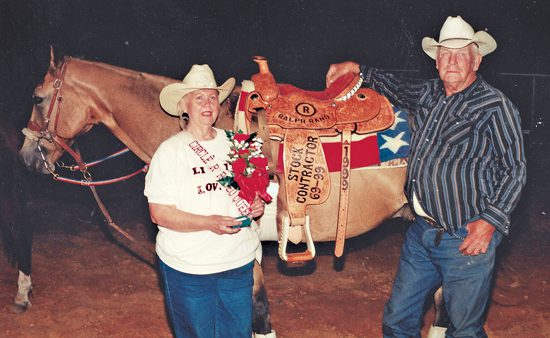
    In the early 1950s, Ralph and Helen Rand used to frequent the Calico Rock Café in their hometown of Dolph, Arkansas, and the pair quickly grew fond of one another. The only problem was Helen was just 14 years old and Ralph was 24. Understandably, the age difference caused a lot of controversy in the family, but they were undeterred. They started seeing each other anyway, even though Helen’s father, Homer Pat Sanders, was adamantly against it. Despite his resistance, they fell in love, ran off together and got married in 1953.
    After a whirlwind romance, the couple is still going strong 63 years later. Their eldest son, Tommy Rand, 57, was born into the cowboy way of life, along with older sisters Rema and Judy, and younger brother Tony. Ralph started producing rodeos in 1969 when they were all young children.
    “I was 10 years old when dad started producing rodeos,” said Tommy. “The hardest part for me was catching cattle. There are 310 acres where the arena is, so it was a full day.”
    As a child, Tommy helped his father raise horses and bulls. Several of them have been bucking bull or horse of the year. It started with his grandfather, Owen Rand, who bought and traded horses for a living.
    “My dad basically turned it over to me when I was 12,” said Ralph. “I’ve always been a horse trader.”
    Ralph started riding bucking bulls and horses at a young age, too. He loved the rodeo lifestyle from the first moment he was exposed to it.
    “He’s always had horses as a kid,” said Tommy. “He just loved being around the rodeo and the people he met.”
    In 1969, the Calico Rock Lions Club wanted Ralph to put on a rodeo. At that time, he didn’t have any bulls. Instead, he had bucking horses that weren’t broke yet. In fact, Ralph would regularly have his kids ride the unbroke horses and then take them to the local horse sale.
    “If they sold and made money, the kids got to stop at the local truck stop to get something to eat, which was a real treat for them,” explained Judy. “But if the horses did not make any money, they didn’t get to stop. They would just drive by.”
    At Ralph’s inaugural rodeo, instead of using bulls, he used cows to buck, while Helen would work the gate. His longtime friend, Paul McCarson, showed up to help him and essentially produced the first amateur rodeo along with Ralph.
    “It didn’t require a membership,” said Judy. “It followed typical rodeo rules, but there was no rule book.”
    Word started to spread that Ralph was producing quality rodeos on his property and soon people were asking him to produce rodeos in their town. That’s when the traveling began. Ralph had an old Bob Truck that could haul five horses and five bucking bulls. At one particular event in Ravenden, Arkansas, they ended up having the rodeo by moonlight after all of the lights were shut off. They did whatever it took to keep the rodeo going.
    “In Imboden, Arkansas, the arena was a T-ball field, so it was not typical square arena,” said Judy. “This guy got in there with a bull and it knocked him completely through the fence. We had to fix the fence to finish the rodeo.”
    With his unwavering dedication to producing the best rodeos in the area, Ralph dove head first into the production side, where he could be behind the scenes. While he’s not as involved as he used to be, he still raises several bucking bulls and horses on the Rand farm, where he hosts a “Born to Buck” program.
    “We keep about 100 horses and 50 bulls,” said Tommy. “We put on junior rodeos, too. There’s always something going on.”
    As a member of associations like the ACA, Arkansas Family Rodeo and Great American Bull Riding Association, Ralph has amassed countless accolades over the years. He served on the ACA board in the ‘80s, earned the GABRA Bucking Bull of the Year Award in 1994, and was named the ACA Cowboy of the Year in 1996. In 2013, he was the ACA Cowboys Choice Producer of the Year and two years later, earned the ACA Bareback Horse of the Year and Ranch Bronc Horse of the year. The Rand family’s most coveted award, however, is the 1998 Izard County Farm Family of the Year Award.
    “I was shocked when I found out we got it,” said the now 78-year-old Helen. “I wasn’t expecting it. I came home from work and there were 70 or 80 people for a surprise potluck. There were six or seven photographers there to take pictures. Ralph and I were shocked. We had no idea they were going to do this surprise dinner.”
    Every August, the Rands recreate the very first rodeo they had in 1969. Called the “Old Timers Rodeo,” they replicate the initial hand bill from 1969, when attending the event was only $2.50. It’s a huge spectacle and captures the hearts of their entire community. At 88, Ralph can watch the event unfold and soak in the magic of what he’s created over the years.
    “It’s unreal how many people show up,” said Tommy. “About 1,100 to 1,200 people usually come. We give out buckles and just have a great time.”
    Ralph is proud to watch his son take over the family business. He knows Tommy won’t stop until it’s the best rodeo it can be.
    “He’s that kind of person,” said Ralph. “He’ll fight to get to the top. I tried other people in the past, but Tommy really does it the way we have always done it. He loves the rodeo.”
    Ralph still checks on the cattle on a daily basis while Helen is content staying at home and spending time with her family. After such a long, fruitful career, they can look back with pride at everything they’ve accomplished, including Ralph’s biggest goal.
    “I always wanted to be a cowboy,” said Ralph. “That was what I wanted to do as a young boy in school. The number one thing I said I wanted was a big ranch and I did it.”

  • ON THE TRAIL WITH Daylon Swearingen

    ON THE TRAIL WITH Daylon Swearingen

    Daylon Swearingen split second and third place in the bareback riding at the NHSFR this July, riding all three of his horses after making the 34 hour drive from his home in Attica, New York. The 16-year-old bareback and bull rider won 2015 NHSFR All-Around Rookie Cowboy and qualified all three years of the NJHFR, the fruition of his hard work in the arena and on the spur board.

    The oldest son of Sam and Carrie Swearingen, owners of Rawhide Rodeo Company, Daylon learned the art of balancing rodeoing and rodeo production from an early age. Sam finished the 32nd Annual Benton Rodeo before flying to Wyoming to watch Daylon and his 15-year-old brother, Colton, compete in the NHSFR. The family visited Devil’s Tower during their travels, but were immediately back to work as soon as their truck turned in the driveway. Daylon was introduced to rodeo by Carrie, a barrel racer and former trick rider for Longhorn Rodeo. He made wooly-fisted mutton busting runs before putting the Barstow youth bareback rigging from his uncle, Kenny Phillips, on a pair of roman riding ponies. “Me and a buddy built bucking chutes at the house when I was eight,” says Daylon. “We had one pony that bucked a little bit, but that was it. When we started bucking steers under the rigging and saddle, they worked out better.” He was competing at the National level by sixth grade in the bull riding, chute dogging, and breakaway roping. Colton followed in the tie-down roping. “I did the timed events for the all-around – and to beat Colton,” Daylon jokes. “I couldn’t lose to my little brother!”

    Along with high school rodeo, Daylon competes in the SEBRA, IPRA, and APRA, where he was leading in the bareback riding his rookie year until heading out to Nationals. “I missed quite a few rodeos, and now I’m sitting third. It’s a little frustrating, but it doesn’t bother me too much because we still have quite a few rodeos left,” he says. Putting on 80 performances and 30 ropings from June to October, in addition to the usual rigors of summer haying, has its pros and cons. “I can always make it to at least two rodeos a week, and we have a weekly rodeo we put on. I usually get on every performance in at least one event,” Daylon explains. “We have good rodeos up here, there’s just not as many of them, so there’s not as many people to push you to get better.” His drive to be the best he can be motivates Daylon, along with the coaching from his dad, Kenny, Jerome Davis, Clint Cory, Dave and Tyler Waltz, and Doug Lutz. “Kenny is in Oklahoma, and I send him videos and talk over the phone. I went to Clint Cory’s bareback riding school this spring, and Jerome Davis has a bull riding school. He was a really good bull rider, and he got hurt, but he still has such a positive outlook on life, and he and his wife have helped me learn about the bull business.”

    Two year ago, Daylon purchased several heifers and bred them. He has a crop of calves are on the ground and bucked his yearlings this summer. “They bucked pretty good, and so did my heifers. When they’re old enough, I’ll take them to a few futurities, and then start bucking them in my dad’s rodeos.” Rawhide Rodeo Company raises its own roping calves, broncs, and bulls, and purchases its steers. They produce everything from high school rodeos to PRCA and IPRA rodeos, including the Canadian rodeo company Sam is a partner of. “We’re also doing some novice bronc riding at seven of the big rodeos,” says Sam, who founded the company in 1987. “I want to give Daylon and all the young kids the opportunity to rodeo. The younger generation can go play video games and be competitive without the effort, and I think now anything that takes a lot of effort is dying off.” Sam is a first generation saddle bronc rider, growing up on a farm with 40 – 50 horses to ride. “You didn’t know you weren’t out West. My dad was a collector of horses, and as a kid, I’d get on one until it quit bucking, then get on another one! I rode saddle broncs for years and did pretty good, then started buying livestock and an arena and went from there. Daylon will get on the spur board and have me come down, or go over videos with me, but he knows what he’s supposed to do, so it’s more of a conversation.”

    Sam and Carrie were married in 2011, joining their families – Carrie’s sons, Daylon and Colton, and Sam’s daughters, Katie and Molly. “Competing in rodeo is what both my kids strive for, and that’s all we really have in our life is our passions,” says Carrie, an RN and a vital part of the rodeo company. “We’ve met so many great people in rodeo – people competing, committees, and those who come to watch. It’s a great sport, and God has blessed us. We have a lot of fun, and it teaches our kids to work hard. It’s never easy, and sometimes you work hard and you don’t win, but that’s the way it can happen.” Carrie is barrel racing at the rodeos on a horse she’s been training, and is what Daylon calls the go-getter of the family. “We always come home with a ton of laundry, so we empty everything Monday morning and wash it, and get the crew’s western shirts to the dry cleaners,” says Carrie. “The Hazletts cook for the crew and anyone working the rodeo when we’re on the road, and that time is a definite blessing for our rodeo crew to get together.” Carrie often serves as a timer and keeps the company’s equipment organized on the road, which is even down to the arena itself. “Other parts of the country have permanent arenas, but up here, we don’t,” Daylon explains. “It takes about five hours to set up. We bring everything, from the chutes and fencing to the roping box. Colton and I help with that, and I do the feeding and help check calves.”

    When Daylon’s not on the road with the company’s four trailers and motor home, he enjoys riding colts, mountain biking in the nearby state park, cross-fitting, and wrestling for Attica Central High School, where he’s a junior this fall. “I’ve wrestled since second grade – it gave me something to do during the winter,” he says. “You have to have mental toughness, and if something goes wrong, you can’t blame it on a teammate. It’s just you, like rodeo.” In the winter, Daylon rides practice bulls at home until the temperature is below 30 degrees. “We have about 500 acres, and the summers are good, but the winters suck,” he admits. Year round, he’s working toward his goals of competing in the PBR, and qualifying for the WNFR in both his events. Along with the APRA finals, he intends to compete in the SEBRA and IPRA finals this year, where he’s sitting 12th in the bareback.
    “It’s a short rodeo season, but we’re blessed, and the boys work very hard at it,” Sam finishes. “They want it much more than I did, and it’s nice to see them getting involved and growing into rodeo.”

  • The Process

    Practice should be a process to improve daily. Unfortunately the majority of people just practice to practice. They have no daily plan to execute to get better. They will run a lot of cattle with or no improvement. They waste a lot of runs on the cattle and on their horses. Every day in a new practice session, the do not build on the previous day’s practice. They will eventually improve but most of the time it is by blind luck. The improvements are unpredictable and difficult to replicate.
    So why is it important to have a process in place?
    Those who improve the most and the most efficiently have a process to their practices. They work on improving daily. Each run is an opportunity to improve and is treated as such. They do not waste runs on the cattle or on their horses. They don’t expect to make great changes or improvements by accident. They understand that by having a process in place, they will see a continued and gradual improvement every day. The process will lead to these students spending more time roping the dummies and spending time on the practice machines. They are not afraid to rope the Heel-O-Matic. They will spend the time on the small details to improve.
    Because of the plan they can build on the successes from the previous day’s practices. They can learn from their previous mistakes instead of repeating them daily. Improvements are predictable and easy to replicate because of the process used to create them.
    So how do you start a process for improvement?
    The first step is to understand that the quickest way to improve is through repeated small improvements. Do not expect major improvements overnight. The process is what it is, it is a process. The more work you are willing to put into the process of improving the greater the results you will see. Generate plan for your practices and stick with it. You may not see the improvements right away but if you stick with your plan you will start to see the improvements. Continue to build on the improvements, find what works for you and your learning style and utilize the resources you have.
    Gradually build your process of improvement. Try not to fall back in to your comfort zone practices. Challenge yourself to make small improvements. As part of the process recognize the small improvements and use that as motivation to keep making further improvements.
    Start developing a process to improve.


    C.J. Aragon was named the 2008-2011 Grand Canyon Region Coach-of-the-Year. 2014-2015 WJCAC Coach-of-the-Year, 2016 Southwest Region Coach-of-the-Year, and 2010 National Intercollegiate Rodeo Association Coach-of-the-Year.

  • Grilled Peaches & Cowboy Butter

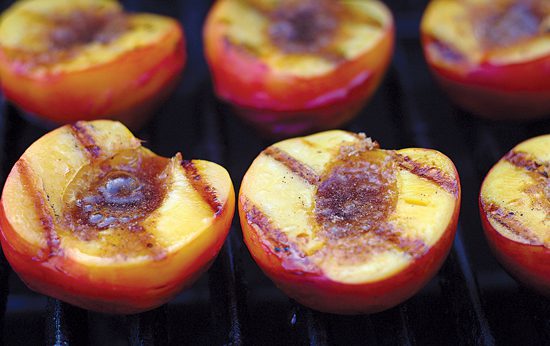
    above: Grilled Peaches - Courtesy of Mike McCune

    Grilled Peaches
    recipe courtesy of Kristie Binders,”Rodeo Road Recipes”

    ingredients:
    1 1/2 Tbsp. butter
    3 Tbsp. brown sugar
    1/3 cup dark rum (spiced is best)
    8 ripe peaches – peeled, pitted & halved

    DIRECTIONS:
    Melt butter in saucepan on grill. Stir in brown sugar and rum until it dissolves. Place peach halves in melted mixture, stir and coat. Place peaches on grill over medium heat, about 5 minutes per side. Spoon on excess mixture as peaches grill. Makes about 8 servings.


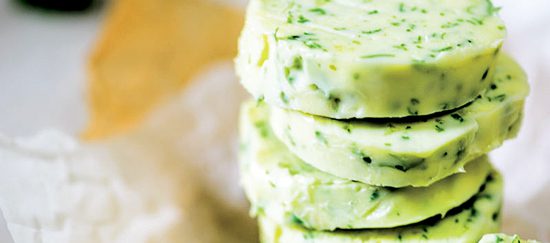
    above: Cowboy Butter - Courtesy of Neha MathurCowboy Butter
    recipe courtesy of Ang Paris,”JugglingActMama.com”

    ingredients:
    1 cup salted butter (2 sticks)
    1/4 cup finely minced fresh parsley
    A pinch of red pepper flakes
    A pinch of coarsely ground black pepper
    1 clove garlic, finely minced
    Juice and zest of ½ lemon

    DIRECTIONS:
    Allow the butter to come to room temperature before starting. Beat the butter until creamy, then add in the parsley, red pepper flakes, black pepper, minced garlic, lemon juice and zest. Mix until well combined. Scrape down the sides of the bowl and turn the mixture out onto a piece of parchment paper. Using the back of a spatula, spread out the mixture into a log shape. Roll the parchment paper up and twist the ends. Refrigerate for at least 4 hours to allow the flavors to come together.

  • ProFile: Jayde Atkins

    ProFile: Jayde Atkins

    “My mom (Sonya) was the typical horse crazy girl who grew up on a hobby farm in Missouri. My dad (JB), who grew up farming and raising cattle and hogs, learned to rope after they were married. They ended up in the horse world training and showing reiners and reined cow horses,” said Jayde Atkins.
    Jayde is still rolling with interviews pertaining from her current achievements: Champion All Around Cowgirl at the National High School Finals and Champion Reined Cow Horse as well. At the Nebraska State level, she won the pole bending, the reined cow horse, and all around, second in cutting, third in barrels, knocking a barrel to potentially win it.
    “Nationals was pretty awesome,” she said. “I won the reined cow horse and the All Around, competing in barrels, poles, cutting, and the cow horse.” Her family trains reined cow horses and rope horses. “We’ve used similar bloodlines for cow horse and roping, since we are in the rodeo world. My reined cow horse is also my number one breakaway horse and is a proven tie down horse. And now I’ve got two futurity barrel horses as well to take down the road.” Her dad has a regular job as a territory manager for Vermeer Manufacturing. Her mom is a nutritionist at Backbone of Healthcare in Broken Bow.
    She worked hard this year to get better at her events. “Last year I really wasn’t confident in myself or my horses and I wanted to do really good but tried to force a lot of things too much. Last year she ended up second in reined cow horse and third in the all around at NHSFR. “I went to several different trainers last year and this year for help, but this year I determined to be more focused. I was more confident in myself and sought out just a few skills I needed to work on.” In Nebraska, she competed in everything – including goat tying, team roping, breakaway, and even tied her first calf down the week before Nationals.
    Jayde started riding early. “I can never remember a time I wasn’t riding. Some of my earliest memories are from when my parents were showing, and I helped them cool down horses.” She did some of the junior rodeos when she was younger. Her older brother, Sterling, got into high school rodeo when she was in sixth grade. “I didn’t really get to rodeo much until my freshman year.” Sterling won the Nebraska State High School Cutting title and his shoes were hard to fill. He passed away his freshman year in college from basically a heart attack that happens to athletes. “They didn’t know at first why he had a heart attack. And for pretty much a year we did tests to make sure I didn’t have it – you go from everything being good to everything awful. I was running cross country and track and I wasn’t allowed to do anything until results came back. I rodeoed to keep us sane,” she recalls. “I was riding his cutting horse and his tie down horse, Harry, who ended up winning the reined cow horse with me.”
    When the National High School officially introduced the reined cow horse her junior year, Jayde had already done the demonstration at Nationals her sophomore year. “I’ve been involved in the implementation of the event in Nebraska,” she said. “It’s a show horse event and we’ve been involved in the AQHA for years. I haven’t shown there for years, because high school rodeo took precedent over that.”
    Jayde is heading to Chadron State College – about four hours from home – this fall. “It’s the same college that Sterling went to and I know a ton of people from Broken Bow that have gone there and loved it.” She is not going to rodeo the first year, although she’s taking some futurity horses with her. She is going to major in Ag Business and plans to concentrate more on the economic and financial end of it.
    After college, her dream is “Marry a rich rancher from the Sand Hills that will let me rodeo for the rest of my life … and if that doesn’t work out, I will live where I can give back to the ag community – I am a huge believer in FFA, and I want to keep the way of life that I’ve lived going. Horses are what we’ve always done, it’s our life.”

  • Back When They Bucked with Dr. Charles “Bud” Townsend

    Back When They Bucked with Dr. Charles “Bud” Townsend

    “For a guy who started out like I did, America was the land of opportunity. I’ve come from shoeshine boy to Grammy Award winner and author,” says Dr. Charles Townsend. Born November 5, 1929, the Texas native attributes rodeo as the gateway to his life, and an abundant one at that. He announced rodeos 50 consecutive years and took his oratory skills to the college classroom as a history professor, while also writing “San Antonio Rose: The Life and Music of Bob Wills”, published in 1976.
    It began simply enough. Charles Buddy Townsend – named after musician Charles Buddy Rogers – had drawn a bull, Little Blue, at the rodeo in Ringold, Texas. It was Labor Day of 1946, and Bud’s older brother refused to let the 16 year old get on the bull. When the announcer didn’t appear, Bud, known for his rodeo announcing imitations, took up the microphone instead. “I took to that like a duck to water. I had a lot of fun, maybe more so than later because I wasn’t taking it seriously,” says Bud. “In those days, they brought an invalid in an old Sedan to the arena with his sound equipment inside. Sometimes the horses would hit the car or the calves would run behind it. We didn’t have electricity at the arena, so we ran a crystal microphone off the car. I would fold a handkerchief over it so it wouldn’t melt in the sun. Mine never did.”
    Following his announcing debut, Bud got on one or two more bulls before leaving the chutes behind. “Announcing was my forte, and it gave me something to live for. My mother was widowed with seven children, and we were poor, which was nothing new in the Depression. I never dreamed I’d make ten dollars a day or that there would be any future – I had no reason to believe I’d ever be anything. I had a gang of friends around town, and we were into all kinds of mischief. Announcing opened a door in my life, and in a sense, I owe a debt to rodeo that I can never repay.”
    Prior to living in the town of Nocona, Texas, Bud and his mother and siblings lived on his grandfather’s ranch, eight miles from town on the Chisholm Trail, and just four miles from where H.J. Justin started Justin Boots Company. “I lived in an era right between the frontier and modern America. We went to town with the team and wagon and brought groceries back. One of my granddad’s ranches was on the Red River, and he was rich when oil was three dollars a barrel. My Uncle Joe Hancock raised the great Hancock horses.” When Bud was in his early teens, his mother moved to Nocona and rented an old hotel for the family. “Main street was my front yard and the alley was my backyard. I was truly an alley rat. But when I started announcing, I became something of a businessman, and I had to give up my wild and wicked ways, because people won’t buy ads from a shady character,” he recalls with a laugh.
    He announced horse races, baseball games, and sold ads, a long way from his ten cents a shoe shine. He returned to boots, however, in his late teens when Ruth Salmon (Roach) the lady bronc and trick rider, secured him the sales manager position at Olsen-Stelzer Boot and Saddlery Company in Henrietta, Texas. “She was a dear friend of my mother’s, and we lived on the ranch two and a half miles from Ruth and Dick Salmon. We were very close, and I also knew Tad Lucas because she’d stay on Ruth’s ranch. They never referred to rodeo as a sport – they looked on it as show business. To me, that was the greatest era of rodeo, when it was more of a show.”
    Show business agreed with Bud, and he learned his craft announcing rodeos in towns such as Muenster and Gainesville, Texas. The 17 year old turned his attention to the RCA, and when Ruth put in good word to Bobby Estes, a rodeo producer, Bud was all but in with the association. “I announced for Bobby in Hamilton, near Stephenville, Texas, and he liked me. When I joined the RCA, their office was in Fort Worth in the Burnett Building. Earl Lindsey was the manager and they had a little 6×6 foot office with maybe one file cabinet and a desk. I asked Mr. Lindsey, ‘If I join the RCA, can I announce amateur?’ He said I’d be put on the blacklist, and I had to decide right then if I wanted to be amateur or pro. My original card number is 1249 – I was the 1,249th member in 1948.”
    Two years later, Bud married Mary Smith, who was a book keeper for Olsen-Stelzer. Their first son, William, was born in 1951, and twins Mary Jane and Charles Jr. came several years later. Bud announced for Bobby Estes another five years, and the family always came along. “We wore out about three trailers – we couldn’t make any money if we stayed in hotels or ate out. Our first trailer was 17 feet and it wasn’t even self-contained.” Bud explains his biggest break in the rodeo business came when he quit working for Bobby Estes. “It freed me up to announce bigger rodeos – after I quit with him, I travelled all over. I went to the RCA convention and booked shows, from state fairs in California and North Carolina to rodeos in Mercedes, Texas, and Omak, Washington.” He also worked for rodeo producers including Homer Todd, Beutler Brothers, Cotton Rosser, Everett Colburn, and Walt Alsbaugh for 30 years.
    “In the meantime, I became a Christian. My wife and her family are so Baptist, they go back to John the Baptist, and I decided I wanted become a preacher.” Bud continued to announce in the summers and work for Olsen-Stelzer and Nocona Boot Company while attending school. He graduated from Decatur Baptist College and went on to Midwestern State University in Wichita Falls, Texas. “The faculty got me a fellowship for Baylor University where I went for a year until I applied to University of Wisconsin. I’d gotten interested in history at Wichita Falls, and University of Wisconsin had a top history department, but I knew I wasn’t ready for the big league yet. I took a teaching job at Texas Tech University to really learn basic American history, and then went to Wisconsin for three years to get my PhD.”
    He would go on to teach history at West Texas A&M University in Canyon for 27 years, where he is presently Professor Emeritus, while Mary taught first grade in Canyon for 24 years. Bud was one of the best lecturers the school had seen. “I attribute that to announcing rodeos,” he says. “I couldn’t announce a rodeo and use big words and be intellectual – you have to speak the people’s language. I lectured the same way in the classroom, and they could understand me.”
    Bud also taught at Hardin Simmons, Texas Tech, and University of Wisconsin. While teaching at Texas Tech, he made extra money by interviewing rodeo people for Sylvan Dunn, an associate professor of Sociology. Bud made sure his interviews took him to Turkey, Texas, home of the King of Western Swing, Bob Wills. “When I was growing up on my granddad’s ranch, my dad was a big fan of Jimmy Rogers, whom he’d played guitar with. They both had TB, and Dad met Jimmy in a sanitarium in San Angelo. In full health, Dad worked in the oil fields, and he was a tinkerer. When I was five or six, he built a wind charger to charge the car battery so we could listen to the radio. We listened to three things – Bing Crosby, Franklin D. Roosevelt’s speeches, and one noontime, we found Bob Wills. In the Depression, there wasn’t much to live for with war coming. But Bob Wills’ music was uplifting. Dad told me one time, ‘Stay with this Bob Wills, he’ll be big one of these days.’ And I never forgot it.”
    Bud’s chance to meet his childhood idol came when he met Johnny Lee Wills, Bob’s brother, who produced a rodeo in Tulsa, Oklahoma. “He got me in with Bob Wills, and when I came back to the history department, they thought I was lying about meeting him. But my wife fell in love with his wife, and we became close friends.” Bud was asked to write an article on Bob Wills for the Dictionary of American Biography, but he felt a book was in order. For the music lover who signed up for clarinet in college and carried the reeds in his pocket, the 85 interviews with Bob Wills that followed were exhilarating. “It was about ten years in the making. I did all my writing in the morning. I knew I was writing to the world, and I’d sit there and get a high just working on it!” A scholarly work edited by Judith McCullough, “San Antonio Rose: The Music and Life of Bob Wills” was published in 1976 by University of Illinois Press in a series of books on music and American life.
    In 1975, Bud accepted the Grammy Award for his album notes on “For the Last Time”, Bob Wills’ final album with The Texas Playboys. Bud was one out of 4,000 entrants and five nominees for the Grammy Awards. “One reason I think I won the award was because I interviewed so many musicians and asked about their influences. Bob’s was Bessie Smith, Empress of the Blues in the ‘20s.”
    Today, Bud and Mary continue to make their home in Canyon. Their son William is an optometrist, and Mary Jane is a medical advisor for one of largest blood distributing banks in the world, located in Scottsdale, Arizona, second only to the Red Cross. Their younger son, Charles Jr., passed away five years ago. “Regardless of what I’ve done, I’ve stayed with rodeo in the summers, and it was like paid vacation for 50 years,” says Bud, who’s been inducted into the Texas Rodeo Cowboy Hall of Fame, and received the Lifetime Achievement and All-Around Cowboy awards through the American Cowboy Culture Awards in Lubbock, Texas, which he announces. His childhood hometown of Nocona even held a Bud Townsend Day in his honor. “I wouldn’t take anything in the world for those 50 years of announcing,” Bud finishes. “Rodeo introduced me to so many cultures and foods and people, and it freed me from poverty and gave me ambition. Everything I’ve done goes back to that, and I’m so proud I did it.”

  • On The Trail With Charlie Gibson

    On The Trail With Charlie Gibson

    Charlie Gibson started rodeo 12 years ago, when he was five. “My dad (Casey Tyree) and my sister (Brittany Winslett – 7 years older) competed,” said the 17 year old from Greenwood, Texas. When he was too young to compete, he would go along with his sister and spend his time roping – anything he could find – the dummy, a goat, anything.

    Hard work and lots of practice paid off for him at the 2016 American Junior Rodeo Association Finals where he won the team roping, ribbon roping, tie down roping (second year in a row), and all around. He also won the Alvin G. Davis Award at the AJRA finals, given to the contestant who helps out the other contestants, shows good morals, and sets a good example.

    “Charlie was voted by our directors to receive this award as a member that has given back to the association in character and assisting the younger kids,” said Mary McMullan, AJRA Secretary Manager. “He’s been roping all year long injured – he is scheduled for knee surgery this fall; and he still gets out there and mugs calves for the little kids. He’s assisting without being asked and that’s awesome.”

    In spite of his injury, he practices every day and sticks to the same routine. His day begins with practice, which is a family affair at his house. His dad, Casey rodeoed, and was still roping when Charlie started going, but has stopped to devote his time to helping Charlie. His mom, Jerilyn, runs the chute and the video camera. She’s also a great coach. “She’s figured out more of the game than most people know,” said Casey. Casey is Charlie’s coach in the practice pen. “We try not to use the safety. He’s getting a lot better about being a smart roper. He had a good high school year this year, won Region 2 tie down, high call back at Texas High School finals, and messed a hooey up and missed National Finals by one hole.”

    Charlie has a daily workout that includes flipping a tire, doing push ups and other core strengthening work, and he also works with his dad at the family business building fence and barns, which is a work out too. He has learned to weld, and can do most of the fence building now unassisted. “We work until around 1 then I come home and do school work for a couple hours,” said Charlie, who will be a junior using the Christian Academy of America curriculum. After school is done, he heads back to the practice pen with his dad to rope. “We practice every day, no matter what,” he said. “When we get home, we watch videos of great ropers like Fred Whitfield or Trevor Brazile. Watching how fast and smooth they are, it motivates me to be like them and I want to win.”

    Formal roping training has come from a Roy Cooper school that he attended when he was about 13, and pros that have come through to rope at his house or theirs. “I had a lot of good mentors just like he did. We study the game a lot, and go through lots of video,” said Casey. The horse power comes from various places. “Some of them from my mom and her ranch in New Mexico,” said Casey. “And some we pick up here and there. We take everybody’s projects and finish them or tweak them to fit him. He’s got a little different style than everyone else – all out. He’s going 90 miles an hour – he likes to go all out.”

    He has three tie down roping horses, Tuff, Lightning, and Badger, and uses Lightning the most. “He’s more mature and knows how to do his job, and he’s a winner.” His team roping horse, Frankie, came from Jackie Smith and Casey trained him.

    When he gets ready to back in the box, he takes a deep breath and goes through his steps with his dad. “I like to get by myself, think about what I want to do and get everything else out of my mind, and go do my job. Realize it’s just you and the calf and nobody else,” he said, recalling the missed hooey at the high school finals. “I got in too much of a hurry.” He has learned how to handle loss as well. “I walk out of the arena with my head high and go on to the next one.” One of the books he has read to help him with his mind is Gold Buckles Don’t Lie by Fred Whitfield. “No matter what happens, you have to go on with your life instead of look back.”

    Charlie brought home four saddles, seven buckles, and some cash from the AJRA Finals, and he’s ready to go again. He has been invited to the Roy Cooper Invitational this December in Las Vegas, and the plan is to win state and National next year. “I want to win the world – and I’m going to do everything I know how; do what my dad’s taught me and go out there and be consistent.” He is thankful for God number one, his family, his sponsors, and everyone that helped along the way. His sponsors include: H4 Compression Specialties, Inc, DLH Inc and Ranchfolks.com.

    Jerilyn is supportive of her children’s desire to rodeo. “It’s taught them hard work, and if they want something they have to work for it. It’s taught them morals and values and how to be a good person.”


    Charlie Gibson started rodeo 12 years ago, when he was five. “My dad (Casey Tyree) and my sister (Brittany Winslett – 7 years older) competed,” said the 17 year old from Greenwood, Texas. When he was too young to compete, he would go along with his sister and spend his time roping – anything he could find – the dummy, a goat, anything.

    Hard work and lots of practice paid off for him at the 2016 American Junior Rodeo Association Finals where he won the team roping, ribbon roping, tie down roping (second year in a row), and all around. He also won the Alvin G. Davis Award at the AJRA finals, given to the contestant who helps out the other contestants, shows good morals, and sets a good example.
    “Charlie was voted by our directors to receive this award as a member that has given back to the association in character and assisting the younger kids,” said Mary McMullan, AJRA Secretary Manager. “He’s been roping all year long injured – he is scheduled for knee surgery this fall; and he still gets out there and mugs calves for the little kids. He’s assisting without being asked and that’s awesome.”
    In spite of his injury, he practices every day and sticks to the same routine. His day begins with practice, which is a family affair at his house. His dad, Casey rodeoed, and was still roping when Charlie started going, but has stopped to devote his time to helping Charlie. His mom, Jerilyn, runs the chute and the video camera. She’s also a great coach. “She’s figured out more of the game than most people know,” said Casey. Casey is Charlie’s coach in the practice pen. “We try not to use the safety. He’s getting a lot better about being a smart roper. He had a good high school year this year, won Region 2 tie down, high call back at Texas High School finals, and messed a hooey up and missed National Finals by one hole.”

    Charlie has a daily workout that includes flipping a tire, doing push ups and other core strengthening work, and he also works with his dad at the family business building fence and barns, which is a work out too. He has learned to weld, and can do most of the fence building now unassisted. “We work until around 1 then I come home and do school work for a couple hours,” said Charlie, who will be a junior using the Christian Academy of America curriculum. After school is done, he heads back to the practice pen with his dad to rope. “We practice every day, no matter what,” he said. “When we get home, we watch videos of great ropers like Fred Whitfield or Trevor Brazile. Watching how fast and smooth they are, it motivates me to be like them and I want to win.”

    Formal roping training has come from a Roy Cooper school that he attended when he was about 13, and pros that have come through to rope at his house or theirs. “I had a lot of good mentors just like he did. We study the game a lot, and go through lots of video,” said Casey. The horse power comes from various places. “Some of them from my mom and her ranch in New Mexico,” said Casey. “And some we pick up here and there. We take everybody’s projects and finish them or tweak them to fit him. He’s got a little different style than everyone else – all out. He’s going 90 miles an hour – he likes to go all out.”

    He has three tie down roping horses, Tuff, Lightning, and Badger, and uses Lightning the most. “He’s more mature and knows how to do his job, and he’s a winner.” His team roping horse, Frankie, came from Jackie Smith and Casey trained him.

    When he gets ready to back in the box, he takes a deep breath and goes through his steps with his dad. “I like to get by myself, think about what I want to do and get everything else out of my mind, and go do my job. Realize it’s just you and the calf and nobody else,” he said, recalling the missed hooey at the high school finals. “I got in too much of a hurry.” He has learned how to handle loss as well. “I walk out of the arena with my head high and go on to the next one.” One of the books he has read to help him with his mind is Gold Buckles Don’t Lie by Fred Whitfield. “No matter what happens, you have to go on with your life instead of look back.”

    Charlie brought home four saddles, seven buckles, and some cash from the AJRA Finals, and he’s ready to go again. He has been invited to the Roy Cooper Invitational this December in Las Vegas, and the plan is to win state and National next year. “I want to win the world – and I’m going to do everything I know how; do what my dad’s taught me and go out there and be consistent.” He is thankful for God number one, his family, his sponsors, and everyone that helped along the way. His sponsors include: H4 Compression Specialties, Inc, DLH Inc and Ranchfolks.com.

    Jerilyn is supportive of her children’s desire to rodeo. “It’s taught them hard work, and if they want something they have to work for it. It’s taught them morals and values and how to be a good person.”


  • Tru Team Roping

    Tru Team Roping

    Hello Ropers,
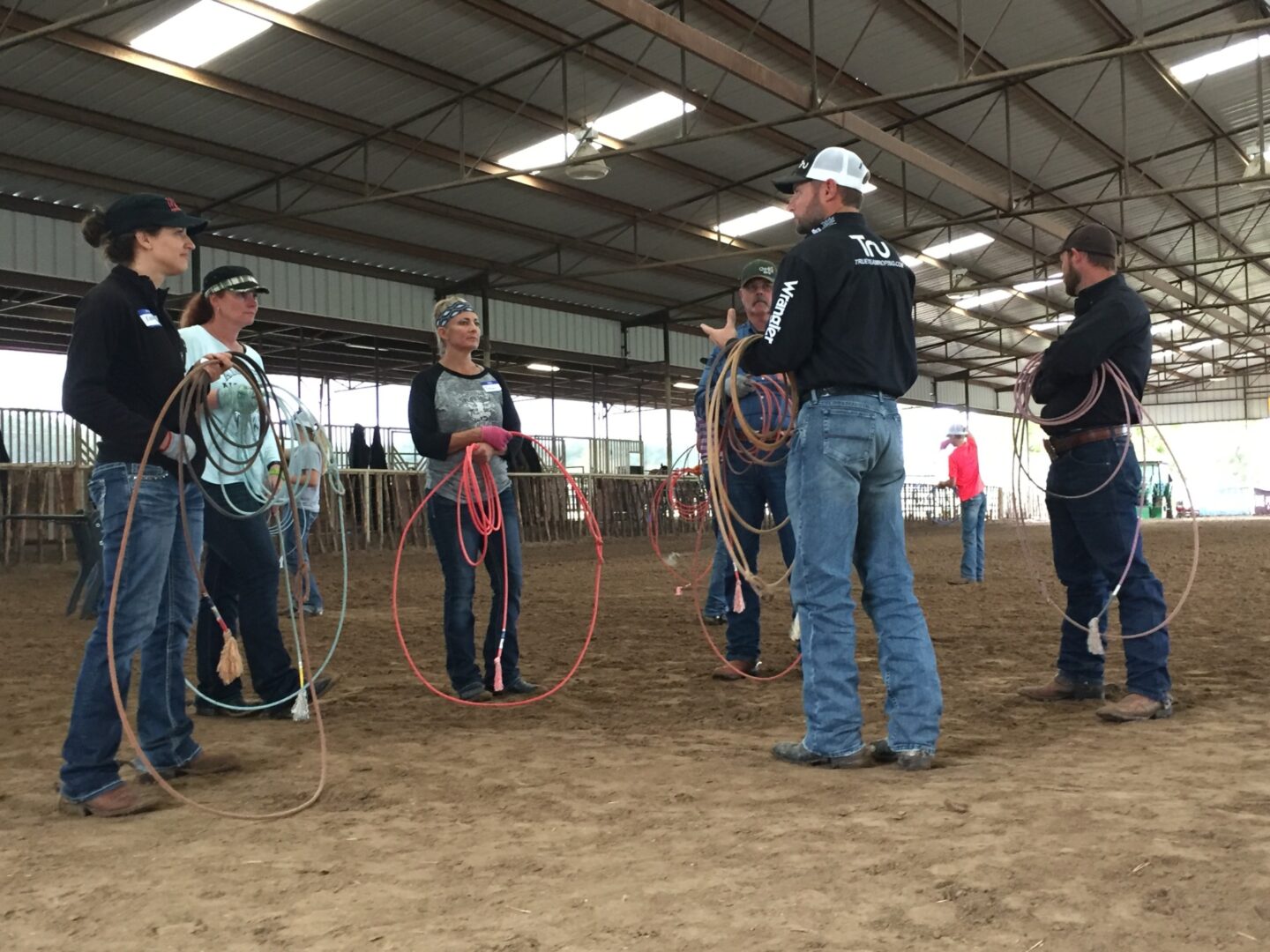
    It is good to be back writing to you again touching base on what we need to be focusing on. I have been on the road for five weeks doing clinics and lessons and it keeps me in check on making sure we continue to build on our correct fundamentals.
    As I said in a previous article, your horse is without a doubt your number one tool. The first day of every clinic most of the students would warm their horses up without ever practicing swinging their ropes in the process. This is a must. The more comfortable you become riding and swinging at the same time, the more at ease you will be when it comes time to rope cattle.
    We have talked about headers opening up their shoulders to the steer or becoming square to their target. There is not a better time to practice this when warming up.
    Heelers, a great opportunity for you to warm up mentally is during someone else’s warm up. You can get to the outside of them and imagine their horse being your steer, ride position, soften your horse and practice swinging with your tip down towards your target. The great thing about this is there is no pressure in chasing a steer and allows you an opportunity to relax and become a part of your horse, ride more proper as roper learning to use your legs to ride with and not your upper body.
    Remember, the reason head horses and heel horses start slowing down and shutting us out is because we start to lean in the chase and put our shoulders over the top of the horses shoulders. The first thing that happens after this is we balance on our reins and then they just start pushing on the bridle. Bad muscle memory is created and it comes back to haunt us in the short rounds or in the latter of our practice.
    Headers, we do a drill that has worked great in helping ropers understand all of this. Set your sled up in front of the box and walk out of the box on your horse while practicing opening up and starting your swing. It is great to let your horse get some relaxed box work and teaches you to be open or square to your target and swinging ready for the two-hand delivery.
    Heelers, pull your sled in a circle and ride to the outside to maintain position. When you get tired and relaxed is usually when your horse softens and allows you to rope with higher catch percentages.
    Until next month, best of luck and practice your steps.
    Krece
    Thank you and God Bless!

  • Roper Review: Mike White

    Roper Review: Mike White

    A good and positive attitude is a common trait amongst people who excel at anything. A trait not as common, though respected as much or more, is humility. When asked about his life and accomplishments, Mike’s first reaction is to talk about the people who helped him.
    Mike White grew up in Lake Charles, Louisiana where rodeo was a way of life. His older brother, Pat, was a bull rider, bullfighter, and stock contractor who Mike fondly describes as a workaholic.
    “Pat rode bulls outstanding,” says Mike. “Probably better than me. What he didn’t like was traveling and being gone, so he never made a career of it.”
    As a youngster Mike took part in most rodeo events including team roping, bull dogging, calf roping and riding bulls. He was given a lot of responsibility at a young age and by the time he was sixteen he was driving a semi hauling bucking stock to rodeos.
    At age 15, he was also riding racehorses as a jockey and fought to keep his weight down. When he got his jockey license at 16, he was also trying to ride bulls. Two fellow jockeys, Chris and Aaron Emigh, helped with his decision.
    “They told me I needed to choose between the two. In order to be a jockey I would have to stay sick and puny to keep my weight down. If I didn’t want to do that, I needed to ride bulls.
    “I chose to ride bulls and had every opportunity in the world to become good because of my brother. He was my teacher, my mentor, and would help me at any time of the day or night.”
    Mike’s rookie year in the PRCA was 1997. He made the finals that year and set the record for the most money earned as a rookie, finishing 5th in the standings. The next year he returned to the NFR with a good chance at winning the world. After five rounds and no qualified rides, Mike was getting more advice on bull riding than he could process. He called his brother, Pat, who said, ‘What you’re going to do, after the next perf, is get on a redeye flight, come home and get on some bulls. Then you can fly back to Vegas in time for the next performance.’
    “I told Joe Baumgartner my plan and he told me to hold up. He got me hooked up to ride some bulls at Michael Gaughan’s place, and told me I could get on as many as I wanted,” says White. “I got on three bulls, got my confidence back and rode four out of the next five bulls at the NFR.”
    In 1999 Mike hit the rodeo trail hard. It was the end of July and he was winning the world when he realized he was burned out. He told his traveling partner, Myron Duarte, that he was done and headed home. Myron said, ‘You can’t do that, you’re winning the world.’ Mike didn’t care; he was tired of the road.
    Fast forward to the last three weeks of the rodeo season. White has fallen out of the top fifteen when he calls Myron and told him to enter him in the remaining rodeos.
    “Don’t worry, you’re already entered,” responded Duarte. “You’re going to have to turn out some because I have you double entered. This is what you get for being lazy.”
    White admits it was costly as he took last minute flights to get to the rodeos where he had drawn the best. He made the finals in 13th place by several hundred dollars. He went on to have an outstanding NFR and rode eight of the ten bulls and winning the world that year.
    “I was burned out and tired of going,” explains White. “If you’re tired, you’re not going to perform to the best of your ability. By the time I went back, I was hungry for it.”
    In July of 2000 White suffered a broken neck, keeping him out of action until the following year. After returning to competition, at a PBR event in Shreveport, Louisiana, his first bull stepped on and crushed his ankle. That injury kept him sidelined for seven months. At the third event, after recuperating, he was thrown and dislocated his shoulder, breaking the ball in it.
    Admittedly being hardheaded, White refused the help of the Justin Cowboy Crisis Fund and used his own savings for bills and living expenses. When he did finally return to the arena, he had a total sum of $300, virtually starting completely over.
    “I’ve dealt with a lot of injuries,” says Mike. “But that particular time was rough and a real eye-opener for me. It made realize just how short and humbling a bull-riding career is. I learned you should save and invest every dime earned for the end of your career.”
    Mike always enjoyed team roping and training horses, but never found the time when he was riding bulls for a living. Upon retiring from bull riding in 2010, he and his wife, Hannah, started training and roping more.
    “I love to rope and am probably addicted to it. It’s a very humbling sport. One day you’re a rock star and the next you can’t catch.”
    Now rated a #7, Mike recalls being at an all time low with his roping and being entered in the Big 12, the day after the George Strait Team Roping. He called his nephew, Tyler Domingue, whom he taught to rope as a youngster, and asked for help.
    “In true Tyler fashion, he pulls in at 11 p.m. to rope. In seven steers, he had me catching 95%. It’s ironic that I taught him and now I’m going back to him for advice. There are people who can rope well, but can’t explain it; then there are people who can break it down where it makes sense, and that’s Tyler.”
    White, who turns 40 this year, has found his passion in training quality rope horses. They’ve sold three horses to past NFR qualifiers, mostly recently Clayton Grant from California. The Grants are enjoying the six-year old heel horse, calling him a “true gentleman.”
    “There’s not a horse we sell that I won’t stand behind,” says White. “I don’t train or sell junk. I like nice horses.
    “In life, the one thing you will always have is your name. Once you ruin that, you’re ruined for life. I will always stand behind mine.”
    As a professional athlete, Mike is quick to point out the importance of sponsors and his responsibility to them.
    “When one of your sponsors asks you to do something, your response should be ‘You bet, when and where do you need me.’ I’ve been blessed with great sponsors and I appreciate them very much. When you’re hurt, sometimes the only income will be from your sponsors. If you’re asked to do something by your sponsors and you don’t want to, don’t think people aren’t going to notice. In the rodeo world people see everything you do.
    “Some of the sponsors that stuck with me after I retired from riding bulls are Big Tex Trailers, Fast Back Ropes, and Cooper Tires. I’ve always respected that.”
    Mike and Hannah live in DeKalb, Texas, with their two sons, Logan, 12, and Morgan, 4. Each year they host Mike White’s Annual Pasture Roping & Benefit, a non-profit organization benefitting Ropin Dreams, an organization that benefits children with serious illnesses or injuries.

    COWBOY Q&A

    How much do you practice?
    Every day.

    Do you make your own horses?
    Yes.

    Who were your roping heroes?
    Jory Levy. He really broke it down for me. He took the time to help me and that meant a lot.

    Who do you respect most in the world?
    My grandpa and my parents. Until the day he died, my grandpa opened the door for my grandmother. He never walked in a building with his hat on. He had a lot of respect for people and I learned a lot from him.

    Who has been the biggest influence in your life?
    My brother, Pat.

    If you had a day off what would you like to do?
    Take my wife to the beach.

    Favorite movie?
    Talladega Nights – “If you’re not first, you’re last.”

    What’s the last thing you read?
    The Bible

    What makes you happy?
    Roping and riding horses.

    What makes you angry?
    Losing.

    If you were given 1 million dollars, how would you spend it?
    I’d build a covered arena and donate most to a foundation, Ropin Dreams.

    What is your worst quality – your best?
    Best quality is honesty. Worst quality is being a workaholic.

  • Back When They Bucked with Willis Hamm

    Back When They Bucked with Willis Hamm

    Trick roper, trader, entrepreneur, Willis Hamm was born near the second half of The Great Depression, yet hard work and ingenuity were spurs on the heels of the somber era. With them, Willis started his own business, Cowboy Metal, which celebrates its 50th anniversary this year, grown on the values of the western lifestyle – and $187.11.
    Born November 5, 1934, to Henry and Esther Hamm, Willis was the youngest of four children. His father was a horse and dairy cow trader, and owned a dairy farm near Hooker, Okla., a town in the 34 mile wide Oklahoma panhandle. Willis was at once initiated into a lifestyle of rising when the day was just four hours old – or at least arriving home in time for milking. “Leland Friesen was my best friend in high school, and we’d ride after church into the night – my dad just said to be home by milking,” Willis recalls. “He never let me use the truck, saying I had a saddle and a horse. He had an extremely good reputation as a trader for his integrity and honesty, and he taught me all of that. We learned how to work and to be honest, and that’s still very important to me today.”
    Willis and his brother took to breaking horses, both for their dad and the public. “I was trick riding then and teaching our horses,” says Willis. “My dad would have me show somebody the tricks a horse could do, and it was sold. It was key to my dad’s trading, but it was a heartbreaker for me to say goodbye. I really learned how to detach myself from an animal until I got my own horse, Lady.” The mare lived to be 34, and became Willis’s trick riding mount after he met Dixie Lee and Virginia Mae Reger of Woodard, Okla. “I saw them trick ride at a rodeo in Guymon, Oklahoma, and I fell in love with it,” Willis recalls. “I went home and started doing the tricks I’d seen. I didn’t have a trick saddle at the time, but I messed up my dad’s favorite saddle standing on it. The death drag was one of my favorites – it’s daring and spectacular.”
    Never one prone to thumb twiddling, Willis added trick roping to his repertoire in grade school. The three Gilbert brothers from his school were from a ranching family, and they shared their knowledge of trick roping with him. “They were real cowboys, and also my heroes from the standpoint of trick roping,” he says. “I learned to do whip work on my own, and riding standing up while spinning a rope was something I specialized in.” He also experimented with roman riding, known for taking any two horses his family had and making them go forward. “Frank Gilbert could roman ride two horses jumping over a convertible, and I asked my dad about using a neighbors junk car to jump, but he said no, so I made some jumping standards and put a blanket in between to create the same distance. I also trained one of my dad’s horses, Dolly, for trick riding. She loved to fall, and I learned to fall free of her. I’d take her to one of our plowed fields and take her down at a gallop, just like in the movies.”
    Willis took his talent from the cow pasture that was his practice pen to rodeos in Kansas and Oklahoma. He grew up just 30 miles from the late legendary rodeo clown and competitor, Buddy Heaton, who eventually left the RCA to create his own rodeo circuit. It was there Willis found his lifelong love of mules and buffalo. “Buddy was my hero, and he did the unusual,” says Willis. “He bucked mules and buffalo as his roughstock. I clowned his buffalo rodeos and did some trick riding and whip work for him for several years.”
    Change came when Willis quit school and refused to return for his senior year. “I didn’t get along with my teacher, and he said I was unteachable. My sister had gone to Meade Bible Academy two years before, and my parents asked if I’d go there. I told them only if my best friend, Leland Friesen, came along. He didn’t have a father and his family was very poor, and to this day I’m fairly sure my parents made it possible for him to go that school.” It was there Willis met his future wife, JoAnn Friesen (no relation to Leland), and they were married on December 29, 1953, when Willis was 19, fitting the wedding between milking chores.
    The newlyweds moved to Denver, where Willis worked for two and a half years at a Presbyterian hospital as an alternative to the draft for the Korean War. To supplement his income, he mowed lawns, delivered The Denver Post, and drove horses for Glacier Barns’ hayrides several hours a night. In 1960, he started working for a company that built doorframes, but boredom struck, and Willis decided to make good on his pledge to be a trader like his dad. “I’d saved up $187.11, and I wanted to see what I could do with it,” he says. “The first thing I did was buy a machine I didn’t know anything about, which turned out to be worthless. I knew a guy in the machine tool business, so I told him my story and we traded for a little punch press. I started making things like ornamental leaves for fences for three cents apiece, and then a friend of mine in the ceiling business needed ceiling clips, which I built by the thousands.”
    By 1968, Willis had three employees, unbeknownst to his own employer, whom he was still working for. “I went into my boss two years after I started Cowboy Metal and told him what I was doing,” says Willis. “I thought he’d either fire me or tell me to get rid of it, but he only asked if I was man enough to run two companies, and I worked for him another two years.” In 1970, Willis had saved $2,000 cash to quit his doorframe job and begin working full time at Cowboy Metal, but the day he resigned, he went out to lunch with his billfold and came home without it. It was found and returned with everything but the $2,000. “That’s the money we were going to live on for a while, but the man I’d sold ceiling clips to advanced me some money, and it didn’t take me long to pay it back. I’m a risk taker and a pretty good manager, and I ended up fulfilling my wish of being a trader.”
    Willis went on to buy and sell everything from wagons and buggies, to horses, mules, and harnesses, staying just ahead of the curve of what was trending for 25 years. He sold harnesses internationally to Germany, Japan, and South America, while Cowboy Metal expanded its services to building horse trailers. Today, the custom metal fabrication shop, still located in Denver, specializes in press brake, shear, and welding services, along with repairing many types of trailers and selling trailer parts.
    While his business grew, so did Willis’s family. He and JoAnn have two children, Verle Hamm and Melody Brandt, along with four grandchildren – Verle and Dawn’s daughters, Alyssa and Randi, and Melody and Bruce’s sons, Jason and Lance – and five great-grandchildren. “I’m honored to have him as my dad and experience the things we have together,” says Verle. He competed in the NLBRA in bareback and bull riding, and was the CSHSRA bull riding champion in 1974, along with the all-around reserve champion. Today, he competes in the Cowboy Mounted Shooting Association (CMSA). He and Melody work at Cowboy Metal, while Willis ushered all of the grandchildren into the Denver National Western Stock Show, which he competed in with both horses and mules. “There’s been a second-class attitude about the mule industry, but at Cowboy Metal we always tried to raise the bar and be creative,” says Willis, who won every class at the Stock Show during his 30 years as a competitor.
    Yet the creativity didn’t end there. In 1969, Willis had purchased a piece of property in Louisville, Colo., between Boulder and Denver, naming it Cowboy Meadows Farm, a division of Cowboy Metal. Complete with Western buildings, teepees, and stagecoaches, the farm hosted weddings, YMCA summer camps, company picnics, and other special events, until it was sold in 2010. Willis and Verle also drove rodeo dignitaries in their stagecoach for 18 years in the Greeley Stampede, including Leon Coffee and Bill Farr.
    “It was fun growing up and having a dad who was a cowboy,” says Melody, “and all the fun we had at the National Western Stock Show will never be forgotten. He taught us a lot of things, and growing up with him as a dad was never dull. His faith and love of God and family is a wonderful heritage.” Today, Willis and JoAnn make their home in Lakewood, Colo., near Denver, where his garage is home to numerous mechanical dummies he creates and engineers to talk and make facial expressions. Though he sold his 14 buffalo – one of which, Harry, now hangs in Willis’s office – Willis still works with his mules. He sold two pairs of mules to a wrangler for the 2013 adaptation of The Lone Ranger, and his inventiveness also produced Little Spike in 2005, a train engine with ten passenger cars he and Verle take to special events such as Buffalo Bill Days in Golden, Colo., country clubs, farmers markets, parades, and Lakewood Cider Days. They have also taken their special events to Nashville, Tenn., Wichita and Liberal, Kan., Guymon, Okla., Tacoma, Wash., Las Vegas, Nev., Greeley, and The Broadmoor in Colorado Springs, Colo., while also making appearances in and providing props for TV commercials.
    “Life has been good, and I’m grateful for the talent and opportunities God has given me,” Willis concludes. “To quote my hero, Will Rogers, it takes a life to make a living, and it takes a lifetime to make a reputation.”

  • On The Trail With Clayton Biglow

    On The Trail With Clayton Biglow

    Clayton Biglow is on a quest …Resistol Rookie of the Year … “I always knew that I wanted Rookie of the Year,” said the 21-year-old bareback rider from Clements, California. By the time Clayton graduated from high school in 2014, he had won the International Youth Finals Rodeo twice in the bareback riding; National High School Finals once, and was Reserve All Around once. He went to Feather River College last year, and finished second at the College National Finals Rodeo, behind Wyatt Denny, his traveling partner. He joined the PRCA last year, and won the PRCA Permit Holder of the Year Challenge in Las Vegas.

    Clayton is going to school for Ag Business and plans to return to the family ranch when he’s done rodeoing. “We have horses and a property management company, so the degree will be helpful.” Clayton started competing when he was six in the calf riding in the Northern California Junior Rodeo Association. “I always wanted to – my dad (Russ) did it, making the top twenty a few times.” Russ rode bareback horses, starting in 1985. Due to his size, he didn’t get on his first one until he was 20, in the meantime, he was a team roper. His mom, Jessie, came from a hunter/jumper and polo playing family, and continued breeding, training, and showing while Clayton was growing up. He helped her exercise 15 horses a day and start colts. His older sister, Taylor, amateur rodeos and his younger sister, Maddie jumps and does junior rodeo.

    When Clayton got older, he competed in junior bulls – from 12-15 years old. His dad wouldn’t let Clayton ride senior bulls or start riding bareback horses until he thought he was big enough. He started riding the last two rodeos of his sophomore year, qualifying for National High School Finals in that and the cutting, finishing as the Reserve Champion All Around Cowboy. He rode bulls at two rodeos once he was a senior, but decided to stick to the bareback riding. “I’ve gotten on a few saddle broncs, but I never craved it like I did bareback riding.” He learned how to ride from his dad and a neighbor, John Holman, a 3x WNFR saddle bronc qualifier. Clayton switched from public school to home schooling when he was a sophomore. “I was working quite a bit doing day work and riding colts for my mom, and that gave me more time to rodeo,” he said.

    He also played football, basketball, and played baseball. After his freshman year, he quit sports to focus on rodeo. “If it wasn’t for rodeo, I’d be playing baseball – I loved it.” He played short stop and pitcher. He also plays golf, and fills his days on the road with golf whenever he can. He started playing when he was little, playing with, and beating, his dad. He also works out on the road. “Wyatt and I do a lot of CrossFit, so we find a gym whenever we can.” Bareback riding uses every muscle in his body, and CrossFit helps keep his core strong. He and Wyatt and their other traveling partner, Kenny Hayworth just picked up new arm braces from Lethbridge Orthotic in Alberta. “We’ve rode with them on since the 4th – – it took me awhile to figure it out – it was a little bulky and a little different than riding without one. But my arms not sore – last year by now, after 60 or so rodeos, my arm and elbow were sure sore. I’ve never rode with a brace, but I’ve tried a bunch on, and the first time I put this one on, it felt great.”

    Clayton is a team roper too, hauling horses with him whenever he can. He’s concentrating this year on winning Resistol Rookie as well get a spot in the National Finals Rodeo. The #5 header and #6 Elite heeler plans to add team roping to his entry fees next year, with the goal of trying for All Around.


    So far this has been a great year for Clayton – he won Reno, and is currently sitting eleventh. He’s got four days off in the middle of July, and will head home. “I feel great, it will be nice to get home for a few days. We live right by a lake, so I’ll go to the lake and rope with my dad. We are doubled up in Salinas and Ogden, so we’ll see how we draw. I’ve been having a good time, I’ve got great traveling partners and it’s exactly how I wanted it to go down for sure.” Clayton will switch schools this fall and take online classes through Western Nevada College, joining his traveling partners, Wyatt and Kenny under the coaching of Jesse Segura, who will be starting a rodeo program at the school.

  • Choosing to Improve

    The National High School Finals Rodeo is one of my favorite rodeos of the year. There are not many rodeos you can go to and see students from around the world try to win championships. The energy these student put forth to reach their goals is exciting to watch. The youthful passion is contagious and there is excitement every performance. If you have a chance you should go.

    It is the largest rodeo in the world, and like most every rodeo there are more people that leave disappointed than satisfied in the results. For the true competitors, the road does not end at the high school finals. Sure the journey to win a high school championship will end for most in disappointment. There are only a few lucky enough to win the championships. For many of these students they have invested so much time and energy on reaching their goals. The defeat at the high school finals can be a defining moment for these students.
    Students can learn from their experience and use it to cultivate their competitive spirit for future events. The high school finals rodeo is one of the best learning opportunities that many students will attend. They get to compete against the best high school athletes from around the world. It is a measuring stick on where you are with your current skill set and how far you need to go the compete at the highest level.
    Truth is there are not many of the WNFR qualifiers that won high school national championships. Most of these PRCA World Champions and WNFR qualifiers competed at the high school finals and their experience did not end the way they would have liked. These competitors used the high school finals rodeo as a spring board for their careers. They took the disappointment from not doing well at the high school finals and used it in a positive way to improve. Their approach to their future was not defined by their performance at one rodeo.
    All of the competitors at the high school finals will have a chance to respond to their performance at the high school national finals. There are approximately 1,500 contestants at the high school national finals rodeo this year. In future years you will see many of these contestants competing at the WNFR and winning World Championships.
    The students that will rise to the top are the ones that will refocus their goals and energies on their new goals. They were not satisfied just competing at the high school finals rodeo. Shortly after the high school finals rodeo these contestants set their sights and expectations on college rodeo and competing professionally. The learned from their experiences and use them to make progress in the future.
    High school championships are great, but the majority of the future PRCA champions will have faced adversity at the high school level. Not many of them will have won a high school national championship, but their experiences at the high school finals have helped them become the champions they are today.

    C.J. Aragon was named the 2008-2011 Grand Canyon Region Coach-of-the-Year. 2014-2015 WJCAC Coach-of-the-Year, 2016 Southwest Region Coach-of-the-Year, and 2010 National Intercollegiate Rodeo Association Coach-of-the-Year.