Rodeo Life

Category: Rodeo LIFE Cover Feature

  • Back When They Bucked with Liz Kesler

    Back When They Bucked with Liz Kesler

    story by Gail Woerner

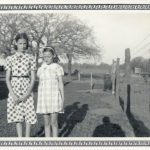
    Liz was born to Chesley Russell and Irene Faulkner Russell on June 10, 1926 in Clay County, Texas just south of Henrietta. She had one sister, Margie, two years older. They lived in a two story home on a farm/ranch located on Old Joy Shannon Road which had belonged to her paternal great-grandparents. Her daddy was born in that house, too.
    Their young lives were idyllic for young country girls. Liz and Margie had dolls galore, buggies for dolls, paper dolls, and a trike to ride. They had a swing and playhouses under the trees.  They also got together with other children in the community at Sunday School as well as socials that were held in the area.
    When Liz was old enough to go to school she went to the Bluegrove School for the first nine grades. There were 15, or so, in her class and several grades were in one room with one teacher. They had programs for parents with students performing. The principal, Mr. Gilbert and his son both played the fiddle. Mr. Gilbert taught Liz to play the bass fiddle. It took some doing, not because Liz had trouble learning, but because Liz wasn’t tall enough to stand and play the bass fiddle. First they removed the peg from the bottom of the fiddle to make it shorter, but Liz was still to short. Solution: They stood her on a box and she played just fine!
    Liz was always an honor student and was valedictorian at her grade school graduation. She only attended school for eleven years and the last two years she was at Henrietta High School where she took typing, bookkeeping and regular courses.

    Her dad was always interested in rodeos, both in Henrietta and in Fort Worth. The family always went with him to rodeos and Liz found it a special treat. She was always interested in the events and the rodeo people. When Liz was 17, at the rodeo in Henrietta, one of the timers did not show up. The announcer saw Liz as she was finding her seat in the grandstand and asked her if she would time. She did not hesitate. Obviously she did a good job because it wasn’t very long before she was asked to time other area rodeos.
    She was hired by Mr. Gilbert, her former principal, who had become the Superintendent of Schools in Clay County. Her position was Assistant County Superintendent of Schools for Clay County. Her office was located in the court house in Henrietta. She held that position for eight years. Later Liz attended Draughan’s Business College in Wichita Falls to get more business training. She was an excellent administrative person and was eager to gain more knowledge and skills.
    Liz met June Bull from Pampa, Texas, and when June finished high school her parents hoped she would want to go to college. Instead it was June’s desire to barrel race. Being their only child her parents were patient with her and agreed. Liz traveled with June Bull to various rodeos around Texas and beyond. At first, Mrs. Bull traveled with them. They always had such a good time and found people in rodeo easy to get to know. It wasn’t long before the rodeo people they met seemed just like family. By the early 1950s they were going to rodeos further from home. Cheyenne Frontier Days, Madison Square Garden Rodeo in New York City, the Boston Garden Rodeo and many others. By this time Liz had resigned her job as Assistant County Superintendent and could travel the country.
    In time, Liz went to work for Standard Oil Company, and was offered a transfer with a substantial increase in salary and title. The transfer took Liz to Liberal, Kansas, which seemed like ‘the end of the world’ to her. Fortunately she could still see friends when she worked at a rodeo. She and June learned to secretary rodeos together and soon their reputations as ‘outstanding’ rodeo secretaries spread through the rodeo world.
    She often worked in the rodeo office for Everett Colborn, who was the ramrod of the World’s Championship Rodeo. He had some of the biggest and the best rodeos in the country. His daughter, Rosemary, who married World Champion All-Around Cowboy, Harry Tompkins, was generally her dad’s secretary and often Liz would assist or do whatever was necessary.
    In 1954 June Bull and Buster Ivory, a bronc rider, were married during the Cheyenne Frontier Days at a Methodist church in Cheyenne. Liz was maid of honor and Jo Decker was matron of honor. Casey Tibbs, World Champion saddle bronc rider and Bill Ward, also a bronc rider were Buster’s attendants. Bill Linderman, All-Around World Champion and President of the Rodeo Cowboy Association, gave June away. Mr. Bull was not ready to give his only daughter up and refused to attend the wedding. It was truly a rodeo wedding.
    Liz met Reg Kesler, in Oklahoma City during the 1966 National Finals Rodeo. Liz was a good friend with Jim and Sharon Shoulders, Clem and Donna McSpadden as well as June and Buster Ivory. All these people were good friends with Reg. He was a former three-time All-Around Champion cowboy in Canada who worked every event. He was from Alberta, Canada and went to college there, but was more interested in playing hockey or riding bucking horses. It was evident his life was going to be rodeo. He also collected bucking horses and in 1951 he produced his first rodeo. He had become a well known stock contractor and produced rodeos in Canada and the United States until 1995. Later they became an item.
    They married in Bozeman, Montana in 1971 during the NIRA (National Intercollegiate Rodeo Association) Finals. Those attending their wedding in the Methodist Church were Liz’s mother, and niece, Phyllis Jones, and good friends Bud and Anna Lee Purdy. Liz remembers that Byron Walker and Martha Tompkins were among the college students competing at the rodeo. She assisted announcer Don Harrington by identifying the various college contestants and what colleges they represented.
    Two days after their wedding Liz was secretary and timer at the Red Lodge, Montana, rodeo. The newlyweds lived in Missoula, Montana and Rosemary, Alberta, Canada, but traveled most of their time on the ‘rodeo road’. They produced rodeos in Denver, Houston, San Antonio, all over the province of Alberta, all over Montana, Idaho and too many other places to mention. Often Reg would be hauling stock to one rodeo and Liz would be heading another direction and putting on a rodeo somewhere else. Reg trusted Liz and knew she had the skills and ability to run a rodeo the right way. Liz often was responsible for getting the cowboys monies to the bank and traveled by herself many miles with never a problem. They were a good team.
    Reg was very instrumental with two other men in starting the ProRodeo Cowboy Association Circuit Finals in 1987. It was held in Pocatello, Idaho, and Reg not only helped organize it, he backed it financially, as well as offered his knowledge and his stock for the event. This allowed all 12 circuits in the United States to send their best cowboys in each event to compete against each other. A circuit was made up of one state, or more, depending on the rodeo activity in the states. PRCA cowboys could register for one of the twelve circuits. Liz was the secretary at the very first circuit rodeo held, which was in Montana. She, also secretaried the first National Circuit Finals in Pocatello. This additional level of competition helped the cowboys, who held jobs or were needed on their own ranches and couldn’t rodeo full time, earn more money.
    Reg had outstanding broncs for both Saddle Bronc and Bareback events. He had good stallions that bred good bucking stock. Liz once said, “Reg only had to see a horse buck one time to know if it was going to be a good bucking horse.” His horses were chosen as top horses many years in the RCA, PRCA and the National Finals Rodeo. He also had some bucking bulls that were tops, too. He continued in the rodeo business until 1995, when his grandson, Duane Kesler, bought the business. Reg was inducted in to the ProRodeo Hall of Fame, the Canadian Rodeo Hall of Fame, Alberta Sports Hall of Fame and the Rodeo Historical Society Rodeo Hall of Fame in Oklahoma City. He was well respected and appreciated in the rodeo world.
    Liz also began teaching others to secretary rodeos and held schools in Canada and also helped train secretaries in the U. S. At that time in rodeo the secretary was much more involved with those entering rodeos as it was all done by telephone directly calling the secretary. There was so much more ‘hands on’ administrative work done by the secretaries. They were working without all the technical machines and computerized programs that are in use today.
    Liz, Donna McSpadden, Sharon Shoulders, June Ivory, Irene Harris and Nell Shaw started a Ladies Fashion Show during the National Finals Rodeo held in Oklahoma City in 1967. In the beginning they used contestant’s wives and mothers to model the clothing in the show. The local stores and boutiques were so gracious and allowed the gals to come in to the store and pick whatever they wanted to model. This style show has continued annually during the National Finals Rodeo in Las Vegas. It is still being organized by the wives of today’s contestants. The proceeds from the show, including sales of auction items and cost of the show are now given to the Justin Crisis Fund which helps cowboys that are injured or have a serious financial problem pay bills other than their medical bills.
    When Liz’s mother became ill she and Reg came back to live with Mrs. Russell so Liz could help care for her. In 2001 Reg went back to his Canadian ranch on business and was tragically killed in an automobile accident. He was 82. It was a big shock to Liz and the entire rodeo world, Reg was still very active in rodeo.
    Reg and Liz were involved with Buster and June Ivory in holding the Cowboy Reunion, during the National Finals each year. Today Liz is the ramrod of the event, held in Las Vegas, and still gathers the ‘movers and shakers’ in rodeo, from all across the United States and Canada, each year. The proceeds from this 501c3 organization, are given to the Justin Crisis Fund, the ProRodeo Hall of Fame and Museum of the American Cowboy and the Rodeo Historical Society.
    Presently Liz lives in the family home which has a 130 year history for the Russell family. When her mother died, at the age of 98, Liz became much more active in the community and the county. She is a founding member of the Clay County Historical Society, and was a chairperson for the renovation of the museum. She is also involved in the Pioneer Reunion and rodeo and was chosen Pioneer Reunion Queen in 2000. She is a member of the Bluegrove Baptist Church. Her great-grandparents gave an acre of land for the Bluegrove Cemetery of which she is a member of the cemetery board. She also is a Clay County Memorial Hospital Foundation board member. In 2010 Liz received the Silver Award from the Retired Senior Volunteers of North Texas (which includes 17 counties). In 2013 she was honored as the Outstanding Senior Citizen of Clay County.
    In the rodeo world she was honored by the Women’s Professional Rodeo Association in 1984 for her contribution to them which involved making each PRCA rodeo in Montana also a WPRA rodeo for the barrel racing event. At that time WPRA had to get each rodeo committee to agree to their requirements and Liz got the entire state committed. She also received the Montana Governor’s Award for the preservation of our western heritage in 1986. In 1988 Reg and Liz were honored as Outstanding Citizens of Missoula Montana. The Kesler outstanding bucking horse, Three Bars was inducted in to the ProRodeo Hall of Fame in 2004 and Liz accepted. In 2008 Liz and Reg were inducted in to the Texas Rodeo Cowboy Hall of Fame. Liz received the Tad Lucas Memorial Award at the National Cowboy & Western Heritage Museum, in 2010, which is given to women who give above and beyond what is expected of them in rodeo as did the namesake, Tad Lucas. That same year Liz and Reg were inducted in to the Montana Wall & Hall of Fame in Billings. In 2013 Liz was given an American Cowboy Culture Award as Pioneer Woman at the Cowboy Symposium held in Lubbock, TX.
    She helped organize and is a member of H.A.N.D.S. which stands for Help A Needy Diva Survive. It is a fifty member group of rodeo women, dedicated to helping any rodeo family member who has been injured or has medical problems and may need help either financially, or emotionally.
    Liz has enjoyed her life immensely. She has worked hard at everything she has done, and accomplished much. She has never hesitated to assist when anyone needs help. Liz is actually an important part of three families. Her own family, including her sister Margie, Margie’s children, grandchildren and great-grandchildren, as well as Reg’s children, grandchildren, and great-grandchildren and the rest of her relatives; her second family is the rodeo family which includes everyone who has had the good fortune to meet her or worked with her at rodeos and rodeo functions. Especially the young cowboys, who were just starting out in rodeo and love her so much for all the help she gave them when they were still ‘wet behind the ears’; and last but not least her Clay County family which grows with each and every event Liz participates in.
    Liz is truly proud of her heritage and deep Texas roots. She has the manners and demeanor of a lady. She gains the respect of everyone she meets because of her gracious ways. She is no where near finished making memories and living her life to the fullest. Don’t expect to see her sitting in a rocking chair and watching the world go by. She still has much she wants to do, so many events to attend and so many friends to see.
  • ProFile: Chuck

    ProFile: Chuck

    Sometimes in life, it’s a matter of finding out what you’re good at, and then doing it.
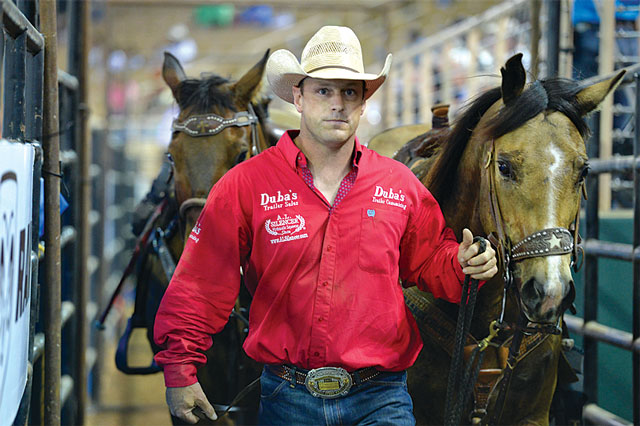
    That was the case for a thirteen-year-old buckskin named Chuck.
    Chuck was no good at ranch work, and he didn’t really care about the tie-down roping, but when it came to steer wrestling, he loved it.
    Chuck was purchased by a Nebraska Sandhills ranch family as a weanling from the Ft. Pierre, S.D. sale barn. The family brought him to their neighbor, professional cowboy Kyle Whitaker, to break. Kyle could tell from the beginning that Chuck wasn’t an easy horse. “He was pretty rank,” he said. “He liked to buck all the time.” The horse wasn’t a bad one, but he wasn’t rider friendly, either, and Kyle knew his neighbors didn’t ride often and Chuck would require a lot of riding. So they agreed to sell him to Kyle.
    Chuck had a couple of vices. He liked to run, and he liked to kick. Kyle started him in the tie-down roping, but that didn’t work well. “The first three calves I’d run, I’d be holding him back, trying not to run over the calves.”
    And a person had to be careful around him. He kicked when someone walked around him.
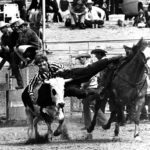
    Kyle, a seven time Linderman Award winner, would have started him earlier in the steer wrestling, but he was afraid of being kicked. He finally got brave enough to try the gelding, wearing a football helmet the first time he steer wrestled on him.
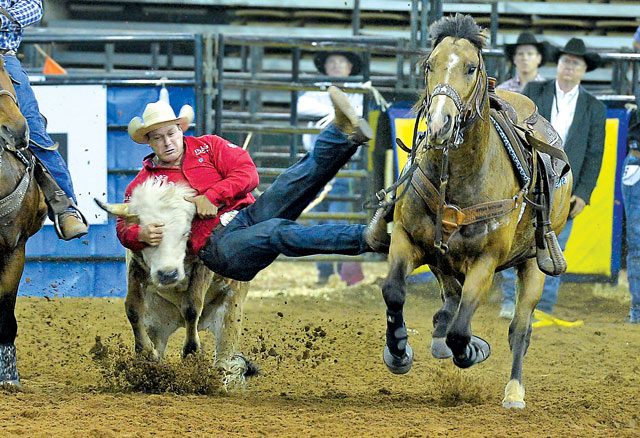
    It only took a few runs for him to realize that Chuck loved steer wrestling. In 2013, he took him to a few amateur rodeos and the next summer, he tried him at a pro rodeo in Hamel, Minn. Kyle won the first round on Chuck with a time of 3.5 seconds.
    Now, nearly two years later, Chuck excels at his job. At rodeos, it’s not uncommon for steer wrestlers to share horses, and Kyle often mounts out up to four steer wrestlers on Chuck at a performance. Fellow bulldogger Nick Guy has ridden Chuck a lot in the last six months. Since the week after the Wrangler National Finals Rodeo (WNFR), Nick has won $70,000 on him.  He’s won checks at the American qualifier in Rapid City, Tucson, Ariz., the National Western Stock Show and Rodeo in Denver, and San Angelo, Texas. “It seems like every time I ride him, I win,” Guy said.

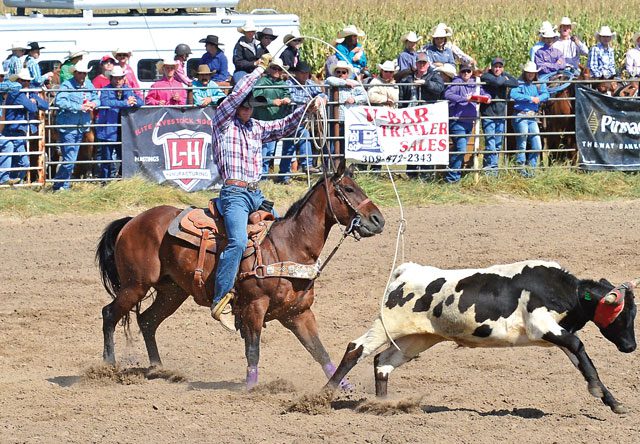
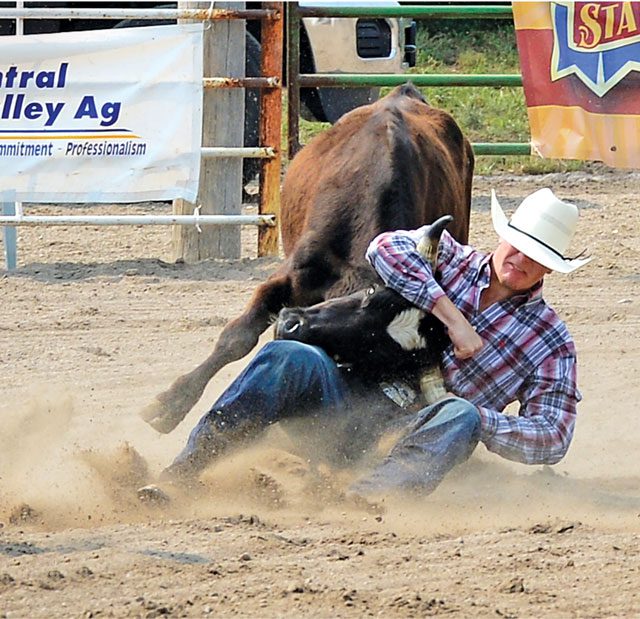
    Kyle Whitaker steer wrestles on his horse Chuck at the 2016 RAM National Circuit Finals Rodeo in Kissimmee, Florida – Rodeo News

    Guy, a three-time WNFR qualifier, loves riding him. “He gives you the same trip every time,” he said. In the box, “he stands there, and doesn’t mess around.”
    Kyle, who hazes for Nick and also steer wrestles, warms Chuck up. “He’s not the funnest horse to lope and warm up,” Nick said. Kyle “rides him in one of the most severe calf roping bits you can be in, because Chuck runs. Chuck wants to go, and you have to have him bitted up. If you put a snaffle in there, he’ll just run off with you.” If the bulldoggers must ride through the arena on the way to the timed event box, Chuck might “blow through there and take out a judge, or whatever else is in his path.”   Kyle also rides Chuck to steer wrestle, and Chuck doesn’t change his ways for either cowboy. “It doesn’t seem to affect the way he works for me or Kyle,” Nick said. “It’s one thing if you mount a guy out and you’re winning a bunch of money, and the horse isn’t working for the other cowboy. Chuck still works great for Kyle, and Kyle’s winning.”
    When a steer wrestler rides another person’s horse, and wins money, he pays the horse’s owner “mount money.” The typical amount is 25% of what the cowboy earned for the run, and Nick’s been writing checks to Kyle all winter. “I’ve paid Kyle good this winter,” Nick quipped. “If you take twenty-five percent of $70,000, that’s pretty good money, that’s big money for him and for me.”
    Nick, who grew up in Wisconsin but now lives near Denver, is excited for the summer rodeo run. He and Kyle, who was one of his early mentors in pro rodeo, will travel together this summer. Kyle hazed for Nick at his first WNFR in 2010. “It’d be cool to make (the WNFR) on his horse, and for him to make it. It’s cool that it’s come full circle, and we’re traveling together, and I’m able to win on this horse.”
    And Kyle and Nick are glad that Chuck found his niche. He “wasn’t very fun to ranch on, and he’s not a real great calf (roping) horse,” Kyle said. “It was a matter of finding out what he liked to do and what he was made for.” And Chuck was made to steer wrestle.

  • Back When They Bucked with Larry Clayman

    Back When They Bucked with Larry Clayman

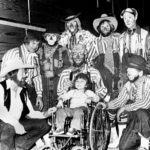
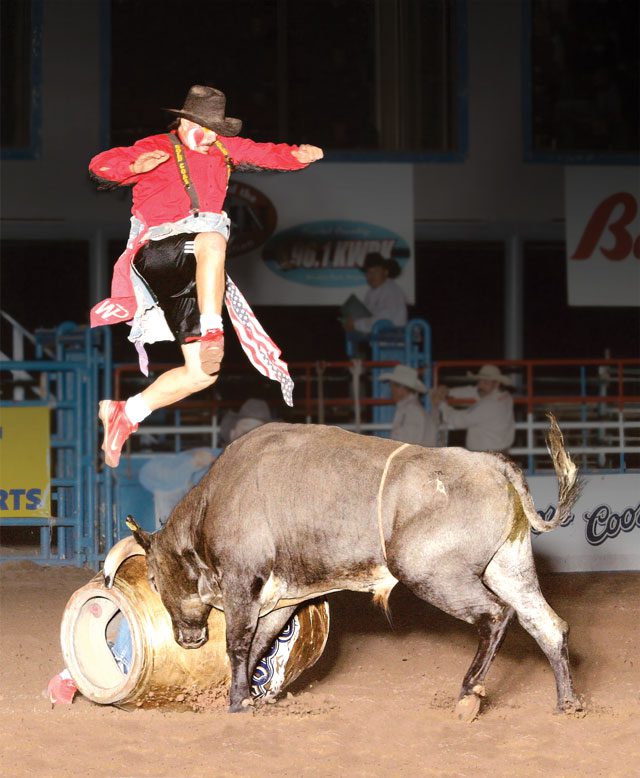
    Larry Clayman comes from a long line of rodeo clowns. He is third in the line of Claymans, including his daddy, Bill, and his granddaddy, Stanley, who were in the business of making rodeo fans laugh and protecting bull riders from angry bulls.
    Clayman, who was chosen as the 1973 National Finals Rodeo bullfighter, was born in 1941 and “raised up” in the Missouri Ozarks, in the southwest part of the state. He worked his first rodeo in Mansfield, Mo., with his grandad at the age of 13. For two performances, he got paid twenty bucks, and “I thought, my gosh, I’ll never see another poor day,” he laughed.
    Larry had already signed up for the Marine Corps when he was approached at an amateur rodeo in Okmulgee, Okla., by a legend in the rodeo world. World champion Jim Shoulders walked up to him, asking if he would clown rodeos for him. It “about floored” the barrelman to have the legend standing in front of him, but he had to decline, as his commitment was to the Marines came first. Shoulders told him about the rodeos held at Camp Pendleton in California, and that he should meet a Colonel who was working at Pendleton.
    When Larry got out of boot camp and was assigned to Pendleton, he got to meet Colonel Ace Bowen, the man Shoulders had told him about. That acquaintance led to Larry meeting one of old original stock contractors in California, Andy Jauregui, an immigrant Basque sheep herder-turned contractor who was also the 1931 world champion steer roper. Andy owned J Spear Rodeo Co., and hired Larry to work his first professional rodeo. His dad and granddad had only worked amateur rodeos, but after being hired by Andy, Larry never worked another amateur. It was in Bishop, Calif., and he worked alongside Slim Pickens.
    Larry clowned rodeos at Camp Pendleton, and then worked a lot of rodeos in southern California for Jauregui.
    At the  end of his four years in the Marines, he was stationed in Washington, D.C., at Marine Corps Headquarters, with top secret clearance, working for generals and colonels. He became acquainted with Howard Harris, Cowtown Rodeo, and began working his weekly rodeos in New Jersey.
    While he was in D.C., Jim Shoulders was putting on a bi-weekly rodeo in Leesburg, Va., on a polo field. Larry clowned for him, as well as for other stock contractors up and down the East Coast: Foy and Reynolds, among others, in Virginia, Florida, Pennsylvania, Alabama, Delaware, all over.  He worked for stock contractors across the country: Cotton Rosser, Harry Vold, the Alsbaughs, Keslers, Suttons, and Korkows,
    After discharge from the Marines in 1965, he went back to California. Cotton Rosser’s Flying U Rodeo Co. and Any Jauregui’s J Spear combined to make the Golden State Rodeo Co., one of the biggest in the business. He clowned and fought bulls for them, which was a great thing, he said. “They had more rodeos than anybody, and kept me busy.”
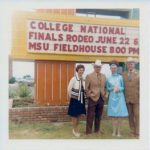
    Larry wasn’t working exclusively on the coasts. Throughout his career, which spanned three decades, he worked some of the biggest rodeos in North America: the Calgary Stampede, the National Western in Denver, Madison Square Gardens, the Cow Palace, the National High School Finals, the Indian National Finals, the College National Finals, and, in 1973, the National Finals Rodeo, which he worked with Jerry Olson
    as the funnyman and Tommy Lucia
    as barrelman.
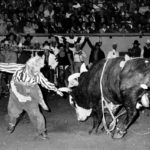
    Back in those days, the bullfighter and rodeo clowns were one and the same; the sport hadn’t evolved to where different people do each job. Larry was proud of his roles and loved doing both of them. “I was considered a good bullfighter, and took a lot of pride in that,” he said. “I loved to fight bulls. It was fun, exciting, and a challenge. And yet I loved to make people laugh.” He credits his grandpa with that trait. “It was natural for him to make people laugh.”
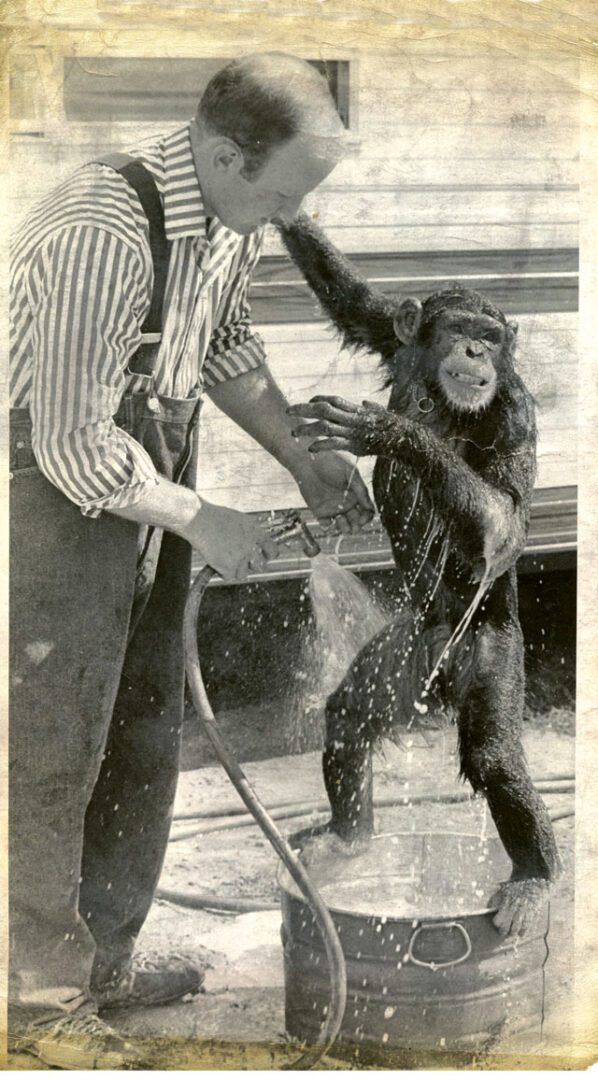
    Larry was best known for his chimpanzee, Todo. He bought Todo in 1967 when he was six months old. For the next fifteen years, Todo traveled the rodeo road with Larry, making people laugh everywhere. One of his first acts was as a “doctor.” Larry would dress Todo in a white uniform with a red cross, with a red cross on his bag. Larry would be “down” from losing a shootout with the other rodeo clown, and his help would drive an “ambulance” into the arena, with Todo in it. Todo would jump out of the ambulance with his bag, stethoscope dragging on the ground, and bring the house down. He would give Larry CPR, jump on top of him, and make the monkey sound – “ooh, ooh, ooh, ooh, ooh.”  Todo loved it. “He could hear the crowd roaring,” Larry said. “He got the biggest kick out of it.”


    Todo also Roman rode a team of horses, slapping one of the horses on the backside, throwing him off. As the horses made the circle around the arena, Todo would tumble across the circle and get back on.
    Todo was Larry’s main act, but he had others like a poodle named Squirrely Shirley who had “beatcha” bugs… scratch in one place and they “beatcha” to a new spot. He had a border collie act, and had trained horses that laid down, sat up, bucked him off, counted, and, while they napped together, stole the blanket off of Larry.
    One of his greatest honors was being part of a rodeo tour in Europe in 1970. It was organized by Buster Ivory, and the group, called Rodeo Far West, performed in Italy, Switzerland and France. Larry took Todo as one of his acts, and  also drove truck, hauling equipment and livestock. The tour lasted three and a half months. World champion bull rider Freckles Brown was also part of the tour, and Larry got to be good friends with him during that time.
    In 1977, Larry decided to put on a pro rodeo in Springfield, Mo, and then he began a pro rodeo in Branson, Mo., six nights a week, all summer long. Harry Vold and Jim Shoulders were hired as stock contractors, and Jerry Olson came with his dress acts and worked as the barrelman. He got so busy producing the rodeos that his clown/bullfighter career slowly phased out.
    And Todo had to be put to sleep for safety reasons in 1980. That was the final straw. “I didn’t intend to quit clowning, but it broke the straw in me a little bit,” he said. I didn’t have the umph, the fire in my belly, to go back on the road.”
    And he wanted to live a normal life. He announced a few rodeos, but began trucking as his second career. He’d driven truck as a kid, and loved being around them. At the age of 75, he’s still driving. “Everybody asks me why I don’t retire. Heck, I don’t want to. Somebody’s gotta keep America rolling,” he joked.
    Larry had a son, Stan, who died in an auto accident, and Stan has two sons, Joseph and Isaac, who live in Arkansas. Larry has three other kids: Kimberly, Matthew, and Michael, and five grandchildren. He and his wife Renee have been married twenty years.
    He remembers fondly his rodeo days, and has no regrets about his work. “I never dreamed I’d fight bulls at the (National) Finals. I never dreamed I’d have that kind of success. I loved the rodeo business and it was so good to me.” He met a lot of people, went a lot of places, and had some unbelievable experiences.
    He worked rodeos in nearly every state, he remembers, and one thing he is proud of is that he never missed a performance due to injury or illness. “I take pride in that,” he said, even though he suffered broken arms, legs, and had teeth knocked out. “You just keep working.”

  • On the Trail with Cade Svoboda

    On the Trail with Cade Svoboda

    Cade wrestling in high schoolCade Svoboda doesn’t do anything half-heartedly.   When the Nebraska High School Rodeo Association member decides to do it, he’s all in.
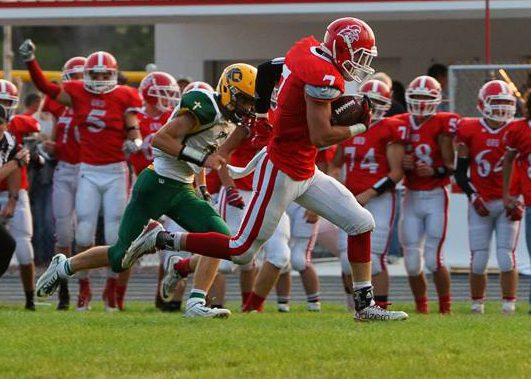
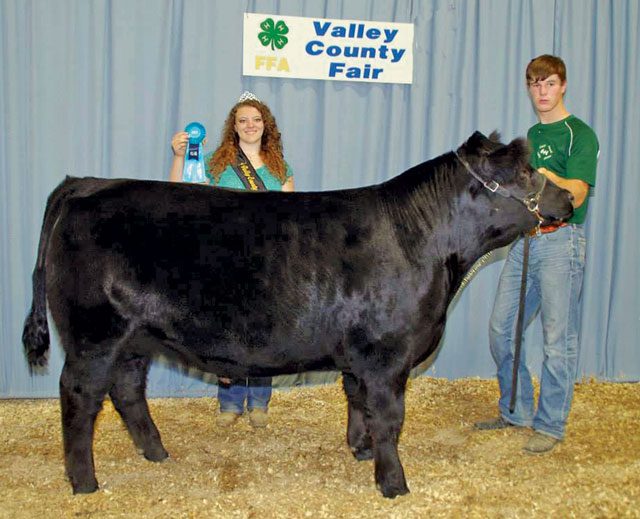
    Not only does he ride barebacks, steer wrestle and team rope, he also plays football, wrestles, runs track, is a member of FFA, Science Olympiad, Swing Singers, shows cattle, and is on his school’s straight A honor roll.

    The eighteen-year-old cowboy from Ord, Nebraska comes from a long line of cowboys, starting with his grandpa, Jim Svoboda, who competed in four events for years and has been a rodeo photographer for the last half-century.

    And his dad, Von, was also a rodeo athlete, riding barebacks, bulls, steer wrestling and team roping.

    Of his three rodeo events, bareback riding is his favorite, and his strength. He came into that event in a unique way. Cade started out riding bulls, winning the Nebraska State Junior High Finals and making the short go at the National Little Britches Rodeo Finals. But after he and his older brother Cole, had broken bones and a hospital stay, the bull riding was over. Cade ruptured a spleen and broke ribs, then Cole followed with a leg broken in two places, and later, an arm broken in three places, all while riding bulls. Their mom Angie said it was enough. “That was it,” Von said. “Three strikes, you’re out. No more signing releases for the bull riding,” which included both boys. So Cade went out and bought a bareback riggin’, and the first bareback horse he got on, at a high school rodeo, he placed, and that was that.

    Cade excels at school academically as well as athletically. He is the student in physics and calculus class who everybody asks for help when they’re confused. “I get it pretty quick,” he said about the work. “I usually get it right away and then I can help them.” He had a tough schedule this year, with physics and calculus classes back to back, one and a half hours each, “but it’s worth it.” He also took College English.

    His track coach and former wrestling coach, Coach Trampe (who is also his favor

    CADE SVOBODA football

    ite teacher) gave him the nickname “Wick”, short for Wikipedia. “If I ever have a question that deals with sports in Nebraska, I can ask him, and he’ll know the names of the athletes, where they’re from, everything. He’s a student of all sports. He knows the stats on everybody.”

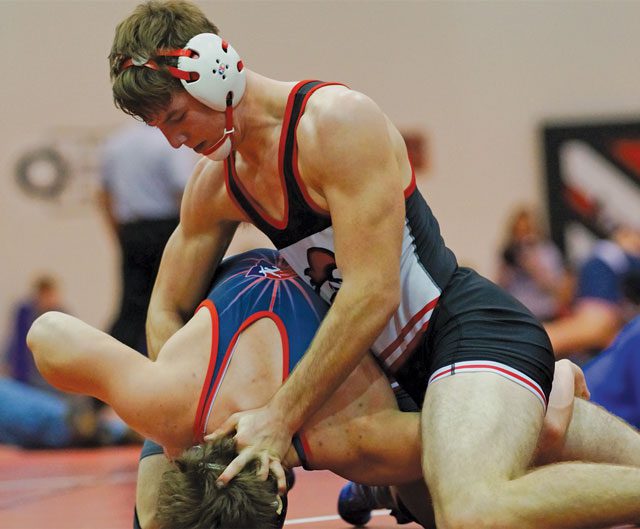
    Of all his sports, wrestling is his favorite. He is a three-time state qualifier, and last year, placed second in Class C in the 170 lb. division. This year, he placed fourth in the 182 lb. division.

    Wrestling is where his athletic future lies. He has been asked to walk on to the University of Nebraska-Lincoln’s wrestling program, and with other scholarships, including some academic ones, his tuition is paid. Cade has attended Husker wrestling camps for three summers, and the coaches were impressed with what they saw. Coach Manning, the Husker

    Cade and heifer group champion in 4-H and FFA

    head coach, said he stood out. Ord High School is one of the smaller schools in the state, and yet the Huskers pursued Cade, alongside kids from Omaha and Lincoln schools. “Obviously, they like the country kids that have work ethics and physical toughness,” Von said.

    The coaches were also aware of another incident with Cade. Last summer, prior to the Husker wrestling camp, he broke his hand while riding a bareback horse at a Mid-States Rodeo Association rodeo. He assumed it was broken but didn’t get it x-rayed, knowing if it was, he wouldn’t be allowed to wrestle. He spent four days at the camp, wrestling one handed, with no grip, and held his own. That Friday, he went to the National High School Finals and rode bareback horses with a broken hand, his riding hand no less. His physical toughness contributed to his getting to walk on the wrestling team.  The Huskers plan to add twenty pounds to his frame, bringing him to the 197 lb. class and redshirting him.


    Cade Svoboda wrestling in high school

    He has qualified for state high school finals rodeo all three years and is currently leading the state rankings in the bareback riding, having maxed out in points. His goal is the all-around title and the Fort Western Whitaker Award, an award similar to the Linderman Award and given to the Nebraska high school rodeo athlete who excels in three events, including a roughstock and timed event.

    His dad says what makes Cade tick is his competitiveness. “He’s always been a real competitor,” Von said. It might be due to having an older brother to compete against, but maybe it’s genetic. Angie was a standout high school athlete who won a state track championship and who excelled academically. But the stakes are also high at the Svoboda household. “Even around home, we play a game of cards and it gets competitive. It’s kind of how our family is wired.”

    At the University of Nebraska, he will major in food science technology, which includes biochemistry, organic chemistry, and investigation of the chemistry and biology of foods. “It’s the only major on East Campus (the agricultural campus of UNL) that gives you all the prerequisites for medical school,” Von said. “He’s covering his bases to go to med school.” Cole is a junior at UNL in the same major, and he enjoys it. “It’s a damn tough degree,” Von said, but Cade is up to it. His uncle, Von’s brother J.B., who is a medical doctor, suggested that Cade stay with his food science degree instead of the medical field, as a very good job is nearly guaranteed any student who graduates with that degree. The food industry: ConAgra, Cargill, Hershey’s, and others, are the main businesses that hire food science graduates.

    Cade will graduate as valedictorian of the 2016 Ord High School class. His principal and former football coach, Mr. Hagge, speaks highly of him. “He’s a young man of character,” he said. “He’s got an incredible work ethic, and he’s a bridge builder, a leader. He’s willing to cross boundaries with students and develop relationships with everybody in school.” Cade has grown and matured throughout his last four years. “When he was a little younger,” Hagge said, “he didn’t quite have the perspective and there were times he got upset with himself or others. But what I’ve seen in the last few years is his leadership to a point where he gets it. He elevates the games of those around him, with his level of performance.”

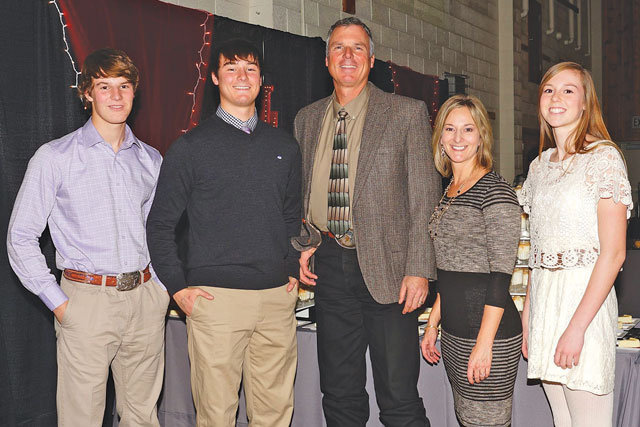
    The Svoboda Family (from left to right) Cade, older brother Cole, father Von, mother Angie and younger sister Cora Coach Trampe said the same. “He’s a good leader. He expects a lot out of himself, and out of every other kid, too. Kids like him make kids around them better. It forces them to go to another level that maybe they didn’t want to go to, and that makes it better all around.”
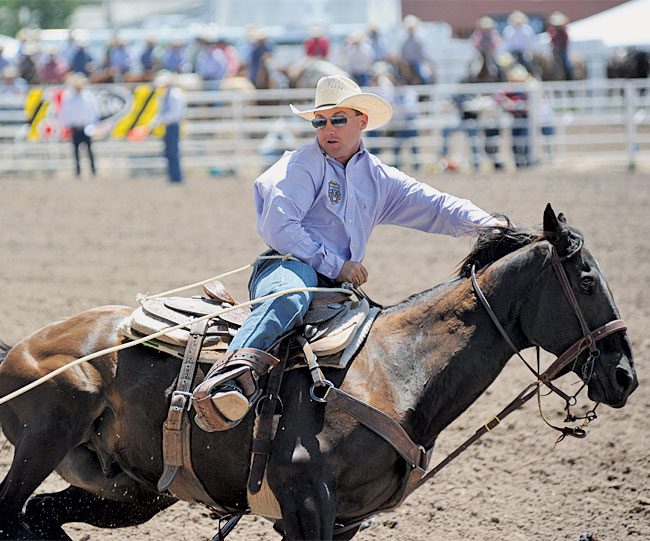
    In addition to his athletics and academics, he loved playing baseball in the summer, but forgave that sport due to time constraints. He was also part of his school’s choir, 18th Street Singers, and band (where he played the tuba and drums). He is on the Quiz Bowl team.

    His unusual last name is Bohemian and is pronounced “Sa-BOH-da”. He has a younger sister, Cora, who is a junior in Ord High School. Cora is also a very personable, very involved, all sports, all A honor student, who ovbiously is following in her family footsteps of not doing anything half-heartedly.


  • Roper Review: Chris Anderson

    Roper Review: Chris Anderson

    Chris Anderson, his wife, Sarah, and their two children, Ike, who will be two in June, and Tinsley, who just turned two months, make their home in Fort Morgan and own and operate CA Performance Horses. “I’ve been out on my own professionally since 2008,” he said. “I qualified my first horse in the Open AQHA show in 2008.” The mare, Darling Catichi, won the Junior All Around in 2012, beating out every other five and under horse in the nation. “I would say that and making the National Circuit Finals in the steer roping (2010) are my biggest accomplishments so far with my horse training.”
    He has trained and ridden horses that made it in the top five, as well as winning Congress, and his next goal is to take his snaffle bit horse to Reno this year. “I’ve also got a really nice talented mare that a customer would like to win Super Horse at the World Show. JD Yates thinks she is good enough and if the stars are right and I do my job, we’ll have a chance. There’s a lot that’s got to go right ,but she’s a good enough mare.”
    Chris got his start in the training world with a really nice gelding. Thanks to the help of JD Yates and Jay Wadham, he was able to break into the business. “JD took me under his wing, and I showed some in the youth an amateur at college.” As a kid growing up in Merino, Colo., Chris had always wanted to rope steers and with the help of Tom Gibson and JD, he was able to learn how. “I had a fair amount of success in the Circuit Finals and made the National Finals once.”
    Of all the events that Chris competes in; team roping, calf roping, reined cow horse, and steer roping; he favors the steer roping. “I don’t get to do it as much as I used to, but I think it’s pretty unreal what a steer roping horse has to do.”
    A close second, in his opinion is cow horse work. “Those horses have to work all three events, cutter, dry work pattern, and down the fence.” He was excited to see the reined cow horse added to the high school rodeo events. “The horsemanship that goes with the cow horse stuff is so important.”
    He splits his time between training his own horses and working on outside horses. At any one time, there can be 20 outside horses in the pens that need tweaked for his growing clientele. “Not all of the horses I own are young ones in training; some are solid finished rodeo horses.” When he’s working on a horse for a customer, he has to have solid horses to help him. “If you sent me a heel horse to train, I can’t ask him to do a good job for me if the head horse we are working with is a green, goofy horse, so I have to keep a certain amount of good quality horses in my program so I can do my job. When I go to the horse shows, I have guys turning steers for me to show my horses and I have to have good solid horses to take with me for them to ride.”

    The other part of his business is rodeoing for himself. “I keep a couple really good rodeo horses and jackpot horses of my own.” The amount of money that can be won at these jackpots keeps growing, and Chris is ready to take some of that home. “Look at the World Series Finals in Vegas… you don’t have to get that much done to win $20,000.”
    He believes in spending money on a good finished roping horse. “For the average person that wants to go rope and enjoy themselves and have a good time, spend the $15,000 to buy a horse that is seasoned – that’s a cheap investment when you think about it. Look what’s out there to win. If you are a #4 header and you know how to do your job; score well and catch consistently; there is so much money out there you’re going to pay for that horse. That’s what people don’t understand – it’s not what did this horse cost, but the way I look at it, what did this horse cost me from being able to win – that’s how I look at the price of a horse.”

  • ProFile: John English

    ProFile: John English

    John and his son Sterlin were the 2015 USTRC Team Roping #11 Shoot Out Champions – Brenda Allen

    John English was born in Deming, New Mexico, in the southern part of the state. He had a rope is his hand as soon as he could hold one and grew up helping his dad produce ropings, shoe, and trade horses. “He taught me how to shoe horses and that’s how I made my living while I was going to college,” said the 6+ header. He made the High School Finals one year, traveling to Douglas, Wyo., and then went to Cochise College in Douglas Arizona, making the college finals three years in a row.  “I couldn’t figure out what I was going to major in and figured I was wasting my mom and dad’s money, so I came home.”
    He picked up where he left off, helping his dad. He worked for my brother inlaw selling furniture. “I  met Connie (Coffey) and moved to Belen, New Mexico, where I started out selling cars. I lasted a month, that is the only job I had that I can honestly say I hated,”  he said. “Connie’s dad and I started putting on ropings and I went back to the same life I had, roping, shoeing, and trading horses.” His life changed forever when he met Denny Gentry and went to work for him in 1992. “I was the liaison from his office to the classification office in California. I learned about production, from set up to tear down, and in general, I learned how to get along and solve problems.” He got married in 1994 and in 1996 the couple moved to California to take care of a ranch for Kiefer Sutherland. “I got to be good friends with after doubling for him in the movie The Cowboy Way. While in California, I got to rope and rodeo with 19 X NFR Qualifier Denny Watkins, what a great experience that was. Not ony did I get to head for Denny but I got to listen to all of the great stories of Denny’s career.”
    They came back in 1999 and went back to work for Denny at the USTRC. “That was right about the time of the the sell to EquiBrand, which moved the company to Texas. I didn’t want to move, so I stuck around here for six months, and ended up at Super Looper Magazine,” he explained. “Connie was selling ads for the radio and I went to meet with Robin Davis to see about getting a job for her there and Connie and I decided that I would be a better fit, so I got that job and went to work for Super Looper. I was good at it – I knew all the producers and it came natural to me – I’m pretty social and get along with people pretty well.”
    John and Connie have two sons, Sterlin is 13 and loves to rope and hopes to make it to the NFR someday; Stran is 8 and prefers baseballs to ropes. “The only think he likes to rope is goats, he’s got big dreams of being a professional baseball player.”
    Connie suffered a stroke after the birth of Stran, which left her paralyzed on her right side. “We thought we were going to lose her, but she made it through and we spent six months in rehab. We got her home and we spent two years in out-patient rehab. She’s riding and trying to rope again – something she has to learn all over again.” Raising a brand new baby and a five-year-old, plus running the house and keeping his job gave John an added appreciation for his wife.
    “In the fall of 2014, I got a call from Denny asking if I’d come to work for him. I was happy where I was, but I couldn’t pass up the opportunity, I loved working for Denny and Connie before.” As the Event Coordinator, he schedules the events and takes care of the contractors. “All of the  things I learned from my time at USTRC with Denny and Super Looper Magazine had me well prepared for my job at World Series.” He travels to the local ones and every once in a while he pops in on the producers to see how the events are going. Working for Denny and Connie has allowed John to attend his son’s functions and allows him the flexibility to rope as well as produce a few ropings. “Gabe Trujillo and I are producing a few this spring and hopefully they will be successful.” John has no plans of changing what’s going on with his life. He is able to rope with his oldest boy (who he won the #11 Shoot Out with at the USTRC  National Finals last fall) and attend baseball games with his youngest and still have date night on Tuesday with his wife Connie.

  • Back When They Bucked with HL Todd

    Back When They Bucked with HL Todd

    HL Todd was larger than life.  Whether it was riding his famous horse Rufus as he steer roped, hosting cowboys at his home in Burlington, Colo., or chewing on one of his signature cigars, he stood out in people’s minds.
    The Colorado cowboy, who will celebrate his 79th birthday this year, qualified for the National Steer Roping Finals four times and took numerous victory laps at such rodeos as Pendleton, Cheyenne, and everywhere in between.
    He grew up the son of John and Bernice Todd, hardworking farmers in northwest Kansas who were good people but had no use for rodeo. “They didn’t like nothing about it,” HL remembers. “It was like pulling teeth, when you loaded up to go to one.”
    Their middle child of three, born in 1937, began roping at the neighbor’s. Elmer and Albert Garrett had a roping pen, and that’s where HL got his start. He was sixteen or seventeen years old, and he was looking for something different than farming. “I’d be out there, (in the field) in August, in the dust and it’d be hot and I’d be sleepy, and I was going to figure out some way to make a living without running this tractor,” he recalls.
    He roped in high school a bit, then in college at Kansas State University, he competed in the calf roping and steer wrestling.
    After college graduation, HL moved to Burlington, Colo., where he worked for an insurance company for ten years. In the early 1970s, he got into the feedlot business, with a 10,000 head operation. After ten years in the cattle business, he went broke and went back to the insurance company, living in Kansas City and Oklahoma City before moving to a ranch near Chickasha, Okla.
    He roped steers on weekends and when he could get away from work. He won rounds and placed at rodeos across the country: Cheyenne Frontier Days, Walla Walla, Wash., Miles City, Mont., Pendleton, Ore., Ponca City, Okla., everywhere he went.
    And he and his wife Rita’s place became a stopping spot for fellow cowboys. Their home north of Burlington included an indoor arena. It was on the way for those cowboys from Texas as they headed north for the summer run. “A lot of those steer ropers and calf ropers would come and stay with us,” Rita said. “They were coming from south Texas, and Burlington was over a day’s drive. They’d camp there, go to county fairs, and then go on to Cheyenne and Pendleton.”
    Some of the names legendary to the sport of rodeo stayed with the Todds. James Allen, the father of eighteen-time world champion Guy Allen, came with his kids. Sonny Davis, Olin Young, Roy Cooper, Dick Yates, Jimmy Brazile, and more sat at the kitchen table with the Todds. They stayed in their campers or living quarters, and Rita cooked supper for them. Beef was plentiful, in the feedlot business. Cowboys often brought their families along, and HL and Rita’s two daughters, Kim and Kelly, loved it. Their home was a gathering place. “The kids loved it,” Rita said, “and I did, too. It was fun.”

    Clark McEntire, the father of country music superstar Reba McEntire, roped steers in the same era as HL did, and he often stayed at the house with his four kids. After roping all day, Rita would fix a big cook-out, and the McEntire kids, mainly Pake and Reba, would pull out their guitars to sing and entertain. “Mom jokingly said they had to sing for their supper,” Kim remembers.
    Jeff Todd, HL’s nephew and a team roper, remembers the big personality his uncle had in his rodeo days. “He was just always a figure that was larger than life,” he said. People comment to him that they always wanted to be like HL when they grew up. “He was the guy who, everything he did, was first class. He wasn’t flamboyant, but he always had nice horses and took good pride in his stuff.”
    He didn’t always catch, but if he did, he won, Jeff remembers. “That was his mojo. He had that winner’s knack. He might completely miss one in the first round, and then win the next round. He was always a go-round threat.”
    HL rode good horses and his best-known horse might be one he raised, a roan gelding named Rufus, who was the AQHA’s 1995 Steer Roping Horse of the Year at the age of nineteen. Rufus was also ridden by HL’s son-in-law, Jimmy Hodge, who made the National Finals Steer Roping three times. The horse was the envy of every cowboy in the arena. One time, at Cheyenne after slack, as HL went to put horses away, one of his granddaughters said to her grandpa, “I want to ride Rufus.” Tee Woolman, overhearing her, said, “Yeah, and so does everybody else around here.”
    HL qualified for the National Finals Steer Roping in 1973, 1975, 1976, and 1982, and continued to rope professionally till he was in his sixties. He won a go-round at Cheyenne at the age of 52, and went on to rope in the National Senior Pro Rodeo Association. He quit competing about seven years ago.
    HL mentored young cowboys, including the 1978 Tie-Down Roping Champion Dave Brock, and another steer roper, Rod Pratt. As a youngster, Pratt and his family neighbored the Todds, and Rod worked for HL, rebuilding his arena. “One thing led to another,” Rod remembers, “and he taught me how to rope.”
    Rod remembers HL with the big cigar in his mouth. “He always chewed on a cigar,” he said. “He’d light it twice, and it’d go out, and then he’d chew on it.” But when he spoke, it was time to listen. “He was pretty quiet and laid back, and you could tell when he spoke seriously, you needed to listen.”
    Pratt qualified for the National Finals Steer Roping eight times, winning the average in 1987. He rode one of HL’s horses for the last five rounds in 1987, and placed in every round. “If I needed something, he always helped me,” he said.
    HL worked hard to be a good roper, Rod said. “He was a good athlete. He had to work at it, but he wanted to, so that’s the driving factor right there. The ‘want to’ makes you do a lot of things well.”
    In addition to teaching him how to rope steers, HL taught Rod some life lessons, like how to enjoy the moment. “It didn’t matter where you were, he enjoyed life. Wherever he was, he enjoyed being there. He never did let life get him down.”
    HL and Rita enjoy retirement in Johnson City, Texas.  Their older daughter Kelly married Mark Dykes and they have two daughters and a son, and their younger daughter, Kim, married Jimmy Hodge, and the couple has twin daughters.

  • On the Trail with Timber Allenbrand

    On the Trail with Timber Allenbrand

    For Timber Allenbrand, the sport of rodeo has been ideal preparation for a successful future.

    She has been competing in the sport, and leading with several association service positions, in the Kansas High School Rodeo Association in her young, yet accomplished life so far.

    Timber’s mother Trisha barrel raced some in her thirties, but Timber quickly picked up the sport of rodeo as the first person in her family to pursue it as a career.

    Trisha had bought a barrel horse when she wanted to try her hand at the sport and still had the horse by the time Timber could climb into the saddle.

    “She just took to it. Since she was little tiny I had her on the back of a horse, and by the time she was 3 she was doing the lead class out there she and I, and that’s really how we got started,” Trisha describes of her daughter’s beginnings into rodeo.

    “I was fortunate enough to get involved with close friends who were involved in rodeo, so I was exposed more to what rodeo was really about, and those people have been very influential in our lives and have been so gracious to include Timber and teach her things,” Trisha says. From the lead line class, Timber took the reins herself with help from her mother and her rodeo family.

    The KHSRA cowgirl went through the ranks of the Kansas Junior High School Association, all the way to nationals in Gallup, N.M. every year, was a Reserve World Champion her 7th grade year and won a National Championship in 8th grade.

    Through the years she’s also served as an event director, held offices like that of Secretary in the KHSRA last year. Now Timber is the student president of KHSRA.


    “It’s really built my network for my future, and you don’t find the people that you do in rodeo anywhere else. The family circle is amazing,” Timber says and adds of the responsibilities of her role as president. “I love setting up community service activities for the contestants of Kansas High School Rodeo. It’s been a lot of fun to do that.”

    One of Timber’s fondest memories was seeing the kids from a nonprofit initiative called Real Men, Real Leaders benefit. The kids were given contestant jackets and cowboy hats and were able to come watch one of the KHSRA rodeos.

    “It just makes my heart happy to see everybody that doesn’t get the opportunity to do what we do be able to watch and have the joy through another perspective,” Timber explains.

    In the arena, Timber’s competitive focus is on the All-Around. She competes in five events, barrels, goat tying, breakaway roping, pole bending and cutting.

    “I just have learned from many people along the way, and [I’m] very blessed to have everybody that’s came along to help me get where I am,” Timber says.

    She especially credits her mother for her endless support.

    “My mom is a big impact in my life. She travels with me and works long hours. We have a team. She is the one out there working chutes late at night and holding the goat and being my coach, best friend and everything you do to be a single mom, but we have many people that help us out, so that’s awesome,” Timber says, adding that her Aunt Vicki is a big help as well, by caring for their home and animals when she’s out chasing her rodeo dreams.

    Trisha too has benefitted from sharing this rodeo experience with her daughter on the road.

    “I don’t know of many other things that let you go down the road with your kids and spend that much time together most weekends of the year, and live life and overcome obstacles, work through things and have the typical mother-daughter ups and downs as well, but at the same time not trade it for the world,” Trisha credits.

    Trisha has two businesses, and she and Timber have developed a system to work together to accomplish the tasks that need done as the mother and daughter travel for Timber to pursue her goals.
    “We just work together, a team, whether it’s feeding the horses or exercising [horses], cleaning the barn, doing the laundry, cleaning the house, or taking care of school work, it is just, from the minute we get up to the minute we go to bed, a team effort, because we knew that, and we knew what she wanted to be,” Trisha describes.
    Trisha’s career allows her flexibility when it comes to helping Timber with horses or practice. Timber may be roping and tying goats at 7 a.m., or doing school obligations after hours in the evenings, but the aspiring cowgirl makes it work.
    Outside of the arena, Trisha’s career in business has inspired Timber too. Timber plans to go on to college rodeo and major in marketing and business.
    “Business, I’m very interested in, and marketing as technology grows is very important,” she says.

    Beyond rodeo, Timber likes to work with young horses and develop their athleticism. “I love to train on young horses and work with them and grow them, their mind and try to find their best abilities,” she says.

    Trisha agrees this work suits her daughter. “We tease her about being a horse whisperer, because she truly has a relationship with [the horses]. She loves working with them and finding out what makes them work and bringing out the best in them, and that’s her sincere passion. She’s fundamentally learned so many things that I believe that’s part of why she’s successful in the competitive [arena].”

    Trisha goes on to credit rodeo with helping allow Timber to grow into the young woman she has become. “Rodeo has given her the ability to see the world from many different lifestyles, perspectives, attitudes, beliefs, and it’s let her realize it takes a lot of hard work, but it takes a lot of people relationships to make your world complete,” Trisha explains and adds that Timber has become able to see people for who they are, and that she tries to pay it forward with all of the help she’s been given from the rodeo community. “I think [rodeo] has just given her this whole way to see life and appreciate it and be part of something bigger, and it’s taken lots of miles and lots of wonderful people that have allowed her, and us, to have this kind of life together.”

    Timber likes to have a plan when it comes to big steps in life, but overall, prefers to go with the flow day to day, and these days, she’s soaking up all that her last year in the KHSRA has to offer. “Senior year has been great to me. I’ve had a blast, and I’m excited for the future.”

    Trisha is confident in her daughter’s ability to succeed.

    “She’s a very insightful person, and I have full faith that she has great things ahead of her, a lot to experience and a lot to give back for what she has been able to experience so far in her life as well. She will continue living God’s plan for her purpose.”

    Timber has signed on with the rodeo team Tarleton State University in Texas. She has been accepted into the Tarleton Honors College program as well.

    And it’s clear no matter where that road takes her, Timber will go prepared because of her involvement in rodeo and the Kansas High School Rodeo Association.

  • On the Trail with Clifford Maxwell

    On the Trail with Clifford Maxwell

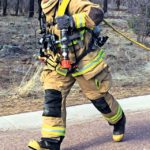
    After 15 years of fighting bulls at the Turquoise Circuit Finals, 47-year-old Cliff Maxwell from Taylor, Ariz., is making the 1,968 mile trip to Kissimmee, Florida to join Australian bullfighter Darrell Diefenbach as the bullfighters for the RAM National Circuit Finals Rodeo (RNCFR) April 5-10. “It’s Darrell’s last rodeo, and it will be an honor to work with him,” said Cliff, who is a full time firefighter paramedic as well as the owner of a custom cabinet shop, along with his wife and son.

    The bullfighters are selected to work the RNCFR from the pool of 24 bullfighters from the 12 circuits in the nation. The bull riders select the bullfighters that work the circuits, and a committee selects the ones that will go to the RNCFR.

    Cliff started his rodeo career after high school. As the oldest of six siblings, he spent his childhood playing softball. “My parents (Clifford and Gayle) supported me in everything I wanted to do,” he said. “With a big family, we always went on one big trip each year and went camping a lot.” After high school, Cliff went down to the valley (Taylor is located in the White Mountains, five and a half hours north of Flagstaff) for a few months and then moved to Texas to live with his uncle for a year.

    “I came back to go back to school. I got set up and started, but then I got married and started a family.” He married his high school sweetheart, Kim, when he was 20 and she was 19. Their first child (Kasey) was born a year later. “I worked at a cabinet shop in town and rode bulls.” In 1994, he got hung up and hurt. “The bull stepped on me and punctured a lung, broke some ribs, and one of them cut my spleen in half so they took it out. My daughter was four and asked me not to ride anymore. So I started fighting. I accomplished way more as a bullfighter than I ever would have as a bull rider.”

    He started his bullfighting career by going to a school taught by Mike Matt and Lloyd Ketchum. “That gave me the basis,” he said. “I recommend to anyone that wants to get into this to go to school.” After that it was trial and error. His family traveled with him to the rodeos around his region. “I started out working 35 rodeos a year, and now have settled into around 20 or more a year.” He works some high school, amateur, and PRCA rodeos, including several that he has worked for years. “It’s a family sport to us. I take pride that I’ve done rodeos for years – Scottsdale, ten years, Vernal 15 years. In being 47 years old and getting a chance to go to the RAM Finals – it’s incredible.”


    He bought the cabinet shop – Maxwells Custom Cabinets – that he worked at and added his firefighting career five years ago. “I got my paramedic last year after nine months of intense schooling. I still did my firefighter job, my bullfighting, and the cabinet job. I had 52 credit hours when I got done with the paramedic training. I enjoyed the medical side of the firefighting thing and thought why not learn more so I can do more.”

    His EMT training has come in handy in the arena. “Right after I got my EMT, we were at a rodeo in California. A bull rider got bucked off and the bull stepped on his leg, breaking his femur. I cut off his chaps and exposed the break. The femur was a compound fracture that hit an artery and he was bleeding out. We saved his life due to the training that I had. The medical side has helped me with a few accidents like that.”
    Cliff has added running to his schedule in preparing for the RNCFR. “My captain is a younger captain and he really pushes staying in shape,” he said. “He sent out an email three or four months ago to put a team together for a Tough Mudder in Mesa. I signed up and joined the team and then realized that the course was 10-12 miles with 30 obstacles.” In addition to training for that, he credits the cabinet shop for helping to keep him in shape. The shop is run by his 22-year-old son, Trevon, and Cliff works there at least 40 hours a week. “The cabinet shop is very physical. We order everything in sheets and we have to move it and cut it.” He and his wife, Kim, also chase after two grandchildren, a 6 year old granddaughter and 2 year old grandson.

    When Cliff first found out about being selected to work the RNCFR, he planned the entire family to go along, but that isn’t going to work, so he and Kim will make the drive to the Sunshine State. Cliff has been there before, helping with the hurricane damage a few years ago, but it will be Kim’s first trip to Florida. They are looking forward to the drive and taking in the sights along the way.

    Cliff would love to be considered for the WNFR, but admits that he doesn’t work enough rodeos for that. “I’ve got my career, my cabinet shop, and my family comes first,” he said, but adds that he plans to continue fighting bulls. “I’m an adrenaline junkie – I enjoy it – I enjoy rodeo.”

  • Back When They Bucked with Doc Gee

    Back When They Bucked with Doc Gee

    If it wasn’t for Will James, John Gee might never have been a cowboy. The Montana man grew up reading the western books written by James, while he and his buddies dreamed of riding bucking horses and living the cowboy lifestyle, and Gee did just that.
    Growing up in Delta, Ohio, on the west side of Toledo, John, also known as “Doc,” delivered newspapers to buy his first horse. “My father helped subsidize the horse,” Doc remembers. “I was nine or so.” Five years later he was at local county fairs and rodeos, riding bareback horses and bulls.
    He and childhood friends Tom and Don Decker and their buddies traveled together to rodeos, and Decker remembers when they rode at a rodeo in Findlay, Ohio. “They had a horse that was pretty rank,” Tom Decker said. John got on him in the saddle bronc riding. “The horse threw him over his head the first jump and took him down the arena, kicking every jump. John was unconscious for a short while, and on the way home, he didn’t remember his ride.” On the way home, he came to. “He didn’t remember anything. We told him his ride was like a Will James book,” he laughs.
    The boys were in training, Decker said. “We knew we’d have to be tough so we could become cowboys. We had to take cold freezing showers, to see who could stand in the shower longer.” The boys were daredevils on horseback, too. “”We’d ride this crazy horse down a gravel road, one-hundred miles an hour, bareback and double,” Decker said. “The horse was a renegade. John used to put the horse under the edge of the roof, and (the horse) would lift the rafter.”
    After high school graduation in 1953, John headed west. His interest in agriculture took him to Colorado A&M (now Colorado State University), in part for the education, and in part for their rodeo team. When the team was chosen that fall, John was not on it. “I was pretty broken up about the deal,” he said. In those days, a person could compete on the team or individually, so John went to some rodeos by himself and won. He was working three events: the bareback riding, steer wrestling, and bull riding. That spring, he was chosen for the team. Being voted on the team was done partly for a person’s talent and partly for if they had wheels:  “In those days, the team was picked by the people who were going to rodeo,” John says. “You put your name on the board, and the events you worked. And then each person who had their name up there got to vote. So you voted for somebody that had a car, you voted for yourself, and you voted for whoever you thought would be the best cowboys.”
    With paying out-of-state tuition, John had to concern himself with entry fees. “You didn’t go many weeks without winning something unless you were subsidized in some way,” he said. His
    dad, a truck driver, wasn’t paying his fees. “We weren’t that affluent.”
    In 1954, his first year of college, the Colorado A&M team won the national championship, and John won the National Inter-Collegiate Rodeo Association’s Steer Wrestling title. In his sophomore year, he won second place, and his third year of college, he won the title again. The Colorado A&M rodeo athletes knew how to get lots of points. In those days, there were no college regions and students could compete anywhere in the nation, “so some of us would get in the car and go to a rodeo and get on other people’s horses,” John recalls. Fuel was a quarter a gallon. “One weekend, we had a team 30 miles from the New Mexico border, and a team 30 miles from the Canadian line.” Because they borrowed horses, they could travel easier. “The Texans, if there were six on a team, there were probably six outfits, because they all hauled their own horses. We had an advantage.”
    After his first year of college, John switched his major from agriculture to animal husbandry. “Unless I married a rancher or inherited one, I couldn’t afford to be one.” After three years at Ft. Collins, he transferred to Ohio State to get his doctor of veterinary medicine degree.
    He graduated from Ohio State in 1960 and immediately headed back west. Doc, as he would be better known by, got a job for a veterinarian in Great Falls. Three years later, he went out on his own, establishing his practice in Stanford, Montana.
    And he kept rodeoing. He got his Rodeo Cowboys Association membership, predecessor to the Pro Rodeo Cowboys Association, in 1961. He worked all three events, never hitting the road full time due to his veterinary clinic, but going hard enough. Among his rodeos, he competed in Denver at the National Western Stock Show and Rodeo many years. He spent a few summers rodeoing in Ohio and back east. His practice never let him get too far from home.
    He rode bulls until 1964, quitting because he had married. He rode bareback horses for another ten years, and steer wrestled till he was in his forties.
    Doc’s wife, JoAnn Cremer always had an eye for horses, he said. She was the niece of well-known Montana stock contractor Leo Cremer, and grew up around rodeo. They met at a college rodeo in Bozeman. In her early years, she didn’t have a chance to rodeo, but after they married, she began running barrels. “She was a very good coach and fan,” Doc said. “She was always ready for the next good one,” eldest daughter Maria said. One year, Maria finished 17th in the Women’s Pro Rodeo Association barrel racing standings, missing qualification for the National Finals Rodeo by two places. JoAnn “laid a lot of groundwork” in getting Maria ranked in the top twenty, Doc said, even helping drive from rodeo to rodeo.


    Doc was and still is humble about his accomplishments “Dad always said, “God first, family second, work and rodeo after that,” Maria said. His family reflected those values. John’s son, John J., finished in the top twenty in the PRCA steer wrestling standings three times. The third time, his family only realized it later.  “That’s what my dad believed in,” Maria said. “You take care of other things first.”
    After he finished PRCA rodeo, he spent several years competing in the National Senior Pro Rodeo Association. He loved to compete. “He was pretty fun to watch,” Maria said. “He still gets that competitor grit in his eye.”
    He also judged PRCA and open rodeos, taking horses along that needed to be seasoned. “They usually figured he was the best bronc ride of the day,” Maria chuckled. He judged the open rodeo at Roy, Montana, for years.
    Doc was part of the group that started the Stanford, Mont. pro rodeo in 1965. The Jaycees, of which he was a member, produced the rodeo, and Doc was instrumental in building the arena from scratch.
    Last summer, he celebrated 50 years as veterinarian in the Judith Basin, Charles Russell Country in Montana. Childhood friend Tom Decker was on hand for the celebration. “We passed the mike around,” Decker said. “Everybody just loves him. He’s one of those kinds of people.” Decker, who served on the Board of Directors for the Russell Museum in Great Falls, kept in touch with Doc and his family. “He’s always been a hero of mine, and a mentor to me. His character is the finest. His Christian faith is what makes his character what it is.” Even on the rodeo trail, Doc went to church every Sunday. “If there was no ride, he walked,” Decker said. “He was razzed by a lot of his rodeo buddies about going to church.”
    His clients in the vet business love him, too. “He’s adored in Montana,” Decker said. “The people of Montana dearly love him. He’s a wonderful human being, and his Christian values are the center of it.”
    Doc and JoAnn had four children: John J., Leo, who passed away at age 19, Maria and Theresa. JoAnn passed away two years ago. At the age of 81, Doc still goes out and helps at his son’s feedlot and, if the phone rings for a call to doctor an animal, he answers. His grandkids continue the rodeo tradition. John, Jr.’s son, Luke, won the Montana Circuit bull riding title in 2014, and has qualified for the Montana Circuit Finals eight times: five in the bull riding and three in the steer wrestling.
    Even though rodeo had its place behind his faith, his family and his work, Doc loved it. “The people we’ve met, they’re priceless. You can go practically anywhere and see people you know and enjoy. That part is especially, in my advanced age, the great part of it.” He also loves to see his son, John, and grandson, Luke, compete.
    “This guy is a sensational human being, and I’m not the only one who thinks so,” Decker said.

  • Roper Review: Zac Small

    Roper Review: Zac Small

    Roper Currently sitting 10th in the PRCA world standings, Zac Small is not your typical team roper. He recently graduated from Tarleton University in Stephenville, Texas, finishing the necessary prerequisite courses for vet school in just three and half years. This fall Zac will head to Lincoln Memorial University in Harrogate, Tennessee to begin his veterinarian studies. He hopes to have the PRCA finals made by that time.
    Zac grew up in Afton, Oklahoma in a very tight knit family. His father, Tony, is a veterinarian who specitalizes in embryo transfer in cattle, in addition to working cattle sales. His mom, Kristi, works in his business.
    Zac, 21, and his siblings, sister, Courtney, 24, and brother, Blair, 22, attended private school as youngsters. During high school they were homeschooled using the accredited Christian based A Beka Academy. Even as adults the family remains very close. Blair is involved with the operations of the indoor arena, and Courtney works for her father.
    As a child, Courtney’s love of horses got the family involved in their current lifestyle. Zac started roping from a pony when he was just eight. When he was ten, the family built an indoor arena in Grove, Oklahoma, giving the kids more opportunities to rope.
    “We would get up and rope the dummy or Hot Heels on colts in the morning, then do school work. There was a lot of emphasis on our school work,” says Zac. “Any time we weren’t doing school work, we roped.”
    Throughout high school a fairly large church gathered at their indoor arena with a very active youth group. Ingrained with an exceptional work ethic in roping as well as school, the Small family, has enjoyed their share of success at the USTRC Finals.
    Once he completes a four-year degree at veterinary school, Zac plans on returning to Oklahoma and working with his father.
    “I believe I’ve been blessed and I give all the glory to God to have the opportunities I now have to rodeo. I’m excited to see what happens in the future.”

    COWBOY Q&A

    How much do you practice?
    Every day possible. I ride three or four horses a day when I’m not competing.

    Do you make your own horses?
    My best horse was purchased as a two year old and his training was a family effort.

    Who were your roping heroes?
    My dad. He didn’t rope a lot until we got interested. When I was little he won a couple of trucks and trailer in a month’s time.

    Who do you respect most in the world?
    My parents.

    Who has been the biggest influence in your life?
    My family. Especially being home schooled, we’ve been very close.

    If you had a day off what would you like to do?
    I enjoy hunting occasionally.

    What’s the last thing you read?
    Good Call by Jace Robertson

    How would you describe yourself in three words?
    Dedicated, Positive, Hard Working

    What makes you happy?
    Making good grades and winning.

    What makes you angry?
    The opposite of my last answer.

    If you were given 1 million dollars, how would you spend it?
    I would probably invest it in land.

    What is your worst quality – your best?
    My worst quality is I tend to get stressed. Best quality is a good attitude.

  • Roper Review: Eddie Nieto

    Roper Review: Eddie Nieto

    Having a good attitude is essential to be truly successful at anything. Eddie Nieto is a prime example. It’s hard to believe that this #8E heeler did not start roping, or riding a horse, until he was fifteen years old. He watched some roping and decided that’s what he wanted to do.
    A neighbor showed him how to hold a rope and his grandfather gave him permission to ride the horse in their backyard. With no teacher, or arena, Eddie learned to rope by watching videos and roping the dummy relentlessly. He also roped a goat and a donkey. In a little over a year, Eddie progressed from a #1 to a #6 (in the old USTRC numbers).
    Almost immediately he enjoyed success. At 17, Eddie won $12,000 at the USTRC Finals by winning a Preliminary and placing in the Shoot Out. As a senior in high school he won the New Mexico High School championship for the year and qualified for nationals.
    After high school Eddie purchased his PRCA card and filled his permit at his second rodeo. He roped and traveled for a couple of years where at the George Strait Team Roping Classic he made it back to the top 50 both years. He also entered and roped at the BFI.
    About that time, when he was 21, Eddie met and married his wife, Melissa. Eddie realized his job would not support a family and allow him to rodeo as well. Knowing he had always wanted to give lessons and train horses, Melissa encouraged him to quit his job and give it a try. Now, twelve years later, they are still in business giving lessons, training horses, and working with a lot of kids.
    “My wife and I believe in God and try to live our lives accordingly. The only reason we have our place and are successful is because of God,” explains Eddie.
    When he was just four years old, Eddie and his parents were in a vehicle that was hit by a drunk driver. He lost his parents in the accident and was raised by his grandparents.
    “My grandparents raised me and did everything they could for me. They supported me 100 percent in anything I wanted to do,” says Nieto. “God spared me from the accident that took my parents.”
    Eddie feels blessed that he and Melissa are able to spend every day with their kids, Levi, 5, and Lexi, 2, in the arena roping and riding. Eddie credits Melissa for much of their success and being responsible for the unglamorous behind the scene chores.
    The couple often competes together and Levi just won second place in the 5 & Under Junior Looper in Albuquerque.
    “People tell me all time that they started roping too late,” says Eddie. “There’s really no excuse. If you put enough time into it and have enough heart you can succeed. I’m proof of that.”

    COWBOY Q&A

    Eddie with wife Melissa and kids Levi and Lexi – courtesy the family

    How much do you practice?
    Almost every day. I take two days off every week to give the animals a rest and to spend time with my family.
    Do you make your own horses?
    Yes. I’ve never bought a made horse.
    Who were your roping heroes?
    Jake Barnes and Clay O’Brien Cooper, Speed and Rich.
    Who do you respect most in the world?
    My wife.
    Who has been the biggest influence in your life?
    My grandparents. We didn’t have much but my grandpa did whatever he had to do for me to practice.
    If you had a day off what would you like to do?
    Spend it with my family.
    Favorite movie?
    Facing the Giants
    How would you describe yourself in three words?
    Quiet, fun loving, humble.
    What makes you happy?
    My family. Knowing I’m blessed with a healthy family. I try to keep life in perspective. We’re not here forever.
    What makes you angry?
    Not much.
    If you were given 1 million dollars, how would you spend it?
    I would like to pay off debt, but I would use most of it to help people who don’t have much.
    What is your worst quality – your best?
    My worst is sometimes I’m too laid back. My best quality is I don’t get mad.