Rodeo Life

Category: On The Trail

  • Frankie Punkintown Smith

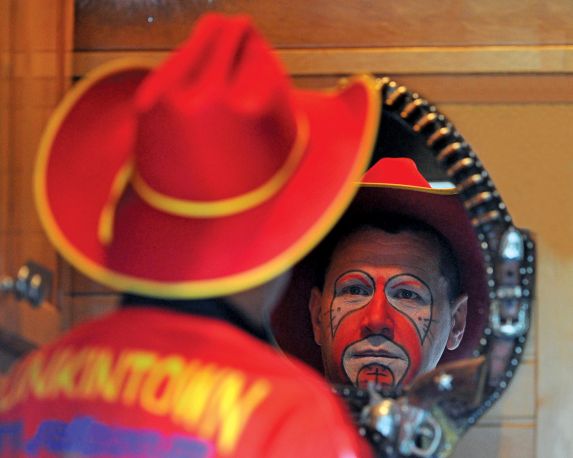
    Frankie Punkintown Smith

    In upstate South Carolina, the soft rolling hills of the Blue Ridge mountains meets the gentle slope of a valley shadowed by Table Rock. In the early 1800’s a trader traveling through the area spotted a large hill planted in pumpkins. He named the place, “Pumpkintown”, a name that stands today. It is here that PRCA rodeo clown and
    barrel man, Frankie Smith was born and raised.

    Frankie grew up with a strong Christian faith and obeying his parents was first priority until it came to bucking horses. “I wanted to ride bucking horses but my mom told me she wouldn’t sign for me to ride,” Frankie said. That didn’t stop Frankie. With his sister’s help, they forged his mom’s signature so Frankie could compete. Keeping it a secret from his mother, Frankie joined the South Carolina High School Rodeo riding bareback horses for two years. He had a knack for the event and quickly qualified for the National High School Finals. Frankie had to turn down the chance to go to the finals because his parents didn’t know. “My mom is part Indian and part bull dog, and she would whoop you at the drop of a hat. And she carried her own hat!” Frankie laughed.

    During all those high school follies, Frankie picked up a knack for dancing. “I was fifteen years old when my mom and dad took clogging lessons and I made fun of them because they looked like two dead dogs wallowing in the floor,” Frankie laughed. “Bobby Johnson and I went the next week to take lessons with my mom and dad,” he added. “Clogging is danced from the waist down and it has to be smooth. Our teacher would make us hold a cup of water, and I couldn’t slosh it out. I wanted to show her I could do it and I eventually put that in my routine,” he said. Frankie excelled at clogging and eventually went on to compete at the National Clogging Competition in Nashville, Tenn. where he was crowned the 1984 World Champion Clogger.

    Frankie always enjoyed the rodeo lifestyle and wanted to find a niche where he could still be involved. “I love the ranch life and western lifestyle even though my mom and dad weren’t ranch minded,” Frankie said. He never thought it would take him as far as he is today. One weekend Frankie got a call from long time friend and rodeo stock contractor, Ernie Treadway. Ernie asked Frankie to stand in as the rodeo clown and Frankie adamantly refused. “He told me to be there and just hung up on me,” Frankie laughed as he remembered his first gig. That’s all it took and pretty soon Frankie was performing at local high school rodeos and finals. It was Craig Copeland, a rodeo announcer, that suggested Frankie use a catchy stage name and coined the phrase, “Punkintown the Rodeo Clown”. The name stuck and helped catapult both Frankie and the small South Carolina town’s popularity. Frankie admitted he was against using the town’s name at first but he wouldn’t have it any other way now, as he pays homage to his down home roots.

    “You know acts are hard, but the jokes are easy. It’s easy to become comfortable and there’s a lot of folks who just copy jokes and acts. I like to be original. I’ve got one act that nobody can copy and that’s my clogging. Everybody loves the clogging wherever we go,” Frankie said. Along with his toe tapping dance, Frankie’s assistants are his multi-talented trick horse, Turbo, and Boston Terrior, Little Bit. “We call it the dog and pony show. Little Bit helps with my Cowboy Kit routine and she loves it!” he said. Frankie’s comic routines with his pets delight crowds of all ages.

    He’s definitely paid his dues and Frankie admits that making a name in the rodeo business is extremely difficult for performers east of the Mississippi. However, Frankie’s warm heart and contagious smile lent him special favor in the tough world of rodeo performers.

    What you see is what you get with Frankie Smith. “I don’t hide nothing, I’m just me,” he said. He also does not compromise the quality of his acts for popularity and fame. “I love what I do. If I can’t be hired off my talent and make a positive influence, then I’d rather not be there,” Frankie said. With a list of prestigious rodeos under his belt including Cheyenne Frontier Days, Cody Stampede and many more, Frankie’s certainly made a name for himself not only in the arena but in the communities as well. He strives to be a positive role model wherever he travels and loves making a difference in a child’s life. “I’ve accomplished what I’ve done because of the talent God has given me. I didn’t have to be the party guy to get where I am. The major highlight of my career and life are the kids. My goal is to make a positive influence in that community as well. A difference that will sustain, that’s what I want to leave behind,” he continued.

    Frankie’s long stint with the Cody Stampede had a bittersweet end last year as he said a farewell to the Wrangler Gold Tour rodeo. “There’s no other rodeo second to the Cody Stampede. I mean that with all my heart. We’ve embraced this community and we love the committee, they are a great bunch of guys,” he said. Frankie is booked solid for this year’s rodeo season. He and Laurie have their rig pointed west for some of the summer’s hottest rodeos on the PRCA circuit, including Spanish Fork, Utah, Coeur d’Alene, and Lewiston, Idaho.

    Frankie’s most important traveling partner and love of his life is his wife, Laurie. Laurie smiled as she recalled their courtship, “Since the day we said I do, we haven’t been apart. Frankie’s a very sentimental man, he is very passionate. He’s a romancer, He’s my partner and my best friend. He’s everything a women could dream of. I’m the most Blessed woman in the whole wide world,” Laurie said. Laurie and Frankie both admit they are blessed to be in their situation and wouldn’t change it for the world.

    During their very short stints at home, Frankie and Laurie enjoy working their cows on their western Tennessee ranch. “I’m pretty much my own vet, and I have a lot of neighbors that let me help with their cattle,” he said. Most folks would be surprised to know that this down home cowboy is also a very gifted comedian. Frankie is the ICGMA Artist of the Decade for the ‘90’s, and a five time winner of the Christian Country Music Association Comedian of the year. He’s even had some fun on the CBS Early Show with former host Dave Price. “They interviewed me for Cheyenne and I gave Dave a pair of clown baggies to take back to New York with him. I put him in the barrel and gave it a shove, he wasn’t ready for that one,” Frankie giggled. Not just a famous rodeo clown, clogger, and Christian comedian, Frankie is also an ordained minister and motivational speaker.

    It seems the sun continues to shine for Frankie since he recently added another venue to his calendar. Feld Motorsports, producers of Monster Jam approached Frankie to try their shows as a comic act to let their buildings “breathe” during intermission. “I danced on the crushed cars, and they loved it. So during the winter months I’ll be traveling and doing those shows with Feld Motorsports,” he said.

    The Punkintown rig won’t be slowing down anytime soon. Even though they love traveling, he and Laurie both love being home and taking care of their cattle. “Just being able to see God’s many colors, the towns, and the people we meet is what makes it worth it,” Frankie admitted. They also try to take a cruise once a year to have a little down time. But when the rig makes the final turn down the country road leading to his ranch, he feels an immediate rush of gratitude and peace. Frankie said, “I’ve had such a blessed life, if it ended today I’d be alright. I always told my mom once I got older and quit rodeo I was going to sit in my rocking chair and reminisce about how I done it instead of how I could have done it. We try to live like we’re dying, like every day is our last.”  Learn more about Punkintown the Rodeo Clown on his website: www.punkintown.com
  • Marcy Henderson

    Marcy Henderson

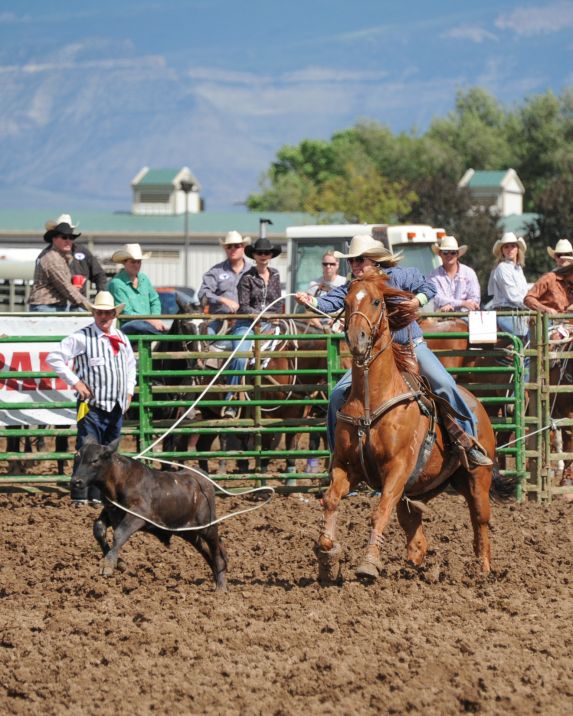
    Marcy Henderson lives near the town that claims to be the home of the World’s First Rodeo, held July 4, 1869. Deer Trail is 55 miles east of Denver, Colo., and Marcy grew up 20 miles from there. Her mother, Moni, and Dad, Mark, moved there from Eastern Colorado 17 years ago. “We actually live on the north end of the Black Forest,” she said, of their ranch in the pine trees. Mark manages the Orovaca Cattle Company, a 30,000 ranch by Agate, 20 minutes from their house. 

    “We run about 1,000 head of mama cows,” said the former rough stock rider that introduced Marcy to the rodeo life. “I rode all three bucking events, but the majority was saddle bronc—through high school and straight into full time rodeo after high school; mainly amateur in Colorado, Kansas, Utah, Nebraska.” He won the Colorado State Rodeo Association title in 1989. 

    In 1990, he was in a head on car accident with a drunk driver while heading to a rodeo. It crushed his legs pretty bad, and he was told he would never walk again. After therapy and numerous surgeries, he beat that prognosis after a couple years. “It was hard to swallow, but we had some good people around us—and we kept going on,” he said. “We found a different venue to go on and made the best of a bad thing. We’ve had numerous surgeries and pain and it’s one of those injuries that won’t be normal. We stay horse back as much as we can so we don’t have to walk.” 

    Marcy was just a year old and although he hung up his rodeo spurs, he helped Marcy get started. “I grew up riding at the ranch just for fun but I was afraid to lope,” she said. She joined 4-H and started doing gymkhana events and gradually worked her way into rodeos in fifth grade. After his rodeo career ended, Mark satisfied his competitive nature by entering dog trials with Border Collies, and Marcy took it up with him. She was ten when her dog got old enough he needed to be retired from the dog trials and Mark gave Marcy an option. “She could get a dog or a horse,” he said. “She thought about that for about a week and chose the horse—she said she could work dogs when she got older. “I was so competitive and so driven with it (rodeo); you don’t know if that’s what you want your child to jump into. We’ve had to make our own horses, with a lot of help with great people, and I don’t care where you go — when you nod your head you are 
    just as good as everyone else every given day. That’s the rules of rodeo. Basically we’ve been dogging, rodeoing and ranching and that’s about it,” sums up Mark about life in the Henderson household. 

    “My parents took me to National Little Britches Rodeos and Colorado State High School rodeos,” Marcy said. “Up until my sophomore year, I only had one horse, Flash. We competed in barrels, poles, goat tying, breakaway, dally ribbon roping, and trail. Things clicked for us and even though we never won any year end titles, I loved it.” Marcy spent a lot of Tuesday nights at Lancasters Arena roping. “Lee would put on roping lessons and there were ten to twenty of us there.” Marcy remembers her childhood fondly. “One year on my birthday I got to rope and take private piano lessons the same day.” Marcy got a young horse from a family member. Willy was ranch broke and with help from the Vick family, Willy became Marcy’s pole bending horse. “Flash had 
    to be put down over the fourth of July, right before I went to college. I used Willy until my junior year, and then he ruptured his small intestine and we had to put him down. It was pretty bad, but I learned not to take good horses for granted.” Six Guns came along right before the Little Britches Finals in 2008. “I breakaway roped and tied goats off him. He was a great horse and I’m trying to retire him in the near future.” 

    Marcy was fortunate that both her parents went to all the rodeos with her. “We had a small living quarters trailer and we’d go every weekend.” Her mom never missed a rodeo. She works as the office coordinator for Rocky Mountain Natural Meats—a bison and beef processing plant in Henderson, a 75 mile one way drive. “I love my job and I love where I live,” she says of the commute. Moni grew up a city girl and married a cowboy. She loves the western lifestyle and the life of the road that she experienced with Mark and Marcy rodeoing. “I still make Mark and Marcy my hobby, and I get excited to go with her.” She admits that when Marcy was done with high school rodeo, she struggled to fill the void. “We moved from the neighborhood — we weren’t going anymore.”

    Marcy had a rodeo scholarship to Northeast Junior College and after two years, transferred to Chadron. “It was too far away from home,” she said. “So I transferred to Colorado State University and finished my degree in Ag Business.” She works for JR Simplot as a crop advisor. “I make recommendations with fertilizer and pesticides, and sell the product,” said the 24-year-old. “Everyone is trying to feed a world of 9 billion and weeds and pests are becoming tolerant and to reach the goal creates more invasive product,” she admits. Her job works with her as far as rodeo goes. “They are very flexible with my rodeo schedule.” She rodeos for the Colorado Pro Rodeo Association where she holds the position of Breakaway Director. “I have a passion for breakaway roping and I wanted to make sure the event was taken care of.” She is buying her card this year to compete in the Kansas Pro Rodeo Association, the Wyoming Rodeo Association 
    and holds her WPRA card as well. “I’m excited to get started on rodeo again. I don’t like sitting at home,” she said.  

  • Kenny & Mary Ann Brown

    Kenny & Mary Ann Brown

    Kenny and Mary Ann Brown, who have known each other since they were 15, have been at the National Finals Team Roping every year. They travel all over the east coast to the ropings. “Their commitment is a strong one. They don’t miss them back there – from Florida to Memphis,” said USTRC President, Kirk Bray. Kenny and Mary Ann traveled 22 hours to attend the National Finals Team Roping, held the end of October in Oklahoma City.
    “We stop about every six to eight hours, and walk the horses for half an hour, and make sure they have water,” said Kenny. “They are troopers, they are on the trail so much its second nature.”
    The couple spends their days roping. “We practice, eat lunch, practice, eat dinner,” admits Mary Anne. They haul four horses all spring and summer, and by fall they sell the practice cattle and any trading horses and head to Sarasota, Fla, to the JJJ Ranch.
    Kenny Brown grew up 50 miles from Washington, in Keedysville, Maryland. “My dad, Kenny Brown, Sr., had a rodeo company (Triple K Rodeo Company), and raced horses,” he said. He grew up in the horse business along with his two brothers, Kevin and Keith. He tried rough stock, and after breaking a few bones, gave it up. He also steer wrestled a bit. He was also a member of the American Pro Rodeo Association, which his father helped start. “My ARA card number is 39 and I won the APRA 15 times. My ARA card number is 39.” Kenny worked in New York City, where he had a precious metal refinery in 1987. “I was around jewelry people and there has to be a process to recover the gold out of the dirt so I opened a refinery to do that.” He sold it ten years later and has concentrated on team roping ever since. The #6 Elite Heeler won the First Frontier Circuit six times, four heeling and two heading, the last time in 2001. He makes his living now trading rope horses and putting on roping schools. He ropes in the USTRC ropings, traveling at least five hours to get to a roping. “Johnny Johnson with JX2 has most of the ropings on the east coast and we go to all of his. His ropings are really good and they are customer friendly.”
    Mary Ann was born in Ohio, and spent summers on the family ranch in Montana. “I’ve rodeoed since I was in Little Britches,” said the #4 Elite. “I then went on junior rodeos, then high school. I qualified all four years of high school to the National High School Finals – from 1985-88.” She entered all the events and continued working on her dad’s ranch in Idaho after high school. Mary Ann went to the USTRC Finals this past October leading the Cruel Girl Standings, which is a huge accomplishment for someone who lives on the east Coast. They put the miles on a Dodge one ton and pull an Elite living quarters, 12’ short wall. “We lived in a 6’ short wall before that – we were on the road for three months – we lived in that for 12 years,” said Mary Ann, adding, “we are best friends and we love what we are doing. That’s the only way it would work I think.”
    Since Kenny has rodeoed his whole life, he has developed an eye for a good rope horse. “I’ve sold several horses that end up at the NFR and USTRC Finals. If you don’t have a great horse, you don’t win.” The Head Horse and Heel Horse of the Year for First Frontier Circuit came from Lightning B. “We find them, fix a few things, and sell them.” He has built his reputation up to people that buy on his word. “Most horses I buy I’ll watch at two or three ropings and then see if they are for sale.”
    Their goals for the future are to move somewhere warm and closer to the ropings, and eliminate the 22 hour drive to Oklahoma City for the USTRC Finals. “We’ve been looking for property around Stephenville,” said Kenny. “It’s central for all the ropings we go to and I know a lot of people. We’ll still head to Florida for a few months – it’s such a great facility and great people.”
    For this year, they have a pen full of longhorns that they purchase from a local rancher that raises them, and they are settled into the routine of practice, eat, sleep, and practice. “I love it,” admits Mary Anne. “Anything to do with my horse, I love.”
    “It’s addiction with a capital A – they need a roper rehab,” concludes Kenny. “There’s nothing else I’d rather do.”

    A special thank you to our sponsors: Cactus Ropes, Coats Saddlery and Lubrysin.

  • Don Sunden

    Don Sunden

    Growing up in Ft. Madison, Iowa, Don Sunden wanted to be a cowboy. “We rode horses on my grandpa’s farm; took the buggy to town for groceries, and did all the plowing with horses. We picked all the corn by hand. I lived in the best time period in the world. I’ve seen the horse and buggy and the airplane.” His hometown, Ft. Madison, was the drop off for all the stock going to Madison Square Garden rodeo, hauled in by rail. “I’d go down to the stockyards when I was six until I got out of school. We’d ride the hay wagon and help them feed the stock.” All the western stars would come through – Roy Rogers and Gene Autry – they had their horses there and Don remembers talking to them. Don went into the tool and dye making trade after high school and continued in that trade until he retired. “I did it in high school and then went to a factory and got an apprenticeship. I worked in one factory, then went to a machine shop where we built everything. I was the supervisor there for 16 years and moved around as a supervisor for years.”
    He met his wife in Ft. Madison in 1964, the same year he started with the IPRA as a bull rider and a judge. “We met in Pizza Hut and three months later we got married. She rode barrel horses. I never went to a rodeo in my life that she wasn’t there. She went to every one – She ran barrels up until 1970.” They have one daughter, Sherry. Ron started judging in 1964. He likes the IPRA. “It’s a working man’s deal, so most rodeos are on the weekends. I lived 20 miles from H-C Rodeo company, Tonch Hartsell owned it, and we’d go up there and I’d buck out his young bulls for him. I did all my practicing at his place. When I was well I could ride bulls, but when I got hurt, I’d judge.”
    He remembers a rodeo in 1969, in Green City Missouri. “I drawed the same bull at all three rodeos, and I bucked off all three times. The last time I got thrown 15 feet above the bull, got kicked in the face, crushed my face, broke every rib, both collar bones, and had internal injuries. I went back to the chutes and spit out all my teeth; I thought it was dirt.” They hauled Don to the hospital and he remembers insisting that they take his jeans off instead of cutting them off. “They were brand new,” he said. “They pumped blood in me and told my wife that I had 24 hours, and call the family. They packed my whole body with ice, and I was in there for two weeks because of the swelling of my head and my body. My face swelled up so big – my wife gave them a picture so they could rebuild my face. I had no feeling in my face for seven years.” As his daughter got bigger, they trained futurity horses. She rode in her first IPRA when she was 7. Don moved to her place two years ago. “She was a school teacher for 19 years and was a chiropractor and started 2 High Dollar Ranch Rehabilitation and Conditioning Center – she’s an animal chiropractor and wanted to do more. We bought a hydrahorse swimming pool and we’ve got infrared lighting, five vibration therapy plates, and a hot walker.”
    Don judges about 30 rodeos a year and was selected to be one of the judges at IFR44, along with Ronnie Barnett, Rick Chaffin, and Steve Ratchford. He judges CBRA bull riding, co-sanctioned rodeos and several senior pro rodeos in the states. When he’s not doing judging, he helps his daughter. “We work 16 hours a day, 7 days a week.” The bull riding accident gave Don a different perspective on life. “From that day on every day was a free day – I was supposed to die and I didn’t. I take each day for that day and don’t let anything bother me. Live every day for that day.”

  • Randy Bernard

    Randy Bernard

    Randy Bernard has paid out over 100 million dollars in the rodeo world throughout his career as a sports executive. Bernard grew up wearing a cowboy hat while working on his family’s ranch and farm in central California. Born in Paso Robles, Calif., he attended Kindergarten to eighth grade in a small town named San Ardo where there was never more than 18 classmates. Bernard studied at Cal Poly and in 1988 interned with the Calgary Stampede gaining valuable experience that set the course of his future career path.
    Bernard came back from the Calgary Stampede to work for the California Mid-State Fair, where one of his responsibilities was making the rodeo profitable. “I believed that we could help it significantly with guaranteeing the best in the world. I created a match with Ty Murray and Cody Lambert who were sitting number one and two in the PRCA all around world standings,” stated Bernard, “The rodeo attendance increased from 3,400 to a sellout crowd of 7,500 the first year. I knew then that our sport was no different than any other sport. People want to see the best in the world.”
    Bernard, had no idea that years later Murray, Lambert and Tuf Hedeman three of the Professional Bull Riders, Inc. (PBR) founders, would ask him to run the PBR. “In the early board meetings of the PBR it was about who yelled the loudest and fought the hardest for their vision,” stated Bernard.
    “We were all cowboys when we hired him. Randy’s ideas and work ethic took a group of the best bull riders in the world and built the PBR. Rodeo people weren’t ready for Randy. He is a cowboy and his ideas were coming from his background working on his family’s ranch,” stated Cody Lambert, PBR co-founder, 3x PBR World Finals qualifier and 6x NFR qualifier.
    Ty Murray, 9x World Champion Cowboy and PBR co-founder said, “Randy Bernard is a natural born promoter. He was a good honest person, really smart and had big ideas. That is the premise that we hired him to come run the PBR. We worked together for 15 years at the PBR. We’ve still remained really good friends and talk on a regular basis.”
    Under Bernard’s leadership, the PBR became one of the fastest growing sports properties in North America, providing opportunities to bull riders that only existed in the imaginations of the founding members. In April 2007, Bernard successfully executed a merger between PBR and Spire Capital Partners, a New York-based private equity firm. The merger allowed the founding members and other bull riding shareholders to capitalize on their vision, dedication and commitment, while maintaining a significant equity stake in the organization.. (Time magazine listed Bernard as one of the top sport executives in 2008. The PBR was named a finalist for the 2010 Sports Business Awards presented by Sports Business Journal and Sports Business Day in the Professional Sports League of the Year category with the MLB, NBA and NFL.)
    Bernard decided to leave PBR and emabark on a new venture, as CEO position of INDYCAR. He was instrumental in creating the new DW12 car introduced in 2012, which critics have said brought the best open wheel racing in over two and half decades. Add to that, changing the name from INDY Racing League to INDYCAR, creating a successful ladder series, implementing double file starts, and the first to develop double header races in a weekend. Under his leadership turbo charged engines returned along with manufactures Chevrolet and Lotus.
    “He helped come up with the most competitive car we’ve had in 20 years. He reintroduced double headers and the triple crown (three 500 mile races at Indianapolis, Pocono and Fontana ) and tried to light a spark under a series that had pretty much fallen off the map,” stated Robin Miller, racing writer and television analyst for Racer Magazine and NBC Sports Network.
    Miller recalled his first meeting with Bernard being six hours long. “The best thing about Randy is he’s a great people person. He is smart, knows marketing and leadership. I asked him if he hit his head in rodeo to take this job,” Miller mentioned, “Bernard was the best thing in INDYCAR management in three decades. He has friends in all these different fields of entertainment. He is a genuine guy and doesn’t have a phony bone in his body.”
    “When I left the PBR I wanted to see if I could capture lightning in a bottle twice. My life changed and I had to become a racing fan to understand their lifestyle. I ate, breathed and slept INDYCAR. I moved out of the western lifestyle for three years to wear suits and work on a different sport, but soon realized that my true passion is the western lifestyle,” stated Bernard.
    Randy came back to his western roots in 2012 when he joined Rural Media Group (RMG) as the President & CEO. On Sunday, March 2 2014, he produced the richest one-day rodeo in western sports history with RFD-TV’s THE AMERICAN paying out $2 million dollars. “I had the concept in the back of my mind, Patrick (Gottsch, Founder of RMG) asked for some big ideas and Jerry (Jones) always wanted me to do it. I’ve never had the opportunity to produce the event due to my commitments with PBR and INDYCAR,” he said.
    “I presented THE AMERICAN model to Patrick due to the tremendous potential for growing RFD-TV, western sports and rodeo in a very positive way. RFD-TV is the perfect vehicle to develop this concept and grow the sport” stated Bernard.
    Bernard feels he is sitting in the perfect position to continue to advance the viewership and monetary opportunities for rodeo athletes. “RFD-TV has a management team in place that loves western sports and understands it and wants to see it grow,” commented Bernard.
    THE AMERICAN focuses on developing stars and showcasing the elite athletes in rodeo while rewarding the best on a given day. “Professional rodeo is unfortunately one of the most faceless sports in America. It needs more media coverage that can help develop stars. If we can help build superstars it helps everyone in the sport. It is my personal belief that all you have is a club if you aren’t always building and showcasing the best in the world,” he explained. Bernard’s goal is to build THE AMERICAN into a $5 million purse.
    “I’d like to say I’ll have this done in five years, and to do that, a lot of good things have to happen,” Bernard admitted, “We aren’t a bunch of television executives who sit in an ivory tower in New York or Los Angeles that only appreciate stick and ball sports. Not one national network gave any news coverage to THE AMERICAN, which proves my point if they truly loved the sport they would give credence and provide coverage to showcase these great athletes.”
    “Our goal was to create the Super Bowl of the western industry and I have some other strong goals. I want to reinvigorate the rodeo fan from the 1980’s into today. I felt that we needed major events in this sport to engage our youth as we see youth rodeo participation declinging. When I was a kid, I roped the dummy countless times dreaming of winning the tenth round of the NFR and the Bob Feist Invitational. There is not enough of those events in my opinion. We want to help our grass roots by building awareness of our sport. We have the best athletes and personalities in the world, but there’s never been a way to showcase them. Even the rural world – if you don’t read the magazines, there’s no way to become familiar with the stars. That’s what we’ve done with Western Sports Roundup on RURAL RADIO and during the Rural Evening News segment.” Rural Media Group commands an audience of 26 million listeners on RURAL RADIO Sirius XM channel 80 and 60 million on RFD-TV and FamilyNet.As for the future of THE AMERICAN, “I want to continue to make cowboys wealthy just like we did Richmond Champion. I’m more passionate now than I ever was.”

  • Victoria Baxter

    Victoria Baxter

    Victoria Baxter would rather wear cowboy boots than a dress any day. “I hate dresses,” the 25 year old Zachary, La. cowgirl said. Victoria competes in breakaway roping and barrel racing in the Tri-State Rodeo Association. She is the 2008 TSRA Breakaway Rookie Champion, the 2010 TSRA All Around Champion and the 2013 CRA All Around Champion Cowgirl.

    Victoria started rodeoing at 9 years old when she began competing at the Liberty Ridge Club, Liverpool Riding Club, and the Livingston Riding Association. “I began riding horses at 18 months when my Mimi and Papa would lead line me around on our horse named Bucky. I was hooked!” she said. Victoria’s parents, David and Mona encouraged her to ride and her passion for horses continued to grow. She also learned a lot about horses from Lee Goynes. “He’s my rodeo idol. If it wasn’t for him, I wouldn’t have the knowledge of riding or competing. He’s taught me so much about horses and myself. I’m so blessed I was able to be a part of his life,” Victoria added.

    During her freshman year of high school rodeo, Victoria was slated to make the NHSFR but her pole horse came down with EPM. “That was very hard to accept and deal with,” she said. Victoria is a recent graduate of Southeastern. Besides riding horses and entering rodeos, Victoria stays busy by helping her boyfriend Tyler with cows and fencing. “I’m also working horses. I’m always looking for my next prospect,” she said. Victoria enjoys spending time at home with her family, younger brother Nicholas, and her Jack Russell, Tuff.

  • RodeoHouston® BP SUPER SERIES V CHAMPION CLAIMED LAST SEMIFINALIST SPOTS

    RodeoHouston® BP SUPER SERIES V CHAMPION CLAIMED LAST SEMIFINALIST SPOTS

    RodeoHouston® BP SUPER SERIES V CHAMPION CLAIMED LAST SEMIFINALIST SPOTS — MARCH 18, 2014 — HOUSTON — FOR IMMEDIATE RELEASE — Fans watched RodeoHouston BP Super Series V competitors earn their spots in the Semifinal rounds March 19 and 20. Winners are one step closer to capturing the $50,000 and being named 2014 RodeoHouston Champions.

    TIE-DOWN ROPING
    Tie-Down Roping Champion Jake Pratt, who credited his win to a good calf, said it takes hard work and discipline to get to the top.

    “Practice makes perfect,” Pratt said. “Practice pays off.”

    Advancing to Semifinal Round:
    Jake Pratt — Semifinal #1— $10,000
    Jerome Schneeberger — Semifinal #2 — $3,050
    Ryan Watkins — Semifinal #1 — $2,500
    Mike Johnson— Semifinal #2 — $1,950

    BAREBACK RIDING
    Cody Demers was named Bareback Riding Champion of BP Super Series V. He said winning this series put the championship title in sight.

    “It’s a chance at $50,000. It’s one step closer,” Demers said. “We are just going to keep cracking away and having fun, and we will see what happens.”

    Advancing to Semifinal Round:
    Cody Demers — Semifinal #2— $6,850
    Jake Vold — Semifinal #2 — $3,500
    Tilden Hooper — Semifinal #1 — $3,450
    Kyle Bowers— Semifinal #1 — $3,300

    TEAM ROPING
    Duo Matt Sherwood and Dugan Kelly moved on to the semifinals after achieving the quickest time tonight, despite a difficult steer.

    “Teamwork is very important,” Sherwood said. “With my partner helping me…the steer went from very difficult to pretty easy.”

    Advancing to Semifinal Round:
    Matt Sherwood and Dugan Kelly — Semifinal #1— $14,400
    Aaron Tsinigine and Kory Koontz — Semifinal #1 — $10,600
    Spencer Mitchell and Radon Adams — Semifinal #2 — $8,600
    Jesse Sheffield and Matt Zancanella— Semifinal #2 — $3,000

    SADDLE BRONC RIDING
    Houston Rookie Will Smith claimed the title of RodeoHouston BP Super Series V Saddle Bronc Champion. Smith said his success was an added bonus to qualifying at Houston.

    “Great horses, great crowd, just everything that Houston has to offer,” Smith said. “It’s exciting.”

    Advancing to Semifinal Round:
    Will Smith — Semifinal #2— $6,200
    Dustin Flundra — Semifinal #2— $4,500
    Cody Martin — Semifinal #1 — $3,700
    Bryan Martinat— Semifinal #1 — $3,050

    STEER WRESTLING
    Tom Lewis returned to RodeoHouston for the second year to be named the Super Series V Steer Wrestling Champion. As he moves forward to the semifinals, Lewis said he will remain focused on winning theRodeoHouston championship title.

    “You can dream about it, but you have to commit,” Lewis said. “It has to get to a point where it is all you think about, all you dream about — that’s all you want to achieve. You can’t have any maybes in there, or they will beat ya.”

    Advancing to Semifinal Round:
    Tom Lewis — Semifinal #2— $4,500
    Stockton Graves — Semifinal #1 — $3,500
    Wyatt Smith — Semifinal #2 — $3,000
    Cody Cassidy— Semifinal #1 — $2,850

    BARREL RACING
    RodeoHouston BP Super Series V Barrel Racing Champion, Sarah Kieckhefer is keeping her eyes on the prize. Kieckhefer and her horse will try for another push toward the $50,000 award by doing her best in the semifinals.

    “There are highs and lows,” Kieckhefer said. “You just have to keep working through the lows to get to the highs.”

    Advancing to Semifinal Round:
    Sarah Kieckhefer — Semifinal #1— $5,000
    Michele McLeod — Semifinal #2 — $3,500
    Kelli Thouvenell — Semifinal #2 — $3,300
    Sheena Robbins— Semifinal #1 — $2,400

    BULL RIDING
    Sage Kimzey came out on top with the BP Super Series V Bull Riding Championship. Kimzey said he could not be happier to be going into the semifinals and is grateful for his support system.

    “Get a good support system going, whether it’s your family or friends, and just keep trying; keep running your hand in that rope and don’t ever quit,” Kimzey said.

    Advancing to Semifinal Round:
    Sage Kimzey — Semifinal #2— $6,200
    Joe Frost — Semifinal #2 — $3,600
    Cheyne Olney — Semifinal #1 — $3,300
    Beau Hill— Semifinal #1 — $3,000

    The top four from each event of the Semifinal rounds advance to the RodeoHouston BP Super Series Championship, Saturday, March 22. The remaining six from each event in the two semifinals will compete in the Wild Card Round, Friday, March 21, where the top two from each event will advance to the Championship. Each event champion will walk away with a $50,000 payout in addition to other winnings.

  • Richmond Champion

    Richmond Champion

    Richmond Champion is the first cowboy to win $1 million in rodeo in one day. The day was Sunday, March 2 2014, in Arlington, Texas, at the American Rodeo. “I was so happy with my bareback ride – that horse (Assault) bucked me off earlier this year,” said 21-year-old Richmond. “Most of the year, he isn’t that nice.” Richmond came to the American to do the best he could and when he scored 90 in the final shoot out, everything else was a bonus. Richmond had to wait for the next five events to claim the million. When the last two barrel racers didn’t make the cut, he was left holding the bag. “The guys that were moving all the event winners from arena to arena were telling me how many qualifiers were left. Obviously you hope for it, but I wasn’t wishing anything bad for anyone. It was a really cool experience.” Richmond was fortunate to be the first qualifier to go and the second rider out in the short round. “I didn’t have to think about it for too long. I never had the chance to let my nerves get to me… I’ve been in that position and you do choke a little bit.”

    Richmond is relatively new to the sport of rodeo, but not to the world of competitive sports. “I was a ski racer when we lived in Alaska,” he said. Starting at five, Richmond spent five days a week racing on the slopes near Anchorage. “I remember stick horses and cowboy hats – but you don’t do that in Alaska.” Richmond’s dad, Greg, is in the hotel management business and his job required the family to move a lot – six states and eight cities during the time Richmond and his brother, Douglas, were growing up. “When my parents moved the family to Dallas, Texas, we went to the Mesquite Rodeo, and I knew then that I wanted to rodeo.” The family landed in Washington State and that is where Richmond started in high school rodeo, riding bulls, which he rode for three years. The family had moved to Texas when Richmond realized bull riding was not the event for him. “I was terrible. I got to the point where somebody mentioned that I needed to explore my options and my brother rode bare backs and he woke me up one day and asked me to take him to church, we rode bareback horses after church at Bubba Miller’s place; he is the rodeo coach at Sam Houston.” That was the summer before his senior year, and Richmond won the Texas high school finals in 2011. All the moving has made Richmond into the person he is today. “Now I can’t sit still, if I’m in one place too long, I get antsy. That set me up for the rodeo world; you can’t get too comfortable.”

    Lori, who is in the restaurant management business, looks at both of her sons and believes they have turned into fine young men, able to deal with people on many levels. “They’ve had to move and adjust to different schools – Richmond went to three high schools in three years, in three states- you have to be you to be successful. Both of my kids are high level competitors. They were always athletes. They both played Lacrosse. Richmond played soccer and competed in the mounted shooting sports. Douglas is a senior at Sam Houston. He got hurt riding bareback horses two years ago in Estes Park, and the surgeon encouraged him to stop. He’s finishing school in hospitality and focusing on his career.” Both boys went to private school until the family moved back to Texas, when Richmond requested to be enrolled in public school. “He went from 150 kids in his class to 950. He excelled because he learned how to form relationships with teachers that nobody else had to do.”

    Richmond went on to college rodeo for Tarleton State University in Stephenville, Texas, where he learned how to get past nerves. “I went through a stage of being really nervous – I couldn’t make a ride in the short round. College rodeo helped me get past that – and now I just think of every rodeo as a college rodeo. I look forward to the high pressure situations. Having to deal with the rankest horses at that level, riding against guys that I look up to – knowing that two NFR qualifiers were right behind me – it comes down to doing your job. When you come out victorious – that’s one of the greatest feelings in the world.”

    The notion of being a millionaire has not entirely set in. “I held the check for maybe 30 seconds and handed it to my dad.” Richmond and his dad started making a game plan. “Dad told me to buy a toy – I was excited about the Ranger that I won – that’s about all the toy I’d ever want.” He is going to replace the van that he and his traveling partners use to go down the road. He is also looking into investments in land. “But where,” he said, adding, “I’m 21 – I have a trailer house in Stephenville and I’m happy with that.” One thing that hasn’t changed is his goal to make the WNFR. He was home for one day, then off to Houston, Omaha, Florida, and back to Texas. “I need to get back to what I’m used to – that will keep me humble – keep rodeoing.”

  • Rowdy Rice

    Rowdy Rice

    Rowdy Rice is ramped at IFR 44. “With a name like Rowdy, you have to be,” said the 20-year-old bull rider from Easley, South Carolina. He was named by his dad after a Clint Eastwood movie, Rawhide, and feels he was destined to be a bull rider. “When I was younger, my mom used to tell me that I would climb up on the arm rest of the couch and ride it for hours. I used to open the porch door like it was a bucking chute. She’s got pictures of when I was two on a horse. My whole life I’ve been around rodeo. My mom barrel raced and I went with her. I remember watching rodeo bloopers over and over when I was young.”
    He didn’t get on a bull until he was 14, instead he played football. One day, he went to the rodeo right by the house, and at that moment, he decided he could ride a bull. “My mom took me the next day to a place to get on. I rode about six seconds. The second time, the next weekend, I stayed on the 8 seconds and I was hooked.” He spent the next several years getting on amateur bulls every Sunday at a place down the road called Elrods Farms. “I picked it up real fast. When I was about 15, I went to the Terry Don West bull riding school in Oklahoma. That helped me out the most – it took me to a different level. I got on a lot of bulls – and that helped me out too.”
    His advice to aspiring bull riders is simple. “If it’s not something that you really, really, really want to do – if you are doing it for the girls – don’t do it. It’s a good life; you get to travel all over the world and meet amazing people, but it’s a dangerous sport and you have to love it.” Rowdy graduated from Easely High School where he was part of the South Carolina High School Rodeo team and took the bull riding championship for the state in 2010 and 2011. “I went to Nationals and didn’t do good,” he admits. “At that time, Nationals we pretty big for me – I’d been to our high school rodeos, but I’d never been to Vegas or Cheyenne or any of the big rodeos. It’s a whole different world.” Since graduating from high school, Rowdy has won 2012 Southern Rodeo Association Champion Bull Rider and recently added the World Champion International Pro Rodeo Association Bull Riding title to his accolades. He is in his rookie year with the PRCA. “I’m going to have to make it count,” he said. “It’s the same aspect as I’ve been doing – you need to rodeo smarter not harder.”
    He and his mom, Tammy, are the only rodeo hands in the family. His dad, Rusty, is a blaster – when people hit rock and can’t dig, he goes in and blows it up. Tammy, is his secretary, keeping the business (Accurate Drilling and Blasting) straight. Rowdy has two brothers – Griffin is 15, Bailey is 11. “Neither one are rodeo guys, they are hunting and fishing specialists. My poor mom has had to deal with four boys in her life – she’s the toughest one of all.” Tammy has made up for having so many men in her life by having a lot of mares in hers. She started barrel racing when she was 12 and married a man that doesn’t rodeo at all. She wasn’t thrilled about Rowdy riding bulls, but felt he was destined to do so. “I didn’t get to see a lot of my rides because my mom would panic and drop the camera and couldn’t watch. She gets a lot more nervous than I do. My dad was for whatever I wanted to do as long as I stayed out of trouble.”
    Rowdy has bought a little house in Liberty SC, five minutes from where he grew up, from his earnings riding bulls. “I know that I can rodeo my whole life, and I want to have something to look back on. I thought it was a smart investment. And Griffin got big enough to wear my clothes, so I had a hard time keeping them in my closet.”
    His goal is to make it to the NFR and PBR Finals. “Once you get your name into the association, you’ve got to show them you belong there. I want to rodeo as long as I can. I thank God every single day for where I’m at. I’m so blessed going all over the world and meeting the most special people and my rodeo buddies are my closest friends.” His secret to his success is “having fun. If you are so focused on doing good and that extra pressure, likely you’re not going to do very good. It can be taken away. I enjoy and live life. Winning is what takes me to the next rodeo. It never gets old. When I’m on my last straw and I win, I hit a whole different level – I’d say rodeo is definitely a drug.”

  • The Jandreaus

    The Jandreaus

    Rodeo runs as deep through the Jandreau family as the Cedar Creek and the sod that covers the South Dakota plains. For Marty, Sindi, and their children Dawson and Cedar, rodeo is the glue that connects them all, provides their fun, their entertainment, and fulfills their competitive drive. 
         They live near Lower Brule, S.D., a few miles where Fay and Roberta Jandreau raised Marty and his brother, Fay, Jr. With Fay Jandreau’s brothers and sisters all living close, family was plentiful. At one time, there were five boy cousins, including Marty, all the same age. “They were cousins, but they just as well had been brothers,” Marty says, “and it’s still that way today. It’s a tight knit group of family.” 
        Members of the Lower Brule Sioux tribe, the Jandreau home place is on the Lower Brule Reservation, and since television was only two channels (CBS and PBS, when it came in), and nobody had any money, rodeo was cheap and good entertainment. Each summer, there would be a team roping twice a week and they’d buck horses once a week. “We were always rodeoing. We never quit.” 
        Marty competed in high school rodeo in the team roping and the saddle bronc riding, making it to the National High School Finals his senior year. It wasn’t easy. “By the time I was 15, there were twenty kids that could ride doggone good. There was so much talent in this state, and a lot of it never got seen.” In 1978, his senior year of high school, he won the South Dakota High School’s Team Roping Championship and placed second in the saddle bronc riding.
        After high school, he decided to forgo college and go straight to work on the tribal farm, but driving tractor all summer made him change his mind. “I started chewing Copenhagen because of it,” he jokes. “I couldn’t stand to be in the tractor. I decided to go to college.” Marty spent two years at Dawson Community College in Glendive, Mont., contributing his top five finish in the bronc riding to the men’s team, who won second in the nation that year. “Everybody on the winning  team went to the National Finals Rodeo that year. I don’t think any of them went to class, but they all went to the NFR.” 
        After Glendive, he sat out of college two years, and went to Ft. Scott (Kan.) Community College, and then on to Panhandle State in Goodwell, Okla. The plan was for him to return to Goodwell as assistant rodeo coach, but he had begun his pro rodeo career. “I got started winning so much money, I couldn’t afford to go back to school.” His Pro Rodeo Cowboys Association years had begun.
        He rode broncs, qualifying for the NFR in 1985. In September of ’86, he broke his leg at a rodeo in Spokane, and even though he qualified for the NFR that year, the injury kept him out. For five or six years after that, he finished in sixteenth or seventeenth place, just barely out of reach of another NFR. 
        It was in 1990 that he thought about slowing down. He was traveling with Bud Pauley and they were sitting fifteenth and sixteenth in the world standings. Bud was borrowing money from him, and he thought, “this is dumb.” He decided to slow down, and begin ranching. He came back to South Dakota and started a small cow herd. 
        All this time, a cowgirl a state away was doing her thing. Sindi Johnston grew up in Grassy Butte, N.D., the daughter of Jim and ElvaLou. She competed in high school rodeo, graduating from Watford City High School, and Dickinson State College. After spending two years helping her dad, a North Dakota Cowboy Hall of Fame inductee, on the ranch, she moved to Oklahoma with friends. She was living with her cousin, Brad Gjermundson, and his wife Jackie, when she met a saddle bronc rider from Lower Brule. Marty had run into the blond barrel racer and goat tyer when he judged a college rodeo, and later at another rodeo, but at the time she was dating someone else. When they met for a third time in Edmond, she had no boyfriend. “I didn’t waste any time,” Marty remembers. “I went ahead and grabbed on.”
        The couple married in 1990, and Sindi traded a horse for four or five cows. “It was a meager beginning,” Marty remembers. But it was the beginning to a good life.
        Marty continued to rodeo, and the next five years were the most profitable of his rodeo career. He competed at bronc matches and pro rodeos in the circuit, World’s Toughest Rodeos, and would occasionally venture off to the big shows. “I’d win $25,000 or $30,000 a year in the PRCA and another $20,000 in the matches.” The money went to get the place going, buying more cows, horses, and for diapers.
        In 1991, their first child, Dawson, was born. A second son, Bridger, was born in 1993, and at three months old, he died of SIDS. Three years later, their daughter, Cedar, was born. She was named after the Cedar Creek, near Marty’s parent’s home place.
        The kids have been riding and involved in rodeo since they were young. Dawson and Cedar competed in Little Britches Rodeo and 4-H rodeo, and then moved on to high school rodeo. In high school, Dawson rode bulls, team roped, rode broncs, and won the National High School Finals Saddle Bronc Riding title in 2009. He also played high school football for Lyman High School. He graduated from Vernon (Texas) College last May. He qualified for the College National Finals his freshman year, and now, with his degree in farm and ranch management, is helping his dad on the ranch and pro rodeoing. He’s competed at three Badlands Circuit Finals Rodeos, but sat out much of 2013 with knee injuries. His plan in 2014 is to make a run for the NFR, following in his dad’s footsteps. “I don’t know if I’ll ever be that good,” he says, “but I’d like to be.”
        Cedar, a junior in high school, runs barrels, breakaway ropes, goat ties, and heads in the team roping. In 2011, she won the Little Britches Rodeo Junior Girls Breakaway title, and has twice been to the National High School Finals and the Indian Rodeo Finals. She plays basketball, runs cross country (“it keeps me in shape for basketball and rodeo,”), is an honor roll student, member of the FFA, and Student Council member. After high school, she hopes to go to college in Wyoming, continue rodeoing, and get a radiology degree. 
        Marty quit riding broncs in 1999. He wanted to stay involved with rodeo in some way, however. He had judged rodeos back when the PRCA required NFR contestants to judge one a year, and now his judging has grown into 75 to 100 performances a year. He’s judged the National Finals Rodeo nine times since 2005. “I never envisioned being a judge. People don’t even remember me riding broncs, and that’s what I wanted to be remembered for.” 
        Sindi, who served on the Women’s Professional Rodeo Association board for nine years, has put her barrel racing on hold while her kids are still at home. “I made a choice that I wouldn’t miss what my kids do. I can’t justify going to a rodeo, and not watching my kids (compete in sports.) I have two years left (with Cedar in high school), and then I get to enter rodeos again.” 
        For her, rodeo has meant good times for her family, scholarships, and an outlet for competition. “It’s our fun time, and it’ll pay for my kids’ education. Dawson got his education paid for, so I’m hoping Cedar does, too.” 
        And competition is strong among the Jandreaus. “I think anybody who rodeos has that fear of losing, that determination.” When the family plays games, no one wants to lose. “If it’s Monopoly or cards or horse shoes, we hate to lose. We have some wicked Wii games, and the tempers start flying.” 
        But whoever wins or loses, rodeo unites them. And so long as there’s a Cedar Creek, and the sun comes up over South Dakota, somebody will have a rodeo to enter, and somebody will be in the stands, cheering them on.

  • Brandon Mendenhall

    Brandon Mendenhall

    CSRA bullrider, Brandon Mendenhall is relieved he doesn’t have to sneak off to rodeos anymore. At 16, he secretly visited practice pens for a chance to get on some bucking stock. Brandon began riding bareback horses but sticks with bulls today.  Growing up on a cow/calf operation and feedlot in the small town of Mechanicsburg, Illi., Brandon attended Glenwood High School. He then went on to Oklahoma State where he studied Agriculture-Industrial Mechanics.

    Brandon looked up to rodeo legend Lane Frost and counts many friends as mentors in his own rodeo career. He thanks Ray Cox, Terry and Sandy Lots, Daniel James, Jonny Meccici, and Keith Wooten as his greatest influences. Brandon suffered an injury last year that required two surgeries. “Everyone goes through their dark times. You’ve got to find the fun in it again, that’s how you get through it,” he said.

    Brandon counts the Hillsboro, Mo. CSRA rodeo as his top pick. “It’s a great rodeo with many great memories to list.” Brandon’s biggest hobby is bullriding but he does work on trucks when he finds the time. “Not many people know that I write poetry,” he added.
    This multi-talented cowboy hopes he’s still spurring bulls in the future and “still having fun doing it,” Brandon said. Brandon is the son of David and Susan Mendenhall.

  • Trayton DeRouen

    Trayton DeRouen

    Trayton DeRouen always wanted to ride bulls just like his dad. There was just one problem, his mom never let him. Finally, at 18 years old, Trayton got the chance to ride a bull. He enlisted the help of Bruce Richardson and Kerrie O’Brian to help him with the sport. “My role model is still my father Todd DeRouen and of course Lane Frost,” Trayton said.

    Trayton qualified for the CRA finals his rookie year of competition. “I’ve never actually won a rodeo but I’ve been second quite a few times. I took second with 70 points at the Laffayette CRA rodeo this year and I’m pretty proud of that,” he said. Trayton broke his ankle in May and was out of competition until August. To get out of his slump, Trayton said, “I

    Trayton admitted,”Nobody knows I started bull riding to make my dad proud of me. Then I just happened to fall in love with the sport.” Trayton’s love for bulls keeps him focused and ready for his next rodeo. He said, “I’d love to win the CRA finals and one day ride in the PBR and PRCA too.”