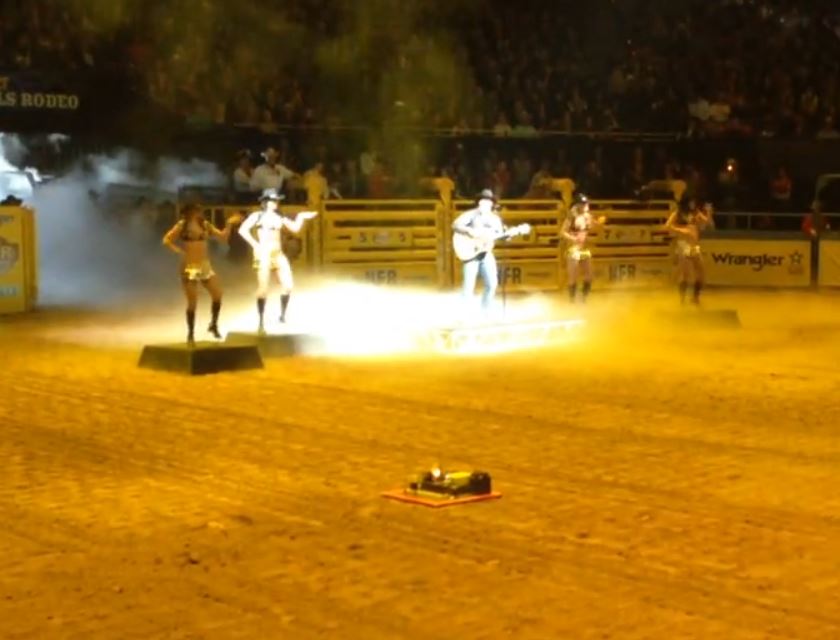
Austin Wahlert and his original NFR song, “Las Vegas Gold” for the final “Gold” night of the Wrangler National Finals rodeo.
Author: Siri Stevens
-

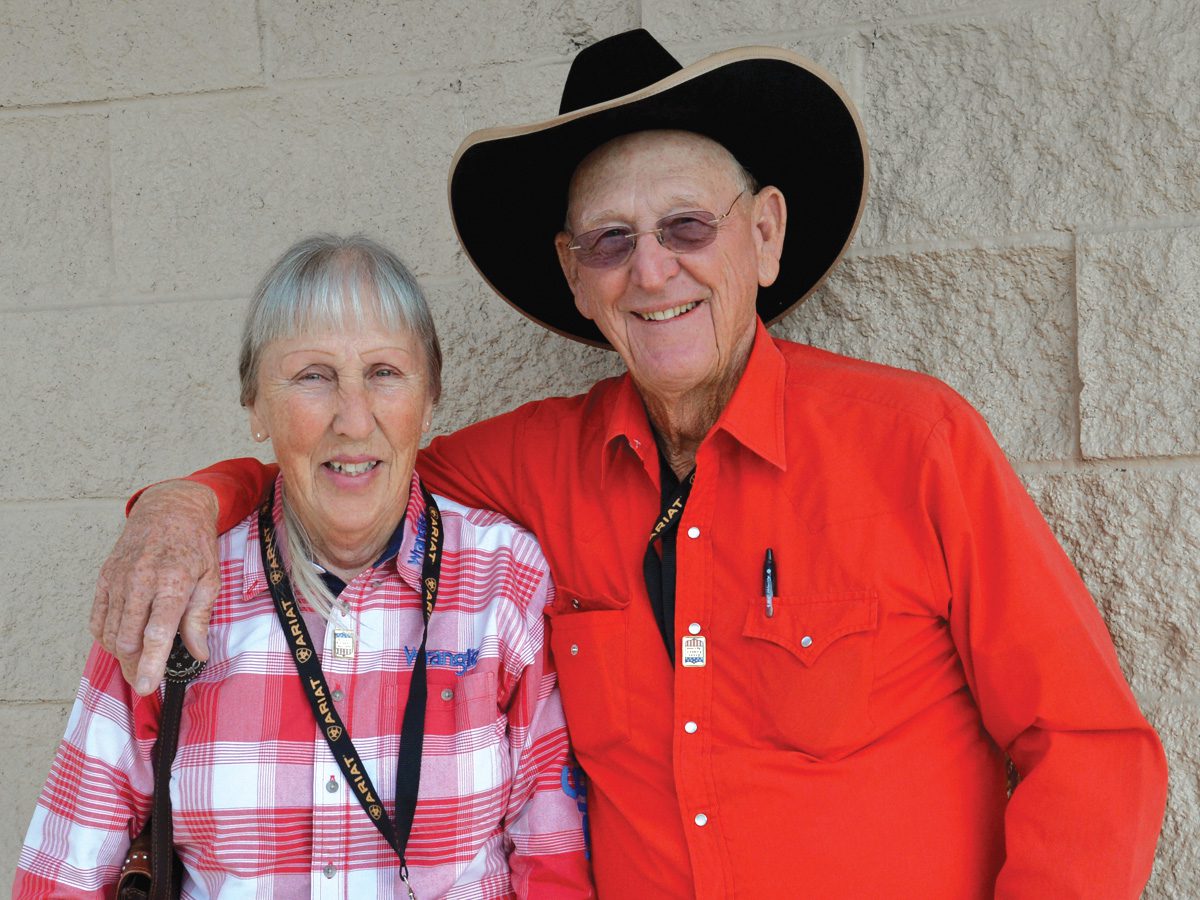
ProFile: Vickie Shireman

Central Plains coaches and Vicki Shireman, Central Plains Secretary for the past 20 years. – Photo by Dale Hirschman Vickie Shireman has lived around the Elk City (Oklahoma) area all of her life. “My family rodeoed – that’s all we did,” said the daughter of Una and Jiggs Beutler. “My dad was part owner of Beutler and Son, he was the son. And my mother kept the books and timed.” Vickie and her brother, Bennie, and sister, Dollie Riddle, rode to the rodeos in a car when their mom secretaried. “We stayed in motels; we didn’t have a camping trailer. We were raised in a rodeo office. Back then, you opened the books before the rodeo opened so you answered the phone and after you got it set up, they would call back to see what the draw was.” They entertained themselves with fighting with each other and there were always things to do. “A lot of times the rodeo office was in the lobby of the hotel, and sometimes people would take us to the pool. I didn’t know anything else. That’s all we did.”
Vickie learned to trick ride with her sister from JW Stocker, a Hall of Fame trick rider and roper that stayed with the family one winter. “My sister and I went to the West Coast in the early 1970s. She trick rode and I was the ‘extra.’ By the next summer, my dad had us trick riding at the rodeos.” Dollie continued to perform, but after Vickie broke her back, she decided to stick with secretarying. Vickie went to Southwestern Oklahoma State for a year. “I secretaried rodeos and that turned into a full time job.”
She met her husband, Dennis, when he came to work for her dad. “He drove a truck for him and that’s how we met.” The two married a year after that and have two children, a boy and a girl. Vickie kept up with her secretary jobs, raising her two children in the rodeo office. “My daughter, Jennie Murray, has carried on the tradition, and is a rodeo secretary and timer.” Justin works for Hallburton and his rodeo career consisted of helping Bennie with the stock for a few summers.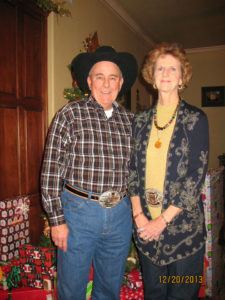
Vickie took over as the secretary for Central Plains in1994. “My mother was the Southwest Regional secretary for 20 years, so I knew about the work, and I applied for the job and got it.” She has done it ever since. “I still like to go, and I enjoy them.” The region is the largest in the NIRA and she describes each rodeo as a marathon. When she got the job, they didn’t enter with a fax, the entries were mailed in. “I encouraged them to use the fax machine the next year and now most of it is emailed. The region has grown over the years – there were more than 500 this past year. When I started in 1994, Jim Boy Hash was the student director, and now he’s the faculty director. There’s only one coach left that was coaching when I started – Allen Russell from Colby.”
Vickie has been the NIRA Secretary of the Year, the PRCA Secretary of the Year and the WPRA Secretary of the Year. “I couldn’t have a better job – and this will be my 20th year working the NFR, and my tenth year as the office manager.” Her job while at the NFR consists of running the contestant rodeo office with the help of an assistant. She is responsible for the draws, the points, and the money.“I’ve raised my kids and I have five granddaughters.” She and her husband (Dennis) just built a new home out in the country, and that was one of her goals. Now she is working on the landscape. Other than that, “I’ve had a good career. I’ve worked lots of the top rodeos, and I love what I do.” -
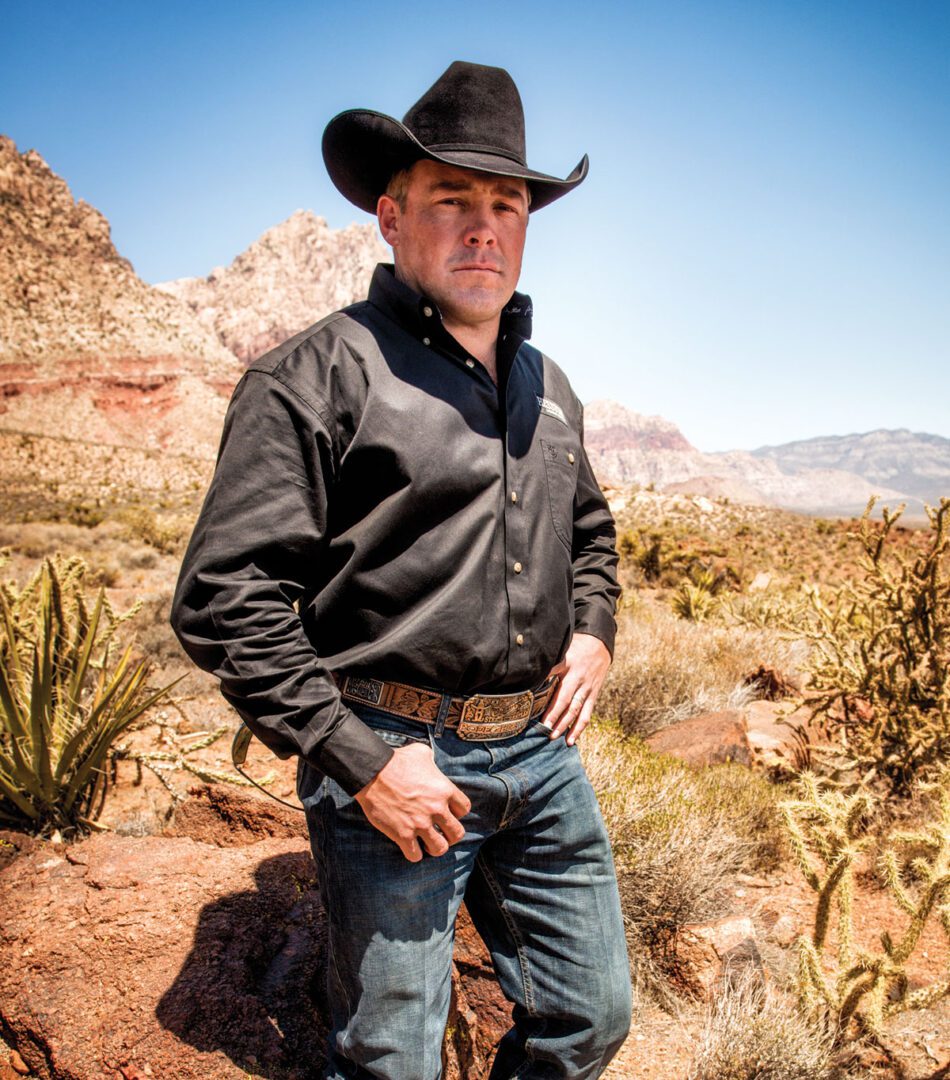
On the Trail with KC Jones
KC Jones keeps organized with lists. The 43-year-old bull dogger from Southeastern Colorado has qualified for the Wrangler National Finals Rodeo eight times since joining the PRCA in 1995. When not on the rodeo trail, KC works on his lists, which include two successful businesses he created: Rodeo Vegas (the Official NFR After Party of the PRCA) and Pro Fantasy Rodeo (the official fantasy rodeo game of the PRCA and WNFR).
KC has been rodeoing for 20 years with a pro card. “When I started I never got to rodeo like a lot of others,” he said. I was late to get my PRCA card as my parents wanted me to get a college degree before joining the pro ranks. Early in KC’s life, “Mom and dad (Ruby and Charlie) did everything for me, taking me to gymkhanas, jackpots and junior rodeos. It was all about making sure we had everything we needed. It was more important to have a good horse than a fancy rig. So we were always mounted well, and they went out of their way to haul us around.” KC and his sister Kelly competed in about every event in every division of rodeo except the rough stock events.He grew up with National Little Britches rodeos and high school rodeos. “I won enough scholarship money to go to college,” he said, starting his college career at Northeastern Junior College in Sterling, Colo. “I wanted to be an Architectural Engineer, so I got an Associate Degree at Sterling and went on to the University of Wyoming.” He switched his major to Business Marketing, graduating in 1994. He went back to the farm and started working and rodeoing. “My rodeo habit was costing a lot, so I started shoeing horses and went to Equine Dentistry School. I could work really hard doing Equine Dentistry and still go rodeo.” He had a fair amount of success in the circuit and decided to branch out in 2000. He bought a big green truck that he named “Mean Green” which was one of the first “Big” trucks that was converted and used for rodeo and it carried everything he owned – shoeing tools on one side and equine dentistry on the other. “I was $600 short of making the cut to the WNFR that year.”
He met his wife, Gayle, a barrel racer and flight attendant for Southwest Airlines, in 2002 in Oakdale, Calif. “I gave her a ring a month later, in November, we got married. “Neither one of us was looking and it was meant to be at first site…it happened fast and we’ve been running ever since,” he said. “I’ve been successful ever since I met her. She’s got my back 100% so that gives me the confidence to do anything. She is in charge of the horses…she gets up and feeds all the horses, giving them their supplements and exercises them. During the winter we have a lot of guys staying here (Decatur, Texas) for the winter rodeos. She cooks and cleans for everybody – I don’t want her job.”Full story available in the December 2014 issue.
KC competing at the 1982 NLBRA Finals (pg 56) 
KC Jones first succesful duck hunt, 1975 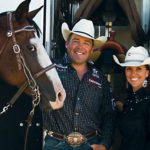
KC with wife Gayle and his horse Buggers 
Horse Katie having dental work by KC 
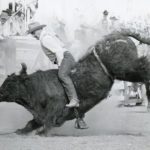
KC in Cheyenne – Photo by Hubbell 
KC Jones Team Hesston Photo enhancement by Karen Kelly – Photo by Craig Miller -
Back When They Bucked with Deb Copenhaver
Deb Copenhaver grew up in a ranch family in Wilbur, Wash. “I worked for a lot of different ranches riding colts,” said the 89-year-old World Champion Saddle Bronc Rider. Born January 21, 1925, Deb is considered one of the greatest bronc riders to come out of the Pacific Northwest He lived through the Depression and at 17, enlisted in the Navy during World War II. “I was in the construction battalion of the Navy, the Seabees. I had always liked construction work as a kid, so that was my reason for joining the Seabees. It was a branch of the Navy put together during WWII – the Seabees kid the Marines that they came in on the road the Seabees built.” Deb spent two years in North Africa running a bull dozer for $70 a month.
“When I got out, I made up my mind I was going to rodeo and I started going to a few rodeos close to home.” The first year, 1946, he went to Calgary and won day money in the bull riding. “I was riding broncs and barebacks, but I got a little sore and kept to bronc riding. I had a good beginning -God gave me the ability to win right off the bat. I was fortunate to win Calgary three times, New York (Madison Square Garden) twice; Denver, Ft. Worth, Houston, Phoenix, Pendleton, Cheyenne, and Salinas.”
In the 1950s, Deb teamed up with Paul Templeton, and Bill Linderman and went airborne in Paul’s 180 Cessna. “We were all over the country for rodeo—Calgary, Elko, Omaha, Kalispell, Butte. We did them all.” Dedication paid off and Deb came in second in the world in 1951, ’53, and ‘54 to his good friend, South Dakota roughstock rider, Casey Tibbs. He won it the next two years.
Deb was elected to the RCA Board of Directors in 1958. “While on that Board I had a vote in having the first National Finals Rodeo. It was held in Dallas, Texas, in 1959.”
He took his earnings from rodeo and invested in land near Creston, Wash., where he bred and raised quality quarter horses and operated Deb’s Cafe in town. “This little restaurant had belonged to my dad and was in the town that I was born in,” said Deb, who had made the last ride of his career in Pendleton in 1974 and was looking for a source of income for his family. “At that time it was a small restaurant and gas station. We bought a big building, 40 x 80, and moved it across the road and tied it into the existing building and had enough floor space for nice consequences.” The decision paid off; Deb and Cheryl built the restaurant into the heyday of Deb’s Cafe, decorated in true western style, and his ‘Steak Nights” were a hit with the town’s people as well as the country bands that he’d bring in to play on Saturday nights. Hank Thompson, Bonnie Guitar, and Earnest Tubb, and other country music greats all played at “Deb’s”.
Cheryl was not as excited about the purchase of the restaurant. “It was open 7 days a week from 5 am until the last dog went home. We did that for 16 years and raised three kids in the midst of it.” Deb’s daughter Debra is a former Miss Rodeo Washington and a respected bronze sculptor (see Art of Rodeo, page 42). His son Jeff was ’75 World Champion Calf Roper and founding pastor of the store of the New Frontier Cowboy Church in Texas (see Christian Corner, page 7). Deb is proud of his boys Matt and Guy, who are in the construction business, and his daughter Kelly, who is a Florida businesswoman and mom to three.
It was Jeff that led Deb and Cheryl to the Lord in 1979. It wasn’t long after that they sold the restaurant. “If we are going to serve God, we are not going to serve booze,” Deb had said. “And that was the end of the restaurant. In two months time we had it sold, so our lives went on – we run cattle and quarter horses. If you are doing something that is not in God’s good will, if you pray about it, He will take you out of it.” After that, Deb and Cheryl sold the restaurant and settled into raising quarter horses and spreading the Gospel. “The most important thing that I could add is our Love for God – that’s more important now than anything you might write about us.”
Today, Deb and Cheryl Copenhaver keep busy with their quarter horses, and Deb spends time in the log chapel he built down the road from his house. Deb says proudly. “I want to be remembered for serving
the Lord.”
Story also available in the December 2014 issue.
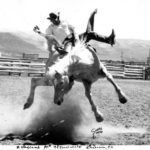
Jeff and Deb – Jeff on the great bucking horse Badger Mountain in Omak, Wash. 1953 
Jim Shoulders and Deb opening day of Rimrock Meadows, Wash. 1973 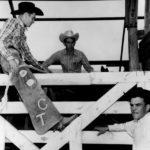
Casey Tibbs, Jim Shoulders and Deb 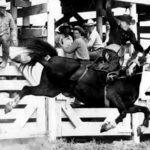
Deb riding the never-before-ridden Snake in Penticton, BC., 1949 – photo by Jim Chamberlain 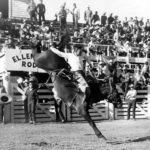
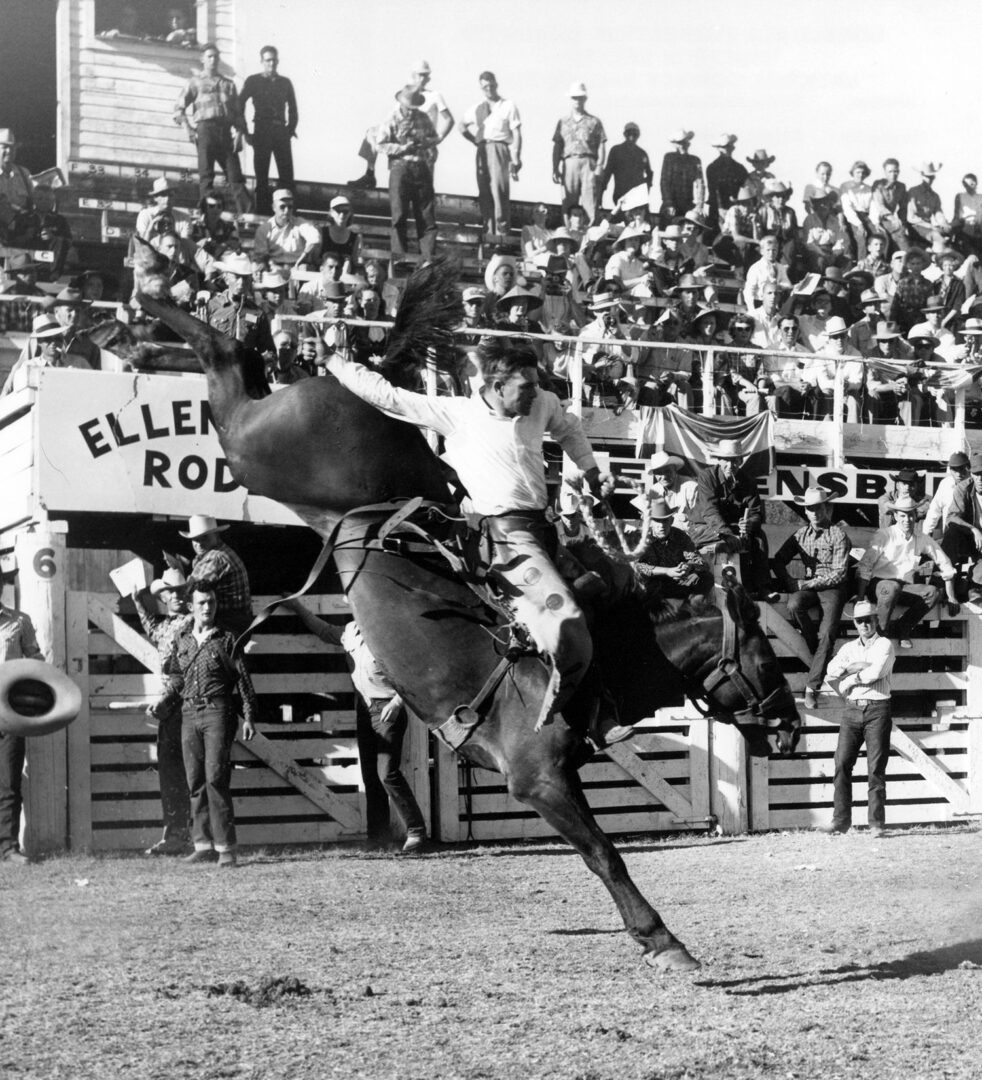
Deb on Miss Klamath in Ellensburg, Wash., 1952 – photo by DeVere 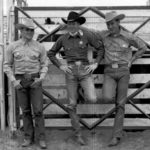
Deb, Casey Tibbs, and Bill Linderman in Phoenix, Ariz. in 1957 – photo by Helfrich -
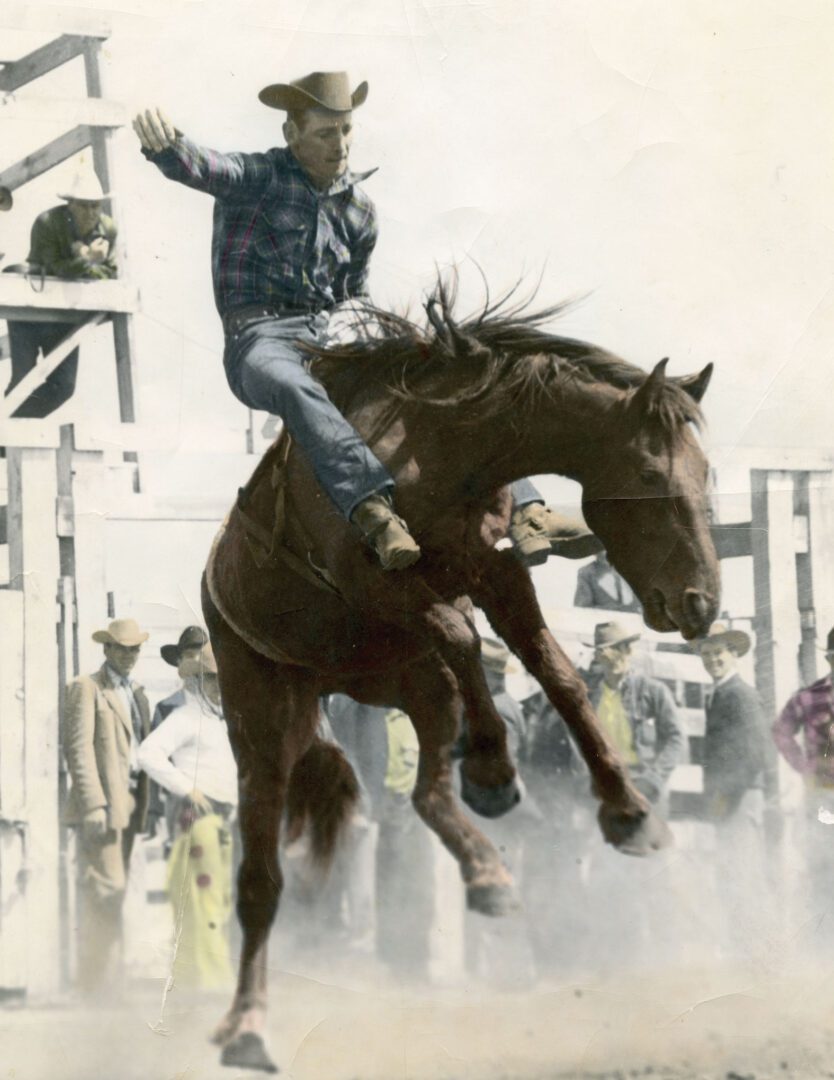
Back When they Bucked with Ladd Lewis
Ladd Lewis loves to tell stories, and he’s got lots of them.
After 88 years of living, a hundred-thousand miles, thousands of bucking horses, ranch horses and mules, and a family, there are a lot of memories milling in his mind.
He was born on March 12, 1926, to Glenn and Esther Lewis, a half-mile west of Eureka, Kan., in the “horse and mule days.”
Agriculture, at that time, relied on horse and mule power and his dad was a trader. Since before he could remember, Ladd was outside, helping with his dad’s business. He spent his days breaking the mules and horses his dad bought, putting harness on them, leading them to the field, while someone else plowed and disked with them. When his dad brought home new livestock, Ladd was on horseback, bringing them home with a Johnson halter.
When he was fifteen years old, the world was changed with the Pearl Harbor bombing. Ladd announced at the dinner table that as soon as he was old enough, he’d join the U.S. Navy. His mother didn’t want him to, but his dad didn’t say anything. Two years later, Ladd went off to the Navy. He got his GED during that time, and came home in March of 1946. A month later, he married his high school sweetheart, Mary Waltman.
Ladd began his rodeo career as a youngster, competing in the kids’ events. When he was 21, he joined the Rodeo Cowboys Association, riding bareback horses, saddle bronc horses, and bulls. Ladd was a student of anything he began, including rodeo. He studied the livestock, and he developed his own abilities as best he could. He made more money riding barebacks and saddle broncs than bulls, but when he drew well, anything could be a good ride. “Part of it is a drawing game,” Ladd remembers. “You got to draw the ranker stock to win the money. You’d be drawing good bulls for a while, and when you draw those better bulls, it gets you deeper into development of that ride.”
Studying the bucking horses and bulls was part of Ladd’s strategy. When he knew what he’d drawn, he’d watch for that animal. “If you had a chance to where you could watch that sensational horse or bull buck, you’d get to where you could see it the best you could, so you could study what was going on.” Studying livestock was something Ladd had done since he was a child. “When you’re raised as close to livestock as I was, it’s like reading people when you meet them. You look at their eyes, and watch them.”
Ladd went to rodeos mostly in the area, from western Colorado to North Dakota, south to Oklahoma, and in Kansas. He stayed close to home, but he rubbed shoulders with the best, competing alongside Jim Shoulders and Casey Tibbs, among others. One of his fonder memories is riding a Roberts Rodeo Co. horse named School Boy. School Boy had thrown off all his previous riders, and Ladd rode him twice in one year: at Pretty Prairie, Kan., and at another rodeo which has escaped his memory, and winning both of those rodeos.Full story available in the October 15, 2014 issue.
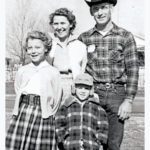
Ladd, Mary, Lynda and Larry Lewis 
Ladd saddle bronc riding in Fort Worth, TX 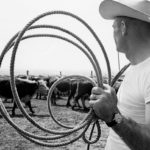
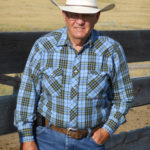
Ladd on his ranch 
Ladd breaking colts on his place. People would come and watch. 
Ladd in the Navy 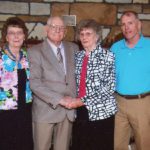
Lynda, Ladd, Mary and Larry Lewis, Ladd and Mary’s 65th anniversery. – Photo by Terry Rinehart Photography -

On the Trail with Ace Berry
It has been fifty two years since Ace Berry entered the arena in 1962 for his first National Finals Rodeo. The fifteen year old couldn’t drive yet, but he remembers being in awe of the moment. “Going out in the arena with the legends I’d heard about and competed with – there they were.” Ace was the first one to qualify in the riding and roping – Jim Tescher had qualified in saddle bronc and steer wrestling. “I was really set on that. I never dreamed of winning them both – it just kind of happened.” Ace was the youngest contestant ever to enter the prestigious rodeo until JD Yates beat his record by three months.
The 68-year-old is heading to the USTRC Finals in Oklahoma to compete in the #11 and the Century. “I haven’t roped 60 steers yet,” he admits, “I am practicing once or twice a week, running a half a dozen steers each time.” Ace hasn’t roped for nine years. “I quit roping because I had a lot of stuff going on with the ranch … and I was kind of burned out.” He is back to have fun with it, “I’m roping because I want to, not because I have to.”
Ace is a true all-around hand, roping at 14 consecutive NFRs from 1962-75. He rode bareback horses at the Finals six times, in 1967, and from 1969-73. He judged the bareback riding at the NFR in 1985, and flagged the NFR team roping in 1986. He did all of this while managing a 10,000 acre ranch in California. “I went to a lot of rodeos through the years, but I never went to many each year. 65 was my tops,” he said. “I didn’t travel – I was always going back to the ranch. I’d leave in the winter and go to the winter rodeos, and then I’d go back to the ranch in the Spring.”
Ace followed the California rodeos on the weekends and made enough to get to the Finals. “In those days it didn’t take near as much to make it.” Ace Berry and Phil Lyne are the only two cowboys in rodeo history to win rough stock and timed-event average titles at the NFR. “Winning the average in the NFR four times stands out as the biggest accomplishment I’ve made,” said Ace. “That’s the only thing I’ve ever done that nobody has done or tied me in – two times in timed event and two times in the riding event.” Ace attributes his success to having the “want to. It takes a lot of work and persistence. It’s something I set out to do.” He won the 1967 NFR team roping average heeling for Bucky Bradford, back when half the rounds were team tying and the other half were dally roping. In team tying, the header was tied on. After he roped the steer, he went left and the heeler was tied on too. When the steer was laid down, the header would step off, run down, and tie a square knot around both hind legs. Ace competed as both the header and heeler, depending on his partner. It took a lot of horse power and practice – something Ace learned growing up.
Full story available in October 15, 2014 issue.

Ace heeling for Red Rightsell in the second go of the NFR in Los Angeles, 1964 – Photo by DeVere, courtesy of Dickinson Research Center, National Cowboy & Western Heritage Museum 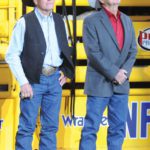
Ace Berry with Phil Lyne being honored at the 2013 WNFR – Photo by Hubbell 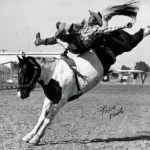
Ace bareback riding – photo by Foxie Photo 
Ace with his wife, Renee 
Ace Berry on “Old Joe” 
Ace Berry golfing -
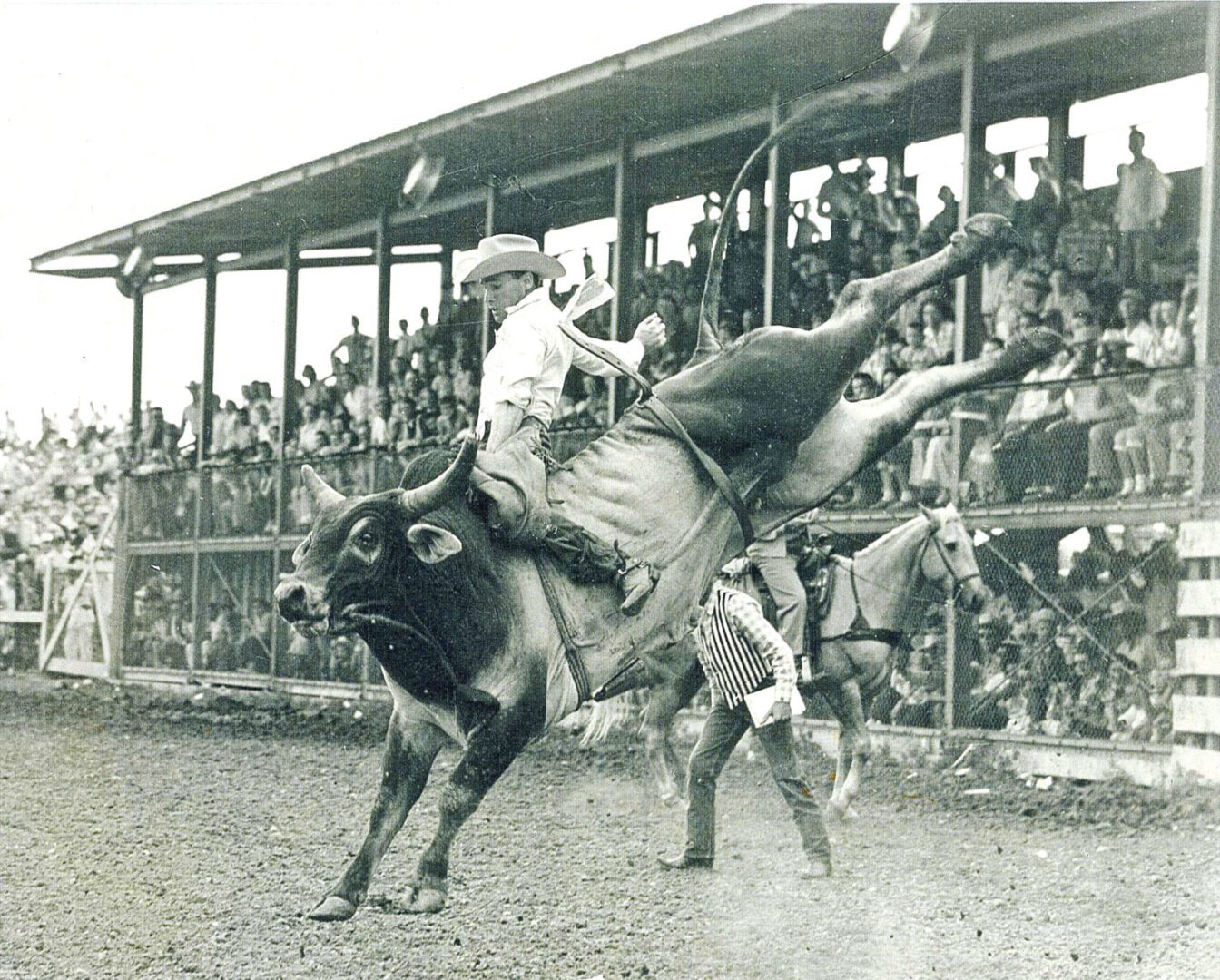
Bob Robinson
R.J. “Bob” Robinson, one of Canada’s premier bull riders, spent his life competing and serving in the sport he loves. He is one of nine being inducted into the Rodeo Hall of Fame during the Rodeo Historical Society’s ceremony September 26-27 at the National Cowboy & Western Heritage Museum in Oklahoma City, Okla. He qualified for the National Finals Rodeo in 1962 and 1964, and held elective positions with the Rodeo Cowboy’s Association and the Canadian Professional Rodeo Association.
Born in Calgary Alberta, Canada in 1931, Bob grew up around rodeos. His father, Sykes Robinson, was a top bronc rider and steer rider in the 1920s through the 1940s. Bob began his rodeo career at the age of eight, riding steers at Rolling Hills, Alberta. “I was too young and too weak,” he said. “They were riding steers and I didn’t have a rope, so they supplied me with a hard little 3/8” rope. I bucked off at the end of the gate and went home. My dad had gone to World War II so my Uncle John would hold calves at home and I would ride them.” He got on again four years later and took fourth. His third try earned him a first place and $35. “I was on my way,” he said. “I didn’t really get into the rodeo business until I got out of high school.”
Bob wanted to be a bronc rider like his dad, and was able to start that in his later teens. He graduated from Saint Mary’s High School in 1950, where he excelled in track, winning the mile run for his school in 1949 and 1950. He considers himself a natural at running and proved it by setting a new record of 4.57 in 1950. Bob remained involved in rodeo after high school, spending winters with Lawrence Bruce, his friend Winston Bruce’s father, in Central Alberta, where he rode bucking horses on the warmer winter days. He spent his summers working for Harry Vold in Dewinton, AB., driving truck and helping produce rodeos. “Bob was very reliable, he was a good hard worker,” said Mr. Vold. “He is a good honest person.”
He also worked for Ted Glazier, a rodeo cowboy who was also a mixed farmer. “He hauled me to all the Alberta rodeos.”
He rodeoed whenever he could, learning how to win from his travelling partners Deb Copenhaver, Bill Linderman, Lyle Smith, Paul Templeton, Jim Shoulders, and Duane Howard. He had his first major win in 1953, winning the All Around title at Edmonton, Alberta, competing in saddle bronc riding, bull riding, and steer decorating. He purchased his RCA card in 1950 and in 1955 he crossed over into the states to compete. In 1956 he won the All Around in Edmonton and the Saddle Bronc Riding at Calgary Stampede and became the 1956 Canadian Saddle Bronc Champion. 1957 was the year that Bob really developed into a world class bull rider. He won Salinas and Boston Gardens. He contributed being more consistent in bull riding to simply riding lots of stock. Jim Shoulders coached Bob, telling him to ride a little bit away from his riding hand. This advice helped him make the whistle more often.
He got married for the first time in 1957 to Connie Ivins, her father was a roper. They had five kids and she stayed home while he was on the road.He served as the bull riding director for the RCA in 1959 and that same year he was asked by Lex Connally, General Manager of the RCA, to be the Executive Secretary (now called Rodeo Administrator). He held this job until the spring of 1962. His bull riding career took off when his tenure was up and he qualified for his first NFR that year. He managed to get to enough rodeos, even though he had a full time job in California as a project manager. He entered the Finals in 10th place and remained in the position with $8,417 at the end. He won the average at the National Finals, becoming the first Canadian to ever win a major event in professional rodeo history. He considers that as the greatest moment of his career. Jim Shoulders, Ronnie Rossen and Bob Wagner were all competing against Bob.
The next year, he missed the cutoff for the finals by $16. He qualified again in 1964 in the 8th spot and ended the finals ninth. He wanted to be a dentist and returned to college that same year, enrolled in junior college at Porterville, Calif. He continued his love of track, running the mile in 5.20. He also started a rodeo school, charging students $150 a month. Bob decided teeth were not his future, and ended up obtaining a Bachelor of Arts degree in Radio and Television Broadcasting with a minor in Marketing from Fresno State in 1968. “I was announcing rodeos, so I was taking those classes and I just couldn’t do the chemistry and math.” He entered the sales profession equating sales to rodeo “except you have a lot better draw when you call on your accounts. I was a different type of sales person. I took their stock prepared a rate of sale of our product, suggested a fill in on their sales, then I showed them the new items and I almost always got an order.”
The last buckle that Bob won was at Santa Marie, Calif., in the saddle bronc riding in 1969, one year before his last bull ride in Salinas, Calif. At the age of 38 he decided it was time to concentrate on his future. “I had a really good job with Levi Strauss in Canada and they didn’t want me to ride anymore.” He worked there until 1977. In 1978, 36 years ago, he realized he had a real problem with alcohol. “I called a well known 12-step program, with more than 1 million recovered members. By the grace of God, I have stayed sober for 36 years one day at a time.” From 1978 through 1980 he was a sales rep at GWG Ltd, a subsidiary of Levi Strauss on Canada, and switched to Blue Bell Canada Inc. (Wrangler) in 1981, working there until 1988.
From 1988 until 2006, Bob had his own whole sales agency in Alberta. The itch to ride again became too great and Bob entered the bull riding at some Senior Rodeo Association events. He pulled his pelvis apart at a rodeo in 1980 and he traded his bull rope for a lariat and took up team roping. He continued to serve rodeo – President of the Canadian Rodeo Cowboy’s Association from 1973-74. “I led the CRCA board to putting on the first Canadian Finals Rodeo in Edmonton in conjunction with the Edmonton Exhibition led by Len Perry.” He was President of the CPRA in 1980 and 1981; President of the Canadian Senior Pro Rodeo Association for 1995-1997; President of the CPRA from 2004-2005. He was inducted into the Canadian Pro Rodeo Hall of Fame in 1997. He also received the Pioneer of Rodeo award from the Calgary Stampede in 2009.
He and his second wife of 32 years, Peggy, live at Millet Alberta, Canada, and they are currently developing ¼ section of their land into small acreages. Between the two, they have eight children, 23 grandchildren, and ten great grandchildren.
He continues to be an ambassador for rodeo. “Rodeo has been a lot of work, but I did it because I love it. I see lots of things that should be changed – it’s very hard to make a living rodeoing – and unless somebody goes into teams or getting a national league going with television. I’ve been in it for 60 years and it wouldn’t take much to make it work.” He has switched from running to walking after two knee replacements and one hip replacement.Story also available in October 1, 2014 Issue.


-
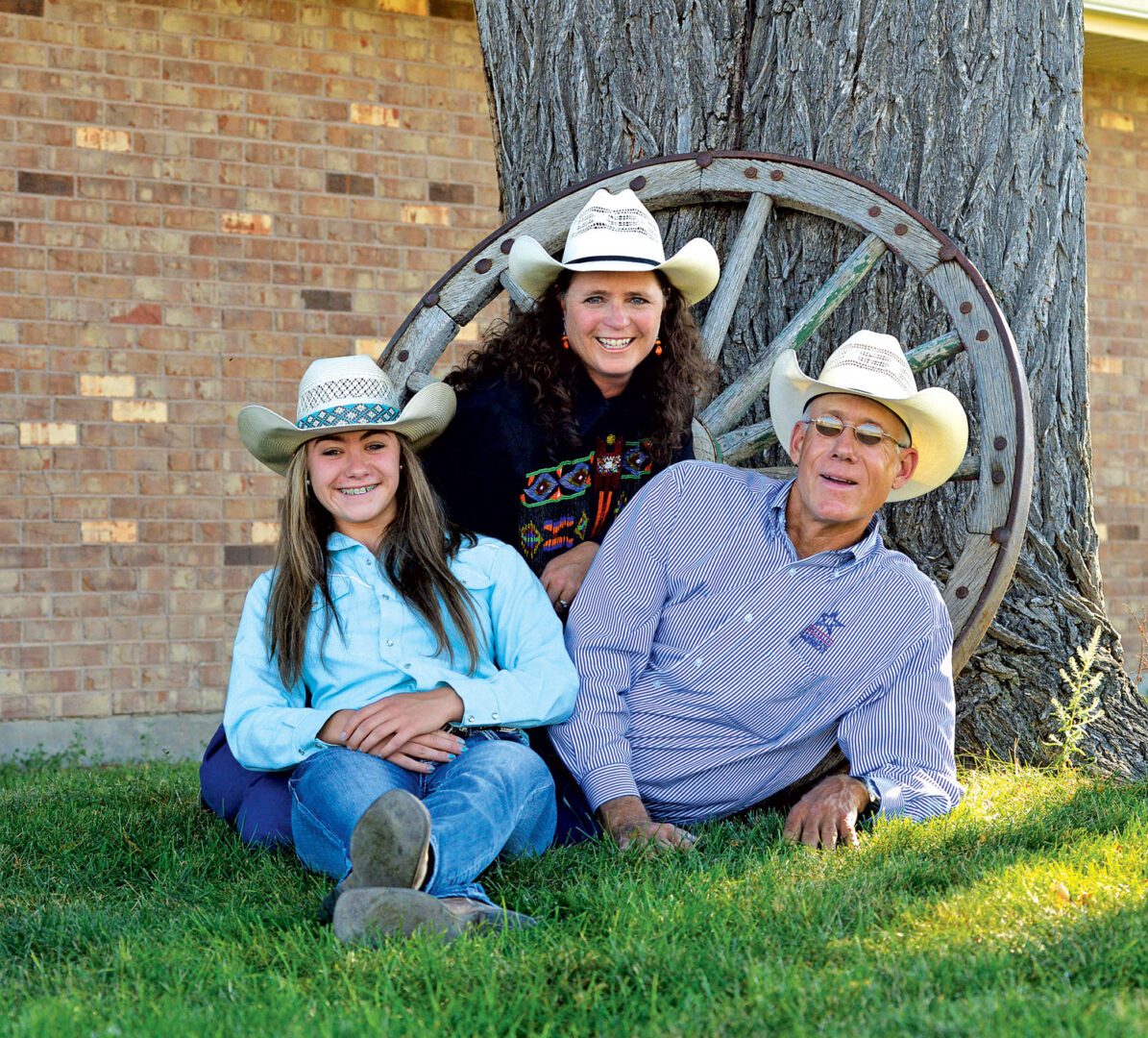
The Dickens Family
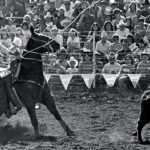
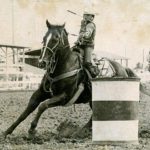
The Dickens, Jacy, Kim, and daughter Sara, are carrying on a family tradition. “Sara is the fourth generation on my side, and the third on Kim’s,” said 55-year-old Jacy, who started competing when he was 8 and still competes in the National Senior Pro Rodeo Association. Kim started competing at 9 and couldn’t wait to turn 40 so she could enter the Senior Pro rodeos. Sara spent her childhood at the Senior Pro Rodeos with her parents and started competing when she was 8. All three in the Dickens family got their start in the National Little Britches Rodeo Association.
Kim was 29 and Jacy was 35 when they married. “I went to more than 75 rodeos a year,” said Jacy. “I was around a lot of good marriages and a lot of bad marriages and I knew I had to find someone that had things in common with me.” Jacy didn’t think he would ever get married and he loved kids. “I was training horses the winter of 1993 and I was praying in this fifth wheel and God told me it was time to get married. I didn’t have the money and I didn’t enjoy looking so I told him to bring her in front of me.” He remembers Kim was wearing a yellow sweats and cowboy boots when he met her at a rodeo. He knew she was the one. And then he just had to convince her.
Born 1959 in Cortez, Colo., Jacy went to his first rodeo at the age of two. His parents rodeoed (Joe and Jane), and when they divorced, his stepdad (Hugh Green) stepped in and helped him achieve his rodeo goals. “You can’t rodeo successfully without help,” he said. Jacy was the state champion steer wrestler in 1977 and continued rodeoing at the University of Southern Colo. In 1984, he got his PRCA card and hit the road, training horses and doing odd jobs when the checks didn’t cover his expenses. He won the Colorado State Rodeo (CPRA), four times in the calf roping (1979, 83, 86, 93). In addition to calf roping, Jacy competed in steer wrestling and team roping. “I enjoyed roping calves, but I always won more team roping,” said the header, who currently ropes with Mike Clancey in the National Senior Pro circuit. Once he got married, Jacy took a full time job with Weld County and concentrated on his family until he could enter the Senior Pro Rodeos.Full story available in October 1, 2014 issue.


-
Zucchini Bread Competition
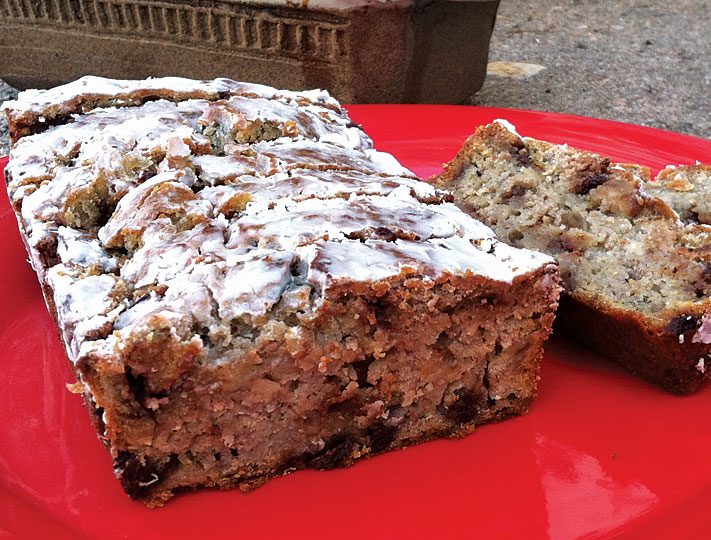
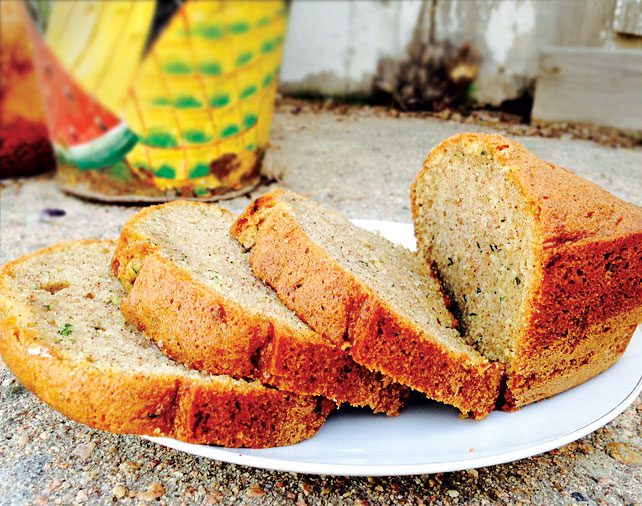
We had a Zucchini bread bake off between the staff at the Rodeo News. The judging was difficult, but in the end, both of the recipes below won. “One is a bread and the other is more of a desert.” We’d love to hear your opinion of the two recipes listed as well as any other ideas you have for the use of that wonderfully abundant summer squash. Send your ideas to info@therodeonews.com.
ChocolateChip & Banana Zucchini Bread

Choclolate Chip Banana Zucchini Bread recipe by Anne Marie Martinez
INGREDIENTS:
• 2-3 ripe bananas
• 3/4 c brown sugar
• 6 Tbls butter, softened
• 1 egg
• 1 tsp vanilla
• 1-1/2 c grated zucchini – 1 medium zucchini
• 1-1/2 c all-purpose flour
• 1/2 tsp baking soda
• 1 tsp baking powder
• 1/4 c semi-sweet chocolate chips + 1/4 c milk chocolate chips
• 1/2 c crushed walnuts (if desired)DIRECTIONS:
1. Preheat oven to 325°F.
2. Grease and flour bread pan and set aside.
3. Peel and mash the bananas.
4. Stir in brown sugar, butter, egg, and vanilla until well combined.
5. Stir in grated zucchini.
6. Combine dry ingredients and add to the wet ingredients stirring just until combined.
7. Stir in chocolate chips and pour mixture into prepared pan.
8. Bake for 65-70 minutes or until an inserted toothpick comes out clean.
9. Let bread cool in pan for 10 minutes before removing.
If you want an extra layer of goodness, frost loaf with cream cheese frosting before it’s completely cooled…yum!
Classic Zucchini Bread Classic Zucchini Bread
recipe by Siri StevensINGREDIENTS:
3 eggs
1 c oil
2 c sugar
2 ½ c grated, peeled zucchini
3 tsp. vanilla
3 c flour
1 tsp soda
1 tsp baking powder
3 tsp. cinnamonDIRECTIONS:
Put all ingredients, one at a time, in mixer and blend after each addition. Place dough in two greased bread pans and bake at 325 for one hour. Tips: take the bread out even if the middle is not completely done – it will continue to cook. Once you place the dough in the pan, gently tap the pan on the counter to remove air bubbles. You can freeze the grated zucchini with one cup sugar for baking in the cold winter months. -
John Stokes
John Stokes was raised around an auction barn in Lubbock Texas that his dad owned. “Somebody was always daring you to do something you don’t normally do,” said John. “I was an aggravating kid back then.” He shared a story about shooting a bow and arrow at the neighbor kids after watching Little Beaver do it at the movies. “I got a good spanking.”
Born in 1939, he enjoyed life and as an only child, he tried many things at the sale barn that led him to raise, ride and fight bulls. “My dad sold cattle, horses, and calves and I remember we got 17 head of bucking horses, and 17 head of bulls that belonged to Gene Autry. They were there for Everett Colborn’s rodeos that were held in the college football field. My daddy trucked them over there.” Clyde had a trucking company as well as the auction barn on the north side of Lubbock. The auction barn had a straightaway race track and on Sundays they would have horse races. “My mule, Josephine, could outrun most of them,” he said. “I thought it was a neat deal – they would bring in bulls and calves and horses and we’d rope and ride.” He picked up his dad’s livestock trading skills and took it on with him into the rodeo world. “When I was rodeoing I’d buy bulls from one producer and sell to another one.”
He started competing in 1953 at Rising Star, Texas, as a small open rodeo. He entered the bull riding at the age of 13. Two years later, at the age of 15, he had his first “gig” as a clown/bullfighter at that same arena. When they came out with the Rodeo Cowboys Association permits in 1956, he ended up with one. “If you won money, you had to buy a card for $25. The First RCA rodeo I entered, in Taylor, Texas, I entered two in one weekend. It was a two head in the bull riding – I won $15, so I had to buy a card.” Like many bull fighters in his time, he showed up to ride at rising star event and the bull fighter didn’t show up, so they asked John to do it. “After that, I would get on my bull first, and then I’d fight bulls for everyone else. Some of those rodeos down in South Texas there would be thirty or forty bull riders – and I was the only bull fighter – I was pretty skinny and pretty quick.” He won many rodeos as a bull rider.
John attended Tarleton College in Stephenville, and in 1958 he was instrumental in helping form the first rodeo club at the school. That year he entered the Tarleton rodeo in bull riding, wild horse race, bulldogging and bareback – winning the All Around
He married Lynn Kirby, the girl down the street, who he had known since junior high. The two will celebrate being married for 50 years this coming January. They settled on a ranch near Sonora, Texas, ranching 90 miles from the border. Lynn went with him to all the rodeos after they were married.
John was drafted into the military, but he couldn’t serve due to his lack of hearing. “I got hit by lightning when I was 12 and that started my hearing problem. We had a rock barn, with jersey heifers. I’d come in from school and was down at the barn. Lightning hit the barn right next to me – I had a bad taste of sulfur in my mouth for six weeks – it killed a bunch of the heifers.”
He continued a trade that he started in high school “I got paid .35 an hour for welding when I was in high school, and I could see how gates worked from growing up in the sale barn and being around my daddy (Clyde Stokes).” John built a set of metal pens for a friend and that’s how his welding business started. “Over the period of years we built four different auction barns, repaired a large feed yard – all while I was rodeoing and ranching.”
Lynn and John had one daughter, Tamara Shane. His welding business ended up employing 20 people – 15 of them rodeoed. His bull fighting and riding slowed down, but he still wanted to go and rodeo – so he took up team roping and steer roping. “I learned how to rope as a kid – .it’s something I did every day of my life when I had cattle, sheep, and goats. It wasn’t hard to take what I did every day and put it in the arena. I roped left handed for a long time, but I got my finger mashed in a door, and had to start roping right handed.”
John not only went to ropings, he and Lynn started producing them in the 1978. “Our first roping we had at the ranch we had a progressive after six and we had two kids, one was 13 (Guy Allen), one was 14 (Tee Woolman), won the roping.” They produced ropings for fifteen years, and after they quit, John continued roping until he was 70. “I roped and tripped until five years ago,” he said. “I spent 53 years in rodeo.” During that time, he endured 88 broken bones.
He is still involved in the industry, raising bucking bulls – he has six coming two-year-olds that will be entered in futurity derbies for ABBI and UBBI. “All my cows are registered. All the bulls are out of our cattle and I trained them all. When I sell one for $5,000, I think I’ve made a lot of money! I train them and gentle them up. You can’t sell a mean one. They are just like people – they’ve got their own little thing.” John and Lynn enjoy their life on the ranch. “We ranched all our life, I don’t think we’ll ever get away from it. As long as the Lord lets us, we’ll be in the cattle business.”Story is also available in the September 15, 2014 issue.


-

JD Schulze
JD (James Daniel) Schulze calls Brighton, Colo., home, but he is most at home in the arena. The rodeo clown spends the summer working rodeos in Colorado and surrounding states. “From June until the end of September I will have worked 63 performances,” said the 39-year-old single dad. “I’ve been home a couple days all summer.” His ten-year-old son, Landon James, travels with him on the weekends JD has him. “This year he’s really taken a part in wanting to help out with the acts.” One of JD’s acts, the Shrinking Machine, features Landon as the small version of JD. Landon plays baseball too, a sport that JD helps by being one of the coaches.
“When it comes to coaching, I really try to make it fun and have fun with the kids so they learn to love the game – and have fun – which in turn hopefully carries over to everyday life in all they do. In the rodeo arena, I’m there to be a goofball and be part of the bull fighting trio – the island of safety – that’s where the barrel man comes in.”
JD grew up on the Eastern side of Aurora, Colo., and the middle of Denver. His parents were divorced and he and his three older brothers split their time between the two houses. He also has three younger sisters. “It was my norm,” he said of having two homes. Growing up in the city, JD got his break into rodeo through friends who were bull riders. “I always loved the Western lifestyle and hanging out with friends that rode bulls got me started riding.” JD rode bulls until injuries took him out.
Full story is available in the September 15, 2014 issue.

-
Back When they Bucked with Richard Claycomb
Richard, (Dick), Claycomb, was born June 6, 1939. He spent the first two years of his life in a two-room cabin in Fox Park, Wyo. “My dad was hauling logs from Fox Park, Wyoming to Ft. Collins, Colorado. Mom hauled water from the creek.” The family moved to Cheyenne when his dad got a job at the UP Railroad. Dick decided to take on a paper route when he was ten, at first riding a bike, and then switching to horseback, and extending the route from 22 to 145 papers. “I paid $15 for the horse,” he said. “I’d ride seven miles every night – that’s where I learned how to ride.” His mare stepped on a coffee can and severed a tendon, which ended the paper route. Dick’s next job was as an apprentice mechanic and he received his mechanic license.
Dick got his first taste of rodeo in Pine Bluffs, Wyo., at a high school rodeo, when he was 16. “I won the bull riding and was second in the bareback riding. I got $47 and I was hooked.” He won the All Around saddle at the Cheyenne High School Rodeo riding bareback horses and bulls and after he graduated from high school, he continued to rodeo in the summer and packed hod in the winter. “Packing hod for brick layers kept me strong,” he said.
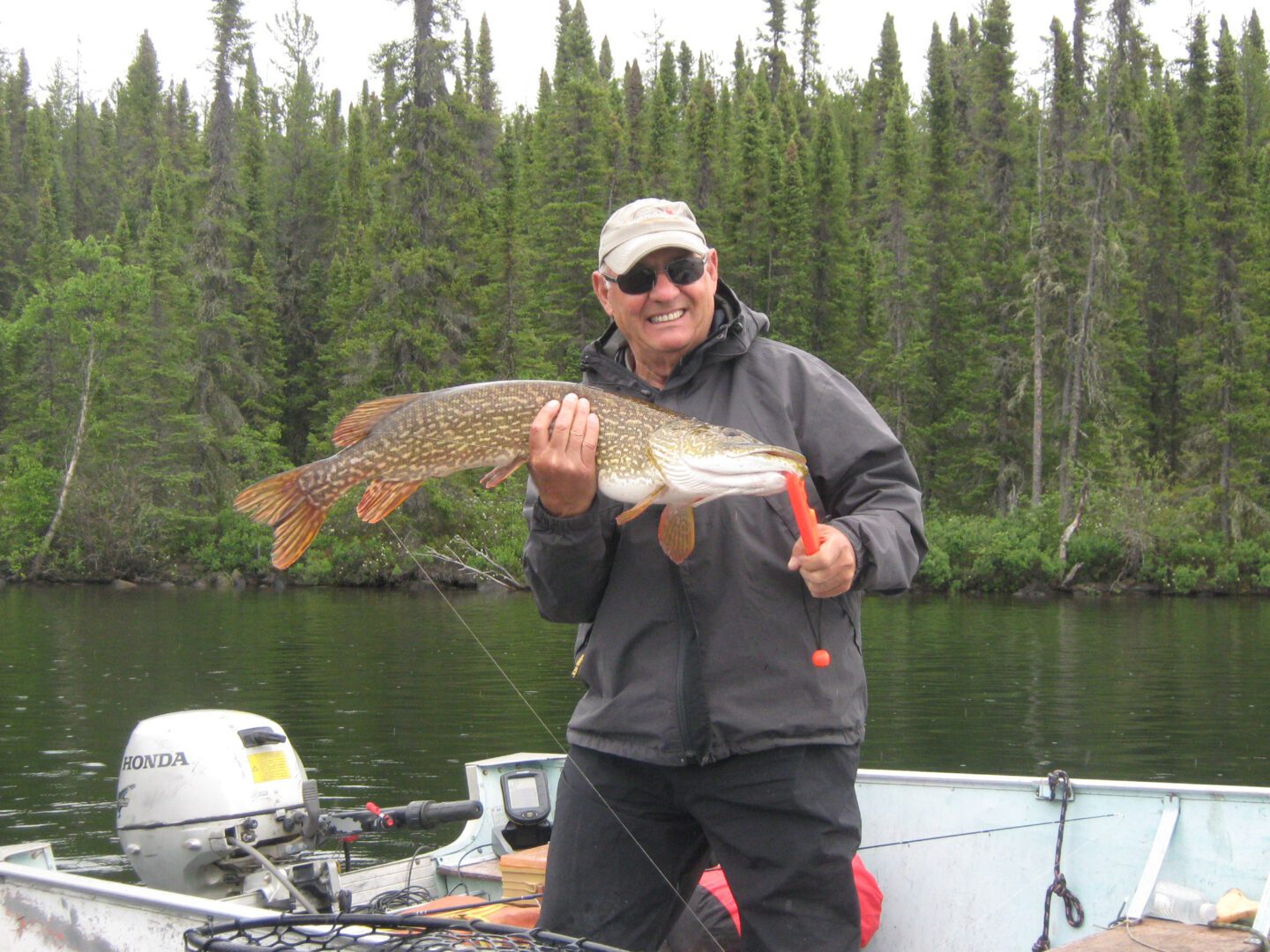
Dick met his wife, Darlene Stumpf, when they were seniors in high school. They married in 1958 and they worked winters and rodeoed summers and later went to college. “Tracy was born in 1964 and Troy was born in 1966. Tracy is an attorney for Office Depot in Idaho, and she has two middle school daughters, Maureen and Emery. Troy is a principal in Gillette, Wyo., and he has three children, Sophie a senior, Lainee is a freshmen, and Jess a sixth grader. He operates a fly in fish camp in Saskatchewan, Canada in the summer. I go up there every summer to help and fish, mostly fish.”Full story available in September 1, 2014 issue.