Rodeo Life

Author: Ruth Nicolaus

  • HASTINGS RODEO WRAPS UP

    HASTINGS RODEO WRAPS UP

    Louisiana cowboy moves up the world standings ladder with a win at the Oregon Trail Rodeo

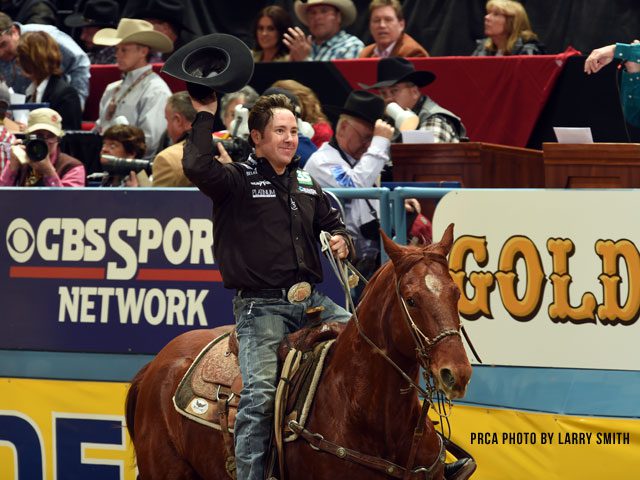
    HASTINGS, NEB. – (August 28, 2016) – Cody DeMoss nearly didn’t come to Hastings, Neb., but the Heflin, La. man is sure glad he did.

    The saddle bronc rider had planned on “turning out” – not competing in the Oregon Trail Rodeo in Hastings, Neb. on August 27, but at the last minute, changed his mind.

    Inky, the saddle bronc horse owned by Korkow Rodeo of Pierre, S.D., helped change it.

    DeMoss made an 82 point ride on the horse to win the 25th anniversary of the Oregon Trail Rodeo.

    He had planned on competing in Kennewick, Wash., instead of Hastings. “I got to thinking about it,” he said, “and prayed about it a bit and a couple of other guys I talked to, they said, you might ought to get on Inky there.”

    He took their advice. DeMoss spent $850 on a plane ticket from Seattle to Omaha, where he met up with fellow saddle bronc rider Logan Allen from Crescent, Iowa. The two traveled to Hastings, where DeMoss ended up winning the rodeo.

    The $1814 check he won couldn’t have come at a better time. With only five weeks left in the rodeo year, DeMoss is outside the top fifteen in the world standings, who qualify to compete at pro rodeo’s “world series”, the Wrangler National Finals Rodeo (Wrangler NFR) in December in Las Vegas. He’s been to the Wrangler NFR eleven times, but didn’t start rodeoing hard this year till mid-June. “I only went to twelve rodeos by the time Reno (Nev.) started,” he said. “I stayed at the house and baled hay.”

    But then it was time for the 35 year old cowboy to make a decision: either rodeo full time or stay home more. “Me and my wife were talking. Are you going to do it or not do it? I said, I guess I’ll go.”

    DeMoss hit the road, winning $8,000 over the Fourth of July run and second at the Calgary Stampede. He was doing OK, but not up to the standard he was used to.

    Things have started to click, however. “You know, it feels good right now. I kind of wish we had a couple more months” before the rodeo season ends, he said.

    DeMoss would like to earn $20,000 more in the next five weeks. He’s only $5400 from fifteenth place, but the extra money would give him some security.

    And there’s a chance he can do it. He will rodeo every day except for six between now and September 30.  But this week includes a little down time. His wife Margie will meet him in Denver, where they’ll enjoy Tuesday and Wednesday off.

    Then it’s back to the road, in pursuit of his twelfth qualification for the Wrangler NFR.

    An Oklahoma man won the bull riding at the Hastings rodeo.

    Newt Brasfield, Lane, Okla., scored 85 points on the Korkow Rodeo bull No. 208 to win $1706.

    Brasfield had seen the bull at the Dickinson, N.D. rodeo in late June. “He was nice there,” he said. “I was pumped to have him.”  And his trip on the bull was good. “I felt like he was a little buckier than the last time I saw him. I needed that, anyway. Eighty-five (points), you can’t complain about that.”

    The 22 year old cowboy is in his first year of PRCA competition, and it’s not going quite as well as he’d like. “I’ve stayed afloat, stayed healthy and made a decent living,” he said. “I went pretty hard this summer, but didn’t have the year I wanted to.”

    Even then, he’s ranked eighth in the Prairie Circuit, pro rodeo’s regional designation for rodeos in Nebraska, Kansas and Oklahoma, and he’ll compete at the Prairie Circuit Finals Rodeo in October.

    After his ride on Saturday night, Brasfield was in a hurry to make the eight hour trip home. The third birthday party for he and his wife Brooke’s son Briar was on Sunday, and he didn’t want to miss it. He gave credit to his wife, Brooke. “I couldn’t do this without her. She’s in her last year of nursing school, and she’s raised a kid and gone to school while I’ve been out here. I have to give her props for that.”

    This was Brasfield’s first trip to Hastings, but it won’t be the last. “I’ll be back after tonight.”

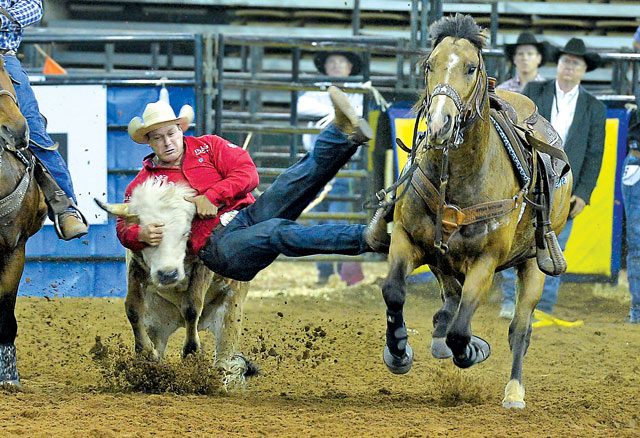
    Other champions at the 25th annual rodeo are bareback rider Casey Breuer, Mandan, N.D. (77.5 points), tie-down roper Cody Quaney, Cheney, Kan. (9.1 seconds), steer wrestler Justin Shaffer, Hallsville, Texas (4.0 seconds), team ropers Caleb Mitchell, Mason, Texas and Dustin Harris, O’Neill, Neb. (4.7 seconds), barrel racer Emily Miller, Weatherford, Okla. (16.43 seconds), and all-around Ty Talsma, Verdigre, Neb. Talsma competed in the steer wrestling and team roping and placed in both events.

    The 2016 Miss Oregon Trail Rodeo queen was crowned during the Sunday performance. Jenna Langer, Superior, Neb., won the crown and the title. She is the 18 year old daughter of Larry and Jody Langer.

    The 26th annual Oregon Trail Rodeo will take place August 25-27, 2017. For more information, visit the fairgrounds website at AdamsCountyFairgrounds.com.  For complete results, visit ProRodeo.com.


    ###


    Results, 2016 Oregon Trail Rodeo, Hastings, Nebraska


    Bareback riding

    1. Casey Breuer, Mandan, N.D. 77.5 points on Korkow Rodeo’s Hot Pickett; 2. Nate McFadden, Elsmere, Neb. 76.5; 3. Troy Vaira, Richey, Mont. 75; 4. Caine Riddle, Vernon, Texas 74.5; 5. Logan Patterson, Goodwell, Okla. 73.5; 6. Casey Colletti, Pueblo, Colo. 73.


    Tie-down roping

    1. Cody Quaney, Cheney, Kan. 9.1 seconds; 2. Sterling Smith, Stephenville, Texas 9.6; 3. Boe Brown, Valentine, Neb. 9.9; 4. Shank Edwards, Tatum, N.M. 10.4; 5. (tie) Brady Graff, Ainsworth, Neb., Stephen McLauchlin, Rockwall, Texas and Shade Etbauer, Goodwell, Okla. 10.5 each; 8. Chase Lako, Arthur, N.D. 10.8.


    Saddle bronc riding

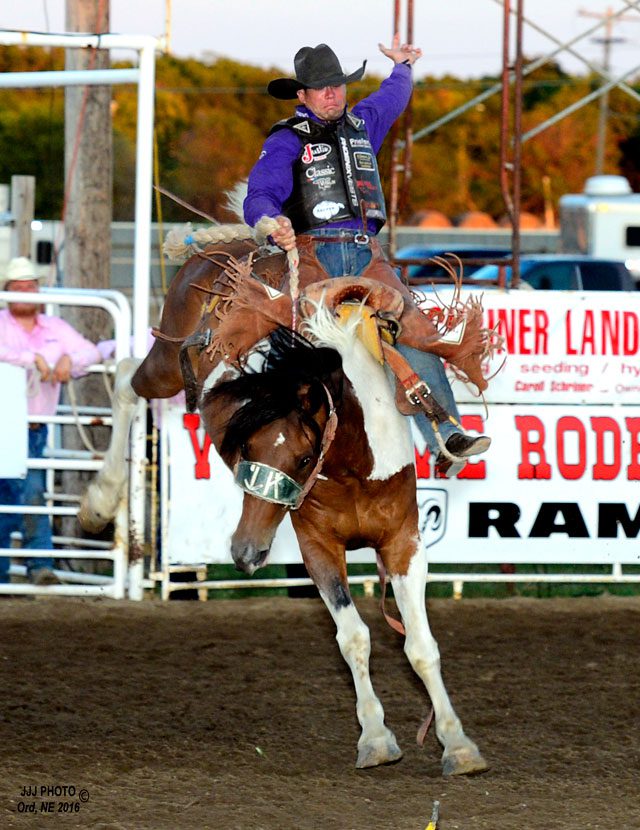
    1. Cody DeMoss, Heflin, La. 82 points on Korkow Rodeo’s Inky; 2. (tie) Cole Elshere, Faith, S.D. and Doug Aldridge, Carthage, Mo. 81.5; 4. Taylor Tupper, St. Onge, S.D. 77.5; 5. Shade Etbauer, Goodwell, Okla. 76.5;6. (tie) Jace Lane, Stephenville, Texas and Jacobs Crawley, Boerne, Texas 75.5 each.


    Steer wrestling

    1. Justin Shaffer, Hallsville, Texas 4.0 seconds; 2. Jeff Johnston, Thedford, Neb. 4.9; 3. Ty Talsma, Verdigre, Neb. 5.8; 4. Cody Doescher, Oklahoma City, Okla. 5.9; 5. Taz Olson, Prairie City, S.D. 6.1; 6. (tie) Kyle Whitaker, Chambers, Neb., and Trell Etbauer, Goodwell, Okla. 6.2 each; 8. Jon Herl, Goodland, Kan. 6.4.


    Team roping

    1. Caleb Mitchell, Mason, Texas/Dustin Harris, O’Neill, Neb. 4.7 seconds; 2. Cale Markham, Vinita, Okla./Nick Simmons, Colcord, Okla. 5.2; 3. Payden Emmett, Ponca, Ark./Justin Pruitt, Victoria, Texas 5.5; 4. Miles Baker, Mountain Park, Okla./Dustin Searc, Mooreland, Okla. 5.9; 5. Reece Weber, Valentine, Neb./Ty Talsma, Verdigre, Neb. 6.3; 6. Brett Christensen, Alva, Okla./Dawson McMaster, Madison, Kan. 6.4.


    Barrel racing

    1. Emily Miller, Weatherford, Okla. 16.43 seconds; 2. Calyssa Thomas, Harrold, S.D. 16.45; 3. Kyra Stierwalt, Leedey, Okla. 16.56; 4. Conny Winkers, Woodman, Wisc. 16.72; 5. Mattie Jackson, Goldsby, Okla. 16.73; 6. (tie) Trula Churchill, Valentine, Neb. and Jordan Moore, Mauston, Wisc. 16.74 each; 8. (tie)Tracy Nowlin, Nowata, Okla. and Ceri McCaffery, Wayne, Okla. 16.77 each; 10. Kara Large, Bromide, Okla. 16.79.


    Bull riding

    1. Newt Brasfield, Lane, Okla. 85 points on Korkow Rodeos’ No. 208; 2. Trevor Reiste, Linden, Iowa 76; 3. Richard Schleicher, Stockton, Kan. 75.5; 4. Brody Yeary, Brock, Texas 71; 5. Bart Miller, Pleasanton, Neb. 21; no other qualified rides.


    All-around champion:

    Ty Talsma, Verdigre, Neb. (won money in both the steer  wrestling and the team roping)
     

  • A BULL MARKET

    A BULL MARKET

    Rodeo bucking horses, bulls have personalities, accomplishments

     Elk City, Okla. (August 22, 2016) –  The cowboys may be the stars of the rodeo, but without the horses and bulls, they wouldn’t get very far.

    The cowboys’ dance partners in the rodeo arena, the bucking horses and bulls waltz with them to the bareback riding, saddle bronc riding and bull riding, and even though they can’t speak, they have stories to tell.

    Rhett Beutler, fourth generation of the famous rodeo family, will bring those animals to the Elk City Rodeo of Champions September 2-4. He talks about his horses and bulls like a proud dad talks about his kids: their accomplishments, quirks, idiosyncrasies, and their lineage. His admiration and respect for them shines through.

    Hollywood Hills is one of those animals headed to Elk City. The bareback horse, a gelding, has been to the Wrangler National Finals Rodeo (WNFR) for the past two years. “He’s a big gentle pet,” Rhett says. “You can walk up to the fence, and he’ll walk over to you, and he’ll lean over and want you to scratch on him and rub on him.” The son of the mare Fairy Tales, he was hauled as a colt with his mama to rodeos “and he got used to being around people, and people rubbing on him at the rodeos when he was a baby.”

    Hollywood Hills is a ten year old bay who weighs about 1,300 lbs.

    Hollywood Hills’ sister, Wonderland, is another special horse in the Beutler herd. The dark bay mare, a fourteen year old, is out of Fairy Tales as well and a wonderful competitor. “She bucked from day one,” Rhett said, “ever since we started bucking her. You could tell that the first time we bucked her, she would be special. She jumps and kicks every time and never weakens.” Wonderland has been selected for the past ten consecutive years to buck at the WNFR, “and that’s saying something, to have a horse go ten times in a row.” Both Hollywood Hills’ and Wonderlands’ sire was Commotion, one of the most famous sires to come from the Beutler’s ranch north of Elk City.

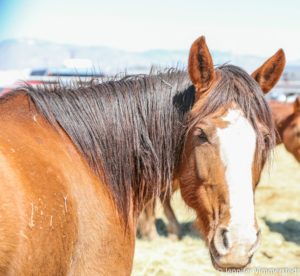
    Killer Bee (pictured below, photo by Jennifer Vimmerstedt) an eleven year old mare, had an unusual beginning. She was in Burwell, Neb., at a rodeo with her mama, Molly Bee, a mare who had gone to the WNFR, when her mama colicked and died. The Beutlers bottle fed Killer Bee till she was eating grain and sweet feed on her own. Killer Bee, a light colored sorrel roan with a bald face, was runner up to the PRCA’s Saddle Bronc Horse of the Year in 2015. Cowboys get bucked off of Killer Bee frequently, but if they stay on, the results are good. “If you can ride her, you’ll win first,” Rhett said. Three cowboys who have made the eight second buzzer on her have made 90 point rides. She started out as a bareback horse, but Rhett switched her to the saddle bronc riding.

    beutler bareback horse killer bee by jennifer vimmerstedt (2)

    The mare Molly Bee had another colt, prior to Killer Bee, and that horse was Molly Brown. Molly Brown, a fourteen year old mare, is a little stripe-faced bay who weighs about 950 lbs. “She’s not as big as some of the other horses, but they’ve won a lot of money on her over the years.” She’s a smooth ride for bareback riders. “She comes out (of the chute), circles to the left, hangs in the front end, and kicks over the top. She gives bareback riders plenty of time to get their timing down and make a nice ride. They drive a long ways to get on her,” Rhett said. “She doesn’t buck many guys off. But if you stub your toe, she’ll buck you off. She doesn’t quit or weaken.”

    Killer Bee and Molly Brown are out of Commotion, who was the PRCA’s Bareback Horse of the Year three times (1998-2000), and Bareback Horse of the WNFR in 1997. Commotion, who is 25 years old, was retired in 2006 (after ten consecutive trips to the WNFR) and now is used for breeding mares.

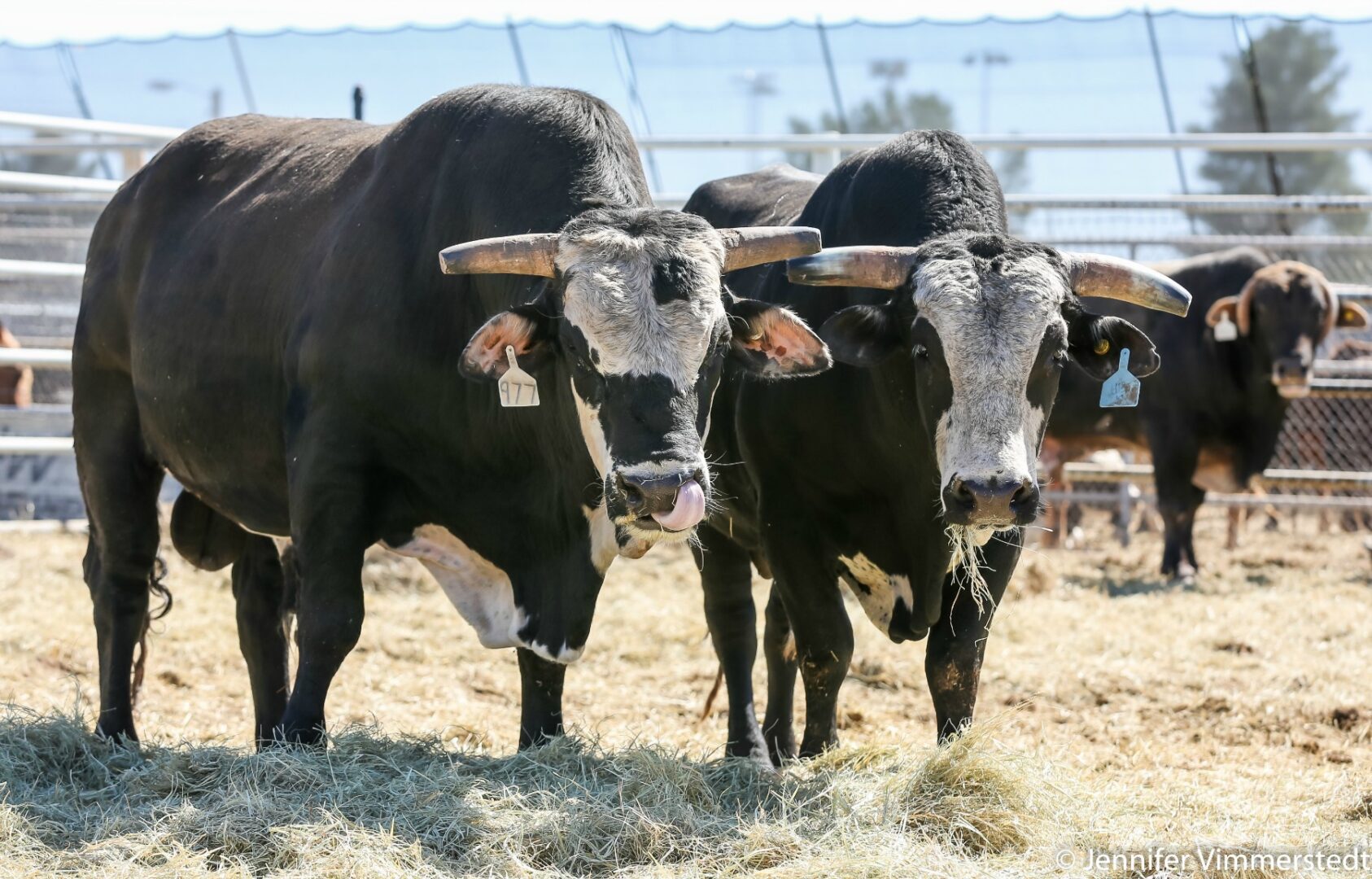
    One of the famous Beutler bulls who will be in Elk City is Ninety-Proof. He has bucked at the WNFR the last two years, with Joe Frost winning the eighth round at the 2015 WNFR on the bull. Ninety Proof is exceptionally large: he weighs 1800 lbs, and has a motley face and short, flat, black horns.

    The Beutlers start bucking bulls with a dummy strapped to their backs when they are about two years old. They begin hauling them to rodeos slowly, allowing them to get older and bigger. “We wait, and let them get big and mature before we start putting them on the truck,” Rhett said.

    The horses start when they are older. The Beutlers begin bucking them when they are four or five years old, “you ease them into it,” he said. While bulls are often finished with rodeo competition by the age of seven or eight, horses are just getting a good start. Horses often buck till they are fifteen or even eighteen years old.

    And it’s impossible to make a horse or bull buck if they don’t want to, Rhett said. “You can’t make them buck. I’ve tried everything in the world, and on some horses, I can’t make them kick over a beer can.”

    The animals know when it’s time to head to a rodeo, Rhett said. “They know when it’s time. When you gather them and bring them into the pens, they see all the activity, and there are some running over you, trying to get on the truck. You put their buddy on the truck, and they’re down in the alley, amongst forty head of horses, nickering. They want to be there with their buddy.”

    The Beutler ranch, located ten miles north of Elk City, has between 350 and 400 head of horses, including bucking stock, brood mares, saddle horses, and yearlings. Windmills and farm ponds dot the ranch, providing plenty of fresh water.

    And when the Elk City rodeo rolls around, those Beutler trucks will be headed east, with horses and bulls on board, ready to go to work.

    The Rodeo of Champions is at 8 pm September 2-3-4. Tickets range in price from $9-$14 and are available at the gate, at Circle A Western Wear and at Doug Gray Dodge, both in Elk City.

    For more information on the Fair and Rodeo, visit the website at ElkCityRodeo.com or call 580.225.3005.


  • Back When They Bucked with Harry Straw

    Back When They Bucked with Harry Straw

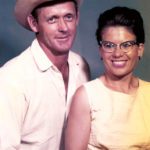
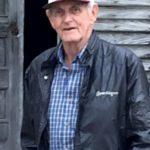
    Harry Straw married well.
    When he married Betty Jane Webster, the sister of world champion steer roper Shoat Webster, he got an incredible horsewoman for a wife, the use of her horses, and the advice of her brother, Shoat.
    He was born and raised in Nowata, Okla., the son of Homer and Lillie Straw, with a daddy who roped, and Harry would tag along to rodeos with his father. His dad made a living driving truck, hauling hay to western Oklahoma and grain on the return trip. The family lived on 125 acres of corn, oats and wheat, and Harry and his mother milked ten cows by hand, separated the cream, and sold it to Gus Andrews in Nowata for grocery money. Harry hunted possums at night with his possum dog, making thirty five cents a hide. “It was kinda tough,” he said. “That’s how I was raised.”
    He learned to rope at Deacon May’s place. Deacon had a roping pen, and when Homer came over to rope, Deacon’s son and Harry would run calves in.
    During his high school days, he worked for his uncle, who owned a Phillips gas station in Nowata, pumping gas for fifty cents a day.
    After high school graduation in 1955, he went to work for Phillips Petroleum in Bartlesville, working in the plastics department.
    And in the evenings, he’d rope.
    Harry would come home after work, and Betty Jane would have the horses ready. “I’d get home by five, she’d have horses loaded, saddles in the pickup, and away we’d go,” he said, to a rodeo where he’d rope calves, steer wrestle or steer rope.
    His wife was better with horses than he was, he readily admitted. “She could do more with a horse than I could,” he said. “Shoat had her pretty well tutored before I got her.” She also trained horses, and “she could rope better than I could,” he said. But Betty Jane only roped at home, never at a contest.
    Harry roped evenings and weekends, never going too far out of Oklahoma, and concentrating mostly on steer roping. Steer roping was his strength, and his daughter Jeannie McKee remembers camping out at Cheyenne Frontier Days with her family while her daddy roped. He competed at amateur rodeos and in the Rodeo Cowboys Association as well.
    He worked for Phillips Petroleum for 33 years and was part of the research team who developed plastic pipe. Phillips built four plastic pipe plants across the country: in California, Texas, Pennsylvania, and Pryor, Okla., and Harry was sent to train employees and work with the machinery. “They’d send me to get them out of trouble when the machines acted up. I’d go there, and train them.”
    Harry often practiced with Shoat, his brother-in-law, a four-time world champion steer roper (1949-50, 1954-55) and twice runner-up. Shoat made his own horses, and Harry usually rode one of his. One of his favorites of Shoat’s was Deck, a calf horse and son of Leo. “Shoat made him, and boy he made a good one,” Harry said.
    Another horse he liked to ride belonged to Willard Combs. The famous steer wrestling horse Baby Doll “was a dream to bulldog off of,” he said. “She was all right. She done the same thing every time, she’d run right up (to the steer), and let you down, not try to cripple you or cut in front of the steer. She done everything just right.” Harry rode the little blaze-faced dark bay anytime Willard or his brother Benny offered.
    But, in his estimation, the best horse he ever got on was one owned by his wife. Betty Jane’s aunt Kate (Choteau) Lowry, the wife of Fred Lowry, took her into one of Fred’s pastures one day. “We was out in the big pastures on the Lowry ranch,” Harry remembered, with 35 mares and weanling colts, “and Kate told Betty Jane to pick a colt. That colt made the best steer horse I ever had.” The horse, named Chico, belonged to Betty Jane, not Harry, and “she never did let me forget that,” he chuckled.
    Betty Jane broke and trained the gelding, who was a Hancock horse. The horse liked to buck. “He didn’t buck hard, but he had to crow hop out there every night, till he was eight years old.” One time, at Cheyenne Frontier Days, someone offered Harry $5,000 for Chico. “I just laughed at him,” he said. “There was no way I was ever going to sell him, or do anything with him but rope on him.” And Chico wasn’t Harry’s to sell anyway. “He didn’t belong to me, he belonged to my wife.”
    Aunt Kate Lowry had a big heart and was willing to help anyone, including her niece and nephew. She didn’t ride much, Harry said, but she helped pay his entry fees. “When I first started roping, she’d stop by the house to see my wife and me, and she’d always ask, did I need a little entry fee money. Aunt Kate would help anybody.” Harry was reluctant to take her money, but in the early days, he did. “She’ll always have a soft spot in my heart.”
    Harry rodeoed with the likes of Harry Swalley, Don McLaughlin, Sonny Davis, Troy Fort, and Sonny Worrell. He remembers their friendships and the characteristics each one had. Swalley was like Harry, a cowboy with a fulltime job, who “was the only guy who could work hard enough to keep up with Shoat,” he said. And Don McLaughlin, for his ability to remember cattle. “Don could be at a roping where they had 100 steers, and three years later, he could tell you what everybody (drew) and what they did on them.”
    Harry spent a lot of time with Shoat in the practice pen. Shoat was “an extremely, extremely hard man on his horses, his dogs, anybody who worked for him or practiced with him,” a family member said. “He was rough and tough and hard to please.” But Shoat was never hard on Harry, and he attributes that to his wife. “I don’t know what Betty told him, but the only thing I knew was Shoat was scared of his little sister, and she didn’t weigh 95 lbs. Still to this day, I don’t know what she told Shoat, but he never treated me like anybody else.”
    Harry and Betty Jane had two children: a son, Lee, who married Christie and has two children, Tori, and R.J., and daughter Jeannie, who married rodeo announcer Justin McKee and their daughter, Kassidy. Justin says people love Harry. “My father-in-law is the most well-liked human being who ever lived.  He’s everybody’s favorite guy, non-judgmental, the most genuine, likeable, nice guy there ever was. Anybody who knows him, would agree one hundred percent.”
    “I had an awful good life,” Harry said. “I’ve been the luckiest man alive. I had the only woman who would ever live with me, and I’ve had some awful good horses to rope on, and Shoat to rope with and help me. I’ve had a pretty good life.”
    In 1955, he and Betty Jane moved to Lenapah, where they lived until Betty Jane’s passing two years ago. Harry just recently moved to a nursing home, and spends many days at the McKee household, surrounded by the love of his daughter, son-in-law, and granddaughter.
    Harry served in the Army and was stationed in Washington State from about 1948 to 1951.


  • Back When They Bucked with Charley Lyons

    Back When They Bucked with Charley Lyons

    Charley Lyons had one of the most unique acts in rodeo, one that has rarely been duplicated.
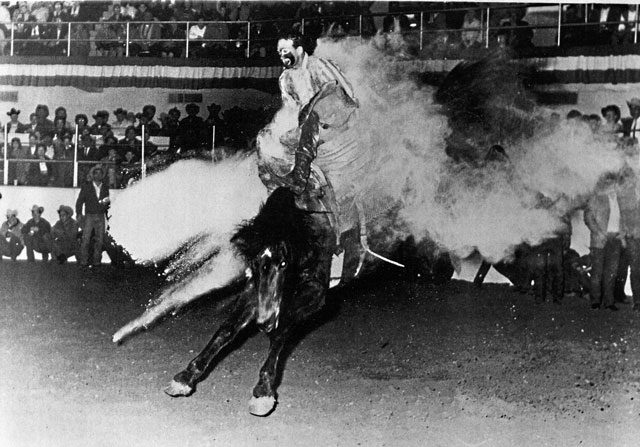
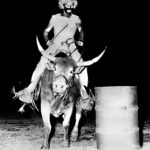
    The Montana man built his reputation as a rodeo clown with his washtub saddle bronc act. With a #3 washtub bolted to a saddle tree and filled with flour, Charley would put it on a bucking horse. He’d sit in it, with legs over the bronc’s neck, and explode from the chute. Crowds loved it and it catapulted Charley onto the nation-wide rodeo scene.
    He was born in 1938, the son of Ed and Vera Lyons, in Milliken, Colorado, just outside of Arvada. The city kid grew up with 4-H livestock: pigs, cattle, and horses, and somewhere in his youth, he decided he wanted to be a clown. His first rodeo was an FFA rodeo in Greeley, when he was a senior in high school.
    After high school graduation in 1957, he went straight to the rodeo industry. The first few years were slim, but as committee members and stock contractors heard about his acts, he was hired for more and more rodeos.
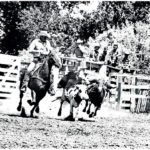
    In addition to riding a saddle bronc in a washtub, Charley had other acts. He had a pure white trick horse named Soapy who would crawl on his knees like an Indian scout, play dead, and sit like a dog. He had a half-Brahma steer named Roberto, who had foot-long horns. Roberto was broke to ride, and Charley rode him in parades and grand entries. He’d also ride Roberto in the barrel racing, dressed in a dress and wig and calling himself Charlotte. He also had a palomino Shetland pony named Dandy, and during the steer wrestling, dressed as Batman, he would bulldog a mini steer named Pistol.
    Charley had a variety of solo acts, and he  rounded out his repertoire with other acts, involving kids from the crowd (and later, his own kids). They milked his donkey named Ruba or were part of his very large family stuffed into a hollowed-out car.
    Charley did more than clown. In those days, rodeo clowns often worked as bullfighter as well, and he was also a contestant in three events: bareback riding, steer wrestling and bull riding. He worked acts between contesting his events, and during the bull riding, the producer saved his bull for the last one. One time, at a small rodeo, they were short of contestants, so he had to work all five events, “and he couldn’t rope worth a darn,” his wife, Carol, laughed. There was no time to spare, he said. “I did all three events and worked two or three acts in between times. In my day, if you didn’t have a few acts, you didn’t get any jobs. Them bullfighters were a dime a dozen, but a clown could stay busy.”
    He started out with stock contractor Hoss Inman, from Colorado, and worked many of his rodeos, before fanning out across the country. He worked rodeos in the Dakotas for Korkow and Sutton, in Iowa and Minnesota for Bob Barnes, in Canada for Harry Vold, and for the Christensen Brothers in the Northwest. He worked Pendleton, Ore.; Burwell, Neb.; Deadwood, S.D.; Fort Worth, Texas, and a whole bunch of other rodeos in between.
    It was in the early 1970s that Charley and his wife Carol Lehl, who had married in 1961, decided where they wanted to settle. They had traveled across the country and found a beautiful place in Montana, just outside St. Ignatius, and decided to buy a place there. They made an offer on a ranch, it was accepted, and they moved there in 1972, calling the ranch the TUB and incorporating the TUB brand onto their Simmental-cross cattle.
    As is typical among bullfighters, Charley had his share of injuries, just “broke a few bones, nothing serious,” he said. He broke his back twice, two legs, both arms, and at a rodeo in South Dakota, was unconscious when his head was knocked off the spinal cord. There was a doctor in the crowd who knew how to adjust it back on.
    Some of the nastier bulls he recalls include one of Hoss Inman’s, named the Devil’s Partner, a fighting Mexican bull who would “darn sure come and eat your lunch.” Hoss also had another bull named Shorty who was fun to fight. “If he ever hit you, he’d back up and apologize. They’d have to rope him and drag him out of the arena, every performance.” And it was one of Erv Korkow’s bulls, Sonny Liston, who got ahold of him and knocked his head off his spinal column.
    With the washtub, Charley rode whatever horse the stock contractor ran into the chute for him. Stock contractors liked the tub, he said. “They’d take a good solid horse that was slowing down, and he’d be good for another four or five trips” after he’d had Charley and the washtub on him.
    And there was no getting off on the pickup man. “There was no way a pickup horse would run into that fog,” he said. “I’d catch my timing, bail out after a while, and try to land on my feet.”
    Charley and Carol had three children: C.J., Anna and Katie, and before the kids were in school, they all traveled together. “We had a trailer house, a twenty-footer, and lived on the road,” Carol said. Charley had a two-ton truck with a big box he built on it for the animals, and the house trailer was pulled behind it. The family left in May and returned in October. The truck was full of animals: Charlie’s bulldogging horse, Carol’s barrel horse (she barrel raced for a short time), and the clown act animals: the trick horse, trained steer, donkey, and Shetland pony. When they pulled into a rodeo, it was like “the circus was in town,” Carol laughed.
    Charley’s rodeoing slowed down after he bought the ranch. With three kids, 200 mother cows, hay to put up and irrigating to do, he stayed closer to home, and in 1972 he quit rodeo. He worked at a paper mill for a while, retiring in 2006, and the couple sold their cow herd in 2008. They rent out the pasture and continue to put up hay.
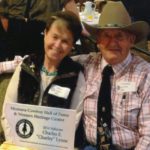
    In 2014, he was inducted into the Montana Pro Rodeo Hall of Fame. He and Carol attend the rodeo clown reunions and they have never missed a year of the Wrangler National Finals Rodeo for the past three decades. In 2001, his washtub act was recognized and honored in one of the opening ceremonies of the Wrangler NFR.
    He loved fighting bulls as much as he did clowning. “It would give me a big thrill to stand out in front of that chute and nod for the producer to turn out his fighting bull.” He fought the first Mexican fighting bulls that were brought into the U.S. at a rodeo Buddy Heaton promoted.
    And his rodeo days were good ones. “I met a lot of good people rodeoing, and still have a lot of friends I stay in contact with.”
    The couple’s children are married: C.J. to Miae, Anna to Jim and Katie to Ray. They have three grandchildren: Clay, Amanda and Mian.

  • ProFile: Chuck

    ProFile: Chuck

    Sometimes in life, it’s a matter of finding out what you’re good at, and then doing it.
    That was the case for a thirteen-year-old buckskin named Chuck.
    Chuck was no good at ranch work, and he didn’t really care about the tie-down roping, but when it came to steer wrestling, he loved it.
    Chuck was purchased by a Nebraska Sandhills ranch family as a weanling from the Ft. Pierre, S.D. sale barn. The family brought him to their neighbor, professional cowboy Kyle Whitaker, to break. Kyle could tell from the beginning that Chuck wasn’t an easy horse. “He was pretty rank,” he said. “He liked to buck all the time.” The horse wasn’t a bad one, but he wasn’t rider friendly, either, and Kyle knew his neighbors didn’t ride often and Chuck would require a lot of riding. So they agreed to sell him to Kyle.
    Chuck had a couple of vices. He liked to run, and he liked to kick. Kyle started him in the tie-down roping, but that didn’t work well. “The first three calves I’d run, I’d be holding him back, trying not to run over the calves.”
    And a person had to be careful around him. He kicked when someone walked around him.
    Kyle, a seven time Linderman Award winner, would have started him earlier in the steer wrestling, but he was afraid of being kicked. He finally got brave enough to try the gelding, wearing a football helmet the first time he steer wrestled on him.
    It only took a few runs for him to realize that Chuck loved steer wrestling. In 2013, he took him to a few amateur rodeos and the next summer, he tried him at a pro rodeo in Hamel, Minn. Kyle won the first round on Chuck with a time of 3.5 seconds.
    Now, nearly two years later, Chuck excels at his job. At rodeos, it’s not uncommon for steer wrestlers to share horses, and Kyle often mounts out up to four steer wrestlers on Chuck at a performance. Fellow bulldogger Nick Guy has ridden Chuck a lot in the last six months. Since the week after the Wrangler National Finals Rodeo (WNFR), Nick has won $70,000 on him.  He’s won checks at the American qualifier in Rapid City, Tucson, Ariz., the National Western Stock Show and Rodeo in Denver, and San Angelo, Texas. “It seems like every time I ride him, I win,” Guy said.

    Kyle Whitaker steer wrestles on his horse Chuck at the 2016 RAM National Circuit Finals Rodeo in Kissimmee, Florida – Rodeo News

    Guy, a three-time WNFR qualifier, loves riding him. “He gives you the same trip every time,” he said. In the box, “he stands there, and doesn’t mess around.”
    Kyle, who hazes for Nick and also steer wrestles, warms Chuck up. “He’s not the funnest horse to lope and warm up,” Nick said. Kyle “rides him in one of the most severe calf roping bits you can be in, because Chuck runs. Chuck wants to go, and you have to have him bitted up. If you put a snaffle in there, he’ll just run off with you.” If the bulldoggers must ride through the arena on the way to the timed event box, Chuck might “blow through there and take out a judge, or whatever else is in his path.”   Kyle also rides Chuck to steer wrestle, and Chuck doesn’t change his ways for either cowboy. “It doesn’t seem to affect the way he works for me or Kyle,” Nick said. “It’s one thing if you mount a guy out and you’re winning a bunch of money, and the horse isn’t working for the other cowboy. Chuck still works great for Kyle, and Kyle’s winning.”
    When a steer wrestler rides another person’s horse, and wins money, he pays the horse’s owner “mount money.” The typical amount is 25% of what the cowboy earned for the run, and Nick’s been writing checks to Kyle all winter. “I’ve paid Kyle good this winter,” Nick quipped. “If you take twenty-five percent of $70,000, that’s pretty good money, that’s big money for him and for me.”
    Nick, who grew up in Wisconsin but now lives near Denver, is excited for the summer rodeo run. He and Kyle, who was one of his early mentors in pro rodeo, will travel together this summer. Kyle hazed for Nick at his first WNFR in 2010. “It’d be cool to make (the WNFR) on his horse, and for him to make it. It’s cool that it’s come full circle, and we’re traveling together, and I’m able to win on this horse.”
    And Kyle and Nick are glad that Chuck found his niche. He “wasn’t very fun to ranch on, and he’s not a real great calf (roping) horse,” Kyle said. “It was a matter of finding out what he liked to do and what he was made for.” And Chuck was made to steer wrestle.

  • Back When They Bucked with Larry Clayman

    Back When They Bucked with Larry Clayman

    Larry Clayman comes from a long line of rodeo clowns. He is third in the line of Claymans, including his daddy, Bill, and his granddaddy, Stanley, who were in the business of making rodeo fans laugh and protecting bull riders from angry bulls.
    Clayman, who was chosen as the 1973 National Finals Rodeo bullfighter, was born in 1941 and “raised up” in the Missouri Ozarks, in the southwest part of the state. He worked his first rodeo in Mansfield, Mo., with his grandad at the age of 13. For two performances, he got paid twenty bucks, and “I thought, my gosh, I’ll never see another poor day,” he laughed.
    Larry had already signed up for the Marine Corps when he was approached at an amateur rodeo in Okmulgee, Okla., by a legend in the rodeo world. World champion Jim Shoulders walked up to him, asking if he would clown rodeos for him. It “about floored” the barrelman to have the legend standing in front of him, but he had to decline, as his commitment was to the Marines came first. Shoulders told him about the rodeos held at Camp Pendleton in California, and that he should meet a Colonel who was working at Pendleton.
    When Larry got out of boot camp and was assigned to Pendleton, he got to meet Colonel Ace Bowen, the man Shoulders had told him about. That acquaintance led to Larry meeting one of old original stock contractors in California, Andy Jauregui, an immigrant Basque sheep herder-turned contractor who was also the 1931 world champion steer roper. Andy owned J Spear Rodeo Co., and hired Larry to work his first professional rodeo. His dad and granddad had only worked amateur rodeos, but after being hired by Andy, Larry never worked another amateur. It was in Bishop, Calif., and he worked alongside Slim Pickens.
    Larry clowned rodeos at Camp Pendleton, and then worked a lot of rodeos in southern California for Jauregui.
    At the  end of his four years in the Marines, he was stationed in Washington, D.C., at Marine Corps Headquarters, with top secret clearance, working for generals and colonels. He became acquainted with Howard Harris, Cowtown Rodeo, and began working his weekly rodeos in New Jersey.
    While he was in D.C., Jim Shoulders was putting on a bi-weekly rodeo in Leesburg, Va., on a polo field. Larry clowned for him, as well as for other stock contractors up and down the East Coast: Foy and Reynolds, among others, in Virginia, Florida, Pennsylvania, Alabama, Delaware, all over.  He worked for stock contractors across the country: Cotton Rosser, Harry Vold, the Alsbaughs, Keslers, Suttons, and Korkows,
    After discharge from the Marines in 1965, he went back to California. Cotton Rosser’s Flying U Rodeo Co. and Any Jauregui’s J Spear combined to make the Golden State Rodeo Co., one of the biggest in the business. He clowned and fought bulls for them, which was a great thing, he said. “They had more rodeos than anybody, and kept me busy.”
    Larry wasn’t working exclusively on the coasts. Throughout his career, which spanned three decades, he worked some of the biggest rodeos in North America: the Calgary Stampede, the National Western in Denver, Madison Square Gardens, the Cow Palace, the National High School Finals, the Indian National Finals, the College National Finals, and, in 1973, the National Finals Rodeo, which he worked with Jerry Olson
    as the funnyman and Tommy Lucia
    as barrelman.
    Back in those days, the bullfighter and rodeo clowns were one and the same; the sport hadn’t evolved to where different people do each job. Larry was proud of his roles and loved doing both of them. “I was considered a good bullfighter, and took a lot of pride in that,” he said. “I loved to fight bulls. It was fun, exciting, and a challenge. And yet I loved to make people laugh.” He credits his grandpa with that trait. “It was natural for him to make people laugh.”
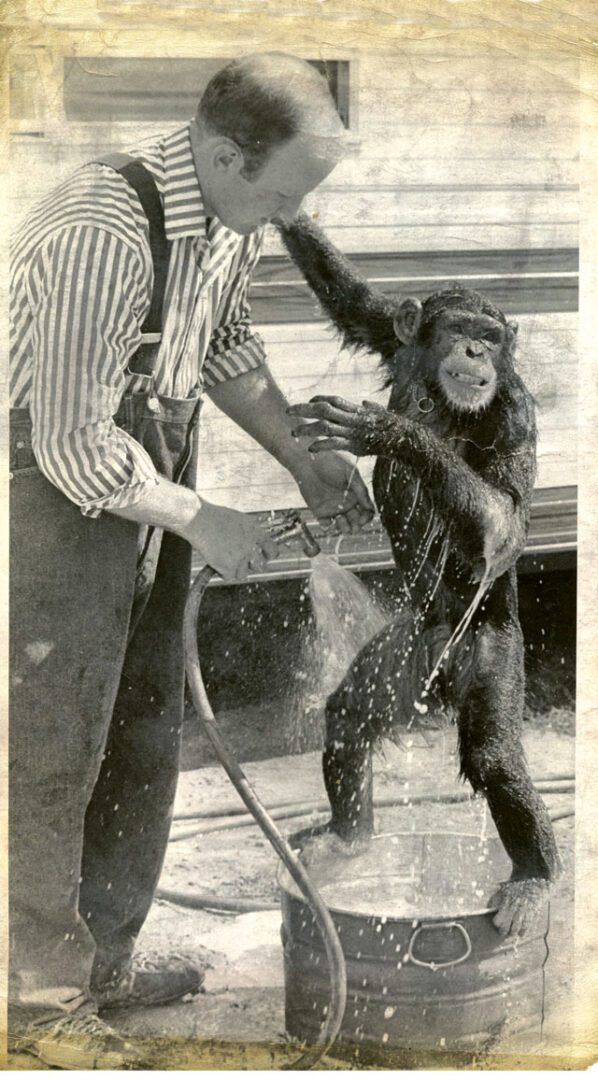
    Larry was best known for his chimpanzee, Todo. He bought Todo in 1967 when he was six months old. For the next fifteen years, Todo traveled the rodeo road with Larry, making people laugh everywhere. One of his first acts was as a “doctor.” Larry would dress Todo in a white uniform with a red cross, with a red cross on his bag. Larry would be “down” from losing a shootout with the other rodeo clown, and his help would drive an “ambulance” into the arena, with Todo in it. Todo would jump out of the ambulance with his bag, stethoscope dragging on the ground, and bring the house down. He would give Larry CPR, jump on top of him, and make the monkey sound – “ooh, ooh, ooh, ooh, ooh.”  Todo loved it. “He could hear the crowd roaring,” Larry said. “He got the biggest kick out of it.”


    Todo also Roman rode a team of horses, slapping one of the horses on the backside, throwing him off. As the horses made the circle around the arena, Todo would tumble across the circle and get back on.
    Todo was Larry’s main act, but he had others like a poodle named Squirrely Shirley who had “beatcha” bugs… scratch in one place and they “beatcha” to a new spot. He had a border collie act, and had trained horses that laid down, sat up, bucked him off, counted, and, while they napped together, stole the blanket off of Larry.
    One of his greatest honors was being part of a rodeo tour in Europe in 1970. It was organized by Buster Ivory, and the group, called Rodeo Far West, performed in Italy, Switzerland and France. Larry took Todo as one of his acts, and  also drove truck, hauling equipment and livestock. The tour lasted three and a half months. World champion bull rider Freckles Brown was also part of the tour, and Larry got to be good friends with him during that time.
    In 1977, Larry decided to put on a pro rodeo in Springfield, Mo, and then he began a pro rodeo in Branson, Mo., six nights a week, all summer long. Harry Vold and Jim Shoulders were hired as stock contractors, and Jerry Olson came with his dress acts and worked as the barrelman. He got so busy producing the rodeos that his clown/bullfighter career slowly phased out.
    And Todo had to be put to sleep for safety reasons in 1980. That was the final straw. “I didn’t intend to quit clowning, but it broke the straw in me a little bit,” he said. I didn’t have the umph, the fire in my belly, to go back on the road.”
    And he wanted to live a normal life. He announced a few rodeos, but began trucking as his second career. He’d driven truck as a kid, and loved being around them. At the age of 75, he’s still driving. “Everybody asks me why I don’t retire. Heck, I don’t want to. Somebody’s gotta keep America rolling,” he joked.
    Larry had a son, Stan, who died in an auto accident, and Stan has two sons, Joseph and Isaac, who live in Arkansas. Larry has three other kids: Kimberly, Matthew, and Michael, and five grandchildren. He and his wife Renee have been married twenty years.
    He remembers fondly his rodeo days, and has no regrets about his work. “I never dreamed I’d fight bulls at the (National) Finals. I never dreamed I’d have that kind of success. I loved the rodeo business and it was so good to me.” He met a lot of people, went a lot of places, and had some unbelievable experiences.
    He worked rodeos in nearly every state, he remembers, and one thing he is proud of is that he never missed a performance due to injury or illness. “I take pride in that,” he said, even though he suffered broken arms, legs, and had teeth knocked out. “You just keep working.”

  • On the Trail with Cade Svoboda

    On the Trail with Cade Svoboda

    Cade wrestling in high schoolCade Svoboda doesn’t do anything half-heartedly.   When the Nebraska High School Rodeo Association member decides to do it, he’s all in.
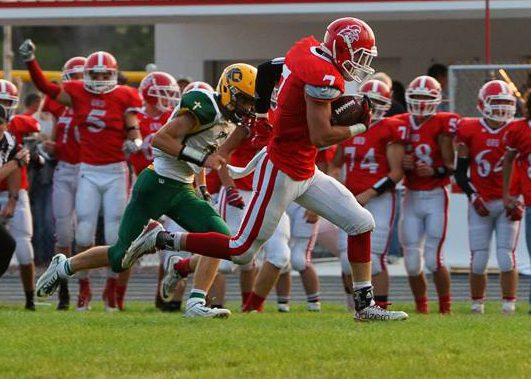
    Not only does he ride barebacks, steer wrestle and team rope, he also plays football, wrestles, runs track, is a member of FFA, Science Olympiad, Swing Singers, shows cattle, and is on his school’s straight A honor roll.

    The eighteen-year-old cowboy from Ord, Nebraska comes from a long line of cowboys, starting with his grandpa, Jim Svoboda, who competed in four events for years and has been a rodeo photographer for the last half-century.

    And his dad, Von, was also a rodeo athlete, riding barebacks, bulls, steer wrestling and team roping.

    Of his three rodeo events, bareback riding is his favorite, and his strength. He came into that event in a unique way. Cade started out riding bulls, winning the Nebraska State Junior High Finals and making the short go at the National Little Britches Rodeo Finals. But after he and his older brother Cole, had broken bones and a hospital stay, the bull riding was over. Cade ruptured a spleen and broke ribs, then Cole followed with a leg broken in two places, and later, an arm broken in three places, all while riding bulls. Their mom Angie said it was enough. “That was it,” Von said. “Three strikes, you’re out. No more signing releases for the bull riding,” which included both boys. So Cade went out and bought a bareback riggin’, and the first bareback horse he got on, at a high school rodeo, he placed, and that was that.

    Cade excels at school academically as well as athletically. He is the student in physics and calculus class who everybody asks for help when they’re confused. “I get it pretty quick,” he said about the work. “I usually get it right away and then I can help them.” He had a tough schedule this year, with physics and calculus classes back to back, one and a half hours each, “but it’s worth it.” He also took College English.

    His track coach and former wrestling coach, Coach Trampe (who is also his favor

    CADE SVOBODA football

    ite teacher) gave him the nickname “Wick”, short for Wikipedia. “If I ever have a question that deals with sports in Nebraska, I can ask him, and he’ll know the names of the athletes, where they’re from, everything. He’s a student of all sports. He knows the stats on everybody.”

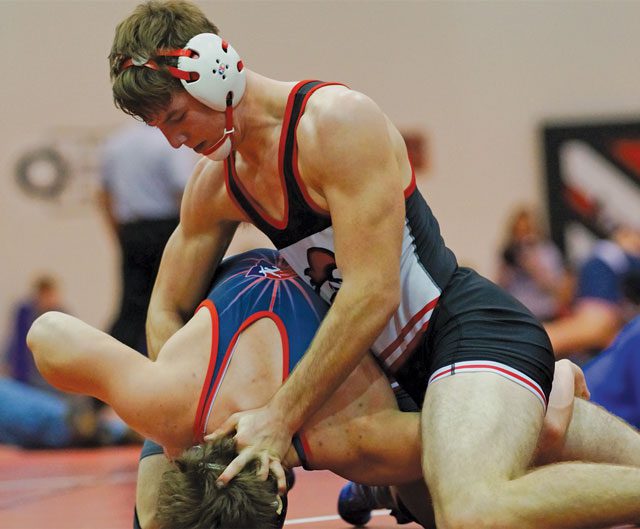
    Of all his sports, wrestling is his favorite. He is a three-time state qualifier, and last year, placed second in Class C in the 170 lb. division. This year, he placed fourth in the 182 lb. division.

    Wrestling is where his athletic future lies. He has been asked to walk on to the University of Nebraska-Lincoln’s wrestling program, and with other scholarships, including some academic ones, his tuition is paid. Cade has attended Husker wrestling camps for three summers, and the coaches were impressed with what they saw. Coach Manning, the Husker

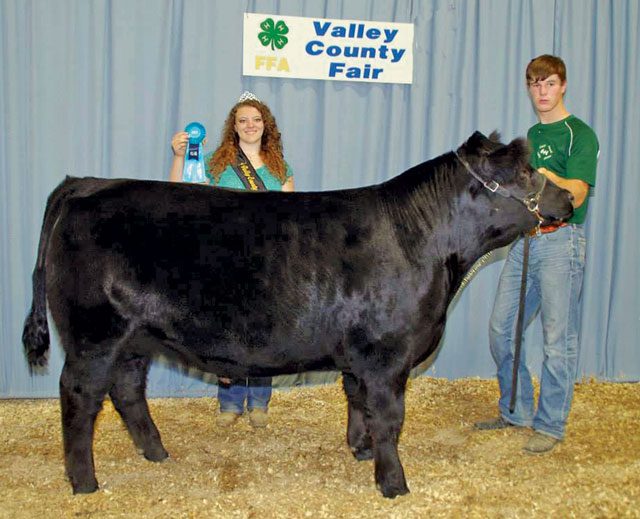
    Cade and heifer group champion in 4-H and FFA

    head coach, said he stood out. Ord High School is one of the smaller schools in the state, and yet the Huskers pursued Cade, alongside kids from Omaha and Lincoln schools. “Obviously, they like the country kids that have work ethics and physical toughness,” Von said.

    The coaches were also aware of another incident with Cade. Last summer, prior to the Husker wrestling camp, he broke his hand while riding a bareback horse at a Mid-States Rodeo Association rodeo. He assumed it was broken but didn’t get it x-rayed, knowing if it was, he wouldn’t be allowed to wrestle. He spent four days at the camp, wrestling one handed, with no grip, and held his own. That Friday, he went to the National High School Finals and rode bareback horses with a broken hand, his riding hand no less. His physical toughness contributed to his getting to walk on the wrestling team.  The Huskers plan to add twenty pounds to his frame, bringing him to the 197 lb. class and redshirting him.


    Cade Svoboda wrestling in high school

    He has qualified for state high school finals rodeo all three years and is currently leading the state rankings in the bareback riding, having maxed out in points. His goal is the all-around title and the Fort Western Whitaker Award, an award similar to the Linderman Award and given to the Nebraska high school rodeo athlete who excels in three events, including a roughstock and timed event.

    His dad says what makes Cade tick is his competitiveness. “He’s always been a real competitor,” Von said. It might be due to having an older brother to compete against, but maybe it’s genetic. Angie was a standout high school athlete who won a state track championship and who excelled academically. But the stakes are also high at the Svoboda household. “Even around home, we play a game of cards and it gets competitive. It’s kind of how our family is wired.”

    At the University of Nebraska, he will major in food science technology, which includes biochemistry, organic chemistry, and investigation of the chemistry and biology of foods. “It’s the only major on East Campus (the agricultural campus of UNL) that gives you all the prerequisites for medical school,” Von said. “He’s covering his bases to go to med school.” Cole is a junior at UNL in the same major, and he enjoys it. “It’s a damn tough degree,” Von said, but Cade is up to it. His uncle, Von’s brother J.B., who is a medical doctor, suggested that Cade stay with his food science degree instead of the medical field, as a very good job is nearly guaranteed any student who graduates with that degree. The food industry: ConAgra, Cargill, Hershey’s, and others, are the main businesses that hire food science graduates.

    Cade will graduate as valedictorian of the 2016 Ord High School class. His principal and former football coach, Mr. Hagge, speaks highly of him. “He’s a young man of character,” he said. “He’s got an incredible work ethic, and he’s a bridge builder, a leader. He’s willing to cross boundaries with students and develop relationships with everybody in school.” Cade has grown and matured throughout his last four years. “When he was a little younger,” Hagge said, “he didn’t quite have the perspective and there were times he got upset with himself or others. But what I’ve seen in the last few years is his leadership to a point where he gets it. He elevates the games of those around him, with his level of performance.”

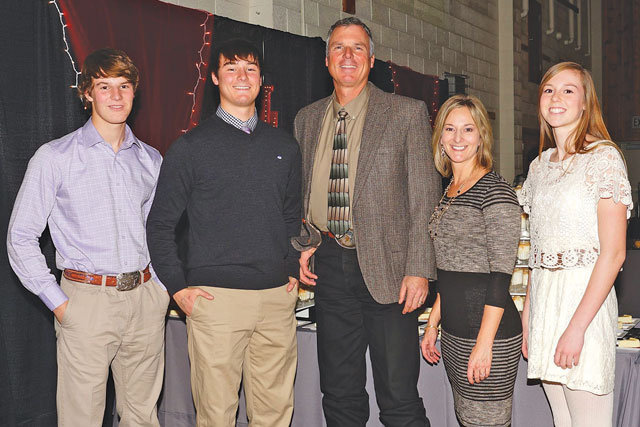
    The Svoboda Family (from left to right) Cade, older brother Cole, father Von, mother Angie and younger sister Cora Coach Trampe said the same. “He’s a good leader. He expects a lot out of himself, and out of every other kid, too. Kids like him make kids around them better. It forces them to go to another level that maybe they didn’t want to go to, and that makes it better all around.”
    In addition to his athletics and academics, he loved playing baseball in the summer, but forgave that sport due to time constraints. He was also part of his school’s choir, 18th Street Singers, and band (where he played the tuba and drums). He is on the Quiz Bowl team.

    His unusual last name is Bohemian and is pronounced “Sa-BOH-da”. He has a younger sister, Cora, who is a junior in Ord High School. Cora is also a very personable, very involved, all sports, all A honor student, who ovbiously is following in her family footsteps of not doing anything half-heartedly.


  • Back When They Bucked with HL Todd

    Back When They Bucked with HL Todd

    HL Todd was larger than life.  Whether it was riding his famous horse Rufus as he steer roped, hosting cowboys at his home in Burlington, Colo., or chewing on one of his signature cigars, he stood out in people’s minds.
    The Colorado cowboy, who will celebrate his 79th birthday this year, qualified for the National Steer Roping Finals four times and took numerous victory laps at such rodeos as Pendleton, Cheyenne, and everywhere in between.
    He grew up the son of John and Bernice Todd, hardworking farmers in northwest Kansas who were good people but had no use for rodeo. “They didn’t like nothing about it,” HL remembers. “It was like pulling teeth, when you loaded up to go to one.”
    Their middle child of three, born in 1937, began roping at the neighbor’s. Elmer and Albert Garrett had a roping pen, and that’s where HL got his start. He was sixteen or seventeen years old, and he was looking for something different than farming. “I’d be out there, (in the field) in August, in the dust and it’d be hot and I’d be sleepy, and I was going to figure out some way to make a living without running this tractor,” he recalls.
    He roped in high school a bit, then in college at Kansas State University, he competed in the calf roping and steer wrestling.
    After college graduation, HL moved to Burlington, Colo., where he worked for an insurance company for ten years. In the early 1970s, he got into the feedlot business, with a 10,000 head operation. After ten years in the cattle business, he went broke and went back to the insurance company, living in Kansas City and Oklahoma City before moving to a ranch near Chickasha, Okla.
    He roped steers on weekends and when he could get away from work. He won rounds and placed at rodeos across the country: Cheyenne Frontier Days, Walla Walla, Wash., Miles City, Mont., Pendleton, Ore., Ponca City, Okla., everywhere he went.
    And he and his wife Rita’s place became a stopping spot for fellow cowboys. Their home north of Burlington included an indoor arena. It was on the way for those cowboys from Texas as they headed north for the summer run. “A lot of those steer ropers and calf ropers would come and stay with us,” Rita said. “They were coming from south Texas, and Burlington was over a day’s drive. They’d camp there, go to county fairs, and then go on to Cheyenne and Pendleton.”
    Some of the names legendary to the sport of rodeo stayed with the Todds. James Allen, the father of eighteen-time world champion Guy Allen, came with his kids. Sonny Davis, Olin Young, Roy Cooper, Dick Yates, Jimmy Brazile, and more sat at the kitchen table with the Todds. They stayed in their campers or living quarters, and Rita cooked supper for them. Beef was plentiful, in the feedlot business. Cowboys often brought their families along, and HL and Rita’s two daughters, Kim and Kelly, loved it. Their home was a gathering place. “The kids loved it,” Rita said, “and I did, too. It was fun.”

    Clark McEntire, the father of country music superstar Reba McEntire, roped steers in the same era as HL did, and he often stayed at the house with his four kids. After roping all day, Rita would fix a big cook-out, and the McEntire kids, mainly Pake and Reba, would pull out their guitars to sing and entertain. “Mom jokingly said they had to sing for their supper,” Kim remembers.
    Jeff Todd, HL’s nephew and a team roper, remembers the big personality his uncle had in his rodeo days. “He was just always a figure that was larger than life,” he said. People comment to him that they always wanted to be like HL when they grew up. “He was the guy who, everything he did, was first class. He wasn’t flamboyant, but he always had nice horses and took good pride in his stuff.”
    He didn’t always catch, but if he did, he won, Jeff remembers. “That was his mojo. He had that winner’s knack. He might completely miss one in the first round, and then win the next round. He was always a go-round threat.”
    HL rode good horses and his best-known horse might be one he raised, a roan gelding named Rufus, who was the AQHA’s 1995 Steer Roping Horse of the Year at the age of nineteen. Rufus was also ridden by HL’s son-in-law, Jimmy Hodge, who made the National Finals Steer Roping three times. The horse was the envy of every cowboy in the arena. One time, at Cheyenne after slack, as HL went to put horses away, one of his granddaughters said to her grandpa, “I want to ride Rufus.” Tee Woolman, overhearing her, said, “Yeah, and so does everybody else around here.”
    HL qualified for the National Finals Steer Roping in 1973, 1975, 1976, and 1982, and continued to rope professionally till he was in his sixties. He won a go-round at Cheyenne at the age of 52, and went on to rope in the National Senior Pro Rodeo Association. He quit competing about seven years ago.
    HL mentored young cowboys, including the 1978 Tie-Down Roping Champion Dave Brock, and another steer roper, Rod Pratt. As a youngster, Pratt and his family neighbored the Todds, and Rod worked for HL, rebuilding his arena. “One thing led to another,” Rod remembers, “and he taught me how to rope.”
    Rod remembers HL with the big cigar in his mouth. “He always chewed on a cigar,” he said. “He’d light it twice, and it’d go out, and then he’d chew on it.” But when he spoke, it was time to listen. “He was pretty quiet and laid back, and you could tell when he spoke seriously, you needed to listen.”
    Pratt qualified for the National Finals Steer Roping eight times, winning the average in 1987. He rode one of HL’s horses for the last five rounds in 1987, and placed in every round. “If I needed something, he always helped me,” he said.
    HL worked hard to be a good roper, Rod said. “He was a good athlete. He had to work at it, but he wanted to, so that’s the driving factor right there. The ‘want to’ makes you do a lot of things well.”
    In addition to teaching him how to rope steers, HL taught Rod some life lessons, like how to enjoy the moment. “It didn’t matter where you were, he enjoyed life. Wherever he was, he enjoyed being there. He never did let life get him down.”
    HL and Rita enjoy retirement in Johnson City, Texas.  Their older daughter Kelly married Mark Dykes and they have two daughters and a son, and their younger daughter, Kim, married Jimmy Hodge, and the couple has twin daughters.

  • Back When They Bucked with Doc Gee

    Back When They Bucked with Doc Gee

    If it wasn’t for Will James, John Gee might never have been a cowboy. The Montana man grew up reading the western books written by James, while he and his buddies dreamed of riding bucking horses and living the cowboy lifestyle, and Gee did just that.
    Growing up in Delta, Ohio, on the west side of Toledo, John, also known as “Doc,” delivered newspapers to buy his first horse. “My father helped subsidize the horse,” Doc remembers. “I was nine or so.” Five years later he was at local county fairs and rodeos, riding bareback horses and bulls.
    He and childhood friends Tom and Don Decker and their buddies traveled together to rodeos, and Decker remembers when they rode at a rodeo in Findlay, Ohio. “They had a horse that was pretty rank,” Tom Decker said. John got on him in the saddle bronc riding. “The horse threw him over his head the first jump and took him down the arena, kicking every jump. John was unconscious for a short while, and on the way home, he didn’t remember his ride.” On the way home, he came to. “He didn’t remember anything. We told him his ride was like a Will James book,” he laughs.
    The boys were in training, Decker said. “We knew we’d have to be tough so we could become cowboys. We had to take cold freezing showers, to see who could stand in the shower longer.” The boys were daredevils on horseback, too. “”We’d ride this crazy horse down a gravel road, one-hundred miles an hour, bareback and double,” Decker said. “The horse was a renegade. John used to put the horse under the edge of the roof, and (the horse) would lift the rafter.”
    After high school graduation in 1953, John headed west. His interest in agriculture took him to Colorado A&M (now Colorado State University), in part for the education, and in part for their rodeo team. When the team was chosen that fall, John was not on it. “I was pretty broken up about the deal,” he said. In those days, a person could compete on the team or individually, so John went to some rodeos by himself and won. He was working three events: the bareback riding, steer wrestling, and bull riding. That spring, he was chosen for the team. Being voted on the team was done partly for a person’s talent and partly for if they had wheels:  “In those days, the team was picked by the people who were going to rodeo,” John says. “You put your name on the board, and the events you worked. And then each person who had their name up there got to vote. So you voted for somebody that had a car, you voted for yourself, and you voted for whoever you thought would be the best cowboys.”
    With paying out-of-state tuition, John had to concern himself with entry fees. “You didn’t go many weeks without winning something unless you were subsidized in some way,” he said. His
    dad, a truck driver, wasn’t paying his fees. “We weren’t that affluent.”
    In 1954, his first year of college, the Colorado A&M team won the national championship, and John won the National Inter-Collegiate Rodeo Association’s Steer Wrestling title. In his sophomore year, he won second place, and his third year of college, he won the title again. The Colorado A&M rodeo athletes knew how to get lots of points. In those days, there were no college regions and students could compete anywhere in the nation, “so some of us would get in the car and go to a rodeo and get on other people’s horses,” John recalls. Fuel was a quarter a gallon. “One weekend, we had a team 30 miles from the New Mexico border, and a team 30 miles from the Canadian line.” Because they borrowed horses, they could travel easier. “The Texans, if there were six on a team, there were probably six outfits, because they all hauled their own horses. We had an advantage.”
    After his first year of college, John switched his major from agriculture to animal husbandry. “Unless I married a rancher or inherited one, I couldn’t afford to be one.” After three years at Ft. Collins, he transferred to Ohio State to get his doctor of veterinary medicine degree.
    He graduated from Ohio State in 1960 and immediately headed back west. Doc, as he would be better known by, got a job for a veterinarian in Great Falls. Three years later, he went out on his own, establishing his practice in Stanford, Montana.
    And he kept rodeoing. He got his Rodeo Cowboys Association membership, predecessor to the Pro Rodeo Cowboys Association, in 1961. He worked all three events, never hitting the road full time due to his veterinary clinic, but going hard enough. Among his rodeos, he competed in Denver at the National Western Stock Show and Rodeo many years. He spent a few summers rodeoing in Ohio and back east. His practice never let him get too far from home.
    He rode bulls until 1964, quitting because he had married. He rode bareback horses for another ten years, and steer wrestled till he was in his forties.
    Doc’s wife, JoAnn Cremer always had an eye for horses, he said. She was the niece of well-known Montana stock contractor Leo Cremer, and grew up around rodeo. They met at a college rodeo in Bozeman. In her early years, she didn’t have a chance to rodeo, but after they married, she began running barrels. “She was a very good coach and fan,” Doc said. “She was always ready for the next good one,” eldest daughter Maria said. One year, Maria finished 17th in the Women’s Pro Rodeo Association barrel racing standings, missing qualification for the National Finals Rodeo by two places. JoAnn “laid a lot of groundwork” in getting Maria ranked in the top twenty, Doc said, even helping drive from rodeo to rodeo.


    Doc was and still is humble about his accomplishments “Dad always said, “God first, family second, work and rodeo after that,” Maria said. His family reflected those values. John’s son, John J., finished in the top twenty in the PRCA steer wrestling standings three times. The third time, his family only realized it later.  “That’s what my dad believed in,” Maria said. “You take care of other things first.”
    After he finished PRCA rodeo, he spent several years competing in the National Senior Pro Rodeo Association. He loved to compete. “He was pretty fun to watch,” Maria said. “He still gets that competitor grit in his eye.”
    He also judged PRCA and open rodeos, taking horses along that needed to be seasoned. “They usually figured he was the best bronc ride of the day,” Maria chuckled. He judged the open rodeo at Roy, Montana, for years.
    Doc was part of the group that started the Stanford, Mont. pro rodeo in 1965. The Jaycees, of which he was a member, produced the rodeo, and Doc was instrumental in building the arena from scratch.
    Last summer, he celebrated 50 years as veterinarian in the Judith Basin, Charles Russell Country in Montana. Childhood friend Tom Decker was on hand for the celebration. “We passed the mike around,” Decker said. “Everybody just loves him. He’s one of those kinds of people.” Decker, who served on the Board of Directors for the Russell Museum in Great Falls, kept in touch with Doc and his family. “He’s always been a hero of mine, and a mentor to me. His character is the finest. His Christian faith is what makes his character what it is.” Even on the rodeo trail, Doc went to church every Sunday. “If there was no ride, he walked,” Decker said. “He was razzed by a lot of his rodeo buddies about going to church.”
    His clients in the vet business love him, too. “He’s adored in Montana,” Decker said. “The people of Montana dearly love him. He’s a wonderful human being, and his Christian values are the center of it.”
    Doc and JoAnn had four children: John J., Leo, who passed away at age 19, Maria and Theresa. JoAnn passed away two years ago. At the age of 81, Doc still goes out and helps at his son’s feedlot and, if the phone rings for a call to doctor an animal, he answers. His grandkids continue the rodeo tradition. John, Jr.’s son, Luke, won the Montana Circuit bull riding title in 2014, and has qualified for the Montana Circuit Finals eight times: five in the bull riding and three in the steer wrestling.
    Even though rodeo had its place behind his faith, his family and his work, Doc loved it. “The people we’ve met, they’re priceless. You can go practically anywhere and see people you know and enjoy. That part is especially, in my advanced age, the great part of it.” He also loves to see his son, John, and grandson, Luke, compete.
    “This guy is a sensational human being, and I’m not the only one who thinks so,” Decker said.

  • Profile: Trey & Becky White

    Profile: Trey & Becky White

    Trey and Becky judging at the Hyannis High School Rodeo – courtesy of Jana Jensen

    Trey and Becky White grew up in rodeo, and have continued in the sport in their adult lives. The husband-wife team from Paxton, Neb. serves as judges at Nebraska junior high and high school rodeos. They got started about six years ago, and judge between twenty and twenty-five rodeos a year.
    Both of them grew up in the Cornhusker state and with rodeo, Trey in Mullen, and Becky in Harrison. Trey competed in the tie-down and team roping, and Becky was in the barrel racing, pole bending, and goat tying through high school.
    The two knew of each other through high school rodeo, but it was during college rodeo at Chadron (Neb.) State that they started dating. Becky was the Central Rocky Mountain Region Barrel Racing director from 2009-2010, and was chosen as the 2011 Miss Rodeo Nebraska.  She served her year then transferred to Mid-Plains Community College in North Platte.
    Trey graduated from Chadron State with an art education degree in 2011, and Becky is currently working on her degree in nursing at Mid-Plains Community College. He got a job as the art teacher at Paxton Public School following graduation, and they married in May of 2014. While she attends school, Becky works as a pharmacy tech at Great Plains Health in North Platte.
    The two began judging to stay involved in rodeo. The best part of judging is the kids, they both agree. “Watching the kids grow and succeed, and watching them become better horsemen,” is what Trey considers his favorite part. He and Becky both enjoy getting to know the youth. Some of the junior high students who were rodeoing when they started six years ago are now high school students, and watching them grow up is fun, Becky said. She also enjoys the sense of camaraderie and family. “I like that when we go to a rodeo, it’s an extended family. We get to know a lot of the parents, and when we see them outside the arena, or outside the rodeo industry, they say hi.”
    Judges sometimes get chewed out for their decisions, but both of the Whites have learned how to handle it. For Trey, “you just have to shake it off and go to the next one.” For Becky, it’s a bit different. “For me, being a female, we take things a little harder than a male. The first time I judged, I was pretty nervous about it. I didn’t want to give any penalties because I knew I’d get yelled at. But it got easier. I think parents respect you when you’re tougher. They see you’re not an easy pushover, you’re going to stand up for what you did and go by the rules.”
    There is a process for complaints in both junior high and high school rodeo, and that helps. “Each event has a student director and an adult director, and there’s a chain of command. If a contestant has questions, they’re supposed to go to the student director, then the adult director, then approach us. We’re the last stop in the chain.”
    There’s more to judging than what takes place inside the arena, Trey said. People don’t realize the amount of work that goes into it. Judges are at a rodeo two to three hours prior to its start, taking care of the barriers, eyes, barrel patterns, checking stock, and more.
    In addition to judging, the couple rides and trains horses, including a few young ones. Becky is working on her bachelor’s of nursing degree, which she will have completed by December of this year. Trey occasionally team ropes at local jackpots.
    Becky may be a familiar face to those who watch TLC’s Say Yes to the Dress show. She was chosen to be on the show, in part because they had never featured a rodeo queen. The show aired in May of 2014.
    The Whites were honored to be chosen to judge the Nebraska Junior High Finals in Grand Island in May of 2015. Trey was chosen as the Nebraska High School Rodeo Judge of the Year in 2014 and 2015.
    Trey also judges Nebraska State Rodeo Association rodeos, and was selected as one of the judges for their 2015 finals.

  • Back When They Bucked with Henry Hainzinger

    Back When They Bucked with Henry Hainzinger

    Clem McSpadden called him the best match roper of his time.
    Henry Hainzinger may have never won a world championship, but he was well respected for his roping across the prairies of Oklahoma, Kansas, Texas, and beyond.
    He got his start at roping two blocks from his home in Bartlesville, Okla., with a neighbor, Art Saylor, who had a horse and goats. When he was twelve, he was spending time on Art’s horse, roping goats, and getting better at his craft.
    Many small towns had roping clubs, and Henry was part of the Bartlesville Round-Up Club. In those days, without social media, video games, and Ipods, kids made their fun at practice nights and Sunday afternoon ropings. Henry was one of them, and when they all got together, they often held match ropings: two calf ropers who went head to head, on two or four runs, with the fastest average time winning whatever had been bet, usually five or ten dollars, occasionally as much as one hundred dollars.
    Henry usually came out on top of the match ropings, and that’s what McSpadden referred to when he talked about the cowboy.
    He quit school at the age of sixteen and went to work for a local machine shop. In the summer of 1952, he worked for world champion steer roper Fred Lowry at Lenapah, Okla., breaking horses. Fred, who was the uncle of world champion steer roper Shoat Webster, would have Henry take horses to Shoat’s place for Shoat to look at and try. Fred was instrumental in Henry’s career, giving him tips and advice as they roped together nearly every day.


    In 1956, when he turned 21, he joined the Rodeo Cowboys Association, and his rodeo travels extended beyond jackpots and local shows to Little Rock, Denver, Ft. Worth, and farther.
    By that time, Henry spent his winters working in the machine shop in Bartlesville and saving money for entry fees so he could spend his summers roping.
    He often traveled with Ike Anderson, who he grew up with. Ike, who is 80 and still lives in Bartlesville, remembers some of the good times. He and Henry were at the Sidney, Iowa rodeo, on their way to two more that weekend, when they got the news that the county fair in Sedan, Kan., wanted to feature the two of them match roping and pay them $100 each. They left their horses in Sidney, and “drove like madman,” Ike said, to get back to Sedan. Ike’s mother hauled an extra horse to town, and Henry borrowed a horse. Henry beat Ike, “we got our $100, and drove like a son of a gun to get back to Sidney.”
    Henry was a jokester, Ike said. Once, at a rodeo in Kansas, the calves were “big, fresh black calves, off the cows, and it was like roping a mountain lion,” he said. Ike backed into the box, nodded, and his horse stalled on him. “The calf was going nine-oh across the arena, and finally the horse decided to go. I came a mile late, and ran this calf down the end of the arena, back up the other side, and through the hay where they’d fed the cattle the night before.” Ike roped the calf in 55 seconds. “I came back out of the arena, so angry I could have bit a piggin’ string in two. Henry comes up to me and says, ‘If you ever make another run like that, I’m not going to rodeo with you,’” Ike laughed. “That’s how we tormented each other, all the time. It was special.”
    In those days, calf roping was different. Ropers had a two minute time limit to rope and tie before they were disqualified, and they dismounted differently than today’s ropers. Henry was part of the era that roped, dismounted from the left, then ducked under the rope to flank and tie the calf. “We were still in the Dean Oliver mode of the right handed calf roper,” Ike said. “By the middle of the 60s, (that style of roping) was obsolete.”
    But in that north central part of Oklahoma, Henry and Ike were part of a special group of ropers. “With that era of the 50s, if you came into the Bartlesville community, there were a bunch of guys who were tough to beat,” Ike said. “I can’t remember a lot of that style of roper that was tougher than that bunch of guys was.”
    Henry remembered a unique roping he won in 1954, near Fairfax, Oklahoma, where the ropers roped deer. A rich oil baron had a section of ground with domesticated deer on it. The deer were run through the chute, and the ropers backed into a box. They were mature animals, and not hard to rope, Henry said. “It was like roping a goat. I believe it was easier than roping a goat. They held their heads up.”
    In 1957, when he was 23 years old, Henry took an adventure to California, hoping to extend his roping in the fall, when there were no rodeos at home. “I’d filled my pockets roping (at rodeos) and didn’t want to come back to work,” he said. He assumed they roped calves in California, but they did more team roping than calf roping, “and I didn’t know nothing about team roping,” he said. He stayed with Virgil Berry, Ace Berry’s dad, and when he came home, he was broke. “I had a nickel in my pocket when I come home.” Before he came home, he’d purchased cashews and nuts for his family. In Arizona, he stopped to fuel up, and his bill was $4.50. He handed the cashier his Phillips 66 credit card, but there were no Phillips 66 stations in Arizona. “I’m sorry, son, but we don’t take Phillips 66 cards,” he was told. An old Indian was sitting at the station. He was willing to buy one of his Australian shepherd puppies, but Henry said no. Instead, he sold the cashews to the Indian, paid his bill, and headed home.
    Ike remembered another story regarding Henry. The two of them roped at the annual rodeo held at the Cooper Ranch, between Bartlesville and Tulsa, and the lady who owned the ranch hosted a party at the house following the rodeo. Henry was the calf roping and all-around champion. Contestants were served drinks and food from a waiter in a bow tie and formal white jacket. After partying all night, the lady announced, “We’re going to stop the party and go to Collinsville, and the all-around champ is going to buy breakfast.” “I’ll never let him live that one down,” Ike said. “I bet it cost him over one hundred dollars to feed everybody, and money wasn’t easy to come by for all of us.”
    Rodeos back then were often two or more head, requiring cowboys to stay in town overnight. Henry knew how to beat the heat on the hot summer days, waiting for a performance to begin. He’d pay ten cents for a movie and stay in the air-conditioned theater all afternoon. “I’d take my nap inside the movie house, while a lot of them were laying out in the sun, and they’d be played out,” he said.
    In 1962, Henry married Ora Lee, a barrel racer, and a few years later, moved to Ponca City. After their marriage, he continued to rope but didn’t go as far from home. He bought a bulldozer, and had a successful business in the oilfield. He and Ora Lee raised two children: Hank and Nancy. Both competed in rodeo, and now the next generation is competing: Nancy’s daughter, Kathryn Todd, won the all-around in 2013 at the National Junior High Finals and was reserve champion in 2014.
    Henry loved his life of rodeo, roping, and work. “I enjoyed every bit of it,” he said. But whatever he did, he studied and practiced. “You gotta study it, whatever it is you choose to do. If you don’t study, it ain’t going to work. You’re just playing.”
    The rodeo life wasn’t always easy, Henry said. “It ain’t all peaches and cream in that rodeoing.” But the good days outnumbered the bad days. “I had a lot of fun.

  • Untitled post 7994

    Trevor Brazile’s name is missing from the top of the tie-down roping and all-around world standings.

    The 23-time world champ has won more money than any other tie-down roper this year, and just came off a win at the National Western Stock Show and Rodeo in Denver last weekend. But as long as the lawsuit between the Elite Rodeo Association and the Pro Rodeo Cowboys Association continues, his name will be absent from the standings.

    Brazile, who is on the board of directors for the ERA, and the other 79 ERA members, are allowed to compete in PRCA rodeos, but their names are not included in the world standings.

    The ERA brought the anti-trust class action lawsuit against the PRCA in November of last year, after the PRCA passed bylaws in September stipulating that PRCA members could not compete in “conflicting rodeo associations while receiving the benefits of PRCA memberships.” Those conflicting rodeo associations were defined to be any associations that “produce, promote and/or sanction professional rodeo contests” in two or more rodeo events.

    On Jan. 5, a federal judge ordered that all members of the lawsuit (ERA members) can compete in PRCA-sanctioned events until Feb. 12, giving them a chance to make a living while the suit is pending. Brazile has won about $18,000 since the new year, but that money was put in escrow by the PRCA until the suit is resolved. If the ERA would lose the lawsuit, the cowboys’ entry fees would be refunded but they would not receive the prize money they had won.

    Brazile thinks the ERA brings great opportunities to the pro rodeo world. “This (association) was brought on to be a bonus to contestants, to have another opportunity for television, for endorsements to grow. It is a $4.6 million tour that wasn’t already in the industry, 52 hours of TV (coverage) that wasn’t already in the industry. I think it’s got a lot of positives.”

    The ERA has announced its 2016 schedule, with fifteen rodeos in eight cities and a finals in Dallas in November. FOX Sports is set to broadcast the rodeos.

    When the judge made the order, she also required the ERA and PRCA to attend mediation. The mediation was not successful, said world champion bareback rider and ERA contestant Bobby Mote. The ERA was never meant to replace the PRCA, he said, but enhance what already exists. “These (cowboys) need more chances to be able to make a living doing what they do. The fans want to have the opportunity to see the type of action they’ve grown accustomed to seeing (on television, during the broadcast of the Wrangler National Finals Rodeo). One time a year, you get to see all the (rodeo) stars in one place on TV, and the rest of the year, it’s up in the air if you get to see the top names in the sport.”

    Rodeo could use more publicity, Mote said, and he believes the ERA’s television contract was a way to attain that. “Everybody agrees that we have a great sport, and it’s undersold, and the people who do it are undersold. There are so many stories in rodeo, but unless you’re really wired into the western industry and you know where to find them, you have no idea.”

    Rodeo needs to be in front of more fans, he said. “How do you get in front of not only core rodeo fans, but other groups of fans, so that the sport can grow instead of stagnate or lose ground? These are all things we feel where the ERA can add exposure and can present it differently than it’s been presented in the past.”

    The two associations could co-exist, Brazile believes. “It’s been said, a rising tide raises all ships. I hope (the ERA) has an effect on high school, college, and junior rodeos, and that more people want to be cowboys because of more opportunity, not because of restricting opportunities.”

    Mote likens the position of the ERA cowboys and cowgirls to the Turtles –the early cowboys in the 1930s who “stuck their necks out” to form the Turtles Cowboy Association, the beginnings of the PRCA. “We’re the ones sticking our necks out and getting criticized, but at the same time, somebody’s got to do it. In my twenty years of rodeo, I haven’t seen enough positive change, to make me feel like the sport’s better off than when I started.”

    The ERA has been compared to the Pro Bull Riders, which began in 1992 with a band of twenty bull riders who decided to form their own association. “I’ve talked to a lot of those (bull riders),” Mote said, “and they all tell me they faced a lot of the same obstacles and a lot of people criticized them. But you look around now and it’s hard to find somebody to criticize the PBR. Rodeo has benefited from the PBR, whether they want to admit it or not. It’s helped grow the industry and we hope this does the same.”

    “I know I’m fighting for cowboys and cowgirls,” Brazile said, “for the industry itself, not just one group.”

    When asked, the PRCA’s comment was such: “The PRCA has and will continue to vigorously defend this action and is confident in its position.  As there are current motions pending before the court, the PRCA will not comment on specific matters, but can say that it will doggedly prosecute this action to a final dismissal or judgment of the court.”

    Reprinted with permission from TriState Livestock News