Rodeo Life

Blog

  • Steve Kenyon Podcast : The American Hero Celebration featuring Trey Johnson

    Steve Kenyon Podcast : The American Hero Celebration featuring Trey Johnson

    CLICK THE LINKS BELOW TO LISTEN ON APPLE AND SPOTIFY
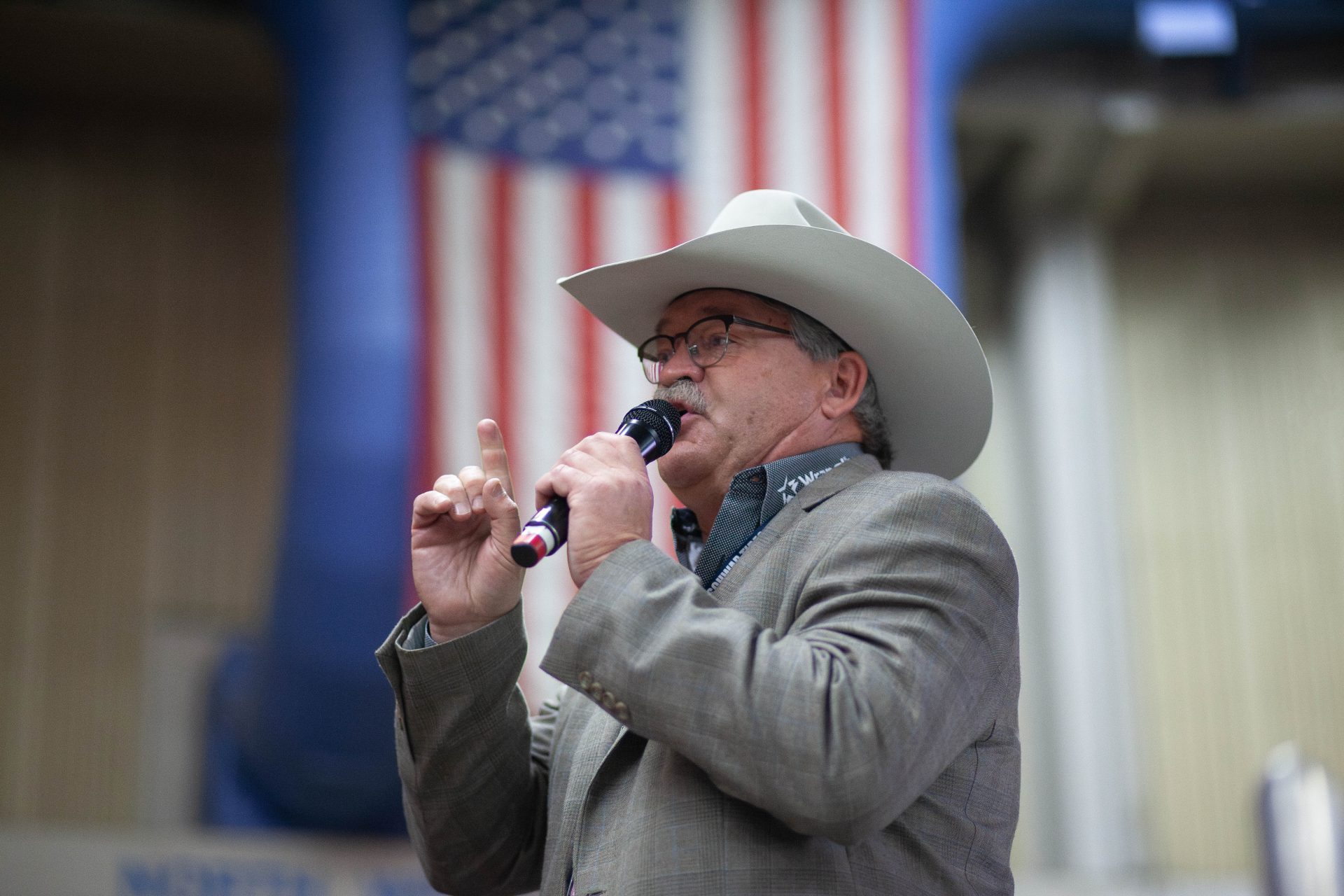
    Rodeo Life is thrilled to announce a new partnership with renowned rodeo announcer and TV personality Steve Kenyon, bringing his acclaimed “Steve Kenyon Podcast” to our publication. Kenyon will share insider perspectives on top rodeo events, contestants, and news from the rodeo community. With his extensive knowledge of the sport and exceptional interviewing skills, this addition will captivate rodeo fans everywhere. Last month, the American Hero Celebration with Charly Crawford came to Cowtown Coliseum in Fort Worth, Texas. Spanning from November 8-10, the event consisted of an open roping, a team roping in which first responders and military members are paired with a professional team roper, a military and first responders exclusive team roping, the ThirdAnnual Heroes Gala, and the Imus Ranch NFR Showdown presented by JP Morgan Chase. The weekend-produced by Liberty and Loyalty Foundation, a nonprofit organization committed to uplifting military members, first responders, and their families through Western lifestyle events and ropings-honors the men and women who sacrifice to keep Americans safe and protected. Earlier in the week, the Horns and Heroes Clinic took place in Decatur, Texas, at the NRS Arena. Kenyon sat down with clinic instructor, team roper, and cowboy preacher Trey Johnson to discuss the foundation’s reach and effect, not only its recipients but the rodeo community as a whole.

    Q&A with Trey Johnson

    SK: You’ve been involved in this program that Charlie’s put together since the beginning, right?

    TJ: Yes, sir. He called me the first year he did it, just wanting to honor our men and women who have served our country and asked if I wanted to come and do the heeling side. And itwas a no-brainer for me. You know, it’s just a privilege.

    SK: November 5 at NRS Arena up in Decatur all the way through November 9, then November 10, which is the day before Veterans Day at the Cowtown Coliseum in Fort Worth, a big team roping will take place. The top 15 in the world will be there at that roping. Plus, some of these guys will get a chance to rope alongside those guys who get to rope in a professional–amateur. Trey, it’s going to sound corny for me to say this because you’re the minister, not me-the roping is almost a vessel whereby Charly gets a chance to reach out to these people and give back to them, right?

    TJ: Oh, for sure. Yeah, it’s just a tool that attracts the guys, and they have fun; we have fun. You know, it’s cool because they feel so honored to get to come spend time with us. But like we tell them, we don’t have words to express how honored we are to be in their presence and just to get to spend a few days with them, honor them, bless them, and add value to their life.

    SK: Charly told me that some guys will come up and find Junior Nogueira, Kaleb Driggers, or somebody like that and thank them for what they do. The guys are immediately and rightfully ready to say, “Hey, wait a minute, you’re the one who fought for my freedom.”TJ: Yeah, that’s right. Without what they do, we couldn’t do what we do, for sure.

    SK: Tell me about the school and the events that will happen at NRS on November 5 and 6. You’re going to be there, you’re going to be teaching, you’re going to be helping. Tell me about all of that.

    TJ: The [November] fifth, they’ll kick it off that evening, but then the sixth and seventh, Charly will do the heading side, and I’ll do the heeling side. It’s just a great two days of helping them with their roping. But usually, every day, whether at lunch or at the end of the day, I’ll do teachings just to add value to their life. It’s been really neat to see what God’s done in their lives. There’s been so many guys accepting the Lord through our couple of days together this year. There are some guys who want to get baptized. We’ve just made some divine connections. We’ve seen families restored. We’ve seen their bodies healed. Their mind set free, stuff that only God could do. It’s neat because God uses a rope to get them there, but then they have an encounter with God, and God brings freedom to them. It’s just really a neat process. An encounter with God and God brings freedom to them. It’s just really a neat process.

    SK: Charly’s told me you’ve ended up doing a few baptisms out of this. So you’ve had some guys give their lives over to Christ as a result of this event.

    TJ: Yeah, I don’t even know. We’ve had a lot over the years. It’s just neat because these are big, tough men and women that have fought. They’ve seen a lot, and they have a lot of questions. God’s okay with that. If we can help any of them take one step closer to knowing God, to getting peace, to walking in freedom, to discovering what God has for them now that they’re out because they still have that heart of a leader, they have that heart of a warrior, and that’s in them by God. Now, it’s a different phase of life. There’s a different grace upon their life, and God still wants them to add value to our country. If we can create an environment where they can hear the voice of the Lord, and they get free, and they go back to their families revived and full of faith and fresh, then, man, that’s awesome.

    SK: From talking to Charly, it sounds like more people wanted to get involved in this than you guys physically had the ability to take, which is kind of a good thing, in a way.

    TJ: It is a great thing. Every year, as soon as the entries open up on it, they’ve got to shut it off pretty quick because we have people on the waiting list from all over the country. It’s just a great several days. It’s been fun to see how God has used Charly to add value to so many people and to raise money to build homes. So, if anybody wants to come out and just
    experience it, just watch what’s going on; they’re welcome because it’s a life-changing event.

    SK: November 8 and 9, the Hillwood Land and Cattle Company American Hero Celebration, join us in celebrating the hard work and effort of the Horns and Heroes Roping Clinic participants as they compete in the Military/First Responders/Professional Roping. Talk about that a little bit because there are some guys that really don’t have a lot of history, certainly with a rope in their hand or maybe even with a horse. All of a sudden, they become team ropers.

    TJ: It’s fun to see them kind of scratch that competitive itch, so to say, because all of them have so much to try. Then they get to compete against one another. They get to do the pro-am, where they get to rope with the pros. They get to see their heroes and watch their heroes compete. All of us look at them as our heroes. It’s great too, because you have the top cowboys in the world getting to rub elbows with our military. I know the cowboys feel more honored or just as honored as the military people do. I think it’s just a win-win for our industry. It’s a win-win for the cowboys and the military. It’s neat to see all the divine relationships that have been built out of this.

    SK: Have some of the guys that are the best ropers in the world, the guys that will be at the
    big roping on Sunday, November 10 – we’ll be watching starting December 5 in Las Vegas at the National Finals Rodeo– and you had a chance to develop some long-term friendships and relationships with some of the people who come to the roping that are not just military but first responders?

    TJ: For sure. It’s fun to see us helping one another. I’ve had the privilege of going to different places and different outreaches that are doing stuff with our military because of this. Even this week, I’ve been talking to several of the military guys trying to get help. Some of the guys that are struggling with their mind, maybe their family. They’re hurting. They don’t know what to do. It’s an ongoing, all-year-long relationship-building process just to addvalue to our industry and to our heroes.

    SK: These are men and women who have been through the fire. I’ve heard a lot of organizations, and I’ve talked to entities that are taking advantage of the opportunity to be involved with horses as a way of providing therapy to men and women who maybe are suffering, dealing with PTSD, things like that. Have you seen that, Trey?

    TJ: Oh yeah. I had the privilege, earlier this year, of going up, and I flew into Oklahoma, went over to Kansas, and had a chance to spend some time and to speak life into some of the guys and do some leadership development. They bring these guys in that might be hurting or tough and have a lot going on in their lives. They put them in this round pen with this horse. To see the men and women develop a relationship with the horse. Their guard comes down, and the horse’s guard comes down. Just to see the change that takes place is life-changing because the horses are so sensitive, and they feed off of us. These men and women have given their lives for us. To see God use an animal to bring softening and healing, it’s just a beautiful thing.

    SK: Somebody really smart once said, “The best thing for the inside of a man is the outside of a horse. “I think that person was right. There are a lot of stories about that, and there are other organizations that are involved, as you mentioned. Tell me about Trey Johnson Ministries. What do you guys do?

    TJ: My purpose and everything that I do is I want people to know God. I want them to be the best they can be. When I first gave my life to the Lord when I was in college, I was asking the Lord, “What does success look like?” To some people, it’s money, a gold buckle, or a saddle. Just on the inside of me, He said, “Trey, true success is a person being in the process of knowing Him, the One who made us and created us and wired us.” When we step out and we’re operating in our gifts, our strengths, then we start becoming the best version of ourselves, the best person we can be. So, my three main areas of influence areministry, leadership, and roping. When I’m doing any of these roping clinics or competing or doing leadership conferences or development, I just got back from Africa for 16 days. In the mornings, we would do pastor conferences, then we’d do crusades in the evening, then we’d feed the widows and go to orphanages-so I’m always asking, “Does this help people know God more?” and “Can it help them be the best them that they can be?” I think last month, I probably preached 60 times. It’s not always like that. But it’s probably at least 25 to 30 times a month, I’m speaking. I’m doing leadership. I’m doing roping clinics. When I do get a chance to compete at the top level, I just want to add value to people. We’re getting ready to go to Las Vegas, and I’ll preach in the morning after South Point Casino. Then, every night before the rodeo, I do what we call a “power-up time” with all of our contestants before they ride down into the Thomas and Mack. I just want to make a difference. I want to add value to people, and if I can be a small part of doing that, then I want to do it.

    SK: There’s an image of the rough and tough, independent cowboy that you know “is on his own” and “doesn’t need any help.” Occasionally, the image has been creative of the hard-partying, hard-living kind of person in our industry. Would people be shocked if they found out how many people of deep faith compete in the sport of rodeo?

    TJ: I believe it would change their perspective, and I think that’s happening. In the beginning, when I first started competing, there was only a handful of guys. I won the Rookie of the Year in 2000 and that’s been some years ago. I think I even had hair back then, and my whiskers sure weren’t great. There weren’t a lot of guys who just took a stand that really loved God and wanted to know how to walk with Him. But that’s not the case today. There are so many men and women who want to add value, who want to be who they’re created to be, and who want to use their gifts to reach people because they realize that they have influence and that they’re leaders in our industry.

    SK: I’m frequently asked to-I’m not sure I’m the right guy that should be doing this, but I sure do enjoy it-say a prayer before a rodeo I’m announcing. I’m always amazed when I look down behind the bucking chutes or if there’s a bunch of bull riders lined up in the arena; how many were on a knee at that point. Again, some smart person, I think, once upon a time said, “There are no atheists inside those bucking chutes.” It really is interesting to see how many people are taking advantage of that opportunity to reach out to the guy upstairs.

    TJ: Yeah, for sure. It’s real to most of them because when you’re dealing with horses and cattle and people and circumstances, you realize that there is a Creator, and this just didn’t happen. What I enjoy so much about our industry is that there is still an honor for God. There’s still an honor for our flag, for just what God has done for our country, and it’s not
    just lip service. There’s just a reality of the power of God, the life of God in our Western industry. It’s just a great thing to be a part of.

    SK: Did I see you getting a little emotional when you were talking about some of the relationships you’ve developed with these guys that you’ve met through Charly’s roping and through the American Heroes Celebration?

    TJ: It’s hard not to get emotional. Some of them got really mad at me when they came to the clinics, and I started to teach God’s Word and share God’s heart with them. They get emotional. Some of them haven’t cried since they’ve been on the battlefield. To see God start healing their heart and for them not to have words because once you have an encounter with God, nobody can take that from you. I know it’s only God’s goodness that brings healing to their heart. It’s only God’s goodness that restores their marriage, their family, and their sense of purpose and destiny. This is very special to me. I’m very thankful to be a part of it.

    SK: What’s it like to teach a guy who has, maybe, a little bit of experience with a horse or none at all and who doesn’t have very much experience with a rope or none at all? What’s it like to be able to teach him how to rope?

    TJ: Well, the rope is about relationships. Because everybody’s wired differently and everybody understands differently, taking somebody that’s never ridden or roped or maybe they’re just starting and they want to do this and see them progress, taking leaps and bounds within a couple of days. To see life and joy and excitement just to go off on the inside of them, and that’s fun. That’s exciting because all of us desire that. Every one of us desires to be fulfilled, satisfied, enjoy life, and have fun. So, when you see that come alive on the inside of people, it’s like, wow! This is why, with all the years of working at what I’ve done and my craft, being able to add value to these guys and girls is just an honor.

    SK: November 10, the Imus Ranch NFR showdown presented by JP Morgan Chase. The event finale is held in the historic Cowtown Coliseum. The top 15 team roping teams in the PRCA will be there for a pre-NFR showdown, including the Military/First Responders/Professionals, and there’s a stray gathering ranch rodeo, which is a kick. Things get a little Western in that deal. You’ve roped and preached in front of big crowds and in front of small crowds. I’ve announced in front of big crowds and small crowds. It would be fun to fill that place up. It would be a little kick to have Cowtown Coliseum full
    when that thing’s taken place on that Sunday afternoon.

    TJ: Oh, they would come alive. If anybody wants to come, please come out and join the event because you will have so much fun and just the cheering and encouraging our men and women. You’ll see some stuff that you won’t see just anywhere.

    SK: That’s a good way of describing it, especially in that ranch rodeo part that gets Western in a hurry. I know you’re expanding your outreach constantly. I’d love to know more about that trip you just took to Africa. I don’t know if you’ve done that before or not. Is that a once-in-a-lifetime or a first-in-a-lifetime? Tell me about that.

    TJ: It was the first. I talked to some of the people on the ground over there in Africa. Right now, we’re looking for me to go back in February. I won’t go as long this time. I’ll just go for 10 days, but I’ll just preach as many times as I can, go to as many places as I can. It waslife-changing to go into the orphanages and feed the widows. We’ve had close to 600 widows. I just saw the lifestyle that they lived and the privileges that we have. I could go on for hours and tell you story after story of what all God did while we were over there. Maybe we can do that another time or in the near future, or we can do it now; it’s totally up to you.

    SK: Give me a little synopsis. We’ll preview an upcoming show sometime soon; how’s that?

    TJ: The first orphanage I went into when I was a minister, and there are probably 125 junior high and high school kids in this orphanage. I’m just talking about the power of belief and how believing in God and believing in ourselves always lifts us to the next level. By the time I got done ministering, I had led over 50 of them to Jesus because they realized that Jesus was for them, He was good, and He wanted to help them no matter where they were. From there, I was praying for this one widow. She had blind eyes, and I laid my hands upon the eyes. The Bible says to lay hands upon the sick, and they will recover. I just asked the Lord to open her eyes. Her eyes opened, and she had never seen. My interpreter said, “If you can see, reach out and grab his nose.” She just reached out and grabbed my nose. I’m thinking, “You should have told her to grab your nose.” But there was just story after story after story of just seeing God show up because they’re so hungry. They’re willing. God looks for that. God shows up in an environment where people are hungry. It’s not about religion or denomination or all these rules and rituals. I mean, these pastors would walk for hours and hours to these pastor conferences we were doing. They would stay the night in the church on the floor so they would be there the next day. They would worship for hours and hours, from little kids to 70-year-old people. They didn’t care what anybody thought about them.And it was beautiful. They would worship and praise God. The sound system would go out because of the electricity, and they would never stop. They just kept going. They kept giving God their best. I had some of them tell me, “We worship like this because we know that
    without God, we might not have our next breath.” It’s just real to them. They don’t play church over there. They’re not just going through the motions. They know they have to have God in order to move forward in life. If we brought that same hunger over here, the sky’s the limit of what we can do with God.

    SK: I can’t imagine that that could be anything but life-changing, Trey.

    TJ: It was. Yes, sir. We’re looking to go back and do great things over there for the Kingdom and add value to as many people as we can. We’re looking at getting together with a lot of the college kids the next time I go back over. I’m trying to reach as many of them as we can as well at some of the universities.

    SK: One of the beneficial side effects of doing what you do for a living is you get to see a lot of people’s lives change.

    TJ: You get to see a lot of people’s lives changed. But there’s always more pressure at the front of the spear than there is the shaft. So, when you’re at the forefront, there are a lot of things to overcome. But I wouldn’t have it any other way. I never set out to be a preacher. I just want to know God. I want it to be real. I want to know Him for myself, and that’s my heart every day. Now, I get to stand in front of leaders of countries, teaching leadership and adding value to people, and I still get to rope. After I won the Rookie of the Year, I laid my roping down for almost nine years and started churches and pastored churches. Now, to see what God’s doing. We have our TV show on Cowboy Channel and RFD TV every Sunday morning. We’re on a lot of different networks. We’re reaching millions of people a week around the world. And I’m just so honored that God would let me be a part of that. That’s what I get to do, which is add value to people, and I’m just very thankful.

    SK: I believe it. Trey Johnson, thanks for being a part of the American Hero Celebration, and thank you for your time. I know that you are very, very busy, and giving me a few minutes means a lot to me. You and I talked about doing this two years ago, and I never got around to getting it done. I am so thankful for your time, for all the people that you’ve reached, and
    for the message that you deliver. Enjoy the heck out of this American Heroes Celebration. I like the fact that Charly included not just the military but, you know, our first responders and the people who serve us here at home as well. They deserve way more credit than they’ve been getting lately, don’t they?

    TJ: Yeah, they do. They do. They’re so important to what God’s doing in our country. The value they add to people and the strength they have; we are so thankful that they’re able to be a part of this and come and enjoy it with us. But anybody who’s watching can go to treyjohnsonministries.com on the website. We write daily devotions, my wife, Heather, and I. We have a podcast, “Being Your Best with Trey Johnson.” We have a YouTube channel. Of course, we have TV shows on a lot of different networks. We just want to add as much value as we can. Steve, thanks for letting me be on this. Once again, I want to invite everybody to come out and watch what takes place during these four or five days with our heroes and our military and first responders coming in. I just appreciate Charly and the whole team for what they’re doing. It’s making a difference in the lives of people, for sure.

    If you want to join the 2025 American Heroes Celebration, you can find more information at libertyandloyaltyfoundation.com. If you want to hear more from the accredited Steve Kenyon, subscribe to the Steve Kenyon Podcast on Spotify and Apple Podcasts.


  • American Hat: Shelby Meged

    American Hat: Shelby Meged

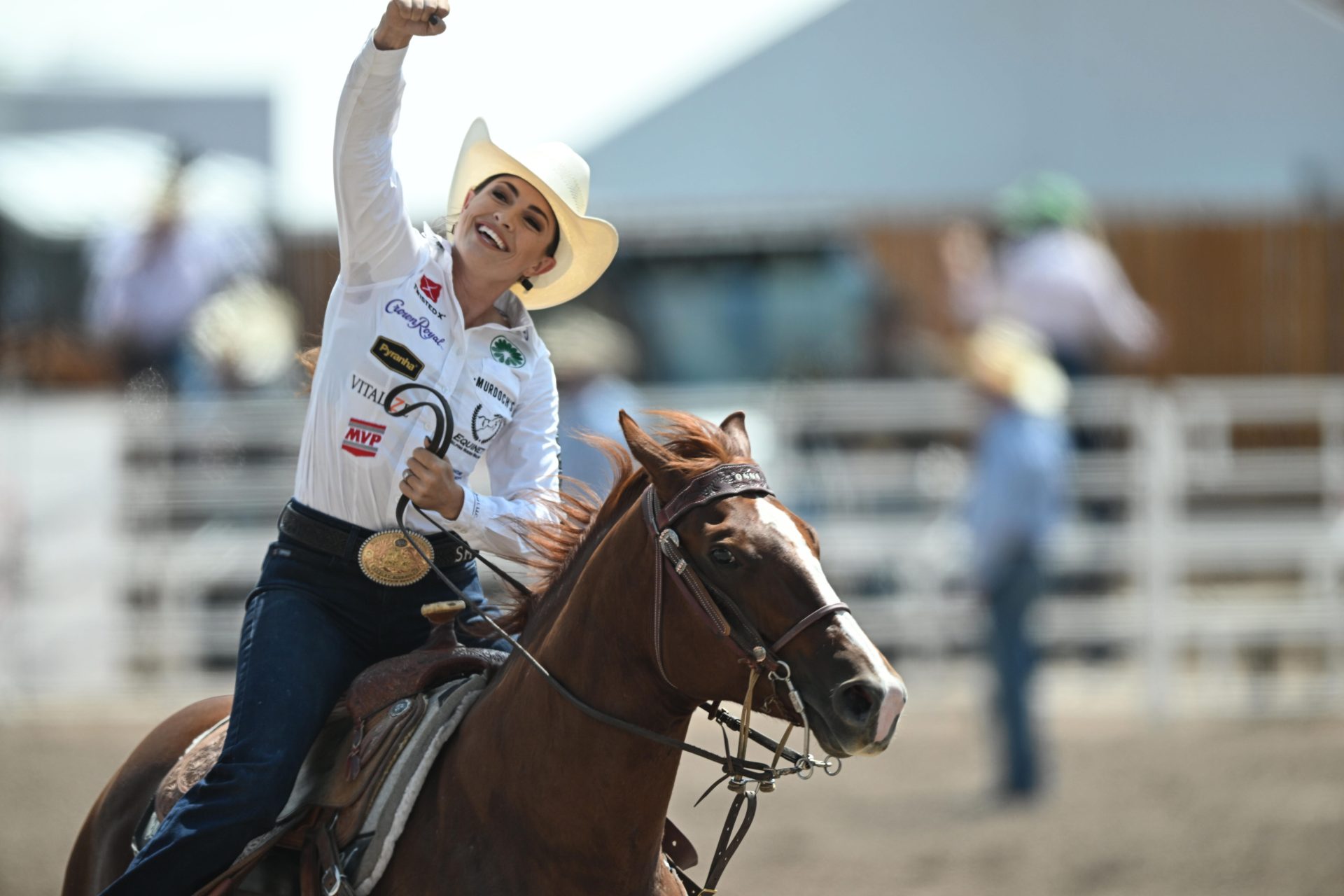
    “I went into the American Hat store to buy a new hat for my first NFR breakaway in 2020,” said Shelby Meged, the 2023 National Finals Breakaway Roping (NFBR) World Champion. “That is where my relationship with them started. I partnered with them after that, and I have been with them since my first NFR.”

    The three-time NFBR qualifier spoke highly of her contacts at American Hat Company and her experience as an athlete
    with the team.

    “It’s more of a family. I can call any of them at any time for anything, even if it is not hat-related,” she added. “If I am ever
    in a bind and need somebody to help me, there is always somebody I can call.”

    Meged, who grew up just outside of Calgary in Langdon, Alberta, Canada, said she had arope in her hand from an early age, but it was a gift from her parents that jump-started her record-breaking roping career. “From the time I started swinging a rope, the only thing I ever wanted from my parents was a Fast Lane dummy,” she said. “Once I got one, all I did was rope. I wanted to be one of the best female ropers ever.”

    Meged said she was at a slight disadvantage as a roper because there were few places forher to compete in Canada as a breakaway roper. “There’s not a lot of opportunity in Canada for breakaway roping, she said. “There were maybe one or two jackpots I could go to each year.”

    Though she said the Alberta High School Rodeo Association lacked the contestant numbers of its counterparts in the United States, the competition was just as fierce. “In Alberta, we only had three regions compared to the ten regions in the Texas High School Rodeo Association,” she said. “I still had to be super competitive, but I was not roping against 200 other kids.”

    After moving to Ranger, Texas, on a college rodeo scholarship in 2017. Meged said she was in awe at the amount of roping found in the state. “I remember running myself broke because I was going to every jackpot. I went a little crazy,” she said. “I went to every jackpot I could once I got here because the amount of roping was insane. It was all just so new to me. I could go to three jackpots a week and an hour from my house.”

    Meged said that although she was roping more often, it was a while before she started to see success in her new home. “I think it took me about two years to win anything down here,” she said. “I got my butt kicked for a long time. It was a pretty big eye-opener for me.”

    Then, in 2019, she was crowned the Reserve National Intercollegiate Rodeo Association Breakaway Roping Champion. “I had a huge year in 2019,” she said. “I was making good money and doing well at all the jackpots. I realized I wanted to stay
    here because I was hooked.” Meged qualified for her first NFBR the following year. The Inaugural NFBR ran with the 2020
    Wrangler National Finals Rodeo (NFR) at Globelife Field in Arlington, Texas.

    “Roping in Arlington was cool because we were roping out of the same box and in the same arena as the other NFR contestants,” she said. “I did not have a very good NFR my first year,” she added. “I didn’t want to feel that way again when I left the finals that year, so I knew I wanted to work on some changes. They didn’t happen overnight, but everything eventually paid off.”

    After finishing eighth in the world, Meged said she set out to achieve the goal she had set as a young girl. She was the reserve world champion the following year at the 2021 NFBR in Las Vegas. She was ranked fifth in the world standings at
    the end of the 2022 NFBR. But Meged returned to the finals and finished the 2023 season with her first world title and a record- breaking $197,706 earned.

    “I want to keep going back and chasing that next gold buckle because it’s an addiction,” she said. “Our sport is always evolving. There are always new, up-and-coming ropers, and the competition seems to get tougher every year.”

  • Team Cavender’s: Kyan Wilhite

    Team Cavender’s: Kyan Wilhite

    K yan Wilhite, a veteran member of Team Cavender’s, said he joined the team three years ago after his now-teammate and fellow tie-down roper, Luke Coleman, mentioned the team to him.

    “I was at Texas High School Finals two or three years ago, and one of my buddies came and talked to me about it,” Wilhite said. “I thought it sounded like a pretty cool deal, so I sent in my application and joined the team not long after.” Wilhite, a New Mexico native, said his family always had horses and cattle, but no one before him was interested in roping or rodeos.

    “I was probably seven years old, and then I found a rope in his shop. Then I just started roping random things like buckets and old metal cans,” he said. “About five months later, I kept on begging to keep roping. After that, my grandpa and one of his buddies built me a wooden roping dummy.”

    Shortly after discovering his love for roping, Wilhite said his dad’s career moved his family to Albuquerque city limits. This move effectively paused any rodeo dreams Whilihite had. “That move lasted about one year, and then when I got back to where I could rope again, I was about eight and a half years old,” he said. “After that, I went to Sylvester Mayfields house for the first time.”

    Sylvester Mayfield is a two-time Wrangler National Finals Rodeo (NFR) qualifier. Mayfield’s son, Shad, has an impressive resume as well. He is a five-time NFR qualifier and won thePRCA tie-down roping world title in 2020.

    “I went to the Mayfields and started roping with them,” Wilhite said. “Sylvester taught me to rope the right way, and then I bought my first rope horse from Shad. “They are from Clovis as well, and my grandpa knew Sylvester. He hooked me up pretty good with them,” he added. “I would go down to their house and rope. I bought my first couple of horses from them.”

    As Wilhite became more serious about roping, his dad and grandfather recognized this and built him an arena to practice. After competing in junior high school rodeos in New Mexico for two years, Wilhite said he transferred to Texas to rodeo.

    “My eighth-grade year, I transferred and started to rodeo in Texas,” he said. “My whole high school rodeo career, I have been in Texas.” Wilhite said his time in Texas has been good for him. He was crowned the Texas High School Rodeo Association Tie-down Champion, and later that year, he captured theNHRSA tie-down world title. Riding his good horse Jag, whom he bought from fellow roper Marty Yates, he was also crowned the 2023 WCRA Tie-down World Champion.

    In 2024, Wilhite decided to take on the big boys in the PRCA and made the Texas Circuit Finals, where he placed third in the third round with a time of 7.7 seconds. He added that he wants to rodeo on his permit again in 2025 but plans to buy his PRCA card in time for the 2026 rodeo season.

  • Nathan Jestes’ Journey to NFR: A Life of Risk, Dedication, and Passion

    Nathan Jestes’ Journey to NFR: A Life of Risk, Dedication, and Passion

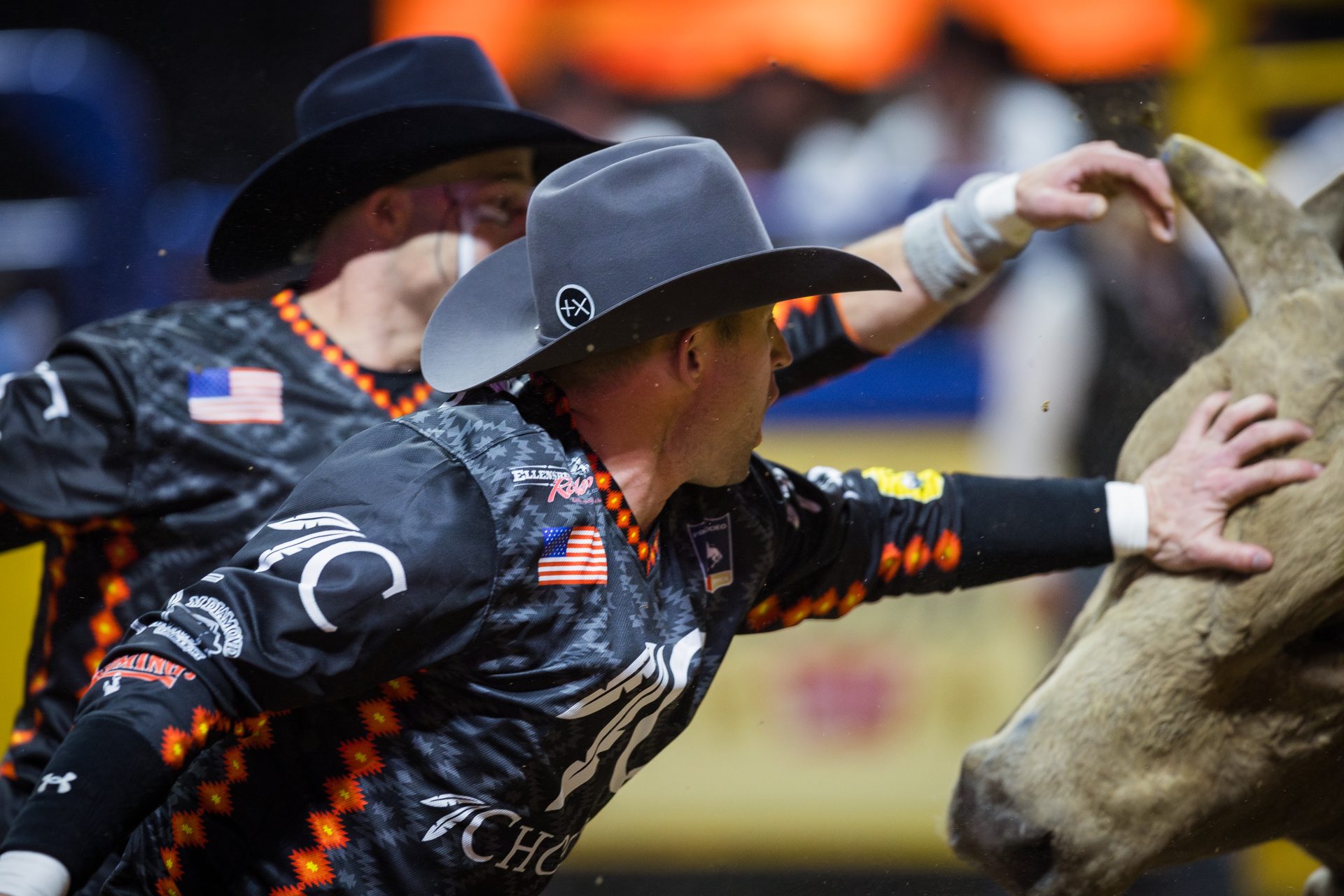
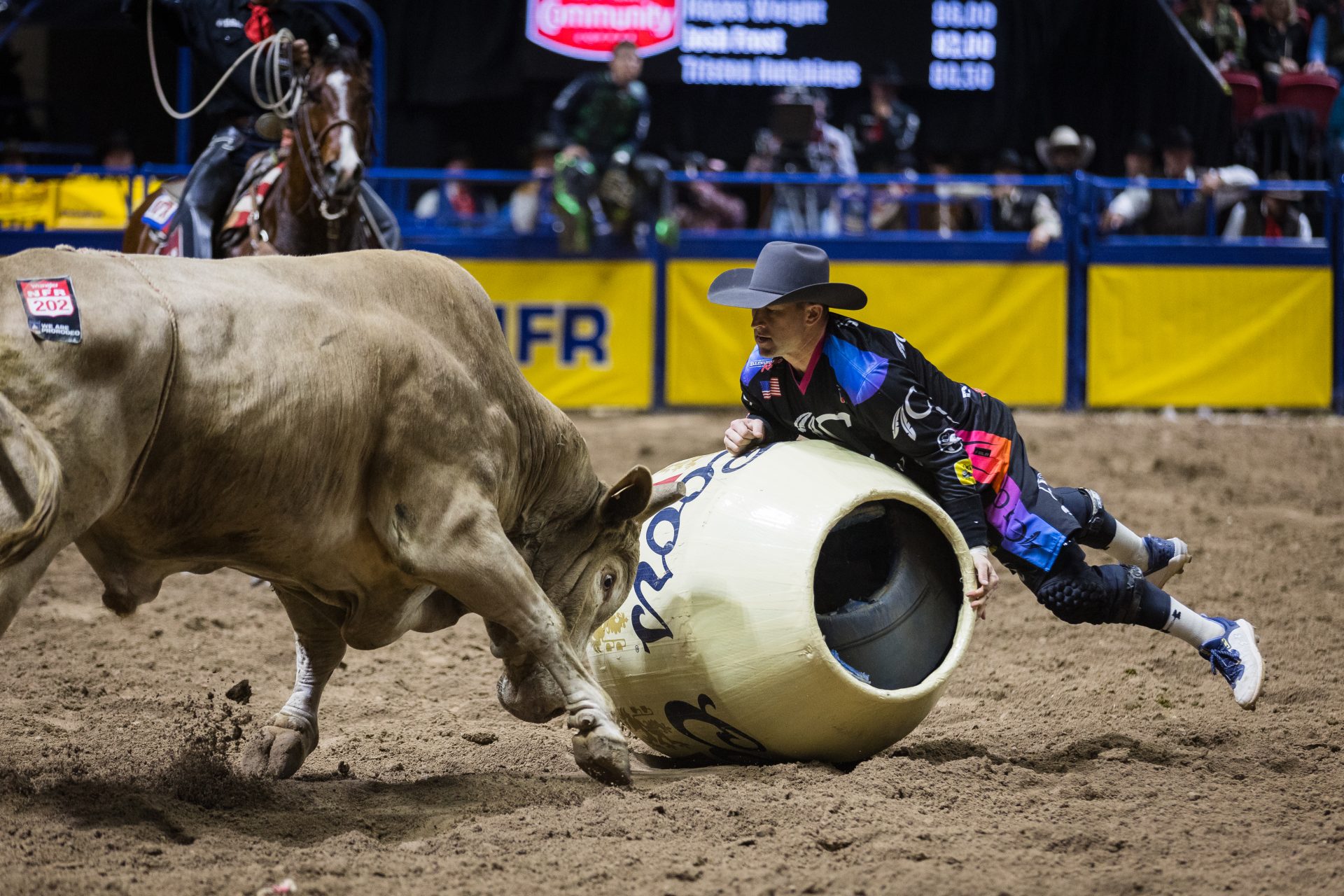
    Nathan Jestes is a household name in the rodeo industry. He has come up through the ranks fighting bulls freestyle and as a cowboy protector. The 2024 Wrangler National Finals Rodeo (NFR) marks his sixth return to the acclaimed yellow bucking chutes. Jestes is living his rodeo dreams, which he has earned through his hard work and perseverance, year after year.

    Jestes’ bullfighting career started off in an unconventional way. Growing up, he played sports and found his niche in lacrosse. While he had friends who rodeoed and was a fan himself, he never competed. In high school, he was scouted for lacrosse and received a scholarship to a Division One college in Connecticut.

    Jestes was all set for college with only two months to go when he had a change of heart. He didn’t want to live in Connecticut, study a subject he was not passionate about, or pursue lacrosse with its limited career prospects. He declined the scholarship and enrolled in Montana State University’s two-year aviation program. Jestes had an uncle who was a pilot, which sparked Jestes’ interest in aviation.

    In college, Jestes missed being an athlete; it had been a part of his identity for so long. While working at the airport, he met a professional bullfighter, Al Sandvold, who would go on to mentor and teach Jestes all about fighting bulls, even encouraging him to pursue it professionally.

    Jestes fought bulls with Sandvold for Montana State University’s rodeo team, which led to a few amateur rodeo contracts. As Jestes’ career gained momentum, he started booking professional rodeos. Things moved quickly for Jestes. He began fighting bulls in 2009, and pulled his permit for the PRCA in 2010. This momentum made Jestes face a difficult decision: choosing between aviation and rodeo.

    “At the time, if you think about it, it was the dumbest decision I’ve ever made, because I gave up an entire aviation career for $5,000 worth of amateur rodeos,” Jestes says. But Jestes followed his heart as he did when he decided against lacrosse. This pivotal choice would change his life.

    Sandvold told him, “Nate, if you want to be successful in rodeo, you’ve got to be willing to give up everything. You’ve got to be willing to give up funerals, weddings, and birthday parties; sometimes, you have to be willing to give up an entire career.”

    Jestes never looked back. He moved home to Douglas, Wyoming, where he could work for his father’s construction company and have the freedom to rodeo. There were sleepless nights spent worrying if he had made the right choice, financial challenges, and his wife (girlfriend at the time), Bridget, often helping him out.

    “I didn’t have an option; I had to succeed,” Jestes says. And succeed, he did. It took seven years after getting his permit before Jestes made his first NFR appearance.

    Bridget has been by his side every step of the way; now, with their two daughters, Harper, 3, and Channing, 2. Jestes loves raising his kids in the rodeo industry despite its challenges.

    Jestes values the friends he’s made, like Cody Webster and Dusty Tuckness. He met Webster in 2012 at the World Championship Freestyle Bullfights in Oklahoma, where he later connected with Tuckness. Through the years, each of their careers began to take off together. As their professions grew, they developed a close bond.

    The trio has a handful of rodeos they work together throughout the year. “When it comes to a three-man team, I don’t think it gets much better than us three,” Jestes says, describing how they can anticipate each other’s moves. Jestes calls it “poetry in motion.”

    “When everybody’s on the same page, it’s honestly an art. Everything just falls together, and it’s the best protection you can have for the bull riders,” he says.

    Each NFR holds a special place in Jestes’ heart, but last year’s event was particularly meaningful, as it was the first year he had all his girls with him. Jestes is a family man through and through. One of his favorite moments last year was having his daughters walk with him across the stage at the Back Number Ceremony.

    Jestes recalls unforgettable NFR moments, like watching Brendan Eldred’s 94.5-point ride on Bruiser in 2016 and witnessing Ky Hamilton’s terrifying wreck in 2023. He says it was the most violent he’s ever seen.

    Despite the exhaustion of 10 months on the road, Jestes says the phone call announcing his NFR return makes it all worth it. His passion for bullfighting and the rodeo lifestyle grows stronger with each season. For him, returning to the NFR isn’t just about the recognition; it’s a testament to his dedication and the sacrifices he’s made along the way. The countless hours in the gym, the friendships forged, and the family memories created make every challenging mile worth it. As he looks to the future, Jestes has no plans on slowing down. He will continue to push his limits for himself, the bull riders he protects, and his two young daughters, who will always have a front-row seat to his journey.

  • Yesterday’s Rodeo: God Loves a Thankful Heart and Celebration

    Yesterday’s Rodeo: God Loves a Thankful Heart and Celebration

    The first Thanksgiving celebration was the Lord’s last supper with Jesus and his twelve disciples in Jerusalem. What a glorious time of fellowship! God calls us blessed! “Blessed are your eyes because they see and your ears because they hear.” Matthew 13:16

    Texans celebrated the first Thanksgiving according to a 1992 resolution passed by the Texas Legislature. It was held in North America on April 30, 1598, near El Paso, Texas. Thanksgiving day
    is one of the most precious holidays we have been given. In God’s Word, the Holy Bible, He assures us that we have salvation by grace through faith in Jesus Christ.

    The apostle Paul writes us in Ephesians 2:8-9 “For it is by grace you have been saved, through
    faith—and this is not from yourselves, it is the gift of God— not by works so that no one can boast.”

    Wow, isn’t this something to be thankful for, along with the Holy Sacrament of Communion, when
    we remember Jesus’ sacrifice on the cross for each of us? Today, when we understand all that we must be thankful for, we can enjoy Thanksgiving with even more appreciation.

    On October 3, 1863, our 16th president, Abraham Lincoln proclaimed the last Thursday of each November to be Thanksgiving Day. It is a time of joy to be with family and friends, sharing gratitude for God’s blessings and abundance. Thanksgiving is a bit more than that for a rodeo cowboy like me. Every time I can walk away from a near-death disaster from hanging up, or a crazy bull, or a wild bronc that fell or rolled over on me, I am saved and will live another day to be thankful for the life my Lord has given me!

  • American Hat Company: Jarvis Demery

    American Hat Company: Jarvis Demery

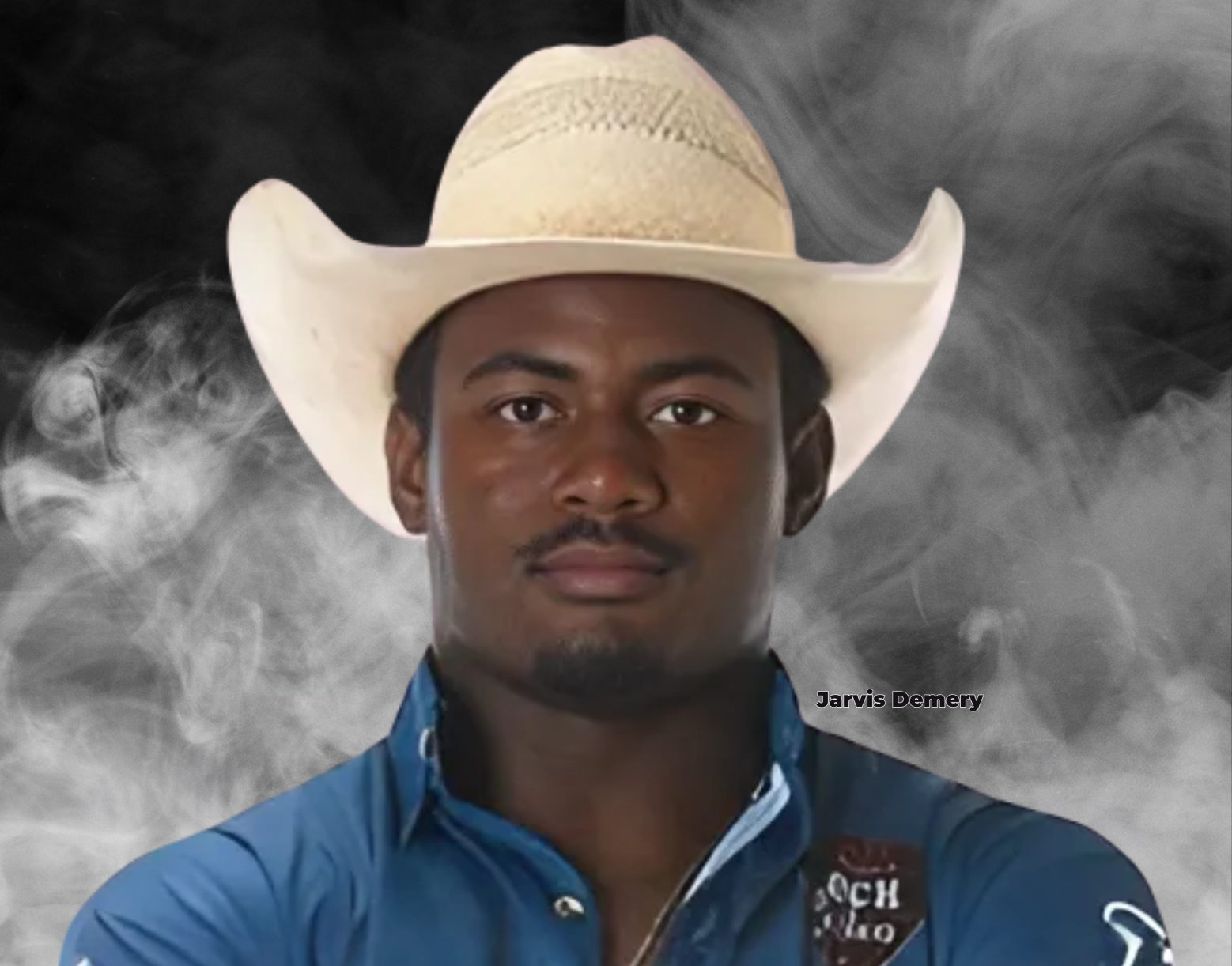
    “The rep stopped me and told me I would look good in an American,” Demery said. “That’s where it all started for me. The hat I was wearing before was not good at all. I did not know the difference between 10X and 100X.”


  • The Original Wrangler Bullfights Hall of Fame: Rowdy Barry

    The Original Wrangler Bullfights Hall of Fame: Rowdy Barry

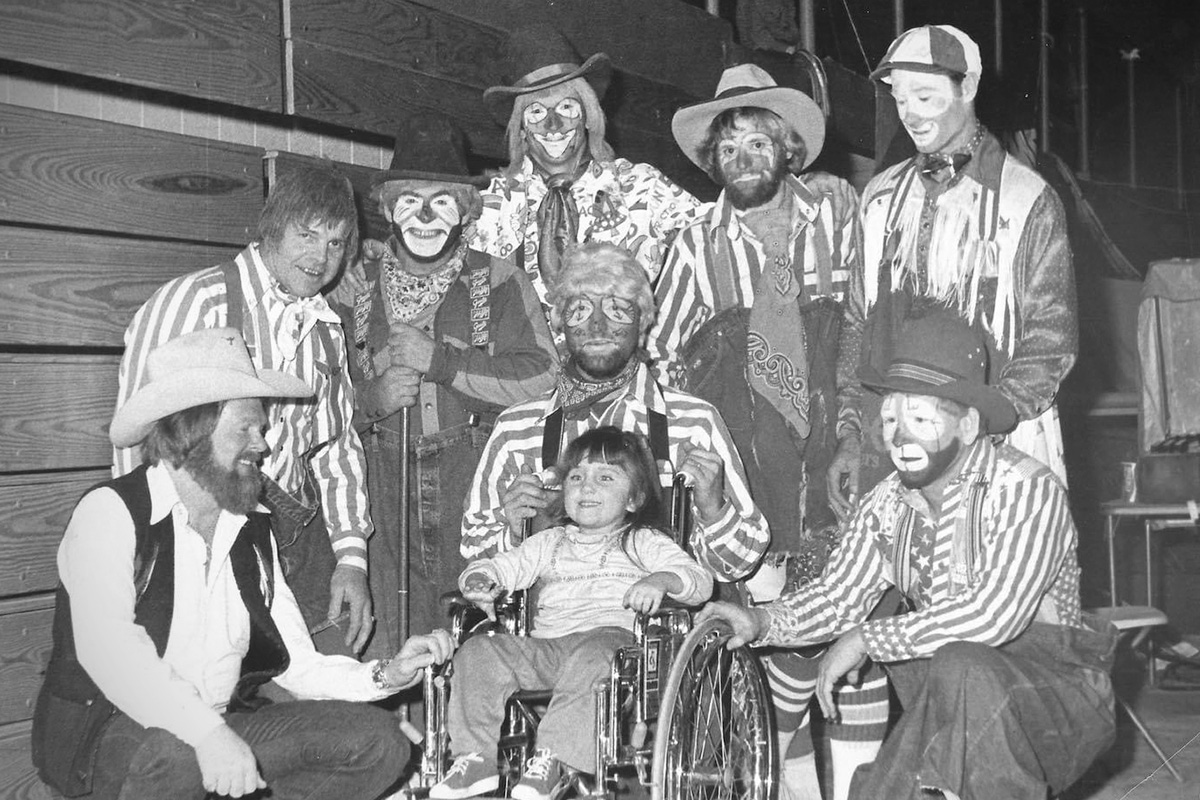
    On October 19th, bullfighters, young and old, will descend upon Cowtown for the annual Original Wrangler Bull Fights Hall of Fame ceremonies. This year’s event will take place at the River Ranch Stockyards in Fort Worth, TX. Each year, The Original Wrangler Bull Fights holds a Hall of Fame induction ceremony; aside from being inducted into the Hall of Fame by the Professional Rodeo Cowboys Association (PRCA), this is the top award a bullfighter can receive.

    James (Jim) Sutton Jr. of Sutton Rodeo Company started the Black Hills Stock Show and Rodeo in 1978. He wanted the show to be a success and started coming up with ideas to draw crowds, so the Wrangler Bull Fights were born (Pro Rodeo Hall of Fame,2021). Sutton later pitched a sponsorship deal with Wrangler to the PRCA, who had no relationship at the time. After the Wrangler Bull Fights were disbanded, this sponsorship would later give way to branding the Wrangler National Finals Rodeo.

    The Original Wrangler Bull Fights took place in the early 1980s as a bullfighting tour. The top 16, most elite bullfighters, were asked to join the tour to compete in 20 or so bullfights; the events were not held at rodeos like we see today. In order to keep the competition fresh, the bottom four bullfighters would fall off the tour, and four new bullfighters would join for the next season.

    These competitions eventually made their way into the PRCA. Although The Original Wrangler Bull Fights petered out in the early 2000s, this program built the path for cowboy protectors, freestyle bullfighters, and rodeo clowns as we see them today. It gave way to change the industry in new unique ways through organizations like Bull Fighters Only. After the PRCA disbanded the tour, it opened it up for any rodeo around the country to hold Wrangler Bull Fights, creating opportunities for bullfighters across the United States.

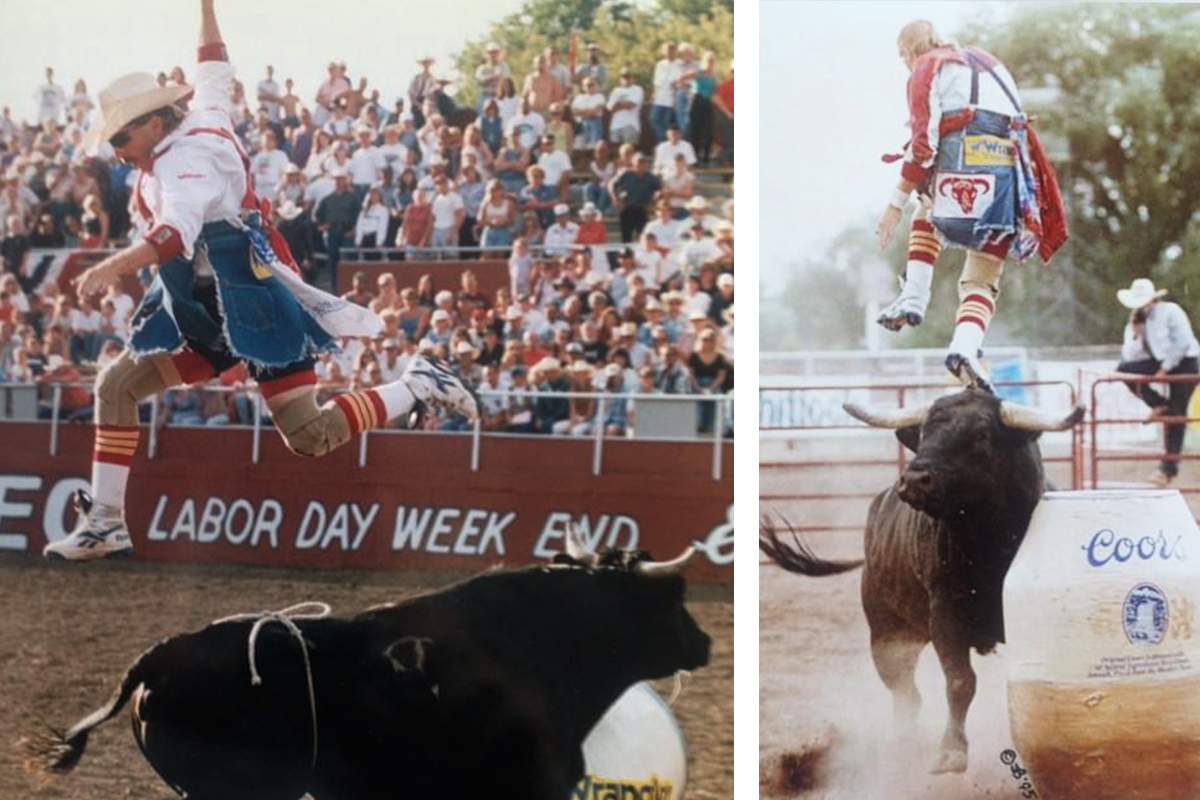
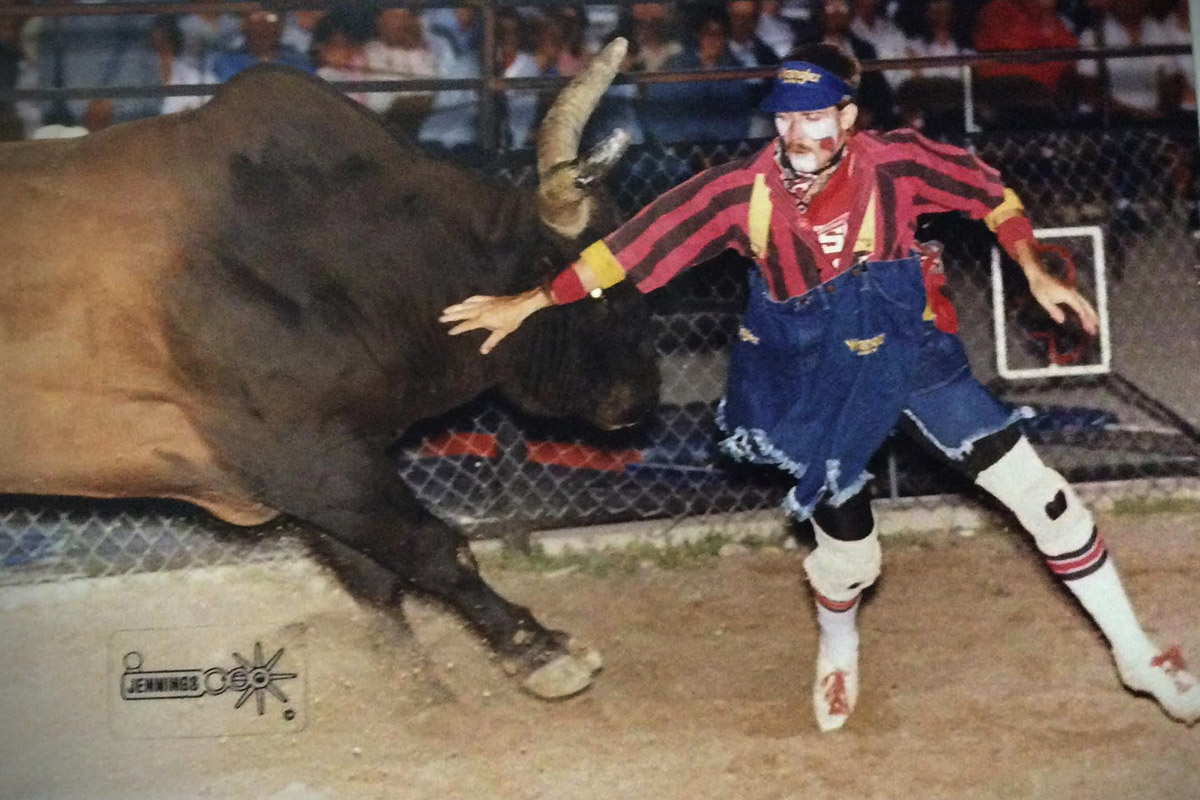
    If you aren’t familiar with freestyle bullfighting, it is different than protecting cowboys during the bull riding at a rodeo. Freestyle bullfighters are alone in an arena with a Mexican fighting bull. Their job is to keep the bull engaged with them for the time they are in the arena. Similar to freestyle bullfighting, you will sometimes see a fighting bull turned out in the arena at the end of the bull riding, so the bullfighters can work it to add excitement for the crowd. One of the many bullfighters part of The Original Wrangler Bull Fights was Rowdy Barry, a freestyle bullfighter for 15 years and cowboy protector for over 30 years.

    Barry is being inducted into the 2024 class of The Original Wrangler Bull Fights Hall of Fame. His incredible bullfighting career has spanned more than three decades. When his career started, rodeos were not required to hire more than one bullfighter to protect the bull riders. This meant that if a bullfighter wanted to gain any traction in their career, they had to hustle. Barry did just that, with his signature move, running straight at a bull and hurdling over it, nose to tail. In 1992, Barry made his first appearance bullfighting at the National Final Rodeo as a part of the Wrangler Bull Fights Tour; he placed third in the season that year.

    Barry’s final performance in the arena was in January of 2019 at the Columbia River Circuit Finals. He has had a fulfilling career in bullfighting for both the freestyle and cowboy protection, making it to the NFR for both. During his final year fighting bulls, he was able to work his hometown rodeo, the Horse Heaven Round-Up in Kennewick, Washington, alongside his youngest son, Miles. Barry’s sons, Ryan Manning and Miles Barry continue his legacy of fighting bulls; he also has a daughter, Clay Noel Harper (Barry), who barrel races. Barry has much to say about bullfighting and being honored with this nomination.

    Photo Courtesy of Rowdy Barry

    Q: What made you start fighting bulls?
    A: “Even as a child, I was attracted to bulls. So, when I started fighting bulls, I thought I wanted to be a bull rider at first. I was tall and thin and strong-legged and fast, but I wasn’t built like a bull rider. Anyway, that’s how I kind of ended up fighting bulls. So that was more appealing to me, being strong-legged and fast.”

    Q: What does receiving this Hall of Fame nomination mean to you?
    A: “I don’t even know how to really answer that. It’s so honoring. I feel fortunate to do something I love to do for a living, and to have a recognition like this at the end is something I’m very thankful for. I guess it puts me in the same place that I was growing up, with my role models and guys I tried to emulate, you know, that are in the Hall of Fame before me. Being there, with them, just kind of closes a chapter on my bullfighting career.”

    Q: What is some advice you would give to someone starting out as a bullfighter?
    A: “I had to learn from different bullfighters because sometimes somebody can say the same thing in a different form laid out, and you might pick it up differently than somebody else trying to teach you the same thing. Learn from different bullfighters and see what works best for you. Then the other thing is go be around livestock; that’s the most critical part to being a good bullfighter. Go get a job at a sale barn or something where you’re sorting cows, calves, steers, bulls, every day. The cow sense or bull sense is one of the most critical parts to fighting bulls; knowing how they’re going to think, how they’re going to move, where they’re going to be, and being able to anticipate that is going to get you in position.”

    Q: What makes a good bullfighter?
    A: “You have to be very aggressive and very strong-minded. A good bullfighter has to be mentally strong, right? Because especially in the freestyle bullfight world, we had some 1,800-pound bulls that if you messed up or they caught you, they’re big enough that they’re gonna break things. With these Mexican bulls, most of them fight now; they’re smaller, they can tear you up and bruise you, but most of the time, they’re not gonna break a lot of things. But back then, those big bulls would be rattling the chutes; they’re bad, and if you let that get into your head, you can’t just walk out there, nod your head and let them have you. A big old 1,800-pound bull that’s been pounding the chutes letting the whole coliseum know that he’s mad; for your confidence, you’ve gotta walk out with a mindset of I’m the baddest S.O.B. and this bull hasn’t met me yet.”

    Q: What do you think the future looks like for bullfighting?
    A: “In the last ten years, freestyle bullfighting has grown tremendously. In 2000, the tour stopped through the PRCA; so a rodeo could have a bullfight at it, but it was just an independent bullfight. Some rodeos did that: Fort Smith, Arkansas; Salinas, California; there’s a number of (them), so they went ahead and just had bullfights on their own, but they weren’t part of a tour. They hired who they thought was the best freestyle guys they could get. It kind of went that way for a few years, and then Bull Fighters Only came along. Then they started putting together a tour and doing their own standalone events, with social media and cell phones started making everything more available. So that’s brought in a lot of young, good athletes that probably wouldn’t have been drawn to rodeo. There’s quite a few young bullfighters (that) all they do is freestyle bullfighting. Then there’s other young bullfighters that have no plans on being a freestyle bullfighter, but they want to be Dusty Tuckness, Cody Webster, or whoever that are at the top of the game just protecting bull riders. So, there’s not very many that cross over. There is still a certain amount in the middle that do; but as their protection career grows, usually their freestyle career starts minimizing once they’re making enough money and can just make a living off of working rodeos and bull riding events. But as far as bullfighting, it’ll just keep growing.”

    As Barry looks to the future, he is a rodeo man through and through. He contracts out for rodeos as a chute boss or arena director. He judges bullfighting, having worked six of the Bull Fighters Only World Finals. He enjoys watching his sons fight bulls or spectating at his daughter’s barrel races. Barry wants to continue to pass on knowledge to the next generation of bullfighters.

    Courtesy of The Original Wrangler Bullfights Hall of Fame

    The following are the recipients of The Original Wrangler Bull Fights Hall of Fame class of 2024:

    • Wick Peth Memorial Awards- George Mills
    • Stock Contractor- Cotton Rosser
    • Fighting Bull of the Year- Vold’s “141 Purple People Eater”
    • Committee Award- Fort Smith, Arkansas,
    • Barrelmen: Jim Bob Feller, Kellie LaCoste, Ted Kimzey
    • Wrangler Bull Fighters: Tony Johnson, Kenny Watson, Stan Ham, Jim McLain, Kevin Rich, Ted Kimzey, Rowdy Barry
    • Honoring 1985 and 1986 World Champion Rob Smets
    • Supporting Legend Award: Jerry Gustafson, Bob Tallman, Red Steagall
    • Julie Sutton Special Recognition Award: Jackie Romer, Leslie Kinsel

    -Article by Article by Kristen Sublette

  • Smarty Rodeo Collegiate Rodeo Scholars

    Smarty Rodeo Collegiate Rodeo Scholars

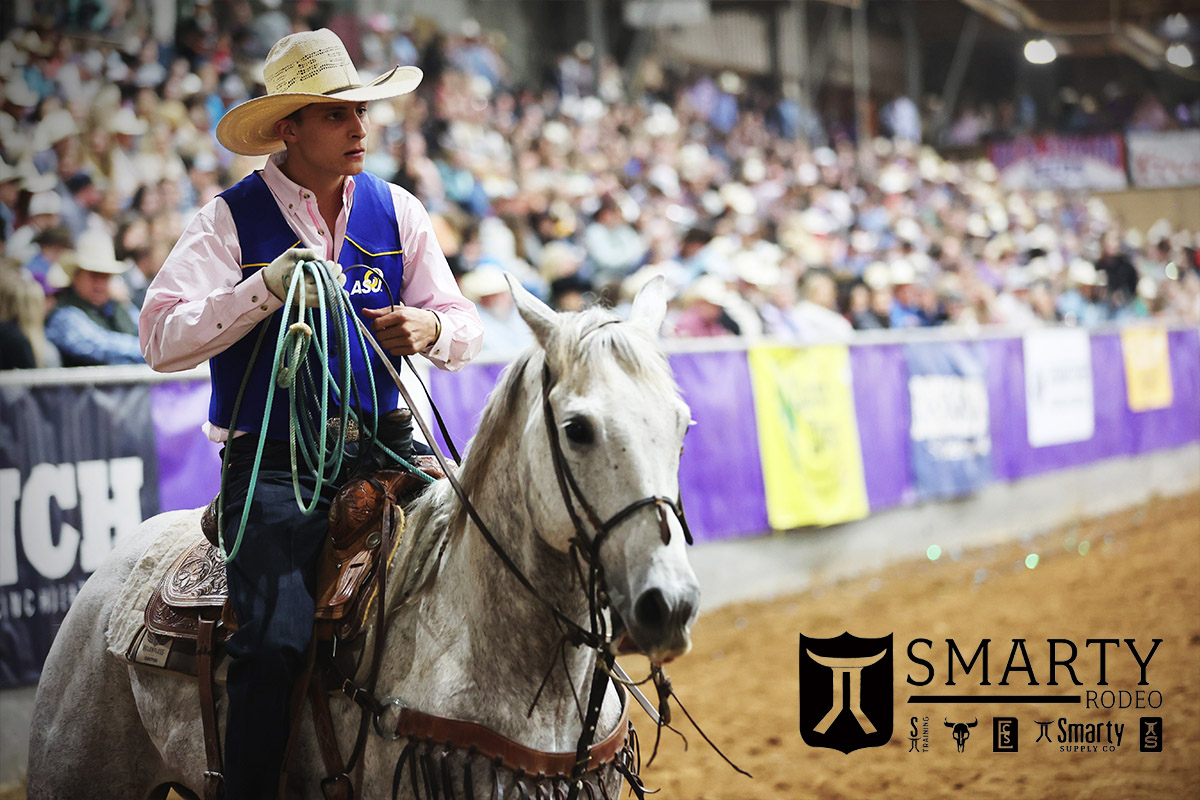
    At Smarty Rodeo, we’re more than just a brand—we’re a collaboration of products, services, and values committed to cultivating champions both in and out of the rodeo arena. Our goal is to preserve the western way of life while supporting athletes as they transition from high school rodeo into the professional ranks. To do that, we’ve built several programs, including our Smarty Rodeo Collegiate Training Program, which we launched in 2022 to enhance the collegiate rodeo experience and support young athletes.

    We started the Collegiate Training Program with one key goal in mind: to give every rodeo team within the National Intercollegiate Rodeo Association (NIRA) the opportunity to access Smarty and Heel-O-Matic training products at discounted rates. We aimed to make sure these students had the right tools to succeed in their rodeo careers. Initially, the program focused on offering discounted roping dummies and bronc riding simulators, but as we progressed, our vision expanded. We realized that with our internal resources, we could do much more. We could help schools market their rodeo programs and build more awareness for this often-under-recognized sport.

    As the program grew, we began forming strong relationships with coaches and teams across the country, such as Tarleton and Cal Poly. We quickly found ourselves thinking outside the box, creating new ways to support athletes. It wasn’t just about selling equipment anymore; we wanted to offer mentorship and guidance, helping these college students navigate the tricky transition from high school to adulthood. Our program became a resource where athletes could find the support they needed to not only continue their passion for rodeo but also thrive as young adults.

    One of the main reasons we created this program was to help keep the western way of life alive. Rodeo is a sport rich in heritage, but as the costs of horses, rigs, and training rise, it’s becoming harder for young athletes to pursue their dreams. College rodeo is a critical stepping stone for these passionate young adults, providing them the opportunity to continue developing their skills. But rodeo also teaches life lessons like hard work, commitment, and teamwork—values we believe should carry through both in and out of the arena.

    We see collegiate rodeo as a key part of the future of our sport. As our team says, “You can never get comfortable or status quo with anything we do.” We recognize that traditional western values are fading, and we are committed to making college rodeo a platform that helps young adults transition into future professional careers—whether in rodeo or in other walks of life. Our program is about more than rodeo; it’s about personal growth and offering mentorship that goes beyond the arena.

    Transitioning from high school to college can be tough. Many of these young athletes are leaving behind structured environments—family support and the guidance of high school coaches—and entering a world where they must make their own decisions. We’ve already built a strong reputation with our Young Pro Program and Pro Team, but we saw a real need to bridge the gap for students just starting their college careers. That’s why we created the Collegiate Training Program—to give students the resources they need not only to succeed in rodeo but to thrive as young adults.

    Our goal is to partner with NIRA and work directly with college rodeo coaches to help these athletes develop both their competitive skills and their understanding of life after college. By working together, we foster an environment where athletes and supporters benefit from mutual education and collaboration. It’s a shared effort to ensure the future of rodeo remains strong.

    While the Smarty and Heel-O-Matic dummies are a staple of our program, what we offer goes far beyond products. We’re invested in building long-term relationships with collegiate rodeo teams. Our commitment to promoting rodeo has led to creative ways of highlighting the sport. Whether it’s social media coverage of practices, showcasing facilities, or spotlighting athletes, we want to ensure the hard work and dedication of college rodeo athletes doesn’t go unnoticed.

    We don’t see this program as a seasonal initiative. It’s an ongoing effort that we continue to expand throughout the year. Our network is growing, and our exposure in the collegiate rodeo space is increasing. We even have two full-time collegiate program managers whose role is to make sure we’re constantly connecting with schools, coaches, and students to deliver the services and products they need.

    Additionally, we make it a point to physically visit every school that participates in the program. This gives us the chance to gather real feedback from students and coaches while showing our commitment to improving the sport. These interactions strengthen our relationships and give us valuable insights into how we can continue to make a positive impact on the future of collegiate rodeo.

    The success of our Collegiate Training Program is just one example of our commitment to innovation. We started with humble beginnings, creating anatomically accurate roping dummies, and have since grown into a global leader in roping products. Acquiring Heel-O-Matic in 2022 strengthened our presence in the industry even further, while our Elite Custom Saddles and Smarty Saddlery brands provide athletes with both premium and cost-effective saddle options.

    Beyond our products, we’ve always been dedicated to giving back to the rodeo community. We support youth programs, high school and college rodeos, and numerous charitable initiatives each year. Our partnerships with professional athletes and our commitment to maintaining a small business mentality have allowed us to stay true to our roots, even as we continue to grow.

    As we look ahead, we’re excited about the future of the Collegiate Training Program. We’re committed to expanding our network and enhancing our impact, working closely with coaches and students to reach more athletes. At the end of the day, our passion is about more than just rodeo—it’s about helping young athletes transition into adulthood, achieve their goals, and embrace the western way of life. Whether through roping dummies, mentorship, or simply fostering a love of the sport, we remain dedicated to cultivating champions both in and out of the arena.

    Find Out More About Smarty Rodeo!

  • Rodeo Queen 101: Jordan Todd

    Rodeo Queen 101: Jordan Todd

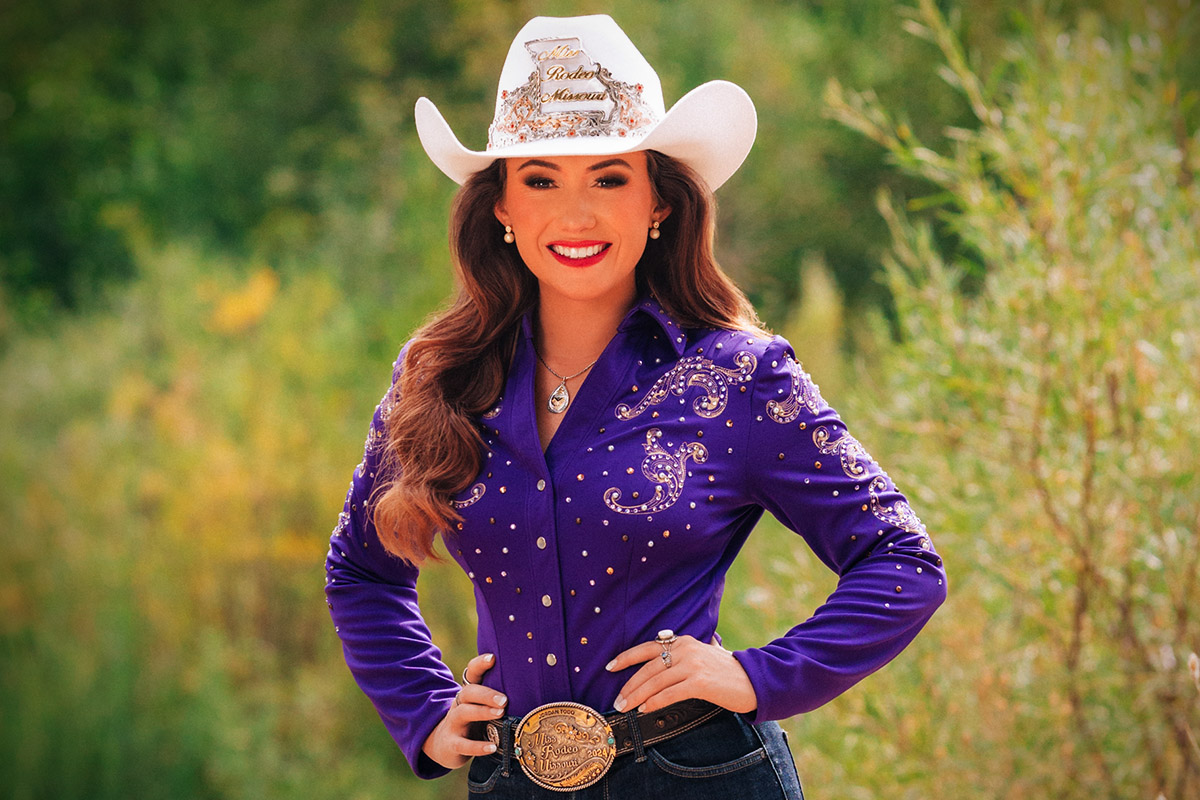
    Growing up on the road with a team roper dad and a barrel racer mom, it’s safe to say that Jordan Todd is no stranger to the rodeo lifestyle. She’s a barrel racer herself, winning her very first buckle in pee-wee barrels at just three years old at the Flickerwood Arena in Jackson, MO. Todd recalled, “I remember seeing this old picture of me standing in front of my horse at the time, and I don’t even come up to his knee, with my buckle and my hand wrapped around his leg.” Todd still enjoys competing at barrel races all over Missouri and surrounding states, as well as amateur rodeos.

    Jordan Todd is the current Miss Rodeo Missouri 2024 and also finished law school in May of this year. Interestingly enough, this is her first Rodeo Queen title! An Instagram post unknowingly planted a seed in Todd back in 2018 by a former Miss Rodeo America and now legal attorney, Katherine Merck of Katherine Merck Law, who managed to complete her law degree during her busy reign. Todd was never able to shake Merck’s inspirational post and decided to take a leap of faith. “In 2023 I was like, all right, it’s still on my heart, still at the back of my brain. I need to do this for some reason, I’m not sure exactly what it is, but God is really pulling me in that direction.” Todd decided to go straight to the top and submitted her application to compete at the Miss Rodeo Missouri Pageant. Although she had no prior pageant experience, she was a quick study and was able to pull from her years and knowledge as a horsewoman, with some additional training for the horsemanship portion. Her dance background helped tremendously with modeling and having grace on stage, and competing on the mock trial team at the University of Central Missouri gave her excellent public speaking skills for speech and impromptu questions. She was such a natural that she impressively won all but one category! Todd said, “I have some sort of purpose here. I don’t know what it is, and there’s a possibility that I’ll never know, but I’m on this journey because God put me here and I’m just rolling with it.”

    Jordan Todd, Photo by Art of Aperture Photography

    Because Todd is passionate about both rodeo and law, she wanted to take a minute and talk about the future of Rodeo and the Working Animal Protection Act (WAPA), which is now law in Oklahoma and Arkansas. Todd asked, “What do we want the future of our industry to look like? How are we going to make it better and how are we going to keep it alive? The industry has grown exponentially in the past few years which is fantastic, however, we are inevitably getting some backlash from that.” Todd explained that the Working Animal Protection Act was created by the Cavalry Group, headed by Mindy Patterson. Simply put, it is to protect lawful animal-related businesses. This includes animal-based attractions that are used for entertainment purposes – rodeos, horse-drawn carriages, animal exhibitors, etc. This law potentially prevents local governments from making these businesses illegal. Todd encourages anyone involved in the rodeo industry to call their local representative for their State House of Representatives and tell them they need WAPA in their state. Either that or contact the Cavalry Group directly for help. “All of us rodeo personnel don’t like to get caught up in a lot of politics, but your local government officials don’t know what you want unless you tell them,” Todd said. “We like to go to our rodeos, work hard, and see our progress in the arena, but sometimes we forget about what goes on outside of the arena and how important it can be to preserve this sport on the government level.” For more information about the Working Animal Protection Act, go to www.thecavalrygroup.com.

    Jordan Todd grew up in Warrenton, MO. She spent four years at the University of Central Missouri where she received her Bachelor’s of Science in Political Science and Criminal Justice and competed on the Mock Trial Team. She then attended the University of Missouri School of Law, where she completed her law degree in May of 2024. Once Todd’s queening career comes to a close, she plans to intern with a law firm. Multiple offers are on the table, but Todd has narrowed it down to a location either in Missouri or Texas. This December 1 – 8, Todd will represent the state of Missouri at the annual Miss Rodeo America Pageant in Las Vegas, Nevada.

    Follow Jordan Todd and her many interviews with rodeo athletes and government officials on her socials. Instagram at @missrodeomissouri, Facebook at @missrodeomo, TikTok at @missrodeomissouri or visit the Miss Rodeo Missouri website at www.missrodeomo.com.

    -Article and Photos by Art of Aperture Photography

  • Western Art Round-up: Red Steagall

    Western Art Round-up: Red Steagall

    Red Steagall’s career has been diverse, from writing western swing and cowboy songs to creating his own radio and TV shows. His music, poetry, and programs have been recognized and loved by everyone from working cowboys to U.S. Presidents, and he has inspired generations of artists. Throughout his work, Steagall has remained committed to the preservation and future of Western culture. Recently, he agreed to donate his extensive archive of creative material to Texas Tech University and to help build the Red Steagall Institute for Traditional Western Arts. The Institute will be located at the University’s Lubbock campus, adjacent to the National Western Heritage Center, and will focus on educating and building up Western artisans through interactive learning.

    Always a Cowboy

    Steagall was born in Gainesville, Texas, and spent his childhood in the Panhandle. Cowboys and music were a part of his life early on, and he dreamt of working in agriculture. “I always wanted to be a cowboy,” Steagall shared.
    He played high school football and also rode bulls at local rodeos. Bull riding was fun, but he knew it wasn’t a good long-term plan. “I never won a dime,” he laughed.
    Steagall dreamed of being a veterinarian and working cowboy until he was stricken with Polio at 15. Fortunately, the Salk vaccine was available to halt the virus four months after he became ill, but it had irreversibly damaged the deltoid muscle in his shoulder.

    No longer able to meet the physical demands of rodeo and ranching, Steagall turned to his other interest — music. His mother gifted him a second-hand mandolin and music lessons, changing the course of his life.
    Playing music helped him regain dexterity and strength, and he soon began writing songs. Following high school, Steagall was still planning to have a career in agriculture, attending college at what is now West Texas A&M to study animal science and agronomy. Following college, he took a job as an agricultural chemist. His role required extensive travel throughout the West, and he took his guitar along, playing at cafes and coffee shops on the weekends. He also formed a band, playing many rodeos and dances.

    A call from a friend again changed the direction of Steagall’s career, taking him to California to work in the music business. During his eight years as an executive in Hollywood, Steagall started making his mark as a songwriter and performer. He was in the room for a long list of chart-topping recording sessions and many of his songs became popular on the radio.
    Steagall’s life was changed forever when a song he wrote with Don Lanier was released in 1967. Lanier was sharing a simple melody he had stuck in his head with Steagall, saying that he couldn’t figure out the right words to go with it. When Lanier’s phone rang, he said, “Here we go again…”, and both he and Steagall lit up, knowing they had just landed on the hook for the song.

    They sat down, and the rest of the song came together in short order. Steagall described himself as being “bulletproof” and wasn’t afraid to pitch his songs to the top musicians of the time. He took it to Buck Owens’ record label, but Owens demanded full publishing on the song, which Steagall couldn’t agree to. After another label executive told Steagall they would need full publishing, he said he would take it to Ray Charles. This likely seemed like an unrealistic, idle threat to the label executive, but Steagall was serious, and after Charles heard the song, he wanted to sing it. They agreed on publishing, and before Steagall and Lanier knew it, they had a number-one hit on the radio.
    Here We Go Again has been recorded by a long list of notable singers, from Nancy Sinatra to Glen Campbell. Norah Jones sang the song with Ray Charles on his last album, Genius Loves Company. The album won eight Grammy awards and has currently sold over five and a half million copies.

    Getting Back to His Roots

    After living in Hollywood and then Nashville, Tennessee, Steagall moved home to the Lone Star State in 1977. He married his wife, Gail, who played a critical role in his career, soon after.

    Steagall continued writing and releasing country western music, but after playing dance halls and honky tonks across the country for years, frequently spending over 200 days a year on the road, he felt called to rethink his career.
    Fortunately for Steagall, an opportunity to shift came his way. He had been sifting through the songs he wrote, feeling more drawn to stories and ballads than classic honky-tonk songs. Coincidently, the first National Cowboy Poetry Gathering was held in 1985, which he attended with his brother. Steagall returned home with a newfound inspiration to follow the thread of cowboy stories and poetry.

    This chapter of Steagall’s career also included an expansion beyond the radio, live performance, and CDs. “I had a friend in the car business, and he asked me if I could come speak to the Rotary Club in Fort Worth,” Steagall shared. “After that, his ad agency called and asked if I would do a cowboy poetry session every morning on WBAP radio in Fort Worth.”

    The original idea was to share a minute and a half of poetry, but Steagall shared that 30 minutes of programming would be better. “I went into my studio and I cut a demo of what I thought the show should sound like,” he recalled.

    Steagall shared the demo with the ad agency and other friends in the radio business, and the response was overwhelmingly positive. Many listeners of this first demo shared that an hour of content would be even better. This started Cowboy Corner, which is now syndicated on 150 stations in 34 states. The program was born out of Steagall’s passion for western stories and includes music, interviews, and stories of the American cowboy.

    In 2010, Steagall expanded his storytelling to TV, airing the first episode of In The Bunkhouse with Red Steagall on RFD-TV. Steagall now hosts Somewhere West of Wallstreet for the network.

    Throughout these programs, Steagall has focused on sharing real cowboy stories, often interviewing people the public likely would never know about otherwise. Steagall has traveled throughout the West to historic ranches, like the 6666’s Ranch, King Ranch, and many others.

    The extensive archive Steagall has amassed now serves as a look back in time and includes interviews with legendary Western figures like Roy Rogers, Reba McEntire, and Buster Welch.

    The common thread throughout these stories is the value of western culture and an agrarian lifestyle. “I’m really attached to the western way of life,” Steagall shared. “The western way of life actually came from an agrarian society, at a time when we depended on each other for survival.”

    Steagall believes that sharing the values of western life benefits society as a whole. “We’re respectful of our neighbors, and we have a certain code of ethics, and we live by them. We honor tradition and heritage. We look to the future with an open mind and a wide, open eye. We have a set of values that make us a harmonious society. I treasure that and I want to preserve it,” Steagall explained.

    Western culture and the agrarian lifestyle have changed dramatically since Steagall started his career, and he wants to make sure the story lives on for future generations. “I’m afraid that if we don’t preserve it, in the next 50 years, nobody will know who we were, what we said, what we did, or anything about the values that we live by. I’m proud of who we are and I want the rest of the world to know,” he reflected.

    Steagall also founded the Red Steagall Cowboy Gathering and Western Swing Festival, held every October in Fort Worth, Texas, for the past 30 years. The event celebrates the music Steagall first fell in love with in West Texas.

    The Next Chapter

    Steagall’s music, poetry, and storytelling have had an indelible impact on the preservation of western culture. He is now expanding on these efforts through the Red Steagall Institute for Traditional Western Arts. The center will be located at the National Ranching Heritage Center in Lubbock, Texas, and include an amphitheater, bit and spur shop, saddle and boot shop, outdoor sculpture court, archive, recording studio, garden featuring West Texas flora, and more.

    While the center will include an archive, the primary focus is on the future, and providing a space for artisans to learn, work, and commune. Steagall wants to connect western artisans throughout the country with masters in their craft, giving them the opportunity to learn and grow. “I know how important it is to work with someone who really is a professional. It can help you find other things about your talent and help you take the next step. There are so many people who are very talented, but give up because they don’t have a platform,” Steagall shared.

    The center will also benefit the public, allowing people to explore western culture, watch artisans at work, and learn about the history of the West. “I also want to provide a research library, and over time, it will be the most complete research library in the world about ranching and the ranching industry,” he added.
    The National Ranching Heritage Center is an ideal neighbor for the Institute, already including western art, exhibits on oil and ranching, western history archives, a series of homes walking visitors through hundreds of years of life in the West, and much more.

    The Institute is currently being fine-tuned and funded, with plans to break ground in the spring of 2025. Steagall is proud to have his name and brand attached to the project and believes it will be important in preserving western culture. “I believe with all my heart that the traditional arts can keep our lifestyle alive,” he concluded.

    -Article by Lilly Platts

  • Team Cavender’s: Kinley Lowry

    Team Cavender’s: Kinley Lowry

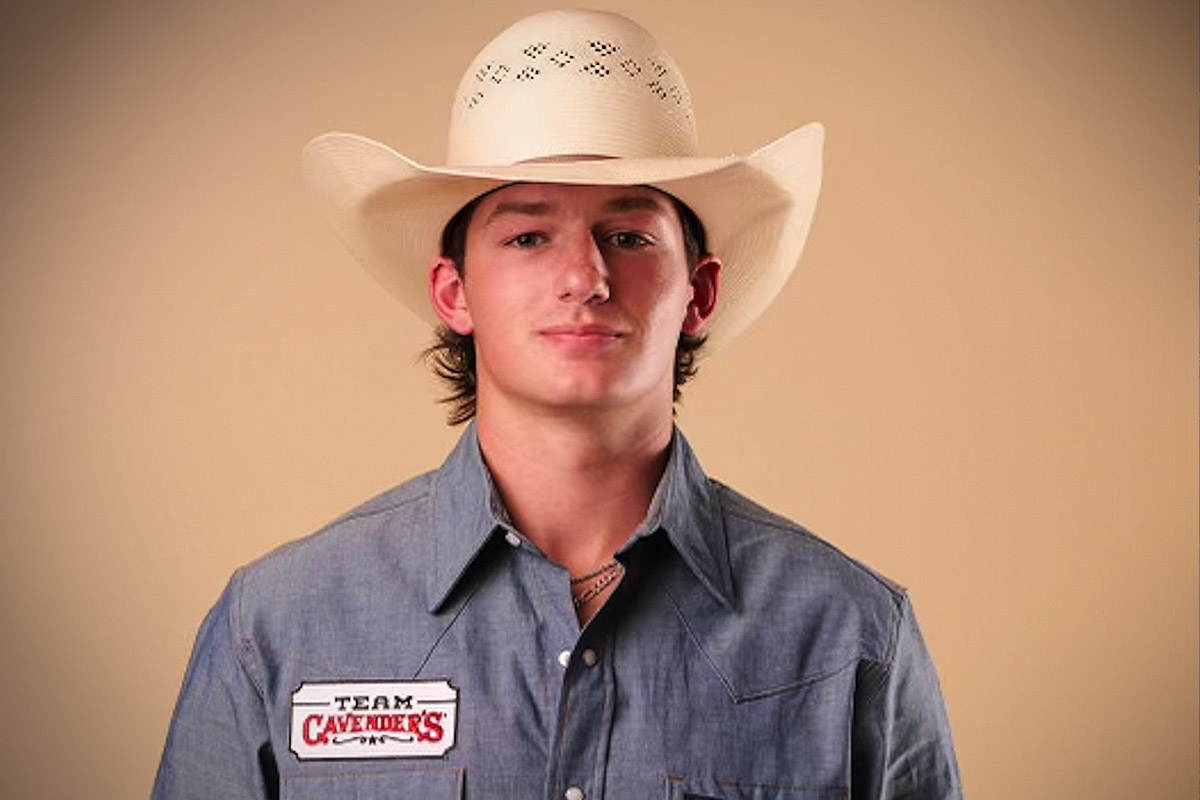
    I got my first pair of boots and first hat at Cavender’s,” said Kinley Lowry, a first-year member of Team Cavender’s. “A former member of the rodeo team, Jolee Alvey, reached out to me and told me about the team.

    “So, I went on their website and read a little more about it and decided to apply,” she added. “I officially signed with them this past August.”

    Kinley Lowry is a senior at Chapel Hill High School in Mount Pleasant, Texas. While she is an active member of Team Cavender’s and the Texas High School Rodeo Association, she said she has her sights set on attending veterinary school at Texas A&M University.

    “I have always wanted to be a vet since I was very, very little,” she said. “I love animals so much. I want to be able to be a vet and help them and their owners as much as possible.”

    Lowry said she is currently a dual-enrolled student at North East Texas Community College, earning college credit hours while still in high school. She said this would give her a head start on her college career.

    “I am planning on attending Texas A&M-Commerce after I graduate,” she said. “So, the classes I am taking at NTCC right now will help me start as a sophomore or a junior when I get to Commerce.”

    As a current member of the National Honor Society, Lowry said she wants to continue that trend of academic excellence by being a part of the Honors College at A&M-Commerce, where she will study Pre-Veterinary Science with a minor in equine science to prepare her for vet school.

    Lowry said her involvement in the FFA organization helped her chase her dream of attending vet school. She said she serves as treasurer on her FFA chapter’s officer team and is heavily involved in the organization.

    “I do Leadership Development Events and Career Development Events,” she said. “In the fall, I compete on the Agricultural Advocacy and Agricultural Issues team, and this spring, I will compete on the vet science team and the horse judging team.”

    According to a description on the National FFA website in Veterinary Science CDE, students will work in teams to demonstrate their technical knowledge with small and large animals. They complete written exams, scenario questions, identification, and hands-on practicum.

    “Our team made it to the state contest in vet science last year,” Lowry said. “When we were getting ready for the contest, we had a local vet come and talk to us. That was really cool to be able to ask him questions and learn from him.

    “Being on the team has helped me learn a lot about certain skills and instruments used in equine medicine,” she said. “I can carry all those skills over to my horses and my rodeo career.”

    Lowry said she hopes to work towards buying a WPRA card, but vet school and a career in veterinary medicine will be her main focus once she starts attending classes at A&M-Commerce.

    Learn More About Team Cavender’s!

  • Team Cavender’s: Dylan Ouzts

    Team Cavender’s: Dylan Ouzts

    I had seen things really good about Team Cavender’s,” said Team Cavender’s Athlete Dylan Ouzts. “I think a few of my friends who had been on the team put in a good word for me, and I was officially made a part of the team during the National High School Rodeo Finals this year.

    “It had been a dream to be on Team Cavender’s for a while,” he added. “Now that it’s actually happening and it is real, I am very thankful and excited for the rest of this year.”

    Dylan Ouzts said that although he had lived in Texas all his life, a state that has produced multiple rodeo legends, he had not grown up in a traditional rodeo family.

    “I always rode horses growing up just like everyone else here, but I didn’t really have any family that was involved in rodeo,” Ouzts said.

    Although he did not grow up in a traditional rodeo family, Outzts said he had no shortage of role models and teachers.

    Robson Palermo, a three-time Professional Bull Riders World Champion and 2021 Ring of Honor Inductee, played an instrumental role during the start of Ouzts’s rodeo career.

    “Robson taught me how to really ride my horse so that I could even have the ability to rope and the basics of team roping,” he said.

    “Later, I was able to learn more from Lightning Aguilera, who made the NFR in 2022,” he added. “I started to see a real future in rodeo.”

    Ouzts said he realized he had to choose between school sports and rodeo.

    “I felt like between school and rodeo, I was living two different lifestyles,” Ouzts said. “I played sports at school, but the injuries I would get from rodeoing would stop me from playing baseball and football, so I decided to focus only on rodeo.

    “It’s hard because I love rodeoing, and I see more opportunities and a future there, but I miss playing football and baseball with my buddies at school,” he added.

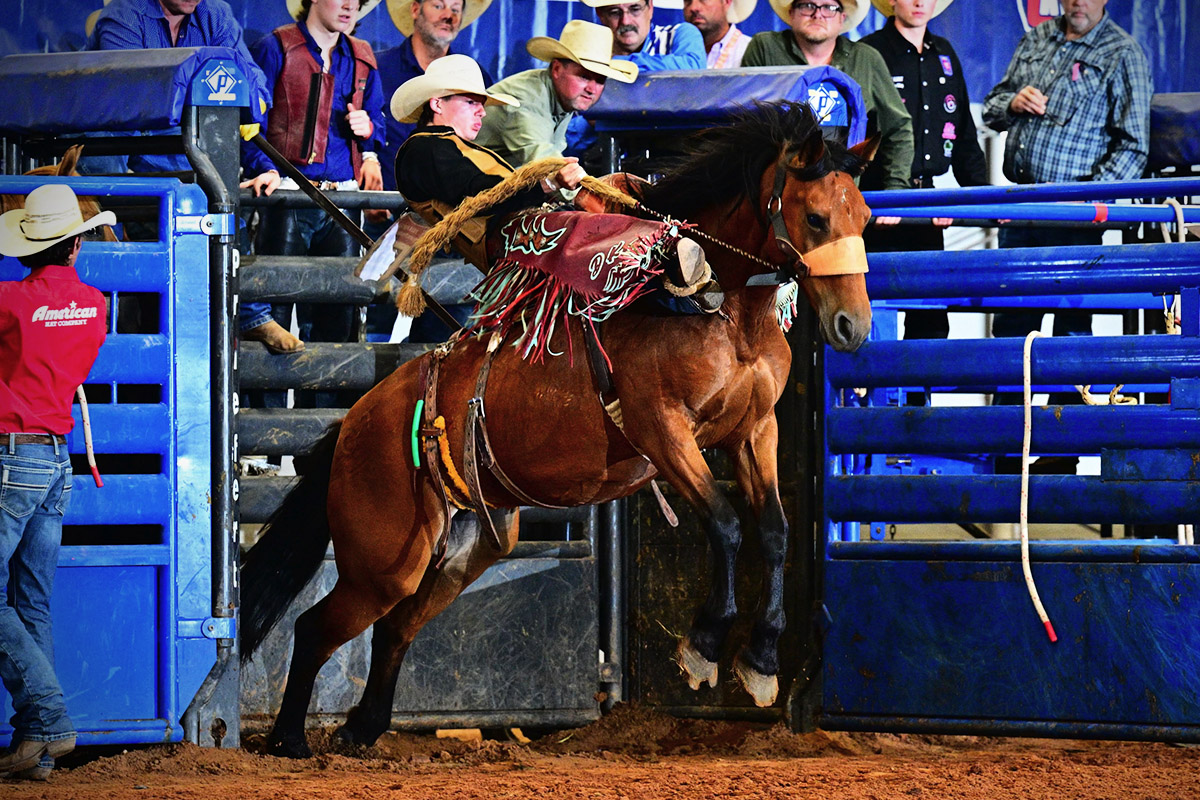
    During his freshman year of high school, Ouzts said he decided to add another event to his resume, this time on the opposite end of the arena.

    “Jeremy Stevenson, who knew my mom, texted me one day and said he’d like to help me get into bronc riding,” he said. “I went to his house, and he let me use his saddle and gear when I started. I am very thankful for everything he’s taught me.”

    While Ouzts was learning to rodeo, he said his family was learning along with him. One person he said has taken it all in stride is his dad, Burton Ouzts.

    “He didn’t grow up around rodeo at all, and he didn’t think much of it when I started roping,” he said. “When I started riding broncs, he did question me pretty hard because he knew how much I loved playing football. I think he sees now how much I also love riding broncs.”

    No matter what he chose, Ouzts said he knew his parents would be supportive.

    “My mom, Shana Ouzts, always makes it to my rodeos,” he said. “I can’t say how thankful I am for her being supportive of me and my dreams.”

    He added there is no shortage of support from the friends he’s made on Team Cavender’s.

    “Jace Stout and Cooper Lane have helped me a lot too,” he said. “Whether they are teaching me something new about bronc riding or giving me pep talks, they are always helping.”

    Learn More about Team Cavender’s!