Rodeo Life

Blog

  • On the Trail with the Soileau Brothers

    On the Trail with the Soileau Brothers

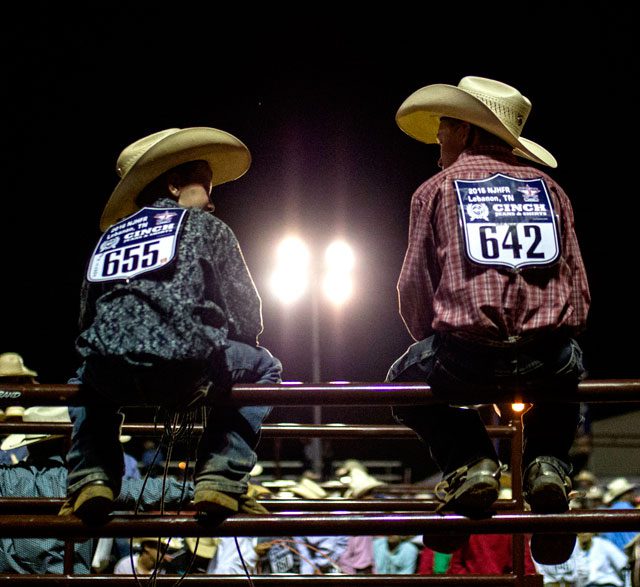
    “I rodeoed and I loved it,” said Kent Soileau, from White Ville, Louisiana. “When my oldest son (Garrett) was 8, I decided he should rodeo and I built a rope pen and got a set of steers.” Life took over, and Kent didn’t push it. “We were farming and buying properties.” Three or four years went by, and Kent realized if he didn’t put rodeo as a priority, he was going to miss out and so were his boys. “They all agreed to plow the pen, get some horses and go again.” The hard work paid off and this year three of his boys are headed to the National Junior High and High School Finals. His wife, Sadie, was a city girl who came to the country.

    “I love it,” she said about rodeo. “I’m still not a horse person, but I get the clothes and the cooking together. I like seeing new places.” The family had never been to Tennessee and made the ten hour drive to Lebannon to watch their youngest son, Grant, compete. After that they will head to Gillette, Wyoming, to watch two other sons, Gavin and Gabe, compete at the National High School Finals.

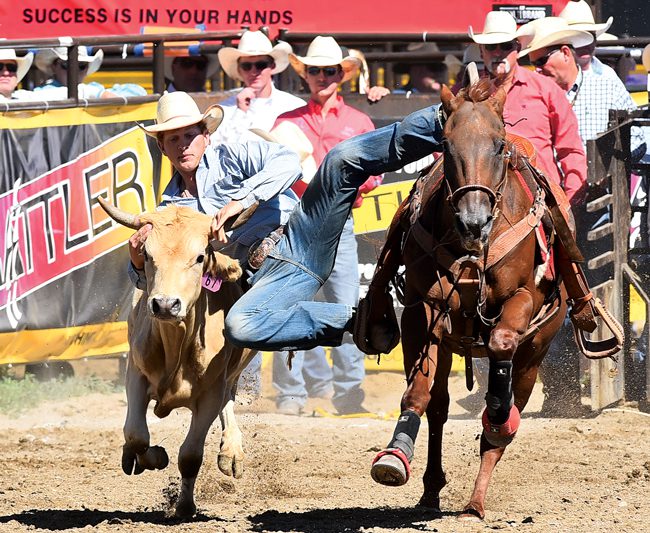
    Grant competes in team roping and chute dogging. He spends his spare time working on the family farm, where they grow rice, sugar cane, wheat, corn, and beans. They also run crawfish traps from February to mid-June. He likes working on the farm and plans to come back after obtaining an ag business degree in college. “It’s very hot and I like it,” he says of farming. Grant started competing when he was at the end of his fifth grade year. Before his first rodeo, he had practiced for about three months. He learned from his dad and family friend, Tom Carney (Steer Wrestling 101). “It looked fun and it was a challenge,” said the 14-year-old, a ninth grader at Sacred Heart High School in Ville Platte (11 miles away). “When I went to Tom’s school, I didn’t know anything about bull dogging; I didn’t want to go. I just wanted to practice team roping. But now that I’m bull dogging I like it a lot, it’s a lot of action.” Grant believes that if you want something, you have to work hard for it, and with that, he practices a lot. “I get up every morning, I practice, and every night we are bull dogging – every time it doesn’t rain and our pen is dry enough.” Grant is the red headed youngest in the family of five. “I have a sister (Lainey, 21) that is a red head, and my older brother (Garrett– 19 about to turn 20); he doesn’t rodeo. When we started he was about to graduate so he didn’t rodeo. He’s going to college for Ag Business and working on the farm.” Grant has met a lot of friends through rodeo, and when he’s not practicing, rodeoing, or working on the farm, he likes to go swimming, four wheeling, fishing and duck hunting. He works hard not to be in the shadow of his older brothers. “We ride different and we swing our ropes different, but we still help each other out.”

    Gavin is two years older than Grant and made the National High School Finals for the first time in the team roping as a heeler. He went into the Louisiana High School Rodeo Finals in the tenth hole in the team roping and ended up in the fourth hole going to Nationals. Gavin works on the farm, and he spends most of his time practicing. “We go to school and when we get home we crawfish or practice. In the summer time, I help my dad drive tractors, plow, shred, or get the cane ground ready.” His least favorite thing to do is pull red rice. “It’s hot and sweaty and my arms get cut up.” Gavin is going to be a junior and school is not his favorite to do. “There are other things I’d rather do, like rodeo or hunt or fish or drive around in my truck.” The 16-year-old drives a 2013 2500 GMC. “It was my dad’s older truck and he gave it to me and got a new one.” His dad is insistent that his sons practice. “There are days I’m lazy and he makes me go,” said Gavin, who wants to be a vet or come back to the ranch and be a foreman. Gavin stared rodeoing in the 8th grade. “We never really got into the competition big – we went to some smaller ones, and we were showing goats and we had some friends that rodeoed and we decided to do it.” Gavin is hoping to be a National Champion – and is preparing for it. “We rope our machine and even though we just got a big rain, we will get out there again and prepare for the finals.” His hero is Ote Barry. “He’s a four time world champion steer wrestler and came back to go the American and did pretty well.” He has learned along the way the he can’t look at what everyone else is doing, he just needs to be the best he can be. “I have the want and drive to get better, and reach the full potential of what I can be.”

    Gabe is the oldest in the family that competes. “I try to help my brothers in any way I can and make sure they do everything they can when we practice,” said the 18-year-old. “I want us all to succeed. When we practice, it’s me, Gavin and my dad. My dad works the chute. Gavin hazes for me and I haze for him and we haze for Grant, who just stared jumping steers. We do all the ground work first.”

    Gabe is heading back to the National High School Finals Rodeo to defend his 2015 Steer Wrestling Championship. “It really didn’t sink in right away,” said the recent graduate from Sacred Heart High School of his win last year in Rock Springs, Wyo. He is concentrating on making sure he is focused this year. “I am preparing myself as best I can to compete. It is more muscle memory – if I prepare myself the right way it’s easier to compete.” He slides the stick, jumps the dummy and chute dogs before he ever jumps a steer on a horse. He typically practices two to three hours a day. “I don’t practice every single day, but I do, at least three or four times a week.” He believes the horse has a lot to do with everything. “I have a lot of good luck with my horses. For a horse, you’ve got to get along, and me and my little brother can’t ride the same horses, we don’t always get along the same.” The horse he rode last year is Kid Rock, a horse he owns. “I bought him right before state finals last year and rode him at state finals and that was the first rodeo I rode him at. I bought him from Marcus Theriot (2016 CNFR All Around Champion) – he had three bull dogging horses at the time and he sold him. I got along with him right away.”

    Gabe will head to college at Mcneese State. “It is close to home and I always wanted to go there. Half my friends and my brother go there.” He will study Ag Business and will come back and work on the farm with his dad. “My older brother is doing the same thing.” Unlike his older brother, Gabe plans to college rodeo and once he graduates, he will get his card and travel around and see how it goes.

    Next to their dad, all three boys count their grandpa Melvin as their hero. “He’s always worked hard his whole life and he’s never quit. He’d put his mind to something and he would do it.” All of Kent and Sadie’s children have the same determination and drive. “The perfect day is waking up healthy, having my family around and being able to do the things I love, rodeo and farm,” said Gabe.
  • Pat Summit

    Pat Summit

    There are a few coaches that transcend sports. The lessons they teach their students are more than what can be measured in wins and losses. I believe that coaches in any sport can learn lessons from some of these great coaches. Pat Summitt was a coach of the Tennessee Lady Vols Basketball team and her resume is more than impressive. She has the most wins in NCAA history with 1098. Summitt also won eight National Championships in her coaching career. I find her most impressive feat is that she graduated 100% of her players that used all of their eligibility in her 38 year career.
    I have a few of my favorite Pat Summitt quotes and how I believe they apply to rodeo.
    “Here is how I am going to beat you. I’m going to out work you. That it. That’s all there is to it.” Summitt grew up on a dairy farm and there was no doubt that her upbringing helped make her a hard worker. In basketball much like rodeo if you want to improve put in the work. There are no substitutes for hard work. Study. Learn. Compete. Practice. They are all forms of work. Don’t let you’re your competition beat you because you were not willing to work. That’s all there is to it.
    “It’s my experience that people rise to the level of their own expectations and of the competition they seek out.” Summitt had high expectations for her teams and the results were a reflection of the expectations. Set high expectations and then work to meet those expectations. Find the best competition and compete against them. Learn from your competition to continue to improve. Don’t be afraid of tough competition, use it as a measuring stick, learn your lessons and improve. Set your expectations high then compete fearlessly to get meet them.
    “See yourself as self-employed.” This one is very true in the sport of rodeo. On the professional level you truly are self-employed. Too many students in high school and college get comfortable with their parents helping them get down the rodeo road and do not realize that at some point they must produce results to justify the sacrifice the parents have made. To be great at any sport you must treat it like a job, can you make it on your wages?
    Summitt was always looking for ways to improve, her coaching style and teaching style were always under construction. In rodeo you are only as good as your next run/ride, but you must always be practicing and working on improving to make that next run better than your previous run/ride. Always be building for the future.
    Pat Summitt was a legendary coach, and the lessons she taught can be applied to rodeo as well.

  • Back When They Bucked with Vernon Dude Smith

    Back When They Bucked with Vernon Dude Smith

    [ The Smith family’s only bootprint in the horse world was a great-great-grandfather who traded horses, but that all changed when Dude went to watch his first rodeo. ]

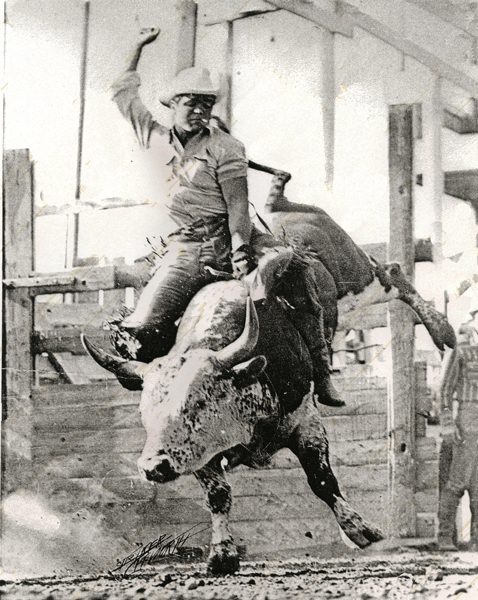
    Dude Smith was 13 years old when he stuck a blue-jeaned leg over his first bucking bull. In actuality, it was a milk cow tied to the fence. But for the teenager from Burkburnett, Texas, it was the start to a rodeo career that would give him the love and friendships of a lifetime, and the honor of being inducted into both the Texas Cowboy Hall of Fame and the National Cowboy and Western Heritage Museum’s Rodeo Hall of Fame.
    Born Vernon Smith, Jr., in 1928, he was the oldest of three sisters, Geneva, Anita, and Kay, and a brother, Billy. Neither Dude nor his dad, whom he was named after, had middle names, and went by Big Dude or Little Dude to tell them apart. The Smith family’s only bootprint in the horse world was a great-great-grandfather who traded horses, but that all changed when Dude went to watch his first rodeo. “I told my mom that’s what I wanted to do, and she told me I didn’t know anything about rodeo,” Dude recalls. “And I told her those cowboys didn’t know anything about it either at one time!”
    Dude rode one bucking bronc that year, but nearly didn’t make it to the chutes again after he tried to join the U.S. Navy. “I lied about my age and tried to join up, but they caught me,” says Dude. “That was just before Pearl Harbor was bombed – a few people I knew lost their lives there.” Soon after, Dude was given a 4F by the draft board after he was kicked while playing football, which broke an artery in his leg. One hospital was ready to amputate it, but another doctor was able to operate and repair Dude’s leg, cautioning him to never do anything that would bump it.
    But Dude wasn’t long out of the hospital bed before he was back in the arena, finding work for rodeo producer Paul Long in Kansas and running the rodeo arena for Floyd Reynolds of Montgomery, Ala., doing his own rodeoing on Saturday nights. Dude’s first jobs as a child were carrying water jars in wet tow sacks to field hands for 50 cents a day, or pulling a funnel wagon which carried grain. But in 1947, he and several friends, including Neal Gay and Wiz Whizenheimer, decided to head north and east to the larger rodeos, and Dude sold a cow he owned to his dad and used the money to buy a ticket to Philadelphia. “I sat on the airplane with my nose on the glass and wondered how much better it could get,” says Dude. “I had on boots with more tape than leather holding them together, and I went on to compete in Detroit and New York. I’d never seen that kind of money in my life.” He competed in 53 performances in 30 days in the Madison Square Garden rodeo, having joined the Cowboys’ Turtle Association just before it was named the RCA. He recently received a buckle from Montana Silversmiths for being one of the four oldest gold card members – #159.
    Dude competed in every event but team roping, mainly entering the bareback riding, bull riding, steer wrestling, and wild horse mugging. “I loved riding bulls, and I could ride broncs, I just wasn’t as classy as the other guys. I travelled with Casey Tibbs for a while, and if I got lucky enough to draw and beat him, he’d say we didn’t go to that rodeo,” Dude says with a laugh. “There was one bull, Iron Ore, that I got on all the time, and I never rode him. He wouldn’t hook me, but he’d look at me like I was dummy to keep trying. When I leave this world, he’ll be on my headstone – I thought he deserved to be the winner of the deal.”
    Dude saw much of his success in the steer wrestling, winning the event at Cheyenne Frontier Days more than any other rodeo. The greatest thrill of his steer wrestling career was in 1953, when he was invited to compete among the top 25 steer wrestlers in the world in Grady, N.M. Another high point came in the early 1960s, when Clem McSpadden, as part of John F. Kennedy’s “Partners of the Alliance” exchange with Mexico, asked Dude to go with a group of cowboys from Oklahoma to aid cities in Mexico and put on a rodeo. “During the rodeo, they brought out a pretty nice steer and a Mexican fighting bull that probably weighed 850 pounds,” says Dude. “I was able to throw that bull, and everybody threw their hats in the ring and hollered I could be president of Mexico!”
    Yet one of the greatest events of his life was when Dude met his wife, Frances, in the late 1940s. She was performing with a horseback square dancing team in Burkburnett when Dude met her, and they married in 1950. “I chased her for a couple of years and finally got her hemmed up, but it wasn’t easy!” says Dude. “After that, it lasted pretty good. She was one of the greatest horsewomen there ever was.” A barrel racer, Frances qualified for the 1967 NFR in Oklahoma City – the first year barrel racing was added to the finals – and won the World title. She was also a member of the AQHA and won titles in the both the junior and senior divisions, along with keeping books for rodeo producer Ed Curtis. She and Dude rodeoed together for nearly 20 years, crisscrossing the plains of Kansas, Oklahoma, Texas, Nebraska, and even into New Mexico. Dude finished 16th in the world in steer wrestling in 1966. “But I never really rodeoed to be a world champion,” he says. “My dad told me it was better to be a big fish in a little pond than a little fish in a big pond, and I hardly remember going to a rodeo I didn’t win.”
    One of Dude’s greatest horses was Scooter, born the same year he and Frances married. The horse was a gift from Dude’s father-in-law, and he was Dude’s mount in the steer wrestling, also winning Frances a barrel racing saddle in Mesquite, Texas, after her horse went lame. In his later years, Scooter went on to teach many kids how to steer wrestle and high school rodeo.
    In addition to competing, Dude ran footraces to earn extra money on the road, and he worked as a pickup man, arena director, and even an arena policeman. “We had to keep people back from the arena a certain distance,” Dude explains. “In Cheyenne, people would bring their blankets and set up in the roping box end of the arena. I helped anywhere they needed me. Sonny Ringer was the arena director for Beutlers when I helped them. He carried a pair of pliers in his pocket, but if I couldn’t get a steer to go in, I’d just bite his tail!”
    When Dude decided to retire from rodeo in the 1970s, he started training racehorses in Texas. “Frances didn’t understand how I could like training horses, since I didn’t get to ride them, but I told her when the horses crossed the finish line first you’d get goose bumps an inch high!” He and Frances had two sons, Mark and Vern. Vern went on to ride bulls after high school and qualified for the NFR in 1980 , but Mark passed away in 1973. He was driving home on a three-wheeler when a pipe fell off a passing truck and hit him. “I lost everything for a few months,” Dude remembers. “But between my friends and the Lord, I got myself on the right track.”
    Dude and Frances made their home for many years in a house near the Red River but later moved to higher ground in Burkburnett. Their son Vern now lives near the river and runs cattle with his wife, LaDonne, who college rodeoed on a scholarship. Dude lives with his granddaughter, Sage Smith, who barrel races, and trains and sells horses. She won the BFA World Championship in 2003. Dude and Frances were married for 63 years before she passed away in 2013, and she was inducted into the National Cowboy and Western Heritage Museum’s Rodeo Hall of Fame in 2014.
    Along with his immediate family, Dude continues many friendships with his rodeo family, and continues to run a small trucking business. “When I first started rodeo, Neal Gay was my closest friend, and he still is,” says Dude. “We’re like brothers.” He feels he competed in the greatest age of rodeo, where camaraderie was staying with families in the same town as the rodeo – some of them barely acquaintances – and hospitality was an ice box full of beer and a plate of chicken or steak. “I worked with committee men and contestants, and we were one big family. I never went to the National Finals, but I would venture to say I wound up better off than a bunch of the gold buckle boys.”

  • National junior high champions crowned

    National junior high champions crowned

    Lebanon, Tenn., June 25, 2016 – She’s only 13, but seventh-grader Wacey Day of Fleming, Colo., made two seven-second runs to edge out 165 other girls in goat tying at the National Junior High Finals Rodeo on Saturday in Lebanon, Tenn.

    Day, who competes for the Nebraska team, tied her final goat in a blistering 7.5 seconds to win the three-round aggregate by a full second over Oregon’s Kennedy Buckner.

    “Slow is smooth, smooth is fast, and fast is money,” said Day, who tied her first goat in 8.3 seconds and her second in 7.4. “I came out here and made the three best runs of my life.”

    This year’s NJHFR drew 1,049 contestants from 42 different states, three Canadian provinces and Australia to rope and ride for scholarship dollars, jackpot money and prizes.

    Colten Leech of Billings, Mo., won the national championship in chute dogging after turfing three steers in 8.72 seconds.

    “I want to thank the good Lord for this opportunity and my family for getting me down the road,” said Leech.

    In a competitive barrel-racing short round, the top two were Shae Halls – the daughter of former NFR arena-record holder Brandie Halls – and the eventual champ. Jayci Byler of Bellville, Texas, won the short round by two-tenths of a second to claim the national championship. Her horse, 14-year-old Prince of Perks owned by the Shoppa Ranch, is by Dash For Perks and out of a granddaughter of Dash For Cash and Gay Bar King. Byler’s family owns Byler Performance Equine – a swimming pool for horses – in Bellville.

    “I did it,” Byler said. “And it was all because of Mom. She helped me most and encourages me every day.”

    Other national champions were Girls’ Breakaway roper Sawyer Gilbert of Buffalo, S.D.; Boys’ Breakaway roper Brandon Ben of Peridot, Ariz.; Bareback Steer Rider Keenan Hayes of Hayden, Colo.; Saddle Bronc Steer Rider Gus Gaillard of Morse, Texas; Boys’ Goat Tyer Briar Teague of Rattan, Okla.; Ribbon Ropers Zoie Bedke and Cooper Duffin of Idaho; Tie-Down Roper Trevor Hale of Perryton, Texas; Pole Bender Maci Jo Zimmerman of New Ross, Ind.; Team Ropers Tanner Brown, Florence, Miss., and, Matt Watt, Geiger, Ala.; and Bull Rider Chris Villanueva of Mesquite, Texas.

    The team from Idaho won the 2016 volleyball tournament, while the Girls’ AQHA Horse of the Year title went to Chaley Hext for Sinioto Rio, and the Boys’ counterpart went to Chance Thiessen for Cutter Play Me Stylish. The boys’ all-around rookie champion was Justice Hopper of Tooele, Utah; and the girls’ counterpart was Jayci Byler of Bellville, Texas. The overall team championship was won by Oklahoma with 11,650 points, edging second-place Texas and third-place Louisiana.

    In Lebanon, NJHFR stock contractor Herbert Theriot of Mississippi assembled enough calves, steers and cows for nearly 1,800 runs. He sorted through more than 450 head to bring 340 calves, for instance. “It takes a lot of people to do an event like this, especially this size,” said Theriot, who credited Curtis Massey Cattle Company with bringing a great set of Holstein cattle for the bareback and saddle bronc steer riding.

    Theriot, himself a former PRCA world champion in tie-down roping, has two sons. Marcus was the around champ five years ago at the NJHFR and won the national collegiate all-around title last week in Casper, Wyo., while Mason, 12, made the short round in ribbon roping at the NJHFR on Saturday.

    The Junior High Division was created within the National High School Rodeo Association (NHSRA) in 2004 for sixth- through eighth-graders as a feeder system into the high-school ranks, and now fields more than 2,500 junior-high students in 13 different events.

    The Finals is in Tennessee for the first time this year; it was held in Gallup, N.M., through 2013 and spent the previous two years in Des Moines, Iowa. It will return to Lebanon in June 2017. Meanwhile, Gillette, Wyo., will host the National High School Finals Rodeo on July 17-23.


    Complete results from the finals of 2016 National Junior High Finals Rodeo:


    All-Around Cowboy:  1. Cooper Cooke, Victor, Idaho, 1420 points; 2. Cooper Duffin, Pocatello, Idaho, 1240; 3. Trevor Hale, Perryton, Texas, 1160; 4. Cord McDonald, Durant, Okla., 1130.


    All-Around Cowgirl:  1. Paige Jones, Wayne, Okla., 1355 points; 2. Jayci Byler, Bellville, Texas, 1060

    1. Makenzy Byrne, Arcadia, Okla., 1040; 4. Chaley Hext, Canadian, Texas, 1000.


    Girls’ Breakaway:  Finals: 1. Baili Herring, Artesia, N.M., 2.57 seconds; 2. Paige Jones, Wayne, Okla., 2.8; 3. Robbin Rice, Sealy, Texas, 2.96; 4. Sawyer Gilbert, Buffalo, S.D., 2.99. Average on three:  1. Sawyer Gilbert, Buffalo, S.D., 10.09 seconds; 2. Paige Jones, Wayne, Okla., 10.62; 3. Lilla Bell, Hollister, Calif., 10.85; 4. Baili Herring, Artesia, N.M., 10.92; 5. Robbin Rice, Sealy, Texas, 10.93; 6. Sammy Taylor, Neola, Utah, 10.98.


    Boys’ Breakaway:  Finals:  1. Brandon Ben, Peridot, Ariz., 2.52 seconds; 2. Cade Bell, Paradise Valley, Nev., 2.81; 3. Titan Quigg, Rankin, Texas, 2.85; 4. Riley Rieken, Arp, Texas, 3.05. Average on three:  1. Brandon Ben, Peridot, Ariz., 8.66 seconds; 2. Cade Bell, Paradise Valley, Nev., 8.92; 3. Titan Quigg, Rankin, Texas, 9.00; 4. Jacques Trahan, Hackberry, La., 9.51.


    Bareback Steer Riding:  Finals:  1/2. Keenan Hayes, Hayden, Colo., and Brad Moreno, Kayenta, Ariz., 68 points each; 3. Jaxson Mirabal, Magdalena, N.M., 63; 4. Jayco Roper, Oktaha, Okla., 63. Average on three:  1. Keenan Hayes, Hayden, Colo., 202 points; 2. Cooper Cooke, Victor, Idaho, 194; 3. Braden Smith, Spearsville, La., 193; 4. Jayco Roper, Oktaha, Okla., 192; 5. Brad Moreno, Kayenta, Ariz., 187; 6. Mason Spain, Forney, Texas, 180.


    Girls’ Goat Tying:  Finals:  1. Wacey Day, Fleming, Colo., 7.56 seconds; 2. Kennedy Buckner, Redmond, Ore., 7.8; 3. Makenzy Byrne, Arcadia, Okla., 8.12; 4. Hannah Giger, Wilburton, Okla., 8.17. Average on three:  1. Wacey Day, Fleming, Colo., 23.39 seconds; 2. Kennedy Buckner, Redmond, Ore., 24.35; 3. Makenzy Byrne, Arcadia, Okla., 24.41; 4. Hannah Giger, Wilburton, Okla., 24.85; 5. Desta Misegades, Henning, Minn., 25.56; 6. Chenoa Vande Stouwe, Inwood, Iowa, 25.72.


    Boys’ Goat Tying:  Finals: 1. Rance Doyal, Durant, Okla., 8.69 seconds; 2. Daunte Ceresola, Fernley, Nev., 9.19; 3. Cooper Duffin, Pocatello, Idaho, 9.46; 4. Harland Groves, Faith, S.D., 9.83. Average on three:  1. Briar Teague, Rattan, Okla., 29.55 seconds; 2. Cooper Duffin, Pocatello, Idaho, 30.57; 3. Rance Doyal, Durant, Okla., 31.24; 4. Teegan Leno, Sheridan, Wyo., 31.4; 5. Harland Groves, Faith, S.D., 31.66; 6. Colt Soderholm, Sheyenne, N.D., 31.86.


    Barrel Racing:  Finals: 1. Jayci Byler, Bellville, Texas, 15.623 seconds; 2. Reagan Goudeau, Hungerford, Texas, 15.813; 3. Rio Flaharty, El Dorado, Kan., 15.871; 3. Emma Smith, Pleasanton, Texas, 15.871; 5. Brie Wells, LeMars, Iowa, 15.933. Average on three:  1. Jayci Byler, Bellville, Texas, 47.369 seconds; 2. Rio Flaharty, ElDorado, Kan., 47.449; 3. Emma Smith, Pleasanton, Texas, 48.018; 4. Reagan Goudeau, Hungerford, Texas, 48.276; 5. Greeley Eastep, Bainbridge, Ind., 48.471; 6. Taylor Nichols, Morristown, Ariz., 48.618.


    Saddle Bronc Steer Riding:  Finals:  1. Cooper Cooke, Victor, Idaho, 69 points; 2. Gus Gaillard, Morse, Texas, 67; 3. Ethan Lombardo, Marshville, N.C., 65; 4. Coy Hebert, Welsh, La., 58. Average on three:  1. Gus Gaillard, Morse, Texas, 196 points; 2. Cooper Cooke, Victor, Idaho, 190; 3. Ethan Lombardo, Marshville, N.C., 175; 4. Jaxson Mirabal, Magdalena, N.M., 167; 5. Coy Hebert, Welsh, La., 149;

    1. Cauy Pennington, Kiowa, Colo., 146.


    Chute Dogging:  Finals:  1. Tom Crouse, Gallatin, Mo., 2.25 seconds; 2. Trevor Boatwright, Marble, N.C., 2.52; 3. Tanner Berghuis, Atwater, Minn., 2.84; 4. Cord McDonald, Durant, Okla., 2.93. Average on three:  1. Colten Leech, Billings, Mo., 8.72 seconds; 2. Cord McDonald, Durant, Okla., 9.18; 3. Tom Crouse, Gallatin, Mo., 9.61; 4. Trace Fuller, Bozeman, Mont., 9.62; 5. Taylor Blackburn, Balko, Okla., 9.79; 6. Gage Gregersen, Malta, Idaho, 10.69.


    Ribbon Roping:  Finals:  1. Trevor Hale, Perryton, Texas, and Chaley Hext, Canadian, Texas, 7.06 seconds; 2. Zoie Bedke, Oakley, Idaho, and Cooper Duffin, Pocatello, Idaho, 7.78; 3. Zaine Mikita, Byers, Colo., and Amanda Terrell, LaSalle, Colo., 8.46; 4. Chance Thiessen, Elk City, Okla., and Paige Jones, Wayne, Okla., 8.52. Average on three:  1. Zoie Bedke, Oakley, Idaho, and Cooper Duffin, Pocatello, Idaho, 24.65 seconds; 2. Lane Shemak, Cobb, Wis., and Bridee Ann Burks, Lancaster, Wis., 29.42; 3. Kincade Henry, Mt Pleasant, Texas, and Makenzie Mayes, Scroggins, Texas, 30.44; 4. Trevor Hale, Perryton, Texas, and Chaley Hext, Canadian, Texas, 30.5; 5. Zaine Mikita, Byers, Colo., and Amanda Terrell, LaSalle, Colo., 30.84; 6. Jace Bleil, Bronson, Iowa, and Bailey Bleil, Bronson, Iowa, 30.98.


    Tie-Down Roping:  Finals:  1. Trevor Hale, Perryton, Texas, 11.25; 2. Dean Holyan, Coyote Canyon, N.M., 12.45; 3. Cord McDonald, Durant, Okla., 13.02; 4. Avery Whitten, Franklin, Ind., 17.66. Average on three:  1. Trevor Hale, Perryton, Texas, 35.6 seconds; 2. Cord McDonald, Durant, Okla., 43.06; 3. Dean Holyan, Coyote Canyon, N.M., 45.9; 4. Chance Little, Orange, Texas, 47.9; 5. Bryce Derrer, Portales, N.M., 54.82; 6. Avery Whitten, Franklin, Ind., 57.49.


    Pole Bending:  Finals:  1. Maci Jo Zimmerman, New Ross, Ind., 19.927 seconds; 2. Cheyenne Garmon, Davidson, N.C., 20.14; 3. Jaden Thomas, DeRidder, La., 20.206; 4. Paige Jones, Wayne, Okla., 20.207. Average on three:  1. Maci Jo Zimmerman, New Ross, Ind., 60.674 seconds; 2. Paige Jones, Wayne, Okla., 60.74; 3. Chaley Hext, Canadian, Texas, 60.982; 4. Cheyenne Garmon, Davidson, N.C., 61.011; 5. Sheyenne Lincoln, Willcox, Ariz., 61.383; 6. Jaden Thomas, DeRidder, La., 61.572.


    Team Roping:  Finals:  1. Tanner Brown, Florence, Miss., and Matt Watt, Geiger, Ala., 9.04 seconds; 2. Teagan Bentley, Casper, Wyo., Teegan Leno, Sheridan, Wyo., 11.04; 3. Rhett Murray, Belvue, Kan., Jesse Boos, White Cloud, Kan., 11.67; 4. TJ Bowler, Enterprise, Utah, Blake Bowler, Enterprise, Utah, 13.36;. Average on three:  1. Tanner Brown, Florence, Miss. and, Matt Watt, Geiger, Ala., 26.55 seconds; 2. Rhett Murray, Belvue, Kan., and Jesse Boos, White Cloud, Kan., 29.92; 3. Joey Denney, Carrollton, Ga., and Riley Kittle, Woodland, Ala., 37.05; 4. Titan Quigg, Rankin, Texas, and Blayze Ingle, Clyde, Texas, 37.78; 5. Teagan Bentley, Casper, Wyo., and Teegan Leno, Sheridan, Wyo., 37.81; 6. Kylie Adams, Junction City, Kan., and Carlee Arnold, Hutchinson, Kan., 38.09.


    Junior Bull Riding:  Finals:  1. Tadd Dictson, Mescalero, N.M., 81; 2. Chris Villanueva, Mesquite, Texas, 73; 3. Wes Ireland, Homedale, Idaho, 64; 3. Ty Pope, Garnett, Kan., 64. Average on three:  1. Chris Villanueva, Mesquite, Texas, 192 points; 2. Braidy Randolph, Lebanon, Pa., 186; 3. Ty Pope, Garnett, Kan., 181; 4. Tadd Dictson, Mescalero, N.M., 153; 5. Wes Ireland, Homedale, Idaho, 132; 6. Justice Hopper, Tooele, Utah, 130.

    ###


  • Thoughts on Attitudes

    article by C.J. Aragon, 2010 NIRA Coach-of-the-Year, Odessa College Rodeo Coach

    Each year as the college rodeo season starts, we ask our students to step up their game and improve. As coaches we want to see studenWEB_IMG_2618
    ts be successful, we want to see them improve, and we want to see them compete at a higher level. This is what is so exciting about the beginning of the season to see how much students can improve.
    Most Coaches know, and have a feel for the talent level of students and will ask students to do things that will help them reach their potential. However some of the most improved students each year are not the most talented on the roster. The most improved students are usually the ones with the best attitude, and willing to make a daily commitment to improving.
    Some students have a great attitude and embrace the challenge presented to them by their coaches. These are the students that set high goals for themselves and are willing to work hard to reach their goals. They are willing and excited to work hard in practice every day. These are the students that coaches love to have in any sport. These type of students have made a commitment to themselves, their team and their coaches and are willing to do what is needed to be successful. They may not be the most talented but these students usually rise to the top fairly quickly.
    These type have a “Can do attitude.” When you get these type of students you are excited to see them grow and reach their potential.
    On the other hand there are students who will tell coaches “I can’t.” When the talent is there and students say “I can’t” do that what is simply means is that the student simply will not make the commitment and put forth the effort to reach their potential. Their attitude has determined their potential and how much they can improve. These students will rely on their talent and usually will not work hard consistently in practice. Their attitude will go farther in determining their success than their talent.
    The attitude and commitment is a critical determining factor in your success in any sport. Students with a great attitude and a commitment to improve will be easier to coach, and work harder to be successful.
    It is much easier to coach a student with a great attitude and a commitment to improve.
    Too many students come to college relying on their talent. Students who have a positive attitude, a commitment to improve and a good work ethic the will find their way to the top over those with talent and a poor attitude.
    Your attitude may be one of the most essential keys to your success. Make sure you have a good one.

    C.J. Aragon was named the 2008, 2009, 2010, 2011 Grand Canyon Region Coach-of-the-Year. 2014, 2015 WJCAC Coach-of-the-Year and 2010 National Intercollegiate Rodeo Association Coach-of-the-Year.

  • Accountability

    article by C.J. Aragon,
    Odessa College Rodeo Coach

    WEB_IMG_2618Rodeo is the ultimate accountability sport. The principle of accountability in rodeo is very simple you are responsible for your results. If you are winning you are responsible, if you are losing you are still responsible. Rodeo is a sport where your performance dictates your accountability. Pretty simple concept for most to understand.
    With many however it seems to be easier to defer accountability and use excuses. Here are just a few that I hear often.

    “I drew badly and didn’t win.”
    “The ground was terrible.”
    “The judges don’t like me.”
    “My horse didn’t work.

    There are many more I could add to the list but these are some of the most popular. For those who use them I have some simple responses…
    The draw is the same for everyone, everyone will draw good at times and bad at times. Sure, you will not always draw an animal that you can win on, but you can do your part to make the best possible run or ride on what you have drawn. If you find yourself using the draw as an excuse repeatedly, maybe you are not prepared and need to hold yourself accountable.
    For those who complain about the ground, chances are if it was bad for you it was bad for others as well. The winners likely found ways to work around the ground conditions. Don’t let this be a constant excuse or start entering places where the conditions favor you.
    If the judges don’t like you find out why. Is it your attitude towards them? Is it something you say or do? Is it the level or respect you show the judges? Could it simply be they see your riding differently than you do? You can’t control the judges, however you can control your actions in and out of the arena which may help you with the judges in the future. Be accountable and act professional and chances are you will see a difference.
    Your horses didn’t work at the rodeo? If this is a regular excuse you need to use maybe you should find someone who can help you with your horsemanship skills. Be accountable and improve your skills.
    Accountability is one of the building blocks of a successful athlete. In rodeo this is especially true, you are solely accountable for your actions in and out of the arena. (You can blame your partner in the team roping, but who made the decision to enter with them?) Those who embrace accountability and use it as a tool to get better will excel in all areas.
    As a coach I remind students that they are accountable in many areas of their life. Students are accountable for their grades. As athletes they are responsible for their performance in the arena and the practice pen. In reality you are accountable for everything you have control over in your life.
    Rodeo is not like many other sports, you have no teammates that can cover a bad performance. You are truly accountable for your actions and decisions. You either embrace accountability or make excuses, accountability leads to progress, and excuses lead to the need for more excuses in the future.
    Embrace accountability and you will be on your way to success.

    C.J. Aragon was named the 2008, 2009, 2010, 2011 Grand Canyon Region Coach-of-the-Year. 2014, 2015 WJCAC Coach-of-the-Year and 2010 National Intercollegiate Rodeo Association Coach-of-the-Year.

  • 20 Things

    article by C.J. Aragon,
    2010 NIRA Coach-of-the-Year, Odessa College Rodeo Coach

    WEB_IMG_2618As a coach I always get asked what I think students need to be ready to be on a college team. After many years of coaching and keeping notes from meetings here is a list of things I think students need to be aware of to step up to college level competition. They are in no particular order…
    1. Set goals and work towards them. This will be your roadmap to success. If you don’t have goals you are just dreaming of being good. You hear it all the time for good reason, setting goals works.
    2. Stay focused at practice. Just showing up to practice is not enough. Have a plan and use practice to improve every day. Your goals should be directly tied to your focus at practice.
    3. Challenge yourself at practice. You will see bigger improvements when you challenge yourself daily. Don’t just run the good cattle or get on rough stock you know you can ride. Challenge yourself in practice.
    4. Don’t be the one whining about practice or coaches. If you have the opportunity to practice make the most of it, there are others who would love to be in your place. Utilize your coaches and practice opportunities.
    5. Go to bed before midnight. Get your rest. Go to class and practice charged up and ready to go to work. If you want to be a professional cowboy this is your job, treat it as one.
    6. Don’t be the students who only practice hard the day or a few days before a rodeo. You will not make improvements practicing the just a day or two before a competition. You will see better results if the work is done months and weeks in advance.
    7. Give 100% in practice. If you are not giving 100% in practice you are wasting your practice and taking practice time away from others. Practice as intense as you compete.
    8. Drinking and partying. A lot of talented athletes are beat before they ever step inside the arena because of their drinking and partying habits. You may think it doesn’t affect you, someday you will realize you are wrong.
    9. Quit worrying about your competitors. Go to the rodeo and take care of your business, don’t worry about everyone else’s.
    10. Students who only work on their strengths in practices. Work on every aspect of your event or events not just your strengths. Be aware of your weaknesses and improve them.
    11. Don’t make excuses. If you didn’t do well figure it out, make adjustments and improve. Excuses do not help you improve.
    12. Not going to class. For high school and college students this is a must. Take care of your business in the classroom so that you can compete at the rodeos.
    13. Students need to take constructive criticism from the coach/parent well. Instead you believe you are getting picked on. Coaches and parents want to see you do well, they are trying to help you be your best. Be coachable.
    14. Skipping practices and taking days off. Make sure your work ethic is on the same level as your goals. At some point your actions speak louder than words or goals you have. Your actions should be on par with your goals.
    15. Don’t be the one going to rodeos for the social aspect. If you are going to the rodeo to hang out with friends and make a social event of your trip, YOU are the added money.
    16. Believe what other contestants tell you about your draw. Keep your own list, watch the start for yourself, and watch the stock for yourself. Keep your own list, do your own homework.
    17. You should not expect to do something at a rodeo that you haven’t already done in practice. Don’t expect to do things at a rodeo that you can’t do, or are not willing to do in practice. Do great things in the practice pen and you will start to see great things happen at rodeos. Dream big and practice hard to get there.
    18. You need to spend time in the weight room. You are an athlete and if you want to be at the top of your game you need to treat yourself as one. There are benefits for you no matter what event you compete in.
    19. Don’t have a boyfriend/girlfriend that distracts you from your goals. Just don’t let this be you.
    20. Learn time management skills. Learn to manage your time and run a schedule. Classes, Practice, Work, Gym, Sleep and anything else on your schedule need to managed and prioritized. Set your priorities and manage your time well.
    To be a valuable asset to a rodeo program you will need to contribute to the team. Hopefully this list will help.

    C.J. Aragon was named the 2008, 2009, 2010, 2011 Grand Canyon Region Coach-of-the-Year. 2014, 2015 WJCAC Coach-of-the-Year and 2010 National Intercollegiate Rodeo Association Coach-of-the-Year.

  • Work to Win

    article by C.J. Aragon,
    2010 NIRA Coach-of-the-Year, Odessa College Rodeo Coach

    WEB_IMG_2618From what I have witnessed as a coach, those who work hard win. It is that simple. There are no big secrets about it, and the formula will hold true in all aspects of your life. If you work hard and diligently you will be successful. It may take time, there will still be ups and downs, but hard work will always lead you to a better place.
    I have seen talented students not reach their potential because they were not willing to work. I have watched as students with marginal talent simply outworked the competition and found ways to win. Hard work is a great equalizer of talent.
    Many of today’s top rodeo high school and college athletes think they will get by on talent. They were successful in high school on talent, and they expect the same results in college and even on the professional level. As an athlete you will progress through the levels of rodeo from high school, college and on to professional, two things will noticeably increase, the talent level of the competitors and the amount of work they put in their craft to compete at a high level. Many high school, college and professional rodeo contestants believe they can be a rodeo star, but they are not willing to do the basic work that it takes to ascend to the next level of competition.
    Successful work habits are not just in the arena, they should carry over to all aspects of your life. You should work hard in the classroom. Successful work habits should carry over when you are being paid for your time. Working hard is a great habit to develop and use every day.
    Here is a simple question I pose to many of my student athletes every year. “Are you the hardest worker on this team?” If you are the hardest worker on the team you are setting the bar for everyone else. If they answer that they are not the hardest worker on the team, the question is a simple one. Why Not?
    Can you honestly expect to beat someone like Trevor Brazil if you are not willing to out-work him? If you honestly believe that, you had better be phenomenally talented and extremely lucky. You can choose most of the top rodeo athletes, and none of them are there by accident. The qualifiers to the WNFR have put in weeks, days and hours of work to get where they are. Don’t let the brief time you watch them in the arena fool you. For every second you watch there is a long and dedicated story of hard work that got them to that point.
    One of the basic goals that everyone needs to have is to be a hard worker. By being a hard worker you are dedicating yourself to being better at your craft. Your dedication will be contagious and you will find like-minded people will soon surround you.
    Most competitors wish for success, those who truly want it will WORK for it.
    C.J. Aragon was named the 2008, 2009, 2010, 2011 Grand Canyon Region Coach-of-the-Year. 2014, 2015 WJCAC Coach-of-the-Year and 2010 National Intercollegiate Rodeo Association Coach-of-the-Year.

  • The Benefits of College Rodeo

    article by C.J. Aragon,
    Odessa College Rodeo Coach

    WEB_IMG_2618Last week I had a recruit on campus and partway through the campus tour he said that he wasn’t sure he wanted to go to college, and that he thought he would just start going pro rodeos. Then he asked me my thoughts on going to college. I am not sure he was ready for what I had to tell him.
    My first advise was this: if you are not serious about earning a degree and are just going to college to rodeo, don’t pretend to be a college student, you will not do well and it can hurt you later when you may want to really go to college.
    Competing in College Rodeo is a great opportunity. Here are just a few of my thoughts on the benefits of college rodeo.
    College is a place where you can discover what you want to do in the future. Many times your career path that you chose when you graduated is not the same one a semester or two into college. By being able to take classes that you choose, you are able to explore your options. Don’t be afraid to step out of your comfort zone and take classes that you are interested in. Just because you are a Kinesiology major don’t be afraid to take a business class.
    College rodeo gives you a great chance to network which will help you either as a professional cowboy or as a business professional in the future. Many of the people that I competed against in college rodeo have gone on to be very successful and those contacts still benefit me today. Some have been to the WNFR many times, others have become very successful in the business world either way they people you meet in college rodeo can be an great resource. You never know what paths you may cross with the people you meet during your college rodeo career.
    In college you will learn some lessons that will help you in all aspects of your life. One of the first lessons you need to learn is to manage your time. For a lot of students the first lesson is the one that is the downfall of their college and later professional careers. Your development of time management skills will prove to be valuable. As a college rodeo athlete you need to manage your class and study time, practice time and social life. Your prioritization of these will go a long way in determining your success as a student and an athlete and even later in life. The sooner you can learn this lesson the better.
    College rodeo is a stepping stone; the competition is a step up from high school rodeo and a step below pro rodeo. If you have dreams and aspirations of making it on the pro level you should be able to have plenty of success on the collegiate level, if not you need to take that time to continue to build yourself up to the pro level. Use your time in college to get an education in the classroom and in the arena, both will serve you well.
    Just remember there are only a handful of PRCA World Champions who made the jump from high school straight to the professional level. You can find a very long list of contestants that came up through the National Intercollegiate Rodeo Association that have gone on to have successful professional careers in the arena and in life that took advantage of their time at college
    Just don’t pretend to be a college student.

    C.J. Aragon was named the 2008-2011 Grand Canyon Region Coach-of-the-Year. 2014-2015 WJCAC Coach-of-the-Year, 2016 Southwest Region Coach-of-the-Year, and 2010 National Intercollegiate Rodeo Association Coach-of-the-Year.

  • College Rodeo Coaches

    article by C.J. Aragon,
    Odessa College Rodeo Coach

    WEB_IMG_2618College Rodeo Coaches are a small fraternity that I am proud to be a part of. There are not very many college rodeo coaches around the country and they do not get the recognition or pay that their counterparts in sports like basketball and football do. However just because we aren’t paid on the same level as many other college coaches it is by no means an indicator of our passion for the sport of rodeo.
    I know many great college rodeo coaches across the country, these coaches run programs from small community colleges to major universities. Although the students may only be influenced by their coach for one to four years the impact can last much longer than that. All of the coaches I respect want to see their students be successful in the arena and in life.
    There are a few things I think many of our students need to realize about college rodeo coaches and coaches in general.
    If you are in our program, we want you to do well. When we recruited you to our program we saw potential based on your past performances. You obviously saw value in the program as well or you wouldn’t have made the choice to join the program. There will be ups and downs along the way but your coach will always be in your corner and looks forward to seeing you do well.
    What many students need to realize about coaches is that we have watched many students be successful and some fail. We can help with from our past experiences. We have in a sense been there, done that.
    Just because you had success at the high school level does not guarantee that you will be successful on the college or professional level. In my experience I have watched former High School National Champions have limited success on the college and professional level, I have also witnessed students who never qualified for the High School National Finals Rodeo have tremendous success at the college and professional level. Their achievements had to do with their coachability and their ability to communicate with their coach.
    Which brings us right back around to college rodeo coaches. Your rodeo coach can offer you suggestions on what skills you need to improve on. Your coach can give you feedback on what they see you do in competition and in the practice pen. They offer tips and training exercises for you to work on. Coaches can give you structure to your practices and workouts. You will not always like what your coach has to say. You may not always like what your coach has you do, but rest assured that your coach is working help you achieve your goals.
    Coaches can do a lot for you, they can be a great resource if you choose to use them.
    The most successful and most improved students in any sports programs are the ones who take the small bits coaches offer and apply them daily. Be Coachable!
    C.J. Aragon is the Rodeo Coach at Odessa College and has a Master’s Degree in Coaching Education. He has been an invited speaker to the Global Coaches Seminar at Ohio University working with coaches in all sports from around the country.

  • It’s A Team Thing

    WEB_IMG_2618“The people we surround ourselves with either raise or lower our standards. They either help us become the best version of ourselves or encourage us to become lesser versions of ourselves. We become like our friends. No man becomes great on his own. No woman becomes great on her own. The people around them help to make them great.
    We all need people in our lives who raise our standards, remind us of our essential purpose, and challenge us to become the best version of ourselves.”
    I saw this quote the other day and it truly fits with most athletes. It is defiantly true in for college rodeo students, I have watched it firsthand. I have watched how contagious students with great positive attitude and a tremendous work ethic can elevate those around them. Great attitudes and work can be contagious, it can lead everyone involved to become part of something greater than themselves.
    It is a team thing.
    Who is on your team? Who have you surrounded yourself with? Are your friends and teammates making you better? Are you making them better?
    Are the people around you successful? If you want to improve quickly look for successful people in your chosen area and then join them. Watch them and learn from them. How do they practice? How do they handle business at the rodeos?  By surrounding yourself with successful people you will find out the small things they do differently than others and how the small details can lead to bigger and better results for you in the future. Find successful people and learn from them.
    Are you surrounded by people with a positive attitude? A positive attitude is truly one of the most contagious things around. Some of the best student athletes I have ever coached had marginal talent and a phenomenal positive attitudes. It affects everyone around them teammates, competitors and even coaches. These people are easy to spot, and every successful team has a few around. If you can’t find someone with a great positive attitude, be that person with the positive attitude.
    Every successful team also has the hard workers. The hard workers, the ones who show up early, stay late and do more than is asked of them. I think it is funny how many people who arrive late, leave early and get by, refer to the hard workers as “Lucky” when they get beat by them. Don’t let someone beat you because they simply outworked you. Find the hardest working teammates and join them.
    For your team to truly be effective you need the realist. The coach or mentor. It is critical that you have this person in your group, someone who will tell you what you need to hear when you don’t want to hear it. Someone who will support you on your efforts to accomplish your goals.  This is the person who challenges you, who forces you to be better, and will hold you to a higher standard.
    Being successful is a team thing. Choose a good team and be a good teammate you will be impressed with the results.

  • Just Breathe

    WEB_IMG_2618I am a big fan of the motivational speaker Eric Thomas.  If you don’t know who he is you need to look him up and watch some of his videos.
    There are a few of his videos I show every team.  The first is his video on “How bad do you want it”  If you haven’t seen it I will strongly recommend that you do before you read any further.
    Since you are still reading I hope that you have watched his video.  The message is great, when you want to succeed as bad as you want to breath you will be successful.  It is a great motivational video.
    When we watch the video in the group the majority of the students are pumped up and excited to practice, for at least a day or two.  It is easy to see the students that understood the message in the video. After the excitement and the message has worn off the practice energy level and intensity levels begin to fall off for most students.  It is easy to be motivated or excited for a practice or two, anyone can do that.  Those college contestants who are still competing in June have found a way to motivate themselves every day regardless of their daily distractions.
    From experience I would say that there is a big majority of the contestants that are motivated easily for a day or two.  Usually they somehow find that motivation the day’s right before the rodeo.  These are the guys that entered and think that they can be competitive with just a day or two of practice.  This is the group doing CPR on their goals. There is not really any other way to describe it.  It may work to save you to fight another day, but then again it might not.   A chance a lot are willing to take.
    The message of the video was “When you want to succeed as bad as you want to breathe you will be successful.”  Breathing is simple, a little thing you do every day.  Working towards your goals can be just as easy, just a little effort every day.  It will keep you alive, a little effort can keep your goals alive as well.
    Being successful in the arena, in the classroom and in life is just like breathing.  Whatever you want to be successful at you will find a way to do every day. You breathe every minute of every day, it keeps you alive. You can’t breathe part time and have it work out well, unless you know people good at CPR.
    Truly having goals doesn’t allow for taking a week off then working for two days before you compete or studying for two hours before a test.  This may work in the short term, but your long term success will be very limited.
    The successful athletes, students, and people of this world are not motivated on a part time basis, they are motivated daily.  The top rodeo contestants don’t have their parents, coaches or friends asking them to go to practice, get an extra work out in, and exercise their horses.  Their effort to be successful has become just as routine as breathing.
    Success is much like breathing.  If you keep breathing, you stay alive.  If you want to keep your goals alive and growing you find a way to work towards them on a daily basis.  It’s that simple.

    _________________________________

    C.J. Aragon was named the 2008-2011 Grand Canyon Region Coach-of-the-Year. 2014-2015 WJCAC Coach-of-the-Year, 2016 Southwest Region Coach-of-the-Year, and 2010 National Intercollegiate Rodeo Association Coach-of-the-Year.