Rodeo Life

Blog

  • The Process

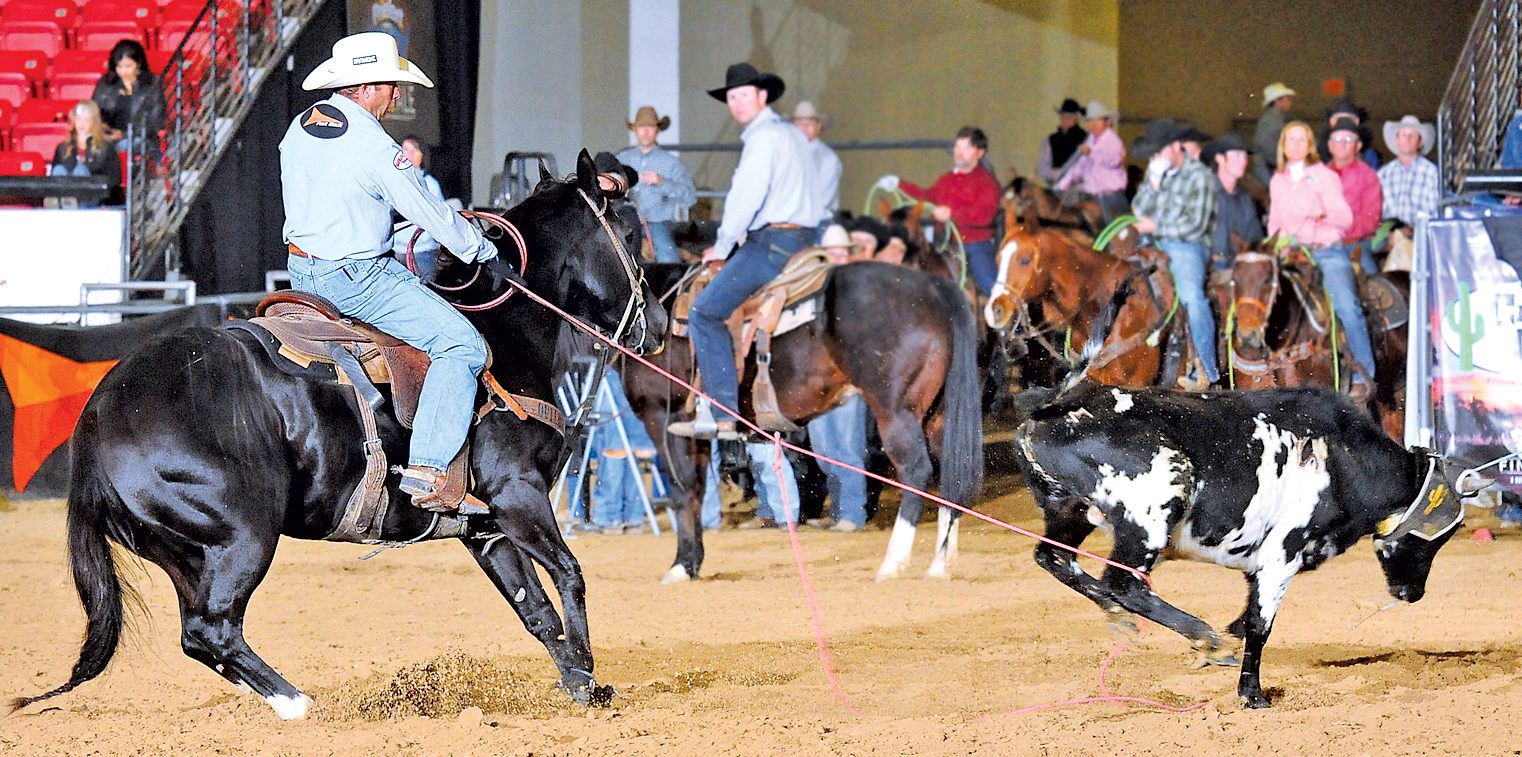
    Practice should be a process to improve daily. Unfortunately the majority of people just practice to practice. They have no daily plan to execute to get better. They will run a lot of cattle with or no improvement. They waste a lot of runs on the cattle and on their horses. Every day in a new practice session, the do not build on the previous day’s practice. They will eventually improve but most of the time it is by blind luck. The improvements are unpredictable and difficult to replicate.
    So why is it important to have a process in place?
    Those who improve the most and the most efficiently have a process to their practices. They work on improving daily. Each run is an opportunity to improve and is treated as such. They do not waste runs on the cattle or on their horses. They don’t expect to make great changes or improvements by accident. They understand that by having a process in place, they will see a continued and gradual improvement every day. The process will lead to these students spending more time roping the dummies and spending time on the practice machines. They are not afraid to rope the Heel-O-Matic. They will spend the time on the small details to improve.
    Because of the plan they can build on the successes from the previous day’s practices. They can learn from their previous mistakes instead of repeating them daily. Improvements are predictable and easy to replicate because of the process used to create them.
    So how do you start a process for improvement?
    The first step is to understand that the quickest way to improve is through repeated small improvements. Do not expect major improvements overnight. The process is what it is, it is a process. The more work you are willing to put into the process of improving the greater the results you will see. Generate plan for your practices and stick with it. You may not see the improvements right away but if you stick with your plan you will start to see the improvements. Continue to build on the improvements, find what works for you and your learning style and utilize the resources you have.
    Gradually build your process of improvement. Try not to fall back in to your comfort zone practices. Challenge yourself to make small improvements. As part of the process recognize the small improvements and use that as motivation to keep making further improvements.
    Start developing a process to improve.


    C.J. Aragon was named the 2008-2011 Grand Canyon Region Coach-of-the-Year. 2014-2015 WJCAC Coach-of-the-Year, 2016 Southwest Region Coach-of-the-Year, and 2010 National Intercollegiate Rodeo Association Coach-of-the-Year.

  • Burger Breaks WPRA Regular Season Earnings Record

    Burger Breaks WPRA Regular Season Earnings Record


    Women’s Professional Rodeo Association News Release

    August 9, 2016

    Contact: Ann Bleiker (719) 330-4293

    http://www.wpra.com/

    COLORADO SPRINGS, Colo. – While Team USA is setting records and winning medals in Rio at the Olympic Games, 2006 WPRA Barrel Racer Mary Burger is rewriting the WPRA record books here in the States with more to come in December at the Wrangler NFR. The latest record to fall was the Most Money Won Prior to the NFR. Lindsay Sears set that record in 2008 with $184,567. When the new world standings were released on Monday, August 8, Burger had collected $185,439 thus far in 2016 with roughly two months left in the regular season.

    Burger surpassed Sears’ record the first week of August with a host of rodeos she is very familiar with in the Prairie Circuit. As of August 1, Burger had amassed a total of $179,576 with huge wins from both Houston and Calgary. She needed just $4,992 to break the record.

    Burger finished third in the second round of the Dodge City (Kan.) Roundup with a 17.04-second run worth $1,718. She finished second at Iowa’s Championship Rodeo in Sidney with a 17.65 adding $1,654. Her biggest check of the weekend would come at Kansas’ Biggest Rodeo in Phillipsburg finishing second in a time of 16.97 worth $2,400, pushing her past Sears’ record. She would add another $91 at the Jayhawker Roundup Rodeo in Hill City, Kan., with a 10th place finish in a time of 17.11.

    “I never dreamed this would happen and it is just unbelievable,” stated Burger when she learned she had officially set the new record. “I am at a loss for words, really. I just wanted to win a little money this year and have fun with my horse.”

    Not one to pay attention to the records or worry about it, Burger said the first time she heard someone talk that she was close to Sears’ record was in Cheyenne via social media.

    “I don’t pay attention to records like that,” said Burger. “I just take one run at a time and try to win as much money as I can each time out.”

    It can sometimes be tough for rodeo contestants to juggle the chase for the NFR as well as the circuit title. For Burger her home circuit is the Prairie Circuit and as a resident in that circuit from Pauls Valley, Okla., she must compete at 15 rodeos to qualify for the Circuit Finals and the circuit title.

    “I wasn’t sure this year if I would be able to make my circuit count as I really wanted to go to Cheyenne, Spanish Fork (Utah) and Ogden (Utah), as I hadn’t been there in a few years but that also meant missing a few rodeos,” said Burger. “The first week of August, I was able to get back and hit several circuit rodeos helping both my circuit standings and world standings. I decided to turn-out of Abilene (Kan.) due to the schedule, so that I could get to Phillipsburg in a better position.”

    That decision was a successful one picking up $2,400, the biggest check of the week for Burger, who will turn 68 on August 18. However, don’t expect Burger to sit at home now and wait for the NFR.

    “I am entered this week at Lawton (Okla.) and Coffeyville (Kan.),” stated Burger. “Then I plan to go to Pueblo (Colo.) and Fort Madison (Iowa). My horse is just seven and he is sound and feeling good so there is no reason for me to sit at home and do nothing.”

    Sears still holds the highest single-year earnings record in the WPRA with $323,570 from 2008. Burger is positioning herself for a run at that record with the huge payout awaiting her in Las Vegas at the Wrangler National Finals Rodeo, Dec. 1-10.


  • Grilled Peaches & Cowboy Butter

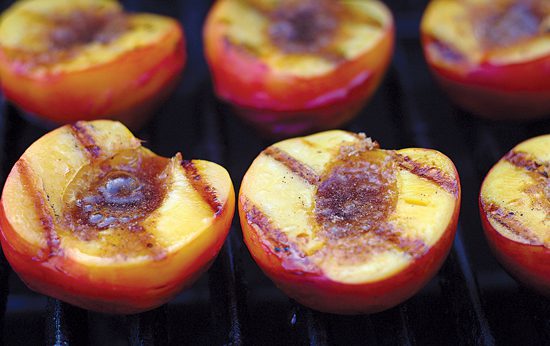
    above: Grilled Peaches - Courtesy of Mike McCune

    Grilled Peaches
    recipe courtesy of Kristie Binders,”Rodeo Road Recipes”

    ingredients:
    1 1/2 Tbsp. butter
    3 Tbsp. brown sugar
    1/3 cup dark rum (spiced is best)
    8 ripe peaches – peeled, pitted & halved

    DIRECTIONS:
    Melt butter in saucepan on grill. Stir in brown sugar and rum until it dissolves. Place peach halves in melted mixture, stir and coat. Place peaches on grill over medium heat, about 5 minutes per side. Spoon on excess mixture as peaches grill. Makes about 8 servings.


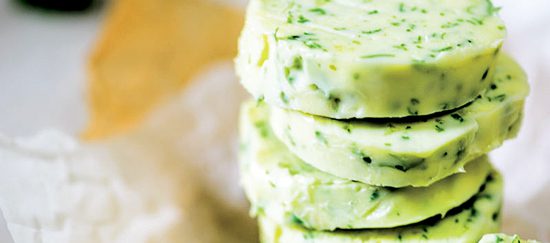
    above: Cowboy Butter - Courtesy of Neha MathurCowboy Butter
    recipe courtesy of Ang Paris,”JugglingActMama.com”

    ingredients:
    1 cup salted butter (2 sticks)
    1/4 cup finely minced fresh parsley
    A pinch of red pepper flakes
    A pinch of coarsely ground black pepper
    1 clove garlic, finely minced
    Juice and zest of ½ lemon

    DIRECTIONS:
    Allow the butter to come to room temperature before starting. Beat the butter until creamy, then add in the parsley, red pepper flakes, black pepper, minced garlic, lemon juice and zest. Mix until well combined. Scrape down the sides of the bowl and turn the mixture out onto a piece of parchment paper. Using the back of a spatula, spread out the mixture into a log shape. Roll the parchment paper up and twist the ends. Refrigerate for at least 4 hours to allow the flavors to come together.

  • ProFile: Jayde Atkins

    ProFile: Jayde Atkins

    “My mom (Sonya) was the typical horse crazy girl who grew up on a hobby farm in Missouri. My dad (JB), who grew up farming and raising cattle and hogs, learned to rope after they were married. They ended up in the horse world training and showing reiners and reined cow horses,” said Jayde Atkins.
    Jayde is still rolling with interviews pertaining from her current achievements: Champion All Around Cowgirl at the National High School Finals and Champion Reined Cow Horse as well. At the Nebraska State level, she won the pole bending, the reined cow horse, and all around, second in cutting, third in barrels, knocking a barrel to potentially win it.
    “Nationals was pretty awesome,” she said. “I won the reined cow horse and the All Around, competing in barrels, poles, cutting, and the cow horse.” Her family trains reined cow horses and rope horses. “We’ve used similar bloodlines for cow horse and roping, since we are in the rodeo world. My reined cow horse is also my number one breakaway horse and is a proven tie down horse. And now I’ve got two futurity barrel horses as well to take down the road.” Her dad has a regular job as a territory manager for Vermeer Manufacturing. Her mom is a nutritionist at Backbone of Healthcare in Broken Bow.
    She worked hard this year to get better at her events. “Last year I really wasn’t confident in myself or my horses and I wanted to do really good but tried to force a lot of things too much. Last year she ended up second in reined cow horse and third in the all around at NHSFR. “I went to several different trainers last year and this year for help, but this year I determined to be more focused. I was more confident in myself and sought out just a few skills I needed to work on.” In Nebraska, she competed in everything – including goat tying, team roping, breakaway, and even tied her first calf down the week before Nationals.
    Jayde started riding early. “I can never remember a time I wasn’t riding. Some of my earliest memories are from when my parents were showing, and I helped them cool down horses.” She did some of the junior rodeos when she was younger. Her older brother, Sterling, got into high school rodeo when she was in sixth grade. “I didn’t really get to rodeo much until my freshman year.” Sterling won the Nebraska State High School Cutting title and his shoes were hard to fill. He passed away his freshman year in college from basically a heart attack that happens to athletes. “They didn’t know at first why he had a heart attack. And for pretty much a year we did tests to make sure I didn’t have it – you go from everything being good to everything awful. I was running cross country and track and I wasn’t allowed to do anything until results came back. I rodeoed to keep us sane,” she recalls. “I was riding his cutting horse and his tie down horse, Harry, who ended up winning the reined cow horse with me.”
    When the National High School officially introduced the reined cow horse her junior year, Jayde had already done the demonstration at Nationals her sophomore year. “I’ve been involved in the implementation of the event in Nebraska,” she said. “It’s a show horse event and we’ve been involved in the AQHA for years. I haven’t shown there for years, because high school rodeo took precedent over that.”
    Jayde is heading to Chadron State College – about four hours from home – this fall. “It’s the same college that Sterling went to and I know a ton of people from Broken Bow that have gone there and loved it.” She is not going to rodeo the first year, although she’s taking some futurity horses with her. She is going to major in Ag Business and plans to concentrate more on the economic and financial end of it.
    After college, her dream is “Marry a rich rancher from the Sand Hills that will let me rodeo for the rest of my life … and if that doesn’t work out, I will live where I can give back to the ag community – I am a huge believer in FFA, and I want to keep the way of life that I’ve lived going. Horses are what we’ve always done, it’s our life.”

  • Back When They Bucked with Dr. Charles “Bud” Townsend

    Back When They Bucked with Dr. Charles “Bud” Townsend

    “For a guy who started out like I did, America was the land of opportunity. I’ve come from shoeshine boy to Grammy Award winner and author,” says Dr. Charles Townsend. Born November 5, 1929, the Texas native attributes rodeo as the gateway to his life, and an abundant one at that. He announced rodeos 50 consecutive years and took his oratory skills to the college classroom as a history professor, while also writing “San Antonio Rose: The Life and Music of Bob Wills”, published in 1976.
    It began simply enough. Charles Buddy Townsend – named after musician Charles Buddy Rogers – had drawn a bull, Little Blue, at the rodeo in Ringold, Texas. It was Labor Day of 1946, and Bud’s older brother refused to let the 16 year old get on the bull. When the announcer didn’t appear, Bud, known for his rodeo announcing imitations, took up the microphone instead. “I took to that like a duck to water. I had a lot of fun, maybe more so than later because I wasn’t taking it seriously,” says Bud. “In those days, they brought an invalid in an old Sedan to the arena with his sound equipment inside. Sometimes the horses would hit the car or the calves would run behind it. We didn’t have electricity at the arena, so we ran a crystal microphone off the car. I would fold a handkerchief over it so it wouldn’t melt in the sun. Mine never did.”
    Following his announcing debut, Bud got on one or two more bulls before leaving the chutes behind. “Announcing was my forte, and it gave me something to live for. My mother was widowed with seven children, and we were poor, which was nothing new in the Depression. I never dreamed I’d make ten dollars a day or that there would be any future – I had no reason to believe I’d ever be anything. I had a gang of friends around town, and we were into all kinds of mischief. Announcing opened a door in my life, and in a sense, I owe a debt to rodeo that I can never repay.”
    Prior to living in the town of Nocona, Texas, Bud and his mother and siblings lived on his grandfather’s ranch, eight miles from town on the Chisholm Trail, and just four miles from where H.J. Justin started Justin Boots Company. “I lived in an era right between the frontier and modern America. We went to town with the team and wagon and brought groceries back. One of my granddad’s ranches was on the Red River, and he was rich when oil was three dollars a barrel. My Uncle Joe Hancock raised the great Hancock horses.” When Bud was in his early teens, his mother moved to Nocona and rented an old hotel for the family. “Main street was my front yard and the alley was my backyard. I was truly an alley rat. But when I started announcing, I became something of a businessman, and I had to give up my wild and wicked ways, because people won’t buy ads from a shady character,” he recalls with a laugh.
    He announced horse races, baseball games, and sold ads, a long way from his ten cents a shoe shine. He returned to boots, however, in his late teens when Ruth Salmon (Roach) the lady bronc and trick rider, secured him the sales manager position at Olsen-Stelzer Boot and Saddlery Company in Henrietta, Texas. “She was a dear friend of my mother’s, and we lived on the ranch two and a half miles from Ruth and Dick Salmon. We were very close, and I also knew Tad Lucas because she’d stay on Ruth’s ranch. They never referred to rodeo as a sport – they looked on it as show business. To me, that was the greatest era of rodeo, when it was more of a show.”
    Show business agreed with Bud, and he learned his craft announcing rodeos in towns such as Muenster and Gainesville, Texas. The 17 year old turned his attention to the RCA, and when Ruth put in good word to Bobby Estes, a rodeo producer, Bud was all but in with the association. “I announced for Bobby in Hamilton, near Stephenville, Texas, and he liked me. When I joined the RCA, their office was in Fort Worth in the Burnett Building. Earl Lindsey was the manager and they had a little 6×6 foot office with maybe one file cabinet and a desk. I asked Mr. Lindsey, ‘If I join the RCA, can I announce amateur?’ He said I’d be put on the blacklist, and I had to decide right then if I wanted to be amateur or pro. My original card number is 1249 – I was the 1,249th member in 1948.”
    Two years later, Bud married Mary Smith, who was a book keeper for Olsen-Stelzer. Their first son, William, was born in 1951, and twins Mary Jane and Charles Jr. came several years later. Bud announced for Bobby Estes another five years, and the family always came along. “We wore out about three trailers – we couldn’t make any money if we stayed in hotels or ate out. Our first trailer was 17 feet and it wasn’t even self-contained.” Bud explains his biggest break in the rodeo business came when he quit working for Bobby Estes. “It freed me up to announce bigger rodeos – after I quit with him, I travelled all over. I went to the RCA convention and booked shows, from state fairs in California and North Carolina to rodeos in Mercedes, Texas, and Omak, Washington.” He also worked for rodeo producers including Homer Todd, Beutler Brothers, Cotton Rosser, Everett Colburn, and Walt Alsbaugh for 30 years.
    “In the meantime, I became a Christian. My wife and her family are so Baptist, they go back to John the Baptist, and I decided I wanted become a preacher.” Bud continued to announce in the summers and work for Olsen-Stelzer and Nocona Boot Company while attending school. He graduated from Decatur Baptist College and went on to Midwestern State University in Wichita Falls, Texas. “The faculty got me a fellowship for Baylor University where I went for a year until I applied to University of Wisconsin. I’d gotten interested in history at Wichita Falls, and University of Wisconsin had a top history department, but I knew I wasn’t ready for the big league yet. I took a teaching job at Texas Tech University to really learn basic American history, and then went to Wisconsin for three years to get my PhD.”
    He would go on to teach history at West Texas A&M University in Canyon for 27 years, where he is presently Professor Emeritus, while Mary taught first grade in Canyon for 24 years. Bud was one of the best lecturers the school had seen. “I attribute that to announcing rodeos,” he says. “I couldn’t announce a rodeo and use big words and be intellectual – you have to speak the people’s language. I lectured the same way in the classroom, and they could understand me.”
    Bud also taught at Hardin Simmons, Texas Tech, and University of Wisconsin. While teaching at Texas Tech, he made extra money by interviewing rodeo people for Sylvan Dunn, an associate professor of Sociology. Bud made sure his interviews took him to Turkey, Texas, home of the King of Western Swing, Bob Wills. “When I was growing up on my granddad’s ranch, my dad was a big fan of Jimmy Rogers, whom he’d played guitar with. They both had TB, and Dad met Jimmy in a sanitarium in San Angelo. In full health, Dad worked in the oil fields, and he was a tinkerer. When I was five or six, he built a wind charger to charge the car battery so we could listen to the radio. We listened to three things – Bing Crosby, Franklin D. Roosevelt’s speeches, and one noontime, we found Bob Wills. In the Depression, there wasn’t much to live for with war coming. But Bob Wills’ music was uplifting. Dad told me one time, ‘Stay with this Bob Wills, he’ll be big one of these days.’ And I never forgot it.”
    Bud’s chance to meet his childhood idol came when he met Johnny Lee Wills, Bob’s brother, who produced a rodeo in Tulsa, Oklahoma. “He got me in with Bob Wills, and when I came back to the history department, they thought I was lying about meeting him. But my wife fell in love with his wife, and we became close friends.” Bud was asked to write an article on Bob Wills for the Dictionary of American Biography, but he felt a book was in order. For the music lover who signed up for clarinet in college and carried the reeds in his pocket, the 85 interviews with Bob Wills that followed were exhilarating. “It was about ten years in the making. I did all my writing in the morning. I knew I was writing to the world, and I’d sit there and get a high just working on it!” A scholarly work edited by Judith McCullough, “San Antonio Rose: The Music and Life of Bob Wills” was published in 1976 by University of Illinois Press in a series of books on music and American life.
    In 1975, Bud accepted the Grammy Award for his album notes on “For the Last Time”, Bob Wills’ final album with The Texas Playboys. Bud was one out of 4,000 entrants and five nominees for the Grammy Awards. “One reason I think I won the award was because I interviewed so many musicians and asked about their influences. Bob’s was Bessie Smith, Empress of the Blues in the ‘20s.”
    Today, Bud and Mary continue to make their home in Canyon. Their son William is an optometrist, and Mary Jane is a medical advisor for one of largest blood distributing banks in the world, located in Scottsdale, Arizona, second only to the Red Cross. Their younger son, Charles Jr., passed away five years ago. “Regardless of what I’ve done, I’ve stayed with rodeo in the summers, and it was like paid vacation for 50 years,” says Bud, who’s been inducted into the Texas Rodeo Cowboy Hall of Fame, and received the Lifetime Achievement and All-Around Cowboy awards through the American Cowboy Culture Awards in Lubbock, Texas, which he announces. His childhood hometown of Nocona even held a Bud Townsend Day in his honor. “I wouldn’t take anything in the world for those 50 years of announcing,” Bud finishes. “Rodeo introduced me to so many cultures and foods and people, and it freed me from poverty and gave me ambition. Everything I’ve done goes back to that, and I’m so proud I did it.”

  • On The Trail With Charlie Gibson

    On The Trail With Charlie Gibson

    Charlie Gibson started rodeo 12 years ago, when he was five. “My dad (Casey Tyree) and my sister (Brittany Winslett – 7 years older) competed,” said the 17 year old from Greenwood, Texas. When he was too young to compete, he would go along with his sister and spend his time roping – anything he could find – the dummy, a goat, anything.

    Hard work and lots of practice paid off for him at the 2016 American Junior Rodeo Association Finals where he won the team roping, ribbon roping, tie down roping (second year in a row), and all around. He also won the Alvin G. Davis Award at the AJRA finals, given to the contestant who helps out the other contestants, shows good morals, and sets a good example.

    “Charlie was voted by our directors to receive this award as a member that has given back to the association in character and assisting the younger kids,” said Mary McMullan, AJRA Secretary Manager. “He’s been roping all year long injured – he is scheduled for knee surgery this fall; and he still gets out there and mugs calves for the little kids. He’s assisting without being asked and that’s awesome.”

    In spite of his injury, he practices every day and sticks to the same routine. His day begins with practice, which is a family affair at his house. His dad, Casey rodeoed, and was still roping when Charlie started going, but has stopped to devote his time to helping Charlie. His mom, Jerilyn, runs the chute and the video camera. She’s also a great coach. “She’s figured out more of the game than most people know,” said Casey. Casey is Charlie’s coach in the practice pen. “We try not to use the safety. He’s getting a lot better about being a smart roper. He had a good high school year this year, won Region 2 tie down, high call back at Texas High School finals, and messed a hooey up and missed National Finals by one hole.”

    Charlie has a daily workout that includes flipping a tire, doing push ups and other core strengthening work, and he also works with his dad at the family business building fence and barns, which is a work out too. He has learned to weld, and can do most of the fence building now unassisted. “We work until around 1 then I come home and do school work for a couple hours,” said Charlie, who will be a junior using the Christian Academy of America curriculum. After school is done, he heads back to the practice pen with his dad to rope. “We practice every day, no matter what,” he said. “When we get home, we watch videos of great ropers like Fred Whitfield or Trevor Brazile. Watching how fast and smooth they are, it motivates me to be like them and I want to win.”

    Formal roping training has come from a Roy Cooper school that he attended when he was about 13, and pros that have come through to rope at his house or theirs. “I had a lot of good mentors just like he did. We study the game a lot, and go through lots of video,” said Casey. The horse power comes from various places. “Some of them from my mom and her ranch in New Mexico,” said Casey. “And some we pick up here and there. We take everybody’s projects and finish them or tweak them to fit him. He’s got a little different style than everyone else – all out. He’s going 90 miles an hour – he likes to go all out.”

    He has three tie down roping horses, Tuff, Lightning, and Badger, and uses Lightning the most. “He’s more mature and knows how to do his job, and he’s a winner.” His team roping horse, Frankie, came from Jackie Smith and Casey trained him.

    When he gets ready to back in the box, he takes a deep breath and goes through his steps with his dad. “I like to get by myself, think about what I want to do and get everything else out of my mind, and go do my job. Realize it’s just you and the calf and nobody else,” he said, recalling the missed hooey at the high school finals. “I got in too much of a hurry.” He has learned how to handle loss as well. “I walk out of the arena with my head high and go on to the next one.” One of the books he has read to help him with his mind is Gold Buckles Don’t Lie by Fred Whitfield. “No matter what happens, you have to go on with your life instead of look back.”

    Charlie brought home four saddles, seven buckles, and some cash from the AJRA Finals, and he’s ready to go again. He has been invited to the Roy Cooper Invitational this December in Las Vegas, and the plan is to win state and National next year. “I want to win the world – and I’m going to do everything I know how; do what my dad’s taught me and go out there and be consistent.” He is thankful for God number one, his family, his sponsors, and everyone that helped along the way. His sponsors include: H4 Compression Specialties, Inc, DLH Inc and Ranchfolks.com.

    Jerilyn is supportive of her children’s desire to rodeo. “It’s taught them hard work, and if they want something they have to work for it. It’s taught them morals and values and how to be a good person.”


    Charlie Gibson started rodeo 12 years ago, when he was five. “My dad (Casey Tyree) and my sister (Brittany Winslett – 7 years older) competed,” said the 17 year old from Greenwood, Texas. When he was too young to compete, he would go along with his sister and spend his time roping – anything he could find – the dummy, a goat, anything.

    Hard work and lots of practice paid off for him at the 2016 American Junior Rodeo Association Finals where he won the team roping, ribbon roping, tie down roping (second year in a row), and all around. He also won the Alvin G. Davis Award at the AJRA finals, given to the contestant who helps out the other contestants, shows good morals, and sets a good example.
    “Charlie was voted by our directors to receive this award as a member that has given back to the association in character and assisting the younger kids,” said Mary McMullan, AJRA Secretary Manager. “He’s been roping all year long injured – he is scheduled for knee surgery this fall; and he still gets out there and mugs calves for the little kids. He’s assisting without being asked and that’s awesome.”
    In spite of his injury, he practices every day and sticks to the same routine. His day begins with practice, which is a family affair at his house. His dad, Casey rodeoed, and was still roping when Charlie started going, but has stopped to devote his time to helping Charlie. His mom, Jerilyn, runs the chute and the video camera. She’s also a great coach. “She’s figured out more of the game than most people know,” said Casey. Casey is Charlie’s coach in the practice pen. “We try not to use the safety. He’s getting a lot better about being a smart roper. He had a good high school year this year, won Region 2 tie down, high call back at Texas High School finals, and messed a hooey up and missed National Finals by one hole.”

    Charlie has a daily workout that includes flipping a tire, doing push ups and other core strengthening work, and he also works with his dad at the family business building fence and barns, which is a work out too. He has learned to weld, and can do most of the fence building now unassisted. “We work until around 1 then I come home and do school work for a couple hours,” said Charlie, who will be a junior using the Christian Academy of America curriculum. After school is done, he heads back to the practice pen with his dad to rope. “We practice every day, no matter what,” he said. “When we get home, we watch videos of great ropers like Fred Whitfield or Trevor Brazile. Watching how fast and smooth they are, it motivates me to be like them and I want to win.”

    Formal roping training has come from a Roy Cooper school that he attended when he was about 13, and pros that have come through to rope at his house or theirs. “I had a lot of good mentors just like he did. We study the game a lot, and go through lots of video,” said Casey. The horse power comes from various places. “Some of them from my mom and her ranch in New Mexico,” said Casey. “And some we pick up here and there. We take everybody’s projects and finish them or tweak them to fit him. He’s got a little different style than everyone else – all out. He’s going 90 miles an hour – he likes to go all out.”

    He has three tie down roping horses, Tuff, Lightning, and Badger, and uses Lightning the most. “He’s more mature and knows how to do his job, and he’s a winner.” His team roping horse, Frankie, came from Jackie Smith and Casey trained him.

    When he gets ready to back in the box, he takes a deep breath and goes through his steps with his dad. “I like to get by myself, think about what I want to do and get everything else out of my mind, and go do my job. Realize it’s just you and the calf and nobody else,” he said, recalling the missed hooey at the high school finals. “I got in too much of a hurry.” He has learned how to handle loss as well. “I walk out of the arena with my head high and go on to the next one.” One of the books he has read to help him with his mind is Gold Buckles Don’t Lie by Fred Whitfield. “No matter what happens, you have to go on with your life instead of look back.”

    Charlie brought home four saddles, seven buckles, and some cash from the AJRA Finals, and he’s ready to go again. He has been invited to the Roy Cooper Invitational this December in Las Vegas, and the plan is to win state and National next year. “I want to win the world – and I’m going to do everything I know how; do what my dad’s taught me and go out there and be consistent.” He is thankful for God number one, his family, his sponsors, and everyone that helped along the way. His sponsors include: H4 Compression Specialties, Inc, DLH Inc and Ranchfolks.com.

    Jerilyn is supportive of her children’s desire to rodeo. “It’s taught them hard work, and if they want something they have to work for it. It’s taught them morals and values and how to be a good person.”


  • Elite Rodeo Athletes

    Elite Rodeo Athletes

    By Jim Thompson

    Todd Suhn remembers that he attended a meeting with rodeo contestants interested in the proposed Elite Rodeo Athletes (ERA) in early January 2014. After 16 NFR qualifications in the bull dogging, including one reserve championship year, he’d been hurt in 2013 and thought about retirement.

    “They talked about with ERA as a vision for the future,” he recalls. He had to decide to forego his hopes for future NFR qualifications or retirement, for helping build a stepping stone to bigger and better things beyond the Pro Rodeo Cowboys Association and the bright lights of Las Vegas.  It was that vision for the betterment of the sport that drove his immediate relationship with the ERA.

    Todd Suhn grew up in central South Dakota and went to college for 2 years in Cheyenne; Laramie County Community College.  He graduated from University of Wyoming with a degree in Ag Business and by 1994 had his PRCA membership. His first NFR was in 1996.  That started a streak that reached ten in a row before missing the NFR in 2006. Then 6 more until he was injured in 2013.  2012 was his final NFR appearance.  He was 2nd in 1998 to Mickey Gee.  Todd Suhn finished in the top 5 three times, the top ten 10 times. In 2001 he finished 11th but less than $700 behind his brother Randy.

    He’s nearing 2 million dollars in money won in competition…quite an accomplishment.

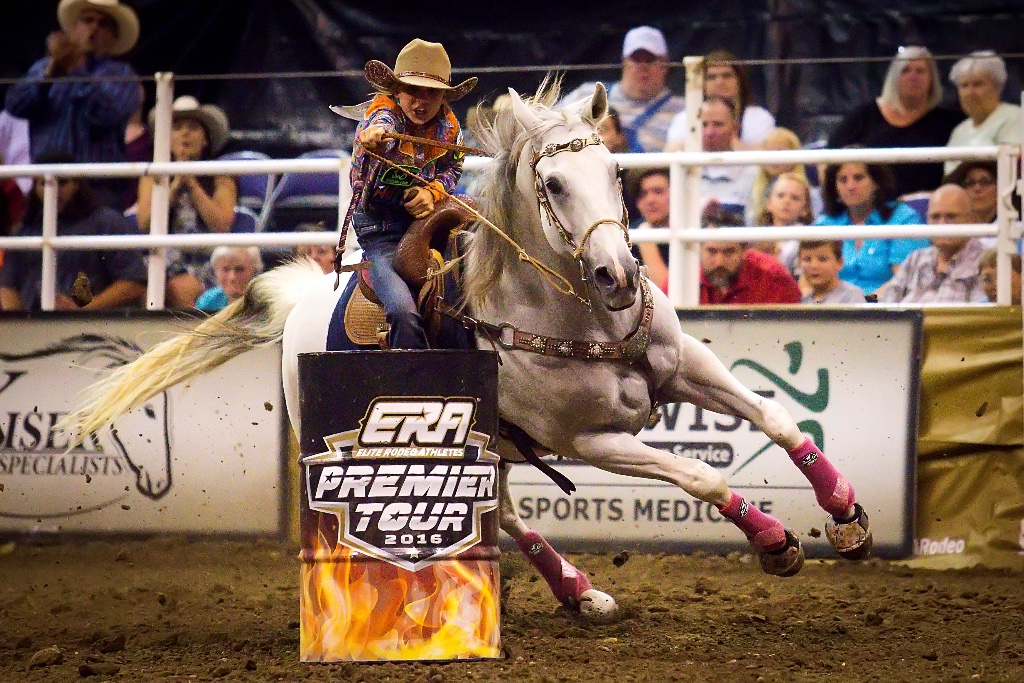
    Now in his first year of competing in the ERA 2016 Premier Tour he feels that on range of 1 to 10, the Tour is at 4 and growing.  Because of the PRCAs unwillingness to work with the ERA, many of their plans had to be rethought and new goals needed to be developed.  There are 19 events planned this year plus the 5 rounds of the ERA championships.  Those will be held at the American Airlines Center in Dallas November 9-13, 2016.

    One misconception of the ERA, Todd feels, from both fans and rodeo contestants, is that Trevor and the other members started it to get more for themselves.  That couldn’t be further from the truth.  Many who helped found the ERA were men, and women, who could see the end of the career coming.  Many wanted to create a pathway for younger people who sought a life in rodeo beyond just one big payday in Las Vegas each year.

    Many of the goals and bylaws of the Elite Rodeo Athletes are patterned after the Pro Bull Riders.  That association created wealth for its founders and opportunities for new members.  The ERA wishes the same thing.  And they had hoped that the PRCA would share the vision and participate, but since they haven’t the ERA is still moving ahead without them.

    Todd Suhn says he hasn’t really lost any friends over his decision though some are cool on the subject.  He feels that one fundamental problem with the pro rodeo is that there is little upward growth.  Many big rodeos are down or have even left the PRCA such as Houston, Calgary and Colorado Springs.  They left the PRCA and have prospered leaving the door open for others to follow.  Todd feels that the business model created by the ERA will help address that issue and keep rodeo growing.

    As for the question about how young people get into the ERA after its initial season; a qualifying tour has been developed similar to what the American has done.

    Todd Suhn rated the initial season a 4 out of ten largely because early goals were affected by PRCA rulings.  But when asked “do you see light at the end of the tunnel?”  His answer was confident; “I do. Certainly today it’s foggy but if you look through the fog you can see the success.”

    Without question Todd Suhn would have liked to win a world championship through his 20 plus years in rodeo, be he’s satisfied with his 2nd place finish in 1999.  And today he realizes that he and the dozens of others with the foresight to form the Elite Rodeo Athletes will help assure the rodeo lifestyle will not plateau for young contestants who are coming behind them.


    There’s a poem that demonstrates that dream:

    The Bridge Builder

    By Will Allen Dromgoole

    An old man going a lone highway,

    Came, at the evening cold and gray,

    To a chasm vast and deep and wide.

    Through which was flowing a sullen tide

    The old man crossed in the twilight dim, The sullen stream had no fear for him; But he turned when safe on the other side And built a bridge to span the tide.


    “Old man,” said a fellow pilgrim near,

    “You are wasting your strength with building here; Your journey will end with the ending day, You never again will pass this way; You’ve crossed the chasm, deep and wide, Why build this bridge at evening tide?”


    The builder lifted his old gray head;

    “Good friend, in the path I have come,” he said, “There followed after me to-day A youth whose feet must pass this way.

    This chasm that has been as naught to me To that fair-haired youth may a pitfall be; He, too, must cross in the twilight dim; Good friend, I am building this bridge for him!”


    If you’re interested in following the association just google “Elite Rodeo Athletes” or go to www.eraprorodeo.com


  • Sage Kimzey Collects Second CBR World Title in Cheyenne

    Sage Kimzey Collects Second CBR World Title in Cheyenne

    Championship Bull Riding World Finals at Cheyenne Frontier Days

    CHEYENNE, Wyoming (July 27, 2016) — Sage Steele Kimzey was the only cowboy to ride all five bulls at the CBR World Finals at Cheyenne Frontier Days and as a reward the twenty-one year old bull rider from Strong City, Oklahoma earned his second CBR World Championship title, his first World Finals event average win and a check for $140,000.

    “Getting paid for doing what I love, riding bulls, it’s all I’ve dreamed about since I was three years old and to get to come do it for a living it doesn’t get any better than that,” said Kimzey while surrounded by reporters and fans.

    Kimzey, who came into the competition in the No. 1 position, took an early lead in the event competition on night one riding both of his draws, 125 Hood Rat and 108 Admiral Bull for 88.5 and 86.5 points for a total of 173.5.

    “Coming in here to the finals with the lead, all I was worrying about was staying on my bulls, that’s my job,” said Kimzey after a record breaking bull riding attendance night for the first performance of the CBR World Finals at Cheyenne Frontier Days.

    Round One and Two

    With 23 qualified rides from 49 outs on the first night of competition, Kimzey finished second  behind US Army Veteran Juan Alonzo who was inspired by the elite forces of U.S. Navy Leap Frogs and the U.S. Air Force Thunderbirds performing and cheering him on from the back of the bucking chutes.

    Alonzo for the second consecutive year finished first after round one and two posting 90 points on 1711 Too Juicy (Rawson) and 87 points on 108 War Tiger (D4 Cattle Co.) for a total of 177 points while celebrating Military Monday in the opening performance of the CBR World Finals.

    Round Three

    With his fourth World Champion bull riding title on the line and three rounds to go of the CBR World Finals, Sage Steele Kimzey came to work on night two at his temporary office at the Frontier Park arena.

    Night two, which featured the CBR’s proprietary three round tournament format began with the Cajun cowboy, Jacob O’Mara, the No. 2 bull rider coming into the finals, taking the early lead in round three with 90 points on Jared Allen’s 911 Hy Test. That score would hold against the field of 24 where 12 posted qualified rides including three rookies, Tyler Taylor who tied Cody Rostockyj’s 89.5 to progress to round four, the Semifinals of the 5 round competition.

    Rookie rider Jeffery Ramagos and veteran Neil Holmes were both 89 points followed by the World Champs Cody Teel and Sage Kimzey who were both 88.5 points on 626 Karaoke and 126 Hood Rat respectively. Jonathan Brown, Wyatt Rogers, Taryl Smith and Mickey Andrews would all receive scores but it was Eli’s Vastbinder 87.5 on C735 Jack Tar that would be the winning combination to advance to the semifinal round.

    Semifinal round

    Advancing on aggregate scores earned from night one’s two rounds and the third round on night two, 12 bull riders prepared for their fourth bull on the dirt in front of a record breaking Cheyenne Frontier Days bull riding crowd.

    Cody Teel would strike first after watching the first three buck off. He rode 3446 Bio Hazard (Nunes) who was into his hand for 88 points. Mahindra Young Gun Eli Vastbinder answered with the same 88 points on Harris’s perennial bucker 911 Bargain Bin to get three bulls down in Cheyenne.

    Rostockyi, who left the arena in round two on a stretcher, snatched the fourth round lead with a comeback ride on 9100 Kojack (Championship Pro Rodeo) for 89 points.

    The fans would fall silent as the last cowboy that could challenge Kimzey’s dominance of the World Standings and the World Finals average, No. 2 cowboy Jacob O’Mara, bucked off a rookie bull of Lyndal Hurst’s 125 No Dry County.

    Kimzey, knowing he had clinched the World Championship title by riding his first three, never backed down and tapped out the bull he watched Teel ride in round two, 25 Billy Jack, owned by Jared Allen’s Pro Bull Team, for 90.5 points and the round win.

    Shoot Out Round

    After 92 total outs in Cheyenne four bull riders qualified for the final four man round. It was three veterans and one rookie, Tyler Taylor who came into the competition as an alternate and rode all three draws to find himself in the first Shoot out round of his newly found CBR career. He would face the bull rider who led the CBR season for over seven months, a Mahindra Young Gun, and the reigning PRCA champ of the world, Sage Kimzey.

    Selecting their own fate in the final round, Kimzey opted for the newly crowned CBR World Champion bucking bull who had been ridden by Brennon Eldred for 94 points to earn the season’s high marked ride at the George Paul Memorial Bull Riding in Del Rio, Texas in April.

    Rostockyj took no time picking his tour buddy J908 Outside the Box (Jaynes), who assisted him to two tour event wins this season, for his ride to the finish while Eli Vastbinder, 263 on three bulls took no time telling Tuff Hedeman he would ride cowboy favorite Boomer from Jeri Harmon’s Elite Bucking Bulls.

    Rookie Tyler Taylor tied with Cody Teel at 262 points on three, but managed to edge out Teel for the final round with a back judge score from round four. He was left with a lesser known bull, Jared Allen’s Uncle Tink who was unridden in CBR competition on the 2016 Road to Cheyenne.

    Riding in reverse order, rookie Tyler Taylor would buck off first. Riding to tie Kimzey and be the second man to cover four bulls at the 2016 World Finals, Eli Vastbinder made the most of his first trip on 059 Boomer and was the first rider to post a score in the four man, 90.5 points.

    Rostockyj, matched with J908 for the fourth time found himself in unexpected trouble.

    “I let him well me a little and the way he bucks a little is a lot,” said Rostockyj after the competition.

    Kimzey selecting the rankest bull in the pen of final four bulls, William Barnette’s Cowtown Cartel, selected the bull he knew if he rode he would win. Kimzey, the bull rider who was born to ride bulls paired with the bull who was bred and born to buck him off, had a firm seat from the first jump and after what looked like an easy eight seconds, landed on his feet amongst the many cowboy hats being thrown from behind the chutes out of respect for the new four time World Champion.


    World Standings Race

    Sage Kimzey, earning his fourth bull riding World Championship buckle and riding all five bulls in Cheyenne, is without doubt on target to become bull riding’s all-time leading cowboy athlete. Winning his second CBR World Championship, Sage Kimzey had this to say about his final bull and his two day ride to the top.

    “It’s amazing, coming in he (Cowtown Cartel) was just named the World champion bull and I knew I had a good chance to be a lot of points on him if I rode him. Stepping off one of the greatest bulls in the world with the whole crowd behind you, its pure bliss,” said the champ about his 93 point score in the Shoot Out round in Cheyenne.

    “Anytime you get to see all your hard work pay off like it has done in my bull riding career, being in the  position I am in today, and to see the blood sweat and tears pay off, it’s a great feeling.

    Kimzey’s price package win included Juan Jose Muñoz Andrade Custom Saddle, Full Quill, Exotic Hand Made Custom Boots by Fenoglio Boot Company, Hyo Silver Trophy Buckle, and a bonus check for $100,000.

    It’s All in the Family

    Arriving in Cheyenne with multiple friends and families of support. Kimzey first gave credit and thanked the rodeo royalty family that accompanied him to Cheyenne.

    “My family and my girlfriend are my rock, they always pick me up when I am down because this is one of the most humbling sports, one day its feast and one day its famine,” added Kimzey.

    Eight-time World Champion bull rider Don Gay who watched and commentated on the only bull rider he thinks has a legitimate shot at breaking his record said it best on night two from the announcer’s booth when describing Sage Kimzey.

    “Kimzey grew up at the rodeo, he was born to do this, he rides fundamentally flawless, and it’s all he has ever wanted to do.” American Hat Co. Pure Beaver Felt Hat

    CBR Bull Team Challenge

    One ride score, the highest marked bull in Cheyenne and the bull who has the most CBR outs on the 2016 Road to Cheyenne earned Jeff Harris $120, 00 on the final night of the CBR World Finals Bull Team Competition. His trio of buckers 231 Big Baby, 911 Bargain Bin, and 8 Ole School stood firm amongst the CBR’s top 22 teams and sixty six outs.

    “It’s been a struggle for me all year to keep three bulls solid and this was a real challenging event to pick the right bulls,” said Jeff Harris who used eighteen different bulls during the regular portion of the CBR season.

    Harris proclaimed his love for the sport as the driving force behind his four year journey to the top of the CBR Bull Team Challenge competition. His bulls scored a total of 286.5 points, 3.95 points behind JC Knapp and Flip Connelly’s team.

    “You have a chance to redeem everything you put into it at the end of the year and the people we share our passion with, the friends, the bull riders and other stock contractors, make it all worth it.”

    Mickey Andrews rode 231 Big Baby for an 87 point ride score and an 87.5 bull score in round one of the CBR World Finals. Harris would draw bull rider Brennon Eldred, one of the most consistent bull riders in CBR competition, for his next two outs. 911 Bargain Bin who had 16 outs during the regular season was his round two bull and he surprisingly bucked off Eldred in 3.96 seconds but with an 88.5 bull score. On night two Eldred showcased the final bull 8 Ole School for 6.44 seconds and a 92 point rank bull score.

    Harris’ team earned $55,000 during the regular season, $120,000 in Cheyenne and his World Champion Bull Team Prize package includes and American Hat Co. pure beaver felt hat, a Juan Jose Muñoz Andrade Custom Saddle, a Full Quill, a pair of exotic handmade pair of custom boots by Fenoglio Boot Company, a Hyo Silver Trophy Buckle, and a custom 24-Foot Neckover trailer.

    High Marked Bull was a tie between two Road to Cheyenne veteran bulls, Jeff Harris’ 8 Ole School and Winston Loe and Melton’s 161 Firehouse, both with 92 points. One of Don Gay’s pick of the night for rank bulls was D4 Cattle Company’s Big Lew who bucked off Juan Alonzo in 4.04 seconds to earn his 90.5 bull score. Championship Pro Rodeo’s bull of the year finalist, 1137 Cowbanger tied that score and remains unridden after ending Chandler Bownds night in 2.8 seconds.

    The 2016 CBR World Finals at Cheyenne Frontier Days will air on FOX Sports 2 on Wednesday, August 3rd & 10th, and on FOX Sports Networks Sunday, August 28th & September 4th.

    The 2016 CBR World Finals at Cheyenne Frontier Days awarded the following monies for the 2016 season: $372,500 to Bull Team Contractors including the $120,000 to the 2016 Bull Team World Champion owner, Jeff Harris: $100,000 to CBR World Champion Bull Rider Sage Kimzey; additional $50,000 in the World Finals event payout; $20,000 to 2016 CBR Horizon Series Tour Champion Koby Radley, $5,000 to Bullfighter of the Year, Brandon Loden.

    World Finals Average Event Results

    1, Sage Kimzey, Strong City, Okla., 445.5 points, $140, 00. 2, Eli Vastbinder, Statesville, NC, 353.5, $22,000. 3, Cody Rostockyj, Lorena, Tex., 266. $$6,000. 4, Tyler Taylor, Stephenville, Tex., 262. $5000. 5, Cody Teel, Kountze, Tex., 262, $6,000.

    World Finals Standings

    See cbrbull.com

    CBR Bull Team Challenge Results

    1, Harris Bucking Bulls, 286.40, $120,000. 2, Flip Em Off Buck’en Bulls/Knapp, $60,000, 282.46. 3, Rawson/Baker/Hurst, $41,000, 282.36. 4, Winston Loe Melton, $30,000,282.23. 5, Cunningham Scoggins, $35.000. 6, Mike Rawson, $15,000,281.53. 7, D4 Cattle Co., $13,000. 8, $11,500, JQH Bucking Bulls, 280.94. 9, Jared Allen Pro Bull Team, $10,000, 280.13. 10, Rawson Probst, $8,500,279.46.

    For more information contact Leigh Ann Schroeder at 940.902.1112 or leighann@theshortround.com

  •  Series Qualifiers Go Up Against Elite Rodeo Athletes During Tour Stop Number 10 at Days of ’47 Komatsu Equipment Rodeo in Salt Lake City 

     Series Qualifiers Go Up Against Elite Rodeo Athletes During Tour Stop Number 10 at Days of ’47 Komatsu Equipment Rodeo in Salt Lake City 

    BOERNE, TX (July 24, 2016) The grand finale of Elite Rodeo Athletes Premier Tour (Stop #10) – Days of ‘47 Komatsu Equipment Rodeo in Salt Lake City took place last night with a unique format that gave top seeded series qualifiers an opportunity to compete against the best rodeo athletes in the world. Each of the eight qualifiers advanced out of the qualifying series rounds that took place earlier this week in Vivint Smart Home Arena.
    era
    Out of eight, one qualifier, Guthrie Murray, a bull rider from Miami, OK upset the competition by going 86 points on War Party (Diamond G Rodeos) to claim the win in front of an elated crowd.  Cody Campbell managed to hold onto his ERA World Championship Standings lead, but Neil Holmes zoomed up the standings last night following just 25 points behind Campbell.

    Tyler Pearson (Independence, LA) won the steer wrestling with a 3.66 on his steer and was able to inch closer to standings leader Stockton Graves in the points race, now just 63.5 points behind Graves.

    Three-Time World Champion Team Ropers, Clay Tryan and Jade Corkill claimed a second win in  Salt Lake City last night with another three second run. Stopping the clock at 3.72, they were just ahead of Chad Masters and Travis Graves’ 3.88 that earned them a second place finish. Derrick Begay and Seven-Time World Champion, Clay O’Brien Cooper still have a commanding lead in the Championship Race to Dallas, bolstered by their third place finish with a time of 4.08 seconds.

    Fresh off his Calgary Stampede win, Saddle Bronc Rider, Zeke Thurston, (Big Valley, Alberta) claimed another big victory by executing a winning ride on Kool Toddy (Big Bend Rodeo) that scored 87.5 points. The Canadian cowboy moved up in the standings last night, but Isaac Diaz (tour stop 9 winner) still has the lead placing third last night with an 82-point ride.

    Ten-year-old barrel racing phenom, Chayni Chamberlain, (Stephenville, TX) had the crowd roaring on Saturday night with her win. Riding her horse “Flo Jo” (Dat Flowing Bunny), they stopped the clock with a 13.50 second run. Chamberlain, the youngest athlete on the tour, has proven she is a force to be reckoned with and is currently sitting second in the standings behind Lisa Lockhart.

    Three-time World Champion, Tuf Cooper, (Decatur, TX) turned in a quick 6.84 second run to claim first in the tie-down roping. Close behind him were family members Trevor Brazile (7.10) and Clif Cooper (7.74) taking second and third respectively. Cooper has now earned four tour stop wins and sits behind Shane Hanchey (tour stop #9 winner), who leads the Championship Race to Dallas in the Tie-Down Roping.
    era3
    ERA Bareback Rider Steven Peebles is King of the Comeback. Just two months after winning a world title in December (an amazing feat after his near death experience last July), Peebles found himself in a hospital bed once again with a potential career-ending injury. Peebles broke his back during a vehicle accident on February 13th and has been working diligently to return to the sport he loves. Last week he claimed the bareback championship at Calgary Stampede and last night he won tour stop #10 with an 87-point ride on Something Cool (Big Bend Rodeo).

    Peebles described what the recent big wins mean to him by saying, “It’s been a very long six months waiting eagerly to be able to get back on. That is the longest I’ve ever had to sit out at one time in my whole career, and I was so excited to be able to get back on for the first time, especially for the $100,000 (won at Calgary). I wanted to win it very bad. I was extremely happy and what a relief it was after no rodeo income in 6 months.

    Then to come to my first ERA rodeo, I knew I had a lot of climbing to do in the standings and to be able to win that as well – I was so excited and I am feeling really blessed. It was exactly what I needed and a great start for my climb to the top!”

    ERA back numbers this weekend featured a blue stripe in a show of appreciation for America’s police officers who risk their lives to protect and preserve our freedoms every day. ERA athletes wanted to show that they “Back the Blue.”

    Earlier this year, The Days of ’47 Rodeo, which is Utah’s oldest rodeo and one of the premier rodeos in the nation, made a bold move to provide their fans a new high-stakes, high-entertainment competition through a new partnership with Elite Rodeo Athletes (ERA).

    The Days of ‘47 event will air on FS2, Wednesday, August 3rd at 9:00 EST. The athletes have six weeks off before they head to tour stop #11 in Sheridan, WY for the Cowboy State Elite Rodeo, September 3rd. Tickets to the Wyoming event can be purchased now at www.sheridanwyorodeo.com/era and start at $24.

    ###
    ABOUT THE DAYS OF ‘47 RODEO It’s a must-see event, and is the state’s oldest rodeo. Spectators will be impressed by the competitors who join us in 2016 as they will see the biggest names in rodeo ride, rope and rough it for our Rodeo’s $400,000 in prize money. Featuring bareback riding, saddle bronc riding, bull riding, barrel racing, team roping, steer wrestling and tie-down roping.
    In 2016, the rodeo will kick off July 19th and run through the 23rd.

    ABOUT ELITE RODEO ATHLETES (ERA) The Elite Rodeo Athletes (ERA) is a “League of Champions” where only the world’s best rodeo athletes and livestock compete at every tour stop for a share of the $4.6 million total season purse. The ERA was created by the sport’s premier rodeo stars with rodeo fans in mind.  The ERA consists of two tours – the Premier Tour, featuring 87 of the sport’s top athletes, representing 135 world championships; and the Qualifying Tour, offering up and coming rodeo talent an opportunity to qualify for the ERA Premier Tour and ultimately the ERA World Championships. ERA events are televised nationally on FOX Sports 2 (FS2).

  • Tru Team Roping

    Tru Team Roping

    Hello Ropers,
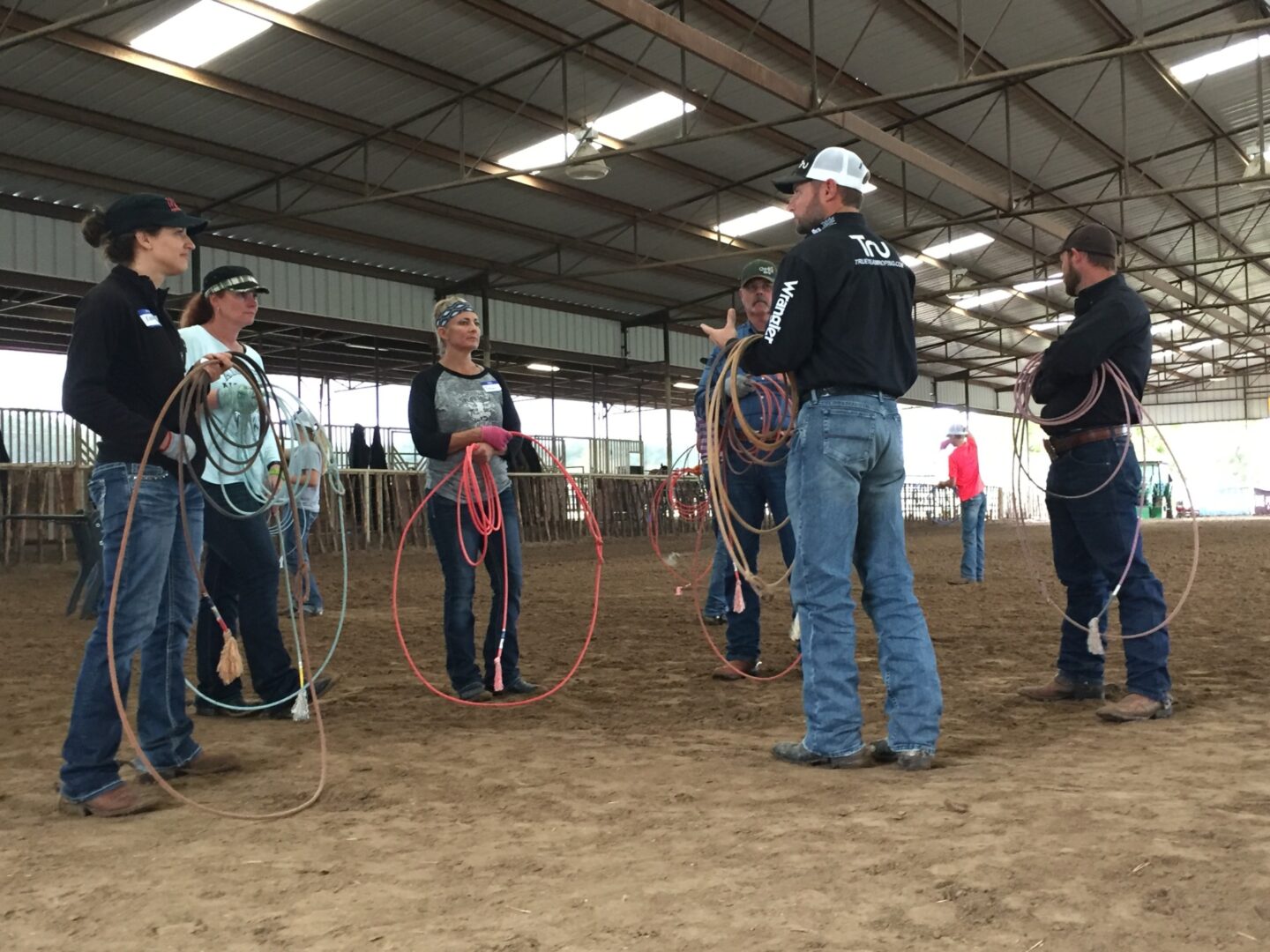
    It is good to be back writing to you again touching base on what we need to be focusing on. I have been on the road for five weeks doing clinics and lessons and it keeps me in check on making sure we continue to build on our correct fundamentals.
    As I said in a previous article, your horse is without a doubt your number one tool. The first day of every clinic most of the students would warm their horses up without ever practicing swinging their ropes in the process. This is a must. The more comfortable you become riding and swinging at the same time, the more at ease you will be when it comes time to rope cattle.
    We have talked about headers opening up their shoulders to the steer or becoming square to their target. There is not a better time to practice this when warming up.
    Heelers, a great opportunity for you to warm up mentally is during someone else’s warm up. You can get to the outside of them and imagine their horse being your steer, ride position, soften your horse and practice swinging with your tip down towards your target. The great thing about this is there is no pressure in chasing a steer and allows you an opportunity to relax and become a part of your horse, ride more proper as roper learning to use your legs to ride with and not your upper body.
    Remember, the reason head horses and heel horses start slowing down and shutting us out is because we start to lean in the chase and put our shoulders over the top of the horses shoulders. The first thing that happens after this is we balance on our reins and then they just start pushing on the bridle. Bad muscle memory is created and it comes back to haunt us in the short rounds or in the latter of our practice.
    Headers, we do a drill that has worked great in helping ropers understand all of this. Set your sled up in front of the box and walk out of the box on your horse while practicing opening up and starting your swing. It is great to let your horse get some relaxed box work and teaches you to be open or square to your target and swinging ready for the two-hand delivery.
    Heelers, pull your sled in a circle and ride to the outside to maintain position. When you get tired and relaxed is usually when your horse softens and allows you to rope with higher catch percentages.
    Until next month, best of luck and practice your steps.
    Krece
    Thank you and God Bless!

  • Roper Review: Mike White

    Roper Review: Mike White

    A good and positive attitude is a common trait amongst people who excel at anything. A trait not as common, though respected as much or more, is humility. When asked about his life and accomplishments, Mike’s first reaction is to talk about the people who helped him.
    Mike White grew up in Lake Charles, Louisiana where rodeo was a way of life. His older brother, Pat, was a bull rider, bullfighter, and stock contractor who Mike fondly describes as a workaholic.
    “Pat rode bulls outstanding,” says Mike. “Probably better than me. What he didn’t like was traveling and being gone, so he never made a career of it.”
    As a youngster Mike took part in most rodeo events including team roping, bull dogging, calf roping and riding bulls. He was given a lot of responsibility at a young age and by the time he was sixteen he was driving a semi hauling bucking stock to rodeos.
    At age 15, he was also riding racehorses as a jockey and fought to keep his weight down. When he got his jockey license at 16, he was also trying to ride bulls. Two fellow jockeys, Chris and Aaron Emigh, helped with his decision.
    “They told me I needed to choose between the two. In order to be a jockey I would have to stay sick and puny to keep my weight down. If I didn’t want to do that, I needed to ride bulls.
    “I chose to ride bulls and had every opportunity in the world to become good because of my brother. He was my teacher, my mentor, and would help me at any time of the day or night.”
    Mike’s rookie year in the PRCA was 1997. He made the finals that year and set the record for the most money earned as a rookie, finishing 5th in the standings. The next year he returned to the NFR with a good chance at winning the world. After five rounds and no qualified rides, Mike was getting more advice on bull riding than he could process. He called his brother, Pat, who said, ‘What you’re going to do, after the next perf, is get on a redeye flight, come home and get on some bulls. Then you can fly back to Vegas in time for the next performance.’
    “I told Joe Baumgartner my plan and he told me to hold up. He got me hooked up to ride some bulls at Michael Gaughan’s place, and told me I could get on as many as I wanted,” says White. “I got on three bulls, got my confidence back and rode four out of the next five bulls at the NFR.”
    In 1999 Mike hit the rodeo trail hard. It was the end of July and he was winning the world when he realized he was burned out. He told his traveling partner, Myron Duarte, that he was done and headed home. Myron said, ‘You can’t do that, you’re winning the world.’ Mike didn’t care; he was tired of the road.
    Fast forward to the last three weeks of the rodeo season. White has fallen out of the top fifteen when he calls Myron and told him to enter him in the remaining rodeos.
    “Don’t worry, you’re already entered,” responded Duarte. “You’re going to have to turn out some because I have you double entered. This is what you get for being lazy.”
    White admits it was costly as he took last minute flights to get to the rodeos where he had drawn the best. He made the finals in 13th place by several hundred dollars. He went on to have an outstanding NFR and rode eight of the ten bulls and winning the world that year.
    “I was burned out and tired of going,” explains White. “If you’re tired, you’re not going to perform to the best of your ability. By the time I went back, I was hungry for it.”
    In July of 2000 White suffered a broken neck, keeping him out of action until the following year. After returning to competition, at a PBR event in Shreveport, Louisiana, his first bull stepped on and crushed his ankle. That injury kept him sidelined for seven months. At the third event, after recuperating, he was thrown and dislocated his shoulder, breaking the ball in it.
    Admittedly being hardheaded, White refused the help of the Justin Cowboy Crisis Fund and used his own savings for bills and living expenses. When he did finally return to the arena, he had a total sum of $300, virtually starting completely over.
    “I’ve dealt with a lot of injuries,” says Mike. “But that particular time was rough and a real eye-opener for me. It made realize just how short and humbling a bull-riding career is. I learned you should save and invest every dime earned for the end of your career.”
    Mike always enjoyed team roping and training horses, but never found the time when he was riding bulls for a living. Upon retiring from bull riding in 2010, he and his wife, Hannah, started training and roping more.
    “I love to rope and am probably addicted to it. It’s a very humbling sport. One day you’re a rock star and the next you can’t catch.”
    Now rated a #7, Mike recalls being at an all time low with his roping and being entered in the Big 12, the day after the George Strait Team Roping. He called his nephew, Tyler Domingue, whom he taught to rope as a youngster, and asked for help.
    “In true Tyler fashion, he pulls in at 11 p.m. to rope. In seven steers, he had me catching 95%. It’s ironic that I taught him and now I’m going back to him for advice. There are people who can rope well, but can’t explain it; then there are people who can break it down where it makes sense, and that’s Tyler.”
    White, who turns 40 this year, has found his passion in training quality rope horses. They’ve sold three horses to past NFR qualifiers, mostly recently Clayton Grant from California. The Grants are enjoying the six-year old heel horse, calling him a “true gentleman.”
    “There’s not a horse we sell that I won’t stand behind,” says White. “I don’t train or sell junk. I like nice horses.
    “In life, the one thing you will always have is your name. Once you ruin that, you’re ruined for life. I will always stand behind mine.”
    As a professional athlete, Mike is quick to point out the importance of sponsors and his responsibility to them.
    “When one of your sponsors asks you to do something, your response should be ‘You bet, when and where do you need me.’ I’ve been blessed with great sponsors and I appreciate them very much. When you’re hurt, sometimes the only income will be from your sponsors. If you’re asked to do something by your sponsors and you don’t want to, don’t think people aren’t going to notice. In the rodeo world people see everything you do.
    “Some of the sponsors that stuck with me after I retired from riding bulls are Big Tex Trailers, Fast Back Ropes, and Cooper Tires. I’ve always respected that.”
    Mike and Hannah live in DeKalb, Texas, with their two sons, Logan, 12, and Morgan, 4. Each year they host Mike White’s Annual Pasture Roping & Benefit, a non-profit organization benefitting Ropin Dreams, an organization that benefits children with serious illnesses or injuries.

    COWBOY Q&A

    How much do you practice?
    Every day.

    Do you make your own horses?
    Yes.

    Who were your roping heroes?
    Jory Levy. He really broke it down for me. He took the time to help me and that meant a lot.

    Who do you respect most in the world?
    My grandpa and my parents. Until the day he died, my grandpa opened the door for my grandmother. He never walked in a building with his hat on. He had a lot of respect for people and I learned a lot from him.

    Who has been the biggest influence in your life?
    My brother, Pat.

    If you had a day off what would you like to do?
    Take my wife to the beach.

    Favorite movie?
    Talladega Nights – “If you’re not first, you’re last.”

    What’s the last thing you read?
    The Bible

    What makes you happy?
    Roping and riding horses.

    What makes you angry?
    Losing.

    If you were given 1 million dollars, how would you spend it?
    I’d build a covered arena and donate most to a foundation, Ropin Dreams.

    What is your worst quality – your best?
    Best quality is honesty. Worst quality is being a workaholic.

  • ProFile: Lindsay Davis

    ProFile: Lindsay Davis

    From the time Lindsay Davis entered her first rodeo astride a Shetland pony, she’s had college rodeo on her mind. Working through the ranks of junior and high school competition alongside her sisters, Jana and Kiley, the 23 year old from Malad, Idaho, achieved her goal of college rodeoing. She qualified for the CNFR in the breakaway roping her freshman year, and recently accepted the assistant rodeo coach position at Colorado Northwestern Community College (CNCC). But like many a trek down the rodeo trail, her journey isn’t without its share of detours – and surprises.
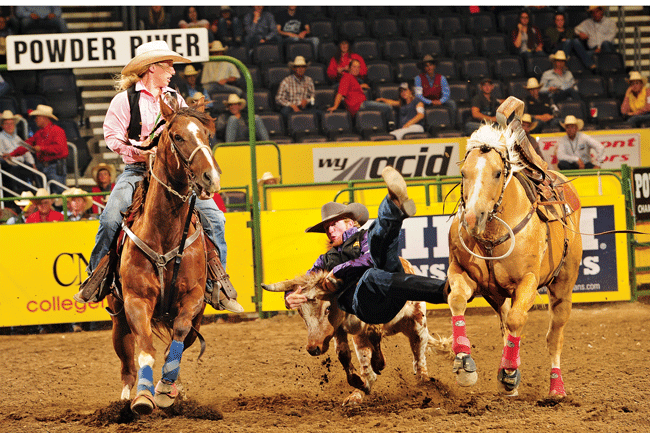
    One of the greatest surprises – more so to her family than herself – was the opportunity for Lindsay to haze for several of the College of Southern Idaho’s steer wrestlers, from practice all the way to the CNFR. Her uncles, Kenny and Tom Holland, greatly influenced her interest in hazing when Lindsay was ten. They started an annual spring steer wrestling school in Montana, and when Lindsay’s dad drove a handful of steer wrestlers north for the school, Lindsay tagged along. “She was paying more attention than I thought, and when she got to college, one of her steer wrestling friends needed a hazer,” says her dad, Kelly Davis, a roper and steer wrestler himself who introduced Lindsay to rodeo. Lindsay hazed several steers for her friend and called home to ask about bringing back one of her dad’s hazing horses to school. Knowing the hazards of hazing, her mom, Mary Jo Davis, was far from being in favor of the idea. Lindsay’s determination found a way, however, and unbeknownst to her mom on a visit home, snuck the horse into the trailer with her dad’s help.
    Having watched more steer wrestling than any TV show, Lindsay took to hazing naturally. By fall of 2015, her senior year, she was hazing for eight of the steer wrestlers, and hazed for several of them at the CNFR two years in a row. “I’ve chute dogged a few times, but never gotten off a horse. But if I could bulldog, I definitely would,” says Lindsay. “The guys will come ask me which are the stronger steers and how the last guy did on the one they drew. I pay attention, not just for them, but for myself so I know what moves the steers make and how to make the best haze. I was the only girl hazing in CSI, but there’s another girl in Rocky Mountain region who started doing it as well.”
    Over the years, Lindsay has competed in nearly every girls event except barrel racing, and focused on breakaway roping, team roping, and goat tying in college. “I really enjoyed college rodeo – it was that step above everything else I’d done before, and I had to be more competitive. Not only are you riding and doing what you love, but you’re getting an education. Being a student athlete, there’s that drive to keep up your grades so you can rodeo and help your teammates and your coach.” She was also a talented softball player in high school, but chose to pursue a rodeo scholarship. “I told Lindsay that the sport of rodeo is where you go and help everybody,” says Kelly. “It’s not you against the next girl, it’s you against the stock you draw. Through that, she’s made good friends, and the coaches know her as a person who helps.”
    Lindsay’s dedication to rodeo didn’t go unnoticed. Another surprise on the rodeo trail came when CNCC in Rangely, Colo., offered her the assistant rodeo coach position. “They’d had another girl coaching, and I told the head coach Jed Moore in passing that she had an awesome job,” Lindsay recalls. “I love coaching kids. A while later at a college rodeo, Jed asked me if I was serious about the job, and he offered it to me right there. It wasn’t in my plans, but it is now, and I’ll see where it takes me!” She starts her work with recruiting this July, and she’ll move to Rangely in August.
    She’s also working to start her own business since graduating this spring with degrees in equine studies and business management. “I’m interested in chiropractic work and equine dentistry. Growing up, we’d take trailers full of horses to a guy who came through here specializing in those areas. People are always asking who they can call for those services, and that’s what gave me the idea for my business.”
    While she’s also helping her family with ranching and farming this summer in southeast Idaho, Lindsay sets aside time for rodeoing with the RMPRA in both the team roping and breakaway. “I do both ends team roping, but I’d say I like breakaway a lot more,” she says. “I had a bad horse accident team roping right before my freshman year of college, so it took me a while to even want to team rope after that.” Lindsay doesn’t remember much of the accident, but her dad, who was watching, says she was roping a steer when her horse stepped into her curl and sent the pair tumbling head first. “She had a concussion, and she had a tough time for a year and a half being able to remember short term things,” says Kelly. “We went to Utah State University, which specializes in researching concussions and learned that Lindsay needed to teach her brain it could still learn new things. She started beading projects like belts, and working with her hands and creating patterns has really helped her mind heal itself.”
    On the rodeo side, Lindsay missed her first regional college rodeo of the season, but she was released to compete shortly after and won the all-around in her first college rodeo, placing in both the breakaway and the team roping in Pocatello, Idaho, on her yellow mare, Piggy. “I probably wouldn’t still be team roping without the help of my friend Trasen Jones, and Cody DeMers, who was the assistant rodeo coach at CSI,” says Lindsay. “He really helped me get back into things mentally, and my dad helped me with the roping. Dad’s always been my go-to guy – I don’t know what I’d do without him. He and my mom are my biggest supporters, and I can always count on them being there.
    “My biggest goal for the future is getting my business started up, and rodeo wise, I want to stay on top of my game and keep making the finals. I also want to get married someday and start a family and get them into rodeo. Rodeo is a family thing, and we’ve never let it die. I knew every summer I’d be living out of the truck and trailer. It’s part of my life, so I come back to it all the time.”