Rodeo Life

Blog

  • Cook Shack : Jalapeno Popper Mac

    Cook Shack : Jalapeno Popper Mac

    Mac Sauce
    recipe courtesy of The Mac + Cheese Cookbook

    Ingredients:
    3 cups whole milk
    ½ cup unsalted butter
    ½ cup all purpose flour
    2 teaspoons kosher salt or 1 teaspoon table salt

    DIRECTIONS: 1. Heat the milk in a pot over medium heat until just starts to bubble but is not boiling, about 3 to 4 minutes. Remove from heat. 2. Heat the butter over medium heat in a separate heavy-bottomed pot. When the butter has just melted, add flour and whisk constantly until the mixture turns light brown, about 3 minutes. Remove from heat.
    3. Slowly pour the warm milk, about 1 cup at a time, into the butter-flour mixture, whisking constantly. It will get very thick when you first add the milk and thinner as you slowly pour in the entire three cups.
    4. Once all the milk has been added set the pot back over medium-high heat, and continue to whisk constantly. In the next 2 to 3 minutes the sauce should come together and become silky and thick. Use the spoon test to make sure it’s ready. To do this, dip a metal spoon and if it doesn’t slide off like milk, you’ll know it’s ready. You should able to run your finger along the spoon and have the impression remain. Add the salt.
    5. The Mac Sauce is immediately ready to use and does not need to cool. Store it in the fridge for a day or two if you want to make it ahead of time – it will get a lot thicker when put in the fridge, so it may need a little milk to think it out a bit when it comes time to melt in the cheese. Try melting the cheese into the sauce first, and if it is too thick then add milk as needed.

    —————————

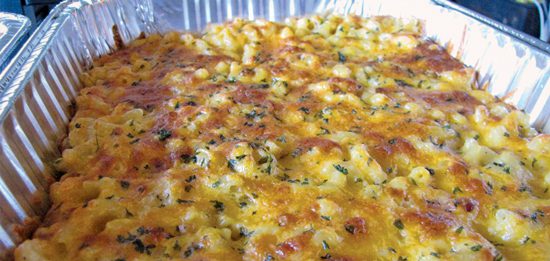
    Jalapeno Popper Mac
    recipe courtesy of The Mac + Cheese Cookbook

    ingredients:
    ½ pound dried elbow pasta
    2 cups Mac Sauce (recipe above)
    2 cups grated sharp cheddar cheese
    ½ cup cream cheese
    ¼ cup stemmed, seeded and chopped jalapeno chiles, plus extra for garnish
    ½ cup panko crumbs

    DIRECTIONS: 1. Preheat oven to 400 degrees.
    2. Cook the pasta in salted boiling water until a little less than al dente. Drain, rinse pasta with cold water and drain it again.
    3. Add the sauce, Cheddar, cream cheese, and chiles to a large, heavy bottomed pot and cook over medium heat. Stir until the cheese is barely melted, about 3 minutes. Turn off the heat and stiff in cooked pasta. Take a taste to check the potency of the chiles – jalapenos can vary in heat, depending on the batch and season so you may want to add more to increase the fire.
    4. Pour the cheesy noodle mixture into a large baking dish. Top evenly with panko and bake until you see the cheese sauce bubbling on the sides, 10 to 15 minutes.
    5. Spoon into bowls and serve immediately.
  • WORKING AS A TEAM

    WORKING AS A TEAM

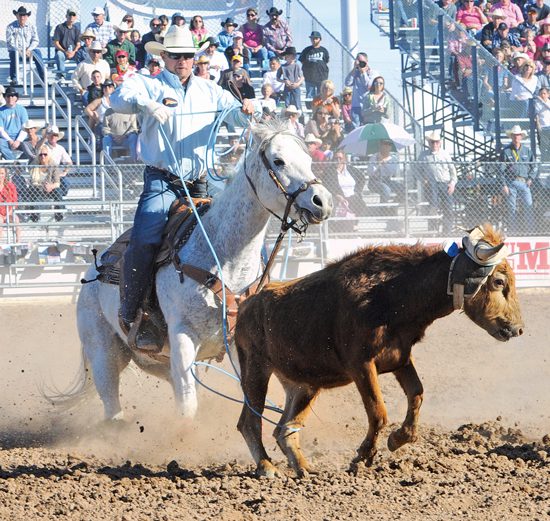
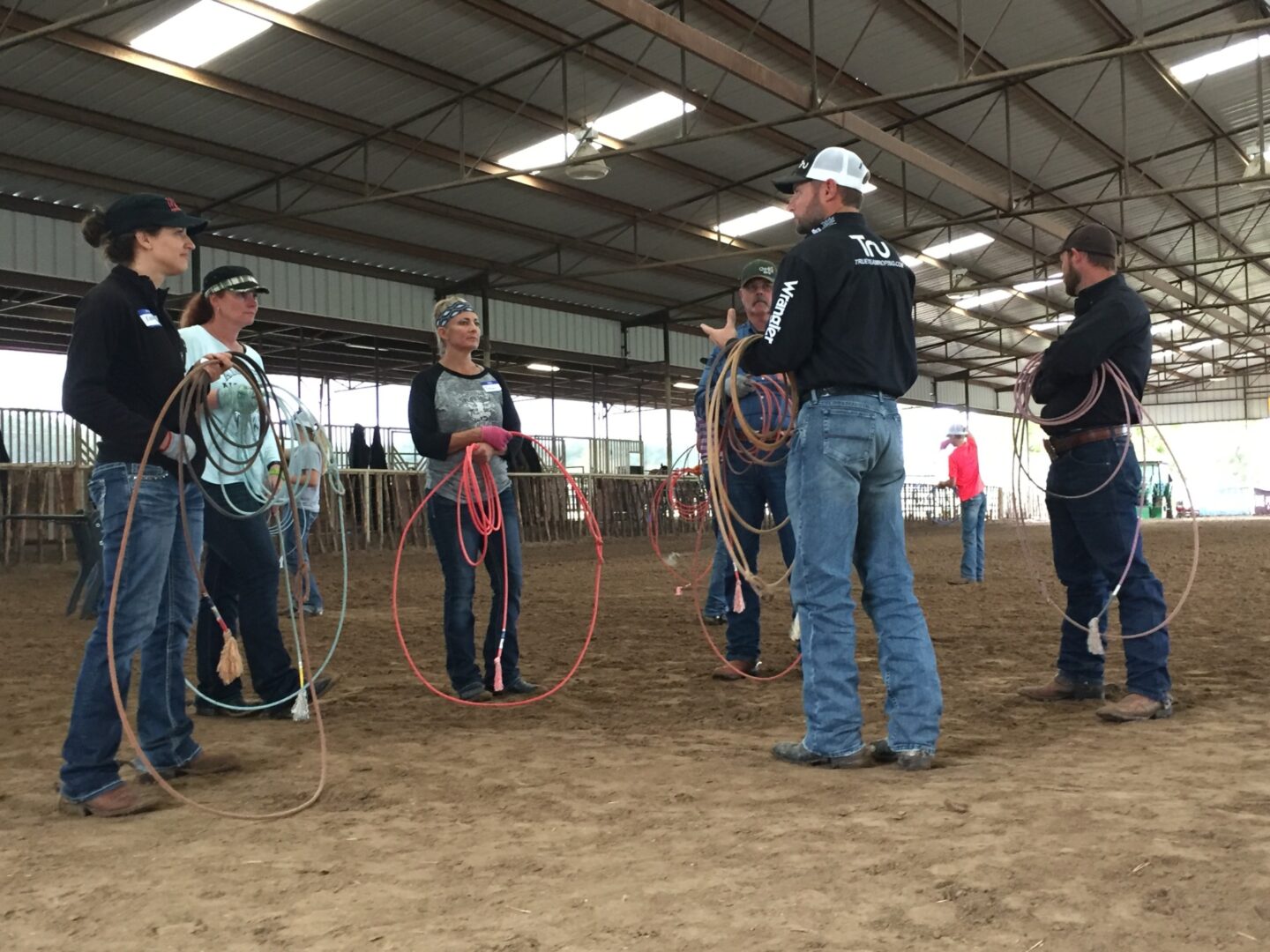
    Hello Ropers, it is great to be back for the sixth article. I hope your summer of roping has been great and the previous articles have helped you with your roping. I would like to discuss the importance of working together as a team during your run. There are so many draw-pots out there now which makes it easier to go and compete but many times we do not know who the person is that we are roping with. As mentioned in previous articles about the steps for the headers and heelers, we need to make sure every time we back in the box and execute fundamentals, we also work with the person in the other box.
    Headers, you have to do your job as if there is not a heeler over there to help you. If the steer runs straight, right or left, you still have to go catch them. Many times heelers choose to stay back because they are watching what the header is doing and this allows the steer to run to the right fence. Now the header has to change position and move up higher on the steer to be able to catch without hitting the fence with their loop. I stress so much to all of the heelers how important position is, and if the heeler is in proper position, they will not allow the steer to run to the right fence. Remember, the shortest distance from point A to point B is a straight line. Both header and heeler serve as the hazer! Heelers need to let the steer know they are out there to the right but not haze the steer left while the header is trying to achieve position. Just as a header needs to understand that if they get to position and swing several more times, they automatically become the primary hazer and the steer is going to move right in front of the heeler.
    I like to start my heel horses with the gate. That does not mean I take off running at the steer. The haze is created the first ten feet out of the box. So if I am ten feet out of the box and ahead of the header, I have established myself as the primary hazer. At this point, I throttle my horse to wait on my header to move forward to position and I can then hustle to position working with the header to keep the steer running the straight line or pattern. If we do this, handles become more consistent by headers and heelers catch rates are higher because they are in place to follow the steer off the corner or set and rope. Now, we are team roping because we are working together as a team to control the environment of the steer. If we control our environment instead of the steer controlling us, we make more consistent runs. Oh, and this is also allows us to make faster runs without trying to be faster. I always tell my students, control is fast! We can slow down and work smarter to be faster.
    Until next time, best of luck with your roping. Rope smarter, not harder!

    Thank you and God Bless!
    Krece

  • Roper Review: Justin Loya

    Roper Review: Justin Loya

    As a kid, Justin Loya had big dreams. Just not the NFR dreams most rodeo kids have. From the age of five, Justin craved baseball. Both parents, Sam and Marilyn, competed in rodeo and as a youngster Justin roped calves, winning the Tie Down title in New Mexico Junior Rodeo more than once.
    He also played football, wrestled, and competed in other sports during school. But baseball was always his first passion and the thing he wanted to pursue to the highest level.
    Consequently, as a high school freshman, Justin sold his horses to focus solely on baseball. This passion earned him a scholarship at Benedictine College in Kansas. As a senior, he was selected to play on Team USA and traveled to Australia where he ultimately threw his arm out. Corrective surgery soon followed, but Justin found he was not able to throw as he had before.
    With the option of an academic scholarship at University of New Mexico, Justin decided to stay close to home and learn to team rope. After a year and a half of roping close to home, Justin was offered a rodeo scholarship at Frank Phillips College in Borger, Texas. There, he completed his Associates Degree before transferring to West Texas A&M the following year.
    When Justin started roping at 19 years old, he was a #2. In 2006, he missed making the NIRA finals by just one spot. His college rodeo team went on to win the region and nationals. And by the time he was 22, he was rated a #8.
    “I roped all day, every day. I set up my classes where I was done by noon,” explains Loya. “My roommate and I would visit three or four roping pens every day and rope until dark. My parents furnished me with nice horses and that helped quite a bit.”
    Now, at 33, Justin works as a Senior Real Time Trader for PNM (Public Service Company of New Mexico). There he monitors and balances New Mexico’s energy load and generation. He also buys and sells energy as needed throughout the United States.
    Additionally, Justin owns and operates Loya Performance Horses, in Los Lunas, New Mexico, where he trains and sells some nice horses. He is also teaching his seven-year old son, Payson, to rope on his retired rope horse.
    How much do you practice?
    About five days a week.
    Do you make your own horses?
    I’ve made some and bought some. Right now I’m making more than buying.
    Who were your roping (rodeo) heroes growing up?
    I didn’t really have any because I was playing baseball. At the time I was more of a calf roper and Brent Lewis was from New Mexico so I paid attention to him.
    Who do you respect most in the world?
    My father.
    Who has been the biggest influence in your life?
    My parents always have been, now my son is a big influence.
    If you had a day off what would you like to do?
    Play golf.
    Favorite movie?
    Lonesome Dove.
    How would you describe yourself in three words?
    Honest, driven, fun.
    What makes you happy?
    Knowing I’m setting a good example for my son.
    What makes you angry?
    When I don’t do well from lack of preparation.
    If you were given 1 million dollars, how would you spend it?
    I would invest in property and save the rest for my son’s education.
    What is your worst quality – your best?
    My best is striving for perfection. My worst is being overly competitive.
    Where do you see yourself in ten years?
    Hopefully I will be getting ready to take my son to college. Much of the next ten years will be about him and me roping when I can.

  • ProFile: Josh Peek

    ProFile: Josh Peek

    Josh Peek is heading to the Wrangler NFR for the first time in six years – as the top contender ($116,603.15) in the All Around and sitting in the middle of the pack (7th with $71,396.90 )in the steer wrestling. The 6x WNFR qualifier hasn’t made it back due to a number of factors. “It hasn’t been any one thing,” said the 37-year-old from Pueblo, Colo. “I didn’t have horses for a couple years, and then I took a couple years off to spend with my family,” said the father of twins who welcomed their new baby brother on September 20. “Add to that the injuries -last year I got hurt the first of August.”
    He fixed his horse problem by training a new bulldogging horse, Ace, that Pecos Shannon found for him. “It took two years to get him right. I bought him off a ranch in New Mexico; he was a bronc when we first got him. I tried him on the calf roping side, tripping, heeling; he never got good at any of it. I hazed on him one year and he got really good at that, and then I needed a bulldogging horse and now numerous cowboys are winning on him across the country. He’s a game changer of a horse.”
    With his horse problems solved and the blessing of his family and his current employer, Josh made the push to compete at the Thomas and Mack one more time. “My job with Boulder Energy takes precedent over anything I am doing in the rodeo world,” he explained. “I sat down with Boulder Energy – to see if I could make a run at it this year. I knew I wouldn’t be able to put in as much time as I should for that job. I wanted to make sure that I would still have a job when I got back,” he shared. “Right now I’m at that stage of life where it’s great to be out here, but that job and the opportunity that I have there is something I can’t lose.” The company is backing him 100%. “Rodeo is an extreme risk and there are a lot of things that have to go right to get that elusive gold buckle.”
    He is still hoping to make it in the calf roping, sitting 26th, $14,611 out, but it can be done. “I’m the only one that can feasibly make it in two events right now,” he said. “God has a plan no matter what – it’s a blessing going out in the bulldogging and I feel like my bull dogging has matured along with my horse.”
    He is the first to admit this year has been tough. “I realistically haven’t been able to spend as much time with my family. They’ve had to give up a lot for me to be in this position,” he said. His wife, Kori, has been a trooper. His two oldest are in first grade now and can’t be gone like they could when they were younger. “I like our kids being in school and the structure of how to sit down for a full day and have to listen. Someday you are going to have a boss and have to work together, and sit all day and I think school teaches that.” Besides missing his family, he’s had a lot of trials in the calf roping. “I’ve had to change horses a lot and the miles and hours on the road have been a lot harder this year.”
    He is grateful to be home for two days with his new son and his family. “I’m done the end of September, and then I can be home for a couple of months.” For now, he plans to finish 2016 strong. He is leading the All Around right now; and also won the RAM Circuit Finals All Around in April. “I went to 26 circuit rodeos this year, I’ve never been to more than 18, just to make sure I’d stay in a position to win the circuit so I could be down there next year – winning the $30,000 from there is half way to the NFR.”
    He thanks his sponsors, Nutrena, Duba Trailers Customizing, Oxy-Gen, Knukle Energy, Bayou West, Boulder Energy, and Cactus Ropes & Gear.
    Most of all, he thanks the Lord for the opportunities he has and is looking forward to Las Vegas. “Las Vegas is hard to make and you never know when you’re going to be out there. I’ve had a lot of success when I get to the NFR.”

  • Back When They Bucked with CR Boucher

    Back When They Bucked with CR Boucher

    courtesy of Scott Breen & Brandon Sullivan, Montanasports.comand and Siri Stevens

    ‘Routine’ is hardly the word that comes to mind when traveling with CR Boucher. But lunchtime may be the exception.
    Every Monday through Friday he drives eight miles into Pryor, Montana, spends about two hours telling stories with friends at the Senior Center, checks mail at the post office, then drives eight miles home. This world champion cowboy is still sharp as a tack, and witty.
    “I didn’t ride bulls,” said Boucher. “I just entered. My percentage wasn’t that great,” said the 85-year-old that has replaced bulls for a four wheeler and a cane.
    CR – short for Clarence Raymond – grew up in Livingston, Montana. His father worked repairing steam engines. He spent his freshman year as a linebacker on MSU’s football team. He joined the army, and continued to play football for Ft. Worth for two years. When he got out in the 1958, a guy named Aubrey Rankin told him, “I’ll pay your entry fees, you wrestle steers and ride bulls. We’ll split the money.” He had a dogging team, and CR rode his horse. As CR tells it, he’d rarely even seen the sport – but just thought he’d give it a try.
    “So, we got down to about the last rodeo there before we were both broke, and we was at Odessa, Texas,” he said. “I drawed a big ole charolais bull. By God if I didn’t ride him and win second. From then on we just started winning.”
    Eventually a bull stomped on CR’s leg in Farmington, New Mexico, and Aubrey convinced him to stick to steer wrestling. That worked out pretty well for the pair. “Aubrey pumped me up pretty good, making me think I could throw a buffalo bull.” A freak accident at a rodeo performance in Mesquite, Texas, killed Aubrey. He was hazing for CR when the horse he was riding was clipped by a steer, and rolled on top of him. It whipped his shoulder and knocked a bone through his jugular. and when CR got to the back of the arena he wanted to go see his friend. “And they said you don’t want to go up there and look at him,” said Boucher. “They said, there’s blood running out of his nose, ears, everything. So there was a guy there who took me in his car, following the ambulance. Two or three guys in suits. Told me ‘you don’t need to go in there.’ He said D-O-A. And I said, ‘God dang’… That ended our deal.”
    CR picked himself up and made it to the National Finals in Dallas, the last year they had it there in 1961, where he won the average. He went on to become a steer wrestling world champion in 1964. His earnings for the entire year were a little less than $20,000. His kitchen and fireplace mantle are filled with snapshots, trophies, plaques and buckles.
    He qualified six times, then went to work as an arena director and pickup man for 19 year for Beutler Brothers Rodeo Company, picking up at the NFR the first year the NFR was in Las Vegas. CR is one of the very rare professional cowboys to hit every NFR site either as a competitor, or a hired hand. Dallas, Los Angeles, Oklahoma City, and Las Vegas. In fact, while living in Texas, he remembers qualifying for the first NFR in Los Angeles — shortly after JFK was assassinated in Dallas. “Yeah, everybody that had a Texas plates on their car, or pickup or trailer, they throwed rocks at you,” he remembers. “And they thought everybody from Texas was involved in that deal.”
    That was over half a century ago. Today, CR’s credentials are listed in the AKSARBEN Hall of Fame at Omaha, and at both the PRCA Hall in Colorado Springs and the Cowboy Hall of Fame in Oklahoma City in the same year – 2001. Earlier this summer, a brand new buckle was sent to him as an inductee to the Texas Cowboy Hall of Fame. His name, with honors, went on the Montana Pro Rodeo Hall and Wall of Fame, located at the Metra Arena in Billings, in 2003 as World Champion Bull Dogger (1964). He is being inducted into and put on the Legends Wall as a Rodeo Legend this coming January.
    He married Wilma Landie in 1985, the first year he quit picking up bucking horses. They moved to Pryor in 1987 and has been there ever since.
    If he were younger, would he do it all over again in today’s rodeo era?
    “You better believe it. I’d be the first one there. Too much money up.”
    The National Finals Rodeo (NFR) showcases the talents of the nation’s top fifteen money-winners in each event as they compete for the world title. The first National Finals Rodeo (NFR) was held in Dallas in 1959 and continued at that venue through 1961. In 1962-64 Los Angeles hosted the competition. In 1964, however, Oklahoma City successfully bid to be the host city. In 1965 the first National Finals Rodeo (NFR) in State Fair Arena drew 47,027 fans. The world event remained there through 1978 and thereafter was held in the Myriad Convention Center.
    The National Finals Rodeo (NFR) remained in Oklahoma City through 1984, bringing Oklahoma merchants an estimated annual revenue of $8 million dollars. In 1984, however, the city of Las Vegas, Nevada, bid for the NFR (National Finals Rodeo) event. Although the Oklahoma City Council considered building a new $30 million arena at the State Fairgrounds, the Las Vegas bid won. Since 1985 the NFR (National Finals Rodeo) has been held in the Thomas & Mack Center in Las Vegas.
    The NFR (National Finals Rodeo) has become Thomas & Mack Center arena’s biggest client, bringing in more than 170,000 fans during the 10-day event. In 2001 a landmark sponsorship agreement was achieved and Wrangler became the first title sponsor of the National Finals Rodeo (NFR). In 2014 contracts were set for the National Finals Rodeo to remain in Las Vegas until 2024.

  • On the Trail with Lane Barton

    On the Trail with Lane Barton

    story by Siri Stevens and Mary Williams Hyde


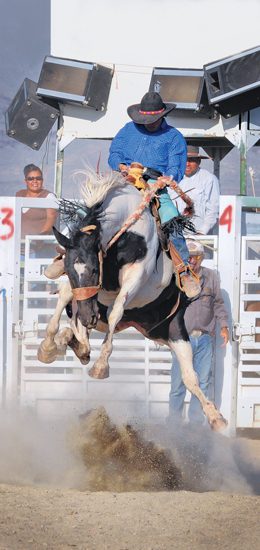
    When Lane Barton was in fifth grade he was going to cow camps with his father, George, and going to rodeos on the weekends. “We were on the desert moving cows around and back to the ranch,” said the 24 year old from Winnemucca, Nevada. “I went to rodeos with him since I was a baby. Once I got old enough, I got to go behind the chutes. When I got to high school, I got to put the saddle on and get it set and pulled down, and measure the rein.” George competed all over – California, Idaho, Oregon, Utah, and everywhere. George, now 43, was 13 the first time he rode a horse out of a bucking chute in the days way before ranch bronc riding was even an event.

    His grandfather, George Abel, is in the Buckaroo Hall of Fame in Winnemuca, a museum that preserves the Buckaroo Heritage of the Great Basin (Oregon, Idaho, and Nevada) area of the west. “Being a cowboy up in this country, back where there weren’t many fences; they lived their lives on horseback,” said George, who worked on ranches in the Great Basin most of his life. Several stock contractors came to buy horses that George Abel had. “We had a couple hundred head of horses on my grandma’s ranch in Fort McDermitt on the reservation,” he said. He was lucky to have plenty of horses to practice on. “They’d drive them 74 miles from McDermitt to town,” he remembers. “The horses would fill up a two lane road for a long time.” He rode broncs in high school rodeo and in 1991 was the Nevada State Champion and traveled to Shawnee, Oklahoma, for the National High School Finals. George went on to ride in the PRCA for seven years. He quit a little after his second son (Chance) was born. He picked up ranch bronc riding instead, working on his father-in-law’s ranch. “You don’t get the time off to travel, but I hit the ranch rodeos that I could get to.” He has since moved to Winnemucca, where his wife, Denise, teaches school and he works in the gold mine. “I learned a trade instead of cowboying,” he said. “I go brand calves and help out everyone around.”

    Lane picked up the rodeo bug, climbing on his first bronc at the age of 13. “Ever since I was a little kid that’s all I wanted to do was ride bucking horses.” He started riding broncs in high school and rode until he was a junior, when he ventured out to bull riding. “I hung up the rope after the last one my senior year. I had already started riding ranch broncs and I could do that better.” Western States Ranch Rodeo started up his senior year in high school, so he had a place to go. “The biggest difference between ranch bronc riding and saddle bronc riding is the saddle – you get to ride with both hands if you want to.” He likes the fact that you don’t get disqualified if you ride with both hands or lose a stirrup.

    He didn’t get his Western States Ranch Rodeo card until 2012. Ever since then, he is entering every rodeo he can, as time off from his full time job, and availability of entry money allows. Lane welds fence for Nuffer Welding and will marry his fiancé, Kayla Dowd, next September. He is determined to make the WSRRA National bronc riding finals for the third time this fall. Only the top fifteen, of over 100 ranch bronc riders who try for the same honor every year, can ride at this prestigious event.

    Today, George is more his son’s biggest fan and mentor, traveling with Lane as often as he can, rather than going for points and money himself. Even after thirty years and over 1,000 broncs, George still loves to ride an occasional rank bronc, especially if he can complete against his son, Lane. “Take a deep seat, give your horse his head, keep moving your feet forward, and let the horse buck,” is his standard advice.

  • RODEO SCHOLARSHIPS

    For high school seniors there are plenty of opportunities to earn scholarships. Here are a few tips that I think may help as you look to find the school that is the right fit for you.
    I just want to keep it real. Less than six percent of all student athletes are on a full ride scholarship. Not rodeo students, all student athletes, every sport, every college. Football, basketball, baseball all sports combined amount to less than six percent on true full ride scholarships. And when you really look at the full ride scholarships, they are in the big revenue sports such as football, and basketball, the sports that fill stadiums and generate revenue for the schools. Rodeo has never filled a 100,000 seat stadium six or eight times a year like an SEC football team will. Scholarships are there, full rides are scarce.
    The dollar amount of the scholarship should not be the determining factor for your choice of schools. I know students that made the choice based simply on dollars. They took a $3,000 scholarship to Rodeo Time University where tuition is $12,000 per year and turned down a scholarship of $2,000 to Rodeo Tech College where tuition is only $4,000 per year. They took $500 more in scholarship money but the choice really cost them thousands of dollars. Look at the big picture and make wise decisions.
    Many times the schools that make the best offers scholarship wise, have the least to offer in other areas. Check out the dorms, the academic programs you are interested in, the practice facilities, the stalls, the coaches. How many times a week you can practice. How long do you practice in the fall and spring seasons. Does the school offer tutors for you, athletic trainers. Will your classes transfer to other schools? How big is the team? Make sure you are a good fit for the school and the school is a good fit for you.
    There are a lot of other scholarships available. From having attended three different colleges and working at a couple as well, there is much more money available in academic scholarships than there are in athletic scholarships at every college you will look at. From your freshman year of high school on, your high school grades can help or hurt you when applying for scholarships when you get to college. When combined with athletic scholarships, academic scholarships can be huge, they can truly help you earn that full-ride. Many of the students that I have had that had the best scholarships were on rodeo scholarships combined with academic scholarships. You are a student athlete first, and if you truly are, there can be financial rewards.
    Apply for as many scholarships as you can. Local scholarships. High School Rodeo Scholarships. Foundation scholarships. Search for scholarships on the internet. There are thousands of scholarships available if you are willing to put in a little work. Don’t be afraid to write a few essays, or fill out some applications. I know several students who have earned over $5,000 for just a little effort in applying for scholarships.
    Know the employees in your colleges Financial Aid Office on a first name basis. If they know you are willing to apply and put forth effort to get additional scholarships they will help you out.
    By NIRA rules Letters of Intent cannot be signed until March 1st of your senior year. Start the recruiting process now contact the programs you are interested in now. Visit schools, visit coaches, do your research on the school and rodeo programs. When March 1st rolls around you should have a good idea of which school you are interested in attending. Don’t be fooled or pressured into signing your LOI before March 1st.
    Once you land a scholarship on a rodeo team make yourself an asset to the team. Get good grades, chances are you can earn an academic scholarship in the future. Score lots of points, you may earn a better rodeo scholarship. Treat college like a job, and be a great employee, chances are you may get a raise in some form of a scholarship.
    Final thought—Scholarships are a privilege not a right. When you receive a scholarship it is fair that the coach/college have expectations for you to do well in the classroom and in the arena. You need to be a good student, a good athlete and a good representative for the school. If you don’t hold up your end of the deal, don’t expect the college to keep you around.

  • The Festival Western de St. Tite

    The Festival Western de St. Tite

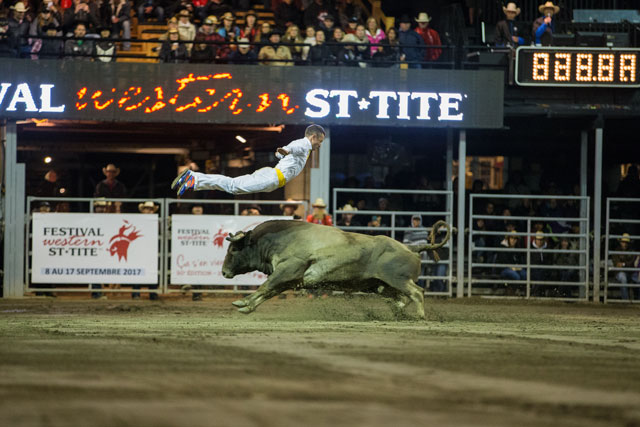
    The Festival Western de St. Tite in St. Tite, Quebec is a marathon of rodeo talent on display in a town surging with hundreds of thousands of festival-goers seeking a taste of the Western way of life in the French-speaking province of Canada.

    Following a kick-off weekend of competition called the Canada Cup is six consecutive performances of rodeo that culminated on Sept. 18, with Championship Sunday. The first two rounds showcased many of the best of the International Professional Rodeo Association athletes vying for a spot in the circle of finalists honored in the arena prior to the short go.

    Three rounds of competition, pyro-technics, specialty acts and the famous gymkhana events of exchange and pick-up racing, equaled non-stop entertainment for rodeo fans.

    Round one winners were Canadians, Pascal Isabelle, bareback riding, Louis Hemart, saddle bronc, Matt Mousseau, steer wrestling, and Caroline Poulin, barrel racing with a 16.44. Will Purcell from Australia took the round in the bull riding, and American, Tyler Milligan, tie-down roping. After running in slack, Kelly Jo Stein of New York took the win in the breakaway roping, with Sylvain and Michel Martel of Canada won team roping.

    The second round saw a new list of winners with Josh Cragar of Tennessee and Eddie Parlier of Alabama, winning in the bareback and saddle bronc riding. Trent Creager of Oklahoma took the round in the tie-down roping. Nicolas Brien of Quebec scored 83 to win the bull riding. Fellow Quebec competitor, Pamela Doucet won the barrel racing in Round 2 with a 16.45 and Rod Weese of Ontario wrestled his steer in 3.3 seconds for first place.

    The average was won by Carl Bernier in the bareback riding, Eddie Parlier secured the average in the saddle bronc. IPRA rookie, Daylon Swearingen, the teenage son of IPRA stock contractor, Rawhide Rodeo, who rides both horses and bulls in the roughstock end of the arena, took the title in the bull riding.

    The energy at St. Tite was a new experience for the American cowboy. “The crowd is so wild, you don’t know what they’re saying, but it’s so pumped up,” he said.

    Tyler Milligan won the tie-down roping. Tyler Foster won the steer wrestling and Kindyl Scruggs, who has been leading the IPRA World Barrel Racing Standings all year, took the average in her event.

    fb_dimanche-pm-11-septembre-3717Beautiful weather all weekend was interrupted briefly by heavy rain during Saturday night’s performance, but it didn’t at all diminish the packed stadium of fans or dampen their enthusiasm.
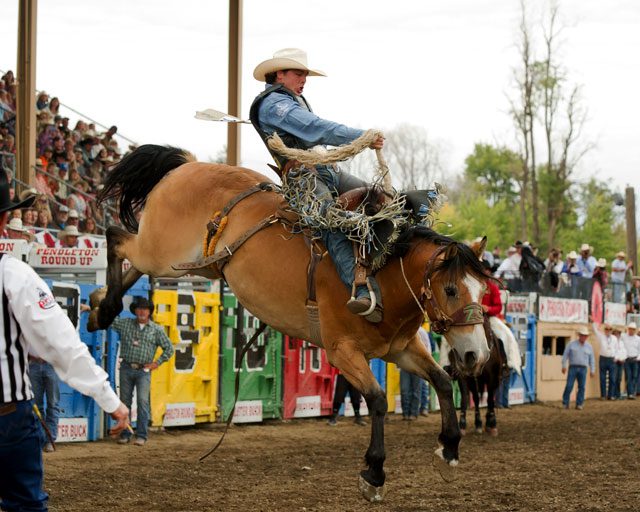
    And by Sunday, the capacity crowd returned to see the champions crowned in a clean-slate short round of heart-pounding action.

    A heartfelt send-off was had for pickup and exchange race champion and crowd favorite, Dany Poirier of Quebec, who retired his colorful and successful career in his last run on Sunday. Bareback rider, Tilden Hooper took the win in the bareback riding, and Louis Hemart continued his winning streak in the saddle bronc. Mitch Rinehart of Tennessee won the rodeo in the tie-down roping and Jason Stewart, whose family is a regular name on the list of International Finals Rodeo qualifiers, won the steer wrestling. Jessica Gauthier of Mirabel, Quebec, rode her surprisingly young futurity horse, a 4-year-old colt, to the win with a crowd-roaring 16.2 second run.

    In describing her run after the win, Gauthier said of her horse, “He was quicker than me that time. It rained a lot so he kind of slipped coming to the first barrel. That kind of scared me, because normally he bends a lot at the first barrel, but coming back from the third I just enjoyed it. I knew he was fast but accomplishing that [win] with all of the weather yesterday, he’s amazing, for his first time, a 4 year old. He amazed me.” Gauthier added of the horse’s name, humorously and aptly called Richie Champion, after the cowboy and million-dollar winner of the American event. “I wanted to find a name colorful for him. He really knew he was a champion [Sunday]. It feels amazing. It gets even better with those conditions of a horse so young, and so athletic. I just wanted him to take the victory lap, because I knew he deserved that.”

    And finally, Justin Thigpen, the 2015 World Champion All-Around Cowboy with multiple world titles to his name, proved his consistency in multiple events by winning the All-Around title at St. Tite.

    After the rodeo, the town, normally home to only 3,000 people, will revert back to its sleepy atmosphere for winter, but the committee at Festival Western de St. Tite is already gearing up for its 50th year celebration next year in 2017.

  • WNFR bubble update

    WNFR bubble update

    COLORADO SPRINGS, Colo. – With just 12 days left in the 2016 regular season, every cowboy is jockeying for position to end up in the top 15 and qualify for the Wrangler National Finals Rodeo presented by Polaris RANGER.

    Here are some of men who made their move this past weekend:

    • And then there were six: Jesse Wright’s big win in Pendleton was worth $10,014 and bounced him from 18th to 11th in the saddle bronc riding world standings, while his nephew, Ryder Wright, advanced from 17th to 13th, forcing Tyrell Smith and two-time World Champion Taos Muncy out of the top 15. Muncy has been battling a strained left groin since initially injuring it at the Aug. 16-20 Caldwell (Idaho) Night Rodeo. There are now six members of the Wright clan of Milford, Utah, in position to reach the Wrangler NFR Dec. 1-10, with Ryder joining older brother, Rusty, and Jesse joining his brothers Jake and Cody, and brother-in-law, CoBurn Bradshaw. If this holds up, Cody, Rusty and Ryder will become the third set of father and two sons to qualify for the National Finals in the same year.
    • Photo by Hubbell
    • After earning three checks in Pendleton, Guy Allen’s dream of returning to the Clem McSpadden National Finals Steer Roping for the first time since 2008, is a little bit closer to reality. Allen, who turned 56 earlier this month, moved up from 15th to 12th place in the WEATHER GUARD® PRCA World Standings and is looking to extend his record for most NFSR qualifications to 34. Brent Lewis won a round outright, and shared another round win to earn $8,669 in Pendleton and move within $1,819 of JoJo LeMond for the 15th and final qualifying spot in the NFSR.
    • Billy Bugenig can take a big deep breath today. Fourteenth in the world standings entering the week and just $1,664 ahead of two-time World Champion Dean Gorsuch in 16th, Bugenig earned checks totaling $6,370 in Pendleton, Ore.; Albuquerque, N.M., and Abilene, Texas, to move up to 11th. Trevor Knowles kept his hold on the 15th spot in the standings with checks in Pendleton and St. George, Utah, but remains just $1,962 ahead of 16th-place Gorsuch.
    • Teddy Athan’s bid for a first Wrangler NFR berth in the bareback riding suffered a blow despite a win at the Sheriff’s PRCA Rodeo in San Bernardino, Calif., that paid him $1,774. Texan Richmond Champion pushed Athan down to 16th place in the world standings by earning three checks in Pendleton – including a sixth-place result in the average – and another in St. George, Utah, for finishing in a tie for fifth place. Bill Tutor, in the 17th spot, moved to within $400 of Athan with checks in Abilene, Texas; Tyler, Texas, and Texarkana, Ark.
    • There were two changes in the tie-down roping top 15, with Blane Cox and J.C. Malone supplanting WNFR veterans Adam Gray and Tyson Durfey (a total of 12 qualifications between them). Malone made the biggest jump, from 21st to 15th by tying for fifth in the average in Pendleton, finishing fourth in Albuquerque, N.M., and winning the rodeo in San Bernardino, Calif., with a 7.8-second run. Cox went from 16th to 13th by finishing fourth in the Pendleton average and winning another check in Abilene, Texas.
    • 2011 World Champion Bull Rider Shane Proctor had a win in Harrison, Ark., and Bayle Worden had one of his own in Tyler, Texas, effectively canceling each other out and remaining 15th and 16th in the world standings, respectively. Proctor widened his lead slightly, to $6,272.

    The only change in the team roping standings came on the heading side, where Billy Bob Brown moved up from 16th to 14th on the strength of a tie for second place in St. George, Utah, and a seventh-place finish in Albuquerque, N.M. Dustin Egusquiza slid to 16th place, $829 behind Zac Small in 15th.

  • Elite Rodeo Athletes Make Changes to Deliver Exceptional Rodeo Product

    Elite Rodeo Athletes Make Changes to Deliver Exceptional Rodeo Product

    In an effort to continue to deliver the best rodeo product in the world to its fans, Elite Rodeo Athletes (ERA), announces changes to its 2016 tour. In a special produced by Western Sports Roundup, interim president Bobby Motes, ERA consultant Randy Bernard, and ERA barrel racing contestant Fallon Taylor shared their views on the future of the ERA.

    Randy, who was the driving force behind THE AMERICAN, has been a friend of ERA since its inception said, “There’s room for it,” he said. “I am for anything that is for the betterment of rodeo. I believe it is the one sport that still hasn’t seen its full potential and the ERA has the right idea of showcasing the best talent in the sport.” Randy has passed the torch on with respect to THE AMERICAN, and is now working for Garth Brooks. “I’ve got a great boss that will let me do this for the love of the sport,” he said. “ All boats rise on a high tide. And when 71 of your best walk out that’s what happens. We want to develop stars and make it a bigger sport.”

    The plan for 2017 is to continue the momentum that the ERA has started – it’s about the cowboy, the fan, and the committee. The ERA has set up the schedule to allow cowboys and cowgirls to get into town a few days early and make the connection between the contestant and the fan. “It’s a meet and greet before every event,” said Bobby. “I love to compete and I love being a dad, and this has allowed me to do both.”

    For Fallon Taylor the fan interaction fits her mission – changing one life a day. “Spending time with fan interaction helps the sport of rodeo grow,” she said, from Pendleton, Oregon, where she will compete.. “Next year I will be strictly ERA and the barrel races that I put on across the country. I love not hauling 90,000 miles a year and I love coming to town several days in advance and spending time with the community and the committee.” Fallon has been able to let Baby Flo rest between events.  “I don’t want to live any differently,” she said.

    Fallon Taylor, 2014 WNFR

    Bobby is excited about the future of the ERA. “Our objective was to create a rodeo product that will showcase an amazing group of rodeo athletes that are committed to this – show up early and stay late.”

    The 2016 ERA World Championships will be held at the American Airlines Center in Dallas as planned, but there will now be three performances on November 11, 12 and 13 only. “We have adjusted our Championship to make it more fan friendly, and also to allow us to do something exciting that fans have been asking for,” said ERA Athlete Bobby Mote. ERA has slated to make a more detailed announcement next week on RFD-TV.

    Fans who have already purchased tickets to the Wednesday, November 9 and Thursday, November 10 performances, whether individually, or in a set, will be contacted and issued a refund automatically. All ticketing fees (except UPS and retail pickup fees) will be refunded. If you purchased tickets at a retail location, please return the tickets to the same location. Ticket holders with questions can call Ticketmaster directly at 800-653-8000. The November 11-13 performances are not affected. ERA ticket holders that have been inconvenienced by this change will receive exclusive opportunities during the finals as a thank you for their support.

    More details about the Championship will be released in the coming weeks. To purchase tickets, book hotel rooms and learn more about Dallas, fans can go to ticketmaster.com or visit ERArodeo.com.

    No changes have been made to the ERA Qualifying Series in Mesquite. The finals will take place October 1-2 at the legendary Mesquite Championship Arena. The top two athletes in each event will progress to the American Airlines Center to compete against ERA tour athletes in the 2016 ERA World Championship.

    Planning for the 2017 ERA Tour is under way. Rancy says that one change fans will notice is that some ERA athletes will relinquish their stock in the ERA so that they can compete anywhere they want. “It is ERA’s first priority to take care of its cowboys, sponsors and fans.  We want the best rodeo athletes to showcase their talent everywhere.  When there is an ERA event we want fans to know that the best in the world are guaranteed to be at each performance. Whether the athletes own stock or not, it does not change their commitment to the ERA,” said Bernard.

    ERA plans on releasing the 2017 tour schedule later this year. For more information about ERA, visit ERArodeo.com or follow ERA on its social media channels (Twitter: @ERARodeo, Facebook: ERA Rodeo, Instagram: @erarodeo).

  • Nominees announced for PRCA Year-End Awards

    Nominees announced for PRCA Year-End Awards

    Dusty Tuckness, Cheyenne Frontier Days, 2016

    COLORADO SPRINGS, Colo. – The top five nominees for the 12 categories of PRCA Year-End Awards have been announced.

    The final year-end ballot will be open online Sept. 15 through Oct. 15. The winners will be announced during the PRCA Banquet in Las Vegas Nov. 30.

    Due to ties in the preliminary voting, the category of Pick-up Man of the Year has six nominees.

    Here is the complete list of categories and nominees:


    Announcer

    Wayne Brooks

    Randy Corley

    Mike Mathis

    Boyd Polhamus

    Andy Stewart


    Bullfighter

    Clay Heger

    Nathan Jestes

    Brandon Loden

    Dusty Tuckness

    Cody Webster


    Clown

    John Harrison

    Keith Isley

    Gizmo McCracken

    Justin Rumford

    Cody Sosebee


    Comedy Act

    John Harrison

    Keith Isley

    Gizmo McCracken

    Troy Lerwill

    Cody Sosebee


    Dress Act

    Bobby Kerr

    One Arm Bandit and Co. – John, Lynn and Amanda Payne

    Riata Ranch Cowboy Girls – Jennifer Nicholson and Spencer Litwork

    Rider Kiesner

    Tomas Garcilazo


    Pick-up Man

    Jason Bottoms

    Shawn Calhoun

    Chase Cervi

    Gary Rempel

    Matt Twitchell

    Jeremy Willis


    Secretary

    Sunni Deb Backstrom

    Haley Bridwell

    Amanda Corley-Sanders

    Brenda Crowder

    Sandy Gwatney


    Stock Contractor

    Beutler & Son Rodeo

    Cervi Championship Rodeo

    Frontier Rodeo

    Pete Carr Pro Rodeo

    Stace Smith Pro Rodeos


    Small Rodeo of Year

    Bridgeport, Texas

    Claremore, Okla.

    Elizabeth, Colo.

    Huntsville, Texas

    Monte Vista, Colo.


    Medium Rodeo of Year

    Abilene, Kan.

    Coleman, Texas

    Deadwood, S.D.

    Lufkin, Texas

    Stephenville, Texas


    Large Indoor Rodeo of Year

    Denver, Colo.

    Fort Worth, Texas

    Rapid City, S.D.

    San Angelo, Texas

    San Antonio, Texas


    Large Outdoor Rodeo of Year

    Caldwell, Idaho

    Cheyenne, Wyo.

    Dodge City, Kan.

    Pecos, Texas

    Pendleton, Ore.

  • Honey BBQ Chicken & Pumpkin Cornbread

    8735185681_ab472f13a6_oHoney BBQ Chicken

    recipe courtesy of Liz Fourez, LoveGrowsWild.com

    Ingredients:
    3 boneless skinless chicken breasts
    18 ounce bottle Honey BBQ Sauce
    1/2 cup Italian Salad Dressing
    1/4 cup brown sugar
    2 Tablespoons Worcestershire sauce

    DIRECTIONS:
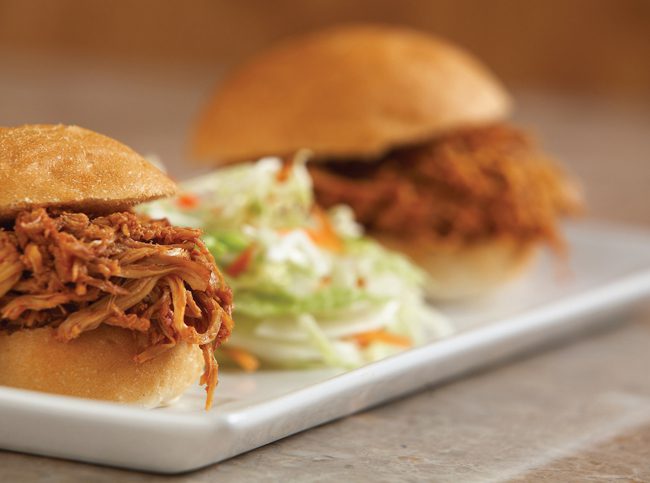
    Place chicken in a slow cooker. In a bowl, combine the barbecue sauce, Italian dressing, brown sugar, and Worcestershire. Pour sauce over the chicken and cover with lid. Cook 6-8 hours on low or 3-4 hours on high. Remove chicken from the slow cooker and shred using two forks. Return the chicken to the slow cooker to coat with sauce and serve on kaiser rolls.


    cornbreadPumpkin Cornbread

    recipe courtesy of Jaclyn, CookingClassy.com

    Ingredients:
    1 cup all-purpose flour
    1 cup cornmeal
    1 tsp baking powder
    1/2 tsp baking soda
    1/2 tsp salt
    1/2 tsp ground cinnamon
    1/2 tsp ground ginger
    1/4 tsp ground nutmeg
    1/4 tsp ground cloves
    1/2 cup packed light-brown sugar
    1/4 cup unsalted butter, melted
    1 cup canned pumpkin puree
    1/2 cup sour cream
    2 large eggs

    DIRECTIONS: Preheat oven to 375 degrees. In a mixing bowl whisk flour, cornmeal, baking powder, baking soda, salt, cinnamon, ginger, nutmeg and cloves. In a separate mixing bowl, add brown sugar and break up sugar. Add in melted butter and pumpkin. Mix in sour cream and eggs. Pour mixture into flour mixture. Pour batter into an 8 by 8 inch baking dish. Bake about 25 – 30 minutes. Cool slightly on a wire rack then cut into squares.