Rodeo Life

Blog

  • CINCH Boyd Gaming Chute-Out Confirms World Champion Competitors for 2016

    CINCH Boyd Gaming Chute-Out Confirms World Champion Competitors for 2016

    Hall of Fame’s Bob Tallman and Legendary Rodeo Announcer Roger Mooney to Emcee Event

    LAS VEGAS —The CINCH Boyd Gaming Chute-Out, set for Dec. 8-10 at the Orleans Arena in Las Vegas, is right around the corner and today, Boyd Gaming announced some of the world-champion rodeo talent that will be competing in the event, including Luke Branquinho and Wade Sundell.

    Five-time world champion Luke Branquinho will compete in Steer Wrestling, bringing his fifteen years of rodeo experience with him to the arena. Branquinho holds the distinction of having competed in and won nearly every big rodeo in the country.

    Wade Sundell made headlines in the rodeo world with his $1 million win at the RFD-TV The American rodeo earlier this year. The Iowa native has qualified to ride in the WNFR seven times and will compete in Saddle Bronc Riding.

    Also confirmed to compete in this year’s Boyd Gaming Chute-Out for a competition purse totaling $200,000 are Joe Beaver and McCoy Profili, and Clay Tryan and Jade Corkill for Team Roping; Steven Peebles for Bareback Riding; Cort Scheer for Saddle Bronc; Chandler Bownds for Bull Riding; and Lindsey Sears for Barrel Racing. A total of 64 participants will compete during the action-packed, three-day, afternoon rodeo event in a series of contests: Bareback Riding, Steer Wrestling, Team Roping, Saddle Bronc Riding, Tie-Down Roping, Barrel Racing and Bull Riding.

    The 2015 Chute-Out introduced an unprecedented level of rodeo fan involvement with the Boyd Gaming Chute-Out app, featuring rodeo’s first-ever automated “Day Sheet.” The event also broke new ground in rodeo sports betting, with Chute-Out events being the only rodeo events listed in Boyd Gaming’s Las Vegas sportsbooks during Rodeo Week. The Chute-Out will be listed again in Boyd Gaming sportsbooks around Las Vegas, and the Chute-Out app will see several user-friendly upgrades.

    The CINCH Boyd Gaming Chute-Out complements Boyd Gaming’s significant involvement during Rodeo Week in Las Vegas, including hosting fan-favorite events like the National Finals Tonight Show and the Legendary Buck’N Ball at The Orleans Hotel and Casino; Bob Tallman Celebrity Bowling Tournament at Gold Coast Hotel and Casino; and Buckin’ Bull Party mechanical bull contest, which will premiere for the first time this year at Fremont Hotel and Casino.

    Tickets start at $30 and are on sale now. To purchase tickets or room and ticket packages, to download the app or for further information about all of Boyd Gaming’s WNFR events, visit BoydChuteOut.com.

    Join the conversation online with the hashtag #BoydChuteOut.
  • Southern Region IPRA Tour Finale

    Southern Region IPRA Tour Finale

    The Ada Firefighters Southern Region Tour Finale held October 21-22 in Ada, Oklahoma showcased some of rodeo’s toughest talent for the International Professional Rodeo Association’s Southern Region.

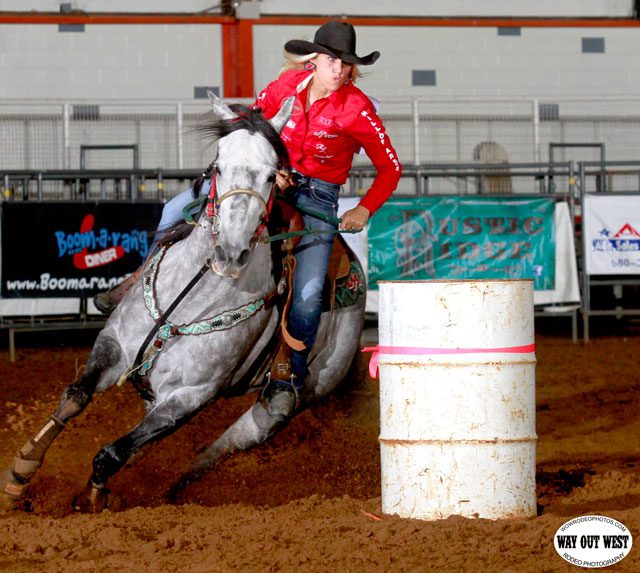
    On Friday night, familiar names in the IPRA, Mark Kreder (pictured) and Sean Prater took first for Go-Round One in bareback riding and saddle bronc riding, and newcomer Osman Alvarez won the bull riding. At the timed-event side of the arena, the 2014 World Champion Barrel Racer, Natalie Overholt took first. Austin Mason wrestled his steer the fastest, Blake Ash took first in Go Round One of the tie-down roping. Former Rookies of the Year and International Finals Average Champions, Josh Canant and Jake Weddle, won the team roping, and Jimme Beth Hefner won the breakaway.

    fb_mg_2160

    Saturday night, the competition really heated up to determine Round Two winners as well as the Average Champions.

    Go Round Two would see a repeat win from both Sean Prater and the team of Josh Canant and Jake Weddle. Rookies, Austin Graham (bareback riding), Luke Potter (tie-down roping) and Bert Kathy Thompson (barrel racing) won the round in their events. Cody Brecheisen took first in steer wrestling, and your 2015 World Champion Breakaway Roper, Lindsey Hughes won the breakaway in Round Two.

    It’s no surprise that the Southern Region Tour Finale champions, based upon the average, were bronc rider Sean Prater and ropers Jake Weddle and Josh Canant for a clean sweep of the weekend.

    “Jake and I grew up together and have roped together for as long as I can remember.  We know what each other is going do every time we run a steer. He is an outstanding header, and he makes my job easy,” Josh Canant said of his partner in the team roping. He added of the finals, “The tour finale is great because of the money. Jake and I were both 16th in the standings, and this win hopefully helps us make the IFR this year. Kevin and Gina [of Hampton Rodeo Company] put on an excellent rodeo as usual in Ada.”

    Consistency paid off for JC King and Toya Vogt in the tie-down and the breakaway roping. Mark Kreder secured the championship in the bareback riding, and Cody Brecheisen turned his round win into an average championship in the steer wrestling, while Bert Kathy Thompson proved why she’s one of the rising stars in the IPRA with her first IPRA regional championship.

    “It was [a] surreal feeling to win the Southern Region Championship and a huge accomplishment for me. Not only to win it; but the fact I had only been back to riding about 10 days from a shoulder separation and tear.  My mare Shez Truely Oldtimes took care of me,” enthused Thompson, who added, “the awards were wonderful, and Hampton Rodeo put on a great show!”

    Thompson, who comes from the barrel racing futurity world, has spent her rookie year adjusting to rodeo life but cited her enjoyment of travel and the helpful members of the IPRA who have welcomed her into the association. Now, she is well on her way to her first IFR qualification after her win in Ada.

    For more information visit IPRARodeo.com

  • Karen Vold recognized with Donita Barnes Award

    Karen Vold recognized with Donita Barnes Award

    COLORADO SPRINGS. – Some know her as a talented trick roper, others as a rodeo organizer alongside her husband, ProRodeo Hall of Fame stock contractor Harry Vold. But Karen Vold considers herself to be a Girl Friday – that is, someone who does a lot behind the scenes – and it’s that multi-faceted talent that earned her the 2016 PRCA Donita Barnes Lifetime Achievement Award.

    “It’s quite a shock, and an awesome compliment, because I thought the world of her (Barnes), she was a very dear friend,” Karen Vold said. “I consider my title as a Girl Friday – someone who does a lot of different things – I multitask in the background. Rodeo takes a lot of people behind the scenes to make what happens in the arena successful, and there’s a lot of people who do those things and don’t get acknowledged – people at the gates, selling tickets, the offices – they are Girl Friday or Guy Friday.”

    Her father, the late Andy Womack, was a ProRodeo Hall of Fame clown and it was through his connections to the sport that Karen was introduced to the art of trick riding. She was just 14 years old when she made her first appearance as a trick rider.

    doc025-1

    “It was just something that appealed to me – when your heart wants to do something, you follow your dream,” Karen Vold said. “The highlight of my life was as a kid, working the Phoenix Jaycee’s Rodeo since that was my dad’s last rodeo as a clown.”

    After marrying Harry, the couple put on many of the country’s biggest rodeos, and at one time they worked rodeos in 11 different states.

    “The joke in the family is I’ve been a member (of the PRCA) longer than Harry,” Karen Vold said.

    For the last 28 years, she and her former student, Linda Scholtz, have taught trick riding to students from around the world at the Red Top Ranch Trick Riding School in Avondale, about 20 miles outside of Pueblo, Colo.

     “As long as they keep coming, I’ll keep teaching,” Karen Vold said. “That’s what you do when you can’t trick ride any more. My family would ask me what I would do when I stopped trick riding and I said I didn’t want to talk about it – so then I became a coach.”

    The inaugural PRCA Donita Barnes Lifetime Achievement Award was given to Barnes in 2011.

    “I was so pleased when they created the honor in her name because she so rightly deserved it,” Karen Vold said.

    Art and Linda Alsbaugh were the recipients in 2012, then Fred and Norma Dorenkamp won it in 2013. Quail Dobbs received the award in 2014, and Cotton Rosser was last year’s winner.

    All other year-end PRCA awards will be announced at the 2016 PRCA Awards Banquet, Nov. 30 at the South Point Hotel, Casino & Spa in Las Vegas.

  • RODEO HONORS

    RODEO HONORS

    Bucking Horses, Bulls awarded for excellence in Pro Rodeo’s Badlands Circuit

    Minot, N.D. (October 20, 2016) – They are the silent dance partners in rodeo, and they’ve won themselves some accolades.

    Four bucking horses and two bucking bulls have been awarded Animal of the Year and Animal of the Finals in the RAM Badlands Circuit.

    Bareback Horse of the Year was given to Sutton Rodeo’s American Graffiti.

    Bareback Horse of the Badlands Circuit Finals was awarded to Korkow’s En Vogue.

    Korkow Rodeo’s bareback horse En Vogue, ridden by Mike Fred,  is a five-year-old mare, out of a Wrangler National Finals Rodeo horse Vogue. Photos by Peggy Gander/Cowboy Images.

    IMG_3699

    Saddle Bronc of the Year was won by Sutton Rodeo’s South Point, and Saddle Bronc of the Finals went to Korkow’s Duck Butter.

    Bull of the Year was given to Sutton’s Tea Time, and Bull of the Finals went to Bailey Rodeo’s High Maintenance. Drew Antone rides Sutton Rodeo’s Tea Time at the 2016 RAM Badlands Circuit Finals Rodeo in Minot. The white and yellow bull repeats as the Bull of the Year for the RAM Badlands Circuit. Photo by Peggy Gander/Cowboy Images.net

    antone-drew-bull-of-year-tea-time-3p1825-2

    American Graffiti, the Bareback Horse of the Year, is a nine year old paint mare the Suttons of Onida, S.D., purchased from Steve Waagen of Bottineau, N.D. The mare “isn’t an eliminator,” Steve Sutton said, “but she’ll test you. You have to have your A game going and she’ll give you hers, and you’ll usually go to the pay window.”

    The Suttons won Saddle Bronc of the Year with their ranch-raised nine-year-old bay gelding named South Point. South Point started his rodeo career as a saddle bronc horse, was switched to the bareback riding, and is now back to the saddle bronc. Cole Elshere, Faith, S.D. and Chuck Schmidt, Keldron, S.D., both had first place finishes on the gelding during the second and fourth rounds of the Badlands Circuit Finals October 6-9.


    IMG_2330


    Korkow Rodeo’s bareback horse En Vogue, ridden by Mike Fred, won the Bareback Horse of the Year for the Badlands Circuit. The horse is a five-year-old mare, out of a Wrangler National Finals Rodeo horse Vogue. Photo by Peggy Gander/Cowboy Images. Korkow Rodeo’s five year old mare En Vogue won Bareback Horse of the Finals. The striped-face chestnut didn’t make the trip to the Northwest rodeos with TJ Korkow but stayed closer to home with TJ’s dad Jim Korkow, at rodeos in Aberdeen and Sioux Falls, S.D., Hastings, Neb., and others. The mare bucked off two riders at the Badlands Circuit Finals, TJ said. “She circles right in front of the chutes to the left, getting in the air, kicking, bobbing her head, and curling her feet. She’s an ideal bareback horse. She looks cool when she bucks. When she bucked off Andy (Hall) the other night (at the Circuit Finals), she stood in one spot, jumped in the air, and kicked and curled her feet, doing it time and time again. She’s pretty cool.”


    Korkow Rodeo’s Duck Butter won Saddle Bronc of the Finals. The seven year old gelding is a small horse, TJ said, about 950 lbs., but “he bucks big. He leaps in the air and he takes a pile of rein. He bucks with his head down, but he’s leaping in the air at the same time, and he kicks. It’s a pretty cool style, and he’s pretty flashy.” Shorty Garrett won first place on Duck Butter during the fourth performance of the Circuit Finals.


    For High Maintenance, the Bull of the Finals, it was his second year of rodeo competition. The four year old red and white bull was purchased by Bailey Pro Rodeo as a calf from Nebraska. He was unridden in 2016, including two rides on him at the Badlands Circuit Finals, said Kelly Klein part owner of Bailey Pro Rodeo, and only two bull riders made qualified rides on him in 2015 (Brett Stall and Zac Peterson, both at PBR events.) “He kicks straight up and down, out of the chute, then turns back about two jumps, and goes to spinning,” Klein said.

    IMG_0952

    Sutton’s bull Tea Time, who won Bull of the Year, also won the same award last year. Bull riders that make the eight second buzzer on him are usually a lot of points, Sutton said.


    Animals were voted on by the contestants in their respective events.


    The RAM Badlands Circuit Finals Rodeo was held October 6-9 in Minot, N.D., and was hosted by the Minot Y’s Men’s Rodeo. Year-end and average champions were determined in each event, and qualify to compete at the RAM National Circuit Finals Rodeo in Kissimmee, Fla., in April 2017. For more information on pro rodeo, visit the website at ProRodeo.com. For more information on the Badlands Circuit, visit MinotYsMensRodeo.com.


  • COOK SHACK: Chocolate Zucchini Bread & Grandma Casserole

    img_3272


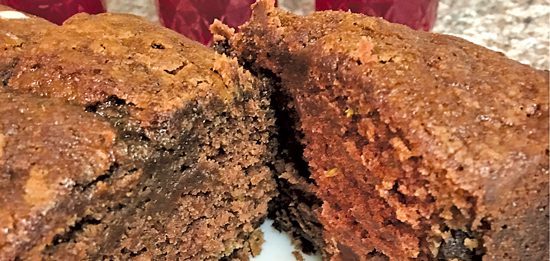
    Chocolate Zucchini Bread
    recipe courtesy of Siri Stevens

    ingredients:
    3 eggs
    2 cups sugar
    1 cup oil
    1 tsp vanilla
    3 cups grated zucchini
    1 tsp salt
    1 tsp soda
    1/4 tsp baking powder
    2 & 3/4 cups flour
    1/4 cup cocoa
    1 cup choc chips

    DIRECTIONS: In a mixing bowl beat eggs, oil, sugar and vanilla extract. Stir in zucchini. In a separate bowl combine dry ingredients (except sugar). Add to zucchini mixture and mix well. Pour into greased pan and bake at 325 degrees for 1 hour .


    3651738513_d6c7dc0e45_o


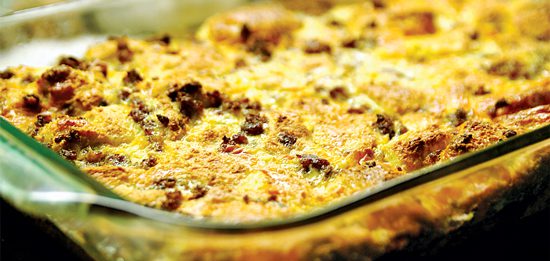
    Grandma Casserole

    recipe courtesy of Dave Rubenthaler, in memory of Florence Rubenthaler, “Country Cookin’, The Pioneer Journey Cookbook”

    ingredients:
    1 large onion, diced
    1 lb. ground beef
    salt & pepper to taste
    1 pkg/ (8 oz.) of noodles
    2 cans cream of celery soup
    1 box (8.5 oz.) Jiffy corn muffin mix
    1 egg
    1/3 c. milk

    DIRECTIONS: Saute onion in butter or oil, add ground beef, salt and pepper. Cook until done, drain fat. Cook noodles in salted water until done. Drain. Add noodles and soup to meat and mix well. In separate bowl mix corn muffin mix according to instructions using the egg and milk. Put meat and noodle mixture into a greased baking dish. Cover with corn muffin batter. Bake at 400 degrees until corn is done, about 20 minutes.

  • Roper Review: Butchie Levell

    Roper Review: Butchie Levell

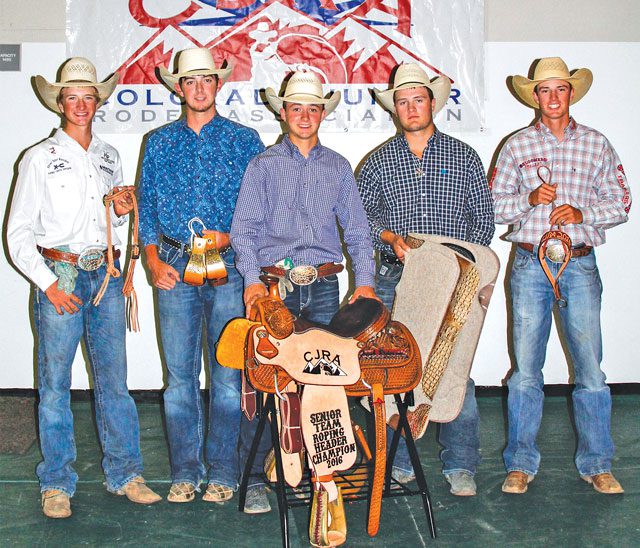
    Butchie Levell, Senior Team Roping Header Champion – Lazy HH Photography

    Butchie Levell (Butch Levell III) has gone to a lot of USTRC ropings in order to be tied for first with Keith Elkins from Clinton, Louisiana, in the Scholarship Standings.  If he holds onto that lead until the end of the Finals, he will win $10,000 in scholarships.
    The 18-year-old form Omaha, Nebraska, has been roping since he was 10, and is now a #6+ header and #6 heeler. “I like heading better, that’s been my strong point. Heeling is a little tough, but heading has been easy going for me.” His family, dad, Butch, mom, Pam, and older sister, Jennifer, were not into horses at all. “We have two houses on our property,” he explained. “The people that rented the house had horses and roped and I decided one day I wanted to be a cowboy and it started from there.” He started with the neighbors, and then got in with Jeff Straight, JD Yates, and Jay Wadams. “They helped him the most,” he said. Butchie started showing horses in the AQHA at the same time he was learning to rope and this year he stayed the summer in Colorado at JD Yates house, roping in the Colorado Junior Rodeo Association, and winning their year end Senior Team Roping saddle with his partner, Colton Reed.
    This is his first year out of high school and he decided to stay home a year to rope, work for his dad, and take care of 50 head of cattle that he has accumulated over the years. “They are old roping heifers that I kept as momma cows and now I rope their calves.”  He keeps them on leased pasture and at his place.
    Butchie is headed to his fifth USTRC Finals. “It’s awesome  being down there for a week, hanging out with friends, and going up against the best in the world and lots of money,” he said. He will haul four of his six horses to Oklahoma to enter everything from the open prelims to the #10; he’s entered mostly as a header, but is roping as a heeler as well.
    His dad, Butch, owns a recycling business, Lakeside Auto Recyclers, and his mom is a stay-at-home mom. When he’s not roping or working with his herd, Butchie helps his dad with the company. His plans are to attend college and get an Ag Business degree and make his way to the NFR someday. “I rope until my arm gets tired and I don’t want to stop,” he said. “I rope until 8 or 9 every night.” He knows that’s what it’s going to take to get to the NFR. “My goal is to work hard every day and push to get better.”

    ____________________

    The USTRC launched the scholarship program this year. “We had talked about this for a long time,” said Kirk Bray, USTRC President. “With putting $100,000 up and making it available for any age, up to 24, potentially a kid that’s 13 or 14 can start building a scholarship bank with us.” The USTRC Scholarship Program will award $100,000 in scholarship funds annually. Sixty (60) scholarships will be awarded to the top point earners during the 2016 season (November 1, 2015 thru October 31, 2016). “They had to opt in to the program because we wanted to make sure they are serious about going to college. It’s a pretty strict program, but we want to award the kids that go to college and get good grades. It’s a way to give back.”

  • College Rodeo Recruiting

    It is that time of the year that high school students start looking for the college or University they are interested in attending. Every year College rodeo coaches hear from a lot of students who are interested in their programs.  And College Rodeo coaches contact many students about their program. The process can be confusing and sometimes difficult.
    Here are a few tips that may help you:
    Have a plan for your future.
    Know what you want to study.  Even if you are just plan on taking general studies for your first two years, have a plan.  Most college rodeo coaches want to see you do well academically and it is much easier if you have a plan.  When you visit schools the coach should ask about what you plan on studying in your two or four year stay. If you can pick up a copy of the degree plan you are interested in.
    Do your research on the rodeo programs you are interested in.
    Talk to current and former athletes in the program. Ask the coach about graduation rates or how many students transfer to other schools if it is a two year school.    Ask the current students about the coaches and the practices.  Check back the past several years to see how well the program has done.  How well have the students done after they have been through the program.  You can learn  a lot from current and former students.
    Check your options.  There are a lot of schools with good rodeo programs.  Don’t go to the first one you look at, or the first one to make an offer.  Check different schools, visit with coaches.  Go on campus visits, stop by practices.  Maybe even go to one of their regional rodeos.  At the rodeo you will see different schools, coaches and athletes.  Find a fit that is good for you.
    Do not let your parents take control of the recruiting/decision process.  Speaking for myself and a few other coaches that I know, nothing throws up a red flag more than over involved parents.  We want you to choose our school because you want to be here, not because you mom and dad want you here.  You will be the one spending several years at the school, make sure it is your choice.
    Come to the campus visit prepared.  Have thoughtful questions. Ask about financial aid.  Ask a lot of questions about practices.  Ask about travel money. Ask about stalls.  Prepare a list of questions. Don’t be afraid to ask the tough questions. Ask. Ask. Ask. The more prepared you are with questions, the more knowledge you will have to make your decision with.
    Narrow your schools down and go on campus visits.
    Check out some of the classes; see how many students are in them.  Meet instructors in areas that you are interested in studying.  Make sure you will feel comfortable at the school. See how well you will fit in with the team. Try the cafeteria. Go by and get an admissions packet.  If you have any duel credit classes from high school meet with a counselor to see how they will transfer.
    Choosing the right school is a big decision.  Most college students just base their decision on academics.  As a student athlete you have many more factors that will play into the decision.  Take the time to educate yourself and make a decision that will benefit you, hopefully for the rest of your life.  The more information you have the easier it will be to make a decision on March 1st.

    _____

    C.J. Aragon was named the 2008-2011 Grand Canyon Region Coach-of-the-Year. 2014-2015 WJCAC Coach-of-the-Year, 2016 Southwest Region Coach-of-the-Year, and 2010 National Intercollegiate Rodeo Association Coach-of-the-Year.

  • ProFile: Troy Heinert

    ProFile: Troy Heinert

    Troy Heinert takes care of cowboys and constituents. In rodeo, the Mission, S.D. man works as a pickup man, and in the world of politics, he is a senator in the South Dakota State Legislature.
    He grew up on the family ranch west of Mission, the son of Margo and the late Harold Heinert. When he was twelve, his dad died, and his mom moved the family to Pierre.
    In high school, Troy team roped and rode bareback horses, and continued the bareback riding while in college at Black Hills State University in Spearfish, S.D., and at Sinte Gleska University in Rosebud. He graduated with a bachelor’s degree in elementary education and taught school at Rosebud Elementary for ten years, all the while competing in the PRCA and at Indian rodeos.
    Troy’s dad Harold and stock contractor Jim Korkow were best of friends, and when Harold passed away, Jim said, “you’re my boy now,” Troy said. “He never treated me any different than he treated TJ (Jim’s son.) If TJ got a twenty (dollar bill), I got a twenty.”
    It was through Jim that Troy began picking up. He started with 4-H and high school rodeos, working through the summers for Korkow Rodeo. After he quit riding barebacks twelve years ago, he picked up more steadily.
    He works many of the Korkow Rodeos, along with rodeos for Stace Smith, Three Hills Rodeo, and Wilson Rodeo. He’s been selected to pick up the Indian National Finals Rodeo five times, and was chosen this year to work the Badlands Circuit Finals Rodeo in Minot, N.D. this month.
    He loves picking up. “It’s as close as you can get to a bucking horse without having to get on them anymore. It’s fun, especially when you know the horses and you can put yourself in a position to help the guys make good rides, and help that horse buck, and see a match-up click.”
    He loves spending time with the bucking horses. “To be around them, to sort, feed, truck them, learn their personalities. They learn your voice, and if a horse is throwing a fit in the chute I can ride up to it and start talking to it, and you can see them pay attention and stand up.”
    Four years ago, Heinert ran as a Democrat in the 26th District, for the S.D. State House of Representatives. He won, served a two year term, then ran for state senator in 2014. He won that election, and is running again this fall, unopposed.
    He feels he has met a lot of his goals as a representative for his district, which is predominantly Native American. He is a member of the Rosebud Sioux tribe, and it is important for him “to be a voice for Native Americans and cowboys,” he said. “My district has three reservations in its boundaries, and we don’t have many opportunities for a voice. I have a lot of people depending on me to be that voice, and I’ve been able to do that, and to get people to understand some of the issues we see on the reservation, to see why things are the way they are, and what they can do to help.”
    As a senator, he is able to show people unfamiliar with Native Americans and reservations what it’s like. “I think, even in South Dakota, there’s a lot of people who just don’t know what our healthcare system is like, what our education system is like, what poverty looks like, and the different relationships the tribes have with state and federal governments.”
    He is very proud that he was able to pass an Achievement Schools Grant program, which allows public schools to apply and create a cultural school for Native American kids in the district. “That’s the first time it’s happened in South Dakota,” he said.
    Being a cowboy in politics is also an advantage. “There are some farmers and ranchers in the legislature, but when it comes to ag issues, even something in transportation and trucking, it helps to have that background knowledge of what it means to load a truck and go down the road.”
    Heinert is the Senate Assistant Minority Leader; fellow cowboy Billie Sutton, a former saddle bronc rider, is Senate Minority Leader and has been a part of South Dakota politics for the last six years. Heinert credits Sutton with helping him get his feet under him in politics. “I had a great mentor in Billie. He had been there a while, and he knew the ins and outs, and that gave me a head start.”
    He is married to Gena; they have three children: sons TJ, who is 22, and Harold, who is ten, and a daughter, Jordan, who is 21.

  • Back When They Bucked with Wally Woods

    Back When They Bucked with Wally Woods

    Wally Woods was born in Victoria, Australia, the second youngest of four brothers. “When you’ve got four brothers, and I was the second youngest, I had to fend for myself,” said the 84-year-old Australian cowboy. “My father worked on a cattle/sheep property. My mother died when she was very young. When I was about five years old, we had a post office and I would deliver the mail bag three miles up the road five days a week on a horse.
    Wally started competing in the steer riding when he was 14, winning the first one he entered. “I left school when I was about 11- there was no high school – I went traveling with a Wild West show, traveling all over riding bucking horses and doing all kinds of things in the show. You name it, I did it. We used to do two riding a bucking horse, one in the saddle and one behind, and we’d jump off.” He performed every night, and was part of each act. He traveled with the show for three years, and then switched to rodeo.
    He worked in a spare car parts place and competed on the weekends. “In them days, in this country, money was hard to come by. We’d go to any buck jumping contest we could find (bronc riding).” He got his first big win in 1951, winning the Jubilee Championship of South Australia in the bronc riding. “I won a big cup and 100 pounds. From then on, at different times, one of me own brothers and I used to break in horses and a money earning contest, and travel around to different rodeos all over the country.” He entered every event. “There were five events in those days; bronc, bareback, steer riding, bull dogging, and roping. The roping was either calf roping or wild cow milking. Through the next ten years, I won four all around champions of the year, that’s the highest money winner over the five events.”
    Wally was part of the Australian Rough Riders Association, which started in 1944. “They had a secretary, and a spokesman. It was just a membership that organized it all, and one secretary. From 1945 until 1959, then we formed a board of directors and all that,” he said. “They nominated me as the first president in 1959, and I was that until 1965, competing the whole time.” The ARRA is now the national governing body for professional rodeo competition in Australia, the oldest national rodeo organization in the world.
    The first national finals was held in 1961. “It was an 8 round contest, so you’d ride eight of everything; eight saddle horses, eight bareback horses, eight bulls, bull dog eight steers, and rope eight head,” he explained. Wally, who is 5’6” and 11 stones (14 pounds = one stone) won the bull riding by three bulls, riding seven out of the eight. He won the high pot all around champion for the year, second in the bronc riding and placed in every event.
    Wally met his wife, Lexi, at a rodeo in Victoria. “She was only a girl when I met her,” he said. “I waited seven years to marry her – my brother married her older sister.” Once they were married in 1958, she traveled all over the country with him. They have two children, a son, Guy, who is a cutting trainer in Texas, and a daughter, Lindy, two years and two days older than Guy.
    They traveled around in a Ford 250, with his dogging horse in the back, and towing a caravan behind where they lived. Wally made a good living from rodeo. “In them days if you won 100 pounds (one pound = $2) in five weeks you were doing good; I won 500 pounds, which is good.
    We used to buy petrol at about 2 shillings (.33 a gallon), now it’s $4.80 a gallon. We traveled anything up to 700 miles – there is some big distance between towns. From Victorian border to New South Wales is 600 miles.”
    He continues to hold the record for winning three riding events in one day, and fourth in the bulldogging, at the Australian Championships. In 1958, he won the World Bronc Riding Championship, which included America, New Zealand, and other countries. “All told, I won 40 state Australian titles, and over the years, I’ve won 170 first places. We used to get a big sash when we won a contest, and I counted them out to see who many I won.”
    He continued to compete well into the 1960s, and when he hung up his bull rope, he picked up a stopwatch and started judging. “I knocked off when I bought a transport business in Queensland, which I had started in Victoria. I transported cattle, sheep, horses, whatever livestock there was from one end of the country to the other, anywhere at all.” He still rodeoed around the arena for a little while, but he only went to a very few because he was too busy.
    Wally is officially retired, but he still has some horses. “I breed them, since I give up rodeoing, I’ve managed two big quarter horse breeding properties and I’ve got a little place that we breed horses, Guy sent me a horse to breed here.”
    He’s made several trips to the United States to visit his son and grandchildren, but since his four-way bypass a year and a half ago, he hasn’t done much traveling.
    Wally has seen many changes to rodeo over the years. “It’s the same thing, but we used to ride in an Australian saddle. I was one of the very lucky ones that got to introduce the American saddle to the Australians. There’s a big difference. The
    Australian saddle is an English saddle, but a lot smaller. It has a very low back, and very little, 1 ½ front on it. Once you got used to riding, it’s just like everything, you’re good at it or you’re not.”
    The bareback riggin was completely different than today. “I used to make them and sell them. In 1956, a friend of mine that went to American brought me back a Dixon riggin. The ones they have now, you couldn’t even put them together. It was a straight head one – the original ones were like a bull rope, in fact, we used to use bull ropes riding horses.”
    Bulldogging steers were much different back in his days of rodeoing too. “One of the best bull doggers this country had seen was 6’1, 15 stones (14 pounds per stone – 210 pounds) and I seen his feet not touch the ground for 100 yards after he caught the steer.
    “All the years that I did it, I enjoyed it,” he said of rodeo. “There were quite a few of those fellows that rodeoed and traveled around and we became very good friends and it was also a way of life, it was a way of making money.”

  • On the Trail with Kellan & Carson Johnson

    On the Trail with Kellan & Carson Johnson

    Kellan and Carson Johnson, brothers from 30 miles outside Casper, Wyo., have roped together for eight years. “It’s great – we get to practice together all the time, but its nerve wracking because you don’t want to miss for your little brother,” said Kellan, the 6+ header, who is two years older. “We have an indoor and outdoor arena at home.” They have a great teacher in their dad, Jhett Johnson, 2011 WNFR World Champion Team Roping Heeler with his partner Turtle Powell. The pair won it with a total time of 57.5 seconds on nine head. Their mom, Jenny, competed in goat tying and breakaway in college. “We have plenty of help.” This is Kellan’s second year winning the team roping championship for the state of Wyoming, and he has been the USTRC regional champion, heading for his dad, for two years in a row.

    He made his third trip to the National High School Finals this past summer, he and his partner last year (cousin, Jayden) came into the short go in the same position as this year, third. “The steer we had was great and we were a 5.3,” said Kellan of the run. “We put enough pressure on second and first,” recalls Kellan. “Second high call ended up winning it with a 5.1.” His plan is to practice up for the next year and hopefully win the state title again. “Then go back to Nationals and leave with a first instead of second.”

    He spent the rest of the summer amateur rodeoing in Nebraska. After that, the high school rodeos started up again. “We put up hay and we check cattle and make sure everything is running smooth on the ranch.” The 17-year-old has one more year of high school and is unsure where he will go to college. “I might go somewhere that’s warmer,” he said, and plans to get a degree in Ag Business. He has considered Casper where his dad is the rodeo coach, but thinks he might head to Oklahoma or Texas.

    He and his brother are sitting first in the state at the end of the fall season, he is fourth in calves, and second in the All Around.

    Kellan gives credit for his success to growing up watching his dad and grandpa and uncle break horses. “I learned how a horse should move and act at a high level, cutting, roping, etc. Coming from this family, I learned what good horsemanship, and a good roper, and mindset is all about also,” he explained. “What my dad told me is you have 30 minutes to yourself to be frustrated or angry at anything in life, to understand and go from there. After that 30 minutes, you clear your mind and get on to the next whatever it is.” He explains good horsemanship as someone who can understand the difference between roping and the horse. “When your horse isn’t working right, it makes your job ten times harder than it should be. A horse also demonstrates the rider’s handiness and how success you will be. If you have a good horse, your roping goes up. If you have a bad horse, it goes down.” Kellan has gone through five head horses in the ten years he’s been roping. “The way I look at it, the better you get as a roper, the better your horse has to be. That will take your roping to the next level.” He has learned how to find the right horse. “For what I do, and for my event, I look for a lot of run, a good mindset, good attitude towards things. Kind of like a little kid, willing to learn what you ask of them.” Roping with his brother has gotten better every day. “We are figuring each other out – if you can wake up everyday and make the same run you made the day before, the sky is the limit.”

    Carson is a #7 heeler, and he likes to rope with his brother. “We get to practice every day, it’s always in the family,” he said. The sophomore at Natrona County High School is riding Shwaze, a horse he got a year ago. “When I got him, he was a little green, but now he’s finished and fits me really good.” He spent his time getting ready for the short go by staying relaxed. “It’s nothing more than another steer that we rope in the practice pen. There’s nerves, but not as much as you think. I was super excited to rope our steer, we had a pretty good one. I knew if we could get by him, we’d have a decent shot. It was my first year out there (National High School Finals), coming up second was great.” For Carson, roping is a family deal. “Dad helps all the time, Kellan turns me all the steers I want, my mom supports me, and my grandma is at every rodeo.” His spent his summer the same as his brothers. Amateur rodeo with his brother and keep practicing. When he isn’t rodeoing, he plays basketball and ropes the dummy with his little brother, Kress. “We have matches and have a rodeo season, trying to make the NFR. We have teams with our cousins – we set it out there a ways, and we time it on the phone. We win bragging rights.”

    Little brother, Kress, is seven. He ropes the Heel O Matic and likes to ranch and also likes the bucking end of the arena, helping Dona Vold this fall at the high school rodeos. The family lives on a 7,000 acre ranch that was homesteaded by their great great grandfather in 1884. The house that Jamis and Judy Johson (grandparents) live in was built in 1892, and remains the oldest two story log home that is lived in in Wyoming.

  • Conrado’s Tibbie named 2016 AQHA/WPRA Barrel Horse of the Year

    Conrado’s Tibbie named 2016 AQHA/WPRA Barrel Horse of the Year

    COfb_dsc_7096LORADO SPRINGS, COLO.  -The AQHA and the WPRA annually honors the top equine partners that carry WPRA members to the winners circle. In 2016, the top 25 voted CFour Tibbie Stinson (Tibbie) as the Barrel Horse of the Year. Tibbie is owned by Kelly and Ivy Conrado and the 7-year old mare has carried Ivy to her first Wrangler National Finals Rodeo.
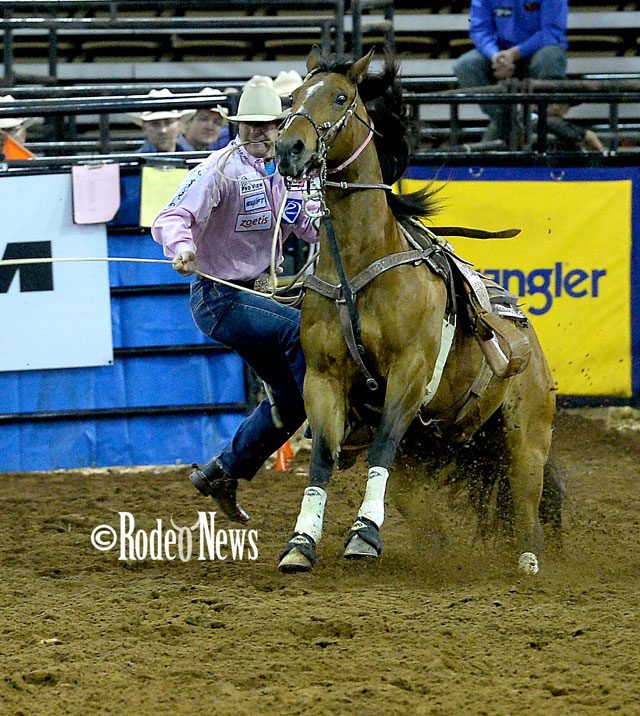
    Ivy and Tibbie enter their first Wrangler NFR ranked fourth with $111,160 in the world standings after a phenomenal year that included major wins at the Fort Worth Stock Show and Rodeo, the Ram National Circuit Finals Rodeo and set a new arena record at the Wrangler Champions Challenge event in Spanish Fork, Utah, to name a few.

    “Monday was a very emotional day here as we received a call from the AQHA to let us know Tibbie was named AQHA/WPRA Barrel Horse of the Year,” wrote Kelly Conrado, Ivy’s father, on Facebook. “This honor is so special. It is voted on by the top 25 members in the world standings and we are absolutely overwhelmed with gratitude and appreciation for this incredible honor. For me, it is truly the most special of awards and recognitions. Thank you all. My heart is so full.”

    Tibbie is a product of the Dash Ta Fame son Eddie Stinson out of Little Fancy Granny. A little back story on the Ivy and Tibbie partnership. When Ivy was still a young girl, she was at the futurity in Fort Smith, Ark., with her family and got into a wreck while riding one of the young horses. The accident kept her from the saddle for awhile. Enter Little Fancy Granny, also known as Racie. Just about four when the Conrados got her, Racie became Conrado’s therapy with the then nine year old girl spending hours in the saddle on the mare. Racie loved running barrels and soon took nearly every member of the family to the winner’s circle. Ivy won the Wrangler Junior High School State Finals twice on Racie. In her last win at the Junior High Finals, Racie was actually bred to the Dash Ta Fame son Eddie Stinson. The embryo that was flushed out following the win was Tibbie. Because Ivy was also busy competing in volleyball including Junior Olympics, she never went to the High School Finals with Racie and took a break from riding through her high school years. Meanwhile, Kelly put Tibbie into training, winning big during her four year old futurity season and now the mare will carry Ivy down the alleyway at the Thomas and Mack Center in Las Vegas.

    Finishing second in the AQHA/WPRA Barrel Horse of the Year Honors was Sadiesfamouslastwords better known as Mary Burger’s Mo that has carried Burger back to the Wrangler NFR in the No. 1 spot with a record regular season earnings record of $190,977. Mo, owned by Mary and her husband, Kerry, is a 7-year old buckskin gelding by Sadies Frosty Drift out of Porky and Bess. Burger’s last mount, Rare Fred, that carried her to the Wrangler NFR and the 2006 WPRA Barrel Racing World Title won the AQHA Barrel Horse of the Year award in both 2006 and 2009.

    TKW Bullysfamous Fox “Foxy” owned by Travis and Kimmie Wall finished third in the AQHA Barrel Horse of the Year voting. Foxy has carried Kimmie to her first Wrangler NFR in 2016 ranked fifth after finishing just outside the top 15 the last two years – 19th in 2015 and 20th in 2014. Foxy, an 8-year old mare, is a product of the stallion Bully Bullion and the mare Gateway Ta Love. She was raised and trained by the Walls and carried Kimmie to a 2D win in her first competition at the futurity in Buckeye, Ariz. In 2015, Foxy mastered the “Green Mile” in Pendleton, Ore., and now will have a chance on a much shorter pattern inside the Thomas & Mack Center.

    Conrado will be officially recognized during the PRCA Awards Presentation in Las Vegas, prior to the start of the Wrangler NFR.

    Courtesy WPRA, Ann Bleiker


    BARREL RACING

    1. CFour Tibbie Stinson (Tibbie), owners Kelly and Ivy Conrado
    2. Sadiesfamouslastwords (Mo), owners Kerry and Mary Burger
    3. TKW Bullysfamous Fox (Foxy) owners Travis and Kimmie Wall
  • Pasadena title puts Durfey into WNFR

    Pasadena title puts Durfey into WNFR

    Courtesy of the PRCA
    COLORADO SPRINGS, Colo. – Tyson Durfey waited until the 11th hour to qualify for his ninth Super Bowl of rodeo. By winning the second round and the average at the Sept. 24-29 Pasadena (Texas) Livestock Show & Rodeo, Durfey jumped from 17th position in the WEATHER GUARD® PRCA World Standings all the way to Las Vegas, leapfrogging Adam Gray, J.C. Malone and Marty Yates. Durfey will enter the Dec. 1-10 Wrangler National Finals Rodeo presented by Polaris RANGER in the No. 14 spot, with Yates holding down the 15th and final position in the tie-down roping. “This is a great feeling,” Durfey said. “There’s a lot of pressure coming into the last week, but we were lucky enough to have some blessings from the Lord and lucky enough to get in there. Now I just want to be home with my newborn baby and my wife and work on the ranch. It’s about as good of a finish as I could’ve asked for.” Durfey also competed in Vegas in 2007-11 and 2013-15. “Even though this is my ninth NFR, it feels like my first,” he said. It took a big-time performance to get the job done. Durfey tied for ninth in the first round in Pasadena to earn just $82, so the pressure was really on for round two. He responded with a 7.5-second run that was the fastest of the rodeo. The team of Zac Small and Wesley Thorp finished second in the team roping at the Ross Kelly Arena, and that allowed Thorp to clinch his first berth in the WNFR, eliminating Justin Wade Davis and Logan Medlin. Small was already safely in the field, so this assures they can rope together on the sport’s biggest stage. Coleman Proctor secured the final spot on the heading side by finishing sixth in the team roping average with Billie Jack Saebens, quashing the challenge of Billy Bob Brown and Logan Medlin. British Columbia’s Jake Watson finished sixth in the saddle bronc riding in Pasadena, while Tyrell Smith failed to place, assuring that Watson will make his WNFR debut this December, one of three Canadians to qualify in the bronc riding, along with Zeke Thurston and Clay Elliott. Bull rider Trevor Kastner’s nice late-season surge fell short in Pasadena, leaving the 15th position to 2011 World Champion Shane Proctor. It was the same story for Jake Rinehart in steer wrestling when he failed to earn checks in either Pasadena or Mona, Utah, so the 15th WNFR spot went to Cody Cabral, making him the first Hawaiian bulldogger to ever make the field, and the first Hawaiian in any event since bull rider Myron Duarte made the last of his eight appearances in 2004. Rinehart, Joshua Clark, Dean Gorsuch, Clayton Moore and Sterling Lambert were all within mathematical striking distance at the start of the week in the tightly-bunched steer wrestling field, and none could get enough done to unseat Cabral. The only WNFR berth that was still open for discussion entering the final night of the PRCA season Sept. 30, was in the bareback riding. After a fourth-place finish in Pasadena, Bill Tutor had moved to within $1,857 of Wyatt Denny in 15th place, and both of them rode in Mona. Denny retained the 15th spot in the standings by finishing second in Mona, while challenger Tutor was fourth there; both had their rides in the last few hours of the season.