Rodeo Life

Category: Articles

  • Back When They Bucked with Pat Litton

    Back When They Bucked with Pat Litton

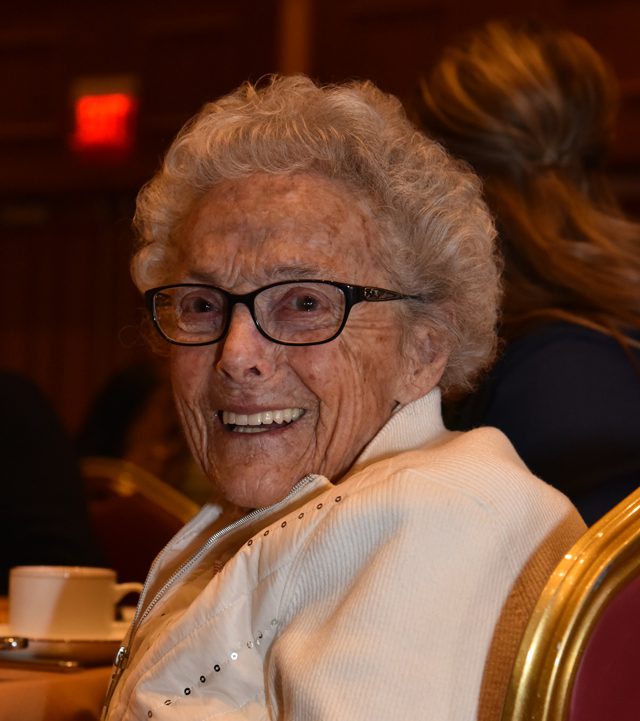
    Pat Litton in 1992 – Hubbell

    Pat Litton was born in Lincoln, Nebraska. Her dad was an ex-farmer that worked for the state and had a garbage route. “He later went into construction with his dump trucks and helped build airports during the war,” explained the 88-year-old from Gillette, Wyo. “We traveled all over. I went to 17 high schools. I got to know a lot of people and do a lot of things.” She had one brother and one sister – they both passed from cancer.
    She went to college at Black Hills Teachers College for two summers and became a teacher. “I started teaching at 17, right out of high school. Teachers were hard to find. I taught in the Inya Cara school on the HK Divide, above Moorcroft.” She had 10 students in all 8 grades, including one that was the same age as she was. “I can remember when I went out to teach – it was quite a walk up the hill to school and I never went to town because I didn’t drive.” The opportunity developed her love for teaching and kids. “We had a great time together, we could use our imaginations.”
    She has gone to the WNFR every year since 1974, when it was still in Oklahoma City. “I would go down with the high school association and secretary the rules committee meetings.”
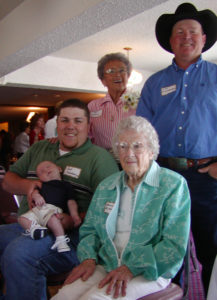
    Five generations of Isenbergers, taken in 2003 a the Wyoming High School Alumni Reunion. The family has grown now to 11 great grand sons and two great grand daughters. – Rodeo News

    She met her husband, Bob Isenberger, at the corner drug store in Gillette where she was working. “He worked for the Moore family, and came in and there was a glow around his head,” she remembers. “It just hit me like a ton of bricks.” He was at a dance she was at and they danced. “The school I taught was a skip and jump from the ranch he was working on and we started going together.” They were married within four months. The couple settled at Nine Mile Ranch and lived in that sheep wagon that first year. She and her husband lambed 3,000 ewes and Pat loved it. “The guys couldn’t get me out of the lambing pen.” Bob rode saddle broncs and bareback horses and competed in bull riding. “They used to say about him that none of the neighbors’ calves were safe – he was either riding or roping them.” The couple took a summer off and rodeoed. Pat had every intention to start barrel racing and team roping. “I would get so nervous that my feet would shake out of the stirrups, but I was pretty fleet footed and I entered the cow milking race because I could run. I was an ok ranch horse back rider, but not a rodeo horse back rider. I love horses and love to ride.”
    After the summer, Bob took a ranching job and Pat continued to time local rodeos. Mike was born in 1954 and, Lee, was born in 1956. Mike was killed in a trucking accident on his 20th birthday, August 2, 1974. “Lee and I had just taken off to secretary a steer roping in Thermopolis.” She had checked into her hotel room and got the phone call.
    Pat got involved through Bob with the Wyoming High School Rodeo Association; he was serving on the Board. Pat was recording times and word got out. Bob was roping calves and team roping and they spent every weekend rodeoing; the boys started with the high school rodeo. Pat ended up getting involved with the Fair Board in Gillette and ended up timing through that as well. Both boys were involved in 4H and Pat was a 50 year 4H leader. “I just liked working with kids. They are the most honest individuals.”
    The couple also produced the Little Cowpokes rodeo at their house, an event for kids age four through junior high. “We did that for 13 years, and quit doing that after Bob was killed.” Bob went to Douglas to get a part for a water pump in January of 1974. He waited for the bus to come in with the part and he was 12 miles out of Douglas and in a white out. He was off the road and over corrected and rolled the pickup and was killed. “The boys were terrified; they were both in high school. If it hadn’t been for rodeo, I don’t know how I would have survived. There was always something I had to do – it was my salvation. I have a love affair with rodeo and the people involved with it.”
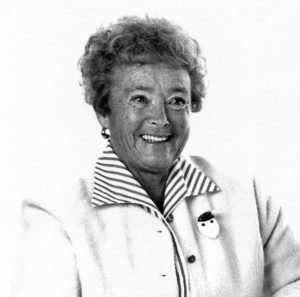
    Pat Litton served as secretary of the Wyoming Steer Roping association for more than 25 years. – Ferrell

    Pat became the National Director for Wyoming High School rodeo in 1975 and was instrumental in developing the point system. “Before the point system, you had to win the state finals in order to get to the Nationals. Some kids didn’t do good at the Finals and so couldn’t make it to Nationals. Scott Redington and I worked on it – the system was set up so that it was consistent too. When I think about how many hours it took us to put it together. There had been others that had tried to come up with something, but we had to come up with something that was consistent and fair to every state. That was the hardest thing. We made the presentation to the National Board.”
    Pat met Gene Litton, who was serving as the secretary/treasurer for the National High School Rodeo Association. “I wouldn’t let myself get serious about him,” she remembers, but the couple ended up getting married on February 15, 1980 and had 30 years together before he passed away.
    “We were responsible for the first computerized rodeo,” said Pat. “Gene was secretary treasurer for the National High School and we had started computerizing, and he came to Wyoming to visit us when we had our state finals because of the good reports on our team. We built the National High School office at our ranch in 1980,” she said.
    Pat was the first member of the National High School Rodeo Association Foundation – her number is #1. “The Foundation gives scholarships every year and our goal was to have every senior that applies for a scholarship gets one and I think they did that last year.”
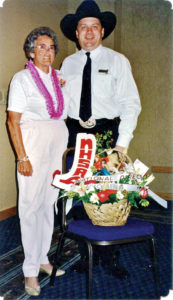
    Pat’s 1997 retirement party. Pictured with Kent Sturman, secretary/treasurer of NHSRA. – Courtesy of the family

    She has moved to a retirement home in Gillette. “I hope that I have accomplished everything that God wanted me to accomplish and that in some small way have touched a lot of lives. I guess I had so much help throughout my life from so many people and I hope that I never said anything that was harmful about anybody. All that I’ve wanted in my life was respect – and being liked.” The Governor dedicated one day a year as Pat Litton Day. “I think about all the things I was able to do and am glad to have been able to do it.”
    Pat claims her biggest accomplishment is being a wife and mother. “I hope I’ve been a good role model to all the kids that I worked with and that I have instilled some spark in the lives of the youth of America.”

     

  • On the Trail with Myles Neighbors

    On the Trail with Myles Neighbors

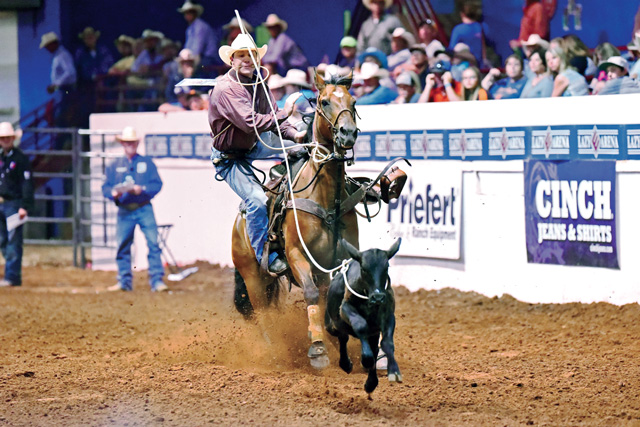
    “No matter where you go or what you’re doing, it’s not going to be easy to win first place,” says Myles Neighbors. The 18-year-old from Benton, Arkansas, has won numerous titles, including 2016 NLBRA World Champion Steer Wrestler, but he also knows the feeling of leaving empty-handed. Yet Myles’ approach to his favorite sport is always the same. “Whenever I’m not going to a rodeo, I’m at home practicing. I think about rodeo all the time. Whether it’s calf roping or steer wrestling or team roping, I’m thinking about a way I can make that run better.”
    While Myles has gold buckle dreams now, he didn’t used to be so passionate about rodeo. “Myles was four or five when he started in the Southern Junior Rodeo Association. When he started, I didn’t think he’d have a competitive bone in his body,” says his mom, Sheila Neighbors. “I had to chase him down and throw him on his horse to do his events – he’d be under the bleachers playing or in someone’s trailer. I don’t remember when he turned competitive, but one year we were rodeoing and it just clicked.”
    Rodeo started in the Neighbors family with Myles’ grandpa and great-uncle, James and Philip Neighbors. His grandpa James competed in tie-down roping and steer wrestling and his uncle, Philip, competed in steer wrestling. Both qualified for the IFR. His grandfather, James, served as president of the IPRA and worked as a stock contractor, producing ARA, CRRA, IPRA and PRCA rodeos. James passed away several years ago, but not before seeing his grandson compete. Myles’ dad, Howard Neighbors, carried on the tradition of steer wrestling. He runs his own plumbing business, and currently competes in team roping, entering ARA rodeos with Myles, who was the youngest contestant ever to win the all-around title in the ARA at age 16. He’s also won ARA rookie of the year titles in heading, steer wrestling, and tie-down roping, and currently competes in the ARA, ACA, CRRA, AHSRA, and NLBRA.

    “I love the people in Little Britches,” says Myles, who won the 2014 NLBRA Rookie of the Year. “They are one of the nicest families in the rodeo world, and you don’t meet people like that everywhere you go. They always want to help you with something, and if there’s not one, there’s twenty people anytime you need something.” Sheila adds, “I loved every bit of the finals at the Lazy E. We stay at a friend’s house for the Little Britches finals and turn our horses out since Little Britches and the IFYR and NHSFR put us on the road for three weeks. We’re going into those three rodeos with a bit of a handicap this year – Myles’ good rope horse blinded himself in one eye a few weeks ago and his steer wrestling horse has been under the weather. He competed on friends’ horses at high school state finals and went in with the possibility to win four titles. He came out with one of those, the All Around, and that’s OK. God has a plan.”

    As for the setbacks with his horses, the rodeo family readily came to his aid, and Myles was still able to qualify for the NHSFR in all three of his events. He’s been riding Jason Thomas’ steer wrestling horse, and his family’s horse trainer and close friend, Weldon Moore, sent Myles to state finals on his calf horse. “They were generous enough to let me borrow their horses so I could get it done. When I got to know Weldon, I stayed with him and worked on my roping, and now he and his wife are like my grandparents. Jason Thomas letting me ride his bull dogging horse was a big step for me, and his parents, Jim and Leann Thomas, do a lot for me. I go over and use their arena all the time. My mom and dad do a whole lot for me – they pay for everything and they never miss a high school or Little Britches rodeo. I would also like to thank Keith and Diane Everett for all they have done for me through the years. I travel a lot with two of my best friends, Austin Wake and Benjamin Cox. We’ve grown up together and they’re really good at keeping me going. We all help and support each other.”

    Last winter, Myles moved his horses, calves, and steers to Benjamin’s house and stayed there a couple of months to practice in his indoor arena. “My good calf horse, Cadillac, is one of the ones that got hurt,” says Myles. “I just went to catch him one day to go to a rodeo and his eye was solid white. His retina is partially detached, so he might have to have his eye taken out. My mom will probably run barrels on him, and I’ll get another horse. Frosty is Jason Thomas’s horse that I’ve been riding lately, and I’ve been bouncing around on heel horses.”


    Myles was still able to qualify for the NHSFR in all three of his events, including the team roping with header Jacob Scroggins. They have roped together in both Little Britches and high school rodeos since Myles’ junior year when he switched from heading to heeling. “Myles is a natural born header,” says Sheila, who grew up showing horses and took up barrel racing in rodeos after marrying Howard. “Myles got his first rope horse when he was seven, and the second time he roped off that horse, he caught his steer.” But ultimately, steer wrestling is Myles’ favorite event. “I like everything about it – I like the speed and I like when I get off and the steer hits flat on his side.” He’d love to spend a day dogging steers with Luke Branquinho, and roping with Clay O’Brien Cooper. His latest branch on the rodeo trail starts this fall competing on the Northeast Texas Community College rodeo team. “I’m going on a full-ride rodeo scholarship, and I like the coach there a lot,” says Myles. “I’m going for an Ag. business degree, and I’m hoping I can better myself at the college rodeo level and keep my grades up.” He had plenty of practice studying on the road since he was homeschooled all four years of high school. The flexibility allowed him more opportunities to rodeo, including competing in the first ever Jr. Ironman Championship at the Lazy E Arena this March. Selected from the top five of the world standings in team roping, steer wrestling, and tie-down roping, Myles won the first round of the Jr. Ironman Championship. “ It sure was competitive, and I didn’t go out of there with an empty pocket!”

    Myles occasionally trades his rope for a fishing pole and goes to one of the numerous lakes near his home, but rodeo always takes priority. He likes that his hometown of Benton, Arkansas, is centrally located to a number of rodeos, and plans to buy his PRCA permit and start pro rodeoing this year. “I’m always wanting to better myself, whether it’s with my horses or my rope,” he finishes. “Some kids like football and basketball, and I like rodeo. My whole life, I’ve always wanted a gold buckle with my name on it.”

  • Back When They Bucked with Logan Adams

    Back When They Bucked with Logan Adams

    story by Merrill A. Ellis

    Logan Adams was inducted into the Texas Rodeo Cowboy Hall of Fame in 2011. He is pictured with his family l to r: Jimmy Adams, Merrill Ellis, Logan, Mabel Adams, and John Adams.
    – Courtesy of the family

    Logan Adams grew up in a rural Texas community. Actually, he was born on his grandparent’s Carpenter Ranch which is nestled outside of the Texas Hill Country town of Medina. His other grandparent’s ranch on the Adams side of the family was just down the road. The Texas raised cowboy had a passion for riding, roping, and the western way of life. He attributes this to his numerous uncles who taught him these skills while tending to the ranches. Even though he learned these abilities at a very young age, he never participated in a rodeo during his youth.
    He was always a competitive athlete. While in high school he enjoyed participating in every sport offered. He even was a Texas state qualifier in discus, an all district football player and captain of his football team.
    “The entire community followed us to our football games. The joke was the last one out of Medina should turn out the lights,” Logan stated with a smile.
    Football was his passion. After being recruited by the Sul Ross State University Lobo Football team he continued to excel in sports. One of his friends at SRSU was the famed, Dan Blocker, who enjoyed an illustrious career on the TV show, Bonanza.
    After a year of football at Sul Ross, the football coach decided to take a job at Southwest Texas College in San Marcos. He asked Logan to be a part of that football team and he did. While at Southwest Texas College, he began to dabble in the sport of rodeo.
    “The coach told me I had to quit football or quit rodeo due to eligibility reasons. So, I decided to pursue rodeo,” stated Logan.
    In a matter of fact, while on his first date with his late wife, Mabel, he won the steer wrestling at a rodeo in San Marcos. He had met her through his first cousin, Betty Ann Carpenter. She and Mabel were suite mates at Baylor University.
    “Yep, Betty Ann grabbed my winnings and took it upon herself to make sure we all had a good time that night,” Logan stated with a smirk.
    The rodeo world has a unique way of luring young men and women into its sport. And it did just that to Logan.
    Being raised in Bandera County he had numerous Rodeo Cowboy Association (RCA) World Champions to idolize and ask questions about their roping expertise.
    The late Ray Wharton, 1956 RCA World Champion Calf Roper, was Logan’s selected mentor.
    “He got me started by encouraging me to rope and really practice with determination. He thought I had some potential and he pushed me to go ahead,” stated Logan.

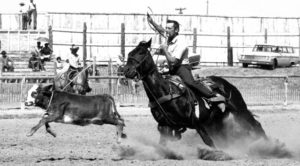
    Logan Adams is roping at the Fort Worth Stock Show and Rodeo. He took the lead in the calf roping go round the night this photo was taken. – Allen Photo

    He continued, “He allowed me to practice on his horses which was a great benefit for a young roper.”
    In 1956, Adams was issued a permit by the RCA. He decided that he was ready to compete against the “big boys” of the organization and he entered his first pro rodeo in Kerrville, Texas.
    He stated, “One of the biggest moments of my roping career was winning the first RCA rodeo I went to in Kerrville. It was just down the road from my hometown and I had a lot of family and friends there to watch.”
    It was not until 1960 after a successful ranching career that he decided to pursue his dream of rodeo.
    “I quickly filled my permit at Independence, Missouri. I choose rodeos where I could participate and manage my ranching operation.”
    Logan won or placed at almost every major RCA rodeo in the United States roping calves.
    In the 60’s, he and his wife, Mabel were featured in the Fort Worth Star Telegram as a unique rodeo couple. Mabel, a city raised girl, was participating in the ranch rodeo barrel race and Logan was roping calves. The two were also showcased in the Houston Post during the Houston Fat Stock Show and Rodeo. This was Mabel’s hometown.
    Logan was a skilled match roper. He won 10 out of 12 matches. In 1966, he was recruited by Elizabeth Hopson, to ride her stallion, Montes Joker in the Appaloosa Sweepstakes 10 head calf roping. He won the competition two years in a row.
    In 1970, he purchased John Clay Cattle Company, a major livestock marketing firm in the United States.  He has made a life long commitment to the cattle industry.  Weekly he gave the market report to Perry Kallison’s farm and ranch radio show in San Antonio. Kallison was one of the founders of the San Antonio Livestock Show and Rodeo. Logan also maintained his childhood roots in Medina, Texas where he engaged in an active ranching lifestyle.
    He has been involved with the Rodeo World in various capacities most of life.  He has judged Miss Rodeo Texas, served on the Bell County PRCA Rodeo Committee, produced the Texas Circuit PRCA Steer Roping Finals and produced the National Intercollegiate Rodeo Association (NIRA) Southern Region Finals.
    There have been many good calf roping horses purchased throughout the years from Logan that have helped other ropers excel. He always had a knack for taking a horse to the next level in the competitive calf roping arena.
    “I quit roping off of a horse at the age of 80. I just decided it was time,” he stated. “This was very difficult time for me because it is something that I have enjoyed doing most of my life.”
    Logan and his wife, Mabel were married 60 years before she passed away in June of 2016. As a former deacon of a First Baptist Church, he now spends his Sundays worshiping at 3C Cowboy Fellowship in Salado, Texas.
    “I have always been a prayerful man. I know that with God we will get through the storms and he will give us strength,” explained Adams.
    One of his greatest passions during his career has been teaching numerous cowboys and cowgirls to rope.  This also carried through to his own three children, Merrill A. Ellis, John Logan and Jimmy, who each had roping careers of their own.
    Some of those cowboys he helped included the following: Richard Thompson (deceased)-Texas High School Rodeo Association Champion and National High School Rodeo Champion, Johnny Kirk Edmondson-American Junior Rodeo Association Champion, College National Finals Champion. two times PRCA Texas Circuit Champion, Billy Albin, College National Finals Rodeo Champion, and Roy Angermiller-NIRA Southwest Region Steer Wrestling Champion, PRCA Texas Circuit Steer Roping Champion and Calf Roping Qualifier, and eight times NFR Steer Roping Qualifier.
    Logan Adams is pleased to be a Gold Card holder in the PRCA. In 2011, he was inducted into the Texas Rodeo Cowboy Hall of Fame. During his induction speech he stated, “All I ever wanted to be was a cowboy and I am proud to say I am.”

    Logan, his wife Mabel and daughter, Merrill in the late 50’s. – Courtesy of Houston Post

    Merrill A. Ellis is the daughter of Logan Adams. She is a graduate of Eastern New Mexico University where she earned a master’s degree in communications and education.She currently serves on the board of the National Intercollegiate Rodeo Association Alumni.

  • Back When They Bucked with Betty Sims Solt

    Back When They Bucked with Betty Sims Solt

    Today’s cowgirls don’t know the debt they owe Betty Sims Solt. The New Mexico cowgirl was on the front lines, working to make opportunities for girls and women in rodeo.

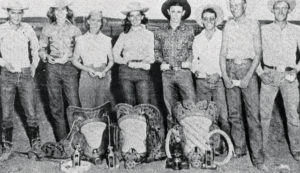
    The 1953 New Mexico State High School Rodeo Champions. Betty (second from left) was the Santa Rosa girls breakaway calf roping champion. – Cathey

    At a college rodeo, Solt won the girls’ all-around title, and received a ten dollar watch for her efforts, while the boys’ all-around won a saddle and a scholarship. “I was disappointed when things like that happened,” she said.
    She spent much of her high school and college days, and the years afterwards, working for equal opportunities for the young women in rodeo.
    Betty was born in 1935, the youngest of six children and the only daughter of George E. and Wahlecia Dell Blackwell Sims. George was a bronc rider who put his kids to work on the ranch south of Santa Rosa, New Mexico, and whose kids loved to rodeo.
    Betty was riding by the time she was five, and in high school, competed in the barrel racing, breakaway roping, and the cutting. At the time, breakaway was not a standard high school rodeo event. She competed in amateur rodeos across the state as well, causing the principal to question if she was interested in school. One day, in high school, she was summoned to his office. He had stern words for her: Did she intend to rodeo, or graduate from high school? Her answer: “Sir, I am going to try and do both.” And she did, graduating as class valedictorian. But that wasn’t the end of it. She talked him into buying calves, so during the last class period of the day, which was for athletics, the students could practice roping at the arena on the outskirts of town.
    In college at New Mexico A&M (now New Mexico State), she did the barrel racing, goat tying, and flag race, and again, occasionally, the breakaway; it wasn’t a standard event for women yet.

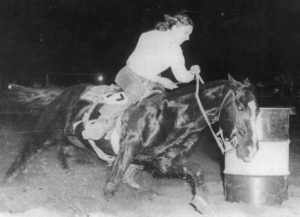
    Betty running barrels on ‘Sonny’ in 1956 with the NIRA at Hardin Simmons College, Abilene, TX. She was Barrel Racing and All Around Cowgirl

    In high school, she also competed in a girls’ event that no longer exists today: the boot and cigar race. The girls put their boots in a big pile in the arena. They went to the far end then, on a signal, ran to the pile, dug out their boots, put them on, and ran back to their horses, tied up in the arena. After mounting, they rode to the other end, where they were to light a cigar and keep it lit as they rode back to the starting point. In 1951, she won the Santa Rosa boot and cigar race and her first buckle.
    She got help and advice from her brothers and dad for the 1951 race. As he drove her to school each day, she’d practice lighting her dad’s cigar, even though “I hated that cigar,” she said. After struggling to light it during races, her brother Tom had an idea: he taped together four matches, and “when he struck those matches, I got that cigar lit in a hurry.” She also had a strategy for the pile of boots: she stood back and as the girls threw the boots back, she’d see hers coming and grab them as they flew by.
    She and her brothers, all rodeo contestants, were instrumental in starting the first Santa Rosa High School rodeo, with the inaugural event in 1951. One of the prizes for competitors that first year was yearling calves donated by local ranchers.
    Betty set records in high school rodeo, winning the breakaway roping at the 1953 New Mexico High School State Rodeo, and setting a state record in the event the next year, which held for several years.

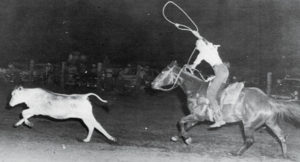
    Betty breakaway roping on ‘Red Babe’ in Santa Rosa, NM where she broke the existing record at a New Mexico State High School Rodeo, 1952 – Courtesy of the family

    In college, she went on to excel, winning two world barrel racing championships in the National Intercollegiate Rodeo Association (1957 and 1958) and fourteen barrel racing titles. She served on the board of directors for girls events in the NIRA, served as a delegate to the NIRA convention in Colorado Springs, and was tapped to serve as vice-president of the American Junior Rodeo Association (1953-1955), which was put together by Al Davis. She also competed in the Southwest Rodeo Association, which included competitions in New Mexico, Colorado and Texas, winning a barrel racing title in 1958.
    Through her high school and college years, she was one of the people who fought to make breakaway roping a standard event, and to even out prize money. It didn’t bother her to voice her opinion. “When I saw what was happening, I knew I was going to work (to make it right.) Some of the others kept quiet and went along, but I didn’t want to do that.” She acknowledges that she wasn’t the only person working to make girls’ rodeo better. “I wasn’t the only one, but I was the most outspoken one,” she chuckled. In 1953, the National High School Rodeo Association crowned its first champion; the NIRA had their first champion sixteen years later.
    After graduating in 1958 with a degree in animal husbandry, she hoped to go back to the Sims ranch. But drought had forced her parents to sell it. She was offered a job in agriculture research back East, but she didn’t want to leave the West. So she returned to college to become a school teacher.
    One of her best and most favorite horses was a sorrel stallion named Sonny. He belonged to a friend of her father’s, and was used by the friend’s son for the barrel racing. When the son advanced past barrel racing, the father told Betty she could borrow the horse, on one condition: “if you can win, you can take this horse. If you can’t win, you can’t have him.” She won on him, never knocking down a barrel at college rodeos. He was also a dream horse for the flag race, too. If she missed a flag, he would circle again so she could get it. Another exceptional horse she rode was Spooks, her sister-in-law’s horse. Spooks was an all-around horse and she won on him in many events, including barrels, goats, and the cutting.
    Betty taught for 33 years, most of them in Roswell, and many of them as a reading teacher. She always tried to work rodeo and the western way of life into her subject matter. “I included ranch life and the history of rodeo in school,” she said. For speeches and demonstrations, she would have students show how to saddle a horse or milk a cow, and sometimes they came to school dressed up like cowboys or cowgirls. She enjoyed her students. “We had a lot of fun.”
    Betty continued to rodeo till 1960. Her last rodeo was in the barrel racing at the Smoky Bear Stampede in Capitan, N.M., which she won.
    In her adult life, she got involved in cowboy poetry, publishing two poetry books with her brother, and starting the movement in Roswell, chairing the Roswell event for several years. She recited her poetry at gatherings across the nation.
    She volunteered as a 4-H leader, was a member of the International Reading Association, and is a charter member of the Berrendo Cattlewomen of Roswell. She was inducted into the Cowgirl Hall of Fame in Ft. Worth, Texas in 1990.

    Betty Sims Solt – Courtesy of National Cowboy Symposium & Celebration

    She, along with Evelyn Bruce Kingsbery and Sylvia Mahoney, founded the NIRA Alumni in 1992, to help rodeo alumni reconnect and not lose touch with each other.
    Betty has retired from teaching and many of her volunteer roles. Her daughter Georgia Solt Perry, lives with her, and Betty enjoys her grandchildren: Georgia’s son Ethan and daughter Genna.
    She looks back fondly on her rodeo life. Some of the best parts of her life were being with family, on the ranch and in rodeo, meeting new people and competing. “I just loved the excitement of rodeo.”

  • On The Trail with Shelby and Libby Winchell

    On The Trail with Shelby and Libby Winchell

    “To rodeo is not just one or two people committing – it’s the whole family,” says Mike Winchell. He and his wife, Shawna, committed wholeheartedly the day their daughters, Shelby and Libby, now ages 25 and 18, stepped onto the rodeo trail. Since then, the sisters have won several state and national titles apiece. Shelby is the assistant rodeo coach at Sheridan College in Wyoming and Libby, who won the 2016 Champions Challenge in Omaha, Nebraska, will be a freshman this fall at Eastern Wyoming College. Yet all the roots lead back to home in Scottsbluff, Nebraska, and the foundation of hard work that Shelby and Libby built their careers on.

    The rodeo tradition comes from both sides of the family, and Shawna’s dad, a steer wrestler named Dick Phillips, helped start the Chadron State College rodeo team in the 1960. Shawna also rodeoed on the college team after competing in Little Britches and high school rodeo, while Mike’s background is in ranching. They wanted their daughters to experience several different sports, including basketball and volleyball, but the rodeo spark is what took off.


    Libby Winchell goat tying at the 2015 National High School Finals Rodeo – JenningsRodeoPhotography.com

    Shelby started rodeoing when she was nine, and Libby occupied herself with stick horse barrel racing and pole bending, and helping carry goats to the arena for goat tying, until she was old enough to compete. Both she and Shelby showed in 4-H, where Shawna was a leader, and FFA. They also competed in the WJRA, NLBRA, and Nebraska junior high and high school. They entered the barrel racing, pole bending, goat tying, and breakaway roping, but they’ve especially excelled in goat tying. Their mom, Shawna, was also a goat tyer. “It’s an event that’s not all about the horse – you get out of it what you put into it,” she explains. “It also requires athletic ability for getting off a horse that’s going thirty miles an hour. We call competitiveness the family sickness, but we’re fortunate the girls are willing to work hard at being their best. Mike and I have always been involved, going to clinics and learning new techniques right alongside them so when we’re in the practice arena, we know how to help them.”

    Through one such clinic, Shelby met goat tyer and Cochise College rodeo coach, Lynn Smith. “In high school, I had the opportunity to travel with Lynn Smith and help with goat tying clinics. It instilled that desire to teach – I’ve always wanted to be a rodeo coach so I could share that knowledge. Not many people can say they are twenty-five years old and living their dream job!”

    Before Shelby started rodeoing, she’d already overcome incredible odds, having been born 16 weeks early and going through extensive physical therapy as she grew up, making her drive to rodeo and compete twice as strong. She qualified for the NJHFR in 2006 and the NHSFR from 2008 – 2010, and after graduating from Scottsbluff High School, she attended Eastern Wyoming College. Shelby later transferred to Chadron State College and graduated with a bachelor’s degree in education. She qualified for the CNFR in goat tying in 2012, 2013, 2014, and 2016, also competing in breakaway in 2013 after winning reserve all-around in the Central Rocky Mountain Region. She won the region in goat tying last year before clinching the national title at the CNFR. That same day, Libby won the goat tying at the Nebraska state finals, and she and Shawna watched the live feed of Shelby competing in the CNFR on their way home.


    Shelby Winchell goat tying at the 2016 CNFR – Hubbell

    “It’s interesting, because I’m known more for my goat tying success, but I also trained barrel and breakaway horses and seasoned them at college rodeos and sold them,” says Shelby, who is also finishing her master’s degree in K-12 school counseling through CSC. She enters jackpots, and will compete in the NRCA this summer. She plans to start seasoning a four-year-old in the breakaway roping and goat tying this summer, while she’s also riding Ace, whom she purchased from CSC rodeo coach Dustin Luper. “I’m able to keep my horses at the school and work them every day, which is a special thing for me, because I can observe the students and their different methods of training. I’ve also taken in several outside horses.”

    Many of Shelby’s winning goat runs have been off Hadley, a 20-year-old gelding she’s shared with Libby. He returned to Scottsbluff last fall in time for fall high school rodeos. “Hadley used to be a steer wrestling horse, and he has a good personality,” says Libby. “Blaze is my barrel horse, but he got turned into a goat horse two weeks before Nationals my sophomore year when Hadley got hurt.” Blaze, whom they purchased from Wanda Brown, was trained by professional barrel racer RaNelle O’Keeffe from North Dakota, and Libby’s rope horse, Chase, came from PRCA tie-down roper Chase Williams. “Our good friends Troy and Riley Pruitt helped us find Chase. We rope at the Pruitt’s house, and they’ve been great. I can’t thank the people who have helped me and my family out enough: our vet and chiropractor, the Pruitts, and Lari Dee Guy and Hope Thompson. And without my mom and dad, I wouldn’t be here for sure.”

    Libby has qualified for the NHSFR the past three years, winning Reserve National Goat Tying Champion in 2015 and 2016, along with the state reserve all-around title last year. She competed in the NJHFR twice, and is a two-time Nebraska state goat tying champion. For her senior year, she decided to rodeo with the WHSRA, and she’s currently leading the goat tying, seventh in the breakaway roping, 17th in barrels and third in All Around. “I like all my events equally,” Libby says. “Shelby has had a lot of success in the goat tying, and we’ve had lots of people help with that. We work hard at it – we’re in the arena every night like everyone else, roping after school and riding horses.”

    Libby frequently sports a 100X Helmet when she steps into the saddle, a decision she made after taking a tumble at a rodeo her seventh grade year, causing her optic nerve to swell. “If I take another fall, I could permanently lose my vision, so I’m going to wear a helmet so I can do what I love.” In sixth grade, Libby spent two weeks in a children’s hospital with a perforated ulcer and optic neuritis. She’d had pain in her left side for three months before it was diagnosed, and her vision, which was 20/400 near and far at that time, has since improved. “I wear glasses to read and drive, and I still have headaches, but I’m learning to manage them,” says Libby.

    “When Libby was at a Mayo clinic, her doctor was helping her with exercises for her headaches, and he suggested those same things for athletes in breathing and visualization,” says Mike, who played high school sports. Shawna adds, “Mike’s dad was an excellent basketball coach, and looking into rodeo from the outside perspective, Mike has instilled in the girls the usefulness of reading books and that mental game.” Mind Gym by Gary Mack was a favorite of Shelby’s, while Libby has found inspiration in books by golfers discussing the mental aspects of the game. “I have a saying that a champion is a champion that acts like one,” says Mike. “The girls do the work and have the work ethic, but it’s not a one-time deal. They’ve both barely missed national championships, and that just makes them want to come back. I think a lot of their success has come from learning about where we’re going before we get there. They’ll YouTube the arenas or use Google Earth so there are no big surprises. When they don’t have to worry about the little things, the bigger things come faster. Part of the reason Libby wanted to stay in the Central Rocky Mountain Region is because she’s competed in a lot of those same college arenas in the WHSRA, and that will help her collegiate career as a freshman.”

    Along with helping their own two athletes, Shawna and Mike are passionate about bringing the best goats possible to junior high, high school, and college rodeos. They also contract goats for jackpots, and state and county fairs. “Our girls were running through so many goats at practice that we’ve always had an influx of practice stock,” says Mike. “There’s nothing I hate more than an animal making the winning decision in a rodeo and not the athlete. We work hard at providing the best stock possible.” Last year, the Winchells had more than 90 goats, and they do much of the hauling themselves for high school and college rodeos.

    Shelby comes home periodically to trade out goats for her rodeo team, and she loves the camaraderie of her team. “At roughstock practice, we have the timed event athletes sorting stock and opening chutes, and the same with the roughies at timed event practice,” she says. “We have a fairly young team this year, but we had some phenomenal girls return to rodeo with us. It’s spectacular to see that improvement of self, and to see the student athletes improve not only in the rodeo arena, but in life.

    “I’d love to continue being a rodeo coach, and continue training horses as long as I’m able. I have the lifelong goal to make it to the WNFR, and I’d like to start roping in the WPRA and train a horse that’s up to par for that avenue.”
    Following graduation from Scottsbluff High School, Libby’s goal is to win state in goat tying and also go to Nationals in breakaway roping. “I’d love to win Nationals – I know what it’s like to get there, but I just need that extra step. I plan on getting a degree in sports medicine and college rodeoing all four years, and hopefully get my master’s and rodeoing a fifth year before going pro.”


    Libby, Mike, Shelby and Shawna – Courtesy of the family

    “There’s not a sibling rivalry, but Shelby and Libby each want to walk their own road,” Shawna and Mike conclude. “We’ve met a lot of good people all over the United States. Kids that Libby and Shelby high school and Little Britches rodeoed with are competing together on the collegiate level, and so many people have helped us and we’ve enjoyed helping others. We don’t think there’s another sport in the world that has that.”

  • On The Trail with Hailey Kinsel

    On The Trail with Hailey Kinsel

    Hailey competing at the IFYR- RodeoBum

    Hailey Kinsel’s qualification for RFD-TV’s The American and subsequent win in the barrel racing  – and a third of a million dollars – has put the 22 year old from Cotulla, Texas, on the largest stage of her life. “I don’t know if there’s a bigger stage than that besides the WNFR,” she says. “It’s not just the money – the atmosphere there is insane, and pressure wise, I like the excitement and the challenge. The crowd makes you feel happy to be there, and when I’m happy to be there, I compete at my best.”

    Competing in the NHSFR, IFYR, PRCA, and CNFR prepared Hailey for the most famous run of her career thus far. But it was the support of her family, a resolute work ethic, and three horses in particular who helped her get there. Her parents, Dan and Leslie Kinsel, both rodeoed in high school and college – Leslie representing the Lone Star State as Miss Rodeo Texas in 1980 – and Hailey was rodeoing by the time she was four. “We ranch and run cattle in South Texas, and my brother and I had to learn to ride so we could work cattle. We don’t have an arena, but when I wanted to work barrel horses starting in junior high, we plowed up an area in the middle of the pasture. We’re really blessed with awesome red dirt – it’s maybe every six months that we have to disc it,” says Hailey. “Both my parents taught me how to work with what I had, and that made me more of a competitor and trainer when I could make the best of every situation. Both my grandmothers were paramount in my early years, being supportive and telling me I could do it.”

    Hailey, who was homeschooled starting in seventh grade, rodeoed in THSRA Region 8 in all the girls events, while also showing steers and goats in 4-H and serving as a FFA and 4-H officer at the local and district level. Her older brother, Matt, rodeoed through junior high. “He’s very athletic and he’s had his own website design company since he was thirteen. He does all the IT work for the family business and he’s an entrepreneur in College Station. He’s probably the most supportive business man – he’ll show up at rodeos in a suit to watch me run.” Hailey was the THSRA state president, and won the state barrel racing title in 2011, returning to the NHSFR in 2013 in breakaway. But barrels are a longstanding favorite. “It’s the event I’ve done the longest, and the one my mom and I have most in common. I had good, trustworthy horses that made it fun for me. We weren’t winning, but I was going slow enough to learn to ride well, and I never had a bad experience. In junior high, my mom and I bought my first competitive horse together, Josey. She was a project, and she became my all-time favorite. Having that one good horse made me fall in love with barrel racing, and makes me look for good in other horses.”

    DM Sissy Hayday, or Sister, carried Hailey to The American, but it was the mare’s half sister, Baja, who made the win possible. “Baja was running fast everywhere and coming on this year, but during everything with The American, she came up lame, and a week after The American, we lost her to melanoma. She served her purpose, because we wouldn’t have bought Sister without her.” The Kinsels bought Baja on Craiglist as a two-year-old and loved her so much they called the breeder, learning he had just one left – Sister – and was selling the broodmare. “We took a chance on Sister. She was a funny looking two-year-old, but she was pretty solid-minded and a good turner,” says Hailey. “Sister started showing some fire when she was three or four and she bucked for the first time. She was so strong willed that I kept her slow and focused for a long time and entered her in her first futurity the end of her four-year-old year. She broke pattern and ran off, but I worked her and she did awesome in the second round. Since then, she’s been running in the 1D, and when Sister wants to do something, she is going to do it.”
    Hailey and Sister’s next national appearance is the CNFR, where Hailey has competed twice before in the barrel racing. Texas A&M University’s women’s team won reserve in the Southern Region, and Hailey graduated in May with a degree in agricultural economics. She’s also two classes away from her real estate license. “Training futurity horses is my ultimate goal, but I’m glad to have my degree as backup. Here at school, we have two Bible study groups that I lead – one for the college girls on the rodeo team, and one with some freshman high school girls before school in the morning,” Hailey adds. “I play the guitar and keyboard a little bit, and I always sang in church growing up. My faith is the reason I do rodeo. I have my relationship with the Lord, and he allows me to rodeo. Rodeo has led me so many places, and I know my purpose is to share the good news of the Lord and connect with people.”

    One of her favorite connections is with the Elizabeth Stampede, where last summer, Hailey won both her first rodeo on Sister and her first PRCA rodeo. “I’d seen it on the WPRA Today show, and I know girls that talked about the great ground. I went to it on the way to the college finals, and I had a blast! Their pancakes were amazing too, and some of the committee came out to Denver when I competed there this winter. It was so nice that they cared and stayed in touch.” Another favorite destination was the IFYR during high school, where Hailey finished third in the average in barrels her junior year, and the top 15 in the average in barrels and poles her senior year. “I always wanted to enter because I heard so much about it from my friends, and I loved the payout for a youth rodeo, as well as seeing my friends.”
    When she’s not traveling – passing time on the road listening to music, sermons, or motivational speeches – Hailey works on her family’s ranch and trains horses with her mom. “We’re mostly focused on whatever horses we need for the two of us. We start with a two-year-old each year, and we’ve gotten into some breeding. Now that I’m done with college, I’m really looking forward to taking in outside horses and having more in training at one time,” says Hailey. “I’m going to the rest of the PRCA circuit rodeos in May and I’ll see how much I get done. I’m planning on riding my two main horses and hauling some three-year-olds to give experience. If we’re doing well, we’ll go hard this summer and go as far as we can!”

  • Back When They Bucked with Pat Ommert

    Back When They Bucked with Pat Ommert

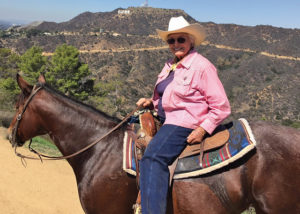
    Pat riding in Hollywood, Los Angeles, CA posing near the Hollywood sign – courtesy of the family
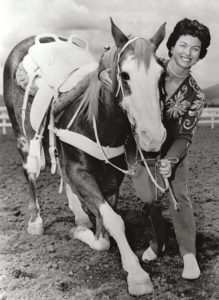
    Pat Ommert with her horse, Strawberry Shortcake – Courtesy of the family

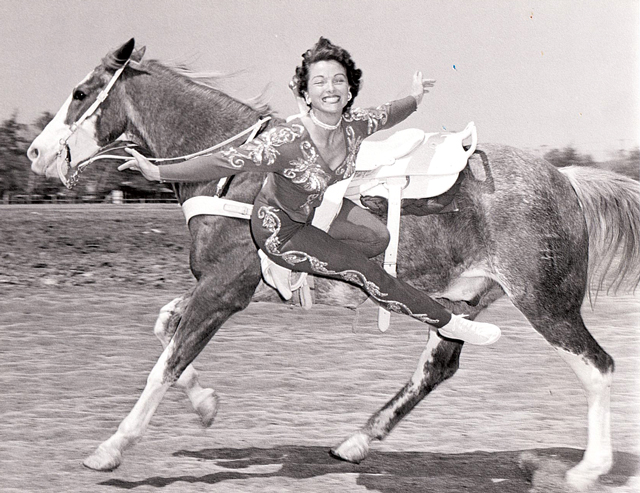
    Laces tied snug, tennis shoe cowgirl Pat North Ommert made hundreds of laps around as many arenas throughout the United States from the 1940s to the 1960s, dazzling crowds with her signature one-foot stand and vivid smile. The trick rider, jockey, and stunt double from California traveled and performed extensively, including 56 performances at the Madison Square Garden Rodeo in New York, and riding in Powder Puff Derbies at the Caliente Racetrack in Tijuana, Mexico. Yet her favorite place is still the back of a horse, and her accomplishments, whether astride or beside her equine friends, recently earned her an induction into the National Cowgirl Museum and Hall of Fame in Fort Worth, Texas.
    Pat was nominated 18 years ago for the National Cowgirl Hall of Fame before her induction in October of 2016. “I know many of the former inductees, so I was very honored,” she says. In 1999, Pat and her husband, Dr. Willard Ommert, received the California Professional Horsemen’s Association Lifetime Achievement Award for their devotion and contributions to the horse world. Pat is also active in preserving horse trails and the equestrian lifestyle in Southern California, where she grew up and continues to live today.
    Born in 1929, Pat was the second daughter of Bob and Vera North. A savvy businessman, Bob started Bob North Hardware Store in Bell, California, during the Great Depression, and the store flourished. The North’s home in Bell was eight miles away from the Los Angeles Union Stock Yards, and the vacant lots around Bell and the Los Angeles riverbed offered plenty of riding opportunities. The North family, including Pat’s sister, Laura, shared a love of horses. Vera, Pat’s mother, came to love horses after being sent to the Mohave Desert in 1912 with her younger sister. They boarded with a family to avoid the polio epidemic in Los Angeles and rode a horse to school. Vera later learned to train trick horses from a circus trainer stabled in Bell. She entered the show business, and even performed in the Hawaiian Islands with the E.K. Fernandez Wild West Show in 1934.
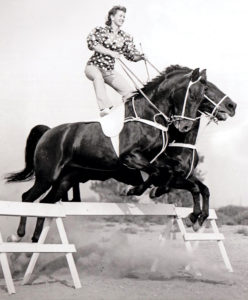
    Pat’s sister, who had an act with their mother, was married in 1943 and retired from show business. Pat was 14 at the time and performed the Patsy North and Her Trick Horse Rex act through World War II. Her own trick riding career started when she was 16, and she performed in rodeos and fairs around California. She still holds gold card number 1890 with the PRCA. “The trick riding was easy,” says Pat, who trained her own Roman riding and jumping team of horses. “I was an athlete. During World War II, my family moved to some acreage and we raised calves and did all our own work. My Roman riding was the most fun, and I think more spectacular. The hippodrome is one of the easiest tricks, but to do it with grace is something else. The one-foot stand was really my specialty. I consider myself a tennis shoe cowgirl because I had boots, but it was usually tennis shoes for trick riding and even working the trick horse.” Rex, who was half Morgan, was Pat’s left hand horse in the Roman riding, and Juan Monroe, a registered American Saddlebred, was the outside horse. Pat competed in many of the Los Angeles Sheriff’s Rodeo Roman races, and even did several publicity shots for the rodeo.
    When one of the North’s horses was sick in the 1940s, the regular vet sent his new associate, Dr. Willard Ommert, to make the farm call. Dr. Will and Pat took an instant liking to each other, and they were married in 1947. “Will was my best fan and loved what I did,” says Pat. “Like my dad, he never had a problem with me performing or being in show business. It didn’t make much money in the early days, but it did take care of the horse costs, and it was always fun.”
    Pat’s dad had passed away in 1951 from a heart attack, and after Pat and Dr. Will were married, Vera greatly encouraged Pat to continue her show career. Starting in 1951, Pat performed at the Salinas Rodeo with 14 or 15 other trick riders on her horse Shortcake, working her way into bigger rodeos. “Edith Happy and I worked many California rodeos together. She was a beautiful, long-torso lady who did the most beautiful stand ever,” says Pat, who performed at Salinas for 11 years. “I’m delighted that California Rodeo Salinas is using Edith’s hippodrome stand for their poster this year.”
    The year 1953 took Pat to New York City and Boston for several weeks, and Dr. Will used some of his vacation time to travel with her and watch several performances. Everett Colborn from Dublin, Texas, co-owned the World Championship Rodeo Company and produced both the Madison Square Garden Rodeo and Boston Garden Rodeo. Colborn’s own rodeo in Dublin became the Pre-Madison Square Garden Rodeo. Following the Texas performance, the entire production, joined by Pat and her husband, boarded the 24 car train for New York, stopping to perform in Fort Madison, Iowa, on the way. Many rodeo and western movie figures including Tad Lucas, Jim Shoulders, Gene Autry, Roy Rogers, and The Lone Ranger performed in Colborn’s rodeos. Pat rode Quadrille and the trick riders did publicity work for the rodeo. “That was really fun. The head of publishing for Madison Square Garden owned a white convertible, and five of us trick riders were seen around town. We were always in our western outfits,” says Pat. “We had lunch at the 21 Club, saw the premier opening of a movie, visited the Bellevue Hospital, and had a parade. We also had a rodeo parade in Boston. I rode my Roman team and my husband rode in the parade with me. After the parade, they had a Cowgirl Special thoroughbred race in Rockingham Park in New Hampshire, which I won.”
    By this time, Pat and Dr. Will’s first daughter, Annie, was three, and her sister, Janie, was born in 1954. In the 1950s, Pat acquired her Screen Actor Guild card and worked in several motion pictures as a stunt double and driver. One of her friends, showman Monte Montana, needed six women for a horse catch scene in “A Star is Born”, starring Judy Garland and James Mason. Pat was one of the six, along with her mentor, Polly Burson, Faye Blessing, Shirley and Sharon Lucas, and Louise Montana. “The last movie I worked was ‘Cimmaron’, and I was in Tucson for two weeks. They needed girls to ride and drive wagons for the Oklahoma land rush scenes. We made money on those shows, but it was a hurry-up-and-wait business. I had kids and horses at home waiting on me, and I thought of how I could use that time to be home riding!”
    In the 1950s, Pat also raced horses, even while on tour with the Bob Estes Wild West Show in 1957 in Mexico City. She retired from show business in 1962, and by then, her daughters were showing in the hunt seat division. Pat also showed hunters and jumpers for a time, and when she wasn’t taking Annie and Janie to horse shows, she was traveling and working with Dr. Will. Originally in the cavalry, he was transferred to the U.S. Army Veterinary Corps after the cavalry was dismounted. He worked with Dr. Bob Miller as the official veterinarians of the NFR from 1962- 1964 when it was hosted by Los Angeles, and his renown as a veterinarian was international. He advanced equine medicine in a number of ways, performing the first equine arthroscopic surgery, and even fitting a horse for contact lenses. “Will was the chief veterinary officer for the 1984 Olympics, and he was the vet for a lot of the California horse shows. I was in the horse show world with him,” says Pat. In 1969, the couple moved to Temecula, California, where Dr. Will built the state-of-the-art Los Caballos Veterinary Hospital, the first privately owned equine clinic and surgery in California. Pat managed the neighboring Los Caballos Farm, a facility for resting and retired horses, and they also raised several colts. Pat leased the ranch out several years after Dr. Will’s passing in 2004, and continues to make her home in Temecula.
    Now 87, Pat rides daily, boarding her horse a short distance away. She has four granddaughters and five great-grandsons, all of whom learned to ride from Pat. “I feel that it’s so important for kids to learn about the good earth and see livestock. I love seeing kids who know how to sit on a horse and ride,” says Pat, who supports the Pacific Crest Trail. She’s a member of Saddle Sore-Ority, along with the Rancho California Horsemen’s Association since 1970. “I feel so lucky to have been able to experience several different phases of the rodeo world. I feel I had the best of all of it.”

  • On The Trail with Blayze Fallis

    On The Trail with Blayze Fallis

    NUP_174363_3204.jpg_web-2
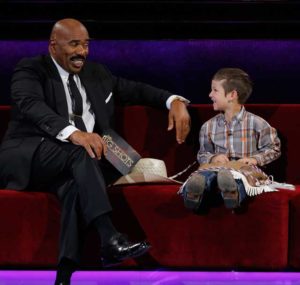
    Blayze on the Little Big Shots show with Steve Harvey – courtesy of NBC

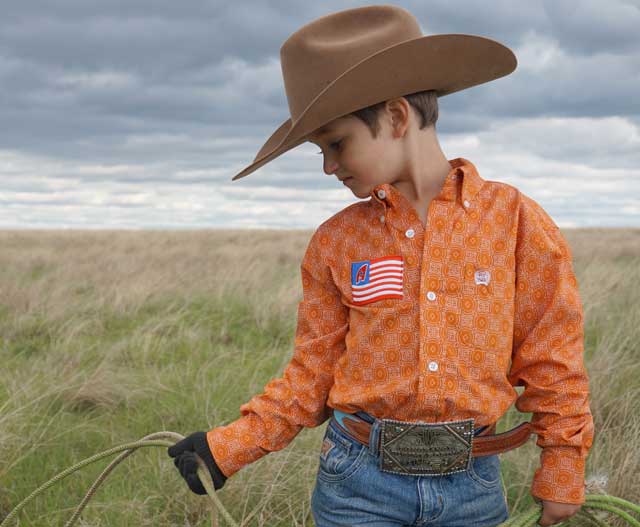
    What is a real cowboy? According to Blayze Fallis, a real cowboy takes care of his ranch, takes care of his horses, and takes care of each other. “It’s not what you’re wearing, it’s what’s in your heart,” says the 6-year-old cowboy from Cashion, Oklahoma. Blayze captured the hearts of America with his appearance on Little Big Shots the end of March. The show was called “There’s a new sheriff in town” and Blayze tried to teach Steve Harvey how to rope. “As soon as I saw him, I wanted to rope with him,” said Blayze of his trip to Los Angeles to film the show. Filming the show took two trips for Blayze – one for dress rehearsal and the second one to actually film the show.

    He ended up on the show through a Facebook friend. “She was looking for different kinds of talent, I sent her a message and said I might have a cowboy. They asked for some videos of Blayze and a couple days later I got a call saying they would fly us out,” said Heather. “We flew out at the end of June and back again at the beginning of July” The only coaching that Blayze had for the show was where to stand for his roping.

    Blayze has come by his roping by hard work and practice. “I started roping when I was two. My dad ropes, but not a lot. I picked it up and started swinging it.” Neither Heather nor Ryan rodeo competitively; they both ride horses, and Ryan ropes for fun, but Blayze practices every day to improve. He can now rope three stacked 55-gallon barrels and his goal in life is to be a cowboy. He rides rank sheep and mini broncs. He’s an only child which he likes. “I get to play with my mom and dad all day long.”

    “We have never forced anything on him,” explains Heather, who grew up in Shawnee, Oklahoma. “It comes natural to him – Ryan and I try to set our best example for Blayze, and behave the way we want him to.” Ryan works long hours at his job with BP, but manages to take Blayze to sorting and team penning practice.

    Aside from wearing his cowboy hat and boots day in and day out, Blayze is a typical six year old. He likes to play TBall, which is the only time he trades his boots for tennis shoes with cleats. He is a Kindergartener at Cashion school, where his favorite part of the day is recess. “I get to play cowboy with my friends,” he said.

    After school, he heads to the barn to ride, rope, and play cowboy some more. The family travels to rodeos on the weekends and they plan to join National Little Britches. “Whenever he was little, he’d pick up a rope and try,” said Ryan. “That’s all he wants to do is rope. Since he’s been able to talk everyone has commented on his personality.”

    For Blayze, God comes first, then roping. If he could go anywhere, he’d like to go to George Strait’s house. “Then we’d go to a lot of rodeos and rope.” His main horse is Tank. “I bought him with my money that I got from raking a lot of horse poop.” When the weather was bad, he started making signs, screwing the screws, sandpapered the wood and stenciled on the letters to make quotes and sold them. He also did a lot of work over at his Grammies and Grandpas house. “I saved up a lot of money to buy Tank. I rope on him, chase cows, barrel race, poles, and everything.” He has two other horses, Tuff and Kerosene.

    “Blayze is the most determined little boy I have ever met,” said Skylar Wright who has known him since he was a baby. “For a six year old to be that determined to go rope every day is amazing. He is adorable and so much fun to be around.”
    Blayze takes his new-found-fame in stride. “I just want to thank y’all. I feel blessed.”


  • Back When They Bucked with “Cody” Bill Smith

    Back When They Bucked with “Cody” Bill Smith

    Bill-on-Sonny-001.jpg_web-3
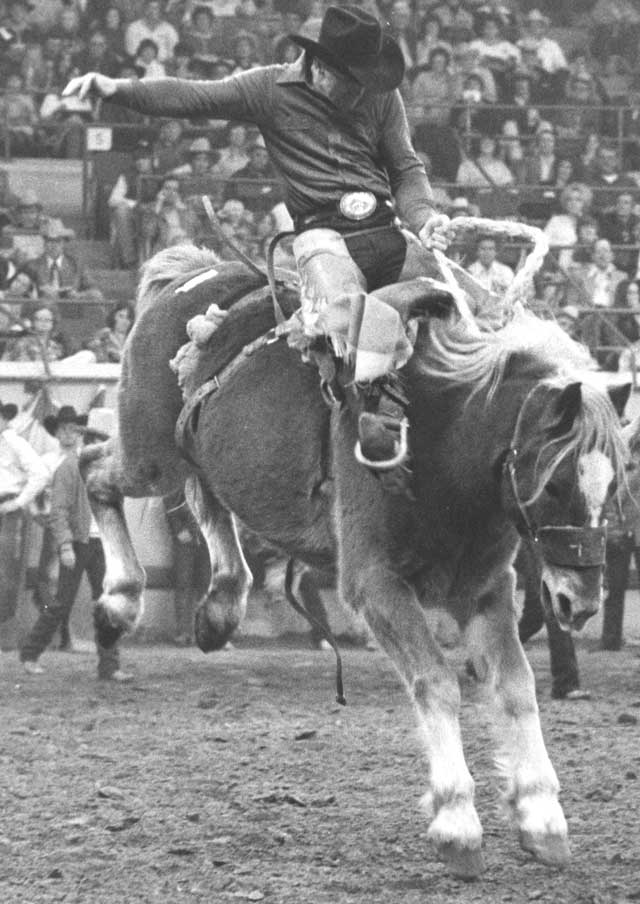
    Phil on Sonny, Calgary, Alberta, Canada, NFR 1978 taken by Huffman Foto

    All Bill Smith ever wanted to do was ride bucking horses, and be like his heroes, the Linderman boys.
    Smith, a three-time world champion saddle bronc rider, got to fulfill both of his childhood dreams.
    The cowboy was born in 1941 in Red Lodge, Montana, and grew up north of Red Lodge in the little coal mining town of Bear Creek. There wasn’t much to do in Bear Creek. “All there was, for anybody to do,” Bill recalls, “was go to school and go to the rodeo on the Fourth of July. The Lindermans were the thing back then, and they were my heroes. All I ever wanted to do, ever since I could remember, was learn to ride bucking horses. It wasn’t about winning, it was to have a chance to ride bucking horses.”
    And he did. The family had horses, and he’d ride anything he could catch. Back then, everybody had two or three head and they weren’t penned up; they ran out in the hills together. Bill and his longtime childhood friend, Chuck Swanson, would pen them and ride them all. “We’d ride the two- and three-year-olds, and we’d get bucked off and drug around.” But it didn’t matter. They were cowboys.
    As young boys, they’d work on the local ranches, doing whatever they could, just to be cowboys. And they’d ride anything possible. “I spoiled lots of horses,” Bill mused. “Everything I rode, I tried to get them to buck with me.”

    When he was a senior in high school, the Smith family: Glenn and Edna and their seven children, moved to Cody, Wyo. It was perfect for a bucking-horse-crazy boy. With the nightly rodeo, Bill started going, “taking his spills,” and refining his bronc riding abilities. In 1961, he bought his Rodeo Cowboys Association card (the forerunner of the PRCA), and that year, won the amateur bronc riding at the Cheyenne Frontier Days. “That was the first money I ever really had.”
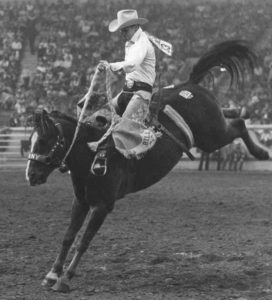
    From there, he was ready to hit the rodeo road full time. Starting in 1961, he rode saddle broncs across the nation, competing at every big rodeo in the U.S. and Canada and lots of little ones. He won numerous events, and some of them more than once: Houston, San Antonio, Denver, Cheyenne, Nampa, Ida.; Cody, Prescott, Greeley, Colo.; Las Vegas, Dallas, Omaha, Oklahoma City, Tulsa, Memphis, Tenn.; St. Paul, Ore. and more.
    He loved to be on the road, and was gone most of the year. But home was still Cody, and his nickname reflected that. He was known as “Cody” Bill Smith. “They latched that on to me,” and he liked it. 130301_billsmith_07-(2).jpg_web-2
    Smith made the National Finals Rodeo for the first time in 1965, and then every year except one till 1978: thirteen out of fourteen years. Saddle bronc riding wasn’t necessarily easy for him at first. “I wasn’t an instant success. It took me a while to learn. I was never a natural at it.”
    His childhood friend, Chuck Swanson, had moved to Cody with the Smiths. Chuck also rode saddle broncs, and was exceptionally good, Bill remembers. But Chuck didn’t hunger to be on the rodeo road like Bill did. “He was a natural, but he didn’t have the bug quite as much as me. He wanted to be a cowboy on a ranch. I didn’t have time for that. There weren’t enough bucking horses for me.”
    Bill estimates he competed at about seventy rodeos a year, with his favorites being the ones with multiple rounds. Back in the day, most rodeos would be more than one round, and cowboys would stay several days in one location. He liked Ft. Worth, which was five rounds, San Antonio, which was six, and Houston and Omaha, which each had several rounds.
    Bill’s childhood dream of competing alongside his heroes, Bill and Bud Linderman, came to fruition early in his career. He was entered in the Filer, Idaho rodeo, as was Bill Linderman, and it was four rounds. Smith broke his leg on the first horse, but got on the next three. “I didn’t go far,” he said of riding with a broken leg, “but I got on them. I wasn’t about to let my hero see that I was crippled. I’d buck off after three jumps, but I got on.”
    He especially remembers some special horses. His favorite and one that stood out far above the rest was the big palomino horse Descent, owned by Beutler Bros. Bill drew him nine times, riding him five and getting bucked off four. “He was the greatest horse I’ve seen to this day. He could jump higher and kick higher than any horse I ever saw.” If a cowboy drew Descent, there was a good chance he’d win the rodeo, and that was true for Bill. He won Nampa on him twice and got bucked off there once. He won Tulsa on him and placed at the NFR on him.
    Other horses stick out in Bill’s mind. Trade Winds, owned by Big Bend Rodeo Co. bucked Bill off once and he covered him once. Trails End, a horse owned by Oral Zumwalt, bucked him off twice. On Harry Knight’s Sage Hen, he was the high mark at the NFR, and she carried him to his first big win in 1964 in Dallas. She bucked him off several times, too. “I wasn’t above being bucked off,” he laughs. “I could hit the ground with the best of them.”
    Smith missed the NFR in 1976 due to back surgery, and two years later, decided to call it quits. He was invited to a big match bronc riding at Ft. Worth, called the Copenhagen Skoal Match Ride. It paid a huge amount and included bull riding, tie-down roping, and barrel racing, all invitational. He won it, and decided to retire. “I thought, this is a good time to quit.” So he did. He was 38 years old, and “I was starting to slow down. I was still winning, but I didn’t want to keep going till I couldn’t ride anymore.”
    After retirement, he and his wife Carole moved to North Platte, Neb. in the summers where he produced the nightly rodeo. He put on 72 performances each summer, seven nights a week, from Memorial Day to Labor Day. It was good, he said, to get him started on life outside rodeo. “That helped me bridge the gap.”
    Then he and Carole bought a place in Thermopolis, Wyo. and moved there. They have a semi-annual quarter horse sale, the third Saturday of May and the second Saturday in September. The sale started in 1983, and this May, they will host their fiftieth sale, with 58 geldings, ten yearlings and a dozen started two-year-olds. They are picky about their horses. He buys the geldings, and he, Carole, and Carole’s nephew Reid O’Rourke ride them. The horses are guaranteed, and they take great pride in having good horseflesh.

    DSC_0060.jpg_web-4
    Phil and Carole Smith – courtesy of the family

    Rodeo was a good way to make a living, the best, in Bill’s eyes. “They were the best days of my life, right there, rodeoing. When you can rodeo, ride broncs, and win enough to pay your way, there’s absolutely nothing better. You gotta starve to death for a while, but once you get going, you don’t have a boss, and you can tell anybody in the world to kiss your butt and it won’t bother what you win, if you can ride.”
    He holds a deep inclination for horses. “Horses are my life, from the biggest Clydesdale to the littlest Shetland pony. I love them all.”
    Rodeo may have changed, but he loves the horses. “The horses still buck. That’s the thing that doesn’t change. Horses still buck.”
    “I’ve had a great life, a fairy tale life, actually. A little kid from the coal mines, doing nothing but what I wanted to do my whole life.”

  • Roper Review: T.J. Jones

    Roper Review: T.J. Jones

    Growing up, T. J. Jones knew from an early age he wanted to be a cowboy, a real cowboy. At the age of ten, his dad bought some property in the country and built an arena for his older brother to practice bulldogging.
    Not long afterwards, the Jones had some friends come to their place with horses purchased in Mexico that they brought back to Texas to ride and sell. T. J. received specific instructions from his parents not to “mess with the horses,” since he didn’t know how to ride. With as much logic as a ten year can muster, T. J. figured what his parents didn’t know, wouldn’t hurt them. After school, before anyone got home from work, T. J. would catch the horses and ride them. As their friends prepared to leave, they told T. J. to pick out any horse of the bunch to keep. The stocking legged chestnut would be the first horse he ever roped on.
    For the first couple of years T. J. and his uncle would chase cows in the pasture but never had any training. But once his cousin, Justin Parish, a trainer and accomplished roper, came to stay. T. J. soaked up all he could learn.
    “He told me I could make my own horses and be able to rope,” explains Jones. “It fit me perfectly because it fulfilled my dream of being a cowboy, not a rodeo cowboy, but a cowboy.”
    Parish helped young Jones get started with his roping at small jackpots, high school and youth rodeos. T. J. enjoyed success by qualifying for the state finals. In 2002 T. J. and close friend, Justin Walker, won the Pro Youth Rodeo Team Roping year-end championships with T. J. heeling. The following year, T. J. headed for Garrett Wright, winning the title once more.
    “After high school I went to some college and pro rodeos,” says T. J. “It didn’t take long to realize I was a big fish in a small pond.”
    This prompted Jones to work at and focus on his roping. While training and riding cutting horses, he was offered a chance to work for Allen Bach, where he says, “That was a fantastic opportunity and it helped my roping tremendously.”
    T. J. would continue to train horses during the day and work jobs in the evenings to help supplement his income.
    “I’ve been fortunate to have access to and advice from some of the best ropers going,” says Jones. “Jake Barnes helped me with the business aspect and the mental game. When my brother, Seth, and I became friends with Ryan Motes, that’s when I saw my biggest improvement.”
    Last year T. J. married long time girlfriend, Jacquelyn and they currently live in Weatherford. Now, at 33, T. J. co-owns a successful construction business with his brother and enjoys training a few outside horses.

    COWBOY Q&A

    How much do you practice?
    At least four times a week.
    Do you make your own horses?
    Yes.
    Growing up, who were your roping heroes?
    Trevor Brazile and Jake Barnes.
    Who do you respect most in the world?
    My dad first, then Ryan Motes.
    Who has been the biggest influence in your life?
    My dad and Ryan.
    If you had a day off what would you like to do?
    I would like to be cowboying somewhere.
    Favorite movie?
    McClintock, with John Wayne.
    What’s the last thing you read?
    How Champions Think by Bob Rotella.
    How would you describe yourself in three words?
    Loyal, proud, hard headed.
    What makes you happy?
    My wife.
    What makes you angry?
    When things don’t go as planned.
    If you were given 1 million dollars, how would you spend it?
    I would pay cash for a place, buy a new vehicle, and buy my wife a barrel horse.
    What is your worst quality – your best?
    My worst is being too hard on myself. Best quality is loyalty.
    Where do you see yourself in ten years?
    I see myself owning a successful company, a nice place and getting to rodeo more than we do now.

  • Back When They Bucked with Larry Trenary

    Back When They Bucked with Larry Trenary

    Trenary001.jpg_WEB_4
    Family picture at the Colorado State High School Finals in Lamar, CO – Courtesy of the family

    Larry Trenary was “hungry” to rope, and it showed. The Arthur, Nebraska cowboy spent the best days of his life, roping with his sons, Bret and Troy.
    He was born in 1939, the son of Elza and Erma Trenary, both teachers, who lived five and a half miles north of the tiny Nebraska Sandhills town. He grew up in a sod house, and when his parents bought the ranch where he and his wife Sonja live, they moved there.
    A ranch kid, when his family moved to Lincoln, he “hated every minute of it.” The Trenarys spent vacations and summers on the ranch, and Larry spent time with his uncle Lawrence Shaw at Sutherland, Nebraska. Uncle Lawrence was a cowboy who knew how to rope. Larry knew how to rope from growing up on the ranch, but Lawrence smoothed out the rough spots on his skills, and provided a horse Larry could ride.
    He graduated from Northeast High School in Lincoln in 1957, and that summer, went to the Nebraska State High School Finals Rodeo in the calf roping, steer wrestling, bareback riding and cutting. He won the all-around and represented Nebraska in the calf roping and cutting at the National High School Finals.
    Then a move to California would add to his rodeo repertoire. Larry spent a year in college in Visalia, Calif., and met two fellows: Manuel Macedo, and Bob Wiley. Manuel got him started team roping, heeling for him at amateur rodeos (team roping wasn’t new in California but it was not common in Nebraska). Wiley, who was from Porterville, Calif., roped and tied calves with Larry all night long. In the old dairy barn owned by Manuel’s parents, with the lights on, “we’d tie calves till three or four in the morning, till we got tired,” Larry remembered. “We were learning to be faster all the time, and consistent.”

    Trenary005.jpg_WEB_3
    Larry heeling for Marvin Mueller at the 2002 Mid-States Finals – Peter Hammer

    After a year in California, Larry was back to Arthur, where he had been dating a local girl, Sonja Mickelson. The two tied the knot in 1959, and lived in California for a short time before making their home on his parents’ ranch north of town, where they still live today.
    They ranched, but Larry’s parents weren’t rich and didn’t have a lot of land or cattle to give their son. So he supplemented his income with rodeo. He became a member of the Nebraska State Rodeo Association (NSRA) the same year he got married. He also belonged to the Mid-States Rodeo Association (M-SRA).
    Larry dominated his events in the NSRA and the Mid-States. He won the NSRA calf-roping title in 1961 and 1963-64, and the heeling title in 1961, 1972, 1978-79, and 1982-83. In 1984, he won the heading title. In 1961 alone, he won the all-around, calf roping and team roping titles and was reserve champion in the steer wrestling. He also won numerous titles in the Mid-States.
    Larry competed in the PRCA as well, roping at Denver, Ft. Worth, Cheyenne, Chicago, Pendleton, and other venues, and at USTRC ropings. But he didn’t want to be gone from home that much, so he returned to the NSRA and Mid-States, plus ropings and rodeos in Nebraska and surrounding states. When he turned forty, he joined the Old Timers Rodeo Association (now the National Senior Pro Rodeo) and the Living Legends Rodeo Association. In 1991, he and Tony Tonozzi won the world in the USTRC’s senior division.
    His most memorable calf roping horse was possibly the best calf horse ever in the state, he thinks. Old Black “was as ugly as could be,” Larry said. Old Black supposedly came from the wild horse herds in Montana, and was brought to Nebraska by a horse trader. Uncle Lawrence traded two bucket calves for the horse and he and Larry trained him. Old Black was never truly tamed. “He was so wild, he would kick you. You could never trim his tail and hardly trim his feet. He was just an outlaw, but he was a terrific calf horse.”
    Larry and Sonja have two sons, Bret, who was born in 1960, and Troy, born three years later. Roping with his boys was his joy. “When my boys got old enough (to rope), that was the finest time in my whole life.” The three were serious students of the sport. They practiced hard, setting up a video camera and watching their runs, to see where they lost time and how to make it up. “We really worked at it, because it was our livelihood.”
    The three Trenarys roped everywhere. If there was a good roping, they were there. They competed across Nebraska, Kansas, Colorado, Wyoming, South Dakota, Iowa, anywhere there were steers and a chute. They put on roping schools as well, teaching kids the fundamentals of the sport.
    When Troy was seventeen years old, he was hit in the head while playing high school football. The injury put him in a coma for fifteen days. He had been an excellent heeler, Larry said, and three friends came and stayed for days, trying to help Troy rope again, but the use of his right arm was gone. Their son is still alive, and able to lead a normal life, and for that, Sonja and Larry are grateful.
    After Troy got hurt, Bret switched from heading to heeling, so Larry, who heeled, lost his partner. He tried five or six different headers, but things weren’t the same. In his last years of roping, he found a good partner: his friend Marvin Mueller.
    Bret’s team roping career flourished. He roped professionally for years, qualifying for the National Finals Rodeo in 1987, heading for Allen Bach.
    Not growing up with a silver spoon in his mouth was an advantage, Larry feels. “I didn’t have the money to do things, and I had only one really good horse, and gosh, not very good vehicles. I was purt near broke, but kept going because of my roping.” He feels that money isn’t always the answer. To be a good roper, “I think you have to have the ability to stay on track, and the will to win. Money won’t do it. I know so many kids that their folks have a lot of money, and they want to be a great calf roper or team roper. But most of the guys who are really, really good have had to go without things in their life. You can’t give it to them. It just doesn’t work that way. They don’t seem to have enough guts to stay with something that long.
    “You gotta be hungry for it, almost like you need the next dollar to eat on. That forces you to try not to make a mistake, because if you make a mistake, you’re not going to win.”
    He and his boys were that way, he says. “We were like a basketball team. We trained here at home, and everywhere we went, we watched the good guys. And on the way home, we’d talk about the good guys, and what they’d done that made them so great. We just learned from them.”
    The best days of his life were spending time with his boys. “It was everything,” he remembers. “We were learning together. We’d argue and fight, but it would all come out to be the best.”
    Larry roped his last calf at the Arthur rodeo in the late 1970s, on Old Black. He quit team roping at the age of seventy, after having been an NSRA member for over fifty years. His roping was as good as ever, but his knees hurt. Two years ago, Larry was inducted into the Nebraska Sandhills Cowboy Hall of Fame.
    Larry and Sonja take great pleasure in their grandchildren, Jhett and Mercedes, the son and daughter of Bret and Dede, who live in Salida, Colo. Mercedes, a former college breakaway roper and goat tyer is teaching school in Oklahoma. Jhett, who team ropes with his dad, is a student at South Plains College in Levelland, Texas. “They’re the delight of our life,” Sonja said.

    Trenary007.jpg_WEB_2
    Larry tie-down roping in Gordon, NE on Old Black in the 60’s where he won the rodeo – Courtesy of the family

    They sold their cow/calf herd a few years ago and now background calves, which Larry enjoys. “It’s not work to him,” Sonja said. “He just loves what he’s doing. We just keep a-going.” Troy lives with his parents and helps out with the cattle work.
    The couple enjoyed their rodeo years, and life now, too. “It’s a wonderful life, what we’ve done,” she said. “It’s been a great life. We’ve been up and down the road. I wouldn’t change it for anything, and I know Larry and the boys wouldn’t, either. “We love what we do.”

  • On The Trail with Faith Hoffman

    On The Trail with Faith Hoffman

    Faith Hoffman of Kiowa, Colorado, is the reigning CSHSRA goat tying champion. The 18-year-old plans to defend her title at state finals at the end of May, earning her third trip to the NHSFR. Yet as quick as her hands and feet are in her favorite event, Faith is even quicker to encourage her fellow competitors, friends, and family.


    DSC01423-faith-glory.jpg_WEB
    Faith celebrating at 2016 CSHSRA Finals – Chelsea Hoffman

    Whether it’s giving someone a pep talk at a rodeo or sharing Bible verses, Faith is passionate about helping others. “Our family anthem is Ephesians 4:29, ‘Do not let any unwholesome talk come out of your mouths, but only what is helpful for building others up according to their needs, that it may benefit those who listen.’,” says Dave Hoffman, Faith’s dad. “She’s really an encourager of others, and I think because of her, other kids are encouraging as well.”

    Faith’s introduction to the rodeo world came through her dad, a first generation rodeo cowboy and bareback rider turned farrier. Dave competed in the CPRA and PRCA Mountain States Circuit, and later coached the Air Force Academy college rodeo team. Faith started traveling with him when she was five or six, making fast friends with his traveling partners and their children. She was competing in peewee barrels by the time she was eight, and two years later, Faith was a member of the NLBRA and had discovered her passion for goat tying. “It’s such an aggressive and quick sport,” says Faith, who also competes in barrel racing, pole bending, and breakaway roping. She even team ropes on occasion when someone needs a header. “I play basketball too, and I think that sport and goat tying cross over.


    When I’m teaching girls to tie, I compare it to basketball moves and how you have to be quick and aggressive in both. I also like how you don’t need an expensive horse to compete in goats – it’s about the work you put into it. I feel like everywhere I turn, there’s someone who has my back or will pick me up, and that’s really shown me that rodeo’s not all about what you put into the arena, but also who you are outside.”


    FAITH-HOFFMAN-GOATS-ELIZABETH.jpg_WEB
    Faith goat tying at CSHSRA Elizabeth 2015 – Chelsea Hoffman

    Last summer, Faith had the opportunity to teach goat tying at High Plains Rodeo Bible Camp in Hugo, Colorado. She also teaches goat tying lessons from home and at clinics. “It was super fun in Hugo. There were about sixteen kids in the goat tying, and it was a lot of fun to teach them and be in a spiritual environment. I was also a group leader there, so I lead devotions and prayer with five or six girls. It was pretty cool seeing them learning and realizing what Jesus is all about.” Faith also spoke during Cowboy Church at a CJRA rodeo in Yuma, Colorado, last summer when Dave wasn’t able to be there. He’s been involved in the rodeo ministry since he was 19, and has lead Cowboy Church in the CSHSRA the last year and a half. Last summer, he performed a number of water trough baptisms in arenas.

    For Faith, rodeo especially complements her relationship with the Lord. “My favorite verse is Jeremiah 29:11, ‘”For I know the plans I have for you,” declares the Lord, “plans to prosper you and not to harm you, plans to give you hope and a future.”’ I have that written down all over, and I can really see that in the rodeo world, because things can change so quickly. You can get hurt and be out a rodeo or a whole season, or other things can happen, and I think that it really puts an emphasis on faith. My mom tells me all the time if I have a bad rodeo or don’t win that God had the win planned for someone else that day.”

    Faith received her own encouragement two autumns ago when her barrel horse, Cracker, fell during practice and broke his leg. “This was after Faith won state finals in the average on him. He was an amazing horse,” says Chelsea Hoffman, Faith’s mom. She works in marketing in Denver and does some of the photography for the CSHSRA. “We had ten people offering horses to her, which is huge in barrels. Rodeo has been really amazing for Faith and opened up opportunities like scholarships and being part of an amazing rodeo family. In junior high, she had sessions with college barrel racers, and she’s worked with Kaylee Moyer and Jill Francis, who are great goat tyers. She’d tie until midnight with them if she could. Logan Kenline and his family are very close and have helped her with her roping, and she’ll also rope with the Meeske family.”


    DSC02145-family-hoffmans.jpg_WEB
    Chelsea, Faith, Cade and Dave Hoffman – Courtesy of the family
    faith-cade-tree-bv-large810.jpg_WEB
    Faith at age 10 and her little brother, Cade at age 3 in Buena Vista – Courtesy of the family

    At home, Dave helps Faith exercise horses, and Chelsea holds goats and videos runs. Faith competes on Johnny in pole bending, goat tying, and barrel racing. Johnny was voted CJRA Senior Girl Horse of the Year in 2016. Faith has also run barrels on Drifter, and recently brought home a mare, Barbie. “She’s a diva,” Faith says with a laugh. “She’s started in the breakaway, and I’m so excited to see her finish up. I’ll probably start her in barrels, too, since she’s super quick.” Family time is spent in the practice pen and at rodeos, and Faith’s itinerary this summer includes The Best of the Best Timed Event Rodeo in Gallup, New Mexico, the IFYR in Shawnee, Oklahoma, and the NHSFR in Gillette, Wyoming. Her 11-year-old brother, Cade, travels to many of the rodeos and is an avid hiker. Over spring break, he and Dave went on a hiking trip in the Grand Canyon, and they have several other national parks on the list to visit.

    This school year, Faith has started her mornings at Abbott Ranch in Kiowa before finishing her afternoon classes at Kiowa High School, where she’s a senior. “One day I might be pulling manure, the next we’re moving cows or hauling hay,” says Faith. “I didn’t grow up on a ranch, so it’s nice that I get to learn these things.” She’s also helping plan the class of 2017 graduation, and finished a banner year playing basketball with the Kiowa Indians.

    This fall, she plans on attending Sheridan College in Wyoming on a rodeo scholarship. Faith’s focus is on goat tying and breakaway, as well as majoring in athletic training. “My dad was a coach in the Central Rocky Mountain Region, and I still know a lot of the coaches there. I’d eventually like to transfer to a university so I can get my masters and rodeo a fifth year in college,” says Faith. “I want to win the state championship in goats again, and we have some tough competitors this year. I’d like to go on to Nationals and win there, but I’m not going to stress over anything, because God has a plan.”