Rodeo Life

Category: ProFiles

  • ProFile: Staci Trehern

    ProFile: Staci Trehern

    story by Michele Toberer

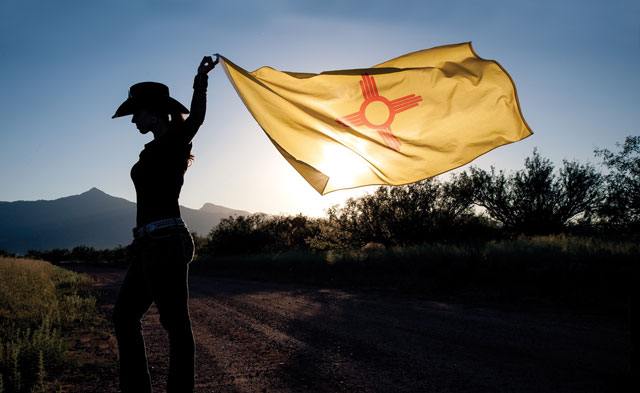
    From dusty boots to a shiny tiara, Staci Trehern, Miss Rodeo New Mexico 2016, has made it a mission to teach young girls to find the power and uniqueness they have inside. Staci grew up on her family’s cattle ranch, The Lazy Spear T, in northern New Mexico, with dreams filled of rodeo, ranching and the western way of life. Her parents were not involved in rodeo themselves; her father Glenn, a self-proclaimed “tennis-shoe cowboy” worked cattle on foot when he was not working as a fireman, and her mom, Elizabeth was more of a city-slicker transplanted to her in-law’s ranch, yet the fire and love for rodeo seems to have been born into Staci’s heart. Staci, the oldest of three girls, loved nothing more than helping with all aspects of working on the ranch as she grew up. She and her sisters, Amber, four years younger than Staci, and Brooke, seven years younger, carried that love of the western heritage into entering Little Britches rodeos in team roping, breakaway roping, barrel racing and pole bending. Staci chose to be homeschooled through high school, so that she had even more time to spend on the ranch, honing her horsemanship skills, between school and rodeos. At seventeen, being a rodeo queen was not even on her radar, until winning the title after a friend encouraged her to enter the Sandoval County Queen contest in 2009. “The title I held that year ultimately changed my path and direction in life,” Staci proclaimed.
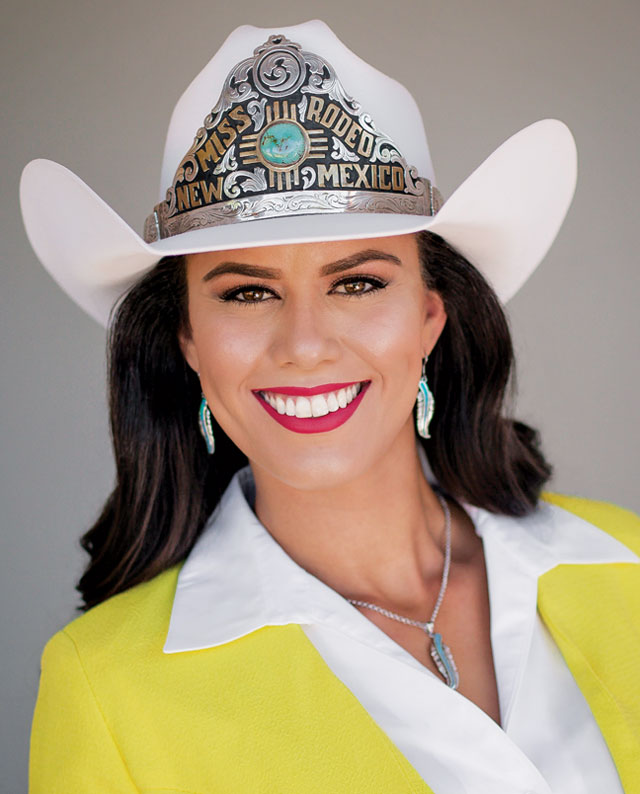
    Miss Rodeo New Mexico 2016, Staci Trehern – LoveLettersPhotography

    Although Staci never considered herself a typical rodeo queen, she discovered how much she loved representing the sport of rodeo as she went on to win several titles. Staci was again Sandoval County Rodeo Queen in 2013, Miss New Mexico State Fair Rodeo Queen 2014, 2015 Miss Turquoise Circuit Rodeo Queen and 2016 Miss Rodeo New Mexico. Staci, who believes “Rodeo comes before Queen,” was proud to consistently win horsemanship titles through the pageants. She remembers growing as a person the year she was Miss Turquoise Circuit queen, flying on an airplane for the first time, as she flew to Kissimmee, Florida for a rodeo, and traveling and hauling by herself. As Miss Turquoise Circuit, she was appearing at mostly PRCA rodeos, and as she rode alongside many idols she had watched at the NFR as a young girl, she was grateful to be exactly where she knew God intended her to be. Staci learned that the crown atop her cowgirl hat was not just an award, or platform, but a key that would open doors for her and for future generations.
    Staci is the second of only two women to ever hold all three New Mexico Rodeo Queen titles, and chose to run for Miss Rodeo America 2016. This is where she won her eighth horsemanship title, yet finished 2nd Runner-Up for Queen. This was not a loss to her however, as she claimed “I’m no one special, I’m a girl from the middle of nowhere. I didn’t go to Miss Rodeo America to win a crown, my goal was to send the message that everyone is good enough. No matter what anyone tells them, everyone that has a dream in their heart, can succeed.”
    Staci’s paths have led to opportunities she never dreamed imaginable. She is working towards her Masters in Communications degree at the University of New Mexico, thanks to over $11,000 in scholarships won through queen contests. She competes in the WPRA, recently placing at Ellensburg, Washington in barrel racing. She was Vogue Magazine’s “American Cowgirl” for their 125th Anniversary Celebration of Women, in January, and has modeled in Western Horse & Gun, and Cowboys & Indians Magazine. She empowers young girls through her online Wahya Warriors Rodeo Queen clinics, where from the comforts of home, aspiring rodeo queens learn lessons on all aspects of being better versions of themselves. Interested girls can message Staci on Facebook to join the clinics. Staci encourages rodeo athletes and queens by saying “an arrow can only be shot forward by first being pulled back, so when you feel like life is pulling you back, just know that you are going to be shot forward into something great. So, no matter what, always follow your arrow, wherever it points.”

  • ProFile: Chason Floyd

    ProFile: Chason Floyd

    Just $87 was the difference between riding into the Thomas & Mack in December and not. Chason Floyd kept his hold on the 15th spot for a couple weeks. He had to keep going to keep ahead of Josh Peek, who was trying up until the last minute to get that spot. Neither pulled a check the last week. Chason got a couple checks the week before, but he hit three rodeos the last week, never pulling a check. “Josh wished me luck at a rodeo we were at that last week – hoping I would make it.”
    Chason has been trying to punch his ticket to Vegas since 2012. “I had a very good rookie year, and tried again for the next few years,” said the 28-year-old from Buffalo, South Dakota. “In 2015, I got hurt and had to sit out a year.” He went from 41st last year to 15th this year. “I try to learn something new every year, and this year I’m more mature and I know a little more. I also switched horses after Labor Day, jumping off Sean Mulligan’s horse. She fit me really good.”
    Chason got married May of 2014 to Jesika Garrett Floyd and the couple is expecting a new bulldogger into the family February 14. “She was joking one day saying if I ever made the Finals, she would probably be pregnant. I mentally told myself after we found out that I better get to winning if I was going to make this happen. And it did. ” The couple owns an assisted living facility in Buffalo South Dakota, and Jesika has a home health business as well. They are opening another one in Faith, South Dakota, within a year. “I also ranch with my family.”
    He is still adjusting to his first WNFR qualification. “We woke up and went over to the building and started working on it – you go back to normal. But I’m still getting the calls, and it will sink in that I did accomplish my dreams. It’s pretty neat.” Chason will stay in shape by jackpotting and going to his circuit finals in Minot. He won the year end at those Finals. He plans to enter a few others and continue jogging and staying in shape. “We’ve been moving cattle and shipping, so it’s kept me pretty busy. I’ll head to Oklahoma the middle of November to practice with Sean.”He has never been to the NFR – this will be his first trip. “I didn’t want to go until I made it. We’re super excited.”
    Chason grew up in Ludlow, it’s a school, a church, a hall and a bar. His family is still there on the ranch. He started rodeo when he was young, starting in the 4-H rodeos and then high school rodeos. He roped and rode saddle broncs when he was younger. “I got kind of big for bronc riding,” said the 28-year-old. His parents, Ron and Cindy, along with his sister CJ and two brothers, Colt, and Ckyler will all be heading to Vegas to watch.

  • ProFile: John Korrey

    ProFile: John Korrey

    Ritchie Bros. auctioneer started as a country boy.

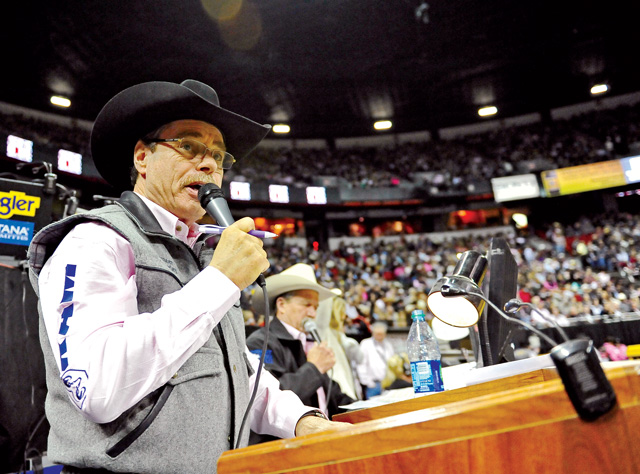
    John Korrey is a native of Iliff, Colorado, living on the same farm he was born on 64 years ago, but his voice has been heard throughout the United States and internationally as far as Dubai, the Netherlands, and Australia. Since 2003, he’s worked for Ritchie Bros. Auctioneers, one of the world’s largest auction companies of heavy equipment and transportation equipment.
    The team roper and auctioneer of more than 40 years grew up helping his dad farm and raise livestock, and he was intrigued early on by the auctioneers he heard when they went to livestock auctions to sell produce. Even his classmates in grade school told him he’d make a good salesman. John graduated from Northeastern Junior College in 1972 and attended Reisch Auctioneer College soon after, but the work was barely beginning. “This occupation is no different from other occupations – you have to pay your dues,” says John. “You’re sometimes selling people’s whole livelihood, or a year’s wages, and it’s really crucial. For someone to give you an opportunity to go up and sell is tough, so you practice on your own. I went to an auctioneer school and they teach the basics, but you can’t leave there and be an auctioneer. You have to practice and get better. I was pretty determined and I listened to a lot of auctioneers. I thought if I was going to do it, I would try the very best I could.
    “I went to different markets to try and get a job. My dad was one of my biggest fans, and he and my mom helped me get started and hooked me up with some livestock markets, and I went to various livestock auctioneer contests in the country,” John explains. With his background in rodeo – competing during his childhood, and team roping and tie-down roping on the college rodeo team – John found he was equally competitive in the auctioneer contests. He also found the bond between livestock auctioneer families much the same as with rodeo families. “I competed quite a few years before I won the contest and realized it wasn’t about me, it was about meeting other auctioneers and families in the business. I finally won it (World Livestock Auctioneer Champion) in Dunlap, Iowa, in 2002, and it didn’t skyrocket my career, but I had more confidence. People won’t hire you because you’re a world champion or not, but because they trust your ability to do a good job.”
    John also won the Calgary Stampede International Livestock Auctioneer Championship in 1998, among several other championship titles, and he was inducted into the Colorado Auctioneer Association Hall of Fame in 2009. He and his late wife, Janna, were married for 35 years and owned and operated Korrey Auctions for 23 years until he started working for Ritchie Bros. John’s specialty was in livestock and farm equipment when he started with the company, but he says it was an easy transition into selling industrial equipment. “My chant is diverse enough to sell livestock, real estate, equipment, and charity. I’ve done all those in one week, and you have to do them all different. Sometimes you’re dealing with novice buyers, or buyers who go to more sales than you do. Especially with the diversification between Colorado or Washington or Dubai or the Netherlands, communication is crucial. If you can’t communicate, there’s nothing. I can change my chant to work with all aspects of the profession, but still create urgency to bid and be entertaining.”
    Another challenge is working not only with bidders and proxy bidders at the actual auction, but also internet bidders, where the rapport with the crowd and the eye contact isn’t possible via the computer. “There are so many tools, and whether you’re selling livestock or equipment, it’s pretty competitive,” John adds. “People have said the auction profession won’t need any more auctioneers with computers now, but I hope they’re not right. I still think there’s a need for that excitement.”
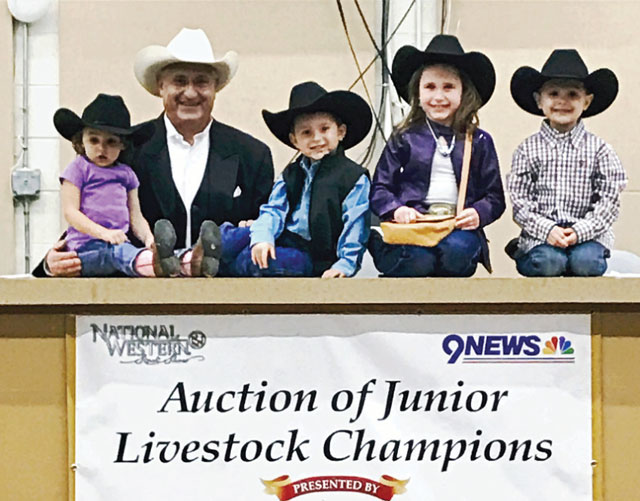
    John shares some of his auctioneer knowledge in his instructional DVD Chant of a Champion, which was released in 2007. “It’s not to take the place of a school, but to help with things that might be missing,” he explains. “I’m working on putting out something else like a CD that people can listen to in their vehicles.” Along with helping the next generation of auctioneers, he’s passionate about giving back to the community. One of his favorite events is auctioneering at the National Western Junior Livestock Sale in Denver for the last 15 years, where 90% of the proceeds from sales go to the young exhibitors, and the other 10% is donated to the National Western Scholarship Trust.
    When he’s not traveling to the next auction, John enjoys roping in the NSPRA and local jackpots. He competed on his PRCA permit one year shortly after college, but he didn’t like the intense traveling. “And now what am I doing? I’m traveling!” he says with a laugh. A few of his horses have been ridden by professional ropers Troy Pruitt and Chris Anderson, while John is the rodeo chairman of the PRCA rodeo in Logan County. One of his goals is to qualify for the World Series of Team Roping Finale in Las Vegas, but his main priority is spending time with his two daughters and sons-in-law, and his five grandchildren. They also run a small cow/calf operation on John’s farm.
    “I feel so blessed with the things given to me in the auction profession,” he finishes. “Who would ever dream that the little country boy with no experience in the auction business would be doing what I’m doing. I have to pinch myself sometimes.”

  • ProFile: Randy Corley

    ProFile: Randy Corley

    Randy Corley, who lived in North Platte for two decades, is an inductee into the 2017 Pro Rodeo Hall of Fame.
    Corley never thought he’d make a living as a rodeo announcer, and there was a teacher at Niobrara County High School in Lusk, Wyo., who concurred.
    He was a high school kid, taking a speech class because it was an easy credit, and when he was asked to give a speech, it was always rodeo-related, about world champions like Larry Mahan or Jim Shoulders. The teacher did not approve. “She had threatened me a couple of times that I needed to talk about something different,” Corley recalled. “I’d always come back to rodeo.” One time, she couldn’t take it anymore. When he started yet another speech on rodeo, she “came running up and ripped the speech off the podium, and said, ‘you’ve got to think about your future. You’re not going to talk rodeo your whole life.’” Little did she know, Corley would make his living “talking rodeo.”
    He was born in 1951 in Miles City, Mont., spending his school years mostly in Lusk and Lance Creek Wyo., and his summers with his granddad, Waldo Parsons, a cowboy who he idolized. “I spent every summer at his ranch, and when I got older, I’d go out in the winters and help feed cattle. He was everything to me.”
    In 1977-78, he attended the Ron Bailey School of Broadcast in Seattle, then worked as a dj in Broken Bow before moving to North Platte, where he was on air at KODY AM and KX 104.

    In 1979, world champion saddle bronc rider Bill Smith started a nightly rodeo series in North Platte and hired Corley to announce it. He was acquaintances with Michelle and Trent Barrett, the children of the legendary North Platte native Hadley Barrett, also a rodeo announcer. Michelle, who ran barrels, and Trent, who roped at the rodeo, insisted their dad, a rancher north of town, come to the rodeo to hear this young announcer. He did, and Corley was nervous; he knew who Hadley was, and his accomplishments in the music world and the rodeo world.
    Hadley was impressed but wanted to hear Corley announce when he wasn’t aware of Hadley being in the audience. So the next week, Hadley made a trip to town for tractor parts, and again visited the rodeo, this time unannounced. He liked what he heard. A few weeks later, he asked Corley if he’d be interested in getting his PRCA card. Corley was, and Hadley assisted him in becoming a PRCA member.
    That was in 1980, and four years later, Corley won the PRCA’s Announcer of the Year award, an honor he would win eleven more times throughout his career, the most of any other announcer, in 1990-1996, 1998, 2003, 2011 and 2015.
    Throughout Corley’s career, he has announced rodeos across the nation: the big ones, and the little ones alike: North Platte; Puyallup, Wash.; Caldwell, Ida.; the RAM National Circuit Finals; Tucson, Ariz.; San Antonio, Texas; Phillipsburg and Pretty Prairie, Kan., and dozens more. He was selected to announce the Wrangler National Finals Rodeo sixteen times.
    He worked alongside his father-in-law at five rodeos: North Platte, San Antonio and Waco, Texas, Caldwell, Idaho, and Puyallup, Wash., till Barrett passed away on March 2 of this year.
    Corley vividly remembers what Barrett said after the final performance in San Antonio on Feb. 26, four days before he passed. “He laid his mike down, and said, that is the best rodeo I have announced in my life.”
    Corley and Barrett were good friends as much as they were son-in-law and father-in-law, and Corley relates a funny story Barrett told years ago. When he first started, Barrett asked him to live in on the ranch, to help take care of things when Barrett was on the road. By that point, Corley and Michelle were dating; they married in 1984. “I thought it would be nice to have somebody to help out when I wasn’t around,” Barrett said. “I made Randy a deal, and I thought he had good values. What I didn’t realize was, his values were my valuables: my clothes, the food in my refrigerator, my rodeos, and my daughter.”
    Barrett was inducted into the Pro Rodeo Hall of Fame in 1999, and now eighteen years later, Corley follows him. The ceremony is the first weekend of August. It was a team effort, he insists, throughout his career. “I need about 500 or 600 people to come up to the podium with me,” he joked. “There are a lot of people to thank, more than I can pinpoint. It’s stock contractors, great committees, really good entertainers and rodeo clowns and bullfighters and sound people that I’ve gotten to work with. It’s all the people that make those rodeos happen, and have given me a place to shine. All of them exemplify what the announcer does.”
    Corley knows the North Platte rodeo fans will miss Hadley; this will be the first time since 1964 that Hadley has not been behind the mike at the rodeo. He’s been preparing himself. “It’s something I’ve talked to God about every day,” he said. “I have to go into that rodeo, and make it good.” A special tribute will be done for Hadley; it won’t be sad, Corley said, but “we’ll pay tribute in a special way. We’ll hear Hadley.”
    Corley and his wife Michelle moved to Silverdale, Washington in 2001. Corley has two daughters, Kassi and Amanda, and together the couple has a son, Cole, and a daughter, Brittany.
    He is honored to be inducted into the Hall of Fame, and thankful for his life. “I realize more and more every day, how we don’t have the control we think we do. You can place it all in God’s hands, and it’s how God planned it.”

    The other inductees into the Pro Rodeo Hall of Fame are:

    The late Buck Rutherford (all-around champion, 1954)
    Enoch Walker (saddle bronc riding champion, 1960)
    Tommy Puryear (steer wrestling champion, 1974)
    Mike Beers (team roping champion, 1984)
    Cody Custer (bull riding champion, 1992)
    Bob Ragsdale (22-time National Finals Rodeo qualifier)
    Christensen Bros.’ Smith & Velvet, (four-time bareback horse of the year)
    the committee for the Ogden (Utah) Pioneer Days.


  • ProFile: Karsyn Daniels

    ProFile: Karsyn Daniels

    Karsyn Daniels, from McKinney, Texas, won the National Junior High National Finals Barrel Racing Championship for 2017. Out of around 160 girls, and inclement conditions, she and her horse, Muffin, were able to get a total of three clean runs: 15.6, 16.0 and the short to 15.7. “The 16.0 was in the mud, but they took all the mud out and put new dirt in for the short go,” said the 13-year-old who has been chasing cans since she was three. “Muffin handled the ground even though it was raining and muddy. “I went in there going for it and she took care of me and herself and we did good.”
    Karsyn got Muffin when she was six and Muffin was five. “One of my mom’s friends had her, and we went to see her and bought her the same day. After I first got her, it went downhill,” she admits. “We took her to 4 time NFR qualifier Michelle McCloud and she had to completely restart her. She was there for a year, and when we got her back, we clicked.” Karsyn has been competing on Muffin for six years and it keeps getting better. “She’s come a long way – and so have I.” Karsyn never gets nervous, but at Nationals, she did. She came back in the number one hole to the short go and just needed a clean run. “I just had to keep all three barrels up and hope that I was fast,” she said. “I was in the lead by a ways and hoping it would hold.” After the run, she had to go do an interview, then pictures, and it was crazy. “I’m still in shock from what happened – there was so much stuff that went on – I just took it all in.” They left the next morning for the 14 hour drive home.
    Karsyn can blame her love of rodeo on her parents. “My parents took me to the NFR when I was four and ever since I was there I wanted to rodeo,” said the Texas Junior High competitor who also breakaway ropes. She spends her whole summer on the rodeo trail. “I just get in the truck and go,” she said. “My dad (Jack) drives and my mom (Kristen) is the videographer.” In addition to the TJHRA, she competes in the WPRA and has qualified for the American Semi Finals three times. She rides every day – all of her horses are at home, and she rides about four a day. She will be in 8th grade next year and this is her first year to do junior high rodeo. She was barrel racing a lot and didn’t have time to do junior rodeos. “I got into roping and I wanted to go do that and I thought it would be fun to be around kids my age.” Her roping horse came from the Driver’s, Marty Yates trained him and next year her goals are to make it to Nationals in Breakaway and Barrels and repeat as the champion.

  • ProFile: Cody Devers

    ProFile: Cody Devers

    Cody Devers is from Perryton, Texas, north of Amarillo by two hours. He started competing when he was young; he grew up on a horse. “Both my parents rodeoed, trained and sold horses for a living. My mom (Sabrina) is a barrel horse trainer/seller and does clinics, and my dad (Marty) was a PRCA steer wrestler and roper. He still hazes at most of my rodeos. ”
    Cody jumped his first steer off a horse when he was only 12 and was hooked on steer wrestling. He won the Texas JHSRA Region 1 and was Top 10 at the NJHSRA Finals for Texas, he was also Oklahoma State High School Finalist and won the Kansas State both KJHSRA and KHSRA associations, winning a NHSRA Finals go round for KHSRA. “I played high school baseball too, and the rodeos in the other states were closer to where I live. I would leave running from the field, jump in the truck to get to my rodeos.” He was also the NLBRA Reserve World Champion winning a go round at the finals that was .1 from a new world record, and IFYR Finals Top 5 twice.”
    His family owned horse business trains and sells performance horses all over the United States and several foreign countries, even to New Zealand has allowed him to meet a wide variety of clients from famous actresses to Cody’s own steer wrestling clinics where he has taught Dallas Cowboy football players to Canadian hockey players to steer wrestle. “Most of the 40 to 50 head of barrel, roping and steer wrestling horses on the grounds are on consignment to sell are on our website that we own, barrelhorse.com and in RODEO NEWS, of course! A lot of people know our Team Devers steer head brand, which is pretty cool to walk by and see your brand on horses at a rodeo or on tv.”

    Harry Vold and Roy Duvall with Cody as a young cowboy – courtesy of the family

    His brother, Matt, used to steer wrestle and rope, but is now busy building his own business, ProTech, that sells and fixes computers, security systems and cameras in horse trailers and businesses. “He knows all the technical stuff and I help him with the installations when I can. Rodeo schedules make it hard to have a “real job” but I do the networking labor on the job sites and I shoe horses. I shoe A LOT OF HORSES!”
    He’s spending the summer rodeoing not only pro but amateur as well. “We will be hitting five rodeos every week,” he said. Traveling with Maverick Harper for the first part and then he’ll jump in with Jule Hazen, WNFR steer wrestler for the last. Cody is the current 2016 KPRA Steer wrestling Champion, and hopes to have a repeat this year. He is also trying for the Prairie Circuit Finals, the Nebraska State Rodeo Finals and the Central Plains Finals. He has a good start on the year in all three associations.
    Cody is a Dean’s Honor Roll student that rodeos for Coach Stockton Graves at Northwestern Oklahoma State University and qualified for his second trip to the CNFR in steer wrestling. “This year I split the win for the first round with a 3.7 – that time was the fastest for the entire CNFR.” The rest didn’t go as well. “I drew two hard running steers and then broke the barrier in the short round – I was coming in fourth and was set to win reserve but Denver (Berry) is one of my good friends, we rodeo together in the Central Plains region, so I’m glad he won it.”
    The highlight of the CNFR, besides winning the round, was winning the Harry Vold Memorial Scholarship. “My third picture I ever had was with Harry Vold, I was four months old, and my dad was in the short go, and I ended up in a picture with Mr.Vold, World renowned PRCA stock producer and PRCA World Champion steer wrestler, Roy Duvall. 18 years later to the day, I was in the short go at the same rodeo, PRCA Dodge City Roundup, and I got my picture with him again. ”
    “I wrote an essay about an Army soldier – H.D. Hogan – that died in combat, he was a young rodeo cowboy, too. The topic was sacrifice and patriotism, so he’s the one I thought of. What he and all the service men have done for our country is what I think sacrifice means.” Cody gets to apply the $2,500 scholarship to his senior year. “I’ve got at least one more year to go for my Ag Business degree.”
    For Cody, pro rodeo is his future. “It’s what I love to do. It’s what I was born to do.”

  • ProFile: Jeff Todd

    ProFile: Jeff Todd

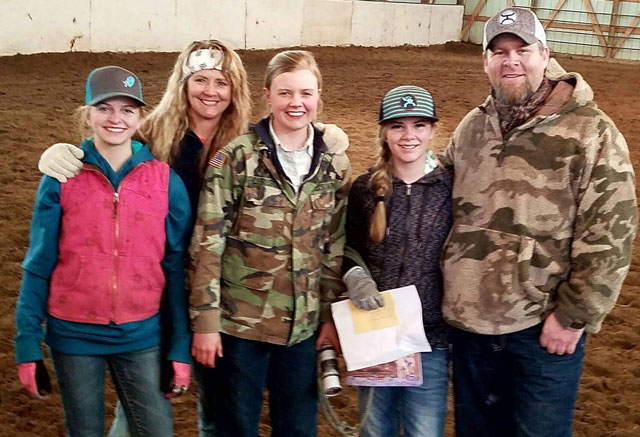
    Jeff and family – courtesy of the family

    In 1990 Jeff Todd graduated from high school in northwest Kansas. “I was second in my class, but that didn’t make the top ten percent since there were only 10 of us that graduated.”He went to Northwestern Oklahoma State University in Alva, Oklahoma on an academic and rodeo scholarship, roping calves and team roping. He fell in with a group of rodeo kids from Wyoming, including Jhett and Justin Johnson. “All I wanted to do was rope – that was my goal. My plan as a college kid was to get a teaching degree so I could have my summers off and rodeo. My fall back plan was to go home and ranch on the family ranch.” He met Nancy Hainzinger on the rodeo team and they got married in 1992, Jeff was just 20, right after his sophomore year. The next summer his dad offered to let them run the ranch in eastern Colorado. It was a great opportunity for the young couple as they got to work together with few distractions those 90 days for there were no neighbors in sight. “We checked cattle or farmed every day, but also made it to 30 rodeos. One weekend they went to 5 rodeos in 3 days stretching from Nebraska to Texas. “We started out in Benkleman, Nebraska and roped in the Friday night slack. We left at midnight and had to be in Dalhart, Texas for the 7:30am slack. We barely made it and both made the short round at the XIT rodeo (amateur at the time). We were up at Elkhart, Kansas that night and Springfield, Colorado the next day before driving back to Dalhart.” It was great fun and for me, that was my opportunity to really rodeo.” Jeff was a history major, and was heading towards being a teacher, but decided after that summer that he wanted more. Spending hours on the tractor, Jeff made plans for the future. It didn’t involve the Colorado farm and ranch but did include kids, horses and rodeo. “I knew I was smart enough, and I started preparing myself to go to law school.” He set his goals so that he could make a living for his family, Nancy could stay home and work with horses and they could take their kids to rodeos. “I still wanted the lifestyle, but didn’t think running down the road was for me.”
    After a couple more years of college rodeo, Jeff and Nancy graduated from Northwestern in 1994, and got ready for Jeff to start law school that fall. “We lived with Nancy’s mom and dad in Ponca City, Oklahoma and I shod horses. They were saving money for the transition and entry fees were not in the budget. But, Jeff’s mom loaned him $250 to enter the local open rodeos. “Actually, that was the best summer I ever had. I was just so happy to be able to enter and knew things were getting ready to change soon with law school that I didn’t worry about anything. I rodeoed on that $250 all summer and had money left over in August when I pulled up and sold my good calf horse. “The pull of the rodeo deal was tough to turn from; it was a whole different life where they were headed.”
    They moved into an apartment in Norman, across from OU law school. Nancy taught school while Jeff went to law school. “I treated law school like a job, when she went to work, I would start studying. If they’d have told me how much I had to read, I would have never done it.” After that first tough year of law school they eased back into horses. “We would go home on the weekends and ride. Riding today is still how I get rid of stress.” He graduated 9th in his class out of 220 in 1997 and got a job at McAfee & Taft a large law firm in downtown Oklahoma City. “I’ve been here for 20 years.”
    Right after he took the bar exam, they signed a contract on 15 acres and a contract to build a house. “We didn’t even know if I’d passed the bar,” he recalls. “The place was perfect – 26 miles from downtown, the best of both worlds for us.” They moved in with their two-year-old son, Haines, and started building their place. “I worked all day at the office and rushed home so Nancy and I could build fence and Haines helped.”
    McAfee & Taft is now the largest law firm in the state, and a perfect fit for Todd. One of his first cases involved a patent owned by horse trailer manufacturer. “My main job was to be the interpreter between the owners and the complicated legal process. Early on I figured out that ag clients liked working with me because I could talk their language. McAfee was a full service business firm so I figured why not develop a full service agriculture practice. I got hired by Oklahoma Cattlemen’s Association and pretty soon other ag-based clients started calling.” Today, he spends most days working on agriculture and equine cases and even rodeo matters. He represents many businesses and people that he rodeoed with. “I went to Little Britches rodeos with KC Jones, and now I represent ProFantasy Rodeo and Rodeo Vegas. Another college buddy owns a feed mill and trucking company.”
    He still had to put in his 10,000 hours, and let rodeo go for awhile. “I didn’t have time and family came first. We messed with a couple colts, and my son went with me once a week to a little calf roping jackpot. One summer that was the only place I entered, but that was just fine. Our goal was to get our kids around it and our dream was to take our kids to junior rodeos and we did that.” They have three children, and they all grew up in the arena. That is until six years ago. “On April 16, 2011 we found out my wife had a golfball size tumor on her brain. Life stopped for us. By that time, I was a shareholder in the firm and we were doing junior rodeos.” Nancy had major surgery May 9 and by the grace of God, she was back riding horses for her kids less than a month later. Everyone in the family had a life change from that experience. Haines quit rodeo all together, deciding to focus on his schooling, and the 21-year-old junior at Oklahoma State University is majoring in Electrical Engineering, carrying a 3.98 GPA.
    Kathryn (17) coped by practicing more and that dedication paid off. She went to the NJHSFR in Gallup, N.M. a couple summers later and came back to Oklahoma as the 2013 National Champion pole bender as well as the National Champion All Around Cowgirl. Gretchen, who was five at the time, is now 11 and rodeos right along with her sister. Jeff credits Nancy for his kids’ rodeo success. “My girls are blessed that their mom is pretty handy with horses and takes the time to make, finish and fine tune their rodeo horses.”

    Jeff and Gretchen Todd – courtesy of the family

    Coming full circle, Jeff has been able to keep his identity as a cowboy and farm kid. “I told my wife I never wanted to have soft hands. I still shoe horses and I have cattle with my brother in law.” They ride and practice a lot on that same 15 acre place they built. Most evenings someone is coming over to rope. He is the president of the Oklahoma High School Rodeo Associationj. “I’m a product of Kansas High School rodeo, and everything I do relates back to that. For me, we made the decision to try something different – but we still wanted our kids to have what we had.”
    After Nancy’s life-threatening operation, he decided to slow down a bit and pick the rope up more often. “Life is unexpected and it refocused things. I was 40 and figured I’d use these young horses. We rope a lot at home, but I didn’t go much.” Practice paid off, and in 2014 he left Vegas and the World Series Finale splitting $180,000 with his partner, David Mize. “That was unexpected but a lot of fun. Nancy told me I should quit while I was ahead but I told her I would probably just keep roping till it was all gone.”
    A teacher at heart, Jeff likes to mentor along his rodeo kids. He tells them “Whatever you do, make sure you’re passionate about it and be the very best you can be at it. When you’re 20, and you think all you want to do is rodeo, it’s ok to take a break and come back to it later – It doesn’t matter what you do, what the world lacks are people putting in the hard work to be the best they can be at it.”
    “We go pretty hard and get spread a little thin sometimes, but life is too fun to let it slide by. We are blessed and been put in the right situation when we didn’t know what the heck we were doing. God’s guided all this, we don’t take credit for any of it.”

  • ProFile: Sandro Ferretti

    ProFile: Sandro Ferretti

    photo-1.jpg_web-2
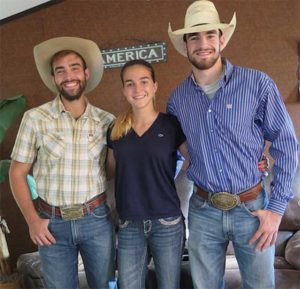
    Sandro Ferretti (on the right) poses with his older brother, Enzo (on the left) and their sister Carla. Sandro is a bareback rider at McNeese State Univ.; his brother used to ride, and Carla is a high school soccer player in France. She hopes to attend McNeese State in the fall of 2017 – courtesy of the family

    Sandro Ferretti’s friends have given him a nickname: the Cowboy. Not that unusual for an American, but very unusual for a Frenchman.
    That’s because there are no cowboys in France, except for Sandro Ferretti.
    Sandro (pronounced SAHN-dro), grew up in France and learned to love cowboys and rodeo when he and his older brother, Enzo, spent summers in South Carolina.
    They were raised in Noves, France, the sons of Richard and Helene Ferretti, and spent summers in the U.S. Their dad, who knows five languages, wanted his sons to learn English. So he sent the boys, who had worked for horse trainers in France and Italy, to South Carolina to work for another trainer. On Saturday nights, the boys watched the bull riding buck outs that took place. One day, they tried it, and “we liked the adrenaline rush and the way it felt,” Sandro said.
    So, Enzo decided to live in South Carolina as a foreign exchange student. While there, he competed in high school rodeo in the bareback riding and steer wrestling.
    As soon as Sandro was out of high school, he came to the States as well, following his brother, who was at Ft. Scott (Kan.) Community College as a rodeo contestant.  There he learned from Coach Chad Cross how to ride bareback horses. He started making the short rounds at college rodeos, and “I fell in love with it.”
    After earning his degree at Ft. Scott, which is a two year school, Sandro had two more years of college eligibility. He decided to attend McNeese State University in Lake Charles, La., where he has a rodeo scholarship. He’s working on a degree in business administration with a minor in entrepreneurship and enjoys competing under the tutelage of Coach Justin Browning.
    Rodeo for Sandro is going well. He’s currently ranked fourth in the Southern Region. The top three in each region qualify for the College National Finals Rodeo, and Sandro is only a handful of points behind the number three cowboy.
    After college graduation, he plans on staying in the U.S. and rodeoing professionally. Then, after rodeo ends, he’d like to find a job in international business. Sandro speaks French, Italian, English, and quite a bit of Spanish as well. His dad emphasized that his children know other cultures. “When my dad graduated he left home for five years and hiked from one country to another. Listening to his stories drove us to see the world and see what it’s about,” Sandro said. “I’ll hopefully rodeo as much as I can, but I’d like to get some work where I can explore internationally.”
    Sandro is friends with another famous Frenchman who is a rodeo cowboy. Evan Jayne, a two-time Wrangler NFR qualifier, has helped the younger cowboy quite a bit. “He’s been my hero, since I met him,” Sandro said. “He did the same thing I did, and made it big time. He’s achieved a lot.” The two just met each other last year.
    Sandro’s family has come to visit a few times, and his dad loves the U.S. and the fact that his boys are doing well. Even though his parents have never been around horses, they support their sons. They also have a daughter, Carla, who is a senior in high school and a soccer player. She hopes to attend McNeese State this fall and continue in soccer.
    Sandro loves the U.S., but misses his family and friends from home, and the wine. Wine is a big thing in France, and “we’ve been drinking it at the table since we were ten or twelve years old,” he said. Wine in the U.S. “isn’t too bad but it’s definitely not as quality as what we have.”
    Sandro, who can be shy, says his accent is a help when he meets people. “They fall in love with the accent,” he said.
    His friends back home are intrigued by what he does. In France, “nobody knows about cowboys or rodeo. It’s not a thing back home, but they think it’s awesome. They like to joke around with it.”
    And it’s something Sandro plans on doing for a long time. “I really like the way of living and thinking.”

  • ProFile: Kent Magnuson

    ProFile: Kent Magnuson


    Kent Magnuson did his rodeoing when he was young, and now he gets to continue in the sport with his job.
    The Kearney, Nebraska man, who grew up riding saddle broncs and tie-down and team roping, was never good enough to make a living at it. But when he quit competing, he turned his attention to flying cowboys and rodeo people around the country.
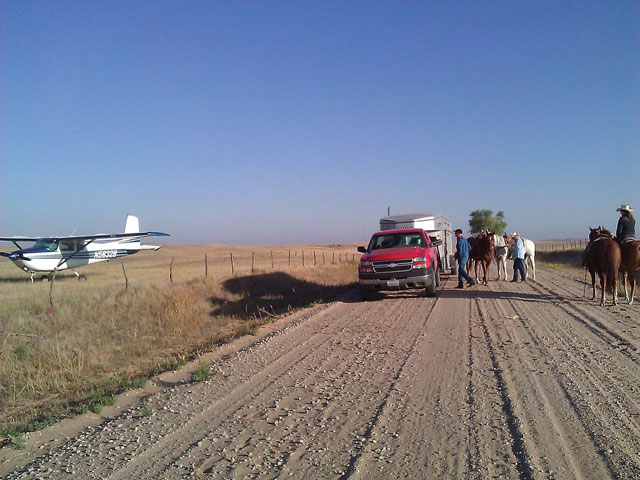
    He began flying small planes in the late 1970s, and introduced himself to Donnie Gay at the National Finals Rodeo in Oklahoma City. At the time, a lot of cowboys were flying from rodeo to rodeo, and Gay, who was in the middle of his eight world title run, was also flying. In 1980, Gay called him and asked him to fly him to events.
    Gay sold his plane to Lyle Sankey a few months later, and since Sankey didn’t have a pilot’s license, Magnuson flew him to his rodeos. Other rodeo super stars, including Bruce Ford, Roy Cooper, Bobby Brown, and more than Kent can remember, joined in, guys who were “hard on the rodeo trail.”
    After the 1980s, Kent turned his attention to the corporate world, flying for four different businesses, seven days a week, from across the U.S. to Canada, Mexico, and the Caribbean.

    Don Gay and Kent Magnuson in the cockpit - courtesy of the family
    Don Gay and Kent Magnuson in the cockpit – courtesy of the family

    Then, six years ago, he and Gay reconnected. Gay was flying a twin engine Cessna and wanted to learn to fly a turbine airplane. He came to Nebraska and stayed with Magnuson for a week, learning from his experience. Now he and Gay share duties on a Merlin IIIB, a plane owned by Jerry Nelson of Frontier Rodeo. Magnuson flies for Nelson in several different capacities: with his stock contracting firm, his minor league basketball team, the Kentucky Mavericks, and his other businesses.
    His schedule varies. He might be flying for two weeks, and then be home for four or five days. Being a pilot requires flexibility. “That’s one of the benefits of having your own plane,” he said, “having 24/7 access. The flight crew needs to be able to launch within an hour. You might go to the east coast or the west coast, you never know where it’s going to be. To me, that’s fun to do.”
    The one thing that changes a pilot’s schedule, beyond what the boss says, is the weather. “Our biggest consideration is the weather,” Magnuson said. A second plan is always in place. “If we can’t do this, what’s plan B? Where’s the next closest airport?”
    Occasionally, but not often, he’ll fly cowboys to rodeos. He usually flies cowboys over the busy Fourth of July weekend, and in mid-February, flew world champion Sage Kimzey to some events.
    The best part, for Magnuson, is the people. He loves them. “The rodeo crowd is a very unique group,” he said. “The rodeo world has a different way of handling people, the way they do things, how they relate to their competitors. They’re friends, and everybody helps everybody. It’s a code of the west. If you can help, you help whoever needs it, regardless of who they are.”
    Now he and his wife, Beth Baxter, barrel race and compete in the 4D events. It’s how they enjoy each other’s company. “It’s a real bonding time for us. Neither of us have any other hobbies, or money enough to support another hobby.”
    Magnuson, who is in his sixties, loves his job. “My mother and my stepdad (Beverly and Glen Nutter) conditioned me, that you don’t do a job for the money, if you don’t have to. Follow your heart and the money will always be enough, sometimes more, sometimes less. You’ll always want to do the work.
    “And after 35 years of flying, I still want to fly every day.”

  • ProFile: Ronda Skinner

    ProFile: Ronda Skinner

    Breakaway roper Ronda Skinner is the co-owner of The Bar R Ranch in Idaho Falls, Idaho, a boarding and training facility she first envisioned while driving to school years earlier. Established in the late 1990s, The Bar R Ranch was many years in the making, starting with Ronda saving money as a child to buy her first horse. “My family lived in town in Shelly (Idaho), so I wasn’t able to get my own horse until I had a way to pay for it, and then I rode, rode, rode,” says Ronda, 50. “When I was eighteen years old, I was driving to school, where I was studying to be a legal secretary. I remember very clearly telling myself that I was going to buy at least five acres of ground, and I was going to have horses and an arena and a house. It’s since grown and changed in direction, but that was the original idea.”
    Roughly seven years later, Ronda’s opportunity came when her sister and brother-in-law were purchasing 20 acres of ground near Idaho Falls. “They only wanted twelve acres, so they asked me about buying the other ground and helping make payments. It was just a hay field, but I got it paid for, and we found a really ugly mobile home in a potato field. A good friend remodeled the inside and we moved it up here around 1997. That’s when I really started giving lessons, and then starting colts.”
    Embarking with her on the business venture was Ronda’s new husband, Bill Skinner. They had met in college, where Bill was Ronda’s biology professor, and they later hit it off when Ronda attended one of Bill’s safety classes. “When Bill asked me to marry him, he said he’d give me a really nice house, a really nice horse trailer with living quarters, or a really nice barn. I chose the barn,” Ronda says with a laugh. “We built it in 1999, and I also finished out my master’s degree in health education.”
    Along with horses, Ronda and Bill were also the first of their families to break ground in the rodeo world. Bill was team roping when he met Ronda, and after teaching her to rope, they started team roping together. “That lasted about ten minutes until I saw breakaway, which looked like a whole lot more fun. Bill wanted to be a tie-down roper more than a team roper anyway,” says Ronda. The husband and wife started buying calves, and since they were without a chute, they fashioned one out of two large fence panels and took turns opening the gate. “Bill found me a really good coach and we found some other good coaches along the way. Then we started buying a few rope horses and training our current horses to rope. I greatly benefited from those years leading up to roping because I spent those training horses under the mentorship of Pat Wyse. Putting a basic handle on a horse makes a person a much better horseman, and basic horsemanship makes for better ropers.”
    Today, Ronda breakaway ropes in the IMPRA and RMPRA, along with a local association, the GVGRA. “I also do the Jackson Open season, and in the past, I’ve been a part of the ICA and associations in Wyoming and Montana. It helped a great deal that I was already a proficient rider, but learning to get my rope on took a little while. It takes about five hundred calves down the arena before a person figures out how to get their rope on. It’s a constant journey, and I’m still learning.”
    Ronda is equally passionate about teaching others of all ages to rope and ride, and she also teaches the foundations of barrel racing. “My early experiences training horses taught me love of molding and channeling horses into their greatest potential, and making them safe companions that are competitive if they have the athletic ability. I like to pass that on to others so they can enjoy their horses, and teach them how to communicate with and listen to their horses.”
    Ronda takes in outside horses for training, and occasionally shops for roping prospects. Her own rope horses include a 13-year-old buckskin, Jack. “He’s incredibly fast, and I started him as a two-year-old. A friend owned him at the time, and later I bought him and trained him to be a breakaway and tie-down horse for Bill. I have Roxy, an eight-year-old mare that’s cutting bred. She’s very quick and has quite a personality – she squeals at the calf when she’s coming out of the box. My golden oldie is Boy. I learned to rope on him twenty-six years ago, and I’m still competing on him. I won some money on Boy in Tremonton (Utah) last October, and I’ve given over a hundred riding lessons on him.”
    Within the last few weeks, Ronda has returned to her horses and business full time, after working three years in safety oversight for a small environmental group. She originally came across the job opening for Bill, who is a certified safety specialist, but took it instead after doing the job interview on horseback. She and Bill also lived in Kuwait for several years and worked in safety oversight before moving back to Idaho. Bill’s son, David, looked after the ranch, while several of their horses stayed with Bill’s dad in eastern Idaho. Presently, Bill is working overseas at the US Naval Support Facility Diego Garcia, in the British Indian Ocean Territory.
    When Bill is away, Ronda finds a variety of people willing to open roping chutes for her; she says she now understands why Trevor Brazile famously said, “I wear out a lot of chute help.” Her latest goal is learning to heel. “A client who purchased one of my horses, Pearl, wants to start competing,” she adds. “My goal is to get him rolling, and my breakaway goal is to go as often as I can to as many rodeos as I can.”

  • ProFile: Curt Matthews

    ProFile: Curt Matthews

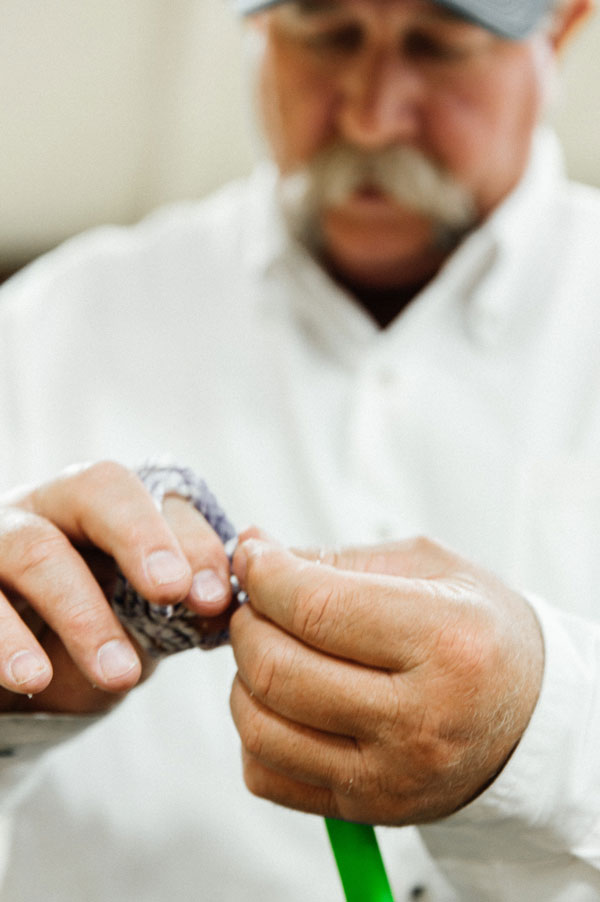
    Top Hand Ropes has been in production for six months. Under the direction of rope maker, Curt Matthews, the company has quickly spun its way into the hands of thousands of ropers across the country.
    Curt grew up around horses and landed a job at a western store on May 31, 1969. That store happened to have a rope company in the back. “As a kid, I wanted money and it was something I was interested in,” he said. “I made girths, swept floors, and did it all. I worked the western store on the weekends and helped in the rope company the rest of the week.” He apprenticed under Pete Emmons, a rope master and innovator. In 1986, at the age of 30, he and a few partners took that knowledge to open up their own rope shop. “I invented the first nylon poly rope right there,” he said. The poly blend rope completely eliminated the need for aging and breaking in ropes and was put together by a machine that Curt also improved, with the help of his father, Curtis Sr, and brother, Tommy. The new rope was so popular, Curt’s shop quickly grew to become one of the biggest rope shops around (Classic Ropes) and he had the opportunity to sell out. The original poly blend rope is called the Money Maker and is still available.
    He went to work for an order buying company buying cattle. “My family had done that so it came easy,” he said. After his five year non-compete was over, he took a job with Professionals Choice making ropes for them and eventually moved over to Fast Back, working with Al Benson. “Al was my first employee at the Classic rope shop and he and I made a good team. It was a good combination and I stayed there until Al retired from Fast Back Ropes last spring.”
    Shortly after that, two of his best friends convinced him to start one more rope company. “The other two owners are my best friends and their wives are my wife’s best friends and I hesitated because I didn’t want business to affect our friendships. It’s worked out great – we know how to be friends and we know how to do business.”
    He lives 12 miles from the shop and gets to work at 5:30 every day to check ropes that were made the day before. “Then by 10:30 I start shipping. I do all the shipping so I can see every rope that leaves here.” That pretty much takes the rest of the day. He does all the purchasing as well. Curt has surrounded himself with quality people, from the marketing to the management and he enjoys it all.
    When he’s not at work, he enjoys hog hunting, team roping, and spending time with his family. He has been married to Christi for 32 years and they have three children; an older son, Jim, two grandsons, their middle son, Cory, who is a baseball coach, and their daughter, Catherine, who played fast pitch softball. None of his kids roped, they were involved in sports – baseball, softball and football – which Curt helped coach. He is still involved in baseball through the Miracle League, a baseball program for children with physical and mental challenges that he is very passionate about.
    He is also still passionate about ropes. “My longevity and reputation as a rope maker from years of doing it has helped make Top Hand Ropes so successful from the start. You’ve got to prove yourself daily as a rope maker.” The company has three machines going, all day and Curt still has his hand in the tying, waxing, and overall manufacturing process. “I still have a few ideas of new ropes I’d like to try,” he said.

  • ProFile: Matt Reeves

    ProFile: Matt Reeves

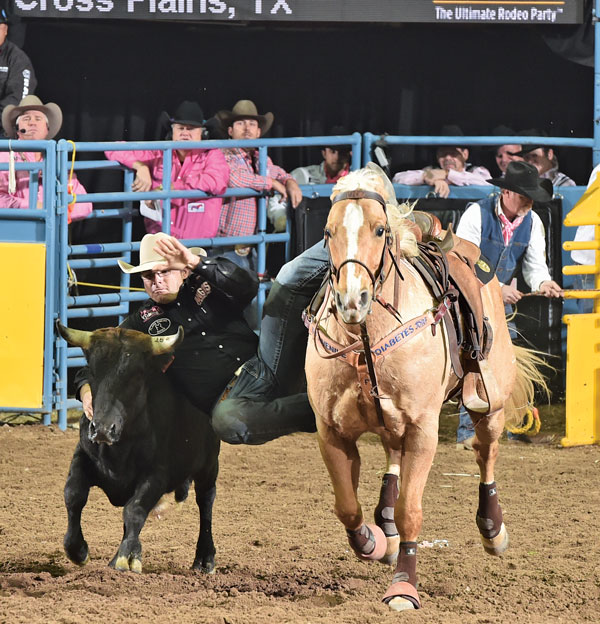
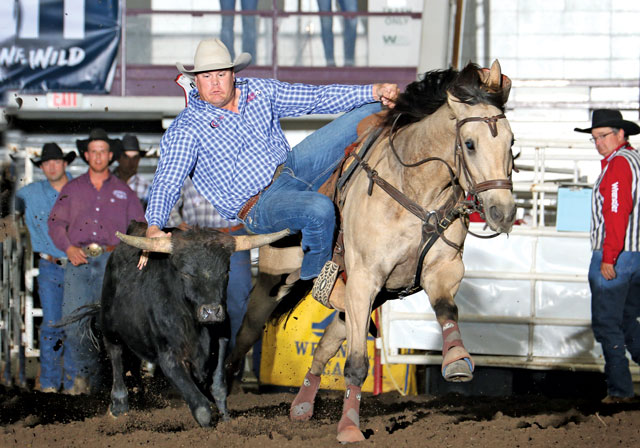
    Steer wrestler Matt Reeves finished second in the world standings following the 2016 WNFR and hit the ground running by February, currently sitting #15 in the World Standings. He’s backed into the box at Texas rodeos including San Angelo, Belton, San Antonio, Los Fresnos, and The American. Of the myriad of rodeos the 38-year-old from Cross Plains, Texas, has competed in, Los Fresnos remains especially meaningful. “I went to that rodeo in 2006 with my friend Brent Arnold and my future father-in-law, Sam Koenig, and it changed my life,” Matt explains. “In 2005, I had been one out of the money thirty-eight times, and I wanted to win more. On the way home from Los Fresnos, we had a discussion on what I needed to do to win more, and the best advice I got was that I needed to ride a faster horse. I rode Brent’s horse Junior Brown through 2006, won the Texas Circuit in 2007, and made the WNFR. I never dreamed I’d rodeo for a living, but I’ve had a ball doing it.”
    Growing up in the Texas Panhandle, Matt and his sister junior rodeoed. Their dad roped and Matt followed suit, but switched to steer wrestling in high school. “There’s a lot more adrenaline rush for me in steer wrestling, and I was much better at it.” Matt high school rodeoed for Texas before competing in college for Texas A&M University and Oklahoma State University. He graduated with a bachelor’s degree in animal science, then coached the rodeo team at Clarendon College in Texas for a year. “Coaching wasn’t for me, so I rode horses for some people, and then I ran a water well shop that my sister owned.” Not long after that, Matt found his stride in the rodeo world and took home checks from numerous rodeos the winter of 2007. With his goal set of winning the Texas Circuit in 2007, which he achieved by April of that year, Matt knew it was time to take a chance and rodeo full time. “I loved the traveling, and I saw lots of rodeos I’d never seen before.” For Matt, another highlight of rodeoing is making his own horses, qualifying for the WNFR on three that he’s trained. He qualified for the most recent WNFR on Nacho, but sadly, the horse had to be put down in the fall after an accident in the pasture. Matt rode Ote, owned by Bray Armes, at the finals, and his own up-and-coming steer wrestling horse, Roy, is Ote’s son. “I hauled Roy last year and rode him at a lot of circuit rodeos; he’s a cool horse.” Matt uses the slower winter months to start his younger horses in the box, but adds, “You can’t make them until you haul them. Once you get your horses to where you can practice on them, you need to rodeo on them. I practice a few days a week, and most of the time it’s for the horses, but if I don’t feel good, then practice is for me.”
    Matt recently joined the team at Short Go Xtreme, whose products, like protein shakes and juices, promote energy, strength, and weight loss. “Having the energy I need and feeling my best were the biggest factors for me. Being diabetic, I had to do a few different things they suggested, but my blood sugar has been more stable and I have good energy,” he says. Matt, who learned he had type 1 diabetes as a teenager, also uses his success in the arena to bring awareness to the disease and the Juvenile Diabetes Research Foundation (JDRF). During the WNFR, his tack included a Flavio Ribeiro breastcollar tooled with the JDRF name and signed by all of the steer wrestlers. It sold at auction for $1,000, and the proceeds went to Bacon Bash Texas, which raises funds for children with type 1 diabetes
    When he’s not traveling, Matt enjoys hunting in the Panhandle and managing his small but ever-growing cow herd. “My in-laws run a lot of cattle, and I’ll help them out when I’m home. I also enjoy riding my younger horses, but we’re gone so much that it’s nice to just be home and see my son, Carson, and my wife, Savanah. She ran barrels for quite a while and won Calgary in 2010, so she’s rodeoed and had a lot of success.”
    Matt’s next destinations on the rodeo trail include stock show rodeos around Texas, and Kissimmee, Florida, for the RNCFR after winning the Texas Circuit for the fourth time. “In April, I’ll be heading to the Champions Challenges, and by the end of June, I’ll be on the road for good,” he finishes. “My goal is to get Roy to the WNFR, and I’d like to finish first there sometime. When you get to this level, that might as well be your goal!”