Rodeo Life

Category: Archive

  • On The Trail with Shelley Morgan

    On The Trail with Shelley Morgan

    “When I look back, it was God’s perfect timing on every aspect of my life,” said Shelley Morgan, the 2022 AMERICAN champion barrel racer. Winning $100,000 in Arlington, Texas, on March 6, was the most money she has won at a single event. She plans to take the money and “tithe 10% to the church and put the rest in my fuel tank.” The 49-year-old from Canton, Texas, has never craved the spotlight, but the stage she was on in Arlington was “pretty cool.” Canton is located an hour southeast of Dallas with a population of 3,805. Shelley grew up there and that is where she and Rex raised their two sons. Before competing in barrel racing full-time she taught school and coached basketball for six years.

    After winning the 2008 barrel racing title in the United Pro Rodeo Association, Shelley and Rex made the decision to buy her pro card. “I had a great horse, Short Go, and we thought we could have a run at the NFR.” Short Go and Shelley made that goal in 2009. “The first year was a huge learning curve,” she admits. “We were kind of dumb – we entered a lot, mapping out where we went according to the rodeos and their location. Short Go got off his feed and I learned about ulcers. We got all that fixed and then in 09 we were going for it all. The boys (Zach and Tanner) went everywhere with us.” Shelley describes the adventure as amazing. “To be able to do what you love and do and have your family there; what more could you ask for. I stole my husband from his job and we probably didn’t make any money, but it was great.” Rex had built his own company, Eagle Security, from the ground up and thanks to reliable help, he was able to go with Shelley and the boys.

    Shelley was 14th coming into the NFR in 2009, and finished the year 10th with $103,960. She placed in four out of ten rounds. In February of 2010, her run for another spot at the NFR came to a screeching halt. “I was at San Angelo; Lisa Lockhart and I had traveled back there from Tucson,” she explained. They turned their horses out in paddocks next to the arena and went to grab some lunch. While they were gone, Short Go kicked through the wooden panels and brought them down on top of him, breaking his back legs in half. “We sat there with him until the vet got there and put him down. I called my mom and dad (Bobby and Barbara Bridwell) who live in Canton. He loaded up his stock trailer and drove six hours to get him.” Short Go is buried outside the family’s arena.

    Without another horse, Shelley went home to start over again. “The boys had gotten to the age when they wanted to stay home and get involved in sports, so the timing was perfect,” she said. “I went to all their games and started looking for, buying, and training horses.” She competed locally and eventually found the next horse, Radar, to take down the road. “We don’t have the money to go buy big named horses,” she said. Shelley has ridden her whole life and started competing in high school, training all the horses she competed on. “We buy prospects and I train them.” The family has 220 acres including a 55-acre hay meadow. Together with her parents, they run 75 head of cattle, and Shelley has around 10 horses on the place.

    Her dad, along with other people they know, help find horses for Shelley to work with. When she found Radar, she admits she didn’t like him much. “That horse took up barrels like you wouldn’t believe and ran fast as lightning.” Shelley missed the NFR the first year aboard Radar by less than $1,000 – his feet got sore, and the duo had a hard time finishing the year strong. After that, Radar developed some bad habits, and it was back to searching once again for the perfect horse.

    Kiss is the mount that took Shelley to the pay window at The AMERICAN, ponied into the arena by her former mount, Radar, who has turned into a rock-solid pony horse. “You can drop his reins and do something with Kiss – he doesn’t mind her wallering all over him. Kiss likes him – and that’s important – Kiss doesn’t like just everybody.” Kiss came to the Morgan’s via a connection from her brother-in-law. “He contacted me to train two three-year-old’s; both by the same sire, but different dams. When they led Kiss out of the barn and up the driveway, he said, ‘this is going to be the next world champion.’ She was this tall lanky filly with not a big hip at all. I would not have bought her – she was just sent home with me. I got on her and I thought she was going to dump me in the dirt. A Brazilian had started her, but she hadn’t been worked with in almost six months. If I had walked up to a barn, I would not have picked Kiss out.”

    Within two weeks, Shelley changed her mind. “I knew she was the most like Short Go I’d ridden yet.” Their personalities were complete opposite, though. “Short Go was quiet and laid back; Kiss is high strung, moody, and doesn’t like crowds. I love her to death, but she is night and day different. They both trained themselves; natural from start to finish.”
    The timing is perfect for Shelley and Rex to hit the road again. The boys are grown and pursuing their own lives. “Zach (25) is working with the family company – he’s amazing and allows Rex to be gone and stay gone. He’s building a house – God knew all along what needed to happen with Eagle Security,” said Shelley. Tanner (21) is working while pursuing an education in the IT field. They both help take care of the place while Shelley and Rex are on the road. Rex and Shelley are high school sweethearts, meeting when they were juniors in high school. “He was a city boy,” admits Shelley. “His family came to the country, bought a calf roping horse and a few cows and Rex tried calf roping and team roping. I was a cheer leader, and he was a football player.” They dated for four years and got married in 1992. Rex went to college but didn’t go to class.

    “I had a job, but I didn’t like school,” he said. “I’m smart, but I didn’t try. I worked for an alarm company for 6 years and decided to open my own company. I took a pay cut for the first few years until I got it up and running.” Rex could have pursued team roping, but he devoted his time to Shelley, his family, and business. “My job on the road is to drive – I drive 99.9% of the time,” said Rex. “I do all her entering and help her on the road. I don’t do a whole lot at home with the horses, but I can fix a shoe and I can map out where we’re going. “When she wins, I win; when she loses, I keep my mouth shut.” Rex also helps keep Kiss calm when she’s being a dragon. “She likes me to rub her between the ears. Sometimes I’ll lead her away from Shelley when she gets too wound up – Kiss that is, not Shelley.”

    The couple will celebrate 30 years of marriage and while on the road they spend 24/7 together. The secret to their long happy marriage is simple.
    “She does what I tell her to do.”
    “He knows I’m always right.”

    Career Highlights
    • 2021 – Entered the Wrangler NFR ranked third with $94,229 and finished the year ranked 4th with $202,202 after winning $107,973 at NFR. Finished seventh in the average in a total time of 147.19 and placed in five out of 10 rounds
    • 2020 – Won $63,308 at the Wrangler NFR after placing in five rounds. Finished the year ranked 9th with $116,383.
    • 2019 – Finished the year ranked 29th in the world with $50,283. Won California Salinas, Longview (TX) PRCA Rodeo, the Rose City Roundup (Tyler, TX), the Great Plains Stampede Rodeo (Altus, OK) and Apache (OK) Stampede. Finished second at Oakley City (UT) Independence Day Rodeo and at the Rodeo of the Ozarks (Springdale, AR)
    • 2018 – Finished with $11,224
    • 2017 – Finished with $1,438
    • 2016 – Finished with $6,513
    • 2015 – Finished with $29,106
    • 2014 – Finished 17th in the world with $69,447
    • 2013 – Finished the year ranked 95th with $10,269
    • 2012 – Finished the year ranked 35th with $30,537
    • 2011- Finished the year ranked 48th with $24,433
    • 2010 – Finished the year ranked 34th in the world with $25,937
    • 2008 – United Professional Rodeo Association Barrel Racing Champion; 2008 Cowboys Professional Rodeo Association Finals – average champion and year-end reserve champion.

    Sponsors:
    5-Star Equine Products – Best pads ever created, create great support for my horses under their saddles, they are never back sore from saddle pressure and pads’ effectiveness as well as appearance hold up like new after years of hard day to day use. So many options to choose from to fit everyone’s style and needs.
    Eagle Security Systems – amazing clear cameras (even at night) on all my horses so I never miss a moment with my special equine partners as well as can keep an eye on the ones at home when I’m gone.
    Rock & Roll Denim/Panhandle Western Wear – keep me looking sharp in and out of the arena. Most comfortable jeans I have to ride in.
    Bluebonnet Feeds and Stride Animal Health – provides quality feed and supplements that I have been running Kiss on since the beginning of her career. Always one phone call away.
    Shiloh Saddlery – the best saddle I have ever sat in since I have started riding. I didn’t know I was missing out so much until I got my Shiloh.
    The Muffler and Hitch Shop in Canton – squeezes me in and helps me with all the accessories my truck needs to haul up and down the road, the gooseneck ball, bed liner, bumper replacement and best of all, big nice extra fuel tank….. troubleshoots any problems I have with my trailer .
    Western Dove – amazing tack set, my mom always says Kiss looks like she is wearing a sparkly crown!
    Resistol – giving us some of the most amazing hats at the NFR and American.
    There are so many more others who have been so key in helping my team succeed down the road, thank each of you so much, I appreciate each and every single one of them.

  • On the Trail with Briar Teague

    On the Trail with Briar Teague

    Briar Teague, from Rattan, Okla., makes his living with a rope. He is headed back to the Lazy E to defend his 2021 Cinch Jr. Ironman Championship. The 20-year-old is approaching the upcoming event as he approaches any event. “I’ve always had a natural way of not getting nervous. I don’t know if it’s from roping my whole life, but I know with each run I’ve just got to catch them – I do what I can with what I draw.”

    Briar has been on a horse since he was born. His dad, Philip, started roping when he was 27. His four sons, Briar, Clancy (18), Cutter (16), and Tryan (13), spent their childhood riding horses, roping, and raising cattle, including show cattle during their time in FFA. The family runs around 450 pairs on a few thousand acres outside of the small town of Ratton. There is one stoplight in the entire county. He graduated with a class of 20. Briar won his first buckle at the age of 3, winning the dummy roping at a USTRC roping his dad was competing at. He started competing in a youth rodeo, the OYRA, when he was 8 and a year later was competing at the USTRC ropings with his dad. He started with team roping (both ends) and breakaway roping, moving into calf roping, saddle bronc riding, and steer wrestling during his time with the Oklahoma Junior High and High School Rodeo Associations. He rode saddle broncs all four years of high school, making the National High School Finals (2017-2019) in that event as well as calf roping his senior year and team roping his sophomore, junior, and senior year. Riding saddle bronc riding started with encouragement from Wade Sundell, 8x WNFR qualifier in the saddle bronc riding. and a good friend. He didn’t pursue riding broncs after high school. “It helped me ride a bucking horse so that was good.”

    He started bulldogging his junior year, competing his last year in high school. Briar went to Tyler Pearson’s school and had never jumped a steer before. They did all the dummy work, and that afternoon, they jumped two steers and he threw both clean. They had a two head jackpot that he won as well. At the beginning, Briar used one horse, his dad’s heel horse, Casino, for all events. That horse gave his all to all the boys. As Briar got older, the family was able to buy other horses and today there are 30 horses on the place with specific jobs in the arena. Hard work and dedication paid off for Briar. He won the All Around title for the Oklahoma High School Rodeo Association in 2019 and 2020. Along with rodeo, Briar found success in FFA, showing cattle and pigs. He earned the State Farmers degree while in FFA. He played baseball as well as basketball.

    “We did this as a family,” said his mother, Misty. All six of them would into a living quarter trailer and spend weekends on the rodeo road. Having four boys kept Misty on her toes. “It’s probably better than raising four girls,” laughed Misty, a physical therapist who went from fulltime to part time so she could take care of four boys. “They are energetic and full of life. It took all of us – it was fun times and lots of work but well worth it.”

    “I’ve always tried to teach the boys that if you want something, you’ve got to work for it,” said Philip. “You can’t be afraid to reach your goals – you can’t sit back and play it safe all the time.” All four boys rope aggressively. “You don’t get anywhere running them three quarters of the way down the arena – that goes for roping as well as life – you’ve got to take your shots. I raised those boys to be confident – don’t let anyone tell you can’t do it and keep pushing forward.”


    Briar is a freshman at Western Oklahoma State College in Altus, Okla. He competes in Central Plains region where he is sitting in the top five in all the events, with the goal to make it to the college finals. After college, he plans to rodeo for a while and then come home and work for his dad. Most of his classes are online, and he spends several months in Arizona in the winter, roping every day. “This is my main source of income right now,” said the #7+header an #8 heeler. “I trade a few horses now and then, but that’s it.” He works his classes into his ropings. “If I miss a roping for class, it’s not a big deal there’s another one the next day.” He will be in Oklahoma the middle of February for his first Spring college rodeo and begin getting ready for the Junior Ironman March 10-12 at the Lazy E Arena in Guthrie, Okla.

    Preparation takes on many facets including heading to Tyler Pearson’s (5x NFR qualifier, 2017 World Champion steer wrestler) to find a horse to take to the event, and practice. Horses for calf roping and team roping will come from Briar’s herd. “I train a few of the ones I own – and ride a few colts. We have 8-10 colts at the house. We’ve raised a few and bought a few from online sales,” he explains about his horsepower. “I look for what fits me – size – bigger, I want something I can do both ends on. I’m not real good at breaking them, so I want something I can rope on.”

    “There’s a lot of God given talent but there’s a lot of hard work that goes into this,” admits Briar. “Plus the tremendous help I’ve gotten from so many different people. I hope my brothers will be able to look up to me and try to do the things I do just as good or even better than me.”

    “I work harder than most people and I’ve had a very supportive family to give me the resources to do what I love. I do it every day – you’ve got to get good at it eventually or you’d give up.”

  • Love Conquers All

    Love Conquers All

    story by Shelby Vezain


    Love-the intense feeling or deep affection for someone or something. Growing up, I remember saying “I love you” to all my friends and family. Now a days, we throw it around like confetti, which is a great, but do we really know what love is? I can finally say after going through a few different situations in life, I think I have a pretty good idea what it means.
    1 John 4:19 “We love because He first loved us.” I love how powerful this verse is; to me it is saying that we only get to love one another because God first loved us. He chooses to love us and to let us love one another. Not only does He let us, but He encourages us many times to love each other. John 15:12 “My command is this: love each other as I have loved you” Wait? I am supposed to love everyone around me like Jesus loved; even Billy who never waves at me and Susie who cuts me off in the grocery store? Yes! LOVE conquers all things!
    Some may disagree but I do think there are different stages of love throughout life. There is that first love stage when you want to be around that person or thing all the time. You find yourself staring and always thinking about it. When you get a new pickup or trailer, you look out the window and stare at it for the first two weeks, trying to convince yourself that it is really “yours”. Imagine if we loved God like that! Always staring at all His work on this earth and trying to convince ourselves that He really does love us unconditionally.
    When JR and I first got engaged, I used to love to travel around to the rodeos and cheer him on. I think it was called the “honeymoon phase” or something like that. It was an easy love. I got to dress up, go sit in the stands and video my new fiancé. I was quite good at this kind of love, but honestly who wouldn’t be. To love someone or something when everything is going your way is a bit more doable. When the bills are paid, the cows breed up good and the kids are getting good grades, everyone loves everyone. Well, for the most part. It is when life throws us a curve ball that we must dig down and find that love.
    September 22nd, 2018, a cool fall morning, picking up the house, listening to a podcast; I remember the day like it was yesterday. Such a normal day besides the fact that we had just found out that there was a new little love that was going to be joining our family in nine months. JR had flown out to some rodeos for this last weekend in the official rodeo season. He was sitting 14th in the world and just wanted to secure his spot to his 6th NFR. I find myself wondering why he went that last weekend. Maybe it was because I had told him I was pregnant, and he was trying to provide for his growing family or maybe he knew he had to win a few more dollars to secure his spot. I do not know, and I never will but one thing I do know is since that September night, I have seen my love sink and grow all in one season of life.
    In 1912, the beloved ship, the Titanic hit an iceberg and split into three pieces. It took only a short five minutes for it to sink to the bottom of the ocean. On September 22nd, when the doctor told me my husband had broken his back and had no feeling from the waist down, my heart sank, just like the Titanic. Yes, my heart sank that day, but the beauty of it all was my love for JR grew.
    Walking into that hospital room and seeing my husband laying there hiding his tears, hit a different heart string. It was such a moment in time when all we had was each other, the foundation of faith we had built in God, and the love we had for each other. Nothing else. Nothing else mattered in that moment. It was the very first time in my twenty-four years that I felt like I had no control over anything.
    During a rodeo when we keep breaking the barrier or missing our horses out, what do we do? We go back to the basics. The basics of the event that we truly know with our whole heart. We need a little refresher on why we started roping or riding in the first place. That little light goes off, “yup! this is fun. Now I remember why I started doing this event.” When tragic hit, I found myself going back to the basics of love. The vows JR & I wrote to one another- “…through sickness and in health, through the good times and the-not-so-good times.” We had only been married for four years but I took those words very seriously. I wanted my love to shine through to JR through this “not-so-good-time”. I wanted everything I did to be done in love. 1 Corinthians 16:14 “Everything should be done in love”
    Love isn’t about how many likes we get on our Instagram pictures. Love isn’t who can buy the most expensive gifts for one another. Love isn’t about who can physically do more for one another. Love is a raw and real feeling that when you aren’t at your best your partner is still right next to you willing to lend a helping hand however he or she can. Truly loving someone is loving them through the highest of highs; hugging them and celebrating with them when they succeed. Loving someone through the lowest of lows; crying with them and trying to keep their head up on the toughest of days. Loving is not always easy, but at the end of the day it is always worth it. So, my question for all of you is do you truly know what love is? Life can take us through some amazing terrain and on the other hand, some tough valleys and I feel that it is our job to find the growth in each one.
    “Three things will last forever-faith, hope, and love-and the greatest of these is love” 1 Corinthians 13:13

  • Back When They Bucked with Lavonna “Shorty” Koger ( Shorty’s Caboy Hattery )

    Back When They Bucked with Lavonna “Shorty” Koger ( Shorty’s Caboy Hattery )

    “Something about me never wanted to work for somebody else,” says Lavonna “Shorty” Koger. The owner of world-famous Shorty’s Caboy Hattery in Oklahoma City, she forged the path of becoming one of the best-loved Western hatters in the country—one of few women to do so.

    Before Shorty’s skilled hands knew how to sew sweatbands, shape crowns, and sand brims, they held the reins to her barrel horse and even slipped into a bull rope. She was born in 1945 in an area of Osage County, Oklahoma, called Gray Horse, roughly 20 miles outside of Fairfax, Oklahoma. The ranches and blue-stemmed grass permanently shaped her love of Western lifestyle. “There weren’t even fences out there. The cattle just roamed and it was wonderful,” Shorty recalls. “I came along seven years after my siblings and I was the shortest of the bunch, so they pinned Shorty on me when I was a baby. On Saturdays, our biggest treat was going to Fairfax for Mom and Dad to buy groceries. I saw Ben Johnson and Randolph Scott (Western film actors) dressed in cowboy shirts, wild rags, and their britches tucked into their boots, and I thought, ‘I want to look like them someday.’”

    In 1956, her parents, Ivan and Vilora Koger, moved Shorty to Moore, Oklahoma, where Ivan transferred for his job with an oil company. “It was like moving me to New York City. We did rent a place in the country, but it was still a big town to me.” Shorty had a horse, however, and traveled with friends to compete in all-girl rodeos through the 1960s and into the early ‘70s. “I ran barrels and rode a few bulls, and I steer undecorated. In 1968, I had a bad accident helping someone build an arena and about cut my left arm off, so that ended my bull riding career for sure.” Shorty continued to raise horses and run barrels, dreaming of making the NFR. She had the horse to take her that far, Baldy, but when he cut his tendon, that dream ended. “I couldn’t get with another horse, so I gave it up in the ‘80s.”

    While she was rodeoing, Shorty also worked for Cattleman’s Western Company in the Stockyards. “I had a camper on my truck to go to barrel racings. Texans at the time couldn’t get Coors beer and Wranglers, so I sold those and that’s how I made my entry fees. I’d also load up my camper and sell halters to ranchers.” Shorty eventually went on the road as the only woman salesman in the Oklahoma area for a time, selling for belt, boot, hat, and clothing companies. It wasn’t until her brother sent several of their dad’s hats to be renovated and they came back ruined that Shorty found the niche where she’d stick. “My brother said, “As much as you love hats, you should go into a hat cleaning business.’ A light bulb went off for me and I started investigating that business, and learned the people wouldn’t tell you anything that was helpful at all.”

    However, Shorty accompanied a friend who was picking up a custom hat in Oklahoma City, and met another Shorty, this one a gentleman named Shorty Barnett, the owner of Shorty’s Hattery. “God works in mysterious ways if you just listen,” she says. Looking around his store and visiting about hats renewed Shorty’s determination to get into the business. After several more fruitless phone calls to other hat renovation businesses, she returned to Shorty’s Hattery. She learned that Barnett wanted to sell his business, but already had a buyer. “Of course, my heart just fell,” she recalls. “He said they were coming to pay Monday at 10, and I asked if they didn’t come if I could have it. I was there at 9:30. I paced his building and at one minute after 10, I handed him a check.”

    It was 1990 and Shorty owned a business she knew hardly anything about. Barnett agreed to teach her, but they hit a snag since Shorty was left-handed. “But his mother was left-handed, and she showed me how to renovate hats. There’s sewing involved and all sorts of things which I flunked in school, but I got the hang of it.” Shorty worked out of a small building near the original store so the customers would carry over, then moved to the Historic Stockyards in 1991 to be closer to her cowboy clientele. She rented out part of the 1,900 square foot building to a boot maker and worked for several years renovating hats. Yet the itch to build one of her own kept growing, and she bought a blocking machine, which starts the entire hat building process. “I thought, ‘If I can renovate a hat, surely I can build one.’ I again called Shorty’s mom and dad, and they told me over the phone how to build one. There were a lot I had to throw in the trash because they were so pathetic looking, but I just kept trying and trying to get it right. It took about 10–15 years to get it right, but we’re about the best there is now.”

    Shorty ventured out to cattle shows and 4-H and FFA shows during the day to sell several hats, then went back to her store and worked at night building more. She brought on a part-time employee, and today has two salesmen and eight people helping her build hats in the store. By 2014, Shorty had outgrown her store and moved to a 5,000 square foot building still in the Historic Stockyards, which they’ve nearly outgrown as well. “I couldn’t have done it without my brother and sisters. They helped me with the money, and I couldn’t have done it without their guidance.”
    In the early 2000s, both Shorty and her sister Shirley were diagnosed with breast cancer, and sadly, Shirley passed away in 2004. “Right after I buried my sister, I had to go in and have a double mastectomy, but by doing that, I didn’t have to have chemo. Shirley didn’t have insurance, so I decided I wanted to do something to help people with cancer who didn’t have insurance, not knowing it costs hundreds of thousands of dollars. I made a pink hat and cute cancer hat pins.” When Tracie Anderson, an exhibitor from the AQHA World Show, came in to the Hattery to pick up a custom hat in 2006, she saw Shorty’s memorial fund for Shirley. It so happened that Tracie was the Clinical Operations Director for the OU Cancer Institute at the time. Together with Cheryl (Magoteaux) Cody, the three women formed Rein In Cancer. The organization first funded the Shirley Bowman Nutrition Center at the Charles and Peggy Stephenson Cancer Center in Oklahoma City. Today, Rein In Cancer, run entirely by volunteers, has raised over one million dollars, and also helps pay the medical bills of cancer patients who are involved in the horse industry. “The horse people get all the credit,” says Shorty. “You don’t know what people are like until you try to do a fundraiser and see everyone digging in their pockets to give.”

    Much of Shorty’s work took off when she started selling hats at horse shows and rodeos. She set up her first booth at the AQHA World Show in 1993, and today Shorty’s Caboy Hattery is the official hat of the AQHA, NRHA, NCEA, and NRCHA. Shorty also sponsors the NLBRA, the IFR, Chris Neal’s Rising Stars event and a BBR race. “I love all the rodeos, and I decided I wanted to help them, and I appreciate them doing business with me. I’m also a sponsor of the IFYR and The American now,” she said. “I love my business and all my employees; some of them have been with me 25 years now.”

    At 76, Shorty is in her store daily unless she and her partner, Bobbie Gough, are traveling to one of the 200 shows all over the country they take their booth to each year. “We’re blessed with doing so well at these shows, but it’s going to take a while to build the inventory back up,” says Shorty, who is dealing with delays getting her straw and felt hat materials. It takes four days to build a hat from start to finish, involving nearly 20 steps. The Hattery uses several machines—made in the 1920s or earlier—for blocking, ironing, and some of the sewing, but all other steps are done by hand. From crisp reiner and cutting shapes that emanate professionalism in the show arena, to custom hats in a myriad of colors, hatbands, stitching, and even tooling, each one is a work of art that Shorty loves. “They’re all my favorite. Everyone that wears my hats, I consider them a star. It’s such great pleasure when they put it on and it fits great.”

    “I hope to go on doing it until I’m gone—I have no intention of retiring.”
    Shorty’s exceptional craftsmanship and her work with Rein In Cancer was recognized by the National Cowgirl Hall of Fame and she was inducted in 2021. “I’m just so grateful that happened, and honored and blessed beyond means. This business has been a godsend. I give God all the glory because He’s the one who’s gotten me there today, and I’m very grateful.”

  • 5 Star Featured Athlete: Josie Conner

    5 Star Featured Athlete: Josie Conner

    One of the best parts of life for Josie Conner is spending time with her mom and dad, Jade and Wendi Conner.
    The eighteen-year-old cowgirl, a breakaway roper, is homeschooled so she can travel to rodeos and jackpots.
    She uses 5 Star Equine products and loves them. She loves the saddle pads, how they fit, and how the pressure is distributed evenly across her horses’ backs. When she takes them off, there are no dry spots, which tells her they fit evenly. “The hairs are never wrinkled when I take the pad off, which means the saddle hasn’t rolled; it’s stayed in one place.”
    She also uses 5 Star’s Patriot Sports support boot in part because they have the perfect amount of thickness. “They give great support while also being lightweight,” Josie said. “They are customizable to the horse’s legs, and I can get them as tight or as loose as I want. They last longer than any other boot I’ve used.”

    The third 5 Star product Josie uses is the 5 Star mohair roper cinches. “I love them because they are 100 percent mohair, soft and comfortable for the horses,” she said. “What I really like is they don’t have any leather where I would strap my tie-down strap. The girts with leather where the tie-down strap pulls on them tend to roll up and pinch the horse. These don’t pinch or irritate in any way.”
    A homeschool student, she will graduate this May. Homeschooling works well for her. “I’m really on top of my schooling. I try to get as much done as I can at home so when I’m on the road I don’t have to worry about it, and it’s done. School is my first priority.”

    Last year was one of her best years in rodeo. She won the Jr NFR, the Jr Patriot, and the World Championship Junior Rodeo in Guthrie. This year, she’s secured her spot in The American with an exemption in the sixteen-man round.
    The horses carrying her to the winner’s circle are a sorrel blaze face named Tonka, and a sorrel chestnut named Bingo. Tonka was purchased by the Conners in 2019.

    He’s very good at his job, Josie said. “He leaves the corner and reads my hand well in the breakaway. He lets me float; if I go early, I can pull without him stopping.” Tonka has good timing and a lot of try as well. “He gives me his heart every time.”

    Her backup horse is Bingo, who was purchased by the family last year. Bingo likes to run, and if it’s a slow calf may not read the calf as well. “On faster calves, I like to run Bingo,” she said. Both horses are equally talented. “When I don’t want to put the runs on Tonka, I ride Bingo.”

    This fall, Josie will attend McNeese State University, working towards a business or marketing degree. She hasn’t decided if she will rodeo collegiately yet. “There are so many options: pro rodeos, amateurs, ropings and collegiate. I’ll look at my schedule and see what fits in best.”

    Her parents travel with her, and that’s the best part of life. “We do everything together. It’s really cool.”
    The family lives near Iowa, Louisiana.

  • Back When They Bucked with CR Hall

    Back When They Bucked with CR Hall

    C.R. Hall didn’t let anything get in the way of his dream of being a rodeo cowboy.
    Including the color of his skin.
    The black bareback rider and steer wrestler was raised in New York City and never got on a horse till his high school years.

    Then, through hard work and determination, he became a rodeo contestant, competing all over the East Coast and throughout the nation.
    He was born in 1943 in Vicksburg, Miss., the fifth child of William and Penola Hall.
    But his dad died before he was born, so his mom packed up her five kids and headed to New York City, where her sister was living.
    His mom never told her kids how her first husband, William, passed. “It was a mystery,” he said. “Mother refused to tell us. When we’d ask what happened to dad, she said, ‘you don’t want to know.’”
    C.R. assumes that his mother kept their dad’s cause of death a secret from her kids so they wouldn’t form prejudices. “The way I look at it, she didn’t want (the reason for his death) to transform us, to give us a reason to fight.”
    The family lived in Spanish Harlem, on 99th Street and 2nd Avenue in New York City, with Hispanics, blacks, and a few whites. The area had plenty of gangs: the Viceroys, the Dragons, the Untouchables, the Red Wings, all territorial, and if a person traveled through a gang’s territory, they had to tell why they were there and who they were going to see.
    C.R.’s mom was tough. She worked twelve hours a day, cleaning office buildings from 6 pm to 6 am, then seeing her kids off to school.
    The kids knew, when the streetlamps came on, they needed to be in the house or the neighborhood, and if they weren’t, she’d find out. “We listened to her, because we didn’t want to witness the strap,” he said.
    She laid down the law with her kids.
    “I don’t have to worry about my family,” she would tell people. “Because if the police station ever calls me and says ‘we have your son or daughter in the precinct, I’ll say, ‘keep them. Because I don’t raise convicts or drug addicts.’ That struck fear into us,” C.R. said.
    “She beat our butts a lot, but she stuck to her rules, and her rules were strict.”
    It was a chance encounter with horses after high school graduation in 1962 that started C.R. down the rodeo path.
    He and friends went to the Bear Mountain State Park along the Hudson River, the first time C.R had been out of the city. They decided to go horseback riding, and when C.R. got on the horse, the guide asked him how long he’d been riding. When C.R. replied that it was his first time, the guide said, ‘no, you’ve been riding longer than that. You’re a natural.’ That gave C.R. confidence and piqued his interest.
    When he got back home, he found the Park Riding Academy in the Bronx, where he went to ride every Sunday for several hours. His skills improved, and after a year, the academy owner suggested that C.R. could save money by buying his own horse. So he did, and went to the academy two or three times a week to ride, “as much as I could, and I got better and better.”
    There were steers at the barn, and professional cowboys Gene Lorenzo and Jack Meli were there. C.R. would watch them steer wrestle. One day, Gene asked if he’d like to join them. C.R.’s quick answer was no.
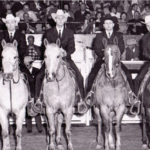
    But Gene coaxed him onto his steer wrestling horse and told him to point the horse at the box and nod his head.
    The steer came out, Gene hazed, and C.R. froze.
    “I wasn’t getting down (onto the steer) so Gene reaches over and pulls me down,” C.R. said, Gene talked him through the technique and C.R. turfed the steer.
    After that, he started going to the Cowtown (New Jersey) Rodeo every Saturday night with them, acting as their groom, warming up and tacking up their horses, and learning a lot through observation.
    After a year of that, Gene encouraged him to get his PRCA permit and suggested, because of C.R.’s small size, that the roughstock events would be his best choice.
    He tried bull riding and saddle bronc riding, but neither seemed to fit. So he tried bareback riding, and “that felt better than the other two,” he said.
    But it still took awhile to get the hang of bareback riding.
    For the first two years at Cowtown, “I got creamed every time I got on. People would come up to the fence when I got on because I’d make spectacular falls.”
    But another cowboy admired his try and perseverance. Teddy Fina, a bareback rider, showed him techniques and gave him advice. Teddy’s own grit rubbed off on C.R. “The determination and drive that I witnessed in him spilled over to me,” he remembered.
    He went to Larry Mahan’s riding schools, which helped tremendously, and he still remembers a compliment Larry gave him. “Charlie, you got a lot of try,” he said.
    Early in his career, he went by the name “Charlie Reno.” Jesse was his first name, but he didn’t like the references to Jesse James. Charlie Reno was the nickname he got at the barn where he kept his first horse, named Reno.
    He got his PRCA permit in 1966, and earned his card a year later.
    In 1968, he competed in Ft. Worth, the Cow Palace in Sacramento, Houston, and Madison Square Garden before breaking his neck and sitting out for two years.
    He attended two steer wrestling schools instructed by Butch Myers and became good friends with the family.
    C.R. married his first wife, Barbara, a barrel racer, in 1965. They divorced, and in 1972, he married Marie.
    In 1972, he broke his wrist, and with his marriage to Marie and the start of his family, he quit rodeo competition.
    He and Marie had their first son, Alexander, in 1975, and their second son, Jeremiah (Jerry), in 1981.
    “I had a choice,” he said. “I needed a paycheck every week. I made the choice to stay home and work and take care of my family.”
    But when the Red Pony Ranch, a riding academy in Lakewood, New Jersey, hosted an American Rodeo Association (now the American Pro Rodeo Association) rodeo in 1978, C.R. was there, and he got his APRA card.
    Red Pony, five miles from his house, hosted a series of APRA rodeos, so C.R. competed there. The first year, in 1978, he was leading the bareback riding with three rodeos to go when he broke his foot. Being out for the remainder of the season dropped him to runner-up.
    So the next year, he determined to get so far ahead that, if he got hurt, nobody could catch him. He did just that, finishing the 1979 season as bareback riding titlist, all-around champ, and third in the steer wrestling.
    In 1983, he retired a second time from competition and began producing rodeos as the Hall and Sons Championship Rodeo Co. He put on PRCA, APRA, and International Pro Rodeo events in Red Pony, and throughout New York and showdeos with timed events only.
    He became vice-president of the APRA in 1981, voted in, he believes, because he was always helping others.
    He also hosted rodeo schools and taught the bareback riding, with instructors Frank Hollis for the saddle bronc riding and Bruce Semeria for the bull riding. Pete Leibold served as pickup man and flank man, among other duties.
    All the while, he was working full time at the grocery store, being promoted up to the management level.
    Prejudice because of his skin color was rare, but it did happen.
    At first, his family discouraged him from rodeo, saying there were only white cowboys. “They said, I wouldn’t get a fair shot, the same fair opportunities afforded to the white cowboys,” he said.
    “Mom was afraid for my safety. She came from the deep, deep south. She knew how people could be.”
    He did witness prejudice against him because of his skin color, but incidences were few and far between. “The people who knew me as a cowboy and a competitor, they weren’t prejudiced against me.”
    He remembers competing in Durant, Okla. when a young white teenage boy followed him around. “I was the only black guy behind the chutes,” C.R. recalls, “and this kid was walking behind me, like what’s going on with this guy? He must be putting on the bareback rigging for somebody else. He can’t be doing this for himself.” The boy’s mouth fell wide open when C.R. got on the horse and readied to ride.
    At the same rodeo, he remembers the judge telling him, ‘I don’t know why you’re riding, because you’re not going to get (any points.)’ C.R. told him, “When I ride you won’t forget how I rode.” He remembers the ride, too. “The horse bucked and I rode the hell out of him, but I didn’t win any money on him. Then again, it was people who didn’t know me.”
    C.R.’s philosophy was to do what he loved doing, no matter what anybody else thought.
    “My dream was to be what I wanted to be. You can’t let people take your dream from you. Somebody can’t tell you you can’t do something. If you love it, you’ll do it no matter what and suffer the consequences.”
    He retired from the grocery business in 2004, then started his own transport business, delivering rooftop air conditioners to building sites, traveling throughout the tri-state area.
    In 2010, he closed his transport business, due to the high cost of diesel. But he went crazy sitting at home, so he answered an ad to be a New Jersey transit bus driver, and began driving bus. He drove for ten years before retiring in 2020.
    He and Marie have four grandchildren: grandsons Gavin and JJ and granddaughters Dakota and Jenah.
    His faith is strong, like his mama’s was. He knows who is in charge: God. “Don’t let man tell you where you’re going. (God) is in charge, he’s the one who knows, from day one, he knows how you came in and how you’ll go out. He’s your Creator, he created everything in your life, so listen to Him.
    “If you have an issue, put it in God’s hands. He’s the miracle worker. If anybody can solve it, it’s him. You have to lean on His understanding and His timing, not your timing.”
    Rodeo enriched his life, with good friends and life skills.
    “I made a lot of friends. The people that were just starting out, that nobody would help, I’d help. Those guys trusted me. I was sincere, I wasn’t afraid of competition.” His friends were true friends. “Those guys were the best. We traveled together, and they had my back, they really had my back.”
    Rodeo is a difficult sport, and because he learned it and became proficient in it, it benefited him throughout the rest of his life.
    “Rodeo made me better in everything else I’ve ever done, because rodeo was the hardest thing I’d done and I accomplished it. So everything else was easy.”

  • 5 Star Featured Athlete: Stevi Hillman

    5 Star Featured Athlete: Stevi Hillman

    STEVI HILLMAN IS THE NEWEST $1 MILLION COWGIRL ON THE RODEO TRAIL.

    The 5 Star Equine team member made the million-dollar mark at the 2021 National Finals Rodeo.
    On her sixth trip to the “big show,” she won two rounds (splitting the win in round nine) and placed three more times to finish as the number six cowgirl in the world standings. She jumped from eleventh place to sixth place, earning over $100,000 at the Finals.

    The “yellow dragon” carried Stevi through all ten rounds of this year’s NFR.
    Famous Lemon Drop, “Lemon Drop,” is a five-year-old palomino who showed up on Stevi’s radar in April.
    The mare was all-business and kept her space, but the two bonded quickly, and Stevi took her on the summer rodeo run.
    She knew the horse was successful at futurities and indoor arenas, but rodeos, with outside pens and varying conditions, was a question.

    But Lemon Drop shone. “She took to it extremely well,” she said.
    The horse has her own personality, Stevi said, describing her as a toddler with lots of energy. “She’s just like a little kid that never wears down. She’s spunky and a lot to warm up. Wild is a good word to describe her.”
    Not everyone can jump on Lemon Drop to ride her. “She’s a lot of horse. She’s little but she’s strong. You have to be very dialed in and sharp with your reactions and your timing, because she is aggressive and quick and fast and really strong. She’s a very, very confident five-year-old.”
    Stevi’s team includes other horses, in addition to Lemon Drop, who have excelled for her. The team started with Truck, a horse she began riding in 2014 and who is still in the rodeo trailer this year. It also includes Martini, Sharpie, Slick, Sherlock, Millie, Shiner, and several others. Each horse has played its part; some larger roles, some cameos. But they’re all important.
    “I take pride in the fact that these horses have all been part of my story,” Stevi said. “I treat them like family, and I’ve been blessed by all of them.”

    She has been a loyal 5 Star Equine customer since a friend gave her a saddle pad in 2012. “I’m all about my horses and their backs, and how they feel and how the saddle fits. Five Star has been a great part of my program and keeping my horses’ backs feeling good. And the pads last a really long time. That’s sold me on them.”
    The 5 Star Equine team provides their Wrangler NFR qualifiers with a custom-made saddle pad, made especially for each cowgirl. Stevi’s had her birth month flower on it, a marigold, her previous NFR back numbers, and yellow and gold crocodile print, “which looked really good on Lemon Drop.”

    She is no stranger to young horses and jokes that she does well with five-year-olds. She’s taken three different horses, all at five years of age, to the NFR: Lemon Drop this year, and Sharpie and Martini in past years.
    She has a zeal for training horses. “It’s my passion. I love taking a young horse to the next level. That’s probably why I get along so well with the five-year-olds. I understand them. Not everybody can run a five-year-old. You have to keep them together without scaring them.”
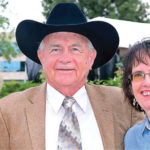
    Stevi and her husband, Ty, live on their place near Weatherford, Texas. They break their own horses and now own a stud with babies on the place. This year, she has four futurity horses and will rodeo a little and futurity a little more. “We’ll go to the big rodeos, but we’ll take some time to enjoy the closer futurities and the younger horses,” she said. “I have some great customers that have big hopes for their horses, and I’m super excited about that.”


  • On the Trail with Hailey Frederiksen

    On the Trail with Hailey Frederiksen

    Hailey Frederiksen, Miss Rodeo Colorado was crowned Miss Rodeo America 2022 on December 5th. The eight-day Miss Rodeo America Pageant was held at the South Point Hotel and Casino in Las Vegas, Nev. The pageant was last held in December of 2019 due to Covid. Like many of the 32 queens across the country, Hailey, from Wellington, Colorado, represented the Centennial State for two years. She is the sixth Miss Rodeo Colorado to win the coveted Miss Rodeo America title, last won by Tara (Graham) Rowe in 2001.

    Hailey grew up in the saddle; she ran barrels in gymkhanas and jackpots. Born and raised in Platteville, Colo., she was in 4H for 11 consecutive years showing market and breeding swine. “I was a pig gal,” laughed the 24-year-old. Through 4H, she learned responsibility, stewardship, and an appreciation for what farmers and ranchers do on a 24/7 basis. “A lot of our family friends and neighbors are farmers and it drove my platform to be an advocate for agriculture – which I did through my reign as Miss Rodeo Colorado.”

    Hailey started competing in dance in high school and had to make the tough choice between horses and dance. She picked dance and went through the ranks of competitive dance at the studio –which included a trip to Las Vegas to compete. “Even though dance is as far away from western as you can get, it taught me stage skills and confidence which is so important when competing in queen contests.” She switched her focus to Poms team. “I discovered I enjoyed that, so I transitioned into competing with my Poms team. We placed third in state my senior year.”
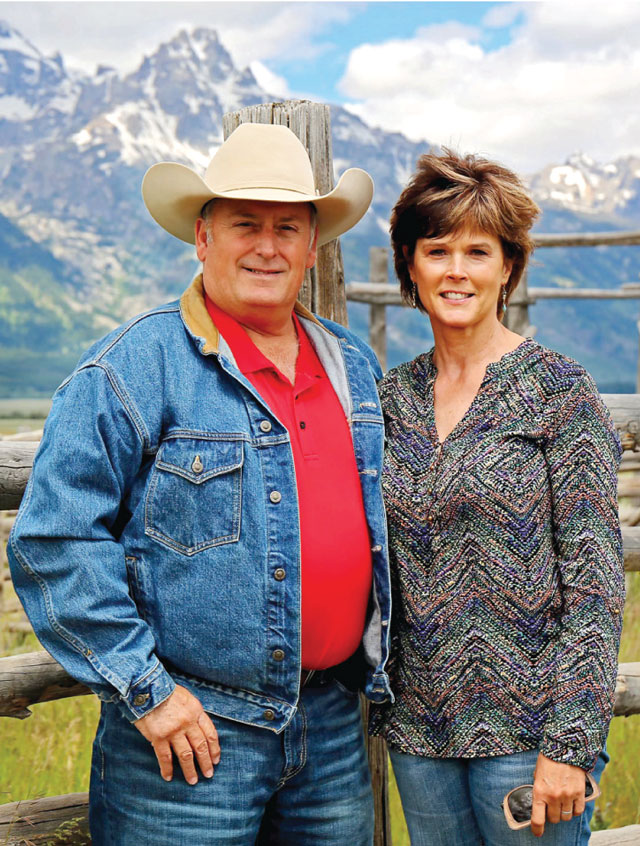
    Hailey’s first queen title was as had held one title previous as the 2009 Johnstown Saddle Club Princess. She spent the year traveling with her mom’s old barrel horse. “Puffy had a mind of her own, but she took very good care of me.” The pivotal moment in that reign happened at the Estes Park Rooftop Rodeo, where Hailey met the reigning Miss Rodeo America (Megan Ridley Hollinder) and the reigning Miss Rodeo Colorado (Audra Dobbs McNicolaus). “I wanted to be just like both of them and here we are.”

    She went to college at Colorado State University in Fort Collins, Colo., and realized how much she missed her roots. “Until you take a step back do you appreciate what you were able to grow up with,” she said. It was during her junior year in college (2018) she held her second queen title as Miss Rodeo Deer Trail. “That began my journey back into queening.” She rode a 4-year-old mare that her mom was working on making a barrel horse. “Honey was a rock star with flags, parades, and everything.”

    She tried out for the crown of Miss Rodeo Colorado twice (2018, 2019). “I knew I was going to be there,” she said. “Not winning fueled my passion to do better and win.” The critique from the judges was at the end of the day they didn’t know who Hailey was. “I worked hard the next year on being genuine, passionate and inquisitive … they must have seen the change, because they picked me the next year and again this year, as Miss Rodeo America.”

    During her two year reign as Miss Colorado, she spent the first year traveling to rodeos outside the state of Colorado. “When Covid first hit, we didn’t travel. My first rodeo back at it was Woodward, Okla., in June. Those small rodeo committees appreciated having us there.” She traveled with Miss Oklahoma, Miss Idaho, and Miss Kansas. “Putting ourselves out there helped us fulfill our obligation to represent rodeo and the western way of life.” She also created a Kids Corral, producing a video every Wednesday at 10 am. “I posted more than 40 videos of me reading kid’s books or interviewing rodeo personalities like Justin Rumford and Shali Lord. I interviewed my farrier, my vet and even did some kids crafts, I had a lot of fun with it and it kept me present as Miss Rodeo Colorado.” She plans to continue the Kids Corral as Miss Rodeo America.

    She is quick to attribute her win to her parents. “They have been there for me the whole time – I might be the one on center stage, but this title is as much theirs as mine.” Her parents instilled in her to work hard for whatever she wanted. “Everything I’ve put my mind to requires a bunch of work, When I was a dancer, I wasn’t flexible, so I had to work at it. I never had the best animals in 4H, but I knew if I worked hard and walked my pigs every day I’d get to where I wanted to be.”

    Megan and Trevin have been the biggest supporters of Hailey. “Dad works in oil and gas, and mom is a stay-at-home mom. She taught yoga and fitness ever since I was a baby, but her main job was being a mom.” They were both home quite a bit and helped Hailey with horses and whatever she needed. “I barrel raced growing up, but my dad put a rope in my hand and now I’m team roping with him. My dad taught me a good lesson when I’d get frustrated; there’s always going to be another steer in the pen.” He just finished the arena at their new place east of Wellington and now they can rope whenever they want, picking from any of the five horses that they own.

    Trevin has always believed in Hailey and told her before the competition. “Honey this crown does not define you – all those that love you know you don’t need to bring that crown home.” Trevin designed and built the two carts that carried all her very carefully picked out wardrobe for the competition.

    She spent many hours preparing for the Miss Rodeo America Pageant. “I am very OCD – and organized. I’d been packing for pageant for at least a month. I had all my outfits – 15 garment bags on one rack, and 17 pairs of Justin boots and 7 Greeley Hatworks hats on the other cart, a suitcase and a duffle bag. All in one trip. Appearance is one of the major categories of the pageant. “It tells the story of you – it took a year to figure out what I was going to wear. I worked with countless designers getting the clothes I needed for pageant. You only have 8 days to impress those judges.” The part of the pageant that she really enjoyed was the interviews. “We don’t get much one on one time with the judges. Those interviews were only 15 minutes.”

    Her first stop as Miss Rodeo America is the National Western Stock Show, where she will make appearances every day for 16 days. Then she’s off to Lake Charles, Louis. Her schedule is filling up. “She is worthy of whatever God has planned for her,” said her mother, Megan. “There’s no wrong or right – you pray it works out for the good – be healthy and happy is all we can wish for her.”

    “I can’t wait to see what lies ahead and the opportunities that will be available to me … I’m thrilled to see where life takes me next.”

  • On the Trail with Steer Wrestling 101

    On the Trail with Steer Wrestling 101

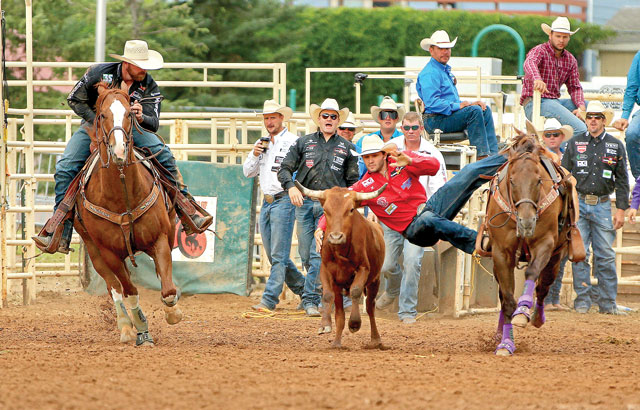
    Six of the 15 steer wrestlers at the 2021 National Finals Rodeo have two things in common. They’re all chasing the gold buckle, and each of them will be using the skills they learned in Tom Carney’s Steer Wrestling 101 program to try to win the world. Combined, these six cowboys are bringing 27 collective qualifications to the NFR and three world titles.

    “It’s huge, but I’d like to have more than half,” Tom said. “That’s a personal goal of mine. But, I’m just as happy to have a guy out there trying to get his first steer thrown down as I am about having six guys at the NFR. That’s where it all starts. I look at these guys and to see them get where they are is beautiful. I know where they came from and they were in my pen starting from scratch. How many am I training now that will be in that same position? I hope it’s all of them.”

    Jacob Talley, 30, finished the regular season No. 1 in the PRCA World Standings. He will be joined by Dakota Eldridge, 30, who finished third followed by Tyler Pearson, 36, in fourth. Tyler Waguespack, 30, ranked sixth for the regular season and Rowdy Parrott, 27, was 12th, followed by Tristan Martin, 25, in 14th.

    “Rowdy Parrott is the smallest guy at the NFR, but he’s one of the most powerful because his technique is so good,” Tom said. “On the other end of the spectrum, Jacob Talley is a workout guru and one of the most powerful guys out there, but we softened him up and don’t let him use his size. We made him smaller.”

    Tom grew up around rodeo and had legends such as John W. Jones Sr. guiding him and influencing his style. Watching how other cowboys steer wrestled and cherry picking the parts he liked is how he developed his own style, but that wasn’t his only source of inspiration. Tom was 10 years old when his 20-year-old brother died in a car accident.

    “He was my hero and so I said I’d be like him,” Tom said. “I wasn’t the athlete he was, but I stayed with it and gave it everything I had trying to be like him.” Tom enjoyed a bit of success as a steer wrestler, qualifying for the high school and college national finals rodeos.
    “But on the pro level, my students are better trained and better athletes. All of them have their own individual talents and strengths, so we don’t try to cookie-cutter them. Their styles are all a bit different but if you look at their basics, they’re pretty similar.”

    Now 65, Tom is a Gold Card member of the PRCA. Unlike other sports, rodeo didn’t have a standard training program when Tom started Steer Wrestling 101 about 40 years ago. In 1989, Joey Roberts became the first of Tom’s students to go to the NFR and the list of steer wrestlers who went on to achieve great things continued to grow.

    “Last year we had nine state high school champions and that’s phenomenal,” Tom said. “Our style is advantageous to the smaller guys because we involve a lot of core strength. We have a lot of tools and it’s one the most efficient styles in steer wrestling.”
    Tom’s schools are typically held twice a year, one in Utah around Easter and one in Louisiana near Thanksgiving with about 40 participants. “My roster fills up within 30 minutes of announcing it online.”

    Tom also helps other schools around the country and pitches in with the college rodeo teams that ask for his guidance. When he’s not training steer wrestlers, Tom works for American National Insurance Company in Ruston, La.

    Tom’s training is from the waist down instead of the waist up, so footwork is imperative.
    “We’re one of the only schools to train from the waist down and that’s huge in our training,” Tom said, adding that he watches the footwork in boxing matches and the focus in the eyes of Olympic athletes. “Just watch the eyes of my guys. You won’t see any expression, that’s how Olympic athletes behave.”

    Unlike coaches in other sports, Tom didn’t limit his instruction to just scheduled time in the arena. He and his recently-deceased wife Tanya, T-Dog, brought the steer wrestlers into their home for extended stays while they perfected their craft. “She was such a big part of this because she would mother them and make sure they were fed right,” Tom said. “We had guys live with us for months and years trying to hone their skills and we’d take them in. She was like a mother to them, so it’s been quite a change not having her here.”

    Affectionately dubbed T-Dog, Tanya holds a special place in the hearts of each of the six steer wrestlers heading into the Finals as well as the rest of the cowboys she helped. “I’ll always remember the hospitality that he and T-Dog provided for me,” Dakota said.
    Pearson’s first time training with Tom was during his freshman year of high school and he recalls the impact she had.

    “He started us, but I think his wife had just as much to do with our success,” Pearson said. “Ms. Tanya was awesome and she’ll never be forgotten. She was the rock, the glue, that held everything together, that’s for sure. She was the reason I went back; she was a good-hearted woman.”

    Tyler Pearson’s coming into his fifth NFR (2013, 2017-19 and 2021). He won the world in 2017.

    “Pearson has great horses and is a great horseman — he’s just smart,” Tom said. “He bulldogs smart and has always been that way.”

    Dakota had already competed at the NFR three or four times before he got a chance to work with Tom. This year marks Dakota’s eighth NFR (2013-17 and 2019-21).

    “The first three years I made the Finals, it was off of having a great horse and athletic ability and the drive to win, and not so much technique,” Dakota said. “Before, I relied on my size and athletic ability but now I have just as good of a technique as anyone. Size and athletic ability are fine, but if you have all three it’s a great thing.”

    Dakota came close to claiming a world title after winning the NFR average in 2015 and 2017.
    “He breaks it down in a way that is very understandable and you can relay it to a lot of styles,” Dakota said, adding that he’s applied steer wrestling styles from a lot of people to his approach. “Tom was a huge part of bringing my steer wrestling to the next level of being consistent and knowing what I was doing in every run.

    Tyler Waguespack is entering his seventh consecutive NFR (2015-21). Winning the NFR average in 2016 and 2018 helped him win the world title both years. His dad, Mike Waguespack, would work with Tom and that played a big role in the young cowboy’s development.

    “Him and his wife, they’d go out of their way to help anyone at all; whether it was rodeo or not,” Tyler Waguespack said. “Tom was always willing to help and in a lot of sports there aren’t many people willing to go out of their way to help and he’s great at motivational talks. He’s a really good motivator. They’re two very special people to me.”

    Jacob started training with Tom in 2010 and this year marks his fourth time at the NFR (2016, 2018, 2020-21).

    “When I went there, I had no idea what to expect,” Jacob said. “I had ridden horses for fun, but nothing serious and not involved in rodeo. Tom’s program is so broken down into the baby steps where you can get all the little details figured out before you even jump your first one.”

    Rowdy is returning to the NFR after last qualifying in 2017. Growing up near Tom’s place, Rowdy has worked with Tom countless times since his freshman year of high school.
    “I definitely wouldn’t be where I am without his help,” Rowdy said. “I’m a smaller guy, 5-10 and 185 pounds, so I have to do it correctly and he teaches how to do it correctly.”
    Tristan got his start in steer wrestling by working with Tom when he was about 10 years old. Now he is celebrating his first NFR qualification.

    “Growing up, there was never a lot of steer wrestlers coming from the South, but now there’s more guys coming in from Louisiana and that’s a big statement in itself,” Tristan said.
    There’s no secret to their success as the Steer Wrestling 101 YouTube channel has been active for several years with instructional videos that were shot by Rob Pierce and are free to the public. Some of his videos have been viewed as much as 80,0000 times. Whether it’s in person or online, Tom breaks down the run and slows it down so that every aspect is fine-tuned, and then it’s on to repetition and dummy work.

    “You see if now with little guys sliding steers and making great runs,” Dakota said. “I don’t remember kids being able to technically bulldog like they do now at a young age. When I was in high school, it was grab them by the horns and wrestle them, but he has it down to a science and technique.”

    The game has changed over the years. It’s no longer just cowboys learning to steer wrestle as athletes from all walks of life are getting in the saddle.

    “They come from being football players and wrestlers, and it’s just amazing the level of talent we’re getting now,” Tom said. “We had to step our game up and take an Olympic approach where they train like those pros do.”

    In addition to the basics, Tom works on the finer details that fans in the stands might not be able to see.

    “Things like the eyes and facial expressions, things you don’t see in their runs but I do,” Tom said. “I teach them to breathe, just breathe. In weight lifting, the first thing they teach you to do is breathe but nobody was looking at that in our sport. We’re training athletes and not just cowboys.”

    Tom also helps competitors rehab after an injury, such as when Jacob tore his pectoral muscle.

    “I’m never satisfied with where we’re at, if we quit learning then I’m done,” Tom said. “I’m a sponge. I absorb it and try to implement it if it works; and we’re receptive to all kinds of styles. We never say a style is wrong. If you can take a style and win with it, then it’s all right. I teach my guys it’s not about trying to beat any steer wrestler, it’s about beating your steer.”

    He also trains the parents and coaches on the importance of positive reinforcement since maintaining an upbeat attitude is imperative in rodeo.

    The adrenaline rush draws them in, and the friendships are often why they stay since their competition is frequently hazing for them. No other rodeo event or sport does anything like this.

    “Not only are they good guys, but they’re good people,” Tom said. “The spiritual side of it is huge.”
    I love the steer wrestling mentality. They’re all pulling for each other and are such a big family. It has more camaraderie and there’s not a selfish aspect about it. I love that, and we demand it — helping each other, hazing, pushing steers and those things. That’s the biggest part of steer wrestling and that’s not how it is in the other events.”

  • Back When They Bucked with Shawn Davis

    Back When They Bucked with Shawn Davis

    Shawn Davis has spent his life in the western or equine business with his biggest impact being in the sport of professional rodeo and specifically the National Finals Rodeo. Born Dec. 7, 1940, in Butte, Montana, Davis bought his RCA card in 1962 (RCA became the PRCA in 1975) and it was full-speed ahead. He made a name for himself in the arena winning three world titles in rodeo’s “classic” event of saddle bronc riding and then outside the arena as the General Manager for the “Super Bowl of Rodeo” from 1985 to 2018.
    “I am not sure I ever thought of my career in the sport of rodeo lasting so long, but I knew it was something I enjoyed and if I could help move the sport forward while maintaining its history, it was worth trying,” noted Davis. “As a true rodeo fan, it was a blessing to have a front row seat for so many years to watch a number of great rides and achievements of others. Those memories and the friends I made is what I cherish the most.”
    During his riding career Davis, who called Whitehall, Montana, home, qualified for the National Finals Rodeo a total of 12 times with his first trip coming in 1963, just a year after joining the RCA, and his final qualification in 1977. In 1963, he finished 13th in the world standings with $8,386. In 1964, he improved on his final ranking from the year before, finishing fifth in the world with $13,289, but it was 1965 that still holds a special place in his memory.
    It was 1965 that Davis captured his first world title and set a new record for most money won in saddle bronc riding at the time, and he did all of this while competing against the likes of Winston Bruce, Bill Martinelli, Dennis Reiners, Jim Tescher, Kenny McLean and Bill Smith. Davis won the world after picking up $25,599 in earnings that year and surpassed Marty Wood’s record earnings of $22,148 set in 1964. Davis was among the elite that year with Dean Oliver, Jim Houston, Harley May, Jim Rodriguez Jr., Glen Franklin and Larry Mahan all capturing world titles in their respective events. If being linked as 1965 World Champions wasn’t enough, all of them along with announcer Cy Taillon, were original inductees into the ProRodeo Hall of Fame in Colorado Springs, Colo., in 1979.
    “Those were fun times and to think now a round at the NFR pays more than I won in that entire year,” commented Davis. “I wouldn’t trade those memories for anything.”
    Davis was unable to defend his world title the following year as Marty Wood took top honors with $20,319 in earnings. Davis finished fifth in the final world standings. However, he returned in 1967 to capture his second world title. In fact, he had such a dominating regular season that he had the world title wrapped up before the NFR even started. He finished the year with $25,277.
    His third and final title came in 1968, when he edged Larry Mahan for the crown. Davis finished the year with $22,697, while Mahan came up short with $18,990 in earnings. This was Davis’ third title in four years, which cemented him in the rodeo history books.
    While in college at Western Montana, Davis began transitioning from competitor to rodeo producer to rodeo coach. The College of Southern Idaho (CSI) in Twin Falls, hired him to start a rodeo program in 1977 and the program flourished under Davis. During his 30 years at the helm of the program, the CSI Rodeo program won an astonishing 24 regional championships, three National titles and 23 National Top-19 finishes. Cowboys like 2000 World Champion bull rider Cody Hancock, two-time world champion bull rider Blue Stone, all-around hand Cody DeMers and saddle bronc rider Cody Wright all went through the program under Davis at CSI. Davis retired from coaching in June of 2007.
    “My goal as a rodeo coach was to not only help those students continue to hone their rodeo skills but also give them skills to use outside of the arena,” said Davis, whose grandson Dawson now competes in steer wrestling for Cochise College. “Our biggest fundraiser each year, known as the Boxing Smoker, was an event the rodeo team had to produce from start to finish which included selling tickets, securing sponsorships, event set-up, run of show, etc. I still hear from former students that tell me how much they learned through my program that still helps them in their everyday life.”
    Davis has had a front row seat to watching the Wright family become household names in the rodeo business. From helping a young Cody Wright reach the pinnacle of the sport to now seeing his children, who were just babies, rewriting the record books it has been quite a ride.
    “Cody’s work ethic was something you can’t teach and his dedication to winning a world title was something I admired,” said Davis. “To watch his kids riding today, winning world titles and setting new records is exciting. Ryder’s feet might be the fastest I have ever seen in the saddle bronc riding. There is no telling how many more records these kids will set before the end of their career.”

    In addition to being a rodeo coach, Davis became one of the top rodeo producers in the country, an area he became interested in while in college. He got his first crack at producing a rodeo when he was the President of the rodeo team at Western Montana. The opportunity presented itself and Davis ran with it. While working at CSI, he served on the National Intercollegiate Rodeo Association Board, including the role of President, and took on the role of producing the College National Finals Rodeo. He resigned from the NIRA Board, when he took over the reins of President of the PRCA. During his tenure as PRCA President, he was very instrumental in moving the National Finals Rodeo from its home in Oklahoma City, Oklahoma, to its current home in Las Vegas, Nevada. At the time, Davis knew that in order for rodeo to take the next step a new venue was needed and the prize money needed to increase. Since moving the NFR from Oklahoma City to Las Vegas the prize money has gone from $901,550 to a record $10.257 million in 2021.
    “Oklahoma City had done a wonderful job, but I felt like rodeo had hit its pinnacle there,” said Davis of the decision to move the NFR. “I felt like the move would help take rodeo to greater heights and I believed that Las Vegas was the perfect place for it to flourish. Thankfully, it has and now it is one of the hardest tickets to get.”
    Davis served as the events general manager from 1985 until he retired in 2018. He served as a consultant in 2019.
    “I had always been impressed with the Finals and what it stood for, so when I started overseeing the event I wanted to maintain its integrity while entertaining the fans,” said Davis regarding his role as NFR General Manager. “I am a big believer that every contestant deserves their moment of glory and that is why the main focus at the Finals was the competition. Also it is an event to match the best against the best in an entertaining environment.”
    Davis remains busy today training thoroughbred race horses at his place in Congress, Arizona and at race tracks throughout the United States. He hopes to one day train the Kentucky Derby winner that will go on to win the Triple Crown.
    “My granddad was into horse racing and I remember listening to him tell stories when I was around nine years old,” said Davis of how he got involved in horse racing. “My uncles then bought a horse and when I was 10 or 12 years old, they had me riding him in some races. It all seemed to go from there.”
    Davis was known far and wide for his riding skills, so when the jockeys were afraid to get on, the owners and trainers would call Davis. While competing in rodeo, horse racing was not far from his mind. After he and his wife, Jeanna, got married they got more involved in the racing industry. In fact, the first horse they raised won its first race with a jockey by the name of Gary Stevens. During Stevens’ career he has had nine wins in Triple Crown races, winning the Kentucky Derby, Preakness Stakes and Belmont Stakes three times each.
    These days you will either find Davis at a race track or watching his son, Zane, compete in reining cow horse competitions or at one of his grandkids’ (Zayle, Dawson and Presley) events.

  • Featured Athlete: Terry And Julia Moore

    Featured Athlete: Terry And Julia Moore

    Terry and Julia Moore, and their daughter Rachel Lowrey, are bringing the best products possible to horsemen and women.
    Through their company, 5 Star Equine Products & Supplies, Inc., they provide high quality saddle pads, cinches, and equestrian sport and bell boots.
    It all started in 2012, when they purchased the business from Mike and Laurel Easton.
    Laurel and her first husband, Vernon Wells, had moved from Canada to Texas then later to Mena, Arkansas, to open their business in the States in 1998.
    But before they could get started, Vernon suffered a heart attack and passed away.
    Laurel, a master sewer who had been sewing since she was a child, vowed to carry on the business. When she met and married Mike, the two continued with the 5 Star Equine Products Company.
    But in 2012, they were ready to sell.
    Terry, a third generation logger living in Dierks, Arkansas, had owned a small wood shaving business, buying material from saw mills, bagging it, and selling it.
    Mike and Laurel were in the process of selling 5 Star Equine Products to a different person, but when the bank work didn’t go through, Terry was interested.
    Terry’s daughter, Amanda, was an accountant and tax lawyer, and she and her dad visited the business, looking it over. He was impressed with the product and how Laurel and Mike had run the company, and he thought it would be a great place for him to work alongside his daughters, so he bought it.
    5 Star Equine manufactures saddle pads and cinches and sells equestrian boots. The saddle pads and cinches are manufactured on site, with the best possible materials used for them. They use 100% wool, the same product Vernon and Laura used when they started the business years ago.
    The saddle pads are very durable. Terry sometimes gets pictures from customers of their saddle pads, more than 20 years old and still in use.
    The cinches are made of 100% mohair; the only item they sell that isn’t made in-house are the equestrian boots, which 5 Star Equine puts their brand on.
    “We have not changed what Vernon, Laurel and Mike started,” Terry said.
    What has changed with 5 Star Equine over the years are the possible customizations. “We added styles and colors, different looks of leather, but the basic pad is still the basic. It’s what we build everything around,” he said.
    Customers are able to customize their saddle pads and purchase online. “We built our online stores so people can go there,” Terry said. “We have so many options in styles, thicknesses, sizes and colors. We have about 50 wear leathers they can decorate with, hand tooled, with corner plates and embroidery.” When customers have chosen their options online, they can see the saddle pad built on the screen, with their customizations.
    They’ve grown the business, selling close to five times more saddle pads than in 2012. Business is booming, Terry said. Last year, sales were up 35%; this year, to date, they’re up 20% over last year.
    5 Star Equine has dealers across the world, from Germany to Switzerland and even Australia. When he advertises, he doesn’t like to preach at people to buy 5 Star products, but educates them “on what this pad will do for them, helping them help their horse feel better and perform better. We’re all about their horses, helping these performance horses perform better for their owners.”
    The Moores married in 1979 and later made the decision to have a family hobby they and their children could enjoy. Both had ridden horses in their youth, so they chose horses.
    “We got into the horse deal in 1980, and we’ve never been without horses since,” he said.
    His daughters, Amanda, who passed away in 2014 in a motorcycle accident, and Rachel, competed in Arkansas youth horse shows and American Quarter Horse shows. Both girls were state barrel racing champions, and Rachel won The All American Congress twice in youth barrels. His wife, Julia, is a retired elementary school teacher.
    Terry has grown the business from three employees to 23 and has nearly tripled factory space. He’s proud that he can offer good jobs in Mena, Arkansas. “I like that we’re able to provide jobs for families, and they’re dependable and steady jobs.” He’s grateful for his workers. “We have a core of employees that are good. We’ve built good relationships with them. We’ve been tremendously blessed.”
    But it all goes back to the superior products his people create.
    “When we put it on paper, it will do exactly what we say it will do. It performs in the field. That’s the main reason it’s grown. Our customers are our best marketing agent. That’s how it’s grown.”

  • Madi Outhier wins second consecutive world title

    Madi Outhier wins second consecutive world title

    Madi Outhier has won more than half a million dollars in breakaway roping and she’s just getting started. The Fulshear, Texas, cowgirl was crowned the 2021 Breakaway Roping Rookie of the Year at the end of the regular season.

    Not a bad way to celebrate her 19th birthday.

    More recently, the Texas A&M freshman earned $60,000 and became the first to win back-to-back WCRA Women’s Rodeo World Championships in breakaway roping at South Point in Las Vegas on Oct. 29. Madi’s 1.91-second run to win the title also made her the only athlete to win the WCRA’s world championship and the WCRA Triple Crown of Rodeo in Corpus Christ, Texas, in the same year.

    Madi ended her high school rodeo career with an exclamation point, winning the 2021 Texas High School Breakaway Roping title. Madi didn’t consider her summer run to be particularly successful, so winning the WCRA title came just when she needed it most.

    “It was awesome to get my confidence back,” Madi said. “The production the WCRA put on there was amazing. It was first class and they put us contestants first. The final round aired on CBS and they say it had 2.3 million viewers, which was a record for number of viewers for a rodeo.”

    Madi narrowly missed qualifying for the 2021 National Finals Rodeo since she cut her season short to begin her fall semester in College Station, Texas.

    Madi is majoring in business and thanks to her rodeo winnings, she’s already started her own business making and selling jewelry. Although rodeo’s been profitable, the entrepreneur is in playing the long game and is prioritizing her education. “I went home to go to college while they continued to rodeo hard, so I missed some of the big ones at the end of the season.”

    Rodeo isn’t entirely on the backburner as she competes on the Texas A&M rodeo team in breakaway roping and barrel racing. Madi considers the competition to be just as tough at the collegiate level as it is at the pros. “All these girls are at the top of their game and it’s just as difficult to win at the college rodeos since they all rope so good.”

    Although she won’t be competing at the Thomas & Mack, she could still strike it rich in Las Vegas during the NFR as she’s set to compete at five nearby ropings. Fans can watch her in action at:

    • Vegas Tuffest Jr. World Championship at The Expo At World Market Center, Dec. 1-6
    • Junior World Finals in the Wrangler Rodeo Arena at the Las Vegas Convention Center, Dec. 9-11
    • The Masters Elite at the Henderson Saddle Association Arena, Dec. 2
    • Resorts World Breakaway Championship at Resorts World Las Vegas, Dec. 8-10
    • Rope For The Crown Breakaway Championship at The Plaza Hotel & Casino, Dec. 3-4

    “It’s incredible how much money is at the youth events,” Madi said. “The Resorts World roping is new this year and it will have a pot of $80,000.”.

    Beyond that, Madi has her eyes on The American and qualifying for the 2022 NFR. “I was just short of making the Finals, so that’s a huge goal of mine, then The American is going to pay $2 million and they include breakaway in the pot.”

    Madi continues to compete on Rooster, the grandson of Colonel Freckles, a futurity champion and one of the top cutting horses of his era.

    “Rooster is still my main man; I rode him at the majority of the pro rodeos,” Madi said.

    Just like her horse, Madi comes from a family that excels in equine athletics. Madi’s dad, Mike, competed in several events on both ends of the arena but is best known for saddle bronc riding, having qualified for the NFR four times (2001-04). He also won the All Around title at the International Finals Rodeo in 1995-97 and was a two-time winner of the PRCA’s Linderman Award (2004 and 2007). Madi’s mom, Kristy, was a professional polo player for 25 years.

    “It was cool getting to go to the big rodeos he competed in and I’d watched him compete at while growing up,” Madi said. “It was a new and awesome experience being on the road all summer.”

    Madi’s had a lot of firsts in her career. As a sophomore in high school, she became the first-ever breakaway roping champion at The American.

    “It was a pivotal moment in my career. I was juggling a lot of things between rodeo, school and polo and I was loving everything. I was captain of the varsity basketball team and didn’t know which area I would focus on, but after winning The American it pushed me to focus on rodeo and work on my roping. I wouldn’t be where I am now without that win. I got so many messages from younger girls or their parents saying I’m an inspiration, which I don’t view myself as, but it makes me want to be better and do better at everything.”