Rodeo Life

Category: Archive

  • Back When They Bucked with Henry Hainzinger

    Back When They Bucked with Henry Hainzinger

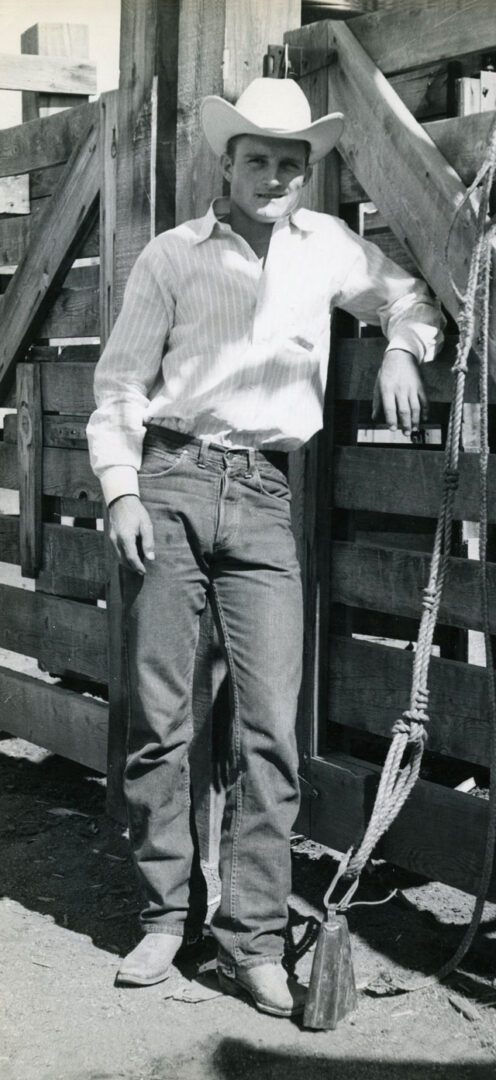
    Clem McSpadden called him the best match roper of his time.
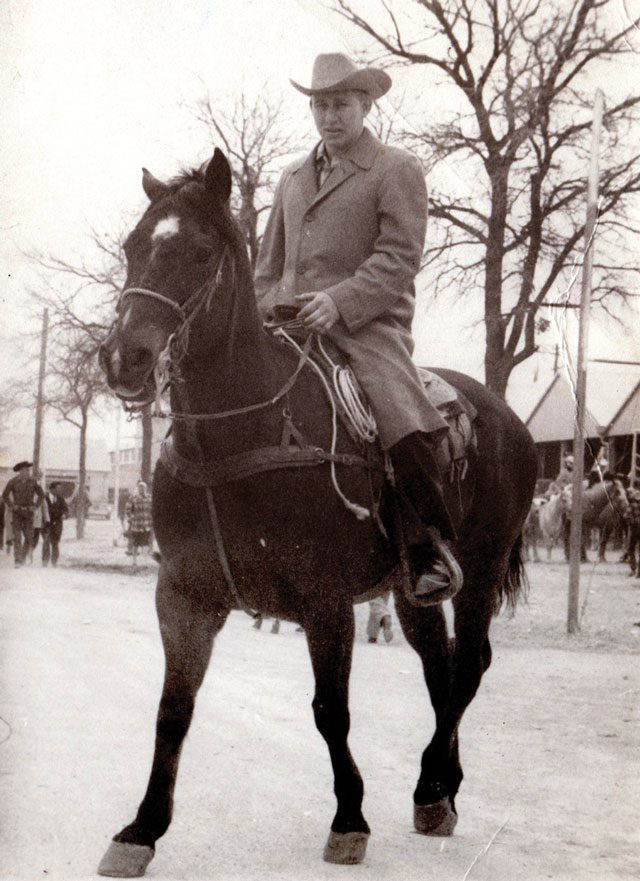
    Henry Hainzinger may have never won a world championship, but he was well respected for his roping across the prairies of Oklahoma, Kansas, Texas, and beyond.
    He got his start at roping two blocks from his home in Bartlesville, Okla., with a neighbor, Art Saylor, who had a horse and goats. When he was twelve, he was spending time on Art’s horse, roping goats, and getting better at his craft.
    Many small towns had roping clubs, and Henry was part of the Bartlesville Round-Up Club. In those days, without social media, video games, and Ipods, kids made their fun at practice nights and Sunday afternoon ropings. Henry was one of them, and when they all got together, they often held match ropings: two calf ropers who went head to head, on two or four runs, with the fastest average time winning whatever had been bet, usually five or ten dollars, occasionally as much as one hundred dollars.
    Henry usually came out on top of the match ropings, and that’s what McSpadden referred to when he talked about the cowboy.
    He quit school at the age of sixteen and went to work for a local machine shop. In the summer of 1952, he worked for world champion steer roper Fred Lowry at Lenapah, Okla., breaking horses. Fred, who was the uncle of world champion steer roper Shoat Webster, would have Henry take horses to Shoat’s place for Shoat to look at and try. Fred was instrumental in Henry’s career, giving him tips and advice as they roped together nearly every day.
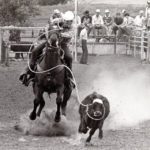
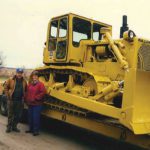
    In 1956, when he turned 21, he joined the Rodeo Cowboys Association, and his rodeo travels extended beyond jackpots and local shows to Little Rock, Denver, Ft. Worth, and farther.
    By that time, Henry spent his winters working in the machine shop in Bartlesville and saving money for entry fees so he could spend his summers roping.
    He often traveled with Ike Anderson, who he grew up with. Ike, who is 80 and still lives in Bartlesville, remembers some of the good times. He and Henry were at the Sidney, Iowa rodeo, on their way to two more that weekend, when they got the news that the county fair in Sedan, Kan., wanted to feature the two of them match roping and pay them $100 each. They left their horses in Sidney, and “drove like madman,” Ike said, to get back to Sedan. Ike’s mother hauled an extra horse to town, and Henry borrowed a horse. Henry beat Ike, “we got our $100, and drove like a son of a gun to get back to Sidney.”
    Henry was a jokester, Ike said. Once, at a rodeo in Kansas, the calves were “big, fresh black calves, off the cows, and it was like roping a mountain lion,” he said. Ike backed into the box, nodded, and his horse stalled on him. “The calf was going nine-oh across the arena, and finally the horse decided to go. I came a mile late, and ran this calf down the end of the arena, back up the other side, and through the hay where they’d fed the cattle the night before.” Ike roped the calf in 55 seconds. “I came back out of the arena, so angry I could have bit a piggin’ string in two. Henry comes up to me and says, ‘If you ever make another run like that, I’m not going to rodeo with you,’” Ike laughed. “That’s how we tormented each other, all the time. It was special.”
    In those days, calf roping was different. Ropers had a two minute time limit to rope and tie before they were disqualified, and they dismounted differently than today’s ropers. Henry was part of the era that roped, dismounted from the left, then ducked under the rope to flank and tie the calf. “We were still in the Dean Oliver mode of the right handed calf roper,” Ike said. “By the middle of the 60s, (that style of roping) was obsolete.”
    But in that north central part of Oklahoma, Henry and Ike were part of a special group of ropers. “With that era of the 50s, if you came into the Bartlesville community, there were a bunch of guys who were tough to beat,” Ike said. “I can’t remember a lot of that style of roper that was tougher than that bunch of guys was.”
    Henry remembered a unique roping he won in 1954, near Fairfax, Oklahoma, where the ropers roped deer. A rich oil baron had a section of ground with domesticated deer on it. The deer were run through the chute, and the ropers backed into a box. They were mature animals, and not hard to rope, Henry said. “It was like roping a goat. I believe it was easier than roping a goat. They held their heads up.”
    In 1957, when he was 23 years old, Henry took an adventure to California, hoping to extend his roping in the fall, when there were no rodeos at home. “I’d filled my pockets roping (at rodeos) and didn’t want to come back to work,” he said. He assumed they roped calves in California, but they did more team roping than calf roping, “and I didn’t know nothing about team roping,” he said. He stayed with Virgil Berry, Ace Berry’s dad, and when he came home, he was broke. “I had a nickel in my pocket when I come home.” Before he came home, he’d purchased cashews and nuts for his family. In Arizona, he stopped to fuel up, and his bill was $4.50. He handed the cashier his Phillips 66 credit card, but there were no Phillips 66 stations in Arizona. “I’m sorry, son, but we don’t take Phillips 66 cards,” he was told. An old Indian was sitting at the station. He was willing to buy one of his Australian shepherd puppies, but Henry said no. Instead, he sold the cashews to the Indian, paid his bill, and headed home.
    Ike remembered another story regarding Henry. The two of them roped at the annual rodeo held at the Cooper Ranch, between Bartlesville and Tulsa, and the lady who owned the ranch hosted a party at the house following the rodeo. Henry was the calf roping and all-around champion. Contestants were served drinks and food from a waiter in a bow tie and formal white jacket. After partying all night, the lady announced, “We’re going to stop the party and go to Collinsville, and the all-around champ is going to buy breakfast.” “I’ll never let him live that one down,” Ike said. “I bet it cost him over one hundred dollars to feed everybody, and money wasn’t easy to come by for all of us.”
    Rodeos back then were often two or more head, requiring cowboys to stay in town overnight. Henry knew how to beat the heat on the hot summer days, waiting for a performance to begin. He’d pay ten cents for a movie and stay in the air-conditioned theater all afternoon. “I’d take my nap inside the movie house, while a lot of them were laying out in the sun, and they’d be played out,” he said.
    In 1962, Henry married Ora Lee, a barrel racer, and a few years later, moved to Ponca City. After their marriage, he continued to rope but didn’t go as far from home. He bought a bulldozer, and had a successful business in the oilfield. He and Ora Lee raised two children: Hank and Nancy. Both competed in rodeo, and now the next generation is competing: Nancy’s daughter, Kathryn Todd, won the all-around in 2013 at the National Junior High Finals and was reserve champion in 2014.
    Henry loved his life of rodeo, roping, and work. “I enjoyed every bit of it,” he said. But whatever he did, he studied and practiced. “You gotta study it, whatever it is you choose to do. If you don’t study, it ain’t going to work. You’re just playing.”
    The rodeo life wasn’t always easy, Henry said. “It ain’t all peaches and cream in that rodeoing.” But the good days outnumbered the bad days. “I had a lot of fun.
  • On the Trail with Jackie Ganter

    On the Trail with Jackie Ganter

    Jackie Ganter grew up in Texas, born and raised in College Station. Unlike most people from Texas, Jackie chose the English discipline when she started riding at the age of six. “I’d been around horses through my mom (Angela), who ran barrels,” said Jackie. The family moved to Abilene, Texas, and at the age of 8, Jackie lost her father to a heart attack and complications from diabetes. “He owned nine bars and restaurants in College Station; one of them is the Dixie Chicken.” After he passed away, Jackie focused on her riding, entering shows and winning.

    “I rode English until I was 12.” Dixie was her English horse and when she got hurt, Jackie couldn’t find another fit. “I’d won every show I went to on Dixie and my mom still ran barrels, and so I decided to do what my mom did.” Riding English gave Jackie the foundation for running barrels.  “The judging (in English) involves watching body posture and it takes a lot more strength and body position to keep it correct. My English teacher used to make me jump the whole course without stirrups.”

    Switching to barrel racing involved years of trying to get it right. “I was slow at first,” she remembers. “I had an instructor, Jan Burns, who started me out slowly. I ran 18s and 20s. My mom had the best eye for horses and she kept me on the best horse every step of the way. I’ve gone through so many horses, getting a little faster each time. I learned from every horse she put me on.” Jackie worked her way up a few tenths at a time; a horse at a time; to get where she is now.


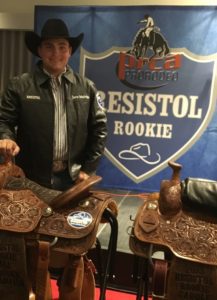
    When she got Frenchmans Jester, previously having been to the NFR with Jordon Briggs, she learned how to win. “That horse and Bobbie Gene drove my passion into what it is now and something I will do for the rest of my life. My goal had been to win the Resistol Rookie when I was 18 and I did it.” Jester passed away after a lengthy illness. Jester wrote Jackie’s ticket in the junior world.

    Jackie and her mother met the Alan and Teri Dufur family three years ago. “From the time my wife and I met them at their place in Abilene, we meshed,” said Alan, whose runs a registered Hereford cattle and Quarter Horse operation in Caddo, Okla. “We have onsite trainers on the Quarter horse side that teach all the rodeo principles.” They partnered with Jackie as a major sponsor and that sponsorship involves not only horses, but assisting with any challenges that may happen on the road, such as last week in Rapid City.  Jackie was stranded in Nebraska in a blizzard and Alan made sure she made it for the rodeo.  “We let them go through our young horses and pick out potential future mounts for her.” Guys French Jet, who she rode in Ft. Worth and the WNFR, is a partnership horse. “No matter what horse you have, you have to have the work ethic. It’s not unusual for her to ride and exercise her string at two in the morning. To me she is beyond her years in the way she handles herself.”

    The battle for the Resistol Rookie position was a tight race all the way to the end between Jackie, as the youngest competitor at the WNFR and Vickie Carter, the oldest competitor at 60. “I didn’t meet her until she started beating me,” said Jackie. “It was late winter and we’d never heard of her. She won several rodeos. It was crazy – towards the end, the last two months of the season, every single week we would trade off on the lead. It was literally week by week we would switch back and forth. I don’t think either one of us would have made the NFR without the other. We were fighting each other for the top spot. We are very good friends now.”

    The 19-year-old spent last year making the run for the WNFR. “I graduated high school in the middle of my senior year. I went to public school and graduated in December of my senior year, doubling up on classes so I could travel.” She could only make a few of the fall rodeos because of where her birthday fell, but after December, she hit the road. “I went back home between the California and Canada run to walk the stage with my graduating class.”

    She travels with her mom, who has been battling breast cancer since late 2010. “They diagnosed it after she had found a knot under her armpit. It came back Stage 3 breast cancer even after a clear mammogram a month prior. She had 28 lymph nodes removed, and went through chemo and radiation and nine surgeries. She is still on a chemo pill daily, so she is still not in remission.” Sometime in 2016, Angela has her last appointment. The cancer treatment has affected Angela’s balance, so she has not run barrels since then. Instead, she has focused on helping her daughter achieve her goals.

    “There are not a lot of people that can say they spent a year on the road with their 18-year-old daughter with only one argument,” said Angela. “Driving all the time was a major change for us all – but we experienced things that we would have never done if we weren’t chasing this dream. We spent a lot of time doing other things than just rodeo – we took a helicopter ride in the Canadian Rockies, we saw Mt. Rushmore. My dream of making the NFR was gone when I got sick, and Jackie started riding my horses and I never got them back.”

    They run down the road in a trailer from Stephenville Trailers. “It’s a 53’ Hart trailer, with a two bedroom living quarters. We put the bathroom in between the living room and the bed in the nose. You can shut both doors and have two bedrooms. I’m on the couch and we have two different satellites so we can both watch TV. The horse part has automatic waterers and a huge tack in the back.” They pull it with a Freightliner equipped with a 500 engine. “I could drive it up and down the mountains without a problem.” They haul four or five horses along with two dogs. “We get along great – in fact, the only time we had a fight was when I was in the middle of my slump.”

    The slump hit during the July Cowboy Christmas run. “When everyone is supposed to win big and make the NFR, I did not win one dollar. It was horrible and the worst slump I’ve ever been through in my career. I was having horrible runs and couldn’t pull it together. I watched myself go from the top 15 to the top 30. My main horse, Baby J, is only six, and Cartel is only 7. My older horse is 12, but I’d sent him home because he got tired on the road and wasn’t working his best. My young horses fell apart so it was a shock all the way around. I saw that it looked impossible to make the NFR, and I got discouraged because I had this goal to make the NFR and Rookie when I was 18. It looked like that was going up in flames and I kept telling myself how horrible it was and that’s what I told myself. I knew my attitude was affecting my runs.”

    Realizing the definition of insanity was doing the same thing over and over and expecting different results, Jackie changed everything from how she worked her horses to how she thought. “I watched videos from past NFRs and told myself how I wanted to be there. I told myself that over and over and it finally worked. After July, I finally placed somewhere in the bottom hole and won a check and then things started turning around.” She got on a pretty good roll the last two months and that landed her a spot at the WNFR. Jackie placed in four go rounds and won second in the average after Callie Dupier, who won the world and the average. “We were the only two that had all ten runs clean.” Jackie won more money than any other Resistol Rookie had won as a barrel racer. The race lasted all the way through the WNFR.

    “We set out to have a goal that nobody’s done, and about July I told her it was the stupidest thing we’ve ever done,” admitted Angela. “We were used to winning at the barrel races and I wanted to go home. She bawled and cried and I told her to find another driver. She made me give her until the end of July. And she did it. This life is like being in a carnival circus – I remember at the end drawing up as bad as could be and driving two full days and nights to get into four rodeos.” In the end, walking down the alley with her daughter at the Thomas & Mack was this mother’s best dream. And it’s not over.

    Jackie’s goal for this year is making the WNFR again, and getting the gold buckle. “Making the NFR is the most incredible thing I’ve ever done,” she said. “My horses are great and I’m going to go as long as I can.” She is also attending college online.

  • Roper Review: Tanner Ward

    Roper Review: Tanner Ward

    Having just celebrated his 21st birthday, Tanner Ward has overcome some large obstacles in his young life. At just three years old, Tanner was diagnosed with Type 1 Diabetes. Fortunately, his babysitter, also a diabetic, recognized his unusual thirst as a symptom. To this day it’s necessary to test his blood often and he can sometimes receive up to seven shots each day.
    However, the disease has done little to slow him down. He entered his first Mutton Busting at just three years old and won. From there he progressed to riding calves, steers, and junior bulls. However, he soon found his true passion in roping.
    Tanner’s family has always been involved in livestock and rodeo. His grandfather, Wayne Meeks, owned several livestock auctions in southeast Oklahoma and Arkansas. His dad, Wayne Ward, competed as a calf roper up until Tanner started Junior Rodeo.
    Tanner began riding outside horses when he was just nine. His mother, Cissy, said he was always big for his age and people just didn’t realize how young he was. At fifteen he was training a mule that bucked him off. For several days he complained about his neck being sore and finally went to the doctor. The diagnosis was a broken neck that required surgery. Tanner had to wear a neck brace for six months and was not supposed to ride. That year he entered the IFYR in Shawnee, OK, wearing his neck brace.
    After completing the 8th grade, Tanner asked his parents if he could home school during high school to have more time to work at his roping. Though reluctant, his parents agreed and that year Tanner won over $50,000 roping in addition to income from training horses. He went on to complete his high school education at home.
    Cissy Ward describes Tanner’s passion for roping, “I’ve never had to make him practice, only to stop practicing. He’s going to rope regardless. It doesn’t matter if it’s storming, 110 degrees, or roping by the headlights of a truck.”
    Now, a #9 heeler, Tanner trains a lot of horses and competes at jackpots and rodeos. He also enjoys helping younger kids with their roping.
    “I have a good partner for next year and plan to go to some of the winter pro rodeos,” says Tanner. “Hopefully we’ll have some luck.”
    COWBOY Q&A

    How much do you practice?
    Every day.

    Do you make your own horses?
    Yes.

    Who were your roping heroes?
    Allen Bach.

    Who do you respect most in the world?
    My dad.

    Who has been the biggest influence in your life?
    My family.

    If you had a day off what would you like to do?
    Rope.

    Favorite movie?
    Lonesome Dove.

    How would you describe yourself in three words?
    Rough, tough, easy-going.

    What makes you happy?
    Winning.

    What makes you angry?
    Losing.

    If you were given 1 million dollars, how would you spend it?
    Build an indoor arena and a facility to help kids.

    What is your worst quality – your best?
    My worst is I’m too hard on myself. My best quality is perseverance.

    Where do you see yourself in ten years?
    Having been to the NFR and being a World Champion.

  • ProFile: Amy (Sutton) Muller

    ProFile: Amy (Sutton) Muller

    The Black Hills Stock Show celebrates its 39th anniversary this February, and for Amy (Sutton) Muller of Agar, S.D., the show is not only the brainchild of her family, but a showcase of the rodeo talent which runs thick through all six generations of Suttons.
    The history of the Suttons starts even before South Dakota became a state. Amy’s great-great grandfather, Edwin Sutton, homesteaded the family’s ranch in 1883, set in the hills near the Missouri River. He started putting on rodeos Sunday after church for the township using his ranch stock. By the late 1920s, he and his sons were producing three-day rodeos on their ranch, where a young Lawrence Welk from North Dakota occasionally stopped to contribute his sparkling music. Edwin’s son, James, ushered the rodeo company into the next generation by becoming a member of the PRCA. He later became the first stock contractor to be inducted into the PRCA’s Hall of Champions in 1982. James and his son, Jim, focused in on the breeding of the rodeo company’s livestock, particularly the bucking horses, which earned them several first runners up and three winners of the PRCA Horse of the Year. In the late ‘70s, Amy’s dad, Steve, who has picked up the WNFR five times, took over the ranch management. Amy was born soon after, going to her first rodeo at ten days old.
    Amy Muller, from Agar, SD - Dave Sietsema, Firesteel Creek Photography

    Her own history in rodeo includes competing through college, carrying the American flag in the 1995 WNFR, and most recently, timing during the 2015 WNFR. But the Black Hills Stock Show Rodeo holds a special place in Amy’s memories. “The show is second nature since it’s been there every year of my life, but I first remember being four years old and carrying the American flag,” she says. “Working alongside all those queens who were in their early 20,s and hanging out with the contestants’ kids made the whole thing feel like one big fun family celebration!”
    Amy carried flags and chased cattle out of the arena until she was 18 and off to college at South Dakota State University like her grandfather and father before her. She studied animal science and competed on the college team in breakaway roping and barrel racing. Her brothers, Brent and Brice, following suit a few years later. “When I was halfway through school, Dad and Grandpa told me and my brothers that they would like for us to come back and join the company as partners,” Amy recalls. “Just like when I was a kid, I stayed very active with the livestock. From the time we were old enough, we’d hop in the truck and do our part with feeding, haying, fixing fence, and whatever else needed done.”
    Within the last several years, however, Amy’s job description changed after the family’s bookkeeper of 21 years retired. “I took over the bookkeeping about the time I had my son, Shaden,” says Amy. “We work rodeos where we are the contractor for a committee, as well as producing rodeos as the committee and contractor ourselves. My day is filled with working on both of those types of rodeo events, as well as sponsorships, marketing, advertising, social media, and our Sutton Rodeo merchandising. I also keep the financial books and the livestock records. About three years ago, Dad started a cross breeding program and brought in outside stock contractors. Those colts are just getting to bucking age, so we’re very excited to see how the offspring from this program turns out.”
    In addition to her office work, Amy continues to time about 12 of the 20 to 30 rodeos Sutton Rodeo produces each year. She obtained her PRCA card when she was 19 and took over timing when her grandmother, Julie, retired. Both Julie and Amy’s mom, Kim, have timed the WNFR, and in 2015, Amy was given the opportunity to do the same. “There’s no feeling I’ve ever experienced like working that rodeo,” says Amy. “The tenth round in that room was electric – so much could happen, you could feel the excitement buzzing, from the contestants, to the personnel and all the fans! Working with Tammy Braden and Jessi Franzen was extremely rewarding. They made working the NFR such a positive experience – they are wonderful ladies, and they’ll be lifelong friends!”
    Alerted ahead of time by her mother and grandmother on how quickly the rodeo would move, Amy was prepared. “You don’t ever want to take your eyes off the arena for fear of missing anything, but you still have to record the times and penalties,” she explains. “One timer wears a headset that goes to the office, which puts out the official time for the record as the rodeo is running.” Along with timing, Amy and the other timers worked afternoons and evenings in the office putting together information such as the official stock draw and buck order, as well as updating the posted rodeo results, standings, and money. “Ultimately, it was one of the most interesting and rewarding experiences I’ve ever had!” says Amy.

    Amy with her husband Steven and son, Shaden - Alicia Berry, Chutin Flicks Photography
    Fortunately, timing and Sutton Rodeo also tie in to Amy’s role as a wife and mother. She and her husband, Steven, have a two-year-old son, Shaden, as well as running their own cattle herd and operating a cattle carcass ultrasound business, Midwest Sonatech.  A seasonal job that runs from December to May, Steven and hired friends and family travel around South Dakota, North Dakota, Minnesota, Iowa, and Nebraska, booking one or even two clients a day depending on the number of head to ultrasound. Amy does all the computer and bookwork while Steven does the imaging. “Steven and I travelled together exclusively for about five years until we had Shaden,” says Amy. “We ultra sounded until just a few hours before the c-section we’d scheduled for Shaden, and then went from the hospital to Rapid City to work the Black Hills Stock Show Rodeo!”
    With just eight of them to produce all rodeo events held during the Stock Show, Amy and her family – who all live within a few miles of each other on the family ranch – know how to divide and conquer. “We start planning the next stock show in April,” says Amy. “Most of the rodeos that land in the same category as us – large indoor rodeo of the year – have hundreds to thousands of volunteers. We joke that we’re still looking for our first volunteer.” The Suttons’ events include the PRCA Rodeo, Sutton Ranch Rodeo, Girls in Spurs, Wrangler Champions Challenge, Bucking Horse Sale, and the PRCA Xtreme Bulls Tour, while the SDHSRA 20X Extreme Showcase is especially important to Steve Sutton. “Dad is always looking to give back to youth rodeo,” Amy explains. “We keep the numbers the same each year, but we’re always looking to give those kids more things to compete for and a bigger platform to showcase them on.
    “As I’ve gotten older, I’ve realized how truly rewarding and exciting it is to work in this company and watch our animals develop and succeed,” says Amy. “You’re not going to get rich in this industry, but it’s really self-rewarding. Goal-wise, I’d love the opportunity to time the NFR again,” she adds. “And on a more personal level, I hope to keep expanding and improving our family business alongside my two brothers. Doing something like this for six generations doesn’t happen that often, and I want to keep this lifestyle going.”

    Jessi, Amy, and Tammy Braden 2015 WNFR timers - Rodeo News!

  • On the Trail with Jace Melvin

    On the Trail with Jace Melvin

    The 2015 PRCA Resistol Rookie All Around, Jace Melvin, was born and raised in Fort Pierre, SD. He moved to Texas for college, and now claims the road as his home. “I rope calves, team rope, and steer wrestle, but not everywhere because of scheduling conflicts; getting up in three events is tough.”

    The 23-year-old has been involved in rodeo his entire life, with three generations on his mom’s side, four on his dad’s before him. “I have two older sisters, Jessica (12 years older) and Jenny (10 years older); they were rodeoing a lot in the youth rodeos, National Little Britches and high school, so I went everywhere with them. They taught me most of what I know.”

    His parents, Mark and Diana, rodeoed and now they run stocker yearlings and raise quarter horses. “Some of the horses that I compete on are some that we have raised and with my brother-in-law’s (Brent Belkham) help, I’m hauling them.” Another brother-in-law, Cody Moore, won Rookie of the Year Steer Wrestling, riding the family horse, Talk, in 2010. That horse, Talk, was critical to Jace’s success as well. “I was blessed with a phenomenal horse in high school and college – horse power has such a huge part in rodeo.” Cowboys Talk helped Jace make it to the National High School Finals all four years (2008-2011) in the steer wrestling and the college finals the past two years in the steer wrestling. Jace also qualifed for the college finals in calf roping in 2015. “Talk is old now – 19, but I had him as I was growing up. He’s got an awesome personality – he’s a character … he’s always talking.”

    His dad, Mark, raised the horse on the race track, and Mark’s sister, Lorita Crowford, picked him and futuritied him as a barrel horse. “He was a great barrel horse, and my sister took him and raced barrels at the college rodeos. You can tie down, team rope, and it came time I started chute dogging and needed a bull dogging horse and he was as broke as it gets and was amazingly fast. Se we tried him as a steer wrestling horse. For as awesome as a barrel horse he was for my aunt and my sister, he was an extremely phenomenal bulldogging horse. He truly loved the steer wrestling.” Jace enjoys calf roping the best, but admits his strength lies in steer wrestling. “I really dedicate at all three events, but I see my most success in the steer wrestling. At a younger age I focused on it more.” His hard work and ingrained family competitive nature paid off when Jace won All Around at the National Junior High Finals in Gallup, NM, in 2007, as well as ended up third in the nation in steer wrestling his junior year and reserve his senior year of high school. “The nature of our family is extremely competitive,” he explains. “We could turn fixing fence into a competition. That goes for all of my family. Through that nature, I won the National Junior High All Around as an eighth grader. I went there to win first in every single event. Everything we do, we go with the intention of winning first and being successful. Being competitors, we know that losing is part of winning. If you don’t win something you learn something. I’ve learned that, and through God’s hand in it, things have fallen into place.”

    After high school, Jace went to college at Vernon for two years and spent the last two years completing his Bachelors in Ag Business at Tarleton, rodeoing with the team that won the Men’s National Championship last year. His degree is coming in handy as he builds his business supplying timed event cattle for several youth and amateur rodeos around his hometown in South Dakota. Melvin Timed Event Cattle happened quite by accident.


    15-113 Jace Melvin
    “I had bought 30 head of roping calves when I was a junior in high school. I had planned to train horses on those calves, but I blew my knee wrestling for the high school team, so I couldn’t. A stock contracting company called me and had heard I had these calves and they needed timed event cattle for a Little Britches rodeo and I said yes and hauled those calves to that rodeo.” Growing up in rodeo, Jace knew how important it was for kids starting out and making their goals of the finals to have the best quality stock possible. “My junior and senior year I supplied the timed event cattle at our high school finals,” he said. “I haven’t done a perfect job, but I have a vested interest and sincerely care about the stock these kids get. I know that there is always going to be a bad draw, but to the best of my ability I’m trying to make sure the cattle are even.” The addition of the business is good for the ranch too. “Turning roping calves into feeder calves has been a perfect addition to the ranch.” He admits the business is expensive, hard work, but he plans to continue with it as well as his own career in rodeo. “This past summer I was gone rodeoing and my mom and dad helped me manage the contracts. I was setting up truck drivers and coordinating the events. I can sit and watch the entire slack and pay attention to the details because I’ve trained myself to do that. We mostly put together cattle in the spring, keep over our light end, and keep over team roping and bulldogging steers to reuse at the early rodeos wherever they will fit.”

    Winning the All Around Resistol Rookie award was a goal Jace had set for himself. “It is an unbelievable accomplishment to get there – the trials and tribulations of trying to win this award and then when I won it, it really meant something. I had a really good year in the steer wrestling, but not so good in the team roping and calf roping. I won money, but scheduling and traveling and keeping horses in the trailer was difficult, but in the end it all worked out.” Jace hauls four or five horses at all times. “I travel with my two brother-in-laws and we have to have horses for team roping, hazing, steer wrestling, and calf roping. We’ll share horses and the horses will do more than one thing.”

    Resistol has sponsored the Resistol Rookie awards since the late 70’s and for the first time, they added an awards banquet, along with other prizes, to the event. “I am unbelievably grateful for everything they did for us and how we were treated. Resistol offered us all a sponsorship package that was awesome,” said Jace. “For a lot of us going down the road, our biggest sponsors are our mom and dad and knowing that a company that sponsors the best in the world would sponsor us was amazing. Joining their team is an unbelievable opportunity – everything they did was great.” The 2015 Resistol Rookie recipients received two all-expense paid trips to the WNFR, Cactus saddles, coats, shirts and hats for the year.


    FullSizeRender
    Now it’s time to look ahead to 2016, and Jace’s number one goal this year is to make it to the WNFR in the steer wrestling. “My next goal would be to qualify for the circuit Finals in the steer wrestling and calf roping. It’s hard to get the rodeo count in that many events. If you were just circuit rodeoing, it would be a little less difficult, but when you’re trying to get to the bigger and better rodeos, it’s hard to schedule it.” He is spending part of January practicing in Texas, then he’s up in Odessa in the calf roping and steer wrestling, heads to Louisiana, back to Denver in the steer wrestling and team roping, then to Rapid City for all three events. “The month of February – I look at the Sports News every day for a few hours to figure out my schedule – that month is really busy.” Coming off last year, Jace is confident about his skills. “I really feel good going into spring and every chance I get, I’m going to get in the practice pen and keep my confidence level up and go for first and see where it all shakes out. I’m looking forward and I’m ready to get started.”

  • Back When they Bucked with Wick Peth

    Back When they Bucked with Wick Peth

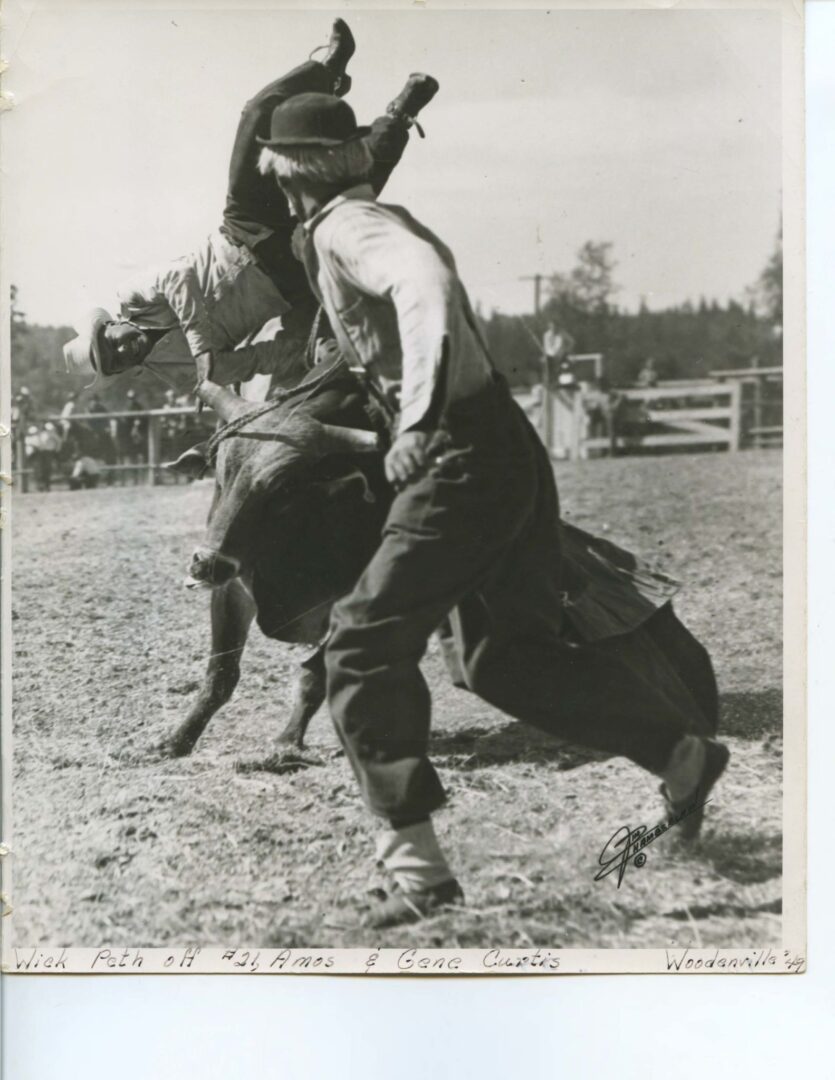
    Wick Peth was born in 1930 at Mt. Vernon, Washington. “My parents were farmers and ranchers. We run cattle and raised quite a few peas and potatoes.” In his early years, his dad and uncles put on a rodeo at the ranch that turned into a stock contracting business in the 1950s. “My father wanted to keep us out of town, so he had roping steers and calves for us. He asked one year what we wanted for Christmas; I was 17 or 18; I asked for some bulls. He had 20 come to town for us in a box car in the middle of January … we had as many as 60 living around here during the stock contracting years. The neighbors would come – my brothers (Jerry, Ted, and Buzz) were always roping, I steer wrestled a little but didn’t rope. Everybody would get on a bull and somebody had to get the bulls off, so I was good at that.
    “After we got bulls, at night I would crawl out in the pasture and lay down on the ground and watch them. I’d watch them fight in the daytime and watch where their feet were and where they are when they turn around. I did things with a bull that other bullfighters wondered how I figured it out.” One of the moves he used to make with a bull is to run up and grab him by the tail. “I don’t grab that until I get past his rear end. I swing around on his tail and on towards his head. He comes around in a circle. After he goes two or three times around, he figures he can’t hook me, I pull my butt away from his head, when he turns back the other way, he’s got all my momentum going and I can turn a summer sault in front of him and he can’t touch me. I’d show people how to do that in bull fighting schools after I studied the bulls and found ones that would work. It wouldn’t work on all of them, they think different. It’s hard to explain. It was a certain minded bull.”

    OLYMPUS DIGITAL CAMERA
    Wick studied the bulls. When he was growing up, he watched them and how they behaved and moved and took his job of taking care of the cowboys very seriously. He could predict what was going to happen and how the bulls were moving. He had a system. “When I was protecting the bull riders, I always went to the side of the right handed or left handed. I had a plan of what I was going to do if this or that happened or he got thrown off a certain side.” Wick never considered himself to be funny. “I always felt like the good bull fighters came off of cattle ranches that had some cow sense,” said Wick, who got his name from a neighbor. “I used to go with my father around the country to buy cattle,” he explained. “We would stop at the hardware store, and this guy’s name was Vick and they called me Little Vick. This guy had a stroke and he couldn’t say V and it became W, and that’s how it started.” His given name is Melvin, but he has never gone by that name. Wick put on bull fighting schools with Jerry Beagley over a period of ten years. “I had several students that picked up on them. The one main thing I told them is when you get knocked down, get up.” The schools were held all over the county.
    “Everybody is a genius at something and figuring out what that is is a blessing,” said his daughter Liza. “He was a genius at fighting bulls.” He changed the way rodeo clowns were in the rodeo. The art of the rodeo clown became the science of bull fighting. He took his job seriously. Not only did Wick study bulls, he rode them. Along with playing football, Wick competed in the bull riding, continuing that after high school. “I never went full time, because I had to work on the ranch.” He met his wife, Dorothy, at a rodeo. “She was always helping me,” said Wick, who considered her as his biggest support. “She never said “be careful” she was always trying to encourage me to go on.”
    Wick traveled thousands of miles to rodeo and fight bulls. As word got out about his abilities as a bull fighter, he gained the attention of the Beutler Brothers. “Lynn came over to me in Nampa, Idaho, and asked me to work all the rest of his shows and that kept me going.” Wick would stay gone for two or three weeks at a time, and then come home and spend hours on the tractor catching up. He and Dorothy had three children, Liza, and Lana, and Dan. He continued to ride until the late 1950s. “The reason I quit riding bulls is they kept me so sore, I felt like I owed it to the bull riders to stay healthy.” He quit fighting bulls in 1985 – after 35 years. “By that time, I was 55 years old and I couldn’t move as fast or heal up as quick. Age takes care of things.” He stressed the value of education and as a result all three of his children are college graduates.
    He still lives on the ranch and helps where he can. His son, Dan, and his grandson, Owen, run the day to day operation of the ranch, running 600 head of cows. Wick is there every morning to help and then he heads to the coffee shop. “Dad was so well received,” recalls Dan of his travels with his dad. “The bull riders looked up to him and appreciated what he was doing. They were really glad to have him around.”

    Wick Peth Cheyenne 1974
    The man in the red striped shirts, who helped change the way bull riders were protected, looks back on his life as a bull fighter and farmer. “I like fighting bulls and it was something that everybody couldn’t do. It got me off the farm and I could relax and go fight bulls.” Traveling down the road, he was always studying the soil, watching what other farmers did with the land. He has seen many changes in both bull fighting and farming. “We just started to irrigate the pasture ground 10 years ago, and we have a couple big reel sprinklers – we never used to have that here. What you don’t see, you don’t do.” His plans for the future are simple. “I just want to farm myself away – plow myself into the dirt.”
    Wick was inducted in the Pro Rodeo Hall of Fame in 1979, Cheyenne Frontier Days, Ellensburg Rodeo, and St. Paul Rodeo Halls of Fame. His family has nominated him for induction into the National Cowboy Museum in Oklahoma City.

  • On the Trail with Mousseau, Parkinson & Thigpen – IPRA’s All Around

    On the Trail with Mousseau, Parkinson & Thigpen – IPRA’s All Around

    This season’s All-Around title race in the International Professional Rodeo Association is just about as close as it can get. It’s as international as it can get too, with the top-three contenders hailing from Canada, America and Australia respectively.

    But if you look closer than the standings, you’ll find three friends who aren’t just trying to reach their own goals, they’re helping each other as well.

    “These guys have helped me a lot since I’ve been here this year,” explains Ty Parkinson of fellow All-Around contestants, Justin Thigpen and Cody Mousseau.

    Ty is from New South Wales, Australia and competes in just about every event he can, from bull riding to tie-down roping.
    Ty joined the IPRA for his rookie year this summer after he met Canadian Cody Mousseau, the 2014 World Champion Team Roping Header and Steer Wrestler. Cody had come to Australia to rope at the beginning of 2015. “I met him over there. He came in about June,” Cody says of convincing Ty to come rodeo in North America. “It’s all on me. You can blame me or congratulate me,” he jokes.

    By “blame” he probably means that Ty quickly shot to the top of the standings in several events, putting pressure on cowboys across the board.

    Beyond Cody, soon Ty could also call veteran IPRA competitor and 2014 World Champion Tie-Down Roper, Justin Thigpen from Georgia, a good friend as well.  “They’ve both helped me out in roping and tying. They both pull my bull rope every weekend. Good buddies [who are] no. 1 and no. 2 in the world, it’s a great feeling,” Ty says of his two allies.

    Rodeo is common in Ty’s part of Australia. He grew up with the aim of becoming a jack-of-all-trades in rodeo events like his father, a multiple event champion. Now Ty is seeing that dream to fruition across oceans.

    Like Ty, for Cody and Justin, rodeo was just something they were born into. And they’ve done it well. Each has multiple titles and IFR qualifications to his name.

    “My mom ran barrels, and my dad rode bulls, so I was running around in diapers, boots and cowboy hat. I’ve been at it my whole life. It’s about the only way of life I do now,” Justin explains of growing up in Waycross, Ga., with a rodeo family.
    At first Justin thought he was going to be a bull rider like his dad. “When I got on them I wasn’t good enough so I had to find another occupation,” he laughs. “I started roping and never looked back. I’ve been very fortunate. I’ve been blessed with a rope.”

    In addition to his successful rodeo career, Justin has also begun his own business as a stock contractor with T-T Rodeo Company. “I enjoy rodeo. It’s been great to me. It’s blessed me with a good life, and I want to give back to it. I hope to put on rodeos for many years to come,” he says and adds that there’s also a deeper meaning to what he does now that he’s a father.
    Justin and wife Laura have a 2-year-old son named Slade and a newborn, Trent. “It’s more about enjoying it with them now. Things that used to worry me, I used to think about, I don’t now,” Justin explains.

    Slade is always with him, behind the roping box cheering his dad on.

    “He’s pretty into the rodeo. He hollers throughout the week, ‘daddy, are we going to the rodeo?’ I’m like, ‘it’s not the weekend yet son,’ but he’s all about it,” Justin smiles.

    “It means more to me, because he comes out. Win, lose or draw, you’re still his hero, so that makes it a lot better. It makes you put life into perspective.”

    Justin has also enjoyed being able to travel with Cody and Ty a lot this year.

    “We support each other. We rope with each other, help Ty with the bull riding. We have a lot of fun, and that’s what it’s about. It used to be ‘have to win, have to win,’ now it’s ‘have fun, enjoy what you’re doing, enjoy your life,” he says.
    Despite this, or because of it, the wins have come just the same.

    Justin is leading the season standings in the All-Around race going into the International Finals Rodeo, held in Oklahoma City.
    Cody is not far behind him. “I like it more. I’ve been to a couple finals where I only did one event. I don’t like it as much. I like doing everything at one time,” Cody says of competing in tie-down roping, steer wrestling and team roping.

    Cody’s parents rodeoed, and he followed suit around the age of 10 or 11.

    Being from Canada, Cody explains that rodeos in the summer go on full-steam ahead and then slow down, or end altogether in the winter. That’s why going south to rodeo in the states, and even going to Australia like Cody did, is more common for Canadians.

    This summer Cody, Justin and Ty saw a lot of each other in Canada and the United States.  “We all traveled together a bunch this summer. We went for a couple of weeks, and two other Australians went with us, and Riley Williams went with us. One rodeo I do remember we went to in Pennsylvania, and every single one of us placed that day in every event, so it was good,” Cody recalls.

    There are not rivalries when it comes to rodeo competitors who happen to be traveling partners like this trio, Cody assures. “It’s a lot easier. Everybody helps each other out.”

    For Ty being so far away from home, the group has become a second family.

    He stays with Cody’s parents a lot while in Canada. They have a traveling support system. Ty has been able to borrow good horses. They push each other’s calves and rope together too, he says.

    The bond between the three guys no doubt contributes to their success.

    “It’s pretty awesome how three different countries can come together and work as a team,” Ty says. And that is no doubt one of the best parts about the International Professional Rodeo Association and rodeo as a whole.


  • Back When They Bucked with Dick Carr

    Back When They Bucked with Dick Carr

    Dick Carr’s shop sits on the back of his house in Elk City, Oklahoma. The walls are papered with pictures; memories of a life spent in rodeo.   It’s full of tools, pieces of leather and strands of twine. The strands will be meticulously weaved together into- not just functional bull ropes for cowboys- but works of art.
    When Dick is finished with each rope he makes, he prays over it to ask God to watch over the cowboy who will cling to that very rope hoping for success and safety. And success and safety have come for multitudes of professional bull riders who would surely tell you those ropes are connected to their success.
    Dick’s customers have won too many world championships, National Finals Rodeo qualifications and other accomplishments, to count.
    Dick was raised near the Beutler Brothers’ Rodeo ranch in western Oklahoma. He credits them for his start in rodeo. He began in the sport as both a bull and bronc rider, but he soon focused all of his attention on bulls. Dick got his pro card at 17. His PRCA card number is no. 166.
    For six years he went strong on the rodeo trail as a professional cowboy, competing in the biggest rodeos in the land from Madison Square Garden in New York City, to Prescott and Cheyenne.
    Dick, whose grandfather taught him to plait; the technique to make a rope, had already started to make bull ropes during his own riding career, knowing firsthand their importance.
    “In 1950 I started entering. The next year I went to winning a little, but it was a tough life, and you rode the bulls ‘til the whistle blew. They didn’t have the kind of bull fighters they have now days, and it was a different world,” Dick describes, adding “in 1952 is when I got noticed for my ropes, and I only made ropes for people who asked me.”
    In 1956 Dick was drafted into the Navy.  He quickly showed his work ethic was dedicated and was given some of the luckier duties on base such as working in the library and tending the bar in the Officer’s Club.
    He went to a rodeo on an off weekend and won the bull riding. A Navy recruiter was working the rodeo and wrote an article about Dick’s performance that made the Sunday paper.
    On Monday he was called into the captain’s office.
    “I thought, ‘oh my gosh.’ I hadn’t ever seen him, and I took my hat off. I stood up straight, and he said ‘Carr, what’s this about you riding a bull,’ and I said ‘yes sir,” Dick recalls laughing.
    The captain was far from mad like Dick had feared. The base had rarely made the news, and the captain was pleased Dick had been able to shed some light on them through rodeo. He gave Dick the green light to go to rodeos whenever he wanted.
    When Dick went overseas on a ship to China and Australia, rodeo was humorously not far behind him.
    “When we were in China they had a ship party, and a guy came by driving a bunch of wild water buffalos. I saw them and said ‘my gosh I want to ride one of those buffalos,” Dick laughs.
    They had an interpreter and arranged to pay the man who was driving the buffalo to let them attempt the ride. Dick roped the buffalo and about 10 sailors held the bull so he could get on. Dick rode him as he ran down the beach, not really bucking. “I rode him I know for half a mile, and when I got back to the ship you’d have thought I rode some real rank bull,” he laughs.
    Dick got out of the service in 1957 and went right back to the arena. “One day after I got out I won the bull riding at Buckeye, Arizona, but I’d been on that ship so long I had my sea legs, and [the bull would] move, and I’d just beat him over there,” Dick says with a smile.
    Though he went to the major rodeos in 1958, he stopped riding bulls in the following years. Still, Dick stayed involved with rodeo. He was a judge for quite sometime and began making bull ropes full time in 1970.
    “That’s 45 years. That’s got to be God,” Dick says wriggling his fingers around nimbly, with no obvious arthritis issues that could’ve stopped him from his work.  His work has a deeper meaning than being a functional art form. Dick emphasizes putting quality into his ropes that make the bull riders able to ride to the best of their ability while maximizing comfort.
    “My ropes are very comfortable. It’s like putting your head on a pillow when you put your hand in there.” It fits like a Tiffany Glove, he says.
    Dick’s work goes beyond making a good and comfortable rope. He’s able to pick out talent in bull riders and give them tips where they can get the most benefit from the kind of rope they might need.
    Perhaps Dick’s favorite customer was Harry Tompkins.
    “He was probably the greatest bull rider that ever lived. I made him bull ropes for 19 years, and he’s now 88 years old, and in a rest home.”
    Like his close relationship with Terry Don West, Gary Leffew and Tompkins, the rodeo family Dick grew close with over the years is extensive. They all share a mutual bond and understanding, Dick says. “We just talk, and they just know where I’m coming from, and I understand where they’re coming from. It’s unspoken.”
    Dick continues, “so many friends have passed. All the great rodeo cowboys; I was very dear friends with. Casey Tibbs was one of the greatest people I knew in my life. He was so good to me. He was my friend, and he encouraged me. I never asked Jim Shoulders for anything he didn’t give me. He always helped me.”
    The rodeo people Dick could name for being a part of his life could go on and on, and that’s the most important part of preserving rodeo for the youth, making sure they have mentors like he did, Dick explains.
    “The bible says, ‘remove not the ancient landmarks which our forefathers have established.”
    For Dick, the Western lifestyle and the Christian one go hand in hand.
    “The cowboy way and the word of God are one and the same. ‘Do unto others as you’d have others do unto you,’ and believe in a higher power. There’s someone greater than us, and it’s Jesus Christ, who we’re supposed to imitate, and that’s what I do. I live for God every second of every day,” Dick says and readily admits his shortcomings and how he was saved and cured of his struggle with alcohol abuse through his relationship with the Lord.
    “June the 3rd 1986 I received the anointment of the Holy Spirit, and it totally changed my life,” Dick says. He hasn’t had a drink since that day. “Anybody that says it can’t happen, they’re wrong because God can do anything.”  Filling your heart up with God is in many ways like dedicating yourself to bull riding.
    “Riding bulls, you either were dedicated and you were going to ride that sucker, or you weren’t. There was no ‘making  excuses.’ You had to give yourself to it just like you’ve got to give yourself to the word of God. It’s not just when you crawl over the chute gate. You’ve got to have it all the time, in everything you do, if you’re mowing grass or driving a car, whatever you’re doing,” Dick says.  And it’s clear, his faith, like his bull ropes, is strong.
    For more information on Dick Carr visit: DickCarrBullRopes.com. Perhaps Dick’s favorite customer was Harry Tompkins.
    “He was probably the greatest bull rider that ever lived. I made him bull ropes for 19 years, and he’s now 88 years old, and in a rest home.”
    Like his close relationship with Terry Don West, Gary Leffew and Tompkins, the rodeo family Dick grew close with over the years is extensive. They all share a mutual bond and understanding, Dick says. “We just talk, and they just know where I’m coming from, and I understand where they’re coming from. It’s unspoken.”
    Dick continues, “so many friends have passed. All the great rodeo cowboys; I was very dear friends with. Casey Tibbs was one of the greatest people I knew in my life. He was so good to me. He was my friend, and he encouraged me. I never asked Jim Shoulders for anything he didn’t give me. He always helped me.”
    The rodeo people Dick could name for being a part of his life could go on and on, and that’s the most important part of preserving rodeo for the youth, making sure they have mentors like he did, Dick explains.
    “The bible says, ‘remove not the ancient landmarks which our forefathers have established.”
    For Dick, the Western lifestyle and the Christian one go hand in hand.
    “The cowboy way and the word of God are one and the same. ‘Do unto others as you’d have others do unto you,’ and believe in a higher power. There’s someone greater than us, and it’s Jesus Christ, who we’re supposed to imitate, and that’s what I do. I live for God every second of every day,” Dick says and readily admits his shortcomings and how he was saved and cured of his struggle with alcohol abuse through his relationship with the Lord.
    “June the 3rd 1986 I received the anointment of the Holy Spirit, and it totally changed my life,” Dick says. He hasn’t had a drink since that day. “Anybody that says it can’t happen, they’re wrong because God can do anything.”  Filling your heart up with God is in many ways like dedicating yourself to bull riding.
    “Riding bulls, you either were dedicated and you were going to ride that sucker, or you weren’t. There was no ‘making  excuses.’ You had to give yourself to it just like you’ve got to give yourself to the word of God. It’s not just when you crawl over the chute gate. You’ve got to have it all the time, in everything you do, if you’re mowing grass or driving a car, whatever you’re doing,” Dick says.  And it’s clear, his faith, like his bull ropes, is strong.
    For more information on Dick Carr visit: DickCarrBullRopes.com.


  • Roper Review: Colton Workman

    Roper Review: Colton Workman

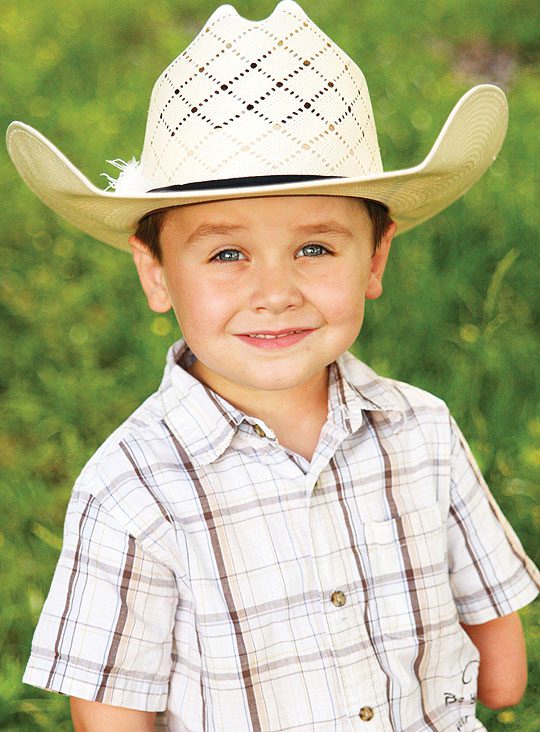
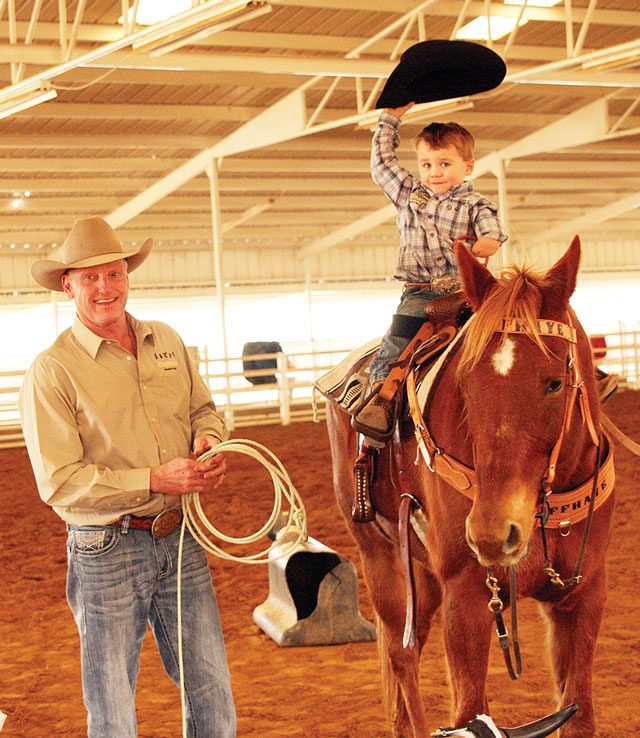
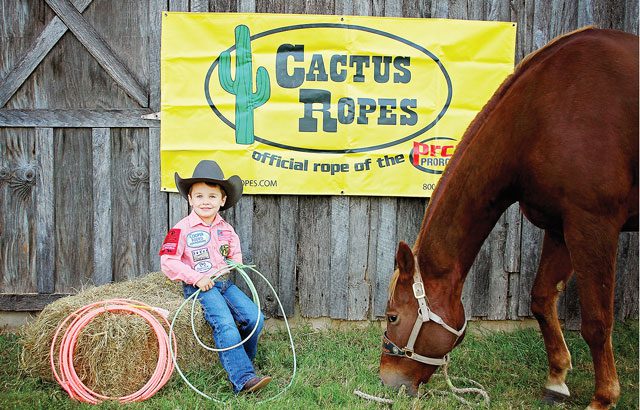
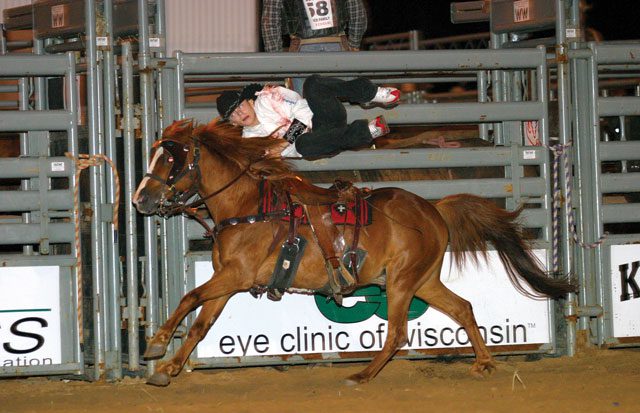
    Five year old Colton Workman of Lincoln, Ark., may have only one hand to rope with, but he has more than enough heart to catch any roping calf or steer he encounters in the arena.Described by his family as coming into the world like a firecracker on the Fourth of July, Colton was born with only half of his left arm, but twice the determination. Born into a rodeo family, his parents, Brittany and Lewis Workman, roped and ran barrels, as well as his two older sisters, Tabor and Kayden. Colton was roping the dummy not long after his first birthday, and once old enough to ride by himself, he quickly figured out how to hold the reins with his left arm, which he refers to as his nub, and swing his rope with his right hand, his coils held securely by an attachment on his saddle.
    When Colton’s dad passed away in 2013 after a car accident, thousands of people mourned the outgoing cowboy’s death. Eight-time world champion roper Roy Cooper heard about Colton losing his dad, and in December of that year, his foundation contacted Brittany, asking if the Cooper family could meet Colton in January. Roy, Clint, Clif, and Tuf, became fast friends with Colton, and he looks up to each one as a mentor. “After we met the Coopers, they took Colton into the Cooper Rodeo Foundation and the Rope Your Dreams Scholarship,” Brittany remembers. “Roy says Colton is family, and Colton is very close to the them.”
    “What a great little kid!” says Roy. “He doesn’t even know he’s disabled. He’s so sharp and smart, and he’s got a great attitude.” Since becoming part of the Cooper family, Colton not only participates in their clinics and competes in their ropings, but he also travels with Tuf to events like The American and the WNFR. Through his travels, he has met numerous figures in the rodeo world, including Lane Frost’s parents. Signing autographs with Tuf and Trevor Brazile, and attending Elevation Sunday during the WNFR are always highlights for Colton. Having just entered Kindergarten, he has a multitude of all-access passes to some of the largest rodeos in the U.S., which Colton keeps with other mementos in a shadowbox in his room. He even has a letter written to him by the House of Congress in 2014, stating that Colton “is an inspiration to all.”
    Colton’s travels have also helped him connect with other children who have disabilities. “Last year at The American, Colton met a little girl in a wheel chair, whose wish was to meet Colton,” says Brittany. “Other kids also want to meet him and touch his nub or ask him questions about it. Colton has met so many kids like him and he talks about them all the time. He doesn’t forget anyone.”
    Having made so many connections with kids his age, Colton wasn’t expecting to be bullied when he entered Kindergarten this fall. Brittany wrote a piece on Facebook to spread awareness about bullying, and it was shared 24,000 times. “We got calls worldwide from kids who wanted to talk to Colton,” says Brittany. “I didn’t expect it to take off like that! We’ve even been contacted by The One-Armed Bandit (John Payne) and Willie Hart, the one-armed team roper, who have encouraged Colton.”
    In November, the family started an anti-bullying project – Saddle Up and Together Let’s Rein in Bullying. “We designed a t-shirt for our project, and in January, we’re doing an assembly in Arkansas which will be televised by RFD-TV and local stations. We’re going to three schools in one day with several rodeo athletes who have disabilities, as well as athletes from other sports,” Brittany explains. “We’re hoping this will make children more aware of bullying, and for parents to talk to their children about it, because the change has to start at home.”
    While Colton loves travelling, he finds equal joy in roping at home and competing in Roy Cooper’s ropings, as well as the USTRC and the CWRA. In 2015, he won the CWRA finals average in his age division, as well as the CWRA 7 – 10 Breakaway Roping Champion title, earning him a saddle, and a buckle, which is his current favorite to wear. He ropes the dummy every day and practices on live calves three times a week, riding his dad’s 17-year-old roping mare, Molly. His sisters, Tabor (11), and Kayden (eight) join him in the practice pen. The siblings also have a younger sister, Andi (18 months). Their step-dad, Ray Huffaker, is a team roping heeler, and he is teaching Colton to team rope. Colton also plans to be a tie-down roper, and he has taught himself how to tie a calf dummy, pulling the piggin’ string tight with his nub.
    Colton further enjoys hunting and helping on his family’s ranch, from moving cattle to baling hay and cutting wood. He is also responsible for catching and feeding his horses, and he has even been known to stand on his roping dummy, pretending to crack the whip like John Payne. “Colton is very determined to be like everyone else,” says Brittany. “Whatever it is, he’ll figure it out! Shriners Hospital provided Colton with a prosthetic, and he uses it sometimes, but mostly he would rather use his nub.”
    Taught to meet challenges head on, Colton’s dream is to make a career out of tie-down and team roping. His family and the Cooper Rodeo Foundation have given him the confidence and tools to succeed, and their encouragement has helped make Colton the inspiration he is today to people around the world. “Through this anti-bullying project, God has really opened my eyes to the reason Colton is here,” says Brittany. “There are a lot of children out there struggling with disabilities and Colton’s story has been a huge influence for them. Even if it’s people who don’t have disabilities, I think one of Colton’s purposes is to help encourage other children and adults.”


    Colton with Roy Cooper - BC Photography Colton with Cactus Ropes - BC Photography

  • ProFile: Roper Kiesner

    ProFile: Roper Kiesner

    Roper Kiesner is a man of many talents.
    The twenty-one year old cowboy who lives in Ripley, Okla., rides saddle broncs, makes and sells knives, and is a former trick rider.
    He grew up the son of a saddle bronc rider and barrel racer, and when his parents, Phillip and Julie, quit rodeo competition, they wanted to stay involved in rodeo.
    By then, Roper’s older brother, Rider, had learned to trick rope. So the boys’ parents formed a specialty act, the Kiesner Family Wild West Revue.
    Rider did the trick roping, Phillip did the cowboy mounted shooting, and Roper wanted to be involved in some way. “I wanted to do something,” he said, “but I’m not quite the ‘sit down and practice it’ like my brother, for hours on end. I’m more of a ‘get on and go’ person.”
    The family acquired two Shetland ponies and Roper learned to roman ride, his contribution to the family’s act.
    After he outgrew the Shetlands, he began trick riding. “I had fun with that,” he said. “I always liked adrenaline and going fast.”
    The Kiesner Family Wild West Revue was popular, performing at some of the biggest rodeos in the U.S. They took their show across the globe, entertaining in all of the 48 contiguous states, in Lebanon, China, Japan, Dubai, France, and for the Sultan of Oman in 2006.
    In 2010, when Rider, who is two years older than Roper, turned 18, the act slowly dissolved as he went out on his own.
    But Roper’s involvement in rodeo didn’t end. He had ridden sheep and steers when he was younger and always wanted to ride bulls. But he felt his size was a detriment, so he tried saddle bronc riding. During the second saddle bronc ride he made, at age 17, he got bucked off and broke his arm. After sitting out six weeks to let it heal, he got on three more horses. The third one bucked him off and shattered his collarbone, requiring surgery.
    Roper was deterred. “After that, I thought I’d hold off,” he laughed, but he didn’t hold off for long.
    He began drinking protein shakes to “make myself more durable” and put on some weight. He went from 95 to 130 lbs, and at the age of 19, got on a few more horses. “Fortunately I didn’t break anything,” he said.
    Now, two years later, he’s headed to his third Prairie Circuit Finals Rodeo, going in this year in sixth place, higher than he’s ever been ranked.
    Roper attributes much of his saddle bronc riding success to his trick riding abilities. “The trick riding helped a lot with balance and problem solving,” he said. “When I was roman riding, if I’d ever slip a foot down or backwards, or fall down, or lose my reins, I’d have to think on my feet really fast and get up, while the horses were going full blast, or I’d have to turf it. That’s helped me out a lot in saddle bronc riding. If I get out of position, I can get back down in the saddle.”
    The cowboy is also an artist. He designs and makes pocket and fixed blade knives and sells them via Facebook and word of mouth.
    It began when he needed a birthday present for his dad. He had the idea to make a knife. “I grabbed a horseshoe rasp and with a hand grinder, roughed it out and put a blade on it.” It was the beginning of his knife business. “Some people saw it and thought it was really cool, and wanted one, so I made more.”
    He’s refined his business to include better tools than hand grinders. Expert knife maker Jerald Nickles from Perkins, Okla. has taken Roper under his wing, teaching him the art and letting him use his equipment.
    Roper uses superior quality products for his knives, which started out as ranch and rasp knives and now are high-end. The blades are made of Swedish Damascus steel, which is folded and has layers, giving it swirls and patterns. The handles are made of mammoth, hippo and elephant ivory and exotic fossils and other bone. He estimates he’s made a couple hundred knives, and he loves it. “My whole life, I’ve loved dinking around making stuff, whatever I could think of. I’ve always liked knives. Knives are something you can go as crazy and wild as you want to with it.”
    The artistic talent runs in the Kiesner family. Roper’s grandpa and uncles made bronzes and did some drawing, and making knives works well with his rodeo schedule. He has a Facebook page which shows his products.
    When he has any spare time, Roper likes to hike and play the ukulele.
    Roper is living the dream; rodeoing, making knives, and living out life as a rodeo cowboy. Not bad for a boy who started roman riding on Shetland ponies.


  • Roper Review: Clay Smith

    Roper Review: Clay Smith

    Clay Smith heading for Jake Long in Ellensburg - Hubbell

    Clay Smith grew up in Broken Bow, Okla. “That’s where I’ve always been,” said the 24-year-old who will make his first trip to the WNFR, heading for Paul Eaves. “I’ve been thinking about this since I started roping when I was four. It’s all I want to do.” Clay ropes and rides – that’s it. “I don’t hunt or fish or anything, I just rope. I don’t get tired of it.” He is named after 7-time World Champion team roper, Clay O’Brien Cooper.
    Clay’s day revolves around riding horses and roping. “We ride horses for the public, and there’s always some young horses that we are trying to make better for us or other people. We ride the younger ones first, and then start practicing and roping,” he explained. “You never know who is going to show up – friends, family, and anyone interested in roping. We rope until 9 or 10 at night – we don’t eat supper until 11. We’ve got about 40 head of horses that we rope on.” Clay likes having that many horses around. “You don’t wear a horse out that way. That’s helped us with riding by roping on different horses.” The only down side to the number of horses is the time it takes to feed and clean stalls. “It’s a lot of work, but we don’t consider it work, because it’s all we know.”
    Clay has two brothers – Jake 22, and Britt 14. “Jake is two years younger and it’s been really good having him to rope with – he’s always wanted to rope as much as I do. It’s been a blessing to have such talented brothers. I’m lucky – I’ve got every single person in my family that loves to rope – it makes it fun.”  The brothers keep it competitive by creating match ropings. “We’re always pushing each other. Whoever loses has to clean stalls, feed, do laps, pushups or whatever we can think of.”
    The #9 header and #9 Elite heeler has been on a horse since he was born. “The day I got home from the hospital, dad (Mark) was holding me on a horse.”  Mark started roping when he was in high school and he rode and broke horses for people, so the boys have always been around them. “Ever since we could ride, he’d put us on ponies and we’d take them and sell them.” Mark started entering the boys in roping’s as soon as they could ride and rope. “We had no chance of winning – if I could catch 4 in 50 seconds I was doing good.” He was pulling steers around for the boys before they could even get their feet in a stirrup. “My dad would wear a head horse out pulling those steers.” Clay won his first roping when he was five.  “The association is called the OTRA and they had a roping every weekend. My dad would take us there every weekend.”
    The success of the young brothers caught the interest of the Tonight Show when Jake won the World Champion Dummy roping in Las Vegas when he was five. “When they called, Dad thought it was an April Fools joke because they called on April 1. They wanted us to come out there and be on the show. They flew us out to Hollywood and picked us up in a limo. We went to Disneyland, and Universal Studios – we had a special pass that let us go to the front of the line – I was 7 – that was a pretty cool deal.”
    The boys continued to compete together, eventually joining the Oklahoma High School Rodeo Association. “I never roped with anybody but Jake so I waited until he was old enough. We won fourth in the National High School rodeo my last year of high school.” They were home schooled through high school by their grandmother, a retired school teacher. Their mom, Tammy, was also a school teacher, and has recently retired. “Mom works more now than when she was teaching,” said Clay. “She’s the head cook and videographer. We’ve always got people looking for horses and people are always spending the week – we have a ton of people here all the time. And she still has to get up as early as she did when she was teaching, to take Britt to school every morning.”
    The highlight of Clay’s career so far is winning the 2015 Wildfire with his brother, Jake. Clay also competes in the Timed Event Challenge, something he has done for three years now. “Jake always helps me there, he hazes, heels, and heads for me – that’s kind of cool. He can do it all. I’ve won second and fourth last year – I broke the barrier to win it two years ago. I like that event– it’s a lot of fun.”
    Clay isn’t nervous about his first trip to the WNFR. “Right before I back in the box, I’m sure it will be a rush. I’m excited to go rope.” His family has been going there for 19 years in a row for the dummy roping. “Britt was too old last year, so we did not go. We said we weren’t going back until someone was in it.”
    Since he qualified for the WNFR, he can’t rope in the World Series, but both his dad and brother are entered at the South Point. “I’ve never entered out there – they just started having the 15 so I haven’t had a chance to enter.”
    Clay is engaged to Taylor Richey who he met after winning the Wildfire. “One of our sponsors set us up and ever since then I couldn’t run her off or she hadn’t left – she even cleans stalls.” Taylor traveled with Clay most of the summer, pulling more than 80,000 miles in the run for the WNFR. Clay likes the Rooftop Rodeo in Estes Park the best. “It’s a cool town and we got there a day or two early – it was cool to hang out.”  They traveled with Paul, Clay’s partner for most of the summer then borrowed a living quarters trailer, but when that broke down; then ended up pulling a three-horse bumper pull.  “We would sleep in motels or the truck. Moab Utah was interesting – we drove through town and the 30 motels were all booked, so we slept in the truck, because we don’t have a living quarters trailer, eventually we will have to get one. Some places we have people we stay with, but sometimes we have to rough it so having a living quarter trailer will take out some of the stress out of the travels.
    As for the future, Clay doesn’t plan on doing anything different. He and Taylor will get married next fall. “I’m going to ride horses as long as I can – we have fun doing it and that’s what I know how to do. Ride and rope.”

  • On the Trail: Sage Kimzey

    On the Trail: Sage Kimzey

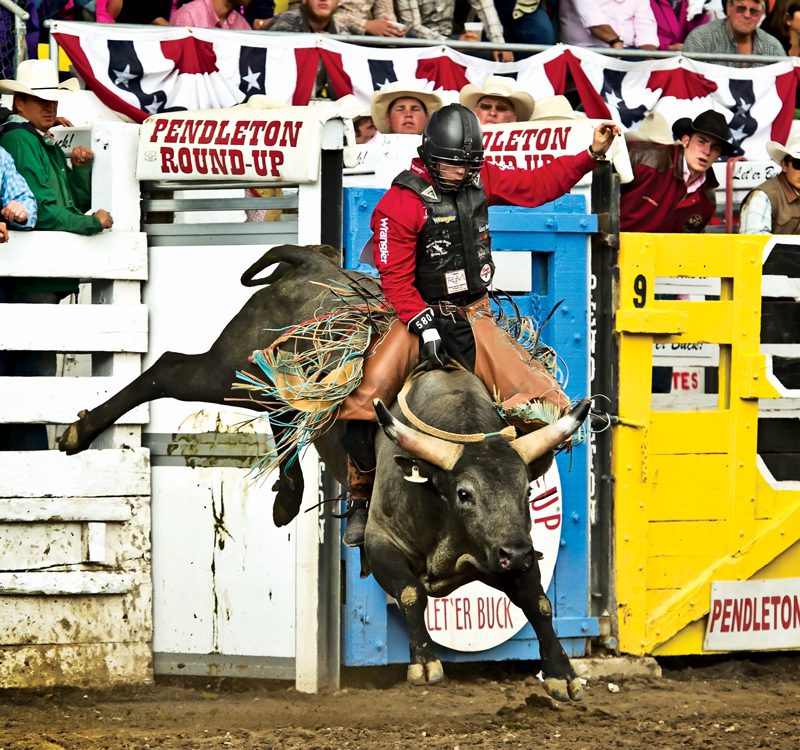
    Sage Kimzey, winning Pendleton in 2015. Making his second trip back to the WNFR, Sage won an event-record-tying four rounds of the Wrangler National Finals Rodeo to secure the average title and become the second rookie bull rider to win a gold buckle, following Bill Kornell (1963). - Hubbell

    It’s a rare occurrence in the sports world when someone comes into the game and has the potential to change the entire history of a discipline. For one in this position, one would almost expect the worst from the champion because they have the constant pressure of excelling in their event, while having others gunning for them. In just two short years, Sage Steele Kimzey, 21, has broken numerous records and is on the path to rewriting the history of bull riding. Ironically, for someone that is always in the spotlight, no one really knows him.

    When most people speak about Kimzey, the words “standoffish,” “fierce,” and “focused,” are often thrown around. Yet that is only describing him as a person, not his ability. Some believe that the Strong City, Oklahoma native was an overnight success because during his rookie year in the PRCA he managed to clinch the CBR World Champion title, the Ram Top Gun Award and he became the PRCA World Champion Bull Rider.

    In a sport that seems so demanding and complicated to most, Kimzey makes it look effortless. Everyone was created to excel in something, but Sage Kimzey has managed to create more bull riding fans with each ride and exceeds even his own expectations. Yet, as stated before, no one knows anything about him. We all know about his powers inside the arena, but so many fail to recognize him as a person when he takes off his Wrangler shirt and jeans and is simply, Sage. So, who is Sage Kimzey?

    Sage Kimzey is best described as a methodical person, who comes off as proud individual that is striving for perfection, even though he knows it’s unattainable. “People always see me as a fierce competitor that wants the sport of rodeo to grow, anytime there is a problem or some area is lacking, I definitely speak my mind and a lot of times it comes off as uncensored and pretty harsh,” says Kimzey when talking about reactions from his competitors. The nature of his competitiveness is nothing new; in high school as a senior point guard for the Cheyenne Bears he led his team to win the State Championship in basketball. Shortly thereafter, Kimzey was involved in a car accident that resulted in a broken hand. Fast-forward to college, where Kimzey finished fourth in the nation as a freshman representing Southwestern Oklahoma State University. So he had success in high school and in college, but could he hold up in the pro ranks?

    In 2014 the legacy of Sage Kimzey begins with wins at San Antonio, Tulsa, Rapid City, Spokane and many more. Then it comes time for the National Finals Rodeo and everyone was curious to see the 20-year-old wonder boy compete in the Thomas and Mack in front of thousands of people. He was put in the position that every real champion wants to be in, would he rise to the occasion or choke? Well $175, 466 in 10 rounds, tied him with the most rounds ever won at the NFR with four, to secure the average title and make him the second rookie in history to win a gold buckle.With such a prosperous first season coming to a wrap, everyone assumed that Kimzey was on top of the world. However, the newly crowned World Champion didn’t appear to be a kid that had just reserved his spot in history.“I felt like I had left a few things on the table, I wanted to ride all ten rounds of the NFR and after I bucked off the first round, I definitely felt defeated. I was happy to accomplish a life long dream, but it didn’t sit right, especially after I bucked off in the tenth round,” says Kimzey. When asked about his hard outer shell he portrays to the world, he said he is a competitor from the time he enters the arena, until he leaves. Anyone that wants to achieve greatness understands this quality. To some though, they don’t know why he is not like the other guys. For those that do not know him, have you ever considered the fact that the qualities that make him great are in fact what set him apart? For instance, he has been in several high pressure situations whether it’s facing JB Mauney in Calgary for the title or coming in the number one man in the standings as a rookie…Most of those situations are not ideal, yet he never looks nervous.

    Emotions, the downfall of many athletes or individuals; once you allow yourself to feel the emotions that are normal of high-pressure situations, you lose focus. Sage Kimzey has trained himself to shut out the emotions and treat bull riding like an art. For eight seconds, he is in a parallel universe where the world is not apparent and he is focused on conquering a beast that always comes in fighting condition. To be the best bull rider in the world, you have to negate any feelings of uncertainty and take care of the task at hand. “I expected to be at the place I’m in, just not this fast,” said Kimzey jokingly.

    Last year after he won the world title, they asked him, “What’s next?” and Kimzey responded, “You can only go up from here.” The success and fame from the gold that graced his belt did not faze him; instead it made him eager for the new season.

    With the 2015 season, Sage Kimzey managed to exceed even his first season with wins at Rodeo Houston, the Calgary Stampede, the Ellensburg Rodeo, the Pendleton Round-Up, the Xtreme Bulls Tour Finale, the Wrangler Champions Challenge Finale, Spanish Fork Fiesta Days Rodeo, Lawton and several more. Out of the major rodeos, the only ones that he was not able to win was the Salinas Rodeo and Cheyenne Frontier Days. As one can see, he has a lot to brag about when it comes to this season, coming into the National Finals Rodeo in the number one spot and with a title to defend, Sage Kimzey remains calm and focused. Every time someone is at the top of his or her game, people are going to talk and whether its good or bad…History remembers the rides, not the rumors. If Kimzey continues on the same path, every industry professional will agree that he is destined for the greatest of things.

    If you are a fan of rodeo and of bull riding, its a great time for you to get to witness this man on a path to break every record since bull riding began, at this point he is being compared to the greatest of all time. As they say, “the finest steel has to go through the hottest fire.”