Recently at a jackpot I watched a young girl whose head horse was ducking out hard. It was pretty scary and like most people watching I assumed he just wasn’t that great of a horse. Not long afterwards she and her father came to me for private lessons. While we were playing back the video after our first roping session, we started looking at her feet and how they were in the wrong place. When she threw her rope, she would squeeze with her right leg and open her left leg with all her weight in her right stirrup.
I was completely amazed how, after spending 30 or 45 minutes on the Speed Trainer, she began use her legs correctly. She rode very well, but it was a habit she was unaware of. Once she was using her legs and feet correctly, she was able to handle steers and set the corner up much better. Her dad was much the same way. When he threw his rope, he would unintentionally squeeze with both legs. His horse is very athletic and fast with a lot of buttons. It took a little longer for Dad to correct this habit because he’s been roping for 20 years and using his long legs to hang on with. It was incredible how much his horse relaxed and quit climbing, enabling him to set his corners up.
It’s truly amazing how many mistakes we, as team ropers, make with our hands and feet. We get mad at our horse for not working correctly. But we have a tendency to give up our riding to be able to catch the cow. The difference in how these two horses looked and worked after just a couple of days was mind-blowing. In the beginning they looked out of control.
If you have a horse with a lot of buttons and feeling, that means he works off leg pressure. You need to be aware of when you’re doing things wrong. When it feels like your horse is making mistakes, there’s a good chance it’s pilot error. That’s just one of the reasons I love using video to teach. There’s no argument once we freeze the frame. It’s obvious where your feet and hands are and whether you’re the cause of what is happening with your horse.
You need to be able to go slowly on a dummy and do things correctly. That means doing it at a walk. It’s surprising how many #5 and #6 ropers cannot stand to rope the dummy at a walk. It exposes holes in the foundation of your roping. It’s hard to improve without a good foundation to build on. The lack of a good foundation is why a lot of team ropers’ numbers never change.
You should be able to walk up behind the Hot Heels on your horse slowly, rope it, pull your slack, dally, keep your horse moving forward, then turn off and go left, and face at a walk without making your horse change speed. If you cannot do everything controlled at this pace where your feet and hands are in the correct position – it will be very difficult to do it correctly while running live cattle. Most professional sports teams make their players walk through drills – to make sure their feet are in the right place. That’s why I believe in slowing things down to become more consistent.
Author: Speed Williams
-
Is it the Horse or Horsemanship?
-
When Things Don’t go According to Plan
My daughter has been very excited about her first high school rodeo because the Breakaway and Team Roping is pretty tough in Region 10. During her first year in junior high rodeo, a young man, Logan Moore, talked to her about them roping together her first year of high school rodeo, which is also his last. He’s a senior this year and already a #9 heeler. She’s fortunate to have a partner of that caliber.
Between practicing for breakaway and heading she over did it practicing. This is the third time her shoulder has locked up. The muscles get tight and it’s very painful. The chiropractor blames overuse and a growth spell. Needless to say, when you’re hurt before the weekend starts, things tend not to go according to plan.
In the breakaway she got a great start and took an extra swing. Her horse got her a little because she was going to throw and then second guessed herself. In the team roping they were second team out of forty. Last year you could almost use a World Series start. This year the steers were on the fresher side and I wanted her to be aggressive. Score let him take a step and go to him. Our steer didn’t run and she broke the barrier. There were some steers that hauled butt, ducked and dived. For the most part it was a good set of steers and if we’d had a rerun it would have been outstanding.
The second day Hali drew a calf on the slower end that ran with his head on the ground, then checked off and came right. She had a rerun on him. She missed the barrier and was a hair late because he was slow the first time. She was 3.6 and didn’t win anything. In the team roping she got a great start and the steer stepped right just as she roped and it waved off.
She was devastated by her first high school rodeo weekend. We talked about being hurt before you start. Sometimes you have to do the best you can. We went back and watched the video and we talked about each thing that happened. It’s going to happen in rodeo because you cannot control all the obstacles. It’s difficult to second guess yourself, especially in a one header. You have to gamble a little bit and the draw plays a major role.
In my opinion the worst thing you can do is get mad at your kids when they have a bad weekend because they’re already devastated. In my case my kids really want to rope and they work very hard at it and not just in the roping pen. Every day they do their drills on the Speed Trainer without being made to. It would upset me if they didn’t want to work at it. But I know the time and effort they put in, and from my own experience I’m very aware of the variables that can cause you to have a bad weekend.
Dealing with and trying to overcome the variables is one reason I’m such a big believer in video. It enables you to break it down, frame by frame if necessary, and see the little things that happening. Being aware of what’s happening helps your odds of having a successful run. It doesn’t make having a bad weekend any easier to accept. Whether you’re wounded, not at the top of your game, or riding a green horse.
We’ve been two full weeks without riding or roping. We’re hoping to get the green light to start back in a couple of days, but we’re not going to be able to practice a lot and possibly overdo it.
Like I tried to explain to my daughter, she has ten rodeos. “Think about the long term, short term and overall goals you’re trying to accomplish. You can’t dwell on last week. You have to block that out and move forward. In your mind you need to believe you did good last week so you have the confidence to take that throw the next time.” -
Helping Your Kids Want to Rope
When my daughter, Hali, was young she was always a “horse girl” and horse lover. She wanted to be down at the arena riding and helping me. She was my little side kick. When I tried to walk out the door she wanted to go where ever I was going. If it was cold or rainy, I would tell her she could stay inside, but she insisted on going and would be bundled up with her little cheeks red. She always wanted to be out there riding
When we moved to DeLeon and I started teaching lessons, Gabe was a toddler and my mother-in-law would babysit him at her house. Hali started going with Gabe and I wasn’t really wild about the kids being gone during the day. At the time Buddy Hawkins’ mom worked in Gorman and I knew she had two daughters who loved to rope. So, I arranged to meet with her and made sure her daughters were present. I offered her a job babysitting Gabe and I would also let the girls rope. My father always had kids around our place that roped. I believe it is crucial for your kids to have fun. If they don’t have fun in the arena, they will find something else to do.
With our new arrangement I gave the Hawkins girls horses to ride and they would ride all day long. When I taught private lessons, they would be right there with us roping the Hot Heels. When we would start roping steers, they would rotate getting ropes off at the stripping chute. The girls would hand them to Hali and she was like the pony express bringing the ropes back up the arena every time.
When she was young I was nervous about her being able to control her horse and getting hurt at such a young age. We didn’t go to many competitions until she was 11 or 12. At that age she would be big enough and strong enough to control her horse and could make that decision herself. We got into gymnastics for a year. I went to one competition and told her I would support her in whatever she wanted to do, but that I didn’t know anything about gymnastics and couldn’t be much help. Then she got into softball after helping me work with Gabe on his baseball. I coached both of their teams one year and ended up encouraging them to play select ball. It was unique experience that I would never change.
The turning point for Hali was when she was 12 and playing a softball tournament in Abilene. With the wind chill the temperatures were around 28 degrees. They played for two days and won second. I’ll never forget when she got in the truck to head home. She had the trophy in her hand and asked me if she could buy a hamburger with that trophy. I answered, “No, but it can help with scholarships and an education.” She asked if she could get scholarships and an education by riding horses or roping and I told her, “Yes.”
She said, “Dad, I just won $1,800 at a jackpot and I didn’t have to run.” When her softball team lost the game, their coach made them run four laps around the field. Everyone on the team was on the track team but her. She said, “Dad, I think I need to rethink my plan.” From that point on she’s been a roper and competed in junior rodeo.
I never made her rope. But, when she was little she could choose to get my ropes off at the stripping chute or she could rope. By that time, she had made many trips up and down the arena to the stripping chute. She would much rather rope than go get the ropes if the girls weren’t there.
I have never made my kids rope or ride. My father was good at giving you an option. When he suggested something and you showed displeasure, the next option was much worse. I’ve always used that mentality because no one likes to be told to do something. I like it to be their choice in whatever they do. I might have stacked the deck a few times in what those choices were but it was always their option.
The main thing parents need to understand is if your kids try, and practice, then the last thing in the world you need to do is get on to them when they don’t do well. I have never once been upset with my kids when they have failed or made a mistake. I’ve had that experience myself and don’t want that for them. It’s not productive and makes everyone unhappy.
Hali has always been a lot like me – very prepared, organized, and will have everything ready. Gabe, on the other hand, is very different from Hali and next month I’ll talk about his journey to catching the roping bug.
I want them to rope and ride, so when we’re done practicing or competing, we’ll watch the video and talk about what we need to do different. We do our drills on the Hot Heels and work at controlling our horse. Now, with the Speed Trainer, I’m able to work on their swing, getting weight out of their stirrups, etc. All those little things that you can’t fix while roping horseback. It’s a very useful tool and we usually take one with us whenever we go compete. They do their drills before roping and if they make a mistake, I will find them on the Speed Trainer working on the issue. I’m very proud they take the initiative to do this on their own. -
Competition & Injuries
Throughout my career as I prepared for big events I tried not to run as many on my good horses. When you practice a lot before a big event sometimes things happen. You burn your hand, jerk a shoe off your horse, etc. Quality over quantity is the best practice.
This year, before going to the state finals, Hali was running barrels and a horse tripped and fell with her running to the barrel. She hurt her right knee and shoulder. So, she didn’t get to practice team roping, breakaway, barrels, poles, or goat tying because both her knee and shoulder were a little loose.
We discussed it and she wanted to get up at 4:30 a.m. the day we were leaving to practice all her events. I said, “You haven’t been on a horse in four days and it won’t be smart to practice. You’re still sore and just starting to feel good.” Her answer was, “Dad you’ve always taught me to prepare before an event.”
I said, “Honey, sometimes you have to prepare your mind when your body is not able.” She didn’t agree but took my advice and didn’t rope that morning. She packed all her stuff and got everything ready to be at the finals early. About two hours into the trip she said, “Dad you were right, I only packed and loaded my stuff and I’m sore.”
The last year Rich and I roped together at the NFR I had a horse fall with me at the Dallas Stampede cracking a bone in my knee. Then, while practicing three weeks before the NFR, another horse stumbled and fell on top of me. It pinched two nerves in my back and popped two ribs out. My chiropractor would not touch me until I had an MRI done. When he did adjust my back, it sounded like a 22 went off. The problem was it had loosened up the ligaments in my back and when we got ready to go to the NFR in 2005, I could not drink a glass of water with my right hand. I was hurt. Rich and I had won eight titles in a row and I told him he needed to get another partner, that I didn’t need to go to the finals. He wouldn’t do it. I didn’t rope very good for the first seven rounds. I ended up getting on Viper the last three rounds. We were 3.9, 4.0, and 4.1 and won or placed in those rounds.
During the drive to Gonzales, I told my daughter sometimes things happen that you can’t overcome and you have to deal with it. She didn’t do very well in barrel racing, poles or goats. She was a little out of sync. But she spun three good steers in the team roping and won the breakaway.
We talked about it afterwards and I told her there comes a time when you have to take care of yourself and your body. As I got older I would practice less as we got closer to big events. That’s when quality over quantity is very important. The same goes for your horse. It’s not smart to make run over run on him. But keep him exercised and have him healthy. There’s a lot you can do to mentally prepare yourself. When I was competing all the time I tried to stay fit both mentally and physically.
I took the Speed Trainer down to Gonzales so Hali could do her drills for team roping and breakaway. Each day she roped about five of each to stay sharp. She couldn’t really ride very much without getting sore. That really hindered her in the barrels and poles because they are fast and physical sports. I’m not an expert in either, but when you’re wounded, the level of difficulty is off the charts.
Hali and Gabe ran into a little trouble in the team roping. Gabe lost a leg on one and fumbled his dally on another. They made the short go and made a nice run. During Hali’s entire Junior High rodeo career, she has spun all her steers but two. She ropes right to left, roping the right horn first, and not both horns at the same time. A lot of parents teach their kids to rope both horns at the same time and I think it’s a disservice to them because it’s actually harder and a lower percentage catch. It’s only a better shot when reaching.
Hali did prevail in the breakaway. She was 2.8, 3.0, and 3.1, and won the average and state championship. We will be headed to Huron, SD, soon for her last year at Junior High Nationals. I’m incredibly proud of both my kids and the hard work they put into their events. -
Keeping Your Kid’s Horses Working
When kids like to rope and want to run a lot of steers, it’s often difficult to keep their horses working well. That’s one of the reasons we built the Speed Trainer. I wanted my kids to use their hands and feet better and improve their riding without the wear and tear on their horses.
Sometimes my sons’ heel horses don’t stop correctly. When I watch him on video, he’s squeezing, not pulling, and leaning to throw his rope and his horses aren’t stopping. Usually when this happens people want to change bridles, but the problem is if your hands and feet aren’t working together correctly – you are sending mixed signals to your horse. If you don’t ride correctly it’s hard to create a heel shot.
With Gabe, watching him on video really exposes the problems. He’ll ask what he didn’t wrong and my answer never changes, “watch the video.” There are many factors involved in missing and it’s important to determine the cause. Yes, you may hit the front legs, but why? Was it your horses’ fault, was it the angle of your swing, your delivery, or did your head let the steer drift? Heeling is hard because there’s so many equations involved in every run and you have to be processing each run as it happens. It’s a reaction to an action and you need to know all the equations to get your rope in front of the hind feet.
It’s amazing how some heelers can look like a #7 or #8 one day and then can’t catch the next. It’s usually because you ran too many on your horse the day before and now he’s a little strong. You can’t get in position, you’re fighting him and unable to heel. One thing I do with Gabe is he is supposed to stop his horse at least once in every pen of steers. When the head rope goes on the cow and he turns, I want him to stop his horse. When his horse starts getting strong and wanting to cut to the cow I will ask him how many times he’s stopped him to remind him to stay in his hand. It’s amazing how much of a difference it makes in his horse if he does this just once each pen.
When you’re pulling on your horse and fighting him in the corner, trying to get in position, then you’re leaned back and your tip comes up. It’s hard to swing your rope very fast when you’re fighting your horse. If you don’t get a good entry to the corner lots of bad things can happen.
I’ve done a few schools teaching kids using the Speed Trainer now. It’s hard for most of them to kick, swing, have weight in their stirrups, and not pull on the reins which lights up the Speed Trainer. When you’re pulling on your horse while swinging your rope you’re teaching him to run through the bridle. It’s hard to improve your roping if you can’t guide your horse to the cow correctly. It’s been amazing how fast some of these kids improved their riding in just three days. To see the it in action visit speedroping.com or for availability information call Colter Buck at 903-434-8970. -
Kids and Their Numbers
There are a couple of opinions about kids getting their number raised. On one hand, it’s validation they are improving and proof their hard work is showing. But, as a parent, you want them to have the best chance at winning when they’ve put a lot of effort into practicing and preparing to compete. My daughter, Hali, has been moved several times. At her first USTRC Finals she was 12 years old and competed as a #3. Now at 15, she has been moved to a #6 header. When she was moved to a #4, I agreed with the move and she was given time to grow into the number and be competitive. Her move from a #4+ to a #5+ happened rather quickly and it shut us down for quite a few months. She had competed at some places with slow cattle and an easy start and she stood out.
It took a while before she was competitive as a 5+ and she stayed there a while. But her recent move to a #6 header I saw coming and was ready. She doesn’t like it because naturally she wants the best advantage and it really changes her partners at the ropings. I have worked with both my kids on scoring, riding across the line, and being ready to rope when they reach their cattle. We were at a roping the other day that had slow older cattle and she really stood out because of being ready to rope when she got to them. Both my kids roped outstanding and even though we didn’t win a lot, it wasn’t a surprise their numbers got moved.
I actually feel she is more competitive now as a #6 header than she was when she was moved to a #5+. We have worked at and fixed a few of the fundamental issues. Now she has to learn to score, because as a #6, she has to start entering the higher numbered ropings that use a traditional barrier. Naturally, she likes it simple and easy where going behind the WSTR start is less complicated.
In one way, I feel sorry for her that as a 15 year old she’s never won a truck or trailer, like a lot of kids her age. She has won the #11 Shoot Out twice and won a few saddles. Now as a #6, it eliminates her from competing in many of those ropings at a fairly young age. I’m proud of how far she’s come in both her roping and riding. We still have a lot of work to do and tweaks to make in her “going fast” mode. Only time will tell how competitive she’ll be as a #6.
This is a conversation I’ve had with many parents. You spend all this time practicing and buying horses and lessons for your child. Then they go somewhere, have a good weekend and get their number raised. It’s very tricky because the Triad System is trying to monitor thousands of people. If one person pops up on the radar, they are moved right then. However, they will move them back down if they realize they’ve made a mistake.
But with kids, they let them catch up to their number. Kids improve so fast with access to more schools and now online training sites like XFactor, Total Team Roping, and Speedroping.com.
I have seen a huge difference with my kids using the Speed Trainer. With this tool, they are roping less on their horses, but getting simulated practice on a stationery horse. Whenever they do something wrong with their left hand, there’s a light and noise that lets you know immediately you’ve made a mistake. It’s been amazing to watch them progress with their riding and ability to use their legs. If you would to see the Speed Trainer in action, visit speedroping.com where we have videos that demonstrate how it works. -
Wildfire Pro Am Event
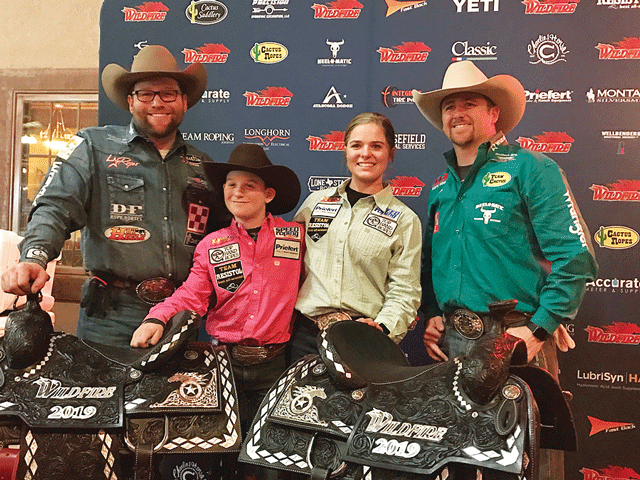
Last weekend my kids both achieved something they’ve worked at for the last few years. One roping produced at the Wildfire event, is the Sponsor Pro Am. In this roping, companies who sponsor the Wildfire event are given a spot for a #5 or under to rope with a Pro. Both of my kids have been fortunate enough to rope in it for the last few years, but have never won it. This is a roping where the amateur headers rope against each other and the amateur heelers rope against each other. So basically there are two amateur short rounds – one for headers and one for heelers.
A few years ago, when Hali was 12 and a #3, she and Coleman Proctor came back high call. At that time the short round was the next day and run with the Open and All Girl short rounds. When it came down to it, she had to be a long 7 to win the roping. At that time, when she was nervous, sometimes her loop would go under the horn on the right side. I can’t begin to tell you how nervous she was roping in front of all the Open pros… and she missed. It took a long time for her to finally be able to let it go. But I do not believe since then she has missed one because she dropped her arm and went under the right horn.
For the next couple of years she wasn’t in a situation to win the roping. So this year when she was trying to decide whether to ride her good horse or her back up horse I told her, “Honey, you’ve wanted to win the black saddle for a long time. Take Spiderman down there so you have the best chance to win it.”
She came back high call with Jake Long and third high call with Junior Nogueira. Her third high call steer didn’t start and she broke the barrier. For her high call steer she had a short horned steer that tried a little. She roped him around the neck, he didn’t handle the best and Jake Long pulled off an outstanding shot, winning the heading.
My son, Gabe, was 9 when we roped in it together several years ago. We won second then and one year he lost his rope. So for him to come back second high call this year was a great achievement. I have to give my buddy, Coleman Proctor, some grief on their first steer out for splitting the horns. Gabe did a great job of getting him caught and they there were 11. I think Coleman was a little nervous roping with Gabe. He did an outstanding job on the next two and their high call steer. I’m happy Gabe was able to win his first saddle with Coleman.
Both of my kids have been trying to win this roping for several years. It’s pretty special for them both to win it at the same time. I want to thank Chad Havens with Bridgefield Electric and Precision Hydrovac for sponsoring that event and giving my kids the opportunity to compete.
They’ve both been working hard on the fundamentals that they don’t do correctly. The Speed Trainer has allowed me to isolate and work on their weaknesses. It’s hard to work on fundamentals when you’re running down the arena, whether it’s on live cattle or a mechanical dummy like the Hot Heels. While riding you’re trying to balance on your horse and swing your rope, versus when you’re on a stationery horse you’re able to focus without those distractions. This tool has helped my kids improve and have better success. To see their runs at the Wildfire event, visit speedroping.com. -
Dealing with Winning and Losing
I’ve heard it said, “Show me a good loser and I’ll show you a loser.” I don’t agree with that. I think it all pertains to how you’ve been raised and how you’ve been taught to conduct yourself in the arena. Personally, my father did not allow temper tantrums in life, much less the arena.
When I was 12 or 13, my father and I were sitting at a jackpot when a guy missed his cow, jerked his rope, and then spurred and whipped his horse. My father said, “Son, if I ever see you do that I will be headed to you and you will have a butt-whipping coming.” He taught me I was to conduct myself professionally whether I won or lost.
I’ve heard people say that I never showed much emotion when I roped at the NFR. And as a whole that’s correct. I did get excited a few times, but overall I didn’t get up or down much at all.
What I try to teach my kids, when things go wrong and they don’t do well, remember there are a lot of people watching to see how you handle it. Don’t be mean to your horse or your partner. It’s very important for your horse and your partner to help you do the best you can. If they are worried about how you will react, they won’t be able to do their best work. I’ve also told my kids if their partner misses, it doesn’t hurt to say, “Hey it’s okay, we all have bad days,” or “We’ll get them next time.” When things don’t go well, a positive word can mean a lot.
There are many different ways to handle failure. Things will not always go according to plan. Being emotional, or screaming and throwing a fit, will not help. It’s no different than life, and learning to deal with the ups and downs that come with it.
How and what to teach your kids is a personal choice and everyone is entitled to their opinion. The things I try to instill in my kids and how to handle themselves when things don’t go well, is how I was raised.
I’ve had both kinds of partners. I’ve had extremely supportive partners and I’ve had partners that met you at the back end of the arena and told you how dumb you are. The last thing someone needs, after dropping the ball at a prestigious event, is for your partner to tell you how dumb you are. There are guys I wouldn’t enter jackpots with because I knew if things went wrong they would have a fit.
There’s a difference in being frustrated when you make a mistake versus when your partner makes a mistake. People can handle their frustrations and emotions their own way as long as they’re not abusive to their horse or other people.
As an adult and parent, I appreciate how my father raised me and taught me to behave. This is how would like my kids to conduct themselves, both in life and the arena. -
Keeping it Fun While Learning
One of the most common conversations I have with parents is how their kids want to switch ends in the practice pen. They may head at the ropings or rodeos, but when they get in the practice pen they want to heel. Many parents won’t let their kids play or practice the other end because they think their kid should be strictly working at the event they compete at.
I don’t agree with that. It needs to be fun and if you take the fun out of the practice pen, they might find something else to do. You may not realize how just scoring your horse and turning steers, over and over, can get very boring. Keep in mind, while they’re playing, roping, and riding, they’re still learning to create angles. Letting your kid rope the other end lets them have fun and there is much they can learn. The objective is to get better and they will learn as they play.
I’ve not had to deal with it with Hali, but my son, Gabe, loves to heel. However at 12 years old, he has a better chance to win if he heads. But he enjoys heeling and it’s a lot more fun to work on heeling in the practice pen. He’s heeling for Hali at the Junior Rodeos, but he heads at the jackpots so we have to work at both.
I’m very adamant that they do their event correctly in the practice pen before they get to play. We set goals and if they can’t achieve those goals, then they need to work at their event. If they achieve the goals, then they can play a little bit.
You want them to be a better hand with their horse and rope, whether they’re heading or heeling. Give them scenarios in the practice pen where they have to be under 10, 9, 8 – or whatever depending on your child’s skill level. It’s not good practice to just run steer after steer. These need to be scenarios they can achieve, and must achieve, before switching ends.
The objective is for your child to have fun and learn things that will benefit them in life. It will teach them discipline, responsibility, preparation, and how to tend to business. If they can’t catch and complete their scenarios, then they need to continue to work at this. You’re not the one telling them they can’t; it’s up to them to achieve the goals.
I highly recommend setting a goal in the practice pen where if they do their event well three days in a row they win something from you as parent. Whether it’s going out to eat, going to the movies, or whatever.
Make the practice pen preparation so when it comes to competition they’re used to dealing with pressure every day. This teaches them to control their nerves and heart rate. Put something on the line they can win or lose. If they do well and achieve the goals you’ve set, they win something. If they don’t, then maybe they have an extra chore.
When setting goals keep in mind what your child can do and keep it attainable, but yet a challenge. Whether it’s catching three in a row, catching five under 8-seconds, etc. Be realistic and don’t set goals that are not achievable.
Remember the goal is for your child to have fun while they’re learning and most kids respond well to attainable challenges where there’s a reward at the end – whether it’s getting to switch ends in the practice pen or going to the restaurant of their choice. -
Effective Preparation is More Than Practice
Last weekend I was inducted into During my acceptance speech at the Pro Rodeo Hall of Fame I told the story of when Rich and I first started roping together. We went on to win eight world titles together but we weren’t exactly on the same page in the beginning.
On my first day in the practice pen with Rich, we roped his 650-700 lb. steers which he had been roping for a couple of years. I told him these steers were no challenge at all and we’re trying to get ready for the NFR. In my mind I’ve always tried to make it harder at home while preparing.
That’s one reason I like the Hot Heels Supreme. It has a “Jen-Stick” and the legs hit the ground, making it almost impossible to catch at the wrong time. A lot of people come to my house and say they can rope their machines fine at home, but can’t rope mine. I think you should make it as difficult as possible at home. A lot of people want to make it easy in the practice pen. You have to realize you’re trying to train your mind and prepare yourself for competition. So the more you fail at home and learn to overcome obstacles, the better chance you have for success when you leave home. That’s the name of the game.
I told Rich I wanted to buy 20 fresh 350 lb. calves and rope them in our arena set up to NFR arena specifications. You have to realize on our first day of practice we ran probably 30 of Rich’s steers and had 30 clean runs. On the first set of our 20 new calves we ran, we had two clean runs. Needless to say, my partner was not very happy. He was not used to missing and didn’t miss many. But he was willing to try something new. In doing so, after about the 3rd or 4th time we ran them through, we started making some pretty nice runs.
In the practice pen, depending your ability level, it does no good to practice all the time when you know what the steer is going to do. Because when you’re away you won’t know what the steer is going to do. Your practice should not become automatic and easy, keep it challenging and make it worth something. Especially for kids, like maybe who is going to saddle or some other chores.
Put something on the line in the practice pen so that it makes you a little nervous to miss. Make it matter. You want to generate nerves in the practice pen so when you leave home, you won’t get as nervous. The more you can generate nerves in the practice pen, the easier it is deal with it when something is actually on the line.
As I’m doing this article we’re actually doing drills right now for the Junior Rodeo next weekend. My daughter is practicing her ribbon roping. We made a deal that if she did her drills correctly ten times in a row, then she would not have to do a chore that she really does not enjoy. Consequently, her loops were outstanding.
Simulating pressure in the practice pen is probably the most important thing you can do to be able to catch. It’s hard to become successful if you fail under pressure. Then you will start fighting your head the next time you’re in that situation.
I’ve been teaching a lot and most of the next couple of months are booked. Gabe has been helping me and making quite a hand, both at home and away. People ask me all the time if I miss rodeo. Sure you miss the NFR and the excitement and opportunity. But being able to teach and help people and have my kids involved is a dream come true for me.
We entered our nephew, Caden, in the chute dogging for next weekend. They didn’t have many entries and he may only have to throw one down to qualify for state. He wasn’t sure what to do and I needed to show him how it was done. After cracking a few ribs a couple of months ago, I was reluctant to try it. My wife and son had never seen me throw on down. Gabe was a little surprised and maybe a little impressed. We post the kids’ rodeo runs and some practice runs on speedroping.com. -
Going for First or Just Catch?
We made our first trip to the Junior High School National Finals in Huron, SD, last month where Hali had qualified in the Breakaway.
She had roped well at regional finals and was 5.1 or 5.2 on two and won second. Then at Texas Junior High Finals she roped a 2.4, 2.7, a 3.2 and won second. At nationals last month she was 2.7, 2.8 and a short 3 and ended up winning third. The fact is you’re not always going to win first.
The conversation I had with her was that by roping conservatively her loops were high percentage shots. Everywhere we went there were girls who went faster. It came down to the short go at nationals and Hali was third high call. Josie Conner had roped two good calves and won the first round and second in the second round. She had a 6/10-second lead on us going into the short round.
We had been working on roping faster, but the catch percentage is not high. However, at the one-head jackpot Hali did rope fast and was 2.1. It wasn’t the prettiest loop. It hit him in the head and wrapped around and caught him.
At the finals you are able to watch the stock on film to see what they do. I always did this when I was rodeoing because I felt it was just part of being prepared by knowing what to expect from your steer or calf. We watched Hali’s short go calf three times run about 15 feet then hard right. We have a similar calf at home and he’s not a high percentage catch when trying to go fast. She asked what I thought she should do in the short round. I told her she could be really fast if she wanted to try and get a good start, swing twice, and fire. But in doing so there’s a 50/50 chance of catching him. If she did that and missed I didn’t want her to be devastated by trying to win first.
I said, “When you back in the box, do whatever you have to do to win first and let the other girls have to beat you. If the girls in front of you go fast, then you need to go fast.”
Personally, when coming back in the top three, my goal has always been to do whatever I needed to compete. When Hali backed in the box she needed to be a middle 4 to lead the roping and her catch ratio is pretty high if that’s all we need to do. She went and caught him and then the other two girls went and did their job and caught their calves.
She wanted to win first but the thought of driving home after missing would have been too hard. If she had taken a low percentage throw and missed and then the high calls had broken the barrier or missed, she would have been devastated. That’s the price you pay when you gamble. You have to live with when you don’t win. Had we tried to go fast, our success rate would have been low because our calf did not do what we expected. He went 50 feet before going right. So it ended up being a smart thing by going and catching.
Ultimately my advice to my daughter is if she rolled the dice and it didn’t work, I wanted her to hold her head up and keep a smile on her face because she tried to win first and she knew the odds going in. Sometimes it’s not about winning first. There were over 100 contestants and the first time she made nationals.
As parents you want your child to win, but you have to understand the risk when they try to go fast and recognize the percentages of what they’re capable of doing and not be upset when they miss. To me, understanding your odds is part of rodeo. Hopefully next year our “going fast” catch percentage will be much higher and she’ll feel more comfortable rolling the dice. If your child doesn’t have a high catching percentage, it’s not reasonable to be upset if they miss while trying to go fast. -
Working Multiple Events The Difference in Breakaway & Heading
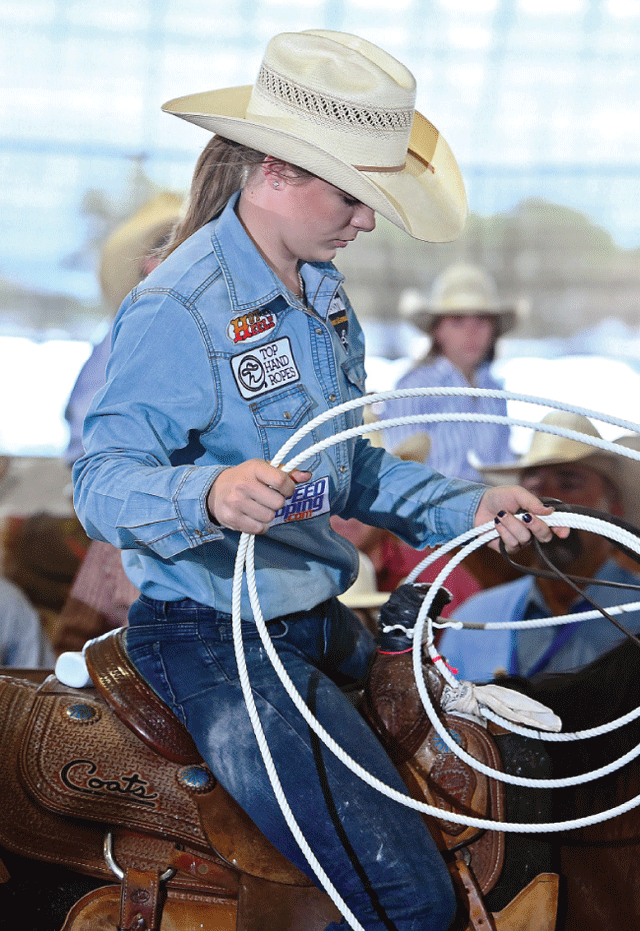
We just got home from the Texas Junior High School Finals in Gonzales, Texas, and I’m proud to say Hali qualified for the National Junior High School Finals in the Breakaway. I almost find it ironic because before junior rodeo she had no interest in breakaway roping. She was a team roper, period. She has come a long way in the last two years in her breakaway roping. Unfortunately, some of the fundamentals that help her be highly consistent in team roping are exactly opposite when breakaway roping.
There are two very different ways to rope horns: by roping both at the same time, or by roping right to left. I taught Hali to run close, feed the slack out between her hands and come across the horns. Consequently, she has been able to catch a high percentage of cattle at a young age. Breakaway, on the other hand, is about going fast.
At the finals in the Breakaway short round, there was one girl who was 4.3 on two, and another who ws 4.8 on two. Hali was 2.4 on her first calf, 2.7 on her second calf and was third call back.
Some of the things we’ve been working on is she has a tendency to tie her hands up and pull on her horse before she throws, causing her loop to be short because her horse is stopping before she gets there. We’ve also been working on her reaching. We’ve been practicing on her pole horse, her head horse, and Gabe’s new horse. Her pole horse is extremely sensitive so it really exposes any mistakes she makes with her left hand.
This is one of the reasons a lot of good breakaway ropers don’t like jackpot team roping. When you keep a lot slack between your hands and rope both horns at the same time, you have to be very precise with your loop. There’s very little margin for error.
Hali drew a runner in the short round she did a great job of letting go of her rope and reaching to catch her calf. On her first two calves she did what she normally does with her high percentage catch. The third calf was more difficult and she looked like a seasoned breakaway roper.
It’s been a struggle for her to learn to rope one way and have to change and rope another. It’s like playing golf where you need different clubs for different situations. She rides and swings her rope well. The more control she gets with her rope and range will help with her ability to reach.
If your kid works at more than one event and struggles, keep in mind that there are fundamental reasons why and they may need help understanding how to be successful. We’ve loaded a detailed video on speedroping.com of Hali working on her breakaway in preparation for the finals.
This is the time of year when kids are competing at their year-end finals. Not everyone will win. But there is so much to be learned about working hard, being a good sportsman, and a gracious winner, or loser. So many experiences that will help prepare your kids for life and what’s ahead for them.