Rodeo Life

Author: Siri Stevens

  • On the Trail with Hadley Barrett

    On the Trail with Hadley Barrett

    story by Ruth Nicolaus

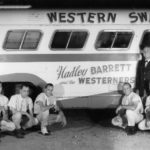
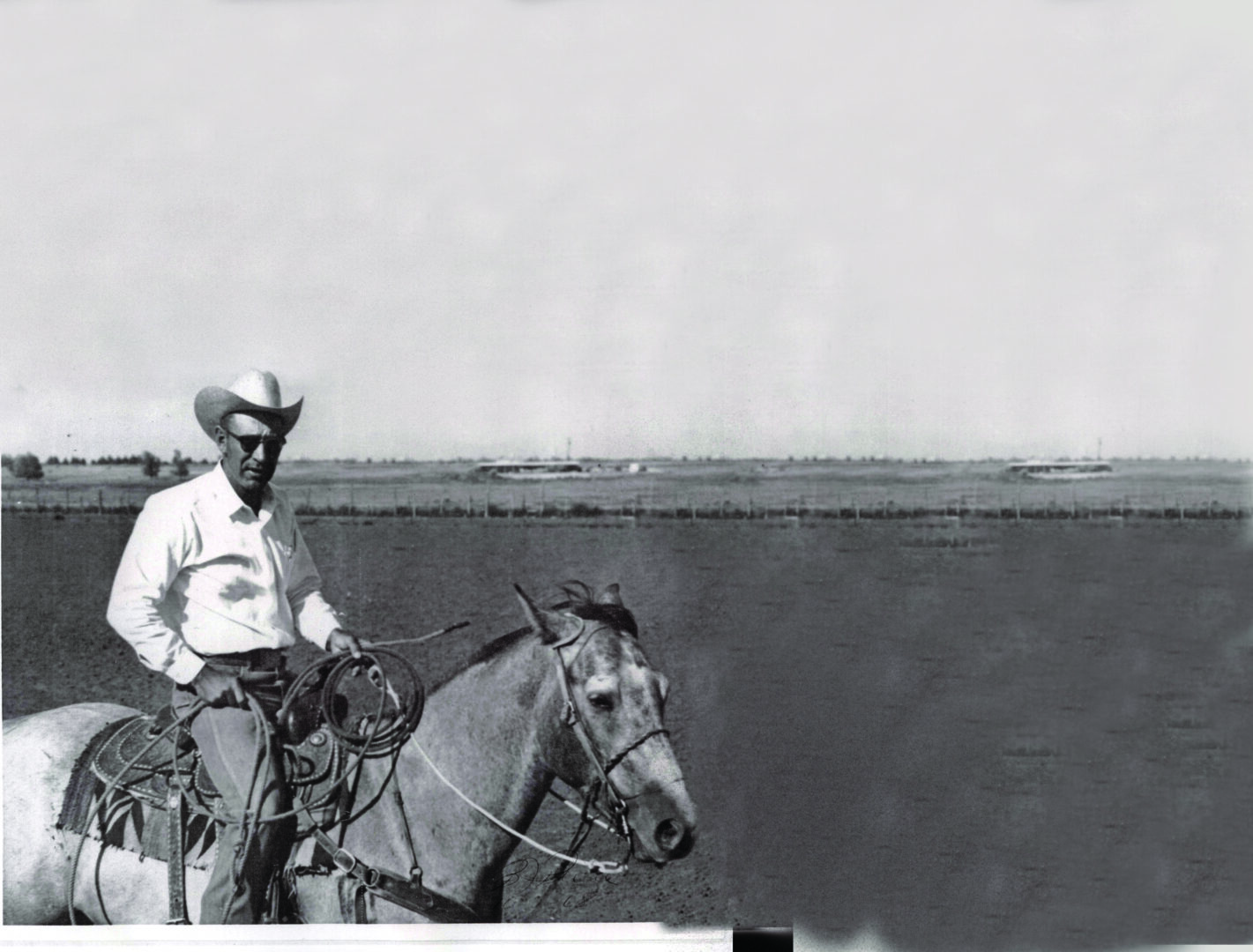
    Rodeo fans across the nation are familiar with Hadley’s voice, and those who were on dance floors across Nebraska, Kansas and Colorado from the 1950s through the mid-80s, listened to Hadley Barrett and the Westerners as he played guitar and sang.

    The Kersey, Colo. resident was born and raised in the North Platte, Neb. area, the sixth of seven children of C.J. and Estella (better known to friends and neighbors as “Mom” Barrett.) The family lived on the ranch ten miles north of town, and Hadley grew up knowing how to work. He was “working out” –working for neighboring farmers and ranchers –by the time he was fifteen. Hadley remembers the generosity of his parents. There was always a few extra plates around the dinner table. “Periodically we would have a less privileged kid who would hang out at our place.”

    He attended country school, and when he went to high school in North Platte, he boarded with his sister, who had a job and an apartment in town. It was not to his liking. “I was a country kid, and had not been exposed to that kind of life,” he said. “I wasn’t accustomed to the city kids, I didn’t like being away from home, and I didn’t like the school.” At the end of his freshman year, he announced to his parents that he wasn’t going back. “I’m going to work,” he said, and he did.

    When Hadley was eight, his parents signed him and his brothers Mike and Bob up for music lessons. Lessons were fifty cents per student, per week, “which was quite a lot then,” Hadley said. “We were living basically on a cream can check for groceries.” Even though Hadley doesn’t remember his parents being musically talented, he and his brothers showed promise. “We learned real quick.” The teacher had recitals at rural schools, taking his best students to perform at them. He began to feature the Barrett boys, because of their skill and ability to play together.

    Hadley’s first public music performances after the recitals were intermissions between the Saturday matinees at the local theater in North Platte, where he and his brothers played instruments. At age ten, he was playing the ukulele and the banjo ukulele. The boys were paid a quarter each, plus free movies, and they were delighted. “We could watch the movie and buy popcorn and a pop.”

    Then he began to learn to play the guitar. His older sister had one that he used, and between his older brother and a neighbor who knew how, and experience, he learned. “I learned mostly sitting in my room at night with a coal oil lamp and picking,” he recalled.

    By this time, Hadley was riding bareback horses and bulls and doing more ranch work.  He never planned on being in a band. But a man he knew through the rodeo business, a good singer, decided to put a band together, and called Hadley to play. Hadley played the guitar and sang while his brother Mike played the electric guitar.

    When the man married, his new wife objected to the band lifestyle. He quit, and Hadley and his brothers took over.

    It was the mid 1940s, and the band, called Hadley Barrett and the Westerners, played at dances, county fairs and grandstand shows across Nebraska, Kansas and Colorado. In those days, “those little towns had dance halls, and that was typically the only entertainment those small towns had.” He can’t list all the towns he’s played in. “It would be easier to tell you the little towns we didn’t play,” he laughed.

    In the ‘60s and ‘70s, as Grand Ol’ Opry stars played across the region, it became customary that their bands did not travel with them; they found a local band, and Hadley’s band was often called. They played for Jim Reeves, George Morgan, Little Jimmy Dickens, Don Gibson, Carl Perkins, Johnny Cash, Roger Miller, and more.

    The band was huge, Hadley recalled, “a lot bigger than we realized at the time.” It was also cutting edge in some of its practices. Band members wore matching outfits, they had a public announcement system, and they would talk between songs, announcing that their next song would be a waltz, for example, or announcing a birthday or anniversary. Hadley also bought a bus with which the band traveled.

    During all this, he was still ranching at home. Having been the last of the Barrett kids to marry, at age 22, he was running the home place with his dad’s help, working for other farmers and ranchers, playing with the band, and rodeoing. He’d begun to make contacts in the rodeo world, which would lead to his next career.

    He was friends with Joe Cavanaugh, a rodeo announcer and bull rider, who always found a fill-in  while he rode his bull at rodeos he announced. Joe knew Hadley had experience in front of a microphone, so at the Arnold, Neb. rodeo, he called on Hadley to help. The second performance, Joe had the flu and couldn’t talk. The committee asked Hadley to fill in, and “that was the first full-fledged rodeo performance I announced,” he said.
    As a result, rodeos contacted him, asking him to work. He was in the same predicament as Cavanaugh: find someone to announce while he got on his bareback horse or bull. But that didn’t stop committees from hiring him. He announced almost every amateur rodeo he could get to: from Nebraska to Kansas to the edge of Colorado.

    At this time, Harry Waltemuth, committee member with the Buffalo Bill Rodeo in North Platte, told Hadley he wanted to hire him. Hadley didn’t have a Rodeo Cowboys Association card; Harry didn’t care. When the RCA informed Harry that Hadley would not be announcing their rodeo, as he was not a card holder, Harry told them that if Hadley didn’t announce North Platte, North Platte would not be an RCA rodeo. “That got everybody off dead center,” Hadley quipped. He still has the letter from the RCA, giving him permission to announce the rodeo without a membership.

    Hadley did become an RCA member the next year, in 1965, but it was a worry. At that time, RCA members could only work RCA events, and all of Hadley’s rodeos were amateur. “I had to give up pretty good contracts,” he recalled. “You had to wonder if you’d make a living.”

    By this time, the band activities were beginning to decrease. Hadley booked rodeos so far in advance it was difficult to know when a dance would be scheduled on top of a rodeo. And it didn’t work well if the front man, lead singer and guitar player couldn’t show up. The band dissolved in the mid 1980’s.
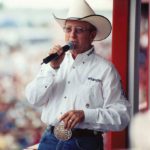
    It didn’t take long for his rodeo career to grow. “The first year was really skinny,” he recalls, but that changed quickly. In his fifty years of pro rodeo (now the Professional Rodeo Cowboys Association), he’s announced nearly every big rodeo in the country: from Sidney, Iowa, to  Greeley, Colo., Cheyenne Frontier Days, and the Buffalo Bill Rodeo in North Platte since 1965. He’s been the PRCA’s Announcer of the Year four times, and has announced the Wrangler National Finals Rodeo four times and the National Steer Roping Finals as well. He was the television announcer for the Wrangler National Finals Rodeo from 1980 through 1990, and from 1994 through 2004, and he’s called the action at the Canadian Finals Rodeo seven times.

    In 1993, he left North Platte and moved to Kersey, Colo. His rodeo career had grown to where he needed to be near a big airport. For a while, Hadley’s son Trent took care of his cow herd, but eventually he sold it. “I always considered my rodeo career as a part time job. I was basically a rancher who had this sideline of announcing rodeos. It took a long time to come to my senses that the ranching was my sideline, and the rodeo was my banker for the ranch.”
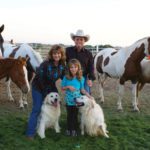
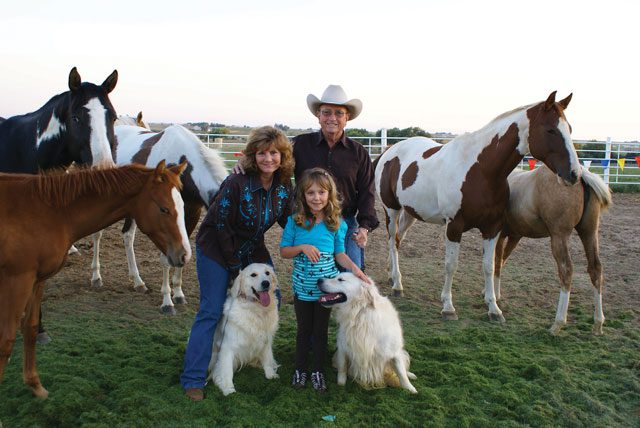
    “Now I’ve gone to the dogs,” he jokes. He and his wife, Lee, raise white Golden retrievers, and he laughs that he is her “most affordable maintenance man.”
    Hadley and his first wife Clarice have three children: Trent, who lives on the Barrett place north of North Platte, Michelle Corley, married to rodeo announcer Randy Corley, and Kimberly Jurgens. Lee’s children are Travas Brenner and Katie Brenner; Hadley and Lee have an adopted daughter, Taleah Barrett.

    And he’s still going strong. He continues to announce rodeos and enjoy friends in both rodeo and the music world. “Rarely does a week go by that someone doesn’t say, ‘we used to dance to your music,’ or ‘you played at my mom and dad’s prom.’”

    And the legend hasn’t quit. He keeps up a busy rodeo schedule and loves the friendships he’s made. “The friends, that’s where the real value is.”


  • Roper Review: Katie Leibold

    Roper Review: Katie Leibold

    story by Teri Edwards

    Katie Leibold was born and raised in Phoenix, Arizona, where she lived for the first 22 of her 26 years. She grew up around horses and cattle on the ranches her dad leased.
    Her first horse, El Gato, or “the cat” came from a ranch in Mexico. Katie started out doing 4-H and ended up doing every event on him including, heading, heeling, and breakaway.
    “My dad got him from a fellow rancher and paid about $850 for him,” says Leibold. “He was a big, slow footed horse that was perfect for a nine year old girl. He really took care of me.”
    In high school she competed in Breakaway and Team Roping, but soon found Breakaway roping was her favorite. After graduating high school in 2007, Katie attended a local community college while going to team roping jackpots and rodeos.
    In 2012 a good friend, Bobby Jean Colyer, invited her to Idaho for the summer, enticing her with the many summer rodeos in the area. That summer she met her now boyfriend, Jared Thompson, and they have been together ever since. The couple divides their time between Idaho in the summer and Arizona in the winter.
    Katie owns and operates Lariat Productions, a full service company that includes website design, video production, photography and marketing. The digital nature of the business allows her the freedom to travel.
    “It allows me to go to rodeos when I need to and not have to stay in one spot,” explains Katie. “I have clients all over the country and in today’s digital age, I can do this from anywhere.”
    On any given day during the summer, Katie and Jared start the day with chores on the ranch his dad manages. Katie will then spend her morning working on various projects for Lariat Productions. Late in the afternoon they start getting the arena ready for the evening roping practice. On the weekends they are gone to rodeos from Thursday until Saturday or Sunday. During the winter, the pair helps her dad at the feedlot and then focus on the many team roping jackpots around Wickenburg.
    COWBOY Q&A

    How much do you practice?
    Three or four times a week.

    Do you make your own horses?
    Yes. The best head horse I’ve ever owned was a two-year old stud my dad bought at a sale barn for $650. I was about 12 when we got him and rode him all through high school and afterwards. I’ve probably won over $75,000 on him. He’s now 15 and a once in a lifetime kind of horse.

    Who do you respect most in the world?
    My dad.

    Who has been the biggest influence in your life?
    My dad.

    If you had a day off what would you like to do?
    I would enjoy a spa day, and then maybe some wine tasting and then lay on the beach somewhere.

    Favorite movie?
    Stepbrothers or Wedding Crashers

    What’s the last thing you read?
    A novel, called The Villa

    How would you describe yourself in three words?
    Professional, determined, goofy

    What makes you happy?
    Spending time with the people I care about, and riding a good horse.

    What makes you angry?
    Failing.

    If you were given 1 million dollars, how would you spend it?
    I would buy a place, go back to school, invest part and save the rest.

    What is your worst quality – your best?
    My worst quality is avoiding confrontation. My best quality is being dependable.

    Where do you see yourself in ten years?
    I hope we have our own place. I’d like to see my business grow and become more successful. Maybe have started a family by then, but I’m not in a hurry. Still roping and have the best horses possible. Still enjoying roping and going to rodeos.

  • ProFile: Dustin Brewer

    ProFile: Dustin Brewer

    story by Ruth Nicolaus

    Dustin Brewer put on his baggies and cleats for the last time Labor Day weekend at his hometown rodeo in Elk City, Okla.
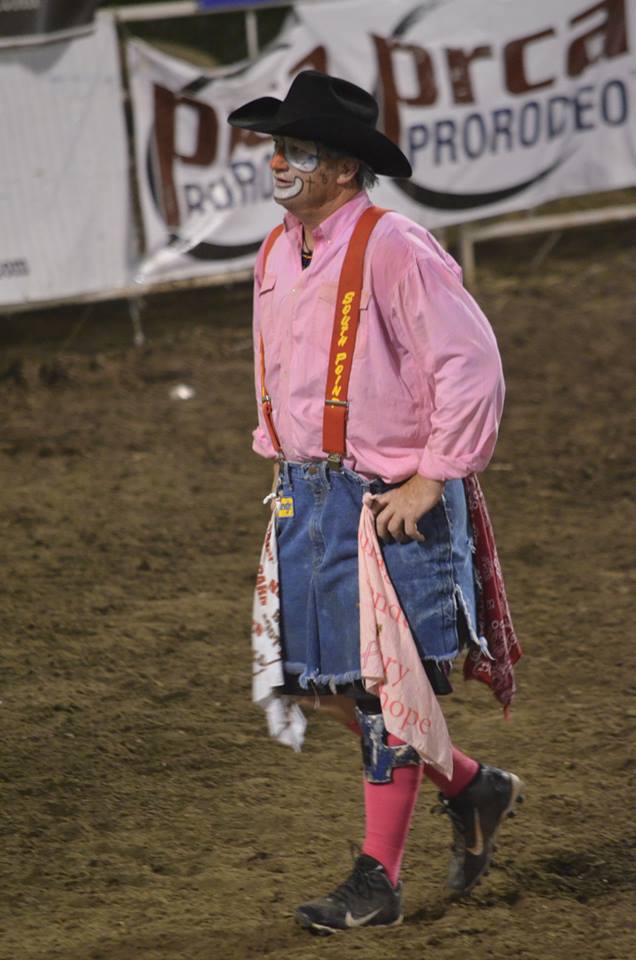
    The 46-year-old cowboy has been involved in rodeo for most of his life, as a bullfighter, and now as a clown.
    Brewer, born to Lee and Donna in Elk City, Okla., in 1969, tagged along as his older sisters competed at Little Britches Rodeos. He began riding bareback horses and bulls in high school, and it was in the practice pen where his talent became evident.
    A bull rider got hung up, Brewer recalls, “and I stepped in, got him out, never got touched, and thought that was pretty cool.”  That was the beginning of a 27-year career.
    He worked as a bullfighter at high school and amateur rodeos, and he struck up a friendship with the late Rex Dunn, a bullfighting and bull raising legend. In 1996, Dunn told Brewer he needed to apply for his Pro Rodeo Cowboys Association membership. At that time, the PRCA gave membership to bullfighters after they had worked the Binion Bull Sale, held in Las Vegas during the National Finals Rodeo. A panel of bullfighters and experts judged the rookies, and out of a class of 18, only two were awarded cards: Brewer and Dusty Essick.
    From then on, Brewer’s resume grew. He’s worked major rodeos across the country, including Tucson, Ariz., Greeley, Colo., Oakley, Utah, Salt Lake City, and lots of the smaller rodeos: Elk City, Okla., Abilene and Manhattan, Kan., Burwell, Neb., and more.
    He competed in the freestyle bullfighting the Wrangler Bullfights held, and was ranked fourth in the Bullfights standing when he broke a leg. That was in 2000, his only chance to go to the National Finals Rodeo, and it turned out to be the last year for the Bullfights.
    Bullfighters are prone to injury, and Brewer has had his share, although nothing that took him out of the game for long. In 1991, he broke his jaw in three places when a horn caught him in the neck. In 1996, he ruptured his spleen. In 2000, the broken leg kept him from going to the Bullfights in Las Vegas, and in 2002, he tore an ACL in his knee.
    He’s had a wonderful career, and the people he’s worked with and for hold a high regard for him.
    He has worked his hometown rodeo in Elk City, Okla. for sixteen years, and he’s been a real asset to the rodeo, said chairman Larry McConnell. “Dustin’s one of those guys that, whatever you ask him to do, he does it. He’s easy to work with, and he’s an icon around this rodeo.”
    Former bullfighter and five-time Wrangler Bullfights champion Rob Smets helped Dustin get started in his early years and considers him like a brother. “I mentored him through some of his career,” Smets said. “Dustin’s done a bang-up job. The guy has integrity and has had it his whole career.”
    Brewer has grown close to many of the rodeo committees for whom he has worked. He worked the Abilene, Kan. rodeo for fifteen years, and became like family to the committee men and women, so much that Brewer and his wife Tarra decided to marry in Abilene in 2004. “He was a professional,” said Jerry Marsteller, chairman of the Abilene committee. “He did whatever was asked of him.”
    Brewer worked closely with barrelman Mark Swingler, and Swingler believes Brewer’s rodeo career was marked with consistency. “He was always there for the cowboy,” Swingler said. “If he had to take a shot, he’d take a shot.” Brewer was able to handle the mental stress of being injured as well. “Some (bullfighters) get injured and get gun shy, but I’ve never seen that in his work.”
    Even though he’s retiring, Brewer isn’t leaving rodeo, he’s just switching roles. He has plans to work as a barrelman and rodeo clown, and has already been hired for some rodeos in 2016.  He loves rodeo. “I just love the sport,” he said, “the camaraderie between everybody, the atmosphere.”
    His baggies and cleats may go in the closet, but he’ll be back on the road next summer, to another rodeo, just in a different role.
    Through it all, Dustin has loved – and still loves – -rodeo.

  • Back When They Bucked with B.J. Pierce

    Back When They Bucked with B.J. Pierce

    story by Lily Weinacht

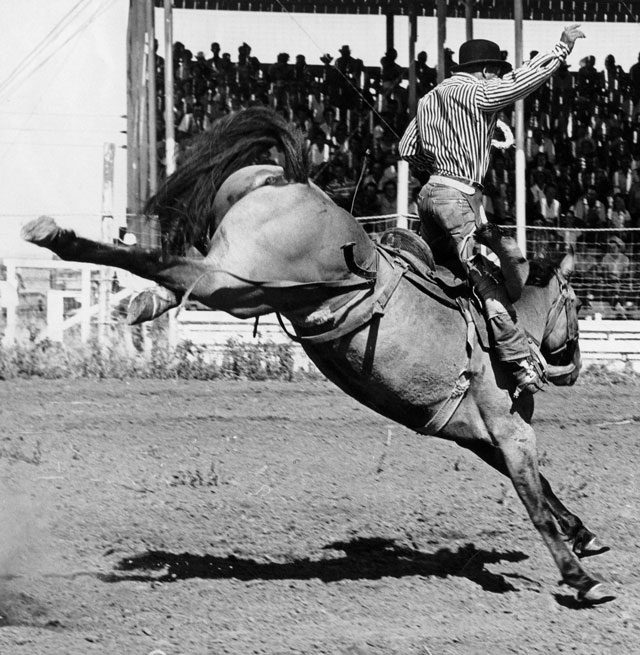
    Born on August 22, 1926, to Grady and Dolores Pierce in Clovis, N.M., B.J. Pierce was fated to wear dirt on his boots, but always with pride – first as a farmer, and forever as a cowboy.
    The Pierce family raised cattle and farmed in the shadow of the Dust Bowl, sleeping with rags on their faces and perpetually cleaning the Kansas dirt from their window sills. B.J. worked the fields alongside his parents, but his dad always left him the last few minutes of daylight to rope in the backyard. Inspired by the tales told by his grandfather, a cowboy from Oklahoma, B.J. was more passionate about roping than anything else. With high school and college rodeo yet to be created, he taught himself to rope calves, winning his first rodeo in Tucumcari, N.M. in 1945. After graduating high school the same year, B.J. met Shorty Matlock, a steer wrestler and fellow tie-down roper from Grady, N.M.
    The two cowboys became travelling partners, and a summer full of roping boxes, rodeos, sleeping in horse trailers, and bathing in creeks earned B.J. enough money to pay for a year of college. The fall of 1945, he attended Eastern New Mexico University in Portales, studying for a degree in industrial arts and playing basketball on a scholarship. There, he met his first wife, Patty Rawls, whom he married in 1947. The following summer, B.J. and Shorty set out again, and B.J. won enough money to finish paying for his college tuition, as well as Patty’s. By his junior year of college, B.J. quit playing basketball, knowing his future was in the arena, not the basketball court. He graduated in 1950 and immediately began rodeoing full time, frequently announced as one of only two full-time rodeo cowboys in the region that had college degrees.
    Though B.J. also competed in wild cow milking, team roping, and steer roping, tie-down roping was his main event. He even served on the RCA Board of Directors as the Calf Roping Director. He competed in the RCA and won the tie-down roping – often more than once – in rodeos across the Pacific West, including Pendleton, Ore., Ellensburg, Wash., and Lewiston and Nampa, Idaho. His truck and trailer traversed the U.S. even further, taking him to Denver, Colo., which he won in the tie-down roping, Cheyenne, Wyo., where he earned buckles on two separate occasions, and even as far as New York City and Calgary.
    One of the single largest paychecks he earned came from a one day tie-down roping in Los Angeles. B.J. returned home with $2,500 riding comfortably in his wallet. Another favorite of his was the tie-down roping invitational held in his hometown of Clovis in 1952, where 17 of the world’s best ropers came to compete. B.J. and every other roper put up $500, and he left with $5,200. The furthest B.J. and Patty travelled, however, was Cuba. In the mid 1950s, Colonel Jim Eskew held a rodeo on the island, the rodeo livestock and contestants alike arriving on boats from Florida. B.J.’s own horse, Iodine, stayed in the U.S., and B.J. borrowed a horse to avoid putting Iodine in quarantine.
    B.J. remembers Iodine as his best roping horse, winning his three world tie-down championships with the IRA on the gelding in 1952, ’53, and ’55. “He was very good to me,” B.J. recalls. “He went with me a long time, all over the U.S. He was featured on the cover of the Quarter Horse Journal in the early 1950s. Iodine’s daddy was Billy Clegg, and his foals were noted for becoming good cow horses.”
    The thousands of miles B.J. racked up on his speedometer also left a trail of friends in many states, including world champion tie-down roper Dean Oliver from Idaho, who became one of B.J.’s close friends. Connections like these propelled B.J. into selling ads for Western Horseman. Patty wrote articles for the magazine while B.J. rodeoed in California, where they lived for five years. When the advertising position came open, B.J. filled it.  “Since I’d been so many places rodeoing, people knew who I was. I got to go to big horse shows and meet people you’d never meet rodeoing, like Gene Autry, James Arness, and Miss Kitty (Amanda Blake). A lot of those people were in the horse business. The only negative thing was selling ads and people not paying for them,” B.J. remembers. “You just didn’t go back to them again!”
    By the early 1960s, B.J. was ready to hang up his rope. “I guess I got tired!” he says. “All I did for 13 years was rodeo. So I retired from the rodeo business and started teaching school. I had a degree in secondary education, and I was going to teach one year in sixth grade. I ended up staying 31 years in the school system.” B.J. was a teacher for 16 of those 31 years before moving to administration and becoming a principal. He worked at several schools in Clovis, including Highland Elementary and James Bickley Elementary School. Having lived all but five years of his life in Clovis, B.J. still sees many of his former students. Ever the cowboy, B.J. brought the lessons he’d learned in the arena to the classroom, teaching discipline and organization.
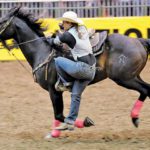
    In 1979, B.J., who was divorced, married his second wife, Sue. He had two children, Rena and Ben, and Sue had a son, John, while B.J. and Sue became the delighted grandparents of four grandchildren. They were married for 31 years until Sue passed away in 2008, and during much of that time, B.J. continued to teach, while training calf horses for ropers all over the region. He has also been a member of the Curry County Mounted Patrol for many years, serving as the organization’s captain, vice-president, secretary, and treasurer. The patrol was created in 1939 to promote horses, horsemanship, and sponsor western entertainment like rodeos and ropings. A lifetime member, B.J. continues to help put on the annual Pioneer Days PRCA rodeo in Clovis. At 89, riding has lost none of its charm, and B.J. still takes his horses up to the mountains to ride. “It’s fun if you don’t fall off!” he adds wryly.
    Recently inducted into the National Cowboy and Western Heritage Museum’s  Rodeo Hall of Fame, B.J. also attended the 100th anniversary of the Pendleton Round-Up as a guest of honor in 2010. Visiting today’s rodeos brings back many recollections of his own rodeo years. “The cattle have changed a lot, and so have the arena conditions, and there weren’t many standards,” he says. “The longest score I ever roped was at 75 feet, and of course getting off on the right in roping has made it a second to a second and a half faster. I was fortunate to rodeo when I did, but I would like to rodeo nowadays for the money. To make $250,000 – that would be pretty neat!”

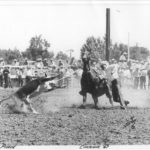
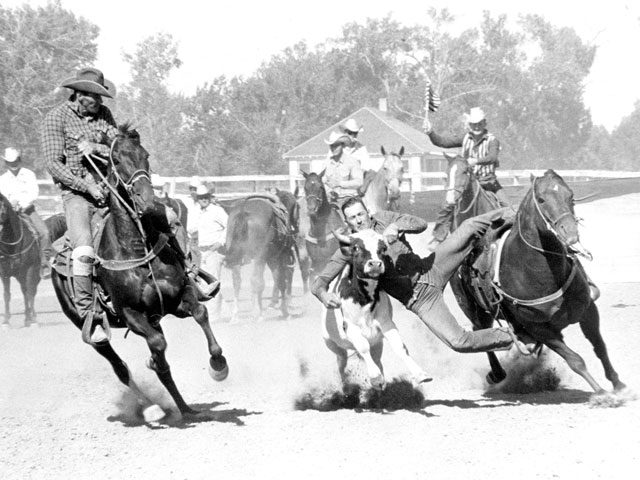
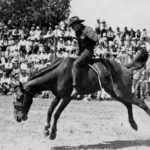
    B.J. Pierce at Cheyenne in 1967
    B.J. Pierce


  • On the Trail with Wade & Sabrina Kreutzer

    On the Trail with Wade & Sabrina Kreutzer

    Wade and Sabrina Kreutzer have been roping together for 24 years.  They have been part of the CPRA rodeo family since 1989; Wade served on the board for ten years as a team roping director in the late 1990s. “I always wanted to make a run at the NFR, but family came first,” said the 46-year-old # 7 header and 8+ heeler. “I’ve been able to rope with a lot of guys and I’ve met so many good friends through my roping. Back in the day, there was no point system, so it was open ropings. That’s all they had for a long time. We learned to reach; we didn’t rope close. We had to rope against all the toughs all the time. That made us better later on.”

    Wade belongs to the PRCA, a card holder since 1989, as well as the USTRC and the World Series. Wade and Sabrina live on a ranch that his grandpa owned, 15 miles west of where he was born in Walsenburg, Colo. He put a rope in his hand when he was 11. “My mom and dad ran a gas station in LaVeta for 25 years. When I was 11, we moved out to a ranch and that’s when I started riding and roping with my cousins. That’s all I wanted to do.” He started out tie down roping. Wade’s dad showed him how to rope a bale of hay and he learned on his own, trial and error. When he was a sophomore in high school, he added team roping, entering the high school rodeos with partners he drew. He made it to the high school finals twice.

    He went to college at LCCC in Cheyenne, rodeoing under Pinky Russel Walters for two years. “Tim Bath was our Timed Event coach and he taught a class in it.” He transferred to CSU Pueblo, where Sabrina was going to school, for two years. “College was outstanding for me. It was enter twice. I made the College National Finals my junior and senior year, and won third my last year, 1991, with Brian Espencheid.” That was the same year he married Sabrina. “We got married in March, and I went to the finals three months later.”

    He settled into married life, raising two sons with Sabrina, training horses, coaching for the basketball and football teams, for the next 17 years, rodeoing in the circuit and at the CPRA rodeos. He was the Dodge National Circuit Champion in 2004 with Ryan Zurcher and again in 2006 with Mark Kersting. He qualified for them 5 or 6 times.

    Wade and Sabrina had known each other through National Little Britches and started dating at the end of Wade’s sophomore year in college. She grew up in Penrose, Colo., and started her rodeo career before she was 8, competing in barrels and poles.  “I did Little Britches all through growing up and high school rodeo, competing in barrels, poles, goats, and breakaway. She started team roping in high school, roping with her dad.” She went to college for one year at Pratt College in Kansas, and then transferred to CSU Pueblo and was a member of the rodeo club. “Butch Morgan was our coach and we entered ourselves … it wasn’t a bonafide sport there.” Sabrina made it to the CNFR twice in college. “The first year I competed in the breakaway, barrels, and goats.” She got a degree in physical education because of her love of gymnastics, something she competed in for ten years. Her first job was teaching fifth graders. She taught for a year, and then they moved to LaVeta and she taught PE for kindergarten through fifth grade. She taught for a year, and decided that she needed to stay home with her boys. “Clancey was three and Kyon was one and I was spending all day with someone else’s kids while someone was spending the day with mine.” She subbed on and off until Kyon graduated from high school.  She coached gymnastics for two years in Florence and was assistant coach in Canon City for 1 year. The only thing that stopped Sabrina from roping was her two pregnancies. “I had Kyon in July 1994 but I still went to the CPRA Finals. I remember Wade roped with another girl when I couldn’t ride. But I was roping again in August.”


    Full story available in our September 15, 2015 issue.


  • Back When they Bucked with Lynn Smith

    Back When they Bucked with Lynn Smith

    High in the Rocky Mountains as the 1940’s were just cracking out, a desire to ride bulls and follow rodeo was brewing in young Lynn Smith’s heart. Lynn grew up on the Kremmling, Colo., ranch his granddad put together homestead by homestead beginning in 1881. His granddad raised many horses during those years even having a remount stud on the place to supply horses for the government. As natural progression goes, Lynn’s father took over the ranch and built a cow herd, kept some horses, and raised a family of three girls and Lynn, the youngest.
    The young mountain man’s interest in rodeo peaked one year at the National Western Stock Show and Rodeo. “Dad sold a big roan bucking horse to Verne Elliott at Denver when I was about four years old,” recalls Lynn. While in Denver the rodeo clown, Homer Holcomb, packed him all around on his shoulders, “and that’s when I decided I wanted to be a bull rider.”
    Lynn grew up without the luxury of electricity. He attended a one room multi-grade school of which he was the only student his 6th and 7th grade year. He would pack his .22 to school and shoot magpies in the school yard. Around the ranch he would ride calves and when he was 15 he started entering rodeos. He was a three event teenager taking part in the bull riding, cow riding and bareback riding. Although they didn’t buck him off many bareback horses, he confesses he didn’t like it very much. He laughs as he also confesses, “I rode barebacks like I rode bulls, and they didn’t pay much for riding like that.”
    His bull riding career spanned the two decades from 1953 to 1973, during which he made memories alongside the era’s best hands and on top of some of the best buckers in the business. Lynn met his late wife, Wilma (Willie), in the fall of 1956 during his short stint at college in Fort Collins, Colo. Before their marriage, he traveled with a few different cowboys including Gene Jordan of Durango, Colo. They were what rodeo folks call “splittin’” partners. When a partner placed he would split his winnings with the other.
    “This way you could live rodeo to rodeo,” chuckled Lynn. He went on to explain, “If it was a little rodeo that paid four places we’d split 10% and if it were a bigger rodeo, like Denver, we’d split 5%.”
    After his marriage, Lynn had a new traveling partner in Willie. “Naturally we didn’t have any extra money except what I won, and she got to working at rodeos then finally bought a timer’s card,” tells Lynn. This eventually worked into her becoming a rodeo secretary.
    Wheels to the rodeos were used Cadillacs. “I had a ’59 Cadillac I drove over 200,000 miles. Everybody gave me a bad time for driving it forever.”
    He used to tell people it was only an hour from Flagstaff to Phoenix-and it was back in those days because he drove 110 miles per hour! If Lynn won a check at a rodeo he and Willie would get a motel and if not, they would sleep in what they referred to as their “Cadillac Hotel.” Between the two, if they made $50 a rodeo they were making money. Wick Peth, the notable clown and bullfighter from that day, tried to convince Lynn to fight bulls. His response to that, “I train my feet to run from ‘em not to ‘em.” Even Willie thought a steady check at every rodeo might be a good idea. He told her, “Those bull riders aren’t going to like how I fight bulls.”
    He stuck with the riding and sure enough needed to win something in Gunnison, Colo., one year.
    “We pulled into town, filled up with gas, paid my fees and we had $1.43 left in our pockets. That’s it,” tells Lynn. He had drawn Little 8 of Walt Alsbaugh’s. “They just didn’t ride him anywhere,” he explains. According to Lynn, he was really a bucker and a fighter, too.


    Full story available in our September 15, 2015 issue.


    Heading for his nephew Ron last winter in Arizona – Olie’s Images
    Lynn working the ground at the Grover Rodeo
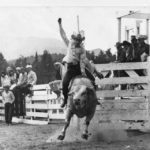
    Riding at the Boulder rodeo 1968
  • Roper Review with Steve Stone

    Roper Review with Steve Stone

    story by Siri Stevens

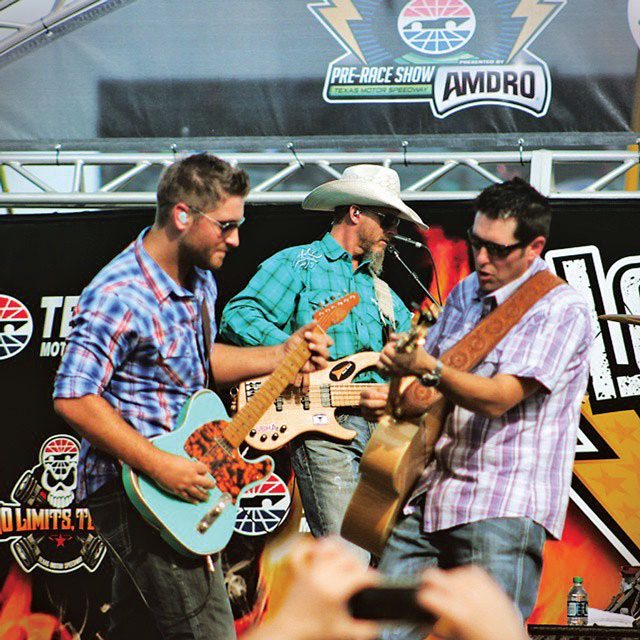
    Steve Stone lives in Rio Vista, Texas. “It’s a little slice of heaven,” he says. “I love Texas. I’ve been 10,000 miles in the last 45 days, and there’s some beautiful places in this country, but I love Texas.”  Steve is the bass guitar player for the Casey Donahew Band, something he’s done for 13 years. “I make a lot more money playing music than I do roping,” he said, but admits that whenever he’s home, he ropes. “I’m gone half the week, then I rope and raise bucking horses.” His wife, Jamie, and daughter, Kyndall (19), join him in the arena to rope steers. His son, Riley (18), who also ropes, took up his dad’s previous rodeo event, bareback riding, and that led the family into another adventure raising bucking horses. “When my son was 15 and he wanted to ride, I put bucking chutes in the arena and we bought some mares and he practiced on the mares and their babies ended up at the futurities and did pretty good, so now we’re part of the UBHA.”
    Steve started roping 10 years ago. “I grew up as a teenager riding bareback horses. I started roping in my late 20s.” Steve had a family, and once that happened, he was shoeing horses for a living, and playing bass on the weekends. “That’s when I got interested in roping.” Steve went to college at Sull Ross State University in Alpine, Texas, to rodeo and learn how to be a farrier. “I wanted to stay around rodeo and shoeing helped me do that as well as spend more time with my kids. The music got too busy to shoe, so I gave that up.” Music is something he picked up during college and he started playing with Casey, who was a friend of his, around the Stock Yards. “Here we are almost 13 years later doing 120 shows a year – from New York City to Alberta and Seattle.”
    COWBOY Q&A

    How much do you practice?
    I’m a #4 header and heeler – I don’t get to go much. I’m gone half the week, the last thing I want is for my wife to take care of roping cattle. It’s so nice to hook that Heel-O-Matic machine up and within an hour we’re done. I’ve only been home for a week from a tour, and there’s a lot I need to do – planting wheat is one. We also raise bucking horses.

    Who do you respect most in
    the world?
    My Lord Jesus – you can tell by the life I live – I’m humbled by the opportunities that I’ve been blessed with. I couldn’t ever imagine what my life is now –  I was in Youth ministry.

    What makes you happy?
    My family and home. This is a new chapter – my daughter and son have moved out, so my wife and I are at home without kids. I can’t wait to see what they do. My family means more to me than anything else.


  • Back When they Bucked with Melvin Fields

    Back When they Bucked with Melvin Fields

    story by Ruth Nicolaus

    At Melvin Fields’ first rodeo as a barrelman, the first bull out of the gate hit his wooden barrel, knocked the staves out of it, and by the time the last bull bucked, it was demolished.
    “That’s what started my barrelman” career, Melvin said, but it sure didn’t stop it.
    By the time the Coffeyville, Kan. cowboy began as a barrelman, he’d already spent a dozen years as a bareback rider, saddle bronc rider, bull rider and bullfighter.
    He was born five miles north of Tyro, Kan., just west of Coffeyville, in 1938, the son of Merle and Edith Fields. Melvin decided he wanted to be a rodeo cowboy after he attended rodeos with his dad. The first rodeo he entered was a jackpot bareback riding in Miami, Okla., with five dollar entry fees, and “they bucked me off,” Melvin remembers. “I really didn’t know what I was doing.” He and his cousin pooled their limited money to buy a rigging, a glove and a pair of spurs together. “That’s how I got started.”
    In high school, he won the All-Around title for the Kansas High School Rodeo Association in 1956, working four events: the bareback riding, calf roping, steer wrestling, and bull riding. He went on to National High School Finals that year, winning second in the all-around in Reno, Nevada.
    After high school graduation in 1956, Melvin attended Coffeyville Community College but the rodeo road called him with its siren song. In the spring of ’57, he rode barebacks and bulls in Oklahoma. Somebody told him there was another rodeo further south in Texas, and “I didn’t come home for three weeks. I didn’t get any credit for the last semester, and my dad wanted to kill me,” Melvin remembered. His rodeo career was underway.
    Melvin’s favorite event was the bull riding, but he’d ride barebacks and saddle broncs at times, too. He’d rodeo till he was broke, then come home, haul hay, work for local farmers, anywhere there was work to be done. He ponied race horses, did some house building in Tulsa, whatever made a dollar. He got on the labor list for the Beutler and Son Rodeo Co., and worked for them for extra cash.
    Melvin got his Rodeo Cowboys Association card in 1958, the same year he worked his first rodeo as a barrelman. It was in McCook, Neb.. He showed up, and Elra and Jiggs Beutler asked him if he’d want to work the barrel. “What does it pay?” he asked. Twenty-five dollars, which was good money back then. “I’ll do it,” he said. The barrel was ruined by the end of the first performance, and Melvin drug it out to the fence.
    When he showed up to ride bulls at Salina, Kan., that same year, Jiggs Beutler asked if he had a barrel. No, he didn’t. Well, you have a barrel job here, Jiggs said. A committeeman owned a drive-in hamburger stand and had a wooden pickle barrel. Melvin converted it to a rodeo barrel, and worked it. After that rodeo, Jiggs told him, if he’d get a metal barrel, he’d be hired for all of the Beutler and Son Rodeos the next year.
    Melvin’s bull riding continued even as he worked the barrel. He’d be the first or the last rider to ride, which wouldn’t slow the rodeo down as much. Later on, he clowned rodeos while working four events. “I was busy,” he remembers. But rodeo life was different then. “You didn’t run up and down the road,” Melvin recalls. “You worked a rodeo and stayed there. There weren’t that many one headers.”
    Being a barrelman, Melvin carried acts with him. They were compilations of other acts. “You copied a little bit of this guy, or of that guy, and you’d change it a little bit.” His acts included a mule act that was borrowed from John Lindsey, a camera act, and a hat trick act. For a summer, he worked a disappearing cannon act with Gene Clark, while Gene’s brother Bobby recovered from a broken leg.
    The barrelman job helped out with family expenses. Melvin had married Judy in 1963, while he was in the U.S. Army. “Once I got married, clowning was more security. I still rode saddle broncs and bulls at all those rodeos I clowned. My clowning paid my expenses and what I won was basically extra.”
    His family traveled with him along with his wife, Judy. “She drove for me and helped me. She’s been a big help to me.”
    In 1967, he came as close as he would to making the National Finals Rodeo. He had run hard that fall, trying to make it. After the Cow Palace, he was broke. “My wife said, ‘I’m coming home to get a job.’ I said, if you do that, I’m going, too.” He took a job as a pipe fitter, which slowed down but didn’t stop his rodeo. His clowning slowed down, and 1969 was his last year to clown. He rode bulls until 1973, when he was 35 years old.
    Over his career he rode at and worked numerous rodeos, from Cheyenne to Salt Lake, from Nampa to Ogden to Salinas. He loved going to Salt Lake City because he and his family camped beside a small creek that ran through the rodeo grounds. He rarely missed the Nampa, Idaho rodeo because his wife’s parents lived close. He hit rodeos in Deadwood, S.D., Helena, Mont., Cody, Wyo., Cortez, Colo., and worked as a barrelman at his hometown rodeo in Coffeyville for nine years.
    He coached the rodeo team at Coffeyville Junior College for three years, and worked as a PRCA rodeo judge as well. He was inducted into the Kansas Cowboy Hall of Fame in 2011.
    Now he and Judy, who have been married for 51 years, enjoy their grandchildren and great-grandhcildren. Their daughter, Valerie Day, whose husband is deceased, and their son Devlin and wife Marie, have given them six grandkids, with five great-grands.
    He and Judy still attend the National Finals Rodeo and the Clown Reunions when they can. Their days of rodeo were good ones. For Melvin, it was the people. “We have best friends all over the country, and we still stay in contact. Rodeo is where my friends are at. They were good people, and you got to know them.
    “Rodeo was my life, and I enjoyed it. We got to meet a lot of people, and we have good memories, going up and down the road.”


  • Elmer & Ruth Nettleton

    Elmer & Ruth Nettleton

    story by Ruth Nicolaus

    Elmer and Ruth Nettleton spent their life in rodeo, and are making sure the next generation of rodeo kids gets to spend time in their favorite sport as well.
    The Helena, Montana couple, who have been married 63 years, spent their lives rodeoing, Ruth following as Elmer first rode bucking horses, then bulldogging, then roping. She joined him in the National Senior Pro Rodeo Association, and all the while, they helped others get a start in the sport.
    Elmer was born in Butte, Montana, in 1929, the son of Clifford and Katie Nettleton. He grew up on the family ranch, spending his days on horseback. He got on his first bucking horse when he was sixteen, a bareback bronc. Ruth, the daughter of Gus and Lima Malmquist, was born in Ekalaka.
    Uncle Sam called Elmer into duty in 1952 during the Korean Conflict, and he served for two years, but never left the United States. “I was one of the lucky guys,” he said. “I stayed stateside the whole time.”
    Before he went into the Army, he switched from bareback broncs to saddle broncs. A black cowboy, Paul Christensen told Elmer he should be riding saddle broncs. Elmer didn’t have a bronc saddle, so Paul lent him his, and coached him as well. They traveled together, Elmer borrowing Paul’s saddle. “He was a tough bronc rider,” Elmer remembered. He and his family “were good people.”
    After he returned from the Army, he switched events. Still without a bronc saddle, he borrowed his brother-in-law’s. But it wasn’t right. “I just couldn’t ride anymore.” So he began to steer wrestle.
    By then, Elmer was working as a general mechanic at the Veterans Administration Hospital in Helena. He and Ruth, who married in 1951, had bought a place in the valley near Helena, and they put up an indoor arena and a building, and he bulldogged a lot.
    He was mostly self-taught. “We’d go to rodeos, somebody would win, and we’d come home and try it again,” he said. Billy Joe Deussen, a bulldogger from Texas, spent his summers in Montana. “I got him to haze for me and he really put the fine touches on my bulldogging. He really taught me a lot,” Elmer recalled. Elmer could ride well, and get off, but Billy Joe helped with the polish. “When he came, that really helped me a lot.”
    Elmer and Ruth planned their yearly vacations around rodeo. Most of his rodeo competition was on the weekends, but during the summer, they’d plan two or three weeks on the road, hitting as many rodeos as they could. He had purchased his Rodeo Cowboys Association card in the early 1950’s, and he went to the big shows on his summer vacation. “One time we went to Pendleton (Ore.), Puyallup, and Ellensburg (Wash.) Each year we’d plan where we could go to the most rodeos in two or three weeks.”
    He won his hometown rodeo, the Last Chance Stampede in Helena, two times, once in the saddle bronc riding in 1951 and again in the steer wrestling in 1966.
    It was after his retirement from the Veterans Administration in 1984 that he and Ruth began rodeoing in the National Senior Pro Rodeo Association. This time he took up calf roping, team roping, and ribbon roping with Ruth, and she barrel raced. They spent their summers in the camper in Canada, and their winters at their second home in Arizona. “We’d leave the first of November and come back the first of April. We’d rodeo all winter in Arizona.”
    This time it was Ruth’s turn to shine. She won the Senior Pro Barrel Racing and All-Around titles in 1994 and the Ribbon Roping title twice, in 1994 and 1998, winning three saddles overall. “We had fun,” she said. They never missed qualifying for the Senior Pro Finals any time of their senior career, from 1986 till 1998.
    All the while, they were helping bring up the next generation of cowboys. There were always steers at their place in Helena, and a passel of bulldoggers as well. Elmer helped guys like Don Blixt, Jim Harris, and more get their start. Helena was the home to a lot of bulldoggers. “At one time Helena was considered the bulldogging capital of Montana,” Elmer said. “There were more bulldoggers in Helena than anywhere else” in the state.
    The couple still helps young people, including their neighbor and her kids. When Michelle Wolstein moved to Elmer’s neighborhood as a teenager, Elmer helped her hone her riding and roping skills. He let her borrow his roping horse, on whom she won a saddle and cash. Now she and her husband David’s children, a son, Treg, age thirteen, and daughter Haven, age eleven, are like grandchildren to Elmer and Ruth. “The kids had sleepovers there when they were little,” Michelle said. “As soon as the kids were able to hang on to the saddle horn, off they went, helping them. Elmer and Ruth put a lot of time into the kids.”
    They’re giving with others as well. “He’s always real generous with letting people come over and use his building, and giving advice.” The couple has helped Elmer and Ruth’s nieces and nephews with rodeo, and when a high school rodeo function takes place, they are in attendance. “Any time there’s a high school rodeo fundraising event, they always go. When the high school kids need sponsorships or are selling raffle tickets, they’re the first ones to sign up.”
    Being around the kids keeps him young, Elmer says. “That’s what keeps me going.” He stays involved in rodeo, subscribing to every rodeo publication there is, keeping up on the standings. “He keeps studying roping and rodeo, and watches every rodeo broadcast” on TV, Michelle said.
    Elmer, a PRCA Gold Card member, was inducted into the Montana Pro Rodeo Hall of Fame earlier this year, and the couple was honored at the Last Chance Stampede in Helena last July. They are humble about their accomplishments. “We had a lot of fun,” is all Ruth will say.
    And they’ve helped countless other cowboys and cowgirls have fun on the rodeo trail as well.


  • On the Trail with the Thurston Family

    On the Trail with the Thurston Family

    story by Siri Stevens


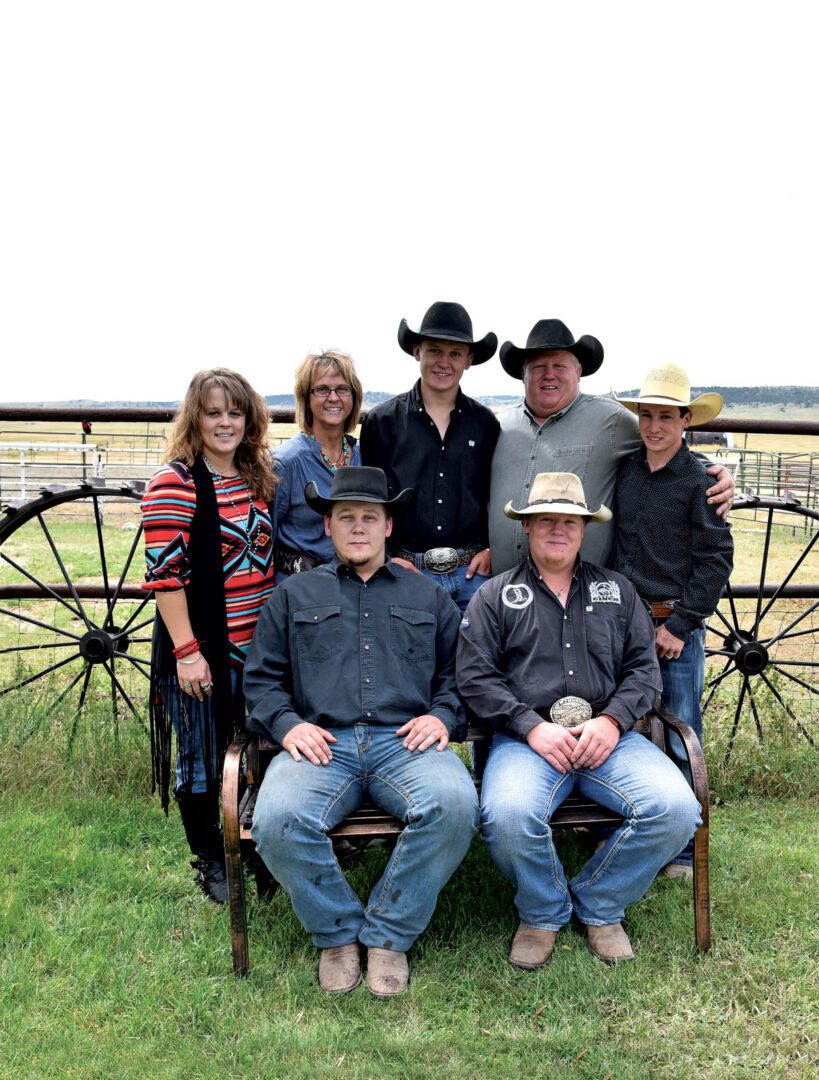
    John Thurston and Tiffany( Miller) Thurston grew up competing in rodeo -John did everything but steer wrestle and ride bulls. “I didn’t have a dogging horse and I entered the bull riding a couple times after my parents signed my release, but they told me never to try that again.” John was the 1981 Nebraska High School All Around Champion. He went on to college rodeo, riding broncs and team roping a little. “I was a broke college kid so I had to choose what events to enter,” he said. John graduated from college with a BA in AgBusiness.

    Tiffany graduated from Niobrara County High School, making the national high school finals in the goat tying. She went to college on a rodeo scholarship and graduated with a BS in Elementary Education. She met John while on the rodeo team at Casper College. “He was this really friendly guy that was always smiling,” she recalled. “That hasn’t changed-he’s still smiling.” They started dating in February of 1984 and were married in 1987.

    John took a ranching job 38 miles north of Harrison, Neb, and Tiffany had a teaching job with six students. “That community really welcomed us when we moved up there,” said John. “We moved every three years until we bought this place 16 years ago.” The place, 150 miles to the nearest Walmart, and 35 miles for a tank of gas, came from Tiffany’s grandad. The 600 acres was home to all the animals needed to keep all four kids in rodeo. “We figure there was always a sign that needed to be put on the ranch – Rodeo Ranch – it sustained the horses, 12 horses at tops, we hauled six, and goats to practice on,” said John. Shortly after they got the home place, another place came up for sale 8 miles away and they bought that too. That acreage sustains the goats and the various finds that John accumulates being a “scrapper.”

    By the time the family moved in, the kids were involved in rodeo.  Jordan, 25, Ace, 22, Colby, 20, and Brady, 18 all competed in rodeos, starting with the Wyoming Junior Rodeo Association. “We started with little rodeos around here,” explained Tiffany. “The first WJRA rodeo, we got one check for $8 and the fees for the weekend were $230. We decided that something had to change. We built the arena.”

    John went to Crawford with three dry cows and traded them for panels and made the arena the next day. Every day at 5, no matter what he was doing, John was at the arena, helping saddle horses or getting cattle ready to rope. “We treated it just like a sport. We are here to compete, not socialize,” said Jordan, who competed in barrels, poles, goats, and breakaway in high school. Her dedication to rodeo led her to be a four time Wyoming state goat tying champion and two college National Championships in the goat tying. “We tried to make the practice fun – we’d have four goats staked, Brady would be five steps ahead, Colby three steps, Ace two steps, and Jordan on the line.” They’d all go tie and the one that lost had to run to the roping chute and back. Ace practiced steer riding by John snubbing the team roping steers to the post with a blindfold on. This too was fun, with every one of the kids having a job so Ace would get the best practice possible. “By the time Brady started learning to ride barebacks we had a bucking chute, so it was a little easier,” Tiffany said.

    At first it was just Tiffany and Jordan going to the rodeos – John was either home with the other three or off to a junior rodeo. “I kept track of who did what and was always videoing so John could see the runs – it was a great teaching tool.” She remembers taking a cooler of food for the weekend for herself and Jordan, and when the boys joined them, that cooler was empty in two hours. When the whole family started traveling together, they slept in a tent and the trailer. “I remember one time we had all gone to bed but John, and when he came in the only sleeping bag left was Winnie the Pooh, it hit him about the waist.” Breakfast was tortillas, peanut butter, and honey. Family memories were made on the rodeo trail.

    Raising goats also started with the rodeo road. “The first year we rodeoed was 2002 and we only had four goats,” said John. “We had to get more. We sold those four goats and lost money. The next spring I bought doe goats, and that fall we put a billy with them and started raising our own. At the peak of it, we’ve had as many as 300-500 kids to feed out and 60-70 nannies to kid out.” John buys goats in the fall to feed over winter and sells them in the spring. The family has supplied goats to several high school rodeos as well as the Wyoming State High School Rodeo Finals for a number of years.

    Everyone pitches in when the goats go to the rodeos. “I remember being in Gillette with goats and John had stayed home because of calving,” said Tiffany. “A nasty spring blizzard came through and I was by myself trying to help Brady (who was super sick with the flu) saddle horses, warm horses up, film and just keep us warm.” Jordan and her husband, Chancy (Miller), came and helped the whole weekend. “We had to build protection along the arena with a tarp because of how hard it was snowing and the wind was blowing. I was trying to keep the goats from freezing after they were in the mud snow and rain. They (Jordan & Chancy) helped warm up horses, feed, get Brady’s saddle on his bronc etc. Whatever I needed help with. We could not have done it without them that weekend. Everyone of the kids has always jumped in and helped and for that we are proud of them all and grateful,” said Tiffany.


    Full story available in our September 1, 2015 issue.


  • Back When they Bucked with Earl Batteate

    Back When they Bucked with Earl Batteate

    story by Siri Stevens

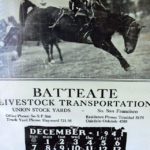
    Earl Batteate (Bud) was born Nov. 20, 1918. He grew up in Hayward, Calif. “I didn’t get to hear the news every night, nor were there the number of people and bad company around. It’s a lot different world. You could trust everybody then.”
    He started riding calves at the age of 7. “They had them in the chutes, with guys holding them, there was an old saddle bronc rider that took me with him. All the kids rode with two hands, but I had to ride with one, and I got bucked off a lot, but I rode better.” Bud’s dad was a rancher and in the slaughter house business. He had two cattle ranches and hauled a lot of cattle. “He had 33 trucks back in the 1940s. I came from a working family that wasn’t afraid to work.” He had one brother, Al, who has passed away, and a sister, Wilma, who is still alive.
    Bud left home in his late teens to rodeo. He had been going on the weekends with the cowboys at the ranch. He competed in bull riding, and bareback riding, and every bronc riding or any amateur bronc riding he could get in. He quit high school in his senior year and drove truck for his dad and got married when he was 18 to Patricia, who he met in school. She was six months older.
    “I drove truck and got into the cattle business, my mother set me up with the bank so I could get some money and I bought cattle and got into the cattle business before I was 20. My dad had a ranch at Oakdale, so I bought the cows and calves and put them on the ranch.” He has three boys, Mike is the oldest now – close to 70. The oldest boy, Dan, passed away, Nick is close to 60. “All the kids were nine years apart, I guess I was gone a lot. In the fall of the year, I would get on the road and end up in Oregon, Washington, Idaho, Montana, and Canada and would be gone for two months that was the only time I was gone that long.” He remembers one of his big wins at Salinas and the belt buckle he won. “Someone offered me $400 and I didn’t even read what was on the buckle … I sold it to him. My dad got into town and wanted it, I’ll never forget the look on his face. His eyes got watery – I had sold the buckle to have more money to go up north – I already had enough money to go up north.”


    Full story available in our September 1, 2015 issue.


  • Roper Review with Tyler Kaess

    Roper Review with Tyler Kaess

    story by Teri Edwards

    Tyler Kaess has found what most people search for, and more often than not, never find. A perfect day for Tyler is being horseback roping, and helping others with their roping. He has been able to do that with his roping facility, Hot Shot Equine, located in Surprise, Arizona.
    During the winter months many ropers relocate to Arizona for the season to take advantage of the beautiful weather. For this reason, Tyler relocated from Colorado to Arizona to start Hot Shot Equine almost two years ago.
    “Winters can be harsh in Colorado. I wanted to be roping, teaching, and training every day. When I saw what happens in Arizona in the winter, I decided to move and build a roping camp,” explains Kaess.
    Located eight miles from Surprise, Hot Shot Equine is just far enough from town that patrons will enjoy the peaceful atmosphere, while being centrally located to an abundance of jackpots and events.
    The facility features an arena, stalls, and RV hookups. Daily practices are held with both cattle and Heel-O-Matic. Tyler offers lessons and enjoys teaching private clinics and the individualized attention he is able to give.
    Tyler started roping at just seven. He feels fortunate to have had access to talented ropers such as his uncle, Brett Trenary, a NFR Qualifier, Jay Ellerman, and Ricky Green.
    As a youngster, Tyler competed in Colorado Junior Rodeo Association and high school rodeo. At just 15, he won a Shoot-Out in Oklahoma City, and a check for $38,000. Since then, Tyler has placed at the BFI, and competed in PRCA and amateur rodeos. Before moving to Arizona, he managed an indoor arena and produced ropings. This included a memorial roping in honor of his father and was, at one time, the biggest open roping in the mountain states.
    Tyler credits the time he spent with Ricky Green for his passion for teaching.
    “I like the whole process of learning, teaching, roping. My method is different than some, but I try to connect with people,” says Kaess. “We all make the same mistakes, it’s just a matter of how many times you make them.”
    For more information about reservations, lessons, or horses for sale visit hotshotequine.com.

    COWBOY Q&A

    How much do you practice?
    Every day.
    Do you make your own horses?
    Yes.
    Who were your roping (rodeo) heroes growing up?
    Clay O’Brien Cooper, Shot Branham.
    Who do you respect most in the world?
    My dad.
    Who has been the biggest influence in your life?
    My dad.
    If you had a day off what would you like to do?
    It would be fun to get on a horse and rope without having to do all the prep work. Just rope.
    Favorite movie?
    Star Wars
    What’s the last thing you read?
    Performance Psychology in Action
    How would you describe yourself in three words?
    Laid back, resourceful, passionate
    What makes you happy?
    Seeing improvement in horses and/or people that I’m working with.
    What makes you angry?
    People who gossip or mind other people’s business.
    If you were given 1 million dollars, how would you spend it?
    Pay off my bills and buy some horses to rodeo on.
    What is your worst quality? Your best?
    My worst quality is I can be lazy at times. My best quality is I’m easy to get along with.