Jacob Smith (20 in May) set some goals for himself. “When I won the Mountain Circuit Finals in 2014, I decided that the next year I would win the Year End Title and get the saddle, as well as win the college region. I only rode one bull my freshman year, so I decided to come back and do it.” He focused on handling his business. “I took the momentum I had riding in the summer to the college and it stuck all year.”
The Platte Valley High School graduate in Kersey, calls LaSalle, Colorado, home. He went to the Greeley Stampede when he was little, entering the mutton busting, and decided to be a bull rider. He got on his first bull when he was 12, in the junior high rodeo and continued in the high school rodeo. “I made the Finals for both junior high and high school, and made the National Finals my sophomore, junior, and senior year.” He admits he wasn’t riding as good as he should at the Finals and fixed it by going back to the basics and sticking with it. “Success in this game is keeping your head straight, having a positive outlook, and taking care of your business.”
Jacob is attending the University of Wyoming, studying petroleum engineering. “I’m not sure what I’m going to do with it, for now, I’m planning on rodeoing after I graduate. I’m going to focus on PRCA – I’m going to try for the Rookie.”
His dad (Gary) owns part of a construction company and his mom (Teri) is a homemaker, Jacob is the oldest of four children; two sisters, Maggie (18), Claire (14), and a brother, Eric (16). Eric rode bulls, but now he’s raising his own bulls. The whole family shows up to support him, even though they never rodeoed. They will continue to show up and support him as Jacob makes his first CNFR appearance. He is going to rodeo as hard as he can as soon as school gets out, but other than entering and competing, he’s not doing anything special to get ready for Casper. “I’m going to spend the whole summer rodeoing.” Jacob will make sure he’s got a ticket to the circuit finals, so he will hit at least 15 rodeos in the Mountain States Circuit, and after that he will pick the best and go.
Jacob is holding on to a 3.0 GPA and admits the hardest part is balancing rodeo and school. “We are on the road for five weekends out of the semester, and in reality, it’s hard to study while you’re at the rodeo, so you’ve got to make sure it’s all done before you leave.”
The biggest influence in his life are his parents. “My dad is always working so hard, and is busy every day … he gets up early to make sure the company is running but he still goes to all our sporting events. My mom has taken care of four kids and they have both worked really hard.”
Author: Siri Stevens
-

ProFile: Jacob Smith
-
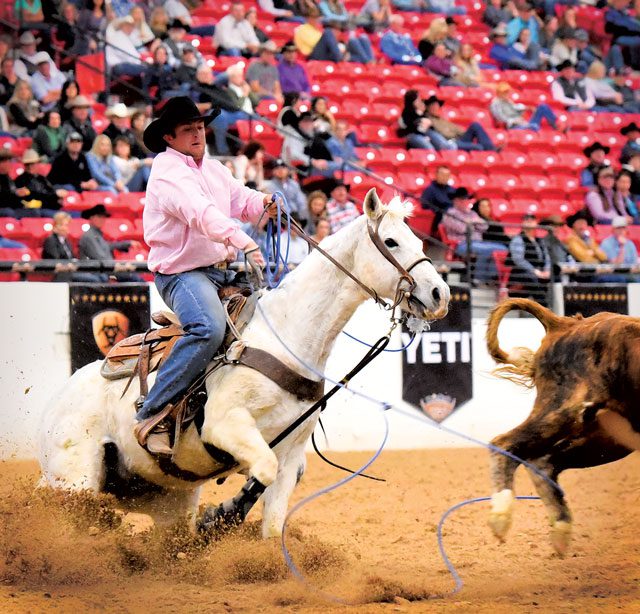
On the Trail with Clayton Van Aken
Clayton Van Aken is a California transplant. Born and raised in Descanso, California, a little town 40 miles southeast of San Diego, he grew up playing baseball and football and roping. He high school rodeoed, making the finals his senior year. Everywhere he roped to compete, he drove at least 300 miles to Phoenix or Oakdale up north to do so. The only child of John and Maggie, Clayton is the first one in his family to compete. “My dad has always roped – he shoes horses – and he’s always telling me he doesn’t know anything about how to enter and how to get the traveling done.”
After high school, he went to the University of Wyoming where he obtained an undergraduate degree in farm and ranch management with a minor in finance. He has been to the CNFR all four years – one time heading, twice heeling, and three times tie down roping – and will make it this year too in the tie down roping. “I roped a lot of calves – I went to six of the pro rodeos and made the amateur rodeos – but I’ve never had a horse that I could go on – I’ve always sold them early on.” He has concentrated on team roping admitting, he can’t tie fast enough to beat the pros going down the road. “I’m more of an 8.2, not a 7,” said the 24-year-old that is currently working on his Masters Degree at Chadron State College in Nebraska. He is taking his classes online and will finish with his Masters in Organizational Management with an emphasis in sports. “My main deal is to look at sports from a business perspective like an agent would do. Put numbers to values and values to talent. That’s how they do it in the big industry – baseball and football – I want to help the program inside and outside the arena.”
His goal is to become a college rodeo coach and integrate that with his growing roping cattle business. Three years ago, Jerry Palm from Centennial, Wyo., approached Clayton with a partnership idea. “I was thinking about going home,” said Clayton. “Jerry brought it up and it’s developed into something pretty cool. We’ve got 130 head of jackpot steers that Jerry buys and I run. This is the third year for this partnership.” The cattle come from Gem, Wyo., get broke in, then get leased or hauled depending on what the customer wants. “We’ve got a lot of two year olds that are good to rope and they are leased out. I’ve got fresh ones coming in.” Clayton puts on a jackpot series in Laramie, Wyo., every Thursday night May through June. He hauls them to other local jackpots and producers, and by the end of June all the cattle are leased or sold for the summer. “I get the jackpots done seven weeks in a row and we end after the college finals, and then I head out after I lease them out for the rest of the summer.”
Then it’s Clayton’s turn to hit the pro rodeo road for the summer, a dream he has had since he was 15. “When I won the Lucky 7 #15 in Laughlin in 2009 with Wade Hooker, I realized I might be good enough to do this.” He got his Rookie card when he turned 18 so he could go to Cheyenne and the close rodeos and the bigger ones. “Those are the ones in our circuit that I could get to while I was in college.” He started his PRCA career heeling for Paul Beckett and made they made the circuit finals twice. “I went down to Texas and started riding this really nice head horse, so I switched and it’s working out – I can’t complain.”
Going down the road with Paul helped Clayton learn the ropes of the road. “He’s been around and knows where to go. He’d always have a plan and be good where we needed to be good.” Now Clayton is heading for Cole Cooper, from Sheridan, Wyo. “We just decided to rope together the other day – I roped with him in Colorado and we finally are going to make it work. The plan is to hit the road this summer and go. Our first one is Guymon and we’ve got our schedule set through the first of July.” Cole’s wife is going to have a baby around July 1, so the plan is to be rodeoing around home then so Cole can be with her. “The way I’ve got it mapped out, we’ll be everywhere. This year if we go hard and give it a good lick we might have a shot at the NFR. But the real goal is to get into the big rodeos like San Antonio, Denver, and Ft. Worth next year. It helps to get the ball rolling.”
For now, Laramie, Wyo., is home. “There’s nothing like this where I come from in southern California. I can rope, rodeo, run cows, and ride horses. What more could I want?”
Clayton at age 4 – Linda Allen 
Clayton at the 5 & under dummy roping in 1997 at Scottsdale USTRC roping with Philip Murrah 
Clayton Roping with Cullen Teller at the PRCA Mountain States Circuit Finals in Rock Springs, Oct. 2015 – Hubbell 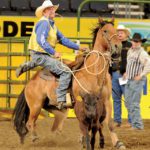
Clayton roping at College National Finals Rodeo – Hubbell -
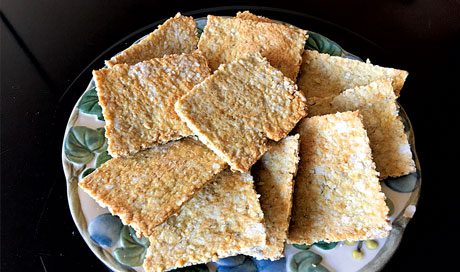
Scotch Oatcakes & Potato Soup
Scotch Oatcakes
recipe courtesy of Agnes Loeschner, Siri Steven’s grandmother
INGREDIENTS:
1/2 1b. oatmeal (2 cups)
1 cup sifted flour
2 Tbsp. sugar
3 oz. butter or margarine
1 tsp. soda water
1/4 tsp. salt
1/2 cup milkDIRECTIONS:
Preheat oven to 375 degrees. Melt the butter in the microwave, then mix into oatmeal. Mix the dry ingredients in a separate bowl. Add the dry ingredients to the butter/oatmeal mixture, then gradually add the milk. Sprinkle four onto surface then roll out until thin and cut into squares. Place on greased cookie sheet and bake for 8 minutes.Potato Soup
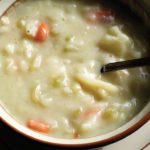
Potato Soup – Courtesy of Celeste Lindell recipe courtesy of Andrea Wilson, “Cookin’ with Cowboys”
INGREDIENTS:
6 large potatoes
1 can Campbell’s cheese soup
(any variety)
1 medium onion
2 cups milk
3 slices cooked bacon
1 cup grated cheddar cheeseDIRECTIONS:
Peel and dice potatoes. Fill a pot with 6 cups of water, bring potatoes to boil. Add can of cheese soup. Add milk and chopped onion, salt and pepper to taste. Bring to boil, then lower heat and simmer about an hour. Serve topped with bacon crumbles and cheese. -
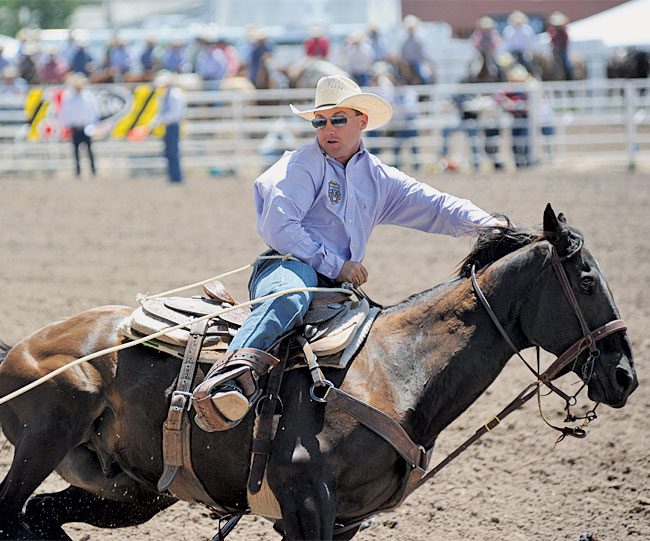
Roper Review: Chris Anderson
Chris Anderson, his wife, Sarah, and their two children, Ike, who will be two in June, and Tinsley, who just turned two months, make their home in Fort Morgan and own and operate CA Performance Horses. “I’ve been out on my own professionally since 2008,” he said. “I qualified my first horse in the Open AQHA show in 2008.” The mare, Darling Catichi, won the Junior All Around in 2012, beating out every other five and under horse in the nation. “I would say that and making the National Circuit Finals in the steer roping (2010) are my biggest accomplishments so far with my horse training.”
He has trained and ridden horses that made it in the top five, as well as winning Congress, and his next goal is to take his snaffle bit horse to Reno this year. “I’ve also got a really nice talented mare that a customer would like to win Super Horse at the World Show. JD Yates thinks she is good enough and if the stars are right and I do my job, we’ll have a chance. There’s a lot that’s got to go right ,but she’s a good enough mare.”
Chris got his start in the training world with a really nice gelding. Thanks to the help of JD Yates and Jay Wadham, he was able to break into the business. “JD took me under his wing, and I showed some in the youth an amateur at college.” As a kid growing up in Merino, Colo., Chris had always wanted to rope steers and with the help of Tom Gibson and JD, he was able to learn how. “I had a fair amount of success in the Circuit Finals and made the National Finals once.”
Of all the events that Chris competes in; team roping, calf roping, reined cow horse, and steer roping; he favors the steer roping. “I don’t get to do it as much as I used to, but I think it’s pretty unreal what a steer roping horse has to do.”
A close second, in his opinion is cow horse work. “Those horses have to work all three events, cutter, dry work pattern, and down the fence.” He was excited to see the reined cow horse added to the high school rodeo events. “The horsemanship that goes with the cow horse stuff is so important.”
He splits his time between training his own horses and working on outside horses. At any one time, there can be 20 outside horses in the pens that need tweaked for his growing clientele. “Not all of the horses I own are young ones in training; some are solid finished rodeo horses.” When he’s working on a horse for a customer, he has to have solid horses to help him. “If you sent me a heel horse to train, I can’t ask him to do a good job for me if the head horse we are working with is a green, goofy horse, so I have to keep a certain amount of good quality horses in my program so I can do my job. When I go to the horse shows, I have guys turning steers for me to show my horses and I have to have good solid horses to take with me for them to ride.”The other part of his business is rodeoing for himself. “I keep a couple really good rodeo horses and jackpot horses of my own.” The amount of money that can be won at these jackpots keeps growing, and Chris is ready to take some of that home. “Look at the World Series Finals in Vegas… you don’t have to get that much done to win $20,000.”
He believes in spending money on a good finished roping horse. “For the average person that wants to go rope and enjoy themselves and have a good time, spend the $15,000 to buy a horse that is seasoned – that’s a cheap investment when you think about it. Look what’s out there to win. If you are a #4 header and you know how to do your job; score well and catch consistently; there is so much money out there you’re going to pay for that horse. That’s what people don’t understand – it’s not what did this horse cost, but the way I look at it, what did this horse cost me from being able to win – that’s how I look at the price of a horse.” -

ProFile: John English

John and his son Sterlin were the 2015 USTRC Team Roping #11 Shoot Out Champions – Brenda Allen John English was born in Deming, New Mexico, in the southern part of the state. He had a rope is his hand as soon as he could hold one and grew up helping his dad produce ropings, shoe, and trade horses. “He taught me how to shoe horses and that’s how I made my living while I was going to college,” said the 6+ header. He made the High School Finals one year, traveling to Douglas, Wyo., and then went to Cochise College in Douglas Arizona, making the college finals three years in a row. “I couldn’t figure out what I was going to major in and figured I was wasting my mom and dad’s money, so I came home.”
He picked up where he left off, helping his dad. He worked for my brother inlaw selling furniture. “I met Connie (Coffey) and moved to Belen, New Mexico, where I started out selling cars. I lasted a month, that is the only job I had that I can honestly say I hated,” he said. “Connie’s dad and I started putting on ropings and I went back to the same life I had, roping, shoeing, and trading horses.” His life changed forever when he met Denny Gentry and went to work for him in 1992. “I was the liaison from his office to the classification office in California. I learned about production, from set up to tear down, and in general, I learned how to get along and solve problems.” He got married in 1994 and in 1996 the couple moved to California to take care of a ranch for Kiefer Sutherland. “I got to be good friends with after doubling for him in the movie The Cowboy Way. While in California, I got to rope and rodeo with 19 X NFR Qualifier Denny Watkins, what a great experience that was. Not ony did I get to head for Denny but I got to listen to all of the great stories of Denny’s career.”
They came back in 1999 and went back to work for Denny at the USTRC. “That was right about the time of the the sell to EquiBrand, which moved the company to Texas. I didn’t want to move, so I stuck around here for six months, and ended up at Super Looper Magazine,” he explained. “Connie was selling ads for the radio and I went to meet with Robin Davis to see about getting a job for her there and Connie and I decided that I would be a better fit, so I got that job and went to work for Super Looper. I was good at it – I knew all the producers and it came natural to me – I’m pretty social and get along with people pretty well.”
John and Connie have two sons, Sterlin is 13 and loves to rope and hopes to make it to the NFR someday; Stran is 8 and prefers baseballs to ropes. “The only think he likes to rope is goats, he’s got big dreams of being a professional baseball player.”
Connie suffered a stroke after the birth of Stran, which left her paralyzed on her right side. “We thought we were going to lose her, but she made it through and we spent six months in rehab. We got her home and we spent two years in out-patient rehab. She’s riding and trying to rope again – something she has to learn all over again.” Raising a brand new baby and a five-year-old, plus running the house and keeping his job gave John an added appreciation for his wife.
“In the fall of 2014, I got a call from Denny asking if I’d come to work for him. I was happy where I was, but I couldn’t pass up the opportunity, I loved working for Denny and Connie before.” As the Event Coordinator, he schedules the events and takes care of the contractors. “All of the things I learned from my time at USTRC with Denny and Super Looper Magazine had me well prepared for my job at World Series.” He travels to the local ones and every once in a while he pops in on the producers to see how the events are going. Working for Denny and Connie has allowed John to attend his son’s functions and allows him the flexibility to rope as well as produce a few ropings. “Gabe Trujillo and I are producing a few this spring and hopefully they will be successful.” John has no plans of changing what’s going on with his life. He is able to rope with his oldest boy (who he won the #11 Shoot Out with at the USTRC National Finals last fall) and attend baseball games with his youngest and still have date night on Tuesday with his wife Connie. -
On the Trail with Clifford Maxwell
After 15 years of fighting bulls at the Turquoise Circuit Finals, 47-year-old Cliff Maxwell from Taylor, Ariz., is making the 1,968 mile trip to Kissimmee, Florida to join Australian bullfighter Darrell Diefenbach as the bullfighters for the RAM National Circuit Finals Rodeo (RNCFR) April 5-10. “It’s Darrell’s last rodeo, and it will be an honor to work with him,” said Cliff, who is a full time firefighter paramedic as well as the owner of a custom cabinet shop, along with his wife and son.
The bullfighters are selected to work the RNCFR from the pool of 24 bullfighters from the 12 circuits in the nation. The bull riders select the bullfighters that work the circuits, and a committee selects the ones that will go to the RNCFR.
Cliff started his rodeo career after high school. As the oldest of six siblings, he spent his childhood playing softball. “My parents (Clifford and Gayle) supported me in everything I wanted to do,” he said. “With a big family, we always went on one big trip each year and went camping a lot.” After high school, Cliff went down to the valley (Taylor is located in the White Mountains, five and a half hours north of Flagstaff) for a few months and then moved to Texas to live with his uncle for a year.
“I came back to go back to school. I got set up and started, but then I got married and started a family.” He married his high school sweetheart, Kim, when he was 20 and she was 19. Their first child (Kasey) was born a year later. “I worked at a cabinet shop in town and rode bulls.” In 1994, he got hung up and hurt. “The bull stepped on me and punctured a lung, broke some ribs, and one of them cut my spleen in half so they took it out. My daughter was four and asked me not to ride anymore. So I started fighting. I accomplished way more as a bullfighter than I ever would have as a bull rider.”
He started his bullfighting career by going to a school taught by Mike Matt and Lloyd Ketchum. “That gave me the basis,” he said. “I recommend to anyone that wants to get into this to go to school.” After that it was trial and error. His family traveled with him to the rodeos around his region. “I started out working 35 rodeos a year, and now have settled into around 20 or more a year.” He works some high school, amateur, and PRCA rodeos, including several that he has worked for years. “It’s a family sport to us. I take pride that I’ve done rodeos for years – Scottsdale, ten years, Vernal 15 years. In being 47 years old and getting a chance to go to the RAM Finals – it’s incredible.”
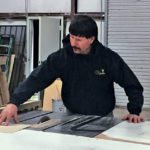
Cliff running the table saw in his cabinet shop 
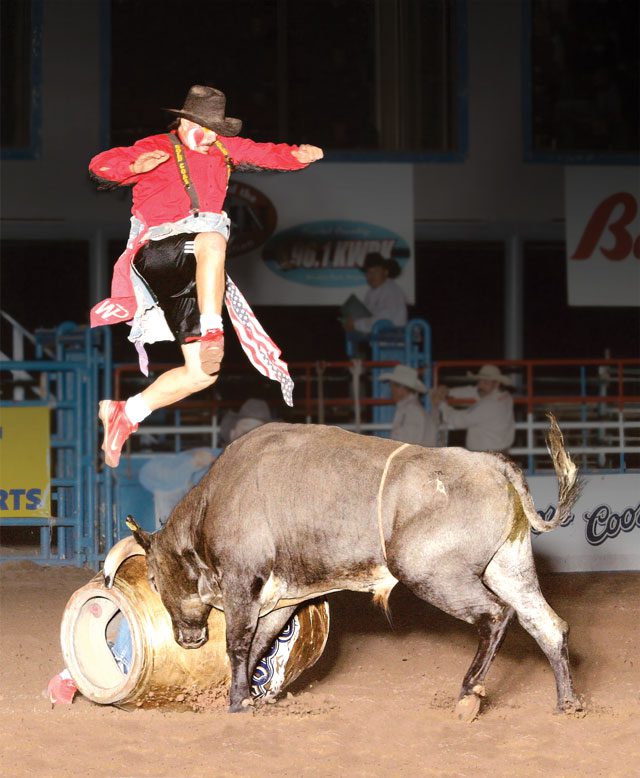
Cliff jumping a bull at Window Rock, Ariz. 
Cliff and his wife Kim 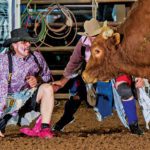
Cliff gets up close and personal in the arena – Ric Anderson 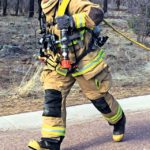
Cliff is a firefighter and paramedic – courtesy Clifford Maxwell 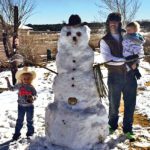
amily man Cliff with his grandchildren He bought the cabinet shop – Maxwells Custom Cabinets – that he worked at and added his firefighting career five years ago. “I got my paramedic last year after nine months of intense schooling. I still did my firefighter job, my bullfighting, and the cabinet job. I had 52 credit hours when I got done with the paramedic training. I enjoyed the medical side of the firefighting thing and thought why not learn more so I can do more.”
His EMT training has come in handy in the arena. “Right after I got my EMT, we were at a rodeo in California. A bull rider got bucked off and the bull stepped on his leg, breaking his femur. I cut off his chaps and exposed the break. The femur was a compound fracture that hit an artery and he was bleeding out. We saved his life due to the training that I had. The medical side has helped me with a few accidents like that.”
Cliff has added running to his schedule in preparing for the RNCFR. “My captain is a younger captain and he really pushes staying in shape,” he said. “He sent out an email three or four months ago to put a team together for a Tough Mudder in Mesa. I signed up and joined the team and then realized that the course was 10-12 miles with 30 obstacles.” In addition to training for that, he credits the cabinet shop for helping to keep him in shape. The shop is run by his 22-year-old son, Trevon, and Cliff works there at least 40 hours a week. “The cabinet shop is very physical. We order everything in sheets and we have to move it and cut it.” He and his wife, Kim, also chase after two grandchildren, a 6 year old granddaughter and 2 year old grandson.When Cliff first found out about being selected to work the RNCFR, he planned the entire family to go along, but that isn’t going to work, so he and Kim will make the drive to the Sunshine State. Cliff has been there before, helping with the hurricane damage a few years ago, but it will be Kim’s first trip to Florida. They are looking forward to the drive and taking in the sights along the way.
Cliff would love to be considered for the WNFR, but admits that he doesn’t work enough rodeos for that. “I’ve got my career, my cabinet shop, and my family comes first,” he said, but adds that he plans to continue fighting bulls. “I’m an adrenaline junkie – I enjoy it – I enjoy rodeo.”
-
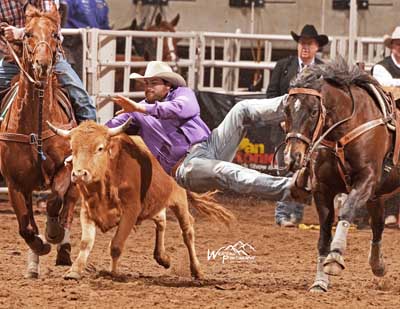
2016 PRCA Standings
- 2016 PRCA WORLD STANDINGS
Unofficial through March 14, 2016
All-around
1 Caleb Smidt, Bellville, Texas $32,921
2 Rhen Richard, Roosevelt, Utah 13,824
3 Justin Thigpen, Waycross, Ga. 13,123
4 Chant DeForest, Wheatland, Calif. 9,903
5 Cord Spradley, Waycross, Ga. 7,332
Bareback Riding
1 Orin Larsen, Inglis, Manitoba $45,986
2 Tim O’Connell, Zwingle, Iowa 41,043
3 Jake Brown, Hillsboro, Texas 39,485
4 R.C. Landingham, Paso Robles, Calif. 30,955
5 Tanner Aus, Granite Falls, Minn. 28,240
6 Mason Clements, Sandy, Utah 24,771
7 Caleb Bennett, Tremonton, Utah 23,519
8 Winn Ratliff, Leesville, La. 19,795
9 Kyle Bowers, Drayton Valley, Alberta 15,518
10 Ty Taypotat, Regina, Saskatchewan 15,137
11 Casey Breuer, Mandan, N.D. 14,783
12 Teddy Athan, Livermore, Calif. 14,227
13 George Gillespie IV, Hamilton, Mont. 13,205
14 Evan Jayne, Marseille, France 12,444
15 Ty Breuer, Mandan, N.D. 11,441
16 Jake Vold, Ponoka, Alberta 10,624
17 Colin Adams, Deloraine, Manitoba 10,557
18 Luke Creasy, Denton, Texas 10,316
19 Kyle Brennecke, Stephenville, Texas 10,234
20 Clayton Biglow, Clements, Calif. 9,203
Steer Wrestling
1 Jason Thomas, Benton, Ark. $36,300
2 Jake Rinehart, Highmore, S.D. 30,416
3 Clayton Hass, Terrell, Texas 27,871
4 Ty Erickson, Helena, Mont. 26,824
5 Tyler Waguespack, Gonzales, La. 25,136
6 Dakota Eldridge, Elko, Nev. 20,486
7 Matt Reeves, Cross Plains, Texas 20,452
8 Joshua Clark, Belgrade, Mont. 17,753
9 Brad Johnson, Reva, S.D. 16,640
10 Clayton Moore, Pouce Coupe, British Columbia 15,333
11 Baylor Roche, Tremonton, Utah 14,129
12 Tooter Silver, Quitman, Ark. 13,921
13 Jule Hazen, Ashland, Kan. 12,627
14 Wade Sumpter, Fowler, Colo. 12,432
15 Josh Peek, Pueblo, Colo. 12,248
16 K.C. Jones, Decatur, Texas 12,052
17 Riley Duvall, Checotah, Okla. 11,413
18 Nick Guy, Sparta, Wis. 10,786
19 Tanner Brunner, Ramona, Kan. 10,710
20 Billy Bugenig, Ferndale, Calif. 10,596
Team Roping (header)
1 Clay Smith, Broken Bow, Okla. $25,624
2 Dustin Bird, Cut Bank, Mont. 25,459
3 Matt Sherwood, Pima, Ariz. 24,271
4 Kolton Schmidt, Barrhead, Alberta 23,297
5 Levi Simpson, Ponoka, Alberta 22,567
6 Colby Lovell, Madisonville, Texas 20,379
7 Shane Philipp, Washington, Texas 18,173
8 JoJo LeMond, Andrews, Texas 17,157
9 Justin Davis, Madisonville, Texas 16,881
10 Zac Small, Welch, Okla. 16,837
11 Spencer Mitchell, Williams, Calif. 15,218
12 Aaron Tsinigine, Tuba City, Ariz. 15,108
13 Joel Bach, San Augustine, Texas 13,559
14 Jake Cooper, Monument, N.M. 13,143
15 Jacob Dagenhart, Statesville, N.C. 12,638
16 Adam Rose, Willard, Mo. 12,247
17 Ty Blasingame, Ramah, Colo. 12,056
18 Billy Bob Brown, Carbon, Texas 11,753
19 Manny Egusquiza Jr., Marianna, Fla. 10,513
20 Rowdy Rieken, Arp, Texas 9,988
Team Roping (heeler)
1 Russell Cardoza, Terrebonne, Ore. $31,666
2 Paul Eaves, Lonedell, Mo. 26,913
3 Quinn Kesler, Holden, Utah 24,506
4 Jeremy Buhler, Abbotsford, British Columbia 22,567
5 John Philipp, Washington, Texas 18,173
6 Tommy Zuniga, Centerville, Texas 16,872
7 Wesley Thorp, Stephenville, Texas 16,715
8 Kory Koontz, Stephenville, Texas 15,316
9 Jim Ross Cooper, Stephenville, Texas 14,775
10 Justin Davis, Cottonwood, Calif. 13,631
11 Dugan Kelly, Paso Robles, Calif. 12,725
12 Caleb Anderson, Mocksville, N.C. 12,638
13 Walt Woodard, Stephenville, Texas 12,616
14 Garrett Jess, Coulee City, Wash. 11,753
15 J.W. Beck, Moville, Iowa 11,405
16 Josh Fillmore, Penrose, Colo. 11,158
17 Shay Carroll, Prineville, Ore. 10,281
18 Justin Price, La Veta, Colo. 9,988
19 Kinney Harrell, Marshall, Texas 9,904
20 B.J. Dugger, Three Rivers, Texas 9,749
Saddle Bronc Riding
1 Jacobs Crawley, Boerne, Texas $43,113
2 Allen Boore, Axtell, Utah 37,487
3 Jake Watson, Hudsons Hope, British Columbia 37,031
4 Jake Wright, Milford, Utah 32,007
5 CoBurn Bradshaw, Beaver, Utah 29,883
6 Rusty Wright, Milford, Utah 28,235
7 Tyrel Larsen, Inglis, Manitoba 20,601
8 Sam Spreadborough, Snyder, Texas 13,849
9 Dalton Davis, Holcomb, Kan. 13,797
10 Layton Green, Meeting Creek, Alberta 13,558
11 Clay Elliott, Nanton, Alberta 13,541
12 Andy Clarys, Riverton, Wyo. 13,510
13 Ben Londo, San Luis Obispo, Calif. 13,249
14 Joey Sonnier, New Iberia, La. 11,897
15 Cody DeMoss, Heflin, La. 11,431
16 Cole Elshere, Faith, S.D. 10,344
17 Sterling Crawley, Stephenville, Texas 10,121
18 Curtis Garton, Kaitaia, New Zealand 8,966
19 Heith DeMoss, Heflin, La. 8,685
20 Chet Johnson, Douglas, Wyo. 8,681
Tie-down Roping
1 Hunter Herrin, Apache, Okla. $33,733
2 Ryle Smith, Oakdale, Calif. 28,642
3 Ryan Jarrett, Comanche, Okla. 27,014
4 Caleb Smidt, Bellville, Texas 24,550
5 Riley Pruitt, Gering, Neb. 23,983
6 Reese Riemer, Stinnett, Texas 22,426
7 Braxton Laughlin, Westlake, La. 18,338
8 Justin Macha, Needville, Texas 16,481
9 Timber Moore, Aubrey, Texas 15,919
10 Ryan Watkins, Morgan Mill, Texas 15,694
11 Marcos Costa, Childress, Texas 15,688
12 Jerrad Hofstetter, Shallow Water, Texas 13,436
13 Michael Otero, Lowndesboro, Ala. 13,375
14 Jordan Ketscher, Squaw Valley, Calif. 13,002
15 Cody McCartney, Ottawa Lake, Mich. 12,813
16 Adam Gray, Seymour, Texas 12,082
17 Kyle Lucas, Carstairs, Alberta 10,891
18 Cory Solomon, Prairie View, Texas 10,836
19 Bryson Sechrist, Apache, Okla. 10,339
20 Clint Nyegaard, Cuero, Texas 10,300
Steer Roping
1 J. Tom Fisher, Andrews, Texas $33,151
2 Rocky Patterson, Pratt, Kan. 22,896
3 Marty Jones, Hobbs, N.M. 20,519
4 Scott Snedecor, Fredericksburg, Texas 15,982
5 Vin Fisher Jr., Andrews, Texas 15,739
6 Chris Glover, Keenesburg, Colo. 14,307
7 Shay Good, Midland, Texas 13,730
8 Troy Tillard, Douglas, Wyo. 12,429
9 Dan Fisher, Andrews, Texas 11,061
10 Jason Evans, Glen Rose, Texas 10,730
11 Landon McClaugherty, Tilden, Texas 9,979
12 Lawson Plemons, Axtell, Texas 9,123
13 Mike Chase, McAlester, Okla. 8,966
14 Cody Lee, Gatesville, Texas 8,757
15 Chet Herren, Pawhuska, Okla. 8,207
16 J.P. Wickett, Sallisaw, Okla. 8,100
17 Shane Suggs, Granbury, Texas 8,084
18 Coy Thompson, Whitewood, S.D. 7,278
19 Casey Tillard, Glenrock, Wyo. 6,763
20 Tony Reina, Wharton, Texas 6,631
Bull Riding
1 Sage Kimzey, Strong City, Okla. $47,628
2 Joe Frost, Randlett, Utah 46,099
3 Bobby Welsh, Gillette, Wyo. 30,605
4 Jeff Askey, Athens, Texas 28,404
5 Trevor Kastner, Ardmore, Okla. 27,240
6 Cody Rostockyj, Lorena, Texas 26,102
7 Kanin Asay, Powell, Wyo. 25,310
8 Dalan Duncan, Ballard, Utah 23,074
9 Dustin Bowen, Waller, Texas 22,162
10 Tyler Smith, Fruita, Colo. 20,774
11 Garrett Tribble, Bristow, Okla. 19,231
12 Riker Carter, Stone, Idaho 17,623
13 Cody Teel, Kountze, Texas 17,481
14 Tim Bingham, Honeyville, Utah 15,418
15 Shane Proctor, Grand Coulee, Wash. 15,392
16 John Young, Orient, Iowa 15,260
17 Parker Breding, Edgar, Mont. 14,940
18 Jordan Spears, Redding, Calif. 14,417
19 Lon Danley, Tularosa, N.M. 14,333
20 Rorey Maier, Timber Lake, S.D. 14,270
*2016 Barrel Racing (March 14, 2016)
Barrel racing standings, provided by the Women’s Professional Rodeo Association (WPRA), are unofficial, subject to audit and may change. Unofficial WPRA Standings are published by the PRCA as a courtesy. The PRCA is not responsible for the verification or updating of WPRA standings.
1 Ivy Conrado, Hudson, Colo. $53,033
2 Michele McLeod, Whitesboro, Texas 40,926
3 Mary Walker, Ennis, Texas 31,206
4 Jackie Ganter, Abilene, Texas 28,856
5 Mary Burger, Pauls Valley, Okla. 28,045
6 Cassidy Kruse, Gillette, Wyo. 25,270
7 Megan Swint, Lithia, Fla. 24,029
8 Jana Bean, Ft. Hancock, Ariz. 23,313
9 Pamela Capper, Cheney, Wash. 22,436
10 Kelly Tovar, Rockdale, Texas 22,387
11 Kimmie Wall, Roosevelt, Utah 18,053
12 Shelby Herrmann, Stephenville, Texas 15,487
13 Kellie Collier, Hereford, Texas 14,756
14 Sammi Bessert, Grand Junction, Colo. 14,606
15 Taylor Jacob, Carmine, Texas 14,288
16 Carley Richardson, Pampa, Texas 13,949
17 Kathy Grimes, Medical Lake, Wash. 13,772
18 Sherry Cervi, Marana, Ariz. 13,498
19 Shelly Anzick, Shepherd, Mont. 13,049
20 Tiany Schuster, Krum, Texas 12,683
-
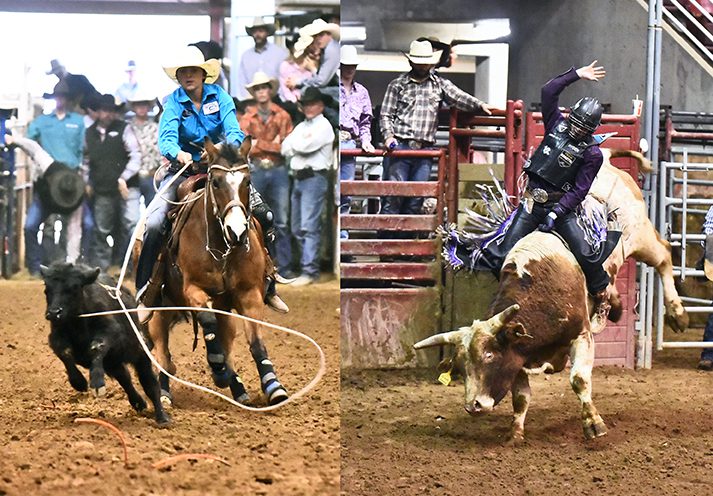
5th Annual Intermountain Icebreaker High School Rodeo
The 5th Annual Intermountain Icebreaker High School Rodeo was held March 3-5 in Ogden, Utah. Open to High School & Jr. High Contestants all over the country. They award buckles to the top three round winners. Buckles and Saddles to the top three average winners. It is a fantastic rodeo that helps get the kids geared up for their spring rodeo season.
Wendy Dahl is the Secretary.
Here is the link to the website: http://www.intermountainicebreaker.com/
All around Boys winner: Ryder Wright
Reserve All around Boys: Bodell Jessen
All Around Girls Winner: Kaytlyn Miller
Reserve All around Girls: Taylor Latham
Photo by Western Edge Photography
-
Rider Buckle
story and photo courtesy of Jim Rider, Rider Buckle
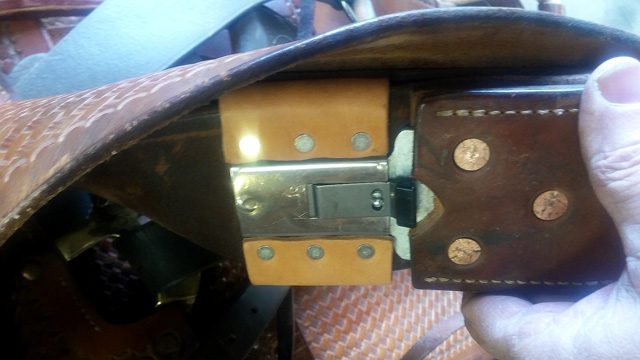
The idea for the Rider Buckle (self-locking stirrup adjustment buckle) was developed while I was marketing the Rider Cinch (adjustable flank cinch), I had developed a one of a kind locking device which allowed the Flank Cinch to be adjusted to 32, 36, and 40 inches. Several people commented about the need for a locking stirrup adjustment buckle after seeing the buckle I had designed for the Flank Cinch. This was in 1990, about 2 1/2 years ago I had renewed interest in my Flank Cinch and again saddle makers commented about the need for a locking stirrup adjustment buckle. So, for the last 2 1/2 years I have been in the development and patent process designing the strongest and safest stirrup adjustment buckle on the market, The Rider Buckle. We have had the Rider Buckle tested several times at Accurate Laboratories in Okc to insure it will stand up to the most demanding situations. We have had earlier revisions of the Rider Buckle in the Roping Community being tested daily, because of this testing we have made 5 different revisions to the initial design. It is now ready for the saddle market, we have it available in 2, 2 1/2, and 3 inch sizes. The Rider Buckle attaches to your Fender and Stirrup Leather exactly as the tongue and sleeve saddle makers are currently using. At this time I am finalizing the design for a locking sleeve in 2 1/2 and 3 inches, the sleeve will retro fit easily to your saddle, by simply removing your old sleeve and adding ours you add another level of confidence to your riding experience. You can see our products and our testing of the Rider Buckle simply by visiting our website at hightechtack.com. The Rider Buckle is available from, Action Co.- Schooley Saddlery-Sulphur River Saddlery-Truth Saddlery-Steve Lantvit Saddlery-Nile Valley Saddlery, or call Jim Rider,405-361-7492
-
Phillipsburg Rodeo Gives Annual College Scholarship
Ft. Hays rodeo students benefit from Kansas’ Biggest Rodeo
PHILLIPSBURG, KAN. (March 14, 2016) – Two Ft. Hays (Kan.) State University (FHSU) students have been awarded scholarships courtesy of the Phillipsburg Rodeo Association.
MariKate Crouch, Scott City, Kan., and Matt Rezac, Onaga, Kan., have both received $500 scholarships for their schooling at Ft. Hays State.
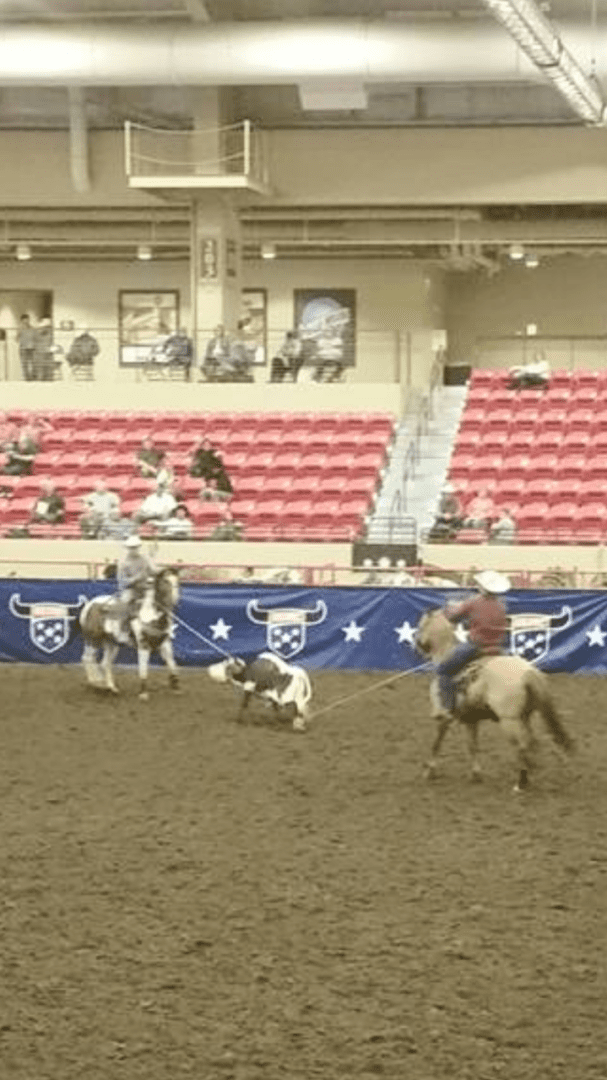
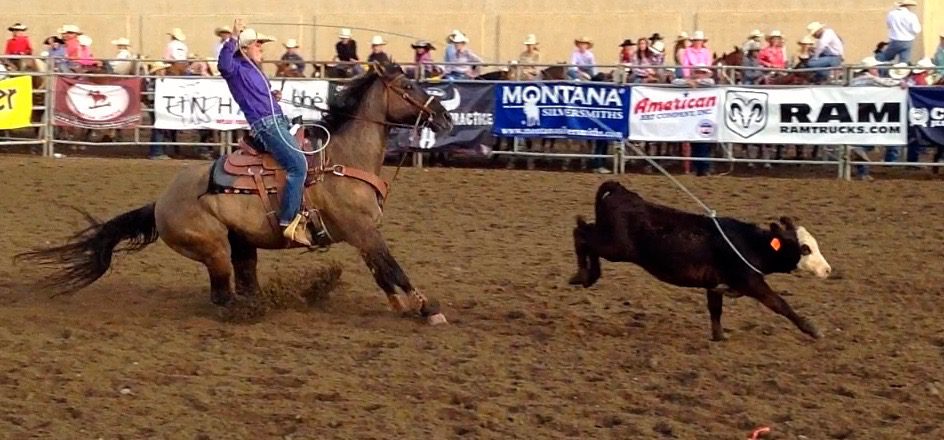
Matt Rezac, a sophomore at Ft. Hays State University, heads in the U.S. Team Roping Championship in this photo. He is one of two recipients of a Phillipsburg Rodeo Association scholarship. He is a team roper on the rodeo team and is studying animal science. Crouch is a sophomore who graduated from Dodge City Community College last December and transferred to FHSU in January. She is studying accounting and will graduate in May of 2018. She is a member of the FHSU Rodeo Team and competes as a breakaway roper and team roper.
Rezac is a sophomore at FHSU majoring in animal science. He is also a member of the Rodeo Team, competing in the team roping as a header but occasionally as a heeler.
Both students participated in youth rodeo, Crouch in Little Britches, junior high and high school and Rezac in high school. Both qualified for the Kansas State High School Finals Rodeo.
Crouch and Rezac work at home when they are on break, Rezac on the family ranch and Crouch for the Scott County Coop Association. The scholarships give them a bit of a financial break for school costs. “Every little bit helps,” Crouch said. “If it wasn’t for people like the Phillipsburg Rodeo Association, I don’t know how any of us would ever afford going to school out of our own pocket. Scholarships are so helpful.”
After graduation, Crouch hopes to work for a CPA practice in a rural community. Rezac will return to the family ranch.
Crouch is the daughter of Lance and Carol Ann Crouch. Rezac is the son of Jay and Stacy Rezac.
Bronc Rumford, the rodeo coach at FHSU, speaks highly of both students. Rezac “is a good horseman,” he said. “He can handle a rope and has a ton of talent.” Crouch, from a rodeo family, “ropes and rides well. She’s always at practice and is always upbeat. They are both very coachable. When you tell them something, they’ll go work on it.
Since 1997, the Phillipsburg Rodeo Association has awarded scholarships to FHSU students who compete in rodeo. The Phillipsburg Rodeo Association is the organization behind Kansas’ Biggest Rodeo, which will be held August 4-6, 2016. For more information on the rodeo, visit www.KansasBiggestRodeo.com.
-
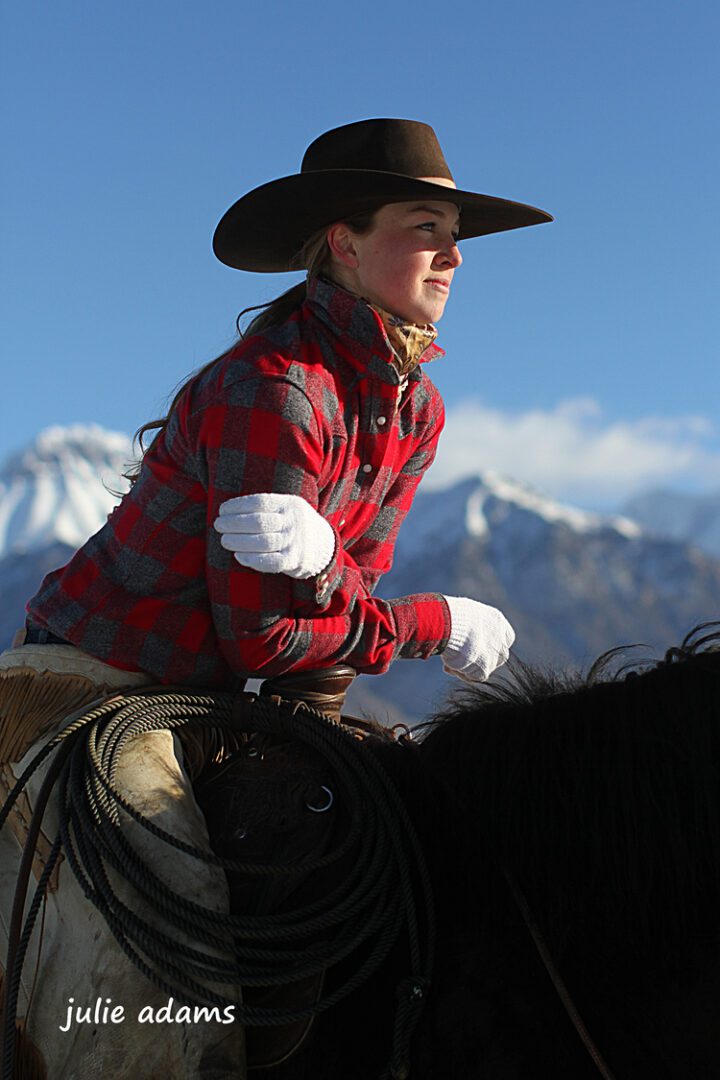
Kimes Ranch Announces 2016 Model Contest Winner
courtesy of Lindsay Perraton
Kimes Ranch
SCOTTSDALE, AZ—Kimes Ranch, an emerging leader in premium denim, announced the winner of their 2016 Modeling Contest, Tayler Teichert, on February 28th. Teichert was humbled and shocked to learn she had won.
“I was 100% shocked when I won, totally surprised. I liked Kimes Ranch on Social media, thought maybe I would enter, entered and the rest is history.”
Teichert, a 24-year-old full time ranch hand from Idaho came out on top with over 250 of the 2800 online votes. A win, that Teichert credits to her ranching community ties.
“There’s people all over the country that I love in the ranching industry and in other industries, especially ranching because I’ve worked with them, I’ve got to know them all. I just know people all over and I posted once. It just exploded from there, all my friends shared it, it got crazy. I have amazing friends, that’s all it is.”
Amazing friends, who shared her photo 90 times from the Kimes Ranch Facebook page, also spoke highly of the 6-foot-tall blonde. Many like, Erika Carla Zundel boasted her work ethic along with her beauty.
“She is beautiful and can work right next to the guys! If you are looking for a real cowboy-girl this is her!”
Tayler Teichert’s work ethic, in fact, is what lead her to Kimes Ranch jeans and eventually their modeling contest.
“I’m really good friends with the people that own J.M. Capriolas. I went and worked for them during a festival and I’ve taken pictures for their website. They showed me the jeans, and I actually bought a pair. I found you guys [Kimes Ranch] on Facebook and saw your posting for the model contest.”
In only it’s second year, the Kimes Ranch Model Contest boasted over 600 applicants from all different disciplines and backgrounds. Lindsay Perraton Director of Marketing for Kimes Ranch praised the contestants.
“We had such an amazing group of applicants it was a grueling process to pick a top 100, let alone a top five, so we deviated from our original plan and upped the finalists to a top ten for this year. The applicants were all beautiful inside and out with great back-stories. We are lucky as a company to have had such an overwhelming response and tried our best to show the verity of applicants in our top ten. Our Kimes Ranch community had the final vote and they chose Tayler as our representative. She is a perfect fit and we are thrilled to have her.”
Teichert describes her personal style as simple, which was another draw to the Kimes Ranch jeans.
“I like clothes that are simple. That’s why I like Kimes Ranch jeans, they don’t have the bedazzling on the butt or the ugly white stitching. I like functional, simple, classy, well-built clothing.”
Laughing, she added that she doesn’t like to look too modern.
“I like simple but I like something that’s a little bit different. I usually pull that in. I like some ugly sweaters, which you may have have gathered by my pictures. I have some weird thrift store ugly stuff because it’s different and nobody else has it and that’s what I like.”
Her love for “ugly sweaters” can be credited in part to Idaho’s ever changing weather and the need for functional clothing.
“I live in Idaho and it’s cold 9 months of the year. It’s all about function for me. I typically like winter clothes a lot better because I can incorporate jackets and sweaters.”
In her spare time, Teichert writes for the Cavvy Savvy and moonlights as a freelance photographer. For more information on Taylor Teichert or to view her work visit www.taylerteichert.com.
About Kimes Ranch Jeans: Founded in 2009, Kimes Ranch (formerly Longhorn Jean Company) was created to fill a void in the marketplace. With a long standing western history, Matt and Amanda Kimes’ desire was to create a company that produced great fitting, quality, long lasting jeans that walked the line between fashion-forward and western folk friendly.
The brands catchy logo and even more attractive company culture and customer service have brought them a cult-like following amongst their western consumers. The classically inspired line of jeans, have been featured in magazines including American Cowboy, Horse & Rider, Cowboys and Indians and Chrome Magazine.
Kimes Ranch. Superior Fit. Classic Style. Western Uncomplicated.
For more information on Kimes Ranch or to order, visit www.kimesranch.com.