Team ropers Rylie Smith and Hope Thompson walked out of AT&T Stadium in 2020 as the first female team roping champions in the WCRA. They each pocketed $90,000. The team repeated, winning the Challenger in 2022. “I bought a couple horses with the money,” said the 21-year-old from South Texas. “We live where my mom (Misty) grew up – between San Antonio and Corpus Christi on 37.”
She started roping when she was 13, heading for her dad, Ricky. “He wouldn’t let me dally,” she remembers. “I actually started competing in barrel and goats and poles when I was younger, and started roping when I got older.” She switched to roping calves when she was 14. “My dad told me I had to rope calves good before I could go back to team roping.” The 5’3”, 100 lb. the 21-year-old year old tie-down ropes in the WPRA, using all the finesse she has learned from Justin Mass, 8x NFR Qualifier. “I breakaway rope more now, but I still look for a small horse if I can find one.” She has been watching the rapid progression of breakaway roping. “It’s competitive and the girls are mounted,” she said. “If a horse doesn’t fit you, you are going to struggle out there.” Rylie knows first hand about that. “I have a horse that’s good, but I’m not 100% clicking with her. I do enter breakaway, but I’m not hitting the rodeo trail right now.”
Instead, she is focused on training, roping in the All Girl Ropings, and competing at the UPRA and CPRA rodeos. “From where I live, it’s a drive, but it’s worth it. I want to stay in the horse industry – I don’t want to make a living as a rodeo cowgirl – I enjoy the aspect of training the young horses.” Once they are broke, Rylie likes to take them from there. “Going from the dummy to steers and taking them to their first outing – a few backyard jackpots – that’s fulfilling to me.”
The #6 heeler and #4+ header is a huge fan of 5 Star Equine Products. “I love them. I’m not one for flashy stuff; I’m into it for the protection of my horses. In my opinion it’s the best I can do for my horses – they are giving me everything, so I want to keep them protected as well.” She has a lot invested in her horses, riding two mares that she purchased from LA Quarter Horses (Madison Outhier’s grandparents). She is beginning to see the babies of the stud, BetHesa Cat, he’s out of a Spot Tot mare, his name is Rhyme Tight, she purchased as a two-year-old colt from the Ruby Buckle Sale. “I didn’t plan to keep him a stud, but I never cut him. He’s a pain, but his personality and the way he moves, and the grit – that’s what I want in my horses.” She has six performance horse mares and her stud. She has two babies on the ground and one on the way. VeHesa Cat, Ryme tight.
Rylie would rather stay close to home and jackpot, she spends most of her time training young horses. “If you’re in the seller’s market, this is a great time.”
Author: Siri Stevens
-

5 Star Champion Rylie Smith
-
American Hat Presents: Jeff Askey
Jeff Askey is part of the American Hat team because he believes in the core values of the company. “The whole company is based in American values. From the bottom to the top of the company, everyone is someone you want to be involved with. All the core values you associate with the cowboy way of life.”
Jeff Askey started life in Pennsylvania. “My dad (Steve) was a factory worker, and he would go to the sale barn and buy three-year-old horses and bring them home,” he explained. “I’d find out if they were broke.” After the factory shut down, Steve was able to continue making a living by buying and selling horses, cows, and a load of hay here or there. From his riding days, Jeff knew he had the ability to stay on and he took that ability to the next level. “One of my best friends started getting on bulls and I entered up and here I am in Texas, 22 years later.”
He wasn’t sure what to do after he graduated from high school. “I wasn’t sure I was college material. School was stupid easy to me.” He got a little scholarship to go to college in northeastern Oklahoma. “The coach that was there said I needed to go to UTM – Coach Luthi. John Luthi taught Jeff how to have a positive attitude. “Mentality in general – it’s hard to pinpoint, but he would teach us how to make our thought worded positive even if it was just in our head.” He also taught his students how to set goals, very specific small goals, structured down so they are achievable. “All of what he taught us applies in all of life – if you take anything he taught and fill in the blank with your relationship, your job, your life – the positive attitude makes all the difference.”
“Not many of them make a career out of rodeo like Jeff has – so we taught them about life,” said Coach Luthi. “He is very smart – he took anatomy and physiology for humans because the animal classes were full – he got an A the first time.”
Jeff started a fence company after getting his degree in Animal Science, graduating with a 3.8, He went pro, and has five NFR qualifications. He married to Tianti Carter, 2017 Miss Rodeo Texas, in 2019. Tianti Askey, DVM, just opened a fully mobile equine vet clinic, Royalty Equine, LLC., serving the area around their home in Athens, Texas. Now when Jeff’s not on the road, he goes with her, helping with tech and books.
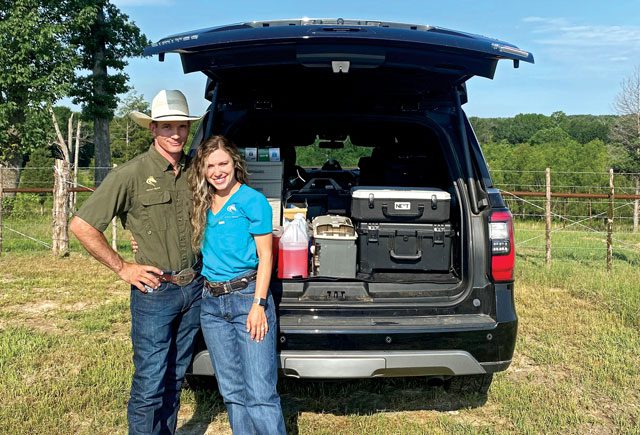
“She’ll get on to you if you’re not a good tech,” said Jeff, who knew nothing about being a vet tech. “I hate needles and hate gore and she just tells me to suck it up. I’ve had to scrub some nasty lacerations – a couple months ago I wouldn’t even look at it – now I’m in there with my finger getting the debris out. You just do it. One day at a time.”
-
On The Trail with Josh Frost
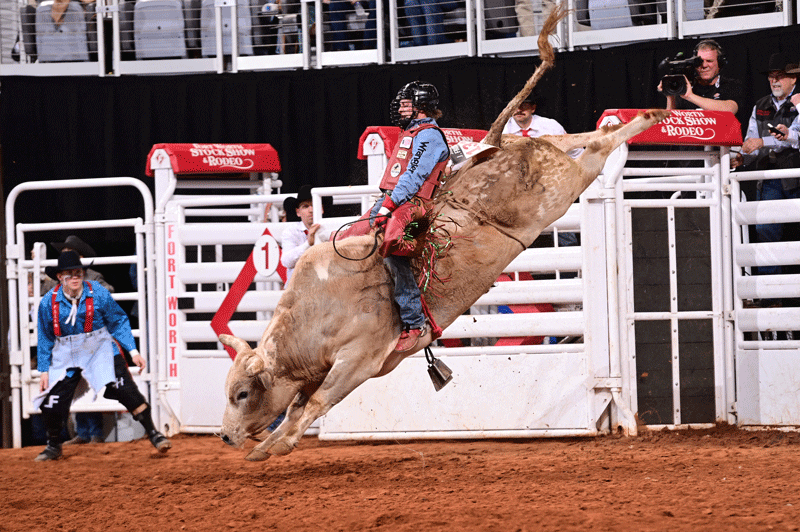
“The way to ride a bull is different than the way to hang on to a bull,” said 3x Linderman recipient, and 3x WNFR qualifier, Josh Frost. “You’ve got to be 100% committed to make the whistle, but sometimes it’s better to accept that the bull beat you and know that there will be another ride.” The 27-year-old wrestled growing up. “We rodeoed from March to November; when it got cold, we were in the wrestling room.”
Shane and Lisa Frost have four children. Joe, Josh, Jate, and little sister, Jacelyn. Josh’s rodeo roots run deep as he grew up in a rodeo family – three generations. His cousin is the legendary Lane Frost. “All of my family rodeos and it’s something that we have always done.” Joe Frost (grandpa), and his dad, Shane, were PRCA members. His great-uncle, Clyde Frost, competed at the first NFR in 1959 in the bareback riding and went on to qualify in 1960 and 1962-64 in the saddle bronc riding. His older brother, Joe, was on the cover of the Rodeo News June 15, 2012. The five-time WNFR qualifier for bull riding now lives on the family ranch with his wife, Kylee (Cahoy) … , and their two children, Luella and Lanae. Joe quit riding bulls in 2019, after breaking his leg and developing a blood clot. Luckily he’d had a very successful career, and is raising kids, ranching and training dogs (border collies) and bull riders.
Josh started competing on sheep and went from there to junior high and high school rodeo. He went to OPSU and graduated with a degree in Ag Education. He is living a goal he set for himself more than 8 years ago when he was featured as a meet the member for Rocky Mountain Pro Rodeo Association. “I want to rodeo for a while and then maybe begin teaching later,” he was quoted as saying. “I’ve always wanted to make a career out of rodeo, so that’s what I’m doing now.” The road to success did not come easy for Josh. He won the Utah High School Rodeo Finals in bull riding in 2013 and went on to college rodeo for Oklahoma Panhandle State University. He qualified for the college finals in 2015-2017, winning third twice and fifth in his senior year. 2015 was his Rookie year and he didn’t qualify for the Finals for four years. “I couldn’t crack the top 15 – then in Reno over the fourth I got hurt.” He had a shot to make it a couple more times, but got hurt every year. “I started realizing that health was a priority; I worked out more and I got hung up less. I also switched to a Brazilian rope in 2018. I started not hanging off the side of bulls – that was a big factor.” In 2019, he finally made the finals.
“I bucked off all ten bulls the first NFR, then won the average the next year,” he said. “I worked more on the mental game and then the consistency. I had to figure out how come I’d ride good one year and not the rest.” He worked on his process and getting into his zone to perform at the elite level he needed to be. “Then I figured out how to repeat my successes.”
Besides his teaching certificate, the best thing that happened for Josh in college was meeting and marrying Erika Chartrand. Traveling south from Canada, Erika was college rodeoing for Panhandle State . She remembers her father warning her not to fall in love with an American cowboy. “I liked her, but I was focused on bull riding – I was hardheaded for the first six months. I wasn’t supposed to have a girlfriend.” It was meant to be, though, and the more time he spent with her, the more he felt she was the one. “She was the first one I met that I had those feeling for.” Within the first year, he had taken her home to meet the family. See Erika’s story on RMPRA page 90. They married on October 2, 2021, and went to Hawaii for their honeymoon.
Then they set about accomplishing their goals. Hers was to make the NFR in the breakaway and win the coveted Resistol Rookie of the Year. His was to make the PBR and NFR finals. “She’s gone more than me – it’s been fun – we’ve been balancing it up pretty good.” They are able to do that because of the team they have behind them. His parents are holding down the ranch while they chase their dreams. “I come home from rodeoing and dad still kicks my butt working around the ranch,” said Josh. “Dad’s primary focus is ranching. Joe and I run a lot of cattle within the same herd.” When the cattle move off to summer pasture, Josh moves on down the rodeo road.
“We support them in everything they want to do and have fun,” explained Lisa. “Their dad spends hours out there helping them.” They also enjoy watching the babies being born, looking to see if they will be the next great bucking bull. “It’s been a great lifestyle and it’s helped the kids in everything they do.” All four are huge goal makers. “When I met Shane, he had his goals written every year; we had the kids do that every year.” Lisa gets up every day and writes down what she’s grateful for; many times, that list includes the ranch and the life they live. Located between Vernal and Roosevelt, Utah, the cattle operation works around Mother Nature, having received 200% of normal snowfall of a foot a year by April. The family lives in the same house that Shane grew up in. “I didn’t come from a rodeo family, I married into it. That and ranching,” she said. “I wouldn’t trade it for anything. How can you not support your kids’ dreams and goals? I’m going to support it with anything I have and teach them how to do it to be the best they can at it – it’s been a blessing.” It just happened that all her kids had a passion for rodeo. The ranch is located 30 minutes from Vernal, and 27 minutes from Roosevelt. “You go by our house to go to Pelican Lake. We go there once a year for Easter and that’s our tradition.” They simply don’t have time to go more often. “When the boys were rodeoing during high school, Shane or I had to stay home. It was better for Shane to put them on bulls than me, and I stayed home and calved.”
The other passion her boys shared was wrestling. They were in the wrestling room from November until March, then back to the arena. “Wrestling is one of the toughest sports,” Josh explains. “It’s about how hard you work out and making weight; you have to do all that before you step on the mat. It teaches you work ethic, and how to love the process.”
Under the guidance of Shane, Josh has become the only man to make both PBR Finals and the NFR the same year, and he’s on track to do that again this year. “It’s hard,” he admits. “The PRCA is still number one to win the gold buckle.” It was exciting – that was one of my goals and it’s always exciting to get a goal done … it came with a $50,000 bonus – that’s always nice. He just won the Velocity Tour and is headed to the PBR finals. While his focus is on riding bulls, Josh has also won the prestigious Linderman Award three years in a row. His brother, Joe, won the award in 2014. The award recognizes the man who wins at least $1,000 in three events, and those events must include at least one rough stock and one timed event. “It’s cool – it’s a very cowboy award and I take a lot of pride in it.”
For Shane, entering multiple events meant more chances to win. “You couldn’t win if you didn’t enter. I rode bareback, bulls, steer wrestled and roped calves We didn’t team rope a lot, but when the kids started, we rode calves, and roped; we did the events I knew how to coach them in. We pretty much roped every day, and we’d buck calves and steers in the arena in our front yard,” explains Shane. “We’d move sprinklers, then we’d swing by and push the snow out of the arena to dry out quicker.” Shane said that even in February there is decent weather to get out and practice. He is quick to clarify that the ranch is not raising bucking bulls. “I was raising bull riders, so I raised rider-friendly bulls to teach my kids how to ride.” Because of Shane’s background in multiple events, he taught his kids how to rope as well. “At one time there were a lot of guys that did multiple events, but now there aren’t and there’s very few that can do both ends of the arena.”
When the youngest went off to college, Lisa and Shane filled their time on the ranch and followed them all on their journeys. “We barely turned the cows out, and I flew down to Texas (Frank Phillips college in Border, Texas) to drive Jacelyn home with her three horses.” With 13 years between the oldest and youngest, Lisa and Shane have spent 30 years raising their children. There are six years between Josh and Jate, Joe is 31, Josh 27, Jate, 22, and Jacelyn is 18. “I’ve been a mom for a long time, and when the last one went to college it makes you feel like ‘what do you do now?’. It’s been great. Joe has 2 kids and Jate has one, so we are grandparents now. Mainly we just do the same thing – helping the kids and watching rodeos. When they are gone, we work at the ranch. We are truly blessed that we get to do what we love to do. We do all our favorite things – working with cattle, ranching, rodeoing and being a family.” They have been able to raise bulls that they trust their sons to learn on. “Shane is the bull fighter, so we don’t want anyone getting hurt.”
“If you want something, it takes hard work,” said Lisa. “The biggest challenge they had was they couldn’t rope until they moved sprinklers or hauled hay; they wanted to practice so they worked hard to make time to practice.” All the kids learned by watching the example set before them in their parents.
“They are hardworking driven boys,” said Shane Frost of his sons. “I get up at five and come in at nine. They’ve been following me their whole life.” For Josh, his rodeo goals include a PRCA gold buckle and a PBR gold buckle. Then he plans to slow down a bit and quality for the calf roping and bull riding I the same year. The only one to accomplish that is Phil Lyne – and he won the average in both events (1972 NFR). He admits he is living his dream right now.
“I have my Ag Ed degree; I taught for three months, and I really enjoyed that. I see myself doing that – but I want to be my dad when I grow up – here at the ranch with my wife and kids.” -

Meet the Team – Dale Hirschman
Dale Hirschman picked up his camera “a little bit less than forever ago. I started in 1972,” he said. “I was entered and got my mom’s camera and took my first rodeo photos – I was bored.” Dale got serious in 1998. “A couple of the guys I rodeoed with asked me to take photos of their kids at the JRCA, the Junior Rodeo Cowboys Association, a new association they had started.” He’s been shooting rodeo since Sage Kimzey was mutton bustin’ “His dad competed with me,” said Dale. “Sage has stayed himself through his success – nice and humble and that’s been amazing to watch.”
Dale is the official photographer for the Central Plains region. “I’m the chaplain and the president of the geriatric crowd – we really don’t have a geriatric club because we forget when we’re meeting.” He has outlasted all the coaches and just keeps going. “I don’t stop.” Dale is a retired high school art teacher in Clinton Oklahoma. As a male teacher, especially of the elected classes, he got all the students that were looking for an easy “A”. “I taught two things – respect and responsibility. My subject matter was art. I taught the way I wanted to be treated. The students were ladies and gentlemen – they were never boys and girls.” With a Bachelor of Art in Education and master’s in education, he really learned how to teach by watching his teachers teach. “I learned that students will rise to the expectations given them. It might take a while, and they have to figure out that you are actually for them. As the chaplain, I am not to condemn. If they want my opinion, I’ll tell them. Otherwise, I don’t bring it up and I keep loving them. We are all at different growing spots in our lives. In some areas I might have convictions in, you don’t. We make choices as we grow and that’s something that we need to give people space in.”
Dale got his PRCA photography card 8 years ago. “For a long time, I had a contestant’s card, not a photographer card.” He tried his hand at several of the events, settling on bareback riding. “With bronc riding you need finesse, with bull riding, you took you yanking; barebacks were a little of both.” He got kicked in the side of the leg by a bull and hurt a knee bulldogging. Picking up the camera was the next step. He started with a Pentax K1000, 35 mm. Now he shoots Nikon D500.
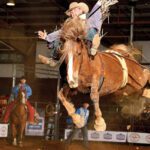

– Courtesy of Dale Hirschman The camera is the tool to reach people for Christ. “I grew up in church – I got involved in fellowship of Christian athletes on the college level and committed my life to Him back in the late 70s. I went to Cowboy Church and had been a committed Christian for three years, and the guy that was leading it went home early and I stepped in to keep it going and it’s been going ever since. God told me in that still small voice – don’t promote yourself, I’ll do it. By the grace of God, I’ve been able to. When my attitude and thought life stink, God waits. Like the time my leg was stuck between two pipes on the bucking chute and the horse froze – it could have wiped my leg out – first thing I thought is how merciful God was. 180 degree change in that horse.”
Dale is married to Sarah who is in charge of marketing fo Western Technology Center, with five school campuses. “My wife is made for the job she’s doing – that’s her calling.” They have two daughters and two grandchildren.
He’s going to keep doing what God calls him to do. “I don’t want to grow up.” As a chaplain, he doesn’t want to just do church. “I want to see lives change through the Holy Spirit to the love of Jesus Christ. I want to see those kids grow deeper in that relationship, and if there’s something I can see or do to help them succeed, I want to do that. If that’s not happening, I just need to go home.” -
Team Cavender’s Merrin Frost
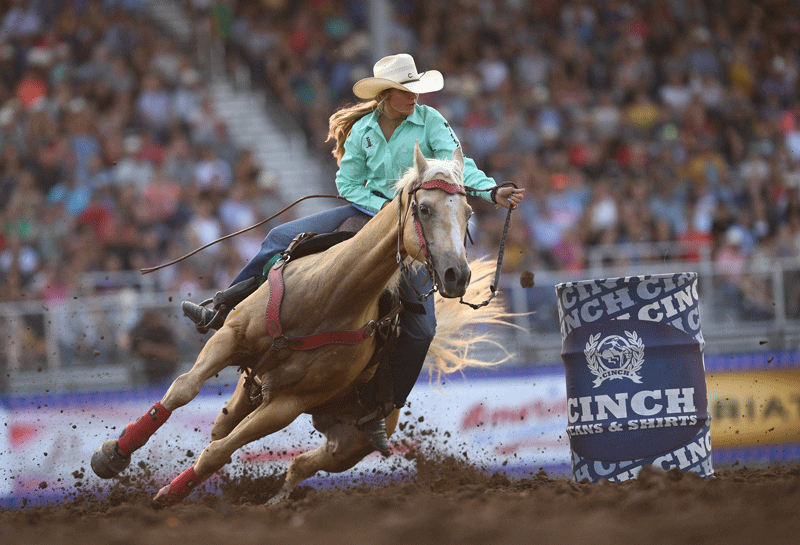
Merrin Frost lives ten miles south of Lawrence, Kansas, in Baldwin City. She has always had horses, chickens, dogs, and all the animals that come with living in the country. Both of her parents, Richard and Kasey, work in pharmaceutical sales. “Mom takes me and my sister (Kyan) everywhere since she works from home,” said the graduating senior from Baldwin High School. “There are close to 100 graduating with me.” Out of that graduating class, she is the only one that competes in rodeo. Her older sister, Macey, 22, plays college basketball and her younger brother, Kreyton, 14, is a linebacker on the football team.
Merrin competes in barrel racing and pole bending, part of the Missouri State High School Rodeo Association. “I did it my whole life, my mom and grandmother and aunt, so it’s a tradition for us.” She has been part of the Cavender’s team for four years now. “I met them at Nationals my freshman year, in 2020. I’ve been able to go to the Summit every year, and we meet new people every year. It’s fun to learn about the family and do the photo shoots. We meet rodeo kids from all over.” She appreciates the time Cavender’s has spent to make each member of the team feel important. “As a sponsor patch, it’s good to know the family behind the business.”
Her focus is on barrel racing and she’s riding an awesome horse named Cash. “He’s made me a bunch of cash. I’ve been running him since 7th grade. I ran him my first time at Nationals, and he made the short go. We’ve stuck with each other since then. He’s my best friend – he’s awesome.” He’s 15 now, and her back up horse is Superman.
When she graduates, she’s going to Northeastern Junior College. She’s thinking about pursuing athletic training and may end up as a physical therapist. “I’ve always wanted to be a physical therapist – I’ve had to go for different things in sports and I think it’s cool to see how to fix the body in different ways. You can accomplish anything you put your mind to – dream big.” -
5 Star Featured Partner Southern Junior Rodeo Association
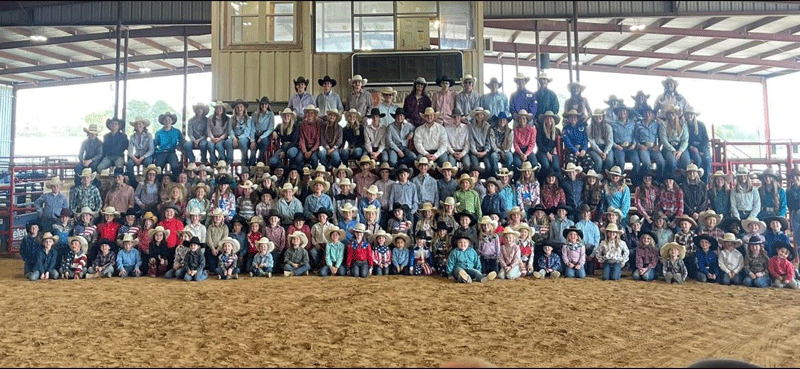
This was the biggest year we’ve had,” said Sam Dixon, past president of the SJRA, Southern Junior Rodeo Association. “It’s given the girls a great start on life in general, and not just rodeo. They learn responsibility by taking care of animals and the life lessons are the best in rodeo.” Hadlie Dixon and Reiny were two and three when they started.
Sam and Heath and two of the other board members, were contestants in the first SJRA finals in 2001. Miss Robin Blankenship had the idea and put a notice in the local paper and a few people showed up and it started. It got big enough to make it a nonprofit. “This year we gave a little over $225,000 worth of prizes – it’s growing,” said Sam.
One thing that sets the association apart from others is all the rodeos are held in the same place – Saline County Fairgrounds in Benton, Arkansas. “We gave them their first buckle this year and it said, ‘home of the SJRA’. We run 7,924 entries in ten weekends,” said Sam. The partnership with 5 Star has lasted for since the beginning. “He was open minded with it and believed in what we were doing. We try to do as much local as we can.” The 5 Star shop is located about an hour from the arena.
Heath Harrison, past board member, serves as the AM arena director. “I work with the 10 and under kids, keeping the arena going.” Heath has two boys, Hudson (11), and Han (9), that are current members, as well as a newborn coming up that will be in the association. “Four-month-old, Hattie, is going to be the next All Around. She was 10 days old when she went to her first SJRA. We wrapped her up and took her with us.” Heath’s oldest boy, Hudson, won the reserve all around. “We all use 5 Star products, from the pads to the boots to the breast collar. We won the All Around because of 5 Star.” Heath was a bull rider and didn’t do a lot of roping, but he knew with all the aches and pains of riding bulls he didn’t want his boys doing that. “When we joined, my oldest boy was five, and had never been on a horse. In this association, they see other kids their age doing things on horses – it gives them the courage to try. It taught them how to ride and rope, and the friends they made helped them chase their goals. It gives them a broader base of friends than our little town.” Both his wife (Summer) and Sam’s wife (Allison) work in the office. “We volunteer and give everything we can to the association to give those kids the same opportunity our kids had.” -
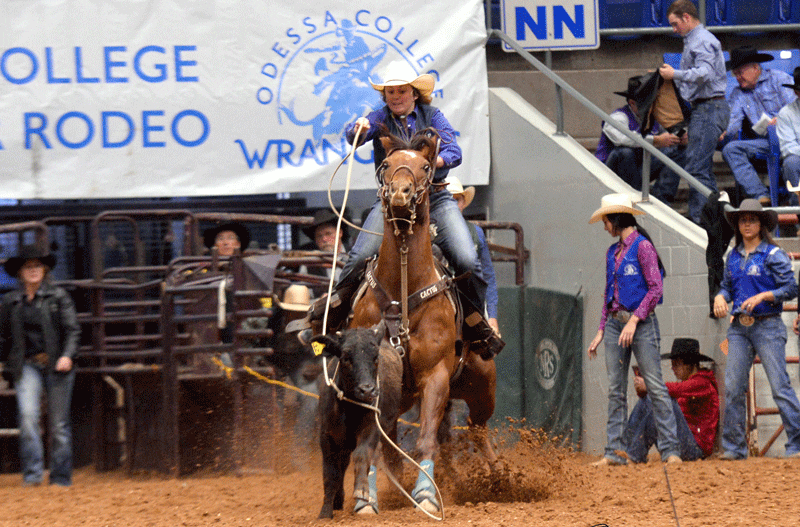
American Hat Presents Baylee Paul
Baylee will be responsible for overseeing the company’s social media strategy, developing engaging content, and managing American Hat Company’s social media presence.
Baylee joins American Hat Company from Outlaw Equine, where she worked for several years in all facets of the clinic including social media and marketing. “I did lots of things at Outlaw and the knowledge I gained is immeasurable. I started teching for Dr. Josh Harvey, owner and founder of Outlaw Equine; in high school when he came to Florida for tours. During college breaks and after college, I worked in Rehab as well as teching. Eventually I moved into the office where I handled all the pro rodeo athletes, clinic scheduling and tours for the vets – it was a full-time job that’s for sure. It was while I was in the office, I began to manage the Social Media accounts and create marketing videos. I will forever be grateful to Josh and Ashley for the opportunities given to me.” said the 24-year-old, who went to school for Ag Communications and Dental Hygiene. “I worked in the dental industry for two years and realized I missed the Agricultural and Western Industries. I’m the kind of person that is social and likes to be out and about, not in the same place doing the same thing every day.” She did her college work at Frank Phillips College and North Texas Dental Academy.
Baylee grew up in the agriculture industry and has a history of rodeo all the way up to the collegiate level. Her deep understanding and passion for the western lifestyle make her an excellent fit for American Hat Company. She started competing in rodeo at the age of 6 in goat tying and barrels. In middle school, she added breakaway and team roping to the events she competed in. “I also showed pigs and steers in 4-H and FFA.” She admits the heat and humidity in Florida can be hard to handle, but she adapted. “We’d get up before the sun and get everything done and if you don’t get it done, you get used to sweating.” When she moved to Borger in 2016 for college, she has never looked back and eventually ended up in Decatur where her two brothers, Tyler and Wyatt, lived. Her parents, Bert and Tom, joined the rest of the family in Wise County in 2019.
“Growing up in and my love of this lifestyle make me a perfect fit for this job,” she said, of her position with American Hat. “I am working with all the pro athletes and the 250 youth ambassadors as well. I get to watch the kids grow up and see who they become as young adults.” She sees Instagram and TikTok as the most popular platforms on social media, with the focus on video, movement, and interaction. She has moved closer to Bowie and is planning to be around for a while. “I like the message the company stands for – it’s a way of life.”
“We are thrilled to have Baylee on board as our new Social Media Manager,” said Keith Mundee, President of American Hat Company. “Her experience and knowledge of the western lifestyle and rodeo industry, coupled with her expertise in social media marketing, make her an invaluable asset to our team.”
In her new role, Baylee will be responsible for creating and implementing social media campaigns that showcase American Hat Company’s brand and products. She will also be working closely with the sales and marketing teams to develop marketing strategies that drive engagement and increase brand awareness. -

On The Trail with Flint Rasmussen
“I changed the expectations for the quality and professionalism of the position of rodeo clown or entertainer, as the times changed. All while staying true to the history and integrity of the sport. And that through it all, I hope I treated everyone with kindness and respect.”
Flint Rasmussen was the start of a new era in his job as a rodeo clown. He was the end of the era and an era during which nobody touched him. Now, at 55, he will step out of the dirt and onto the stage or the mic or whatever comes next. The Choteau, Montana, native has spent the past 50 years entertaining audiences. The youngest of four, his mom, Tootie, wasn’t surprised when her son hit the stage. “I always say, he learned how to entertain himself because he was a latch key kid,” she said. “After he went to school, he’d have to come home and be alone.” She and Flint’s dad, Stan, were both working. “He used his imagination to entertain himself.” Stan worked as a rodeo announcer and was the past president for the Northern Rodeo Association (NRA) and Tootie served as a timer. Their four children, Will, Pete, Linda, and Flint were raised on the announcers stand. “My claim to fame is I have four talented kids,” said Tootie. “I remember when Flint was really little, like three or four, and he would do imitations and pretend he was playing football in the middle of the floor in slow motion.”
He got his first taste of clowning when he was a teenager. Lloyd Ketchum asked him to help him with a skit. “Loyd helped me put my make-up on,” Flint said. “It was a two-man act. We blew up an outhouse. It was awesome.” While in college, he became the voice of the Bulldogs, announcing basketball and football. After he completed college, Flint returned to the town where he was born, Havre, and taught math and history at Havre High School. He also coached football and track, continuing his announcing on the side. “I didn’t have any aspirations to do this (rodeo clown) for a living. It was my summer job. I did it for six years for the NRA, perfecting my craft and developing a character. When I jumped in and went to Red Lodge for the first pro rodeo (1994), I was pretty good – I’d been doing this awhile.”
He started down the road, quickly racking up the accolades. He earned the title of PRCA Clown of the Year for eight consecutive years and won the Coors Man in the Can honor seven times. Flint met ex-wife, Katie Grasky, who was a barrel racer, while he was touring. He was working at both PRCA and PBR events when Randy Bernard, CEO of PBR called, offering him an exclusive deal. Flint turned it down because of all the work he had lined up. By the end of that year (2006), he made the decision to go full-time with PBR. With the PBR, he could fly on the weekends, and be home during the week. “We used to load up the motor home with a three-horse trailer behind it. We’d travel from June to September. We went together. When the girls started school, and their activities were on the weekends, it broke the connection we had – I was gone every weekend.”
Paige, his youngest daughter, remembers growing up on the road with her dad. “I remember life in the motorhome,” said 21-year-old Paige. “It was how we lived. It wasn’t this crazy thing to me that my dad was a clown, we had a kiddy pool and other kids our age would come and play. It was normal for us to live on the road.” When the girls started school, he flew out on the weekends and then he would be home. “I remember going to rodeos with my dad and my mom around home.” Along with rodeo, she did track. “My dad was my track coach in high school – he was great. He was a great athlete himself – I did all the same events he did in high school, 100 hurdles, relay, triple jump and long jump.”
Paige is a senior at Montana State University, where her sister, Shelby, graduated and is an assistant coach. Two years ago, as a sophomore, Paige was the 2021 College National All Around Champion. At the Finals in goat tying Paige was leading by a long way. In the short round she was confident she had it with 6.3 seconds. “It was a done deal – at the last second the goat got up,” she said. “I was heartbroken; my goals were relying on winning the goat tying.” Although she was teary-eyed, she went to the awards to support her team and sister, Shelby. Their team had won the National Women’s Title. “But then they announced that I won the All Around. It was surreal.” Paige did split the All Around title with her good friend that did win the Goat Tying.
Paige has her own coaching business, traveling to produce clinics. That, along with rodeo will take a pause as she pursues medical school. “I want to be a psychiatrist in the Air Force and work with veterans with PTSD.” She loves learning about the brain and she has family roots in the military. “It would be great to work with populations that serve our country so I can serve them back. Before applying to med school, Paige is taking a year off to intern at MIT, in Boston, Mass., and prepare for med school. “I’ll be working in the brain institute at MIT – studying MRIs of teenagers and kids and looking for abnormalities.” When she’s done with her internship, Paige will study and prepare her applications for med school.
She has maintained a 3.9 grade point average as well as competing on the rodeo team. It’s taken lots of early morning and late nights and weekends practicing and studying. “All my close friends on the rodeo team are good at time management; every free minute we get stuff done.” The team is under the athletic department, so they have their own strength training coach, twice a week at 6:30 am. The team does condition training the other day, and Paige works out on her own the fifth day of the week.
Shelby has been coaching Paige forever, so having her as the coach for the team was an easy transition. “We get along well – she’s my role model, so now she just tells me what I need to hear when I need to hear it.” They also live together at the family home in Bozeman, Mont. “My mom lives in Arizona in the winter so we stay here.” In the summer, they all split up and rodeo. They also share a love of music and dance – something that runs in the family and was encouraged growing up. Both sisters went to a one-room school, where the teacher emphasized music. “I write songs, and play six different instruments, including drums. I also did musical theater in high school.”
Shelby remembers that tiny county school. “I played trumpet, violin, and piano. We learned all about drums, and ballroom dancing. My dad’s whole family is very musical.” Her earliest memories of her dad revolved around rodeo and the motorhome. “We’d be gone for months at a time going to rodeos.” Even after school started, she remembers going during the summer until she was in second or third grade. “My mom trained barrel horses even on the road with my dad.” Her love was rodeo and competing was not thwarted by the weather of Montana. “It adds a whole level of difficulty – we had an indoor barn in Choteau and that helped – we just got two feet of snow here last week.”
Shelby graduated from Montana State with a degree in marketing and is enjoying her first year as the assistant coach. “I’m using what I learned in marketing to find what styles work best for the students and communicating that.” The 24-year-old wants to be a role model for her team as well as anyone else she meets along the way. “My parents are both role models.” She is looking forward to her dad retiring from the arena. “All we’ve ever known is dad in the arena, so we don’t know. He will still be traveling, but maybe have some time to get to our stuff – he just went to his first rodeo banquet this year. It will be nice to have our dad back.” Both daughters are dedicated to preserving the Western lifestyle that they grew up in.
“People don’t realize how close we are to losing it,” Flint said about the Western lifestyle. Flint travels to large cities like Madison Square Garden in New York City. “The farther we get away from it, the unhealthier our country is.” Flint set out to help bridge that gap and entertain people. He never dreamed of what would happen to his life once he made that decision. He also never realized the sacrifice that his career cost his family. “In my job there is a selfishness to it, a pride in doing it for myself. But I really truly believed through my career I was doing it for them. I consider them to be my biggest fans in the world, alongside their mom, who still is.” Flint is quick to give Katie credit for the girls’ success in the rodeo arena. “We did a lot of neat stuff. My job put us in the rodeo business, but the person that taught them how to ride and take care of horses is their mom – she college rodeoed.”
On March 11, 2009, Flint, at the age of 41, suffered a heart attack. “We were home, and I was working out. I was out of breath and had stations set up – my wife, Katie, was trying to visit with me and I couldn’t talk – I ended up having a heart attack that day. We lived 11 miles out of town and she drove me to the ER in our little town.” Being in shape saved his life, and after a couple of procedures, he was back in the arena. “There’s not a day goes by that I don’t forget about it. I was working out when I had the heart attack. I was angry and confused. If I had a heart attack doing this, when’s the next one.” He had to wear a heart rate monitor and had to take a few breaks when his heart rate exceeded 140 bpm.
His favorite part of his job is also the worst part of it – the travel. “What a wonderful thing – I’ve watched the college basketball tournament and I know where all the locker rooms are. The best thing is I fulfilled something that was always in me – performing in front of crowds. Singing and dancing and being in front of people fills up a place in you that other people don’t understand. I get to be on a starting lineup and bring people joy.” The PBR has had a record setting year. Before each rodeo, Flint has a little huddle with the bullfighters. “Look over your shoulder,” he reminds them. “These people paid to come see us, we are doing something right.”
“There’s no handbook or guidelines about family – I’m a small-town guy that worked my way up. “In middle age, I’m in front of 15,000 fans in Madison Square Garden … no matter how ready for it you are, you aren’t ready.” Being on the road every weekend took it’s toll on family time – he missed a lot of things due to travel. “It’s the part of this job that people don’t think of. At the time, I was making decisions based on what was best for my family. I do believe I was. My girls have had an amazing life. “
Flint has used his platforms to promote the sport of rodeo. From his studio in Montana, he has produced 66 podcasts, According to Flint, featuring guests from all walks of life that Flint has encountered over the years and some who he is meeting for the first time. His years of knowledge in the industry makes interviews easy. Flint has also hosted “Outside the Barrel” for 18 years at the National Finals Rodeo. “I don’t do the show because I’m a rodeo clown, but because it is a separate passion of mine. That’s all I ever wanted to do – I wanted to be a talk show host, to be on stage. If you want to be effective, you have to perfect your craft. That’s what I tried to do.” Flint also hosts the NFR’s Buckle Ceremony following the nightly performances. “That is part of the transitioning.” He wants to be an Ambassador for the lifestyle. “I see how close it is to disappearing – part of my job moving forward is to preserve the Western lifestyle.” -

Rodeo Dunes – From plains and planes to green golf growth
2,000 acres of the Cervi ranch, near Roggen, a small town in northeastern Colorado, are about to turn green. Two course routings—one by Bill Coore and Ben Crenshaw, the other by veteran Coore & Crenshaw associate Jim Craig—have already been devised for the 2,000-acre, pure sand property acquired by Michael and Chris Keiser, sons of Bandon Dunes developer/owner Mike Keiser and owners of Sand Valley Golf Resort in Wisconsin. And even more golf is expected.
The water will come from ranch shares of the Lost Creek Water Basin- 1,186 acre feet, or the equivalent water usage for 3,500 homes for a year. Water is a private property right, and the water for this project is already in the hands of the developers of the golf courses.
-
On The Trail with Riley Wakefield
I’ve learned how to win and lose – to deal with adversity – that’s easier said than done. I try to be thankful from the beginning and look failure in the eye.
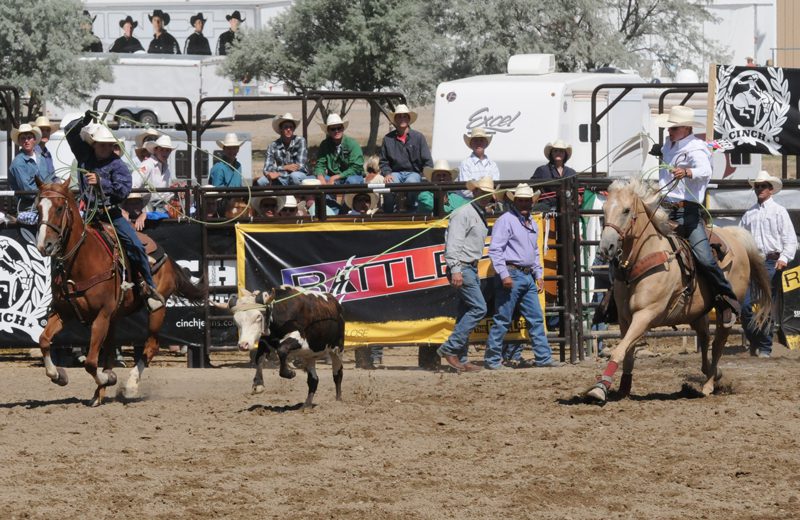
he first time Riley Wakefield went to the Cinch Timed Event Championships, he and his older brother Brady were star-struck. The next time he attended, 15 years later, he went as a contestant, finishing in fourth place. At the 2023 Cinch TEC, the O’Neill, Neb. cowboy turned in a time of 366 seconds throughout five rounds to finish fourth and win $10,000. After applying for the prestigious event for the past five years, Riley was first on the alternate list this year. He got the call in early February that someone couldn’t make it, and there was a spot for him. He prepared, making four or five runs in each event, every day.
It was in 2008, when Riley was eleven years old, that he and his family, including parents Jim and Susan Wakefield, went to Guthrie’s Lazy E Arena as spectators. “It was a treat,” Riley said. He and Brady saw their heroes among the competitors. “I just remember seeing role models,” he said, “seeing people in places that I wanted to be, people with extreme talent. We had old videotapes of the finals so we knew who guys were, and when they’d walk by us, we’d stare at them. And to see them in person, we were star struck. It was a pretty amazing experience.”
He and Brady, who passed away in a vehicle accident in 2015, got their picture taken with Trevor Brazile.
The CINCH Timed Event Challenge is an invitational event, taking the best twenty cowboys in the world, to compete in five events: steer wrestling, tie-down roping, heading, heeling, and steer roping, in four rounds, with the best fifteen going on to the fifth round. Fastest time in all four events, over five rounds, wins. Riley was leading the average going into the fifth round but a sixty second run in the team roping put him in fourth place for the finish.
A 2020 graduate of Northwestern Oklahoma State in Alva, Riley has been living in Stephenville, Texas. But this winter, he was at home on his parents’ (Jim & Susan) ranch near O’Neill, during what was the worst winter in the last ten years in north-central Nebraska; O’Neill has had 57 inches of snow. The snow and cold weather made everything harder to accomplish. “We had three feet of snow on the ground, and it was an absolute workout to get to the horses. You had to lift each leg through the snow.” All the watering was done by hand, because the tanks would freeze to the bottom by morning. “We hand watered everything,” he said. Riley’s girlfriend Jenna Dallyn helped him, loading cattle, roping with him, until she had to return to High River, Alberta, to work. Then his dad helped. Jim “was out there every day, all day, pushing cattle. When Jenna left, he had to fill in and be the guy to help me. He was a huge part of this.”
Cinch TEC contestants designate “helpers,” who head, heel and haze for them. Cinch TEC contestants cannot head or heel for each other, but they can haze for each other. Riley’s header was CJ DeForest; his heeler was Tanner Braden, and Allen Good was his hazer for three rounds with Mason Couch for the last two rounds. Nerves wore on him for round number one, which showed up in the heading. “That first head loop I threw, it was not a good head loop but a nervous head loop. It was sloppy,” he said. “I was feeling the nerves.” But when the tie-down roping came around, he settled in. “As soon as I tied my first calf, I felt a lot more comfortable. The set-up fit my horse perfectly. He has a lot of run, he’s fairly free, and he doesn’t take my shot away.”
In February, after getting the call that he would be competing at the Cinch TEC, Riley was nervous. The event was so important to him, the concept of being a “true” cowboy and showing skills across four disciplines, had him anxious. So nervous, that he’d never felt this much nerves since he and Brady backed into the box at the 2012 National High School Finals Rodeo, when he was a freshman. The brothers had done some mental training, with one of the pieces of advice being that they should visualize the best thing that could happen and the worst thing that could happen. It worked; he and Brady finished as reserve team roping champions that year.
So Riley applied the same concept to the Cinch TEC. He knew, if he failed, that he’d still have family and friends who still cared about him, and he could still have the chance of being invited to compete at next year’s Cinch TEC. “After I looked failure dead in the eyes,” he said on a Facebook post, “the rest of the Cinch TEC was pretty smooth sailing.”
He grew up on the family ranch south of O’Neill, in the Sandhills of Nebraska, with a dad who was a pro steer wrestler and roper.
When family friends came over to the Wakefields to rope, it was Brady and Riley running the chutes, and looking up with respect to the men who practiced with their dad.
“It was an honor to ride their horses around after practice.”
Like many young cowboys, they fell in love with the sport. Jim and Susan hauled their boys to Little Britches Rodeos and youth events all over the region.
The brothers loved it, Riley said. “We took a liking to it and got small successes along the way, that keep you going, and sooner or later, you get bigger successes, then bigger and bigger, and by that time, we were hooked.”
In junior high, Riley wanted to be a bull rider. He followed the PBR faithfully and got on roping steers at home. But in eighth grade, he realized the timed events were more his thing.
In high school, he qualified for state finals and the National High School Finals all four years, competing at Nationals four times in the team roping and once in the steer wrestling.
In college at Gillette (Wyo.) College, he made it to the College National Finals Rodeo in 2017 in three events, then two years later, won the tie-down in the Central Plains Region while a student at Northwestern Oklahoma State.
Riley rode his horse Gator for the tie-down roping and his horse William for the heeling, borrowing horses for the other three events. Gator has been a long-time project for the cowboy. When Riley’s horse died of colic three years ago, friend Austin Barstow suggested that Riley borrow Gator, who showed potential but was really green. “I knew from the start that Gator had tremendous ability and athleticism,” he said. “But he is extremely playful. He is difficult to catch, he messes around, and he sees how much he can get away with. That’s been the struggle, to get the business attitude out of him.”
At a rodeo in 2021, after Riley roped a calf, Gator misbehaved, stepping away from him as he tried to re-mount. “It took me a full minute to get on him. He was inching away from me in a circle. He wasn’t dragging the calf, but he was moving away.” A few weeks after that, Riley took him to the Badlands Circuit Finals Rodeo, where he worried how the horse would respond to an indoor arena with noise and lots of activity. “I was nervous and had no idea what he would do, but the circuit finals was a turning point. He worked better than he ever had, in a loud and pressure-filled environment.” The twelve-year-old bay has improved. “He’s more business-like now, and I think we’ve both grown up together. I’ve learned how to train one and ride one correctly, and that’s more important than a lot of people understand. A horse is sometimes only as good as his rider.”
For the steer tripping, he rode Todd Eberle’s horse Mississippi, and for the heading, he rode Danielle Wray’s horse, Peanut. Danielle was instrumental in helping him in 2021 when he qualified for the Badlands Circuit Finals Rodeo in three events, and at the Cinch TEC as well. “I couldn’t have done either without her.”
Riley, at age 26, is working at making rodeo his fulltime job. It’s not easy. Last year, he competed across the nation, at times broke and trying to prove himself, not only to the rodeo world, but to himself. “I went through some hard times, really low times,” he said. “I questioned why the heck I was doing this. I have my (college) degree, why am I not at home, working, making for-sure money.” He remembers tough times last summer, traveling in a small trailer with a shower, no bathroom, and two bunk beds, and the time in Caldwell when his traveling partner headed to another rodeo but Riley stayed for the short round. From 6 am, when his buddy got on the road, till 4 pm, when a friend arrived, he sat on the grounds with his lawn chair and phone, while Gator grazed, “taking it all in.”
Rodeoing isn’t cheap, either, with entry fees and fuel bills. “You pull the trigger anyways,” he said. “You can’t be emotional about (spending) the money. You have to trust your talent. If you worry about the money, you’re going to be worried all the time.” During the hard times, he talked to his dad, telling him he was ready to come home. “I remember calling my dad, and he said, ‘you chose to do this, you’re going to stay on the road.”
It can be a game of confidence, Riley said. “When you’re new on the trail, you feel like you have something to prove. You feel like you’re not trying to lose, instead of trying to win, not looking like an idiot, instead of going out there and wining first.
The fourth place finish at the Cinch TEC has boosted his confidence. Now, when backing into the box, “I’m thinking about how fast I can be instead of how not to mess up. I’m thinking of what can go right instead of what can go wrong.”
His parents are behind him one hundred percent. “If I didn’t have my parents helping me out, I would be working a nine-to-five,” he said. “My wins are just as much theirs as they are mine. We’re a team.”
This summer, he will rodeo full time, competing at 80 rodeos, heading to California in April, with a bounce in his step and more confidence under the cowboy hat.
Rodeo hasn’t always come easy to him. “I wasn’t one of those guys that was consistently winning,” he said. “It took some things I needed to work through.”
There were several times he could have quit, but he didn’t. “To me, it’s the fact that I put all the work in and I didn’t want to waste it. I wanted it to pay off somehow.”
“I felt like I could have decided to teach school, forget about rodeo and make some money. I could have, and I’ve had ended up OK. But I had the opportunity (to rodeo) and I have so many people behind me, and it’s what I love to do and what I’ve worked for, so why not let it pay off? And if it doesn’t, that’s fine, but I want to give it the chance.”
His hard work and perseverance is yielding a profit. “I’m so glad it’s paying off now. There’s nothing better than hard work paying off.”
Riley credits his sponsors with helping him stay on the rodeo road. They are Rattler, Wrangler, Wakefield Insurance Agency, Pritchett Twine and Net Wrap, Laursen Chiropractic, Twin Creek Ranches, and Make An Impact.
Cody Doescher won the 2023 Cinch TEC with a time of 312.7 seconds (total on 25 head); Russell Cardoza was second (321.7 seconds); Lane Karney was third (355.3 seconds.) -
American Hat Presents Haven Meged
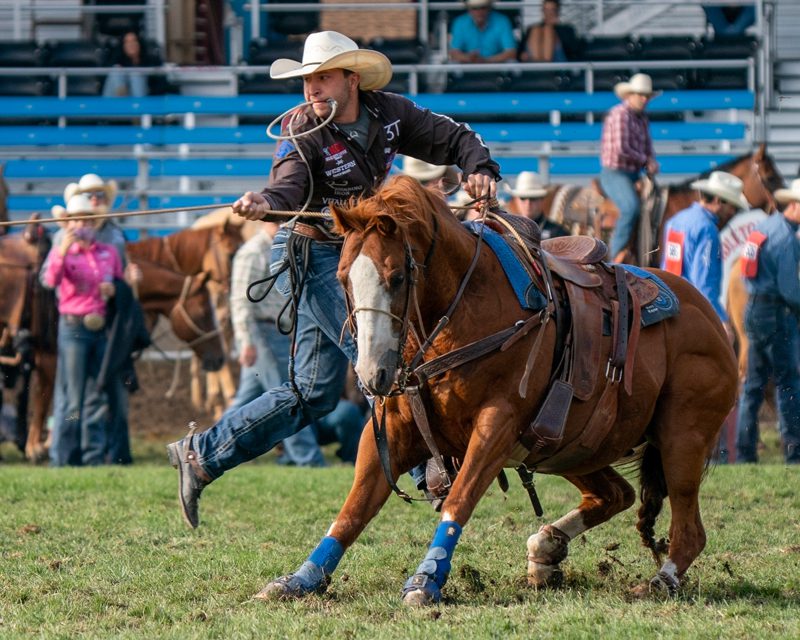
Haven Meged has visions beyond rodeo. He recently won $150,000 in one week with his futurity horses. “Eventually that is what we will do,” said the tie down roper from Stephenville, Texas. His plan is to continue to make a name for himself and his horses. Haven is no stranger to big wins, coming out in 2019 as the college as well as the world champion tie-down roper – taking home $246,013 in earnings as well as winning the average with a time of 85.7 seconds on 10 head. He has been to every National Finals since.
Haven grew up in Miles City, Montana, where his family ranched and ran the Miles City Livestock Auction. His parents, Bart and Misty, along with his siblings, Hayes, Harley and Holden. He learned the work ethic and tenacity it takes to survive a Montana winter caring for 700 + pairs. “As far as I can remember, my dad’s sent hats to American Hat to get them fixed up – and then we get new ones – they are made to last,” said Haven about his partnership with American Hats. “It’s a cool family and I’m glad I get to be part of it.” Haven explains how the values of American Hat and his lineup. “I try to set a good example – in and out of the arena – not only taking care of business but going above that. I try to rope the dummy and take time with those young kids that are looking up to us – I also look for ways to help the committees.”
Haven hopes to add five more NFR qualifications to his belt before he focuses on training full time. His focus for the immediate future is his wedding to NFBR qualifier Shelby Boisjoli on May 13. “We’re gone for the next month and then we’re off.” The couple will honeymoon in the Dominican Republic. “I’ve never been there.”
The couple basically grew up together in the rodeo world, beginning with the National Junior High Finals and continuing through college. They moved to Stephenville at about the same time. Originally from Canada, Shelby has been part of every group of 15 breakaway ropers at the National Finals. They both know the grind of going down the road – and after they are married, they will still both go down the road in separate rigs.
“I do all the entering,” said Haven. “It’s a lot of work to figure it out – I know how to map it out, and it just works out that we have to take separate rigs.” He knows it won’t be forever. “I like rodeoing, I like seeing the sights, but I don’t like to drive that much.” He likes what he gets to do day in and day out, though. “We love roping and training horses and we get to do it together when we’re home,” he said.” -
Team Cavender’s Sam Gallagher
“Find who your real self is and bring out the best.”
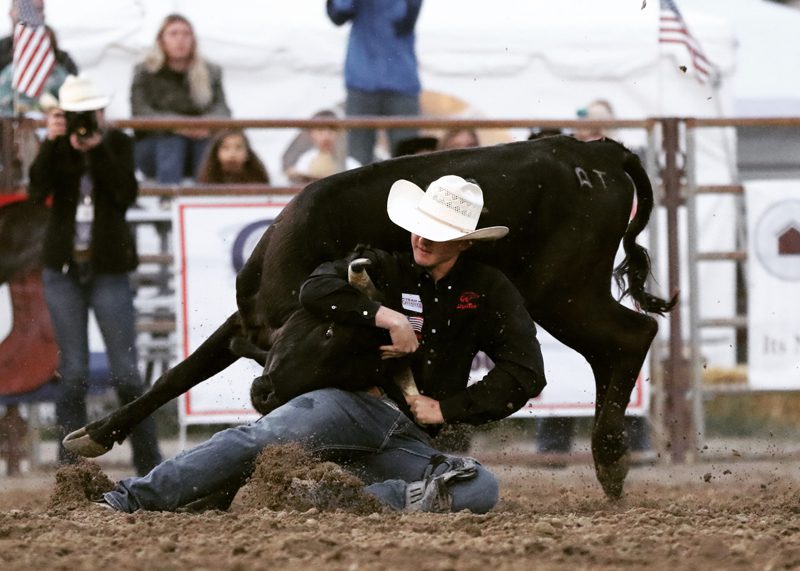
Sam Gallagher, from Brighton, Colorado, has made it three years in a row to the National High School Finals. He served on the board for the high school rodeo association, where he served as the Chute Dog Director. “That taught me to be flexible. Some calls are hard to make and you’ve got to make it clear to the contestant what they did wrong and that way they learn,” said the senior. “Helping them helped me.” He has taken that knowledge with him through the high school years, helping others learn the skills he has acquired. “I’ve been doing this since 6th grade. My passion is to help younger kids get in the sport of rodeo and be the best they can – in and out of the arena.”
He competes in team roping, tie-down roping, and steer wrestling. His accolades – which includes saddles, buckles, scholarships, and awards, caught the attention of the watchful eyes of the Cavender’s Rodeo Team. “I was recommended to their team and that’s how they heard about me,” he said. “We went down to the Summit, in Tyler, Texas, and it was amazing. They had so much for us to learn.” He learned the history of the company, and the family roots and heritage they bring to the 95 stores and employees. “They brought in pro people – hearing from them helped us see what it would be like to be on the road. Meeting the Cavender family was a great deal – they are amazing people.”
Sam learned the events he competes in through several avenues, including schools and clinics both near and far. The Senior at Holy Family in Broomfield, started at a local weekly rodeo put on by Circle A in Keenesburg, Colo. “It was a blast – I entered every event, even the calf riding.” His whole family went, parents, Paul and Angela; his older brother, David, who is now 20 and attends UW, and two older sisters – Jody 22 and Brittany Smith, 28. He settled on steer wrestling, team ropes, and calf ropes a little.
He wants to continue to give back to the sport. “When I was growing up through high school, and I saw how the pros were helping the younger guys out. Now I get to help others both inside and out of the arena. I like to encourage people to do their best – put in the extra hour and I do it right with them.” He learned from his brother, David Gallagher, and he learned from Eric Martin. He’s also been to Jace Honey’s school and Tom Carney’s Steer Wrestling 101, held at University of Wyoming. “He broke it down – everything I’ve been taught.” Chism Doecheff was another important teacher.
When he graduates in May, he will go to UW. “I understand it’s very important to have a backup plan and I want to run equipment and get a business degree,” he said. “And rodeo – I’m going to try to make the CPRA Finals this summer, then go to a few pro rodeos. His ultimate goal is “to make the college finals my freshman year, then the circuit finals, then the NFR.”
Now he helps others. “My passion to help younger kids get in the sport of rodeo and be the best they can – in and out of the arena. I learned it through my parents – how to be good and humble. I’ve been Catholic my whole life and it teaches me not to brag and be humble and stay humble.”